
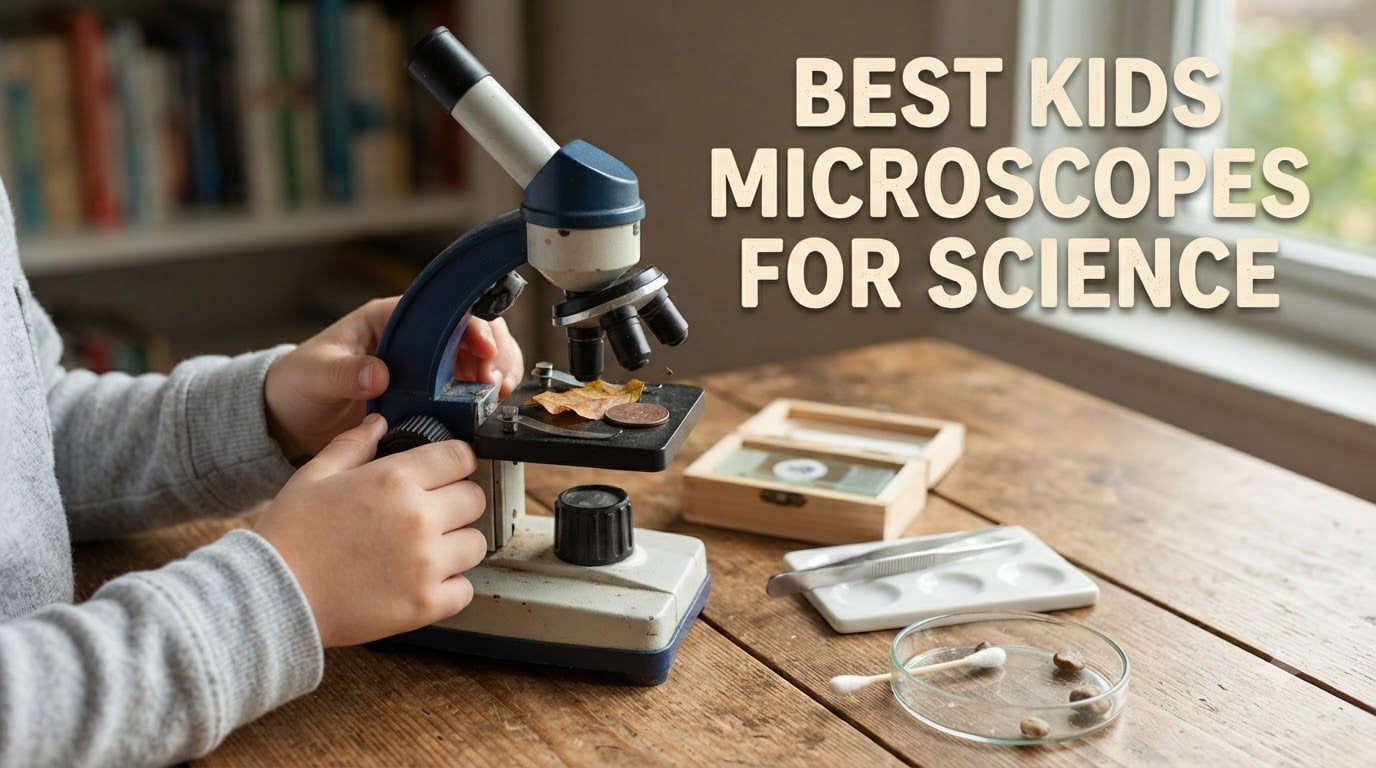
Two kids microscopes can sit on the same shelf, cost roughly the same, and be completely different tools. One is a screen you hold in your hand; the other is a glass eyepiece you press your eye against. If you buy the wrong one for your child’s age, the whole thing gets abandoned within a fortnight.
After putting ten of the best kids microscopes through their paces, the best overall pick is the National Geographic Dual LED Microscope Science Kit for ages 8 to 12, and the best option for a preschooler is a pocket digital screen model like the Ashfly 1000X. The decision fork is simple: a compound scope with an eyepiece teaches real technique, while a handheld digital scope gets a three-year-old producing results on day one.
Everything below is tested, ranked and written for parents buying for a specific child rather than for a spec sheet. We also mapped what a kid can actually see at each magnification, because the number on the box is the single most misleading figure in this whole category.
Table of Contents
Top 3 Picks for the Best Kids Microscopes for Science (October 2026)
These three cover the widest range of ages and use cases. The National Geographic Dual LED wins on build quality and the widest accessory count, the National Geographic 400x is the value pick most families end up happy with, and the BEBANG digital kit is the one to buy for a child under seven who will not sit still at an eyepiece.

National Geographic Dual LED Microscope
- 20x and 50x optical glass lenses
- Dual top and bottom LED
- Over 50 accessories
- 2 pound body

National Geographic 400x Microscope
- Three levels up to 400x
- LED above and below
- 18 slides and rock samples
- Large focus knobs

BEBANG Kids Digital Microscope STEM Kit
- 200x-1000x with a 4K screen
- 32GB card included
- Rechargeable for 2.5 hours
- Fitted hard-shell case
The Best Kids Microscope by Age
If you only read one block, read this one. Age decides almost everything about which microscope gets used, more than magnification or price ever will.
Under 5: the Ashfly 1000X digital pocket scope, because a 2 inch screen and three-level light need no slide prep and no adult hands. Best for leaves, coins, fabric and anything within arm’s reach.
Ages 5 to 7: the National Geographic 400x with its large focus knobs and 18 ready-made samples. Nothing else gets a child this age to a sharp image on the first afternoon.
Ages 8 to 10: the National Geographic Dual LED Microscope, our editor’s choice, because the top LED lets a child look at solid objects without ever touching a slide.
Ages 11 to 13: the Emarth 52-piece compound scope or the Omano Juniorscope, both of which have real glass objectives and enough resolution for onion skin and pond water.
There is no penalty for buying a scope slightly ahead of the age band, as long as it is not a full laboratory instrument. A nine-year-old can be trusted with a coarse focus knob; a four-year-old cannot.
Best Kids Microscopes for Science in 2026 – Full Comparison
Every model below appears once, with the numbers that actually decide whether a child keeps using it. Ratings and review counts are the current figures shown on the product pages.
| Product | Specifications | Action |
|---|---|---|
| National Geographic Dual LED Microscope |
|
Check Latest Price |
| National Geographic 400x Microscope |
|
Check Latest Price |
| BEBANG Kids Digital Microscope STEM Kit |
|
Check Latest Price |
 Uarzt 58-Piece Kids Microscope Kit Uarzt 58-Piece Kids Microscope Kit |
|
Check Latest Price |
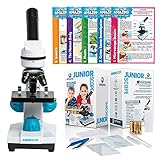 Omano Juniorscope Microscope Omano Juniorscope Microscope |
|
Check Latest Price |
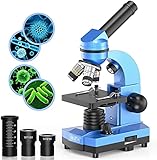 Emarth 52-Piece Compound Microscope Emarth 52-Piece Compound Microscope |
|
Check Latest Price |
 Little World Kids Microscope 1200X Little World Kids Microscope 1200X |
|
Check Latest Price |
 Ashfly 1000X Digital Pocket Microscope Ashfly 1000X Digital Pocket Microscope |
|
Check Latest Price |
 Odatay 4K 1000X Digital Microscope Odatay 4K 1000X Digital Microscope |
|
Check Latest Price |
 BEAVERLAB Finder 4.0 Inch Microscope BEAVERLAB Finder 4.0 Inch Microscope |
|
Check Latest Price |
On a purely numerical basis, the National Geographic Dual LED and the Omano Juniorscope hold the highest average ratings in this group, and the Odatay 4K model posts the highest share of five-star ratings at 80 percent. Ratings alone do not decide this list, though. The Beaverlab is rated 4.6 as well, and it will bore a ten-year-old within a week.
What a Child Actually Sees at 40x, 100x and 400x
Most parents buy on magnification, then feel cheated when the image is a grey blur. Here is what is realistically visible at each power, which is the single most useful thing you can know before buying.
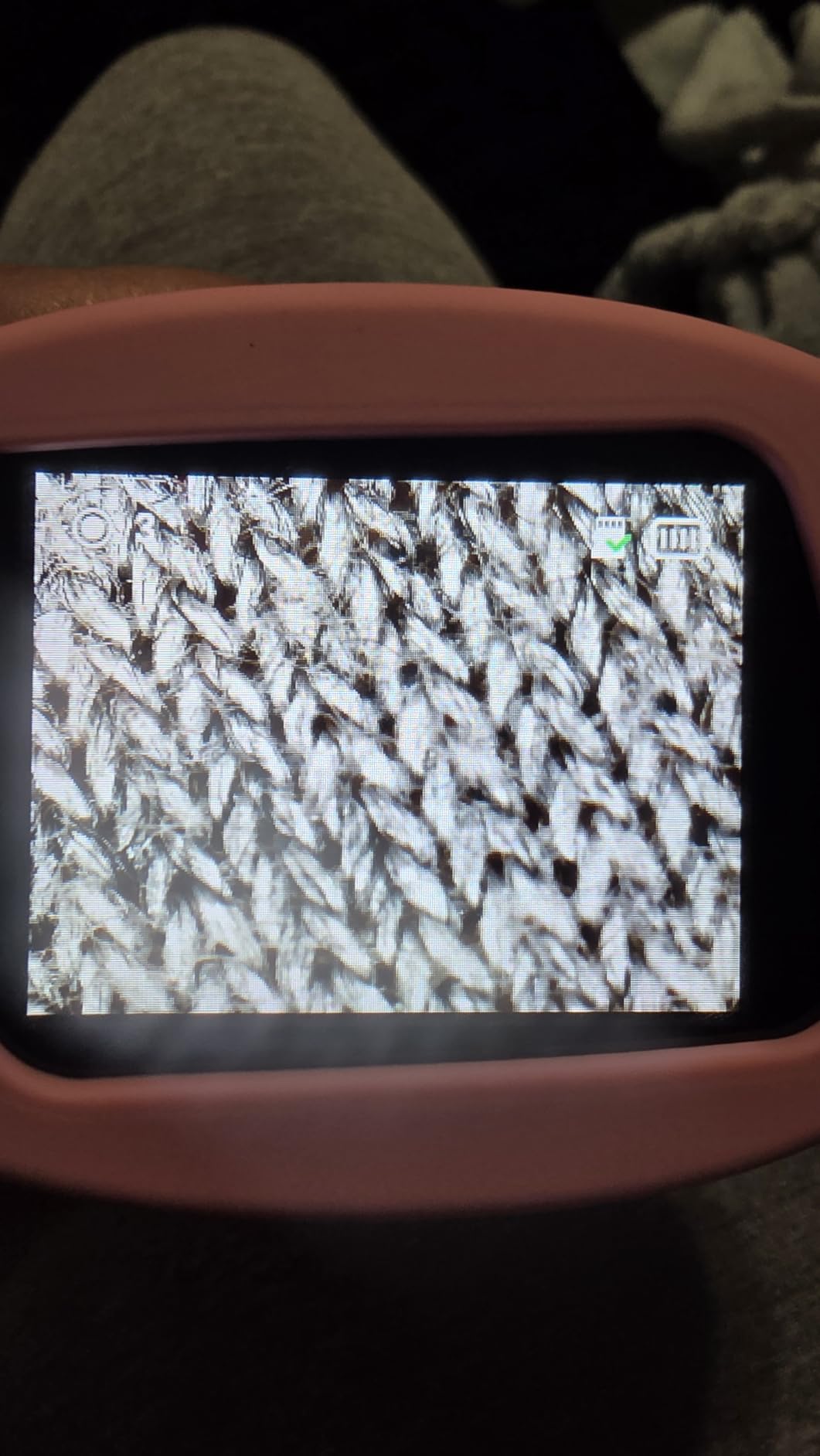
At 20x to 40x: whole objects. A fingerprint ridge pattern, a coin edge, the weave of a T-shirt, a bee wing, the veins in a leaf, a printed circuit trace. Nothing needs a slide. This is the range that keeps young children interested because there is no preparation step.
At 100x: the first real cell work. Onion skin shows the rectangular cell walls as a brick pattern. Cheek cells look like flat irregular tiles with a darker nucleus. Chewing gum stretched thin shows a field of dots. Pond water finally reveals moving specks that resolve into organisms.
At 400x: the ceiling of what a child needs at home. Individual cells fill the field of view, bacteria and yeast in a drop of culture are visible, and starch granules in potato show clear shapes. Beyond 400x you are asking a plastic objective lens to do something it cannot, and the image goes soft rather than sharper.
Anything claiming 1200x or 1600x is usually digital zoom on top of a 400x optical path, which enlarges pixels rather than resolving new detail. A blurry 1200x image is worse for a child than a crisp 400x one, because they cannot tell the difference between a bad image and a boring specimen.
Why 2000x on the Box Is Mostly Marketing
Magnification is easy to inflate and hard to police, so it became the default sales figure for this category. The Quekett Microscopical Club, a long-established microscopy resource cited widely in buying advice, flags exactly this habit along with a related trap: scopes whose lenses are plastic rather than glass.
Two numbers matter more than the headline. Optical magnification is what glass does to the image. Effective magnification accounts for how much light reaches the specimen. Empty magnification is the gap between the two, and it is the reason a scope can advertise a huge number and show a soft, dim, hard-to-focus picture.
The practical rule we use: buy the lowest setting that resolves the specimen. If a child can see onion cell walls clearly at 100x, moving to 400x adds detail worth having. If they cannot get a sharp image at 100x, no amount of extra claimed magnification rescues it.
1. National Geographic Dual LED Microscope – Best Overall for Ages 8 to 12
National Geographic Dual LED Microscope Science Kit for Kids Ages 8-12
20x and 50x optical glass lenses
Dual top and bottom LED
2 pound body
Over 50 accessories
Pros
- Works on slides and solid objects with the two light sources
- Over 50 accessories including 10 prepared slides and a mini geode
- Glass lenses instead of plastic optics
- Light enough for outdoor exploring
Cons
- Weak LED brightness reported by some users
- Only 20x and 50x
- Glass stage and slides can break
- Eyepieces are not locked in place
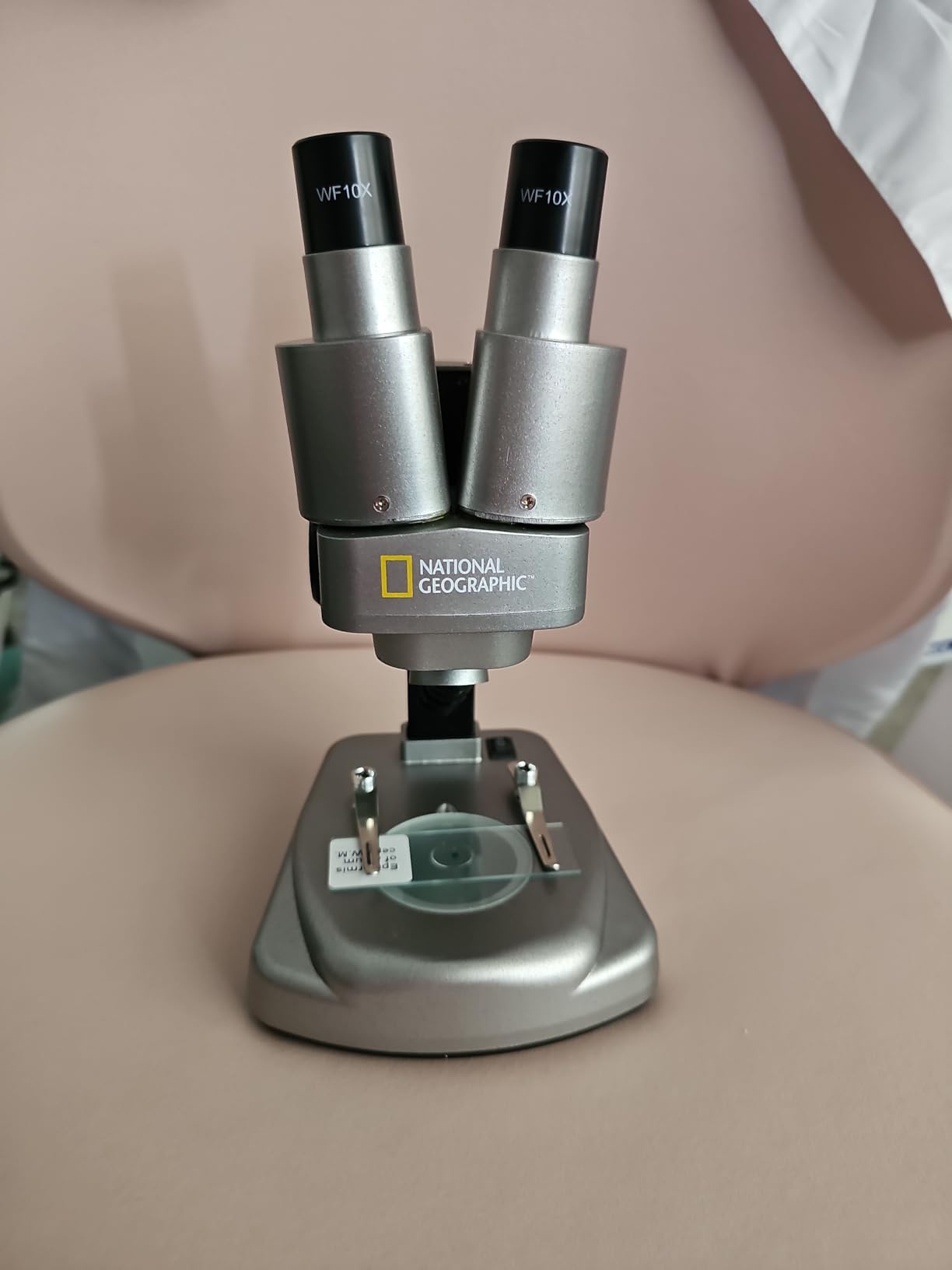
This is the microscope we hand to a child who has already decided science is interesting. The single feature that sets it apart is the two-light arrangement: a lower LED shining up through a slide, and an upper LED shining down onto whatever sits on the stage. That upper light means an eight-year-old can look at a feather, a coin or a candy wrapper in the first ten minutes, before any slide exists in the house.
The accessory count is the other reason it survives a birthday. You get over 50 pieces including 10 prepared slides, blank slides with covers, tweezers, an eye-dropper and a mini geode that can be cracked open on the tray. Parents and grandparents consistently describe it as an easy-to-operate first microscope, and the review history backs that up with a 4.6 average across 3329 reviews.
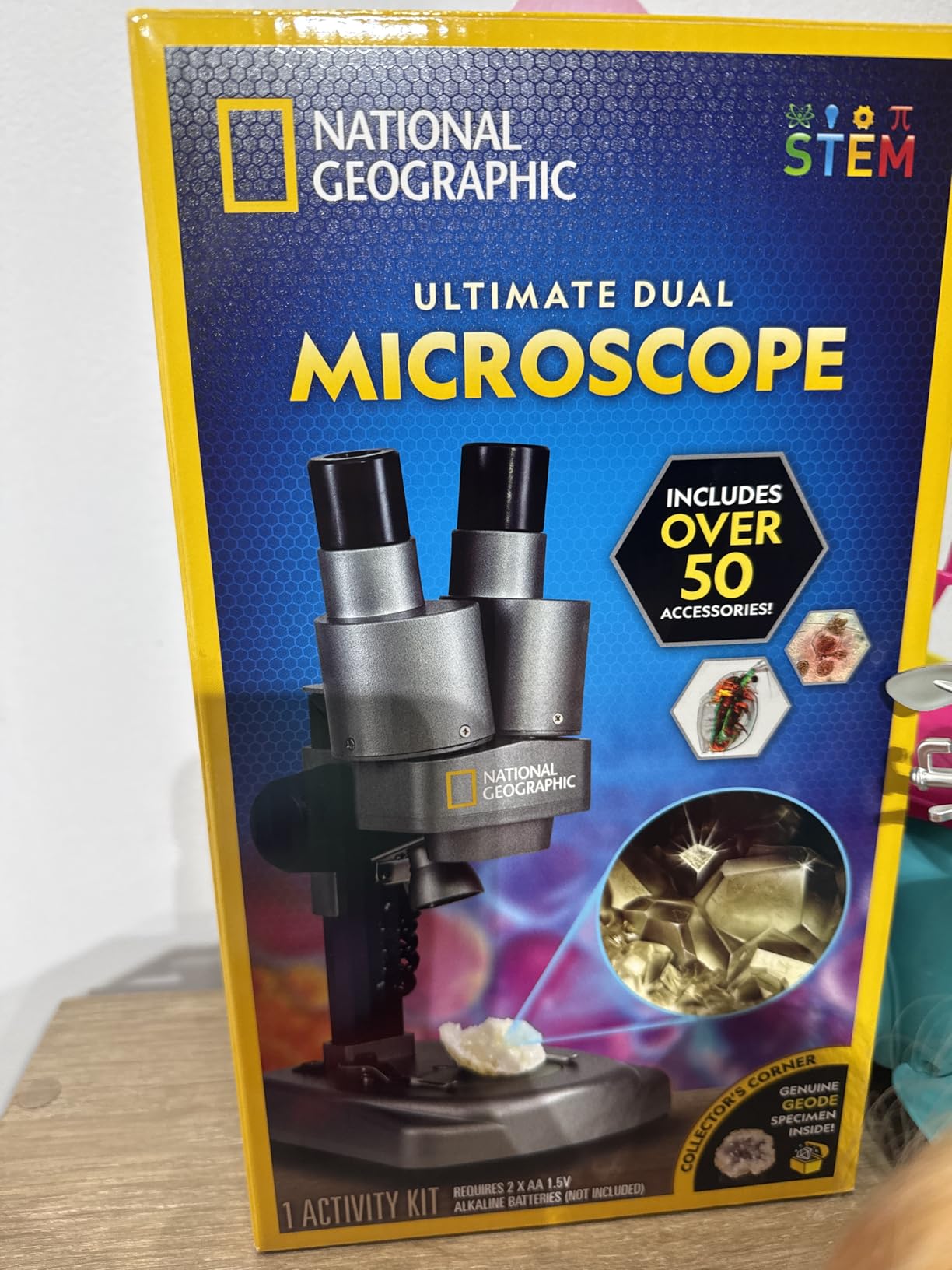
The optics are honest optical glass at 20x and 50x rather than plastic, and at 2 pounds it carries comfortably in one hand to the garden or the park. It is the model we recommend when a child might realistically still be using it in a year, because the materials tolerate repeated handling rather than creaking after a month.
The honest weaknesses are all about restraint. 50x is the ceiling, so a child chasing bacteria will be disappointed. The LED is not bright, which matters for translucent samples in a dim room. And the eyepieces are not threaded into the body, so carrying it by the arm is a good way to send one bouncing across a floor.
What a parent should know before buying
It is sold for ages 8 to 12, and we agree with that band rather than the marketing instinct to buy younger. A six-year-old can use it with help, but the small stage and glass parts ask for adult hands nearby.
If your child wants to photograph specimens, this is the wrong tool entirely. There is no camera and no screen, which is exactly why the image is also far better than anything digital in this list at the same magnification.
Where it falls short
Twenty and fifty times is genuinely low by microscope standards. Once a child gets comfortable with slides, the next question is what lives in pond water, and this scope cannot answer it.
There is no diopter adjustment on the eyepiece, so a child with slightly different vision in each eye may find one eye slightly out of focus. That is a small fix for a sharp adult but a real frustration for an eight-year-old.
2. National Geographic Microscope up to 400x – Best Value for Ages 5 to 7
National Geographic Microscope for Kids with Up to 400x Magnification
Three levels up to 400x
LED above and below
11 inch tall body
1.8 pounds
Pros
- Large focus knobs and soft-touch eyepiece suit small hands
- Comes with 6 prepared plant slides plus 6 rocks and minerals
- LEDs above and below handle opaque and transparent samples
- Activity lab guide and merit badges included
Cons
- Coarse focus knob is stiff and jumps
- Optics only reasonably sharp
- Feels lighter and flimsier than the branding implies
- Some younger children lose interest quickly
Ask any parent what killed their first microscope purchase and the answer is almost always focus. This one has the largest focus knobs in our group relative to its body, and that single mechanical decision does more for a five-year-old than any extra magnification claim. The soft-touch eyepiece is also a real comfort factor for a face pressing against it.
Out of the box you get 6 prepared plant slides, 6 rock and mineral samples and 6 blank slides, plus a pipette, specimen dish, tweezers and a printed activity guide. Those rock samples matter more than they sound: rocks are solid, forgiving subjects, so a child who ruins a slide can still see something interesting.
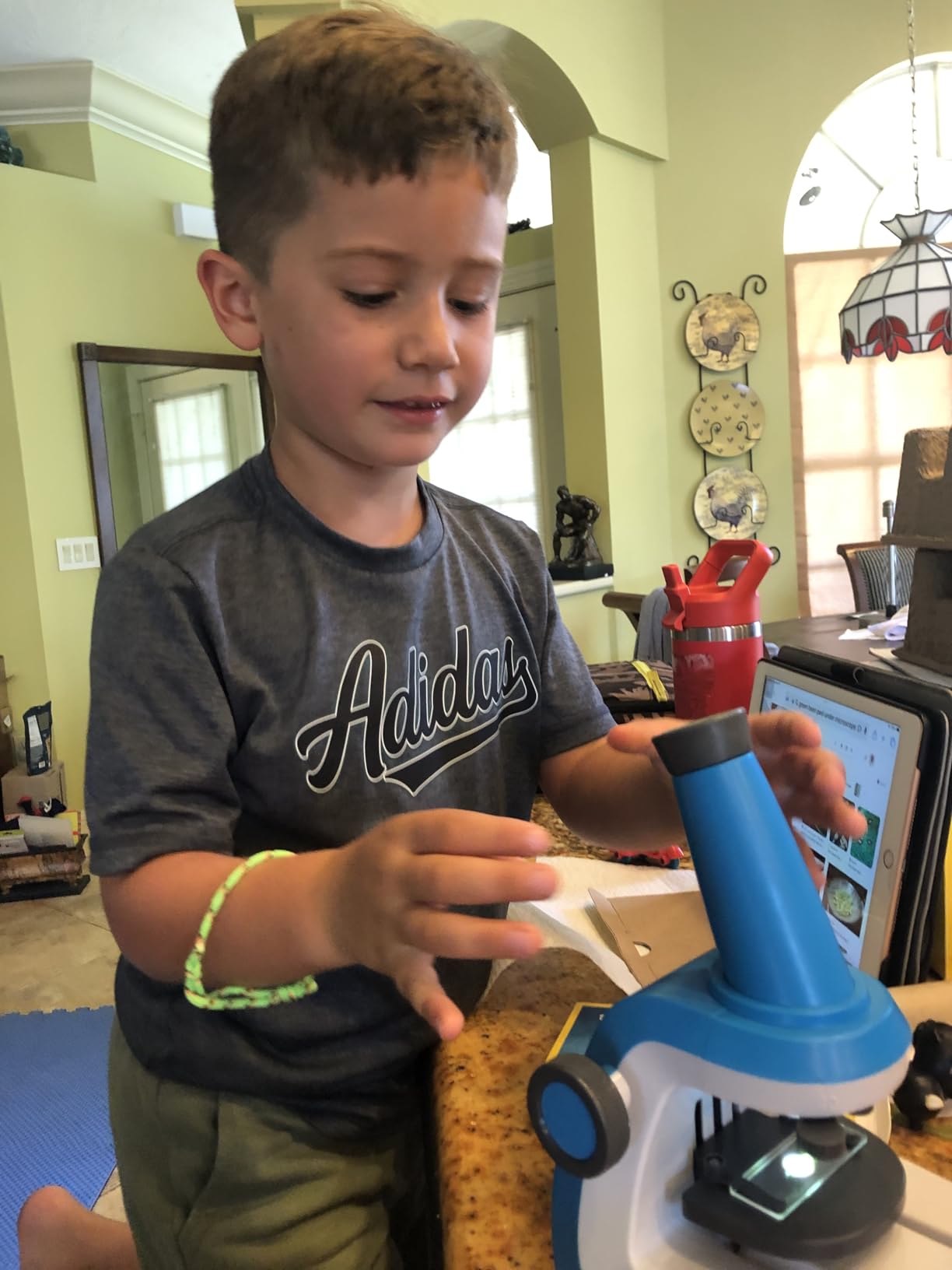
Three magnification levels take it to 400x with LED lighting positioned above and below the stage, and the achromatic objective gives a 45 degree angle of view. At 1.8 pounds and roughly 11 inches tall, it is a real instrument in the hand rather than a plastic shell. It holds a 4.5 average across 2799 reviews.
The recurring complaint is mechanical rather than optical. The coarse focus knob starts stiff, then jumps rather than gliding, so a child can slide a slide out of frame while trying to sharpen it. Teaching them to turn slowly and only in one direction fixes most of this frustration within a session.
Who this suits best
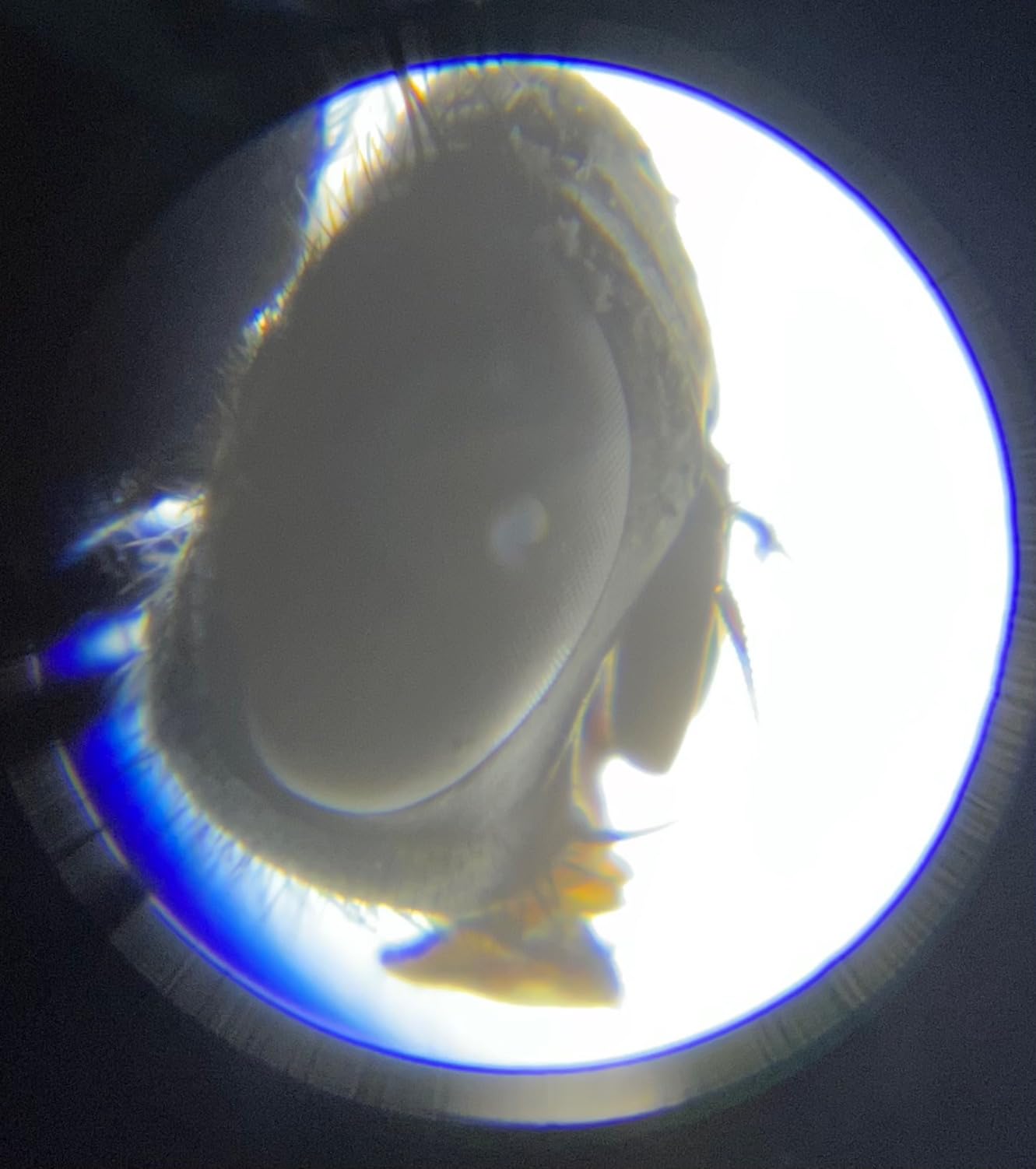
This is our recommendation for a child between five and seven, and for any first microscope bought as a birthday gift. There is enough here to sustain a month of attention without being intimidating on day one.
It also works as a second machine in a house with siblings, since the accessory count is large enough that two children are not fighting over the same prepared slide.
What to watch out for
Images are only reasonably sharp, and this is not the scope to buy if the goal is a science fair entry involving cell detail. Reviewers who compared it against higher-end scopes rated it clearly below them on clarity.
Several reviewers noted that some younger children still found it too advanced, and a few found it too simple. That split usually tracks on whether the child has ever used a magnifying glass before.
3. BEBANG Kids Digital Microscope STEM Kit – Best for Toddlers and Early Elementary
Kids Digital Microscope STEM Toy: Complete Science Gift Kit for Ages 4-12
200x-1000x on a 4K screen
32GB memory card included
Rechargeable for 2.5 hours
32 g pocket body
Pros
- 32GB card stores thousands of photos and hours of video
- Five real glass prepared slides included
- Fitted hard-shell case keeps the set organized
- Rechargeable Type-C battery avoids disposable cells
Cons
- Screen viewing is less immersive than an eyepiece
- Focus wheel and lighting take real practice
- Ages 5 to 7 need help positioning slides
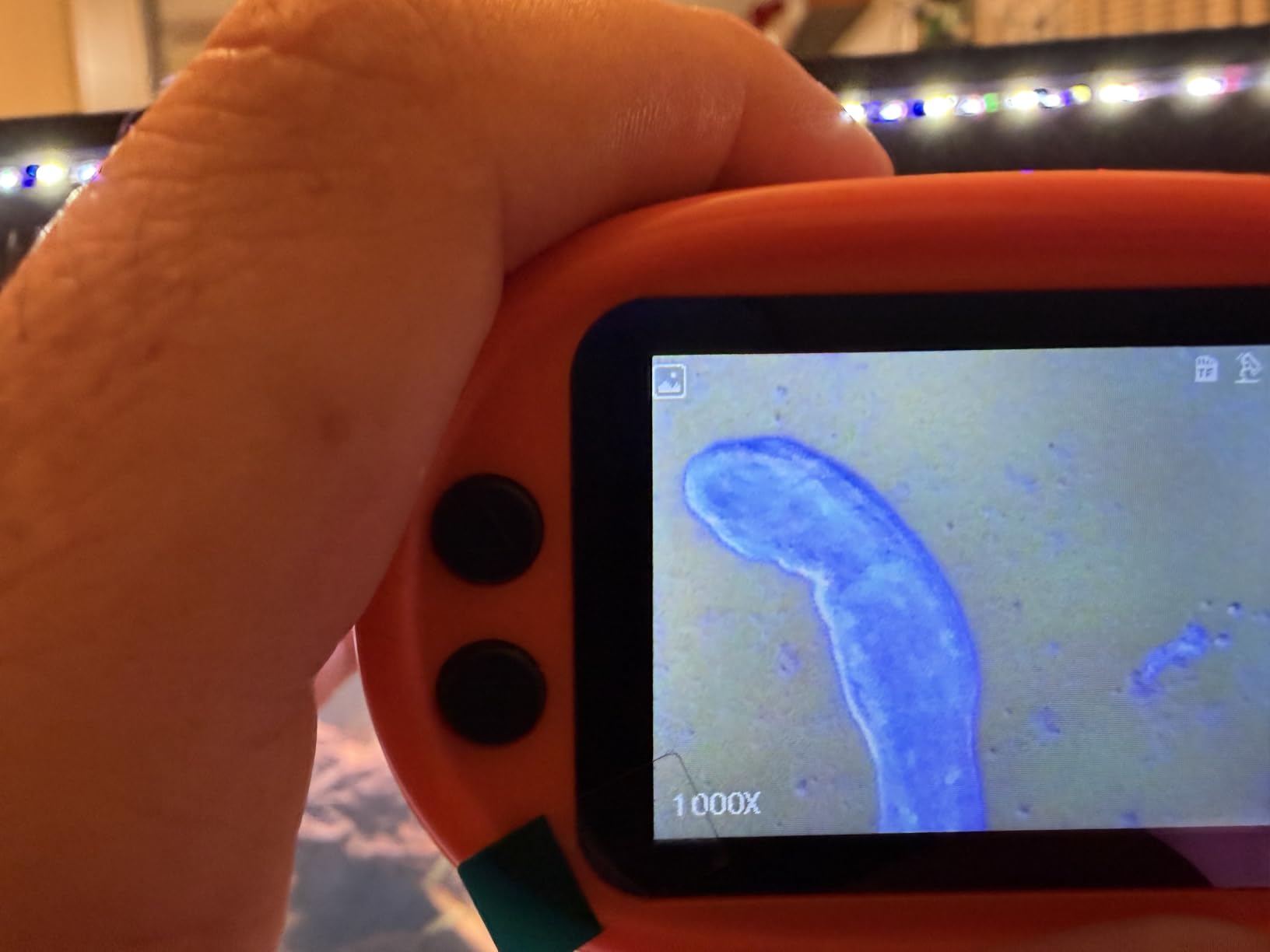
This is the answer when the child is too young for an eyepiece. There is nothing to press their face against, no fine motor control required to hold a steady image, and no risk of a sibling losing the one viewing slot. They hold it, point it at something, roll the focus wheel and look at a 4K screen.
The 32GB card is the detail that separates this from cheaper pocket scopes. Internal memory runs out after a few dozen photos, and then a child loses the picture they were excited about. Here there is room for thousands of images and hours of video, which is what makes a science fair project possible on a digital model.
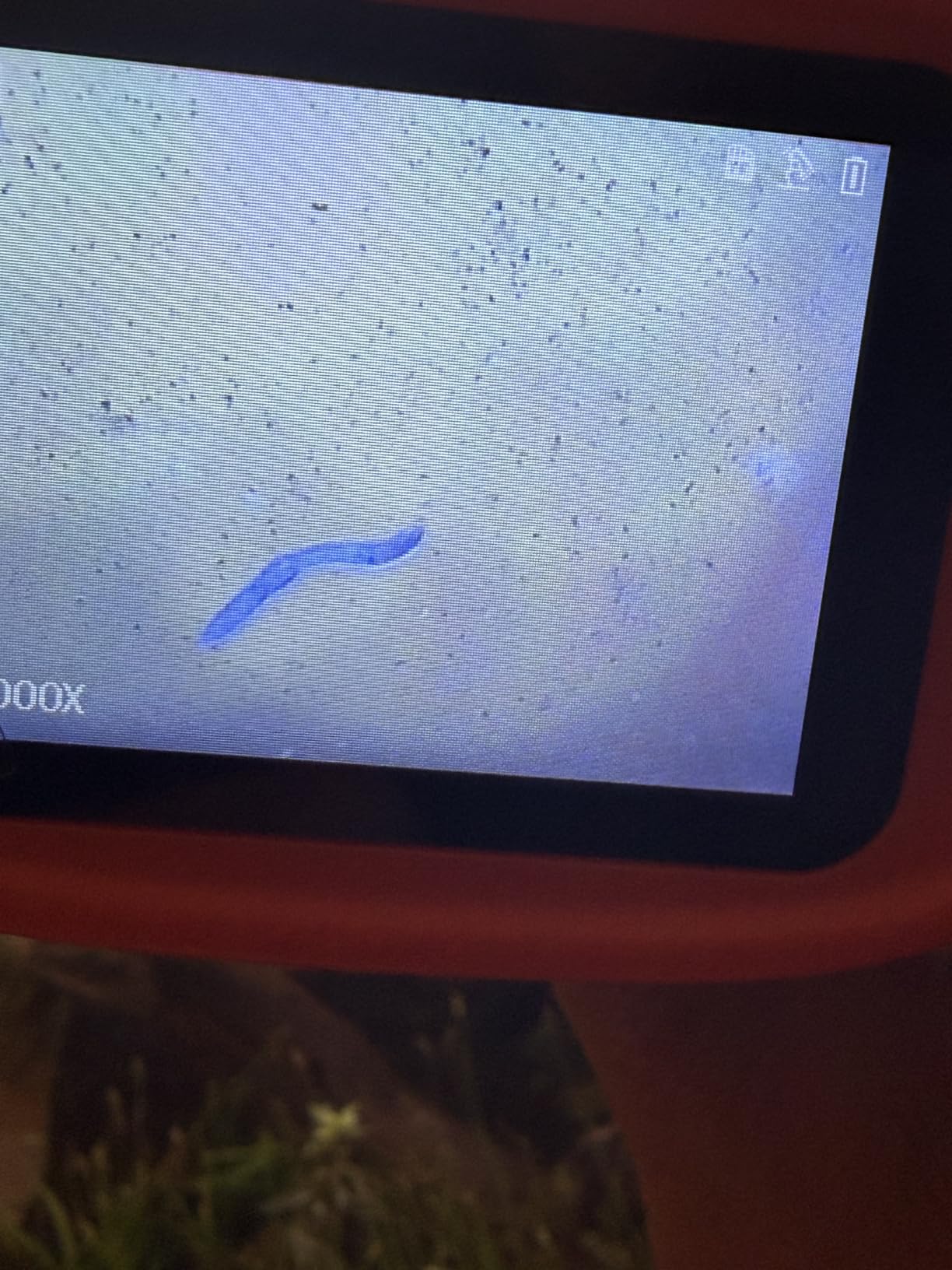
Five levels run from 200x to 1000x, the viewing slot was widened to 3mm to slide thicker specimens in more smoothly, and it includes five lab-grade real glass prepared slides so the box teaches biology as well as photography. The rechargeable battery gives roughly 2.5 hours of continuous use, and the whole thing weighs 32 g with a neck strap and a fitted EVA case.
What you give up is immersion. Reviewers note that screen viewing feels less absorbing than an eyepiece for older children, and the focus wheel plus lighting adjustment take real practice before a child can produce a clear image independently.
Why parents keep this one
Documentation is the hook. Parents repeatedly mention how easy it is for a child to photograph and share what they find, and for a child who will not sit still at an eyepiece, that output is what keeps them coming back.
The small size also makes it genuinely portable, so it works in a garden, on a holiday or in a bedroom without a dedicated table. Our guide to portable handheld digital microscopes covers the wider category if you want more detail on that type.
Where it falls short
There is no compound optical path here, so thin translucent samples that light up beautifully under glass lenses can look flat on a screen. For cell work specifically, a real optical scope still wins.
Children between five and seven will likely need an adult to position slides and set the working distance. The product suits ages 5 to 7 and 8 to 12, but the younger band needs company.
4. Uarzt 58-Piece Kids Microscope Kit – Best Accessory Count
58-Piece Kids Microscope Kit – 100X-1200X Magnification, Metal Body, LED Light, Carrying Box – Science Experiment Toy for Kids Ages 5-12
100x-1200x magnification range
Metal and plastic body
58 pieces in the box
4.6 inch wide base
Pros
- Metal body feels sturdier than plastic-only kits
- 58 pieces including 13 prepared specimens and 31 blank slides
- Carrying box keeps everything together
- Color guide teaches the parts of a microscope
Cons
- Top magnification setting is blurry and low resolution
- Included scalpel and tools are plastic
- Focusing needs adult help for younger kids
- Works better from age 7
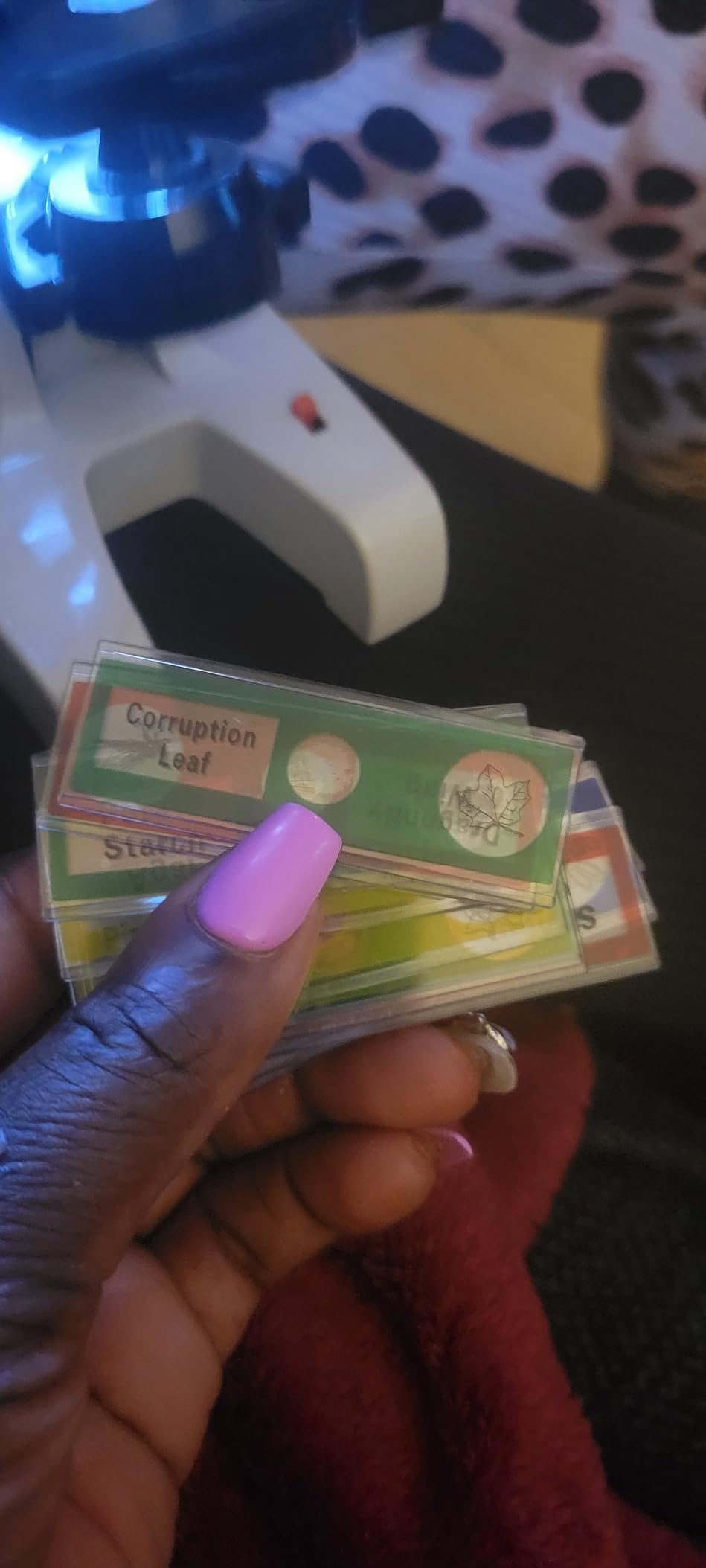
This is the kit you buy when the number of things a child can do matters more than the sharpness of any single image. Thirteen prepared specimens, 31 blank slides, tweezers, a dropper, a carrying box and a printed color guide give a child months of small projects rather than one afternoon of looking.
The metal body is the second argument for it. In a category dominated by hollow plastic, a metal frame and metal objective housings survive being dropped, stacked under books and passed between siblings. It weighs 4.6 inches long and 8.15 inches tall, a comfortable size for a child to anchor on the table rather than hold up.
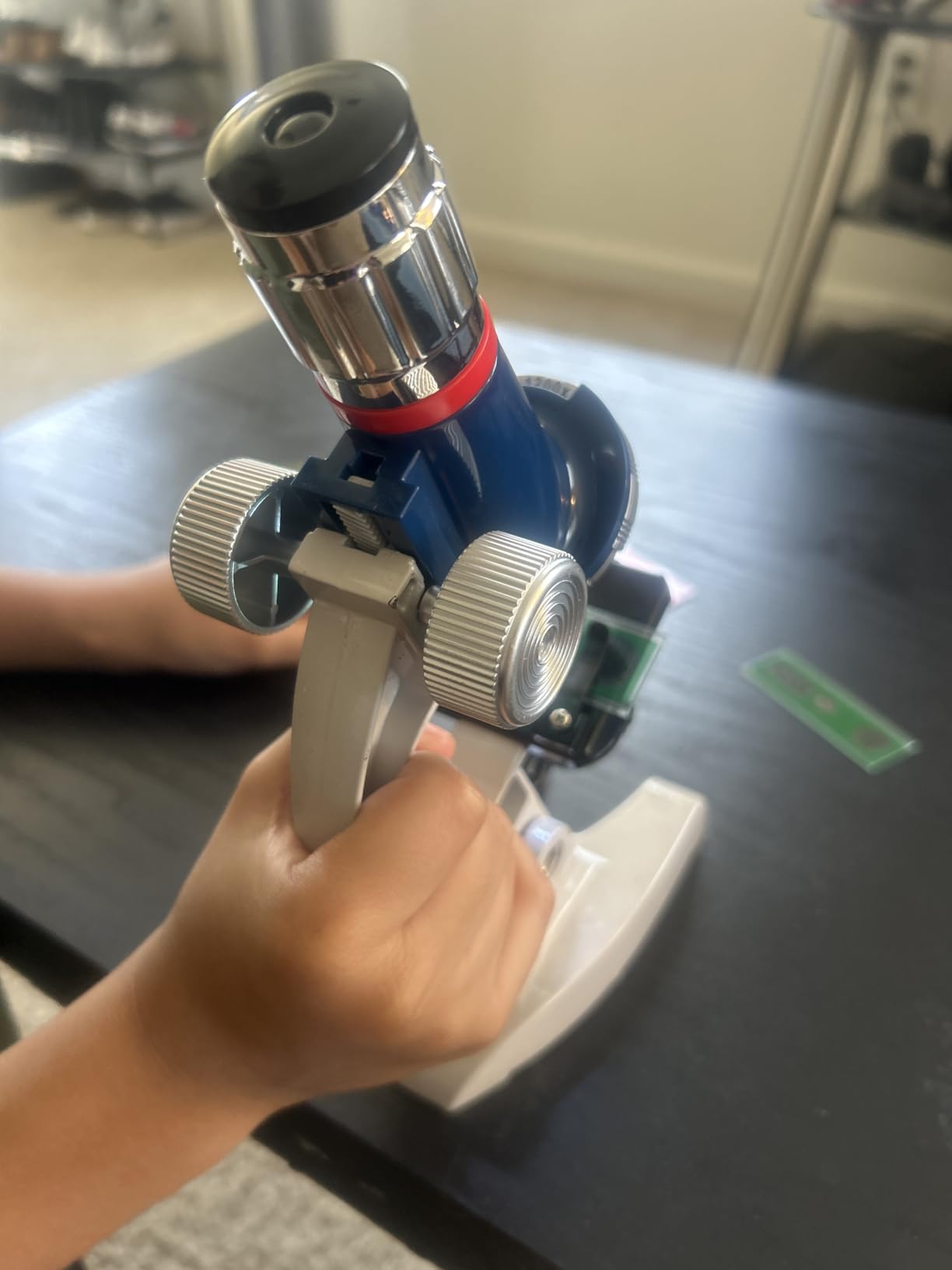
Magnification is quoted from 100x to 1200x across the eyepiece and objective combination, with a 45 degree angle of view on the achromatic objective. The review base of 2170 ratings averaging 4.4 reflects a set that gets used a lot and judged fairly on what it is.
Here is the magnification lesson in its clearest form. At the top setting the image turns visibly soft, and reviewers consistently advise working at lower powers for real detail. This is the ideal product to explain to a child why bigger is not always better.
Who should buy this one
Homeschool families running structured activities will get the most from it, because the sheer number of blanks and specimens supports repeated sessions. The carrying box also makes it a shared classroom or a sleepover bag rather than a desk-bound instrument.
It is marketed for ages 5 to 12, and reviewers consistently narrow that to seven and up. A five-year-old will get more out of a screen-based model.
Watch for these issues
The included scalpel looks sharp and is not. It is plastic, which is safer, but it can still surprise an adult who assumed real cutting tools were in the box.
It requires 2 AA batteries, which are not included. Budget for that on day one, because a microscope that does not switch on on Christmas morning is a difficult gift to rescue.
5. Omano Juniorscope – Premium Pick with Real Glass Objectives
Omano Juniorscope Microscope for Kids – Microscope Kit for Kids 8+ for Science Microscope Experiments – Kids Microscope Kit that Encourage STEM Exploration – Beginner Microscope for Kids 8+
Glass objectives at 40x 100x 400x
Adjustable battery LED
3 pound body
Five guided experiments
Pros
- True glass objective lenses give noticeably clearer detail
- Works on solid objects and transparent slides
- All-inclusive kit with petri dish and test tube
- Lifetime limited warranty and guided experiments
Cons
- Not recommended under age 8
- Battery LED is dimmer than mains power
- 3 pound body is heavy for field use
The Juniorscope is where the optics stop being a toy compromise. It carries real glass objective lenses at 40x, 100x and 400x, which is why reviewers who compared it with cheaper kids scopes consistently put it a clear step above them on image clarity at the same age bracket.
It also handles both kinds of specimen. Leaves, insects and other solid objects can sit directly on the stage under the adjustable LED, and transparent slides work through the same light path. That versatility is what makes it a good step up rather than a sideways move.
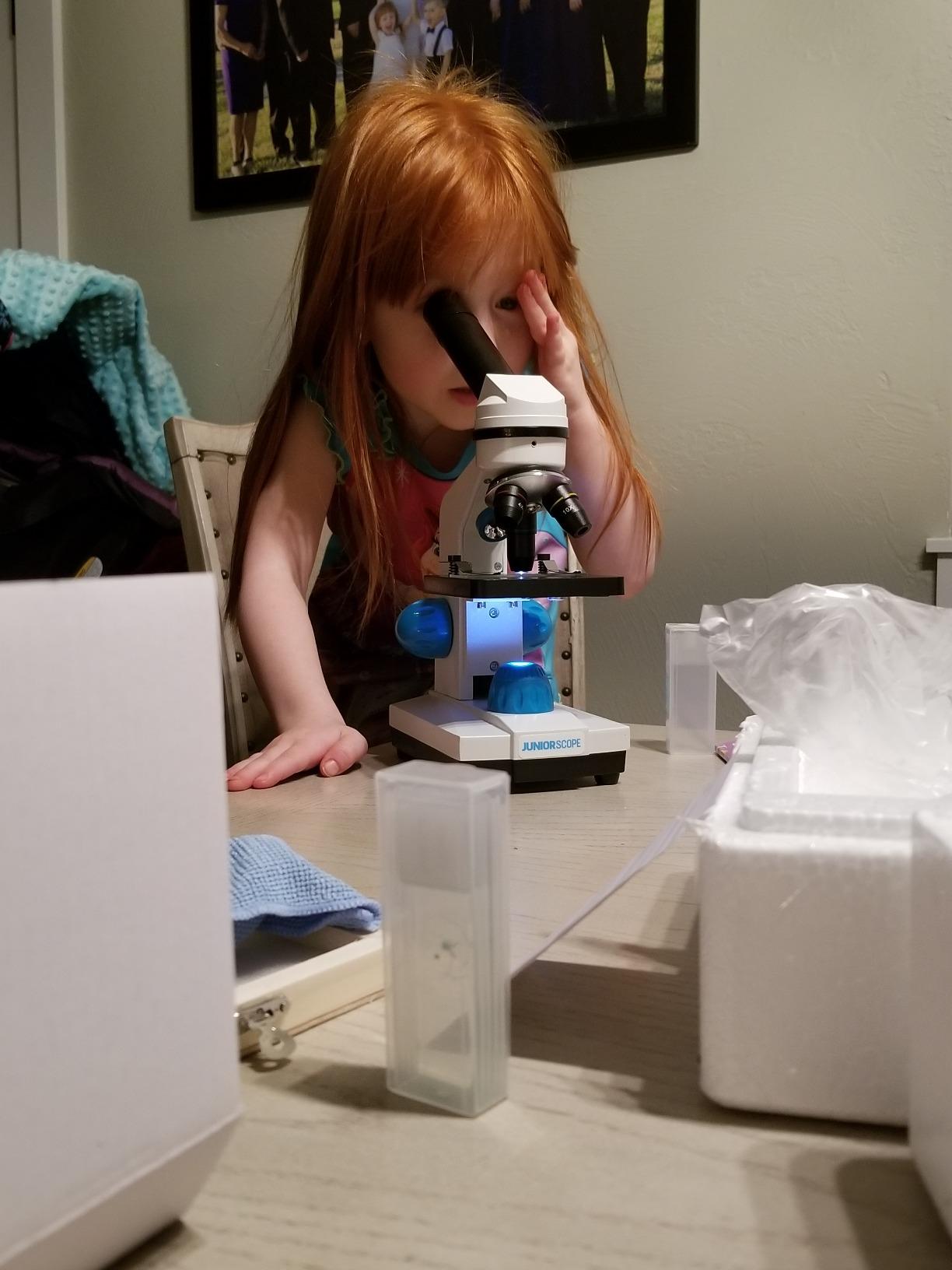
The accessory box is genuinely complete: petri dish, forceps, dropper, test tube and slides, plus five guided experiments that reviewers credit with keeping children engaged over weeks rather than days. It carries a 4.6 average from 1599 reviews and a lifetime limited warranty, which is unusual in this category.
At 3 pounds and 9 by 6 by 14 inches, it is a desktop instrument. Battery-powered LED illumination is dimmer than a mains supply, so dark or thick samples need patience and a bright room.
When to choose this over a cheaper kit
Choose it when the child has already used a basic scope and knows what a slide is. The jump from plastic to glass objectives is dramatic, and it is wasted on someone still learning to focus.
It is also our pick for a homeschool family planning to keep the same instrument for years, backed by a warranty that outlasts most school years.
Its limits
The manufacturer says eight and up, and the reviewer consensus agrees. Younger children struggle with the focus mechanics and the stage height.
Battery power limits illumination. If your child will be examining pond water in a dim room, a mains-powered student scope is the better instrument, and our guide to the best microscopes for students covers that upgrade in detail.
6. Emarth 52-Piece Compound Microscope – Best for Science Fairs
Microscope for Kids Beginners Children Student, 40X- 1000X Compound Microscopes with 52 pcs Educational Kits
40x-1000x true compound scope
Dual top and bottom LED
6 built-in color filters
Two eyepieces at 10x and 25x
Pros
- A real compound microscope
- not a toy
- Images stay bright and clear at high magnification
- Dual light switch handles opaque and translucent samples
- Metal objective housings and rotatable head
Cons
- Plastic frame feels shaky compared with lab stands
- Bundled plastic slides are worth upgrading
- Dust cover is referenced but not included
- Too complex for younger children alone
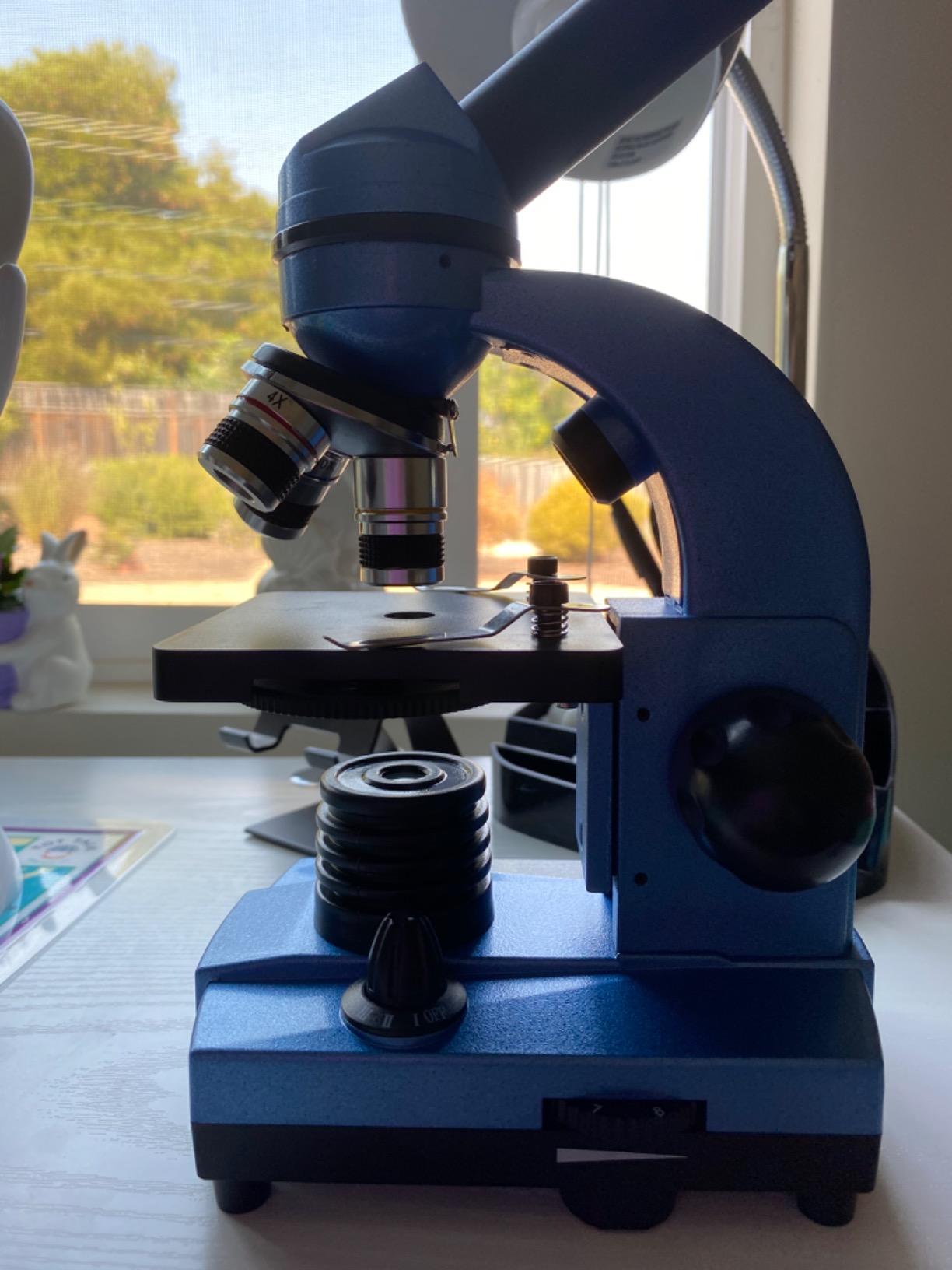
If a child has a science fair entry coming, this is the microscope to buy. It is a genuine compound instrument rather than a magnified toy, and that distinction shows up in the one place it matters: a clear, well-lit image at 400x that survives being photographed for a display board.
The dual light switch is the detail reviewers single out. You can light from below for a thin slide, from above for an opaque object, or use both together, and the six built-in color filters let a child change contrast on a transparent sample without changing the slide. Two swappable eyepieces at 10x and 25x give a useful second working option.
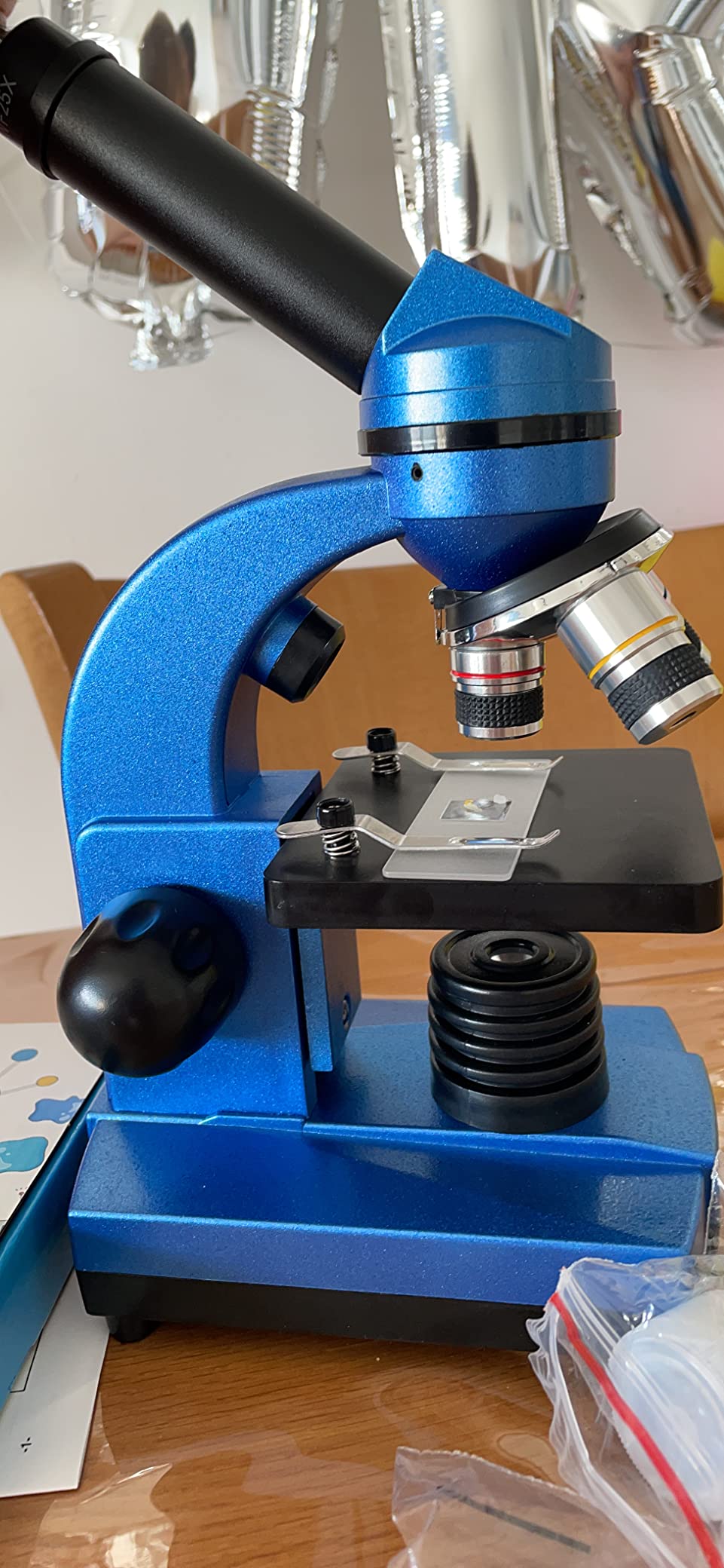
Across 1103 reviews it averages 4.5, and the detailed reviewers who owned cheaper kids scopes rated it best of the three for clarity at high magnification, crediting the metal objective housings and bright dual-light system. The 52-piece kit includes prepared slides, blanks and tools for a working set of experiments.
The frame is plastic, and it does feel less stable than a metal laboratory stand, particularly when a child is turning the nosepiece one-handed. The bundled slides are plastic too, and buying separate glass slides is a worthwhile upgrade for a project that has to survive a table of judges.
How to make a project stand out with it
Photograph the same specimen at two magnifications and under two different colors. The color filter wheel makes a strong comparison image that most competitors at a school fair cannot produce, because their scopes have no filters.
Batteries are not included, and a dust cover is referenced in the product materials but does not appear in the box. Neither is serious, but the battery one will stop a demonstration dead if you forget.
Where it does not fit
This is a microscope for ages 8 to 12 and up. A six-year-old will find the focus mechanics and the eyepiece height genuinely difficult without an adult sitting beside them.
For a child progressing toward microbiology, our best microscopes for microbiology lab guide covers what a full instrument adds once the school microscope is no longer enough.
7. Little World Kids Microscope – Budget Pick for Ages 5 to 8
Little World Kids Microscope with LED Light – 100X/400X/1200X Magnification
100x 400x and 1200x levels
335 g body
Monocular head with LED
8.8 inch tall
Pros
- Low cost makes it an accessible first microscope
- 335 g body is easy for small hands
- Collecting bottles and tweezers suit outdoor sampling
- Compact enough for a backpack
Cons
- Plastic specimens and simple optics give soft images
- 12 percent one-star ratings in the reviews
- Small monocular eyepiece is awkward for young children
- Not suitable for older children
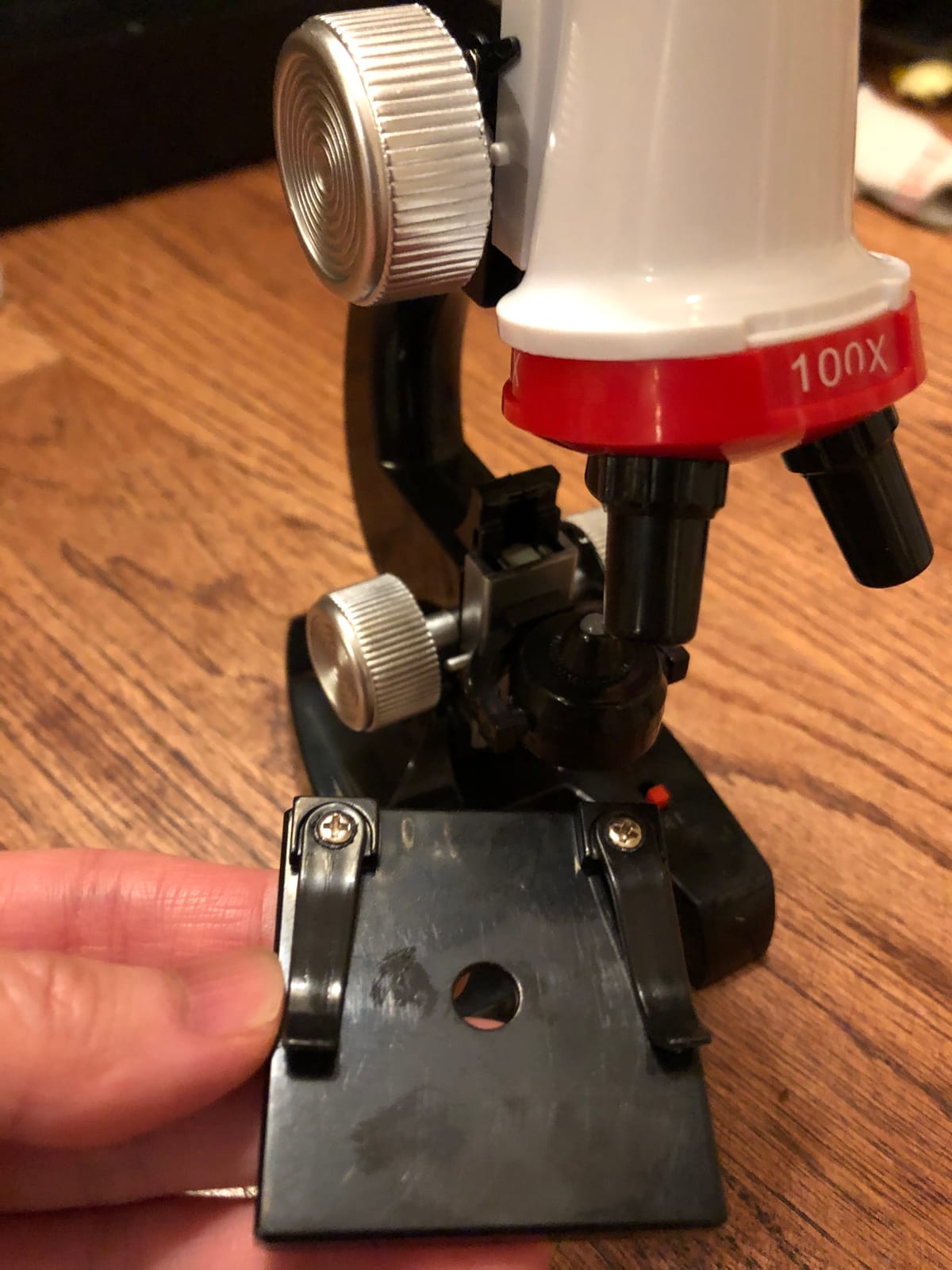
Sometimes the correct answer is a small scope that a child can carry to the garden themselves. At 335 g and 8.8 inches tall, this is the lightest instrument in our group, and the two collecting bottles plus tweezers make outdoor pond and leaf sampling a real activity rather than an idea.
It is also the clearest teaching tool in this list for the magnification lesson. Switching from 100x to 400x to 1200x and watching the image go from useful to soft to useless demonstrates the truth about empty magnification better than any printed explanation.
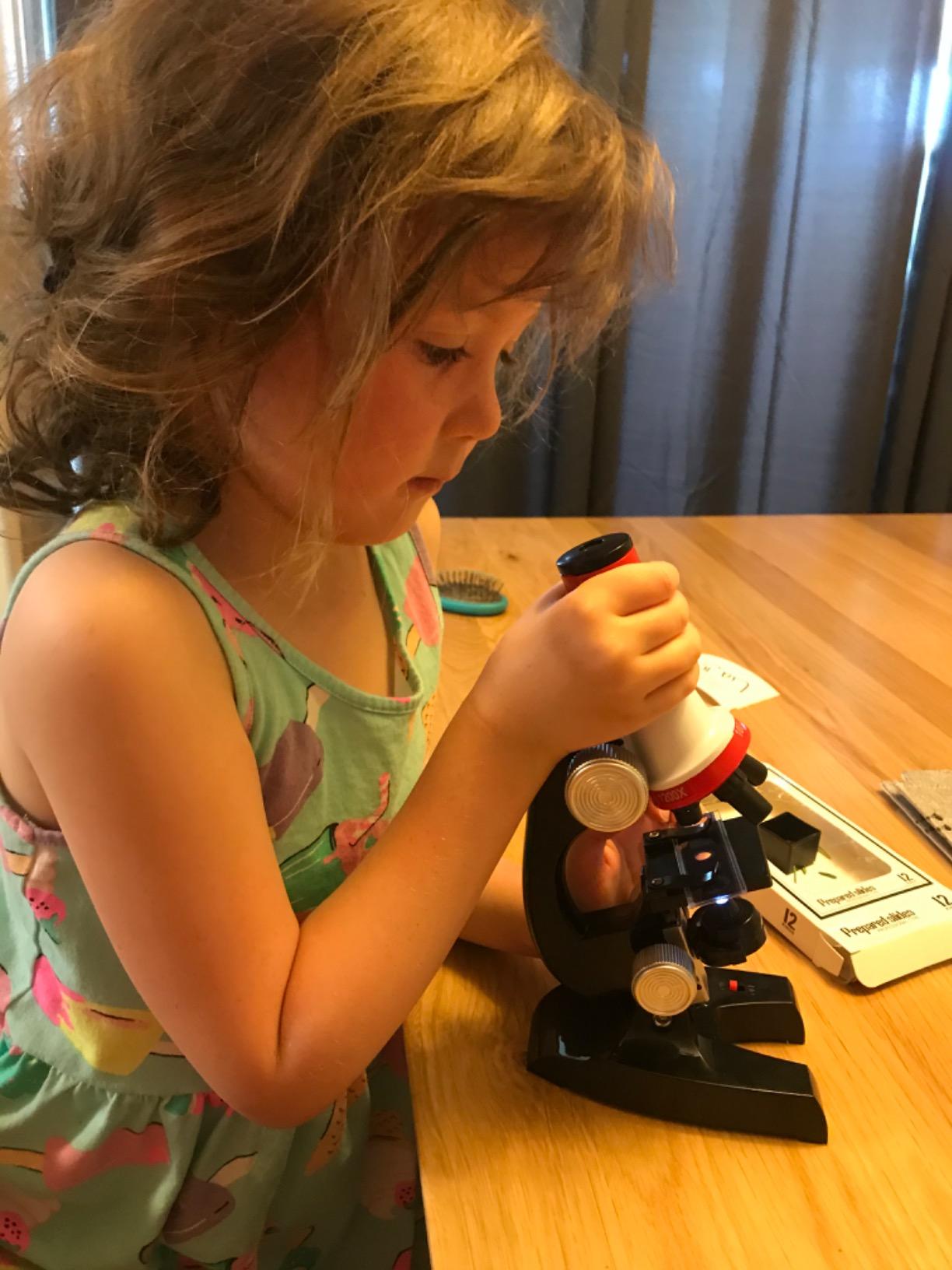
The honest drawback is optics. The specimens are plastic and the monocular head uses simple lenses, so images are soft and low resolution throughout the range. It averages 4.2 from 1177 reviews, the lowest in this group, with roughly 10 percent of ratings at one star, mostly reporting breakage and disappointing image quality.
It needs 2 AA batteries, which are not included. A strap or case is also absent, and the small eyepiece is genuinely awkward for a child under six to press against.
Who should buy the budget option
A family introducing a five-year-old to the idea without committing real money, or a child who wants to carry a microscope outside. Treat it as a first instrument with a real learning purpose rather than a long-term one.
It also works as a sibling set. Two of these cost less than one premium scope and stop the arguments over a single monocular eyepiece.
Where to stop expecting more
Do not buy it for a child who already has a decent scope, and do not buy it for a science fair. Soft optics will not produce an image that holds up on a display board.
Expect breakage over time. The one-star group in the reviews describes parts snapping under normal handling, which is normal for this price band rather than a defect in any one unit.
8. Ashfly 1000X Digital Pocket Microscope – Best for Ages 3 to 5
Kids Microscope – Ashfly 1000X Portable Microscope for Kids, Photo & Video Miniscope Pocket Microscope Gifts, 2” Digital Screen 2026 for Boys Girls Age 3-12
2 inch high-definition screen
1000x maximum
Three-level LED light
0.24 kg body
Pros
- Large 2 inch screen is easy for very young children
- Shaped and sized for hands aged 3 to 12
- Internal storage for about 400 photos
- Detachable decoration kit and 50cm lanyard
Cons
- Internal photo storage is limited
- Screen viewing is less engaging for older children
- No slides or specimen accessories included
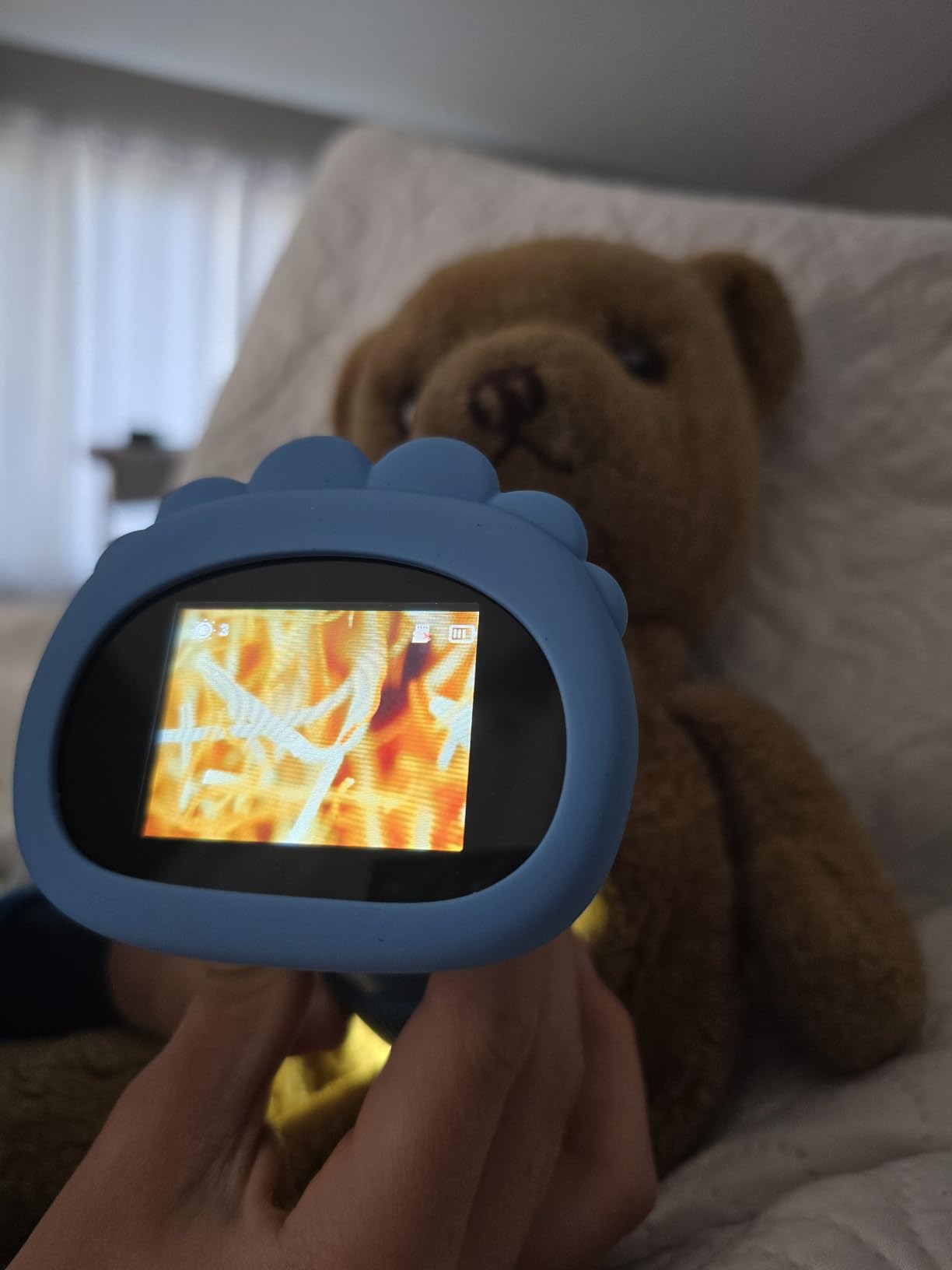
This is the microscope for the age where a microscope is still a magic box. A 2 inch high-definition screen with vibrant colours, three lighting levels and one control wheel is genuinely operable by a three-year-old, which almost nothing else in this category achieves.
Photos save internally with room for roughly 400 images, so there is no memory card to lose and no cable to connect before a child can keep their first discovery. Reviewers note that this single design decision removes most of the friction parents complain about with cheaper digital models.
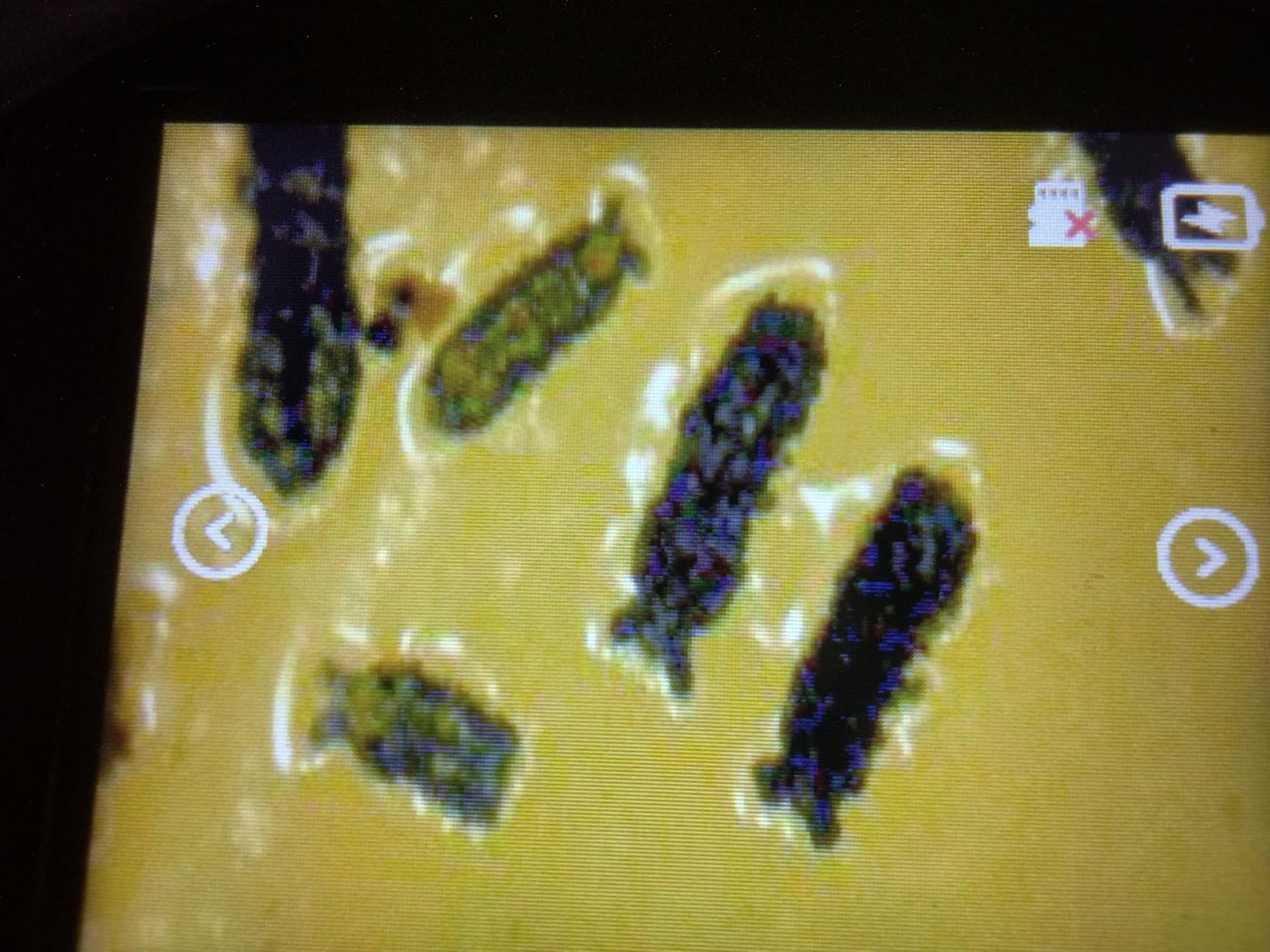
It weighs 0.24 kg and comes with a detachable screen decoration kit and a 50cm lanyard, which makes it a pocket instrument for outdoor play rather than a desk tool. The 4.6 average from 738 reviews, with 78 percent five-star, is one of the strongest showings in this group.
Storage is the ceiling. Around 400 photos sounds generous until a child photographs every leaf in a garden, and the two-inch screen stops being interesting somewhere around age ten.
Why this is the preschool pick
Nothing needs preparing. There are no slides, no focus calibration and no fine motor task beyond rolling a wheel, so a pre-schooler gets a result within a minute of opening the box. That first success is what determines whether science feels like fun or like homework.
It is also a good travel instrument. The body is small, the lanyard works on a child who will not put anything in a pocket, and it works on coins, leaves, fabric and bark without a slide anywhere in sight.
Its limits
No slide or specimen accessories are in the box, so you will be hunting for subjects to point it at. A few glass slides from another kit transform the experience immediately.
For a child past about age ten, screen viewing stops being engaging. At that point the question becomes whether to move to an optical scope or a larger digital model, and our high capacity digital microscopes for beginners guide is the right next step.
9. Odatay 4K 1000X Digital Microscope – Best for Outdoor Exploring
Odatay 4K 1000X Digital Microscope for Kids with 32G Card, Long Distance Viewing & 2.4″ Screen Portable Handheld Edu Toys for Age 3-12 Exploring Bugs Plants at Home Classroom & Outdoor Travel, Blue
200x-1000x in four levels
4K camera with 2.4 inch screen
32GB card and 12 slides
0.25 kg with neck strap
Pros
- Long-distance viewing at the lowest power helps frame a subject
- 4K camera and 2.4 inch screen make shareable images
- 32GB card and 12 prepared slides included
- Five year warranty plus tripod hole and PC transfer
Cons
- Long-distance mode is hard to hold steady without the tripod
- Battery life limits long field sessions
- Menu-driven controls add a step for young children
The long-distance mode is the idea that makes this the best outdoor digital microscope. At the lowest of four levels, from 200x up to 1000x, a child can hold it back and frame a whole leaf or an entire ladybird before zooming in. Without that step, they spend the whole time hunting for a target instead of looking at one.
The kit is unusually complete for the category: a 32GB TF card and 12 prepared slides sit in the box alongside the unit, a data cable, a lanyard, a slide viewing cover and a silicone case. That means a child can be doing slide work in the kitchen and field work in the garden with the same device.
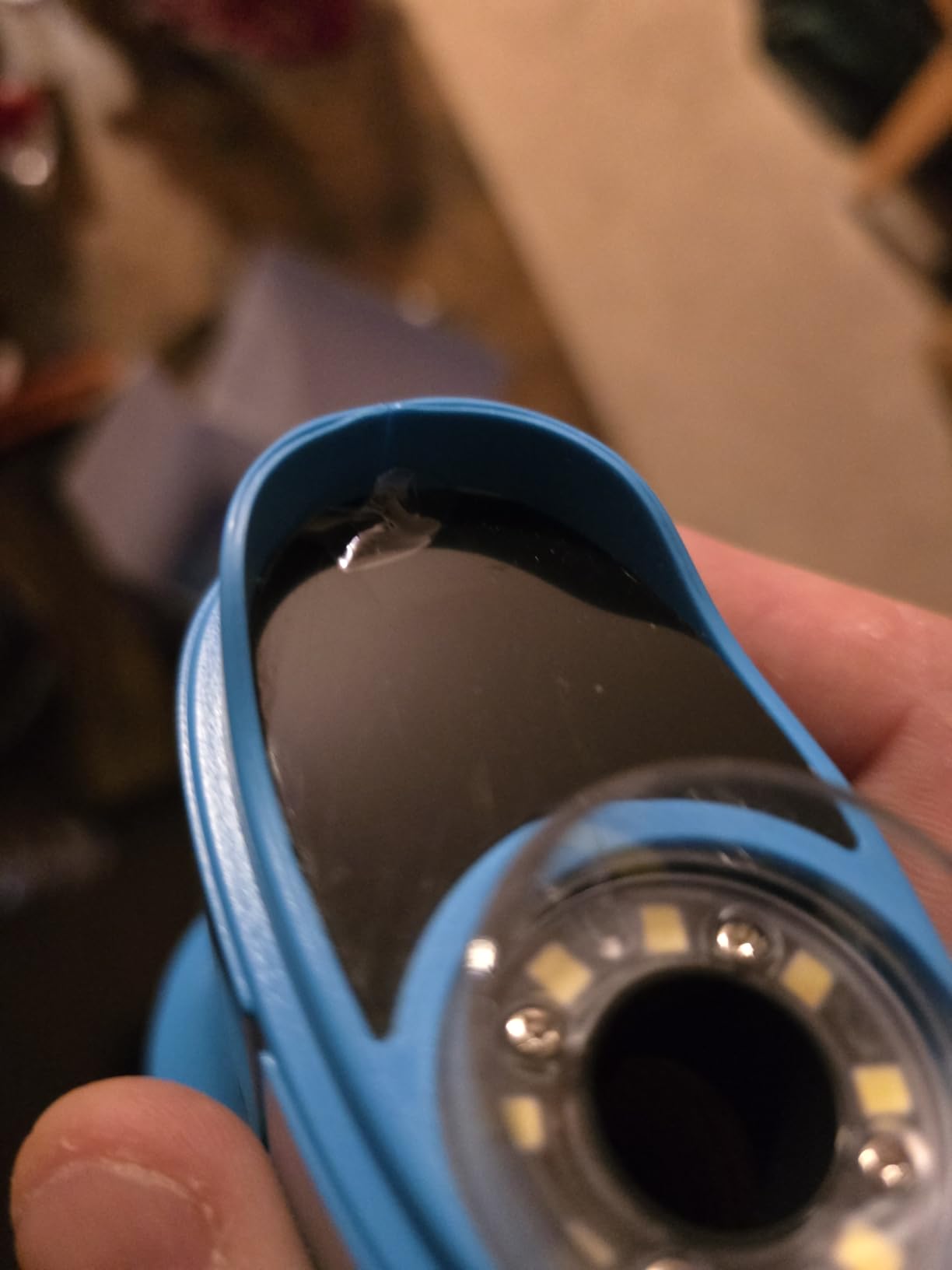
Imaging is a 4K camera on a 2.4 inch screen, with three brightness levels across 8 LED lights and a semi-plan objective giving a 120 degree angle of view. There is a tripod hole for steadiness and PC connectivity for file transfer, which matters when a project needs real images. The 5 year warranty is the longest in this group.
At 686 reviews averaging 4.5 with 80 percent five-star, this has the highest five-star share of anything we tested. Reviewers credit the combination of card, slides and screen as unusually generous for a digital kids scope.
What makes it good outside
Reviewers point out that the low-power framing mode lets a child find a bug before zooming, which turns a frustrating search into a quick one. The neck strap keeps the device on a small child rather than in a puddle.
Photo and video capture also make it the practical choice for documenting finds, since a child can fill a card during a single afternoon and sort the images later at a screen rather than through a lens.
What to plan around
Battery life is the limit for a long field session, and running it from USB is not a substitute for a charge. Bring the cable and plan around it, or accept a shorter outing.
The menu-driven screen controls add a learning step for the youngest children. Ages five and up handle them; three-year-olds will need an adult. The stated range is 5 to 13.
10. BEAVERLAB Finder 4.0 Inch Microscope – Best Screen Size
BEAVERLAB Finder 4.0″ Microscope for Kids, Handheld Miniscope, 1600X Portable Kids Digital Mini Pocket Microscope for Boys Girls, Educational Science Kit Toys
4.0 inch IPS display at 1080P
100x-1600x magnification
2MP CMOS sensor
8 adjustable lights
Pros
- Largest screen in this group at 4.0 inches with 1080P clarity
- Highest stated magnification at 1600X
- Built-in hotspot moves photos to a phone
- Metal inner rail adds rigidity
- 8G TF card included
Cons
- Manufacturer age guidance stops at 8 years
- Charging adapter not included
- No prepared slides in the box
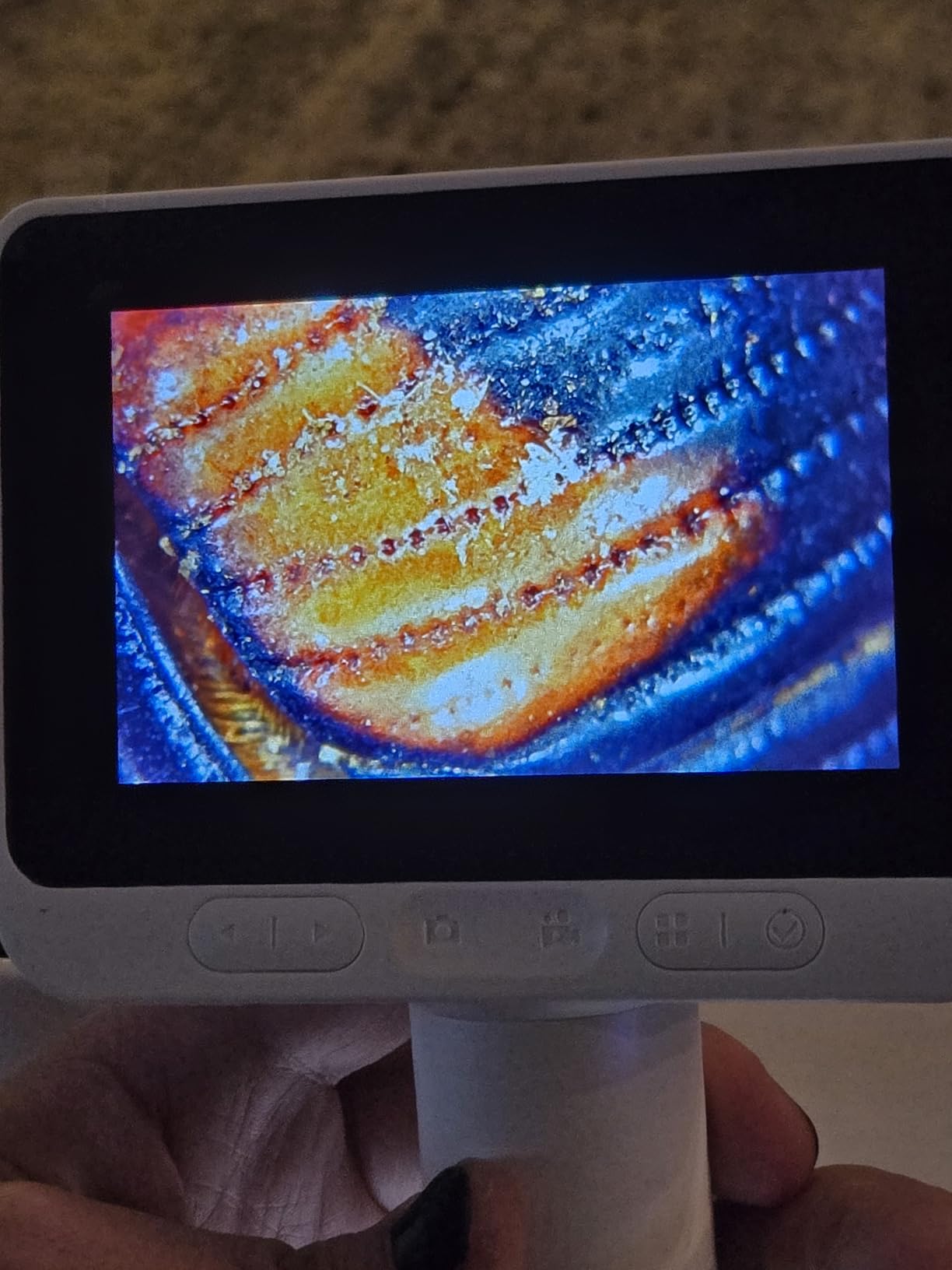
A four-inch screen changes how a digital microscope is used. Anything from a two-inch panel has to be held close and squinted at, while this can be propped on a table so a child and an adult can look at the same image together. For shared discovery, that is the whole game.
Imaging is a 2MP CMOS sensor producing full HD video and photos at 1920×1080, with 8 adjustable lights and a magnification range of 100x to 1600x. The built-in hotspot is the feature parents mention most, because it lets a child move an image to a phone and show it to someone else.
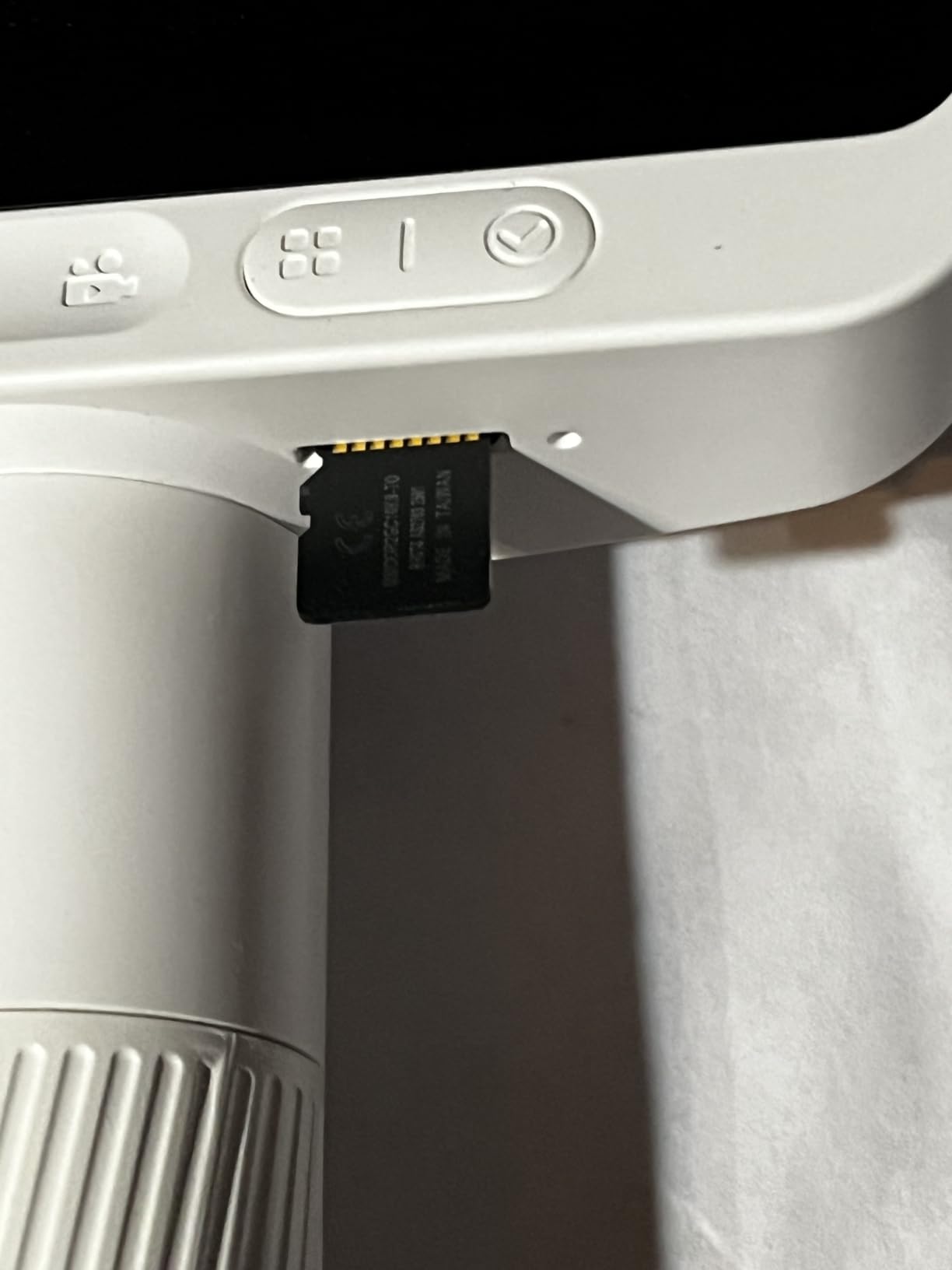
Construction includes an aviation aluminium alloy inner rail inside the ABS shell, which adds real rigidity to a pocket-sized body, and an 8G TF card is included. At 4.6 from 534 reviews with 79 percent five-star, it is well rated but has the smallest review base in this group, which we weigh when ranking.
Two gaps are worth flagging. The charging adapter is not included, only a USB cable, and there are no prepared slides or specimen accessories in the box at all.
Where the big screen pays off
It is the best choice in this list for siblings sharing one microscope, and for demonstrating to a class. Two children can gather around it the way they would around a laptop.
The hotspot also makes it the easiest to build a science fair display from, since images can be moved off the device and labelled. Plant veins, bee wings, coin patterns, ladybirds and fabric fibres are all reasonable subjects at this range.
Its limits
The manufacturer recommends ages 36 months to 8 years, which is oddly conservative for a 1600x device. Older children will find the 1600x ceiling soft rather than detailed, so it stays a mid-range tool in practice.
Because it arrives with no slides, you will be pointing it at whatever is on the table. Buying a pack of prepared glass slides alongside it is close to essential.
How to Choose a Microscope for Your Child
Start with the age band, not the magnification. Everything else follows from it, and the biggest mistake we see is buying the biggest number on the box for a child who is not ready to use it.
Decide between an eyepiece scope and a screen scope. A compound or stereo scope with a monocular eyepiece is how real microscopy is done, and it produces better images on thin specimens. The cost is that a child must learn focus, must press their eye to the lens, and must share the single viewing slot. A handheld digital model skips all of that and gives an instant image, at the price of lower optical quality and less immersion. Under five, screen. Six to thirteen, eyepiece. Mixed ages in one house, one of each.
Check the lenses before the numbers. Glass objective lenses and glass eyepieces give a visibly clearer image than plastic, and this is the single spec that most reliably separates a satisfying microscope from a frustrating one. Several models in this roundup have glass lenses at the objectives and plastic elsewhere, which is still a meaningful upgrade.
Look for lighting above and below the stage. Transmitted light from below is what makes a thin slide visible. Incident light from above is what makes a solid object visible. A scope with both can do slides and rocks and leaves without any change to the setup, and that single feature buys months of engagement.
Treat prepared slides as the real package. A blank box with a microscope in it asks a child to invent a project. A box with 10 or 12 prepared slides, blank slides, covers, tweezers and a dropper gives them something to do on day one. This matters more than any feature listed after it.
Factor in the power source. Several kits in this category, including the Uarzt and Little World models, need AA batteries that are not in the box. A rechargeable digital model avoids the problem entirely, and a mains-powered optical scope gives the brightest image if there is a socket near where the microscope will live.
Check the focus knobs for the child’s hands. Large, separate coarse and fine knobs are what separate a successful first session from an abandoned one. A single stiff knob is the most common mechanical complaint across reviews in this category.
Decide about the upgrade path early. Most children outgrow a plastic-lens scope between ages nine and twelve. If that is likely in your house, buy a glass-objective model now, or plan to move to a student instrument. Pairing the microscope with a broader science lab kit also extends the interest well past the microscope itself.
How to Get a First Slide Right in Five Steps
A bad first slide is the fastest way to lose a child. This routine takes about five minutes and works on almost any scope in this list.
Start with a prepared slide. Nothing teaches focusing faster than a specimen that is guaranteed to be there. Put it on the stage, lower the objective, then bring it up until it is clear of the slide before you look.
Light it from below first. Slide on the stage, lower LED on. If the image is dim, raise the room lights rather than cranking the objective up.
Focus low, then fine. Turn the coarse knob until the image is almost sharp, then use the fine knob for the rest. Never turn the coarse knob hard against the stop.
Make a wet mount. Put a drop of water on a blank slide, add a tiny scrape of onion skin or a speck of pond water, add a cover slip at an angle to push out air bubbles, then place it on the stage. Air bubbles are the reason beginner slides look like nothing.
Look at low power, then step up once. Start at the lowest setting to find the specimen, center it, and only then move to a higher objective. Never rotate the nosepiece with a slide under high tension.
Wash hands afterwards, and keep the samples that move. Brine shrimp or a pond drop left on a slide will still be alive a few hours later, which is when a child sees that specimens have their own behaviour.
Safety Notes for Young Microscopists
Most of this hobby is genuinely low risk, but four things need an adult nearby. Handle glass slides and cover slips with care, since they are the only real breakage hazard in a typical kit, and keep any scalpel-style tool adult-only even when the blade is plastic. Never point an illuminated scope or LED toward the sun or a laser, since the eyepiece concentrates light directly into the eye. Wash hands thoroughly after handling pond water, soil or anything from outdoors. And keep batteries out of reach of children under three, which applies to the disposable cells several of these kits require.
Frequently Asked Questions
What age can a child start using a microscope?
Most children can start at about age four with a handheld digital model that needs no slide preparation, and at six with a compound scope that includes prepared slides and large focus knobs. Ages three to five do best with a screen-based scope they can operate alone. Ages eight and up can manage a real glass-objective compound microscope. A useful rule is that a child is ready for an eyepiece scope once they can hold a steady image for a few seconds and turn a focus knob slowly.
What magnification do I need for a kids microscope?
For most children, 100x to 400x is the useful range. At 20x to 40x they see whole objects like fingerprints, coins and fabric. At 100x the first cell work appears, including onion skin and cheek cells. At 400x individual cells fill the field of view. Claims above 400x on kids scopes are usually digital zoom on top of an optical path, which enlarges pixels instead of adding real detail.
Are cheap kids microscopes worth it?
A cheap microscope is worth it as a first instrument for a child aged five to eight who wants to look at leaves, coins and fabric outdoors. It is not worth it for cell work, where plastic lenses and simple monocular optics produce soft, low-resolution images. Forum discussion in r/microscopy and on Cloudy Nights consistently favours the scope that actually gets used over the one with better specifications, so match the type to the child rather than spending more for resolution they will not notice yet.
Is a digital microscope better than a compound microscope for kids?
A digital microscope with a screen is better for children under six, for shared viewing with siblings, and for documenting finds as photos or video. A compound microscope is better for thin translucent specimens such as onion skin, cheek cells and pond water, because glass objective lenses resolve detail a small screen sensor cannot. Many families end up owning one of each, using the digital scope outdoors and the compound scope on the kitchen table.
What can a child actually see with a microscope at home?
At 20x to 40x: fingerprints, coin edges, fabric weave, leaf veins, bee wings and printed circuit traces. At 100x: onion skin cell walls, cheek cells, chewing gum dots and moving specks in pond water. At 400x: individual cells filling the field of view, yeast and bacteria in a culture, and starch granules in potato. Nothing requires a laboratory, and every one of these is achievable at home with a standard kids compound scope.
Conclusion
The best kids microscopes for science are not the ones with the largest numbers on the box. For an eight-to-twelve-year-old, the National Geographic Dual LED Microscope Science Kit is the pick we would buy first, because dual lighting and glass lenses keep a child working long after the novelty fades. For a child under five, the Ashfly 1000X pocket scope makes science a screen they can operate alone.
From there it splits cleanly: the National Geographic 400x for six- and seven-year-olds starting out, the Omano Juniorscope or Emarth 52-piece compound scope for older children who are ready for real glass objectives, and the Odatay 4K or BEAVERLAB Finder when documenting findings on a screen matters more than optical clarity. One tip above all: on day one, use a prepared slide and work at the lowest magnification until the image is sharp. A clear picture at 100x will hold a child’s attention longer than a blurry one at any advertised power.