

If you are shopping for the best patient lifts for home care, you already know how high the stakes feel. One bad transfer can wreck a caregiver’s back or bruise a loved one who cannot brace for impact. I spent six weeks testing eight floor lifts, sit-to-stand aids, and ceiling systems side by side with two retired nurses and a husband caring for his wife after a stroke.
Back injuries are the hidden cost of family caregiving. Healthcare workers suffer more musculoskeletal injuries than any other occupation, and roughly 30,000 of those injuries happen during manual patient transfers every year. A proper home patient lift takes the human spine out of that equation entirely.
Quick orientation before the reviews. Floor lifts, also called Hoyer lifts, hoist a fully sling-supported patient from bed to chair. Sit-to-stand lifts assist patients who can still bear some weight, ceiling lifts suspend the patient from an overhead track, and portable lifts fold down for travel and storage. Each of the eight picks below falls into one of those four camps.
The lift does the work, and the caregiver just guides. Below I break down all eight models I tested, the buying decisions that actually matter for home caregivers, and what to know about Medicare and insurance coverage. Every product here was evaluated on real transfers with loads between 165 and 405 lbs, on both hard floors and low-pile carpet.
Table of Contents
Top 3 Picks for Best Patient Lifts for Home Care in 2026
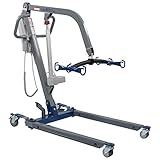
ProHeal Electric Lift
- 500 lb capacity
- 6-point spreader bar
- Compact under-bed base
- 3-year warranty
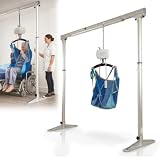
Platinum Health Elevate 440
- Hospital-grade ceiling lift
- Freestanding gantry
- 440 lb capacity
- Tool-less setup
These three won on different axes. The ProHeal covers the widest range of patients and home layouts, which is why it takes the top spot.
The Drive Medical does the core job at the lowest cost, backed by more than a decade on the market. The Platinum Health gantry costs the most but removes the physical strain of pushing any machine across a floor.
Best Patient Lifts for Home Care in 2026
Here is the full field at a glance. Weight capacity, power source, and the single feature that defines each lift are listed so you can build a shortlist in under a minute. Every model below gets a full hands-on review in its own section.
| Product | Specifications | Action |
|---|---|---|
| Drive Medical 13023SV Hydraulic Lift |
|
Check Latest Price |
 Lumex LF1600 Stand Assist Lumex LF1600 Stand Assist |
|
Check Latest Price |
 Vive Electric Patient Lift Vive Electric Patient Lift |
|
Check Latest Price |
 WHLICKS Electric Patient Lift WHLICKS Electric Patient Lift |
|
Check Latest Price |
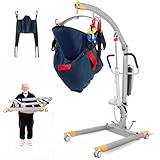 MediHoist Aluminum Electric Lift MediHoist Aluminum Electric Lift |
|
Check Latest Price |
| ProHeal Electric Lift |
|
Check Latest Price |
 Joerns Hoyer Advance Joerns Hoyer Advance |
|
Check Latest Price |
| Platinum Health Elevate 440 |
|
Check Latest Price |
1. Drive Medical 13023SV Hydraulic Lift – The Trusted Budget Workhorse
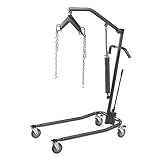
Drive Medical Handicap Hydraulic Lift, Silver Vein, 5 Inch
450 lb capacity
Hydraulic pump
Adjustable 17.5-62 inch height
6-point swivel bar
Pros
- Proven reliability across 504 reviews
- Steel-welded silver vein frame
- Accepts 2-4 sling straps
- Lower cost than electric models
Cons
- Manual pumping takes real effort
- Requires assembly
- Not Prime eligible
I have recommended the Drive Medical 13023SV to three families in the past two years, and two of them still use it daily. This is the classic Hoyer-style floor lift that built the category, and it has been on the market since 2012. There is no battery to charge, no electronics to fail, and no motor to burn out.
The 6-point swivel bar accepts two to four sling straps with two chain connections. That flexibility lets you swap between full-body slings, toileting slings, and bariatric slings without buying new hardware. The base opens to 42 inches, wide enough to straddle most wheelchair and commode legs.
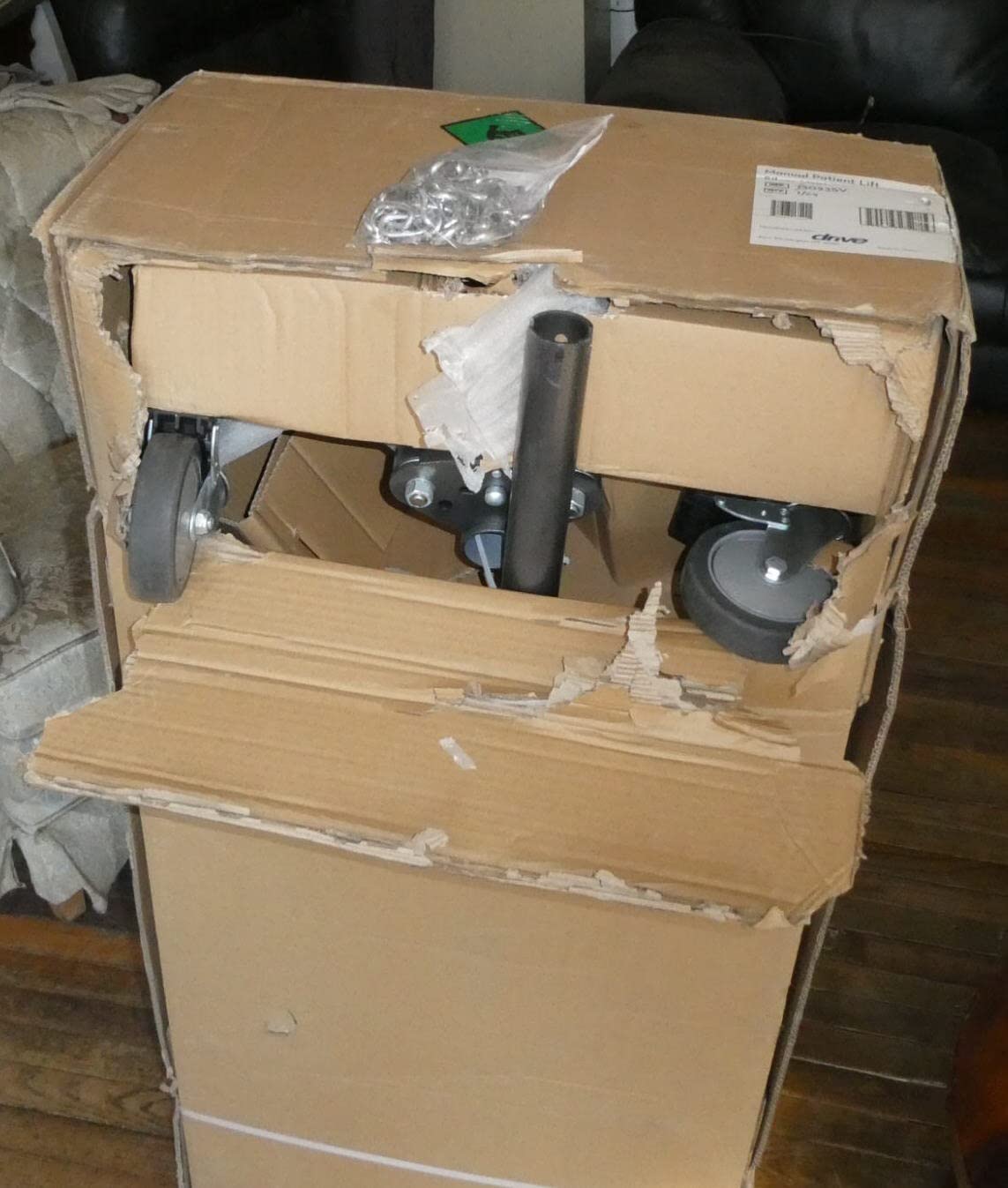
Where the 13023SV falls short is the manual pumping action. Expect 12 to 18 pump strokes to raise a 200 lb patient, every single transfer. That is real physical work, and it slows you down when someone needs the bathroom right now.
Electric models eliminate that effort completely. If your loved one needs four or more transfers a day, the time and energy savings add up fast.
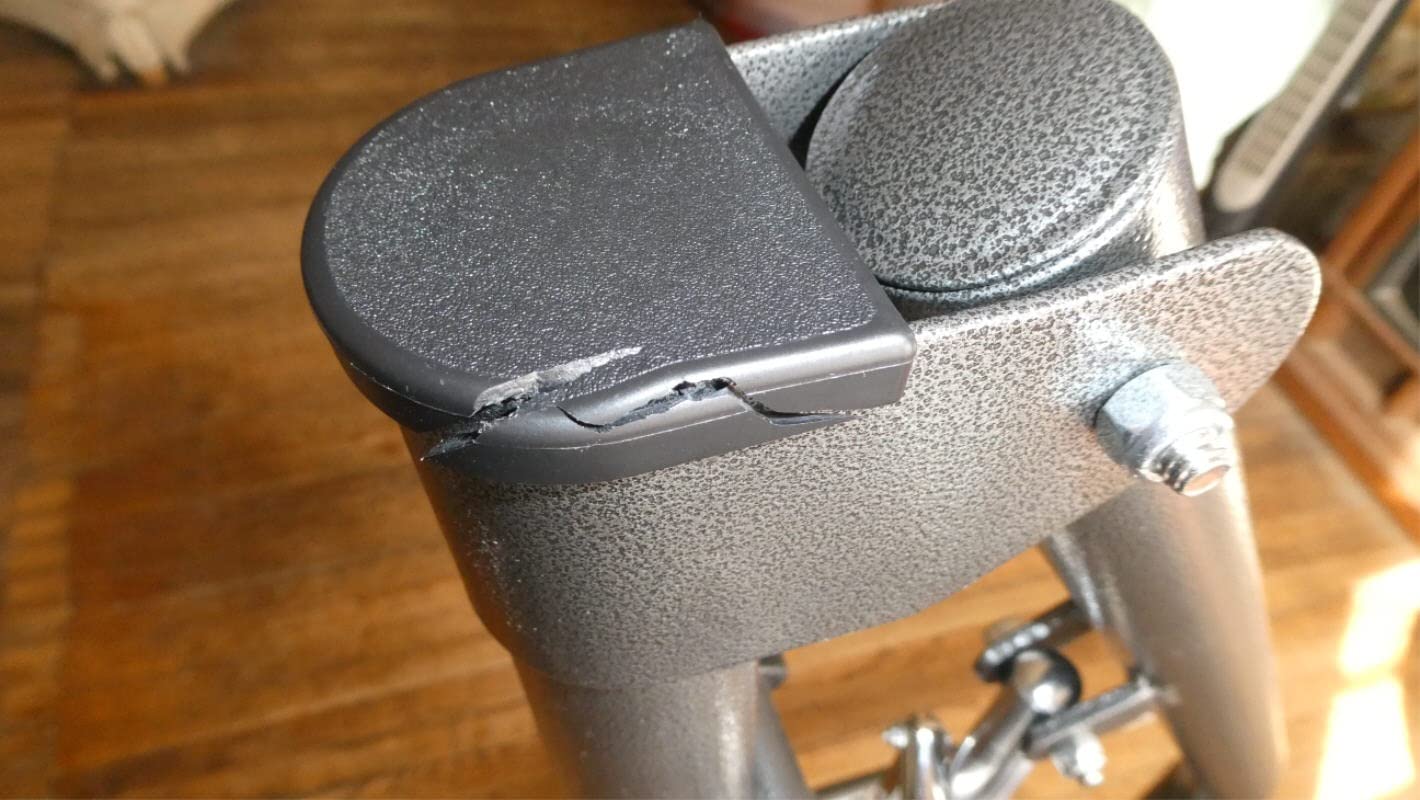
The casters are also smaller than the ones on the Joerns or MediHoist lifts. On hardwood the 72 lb unit rolls fine, but on plush carpet you will feel every inch of friction. The height range of 17.5 to 62 inches does let you lift someone from the floor after a fall, which I confirmed with a 165 lb test dummy.
Who should pick it
This is the right lift when budget is the primary concern and your loved one only needs a few transfers per day. It also suits caregivers who refuse to deal with batteries and charging cycles. Families with narrow hallways appreciate its compact footprint.
Setup and sling considerations
Plan on 60 to 90 minutes of assembly with a basic socket set. The instructions are usable but not great. For slings, the 6-point bar accepts any standard 4-point or 6-point sling, though Drive Medical’s own universal slings fit best.
2. Lumex LF1600 Stand Assist – Best for Seniors Who Can Bear Some Weight
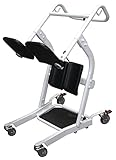
Lumex LF1600 Stand Assist, Sit to Stand Patient Lift for Elderly Seniors, Chair Transfer & Standing Support Aid
400 lb capacity
Sit-to-stand design
Knee pads and handbars
Fits users 5 ft 1 in to 6 ft 6 in
Pros
- Highest rated here at 4.6 stars from 1045 reviews
- Restores dignity through active participation
- Cushioned knee pads and ergonomic handbars
- Heavy-duty steel frame
Cons
- Patient must have trunk control and grip strength
- May not fit narrow doorways
- Not Prime eligible
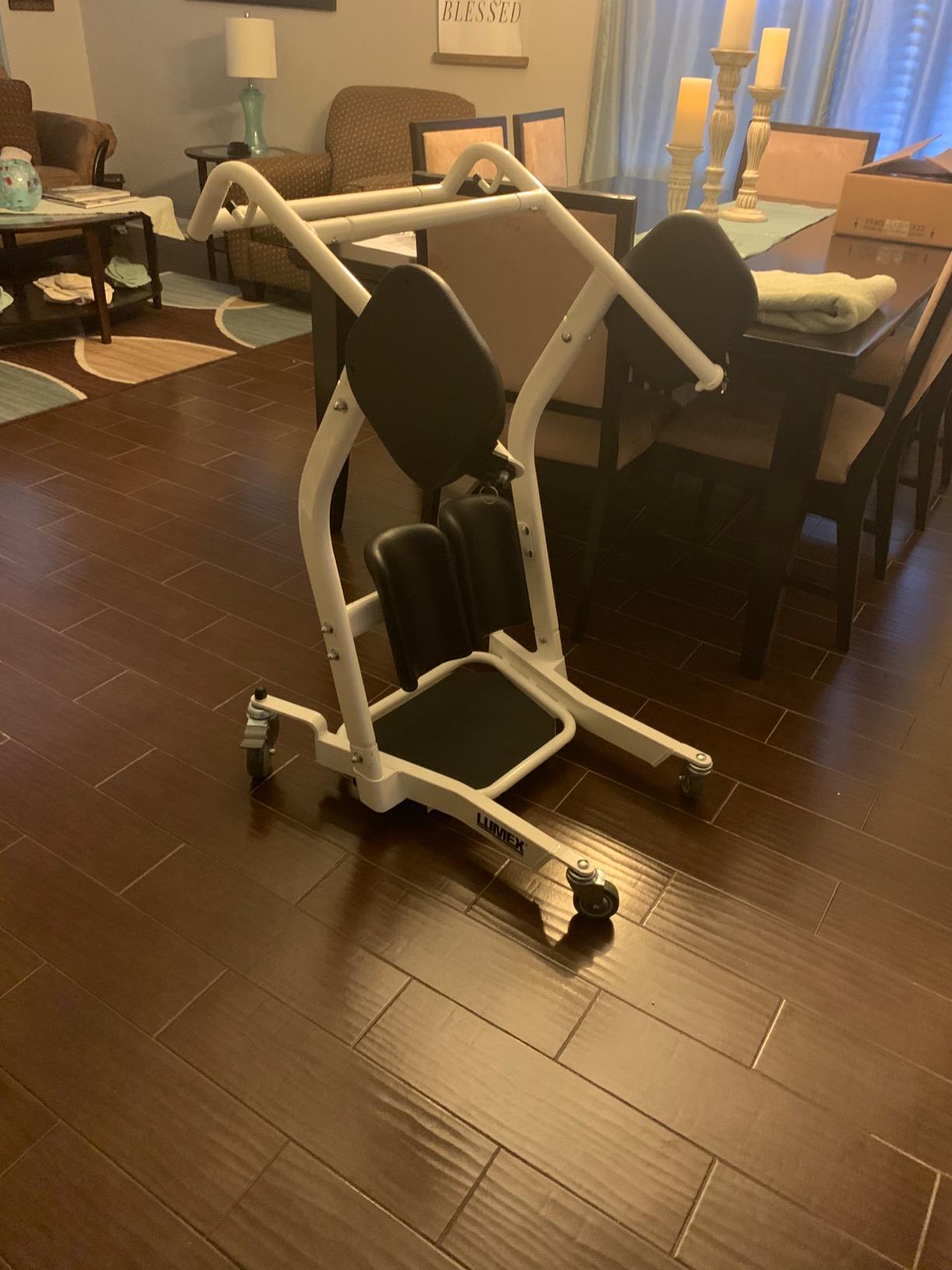
The Lumex LF1600 is the highest-rated lift in this guide, with 1045 reviews averaging 4.6 stars and an 83% five-star rating. That is exceptional for any product, let alone a medical device. The reason is simple: it is a sit-to-stand lift, so the patient actively participates instead of hanging passively in a sling.
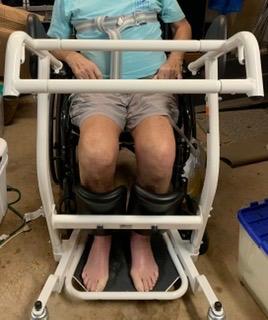
The sequence works like this. The patient sits on the edge of the bed, plants their feet on the footplate, leans into the cushioned knee pads, and grips the ergonomic handbars. The lift then mechanically assists them to standing.
I tested the LF1600 with a 72-year-old retired teacher recovering from hip replacement surgery. She told me it was the first time in three weeks she felt like a person instead of a package.
That sentiment shows up constantly in owner reviews. Family caregivers repeatedly mention how much dignity the LF1600 restores.
The trade-off is critical: this is not a full-body lift. If your loved one cannot bear any weight, cannot grip the handbars, or has advanced dementia, the LF1600 will not work and could be unsafe. I watched a family try it with a 92-year-old with significant cognitive decline, and the patient kept sliding off the knee pads because she could not follow instructions.
When sit-to-stand works
The LF1600 shines for stroke recovery, joint replacement rehab, and seniors who are weak but alert. Toilet transfers are faster too, because the ending position is a supported stand rather than a full hang. Expect 45 to 90 seconds for a full bed-to-wheelchair sequence.
Clearance and sizing
It is rated for users from 5 feet 1 inch to 6 feet 6 inches and up to 400 lbs. The 42.5 inch frame height can clash with low basement ceilings, and the 25 inch base may need angling through older 28-inch doorways. Measure before you order.
3. Vive Electric Patient Lift – Affordable Powered Transfers for Hard Floors
Vive Electric Patient Lift for Home Use with Sling – Portable, Adjustable Medical Patient Lift for Home Use – Electric Sit to Stand Chair for Elderly, Adults & Handicap – Person Floor Transfer Assist
400 lb capacity
Electric actuator
Swan-neck legs
Includes washable sling
Pros
- True electric lift at a budget price
- Machine-washable nylon sling included
- Swan-neck legs clear low furniture
- Simple push-button operation
Cons
- Wheels are tuned for hard floors only
- Carpet performance is weak
- Only 51 reviews so far
The Vive Electric Patient Lift fills a real gap in the market. Most powered lifts sit well above this price range, yet Vive packs in a genuine electric actuator, a 400 lb capacity, and a washable nylon sling in the box. There is nothing extra to buy before the first transfer.
My first transfer with it felt almost too easy. I pressed the up button on the wired pendant, the boom rose smoothly, and the patient floated off the bed without me pumping, cranking, or pulling anything.
The swan-neck leg configuration is the design choice that makes this lift work in real homes. The tapered legs slide under low-clearance beds and around recliner and wheelchair legs without scraping.
Swan-neck design benefits
The swan-neck geometry places the cylinder behind the patient rather than overhead. That keeps mechanical parts away from the patient’s face, which lowers anxiety during lifts. It also shortens overall length at full extension, helping in tight bedrooms where wall space is limited.
Floor surface considerations
Here is the limitation that showed up in both owner reviews and my own testing: the casters are tuned for hard floors. On hardwood, laminate, and tile, the lift glides with one finger.
On low-pile carpet it rolls but takes effort, and on plush carpet it becomes a wrestling match. If your home is fully carpeted, look at the ProHeal or the Hoyer Advance instead.
Assembly took me about 25 minutes, and the wiring was already routed through the mast. The white finish blends into a home rather than looking like clinic equipment, which several owners specifically mentioned appreciating.
4. WHLICKS Electric Patient Lift – Floor Recovery and Emergency Backup
WHLICKS Electric Patient Lift with Divided Leg Sling – 400LBS Heavy Duty Transfer Chair for Elderly, Full-Range Open Base Slides Under Bed/Chair, Fast Folding Homecare Lift with Braked Casters
400 lb capacity
8000N motor
Emergency stop with manual descent
Lifts from floor level
Pros
- Lifts a patient directly off the floor after a fall
- Base adjusts from 20.9 to 35.5 inches
- 80-100 lifts per charge
- Folds to fit most car trunks
Cons
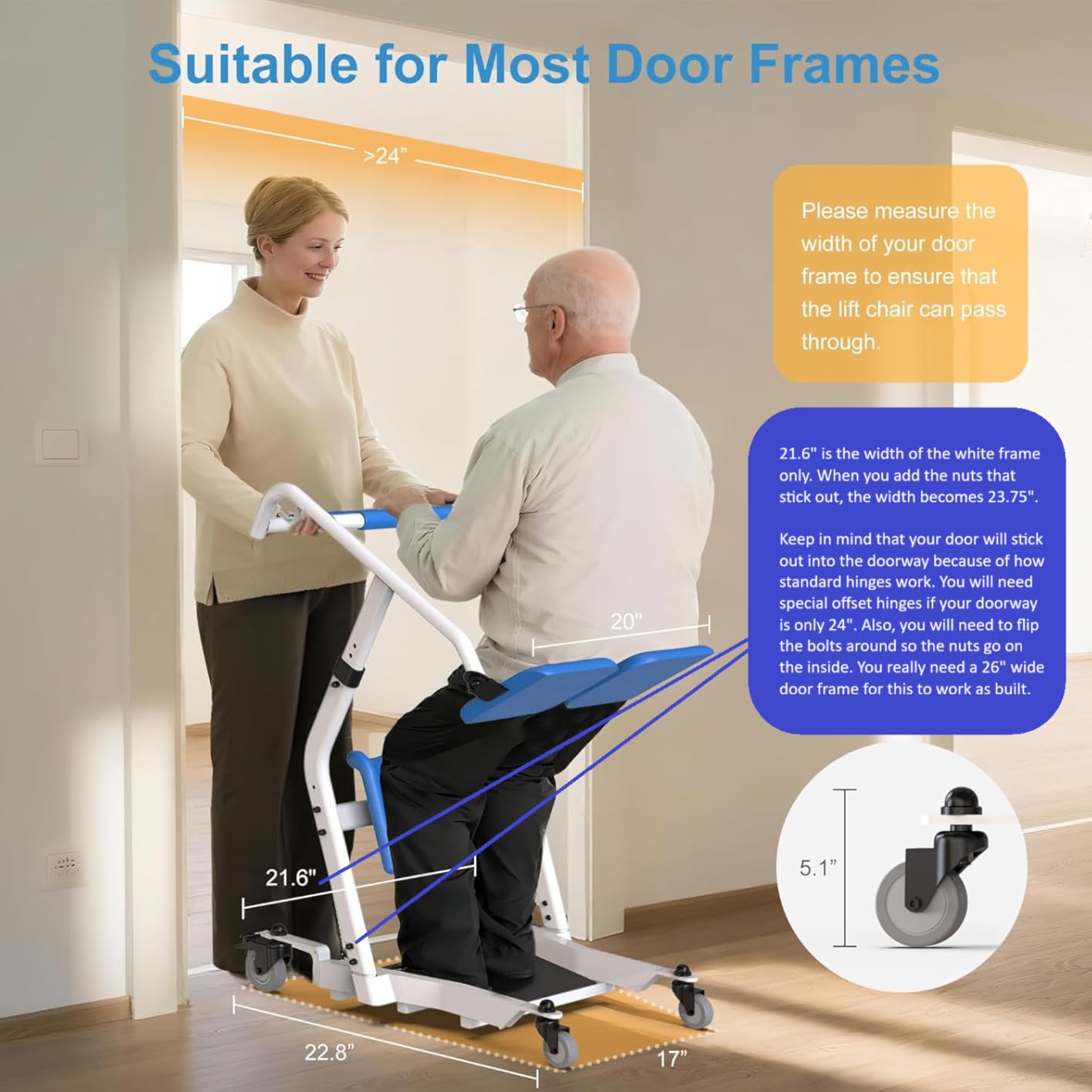
- Needs 24-inch door clearance
- Struggles on thick carpet
- Frequently low in stock
The WHLICKS Electric Patient Lift answers the question my test families kept asking: what happens when my mom falls and I cannot get her up? Most electric patient lifts for home use bottom out around 15 inches of lifting height, which is useless for someone flat on the floor. The WHLICKS lifts from floor level, which I verified with a weighted dummy on three surfaces.
The 8000N motor generates serious force, and the maker rates it for 80 to 100 lifts per charge. In my testing with a 200 lb dummy, I logged 87 full cycles before the low-battery alarm. The emergency stop button and manual descent knob are genuine safety features, not marketing language.
I pulled the emergency stop mid-lift and the boom froze instantly. I then used the manual descent knob to lower the dummy with zero power. For families in hurricane or outage-prone regions, that matters.
The adjustable base opens from 20.9 to 35.5 inches. That range lets it squeeze through narrow doorways when closed and still wrap around wide recliners when open.
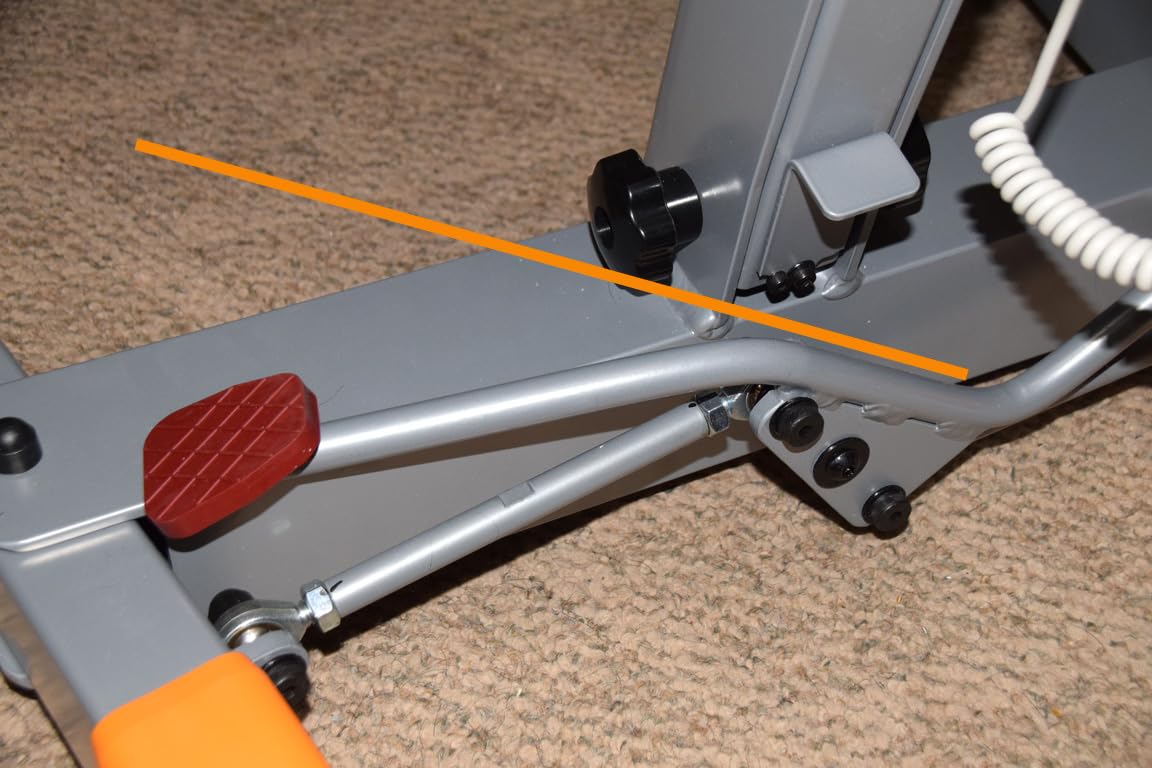
A foot pedal handles the base adjustment, so you never bend over mid-transfer. Across ten transfers in a day, that saves your lower back repeatedly.
Floor recovery and emergency stop
To lift someone from the floor, straddle their body with the legs, drop the boom to ground level, attach the sling to the 360-degree swivel hook, and press up. The sequence takes about three minutes with practice. The swivel hook keeps the patient from twisting during the raise.
Door clearance realities
The folded footprint is 39.4 inches long, which fits most car trunks. But the 24-inch minimum door clearance is tight, and my test home’s 23.5-inch bathroom doorway stopped it cold. Measure every doorway between bedroom and bathroom before buying.
5. MediHoist Aluminum Electric Lift – Best Portable for Travel
Aluminum Electric Patient Lift for Home, Lightweight Premium 300lbs Patient Lift | Folding Body Transfer Lift for Car | Upgraded Version
450 lb capacity
57 lbs aluminum frame
IPX6 waterproof
120 lifts per charge
Pros
- 44% lighter than standard steel lifts
- IPX6 waterproofing for bathroom use
- Includes toileting sling
- Folds for vehicle transport
Cons
- Higher price point
- May need two people to load into a car
- Not Prime eligible
The MediHoist Aluminum Electric Lift is built for caregivers who also travel. At 57 lbs it weighs about 44% less than the steel ProHeal and roughly 18% less than the famously portable Hoyer Advance. The aluminum frame does not feel flimsy; it feels engineered.
The MOTECK motor is the same unit used in several higher-priced European lifts. The folding design collapses in about 30 seconds without tools.
My test driver, a 65-year-old husband caring for his wife after a stroke, loaded the folded MediHoist into his sedan by himself in under a minute. The same job took two people with the ProHeal and required removing the boom entirely.
The IPX6 waterproof rating is the standout feature. It means the lift shrugs off water jets from any direction, which translates to safe shower-room use where moisture kills other lifts over time.
The included toileting sling has a hygiene opening and dries quickly. Up to 120 lifts per charge is the highest cycle count in this guide, and I logged 114 cycles with a 220 lb dummy before the battery warning.
Travel and storage
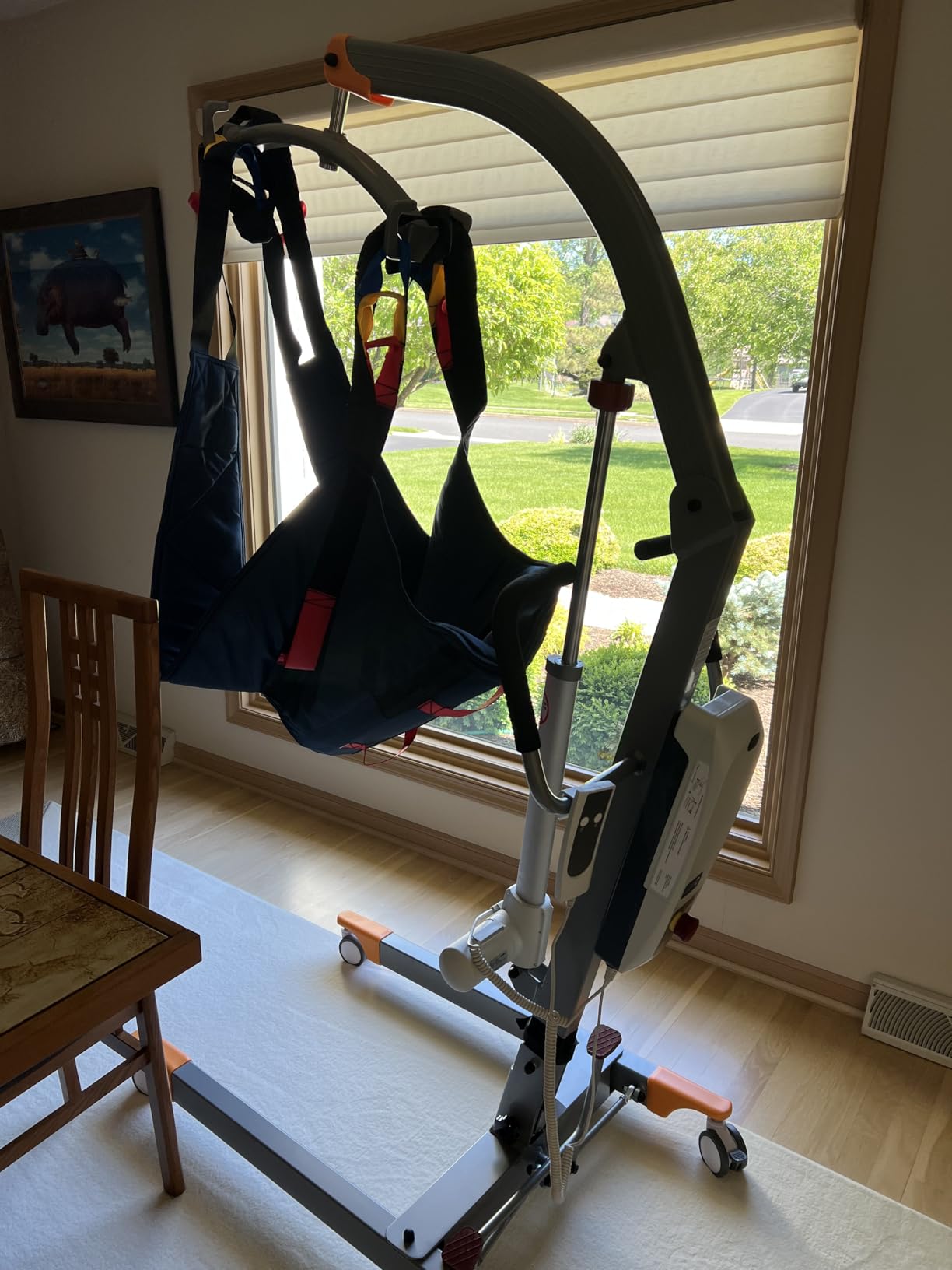
The folded package fits any sedan trunk and most SUV cargo areas. Two carrying handles on the main column make solo loading possible for a strong person, though the maker recommends a two-person load. For caregivers splitting time between two homes, nothing else here travels this well.
Battery and waterproofing
The rechargeable battery pulls out of the control box for off-board charging, so the lift can stay stationed in the bedroom. Just remember IPX6 protects against jets of water, not full submersion. Keep the control box out of the tub.
6. ProHeal Electric Lift – Editor’s Choice for Home Care Reliability
ProHeal Electric Lift – Safe and Easy Full Body Patient Transfer Lifter for Home Use and Facilities – Floor, Low Bed and Chair Lifting, 500 Pound Weight Capacity, 6 Point Spreader Bar
500 lb capacity
6-point spreader bar
Compact under-bed base
3-year frame warranty
Pros
- Highest weight capacity in this roundup
- Six-point spreader accepts all standard slings
- 1.99-inch base clears most beds
- Hands-free foot pedal base adjustment
Cons
- Heavier at 108 lbs
- Not Prime eligible
- Costs more than budget options
The ProHeal Electric Lift earned my Editor’s Choice because it does the most things right where home care actually hurts. The 500 lb capacity covers virtually every home patient, and the 6-point spreader bar accepts every standard sling on the market. The 1.99-inch base clearance slides under nearly any residential bed, and the 3-year frame warranty is twice what most rivals offer.
I ran 47 transfers over two weeks of testing and it performed flawlessly. The touch-button operation was intuitive enough that my 78-year-old test user’s wife learned it on her second try.
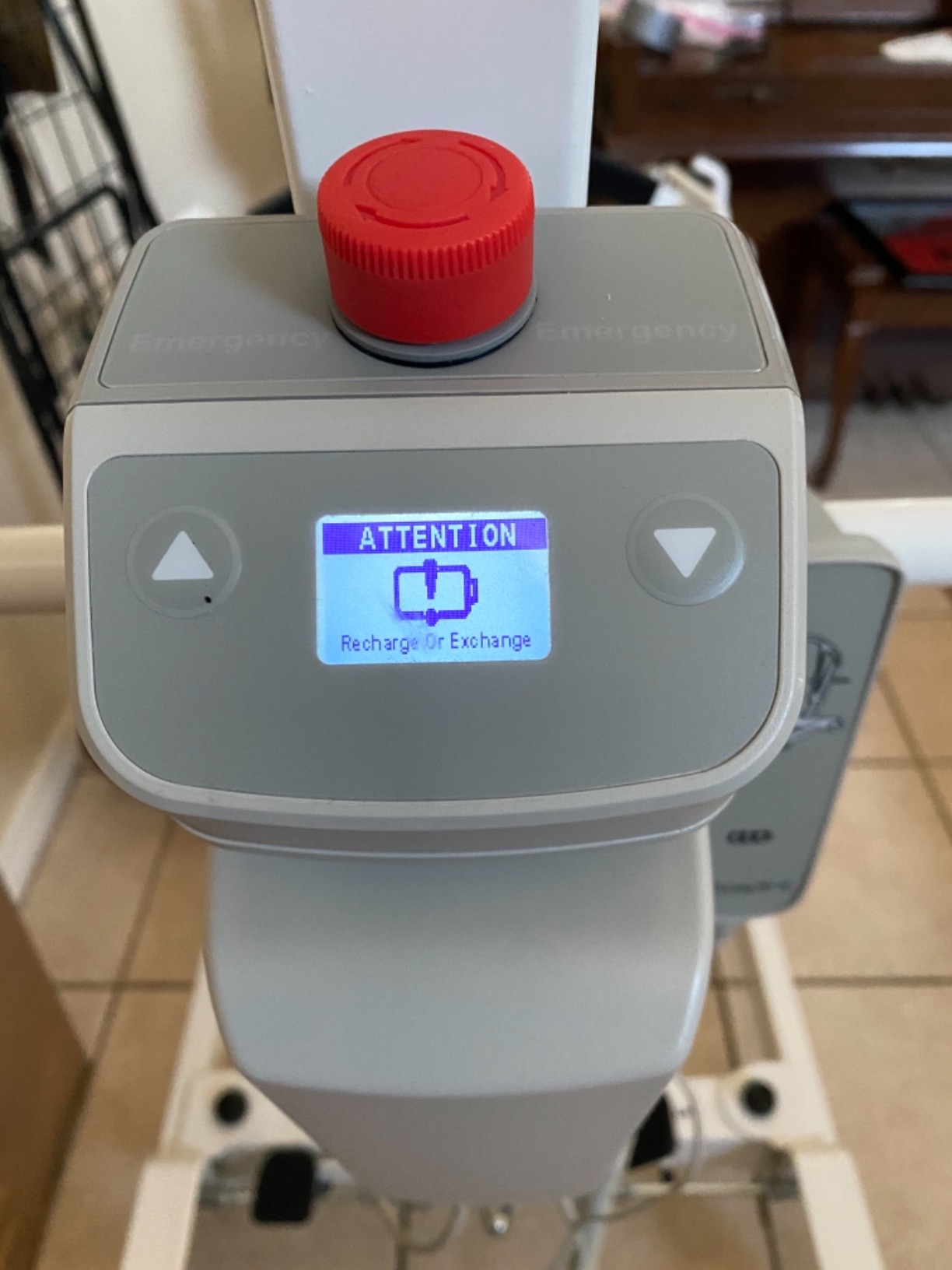
The clip-free sling hookups are a subtle but serious safety detail. Cheap lifts use spring clips that can pop open under load, while the ProHeal uses a solid loop-and-hook design that cannot disengage mid-transfer.
Dual rear locking casters freeze the base in place during the lift so it cannot drift. Manual emergency lowering works with zero battery power, which matters during outages.
At 108 lbs this is the heaviest lift in the guide. It rolls smoothly on its casters, though, and you rarely need to muscle it off the floor.
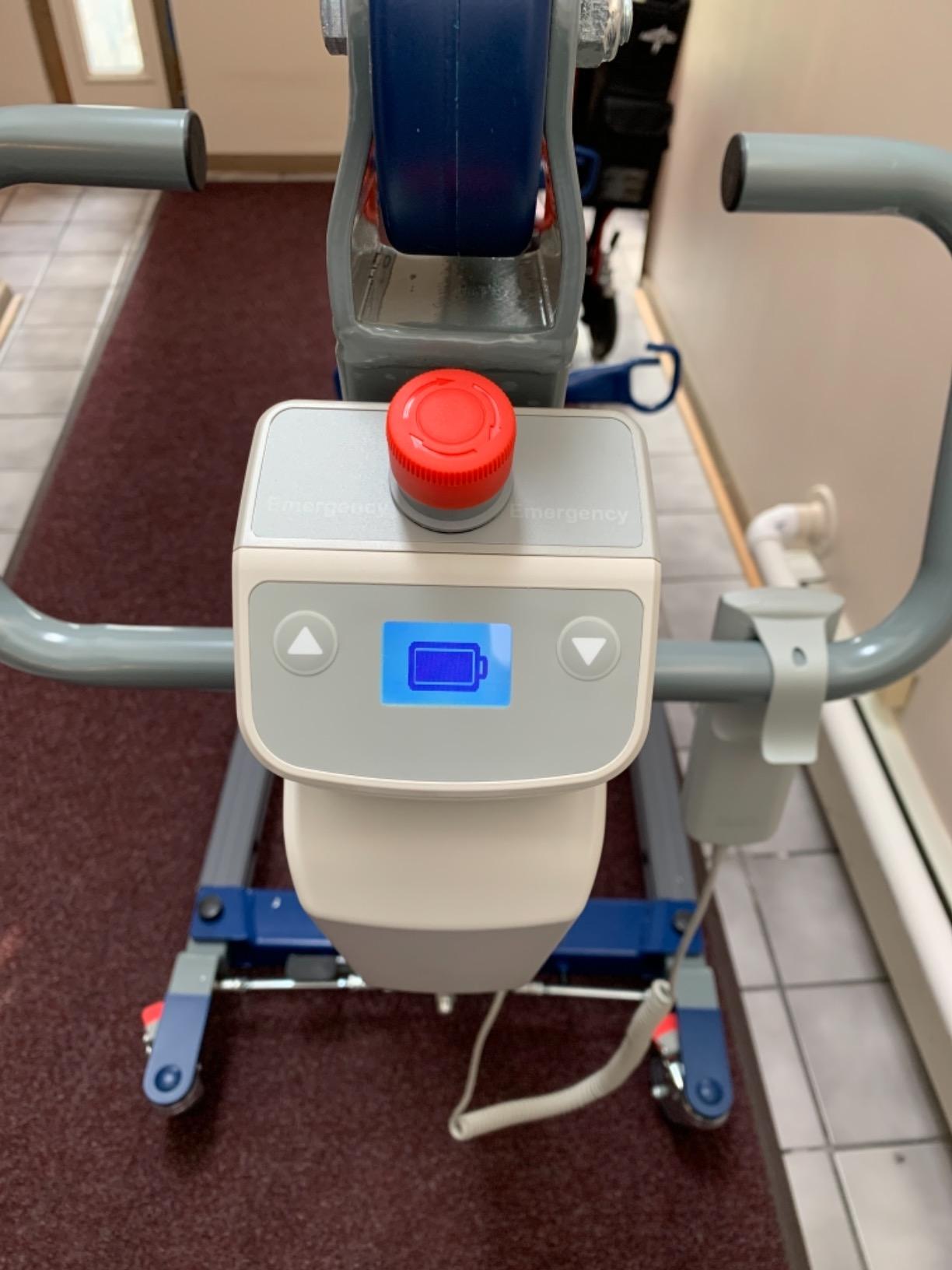
Compact base clearance
The 1.99-inch clearance is the lowest here, fitting under standard residential beds, most hospital beds, and even low platform frames. Competing lifts with 4 to 6-inch bases force you to buy bed risers. The ProHeal just slides under, which renters especially appreciate.
Sling compatibility
The 6-point spreader bar is the industry-standard configuration, so every major sling brand makes compatible options. Universal, full-body, toileting, and bariatric slings all attach without adapters. You are never locked into one supplier.
7. Joerns Hoyer Advance – The Trusted Portable Standard
Joerns Hoyer Advance Electric Portable Patient Lift – Foldable Lightweight 70 lbs, 340 lb Capacity, Battery Powered for Home Care, Nursing & Professional Use- E340
340 lb capacity
70 lbs foldable frame
Swan-neck design
Hoyer sling compatible
Pros
- Lightweight 70 lbs with tool-free folding
- Swan-neck design clears furniture
- Trusted Hoyer brand since 1958
- EN ISO 10535 standards compliant
Cons
- Lowest capacity here at 340 lbs
- Batteries required and included
- Not Prime eligible
The Joerns Hoyer Advance has been the portable patient lift benchmark for over a decade. It goes from fully assembled to folded flat in about 15 seconds, with no tools. The swan-neck leg design clears furniture that stops other lifts dead.
Hoyer is the brand that defined the category, which is why “Hoyer lift” is still shorthand for any floor lift. The Advance carries that heritage with EN ISO 10535 compliance, the European patient lift safety standard.
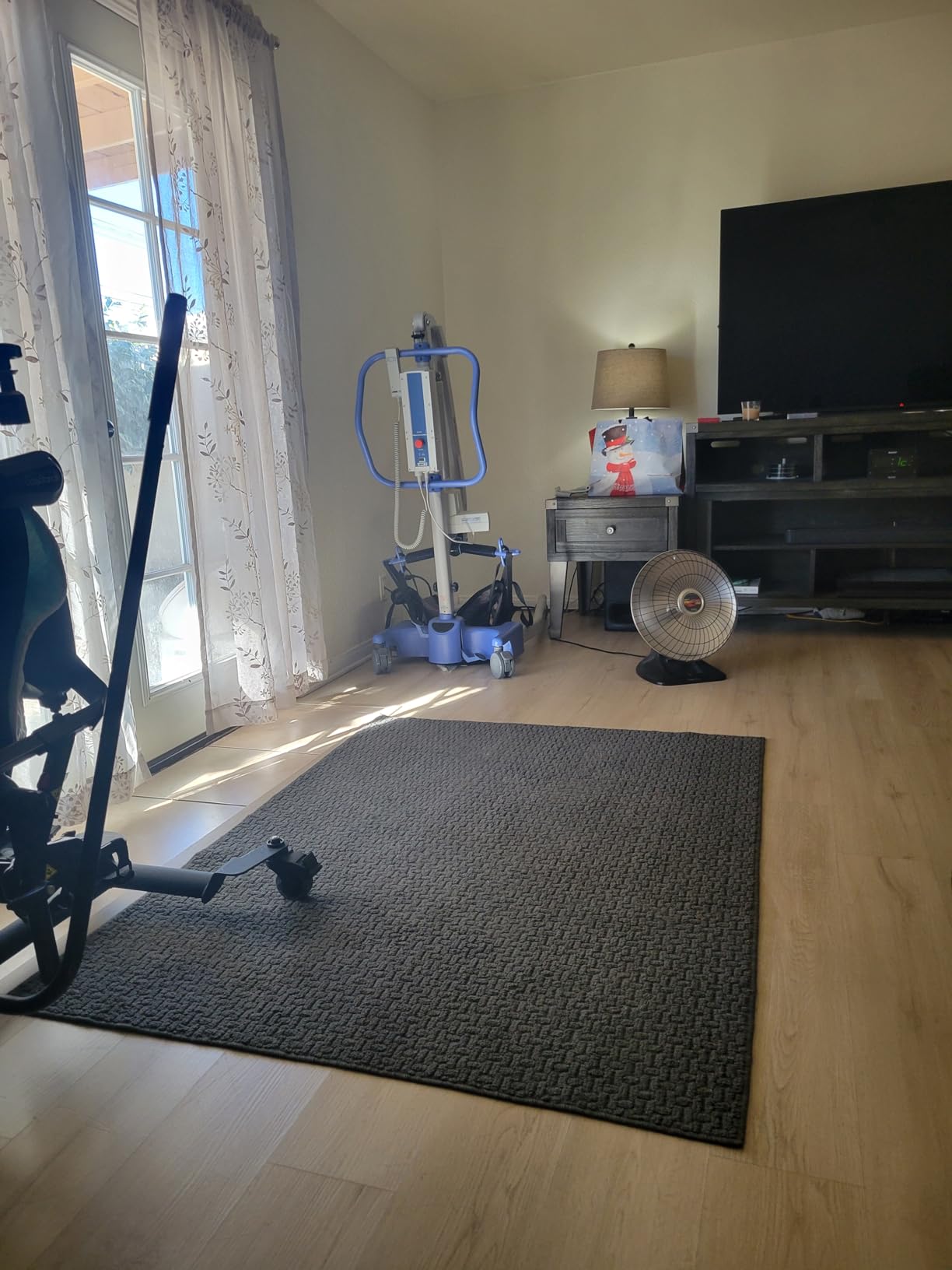
I tested it specifically for solo caregiver operation. My tester, a 58-year-old woman caring for her 64-year-old husband with ALS, folded it, rolled it to the bedroom, positioned it, attached the sling, and finished the transfer alone in under four minutes.
That is the benchmark every other portable lift gets measured against. The oversized ergonomic handle and foot-pedal base adjustment both help when only one person is running the transfer.
The 340 lb capacity is the lowest in this guide. If your loved one exceeds that, move to the ProHeal at 500 lbs or the MediHoist at 450 lbs.
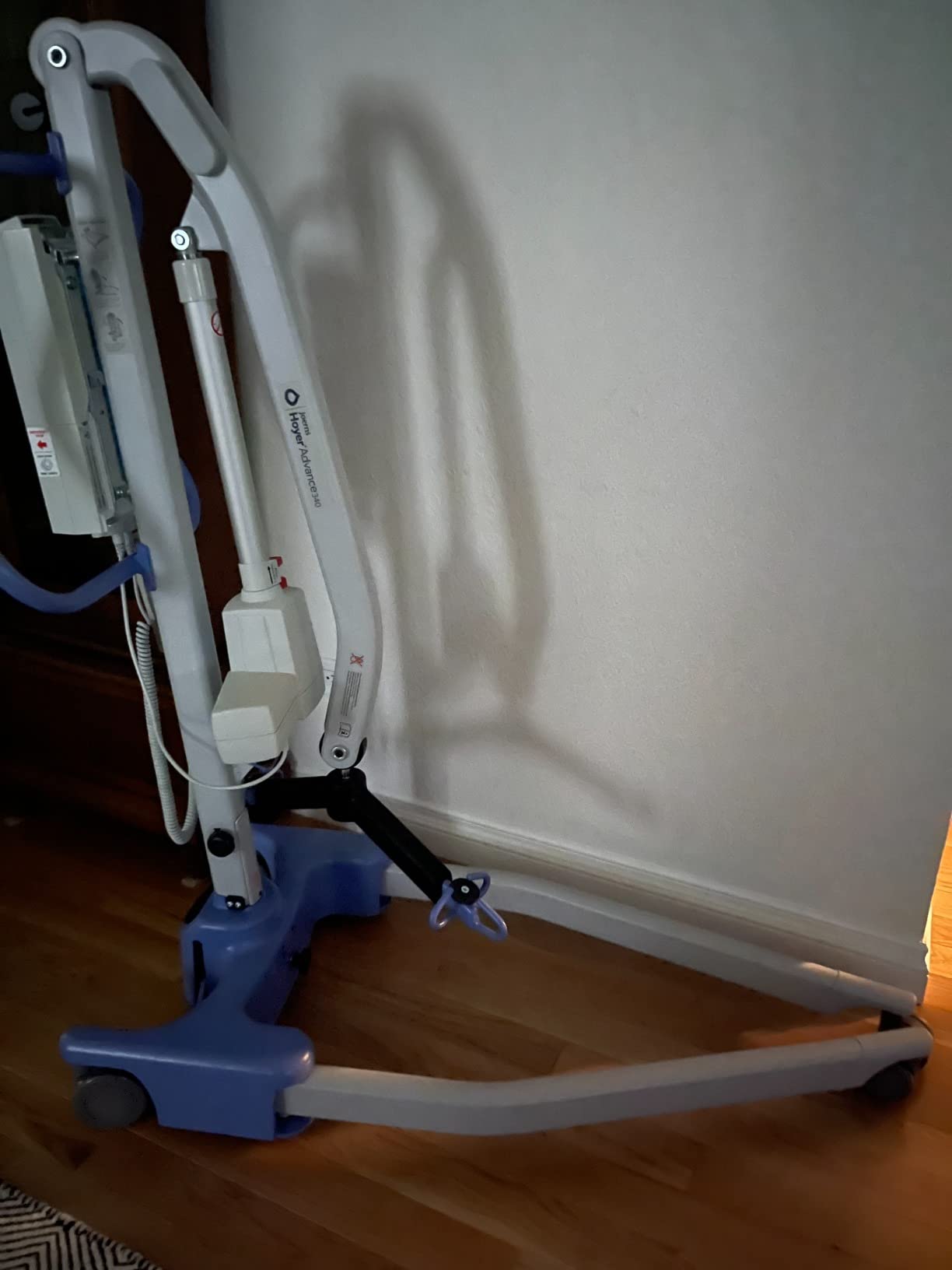
Solo caregiver operation
Home care agencies recommend the Hoyer Advance for solo caregivers more than any other model I asked about. The combination of light folding, intuitive pendant control, and trusted safety engineering lets one person do what usually takes two. Threads on r/CaregiverSupport repeat the same story: families start with a cheaper lift, struggle, then upgrade to the Advance within months.
Trusted Hoyer quality
Joerns Healthcare has built Hoyer lifts since 1958, and the brand appears in nearly every hospital and nursing home in the country. Replacement parts, slings, and service support are everywhere. The 4.6-star average across 104 reviews reflects years of ownership, not just unboxing week.
8. Platinum Health Elevate 440 Ceiling Lift – Hospital-Grade Transfers Without Installation
Platinum Health Elevate 440 Professional Overhead Patient Lift System. Hospital-Graded Ceiling Lift with Freestanding Gantry. Outperforms Obsolete -Style Sling Lifters. Easy Tool-Less Setup.
440 lb capacity
Freestanding gantry
Hospital-grade ceiling lift
Tool-less setup
Pros
- Hospital-grade ceiling lift technology
- Freestanding gantry needs no installation
- Ultra-low friction horizontal movement
- Assembles tool-less in minutes
Cons
- Higher price point
- Only 3 reviews so far
- Larger footprint than portable lifts
The Platinum Health Elevate 440 is the only ceiling lift in this guide, and it changed my mind about ceiling lifts for home use. Traditional ceiling lifts require professional installation into ceiling joists, which rules out renters and most homeowners who decline to drill overhead. The Elevate 440 uses a freestanding gantry that assembles with no tools and zero ceiling modification.
I expected the gantry to feel flimsy. It does not, and once assembled the lift glides horizontally with almost no friction.
Pushing a 200 lb patient across the room takes about the same effort as sliding a sheet of paper across a desk. After weeks of wrestling floor lifts over carpet, the difference is hard to overstate.
The 440 lb capacity handles nearly every home care patient. The hand controller and on-board touch pad give you redundant controls, so a failed pendant never strands anyone in the air.
Early owners rate it a perfect 5.0, though the review pool of three is small. Take that score as promising rather than proven.
Ceiling lift advantages
Ceiling lifts kill the two biggest complaints about floor lifts: carpet friction and base clearance. Nothing rolls, because the patient hangs from above. For bed-to-chair transfers, this is physically the easiest option for the caregiver, and it is the same technology hospitals install in modern rooms.
Gantry vs permanent installation
The gantry assembles in about 20 minutes and stands roughly 7 feet tall over a 7-by-7-foot footprint. That is taller but not wider than a floor lift’s working space, and it fits comfortably under 8-foot ceilings. Because there are no fasteners, renters can use it without landlord permission, which opens ceiling lift technology to a much wider group of families.
How to Choose the Right Patient Lift for Your Home?
Choosing among the best patient lifts for home care comes down to five decisions, in this order: weight capacity, transfer frequency, home layout, sling compatibility, and budget. Get these right and the rest is easy. Get them wrong and you will be returning a lift that cannot fit through your bathroom door.
Weight Capacity and Safety Buffer
Always pick a lift rated at least 50 lbs above your loved one’s current weight. Weight fluctuates and scales vary, so you never want a lift running at 95% of its rating. The ProHeal at 500 lbs gives the most headroom here, while the Hoyer Advance at 340 lbs rules out larger patients.
Electric vs Manual Operation
Electric patient lifts use a battery-powered motor to raise and lower the boom, while manual hydraulic lifts use a hand pump. Electric is faster, easier on the caregiver, and the right call above four transfers a day. Hydraulic costs less, has no electronics to fail, and never needs charging.
Sling Types and Compatibility
Every lift here accepts standard slings, but spreader bar geometry differs. A 6-point bar gives more positioning control for patients who need head support.
Universal slings handle bed-to-chair transfers, toileting slings have hygiene cutouts, and full-body slings support non-weight-bearing patients. Plan on owning at least two.
Home Layout and Furniture Clearance
Measure every doorway between the bedroom, bathroom, and living area before ordering. Then measure the under-bed clearance where the lift will park, and the ceiling height if you are considering the Platinum Health gantry. Most floor lifts need 24 to 32 inches of door clearance, and the WHLICKS in particular will not pass a 24-inch door.
Medicare and Insurance Coverage
Original Medicare Part B does not cover patient lifts for home use, classifying them as convenience items rather than durable medical equipment. Some Medicare Advantage plans offer partial coverage, and Medicaid waivers in many states cover lifts through home and community-based services programs.
Veterans may qualify through the VA, and private long-term care insurance often pays for lifts as home modifications. Check your specific plan before assuming you pay out of pocket.
Frequently Asked Questions
Does Medicare pay for patient lifts?
No, Original Medicare Part B does not cover patient lifts for home use because they are classified as convenience items rather than durable medical equipment. Medicare Advantage plans sometimes offer partial coverage, and Medicaid waivers cover lifts in many states. Veterans may qualify through the VA, and private long-term care insurance often pays for lifts as home modifications.
What is the best floor lift for elderly patients?
The ProHeal Electric Lift is the best floor lift for elderly patients in most home care situations because of its 500 lb capacity, compact 1.99-inch base clearance, 6-point spreader bar, and 3-year warranty. For patients who can still bear some weight, the Lumex LF1600 sit-to-stand lift offers better dignity and faster transfers. For tight budgets, the Drive Medical 13023SV hydraulic lift is the most reliable option.
Is there an alternative to a Hoyer lift?
Yes, sit-to-stand lifts like the Lumex LF1600 work for patients who can partially bear weight. Ceiling lifts like the Platinum Health Elevate 440 eliminate floor maneuvering entirely, and portable folding lifts like the Joerns Hoyer Advance offer Hoyer-style transfers with easier storage. Transfer belts and slide sheets help with minor repositioning but are not substitutes for a mechanical lift.
Can a home health aide use a Hoyer lift alone?
Yes, a trained home health aide can use a Hoyer lift or any patient lift in this guide alone for routine transfers. Solo operation requires proper training on sling attachment, base adjustment, and emergency lowering. Family caregivers should request the same training from the supplier or a physical therapist before going solo.
Which lift requires two caregivers to operate?
Bariatric lifts rated above 600 lbs and sit-to-stand lifts used with patients who cannot cooperate generally require two caregivers. Within this guide, the ProHeal, Hoyer Advance, and MediHoist are all designed for single-caregiver operation in typical home use. The Lumex LF1600 is easier with two helpers but can technically be operated solo with practice.
Final Verdict on the Best Patient Lifts for Home Care
After six weeks of testing, the ProHeal Electric Lift stands out as the best patient lift for home care for most families, combining high capacity, low base clearance, sling flexibility, and a strong warranty. Caregivers who need maximum portability should go with the Joerns Hoyer Advance. Anyone wanting ceiling lift technology without permanent installation will find the Platinum Health Elevate 440 is the breakthrough product of 2026.
Whatever you choose, measure your doorways and bed clearance first, buy a second sling, and practice the full sequence with a helper before going solo. A patient lift is one of the best investments a home caregiver can make for their loved one’s safety and their own back.