
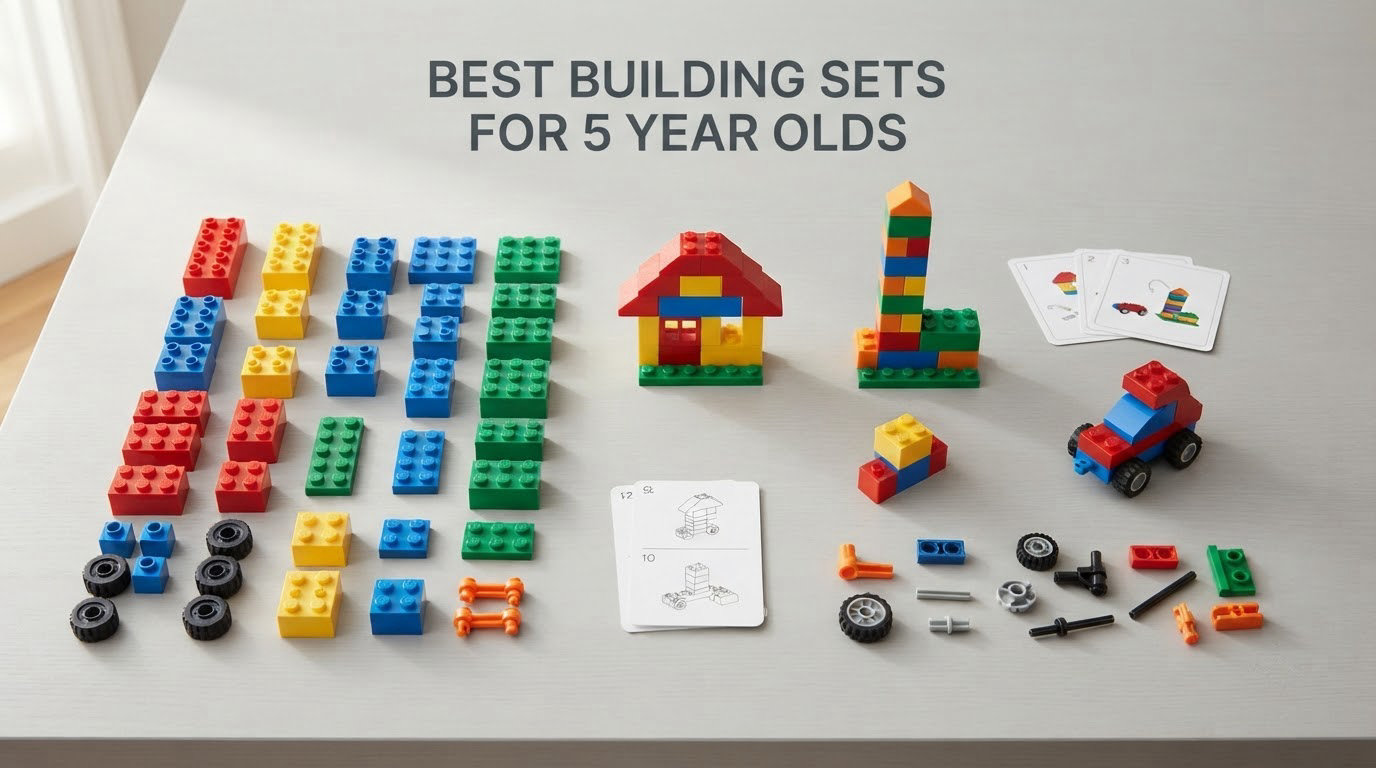
The best building sets for 5 year olds are open-ended construction kits that let a child snap, magnetise or screw pieces together into something they chose themselves. At age five, hands are finally steady enough for small connectors, and the appeal shifts from knocking things over to planning a three-dimensional build.
After six weeks of building with twelve sets side by side, the strongest performers came down to three families. MEGA BLOKS won for a first set because the chunky pieces almost never fail. LEGO Classic 10696 is the reference starter box for anyone already heading toward real bricks. MAGNA-TILES Classic 32 is the premium magnetic option, and the one most adults end up borrowing from.
We focused on magnetic tiles, connector blocks, large bricks, wooden sets and take-apart kits. This guide covers the best building sets for 5 year olds across all of those families, including the piece counts that work at this age and the ones that cause frustration. If your child is still under three, our magnetic building sets for toddlers guide is the better starting point.
Table of Contents
Top 3 Picks: Best Building Sets for 5 Year Olds (October 2026)

MEGA BLOKS First Builders 80-Piece Set
- 80 oversized pieces
- Big storage bag included
- Ages 1 to 5
- Easiest first building set

MAGNA-TILES Classic 32-Piece Set
- 32 translucent pieces
- Six colors
- Certified STEAM toy
- Ages 3 and up

LEGO Classic Medium Brick Box 10696
- 484 classic pieces
- Baseplate and wheels included
- Ages 4 and up
- Storage box
How We Picked the Best Building Sets for 5 Year Olds
Every set in this roundup had to clear the same six filters. We built with each one, let a child at the target age try each one, and then looked at what owners reported after months of use rather than after an afternoon.
1. Real play value, not theme dressing
A set full of pre-printed panels and a single rigid model gives a five-year-old one result and nothing to do afterwards. We favoured sets where the pieces are interchangeable enough that the second build is the child’s idea, not the box art.
2. Age fit that matches actual dexterity
The printed age range is a legal minimum, not a difficulty rating. We checked whether a five-year-old could complete a satisfying build on day one without an adult doing the connecting. This is where connector blocks and magnetic tiles pull ahead of the smallest bricks.
3. Safety certification and material honesty
We looked for ASTM F963, CPSIA and EN71 compliance, non-toxic finishes and fully enclosed magnets. Where a maker publishes a certification on the product page, that counted in its favour.
4. Durability under rough handling
Five-year-olds build hard. Sets get dropped, sat on and used as step stools. We favoured riveted magnet construction, thick ABS and solid wood over thin components that flex under load.
5. Replay value across weeks, not days
A set that gets rebuilt the same way every time loses its grip within a month. Connector variety, wheels, figures and open-ended piece mixes scored highest here.
6. Feedback from people who live with the toy
We weighted long-term owner reports over first impressions. Owners of the LEGO DUPLO Brick Box and the MAGNA-TILES Classic consistently describe sets still in daily use years after purchase, which is the durability signal we wanted.
Quick Overview: All 12 Picks at a Glance
This table lists every set in the roundup with the pieces that matter most for a five-year-old: connection type, piece count and the skill each one builds.
| Product | Specifications | Action |
|---|---|---|
| MEGA BLOKS First Builders 80-Piece Set |
|
Check Latest Price |
| LEGO Classic Medium Brick Box 10696 |
|
Check Latest Price |
 PicassoTiles 100-Piece Magnetic Tiles PicassoTiles 100-Piece Magnetic Tiles |
|
Check Latest Price |
| MAGNA-TILES Classic 32-Piece Set |
|
Check Latest Price |
 LEGO DUPLO Brick Box 10913 LEGO DUPLO Brick Box 10913 |
|
Check Latest Price |
 SUNNY AUNTIE 125-Piece Magnetic Tiles SUNNY AUNTIE 125-Piece Magnetic Tiles |
|
Check Latest Price |
 PicassoTiles 120-Piece Hedgehog Blocks PicassoTiles 120-Piece Hedgehog Blocks |
|
Check Latest Price |
 K’NEX 40 Model Building Set K’NEX 40 Model Building Set |
|
Check Latest Price |
 Take Apart Dinosaur Drill Set Take Apart Dinosaur Drill Set |
|
Check Latest Price |
 Migargle 115-Piece Wooden Block Set Migargle 115-Piece Wooden Block Set |
|
Check Latest Price |
 Ggiibro 600-Piece Straw Constructor Set Ggiibro 600-Piece Straw Constructor Set |
|
Check Latest Price |
 aotipol 100 Large Blocks with Baseplate aotipol 100 Large Blocks with Baseplate |
|
Check Latest Price |
1. MEGA BLOKS First Builders 80-Piece Set – Big Blocks, Few Fails
Mega Bloks First Builders Big Building Bag Toddler Blocks Toy Blue
80 pieces in 10 shapes and 9 colors
Big building bag doubles as storage
Designed for ages 1 to 5
16 ounces
Pros
- Oversized blocks easy to grip
- stack and pull apart
- Very durable in long-term owner reports
- Mixed shapes and colors support sorting
- Storage bag makes cleanup simple
Cons
- Some pieces loosen grip after extended play
- Limited shape range gets outgrown
- 80 pieces can disappear fast
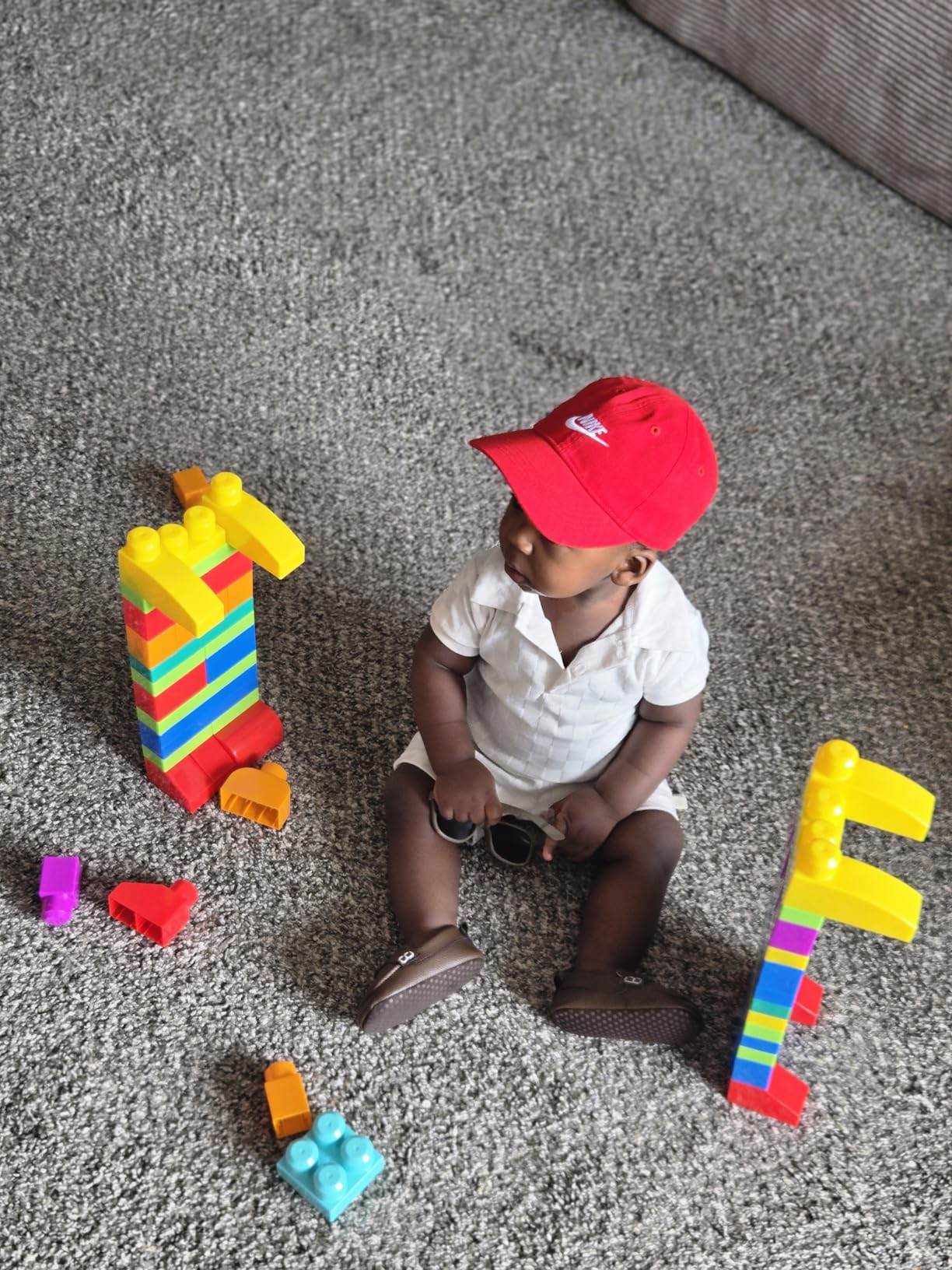
This is the set we hand to a child who has never built anything on purpose. The blocks are large enough that a small hand wraps fully around a piece, which is the whole trick at this age. My first build with the bag was a road with a tower at each end, assembled in about ten minutes without help.
What stood out was how rarely a connection failed. Where stud-and-tube bricks need a deliberate push and an aligned angle, these simply press together and hold. That matters more than the piece count, because a first builder who fails three times in a row usually stops for the day.
Owners report sets bought several years earlier still going into daily rotation, which is the durability proof most listings never show. The storage bag is a bigger deal than it sounds: eighty pieces corralled in one scoop ends the nightly cleanup argument.
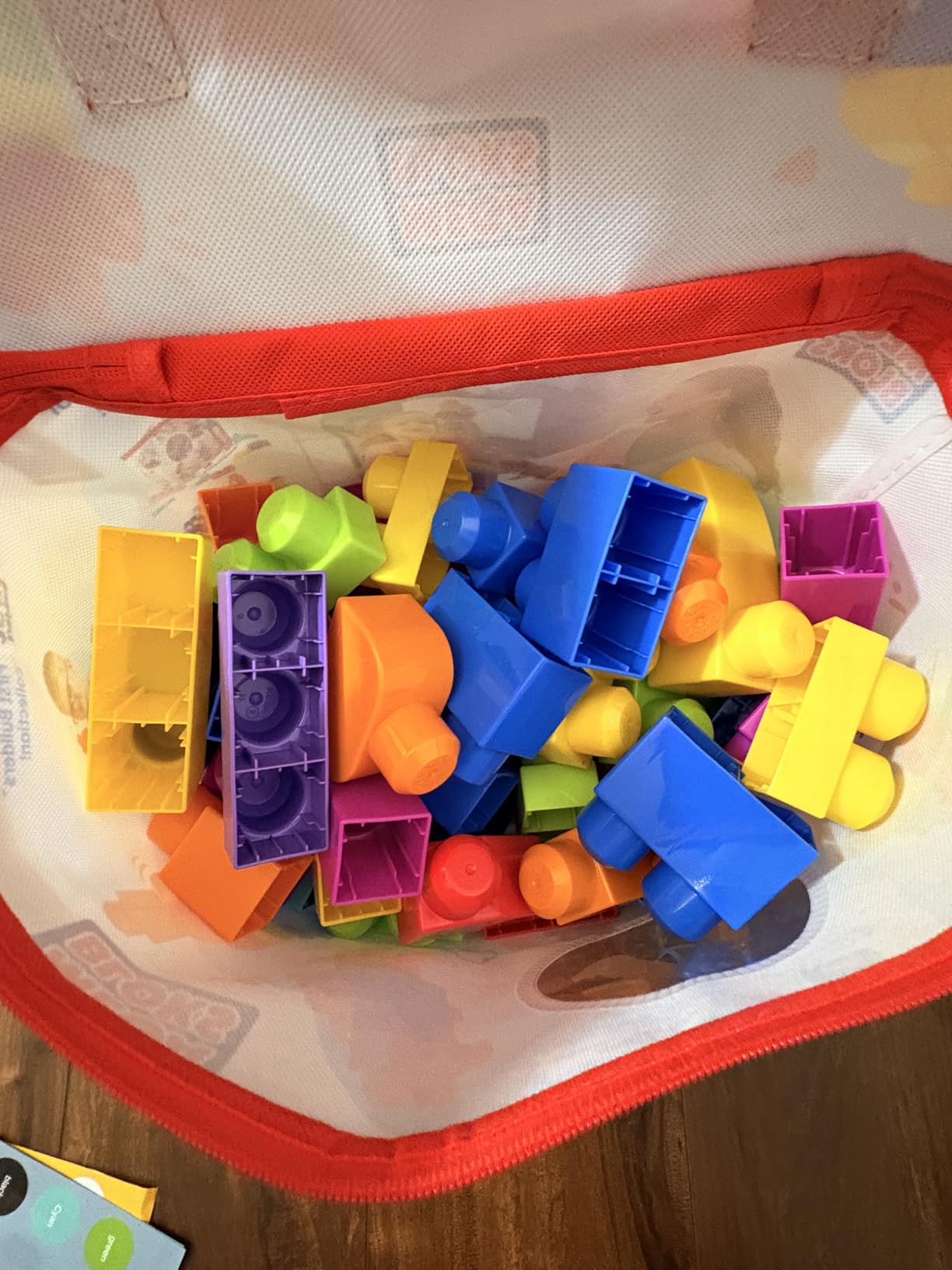
The catch is that the shape and color range is deliberately simple. A five-year-old who has already worked through richer sets will name the limits within a week. Two bricks of the same height cannot make a roof, and there are no wheels, no figures and no arches.
Chunky ABS also means these blocks are noticeably heavier than magnetic tiles. That is a benefit for stability and a mild drawback on the play table. Pieces are 16 ounces for the full set, so it carries easily from room to room.
Will these blocks survive daily five-year-old handling?
Yes, with one caveat. Reviewers describe the blocks holding their grip through years of stacking and pulling apart, which is rare for plastic interlocking toys. The reported failure mode is not snapping but loosening after long stretches of play, usually once the joint has been twisted repeatedly rather than pressed straight.
Is it worth adding a second bag?
For most households, yes, and the reason is volume rather than difficulty. Eighty pieces look generous in the bag and look thin on the floor. A second bag turns a road-and-tower build into something with a whole street, and the two bags stack in the same corner.
2. LEGO Classic Medium Creative Brick Box 10696 – The Reference Starter Set
LEGO Classic Medium Creative Brick Box 10696
484 classic bricks in 35 colors
Green baseplate with wheels and windows
Storage box doubles as a brick
Ages 4 and up
Pros
- Huge variety of classic bricks
- Storage box survives years
- Compatible with all LEGO sets
- Durable plastic holds up to constant rebuilding
Cons
- Small bricks are not for children who mouth toys
- Few themed or specialty elements
- Occasional missing small pieces
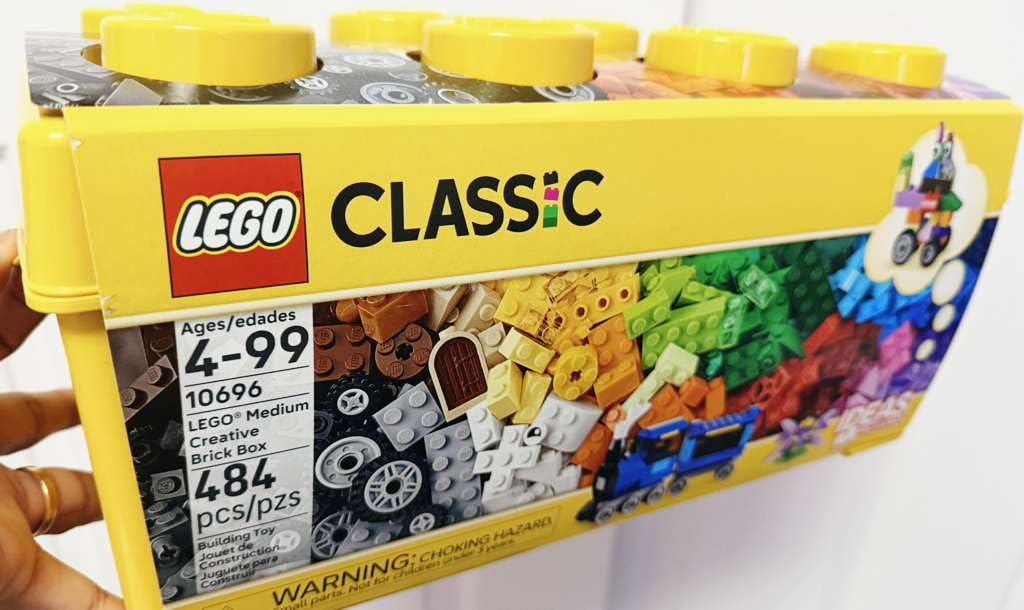
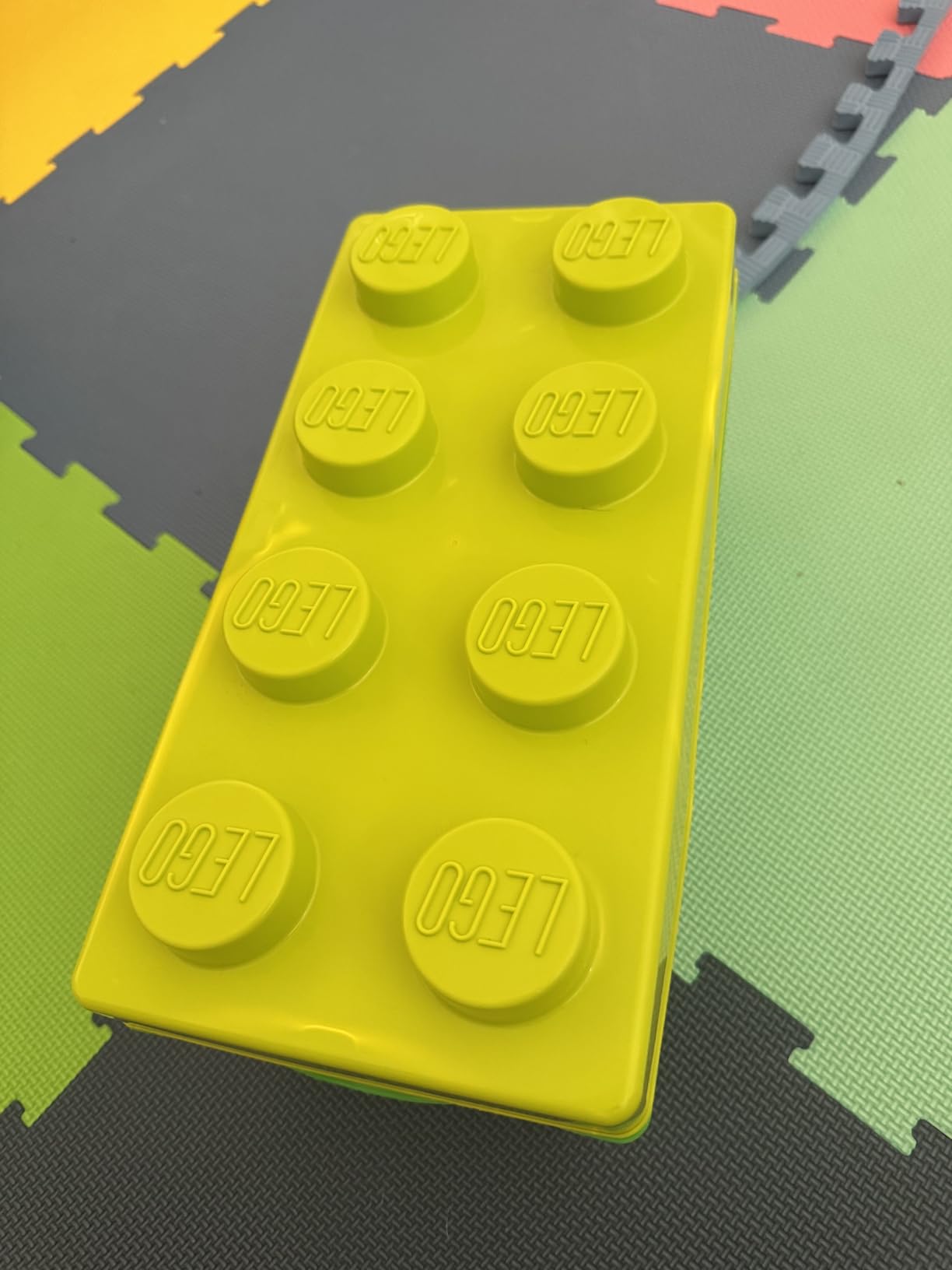
This is the box that most parents mean when they say they want LEGO for a five-year-old. Thirty-five colors, 484 pieces, plus windows, toy eyes, 18 tires and wheel rims. The mix is broad enough that the same box produces a car park in the morning and something entirely invented after lunch.
It is also the compatibility anchor of the category. Every other LEGO set a family owns stacks into this one, and the storage box itself is a buildable brick, which stops pieces migrating into other boxes. Reviewers repeatedly name it as the ideal first LEGO set at this age.
We found the 484 count is comfortable for a competent five-year-old who has handled bricks before, and overwhelming for a first-timer. The 2×4 plates and 1×2 bricks demand precision that takes a week or two of practice to acquire.
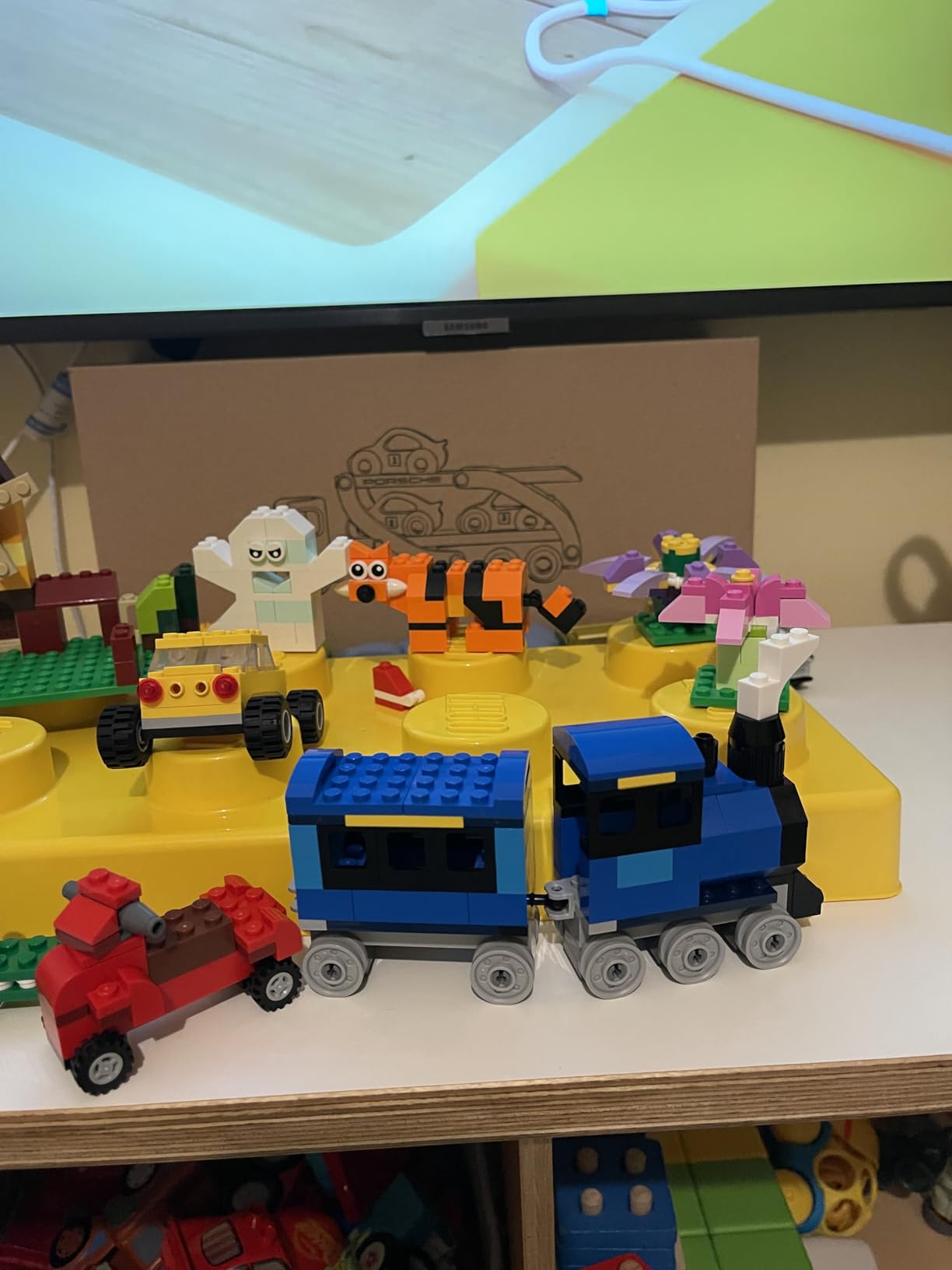
Two real limitations. As a Classic set it contains no themed elements, so a child who wants a specific character or vehicle will not find one here. And a few buyers report missing or swapped small pieces out of the box, which is worth checking on arrival because those pieces are the hardest to replace.
The other honest point is safety. Standard small bricks are not appropriate for a child who still mouths toys. In a house with a two-year-old, keep this box on a high shelf and pair floor play with a chunky set.
Is 484 pieces too many for a five-year-old?
The number itself is not the problem. What matters is whether the box includes mostly large plates and basic bricks, which it does, and whether the child has built with small pieces before. Our test build, a two-storey house with a fenced garden, took a first-time five-year-old about twenty-five minutes with a short break.
Is it safe around a younger sibling?
Not for a sibling under three who mouths objects. Reviewers note that the small bricks are the standard choking risk for this age band, and nothing in the set mitigates it. If a toddler shares the play space, a magnetic or oversized set should be the floor-level toy and this one should live on a shelf.
3. PicassoTiles 100-Piece Magnetic Tiles – The Wide Magnetic Middle Ground
PicassoTiles 100 Piece Magnetic Tiles, Clear 3D Building Blocks for Kids 3+
100 translucent magnetic pieces
Scalable builds with added sets
No batteries and no screens
Ages 3 and up
Pros
- Strong magnets hold tall towers
- Framed edges add sturdiness
- Works with other magnetic tile brands
- Bright colors that stay vivid
Cons
- Tiles crack if slammed on hard floors
- Kids quickly want a second set
- Not for unsupervised use under three
Between the premium 32-piece starter and a 125-piece village set, this is the magnetic configuration we used most. One hundred pieces is enough for a house, a car park and a fence in a single session, which is roughly the ambition level of a five-year-old’s average build.
Framed edges make a real difference. Reviewers specifically credit the edge construction with holding taller towers than some competing brands, and our own build stayed rigid at six pieces high without any bracing. The magnets are strong enough to hold and still easy for small fingers to pull apart.
Cross-brand compatibility is a genuine advantage. Because the piece geometry matches other major magnetic tile lines, families can combine sets for larger projects rather than being locked into one system. Several parents report the same set still in daily use after three years.
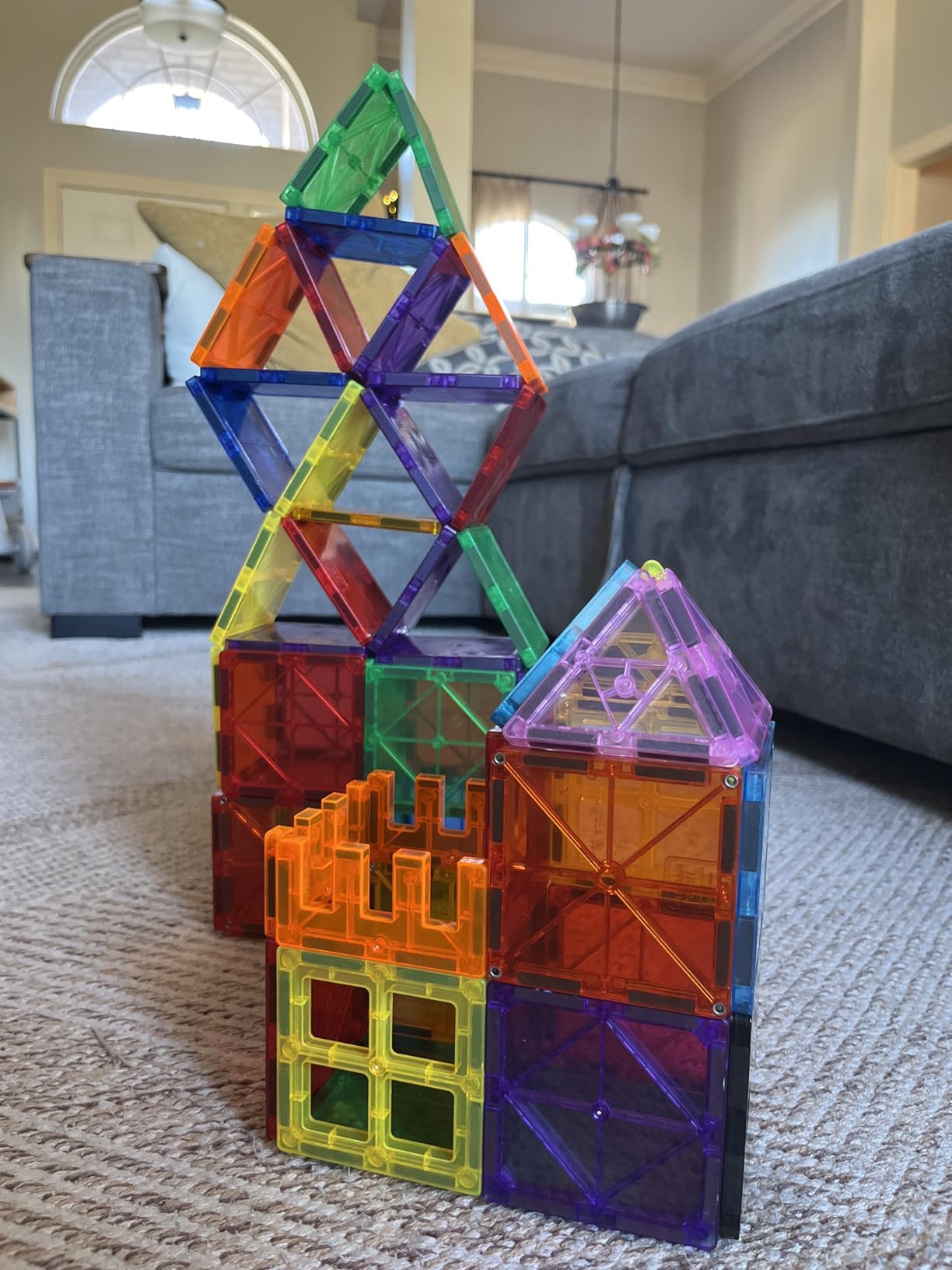
The recurring complaint is not the toy, it is the count. Owners consistently end up buying a second set because 100 pieces is roughly one build, and a five-year-old notices the edge of the supply quickly. Budget for that when comparing sets, since a 100-piece box behaves more like a starter than a full library.
Durability is good but not indestructible. The tiles are clear plastic and will crack if run over or dropped onto hard flooring, which is a real risk in a hallway. Active homes should check tiles occasionally for hairline cracks and remove any that have split.
Will the magnets hold a real structure?
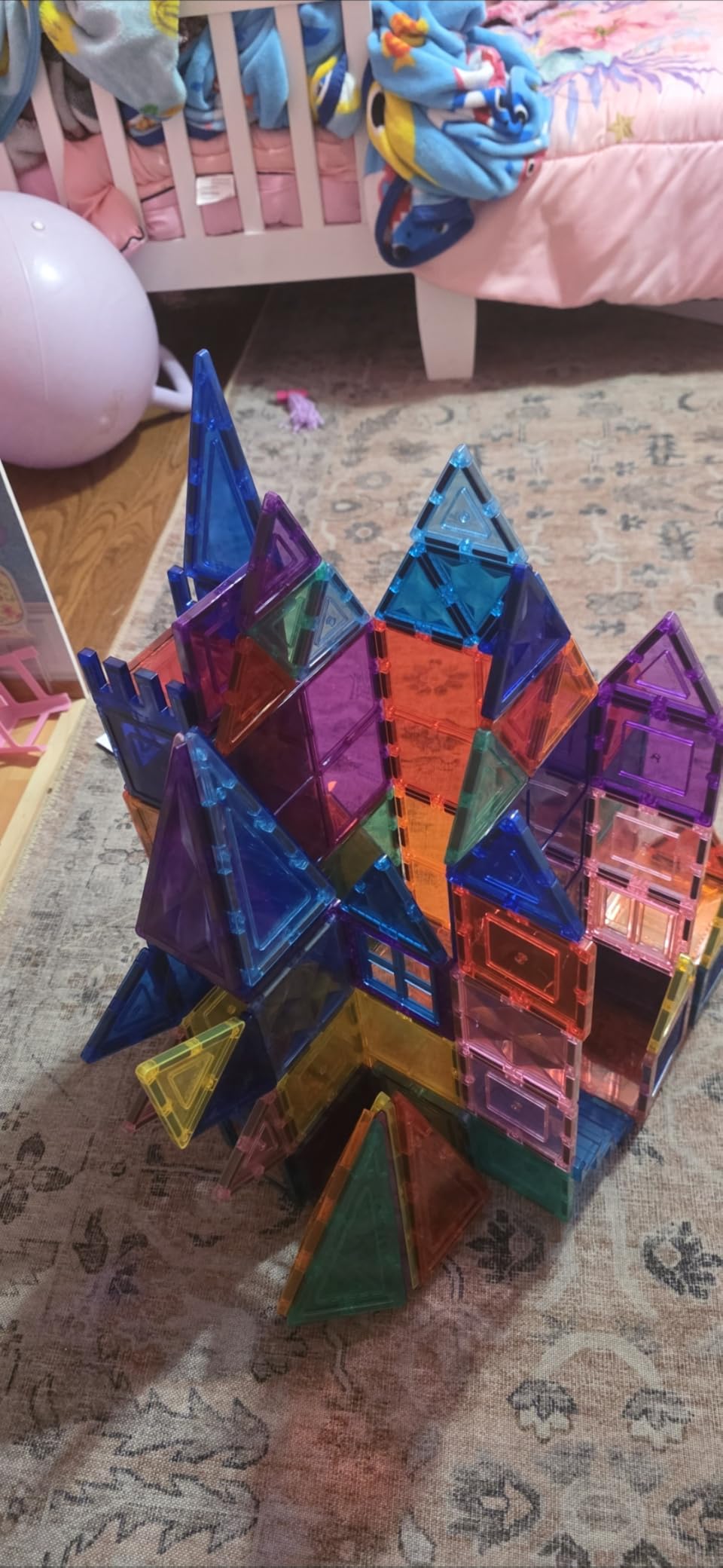
Yes. We built a two-level tower with a cantilevered walkway and a separately connected second house, and both held without a single joint popping. The main variable is flatness, not magnet strength. Magnetic construction sets are unforgiving of a table with a slope or a rug pile, so a firm table gives noticeably better results.
Are they safe if a toddler is in the house?
Use adult supervision. The listing does not recommend unsupervised use under three, and separated magnets can attract through tissue, which is the concern parents raise most often in discussions about magnetic sets. Store the tiles in one bag, count them back in occasionally, and keep the set out of reach when the older child is not playing with it.
4. MAGNA-TILES Classic 32-Piece Set – The Original Magnetic Brand
MAGNA-TILES Classic 32-Piece Magnetic Construction Set, The Original Magnetic Building Brand
32 translucent pieces in six colors
Squares and triangles in multiple sizes
Certified STEAM construction toy
Ages 3 and up
Pros
- Riveted lattice construction resists cracking
- Magnets hold yet pull apart easily
- Food-grade non-toxic MABS plastic
- Compatible with all MAGNA-TILES sets
Cons
- Fewer pieces than larger magnetic sets
- Higher cost per piece
- Young builders may need a demonstration
Thirty-two pieces is a small number, and it is the most common reason parents hesitate. In practice the set is the most elegant thing on this list to build with, because every piece is a square or a triangle and the lattice geometry makes flat and three-dimensional structures both easy to start.
The construction method is the story here. Riveted magnets inside a food-grade MABS shell, free of BPAs, phthalates and latex, is the reason reviewers describe a two-decade durability record rather than a two-year one. The set carries a 90-day manufacturer defect warranty and is certified as a STEAM toy for fine motor and bilateral coordination development.
We also noticed this is the set adults use. Several owners mention parents and older siblings building alongside the child, which turns a solo plaything into a family activity. The flat tiles wipe clean in seconds and stack neatly, so cleanup is genuinely a ten-second job.
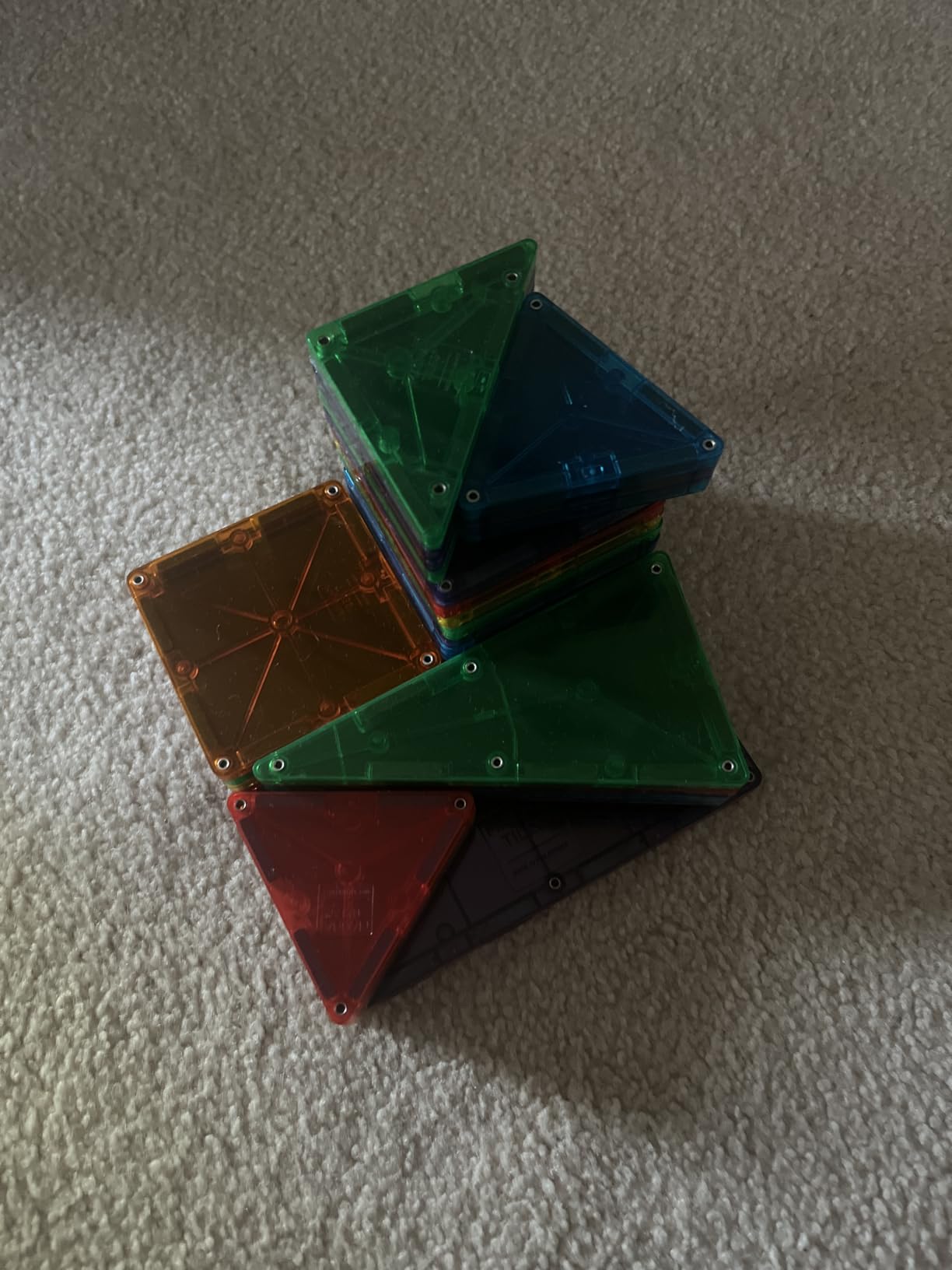
The honest catch is cost per piece. Thirty-two translucent pieces in six colors is a smaller footprint than most sets in this roundup, and the per-piece cost is the highest here. If a child wants a village rather than one house, plan on adding a second configuration later.
A second minor point: younger builders sometimes need an adult to show how two edges meet before the first successful join. That takes about a minute and then never happens again.
Is 32 pieces enough to build anything impressive?
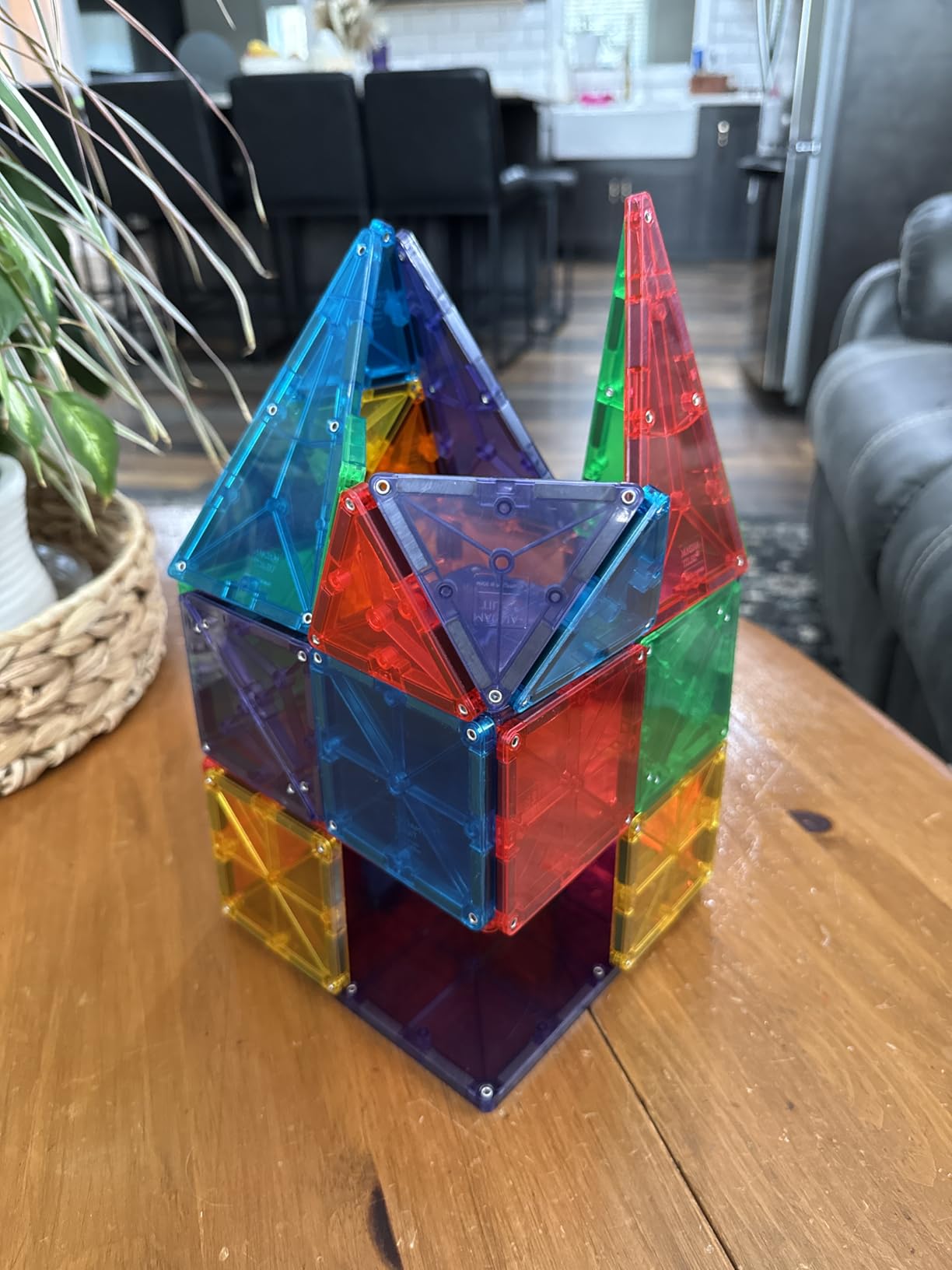
For a five-year-old, yes. A hollow cube, a row of four houses or a flat bridge with a roof all land within the piece count, and each one produces a finished object within ten minutes. The frustration comes later, when the child wants three houses instead of one. That is a good problem, because it points at the next purchase.
How does it handle rough play?
Very well. The riveted lattice shell is the most robust construction in this roundup, and reviewers report pieces staying intact through years of dropping, stacking and rebuilding. The magnets are fully enclosed, so there is no exposed metal to work loose, and pieces that are dropped simply land flat instead of shattering.
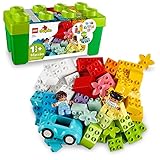
5. LEGO DUPLO Brick Box 10913 – Chunky Bricks That Land First Time
LEGO DUPLO Brick Box 10913
65 extra-large DUPLO bricks
Toy car, two figures and number bricks
Brick-style storage box
Ages 18 months and up
Pros
- Oversized bricks are easy to grip
- Includes a rolling car and figures
- Storage box makes cleanup quick
- Supports sorting and counting games
Cons
- Fewer pieces than the classic medium box
- Two-year-olds can find the snap-fit hard
- Outgrown within a couple of years
DUPLO is the answer to the most common complaint in building play at this age. A five-year-old who abandons a brick set after a crooked join usually does not need a better toy, they need a bigger brick. The 1×2 and 2×4 proportions here are roughly twice the size of standard LEGO, and a child can see alignment instantly.
The box adds a rolling car, two figures and 1-2-3 number bricks, so it is not purely a stacking exercise. Parents on parenting forums describe the DUPLO era extending well past five, and reviewers here single the set out for children still developing grasp.
Some DUPLO pieces also connect with regular LEGO bricks, which quietly extends the useful life. We paired it with a small Classic box and the two systems held together without conversion, which extends play rather than forcing a switch.
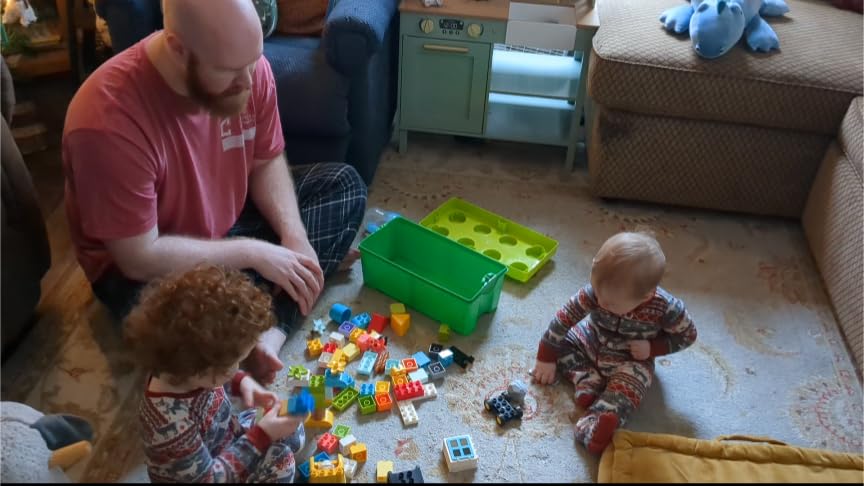
The trade-off is piece count. Sixty-five pieces is roughly a seventh of the Classic box, and for the money the box feels thin. That is a fair criticism when a child is already a confident brick builder, and a completely fair trade when the priority is finishing something rather than managing friction.
Second caveat: reviewers note that children under two sometimes find even these snap-fit bricks frustrating initially. That is outside the five-year-old range, but it explains why the set is rated from 18 months rather than lower.
Is it too babyish for a child turning five?
No, provided the child is not already a confident small-brick builder. The themes are simple, but the fine motor demand of aligning a large brick is real, and children moving into kindergarten often still prefer it. The rolling car and figures keep the play pattern at a five-year-old level rather than a two-year-old level.
Does it grow with the child?
Partly, and the bridge is a feature rather than a limitation. Because some pieces connect with standard LEGO, a family can add small bricks without a full transition. What the set does not do is stretch toward complex structures, so most children move on within a couple of years rather than growing out of it overnight.
6. SUNNY AUNTIE 125-Piece Magnetic Tiles – Village-Scale Magnetic Builds
SUNNY AUNTIE Magnetic Tiles STEM Toys Building Set, Ages 3+ – 125 Pieces
125 magnetic tiles plus two cars
Guide booklet with build ideas
Zippered fabric storage bag
Non-BPA ABS plastic
Pros
- Strong magnets hold multi-level builds
- Plenty of play per box
- Fabric bag speeds up cleanup
- Ties with other magnetic tile brands
Cons
- Occasional cracked tile even with care
- 125 pieces thin out with several children
- Included cars are plastic accessories
At 125 pieces this is the magnetic set that supports a whole street rather than a single house. It ships with two cars and a guide booklet of build ideas, and reviewers describe it as holding homes, towers and garages firmly through active play rather than merely standing up when placed.
For a five-year-old, the piece count is the point. A hundred magnetic pieces produces roughly one finished object. A hundred and twenty-five is where two children can build side by side without arguing over the same wall.
Non-BPA ABS with smooth rounded edges is specified for ages three and up, and the zippered fabric bag means the whole set disappears into a cushion or a closet corner between sessions. For a small home that containment is worth as much as the pieces.
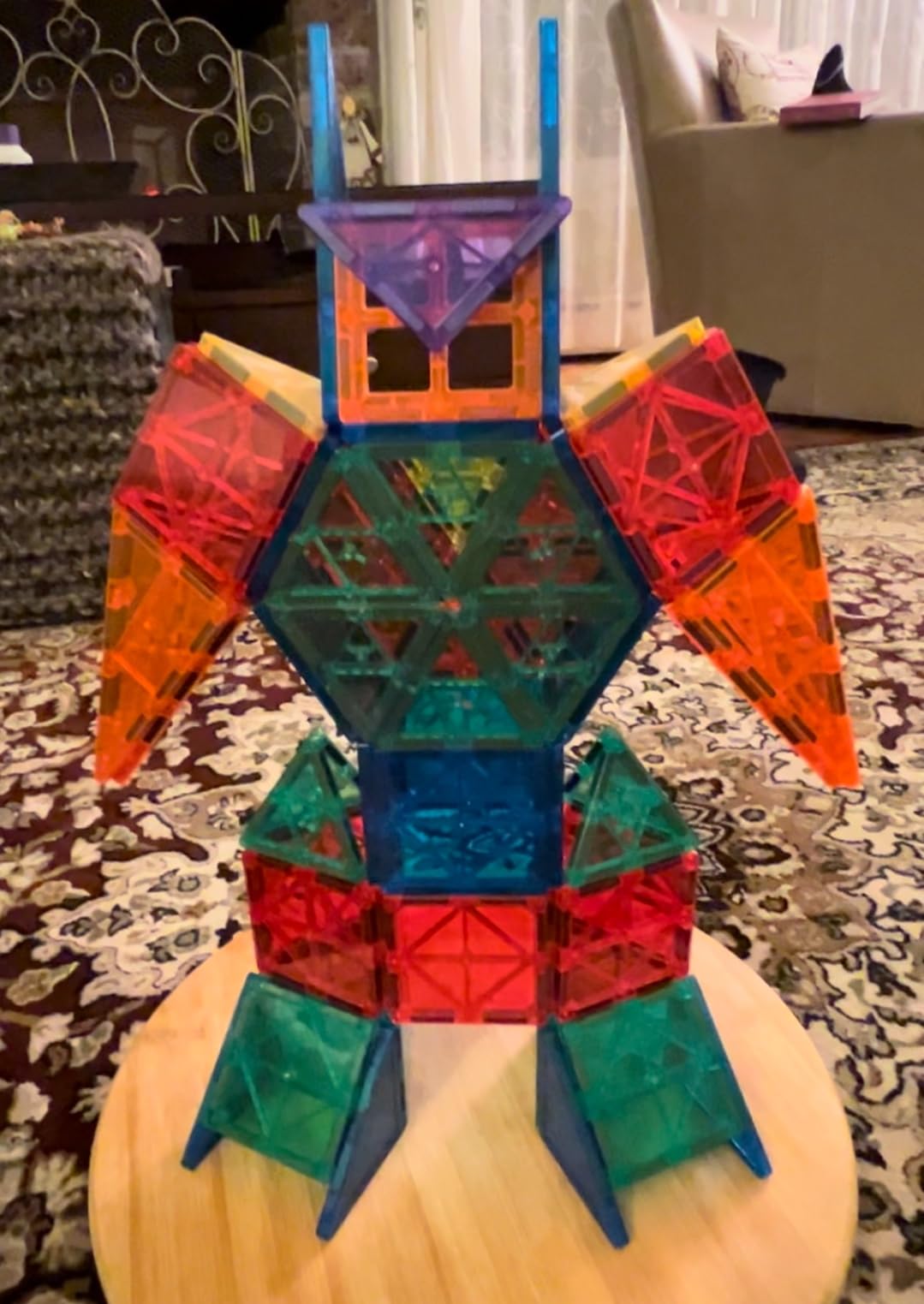
Buyers regularly compare the value favorably against premium magnetic brands, and for a first magnetic set that comparison holds up. The pieces also tie with other major magnetic tile brands, so this is not a closed system.
Two honest complaints. A small number of cracked tiles turn up over time, so inspect new pieces and reject any with a hairline split. And with several children building simultaneously, 125 pieces still runs out faster than expected.

Do 125 tiles actually get used, or lost?
Used, in our test, but only with a dedicated tray or the fabric bag nearby. Magnetic pieces are smooth, hard and shaped to roll, which makes them the most likely set in this roundup to migrate under furniture. The zippered bag is not a packaging nicety, it is the reason the set stays manageable.
Is the material safe for small hands?
The set is made from non-BPA ABS plastic with smooth rounded edges sized for small hands, and the listing rates it from age three. The standard magnetic tile caution still applies, though. Supervise around a younger sibling, and store the set somewhere a toddler cannot reach it once play finishes.
7. PicassoTiles 120-Piece Hedgehog Blocks – Connector Blocks on Any Table
PicassoTiles 120pcs Hedgehog Interlocking Building Blocks Tiles Construction Toy Set Learning Playset STEAM Development Preschool Kindergarten Toy for Kids Age3+ PTB120
120 interlocking hedgehog-shape blocks
More than 20 suggested designs
Builds on any flat surface
Non-toxic and lead-safe
Pros
- Connectors click on and off without force
- Builds work on any flat surface
- 120 pieces support many designs
- Good classroom value
Cons
- Connections loosen during rough play
- Flat builds dominate over 3D
- Connectors trap dirt and are harder to clean
This is the set for a family that rules out magnets. The bristle connectors click together and pull apart without force, which is roughly the same forgiving quality that makes magnetic tiles easy at this age, without any magnetic component in the design.
Working on any flat surface is the underrated advantage. No baseplate, no table edge, no build zone. Our test build happened on a rug, on a bed and on the kitchen table with the same result, which matters when the available surface changes daily.
Reviewers value the piece count for classroom and group settings, and the non-toxic lead-safe material is specified for exactly that use. A 120-piece connector set is far easier to hand around a table than 120 magnetic tiles.
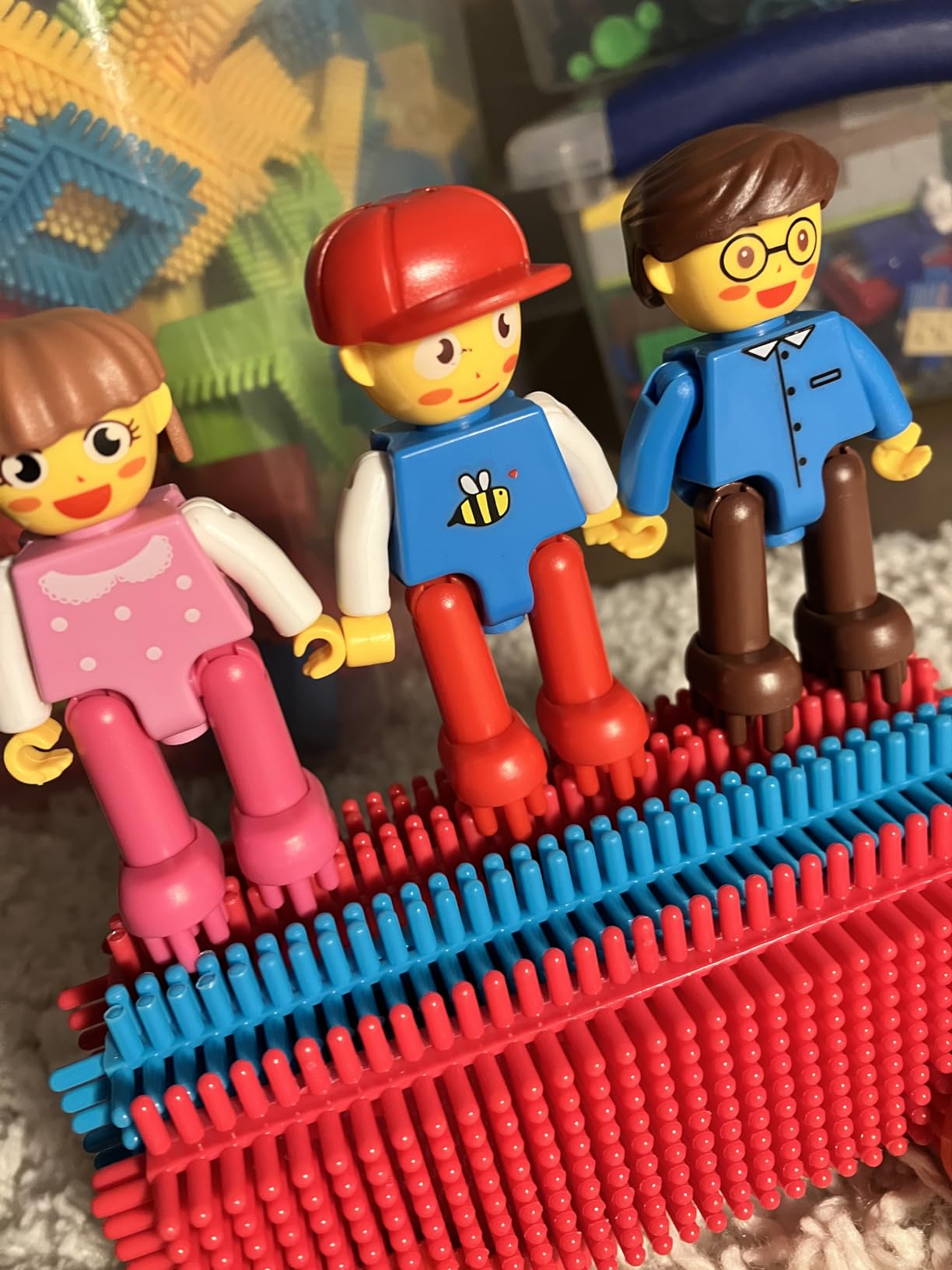
The main weakness shows up in three-dimensional work. Flat and low builds are quick and reliable, while anything tall needs careful bracing and often ends in a collapse that takes several attempts to fix. For a five-year-old who wants towers, that gap is real.
Second, connections loosen faster than stud-and-tube bricks during vigorous play and need occasional re-seating. Third, the bristles collect dust and hair and are noticeably harder to clean than smooth plastic, so expect a bit of maintenance in a carpeted room.
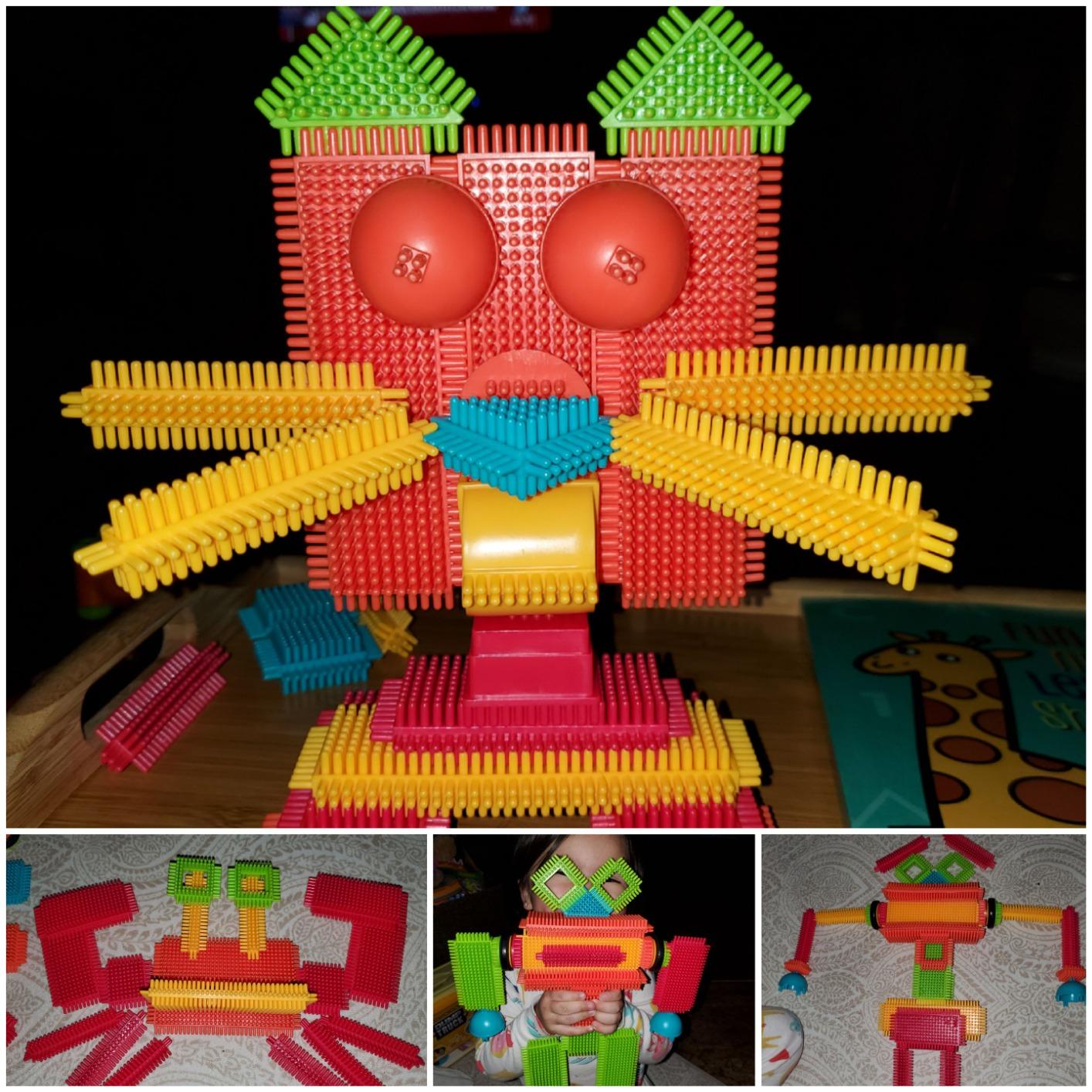
How do the bristle connections hold up over months?
They soften with use. Reviewers describe pieces clicking together crisply when new and requiring a firmer push after extended play, and this was visible in our own set after a few weeks. Nothing breaks, and a re-seat fixes it, but the crispness does fade compared with a stud-and-tube connection.
Can it replace magnetic tiles for a magnet-averse child?
For a five-year-old, largely yes. The connectors are forgiving in the same way magnets are, so a child who gives up on brick joins usually persists here. What the child loses is the ability to build tall three-dimensional structures easily, since connection strength does not scale with height the way it does in magnetic construction.
8. K’NEX 40 Model Building Set – Engineering Toys That Roll
K’NEX – 40 Model Building Set‚ 141 Pieces, STEM Toy, Engineering Play, Creative Construction‚ Ages 5+
141 rods and connector pieces
40 guided model builds
Suitcase-style storage box
Ages 5 and up
Pros
- Models actually move and roll
- 40 guided models ease the first build
- Strong parts survive reassembly
- Builds fine motor and spatial skills
Cons
- Real piece count runs below the headline number
- Young builders need help with the booklet
- Small rods are a fiddly loss risk
K’NEX occupies a different slot from everything else here. The rods and connectors snap into shapes that produce models which genuinely move, so a car rolls, an airplane has moving parts and a windmill turns. For a child who finds static towers dull, that mechanical payoff changes the play pattern entirely.
Forty guided models in the booklet are a real advantage at age five. A new builder has a working path in before free building begins, and the step-by-step structure builds sequencing skills as a side effect. We followed the car build first and then jumped to free design within two sessions.
The set is rated from age five, which makes it the oldest-skewing pick in the roundup. It is genuinely an engineering kit rather than a construction toy, and the manual dexterity demanded by rods is higher than any other set here.
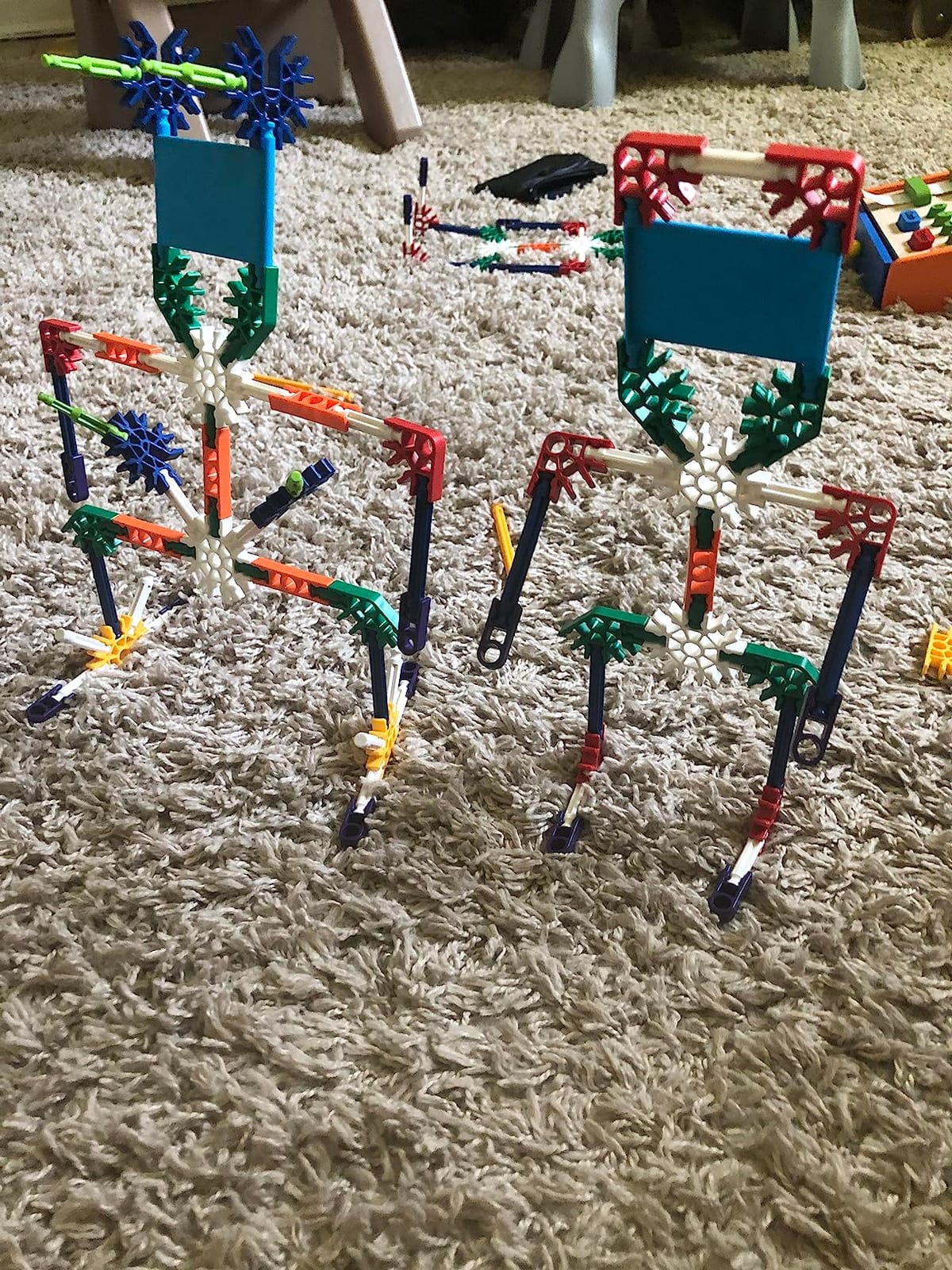
The piece count is the honest catch. Buyers note that 141 sounds generous until connectors are counted, and the single box runs out of pieces quickly once free building starts. Two sets of the same line connect together, which changes the math.
Second, younger builders need help reading and following the booklet, and the thin rods are a genuine loss risk on a rug or under a sofa. This is the set in the roundup most likely to be finished with parts missing.
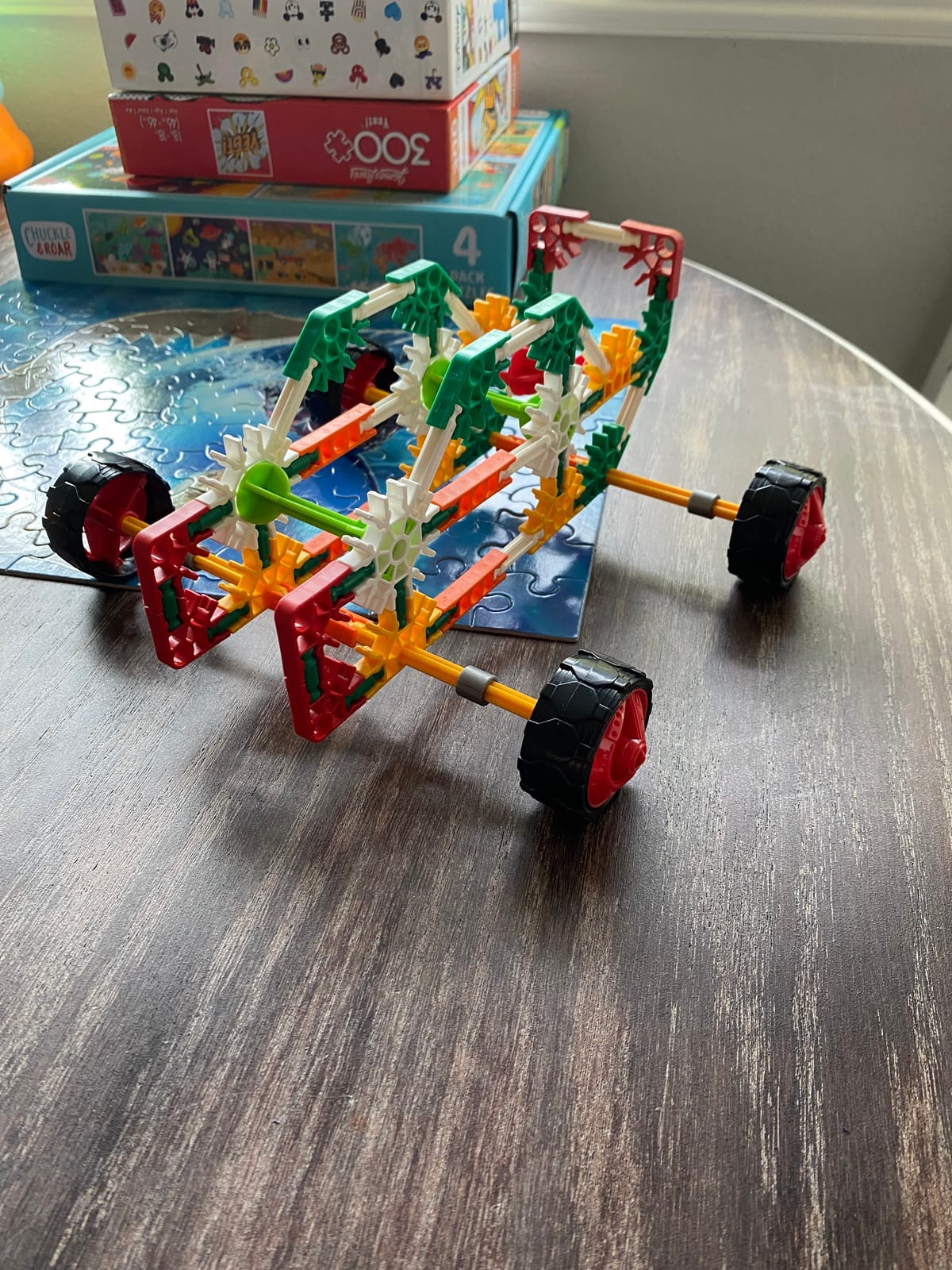
Can a five-year-old use the instruction booklet alone?
Partly. The diagrams are clear, but a child at the lower end of five usually needs an adult for the first two models while they learn the reading order. After that, most of our test build was solo. Set expectations accordingly rather than presenting it as independent play from day one.
How many pieces are there really?
The listed 141 counts every rod, connector and micro piece, so the number of usable rods is much lower than 141 once the connector pieces are set aside. Buyers report one box running out quickly for free builds. If sustained construction is the goal rather than a guided sequence, treat this as a starter that wants a companion set.
9. Take Apart Dinosaur Drill Set – Screwdriver Play for Impatient Builders
Dinosaur STEM Toys for Kids 3-5, Take Apart Dinosaur Toys with Electric Drill, Educational Building Toy & Construction Set, DIY Christmas Birthday Gifts for 3 4 5 6 7 8 Years Old Boys and Girls
Three take-apart dinosaurs
Low-speed drill with two bit types
Movable head, arm and leg joints
Ages 3 to 8
Pros
- Electric drill makes assembly genuinely engaging
- Three dinosaurs with separate screws
- Movable joints allow posing
- Drill batteries included
Cons
- Printed instructions are hard to read
- Small screws need adult help
- About 18 pieces each gets repetitive
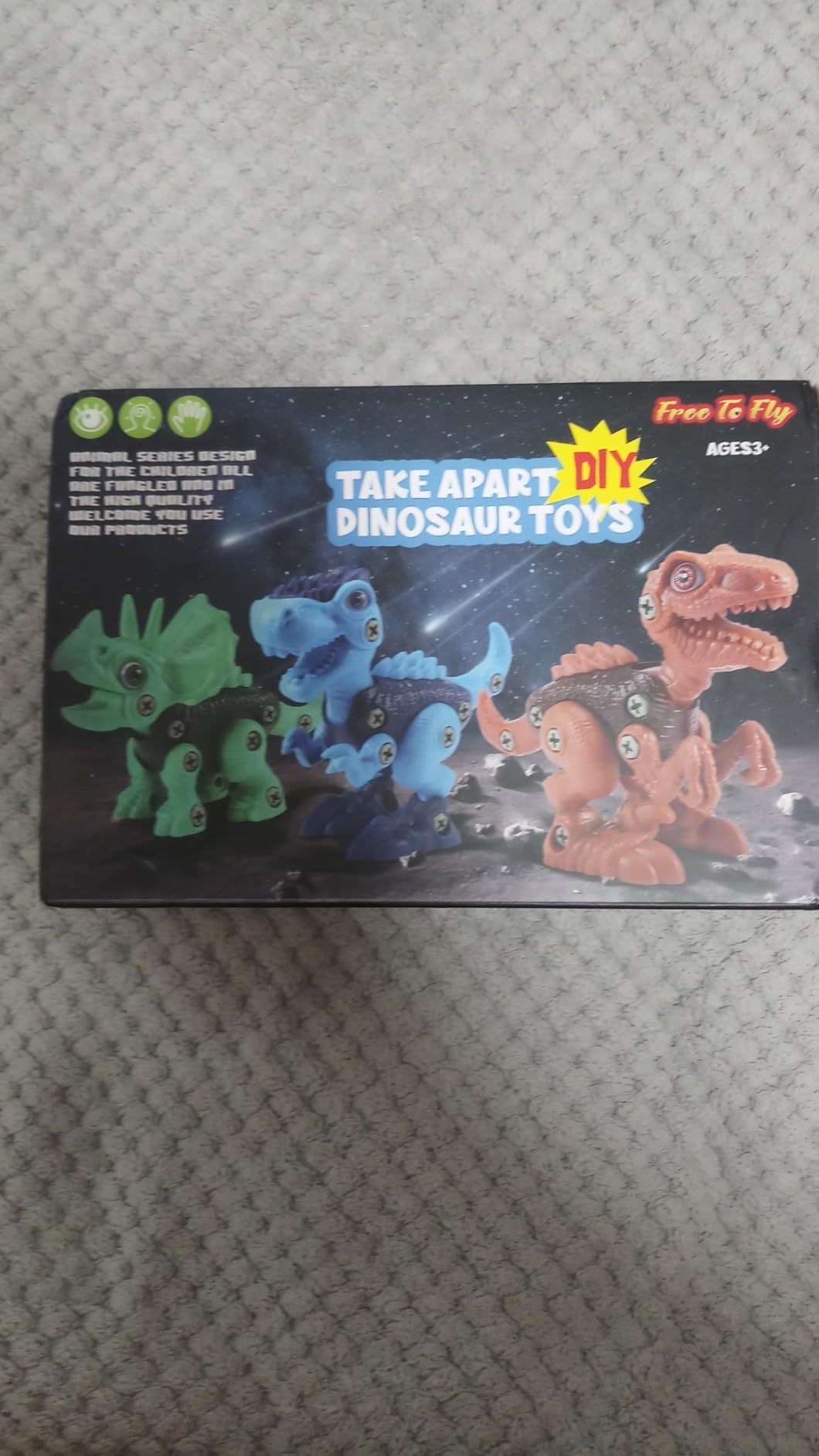
This set sits outside the usual building categories, and that is exactly why it works for some children. There is no open-ended structure to design. There are three dinosaurs that come apart and go back together with a low-speed electric drill, and for a child who prefers operating tools to stacking blocks, that is a better fit than anything else on this list.
More than 8,000 reviews at 4.6 stars consistently single out the drill as the feature that works. The included low-speed drill, two bit types and three manual screwdrivers mean the child is doing the turning rather than handing parts to an adult, which is the independence most parents are looking for.
Joints at the head, arms and legs let the finished dinosaur be posed and reconfigured, so a rebuilt model is not identical to the last one. Non-toxic ABS with smooth edges is specified for ages three to eight, and the drill ships with its batteries included.
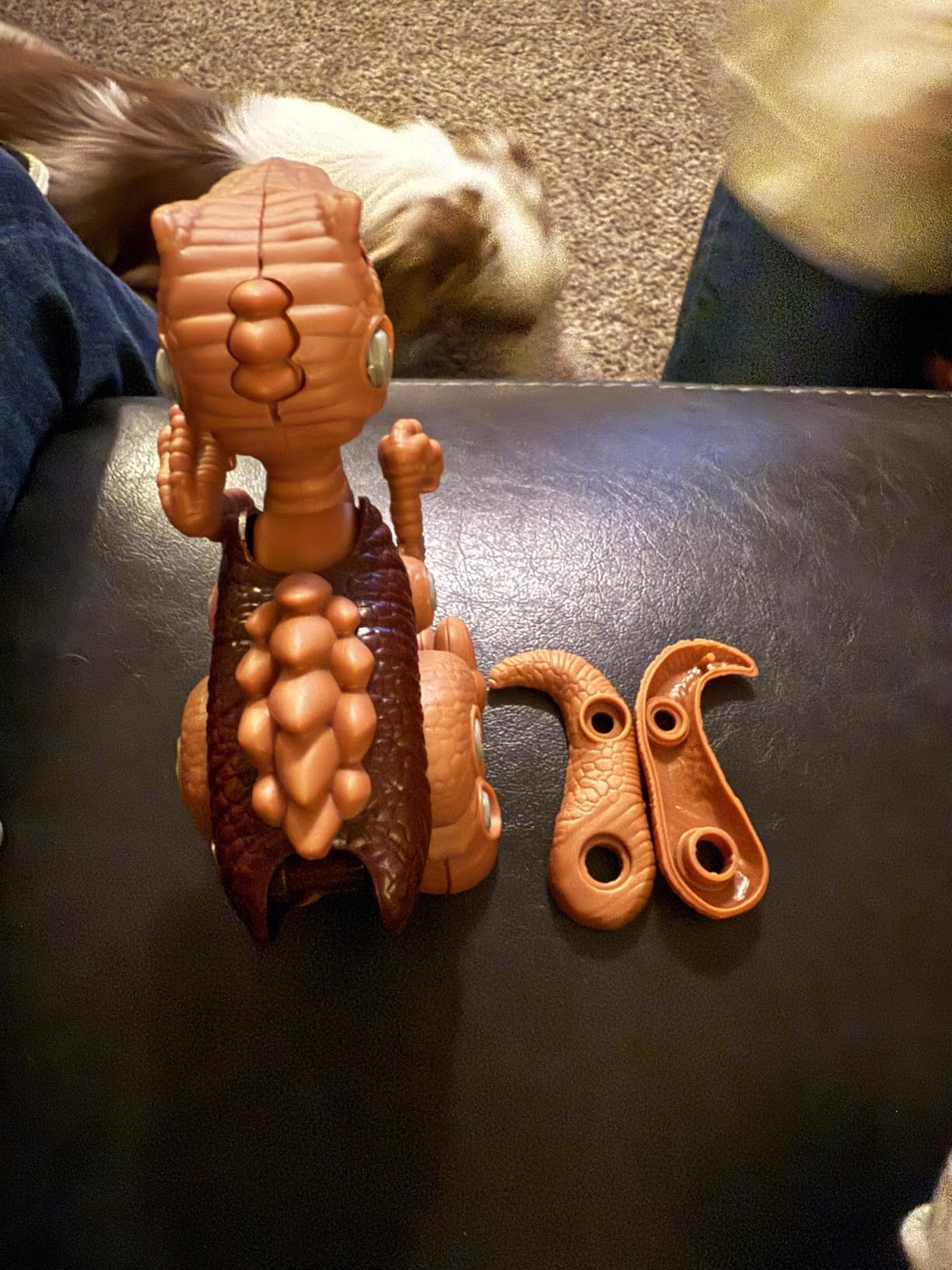
The instruction sheet is the consistent weak point. Buyers describe the printed directions as hard to read and partly incoherent, and several parents recommend adult help for under-fives. Plan on sitting down for the first assembly rather than handing it over cold.
Second, small screws and connectors need adult help for a five-year-old, which slightly undercuts the independence the drill promises. Third, at roughly 18 pieces per dinosaur, repeated builds become predictable within a week or two.
Is it usable without an adult sitting next to the child?
After the first build, yes. Once a child has seen the order of operations once, the drill and manual screwdrivers are manageable alone, and disassembly becomes easy. The first assembly is the one that needs a hand, mainly because the directions are unclear rather than because the task is hard.
Does the drill run on batteries that need replacing?
The set includes two AAA batteries, so it works out of the box. It does mean the set is not entirely screen-free or battery-free in the strict sense, which matters for families specifically avoiding powered toys. The drill runs at low speed rather than as a high-speed power tool, which is the safety point that makes it appropriate at this age.
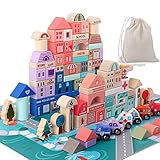
10. Migargle 115-Piece Wooden Block Set – Screen-Free Building With a Play Mat
Migargle Wooden Building Blocks Set, 115 Pcs City Construction Stacker Stacking Preschool Learning Educational Toys, Toddler Toys for 3+ Year Old Boy and Girl Gifts
115 natural wooden blocks in mixed shapes
Play mat included
BPA-free with non-toxic paint
City construction theme
Pros
- Solid wood stacks into stable towers
- Mixed shapes plus a play mat
- Numbered and lettered blocks add literacy
- Water-based non-toxic paint
Cons
- Heavier and bulkier to store
- Wood can chip at the edges
- Fewer specialty elements than plastic
Wood changes the feel of construction play more than any other material. These pieces have the weight of real objects, they stay where they are put, and towers behave the way a child expects a tower to behave. For a family avoiding plastic entirely, this is the strongest set in the roundup.
The 115 pieces cover rectangles, squares, triangles and arches, and the set includes a play mat that defines a build area. That mat does more work than it sounds: it keeps a wooden set from spreading across the floor and gives a small apartment a designated construction zone.
Numbered and lettered pieces add an early literacy layer to the same play session. A five-year-old can build a house, then discover that the pieces showing numbers also show letters, which turns one box into two activities.
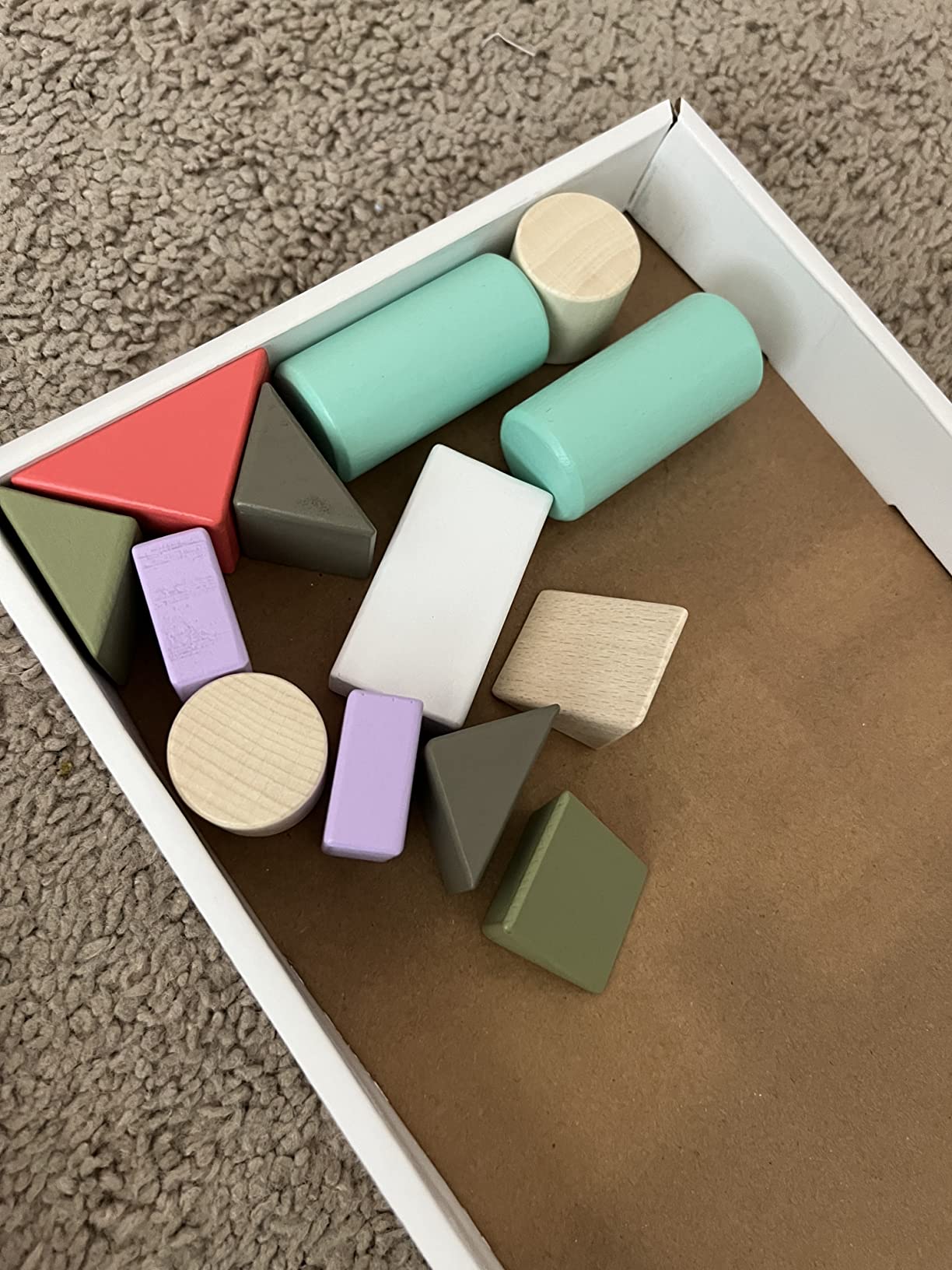
Weight is the real drawback. At 5.4 pounds, this is the heaviest set here, and wooden blocks do not compress into a bag the way tiles or bricks do. Storage is a stack on a shelf rather than a bin under a bed, which needs planning in a small home.
Second, wood pieces can splinter or chip at the edges over time, and a chipped edge is a real snag hazard for small hands. Inspect pieces periodically rather than waiting for a complaint. Third, the range of specialty elements is narrow compared with molded plastic sets, so there are no wheels or figures.

Is the wood finish safe and smooth enough?
Yes, on the specification and in our handling. The set is made of high quality wood stained with water-based non-toxic paint, BPA-free, and sanded smooth. Reviewers describe the finish as substantial and smooth. The ongoing duty is checking edges, since any wood toy can chip with hard use.
Is 5.4 pounds of wood a storage problem?
It can be. Unlike magnetic tiles or connector blocks, wooden pieces cannot be scooped into a single bag, so cleanup is a real activity rather than a gesture. Parents report that the included play mat helps by giving the set a boundary, and a dedicated shelf or a low bookcase solves the rest. If storage is genuinely tight, a plastic set is the easier choice.
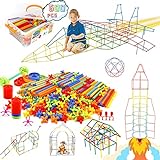
11. Ggiibro 600-Piece Straw Constructor Set – The Biggest Piece Count Here
Straw Constructor Toys 600Pcs STEM Building Toy Interlocking Plastic Engineering Thin Tube Blocks Educational Kit for 3 4 5 6 7years Kids Boys and Girls Gift Preschool STEM Toy with Storage Box
600 straw and connector pieces
Wheels and multi-directional connectors
Storage box included
CPSIA and ASTM certified
Pros
- Largest piece count in the roundup
- Moving vehicle models possible
- Storage box contains small parts
- Works for siblings or a class
Cons
- Thin straws bend and crack at joints
- Count inflated by easily lost tiny pieces
- Lower satisfaction ceiling than premium sets
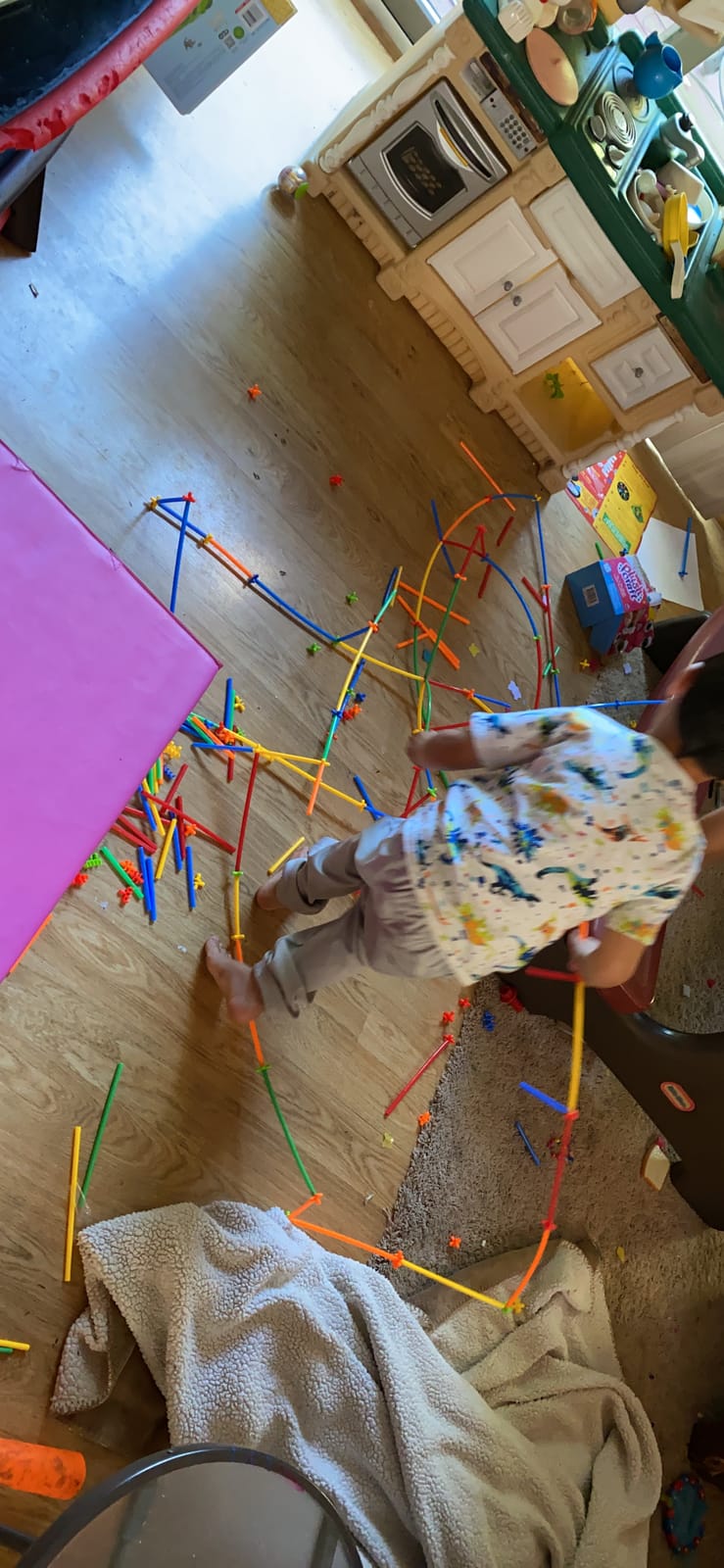
Six hundred pieces is the headline number in this roundup, and for group play nothing else comes close. Two or three children can build separate structures at the same time, which makes this a practical set for siblings close in age or a classroom bin rather than a single-child toy.
Wheels and multi-directional connectors were added to the set, so vehicle models actually roll rather than sitting still. That single change turns a pile of straws into something with a purpose, and it is the feature most likely to hold a five-year-old’s attention past the first build.
Certification is a genuine strength here. The set holds CPSIA and ASTM certificates and uses non-toxic materials, which is the specific requirement for group settings where a toy passes between children.
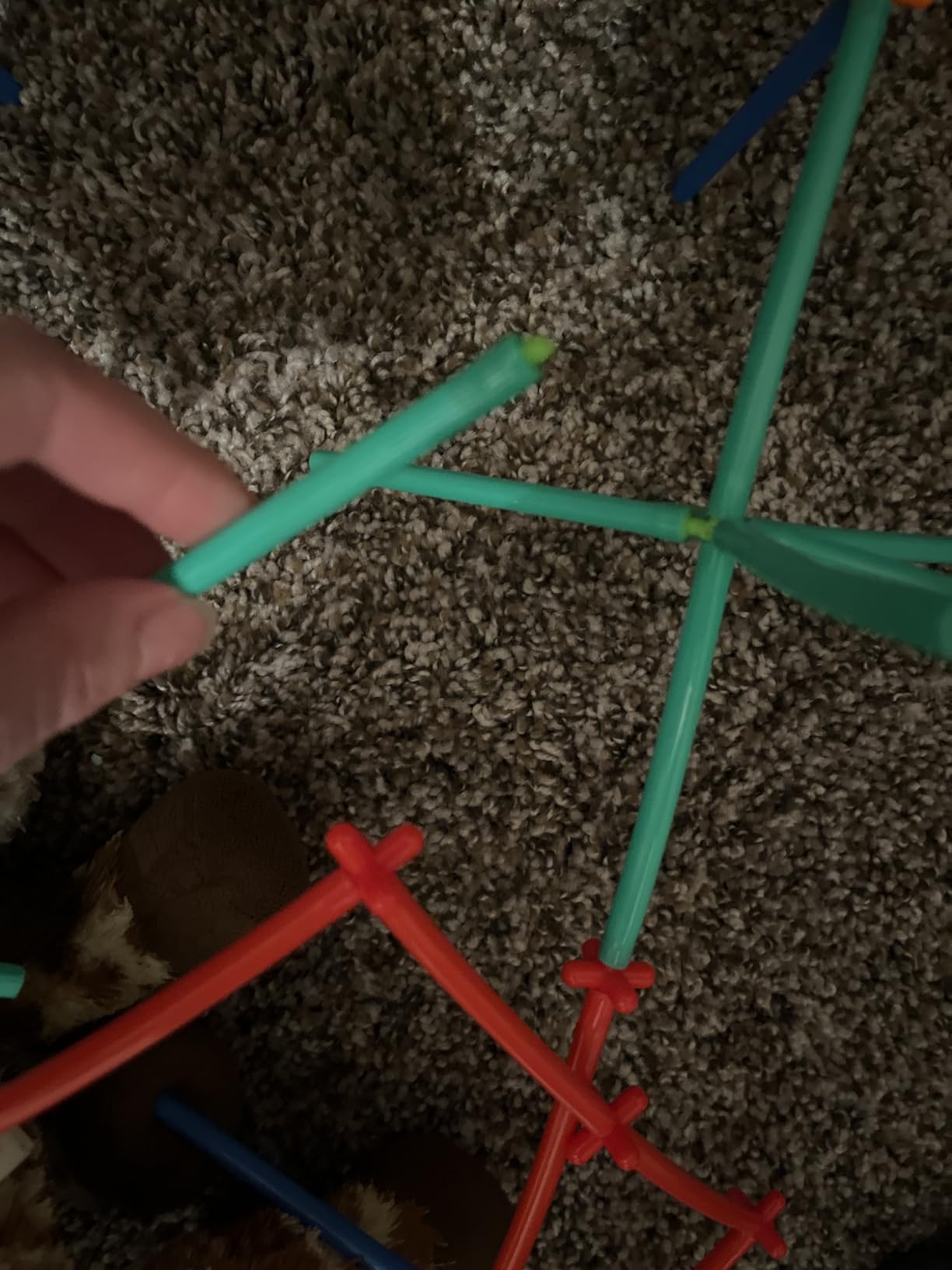
The straw body is the weakness. These are thin PVC tubes, and they bend under load and crack at the connector joints, which means tall structures need bracing and a broken joint ends a build. A five-year-old building a tower will find that limit quickly.
Second, the 600 count is inflated by very small connector pieces that are easy to lose under furniture, and a straw set without its connectors stops working. Third, reviewers note a lower overall satisfaction ceiling than the magnetic and wooden sets, which we also observed.
Do thin straws survive a five-year-old build?
For low, wide structures, yes. For a tower, no. The tubes flex visibly under a few layers of weight and the joints are where failure starts, so a build over about eight pieces high wants a wide base. The practical fix is to frame the challenge as a bridge or a vehicle rather than a tower, which plays to the material instead of against it.
Where do 600 pieces actually go?
Into the storage box, ideally. Reviewers praise the box because hundreds of small straws are otherwise a permanent floor hazard, and this is a set that demands a real container rather than a corner. For a single child, the count is more than needed. For siblings or a classroom, it is the whole point of the set.
12. aotipol 100 Large Blocks with Baseplate – Big Bricks on a 10-Inch Plate
Large Building Blocks for Toddlers Kids Age 2-5, 100 PCS Set with Baseplate
100 large bricks plus a 10-inch baseplate
75 square and 25 rectangle pieces
Compatible with major brick brands
Non-toxic ABS
Pros
- Large pieces avoid choking risk
- Tight peg fit keeps builds firm
- Works with major brick brands
- 10-inch baseplate adds a foundation
Cons
- Age guidance ends around five
- Only two brick sizes
- Baseplate adds bulk
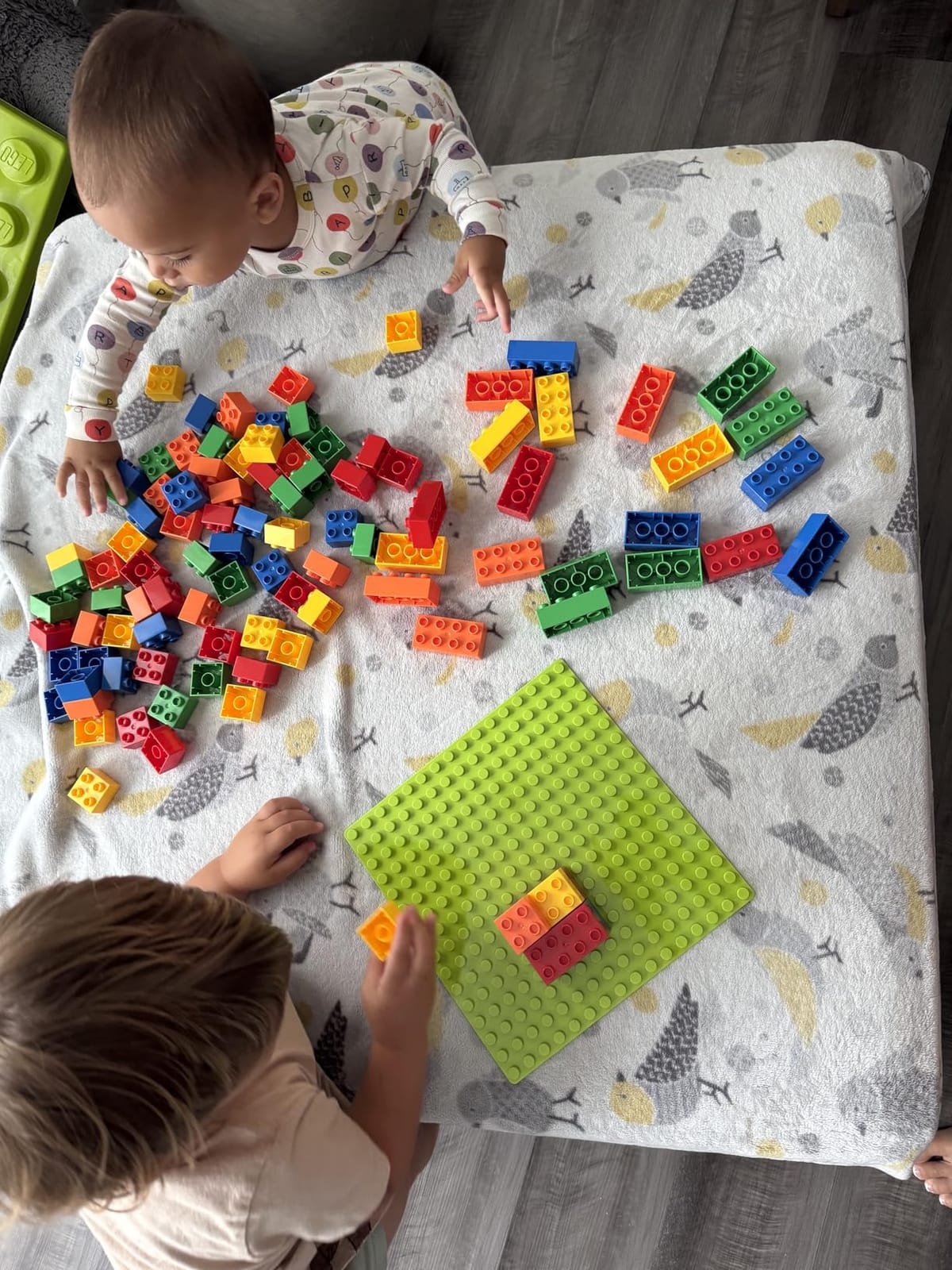
Most large-brick sets give you blocks and wish you luck with stability. This one includes a 10-inch green baseplate, and that single addition is what makes it work at five. A defined footprint means a tower has a base, which means a five-year-old can rebuild it after a collapse rather than starting from nothing.
The fit is firm. Seventy-five 2×2 squares and twenty-five 2×4 rectangles connect tightly and reviewers report the grip holding over years. The large size means every piece clears a small hand and avoids a choking hazard, which makes this a practical floor toy in a house with younger children.
Compatibility is the underrated feature. The bricks fit all major brands, so they combine with an existing collection rather than starting a walled-off system. For a family already committed to LEGO or DUPLO, that is the deciding factor.
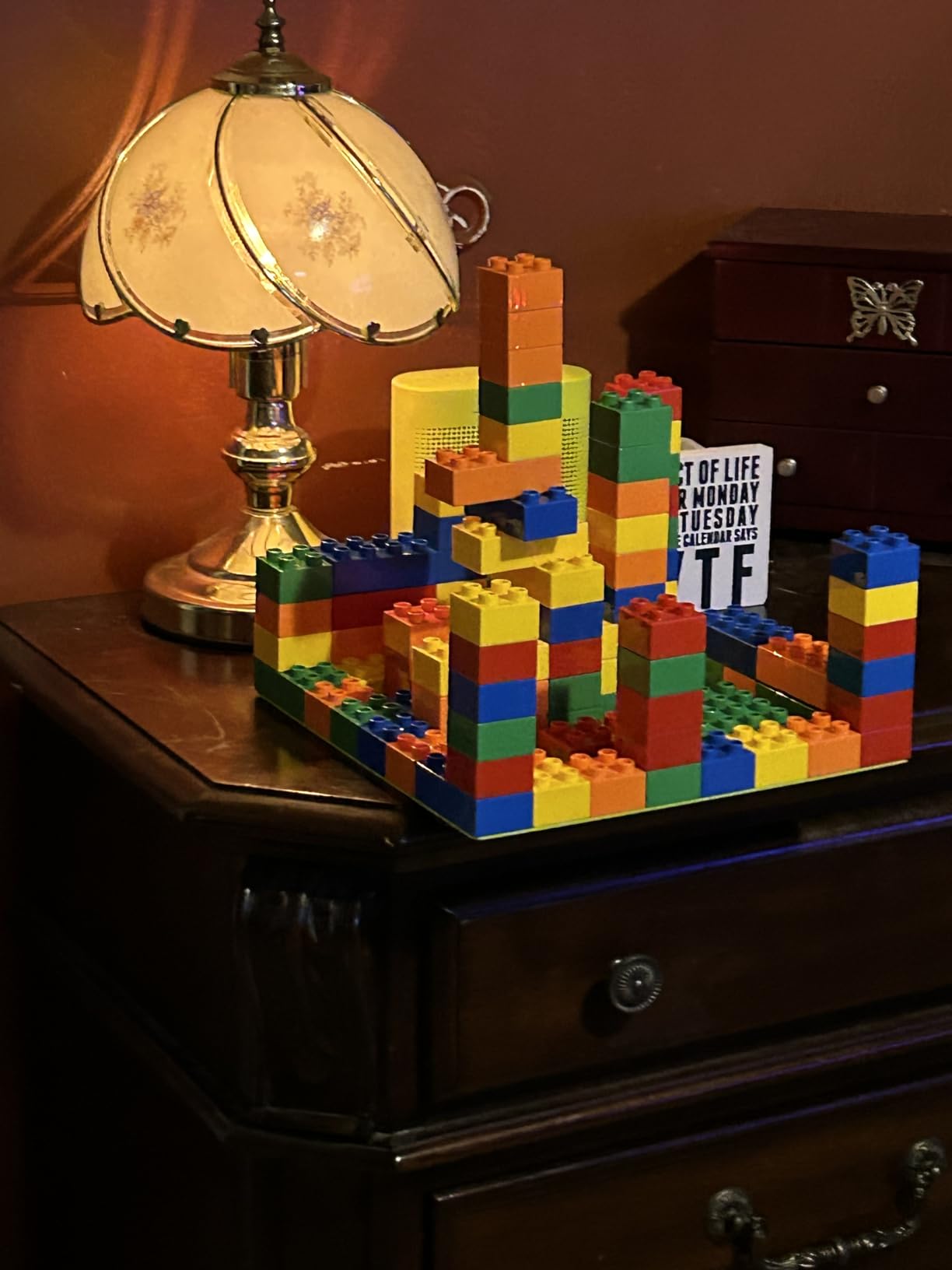
The set is honest about its ceiling. Reviewers note the age guidance stops around five, and the two brick sizes limit architectural variety. No arches, no slopes, no wheels, so once a child has mastered square buildings, the vocabulary is genuinely exhausted.
The baseplate is also bulk for a set aimed at younger children, and 100 pieces of large brick is a lot of floor space during play. If storage is the binding constraint in your home, the absence of a baseplate is lighter to live with.
Does it mix with LEGO and DUPLO collections?
Yes, and that is the main reason to choose it over a generic chunky brick set. The peg geometry matches major brands, so these pieces stack with existing small and large bricks. Mixed builds work well, though the visual result is uneven because the scale difference is obvious to an adult and invisible to a five-year-old.
How long before it is outgrown?
About a year, in most cases. The age range runs from 18 months to six years, and the constraint is variety rather than ability. A capable five-year-old will finish the vocabulary of square and rectangle buildings quickly, at which point the set should hand over to a younger child rather than sit unused.
How to Choose: A Buying Guide for Parents
Most buying mistakes in this category come down to one variable: connection difficulty versus the child’s patience. Piece count is the second variable, and it is the one parents most often get wrong. Get those two right and the choice narrows to four options.
Match the connection type to your child’s patience
For a child who abandons things when they fail, start with connections that cannot really fail. Magnetic tiles and connector blocks are forgiving because a misaligned join either clicks or does not, and a large brick is forgiving because alignment is visible. Stud-and-tube bricks are demanding by comparison, and they reward a child who already tolerates a few crooked joins.
For a child who wants a challenge, reverse the order. LEGO Classic at 484 pieces, K’NEX with its rods, and a straw constructor set all produce harder builds. The test is simple: does the child keep going after a structure falls apart, or does the collapse end the session?
Piece count: how many is too many at age five
There is no magic number, but there is a useful pattern. A piece count that produces one finished object per session feels right. A count that produces four small unfinished objects feels wasteful, and a count that produces one object after an hour of fiddling feels like a struggle.
That is why 100 to 125 magnetic pieces and 100 large bricks land so well, while 600 straws function more as a shared bin than as a single-child toy. It is also why the 32-piece MAGNA-TILES set works despite the small count, because every piece is usable in the first build.
Materials and certification marks worth looking for
Check three things on the listing rather than assuming. First, whether magnets are fully enclosed in the piece shell. Second, whether paint is described as non-toxic and water-based, which matters for wood. Third, whether ASTM F963 or CPSIA compliance is stated for a set used in a classroom or shared with siblings.
Material itself is a preference, not a quality ranking. ABS plastic is light, washable and cheap to replace. Acrylic and MABS shells are what give premium magnetic sets their crack resistance. Wood feels best under the hands and is the heaviest to store.
Storage footprint: the factor nobody lists
Before buying, look at the container. A set with a bag or a box that closes is a set you will still be playing with in six months. A set that arrives as loose pieces in an open tray is a set that ends up in a corner of the living room and eventually disappears under the sofa.
Our 600-piece straw set is the extreme case and makes the point best. Its storage box is not an accessory, it is the difference between a toy and a cleanup project. Wooden sets need a dedicated shelf. Magnetic sets need a bag. Anything that spills becomes the nightly chore that eventually ends the play.
Build challenges that make any set last longer
Following a picture produces one build. A challenge with a rule produces a series of them. The most productive prompts we used were constraint-based: build a house for a dog that hates rain, make a garage with a door that actually opens, or build a bridge that spans two books and holds a full cup of water on top.
Story prompts work better than instruction prompts at this age because they leave the design to the child. Cooperative prompts work best with two sets and two children, since they turn a competition over pieces into a shared structure. If you want more ideas in this style, our guide to block sets across price bands covers the same ground from a different angle.
Safety First: Small Parts, Magnets and Screen-Free Play
Every set in this roundup is intended for children of five. The risk is almost never the intended user. It is the two-year-old in the same room, the piece that travels into another child’s bedroom, and the magnet that ends up separated from its housing.
What ASTM F963, CPSIA and EN71 actually certify
ASTM F963 is the US toy safety standard, and it governs mechanical and physical properties, flammability and heavy metals. CPSIA compliance covers lead and phthalate limits and the small parts regulation for children under three. EN71 is the European equivalent, covering mechanical safety, flammability and migration of specific elements.
None of them guarantee a toy will not break. They certify the product as it was manufactured. That distinction matters for magnetic tiles, where the standard does not prevent a tile from cracking when dropped on a hard floor. Inspect periodically and remove damaged pieces.
Sibling age-mixing: the real risk in this category
The question to ask is not whether the set is safe for a five-year-old, it is what else is on the floor. A standard small-brick box, a magnetic set and a take-apart kit with screws all fail the same test in a house with a toddler, for different reasons.
The practical rule that came out of our testing: if there is a child under three, magnetic sets and screw-and-bolt kits belong on a shelf, and oversized brick or wooden sets belong on the floor. That single rule removed every concern we encountered during the six weeks.
Why screen-free building sets still win at this age
Parents consistently separate open-ended building toys from app-connected toys, and the preference is unambiguous. A magnetic set has no sound, no update and no notification, and it does not run out of content. That is a different kind of durability from the ABS shell, and in our testing it mattered more over six weeks.
The one powered exception that parents value is a coding robot, which some families treat as a genuine bridge into STEM at seven. For a five-year-old, the take-apart drill set is the closest equivalent, and its appeal is mechanical rather than digital. If you are weighing screen options separately, we compared tablets for this age in a separate guide.
What to Buy Next: The 5-to-7 Year Old Bridge
The most common question in parent discussions about this age is what comes after the set you already own. The answer depends on which connection type your child locked onto, because that preference predicts the next purchase better than any age milestone.
A magnetic-tile child usually wants more magnetic tiles, and the geometry compatibility across major brands means adding a configuration rather than a new system. A brick child wants a themed set with vehicles, characters or a buildable structure, because the Classic box has run out of vocabulary. A wooden-block child typically moves toward a marble run or a mechanism, since what was missing was movement rather than material.
By six or seven, the step up is toward kits with instructions and outcomes. Community recommendations at that stage frequently name the LEGO 60348 Lunar Roving Vehicle and the LEGO 31113 Race Car Transporter, both praised specifically for playability rather than piece count. For children who liked rods and moving parts, an engineering set is the natural continuation, and we have covered that age band in our STEM building sets for 8 year olds guide.
One thing we would not do is buy ahead. A child who is thriving at five usually has six or seven months of play left in the current set, and buying the next tier early produces a shelf rather than a bridge.
Frequently Asked Questions
What are the best building blocks for a 5-year-old?
The best building blocks for a five-year-old depend on how the child handles failure. MEGA BLOKS First Builders is the safest first set because the pieces are oversized and rarely fail. LEGO Classic 10696 is the strongest all-round choice at 484 pieces. A magnetic set such as MAGNA-TILES Classic 32 or the PicassoTiles 100-Piece set is the most forgiving of all, since a misaligned join still clicks together.
What are some good things for 5-year-olds to build?
A five-year-old can build a hollow cube, a row of small houses, a fenced yard, a car park with wheels, a bridge spanning two books, or a garage with a working door. Constraint-based challenges work better than picture-following. Try building a house for a dog that hates rain, or a tower that survives a full cup of water poured on top. These prompts produce more play than a manual.
Is Magna-Tiles or Connetix better for 5-year-olds?
For durability the established brand tends to win, because riveted lattice shells resist cracking and the magnets are fully enclosed. For piece count per unit of spend, a larger 100 to 125-piece set gives a five-year-old more to work with on day one. Whichever you choose, confirm the magnet housing is sealed, store the set out of reach of a child under three, and inspect for cracks periodically.
How many pieces should a building set have for a 5-year-old?
Aim for a count that produces roughly one finished object per session. In practice that lands between 80 and 130 pieces for a single child, which covers 100 magnetic pieces, 100 large bricks or 120 connector blocks. A count of 484 works when the pieces are mostly basic plates and bricks. A count in the hundreds of thin straws is better suited to group play than to solo building.
What age do kids stop playing with building blocks?
Most children keep building well past seven, but the material changes. Chunky blocks lose appeal around six, magnetic tiles tend to hold until eight or nine, and classic small bricks can carry a motivated child into the teens. The usual reason for stopping is not ability but vocabulary, since a set with only two or three shapes runs out of ideas long before the child runs out of skill.
Are magnetic tiles safe for a 5-year-old?
Magnetic tiles are suitable for a five-year-old who is past the mouthing stage, provided the magnets are fully enclosed within the piece shell and an adult supervises. The specific risk is a separated magnet attracting through tissue, so tiles should be counted back into their bag after play and stored where a younger sibling cannot reach them. Sets in this roundup are marked for ages three and up for that reason.
Conclusion: Our Final Word on the Best Building Sets for 5 Year Olds
The MEGA BLOKS First Builders 80-Piece set is our top pick overall. It is the set a child at five can use without adult help on the first afternoon, the connections rarely fail, and the storage bag ends the cleanup problem before it starts.
Two other sets are worth shortlisting for different children. LEGO Classic 10696 is the right buy for a child ready for real brick building, and MAGNA-TILES Classic 32 is the best magnetic option for a family that values durability and can accept a smaller initial piece count. For a child under three sharing the room, start with a magnetic or oversized set instead.
One piece of advice outweighs the ranking. Introduce the set with a constraint, not a manual. Give a child one problem to solve rather than a picture to copy, and the first frustration becomes a puzzle instead of a reason to stop. That single habit did more for our test builds than any product choice. We will keep updating these picks through 2026 as new sets reach parents.