
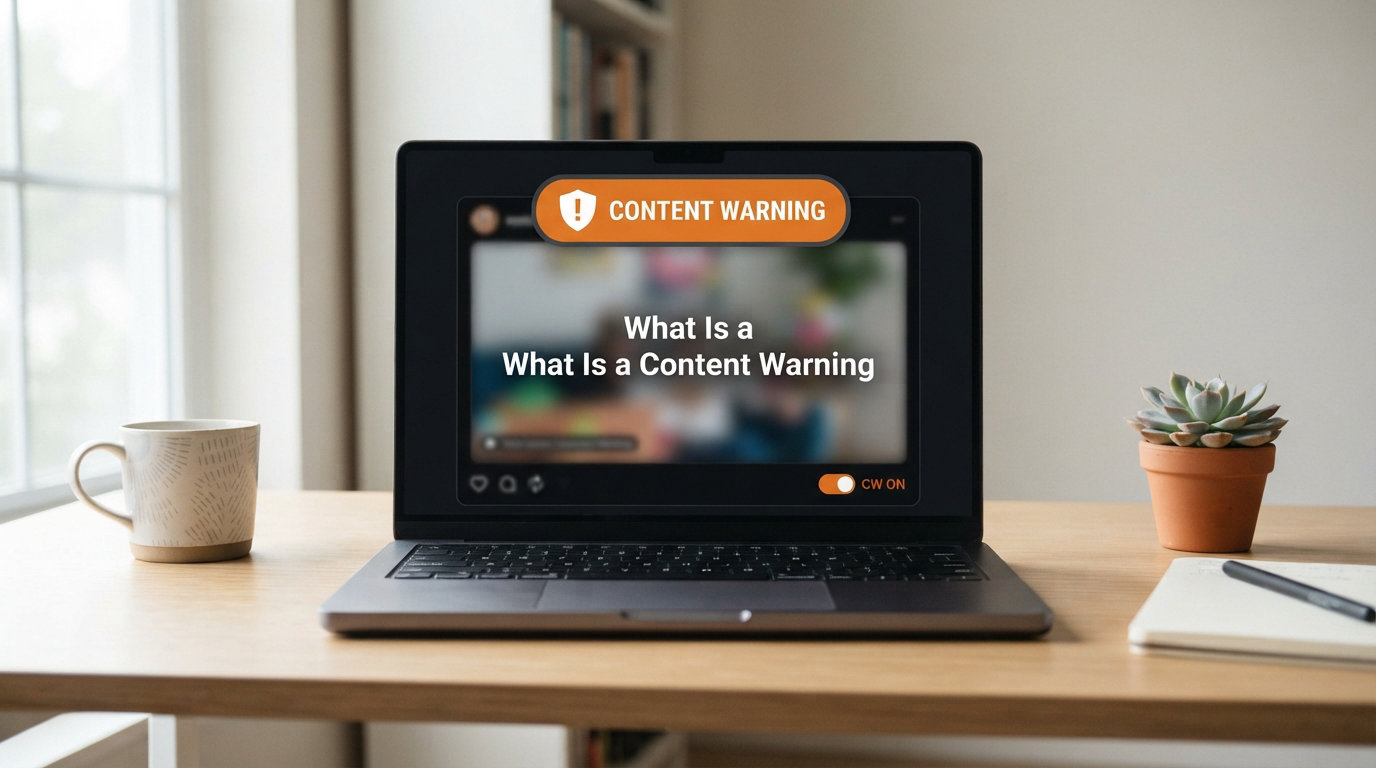
A content warning is a brief note placed before written, audio, or visual content that alerts the audience to potentially distressing material. It gives people a heads-up about sensitive topics so they can decide whether to continue, take a break, or skip the content entirely. If you’ve ever seen a label like “CW: violence” at the top of an article, you’ve already encountered a content warning in action.
I started paying close attention to content warnings a few years ago, and I’ve noticed how much they shape the reading and viewing experience for millions of people. In this guide, I’ll walk you through exactly what a content warning is, why creators use them, and how to write one that actually helps your audience.
Table of Contents
A Content Warning Is a Note That Alerts Audiences to Sensitive Material
A content warning is a short, informative statement that flags potentially distressing content before someone encounters it. The warning sits at the very beginning of an article, video, podcast episode, or social media post, so the reader or viewer knows what lies ahead.
Think of a content warning as a courtesy notice, similar to a movie rating or a spoiler alert, except it’s focused on emotional and psychological safety. The goal is not to censor content but to honor reader autonomy, the right of every person to choose what they consume.
The phrase “content warning” is often shortened to CW, and you’ll see it on platforms like Tumblr, Archive of Our Own (AO3), and in academic writing. When used thoughtfully, a content warning takes just a sentence or two and provides enormous value to anyone who might be affected by the material.
Why Content Warnings Matter for Readers and Creators
Content warnings matter because they give people control over their own media consumption and protect their mental well-being. They acknowledge that not everyone walks into a piece of content with the same life experiences, and that some topics can cause real emotional distress for certain audiences.
Reader Autonomy and Mental Health
For readers, a content warning is a small act of empathy that can prevent a much larger problem. Someone with a history of trauma, for example, can brace themselves or skip a section that discusses graphic violence. Someone managing anxiety might appreciate knowing that an article discusses self-harm before they dive in.
Many readers in trauma survivor communities have shared that warnings help them engage with difficult topics safely. Without warnings, they often have to choose between protecting their mental health and missing out on important conversations. A simple note removes that impossible trade-off.
Benefits for Content Creators
Content warnings also benefit the creators who use them. They signal that you’ve thought about your audience’s well-being, which builds trust and encourages deeper engagement. I’ve found that articles with clear warnings tend to get more thoughtful comments and shares, because readers feel respected.
Warnings also reduce the risk of negative reactions, complaints, or accusations that you’ve blindsided someone with graphic content. From a practical standpoint, a content warning is a cheap, fast way to make your content more inclusive and more professional.
Examples of Content That Requires a Warning
Any topic that could reasonably cause emotional, psychological, or physical distress warrants a content warning. Below is a list of the most common categories I see flagged across blogs, social media, and creative writing platforms:
Violence and gore — graphic descriptions of physical harm, torture, or war
Sexual content — explicit scenes, assault, or non-consensual encounters
Self-harm and suicide — discussions of cutting, suicidal ideation, or eating disorders
Mental health crises — detailed accounts of panic attacks, breakdowns, or hospitalizations
Abuse and trauma — child abuse, domestic violence, sexual assault, or trafficking
Death and grief — sudden loss, terminal illness, or detailed funeral descriptions
Discrimination and oppression — racism, homophobia, transphobia, ableism, or xenophobia
Substance abuse — drug use, addiction, or withdrawal in graphic detail
Medical procedures — surgical details, medical trauma, or graphic injury treatment
Phobias — spiders, needles, blood, or other common triggers described in detail
This list isn’t exhaustive, and that’s actually an important point. The best creators think about their specific audience and the unique sensitivities of the topic at hand. If a piece of content could plausibly upset someone, it’s better to include a warning than to assume no one will be affected.
Content Warning vs Trigger Warning: What’s the Difference
The difference between a content warning and a trigger warning comes down to intent and audience. A content warning is a broad, descriptive label about what type of material appears in the content. A trigger warning (often abbreviated TW) is more personal, alerting someone with a specific trauma that the content may activate a traumatic memory or PTSD response.
Content warnings are typically used by writers, educators, and platforms to describe the general nature of the content. Trigger warnings originated in trauma survivor communities, especially among veterans and sexual assault survivors, as a way to protect people with diagnosed PTSD. In practice, many people use the two terms interchangeably, and that’s fine. The line between them is fuzzy, and what matters most is that you flag sensitive material clearly.
If you’re deciding whether to use CW or TW, here’s a simple rule: use CW when describing general categories (CW: violence, CW: grief) and use TW when referencing a topic closely tied to specific traumatic experiences (TW: sexual assault, TW: domestic abuse). Either abbreviation signals care, and most readers will appreciate either one.
How to Write an Effective Content Warning
An effective content warning is short, specific, and placed before the sensitive material. It should describe the topic clearly without spoiling the content, and it should appear at the very top of the piece, not buried in a footer or hidden behind a link.
Step 1: Identify the Sensitive Material
Read or review your content and ask yourself, “What could upset someone here?” Be honest. Topics that feel normal to you may be deeply upsetting to readers with different life experiences. When in doubt, include a warning, it’s easier to over-warn than to under-warn.
Step 2: Write a Clear, Brief Description
Use a short label or sentence that names the topic. Format examples I recommend:
Single-label format: “CW: graphic violence”
Multiple-topic format: “Content Warning: This article discusses suicide, self-harm, and eating disorders.”
Detailed format: “CW: This piece contains detailed descriptions of a car accident and on-scene medical treatment.”
Keep the warning to one or two sentences. The goal is to inform, not to overwhelm. Avoid vague language like “sensitive content” without context, because that doesn’t tell the reader anything useful.
Step 3: Place the Warning Before the Content
Put the warning at the very top of your post, above the title or directly below it. On social media, place it in the first line of your post or thread. On video platforms, put it in the description box and mention it verbally in the first 10 seconds of the video. The warning must come before the audience encounters the sensitive material, otherwise it defeats the purpose.
Where to Place Content Warnings on Different Platforms
Where you place a content warning depends on the platform, because each one has different formatting norms and audience expectations. Here’s how I approach the major platforms as of 2026:
Blogs and articles: Place the warning directly above or below the title, before the introduction. Use bold or italic text so it stands out.
Social media (Twitter/X, Threads, Bluesky): Put “CW:” at the start of your first post or tweet, and add “End CW” after the sensitive section if your post is long.
Instagram and TikTok: Add “CW” to the first line of your caption, mention the topic in the first sentence, and use the platform’s “sensitive content” toggle when available.
YouTube: Use the “Not made for kids” or “Age-restricted” features, mention the warning verbally in the first 15 seconds, and include it in the video description box.
Podcasts: Read the content warning aloud at the very start of the episode and include it in the show notes. Skip the timestamps so listeners can prepare.
Books and long-form writing: Place a warning on the copyright page or directly above the chapter where the content begins.
The medium may change, but the principle stays the same. The warning must arrive before the audience does, in whatever format they encounter your content.
Common Mistakes to Avoid With Content Warnings
The most common mistake I see is hiding warnings behind a link or burying them at the bottom of a post. If your audience has to click to find the warning, you’ve failed. The other mistake is using warnings so broadly that they lose meaning, like flagging every mild mention of sadness as graphic content.
Writers also worry that warnings will spoil their content. In my experience, this concern is overblown. Most readers care far more about feeling safe than about plot surprises. A warning that says “CW: character death” doesn’t tell the reader when, how, or why, it just lets them prepare.
Finally, don’t argue with readers who genuinely needed the warning you didn’t provide. A simple “Thank you for letting me know, I’ll add that going forward” goes a long way. Content warnings are a learning process, and every creator improves with feedback.
FAQs
What is an example of a content warning?
A common example of a content warning is a short note placed at the top of an article or post that says something like u0022CW: This piece discusses graphic violence and sexual assault.u0022 The label gives readers a clear heads-up about sensitive material so they can decide whether to continue.
What is the difference between a trigger warning and a content warning?
A content warning (CW) is a broad, descriptive label about what type of sensitive material appears in a piece of content. A trigger warning (TW) is more specific and personal, alerting readers with a history of trauma that the content may activate a PTSD response or similar reaction. Both serve the same protective purpose, and many people use the terms interchangeably.
Should I use TW or CW?
Use CW (content warning) when you’re describing general categories of sensitive material, such as CW: violence or CW: grief. Use TW (trigger warning) when the topic is closely tied to specific traumatic experiences, such as TW: sexual assault or TW: combat trauma. Either abbreviation is widely accepted, so choose the one that best matches your audience and tone.
Do content warnings spoil the content?
In most cases, no. A content warning tells the reader what general topic to expect, such as character death or abuse, but it does not reveal specific plot points, twists, or outcomes. Most readers prefer knowing the general territory over being surprised by something that genuinely harms them.
Are content warnings necessary?
Content warnings are not legally required in most contexts, but they are widely considered best practice for ethical content creation. They protect readers with trauma histories, build trust with your audience, and reduce the risk of unintended harm. For 2026 creators, including content warnings is a simple, low-effort way to make your work more inclusive and accessible.
Final Thoughts on Using Content Warnings in 2026
A content warning is one of the simplest and most powerful tools available to creators who care about their audience. By flagging potentially distressing material at the top of your work, you give readers the information they need to engage safely, and you build a reputation as a thoughtful, trauma-informed creator.
If you’re publishing anything online in 2026, whether it’s a blog post, a podcast episode, or a 30-second video, take 30 seconds to add a content warning. It’s a small habit that makes a meaningful difference, and your readers will thank you for it.