
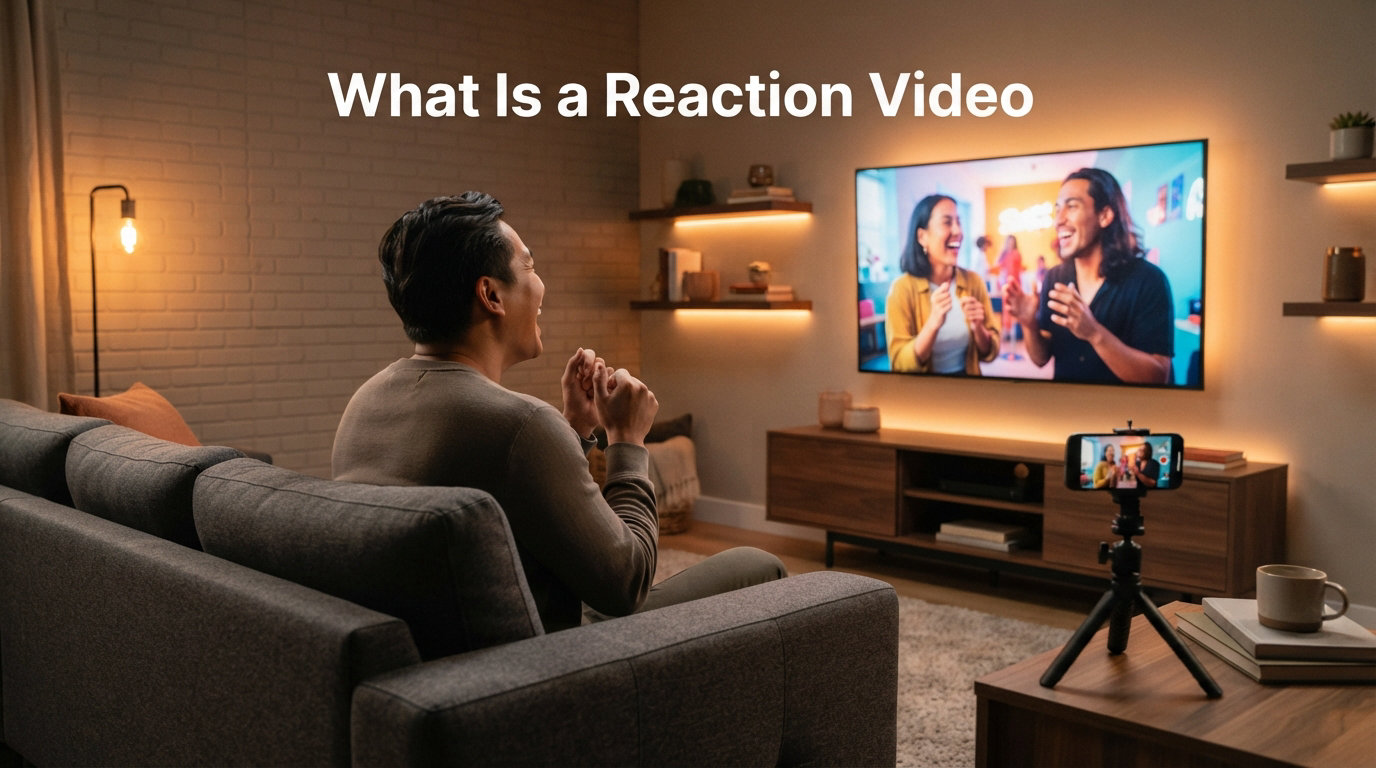
A reaction video is a video in which one or more people record their genuine, unscripted reactions while watching, listening to, or experiencing a piece of media for the first time. Filmed in a picture-in-picture or split-screen format, reaction videos let audiences see both the original content and the reactor’s real-time emotional response, often with commentary layered on top.
If you have spent any time on YouTube, Twitch, or TikTok in the last decade, you have probably seen someone react to a song, a movie trailer, or a viral clip. Our team has been tracking reaction content for years, and the format has grown from a niche corner of YouTube into one of the most watched styles of online video. This guide covers what defines a reaction video, how the format works, why people watch them, and what every viewer should know.
Table of Contents
What Is a Reaction Video?
A reaction video (sometimes called a “react video”) is a type of content where one or more creators film themselves responding to another piece of media in real time. The original media might be a music video, a movie trailer, a news broadcast, a viral clip, a video game, or even a product reveal. The reactor’s face, voice, and reactions become the main attraction, while the original content plays alongside their commentary.
What separates a reaction video from a traditional video essay or review is the emphasis on the live, in-the-moment response. The reactor usually has not seen the content before, and the appeal comes from watching their genuine reaction unfold. Audiences get to experience the surprise, laughter, joy, or shock alongside the creator, almost like sitting on a couch watching something together.
Common things people react to include:
Music videos, songs, and album drops
Movie trailers and full films
TV show episodes and finales
Viral clips and trending memes
Video game cutscenes and boss fights
News stories and award show moments
Product launches and unboxings
Even though the format looks simple, the best reaction videos mix authentic emotion with informed commentary, turning a “watching someone watch a video” concept into content worth coming back for.
How Reaction Videos Work
Most reaction videos use one of three common recording formats. Each style shapes how the audience experiences the content.
Picture-in-Picture Format
The most popular reaction video format places a small webcam window of the reactor in the corner of the screen while the original content takes up the main frame. Viewers see both at once, capturing the reactor’s facial expressions and reactions as the media plays. This setup works especially well for music reactions and movie trailers where the visuals and audio of the source matter.
Split-Screen Reaction
A split-screen reaction video places the reactor and the original content side by side in equal frames. Many creators prefer this layout because it gives the viewer a clearer view of the reactor’s full body language. It is often used for comedy reactions, gaming reactions, and any content where the reactor’s gestures add to the experience.
Audio-Only or Voiceover Reaction
Some reactors choose to remain off camera and record only their voice reacting to a song or video. This style is common on short-form platforms and among musicians or producers who want to give technical opinions about a track’s mix, vocals, or production. The original content plays full screen while the reaction comes through in the audio.
To create one, reactors typically use screen recording software paired with a webcam, then sync the two streams in basic video editing software. The technical bar is low, but as several forum users pointed out, good audio quality matters more than having a perfect camera setup.
Types of Reaction Videos
Reaction content covers a wide range of formats, and the type often shapes who watches and why. Here are the most common categories our team has tracked.
Music reactions are the biggest reaction category on YouTube. Reactors watch music videos or listen to new songs for the first time, often pausing to break down lyrics, vocals, and production. These videos can introduce older artists to entirely new audiences, which is one reason major labels encourage them.
Movie and trailer reactions run the spectrum from fans reacting to superhero trailers to film experts giving nuanced takes on indie festival picks. Long-form reactors often run series reacting to entire filmographies or director retrospectives.
Gaming reactions thrive on Twitch and YouTube Gaming. Players react to horror games, speedruns, dramatic cutscenes, or historic esports moments. The chat interaction makes Twitch especially well suited to live community reactions.
Funny and viral content reactions are short, casual, and built around culture. Creators react to trending TikToks, memes, or absurd clips, often adding their own humorous commentary to amplify the joke.
Product reveal and unboxing reactions turn everyday product launches into shareable moments. Tech reviewers, sneaker fans, and beauty creators all use the format to share genuine first impressions with their communities.
Why Reaction Videos Are So Popular
If you have ever wondered why anyone watches someone else watch a video, you are not alone. It is a common question on Reddit, YouTube comment sections, and creator forums. The truth is that reaction videos tap into several deep psychological instincts.
Researchers point to a concept called mirror neurons, which fire both when we do something and when we watch someone else do it. When you see a reactor laugh, gasp, or tear up at a moment in a video, your brain tends to mirror that emotion. You get a piece of the experience even though the content was not directed at you. That vicarious feeling is a major part of why reaction videos feel so satisfying.
Reaction videos also offer something the original media cannot: a shared viewing experience. Watching a movie trailer alone on your laptop is a lonely moment. Watching eight reactors gasp at the same cliffhanger builds community. As one Reddit user in r/NoStupidQuestions put it, “It feels like watching with friends.” That social feeling, even when the friend is a stranger across the world, is what draws viewers in.
Other reasons people watch reaction content include:
Content discovery: Reactors often surface songs, films, or creators you would never have found on your own.
Nostalgia: Watching a reactor experience something you loved years ago lets you relive your own first reaction.
Expert opinions: Musicians, chefs, or industry experts add commentary that adds genuine value beyond the surface reaction.
Comfort viewing: Reaction channels often feel like hanging out with a familiar host.
That said, viewers do have one clear ask. Several forum threads made it obvious that authenticity matters. People can tell when reactions are exaggerated or scripted, and they call it out quickly. The reactors who succeed long term are the ones whose genuine personality comes through.
Where to Find Reaction Videos
Reaction videos live across nearly every major video platform, but each one shapes the format in its own way.
YouTube
YouTube is the home base for reaction content. Long-form reactor channels with millions of subscribers thrive here, mixing in series on classic albums, film franchises, and viral clips. YouTube’s algorithm and search-friendly titles make it the easiest place to discover new reaction channels by topic.
Twitch
Twitch is built for live, real-time reaction videos, especially for gaming. Streamers react to horror playthroughs, esports tournaments, and world-first speedruns while a chat reacts with them. The format feels more immediate than YouTube because every reaction is unfolding live.
TikTok
TikTok has reshaped reaction content into short, punchy clips. Most TikTok reaction videos are vertical, fast, and built around a single moment. The original content might only play for a few seconds while the creator’s reaction carries the rest of the video. TikTok is also where reaction memes tend to start.
You will also find reaction videos on Facebook, Instagram Reels, X (formerly Twitter), and Bilibili in Asia. Each platform brings its own twist, but the picture-in-picture concept stays roughly the same everywhere.
Are Reaction Videos Legal? Understanding Fair Use
The legality of reaction videos is a common point of confusion. The short answer is that many reaction videos fall under fair use, but not all of them do. Whether a particular video qualifies depends on how it uses the original media.
U.S. copyright law allows fair use of copyrighted content for purposes such as criticism, commentary, parody, or education. Because most reaction videos involve the creator adding new expression, analysis, or humor on top of the original work, courts often treat them as transformative. Showing two seconds of a song to react to its hook is very different from uploading the full song with no commentary.
Several factors decide whether a reaction video leans toward fair use:
How much of the original is used
Whether the reaction adds new commentary or expression
Whether the new video impacts the market for the original
Whether the original creator is properly credited
There are real legal disputes in this space, especially around music. Rights holders have argued that some channels repackage full songs with minimal reaction on top, which courts have sometimes agreed does not qualify as fair use. The safest rule for creators is to keep most of the value on the reactor’s reaction and commentary rather than the borrowed content.
For viewers, the takeaway is simple. Not every reaction video is legal, but the format itself is not a copyright loophole. The best reactors add enough of their own voice that the original content becomes part of a larger conversation.
FAQs
What is the meaning of reaction video?
A reaction video is a video in which one or more people film themselves watching, listening to, or experiencing a piece of media for the first time and share their genuine, real-time reactions. The format uses picture-in-picture or split-screen setups so viewers can see both the original content and the reactor’s facial expressions, commentary, and emotional response at the same time.
How do you do a reaction video?
To make a reaction video, you record your webcam while screen-recording the content you want to react to, then edit the two streams together in a picture-in-picture or split-screen layout. Add your voice commentary, keep the original audio at a comfortable level, and trim the video so the reactor’s reactions stay the focus. A simple recording setup, decent lighting, and clear audio will carry most videos.
Why are reaction videos legal?
Many reaction videos qualify as fair use because the reactor adds new commentary, criticism, or expression on top of the original content, making the overall video transformative. Courts weigh how much of the original is used, whether the new video adds value, and whether it replaces the market for the original. Reaction videos that rely mostly on the source material with little added commentary are more likely to face copyright claims.
Why do people watch reaction videos?
People watch reaction videos for several reasons, including the emotional mirror-neuron effect of sharing a reactor’s surprise and laughter, the feeling of watching content with someone like a friend, the discovery of new songs and films they would not have found on their own, and the added insight from reactors who are experts in the topic. The format blends entertainment, community, and discovery in a way few other video styles can match.
The Last Word on Reaction Videos
Reaction videos have grown from a quirky corner of the internet into one of the most recognizable content formats of the past decade. At their best, they blend genuine emotion, fresh commentary, and the simple joy of watching great content with someone who shares your excitement. Whether you are a viewer looking for your next favorite reactor, or a creator considering starting a channel, the format rewards authenticity, knowledge, and a real point of view.
The next time someone asks what is a reaction video, the answer is more interesting than it sounds. It is a mirror held up to the way all of us experience media. We do not just watch things. We want to share the watching. That instinct is exactly what every reaction video depends on, and it is the reason the format keeps thriving into 2026.