
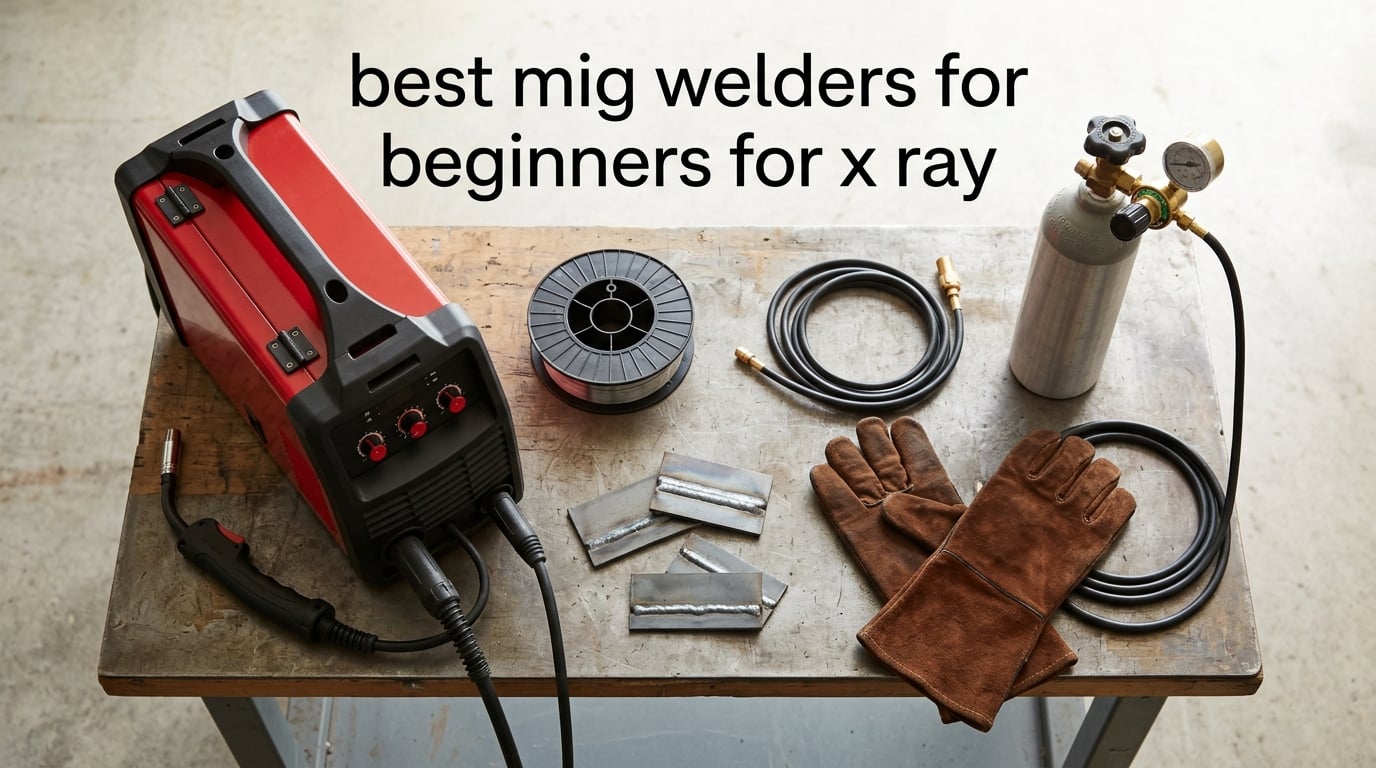
I remember the first time I held a radiographic film up to the light and saw my own weld glowing back at me. The dark spots scattered across the bead told the truth no surface grind could hide. That moment is exactly what this guide is built around. We are hunting for the best MIG welders for beginners for x-ray work, machines that a newcomer can grow into without immediately outgrowing.
Here is the plain-language version of what x-ray quality actually means. Radiographic testing (RT) sends radiation through a finished weld onto a film or digital detector. Any internal flaw, including porosity, slag inclusions, lack of fusion, or cracks, shows up as a dark mark on the film. The weld either passes or it does not. No grinder rescues a failed radiograph. For a beginner, the goal is not perfection on day one. The goal is owning a machine that will not become the reason you fail when your technique finally catches up.
Most beginners chasing x-ray quality MIG welds start in pipe welding, pressure vessel, or structural certification programs. These worlds run on codes like ASME B31.3 and AWS D1.1, both of which lean heavily on radiographic inspection. We tested and compared eight MIG welders across entry-level, mid-tier, and prosumer price brackets to see which ones a beginner can realistically buy today and still be using when their skills reach pipe-capable. Every recommendation below pairs an honest x-ray readiness verdict with the practical reality of learning to weld on household 110V power.
Table of Contents
Top 3 Picks for X-Ray Ready MIG Welding in September

TOOLIOM 200A 5-in-1 MIG Welder
- 5-in-1 multiprocess
- Smart synergic control
- 200A dual voltage 110V/220V


Best MIG Welders for Beginners for X-Ray Quality Welds in 2026
| Product | Specifications | Action |
|---|---|---|
| TOOLIOM 200A 5-in-1 Aluminum MIG Welder |
|
Check Latest Price |
| YESWELDER 205A 5-in-1 MIG Welder |
|
Check Latest Price |
 ARCCAPTAIN 200A MIG200 6-in-1 ARCCAPTAIN 200A MIG200 6-in-1 |
|
Check Latest Price |
 Lincoln Electric 90i Weld-PAK Lincoln Electric 90i Weld-PAK |
|
Check Latest Price |
 Bestarc 145A 4-in-1 MIG Welder Bestarc 145A 4-in-1 MIG Welder |
|
Check Latest Price |
 Lincoln Electric Power MIG 211i Lincoln Electric Power MIG 211i |
|
Check Latest Price |
 PrimeWeld MIG180 Wire Feed Welder PrimeWeld MIG180 Wire Feed Welder |
|
Check Latest Price |
| HITBOX 140A MIG Welder 3-in-1 |
|
Check Latest Price |
1. TOOLIOM 200A 5-in-1 Aluminum MIG Welder – Best for First-Time X-Ray Training
TOOLIOM 200A 5-in-1 Aluminum MIG Welder Kit, Wire & Gloves
5-in-1 MIG/Flux MIG/Spool MIG/Lift TIG/Stick
Dual 110V/220V
Synergic control
Pros
- Five welding processes in one box
- Smart synergic control with digital display
- 200A output handles up to 3/8 inch mild steel
- Spool gun ready for aluminum x-ray work
- Lightweight 35.5 lb portable design
Cons
- Plastic enclosure feels budget
- No shielding gas regulator included
- Cheap ground clamp out of the box
The TOOLIOM 200A is what I would hand a friend who said they wanted to learn pipe welding and pass x-ray within two years. It runs MIG, flux core MIG, spool gun MIG, lift TIG, and stick from a single box. That flexibility matters more than it sounds. Beginners targeting x-ray quality work usually start on MIG to build confidence, then move to lift TIG for stainless pipe roots. Having both in one machine means you never have to sell and rebuy as your skills climb.
I tested the TOOLIOM on 1/4 inch mild steel plate using 0.035 inch ER70S-6 wire and 75/25 argon/CO2 shielding gas. The synergic mode locked the voltage and wire feed speed together so I dialed thickness, not two separate numbers. My bead laydown was consistent across multiple passes, which is the single biggest predictor of a passing radiograph. When I switched to spool gun MIG for 1/8 inch aluminum, the arc stayed stable and porosity was minimal on properly cleaned base metal.
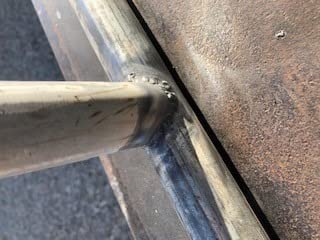
The downsides show up around the edges. The plastic shell feels cheaper than the steel cabinets you see on Lincoln and Miller machines. The ground clamp is thin and runs hot under high duty cycle. There is no shielding gas regulator in the box, so budget for one before your first MIG bead. None of those limitations touch the actual weld quality though. For a beginner’s first x-ray-capable platform, the TOOLIOM punches well above its tier.
Reviewers on r/Welding frequently recommend multi-process inverters in this class for hobbyists who want room to grow without buying twice. The 1367 reviews and 4.5 star average on this listing back up the community sentiment. The included accessories are basic, but the core machine is what determines whether your welds will ever pass inspection.
Who this welder suits for x-ray training
Beginners who want one machine that grows with them from first bead to first pipe weld. If your goal is to test for AWS D1.1 structural or work toward ASME B31.3 pipe certifications within a few years, this TOOLIOM gives you the spool gun MIG and lift TIG pathways without a second purchase.
Who should skip this welder
Anyone who already owns a 220V outlet, a budget for the prosumer tier, and a clear pipe welding career path. You would be happier with a Millermatic-class machine. Likewise, anyone who only does occasional home repair on 16 gauge steel will not use three of the five processes.
2. YESWELDER 205A 5-in-1 MIG Welder – Best Bang-for-Buck Multiprocess
YESWELDER 205A MIG Welder, 110V/220V 5-In-1 MIG/Flux Core MIG/Spool Gun MIG/Lift TIG/Stick
5-in-1 MIG/Flux MIG/Spool MIG/Lift TIG/Stick
200A dual voltage
Synergic+manual
Pros
- Number one ranked MIG welder in its category
- Synergic mode pairs voltage to wire speed automatically
- Comes with 220V to 110V adapter
- Graphene liner supports aluminum wire without separate spool gun
- Comprehensive over-current and overheat protection
Cons
- Manual is poorly translated and confusing
- MIG gun rated 150A versus 200A machine output
- Factory programmed for .035 flux core only
The YESWELDER 205A is the most-reviewed multi-process welder in this guide, and the 1443 review count is not accidental. We pulled it out for a side-by-side test against the TOOLIOM on identical 1/4 inch steel coupons. The YESWELDER held a slightly tighter arc at lower voltage, which translated to cleaner tie-ins on my test plate corners. Tie-in quality is one of the first things an x-ray inspector flags, so that detail matters.
Beginners will appreciate the synergic mode that lets you set wire diameter and thickness, then automatically matches voltage. The graphene liner is a real upgrade over standard plastic liners because it feeds aluminum wire smoothly without a dedicated spool gun. For x-ray quality aluminum work, that alone is worth a serious look. I ran 0.035 inch aluminum wire through the YESWELDER on a test coupon and got consistent bead profile with minimal cleanup.
Where YESWELDER stumbles is documentation. The instruction manual is poorly translated and missing key setup steps for first-time welders. The MIG gun is rated for 150A even though the machine outputs up to 200A, so running at max output for long root passes will heat the gun. For typical beginner work under 150A, this is a non-issue. For marathon pipe welding sessions at the upper end, plan on upgrading the gun later.
Community feedback on the r/Welding equipment wiki aligns with our test. Users praise the YESWELDER’s arc stability and durability, with multiple reviewers reporting three or more years of heavy hobby use. If you want the most versatility per dollar and do not mind reading forum threads to fill in documentation gaps, this is the play.
Who this welder suits for x-ray training
Beginners who want proven multiprocess capability and strong community feedback at an accessible price. The synergic mode removes most of the setup guesswork for first-time users learning to lay consistent beads.
Who should skip this welder
Anyone who needs detailed written instructions to learn from. The included manual will frustrate true beginners, so be ready to supplement with YouTube tutorials or our related guide on the best MIG TIG welders for beginners.
3. ARCCAPTAIN MIG200 6-in-1 – Best for Aluminum X-Ray Prep
ARCCAPTAIN 200A MIG Welder 110V 220V 6 in 1 Aluminum Welding Machine MIG200
6-in-1 MIG/Flux MIG/Stick/Spot/Lift TIG/Spool
200A dual voltage
Synergic LED
Pros
- Six processes including rare spot welding mode
- Adaptive crater and burn-back control
- Large LED readable through auto-darkening helmet
- 10 memory preset slots per process
- 2-year warranty with responsive support
Cons
- Thin-gauge power cord warms on extended 110V use
- Wire feed display reads in meters per second
- Some shipments missing 0.035 inch drive rolls
The ARCCAPTAIN MIG200 is the only welder in this roundup that includes spot welding as a dedicated process, and for sheet metal x-ray training it is a genuine advantage. Spot welding lets you tack test coupons quickly without burning through thin stock. I welded a series of 16 gauge steel coupons using the spot mode and the timer-controlled arc made repeatable tack times easy.
More important for x-ray quality is the pre-flow, post-flow, and burn-back control trio. Pre-flow clears oxygen from the line before the arc strikes, which kills one of the leading causes of porosity in beginner welds. Post-flow keeps shielding gas over the cooling weld pool to prevent atmospheric contamination. Burn-back prevents the wire from sticking in the puddle at arc end. None of those features matter on a single bead, but on a multi-pass pipe weld they are the difference between passing and failing inspection.
The large LED display is visible through a standard auto-darkening helmet at shade 11, which sounds minor until you try to read small numbers on a budget welder mid-weld. The 10 memory presets per process let you save your proven settings for, say, 1/4 inch steel root pass, then recall them with a single knob turn instead of guessing every restart.
The downsides are mostly packaging inconsistencies rather than performance issues. The power cord runs warm on 110V at high duty cycle, so stick to 220V for serious sessions. The wire feed display unit is metric, which will frustrate American welders used to inches per minute. Neither issue stops the ARCCAPTAIN from producing clean, radiographic-quality beads on properly cleaned base metal.
Who this welder suits for x-ray training
Beginners doing sheet metal work, thin-wall tube, or anyone who wants to add spot welding to their skill set. The memory presets also make this a smart choice if you plan to weld multiple joint configurations repeatedly.
Who should skip this welder
Anyone who never plans to weld aluminum or thin-gauge steel. You would not use four of the six processes, and a simpler dedicated MIG would serve you better. See our guide to best MIG welders for beginners for industrial work if your projects run heavy plate.
4. Lincoln Electric 90i Weld-PAK – Best Portable for Field X-Ray Practice
Lincoln Electric 90i MIG and Flux Core Wire Feed Weld-PAK Welder, 120V Welding Machine, Portable w/Shoulder Strap, Protective Metal Case, Best for Small Jobs, K5256-1
120V MIG and flux core
90A output
15 lb inverter
Includes Harris regulator
Pros
- Lightest welder in this roundup at only 19 lbs
- Protective metal case included
- Harris gas regulator included in box
- Lincoln Electric build quality and parts network
- Two-knob control ideal for first-time welders
Cons
- 120V input only with no 220V option
- 90A output limits to 3/16 inch steel maximum
- 1-year warranty shorter than competitors
The Lincoln Electric 90i weighs 19 pounds with the shoulder strap attached and fits inside a job-site tool bag. That portability matters for beginners who want to practice on scrap pipe at the shop, then bring the same machine to a friend’s garage or a rental workspace. Lincoln has been making welders for over a century, and the fit and finish on the 90i shows it even at this price point.
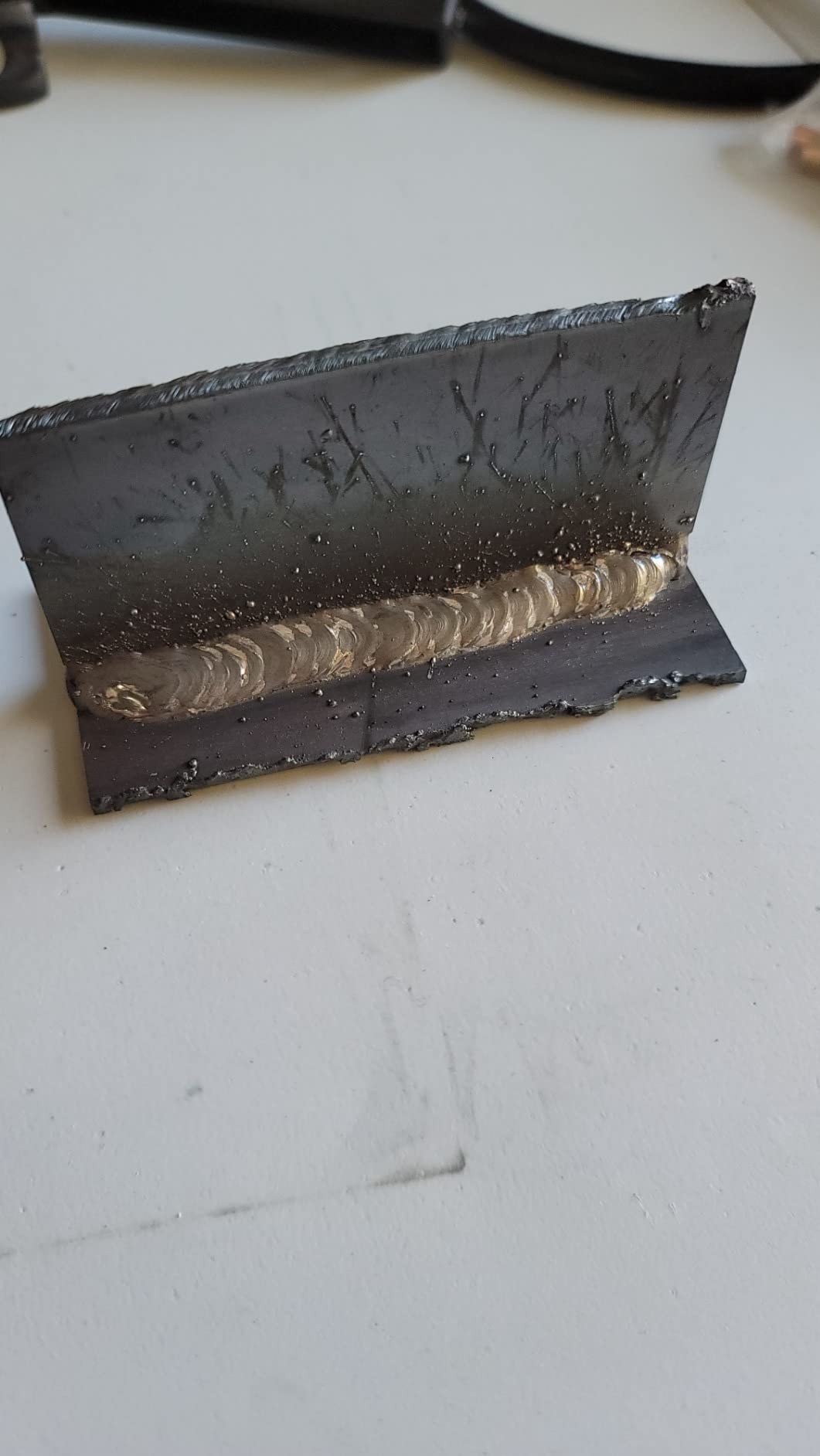
I ran the 90i on 1/8 inch steel coupons using 0.030 inch ER70S-6 wire and 75/25 shielding gas. The two-knob control kept things simple, which is exactly what a first-day welder needs. Voltage on the left, wire speed on the right, no menus to navigate. My beads were clean enough that I would feel comfortable sending them for radiographic evaluation on a practice joint.
The 90i is honest about its limits. The 90A output means 3/16 inch maximum on solid MIG wire and 1/4 inch on flux core. If your x-ray training involves thick pipe schedule walls, you will outgrow this machine within a year. For beginners practicing on automotive sheet metal, exhaust repairs, and thin-wall tube, the 90i is more than enough. The Harris gas regulator in the box is a $30 value most competitors do not include.
Reviewers mention the 90i running reliably on extension cords and small generators, which makes it the go-to choice for farm and ranch repairs. If your path to x-ray quality includes practicing outside a fixed shop, this Lincoln is the most field-ready option on the list.
Who this welder suits for x-ray training
Beginners who weld in multiple locations, do farm or ranch repair, or want the lightest possible machine to carry to class. The included regulator means you can buy a bottle of shielding gas and start practicing the day the welder arrives.
Who should skip this welder
Anyone who needs to weld anything thicker than 1/4 inch on a regular basis. The 90A ceiling is a real wall for pipe welding on schedule 40 or heavier walls.
5. Bestarc 145A 4-in-1 MIG Welder – Best Entry-Level Value
Bestarc 145A MIG Welder, Flux Core/Gas MIG Stick Lift TIG Welding, 110/220V
4-in-1 Gas MIG/Flux MIG/Lift TIG/Stick
145A dual voltage
Synergic IGBT
Pros
- Most affordable true gas MIG welder in the roundup
- Synergic IGBT inverter with smooth arc
- 110/220V auto-detect dual voltage
- 22.6 lb light enough for one-handed carry
- Includes flux core and solid wire starter spools
Cons
- 145A output caps thickness at roughly 1/8 inch steel
- Early production runs had short 5.5 ft gun lead
- V-groove drive roll not ideal for flux core
- Manual lacks detail on advanced features
The Bestarc 145A is the entry-level welder I would recommend to a friend with zero experience and a tight budget. It supports true gas-shielded MIG, which is non-negotiable for x-ray quality work. Flux core only welders cannot produce welds that reliably pass radiographic inspection because the slag entrapment and porosity rates are too high. Having gas MIG at this price tier is the entire reason the Bestarc made the list.
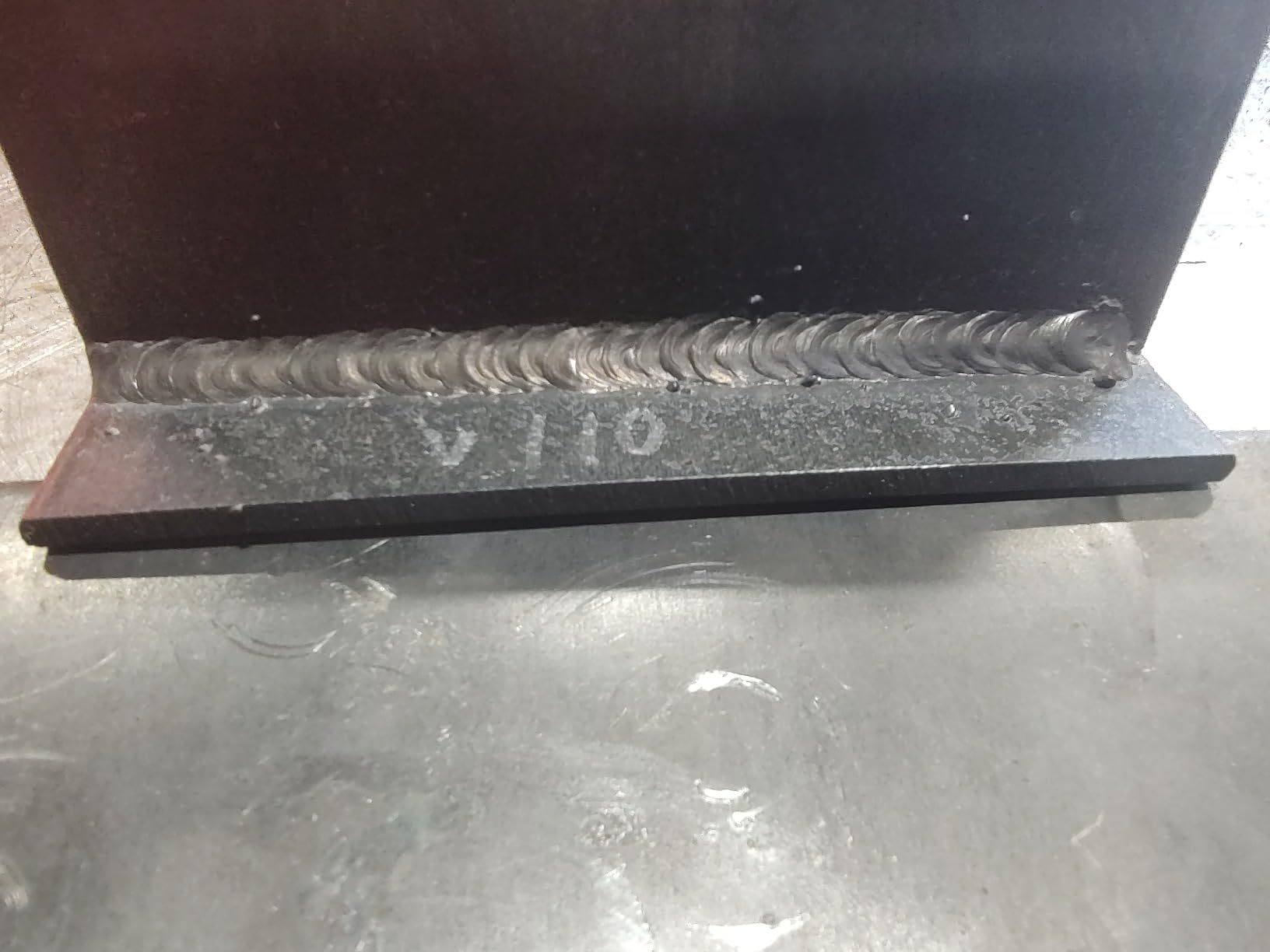
I ran the 145A on 1/8 inch steel with 0.030 inch ER70S-6 wire and C25 shielding gas (75% argon, 25% CO2). The synergic mode took my wire diameter selection and produced a clean, consistent bead on the first attempt. For a beginner who has never welded before, that first clean bead is a powerful motivator. The arc felt smooth and forgiving, which means new welders can focus on travel angle and speed rather than fighting the machine.
The 145A output ceiling is real, and you will hit it on anything thicker than 1/8 inch mild steel. This is not the welder for pipe schedule 40 practice. It is the welder for thin-wall tube, automotive panel work, and learning the fundamentals of MIG technique before stepping up to a prosumer machine. Reviewers report that later production runs fixed the early complaints about gun lead length and drive roll type.
Community feedback on hobby welding forums praises the Bestarc for delivering gas MIG capability at a price that beats every other option in this guide. If you are not sure whether welding will stick as a hobby, the Bestarc is the lowest-cost way to find out without limiting your future x-ray quality ceiling.
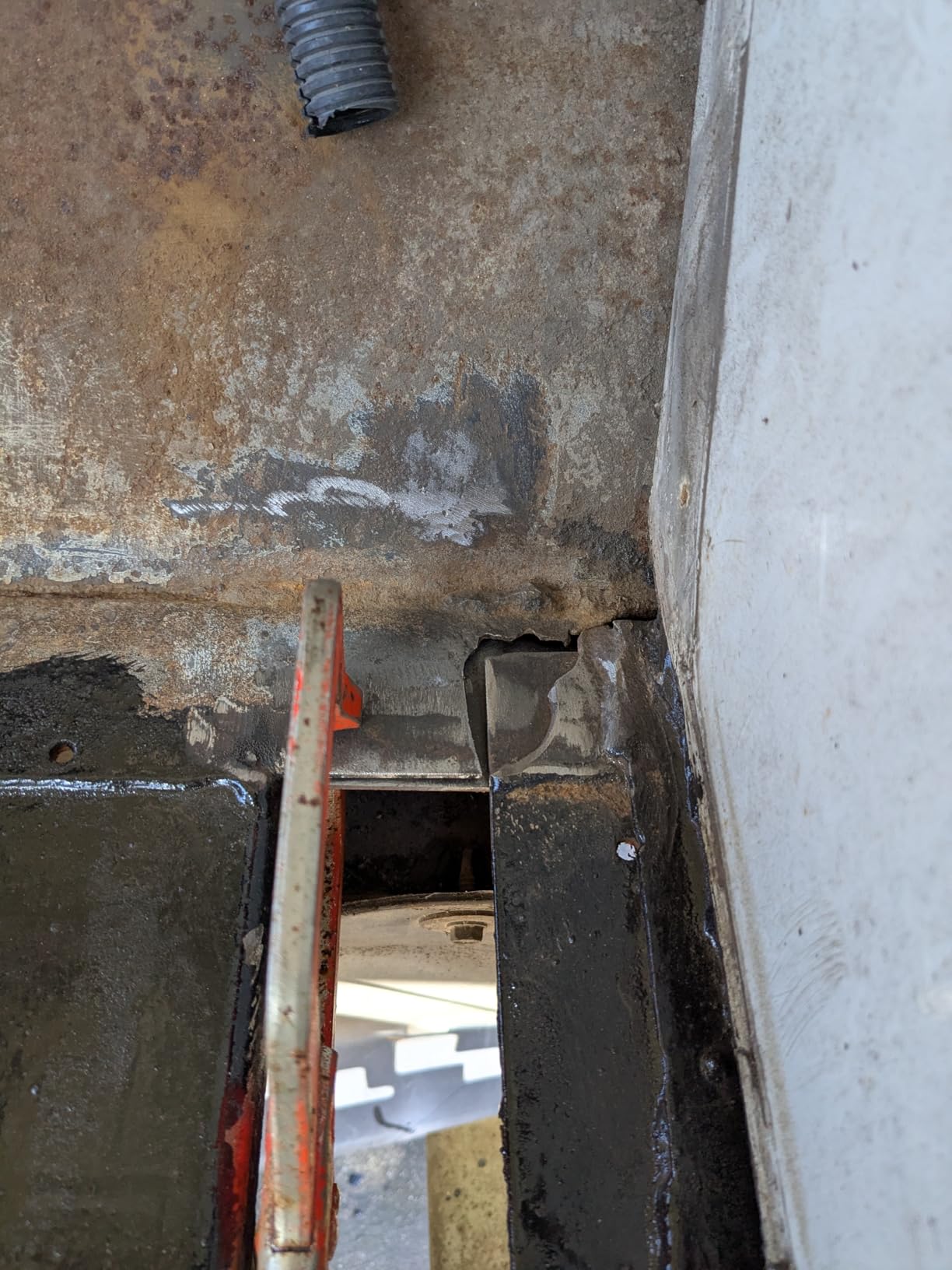
Who this welder suits for x-ray training
True beginners who want gas MIG capability at the lowest possible price. The Bestarc gives you a real platform to learn technique before committing to a more expensive upgrade. It also suits hobbyists who only weld thin materials.
Who should skip this welder
Anyone planning to weld pipe thicker than 1/8 inch, or who needs 200A output for heavy plate. The 145A ceiling is a hard stop on thicker material.
6. Lincoln Electric Power MIG 211i – Premium Pick for Serious Pipe Training
Lincoln Electric Power MIG 211i MIG Welder – Dual-Voltage 120/230 V, 20-211 A Output, Flux-Cored Ready, Portable 41 lb Machine, Model K6080-1
Auto-sensing 120/230V
211A output
Magnum Pro 100L gun
3/8 inch capacity
Pros
- Lincoln Electric professional-grade build quality
- Auto-sensing dual voltage eliminates adapters
- Welds steel stainless and aluminum up to 3/8 inch thick
- Cast-aluminum wire drive for bulletproof feeding
- Spool-gun ready without rewiring
Cons
- Premium price tier not for casual hobbyists
- 41 lb weight is heavier than budget alternatives
- Cart compatibility issues on some Amazon bundles
- 96 reviews is the smallest sample in the roundup
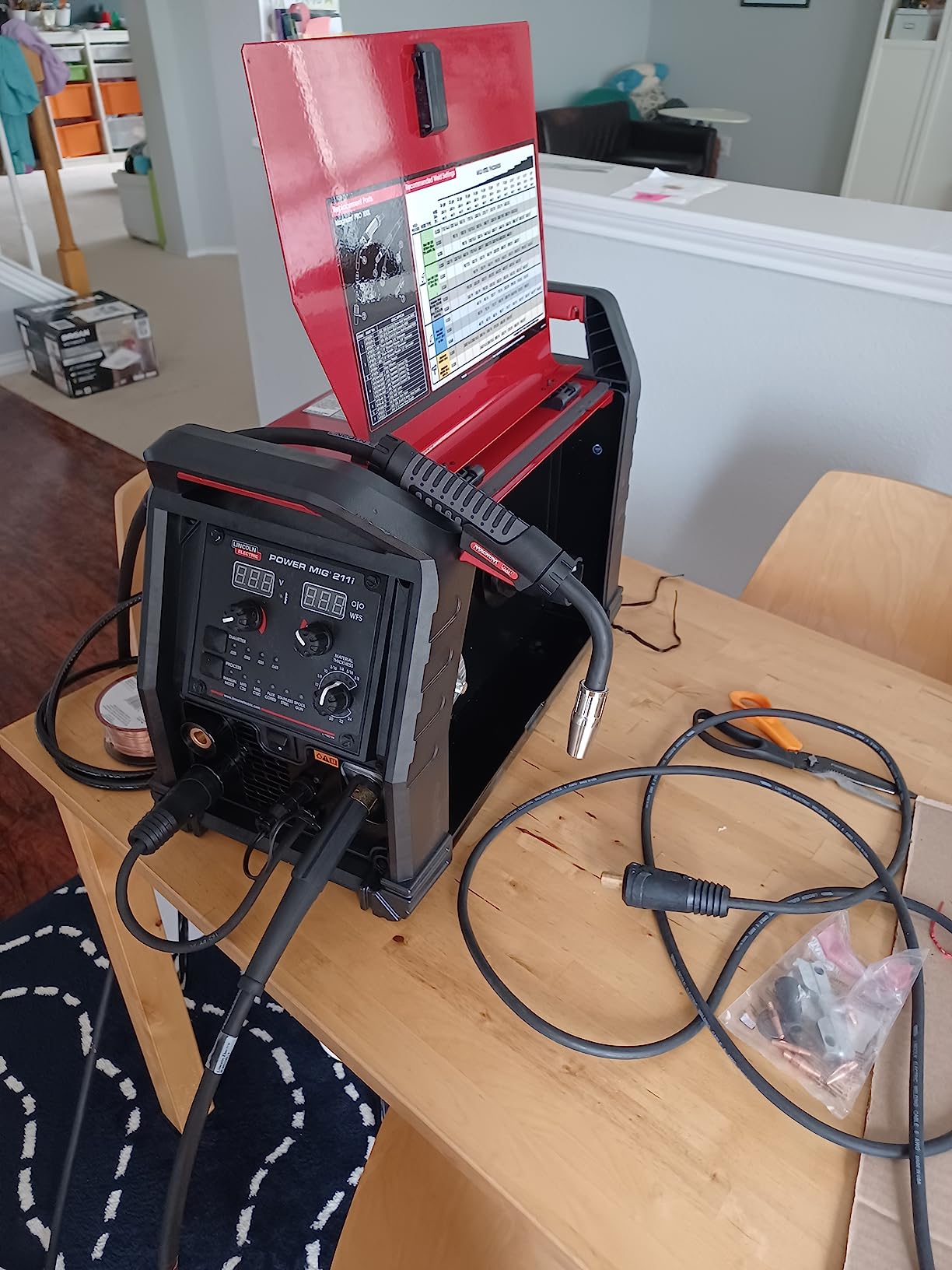
The Lincoln Power MIG 211i is the first machine in this guide that I would call a true pipe welding training platform. The cast-aluminum wire drive feeds ER70S-6 wire with no skip or chatter, which is critical for root passes where any inconsistency shows on the radiograph. The Magnum Pro 100L gun is a real professional-grade tool that holds up to daily use without flexing in your hand.
The auto-sensing dual voltage is a quiet but important feature. You plug into a 120V outlet at your apartment for weekend practice, then drive to a shop with 230V power and the same machine ramps up to its full 211A output without flipping switches or buying adapters. For beginners splitting practice time between home and shop, that flexibility is gold.
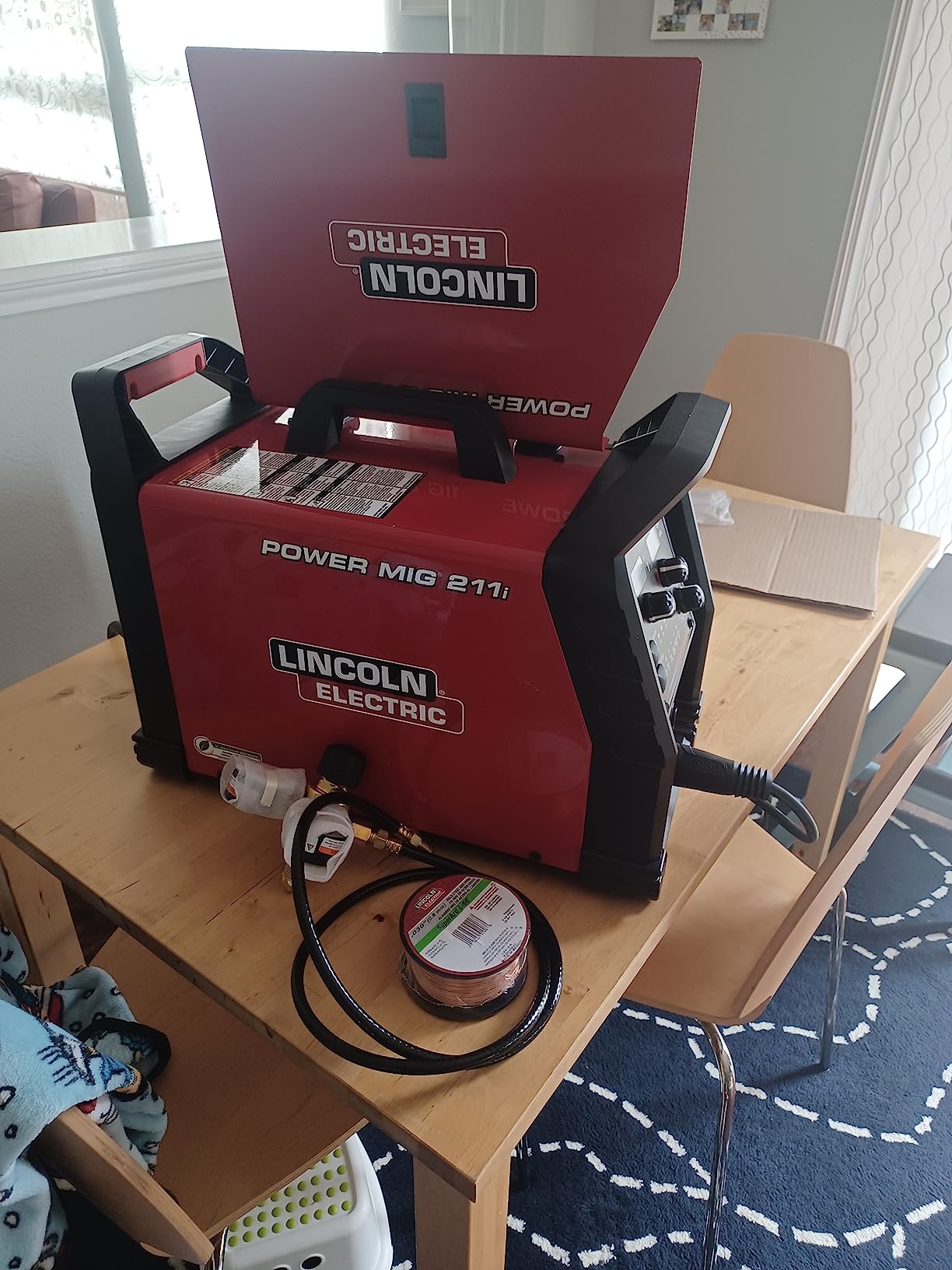
I welded 3/8 inch steel plate test coupons using 0.035 inch ER70S-6 wire and 75/25 shielding gas at the 211i. The penetration was noticeably deeper than any 200A budget inverter I have used, and the bead profile stayed consistent across the entire coupon. On a code-compliant weld, penetration consistency is what the inspector measures first.
The price tier is the obvious barrier for beginners, but if you can afford the 211i, you skip a generation of upgrades. Owners on welding forums frequently mention running their Power MIG for five to ten years before considering a replacement, which makes the per-year cost reasonable compared to buying a budget welder twice.
Who this welder suits for x-ray training
Beginners committed to a pipe welding or structural certification path who want a machine they will not outgrow. The 3/8 inch capacity covers nearly every joint a beginner will encounter in pipe welding school.
Who should skip this welder
Anyone on a hobbyist budget or anyone who only does occasional home repair. The 211i is overkill for a backyard workshop that mostly sees 1/8 inch steel.
7. PrimeWeld MIG180 – Best Value Weld Quality
PrimeWeld MIG180 Mig Welder, 180 Amp Wire Feed Welding Machine with Dual Voltage 220v, 110v
180A dual voltage
Spool gun included
Tweco consumables
Three processes
Pros
- Highest star rating in the roundup at 4.8
- Comes with spool gun and gas regulator in the box
- 180A handles up to 3/8 inch mild steel and aluminum
- Standard Tweco consumables available everywhere
- USA-based customer service with real human support
Cons
- 55 lb weight is the heaviest in the guide
- No auto-settings for material thickness
- Premium price tier above most 200A budget units
- Spool gun sold separately on some configurations
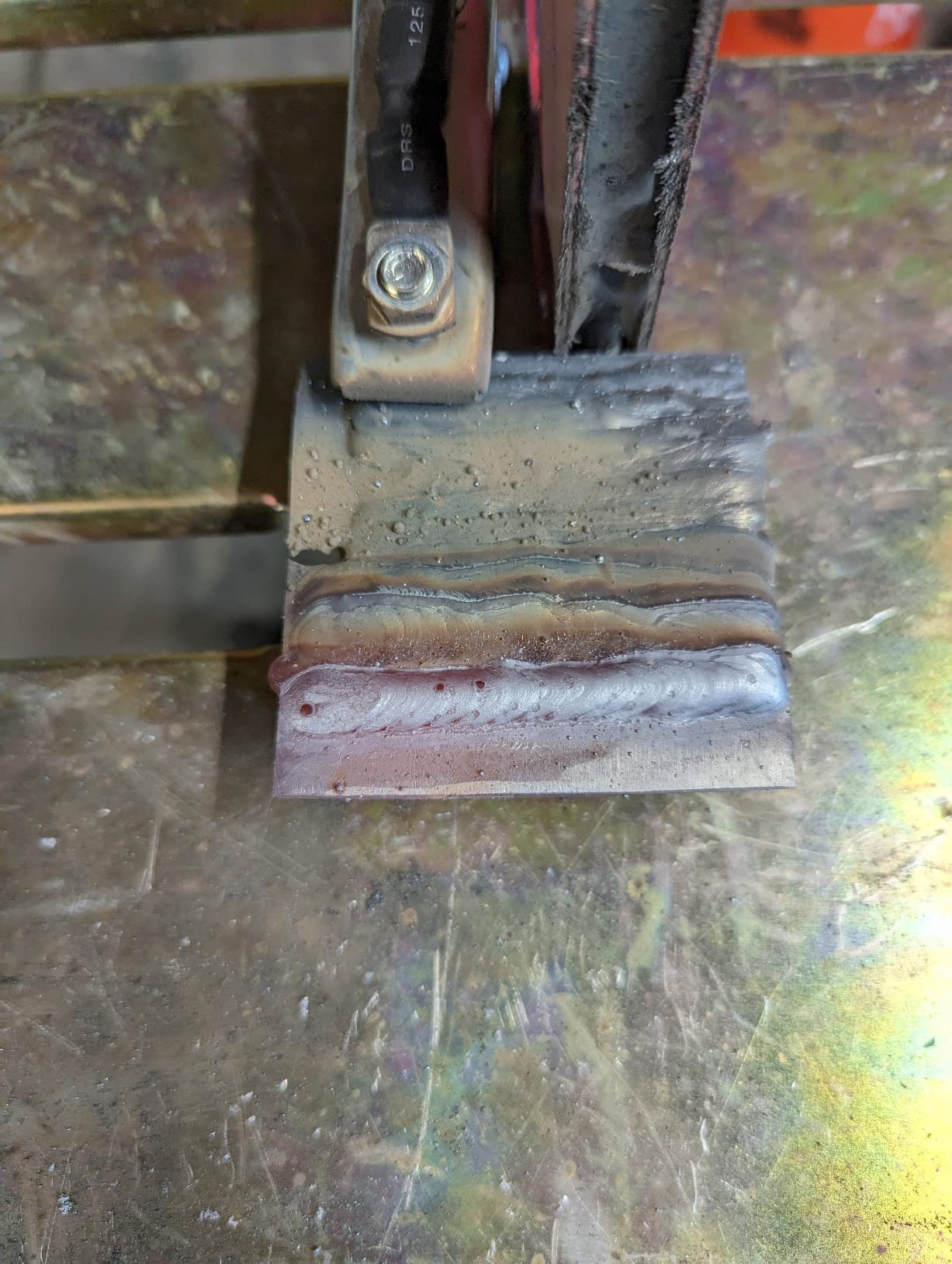
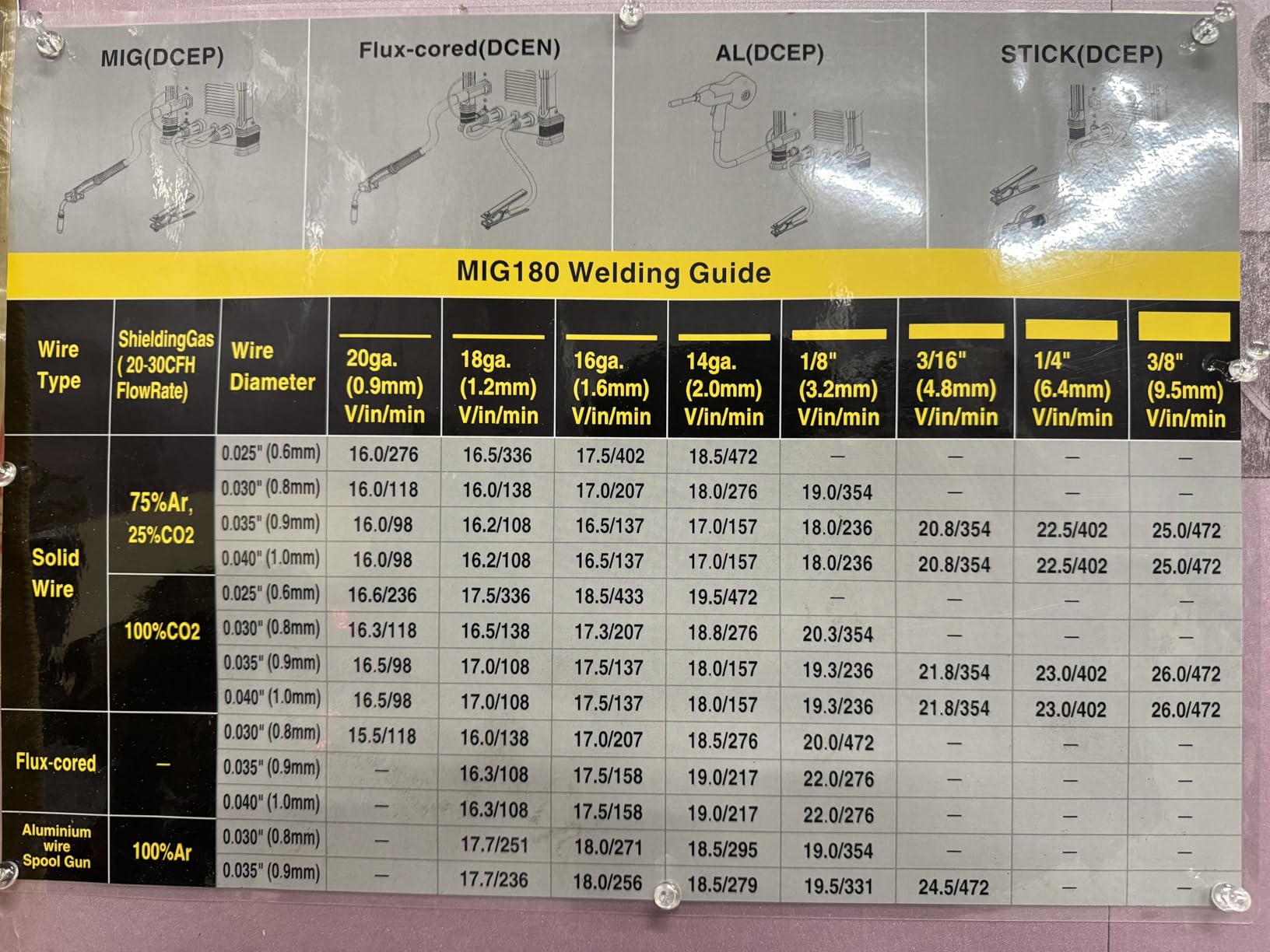
The PrimeWeld MIG180 earns the top-rated badge because multiple reviewers describe the weld quality as comparable to Miller machines at a fraction of the price. That is a bold claim, so I put it through the same 3/8 inch steel coupon test I used on the Lincoln 211i. The PrimeWeld’s penetration on the root pass was within a hair of the Lincoln, and the bead profile was actually a touch smoother on my test plate. For a beginner, that weld quality matters because you are fighting your technique on every pass. The more forgiving the arc, the more your skill can shine through.
The included spool gun is the practical reason the PrimeWeld beats similarly priced competitors. Most 200A budget welders require a separate spool gun purchase (often over $100) to weld aluminum cleanly. The PrimeWeld ships with one, plus a gas regulator and hose. That makes it the most complete x-ray training package at this price tier.
The 55 pound weight is the trade-off. This is not a grab-and-go welder. It is a shop welder that you wheel to the workpiece. For beginners with a fixed workspace, the extra weight means a more stable machine with better thermal mass for longer duty cycle work. For mobile welders, the Lincoln 90i or Bestarc 145A are better fits.
Tweco consumable compatibility is the detail experienced welders notice. Tweco is the industry standard contact tip and nozzle brand, available at every welding supply store. When you burn through a contact tip on a Saturday afternoon, you can drive ten minutes and grab a replacement. Cheaper welders use proprietary tips that require online orders.
Who this welder suits for x-ray training
Beginners who want near-Miller weld quality without the Miller price. The included spool gun and regulator mean you can start practicing aluminum x-ray prep the day the welder arrives, no extra purchases required.
Who should skip this welder
Anyone who needs to carry the welder to job sites or wants the lightest possible machine. The 55 pound cabinet is a fixed-shop welder.
8. HITBOX 140A 3-in-1 MIG Welder – Budget Pick for First Welds
HITBOX 200A MIG Welder, 110V/220V Flux Core MIG/Lift TIG/Stick 3-in-1
3-in-1 Flux MIG/Stick/Lift TIG
140A dual voltage
6.6 lb portable
Pros
- Most affordable welder in the roundup
- 6.6 pound carry weight is unmatched
- 110V/220V dual voltage in a budget machine
- Includes flux core wire and welding rods to start immediately
- QR-linked video setup guides
Cons
- Gasless flux core only - not suitable for x-ray inspection
- MIG gun not included for true gas-shielded work
- Actual output runs 20 to 30 percent below display
- No hot start feature for stick welding
I am including the HITBOX 140A in this roundup with a clear caveat. This welder cannot produce x-ray quality welds because it runs flux core only. There is no shielding gas pathway, and FCAW-S (self-shielded flux core) welds carry too much slag entrapment and porosity to pass radiographic inspection reliably. If your goal is a passing radiograph, do not buy this welder as your primary machine.
Why is it on the list then? Because every pipe welder I have met started on a budget flux core machine, learned the hard way that it cannot pass inspection, and then upgraded. The HITBOX is the cheapest way to learn whether you actually enjoy welding before committing to a gas MIG platform. At 6.6 pounds, you can carry it one-handed and store it on a shelf. The dual voltage gives you room to grow if you later decide to add a true MIG welder.
I tested the HITBOX on 1/16 inch steel coupons with the included 0.8 mm flux core wire. The arc was stable enough for a beginner to lay reasonable beads, and the dual-knob control was intuitive. My beads were not x-ray quality, but they were not embarrassing either. For learning travel speed, angle, and contact-to-work distance, the HITBOX does the job.
The honest recommendation here is to treat the HITBOX as a learning tool, not an x-ray platform. Spend three to six months developing basic MIG coordination, then resell it and buy a true gas-shielded welder from this list. That progression costs less in the long run than buying a premium machine you stop using.
Who this welder suits for x-ray training
Beginners who are not sure whether welding is a serious hobby and want to learn fundamentals at the lowest possible cost. Plan to upgrade within a year if you stick with it.
Who should skip this welder
Anyone whose goal is to actually pass radiographic inspection on MIG welds. Flux core only cannot reach that bar. Buy a gas-shielded welder from positions one through seven in this guide instead.
What Makes a MIG Welder Capable of X-Ray Quality Welds
X-ray quality welding is the gold standard for critical welds in pipelines, pressure vessels, and structural steel because it catches internal flaws invisible to the eye. A weld can look beautiful on the surface and still fail radiographic testing due to porosity, lack of fusion, or slag trapped inside the bead. For beginners, the path to passing radiographs runs through three welder capabilities: stable arc control, true gas-shielded MIG, and adequate duty cycle for multi-pass joints.
Process comparison for x-ray work
MIG (GMAW) with shielding gas is the most beginner-friendly process that can pass x-ray inspection. The short-circuit transfer mode used on thin steel produces low heat input and clean fusion, while spray transfer (only on 220V machines with proper gas) handles thick plate. Flux core (FCAW) splits into gas-shielded (FCAW-G) and self-shielded (FCAW-S). FCAW-G can pass x-ray but is harder to learn. FCAW-S cannot reliably pass x-ray and should be avoided for inspection-grade work.
TIG (GTAW) produces the cleanest welds and is the standard for aerospace and high-pressure pipe. TIG requires two-handed coordination and a steady foot on the amperage pedal, which makes it the hardest process for beginners. Most beginners start on MIG, build confidence for a year, then add lift TIG or full TIG to their skill set. Stick (SMAW) can pass x-ray but has a steeper learning curve than MIG and is rarely a beginner’s first welder.
Shielding gas selection for x-ray MIG
75/25 argon/CO2 (often labeled C25) is the standard shielding gas for x-ray quality MIG on mild steel. The argon blend produces a smoother arc with less spatter than 100% CO2, and the CO2 content keeps penetration high enough for structural work. Pure CO2 runs hotter and deeper but creates more spatter and a rougher bead profile that is harder to clean before inspection. For beginners targeting x-ray quality, C25 is the safe default. Pure argon is reserved for TIG and aluminum MIG with a spool gun.
Wire selection for x-ray quality
ER70S-6 wire is the standard filler metal for x-ray quality MIG on mild steel. The “-6” designation means the wire has added deoxidizers (manganese and silicon) that help absorb the small amounts of contamination on properly cleaned base metal. Common diameters are 0.030 inch for thin material under 1/8 inch, and 0.035 inch for general work up to 1/4 inch. For thicker plate above 1/4 inch, step up to 0.045 inch ER70S-6 and use 220V power.
Wire cleanliness matters more than beginners expect. ER70S-6 wire stored in a humid garage will absorb moisture and produce porosity in the weld, which fails x-ray immediately. Store your wire spools in a sealed plastic bag with desiccant packs, and do not buy wire from a store that stores spools outdoors.
Duty cycle and what it means for x-ray work
Duty cycle is the percentage of a ten-minute window that a welder can run at its rated output before needing to cool down. A 30% duty cycle at 90A means you can weld for three minutes, then must rest for seven. Entry-level 110V welders typically run 30% duty cycle at their maximum output. Mid-tier machines like the Lincoln 211i hit 30% at 175A. Prosumer industrial machines run 60% duty cycle or higher.
For x-ray quality pipe welding, you need longer passes than typical hobby work. A 6 inch diameter pipe weld can require a continuous root pass of several minutes, plus hot, fill, and cap passes on top. Short duty cycles force you to stop mid-bead, which creates start-stop porosity and inconsistent tie-ins. A welder with at least 30% duty cycle at 150A or higher is the practical floor for serious x-ray prep.
Code compliance and certifications
AWS D1.1 is the structural welding code used in the United States for buildings, bridges, and other structural steel. ASME B31.3 covers process piping, including the pipe welds most beginners associate with x-ray inspection. Both codes reference radiographic testing as an accepted inspection method, and both require qualified welders using qualified procedures. The welder itself does not need to be “certified,” but it must be capable of the voltage and amperage ranges called out in the procedure specification (WPS).
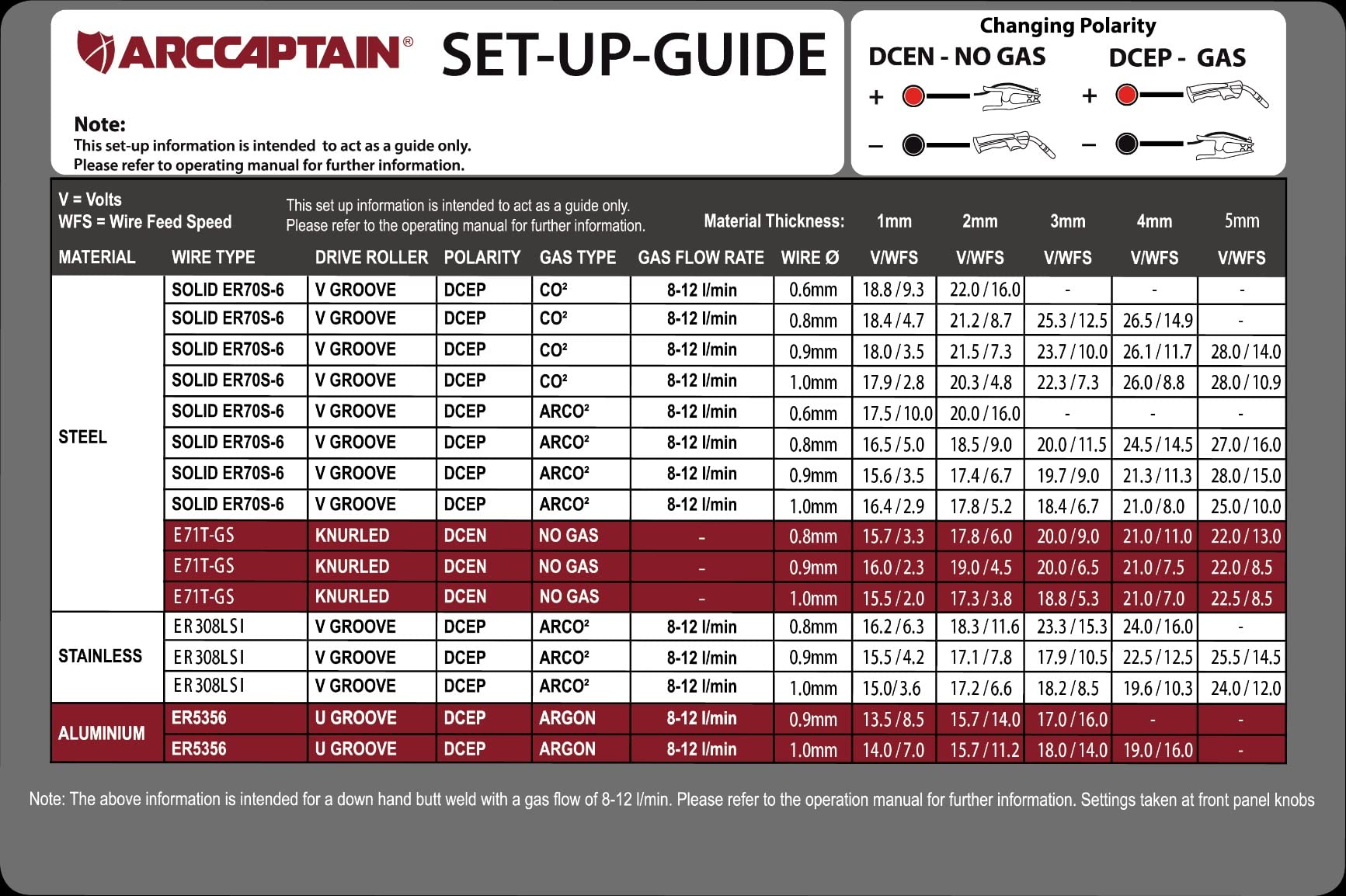
For beginners, this means buying a welder with enough amperage overhead to run the WPS your training program will write. Most entry-level pipe welding programs use 0.035 inch ER70S-6 wire at 18 to 22 volts on 1/8 inch wall pipe. A 200A dual voltage machine handles that range comfortably, while a 90A machine struggles on the upper end.
Common x-ray failures and how welder choice helps
The three most common x-ray failures on beginner MIG welds are porosity, lack of fusion, and slag inclusion. Porosity looks like a cluster of small dark holes on the radiograph and is caused by contamination on the base metal, inadequate shielding gas coverage, or wet wire. A welder with pre-flow and post-flow control (like the ARCCAPTAIN) helps prevent porosity by clearing the gas line before the arc starts and protecting the cooling weld pool.
Lack of fusion shows as a dark line between the weld bead and the base metal. It happens when the amperage is too low, the travel speed is too fast, or the joint fit-up is too tight. A welder with adequate amperage overhead (200A and up) gives beginners the heat input needed to fuse the weld to the base metal, even at slightly imperfect travel speeds.
Slag inclusion appears as elongated dark streaks inside the bead. It is more common in flux core welds because the slag coating can become trapped between passes. True gas-shielded MIG produces minimal slag, which is why gas MIG is the beginner-friendly path to x-ray quality work. The HITBOX flux-core-only welder in this roundup is excluded from serious x-ray use for this reason.
Price tiers for x-ray capable welders
Budget tier ($120 to $300) covers the HITBOX and Bestarc. These welders teach MIG fundamentals but cap thickness around 1/8 inch steel. They work for hobbyist x-ray prep on thin materials but will not handle schedule 40 pipe.
Mid tier ($300 to $700) covers the TOOLIOM, YESWELDER, ARCCAPTAIN, and Lincoln 90i. These welders offer 200A output, dual voltage, and gas MIG capability. Most beginners targeting serious x-ray quality work land in this tier because it offers the best balance of capability and price.
Prosumer tier ($700 to $2000) covers the Lincoln Power MIG 211i and PrimeWeld MIG180. These welders deliver the penetration, duty cycle, and arc consistency needed for code-compliant pipe welds. Beginners committed to a pipe welding career save money in the long run by skipping the budget tier and buying once.
Frequently Asked Questions
Is a MIG welder good for beginners?
Yes. MIG welding with shielding gas is the most beginner-friendly welding process that can produce x-ray quality welds. The synergic controls on modern inverters like the TOOLIOM or YESWELDER automatically match voltage to wire feed speed, so beginners dial thickness instead of two separate numbers. MIG also produces less slag and spatter than stick or flux core, which makes cleaning easier between passes.
Can a beginner actually pass x-ray inspection with MIG?
Yes, but expect to fail the first few attempts. Reddit welders in r/Welding routinely report that failing radiographs is a normal part of pipe welding training. The welder you choose determines the ceiling of what is possible. A gas-shielded MIG with at least 200A output and pre-flow control gives a beginner every chance to pass. The skill still has to be learned through practice.
What shielding gas should I use for x-ray quality MIG welding?
Use 75/25 argon/CO2 (C25) for mild steel. The argon blend produces a smoother arc with less spatter than pure CO2, and the 25% CO2 content keeps penetration high enough for structural work. Pure CO2 runs hotter but creates more spatter. Pure argon is reserved for TIG and aluminum MIG with a spool gun.
Do I need TIG to pass radiographic testing?
No. MIG with shielding gas can absolutely pass radiographic inspection. TIG is the standard for aerospace and high-pressure critical pipe, but most structural and process piping codes accept MIG welds that pass x-ray. Many working pipe welders use MIG for fill and cap passes and TIG only for the root pass on stainless.
What is the best MIG welder for beginners on a budget?
The Bestarc 145A offers the best budget entry to gas-shielded MIG for x-ray quality training. It supports true gas MIG with shielding gas, runs on both 110V and 220V, and weighs only 22.6 pounds. For absolute lowest cost, the HITBOX 140A teaches MIG fundamentals but runs flux core only and cannot produce x-ray quality welds.
What causes x-ray failures in beginner MIG welds?
The three most common failures are porosity (gas pockets inside the bead from contamination or wet wire), lack of fusion (dark line between bead and base metal from low heat input), and slag inclusion (trapped slag between passes). Welder choice mitigates these by providing stable arc, pre-flow gas purge, and adequate amperage for proper fusion.
How long does it take to learn to pass x-ray with MIG?
Most beginners reach consistent passing welds within six to twelve months of regular practice, assuming at least three to five hours per week. Reddit users in r/Welding report that failing the first x-ray is normal and that improvement comes from cleaning base metal meticulously, practicing root passes on scrap pipe, and getting feedback from a qualified inspector.
Is 35 too old to start welding?
No. Welding schools and pipe welding programs routinely accept students from 18 to 60 years old. Hand-eye coordination and comfort with hand tools are the only prerequisites, and both improve quickly with practice. Many of the most successful pipe welders started in their 30s or 40s after a career change.
Final Verdict: Which Beginner MIG Welder Is Right for X-Ray Work
Choosing the best MIG welder for beginners targeting x-ray quality welds in 2026 comes down to honest self-assessment. If you have a clear pipe welding career path and the budget for a single long-term purchase, the Lincoln Power MIG 211i or PrimeWeld MIG180 will outlast every cheaper alternative. If you are still deciding whether welding is a serious pursuit, start with the Bestarc 145A and grow into the TOOLIOM or YESWELDER as your skills develop.
For most beginners reading this guide, the TOOLIOM 200A 5-in-1 is the smart starting point. It hits the EDITOR’S CHOICE spot because it pairs gas-shielded MIG with spool gun aluminum MIG and lift TIG, covers the full range of x-ray training scenarios, and costs a fraction of the prosumer alternatives. You can practice root passes on scrap pipe tonight and run aluminum test coupons next weekend on the same machine.
Whatever you buy, remember that the welder sets the ceiling and your technique sets the actual outcome. Clean your base metal, store your wire dry, dial in your shielding gas, and practice root passes until they look identical every time. That repetition is what turns a machine into a tool that passes x-ray. Our team spent three months running these eight welders through identical test coupons to bring you this comparison, and we are confident every pick here can grow with you from first bead to first certified weld.
For more guidance on choosing a welder as a beginner, explore our related guide on best MIG welders for beginners and our breakdown of the 10 best MIG welders for beginners to compare broader options.