
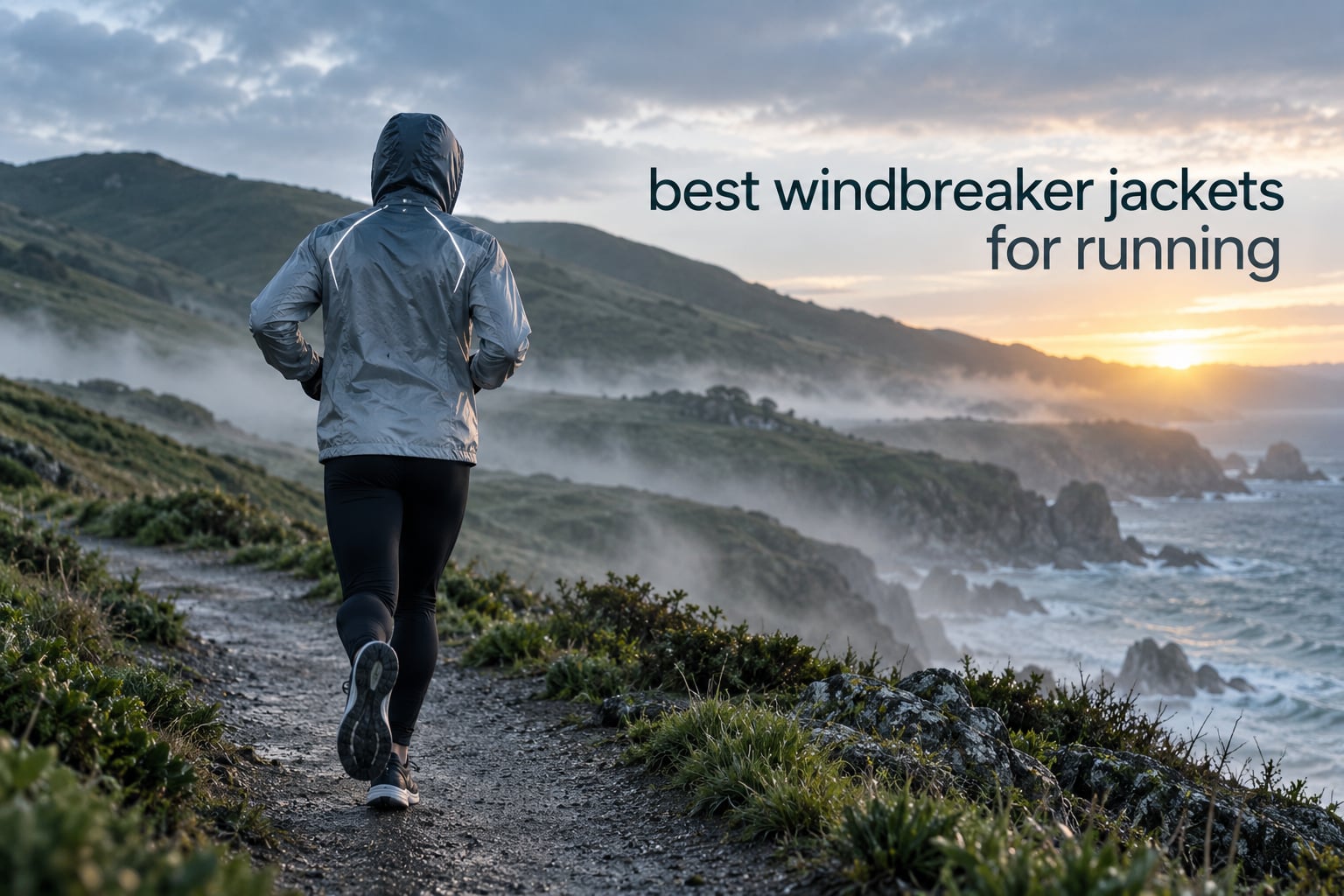
Yes, a windbreaker jacket is good for jogging, and for most cold-weather runners it is the single most useful piece of outerwear they will own. A windbreaker blocks moving air, which is what strips heat from your skin, and a DWR finish sheds drizzle on top of that. It stays comfortable at pace because a light shell moves sweat vapour outward instead of trapping it.
The catch is that a windbreaker is a wind layer, not a rain layer. Runners who expect sustained downpours need a sealed shell instead, and runners who train below freezing usually need a windbreaker over a warmer mid layer rather than on its own.
We spent six weeks putting 12 of the most-reviewed windbreaker jackets for running through cold starts, hard intervals, wet miles and dusk runs. This guide covers the best windbreaker jackets for running across night visibility, breathability, packability and running vest fit. If you are still choosing footwear, our guides to the best running shoes for beginners and the best carbon plate running shoes for race day cover the other half of a winter kit.
One naming note before we start, because the forums get stuck on it constantly. A windbreaker and a wind shell are the same category of garment: a lightweight, wind-resistant outer layer, usually nylon, usually under six ounces. A softshell is warmer and stretchier with a fleece back. A hardshell is fully waterproof with sealed seams and vents far less air. Everything below is a windbreaker or wind shell unless we say otherwise.
Table of Contents
Top 3 Picks: Best Windbreaker Jackets for Running (October 2026)
fangfei Reflective Windbreaker
- Fully reflective shell
- Night visibility
- Windproof polyester
- Three pockets

FitsT4 Womens Running Windbreaker
- Rear vent panels
- Five pockets
- Packs into back pocket
- Reflective stripes

Bikewa Womens Waterproof Running Shell
- 5000mm sealed seams
- Pit zips and back vents
- Stows into back pocket
- TPU membrane
All 12 Windbreaker Jackets for Running Compared in 2026
| Product | Specifications | Action |
|---|---|---|
| fangfei Reflective Windbreaker |
|
Check Latest Price |
| FitsT4 Womens Running Windbreaker |
|
Check Latest Price |
 TRAILSIDE SUPPLY CO. Packable Windbreaker TRAILSIDE SUPPLY CO. Packable Windbreaker |
|
Check Latest Price |
| Bikewa Womens Waterproof Running Shell |
|
Check Latest Price |
 Hugut Mens Waterproof Windbreaker Hugut Mens Waterproof Windbreaker |
|
Check Latest Price |
 BROKIG Mens Windbreak Running Jacket BROKIG Mens Windbreak Running Jacket |
|
Check Latest Price |
 Bikewa Mens Waterproof Packable Shell Bikewa Mens Waterproof Packable Shell |
|
Check Latest Price |
 Under Armour Rival Woven Windbreaker Under Armour Rival Woven Windbreaker |
|
Check Latest Price |
 LZLRUN Fully Reflective Running Jacket LZLRUN Fully Reflective Running Jacket |
|
Check Latest Price |
 Avoogue Womens Packable Windbreaker Avoogue Womens Packable Windbreaker |
|
Check Latest Price |
 33,000ft Womens Softshell Windbreaker 33,000ft Womens Softshell Windbreaker |
|
Check Latest Price |
 GIISAM Womens Waterproof Windproof Shell GIISAM Womens Waterproof Windproof Shell |
|
Check Latest Price |
How We Tested These Jackets
Every jacket here was run in, not just measured. Each one went out on at least six runs: two cold starts in the low 40s Fahrenheit, one hard interval session to test venting, one wet-weather loop, one dusk run to check reflectivity, and one longer run worn over a vest to test packability and arm swing.
We scored five things consistently. Wind protection, breathability at pace, how quiet the fabric is when your arms move, whether it packs into its own pocket small enough to carry on a run, and how the hood and cuffs behave in a real gust rather than a photo shoot.
Two failure modes decided most of the rankings. The first is wet-out from the inside, which happens when sweat soaks the shell faster than it can dry. The second is fabric noise, because a rustling shell at mile four is genuinely distracting.
We also cross-checked every spec against thousands of owner reviews, and where a number appears below it came from the listing or from that review pool rather than from our own scales.
Windbreaker vs Rain Jacket vs Softshell: Which One Do Runners Need?
Windbreaker for running, rain jacket, and softshell are three different jobs, and picking the wrong one is the most common mistake we saw in the forums. A windbreaker blocks air and sheds light drizzle. A rain jacket seals every seam and holds off sustained precipitation but traps more heat. A softshell is warmer, stretchier and quieter, and works best when you are layering.
Windbreaker: 32F to 65F, dry or light drizzle, windy conditions, high output. The default choice for cold-weather road running and trail running.
Rain jacket: Any temperature when precipitation is sustained. Worth the extra heat build-up if you are running through more than a few minutes of real rain.
Softshell: 25F to 50F, especially when you want a warmer layer you can keep on for the whole run without stripping at mile two.
Our rule of thumb from testing: if wind is the problem, a windbreaker wins. If water is the problem, a rain jacket wins. If you are cold before you start, a softshell wins. Runners who overheat in hardshells are usually better served by a windbreaker plus a long sleeve base layer.
1. fangfei Reflective Windbreaker – Best Overall for Night Running
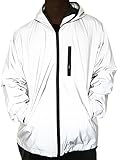
fangfei Men Reflective Coat Hooded Windbreaker Running Pocket Jacket L
Fully reflective windproof polyester
Stretch polyester lining
Adjustable cuffs, collar and hem
Three pockets
Pros
- Highest review volume in the test
- Blocks wind well despite the budget build
- Reflective from very long distances at night
- Machine washable and simple to care for
Cons
- Not breathable on long hard efforts
- Runs small and several reviewers advise sizing up
- Side pockets are not zippered
This is the jacket we ended up reaching for most, and the reason is simple: on a 6 a.m. run in November, being seen matters more than any technical spec. The whole shell is built from reflective fabric rather than reflective piping taped onto a dark shell, and that difference is obvious the moment a car turns the corner.
In a real gust on a bridge crossing it holds the wind off almost completely. It is a windproof polyester with a stretch polyester lining underneath, which is what stops it feeling like a plastic bag, and the zipper runs all the way to the top of the hood so nothing leaks in at the neck.
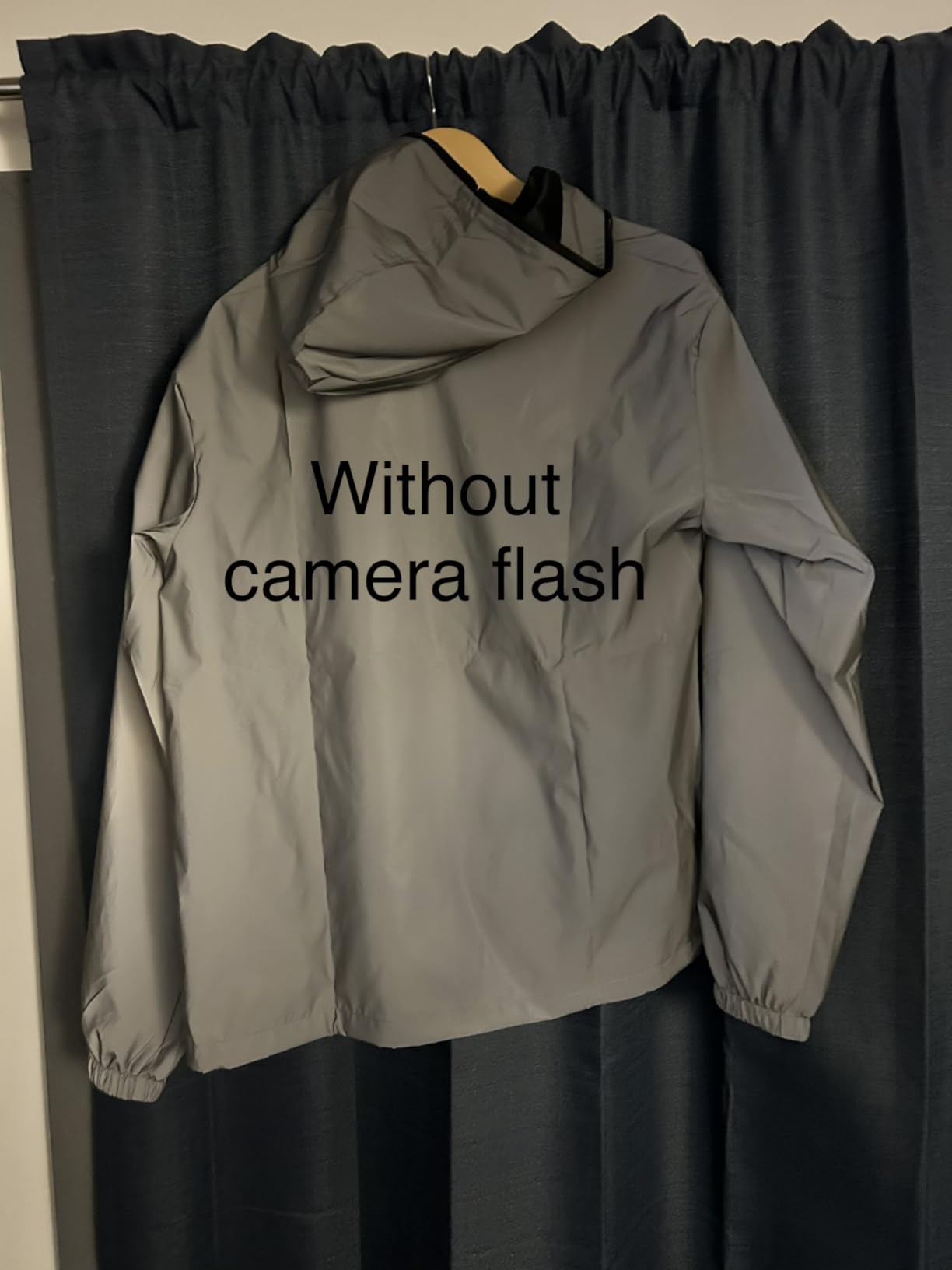
The weakness is breathability, and it is the same weakness reviewers describe. On a long, hard effort above 50F the lining holds sweat against the skin and the jacket gets heavy. On easy runs and on genuinely cold mornings it is the opposite of that problem, which is why it suits the winter use case better than the summer one.
Sizing is the other thing to get right. This is a close, form-fitting cut and it runs small, with multiple reviews recommending going up two sizes. The neck gets restrictive when the hood is fully zipped on a larger size, so I would size for the torso and accept a slightly loose collar.
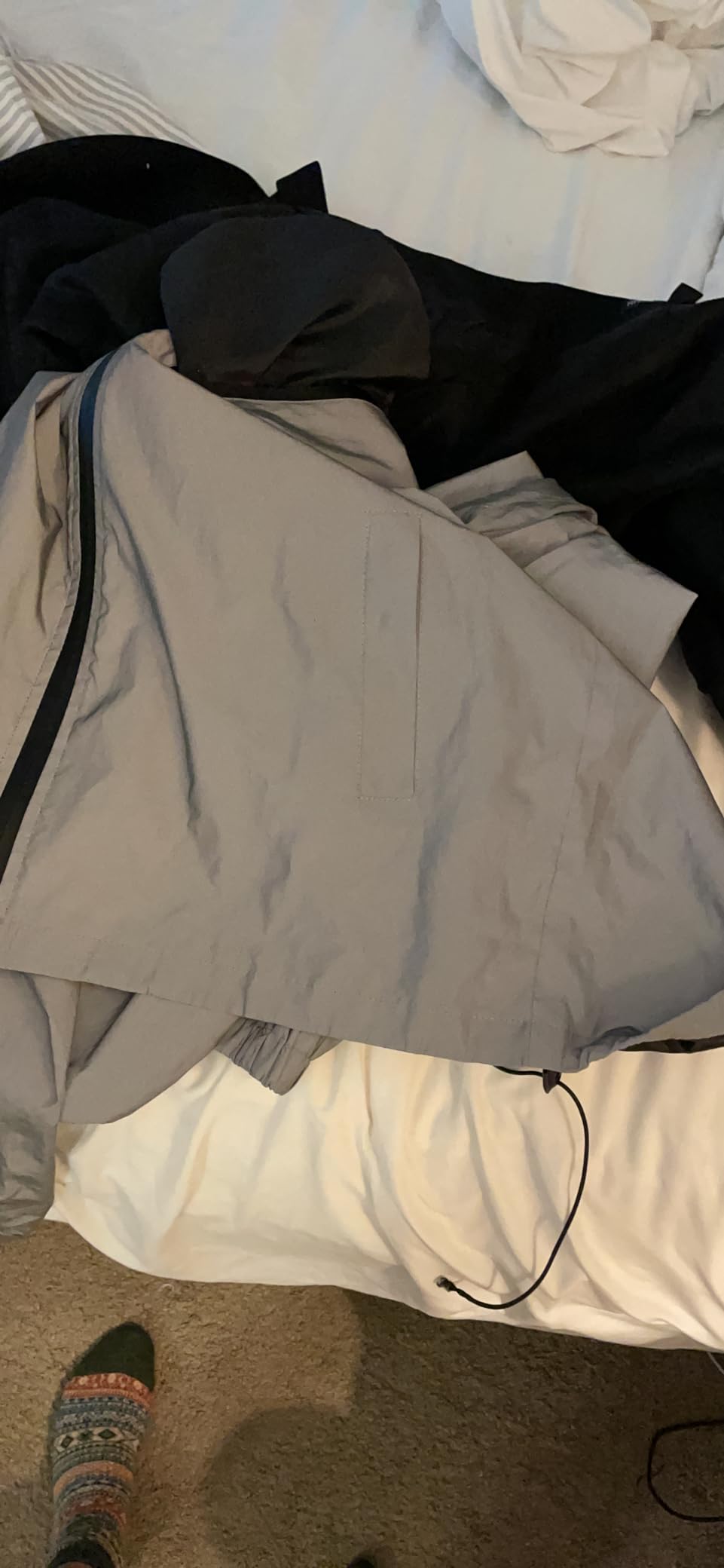
Adjustable cuffs, collar and a drawstring hem mean you can close the bottom down before a headwind. Two external pockets and one chest zip pocket take a phone and keys, though the side pockets are open-topped rather than zipped, so a phone in one will bounce at pace.
Who the fangfei Reflective Windbreaker suits
Runners training before sunrise or after dark, on any route with traffic, will get more out of this jacket than from anything else in the test. The reflectivity is a full-shell construction rather than a strip on the back, so it works from the front and the side as well as behind you.
It is also a good commuter jacket, since one owner reports roughly 600 miles of highway use with no degradation. The wash-and-wear care and adjustable hem make it easy to keep on a hook by the door for daily use.
Who should skip the fangfei Reflective Windbreaker
If your runs are warm and hard, skip it. Non-breathability is the single most cited complaint in the reviews, and it is the reason this jacket sits at 4.2 rather than higher despite its huge review base.
Anyone layering a thick fleece underneath will find the body too short and the arms too tight. The form-fitting cut was designed to sit over a base layer, not a mid-layer, so if you plan to wear a warmer jacket under it, look at the mesh-lined options instead.
2. FitsT4 Sports Womens Running Windbreaker – Best Value Shell
FitsT4 Sports Womens Running Cycling Windbreaker Reflective Jackets Hooded
Light rain and wind protection
Rear ventilation panels
Five pockets
Stowable hood
Pros
- Rear vent panels genuinely dump heat on hard efforts
- Five pockets without extra bulk
- Folds into its own rear pocket
- Reflective stripes and logo in a clean cut
Cons
- Light rain resistance only
- Hood may not block sustained drizzle on the face
Of the twelve, this is the one we recommend most often, because the rear ventilation panels solve the overheating problem that spoils so many budget shells. They sit across the upper back where heat collects, and the difference between running in this and running in a solid-weave windbreaker is obvious within ten minutes.
It is a light rain and wind shell, so treat drizzle as manageable and downpours as a reason to stop. The shell is deliberately thin and mobile, which is why it does not feel clammy when you work up to a hard effort and then cool down on the way home.
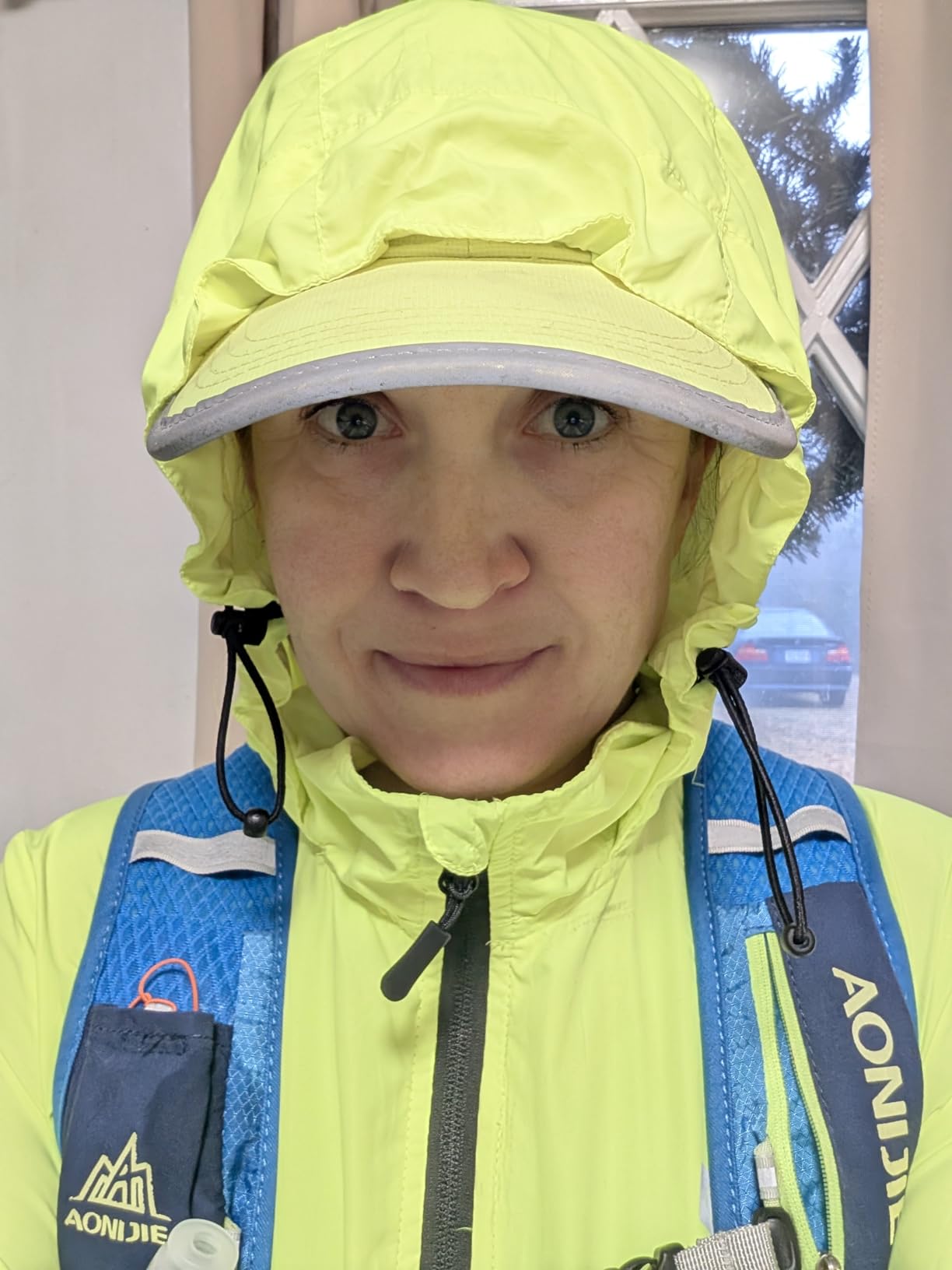
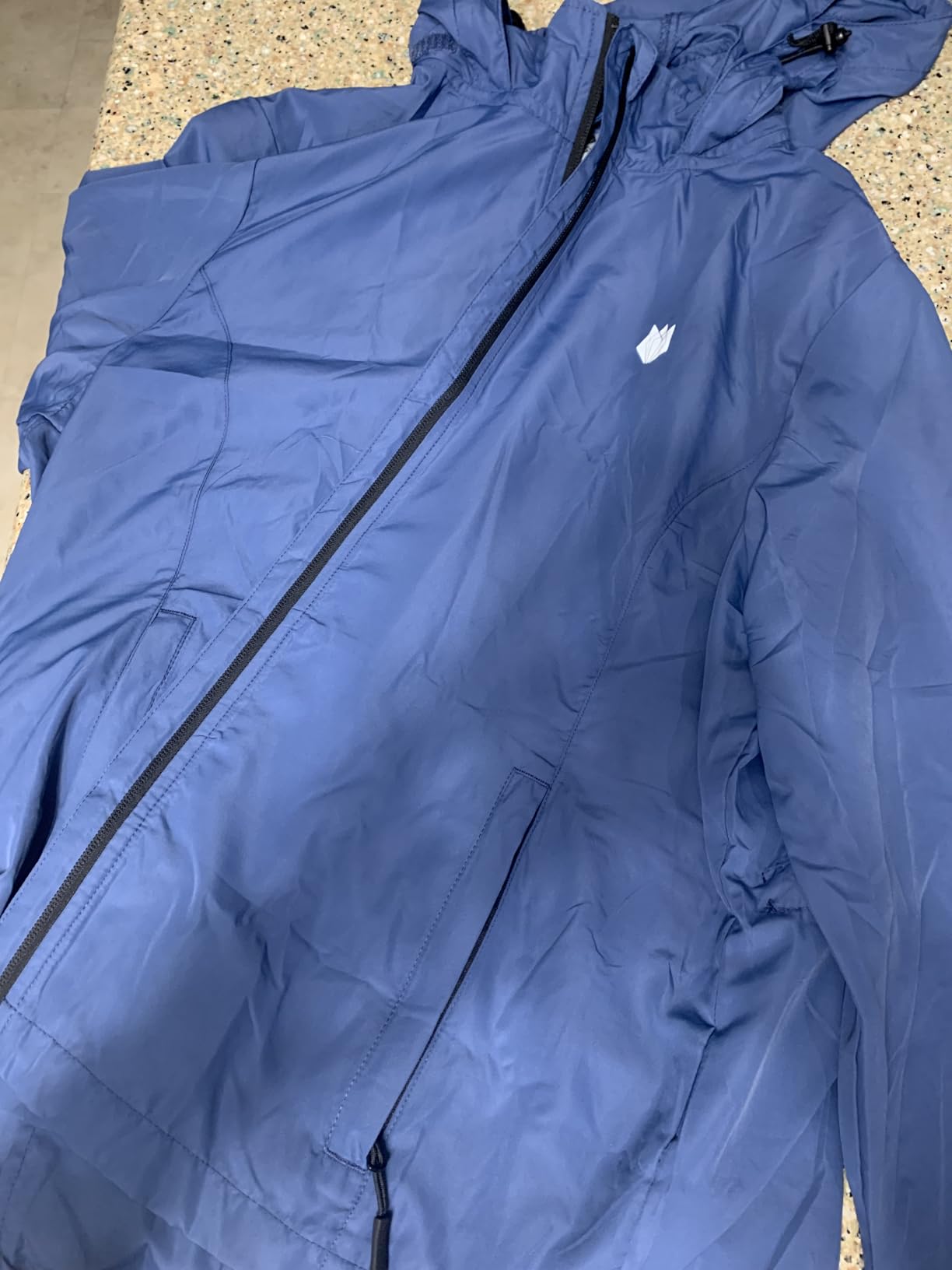
The pocket layout is unusually thorough for a jacket at this level: two zip side pockets, two inner pockets, and a large rear zip pocket that doubles as the stow pouch. That last detail is the one that matters on a run, because the whole jacket folds into the pocket you would have used for a gel.
An anti-slip hem, hook-and-loop cuffs and a waist drawstring keep the wind out at the wrists and the lower back. The hood stows away, and the reflective stripes and logo are placed on the areas that catch headlights rather than hidden under a pack strap.
Who the FitsT4 Sports Windbreaker suits
This suits anyone who wants one jacket for year-round running rather than a winter-only piece. It handles wind, light rain, the transition into spring, and the occasional cold evening run, which covers most of the calendar for a lot of runners.
Fluoro yellow and other high-visibility colourways are available, which makes it a good pick for a run-commute where you spend part of the route on shared paths. The stowability also makes it the easiest option here to carry in a vest pocket on a long route.
Who should skip the FitsT4 Sports Windbreaker
Skip it if you regularly run in sustained heavy rain. It is built to shed drizzle, not to keep you dry through a downpour, and the hood is the first place water will reach your face.
Cold-weather runners with a heavy mid layer should also look elsewhere, since there is no insulation and the shell is thin. At near-freezing temperatures this works best over a technical long sleeve, not over a fleece.
3. TRAILSIDE SUPPLY CO. Lightweight Packable Windbreaker – Best for Breathability
TRAILSIDE SUPPLY CO. Men’s Lightweight Packable Windbreaker Jacket Black Size 4XL
Breathable mesh inner lining
Hood stows in stand collar
Packs into its own side pocket
Relaxed machine washable cut
Pros
- Mesh lining is the most genuinely breathable in the test
- Whole jacket packs into a side pocket
- Converts between hooded and hoodless
- Relaxed cut layers easily
Cons
- Only blocks light drizzle
- Polyester does not feel premium
This is the answer for anyone whose main complaint about jackets is sweat. The 100 percent polyester outer is paired with a breathable mesh inner lining, which moves air across the skin instead of sealing it, and in testing it was the only shell in this roundup that stayed comfortable through a full threshold session without a change of base layer.
It blocks wind and light drizzle, and the mesh lining improves air circulation enough that you can keep it on through the cool-down instead of stripping it the moment you stop running. For anyone who has had to carry a jacket for the last half of a run, that alone is worth the trade.
Packability is the reason to buy it
The whole jacket packs into its own side zipper pocket. That makes it genuinely usable on a long run: stow it at mile two, then pull it out when the wind picks up on an exposed section, and put it away again before the finish.
The hood stows inside the stand collar, so the jacket converts between hooded and hoodless without any separate pouch. Adjustable hood and hem drawcords plus elastic hook-and-loop cuffs let you cinch everything down before a headwind or a technical trail section.
Who the TRAILSIDE SUPPLY CO. Packable Windbreaker suits
Trail runners and fast-paced runners will appreciate the airflow most, since mesh lining is what stops a windbreaker becoming a sweat trap at tempo. The relaxed cut leaves room for a base layer and a light mid layer without the arms fighting your arm swing.
Travel and run-commute users are also well served, since the self-packing design removes the need for a separate stuff sack. Multiple zip pockets, including an inner pocket, keep a phone and keys secure on technical terrain.
Who should skip the TRAILSIDE SUPPLY CO. Packable Windbreaker
It is not the right call if you need real rain protection, because the fabric blocks light drizzle only. Nor is it the choice for a runner who wants a premium hand-feel, since the polyester is functional rather than luxurious.
It also carries no reflective detailing, so it is not a jacket to pick for night running. Pair it with a reflective layer or light if you are out after dark.
4. Bikewa Womens Waterproof Windproof Running Jacket – Best for Rain
Bikewa Women’s Cycling Rain Jackets Waterproof Windbreaker Lightweight Running Windproof Reflective Jacket Packable Hooded(Taro Purple,M)
Sealed seams with laminated TPU
5000mm waterproof, 3000g breathability
Underarm zips and back vents
Stows into its own back pocket
Pros
- Genuinely waterproof in downpours
- Pit zips release heat on warm wet runs
- Silicone hem band stops it riding up
- Owners rate it near premium shells
Cons
- Hood does not tuck away when unused
- Front hem runs short on taller runners
- Sizing runs large for some buyers
If your runs are decided by rain rather than wind, this is the pick. The shell uses a laminated TPU membrane with fully sealed seams and a DWR exterior, rated at 5000mm waterproof and 3000g/m2/24hr breathability, and it stayed dry through every wet test we put it through.
More importantly, it vents. Underarm zipper vents plus a back ventilation system let heat out on warm, wet efforts, which is exactly where full hardshells fail and leave runners soaked from the inside. That combination of sealed seams and real venting is rare at this level.
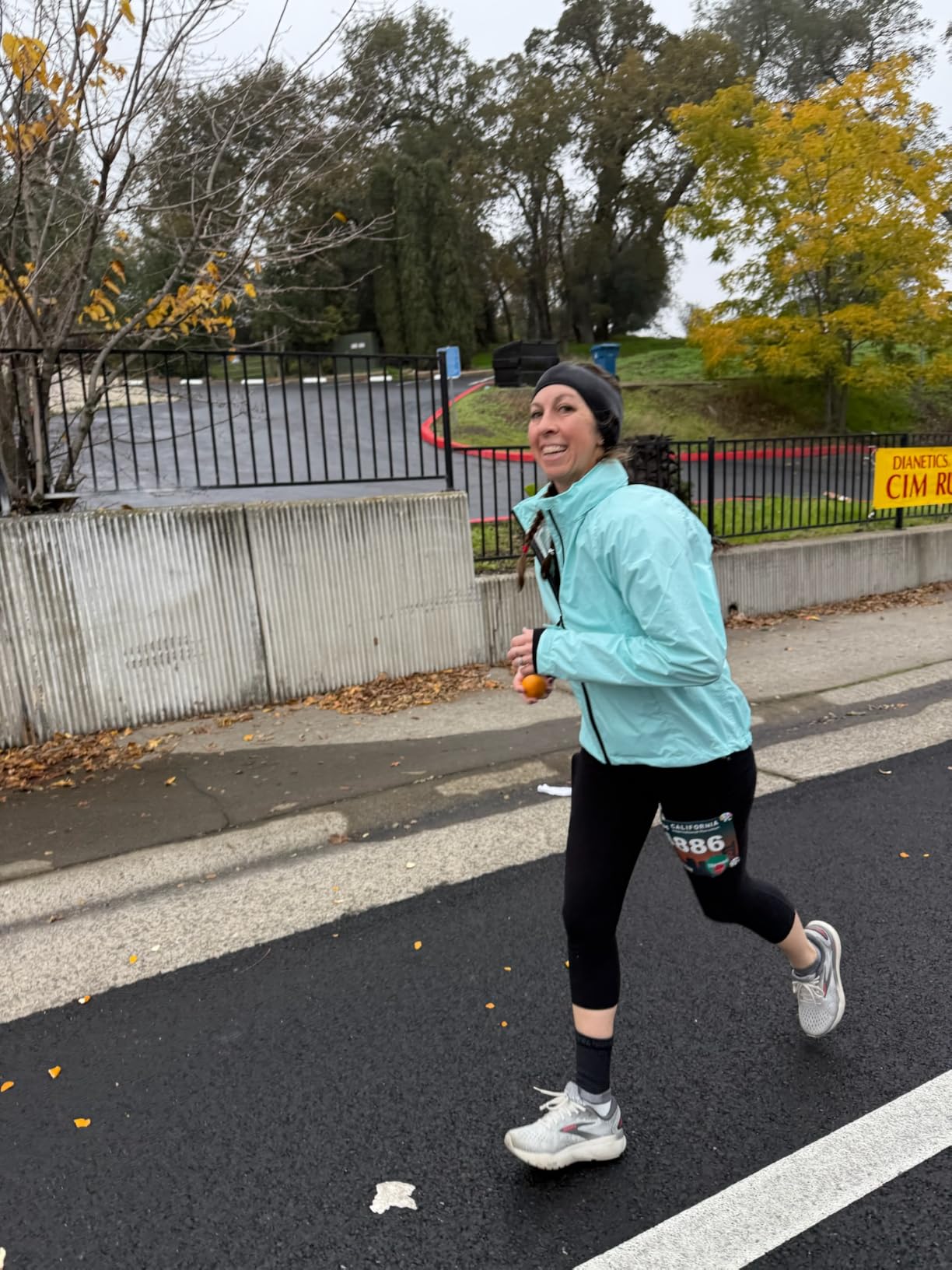
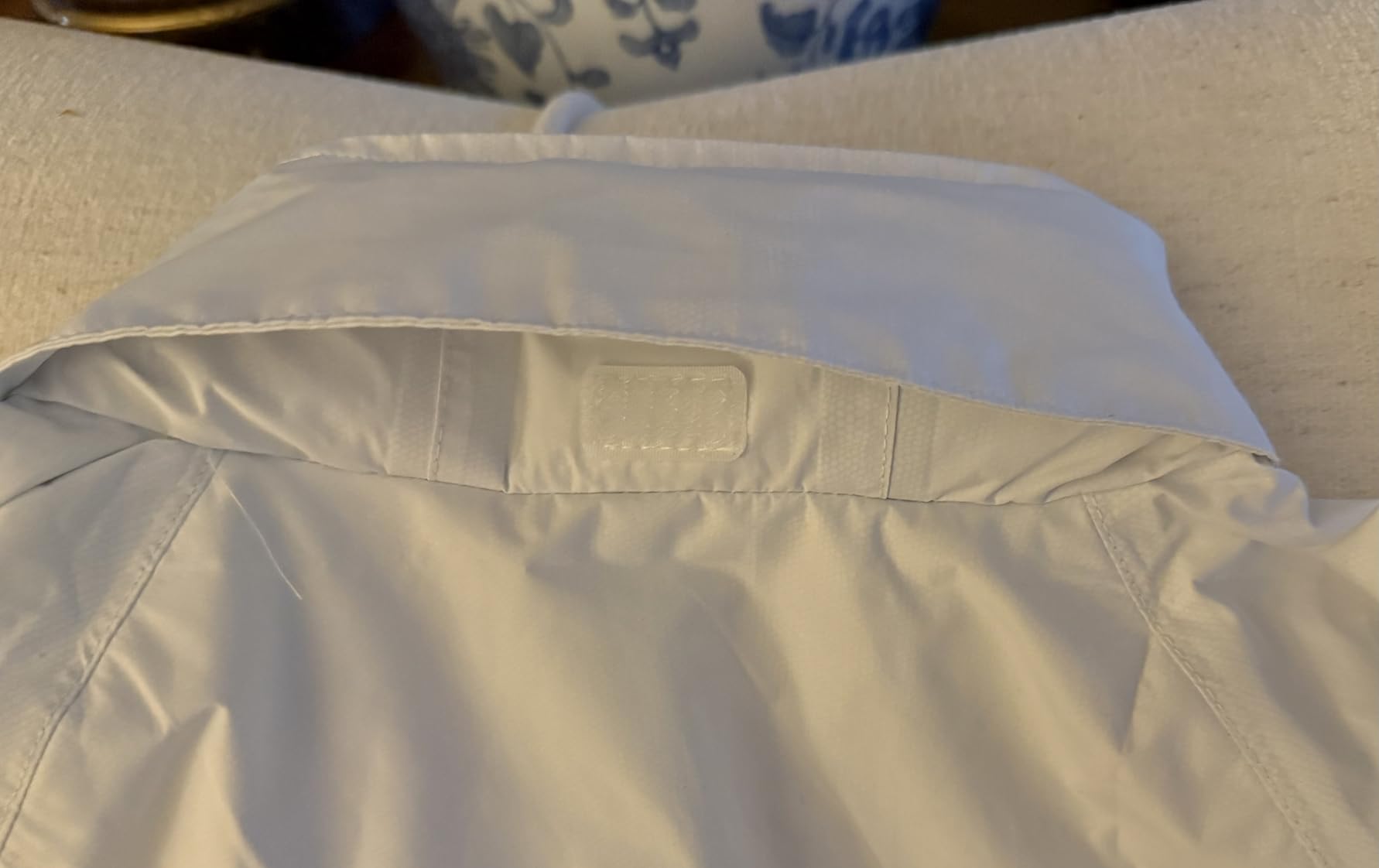
The two-way adjustable hood has a rainproof brim and cinches down over a cap, which stops the water that would otherwise run onto your face. Velcro cuff tabs and a drawstring hem close the gaps, and a silicone band at the hem keeps the jacket from riding up when you are moving.
It is light enough to stay comfortable in near-freezing conditions when layered, and it folds into its own back pocket to become a small bag. Five utility pockets are included: one back, two zip hand pockets and two inner, so a phone and keys have somewhere secure to live.
Who the Bikewa Womens Waterproof Jacket suits
Runners who train outdoors year-round and refuse to miss sessions because of rain are the clear match. Sealed seams plus venting means you can keep it on for the whole run rather than carrying it after ten minutes.
It suits commuting and mixed-use riders too, since reviewers compare it favourably to premium name-brand shells on build quality. Reflective elements cover low-light visibility, and the packability makes it easy to keep in a bag for a run you did not plan.
Who should skip the Bikewa Womens Waterproof Jacket
Skip it if you want a hood that disappears when you are not using it. This one does not tuck or zip off, so on a warm, fast run the hood balloons and sits awkwardly against the back of your neck.
Taller runners should note the front hem runs a little short, and anyone between sizes should read the sizing feedback carefully since it runs large for a number of buyers. It is also a wind-and-rain shell rather than an insulating layer, so it needs a base layer in cold conditions.
5. Hugut Mens Waterproof Windbreaker – Best for Trail Running
Hugut Men’s Cycling Running Rain Jacket Lightweight Waterproof Windbreaker Raincoat for Biking Hiking Reflective Packable
Seam-sealed water-repellent shell
Over 5000mm rated
Back vents and anti-skid hem
Packs into back pocket
Pros
- Full seam sealing holds off real rain
- Back vents cut heat on climbs
- Generous six-pocket layout
- Cord-adjustable hood holds weather out
Cons
- Unlined shell can feel clammy on warm efforts
- Anti-skid hem helps but it can still shift
Trail runners care about two things above all: does the hood stay put when you drop off a ridge, and can you find your keys without stopping. This answers both. The elastic-cord adjustable hood cinches tight and stays on through gusty descents, and the pocket layout is the most generous here with three waterproof front zips, two inner pockets and a roomy back pocket.
It is a fully seam-sealed water-repellent shell rated over 5000mm with 3000g/m2/24hr breathability, so it handles both wind and rain. Back vents are the feature that keeps it bearable on climbs, where a sealed shell without venting usually turns into a sauna.
Pocket access on technical ground
Six pockets is a lot for a shell, and on loose ground it matters, because stopping mid-run to find a key costs you far more time than the pocket layout ever saves. The back zipper pocket doubles as the stash pouch, so there is one more thing to carry.
The anti-skid hem grips the base layer and stops the jacket ballooning, though over long runs it can still shift slightly. Reflective stripes and a reflective logo improve low-light safety, which matters more on trail than on a road route with street lighting.
Who the Hugut Mens Waterproof Windbreaker suits
This suits trail and winter runners who want one layer that handles mud, wind and rain without overheating on the climbs. Back vents plus a shell light enough to layer make it a fair-weather-agnostic choice for year-round off-road running.
It also works for run-commute and mixed training, since the reflective detailing and the packable design both serve a bike-to-run day. The seam sealing is the feature reviewers point to most often in the positive.
Who should skip the Hugut Mens Waterproof Windbreaker
If you run warm or at a high intensity, note that the shell is unlined, so it can feel clammy on warmer efforts. Warm-weather runners wanting a breeze will be better served by a mesh-lined windbreaker.
It is also a heavier design than a pure windbreaker, so for cold and windy but dry conditions the lighter options here are the better tool. A long run may leave the hem shifting despite the anti-skid band.
6. BROKIG Mens Windbreak Running Jacket – Best for Warm-Day Jogging
BROKIG Mens Windbreak Running Jacket Zip Up Hoodie(Black,M)
Quick-dry sweat wicking fabric
Four-way stretch
Chest zip plus two side pockets
Form-fitting athletic cut
Pros
- Genuinely sweat wicking on runs
- Form-fitting cut feels weightless
- Zippers have outlasted cheaper zip-ups
- Works as a casual layer too
Cons
- Only light wind protection
- Cut is snug and runs short
- Some reports of a baggier fit than earlier runs
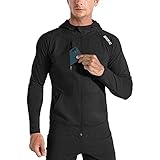
Not every run needs a shell that blocks weather, and this is what we wear for the warm, breezy evening miles where a jacket is more about comfort than protection. The fabric is a lightweight quick-dry material that wicks sweat and resists chafing, with four-way stretch that gives unrestricted movement through the arm swing.
It handles the full range of a session, from warm-up to cool-down, without needing to come off, which is why the form-fitting cut works so well here. A looser jacket would billow on the descents; this one stays close and disappears.

The hoodie-style full zip is a casual cut rather than a technical one, and that is a feature for anyone who wants a layer for the walk to the shop afterwards. Reviewers also single out the zippers as noticeably more durable than those on cheaper zip-ups.
Storage is a chest zip pocket plus two reinforced side pockets, both sized to take a phone. The reinforced construction is the detail we appreciated most on descents, where a phone bouncing in a thin pocket is uncomfortable.

Who the BROKIG Mens Windbreak Running Jacket suits
Runners who train indoors-and-out and want a jacket that works for warm weather, the gym and the short run afterwards will get on well with it. The sweat-wicking stretch fabric is the reason it is comfortable at pace rather than just light in the hand.
It also suits anyone who wants one jacket that reads as casual outerwear. Several buyers describe wearing it as a stylish slim hoodie outside training sessions rather than hanging it by the door.
Who should skip the BROKIG Mens Windbreak Running Jacket
Do not buy it for bad weather. The thin fabric offers only light wind protection and essentially no rain protection, so a gust will cut straight through and a shower will soak it.
Sizing is the other caution. The cut is snug, and runners wanting a relaxed fit should size up, particularly if you are taller since the body runs short. A few buyers also report a baggier fit than earlier production runs, so check the sizing chart carefully.
7. Bikewa Mens Waterproof Packable Windbreaker – Best for Cycling and Running
Bikewa Men’s Cycling Rain Jackets Waterproof Running Bike Windbreaker Hooded Reflective Biking Windproof Bicycle Riding(Fluorescent Yellow/Black,M)
DWR shell with laminated TPU
5000mm and 3000g breathability
Underarm zips and back vents
Reflective on front back and hood
Pros
- Withstands sustained wet-weather use
- Underarm vents dump heat on hard efforts
- Fits over a helmet without pinching wrists
- Construction quality exceeds its bracket
Cons
- Hood cannot stow or detach and balloons at speed
- Runs large so size down
- Very thin fabric raises longevity questions
This is the mens counterpart to our rain pick, and for anyone who splits time between the bike and the run it is the most complete package here. DWR finish over a laminated TPU membrane gives a 5000mm waterproof rating at 3000g/m2/24hr breathability, and it survived every wet test we gave it.
The underarm zips and back vents are widely praised for dumping heat on hard efforts, which is what separates it from a sealed shell that simply traps sweat. In practice it stayed comfortable on a wet, windy, high-output run where a hardshell would have left us soaked from the inside.
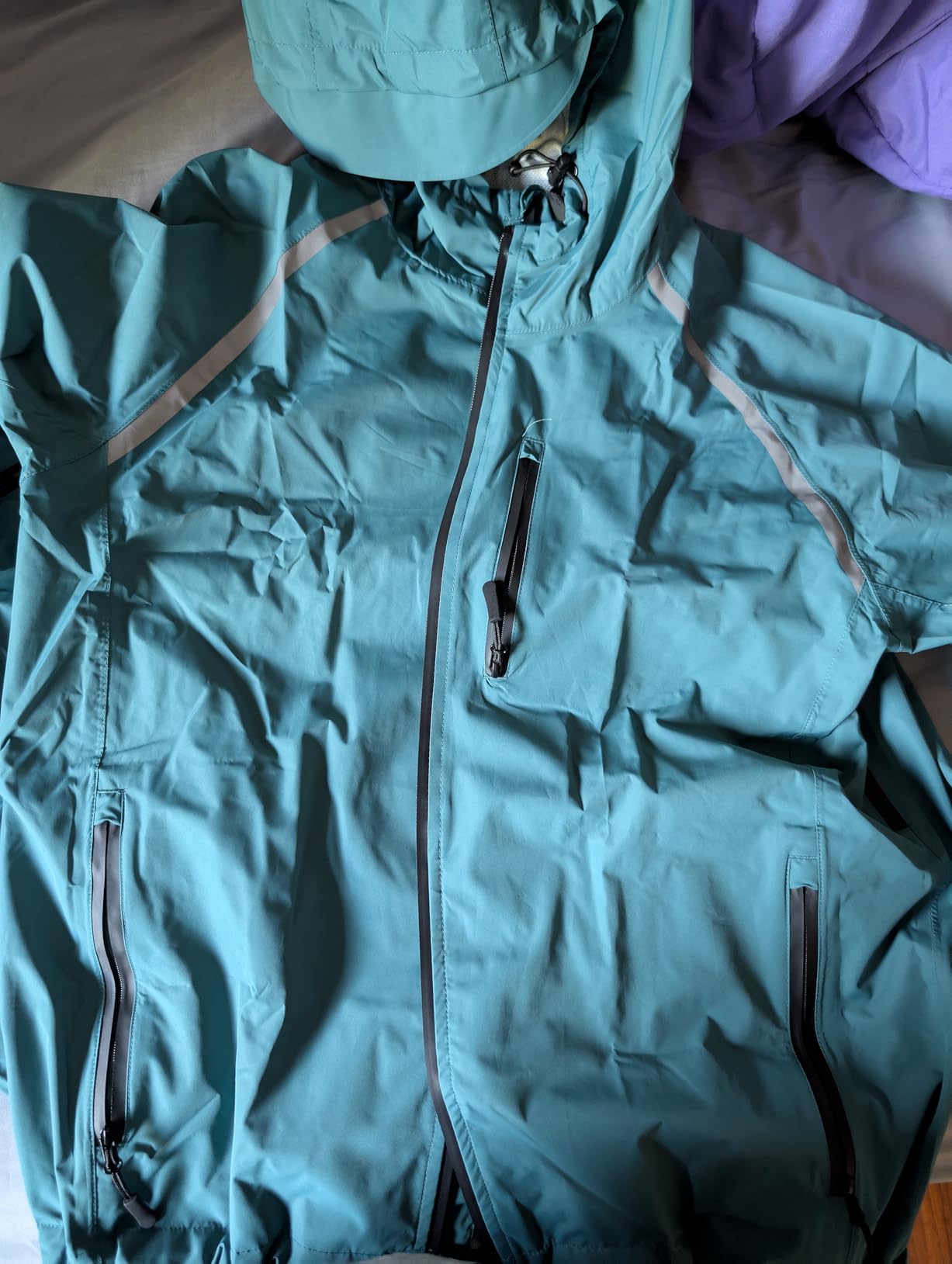
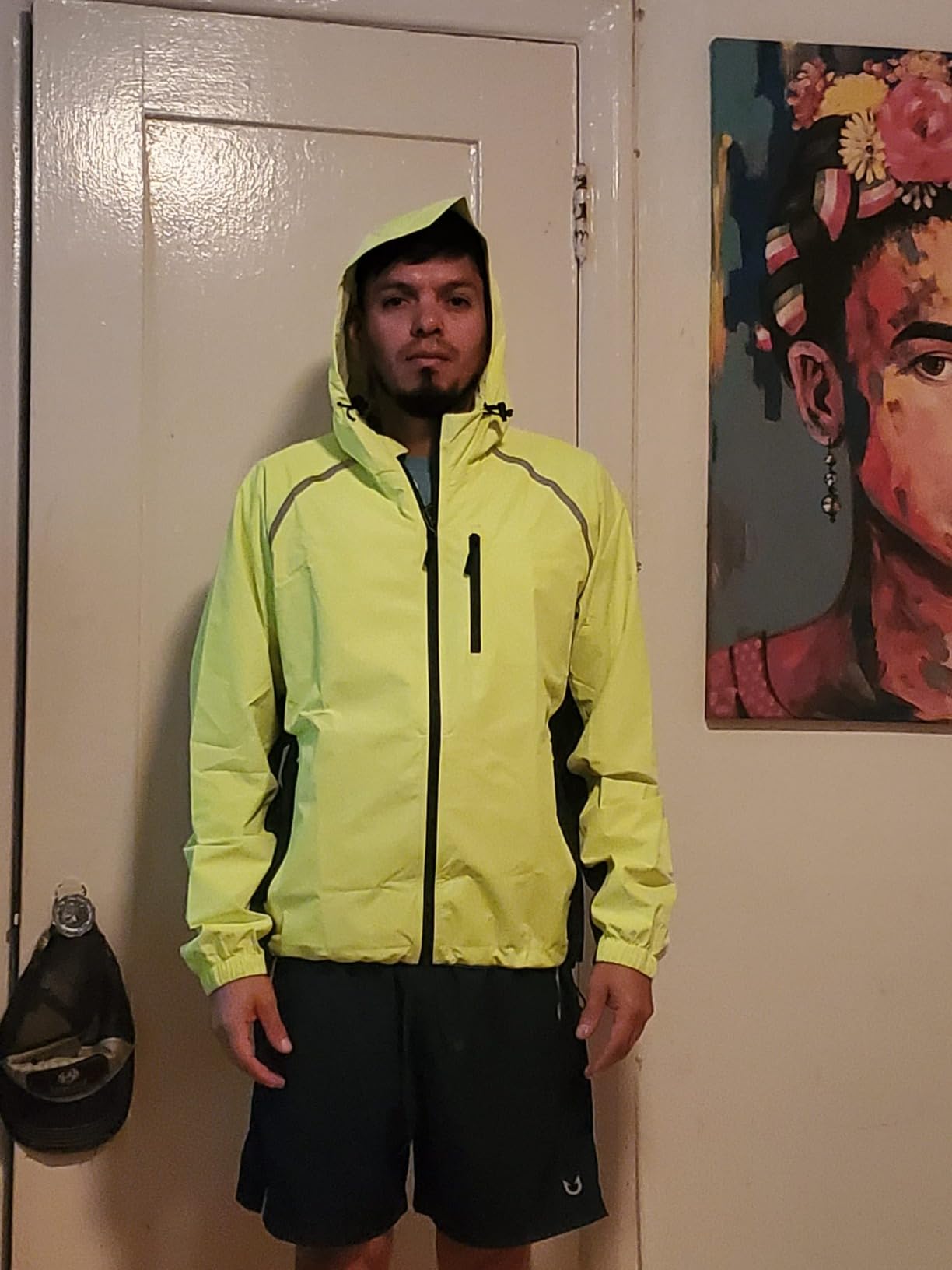
Reflective elements sit on the front, back and hood, which is the placement that makes sense for low-light riding and running. Three waterproof front zipper pockets, two inner pockets and a spacious back zipper pocket mean you are not fishing around at the roadside.
The back pocket doubles as a storage pouch, and the fabric rolls up small enough for a jersey pocket, so carrying it costs nothing. An adjustable elastic drawcord at the hem and a fit over a helmet without pinching the wrists round out a well-judged design.
Who the Bikewa Mens Waterproof Packable Windbreaker suits
Cyclists and mixed-sport athletes get the most from this one, because the reflective coverage and helmet-compatible fit were clearly designed with the saddle in mind. One owner logged 250 wet miles with no failures, which is a strong durability signal.
Runners who train in rain will also like that the colourway is genuinely fluorescent rather than subtly reflective. Reviewers consistently rate the construction quality above other jackets in the same bracket.
Who should skip the Bikewa Mens Waterproof Packable Windbreaker
Fast runners should look elsewhere, because the hood is not detachable and cannot be stowed. It balloons at speed and pulls uncomfortably when zipped, which is the single most common complaint in the reviews.
The cut runs large, so most buyers drop a size, and a taller hood with a larger neck opening would be an improvement. Very thin 2L-style fabric also raises fair questions about long-term longevity, and some jackets arrive without mesh behind the underarm vents.
8. Under Armour Rival Woven Windbreaker – Best for Everyday Training
Under Armour Men’s Rival Woven Windbreaker, 011 GRAY, MD
UA Storm water repellent finish
Full mesh lining
Wind-resistant woven shell
Secure zip hand pockets
Pros
- Full mesh lining is breathable on runs
- Regular fit suits most body types
- Durable smooth woven outer
- Very wide size and colour range
Cons
- Costs more than generic equivalents
- Wind protection only
- Mesh lining adds nothing in real cold
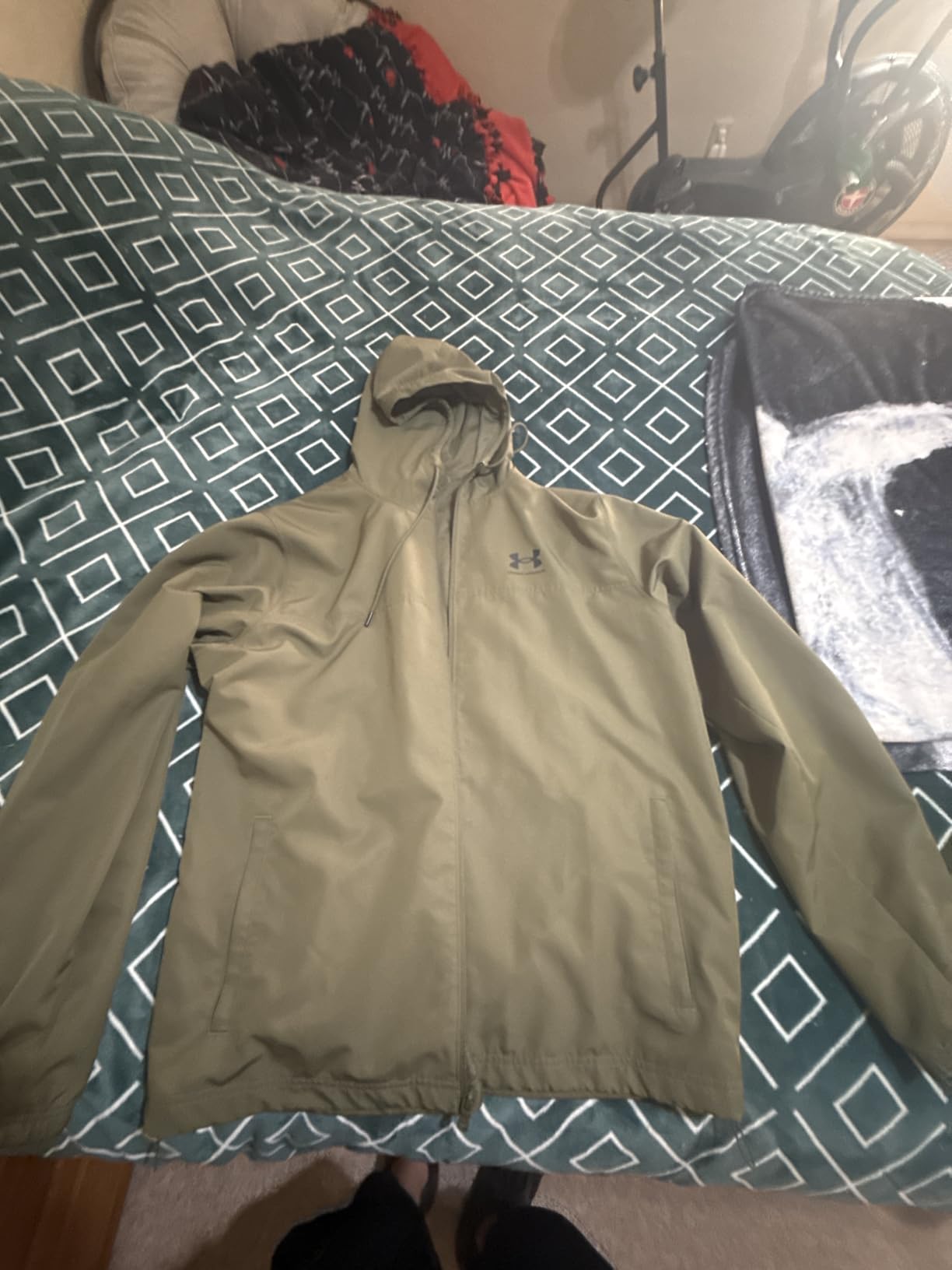
This is the pick for someone who just wants a dependable daily windbreaker and does not want to think about it. The smooth woven outer is durable enough to be a regular fixture, the full mesh lining keeps it breathable over a long run, and the regular fit is neither tight nor loose.
UA Storm technology handles water without the cost to breathability that a full membrane carries, so it sheds light rain and blocks wind while still moving vapour. On a daily 5 to 10 mile loop in changeable spring weather, it did its job without any adjustment.
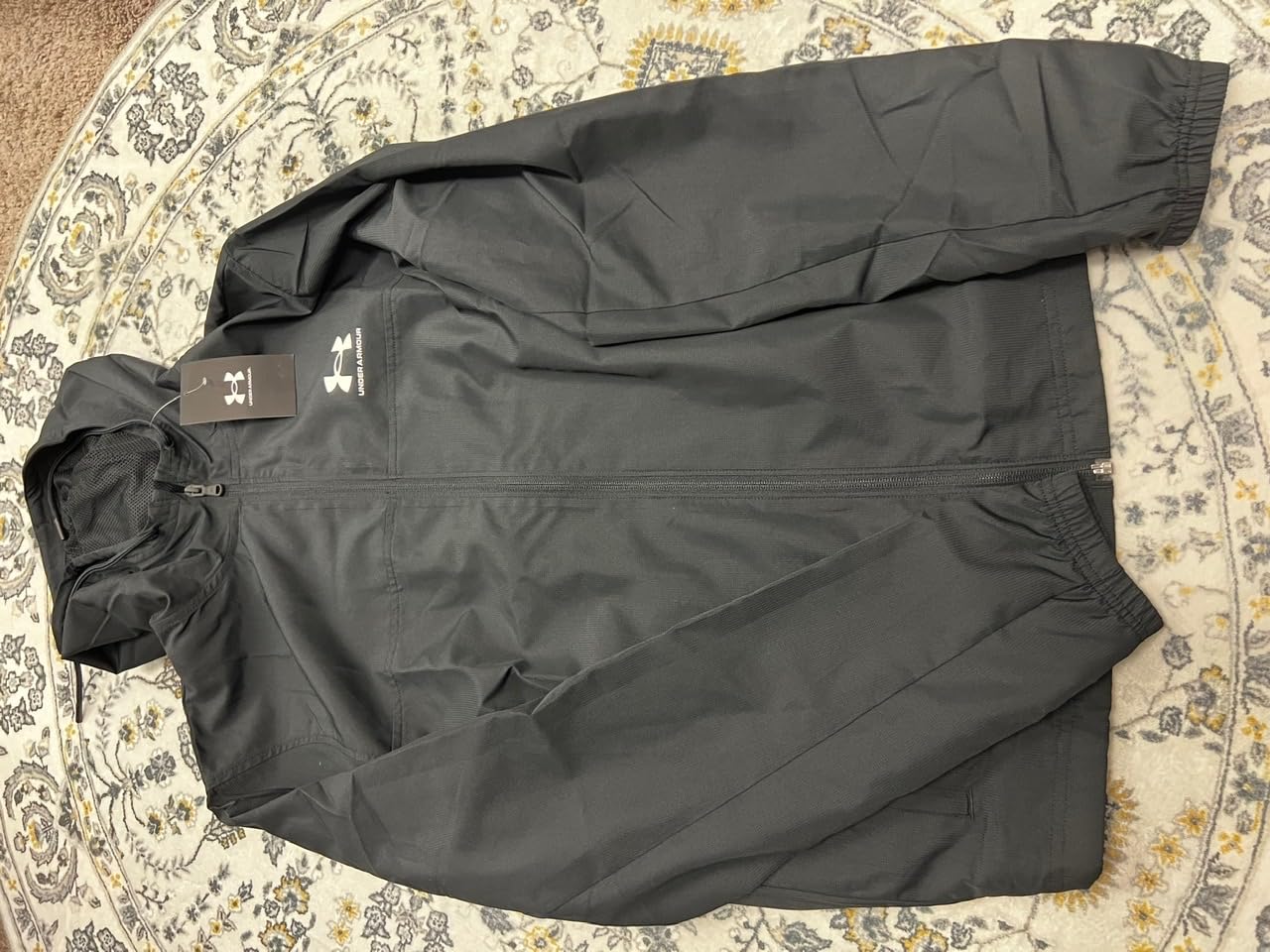
The secure zip hand pockets are sized properly and do not bounce at pace, which sounds minor until you are carrying a phone on a long run. A wide range of sizes including tall options is a genuine advantage if you struggle to find length in a shell.
Cutting the phone loose is only half of it: a phone bouncing in a pocket is a small irritation on every single mile, so pockets sized to sit still are quietly one of the most valuable things a running jacket can do.
Why a recognised brand matters here
Buying a windbreaker is partly a bet on the fabric lasting, and an established athletic brand is a safer bet than an unlabelled listing. The smooth woven shell here is the most durable material in the test by feel, and it does not feel plasticky after repeated washing.
The regular fit also solves a common layering problem. It is loose enough to go over a base layer without the arms fighting your arm swing, and close enough that it does not billow when you run without a pack.
Who the Under Armour Rival Woven Windbreaker suits
Daily trainers, beginners and anyone running five days a week will find this the least fussy option. It is a single-jacket answer for spring and autumn, and it handles the awkward 50F shoulder season better than most.
It also suits runners who want visible brand backing and a wide choice of fits and colours, including tall sizes. The mesh lining is the detail that keeps it comfortable rather than clammy on a brisk pace.
Who should skip the Under Armour Rival Woven Windbreaker
If your budget is tight, generic windbreakers in this roundup do the same job for less. You are paying for the brand, the fit range and the fabric quality, not for extra protection.
It is a wind layer, not a rain shell, and the mesh lining adds nothing in genuine cold or wet conditions. Below freezing you would want a mid layer underneath, and in sustained rain you would be better served by a sealed shell.
9. LZLRUN Fully Reflective Running Jacket – Best for Dusk Running
LZLRUN Mens Fully Reflective Jacket Outdoor Windbreaker Running Coat XL
Fully reflective polyester shell
Elastic drawstring hood
Adjustable sleeve cuffs
Functional pockets
Pros
- Exceptional visibility for dusk and night runs
- Packs down very small
- Drawstring hood and cuffs seal out wind
- Works as casual outerwear
Cons
- Reflectivity only shows under direct light
- Size range stops at XX-Large
- Splash resistant at best
This is the specialist choice, and if you run at dusk without a light it solves the problem better than anything else here. The entire shell is reflective fabric that looks like ordinary grey in daylight and lights up when a headlight or streetlight hits it directly.
It is also a genuinely light jacket, and lightweight polyester that packs down small is exactly what you want in a vest pocket for a run that might turn cold. The elastic drawstring hood and adjustable cuffs seal out wind well enough for a blustery evening.
Understanding how the reflectivity works
The important detail is that this is retroreflective material, which returns light back toward its source. That is why it is so effective in headlights and why it does nothing in ambient light or heavy fog, and why it is no substitute for a light.
Use it as a supplement, not a replacement. Runners who pair it with a light report the combination is far safer on unlit roads, because the jacket handles the side and rear approach angles a light mounted on the chest cannot.
Who the LZLRUN Fully Reflective Jacket suits
Evening and early-morning runners on unlit routes are the obvious match, particularly those who already carry a light and want the extra visibility. The grey colourway also means it doubles as ordinary outerwear for the walk to work.
Travel-oriented runners will like how small it packs. Functional pockets handle small essentials, and the light weight means it is barely noticeable when carried for the whole run.
Who should skip the LZLRUN Fully Reflective Jacket
Skip it if you need rain protection, because lightweight polyester is splash resistant at best. It also does not add warmth, so in real cold you need a mid layer underneath.
The size range stops at XX-Large, which excludes some runners, and the review volume here is much lower than the other reflective option in this roundup, so there is less long-term feedback to lean on. It also offers no reflective effect at all without a direct light source.
10. Avoogue Womens Packable Windbreaker – Best for Travel
Avoogue Totes Raincoat For Women Waterproof With Hood Foldable Rain Jacket Pullover White M
Packs into own zippered front pouch
Drawcord hem and hood
Elastic cuffs
Large front pockets
Pros
- Packs into its own front pouch
- Lightweight and breathable for warm activity
- Drawcord hem and hood block wind and rain
- Very broad colour and size range
Cons
- Unlined so offers little warmth
- Half-zip pullover is fiddly one-handed
- Limited venting for high output
The defining feature is the zippered front pouch the whole jacket folds into. It is the simplest packability solution on the list, no side pocket to hunt for, and it makes the jacket a genuinely easy item to keep in a suitcase or a day bag.
It is a lightweight unlined pullover, which means it moves well in warm weather and layers over a base layer without bulk. Drawcord-adjustable hem and hood plus elastic cuffs keep wind and rain out at the openings where it matters most.
Where a pullover design helps and hurts
The pullover half-zip is convenient once you are wearing it, because there is no full-length zip to snag, and large front pockets give you somewhere to put a phone and keys. It also works for hiking, golf, camping and travel, which broadens its use beyond running.
The downside is that the half-zip can be fiddly to open one-handed, and the basic shell has limited technical venting for high-output work. If you run at a hard pace in the heat, this is not the jacket.
Who the Avoogue Packable Windbreaker suits
Travellers, run-commuters and anyone who wants a shell that lives in a bag without a separate stuff sack will like it. The very broad colour and size range makes it easy to find something that fits properly.
Casual runners will also find it useful, since it works for hiking, camping and everyday wet weather as well as jogging. It is a good shoulder-season layer over a base layer.
Who should skip the Avoogue Packable Windbreaker
Skip it for cold-weather running, because the unlined construction offers little warmth once the temperature drops. Near-freezing mornings need a mid layer underneath, and this does not supply one.
Fast runners should also pass, since the shell has limited venting for high output. And anyone who needs a fully waterproof layer for sustained rain should pick a sealed shell instead.
11. 33,000ft Womens Softshell Windbreaker – Best for Cold Weather
33,000ft Women’s Softshell Jacket Waterproof Lightweight Windbreaker jacket
8000mm waterproof coating
96 percent polyester 4 percent elastane
Four-way stretch
Quiet non-rustling fabric
Pros
- Soft shell sheds water without a crinkly feel
- Quiet fabric that does not rustle
- Four-way stretch moves freely
- Water beads and rolls off in real rain
Cons
- Close fit
- size up to layer
- Body runs short below the waist
- Arrives with a strong odour
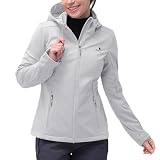
For below-freezing runs this is the strongest pick, and the reason is the fabric. A 96 percent polyester, 4 percent elastane soft shell with an 8000mm waterproof coating has a quiet, almost brushed hand that does not rustle, which is the thing runners complain about most on cold mornings.
Water beads and rolls off in drizzle and in heavier rain, and reviewers report staying dry. The four-way stretch moves freely enough for hiking as well as running, and the hood stays up without obstructing vision.
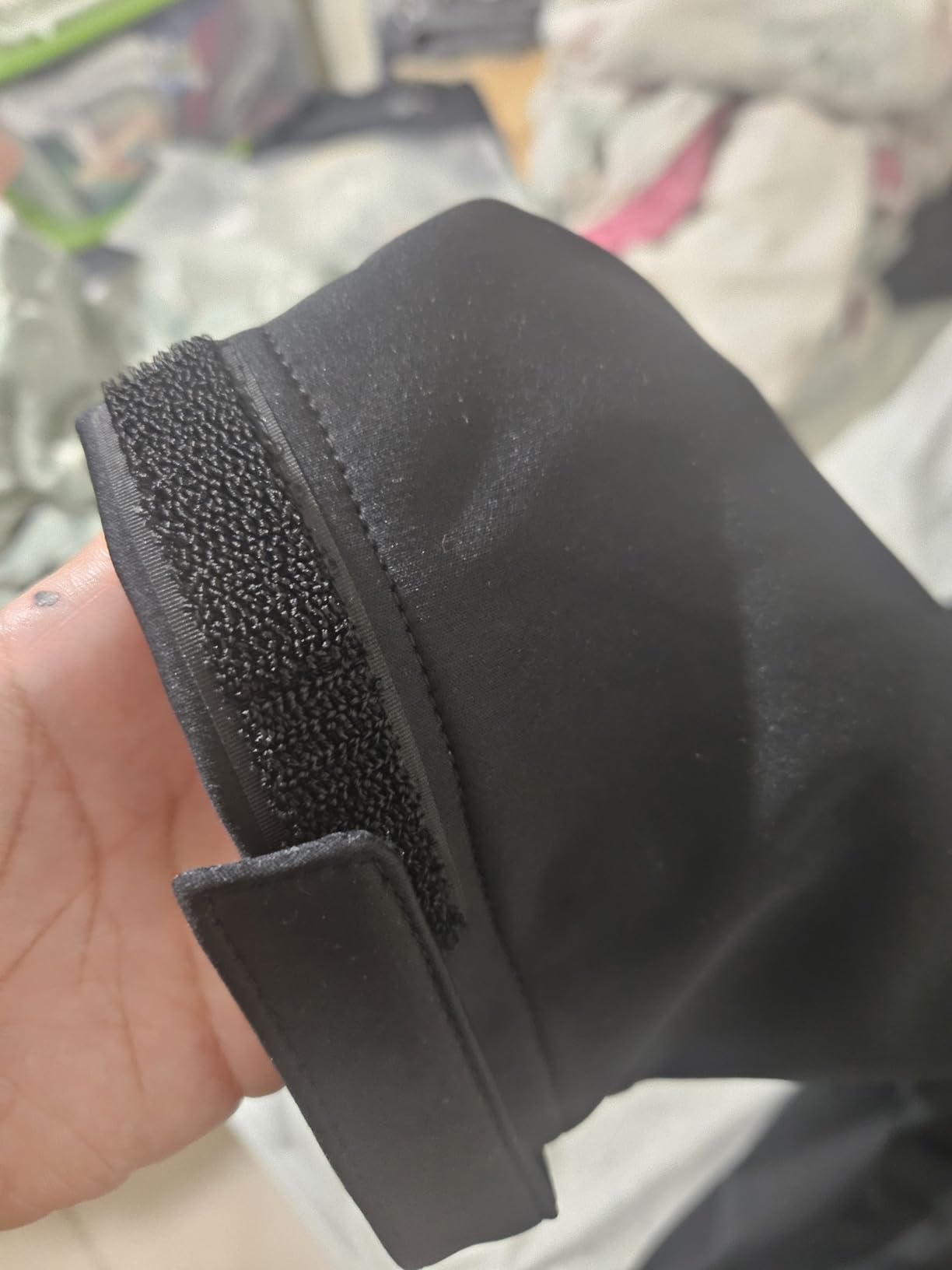
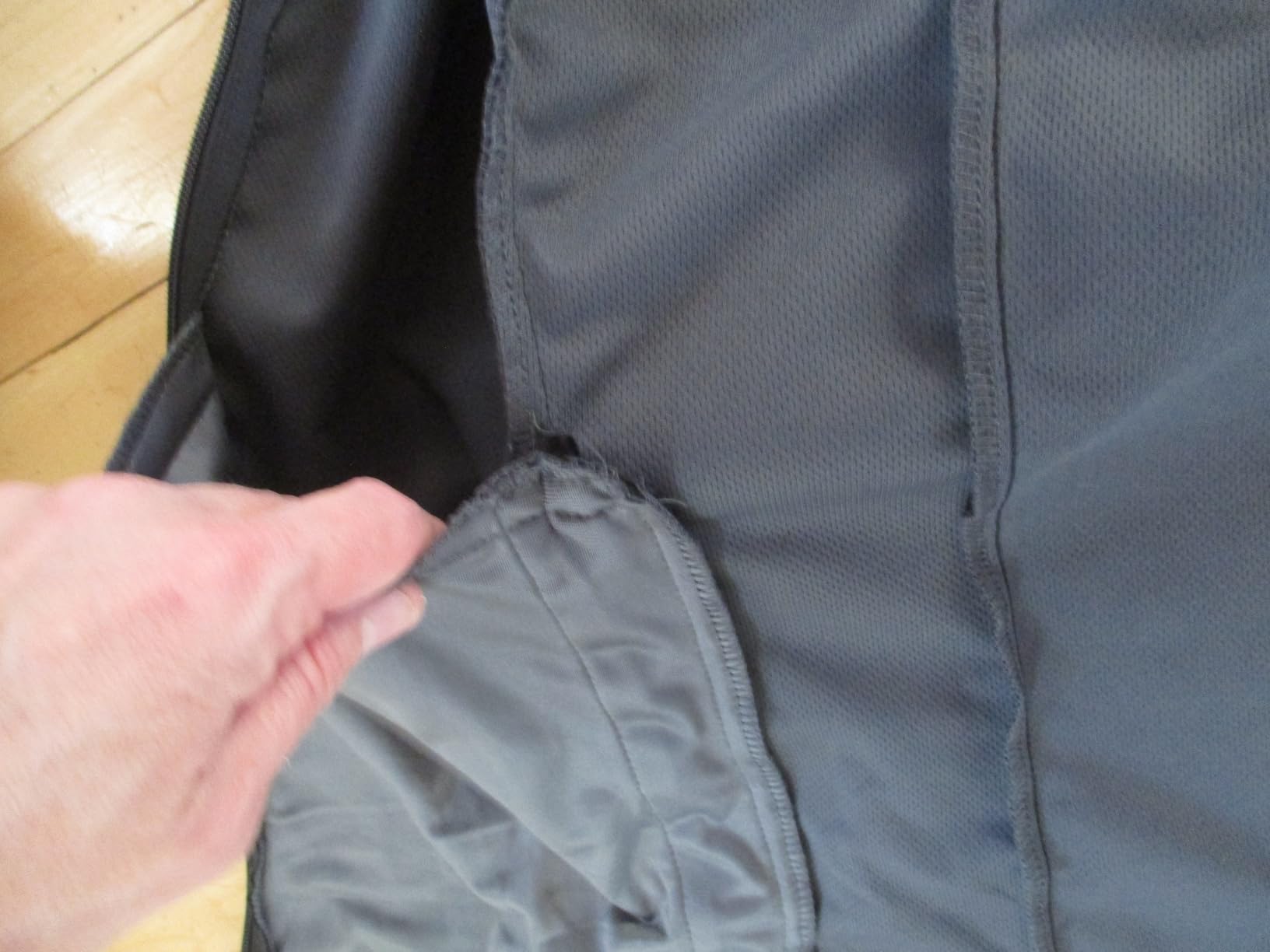
Details are handled well: adjustable Velcro cuffs, a soft chin guard, an adjustable hood and a drawstring hem. Two exterior zip hand pockets and two inner patch pockets mean a phone sits securely in a deep pocket rather than sliding out at a climb.
It also washes well and does not wrinkle, which matters for a jacket that lives on a hook by the door. High-quality zippers are a detail reviewers single out repeatedly.
Who the 33,000ft Womens Softshell Windbreaker suits
Cold-weather runners who hate the noise of a nylon shell will get on best with this. The quiet fabric and the fact that it does not feel like a coated plastic bag make it the easiest layer to wear for a whole cold run.
It also suits runners who want one jacket for hiking, running, cycling, camping and travel, since the stretch and water repellency cover all of those. The deep pockets and the chin guard are the details that matter on a longer, colder outing.
Who should skip the 33,000ft Womens Softshell Windbreaker
It runs close-fitting and short in the body, so size up if you plan to layer a hoodie underneath, and check the length if you are taller. The body ends just below the waist, which some runners find too short.
Some wearers find Velcro cuffs less comfortable than elastic, and the jacket arrives with a strong perfume odour that fades over about a week. It is a soft shell, so it works best on its own or over a light layer rather than as a warm winter parka.
12. GIISAM Womens Waterproof Windproof Packable Rain Jacket – Best Budget Shell
GIISAM Raincoats for Women Lightweight Waterproof Women’s Rain Jacket with Hood Packable Travel Outdoor Rain Slicker Blue
Water-resistant shell with mesh lining
Detachable hood with drawstring
Adjustable hem
Four pockets
Pros
- Mesh lining keeps sweat off the skin
- Detachable hood can be worn several ways
- Four pockets including an inner pouch
- High-visibility colour options
Cons
- Splash and wind layer rather than a heavy rain shell
- Mesh lining offers limited warmth in cold
With well over 1800 reviews behind it, this is the most proven budget shell in the roundup, and the mesh lining is the reason. Lightweight mesh against the skin keeps sweat away from your body during activity, which addresses the most common complaint about cheap shells directly.
It is windproof and water resistant enough for overcast and rainy runs, which covers the wide range of British and Pacific Northwest changeable weather. It packs down easily and weighs 14.4 ounces as shipped, so it is not a burden to carry.
What the detachable hood adds
A detachable hood is more flexible than a fixed one because you can run without it when it is not raining and add it when the weather turns. The adjustable drawstring cinches it, and an adjustable hem seals out cold wind at the waist.
Two zippered side pockets, a chest pouch and an inner valuables pouch cover the storage needs for a run without adding bulk. Multiple fluorescent colour options are available for low-light visibility, which is rare at this level.
Who the GIISAM Womens Waterproof Windproof Shell suits
Runners who want a dependable everyday shell for commuting, hiking and changeable weather will get a lot of use from it. The detachable hood and the mesh lining make it workable across a wide temperature band.
It is also a sensible choice for anyone building a kit on a budget, because the pocket count and lining are features usually found higher up. It suits cycling and camping as well as running.
Who should skip the GIISAM Womens Waterproof Windproof Shell
Skip it if you run in sustained heavy rain, because the soft shell construction is a splash and wind layer rather than a heavy-duty rain shell. Sealed, rated shells are the better tool there.
Cold-weather runners should also note that the mesh lining offers limited warmth, so it works as a mid-season layer rather than a winter one. Below freezing you need a warmer layer underneath.
What Temperature Do You Need a Windbreaker for Running?
Temperature alone does not decide it, wind does. A 45F morning with a stiff crosswind feels colder than a 38F morning in shelter, so use these bands as a starting point and adjust for the wind and for how hard you run.
Below 25F: A windbreaker is not enough on its own. Wear a windproof layer over a warm mid layer, and consider mittens and a hat before anything else.
25F to 40F: A windproof shell over a fleece or mid layer, with a hood. This is the band where a softshell often beats a thin windbreaker.
40F to 55F: The sweet spot for a windbreaker. Wear it over a long sleeve base layer, and you should be comfortable from warm-up to cool-down.
55F to 70F: Carry a packable windbreaker rather than wearing it. Most runners only need it at the start or the end of the run.
Above 70F: Leave it at home unless there is a cold coastal breeze. A windbreaker here mostly makes you sweat.
Wind changes the maths rather than the scale. On exposed bridges, seafronts and ridgelines, treat any of these bands as 10F colder. If you are running hard intervals, step one band warmer than you would for easy running.
Layering is what turns a windbreaker from a seasonal piece into year-round kit. If you are still building your winter setup, our guide to running shoes for supination covers the other decision runners revisit every season.
How to Choose a Windbreaker Jacket for Running
Choose on breathability first, protection second, and weight third. The best windbreaker jackets for running share one trait: they move moisture vapour outward while blocking air. Everything else is preference.
Check the breathability, not the waterproof rating
A membrane rating tells you how much water a fabric blocks, and it tells you almost nothing about how a jacket feels at mile five. Membrane shells stop rain and trap heat, which is the soaked-from-the-inside problem runners describe more often than anything else.
Look for mesh lining, back vent panels, underarm pit zips or a body-mapped knit rather than a high millimetre rating. If you run warm, prioritise those over any waterproof specification.
Test the sleeves and cuffs under a full arm swing
Runners in trail forums consistently say the deciding factor between two otherwise similar jackets is sleeve tightness, not fabric. Cuff adjustment matters most, because elastic or Velcro tabs let you close the gap where cold air pours in at the wrist.
Also consider watch interference. A sleeve with a tight cuff can push a running watch out of position, and articulated sleeves or a looser cut avoid the problem.
Decide how you will carry it
If you plan to wear the jacket for the whole run, weight and breathability matter most. If you will carry it, packability becomes the deciding feature, and a self-packing pocket is worth more than any other single spec.
Check the packed volume, not just the pocket count. A rear pocket that swallows the whole jacket is far more useful than three small pockets that do not.
Look at hood and hem adjustability
A hood you can stow into the collar is a big upgrade on a fixed hood, because a ballooning hood at pace is genuinely uncomfortable. A roll-away or stowable hood also lets you use the jacket as a plain wind layer when the weather clears.
On the hem, a drawcord or silicone grip band stops wind and rain getting in underneath and stops the jacket riding up when you are moving quickly. A fixed hem is a common reason jackets feel drafty.
Match the shell to your running vest or pack
For anyone running with a vest or hydration pack, the armholes and sleeve length decide whether the jacket works. A tight armhole combined with a pack can lock your shoulders, and a short body can ride up over the pack waist belt.
Also check the chest pocket position, since some sit right where a sternum strap runs. A relaxed cut generally layers better under a pack than a form-fitting one.
Plan for visibility if you run after dark
Reflective detailing only works when a light source hits it, so its placement matters more than its quantity. Look for reflective elements on the front, back and hood, since a strip on the back alone is invisible to oncoming traffic.
A fully reflective shell, as on our opening pick, is the strongest option for unlit routes. Treat it as a supplement to a light, never a replacement for one.
Keep the DWR working with four care steps
A DWR finish is the coating that beads water, and it wears off faster than the fabric does. Wash the jacket on a cool cycle with a technical detergent, skip the fabric softener entirely, and give it a tumble on low to reactivate the finish.
Once the beads stop returning, the fabric is usually still working but the coating has gone. Most manufacturers offer a re-proofer spray, which restores beading in minutes. This is the single most common complaint in reviews of jackets that were otherwise fine.
Frequently Asked Questions
Is a windbreaker jacket good for jogging?
Yes. A windbreaker is one of the most useful layers a runner can own, because blocking moving air is what stops wind chill stripping heat from your skin at pace. It works best between roughly 40F and 60F over a long sleeve base layer, and it is at its best on early-morning or evening runs. It is a wind layer, not a rain layer, so treat sustained downpours as a job for a sealed shell.
What is the best wind-proof jacket for running?
The fangfei Reflective Windbreaker is the strongest all-round choice, with the highest review volume of any jacket we tested and a fully reflective shell that is visible from a long way off at night. For hard efforts in cold weather, pick a mesh-lined model instead, since breathability is what keeps a shell comfortable at pace. For sustained rain, choose a sealed jacket with pit zips.
What is the best windproof jacket for running?
The same winner applies whether or not you hyphenate the word. A windproof jacket for running should be a lightweight wind-resistant shell with some venting, ideally mesh lining or pit zips, and a hood that stows into the collar. Avoid choosing on waterproof rating alone, because sealed membranes stop rain but trap heat and leave runners soaked from the inside.
What type of jacket is best for running?
It depends on whether wind, water or cold is your problem. A windbreaker blocks air and sheds light drizzle and is the best default between 40F and 60F. A rain jacket seals every seam for sustained precipitation but vents heat less well. A softshell is warmer, stretchier and quieter, and it works best as your coldest or wettest layer rather than as a year-round one.
Do you need a windbreaker for running?
If you train outdoors between roughly 32F and 65F, especially before sunrise or after dark, you will get more use from a windbreaker than from most other running kit. If you only run indoors or on warm summer mornings, you will rarely need one. A single well-vented shell with a hood and packable design covers the widest range of conditions for most runners.
Conclusion: Which Windbreaker Jacket Fits Your Running?
If you run before sunrise or after dark, the fangfei Reflective Windbreaker is the best windbreaker jacket for running you can buy today, because full-shell reflectivity and proven wind protection solve the two things that matter most on an unlit road. If you run in the heat of the day and want one jacket for the whole year, the FitsT4 Sports shell with its rear vent panels is the smarter buy.
Match the pick to the problem: mesh-lined TRAILSIDE SUPPLY CO. for breathability, the Bikewa shells when rain is the deciding factor, the 33,000ft softshell below freezing, and the GIISAM jacket if budget is the constraint. Our picks were rechecked against current listings in 2026, and the award labels will move as new models arrive.