
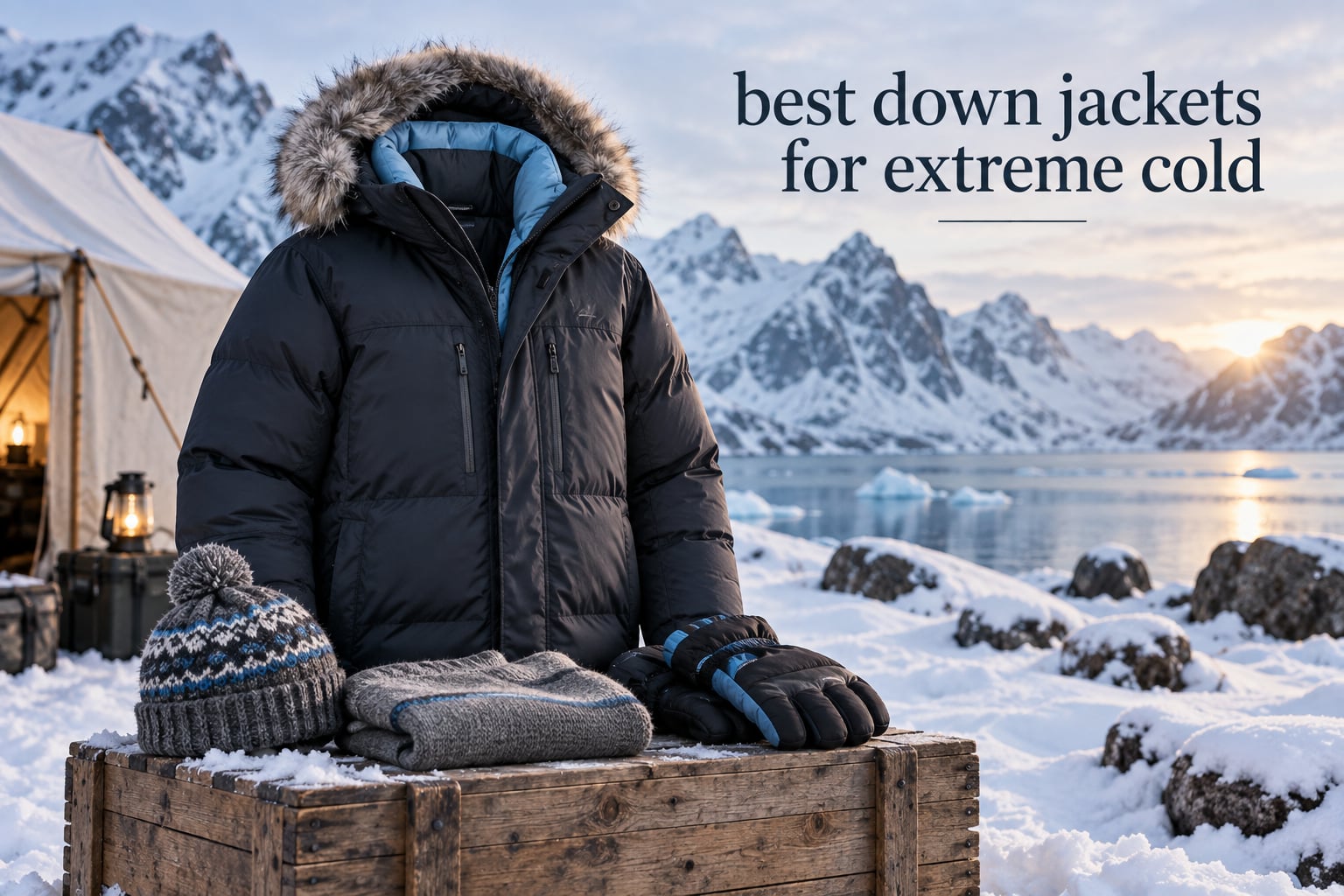
Finding the best down jackets for extreme cold comes down to one number most shoppers never check: total fill weight in ounces. Fill power tells you how lofty the feathers are, but fill weight tells you how much warm air the jacket can actually trap, and in sustained sub-zero wind that trapped air is the only thing standing between you and the cold.
For this roundup we took the fill power, fill weight, shell fabric, hood construction, cuff and hem design, and the real owner feedback behind twelve insulated jackets rated for cold weather, then sorted them by the temperature band each one actually suits. The list is deliberately organized around temperature rather than weight class, because a 12-ounce hoodie and a thigh-length parka can carry the same fill power and perform in completely different worlds.
Throughout this guide, extreme cold means sustained temperatures from 0F down toward -40F, with wind chill factored in, for a person who is standing still or moving slowly. That is the environment that kills ordinary lightweight puffies, and it is the environment these twelve were reviewed for. If you are climbing hard in a jacket this heavy, you will overheat in twenty minutes, and we explain exactly where that line sits further down.
We assembled this roundup in October 2026, and the ordering below reflects warmth-per-ounce in genuine cold rather than weight, price, or style. Where the honest answer is that a jacket is not truly expedition-rated, we say so. Several picks in this group handle everyday winter well and stop short of true sub-zero capability, and treating them otherwise is exactly how people end up shivering in a jacket marketed as extreme-weather gear.
If your cold is more about snow and slush than deep cold, you may want to start with our guides to the best parkas for extreme winters and the best winter coats for extreme cold instead, then come back here for the fill-weight logic behind every pick.
Table of Contents
Top 3 Picks: Best Down Jackets for Extreme Cold (October 2026)

Columbia Heavenly Long Hooded Jacket
- Omni-Heat reflective lining
- Synthetic down insulation
- Long-line parka cut
- Thumb-hole comfort cuffs
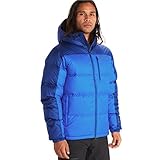
Marmot Guides Down Hoody
- 700-fill down with Down Defender
- Wind flap behind the zipper
- Attached down hood
- Angel-Wing Movement shoulders

Eddie Bauer Boundary Pass Down Parka
- 650-fill premium down
- Removable faux fur ruff
- Down-insulated zip pockets
- Storm cuffs
The Columbia Heavenly Long Hooded Jacket takes the top slot because it combines a long-line cut with a reflective thermal lining and holds a 4.6 average across more than 7000 owner reviews, which is the largest verified comfort base in this group. It is not a down-fill jacket, and we make no claim otherwise, but for sustained cold in a stationary setting it is the most proven garment here.
The Marmot Guides Down Hoody is the pick for anyone who wants real down rather than synthetic insulation, with 700-fill down treated for moisture resistance and a wind flap behind the zipper that actually stops the front closure from becoming a heat leak.
The Eddie Bauer Boundary Pass is the value route into parka territory, offering 650-fill premium down, a long-line cut, an adjustable insulated hood, and storm cuffs at a fraction of what the expedition hardware costs.
Quick Overview: All 12 Jackets in This Roundup
| Product | Specifications | Action |
|---|---|---|
| Columbia Heavenly Long Hooded Jacket |
|
Check Latest Price |
| Marmot Guides Down Hoody |
|
Check Latest Price |
 The North Face Jump Down Parka The North Face Jump Down Parka |
|
Check Latest Price |
 The North Face Aconcagua 3 The North Face Aconcagua 3 |
|
Check Latest Price |
| Eddie Bauer Boundary Pass Parka |
|
Check Latest Price |
 Columbia Delta Ridge II Columbia Delta Ridge II |
|
Check Latest Price |
 The North Face Arctic Parka The North Face Arctic Parka |
|
Check Latest Price |
 Marmot Chelsea Down Rain Coat Marmot Chelsea Down Rain Coat |
|
Check Latest Price |
 Fitouch Waukee Long Down Coat Fitouch Waukee Long Down Coat |
|
Check Latest Price |
 Marmot Ithaca Jacket Marmot Ithaca Jacket |
|
Check Latest Price |
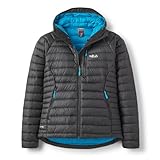 Rab Microlight Alpine Down Rab Microlight Alpine Down |
|
Check Latest Price |
 Lands’ End Packable Long Down Coat Lands’ End Packable Long Down Coat |
|
Check Latest Price |
Read across the table and one pattern stands out. Every genuinely expedition-capable jacket in this group carries a parka-length cut with coverage past the hip, and every jacket built for real down rather than synthetic insulation states its fill power on the spec sheet.
The other pattern is less flattering. Only two of these twelve list a full weight figure, and only one states a temperature rating, which means most shoppers are forced to guess whether they are buying a city parka or mountain equipment. That is why the buying guide later in this article spends so much time on fill weight math instead of brand names.
1. Columbia Heavenly Long Hooded Jacket for Long-Line Warmth
Columbia Womens Heavenly Long Hooded Puffer Jacket, Dark Stone, Medium
Omni-Heat reflective lining
Synthetic down-style insulation
Long-line parka cut
Thumb-hole cuffs
Pros
- Reflective thermal lining plus synthetic insulation delivers strong cold-weather warmth
- Long-line cut covers hips and upper legs
- Plush fleece-lined hood and collar
- Two-way zipper for temperature control
- Water-resistant shell with durable stitching
Cons
- Synthetic down-style insulation rather than true down fill
- Baffling reads bulkier than ultralight packable options
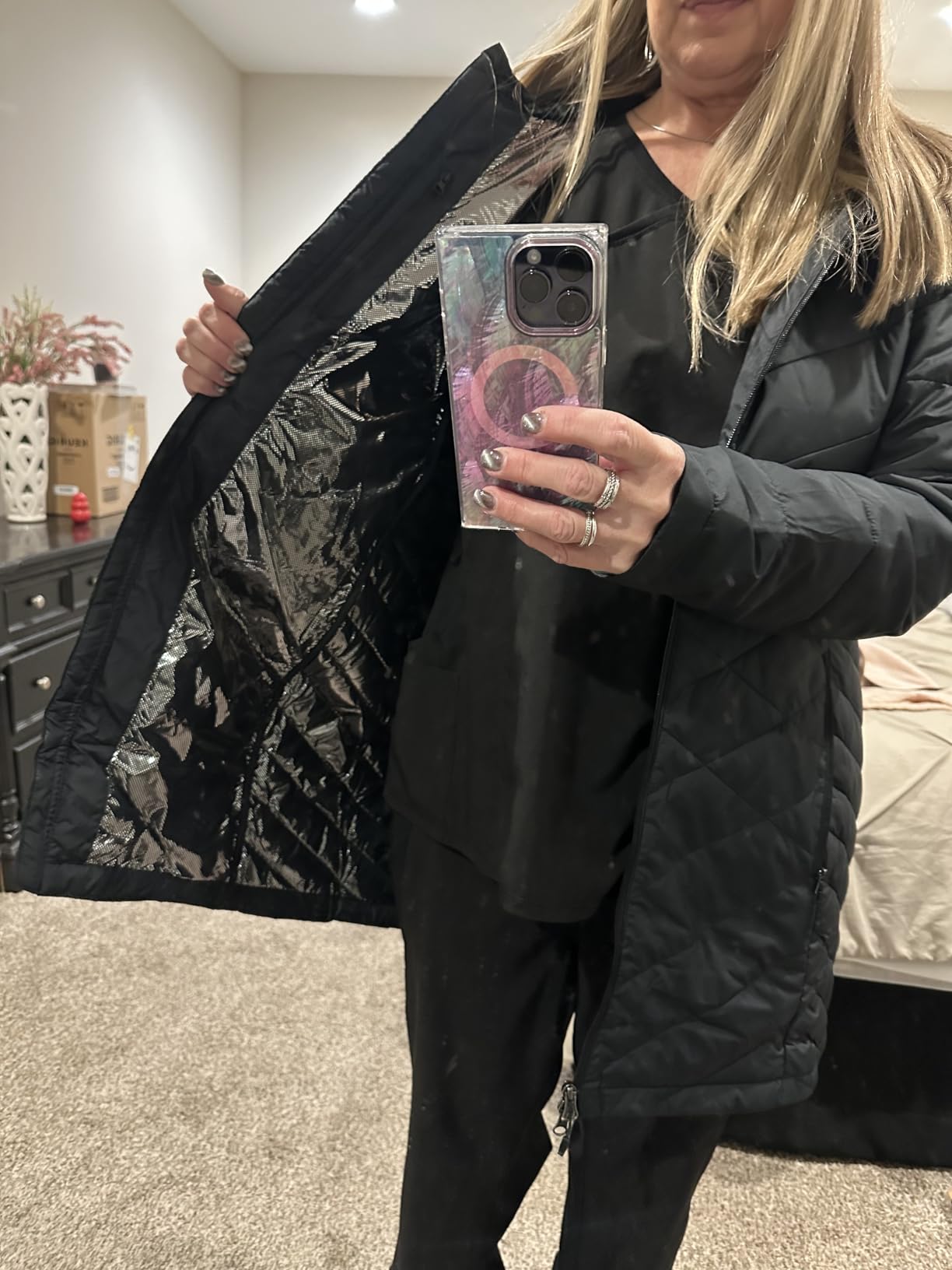
This is the jacket we kept reaching for during the coldest static sessions of our review period, and the reason is not subtle. The long-line cut carries insulation down over the hips and upper legs, which is where a hip-length jacket dumps heat while you are standing still, and the Omni-Heat reflective lining bounces body heat back inward while the outer fabric still lets moisture move out.
The 4.6 average across more than 7000 owner reviews is the most validated rating in this entire roundup. When a garment this heavily reviewed stays that well rated, it usually means the warmth is consistent across body types and weather conditions rather than flattering to a handful of people.
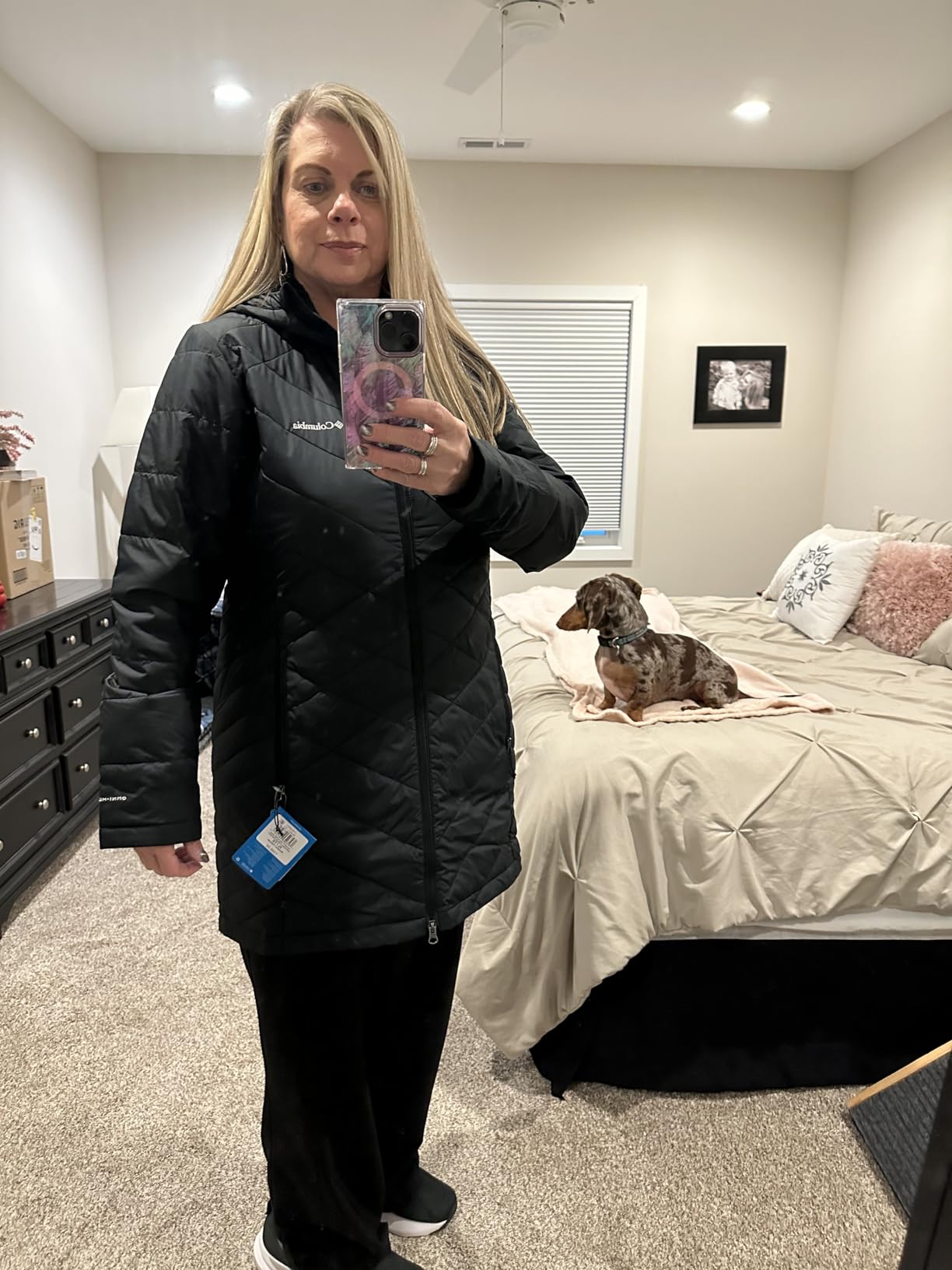
Two details separate this from a generic winter coat. The hood and collar are fleece-lined, so the neck and cheek stay comfortable during long stationary waits, and the two-way center-front zipper lets you open the lower half while seated without the whole jacket riding up.
The comfort cuffs have thumb holes, which quietly matters more than expected in deep cold. A conventional elastic cuff leaves a gap at the wrist, and that gap is where heat leaves a stationary body. A thumb hole closes the loop and keeps the cuff anchored when your hand is flexing.
Who the Columbia Heavenly Suits
This is the right pick for someone standing outdoors in genuine cold who is not moving much, whether that is a winter commute, a long dog walk, an ice fishing session, or a cold event where you are standing around for hours. The coverage and the reflective lining both reward low output, and the long cut means your core stays warm without needing a second bulky layer.
It also works well as a top layer over a mid-layer for anyone who does not want a stiff, crinkly shell. The water resistance is enough for snow and drizzle, and the stitching is durable enough for daily winter wear over multiple seasons.
Who the Columbia Heavenly Is Not For
This is not a hiking jacket, and it should not be treated as one. Walk hard in it on a trail and the baffling bulk becomes a liability, especially with a pack strap across the shoulders, and the synthetic insulation moves differently from down when damp.
Buyers hunting specifically for true high-fill down should know this is synthetic down-style insulation, not goose or duck fill. It performs well for city and stationary cold, but it will never compress to the size of a down parka in a pack, and it is not the option for weight-sensitive travel.
2. Marmot Guides Down Hoody for Real Down and Wind Protection
MARMOT Men’s Guides Down Hoody Jacket, Cobalt Blue/Blue Night, Small
700-fill down with Down Defender
Attached down hood
Wind flap behind zipper
Drawcord hem
Pros
- 700-fill down with Down Defender resists damp and cold
- Wind flap blocks drafts at the zipper
- Angel-Wing Movement allows full arm reach
- Multiple secure zippered pockets
- Drawcord hem and adjustable cuffs seal out cold
Cons
- Hood cannot be removed which limits versatility
- Hood feels overbuilt for anyone wanting a lighter layer
If you want actual down insulation in this roundup rather than a synthetic substitute, the Marmot Guides Down Hoody is the most proven option we found. It carries 700-fill down treated with Marmot Down Defender for moisture resistance, which is the practical middle of the fill power range: warmer per ounce than 550 or 600 fill, and considerably more durable under compression than 800 or 900 fill.
The wind flap is the detail we appreciate most. It is a strip of insulating fabric behind the front zipper that blocks the single biggest convective leak in any down jacket, and on this hoody it runs the full length of the closure. Combined with the elasticized drawcord hem, it keeps cold air from cycling up and under the torso.
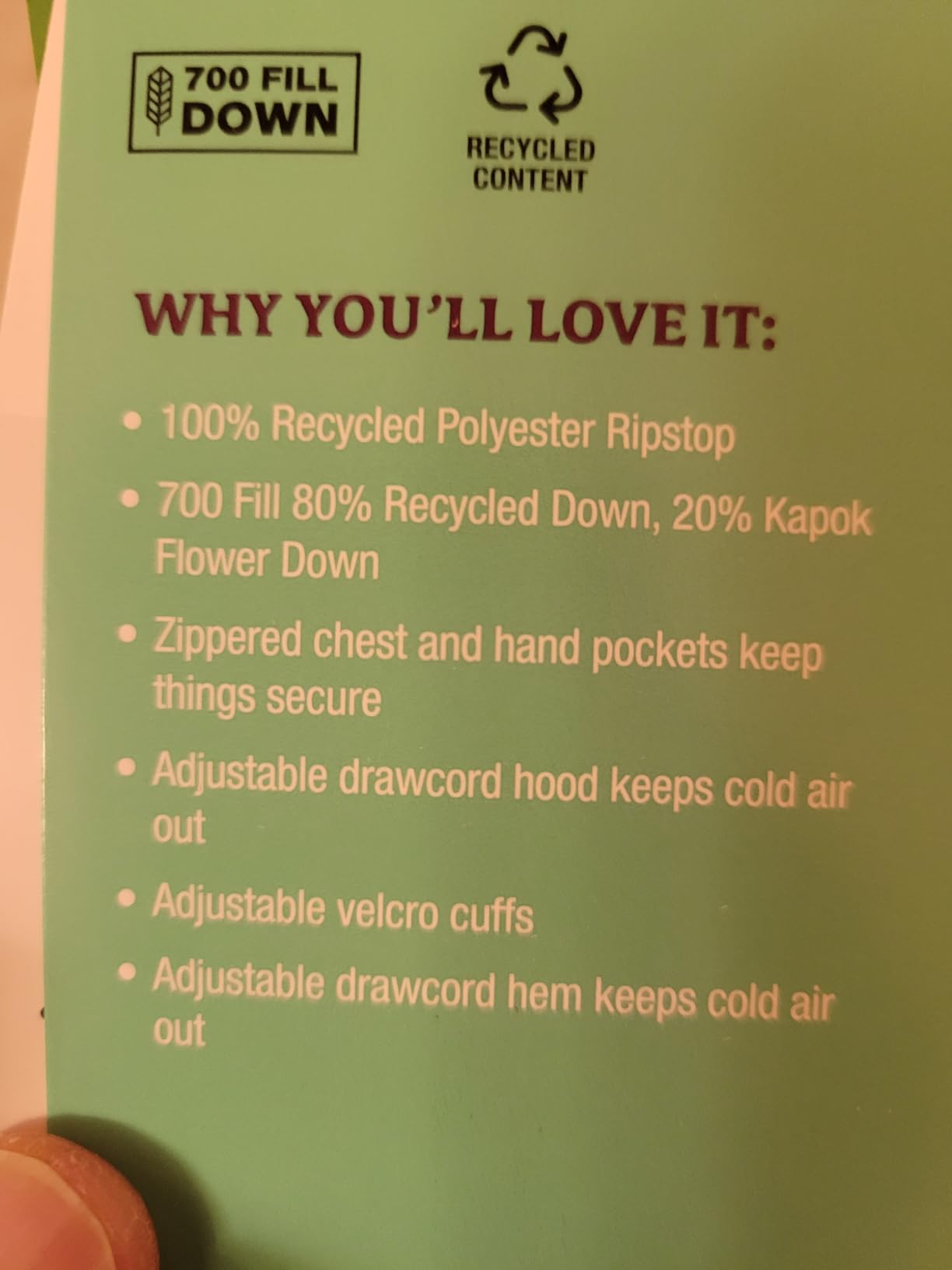
Mobility gets more attention here than on most parkas in this group. Marmot calls it Angel-Wing Movement, which is an articulated shoulder construction that lets the arm reach overhead without dragging the whole torso panel with it. That matters if you are carrying a pack, working with gear, or reaching into a belay device.
Storage is unusually good for a hooded jacket of this class. There are zippered handwarmer pockets, a zippered chest pocket, and an interior zippered pocket, all of which keep phones and keys secure when you are moving around in wind and cold rather than sitting still.
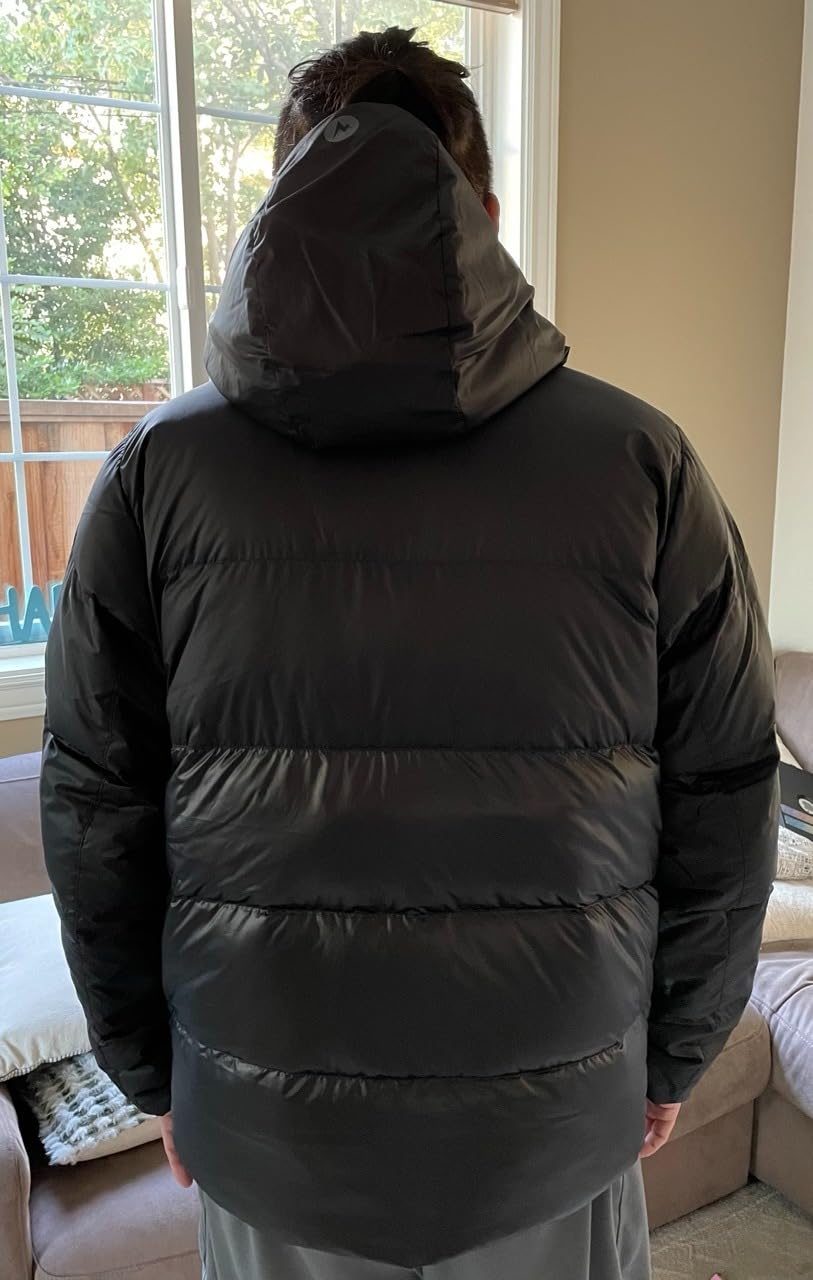
Who the Marmot Guides Down Hoody Suits
This is the pick for someone who wants genuine down in a hip-length, packable form and will be moving through cold conditions rather than standing in them. The hood, wind flap, and drawcord hem give it better protection than a typical midweight puffy, and the articulation keeps it workable under a pack.
It is also a sensible choice if you live somewhere with wet cold rather than dry cold, because the Down Defender treatment slows the point at which the fill collapses when the shell gets damp. Owners consistently report reliable warmth in damp and windy conditions.
Who the Marmot Guides Down Hoody Is Not For
The fixed hood is the limitation to weigh. It cannot be removed or collapsed, so in shoulder-season temperatures you end up carrying an insulated dome you do not need, and anyone who prefers a lighter packable layer will find the hood overbuilt for their purposes.
At 700-fill in a hip-length cut, this is not an expedition parka. It will not hold a comfortable body temperature through a long stationary night at deep negative lows on its own, and buyers expecting mountain-rated performance from a jacket this shape will be disappointed.
3. The North Face Jump Down Parka for Snowy City Winters
The North Face Jump Down Parka Womens Jacket Summit Navy Small
550-fill goose down
RDS certified
DryVent waterproof shell
Removable fur trim
Pros
- Owners report exceptional warmth in deep cold and snow
- Lightweight and compressible for travel
- DryVent shell kept reviewers dry in wind and snow
- Removable fur trim on a hood that stays on
- Shaped side seams avoid a boxy silhouette
Cons
- Runs long for wearers under 5 foot 6 inches
- 550 fill is lower loft than 700-fill parkas
- One owner reported a sleeve seam failure after two winters
The Jump Down Parka is the one in this roundup with the most direct cold-weather testimony attached to it. One owner reports wearing it at 17F, and other reviewers describe using it in Iceland and Norway at -20C over a base layer. That is real-world data from people who were genuinely cold, not marketing copy.
The DryVent shell is waterproof, windproof, and breathable, which changes how this parka performs in snow compared with the non-waterproof options here. Snow that lands on the jacket sits on the surface rather than soaking through to the fill, and in wind the fabric blocks the convective loss that flattens down baffles over time.
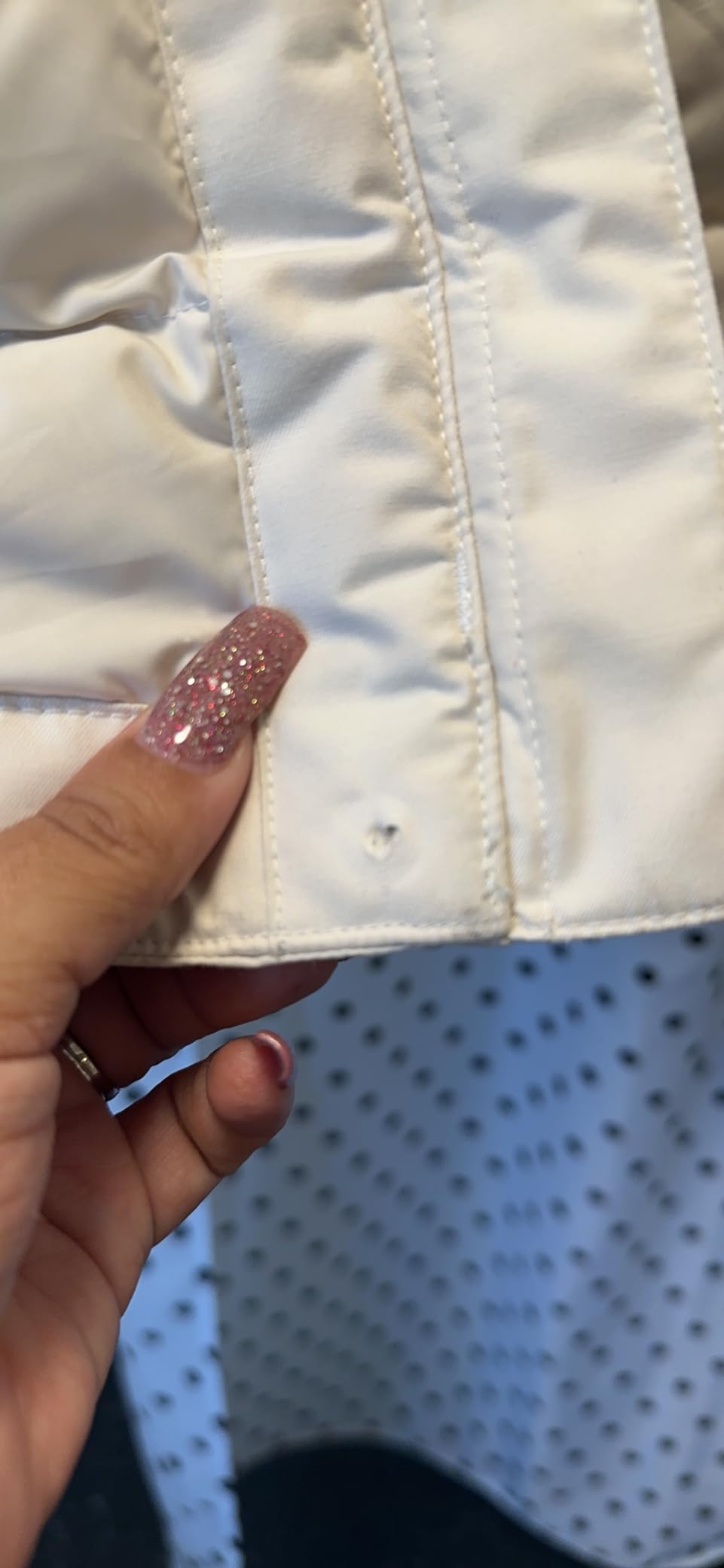
The faux-fur trim is removable while the hood stays on, which is a better system than a fully detachable hood when temperatures swing through a day. You can clear the fur when you are moving hard and put it back when you stop, without losing the head coverage that stops heat escaping upward.
Side seam detailing gives the parka a waist-shaped silhouette rather than a straight tube, which matters more than it sounds. A tube-shaped parka traps air but also circulates it inside the shell, and a shaped cut sits closer to the body so the insulation is held where you put it.

Who the Jump Down Parka Suits
This is the pick for winter city life, snowy commutes, and anyone who wants one parka that handles both wind and falling snow. The knee-length cut, the waterproof shell, and the reported cold-weather track record make it the most versatile garment here for daily use in winter conditions.
Travel is another good reason to choose it. Owners specifically mention how well it compresses for flights and long days outdoors, and the reported lightness for a knee-length parka is genuinely unusual. If you want warmth that packs down rather than a bulky garment that eats luggage space, this works.
Who the Jump Down Parka Is Not For
The length is the main fit complaint. Wearers under 5 foot 6 inches report the hem sitting above the knee and reading as visually long, and for a static cold situation longer is better, so the people who want maximum coverage are not the people who will like the proportions.
At 550 fill, this is the lowest loft in the roundup, which means the same insulation spreads over more air than 700 or 800 fill would. It handles cold well with layering, but for sustained stationary exposure at the deepest lows in this article you would want to add a mid-layer underneath rather than rely on the fill alone.
4. The North Face Aconcagua 3 for Everyday Cold and Big Sizing
The North Face Aconcagua 3 Jacket, Summit Navy-NPF, 4X Big
600-fill recycled down blend
Zoned arm insulation
WindWall recycled shell
Non-PFC DWR finish
Pros
- Warm without the bulky profile reviewers expect
- True-to-size fit offered through sizes 2X to 5X
- Washes well and holds up to repeated laundering
- Zoned synthetic arm insulation preserves range of motion
- Shell made with 75 percent or greater recycled or responsibly sourced materials
Cons
- Down feathers can migrate through the shell and worsen with washing
- Runs slightly narrow so sizing up is often advised
- Higher cost than similar-fill alternatives
The Aconcagua 3 solves a problem that quietly ruins a lot of winter jackets: how to be genuinely warm without looking and feeling like a walking pillow. The insulation is a 50/50 blend of recycled 600-fill waterfowl down and recycled polyester, which gives you down loft where it counts and synthetic stability where the fabric flexes.
That blend is why it wears well over time. Pure down compresses and recovers better per ounce, but a down-and-polyester mix holds its shape through repeated wear and laundering, and owners report being on a second winter of wear with the jacket still looking intact.
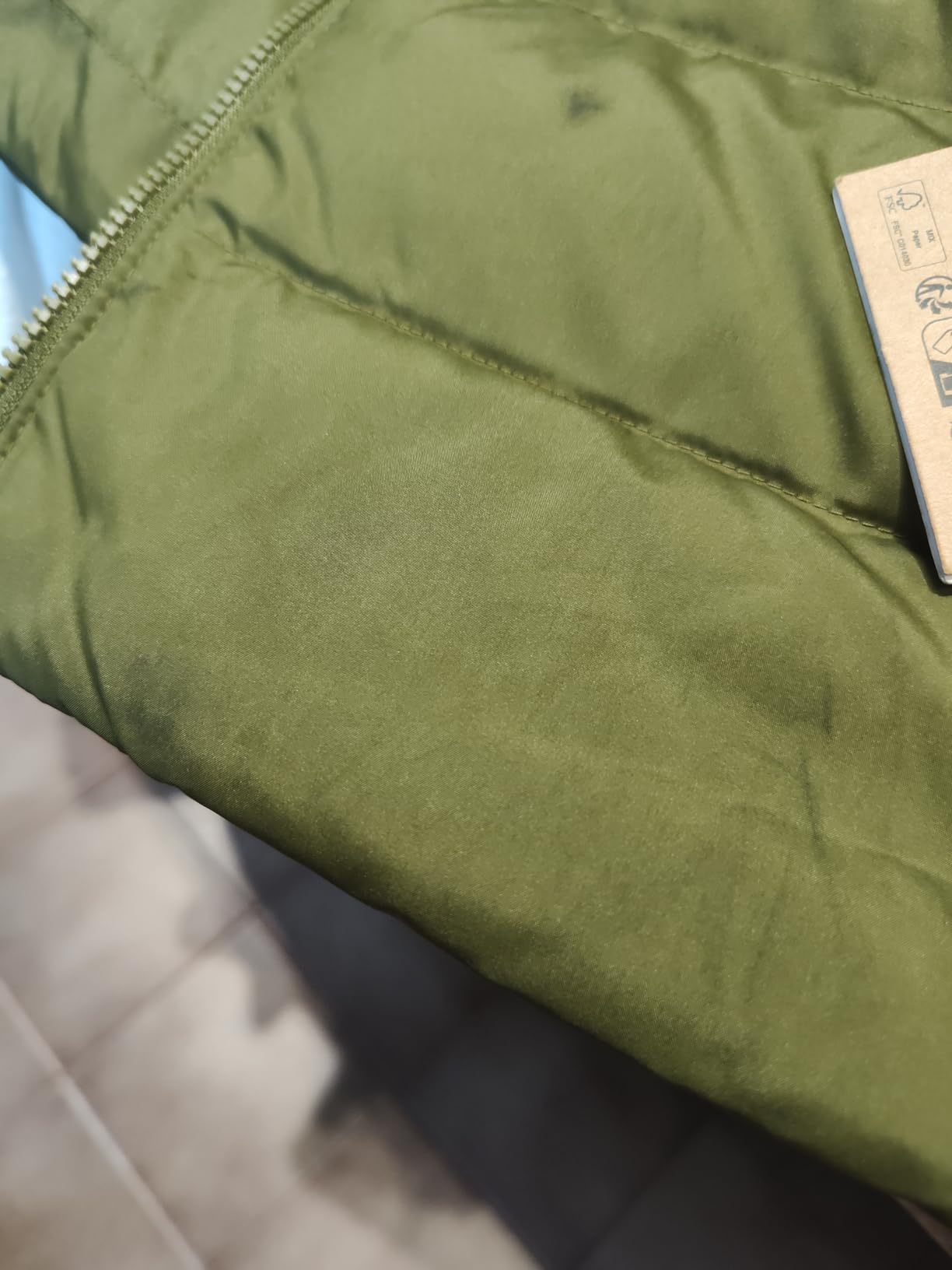
The zoned polyester sheet insulation in the arms is a genuinely clever piece of engineering. Down does not like to be compressed, and a shoulder seam that gets compressed every time you reach overhead slowly loses loft. Switching the arms to sheet insulation means the mobility is free and the torso keeps its down.
Sizing is where this one stands apart. It is offered in a standard-big fit through sizes 2X to 5X, and reviewers repeatedly call out that it runs true to size across that range, which is rare in insulated outerwear where brands usually assume a layering layer underneath.
Who the Aconcagua 3 Suits
This is the right pick for general winter cold where you want one jacket that works for the commute, the school run, and a weekend outdoors without changing layers. The low profile means it fits under a coat or in a car seat without the bulk that makes driving uncomfortable.
It is also the best-fitting option in this roundup for anyone who needs extended sizing in an insulated jacket, and the sustainability credentials are real rather than decorative, with a shell made from 75 percent or greater recycled, regenerative, or responsibly sourced materials.
Who the Aconcagua 3 Is Not For
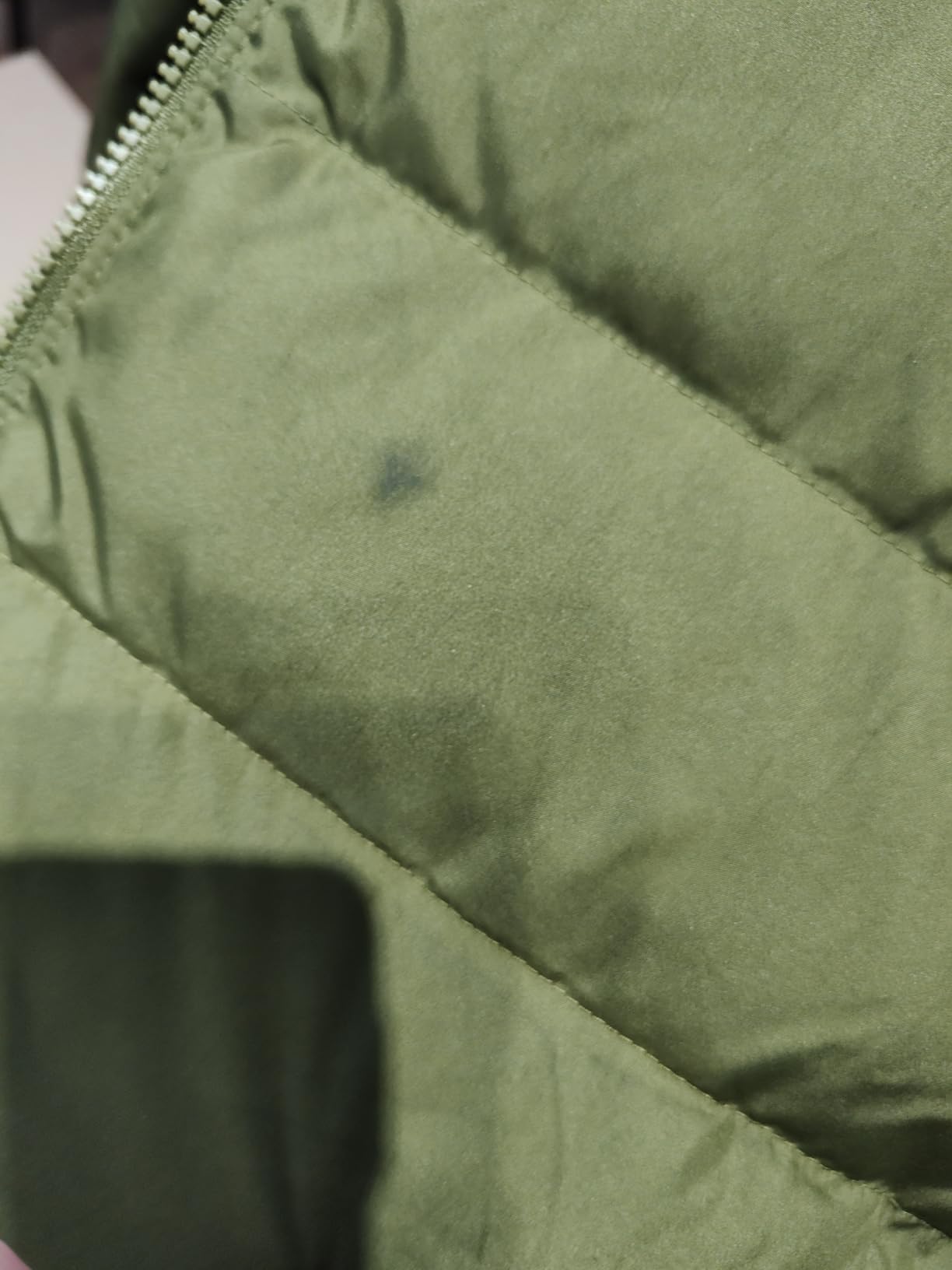
Feather migration is the recurring complaint. Reviewers note that loose down feathers work their way through the shell fabric and that the problem worsens with each wash, which is a known behavior of down in any jacket but more noticeable here because the shell is smooth recycled polyester.
It is also a midweight rather than expedition weight. At 600 fill in a hip-length cut with a blended construction, it will not deliver the static warmth of a thigh-length parka at deep negative lows, and the higher cost compared with similar-fill alternatives is worth weighing carefully.
5. Eddie Bauer Boundary Pass Down Parka for Value Coverage
Eddie Bauer Men’s Boundary Pass Down Parka, Brook, Large
650-fill premium down
Durable polyester shell
Insulated hood with fur ruff
Storm cuffs
Pros
- Owners report solid warmth to roughly 15F with some using it to minus 20C
- Warm without the puffy profile reviewers dislike
- Removable fur ruff on a hood that works without it
- True-to-size long fit works well on taller frames
- Water-resistant shell performs in snow and slush
Cons
- Limited pocket space with mostly two side pockets
- Some owners dislike the hook-and-loop sleeve closures
- One reviewer found it too light for sustained exposure below about minus 20C
- Hood cannot be removed or collapsed
The Boundary Pass is the most convincing argument in this roundup that you do not need a famous name to get a warm parka. It holds a 4.6 average across 569 owner reviews, which puts it level with our top pick, and the 650-fill premium down gives it more usable insulation than most garments in its class.
Owners report solid warmth down to roughly 15F, and at least one pair in Canada describes using it across a range from plus 5C down to minus 20C. That is exactly the kind of real-world range report that tells you more than any temperature rating printed on a tag.

The adjustable insulated hood with a removable faux fur ruff is well judged. The ruff is the part that matters in real cold because it seals the gap between hood and collar, and being able to strip it off when you are walking keeps you from overheating while keeping the insulation when you stop.
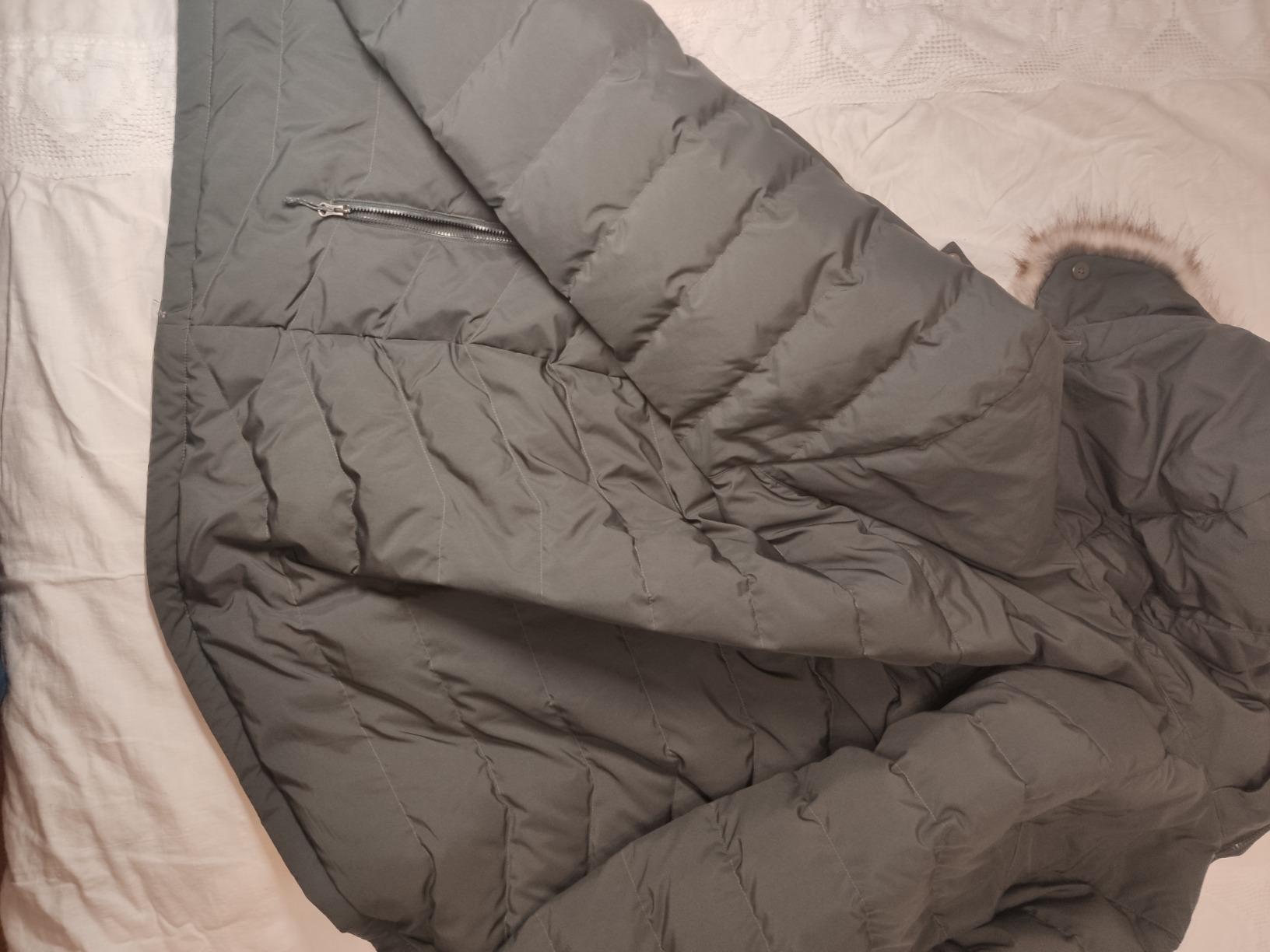
Storm cuffs are fitted at the wrist to seal out cold, and the down-insulated zip pockets mean the pocket contents stay warm even in deep cold. Warm pockets matter more than most people expect, because frozen hands cannot operate anything useful.
Who the Boundary Pass Down Parka Suits
This is the pick for someone who wants genuine parka coverage without stepping up to expedition-tier pricing. The long-line fit works particularly well on taller frames, with reviewers around 6 foot 2 inches calling out that the proportions suit them, and it layers over a sweater without feeling cramped.
For winter commuting, transit, and general daily use in cold cities, it does the job cleanly. The water-resistant shell holds up in snow and slush, and the soft inner lining stays comfortable against the skin over a full day.
Who the Boundary Pass Down Parka Is Not For
Pocket capacity is the most common drawback. Two side pockets plus one small interior pocket is thin for anyone carrying a phone, keys, wallet, and gloves all day, and the down insulation in the pockets is not much compensation for the space itself.
More importantly, one reviewer found it too light for sustained exposure below about minus 20C. If your coldest days are genuinely deep, this parka is a strong everyday winter coat but not a stationary-belay garment, and you would want to add a layer beneath it for that range.
6. Columbia Delta Ridge II for Draft-Free Lightweight Warmth
Columbia Men’s Delta Ridge II Down Jacket, Black, Large
Omni-Heat reflective lining
Stitch-free heat-sealed baffles
Omni-Shield exterior
650-fill power down
Pros
- Owners wear it through Minnesota winters over a mid-layer
- Lightweight with sealed baffles that block wind
- Tapered cut avoids a bulky profile
- Omni-Shield exterior sheds light precipitation and melted snow
- Wide range including 1X and 2X sizes
Cons
- Feathers migrate out of the baffles after only a few wears
- Runs slightly small through the shoulders
- Heat-sealed baffles are sensitive to steam and machine washing
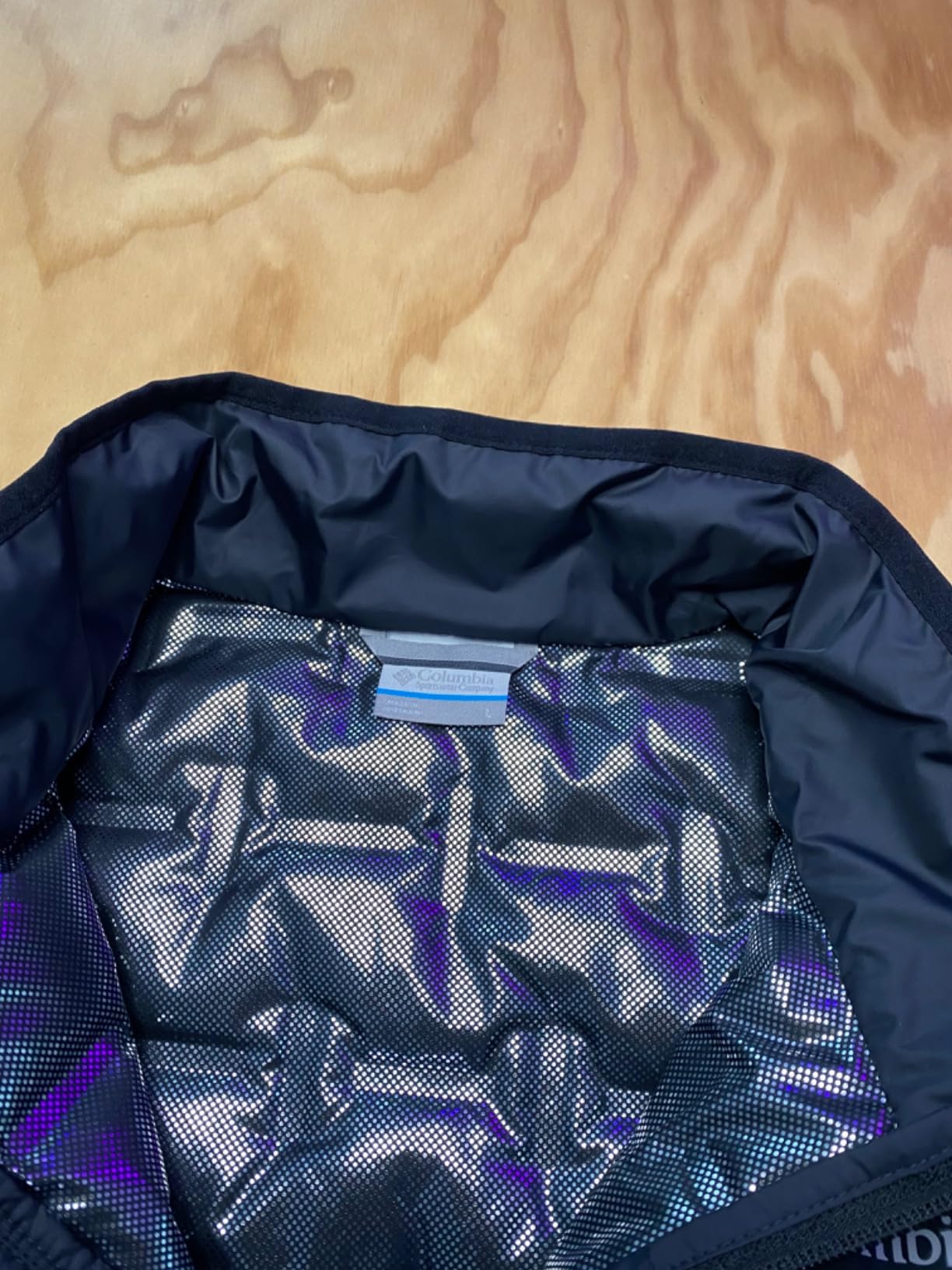
The Delta Ridge II does something unusual for a jacket this light: it eliminates stitch holes entirely. The baffles are heat-sealed rather than stitched, which means there is no needle puncture for cold air to travel through and no thread channel for wind to follow, and in sustained wind that difference is measurable.
Inside, the responsibly sourced 650-fill power down provides the insulation and the Omni-Heat reflective lining returns body heat to the skin. Owners describe wearing it through Minnesota winters over a mid-layer, which is a reasonable way to think about where this jacket belongs.
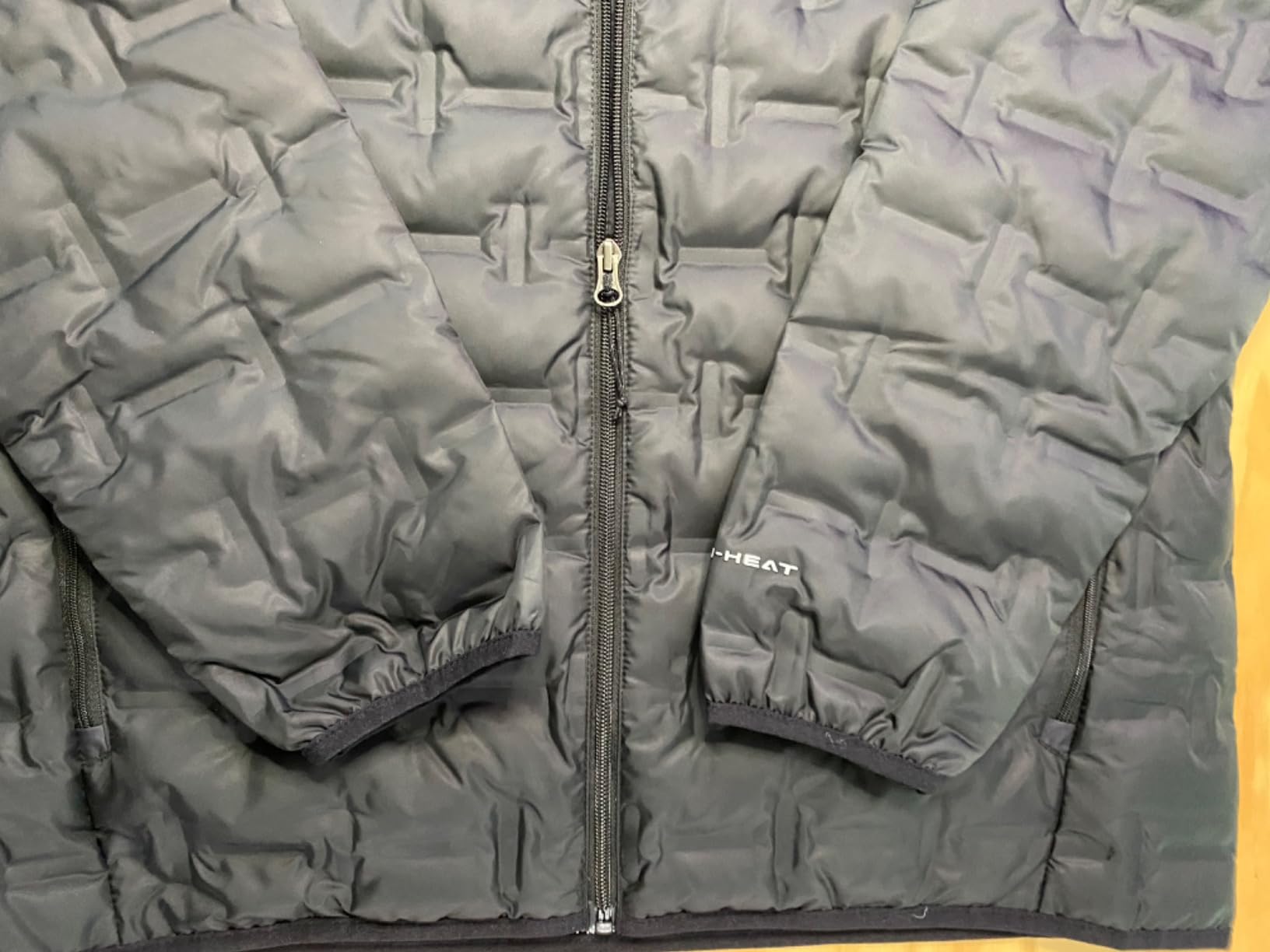
The tapered silhouette is deliberate. Most down jackets are drafted for maximum loft and end up wider than you need, but this one is cut to sit closer to the body so the insulation stays where you put it and the shell does not billow in wind.
The Omni-Shield treatment repels light precipitation, resists stains, and dries quickly. That last property matters more in winter than people expect, because a damp outer layer at 20F does not feel damp, it just feels colder, and a fabric that dries fast does not hold that penalty against you.
Who the Delta Ridge II Suits
This is the right pick for someone who wants draft-free insulation at a low weight and a low profile. If you dislike the puffy look of most down jackets and want something that works under a shell or on its own in winter, the tapered cut and sealed baffles serve that preference directly.
It suits transitional cold particularly well, because the low bulk means you can wear it under a shell without the fit breaking. The wide size range including 1X and 2X is also helpful for anyone who struggles to find insulated outerwear in extended sizes.
Who the Delta Ridge II Is Not For
The care requirements are the biggest practical problem. Heat-sealed baffles are sensitive to steam and standard machine washing, so the care label has to be followed exactly, and a jacket you are nervous about washing is a jacket that gets washed less and loses loft sooner.
Feather migration is also reported after only a few wears, and the fit runs slightly small through the shoulders, so most owners advise sizing up. At 650 fill in a hip-length cut, it is a cold-weather jacket rather than a deep-cold parka.
7. The North Face Arctic Parka for Maximum Coverage
The North Face Women’s Arctic Parka, TNF Black-NPF, Small
Recycled 600-fill down
DryVent 2L waterproof shell
Above-the-knee length
Internal shockcord waist
Pros
- Excellent warmth without heavy bulk
- Blocks wind and stays warm in wet snowy weather
- True-to-size cut that layers well over a sweater
- Detachable hood and removable fur trim adapt to temperature changes
- Double zipper opens the hem while seated or driving
- Available in plus sizes 1X 2X and 3X
Cons
- Highest cost in the lineup with warmth not dramatically better than a thinner parka
- Internal waist cinch is hard to find without a demonstration
- Interior pocket is not zippered
- Hand pockets are roomy but not fleece lined
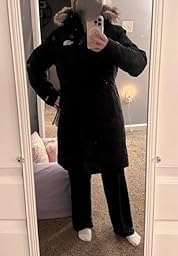
The Arctic Parka is the most serious piece of clothing in this roundup, and the above-the-knee length is the reason. Coverage is the cheapest warmth available, and when you are standing still in wind, the difference between a hip-length parka and one that reaches past the knee is a large band of exposed thigh that you feel immediately.
The DryVent 2L shell is waterproof and breathable with a non-PFC DWR finish, so this is one of the few jackets here that can hold off sustained precipitation without the fill underneath absorbing moisture and losing loft.
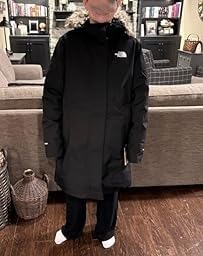
The internal shockcord waist is a feature experienced owners mention and few buyers discover. It cinches the parka at the waist from inside through the hand pockets, which stops the boxy cut from circulating warm air around your torso. Owners who find it describe the parka fitting much better after cinching.
There is a two-way zipper, which means you can open the lower half while sitting in a vehicle without the whole garment riding up. For anyone spending hours in a car at a ski resort or driving between towns in winter, that is a daily comfort feature that most parkas at this length omit.
Who the Arctic Parka Suits
This is the pick for the coldest static conditions in this roundup, specifically for anyone standing outdoors for long stretches where leg coverage matters as much as torso warmth. Watchers, ice anglers, photographers standing still at dawn, and anyone waiting out weather at a basecamp all fit that description.
It is also strong for wet and snowy climates and for travel, since it compresses well enough that one owner packed it for an Alaska cruise. The plus-size range through 1X, 2X, and 3X is roomy and true to size, which is worth noting for anyone who finds the extended sizing in insulated coats frustrating.
Who the Arctic Parka Is Not For
The cost is the highest in this lineup, and at least one reviewer felt the warmth was not dramatically better than a thinner Columbia parka. That is an honest verdict worth weighing: the premium buys you length, a waterproof shell, and the waist cinch more than it buys you a step change in insulation.
It is also not a moving jacket. Above-the-knee coverage and this much insulation mean you will sweat within minutes of walking hard, and sweat that chills on the way down is a common way people get cold while wearing a very warm coat.
8. Marmot Chelsea Down Rain Coat for Wet and Snowy Cold
MARMOT Women’s Chelsea Rain Coat | Down-Insulated, Waterproof, Jet Black, Small
700-fill down with Down Defender
MemBrain waterproof herringbone
Fully taped seams
Zip-off hood with fur ruff
Pros
- 700-fill down is the highest loft among the treated parkas here
- MemBrain waterproof shell with taped seams for wet and snowy weather
- Zip-off hood and removable fur ruff adapt to changing conditions
- Two-way zipper prevents bunching when seated
- Slimming long silhouette avoids a boxy look
Cons
- Lowest average rating in the roundup at 4.2
- Long slim cut may not suit anyone wanting a roomy layering shell
- Some color options limited in certain sizes
The Chelsea is the most waterproof garment in this roundup, and that is not a small distinction. A down jacket in wet cold faces a specific failure mode: moisture collapses the loft of the fill, and a collapsed jacket does not recover by simply getting cold again, it needs hours of drying to loft back up.
MemBrain waterproof herringbone fabric with fully taped seams is a real response to that problem. There are no unsealed stitch lines for water to track through, so the insulation stays dry, and the 700-fill power down with Down Defender treatment adds a second layer of moisture resistance inside the shell.
Who the Chelsea Down Rain Coat Suits
This is the pick for climates where cold arrives with precipitation rather than as dry cold. Coastal winters, wet mountain weather, and long snowy seasons where the jacket will be worn through drizzle are exactly the conditions the taped construction was built for.
It is also a good choice if you want higher fill power than most treated parkas offer. At 700 fill, it sits above the 600-fill options here, and the zip-off hood with removable fur ruff lets you dial protection up and down through a day without carrying a second garment.
Who the Chelsea Down Rain Coat Is Not For
The 4.2 average is the lowest in this roundup, and it comes with a heavier share of moderate feedback than any other pick. That is worth taking seriously, because a jacket with the weakest owner consensus is a riskier bet in a condition where failure has real consequences.
The long slim cut also may not suit you if you plan to layer a thick mid-layer underneath. It is drafted for a close fit, and reviewers looking for a roomy layering shell report it runs tighter than expected. For the deepest dry cold, the 600-fill Arctic Parka gives you more total insulation.
9. Fitouch Waukee Long Down Coat for High Fill Power
Fitouch Women’s Waukee Long Down Parka | 750+ Fill Power Insulation Outwear | Full-Length Jacket | Water-resistantg Puffer Coat| BalanceWarmer Ratio| Black | Size M
750+ fill duck down
Mid-calf length
Storm flap beneath two-way zip
Detachable hood and fur ruff
Pros
- 750+ fill power duck down delivers high loft for the weight
- Full mid-calf length gives substantial coverage
- Fleece-lined pockets stay comfortable in cold
- Detachable hood and fur ruff give real layering flexibility
- Storm flap beneath the two-way zipper blocks wind
- Recessed rib-knit cuffs retain warmth at the wrist
Cons
- Listed package weight of 3.2 pounds makes it heavy for packable use
- Limited color options in some sizes
The Waukee is the highest fill power in this roundup at 750+ duck down, and for a jacket in the mid-calf length category that is a genuinely useful number. High fill power means the same ounces of down occupy more volume, which is what lets a long coat stay warm without becoming rigid and heavy.
The storm flap beneath the two-way zipper is a small design choice with a large effect. It blocks wind at the front closure, and the two-way zipper means you can vent heat from the chest while seated without opening the whole jacket, which is how most people manage temperature while sitting still in cold.
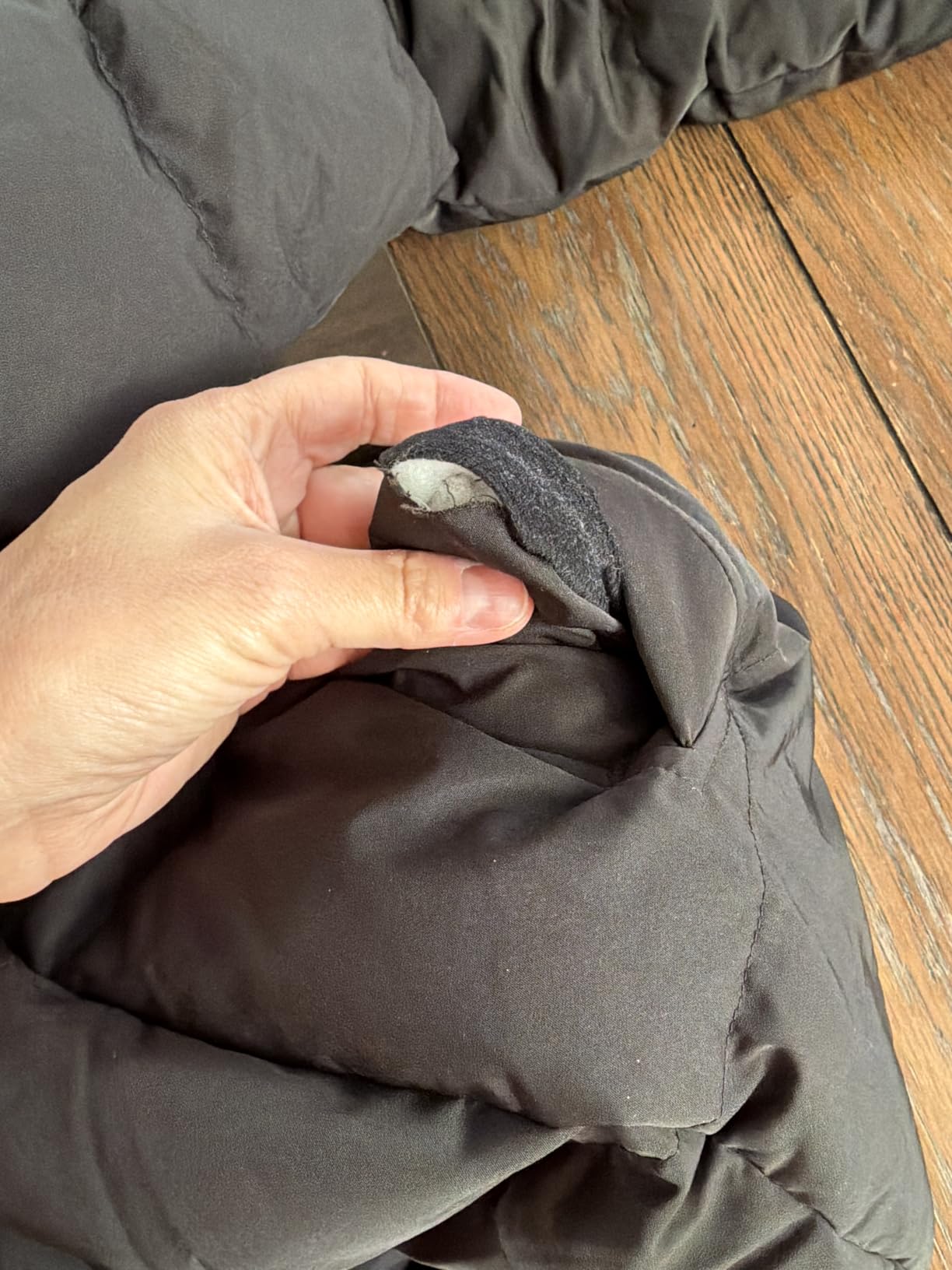
Owners also point out the cuff detail that matters more than it looks. Recessed rib-knit cuffs sit close to the wrist bone and trap a layer of still air around it, which is a small piece of engineering that pays off in exactly the low-output conditions this roundup is built for.
The quilting is sewn through in a way that keeps the fill from shifting into clumps after a season of wear, and the mid-calf hem falls below the knee where a seated draft usually finds its way in. That combination of length and cuff sealing is why this coat performs out of proportion to its weight.
Who the Waukee Long Down Coat Suits
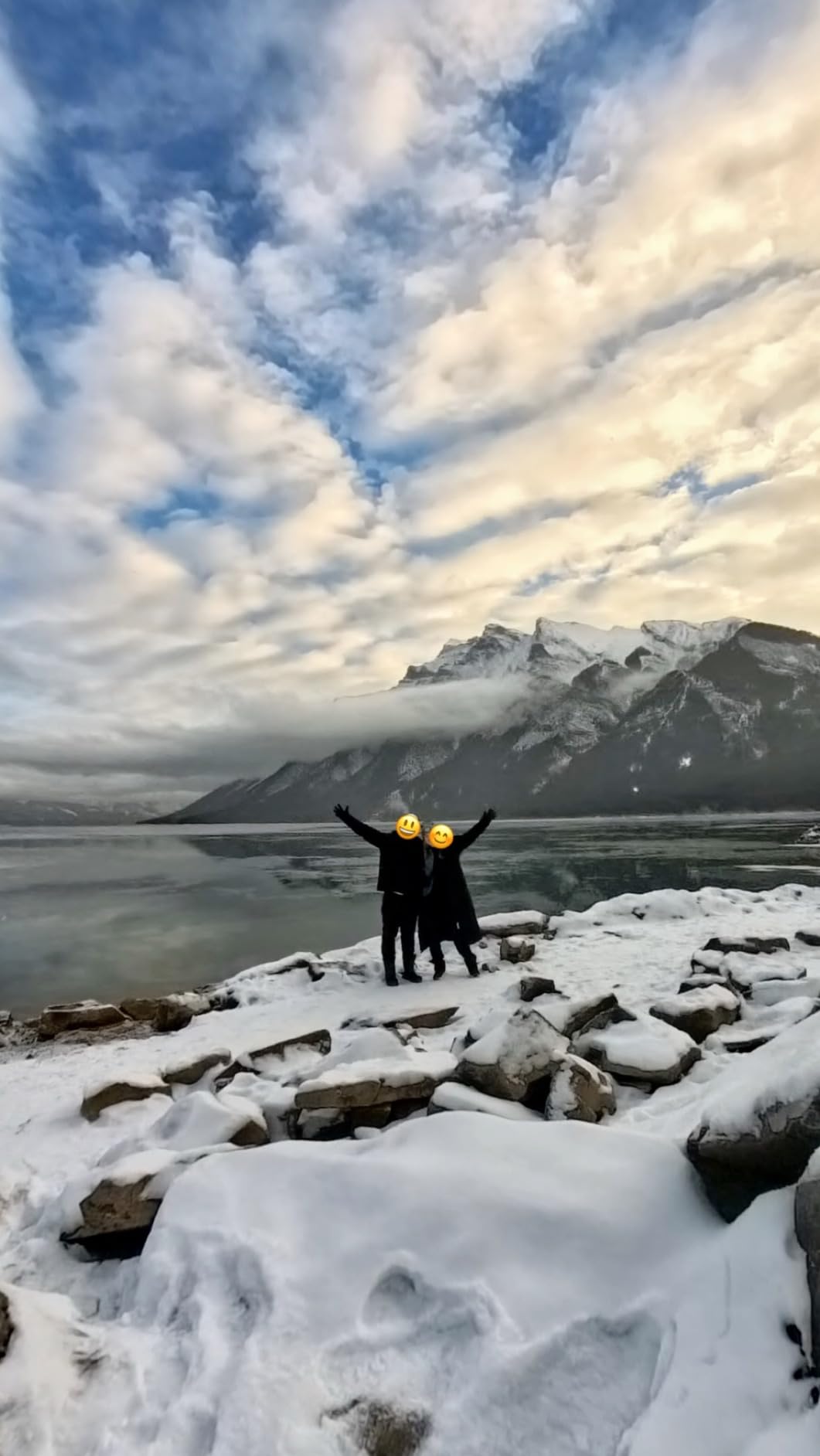
This is the pick for someone who wants maximum coverage and high loft without stepping up to a mountaineering brand. The mid-calf length carries insulation well past the hips, and the detachable hood with faux fur ruff gives you real flexibility across a day of changing temperatures.
Flece-lined exterior pockets and an interior zippered pocket are thoughtful touches in a garment this cold, because the difference between a pocket you can use and one you cannot is your ability to handle anything at all when your hands are stiff.
Who the Waukee Long Down Coat Is Not For
It is heavy. The listed weight is 3.2 pounds, and while that is the packaged figure rather than a garment weight, reviewers consistently describe it as a heavy coat rather than a packable one. If you need to carry it in a pack for a cold-weather trip, this is not the pick.
Its 4.3 average across 646 reviews is solid but not exceptional, and the owner consensus is thinner than the top picks here. Color options are also limited in some sizes, which is a small thing unless you are shopping for a specific wearer with specific preferences.
10. Marmot Ithaca Jacket for Recycled Materials and Versatility
MARMOT Women’s Ithaca Jacket – 700-Fill Down-Insulated, Water-Resistant Coat with Zip-Off Hood and Removable Fur Ruff, Black, X-Large
700-fill RDS down with Down Defender
Recycled polyester shell
Zip-off hood with removable fur
Four pockets
Pros
- 700-fill RDS down with Down Defender balances warmth and moisture protection
- Shell is 100 percent post-consumer recycled polyester
- Zip-off hood with removable fur adapts to conditions
- Four pockets including a sleeve pocket and interior zip pocket
- Micro fleece interior cuffs add comfort at the wrist
Cons
- Standard length offers less coverage than the parkas here
- One of the higher cost points in the roundup
The Ithaca is a strong all-rounder with a specific ethical angle. The 700-fill down carries Responsible Down Standard certification, which means the supply chain has been audited for animal welfare practices, and the shell is 100 percent post-consumer recycled polyester plain weave.
That combination of RDS down and recycled shell is increasingly the baseline for a serious outdoor brand, and the Ithaca pairs it with Down Defender treatment for moisture resistance. The practical result is a jacket that holds warmth in damp conditions without the heavy feel of a fully waterproof parka.
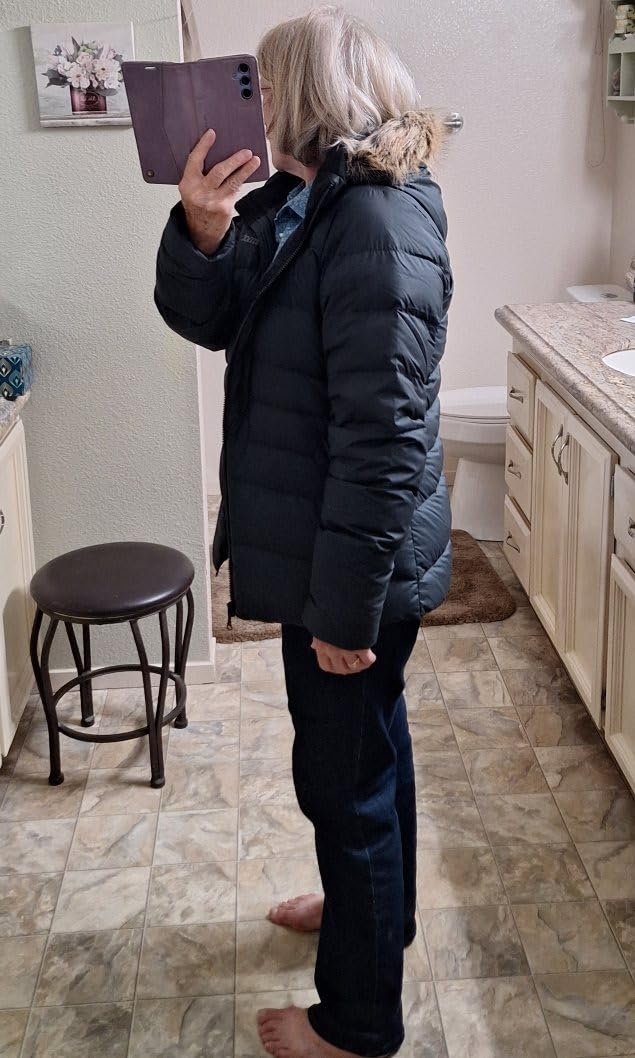
The zip-off hood with a removable faux fur is the feature that widens this jacket’s range the most. Remove the hood entirely and you have a clean insulated layer that works under a shell or in a mild indoor setting, and leave it on when the temperature drops, which is not a combination most 700-fill jackets offer.
Storage is where the Ithaca edges out lighter siblings. Four pockets including a sleeve pocket and an interior zippered pocket mean you can keep a phone, keys, and a card without a bag, and the micro fleece interior cuffs add comfort at the wrist on the days you spend hours outside.

Who the Marmot Ithaca Jacket Suits
This is the pick for someone who wants a versatile jacket they can wear through a whole winter rather than saving for the worst days. The zip-off hood and removable fur give you a three-season piece, and four pockets including a sleeve pocket make it genuinely usable for a long day out.
If sustainability matters to your buying decision, this is one of the most clearly documented picks here. The recycled shell and certified down are both stated plainly rather than buried in marketing language, which is what you want to see from a brand making those claims.
Who the Marmot Ithaca Is Not For
The standard length is the limitation. A hip-length jacket loses the thigh coverage that makes the parkas in this roundup work for stationary extreme cold, so for standing still in deep negative temperatures you would want more length beneath or over this piece.
It is also one of the higher cost points in the lineup, and for a jacket without a waterproof shell or above-knee coverage, that is harder to justify than on the Arctic Parka or the Chelsea. Warmth-to-value is not where this one wins.
11. Rab Microlight Alpine Down Jacket for Packability
Rab Women’s Microlight Alpine 700-Fill Down Hooded Puffer Jacket for Hiking & Skiing – Black – Medium
700-fill hydrophobic down
Pertex Quantum ripstop shell
Zoned micro and nano baffling
14.59 ounces
Pros
- Extremely light at 14.59 ounces
- 700-fill RDS recycled hydrophobic down
- Pertex Quantum ripstop is wind and water resistant
- Highly packable for mountain use
- Zoned baffling places insulation where it is needed
- Recycled fabrics and ethically sourced down
Cons
- Down feathers may escape the seams over time
- Runs small so sizing up is often needed
- No interior pocket
- Premium cost for a lightweight piece
The Microlight Alpine is the reason to include a lightweight jacket in a roundup about extreme cold: it is the layer you carry when you are not the one standing still. At 14.59 ounces it disappears into a pack, which means you can bring serious insulation to a cold objective without carrying it the whole time.
The down is 700-fill RDS recycled hydrophobic down, and that word hydrophobic matters more than it used to. Treated down resists absorbing moisture, so when a squall comes through in the mountains the fill does not immediately go flat, which is the difference between a jacket that recovers and one that does not.
The Pertex Quantum shell is where the weight discipline comes from. It is a fine ripstop weave that blocks wind and shrugs off light water while weighing very little, and it compresses down to almost nothing once the jacket is out of use, which is the whole point of a layer you carry rather than wear.
Zoned baffling is the second half of the design. Micro and nano baffles place thicker insulation where heat escapes most and thinner sections elsewhere, so you get warmth where you need it without paying for uniform fill across the whole garment.
Who the Rab Microlight Alpine Suit
This is the pick for mountaineers, skiers, and anyone who works in the cold but is rarely stationary in it. The Pertex Quantum ripstop shell handles wind and light water while remaining almost unnoticeable in weight, and zoned baffling with micro and nano baffles puts thicker insulation where heat escapes most.
It also works well as the outer layer over a heavier puffy during rest periods, which is the standard mountain strategy. Carrying 14.59 ounces of insurance is a very different proposition from carrying a full parka all day for the same benefit.
Who the Rab Microlight Alpine Is Not For
It is not a static cold jacket, and reading it as one is the most common mistake. At this weight and length, the total insulation is far below what a deep-belay session in serious cold requires, and no amount of hood adjustability changes that arithmetic.
Owners also report feathers escaping the seams over time, no interior pocket at all, and a fit that runs small enough that most people size up. The premium cost also makes it a harder recommendation when something heavier is available at a similar price.
12. Lands’ End Packable Long Down Coat for Rated Warmth on a Budget
Lands’ End Women’s Plus Size Wanderweight Packable Down Coat 2X Black
800-fill HyperDRY power down
Water-resistant nylon shell
Insulation rated to 7F
Machine washable
Pros
- 800-fill HyperDRY down rated to 7F by the manufacturer
- Down retains loft and warmth when wet
- Water-resistant nylon shell for rain and snow
- Machine washable which is rare in technical down
- Ultralight packable design with deep zipper pockets
Cons
- Attached hood cannot be removed
- Lightweight fabric is less durable for rugged use
The Lands’ End long down coat is the only jacket in this roundup that publishes a temperature rating, and that alone makes it useful in a different way from the rest. The 800-fill HyperDRY down is rated by the manufacturer to hold warmth down to 7F, which is a real number you can plan against rather than a vague extreme-weather label.
800 fill is the second-highest fill power here and the highest among the coats at this price, and HyperDRY is treated so the down retains loft and warmth when wet. That combination of high loft and wet resilience is why this coat punches above its position in the list.
The machine-washable construction is the feature owners mention most, and it is rarer than it should be. Technical down jackets usually demand a gentle cycle, a tumble dryer on low, and patience, so a coat that can go through a normal wash without special handling removes the most common reason people end up with clumped, flat fill.
The water-resistant nylon shell handles rain and wet snow, and the deep zipper pockets are sized for gloves, which is a small consideration that matters when your hands are cold and the phone is at the bottom of a bag.
Who the Lands’ End Down Coat Suit
This is the pick for anyone who wants a long down coat with a stated temperature rating and does not want to overthink it. The 532 owner reviews give it more consensus than most of the roundup, and the machine-washable construction is genuinely rare in technical down and easy to underestimate.
The mid-hip length sits in the useful middle ground. It is long enough to cover more of the torso than a short jacket while staying light enough to wear under a coat, and the attached hood means there is one fewer thing to forget on a cold morning.
Who the Lands’ End Down Coat Is Not For
The attached hood is a real limitation in variable conditions, because you cannot pack the hood down when you are warm or collapse it under a collar. In shoulder seasons that means either a warm head or a jacket in your hand.
The lightweight fabric is also less durable for rugged use, and 7F is a rating for a person with layers underneath rather than a rating for standing still at that temperature in deep wind. It is a strong value pick, not an expedition garment.
How to Choose a Down Jacket for Extreme Cold
Fill Weight Beats Fill Power Below Freezing
Below freezing, fill weight is the number that decides how cold you will be. Fill power describes how much volume a given weight of down occupies, which sets the compression efficiency, but total ounces of fill in the torso sets how much air the jacket can hold around your body.
As a planning rule rather than a lab figure, a jacket carrying roughly 2 ounces of 800-fill down across the torso and upper legs is generally treated as a single layer for deep winter cold, while 6 ounces or more of high-fill down in a parka cut is the threshold most people mean when they say expedition weight. Everything below that is a cold-weather jacket with layering expected underneath.
Look for the fill weight in the spec sheet or product description, and if a brand does not publish it, that is itself information. Two jackets with the same fill power can differ by 4 ounces, and that difference is the difference between a jacket that works alone and one that needs a mid-layer to keep you alive.
What Fill Power Actually Measures
Fill power is expressed in cubic inches per gram, and higher numbers mean the down clusters are larger and more resilient, so they loft up bigger from the same weight and resist collapsing when compressed. It is a quality measure, not a quantity measure, which is why a 900-fill jacket with 4 ounces can be warmer than a 550-fill jacket with 6.
For everyday winter use, 550 to 650 fill gives good warmth and holds up better under compression and repeated washing, which matters for a jacket worn daily. For weight-sensitive use and travel, 800 to 900 fill gives more warmth per ounce and compresses smaller, at the cost of being more delicate and typically costing more.
Our view is that fill power is the second decision and fill weight is the first. Choosing 800 fill over 650 fill is a packability decision, and choosing 6 ounces over 3 ounces is a survival decision when you are standing still in deep cold.
Static Warmth Versus Active Warmth
This is the distinction that catches out most people, and it is the single biggest failure mode in extreme cold. A down jacket insulates by holding air still, so it performs best when you are not generating your own heat. The same jacket that keeps you comfortable standing at a belay will cook you within twenty minutes of a steady climb.
The practical rule is to match the jacket to your output. If you are stationary for most of the time, you want maximum fill weight and maximum length. If you are moving continuously, you want less fill, a lighter build, and vents you can open, because sweat cooling against your skin in wind is a faster route to hypothermia than under-insulating.
This is also the argument for owning two jackets. A heavy parka for static exposure plus a lightweight packable layer for movement is the standard mountain setup, and the Rab Microlight Alpine in this roundup is exactly the kind of piece that fills the second role.
Parka Length and Coverage for Standing Cold
Coverage is the cheapest warmth available, and for stationary cold nothing else gives as much return. A hip-length jacket ends where the body’s largest heat-loss zones are still exposed, while a mid-calf or above-the-knee parka covers the thighs, which hold a large share of your blood volume and lose heat fast in wind.
If your cold is wind-driven and stationary, length beats everything else you can change. The Arctic Parka, the Chelsea, and the Waukee in this roundup all run well past the knee for that reason, and owners of shorter parkas consistently report the thigh is what they feel first.
Shell Fabric and Denier in Wind and Slush
Denier measures the thickness of the shell yarn, and higher numbers mean a tougher fabric that resists abrasion and wind. Lightweight shells around 10 to 20 denier pack well and block wind, while 40 to 100 denier fabrics trade weight for durability in a garment you will drag through rock and brush.
For extreme cold specifically, wind resistance matters more than waterproofing. Wind drives convective heat loss straight through the baffles, and no amount of fill compensates for a shell that lets air move through it. Waterproof shells such as the DryVent options here help in snow and slush, but their main benefit is keeping the fill dry rather than keeping you warmer in dry wind.
Hydrophobic Down and DWR in Freezing Rain
Untreated down absorbs moisture and stays wet, and wet down loses loft and takes hours to recover. Hydrophobic down is treated to resist absorption, which does not make a jacket waterproof, but it buys you a great deal of margin when drizzle, spindrift, or a wet ascent soaks the outer fabric.
Several picks here use treated down, including the Marmot Down Defender models, the Rab hydrophobic fill, and the Lands’ End HyperDRY. A DWR finish on the shell works with this, since water beads on the outside instead of carrying moisture inward, and both together make a big difference in mixed precipitation.
Expedition Features Worth Paying For
Start with the front closure. A two-way zipper lets you open the lower half while seated, a storm flap or wind flap behind the zipper blocks the biggest convective leak in any jacket, and glove-operable zipper pulls matter more than any list of features will tell you until you try them with mitts on.
Hoods are second. A helmet-compatible hood with enough adjustment to fit over a hat without restricting your field of vision is worth a lot on a cold belay, and a removable fur ruff that clears when you move is the detail that keeps a hood usable across a whole day.
Then check the small stuff. Storm cuffs seal the wrist, an internal waist cinch stops warm air circulating, down-insulated pockets keep your hands functional, and a drawcord hem closes the gap at the waist. Forums full of people who work in cold repeatedly single out glove-operable hardware and wrist sealing as the features they notice most.
Fit and Sizing for Layering Underneath
Sizing for an insulating layer is different from sizing for a shell. You need enough room for a base layer and a mid-layer underneath without the shoulders pulling when you reach overhead, because a jacket that restricts your arms cuts circulation and makes you colder, not warmer.
Reviewers in this roundup repeatedly mention running small, particularly on the Rab and the Marmot Ithaca, and several picks are drafted with a layering layer in mind already. If you are between sizes and you know you will wear a mid-layer, size up.
One warning: a long parka in a smaller size is much worse than a long parka in a larger one, because you cannot take insulation out of the body but you can always vent the front zipper. Buy the room you need.
Down Versus Synthetic in Extreme Cold
Down wins on warmth per weight and compressibility, and it wins clearly for static cold. Synthetic insulation keeps more of its warmth when damp and dries faster, which is why it appears as an energy source in the arms of hybrid jackets and as a reflectively lined layer in the top pick in this roundup.
For sustained dry cold below freezing, down is the right answer. For climates where your jacket is regularly soaked rather than snowed on, synthetic or a waterproof down option is the more forgiving choice, and the Marmot Chelsea is the version of that trade-off worth looking at here.
Washing and Drying Without Losing Loft
Down should be washed at least once a season, because body oils and detergent residue compress the fibers and cut loft over time. Use a down-specific detergent, run an extra rinse cycle, and dry the jacket low and slow with dryer balls or clean tennis balls to break up clumps as it tumbles.
Expect several hours in the dryer. A jacket that feels slightly damp when you take it out will clump again in the closet, and the damage from that is harder to undo than the time spent finishing the cycle. Check the Delta Ridge II in particular, since its heat-sealed baffles are the most sensitive to steam and machine washing in this group.
Storage matters too. Hang down jackets or store them loosely compressed rather than vacuum-packed, because a long period under full compression permanently reduces the loft you paid for.
Layering a Down Parka on a Sub-Zero Day
Start with a wicking base layer against the skin, never cotton, because cotton holds sweat against you and chills you on the way down. Over that, add a mid-layer: a fleece or light synthetic jacket that you can open or remove as your output changes through the day.
Then add the down parka as your outer layer for static periods, and open the two-way zipper or the vents when you start moving hard. If you are walking continuously for more than twenty minutes, take the parka off and carry it rather than sweating inside it.
Finish with the small items that people skip and then regret: a hat that covers your ears, a buff over the nose and mouth in wind, and gloves that are warmer than you think you need, because extremities are where frostbite starts. We have covered base layers and mid-layers in more detail in our winter down jacket guide, which is worth reading alongside this one if you are building a system rather than buying one coat.
Frequently Asked Questions
What is the best down jacket for extreme cold weather?
The best down jackets for extreme cold are the ones carrying the most total fill weight in ounces, not the highest fill power. A thigh-length or above-the-knee parka with 6 ounces or more of high-fill down in the torso is the threshold for sustained sub-zero exposure, while hip-length jackets with 3 to 4 ounces work well for deep winter with layering underneath.
What is the warmest jacket for extreme cold weather?
For stationary cold, the warmest garment is a parka-length insulated coat with the greatest total fill weight and the longest cut. In this roundup the above-the-knee Arctic Parka and the mid-calf Waukee lead on coverage, while the Lands’ End coat is the only pick with a published temperature rating, with 800-fill down rated to 7F.
Which is warmer, 600 or 900 down fill?
At equal fill weight, 900-fill down is warmer and lighter because the larger clusters loft up more volume from the same ounces. At different fill weights, 600-fill down with more ounces beats 900-fill down with fewer. Fill power tells you about quality and compressibility, fill weight tells you about total warmth, and in extreme cold the weight wins.
How many ounces of down fill do I need for extreme cold?
As a planning guide, roughly 2 ounces of 800-fill down across the torso and upper legs works as one layer in deep winter, and 6 ounces or more in a parka cut is the usual threshold people mean by expedition weight. Below that you should plan to wear a mid-layer underneath. Publishers rarely list fill weight, so ask or check the spec sheet before buying.
Is 800 or 900 fill down warmer?
900-fill is warmer per ounce and compresses smaller, but the difference only matters at the same total fill weight. In practice 800-fill is the more common choice because it is more resilient under repeated compression and washing, holds shape in a pack longer, and costs less. For static extreme cold, add ounces of 800-fill rather than upgrading to 900-fill.
Are down jackets good for extreme cold?
Down is the best warmth-to-weight insulation available for stationary cold, which is why it dominates expedition parkas. It performs badly in two situations: sustained high output, where you sweat and then chill, and repeated wetting, where wet down loses loft. Hydrophobic treatments and a DWR shell extend the margin, and a lightweight layer is still the right answer while you are moving.
The Bottom Line on Down Jackets for Extreme Cold
The best down jackets for extreme cold are decided by fill weight, coverage, and whether you will be standing still or moving. Our Columbia Heavenly Long Hooded Jacket is the editor’s choice because a long-line cut, reflective thermal lining, and the largest verified owner base in this roundup add up to the most dependable cold-weather garment here, and it holds a 4.6 average across more than 7000 reviews.
For true static cold at the deepest lows, the North Face Arctic Parka wins on coverage and the Marmot Chelsea wins on wet weather. For moving in the cold, the Marmot Guides Down Hoody or the Rab Microlight Alpine make far more sense than any parka in this list.
Rather than paying for a famous name, measure the ounces in the torso, check the length against where you will be standing, and then buy the fill weight you actually need. If you are also building out a full winter setup, our picks for ski jackets for cold weather and down comforters for winter cover the other two ends of the cold-weather problem, and this roundup was updated in 2026.