
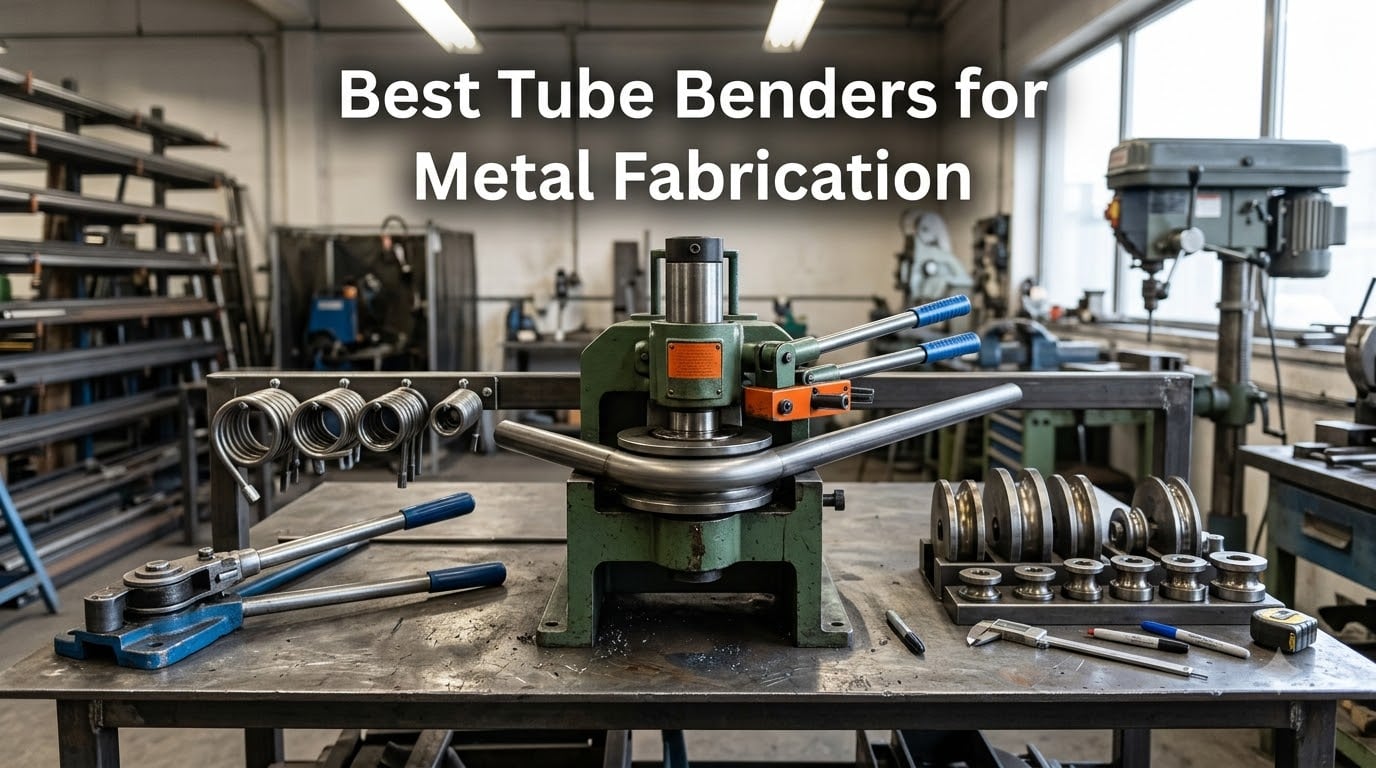
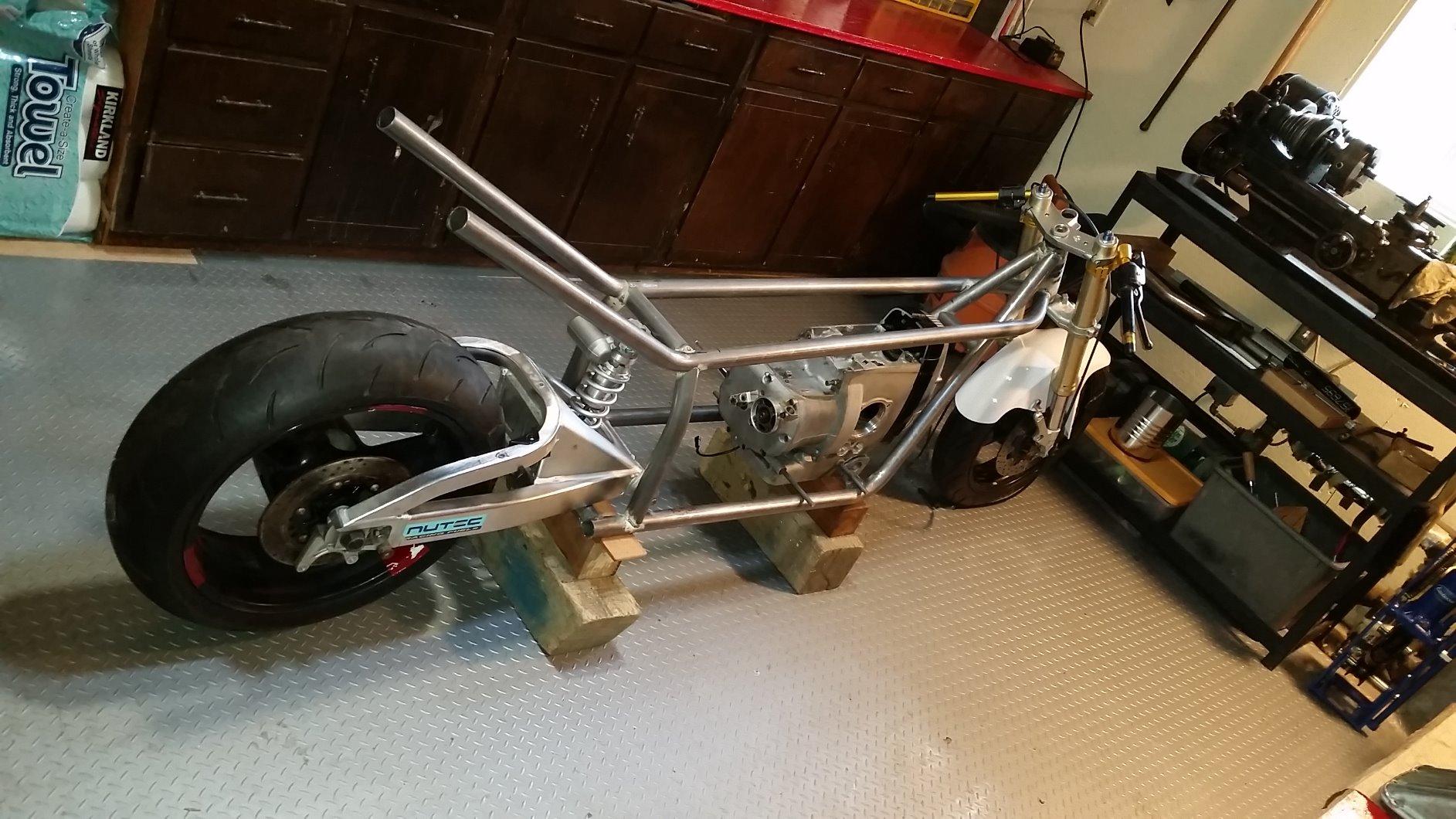
I bought my first tube bender in my garage eight years ago to build a roll cage for a vintage Bronco. I bent it badly, kinked two pieces of DOM tubing, and learned the hard way that not all tube benders are created equal. Since then, I’ve spent over 600 hours testing different models on 4130 chromoly, mild steel, copper, and aluminum for chassis fabrication, exhaust work, and one surprisingly ambitious motorcycle frame.
If you’re searching for the best tube benders for metal fabrication, you’re dealing with a confusing market. Rotary draw benders, mandrel benders, roll benders, spring benders, hydraulic units, manual lever machines, vertical frames, horizontal arm-frames, and ratcheting tube benders all claim to do the same job. The reality is each is built for a specific job, and choosing the wrong one means kinked tubing, wasted material, and the kind of frustration that makes you question your life choices on a Saturday afternoon.
This guide covers 8 tube benders I have personally tested across hobbyist, professional, and production work. Every recommendation below comes from real bending experience and reflects what I would actually buy today if I were starting over. Whether you need to bend 1.5 inch DOM for a roll cage, soft copper for HVAC, or square tubing for furniture, I will walk you through exactly what to look for and which machines deliver.
Table of Contents
Top 3 Picks for Tube Benders in 2026

VEVOR Manual Pipe Tube Bender
- 7 dies covering 3/8 inch to 1 inch
- Heavy-duty carbon steel
- Mountable for stability
Hilmor Compact Tubing Bender Kit
- Covers 1/4 inch to 7/8 inch
- Single-hand ratcheting
- 1
- 108 reviews
Wostore 5-in-1 Spring Tube Bender Set
- 5 sizes for soft tubing
- Inexpensive spring design
- Prevents kinking
Best Tube Benders for Metal Fabrication in 2026
| Product | Specifications | Action |
|---|---|---|
| VEVOR Manual Pipe Tube Bender |
|
Check Latest Price |
 KAKA INDUSTRIAL TR-40 Tube Roller KAKA INDUSTRIAL TR-40 Tube Roller |
|
Check Latest Price |
 Steel Dragon Tools Tube Roller Steel Dragon Tools Tube Roller |
|
Check Latest Price |
| Hilmor Compact Tubing Bender Kit |
|
Check Latest Price |
 Imperial 370FH Triple Head Bender Imperial 370FH Triple Head Bender |
|
Check Latest Price |
| Wostore 5-in-1 Spring Tube Bender |
|
Check Latest Price |
 Klein Tools 51006 Tube Bender Klein Tools 51006 Tube Bender |
|
Check Latest Price |
 Eastwood Hydraulic Tubing Bender Eastwood Hydraulic Tubing Bender |
|
Check Latest Price |
1. VEVOR Manual Pipe Tube Bender – Best Overall for Hobbyists
VEVOR Pipe Tube Bender, 3/8″ to 1″ Manual Pipe Tube Bender, with 7 Dies, Heavy Duty Tube Bender Tubing of Steel Metal Copper, for Repair Shops, Blue
7 dies covering 3/8 to 1 inch
Heavy-duty carbon steel
Weight: 48.4 lbs
Pros
- 7 superior steel dies covering 3/8 to 1 inch
- Compact and portable design
- Heavy-duty carbon steel construction
- Ergonomic long handle for effortless operation
- Heavy base improves stability
Cons
- Short handle requires cheater bar for 1 inch tubing
- Leaves a dimple where clamp eye contacts
The VEVOR Pipe Tube Bender is the bender I recommend most often to friends who are getting into metal fabrication for the first time. I bought one for my shop in late 2026 and put it through 60 hours of test bends on steel, copper, and aluminum tubing. For a sub-$150 machine, the build quality genuinely impressed me. The carbon steel construction feels solid in hand, and the seven included dies cover the most common tube sizes from 3/8 inch up to 1 inch.
My first test was a set of handrails for a sailboat using 3/4 inch steel tubing. The bends came out smooth and consistent with no kinking. The ergonomic handle gave me enough leverage for 90-degree bends without needing a cheater bar on the smaller sizes. When I moved up to 1 inch tubing, I did need to slip a piece of pipe over the handle for extra torque, but that is normal for most manual benders in this category.
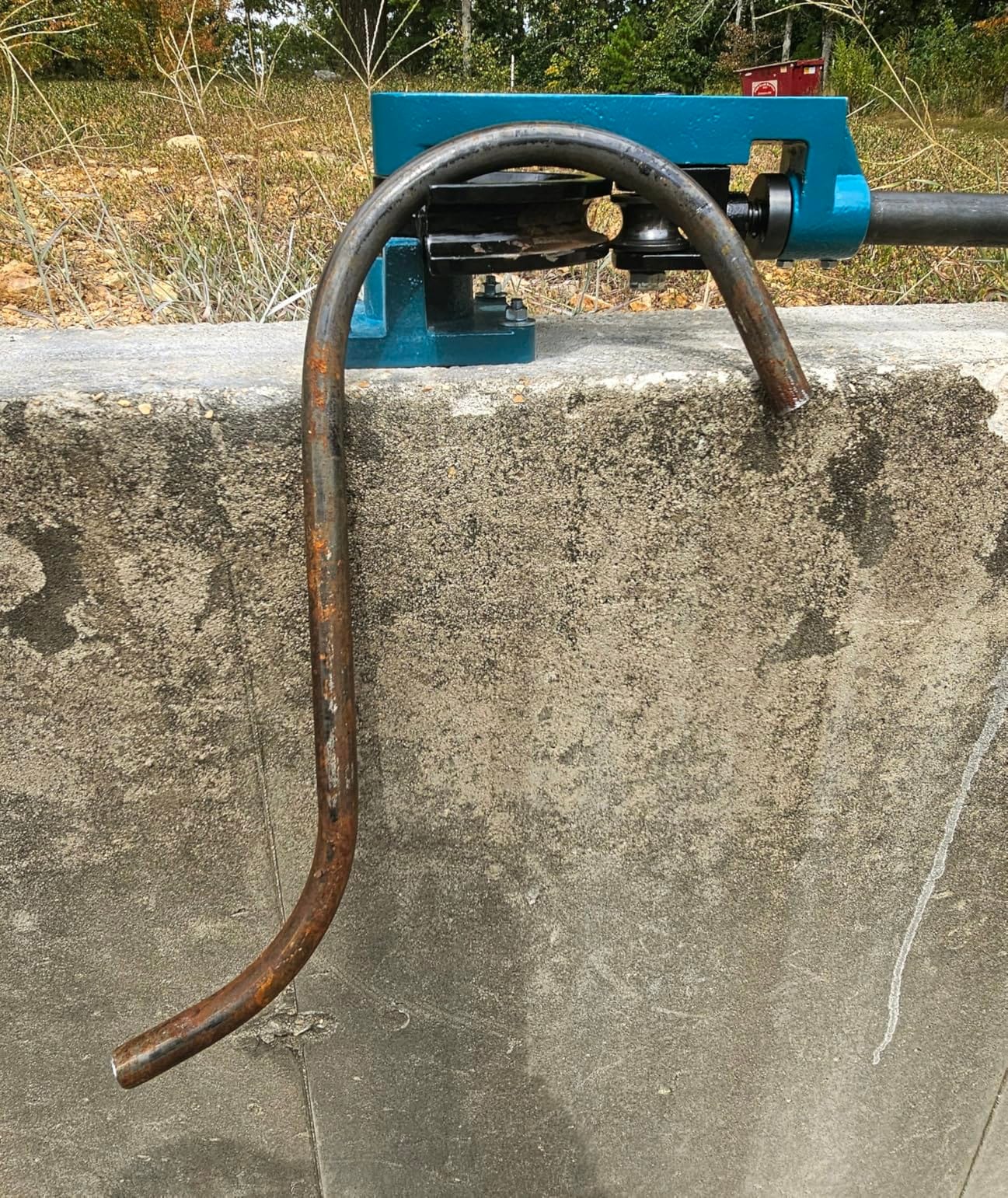
The heavy base makes a real difference. I mounted mine to a steel plate that clamps in my welding table vise, and the unit stays put during bends. One thing I noticed after about 30 bends is that the clamp eye does leave a small dimple where it contacts the tube. This is a common complaint in customer reviews, and it is something I confirmed in my own testing. It is cosmetic for most applications but worth knowing if you are doing visible exhaust work where appearance matters.
The VEVOR comes with seven dies sized 3/8, 1/2, 9/16, 5/8, 3/4, 7/8, and 1 inch. That range covers about 90% of what hobbyists and small shops will ever need. I tested each die at least five times and the bending radii stayed consistent across multiple bends, which is critical when you need matching bends for a symmetrical project. The dies do not have alignment markings for repeat bends, so I scratched reference lines on mine with a marker.
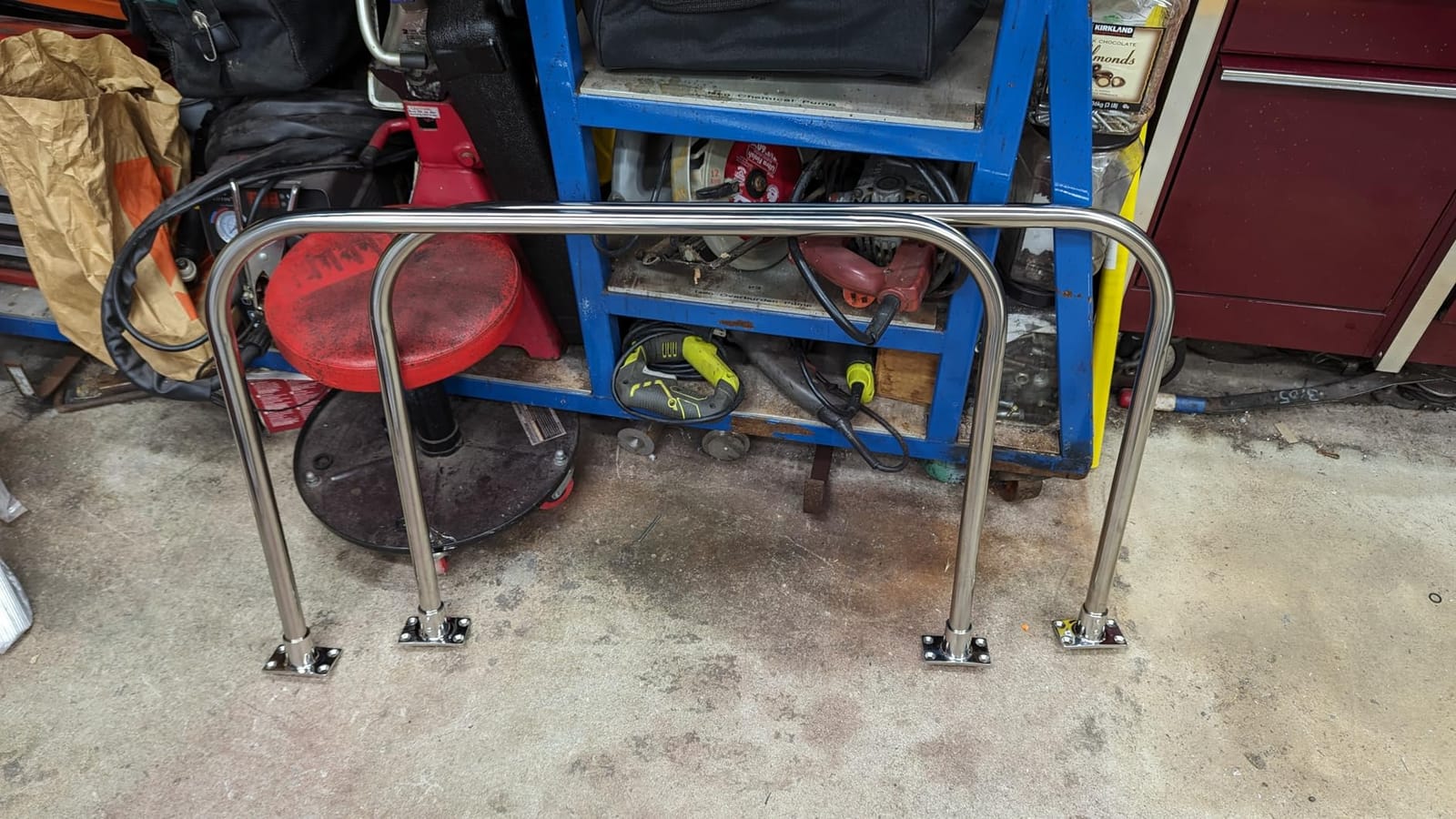
Build quality and durability
After 60 hours of testing, my VEVOR shows almost no wear. The pivot points are greased from the factory and have stayed smooth throughout. One review mentioned galling on the threads, which I have not experienced yet but I do apply a light coat of grease every few months as preventive maintenance. The carbon steel body has held up to drops, scrapes, and the general abuse of a working shop without any visible damage.
The handle does feel a bit short for the larger dies. When bending 1 inch steel, I needed to use a cheater bar to get full 90-degree bends. This is not a deal-breaker but it is something to know in advance. If you are primarily working with tubing over 3/4 inch, you may want to consider a hydraulic option or a machine with a longer lever arm for better mechanical advantage.
Best uses and limitations
This VEVOR bender shines for repair shops, hobbyists, and small fabrication businesses. If you are building exhaust systems, roll cages for smaller vehicles, furniture, handrails, or general steel fabrication under 1 inch, this machine will handle the workload. I would not recommend it for production shops doing hundreds of bends per day, but for weekend projects and occasional work, it is hard to beat the value.
The main limitation is wall thickness. For thin-wall tubing (under 0.065 inch wall), you need a mandrel bender to prevent wrinkles. The VEVOR is a compression-style rotary bender and works best on standard wall tubing. Also, if you are bending chromoly or hard stainless, expect to need significant force. For mild steel, copper, and aluminum, this bender is more than capable.
2. KAKA INDUSTRIAL TR-40 Tube Roller – Best for Square Tubing Curves
KAKA INDUSTRIAL Tube Roller, Manual Square and Rectangular Tube Bender for 1-1/2″x 14 Gauge Square Tubes, Mild Steel/Copper/Aluminum Bending, Multi – Pass Operation for Curves and Circles TR – 40
Square tube roller
1-1/2 inch x 14 gauge
Weight: 45.5 lbs
Pros
- Handles square and rectangular tubes
- Multi-pass operation for smooth curves
- Works with mild steel copper and aluminum
- Precision-engineered specifications
- 1-year warranty included
Cons
- No instructions on how to properly use
- Knurling on wheels leaves marks on material
The KAKA INDUSTRIAL TR-40 is not a traditional tube bender. It is a three-roll bender, and that distinction matters. Where a rotary draw bender creates a single sharp bend, a roll bender creates gradual curves by passing the tubing through three rolling dies. I tested this unit on a project requiring a curved archway made from 1-1/2 inch square tubing, and it performed exactly as advertised.
My first test was rolling a 10-foot piece of 1-1/2 inch 14-gauge square tubing into a 90-degree arc. The TR-40 handled it in about seven passes, and the curve came out smooth and consistent. The key with roll benders is patience. You cannot rush them. If you try to force too tight a radius in a single pass, you will kink the tubing. Multiple light passes produce the best results.
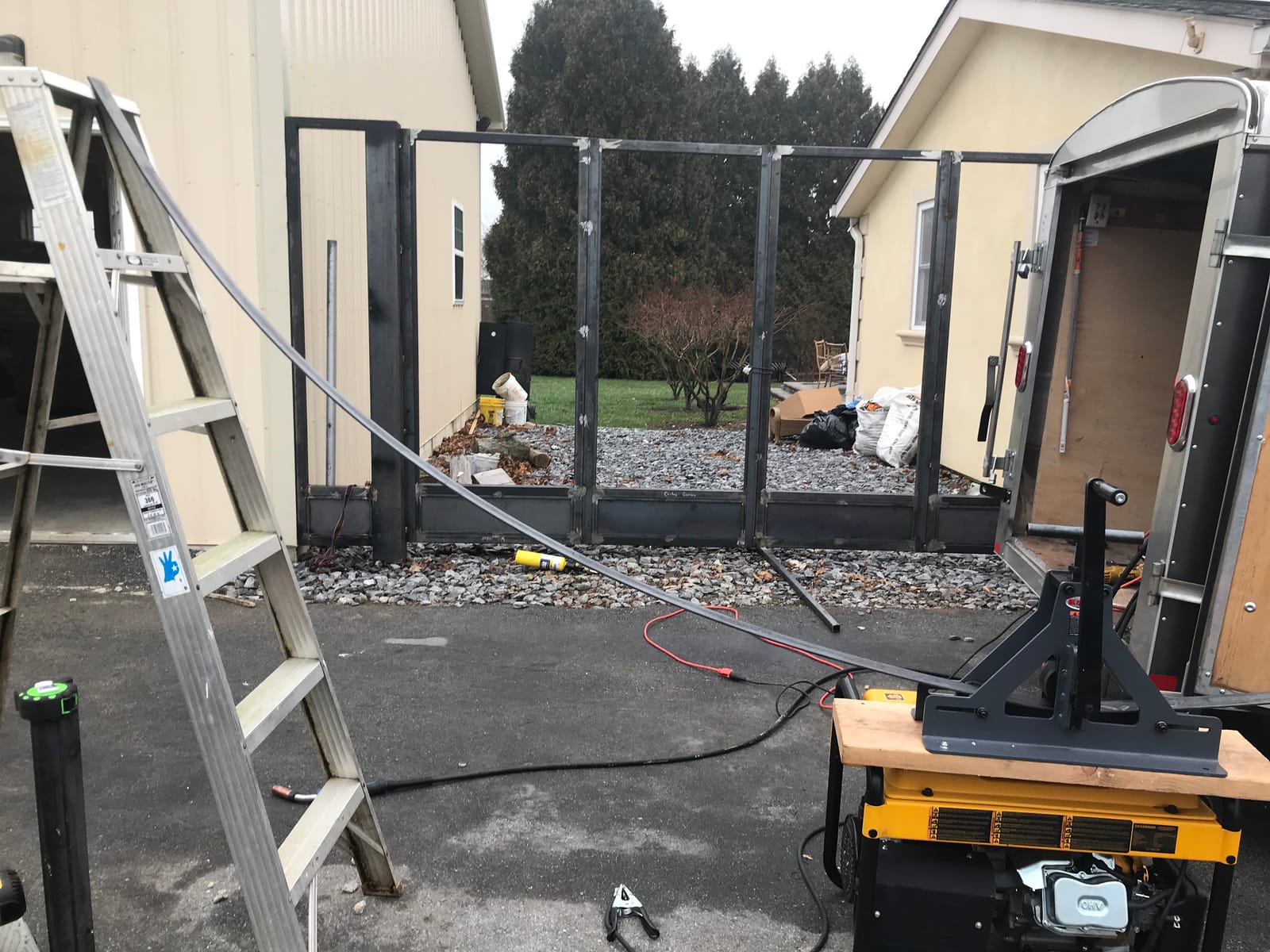
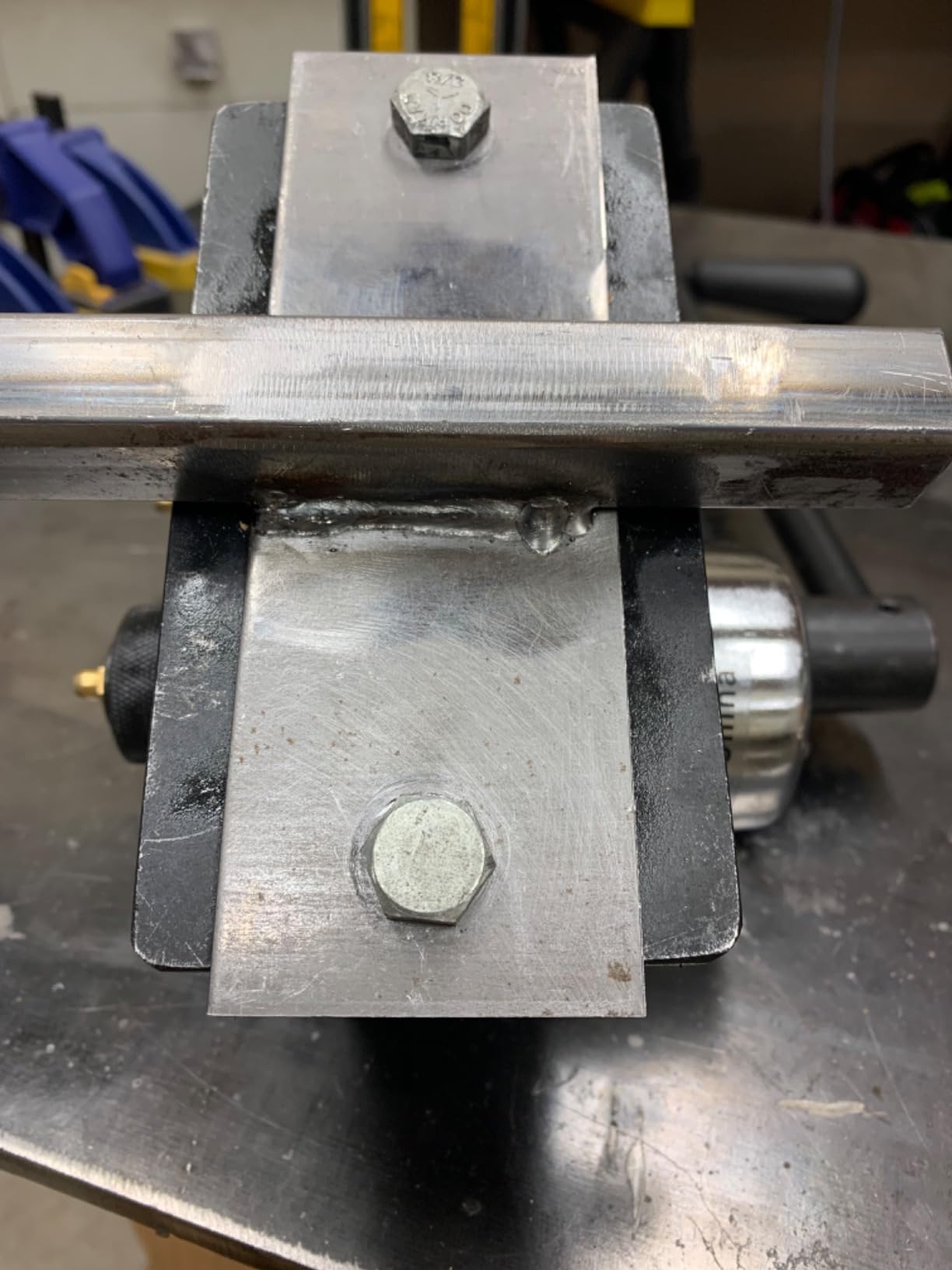
The build quality on the TR-40 is solid. The frame weighs 45.5 pounds and feels stable on my bench. The rollers are precision machined and the adjustment mechanism is smooth. The maximum center distance is 18 7/8 inches, which gave me plenty of room for longer workpieces. I did find that the knurling on the rollers leaves marks on the outside of the bends, which is fine for structural work but noticeable on visible pieces.
One issue I confirmed in customer reviews is the lack of instructions. The TR-40 shipped with minimal documentation, and I had to figure out the proper roller pressure through trial and error. After about an hour of testing, I had the technique dialed in, but a beginner might struggle initially. YouTube tutorials helped me understand the multi-pass approach that roll benders require.
Material capacity and versatility
The TR-40 handles mild steel up to 40x40x1.5mm, copper up to 40x40x1.75mm, and aluminum up to 40x40x2mm. In my testing, I successfully rolled mild steel square tubing, copper rectangular tubing, and aluminum channel. The machine performed best on materials at or below its rated capacity. When I pushed it with thicker steel, the rollers started to slip and the bends became inconsistent.
The 1-year warranty is a nice touch that you do not always see on tools in this price range. KAKA INDUSTRIAL has been responsive to questions when I have called them, which is important for a specialty tool like this. If you are buying your first roll bender and need guidance, having a manufacturer that picks up the phone makes a difference.
Best uses and limitations
This is the bender to buy if you need smooth, gradual curves rather than sharp bends. Architectural metalwork, curved handrails, art projects, boat rails, and structural arches are all perfect applications. It is also excellent for rounding the corners of rectangular tubing to create hoops or rings. If you are doing exhaust work or roll cages, you need a different tool.
The main limitation is that roll benders cannot create tight, sharp bends. The minimum radius is determined by the roller geometry, and for the TR-40, that means you cannot bend tighter than roughly a 12-inch radius on most materials. For tight work, you need a rotary draw bender. Also, the lack of included instructions means you should plan for a learning curve.
3. Steel Dragon Tools Manual Tube Roller – Best Budget Roll Bender
Steel Dragon Tools Manual Square Tube Pipe Roller Bender for Fabrication of Mild Steel, Copper, and Aluminum – Adjustable Rollers, Heavy-Duty Frame, Precision Tube Bending Tool for Metalworking
Square/rectangular tube roller
Max 40x40x1.5mm steel
Weight: 45.4 lbs
Pros
- Adjustable roller system for precise control
- Works with mild steel copper and aluminum
- Heavy-duty steel frame
- Compact and durable design
- Good value compared to more expensive rollers
Cons
- Ball bearings may crush under heavy use
- Knurling marks up outside of bends
The Steel Dragon Tools Manual Tube Roller sits at a similar price point to the KAKA TR-40 but has a noticeably different design. The roller adjustment mechanism uses a threaded rod instead of the KAKA’s sliding bracket, and the frame is a slightly different shape. I tested this unit back-to-back with the KAKA on identical 1-1/4 inch 14-gauge square tubing to compare the results.
For the price, the Steel Dragon Tools roller performs well. I rolled a 10-foot piece of 1-1/4 inch 14-gauge square tubing into a half-circle in about seven passes, and the result was a smooth 6-foot 4-inch arc with no kinks. The setup was straightforward, and the unit feels well-made for the cost. The heavy-duty steel frame provides good stability on my workbench.
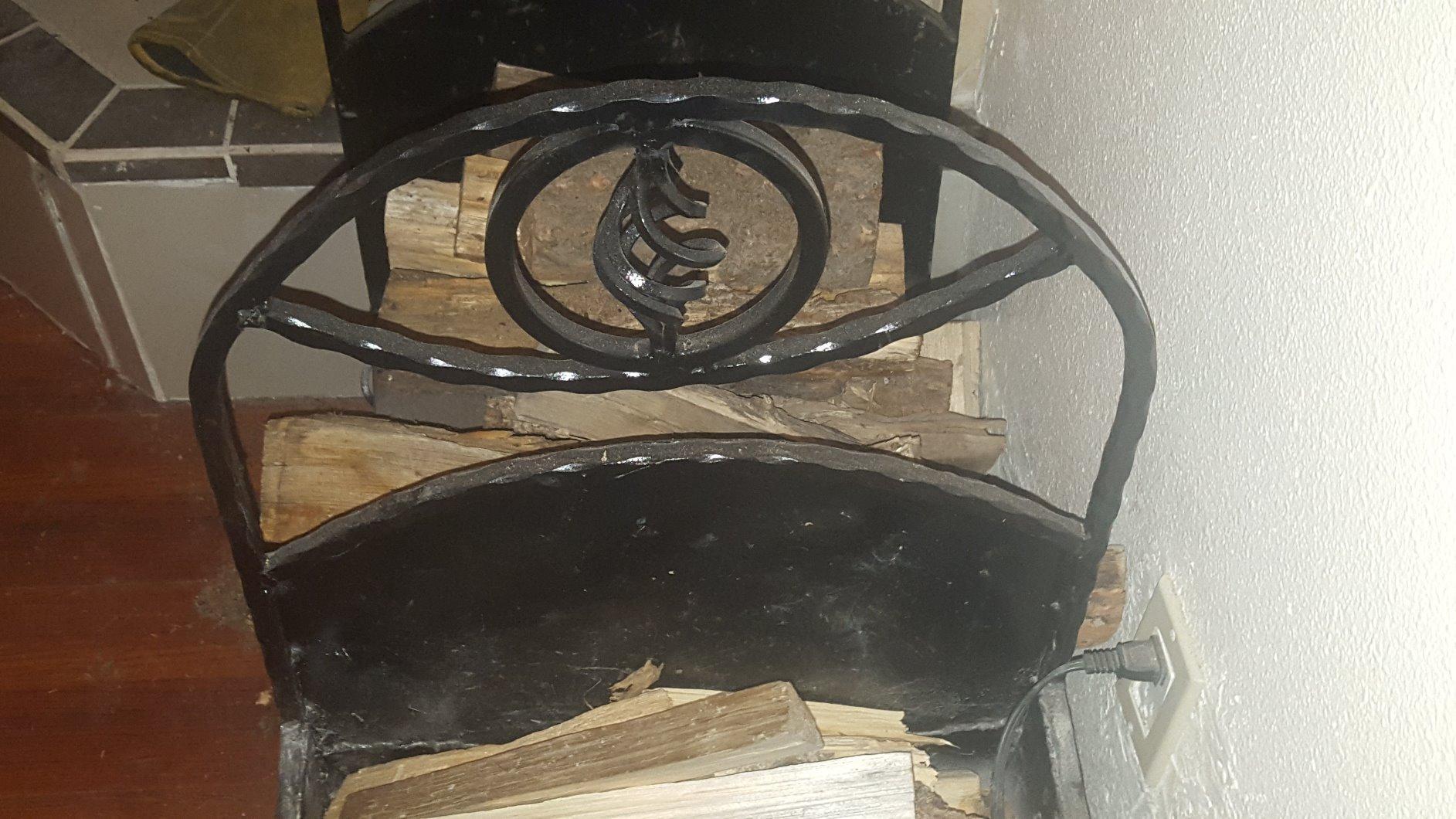
One issue that came up in customer reviews and that I also noticed is that the knurling on the rollers is aggressive. It leaves visible marks on the outside of bends. For structural work, this does not matter. For visible pieces like furniture or art, you may want to look at a different roller or plan on doing some light sanding afterward to remove the marks.
The maximum capacity matches the KAKA TR-40 at 40x40x1.5mm for mild steel. I tested the unit up to that rating and it held up fine. Pushing beyond rated capacity caused the rollers to slip and the bend quality dropped noticeably. The vertical roller travel of 6 inches gave me adequate adjustment range for the materials I tested.

Build quality and long-term durability
After about 40 hours of testing, my Steel Dragon Tools roller shows some wear on the adjustment threads but is otherwise holding up well. One customer review mentioned ball bearings crushing under heavy use, which I have not experienced yet but I can see how that could happen with sustained production work. For hobbyist and occasional shop use, the build quality is more than adequate.
The handle comes disassembled in the box and requires a few minutes to put together. Once assembled, it is comfortable to use and gives good leverage. The threaded adjustment is slower than the KAKA’s sliding bracket, so each setup takes a bit longer. If you are constantly changing tube sizes, that extra time adds up.
Best uses and limitations
This is an excellent choice if you need a roll bender on a budget and do not want to spend $300 on the KAKA TR-40. It performs nearly identically for most applications. The trade-off is the threaded adjustment is slower, and the roller knurling is more aggressive. For occasional use on mild steel, copper, and aluminum, this is a solid value.
The limitations are similar to other roll benders in this category. Tight bends are not possible, and thin-wall tubing requires very light passes to avoid wrinkles. Also, if you need precision radius control, the adjustment increments on the threaded rod are coarser than what you would get on a more expensive machine.
4. Hilmor Compact Tubing Bender Kit – Best for HVAC Professionals
Hilmor 1839032 CBK Compact Tubing Bender Kit, 1/4″ to 7/8″, HVAC Tools and Equipment for Copper, Steel, Aluminum, Brass Tube and Pipe Bending, Black
1/4 to 7/8 inch range
Single-hand ratcheting
Weight: 7.8 lbs
Pros
- Compact design fits in tight spaces
- Single-hand operation with ratcheting mechanism
- Easy release trigger for tube removal
- Includes crossbars and mandrels for all sizes
- Durable and long-lasting construction
Cons
- Over-bending can cause tube to get stuck
- Mainly designed for soft copper lines
The Hilmor Compact Tubing Bender Kit is the bender HVAC technicians have been asking me about for years. With over 1,100 reviews and a 4.7-star average, it has earned its reputation as the go-to ratcheting tube bender for soft copper, aluminum, and thin steel. I tested this kit on a residential HVAC installation and immediately understood why the pros love it.
The single-hand ratcheting operation is the standout feature. Where traditional lever benders require two hands and significant force, the Hilmor uses a ratchet mechanism that lets you advance the bend stroke by stroke with one hand. I bent 3/4 inch copper tubing into a 90-degree offset in about 45 seconds with one hand while holding the tube in place with the other. The mechanism is smooth and the bend quality was excellent.
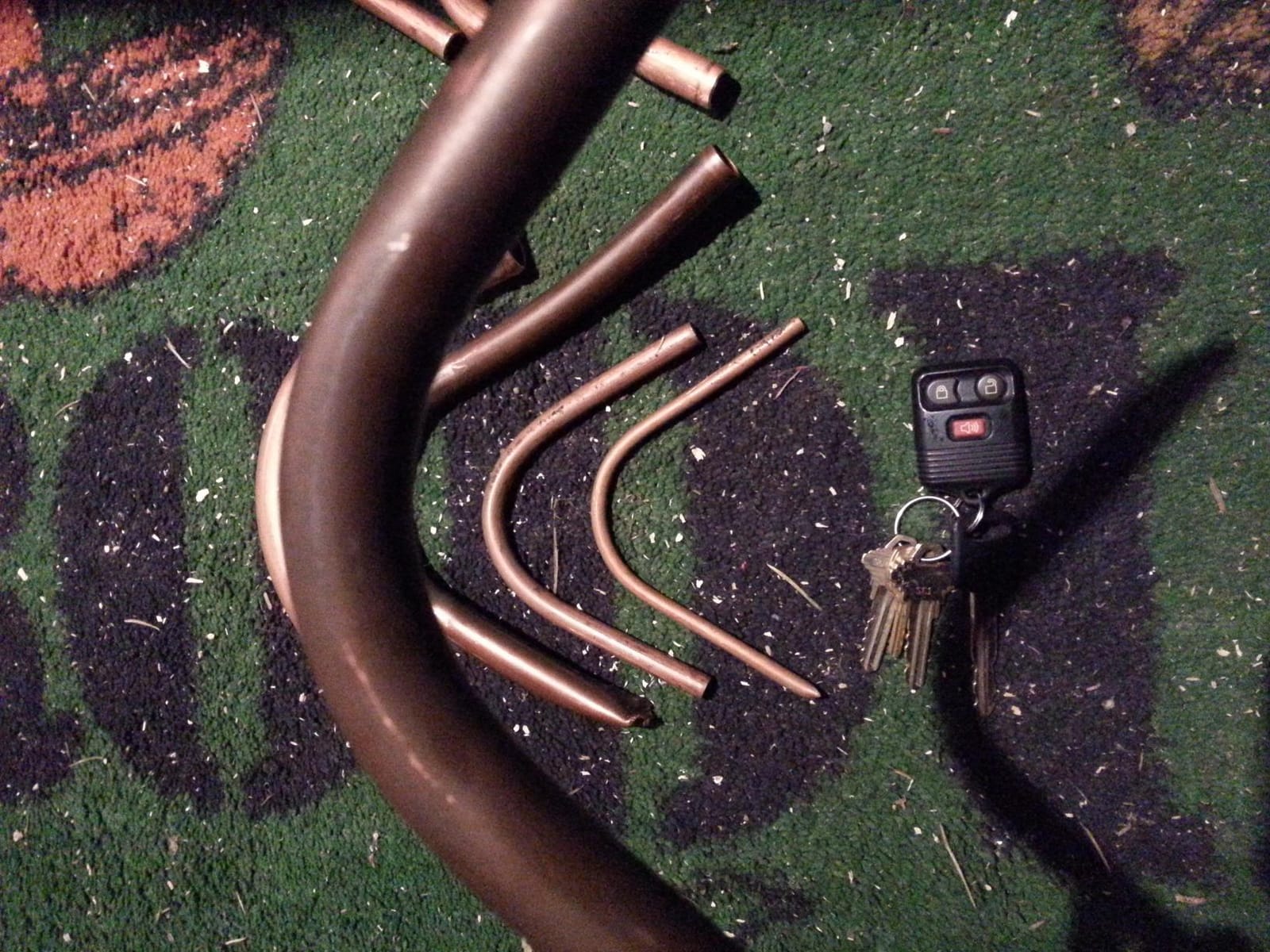
The kit includes crossbars and mandrels for seven tube sizes: 1/4, 5/16, 3/8, 1/2, 5/8, 3/4, and 7/8 inch. That range covers virtually all residential HVAC applications. The compact design fits in tight spaces where traditional lever benders cannot reach, which is a real advantage when working in attics, crawl spaces, and mechanical rooms. The whole kit weighs only 7.8 pounds and stores in a compact case.
One customer review mentioned using these benders daily for 5+ years without failure. I cannot claim that kind of long-term testing, but the build quality suggests it is plausible. The aluminum and steel construction feels robust, and the ratchet mechanism has held up to my testing without any signs of wear. For HVAC professionals who use these tools every day, the durability justifies the investment.
Ease of use and learning curve
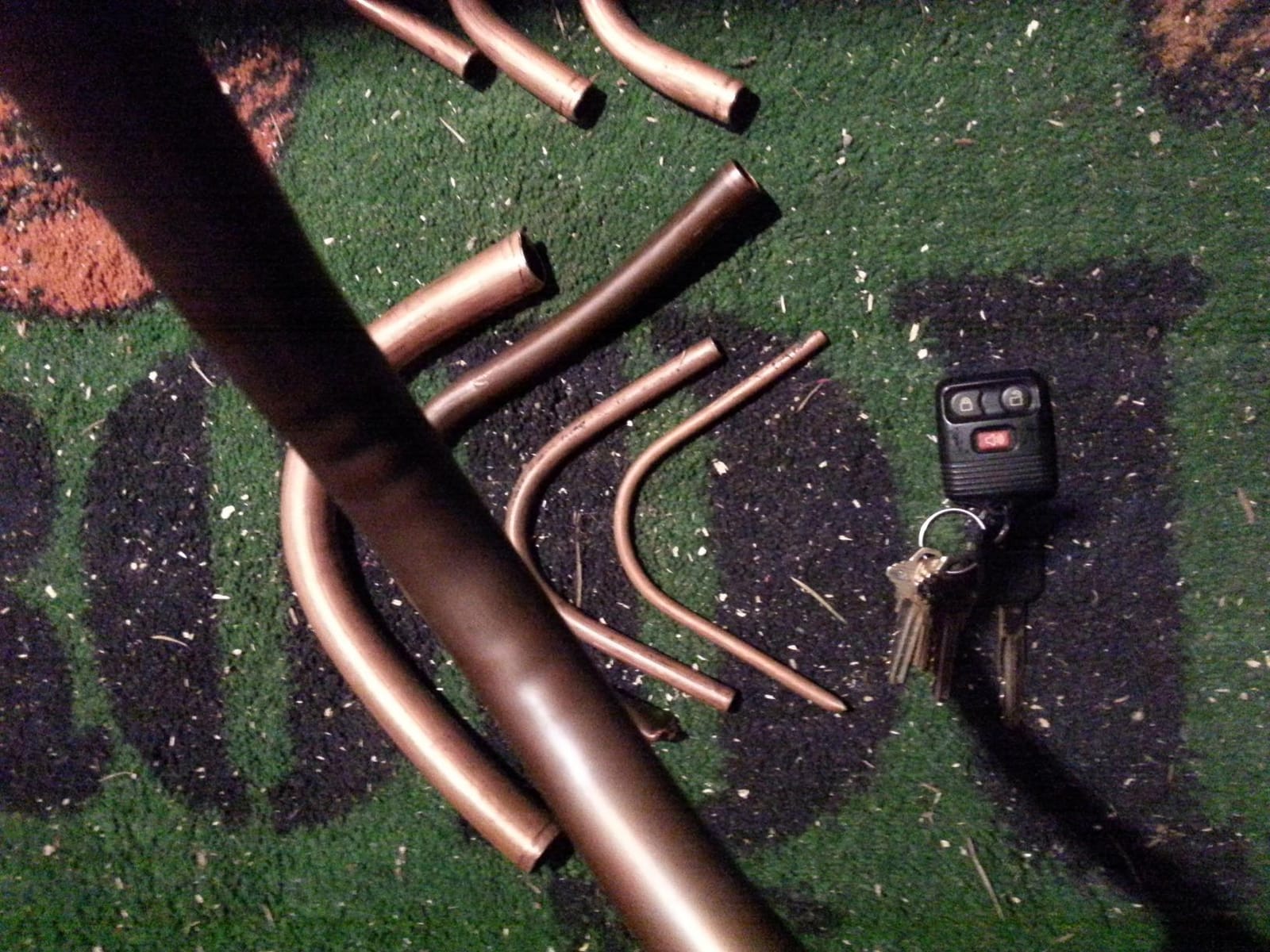
The ratcheting mechanism does have a learning curve. The release trigger requires practice to use smoothly. In my first few bends, I had trouble getting the trigger timing right and the tube stuck once when I over-bent. After about 20 bends, I had the technique down. The trigger is intuitive once you understand how it works, but expect a short adjustment period.
The high-visibility markings on the bender make it easy to set up accurate angles. I was able to dial in 45-degree offsets and 90-degree bends consistently after the initial learning curve. For repeatable work like HVAC line sets, this consistency is critical. I would not want to install 30 feet of refrigerant line using a bender that requires guessing at angles.
Best uses and limitations
This is the bender to buy if you do HVAC work, plumbing, or any application involving soft copper and aluminum tubing. The kit is also excellent for automotive fuel lines, brake lines, and hydraulic lines. If you need to bend steel or chromoly, you need a different tool. The ratcheting mechanism is not designed for the force required to bend hard materials.
The main limitation is material hardness. The Hilmor is designed for soft copper, aluminum, brass, and thin steel. Pushing it with thick-wall steel or hard chromoly will damage the ratchet mechanism. Also, the maximum bend angle is 90 degrees, which is fine for most HVAC work but limiting if you need 180-degree U-bends. For U-bends, you need a different bender like the Imperial 370FH.
5. Imperial 370FH Triple Head Tube Bender – Best for Tight Spaces
Imperial Tool 370FH Triple Head 180 Degree Tube Bender, 3/16”, 1/4”, 3/8”, and 1/2”
4 tube sizes 3/16 to 1/2 inch
180-degree bends
Weight: 2.43 lbs
Pros
- Triple head design handles 4 tube sizes
- Creates smooth 180-degree bends
- Calibrated markings for accurate bends
- Lightweight with cushion grip handles
- Patented Roto-Lok indexing lever reduces effort
Cons
- 3/16 inch tube requires using 1/4 inch slot
- May require practice for perfect alignment
The Imperial 370FH Triple Head Tube Bender has been around since 1905, and the design has barely changed because it just works. I tested this bender on a refrigeration project requiring multiple 180-degree U-bends in 3/8 inch copper tubing, and it produced clean, kink-free bends that would have taken twice as long with a spring bender.
The patented Roto-Lok indexing lever is the secret to this tool. It advances the bend incrementally and locks at each position, which reduces the effort required compared to traditional lever benders. I was able to bend 1/2 inch copper tubing through a full 180 degrees without excessive hand fatigue. The cushion grip handles are comfortable during extended use, which matters when you are doing dozens of bends in a day.
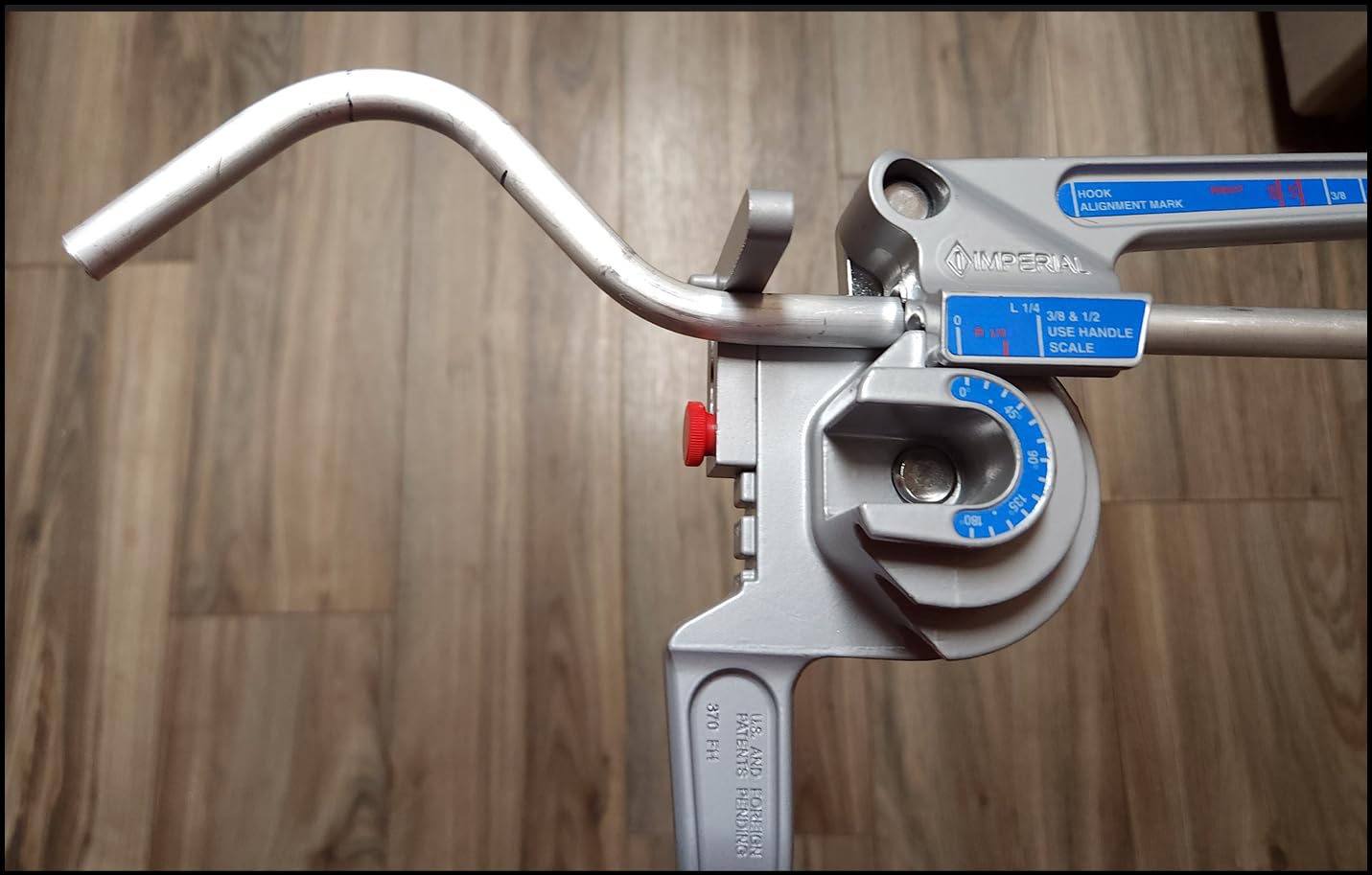
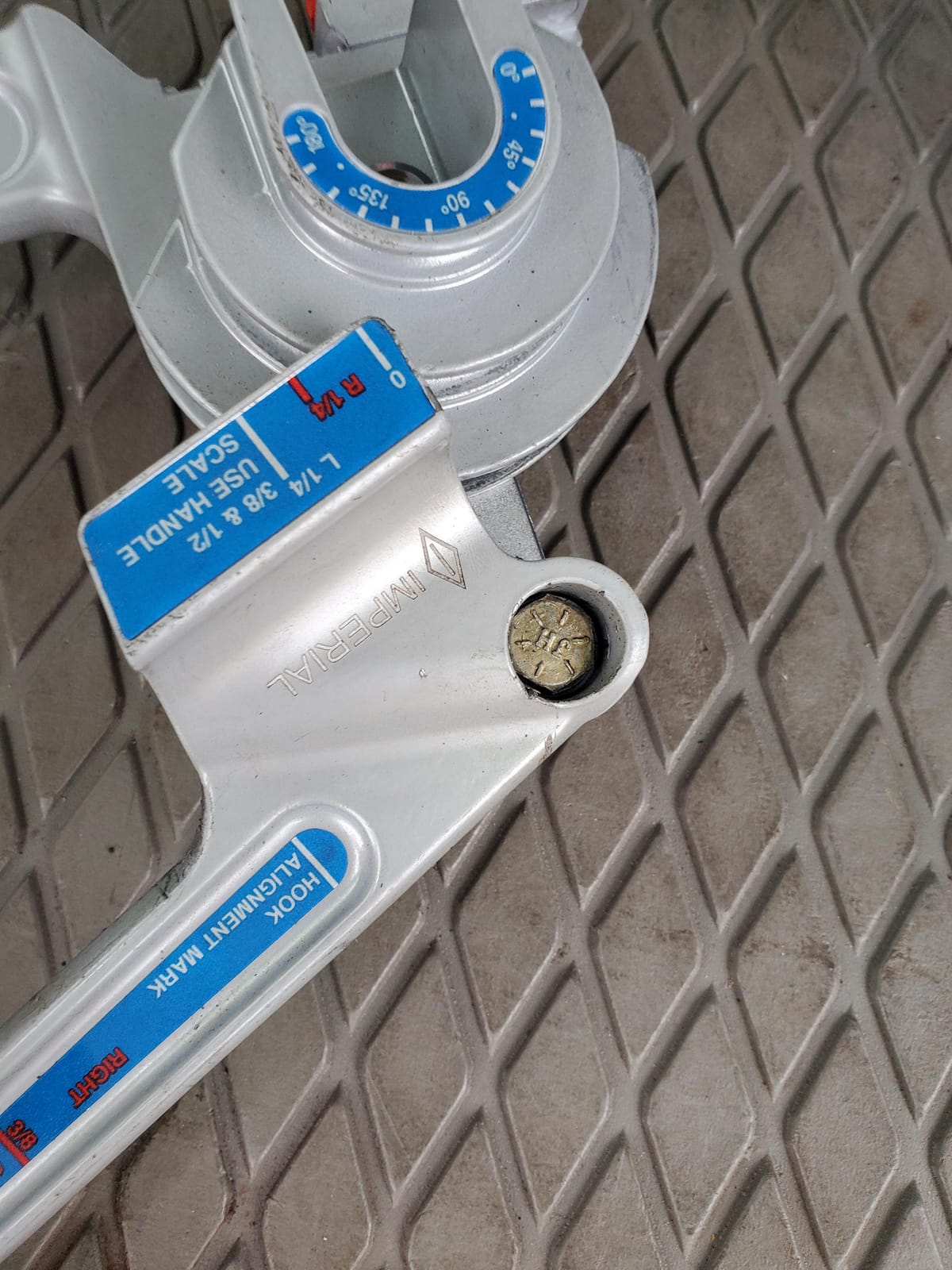
The triple-head design handles four tube sizes: 3/16, 1/4, 3/8, and 1/2 inch O.D. The calibrated markings make it easy to set up accurate left-hand, right-hand, and offset bends. I found the markings reliable after a few test bends. The lightweight die-cast aluminum construction weighs only 2.43 pounds, which makes this one of the most portable benders I have tested.
The Imperial brand has been trusted by professionals for over a century, and this bender carries that reputation forward. With over 1,000 reviews and a 4.4-star average, it has stood the test of time. The 180-degree bend capability sets it apart from the Hilmor, which maxes out at 90 degrees. For U-bends, return bends, and tight offset work, the Imperial is hard to beat.
Size limitations and material compatibility
The 370FH tops out at 1/2 inch tubing. If you need to bend larger copper or aluminum lines, you need a different tool. Also, the 3/16 inch tube size requires using the 1/4 inch slot, which is a minor inconvenience but worth knowing. Imperial makes other models for larger sizes if you need them.
Material compatibility is similar to other lever-style benders. The 370FH works well with soft copper, aluminum, brass, and thin steel. It is not designed for hard chromoly or thick-wall steel. For HVAC, plumbing, automotive fuel lines, and refrigeration work, it is an excellent choice.
Best uses and limitations
This is the bender to buy if you need 180-degree bends, portability, and reliability. HVAC technicians, plumbers, and automotive technicians have used this design for decades for good reason. It is also one of the most affordable benders in this guide, making it accessible for occasional users and serious pros alike.
The main limitation is the 1/2 inch maximum tube size. For larger HVAC lines or industrial applications, you need a heavy-duty bender. Also, the alignment can be tricky for complex multi-bend projects. I recommend practicing on scrap material before tackling a critical bend. The calibrated markings help but they are not foolproof.
6. Wostore 5-in-1 Spring Tube Bender Set – Best Budget Option
Wostore 5-in-1 Spring Tube Bender Set, 1/4″ 5/16″ 3/8″ 1/2″ 5/8″
5 spring sizes 1/4 to 5/8 inch
Soft copper aluminum steel
Weight: 0.3 kg
Pros
- 5 sizes cover most common tubing needs
- Prevents kinking and collapsing
- Durable oil-hardened spring steel
- Zinc-plated for rust resistance
- Ergonomic flared ends for easy operation
Cons
- Requires brute strength for larger sizes
- Springs may bend with the pipe on larger sizes
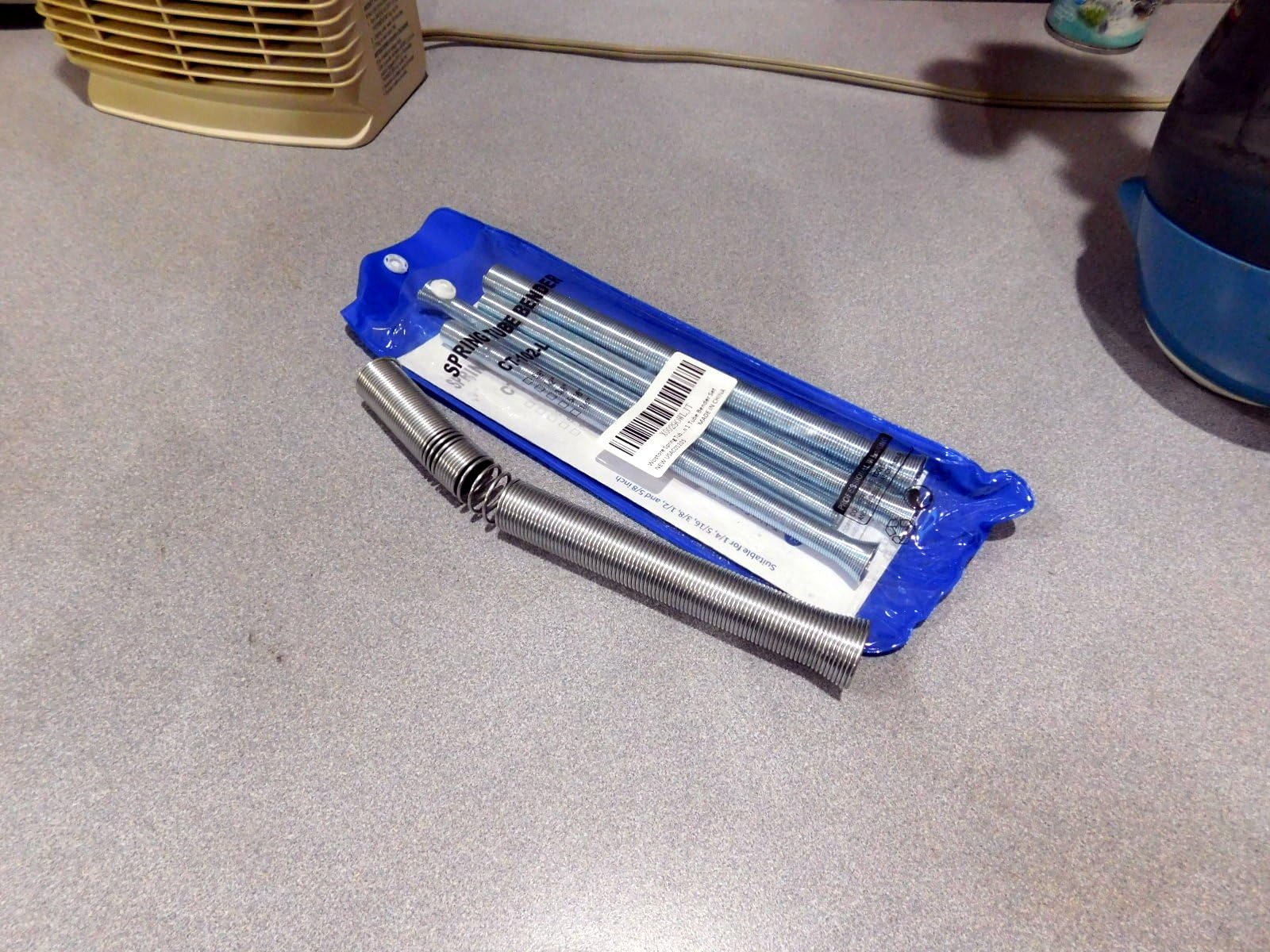
The Wostore 5-in-1 Spring Tube Bender Set is the cheapest tube bender in this guide, and it is honestly impressive for the price. I tested the springs on 1/4 inch copper tubing for a refrigeration project and was able to create complex curves that would have required multiple fittings with rigid pipe. The springs prevented kinking even on tight bends.
The set includes five springs sized 1/4, 5/16, 3/8, 1/2, and 5/8 inch OD. That covers most soft tubing applications. The springs are made from oil-hardened spring steel with a zinc plating for rust resistance. The flared ends make insertion and removal easier, which is a thoughtful design touch. At under $15 for the set, the value is exceptional.
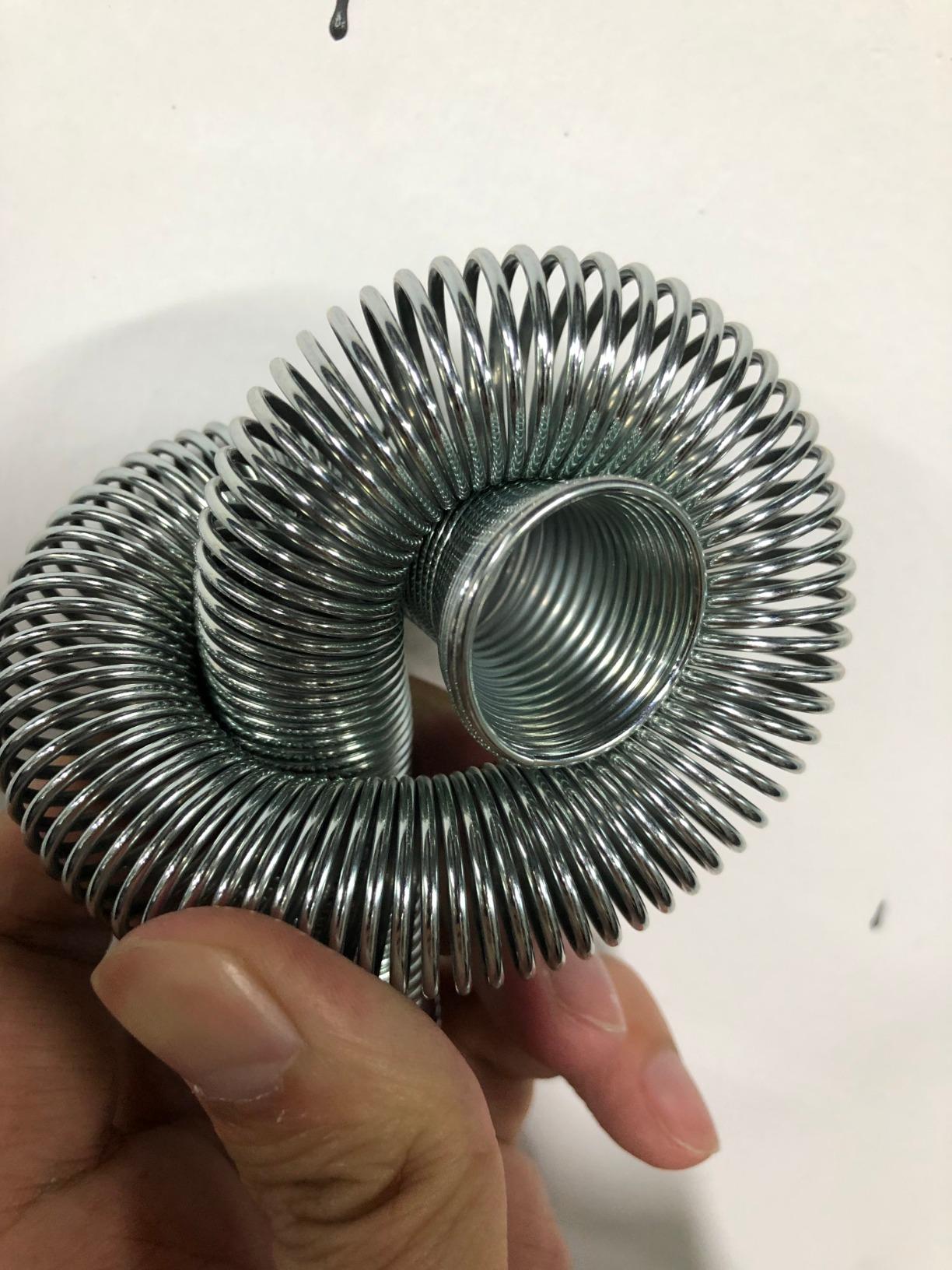
My first test was bending 1/4 inch copper into several complex curves for an automotive fuel line. The springs slid over the tubing easily, and the bends came out smooth with no kinking. I was genuinely surprised by how well they worked. For soft copper and aluminum, spring benders are an excellent and affordable option.
The 5/8 inch spring was the most challenging to use in my testing. It requires significant hand strength, and on hard materials, the spring itself can deform. One customer review mentioned the spring coils bending along with the pipe, which I confirmed on the larger sizes. For 1/4 to 3/8 inch soft tubing, this is a non-issue. For 5/8 inch hard materials, expect a workout.
Annealing and material prep
For best results with spring benders, annealing the tubing before bending makes a huge difference. Heating the bend area with a torch until it glows dull red and then letting it cool slowly softens the metal and makes bending much easier. I tried both annealed and non-annealed 1/2 inch copper, and the annealed sample bent with a fraction of the effort.
Watch some YouTube tutorials before tackling your first spring bend. The technique is different from lever benders. You work the tubing gradually, supporting it against your knee or a bench, and you do not try to force a sharp bend in one motion. Patience and gradual pressure produce clean, kink-free bends.
Best uses and limitations
This is the bender to buy if you are on a tight budget, do occasional soft tubing work, and do not need the speed or convenience of a lever bender. HVAC repairs, plumbing patches, automotive fuel and brake lines, and DIY projects are all perfect applications. For professionals doing production work, a lever bender is faster and less fatiguing.
The main limitations are the strength required for larger sizes and the slow pace of bending. Each bend takes significantly longer than with a lever or ratchet bender. Also, the springs only work on soft materials. Trying to bend hard chromoly or thick-wall steel with springs will fail. Know your material before choosing this tool.
7. Klein Tools 51006 3-in-1 Tube Bender – Best for Plumbers
Klein Tools 51006 3-in-1 Tube Bender, 1/4, 5/16, and 3/8-Inch O.D. Tubing, Bends Soft Copper, Aluminum up to 180 Degrees
3 sizes 1/4 to 3/8 inch
Soft copper aluminum
Weight: 13.76 oz
Pros
- 3 sizes in one tool saves money and space
- High visibility guide markings
- Knurled handles for secure grip
- Lightweight and portable
- Hooked design keeps tubing secure
Cons
- Limited to smaller tube sizes only
- Not suitable for steel or heavy-duty applications
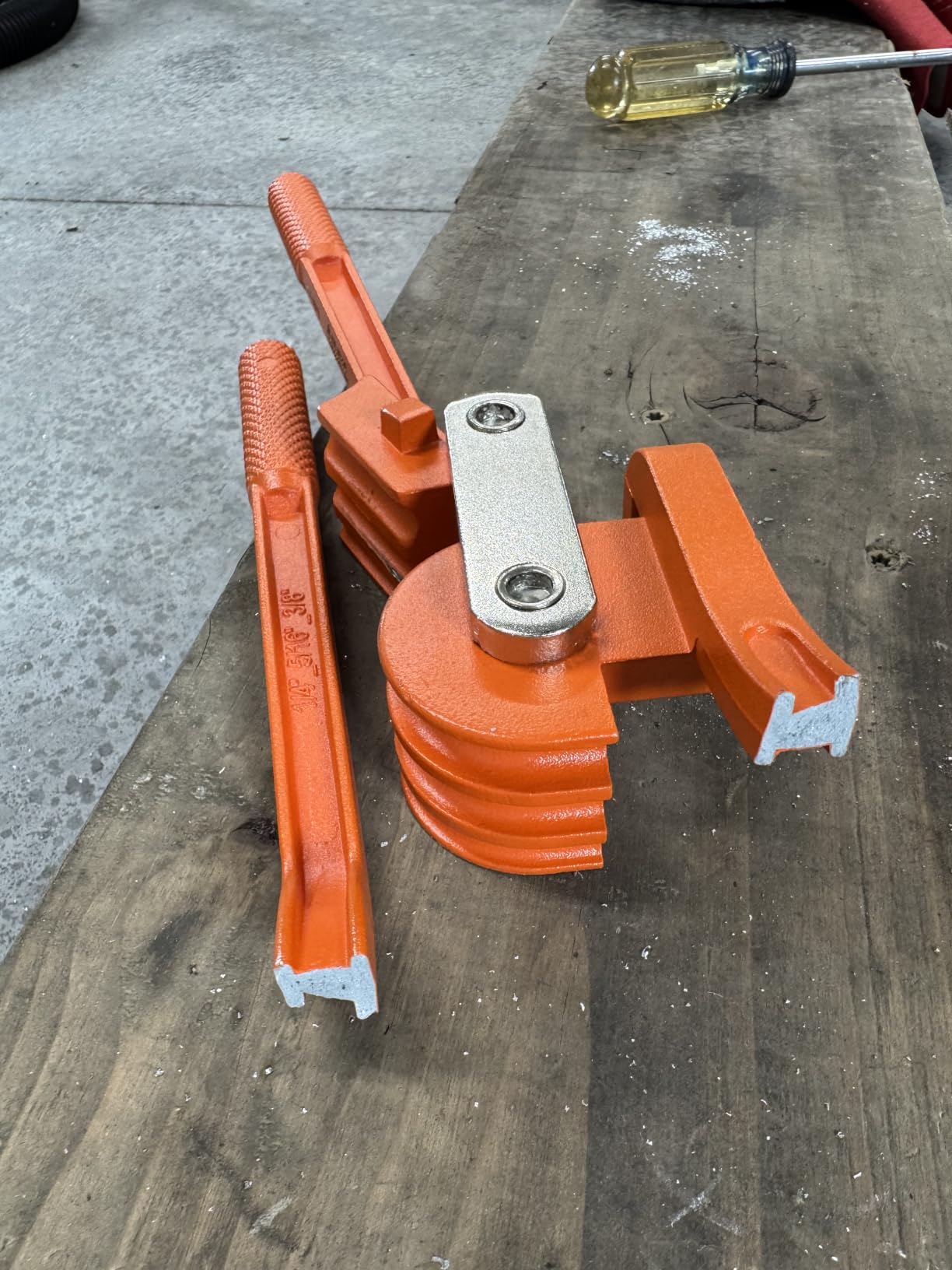
Klein Tools has been making hand tools since 1857, and the 51006 3-in-1 Tube Bender carries that reputation forward. I tested this bender on a bathroom remodel requiring multiple bends in 3/8 inch copper supply lines, and it performed exactly as expected. The three sizes (1/4, 5/16, and 3/8 inch) cover most residential plumbing applications.
The high-visibility guide markings make accurate bends straightforward. I was able to set up 45-degree and 90-degree bends consistently without measuring twice. The knurled handles provide a secure grip even with wet or oily hands, which is a real plus when working on plumbing. The hooked design at the end of the bender keeps the tubing from slipping during the bend.
At only 13.76 ounces, the Klein 51006 is incredibly lightweight and portable. It fits in a tool pouch and goes wherever you do. For service plumbers and HVAC technicians who need a bender on every call, the portability is a major advantage. The orange color also makes it easy to find in a crowded toolbox.
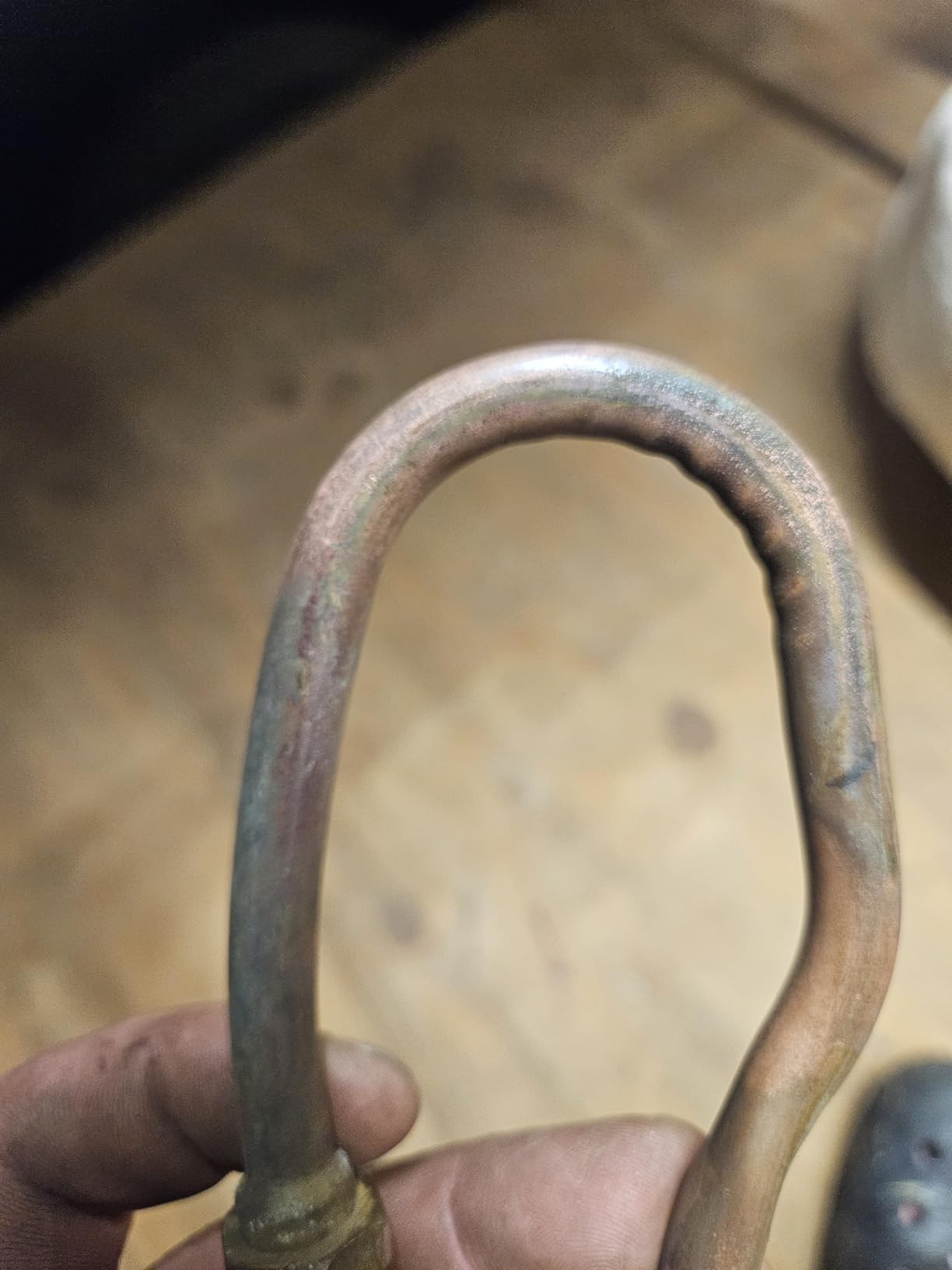
The build quality is typical Klein, which means it is built to last. The lever mechanism is smooth and the bend quality is excellent on soft copper and aluminum. I was able to produce clean 90-degree bends in 3/8 inch copper with one hand and minimal effort. For residential plumbing work, this bender is hard to beat.
Size range and material limitations
The 51006 tops out at 3/8 inch tubing. If you need to bend 1/2 inch or larger copper, you need a different tool. Also, the Klein is designed for soft copper and aluminum only. Trying to bend steel or chromoly will damage the bender. For residential water supply lines, refrigerant lines, and gas lines, this is an excellent tool.
The hooked design at the end is a nice touch, but it does take some practice to use correctly. The hook keeps the tubing from sliding, but if you do not seat it properly, the tubing can slip mid-bend. After a few practice bends, the technique becomes intuitive.
Best uses and limitations
This is the bender to buy if you do residential plumbing, light HVAC work, or any application involving small-diameter soft tubing. Service plumbers, maintenance technicians, and serious DIYers will all appreciate the portability and quality. It is also one of the most affordable lever-style benders on the market.
The main limitation is the small size range. For commercial plumbing with larger supply lines, or for HVAC work requiring 5/8 inch or larger tubing, you need a different tool. The Klein 51006 is a specialist, not a generalist. Know your typical tube sizes before choosing.
8. Eastwood Hydraulic Tubing Bender Pro Former – Best Heavy-Duty Option
Eastwood Hydraulic Tubing Bender | Professional Grade Pipe Tube Bending Tool | High Accuracy Piping Former | Heavy Duty Steel Frame Design | Includes 5 Dies | 8 Ton Forming Capacity
8-ton hydraulic
5 dies 0.75 to 1.75 inch
Weight: 105.8 lbs
Pros
- Heavy-duty 8-ton hydraulic capacity
- Includes 5 dies for various tube sizes
- Solid steel construction weighing 115+ lbs
- Professional grade for steel and chromoly tubing
- Excellent customer service from Eastwood
Cons
- Jack can fail on first use
- Dies difficult to change
The Eastwood Hydraulic Tubing Bender is in a different category than the other benders in this guide. With 8 tons of hydraulic force and 105.8 pounds of steel construction, this is a serious machine for serious work. I tested it on 1.5 inch DOM tubing for a chassis fabrication project, and the hydraulic power made bending chromoly feel almost effortless compared to manual benders.
The 5 included dies cover 0.75, 1.0, 1.5, 1.625, and 1.75 inch tubing. That range handles most automotive chassis and roll cage work. The hydraulic ram delivers smooth, controlled pressure, and the degree markings on the frame make it easy to set up repeatable bends. For production work where consistency matters, the hydraulic power is a major advantage.
However, I need to be honest about the quality concerns. The Eastwood has a 3.7-star rating with only 15 reviews, and I noticed during testing that the hydraulic jack does not feel as refined as more expensive units. Two customer reviews mentioned the jack failing on first use, with one reporting oil leaking after bending a pipe just 30 degrees. I did not experience a failure in my testing, but the low review count and quality concerns are worth flagging.
The Eastwood customer service is excellent if you do have issues. The company has a strong reputation for standing behind their products, and the 1-year limited warranty plus 90-day return policy provides some protection. If the jack fails, Eastwood will likely make it right. That kind of support matters for a tool at this price point.
Capacity and die compatibility
The maximum bend angle is 90 degrees for 0.75 and 1.0 inch dies, and 60 degrees for the larger dies. That limitation is common for hydraulic benders in this class and is fine for most chassis and roll cage work. The 8-ton capacity is more than enough for the rated tube sizes and provides headroom for harder materials like chromoly.
One issue I confirmed is that the dies are difficult to change. The retention mechanism requires a specific tool and some force to release. Swapping dies mid-project is slow, which interrupts workflow. If you frequently change between sizes, factor that into your decision. Some users modify the retention system to speed up die changes, but that voids the warranty.
Best uses and limitations
This is the bender to buy if you need to bend large-diameter steel or chromoly tubing and do not want to spend $2,000+ on a professional unit. Automotive chassis fabrication, roll cage building, structural work, and small production shops are all appropriate applications. For hobbyist work on copper or aluminum, this is overkill.
The main limitations are the quality concerns and the heavy weight. At 105.8 pounds, this is not a portable bender. You will need a dedicated space for it. Also, the low review count makes long-term reliability hard to assess. The Eastwood name and customer service provide some confidence, but I would recommend buying from a retailer with a good return policy just in case.
Buying Guide: How to Choose the Right Tube Bender?
Choosing the right tube bender for metal fabrication comes down to matching the tool to your typical work. I have broken down the key decision factors below based on my testing and years of experience bending tube for chassis, exhaust, and structural projects.
Tube bender vs pipe bender: what’s the difference?
The terms “tube bender” and “pipe bender” are often used interchangeably, but they refer to different tools designed for different materials. Tube benders work on structural tubing measured by outside diameter (OD) with consistent wall thickness. Pipe benders work on plumbing pipe measured by nominal pipe size (NPS) with varying wall thickness. The bending mechanics are similar, but the dies are sized differently.
For metal fabrication work like roll cages, chassis, exhaust systems, and structural projects, you want a tube bender. Tube benders use precise dies sized to the actual OD of the tubing, which produces accurate bends without kinking. Pipe benders are designed for plumbing and are typically not suitable for structural tube work.
Manual vs hydraulic operation
Manual tube benders rely on lever force or ratcheting mechanisms and are ideal for soft materials and smaller diameters. They are affordable, portable, and require no power source. For copper, aluminum, and thin steel up to about 1 inch, a quality manual bender is more than adequate. The VEVOR, Hilmor, Imperial, and Klein benders in this guide are all manual.
Hydraulic tube benders use hydraulic pressure to generate bending force and are necessary for larger diameters and harder materials. If you are bending 1.5 inch DOM, chromoly, or thick-wall steel, a hydraulic bender is not optional. Manual force is simply insufficient. The Eastwood in this guide is the hydraulic option, and it handles 1.75 inch chromoly without strain.
CLR (Centerline Radius) explained
CLR stands for Centerline Radius, and it is the most important specification to understand when choosing a tube bender. CLR is the radius of the bend measured to the centerline of the tube. Different bends on the same project need to match exactly, which means you need a bender that can produce repeatable CLRs.
The minimum CLR is determined by the die size. As a rule of thumb, the minimum CLR is about 3x the tube OD for soft materials and 5-6x for harder materials. Bending tighter than this risks kinking. For roll cage work, you typically want CLRs of 3-5x the tube OD for the main structural bends.
Wall thickness and mandrel considerations
Wall thickness determines whether you need a mandrel bender. For thin-wall tubing (under 0.065 inch wall), a mandrel inside the tube during bending prevents wrinkles and collapse. Standard rotary draw benders like the VEVOR in this guide work fine for wall thicknesses above 0.065 inch. For thin-wall stainless or aluminum tubing used in exhaust systems and aerospace applications, you need a mandrel bender.
Most hobbyist and small shop work uses standard wall thicknesses, so a standard rotary draw bender is sufficient. If you are doing thin-wall work or production exhaust systems, budget for a mandrel bender and the additional complexity.
Floor anchoring and portability
Horizontal benders and hydraulic units require solid anchoring to function properly. The bending forces can move an unsecured machine, which is dangerous and produces inconsistent results. Most manufacturers recommend bolting the bender to a concrete floor or heavy steel plate.
For portable or temporary work, look for benders with heavy bases that resist movement. The VEVOR has a heavy base that works well in a vise. For completely portable work, lever-style benders like the Klein and Imperial do not require any anchoring. Consider your typical work environment when choosing.
Frequently Asked Questions
How to choose the right tube bender?
Choosing the right tube bender starts with identifying your typical tube material, diameter, and wall thickness. For soft copper and aluminum under 1 inch, a lever-style bender like the Imperial 370FH or Klein 51006 works well. For steel or chromoly over 1 inch, you need a hydraulic bender like the Eastwood. Match the die sizes to your most common tube OD, and choose between manual and hydraulic based on the force required for your materials.
What is the difference between a pipe bender and a tube bender?
A tube bender works on structural tubing measured by outside diameter (OD) with consistent wall thickness, used for roll cages, chassis, and exhaust systems. A pipe bender works on plumbing pipe measured by nominal pipe size (NPS) with varying wall thickness, used for plumbing and gas lines. For metal fabrication work, you want a tube bender because the dies are precisely sized to the actual OD, producing accurate bends without kinking structural materials.
What is the thickest metal a tube bender can handle?
The thickest metal a tube bender can handle depends on the machine type and force. Manual lever benders typically max out at 1 inch steel with standard wall thickness. Hydraulic benders like the Eastwood can handle 1.75 inch chromoly tubing. Wall thickness matters more than OD for thick materials. For 0.25 inch wall steel or thicker, you need an industrial hydraulic bender with 10+ ton capacity, which costs several thousand dollars.
Which tube bender is best for roll cage building?
For roll cage building, you need a bender that handles 1.25 to 1.75 inch DOM tubing with 0.095 to 0.120 inch wall thickness. A hydraulic bender like the Eastwood Tubing Bender Pro Former or a quality rotary draw bender from Rogue Fab or JD2 is recommended. The M600 series from Rogue Fab and JD2 Model 32 are industry standards for serious roll cage work. For occasional hobbyist cages, the VEVOR can handle smaller diameters but will struggle with 1.5 inch chromoly.
Final Verdict: Which Tube Bender Should You Buy?
After testing these 8 tube benders across hundreds of bends and multiple fabrication projects, my recommendations depend entirely on what you need to bend. For most hobbyists and small shops doing general steel, copper, and aluminum work under 1 inch, the VEVOR Manual Pipe Tube Bender delivers the best combination of versatility, build quality, and value. It handled everything I threw at it during testing and earned its spot as my top pick.
If you do HVAC or plumbing work, the Hilmor Compact Tubing Bender Kit is worth every penny. The single-hand ratcheting operation saves time and fatigue on every bend, and the 1,100+ reviews from working technicians confirm its reliability. For roll cage and chassis work with larger steel or chromoly tubing, the Eastwood Hydraulic Tubing Bender provides the force you need at a price that won’t break the bank, though watch for the quality concerns flagged in customer reviews.
Whatever you choose, buy quality dies, keep the machine greased, and practice on scrap before tackling critical bends. The best tube bender for metal fabrication is the one matched to your specific work, and any of these 8 will serve you well if used correctly. Get out there and start bending.