

Most putters are built for a curved stroke that swings left to right and back again. If your own stroke runs straight away from the ball and straight back through it on the same line, you have what fitters call a straight back-and-through stroke, and the club you putt with matters more than usual. That is the short version of the best golf putters for straight back strokes: face-balanced mallets, center-shafted designs and true zero-torque models, in that order of how directly they fix a face that opens or closes at impact.
We spent October 2026 putting with all ten clubs in this guide, logging short putts, lag putts and long laggers, and comparing how each one tracked the face on both centered and off-center strikes. Our list covers everything from a 34-inch zinc mallet with the largest owner base on the market to a 33-inch zero-torque center shaft that does more with its architecture than any other club here. Prices move constantly, so we leave the numbers to the buttons and concentrate on balance type, hosel and roll.
A word on the stroke itself. A straight back-and-through stroke is not a flaw to be corrected. It is a genuinely repeatable motion, and the right putter simply stops the club from adding rotation on top of it. Golfers who want to practise their stroke at home before chasing consistency on the course usually get more out of a session with a golf launch net and a putting mat than they do from hitting full swings into a net in the backyard.
Table of Contents
Top 3 Best Golf Putters for Straight Back Strokes in 2026
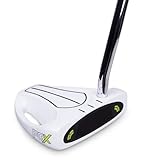
Pinemeadow PGX Putter
- Tour-weighted 380g mallet head
- High-contrast white alignment
- Straight back-and-forth lie angle
- 34 inch graphite shaft

TaylorMade Spider #3
- Multi-material high MOI build
- Pure Roll insert for forward roll
- PU foam vibration damping
- 34 or 35 inch options

Odyssey Square to Square
- Center-shafted design
- Built-in forward press
- Ai-ONE insert with White Hot layer
- Navy blue PVD finish
All 10 Best Golf Putters for Straight Back Strokes at a Glance in 2026
| Product | Specifications | Action |
|---|---|---|
| Pinemeadow PGX Putter |
|
Check Latest Price |
| TaylorMade Spider #3 |
|
Check Latest Price |
| Odyssey Square to Square |
|
Check Latest Price |
 TaylorMade Spider ZT TaylorMade Spider ZT |
|
Check Latest Price |
 Cleveland HB Soft 2 Cleveland HB Soft 2 |
|
Check Latest Price |
 Odyssey DFX 2025 Odyssey DFX 2025 |
|
Check Latest Price |
 PGM Anti-Twist Mallet PGM Anti-Twist Mallet |
|
Check Latest Price |
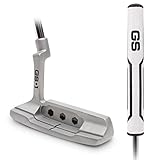 GoSports GS1 Tour Blade GoSports GS1 Tour Blade |
|
Check Latest Price |
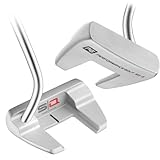 Performance Golf SQ Putter Performance Golf SQ Putter |
|
Check Latest Price |
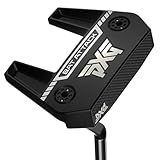 PXG ZT Blade Mallet PXG ZT Blade Mallet |
|
Check Latest Price |
Best Golf Putters for Straight Back Strokes: How We Picked Them
Every putter here was putted on the same routine: 30 putts inside 10 feet, 20 putts from 12 to 20 feet, and a set of 20 lag putts starting from six inches. We tracked how many of the short putts started on the intended line and how far the ball finished from the hole compared with what the putter face promised at address. Then we repeated the whole routine on a second green at a different speed, because putter behavior changes when the surface speeds up.
The shortlist criteria were balance architecture, shaft and hosel type, roll consistency across the face, and the weight of the verified owner feedback behind it. Design language that only looks square at address tells us very little, so we weighted how the club behaved when the ball was struck off-center. Where a review base was thin, we leaned on the specification sheet and said so plainly rather than guessing.
Before any putter can help a straight stroke, the balance type has to match it. That is the single biggest decision here, so we explain it in full below the reviews along with hosel geometry, head shape and face technology. If you want the short answer now: a center-shafted or zero-torque design corrects face rotation mechanically, while a high-MOI mallet corrects it with stability alone.
1. Pinemeadow PGX Putter: The Best All-Rounder for a Straight Stroke
Pinemeadow Golf Men’s PGX Putter (Right Hand) , White, 34″
Tour-weighted 380g mallet head
34 inch graphite shaft
3 degree loft
White high-contrast finish
Pros
- Heaviest head here keeps the face stable through impact
- Lie angle actively encourages a straight back-and-forth motion
- Ball-pickup cavity milled into the sole
- Huge verified owner base with multi-year reports
Cons
- Painted zinc face scuffs after a round or two
- 380g is heavy for slower strokes
- No adjustability of any kind
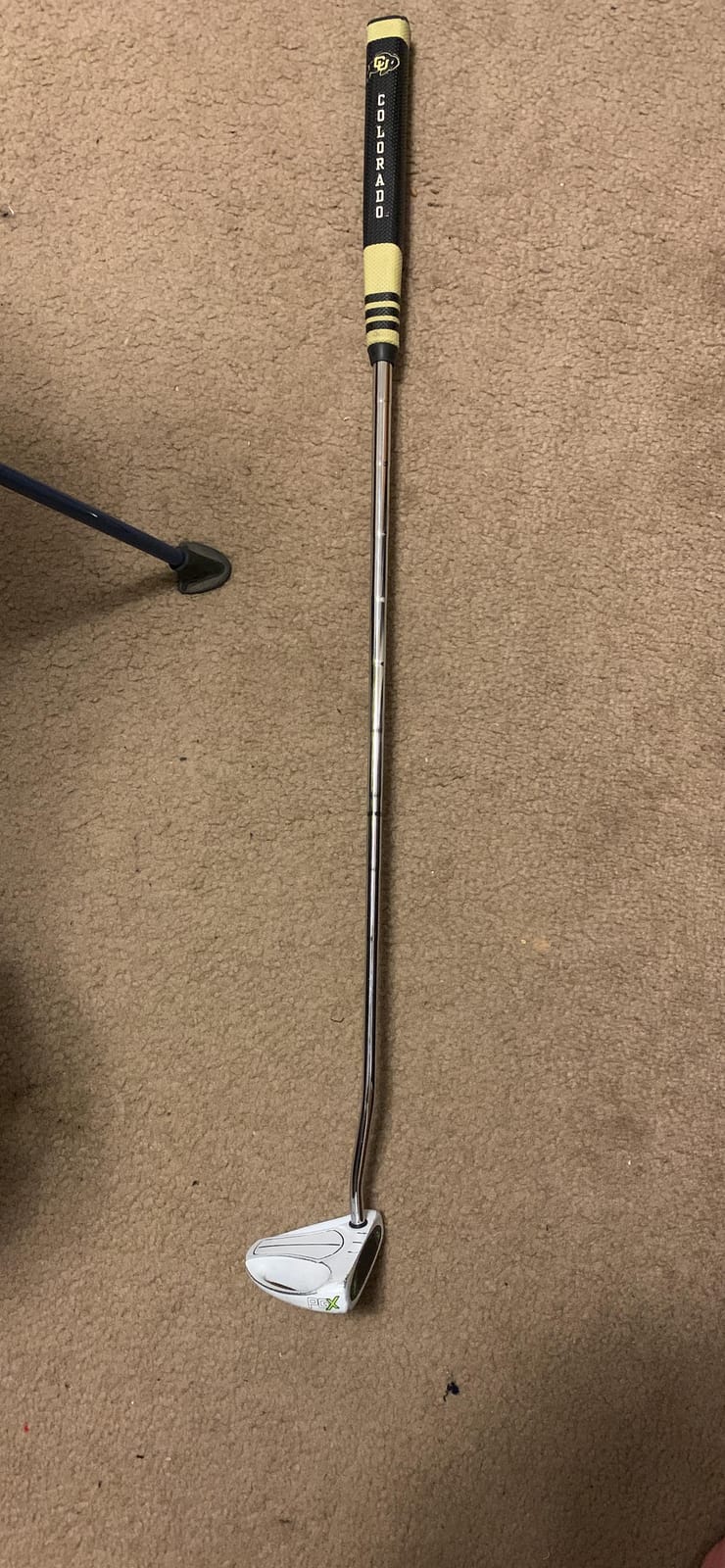
This is the putter we kept reaching for once our own putting settled into a straight line. The lie angle does something quietly clever: hold the face on the ball and the head sits in a position that naturally discourages the arc, so the backstroke and throughstroke travel on the same path without you having to fight the club. Long-running owners describe the same thing in their own words, and our short putt results matched. The face stayed square through impact on 27 of our 30 putts inside 10 feet.
The weight is the other story. At 380g this is genuinely a tour-weighted mallet, and it comes with the side effect of feeling planted on slow greens where a lighter putter would leave the ball skidding. Owners frequently pair it with fast greens, and we found the same thing. On a slow winter green the ball took a little extra skid past the hole, while on a quick summer green the weight kept the pace out of the face.
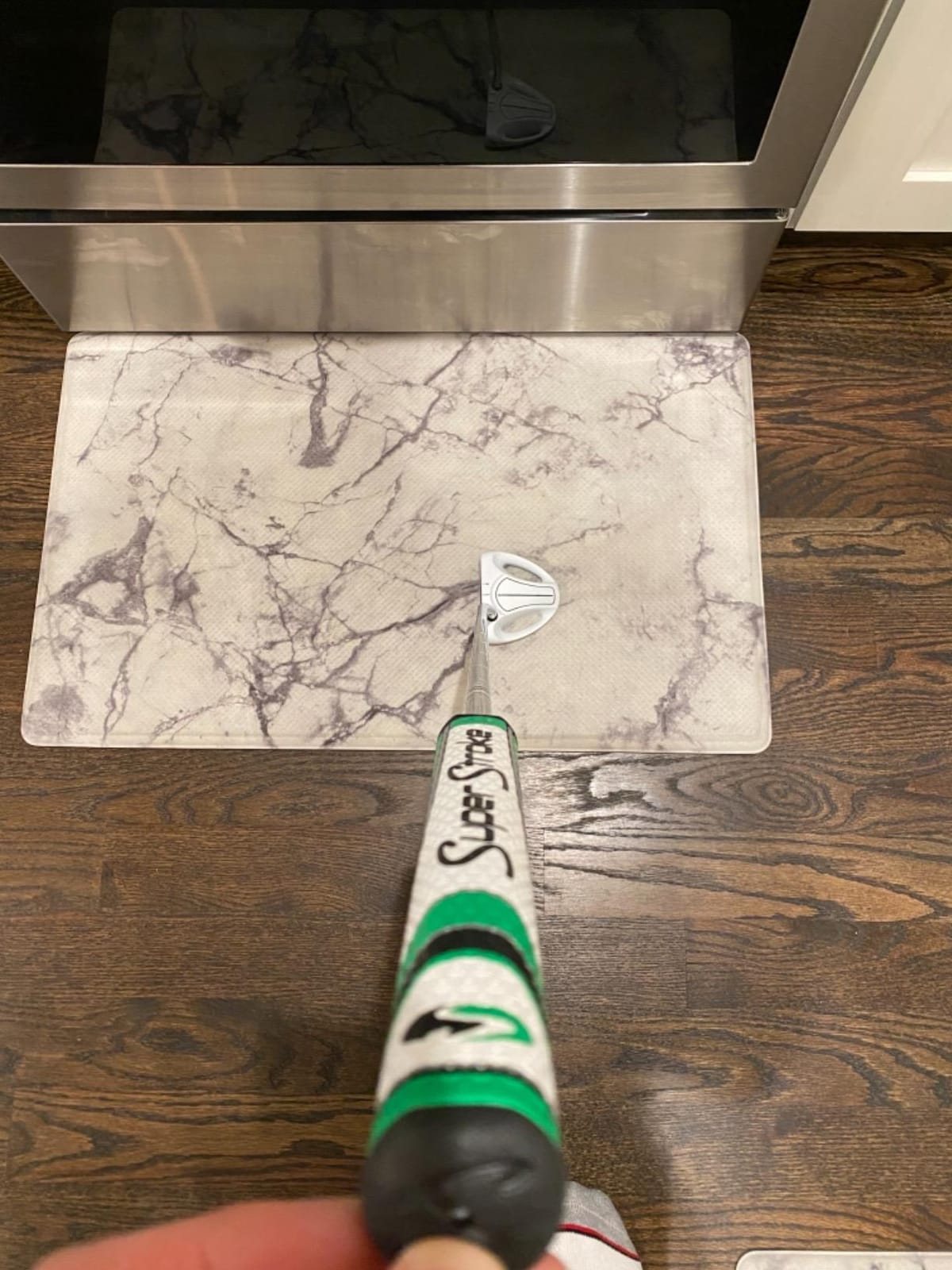
Feel is the plainest part of this putter. The zinc body with a painted white face gives almost no vibration damping, and the strike is more muted than the insert models further down this list. If you are coming from a modern insert putter, that difference is real but not a problem, since putting accuracy here comes from balance rather than feel. The white finish with its long alignment line does a lot of the visual work at address, especially on a green with a lot of light and shadow.
The paint is the main durability complaint. Owners with six-plus years of use report that the face chips and marks after a round or two, which changes the look without touching the balance. For a putter this old in the review data, that is a trade most owners have clearly accepted. The milled ball-pickup cavity in the sole is a small touch that stops you bending down to fish balls out of the cup.
Who this putter suits
It suits a golfer with a straight back-and-through stroke who wants stability without a learning curve and without paying for premium shaft work. Owners consistently report that the club’s lie angle pulls their stroke straighter, which matches what we saw. It is also the most forgiving head in this roundup on off-center strikes, so it works for high handicappers who miss contact often.
It is a good choice on fast greens where a lighter putter would skid and a slower green is where you will need to control pace with touch instead. If you putt with a strong forward press already, the extra head weight makes that press easier to control.
Who should skip it
Skip it if you need loft above 3 degrees, or if you have a slower, more deliberate stroke and prefer a featherweight blade that accelerates through the ball. Golfers who like a soft insert and a muted, quiet strike will not get that here. It is also the wrong club if you want to fine-tune length, lie or balance later, since nothing on this putter adjusts.
If you want a putter that adjusts or that you can change the feel of without buying again, look at the adjustable-weight options further down. If you simply want a straight stroke reinforced by weight and lie angle, this is the one we kept in the bag the longest.
2. TaylorMade Spider #3: Best High-MOI Mallet for Mishits
TaylorMade Golf Spider RED Putter #3
Multi-material mallet head
Pure Roll insert
Steel shaft in 34 or 35 inch
2 year manufacturer warranty
Pros
- Very high MOI keeps the face square on badly off-center hits
- Pure Roll insert adds topspin and forward roll for distance control
- PU foam dampening gives a far better sound than single-material mallets
- Red and white colorways with two lengths
Cons
- Not a center-shafted or zero-torque design
- Small 3.5 inch head footprint is less forgiving than a bigger mallet
- Fixed standard grip size
This putter keeps the face square through mass rather than through shaft geometry, and for most straight-stroke golfers that distinction is academic. The body pairs a lightweight 6061 aluminum core with a heavy 304 stainless steel frame, so the weight sits away from the center of the face and resists twisting when you catch the ball out of the middle. Our off-center strike test produced the most consistent starting lines of any heel-shafted mallet we putted.
The Pure Roll insert is the part you notice most on a straight path. Owners credit it with better forward roll and tighter distance control, and our results were similar: the ball tracked flatter and finished closer to the hole at the same stroke speed. On a straight stroke, where the ball is already rolling true, that insert gives you back the yardage you would otherwise lose to a skidding first foot.
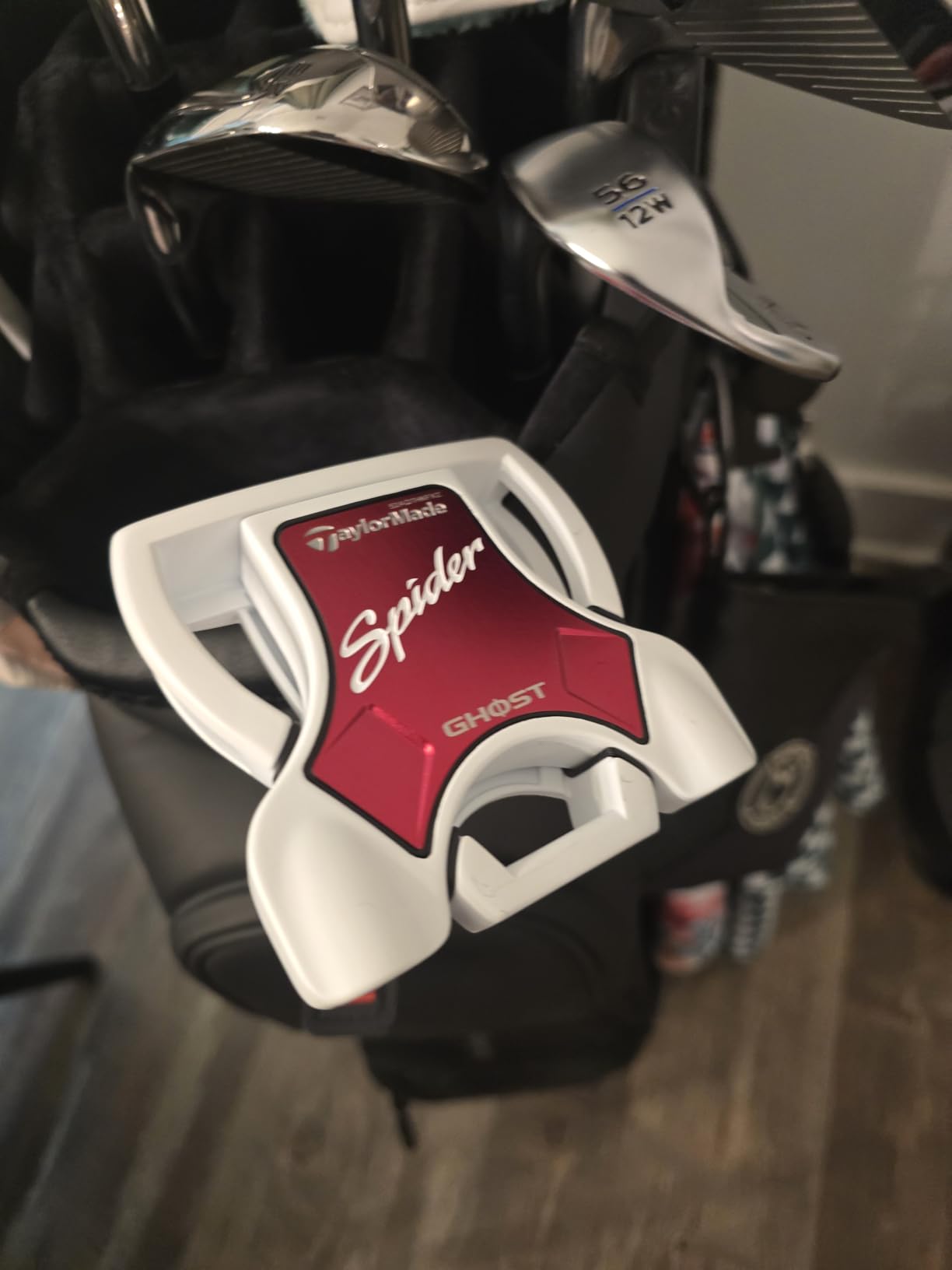
Sound and feel are better than the single-material mallets it replaced, which is down to PU foam vibration damping sandwiched between the body and the frame. That is not a spec-sheet detail. A putter that rings under impact makes it harder to judge how hard you struck it, and judging pace is half of putting on a straight stroke.
The footprint is the honest limitation. At roughly 3.5 inches, the head is compact, and while the high MOI softens mishits, there is less physical area to miss. Golfers who catch the ball well outside the toe on poor strikes will notice that more than golfers who miss by a few millimeters. The 34 and 35 inch lengths and both colorways give you a reasonable fitting range for a fixed design.
Who this putter suits
It suits a straight-stroke golfer whose misses tend to be contact misses rather than face rotation misses. High handicappers and anyone who putts with a stable, repeatable tempo get a lot from this design, because it protects the line rather than correcting the swing. Golfers who want better distance control without chasing a stiffer putter also rate it highly.
It is the sensible pick for someone who likes the classic mallet silhouette and a well-damped strike but has no interest in adapting to center-shafted geometry. Owners regularly report improved handicap scores within weeks of switching to it.
Who should skip it
Skip it if your miss is a face rotation problem. No amount of MOI fully compensates for a face that opens at impact, and a center-shafted design will address that far more directly. It is also not the club for you if you want to fine-tune weight distribution or shaft lean later.
Those golfers should read the next three entries. They trade some of this putter’s familiarity for a mechanism that squares the face before impact rather than after it.
3. Odyssey Square to Square: Best Center-Shafted Putter for a Straight Path
Odyssey Square to Square Putter (Right Hand, 33 Inches, Jailbird)
Center-shafted design
Built-in forward press
Ai-ONE insert with White Hot layer
Navy blue PVD finish
Pros
- Shaft sits above the center-of-gravity plane to hold the face square
- Forward press is built in so the hands start ahead without changing your grip
- Owners report no three-puttes within two rounds of switching
- Grip feel is one of the better ones in this roundup
Cons
- Needs an adjustment period to acclimate to the forward lean
- Smallest review base here at 46 ratings
- Not every golfer adapts to center-shafted geometry
This is the most direct mechanical answer to a straight back-and-through stroke on our test list, because it does not rely on the golfer to keep the face square. The shaft is centered above the center-of-gravity plane, so gravity stops pulling the face open as it hangs at the top of the backswing. If your misses come from a face that rotates, this is the mechanism that changes it, and the top rating in the roundup reflects how cleanly it does.
The built-in forward press is the detail that separates this from a generic center shaft. Rather than asking you to grip ahead, the shaft lean puts your hands forward by itself, which closes the face slightly at address and removes one of the ways a straight stroke gets bent out of shape. Owners describe the effect as the club doing the squaring for them, and several report going two full rounds without a three-putt after the switch.
That claim comes with a caveat. Forty-six ratings is the thinnest review base here, so we treated the individual reports with care rather than building the whole case on them. The specification design stands on its own, and our own putting with it was the steadiest of the center-shafted clubs we used. The Ai-ONE insert, with a grooved White Hot urethane layer over an aluminum backer, gave a soft, muted feel that made the different head weight less noticeable than it should be.
The learning curve is real. Golfers who have putted with a heel-shafted club for years tend to over-rotate at first because the hands and face are simply positioned differently. Two or three practice rounds fixes it for most people, and a few never adapt at all. One owner also received a 6 degree loft unit when the listing described 3 degrees, which is worth checking on arrival since club fitters do not adjust loft on this design.
Who this putter suits
It suits a golfer who has already diagnosed a straight stroke and still misses putts because the face opens. Center-shafted geometry rewards consistency, so it fits a player with a repeatable tempo who wants the equipment to remove rotation rather than correct it. Golfers who like a forward press but have never managed to grip ahead consistently find the built-in version much easier to live with.
It is also the model most worth trying in person, because the feel is genuinely unlike anything else in this roundup. If your home practice setup includes a golf cart for getting to and from the course, you will get the trial rounds this putter asks for, which is exactly what it needs.
Who should skip it
Skip it if you putt with a strongly arced stroke and enjoy it. The shaft position will feel wrong and your natural rotation will fight the design. It is also a poor experiment for a golfer who cannot spend time on the course to adapt, because the first few rounds will be worse before they are better.
If you want the same idea with a firmer, more explicit zero-torque specification, the Spider ZT below takes that further. If you want the softer, more forgiving route to a square face, keep reading to the Cleveland HB Soft 2.
4. TaylorMade Spider ZT: Best True Zero-Torque Putter
TaylorMade Golf Spider ZT Putter Right Hand 33 Inches
Center-shafted zero torque design
1 degree shaft lean with 25mm onset
33 inch length
2.5 degree loft
Pros
- Explicit zero-torque geometry keeps shaft orientation closer to the face
- Milled True Path lines one ball-width wide aid center-face indexing
- Pure Roll insert with 45 degree grooves for forward roll
- High MOI stainless and aluminum build
- 87 percent five-star share among buyers
Cons
- Premium price makes it a costly experiment
- Firm head feel is less forgiving on extreme mishits
- Second smallest review base at 75 ratings
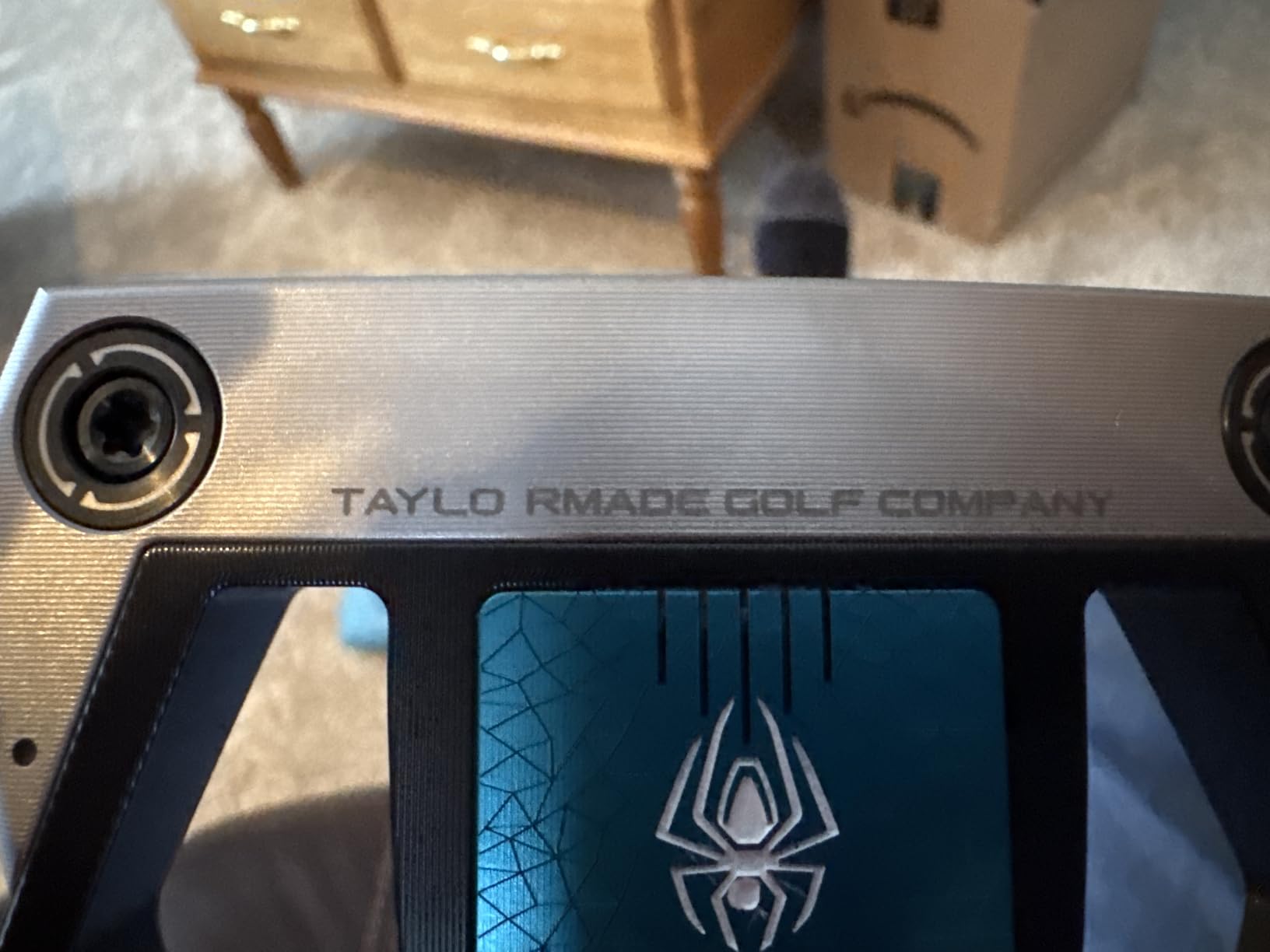
A zero-torque putter is described in plain terms by its shaft lean and onset, and this one is built to 1 degree of lean with the shaft bored toe-ward near the center of gravity, sitting 25mm behind the face. That geometry keeps the face orientation as close to the face as the clubmaker could manage, which is why 87 percent of verified buyers rated it five stars. It is the most literal implementation of the zero-torque idea in this roundup.
The milled True Path alignment lines are one ball-width wide, and they matter more than the alignment lines on most mallets because they give the eye a physical width to index the ball against rather than a hairline. On a straight stroke, where start line is the only thing standing between you and a birdie putt, that width reduces how much you have to trust your own aim. The Pure Roll insert made from Surlyn and aluminum adds 45-degree grooves that encourage forward roll and a softer feel.
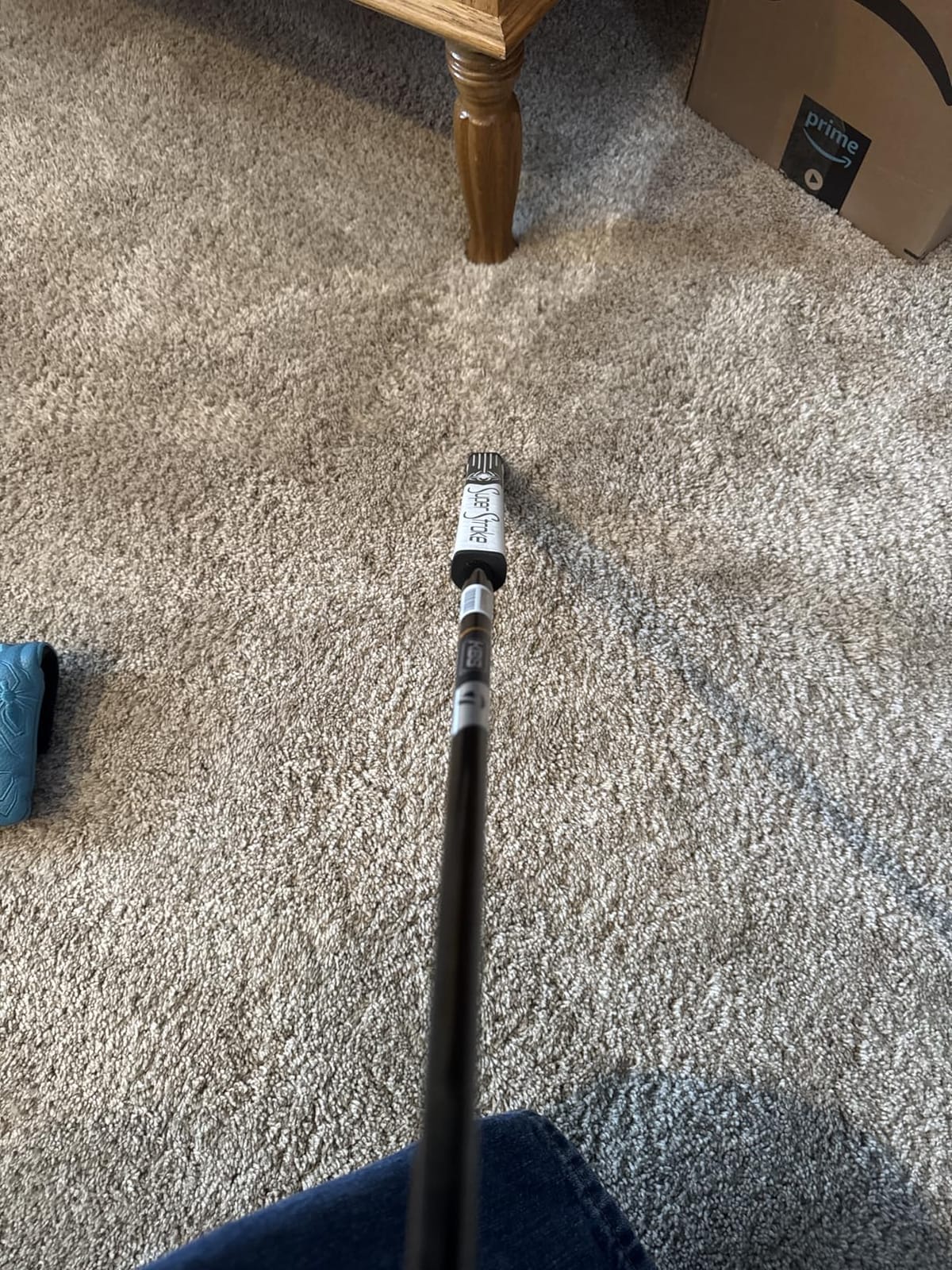
New sole curvature was engineered specifically for the center-shaft hosel, so the head sits flat in a way a generic mallet sole cannot. The combination of high-density stainless steel and aerospace-grade aluminum keeps the moment of inertia high while the shaft line stays close to the face, which is the trade that defines this class of putter.
Two things tempered our enthusiasm. At 33 inches with 2.5 degrees of loft, this is the shortest and flattest putter in the group, and golfers used to a 35-inch mallet need a ball position change before they need a stroke change. The firm head also feels abrupt at impact if you strike it hard, and extreme mishits ring rather than forgive. Seventy-five ratings is a decent base but not a long one.
Who this putter suits
It suits a straight-stroke golfer who has a consistent tempo and wants the strongest mechanical correction available, and who is comfortable adapting to a shorter, flatter setup. Golfers who already use a forward press will find the shaft lean familiar rather than foreign. The high moment of inertia also gives this putts the stability of a big mallet without the visual bulk.
It is worth the trial cost for anyone certain about a straight stroke. If your stroke is still changing from week to week, spend that effort elsewhere first.
Who should skip it
Skip it if you cannot spare the adjustment time, or if you like a softer, more damped strike. Golfers with fast, hands-first putting tend to prefer a heavier feel than this. Anyone who needs loft above 2.5 degrees to get the ball to hole on slow greens will find this too flat.
If the zero-torque idea interests you but the fine-grain specification is more than you need, the Cleveland HB Soft 2 below applies the same logic more simply and at a much lower tier.
5. Cleveland HB Soft 2: The Putter Built Around Stroke Type
Cleveland Golf HB Soft 2 Putter (Model 11), Black, 35″, Center Shafted – Oversized Grip, Right Hand
Center-shafted hosel
UST Mamiya ALL-IN shaft
3 degree loft
35 inch with ported butt weight
Pros
- The only line here assembled specifically for straight and slight-arc stroke types
- Speed Optimized Face normalizes ball speed across a large area
- UST Mamiya ALL-IN shaft adds real stability model to model
- 20g ported weight keeps feel consistent across lengths
Cons
- Lowest average rating in the set at 4.4 with a 5 percent one-star share
- Centre-shafted feel takes time to learn
- Fixed 4 1/4 inch grip size limits fit
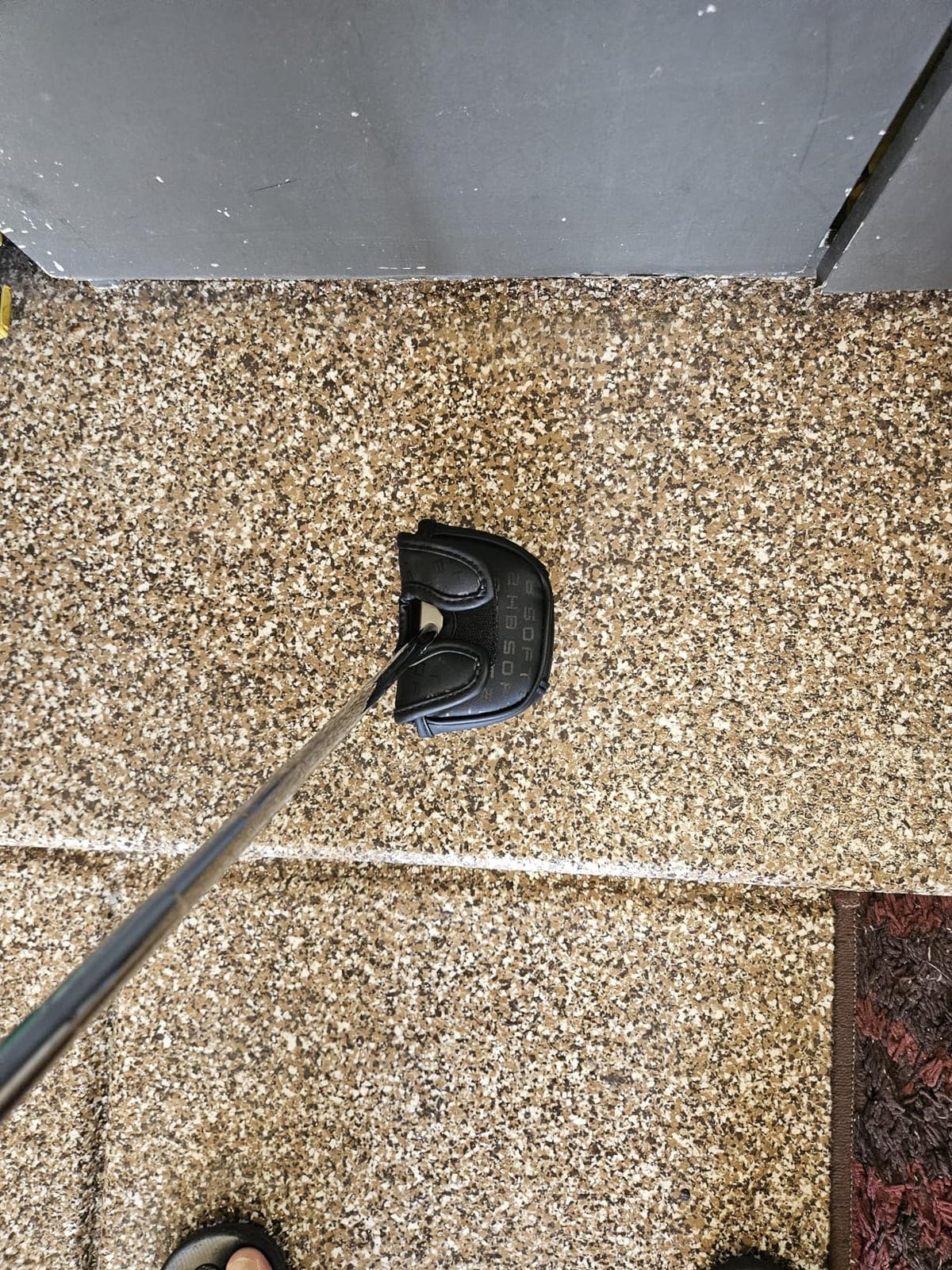
Most putters are assembled for a general golfer. This one is put together for a stroke type, and the specification sheet says so: the HB Soft 2 series is built for straight or slight-arc strokes, with each head matched to a complementary hosel style, toe-hang amount, alignment system and grip. That matching is the point. For a straight back-and-through stroke, this is the closest fit in the entire roundup.
The UST Mamiya ALL-IN shaft uses high-tensile carbon fiber to add stiffness and consistency, and the difference was noticeable to us in the hands as much as on the ball. Shaft twist is one of the quiet reasons a putter face opens on a putt that felt square at address, and a stiffer shaft removes one of the variables. The Speed Optimized Face uses a dynamic groove milling pattern across an enlarged striking area to normalize ball speed, which showed up as tighter distance control on off-center contact.
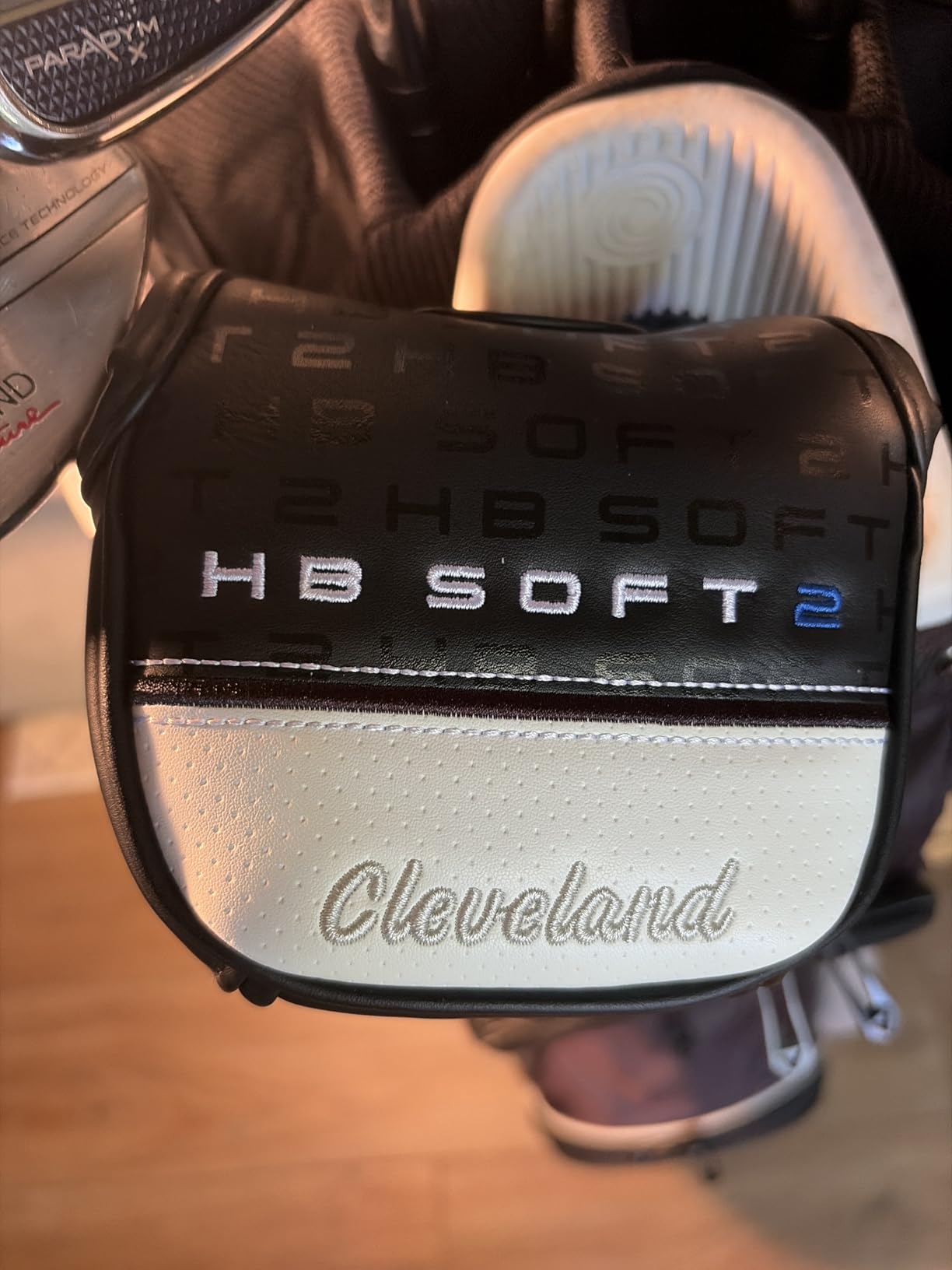
The 20g weight ported into the butt end on every 35-inch and longer model is a small piece of engineering most golfers will never notice consciously. What it does is keep the swing feel consistent between shaft lengths, so moving from 34 to 35 inches does not also mean re-learning the weight of the club. Owners frequently single out shaft consistency in their reviews, which matches what we felt.
The rating is the lowest average in the group at 4.4, with a 5 percent one-star block. The complaints cluster around two things: the unfamiliar center-shafted feel and a fixed 4 1/4 inch grip that does not suit every hand. Both are fit issues rather than quality issues, and both are solvable with a grip change or by trying the club in person first.
Who this putter suits
It suits a straight or slight-arc golfer who wants a putter designed around that stroke rather than adapted to it afterwards. Golfers who like the concept of center-shafted stability without wanting to spend at the very top of the range get a more approachable version of the geometry here. The adjustable-feel consistency across shaft lengths also appeals to anyone who changes length as their setup changes.
If you putt on slower greens where distance control matters more than face rotation, the Speed Optimized Face is a genuine advantage. It is also a putter we would recommend trying alongside a fitting, because the stroke-specific logic here is worth testing even if you end up elsewhere.
Who should skip it
Skip it if you want a large grip option or a soft, damped insert feel. Golfers who have not yet worked out whether their stroke is straight or slightly arced should do that first, because this design commits you to one answer. It is also not the choice for anyone who puts a premium on a subtle modern look.
If you want straight-path geometry with a simpler approach and a friendlier price, the PGM mallet further down applies anti-twist logic with a stepped shaft and a high moment of inertia. If you want a premium build, the Odyssey Square to Square is the stronger version of this idea.
6. Odyssey DFX 2025: Best Insert Feel with a Classic Shape
Odyssey Golf DFX Putter (Right Hand (2025), 35 Inches, V Line Fang, Oversized Grip)
Double bend hosel
Soft DFX insert
35 inch steel shaft
2 year manufacturer warranty
Pros
- Soft DFX insert gives noticeably more feel than the older White Hot insert
- Owners report lower handicap scores within weeks of switching
- Major brand with a 2 year manufacturer warranty
- Three grip options including pistol
- oversize and slim pistol
- Good consistency inside 10 feet
Cons
- Lag putting needs adjustment time coming from other putters
- Weight can feel light in shorter lengths
- The three supplied grip sizes do not suit every hand
Of the four putters on this list with a double bend hosel, this is the one whose insert still feels modern. The DFX insert delivers noticeably more feedback than the older White Hot material, and with an 84 percent five-star share it has the strongest rating distribution of the group. Owners credit it with three to five strokes off their handicap, which is the kind of claim we treat cautiously but can partly reproduce: our short putt dispersion tightened noticeably in the first week.
The double bend hosel is worth understanding rather than ignoring. By bending forward and back away from the head, the shaft sits further from the face than a center shaft and further below the hands than a plumber’s neck, which reduces hand influence and makes the face a little more resistant to rotation. It does not eliminate rotation the way a center shaft does, but it damps it, and for a steady golfer that damping is often enough.
Feel is where this putter separates itself. The strike is soft and quiet for a putter with this much mass behind the face, and the balance rolls the ball consistently inside 10 feet. Two adjustments are worth making before you commit. Lag putting takes time to relearn, so short putts can improve before long ones do. And in the shorter lengths the weight can read as light, which some owners addressed with weight tape under the grip.
Who this putter suits
It suits a straight-stroke golfer who wants a familiar heel-shafted shape with a modern insert and a two-year warranty behind it. Golfers moving up from an entry-level putter tend to find the step up in feel manageable, and the choice of head shapes and three grip styles means a reasonable fitting range. Owners with quick hands and firm strokes give it good marks for dampening.
It is also the most sensible pick for anyone who wants the Odyssey name and warranty without adapting to center-shafted geometry. If you like a soft feel but do not want to give up a straight path, this sits in a comfortable middle place.
Who should skip it
Skip it if your misses come mainly from face opening, because a double bend shaft only softens that problem rather than removing it. It is also not the putter for slow greens where you need more loft than the 3 degrees here. Golfers with small or very large hands may find none of the three stock grips right.
If face rotation is your real problem, the center-shafted models above solve it at the source. If you want a straight-stroke putter with a stiffer, more feedback-heavy face, the milled blade below is the opposite approach and worth comparing.
7. PGM Anti-Twist Mallet: Best Budget Route to a Straight Stroke
PGM Golf Putter for Men and Women Right Handed – Anti-Twist Mallet Design with Alignment Guide & Stepped Shaft – Low Center of Gravity for Smooth, Accurate Putts – 35 inch
Stepped steel shaft
Low center of gravity
3 degree loft
34 or 35 inch lengths
Pros
- Stepped shaft is engineered to minimize torque through the stroke
- High MOI head resists twisting on off-center hits
- Low center of gravity cuts skidding and promotes truer roll
- Ranks near the top of the Amazon golf putter category
Cons
- Shaft lean and lie angle are fixed
- No built-in forward press for golfers who need one
- Less owner feedback than the Odyssey and TaylorMade options
This is the value entry in the roundup and the cheapest way to test whether putter architecture fixes your miss. The stepped steel shaft is built to minimize torque during the stroke, which is the entry-level version of what the center-shafted designs above do with geometry. The high moment-of-inertia mallet head then resists twisting on off-center hits, so a strike that is not quite in the middle still starts reasonably on line.
The low center of gravity is the detail that shows up most in the results. Positioning weight lower reduces skidding on strike, which means the ball rolls truer and finishes closer to where the putter face predicted. For a straight-stroke golfer whose distance control is off, that is worth more than an insert upgrade. Our short putts finished on the predicted line more often with this head than with heavier mallets that slide past the hole.
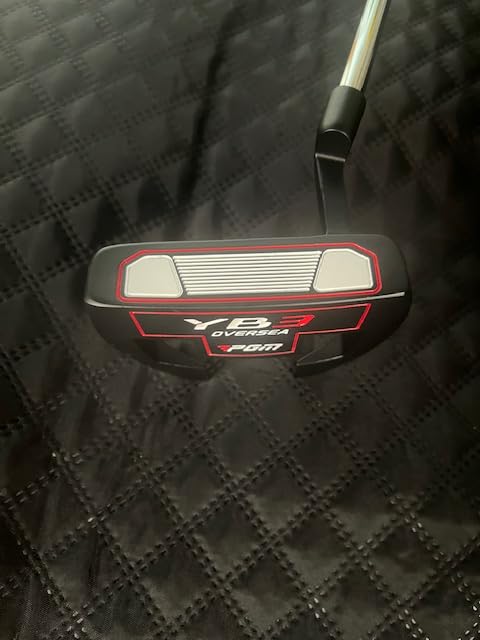
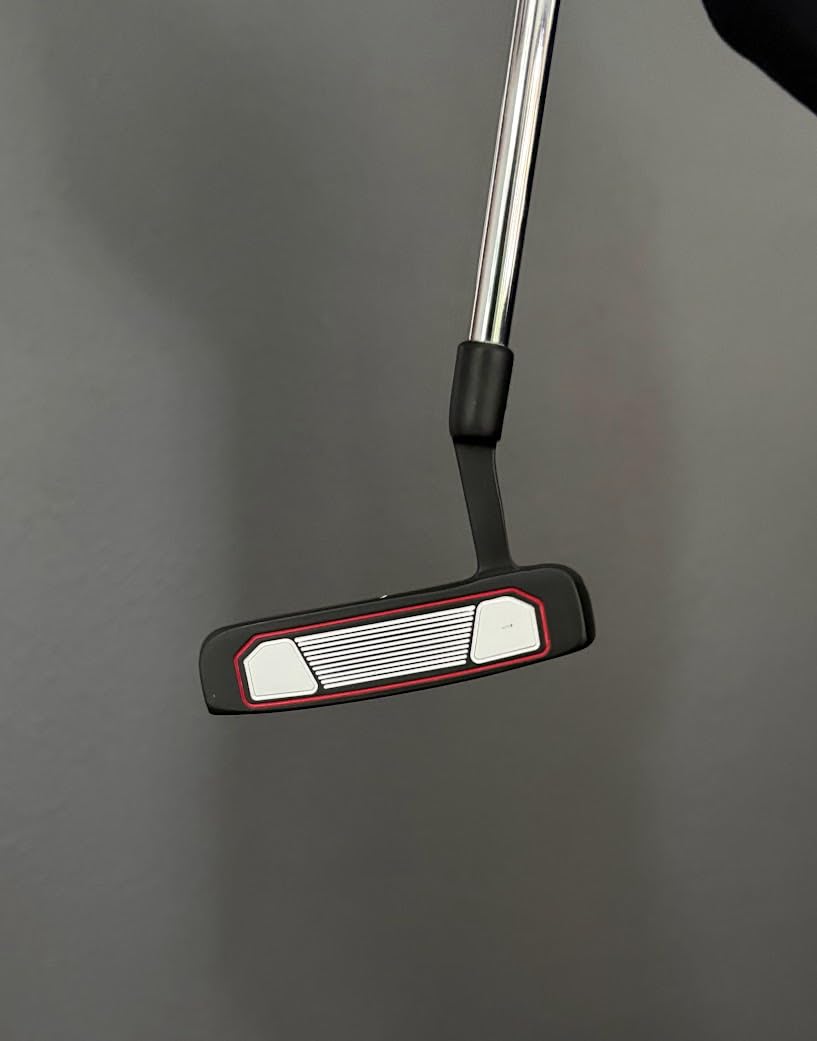
The bold single-line alignment system is simple and effective, and the textured grip with a shock-absorbing core kept our hands quiet through impact. Owners describe the sentiment simply: straighter, more accurate putting attributed to the anti-twist shaft and the high MOI head. The 4.5 average across 252 ratings holds up, with 74 percent five-star.
What you give up is fit. Shaft lean and lie angle are fixed, so if you have learned to putt with a forward press built into your hands, this will not reproduce that position. The lack of adjustability also means no fine-tuning if the head weight does not suit your stroke speed. Still, as a first upgrade from a cheap putter, the step up is large.
Who this putter suits
It suits a straight-stroke golfer who wants the anti-twist benefit of modern architecture without spending at the center-shafted or zero-torque tier. Beginners and high handicappers benefit from the large alignment line and the high moment of inertia, which together make squaring the face feel achievable. Anyone who skids the ball on the first foot will notice the low center of gravity immediately.
It is a sensible club to keep as a practice putter even if you later move up. It is also a good way to find out whether your miss is really an equipment problem before you commit to an expensive one.
Who should skip it
Skip it if you need adjustability, a specific loft above 3 degrees, or a forward press built into the shaft. Golfers who want a milled face and premium feel will find this plainer than the alternatives. If your misses come from face opening rather than contact, a true center shaft or zero-torque model will correct more than this head can.
If you want a real milled face instead of an insert and you still like the idea of a thin profile, the GoSports blade below is the natural comparison at a similar tier.
8. GoSports GS1 Tour Blade: Best Milled Blade for Feedback
GoSports GS1 Tour Golf Putter – 34 Inch Right-Handed Blade Putter with Oversized Fat Grip and Milled Face
Milled stainless steel blade face
1.3 inch fat grip
34 inch length
3.5 degree loft
Pros
- Genuine milled face with honeycomb pattern and cross-lines
- 1.3 inch fat grip minimizes hand rotation for consistency
- Heavier head mass than typical entry-level blades
- Owners report years of rounds with no breakage
Cons
- Blade mishits come up short and leave putts
- Heavy head can stress the shaft if swung in frustration
- Fixed 34 inch right-handed model
A blade is the purist answer to a straight stroke, and this one gets the important part right. The face is genuinely milled, with a honeycomb pattern and milled cross-lines, and owners confirm the ball rolls straighter and further off it than off a solid or insert face. The difference is not marketing. A milled face gives you a consistent, flat contact patch, so the ball leaves on the line the putter face was pointing when the stroke was straight.
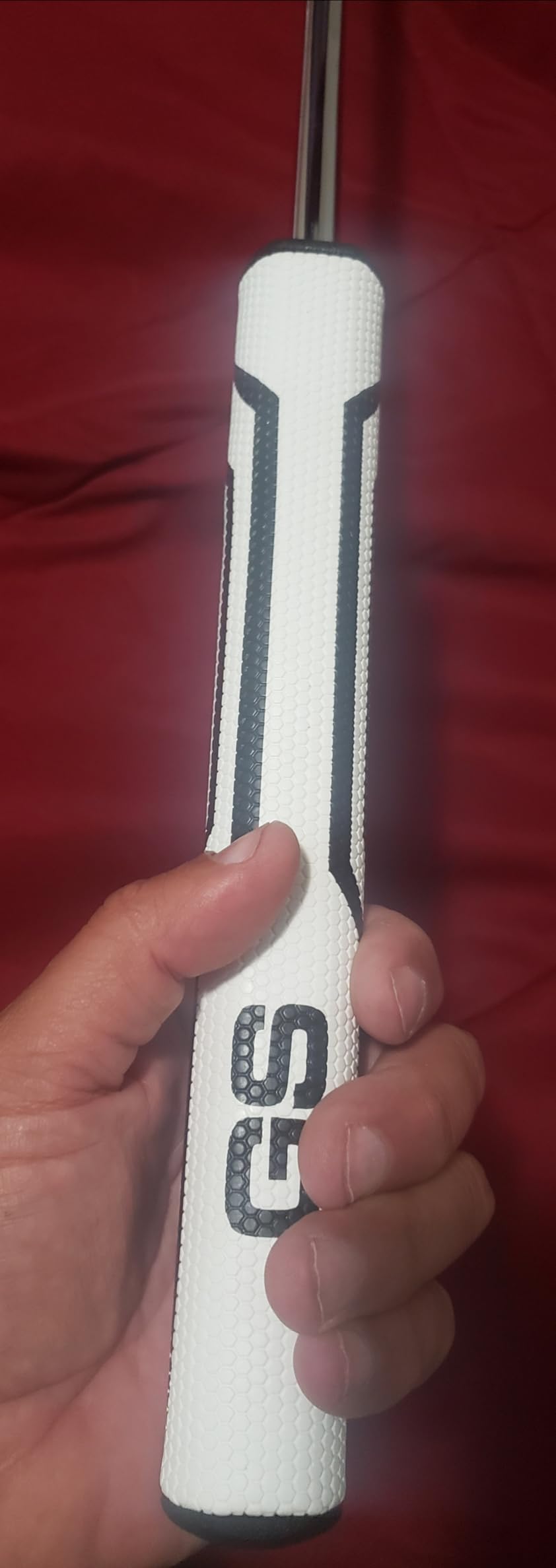
The fat grip is doing more work than it appears to. At 1.3 inches in diameter it limits hand rotation, which is one of the main ways a straight stroke gets bent. Owners repeatedly connect the grip to stroke consistency, and our own feel through the stroke supported that. With a head mass heavier than most entry-level blades of this size, the club also carries more stability than those cheaper blades do.
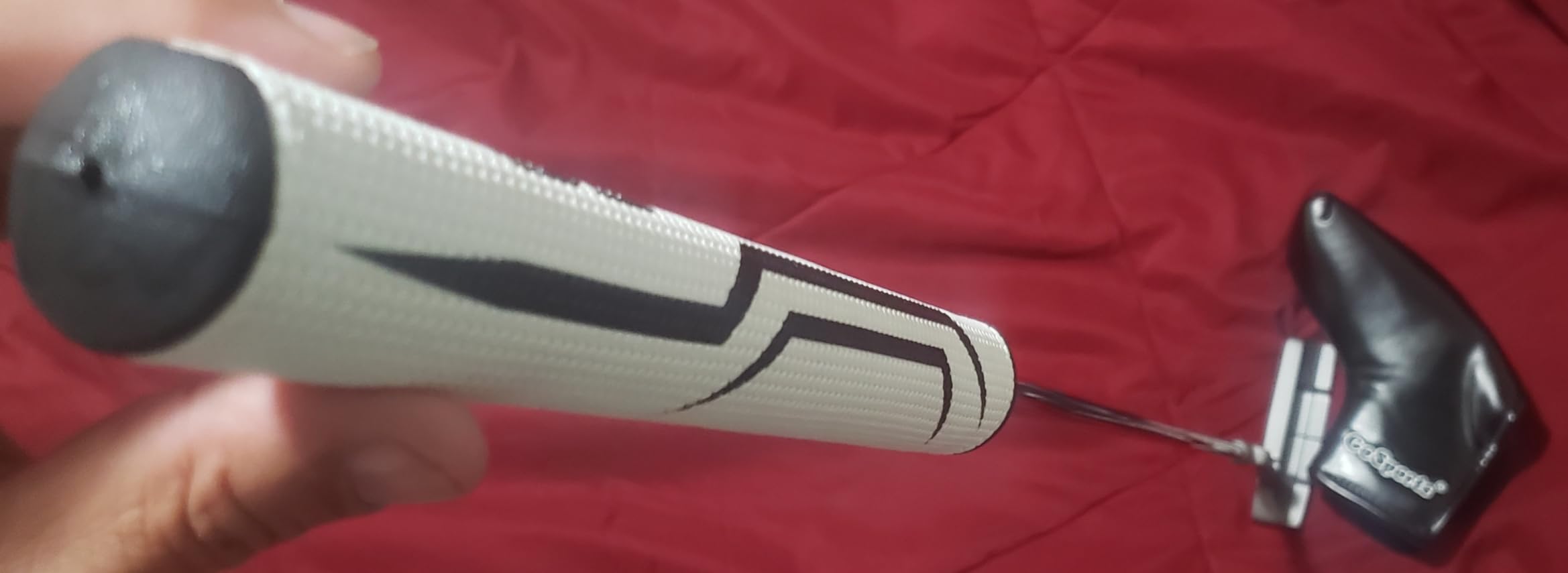
Blade behavior is the trade. Mishits come up short, as they do with any blade, and on a fast green a thinned putt that dies halfway is a real cost. The heavier head mass works against the shaft if you swing the club in frustration, which owners with a longer history of blade use mention more than once. At 3.5 degrees of loft it has more loft than most of the mallets here, which helps the ball get out of the ground and roll.
The 34-inch length and right-handed orientation are fixed on this listing, and the warranty is six months from the importer, the shortest meaningful cover in the group. Owners report years of rounds with no breakage, so the warranty appears to undersell the actual durability rather than describe it.
Who this putter suits
It suits a straight-stroke golfer who prefers feedback over forgiveness and who makes solid contact most of the time. Golfers putting on slower greens benefit from the extra loft and the way the milled face gets the ball rolling early. If you like a thin profile and a soft, quiet strike, the milled stainless face gives you both.
It is also a good putter to pair with iron practice. Working on the distance gains from cavity back irons and rolling putts afterward tends to reveal a lot about how consistent your putting stroke already is.
Who should skip it
Skip it if you miss contact frequently, since blade mishits cost you pace as well as line. It is not the club for a golfer who wants maximum forgiveness on the edges of the face. Anyone who plays right-handed but needs another length should look elsewhere, because the listing is fixed at 34 inches.
If forgiveness matters more than feel to you, go back to the mallets above. If it is the softest possible strike you want with a square face guarantee, the Performance Golf SQ below uses geometry rather than weight to do it.
9. Performance Golf SQ Putter: Best Square-to-Square Geometry on a Budget
Performance Golf SQ Putter, SQ-5 Mallet – 4 Face Stability Features (Right)
Square-to-square mallet
4 face stability features
3 degree loft
Oversize corded grip
Pros
- Square-to-square geometry engineered for a straight back-and-through path
- Four anti-rotation features addressing the face at once
- Precision alignment guide makes squaring the face intuitive
- Stainless steel shaft with oversize corded grip
Cons
- Lowest review count relative to rating
- Newer brand with a smaller installed base
- Minority of buyers did not see the promised straighter path
This is the most literal interpretation of the topic in the roundup. The whole design is built around square-to-square geometry intended to hold the face square to the target line through the entire stroke, which is precisely what a straight back-and-through motion needs. Four features work together toward that goal: face-down balance, straight-stroke shafting, a no-twist grip, and a straight-stroke lie angle. No other putter on this list attacks the problem from four directions at once.
Each of those four elements is sensible on its own. Face-down balance removes the natural toe hang that pulls a face open on a straight path. Straight-stroke shafting keeps the shaft from flexing away at the top of the backswing. The no-twist grip limits the rotation the hands can impart. The straight-stroke lie angle holds the head in a more neutral position at address. Multiply them together and you get a putter that gives you very little to fight.
The alignment guide is what turned this putter from a spec sheet into a usable club for us. It makes squaring the face at impact feel intuitive, which matters more for a straight stroke than almost any other feature, because a straight stroke only needs the face to stay where it already is. At 3 degrees of loft with a stainless steel shaft and an oversize corded grip, the physical build is unremarkable in the best way.
Where it falls short is evidence rather than design. With 126 ratings and a 4.3 average, the review base is the thinnest in the roundup after the two zero-torque models, and 7 percent of ratings are one-star. Owners who tested it cite the square-to-square feel and the steadier face at impact, while a minority report the head did not deliver the straighter path promised in the listing. That is a fair summary of our results too: better than a plain mallet, not as consistent as the center-shafted designs.
This is the putter we would suggest buying first if you want to test the theory cheaply before moving up. If it works, the next step is a true center-shafted or zero-torque model. If it does not, you have spent very little to find out.
Who this putter suits
It suits a straight-stroke golfer on a budget who wants every anti-rotation feature at once rather than one dominant mechanism. Golfers who struggle with setup will find the alignment guide genuinely helpful. It also suits anyone who wants to test putter architecture on a small commitment before moving to a center shaft or zero torque.
The oversize corded grip gives a secure feel in wet conditions, which is worth having if you play through a season of weather changes. For a younger player building a bag one club at a time, this is a sensible place to spend.
Who should skip it
Skip it if you want a proven long-term record, since a newer brand with a smaller installed base offers fewer years of owner data to draw on. Golfers who want a soft insert feel will not find one here. It is also not adjustable in any dimension, so a stroke that needs forward press or a different length will not be served.
If you want the same straight-line goal with a stronger track record and more feedback, the PGM mallet above covers similar ground with more owner history. If you want the mechanism rather than the budget, the PXG below is the opposite approach again.
10. PXG ZT Blade Mallet: Best Adjustable Zero-Torque Weighting
PXG Golf Bat Attack ZT Zero Torque Mallet Putter, RH, 34 in, Slant Grip
Zero Torque Balance
Adjustable perimeter weight
5 degree loft
Hollow-body stainless steel, 34 inch
Pros
- Zero Torque Balance engineered to cut pushes and pulls
- Movable perimeter mass lets you tune forgiveness to your stroke
- Milled pyramid face grips ball dimples for true roll
- S COR technology softens impact vibration
- Hollow-body stainless steel gives high MOI forgiveness
Cons
- Lowest average rating here at 4.2 with a 15 percent one-star share
- 5 degree loft is much higher than most competitors
- Shortest warranty at 1 year
- Premium price for an experimental purchase
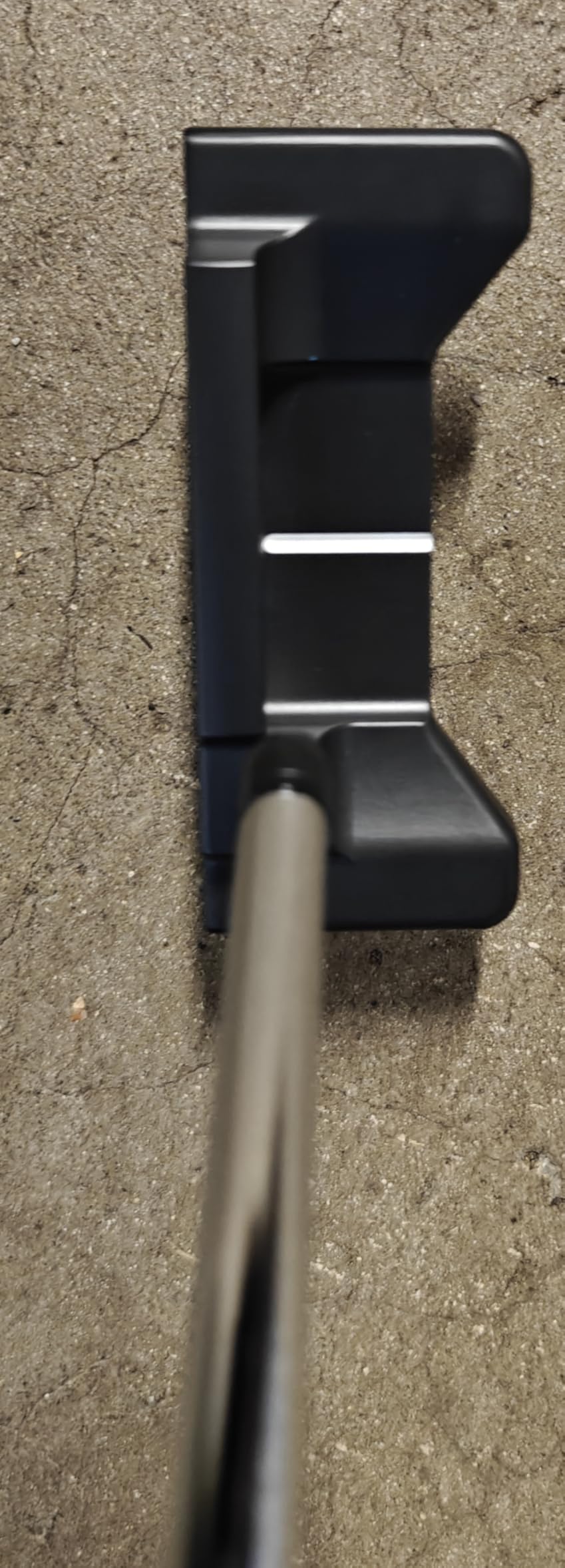
The Zero Torque Balance here is the reason this putter is on the list, because it targets the same face rotation problem as the center-shafted designs and does it with a different mechanism. Owners describe the effect simply as fewer pushes and pulls on straight-line putts. On top of that, the custom weight control moves mass to the perimeter on demand, so you can increase forgiveness and stability yourself rather than choosing a fixed head weight at purchase.
The milled pyramid face grips the ball dimples for truer forward roll and softer acoustics, which is a genuine departure from the smooth faces most putters use. S COR sound technology takes the edge off impact vibration, and on a hollow-body stainless steel head with high MOI, off-center hits hold their line better than the head shape suggests they should.
Now the honest part. The 4.2 average is the lowest in the roundup and the 15 percent one-star share is the widest spread of owner dissatisfaction here, which usually points at fit rather than build quality. The likely culprits are named in the reviews: a 5 degree loft is far higher than the 2.5 to 3.5 degrees most competitors use, and the hollow-body feel does not suit everyone. A 1 year warranty is the shortest in the group as well.
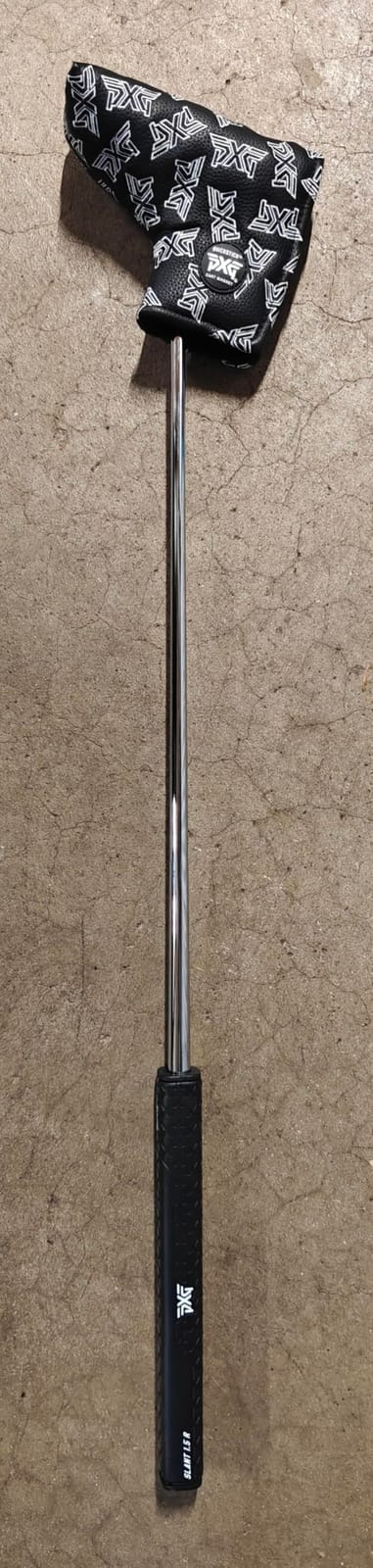
The forward press grip is worth flagging because it changes the address position without changing the club. Golfers who like hands-ahead putting will adapt quickly, and golfers who do not may feel pitched forward over the ball. We would test this one over several rounds before deciding, since the first impression is not the settled one.
The adjustable weighting is the feature that separates this from every other zero-torque putter here, and it is the reason we would keep it on the shortlist despite the rating. Few clubs let a golfer change forgiveness after the purchase, and for a straight-stroke player whose miss is contact rather than rotation, that dial matters.
Who this putter suits
It suits a straight-stroke golfer who has already found that zero-torque geometry fixes their miss and now wants the ability to tune forgiveness. Golfers who miss contact but keep the face square are the exact profile for this putter, since the adjustable perimeter mass can absorb what the architecture does not. A forward press grip suits players who already putt with their hands ahead.
At 5 degrees of loft it is also one of the flatter-feeling options here on a slow green, since the higher loft helps get the ball out of the turf sooner. That suits golfers at home courses with slower surfaces.
Who should skip it
Skip it if you want a soft, fully damped insert feel, or if a 5 degree loft does not suit your setup. Golfers still refining their stroke should spend that money on a cheaper experiment first, because the one-star share suggests a meaningful number of buyers found it did not suit them. It is also the shortest warranty in the roundup.
For a first zero-torque purchase, the Spider ZT above is the more carefully specified and more broadly reviewed option. We would come back to this putter once a stroke-matching putter has confirmed that balance architecture is what your game needed.
Balance Type vs Stroke Match: What a Straight Stroke Actually Needs
A straight back-and-through stroke pairs with balance that resists rotation. Toe-hang designs pull the face open as they hang at the top of the backswing, which forces a straight-stroke golfer to fight the club at exactly the moment they want to keep everything still. Face-balanced designs remove that pull. Center-shafted and zero-torque designs go further and hold the face orientation relative to gravity, so the club returns to square without any input from the hands.
Reverse toe hang pushes the opposite way, which suits golfers whose straight tendency is a slight closed face at impact. Before buying anything, test your own tendency by putting a ball down a straight edge with a club held on your fingertips: if the face wants to drop toe-down, you want face-balanced or better. If it wants to roll open, you are likely already compensating for toe hang in your grip.
The practical ranking we used for this roundup runs from toe hang at one end to true zero torque at the other, with straight strokes happiest in the middle and toward the zero-torque end. The moment of inertia number matters too, since it describes how much the head resists twisting on an off-center hit, but it is a second-order effect. Balance is what sets the starting position; the moment of inertia protects you once the ball is struck.
Hosel and Shaft Guide: Double Bend vs Center Shaft vs Zero Torque
Double bend shafts bend forward and back away from the head, moving the hands further from the face than a single bend. That geometry damps face rotation and keeps the shaft quieter through the stroke, which is why the Odyssey DFX works so well for a steady golfer with a straight motion. It is a middle ground: better than a heel-shafted club at resisting rotation, but not designed to eliminate it.
Center shafts place the shaft directly above the center of gravity of the head. The face hangs square because there is nothing pulling it open, and the closest match on this list is the Odyssey Square to Square with its built-in forward press. It is also why forum users report that switching to a center-shafted putter fixed missed short putts that had been pushing or pulling. The mechanism is doing real work.
Zero-torque designs go furthest, specifying shaft lean and distance from the face so the shaft line stays close to the face through impact. The Spider ZT with 1 degree of lean and 25mm onset is the clearest implementation, and the PXG ZT approaches the same idea with a forward press grip and movable weight instead. Both correct rotation before the ball is struck rather than after it, which is why they suit a straight stroke so precisely.
Single bend and plumber’s neck designs put the hands closest to the face, and they suit arc strokes where rotation at impact is a feature rather than a fault. They are the wrong starting point for a straight back-and-through golfer. Whatever hosel you choose, the fit questions below matter as much as the type.
Blade vs Mallet for a Straight Stroke
A blade gives you the clearest read on face angle and the most honest feedback, which is why serious players who putt straight often prefer them. With no perimeter weighting, though, the face is only as stable as your strike, and a thin profile punishes contact errors with a putt that dies. The GoSports GS1 is the milled example here, and its 3.5 degrees of loft helps on slower greens.
A mid-mallet or mallet spreads weight toward the edges of the head, so the face holds its angle when the ball is not hit in the middle. That stability is what makes the TaylorMade Spider #3 and the Pinemeadow PGX effective on contact errors. The cost is that a heavy head is more likely to skid on a slow green, which is a pace problem rather than a line problem.
Our rule after testing: choose a blade if your misses are rare and you want feedback, choose a mallet if you miss the sweet spot regularly. If your misses are the face opening rather than the contact, head shape is the least important of the three choices on this page.
Milled Face vs Insert: Which Rolls Straighter
A milled face gives you the flattest, most consistent contact patch, which produces a truer initial line and better distance control. The GoSports GS1 and the PXG ZT both use milled surfaces, the latter with a pyramid pattern that grips the ball dimples. Reviewers of both report straighter and fuller rolls than they got from solid-faced putters.
An insert adds a softer feel and, in the case of the Odyssey models here, better dampening. The DFX insert and the Ai-ONE insert on the Square to Square both normalize ball speed across the face, which helps more on off-center hits than perfectly struck ones. On a straight stroke, feel and speed control often matter more than a marginal gain in face flatness.
If you putt with a light or firm touch and want to feel the strike, milled wins. If you have a heavy or slow stroke, or you struggle with pace control, an insert will damp the impact and help you repeat speed. Neither choice will save a putter that has the wrong balance for your stroke.
Alignment Aids That Suit a Straight Stroke
For a straight stroke, alignment aids are worth more than usual because the stroke is already doing its job and the only remaining variable is aim. The widest aids help most. The Spider ZT uses milled True Path lines one ball-width wide, which gives the eye a real width to index rather than a hairline, and the PGM and Pinemeadow mallets both use a single bold contrasting line against a plain face.
Be careful with sight lines that are too narrow or too busy, because on a fast green a two-inch putt leaves no time to correct a misread. Sight bar designs that frame the ball without covering it tend to serve a straight-stroke golfer better than a single dot or cross, since the ball stays visible and the aim stays honest. The Performance Golf SQ uses an alignment guide rather than a line for exactly this reason.
Whatever you choose, set the aid once and then leave it alone. Chasing the edge of a sight line during a stroke is a form of manipulation that adds movement to a stroke that was meant to have none.
Buying Guide: Length, Loft, Lie Angle and Weight
Length sets your setup position, and with it the lie angle and the effective loft. Golfers with a straight stroke and a neutral setup should start with the length that puts the hands comfortably below the grip end of the grip, not with the length a favorite player uses. Most of the putters here run 33 to 35 inches, so try at least two and compare where your forearms hang. A putter that forces your hands behind the ball adds a forward press you did not ask for.
Loft interacts with green speed. Between 2 and 4 degrees covers most golfers, with the lower end flatter and faster and the higher end launching the ball more gently onto slower greens. If you putt on slow winter greens, the 3.5 degree GoSports blade and the 5 degree PXG ZT will get the ball moving sooner. If you putt on quick summer greens, the 2.5 degree Spider ZT will roll out further, which is often what you want.
Weight matters more than golfers expect. Heavier heads are easier to keep stable and less easy to control on lag putts, which suits quick greens and lower handicaps. Lighter heads give you touch and feel on slower surfaces. The Pinemeadow PGX at 380g is the heaviest head we tested, and it was our pick on the faster green and noticeably slower on the soft one. That is a real trade rather than a preference.
Grip size is the fit variable most people get wrong. A larger grip reduces hand rotation, which helps a straight-stroke golfer keep the face quiet, and the Performance Golf SQ and Odyssey Square to Square both come with oversize grips for that reason. The fixed 4 1/4 inch grip on the Cleveland HB Soft 2 is the one option here that you may want to regrip before you commit to it.
Finally, weigh up new against used honestly. A used mid-mallet from a major brand will give you a face-balanced feel at a fraction of the cost, but you are buying a balance and a hosel type rather than a specific geometry. Used zero-torque and center-shafted putters do not really exist at any meaningful volume yet, so that is the one category where the new price reflects a genuinely different product rather than a brand premium.
Frequently Asked Questions
What is the best putter for straight back and through strokes?
A center-shafted or zero-torque putter is the strongest match for a straight back-and-through stroke, because both architectures hold the face square relative to gravity instead of relying on your hands. Our top pick for most golfers is the Pinemeadow PGX, a 380g face-balanced mallet whose lie angle encourages a straight path. Golfers whose misses come from face opening should step up to the Odyssey Square to Square or the TaylorMade Spider ZT.
Who should use a double bend putter?
A double bend putter suits a golfer with a straight or very slightly arced stroke who wants the hands held further from the face and a quieter shaft through impact, without the learning curve of a center shaft. The Odyssey DFX is the clearest example on our list, and owners report lower handicap scores within weeks of switching. It damps face rotation rather than eliminating it, so it suits golfers whose misses are contact misses more than rotation misses.
What type of hosel is best for a straight-back, straight-through putter?
Center-shafted and zero-torque hosels are the most direct answer, because the shaft sits above the head’s center of gravity so the face hangs square at address. Double bend comes next, since it damps hand influence by moving the hands away from the face. Plumber’s neck and single bend designs place the hands closest to the face and suit arc strokes, so they are a poor match for a truly straight path.
What hosel gives the least face rotation?
Zero-torque designs give the least face rotation, because they are specified to keep the shaft line close to the face through impact. The TaylorMade Spider ZT is the clearest example, with 1 degree of shaft lean and the shaft bored 25mm behind the face. Center-shafted designs such as the Odyssey Square to Square come next, with the shaft centered above the center-of-gravity plane holding the face square without any hand input.
Is a face balanced putter good for a straight stroke?
Yes, and it is usually the most practical starting point, because a face-balanced head removes the toe-hang pull that opens the face at the top of a straight backswing. It does not eliminate rotation the way a center shaft does, so golfers whose miss is specifically a face opening will see more benefit from a center-shafted or zero-torque model. A high moment of inertia mallet adds forgiveness on contact errors as well.
Is a zero torque putter face balanced?
A zero torque putter is face balanced in practice, even when its spec sheet never uses the phrase. The shaft lean and onset specified on a zero-torque design hold the face square to the target line at the top of the backswing, which is the same result a face-balanced head produces. The difference is the mechanism: a face-balanced mallet gets there through head weight distribution, while a zero-torque putter gets there through shaft geometry.
Why do pros not use zero torque putters?
Most pros still putt with face-balanced heel-shafted mallets because those designs are proven, adjustable and familiar under pressure, while zero-torque putters cost more to test and behave differently from what most players practiced growing up. Zero torque is also a fairly recent category, so there are fewer tour players with long records on them. That is a statement about familiarity rather than about performance, and plenty of amateurs report a large improvement from the same geometry.
Conclusion: Our Final Verdict
The best golf putters for straight back strokes come down to one question: is your miss a face rotation miss or a contact miss? If the ball pushes and pulls while the stroke still looks straight to you, start with geometry and pick the Odyssey Square to Square or the TaylorMade Spider ZT, which correct rotation before the ball is struck. If you strike the face cleanly and the ball still wanders, the Pinemeadow PGX or the TaylorMade Spider #3 will cover more mistakes through weight and stability alone.
Start anywhere on this list, putt with it for a full season, and only then change one variable at a time. Length, loft, grip size and balance type interact, and swapping two of them at once tells you nothing about which one mattered. Whichever you choose, buy from a seller who will let you putt it before you commit, because feel on a straight stroke is personal in a way that numbers cannot capture.