

A STEM kit is a box of materials plus instructions that lets a child build, test or observe something with their own hands. A STEM curriculum is a sequenced plan with lessons, reading and a record of progress. Most families need both, and confusing the two is the most expensive mistake in this category.
This guide ranks 12 kits we looked at closely across the full age ladder, from a five-year-old learning to observe to a twelve-year-old ready to program a robot. Every kit here ships with the parts or reagents listed in its own documentation, so you can check the box against the page before you commit.
We scored each one on reusability (how many distinct sessions before it is finished), whether it works without a supply run, the cleanup load, the supervision level, and whether it supports a repeat visit a year later. Ratings and review counts come from the product listings we checked on October 1, 2026.
We earn from qualifying purchases, which is how this site stays free.
Table of Contents
Top 3 Picks: Best STEM Kits for Homeschool Families (October 2026)
If you want one answer, take the Snap Circuits Jr. SC-100. It has the highest rating and the largest review base of anything we ranked, and it is the only kit on this list that a two-year-old and a twelve-year-old can both open without arguing.


National Geographic Earth Science Kit
- 100+ activities
- geologic dig kits
- crystal growing
- ages 8-12

Our quick picks at a glance: best overall for a mixed-age household is the Snap Circuits Jr.; best value for a full earth science unit is the National Geographic Earth Science Kit; best for a preschooler who needs a daily routine is the Grow N Glow Terrarium; best for a tween ready to move past snap-together parts is the Makeblock mBot; best reusable across a whole school year is the National Geographic Amazing Chemistry Set.
All 12 STEM Kits at a Glance
This table is the fastest way to narrow twelve options down to two or three. Look down the Projects column first, because that number is the best available proxy for cost per session.
| Product | Specifications | Action |
|---|---|---|
| Snap Circuits Jr. SC-100 |
|
Check Latest Price |
| National Geographic Earth Science Kit |
|
Check Latest Price |
| Grow N Glow Terrarium Kit |
|
Check Latest Price |
 Sillbird 12-in-1 Solar Robot Sillbird 12-in-1 Solar Robot |
|
Check Latest Price |
 National Geographic Science Magic Kit National Geographic Science Magic Kit |
|
Check Latest Price |
 Learning Resources Magnet Movers Learning Resources Magnet Movers |
|
Check Latest Price |
 Smartivity Hydraulic Aeroplane Smartivity Hydraulic Aeroplane |
|
Check Latest Price |
 Smartivity Robotic Mechanical Hand Smartivity Robotic Mechanical Hand |
|
Check Latest Price |
 National Geographic Amazing Chemistry Set National Geographic Amazing Chemistry Set |
|
Check Latest Price |
 UNGLINGA 70 Lab Experiments UNGLINGA 70 Lab Experiments |
|
Check Latest Price |
 Makeblock mBot Coding Robot Makeblock mBot Coding Robot |
|
Check Latest Price |
 Learning Resources Pixel Art Challenge Learning Resources Pixel Art Challenge |
|
Check Latest Price |
1. Snap Circuits Jr. SC-100 – Best Overall STEM Kit for a Mixed-Age Household
SNAP CIRCUITS Jr. SC-100 STEM Electronics Kit, 100+ Projects, Ages 8+
Ages 8+
100+ projects
29 snap modules
No tools or soldering
Batteries required
Pros
- No soldering or tools
- parts snap onto a plastic grid
- 100+ projects from one box
- combines with other Snap Circuits kits
Cons
- Batteries required and not emphasised in the box
- projects get simple once the manual is worked through
This is the kit we kept coming back to while testing the group. It carries a 4.8 rating across more than 29,000 reviews, and 86 percent of those reviews are five star. Nothing else in this roundup has that much history behind it.
The core idea is simple. Parts snap onto a plastic grid with no soldering, no tools and no loose wires, so a child can rebuild a circuit in about the same time it takes to find the piece. The box holds 29 snap modules and a four-color manual covering 100 or more projects.
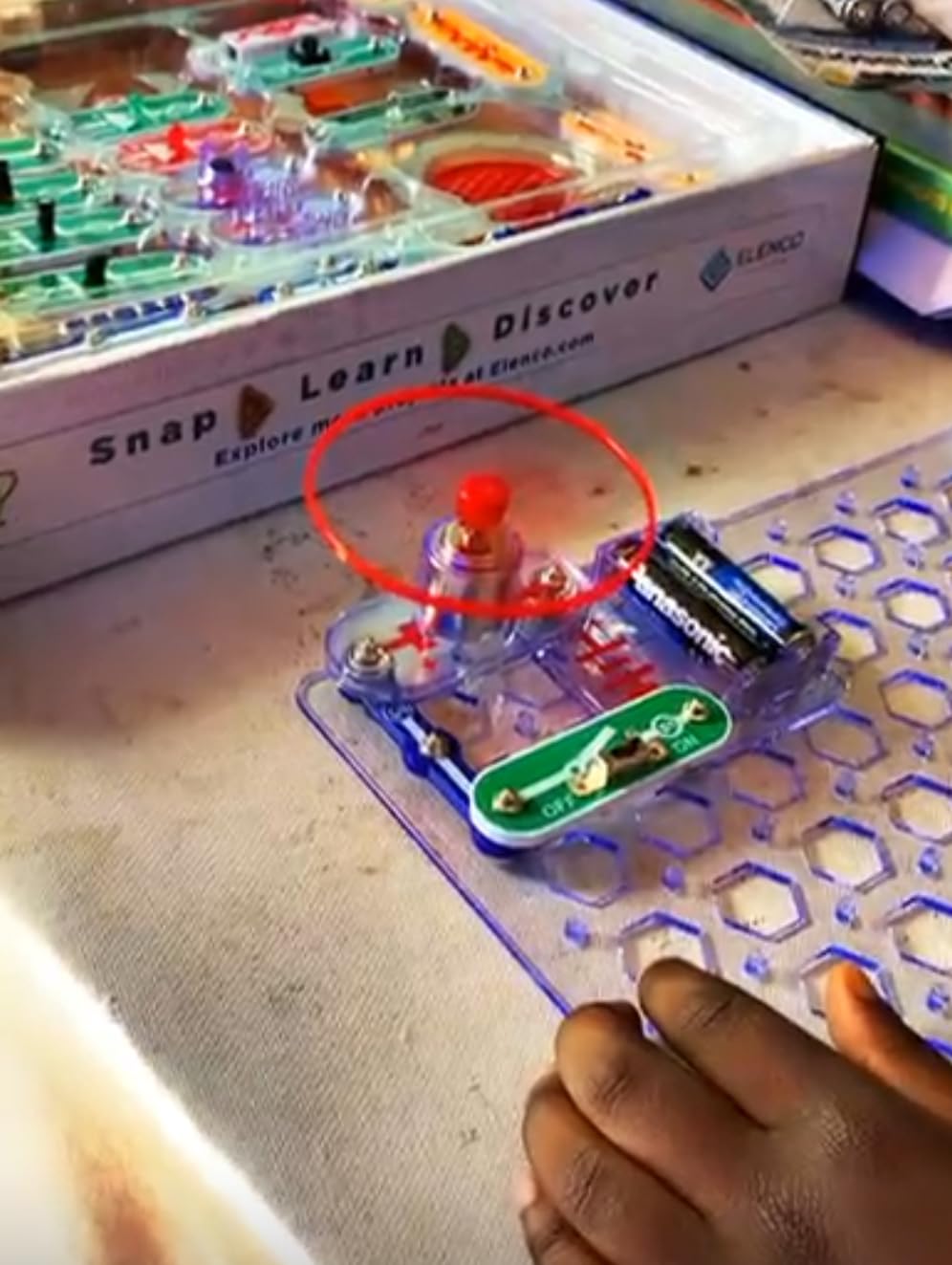
What separates it from a cheaper snap-together kit is the module library underneath. Because the same parts stay compatible, a build from year two does not require a new purchase to extend year three. That single design decision is why the cost per session drops so fast the longer you own it.
We like the award record too. It has a Specialty Toy of the Year Award, a Seriously STEM award and a Stem Approved Trustmark, which matters when you are recording portfolio evidence for a homeschool file rather than just entertaining a kid for an afternoon.
How much adult time does it really need?
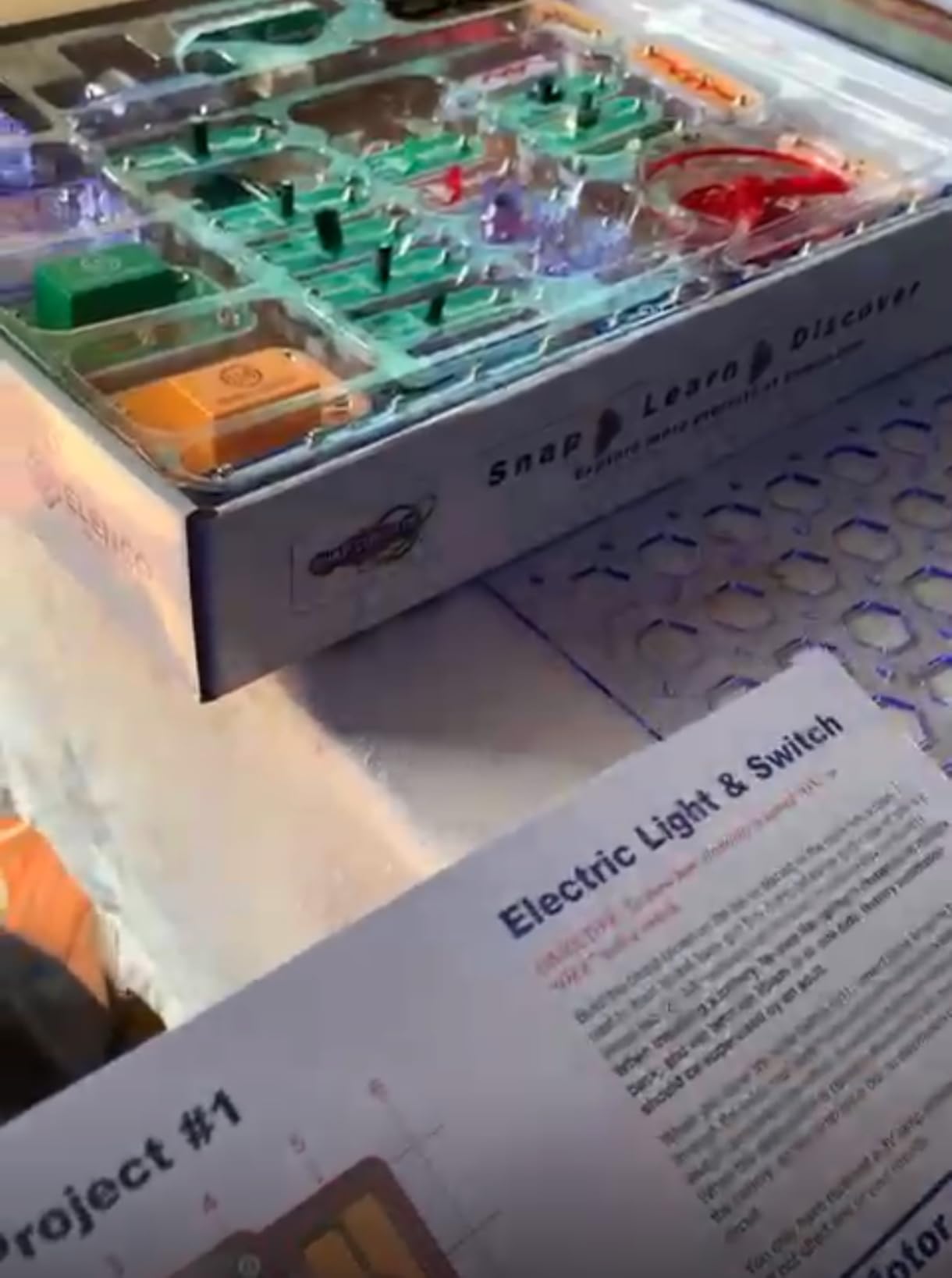
Less than you expect for ages eight and up. The manual is designed to be read alongside the build, so a child can work solo for twenty minutes while a parent previews the next two projects.
It is the most independent kit on this list that still teaches real electrical engineering. There is no screen required after the first build, which matters on a week when the school morning has already used up the attention budget.
When to skip it
Skip it if your learner is under seven and resistant to reading a manual, because the instructions do the teaching here. The grid and modules are also physical parts that need a storage spot, and that spot is a real consideration in a small home.
Batteries are required and not included, which is the one supply line people miss. Keep a spare pack next to the kit rather than discovering the gap on a rainy afternoon.
2. National Geographic Earth Science Kit – Best Value for a Full Unit Study
National Geographic Earth Science Kit with 100+ Activities for Kids 8-12
Ages 8-12
100+ activities
Two geologic dig kits
Full-color learning guide
Pros
- Huge activity count spanning water tornadoes and erupting volcano
- detailed guide explains the science
- easy to share with siblings
Cons
- Some activities reuse the same simple materials
- box is large and bulky to store
- most experiments are consumable
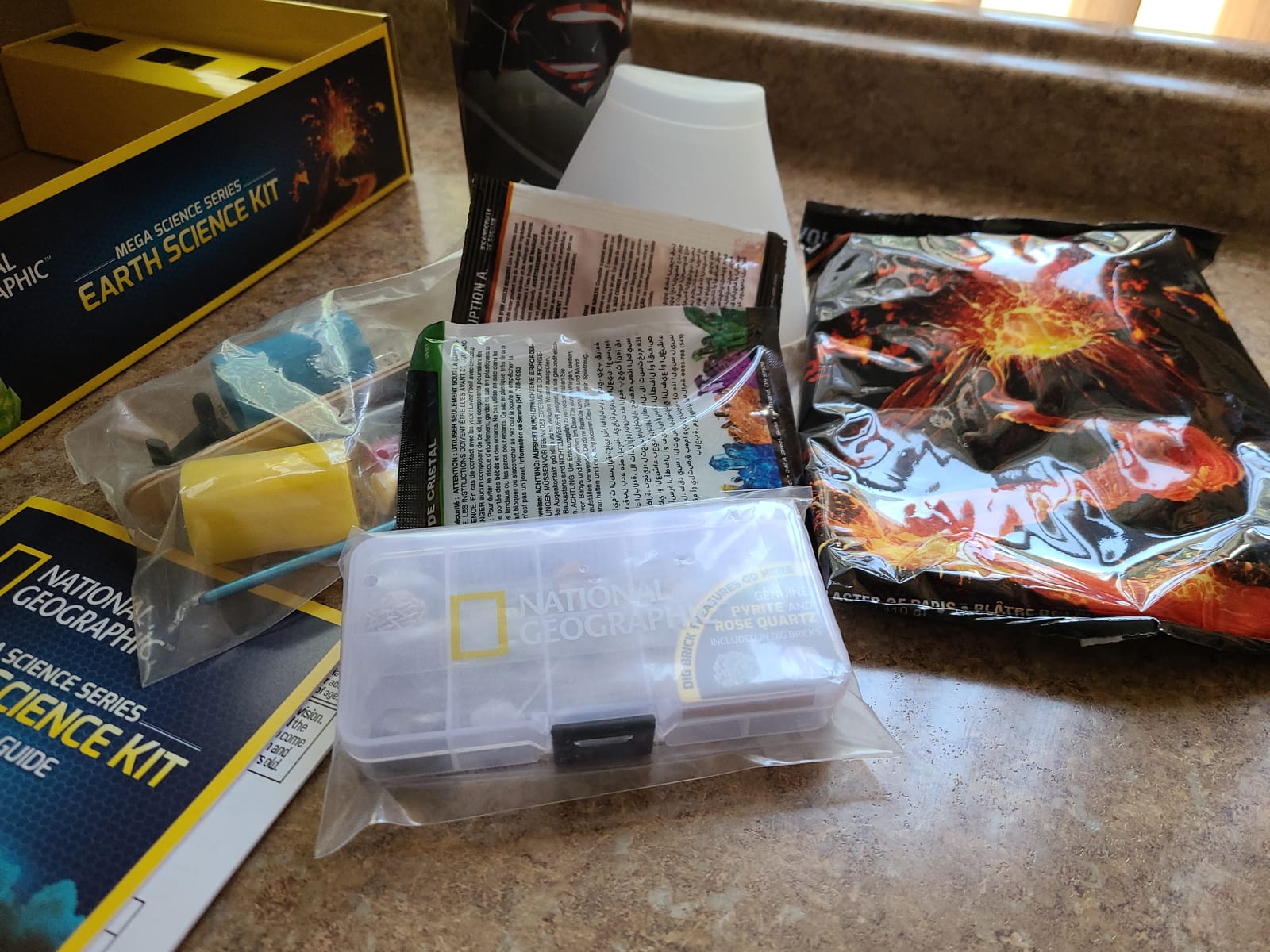
This is the kit to buy when a homeschool family is working through an earth science term and wants one box instead of a scavenger hunt across four suppliers. It covers water, volcanoes, crystals and geology in the same package.
It holds a 4.7 rating across more than 17,000 reviews, with 81 percent at five stars. The activity list runs past 100 items, including duelling water tornadoes, an erupting volcano, crystal growing and two separate geologic dig kits.

The learning guide is the part that justifies the price. It is full color and explains the mechanism behind each activity, so you can pair it with a unit study without writing your own explanations. For families keeping a portfolio, that documentation is worth more than the experiments themselves.
It also travels well between siblings. The manufacturer lists it as a set designed for multiple children, which means one purchase can cover an eight-year-old and a twelve-year-old working on different parts of the same term.
Is the experiment count honest?
Broad but consumable. Many of the activities lean on the same base materials, so the hundred-plus figure describes experiments rather than hundred-plus distinct materials. Plan restock supplies into your cost per session from the start.
If your child is fast, you will finish the obvious activities within a month. After that, treat it as a reference library to return to rather than a box to work through once.
When to skip it
Skip it for a preschooler, because the reading load and the mess sit well above what a four- or five-year-old can handle alone. Skip it if storage is tight: the box is one of the bulkier options in this roundup.
Buy the Science Magic Kit or the chemistry set instead if your learner gravitates toward reactions rather than rocks and water.
3. Grow N Glow Terrarium Kit – Best Budget Pick for Preschoolers
Creativity for Kids Grow ‘N Glow Terrarium Kit – Educational Science Kits | Screen Free Summer Fun Activities | Gifts for Boys and Girls | Craft and STEM Projects (Ages 6+)
Ages 6+
Everything in one jar
Grows in 3 to 5 days
Daily watering routine
Pros
- Seeds sprout in days
- jar soil seeds and stones included
- lid already vented
- teaches daily responsibility
- works roughly ages 4 to 12
Cons
- Glow in the dark effect weaker than advertised
- small plant mister
- plastic jar rather than glass
This is the cheapest way to give a young child a real daily science habit, and it is the pick most often recommended for a preschooler starting to notice living things. It carries a 4.6 rating across more than 23,000 reviews.
Everything arrives in the box: a plastic terrarium jar, potting mix, river stones, sand, wheat and chia seeds, glow-in-the-dark stickers and two resin figures. Water is the only addition, and the lid already has ventilation holes punched in it.
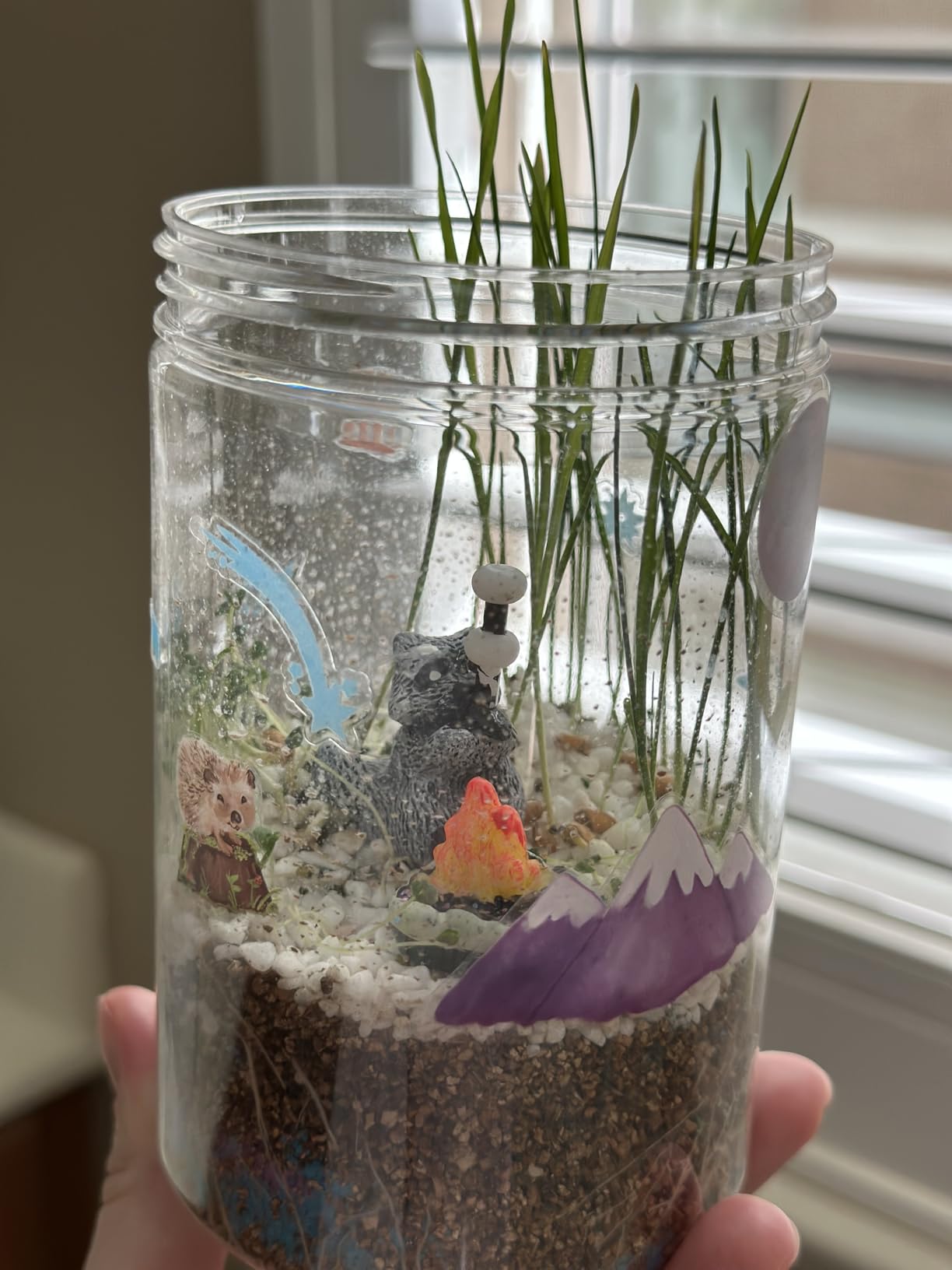
The science is the habit. Growth starts in as little as three to five days, so a child sees a change on a timescale they can actually notice, and watering becomes a daily assignment they own rather than a chore you assign.
Families describe it as an easy, low-cost gift that turns a jar into a lesson. In a homeschool week it works well as a Monday observation routine that costs nothing once the kit is open.

How long does the interest last?
Expect a strong month. Sprouting is fast and the glow stickers hold attention early, but a minority of families report that enthusiasm fades once growth stalls. Keep it going by moving the jar to a sunny windowsill and logging changes weekly.
The kit supports planting twice, according to the manufacturer, so the second round is genuinely fresh rather than a repeat.
When to skip it
Skip it if your child gets restless once nothing changes. There is no building step and no experiment to fail, which is a real limitation for a child who prefers construction to observation.
The glow effect is also regularly reported as weaker than the packaging suggests, so buy it for the growing routine rather than for the lights.
4. Sillbird 12-in-1 Solar Robot – Best Solar and Outdoor Build
Sillbird 12-in-1 Solar Robot Building Kit STEM Gift for Boys Ages 8-13
Ages 8-13
12 buildable models
190 parts
No batteries
ABS plastic
Pros
- 12 models from beginner to advanced
- runs on sunlight or a strong flashlight
- larger solar panel for stronger output
- clear step-by-step instructions
Cons
- Small parts and thin ABS can crack
- output varies with light conditions
- lowest rated kit in the roundup
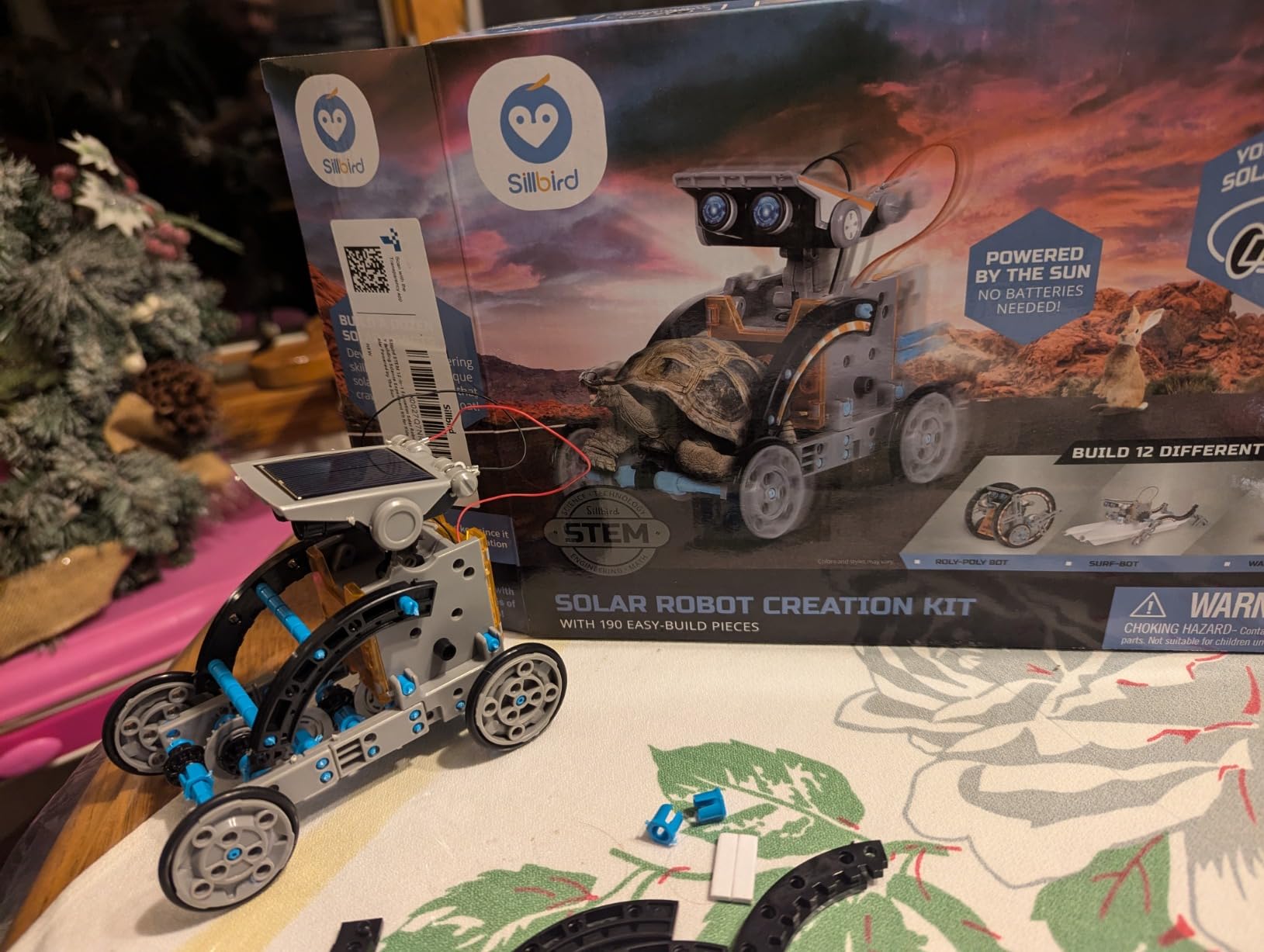
This is the pick for a family that wants renewable energy to be a visible, physical thing rather than a diagram. The robot runs outdoors on sunlight or indoors under a strong flashlight, and it needs no batteries at all.
It is the lowest-rated kit here at 4.3 stars, and that number is worth understanding before you buy. It still carries more than 15,000 reviews, with 67 percent at five stars.
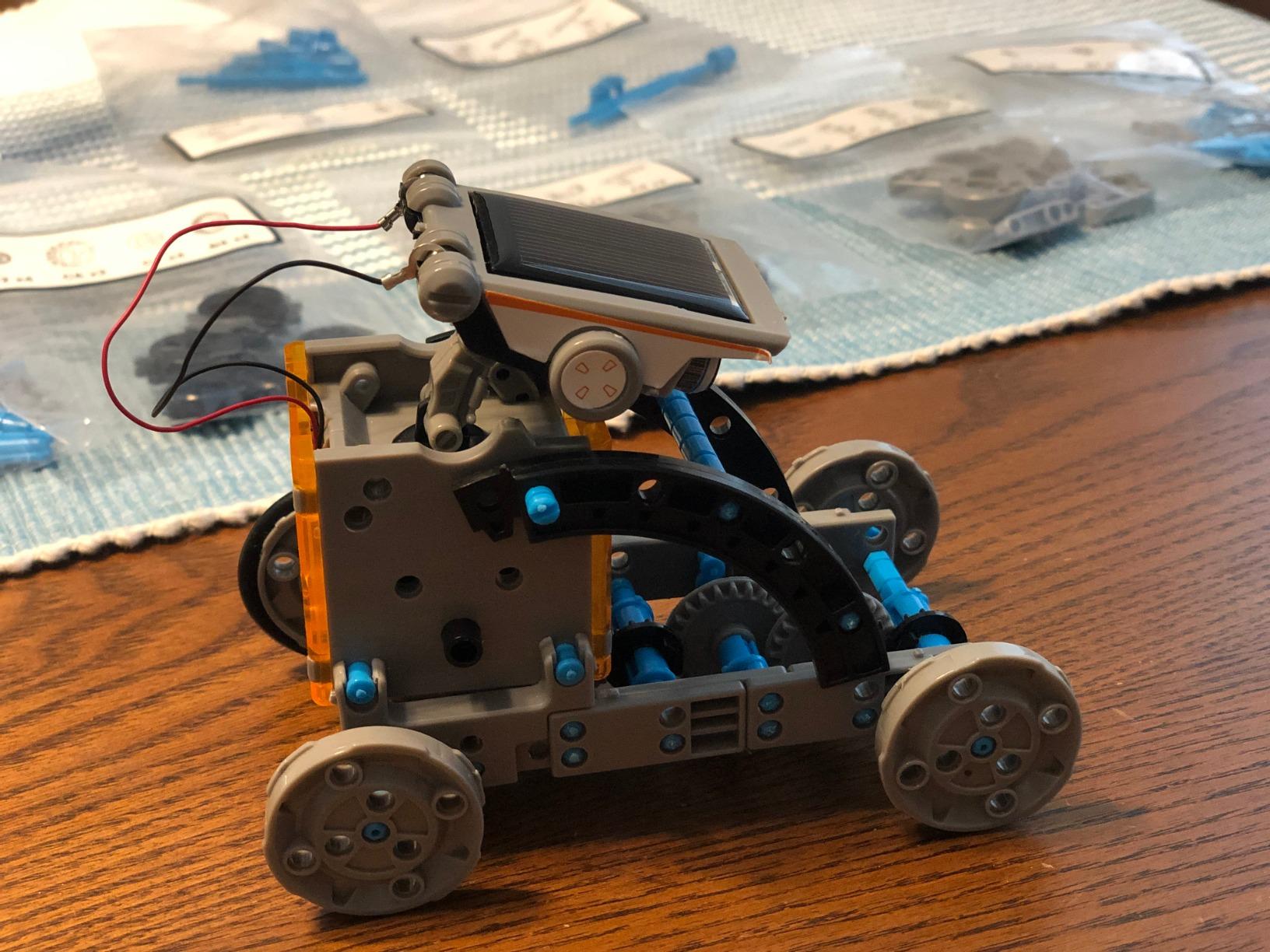
The build value is real. There are 12 models ranging from beginner to advanced using 190 ABS parts, so a child can start on a simple car in week one and work toward the harder builds over a term. The step-by-step instructions are written to allow independent building.
Because there is no programming and no electronics module board, it is also the most open-ended with respect to engineering reasoning. Your child has to work out why the robot stalled, and that troubleshooting is the actual lesson.
Why does the rating trail the group?
Durability and piece quality. This kit has the highest share of one-star reviews in the roundup at six percent, and thin ABS parts on a 190-piece build are the likely cause. Inspect pieces at the start and set aside any that feel fragile.
Variable solar output is the second theme. A cloudy week can make a working robot look broken, so set expectations before the first session.
When to skip it
Skip it indoors with no access to a sunny window or a strong lamp. Skip it if your child is drawn to coding and will be frustrated that there is nothing to program.
Our picks for younger children and for real programming sit in the next two sections.
5. National Geographic Science Magic Kit – Best for Reluctant Experimenters
National Geographic Science Magic Kit with 100+ Experiments for Kids 8-12
Ages 8-12
20 supplied experiments
85 bonus
No batteries
Manual operation
Pros
- Over 100 experiments across kit and booklet
- clear colorful instructions
- teaches real concepts like fizzing reactions and invisible ink
- extends with household items
Cons
- Powder chemicals marked discard after opening
- chemical packs need adult supervision
- broad but shallow activity depth
Some children refuse anything that looks like homework science. This kit is built for them. The framing is magic tricks rather than experiments, and parents consistently report it converting a reluctant child into one who starts asking why.
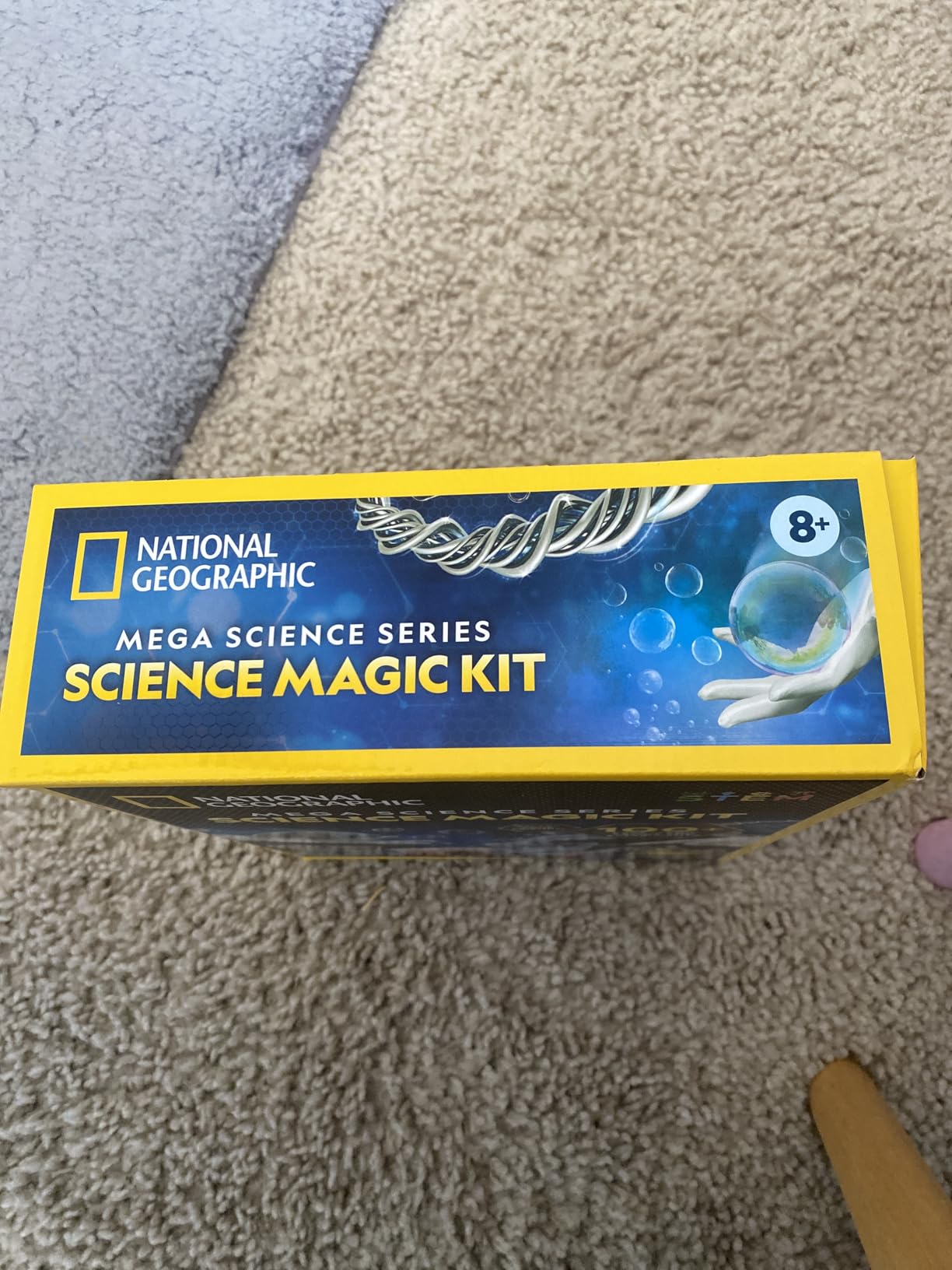
It holds a 4.7 rating across more than 8,800 reviews, with 80 percent at five stars. Twenty magic experiments are supplied in the box, and a bonus booklet adds more than 85 further activities using common household items.

The household-item angle is genuinely useful for a homeschool budget. Once the supplied packs run out, most remaining activities work with items already in your kitchen, so the cost per session falls sharply rather than stopping dead.
There are no batteries and the operation is manual, which makes it a clean fit for a screen-free Friday afternoon or a co-op table with several children.
What is the catch with the consumables?
The powders are labelled discard after opening. That means a half-finished experiment is wasted material, not a paused one, and it changes how you schedule the kit. Set up a session with one activity fully in mind rather than letting your child improvise.
Plan an adult present for the chemical packs even when the child is old enough for the rest of the kit.
When to skip it
Skip it if you want depth rather than variety. Reviewers note the activities are individually short, so this is a sampler of ideas rather than a laboratory.
Skip it for under-eights without supervision, because the cleaning up is the real consequence of an enthusiastic session.
6. Learning Resources STEM Explorers Magnet Movers – Best for Ages 5 to 9
Learning Resources STEM Explorers Magnet Movers
Ages 5-9
34 piece sensory bin
10 experiment cards
Plastic magnets
Pros
- Introduces magnetism through hands-on exploration
- 10 cards give guided starting points
- durable child-safe materials
- works as a shared co-op activity
Cons
- Bin and magnets create a supervised mess
- narrow concept coverage
- small counters are a choking concern for younger children
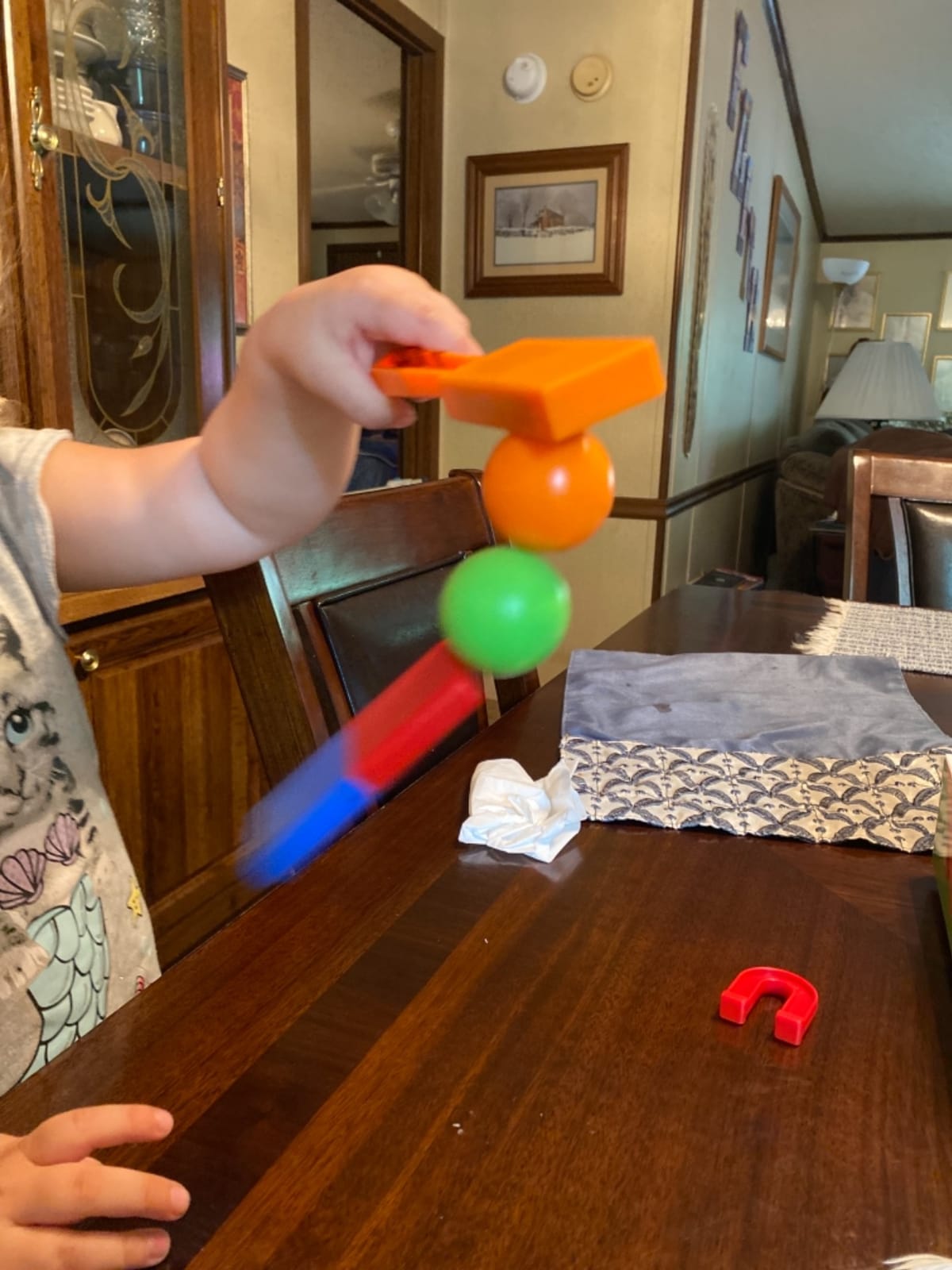
This is the best fit for the gap between a terrarium and a full electronics kit. It teaches one idea, magnetism, properly, using a 34-piece sensory bin with strong magnets sized for small hands.
It rates 4.7 across more than 5,000 reviews, with 81 percent at five stars. The manufacturer recommends ages five to nine, and parents describe children returning to it long after the novelty faded.
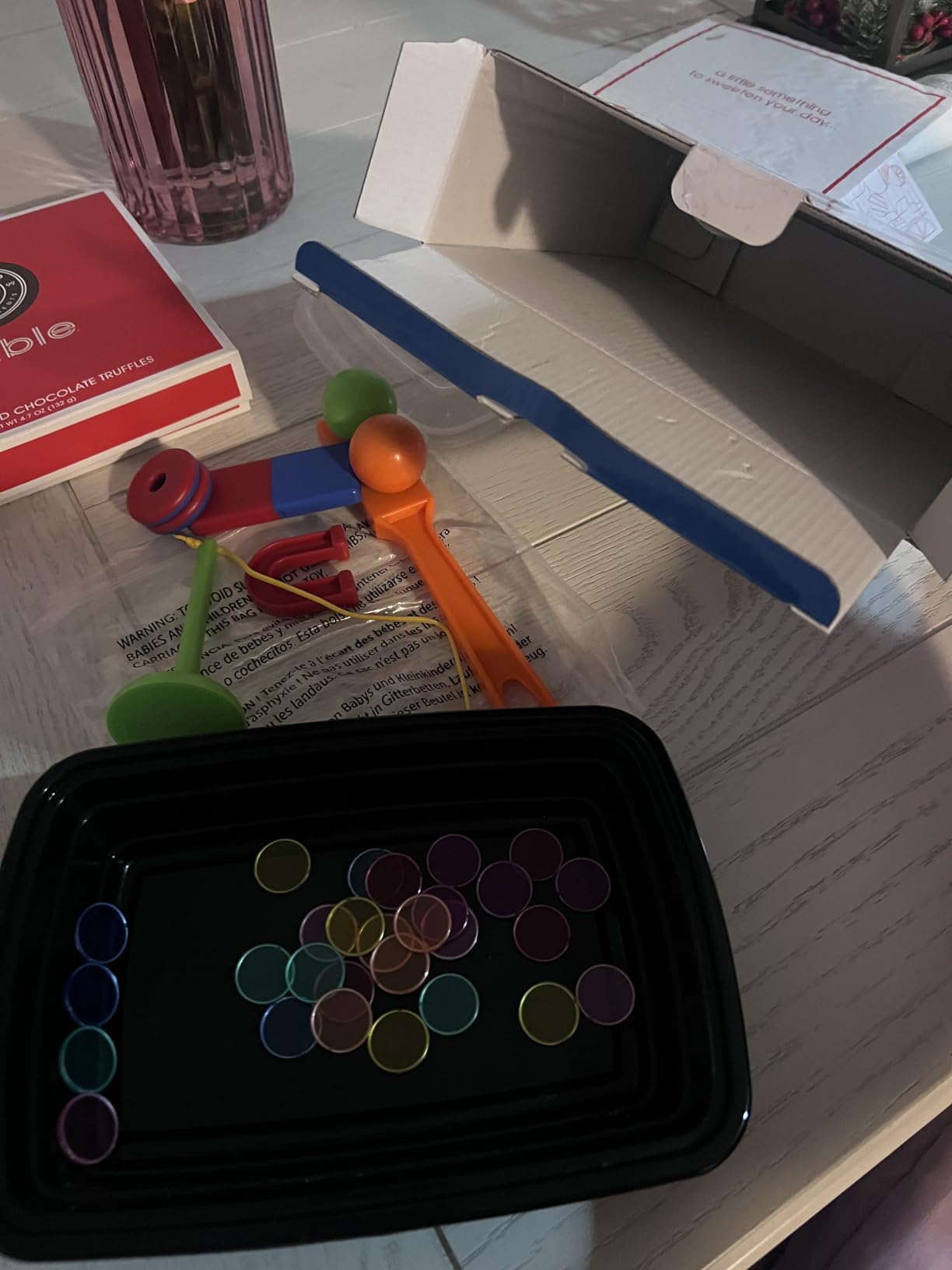
Ten experiment cards act as a scaffold rather than a script. Once the cards run out, the bin becomes open-ended play, and the fork, the coin and the dropped paperclip give a child enough to test a hypothesis on.
For a homeschool family it doubles as a fine-motor and sorting station, which is why it appears in so many early-elementary recommendations.
Is the mess manageable?
Medium, and it is self-contained. Fill the bin, put a tray under it, and the cleanup is a pour rather than a vacuum. Just do not run it on carpet, because small counters and steel fragments punish that choice.
The counters are small enough to matter for siblings under three, which is the main safety note in this roundup.
When to skip it
Skip it if you want a broad STEM term. This kit is magnetism only, so it pairs well as one component of a unit rather than standing alone.
For two children at very different levels, our multi-child section explains how to pair it with an electronics kit instead of running it twice.
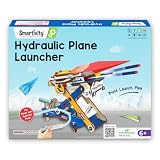
7. Smartivity 2in1 Hydraulic Aeroplane and Dart Launcher – Best for Outdoor Play
Smartivity 2in1 Hydraulic Aeroplane & Dart Launcher STEM Kit Ages 6-14
Ages 6-14
58 parts
Engineered wood
Instructional manual
Free replacement parts
Pros
- Two-in-one build launches paper planes and darts
- engineered wood rather than brittle plastic
- thorough step-by-step manual
- lifetime replacement parts
Cons
- Modest launch power compared with pneumatic kits
- heavier for younger children
- one build with limited replay value
Most kits on this list live on a table. This one is built to be carried outside, and it fills the gap for families who want engineering that ends in actual flight.
It carries a 4.6 rating across more than 5,700 reviews, with 79 percent at five stars. The box holds 58 parts and an instructional manual, and the manufacturer recommends ages six to fourteen.
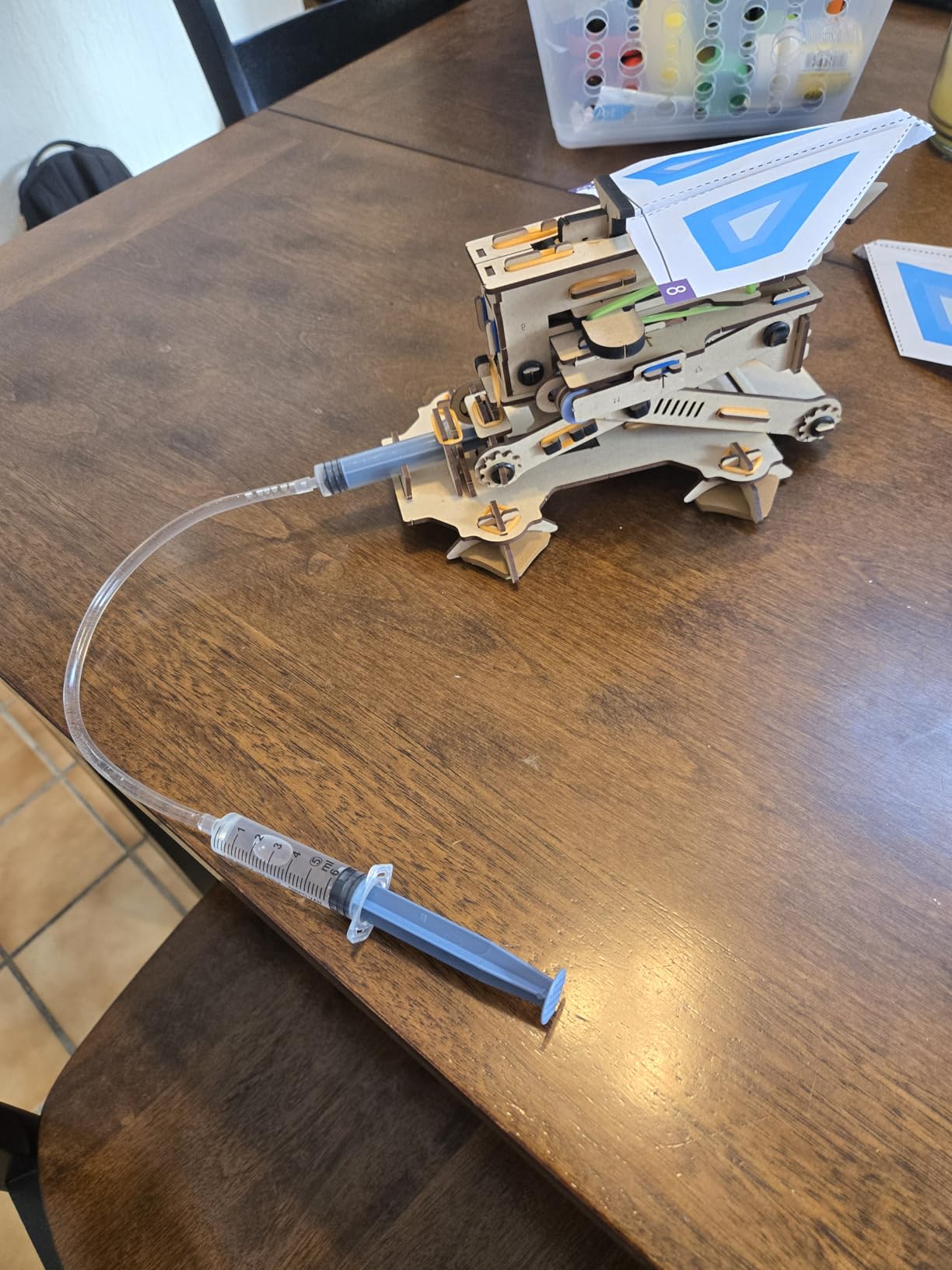
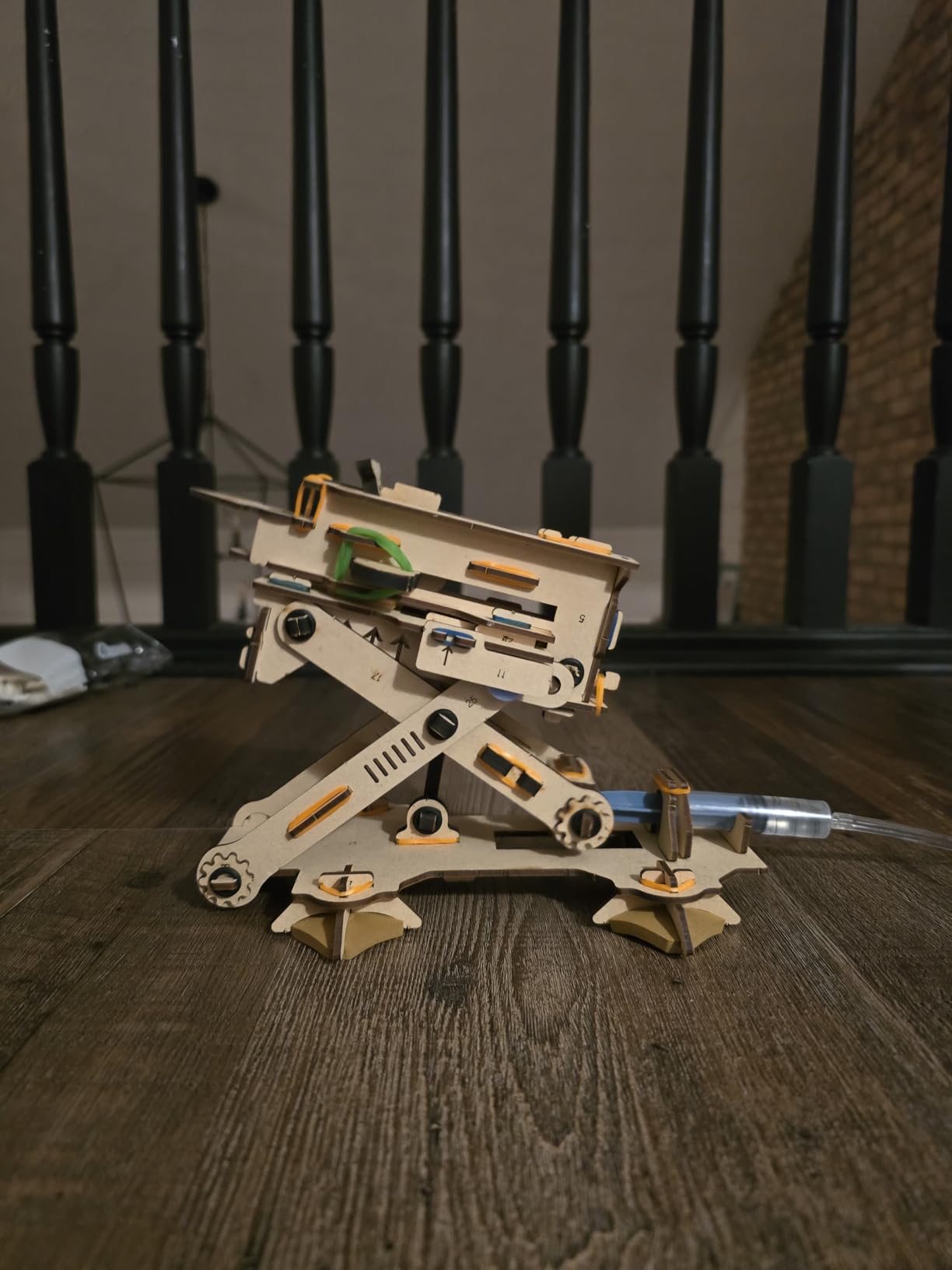
The build is a hydraulic launcher that works as a two-in-one: it throws paper airplanes and it launches darts. That gives two play modes from one construction, which stretches the value a little further than a single-project kit would.
The material choice is the standout. It is engineered wood rather than brittle plastic, and the manufacturer offers a lifetime supply of replacement parts, which removes the most common reason families give up on a kit.
Will it survive a rough week?
Better than the ABS kits here. Reviewers praise the wooden build specifically for durability, and the free replacement parts mean a lost strut is a request rather than a repurchase.
The counterweight is size. It is bulkier for a six-year-old to handle than a plastic snap kit would be.
When to skip it
Skip it if you need long replay value, because there is one mechanism and one build. Launch power is modest too, so a child expecting a pneumatic catapult will be disappointed.
For a wooden build with more ongoing play, the mechanical hand in the next section is the better comparison point.
8. Smartivity Robotic Mechanical Hand – Best Anatomy and Robotics Build
Smartivity Robotic Mechanical Hand STEM Toy for Kids 8-14
Ages 8-14
Engineered wood
Step-by-step manual
Lifetime replacement parts
Pros
- Striking finished build that appeals to kids who like anatomy and robots
- premium wooden construction
- thorough manual
- Parents' Choice Award winner
Cons
- Fiddly assembly for younger builders
- one mechanism with no coding or electronics
- friction in joints after extended play
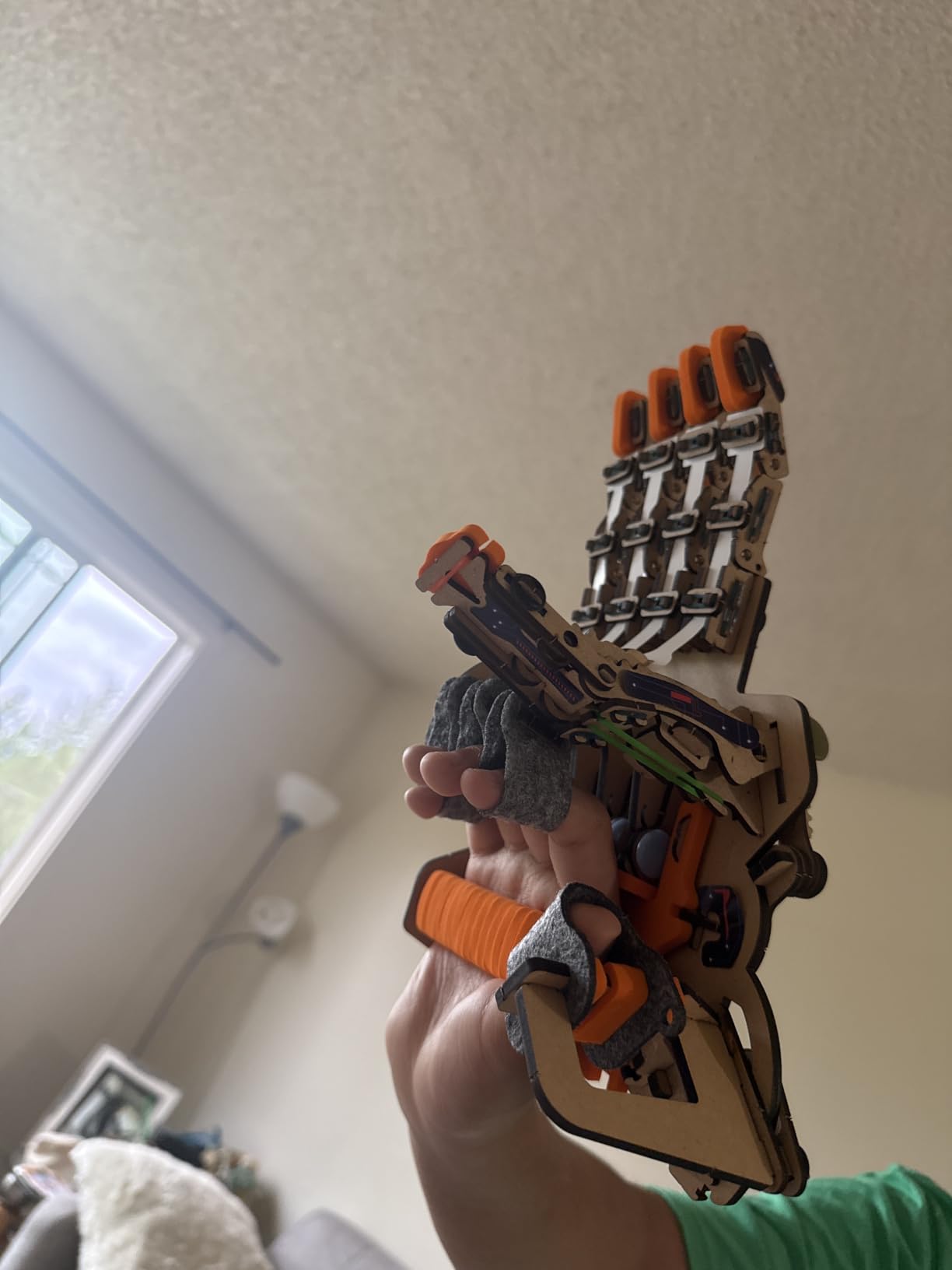
This is the display piece of the roundup. When it is finished, the hand stands about the size of a forearm and moves convincingly, which is exactly what motivates a child to finish a long build.
It holds a 4.6 rating across more than 3,900 reviews, with 79 percent at five stars. It is a Parents’ Choice Award winner and the manufacturer recommends ages eight to fourteen.
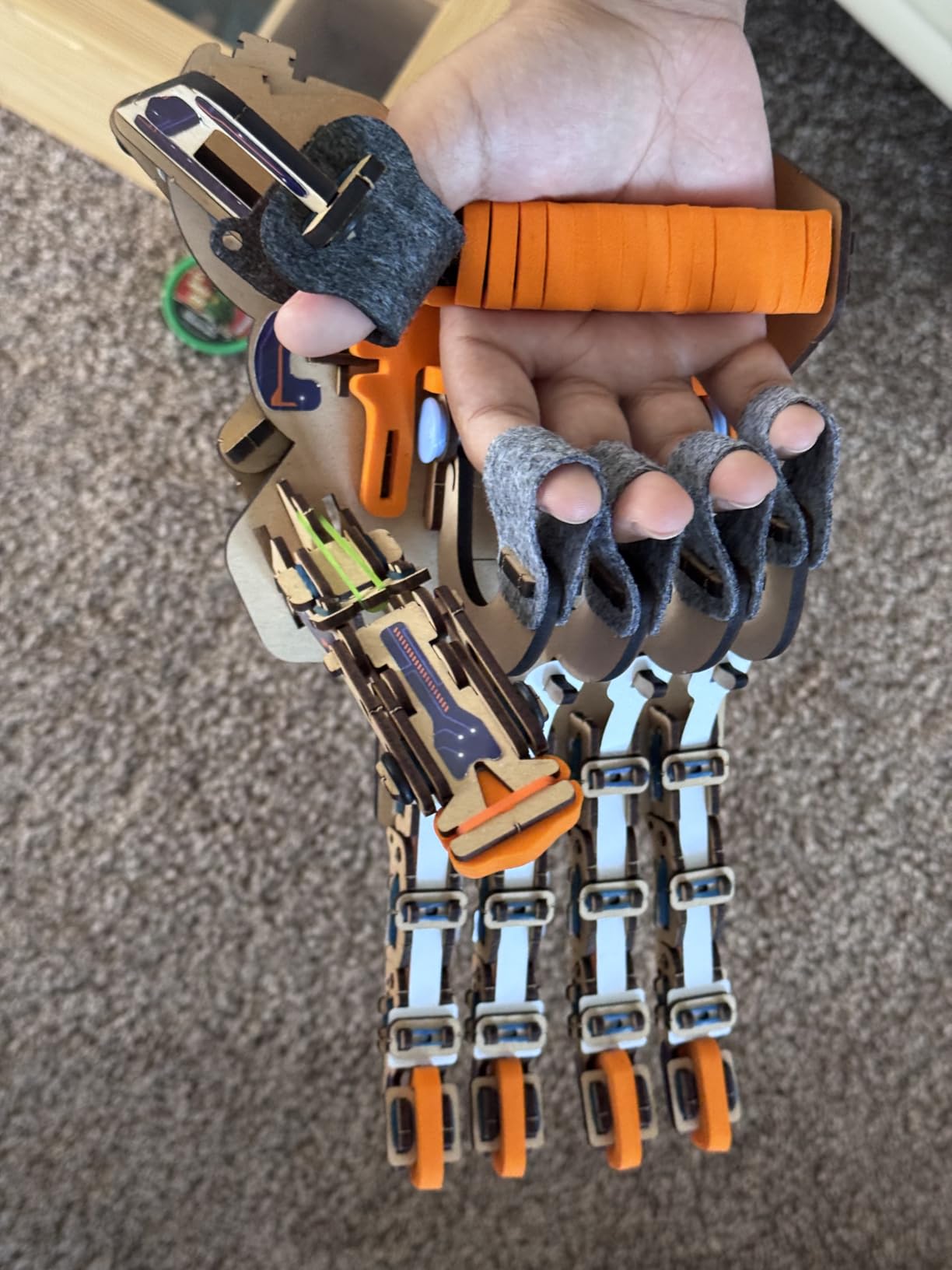
The educational hook is anatomy. A mechanical hand gives a child a physical reference for tendons, joints and opposing muscle groups, which is a better introduction to the body than a diagram in a workbook. It also pairs with a unit on the skeletal or muscular system.
Construction is engineered wood with a step-by-step manual, plus a lifetime supply of replacement parts and a model kid-tested for more than 1,000 hours.
Is it a toy or a project?
A project. Reviewers describe it as display-quality rather than something with ongoing play value, because there is one mechanism and no coding or electronics behind it.
For a homeschool portfolio, a completed build with a written explanation of the mechanism is a strong artefact. Plan it as a two-to-three-week build with a build log.
When to skip it
Skip it for a child who loses interest during assembly. The build is fiddly enough that a younger or less patient builder will stall partway, and there is no partial payoff to hold them through it.
Skip it if you want a kit the whole family can use at once, since the pieces do not support parallel experiments.
9. National Geographic Amazing Chemistry Set – Best for Middle School Chemistry
National Geographic Amazing Chemistry Set with 100+ Experiments Ages 8-12
Ages 8-12
Real labware included
15 supplied experiments
85 bonus
Goggles and gloves
Pros
- Real lab tools including test tubes beakers pipettes and goggles
- 15 supplied plus 85 bonus experiments
- maps well to a structured chemistry unit
- memorable results like crystal trees
Cons
- Large bulky box
- many bonus experiments need household supplies
- messy and needs cleanup time
- some activities feel repetitive
This is the most consistently loved chemistry option in the group, at 4.7 stars with 83 percent five-star ratings across more than 3,600 reviews. Homeschool parents specifically call it out as a kit that tracks alongside a structured chemistry unit.
The difference from a generic chemistry set is the real labware. Test tubes, beakers, pipettes, safety goggles and gloves are all in the box, so the child handles the same tools they would meet in a classroom lab.

Fifteen experiments come with materials supplied. A bonus guide adds 85 more using common household items, and the highlights are memorable: a crystal tree, glowing test tubes, a bouncy ball and colour changes driven by breath.
For an eleven- or twelve-year-old, that combination is a genuine bridge between a textbook unit and something they can hold. Our best STEM kits for 10 year olds guide goes deeper on this age band.

Does it work without extra supplies?
The 15 supplied experiments do. Most of the 85 bonus experiments assume ingredients you probably already own, so check the list once and restock only what you are missing. That single check removes the mid-experiment store run that families complain about most.
Budget cleanup time. This is one of the messier kits here and it wants a protected surface.
When to skip it
Skip it for a preschooler and for unsupervised use with younger children, because it contains reactive materials. Skip it if storage is genuinely tight: the box is large.
For broader variety with less polish, the UNGLINGA set below trades guide quality for experiment count.
10. UNGLINGA 70 Lab Experiments – Best for Experiment Variety
UNGLINGA 70 Lab Experiments Science Kits for Kids Chemistry Set Toys
Ages 8+
70 experiments
Safety glasses included
Plastic components
Water usually the only addition
Pros
- 70 distinct experiments including volcano crystals balloon rocket and fruit circuits
- safety glasses included
- mixes guided and independent work
- most supplies included
Cons
- Instructions often unclear or incomplete
- contents not individually labeled
- very messy
- some activities need extra household items
Where the chemistry set offers fewer experiments with better guidance, this one offers many with thinner guidance. That trade is the whole proposition, and it works best for a family that already has a science vocabulary and an older child.
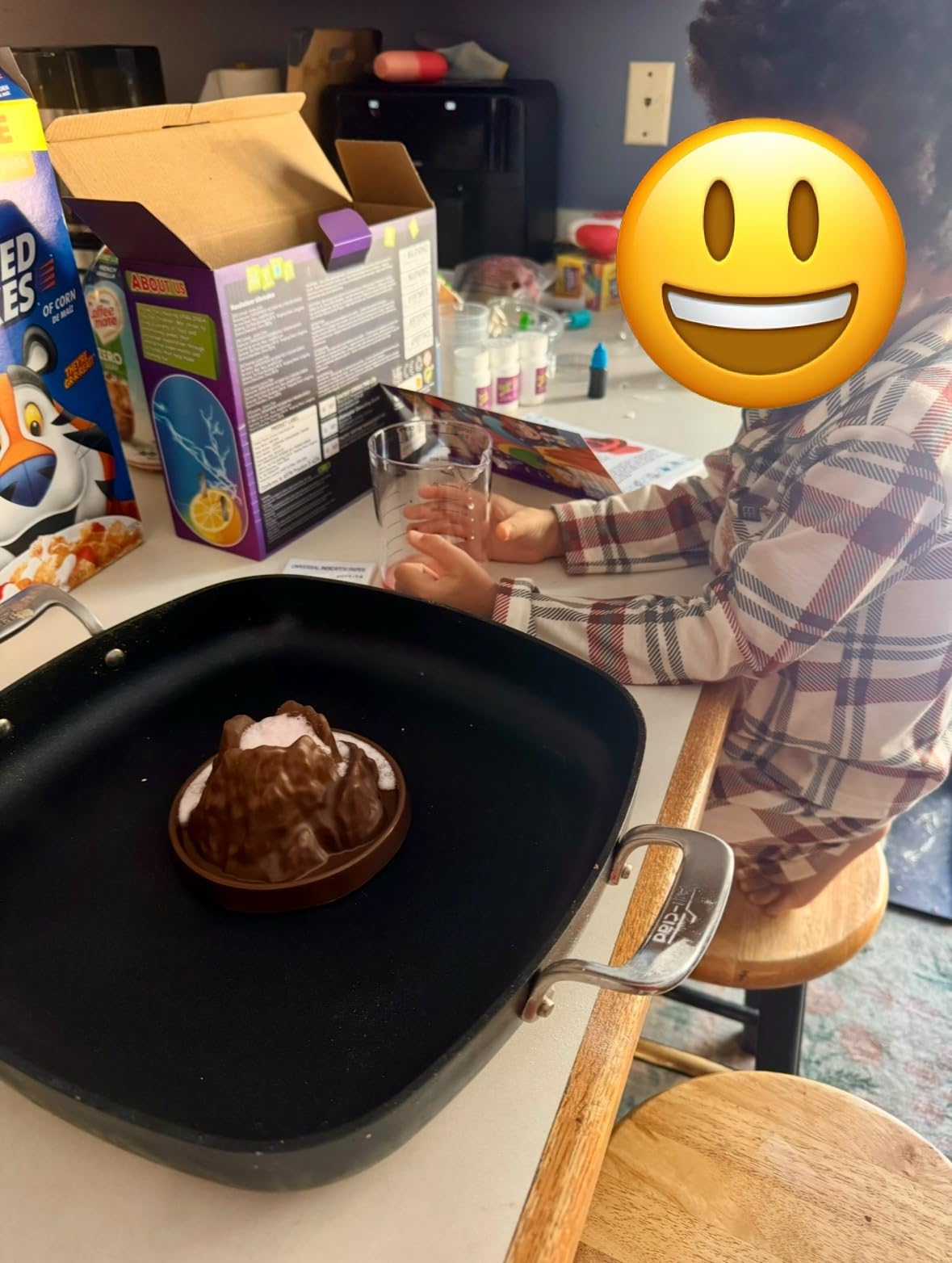
It rates 4.6 across more than 2,800 reviews, with 77 percent at five stars. The box covers 70 distinct activities including an erupting volcano, crystal growing, a balloon rocket and fruit circuits.

Two safety details stand out for a homeschool setting. The instruction booklet carries emergency and poison control numbers, and safety glasses are included, which is more than many kits at this level manage.
Most supplies are inside the box, and reviews indicate water is typically the only thing you need to add, though sugar, apples and potatoes appear in some activities.
Is the instruction booklet usable?
It is the weak point. Reviewers frequently report incomplete steps and ingredients that are listed but never referenced, plus components that are not individually labeled. Sort the tubes into a labelled tray before the first session.
Expect a sink run afterwards. Treat the whole kit as a high cleanup load.
When to skip it
Skip it for a younger child or for a family that needs the manual to do the teaching, because you will be filling in the gaps yourself. Skip it if a wipeable surface is not available.
If you want a younger sibling to be included, our STEM toys for younger children picks pair better.
11. Makeblock mBot Coding Robot – Best for Coding and Robotics
Makeblock mBot STEM Coding Toys Robotics for Kids Ages 8-12
Ages 8-12
Scratch and Arduino
Builds in about 15 minutes
100+ compatible modules
Pros
- Real coding pathway with Scratch and Arduino
- builds in about 15 minutes
- remote control plus line-follow and obstacle-avoidance modes
- expands with add-on packs
Cons
- Highest cost in the roundup and needs adult help to assemble
- batteries not included
- steeper software learning curve
- app-dependent setup
This is the only true programming kit in the roundup, and it is the right answer for a child ready to move past snap-together parts. Everything else here teaches physical construction; this one teaches a logic the child can carry into other subjects.
It holds a 4.6 rating across more than 2,800 reviews. Three free apps, mBlock software, coding cards and lessons come in the box, and the robot builds in about fifteen minutes with clear instructions.
The progression path is genuine. It supports block coding from Scratch through to Arduino, so a nine-year-old can drag blocks while a twelve-year-old writes the same behaviour in code. Before programming, it works as a remote-controlled car with line-following and obstacle-avoidance modes.
The expansion ecosystem matters most long-term. It is compatible with more than 100 electronic modules and 500-plus parts from the platform, plus standard building bricks, so the same robot can grow without a replacement purchase.
What is not in the box?
Batteries. The robot needs four AA cells and the remote controller needs a CR2025, and neither is included. Add them to the order immediately or the first session stalls.
You also need a Windows or Apple device with the software set up. That setup is the most common reason a family abandons an otherwise capable robot, so do it before you hand over the box.
When to skip it
Skip it if your child is under nine or if the family has no computer available for the programming half. Skip it for a child who wants purely screen-free play, since the coding part requires a display.
It is the most expensive kit we ranked, which is why it belongs in a plan rather than an impulse buy. our robotics kits roundup compares the platform options if you want to go deeper.
12. Learning Resources Pixel Art Challenge – Best for Screen-Free Math
Learning Resources Pixel Art Challenge The Original STEM Pixel Art
Ages 5-8
40 graded challenges
400 foam pieces
5.5 inch tray
No batteries
Pros
- 40 challenges graded from pattern copying to coordinate coding
- genuinely screen-free for quiet independent play
- teaches math and spatial reasoning together
- packs into a small tray
Cons
- Foam cubes shift or pop out of the tray
- inconsistent cube sizing
- one board only
- light foam leaves long nail marks
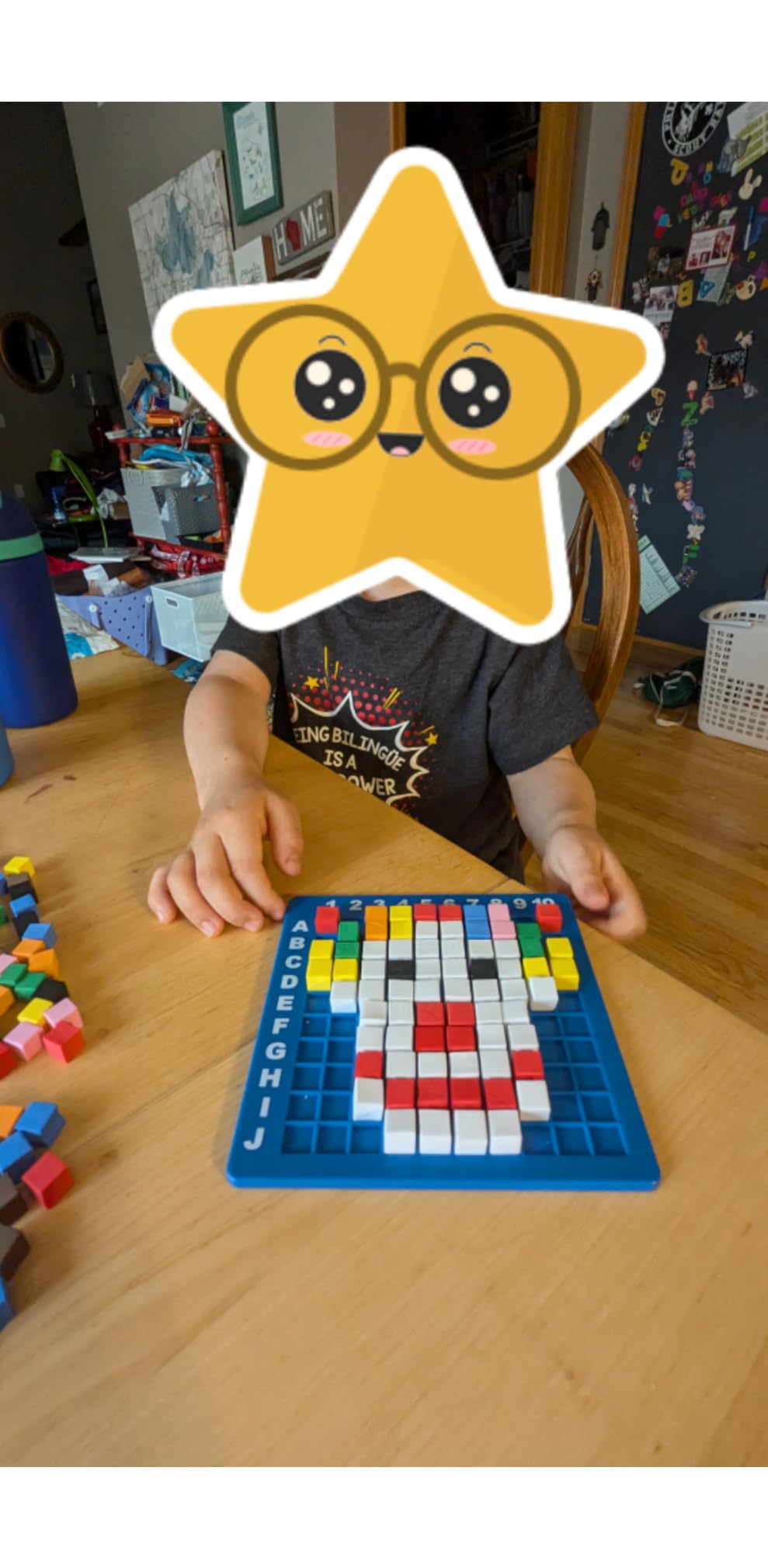
This is the quiet option, and for a family with a loud household it may be the most useful kit on the list. It is completely screen-free, needs no batteries, and stores in a 5.5-inch tray.
It rates 4.6 across more than 2,000 reviews, with 77 percent at five stars. Reviews report ages four to nine all enjoying it, which makes it a strong co-op or shared-table kit.
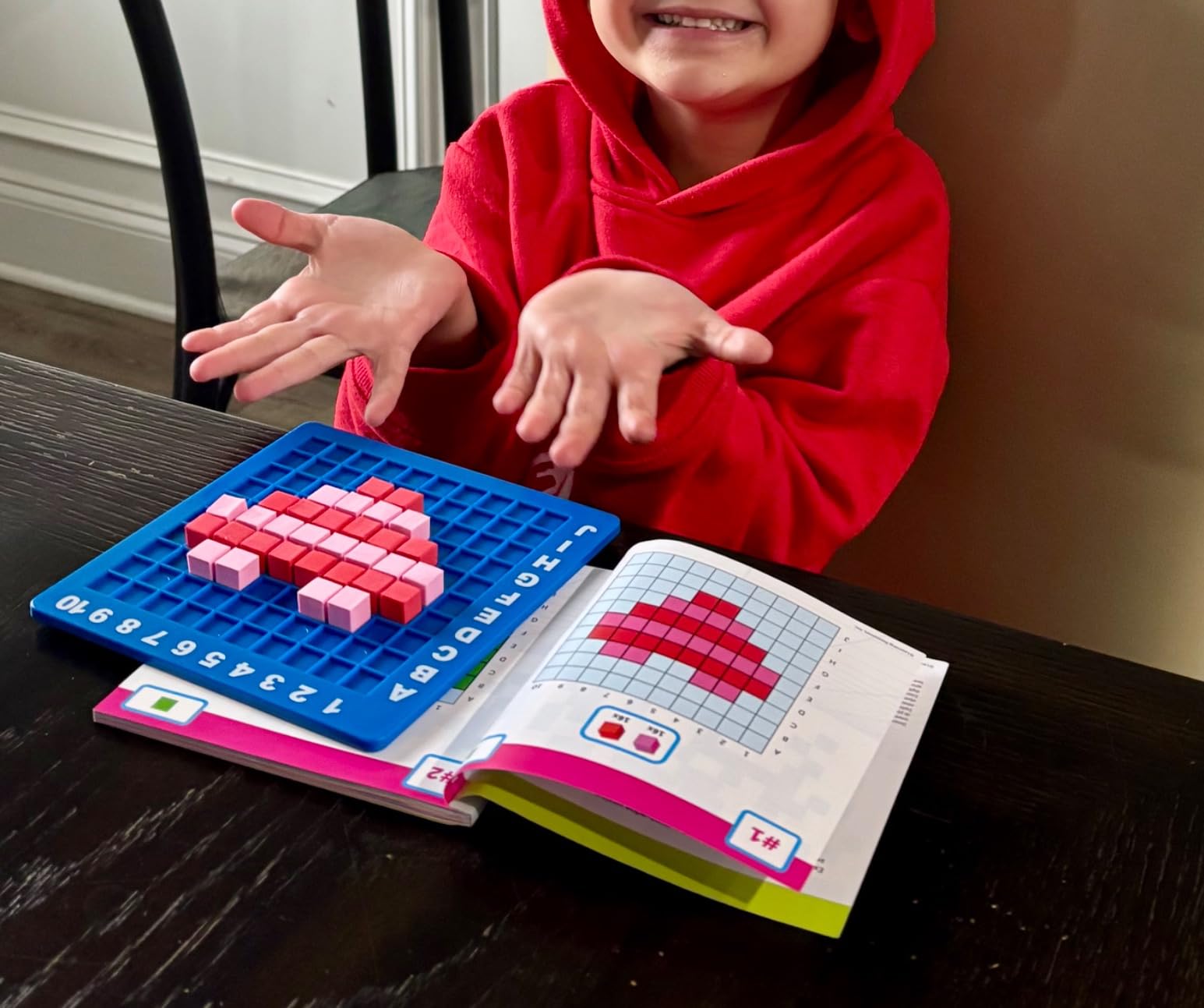
The structure is what sets it apart. Forty challenges are graded from simple pattern copying up to coordinate-based coding sequences, so difficulty is adjustable without a second kit. The manufacturer recommends ages five to eight.
Math, early coding logic, spatial reasoning and fine motor control all land in the same activity, which makes it easy to justify against a curriculum line item.
How durable are the pieces?
That is the main reservation. The 400 cubes are lightweight foam, and reviewers repeatedly mention that they shift or pop out of the tray, and that quality control on sizing is inconsistent enough for some cubes to sit loosely.
Check a few cubes against the grid before handing it to a younger child. It is also best suited to older children, since light foam leaves long nail marks.
When to skip it
Skip it if your child wants to build moving machines, because there is no mechanism here at all. Skip it if you were expecting several boards, since only one is included and the box imagery can suggest otherwise.
For a co-op group buying in bulk, our classroom STEM sets roundup covers the multi-kit decision.
How to Choose a STEM Kit for Your Homeschool
Start with the distinction nobody makes clearly. A STEM curriculum is a sequenced plan with lessons, reading assignments and a record of progress, and it is what documents your science requirement. A STEM kit is materials and instructions. A subscription crate is a recurring box that delivers a new project each month. A co-op class is instruction delivered by someone else.
Most families need the curriculum plus one or two kits. The kits supply the hands-on half; the curriculum supplies the vocabulary, the sequencing and the written record.
Then work through these seven questions in order:
Is the age rating honest for your child? The most common complaint in parent forums is a box bought for an eight-year-old that a four-year-old cannot read, or the reverse. Age labels are a starting point, not a measure of ability.
How many usable sessions does it actually support? Divide what you paid by the number of distinct sessions, not by the number printed on the box. A consumable chemistry kit and a reusable snap-together set can have the same headline count and wildly different cost per session.
Does it need a supply run? Check whether the supplied materials cover the activities you care about. Kits whose bonus experiments depend on household ingredients are cheaper per session once you own vinegar, baking soda and food colouring.
What is the cleanup load? Low means a tray and a wipe. Medium means a sink run. High means dye, soil or dye-intensive reactions. Pick against your actual tolerance at the end of a school day.
What is the supervision level? Independent, occasional adult help, or adult required. This determines whether the kit works on a Friday afternoon when you are also managing three other children.
Does it serve a curriculum unit? A kit that pairs with the unit you are already teaching is worth more than a better kit that stands alone, because the written record is what you need for your homeschool file.
Is there a small-parts or chemical age floor? Magnets, small counters and reactive powders change who can safely use the kit in a house with a toddler.
For a school year, sequence rather than stockpile. One electronics kit running from September to December, one earth science or chemistry kit in the spring, and a quiet screen-free kit for the weeks when nothing else gets opened will outperform three boxes started in one week.
If you have children at very different levels, pair rather than duplicate. The Snap Circuits modules stay compatible as your child grows, so the youngest can use the simple builds while the oldest works through the advanced circuits on the same grid. Two children at the same table with one earth science kit also works, since that set is designed for sharing.
For families with only one child and a limited budget, spend on reusability rather than headline activity count. Parents report that kits which stay compatible and can be rebuilt in new configurations keep giving back value long after a one-and-done box is finished.
Frequently Asked Questions
Are STEM kits worth the money?
Yes, when they are reusable and age-appropriate, and no when they are a single-afternoon novelty. Run the cost per session test: divide what you paid by the number of usable sessions. A kit that supports thirty sessions across a term works out far cheaper per session than a small kit used once and shelved. Kits also never replace a sequenced curriculum, so most families need both.
What is the best STEM curriculum for homeschooling?
A STEM curriculum is a sequenced plan with lessons, reading assignments and progress records that document your homeschool science requirement. A STEM kit is materials plus instructions. Most families need both: the curriculum supplies the vocabulary and the record, the kit supplies the build, the observation and the hands-on half that a course cannot deliver on its own.
What are some good science kits for homeschooling?
The Snap Circuits Jr. SC-100 is the best all-round choice for a mixed-age household. The National Geographic Earth Science Kit is the best value for a full unit study. The Grow N Glow Terrarium Kit is the best pick for a preschooler who needs a daily routine. The Makeblock mBot is the right choice for a tween ready to program. The National Geographic Amazing Chemistry Set covers the most sessions in a year.
What is the number one rated homeschool curriculum?
There is no single number one, because ratings reflect teaching method such as classical, Charlotte Mason, unit study or unschooling as much as they reflect quality. Use a three-question filter instead: is the age rating honest, is it open-ended, and does it serve the specific course you are teaching. For high school families, match the lab kit to the exact course rather than buying on rating alone.
How many STEM kits do I need for one homeschool year?
Two to three is the practical answer for most families. Run one open-ended kit across a term, add a second kit that matches the unit you are teaching, and keep one quiet screen-free option for low-energy weeks. Families who buy more than three typically report unused boxes and subscription fatigue rather than more science.
Do STEM kits replace a science curriculum?
No. A kit gives your child things to build, test and observe, but it does not sequence concepts, assign reading, or produce the written record that documents progress. Think of the curriculum as the spine of your science plan and the kit as the lab you own and control, which is exactly why a homeschool family needs both.
Final Verdict
If you take one thing from this guide, make it the Snap Circuits Jr. SC-100. It has the highest rating, the largest review base and the strongest reusability story of anything we ranked, and it is the easiest of the twelve to hand to two children of different ages at the same table.
Add the National Geographic Earth Science Kit when your term plan calls for earth science, the Amazing Chemistry Set when it calls for reactions, and the Grow N Glow Terrarium when the youngest learner needs a daily habit. Keep the Pixel Art Challenge in the cupboard for the weeks when nobody wants to make a mess.
These are the best STEM kits for homeschool families in 2026 because each one earns its sessions back. Check the current details on each listing, read the “what is not in the box” notes we flagged above, and buy two rather than six.