
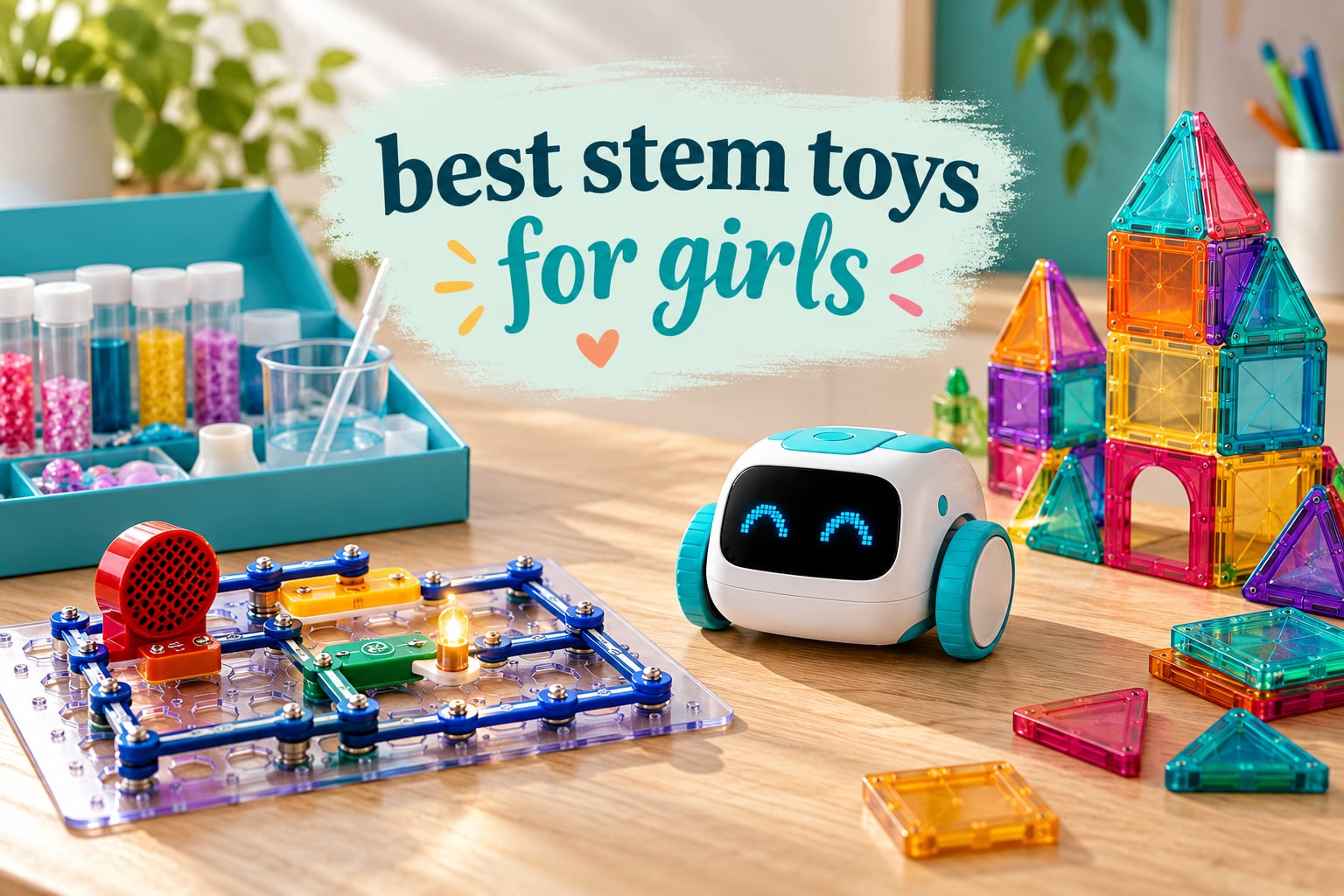
The best STEM toys for girls are hands-on kits and sets that practice science, technology, engineering and math through building, experimenting and problem-solving, chosen to match a child’s age, interests and attention span rather than the colour of the box. That means magnetic tiles, snap-together circuits, science experiment kits, coding robots, logic mazes and real wooden models, picked for the skills they actually practise.
I have spent the last few months playing through this category with two children in the house, one aged six and one aged eleven, and comparing twelve sets on three things parents care about most: whether the child keeps coming back to it after week two, whether it works without a phone, and whether the instructions make sense without an adult translating them. The forum chatter on r/Parenting, r/toys and r/TrollXChromosomes shaped the shortlist heavily, because the loudest complaints there are about app lock-in, adult assembly and toy fatigue.
One thing to clear up first, since the search results for this topic are full of it. Pink packaging does not make a toy better for a girl. What does help is confidence: a toy she can finish, explain to someone else and try again when it fails. Everything below is rated on that basis, and each section notes who should skip it as well as who it suits. For more on the engineering side, our guide to the best STEM toys for engineering goes deeper on the structural side of play.
Table of Contents
Top 3 Picks for the Best STEM Toys for Girls in 2026

Best STEM Toys for Girls at a Glance (2026)
| Product | Specifications | Action |
|---|---|---|
| Snap Circuits Jr. SC-100 |
|
Check Latest Price |
 ThinkFun Gravity Maze ThinkFun Gravity Maze |
|
Check Latest Price |
 Makeblock mBot Pink Robot Makeblock mBot Pink Robot |
|
Check Latest Price |
 Soyee Magnetic Tiles 58pc Soyee Magnetic Tiles 58pc |
|
Check Latest Price |
 Nat Geo Science Magic Kit Nat Geo Science Magic Kit |
|
Check Latest Price |
 Doctor Jupiter Science Kit Doctor Jupiter Science Kit |
|
Check Latest Price |
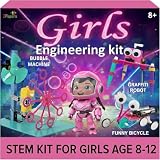 2Pepers 3-in-1 Robot Kit 2Pepers 3-in-1 Robot Kit |
|
Check Latest Price |
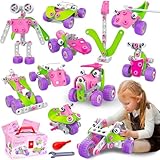 Tsomtto 14-in-1 Building Set Tsomtto 14-in-1 Building Set |
|
Check Latest Price |
 Smartivity Robotic Hand Smartivity Robotic Hand |
|
Check Latest Price |
 BeAndge 6-in-1 Robot Kit BeAndge 6-in-1 Robot Kit |
|
Check Latest Price |
 BMDSAE 1000X Digital Microscope BMDSAE 1000X Digital Microscope |
|
Check Latest Price |
 Poraxy 4-in-1 Wooden STEM Kit Poraxy 4-in-1 Wooden STEM Kit |
|
Check Latest Price |
1. Snap Circuits Jr. SC-100 – Best Circuit Kit for Girls Ages 8 and Up
SNAP CIRCUITS Jr. SC-100 STEM Electronics Kit, 100+ Projects, Ages 8+
Ages 8+
29 snap-together parts
100+ projects
No tools or soldering
640 g
Pros
- Colour-coded parts snap onto a grid with no tools
- 100+ projects from one box
- Full-color project manual a child can follow alone
- Rated 4.8 across 29316 reviews
Cons
- Alkaline batteries not included
- Manual loses value once the easy projects are done
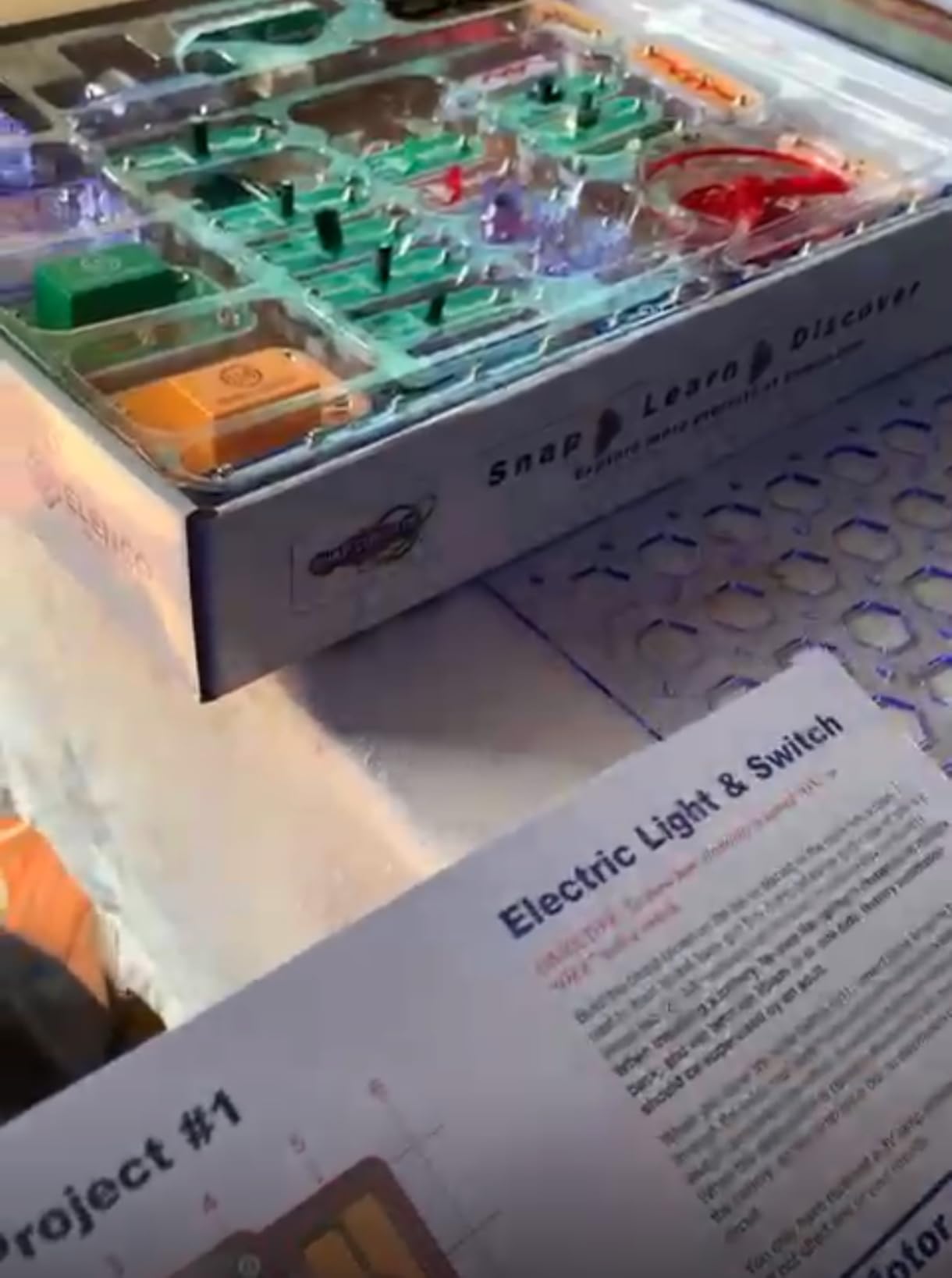
This is the kit I keep coming back to, and it is the one I would put in front of anyone who asked me for a single recommendation. Elenco’s Snap Circuits Jr. SC-100 is 29 colour-coded snap modules on a plastic grid, and the whole thing comes together without a screwdriver or a soldering iron. My eleven-year-old had a working alarm clock and a moving fan inside about ten minutes of opening the box.
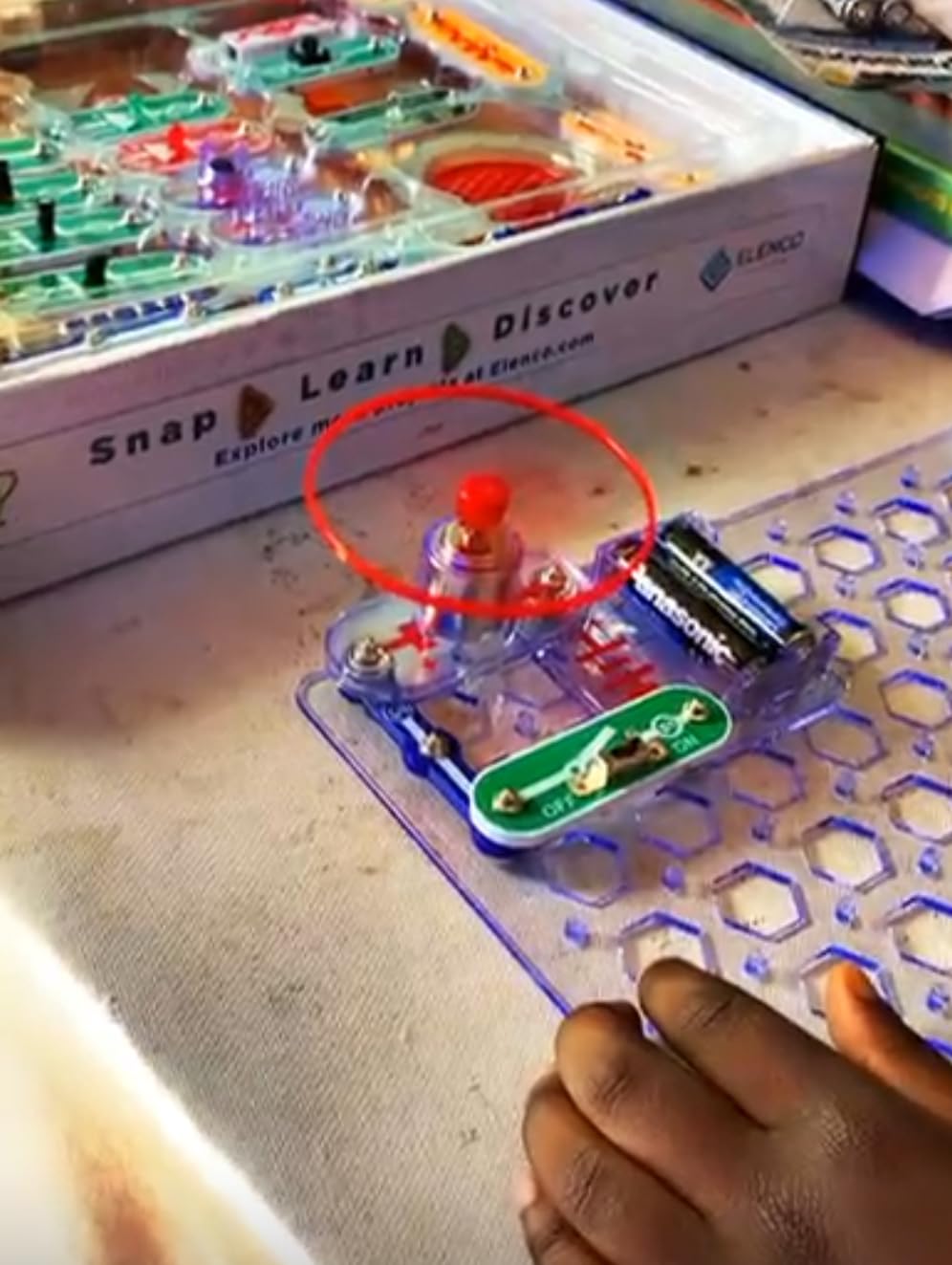
The scale is portable at 12 by 9.5 by 1.75 inches and 640 g, so it survives being dragged between the table and the sofa. The manual is full colour and set out as build-along projects rather than an inventory list, which matters more than it sounds when the child is nine and cannot decode a schematic.
The kit runs on alkaline cells that you supply, and nothing else is missing from the box.
For a child who wants to make something that moves or lights up and does not want a screen in front of her, this is the pick. It is also the one I would buy for a boy or an adult, which is not a complaint, just a fact worth stating on a girls-specific list.
Who this suits best
It suits children aged eight and up who can follow a diagram without help and who like finishing things. The step-up in difficulty is gradual, so an eight-year-old and a twelve-year-old can use the same box at different depths.
It also suits gift-givers who want a single box that covers circuits, motors and sensors rather than a themed novelty. With more than 29k ratings behind it, the line has a long track record rather than a single good season.
Who should skip it
Skip it under age eight. The parts are small and the manual assumes a reader who can follow a numbered sequence without an adult narrating it.
Skip it if your family is already saturated with building toys and wants an open-ended craft set instead. Once a child has worked through the manual, this becomes a reference kit rather than an open one.
2. ThinkFun Gravity Maze – Best Screen-Free Logic Puzzle for Ages 8 to 12
ThinkFun Gravity Maze – Falling Marble Logic Game – Challenging STEM Toy for Kids 8-12 – Gravity Marble Maze – Brain-Building Fun – Educational Gift – Boosts Critical Thinking & Problem Solving
Ages 8+
60 challenge cards
9 towers and 3 marbles
No batteries
1.1 pounds
Pros
- Graduated cards from beginner to expert
- Works as a solo or family activity
- No batteries and no screen
- 37872 reviews at 4.6 stars
Cons
- Towers must be assembled before first play
- Hardest cards need adult guidance
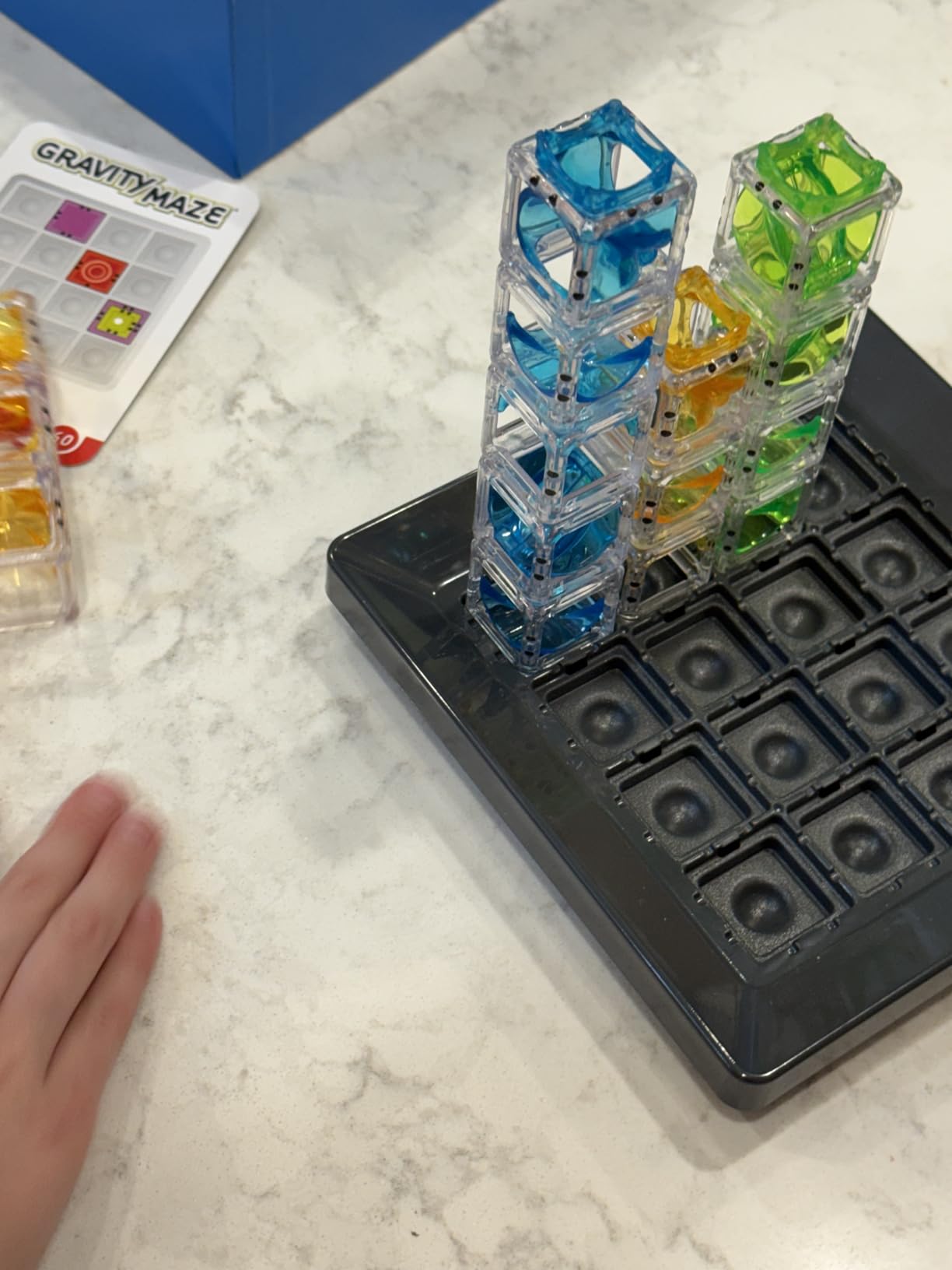
ThinkFun’s Gravity Maze has the largest review base in this roundup at more than 37,800 ratings. The idea is simple: build a course from nine plastic towers, place the marbles at the top, and get the target piece to the bottom.
What makes it a STEM toy rather than a puzzle is the constraint. The marble only falls, so every solution has to work with gravity rather than against it, and children learn to think about slope and sequencing without a single equation.
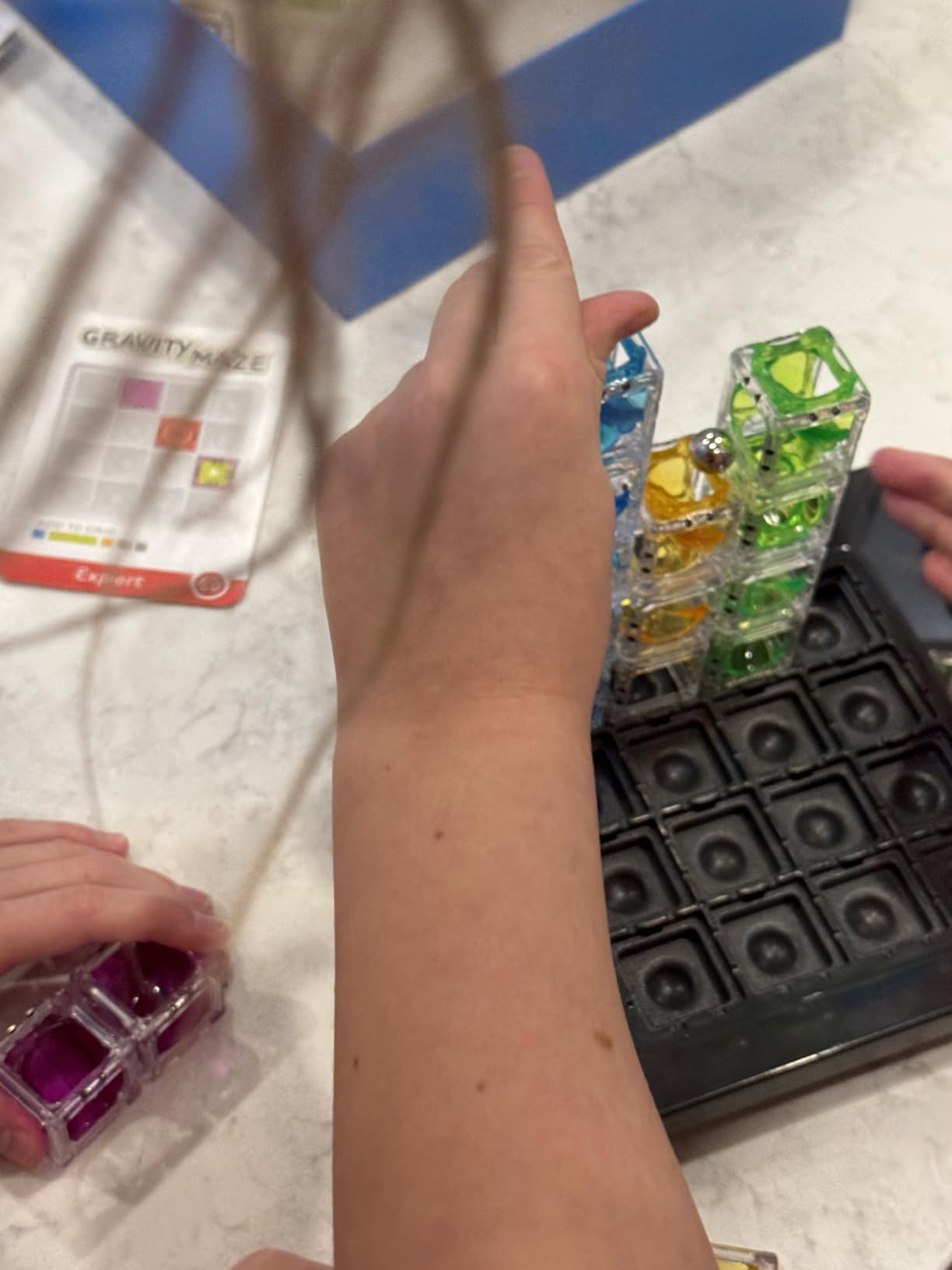
Sixty challenge cards spread from beginner to expert, and that range is the real feature. My six-year-old got through the first handful with help and then asked for the next set of cards herself, which is the replay value parents say they are actually shopping for.
Build time is the one commitment. The towers have to be clipped onto the grid before anyone plays, and that takes an adult and about ten minutes. Budget for it or the first impression will be a box of unassembled parts.
Who this suits best
It suits the child who likes a hard problem and a quiet hour. There is no timer, no failure state and nothing to break, so it works as a rainy-afternoon activity that leaves the table tidy.
It also suits siblings of different ages, because the difficulty cards let two children play the same game at two levels. Many families use it as a shared evening activity rather than a solo toy.
Who should skip it
Skip it if the toy must be playable the second it comes out of the box. Assembly is mandatory, and a child handed an unbuilt Gravity Maze usually loses interest first.
Skip it for a very young child. The manufacturer grades it eight and up, and below that the pieces are too fiddly to clip together, while an older teen will find the hardest cards too easy to stay interested.
3. Makeblock mBot Pink – Best Coding Robot for Girls Aged 8 to 12
Makeblock mBot Pink STEM Coding Robotics Toy Kit for Girls & Kids Ages 8-12
Ages 8-12
Aluminium chassis
Scratch and Arduino
15 minute build
1034 g
Pros
- Free mBlock app with guided and free coding modes
- Builds in 15-20 minutes
- Durable metal frame
- Works as a remote-control car before coding
Cons
- Batteries not included and the lithium pack is hard to source
- Two remotes share one frequency
The mBot is the kit here where coding comes first, and it is a good gateway because the robot drives first and codes second. Out of the box it behaves like a remote-controlled car, so a child has something working in her hands before she has written a single line of Scratch.
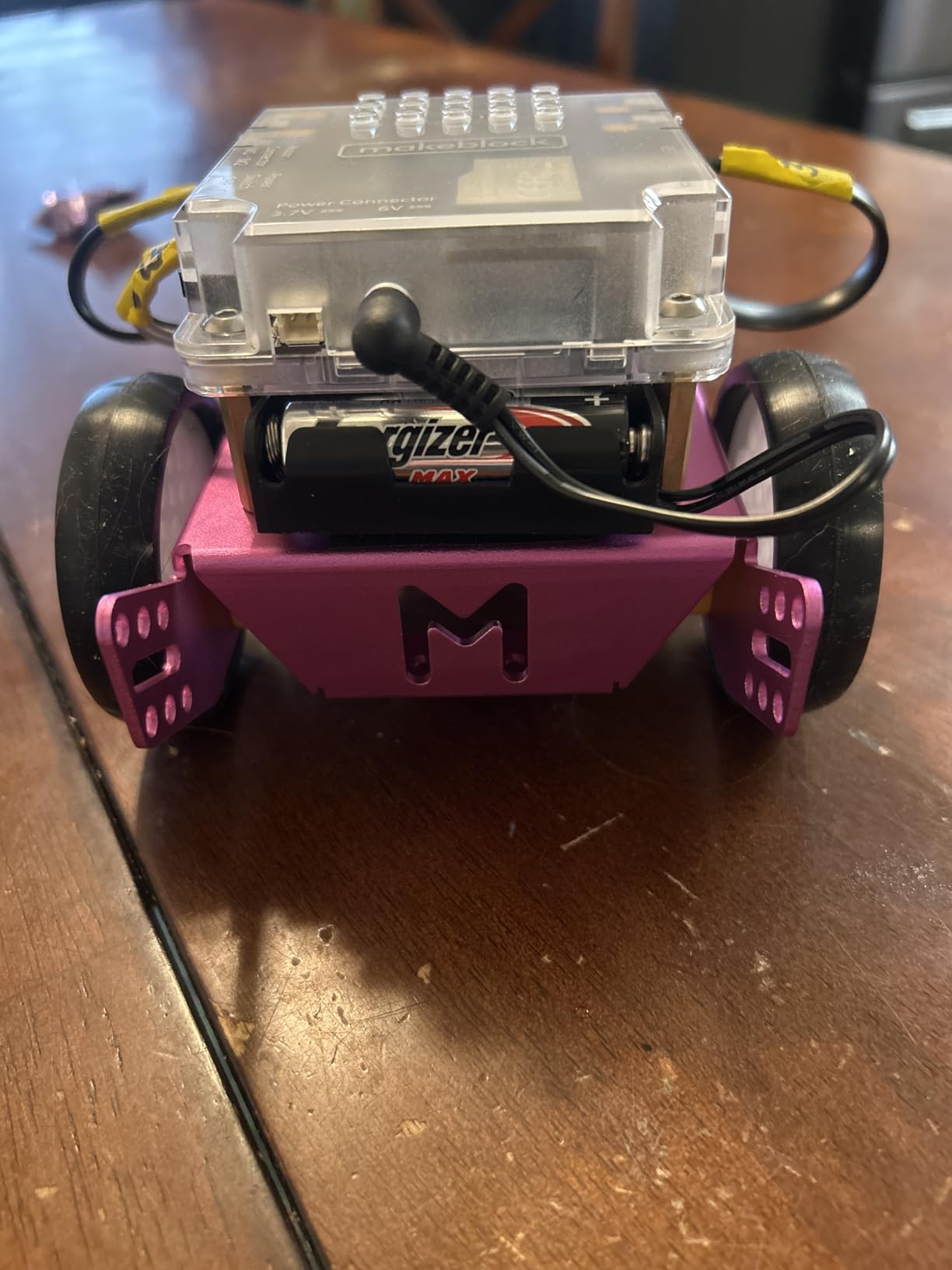
The mBlock app is the real value here. It walks through guided levels that introduce movement, loops and sensors, then hands over to the Scratch environment, so a child can go from dragging blocks to reading real code structure without a gap. Eight online courses ship with it.
It scales too. The mBot expands with more than 100 compatible modules and LEGO-compatible parts, so this is a starting point rather than a dead end, which is exactly the upgrade path described in our robotics kits for STEM learning guide.
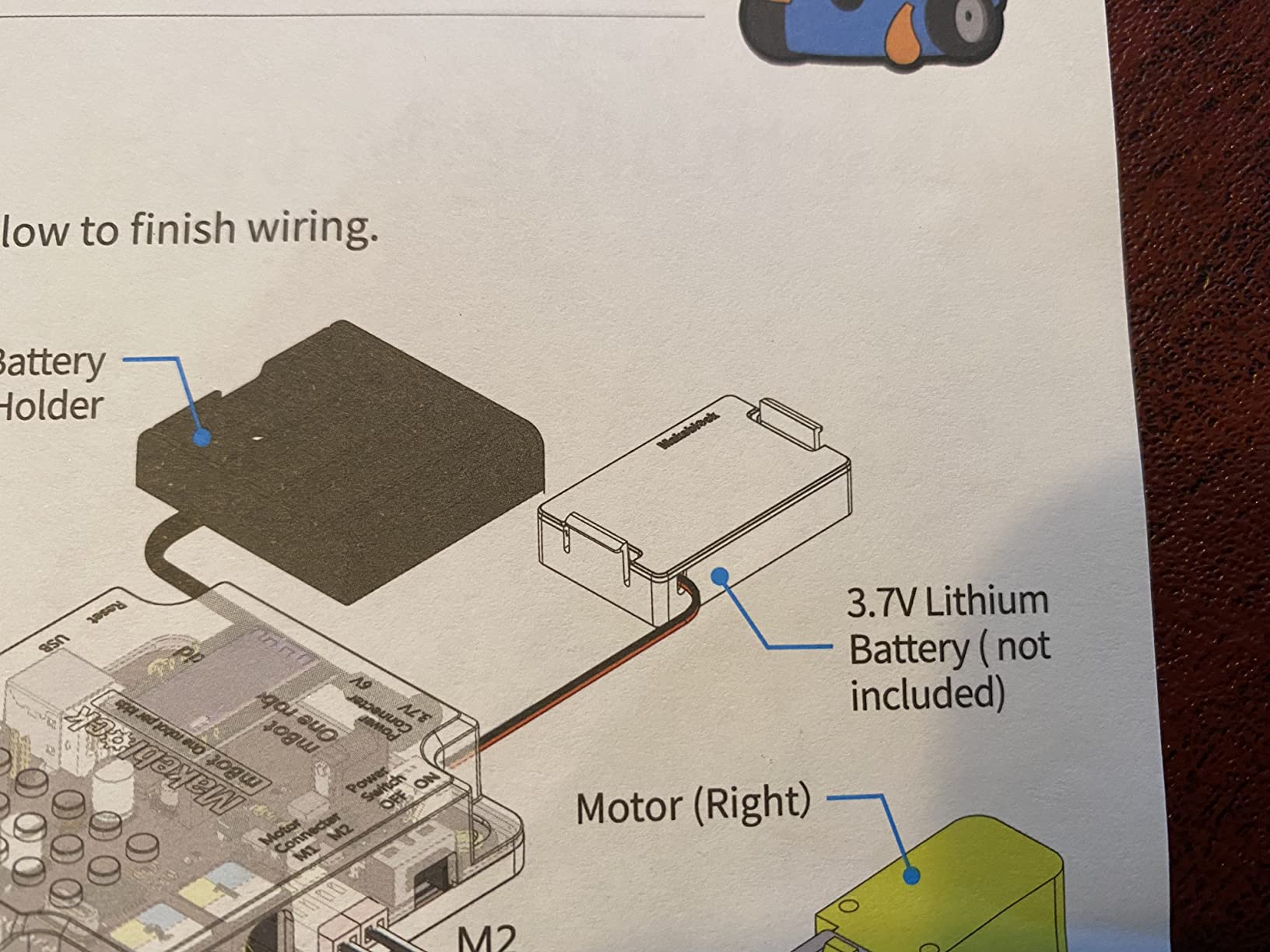
Two honest drawbacks. Batteries are not included and the lithium pack is difficult to find locally, and the two remotes share a single frequency, so you cannot run two kits in the same room without interference. The review base is also much smaller at 579 ratings, so treat the 4.5 score as encouraging rather than settled.
Who this suits best
It suits a child who already enjoys screens but wants the screen to control something physical. A phone or tablet is required, and at roughly 1034 g the robot has enough mass to feel like a real machine rather than a gadget.
It suits families planning a multi-year progression. The expansion path means she can keep adding sensors and mechanisms instead of outgrowing the kit in a month.
Who should skip it
Skip it if screen-free play is the goal. Every coding session needs the app, and the complaint about phone or tablet dependency that dominates parent forums applies here directly.
Skip it if the child is under eight or has never used a tablet safely with an adult nearby. Skip it too if you want two children coding at the same time in one room.
4. Soyee Magnetic Building Blocks – Top Rated Magnetic Tile Set for Ages 3 to 12
Diamond Magnetic Building Blocks for Kids – Princess Castle Magnetic Tiles Toys for 3-8 Year Old Girls & Boys – 3 4 5 6 Year Old Girl Birthday Xmas Gifts – STEM Educational Toys for Creative Play
Ages 3-12
58 ABS pieces
Working doors and stairs
1.3 kg
No batteries
Pros
- Doors
- windows and stairs that actually open and close
- Strong magnets hold tall towers
- Compatible with other magnetic tile brands
- Durable enough to survive dropping and outdoor play
Cons
- Box art overstates how many pieces are included
- Collectible-style sets prompt requests for more pieces
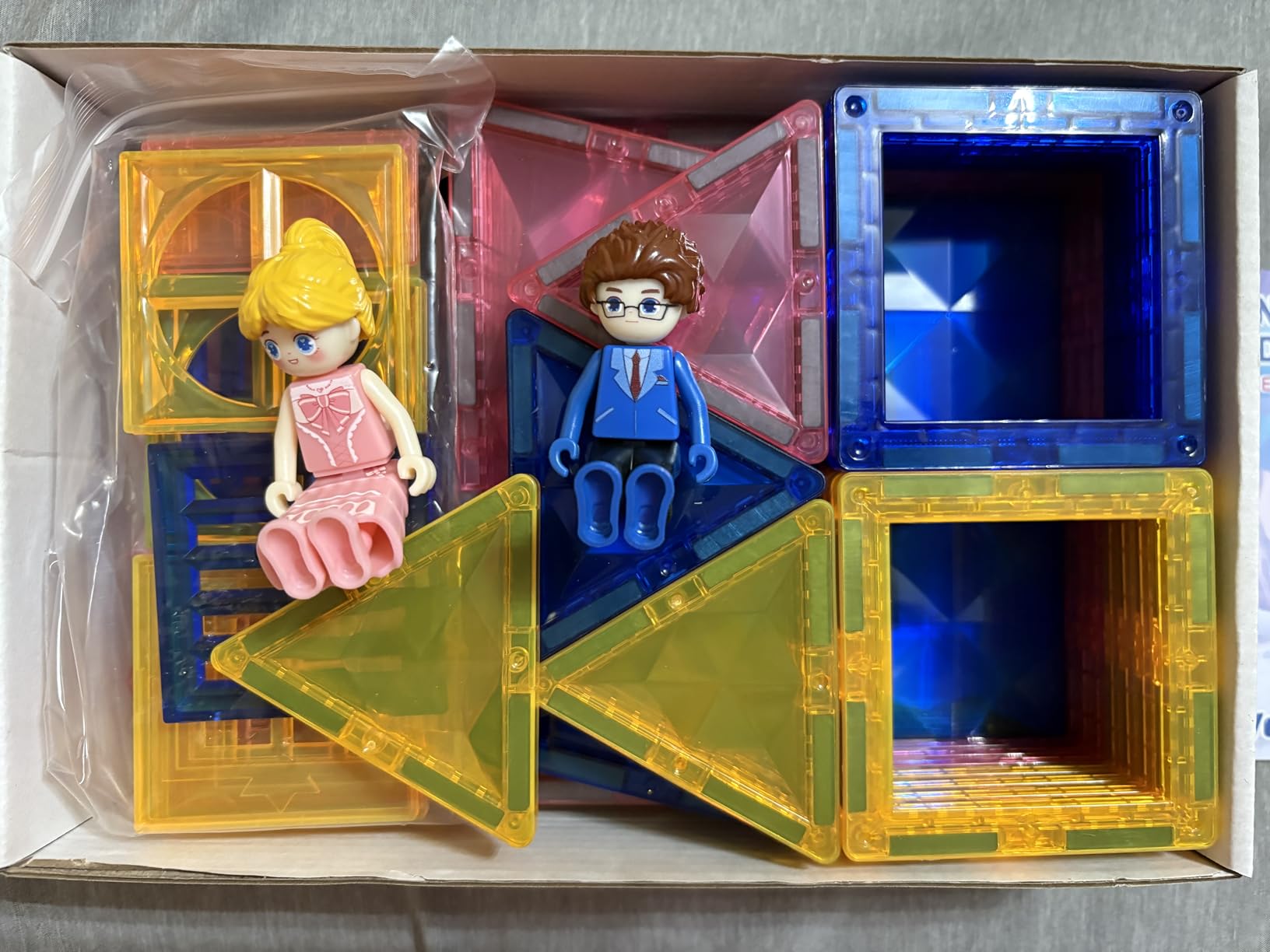
Magnetic tiles are close to a true open-ended toy, and this 58-piece set from Soyee is the one I would start with. The pieces are food-grade ABS with translucent sparkly edges, and they snap together face to face into three-dimensional structures without any force or frustration.
Cross-brand compatibility is the practical win. These tiles connect to most other magnetic tile sets already in the house, so a family that buys a second brand still gets a combined set rather than two incompatible boxes. At 1.3 kg the whole thing is heavy enough to feel substantial, and it packs flat for travel.
One recurring complaint is worth repeating: the promotional box art implies more pieces than the 58 actually included, so a large build may need a second set.
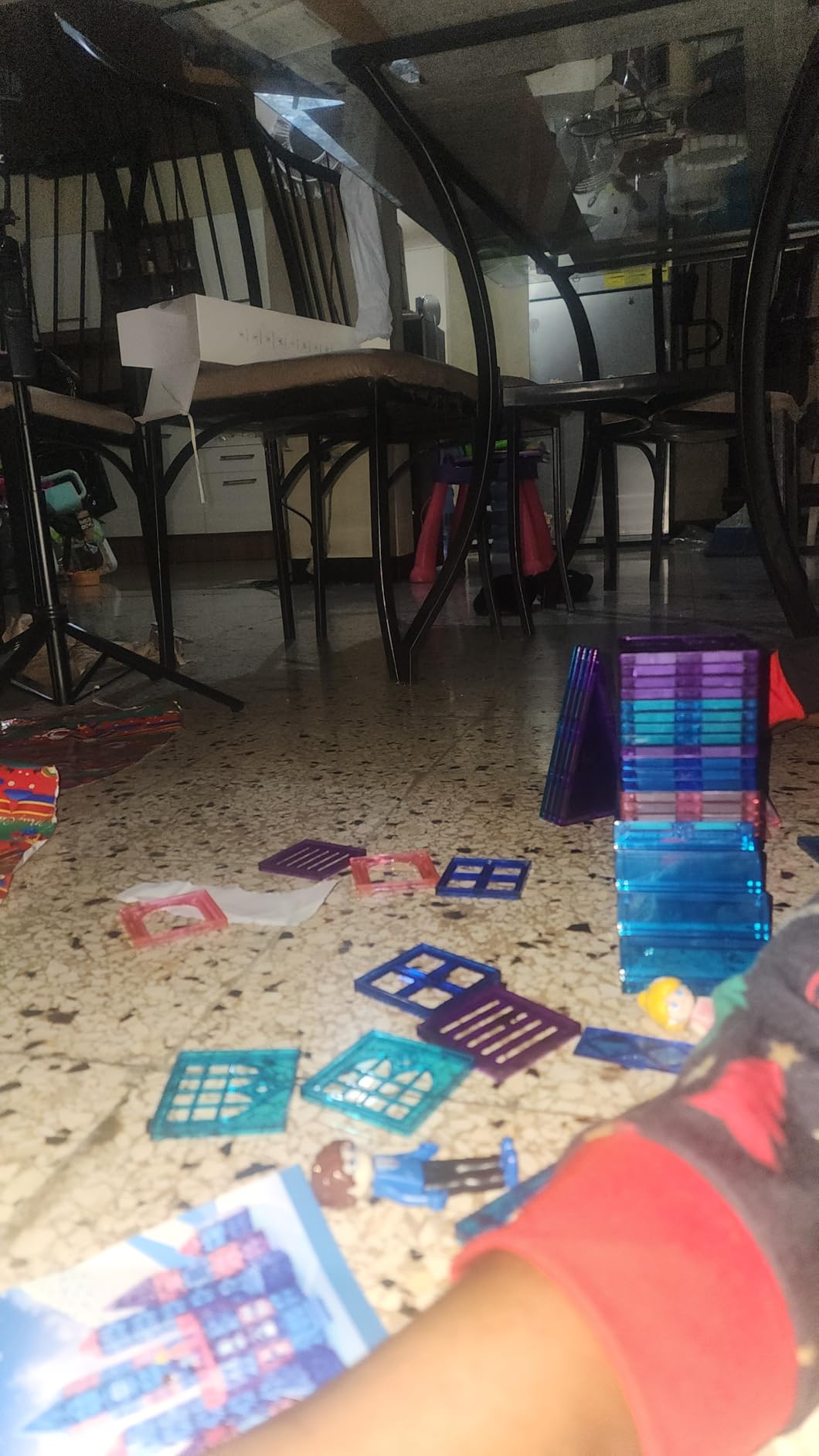
Ratings sit at 4.8 from 4699 reviews, and reviewers single out the working doors and the strength of the magnets as the reasons the set holds up to repeat use.
Who this suits best
It is graded 3 to 12, so it covers siblings of very different ages. A three-year-old stacks two squares, a six-year-old builds a house with working doors, and a ten-year-old designs a bridge and tests it with a book on top.
It suits families who want one toy for siblings of different ages, and it suits travel because it needs no batteries and packs into a flat box.
Who should skip it
Skip it if your child is under three. The manufacturer grades it three and up, and small magnetic pieces are a genuine hazard below that age.
Skip it if she has already told you magnetic tiles are babyish. The branding leans young with the castle theme, and a ten-year-old who finds that packaging childish will not be talked out of it by the magnets.
5. National Geographic Science Magic Kit – Best Science Experiment Kit for Ages 8 and Up
National Geographic Science Magic Kit with 100+ Experiments for Kids 8-12
Ages 8+
100+ experiments
Two booklets
1.5 pounds
No batteries
Pros
- Over 100 experiments once the bonus booklet is counted
- Colourful instructions a child can follow alone
- Uses easy-to-source household chemicals
- Plenty of material to repeat activities
Cons
- Some chemical packets must be discarded once opened
- Young testers need supervision because it gets messy
This kit delivers volume. It ships with twenty magic and chemistry activities in the main set, and the bonus booklet adds more than eighty-five more ideas using household items, which is where the hundred-plus experiment count comes from.

The instructions are full colour and illustrated step by step, which is the difference between a science kit a child uses alone and one that needs an adult narrating every line. It weighs 1.5 pounds and measures about 8.9 by 3.2 by 12 inches, and it needs no batteries at all.
The practical catch is mess and packet discipline. Several chemical packets are labelled for single use once opened, so partial use is awkward, and younger testers over-pour reagents unless an adult is close by. The product line has picked up Toy Association recognition, and 4.7 stars from 8857 reviews puts it near the top of this list.

Who this suits best
It suits an eight-to-twelve-year-old who likes drama and reveal, and who will happily clean up afterwards. Nothing here needs a device, so it works when screen-free play is the priority.
It suits the parent who wants weeks of content from one box. With a hundred-plus experiments, the replay value question that dominates parent forums is answered better here than in any single-build kit.
Who should skip it
Skip it if a tidy kitchen matters more than a good afternoon. The activities involve liquids, powders and colour mixing, and the review summaries are clear that supervision is required.
Skip it for a child under eight who will not read the illustrated steps without help, and skip it if you want a product that is explicitly aimed at girls. This one is deliberately neutral.
6. Doctor Jupiter Girls Ultimate Science Kit – Best Themed Science Gift for Girls Aged 8 to 12
Doctor Jupiter Girls’ Ultimate Science Experiments Kit for Kids Ages 8+
Ages 8-12
50+ themed experiments
Reusable lab equipment
0.75 kg
ASTM F963-17 tested
Pros
- Designed specifically for girls 8-12
- Sealed packets that can be reopened for repeat use
- Older children can work through most experiments independently
- Manuals explain the science behind each result
Cons
- The included volcano model does not perform reliably
- Activities are messy and need adult supervision
Several sets in this roundup are marketed at girls specifically, and this one earns that framing with themed content rather than colour alone. The theme is a young scientist’s laboratory, with a unicorn mould, a volcano, a measuring cylinder, test tubes, a funnel, droppers and colour-mixing trays as the equipment.

There are more than fifty themed experiments, from crystal growing to colour-changing volcanoes to homemade bath bombs, and the manuals are illustrated with a short explanation of the result at the end of each one. An older child can generally get through them without an adult, which is the difference between a gift that lasts and a gift that lasts one weekend.
The reported defect is specific and worth knowing: the included volcano model does not reliably perform. Reviews also repeat the supervision note. The 4.7 rating comes from 322 reviews, a much smaller base than the leaders here, so treat the score as encouraging rather than proven.

Who this suits best
It suits a girl in the eight-to-twelve band who wants the lab role rather than the assembly role, and who likes themed experiments with a clear story attached to each one.
It suits a gift-giver who wants something that obviously reads as a science gift for a girl, and who will accept a themed unboxing as part of the appeal.
Who should skip it
Skip it if you want a screen-free, open-ended toy. This is a directed kit with a sequence of activities, and once the fifty experiments are done there is no second use beyond repeating them.
Skip it if the volcano is the specific thing being bought, and skip it for younger children who will need an adult beside them for every pour.
7. 2Pepers 3-in-1 Robotics Kit – Best Budget Robot Build for Girls Aged 8 and Up
Girls Science Kit for Kids Age 8-12, STEM Engineering Educational Toy
Ages 8+
Three buildable robots
60 items
5.9 inch square
Screwdrivers included
Pros
- Three genuinely different robots in one box
- Screen-free creative building
- No sewing and no soldering
- Kid-friendly instructions with screwdrivers included
Cons
- Lowest average rating here at 4.3 stars
- Some builds are fiddly and instructions need adult help
- Bubble solution is not included
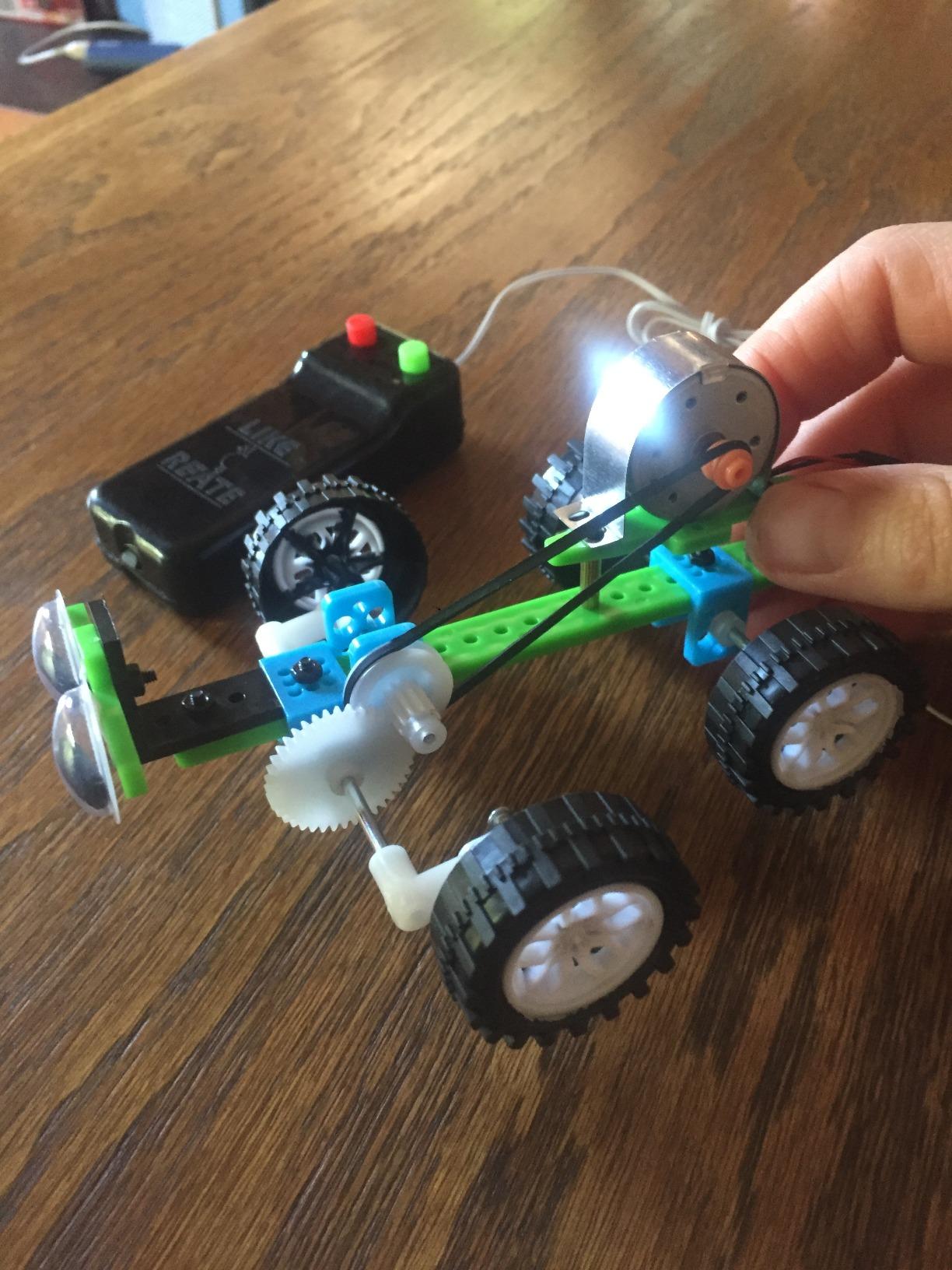
Three buildable robots in one box, and the three teach different things. The doodling robot traces a path, the bubble robot shows airflow, and the motion robot demonstrates a motor driving a mechanism, so a child moves from drawing to mechanics without leaving the kit.
The honest weakness is the rating. At 4.3 stars from 1047 reviews, this is the lowest average in this roundup, and roughly 11 percent of reviews sit at three stars and 4 percent at two stars. The recurring complaint is assembly friction: fiddly pieces and instructions that need a second reading. Bubble solution is also not supplied.
What you get for that trade-off is three distinct builds at an entry-level price point, which is why it still earns a place. It is the pick when the goal is experimenting with mechanisms rather than learning a programming language.

Who this suits best
It suits a child who likes building and drawing more than she likes coding, and who wants a screen-free afternoon activity with a visible finished result at the end.
It suits a parent working with a smaller budget who wants something to do together, since an adult helping with the fiddly steps turns the frustration into shared time.
Who should skip it
Skip it if build quality frustration is a dealbreaker. A flatter rating distribution than comparable kits means assembly problems are common enough that a perfectionist child may abandon it.
Skip it if a bubble robot is the main event, and skip it for children under eight who cannot manage small screws without help.
8. Tsomtto 14-in-1 Building Set – Best Construction Toy for Girls Aged 4 to 8
Tsomtto Educational STEM Toys for 4 5 6 7 8+ Year Old Girl Birthday Gifts
Ages 4-8
14 buildable models
Storage box included
0.74 kg
Washable plastic
Pros
- 14 models including a cart
- plane
- robot and train
- Step-by-step booklet supports independent building
- Sturdy storage box for fast cleanups
- Washable non-toxic pieces
Cons
- Only one model can be built at a time
- Published dimensions are placeholder values
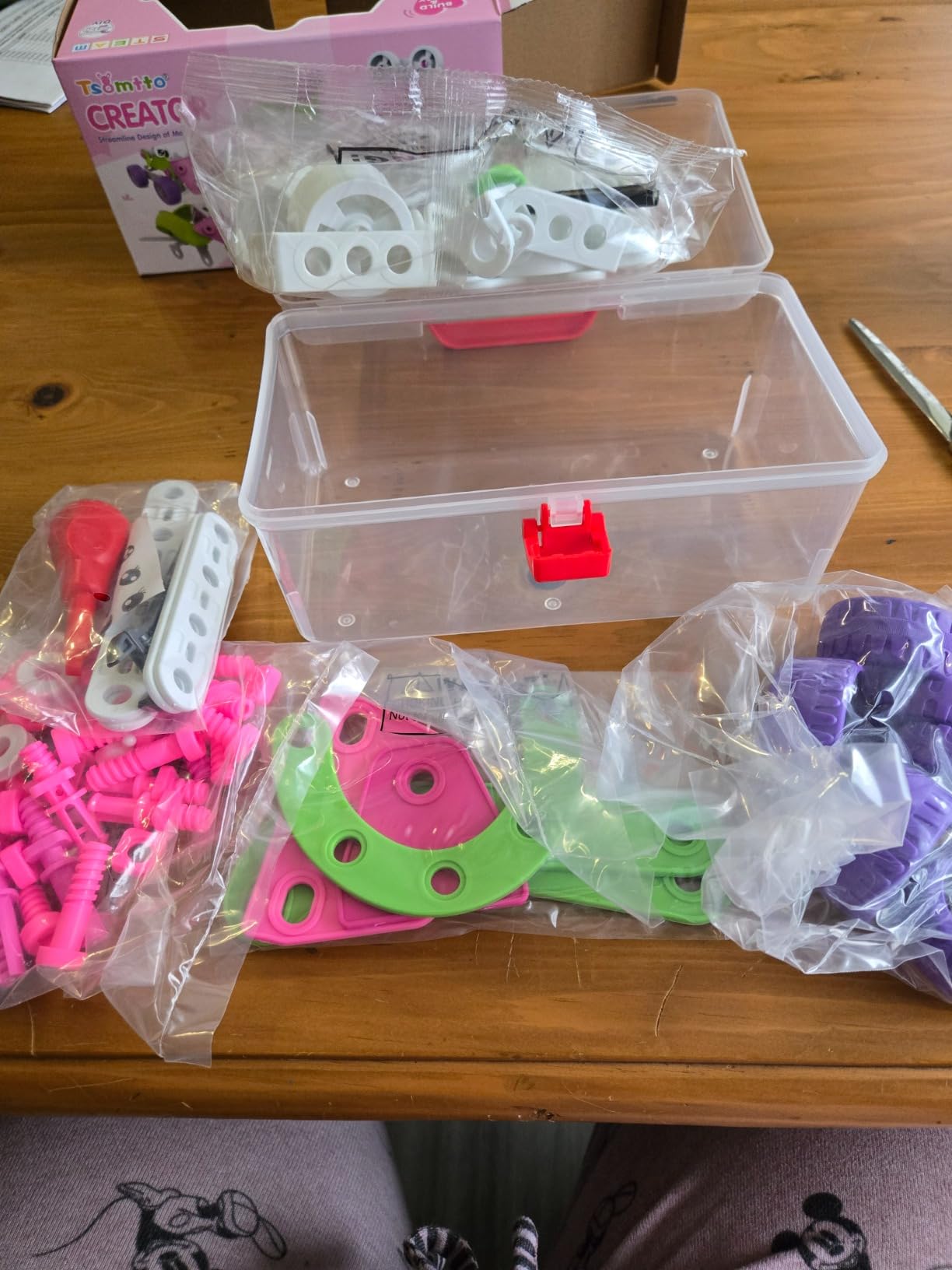
Most STEM building sets for this age are magnetic tiles or a big plastic castle. This one takes a different approach: a single pile of pink pieces that converts into fourteen different models, including a cart, a plane, a robot and a train, using the step-by-step guide booklet.
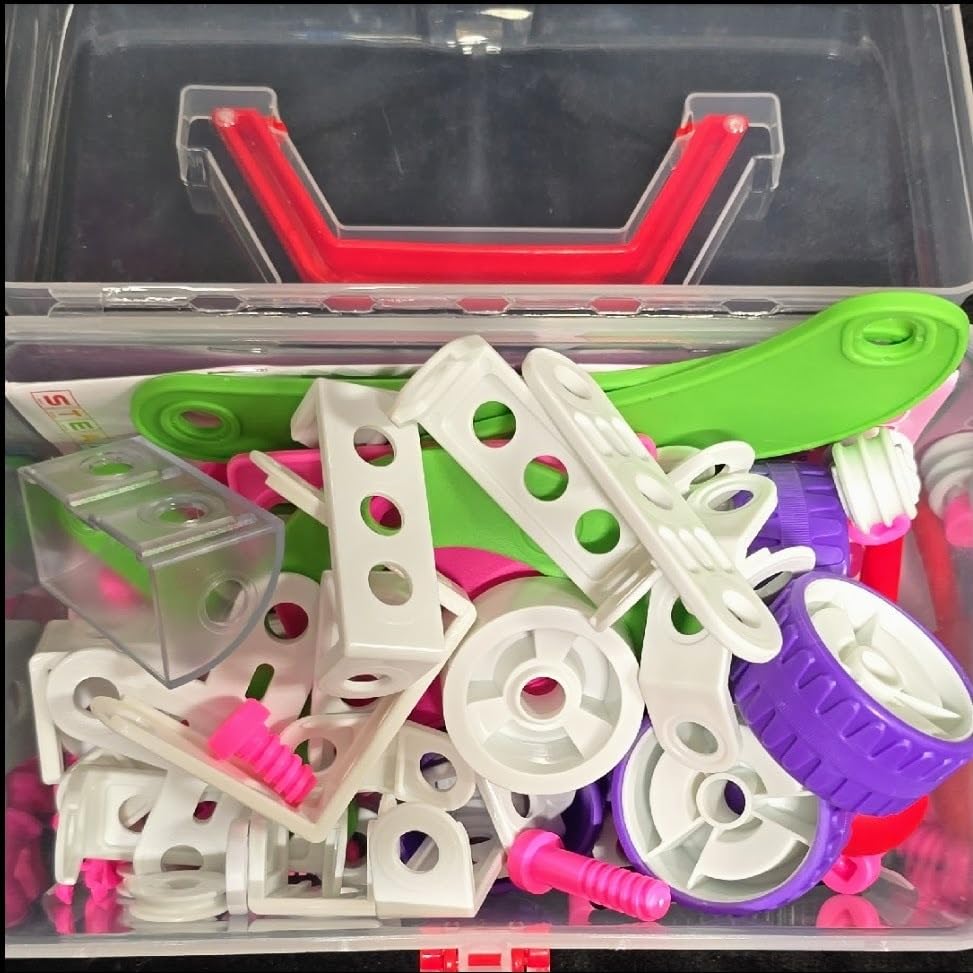
The included storage box is the feature parents mention most. Loose construction pieces are a common cause of household friction, and a set that empties into one lidded box in under a minute changes how often it gets played with at all.
Two limitations are worth stating. Only one model can be built at a time, so this is a rebuild-each-time toy rather than a standing playset, and the published item dimensions are placeholder values, so judge the size from the product photos instead. It holds 4.5 stars from 320 reviews.
Who this suits best
It suits a preschool or kindergarten child who needs a clear goal and a visible win. Following a booklet and seeing a train appear is a genuine confidence moment at that age.
It suits households where tidying matters, because the storage box makes cleanup part of the play rather than a chore afterward. It also travels well and needs no power.
Who should skip it
Skip it if your child wants to build two things at once or display a finished model permanently. The one-model-at-a-time design means something is always taken apart.
Skip it above age eight, where the booklet-driven format becomes limiting. The same child will outgrow it within a school year or so.
9. Smartivity Robotic Mechanical Hand – Best Screen-Free Tinkering Project for Ages 8 to 14
Smartivity Robotic Mechanical Hand STEM Toy for Kids 8-14
Ages 8-14
Engineered wood
Working five-finger hand
Lifetime spare parts
250 g
Pros
- Mechanically accurate five-finger hand in engineered wood
- Screen-free build with lifelike finger movement
- Free replacement parts for life
- Parents' Choice Award and TOTY finalist
Cons
- Fine assembly that needs adult help for younger builders
- Wood is less forgiving of rough handling than plastic
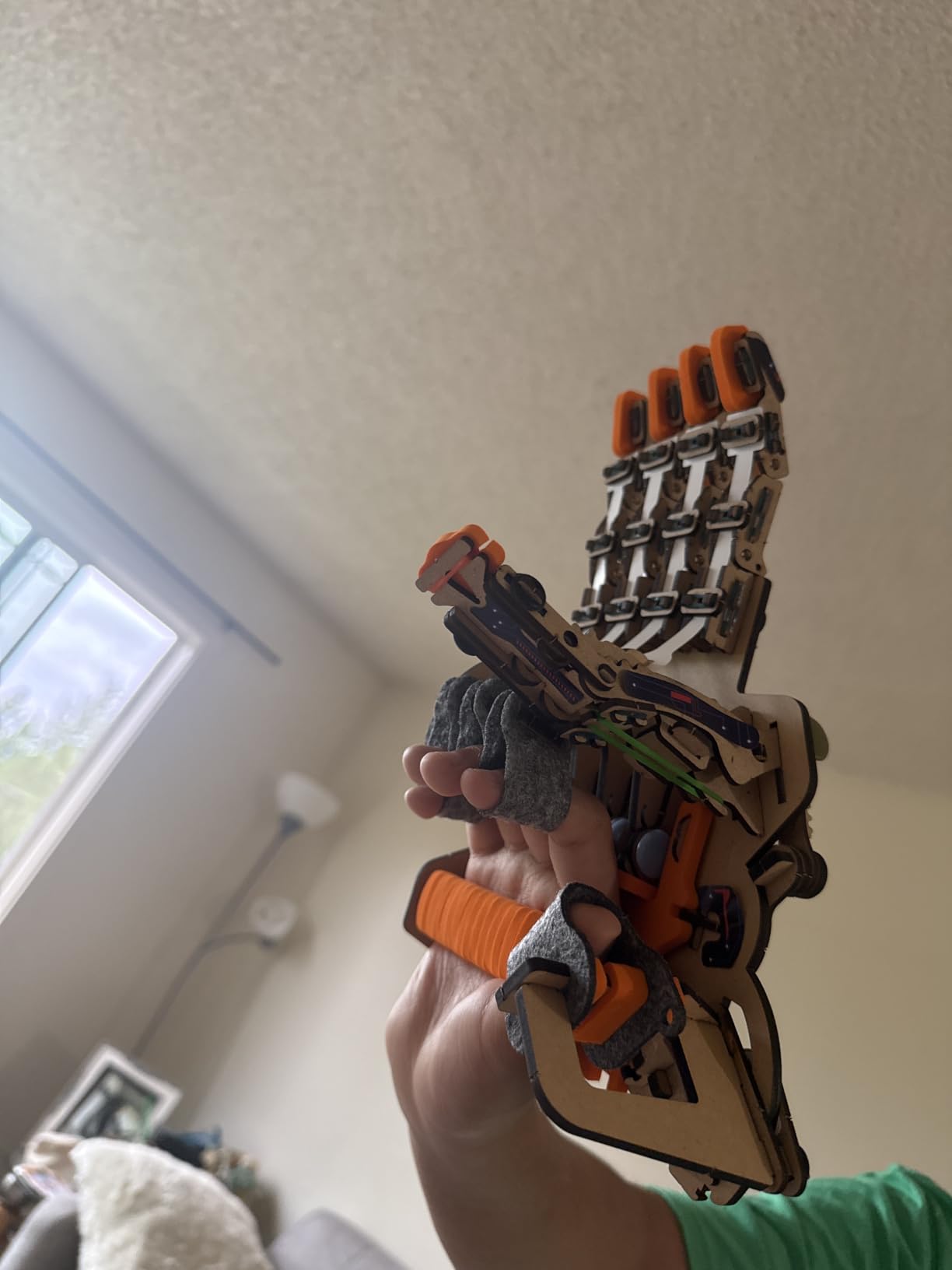
This is the project I would hand to a child who has outgrown kits with a fixed outcome. The Smartivity mechanical hand is built from engineered wood and uses a scissor-and-pulley mechanism across five fingers, so the movement is mechanically real rather than a plastic flex.
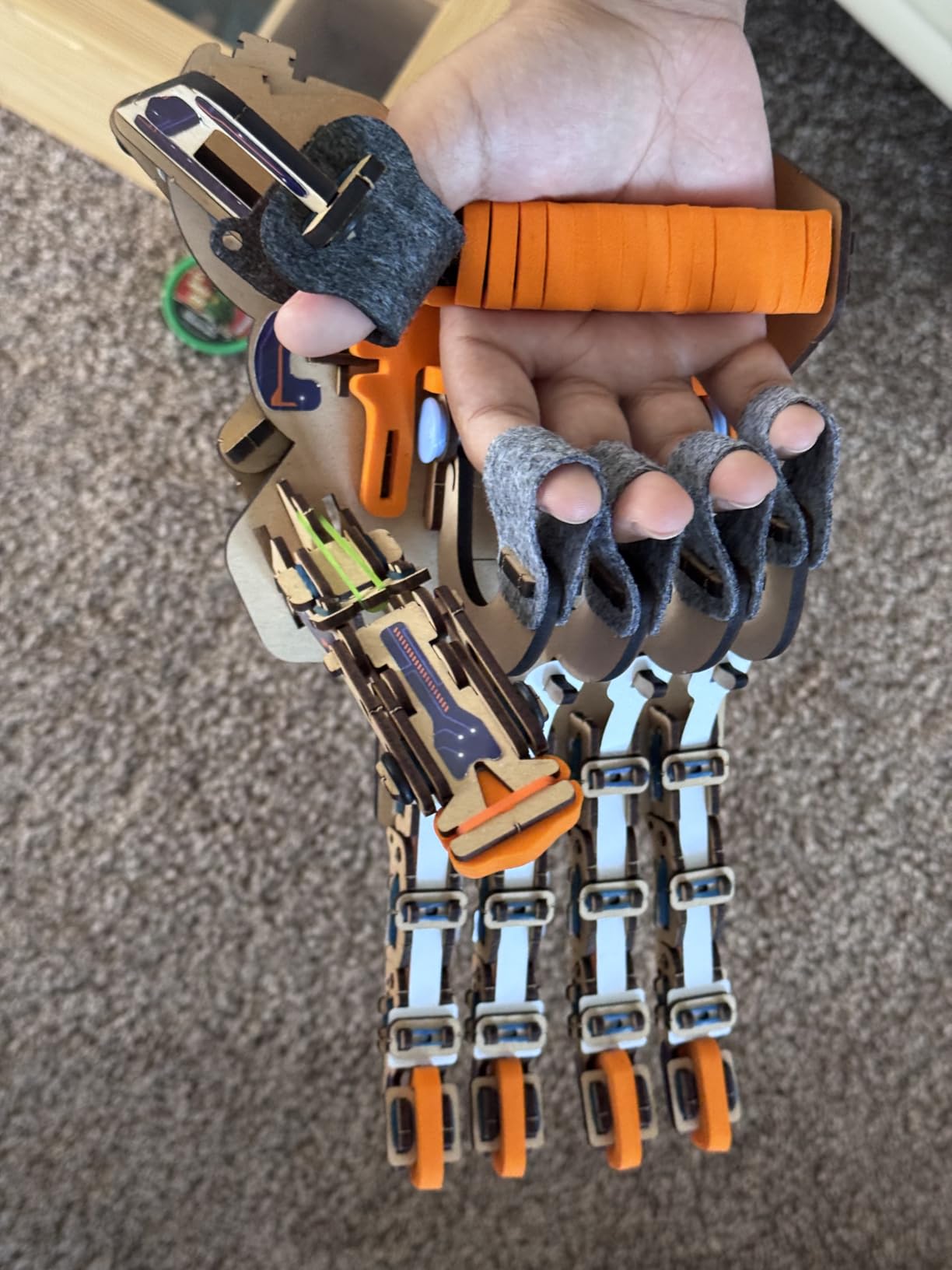
The build is the activity. It weighs 250 g and measures about 11.8 by 9.8 by 7.5 inches, and the piece count is high enough that it takes a proper session rather than a single sitting. Once it works, pulling a string to make all five fingers close never gets old.
It ships with a lifetime supply of replacement parts, which is unusual and quietly the most useful thing in the box. Wooden models lose a small gear or a dowel eventually, and knowing a replacement exists removes the main risk of buying an engineered-wood kit.
The honest caveat is assembly difficulty. The mechanism has many small parts and reviewers consistently recommend an adult helping younger builders, and wood is less forgiving of rough handling than plastic. Ratings sit at 4.6 from 3914 reviews, with 79 percent five-star.
Who this suits best
It suits a child aged eight to fourteen who builds things for the satisfaction of the mechanism rather than the output. It is a satisfying one-project commitment rather than an endless toy box.
It suits families avoiding screens entirely while still doing real engineering, and it makes a strong birthday gift for a tween who has moved past kits aimed at six-year-olds. We cover that age range in our tween gift picks too.
Who should skip it
Skip it if the child has short attention for fine motor assembly. This is a fiddly build with many small wooden parts, and the reviews are consistent about needing a second pair of hands.
Skip it if rough play is likely. Engineered wood cracks and splinters where plastic would bend, so it suits a careful builder rather than a demolition specialist.
10. BeAndge 6-in-1 Robotics Kit – Best Multi-Project Science Kit for Ages 8 to 12
BeAndge Robotics STEM Kits for Kids Science Robot Building Crafts Age 8-12
Ages 8-14
Six projects in one box
Screwdriver included
0.39 kg
Lifetime warranty
Pros
- Six distinct projects including a reptile robot and balance car
- Screwdriver and illustrated manuals included
- Odorless safety-tested components
- Lifetime warranty against manufacturing defects
Cons
- Bubble solution and AA batteries not included
- Younger builders need close adult supervision
Six projects in one box, which makes this a practical pick if a school science fair is coming up. The builds include a reptile robot, a balance car, a bubble machine, a fiber lamp and a buzzer wire game, each using a different combination of motors, circuits and simple machines.
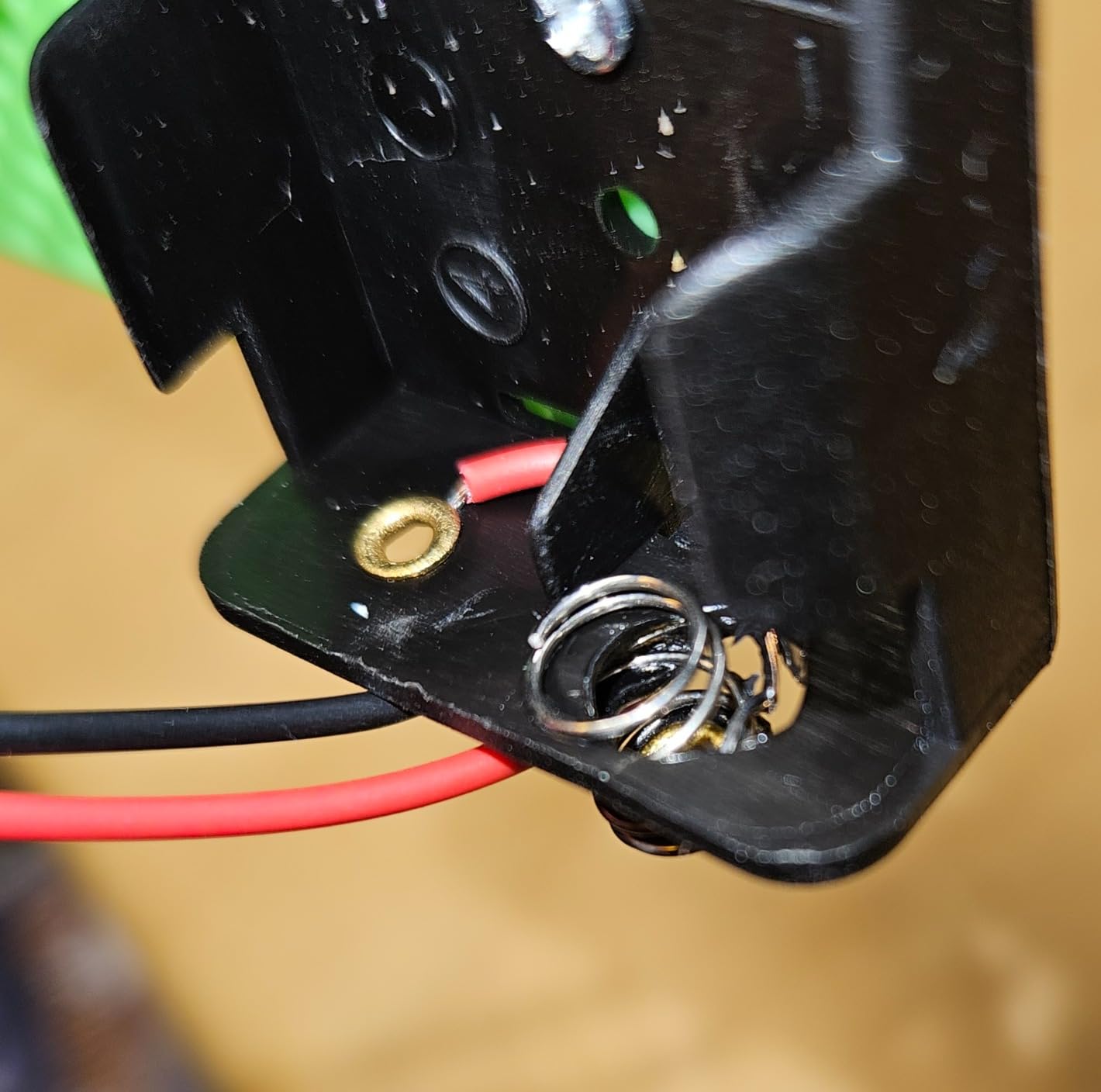
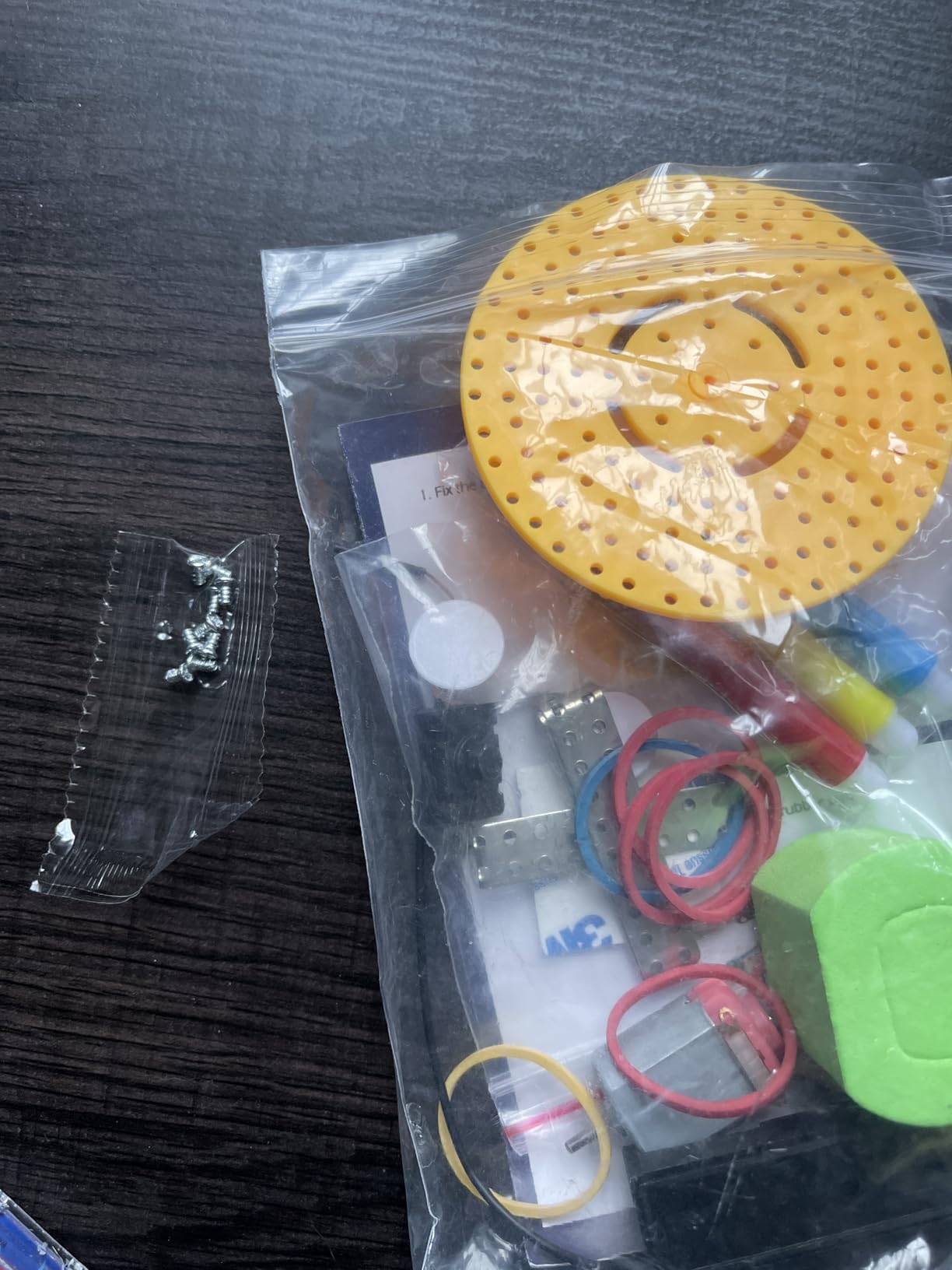
The box is 9 by 5 by 2 inches and 0.39 kg, so it is easy to store, and it includes a mini screwdriver plus illustrated manuals. Reviewers mention assembling the projects together as family time rather than as a solitary task, which suits a child who finds wiring fiddly on her own.
There is a lifetime warranty against manufacturing defects, and the components are described as odorless and safety-tested, both of which matter in a kit a child handles for hours.
The reported drawbacks are the same as most kits in this price tier. AA batteries and bubble solution must be supplied separately, and younger builders need supervision. One reviewer also reported a set that stopped working after a few minutes, so inspect the components early. The 4.5 rating comes from 1231 reviews.
Who this suits best
It suits a child who has a science fair, a school project or a home presentation coming up and needs something finished rather than conceptual. The variety of models gives her options.
It suits a parent who wants a shared build session, since the projects are substantial enough that working together is easier than working alone.
Who should skip it
Skip it under age eight. The small components and screw work need a steadier hand than a kindergartener usually has, and the manufacturer’s own grading starts at eight.
Skip it if you want a durable toy that survives years of daily handling. These are project kits, and the electrical connections are the part most likely to give out first.
11. BMDSAE 1000X Digital Microscope – Best Microscope for Young Scientists Ages 6 and Up
1000X Handheld Digital Microscope for Kids: Pocket Microscope with 2.0″ IPS Screen – STEM Toys Birthday Gifts for Girls Boys Child – Portable Edu Science Kits Toddler Age 3-6 6-12
Ages 6 and up
1000x magnification
2.0 inch IPS screen
600mAh battery
220 g
Pros
- Usable 1000x magnification with manual focus
- Bright screen most children operate unaided
- Rechargeable 600mAh battery lasts for days of intermittent use
- Photo and video capture for documenting finds
Cons
- Protective lens film must be removed or the view is blocked
- Not powerful enough to see bacteria or cells
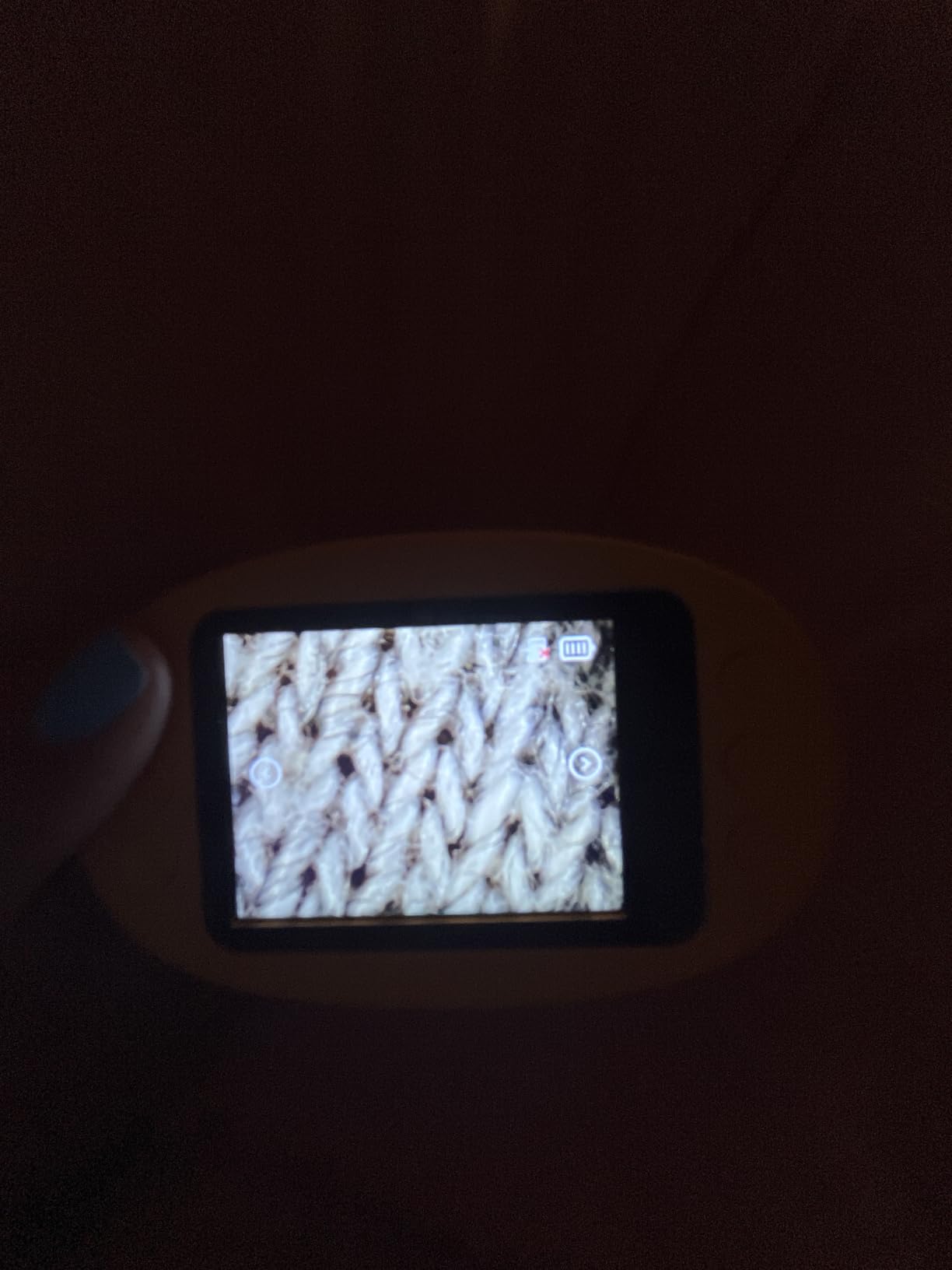
A microscope is a useful STEM tool to own, and this handheld digital one is genuinely capable rather than a toy. Magnification goes to 1000x with manual focus control, eight adjustable LEDs across three brightness modes, and a 2.0 inch IPS screen that most children operate without help.
It turns curiosity into a routine. Hand a child a microscope on a wet day and she will look at a leaf, a fibre from a jumper, the skin on a fingertip and a printed letter, and the questions follow on their own. That is the observational habit that sits underneath every other science kit here.

The build quality is better than the price suggests. The body is ABS with a rubber casing, it weighs 220 g with oversized focus dials for small hands, and it carries CE, FCC and CPC safety certification with a one-year warranty.
Power is handled sensibly for this category. A 600mAh rechargeable battery gives about two hours of use and charges over USB-C, with 32M of internal storage holding more than 200 photos or video clips, so discoveries can be saved and shown to the family.
Two honest limits. The protective film or cover glass has to be peeled off or it blocks the view entirely, which is the single most common piece of advice in the reviews. And 1000x is not literal magnification, so it resolves fibres, skin texture and plant cells but not bacteria or germs. It ranks first in kids microscopes, at 4.5 stars from 1155 reviews.
Who this suits best
It suits a child aged six and up who asks why and already has a favourite subject to examine. It also suits older children and adults, and many buyers report using it well past the intended age range.
It suits a home without a garden or a nature walk nearby, because the built-in LEDs mean it works on a kitchen table in winter as well as outdoors in summer.
Who should skip it
Skip it for toddlers. The listing spans ages three to twelve, but reviews note that younger children lose interest quickly, so six is the more realistic starting point.
Skip it if the goal is seeing living cells. That needs a compound microscope, and no handheld digital unit at this level will reach it.
12. Poraxy 4-in-1 Wooden STEM Kit – Best Creative Build Kit for Ages 6 to 14
Poraxy 4 in 1 STEM Kits for Kids Ages 5-7 8-10 8-12,3D Wooden Puzzles, Science Project Model Craft Building Engineering Kit,STEM Toys for Ages 8-13,Birthday Gifts for Girls 6 7 8 9 10 11 12 Year Old
Ages 6-14
Four working models
12 paint colours
8 by 6 by 3 inches
Laser-cut wood
Pros
- Four models including a working ferris wheel and carousel
- Laser-cut wooden pieces with smooth splinter-free edges
- Painting stage extends the play
- Colour-changing LED lights
Cons
- Assembly needs real adult help for younger children
- No manufacturer warranty offered
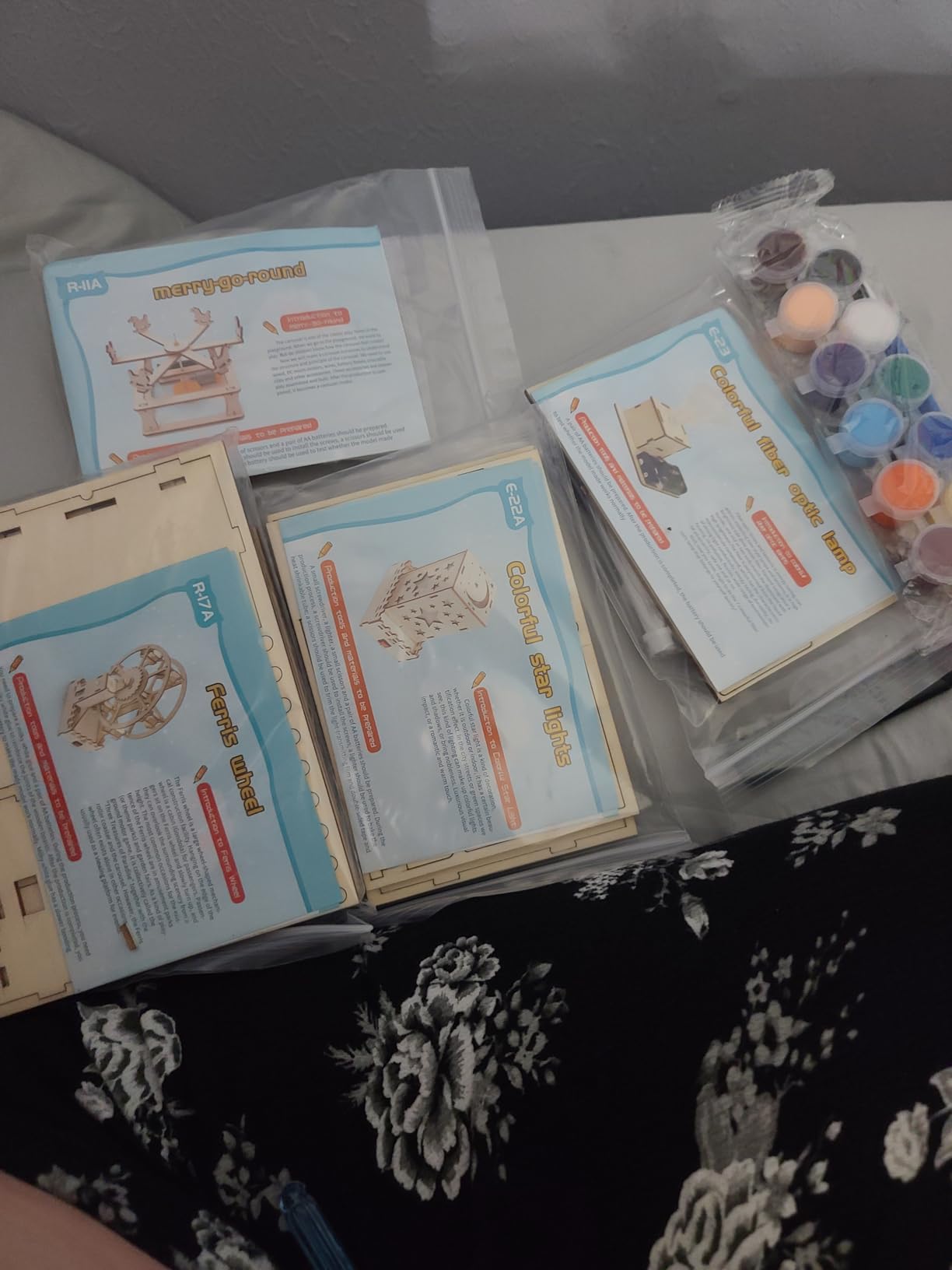
The Poraxy kit is a craft build rather than a pure science kit, and that is its strength. Four complete models come in one box: a mini ferris wheel, a carousel, a fiber optic lamp and a star night light, and the moving parts genuinely move once assembled.
It also includes a painting stage, which none of the other kits here has. Twelve paint colours and two brushes are included, so the model becomes a display object afterwards rather than something that goes straight back in the box.
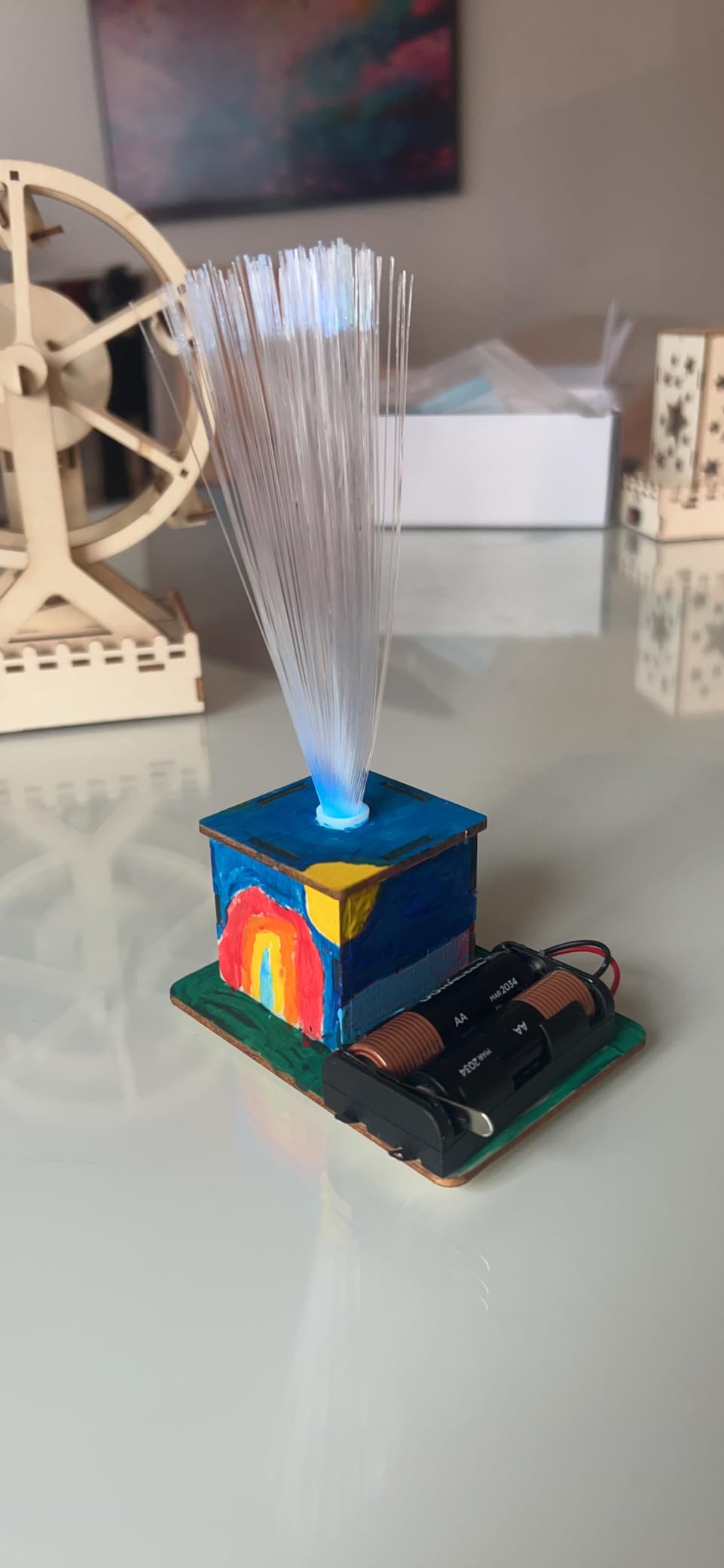
Construction is laser pre-cut wood with smooth, splinter-free edges, sized around 8 by 6 by 3 inches per model. The lights change through seven colour modes, which is the part children show their friends, and the ferris wheel and carousel both rotate.
Reviewers consistently note that the models actually work after assembly, which sounds basic and is not true of every kit in this category. Eighty-one percent of reviews sit at five stars, with 4.6 overall from 224 reviews.
Two cautions. Assembly needs meaningful adult help from a younger child, so factor in a session of shared building rather than independent play. And the manufacturer offers no warranty on this one, so a broken piece is a conversation with the seller rather than a replacement part.
Who this suits best
It suits a child who likes finishing with something visible and pretty, and who would rather decorate a result than tune a mechanism. The painting stage is what makes it last longer than a single assembly.
It suits families looking for a shared build with a keepsake outcome, and it works well as a holiday or birthday project across a couple of afternoons.
Who should skip it
Skip it if the toy must be played with independently by a child under eight. The reviewer feedback is consistent that adult help is needed for younger builders.
Skip it for a child who wants to keep building. Four models is a finite set, and once they are built and painted there is no ongoing play here.
How to Choose STEM Toys for Girls by Age
Age matters more than category. A kit that is too advanced produces frustration and a toy that ends up in a drawer, which is worse for confidence than not buying it at all.
Ages 3 to 4: building confidence with the hands
At this age the skill is hand-eye coordination and the win is a finished object. Magnetic tiles like the Soyee set are the best fit, because a three-year-old can stack and a four-year-old can build a house, and there is no instruction to misread. Avoid anything with loose small parts regardless of what the box says.
Ages 5 to 6: following a guide and finishing a model
Booklet-driven construction sets such as the Tsomtto 14-in-1 work here, since the goal is visible and reachable. Gravity Maze works too if an adult assembles the towers first. The goal for this band is completing something without asking for help three times.
Ages 7 to 8: debugging and first real experiments
This is where snap-together circuits and screen-free science kits begin to work. Most kits in this roundup are graded eight and up, so a seven-year-old will often need an adult reading the instructions alongside her. A digital microscope like the BMDSAE is a strong entry point at this age.
Ages 9 to 11: the sweet spot for STEM gifting
Almost every kit here fits this band, and it is the one parents ask about most often, usually for a birthday. Science kits with a hundred-plus experiments give months of content, while a coding robot like the mBot introduces real programming. For gift ideas across this range, our teen gift guide covers the next step up.
Ages 12 and up: projects with a real outcome
At this age, toy-like kits stop working and mechanical projects start. The Smartivity mechanical hand and multi-project kits like the BeAndge six-in-one make sense because the finished object is impressive and the difficulty is genuine. Look for a kit that produces something she can explain to someone else.
What Makes a STEM Toy Worth the Money
For most families the honest answer is that the price matters far less than whether the child is still opening it in month three. Toy fatigue is the complaint that comes up most often in parent discussions about this category, and it is worth using as the deciding question in the shop.
Count the repeat sessions, not the pieces
A kit with a hundred experiments gives a hundred sessions. A single-build robot gives one, however impressive the robot is. Judge the box by how many times it can be opened, and by whether the content can be revisited rather than completed.
Check that the adult effort is realistic
Some kits need a parent for twenty minutes of setup. That is fine occasionally and miserable every time. If the toy will be used unsupervised, test whether a child can get from opening the box to a working result without you.
Look for open-ended over prescribed
Open-ended sets such as magnetic tiles get used longer because there is no end state to reach. Directed kits give faster satisfaction and a clearer finish line, which suits younger children and less patient personalities. Both are valid, they just fail differently.
Ignore the theme, read the skill
Ask what the toy actually practises. Does it build circuits, logic, geometry, mechanism or code? A castle-themed tile set and a plain tile set teach the same geometry, and the themed one is a better gift if she is the intended recipient.
Skip kits that need a specific device
Check the compatibility list before buying anything app-driven. Some robotics toys assume a recent tablet, and forum threads repeatedly describe sets that stopped working after an operating system update, which is a genuine risk with any device-locked product.
Screen-Free vs App-Powered: Which Suits Your Child
Most of the kits here need no device at all, and that is an advantage rather than a compromise. Gravity Maze, Snap Circuits Jr., the National Geographic science kit, the mechanical hand, the magnetic tiles, the 2Pepers robots, the wooden models and the digital microscope all work without an app.
App-powered kits have a genuine advantage too, and it is not a small one. Visual programming turns an abstract idea into a drag-and-drop action a child can see working within minutes, which is why the mBot gets children coding when a robotics set with only written instructions often does not.
The failure mode is the same for all of them. If the app stops being supported, the toy loses its main function and becomes a plastic box. We weight screen-free kits higher for that reason, and treat app-driven ones as a deliberate choice rather than a default.
Safety and Age Grading: Small Parts, Magnets and Batteries
Most kits here are graded eight and up, and two are graded three and up. The grade is not a formality. It reflects the size of the smallest part, which determines whether the toy is a choking hazard in a house with a younger sibling.
Small parts and the under-three rule
Magnetic tiles and construction pieces in this roundup are the main concern. Small parts that fit inside a toilet paper roll are not safe for a child under three, and a set that is safe for a five-year-old can still be dangerous for the toddler in the next room.
Magnets
Magnetic building sets are powerful enough to hold real structures and can be harmful if swallowed in pairs. If there is a child under three in the house, choose a magnetic set with a documented small-parts warning and keep it closed when it is not in use.
Batteries and charging
Several kits here need batteries that are not included, including the Snap Circuits Jr. and the BeAndge projects. The mBot takes a lithium-ion pack that reviewers report is harder to source locally. The BMDSAE microscope avoids the problem with a USB-C rechargeable battery, which is the arrangement we prefer for regular use.
Mess and supervision
Every science kit in this roundup involves powders or liquids, and every one of them carries a supervision note from its reviews. That is not a defect. It means the kit works best as an activity done with an adult rather than one handed over solo.
Frequently Asked Questions
What are some good STEM toys for girls?
The strongest options cover different pillars rather than repeating one. For circuits, the Snap Circuits Jr. SC-100 gives 100 or more projects from 29 snap-together parts with no tools. For open-ended building, a 58-piece magnetic tile set with working doors and stairs suits ages three to twelve. For logic, the ThinkFun Gravity Maze offers 60 graduated challenge cards with no batteries at all. For real programming, the Makeblock mBot teaches Scratch before Arduino, and for observation, a handheld digital microscope with 1000x magnification turns curiosity into a routine.
Are STEM kits worth the money?
The ones worth buying are the ones a child reopens after a month, and the deciding question is repeat sessions rather than piece count. A kit offering more than 100 experiments gives many sessions, while a single-build robot gives one. Judge the adult effort too, because kits needing twenty minutes of setup are fine occasionally and tiring every day. Open-ended sets generally get used longer, and directed kits give a faster finish line for younger children.
What is the best STEM gift for a 10-year-old?
At ten, almost every kit in this roundup fits, so match the format to her temperament rather than her age. A child who loves experiments is best served by a science kit with a hundred-plus activities. One who wants to build is best served by a coding robot such as the Makeblock mBot, which teaches Scratch and expands with extra modules. One who avoids screens is best served by the mechanical hand or a magnetic tile set. Avoid anything graded below eight for a ten-year-old, since the challenge drops away.
What age is a STEM robot kit suitable for?
Most robot kits in this roundup are graded eight and up, and that grading reflects real requirements rather than marketing. Children under eight generally struggle with small screws, motors and instruction reading. The Makeblock mBot is graded eight to twelve, the BeAndge six-project kit eight to fourteen, and the 2Pepers three-in-one set eight and up. If a child is close to eight, an adult should plan to build alongside her the first time.
What STEM toys work without a tablet or phone?
Several strong picks need no device at all. The ThinkFun Gravity Maze is a manual marble maze with no batteries, the Snap Circuits Jr. runs on alkaline cells only, the National Geographic science kit uses household chemicals with no power, the Smartivity mechanical hand is a purely mechanical wooden build, and the magnetic tile set and wooden models need nothing but a table. A handheld digital microscope is also device-free, storing photos internally rather than sending them to a phone.
Our Verdict on the Best STEM Toys for Girls in 2026
After working through all twelve sets, the Snap Circuits Jr. SC-100 is the best STEM toy for girls we would buy first. It holds a 4.8 rating alongside the magnetic tile set and carries a review base of over 29k, so its score is backed by a lot of long-term use. If she prefers building with no instructions at all, the Soyee magnetic tile set is the better long-term investment, and the ThinkFun Gravity Maze covers the logic and screen-free ground well.
Match the toy to the child rather than to the category, give the puzzle a fair run before judging it, and buy one thing she can finish. Our wider picks for engineering-focused STEM toys are worth a look if she is heading towards mechanics rather than chemistry.