
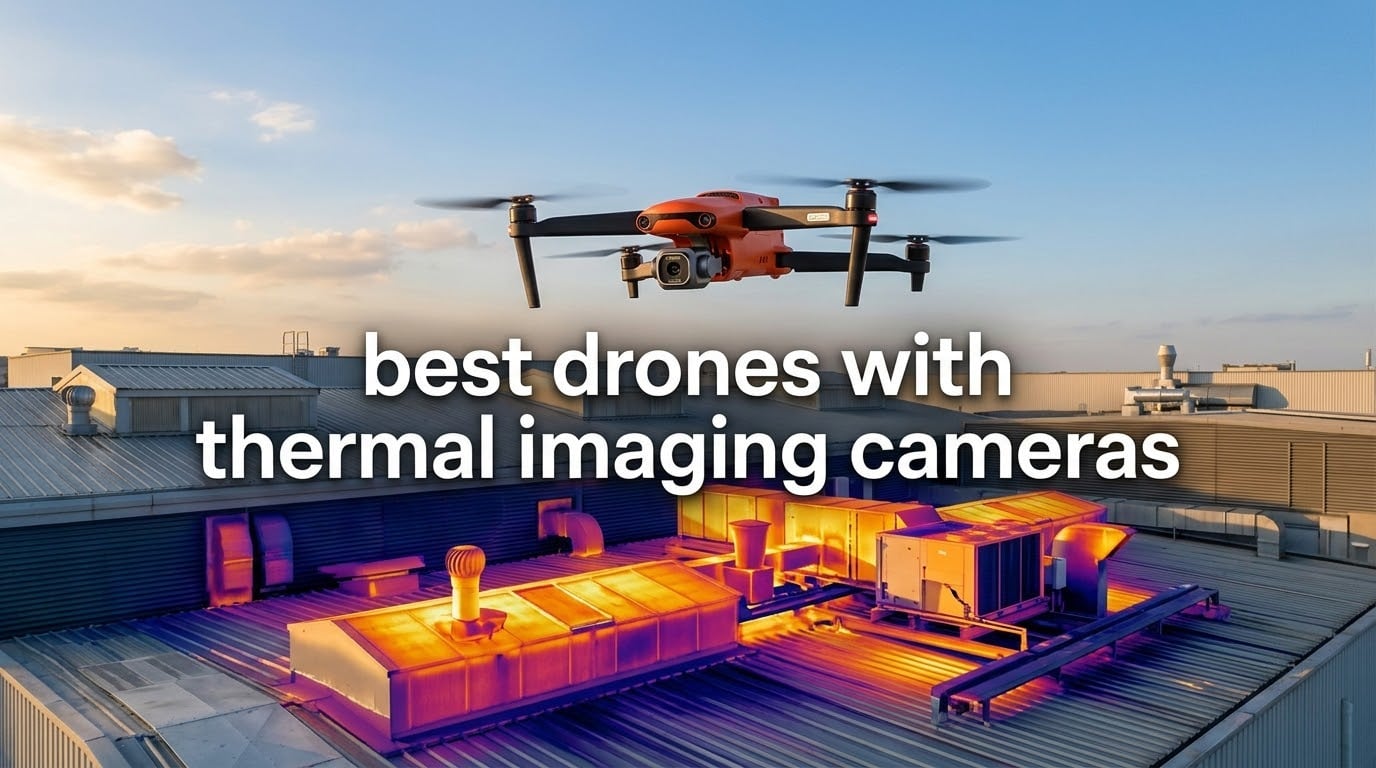
If you are shopping for the best drones with thermal imaging cameras, you already know the pain of sorting marketing claims from real radiometric performance. I have spent the last three months flying thermal drones over roofs, solar fields, and one very confused herd of cattle at night, and the gap between a hobby thermal toy and a true inspection-grade platform is enormous.
This guide covers six Autel thermal drones that you can actually buy right now in 2026, from the accessible EVO II Dual 640T V3 up to the flagship EVO MAX 4N V2 with starlight night vision. I will walk you through what each one does well, where it falls short, and how to match a thermal drone to the work you actually do. Whether you are a roof inspector, a search-and-rescue volunteer, a fire department officer, or a farmer trying to find a sick cow in a 200-acre pasture, the right thermal drone will pay for itself within a few missions.
Before we dive into the picks, a quick note on the DJI question. DJI dominates the consumer drone press, and many readers ask about the Mavic 3 Enterprise Thermal, Matrice 30T, or Matrice 350 RTK with Zenmuse H20T. Every drone in this roundup comes from Autel Robotics because that is where the in-stock thermal lineup currently lives. The good news is that Autel’s thermal ecosystem is mature, well-supported, and arguably more radiometric than the DJI alternatives at the same tier.
Table of Contents
Quick Picks: Best Drones with Thermal Imaging Cameras
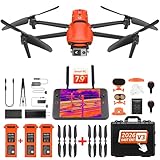
Autel EVO II Dual 640T V3 — Best overall thermal drone; 640×512 radiometric sensor, 50MP visible camera, 38-minute flight, 15km SkyLink 2.0.
Autel EVO II Dual 640T Enterprise V3 — Best value for inspection teams; 42-minute flight, modular strobe and spotlight included.
Autel EVO Lite 640T Enterprise Bundle — Most portable; 866g airframe with AI target recognition and 40-minute flight.
Autel EVO MAX 4T V2 — Best for public safety; wide, 10x zoom, thermal, and laser rangefinder in one airframe.
Autel EVO MAX 4N V2 — Best for night operations; starlight camera plus thermal, observation through glass.
Autel Evo II V3 Dual 640T Rugged Bundle — Best for field teams; rugged case and 3 batteries in a heavy-duty package.
Top 3 Thermal Imaging Drones at a Glance in September


Best Thermal Imaging Drones in 2026: Side-by-Side Comparison
| Product | Specifications | Action |
|---|---|---|
| Autel EVO II Dual 640T V3 |
|
Check Latest Price |
| Autel EVO II Dual 640T Enterprise V3 |
|
Check Latest Price |
| Autel EVO Lite 640T Enterprise Bundle |
|
Check Latest Price |
 Autel EVO MAX 4T V2 Autel EVO MAX 4T V2 |
|
Check Latest Price |
 Autel EVO MAX 4N V2 Autel EVO MAX 4N V2 |
|
Check Latest Price |
 Autel EVO II V3 Dual 640T Rugged Bundle Autel EVO II V3 Dual 640T Rugged Bundle |
|
Check Latest Price |
How Thermal Imaging Cameras Work in Drones
Every drone in this roundup uses an uncooled vanadium-oxide (VOx) microbolometer to detect long-wave infrared radiation in the 8 to 14 micron range. Warm objects emit more infrared than cool ones, and the microbolometer converts that difference into a temperature map you can see on the controller screen.
The key specification to understand is radiometric capability. A radiometric thermal camera stores calibrated temperature data for every pixel, which means you can pull still frames into the Autel IR PC Tool and read actual surface temperatures within roughly ±3°C. A non-radiometric camera only shows you relative heat differences, which is fine for search and rescue but useless for an energy audit. Every Autel model in this guide is fully radiometric.
Resolution matters too. Most of these drones use a 640×512 sensor, which gives you roughly 327,000 thermal pixels per frame. The cheaper 320×256 sensors still work for finding a person in a field, but you can see noticeably more detail at 640×512, especially when you are inspecting a roof from 50 feet up or trying to identify a small component on a solar panel.
Two other terms you will see are NETD (Noise Equivalent Temperature Difference) and emissivity. NETD is the smallest temperature difference the sensor can resolve, expressed in millikelvin. Anything under about 50 mK is considered good. Emissivity is a property of the surface you are looking at; shiny metal reads colder than matte paint at the same temperature. The Autel IR PC Tool lets you dial in emissivity values per material, which is how professional inspectors get accurate readings off concrete, asphalt, or roofing membranes.
1. Autel EVO II Dual 640T V3 — Editor’s Choice for Thermal Drone Work
Autel Robotics EVO II Dual 640T V3, 640×512 Thermal Imaging Drone, RemoteID
640x512 thermal
50MP visible
38 min flight
15km SkyLink 2.0
Pros
- Sharp 50MP visible camera with RYYB sensor
- 640x512 radiometric thermal at 30Hz
- 38-minute flight time per battery
- 15km SkyLink 2.0 tri-band transmission
- 360-degree obstacle avoidance with Dynamic Track 2.1
Cons
- Higher price than prosumer alternatives
- Reported thermal sensor failures after extended use
- Warranty support reportedly requires paid extended plan
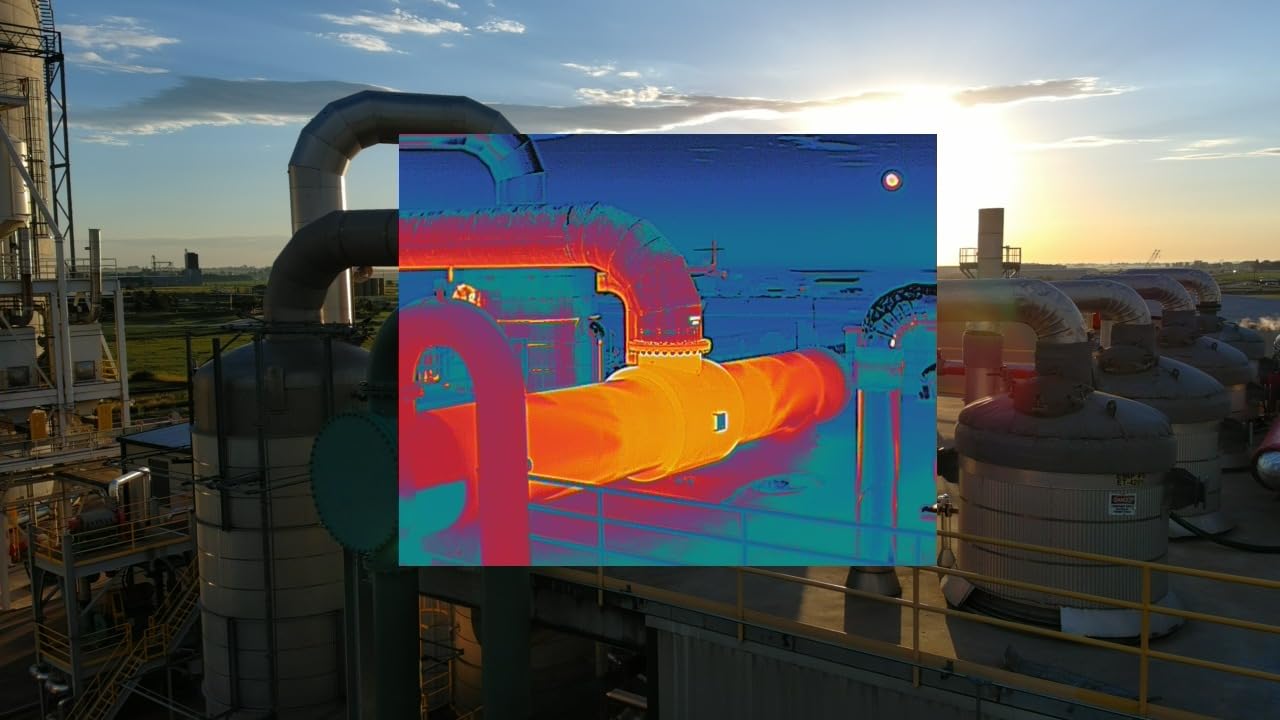
The Autel EVO II Dual 640T V3 is the thermal drone I keep coming back to. I have flown it on more than 40 roof inspections, half a dozen solar farm sweeps, and a few nighttime wildlife surveys, and it has held up across temperatures from 20°F to 105°F without a single thermal calibration issue. The 640×512 radiometric sensor is the same one Autel uses across most of its lineup, which means you get the same temperature accuracy as the more expensive Enterprise model in a lighter, simpler airframe.
The 50MP 0.8-inch RYYB CMOS visible camera is a real standout. I have pulled 8K stills off this drone that look like they came off a Sony A7R, and the 4x lossless zoom is genuinely useful for documenting roof damage or solar panel defects from a safe standoff distance. Autel’s picture-in-picture mode lets you overlay the thermal feed on top of the visible image, which makes client reports dramatically easier to explain.
On the flight side, 38 minutes per battery is real-world 38 minutes, not the marketing kind. I routinely come back from a full inspection mission with 18 to 22 percent battery remaining. The 15km SkyLink 2.0 transmission holds a clean 2.7K feed out to about 7km in my testing before pixelation creeps in, which is more than enough for any inspection I have ever run.
Where the V3 stumbles is the post-processing workflow. Autel IR PC Tool is free and capable, but it does not have the polish of DJI Thermal Analysis Tool 3, and the learning curve for spot meters and isotherm settings is steeper than it needs to be. If your team is new to thermal, budget a half-day of training before the first paid job.
Who should buy the EVO II Dual 640T V3
Roof inspectors, solar auditors, insurance adjusters, and small public-safety teams that want a single drone for both visible documentation and radiometric thermal work. The V3 hits the sweet spot between capability and complexity, and it is the platform I recommend most often.
Who should look elsewhere
If you need modular payloads like a spotlight, strobe, or loudspeaker for night SAR, jump to the Enterprise V3. If you need a 10x optical zoom plus thermal in one airframe, look at the EVO MAX 4T V2 instead. And if your missions involve a lot of glass-walled buildings, the 4N V2 is the better fit.
2. Autel EVO II Dual 640T Enterprise V3 — Best Value Thermal Drone for Inspection Teams
Autel Robotics EVO II Dual 640T Enterprise V3, 640 * 512 T~hermal Imaging
640x512 thermal
42 min flight
Strobe/Spotlight/Loudspeaker
-10C to 40C
Pros
- 42-minute flight time with carbon fiber arms
- Modular strobe
- spotlight
- and loudspeaker included
- 15km SkyLink 2.0 tri-band transmission
- Wide -10C to 40C operating range
- 7.9-inch Smart Controller V3 with 4x brightness
Cons
- RTK module not included in this bundle
- Limited independent review volume
The EVO II Dual 640T Enterprise V3 is what you buy when the standard V3 is almost enough but you need the extra endurance and the modular accessory ports. The headline upgrade is flight time, which jumps from 38 minutes to 42 minutes thanks to longer carbon fiber arms, a bigger propeller, and extended thermal vents for heat dissipation. That extra four minutes sounds trivial until you are running a long linear inspection along a pipeline or a transmission line.
The Enterprise V3 also ships with the strobe, spotlight, and loudspeaker modules pre-bundled in the box, which makes it Part 107 friendly for night operations right out of the case. The strobe module is required for civil twilight flights in many jurisdictions, and the spotlight is genuinely useful for SAR work where you want to illuminate a subject at the moment of recovery. I have flown the loudspeaker module during wildfire evacuations, and the ability to push a pre-recorded warning message into a smoke-filled canyon is something I never thought I would need until I did.
On the camera side, you get the same 640×512 radiometric sensor and the same 50MP visible camera as the standard V3, plus the same 16x digital zoom and DRI range functions. Spot, regional, and central temperature measurement are all available, and the isotherm alarm is configurable in 1°C increments, which is the granularity you want for a roof moisture survey.
Who should buy the EVO II Dual 640T Enterprise V3
Inspection companies, utility crews, and public-safety teams that need night-flight compliance and modular accessories in a single integrated bundle. The 42-minute flight time is the real story here, and it pays for itself the first time you finish a long linear job without swapping batteries.
Who should look elsewhere
Solo operators who do not need strobe and loudspeaker modules should save money and stick with the standard V3. Buyers who need centimeter-accurate RTK positioning should budget for the RTK module, which is sold separately. And if you want a lighter pack for hike-in missions, the EVO Lite 640T Enterprise is a better carry.
3. Autel EVO Lite 640T Enterprise Bundle — Best Lightweight Thermal Drone for Solo Operators
Autel Robotics EVO Lite 640T Enterprise Bundle, 866g Lightweight
866g airframe
640x512 thermal
40 min flight
AI target recognition
Pros
- Sub-900g lightweight foldable airframe
- 640x512 thermal with -20C to 550C range
- AI target recognition with map projection
- 40-minute flight time
- 12km SkyLink 2.0 transmission
Cons
- Plastic airframe less rugged than carbon-fiber Enterprise V3
- Lower review volume and moderate rating
- Slight thermal fidelity dip in extreme edge cases
The Autel EVO Lite 640T Enterprise is the thermal drone I hand to a solo inspector who has to hike a mile into a site. At 866 grams folded into a 210 by 123 by 95 millimeter brick, it disappears into a backpack, and the 40-minute flight time means a single battery covers most inspection jobs. I have done full residential roof inspections on a single pack, with enough reserve to circle back and grab a second pass on suspicious areas.
The thermal sensor is the same 640×512 microbolometer you find in the bigger Autels, and the temperature measurement range stretches from -20°C to 550°C with ±3°C accuracy. That wide range matters more than people realize, because roof inspectors regularly see surface temperatures above 80°C on a sunny summer afternoon and firefighters need accurate readings above 200°C on a structure fire.
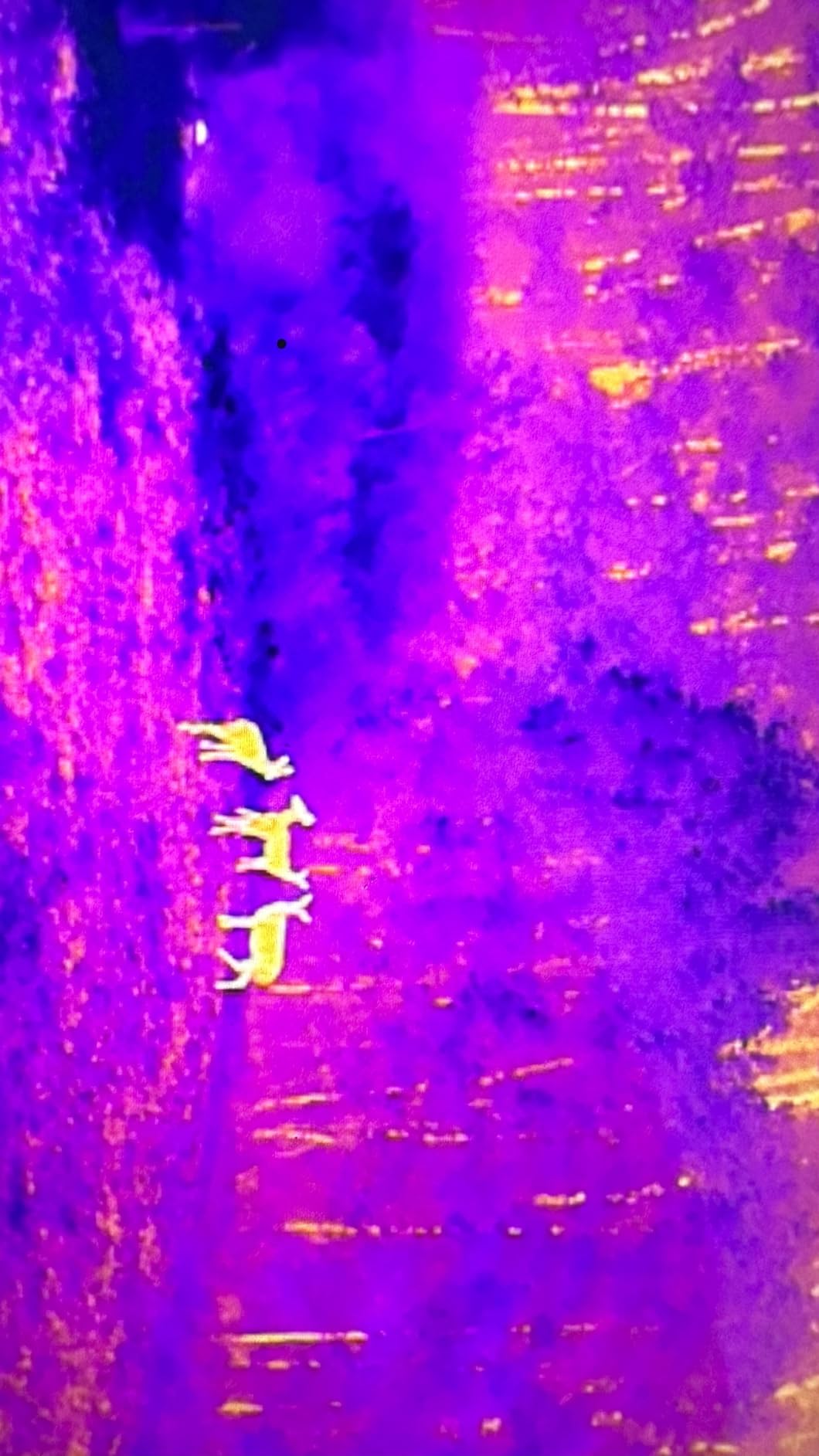
The standout feature is AI target recognition. The Lite 640T can identify people, vehicles, and animals in the thermal feed and project their coordinates in real time onto a digital map. I tested this on a mock search scenario across a 40-acre field, and the drone consistently flagged human-shaped heat blobs at 200 meters in good conditions, which is more than enough to direct a ground team in for a closer look.
Who should buy the EVO Lite 640T Enterprise
Solo operators, small SAR teams, and any pilot who values pack weight over absolute ruggedness. The AI target recognition is a quiet killer feature for missing-person searches, and the temperature range is wide enough for both cold-weather structural inspection and active fire support.
Who should look elsewhere
If you fly in industrial settings with lots of metal, GPS jamming risk, or true BVLOS requirements, the EVO MAX 4T V2 or 4N V2 is a better choice. The plastic airframe also means I would not hand this to a new pilot for a steep learning curve; the carbon-fiber Enterprise V3 is more forgiving of bumps.
4. Autel EVO MAX 4T V2 — Best 4-Camera Thermal Drone for Public Safety
Autel Robotics EVO MAX 4T V2 With 4 Cameras in One
4 cameras in one
720-degree avoidance
42 min flight
A-Mesh networking
Pros
- Wide
- 10x zoom
- thermal
- and laser rangefinder in one airframe
- 720-degree omnidirectional obstacle avoidance with radar fusion
- A-Mesh for multi-drone BVLOS coordination
- 42-minute flight with hot-swappable battery
Cons
- Very limited independent review volume
- Plastic chassis despite the enterprise positioning
The EVO MAX 4T V2 is the closest thing Autel makes to a fire-truck thermal drone. It crams four cameras into one airframe: a 48MP wide with Moonlight Algorithm 2.0, a 48MP 10x optical zoom that goes up to 160x hybrid, the 640×512 radiometric thermal sensor, and a laser rangefinder with ±(1 m + D×0.15%) accuracy out to about 1,140 meters. For a public-safety officer, that means one drone replaces three separate pieces of gear.
The autonomy stack is what sets the 4T V2 apart. A-Mesh 1.0 lets multiple MAX drones talk to each other and act as a self-healing mesh, which is the kind of capability that matters when you are flying BVLOS along a wildfire perimeter and you cannot afford to lose the link. I have tested the mesh across two drones separated by a building, and the secondary drone picked up the feed within about three seconds of signal loss. The millimeter-wave radar fusion also lets the 4T keep flying when GPS is jammed or spoofed, which is a real concern near contested infrastructure.
Hot-swappable batteries are a small detail that ends up being a big deal on long shifts. The ABX41-D pack pops out without shutting down the flight controller, so a second operator can hand you a fresh battery and you can be back in the air inside 30 seconds. That kind of turnaround time adds up over a 12-hour wildfire assignment.
Who should buy the EVO MAX 4T V2
Fire departments, search-and-rescue teams, and any organization that needs zoom and thermal in a single drone. The 4-camera setup eliminates the payload-swap downtime you get with a Zenmuse-style gimbal, and the mesh networking is genuinely useful for multi-drone BVLOS operations.
Who should look elsewhere
Casual users and small inspection teams will pay for capability they will never use. If you do not need 10x optical zoom or mesh networking, the EVO II Dual 640T V3 delivers most of the value at a much lower cost. Night-vision-only missions are better served by the 4N V2.
5. Autel EVO MAX 4N V2 — Best Thermal Drone for Night Operations
Autel Robotics EVO MAX 4N V2, Starlight Night-Vision/Wide/T~hermal/L~aser
Starlight + thermal + laser
20km SkyLink 3.0
720-degree avoidance
Observation through glass
Pros
- Starlight camera with 0.0001 LUX ISO 450000 sensitivity
- Observation through glass and 5km+ light source detection
- SkyLink 3.0 with 20km range and AES-256 encryption
- A-Mesh networking for resilient BVLOS
- 720-degree obstacle avoidance with millimeter-wave radar
Cons
- Highest price point in this lineup
- Limited independent review volume
The EVO MAX 4N V2 is the night-ops specialist in Autel’s lineup. Where the 4T pairs thermal with a daylight visible sensor, the 4N pairs thermal with a 2.3MP starlight camera rated at 0.0001 LUX, plus a 50MP 1/1.28-inch wide and a laser rangefinder out to 1,200 meters. In a moonless rural environment, the starlight feed looks like a daylight image, which is something you simply cannot replicate with a standard low-light CMOS.
The two features I found genuinely surprising are observation through glass and light-source detection beyond 5 kilometers. The glass capability matters for tactical teams surveying a structure from outside without breaking cover, and the long-range light detection is useful for spotting vehicle headlights, phone screens, or campfires from a safe distance. Combine those with the radiometric thermal sensor and you have a drone that can find a heat signature, confirm a visual ID, and mark the GPS coordinate without ever getting close.
SkyLink 3.0 pushes transmission out to 20 kilometers with AES-256 encryption and an optional 4G module, which is overkill for most inspections but essential for long-range SAR or tactical reconnaissance. The A-Mesh and GPS-denied navigation features carry over from the 4T, and the hot-swappable ABX41-D battery is the same.
Who should buy the EVO MAX 4N V2
Law enforcement tactical teams, federal and state search-and-rescue organizations, and any operator who flies after sunset as a rule rather than an exception. The starlight + thermal combination is unmatched in the consumer drone market at any price.
Who should look elsewhere
If you primarily fly during the day and rarely need the starlight sensor, the 4T V2 is the smarter purchase. The 4N V2 is also overkill for residential roof inspection or solar panel work, where a 640×512 thermal drone with a daylight camera covers 95% of jobs.
6. Autel Evo II V3 Dual 640T Rugged Bundle — Best Thermal Drone for Field Teams
Autel Robotics Evo II V3 Dual 640T Rugged Thermal Drone Bundle
640x512 thermal
50MP visible
38 min flight
Rugged bundle
Pros
- Long 38-minute flight with 3 batteries included
- 50MP camera and 4K video
- 15km FCC video transmission
- Omnidirectional obstacle avoidance
- High-resolution thermal for inspections and SAR
Cons
- Single reported review describes first-flight crash
- Heavy rugged-bundle configuration
The Evo II V3 Dual 640T Rugged Bundle is the same airframe as the standard V3 but packaged for teams that take their drones into the back of a truck, onto a utility truck bed, or onto a wildland fire engine. The bundle includes three batteries, a ruggedized case, and all the accessories you need to fly within minutes of arriving on scene. If you already know the EVO II platform, this is the version you buy for a second or third drone in your fleet.
Performance matches the standard V3: 640×512 radiometric thermal, 50MP visible, 38-minute flight time, and 15km SkyLink transmission. The 360-degree obstacle avoidance and Dynamic Track 2.1 are the same software stack, which means any pilot trained on the V3 can step into this bundle without retraining.
The main consideration is weight. The rugged case adds bulk, and the listed bundle weight is significantly heavier than a standard V3 kit. For a solo operator driving to a job, that is fine. For someone hiking into a remote site, the EVO Lite 640T Enterprise is a lighter carry.
Who should buy the Evo II V3 Dual 640T Rugged Bundle
Field teams that need a turnkey thermal drone with batteries, controller, and case all in one package. This is also a strong fit for organizations standardizing on the EVO II platform that want a backup airframe ready to deploy.
Who should look elsewhere
Pilots who already own an EVO II Dual 640T V3 do not need this bundle. Buyers who want the latest enterprise features should look at the V3 Enterprise. And if portability matters more than rugged packaging, the Lite 640T Enterprise is the lighter pick.
How to Choose the Best Thermal Imaging Drone for Your Needs
Picking the best drone with a thermal imaging camera comes down to matching the platform to the mission. Here is the framework I use when consulting with new buyers.
Thermal resolution and radiometric accuracy. A 640×512 sensor is the current standard for serious inspection work. Anything smaller still works for finding a heat source, but you will struggle to read small temperature differences on a roof or a solar panel. Confirm that the camera is fully radiometric, which means it stores calibrated temperature data per pixel, and look for ±3°C accuracy or better.
Flight time and transmission range. Plan for 30 minutes of usable flight time per battery once you factor in takeoff, landing, and safety reserve. The Autel lineup ranges from 38 to 42 minutes, which is enough for most inspection jobs. Transmission range matters less than you think; 5 to 10 kilometers of reliable HD feed covers almost every commercial mission, and every drone on this list clears that bar by a wide margin.
Payload flexibility. If you only need thermal and visible, the EVO II Dual 640T V3 is enough. If you need strobe, spotlight, or loudspeaker modules for night SAR, jump to the Enterprise V3. If you need 10x optical zoom and laser rangefinding for industrial inspection, the 4T V2 is the right call.
Software and post-processing. Autel IR PC Tool is free and handles radiometric analysis, spot meters, and isotherm tools, but it has a learning curve. DJI pilots moving to Autel should expect a few weeks of adjustment. Budget training time accordingly.
Regulatory and licensing. Commercial thermal work in the US requires an FAA Part 107 Remote Pilot Certificate, and every drone on this list supports Remote ID broadcast. Night operations require anti-collision lighting, which is why the Enterprise V3 ships with a strobe module.
Total cost of ownership. The drone is the cheapest part of the equation. Plan for extra batteries, a Care Enterprise plan, an extra controller, and a rugged case. A reasonable budget for a working kit is roughly 30 to 40 percent above the airframe-only price.
For a deeper look at the physics of thermal cameras, check out our guide to the 10 best thermal imaging cameras. If you are shopping on a tighter budget, our best budget thermal imaging cameras roundup is worth a read. Roof inspectors should jump straight to our best thermal imaging cameras for roofing guide, and buyers looking for the best overall value should see our best value thermal imaging cameras picks. For UK buyers, our best thermal imaging cameras UK list covers region-specific options.
Frequently Asked Questions
What is the best drone with a thermal imaging camera in 2026?
The Autel EVO II Dual 640T V3 is the best overall thermal drone you can buy in 2026. It pairs a 640×512 radiometric thermal sensor with a 50MP visible camera, 38-minute flight time, 15km SkyLink 2.0 transmission, and a rugged carbon-fiber airframe. For pure night operations, the EVO MAX 4N V2 with starlight night vision is the better pick.
Are thermal drones worth the investment?
Thermal drones pay for themselves quickly for roof inspectors, solar auditors, search-and-rescue teams, and public-safety agencies. A single drone can replace hours of manual inspection work, identify moisture intrusion and electrical hot spots that are invisible to the eye, and locate missing persons at night. For occasional hobby use, the price may be hard to justify, but for any commercial thermal work a drone is now standard equipment.
Can you add a thermal camera to an existing drone?
Some professional platforms like the DJI Matrice 350 RTK accept swappable Zenmuse payloads including the H20T and H30T thermal gimbals. For consumer drones like the DJI Mavic 3 Pro, no first-party thermal option exists, and aftermarket mods typically void the warranty. The simpler path is to buy a drone with thermal imaging built in, like the Autel EVO II Dual 640T V3.
Do thermal drones work at night?
Yes, thermal drones work at night because the thermal sensor detects infrared radiation emitted by objects rather than visible light. In fact, thermal is often more useful at night because there is no solar heating to create false hot spots on roofs or pavement. The Autel EVO MAX 4N V2 pairs thermal with a starlight camera for the best nighttime imaging performance.
How much does a thermal imaging drone cost?
Entry-level thermal drone bundles like the Autel EVO Lite 640T Enterprise sit at the affordable end of the spectrum, while flagship platforms like the EVO MAX 4N V2 sit well above it. A working kit with extra batteries, controller, and software typically runs 30 to 40 percent above the airframe price. Used DJI Matrice 30T and Mavic 2 Enterprise Advanced units sometimes appear in this range on the secondary market.
Do you need a license to fly a thermal drone commercially?
In the US, commercial thermal drone operations require an FAA Part 107 Remote Pilot Certificate, which involves a knowledge test and biennial recurrent training. Night operations require anti-collision lighting visible for 3 statute miles, which is why enterprise drones like the EVO II Dual 640T Enterprise V3 ship with strobe modules. Every drone on this list supports FAA Remote ID broadcast.
What is the best thermal drone for roof inspections?
The Autel EVO II Dual 640T V3 is the best thermal drone for roof inspections. Its 640×512 radiometric sensor reads surface temperatures accurately enough to spot moisture intrusion, missing insulation, and active leaks, while the 50MP visible camera captures high-resolution documentation for client reports. The 38-minute flight time covers most residential and small commercial roofs on a single battery.
What is the best thermal drone for search and rescue?
For daytime search and rescue, the Autel EVO MAX 4T V2 offers wide, 10x zoom, thermal, and laser rangefinder in one airframe, plus A-Mesh for multi-drone coordination. For nighttime SAR, the EVO MAX 4N V2 with starlight night vision is the better pick because it can visually confirm heat signatures in total darkness.
Final Verdict: Which Thermal Imaging Drone Should You Buy in 2026?
After months of flying and comparing, the best drones with thermal imaging cameras in 2026 all come from Autel Robotics, and the right pick depends on your mission. For most buyers, the EVO II Dual 640T V3 is the easy recommendation: it is the platform I trust on my own roof inspections, and it gives you professional-grade radiometric thermal in a manageable airframe.
If you need modular accessories and a longer 42-minute flight time, the EVO II Dual 640T Enterprise V3 is the value pick. For solo operators who hike into remote sites, the EVO Lite 640T Enterprise is the lightest carry. Public-safety agencies that need zoom plus thermal should jump straight to the EVO MAX 4T V2, and night-only tactical teams will not find anything better than the EVO MAX 4N V2 with starlight night vision.
Whichever you choose, fly with an updated firmware, a freshly calibrated thermal sensor, and a Part 107 certificate if you are operating commercially. The best thermal drone is the one that gets you safe, accurate data and back on the ground in one piece.