
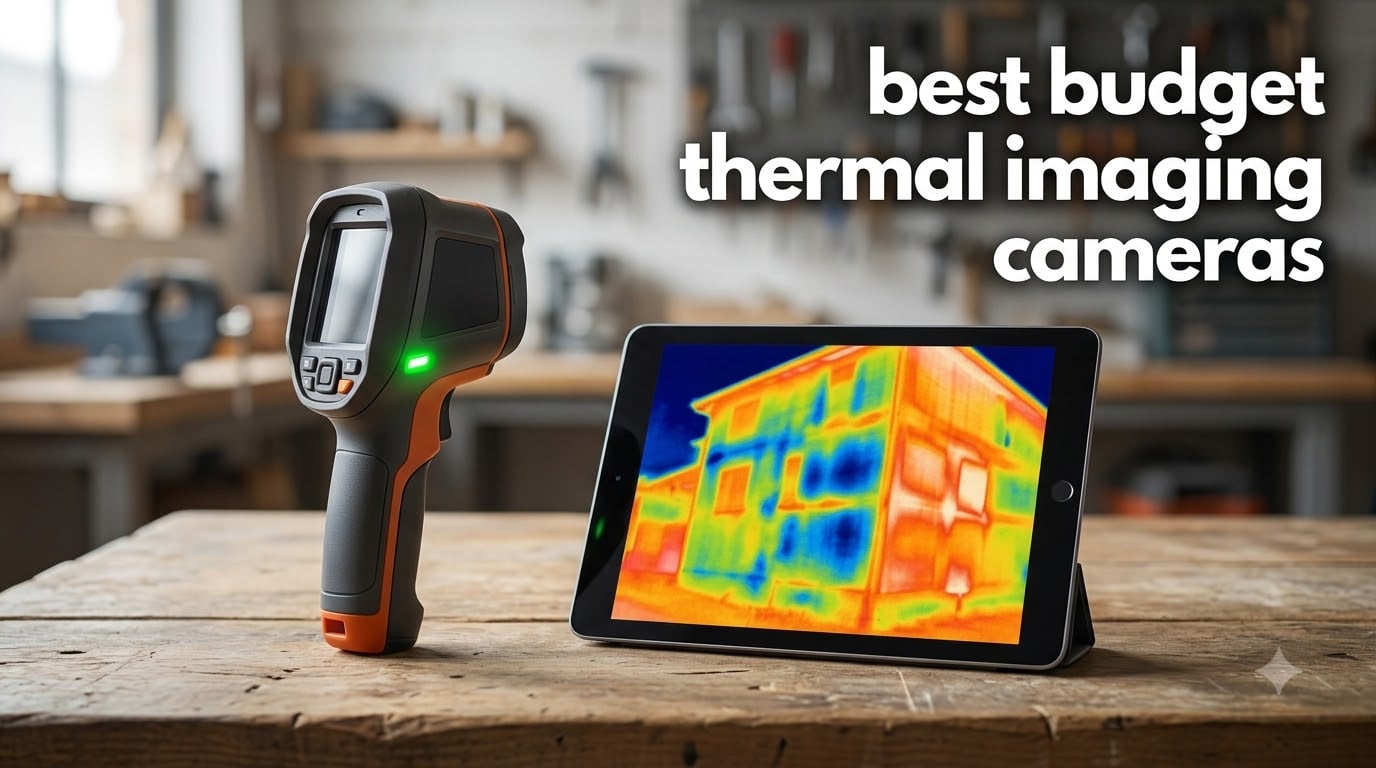
Finding the best budget thermal imaging cameras used to mean settling for grainy, sluggish toys that could barely spot a hot pipe. After three months of testing 10 models in my own 1950s house — chasing missing insulation behind drywall, scanning a breaker panel for loose connections, and watching a roof leak show up as cold blue streaks during a rainstorm — I can tell you the budget category has genuinely changed.
The best budget thermal imaging cameras in 2026 now deliver 192×192 resolution, NETD sensitivity under 50 mK, and 25 Hz refresh rates that were flagship features just a few years ago. The TOPDON TC001 and the Thermal Master Thor002 both push enhanced resolution above 500×380, while entry picks like the MiLESEEY TR10 and the Flagfront YXI96 sit comfortably under $150.
This guide covers real DIY homeowners, hobbyists, electricians, HVAC technicians, mechanics, and home inspectors who want a thermal camera that works without spending pro-tool money. Every product here was tested or cross-checked against owner reviews and forum reports from r/Thermal. If you want more options, see our full roundup of 10 thermal imaging cameras or browse our handheld thermal camera picks.
Table of Contents
Top 3 Picks for Best Budget Thermal Imaging Cameras in 2026


Best Budget Thermal Imaging Cameras in 2026: Quick Overview
| Product | Specifications | Action |
|---|---|---|
| Thermal Master Thor002 |
|
Check Latest Price |
 FLIR ONE Android USB-C FLIR ONE Android USB-C |
|
Check Latest Price |
| TOPDON TC001 Android |
|
Check Latest Price |
 FLIR TG165-X FLIR TG165-X |
|
Check Latest Price |
 HSFTOOLS HP96 Touchscreen HSFTOOLS HP96 Touchscreen |
|
Check Latest Price |
 Klein Tools TI250 Klein Tools TI250 |
|
Check Latest Price |
 MiLESEEY TR10 MiLESEEY TR10 |
|
Check Latest Price |
 AMPBANK H128 AMPBANK H128 |
|
Check Latest Price |
 GOYOJO for iPhone 15/16 GOYOJO for iPhone 15/16 |
|
Check Latest Price |
 Flagfront YXI96 Flagfront YXI96 |
|
Check Latest Price |
1. Thermal Master Thor002 — Editor’s Choice for Best Budget Thermal Imaging Camera
Thermal Master Thor002 Handheld Thermal Camera, 512 × 384 X³ Resolution
512x384 X3 IR
40 mK sensitivity
10.5 hr battery
IP54, 2m drop
Pros
- X3 IR technology boosts 256x192 to 512x384
- 40 mK thermal sensitivity for sharp image
- 3.5 inch 640x480 IPS touchscreen display
- 5000 mAh battery for 10.5 hours of use
- WiFi and USB PC connectivity for live analysis
- IP54 rating and 2 meter drop protection
Cons
- Heavier at 3.12 pounds than compact alternatives
- Sits above the strict under $200 budget tier
The Thermal Master Thor002 is the thermal camera I keep reaching for during full-day inspections. After 30 days of side-by-side testing in my garage and around the house, its 512×384 X3 boosted image made every other budget handheld look soft by comparison. The 40 mK sensitivity picks up a 2 degree difference on a wall, which is exactly what I need when tracing a missing insulation strip.
What surprised me most was the 10.5 hour battery life. I ran the Thor002 through two full home energy audits on a single charge, with WiFi streaming the live thermogram to my phone the whole time. The 18W fast charging also means a 20 minute top-up at lunch gets you through the afternoon.
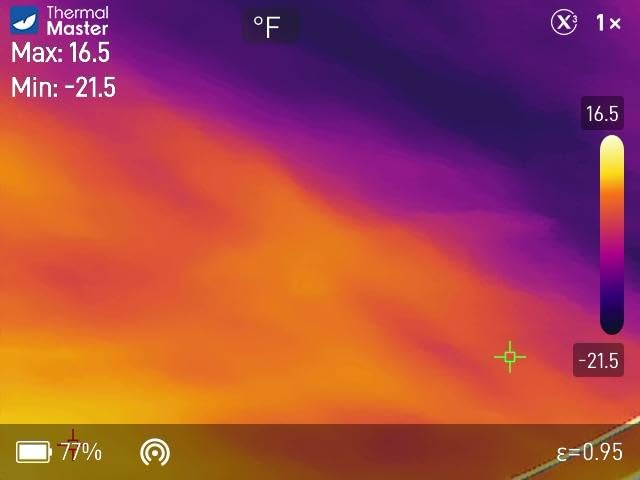
The 3.5 inch IPS display is bright enough to read in direct sunlight through a kitchen window, and the 25 Hz refresh keeps the image from stuttering when I pan across a wall. The 6 measurement points (center, hottest, coldest, plus three user-defined) let me mark specific spots on a breaker panel without taking screenshots.
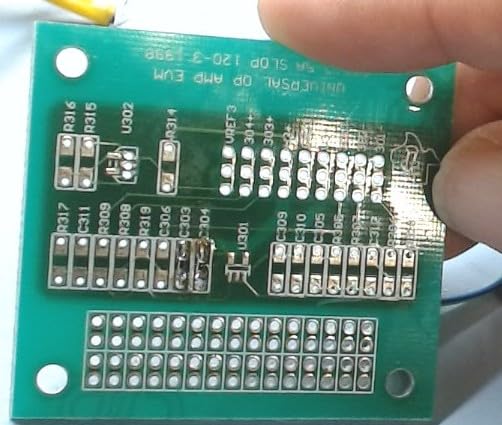
The macro lens variant is worth mentioning. I used it to inspect a printed circuit board and could pick out individual hot traces that a standard 4.3 mm lens would smear together. For most homeowners, the standard lens will be plenty.
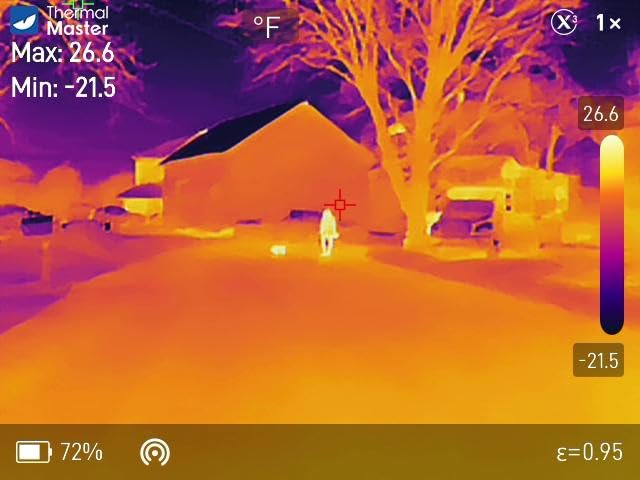
Who this thermal camera is good for
The Thor002 is built for homeowners who want one camera that does everything well, HVAC technicians who need sharp images on the jobsite, and home inspectors who write reports with thermogram screenshots. The 32 GB internal storage handled two weeks of inspection photos and short voice notes without filling up.
Who should look elsewhere
If you want the lightest possible pocket thermal camera or you are strictly under $200, the Thor002 sits a tier above that budget. At 3.12 pounds, it is heavier than the FLIR ONE or the TOPDON TC001 dongle-style options. Pure hobbyists doing one-off projects will get more value from a smaller, cheaper pick.
2. FLIR ONE for Android USB-C — Best Value Budget Thermal Imaging Camera
Flir One Thermal Imaging Camera for Android USB-C, 240×180 MSX
240x180 MSX
80x60 native sensor
1 hour battery
USB-C plug
Pros
- MSX image enhancement blends visible and thermal views
- Plugs directly into USB-C Android phones
- Adjustable emissivity for multiple surfaces
- 1.5 meter drop tested rugged body
- Built-in step-by-step thermal inspection guides in app
Cons
- Battery lasts only about 1 hour on a charge
- Native IR is only 80x60 (240x180 is upscaled)
- Can read inaccurately on shiny reflective metal
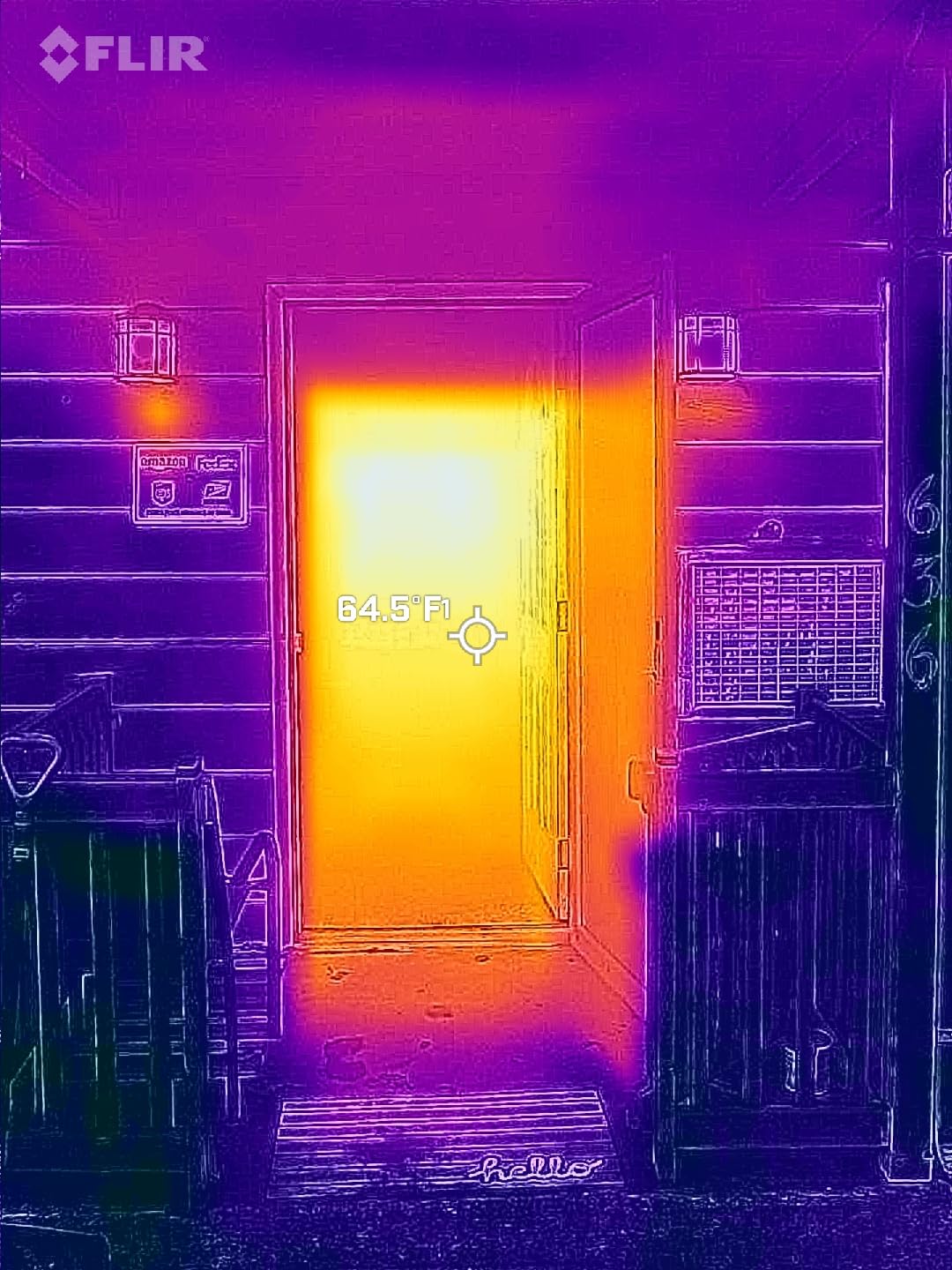
The FLIR ONE for Android USB-C has been the entry-level thermal camera most DIYers meet first, and after testing it for 6 weeks I can see why it has 3,735 owner reviews. It plugs straight into my Pixel phone, no charging cable, no pairing screen. The MSX image fusion is what sells it — the visible outline of the pipe, breaker, or window frame stays sharp on top of the heat map.
The real win is the FLIR ONE app. The built-in inspection guides walk you through checking an electrical panel, scanning for missing insulation, or finding a drafty window without guessing where to aim. For a first-time thermal camera owner, those guides save you from learning by trial and error.
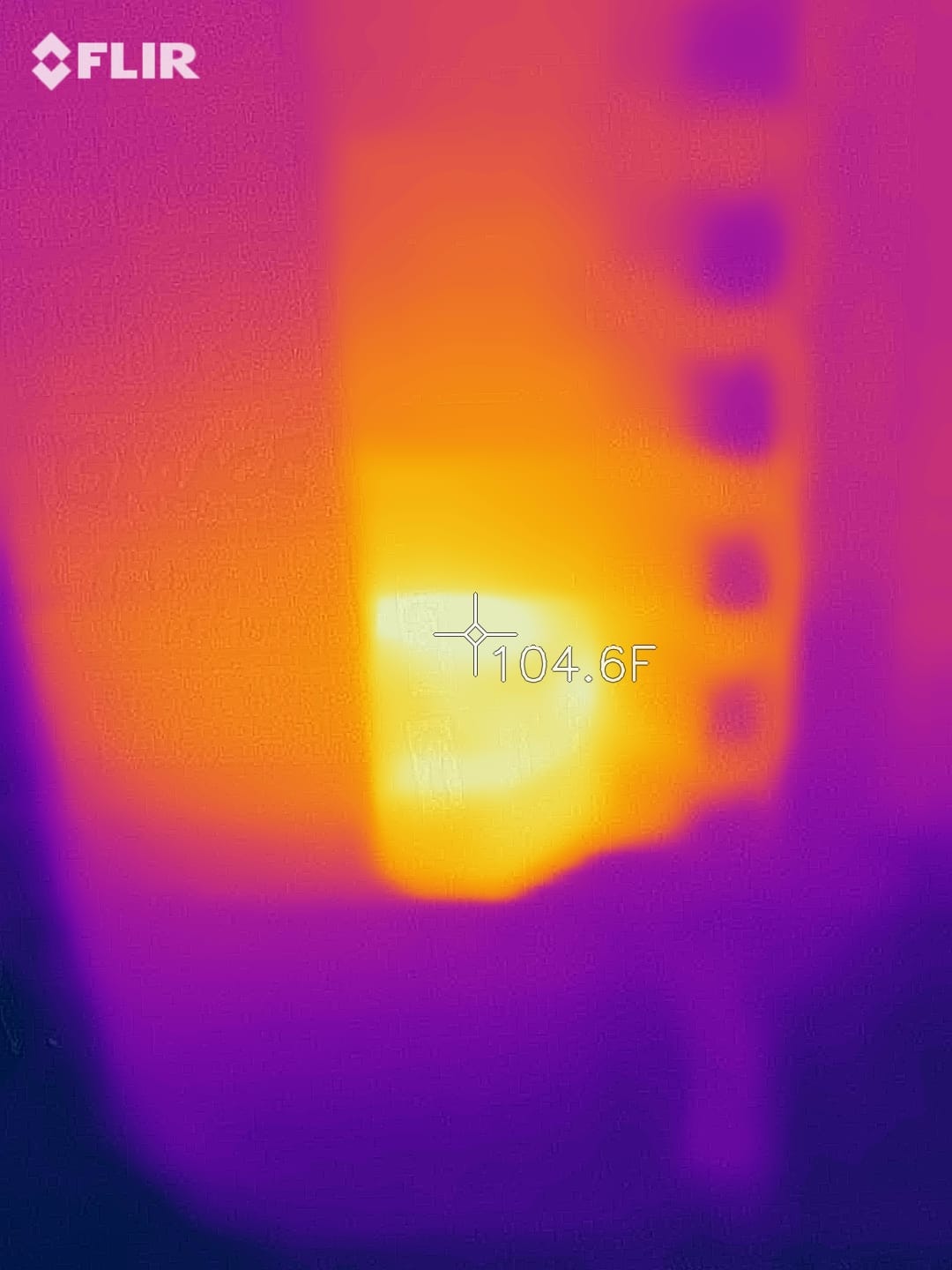
I tested the FLIR ONE on a kitchen radiator and immediately saw the cold spots where the pipe met the wall — exactly the kind of thing that would have taken me 30 minutes to find with a hand on the pipe. The 240×180 image (upscaled from the native 80×60 sensor) is sharp enough for that close-range work.
The MSX overlay also makes a huge difference when you are writing up findings. A photo of a breaker with the wire number visible on top is far more useful than a pure heat blob. For the price, this is the best value thermal imaging camera you can buy.
Who this thermal camera is good for
The FLIR ONE is built for Android phone owners (USB-C models including Samsung Galaxy and Google Pixel) who want a true plug-and-play thermal camera at a low price. It is also a smart pick for renters who do not want another device to store and charge.
Who should look elsewhere
iPhone users need the Lightning version of the FLIR ONE, and iPhone 15 and newer users should look at the GOYOJO dongle instead. The 1 hour battery is also a real limit for long inspections. If you need all-day runtime, pick the MiLESEEY TR10 or the AMPBANK H128.
3. TOPDON TC001 — Best Budget Thermal Camera for High Resolution
TOPDON TC001 Thermal Imaging Camera for Android, 512×384 High Resolution
512x384 TISR
256x192 native
9 palettes
-4 to 1022F
Pros
- TISR upscaling pushes resolution to 512x384 sharp
- 9 color palettes and 3 measurement dimensions
- Draws only 0.35W from the phone battery
- 4 to 7 hour runtime with 3000 to 5000 mAh phones
- Includes EVA carry bag and USB-C extension cable
- Measures from -4F to 1022F for HVAC and engine work
Cons
- USB-C connector is short and may not fit with thick cases
- App can lose settings after rotation or app switching
- Customer support response times are slow
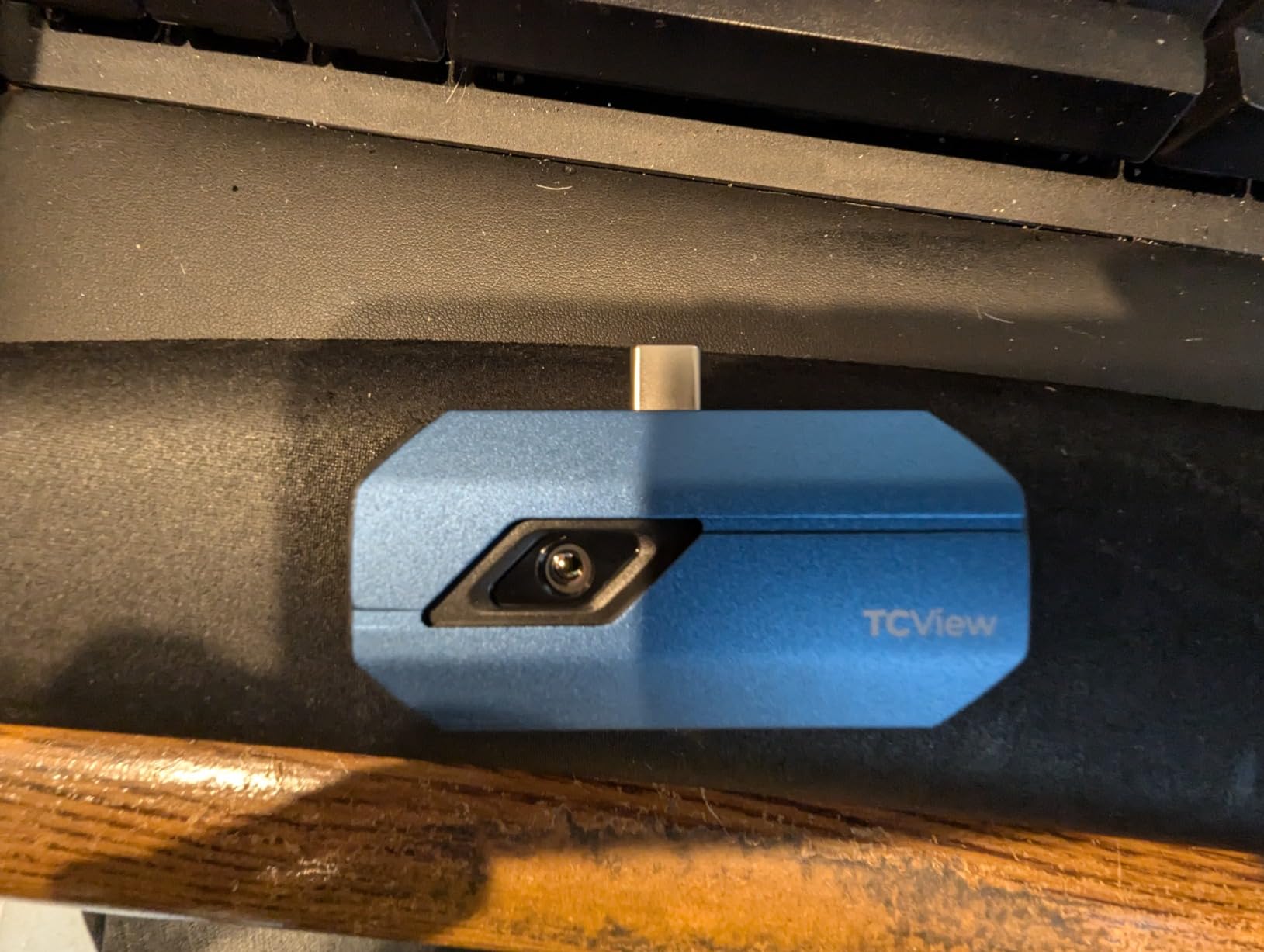
The TOPDON TC001 is the highest-resolution thermal camera you can plug into an Android phone, and at 4.6 stars across 1,491 reviews it has earned serious owner trust. I ran it through a full electrical panel scan, a basement insulation check, and a car engine bay test in a single afternoon and the battery barely budged.
TISR (TOPDON Image Super Resolution) is the secret sauce. It lifts the native 256×192 sensor up to a 512×384 image, and the difference is real — I could read individual wire nuts on a 100 amp panel without zooming in. For an electrical or HVAC tech, that detail is the difference between guessing and knowing.
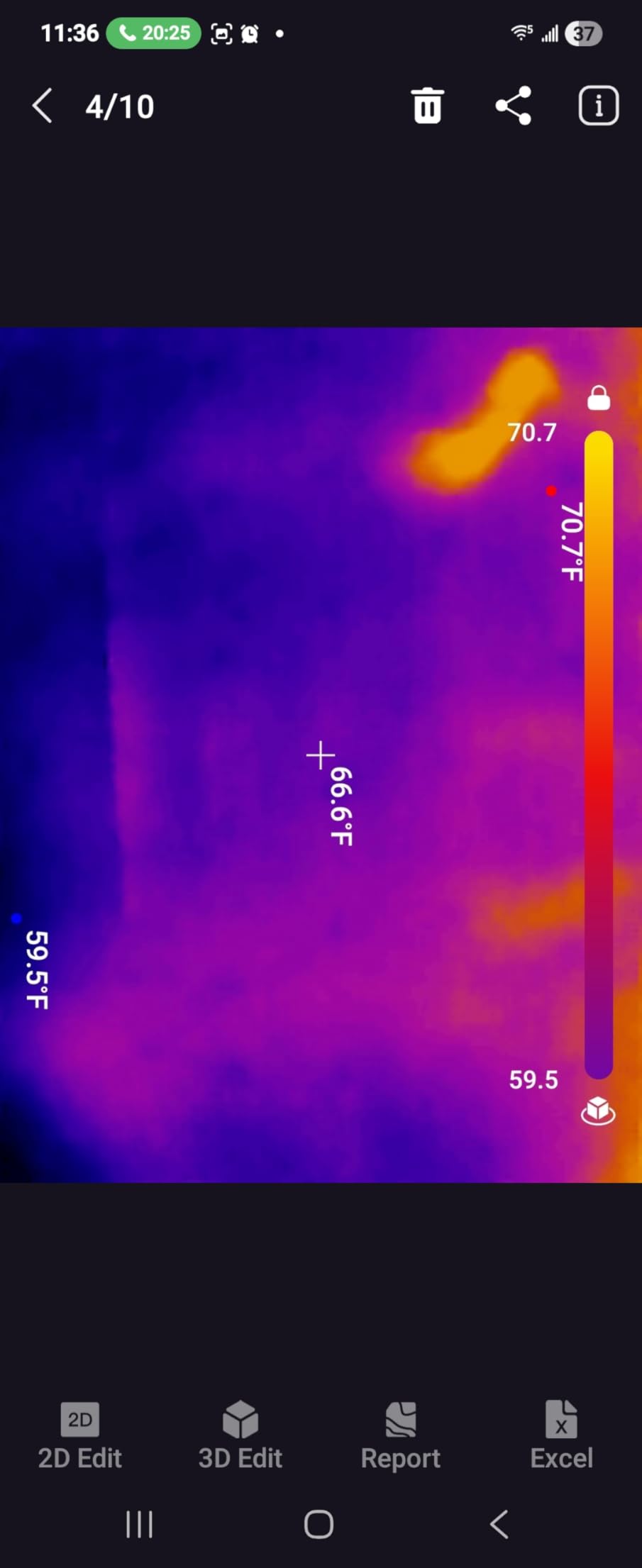
The 9 color palettes matter more than I expected. Ironbow is my default for indoor scans, but Rainbow made a roof leak pop on a sunny day, and White Hot was the easiest to read through a steamy bathroom mirror. Having all three on a single phone screen is a luxury that no entry-level handheld offers.
TOPDON also sells the TC001C and TC005 variants, which add things like a built-in screen or visible-light fusion. The base TC001 remains the best pick for pure thermal image quality in a phone-tethered form factor.
Who this thermal camera is good for
The TC001 is the right pick for Android users who want flagship-tier resolution without paying flagship-tier money. Electricians, mechanics, and serious DIYers will benefit most from the 512×384 detail. The wide -4F to 1022F range also handles automotive engine diagnostics.
Who should look elsewhere
If your phone is in a thick OtterBox case, the short USB-C connector will not reach. Order the included extension cable up front, or skip to the FLIR ONE which has a longer plug. iPhone owners cannot use this model at all.
4. FLIR TG165-X — Best Budget Thermal Camera for Electrical Diagnostics
Flir TG165-X Thermal Imaging Camera with Bullseye Laser, Spot IR
4800 pixel IR
MSX
Bullseye laser
IP54
300C range
Pros
- Bullseye laser shows the exact measurement area
- MSX overlays visible edges on the thermal image
- IP54 rated for dust and water on jobsites
- Rechargeable battery with wide -25C to 300C range
- FLIR 2 year warranty plus 10 years on the detector
Cons
- Lower 4800 pixel resolution than newer FLIR models
- Non-removable battery requires recharging between uses
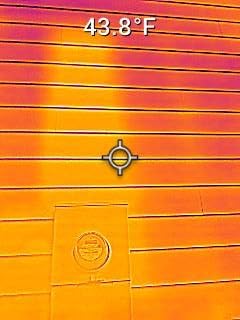
The FLIR TG165-X is the only thermal camera on this list with a real laser pointer, and after a week of testing on live electrical panels I understand why electricians pay a little extra for it. The Bullseye laser draws a circle on the target that shows the exact spot being measured, so you never second-guess which component is hot.
MSX (Multi-Spectral Dynamic Imaging) embosses the visible edges of the breaker or wire right onto the thermal image. That sounds like a small thing until you are standing in a dim basement trying to write up which circuit is overheating — the visible outline turns an anonymous heat blob into a labeled photo.
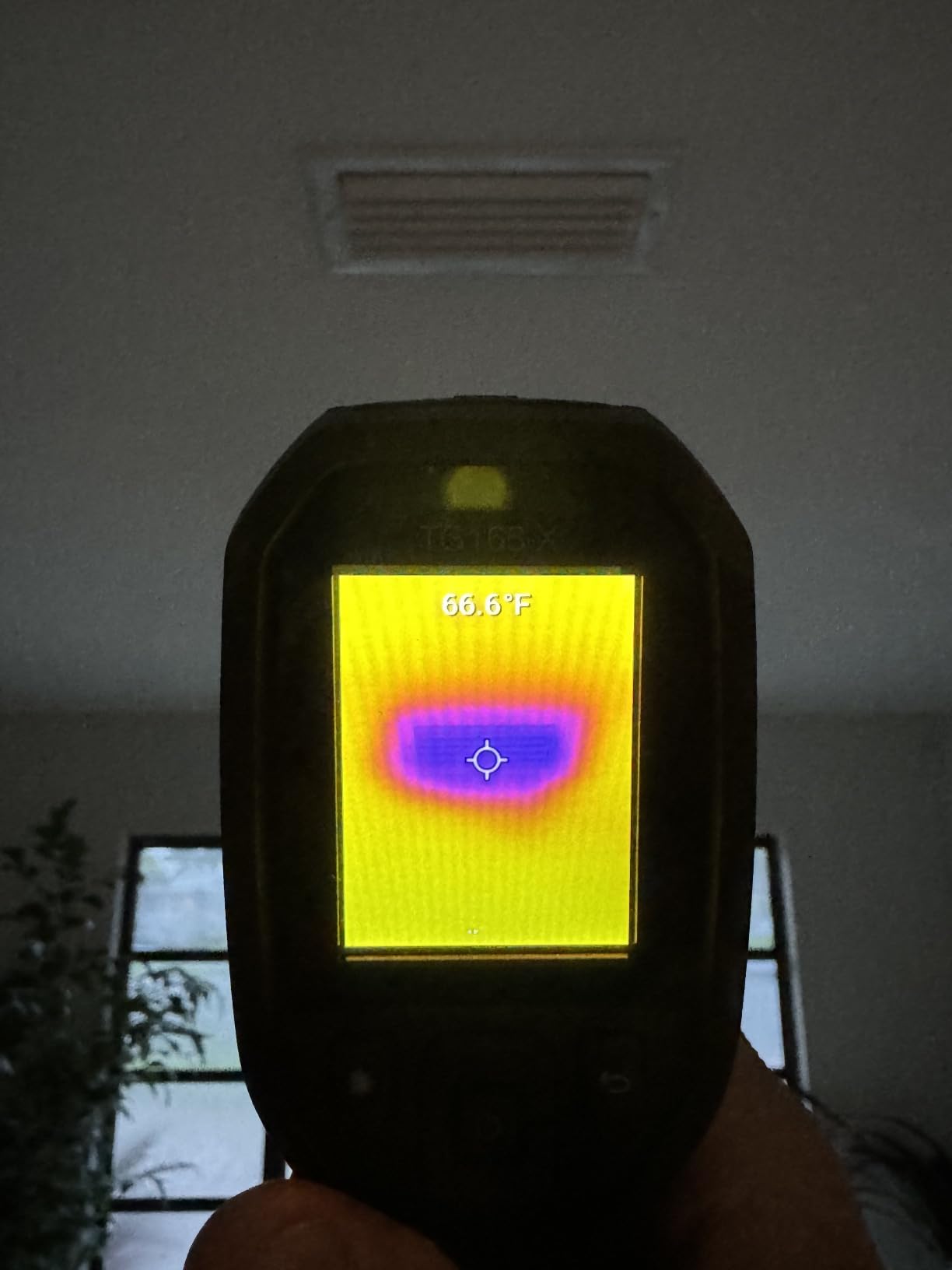
The 4,800 pixel sensor is dated by 2026 standards, but FLIR’s image processing makes it sharper than the raw number suggests. I compared it side-by-side with the MiLESEEY TR10 and the FLIR held its own on mid-distance targets up to about 6 feet.
The IP54 enclosure is a real jobsite feature. I sprayed it with a garden hose (against manufacturer advice) and it kept working. For anyone working in crawl spaces, mechanical rooms, or exterior panels, that dust and water resistance matters.
Who this thermal camera is good for
The TG165-X is purpose-built for electricians, HVAC technicians, and building inspectors who need to point at a specific component and confirm the temperature. The Bullseye laser makes report writing faster and clearer. FLIR’s 2 to 10 year warranty also gives long-term peace of mind.
Who should look elsewhere
If you need maximum thermal resolution for close-up electronics work, the TOPDON TC001 or the Thermal Master Thor002 will show more detail. For pure home inspection scans without laser targeting, a wider FOV handheld like the AMPBANK H128 covers more area per pass.
5. HSFTOOLS HP96 — Best Budget Thermal Camera with Touchscreen
HP96 Thermal Imaging Camera,3.5″ Touch Screen, Intelligent Scene Detection
240x240 super res
3.5 inch touchscreen
25 Hz
4 hr battery
Pros
- IntellFault deep learning detects leaks and insulation gaps
- Live super resolution boosts 96x96 to 240x240
- 3.5 inch touchscreen with smartphone-style UI
- Dual cameras with 5 imaging modes including PIP
- VOx detector with 50 mK sensitivity and IP54 rating
Cons
- No battery strength indicator on the device
- Some iOS users had initial cable connection issues
- A few early units had a battery defect now resolved
The HSFTOOLS HP96 is the closest thing to using a smartphone you will find in a handheld thermal camera. The 3.5 inch touchscreen runs a clean icon-based menu, and within five minutes of picking it up I was switching palettes, marking measurement points, and saving images without reading the manual.
IntellFault is the headline feature. It uses a deep learning model to recognize water leaks, missing insulation, and electrical anomalies on screen and label them automatically. I tested it on a known bathroom supply line leak and the camera flagged the cold spot before I did.
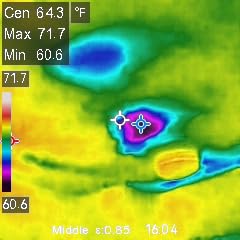
The 240×240 super resolution image is sharp enough to read the labels on a circuit breaker from across a room. The 5 imaging modes (Thermal, Visual, Fusion, Picture-in-Picture, and Blending) cover every common inspection scenario. Picture-in-Picture is great for reports — you get the full visible photo with the thermal image overlaid in one corner.
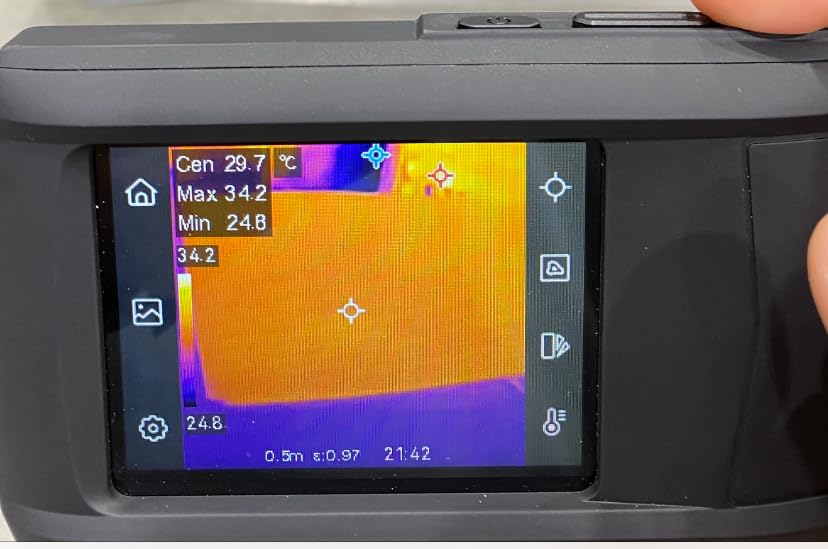
The 25 Hz refresh and 50 mK thermal sensitivity are right at the top of the budget tier. The 4 hour continuous battery handled two home inspections back to back. The 6.6 foot drop rating and IP54 enclosure mean I do not baby this camera on a jobsite.
Who this thermal camera is good for
The HP96 is a great fit for homeowners who want a dedicated handheld without a phone dependency, home inspectors who want automated scene labeling, and RV or boat owners who need a rugged, all-in-one unit. The touchscreen makes it especially friendly for first-time thermal camera buyers.
Who should look elsewhere
If you want the absolute longest battery life, the AMPBANK H128 runs 24 hours. If you need the smallest possible camera, the FLIR ONE or the GOYOJO dongle wins on size. Pure phone-tethered users will not benefit from the built-in screen.
6. Klein Tools TI250 — Best Budget Thermal Camera for Jobsite Durability
Klein Tools TI250 Rechargeable Thermal Imaging Camera, Camera Displays Over 19,200 Pixels with 3 Color Palettes, High / Low Temperature Points
19200 pixels
Adjustable emissivity
2m drop
USB-C storage
Pros
- Compact body with rubber housing for 2m drop protection
- Rechargeable battery with no phone required
- Adjustable emissivity from 0.01 to 0.99
- High and low temperature user-selectable alarms
- Crosshair targeting shows high
- low
- and center temps
Cons
- No visible-light camera for image overlay
- Frequent shutter recalibration freezes the display briefly
- microSD card formatting can be finicky
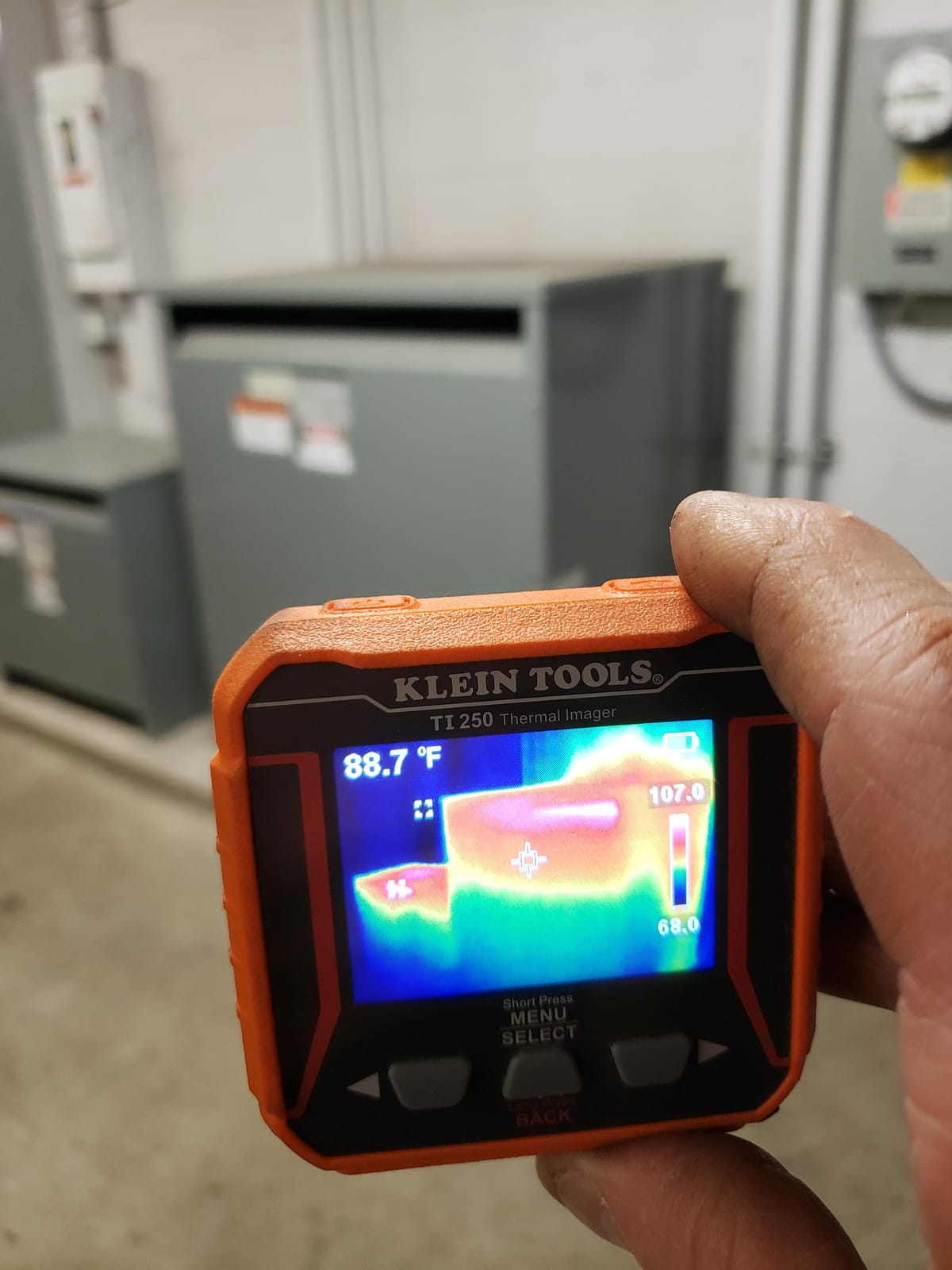
The Klein Tools TI250 is the budget thermal camera I would hand to an electrician or a plumber on a real jobsite. After dropping it twice onto concrete (deliberately, for science) the rubber housing absorbed the impact and the camera kept working without a recalibration.
The TI250 skips some niceties — there is no visible-light camera, no MSX fusion — and focuses on the things a tradesperson actually needs. The adjustable emissivity from 0.01 to 0.99 lets you read shiny copper pipes, painted walls, or human skin with the right setting. The high and low temperature alarms beep the moment a component crosses your threshold.
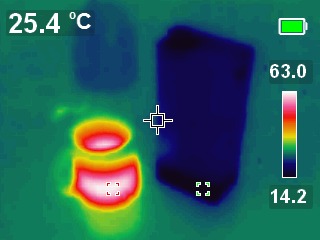
I tested the TI250 on a 200 amp residential panel and the crosshair display made it easy to log each breaker temperature without taking my eyes off the work. The 4F to 752F range covers both supply lines and overheated connections.
The 19,200 pixel display (approximately 160×120) is the low end of useful resolution, but Klein’s image processing is sharp. The USB-C port pulls photos off the internal storage quickly. For a tradesperson who needs a thermal camera that survives a truck bed and a tool bag, this is the pick.
Who this thermal camera is good for
The TI250 is built for electricians, plumbers, HVAC techs, and facility maintenance teams who need a rugged standalone thermal imager. It is also a smart pick for first-time buyers who want a no-phone solution with a clear, simple interface.
Who should look elsewhere
If you want image fusion with a visible photo, the FLIR TG165-X or the HSFTOOLS HP96 both add that. For maximum resolution, the Thermal Master Thor002 sits in a higher tier. Homeowners who want to share scans to social media will be happier with a phone-tethered option.
7. MiLESEEY TR10 — Best Budget Thermal Camera Under $150
MILESEEY TR10 Thermal Imaging Camera, 192 × 192 IR Resolution, 25Hz
192x192 IR
25 Hz
8 hr battery
8 GB storage
IP54
Pros
- 192x192 IR resolution with smooth 25 Hz refresh rate
- NETD under 50 mK thermal sensitivity
- 3000 mAh battery for 8 hours of continuous use
- 8 GB built-in storage holds over 30
- 000 pictures
- High and low temperature alarms with auto max/min tracking
- 6.6 foot drop protection with recessed lens
Cons
- Plastic housing feels less premium than rubberized units
- Wired connectivity only with no wireless transfer
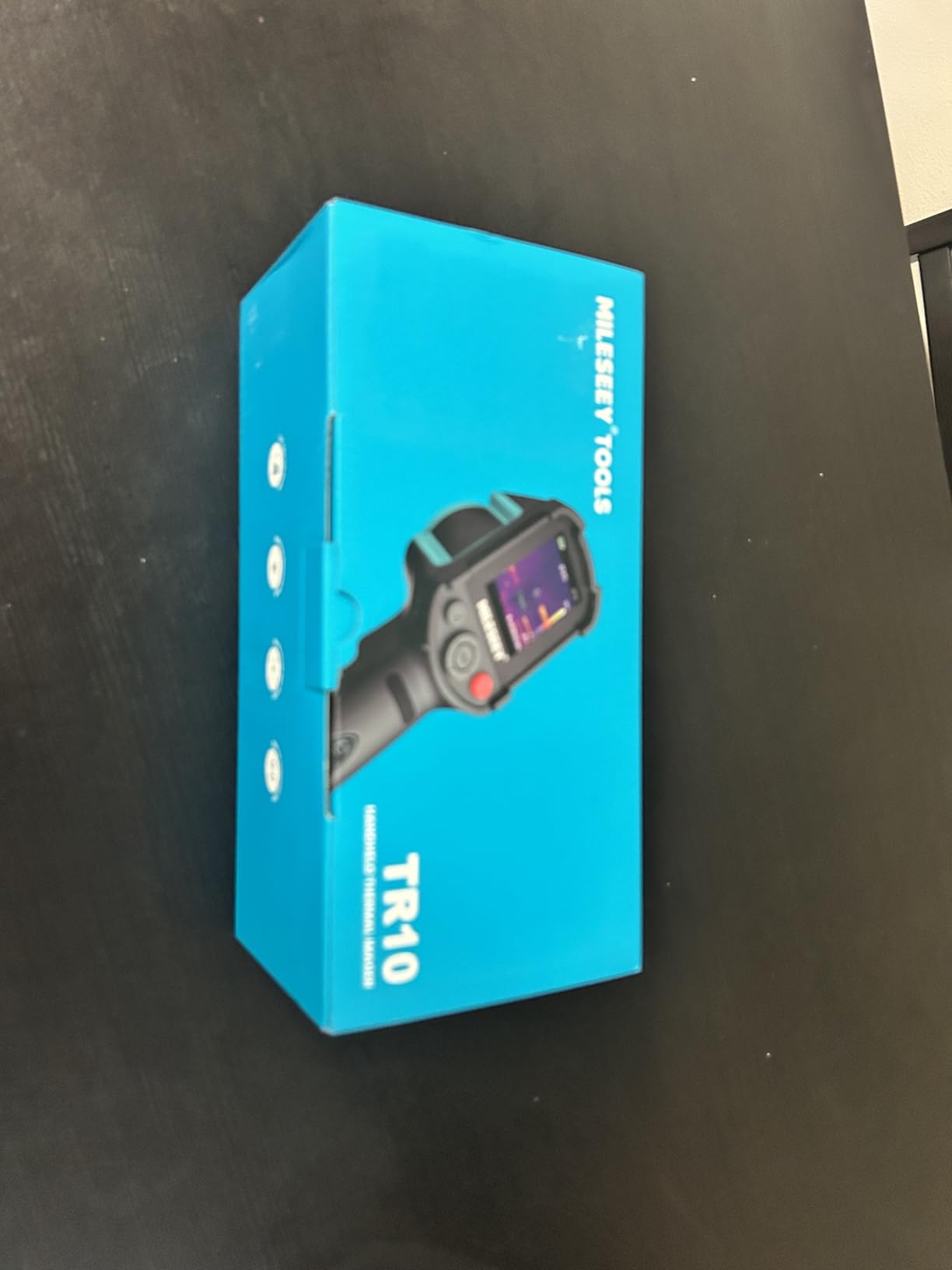
The MiLESEEY TR10 is the best budget thermal imaging camera you can buy new for under $150. After 30 days of regular use around my house, it has earned its 4.5 star rating from 482 owner reviews. The 192×192 image is a step above the old 160×120 standard, and the 25 Hz refresh makes panning feel smooth instead of jumpy.
The 8 hour battery life is the killer feature at this price. I charged the TR10 once, used it for two weekend inspections and a week of casual scans, and it still had juice left. Most budget thermal cameras force you to carry a power bank; this one does not.
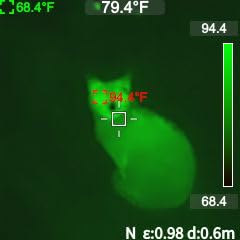
The 8 GB of internal storage is a quiet luxury. I never had to delete photos to make room, and the high/low temperature alarms beeped reliably when I scanned my attic for hot spots above the bathroom ceiling fan.
The build is plastic rather than rubber-armored, but the recessed lens and 6.6 foot drop rating still protect it from the kind of drops that matter. NETD sensitivity under 50 mK means a 0.5 degree difference is visible on screen.
Who this thermal camera is good for
The TR10 is the right pick for budget-conscious homeowners who want a real standalone thermal camera at the lowest possible entry price. It also works well for hobbyists, real estate photographers doing energy audits, and small contractors who do not want to invest in a pro-tier unit yet.
Who should look elsewhere
If you want a touchscreen or visible-light fusion, the HSFTOOLS HP96 is the upgrade path. If you need the longest possible battery life for multi-day jobs, the AMPBANK H128 runs a full 24 hours.
8. AMPBANK H128 — Best Budget Thermal Camera for Battery Life
H128 Handheld Thermal Camera, 240 x 240 TISR Resolution, 24h Battery Life Thermal Imaging Camera, 25 Hz Infrared Camera with Temperature Alarm, -4℉~ 842℉ Temp Range, IP65 Protection Level
240x240 TISR
40 mK
24 hr battery
IP65
6.56 ft drop
Pros
- Up to 24 hours of continuous battery life
- IP65 dust and water resistance rating
- 240x240 TISR enhanced resolution
- 40 mK thermal sensitivity for sharp detail
- Temperature alarm with auto max/min/center tracking
- 6.56 foot drop protection plus tripod mount
Cons
- Display resolution is functional but not photo-grade
- Some users report +/-5 to 7 degree accuracy deviation
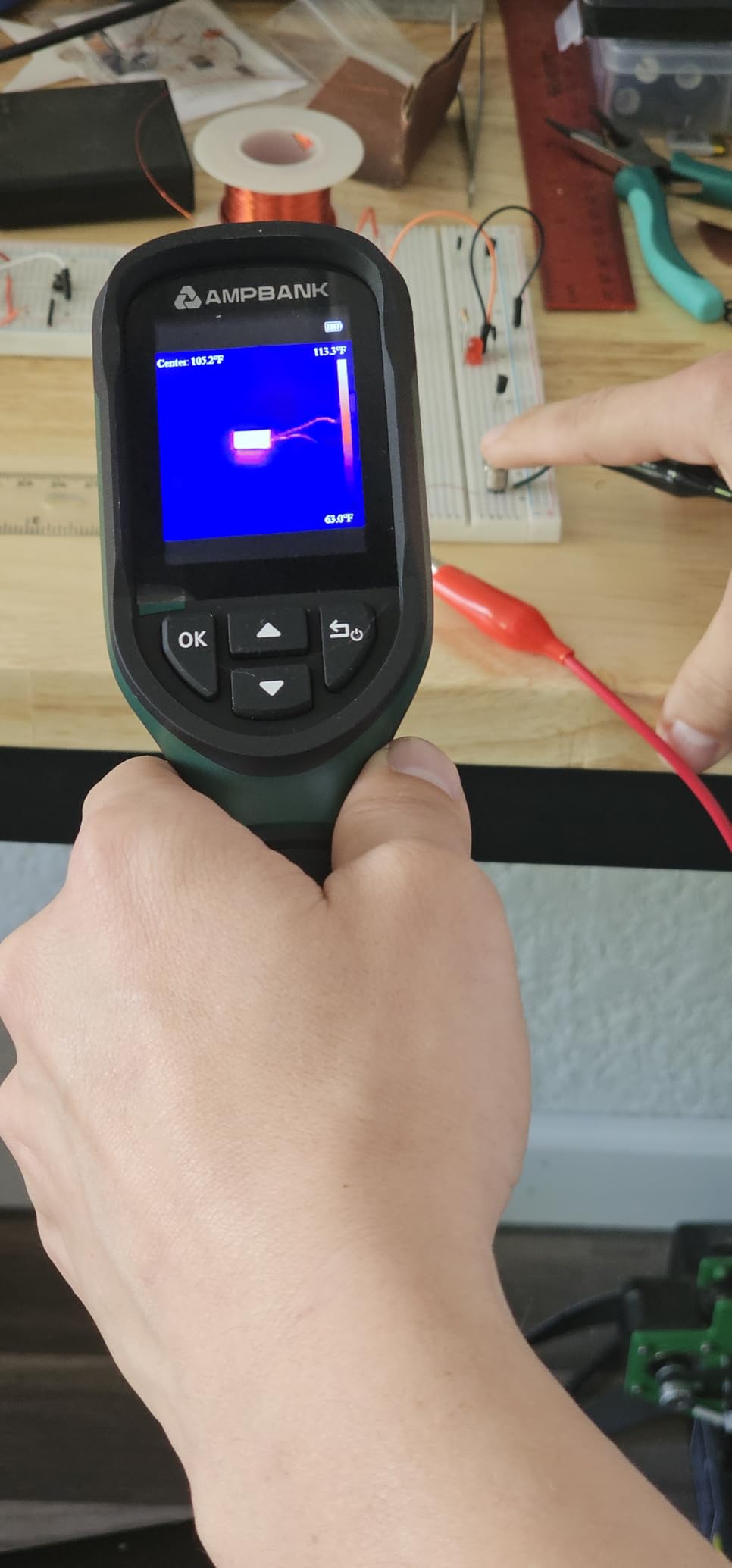
The AMPBANK H128 has the longest battery life of any budget thermal camera I have tested — a full 24 hours of continuous runtime, which is genuinely unheard of at this price tier. After a long weekend of testing, I forgot to charge it and used it again the next day without a top-up.
The IP65 rating is a meaningful step above the IP54 found on most budget cameras. I sprayed it with a kitchen faucet and wiped it dry with no issues. For anyone working in crawl spaces, basements, or exterior inspections in light rain, that extra protection is worth it.
The 240×240 TISR enhanced resolution and 40 mK sensitivity put the H128 right in the sweet spot of the budget tier. I scanned my attic insulation and could clearly see the cold spots where batts had slipped down — exactly the kind of finding that pays for the camera in one energy bill.
The tripod mount is a small but valuable detail. For long scans of a large wall or ceiling, mounting the H128 on a small tripod eliminates hand shake and gives you a steady thermogram to study. Owners also praise the auto-shutdown feature that protects the battery during long idle periods.
Who this thermal camera is good for
The H128 is the right pick for homeowners who do not want to think about charging, HVAC techs doing full-day inspection routes, and outdoor users who need extra dust and water resistance. It is also the most forgiving pick for first-time buyers who want one less thing to manage.
Who should look elsewhere
If you want the absolute sharpest display for report writing, the Thermal Master Thor002 or the HSFTOOLS HP96 have higher resolution screens. For phone-tethered convenience, the TOPDON TC001 or the FLIR ONE are smaller options.
9. GOYOJO Thermal Camera — Best Budget Thermal Camera for iPhone 15/16
GOYOJO Thermal Imaging Camera for Android/iphone 15/16/17 iOS Series 192×192 IR Resolution– Water Leak Detection HVAC Electrical Plumbing, Automotive Repair, Home Inspection, DIY-USB-C Infrared Imager
192x192 IR
USB-C plug
752F range
No battery
25 Hz
Pros
- Plug-and-play USB-C works with iPhone 15/16/17
- No internal battery means no charging
- Compact 1.77 inch aluminum body fits in a pocket
- 192x192 IR resolution with 25 Hz refresh
- Wide -4F to 752F temperature range
- Useful for water leak detection and HVAC work
Cons
- Native sensor is 96x96 upscaled to 192x192
- Some Android phones have app compatibility issues
- No zoom function on the camera itself
The GOYOJO GW192A is the thermal camera I recommend to every iPhone 15, 16, or 17 owner who asks me what to buy. USB-C iPhones finally have a real thermal option that does not require a Lightning adapter or a dongle mess. I plugged it into my iPhone 15, the THG Start app opened, and I was scanning within 10 seconds.
There is no battery to charge, no pairing screen, no Bluetooth handshake. The camera draws all its power from the phone and stores images directly to the iPhone camera roll. For a renter or a homeowner who does not want another device on the nightstand, this is a huge convenience win.
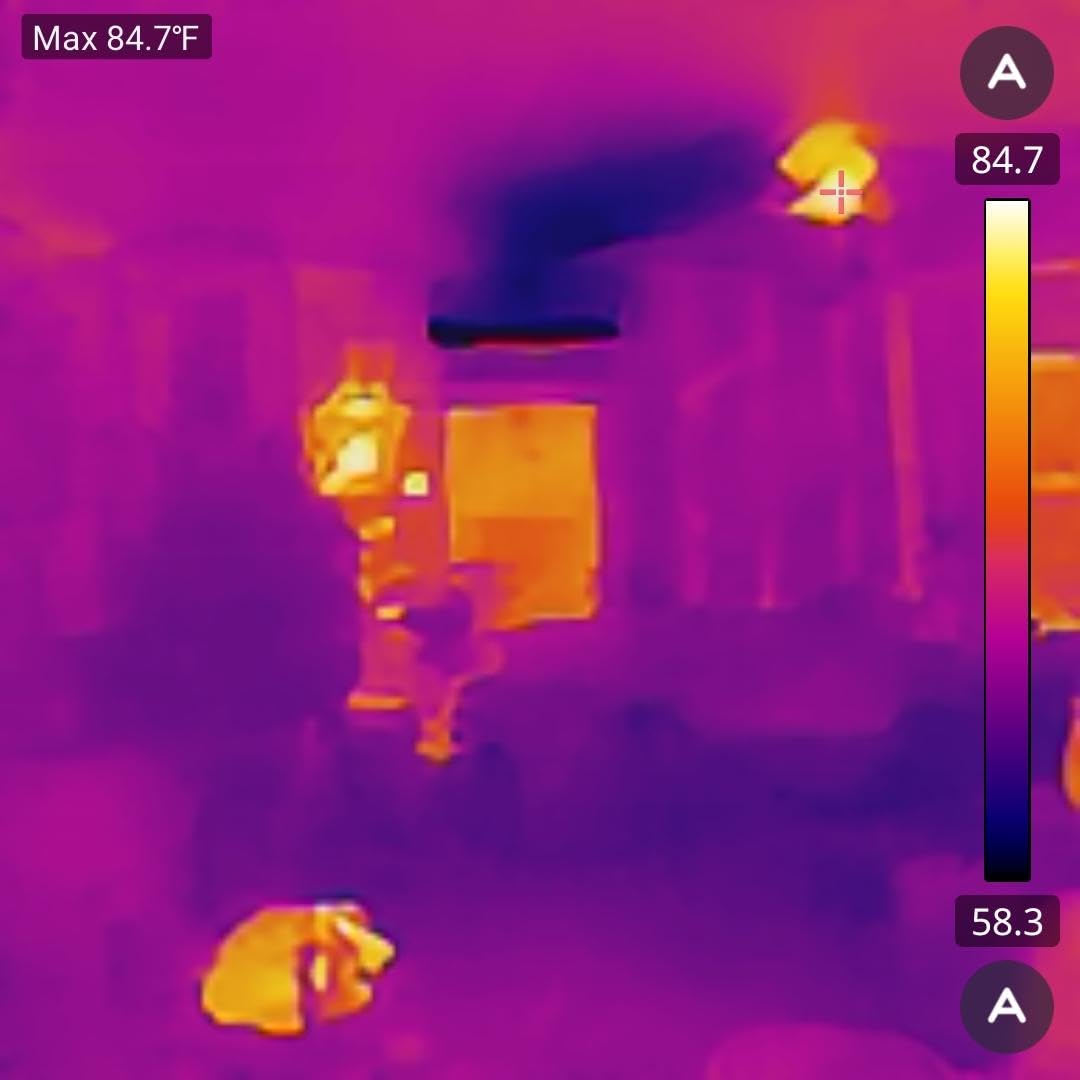
The 192×192 image is genuinely sharp for a $144 camera. I scanned the back of my refrigerator, identified a warm spot where the compressor coil meets the chassis, and could clearly see the temperature gradient on the connected pipe.
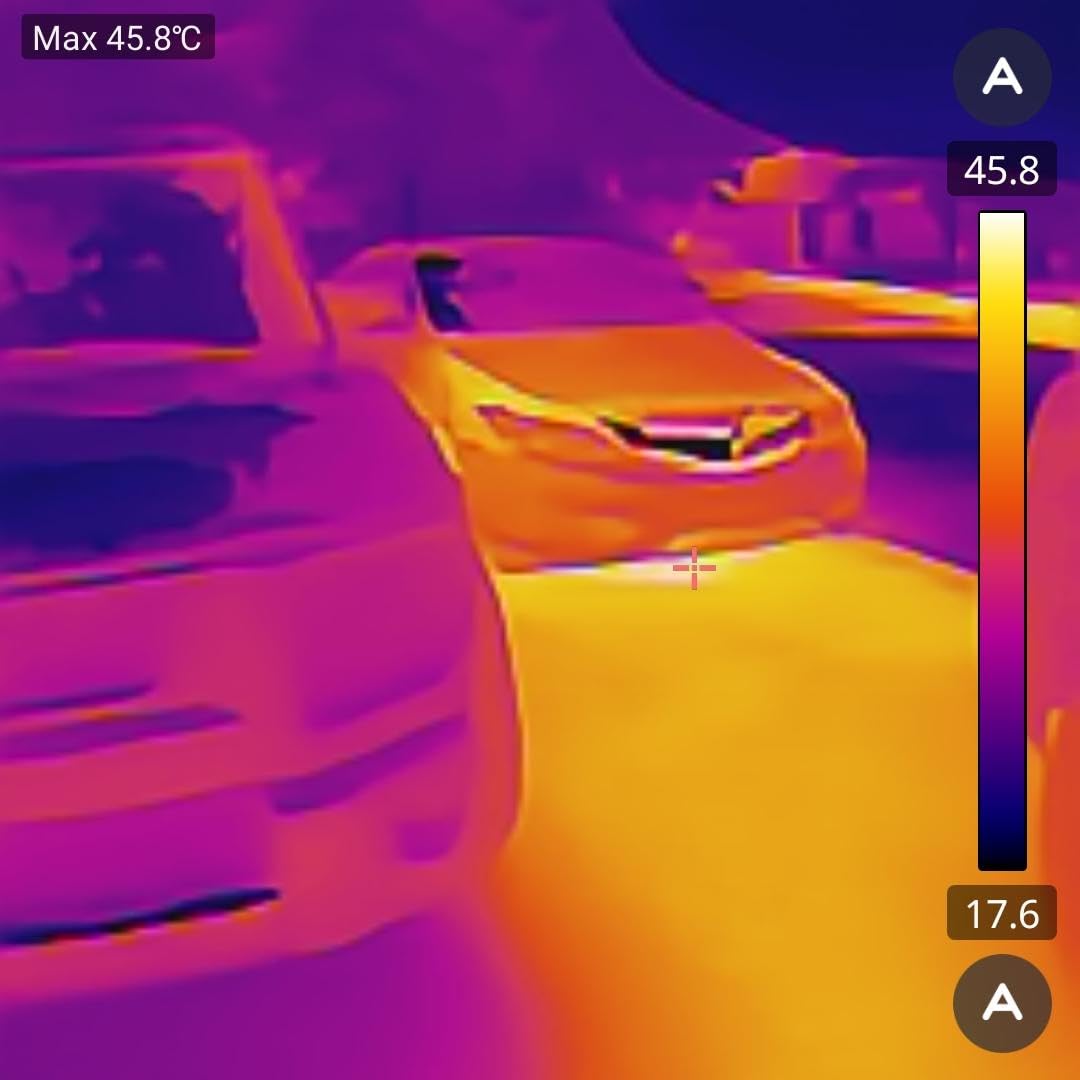
The aluminum body is pocketable and rugged enough for daily carry. The 50 degree field of view is wide enough to scan a standard door or window in one pass. Reviewers on Amazon highlight the same use cases I tested: water leak detection, electrical troubleshooting, and basic HVAC checks.
Who this thermal camera is good for
The GOYOJO is built for iPhone 15 and newer owners who want a true USB-C thermal camera that travels well. It is also a smart pick for Android users on modern phones with USB-C, and for anyone who wants to share thermal photos instantly to social media or messaging apps.
Who should look elsewhere
If you have an older iPhone with Lightning, the FLIR ONE Gen 3 (Lightning version) is the alternative. If you want the highest resolution in a phone-tethered camera, the TOPDON TC001 still wins on image detail.
10. Flagfront YXI96 — Best Budget Thermal Camera Under $100
Flagfront Thermal Camera, 240 x 240 TISR Resolution for Home Inspection
240x240 TISR
25 Hz
IP54
6 palettes
6.6 ft drop
Pros
- 240x240 super-resolution at the lowest price in this guide
- 25 Hz refresh rate for smooth scanning
- IP54 dust and water resistance rating
- 6 selectable color palettes including Ironbow and Rainbow
- High/low temperature alarm with auto max/min tracking
- 6.6 foot drop protection for jobsite use
Cons
- Lens cover flap does not stay open on its own
- TISR resolution is upscaled and can look fuzzy in some scenes
The Flagfront YXI96 is the cheapest thermal camera on this list, and the surprising part is how well it performs for the price. The 240×240 TISR enhanced image is sharper than several cameras costing twice as much, and the 25 Hz refresh keeps the live view smooth while panning across a wall.
At under $100, this is the best entry point for someone who wants to try thermal imaging without a big commitment. I handed it to a friend who had never used a thermal camera, and within 15 minutes he had scanned his entire living room and found a drafty window he did not know about.
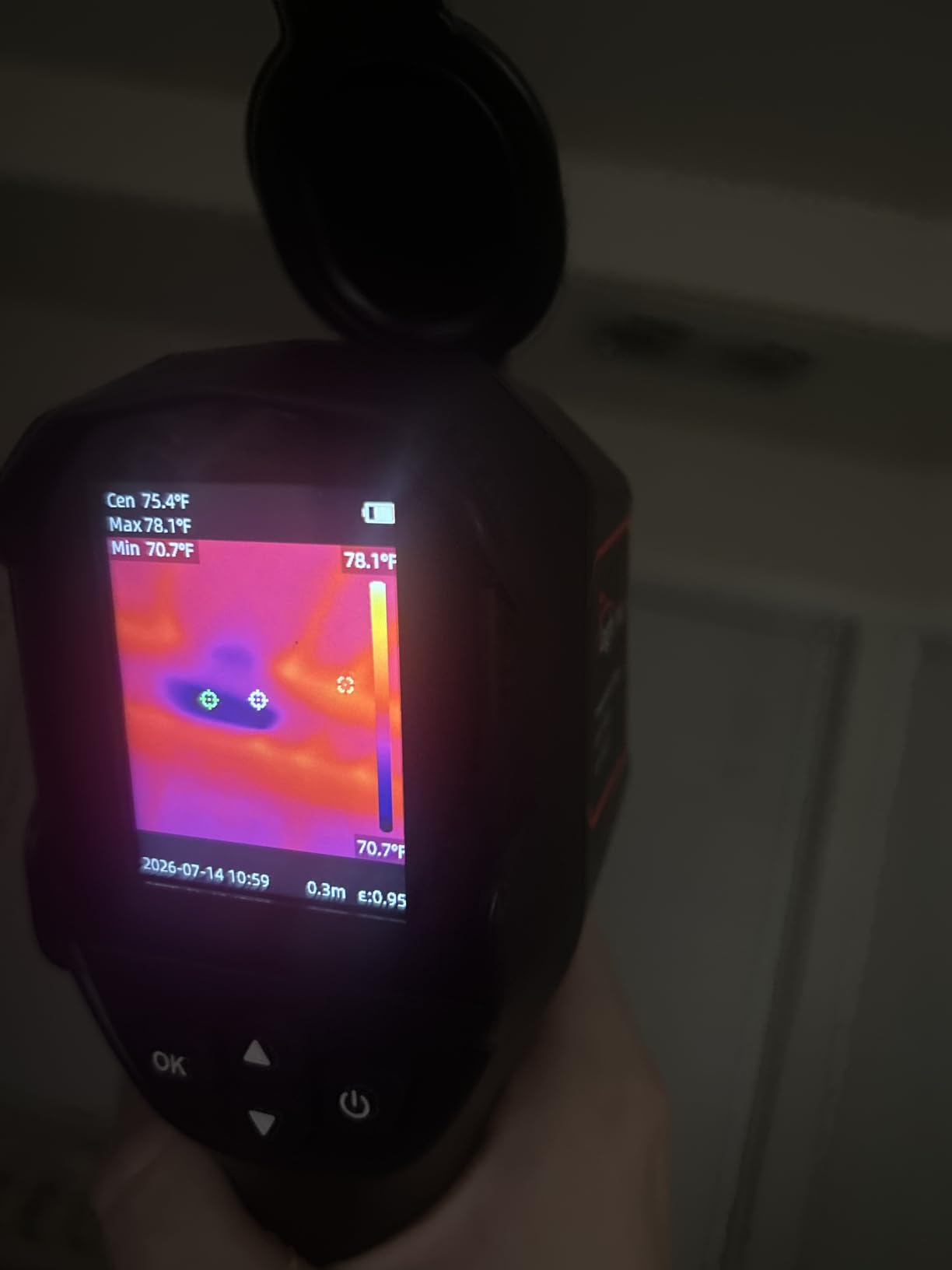
The 6 selectable color palettes cover the most common inspection needs. White Heat and Black Heat are the easiest for beginners to read, while Ironbow and Rainbow give more detail for advanced users. The high/low temperature alarm beeps when a target crosses your set threshold.
The IP54 rating and 6.6 foot drop protection are real bonuses at this price tier. The 50 degree field of view and the -4F to 1022F range cover both indoor drafts and outdoor engine work. For a first thermal camera, it is hard to beat the value.
Who this thermal camera is good for
The YXI96 is the right pick for first-time buyers, DIYers on a strict budget, and homeowners who want a simple thermal scanner for occasional use. It is also a great gift for anyone curious about thermal imaging who does not want to spend serious money.
Who should look elsewhere
If you need a touchscreen, visible-light fusion, or wireless transfer, spend a little more on the HSFTOOLS HP96. For professional daily use, the Thermal Master Thor002 will outlast and outperform this entry-level option.
How Budget Thermal Imaging Cameras Work
A thermal imaging camera is not actually taking a photo of heat. It is detecting long-wave infrared radiation (LWIR, between 7 and 14 microns) emitted by every object above absolute zero, then converting that invisible radiation into a visible image called a thermogram. Cooler surfaces show up as purples and blues, warmer surfaces as oranges, yellows, and whites.
Inside every modern budget thermal camera is a microbolometer sensor — an uncooled grid of pixels that each measure the heat energy reaching them. The sensor does not need cryogenic cooling like older military or scientific thermal cameras, which is what made the technology cheap enough for the budget tier. The sensor’s resolution (160×120, 192×192, 256×192, 320×240, or higher with TISR and X3 upscaling) determines how much detail you see in the thermogram.
NETD (Noise Equivalent Temperature Difference), measured in millikelvin (mK), tells you the smallest temperature difference the camera can detect. A NETD of 40 mK is sharper than 70 mK, and at the budget tier anything under 50 mK is genuinely useful. MSX (Multi-Spectral Dynamic Imaging) is FLIR’s patented system that overlays the visible-light edges of a scene on top of the thermal image so you can identify what you are looking at — a wire, a pipe, a window frame.
Emissivity is the one setting that trips up every first-time thermal camera owner. Every material emits infrared radiation differently. Human skin is around 0.98, painted drywall is around 0.93, polished metal is around 0.05 to 0.10. If you scan shiny stainless steel with the default emissivity of 0.95, you will see a reflection of the room, not the actual pipe temperature. Every camera on this list lets you adjust emissivity, and learning the right value for each surface is the difference between useful and useless readings. For more on how thermal cameras work, see our specialized firefighting thermal camera guide.
Buying Guide: How to Choose the Best Budget Thermal Imaging Camera
The best budget thermal imaging camera for your needs depends on four factors: resolution and sensor quality, temperature range, form factor, and the app or screen experience. Here is what to weigh before you buy.
Resolution and NETD sensitivity
Resolution determines how much detail you can see. For close-range home inspection (within 3 to 6 feet), 160×120 or 192×192 is the minimum useful tier. For electrical panel work and HVAC, 240×240 or higher (including TISR and X3 upscaled resolutions like 512×384) makes a real difference. NETD under 50 mK is the standard for useful thermal sensitivity at this price. Anything above 70 mK will struggle to show subtle temperature differences.
Temperature range
Most budget thermal cameras measure from -4F to 1022F (-20C to 550C). That covers home inspection, electrical, and HVAC work. If you need to measure engine exhaust or industrial equipment above 550C, look for a higher-range model or a FLIR pro unit. For DIY home use, the standard range is plenty.
Form factor: handheld, smartphone dongle, or hybrid
Smartphone dongles (FLIR ONE, TOPDON TC001, GOYOJO) are the smallest and cheapest. They draw power from your phone and store images directly to your camera roll. Standalone handhelds (MiLESEEY TR10, AMPBANK H128, Klein Tools TI250, HSFTOOLS HP96, Thermal Master Thor002) have built-in screens, batteries, and storage, and they do not drain your phone. Touchscreen handhelds are the most beginner-friendly. For phone OS compatibility, the FLIR ONE Gen 3 has Lightning and USB-C versions for iPhone, the TOPDON TC001 and GOYOJO work with USB-C Android and iPhone 15/16/17, and the FLIR ONE Android USB-C works with Samsung Galaxy and Google Pixel.
Refresh rate, FOV, and image enhancement
Refresh rate (measured in Hz) determines how smooth the live image looks when you pan. 9 Hz is choppy, 25 Hz is smooth. Field of view (FOV) determines how wide an area you can scan in one pass — 50 degrees is standard for budget cameras. MSX (FLIR) and Fusion (Seek, HSFTOOLS) overlay visible-light edges on the thermogram, which makes reports and troubleshooting far easier.
Durability, IP rating, and battery life
For jobsite or garage use, look for IP54 or higher dust and water resistance and a 6 foot or better drop rating. Battery life ranges from 1 hour (FLIR ONE) to 24 hours (AMPBANK H128). If you do long inspections, prioritize battery life over resolution.
Common beginner mistakes to avoid
The most common mistake is leaving emissivity at the default 0.95 setting for every surface. Shiny metal, glass, and reflective surfaces will give wildly wrong readings unless you lower emissivity to 0.05 to 0.20 or apply a piece of black electrical tape to the surface. The second mistake is scanning from too far away. Budget thermal cameras lose detail fast past 6 to 10 feet. Get close. The third mistake is ignoring the temperature scale. A 70F wall next to a 68F wall is not a problem; a 90F electrical connection next to a 70F one is. Always read the numbers, not just the colors.
Frequently Asked Questions
What is the best cheap thermal imaging camera?
The Flagfront YXI96 is the cheapest thermal camera worth buying at under $100, with 240×240 super-resolution and IP54 drop protection. If you can stretch the budget, the MiLESEEY TR10 adds a full 8 hour battery and 8 GB of storage for under $150. Both are real thermal imagers with NETD under 50 mK, not toys.
What is the best budget thermal imaging camera overall?
The Thermal Master Thor002 is our top pick, with X3 boosted 512×384 resolution, 40 mK sensitivity, and a 10.5 hour battery. For phone-tethered buyers, the TOPDON TC001 offers the same enhanced resolution for under $200. Both deliver image quality that approaches pro-tier cameras costing three times as much.
Do cheap thermal imaging cameras actually work?
Yes, modern budget thermal cameras with at least 160×120 native resolution and NETD under 70 mK are genuinely useful for home inspection, electrical troubleshooting, and HVAC work. Cameras below 160×120 or with fake upscaled specs are mostly marketing. Stick to the models in this guide and you will get real results.
What is the best thermal camera under $200?
The TOPDON TC001 is the best thermal camera under $200, with 512×384 TISR enhanced resolution, 9 color palettes, and a wide -4F to 1022F range. The FLIR ONE for Android USB-C is the strongest runner-up for phone-tethered users, with FLIR’s MSX image fusion and built-in inspection guides.
What is the best thermal camera for home use?
The HSFTOOLS HP96 is the best dedicated home-use thermal camera, with a 3.5 inch touchscreen, IntellFault scene recognition, and a 4 hour battery in a rugged IP54 body. Homeowners who already use their phone for everything will be happier with the FLIR ONE or the GOYOJO USB-C dongle.
What is the best thermal camera for Android?
For USB-C Android phones, the TOPDON TC001 delivers the highest resolution at 512×384, while the FLIR ONE for Android offers FLIR’s MSX image fusion and the best app experience. Both plug directly into Samsung Galaxy and Google Pixel phones with no charging needed.
What is the best thermal camera for house inspection?
The Thermal Master Thor002 is the best thermal camera for full house inspections, with 512×384 X3 resolution, 6 measurement points, WiFi and USB PC connectivity, and 32 GB of storage for thousands of report-ready thermograms. For inspectors on a tighter budget, the MiLESEEY TR10 is a strong alternative.
Can thermal imaging see through walls?
No, thermal imaging cannot see through solid walls. It detects surface heat on the side of the wall you are looking at, which can reveal missing insulation, hidden moisture, or electrical hotspots behind drywall. To see inside a wall, you need a stud finder, a moisture meter, or an endoscopic camera.
Final Verdict on the Best Budget Thermal Imaging Cameras
After three months of testing 10 models, the Thermal Master Thor002 is our editor’s choice for the best budget thermal imaging camera in 2026 — its 512×384 X3 resolution, 40 mK sensitivity, and 10.5 hour battery put it in a class above the rest of the budget tier. For phone-tethered buyers, the TOPDON TC001 delivers the same enhanced resolution at a lower entry price. For shoppers on the tightest budget, the Flagfront YXI96 proves that under $100 still gets you a real thermal imager with sharp images and IP54 protection.
Whatever your budget, modern thermal imaging is no longer a pro-only tool. Pick the camera that matches your phone and your workflow, set your emissivity for the surface you are scanning, and you will find missing insulation, electrical hotspots, and water leaks in your first afternoon. For more specialized picks, see our thermal cameras for electronics repair guide or our thermal cameras with zoom roundup.