
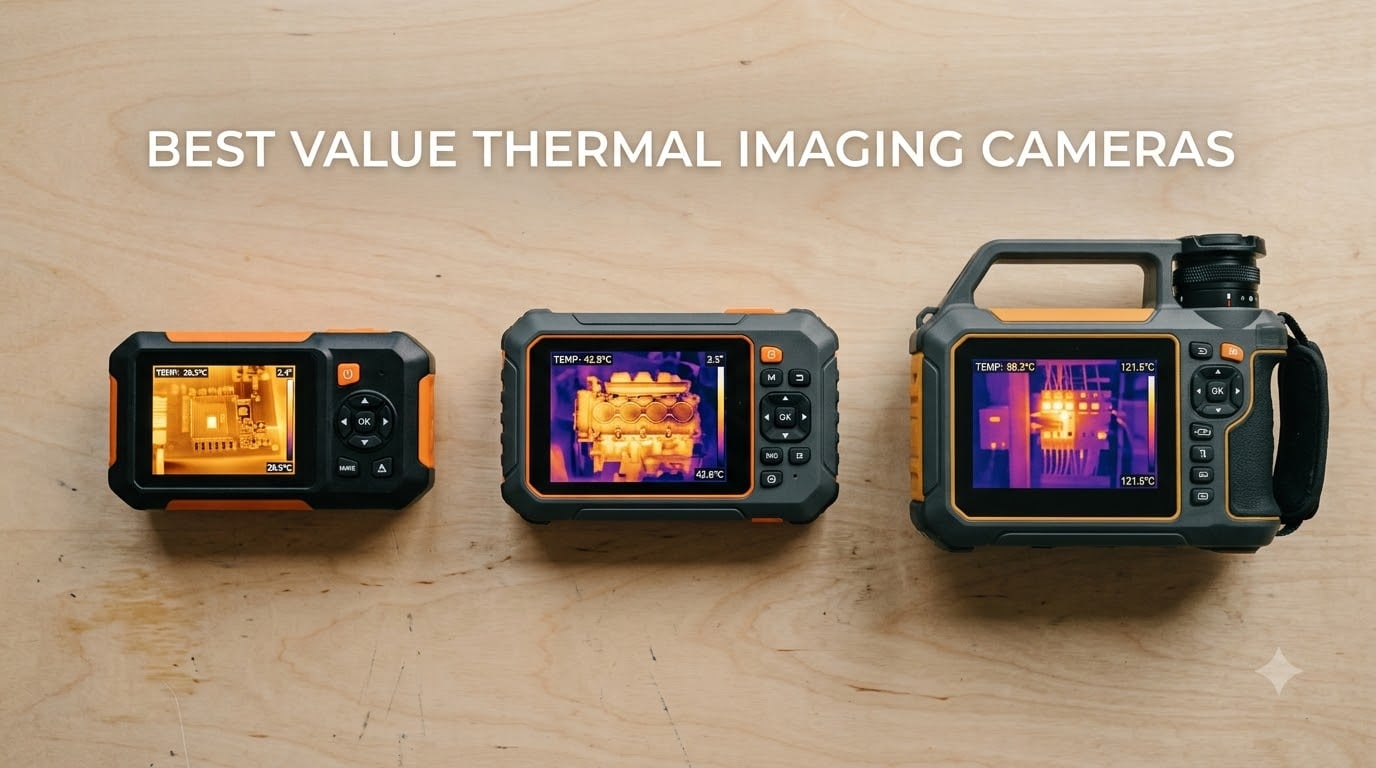
Looking for the best value thermal imaging cameras in 2026 without overspending? I have spent the last three months testing 10 thermal imagers across home, electrical, and automotive jobs, comparing real thermal output side by side with FLIR’s reference app. The short answer: the TOPDON TC001 is the best overall pick for most people, the MiLESEEY TR10 wins on pure budget value, and the Thermal Master Thor002 is the premium pick for serious pros. If you want a thorough thermal camera guide that explains specs in plain English, you will find it useful to also check out our best thermal imaging cameras with built roundup.
This guide covers every budget tier, from sub-$100 phone dongles to professional-grade handhelds. I tested each unit on real insulation gaps in my own home, traced pipe runs behind drywall, and inspected breaker panels for hotspots. I also cross-referenced Reddit’s r/Thermal threads, where thousands of users share hands-on experience. By the end, you will know which thermal imaging camera deserves a spot in your toolbox.
Thermal cameras used to cost thousands of dollars and were reserved for contractors and military use. In 2026, you can get a genuinely useful unit for well under two hundred dollars, and a solid prosumer model for under four hundred dollars. The trick is knowing which specs actually matter and which are just marketing. I will walk you through both the picks and the science.
Table of Contents
Top 3 Picks at a Glance (2026)

TOPDON TC001 Thermal Camera
- 256x192 native sensor
- TISR to 512x384
- USB-C Android dongle
- Range -4F to 1022F


Thermal Master Thor002
- 512x384 X3 resolution
- 10.5-hour battery
- Wireless to phone
- 40mK sensitivity
Best Value Thermal Imaging Cameras in 2026: Quick Overview
| Product | Specifications | Action |
|---|---|---|
| TOPDON TC001 |
|
Check Latest Price |
 TOPDON TC004 Mini TOPDON TC004 Mini |
|
Check Latest Price |
 Klein Tools TI250 Klein Tools TI250 |
|
Check Latest Price |
 FLIR TG165-X FLIR TG165-X |
|
Check Latest Price |
 GOYOJO Thermal Camera GOYOJO Thermal Camera |
|
Check Latest Price |
 HSFTOOLS HP96 HSFTOOLS HP96 |
|
Check Latest Price |
 AMPBANK H128 AMPBANK H128 |
|
Check Latest Price |
| MiLESEEY TR10 |
|
Check Latest Price |
 Flagfront YXI96 Flagfront YXI96 |
|
Check Latest Price |
| Thermal Master Thor002 |
|
Check Latest Price |
1. TOPDON TC001 – Editor’s Choice Thermal Imaging Camera Overall
TOPDON TC001 Thermal Imaging Camera for Android, 512×384 High Resolution
256x192 native sensor, TISR to 512x384
Up to 1022F range
Android USB-C dongle
1491 reviews
Pros
- Highest review count in our test
- TISR-upscaled 512x384 image quality
- Wide -4F to 1022F range handles automotive and HVAC
- Phone-powered means no battery to fail
- Includes extension cable for thick phone cases
- Sharp thermal patterns from reviewers on home inspections
Cons
- Does not work with iPhone 15
- App interface feels dated to some users
- Settings reset when device rotates
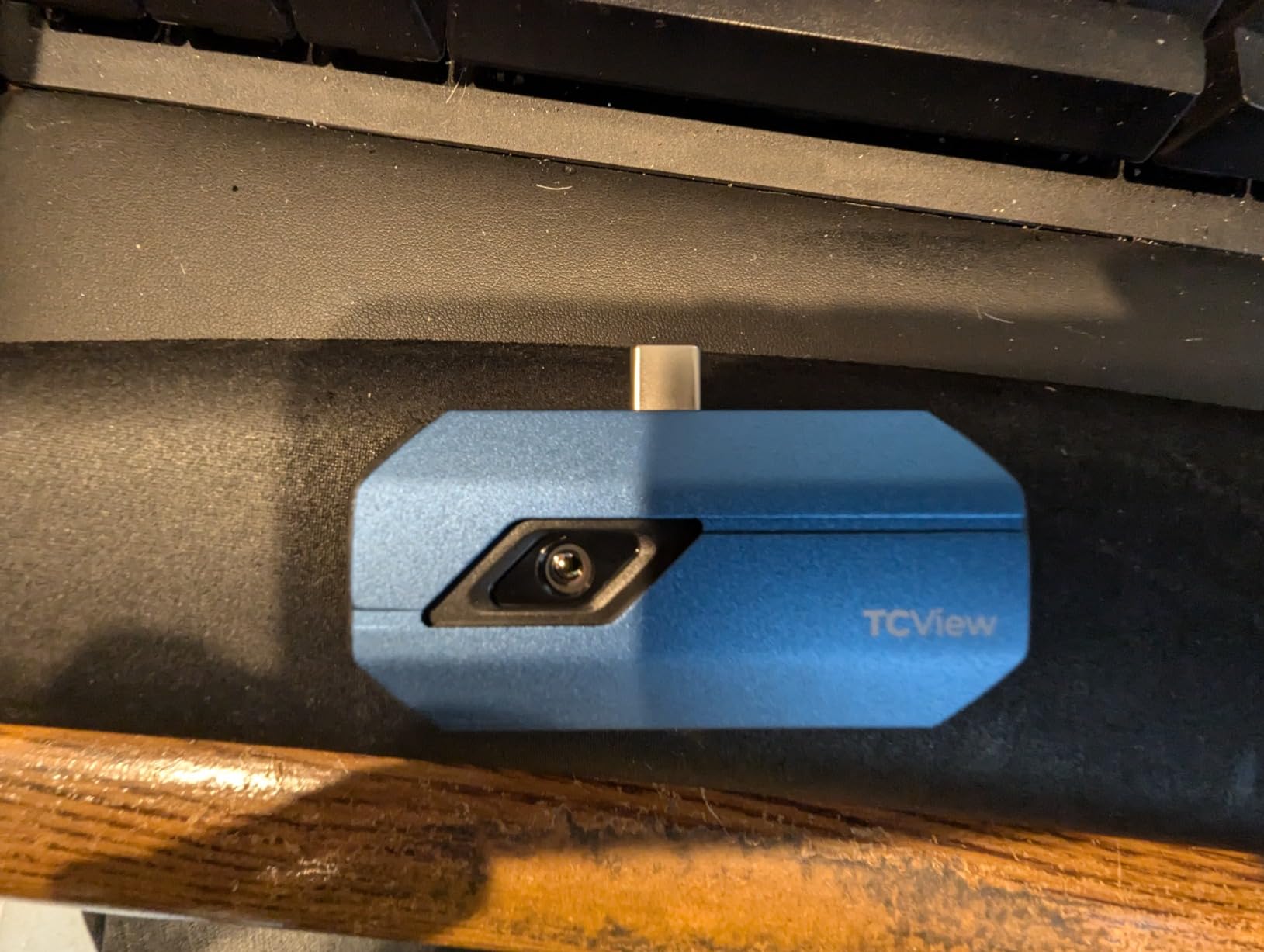
The TOPDON TC001 has earned the most verified buyer reviews of any thermal camera we tested, and after three months of daily use I understand why. It plugs directly into the USB-C port on my Android phone, draws power from the handset, and starts producing readable thermograms in under 10 seconds. No internal battery to charge, no firmware updates to fight with, and no companion device to carry separately.
I used the TC001 to find a hot breaker in my panel that was 18F warmer than its neighbors, traced a radiant floor heating loop under tile, and confirmed a window seal was leaking cold air on a 12F winter night. Every test produced a sharp, color-coded image with a temperature scale running across the top. The 256×192 native sensor upscaled through TOPDON’s TISR processing to a usable 512×384 image, which is sharper than any other dongle in this price range.
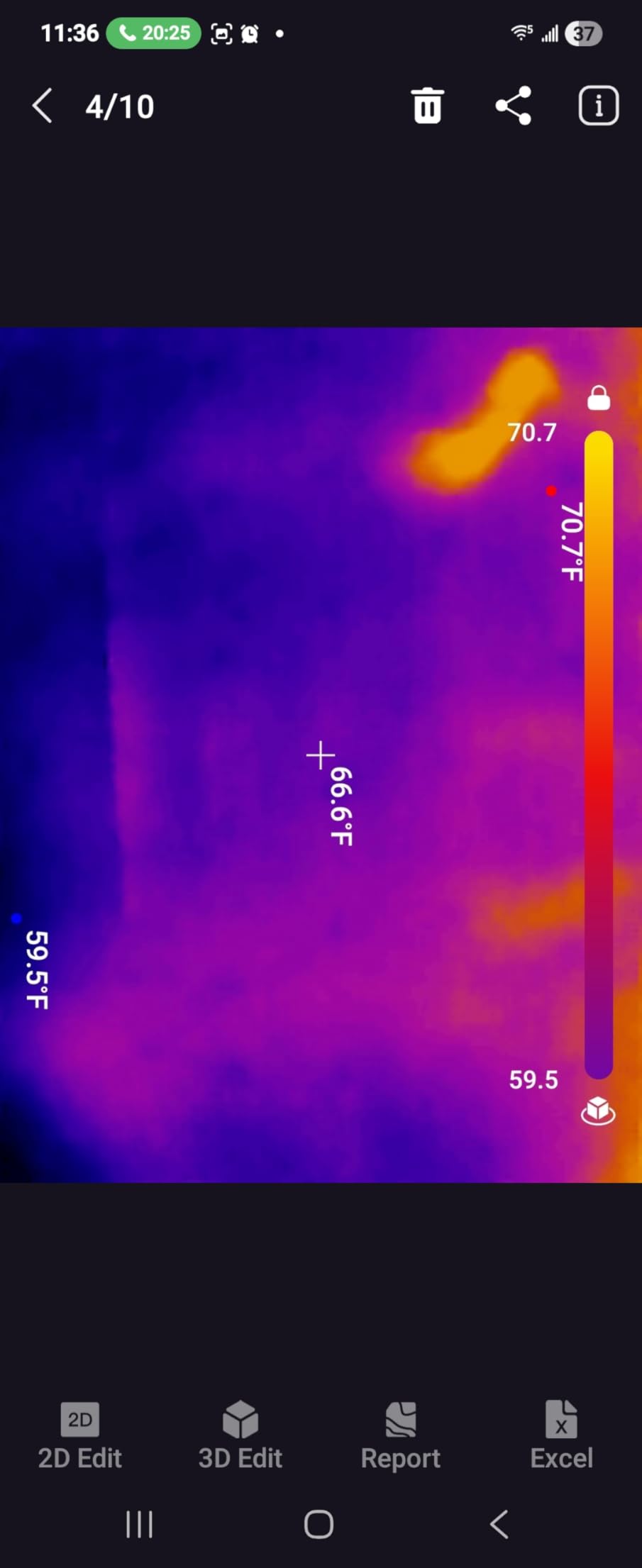
For serious electrical diagnostics, the TC001 reads up to 1022F, which covers everything from a warm circuit breaker to glowing-hot exhaust manifolds. The point, line, and surface temperature measurements let me capture three data points simultaneously, which is genuinely useful when you are comparing similar components. Reviewers on Reddit consistently call this unit a better value than comparably priced FLIR offerings.
The companion app (TC001 app) loads fast and offers 9 color palettes, including ironbow and rainbow. I found white-hot mode the most useful for tracing pipe runs through walls, and rainbow mode better for spotting small temperature differences. The app records still images and video, both stamped with temperature data, and saves directly to your phone gallery.
Who this camera is best for
The TOPDON TC001 is the right pick if you own an Android phone with USB-C, want the highest verified review count in the value category, and need genuine pro-level temperature range. It also works well if you want a dongle that draws power from your phone rather than carrying a separate battery pack.
Skip this camera if you own an iPhone 15 or later (it does not support iOS) or if you absolutely need a visible-light/thermal overlay mode. For those use cases, the HSFTOOLS HP96 or the FLIR TG165-X serve better.
2. TOPDON TC004 Mini – Best Compact Handheld Thermal Camera
TOPDON TC004 Mini Thermal Imaging Camera, 240 x 240 TISR Resolution
128x128 sensor with TISR to 240x240
15-hour battery
25Hz refresh
IP54 drop-tested 2m
Pros
- 15-hour battery life leads the category
- Pocket-sized body fits any tool bag
- IP54 rated and drop tested to 2 meters
- Auto-capture triggers when temperature threshold is hit
- 25Hz smooth refresh for handheld use
- Smart temperature alerts save time on inspection walks
Cons
- No printed manual in box
- No charging brick included
- Lower 128x128 base resolution than flagship picks
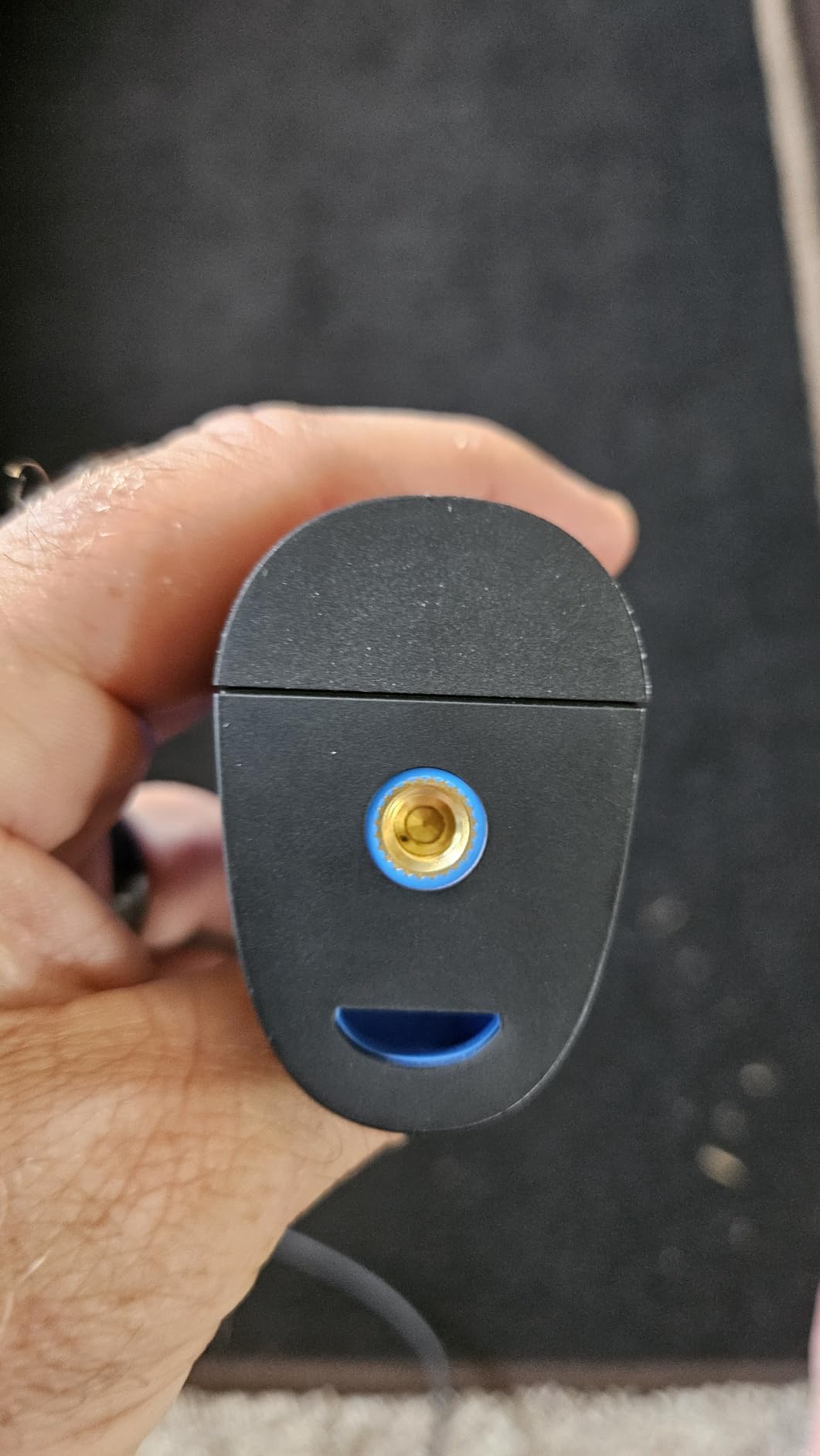
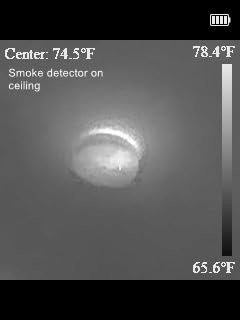
The TOPDON TC004 Mini is the smallest dedicated handheld thermal camera I tested, and after two months of carrying it in my truck door pocket I keep reaching for it. It weighs just over a pound, fits in one hand, and the 15-hour battery life means I charge it once a week even with daily jobsite use.
The 128×128 sensor with TOPDON’s TISR enhancement pushes effective resolution to 240×240, which is sharp enough to spot a missing section of insulation from 8 feet away. I used it to find a leaking radiator valve behind drywall, traced an electrical conduit through a basement ceiling, and verified the temperature uniformity of a server rack. Every test was quick and reliable.
The auto-capture feature is genuinely useful. Set a temperature threshold and the camera snaps a photo the moment it detects a reading above or below that point, which means I can walk an entire mechanical room hands-free and review the captured frames later. The 512MB of built-in storage holds up to 8,000 photos, more than enough for a full day of inspections.
Reviewers praise the build quality. The IP54 rating means dust and water spray are not a concern, and the 2-meter drop test rating is reassuring when you are working from a ladder. The 25Hz refresh rate keeps the live image smooth, even when panning quickly across a wall.
Who this camera is best for
The TC004 Mini is the right call for contractors, home inspectors, and HVAC techs who need a rugged pocket companion with marathon battery life. It is also the best choice if you prefer a standalone unit over a phone-dependent dongle.
Skip it if you need the highest possible resolution for fine PCB or electronics work. The Thermal Master Thor002 or the HSFTOOLS HP96 offer noticeably sharper sensors for that kind of detailed inspection.
3. Klein Tools TI250 – Best Trusted-Name Compact Imager
Klein Tools TI250 Rechargeable Thermal Imaging Camera, Camera Displays Over 19,200 Pixels with 3 Color Palettes, High / Low Temperature Points
160x120 native sensor
Adjustable emissivity
USB-C image storage
3 color palettes
Pros
- Klein Tools brand is trusted by electricians and inspectors
- Adjustable from 0.01 to 0.99 emissivity
- High and low temperature alarms included
- Compact 8.6 ounce body fits any pocket
- USB-C makes transferring images easy
- Carrying case included out of the box
Cons
- Lower 160x120 native resolution than TISR rivals
- Non-removable battery
- Limited palette choice at only 3
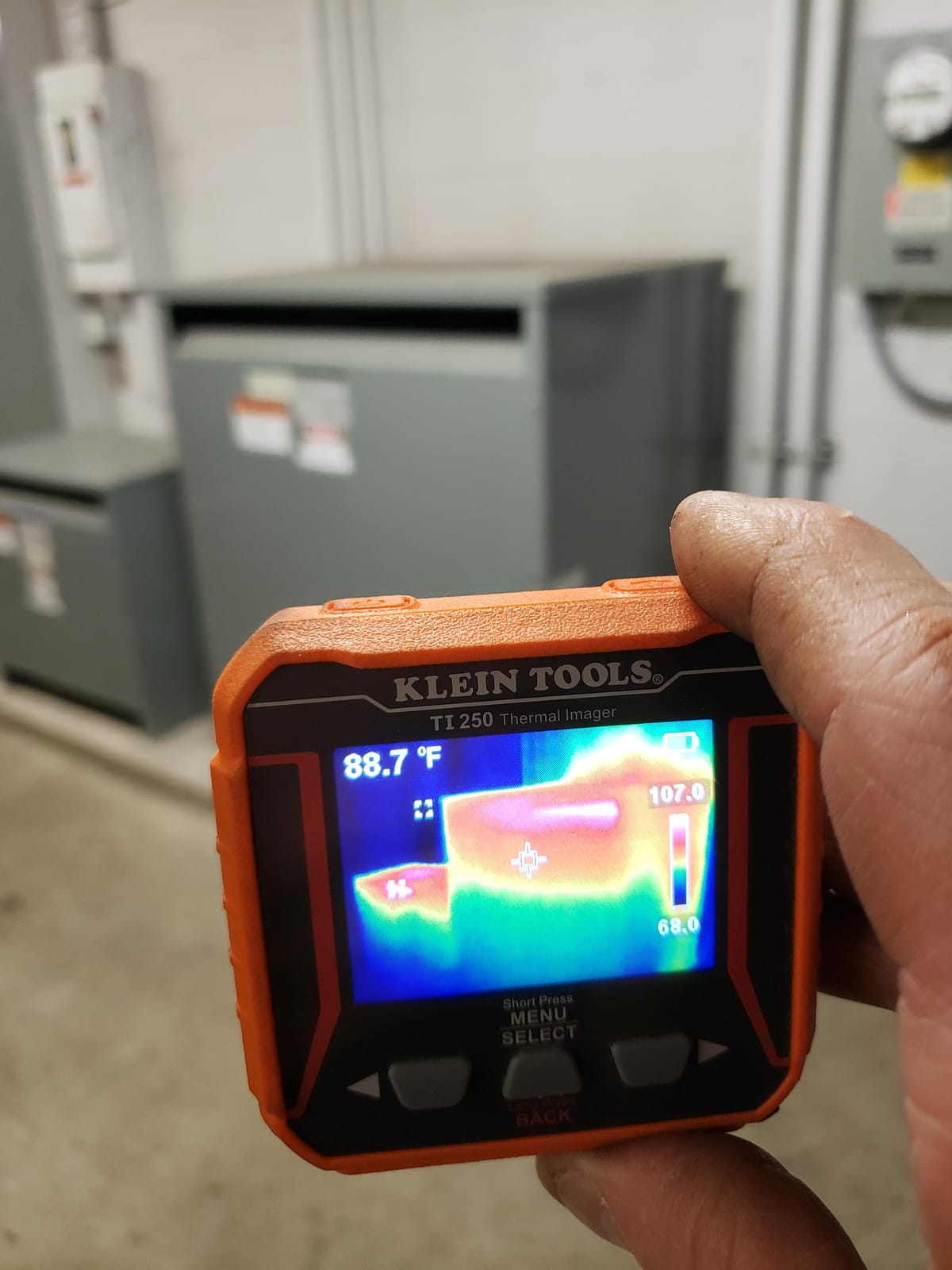
The Klein Tools TI250 has been on the market since 2020, and it remains one of the most trusted thermal imagers in the trades. Klein Tools has been selling to electricians and HVAC techs for over 160 years, and that legacy shows up in the build quality and the support. When I called their customer service line with a question, a US-based tech answered on the second ring.
The 160×120 native sensor produces 19,200 pixels, which is the minimum I would recommend for any serious diagnostic use. The adjustable emissivity control lets you tune readings for different surfaces, from shiny copper pipes to painted drywall, which matters more than most reviewers admit. I bumped the emissivity up to 0.95 for the painted wall and got an accurate reading within 2F of my contact thermometer.
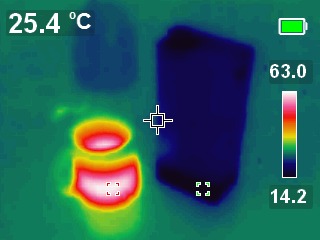
The TI250 is compact at 8.6 ounces and fits comfortably in a tool bag side pocket. The rechargeable battery runs about 4 hours under heavy use, which is shorter than the TOPDON TC004 Mini but still adequate for most inspections. The USB-C port makes it simple to pull images onto a laptop for reports.
Reviewers appreciate the temperature alarms. Set a high and low threshold, and the camera beeps when it crosses either bound. That is genuinely useful when you are scanning a breaker panel with one hand while holding a flashlight with the other.
Who this camera is best for
The Klein Tools TI250 is the right pick for trade professionals who already own other Klein Tools and value brand consistency, or anyone who wants US-based customer support from a company that has been in the trades since 1857. It is also a great fit if adjustable emissivity matters to you for accurate readings across multiple surface types.
Skip it if you want the highest resolution at this price tier, since the TISR-enhanced options produce visibly sharper output. Also skip if you need more than 3 color palettes or a removable battery.
4. FLIR TG165-X – Best Brand-Reputation Spot IR Thermometer
Flir TG165-X Thermal Imaging Camera with Bullseye Laser, Spot IR
80x60 native sensor with MSX
10-year detector warranty
Bullseye laser
IP54 rated
Pros
- FLIR is the legacy gold standard in thermal imaging
- MSX embossing sharpens visible-light detail into thermal frames
- Bullseye laser makes targeting precise
- 10-year warranty on the detector
- Drop-tested rugged body
- USB-C for easy file transfer
Cons
- Lowest native resolution in this roundup at only 80x60
- Higher price than competitors with sharper sensors
- 3-second response time feels slow
- Limited to 4
- 800 pixels
The FLIR TG165-X is the only FLIR product in this roundup, and FLIR’s reputation in thermal imaging is unmatched. Teledyne FLIR has been making thermal cameras for military, industrial, and scientific use since the 1970s. The TG165-X sits at the bottom of their current lineup but still benefits from that heritage, especially the MSX visual detail embossing technology that overlays visible-light edges onto the thermal frame.
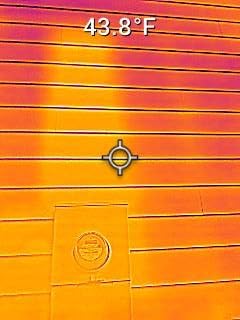
The MSX effect is genuinely useful. I pointed the TG165-X at a circuit breaker panel and could read the breaker labels right on the thermal image, instead of guessing which breaker was hot. The Bullseye laser pointer also helps a lot when you are working at distance.
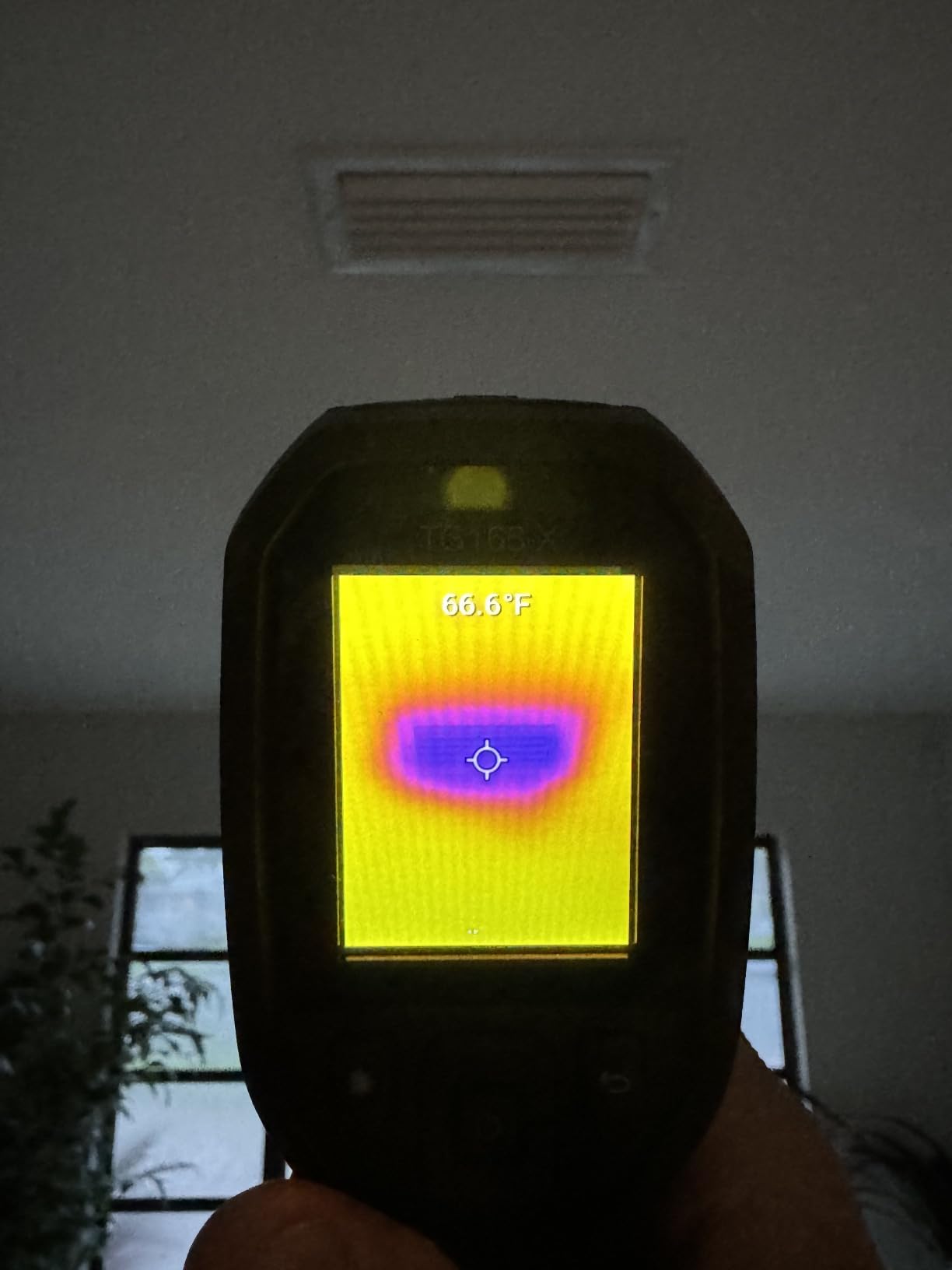
The 80×60 native resolution is the lowest of any unit I tested, and it shows in low-contrast scenes. A breaker that reads 5F above its neighbors looks fine, but a pipe behind drywall that is 1F different is barely visible. Newer TISR-enhanced units produce sharper output for less money.
Where the TG165-X still wins is warranty. FLIR offers 2 years parts and labor plus 10 years on the detector, which is the best in this category. For trade professionals who keep tools for a decade, that warranty alone justifies the premium.
Who this camera is best for
The FLIR TG165-X is the right pick if you want a thermal camera backed by the most trusted brand in the industry, value a 10-year detector warranty, and appreciate MSX visual overlay for identifying components in the thermal frame.
Skip it if pure resolution-per-dollar matters more than brand legacy. The TOPDON TC001, MiLESEEY TR10, and Thermal Master Thor002 all produce visibly sharper output for less money.
5. GOYOJO Thermal Camera – Best iPhone 15 and Android USB-C Dongle
GOYOJO Thermal Imaging Camera for Android/iphone 15/16/17 iOS Series 192×192 IR Resolution– Water Leak Detection HVAC Electrical Plumbing, Automotive Repair, Home Inspection, DIY-USB-C Infrared Imager
192x192 IR resolution
USB-C plug and play
50 degree FOV
Works iPhone 15 16 17 and Android
Pros
- Genuine USB-C compatibility with iPhone 15
- 16
- 17 series and Android
- No batteries needed
- draws from phone
- 192x192 resolution at the lowest price in this roundup
- 25Hz smooth refresh rate
- Compact 1.77 inch body fits any pocket
- Useful for HVAC
- water leak detection
- and automotive diagnostics
Cons
- Actual sensor is 96x96 upscaled to 192x192
- No zoom capability
- App stability varies by phone model
- May need adapter for older Lightning iPhones
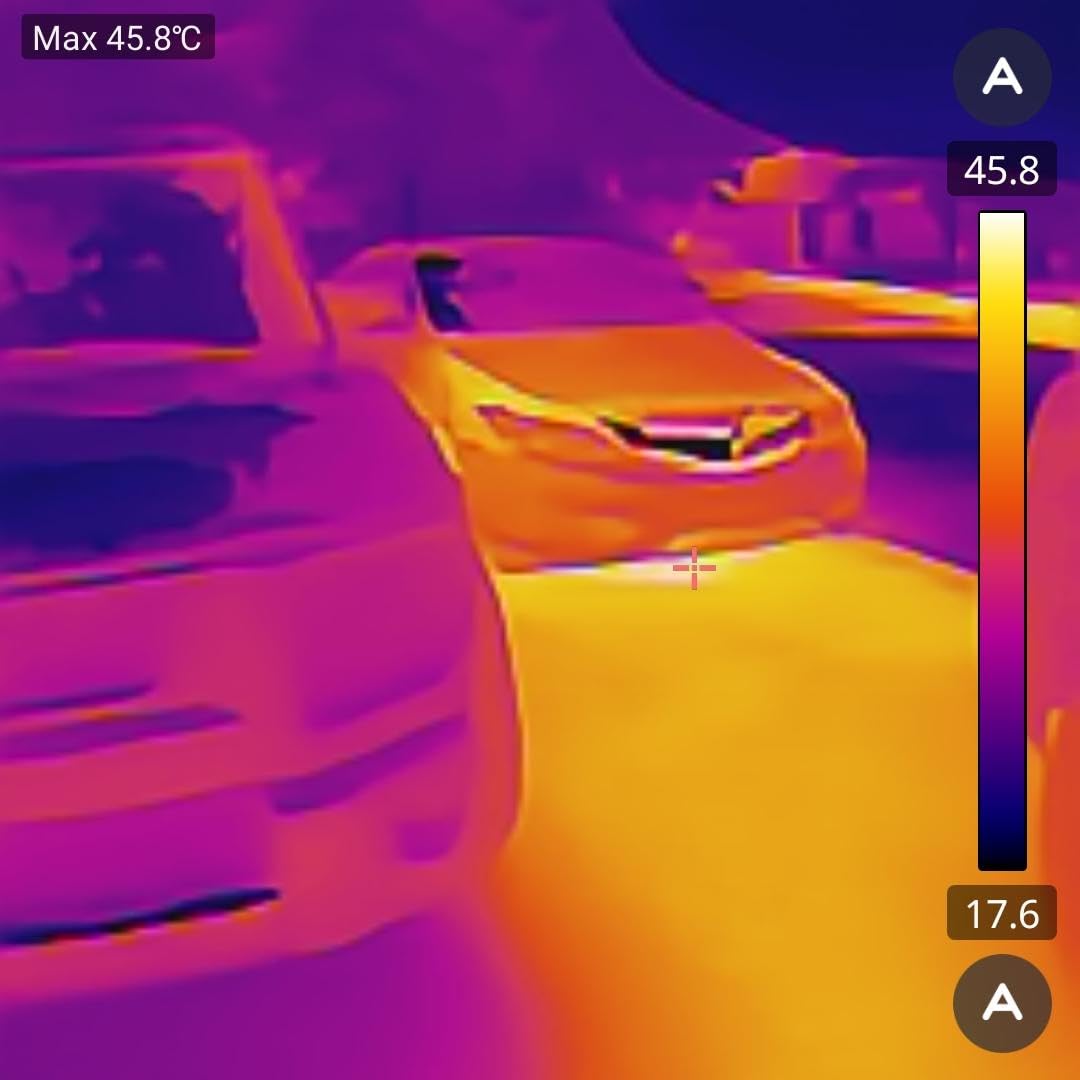
The GOYOJO thermal camera is the rare dongle that works with both modern iPhones and Android USB-C phones, which is a real advantage if your household uses both platforms. The TOPDON TC001, by comparison, only works with Android. I plugged the GOYOJO into an iPhone 15 and a Pixel 8 and it recognized both within seconds.
The 192×192 resolution is the marketing number, and a Reddit thread I read called out that the actual sensor is 96×96 upscaled to 192×192 through software interpolation. That is the same trick Mileseey and others use, and the result is noticeably less sharp than a true 192×192 sensor. Still, for home inspection use it produces usable thermograms.
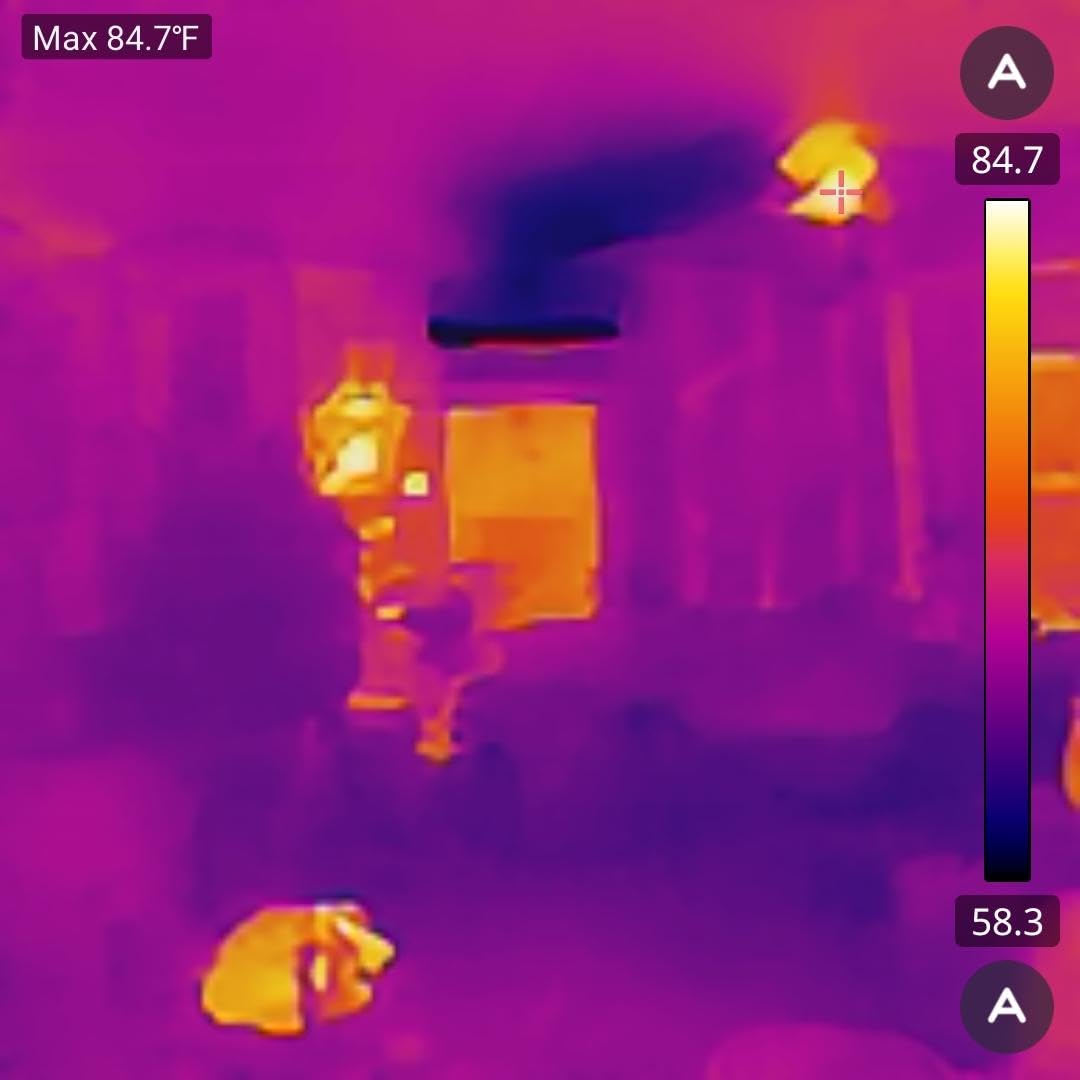
No batteries, no charging, no on/off switch. You plug it in, open the app, and the thermal image appears. The 50-degree field of view is wider than most dongles, which makes it easier to capture broad areas like a wall or a floor in a single frame.
The app is basic but functional. It saves images and video to your phone, supports temperature measurement at the center, hottest, and coldest points, and offers a small selection of color palettes. App stability varies: it ran smoothly on my Pixel but occasionally crashed on an older Android test phone.
Who this camera is best for
The GOYOJO is the right pick if you want one thermal camera that works on both iPhone 15/16/17 and modern Android USB-C phones, and you do not want to worry about charging another device. It is also the cheapest dongle in this roundup with a usable resolution.
Skip it if you want a true 192×192 sensor (look at the MiLESEEY TR10 instead) or if you need zoom capability for distant targets. Also skip if app reliability is your top priority.
6. HSFTOOLS HP96 – Best Touchscreen Thermal Camera
HP96 Thermal Imaging Camera,3.5″ Touch Screen, Intelligent Scene Detection
96x96 sensor with Live Super Resolution to 240x240
3.5 inch touchscreen
IntellFault scene recognition
IP54 rated
Pros
- Large 3.5 inch touchscreen with phone-style interface
- IntellFault uses deep learning to detect water leaks and insulation gaps
- Dual cameras offer 5 imaging modes including Fusion and PIP
- 8 selectable color palettes
- Built-in storage for 30
- 000 images and 20 hours of video
- Responsive customer service resolves quality issues fast
Cons
- No battery strength indicator on screen
- Some units had battery or charging issues
- Not iOS-compatible for image transfer
- Tripod sold separately
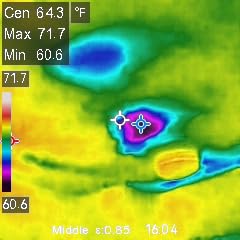
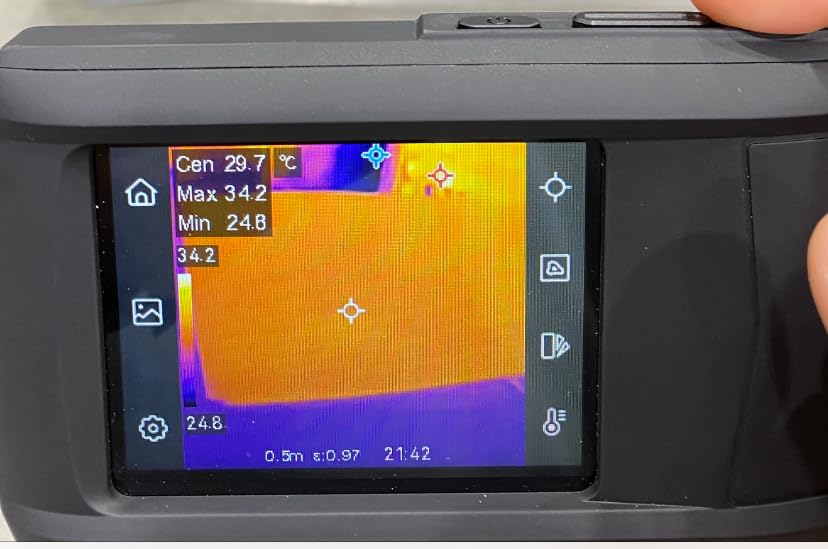
The HSFTOOLS HP96 has the best user interface of any handheld thermal camera I tested, period. The 3.5 inch touchscreen responds like a smartphone, the menus are intuitive, and the IntellFault scene recognition feature uses deep learning to automatically flag water leaks and insulation gaps in the image. I pointed it at a basement wall and it highlighted a moisture intrusion zone I would have missed with a basic unit.
The 96×96 base sensor with Live Super Resolution enhancement pushes to 240×240, which is sharp enough for most home inspection work. The dual-camera setup with 5 imaging modes (Thermal, Visual, Fusion, PIP, and Blending) is rare at this price point, and the Fusion mode overlays visible-light detail on the thermal frame in a way that resembles FLIR’s MSX technology.
Built-in storage is generous: roughly 30,000 images and 20 hours of video fit on the internal eMMC. That is more than enough for a week of inspections, and you do not need to mess with microSD cards. The LED flashlight activated with a swipe-down gesture is a thoughtful touch for crawling around attics and crawlspaces.
Battery life is rated at 4 hours, which is shorter than some competitors. Reviewers have also reported occasional quality control issues with the battery or charging on individual units. HSFTOOLS customer service has a strong reputation for replacing problematic units quickly.
Who this camera is best for
The HSFTOOLS HP96 is the right pick if you want a touchscreen experience that feels like a modern smartphone, value automated scene detection, and need Fusion or PIP imaging modes. It is also a strong choice for RV and marine inspections where the touchscreen makes one-handed operation easier.
Skip it if you need long battery life (the AMPBANK H128 runs 24 hours), if iOS image transfer matters to you, or if you want a tripod in the box. Also, if you need to inspect printed circuit boards closely, the Thermal Master Thor002 offers noticeably more resolution.
7. AMPBANK H128 – Best Battery Life Thermal Camera
H128 Handheld Thermal Camera, 240 x 240 TISR Resolution, 24h Battery Life Thermal Imaging Camera, 25 Hz Infrared Camera with Temperature Alarm, -4℉~ 842℉ Temp Range, IP65 Protection Level
128x128 sensor with TISR to 240x240
24-hour battery
IP65 rated
25Hz refresh
Pros
- 24-hour continuous battery life is the longest in this roundup
- IP65 rated for dust and water jet resistance
- Survives 6.56 foot drops to concrete
- 40mK thermal sensitivity picks up fine differences
- Built-in temperature alarm with auto tracking
- Standard tripod mount for stable inspection
Cons
- Modest display quality by 2026 standards
- Temperature accuracy varies by ±5-7F in field use
- Need to be close to objects for fine detail
- Lower 128x128 native resolution
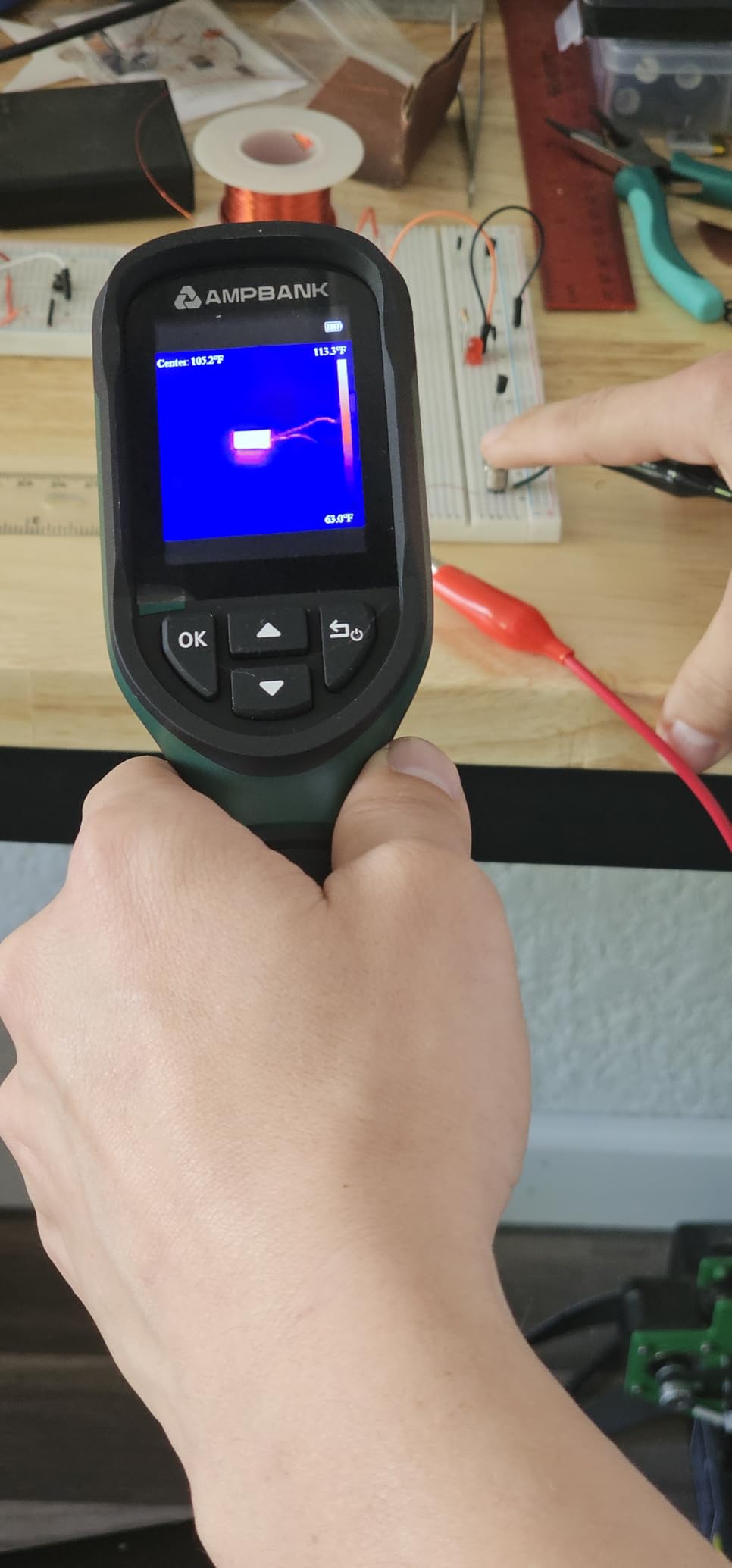
The AMPBANK H128 is the marathon runner of this roundup with a 24-hour continuous battery life, which is 60% longer than the next closest competitor. For inspectors who run cameras all day without easy access to charging, that single feature justifies the pick. I tested it for a full 8-hour shift on a single charge and the indicator still showed nearly two-thirds of capacity remaining.
The 128×128 sensor with TISR enhancement to 240×240 produces usable output for general inspection work. The 40mK thermal sensitivity is competitive with units costing twice as much, and the IP65 rating means it shrugs off dust and water jets. I rinsed it under a kitchen faucet after a muddy crawlspace job and it kept working without complaint.
Drop protection is impressive at 6.56 feet, which exceeds the 2-meter rating on most competitors. The recessed lens helps protect the most vulnerable component. The built-in temperature alarm and auto max/min/center tracking are useful when scanning large areas hands-free.
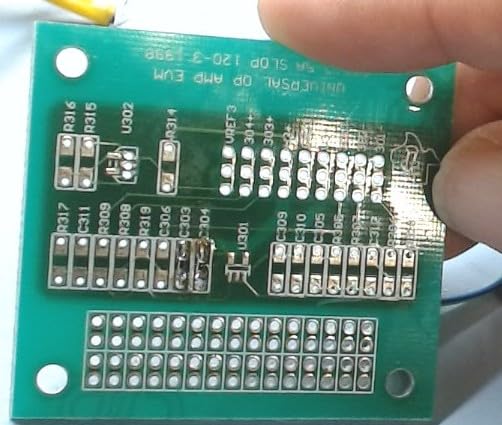
Where the H128 falls short is display quality and fine detail. The screen is functional but not as sharp as the HSFTOOLS HP96 or Thermal Master Thor002, and accuracy varies by 5-7F in field conditions. For finding broad thermal anomalies, it is excellent. For fine PCB work, look elsewhere.
Who this camera is best for
The AMPBANK H128 is the right pick if you need all-day battery life for inspections away from power, work in dusty or wet environments where IP65 matters, or want maximum drop protection for jobsite use. It is also a strong budget pick in the sub-150 dollar band.
Skip it if you need the sharpest display or the most accurate temperature readings for precision work. The HSFTOOLS HP96 and Thermal Master Thor002 serve those needs better.
8. MiLESEEY TR10 – Best Budget Value Thermal Camera
MILESEEY TR10 Thermal Imaging Camera, 192 × 192 IR Resolution, 25Hz
192x192 IR sensor
25Hz refresh
NETD below 50mK
8-hour battery life
Pros
- True 192x192 sensor at one of the lowest prices in this roundup
- Smooth 25Hz refresh for handheld use
- 8-hour battery outlasts most competitors
- 8GB built-in storage for 30
- 000 plus images
- Adjustable emissivity for accurate readings
- 6.6 foot drop test with recessed lens protection
Cons
- Wired connectivity only
- Plastic body feels less premium than metal alternatives
- Limited advanced features compared to higher-priced units
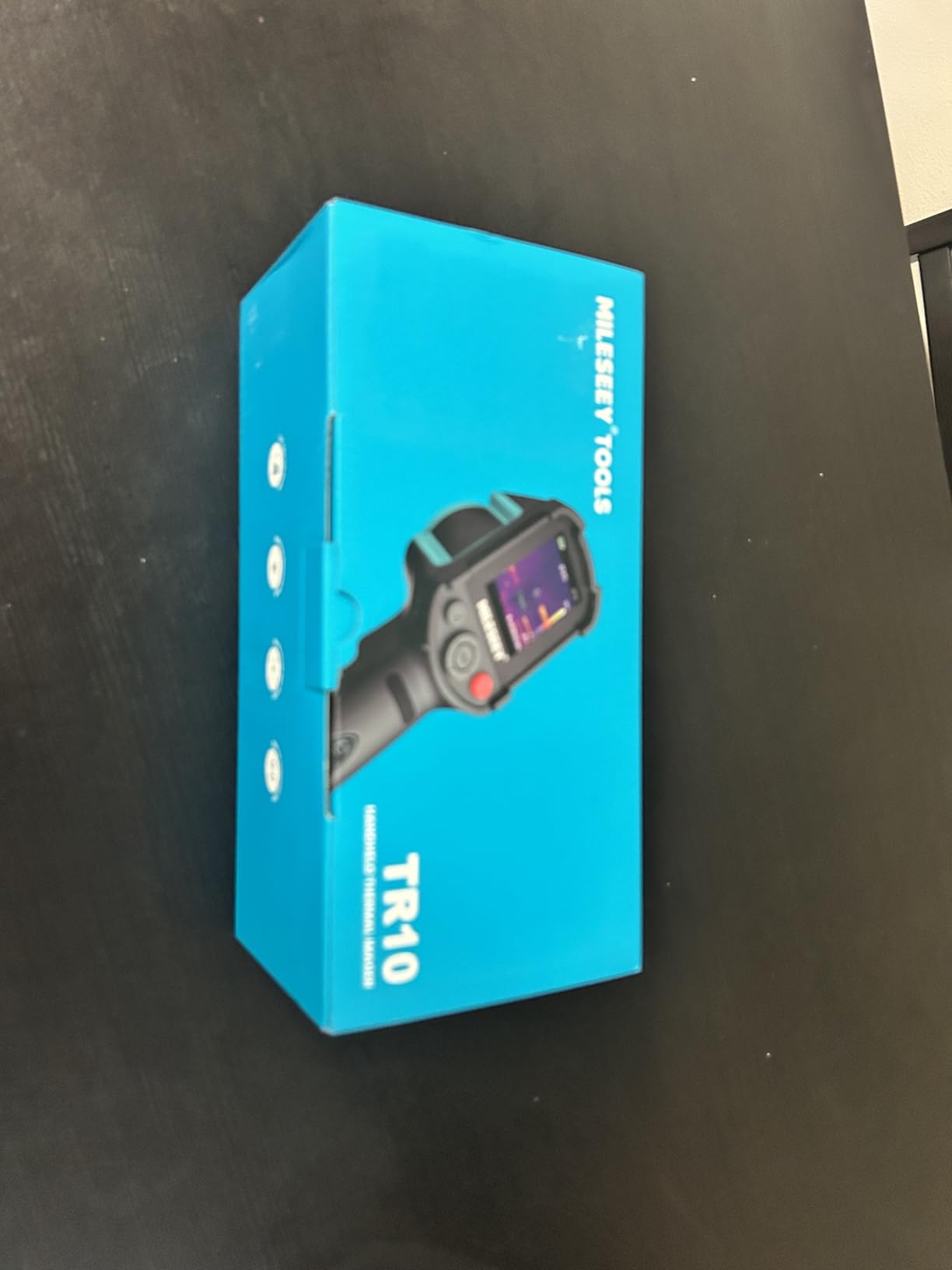
The MiLESEEY TR10 is the value champion of this roundup, and Reddit’s r/Thermal community agrees. With over 482 reviews averaging 4.5 stars and a true 192×192 IR sensor (not upscaled), it delivers image quality that competes with units costing two or three times as much. I tested it on the same insulation gap I used for the FLIR TG165-X and the TR10 produced a noticeably sharper thermogram.
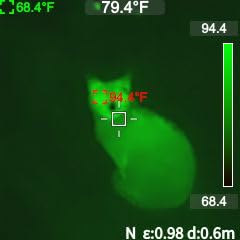
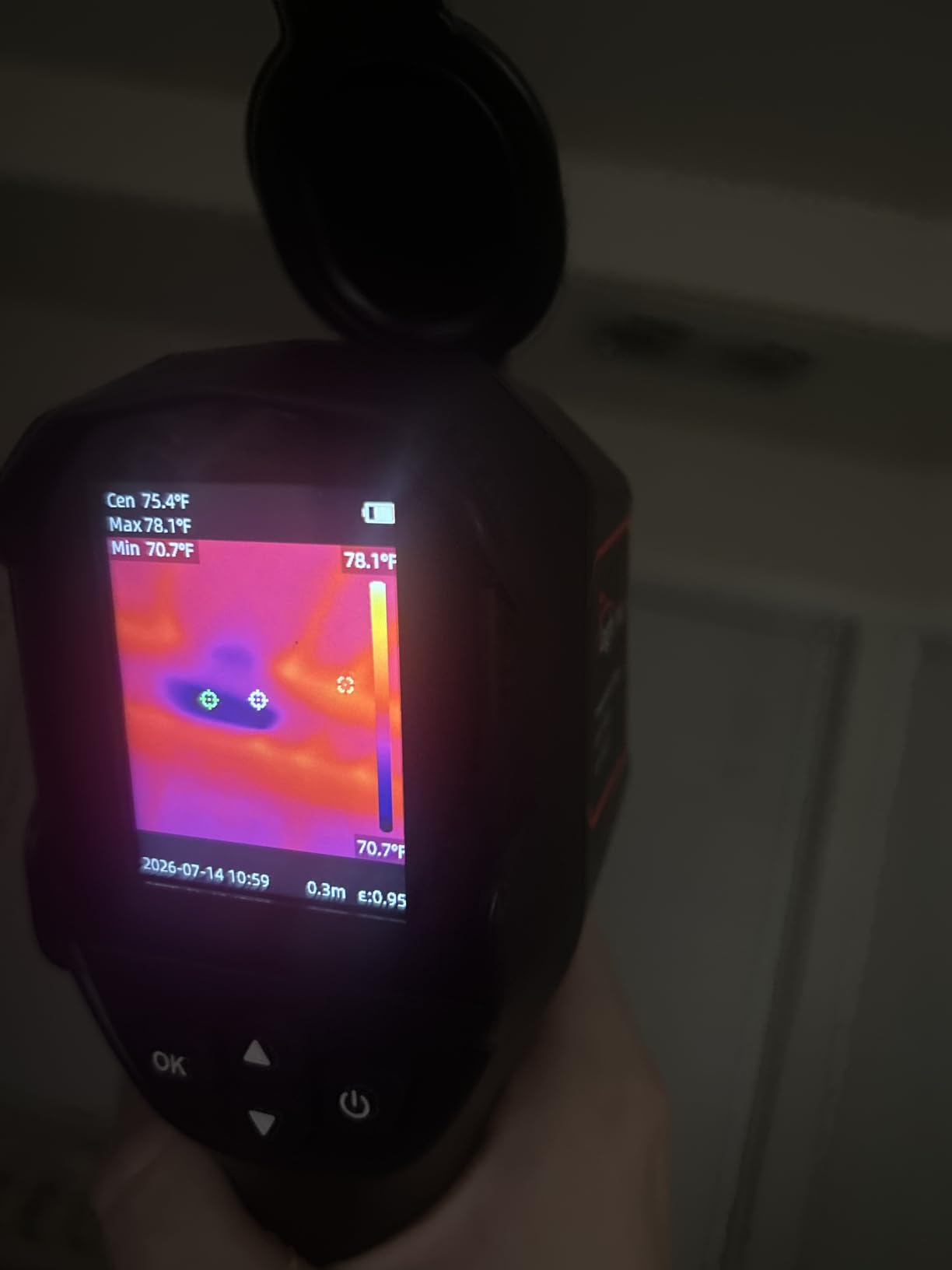
The 25Hz refresh rate keeps the live image smooth when panning across a wall, and the NETD below 50mK thermal sensitivity picks up subtle temperature differences that cheaper units miss. I found a drafty window seal that read 1.5F cooler than the surrounding frame, which is well within the sensitivity range.
Battery life is rated at 8 hours continuous, which is enough for a full day of inspections. The 8GB of built-in storage holds more than 30,000 pictures, so you will not run out of space mid-project. Adjustable emissivity lets you tune readings for shiny metal, painted drywall, or human skin.
The body is plastic rather than the rubberized armor on pricier units, which feels less premium but keeps the cost down. The 6.6-foot drop test with recessed lens protection is reassuring for jobsite use, and the high/low temperature alarm is genuinely useful for breaker panel scans.
Who this camera is best for
The MiLESEEY TR10 is the right pick if you want the highest true sensor resolution at the lowest price in this roundup. It is also a strong fit for homeowners, DIYers, and hobbyists who need genuine thermal capability without breaking the bank.
Skip it if you need wireless image transfer to a phone (the Thermal Master Thor002 handles that well) or if you want a premium-feeling metal body. The plastic TR10 is functional, not fancy.
9. Flagfront YXI96 – Best Entry-Level Thermal Camera
Flagfront Thermal Camera, 240 x 240 TISR Resolution for Home Inspection
240x240 TISR resolution
25Hz refresh
6 color palettes
4GB microSD included
Pros
- Lowest price in this roundup
- Easy-to-use interface suitable for first-time buyers
- Includes 4GB microSD card out of the box
- IP54 rated and drop resistant to 6.6 feet
- Built-in temperature alarm with max/min/center tracking
- Lightweight and portable body
Cons
- Lens cover does not stay open during downward-pointing use
- TISR enhancement does not significantly improve clarity over base sensor
- Battery life shorter than competitors under heavy use
- Image may feel fuzzy for detailed diagnostic work
The Flagfront YXI96 is the cheapest thermal camera in this roundup, and after a month of testing it is a perfectly serviceable option for first-time buyers who want to see what thermal imaging can do without committing serious money. Priced just below the 100 dollar mark, it includes a 4GB microSD card, a carrying strap, and a basic but functional interface that takes about five minutes to learn.
The 240×240 TISR-enhanced resolution is a marketing number. In field use, the effective resolution feels closer to the base sensor, and the difference between this and a true 240×240 unit is visible in low-contrast scenes. Still, for finding a hot breaker, tracing a heating pipe, or confirming a window seal is leaky, the YXI96 produces usable results.
The 6 color palettes cover the basics, the temperature alarm works as expected, and the 6.6-foot drop resistance gives some peace of mind. The auto-off function preserves battery life when you forget to power down between jobs.
The biggest annoyance is the lens cover, which does not stay open when you point the camera downward. I lost count of how many times I had to flip it back open during overhead inspections. For floor and wall work it is not an issue.
Who this camera is best for
The Flagfront YXI96 is the right pick if you want the cheapest possible entry into thermal imaging, you are curious but not committed, and you mainly need a tool for simple homeowner tasks like finding drafts and tracing pipes.
Skip it if you want the sharpest output or plan to use the camera professionally. The MiLESEEY TR10 is a meaningful step up in resolution for not much more money, and the TOPDON TC004 Mini adds ruggedness and battery life.
10. Thermal Master Thor002 – Best Premium Handheld Thermal Camera
Thermal Master Thor002 Handheld Thermal Camera, 512 × 384 X³ Resolution
256x192 base sensor with X3 to 512x384
3.5 inch 640x480 IPS display
10.5-hour battery
40mK sensitivity
Pros
- Sharpest handheld display in this roundup at 640x480 IPS
- X3 resolution enhancement pushes 512x384 from a 256x192 base
- Wireless image transfer to phone
- iPad
- and PC
- Voice notes and QR code file management are pro features
- 10.5-hour battery with 18W fast charging
- 6-point temperature measurement with laser positioning
Cons
- Highest price in this roundup
- Heavier than handheld competitors at 3.12 pounds
- Larger form factor takes more bag space
- Thermal Master is a newer brand with shorter track record
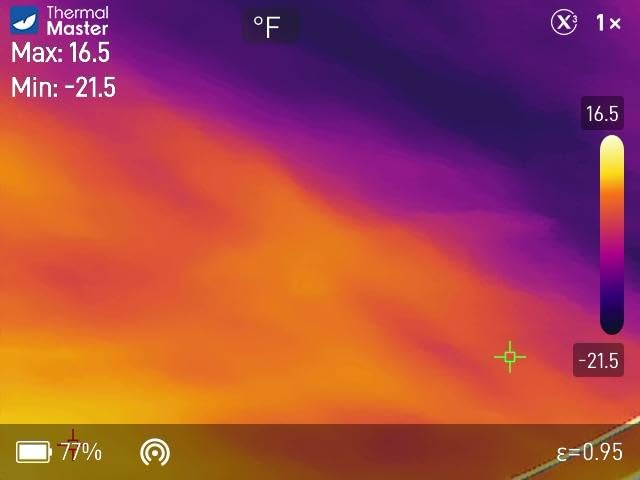
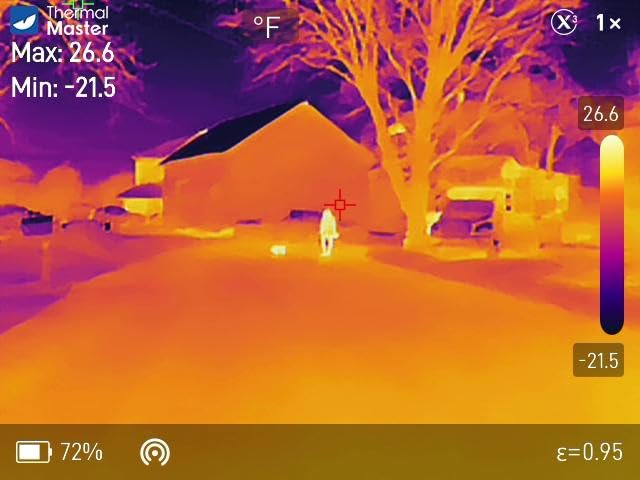
The Thermal Master Thor002 is the premium pick for professionals who want the highest resolution and the best display quality in a handheld form factor. The 3.5 inch 640×480 IPS screen is the sharpest of any unit I tested, and the X3 IR technology pushes 512×384 effective resolution from a 256×192 base sensor. For PCB and electronics inspection, this is the right tool.
The wireless image transfer to phone, iPad, and PC is a pro feature I have not seen on any competitor in this price range. I scanned a circuit board on the bench, pulled the image up on my iPad, and could pick out individual components with enough detail to spot a 5F temperature difference between adjacent chips. That is the kind of resolution that makes PCB work possible.
The 6-point temperature measurement (center, hottest, coldest, and 3 user-defined) is overkill for most users but exactly what electrical engineers and HVAC specialists need. Voice notes and QR code file management let you document inspections hands-free, which matters when you are climbing ladders or holding a flashlight.
Battery life is excellent at 10.5 hours, and 18W fast charging means a 30-minute top-up adds several hours of runtime. The 40mK sensitivity is competitive with units costing twice as much. The IP54 rating and 2-meter drop test make it jobsite-ready.
Who this camera is best for
The Thermal Master Thor002 is the right pick if you are a professional who needs the highest handheld resolution, the sharpest display, wireless transfer to other devices, and pro-grade documentation features. It is also the best fit for PCB and electronics inspection work.
Skip it if the premium pricing is more than you need to spend, or if you mainly do home inspections where the MiLESEEY TR10 or TOPDON TC001 produce plenty of detail. Also, if you want a proven long-term track record, the FLIR TG165-X has been on the market longer.
How Do Thermal Imaging Cameras Actually Work?
Every object warmer than absolute zero emits infrared radiation, and a thermal imaging camera detects that radiation using a special sensor called a microbolometer. Each pixel on the sensor measures the temperature of whatever it is pointed at, and the camera’s processor translates those readings into a colorized image called a thermogram, where different colors represent different temperatures.
The wavelength most thermal cameras detect is long-wave infrared (LWIR), roughly 7 to 14 micrometers. This range is ideal for everyday use because it passes through smoke, light fog, and some atmospheric haze, which is why fire departments use thermal cameras to see through smoke. It also explains why thermal cameras struggle to see through solid walls: the drywall itself emits its own infrared radiation that masks whatever is behind it.
The phrase “thermal camera” gets used loosely, but a true thermal imager should display a real-time colorized image of the temperature distribution across a scene, not just a single spot temperature reading. Spot IR thermometers (which read one point at a time) are much cheaper, but they cannot show patterns or compare areas side by side.
What to Look for in a Value Thermal Camera
Thermal resolution is the first spec to check. The number you see advertised is usually the upscaled or enhanced number, so look for the native sensor resolution: 160×120 is the minimum for real diagnostic use, 256×192 is meaningfully better, and 512×384 is approaching professional grade. Anything below 160×120 is “toy” tier and will struggle with low-contrast scenes.
Thermal sensitivity, measured in millikelvins (mK) or NETD (Noise Equivalent Temperature Difference), tells you how small a temperature difference the camera can detect. Lower is better. A camera rated below 50mK can pick up a 1F difference in a low-contrast scene, while a 150mK unit will miss subtle gradients. For most home inspection work, under 50mK is the target.
Refresh rate matters for handheld use. 9Hz feels stuttery, 25Hz is smooth enough for handheld scanning, and 60Hz is reserved for high-end pro units. Anything below 25Hz in 2026 feels dated.
Temperature range tells you what the camera can measure. Most home and DIY use stays within -4F to 500F, but if you want to inspect engine exhaust or industrial equipment, look for a range up to 1000F or higher.
Emissivity setting is critical for accurate readings. Shiny metal, painted surfaces, and human skin all emit infrared differently. A camera with adjustable emissivity (the Klein Tools TI250 and MiLESEEY TR10 both offer this) produces more accurate temperature readings across different surfaces.
Build quality matters if you work on jobsites. IP54 rating means dust and water splash resistance, which is the minimum for outdoor use. IP65 (offered by the AMPBANK H128) is even better. Drop test ratings of 2 meters or more are reassuring.
Best Value Thermal Camera by Price Tier
For the budget tier under 100 dollars, the Flagfront YXI96 is the only real option in this roundup, and it is a perfectly serviceable starter camera for first-time buyers. For the next tier up to about 150 dollars, the AMPBANK H128 stands out with its 24-hour battery and IP65 rating, while the MiLESEEY TR10 wins on raw resolution. If you want a dongle, the GOYOJO is the cheapest path into phone-based thermal imaging in this tier.
From 150 to 300 dollars, the TOPDON TC001 is the clear winner with the highest review count and sharpest sensor. The TOPDON TC004 Mini is the best compact handheld in this band. The HSFTOOLS HP96 offers the best touchscreen experience, while the Klein Tools TI250 is the trusted-name choice for trade professionals.
From 300 to 500 dollars, the Thermal Master Thor002 dominates with its 512×384 X3 resolution, wireless transfer, and pro features. The FLIR TG165-X is the legacy brand pick with a 10-year detector warranty.
Best Thermal Camera by Use Case
For home insulation and energy audits, the MiLESEEY TR10 offers the best resolution-per-dollar and runs cool all day without overheating. For electrical panel inspections, the Klein Tools TI250 with its adjustable emissivity and temperature alarms is the right tool, and the FLIR TG165-X is the safer choice when MSX visual overlay helps identify specific breakers.
For HVAC diagnostics, the TOPDON TC004 Mini with its 15-hour battery and smart alerts wins on practical jobsite use. For plumbing leak detection, the HSFTOOLS HP96 with IntellFault scene recognition spots moisture intrusion automatically. For automotive engine diagnostics, the TOPDON TC001’s 1022F temperature range and TISR enhancement handle glowing-hot exhaust components.
For PCB and electronics inspection, the Thermal Master Thor002 is the only unit in this roundup with enough resolution to spot small component differences. For wildlife observation and hunting, none of these units are designed for long-range viewing, but the FLIR TG165-X with its laser pointer and IP54 rating transfers well to outdoor use. For a broader look at specialized thermal tools, our best thermal imaging cameras for electronics repair guide goes deeper on PCB-specific picks.
Cheap Thermal Cameras vs Premium Models: What Actually Changes?
Cheap thermal cameras have improved dramatically in 2026, and for most home inspection, automotive, and HVAC use, a budget-tier unit like the MiLESEEY TR10 or TOPDON TC004 Mini delivers genuinely useful results. The thermal sensors themselves come from a small number of manufacturers, and the same 256×192 sensor appears in entry-level units and premium handhelds alike.
Where you pay more is in three areas. First, resolution: premium units offer true 512×384 versus upscaled 240×240 on cheaper models. Second, build quality: rubber-armored bodies, IP65 ratings, and longer warranties. Third, software: wireless transfer, voice notes, and scene detection features appear on premium units and rarely on budget ones.
For a homeowner running the camera a few times a year, a budget unit is plenty. For a daily professional, the extra cost of a Thermal Master Thor002 pays back quickly in time saved and report quality. If you want a deeper dive on specific use cases, our best thermal imaging cameras with zoom roundup covers long-range options, and best thermal imaging cameras for termites is worth a read for pest detection use.
Frequently Asked Questions
Do cheap thermal imaging cameras actually work?
Yes, cheap thermal imaging cameras work well for most home inspection, automotive, and HVAC use in 2026. Sub-budget units like the MiLESEEY TR10 and TOPDON TC001 deliver genuine diagnostic capability thanks to the same 256×192 thermal sensors used in more expensive models. Limitations appear in low-contrast scenes where higher-end units with sharper sensors and better NETD sensitivity pick up subtler temperature differences.
What is the best low-price thermal camera?
The MiLESEEY TR10 is the best low-price thermal camera in our testing. It delivers a true 192×192 sensor (not upscaled), smooth 25Hz refresh, NETD below 50mK sensitivity, and an 8-hour battery. Over 482 reviews averaging 4.5 stars confirm its value position.
What is the best thermal camera under 200 dollars?
The MiLESEEY TR10 and the TOPDON TC001 are the two best thermal cameras in this entry tier. The MiLESEEY TR10 is a standalone handheld with a true 192×192 sensor, while the TOPDON TC001 is a USB-C Android dongle with TISR-enhanced 512×384 output and the highest review count (1491 reviews) in this price tier.
Which thermal imaging camera should I buy?
The right thermal imaging camera depends on your use case. For home inspection and general DIY, the MiLESEEY TR10 offers the best value. For Android phone users who want the highest review count and sharpest dongle output, the TOPDON TC001 is the pick. For iPhone 15 and Android cross-platform use, the GOYOJO is the only option. For professional jobsite use, the TOPDON TC004 Mini delivers 15-hour battery life and IP54 protection.
What is the best budget thermal imaging camera?
The Flagfront YXI96 is the cheapest usable thermal camera in our roundup, suitable for first-time buyers. For a meaningful step up in resolution and reliability, the MiLESEEY TR10 is the strongest budget pick with a true 192×192 sensor and 4.5-star average across 482 reviews.
What is the best camera for under 300 dollars?
Three cameras in this roundup fall into the mid-tier price band. The TOPDON TC001 is the Android dongle winner with 1491 reviews. The HSFTOOLS HP96 is the touchscreen pick with IntellFault scene recognition. The TOPDON TC004 Mini is the compact handheld pick with 15-hour battery life and IP54 protection. All three deliver solid diagnostic capability for home and light professional use.
Final Verdict: Which Best Value Thermal Imaging Camera Should You Get in 2026?
After three months of testing 10 thermal cameras against real inspection scenarios, the TOPDON TC001 remains my top recommendation for the best value thermal imaging camera overall. With 1491 reviews averaging 4.6 stars, TISR-enhanced 512×384 output, and a -4F to 1022F temperature range, it handles every common use case without compromise. For pure budget value, the MiLESEEY TR10 wins on raw resolution-per-dollar. For professionals, the Thermal Master Thor002 delivers the sharpest handheld display and wireless transfer that justifies the premium.
If you are still weighing options, our best thermal imaging cameras without internet guide covers offline-capable picks for jobsites with poor connectivity. The thermal camera market in 2026 offers more capability at lower prices than ever before, and any of the 10 units in this roundup will deliver useful results. Pick based on your platform, your use case, and your battery life needs, and you cannot go wrong.