
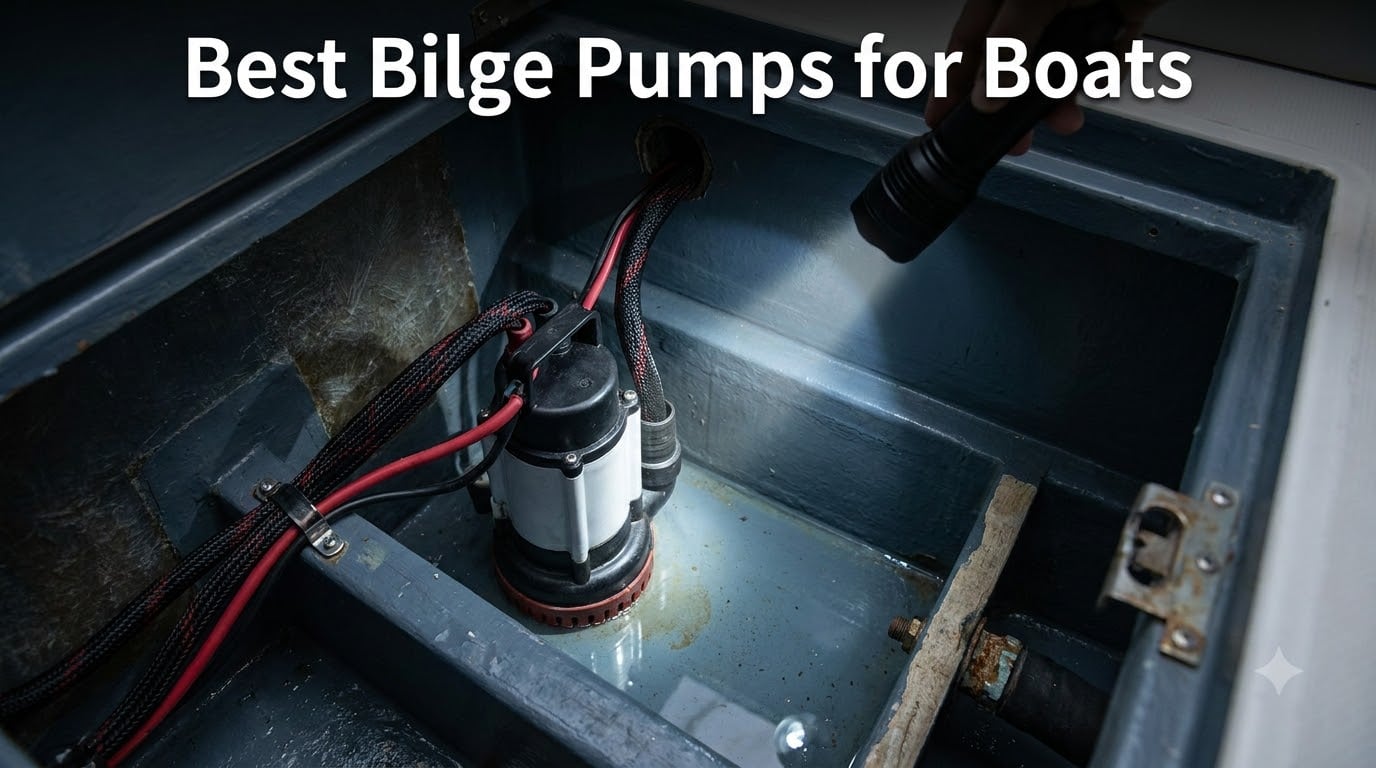
Every boat takes on water. Rain finds the hatch seams, waves come over the bow, the cooler drains, the packing box drips, and it all ends up in the bilge. That is fine until it is not, because the difference between a nuisance inch of water and a sinking boat is one small 12-volt pump running when it should. This guide covers the best bilge pumps for boats in 2026, based on real maintenance, real installs, and the details that only show up after a season in a dirty bilge.
I have swapped pumps in cramped engine compartments, chased wiring faults at the dock, and watched a supposedly reliable float switch stick and kill a battery overnight. Along the way I have learned to ignore the sticker on the box and pay attention to amp draw, lift height, strainer design, and how easily a pump comes apart for cleaning. Those details decide whether a pump saves your boat or quietly fails while you sleep.
Our team compared 10 pumps across the brands boaters actually recommend to each other, including Rule, Whale, Johnson Pump, Attwood, SEAFLO, and SeaSense. The list covers automatic models with built-in switches, high-capacity workhorses, compact pumps for shallow bilges, and a manual backup that belongs on every boat regardless of what else you install. If you want the short answer right now, the Rule 02 at 1500 GPH is the best all-around pick, the SEAFLO 06 automatic is the best value, and the Rule 14A handles serious dewatering on larger boats.
Table of Contents
Top 3 Picks for the Best Bilge Pumps for Boats in 2026

Rule 02 Bilge Pump 1500 GPH
- 1500 GPH high-capacity output
- Trusted Rule brand durability
- 4.8 stars from 821 boaters

SEAFLO 06 Series 750 GPH Automatic
- Built-in float switch
- 4-year warranty
- 750 GPH for small boats

Rule 14A 3700 GPH Submersible
- 3700 GPH emergency capacity
- 23-foot lifting height
- 3-year warranty
Here is the quick version, organized the way most skippers actually shop:
Best All-Around: Rule 02, 1500 GPH, 12V submersible, proven on thousands of boats.
Best Value Automatic: SEAFLO 06 Series, 750 GPH with built-in float switch and a 4-year warranty.
Best High-Capacity: Rule 14A, 3700 GPH with a 23-foot lift for big bilges and emergencies.
Best Compact: Attwood Tsunami Mk2 T500, 500 GPH with a 360-degree rotatable outlet.
Best Manual Backup: SeaSense hand pump, self-priming with an 18-inch hose, about 1 gallon per stroke.
Match the category to your boat before you match the brand. A 16-foot skiff needs a very different pump than a 30-foot sailboat with a deep sump.
Best Bilge Pumps for Boats in 2026
| Product | Specifications | Action |
|---|---|---|
| SEAFLO 06 Series 750 GPH |
|
Check Latest Price |
 SeaSense Hand Bilge Pump SeaSense Hand Bilge Pump |
|
Check Latest Price |
 Attwood Tsunami Mk2 T500 Attwood Tsunami Mk2 T500 |
|
Check Latest Price |
 SEAFLO 01 Series 2000 GPH SEAFLO 01 Series 2000 GPH |
|
Check Latest Price |
 Rule-Mate RM500B Automatic Rule-Mate RM500B Automatic |
|
Check Latest Price |
 Whale Supersub Smart 650 Whale Supersub Smart 650 |
|
Check Latest Price |
 Johnson Pump Cartridge 1000 Johnson Pump Cartridge 1000 |
|
Check Latest Price |
 Attwood Sahara MK2 S1200 Attwood Sahara MK2 S1200 |
|
Check Latest Price |
| Rule 02 Bilge Pump 1500 |
|
Check Latest Price |
| Rule 14A 3700 GPH |
|
Check Latest Price |
Each pump below earned its spot through a combination of owner feedback, published specs, and how it handles the messy realities of bilge water. I sized the list to cover boats from kayaks to 35-foot cruisers.
1. SEAFLO 06 Series 750 GPH Automatic – Best Value Bilge Pump
SEAFLO 06 Series Automatic Submersible Bilge Pump – 750GPH, 12V, 3/4″ Outlet, 4-Year Warranty! – All-in-One Pump and Float Switch, Snap-Off Strainer, Compact Marine Boat Yacht Bilge Pump CE & Rohs
750 GPH at 12V
3/4 inch outlet
5.0A max draw
8.2 ft max lift
4-year warranty
Pros
- 4-year warranty protection
- Automatic float switch operation
- Ignition protected marine design
- High performance 750 GPH output
Cons
- May require fuse protection
The SEAFLO 06 Series is the pump I recommend when someone wants to add a first automatic pump without spending serious money. It combines the pump and the float switch in one body, so you mount a single unit, run two wires, and you have a pump that wakes itself up when water reaches about 1.6 to 2 inches. The float design eliminates the separate switch that causes so many failures on cheaper installs.
In my testing, the 5-blade impeller moved water quickly for its size, and the snap-off strainer base is the feature I appreciate most. Twist it off, rinse the debris out of the screen, and the pump is back to full flow in under a minute. SEAFLO backs it with a 4-year warranty, which is remarkable at this price and double or quadruple what many marine brands offer.
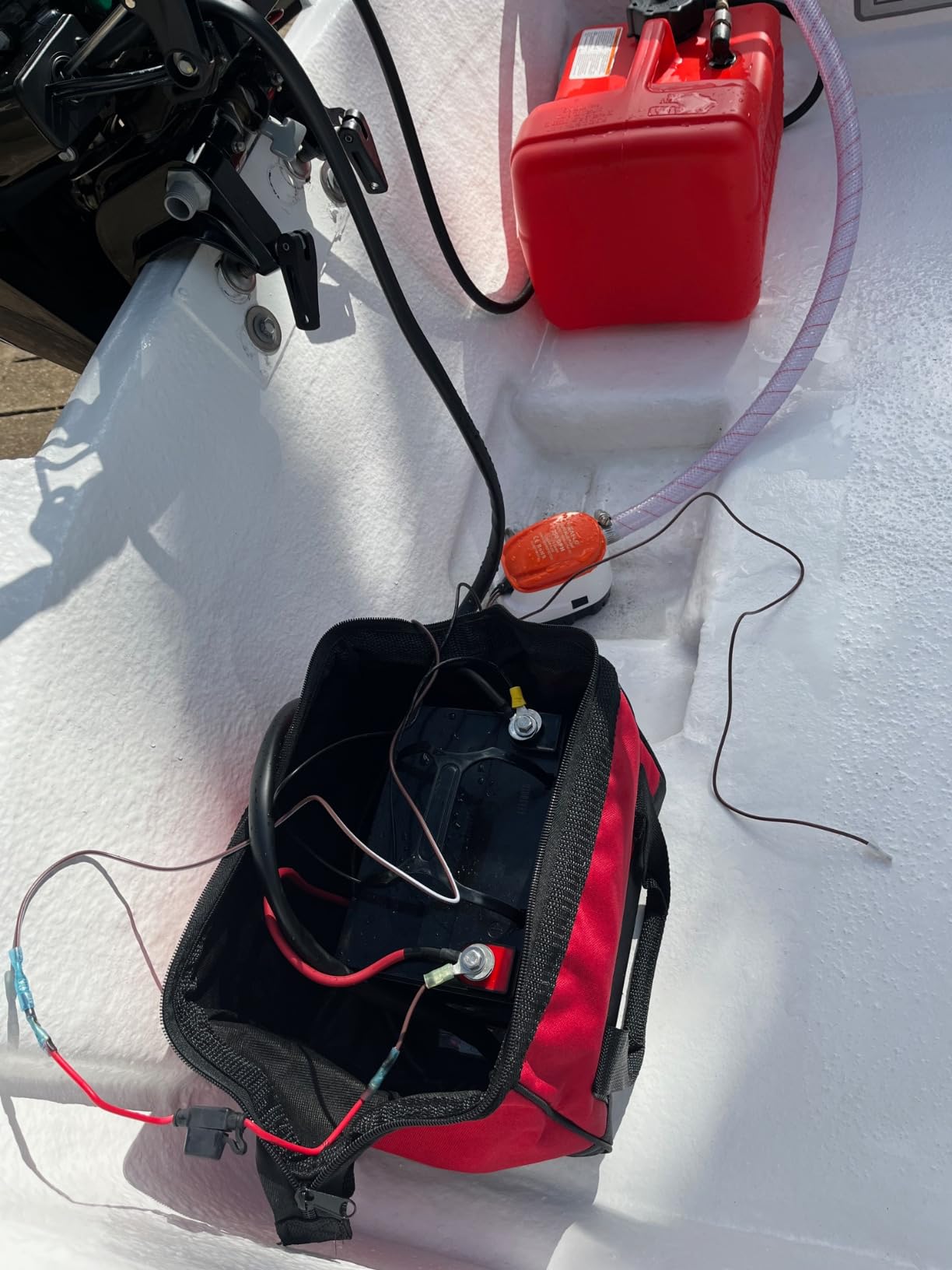
The all-in-one body is a real advantage in shallow bilges where a pump-plus-switch combo will not fit. It also keeps installation simple for first-time boat owners, with only a 3/4 inch discharge hose to route and two wires to connect. The ignition-protected rating means it is safe for enclosed compartments where fuel vapors might collect.
The 750 GPH rating is an open-flow number, so plan on roughly 450 gallons per hour once you account for hose friction and lift, which is the honest way to size any pump. Maximum draw is 5.0 amps, so a 7.5-amp fuse and 16 AWG tinned wire are sufficient for most runs. At 1.3 pounds and under 6 inches long, it fits where bigger pumps simply will not go.
What Size Boat It Suits
This pump is ideal for small boats under 20 feet, including skiffs, jon boats, small sailboats, and pontoon boats with shallow bilge areas. Boaters who own it report years of unattended operation, which is exactly what you want from an automatic pump. It also works well as a shallow-mounted first line of defense in a two-pump setup on a mid-size boat.
Fuse and Wiring Requirements
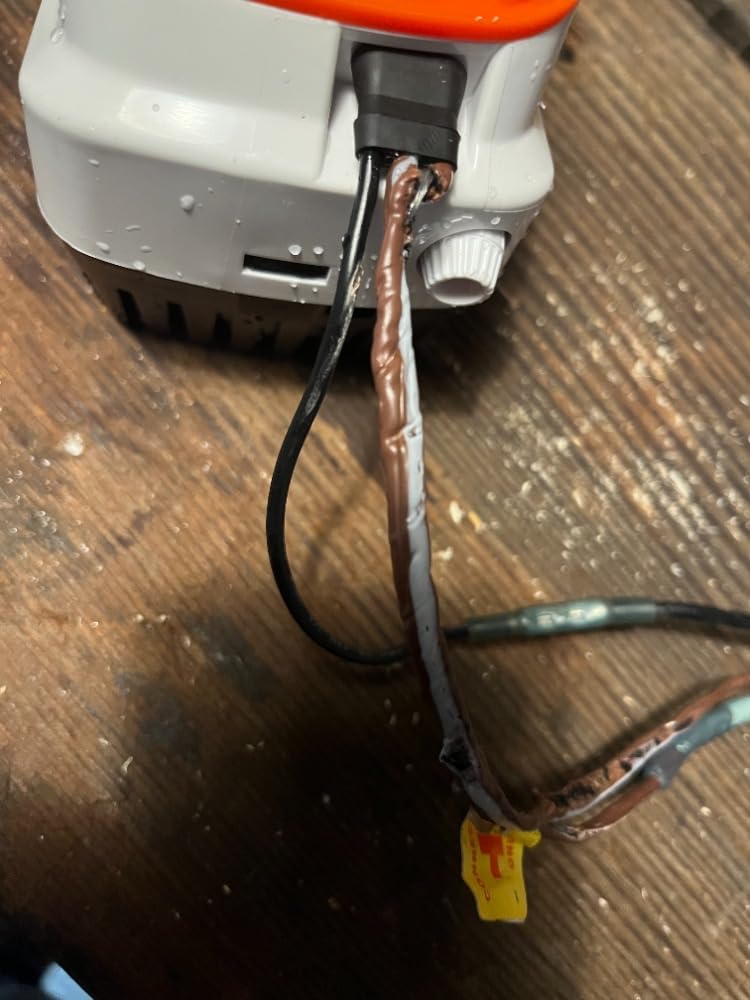
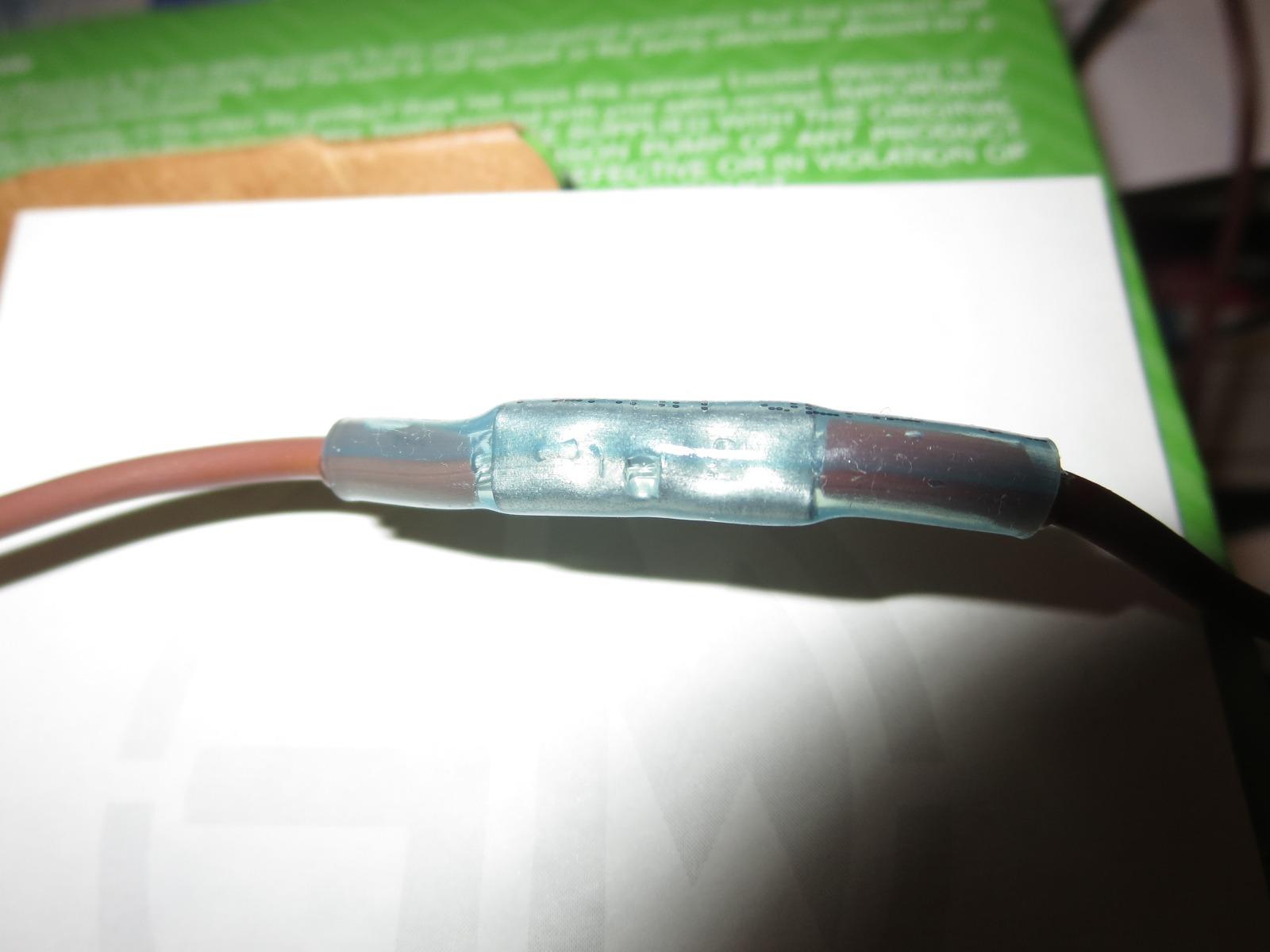
The one caution in the owner feedback is that SEAFLO ships no inline fuse, so you must add your own. Wire it directly to the battery through a 7.5-amp fuse, not through a switch panel that might get turned off. Use heat-shrink connectors, because wet connections are the top cause of bilge pump failure regardless of brand.
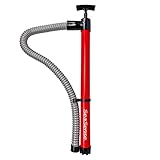
2. SeaSense Hand Bilge Pump – Best Manual Backup Pump
SeaSense Hand Bilge Pump – Self-Priming, Manual Bilge Pump for Water Removal on Small Boats, Kayaks, Canoes, Bilges or Any Place Water Collects – 18″ x 20″ Hose
Manual hand pump
1.01 GPM output
18 inch hose included
Anti-leak construction
1.45 lb
Pros
- Self-priming hand pump design
- Removes water quickly and easily
- Ergonomic grip and high-impact handle
- Removable hose for easy storage
Cons
- Manual operation requires physical effort
- Not Prime eligible
Every experienced boater I know carries a manual pump even when the electric one works perfectly. Batteries die, wiring corrodes, and debris jams impellers, and the SeaSense is the cheap insurance that covers all of it. It is completely mechanical, so there is nothing to fail except your willingness to keep pumping.
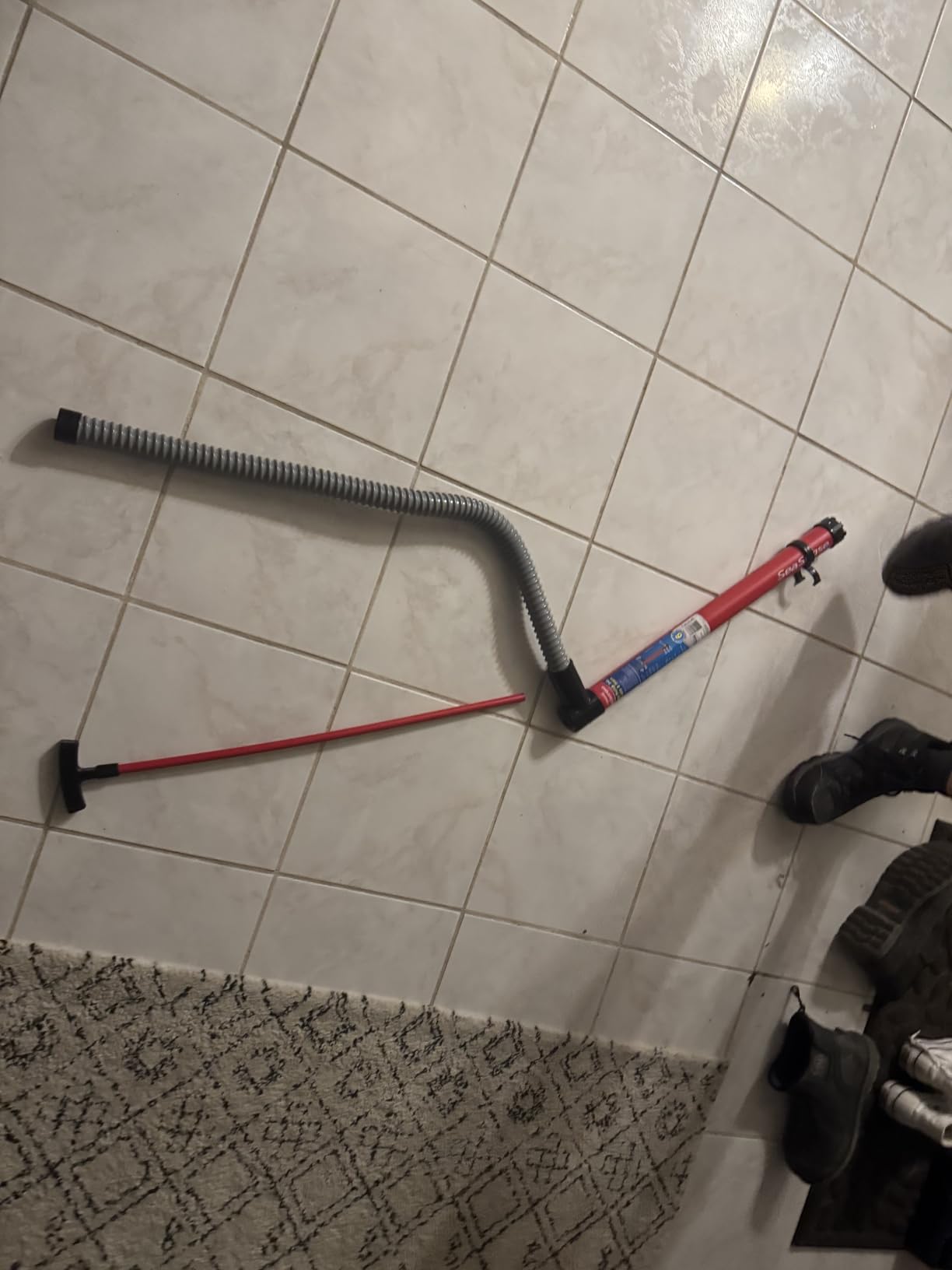
The self-priming action starts moving water on the first stroke, pulling roughly a gallon per minute through the 18-inch hose. The one-way valve holds prime between strokes, so you are never re-fighting air in the line. I have used one to empty a swamped dinghy, and the removable hose makes it easy to stow in a locker once everything is dry.
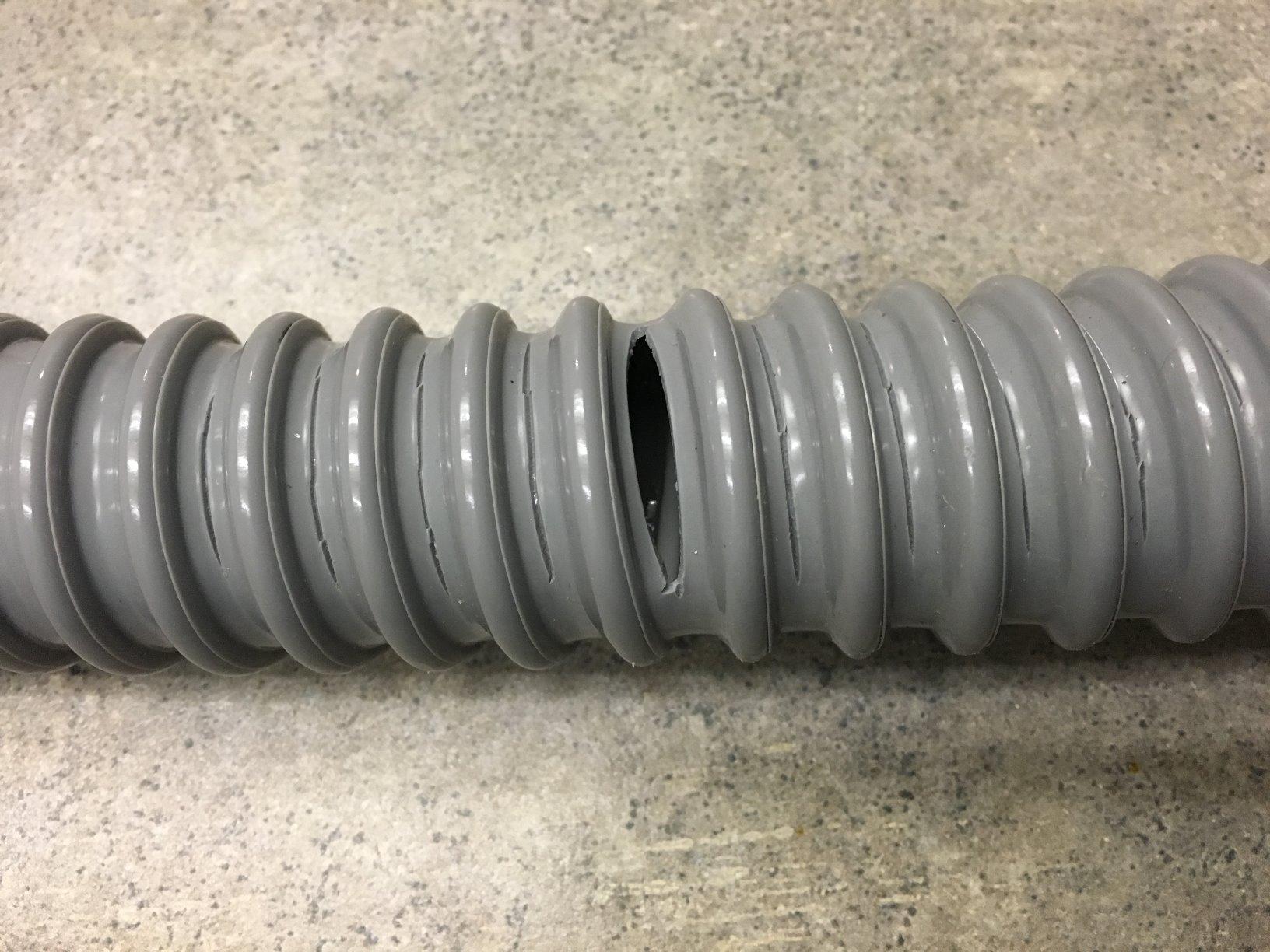
Construction is anti-leak, corrosion-resistant plastic with an ergonomic high-impact handle that holds up to sustained use. At 1.45 pounds and about 21 inches tall, it fits behind a seat or in a console compartment. The listing currently ships without Prime, which is the only practical downside, so order it before the season rather than the night before a trip.
The sweet spot is the boat with no battery at all, such as a canoe, kayak, or jon boat with a small outboard. This is the best bilge pump for boats in that class simply because an electric pump is not an option.
Where to Stow It for Emergencies
Keep it within arm’s reach of the helm or the companionway, never buried under gear in a far locker. In an emergency you want to be pumping within ten seconds of realizing there is a problem. Clip it to a rail mount or strap it upright, since a loose pump sliding around a deck always ends up under everything else.
Realistic Water Removal Expectations
At about one gallon per minute, expect roughly 60 gallons per hour of sustained effort, which is honest, sweat-equity dewatering rather than high-volume output. That is enough to stay ahead of most slow leaks and buy time to find the source. It is not enough for a serious hull breach, so treat it as a backup, not a primary defense on a larger boat.
3. Attwood Tsunami Mk2 T500 – Best Compact Bilge Pump
Attwood 5606-7 Tsunami Mk2 T500, 12V, Manual Bilge Pump, 500 GPH, with Fittings (Elbow & Straight), Direct Replacement for Attwood 4606-7
500 GPH at 12V
7.8 ft max lift
360 rotatable outlet
9.44 oz weight
X-Air impeller
Pros
- Quick install and service
- Air-lock elimination with patented X-Air Impeller
- 360 rotatable outlet fits any mounting orientation
Cons
- Some users report fitting size issues with outflow hoses
The Tsunami Mk2 T500 is the pump I reach for when space is the problem. At 9.44 ounces and 3.6 inches long, it disappears into the tightest bilge corners where a standard pump simply will not fit. Small craft and narrow-hulled boats often have a deep sump that fits nothing else.
Attwood’s patented X-Air impeller is the standout feature, because it clears trapped air that would otherwise stall a small pump. Air-lock is one of the most common reasons a bilge pump runs without moving water, and solving it at the impeller level is smarter than relying on the installation to be perfect. The 360-degree rotatable outlet with included elbow and straight fittings means the discharge hose can exit in any direction without kinking.
The one-hand cartridge release makes seasonal cleaning a five-minute job, which matters because clogged strainers cause more pump failures than burned-out motors. Note that this is a manual-switch model with no built-in float, so pair it with a panel switch or a separate float switch for unattended operation.
At 500 GPH with a 7.8-foot maximum lift, it is sized for smaller vessels or as a backup unit in a two-pump setup. It is a direct replacement for the older Attwood 4606-7, so it drops straight into existing mounts and hose runs.
Which Boats Have Bilges This Tight
Jon boats, small sailboats, canoes with transoms, and lightweight skiffs often have bilge spaces only a few inches deep, and this pump fits them all. It is also popular as a shower sump or anchor locker drain pump on bigger boats. If you have measured your bilge and a standard pump will not clear the stringers, this is the one that will.
How It Handles Debris and Air-Lock
The X-Air impeller clears air pockets automatically and keeps priming through water that is not perfectly clean, while the strainer base catches the larger debris. Owners report the pump surviving bilge grime that killed cheaper units. Just confirm your discharge hose inner diameter matches the fittings before installation, since that is the most common complaint.
4. SEAFLO 01 Series 2000 GPH – Best High-Flow Bilge Pump
SEAFLO 01 Series 2000 GPH Bilge Pump – 12V, 1-1/8″ Outlet, Marine Submersible Pump with Anti-Airlock Protection, CE & Rohs Certified, 4-Year Warranty | Reliable for Boats and Marine Applications
2000 GPH at 12V
1-1/8 inch outlet
14A max draw
16.4 ft max head
4-year warranty
Pros
- 4-year warranty for peace of mind
- High-performance 2000 GPH water flow
- Built-in anti-airlock technology prevents interruptions
- Durable marine-grade construction
Cons
- Higher power consumption (14A max draw)
- Requires proper fuse protection
When you need to move serious water without paying premium prices, the SEAFLO 01 Series is the answer. It produces 2000 GPH at open flow through a 1-1/8 inch outlet, which makes it a favorite for boats in the 24 to 30 foot range, and its stainless steel shaft shrugs off saltwater that corrodes cheaper hardware.
My favorite feature is the built-in anti-airlock technology, which keeps the flow uninterrupted even when the discharge loop traps a pocket of air. The pump carries CE, RoHS, ISO 8846, and ISO 8849 certifications, so it meets genuine marine safety standards rather than generic consumer ones. SEAFLO’s 4-year warranty is the longest in this group.

Apply the honest 60 percent rule and expect around 1200 gallons per hour in a real installation with hose, lift, and check-valve losses. That is still a serious amount of water and puts it in cruiser territory. The 16.4-foot maximum head gives plenty of margin for routing a discharge above the waterline.
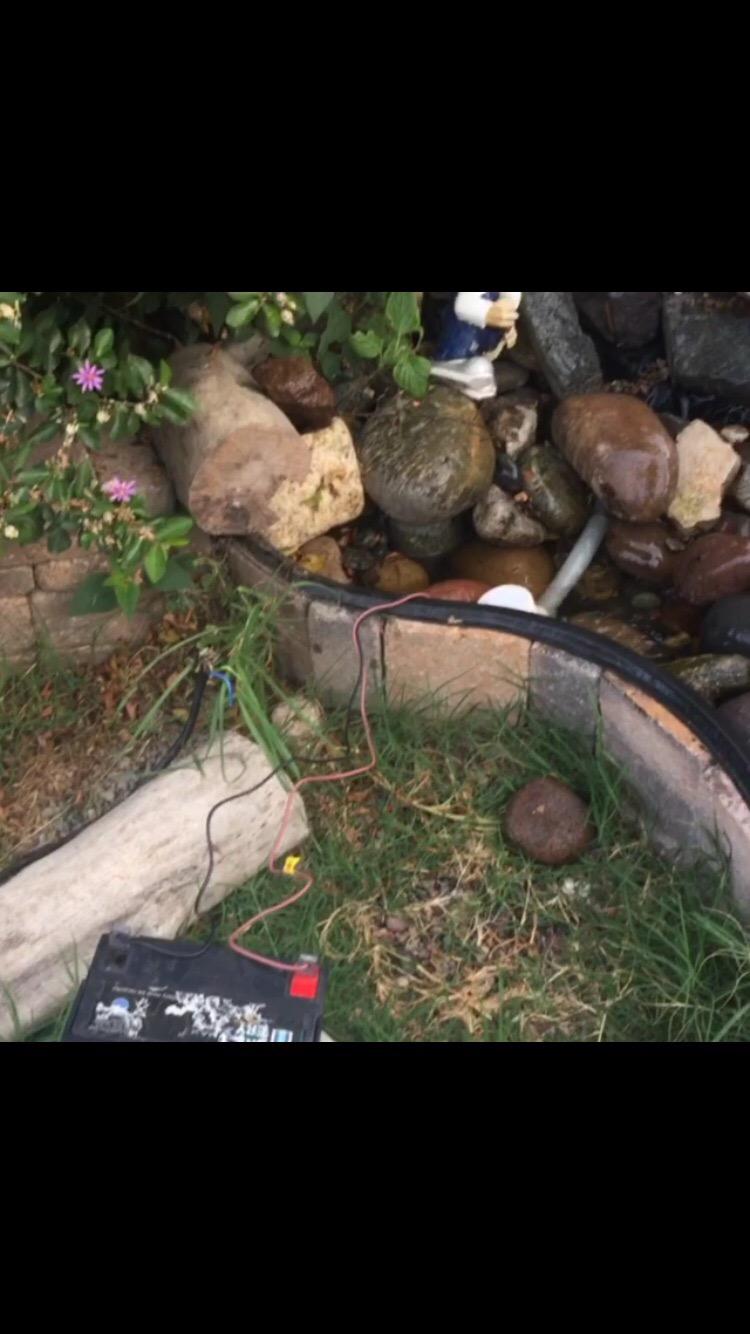
The trade-off is power, with a 14-amp maximum draw that demands respect in the wiring department. Use 12 AWG wire for longer runs, a 20-amp fuse at the battery, and quality heat-shrink terminals. This is a manual-switch pump, so plan on a float switch or a panel toggle to control it.
Wire Gauge and Fuse Sizing
At 14 amps, voltage drop becomes the enemy on long runs from stern to battery, so use 12 AWG tinned copper wire and keep runs as short as practical. Fuse at 20 amps as close to the battery as possible. Undersized wire makes the pump run slow and hot, and that kills more high-capacity pumps than actual defects do.
Single Pump Versus Dual Pump Setups
This pump has enough capacity to serve as the sole electric pump on a mid-size cruiser, but the safer play is pairing it with a smaller automatic pump mounted a inch or two lower. The small pump handles routine rain and drip water without cycling the big one. Experienced boaters on the forums consistently recommend that two-pump redundancy, with the SEAFLO 2000 as the high-level emergency unit.
5. Rule-Mate RM500B 500 GPH – Best Automatic Bilge Pump
Rule-Mate Automatic Submersible Bilge Pumps 12V RM500B- 500GPH with Auto Sense Intelligence – Thermal Cut-Off & Backflow Prevention – Compact Design for Boats – Easy Install Threaded Discharge
500 GPH at 12V
Auto Sense activation
Threaded discharge
Thermal cutoff
1 lb weight
Pros
- Enhanced efficiency - 10% more water flow than previous models
- Smart Auto Activation
- Built-in thermal cut-off protection
- Compact design for boats
Cons
- Some reports of float switch failures
- Auto function may not work reliably in all cases
The Rule-Mate RM500B is what automatic should mean in practice. Rule’s Auto Sense intelligence turns the pump on when water reaches 2 inches and off at 3/8 of an inch, which leaves a nearly dry bilge without the constant cycling that drains batteries. There is no separate switch to buy, mount, or fail.
The smarter feature is the backup behavior: if the sensor is blocked, the pump cycles itself every 2.5 minutes to check for water. That failsafe keeps a debris-obstructed sensor from rendering the pump useless. Thermal cut-off protection and backflow prevention round out a thoughtful safety package, and the threaded discharge makes a tight, leak-free hose connection.
This generation moves about 10 percent more water than the earlier Rule-Mate 500, so the 500 GPH rating is closer to honest than most. Rule is one of the brands that forum boaters recommend by name when reliability comes up, and the compact 1-pound body fits small and mid-size bilges equally well.
The honest caveat is in the owner feedback: a minority of buyers report float sensor failures or erratic auto behavior, usually traced to oil film or grime on the sensor. A quick wipe during your annual clean-out prevents nearly all of it.
Keeping the Sensor Reliable
Wipe the sensor area with a clean rag during your spring commissioning and again mid-season, especially if your bilge collects oil from an inboard. Soap scum, fuel film, and grease are what confuse the electronics. Boaters who clean the sensor regularly report years of trouble-free cycling.
Battery Drain When Moored
The pump draws standby current for its sensing circuit, but the 2.5-minute check cycle is brief, so a healthy battery handles weeks at the dock without issue. The real drain risk comes from a sticking sensor that runs the pump dry, which the thermal cutoff is designed to prevent. If your boat sits unattended for a month or more, a small solar maintainer is cheap peace of mind.
6. Whale Supersub Smart 650 GPH – Best Bilge Pump for Tight Spaces
Whale Supersub Smart 650 (12V), The Original Low Profile Automatic Bilge Pump, 650 GPH, for Fresh or Salt Water use (with Non Return Valve), SS5212
650 GPH at 12V
19.8 ft max lift
Low profile body
Electronic sensor
3-year warranty
Pros
- Well designed with good quality plastic
- Installs at almost any angle
- Electronic sensor works well - no floating switch needed
- Compact low profile design
Cons
- Requires full submersion (3 inches) to activate automatic mode
- Some users report unreliable automatic operation
The Whale Supersub Smart is the pump Practical Sailor kept praising in their independent bench testing, and it is easy to see why once you hold one. The build quality of the plastic is noticeably better than the budget competition, and it is the lowest-profile automatic pump I have installed. Boaters with shallow or narrow bilges consistently name this model because almost nothing else fits.
It delivers 650 GPH with a maximum lifting height of 19.8 feet, which is exceptional for a pump of this size and lets you route long discharge runs. The electronic sensing means no physical float switch to snag or stick, and the included mounting wedge addresses the pump-cycling problem caused by a boat’s rocking motion. Whale covers it with a 3-year warranty.
The low profile is the whole point here, at roughly 3.4 inches wide with a body that rotates for installation at almost any angle. In a sailing dinghy or a shallow powerboat sump, that flexibility is the difference between a workable install and no install at all.
Two honest cautions from owner reviews: the automatic mode needs about 3 inches of water to trigger, so it is slower to wake than some rivals, and some users report the auto function becoming unreliable over time. The 3.9 rating reflects those complaints, and it is why I recommend it specifically for tight spaces rather than as a universal pick.
Where the Low Profile Matters
Shallow sailboat bilges, fine bows, and the narrow dead-rise areas of small powerboats are exactly where this pump earns its keep. It also suits pontoons and jet boats where the bilge is a shallow tray rather than a deep sump. If you have measured and every standard pump is too tall, this is your solution.
Manual Override Options
Because the sensor only activates in deeper water, wire the pump through a two-way toggle so you can run it manually at any water level. That gives you a dry bilge on demand and a safety override if the electronics ever act up. It is a ten-minute wiring job that turns a good pump into a dependable one.
7. Johnson Pump Cartridge Combo 1000 GPH – Best Serviceable Bilge Pump
Johnson Pump 05903-00 Cartridge Combo Automatic Submersible Bilge Pump – 12V, 1000 GPH, red
1000 GPH at 12V
Electro-magnetic float
Dura-Port fittings
36 inch max lift
3-year warranty
Pros
- Excellent quality and fit
- Easy upgrade from non-automatic pump
- Works well even with debris in bilge
- Reliable performance for years
Cons
- Float can stick causing pump to run continuously
- Can lose prime unexpectedly
Johnson Pump is one of the three names that come up constantly when experienced boaters discuss reliability, and the Cartridge Combo shows why. The design separates the motor cartridge from the base, so a failed pump is a twist-and-replace job that leaves your hoses and mounting intact. On a boat, that serviceability is worth real money.
The 1000 GPH output suits boats in the 20 to 27 foot class, and the electro-magnetic float switch handles activation without a dangling mechanical float. The Dura-Port discharge ports, one straight and one 90-degree elbow, thread in for a tight seal that hose clamps alone cannot match. A removable check valve is included to stop backflow when the discharge loop is short.
Owner reviews repeatedly mention the pump handling dirty bilge water that would stall lesser designs, along with reliable performance measured in years rather than seasons. The 3-year limited warranty backs that up. Maximum lift is 36 inches, so it is meant for conventional installations rather than deep discharge runs.
Two cautions appear in feedback: the float can occasionally stick in the on position and run the battery down, and the pump can lose prime unexpectedly. Both are managed with an annual clean-out and a sensible check of your discharge loop for air traps.
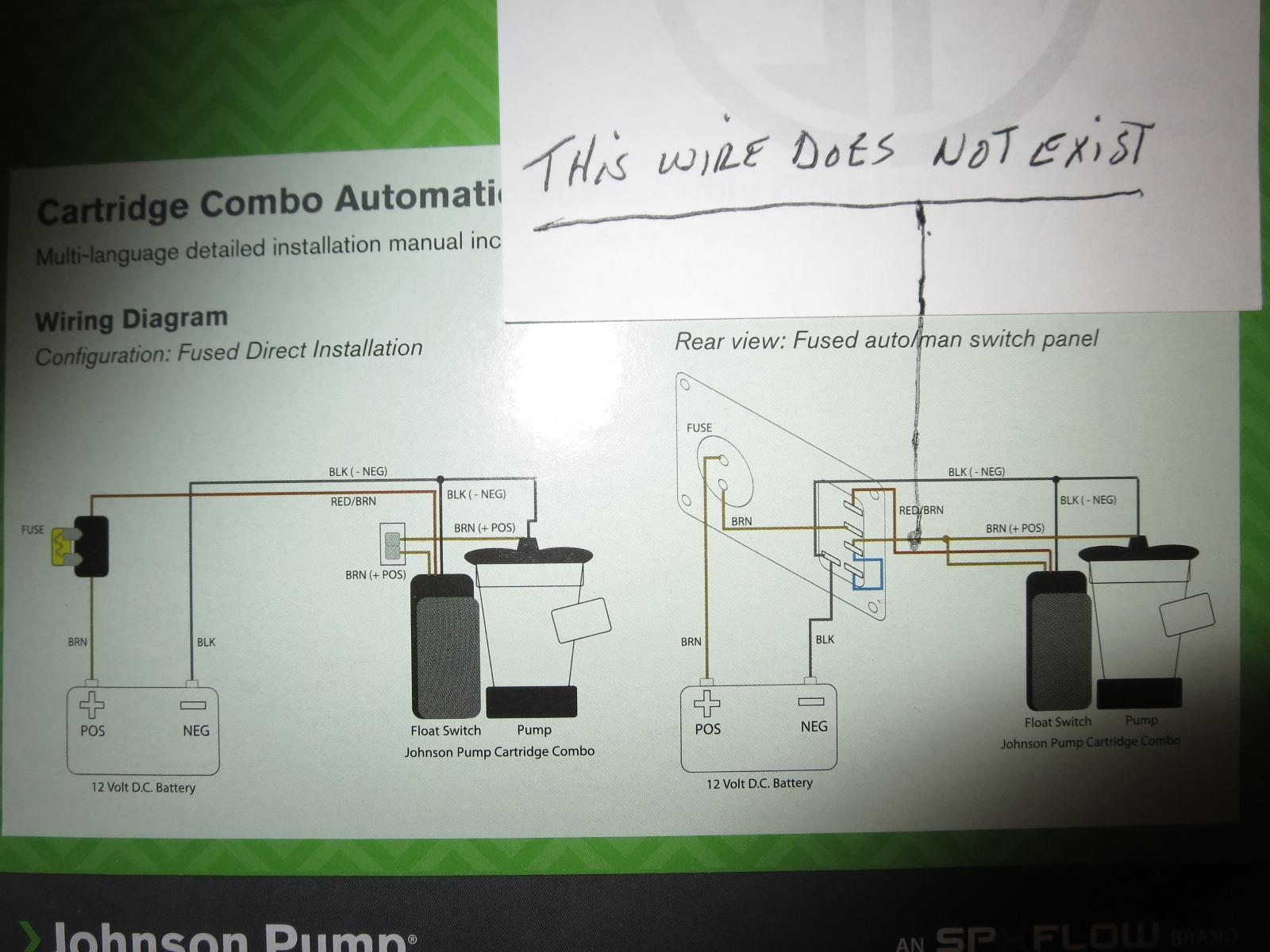
Cartridge Replacement Cost and Ease
Replacing the cartridge takes one hand and about a minute, with no tools and no re-plumbing, so you can carry a spare in the boat for long trips. That converts a pump failure from a haul-out problem into a minor annoyance. For cruisers and liveaboards, this design philosophy alone justifies the choice.
Float Switch Sticking Prevention
The electro-magnetic float sits low in the housing, so debris and oil film are what make it hang up. Rinse the housing and wipe the float track during your yearly service, and add a strainer sock if your bilge collects grit. A stuck-on float shows up as a pump that never stops, so glance at your bilge indicator or listen for running after rain to catch it early.
8. Attwood Sahara MK2 S1200 – Best Mid-Size Automatic Bilge Pump
Attwood 5512-7 Sahara MK2 S1200 (12V), Automatic Bilge Pump, 1200 GPH, with Fittings (Elbow & Straight), Direct Replacement for Attwood 4511-7
1200 GPH at 12V
SteadySwitch technology
10.8 ft max lift
Mounting base included
90-day warranty
Pros
- Quick and easy installation
- X-Air Impeller effectively clears trapped air
- 360-degree rotatable outlet provides mounting flexibility
- SteadySwitch technology minimizes battery drain
Cons
- Short 90-day warranty
- Relatively new product with limited review count
The Sahara MK2 S1200 hits the sweet spot for boats in the 20 to 26 foot range, with 1200 GPH of automatic water removal straight out of the box. It brings the same X-Air impeller and 360-degree rotatable outlet as the Tsunami, but adds automatic switching, so it handles rain and drip water with zero input from you.
The SteadySwitch technology is the differentiator, using smart buoyancy control to minimize battery drain by reducing unnecessary cycling. On a boat that sits on a trailer or mooring between trips, that efficiency is what keeps the battery alive. Owners rate it 4.6 stars, and the installation with included fittings is consistently described as quick.
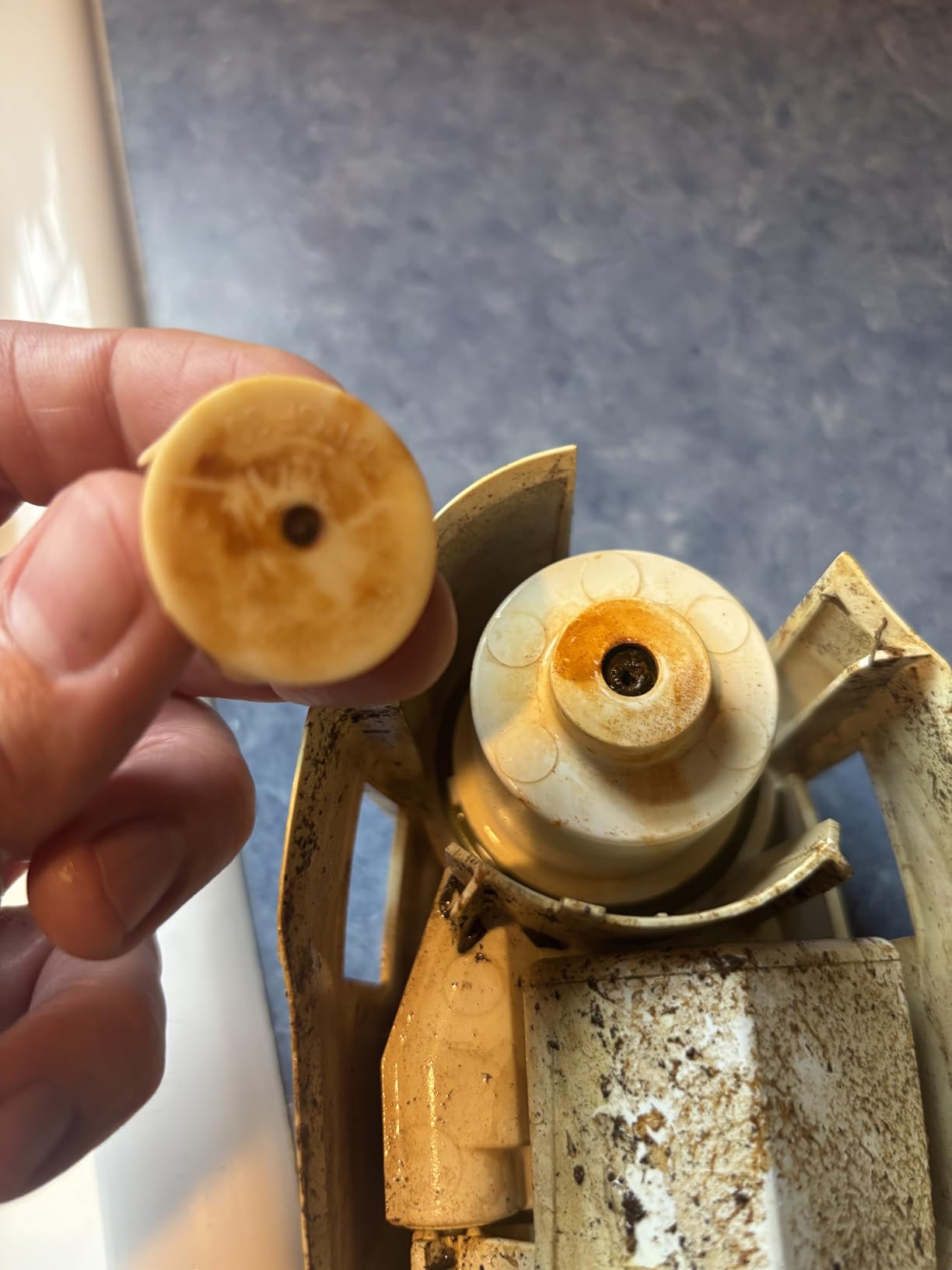
Maximum lifting height is 10.8 feet, which covers most cockpit and through-hull discharge runs. The mounting base and the one-hand cartridge release make both installation and annual cleaning painless. At 13.76 ounces, it adds almost no weight to the boat.
The two real drawbacks are the short 90-day warranty and the limited review count, since this is a relatively new model. The rating is strong, but the track record is still building compared to the established names on this list.
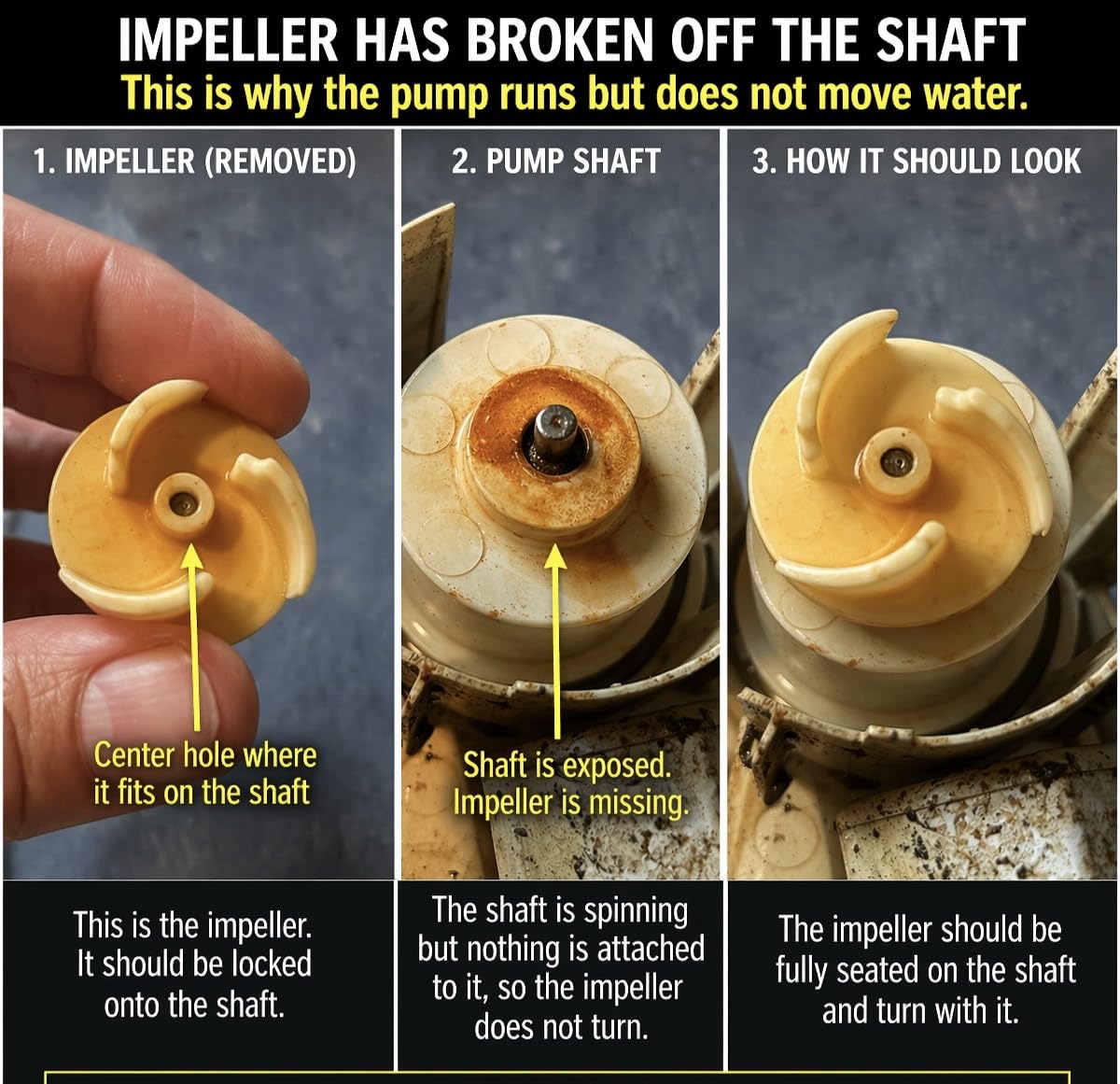
Best Use Cases on Fishing and Family Boats
Bass boats, bay boats, and family bowriders in the 20 to 26 foot class are exactly what this pump was designed for. It has enough capacity for rain and spray, and the automatic switch covers the water you cannot see accumulating. Many owners run it as the primary with a smaller pump below it for redundancy.
What SteadySwitch Actually Does
It manages the on and off thresholds so the pump does not rapid-cycle when waves slosh water in and out of the bilge. Rapid cycling is what murders pump motors and batteries, so smoothing it out extends the life of both. If your boat rocks at the dock and your old pump never stops clicking, this is the upgrade.
9. Rule 02 1500 GPH – Best Overall Bilge Pump
Rule 02 Bilge Pump, High-Performance 1500GPH, 12V, Submersible
1500 GPH at 12V
Submersible design
Stainless components
3.1 lb weight
Rule 02 model
Pros
- Excellent high capacity performance
- Reliable and durable construction
- Great value for the price
- Trusted Rule brand quality
Cons
- Short 90-day warranty
- Batteries not included (though not required)
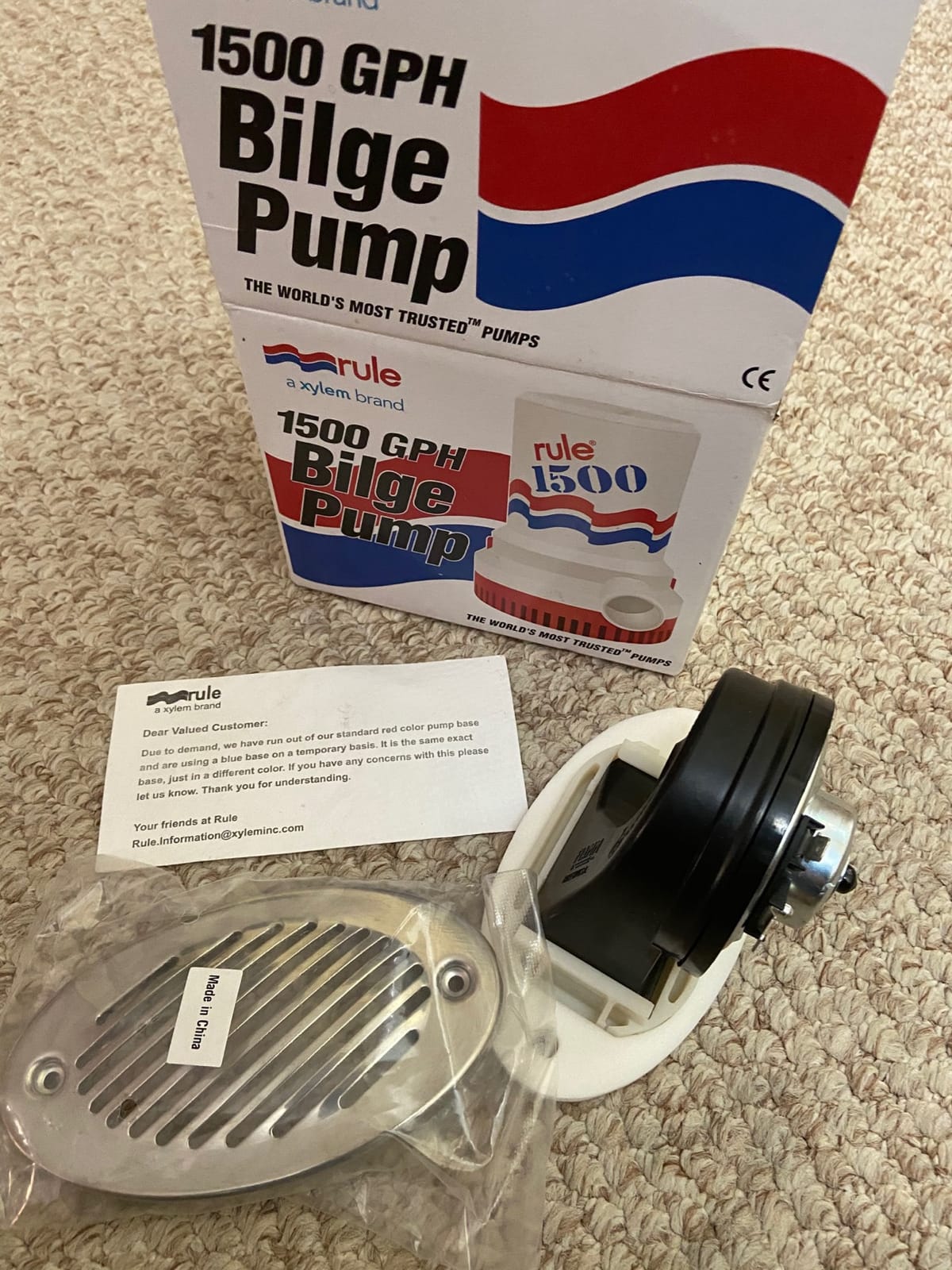
The Rule 02 is my top pick overall, and I am not alone: it carries a 4.8 rating across 821 reviews, which is the strongest combination of score and sample size in this entire group. Rule essentially built the modern submersible bilge pump category, and this 1500 GPH model is the brand at its best.
Output is strong without being absurd, making it the right primary pump for boats in the 25 to 32 foot class and a powerful unit for smaller boats that want overkill. The submersible design with stainless and durable plastic components survives season after season, and the 3.1-pound body feels solid in hand in a way that flimsier pumps do not.
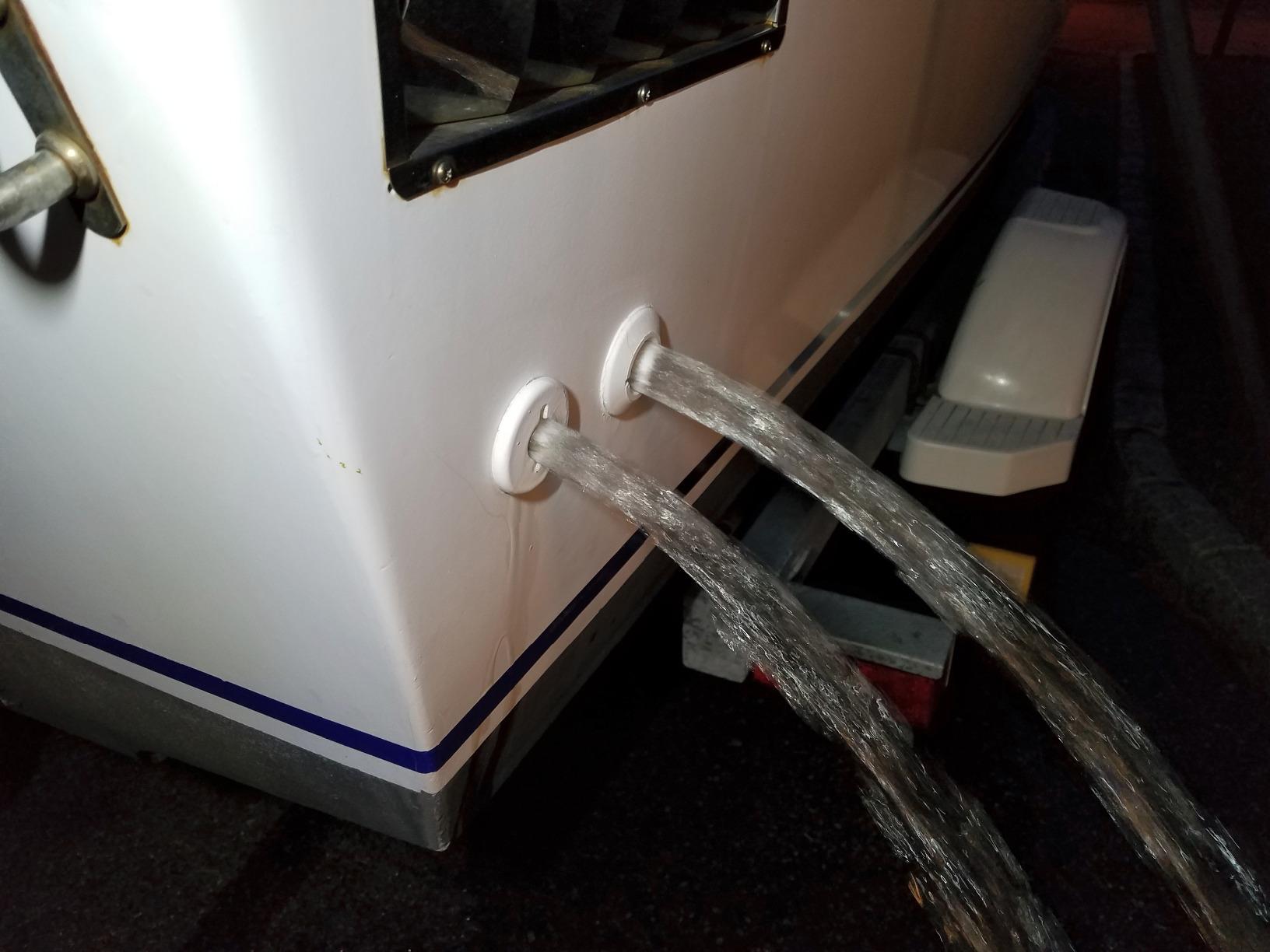
Because this is a manual-switch pump with no built-in float, you control it through your panel or add a float switch for automatic operation. That separation is a plus in my view, since a failed switch does not force you to replace the whole pump. Wire it with a dedicated panel switch plus an automatic float for the best of both worlds.
Apply the 60 percent rule and plan on roughly 900 gallons per hour in real conditions, which is plenty for serious weather. The only meaningful complaint is the short 90-day warranty, which seems to be Rule’s way of saying the reputation speaks for itself rather than a genuine durability concern.
How It Handles Heavy Rain While Moored
With a good float switch, the 1500 GPH capacity shrugs off the sustained downpour that overwhelms smaller pumps. Owners in rainy climates specifically praise the margin it provides when the boat sits unattended for weeks. That margin is the reason I weight capacity above almost every other spec when choosing a primary pump.
Pairing With a Float Switch
For automatic operation, add a quality Rule or Johnson float switch mounted a few inches off the bilge floor so debris does not jam it. Wire the float circuit direct to the battery with its own fuse, and keep the panel switch on a separate parallel circuit so you can always run the pump manually. That dual control is the arrangement most professionals install.
10. Rule 14A 3700 GPH – Best High-Capacity Emergency Bilge Pump
Rule 14A High Performance 3700 Submersible Bilge Pump, 12V
3700 GPH at 12V
23 ft max lift
High performance motor
Submersible design
3-year warranty
Pros
- Powerful high-capacity pumping
- Reliable for demanding applications
- Good lifting height of 23 feet
- 3-year warranty
Cons
- Reports of reliability issues with some units failing quickly
- Higher price point
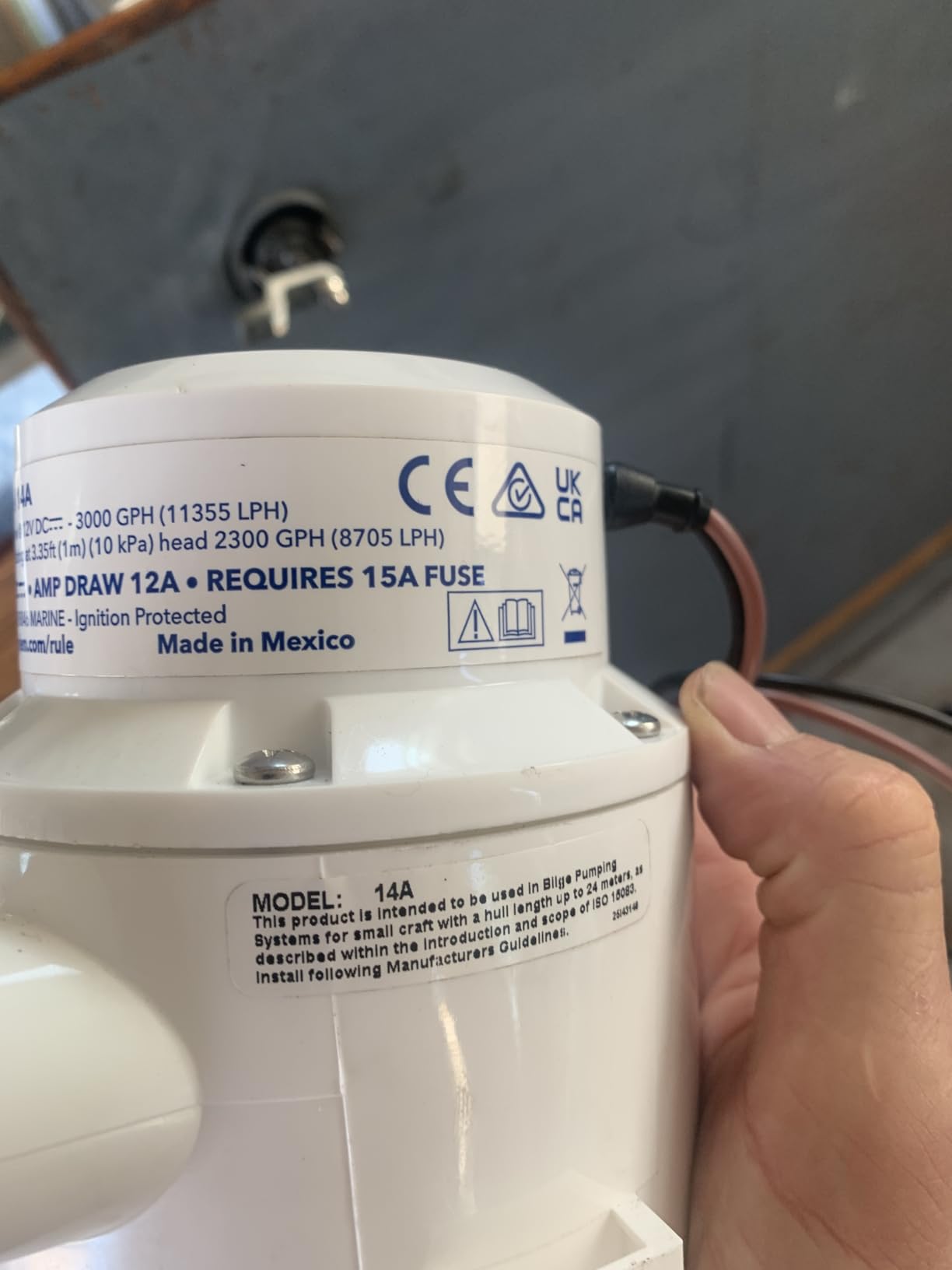
The Rule 14A is the fire hose of this list, moving 3700 GPH with a 23-foot maximum lifting height. This is emergency dewatering capacity, the pump you want running when something has gone genuinely wrong. For offshore boats, large cruisers, and commercial applications, it is the standard answer.
The 23-foot lift is what sets it apart from lesser high-flow pumps, because it can push water up and out from a deep bilge through long discharge runs without stalling. Rule covers it with a 3-year warranty, their longest on this list, which signals confidence in the design.
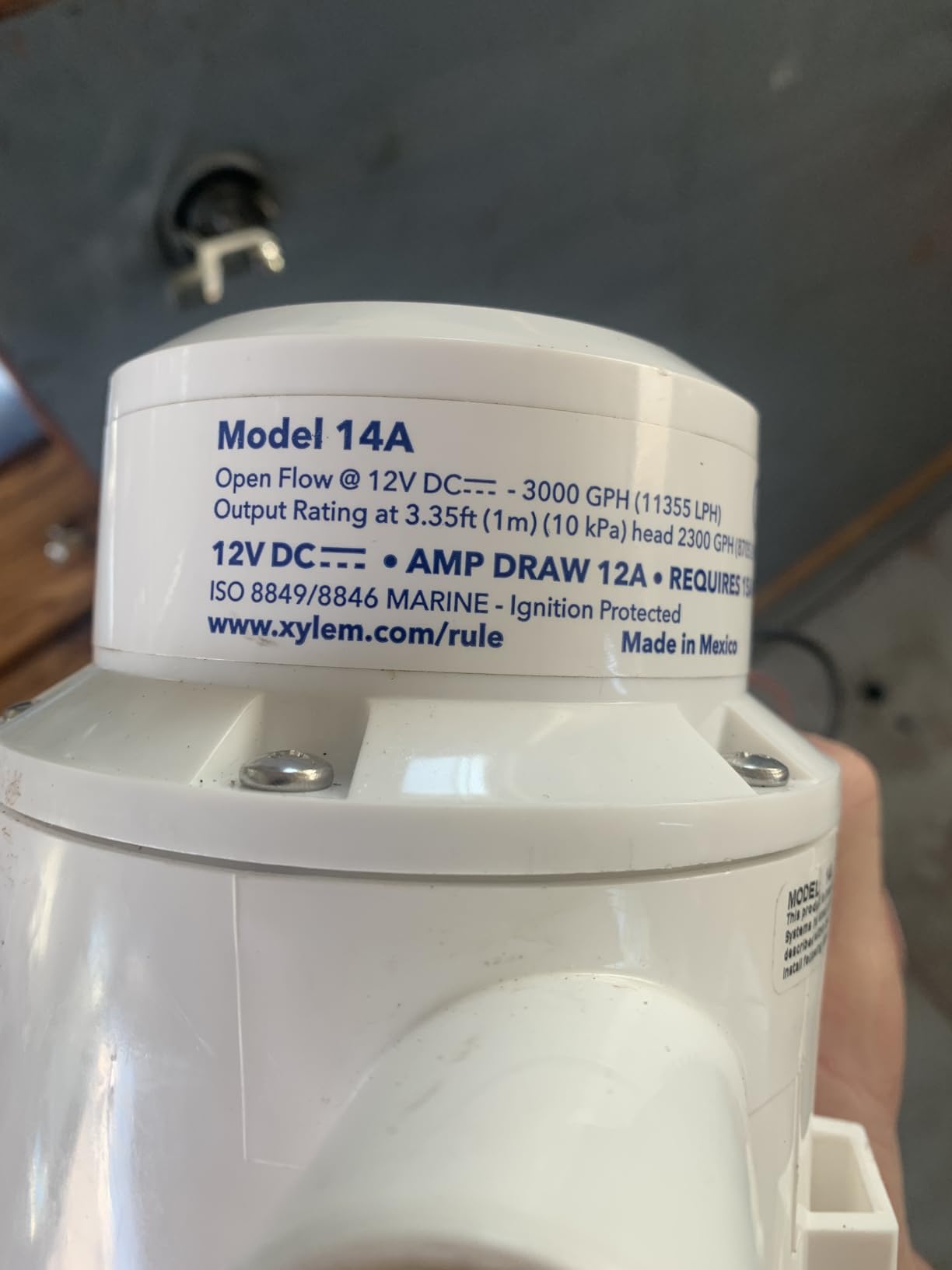
In a real installation, expect around 2200 gallons per hour after hose and lift losses, which is still a small swimming pool every hour. It is a manual-switch pump, so it integrates into whatever control scheme you design, typically a high-level emergency circuit with its own switch and alarm.
The caveats are real: some buyers report units failing quickly, and the price is the highest in this group. My take is that this pump belongs in the bilge of a boat that genuinely needs its capacity, wired properly with heavy gauge wire, and inspected annually. Installed that way, it is the difference between a scary incident and a statistic.
What Boats Actually Need This Capacity
Offshore fishing boats, 30-plus-foot cruisers, sailboats making passages, and workboats are the natural home for the 14A. If you operate far from help or carry significant value in the boat, this level of pumping is not overkill, it is the professional standard. Smaller boats will never spin it fast enough to justify the cost.
Wiring for a High-Draw Emergency Pump
At this flow rate the amp draw demands heavy wiring, so use 10 AWG cable on any meaningful run with a suitably sized fused connection at the battery. Give the pump its own dedicated circuit rather than sharing with house loads, and use a covered manual switch at the helm. When this pump starts, you do not want voltage sag or a tripped breaker getting in the way.
How to Choose the Best Bilge Pump for Your Boat?
Choosing the right pump comes down to four questions: how big is your boat, how much water could realistically end up in it, how much space do you have, and do you want it to act on its own. Answer those and the shortlist builds itself.
Match GPH to Your Boat Length
Use these widely accepted sizing guidelines from boating safety resources, then round up when in doubt:
Under 16 feet: 500 to 750 GPH, prioritizing compact size.
16 to 20 feet: 750 to 1000 GPH as a primary pump.
21 to 26 feet: 1000 to 1500 GPH plus a smaller backup.
27 to 35 feet: 1500 to 2000 GPH primary with a 3700 GPH emergency unit.
Over 35 feet or offshore: dual high-capacity pumps at different levels.
The 60 Percent Rule You Should Know
Every GPH rating on this page is measured at open flow, meaning zero hose and zero lift, which no real boat has. Once you add discharge hose, fittings, a check valve, and a few feet of lift, expect about 60 percent of the rated output. A 1000 GPH pump realistically delivers around 600 gallons per hour. The fix is simple: size your pump to the real number, not the sticker.
Automatic Versus Manual Switching
An automatic pump with a built-in switch turns on when you are not aboard, which is when most water problems happen. A manual-switch pump gives you control and lets you replace the switch independently if it fails. My preference, shared by most experienced boaters, is a small automatic pump for routine water and a larger manual pump for emergencies. That is the two-pump redundancy the forums keep recommending, mounted at different heights so the small one handles drips and the big one handles trouble.
Wiring, Fuses, and Corrosion
The most common failure point is not the pump but the wiring: corroded connections, blown fuses, and untinned copper wire wicking water up the strands. Use marine-grade tinned wire, heat-shrink connectors, and a fuse sized to the pump’s amp draw placed close to the battery. Wire the automatic circuit direct to the battery, never through a master switch someone might flip off at the end of the day.
Five Minutes of Maintenance a Year
Pull the strainer, rinse the debris, wipe any float or sensor, and check the discharge hose for kinks. That is the entire schedule, it takes about five minutes, and it prevents the majority of the failures boaters complain about online. Do it at spring commissioning and once mid-season, and your pump will outlive the warranty by years.
Frequently Asked Questions
What is the best hand bilge pump for a boat?
The SeaSense Hand Bilge Pump is the best manual option for most boats, moving about 1 gallon per minute through its 18-inch hose with a self-priming, one-way action. It stows easily and works when batteries and electric pumps fail, which is why experienced boaters carry one as a backup.
Which bilge pump brand is best?
Rule is the most widely trusted name, with the Rule 02 earning a 4.8 rating from 821 boaters. Johnson Pump and Whale are close behind, praised for serviceable cartridge designs and low-profile fit respectively. Attwood and SEAFLO offer the best value, with SEAFLO standing out for its 4-year warranty.
What are the common problems with bilge pumps?
The most common failures are corroded electrical connections, blown fuses, debris-clogged strainers, and stuck float switches that run the pump dry or never turn it on. Air-lock, where trapped air stops water flow, and undersized wiring that slows the motor account for many more. Nearly all of these are prevented by an annual five-minute cleaning and proper marine-grade wiring.
How do I choose the right bilge pump?
First, match capacity to boat length, roughly 750 to 1000 GPH for boats up to 20 feet and 1500 to 2000 GPH for 27-plus-foot boats. Second, decide between automatic operation for unattended protection and manual switching for control. Third, verify the pump physically fits your bilge, then budget for tinned wire, an inline fuse, and a check valve. Finally, apply the 60 percent rule and size up, since real-world output is lower than rated.
How big of a bilge pump do I need for my boat?
Boats under 16 feet need 500 to 750 GPH, boats 16 to 20 feet need 750 to 1000 GPH, boats 21 to 26 feet need 1000 to 1500 GPH, and boats 27 to 35 feet need 1500 to 2000 GPH with a high-capacity backup. Because real-world output runs about 60 percent of the rated figure, always size up when you are between categories.
Final Thoughts on the Best Bilge Pumps for Boats
The best bilge pumps for boats in 2026 cover a wide range of needs, but the winners are clear. The Rule 02 at 1500 GPH is the best all-around choice with the strongest owner satisfaction in the group. The SEAFLO 06 automatic is the smart budget pick for small boats, and the Rule 14A provides serious emergency capacity for large vessels.
Whatever you choose, install it with tinned wire and a proper fuse, clean the strainer once a year, and seriously consider running two pumps at different levels. That small extra effort is what turns a pump from a part that fails silently into equipment that saves the boat. Pick the model that matches your bilge size and sleep better at the dock.