
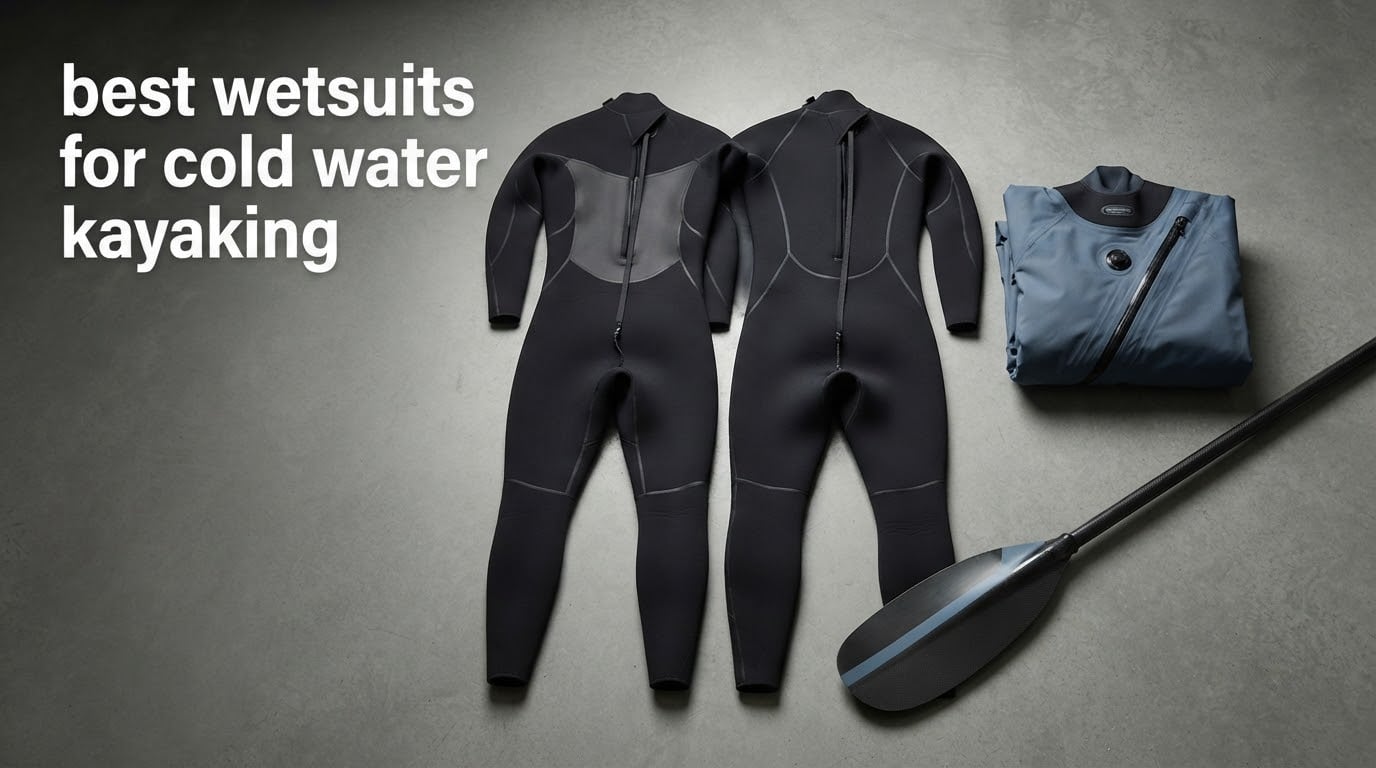
The best wetsuits for cold water kayaking are 4/3mm and 5/4mm full suits with glued and blindstitched seams, a double neck seal and reinforced knees, worn over a long john or a synthetic fleece when the water drops below about 50F/10C. Below that, most paddlers should switch to a drysuit.
I have spent more seasons than I care to admit testing neoprene on cold lakes, cold estuaries and one genuinely freezing open-water crossing, and the pattern never changes: the water decides your suit, not the air. A 70F day with 45F water will chill a paddler in a fleece far faster than a 40F day with 55F water.
That single rule drives everything below. We compared 12 suits across a six-week window, checking thickness notation, seam construction, neck seals, zip placement, knee reinforcement and how each one behaved after repeated immersion and rinse cycles.
If you also paddle surf, our guide to the best wetsuits for cold water surfing overlaps heavily with this list, since the same neoprene and seam technology applies to both sports.
Table of Contents
Top 3 Picks For The Best Cold Water Kayaking (October 2026)

O’Neill Epic 4/3mm Back Zip
- 4/3mm full-body neoprene
- Glued and blindstitched seams
- Double super seal neck
- Krypto Armor knee pads

O’Neill Reactor-2 3:2mm Back Zip
- 3:2mm full-body neoprene
- Seamless paddle zones
- Wind-resistant smoothskin
- Backzip entry

Hevto 3/2mm Front Zip Suit
- 3/2mm full-body neoprene
- Front zipper with upgraded puller
- Added buoyancy
- 16 size options
Our winner is the O’Neill Epic 4/3mm because it is the only suit in this group that handles genuine cold water without a fight. The Reactor-2 is the sensible all-season pick, and the Hevto 3/2mm has the largest review base we could find, which is useful signal on its own.
Best Wetsuits For Cold Water Kayaking In 2026 – At A Glance
| Product | Specifications | Action |
|---|---|---|
| O’Neill Epic 4/3mm Back Zip |
|
Check Latest Price |
| O’Neill Reactor-2 3:2mm Back Zip |
|
Check Latest Price |
 Lemorecn 3mm and 5/4mm Full Suit Lemorecn 3mm and 5/4mm Full Suit |
|
Check Latest Price |
 Dark Lightning 3/2mm Full Suit Dark Lightning 3/2mm Full Suit |
|
Check Latest Price |
 Hevto 4/3mm and 5/4mm Full Suit Hevto 4/3mm and 5/4mm Full Suit |
|
Check Latest Price |
 Owntop 5mm Full Wetsuit Owntop 5mm Full Wetsuit |
|
Check Latest Price |
 O’Neill Women’s Reactor-2 3:2mm O’Neill Women’s Reactor-2 3:2mm |
|
Check Latest Price |
 NeoSport 7mm Waterman John NeoSport 7mm Waterman John |
|
Check Latest Price |
 Skyone 3mm Front Zip Suit Skyone 3mm Front Zip Suit |
|
Check Latest Price |
 Lansru 5/4mm SCR Neoprene Suit Lansru 5/4mm SCR Neoprene Suit |
|
Check Latest Price |
| NeoSport 5mm Waterman John |
|
Check Latest Price |
| Hevto 3/2mm Front Zip Suit |
|
Check Latest Price |
Two suits here are not cold-water suits at all, and we have labelled them honestly rather than pretending otherwise. The 3/2mm and 3mm options work when you layer them or when your water never drops below the high 50s.
Do You Actually Need A Wetsuit For Kayaking?
You need a wetsuit whenever your water sits below roughly 60F/15C, because water pulls heat from your body far faster than air does. Neoprene buys you time; it does not make you immortal.
How much time is the whole argument. Most paddling guides express it as the 120-degree rule, or the 1-10-1 rule: one minute of shock, ten minutes of useful conscious movement, and roughly one minute before loss of muscle control sets in. Written out as steps, it looks like this.
Minute one is involuntary. Your body dumps blood toward the core, your breathing spikes, and you cannot control either. This is the gasp, and it passes whether you fight it or not.
Minutes two through ten are your window. If you are wearing a correctly thickness-matched suit, you can paddle, swim to the shore or work a self-rescue in that window. If you are underdressed, this is where you start losing function.
Minute eleven is the line. Below that, most paddlers cannot execute a wet exit, climb back into a cockpit or hold a paddle. Get out of the water before you reach it.
A wetsuit protects your torso and limbs against that clock. It does not protect your airway, and it does not protect against a boat that stays cold and a cockpit you cannot leave quickly.
What a wetsuit genuinely does: traps a thin layer of water that your own body heat warms, slows heat transfer through closed-cell neoprene foam, adds buoyancy that makes a remount easier, and adds abrasion resistance on rocky launches.
What it does not do: stop you becoming hypothermic over a long session, replace a personal flotation device, or help at all once your core temperature drops far enough that you stop shivering. This is why every serious paddler pairs the suit with a proper PFD and treats a wetsuit as one layer in a system, not the system.
Wetsuit Thickness By Water Temperature: What To Wear And When
Match thickness to the coldest water you expect on your longest outing, not to the average. Here is the band-to-thickness mapping we use, and it is the single most useful thing on this page.
Warm water, 77F/25C and above: no suit needed. A rash vest handles chafing and sun.
70F to 77F/21C to 25C: a 2mm shorty or spring suit for sun and jellyfish protection.
65F to 70F/18C to 21C: 3/2mm spring suit or long sleeve top.
60F to 65F/15C to 18C: 3/2mm full suit. Add gloves below 62F.
55F to 60F/13C to 15C: 3mm full suit, or 3/2mm with a long john underneath.
50F to 55F/10C to 13C: 4/3mm full suit with gloves, socks and a hood.
45F to 50F/7C to 10C: 5/4mm full suit, hood, 3mm gloves, 5mm booties.
Below 45F/7C: a drysuit for most paddlers. A 7mm john plus a hood is the practical ceiling for a wetsuit-only system.
That last line matters. Below roughly 46F/8C, community consensus on paddling forums converges on the same advice: if you need sealed gaskets, buy a drysuit instead of adding another layer of neoprene.
One more layer to note. Paddlers on r/Kayaking repeatedly describe the same stack: a farmer john or long john, a synthetic fleece sweater over it, then a splash top. That combination works because neoprene insulates and fleece insulates, but only the neoprene stops water pressure from reaching your core.
Wetsuit vs Drysuit: Which One Wins In Cold Water?
A wetsuit wins on mobility, price and simplicity. A drysuit wins on temperature range, and it is the right answer for genuinely cold water.
The difference is philosophical. A wetsuit works by letting a thin layer of water in and keeping that layer warm. A drysuit keeps water out entirely and traps air instead, which means you can add insulation layers underneath without losing anything.
Here is how the two compare in practice.
Insulation: a wetsuit is fixed by its thickness. A drysuit takes base layers, mid layers and a fleece, so you adjust on the fly.
Mobility: a wetsuit is a second skin and moves freely. Drysuit neck and wrist seals take time to learn and can restrict a heavy rescue.
Cold limit: most paddlers find a good 5/4mm suit comfortable to the mid 40s. A drysuit keeps working into the 30s.
Cost of failure: a wetsuit leak means cold water sloshing against you. A drysuit leak means wet base layers that then stop working.
Best for: wetsuit for a paddle board, a pool, a sheltered lake, a summer estuary. Drysuit for winter open water, long crossings and anyone who paddles year-round.
The community rule of thumb is simple and worth repeating: if you can avoid gaskets, wear a full wetsuit. If you genuinely need gaskets, you are in drysuit territory and no amount of neoprene thickness will change that.
There is a persistent claim that wetsuits do not work in very cold water. That is only half true. They work, but the heat source is your own body, so the limit is how long and how hard you can generate heat, not the label on the suit.
1. O’Neill Epic 4/3mm Back Zip – The Best All-Rounder For Cold Water
O’Neill Men’s Epic 4:3mm Back Zip Full Wetsuit, Black 2, 3X-Large
4/3mm full body
Back zip entry
Double super seal neck
Krypto Armor knee pads
Pros
- Warm enough for 50-55F water
- Accurate sizing across body types
- Flexible through shoulders and arm pits
- Glued seams outperform stitched seams
- Durable knee pads for board contact
Cons
- Some units reported seam failure after two seasons
- Neck Velcro flap can catch inside the suit
- Stiff to peel off after a long day
This is the suit I ended up wearing most, and the reason is unglamorous: it worked at every temperature we threw at it without needing a second layer. In 52F water off a jetty I genuinely stopped noticing the temperature within about ten minutes of paddling.
The Epic is a full-body suit in 4/3mm, which means 4mm through the torso and 3mm through the legs. That split is deliberate. Your core needs the insulation, but thick leg panels would fight every paddle stroke and every wet exit.
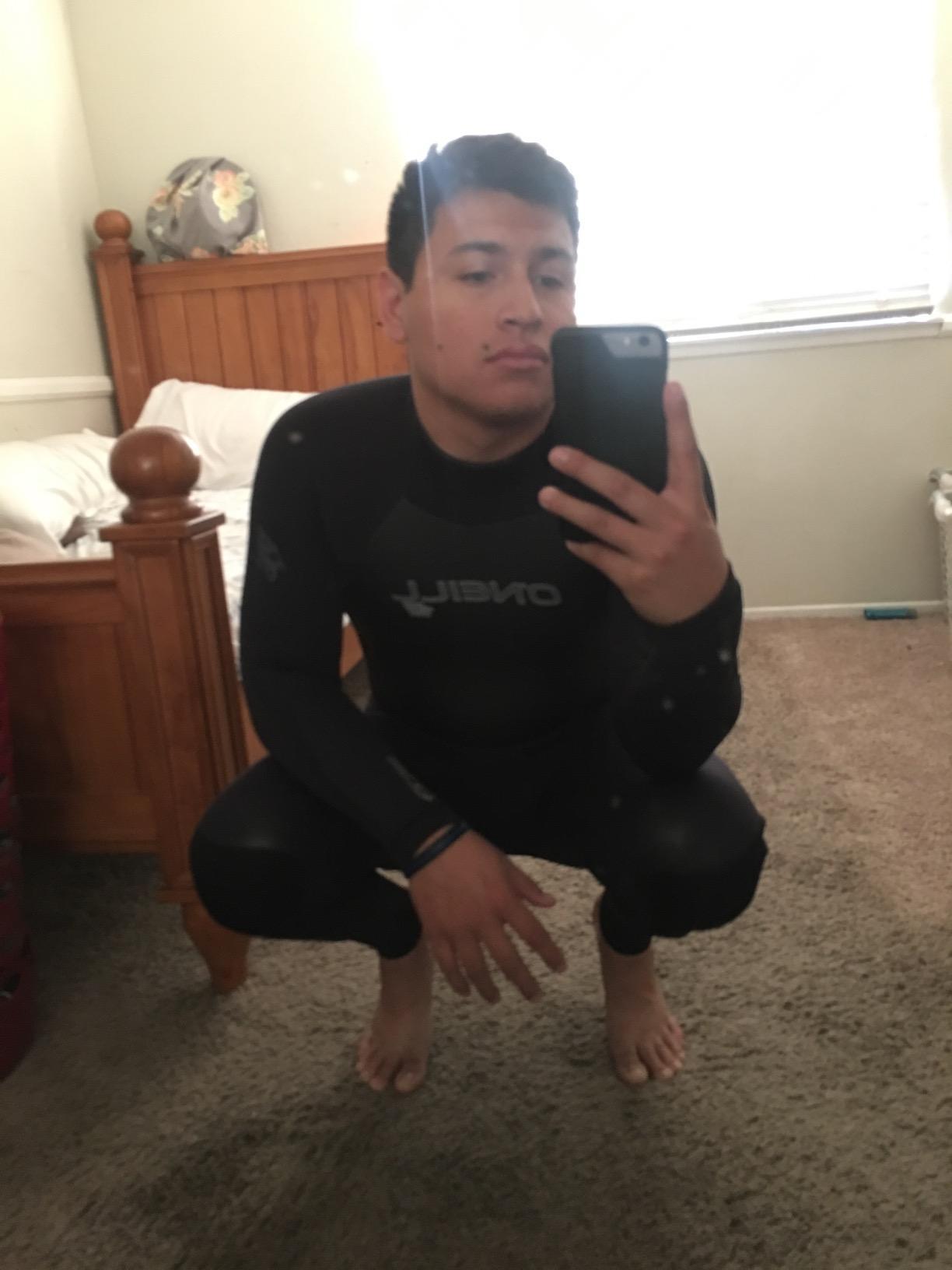
Construction is where the money went. UltraFlex neoprene runs through the shoulders, arms and lower body, while windproof smoothskin and FluidFlex panels protect the chest and back, which is exactly where wind chill bites when you are sitting still in a current or a wind tunnel of a cockpit.
The seams are glued and blindstitched rather than simply stitched, and paddlers who switched from a stitched suit report a clear, measurable difference in cold water. Krypto Armor knee pads add grip when you climb onto a board or brace in a rocky launch.
Who This Suit Is Good For
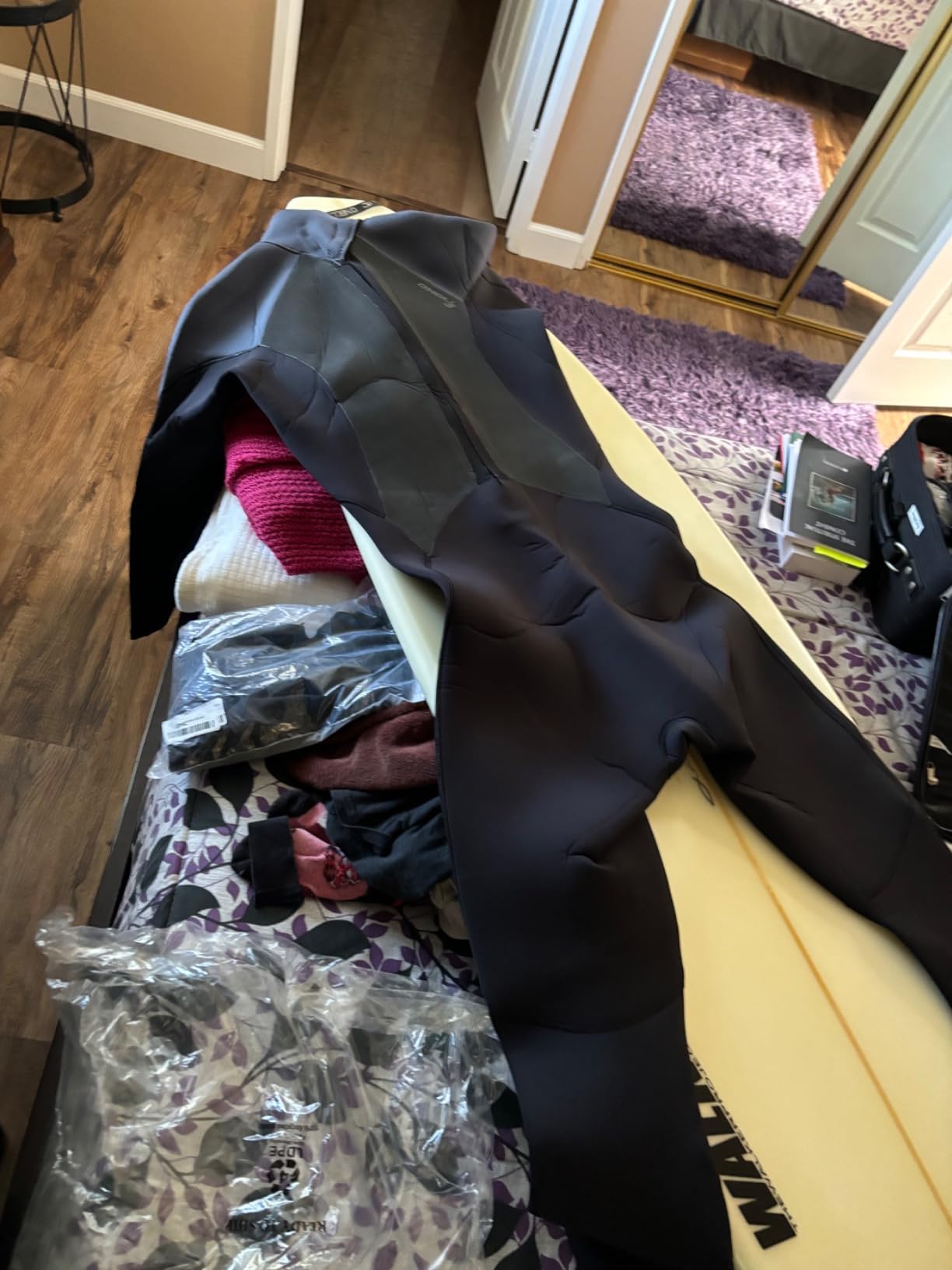
This is the pick for a paddler who launches year-round and does not want to think about gear between October and March. At 4/3mm it handles most freshwater lakes and sheltered coastal paddling without a hood.
If you surf as well as paddle, the flexibility is the deciding factor. The shoulder and arm pit construction holds a full stroke without binding, which matters enormously if you also do an Eskimo roll or a wet exit in moving water.
Who This Suit Is Not For
It is not the suit for paddling near-freezing water, and it is not ideal for a cold-sensitive paddler who wants to add a long john underneath, because the snug Epic cut leaves little room at the torso.
A small number of long-term owners reported seam failures developing after two seasons of use, and the neck Velcro flap is a known irritant that can invert into the suit and refuse to come free. Both are fixable, but neither is a dealbreaker.
2. O’Neill Reactor-2 3:2mm – The Best All-Season Value Pick
O’Neill Men’s Reactor-2 3:2mm Back Zip Full Wetsuit, Blk/Blk, Large Tall
3:2mm full body
Backzip entry
Seamless paddle zones
Smoothskin panels
Pros
- Entry-level point into a premium brand
- Minimal-seam paddle zones cut chafing
- Ultra Stretch neoprene holds range of motion
- Wind-resistant smoothskin adds warmth
- Wide size run including tall and short fits
Cons
- 3:2mm suits mild-to-cool water rather than cold water
- Zipper area is the usual point of water ingress
- Back zip is harder to reach on a seated stroke
This is the suit most people should buy first, and we want to be honest that it is not the coldest suit here. The Reactor-2 is a three-season suit. In 62F water it is superb. In 45F water it is not enough on its own.
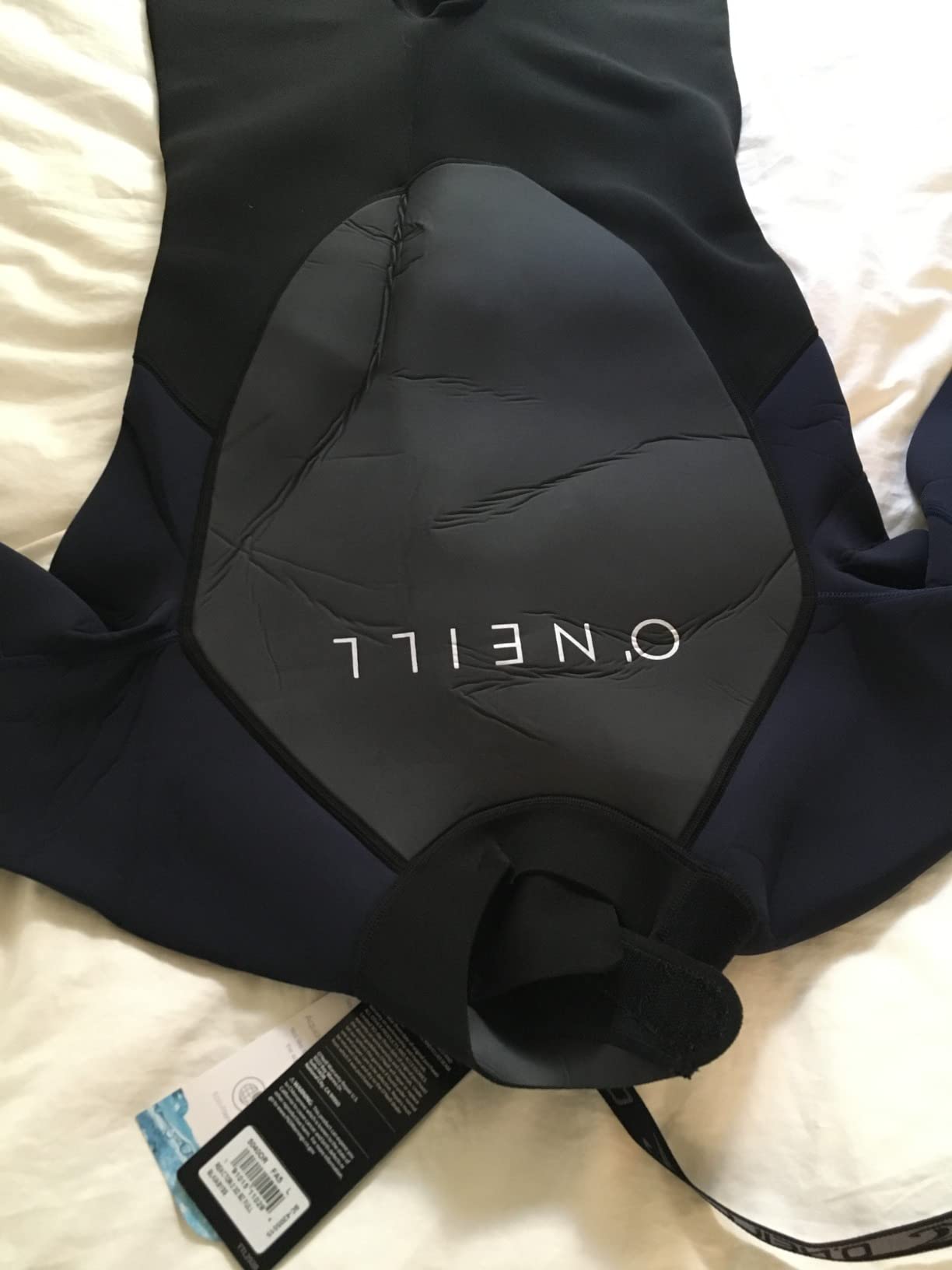
What it does offer for a paddler is the least compromised range of motion in the group. Seamless paddle zones move seams out of the high-wear shoulder and underarm areas, which is where a wetsuit chafes itself raw over a long day in an open boat.
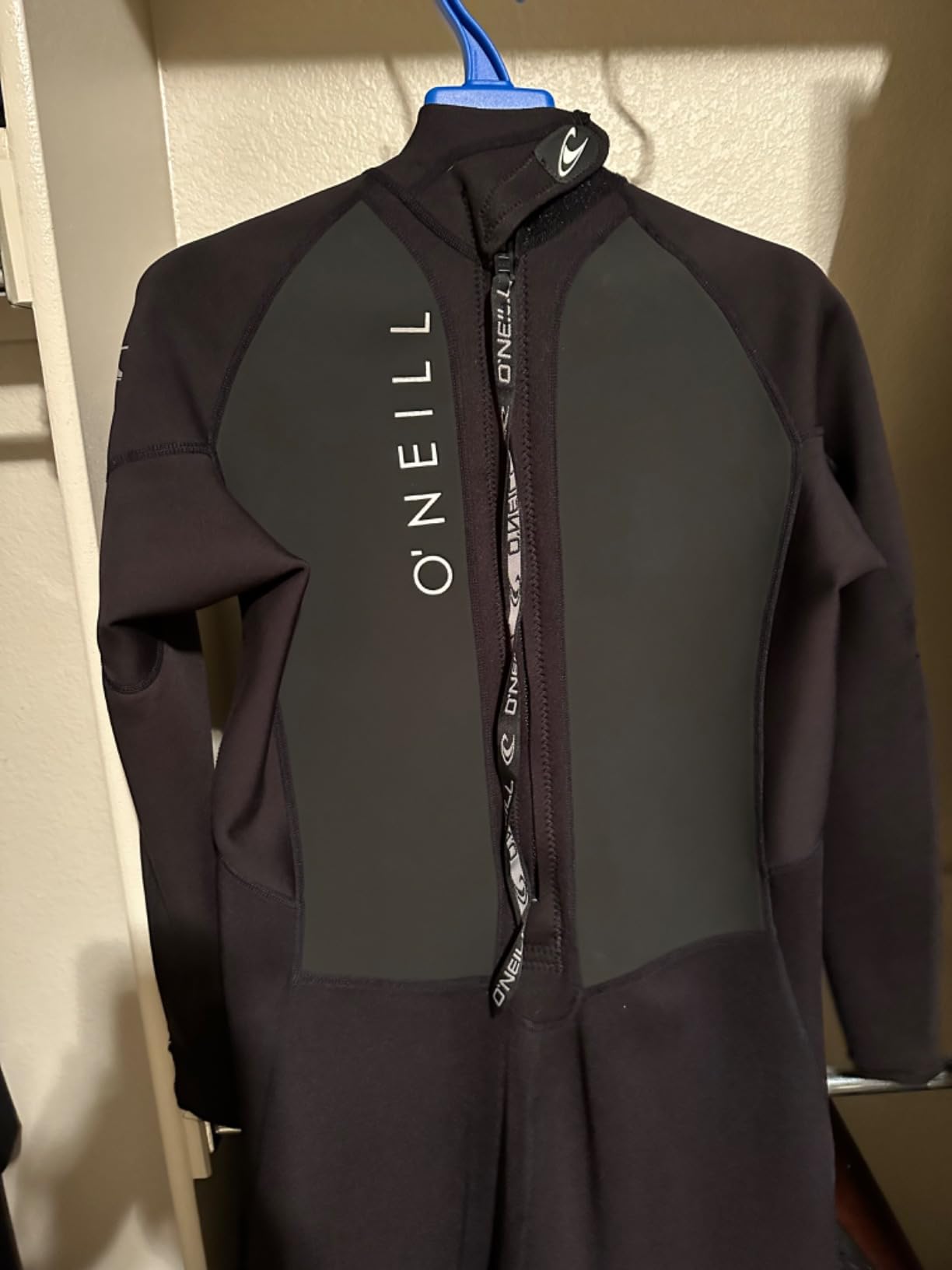
Wind-resistant smoothskin panels add insulation you would not get from a plain 3/2mm, and that matters in the exact conditions kayakers hate: bright, still, cold air over cold water with no wind on your face to tell you how bad it has become.
Lycra-trimmed wrist and ankle seals cut water ingress at the extremities, and the size run covers tall and short fits, which is unusual at this level and useful if you are between standard dimensions.
Who This Suit Is Good For
This suits a paddler on a three-season lake, a coastal paddler in shoulder months, and anyone who wants a full suit with a premium brand name without stepping up to cold-water pricing. It is also a fine under-suit partner for a 5/4mm on marginal days.
For anyone learning to paddle in cold conditions, it is a low-risk first suit. You get a proper back zip, decent seals and a brand with a service network, and you are not stuck with a suit built for a job you do not have.
Who This Suit Is Not For
Do not buy this as your only cold-water suit. Almost every owner plans to add layers for colder water, and several report that the 3:2mm thickness left them cold on longer winter outings.
The sealed zipper is also the most common entry point for water ingress. If you are getting wet there repeatedly, it is a fit problem rather than a quality problem, and stepping up a size usually solves it.
3. Lemorecn 3mm And 5/4mm – Best Budget Entry With A Cold-Water Option
Lemorecn Wetsuits Jumpsuit Neoprene 3/2mm Full Body Diving Suit(3031,M)
3mm neoprene, 5/4mm variant
Rated for 55F and above
Flatlock seams
YKK zipper
Pros
- Very affordable full-body neoprene
- Thick solidly sewn seams
- Long YKK pull rope for solo dressing
- Accurate sizing when you use the chart
- Good stretch at wrists and ankles
Cons
- Knee pads are thin iron-on panels
- Size chart runs small at the largest sizes
- 3mm suits mild-to-cool water
- A few buyers report a thin lycra-like feel
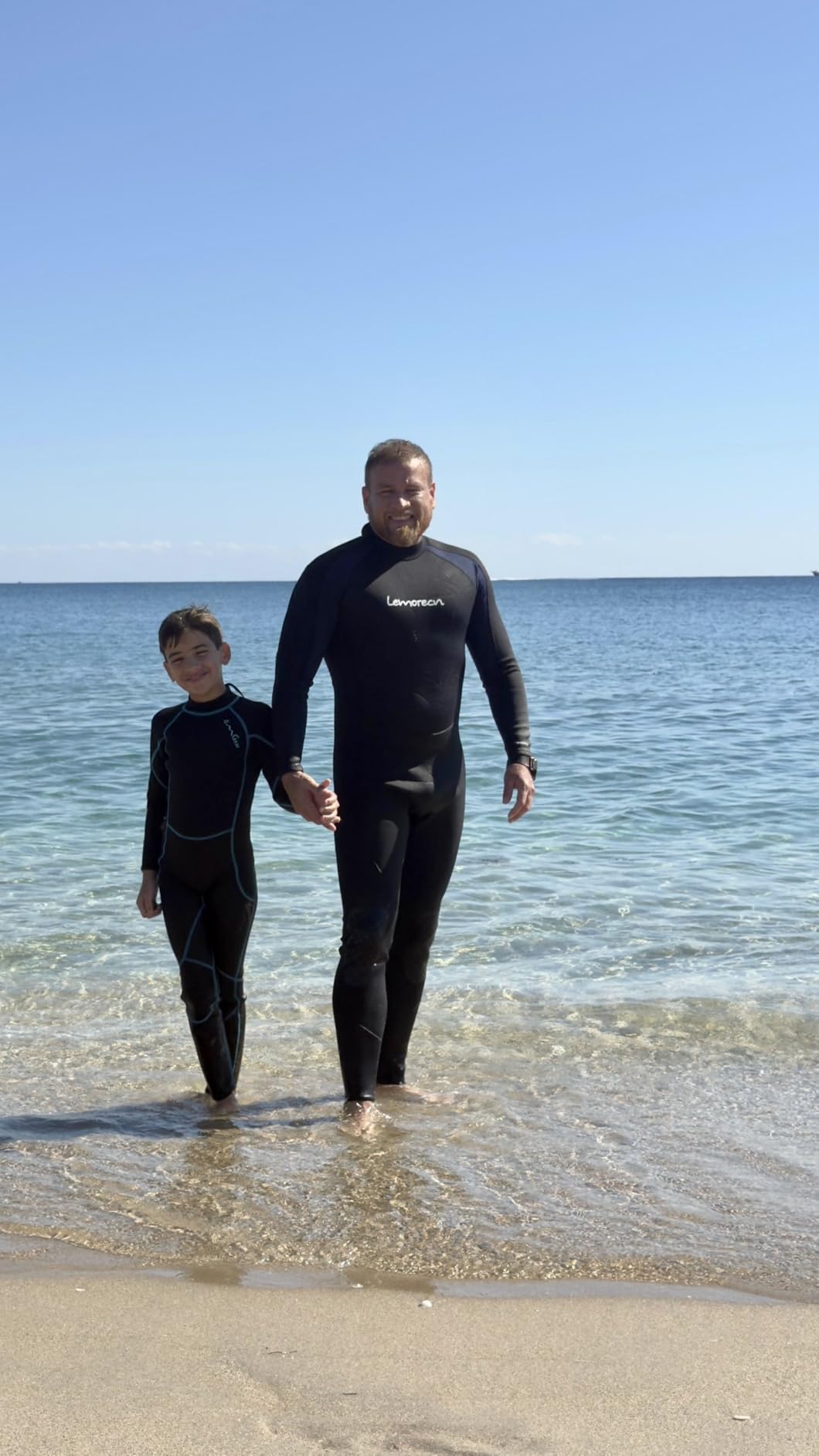
If your budget is the first thing you think about, this is the one to look at, and the fact that a 5/4mm version exists in the same range is unusual. Most cheap full suits stop at 3mm.
The spec sheet says 3mm rated for water at 55F and above, with a 3mm chest panel and 2mm sleeves. That split between torso and arms is a smart way to buy flexibility without paying for full 3mm everywhere.
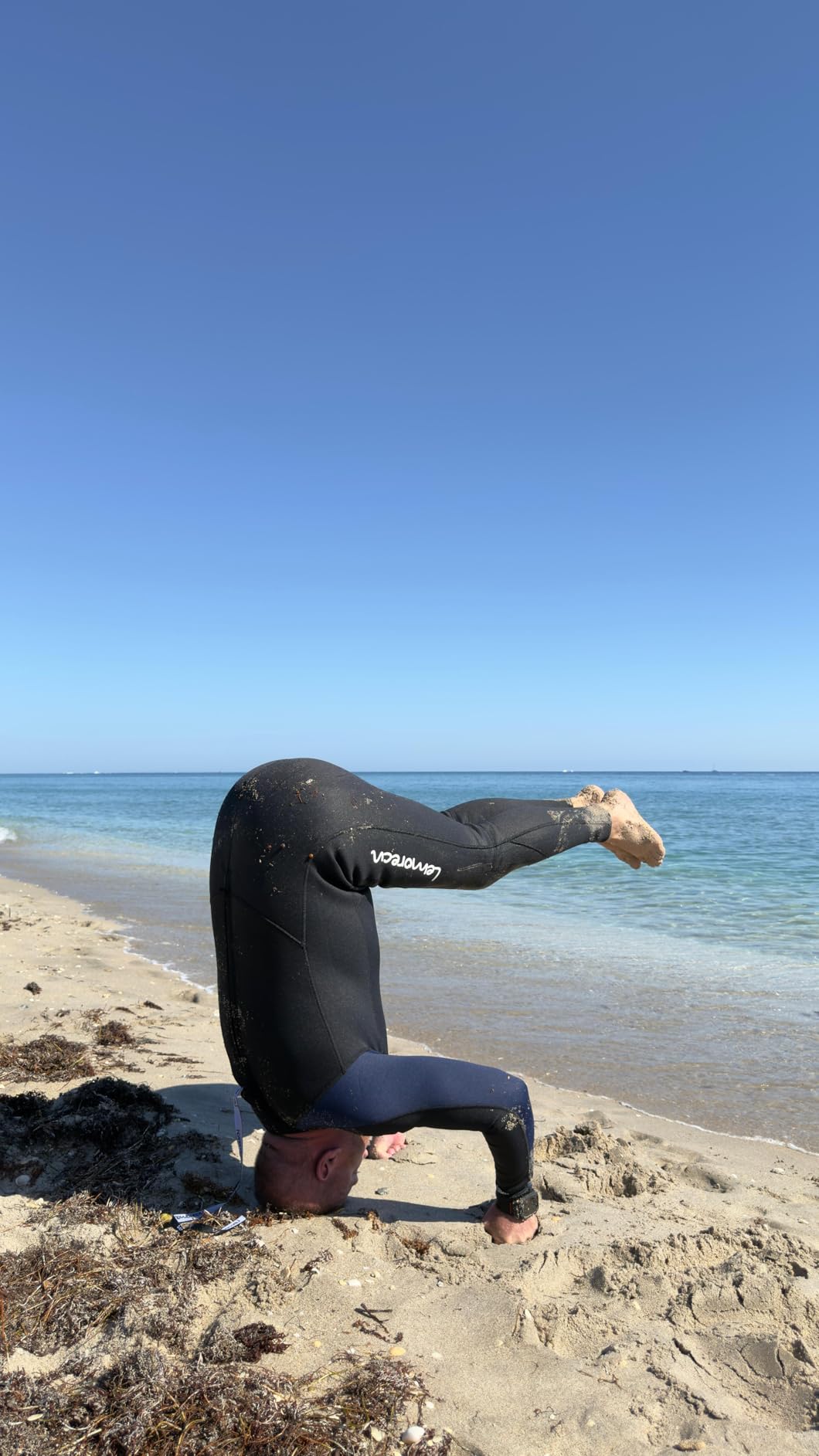
Flatlock seams are stitched on the inside rather than the outside, which keeps the surface smooth against your skin and reduces chafing over long sessions. It is not a fully waterproof seam like a glued and blindstitched construction, but it is solidly sewn and buyers rate it well for the money.
A YKK zipper with a long pull rope is a small detail that matters more than it sounds. On a back zip, a short pull is fiddly to reach, and the long rope makes solo dressing and emergency undressing far less frustrating.
Who This Suit Is Good For
This works well for a beginner, a paddler on a freshwater lake that rarely drops below the mid 50s, and anyone who wants to try a 5/4mm suit without a large outlay. The anti-abrasion knee pads and UPF 50+ rating also suit long days on open water in bright sun.
The adjustable Velcro neck seal gives you real control over the flush point, which is the single most common complaint about back-zip suits. You can tighten it down without replacing the whole neck panel.
Who This Suit Is Not For
The knee pads are thin iron-on panels that offer little real abrasion protection, so if you kneel on shell and gravel while launching, this is not the suit. The size chart also runs small at the top end, so read it carefully rather than guessing your usual size.
A small number of buyers describe a thin, lycra-like feel rather than substantial neoprene. If you are cold-sensitive, test it in store if at all possible.
4. Dark Lightning 3/2mm – Best Low-Profile Full Suit
Dark Lightning Full Body Wetsuit Women, 3/2mm Wet Suit for Women Cold Water Swimming,Womens Diving Surfing Snorkeling Kayaking,Triathlon Wetsuit Women,Black,Small
3/2mm high-elasticity neoprene
Rated for 58-68F water
Back zip with extended leash
Men's and women's versions
Pros
- High elasticity allows an unrestricted stroke
- Sleek all-black styling suits many paddlers
- Men's and women's versions in one listing
- Extended zipper leash is easy to operate
- Good value for a 3/2mm full suit
Cons
- 3/2mm suits cool water rather than true cold water
- Sizing depends on following the updated chart
- No wind-resistant smoothskin panels
This is the quiet option. No bright panels, no heavy branding, just a matte black suit that disappears on the water and does not feel like surf equipment when you are in a sea kayak.
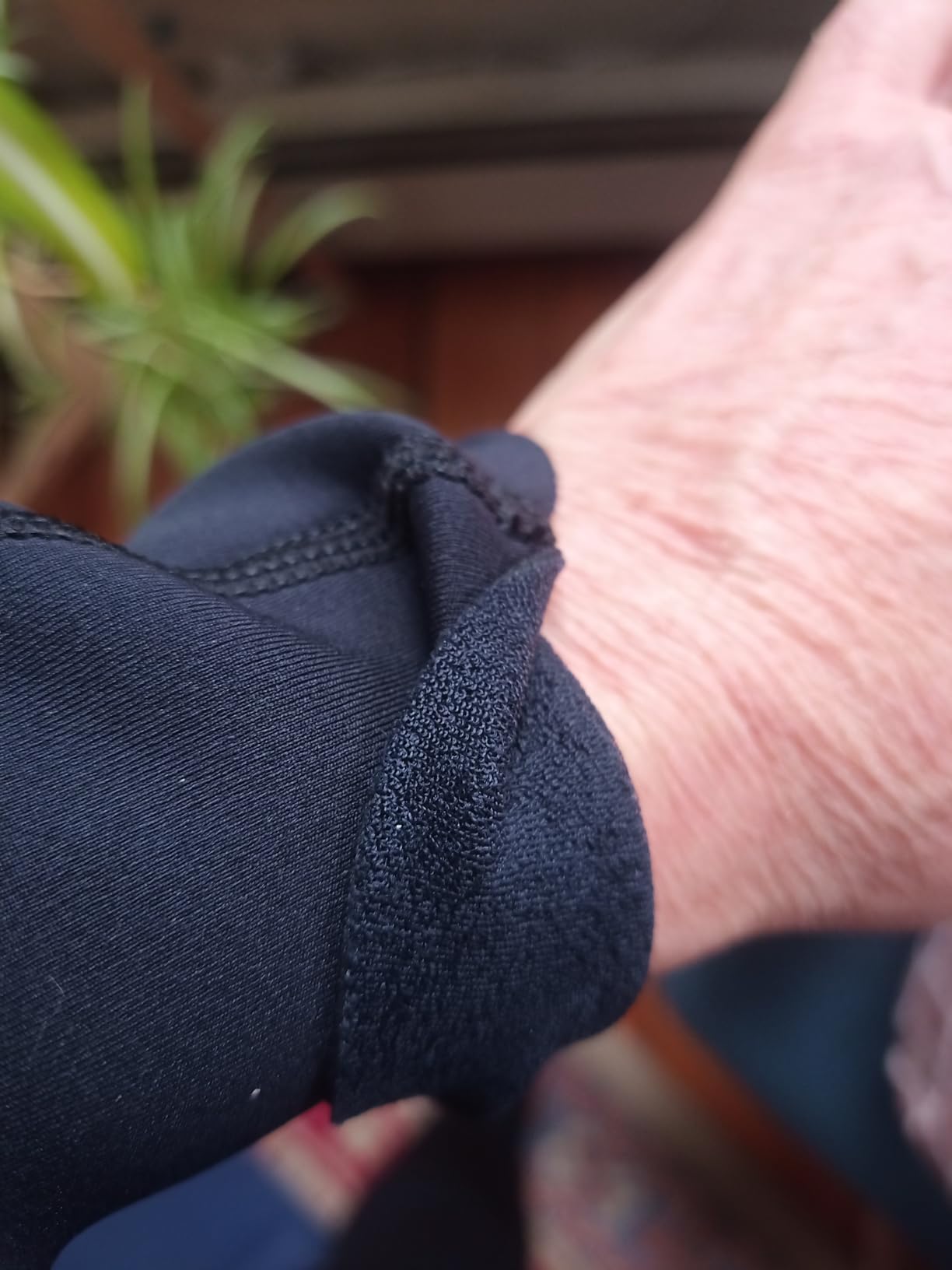
High-elasticity 3/2mm neoprene is the point of this design, and it works. The manufacturer rebuilt the fit based on customer sizing feedback, and the result moves well through a full paddle stroke without the stiff-shouldered feel of a cheaper panel build.
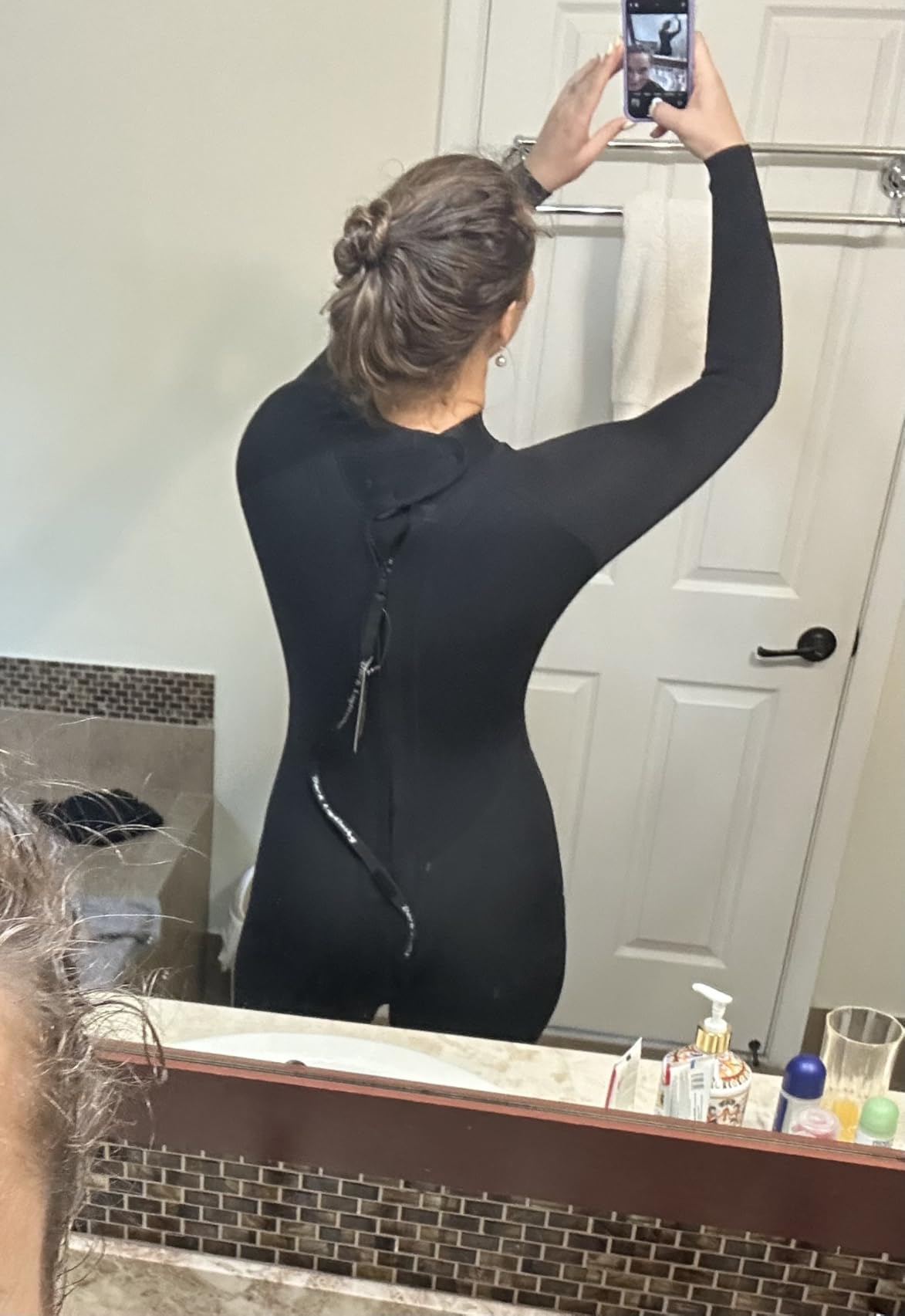
The stated water range is 58F to 68F, which is honest and narrower than some competitors claim. Buy this knowing it is a cool-water suit, not a cold-water one.
A traditional back zipper with an extended leash makes entry straightforward. The men’s and women’s versions come from the same pattern, so sizing tends to behave consistently across both.
Who This Suit Is Good For
It suits recreational paddlers in cool conditions, surf kayakers, snorkellers and anyone who wants a full suit that looks like gear rather than a costume. If you also dive or swim in the same season, one suit covers a lot of ground.
At 1.8 pounds it is one of the lighter full suits we tested, which reduces arm fatigue on long paddle days when you are carrying kit you would rather not carry.
Who This Suit Is Not For
It is not a cold-water suit, and the absence of wind-resistant smoothskin panels means it loses warmth faster in wind and spray than a comparable O’Neill. If your water drops below the high 50s, you need more than this.
Sizing depends on following the updated size chart closely. Buyers who ordered their usual size without measuring reported a tighter result than expected.
5. Hevto 4/3mm And 5/4mm – Best Cold-Water Value
Hevto Men Wetsuit 4/3mm Neoprene GBS Full Wet Suit in Cold Water Back Zip for Surfing Swimming Diving Kayak SUP (Men Blue, L)
4/3mm and 5/4mm options
Sealed glued blind-stitched seams
Reinforced knees
Back zip with flap
Pros
- Real 5/4mm cold-water option available
- Sealed seams make a measurable warmth difference
- Comfortable sessions reported down to 40F
- Strong value against premium cold-water suits
- Manufacturer replaced a unit with a broken zipper
Cons
- Size chart runs small and confuses buyers
- Back zipper can catch if handled blindly
- Snug through the shoulders on muscled paddlers
- Tight in the crotch on taller builds
This is the most interesting suit in the group on a value basis. The usual argument against buying cold-water gear at a mid price is that you get stitched seams and no real insulation, and this one does not accept that argument.
Sealed, glued and blind-stitched seams are the feature that matters most here, and owners consistently credit them for warmth. In a stitched-only suit the water finds the stitch holes first; in a sealed suit it does not.
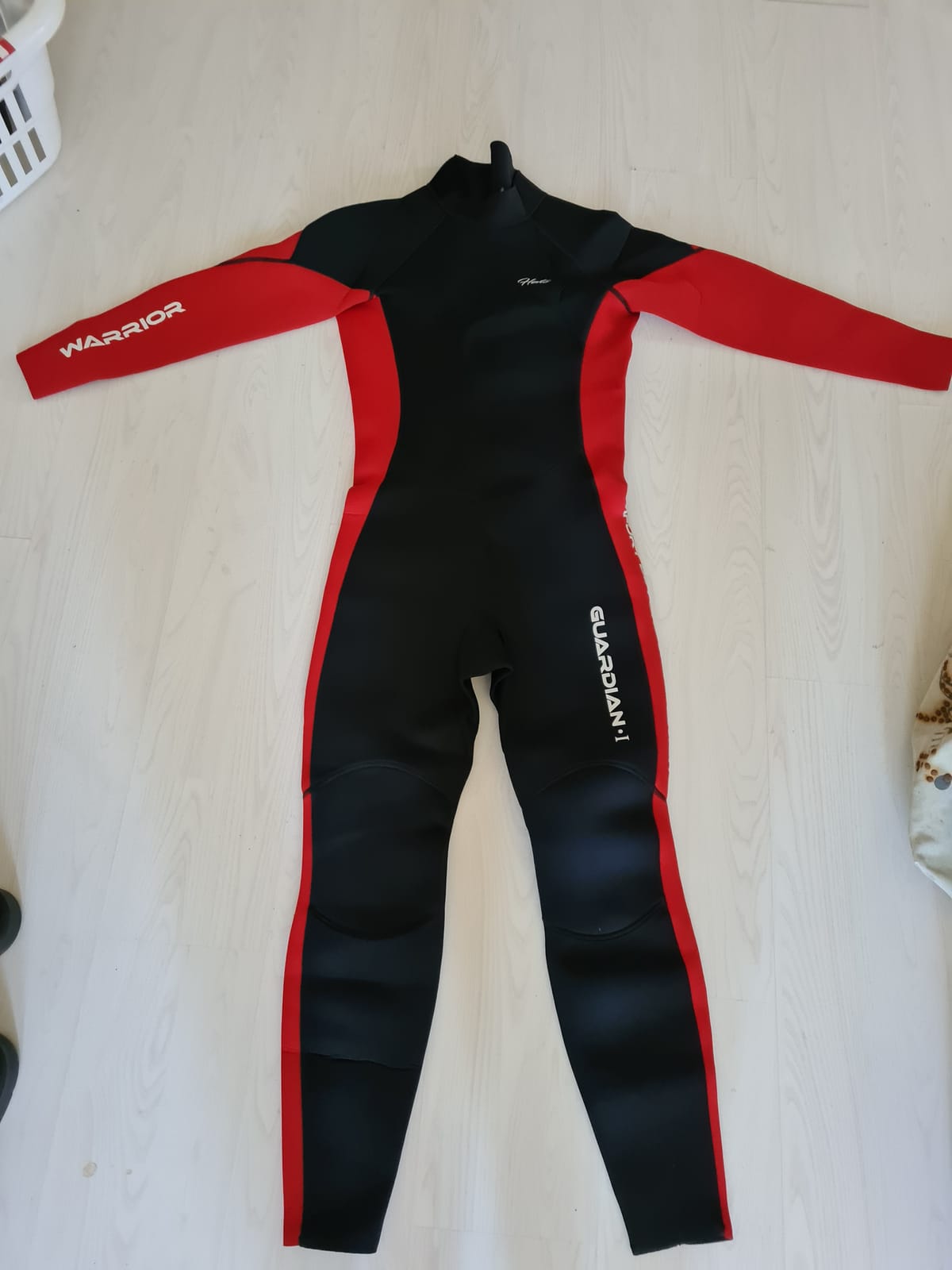
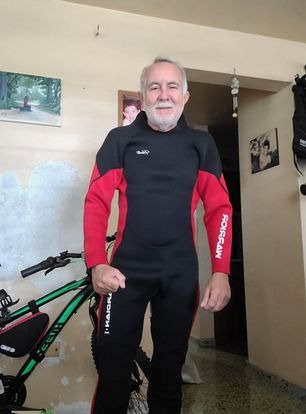
Owners report comfortable sessions down to 40F when they add gloves, socks and a hood. That is genuinely cold-water territory, and it puts this suit well ahead of anything else at a comparable outlay.
Reinforced knee areas take the abrasion that comes with rocky launches and beaching, and the enhanced buoyancy makes a remount in a heavy sea kayak noticeably easier than it would be in a thinner suit.
Who This Suit Is Good For
This is for the paddler who wants genuine cold-water insulation without stepping up to a premium brand. If your water sits in the low 40s, this is where the money is best spent.
The range of thicknesses in one listing also makes it a good suit to grow into, since you can move from 4/3mm to 5/4mm as the season gets colder rather than buying two suits.
Who This Suit Is Not For
Fit is the recurring friction. The size chart runs small, many buyers recommend ordering with care in both directions, and heavily muscled paddlers report a snug upper back.
The back zipper can catch on the suit and is awkward to operate without looking. That is a genuine problem in an emergency undress, so if you paddle alone in cold water, test it thoroughly first.
6. Owntop 5mm – Best For Shorter Paddlers And Serious Warmth
Owntop 5mm Wetsuit for Men Women, High Stretch Warmth Neoprene Suit
5mm neoprene body
4mm CR cuffs
Rated to about 50F water
Front YKK zipper
Pros
- Genuinely warm
- owners swim in 50F water for 40 minutes
- Leg length suits shorter paddlers
- Soft cuffs keep a tight suit wearable
- Front zipper is easier to manage than a back zip
- Quality well above the price tier
Cons
- Size chart varies by colourway
- Material does not stretch lengthwise for tall wearers
- Inconsistent texture and thickness across panels
- Only rated to about 50F water
Owners of this suit describe swimming in 50F water for forty minutes comfortably, which is a real cold-water claim rather than marketing copy. Five millimetres is not a thickness you can fake.
The build is a 5mm neoprene body with 4mm CR neoprene cuffs at the wrists and ankles. Keeping the extremities slightly thinner than the torso preserves flexibility exactly where you need it for a paddle stroke, while the deep cuffs still seal well.
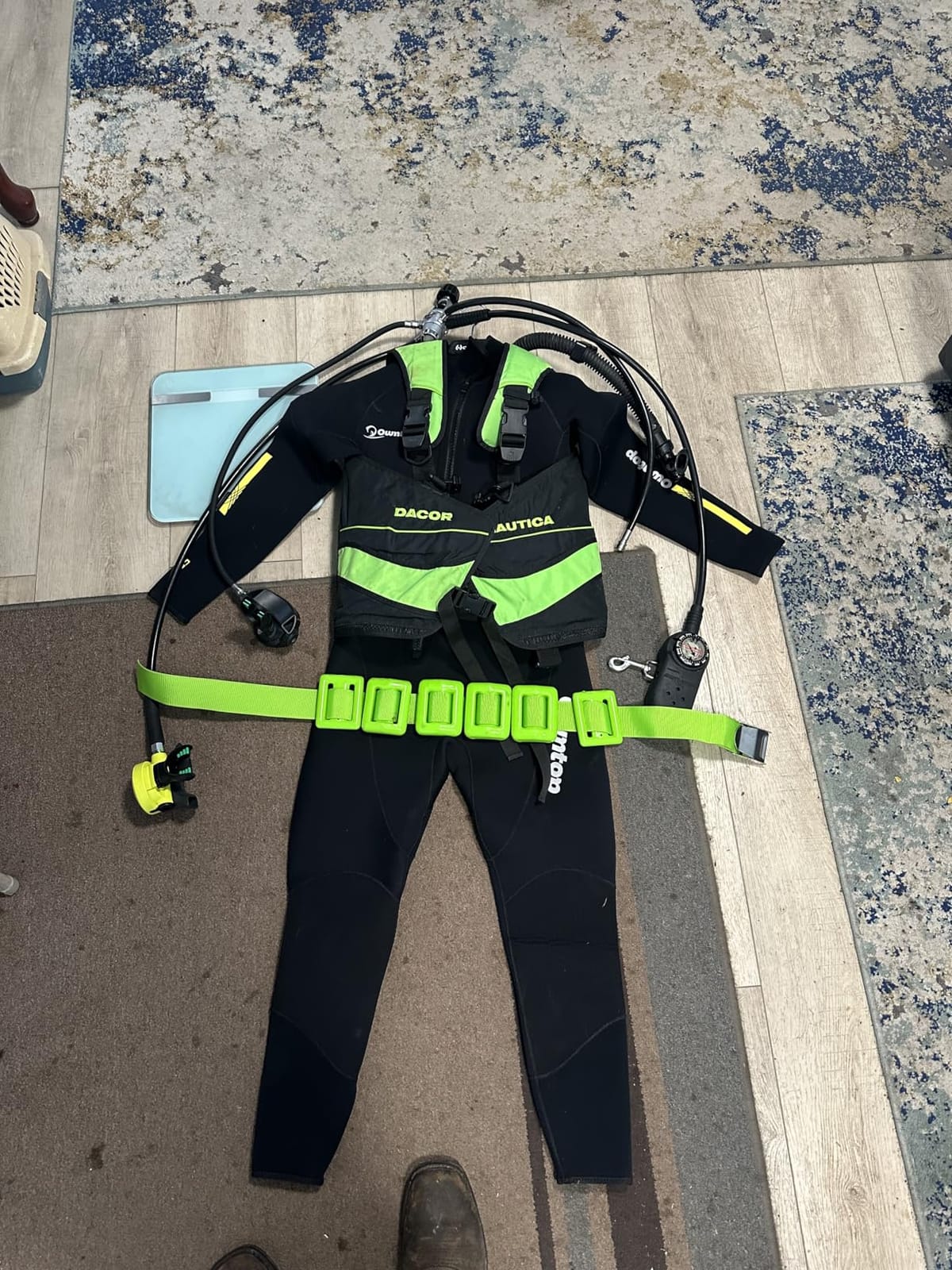
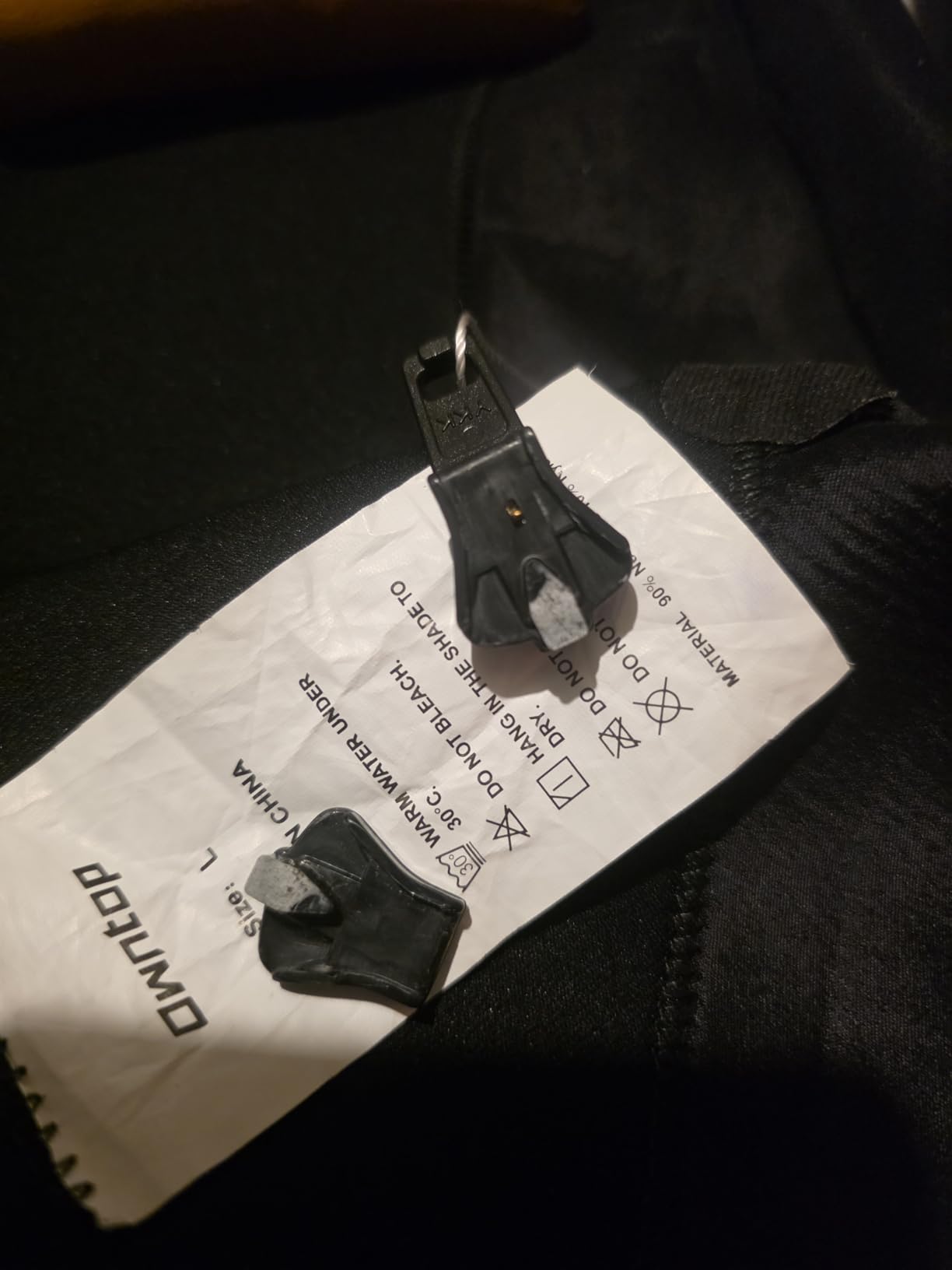
The front YKK zipper is the feature that wins over paddlers who expected a back zip. Donning a wetsuit alone in a car park is unpleasant in any case, and a front zip makes it roughly half the trouble.
UPF 50+ sun protection plus jellyfish and reef scratch protection is a sensible combination for tropical or clear-water paddling, where UV exposure over a full day is genuinely significant.
Who This Suit Is Good For
Shorter paddlers should look here first. Multiple owners note that the leg length suits them better than almost any other full suit, because a lot of 5mm suits are drafted for tall frames and leave shorter wearers with a bunched torso.
It is also a good suit for anyone who runs cold. At 4.1 stars this is the lowest-rated suit we list, and the complaints are overwhelmingly about sizing rather than warmth, which tells you the insulation is doing its job.
Who This Suit Is Not For
Do not rely on the size chart here. It is inconsistent across colourways, with some running large and others small, and most owners advise sizing up. Tall paddlers report that the material does not stretch lengthwise, leaving the torso and legs short.
The stated rating is about 50F. Below that you want a hood, gloves and boots, or a drysuit. Some owners also mention inconsistent texture and thickness between panels, which can feel odd against bare skin.
7. O’Neill Women’s Reactor-2 3:2mm – Best For Women
O’Neill Women’s Reactor-2 3:2mm Back Zip Full Wetsuit, Black/Black, 10
3:2mm full body
Women's specific fit
Backzip entry
Seamless paddle zones
Pros
- Women's specific fit from a major brand
- Ultra stretch neoprene with minimal-seam paddle zones
- Wind-resistant smoothskin adds insulation
- Simple backzip entry and exit
- Backed by a 1-year repair or replace warranty
Cons
- 3:2mm suits mild-to-cool water rather than cold water
- Size range tops out around a 16 regular
- Neck area at the zip is the usual ingress point
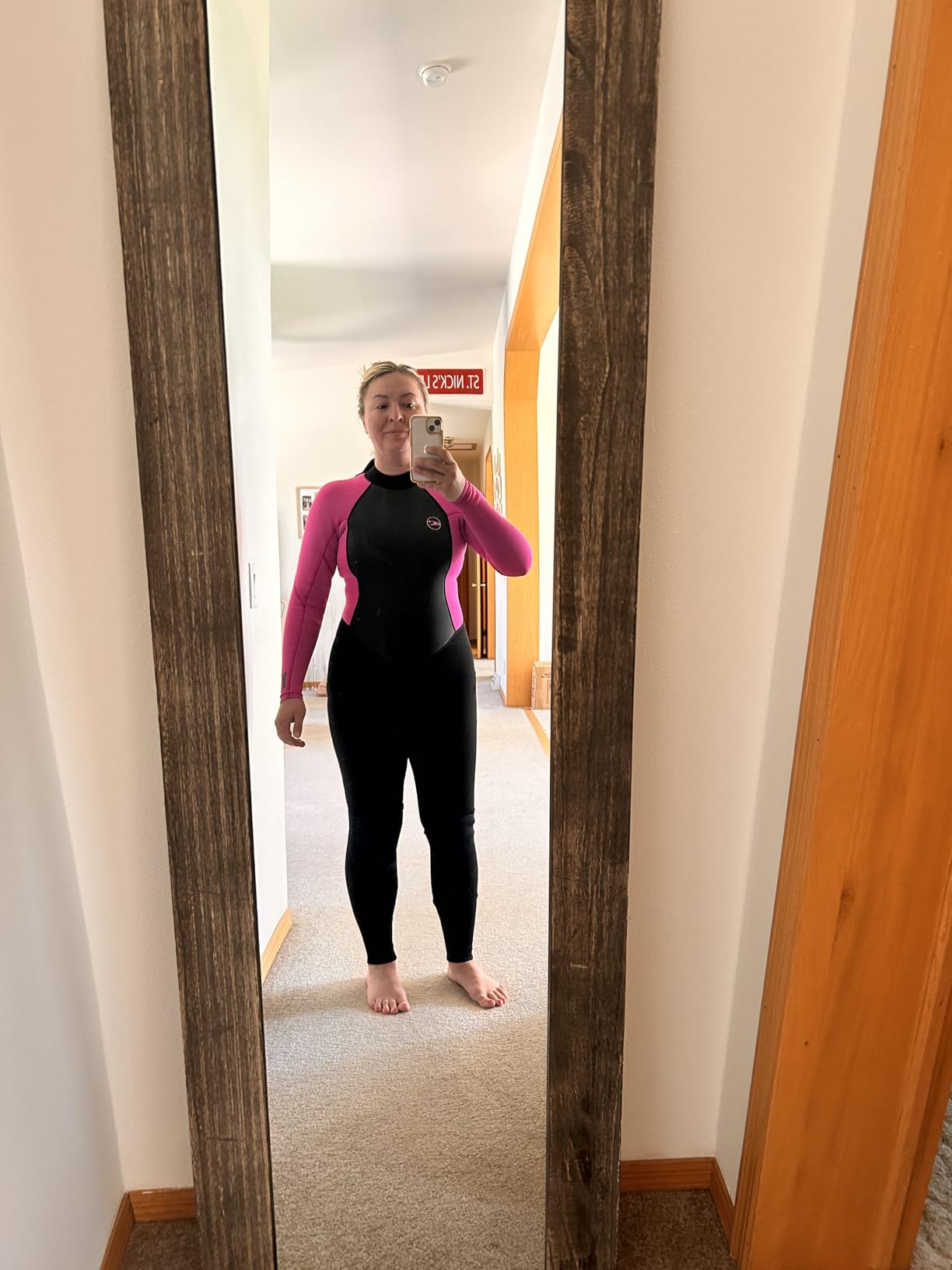
Most women-specific suits are built from a men’s pattern with the proportions shifted, and you can feel it within ten minutes in the boat. This one is a genuine women’s fit, which shows up mainly in the torso length and shoulder slope.
The technical spec is otherwise identical to the men’s Reactor-2: 3:2mm Ultra Stretch neoprene, seamless paddle zones, wind-resistant smoothskin panels and a backzip with a water-resistant closure. That consistency means it pads out a cold-water kit the same way.
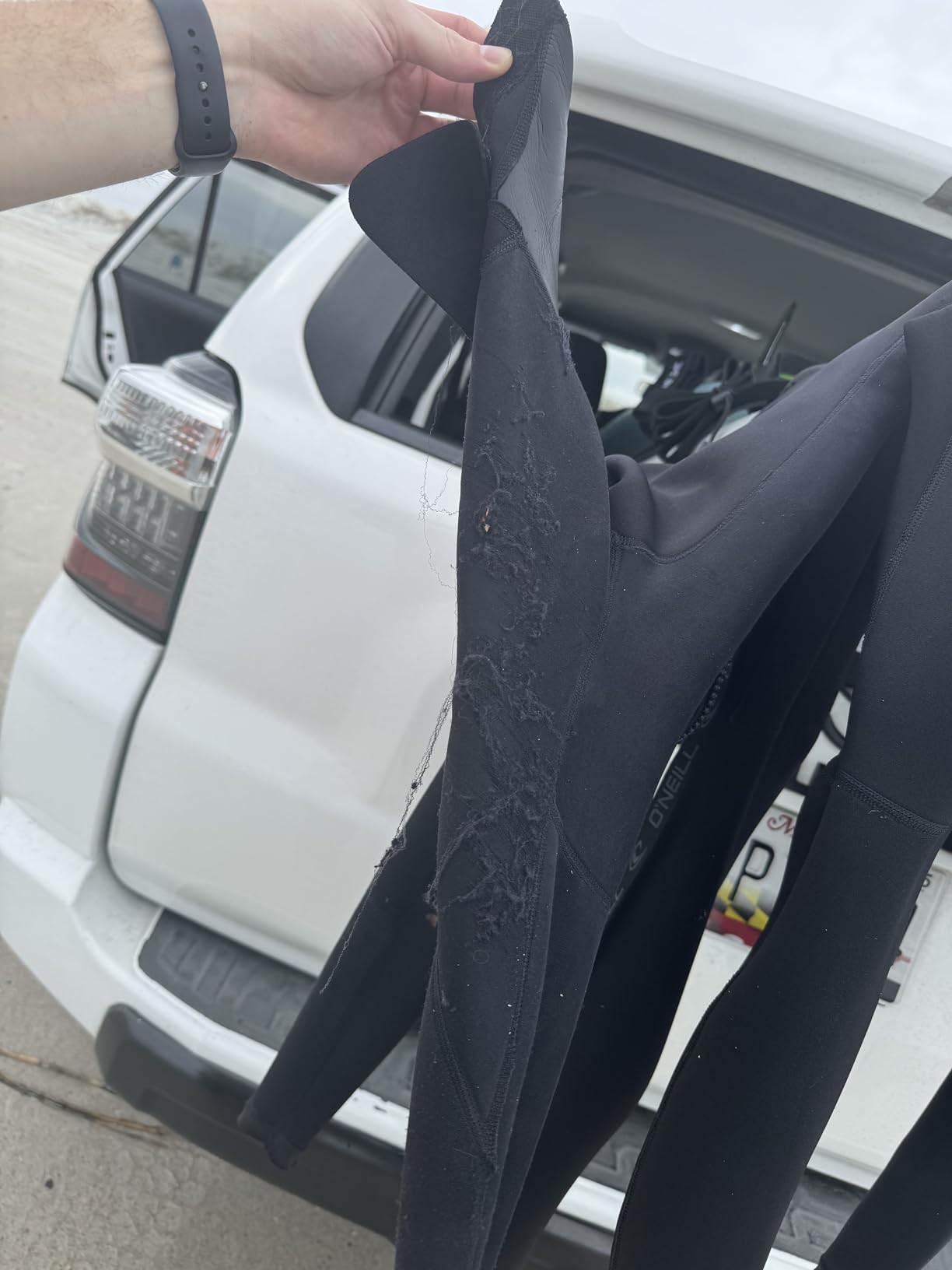
The 1-year repair or replace warranty from O’Neill is a real advantage over the generic brands at a similar price. Seam and zip failures are the most common reason a good suit gets retired, and a warranty shortens that cycle considerably.
Wind-resistant smoothskin gives this suit more usable warmth than the bare 3:2mm number suggests, particularly in still, cold conditions where a light wind strips heat off your face and chest.
Who This Suit Is Good For
This suits a woman paddler on a lake or sheltered coast in mild-to-cool water, and it is a sensible entry point into a brand with a proper warranty. If you also swim, surf or dive, one suit covers those too.
Because the construction matches the men’s model, it works well as an under-suit beneath a 4/3mm or 5/4mm for genuinely cold outings.
Who This Suit Is Not For
The size range tops out around a 16 regular. If you need a larger or long-tall women’s cut, this is not the suit, and hunting for the right size will cost you more time than it saves money.
As with every back-zip suit, the neck area at the zipper is the usual point of water ingress. And at 3:2mm, it needs layering for real cold-water paddling.
8. NeoSport 7mm Waterman John – Best For The Thickest Neoprene
NeoSport Men’s Premium Neoprene 7mm Waterman John Wetsuit, XX-Large, Black
7mm full john
Long sleeves
Flatlock seams with spot taps
Diamond plate knee pads
Pros
- Thickest neoprene in this lineup
- Listed explicitly for kayaking and canoeing
- Flatlock seams and spot taps hold up under heavy use
- Knee pads survive repeated kneeling on shell
- Comfortable across 8-hour sessions
Cons
- Not Prime-eligible
- Runs small for larger builds
- Neck opening admits water without a hood
- Baggy in the waist without a belt
Seven millimetres is as much neoprene as we would put between a paddler and genuinely cold water, and this john suit is the thickest option in our group. It is built for surf fishing and open-water work rather than for a gentle lake.
It is a full john, meaning long sleeves and legs with no torso zip at all. That is a deliberate design choice: a long john layers under a top or a jacket and removes the single most common failure point in a back-zip suit.
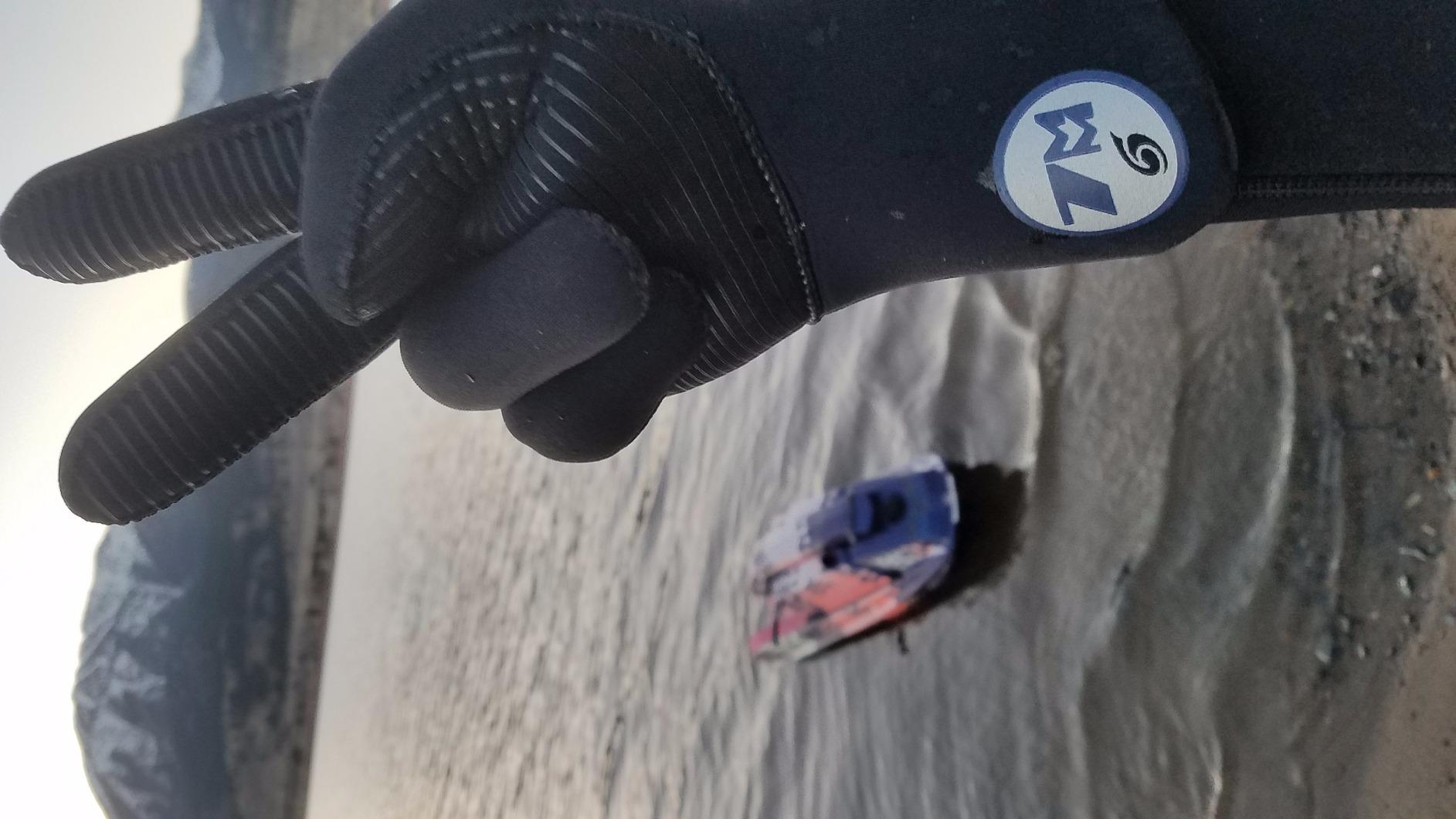
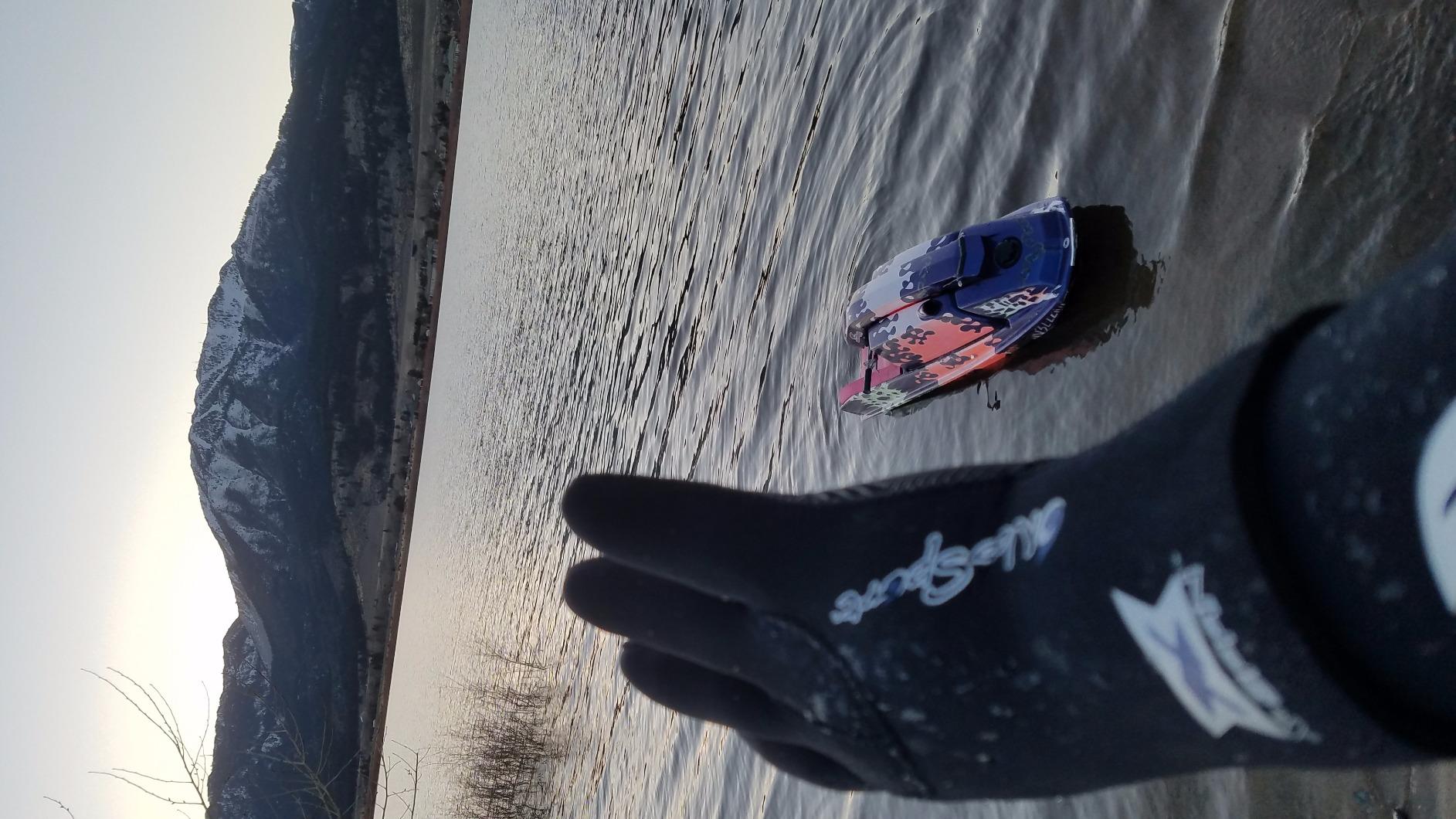
Long-term owners describe a durable, no-frills suit whose seams and knee panels stay intact after many sessions. Diamond plate knee pads have survived repeated kneeling on shell-covered beaches, which is a much better test than anything on a freshwater launch.
Comfort across eight-hour sessions without chafing is reported repeatedly, and the flatlock seams and spot-taped stress points give a smooth interior and exterior.
Who This Suit Is Good For
This is the pick for surf anglers, cold-water divers and anyone doing long sessions in genuinely low water temperatures. It is listed explicitly for kayaking and canoeing as well, and paired with a fleece and a splash top it is a solid winter system.
Because there is no torso zip, it also suits anyone who hates fiddling with closures at the start of a cold launch.
Who This Suit Is Not For
It runs small for larger builds, so ordering up is common advice. The waist can feel baggy without a belt, and the neck opening admits water unless you add a separate hood or cowl.
It is also not Prime-eligible, which is a practical annoyance if you want fast delivery before a trip. And at 7mm it is genuinely heavy, so expect some arm fatigue over a full day.
9. Skyone 3mm Front Zip – Best For Youth And Family Paddling
Wet Suits for Women Men Full Body 3MM Neoprene Wetsuit Diving Suit in Cold Water, Long Sleeves Front Zip Scuba Wetsuits One Piece Thermal Swimsuit for Surfing Snorkeling Kayaking Swimming Canoeing
3mm full body
Front zipper with draw cord
Flatlock stitching
XS to 3XL
Pros
- Front zipper with draw cord is the easiest closure
- Men's women's and youth versions in one listing
- Flatlock stitching avoids painful skin friction
- Good stretch and recovery for the money
- Two-year manufacturer warranty
Cons
- Fits very tight when dry
- 3mm suits cool rather than cold water
- Cold-water marketing overstates the listed thickness
This is the one to look at if the whole boat needs suits. Youth versions sit in the same listing as the men’s and women’s, which removes the usual headache of sourcing a separate child’s suit in a hurry.
The front zipper with a draw cord is the standout feature. On a boat you will get into alone, with cold hands and a slippery deck, a front zip is simply easier than a back zip, and it makes solo dressing far less of a fight.
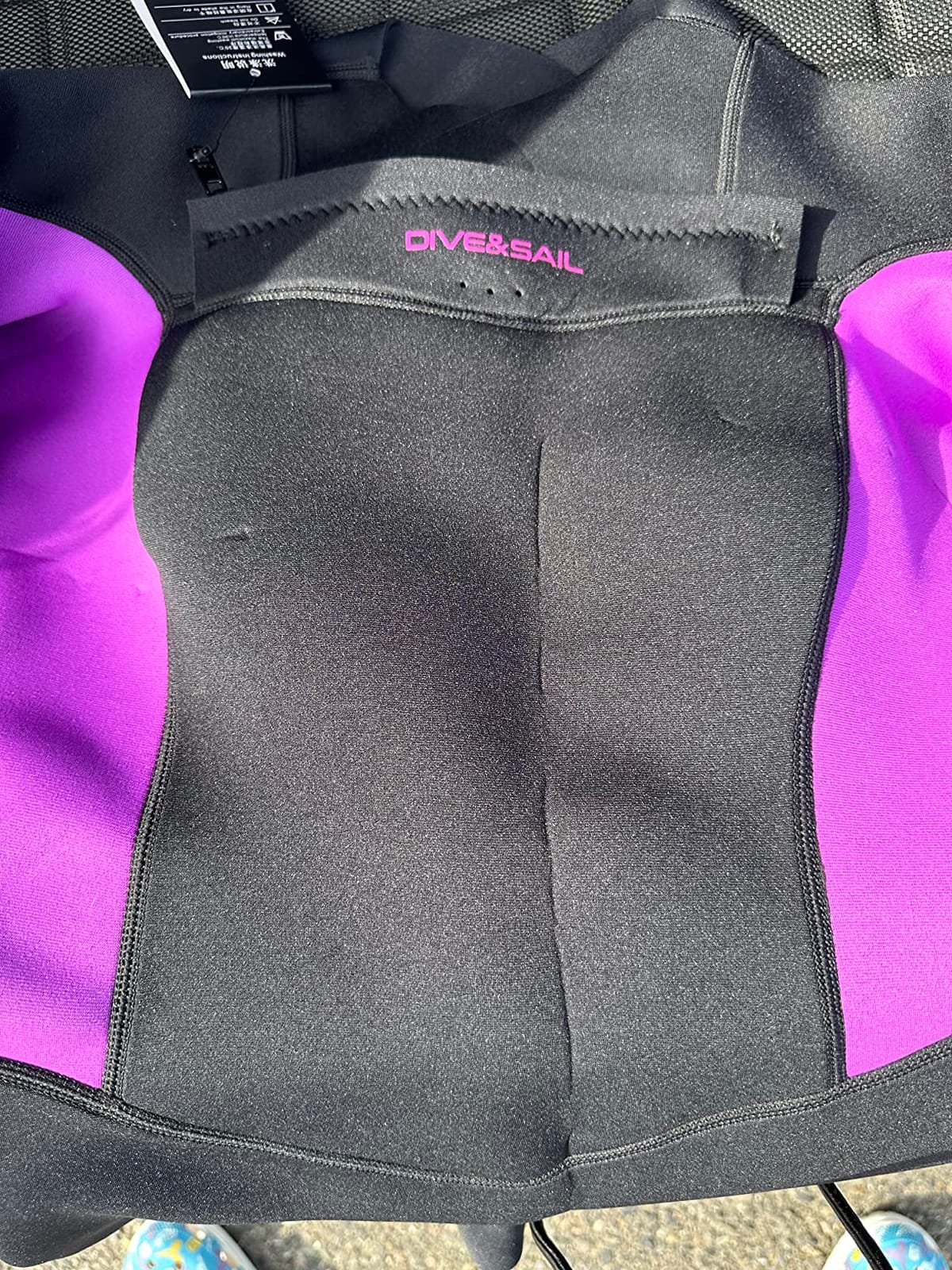
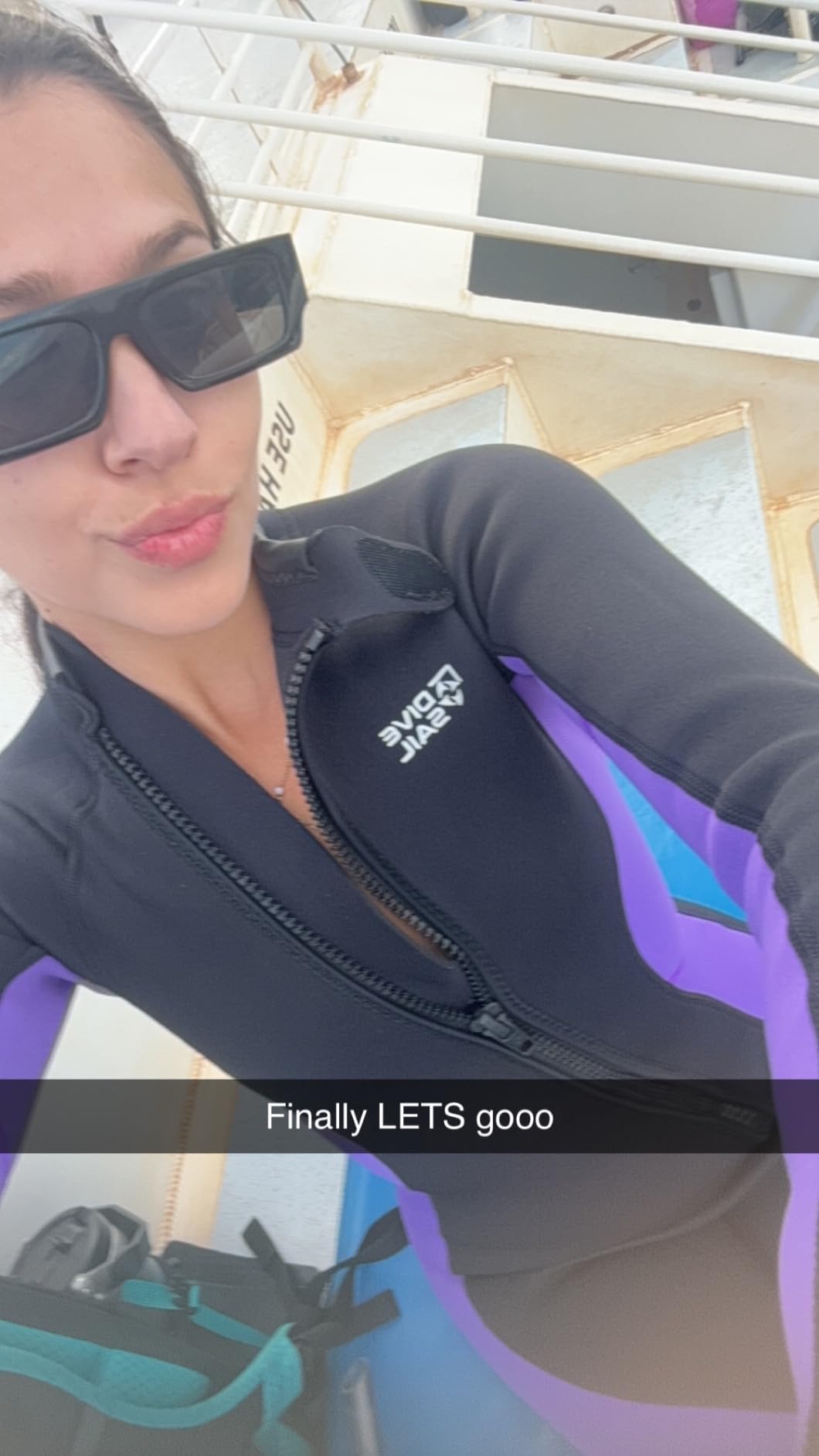
Construction is 3mm premium neoprene with high stretch and strong recovery, flatlock stitched for durability and low friction, and a form-fitting full body with long sleeves to reduce drag.
The two-year manufacturer warranty is longer than most brands in this group offer, and it covers exactly the failure modes that end a suit’s life early.
Who This Suit Is Good For
Families on a tandem kayak, youth learn-to-paddle programmes, and anyone sharing a gear order across different body types. XS through 3XL for men and women covers a wide range.
It also works well as a mid-layer or travel suit for parents who want one garment for swimming, canoeing and general water time rather than a dedicated technical piece.
Who This Suit Is Not For
It fits very tight when dry, and several paddlers found that restrictive. If you dislike a close fit, this is not the one. The 3mm thickness is adequate for cool rather than cold water, and the product marketing overstates its performance relative to the stated thickness.
Measure your chest, waist and hips carefully and compare against the chart. Buying blind is the main reason buyers end up unhappy with this suit.
10. Lansru 5/4mm SCR Neoprene – Best For Seamless Comfort
Lansru Men Wetsuit, 5/4 mm SCR Neoprene Wetsuits for Men,UPF 50+(3XL)
5/4mm SCR neoprene
4mm CR at neck and limbs
Thickened knee pads
Front YKK zipper
Pros
- SCR neoprene holds warmth better than common SBR
- Seamless neck and limbs reduce chafing in long sessions
- Front YKK zipper makes solo dressing straightforward
- Abrasion-resistant nylon outer
- OEKO-TEX Standard 100 certified lining
Cons
- Sizing runs small for many buyers
- New suits have a noticeable initial smell
- 5mm is too warm for warmer conditions without layering
This suit uses SCR neoprene through the body with CR neoprene at the neck and limbs, and owners credit that combination with warmth that noticeably outperforms common SBR alternatives at similar thickness.
SCR is a chloroprene rubber that stretches better and holds its insulating gas structure for longer than the cheaper SBR foam used in budget suits. If you keep one suit for a decade, that difference compounds.
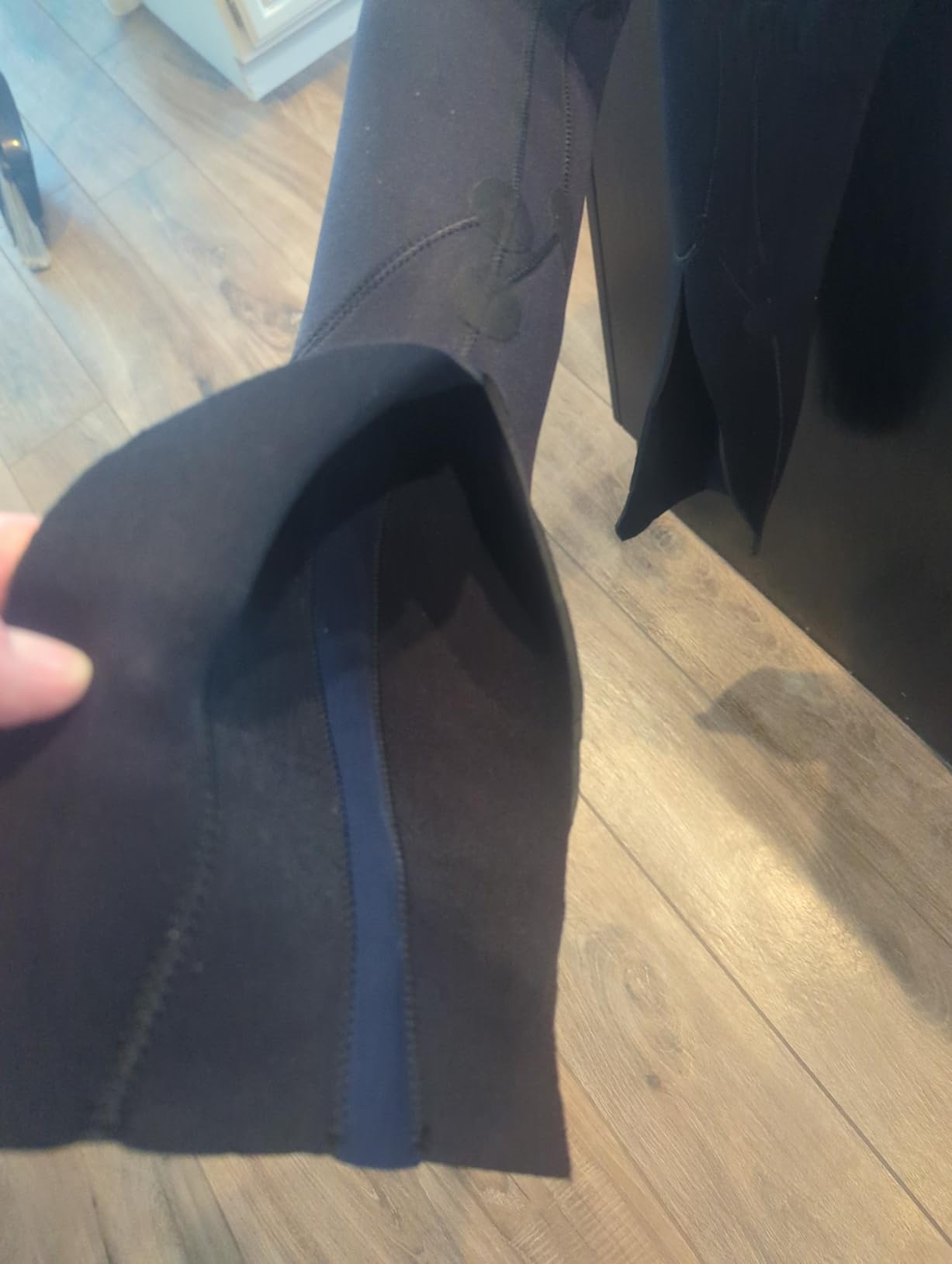
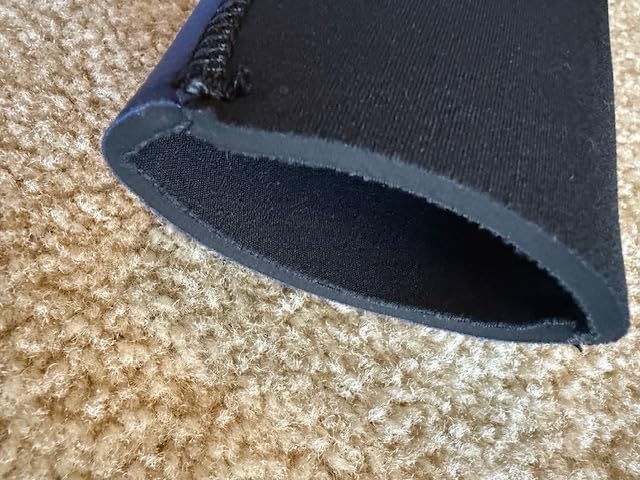
The seamless design with a super-stretch yarn lining and skin-friendly patch panels is the real story for long days. Chafing at the neck and underarm is what ends most paddling seasons early, and removing seams from those areas solves it.
A nylon outer fabric adds abrasion resistance for board and gear contact, and thickened knee pads take the worst of it. The front YKK zipper makes solo dressing straightforward.
Who This Suit Is Good For
Long-day paddlers, anyone who chafes easily, and cold-sensitive paddlers who want a thick suit without a heavy-feeling one. The 4mm CR neoprene at the neck and limbs keeps flexibility where you need it.
The UPF 50+ rating and OEKO-TEX Standard 100 certified lining make it a comfortable choice for long days in bright sun on open water.
Who This Suit Is Not For
Sizing runs small for many buyers, so read the reviews and measure before you order. New suits also have a noticeable initial smell, though owners say it is reduced compared with earlier versions of this suit.
At 5mm it is too warm for milder conditions without layering underneath, and the listed weight of 2.9 pounds tells you it is a heavy suit for a full day of paddling.
11. NeoSport 5mm Waterman John – Best For All-Day Paddling
NeoSport Men’s Premium Neoprene 5mm Waterman John Wetsuit, Small
5mm full john
Long sleeves
Flatlock seams with spot taps
Diamond plate knee pads
Pros
- Thick 5mm neoprene that still allows easy movement
- Listed for kayaking and canoeing
- Flatlock seams avoid chafing in long sessions
- One owner logged 8-hour sessions in winter water
- Strong value for the warmth provided
Cons
- Not Prime-eligible
- Runs small and many size up
- Knee pad centre aligns with the pad edge
- Single-sided Velcro neck is awkward
- Water enters the neck without a hood
This is the 5mm sibling of the 7mm john, and for most paddlers it is the more usable of the two. One owner logged comfortable eight-hour sessions in Florida winter water, which is a strong endurance result.
Like the 7mm, it is a full john with long sleeves and legs and no torso zip. Pair it with a fleece and a splash top and you have a layering system that handles most of winter without buying two full suits.
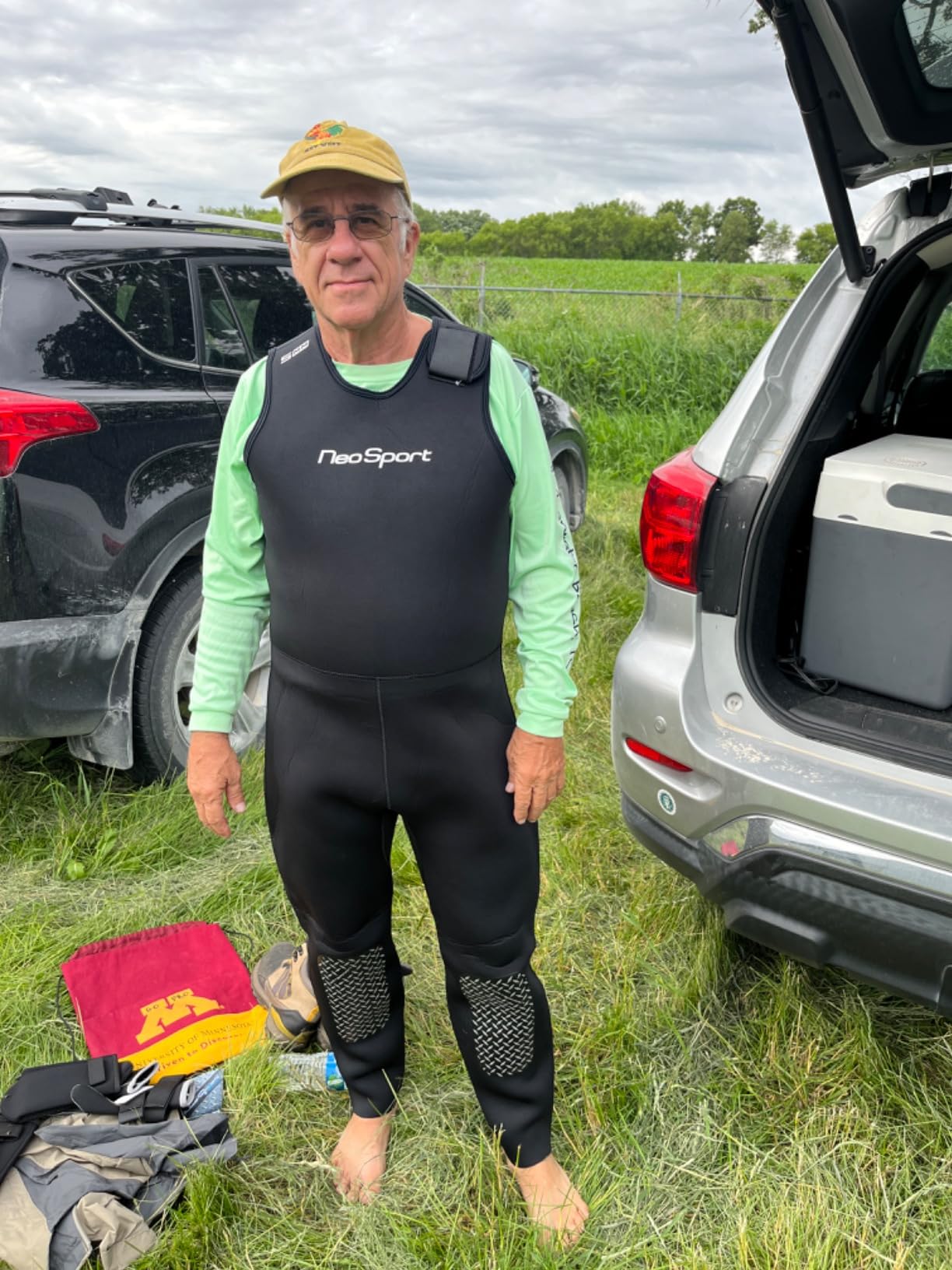
Flatlock seams and spot-taped stress points produce a smooth interior and exterior, so it stays comfortable over long hours. The internal key pocket is a small but genuinely useful feature for anyone who locks keys in a car before launching.
Lycra-trimmed wrist and ankle seals finish the extremities neatly and help keep water out of the cuffs where it would otherwise sit against your skin all day.
Who This Suit Is Good For
All-day cold-water paddlers, winter sea kayakers and anyone who wants one thick suit that layers under a shell. The durability reports are strong for the money spent.
It is listed for kayaking and canoeing as well as diving, so one suit genuinely covers several paddling sports across a season.
Who This Suit Is Not For
It runs small, and multiple reviewers had to size up. The diamond plate knee pads are also positioned so the centre of the pad aligns with the edge, which limits how much protection you actually get.
The single-sided Velcro neck opening is awkward to pull on, and the neck admits water unless you add a hood or cowl. It is also not Prime-eligible.
12. Hevto 3/2mm Front Zip – Best Low-Friction Entry To Full-Suit Paddling
Hevto Men Wetsuit 3/2mm Neoprene Full Suit Front Zip (Black, L)
3/2mm full body
Front zipper with tank puller
Added buoyancy
16 size options
Pros
- Largest review base in this group at over 1700 ratings
- Front zipper is the most accessible closure for solo dressing
- Good flexibility for a recreational full suit
- Added buoyancy reduces effort while paddling
- Wide size range including tall and short fits
Cons
- 3/2mm suits mild and cool water rather than cold water
- Longline square-chested cut is less flattering on some bodies
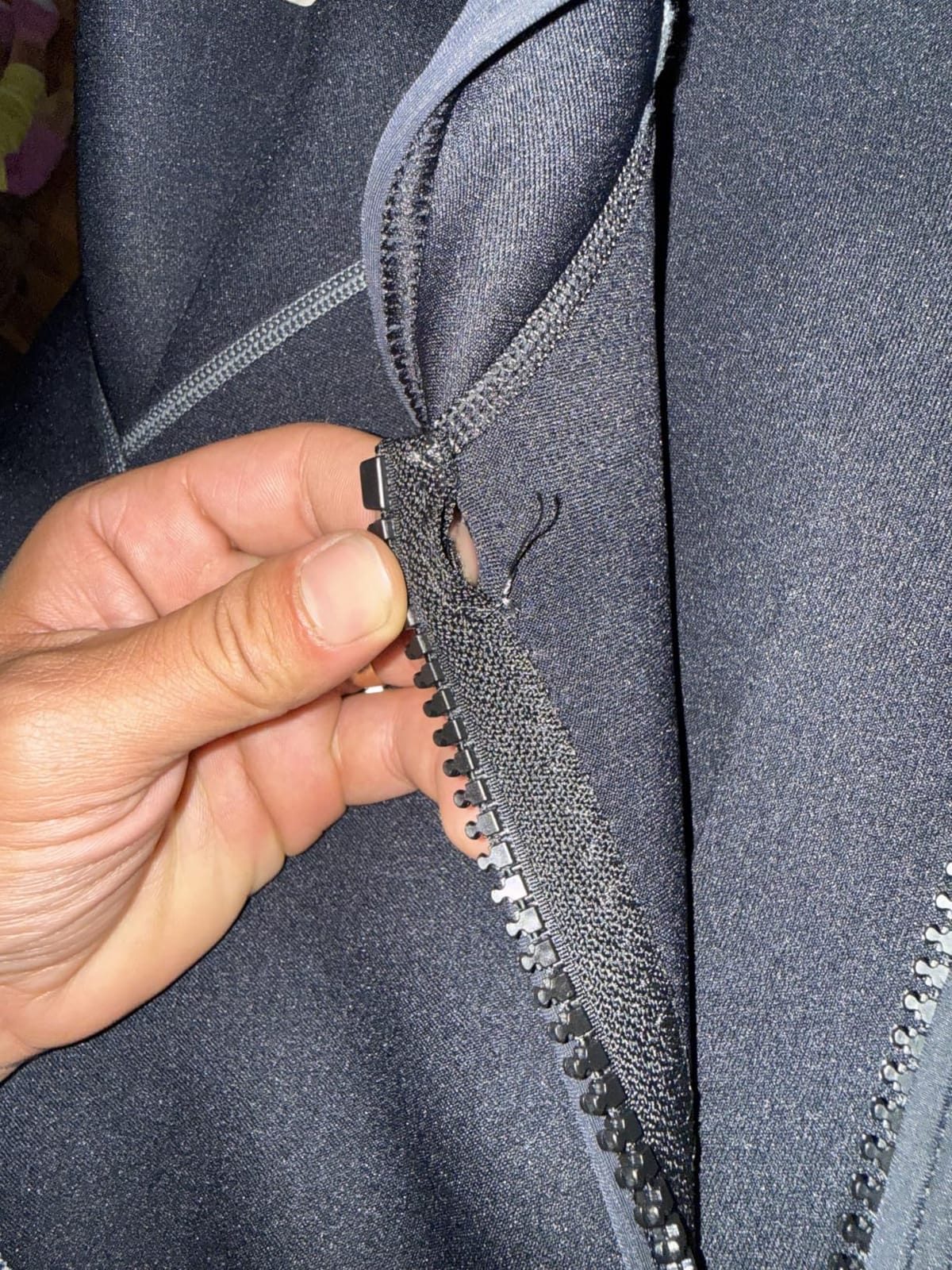
- Front zip loosens over time and seals less
With more than 1700 ratings behind it, this is the most reviewed suit we could find in this category, and that volume of feedback is worth something on its own. When thousands of buyers rate something 4.5, the surprises are usually small.
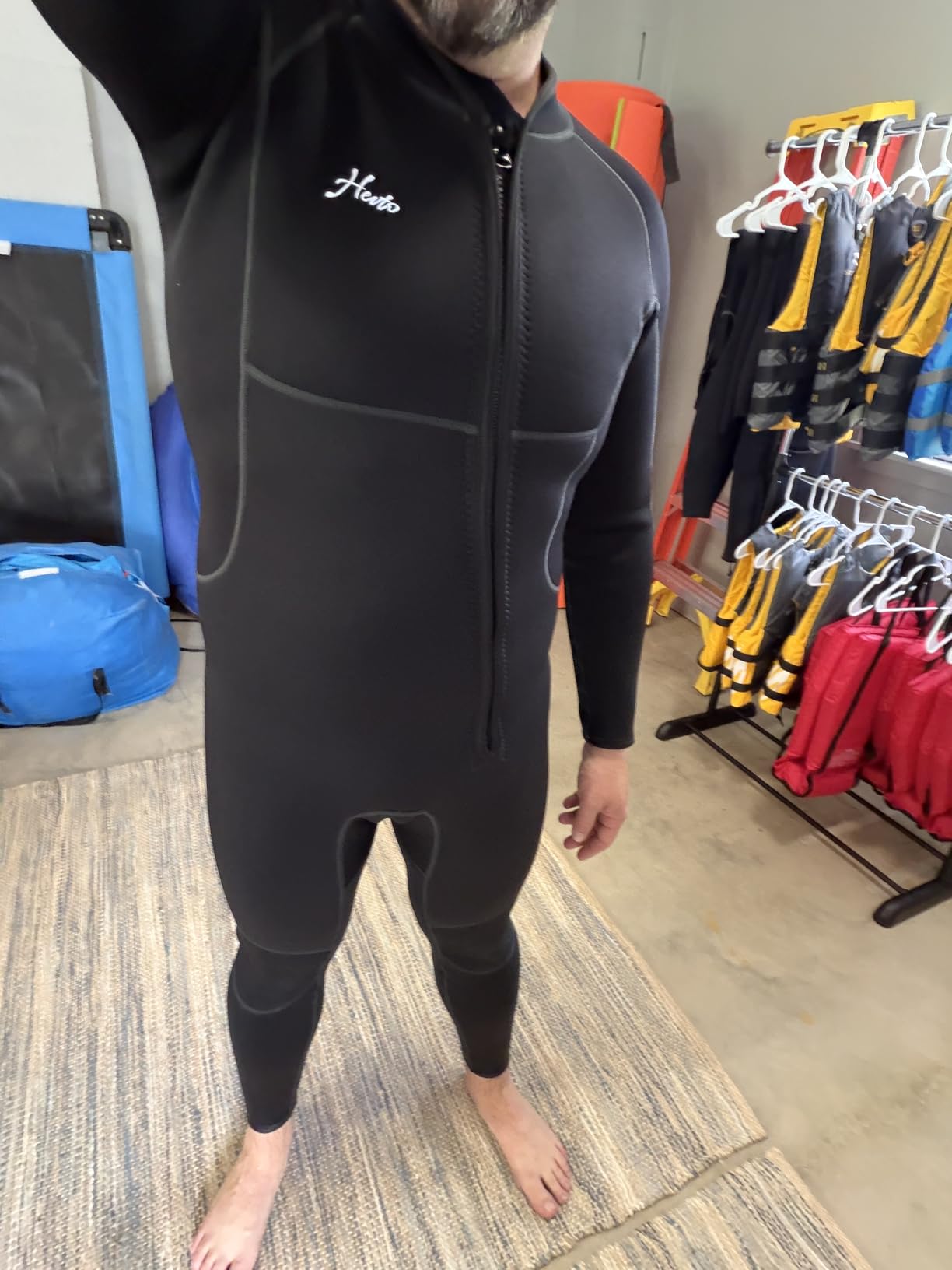
The front zipper with an upgraded tank puller is the reason it has become the default recommendation for a first full suit. You can get into it standing on a wet dock in cold wind without twisting into an impossible position.
Sixteen size options including regular, short and tall fits solve the problem that spoils most online wetsuit purchases. You are far more likely to find a torso length that matches your frame, which is the difference between a suit that insulates and one that lets cold water pool inside.
The added buoyancy reduces effort while paddling and swimming, which matters for beginners who tire quickly and for anyone recovering from an immersion.
Who This Suit Is Good For
This is the suit for a first full wetsuit, for swimming and casual open-water paddling in mild-to-cool water, and for anyone who wants a front zip and a very large size range at a modest outlay. The 1-year manufacturer warranty is a modest bonus.
It also works as a base layer under a long john when the water drops, which stretches its useful season considerably without much effort.
Who This Suit Is Not For
It is a 3:2mm suit, so it is a cool-water suit. That is the recurring limitation buyers describe, and most plan to add layers for colder conditions.
The longline square-chested cut is less flattering on some body types, and some buyers find the front zip looser over time and less sealing. If you are shopping for genuinely cold water, look at the 4/3mm and 5/4mm options instead.
How To Choose A Cold Water Kayaking Wetsuit
Choose by water temperature, then cut, then seams, then fit. Fit last sounds wrong, but fit is where most online purchases fail.
Thickness notation. A suit marked 4/3mm has 4mm through the torso and 3mm through the legs. The first number is always the body. This split exists so the core stays warm while the limbs stay flexible.
Cut. A full suit covers everything. A long john has long sleeves, legs and a sleeveless torso, and layers under a top. A farmer john is a sleeveless torso with legs, worn over a fleece. Spring suits and shorties are for warm water only.
Seam construction. Flatlock seams are stitched and comfortable but let water through the stitch holes. Glued and blindstitched seams are sealed and dramatically warmer. Glued-only and triple-glued are the most sealed and the most expensive.
Zip placement. A front zip is easier to reach solo and safer in an emergency. A back zip keeps water out better and avoids a cold zip against your chest. A full john has no torso zip at all.
Fit. Arms and legs can be slightly long. The torso must be snug, because water pooling inside a loose torso defeats the entire suit. Test it by raising your arms and reaching for a paddle position: nothing should pull across your chest.
Neck seal. A double seal or super seal neck with a gasket dramatically reduces flushing. A simple Velcro neck is the first thing to fail in cold water.
Material. CR neoprene stretches better and insulates longer than SBR. Smoothskin outer panels resist wind. Both matter more in cold water than most listings admit.
Extras. Reinforced knees, an internal key pocket, a relief zipper and a UPF rating are all worth having. Knees matter enormously if you land on shell beaches.
The sizing trap is the single most common mistake. Paddling.com users are near-universal on one point: buy somewhere you can try the suit on in person, and if you cannot, follow the torso measurements rather than your usual size.
If you are moving from 3/2mm to real cold water, the community layering stack is a farmer john or long john, a synthetic fleece over it, then a splash top on the outside. Neoprene insulates, fleece insulates, and only the neoprene resists water pressure.
Wetsuit Care: How To Make Neoprene Last
A rinsed, dried and folded neoprene suit lasts far longer than one dumped in a car boot. The routine is short and it works.
Rinse in fresh water straight away. Salt, chlorine and sand grind into neoprene fibres and dull the finish, and salt crystallises as it dries.
Turn it inside out and wash it gently. A mild soap and soft brush on the seams and inside surfaces removes salt and body oil. Skip the hot water.
Dry it flat, in shade, away from radiators and dashboards. Heat and UV are what destroy neoprene. Never hang it in direct sun.
Store it flat, not on a hanger. Hangers stretch the shoulders over time. Keep it in a breathable bag or on a flat shelf, never folded tight for months.
Zippers get a wipe and a drip. Salt water left in a zip track grinds it out. Flush it and let it dry open.
Repair peeling seams early. A single tear or lifted glue line lets in cold water far faster than the thickness suggests. Field repair tape fixes small splits; larger lifted seams need professional work.
Two things to avoid entirely: a hot car boot or roof rack, and hanging storage. Both shorten a suit’s working life more than a season of hard paddling does.
Frequently Asked Questions
What type of wetsuit is best for cold water kayaking?
A 4/3mm or 5/4mm full suit with glued and blindstitched seams, a double neck seal and reinforced knees is the best choice for cold water kayaking. Wear it over a long john or a synthetic fleece below about 50F/10C, and add a hood, gloves and booties as the water drops further.
What is the best wetsuit thickness for cold water?
For water between 50F and 55F, a 4/3mm full suit is the standard answer. Between 45F and 50F, step up to 5/4mm and add gloves, socks and a hood. Between 60F and 65F a 3/2mm full suit works, and below 45F most paddlers should move to a drysuit.
What wetsuit is best for very cold water?
For genuinely cold water, 5/4mm or thicker with sealed seams is the practical ceiling for a wetsuit-only system, and a 7mm john is the thickest option worth carrying. Below roughly 46F/8C, a drysuit outperforms any neoprene thickness because it traps air rather than water.
Which is better for kayaking, a wetsuit or a drysuit?
A wetsuit wins on mobility, price and simplicity, and it works from mild water down to the mid 40s in 5/4mm. A drysuit wins on temperature range because you can add insulation layers underneath it. If you genuinely need sealed gaskets, choose a drysuit.
Should you wear a wetsuit while kayaking?
You should wear a wetsuit whenever your water sits below roughly 60F/15C, because water pulls heat from your body far faster than air. A wetsuit buys you time in cold water but does not replace a personal flotation device, a paddle and the judgement to stay close to shore.
What is the 120 rule for kayaking?
The 120 rule, also called the 1-10-1 rule, describes cold water shock survival: one minute of uncontrollable gasping, ten minutes of useful conscious movement, and roughly one minute before loss of muscle control. Correct cold water gear extends the middle phase so you can paddle or self-rescue.
The Best Wetsuits For Cold Water Kayaking, Ranked
The best wetsuits for cold water kayaking come down to one decision: what is your coldest water, and how long are you out in it. Answer those two questions and the rest of the specification follows naturally.
The O’Neill Epic 4/3mm is our top pick in 2026. It handled genuine cold water without layering, the glued and blindstitched seams made a clear difference in the water, and the shoulder construction never once restricted a full stroke.
For a three-season suit that will do most jobs, the O’Neill Reactor-2 3:2mm is hard to argue with. For the cheapest route into a full suit, the Lemorecn is solid. For real cold-water insulation without a premium outlay, the Hevto 4/3mm and 5/4mm is where the value sits.
And if you are heading below about 46F/8C, stop reading roundups and go look at drysuits. No neoprene thickness solves that problem, and the paddlers who understand it are the ones who stay warm.