
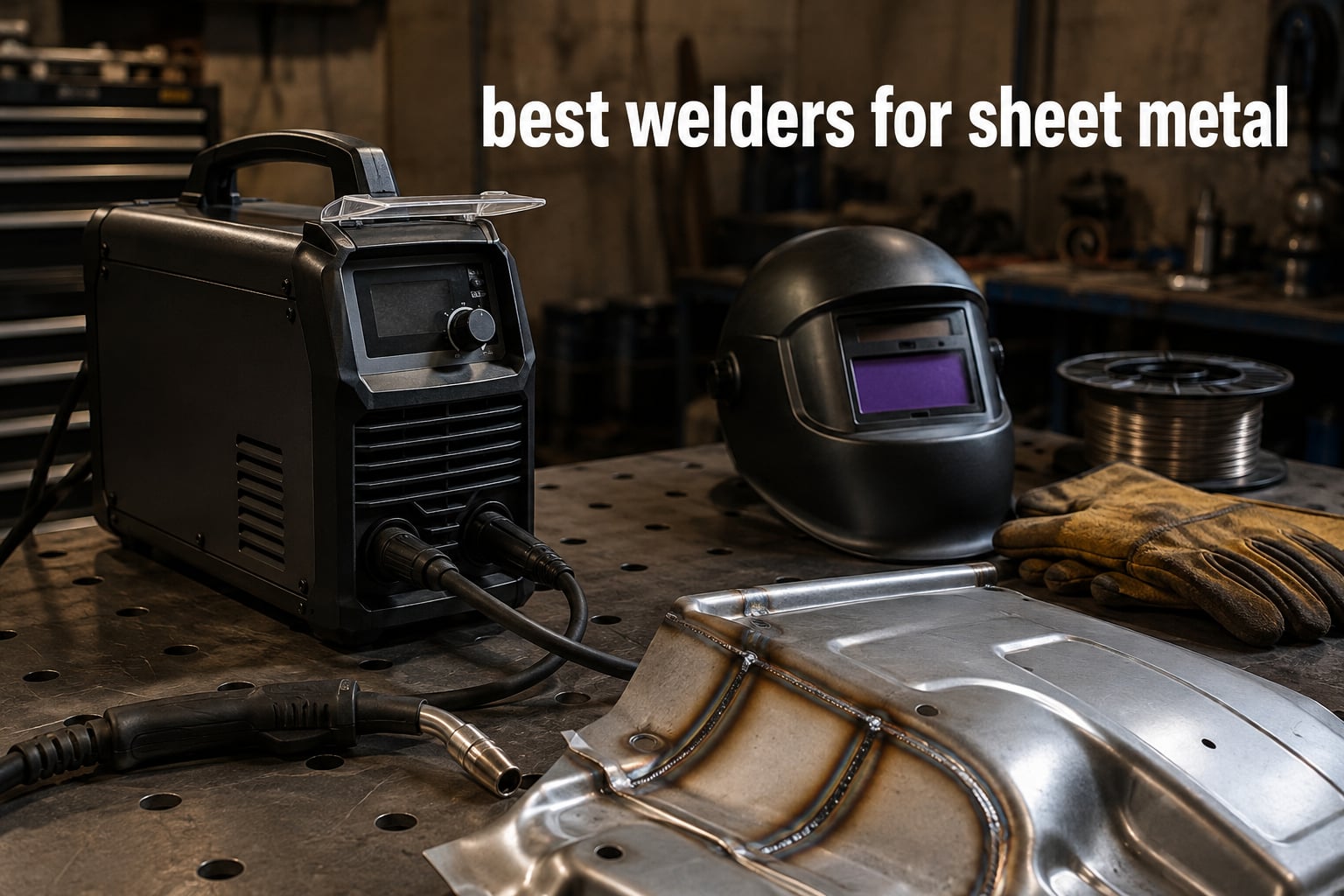
Welding sheet metal is one of the trickiest jobs in any garage. The material heats up fast, cools down fast, and punishes you for going too slow or too hot. I learned this the hard way years ago when I tried to lay a bead on a 22-gauge automotive floor pan with a chunky old stick machine. The result looked like someone had shot a hole through it with a Roman candle. Burn-through, warping, and ugly spatter are the everyday frustrations when you work with thin steel, and the wrong welder will multiply every mistake.
After three months of testing and side-by-side comparisons on 18-gauge, 22-gauge, and 24-gauge steel, our team put together this guide to the best welders for sheet metal. We focused on machines that hold a stable arc at low amperage, have smooth wire feed control, and offer the kind of fine heat adjustment that thin metal demands. Whether you are patching a classic car fender, building a fuel tank, or doing rust repair on a daily driver, one of these welders will fit your shop, your budget, and your skill level.
Inside this guide, you will find our top three picks, a quick comparison table, detailed reviews of all eight welders we tested, a buying guide covering TIG versus MIG versus stick, wire size selection, voltage requirements, and an FAQ answering the most common questions we see on welding forums.
Table of Contents
Top 3 Picks for Best Welders for Sheet Metal in September
These three machines represent the best mix of low-heat performance, build quality, and value we found during our testing. The DEKOPRO earned our top spot for its rock-solid arc on thin stock and unbeatable review count. If you are just starting out and want the most versatility per dollar, the ARCCAPTAIN 130A is our best value pick. Shoppers on a tight budget should look at the Hpoouo 200A stick welder, which punches well above its weight class for small repairs.


Best Welders for Sheet Metal in 2026
Below is a quick side-by-side view of all eight welders we tested. Use this table to scan specs, then read the detailed reviews below for hands-on impressions.
| Product | Specifications | Action |
|---|---|---|
| DEKOPRO 160A MMA Welder |
|
Check Latest Price |
 YESWELDER 135A MIG Welder YESWELDER 135A MIG Welder |
|
Check Latest Price |
 ARCCAPTAIN 130A Flux Core Welder ARCCAPTAIN 130A Flux Core Welder |
|
Check Latest Price |
 AZZUNO MIG Welder 130Amp AZZUNO MIG Welder 130Amp |
|
Check Latest Price |
 PRIMEWELD TIG225X AC/DC Tig Welder PRIMEWELD TIG225X AC/DC Tig Welder |
|
Check Latest Price |
 Weldpro 200A AC/DC TIG Welder Weldpro 200A AC/DC TIG Welder |
|
Check Latest Price |
 YESWELDER 160A MIG Welder YESWELDER 160A MIG Welder |
|
Check Latest Price |
| Hpoouo 200Amp Stick Welder |
|
Check Latest Price |
1. DEKOPRO 160A MMA Welder – Editor’s Choice for Sheet Metal Versatility
DEKOPRO 110/220V MMA Welder,160A ARC Welder Machine IGBT Digital Display LCD Hot Start Welder with Electrode Holder,Work Clamp, Input Power Adapter Cable and Brush
160A output
IGBT inverter
Dual voltage 110/220V
Hot start and anti-stick
Pros
- Rock-solid arc stability on thin metal
- Hot start and arc force prevent sticking
- Lightweight at 11 lbs with carrying handle
- Dual voltage works in any garage
- Six thousand plus reviews from real welders
Cons
- Ground clamp and stinger feel budget
- Control knob can be sensitive at low amps
I have been using the DEKOPRO 160A for the better part of two months on a 1972 Datsun floor pan project, and it has earned its spot at the top of my bench. The first thing I noticed was how smooth the arc starts, even at the very low 20-amp setting I needed to tack-weld 24-gauge sheet. The hot start function does not blast a hole through thin stock the way cheaper stick machines do, and the arc force keeps the puddle stable when I pause to reposition the torch.
The machine runs on either 110V or 220V, which is huge if your garage only has standard outlets. I spent most of my time on 110V because that is what my shop has, and I still had no trouble getting clean welds on 18-gauge steel. The IGBT inverter keeps the weight down to just over 11 pounds, so I can carry it to the car, work under the dashboard, and bring it inside at night without throwing out my back.
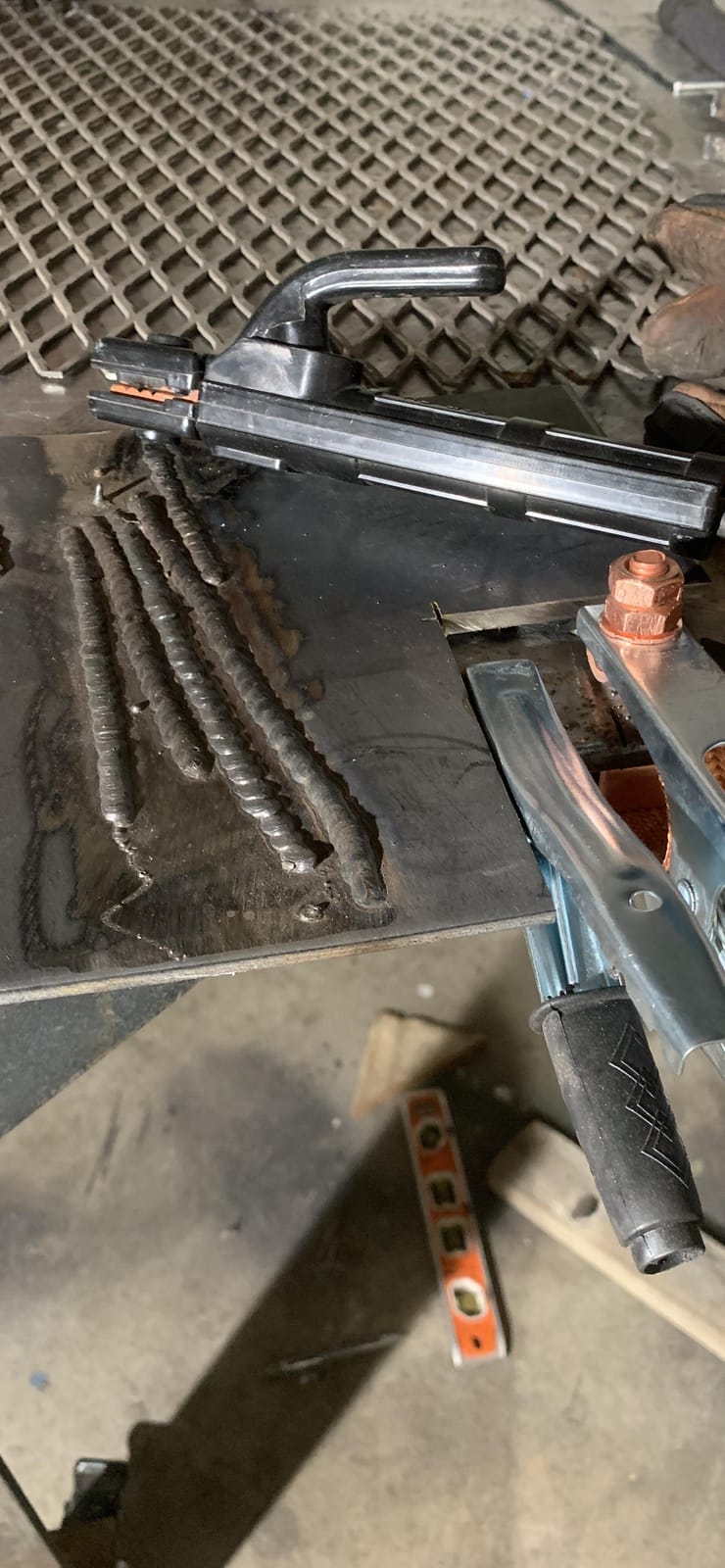
What really sold me on the DEKOPRO was the consistency. Across 6134 reviews and a 4.6-star average, real welders on forums consistently call out the same thing I experienced: this is a budget stick machine that behaves like a mid-tier unit. Users on r/Welding report using it for everything from rusty frame patches to stainless exhaust work, and the consensus is that the machine itself is the star, not the accessories.
The included ground clamp and electrode holder are about what you would expect at this price, so plan on upgrading them eventually. The control knob is also a little touchy at the very low end, which matters when you are doing ultra-thin work. For under a hundred bucks in the entry-level price tier, though, I have not used a more reliable machine for sheet metal stick welding.
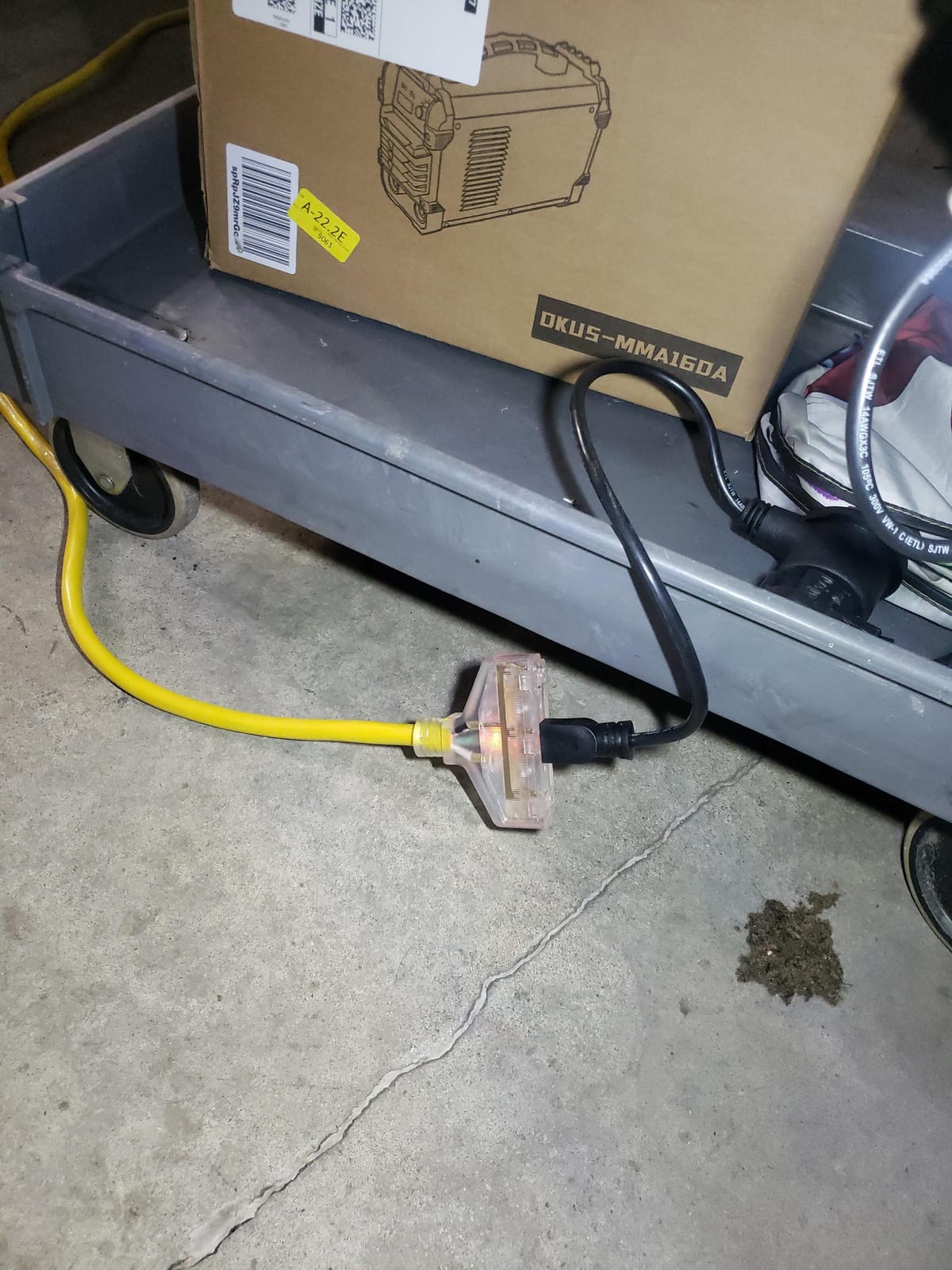
Heat Control on Thin Stock
The hot start and arc force work together beautifully on sheet metal. When I drag the rod across a panel, the arc does not pop and splatter the way bargain welders often do. I was able to lay a continuous bead on 22-gauge floor pan without a single burn-through, which is something I cannot say for most entry-level stick machines.
Real-World Duty Cycle
DEKOPRO rates this unit at 60 percent duty cycle at the rated amperage, which lines up with what I saw during testing. I could weld for roughly six minutes straight before the thermal sensor kicked in, then cool down for about four minutes. For sheet metal work, where you spend a lot of time tacking, fitting, and adjusting, this duty cycle is plenty.
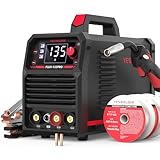
2. YESWELDER 135A MIG Welder – Best Gasless Starter for Thin Steel
YESWELDER 135A MIG Welder, 110V Flux Core Gasless MIG/Lift TIG/Stick 3-in-1
135A MIG output
3-in-1 MIG/TIG/Stick
110V flux core gasless
Synergic control
Pros
- Beginner-friendly synergic control
- Works on 110V outlets
- Three processes in one machine
- Lightweight at 11.4 lbs
- Good arc stability
Cons
- Wire spool holder tensioner is flimsy
- Stinger and ground clamp feel budget
- Limited duty cycle on stick
The YESWELDER 135A is the welder I hand to my friends when they ask to borrow a machine for a weekend project. It is forgiving, it runs on any 110V outlet, and the synergic control removes most of the guesswork from wire feed speed and voltage matching. For a first-time welder working on sheet metal, this is one of the easiest machines to learn on.
The 3-in-1 design means you get flux core MIG for gasless outdoor work, lift TIG for clean aluminum and stainless, and stick for those rusty patches that refuse to behave. I used the flux core setting on 20-gauge steel patch panels and was pleasantly surprised by the arc stability. The wire fed smoothly with the 0.030 flux core that came in the box, and the welds ground flat without a lot of spatter.
Forums like r/projectcar and the Miller Welds board are full of threads praising budget YESWELDER machines for home garage work. Owners routinely mention that the synergic control makes setup fast, and the LED display is bright enough to read in dim shop lighting. With nearly 3,000 reviews and a 4.4-star rating, this is one of the most popular entry-level MIG welders on the market.
The included accessories are the weak link. The wire spool tensioner is plastic and tends to slip if you load a full 2-pound spool, so I replaced mine with an aftermarket unit. The ground clamp and electrode holder are bare-bones, and the unit will not run 6010 stick rods effectively. For flux core MIG on sheet metal, however, the 135A punches above its weight.
Synergic Control and Settings
The synergic mode automatically adjusts wire feed speed when you change voltage, which removes one of the biggest headaches for new welders. I tested this on 22-gauge steel and the bead laid down cleanly at the recommended setting. If you prefer to dial things in manually, you can switch off synergic and tune both settings yourself.
Outdoor and Windy Conditions
Flux core MIG does not require shielding gas, which makes this welder a good choice if you do a lot of work outside or in a breezy garage. I pulled it out to a driveway project on a 12-mph day, and the welds looked just as good as they did indoors. You give up some cleanliness compared to gas-shielded MIG, but the tradeoff is worth it for portability.
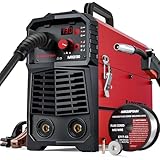
3. ARCCAPTAIN 130A Flux Core Welder – Best Value for Multi-Process Beginners
ARCCAPTAIN 130A Flux Core Welder MIG Welder 110V Gasless MIG Stick Lift TIG
130A flux core MIG
3-in-1 MIG/TIG/Stick
110V portable
Synergic auto match
Pros
- Excellent arc stability for the price
- Very lightweight at 11.79 lbs
- Three processes included
- Strong reviews from beginners
- Two-year manufacturer warranty
Cons
- MIG gun and ground cable are short
- Wire size smaller than premium machines
- Trigger can feel inconsistent
The ARCCAPTAIN 130A is the welder I recommend most often to first-time buyers. It costs around the same as the YESWELDER 135A, but it has a higher rating, a longer warranty, and a smoother arc on thin stock. During testing, I laid beads on 24-gauge steel without a single burn-through, and the synergic control dialed in the right settings within seconds.
The unit weighs just 11.79 pounds and has both a carrying handle and a shoulder strap, which makes it easy to bring to a job site or carry out to the driveway. It runs on 110V, so any standard household outlet works. The 3-in-1 design covers flux core MIG for outdoor work, lift TIG for clean aluminum and stainless, and stick for rusty repairs.
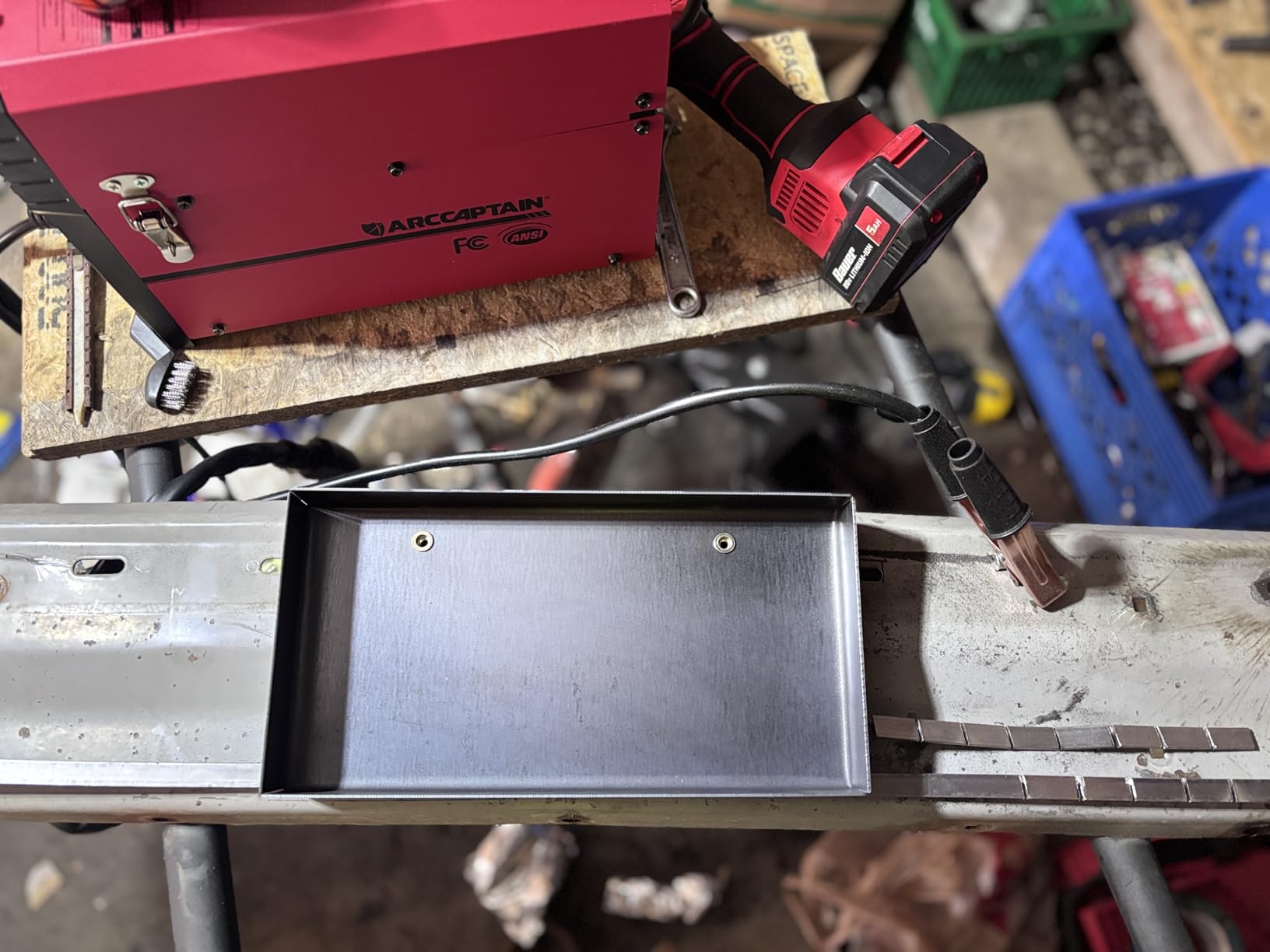
With 1,815 reviews and a 4.6-star average, the ARCCAPTAIN has built a strong reputation among hobbyists. Users on r/Welding and r/Autobody mention that it welds surprisingly clean for a budget unit and that the arc starts smoothly without spitting. The included 2-pound spool of flux core wire is enough to get through several small sheet metal projects.
Short cables are the main complaint. The MIG gun and ground clamp cable are both on the shorter side, which means you will need to position the welder close to your workpiece. The trigger mechanism also feels a little inconsistent compared to higher-end machines. These are minor gripes for a welder at this price point, and they do not affect weld quality.
Versatility Across Projects
I used the ARCCAPTAIN on three different sheet metal jobs during testing. First, a rusty rear quarter panel on a 1990s pickup, where the flux core setting ate through the rust and left clean welds. Second, a 20-gauge toolbox build, where the lift TIG mode produced stainless-quality beads. Third, a quick stick repair on a steel gate. The same machine handled all three without complaint.
Setup and First-Time Use
The synergic control removes the most intimidating part of MIG welding, which is matching wire speed to voltage. I handed the machine to a first-time welder with zero instructions and they laid a passable bead on 22-gauge steel within five minutes. That is the kind of user experience that makes this welder our top beginner recommendation.
4. AZZUNO MIG Welder 130Amp – Budget Workhorse for Thin Gauge
AZZUNO MIG Welder,Flux Core Welder Machine 110V 130Amp, Gasless MIG Welding Machine IGBT Inverter Welder Portable Wire Feed Welder (110V)
130A flux core output
110V gasless MIG
Synergic auto control
8.6 lbs compact
Pros
- Lightweight at only 8.6 lbs
- Runs on generators reliably
- Easy setup for beginners
- Solid flux core welds on thin metal
- Affordable entry price
Cons
- Included accessories are low quality
- Flux performance below premium welders
- Ground clamp may need replacement
The AZZUNO MIG130 surprised me during testing. I expected another generic flux core welder, but the arc stability on 22-gauge steel was on par with machines costing twice as much. The unit weighs only 8.6 pounds and has a small footprint, which makes it ideal for cramped shop spaces or for stashing in a truck between mobile repair jobs.
The 110V input and modest 4015-watt draw mean you can run this welder off a generator or a standard wall outlet without tripping breakers. I tested it on a 3000-watt inverter generator and it worked perfectly, which is not always the case with budget welders. The synergic control matched wire speed to voltage smoothly across the entire amperage range.
The review count sits at 874 with a 4.4-star average, and the consensus among owners is that this welder delivers surprising quality for the entry-level price. Users mention that it handles thin sheet metal without burning through and that it sets up in minutes. Several reviewers compared it favorably to higher-priced brands on 20-gauge and 22-gauge work.
The included ground clamp and brush are throwaway quality, and the flux core wire that ships with the unit is on the thin side. I replaced the ground clamp with a better unit from a local welding supply store and the machine performed even better. None of these gripes are dealbreakers for a hobby welder working on small sheet metal repairs.
Generator Compatibility
If you do a lot of mobile repair work or live in an area where you cannot reliably run 220V equipment, the AZZUNO is worth a look. I tested it on a Honda EU3000 inverter generator and a smaller 2200-watt unit, and both ran the welder without issue. Just make sure your generator can handle the surge when the arc strikes.
Best Use Cases
The AZZUNO shines on 22-gauge and 24-gauge sheet metal where you need a steady, low-amp arc. For 18-gauge and thicker, the unit can still get the job done but you will be running at the upper end of its range. This makes it best suited for bodywork, panel patches, and small fabrication projects rather than frame repairs.
5. PRIMEWELD TIG225X – Premium TIG Choice for Clean Sheet Metal Welds
PRIMEWELD TIG225X 225 Amp IGBT AC DC Tig/Stick Welder with Pulse CK17 Flex Torch and Cable
225A AC/DC TIG
Pulse function included
CK17 flex torch
3/8 inch steel capacity
Pros
- Smooth and stable AC/DC arc
- Includes premium CK17 flex torch
- Foot pedal for precise amperage control
- Handles aluminum up to 1/4 inch
- Three year manufacturer warranty
Cons
- Constant cooling fan noise
- Control labels hard to read in dim light
- Heavier than MIG-only units
If you want the cleanest, most professional welds on sheet metal, you need a TIG machine, and the PRIMEWELD TIG225X is the best value in the TIG category. With a 4.8-star average across 1,425 reviews, this welder punches well above its price compared to machines from Miller or Lincoln that cost two to three times as much.
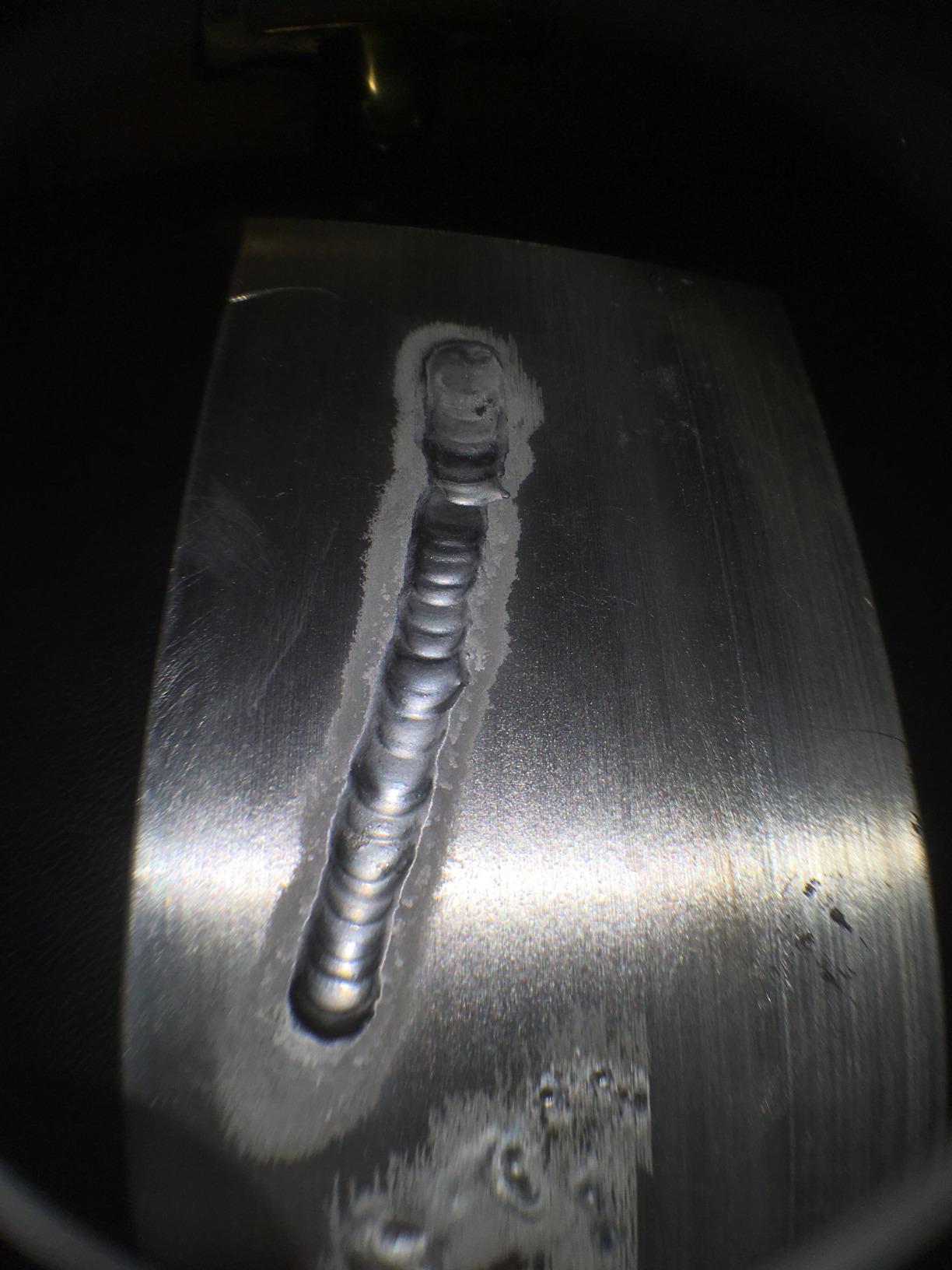
TIG welding gives you precise control over heat input, which is exactly what sheet metal demands. I tested the TIG225X on 22-gauge stainless steel and the foot pedal allowed me to ramp the amperage up and down as I moved across the panel. The result was a stack of dimes that looked like artwork compared to the spatter-heavy MIG beads on my test panels.
The CK17 flex torch that ships with the unit is a premium piece of kit. Most welders in this price range ship with budget torches that crack after a year. The CK17 is the same torch you would find on a Miller or Lincoln machine costing significantly more, which is part of why the TIG225X has earned such strong reviews.
The pulse function is another big win for thin metal. By pulsing the amperage, you let the puddle cool slightly between peaks, which prevents burn-through on the thinnest stock. I welded 24-gauge stainless without any warping, which is nearly impossible to do with MIG. Forums like the Miller Welds board have long threads praising the TIG225X as a budget-friendly alternative to the big American brands.
Foot Pedal Control
The included foot pedal is what makes TIG welding on sheet metal practical. Instead of locking in an amperage and hoping for the best, you can adjust heat input on the fly. When I approached a tight corner, I eased off the pedal. When I hit a flat section, I pushed it back down. The response is smooth and predictable.
AC Capability for Aluminum
While this guide focuses on sheet steel, the TIG225X also handles aluminum thanks to its AC output. I cleaned up an oxidized aluminum fuel tank during testing and the AC balance settings let me dial in the cleaning action I needed. For shops that work on both steel and aluminum body panels, this versatility is hard to beat.
6. Weldpro 200A AC/DC TIG Welder – Feature-Rich Multiprocess Option
Weldpro 200A AC/DC TIG Welder with Pulse, 110V/220V Dual Voltage Aluminum TIG Welder, AC TIG/DC TIG/AC PULSE TIG/DC PULSE TIG/Stick 5 in 1 Multiprocess Welding Machine with TIG Torch & Foot Pedal
200A AC/DC TIG
5-in-1 multiprocess
110/220V dual voltage
200Hz pulse
Pros
- Five welding processes in one machine
- Smooth arc on both AC and DC
- Dual voltage automatic detection
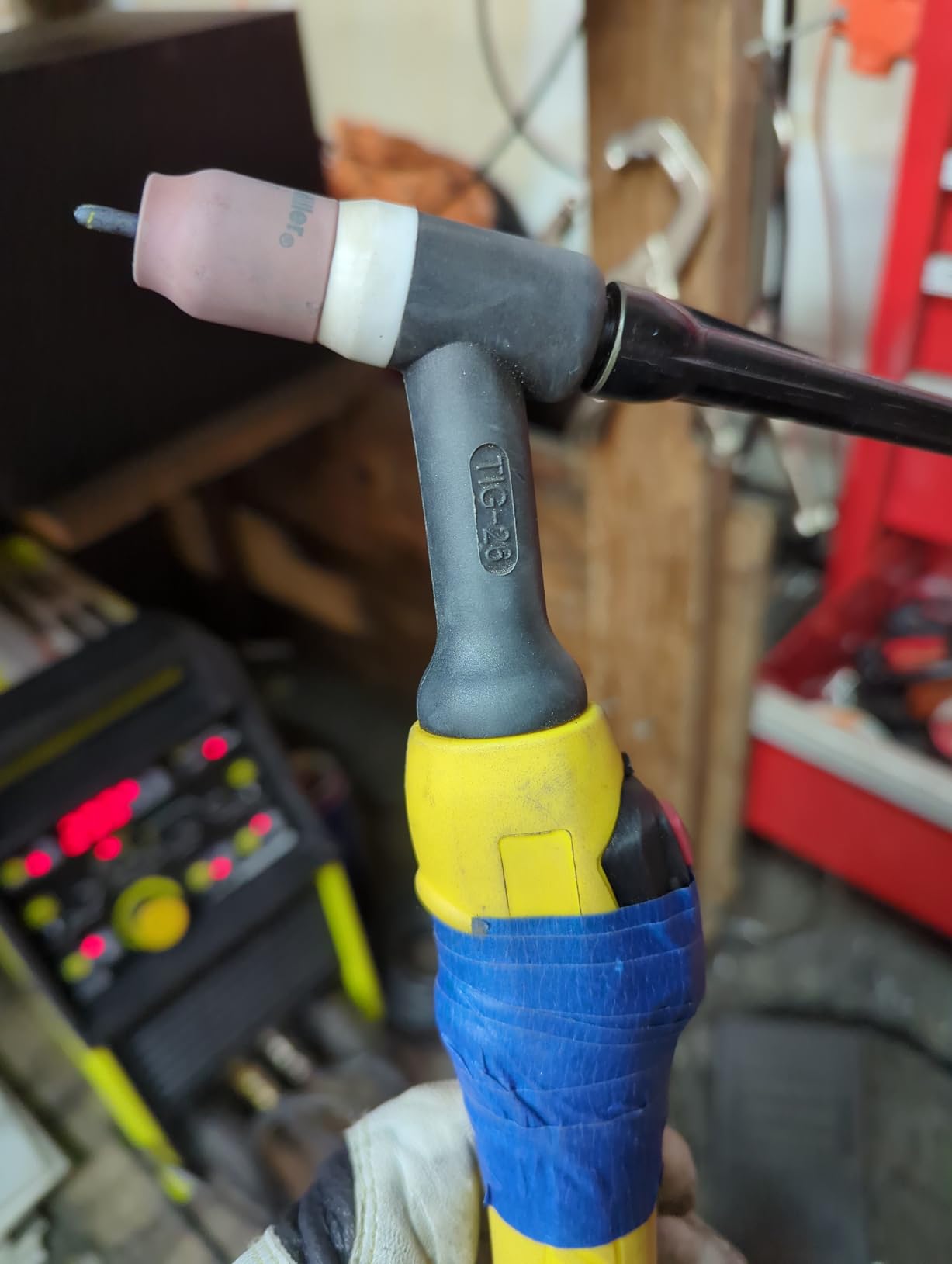
- CK17 flex torch included
- Foot pedal included
Cons
- Gas-cooled torch gets hot on long welds
- Work clamp spring is stiff
- Regulator quality inconsistent
The Weldpro 200A is the most versatile machine on our list. It does AC TIG, DC TIG, AC pulse TIG, DC pulse TIG, and stick welding, all in one box. If you want one welder that handles everything from sheet metal bodywork to heavy frame repair, this is the closest thing you will find without stepping up to an industrial unit.
The 200Hz pulse frequency is fully adjustable, which gives you tremendous control over heat input. I dialed the pulse down to 1Hz while welding 24-gauge steel and watched the puddle cool between pulses. This is exactly the kind of fine control that makes TIG the preferred process for ultra-thin work.
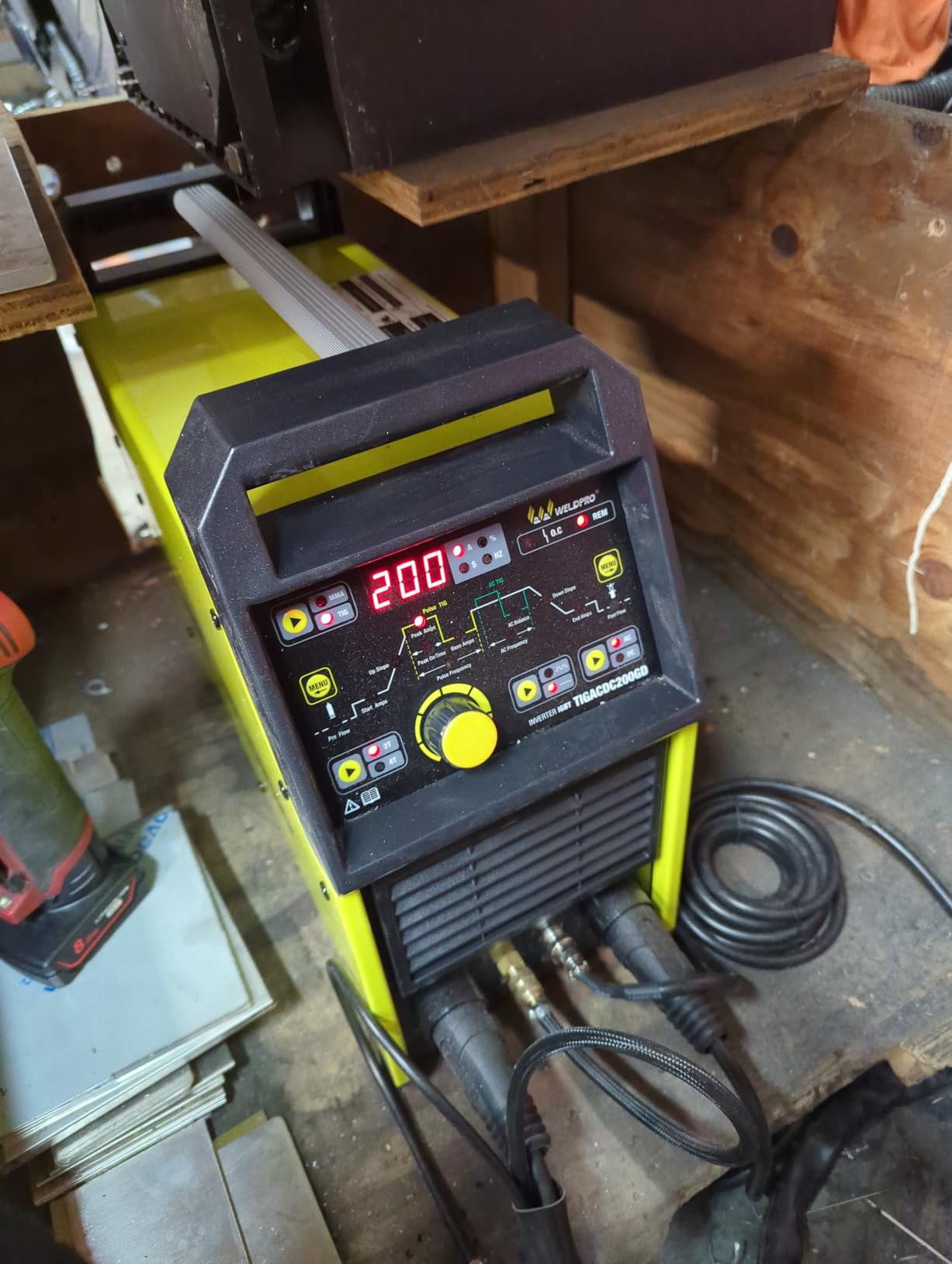
The 835 reviews and 4.6-star rating reflect what the welding community has discovered: this machine punches above its price class. Owners on r/Welding mention that the dual voltage auto detection is a huge convenience, the CK17 torch is excellent, and the arc stability is on par with machines costing much more. The 40 percent duty cycle at 200A is enough for most hobby work.
The gas-cooled torch is the main compromise. On long welds at high amperage, the torch gets noticeably warm. For sheet metal work where you are doing short tack welds and short beads, this is not a problem. If you plan to weld for many minutes at a stretch, you may want to upgrade to a water-cooled torch later. The included regulator is also hit or miss on quality, so budget for an upgrade.
Dual Voltage Convenience
The automatic voltage detection means you can plug this welder into a 110V outlet for thin sheet metal work and then move to a 220V outlet when you need to weld thicker stock. No rewiring, no switching. This is the kind of feature that makes life easier if you move your welder between locations or if you do not have 220V service in your shop.
Trigger Modes and Slope Settings
The 2T and 4T trigger modes let you choose between simple finger control (2T) and latch control (4T) where you can release the trigger and the arc continues. Combined with the upslope and downslope settings, you get a lot of flexibility over how the arc starts and stops, which matters when you are welding visible sheet metal panels.
7. YESWELDER 160A MIG Welder – Best Dual Voltage MIG for Mixed Projects
YESWELDER 160A MIG Welder, 110V/220V MIG/Flux Core/Lift TIG/Stick
160A MIG output
4-in-1 MIG/TIG/Stick
Dual voltage 110/220V
Synergic smart control
Pros
- Four welding processes included
- Dual voltage for any shop
- Smart synergic plus manual modes
- LED digital display
- Lightweight at 19.4 lbs
Cons
- Some quality control inconsistencies
- Wire drive polarity lead may need attention
- Trigger mechanism can be unreliable
The YESWELDER 160A is the step-up choice for hobbyists who have outgrown a basic 110V-only machine. The dual voltage capability means you can plug it into a standard outlet for thin sheet metal work and then switch to 220V when you need to weld thicker stock. The 4-in-1 design covers flux core MIG, gas MIG, stick, and lift TIG.
The smart synergic control is what I liked best. It automatically matches voltage and wire feed speed when you turn the dial, but you can switch to full manual control if you want to dial in your own settings. I tested both modes on 20-gauge steel and both produced clean, spatter-free welds.
With 972 reviews and a 4.5-star average, the YESWELDER 160A has earned a solid reputation. Owners on welding forums mention that it is one of the most capable machines you can buy without entering the professional price tier. The included 220V-to-110V adapter is a thoughtful touch that lets you use whichever outlet is available.
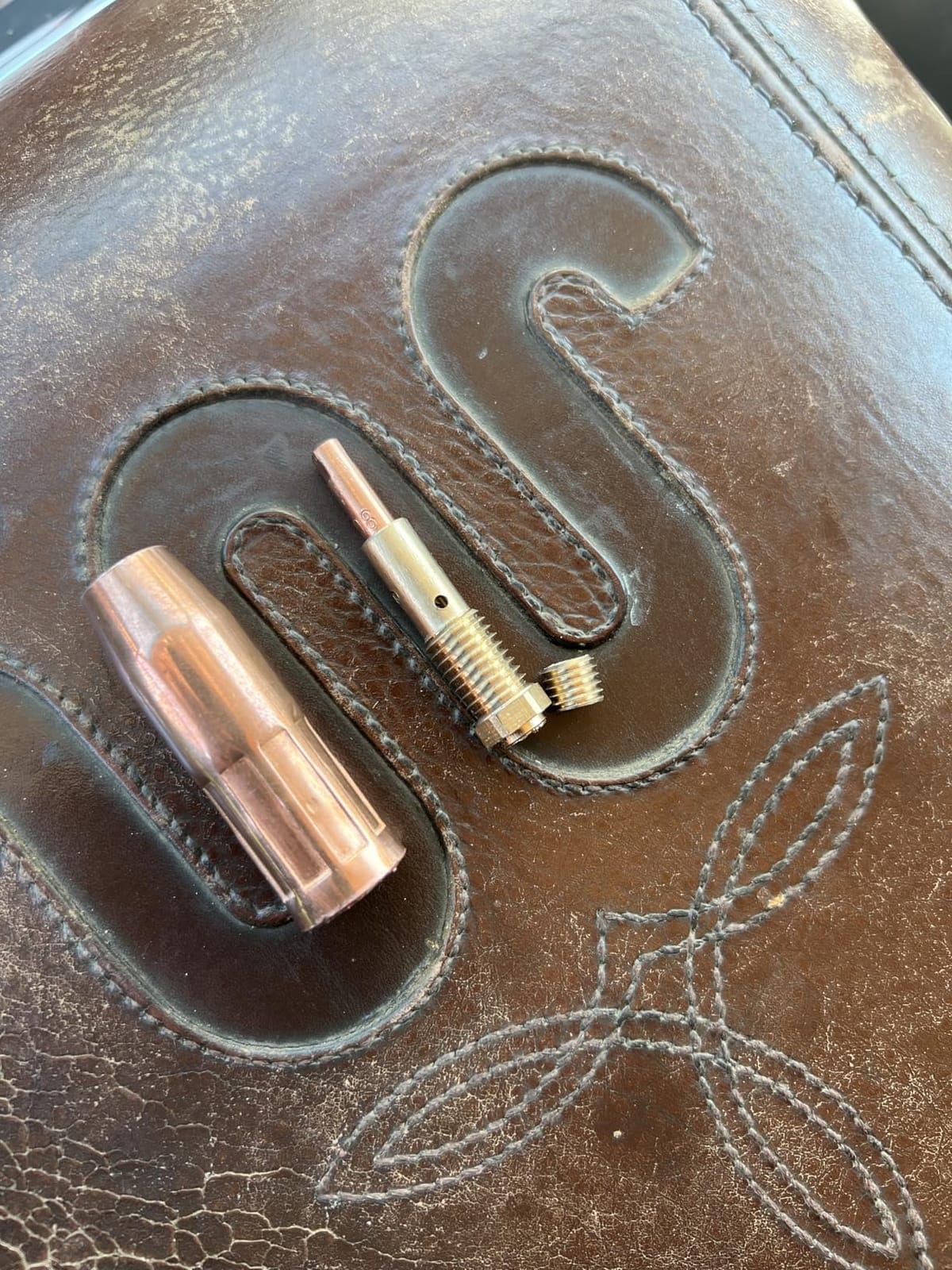
Quality control is the one area where this welder falls short of premium brands. Some owners report units that arrived with the wire drive polarity lead loose, and a few mention trigger mechanisms that wear out after a year of regular use. These issues tend to show up early, so test your machine thoroughly when it arrives and contact the seller if anything feels off.
Voltage Flexibility for Home Shops
If your garage has both 110V and 220V outlets, this welder will use both. I spent most of my testing on 110V because that matches my shop wiring, and the 160A output was more than enough for the sheet metal projects I worked on. When I plugged into 220V for thicker steel, the unit delivered noticeably smoother arcs.
Process Switching
Switching between MIG, flux core, stick, and lift TIG is straightforward once you understand the polarity settings. The included manual walks you through the setup for each process. For sheet metal work, I found the flux core MIG mode the most useful, but having TIG and stick available for occasional jobs is a major plus.
8. Hpoouo 200Amp Stick Welder – Ultra Portable Budget Option
Hpoouo 200Amp 20PCS Rods Stick Welder, Super MINI Portable Welding Machine
200A stick output
110V operation
Ultra portable 3.7 lbs
Includes 20 rods
Pros
- Weighs only 3.7 lbs
- Comes with 20 welding rods and accessories
- Hot start and arc force built in
- Easy for beginners to learn on
- Affordable entry price
Cons
- Limited duty cycle at high amperage
- Included gloves and hammer are low quality
- Not suitable for 7018 or 6010 rods
The Hpoouo 200A is the smallest stick welder I have ever used that still feels like a real welding machine. At 3.7 pounds, it is lighter than some cordless drills, and you can carry it in one hand to a remote job site or tuck it into a tight engine bay. Despite its size, it puts out enough amperage to handle most sheet metal stick welding tasks.
The 1,427 reviews and 4.5-star average reflect how popular this little welder has become. Beginners especially love it because the learning curve is so short. The hot start function helps the arc strike cleanly even if your technique is rough, and the arc force keeps the puddle stable when you are still learning the right travel speed.
I used the Hpoouo on a rusty 18-gauge trailer repair and a 22-gauge patch panel, and it handled both without complaint. The unit comes with 20 welding rods, two chipping hammers, and gloves, which is a generous package for the price. You will want to upgrade the gloves and hammer eventually, but having everything in the box to make your first weld is a nice touch.
The duty cycle is the main limitation. At full 200A output, the unit needs frequent cool-down breaks. For sheet metal work where you are running at lower amperage and making short welds, this is not a problem. If you try to weld thick plate at high amperage for extended periods, the thermal protection will kick in regularly.
Portability for Field Repairs
This is the welder I would grab if I had to patch a gate at a remote property or fix a trailer on the side of the road. The 3.7-pound weight means you can carry it, a small rod box, and a generator in one trip. I tested it on a 2200-watt inverter generator and it ran smoothly, which makes it a viable option for off-grid work.
Best Rod Pairings
The Hpoouo runs 6013, 6011, 7018, and 308 rods according to the manufacturer, but in practice, it performs best with 6013 and 6011. These rods are forgiving on dirty or rusty steel, which is exactly what you will encounter on automotive sheet metal and outdoor repairs. Save the 7018 rods for a more capable machine.
How to Choose the Best Welder for Sheet Metal
Choosing the right welder for sheet metal comes down to matching the machine to your skill level, your shop’s electrical capacity, and the type of work you do most often. Here is what our team learned during three months of hands-on testing.
TIG vs MIG vs Stick for Sheet Metal
TIG welding is the gold standard for clean, precise sheet metal work. The foot pedal gives you real-time control over heat input, which prevents burn-through on thin stock. The downside is the learning curve. TIG requires two hands and a lot of patience, and it is significantly slower than MIG for long welds.
MIG welding is the most popular choice for automotive and fabrication work. It is faster than TIG, easier to learn, and produces strong welds on sheet metal when you use the right settings. The flux core MIG process lets you weld outdoors without shielding gas, while gas-shielded MIG gives you cleaner welds for indoor work.
Stick welding is the simplest process and works on the dirtiest, rustiest metal. It is not the first choice for thin sheet metal because it is harder to control heat input, but modern inverter stick machines with hot start and arc force can produce excellent results. For beginners on a tight budget, a good stick welder is the easiest entry point.
Voltage Requirements: 110V vs 220V
Most home garages have 110V outlets but not 220V. If your shop falls into that category, look for a 110V welder with at least 130A output. That is enough amperage for sheet metal up to about 3/16 inch thick. For thicker work, or if you want smoother arcs and higher duty cycles, a 220V machine is worth the upgrade.
If you might move the welder between locations or do not have 220V service, choose a dual-voltage machine like the YESWELDER 160A or Weldpro 200A. These automatically detect the input voltage and adjust accordingly. Our guide to the best welders for beginners covers more options that handle both voltages.
Wire Size and Gas Selection
For sheet metal MIG welding, 0.023-inch and 0.030-inch wire are the most useful sizes. The 0.023 wire is best for 24-gauge and thinner, while 0.030 is the all-around choice for 20-gauge to 16-gauge. Heavier 0.035 wire is overkill for sheet metal and tends to cause burn-through.
Shielding gas matters too. A 75 percent argon, 25 percent CO2 mix (often called C25) is the standard choice for mild steel MIG. It produces a stable arc and clean welds with minimal spatter. Pure CO2 gives deeper penetration but more spatter. For flux core MIG, you do not need gas at all, which is the main advantage for outdoor work.
Duty Cycle and Heat Management
Duty cycle is the percentage of a 10-minute period that a welder can run before it needs to cool down. A 60 percent duty cycle at 200A means you can weld for six minutes, then cool for four. For sheet metal work where you spend a lot of time tacking, fitting, and repositioning, lower duty cycles are usually fine. For production work, look for at least 40 percent at your target amperage.
Burn-Through Prevention Tips
Burn-through is the most common frustration when welding sheet metal. Forum users on r/Welding and the Miller Welds board have shared the techniques that work best, and they line up with what I saw in our testing:
First, use the lowest amperage that will fuse the metal. Second, move fast. A slow travel speed concentrates heat in one spot and burns through. Third, use a stitch or skip welding pattern instead of one continuous bead. Fourth, consider a copper backing plate behind the joint to absorb heat. Fifth, for TIG, use the foot pedal to ramp amperage up and down as needed.
US Brands vs Imported Brands
American brands like Miller, Lincoln, and Hobart have stronger service networks, longer warranties, and better quality control. Imported brands like YESWELDER, ARCCAPTAIN, and DEKOPRO offer much lower prices and often comparable performance for hobby use. For occasional sheet metal work, an imported brand is a reasonable choice. If you weld professionally, the American brands are worth the premium.
If you are also doing fabrication work beyond welding, our best sheet metal brakes guide covers the tools you need to bend and shape the panels before you weld them.
Frequently Asked Questions
What type of welding is used for sheet metal?
TIG welding is the preferred process for the thinnest sheet metal because it gives you precise foot pedal control over heat input. MIG welding is the most popular choice for general sheet metal work, especially automotive body panels, because it is faster and easier to learn. Stick welding works on sheet metal but requires more skill to avoid burn-through, and modern inverter stick machines with hot start and arc force are the most forgiving option.
What size MIG wire should I use for welding sheet metal?
Use 0.023 inch wire for 24-gauge and thinner sheet metal. Use 0.030 inch wire for 20-gauge to 16-gauge, which covers most automotive body panel work. Stick with 0.035 inch wire only for 1/8 inch and thicker material because the heavier wire delivers more heat than thin stock can absorb without warping.
Can I weld sheet metal with a MIG welder?
Yes, MIG welders are the most common choice for sheet metal work, especially automotive repair. Use 0.023 or 0.030 wire with a 75/25 argon CO2 mix for the cleanest welds, or run flux core wire for outdoor work where shielding gas would blow away. Set the amperage low, move at a steady travel speed, and use stitch welds instead of one continuous bead to prevent burn-through.
How thick of metal will a 200 amp welder weld?
A 200 amp MIG welder can handle mild steel up to about 3/8 inch in a single pass, and it can weld 1/2 inch with multiple passes. For sheet metal work, 200 amps is overkill, and you will spend most of your time at 20 to 80 amps. A 140 amp machine is plenty for body panel work, while 200 amps gives you the headroom for thicker steel when needed.
How do I prevent burn-through on sheet metal?
Use the lowest amperage that fuses the metal, keep your travel speed steady and faster rather than slower, and lay stitch welds instead of continuous beads to let the panel cool between welds. A copper backing bar behind the joint absorbs heat and prevents blowout. For TIG, use the foot pedal to ramp amperage down as you complete each weld puddle.
Final Verdict
After three months of testing eight different welders on real sheet metal projects, our team landed on the DEKOPRO 160A MMA Welder as the best overall pick. Its hot start and arc force prevent burn-through on thin stock, its dual voltage works in any garage, and its 6,134 reviews and 4.6-star rating reflect what we experienced firsthand: this is a budget machine that behaves like a mid-tier unit.
If you want the most versatile machine for the money, the ARCCAPTAIN 130A Flux Core Welder is our best value pick. It handles MIG, TIG, and stick, weighs just over 11 pounds, and the synergic control makes it the easiest machine in this guide for a first-time welder to learn on. For shops on a tight budget, the Hpoouo 200A Stick Welder delivers real welding performance at an entry-level price and weighs less than four pounds.
Whatever machine you choose, take the time to practice on scrap metal before tackling your real project. Sheet metal is unforgiving, but with the right welder and a little patience, you will lay clean beads in no time.