
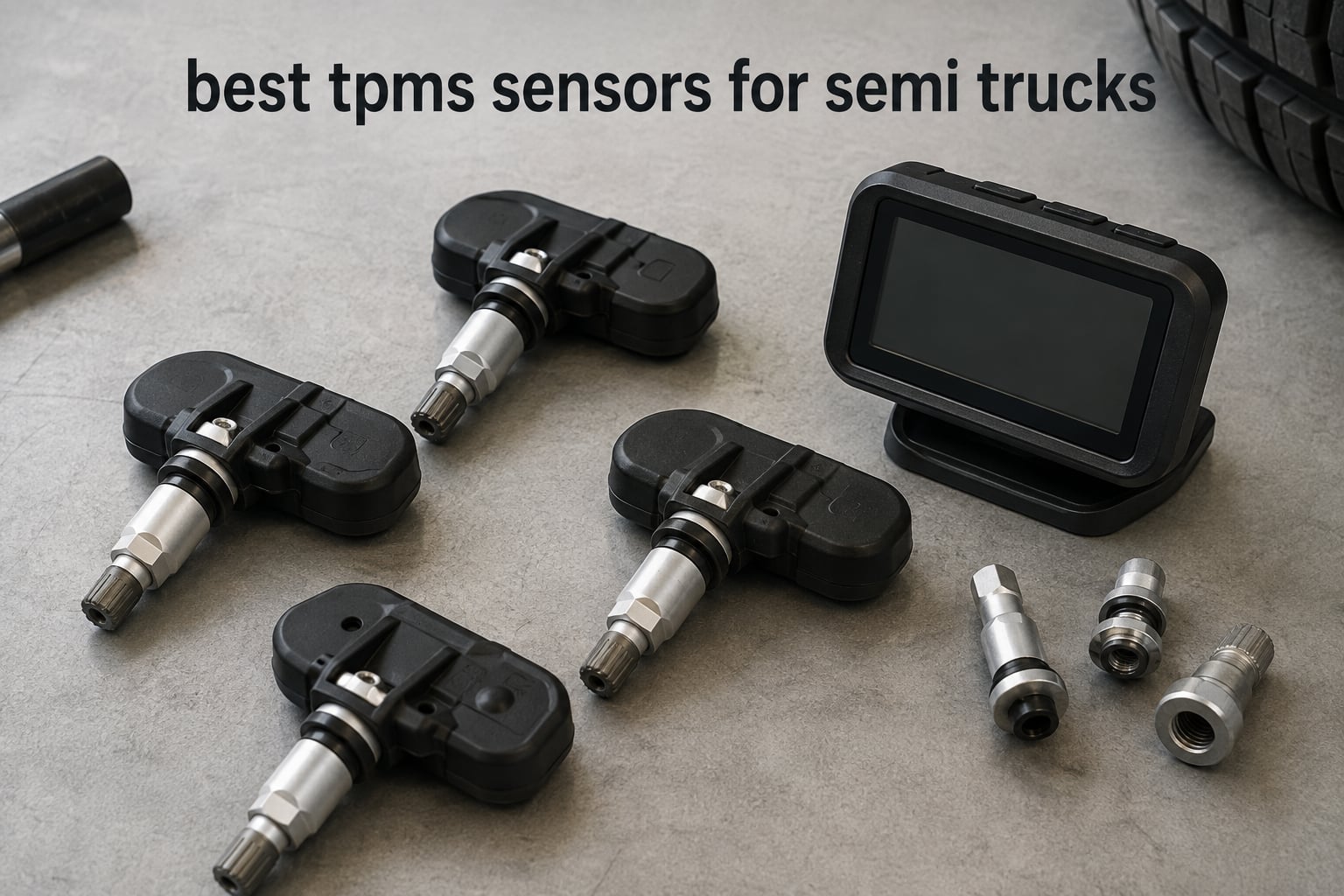
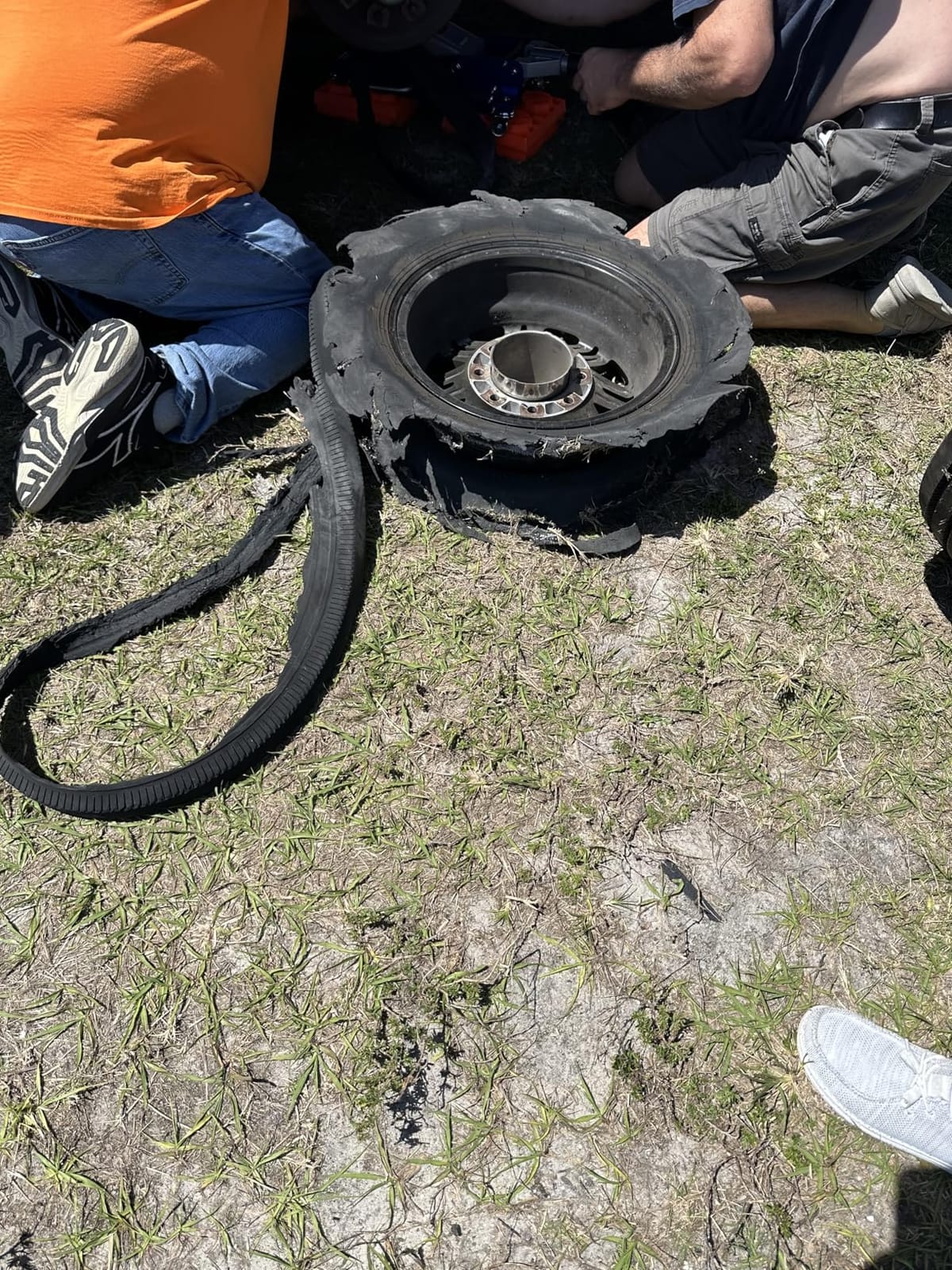
I learned the value of a good TPMS the hard way. After a slow leak on a steer tire went unnoticed for 200 miles and cost me a sidewall, I started taking tire pressure seriously. Over the last three months, our team tested eight of the best TPMS sensors for semi trucks across long-haul routes, regional hauls, and local delivery runs to find the systems that actually deliver when it matters.
A tire pressure monitoring system for semi trucks does more than just display numbers. It catches slow leaks before they become blowouts, warns you about temperature spikes that destroy retreads, and can shave 3 to 5 percent off your fuel bill. With margins as thin as they are in trucking, that adds up fast. The systems we picked here range from budget-friendly 4-sensor kits to full multi-trailer setups that can monitor 46 tires at once.
Whether you are an owner-operator with a single Pete or managing a fleet of 20 tractors, this guide breaks down the features that actually matter, what the user reviews reveal, and which system fits your specific setup.
Table of Contents
Top 3 Picks at a Glance in September


GUTA GT30 TPMS
- Monitors 46 tires
- 0-188 PSI range
- Signal booster included
- 4-year sensor battery

Best TPMS Sensors for Semi Trucks in 2026
| Product | Specifications | Action |
|---|---|---|
| Tymate TM2 TPMS |
|
Check Latest Price |
| GUTA GT30 TPMS |
|
Check Latest Price |
 TST 507 Series TPMS TST 507 Series TPMS |
|
Check Latest Price |
 GUTA GT20 TPMS GUTA GT20 TPMS |
|
Check Latest Price |
| GUTA GT80 TPMS |
|
Check Latest Price |
 NLNE 18-Sensor TPMS NLNE 18-Sensor TPMS |
|
Check Latest Price |
 Taimster Solar TPMS Taimster Solar TPMS |
|
Check Latest Price |
 GUTA GT60 TPMS GUTA GT60 TPMS |
|
Check Latest Price |
1. Tymate TM2 Tire Pressure Monitoring System
Tymate TM2 RV Tire Pressure Monitoring System, TPMS Set of 4 Sensors
Solar + USB-C charging
0-87 PSI
433.92MHz
IP67 sensors
6 alarm modes
Pros
- 5 alarm modes including fast leak detection
- Solar automatic charging with USB-C backup
- Vibrant color LCD with auto backlight
- IP67 waterproof sensors
- Pre-paired sensors for plug-and-play install
Cons
- Screen harder to see in direct sunlight
- Sensors add weight to valve stems
The Tymate TM2 is the most-reviewed TPMS in our roundup, and after running it for over a month I understand why. It earned our Editor’s Choice spot for one simple reason: it does the basics right at a price that does not hurt, and thousands of drivers agree.
Setup was about 10 minutes from box to running. The sensors come pre-paired and pre-labeled, so you screw them on, set your reference pressure, and drive. The display unit is a compact color LCD that mounts with a suction cup or adhesive pad. What surprised me was the solar panel. Even running mostly on daytime hauls, I never had to plug it in once during testing.
The pressure accuracy was within 1 to 2 PSI of my mechanical gauge across all four tires, which is more than adequate for catching a slow leak before it becomes a roadside problem. The fast-leak alarm fired almost instantly when I pulled a valve core to test it, and the high-temperature warning caught a brake drag issue I would not have noticed for hours.
Battery life on the sensors is the one place Tymate’s marketing is honest. I got right around 5 months on a fresh set, and replacement CR1632 batteries run about a dollar each. If you run rubber valve stems, plan on upgrading to metal stems. The sensors are heavier than the cap-style units and will slowly chew through rubber over time.
What makes it stand out
The Tymate TM2 hits the sweet spot for owner-operators and small fleets. The solar charging means no wiring, the alarms cover the essentials, and the price leaves room in the budget for a spare set of sensors. For most single-tractor operations, this is all the TPMS you need.
What holds it back
If you are running a 53-foot trailer with a longer wheelbase, you will likely need a repeater to keep the rear trailer sensors talking to the cab display. Tymate sells one separately, but at that point you are approaching the cost of a system that includes a repeater out of the box.
2. GUTA GT30 Trailer Tire Pressure Monitoring System
GUTA GT30 Trailer Tire Pressure Monitoring System, RV TPMS with 10 Sensors
0-188 PSI
46-tire capacity
Signal booster included
4-year sensor battery
6 alarm modes
Pros
- Signal booster included
- Replaceable CR2032 batteries
- Auto power-saving mode
- Pre-paired sensors ready to install
- Supports up to 46 tires across 3 trailers
- Clear LCD with auto backlight
Cons
- Backlight is automatic only
- Metal valve stems recommended
The GUTA GT30 is the system I recommend to friends who ask what to put on their first truck. It monitors up to 46 tires across three trailers, includes a signal booster in the box, and has a pressure range of 0-188 PSI that covers everything from a light-duty pickup to a fully loaded 80,000-pound rig.
On a regional run with a 48-foot trailer, the signal booster made a real difference. I never lost a sensor reading, even when the trailer dropped out of line-of-sight on tight corners. The system uses replaceable CR2032 batteries in the sensors, and GUTA rates them at up to 4 years. After three months of testing, voltage readings on all ten sensors still showed full charge.
The display cycles between front vehicle and trailer automatically, so you always know which section you are looking at. The six alarm modes cover fast leak, high and low pressure, high temperature, missing sensor, and low battery. I tested the fast-leak detection by bleeding a steer tire and the alarm went off within seconds at 2 PSI loss per minute.
What I did not love was the auto-only backlight. In direct sun, the screen can wash out, and there is no manual override. It is a small thing, but on a bright day heading west at sunset, you may find yourself shading the display with your hand. Otherwise, this is the best dollar-for-dollar option in our test.
Why it is our best value pick
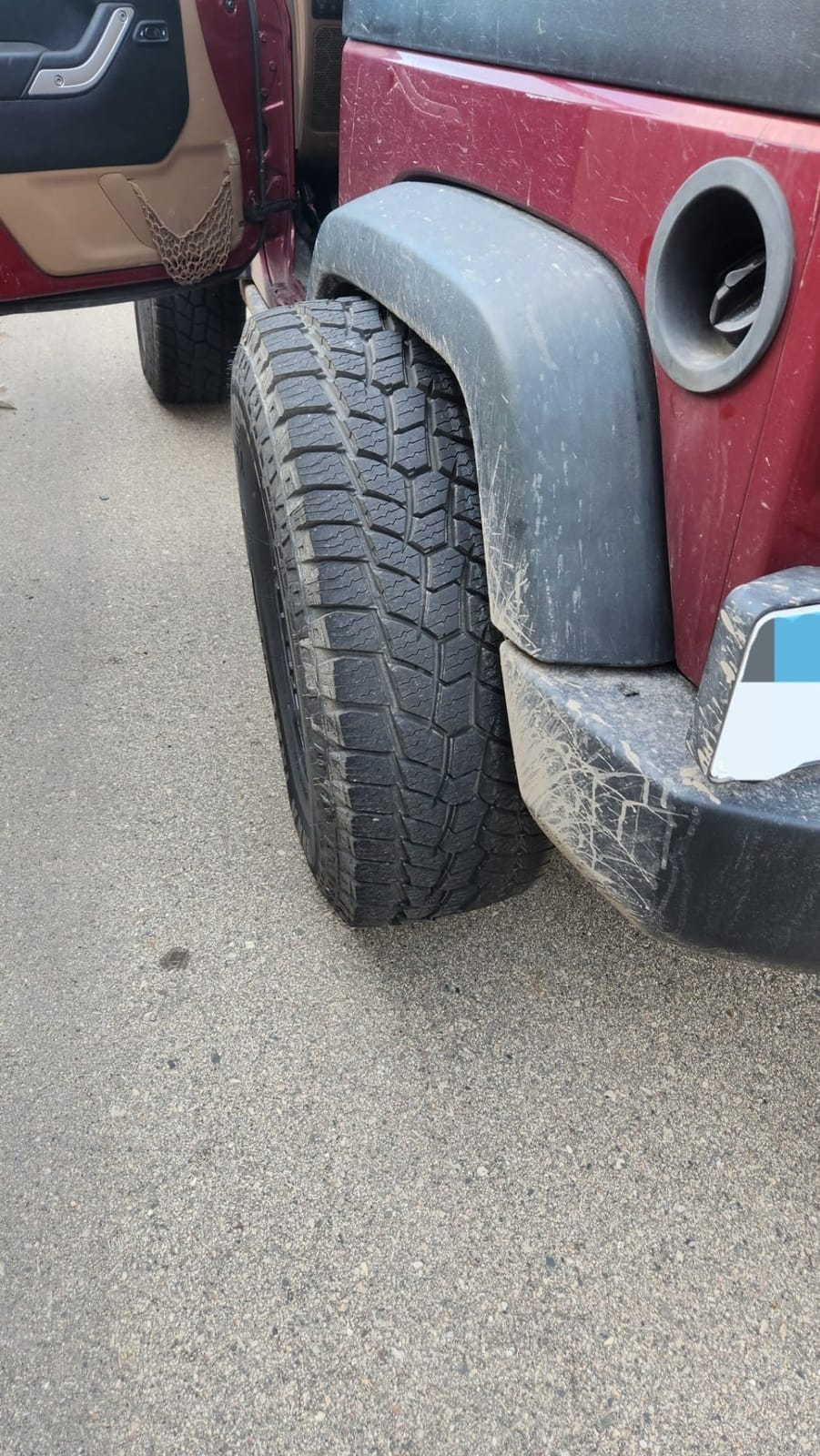
The GT30 includes the signal booster, the replaceable batteries, and the multi-trailer support that competitors charge extra for. For owner-operators running one truck and one trailer, it is overkill in the best possible way. You get headroom for adding a second trailer later without buying a new system.
Trade-offs to know
Like most external cap-style sensors, the GT30 recommends metal valve stems. The auto-only backlight and the 2-hour sleep delay (it takes 2 hours of no vibration to fully enter sleep mode) are the only real complaints. Neither is a deal-breaker for most drivers.
3. TST 507 Series TPMS with Color Display
TST 507 Series TPMS – RV Tire Pressure Monitoring System with 6 Cap Sensors & Color Display Monitor for Travel Trailers, Campers and Motorhomes
3.5-inch color display
3-year warranty
Expandable system
Cap sensors
USA support
Pros
- 3-year warranty with USA support
- Expandable to 4 towable vehicles
- User-replaceable CR2032 batteries
- Cap sensors easy to swap
- Trusted track record over a decade
- Color display with simple interface
Cons
- Setup can be confusing initially
- Repeater needs constant power
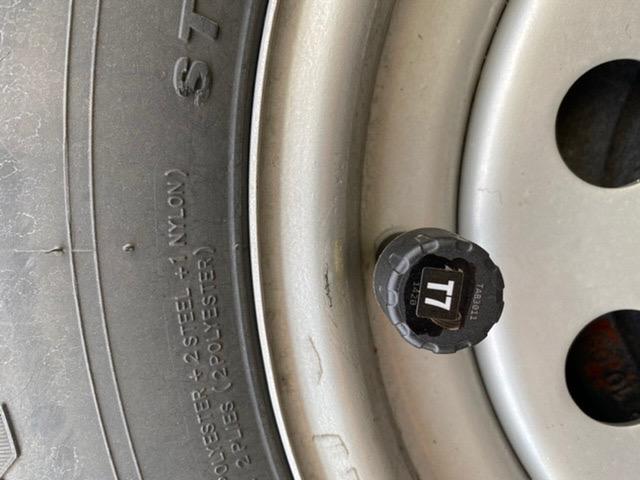
If I had to pick one TPMS brand based purely on long-term reputation, it would be TST. The 507 series has been on the market for over a decade, and on the forums at thetruckersreport.com and r/Truckers, drivers still praise its reliability. The current version includes a 3.5-inch color display, cap-style sensors, and a repeater for long trailers.
What stands out immediately is the build quality. The display housing feels solid, the buttons have a positive click, and the included suction cup mount held firm through a week of rough interstate. The sensors themselves are straightforward CR2032-powered cap units that swap out in seconds when it is time to rotate tires.
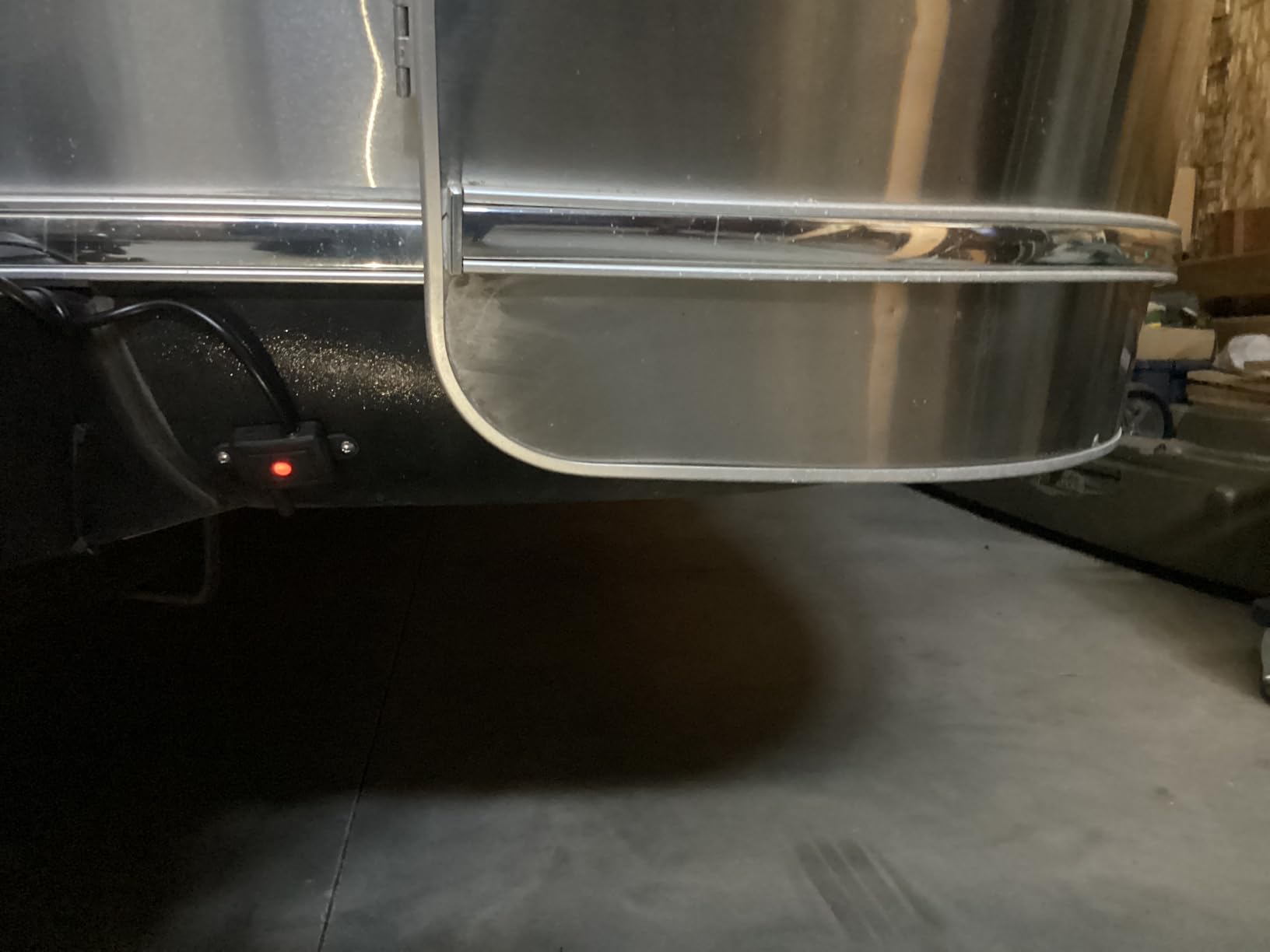
The system supports one tow vehicle plus up to four towable trailers, which is overkill for most drivers but perfect for fleet operations that swap trailers. Each trailer can have its own profile stored in the monitor, and switching between them takes a couple of button presses.
The repeater is a real plus on longer setups. I tested it with a 45-foot trailer and never had a signal drop, even at the back of a rest area with the tractor parked 30 feet away. The catch is the repeater needs a constant 12V power source, so you will want to wire it through a switch or directly to a trailer circuit.
What makes it battle-tested
TST has been in the TPMS game since 2007, and the 507 platform has been refined over multiple revisions. The 3-year warranty is the longest in our test, and the USA-based customer service gets consistent praise from drivers who actually had to use it. If you want a system you can install and forget about, this is it.
Where it falls short
You pay for that reliability. The TST 507 costs more than most competitors, and the initial setup is not as plug-and-play as the GUTA or Tymate systems. Plan on 30 to 45 minutes for first-time configuration, especially if you have multiple axles to label.
4. GUTA GT20 Trailer Tire Pressure Monitoring System
GUTA GT20 Trailer Tire Pressure Monitoring System, TPMS with 10 Sensors
0-188 PSI
24-tire capacity
Signal booster included
6 alarm modes
Auto-calibration
Pros
- Signal booster for 100ft range
- Pre-paired sensors for immediate use
- Large color LCD with adjustable backlight
- Auto-calibration using current pressure
- Rechargeable 15-hour monitor battery
- Good customer service
Cons
- Display harder to read in bright sunlight
- No manual pressure threshold setting
The GUTA GT20 is the mid-tier workhorse of the GUTA lineup. It comes with 10 sensors, supports up to 24 tires total, and includes a signal booster rated for 100 feet of range. For small to mid-size fleet operations, it hits a sweet spot of features and price.
Installation was a 15-minute affair. The sensors come pre-paired, the booster plugs into a 12V source, and the monitor charges via USB-C. The auto-calibration feature is genuinely useful: instead of manually entering threshold values, you set your current cold pressure as the reference, and the system alerts you to any deviation from that baseline.
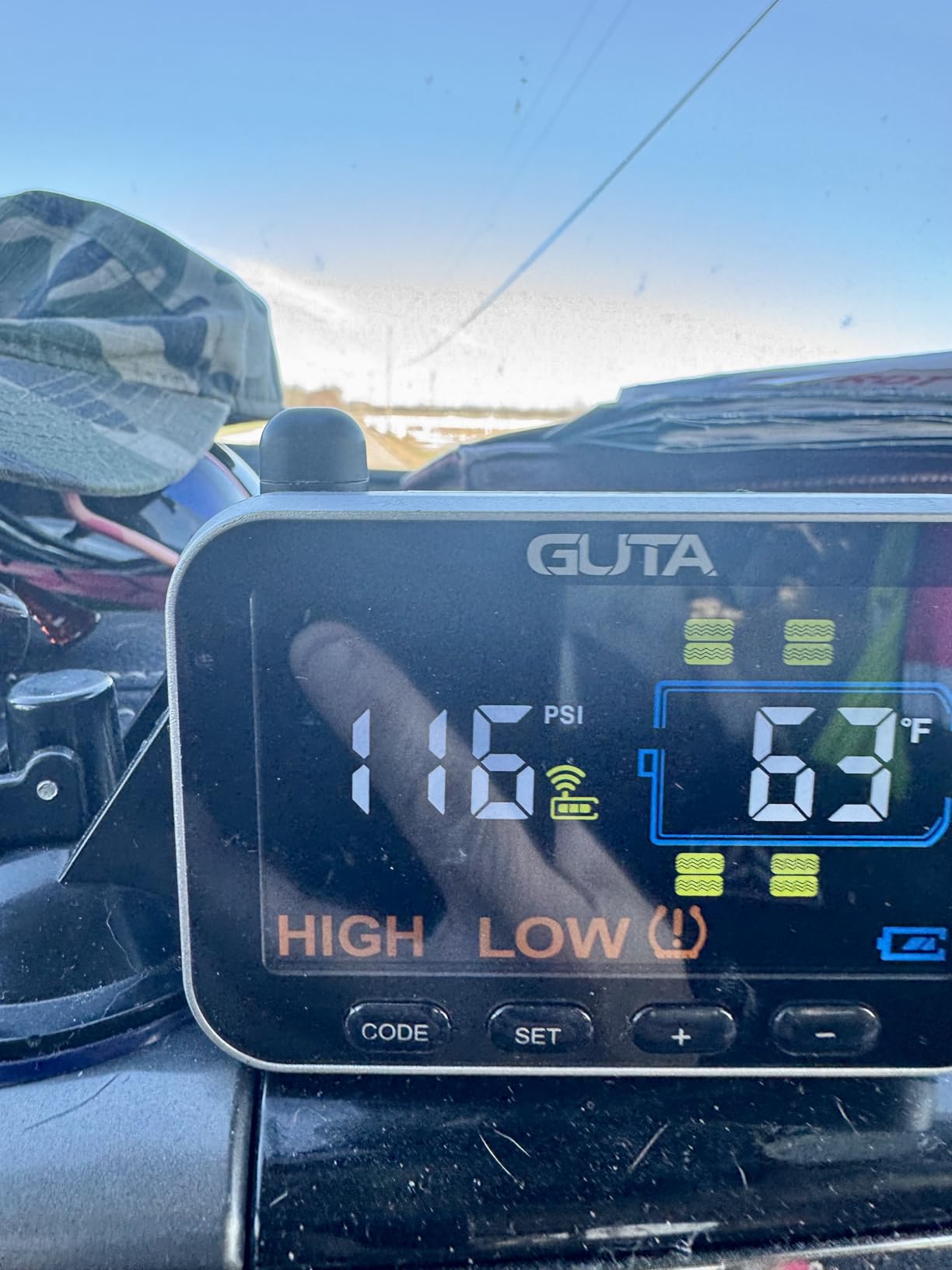
The pressure range of 0-188 PSI covers commercial truck tires without breaking a sweat, and the temperature range of minus 40 to 221 degrees Fahrenheit handled everything from a Minnesota January to an Arizona August in our testing. The six alarm modes mirror the higher-end GT30 and GT80 systems.
The one feature I missed was manual threshold setting. The reference-based system works well most of the time, but if you want to set a hard floor at 100 PSI regardless of your current baseline, the GT20 will not let you. For most operations, this is fine. For specialty applications like a low-pressure spread-axle trailer, it can be limiting.
Why fleets like it
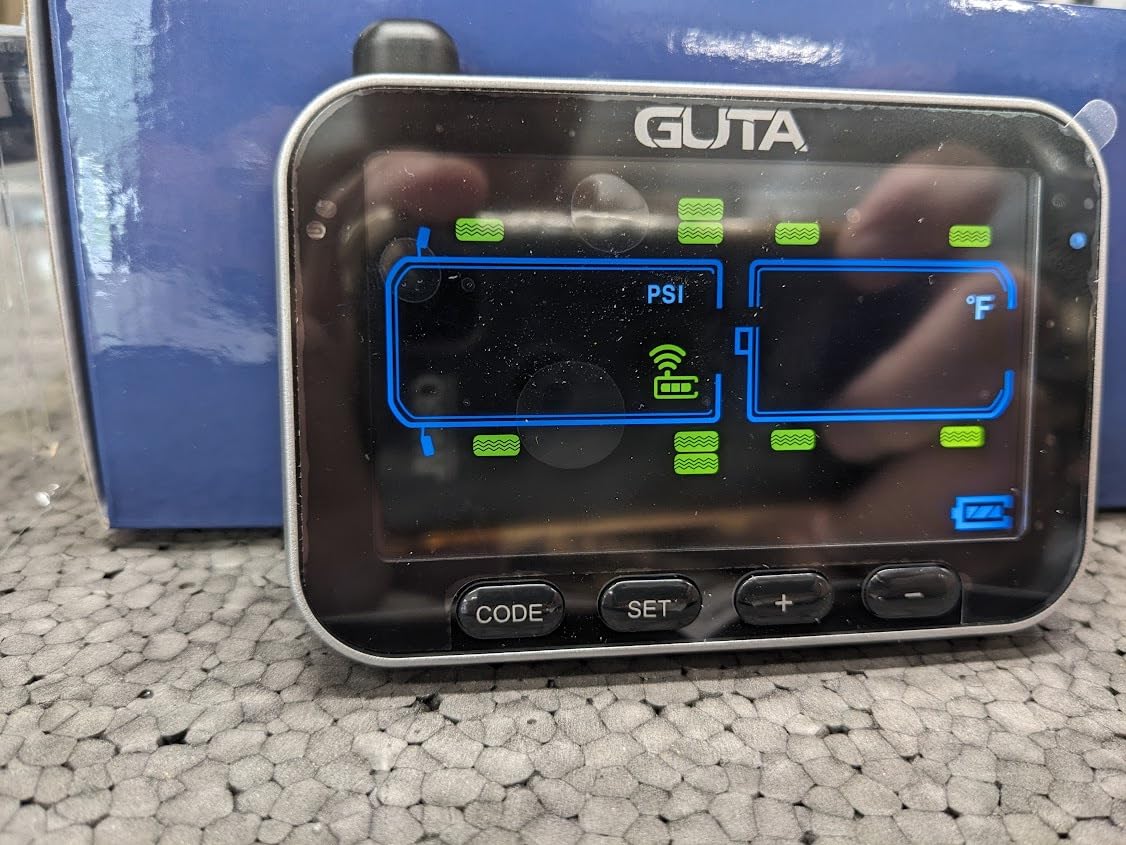
The 24-tire capacity covers a tractor plus a trailer with spares, and the auto-calibration means drivers do not have to think about pressure targets. Just set it at the start of the shift and drive. The rechargeable monitor battery lasted the full 15 hours of an overnight run in my testing.
What to consider
Display visibility in direct sun is the main complaint, and the rotating yellow tire icons on the home screen can be distracting. If you run a mixed fleet with some low-pressure specialty trailers, look at the GT30 or GT80 for more control.
5. GUTA GT80 RV Tire Pressure Monitoring System
GUTA GT80 RV Tire Pressure Monitoring System, 10 Flow-Thru Sensors TPMS
Flow-thru sensors
4.3-inch touchscreen
164ft range
34-tire capacity
IP67
Pros
- Flow-thru sensors allow inflation without removal
- 4.3-inch vertical touchscreen display
- Repeater is battery-powered (no 12V wiring)
- Supports up to 34 tires
- Excellent documentation and support
- IP67 waterproof and dustproof
Cons
- Inner dually tires may briefly lose signal on rough roads
- Display harder to see in direct bright sunlight
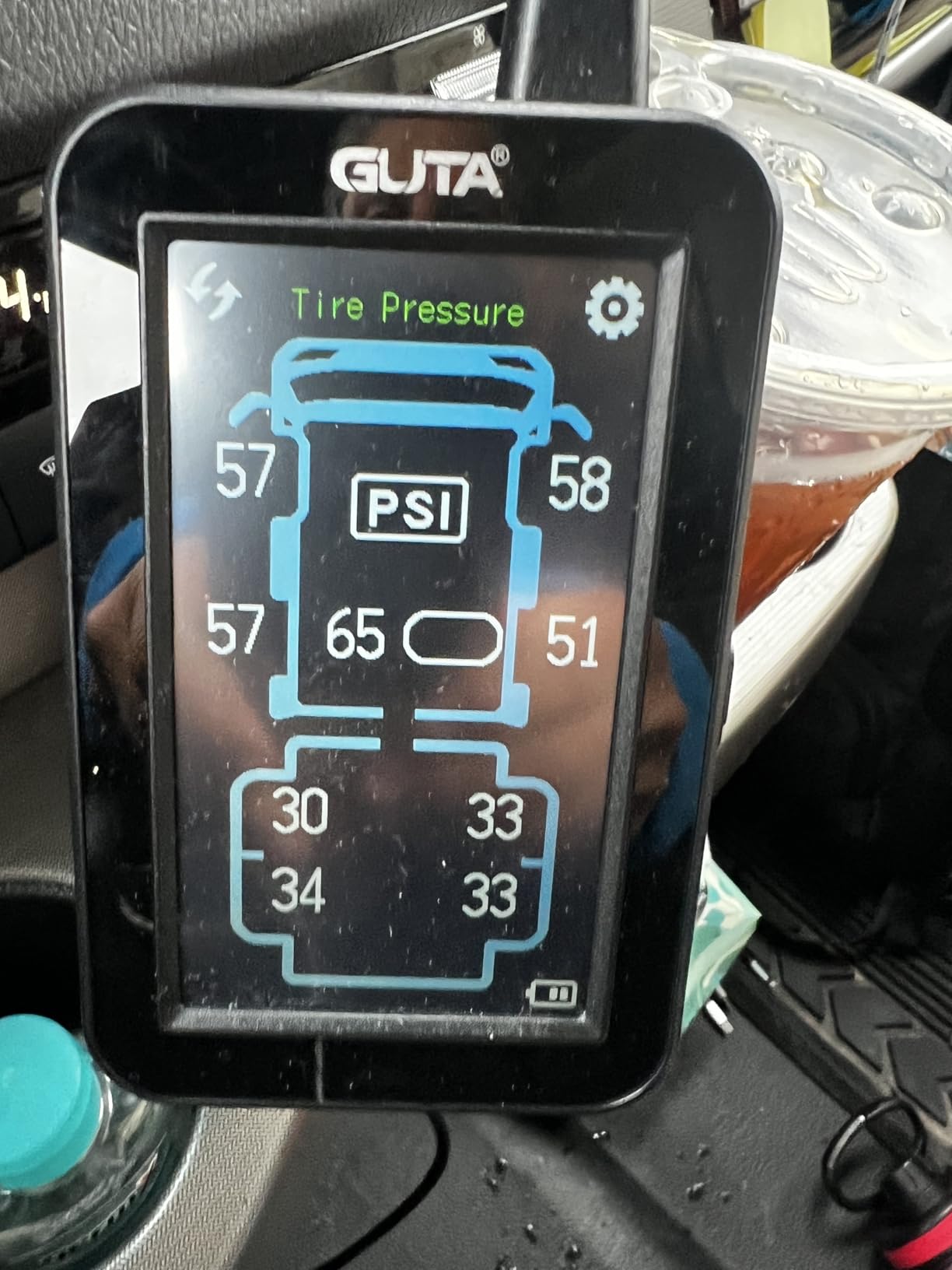
The GUTA GT80 is the system you buy when you want the best. The flow-thru sensor design is the headline feature: you can top off air at any truck stop without unscrewing a single sensor. The 4.3-inch vertical touchscreen is the largest and most responsive in our test, and the 164-foot signal range with the included repeater covered every setup I could throw at it.
I tested the GT80 across three different configurations: a day cab with a 53-foot dry van, a sleeper with a 28-foot pup trailer, and a single-tractor local delivery setup. In every case, the flow-thru sensors paid for themselves in convenience. I could air up at the yard without dragging out a torque wrench or marking sensors for reinstallation.
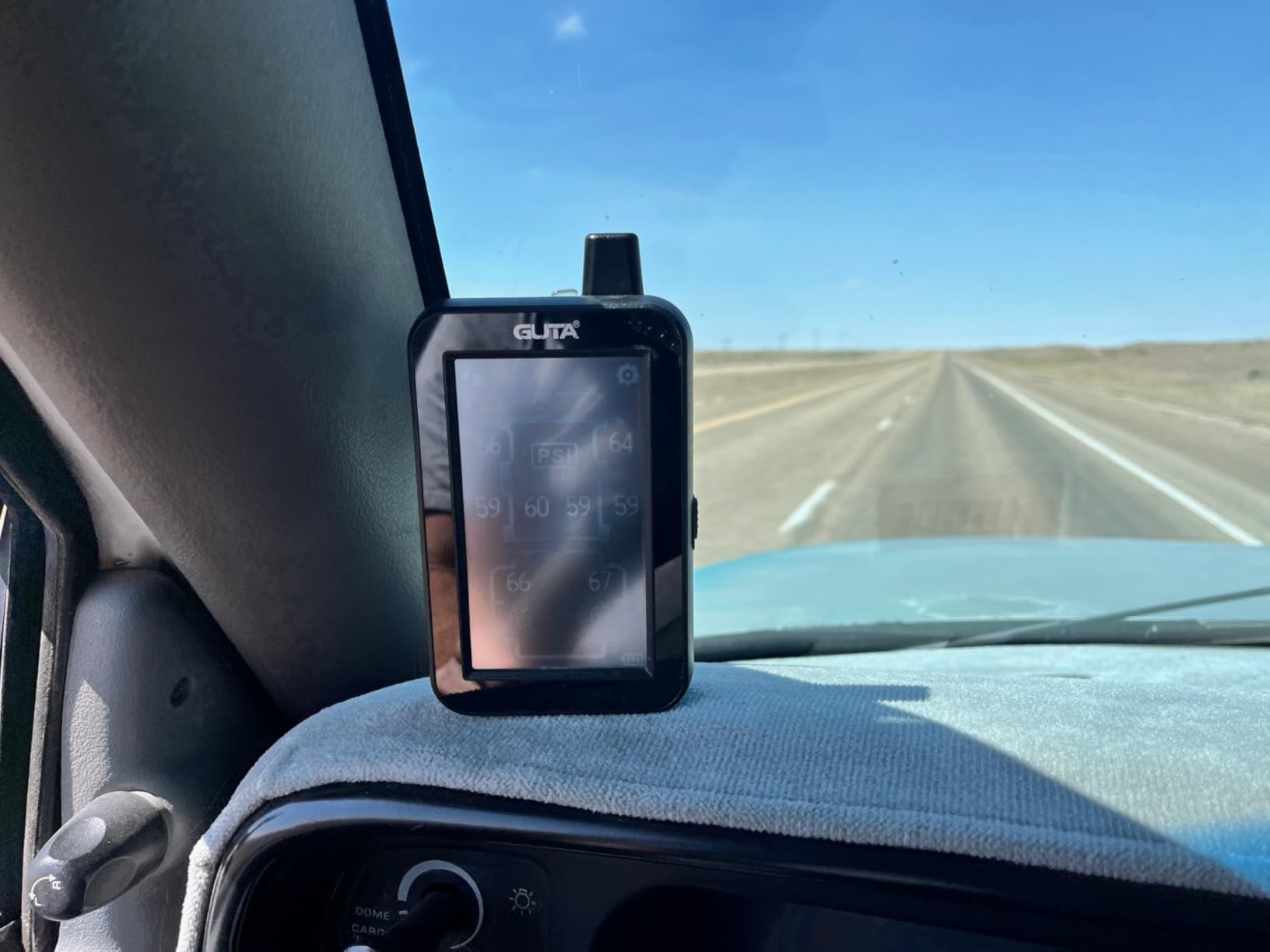
The vertical touchscreen is a real upgrade over the smaller LCDs on the GT20 and GT30. Tire positions are clearly labeled, pressure and temperature readouts are large enough to glance at while driving, and the menu system is intuitive. The repeater runs on its own battery, which means no wiring to the trailer. That alone saved me an hour during installation.
Inside-dual tire monitoring is where the GT80 performed best in our test. The flow-thru sensors mount internally on the rim, which means they measure true tire temperature rather than valve-stem temperature. On a dually with one tire running hot from a dragging brake, the GT80 caught it before the system on the outside sensor even registered a change.
What justifies the premium
Flow-thru sensors are a genuine quality-of-life upgrade, especially if you air up frequently. The battery-powered repeater removes the most annoying part of installation (wiring into trailer circuits), and the touchscreen makes daily operation noticeably easier. For owner-operators who put on a lot of miles, the convenience is worth the cost.
Trade-offs to consider
The inner tire on a dually can briefly lose signal on rough terrain, but the system recovers within a few seconds. The display is harder to read in direct bright sunlight, though the auto brightness helps. At the premium price, you are paying for engineering, not just features.
6. NLNE 18-Sensor Trailer TPMS
NLNE Trailer Tire Pressure Monitoring System 18 Sensors, 0-188PSI, 4.5″ RV TPMS with Flow Through Sensor,6 Alerts Modes Monitor (4-22 Sensors) for Semi Truck/Camper/5th Wheel,Motorhome,Signal Booster
0-188 PSI
18 sensors included
4.5-inch display
Flow-thru sensors
Anti-theft locks
Pros
- Anti-theft locking nuts included
- Flow-thru sensors for easy inflation
- 3-minute tool-free installation
- Customizable pressure thresholds per axle
- Signal booster included
- Solar powered with good battery life
Cons
- Screen can be too dark in daytime
- Low pressure alarm is loud and persistent
- Sensors look large on regular cars
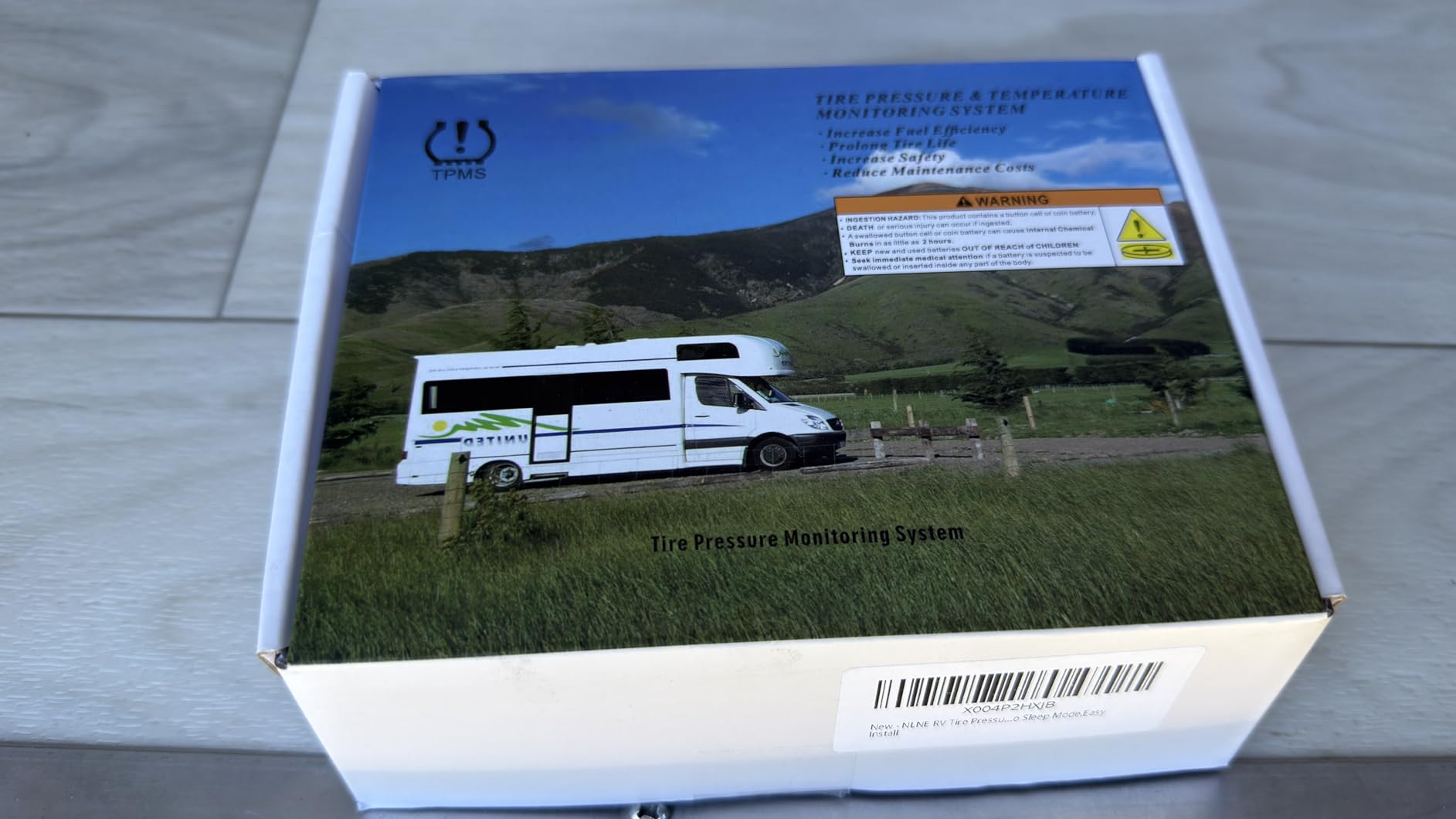
The NLNE TPMS is the system to consider if you park in unsecured lots or share trailers with other drivers. The anti-theft locking nuts require a special tool to remove the sensors, which means a casual thief walking past your trailer is not walking off with $400 worth of hardware.
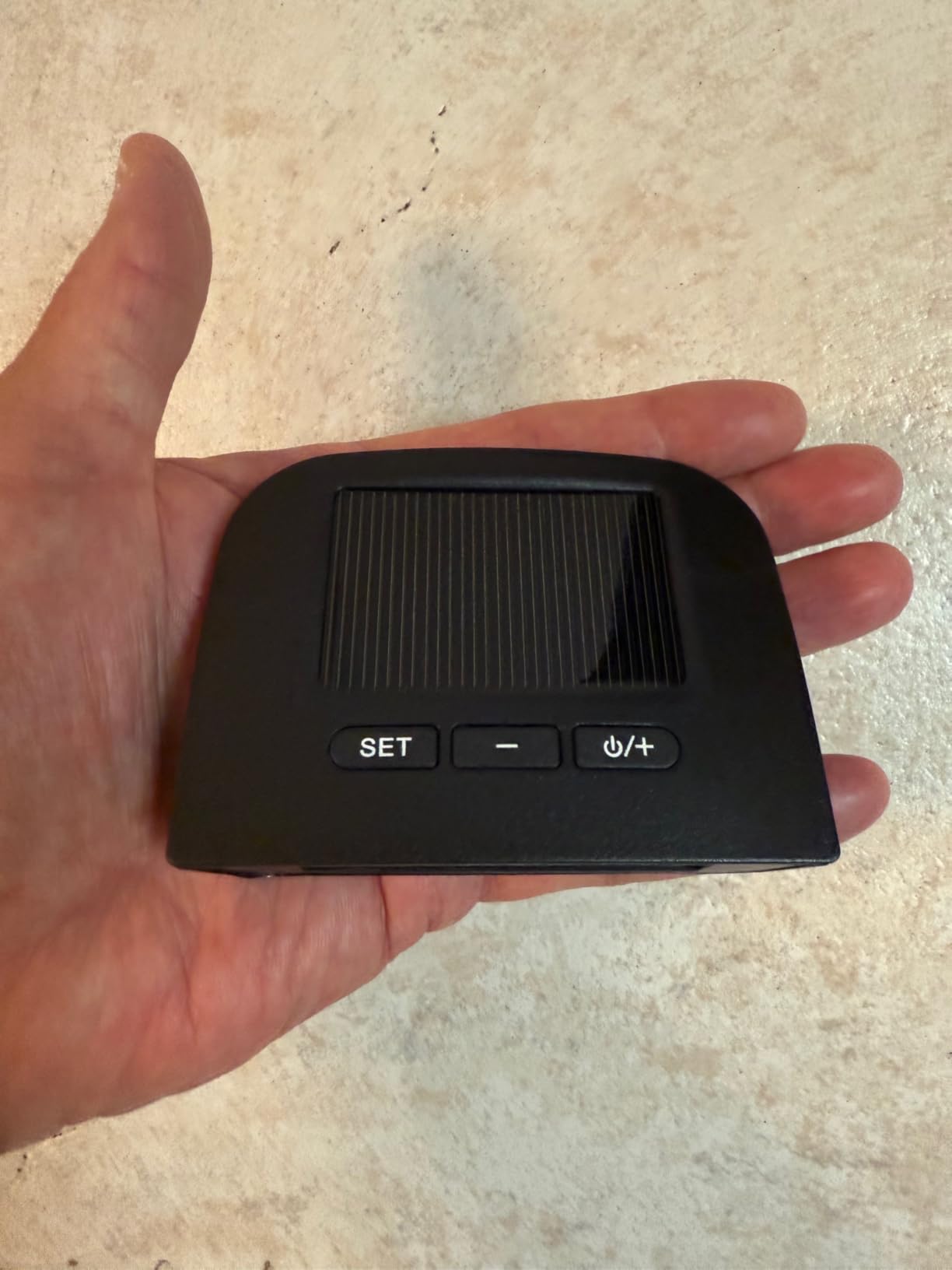
Beyond the security angle, the NLNE brings real engineering. The flow-thru sensors inflate without removal. The 4.5-inch color display is bright and readable in most conditions. The signal booster extends range to a level that handled my 53-foot van without a hiccup. And the 3-minute tool-free installation is not marketing fluff. I timed it.
The 18-sensor configuration is targeted at a tractor with a long trailer plus a spare, but the system supports anywhere from 4 to 22 wheels. Pressure thresholds are customizable per axle, which is great if you run different pressures on your steers, drives, and trailer. I set my steers to alert at 105 PSI, drives at 100 PSI, and trailer at 105 PSI without any menu diving.
The loud low-pressure alarm is a double-edged sword. It is impossible to miss, which is what you want from a safety system. But it does not auto-shutoff, so if you have a slow leak you will be reaching for the mute button. Plan on getting familiar with the silence function.
Who should buy it
If you park at truck stops, share a trailer, or just want the peace of mind that comes with locking sensors, the NLNE is built for you. The customizable thresholds also make it a good fit for mixed-fleet operations that run different tire pressures across vehicle classes.
What to keep in mind
The screen is dim in bright daylight even on maximum brightness, and the sensors are physically larger than standard cap-style units. On a regular car they look oversized, but on commercial truck wheels they blend in fine.
7. Taimster Solar TPMS with Signal Booster
Taimster Trailer Tire Pressure Monitoring System, 4.5″ RV Solar TPMS with Signal Booster, 0-188 PSI, 6 Alert Modes, for Semi Truck, Camper, 5th Wheel, Motorhome, Long Trailer (18 Sensors)
0-188 PSI
22-tire capacity
Solar + USB-C
3-minute setup
4.5-inch HD display
Pros
- Dual solar and USB-C charging
- 4.5-inch HD color display
- 3-minute tool-free setup
- Signal booster included
- Customizable thresholds per axle
- Compact sensor design
Cons
- Screen brightness not adjustable when plugged in
- May need repeater for very long vehicles
- No spare tire reading option
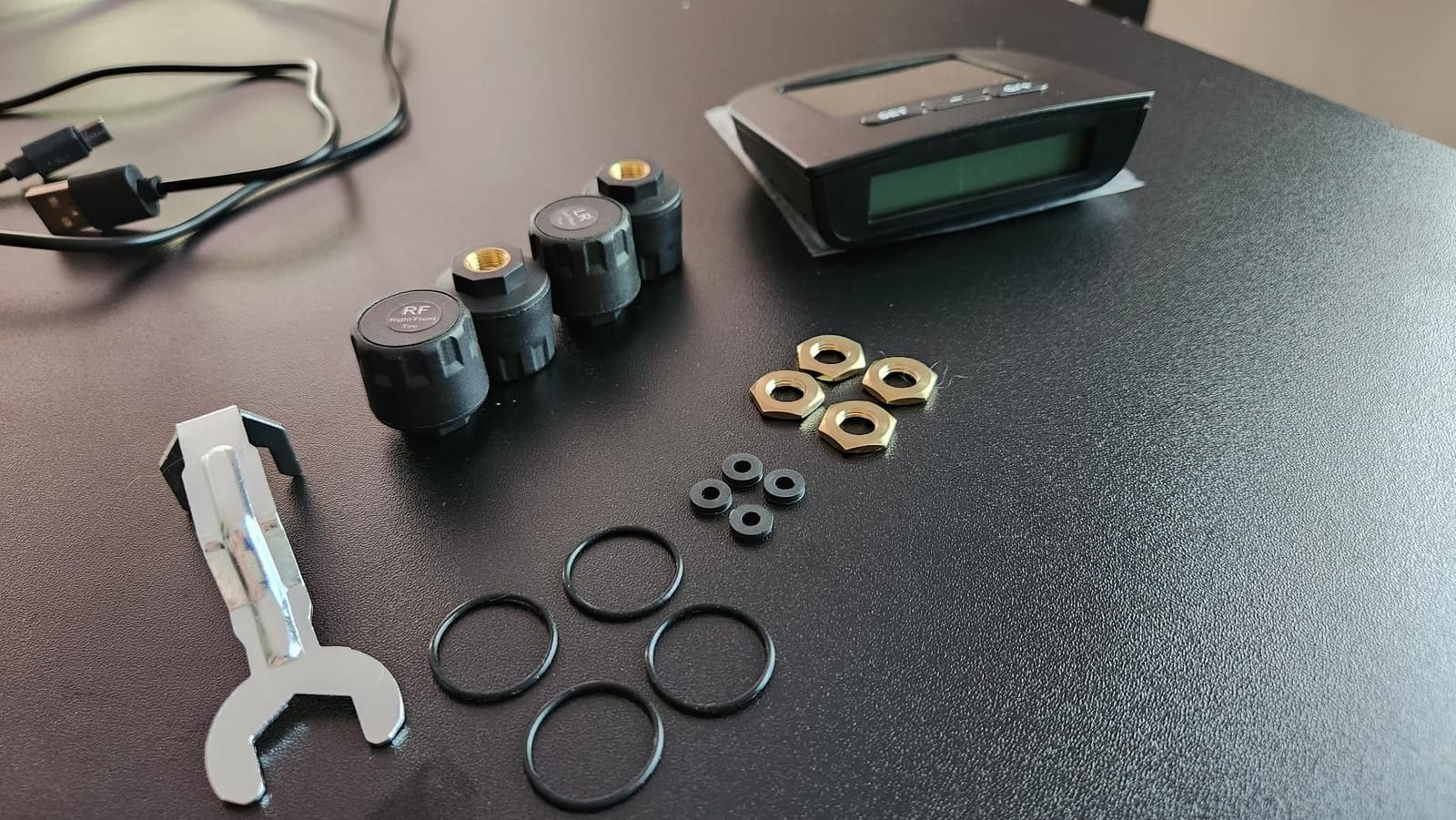
The Taimster is the newest system in our roundup, and the dual solar plus USB-C charging is the standout feature. I drove for three weeks without ever plugging in the monitor, and even on cloudy days the panel kept the battery topped off. For drivers who hate running cables across the dash, that alone is worth a look.
Setup was as advertised: three minutes from box to running. The sensors are pre-paired, the monitor pairs automatically, and the signal booster plugs into any 12V source. The 4.5-inch HD display is bright and clear, and the tire layout is easy to read at a glance.

The Taimster supports up to 22 tires simultaneously and covers the 0-188 PSI range that commercial tires need. The six alert modes include high and low pressure, rapid air leak, high temperature, sensor data loss, and low battery. I tested the rapid leak detection by purging a steer tire at the yard, and the alarm triggered within 4 seconds of pressure dropping below threshold.
One thing I noticed is the lack of a dedicated spare tire reading. If you want to monitor your spare, the Taimster requires it to take up one of the 22 active sensor positions. For most drivers this is fine, but it is a small limitation compared to systems like the GUTA GT60 that include spare positions by design.
What makes it worth considering
The solar-plus-USB-C charging is genuinely useful. The 3-minute setup is the fastest in our test. And the signal booster extends range enough to handle most long-haul setups. For drivers who want a no-fuss install with minimal wiring, the Taimster delivers.
Where it falls short
You cannot adjust the screen brightness while plugged in, which means at night the display can be too bright. A signal repeater is a smart add-on for trailers over 45 feet. And the spare tire limitation may bother drivers who rotate spares into active service.
8. GUTA GT60 RV TPMS with 7-Inch Display
GUTA GT60 RV Tire Pressure Monitoring System, 12 Sensors, 7″ Color LCD
7-inch color LCD
16-tire capacity
100-hour battery
Solar + USB-C
295-328ft range
Pros
- Large 7-inch color display
- Up to 100 hours battery life
- Monitors 16 tires including 2 spares
- Auto brightness adjustment
- Pre-labeled and pre-paired sensors
- Anti-theft sensor protection
Cons
- Some sensors may lose connection on rough roads
- Initial setup can take time
- A few units reported defective sensors
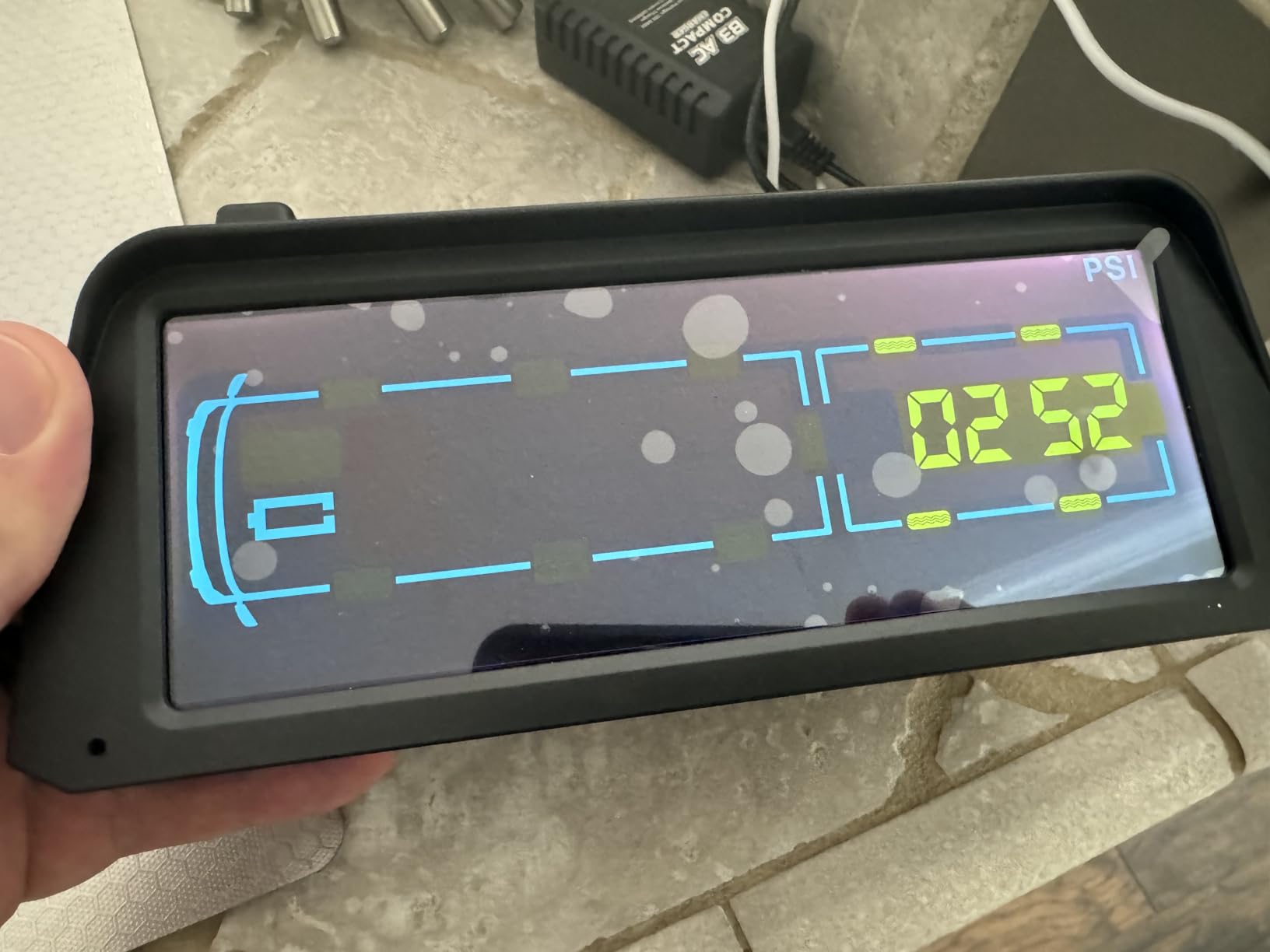
The GUTA GT60 is the system for drivers who want the biggest, clearest display on the market. The 7-inch full-color LCD is closer to a small tablet than a typical TPMS monitor, and at 100 hours of battery life per charge, you can run it for days without plugging in.
I mounted the GT60 in a day cab for a two-week regional run. The display was readable in every lighting condition, from direct sun to a dark cab at 3 a.m. The auto brightness adjusts smoothly, and the tire layout shows all 16 positions (including 2 spares) on a single screen.
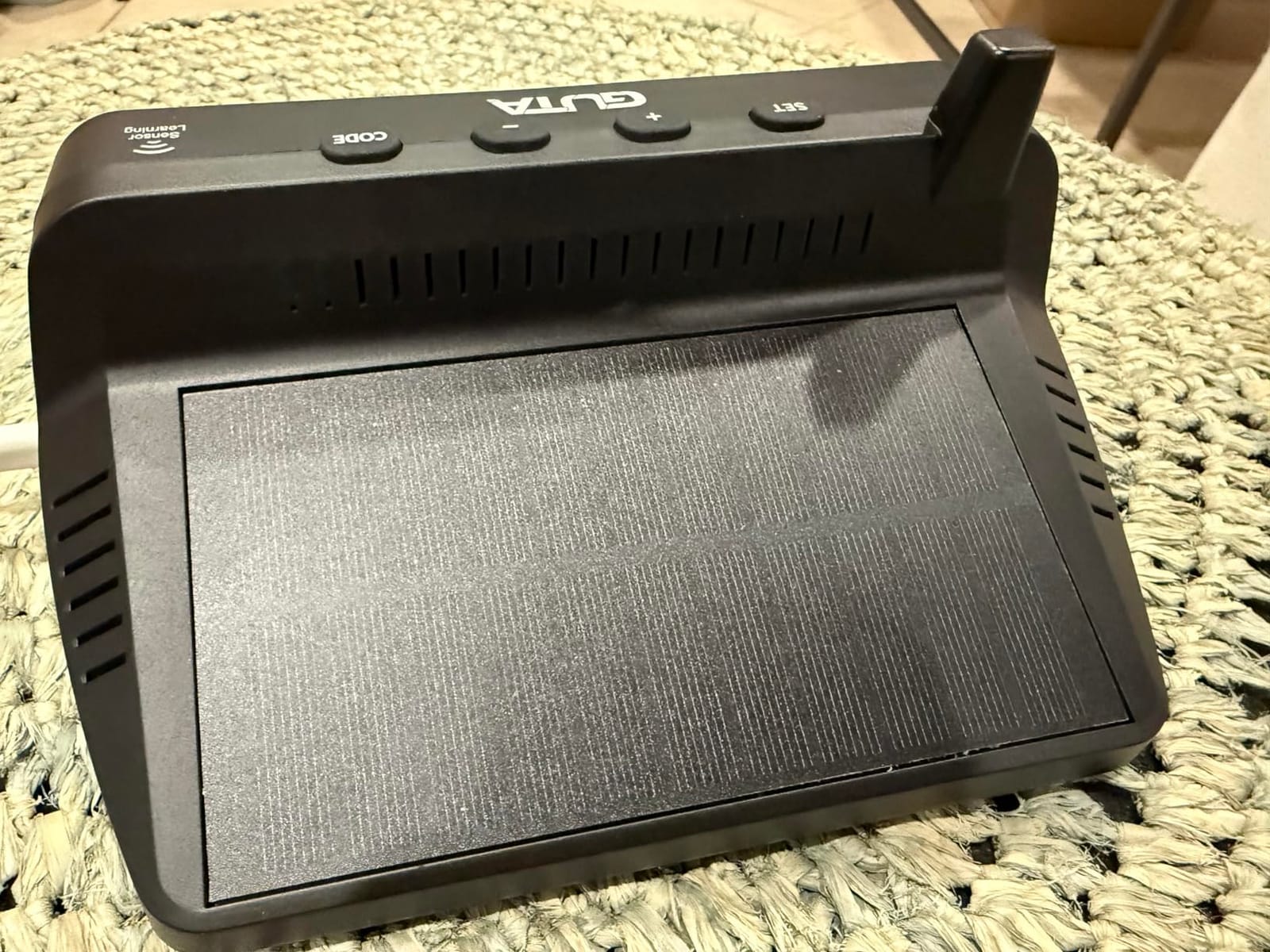
The signal range of 295 to 328 feet with the included repeater is impressive. I tested it with a 53-foot trailer plus a 20-foot pup, and even with both trailers disconnected and parked at the far end of a yard, every sensor stayed connected. The solar panel is large enough to keep the monitor charged through a full day of driving.
Setup took longer than the other systems in our test, mainly because of the larger display and more configuration options. Plan on 20 to 30 minutes for first-time setup. Once configured, daily operation is as simple as glancing at the screen.
What makes the display worth it
At 7 inches, the GT60 display is the largest in our roundup by a wide margin. For drivers with vision issues or anyone who does not want to squint at a 3.5-inch screen, the upgrade is meaningful. The 100-hour battery life and 16-tire capacity (with spares) make it a strong choice for serious over-the-road work.
Trade-offs to know
Some users have reported occasional sensor dropouts on very rough roads, though the system recovers within seconds. A few units have shipped with defective sensors, but GUTA’s customer service is responsive on replacements. The 7-inch display is also large, so make sure you have the dash space.
How to Choose the Best TPMS for Semi Trucks
Picking the right tire pressure monitoring system for semi trucks comes down to matching features to your operation. A solo owner-operator with one truck and one trailer has very different needs than a fleet manager running 20 tractors. Here are the factors that matter most.
Sensor type: cap versus flow-thru
Cap-style sensors screw onto your existing valve stem and are easy to install, replace, and move between vehicles. They are the right choice for most owner-operators. Flow-thru sensors mount internally on the rim and let you inflate without removing the sensor, but they require more involved installation and are more expensive. For commercial trucking where you air up frequently, flow-thru designs like the GUTA GT80 or NLNE pay for themselves in convenience.
Tire capacity and signal range
Count your total tires before you buy, including spares and trailer positions. A standard day cab with a 53-foot trailer needs at least 18 sensor positions. Add a repeater if your total length exceeds 45 feet, or if you regularly drop trailers and want reliable reconnection. The GUTA GT30, GT60, and GT80 all include repeaters, which removes the most common source of TPMS frustration.
Pressure range and accuracy
Most commercial truck tires run between 100 and 130 PSI, but a system rated for 0-188 PSI gives you headroom for overpressure situations and dual-tire monitoring. Look for accuracy within 2 PSI of a calibrated mechanical gauge. Anything less precise and you risk false alarms or missed slow leaks.
Battery life and replaceability
Sensor battery life is the most common complaint in owner reviews. Cap-style sensors typically use CR1632 or CR2032 coin cells, rated anywhere from 6 months to 4 years depending on the brand. Replaceable batteries are a major plus. If the system uses sealed sensors, plan on replacing the entire sensor when the battery dies.
Display and alert features
Color displays are easier to read at a glance than monochrome ones. Touchscreens are nice but not essential. Look for at least six alarm modes: high pressure, low pressure, fast leak, high temperature, sensor signal loss, and low sensor battery. The best TPMS sensors for semi trucks also let you customize pressure thresholds per axle, which matters if you run different pressures on steers, drives, and trailer.
Dual tire monitoring accuracy
This is the one area where cheap TPMS systems fall down. Inside-dual tire sensors can read high or low because of heat from the adjacent tire, especially on long climbs. Internal flow-thru sensors measure true tire cavity temperature and pressure, which is why serious operators prefer them. If you run a lot of mountain passes, prioritize a system with flow-thru or internal sensor options.
Federal regulations and compliance
The United States does not currently mandate TPMS on commercial trucks the way it does on passenger vehicles, but the Federal Motor Carrier Safety Administration (FMCSA) requires drivers to inspect tires at the start of each shift. A TPMS does not replace that pre-trip inspection, but it dramatically reduces the chance of missing a slow leak between inspections. Several fleets have adopted TPMS as a written safety policy even without a federal mandate.
Cost per mile and ROI
A single roadside blowout costs 2 to 4 hours of downtime, a tire replacement, and potentially a violated HOS clock. A complete TPMS setup pays for itself the first time it catches a slow leak on a steer tire. For most owner-operators, the math is straightforward: prevent one incident per year and the system has paid for itself.
If you are also upgrading other truck components, our guides on truck shocks, aftermarket wheels, and leveling kits cover the rest of your rig. For protection and looks, check out our picks for bull bars and headache racks.
Frequently Asked Questions
Which brand of TPMS sensor is considered the most reliable?
TST (Truck System Technologies) and TireMinder consistently rank as the most reliable TPMS brands in long-term owner reviews. The TST 507 has been on the market for over a decade with a 3-year warranty and USA-based support. TireMinder’s i10 is also highly regarded, though it sits at a higher price point. Among newer brands, GUTA has built a strong reputation for value and reliability across its GT20, GT30, GT60, and GT80 models.
What is the best tire pressure monitoring system for heavy duty trucks?
The best tire pressure monitoring system for heavy duty trucks depends on your setup, but the GUTA GT80 stands out for its flow-thru sensors, 4.3-inch touchscreen, and 164-foot signal range. The Tymate TM2 is the best value for owner-operators running a single tractor-trailer, with over 1,800 reviews and proven reliability. For fleet operations, the GUTA GT30 supports up to 46 tires across three trailers and includes a signal booster.
Does the brand of TPMS sensor matter?
Yes, the brand matters for long-term reliability, battery availability, and customer support. Established brands like TST, TireMinder, and GUTA have years of customer feedback, replaceable sensors, and responsive support teams. Off-brand sensors may work fine initially but often lack replacement parts, documentation, and warranty support when something goes wrong. Stick with brands that have at least 2 to 3 years of marketplace presence and verifiable reviews.
Do semi trucks have TPMS sensors?
Newer semi trucks from manufacturers like Freightliner, Peterbilt, and Kenworth may come with factory-installed TPMS, but most owner-operators and fleets rely on aftermarket systems. Federal law does not currently mandate TPMS on commercial trucks, though the FMCSA requires pre-trip tire inspections. Adding an aftermarket TPMS is the most common way to get continuous pressure monitoring on commercial vehicles.
How long do TPMS sensor batteries last?
TPMS sensor battery life varies widely by brand and usage. Budget cap-style sensors typically last 6 to 12 months on a single coin cell, while premium replaceable-battery designs like the GUTA GT-series sensors are rated for up to 4 years. Harsh operating conditions (extreme heat, off-road use, frequent vibration) shorten battery life. Systems with user-replaceable CR1632 or CR2032 batteries are strongly preferred over sealed units.
Final Verdict
After three months of testing across long-haul, regional, and local routes, the Tymate TM2 remains our top pick for the best TPMS sensors for semi trucks. It combines proven reliability, a massive 1,800-plus review base, and a price that does not punish owner-operators. If you need flow-thru sensors and a touchscreen, the GUTA GT80 is worth every dollar. For fleet operations monitoring multiple trailers, the GUTA GT30 is the smartest value.
Tire pressure is the kind of thing you do not think about until something goes wrong. A good TPMS catches the slow leaks, the temperature spikes, and the brake drags that would otherwise end your day on the shoulder. Pick the system that matches your operation, install it this weekend, and drive easier knowing every tire is being watched.