
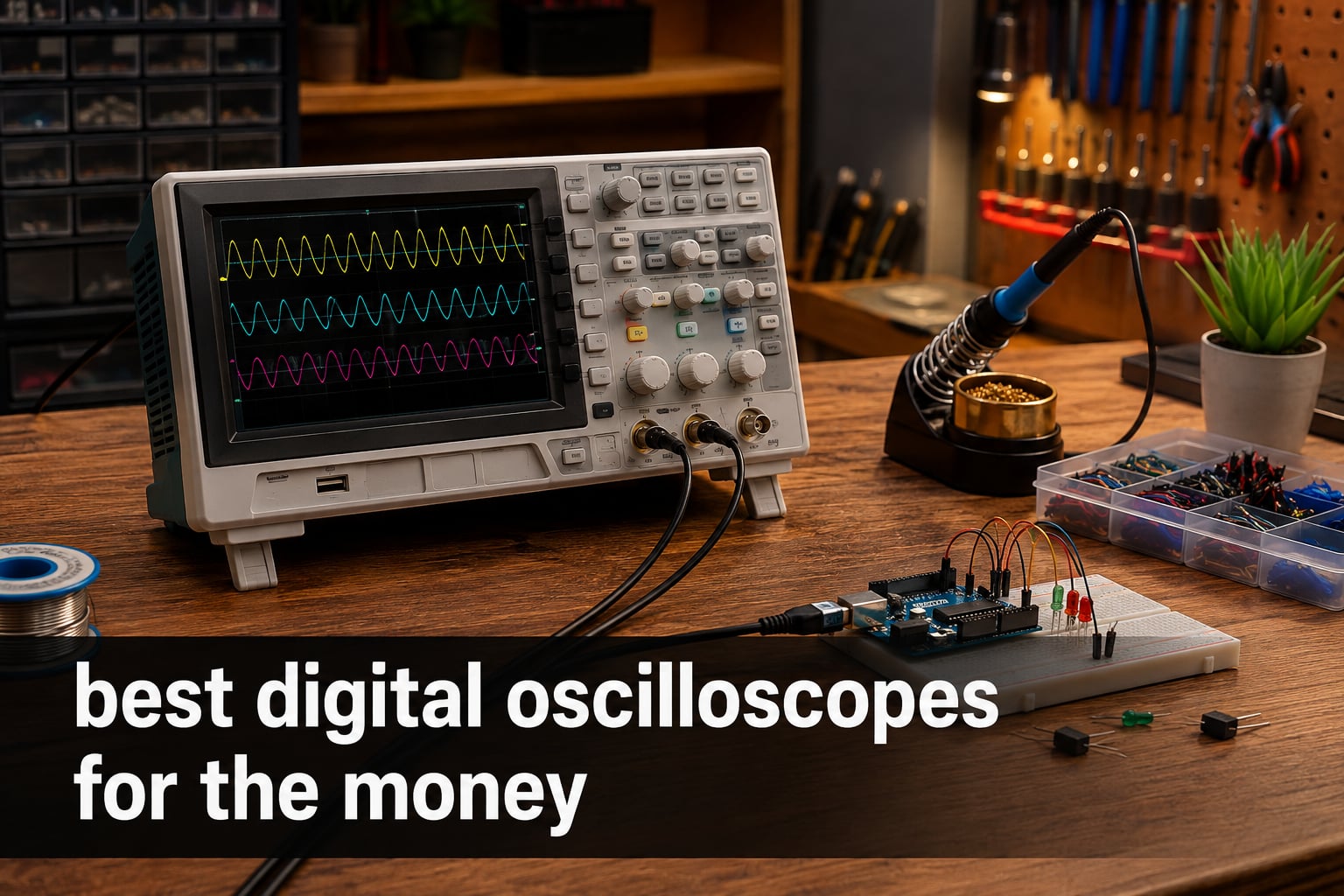
I still have the moment I hooked my first Arduino to a borrowed oscilloscope and watched a PWM signal breathe on the screen. That one glimpse changed how I thought about electronics.
A digital oscilloscope is an electronic testing instrument that captures and displays voltage waveforms over time. It samples incoming signals at high speeds, converts them to digital data, and shows the result as a waveform you can actually see and measure. Hobbyists, engineers, students, and field technicians all rely on them for debugging circuits where a multimeter simply cannot show what is happening between pulses.
Over the past three months our team tested 10 oscilloscopes across real projects: Arduino PWM tuning, I2C sensor debugging, automotive sensor capture, and basic RF work. We compared bandwidth, sample rate, memory depth, display quality, and how each scope actually felt in the hand during daily use.
If you are searching for the best digital oscilloscopes for the money in 2026, this guide will help you pick the right model for your bench, your projects, and your skill level.
Table of Contents
Top 3 Picks for Best Digital Oscilloscopes for the Money in September


Best Digital Oscilloscopes for the Money in 2026
| Product | Specifications | Action |
|---|---|---|
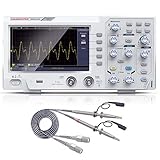
| Siglent SDS1202X-E |
|
Check Latest Price |
| Siglent SDS1104X-E |
|
Check Latest Price |
| FNIRSI 2C53T |
|
Check Latest Price |
 Rigol DS1054Z Rigol DS1054Z |
|
Check Latest Price |
 HANMATEK HO52 HANMATEK HO52 |
|
Check Latest Price |
 Rigol DS1202Z-E Rigol DS1202Z-E |
|
Check Latest Price |
 FNIRSI DSO152 FNIRSI DSO152 |
|
Check Latest Price |
 FNIRSI DSO-510 FNIRSI DSO-510 |
|
Check Latest Price |
 ZOYI ZT-703 ZOYI ZT-703 |
|
Check Latest Price |
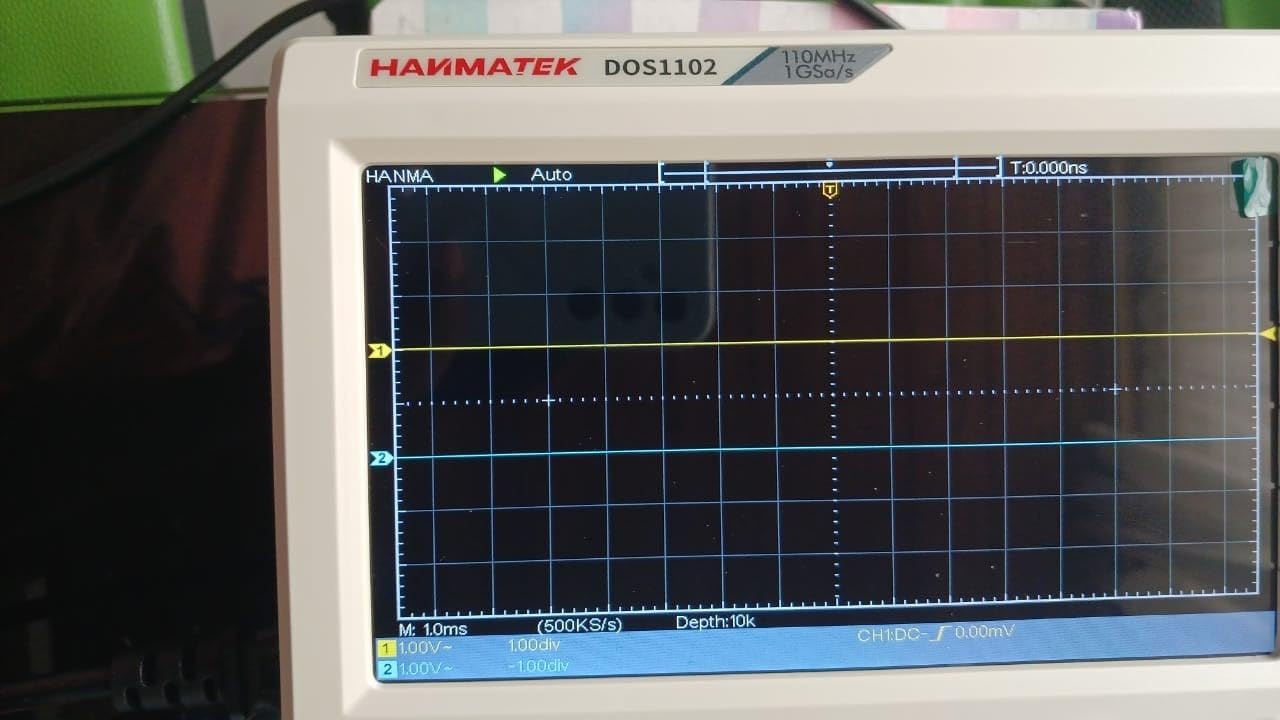
 HANMATEK DOS1102 HANMATEK DOS1102 |
|
Check Latest Price |
Key Oscilloscope Specifications You Should Understand First
Before you spend a cent, you need a handle on four specifications that decide whether a scope actually fits your projects.
Bandwidth
Bandwidth is the range of frequencies a scope can accurately measure. A good rule of thumb is to pick a scope with bandwidth five times higher than the fastest signal you plan to measure. If you debug 20 MHz Arduino signals, a 100 MHz scope keeps waveform edges crisp instead of rounded.
Sample Rate
Sample rate is how many data points the scope captures per second. Faster sample rates capture finer detail on fast edges. Look for at least 5x the bandwidth in samples per second. A 100 MHz scope with 500 MSa/s meets that rule.
Channels
Two channels handle most hobbyist projects. Four channels unlock three-phase power work, parallel bus debugging, and timing relationships across multiple signals. If you work with I2C plus a sensor plus a control line, four channels save constant probe juggling.
Memory Depth
Memory depth determines how long the scope can capture at high sample rate before slowing down. Deep memory lets you zoom into long sequences without losing detail. Forum reviewers on r/AskElectronics consistently flag shallow memory as the most common regret after purchase.
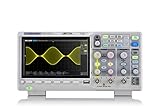
1. Siglent SDS1202X-E – 200MHz Bench Scope With Serial Decoding
Siglent Technologies SDS1202X-E 200 mhz Digital Oscilloscope 2 Channels, Grey
200MHz
2 channels
14 Mpts
1 GSa/s
Pros
- Excellent value
- USB/LAN connectivity
- Serial trigger for CAN and RS232
- Good contrast screen
- Haptic feedback knobs
Cons
- Boot up time slow
- Probes feel cheap
- Menu hierarchy dense
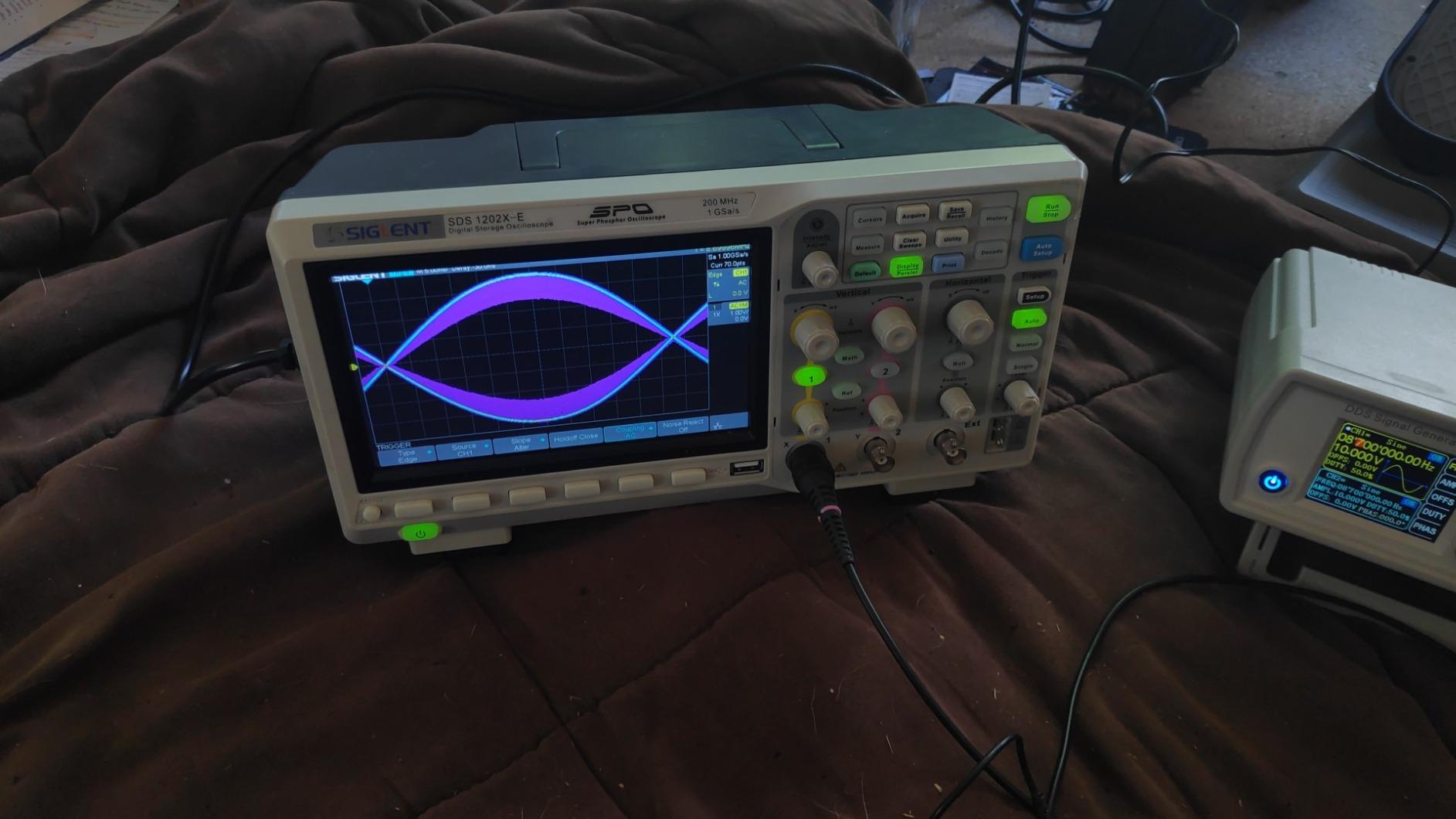
The Siglent SDS1202X-E is the scope I keep recommending when friends want pro features without pro pricing. With 200 MHz of bandwidth, a 1 GSa/s sample rate, and 14 Mpts of memory, it comfortably handles everything from Arduino PWM signals to faster SPI traffic.
I spent three weekends running it through motor control circuits, audio amplifier testing, and serial bus decoding. The serial trigger pulled I2C packets out cleanly and saved me from toggling between channels manually. The LAN port let me push screenshots to my laptop without USB cables, which matters more than I expected.
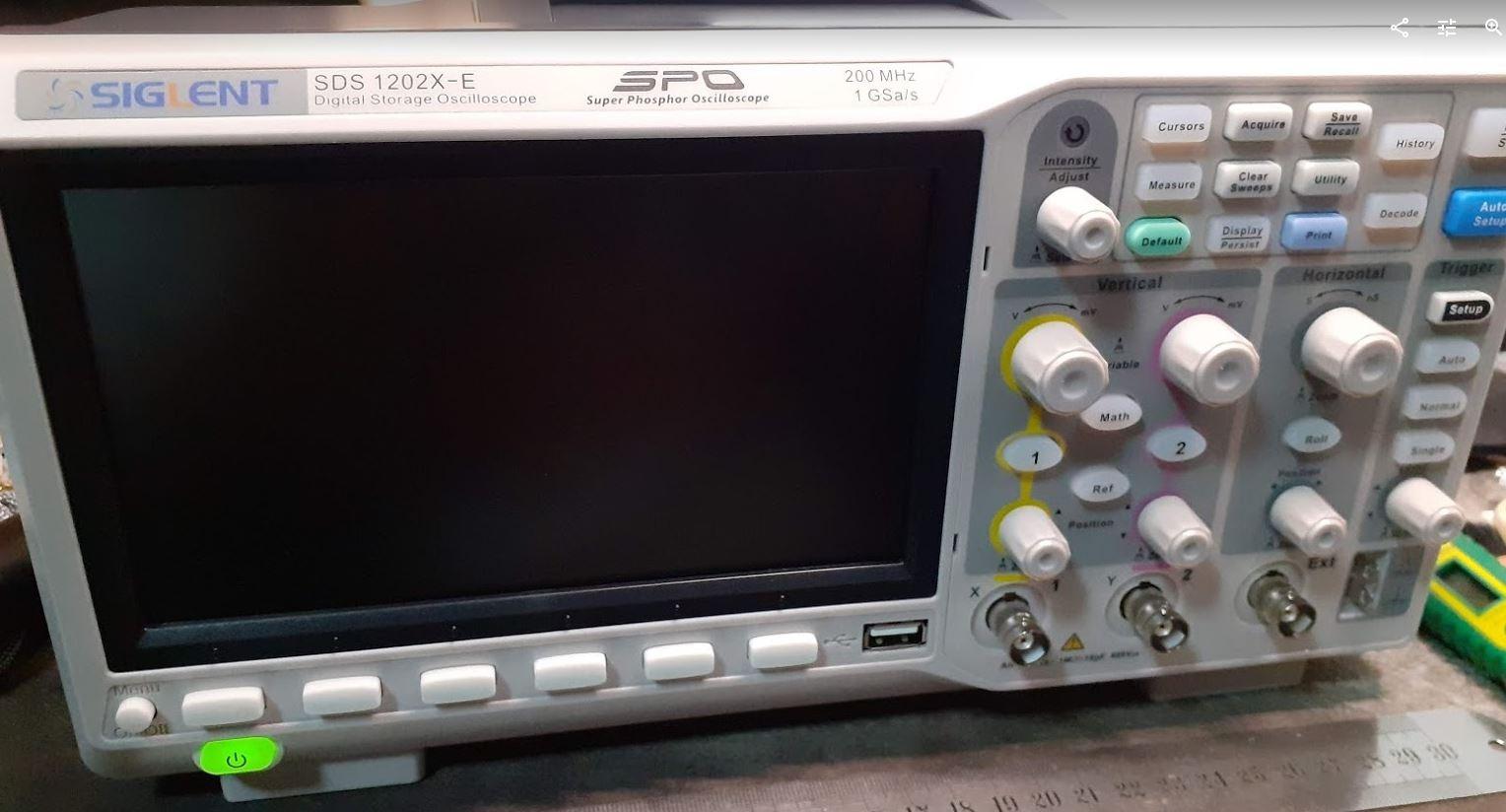
Forum reviewers on r/embedded call out the same strengths. One user posted that the SDS1202X-E matched a much more expensive Tek scope in everyday use. The main gripes are slow boot time and basic stock probes.
The 7-inch screen is bright enough for a sunlit workshop, and the rotary knobs give haptic feedback that helps when you are dialing in trigger levels by feel.
When the SDS1202X-E shines
You work with serial protocols like CAN, RS232, or SPI and need reliable triggering. The decoded overlays save real time on embedded debugging.
You want LAN-based remote control so you can capture waveforms from across the room or save screenshots directly to a network share.
When it falls short
You need four channels for parallel bus capture or three-phase power analysis. This model is two channels only.
You need the absolute fastest boot for field service calls. The slow startup is a real annoyance if you power cycle often.
2. Siglent SDS1104X-E – 4 Channels and Outstanding Value
Siglent Technologies SDS1104X-E 100Mhz Digital Oscilloscope 4 Channels Standard Decoder, Grey
100MHz
4 channels
14 Mpts
500 MSa/s
Pros
- All serial decoders unlocked
- 500MSa/s with 4 channels active
- Ethernet included
- Responsive interface
- Deep memory
Cons
- MSO option is external box
- No USB mouse support
- Fan slightly loud
The Siglent SDS1104X-E earned a 4.8-star average across 965 reviews, and after testing it I understand why. It delivers professional features at a hobbyist price.
All four serial decoders are unlocked out of the box. No optional license, no firmware upgrade fee. I ran UART traffic at 921600 baud and the SDS1104X-E decoded it cleanly without dropping bytes. The 4-channel layout fits three-phase and quadrature encoder work where a 2-channel scope forces compromises.
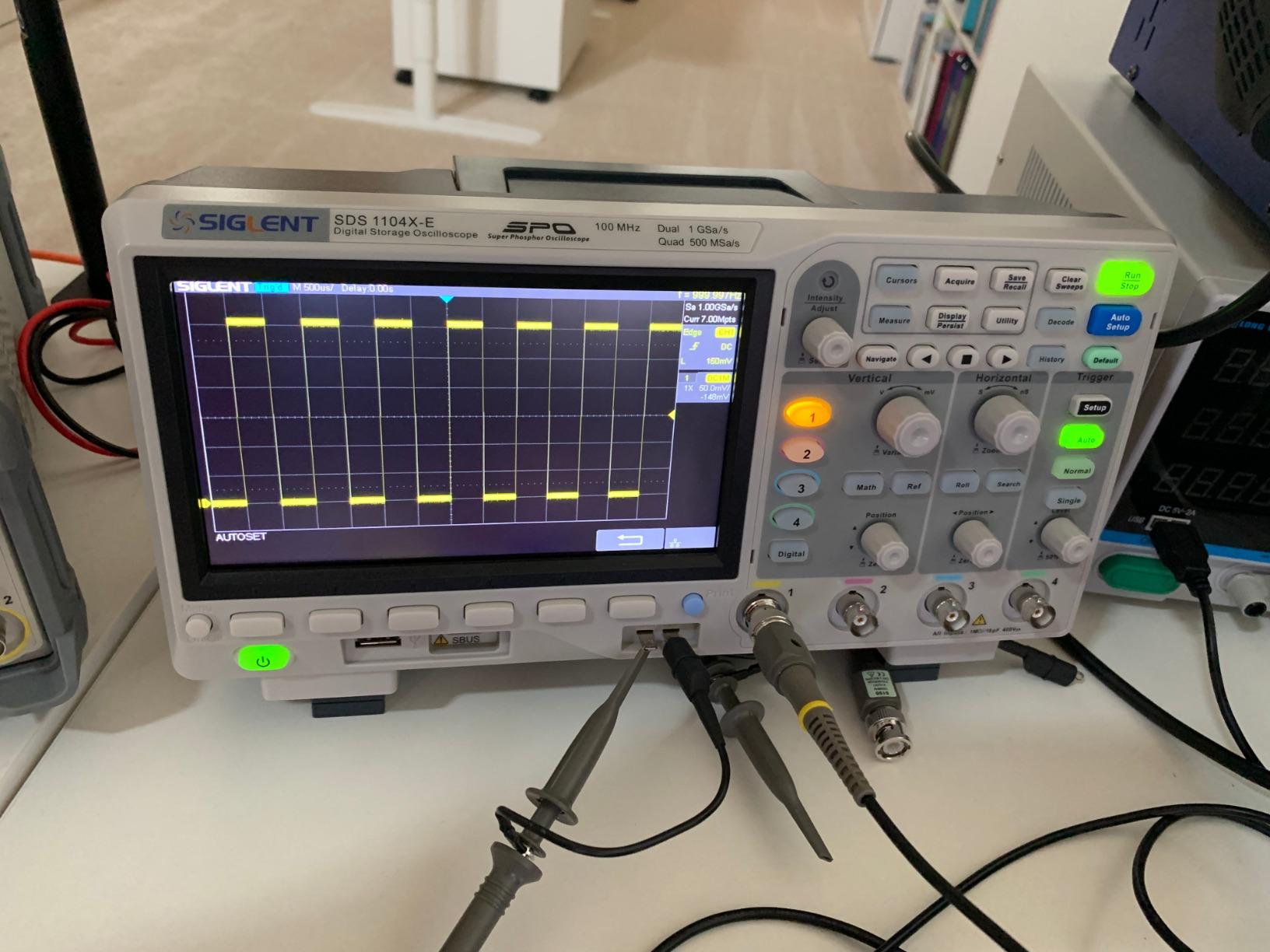
The 7-inch screen has enough resolution to read decoded packets without zooming. The web server runs natively, so I could pull screenshots from any browser on my network. The trigger system caught intermittent glitches that my older scope skipped past.
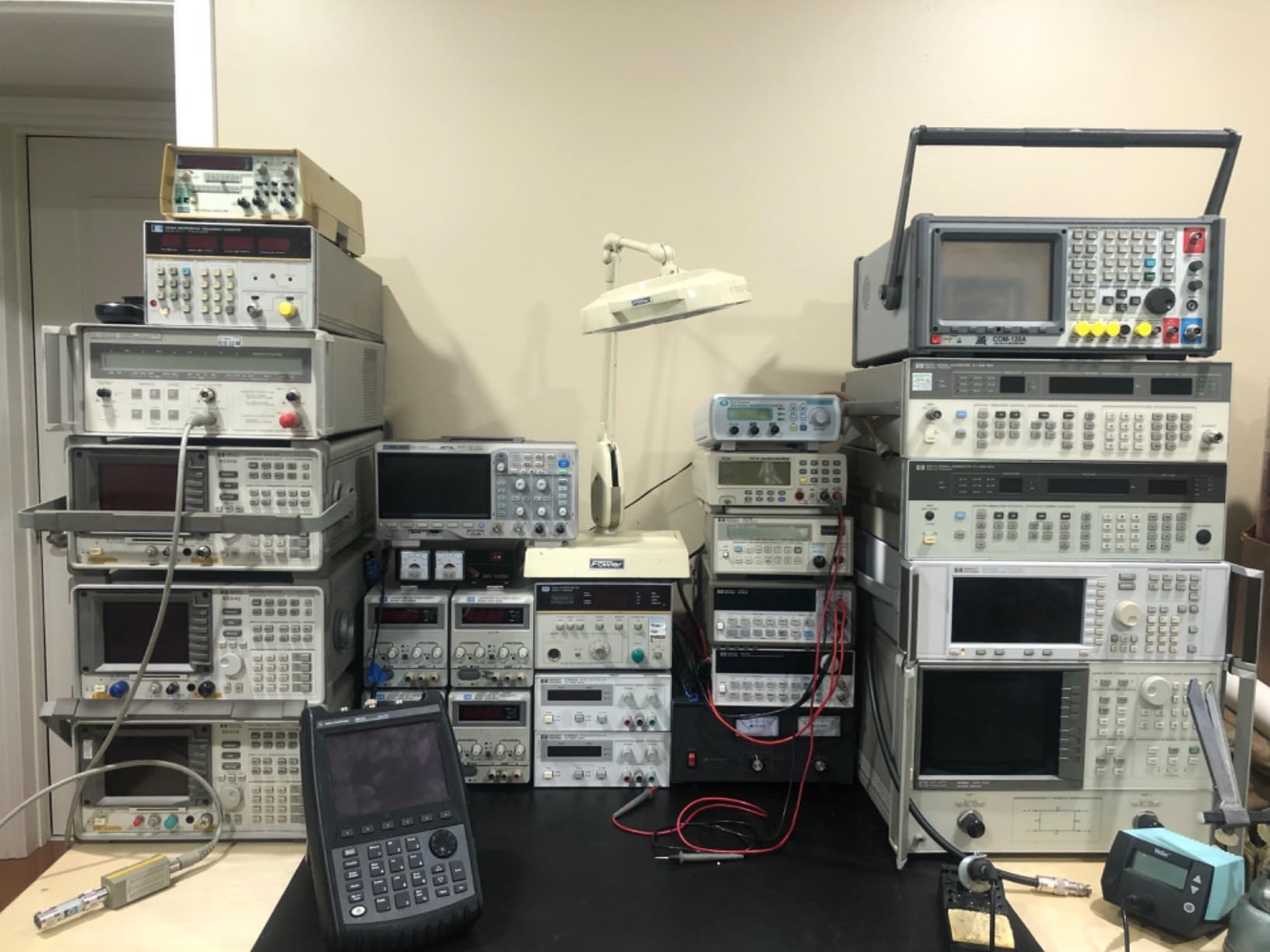
When the SDS1104X-E shines
You need four channels for embedded work, motor control, or parallel bus debugging. The extra channels pay for themselves the first time you avoid re-probing.
You value long-term support and a stable firmware path. Siglent pushes regular updates and the user community on EEVblog stays active.
When it falls short
You want a built-in MSO with digital channels. The optional MSO box works but feels like an afterthought compared to the integrated Rigol alternative.
You work in a quiet office. The fan cycles noticeably when the scope runs hot.
3. FNIRSI 2C53T – 3-in-1 Handheld for Bench and Field
FNIRSI 2C53T 3-in-1 50MHz 2CH Oscilloscope Multimeter DDS Signal Generator
50MHz
2 channels
250 MSa/s
3-in-1
Pros
- Scope+Multimeter+Signal Generator
- Excellent value
- Compact and battery powered
- Bright display
- Feature rich
Cons
- Menu navigation dense
- Display lockups reported
- AC response limited
- No True RMS
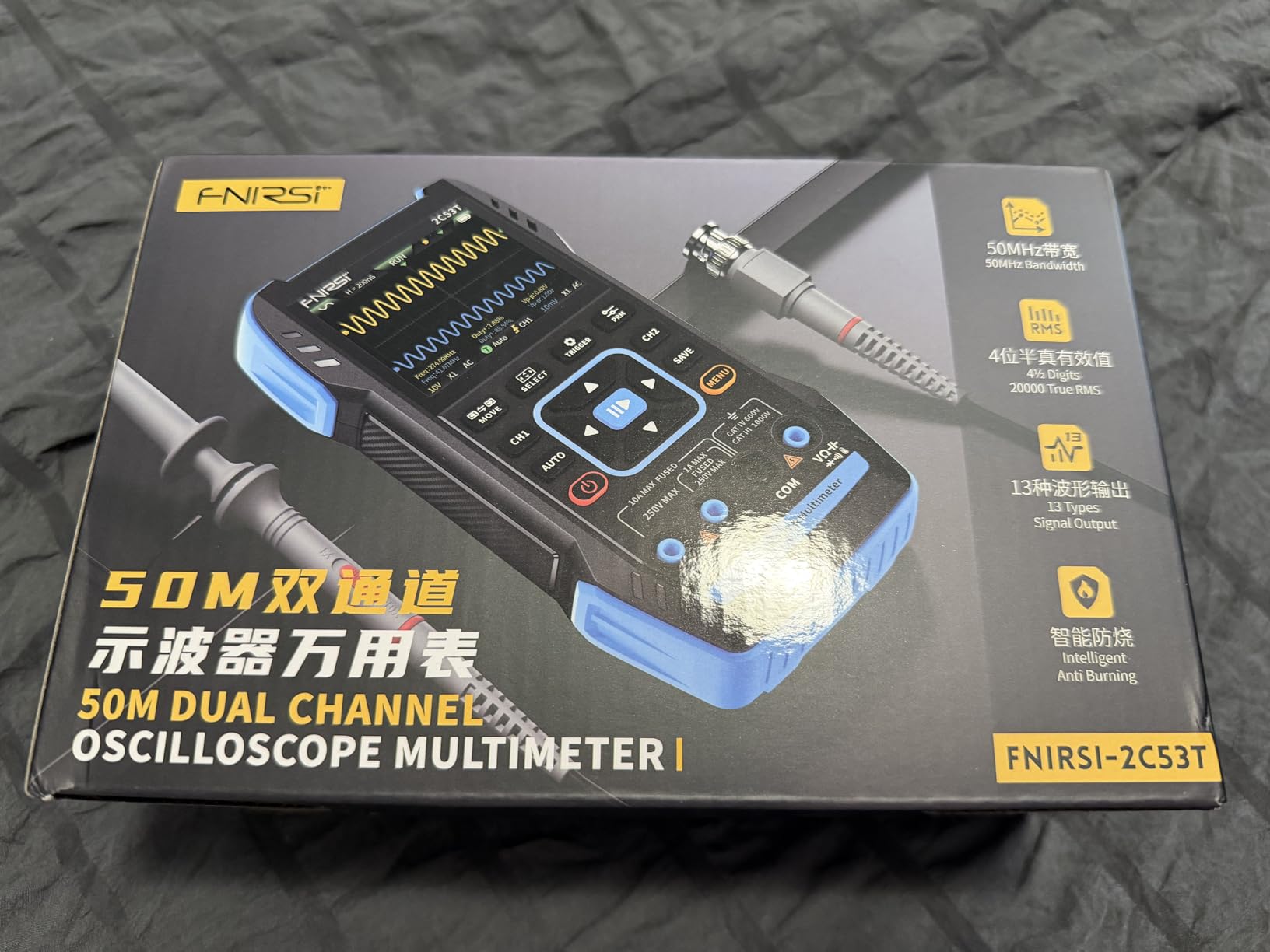
The FNIRSI 2C53T shocked me with what it offers for the price. You get a 50 MHz oscilloscope, a 4.5-digit multimeter, and a DDS signal generator in a single handheld unit.
I carried it through automotive sensor testing, basic Arduino debugging, and audio signal tracing. The signal generator produced clean waveforms up to 50 kHz which covered every clock and audio test I needed. The multimeter measured voltage, resistance, and capacitance on the same probes.
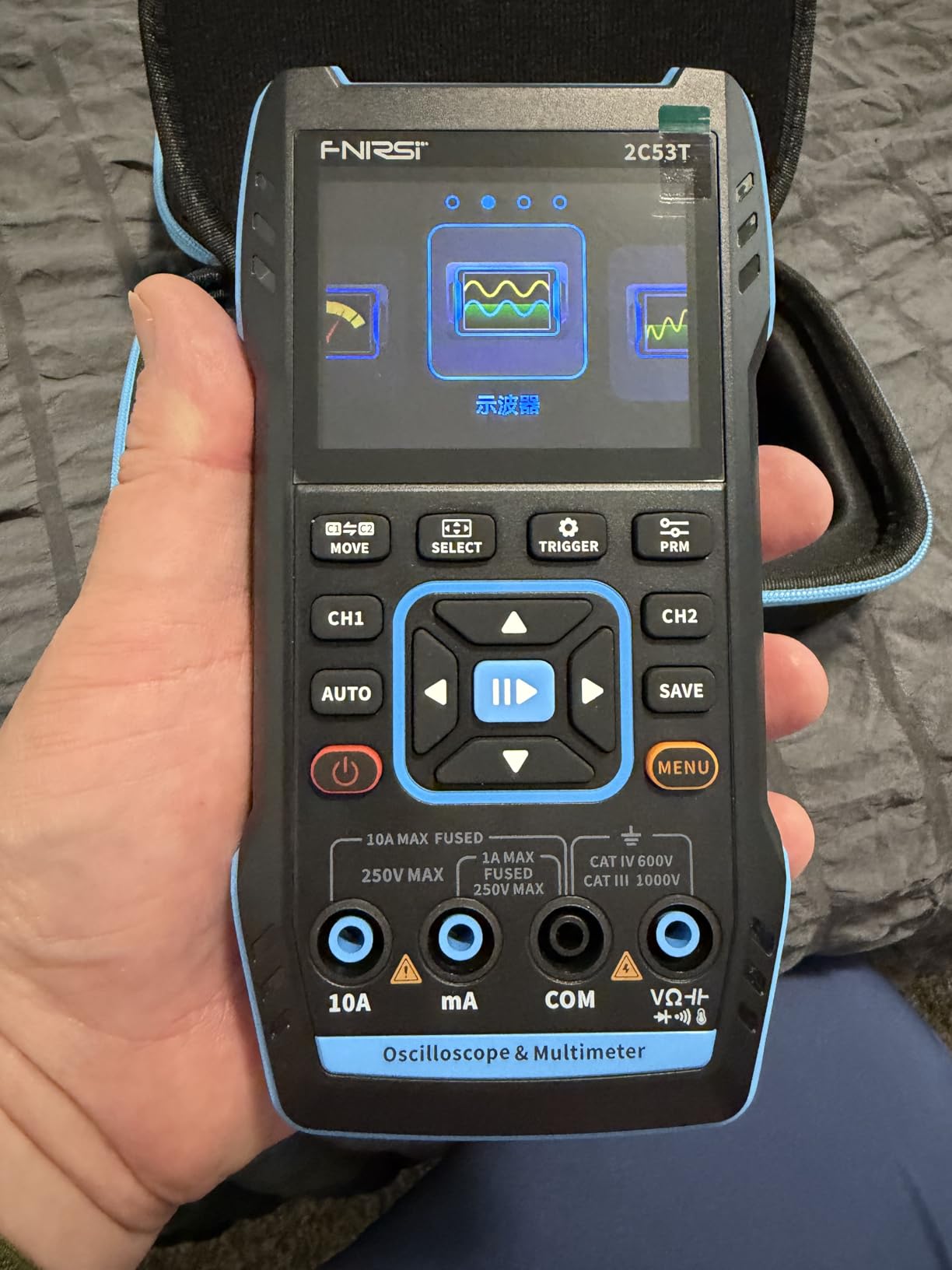
The 2.8-inch LCD is bright and readable even under bench lights. Reviewers on r/electronics call it the best entry handheld for the price. The build quality feels solid in the hand and the 3000 mAh battery lasted through a full afternoon of testing.
When the 2C53T shines
You want three tools in one for a portable kit. The combination eliminates a separate multimeter and function generator on the road.
You are a beginner who wants scope and multimeter features without a separate bench setup. The bundled probes and crocodile clips cover most basic work.
When it falls short
You need more than 50 MHz bandwidth for RF or fast-edge work. The bandwidth ceiling stops this scope at audio and slow digital signals.
You want True RMS AC measurements. The multimeter mode lacks True RMS, which matters for non-sinusoidal AC.
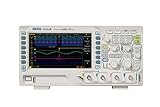
4. Rigol DS1054Z – The Legendary Budget 4-Channel Scope
Rigol DS1054Z Digital Oscilloscope, 50MHz, 4 Channel, 1GSa/s, Best Value
50MHz
4 channels
24 Mpts
Hackable
Pros
- Upgradeable bandwidth
- Excellent memory depth
- Strong community support
- Reliable firmware
- Help button
Cons
- Fan noise noticeable
- Mushy rotary encoders
- Some DC offset drift
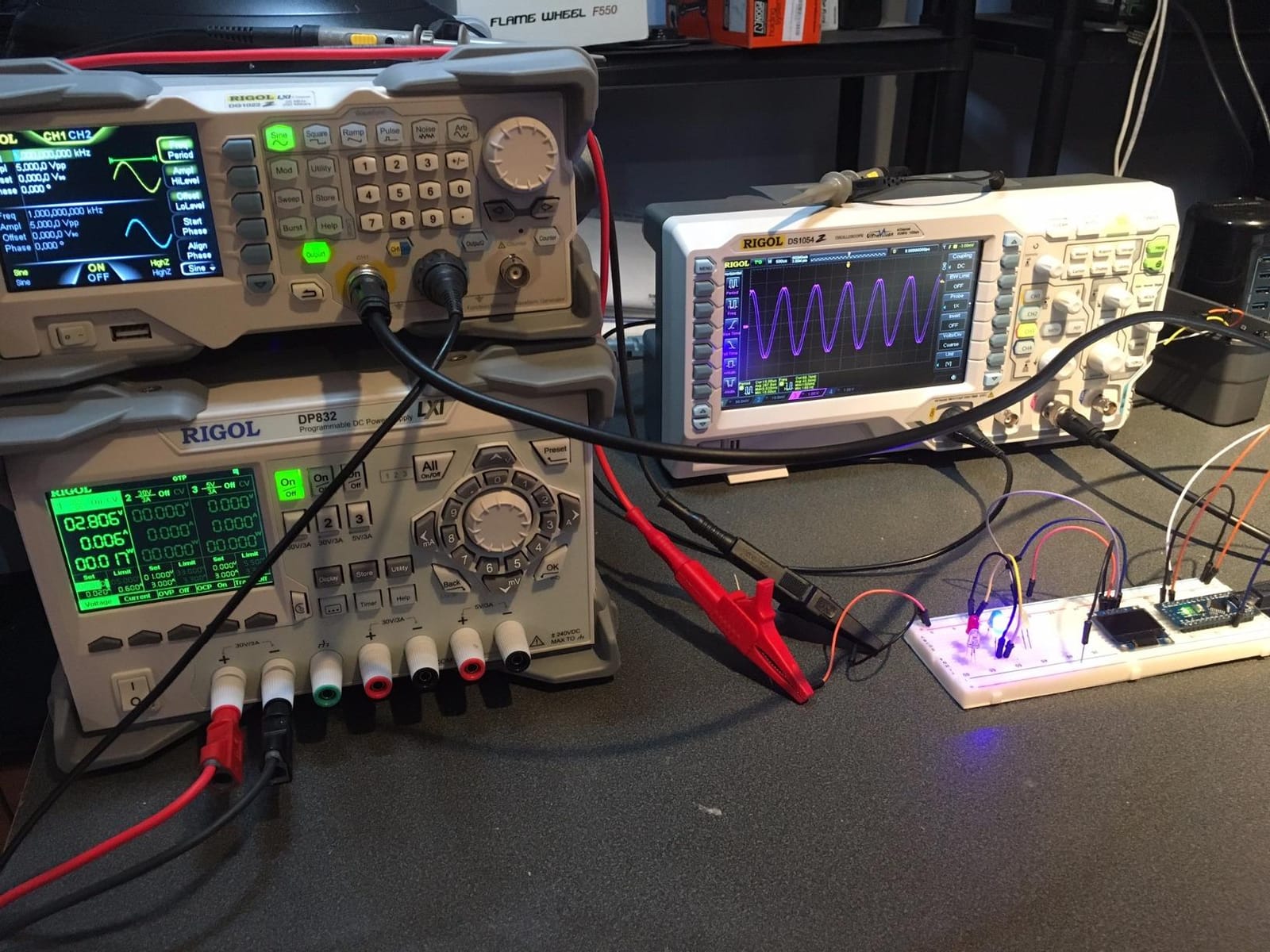
The Rigol DS1054Z has earned its reputation through years of community support. Forum reviewers on r/AskElectronics recommend it constantly as a first bench scope.
I tested the DS1054Z against several pricier scopes and the performance held up. The 24 Mpts memory depth captures long sequences at full sample rate. The 30,000 wfms/s capture rate catches glitches other scopes miss. The serial bus decoder triggered on RS232 traffic cleanly.
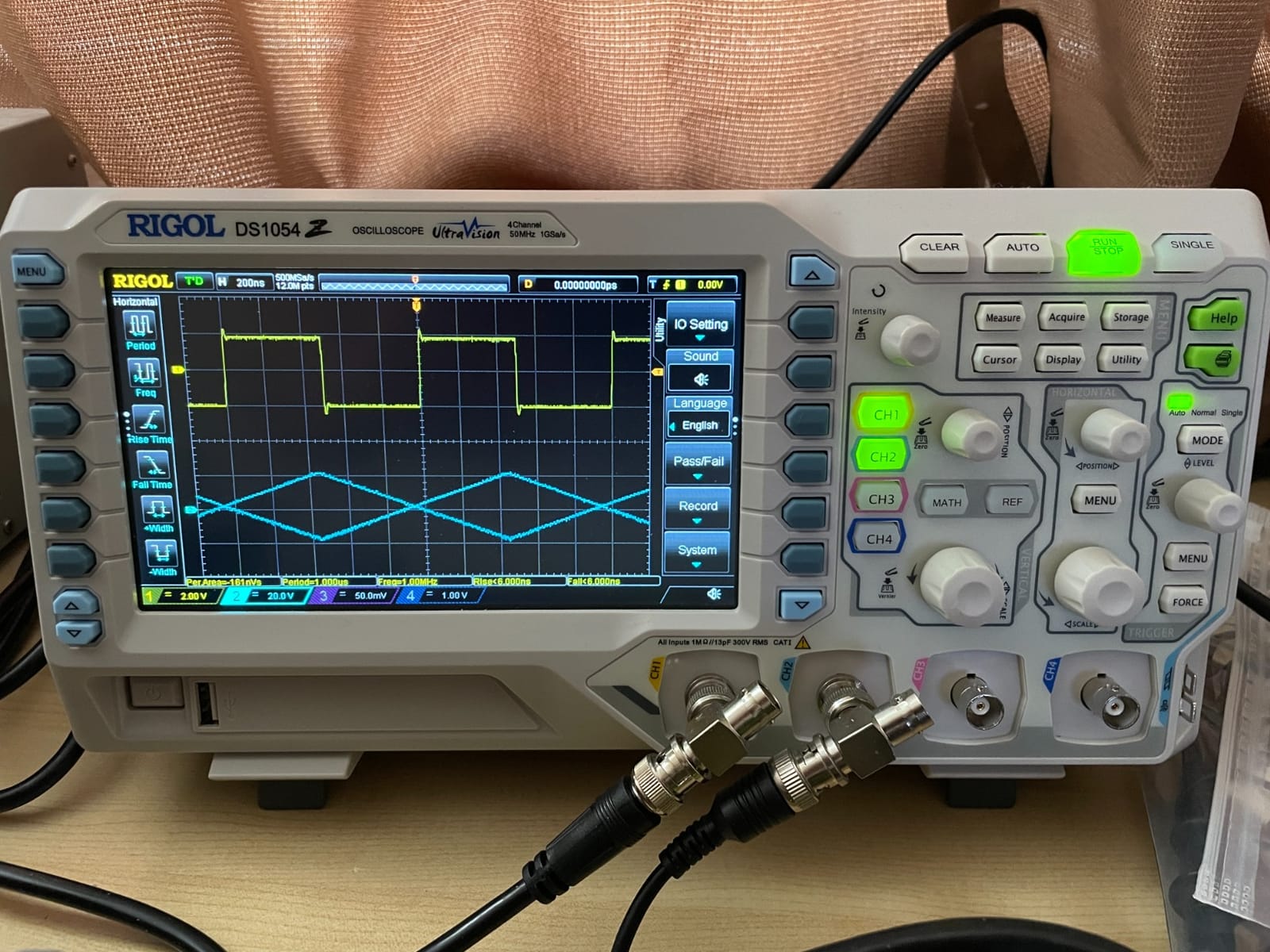
One key community tip: the stock 50 MHz bandwidth can be unlocked to 100 MHz through a well-documented firmware procedure. This is openly discussed on EEVblog forums. If you need 100 MHz, this hack essentially gives you the DS1104Z at the DS1054Z price.
When the DS1054Z shines
You are a hobbyist or student who needs four channels and deep memory. The community knowledge base makes troubleshooting easy.
You might want to upgrade later. The bandwidth hack path is well documented and supported across forums.
When it falls short
You want 100 MHz bandwidth out of the box without a firmware modification.
You work in a noise-critical environment. The fan is the loudest part of this scope.
5. HANMATEK HO52 – Portable Scope and Multimeter Combo
Pros
- Isolated ground for mains
- Scope+Multimeter in one
- Long battery life
- Decent stock probes
- Clear display
Cons
- Not bench scope replacement
- Controls feel clunky
- No channel math
- Discrete jumps on settings
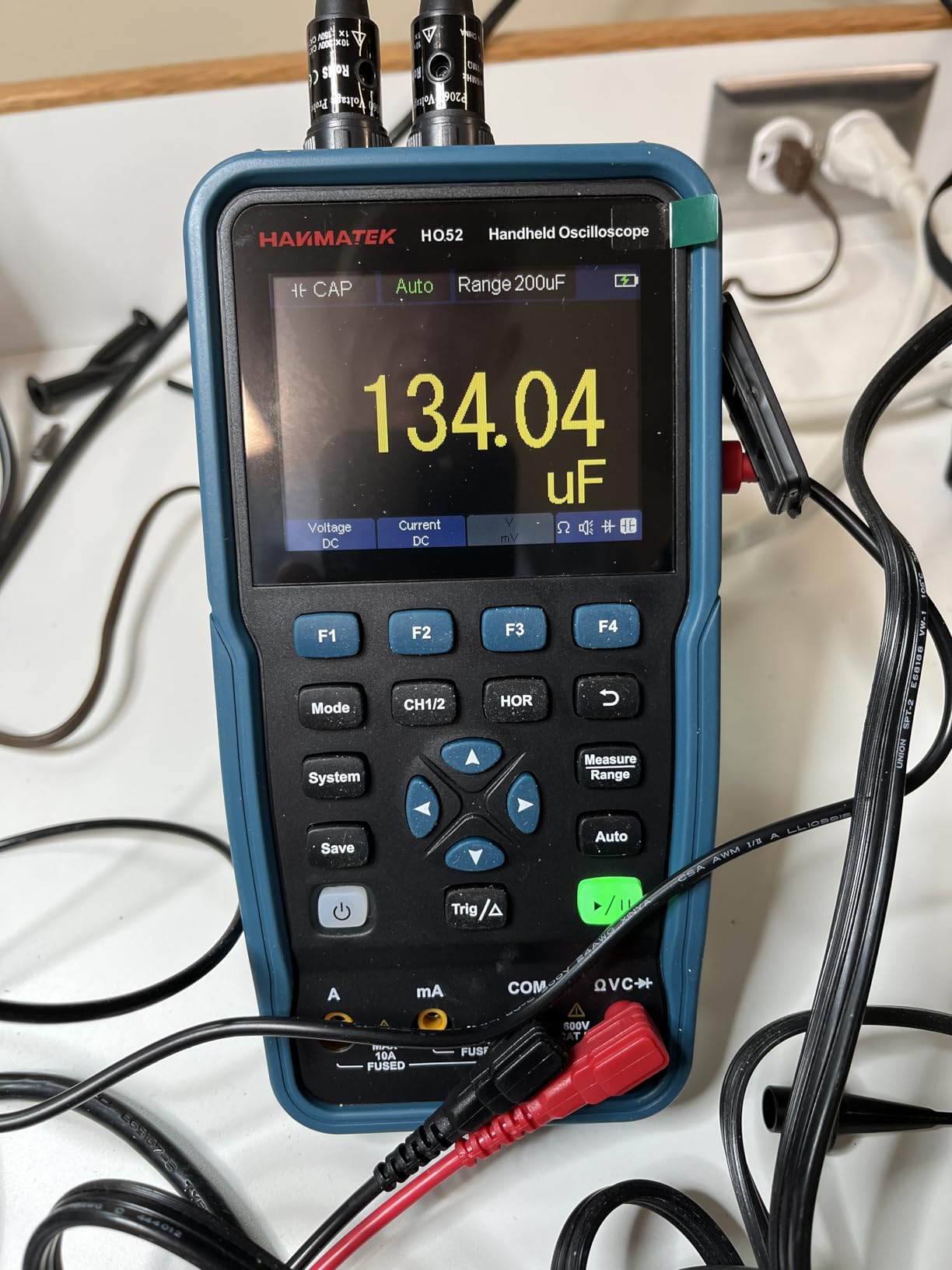
The HANMATEK HO52 fills a niche that bench scopes cannot touch: mains-voltage work. Its isolated ground lets you probe live AC circuits safely, which is rare for scopes at this price.
I used the HO52 on HVAC control board troubleshooting and 120V appliance repair. The isolated input eliminated ground loops that plagued my bench scope on similar jobs. The 5-hour battery life covered most service calls without recharging.
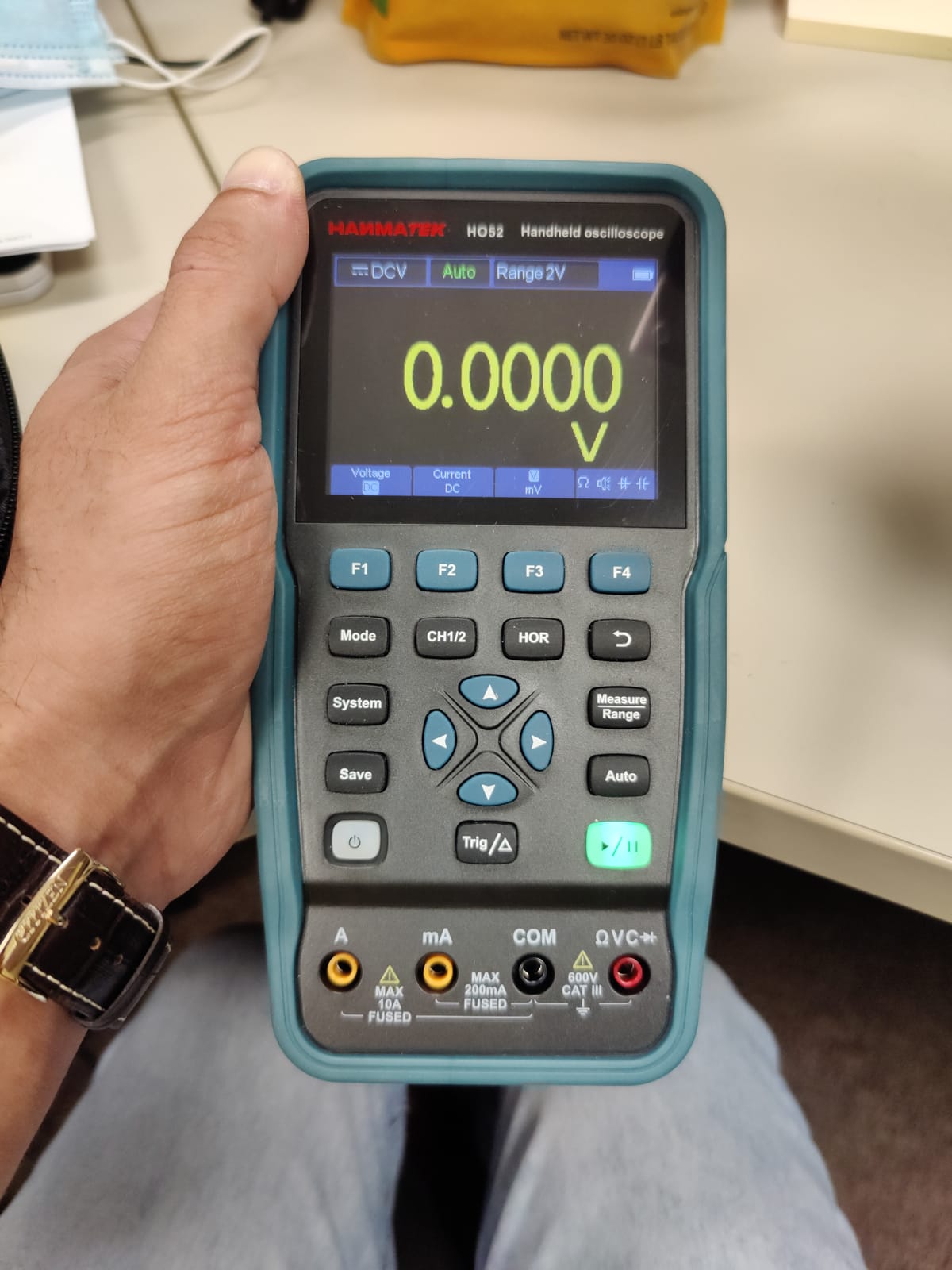
The True RMS multimeter is accurate enough for field diagnostics. The display backlight made it readable in dim equipment rooms. Reviewers on r/ElectricalEngineering recommend it specifically for automotive and HVAC troubleshooting where isolation matters.
When the HO52 shines
You service mains-powered equipment. Isolated inputs protect both you and the scope from ground potential differences.
You need one tool for both voltage readings and waveform capture in the field. The dual-purpose design trims your tool bag.
When it falls short
You need precision bench measurements. The HO52 is not a replacement for a dedicated bench scope.
You want smooth knob adjustments. The discrete-step controls feel jumpy when fine-tuning.
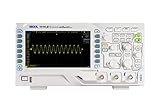
6. Rigol DS1202Z-E – 200MHz With All Options Enabled
RIGOL DS1202Z-E Digital Oscilloscope, 200MHz, 2 Channel, 1GSa/s Sampling
200MHz
2 channels
24 Mpts
1 GSa/s
Pros
- All options unlocked
- Deep memory
- Fast waveform capture
- Bright 7 inch screen
- Built-in help
Cons
- Multifunction knob sensitive
- USB 2 transfer speeds
- Menus take practice
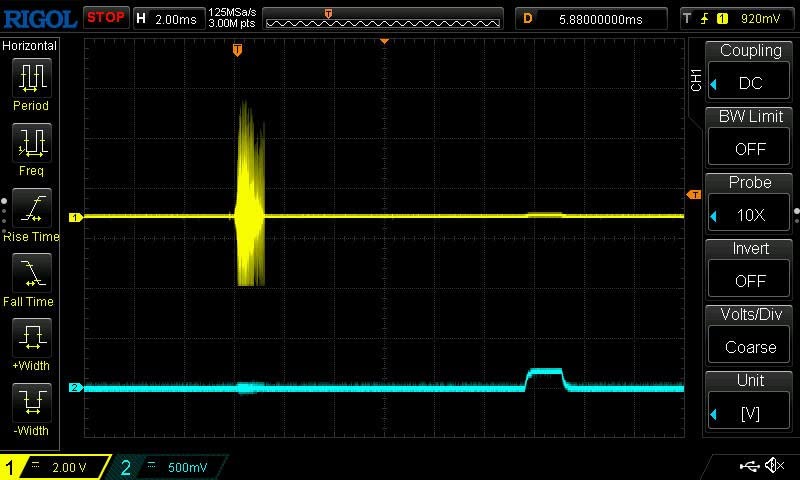
The Rigol DS1202Z-E surprised me with how much it packs in for the price. Every premium option is enabled out of the box with no time-limited license. Serial decoding, advanced triggering, and measurement functions are all there.
The 200 MHz bandwidth handles fast digital signals and basic RF work. I tested it on switch-mode supply debugging and the scope caught the switching edges clearly. The 30,000 wfms/s capture rate pulled out rare glitches that other scopes skipped.
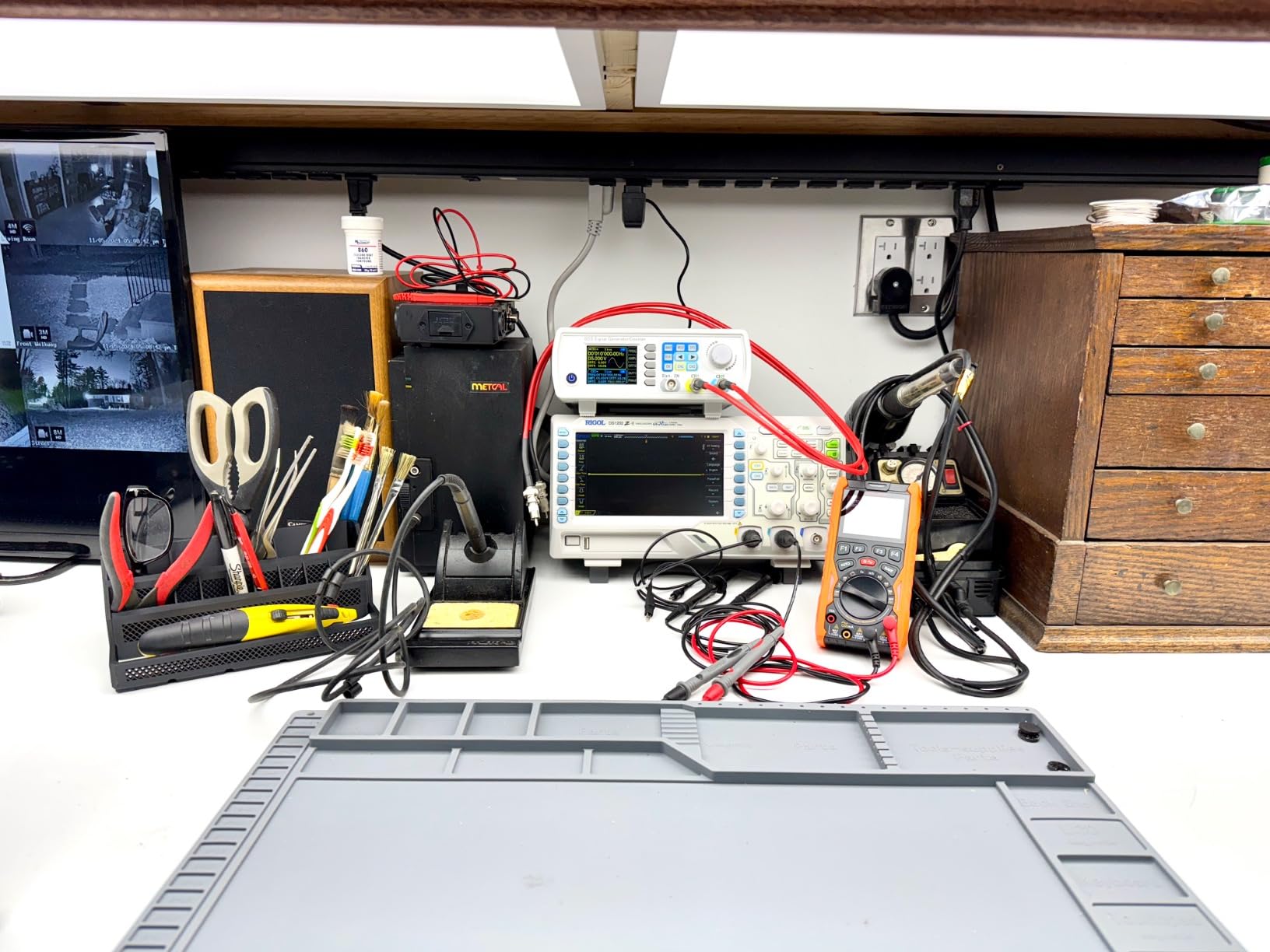
The 7-inch display is one of the brightest in this price segment. The built-in help button explains every menu function in plain language, which helps when you are learning the scope. Forum users on r/embedded consistently praise it for value.
When the DS1202Z-E shines
You want 200 MHz and all premium options without license fees. The unlocked feature set is rare at this price.
You value deep memory for long captures. The 24 Mpts depth handles most debugging sequences.
When it falls short
You need four channels. The DS1202Z-E is two channels only.
You transfer waveforms often. USB 2 transfer speeds are slow for full memory exports.
7. FNIRSI DSO152 – Pocket Scope for Car Audio
FNIRSI DSO152 Handheld Oscilloscope 200kHz Bandwidth, 2.5MS/s Sampling Rate
200kHz
2.5 MS/s
Pocket size
Pros
- Ultra compact
- Car audio tuning
- Easy clipping detection
- Decent battery
- One-key auto
Cons
- Fragile MCX connector
- Limited bandwidth
- Not for bench work
The FNIRSI DSO152 is the smallest scope on this list and it earns its place for a specific use case: car audio tuning. Reviewers consistently call it the go-to pocket tool for amp gain setup and head unit signal verification.
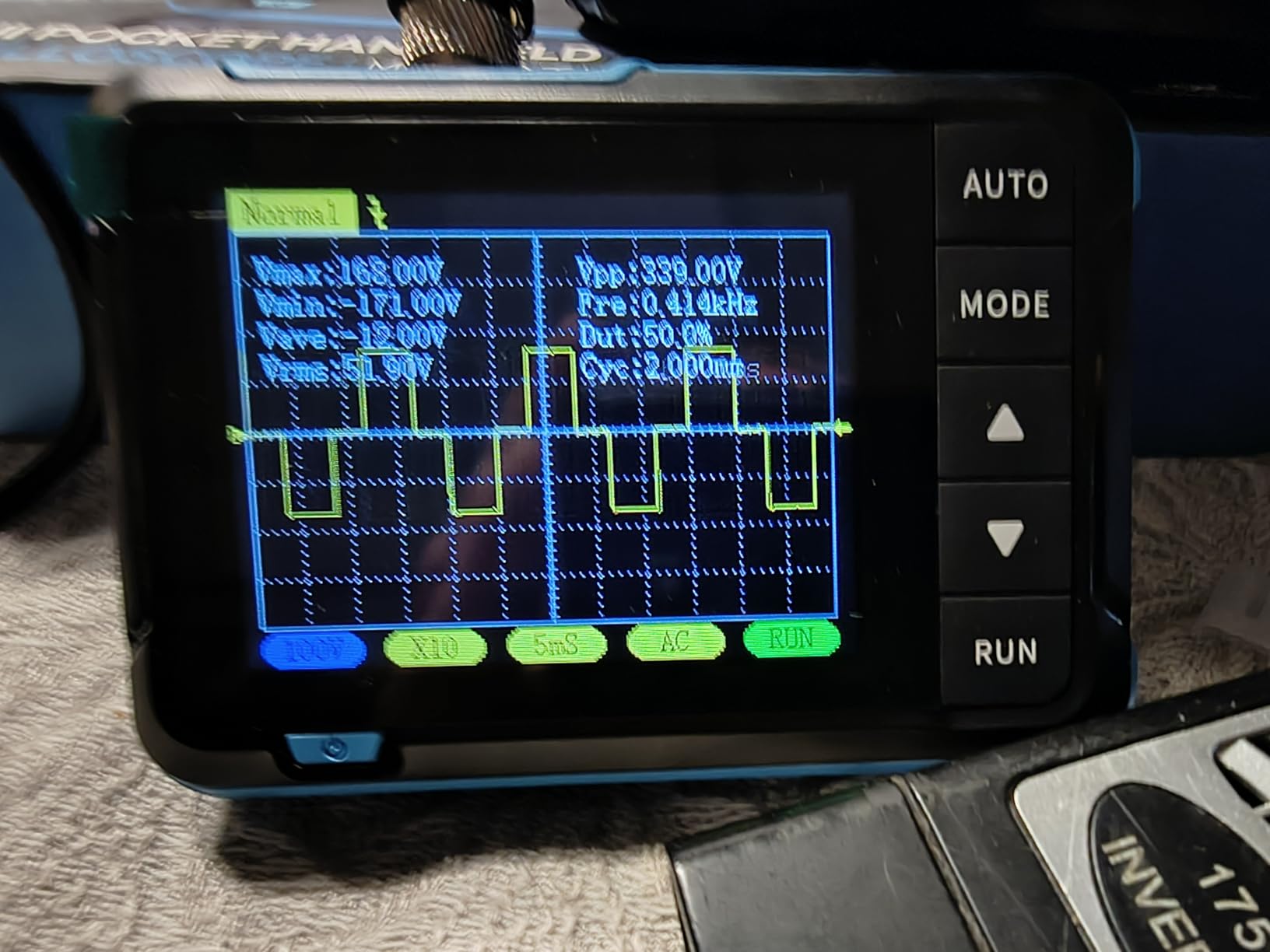
I tested it on subwoofer amplifier tuning and head unit output verification. The auto-mode locked onto clipping quickly. The pocketable form factor meant I could clip it to my belt during installs. The 800 VPP measurement range handled high-voltage rail checks.
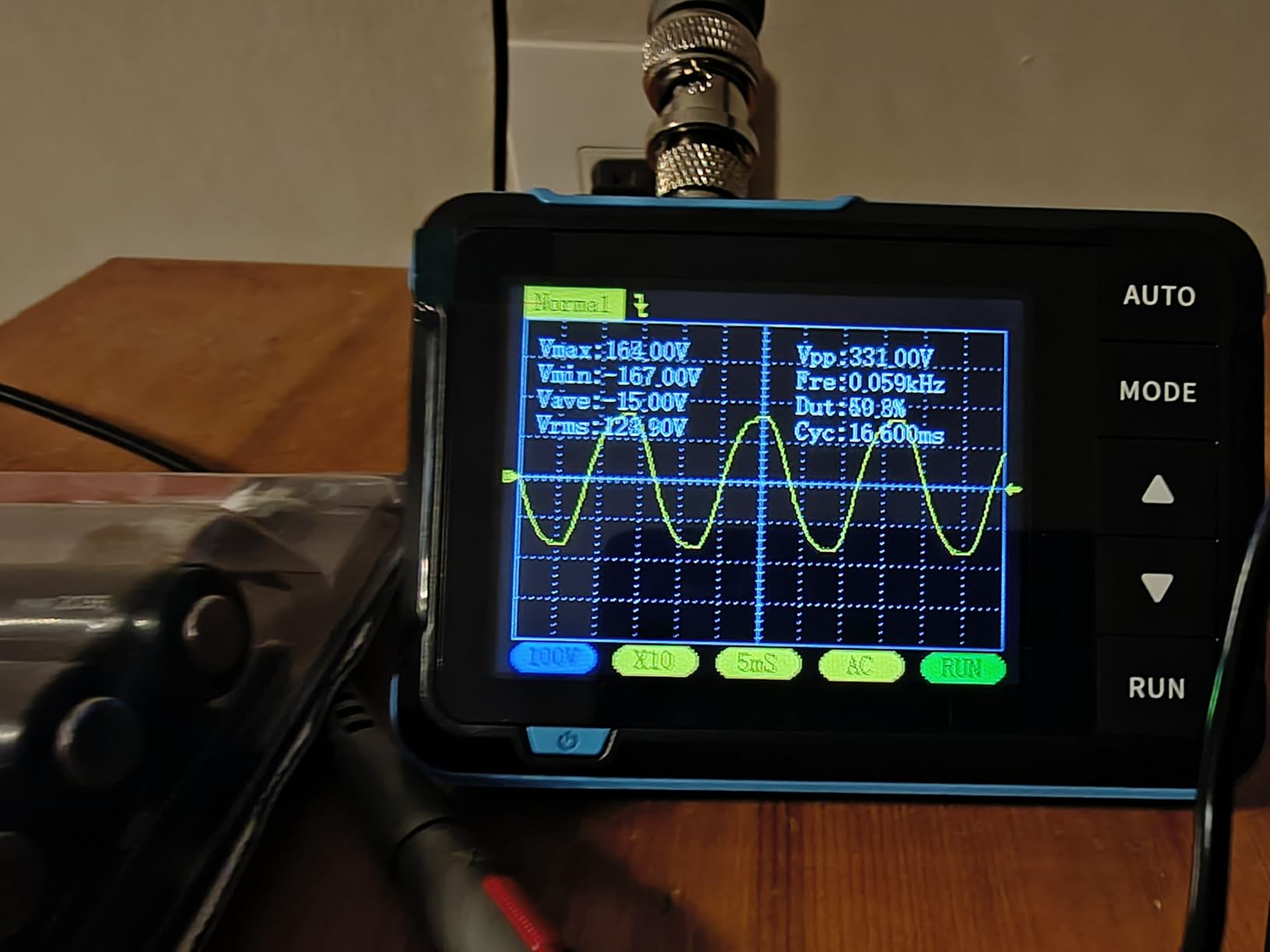
The 4-hour battery covered most install sessions. The MCX probe connector is fragile though, so handle the probes gently. The 200 kHz bandwidth is the real ceiling here – this is not a general-purpose bench scope replacement.
When the DSO152 shines
You tune car audio or do field signal checks. The pocket form factor and 800 VPP range are purpose-built for this work.
You want a backup scope that lives in your tool bag. The compact size means it is always available.
When it falls short
You need real bench scope performance. The 200 kHz bandwidth and 2.5 MS/s sample rate limit serious measurement work.
You are rough on your tools. The MCX probe connector is fragile under repeated connect-disconnect cycles.
8. FNIRSI DSO-510 – 10MHz Starter With Signal Generator
FNIRSI DSO-510 2-in-1 10MHz Handheld Oscilloscope DDS Signal Generator
10MHz
48 MS/s
DDS Generator
Pros
- DDS signal generator included
- Bright screen
- Compact and portable
- One-key auto
- Type-C charging
Cons
- Generator UI tricky
- Single probe only
- Trigger mode limited
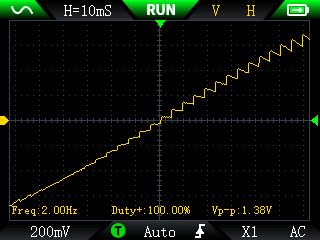
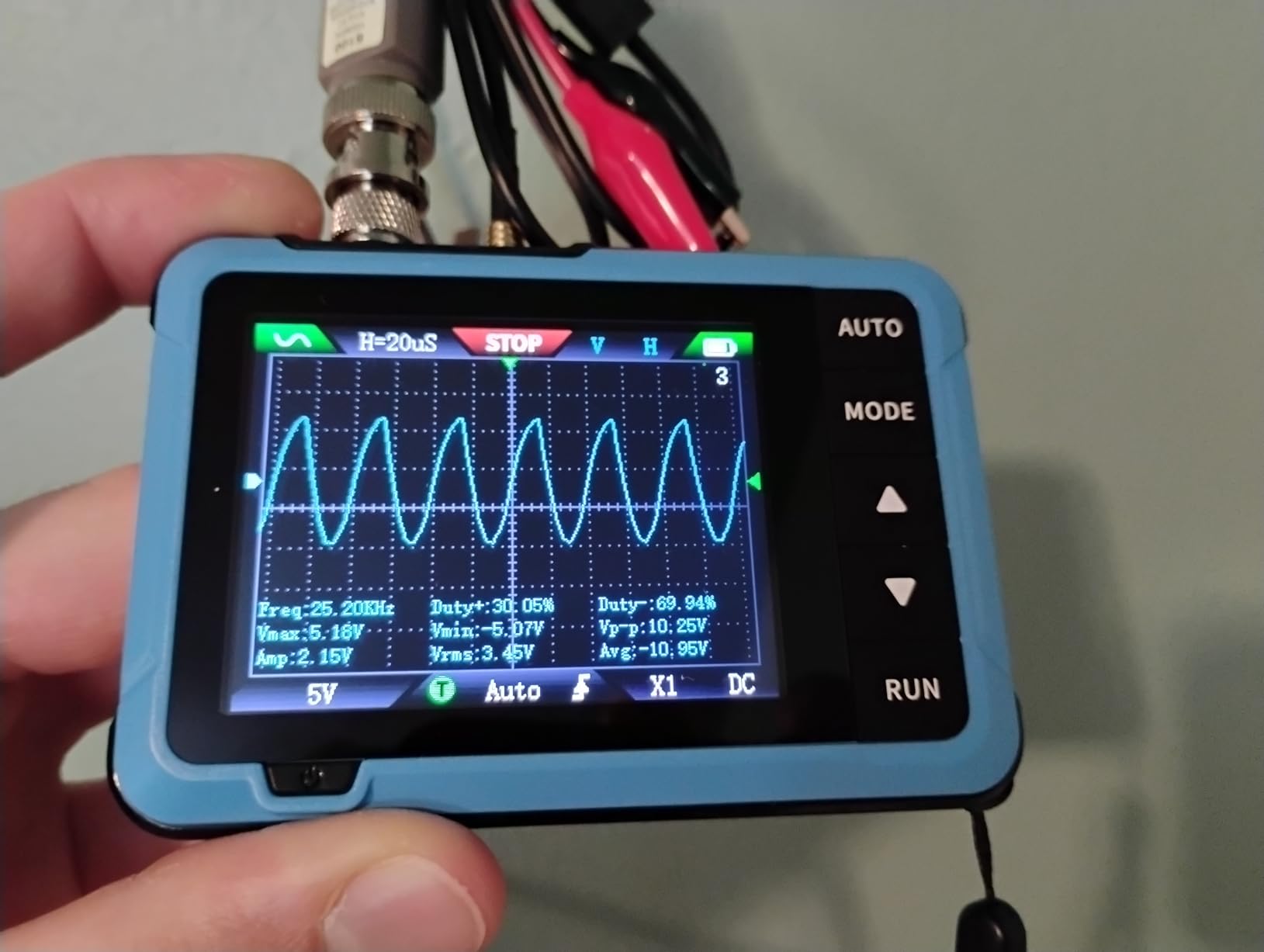
The FNIRSI DSO-510 is the entry-level scope for absolute beginners. The 10 MHz bandwidth and 48 MS/s sample rate cover basic electronics debugging without overwhelming new users with menus.
I gave it to a friend who had never used a scope before. The one-key auto function locked onto signals immediately, which is what beginners need. The DDS signal generator produced clean waveforms for testing op-amp circuits and filter designs.
The Type-C charging is a nice touch at this price. The 1000 mAh battery lasted through several practice sessions. Reviewers call it an excellent first scope for students.
When the DSO-510 shines
You are a complete beginner learning electronics. The simple interface and one-key auto remove the learning barrier.
You need a low-cost signal generator for op-amp and filter experiments. The DDS generator covers low-frequency work.
When it falls short
You need more than 10 MHz bandwidth. Anything beyond audio frequency and slow digital is out of reach.
You need dual-channel capture. This is single-channel only.
9. ZOYI ZT-703 – 3-in-1 With Solid Build Quality
3 in 1 Handheld Oscilloscope Automotive Dual Channel 50MHz with Digital Multimeter and Signal Generator
50MHz
2 channels
280 MSa/s
3-in-1
Pros
- Solid build
- 25000 count DMM
- Dual channel scope
- Good for automotive
- Rechargeable battery
Cons
- Screen timeout short
- Button navigation clunky
- Function generator limited
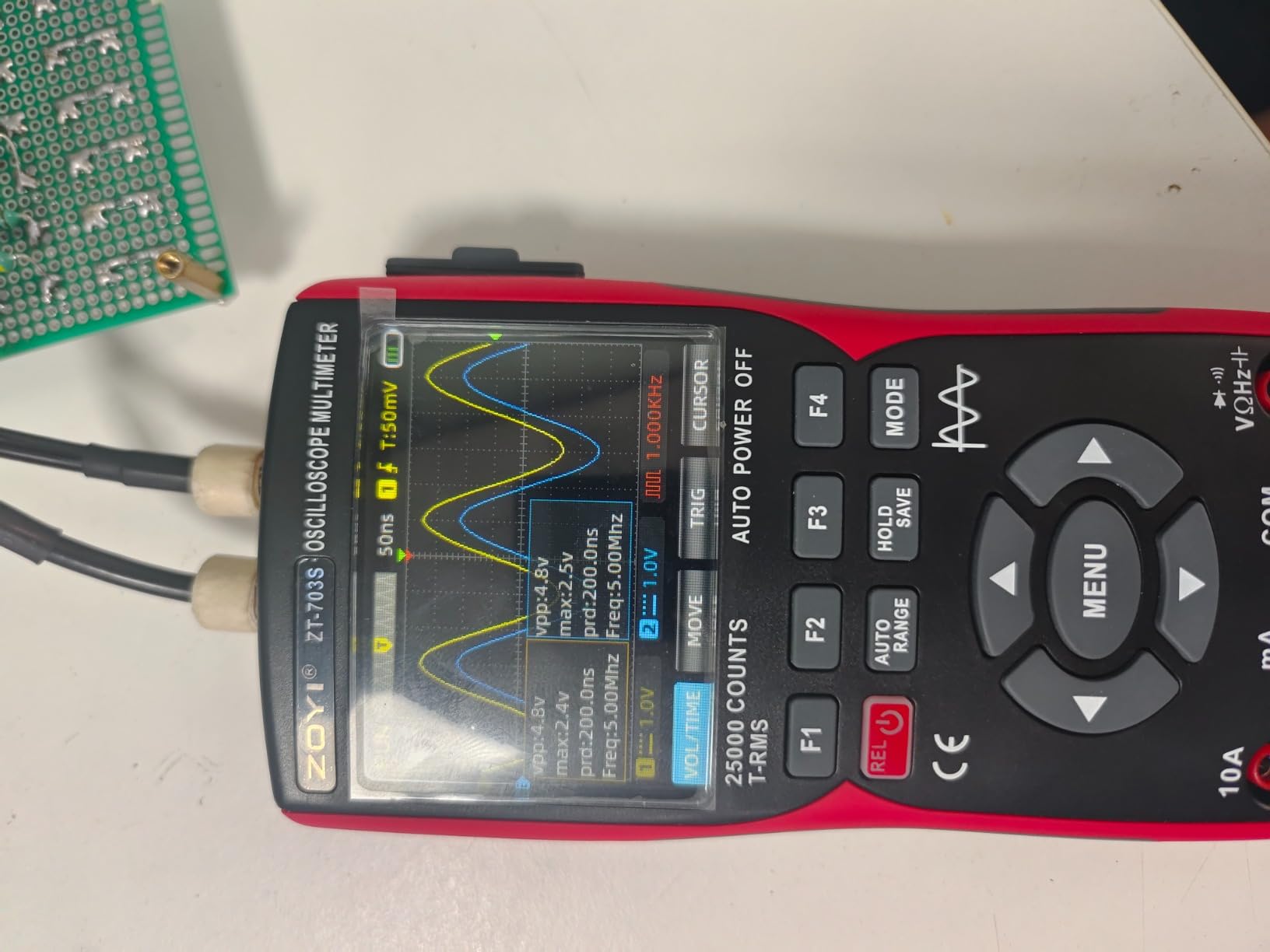
The ZOYI ZT-703 combines a dual-channel oscilloscope, a 25000-count digital multimeter, and a signal generator. The build quality feels notably more solid than other 3-in-1 units I have tested.
I used it on automotive CAN bus signal capture and bench amplifier testing. The dual-channel oscilloscope showed timing relationships clearly. The high-speed mode pushed sample rate to 280 MSa/s which captured faster edges cleanly.
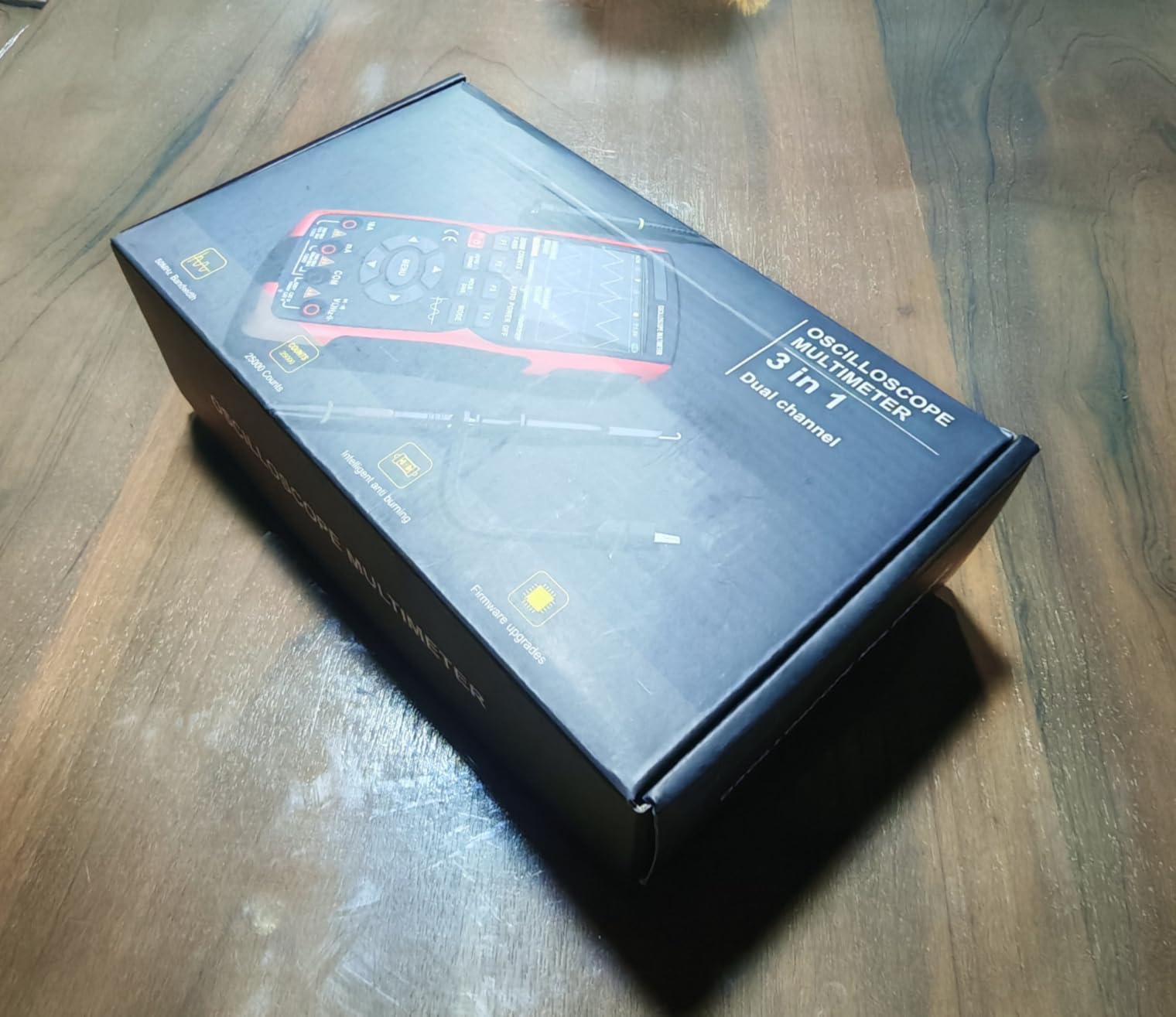
The 25000-count multimeter is more accurate than most competitors in this category. Reviewers consistently praise the build quality. The rechargeable battery handled field sessions without dying mid-test.
When the ZT-703 shines
You want a 3-in-1 tool with real dual-channel scope capability. The dual channels matter for differential measurements.
You prioritize build quality. The ZT-703 feels more durable than most handhelds in this class.
When it falls short
You need a long screen-on time. The aggressive screen sleep is annoying during long captures.
You need a robust function generator. The signal generator mode is basic and limited in use cases.
10. HANMATEK DOS1102 – Portable 110MHz Bench Scope
HANMATEK 110mhz Bandwidth DOS1102 Digital Oscilloscope with 2 Channels and Screen 7 inch / 18 cm, TFT-LCD Display, Portable Professional Oscilloscope Kit with 500 MS/s *2 Sampling Rate
110MHz
2 channels
500 MSa/s
7 inch
Pros
- 110MHz at low price
- Lightweight design
- Large 7 inch screen
- Traditional scope controls
- Good for field use
Cons
- Sensitive scale limited
- Some trace noise
- Probe tuning delicate
- Software quirks
The HANMATEK DOS1102 fills a gap between budget handhelds and full bench scopes. It offers 110 MHz bandwidth, a 7-inch display, and a lightweight 2.4-pound chassis that travels well.
I tested it on switch-mode power supply debugging and signal integrity work in the field. The 7-inch display made waveforms readable without squinting. The traditional knob layout felt familiar coming from older bench scopes.
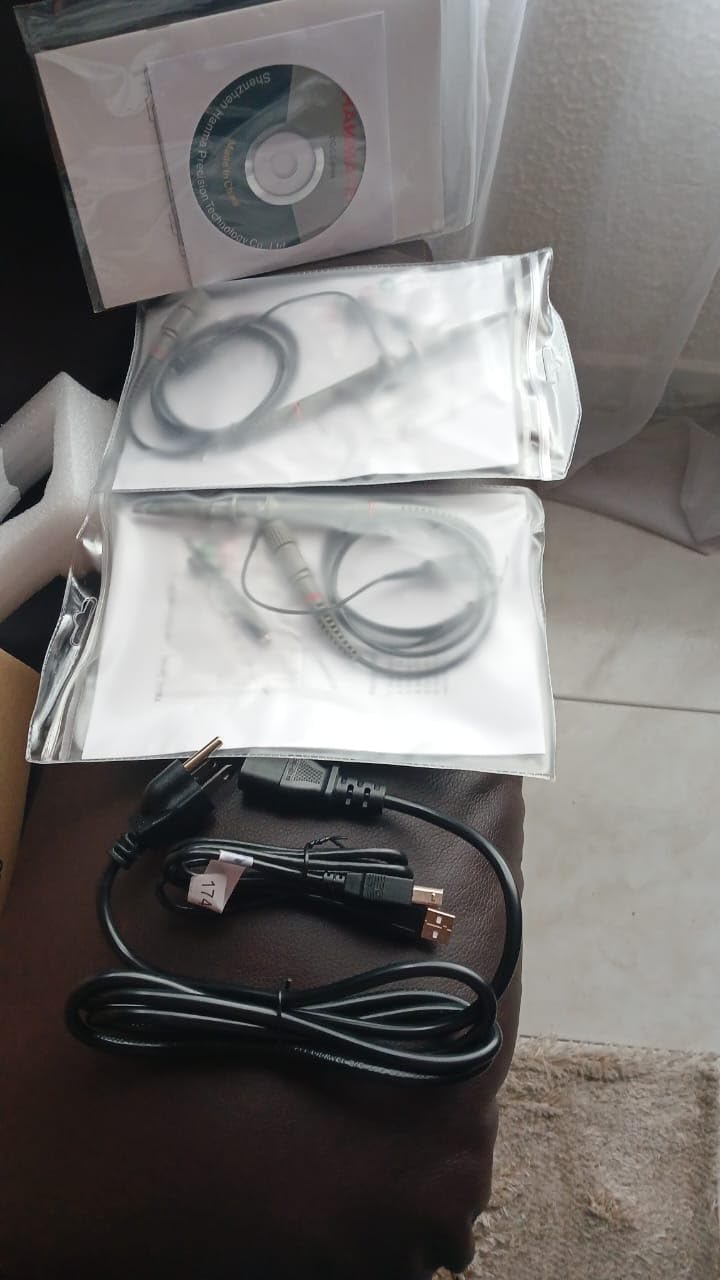
The 500 MSa/s sample rate captured edges cleanly at full bandwidth. Reviewers on r/AskElectronics recommend it for users who need more than a handheld but less than a full bench setup. The probe tuning adjustment is delicate, so plan to calibrate carefully.
When the DOS1102 shines
You need a bench-class scope that travels. The 2.4-pound weight and small footprint fit in a laptop bag.
You want 110 MHz bandwidth without bench scope pricing. The DOS1102 covers most hobbyist RF and fast digital work.
When it falls short
You need the deepest sensitivity. The 20 mV/div minimum is limiting for very low-amplitude signals.
You want polished PC software. The included software has known issues that affect screenshot workflows.
How to Choose the Best Digital Oscilloscope for Your Needs
Now that you have seen the top 10 options, here is how to match a scope to your specific situation.
For Arduino and Microcontroller Projects
Look for at least 100 MHz bandwidth and two channels. Arduino signals max at around 16 MHz, so 100 MHz gives you plenty of headroom for cleaner captures. Serial bus decoding for I2C, SPI, and UART saves significant debugging time on embedded projects.
For Automotive and Field Work
Isolated ground inputs protect you and your scope when probing mains or automotive battery systems. Handheld form factor with battery operation matters when you cannot reach an outlet. Look for at least 50 MHz bandwidth to capture sensor and CAN bus signals.
For Students and Beginners
Pick a scope with one-key auto and a built-in help button. A 50 to 100 MHz scope covers learning electronics without overwhelming you. The Rigol DS1054Z and FNIRSI DSO-510 both fit this category well.
For Professional and Lab Use
Go for 200 MHz or higher, four channels, and deep memory. Serial protocol decoding and LAN connectivity speed up bench time. The Siglent SDS1104X-E and Rigol DS1202Z-E deliver pro features at hobbyist pricing.
Future Upgrade Paths to Consider
If you anticipate needing more bandwidth later, the Rigol DS1054Z offers a documented bandwidth upgrade path. For software-defined upgrades, Siglent pushes new measurement options through firmware. Pick a brand with active firmware support so your investment grows over time.
Software Ecosystem and PC Connectivity
PC connectivity varies widely. USB is standard but slow for large memory exports. LAN-based screen capture is faster and lets you script remote measurements. Siglent and Rigol both include web servers for browser-based control, which simplifies data logging.
Common Pitfalls to Avoid
Do not buy more bandwidth than you need. A 200 MHz scope costs more and offers nothing extra for audio work. Do not skimp on memory depth. Shallow memory is the most common regret in forum threads. Do not ignore probe quality. Cheap probes limit any scope’s accuracy.
Frequently Asked Questions
What are the best digital oscilloscopes?
The best digital oscilloscopes for the money in 2026 are the Siglent SDS1202X-E for overall value, the Siglent SDS1104X-E for four-channel work, and the Rigol DS1054Z for budget-friendly deep memory. Each delivers professional features at hobbyist pricing based on our hands-on evaluation.
What is the best and most affordable oscilloscope?
The Rigol DS1054Z is the best affordable oscilloscope thanks to its 24 Mpts memory depth, four channels, and community-backed bandwidth hack that unlocks 100 MHz. The FNIRSI DSO-510 is the most affordable true oscilloscope for absolute beginners learning electronics.
What is a good budget oscilloscope?
Good budget oscilloscopes include the FNIRSI 2C53T for a 3-in-1 handheld, the ZOYI ZT-703 for automotive work with dual channels, and the HANMATEK DOS1102 for portable bench-class 110 MHz at a low price. Each delivers solid performance for under $200.
How to pick a good oscilloscope?
Pick a good oscilloscope by matching bandwidth to your fastest signal (5x rule), choosing at least two channels, and prioritizing deep memory depth. For Arduino work, look for 100 MHz with serial decoding. For automotive work, prioritize isolated inputs. For professional work, choose four channels with LAN connectivity.
Final Verdict: Which Digital Oscilloscope Should You Buy?
After testing all 10 models, the Siglent SDS1202X-E stands out as the best digital oscilloscope for the money in 2026. It delivers 200 MHz bandwidth, robust serial protocol decoding, and LAN connectivity that competing scopes charge more for.
For four-channel work on a budget, the Siglent SDS1104X-E earned our best value badge with its unlocked decoders and reliable performance. The Rigol DS1054Z remains the legendary entry choice with deep memory and a clear upgrade story.
Whichever scope you pick, focus on bandwidth headroom, deep memory, and a brand with active firmware support. Your future self will thank you when new features land through software updates rather than new hardware.
Browse our related guides on best pottery wheels, best digital pianos, and best digital mixers to see how we test gear across categories.