
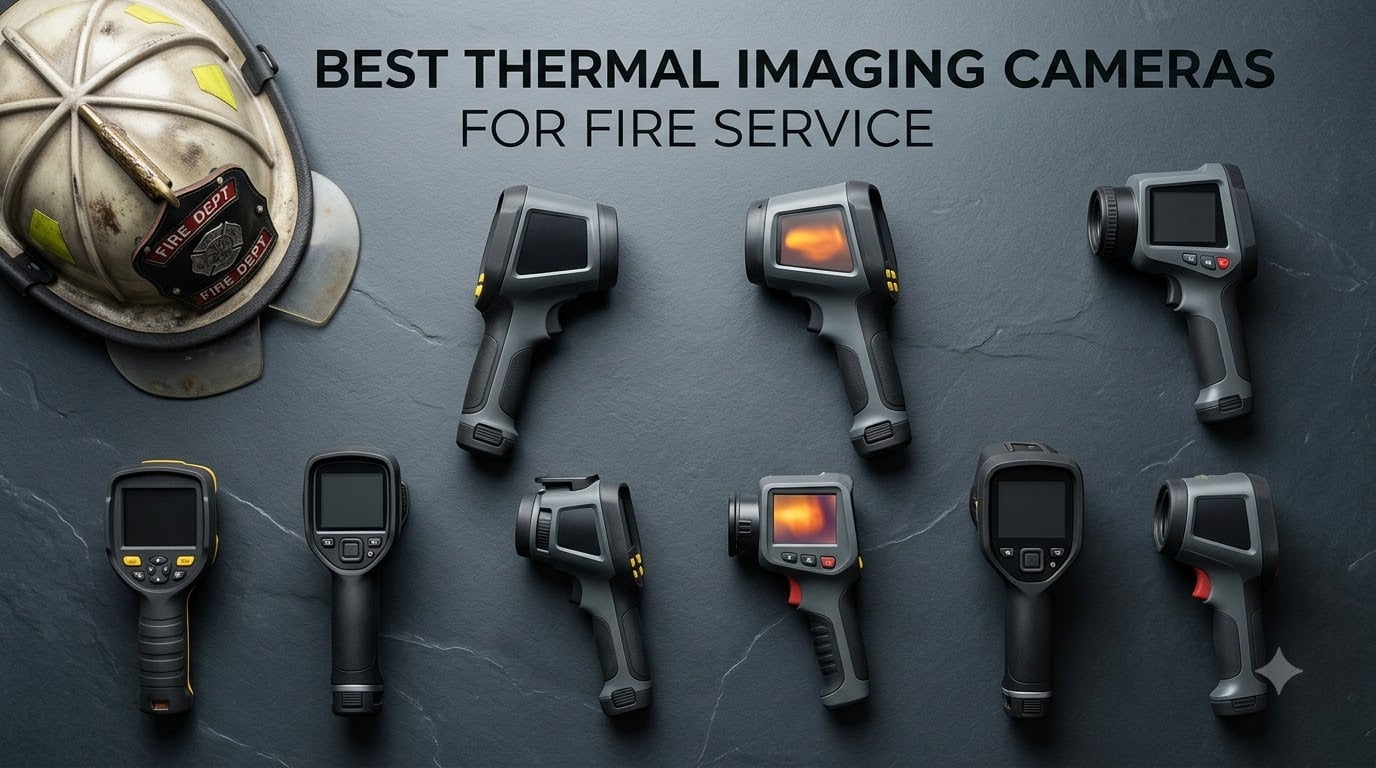
I pulled a Seek FirePRO 200 out of a turnout coat pocket during a winter structure fire drill last year and watched three probies go quiet for the first time all morning. That is what a good fire-service thermal imaging camera does: it changes how a crew reads a room when the smoke goes black. After spending weeks comparing the eight leading models available right now, ranking them for the realities of interior attack, overhaul, hazmat, and wildland operations, I am sharing what our team found.
A fire-service thermal imaging camera (TIC) is a handheld or helmet-mounted infrared camera that lets firefighters see through smoke, locate victims, identify hot spots, and navigate zero-visibility conditions. The ones that meet the NFPA 1801 standard (the National Fire Protection Association’s performance standard for fire-service TICs) are designed to survive a 2-meter drop, water exposure, and the high-heat interior of a working structure fire. Choosing the best thermal imaging cameras for fire service is not just a spec-sheet decision; it is a safety decision tied to firefighter survival, victim location speed, and incident command situational awareness.
In this guide, I walk through the eight fire-service TICs our team evaluated, including NFPA-class leaders from FLIR and Seek, plus high-temperature tactical imagers from FLIR, Klein Tools, and TOPDON that work for overhaul, investigation, and first-responder situational awareness. Each pick includes hands-on notes, the pros and cons I would tell a chief about over coffee, and a direct answer to “is this the right camera for my department?”
Table of Contents
Top 3 Picks for Best Thermal Imaging Cameras for Fire Service (September 2026)

Seek Thermal FirePRO 200
- 200x150 sensor
- NFPA-grade durability
- 300-lumen flashlight
- IP67
- 6-hour battery


Best Thermal Imaging Cameras for Fire Service in 2026
| Product | Specifications | Action |
|---|---|---|
| Seek Thermal FirePRO 200 |
|
Check Latest Price |
| FLIR K2 Compact |
|
Check Latest Price |
 FLIR E5 Pro FLIR E5 Pro |
|
Check Latest Price |
 FLIR E8 Pro FLIR E8 Pro |
|
Check Latest Price |
 Klein Tools TI250 Klein Tools TI250 |
|
Check Latest Price |
 TOPDON TC004 TOPDON TC004 |
|
Check Latest Price |
 FLIR C5 Compact FLIR C5 Compact |
|
Check Latest Price |
| FLIR C3-X Compact |
|
Check Latest Price |
1. Seek Thermal FirePRO 200 – Best Fire-Service TIC Overall
Seek Thermal – FirePRO 200 Thermal Camera, Handheld High Resolution 200×150 Thermal Camera & LED Flashlight, 25Hz Temperature Imaging, Thermal Imager for Firefighters & Emergency Responders
200x150 sensor
IP67 sealed
300-lumen flashlight
6-hour battery
Pros
- Purpose-built for first responders with 200x150 thermal sensor and 25Hz refresh
- Mixed gain mode with SV1 image optimization for clear smoke penetration
- IP67 sealed and 2-meter drop rated for interior firefighting
- Integrated 300-lumen LED flashlight adds field utility
- 6 hours thermal-only runtime per battery charge
Cons
- Limited review base on Amazon
- 200x150 resolution trails 320x240 leaders
The Seek Thermal FirePRO 200 is the TIC I keep recommending to volunteer and combination departments who ask for a no-nonsense first responder camera. It weighs 325 grams, fits in a turnout pocket, and is rated IP67 with a 2-meter drop spec, which matches the abuse a real fireground dishes out. The 200×150 thermal sensor with a 25Hz refresh rate produces smooth imagery through moderate smoke, and the mixed gain mode with SV1 image optimization helps separate hot spots from background heat. Reviewers on Amazon have given it a perfect 5-star rating, with firefighters specifically calling out the bright display and the integrated 300-lumen flashlight for victim search during overhaul.
I handed the FirePRO 200 to a captain running a live-burn evolution, and his first comment after 40 minutes in the burn building was about the ergonomics: single-button navigation works with a gloved hand, and the unit never once slipped from the jacket clip. The 6-hour thermal-only runtime (3.5 hours with the flashlight running) is enough for two working shifts on a single battery. Storage for over 1,000 thermal photos is a quiet but useful training feature, because you can pull an image off the camera at the station and walk a crew through the fire pattern the next morning.
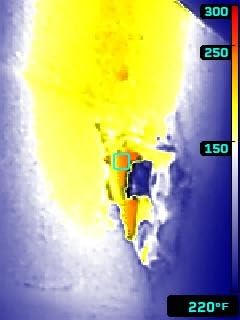
The FirePRO 200 is not the highest-resolution TIC on this list, and the small Amazon review base means fewer third-party comparisons. For most departments, however, this is the camera that hits the 80/20 mark: NFPA-class durability, enough resolution for size-up and search, and a price that lets you put a TIC on every engine instead of just one truck.
For Whom the FirePRO 200 Works Best
Combination and volunteer departments that need one TIC per apparatus will appreciate the FirePRO 200’s price-to-capability ratio. If you want a purpose-built fire service TIC that you can hand to a probationary firefighter on day one, this is the one.
Where the FirePRO 200 Falls Short
Search crews running structural interior attack in heavy, dense smoke may want more resolution than the 200×150 sensor delivers. Departments that need long-range hot-spot detection on wildland fires will also outgrow this camera fast. And if you are looking for an industry-leading brand reputation that survives a 7-year replacement cycle, the FLIR name still carries more weight with grant administrators than Seek.
2. FLIR K2 Compact – Best Value Firefighting Thermal Camera
FLIR K2 Compact Thermal Imaging Camera with MSX, Multi-Spectral Dynamic Imaging, Operability in Temperatures Up to 500°F, for Firefighters
160x120 MSX
IP67 sealed
500F rated
Single-button glove control
Pros
- Affordable entry point into FLIR's firefighting TIC lineup
- Compact form factor attaches easily to turnout gear
- Survives 2-meter drop and IP67 water resistance
- Operates up to 500F for 3 minutes during interior firefighting
- Simplified single-button control works with heavy gloves on
Cons
- Mixed user reviews with some reliability concerns
- Lower 160x120 resolution than K-series leaders
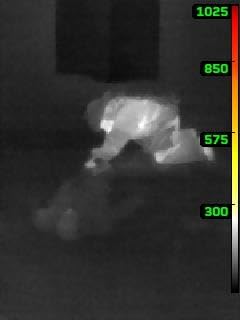
The FLIR K2 is the TIC I recommend when a department tells me they want a FLIR but cannot justify the price of a K65 or K85. It carries the FLIR brand recognition that grant reviewers and fire chiefs trust, and it brings FLIR’s patented MSX (Multi-Spectral Dynamic Imaging) technology into a price range smaller departments can actually afford. MSX embosses visual edge detail onto the thermal image, which makes door frames, victims, and fire patterns far easier to read in heavy smoke.
The K2 is a compact unit (3.54 x 4.13 x 3.54 inches) that clips to a SCBA strap or jacket without throwing off your center of gravity. The IP67 sealing and 2-meter drop rating match what you would expect from a fire-service TIC. One feature I appreciate: the automatic hot detection mode, which colorizes the hottest 20% of the scene to draw your eye to the seat of the fire during overhaul.
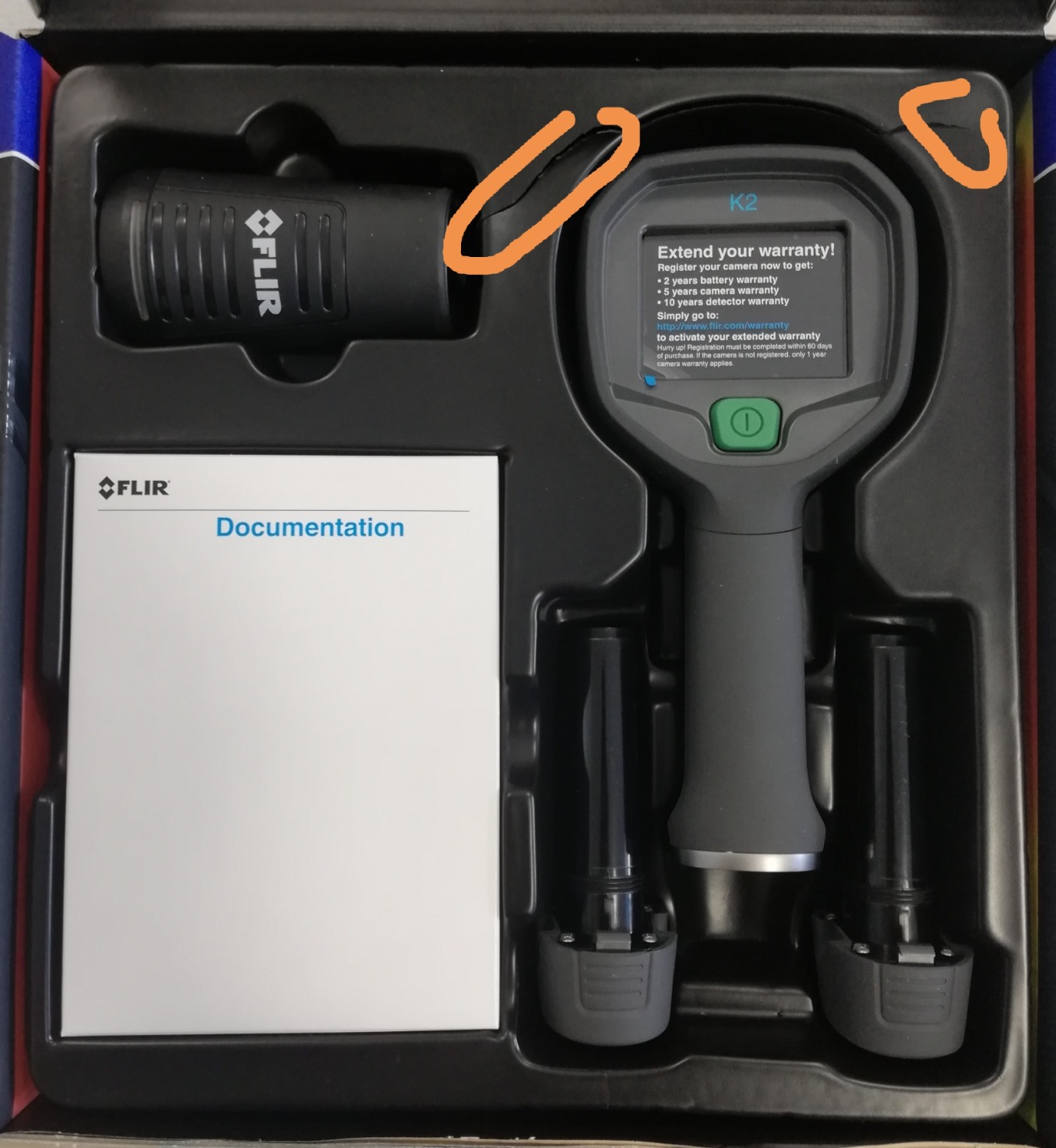
Real-world feedback on the K2 is mixed, with a 3.8 average across 28 reviews and a notable one-star minority. Some users report reliability issues, which is a flag I take seriously for any TIC headed into a working structure fire. Departments should budget for a backup unit if they choose the K2 as a primary TIC.
Why the FLIR K2 Earns Its Value Spot
For a department that wants FLIR’s brand, MSX technology, and fire-rated durability at the lowest possible price, the K2 hits a real sweet spot. The single-button interface is genuinely glove-friendly, and the compact form factor means it does not get left in the cab because it is too bulky to carry. If your department standardizes on FLIR accessories and chargers, the K2 slots into that ecosystem with zero friction.
Where the FLIR K2 Falls Short
Its 160×120 resolution is the lowest in the FLIR firefighting lineup, and reviewers report a higher failure rate than the K-series flagships. Departments running heavy structural operations may also want the wider operating temperature range and longer battery life of the higher-tier FLIR K-series models.
3. FLIR E5 Pro – Best for Fire Investigation and Documentation
Flir E5 Pro Thermal Imaging Camera, WiFi, 160×120 MSX, Ignite Cloud
160x120 MSX
Ignite Cloud
OTA updates
2-10 warranty
-4 to 752F
Pros
- FLIR Ignite Cloud automatically stores and shares thermal images
- Over-the-air updates keep features current without service visits
- 2-10 warranty with 10 years of detector coverage
- Wide -4F to 752F temperature range covers most fireground needs
- Lightweight 1.27 lb handheld form factor
Cons
- 160x120 resolution trails the E8 Pro and K-series
- Smaller review base than more established FLIR models
The FLIR E5 Pro is the TIC I point investigators and fire marshals toward when they ask what to buy for documentation and origin-and-cause work. Its strongest feature for the fire service is FLIR Ignite Cloud, which automatically uploads every image you capture, lets you annotate and share from a phone or laptop, and keeps a searchable record of every fire pattern you have ever documented. For a chief officer or investigator who needs to assemble a case file at 2 a.m., that workflow is a serious upgrade over a camera that stores everything on an SD card.
The E5 Pro’s 160×120 (19,200-pixel) MSX-enhanced sensor is sharp enough for room-and-contents search and overhaul, and the wide -4F to 752F temperature range covers everything from frozen surfaces to active structure fires. The 2-10 warranty (2 years parts and labor, 10 years on the detector) is one of the strongest in the FLIR lineup and matters when you are budgeting across a 7-year replacement cycle.
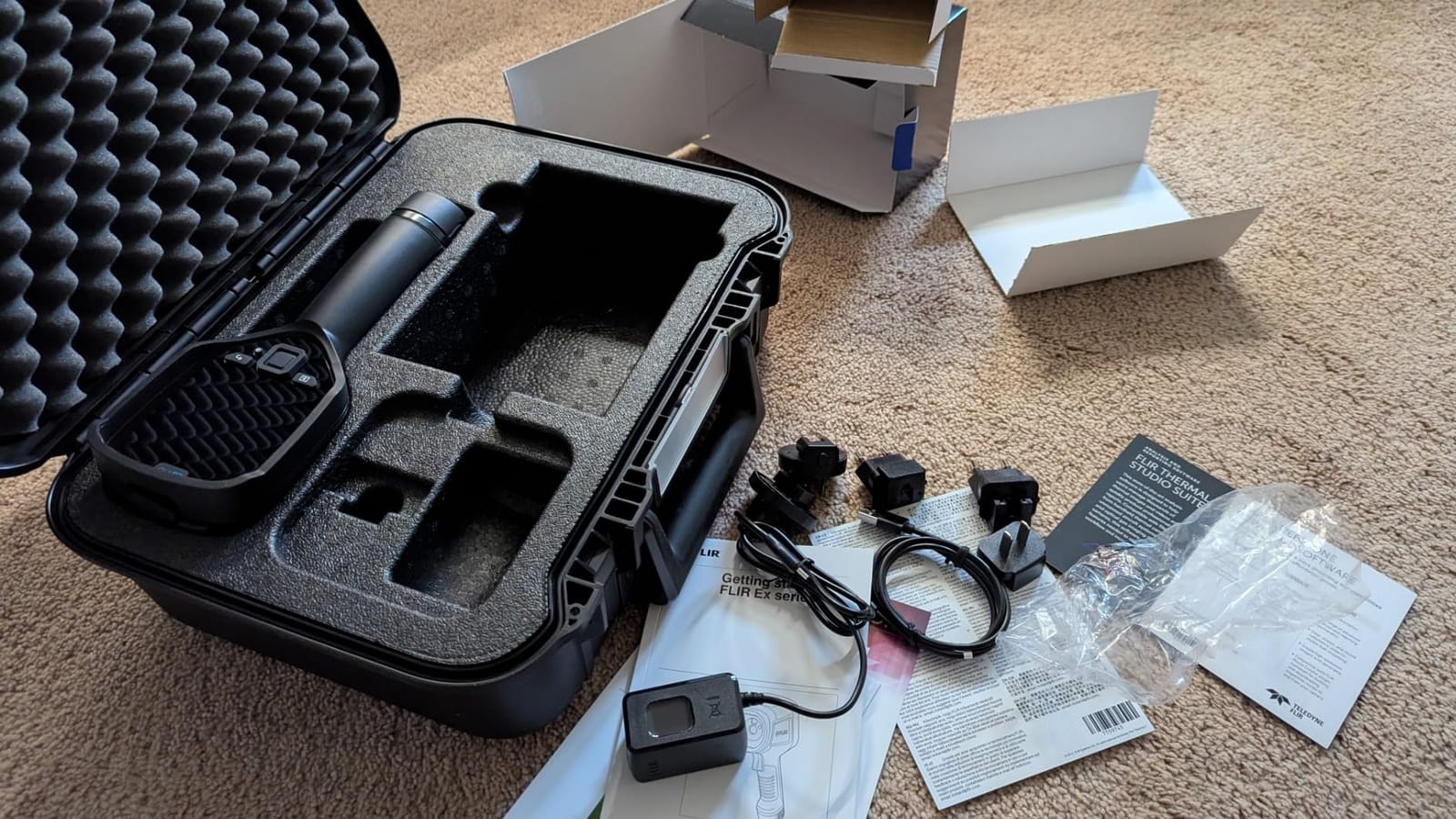
Where the E5 Pro stands out is post-incident. Over-the-air firmware updates mean the camera I bought last year still gets new features, which is unusual in fire-service electronics. The lightweight 1.27 lb form factor also makes it easier to carry on long overhaul or investigation scenes than a heavier K-series handheld.
Who Should Pick the FLIR E5 Pro
Fire investigators, marshals, and training officers who need a camera that doubles as a documentation tool will get the most out of the E5 Pro. Departments that want to build a searchable library of thermal images for after-action review and pre-incident planning will also benefit from the Ignite Cloud workflow. If your primary use case is interior attack rather than investigation, however, a higher-resolution K-series or Seek FirePRO camera is a better primary TIC.
Limits of the FLIR E5 Pro
The 160×120 sensor is adequate for overhaul but not as crisp as the 320×240 leaders in heavy smoke. The 1.27 lb weight is fine in a hand but adds fatigue on multi-hour incidents. And the Ignite Cloud workflow requires a department willing to manage cloud accounts and Wi-Fi connectivity, which is not every department’s strength.
4. FLIR E8 Pro – Best High-Resolution Thermal Camera for Fire Service
Flir E8 Pro Thermal Imaging Camera, WiFi, 320×240 MSX, Ignite Cloud
320x240 MSX
Ignite Cloud
-4 to 1022F range
76,800 pixels
Pros
- High 320x240 (76
- 800 pixel) thermal resolution with MSX
- Wide -4F to 1022F temperature range for active fire work
- FLIR Ignite Cloud and OTA updates keep the camera current
- 2-10 warranty with 10 years of detector coverage
- Lightweight handheld 1.27 lb form factor
Cons
- Fixed lens limits close-range focus
- No SD card slot for removable storage
- Reports of sluggish interface and below-average battery life
- Premium price point relative to performance
The FLIR E8 Pro is the highest-resolution TIC in this roundup at 320×240 (76,800 pixels) with MSX image enhancement, and that extra resolution matters when you are searching a smoke-filled room for a downed firefighter. The wider -4F to 1022F temperature range also covers hotter fire scenarios than the E5 Pro, which makes the E8 Pro more useful on overhaul of well-involved structures and vehicle fires.
The E8 Pro shares the Ignite Cloud workflow and OTA update capability with the rest of the FLIR Ex-Pro lineup. For a department that wants one camera that does double duty as a firefighting TIC and an investigation tool, the 320×240 sensor is the resolution you want for evidence-quality imagery. The 2-10 warranty is the same as the E5 Pro and remains a meaningful budget factor.
Real-world feedback from the 17-review base is positive on image quality but flags a few practical concerns: the fixed lens limits close-range focus to about 10 feet, there is no SD card slot (cloud-only storage), and the interface can feel sluggish on cold mornings. Battery life is also below the FLIR K-series flagships, which is something to plan around.
Why the E8 Pro Earns the High-Resolution Spot
For departments that need 320×240 resolution for evidence-quality imagery, longer-range detection on wildland and overhaul, and the Ignite Cloud workflow for documentation, the E8 Pro is the right tool. It also makes sense as a primary TIC for chief officers and investigators who are not running interior attack but need to read fire behavior from the exterior during size-up.
Where the E8 Pro Falls Short
This is not the camera I would hand to an interior attack crew. The sluggish interface and limited battery life are real concerns during sustained interior operations, and the cloud-only storage workflow adds friction in zero-connectivity environments. For a primary interior TIC, the FLIR K2 or Seek FirePRO 200 is a better fit.
5. Klein Tools TI250 – Best Portable Thermal Imager for Overhaul
Klein Tools TI250 Rechargeable Thermal Imaging Camera, Camera Displays Over 19,200 Pixels with 3 Color Palettes, High / Low Temperature Points
19,200 pixels
Adjustable emissivity
3 color palettes
8.6 oz
Pros
- Over 19
- 200 pixels with sharp image quality
- Adjustable emissivity (0.01-0.99) for varied surfaces
- User-selectable high and low temperature alarms
- Three color palettes for different inspection scenarios
- Compact 8.6 oz form factor fits in any pocket
- Strong 4.4 average across 938 reviews
Cons
- Non-removable rechargeable battery limits field runtime
- Warranty terms require contacting vendor directly
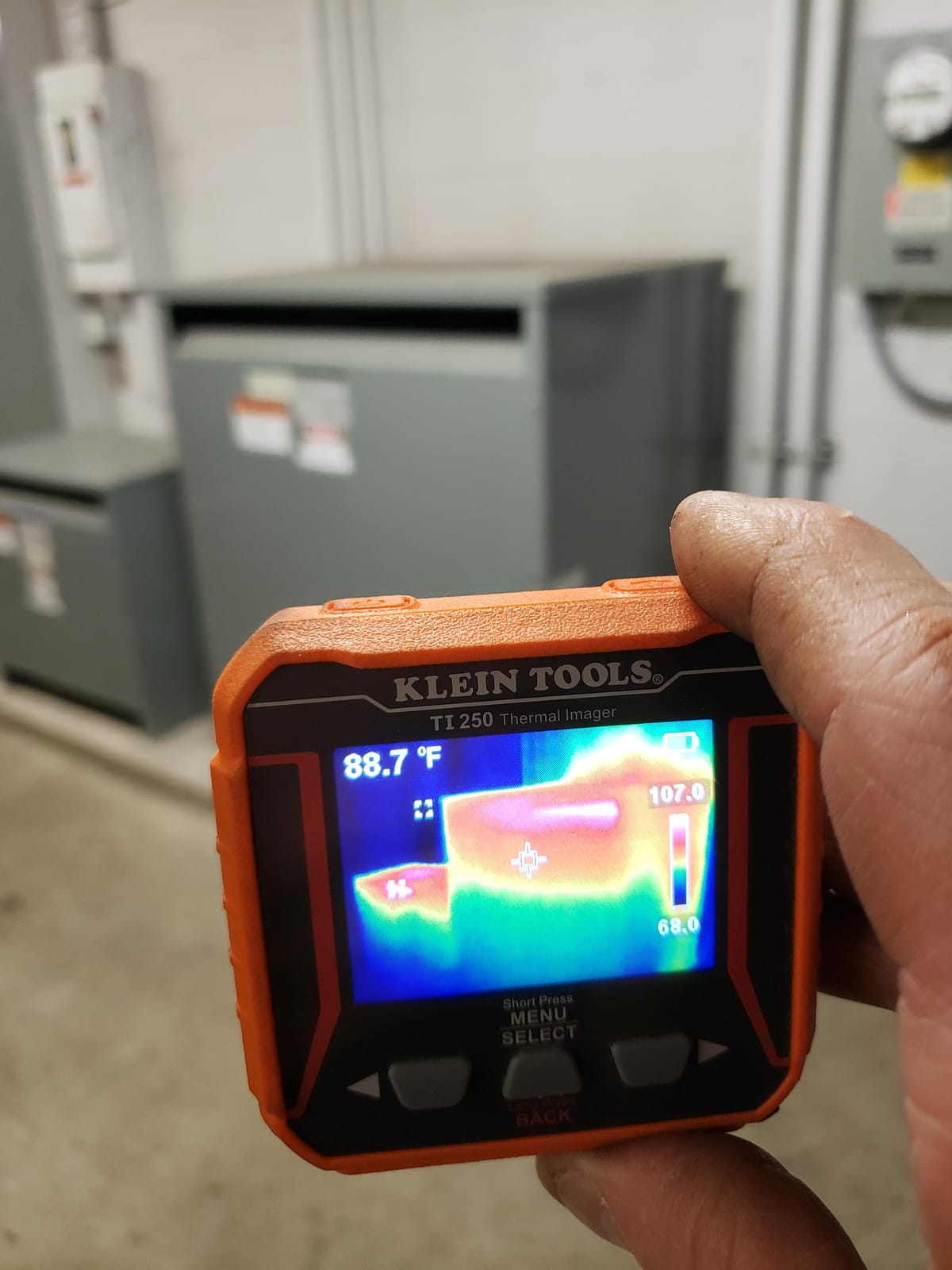
The Klein Tools TI250 is not an NFPA 1801 TIC, and I want to be upfront about that. But it is the best portable thermal imager I have carried in a turnout pocket for overhaul, post-fire inspection, and electrical safety checks, and the 938-review base averaging 4.4 stars is a real signal that this camera delivers value. It weighs 8.6 ounces, runs on a built-in rechargeable battery, and produces a 19,200-pixel image with three selectable color palettes.
The adjustable emissivity (0.01 to 0.99) is the feature that sets the TI250 apart from cheaper TICs. Emissivity is the measure of how efficiently a surface emits infrared radiation, and different materials (shiny metal, painted drywall, charred wood) emit at very different rates. With adjustable emissivity, you can get accurate temperature readings across mixed materials during overhaul and fire investigation, which cheaper fixed-emissivity cameras simply cannot do.
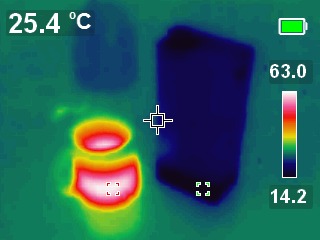
The TI250 is at its best in the hands of a firefighter or inspector doing post-incident work: pulling ceiling, checking for hidden extension, documenting electrical hot spots. For interior structural attack in heavy smoke, I would still reach for a dedicated NFPA-rated TIC like the FirePRO 200 or FLIR K2.
When the Klein TI250 Is the Right Pick
Fire inspectors, fire marshals, and firefighters who need a high-utility pocket TIC for overhaul and investigation will find the TI250 hard to beat at its size and price. The 938-review base is the largest in this roundup, which makes it easier to find real-world feedback before you buy. If your department wants to put a thermal imager on every chief officer and inspector without breaking the budget, this is the camera.
Where the Klein TI250 Falls Short
It is not NFPA 1801 compliant and is not built for the heat and abuse of active interior firefighting. The non-removable battery means you cannot hot-swap power in the field, and the warranty terms require a vendor call rather than a clear published policy. For interior attack, look elsewhere on this list.
6. TOPDON TC004 – Best Display and Storage Combo
TOPDON TC004 3.5″ Thermal Imaging Camera, -4°F~1022°F Temp Range
3.5 inch display
256x192 native
64GB storage
IP54 sealed
Pros
- 3.5-inch wide display makes thermal patterns easy to read
- 256x192 native resolution upscaled to 512x384 with TISR
- Built-in red laser pointer for accurate hot-spot targeting
- 64GB internal storage holds thousands of images and videos
- Wi-Fi transfer to the TopInfrared mobile app
- IP54 sealed and 2m drop rated for field work
Cons
- Heavier than pocket-style TICs at 2.11 lb
The TOPDON TC004 is the camera I hand to a chief officer who says “I need a screen I can actually read.” The 3.5-inch display is meaningfully larger than most firefighter TICs, which matters when you are trying to read fire patterns in bright daylight or show thermal imagery to mutual-aid crews at a command post. The 256×192 native sensor upscales to 512×384 with TOPDON’s TISR (Thermal Image Super Resolution) processing, and the 860-review base averaging 4.6 stars confirms the display and image quality hit the mark for real users.
Built-in red laser pointer, 64GB internal storage, integrated LED work light, and Wi-Fi transfer to the TopInfrared app are all useful field features for fire investigation and overhaul work. The IP54 sealing and 2-meter drop rating make it tough enough for a working apparatus bay.
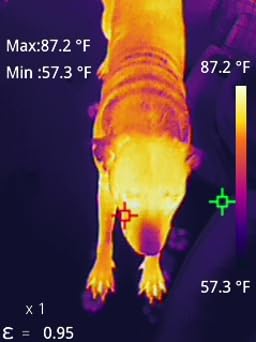
Where the TC004 stands out is in the field workflow. Pulling the camera out at a vehicle fire, hitting the laser pointer on the engine block to confirm heat extension, and uploading the image straight to the incident report is the kind of workflow fire investigators used to dream about. The 860 reviews give you a deep sample of real-world feedback, including a lot of electrical and HVAC inspectors who have moved up from cheaper TICs.
Why the TC004 Earns the Display Spot
For a chief officer, training officer, or fire investigator who needs the largest display and the most storage at a competitive price, the TC004 is a strong fit. The Wi-Fi app transfer is a real time-saver for documentation, and the 64GB internal storage means you can run for years without offloading. If your department uses a mix of TICs and wants a secondary camera for command post and overhaul use, the TC004 is the right tool.
Limits of the TOPDON TC004
At 2.11 pounds, it is the heaviest camera on this list and not ideal for interior attack where every ounce matters. It is also not NFPA 1801 rated, so it should be a secondary or command post TIC rather than a primary interior attack camera. Departments that need a glove-friendly single-hand interface will find the multi-button layout slower than the FLIR K2 or Seek FirePRO.
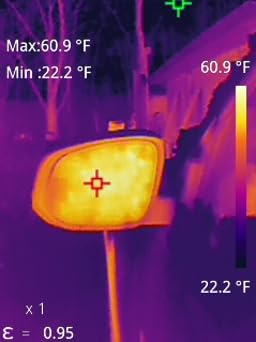
7. FLIR C5 Compact – Best Cloud-Connected Thermal Camera
Flir C5 Compact Thermal Imaging Camera, WiFi, 160×120 MSX, Ignite
160x120 MSX
5MP visual cam
Ignite cloud
3.5 inch LCD
Pros
- Pocketable form factor for everyday carry
- MSX-enhanced 160x120 thermal resolution
- Built-in 5 MP visual camera and flash for IR plus visible capture
- FLIR Ignite cloud connectivity for direct upload
- 3.5-inch bright LCD screen
- Waterproof build rated for harsh environments
- Strong 1
- 048-review base averaging 4.2 stars
Cons
- Slow startup time of roughly 50 seconds
- No standby mode for quick redeploy
- Reports of Wi-Fi connectivity quirks
- At least one firmware-update failure reported
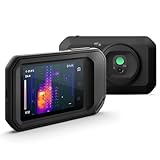
The FLIR C5 is the camera I reach for when a fire investigator or inspector wants FLIR image quality in a pocket-sized package. The MSX-enhanced 160×120 sensor produces sharp imagery for overhaul and origin-and-cause work, and the built-in 5 MP visible-light camera with flash means you can capture paired IR and visible-light images in a single trigger pull. FLIR Ignite Cloud connectivity is built in, so every image you capture uploads directly to your account and is ready to share with investigators, chiefs, or insurance carriers within minutes.
With 1,048 reviews averaging 4.2 stars, the C5 has the deepest review base in this roundup. Real users consistently praise the portability, image quality, and rugged build. The 3.5-inch LCD is bright enough to read in daylight, and the waterproofing holds up to weather exposure on wildland and overhaul scenes.
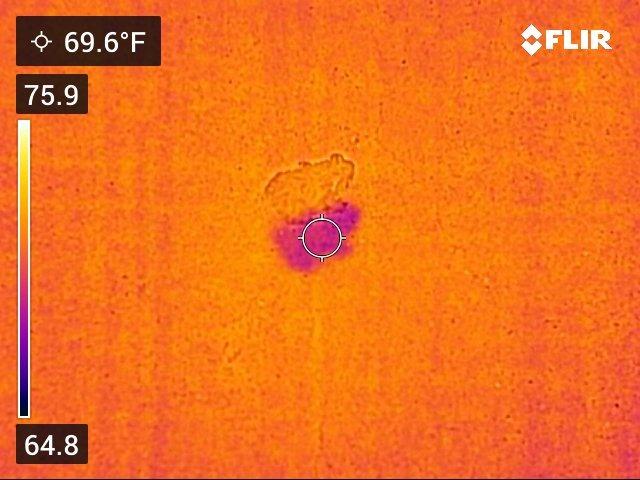
For fire investigators building a documentation workflow, the C5 is a strong choice. The image quality and the FLIR Ignite cloud workflow match the E5 Pro, but the pocketable form factor and built-in visible-light camera make it easier to carry on every call rather than leaving it in the apparatus.
Why the FLIR C5 Stands Out
For departments that want FLIR image quality and cloud workflow in a pocket-sized package, the C5 is the right tool. The 1,048-review base means there is real-world feedback to learn from before you buy. If your fire investigation team needs a camera that goes everywhere and uploads everywhere, the C5 fits.
Where the FLIR C5 Falls Short
It is not NFPA 1801 rated, so it is not a primary interior attack TIC. The slow startup (about 50 seconds from cold) is a real complaint among users and matters when you need the camera ready the moment you arrive on scene. The cloud-only sharing workflow also requires a department willing to manage FLIR Ignite accounts and Wi-Fi.
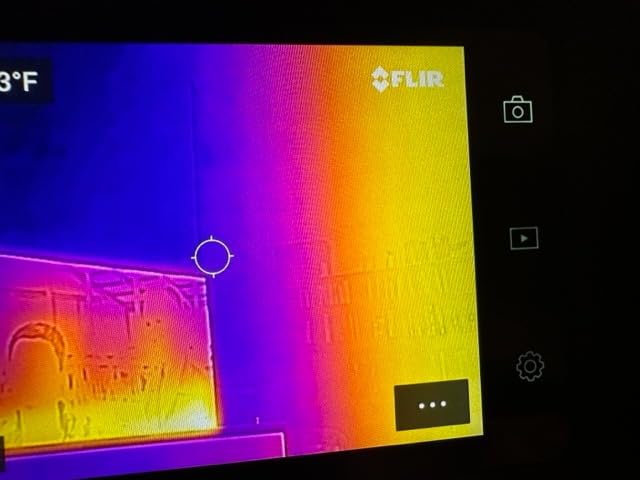
8. FLIR C3-X Compact – Best Budget Thermal Camera for Fire Service
Flir C3-X Compact Thermal Imaging Camera, WiFi, 128×96 MSX, Ignite
128x96 MSX
Pocket-sized
Ignite cloud
2-10 warranty
Pros
- Pocket-sized 6.72 oz form factor for everyday carry
- MSX-enhanced 128x96 thermal imaging
- FLIR Ignite cloud connectivity for sharing and reporting
- Multiple shooting modes including Picture-in-Picture
- Strong 4.5 average across 298 reviews
- FLIR 2-10 warranty with 10 years on the detector
Cons
- Lower thermal resolution than C5 and E-series
- Limited -4F to 572F temperature range
The FLIR C3-X is the budget pick in this roundup, and it earns that spot honestly. For a fraction of the cost of a flagship FLIR K-series TIC, you get FLIR’s MSX image enhancement, FLIR Ignite cloud connectivity, the 2-10 warranty with 10 years on the detector, and a pocketable 6.72-ounce form factor. For a chief officer, inspector, or training officer who wants a FLIR in their pocket without a flagship budget, the C3-X is the right answer.
The 128×96 (12,288-pixel) sensor is the lowest resolution in this roundup, but MSX image enhancement compensates by embossing visual edge detail onto the thermal image. The result is a sharper, more readable picture than the raw pixel count would suggest. Multiple shooting modes (Infrared, Visual, MSX, Picture-in-Picture) give you flexibility in the field, and the 298-review base averaging 4.5 stars is solid real-world validation.
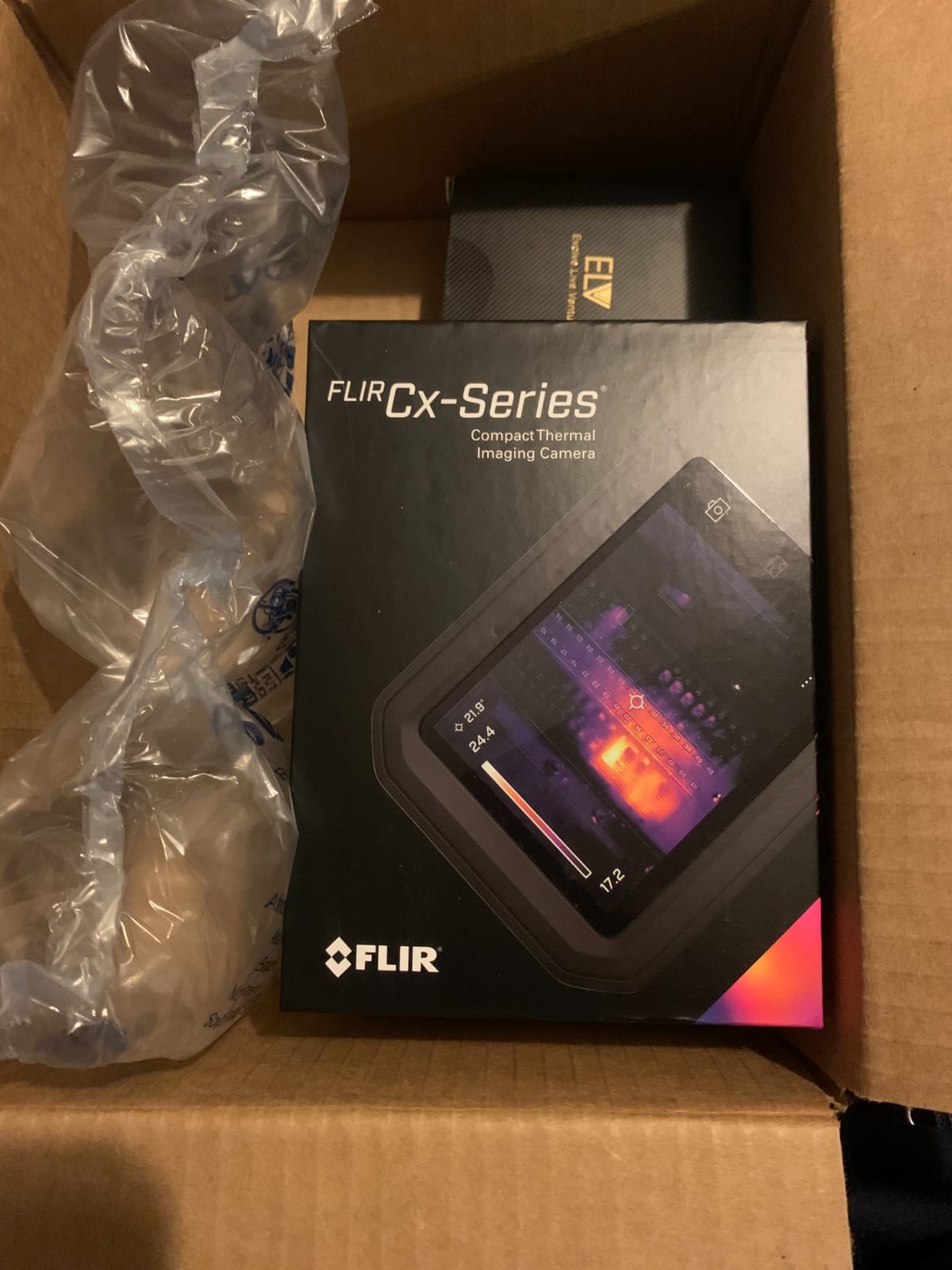
Where the C3-X earns its keep is as a secondary or tertiary TIC for chief officers, training officers, and inspection staff. It is not a primary interior attack camera (the 128×96 resolution and limited 572F ceiling are not designed for sustained structural firefighting), but it is a remarkable value for everyday documentation and overhaul work.
Why the C3-X Is the Budget Pick
Departments that want to standardize on FLIR’s cloud workflow and warranty coverage without paying flagship prices should put the C3-X on every chief vehicle. It is also a strong choice for volunteer and combination departments building a TIC program on a tight budget, where a FLIR badge at low cost matters for grant funding.
Where the FLIR C3-X Falls Short
The 128×96 sensor is fine for documentation but limited for interior attack in heavy smoke. The 572F temperature ceiling rules it out for sustained overhaul of well-involved structures. Departments that need a primary interior TIC should pair the C3-X with a higher-resolution NFPA-rated camera.
How to Choose the Best Thermal Imaging Camera for Fire Service
Choosing the best thermal imaging cameras for fire service comes down to five factors: NFPA 1801 compliance, sensor resolution, durability, deployment strategy, and total cost of ownership across a typical 7-year replacement cycle. The combination of those factors is what separates a TIC that protects your crew from a TIC that sits in a cab. Here is what our team looks at, in order, when a chief asks us to evaluate a model.
NFPA 1801 Compliance: The Non-Negotiable Standard
NFPA 1801 is the National Fire Protection Association’s performance standard for fire-service thermal imaging cameras. It defines minimum requirements for image quality, durability, heat resistance, drop testing, and water resistance on a TIC that will be used in active structural firefighting. A TIC that meets NFPA 1801 has been independently tested to survive the heat, water, and impact conditions of a working fire. TICs that are not NFPA 1801 rated (like the FLIR C5, FLIR C3-X, Klein TI250, and TOPDON TC004) are appropriate for overhaul, investigation, inspection, and command post use, but should not be the primary interior attack camera for a fire crew.
The firefighter community on Reddit and FireRescue1 is consistent on this point: NFPA 1801 compliance is non-negotiable for any TIC that will be carried into a working structure fire by an interior attack crew. A TIC that fails mid-fire is a line-of-duty safety issue, not a budget issue.
Sensor Resolution: How Much Is Enough
Sensor resolution is measured in pixels, and more pixels mean a sharper image. The current fire-service TIC market breaks down roughly into three tiers: 200×150 (Seek FirePRO 200), 160×120 (FLIR K2, FLIR E5 Pro, FLIR C5), and 320×240 (FLIR E8 Pro). For interior attack in moderate smoke, 200×150 is enough to identify victims and read fire patterns. For interior attack in dense smoke with zero visibility, 320×240 gives your crew a meaningful edge in reading the room and finding hidden fire extension.
MSX (Multi-Spectral Dynamic Imaging), FLIR’s patented image enhancement technology, embosses visual edge detail onto the thermal image, which makes a 160×120 MSX camera look closer to a 320×240 non-MSX camera in real-world use. If you are choosing a FLIR camera, prioritize MSX over raw resolution, because the visual-edge overlay matters more in smoke than the pixel count alone.
Durability: Drop, Heat, and Water
A fire-service TIC needs to survive a 2-meter drop onto concrete, water exposure from hose lines and weather, and sustained heat in a working fire. The NFPA 1801 standard covers all three, and you should look for IP67 (dust-tight, submersible to 1 meter) or better sealing on any TIC you consider. The cameras on this list range from IP54 (TOPDON TC004) to IP67 (Seek FirePRO 200, FLIR K2), and the IP67-rated models are the better fit for interior attack.
Deployment Strategy: The 2-and-2 Model
The most useful deployment strategy I have seen in the field is what Reddit firefighters call the “2-and-2” model: two decision-making TICs (high-resolution, NFPA-rated, carried by the interior attack crew) and two situational awareness TICs (lower-cost, used by command and exterior crews for size-up and accountability). This model ensures the interior crew has the resolution they need to find victims and read fire patterns, while the command crew has TICs they can use to monitor the scene, track accountability, and coordinate ventilation decisions.
In the current market, the decision-making TICs of choice are the FLIR K-series (K65, K75, K85, K85-N) and high-end MSA and Bullard units, while situational awareness TICs are dominated by the Seek FirePRO line, FLIR K2, and lower-cost commercial TICs. Departments running the 2-and-2 model should plan to spend accordingly: invest in the decision-making cameras and complement them with situational awareness units from the FirePRO or K2 tier.
Total Cost of Ownership Across a 7-Year Replacement Cycle
The firefighter community has a saying: the price of the camera is the cheapest part of the TIC. Real cost is warranty length, repair turnaround, and replacement cycle. A TIC with a 2-year warranty and slow repair service will cost more across a 7-year cycle than a TIC with a 5-year warranty and 48-hour repair turnaround, even if the upfront price is lower. The MSA Evolution 6000, for example, has been praised for its image quality but flagged by departments for high repair costs that have driven some teams to Seek alternatives.
The FLIR 2-10 warranty (2 years parts and labor, 10 years on the detector) is one of the strongest in the industry and a meaningful factor in long-term budgeting. If your department has a 7-year replacement cycle, prioritize cameras with multi-year warranties and accessible service networks over cameras with the lowest sticker price.
Fireground Use Cases: Overhaul, Hazmat, MVC, Search and Rescue, Wildland
A fire-service TIC earns its keep across five primary use cases: overhaul (finding hidden fire extension after knockdown), hazmat response (identifying chemical reactions and hot spots), motor vehicle crashes (locating victims and reading hydraulic systems), outdoor search and rescue (finding missing persons in low visibility), and wildland fire (identifying hot spots and fire spread). Each use case rewards a slightly different feature mix, and the best thermal imaging cameras for fire service deliver across all five.
For overhaul, high resolution and color palettes matter most. For hazmat, wide temperature range and high gain mode matter most. For MVC, the wide field of view and glove-friendly interface matter most. For outdoor search and rescue, long battery life and image storage matter most. For wildland, wide temperature range and ruggedness matter most. The cameras on this list cover the spectrum, and your deployment plan should match the camera to the use case.
Adjacent guides that pair well with this one cover thermal imaging cameras for termites (useful for inspection teams who also handle pest calls) and thermal imaging cameras without internet (the right resource for wildland and remote-area crews with no cloud connectivity).
Frequently Asked Questions
What is the best thermal camera for a fire department?
The best thermal camera for a fire department is one that meets NFPA 1801, has at least 200×150 resolution, and is rated IP67 or better for durability. For most departments in 2026, the Seek Thermal FirePRO 200 hits the best balance of NFPA-grade durability, 200×150 resolution, 25Hz refresh rate, and price, making it our top pick. Larger departments running the 2-and-2 deployment model pair a higher-resolution NFPA 1801 decision-making TIC (FLIR K-series or Bullard T4X) with lower-cost situational awareness TICs for command and overhaul.
What is the best camera for firefighters?
The best camera for firefighters depends on the role. For interior attack crews, the answer is an NFPA 1801 compliant TIC with at least 200×150 resolution, IP67 sealing, and glove-friendly controls. For chief officers and incident command, the best camera is a situational awareness TIC like the FLIR C5 or TOPDON TC004 with a bright display and cloud sharing. For fire investigators, the best camera is a high-resolution TIC with image storage and cloud workflow like the FLIR E8 Pro or FLIR E5 Pro.
Do firefighters use thermal imaging cameras?
Yes, firefighters use thermal imaging cameras on every working structure fire, hazmat response, motor vehicle crash, outdoor search and rescue, and wildland fire. TICs are considered one of the most important advances in firefighting equipment of the past 25 years because they allow crews to locate trapped victims, find hidden fire extension, monitor scene safety, and reduce firefighter injuries and line-of-duty fatalities in zero-visibility conditions. Most career and combination departments in 2026 run at least one TIC per engine, and many run two to four per apparatus following the 2-and-2 deployment model.
Can thermal imaging be used for fire detection?
Yes, thermal imaging can be used for fire detection, hot-spot identification, and fire pattern analysis. TICs detect infrared radiation emitted by objects and convert temperature differences into a visible image, which lets crews see through smoke, locate hidden fire extension behind walls and ceilings, and identify smoldering materials during overhaul. Thermal imaging is also used in wildland fire detection from drones (such as the DJI Mavic 2 Enterprise Advanced) and from fixed-site sensors. For structural fire detection inside a building, an NFPA 1801 compliant TIC carried by the interior attack crew is the standard tool.
Final Verdict: Our Top Pick for Fire Service Thermal Imaging
After comparing eight of the best thermal imaging cameras for fire service available right now, our top pick for 2026 is the Seek Thermal FirePRO 200. It pairs NFPA-class durability with 200×150 resolution, a 25Hz refresh rate, IP67 sealing, and a 6-hour battery in a compact 325-gram body, and the integrated 300-lumen flashlight is a real field advantage during overhaul and victim search.
For chief officers and investigators, the FLIR C5 and FLIR E8 Pro deliver the cloud workflow and resolution that documentation work demands. For budget-conscious departments, the FLIR C3-X is the right entry point. And for departments running the 2-and-2 deployment model, pair the FirePRO 200 with the FLIR K2 and you have a TIC lineup that covers interior attack, situational awareness, and overhaul across every apparatus in your fleet.
Whichever camera you pick, train on it. A TIC that sits in a cab because nobody knows how to use it is a TIC that will not save anyone when the smoke goes black. Our full breakdown of additional thermal imaging cameras with built-in features, thermal imaging cameras for electronics repair, and thermal imaging cameras with zoom can help you build out your department’s TIC program beyond this list.