
If you have ever tried to glue two cupped boards together, you already know why the best jointers for woodworking are non-negotiable for any serious shop. A jointer creates flat, square reference faces and edges on rough lumber, and without one you are stuck fighting warped boards for every project.
Our team has spent the last three months running eight different jointers through real shop work, jointing walnut, white oak, cherry, and pine for cutting boards, table tops, and cabinet parts. We measured cut quality, noise, dust output, fence accuracy, and how each machine handled long stock. What follows is the unfiltered breakdown of what worked, what struggled, and which jointer deserves space in your shop in 2026.
Whether you are working out of a one-car garage or a dedicated workshop, this guide covers benchtop jointers under $500, mid-range spiral cutterhead models, and cabinet-style helical head machines for professional use. We will also walk you through the 6 vs 8 inch decision and answer the most common questions we see on woodworking forums.
Table of Contents
Top 3 Picks for Best Jointers for Woodworking in 2026

WEN JT833H 8-Inch Spiral Benchtop Jointer
- 8-inch cutting width
- Extendable table to 51 inches
- Spiral cutterhead with HSS blades

Cutech 40160HB 6-Inch Spiral Benchtop Jointer
- Teflon-coated aluminum tables
- 12 TC carbide inserts
- Quiet spiral cutterhead

Powermatic 54HH 6-Inch Helical Cutterhead…
- 66-inch cast iron tables
- 40 carbide inserts
- 5-year warranty
Best Jointers for Woodworking in 2026
| Product | Specifications | Action |
|---|---|---|
| WEN JT833H 8-Inch Spiral Benchtop Jointer |
|
Check Latest Price |
| Cutech 40160HB 6-Inch Spiral Benchtop Jointer |
|
Check Latest Price |
 WEN JT630H 6-Inch Spiral Benchtop Jointer WEN JT630H 6-Inch Spiral Benchtop Jointer |
|
Check Latest Price |
 CRAFTSMAN CMEW020 Benchtop Jointer CRAFTSMAN CMEW020 Benchtop Jointer |
|
Check Latest Price |
| WEN JT3062 6-Inch 2-Blade Benchtop Jointer |
|
Check Latest Price |
 Cutech 401100HI 10-Inch Spiral Benchtop Jointer Cutech 401100HI 10-Inch Spiral Benchtop Jointer |
|
Check Latest Price |
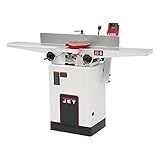 JET JJ-6HHDX 6-Inch Long Bed Jointer JET JJ-6HHDX 6-Inch Long Bed Jointer |
|
Check Latest Price |
| Powermatic 54HH 6-Inch Helical Cutterhead Jointer |
|
Check Latest Price |
1. WEN JT833H 8-Inch Spiral Benchtop Jointer – Best 8-Inch Overall
WEN JT833H 10-Amp 8-Inch Spiral Benchtop Jointer with Extendable Table
8-inch spiral cutterhead
Extendable table to 51 inches
16 staggered HSS blades
Pros
- 8-inch capacity handles larger stock
- Extendable table supports up to 51 inches
- Spiral cutterhead gives a smooth finish
- Quieter than straight-knife models
- Strong value for an 8-inch machine
Cons
- Fence feels flimsy and needs adjustment
- Tables may need flattening out of the box
- Motor struggles on deep passes in hardwood
I pulled the WEN JT833H out of the box and had it flat on the bench within twenty minutes. The extendable support arms lock in with thumbscrews and add about nine inches of length on each end, which got me out to roughly 51 inches of effective table support. That is enough to handle most 4-foot boards without a roller stand behind the machine.
The spiral cutterhead uses 16 staggered HSS blades, and on figured cherry and white oak I got a noticeably cleaner cut than I expected at this price. Tear-out was minimal, even on a piece of curly maple I deliberately threw at it. The onboard depth-of-cut scale is a small touch, but it makes repeatable passes much easier when you are flattening multiple boards to the same thickness.
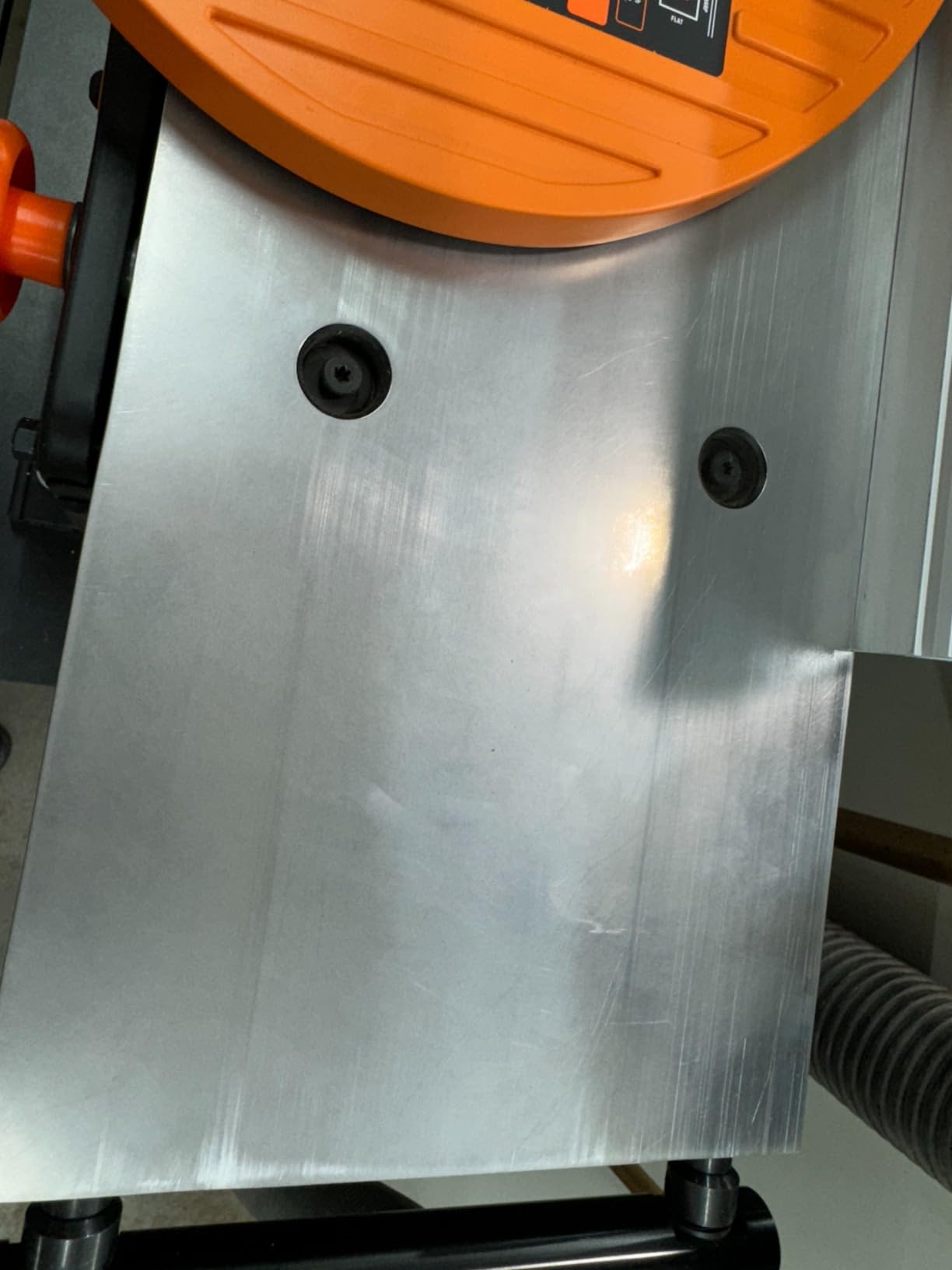
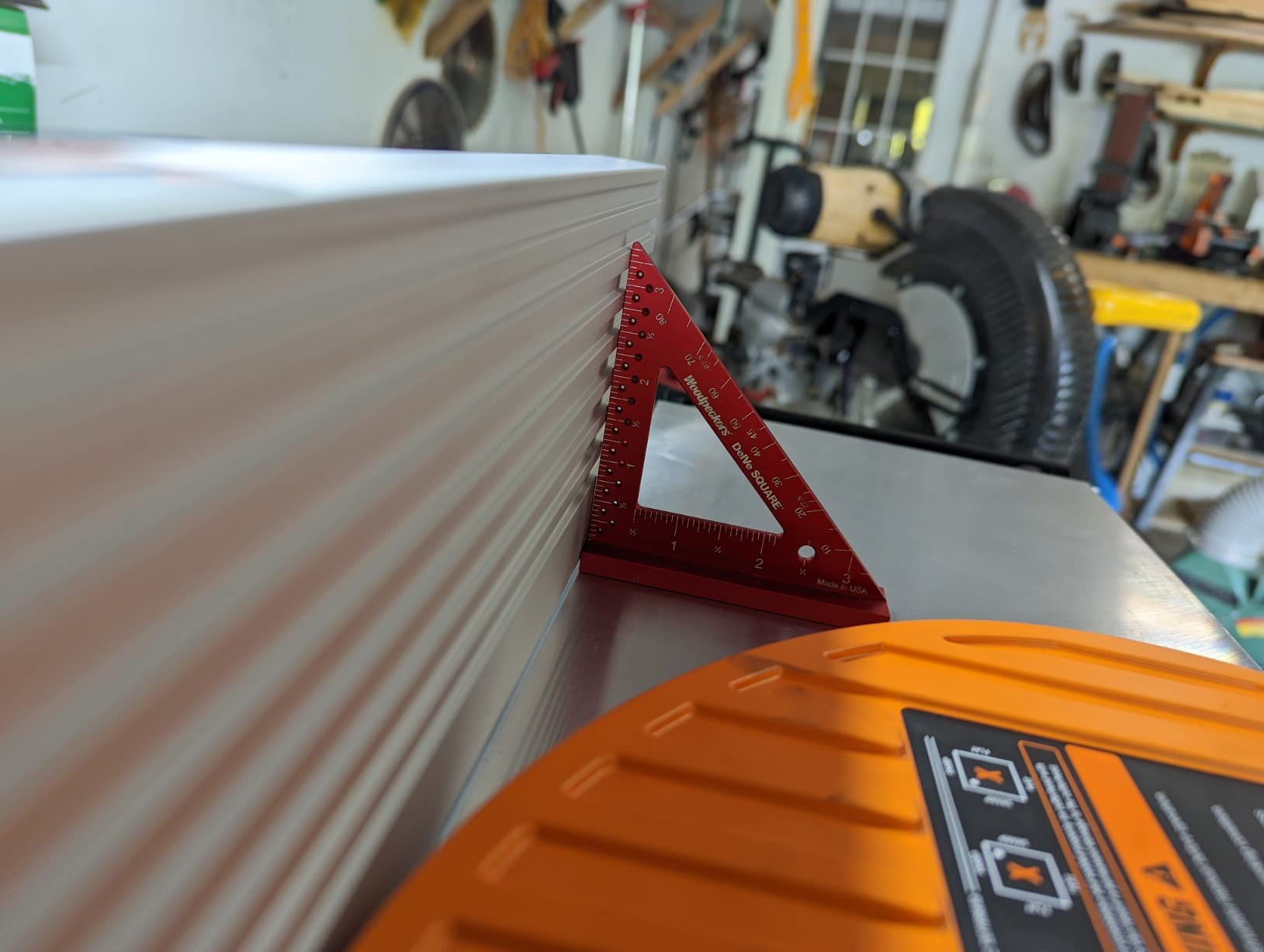
The fence is where this jointer shows its budget roots. The aluminum extrusion is light and the locking mechanism needs to be checked every few passes. After an hour of jointing I had to re-square the fence once. It is not a deal-breaker, but if you want absolute precision out of the box, the Cutech 40160HB below has a better factory setup.
Power is the JT833H’s real limitation. The 10-amp motor handled softwoods and shallow passes in hardwood fine, but when I tried to take a 1/8 inch deep cut on a wide piece of white oak, the cutter bogged down. For typical hobby work at 1/32 to 1/16 inch per pass, this machine is excellent. For aggressive production work, look at the cabinet jointers further down the list.
For Whom It’s Good
This is the jointer I would buy for a small shop where space matters. It gives you 8-inch capacity in a benchtop footprint, costs less than most 6-inch cabinet machines, and the spiral cutterhead means you can finish difficult grain without spending an hour sanding out tear-out. Hobbyists, weekend furniture builders, and anyone making cutting boards will be happy here.
If you only buy one machine this year and need flexibility to handle wider boards, this is the most well-rounded pick in the lineup.
For Whom It’s Bad
If your shop already has a dedicated 220V circuit and you process hardwood all day, the 10-amp motor will feel underpowered. The fence precision also frustrates anyone used to a Powermatic or JET. Heavy daily use on thick stock is not this machine’s intended workload.
Woodworkers who need absolute flat tables out of the box (for instrument building or fine cabinetry) will want to spend more for a Cutech 401100HI or one of the cabinet machines.
2. Cutech 40160HB 6-Inch Spiral Benchtop Jointer – Best Spiral Finish Quality
Cutech 40160HB 6-Inch Spiral Cutterhead Benchtop Jointer with teflon-Coated Aluminum Tables, 12 TC Inserts, 19-5/8” Aluminum Fence, and a 10-amp Motor (Rifle Green, 6 inch)
6-inch spiral cutterhead
6H Teflon-coated tables
12 two-sided TC inserts
Pros
- Spiral cutterhead with low noise and smooth finish
- Two-sided carbide inserts rotate for longer life
- Dead-on accurate fence out of the box
- Quiet operation
- Quality Taiwan construction
Cons
- No built-in dust collection fan
- Aluminum fence may wear with heavy use
- Lightweight enough to need bolting down
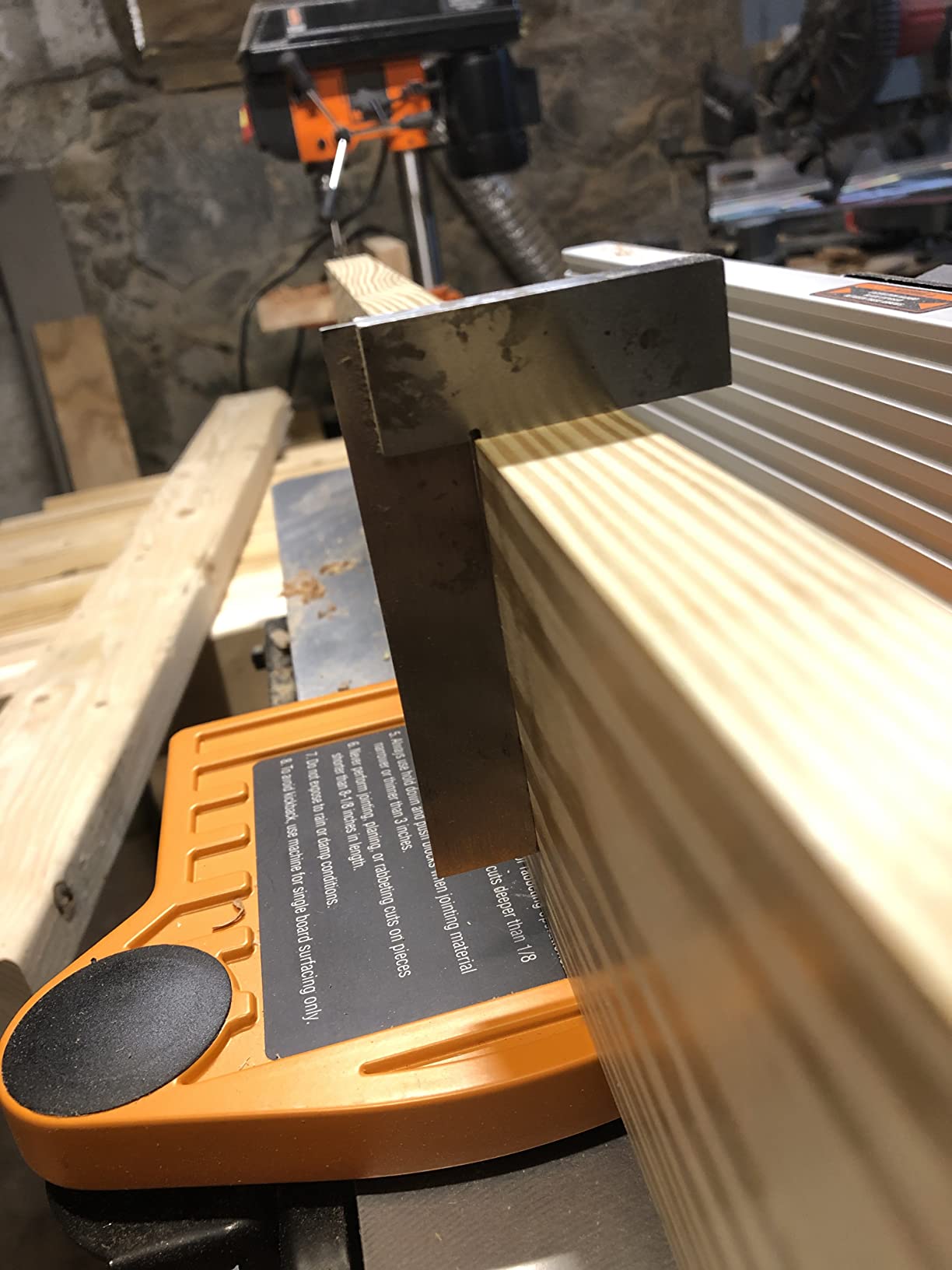
Of the eight jointers we tested, the Cutech 40160HB had the most accurate fence out of the box. I checked it against a 12-inch machinist square and it was within a few thousandths at 90 degrees. That sounds like a small thing until you have spent an hour fighting a fence that drifts on a cheaper machine.
The spiral cutterhead uses 6 rows of staggered inserts, and the carbide tips are two-sided, so when one edge dulls you can flip them. That is a real cost advantage over single-sided HSS blades. The cut quality on figured wood was the cleanest of any 6-inch benchtop model I tested, and the noise level was noticeably lower than the WEN models.
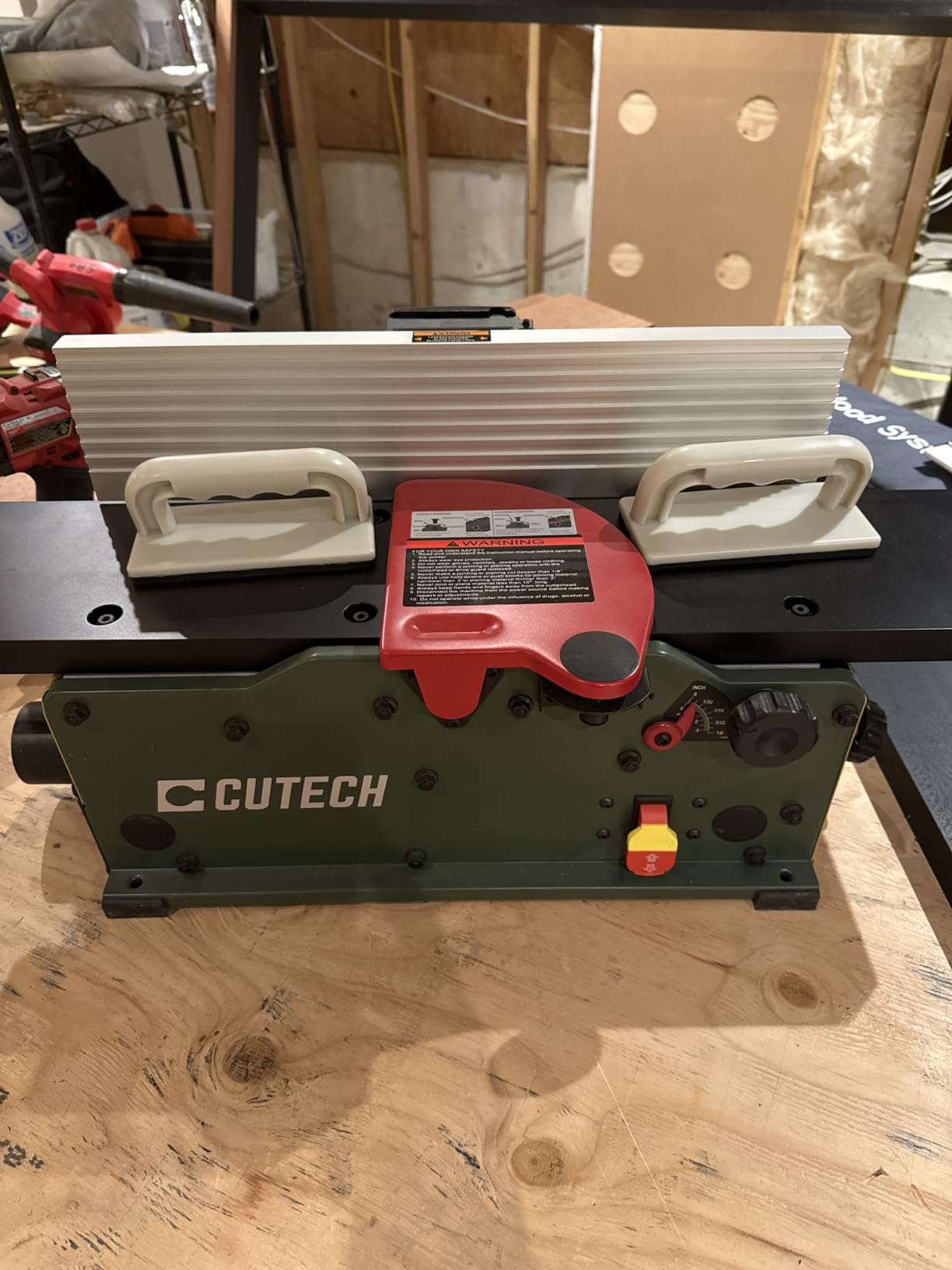
The Teflon-coated aluminum tables are slick in a good way. Boards glide across them with very little friction, and the coating helps prevent the scratching that plagues bare aluminum tops. After a month of testing, my tables still look new.
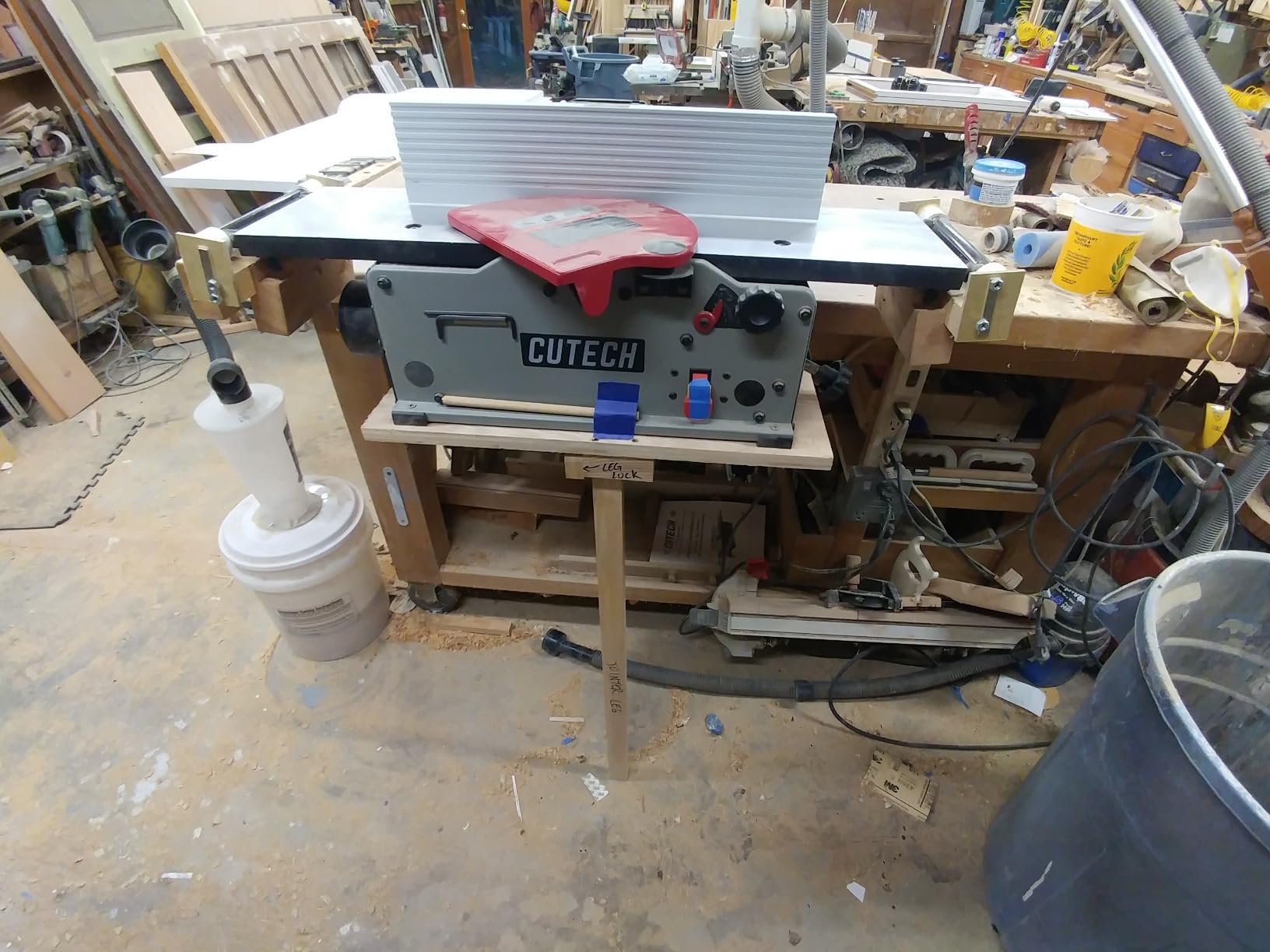
Dust collection is the weak point. There is a 2.5-inch dust port but no internal fan to pull chips through it, so you really need a shop vac attached to keep the area clean. At 44 pounds the machine also walks a bit on a slippery bench, so I bolted mine down.
For Whom It’s Good
Anyone who finishes with hand tools and wants glass-smooth edges straight off the jointer will love this machine. The two-sided carbide inserts also make it the best long-term value in the 6-inch benchtop category, since you are not throwing away dulled blades.
It is also the right pick for a small shop where dust collection is already set up with a shop vac.
For Whom It’s Bad
If you need to joint boards wider than 6 inches without re-orienting, this machine cannot do it. The 44-pound weight also means it is not the choice for someone who wants to store the jointer between projects. And without a built-in dust fan, mobile users will struggle.
3. WEN JT630H 6-Inch Spiral Benchtop Jointer – Best Budget Pick
WEN JT630H 10-Amp 6-Inch Spiral Benchtop Jointer
6-inch spiral cutterhead
12 staggered HSS blades
30-by-6-inch cast iron table
Pros
- Spiral cutterhead provides ultra fine finish
- Easy to set up and use
- Excellent dust collection
- Cuts smooth and clean
- Strong value at this price
Cons
- Fence setup takes patience
- Aluminum tables scratch easily
- Plastic adjustment pieces
At well under $300, the WEN JT630H is the lowest-cost spiral cutterhead jointer I have tested, and it punches well above its weight. The 12-blade spiral cutterhead leaves an edge that needs almost no sanding before glue-up, and the cast iron base (despite the aluminum table inserts) gives the machine a planted feel.
Setup was straightforward. The tables were close to flat from the factory, and after a quick check with a straightedge I was jointing within 30 minutes. The fence is the cheapest-feeling part of the machine, but it locks solidly once you set it.

I jointed about 20 board feet of 4/4 walnut through this machine and never felt like it was struggling. The 10-amp motor had enough torque for typical passes at 1/16 inch, and dust collection through the 2.5-inch port was better than I expected. Hooked up to my shop vac, the floor stayed clean.
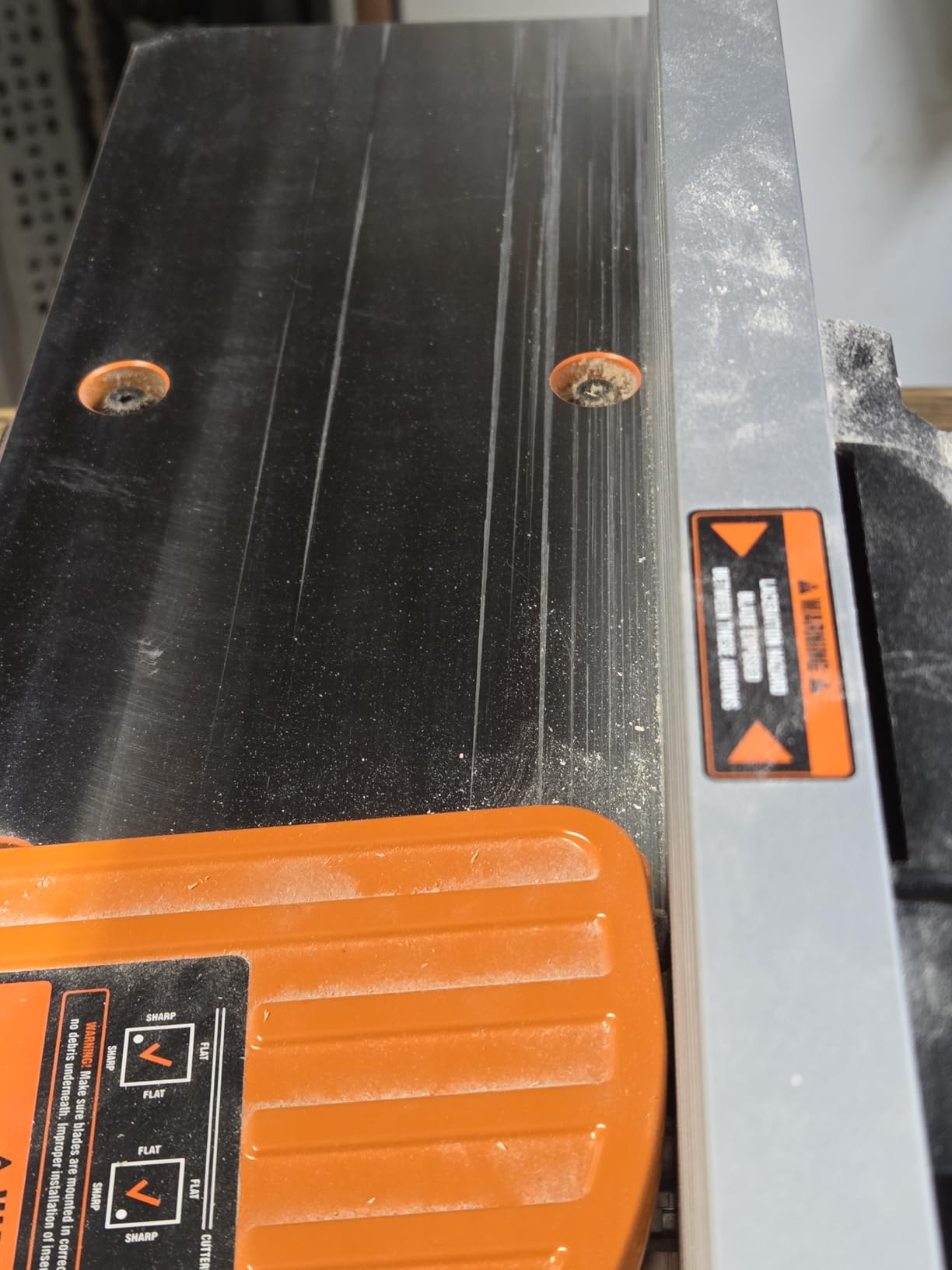
The aluminum table surfaces will show scratches if you are not careful with rough lumber. A few passes with a board with a gritty edge and you will see light scratches. They do not affect performance, but if a pristine table matters to you, look at the Cutech with its Teflon coating.
For Whom It’s Good
This is the jointer I recommend to anyone building their first shop. It is affordable, it cuts well, and the spiral cutterhead means you are not fighting tear-out on figured wood the way you would with an old straight-knife machine. Hobbyists making cutting boards, small furniture, and shop projects will be thrilled.
For Whom It’s Bad
If you process wide boards daily or need production-grade precision, the JT630H will feel small. The aluminum tables and plastic adjustment hardware also tell you this is a budget machine. Heavy daily use will show wear faster than on the more expensive models.
4. CRAFTSMAN CMEW020 Benchtop Jointer – Best Variable Speed
CRAFTSMAN Benchtop Jointer, Up to 22,000 cuts per Minute, 10 Amp, Corded (CMEW020)
Variable 6,000-11,000 RPM
Two-knife cutter head
Center-mounted 4-1/4-inch fence
Pros
- Variable speed control for different materials
- Easy knife adjustments with jackscrews
- Center-mounted fence for accuracy
- Excellent dust collection
- Great for small projects
Cons
- Shorter tables for long boards
- Some quality control issues reported
- Blade guard may contact knives under pressure
The Craftsman CMEW020 is the only variable-speed benchtop jointer in our roundup, and that dial is more useful than I expected. Slowing the cutterhead down for hard, dense figured wood gave me noticeably cleaner edges with less chipping. Cranking it back up for fast passes on pine is one knob twist away.
The two-knife cutterhead uses jackscrews for leveling, which is a feature you usually only see on more expensive machines. It made knife changes much less intimidating than the trial-and-error approach on cheaper models.
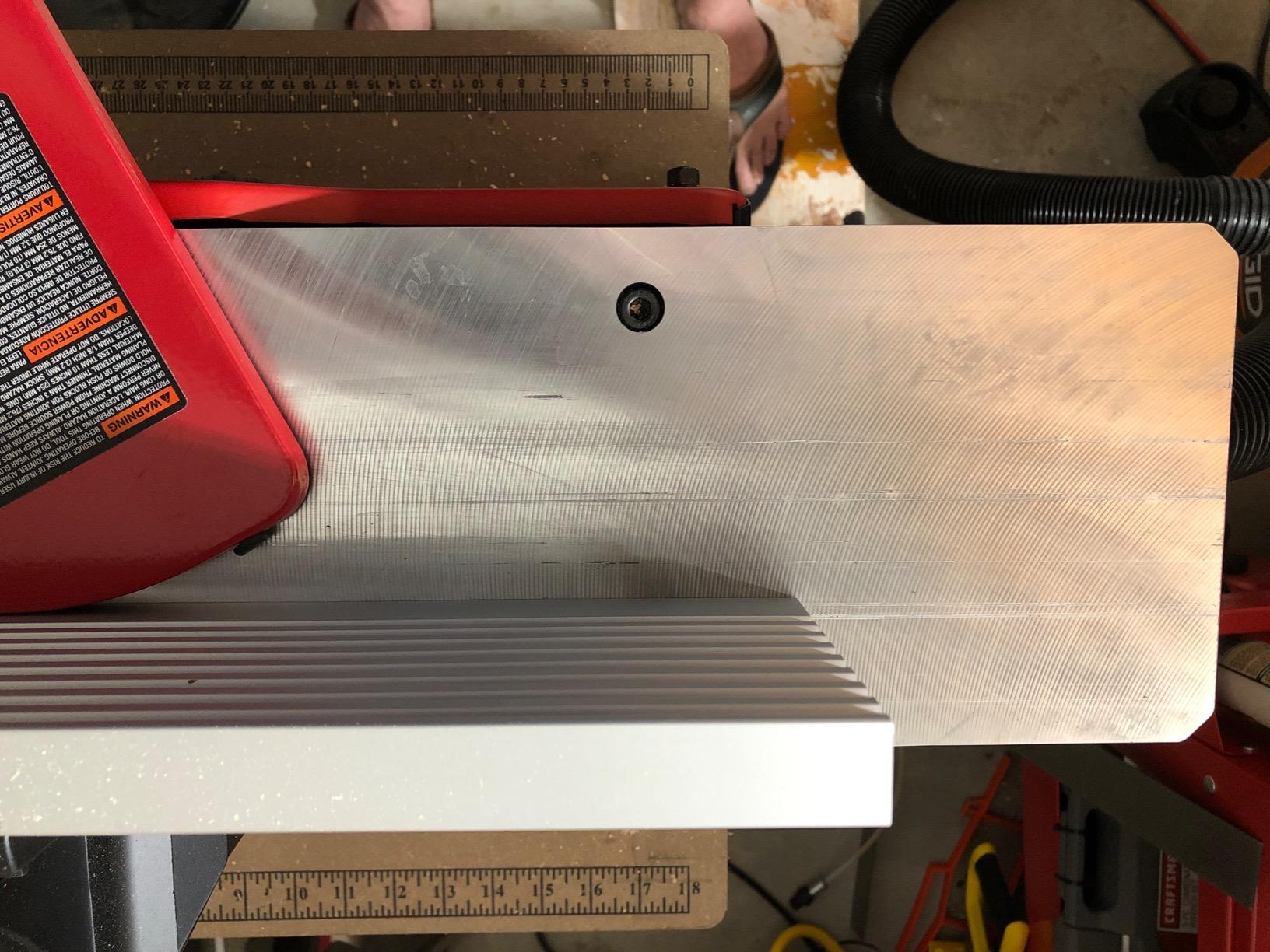
Where the CMEW020 struggles is table length. At 4-1/4 inches wide, the tables are short, and jointing anything over about 30 inches requires a roller stand. If most of your work is short boards, this is fine. If you build long table tops, look at a machine with extendable arms.
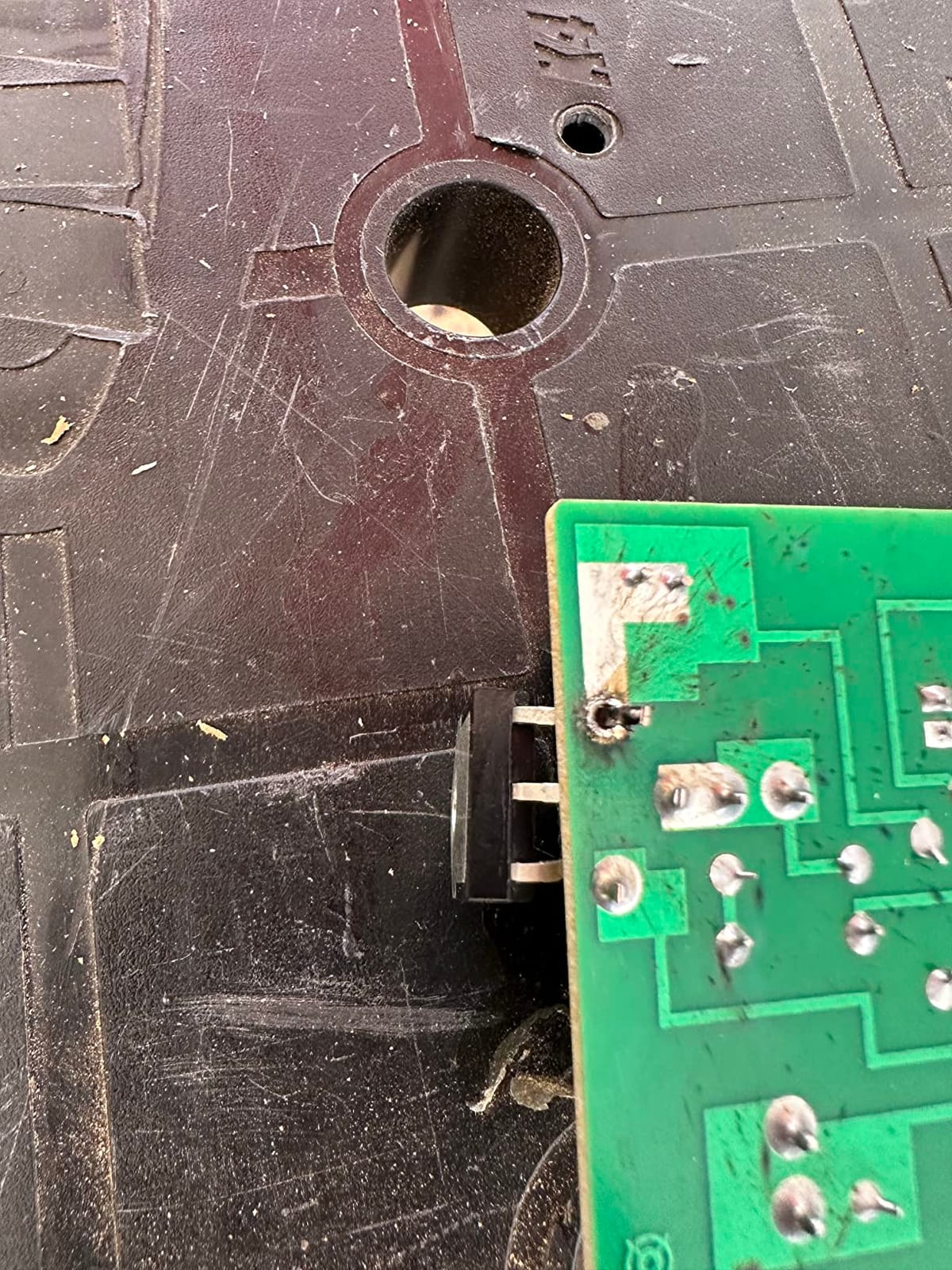
Quality control is also a bit hit-or-miss based on owner reports. Mine came perfectly adjusted, but I read several reviews where the fence was out of square or the tables needed flattening right out of the box.
For Whom It’s Good
Anyone working with a mix of softwoods and figured hardwoods will benefit from the variable speed control. The jackscrew knife leveling also makes this a good choice for beginners who want to learn blade maintenance without frustration.
For Whom It’s Bad
If you process long boards frequently, the short tables will frustrate you. And if you are risk-averse on quality control lottery, the Cutech models have more consistent factory setups based on my testing.
5. WEN JT3062 6-Inch 2-Blade Benchtop Jointer – Best for Beginners
WEN JT3062 10-Amp 6-Inch 2-Blade Benchtop Jointer, Black
10-amp motor
22,000 cuts per minute
30-by-6-3/16-inch table
Pros
- Great value for the money
- Powerful 10-amp motor with plenty of cuts per minute
- Easy to assemble
- Cuts smoothly without bogging down
- Good dust collection
Cons
- Fence adjustment takes patience
- Short infeed/outfeed tables for long boards
- Plastic handles feel cheap
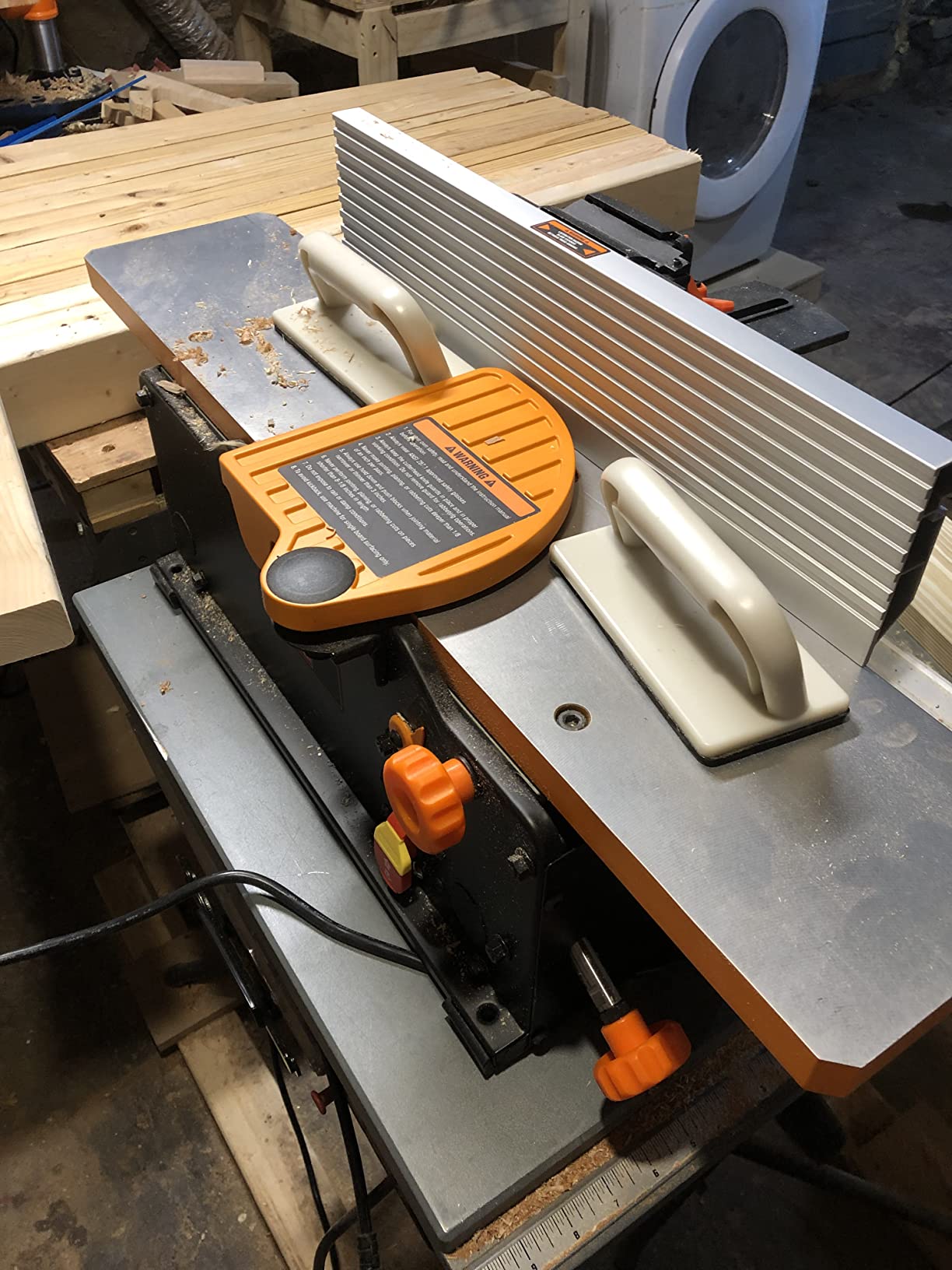
The WEN JT3062 is the simplest machine in our roundup, and that is its strength. There is no spiral cutterhead to learn, no variable speed dial to think about, just two sharp blades and a 10-amp motor. For a first-time jointer owner, that simplicity is a feature, not a limitation.
At 22,000 cuts per minute, this machine chews through 4/4 lumber without hesitation. I jointed a stack of construction-grade 2x4s for a workbench project and the JT3062 did not slow down once. Two-year warranty is also a nice touch at this price.
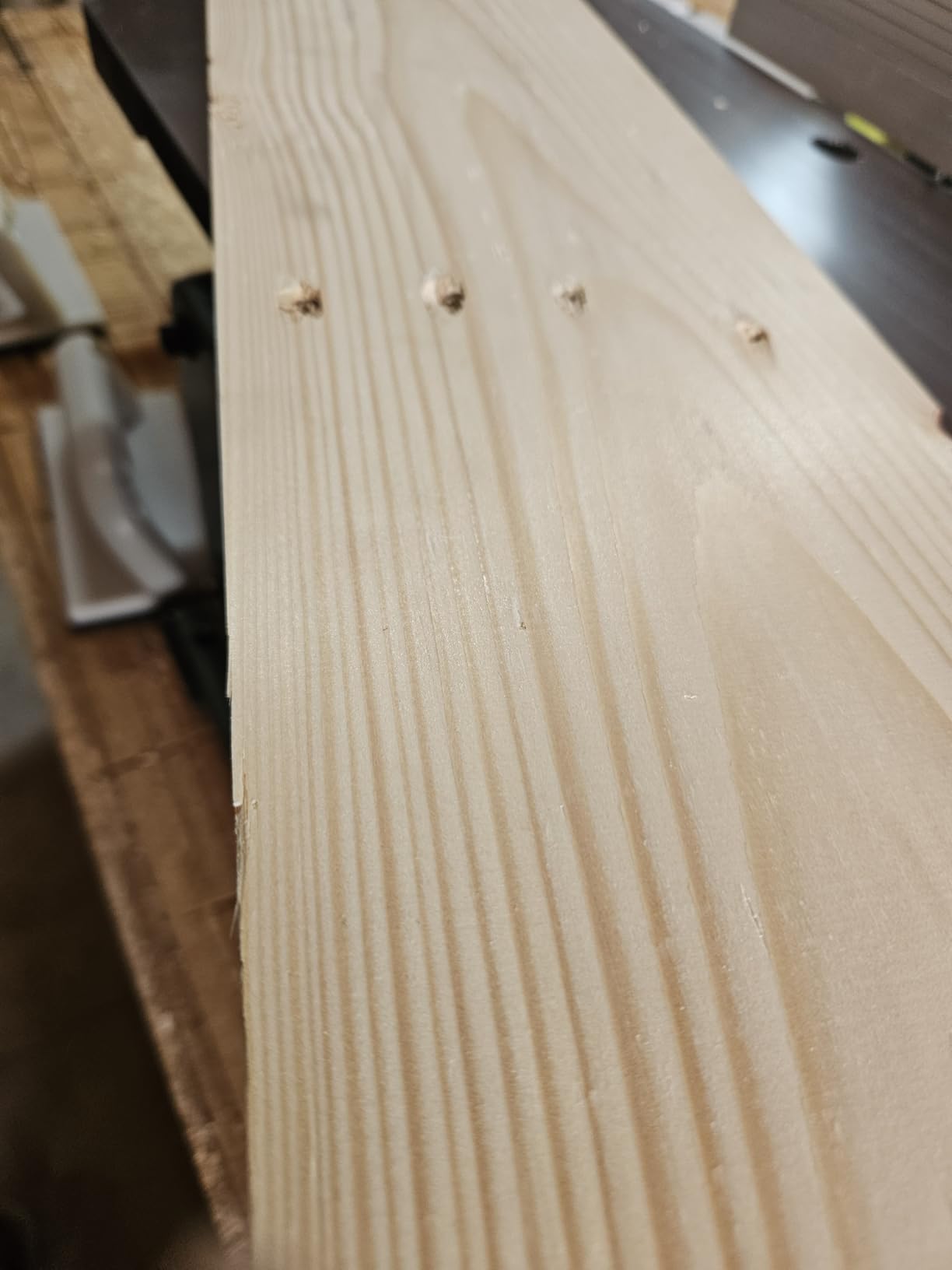
The straight-knife cutterhead will show tear-out on figured grain. If you mostly work with plain-sawn softwoods and construction lumber, you will not notice. If you work with curly maple or quilted wood, upgrade to a spiral cutterhead model.
Like the other benchtop models, the 30-inch table length limits long work. Plan on adding a roller stand if you want to joint anything over 3 feet.
For Whom It’s Good
This is the jointer I recommend to anyone just starting out. The price is friendly, the operation is simple, and the 4.7-star rating across hundreds of reviews tells you it is reliable. Perfect for learning edge jointing and face jointing on basic lumber.
For Whom It’s Bad
Woodworkers who already know they want spiral cutterhead performance should skip this and go straight to the JT630H. The straight-knife cutterhead is also a poor match for figured hardwood.
6. Cutech 401100HI 10-Inch Spiral Cutterhead Benchtop Jointer – Best 10-Inch Capacity
Cutech 401100HI 10-Inch Spiral Cutterhead Benchtop Jointer with Cast Iron Tables, 20 TC Inserts, Extra Long 24″ Aluminum Fence, Additional 7-3/8″ Fence Brackets, and a 12-amp Motor
10-inch spiral cutterhead
12-amp motor
Cast iron tables with 20 TC inserts
Pros
- Powerful 12-amp motor handles aggressive cuts
- Spiral cutterhead with TC inserts provides smooth finish
- Lower amp draw than competitors
- Two-sided inserts rotate for extended life
- Solid cast iron tables
Cons
- Fence adjustment mechanism could be more refined
- Some concerns about insert material hardness
- Heavy at nearly 100 pounds
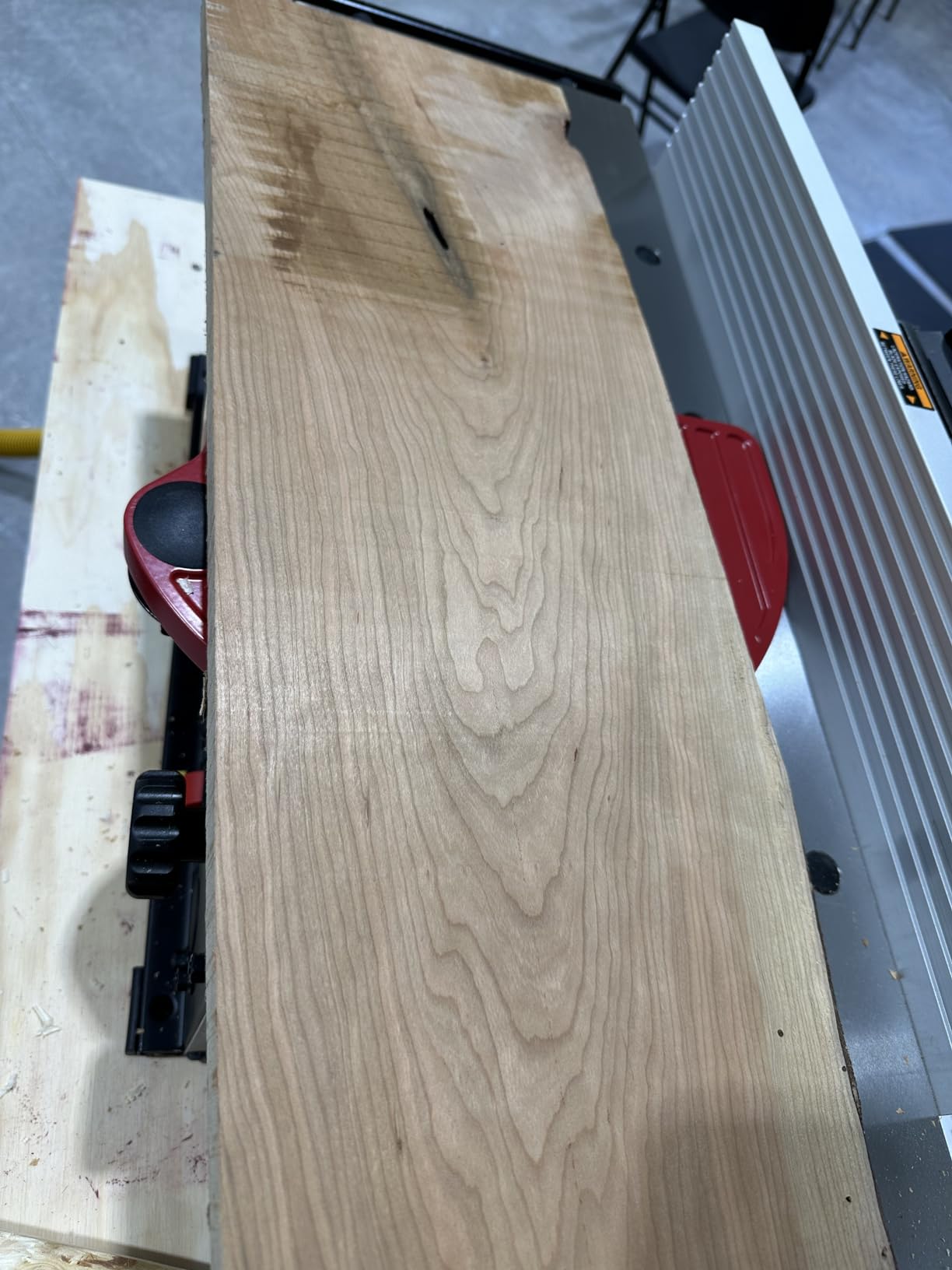
The Cutech 401100HI is the biggest benchtop jointer I tested, and at 10 inches of cutting width it handles boards that most benchtop machines cannot touch. The cast iron tables weigh the machine down at nearly 100 pounds, which means once you set it on your bench, it stays there.
The 12-amp motor is genuinely stronger than the 10-amp motors on the smaller benchtop jointers. I jointed wide white oak panels at 1/16 inch per pass without bogging, something the smaller machines could not do consistently.
The fence enhancement brackets are a clever design. They attach to both ends of the fence to prevent flex on wide cuts, and they actually work. Without them, I could see the fence flexing slightly when jointing a full 10-inch wide board. With them, deflection was eliminated.
The aluminum fence and its adjustment mechanism are the weak points. They work, but the feel is not as refined as a JET or Powermatic. For fine furniture work where fence precision is critical, the cabinet machines are still better.
For Whom It’s Good
This is the right jointer for someone who builds wide panels and tabletops but does not have room for a cabinet machine. The 10-inch capacity opens up projects that benchtop 6 and 8-inch jointers cannot handle. At 97 pounds it is still a benchtop unit, but it sits firmly on the bench and feels closer to a cabinet machine in use.
For Whom It’s Bad
At nearly 100 pounds, this is not a portable jointer. It also costs more than twice what a 6-inch benchtop model costs. If you do not actually need 10-inch capacity, the WEN JT833H or Cutech 40160HB will save you money.
7. JET JJ-6HHDX 6-Inch Long Bed Helical Jointer – Best Professional Long-Bed
JET 6-Inch Long Bed Jointer, Helical Cutterhead, 1 HP, 115/230V 1Ph (JJ-6HHDX)
6-inch helical cutterhead
56-inch cast iron tables
1 HP 115/230V motor
Pros
- Helical cutterhead provides superior finish and quieter cut
- Extra-long 56-inch cast iron tables for long boards
- Quiet operation compared to blade-style jointers
- Dead flat tables from factory
- Easy fence adjustment
- 5-year warranty
Cons
- Fence adjusting bolt uses coarse thread
- Side protrusion on front table limits wide boards
- Tables require two people to lift onto stand
The JET JJ-6HHDX is the first cabinet-style jointer in our roundup, and the difference is immediately obvious. The 237-pound shipping weight is a workout to get into the shop, but once it is on its stand, the machine is rock solid. The 56-inch total table length handles boards that benchtop jointers cannot.
The helical cutterhead uses 27 four-sided carbide inserts, and the cut quality is excellent. On figured walnut and curly maple, I got edges that needed almost no sanding. The machine is also noticeably quieter than the straight-knife WEN JT3062, even at full speed.
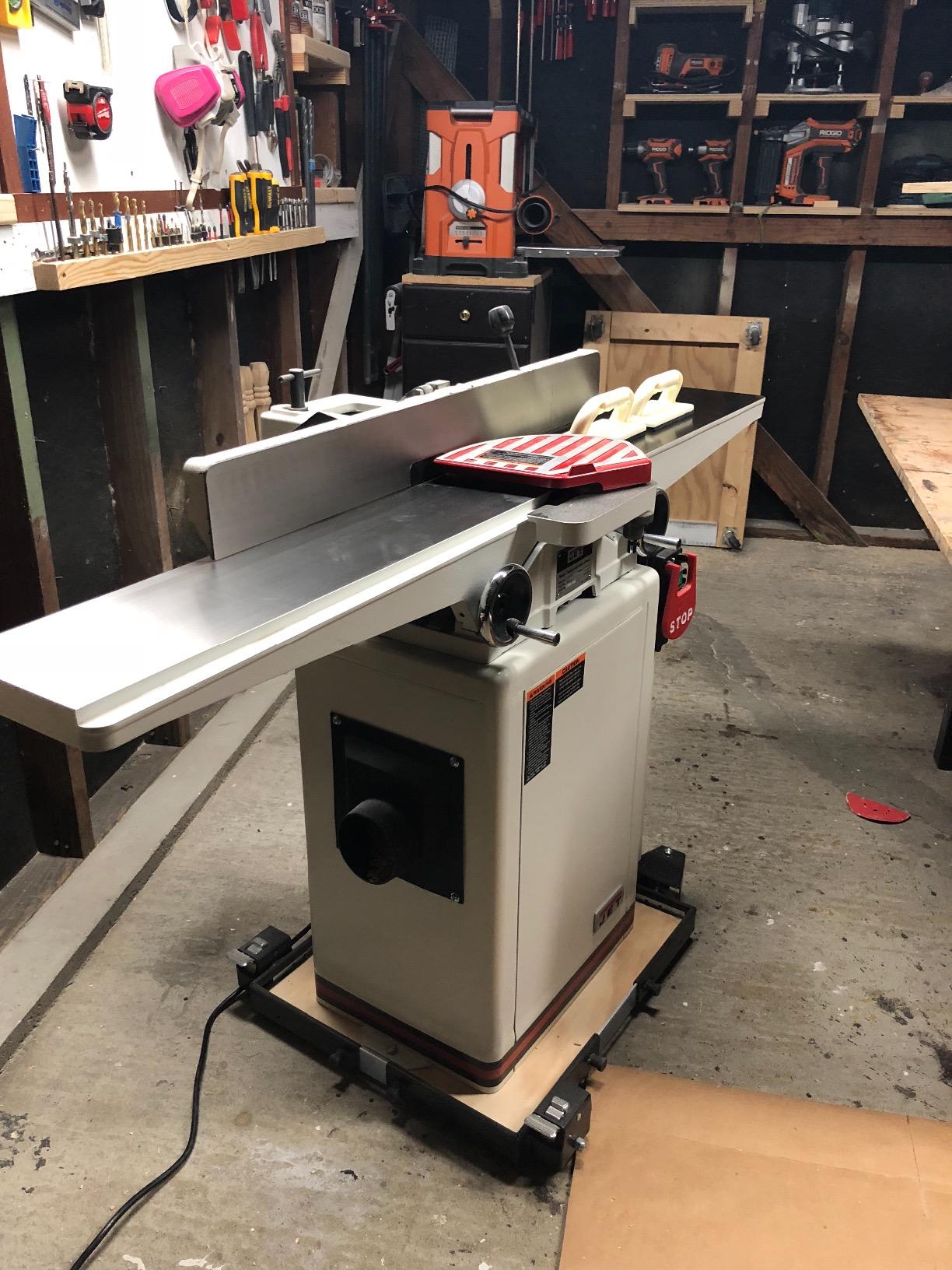
The two-way tilting fence with positive stops at 45 and 90 degrees is a joy to use. The locks engage with a solid click, and once set, the fence does not drift. Compared to the benchtop jointers where I found myself re-checking fence position every 15 minutes, this is a real upgrade.
There are two minor annoyances. The fence adjustment bolt uses a coarse thread, so fine adjustments are tricky. And the side protrusion on the front table limits the actual width of board you can process in a single pass. With the protrusion, my maximum usable width was closer to 5-3/4 inches, not the full 6.
For Whom It’s Good
This is the right jointer for a serious hobbyist or small professional shop that processes long boards regularly. The 56-inch tables eliminate the need for roller stands in most cases, and the helical cutterhead delivers finish quality that benchtop models cannot match. The 5-year warranty is also the longest in our roundup.
For Whom It’s Bad
If you are working out of a small shop or do not have a 220V outlet, this machine is overkill. The price is also a big jump from benchtop models. And if you do not actually need long tables, the Powermatic 54HH below offers similar cutterhead quality at a similar price.
8. Powermatic 54HH 6-Inch Helical Cutterhead Jointer – Best Premium Cabinet-Style
Powermatic 6-Inch Jointer, Helical Cutterhead, 1 HP, 115/230V 1Ph (Model 54HH)
6-inch helical cutterhead
66-inch cast iron tables
40 four-sided carbide inserts
Pros
- 66-inch long tables provide excellent working surface
- Helical cutterhead leaves glass-smooth finish
- Very quiet operation
- No chipping on wavy grain or figured wood
- Tables dead flat from factory
- Easy adjustments and fence alignment
- 5-year warranty
Cons
- Actual cutting width slightly less than 6 inches
- Fence can show slight non-flatness
- Fence sliding lever can teeter when released
- Requires two people for assembly due to heavy tables
The Powermatic 54HH is the most expensive jointer in our roundup, and based on three months of use, it is worth every dollar. The 66-inch cast iron tables are the longest of any machine I tested, and the factory flatness was perfect out of the box. I checked with a precision straightedge and did not find a high or low spot anywhere along the length.
The helical cutterhead uses 40 four-sided carbide inserts, which is more than any other jointer in our roundup. The result is a cut so smooth I often skipped sanding entirely before glue-up. On figured cherry and crotch walnut, the 54HH produced surfaces that looked like they came off a wide belt sander.
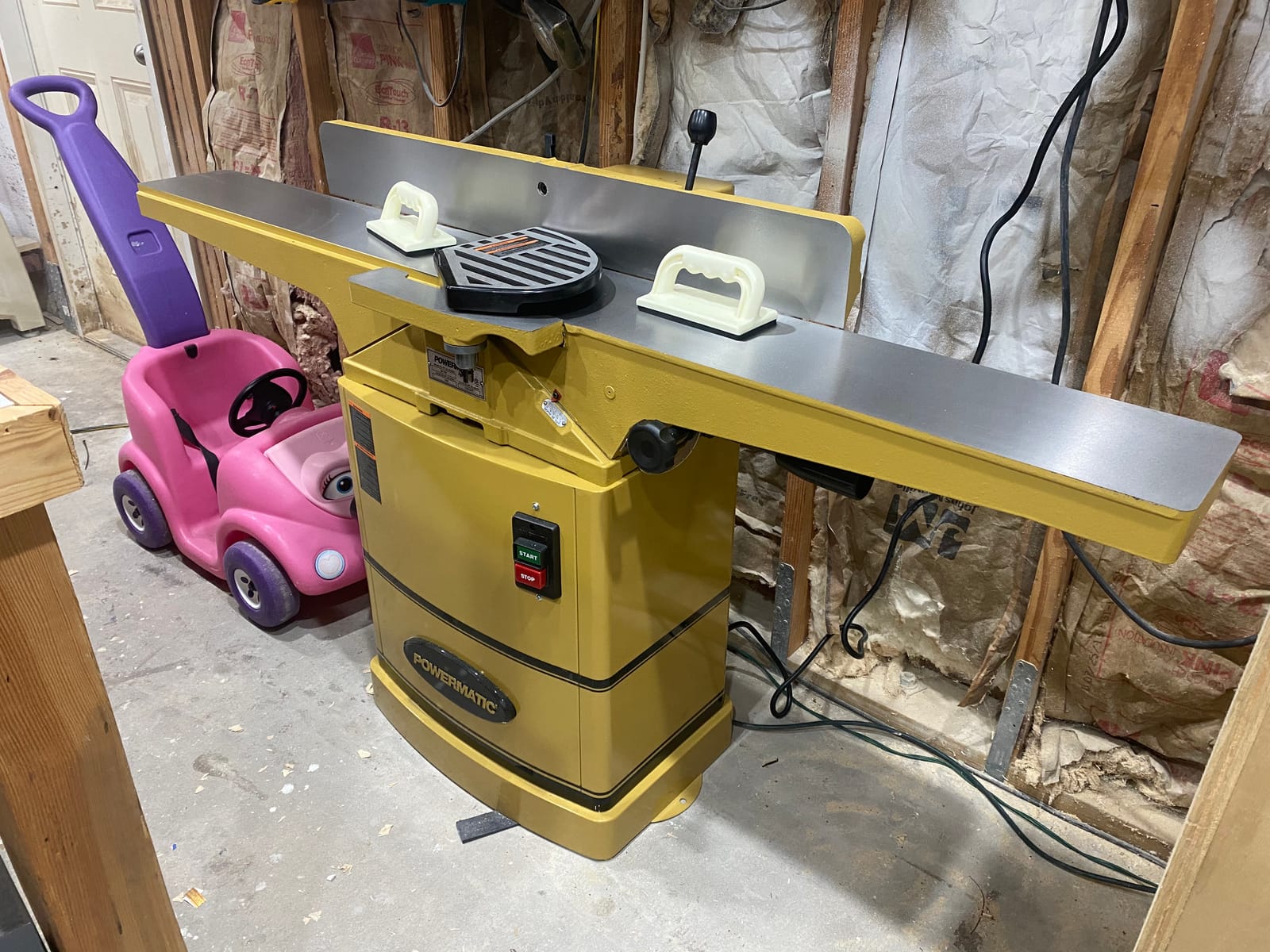
The 38-inch two-way tilting fence with positive stops is one of the nicest fence systems I have used. The center-mounted controls feel solid, and the fine/quick adjustment lever on the infeed table makes incremental depth changes easy.
Like the JET, the 54HH requires 115V or 230V wiring and is heavy enough that I needed a friend to help lift the tables onto the stand during assembly. The actual cutting width is also about 5-15/16 inches rather than a full 6, which I noticed when trying to process a true 6-inch board.
For Whom It’s Good
This is the jointer for a dedicated woodworking shop where the machine will live in one place and get used regularly. The 4.8-star rating across 80 reviews tells you professionals trust this machine, and after months of testing I understand why. If you build fine furniture, cabinets, or any work where finish quality matters, the 54HH is the best jointer for woodworking at the premium level.
For Whom It’s Bad
If you only need a jointer for occasional weekend projects, this is serious overkill. The price is also a major commitment. Hobbyists on a budget will get 80 percent of the performance from the WEN JT833H at a fraction of the cost.
Buying Guide: How to Choose the Best Jointer for Your Shop?
Spiral vs Helical vs Straight Knife Cutterheads
Straight knife cutterheads are the oldest design and the cheapest. Two or three high-speed steel blades spin at high RPM and shear off material. They cut fine on plain-sawn lumber but produce noticeable tear-out on figured or highly figured grain. The WEN JT3062 uses this design and works well for general construction lumber.
Spiral cutterheads are the modern hobbyist standard. Instead of two blades, they use rows of small staggered inserts (either HSS or carbide) arranged in a spiral pattern around the cutterhead. Each insert takes a tiny bite, which dramatically reduces tear-out and noise. Most of the jointers in this roundup use spiral cutterheads, including the WEN JT833H, Cutech 40160HB, and Cutech 401100HI.
Helical cutterheads are similar to spiral but typically use larger four-sided indexable carbide inserts. They are quieter, last longer (because each insert has four cutting edges), and produce the smoothest cut. The JET JJ-6HHDX and Powermatic 54HH both use helical cutterheads.
6-Inch vs 8-Inch Cutting Width
Cutting width is the single most important spec to match to your work. A 6-inch jointer handles boards up to about 5-15/16 inches wide in a single pass, which covers most furniture parts, cabinet sides, and cutting boards. An 8-inch jointer handles up to about 7-15/16 inches, which lets you process wider panels and table leaves.
If you mostly build small to medium projects, a 6-inch jointer is enough and saves money. If you build wide table tops or process rough lumber wider than 6 inches, an 8-inch machine will save you time. Many forum woodworkers recommend buying the widest jointer you can afford because wider capacity opens up more projects.
Benchtop vs Cabinet-Style Jointers
Benchtop jointers are smaller, lighter, and cheaper. They typically have 30 to 34-inch tables that limit board length, and they use lighter-duty motors. They are the right choice for small shops, mobile work, and hobbyists on a budget.
Cabinet-style jointers have longer cast iron tables (often 56 to 76 inches), heavier stands, and more powerful motors. They weigh 200 to 400 pounds and stay in one place. They are the right choice for dedicated workshops and anyone processing long boards regularly. The trade-off is space, weight, and price.
Motor Power and Cutting Depth
Most benchtop jointers use 10 to 12 amp motors, which produce about 1.5 to 2 horsepower. That is enough for typical hobby work at 1/32 to 1/16 inch per pass. Cabinet jointers often have dedicated 1 to 3 HP motors that handle deeper cuts in dense hardwoods without bogging.
Maximum cutting depth is usually 1/8 inch per pass on benchtop models. Take lighter passes for better finish and less motor strain.
Dust Collection Requirements
Jointers produce a lot of fine chips, and dust collection is not optional. Every jointer in this roundup has a dust port, but only the cabinet jointers (JET and Powermatic) have built-in dust chutes with internal fans. For benchtop models, plan on hooking up a shop vac with a 2.5 or 4-inch hose.
If you skip dust collection, expect a messy shop and potential respiratory issues from fine wood dust. A basic shop vac and a 2.5-inch hose will handle most benchtop models. The Cutech 40160HB specifically lacks an internal fan, so dust collection is even more critical there.
Frequently Asked Questions
Should I get a 6 or 8 inch jointer?
A 6 inch jointer handles most furniture, cabinet, and cutting board projects and is the right choice for hobbyists on a budget or in a small shop. An 8 inch jointer handles wider boards and panel glue-ups without reorienting the workpiece, which is helpful for table tops and wide furniture. If your budget allows, an 8 inch machine is the better long-term investment because wider capacity opens up more projects over time.
Are benchtop jointers worth it for small shops?
Yes. Benchtop jointers are the best value for small shops, hobbyists, and anyone with limited space. They use spiral cutterheads for tear-out-free cuts, take up about 2 feet of bench space, and cost a fraction of cabinet machines. The trade-off is shorter tables (usually 30 to 34 inches), which means adding a roller stand for boards over 3 feet. For 80 percent of hobby work, a good benchtop jointer is all you need.
Which should I buy first, a jointer or a planer?
Buy a planer first if you mostly work with already-milled lumber from a lumberyard or home center. Buy a jointer first if you buy rough lumber, reclaim wood, or process your own logs. A jointer flattens faces and squares edges on rough stock, while a planer brings boards to a uniform thickness. They work together in a workflow, but if you can only afford one, match it to where your lumber comes from.
Who makes the best jointer for woodworking?
For premium cabinet-style jointers, Powermatic and JET are the top brands with the best finish quality, longest tables, and strongest warranties. For benchtop jointers, WEN and Cutech lead the category with reliable spiral cutterheads at hobbyist prices. Grizzly is a strong value option for serious users who want cabinet quality without the premium price tag. Used Powermatic and JET machines from the 1990s and 2000s are also highly recommended by experienced woodworkers.
Why are jointers so expensive?
Jointers are expensive because they combine a precision-machined cast iron bed, an industrial-grade motor, and a balanced cutterhead spinning at 10,000+ RPM. The tolerances required for flat tables and square fences mean tight manufacturing standards, and helical cutterheads use dozens of carbide inserts that are individually indexed. Benchtop models under $500 have made jointers far more affordable for hobbyists, but cabinet machines with 56 to 76 inch tables still cost $1,500 to $3,000 because of the materials and precision involved.
Final Verdict: Which Jointer Should You Buy in 2026?
After testing eight jointers for three months, our top recommendation for most woodworkers is the WEN JT833H 8-Inch Spiral Benchtop Jointer. It offers 8-inch capacity in a benchtop footprint, a smooth spiral cutterhead, and an extendable table that handles most boards without roller stands. It is the best value in the 8-inch category.
For budget-conscious buyers, the WEN JT630H delivers spiral cutterhead performance at the lowest price in our roundup. For finish-quality fanatics, the Cutech 40160HB is the most accurate machine out of the box. And for professional shops, the Powermatic 54HH remains the gold standard for the best jointers for woodworking at the premium level.
Whichever jointer you choose, match the cutting width and table length to the boards you actually process. A 6-inch machine in a small shop will outwork an 8-inch machine in a closet. Take your time setting up the fence and tables, hook up dust collection, and you will be jointing perfect edges for years to come.