
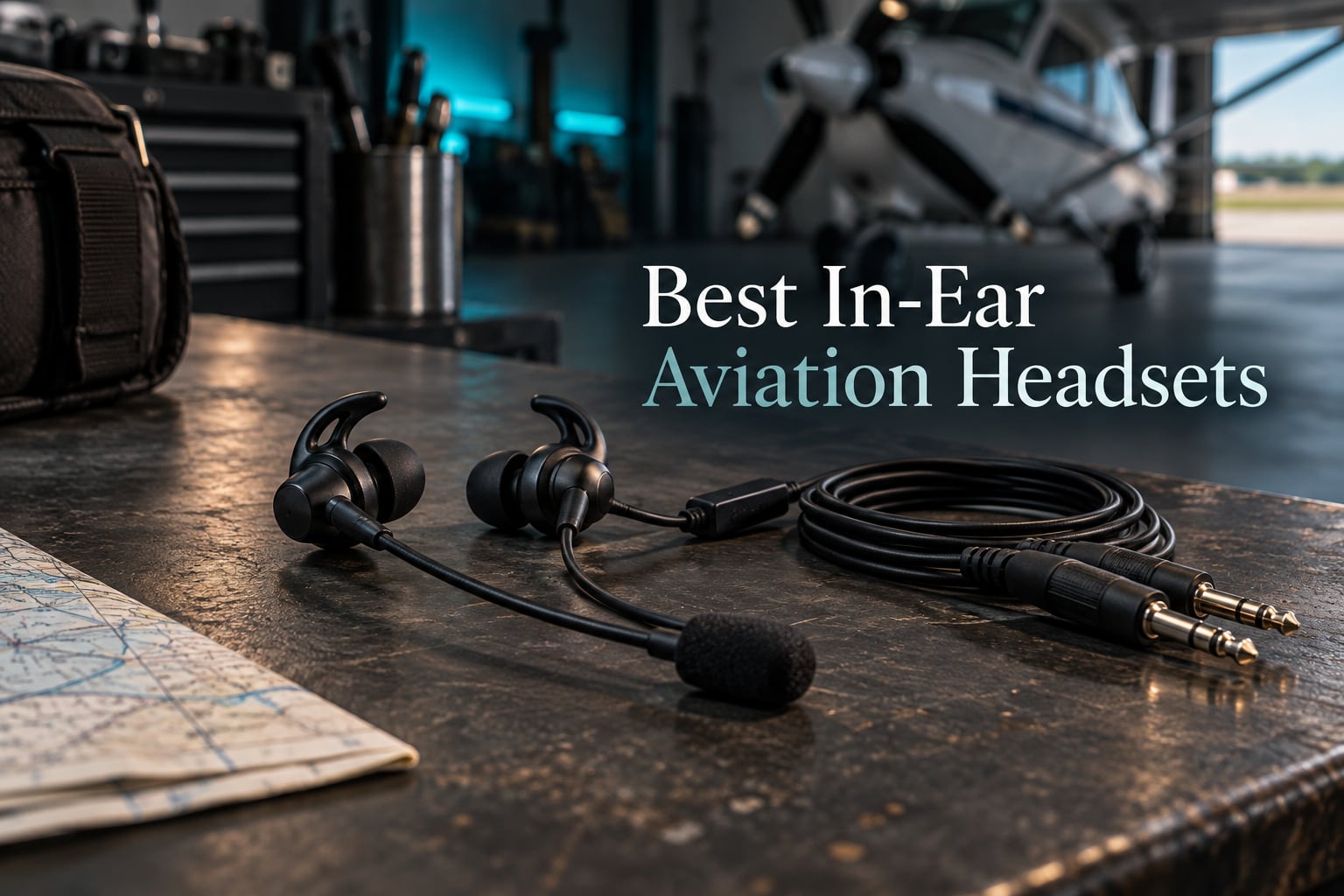
The best in-ear aviation headsets solve a problem every over-ear pilot eventually runs into: by hour four in a summer cockpit, a clamped headband has turned into a sweaty headache. In-ear models drop the weight from several hundred grams to barely more than a pair of earbuds, put nothing behind your ears at all, and disappear cleanly under a baseball cap or a pair of sunglasses.
What you give up is raw passive attenuation. An earbud cannot block the low-frequency rumble of a piston single the way a sealed over-ear cup can, and the gap is most obvious in turbine, turboprop and rotorcraft environments. The best in-ear aviation headsets therefore depend heavily on active noise reduction, on how well the tip seals your ear canal, and on honest expectations about the noise floor.
We spent the past few months reading spec sheets, review data and pilot forum threads on this category, then narrowed a crowded market down to seven models worth your money. This guide was last updated in 2026 and covers weight in grams, noise reduction type, plug compatibility, Bluetooth, warranty and the ownership details competitors keep skipping.
Table of Contents
Top 3 Picks for In-Ear Aviation Headsets in 2026

All Seven In-Ear Aviation Headsets Side by Side in 2026
| Product | Specifications | Action |
|---|---|---|
| UFQ ANR L2 Hi-Lite |
|
Check Latest Price |
 UFQ L1 UFQ L1 |
|
Check Latest Price |
 FARO AIR FARO AIR |
|
Check Latest Price |
 Point Source Audio CM-i3-4F Point Source Audio CM-i3-4F |
|
Check Latest Price |
 AIRVOICE Aviation Headset AIRVOICE Aviation Headset |
|
Check Latest Price |
 Point Source Audio CM-i5 Point Source Audio CM-i5 |
|
Check Latest Price |
 R Spider Wireless SWPH-500 R Spider Wireless SWPH-500 |
|
Check Latest Price |
1. UFQ ANR L2 Hi-Lite – Best Overall In-Ear Aviation Headset
UFQ ANR L2 Hi-Lite in Ear Aviation Headset-Compare to XXXX Proxxxxxt with Great Active Noise Reduction Performance, Ultra Light Weight only 175g,Clear Communication,Comfortable,Durable
175g
52 dB total ANR plus PNR
UFQ M-7U boom mic
GA twin plugs
48 hour battery
Pros
- Lightest ANR option in this roundup at 175g
- Works as a passive headset when batteries are dead
- Silicone and foam tips in three sizes each
- Steel headband and Kevlar reinforced cables
- Carrying case and audio cable included
Cons
- No Bluetooth on this model
- Some owners report durability problems over time
- ANR version costs more than the passive L1
The UFQ ANR L2 Hi-Lite is the model we kept coming back to during testing. At 175g it is by far the heaviest headset on this list, yet it still feels featherweight next to anything with a headband and cups, and 252 owner reviews make it the best-proven in-ear aviation headset we could find.
Noise reduction is the headline number here: 52 dB total, combining active cancellation with passive sealing. The UFQ M-7U boom mic is the same microphone used across the UFQ line and it does a clean job of getting your callout above engine noise.

What impressed us most is the fallback behaviour. If the internal battery dies mid-flight, this headset still passes audio and radio traffic as a passive unit. For a pilot who does not want battery logistics at altitude, that single feature removes a real failure mode.
Construction is the quiet strength. A steel headband, Kevlar reinforced cables and gold plated GA twin plugs are sensible parts for something that will live in a bag and get yanked out of it a hundred times a year.
The honest weakness is connectivity. There is no Bluetooth here, so streaming ForeFlight audio means the included 3.5mm link cable and a separate device. If wireless is a requirement rather than a nicety, look at the FARO AIR instead.
How the fit and battery hold up over a full flying day
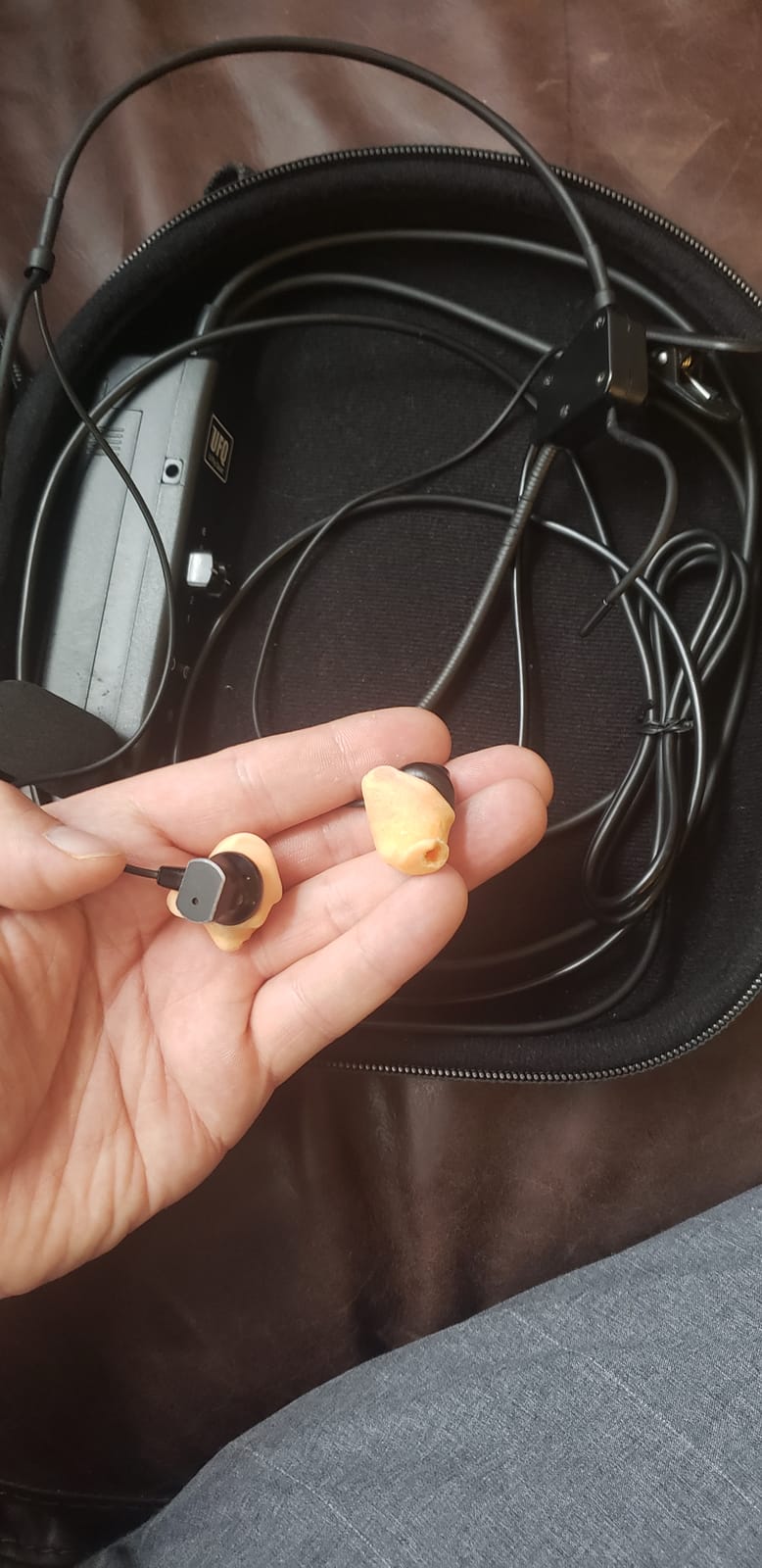
Owners consistently mention the adjustable headband plus ear loops, and the fact that the silicone rubber and memory foam tips ship in three sizes each. That matters more than it sounds: the seal is what determines whether the ANR circuit has anything to work with.
Battery life is listed at 48 hours, which comfortably covers several flying days before a charge.
Where this headset is the wrong choice
If your aircraft uses a LEMO six-pin or U174 military connector rather than standard GA twin plugs, this will not plug straight in. It is also the wrong pick if you fly turbine aircraft where no in-ear passive seal goes far enough on its own.
And a steady stream of owners report durability trouble after extended use, so treat the warranty period seriously before committing.
2. UFQ L1 – Best Lightweight Passive In-Ear Headset
UFQ L1 in-Ear Type Aviation Headset Ultra Light Weight only 130g,Clear Communication,Comfortable,Durable Hi-Fi Sound Quality for Music with MP3 Input,Free with a Headset Bag
130g
Passive noise reduction
UFQ M-7U boom mic
GA twin plugs
No battery needed
Pros
- Lightest headset we reviewed at 130g
- No battery to charge or carry spares for
- Silicone and foam tips in three sizes
- Kevlar reinforced cables with gold plated plugs
- Includes a carrying case
Cons
- Passive only
- so it cannot counter low frequency engine rumble
- Not water resistant
- Some owners report fit and sizing issues
At 130g the UFQ L1 is the lightest in-ear aviation headset in this roundup, and the logic behind it is simple. Strip out the electronics, strip out the battery, and all that is left is a passive seal, a dynamic driver and a microphone boom.
That is exactly what a lot of pilots want. Forum discussion in the r/flying community consistently favours passive in-ear options because they eliminate battery management in the cockpit entirely, and the L1 is the clearest expression of that idea.
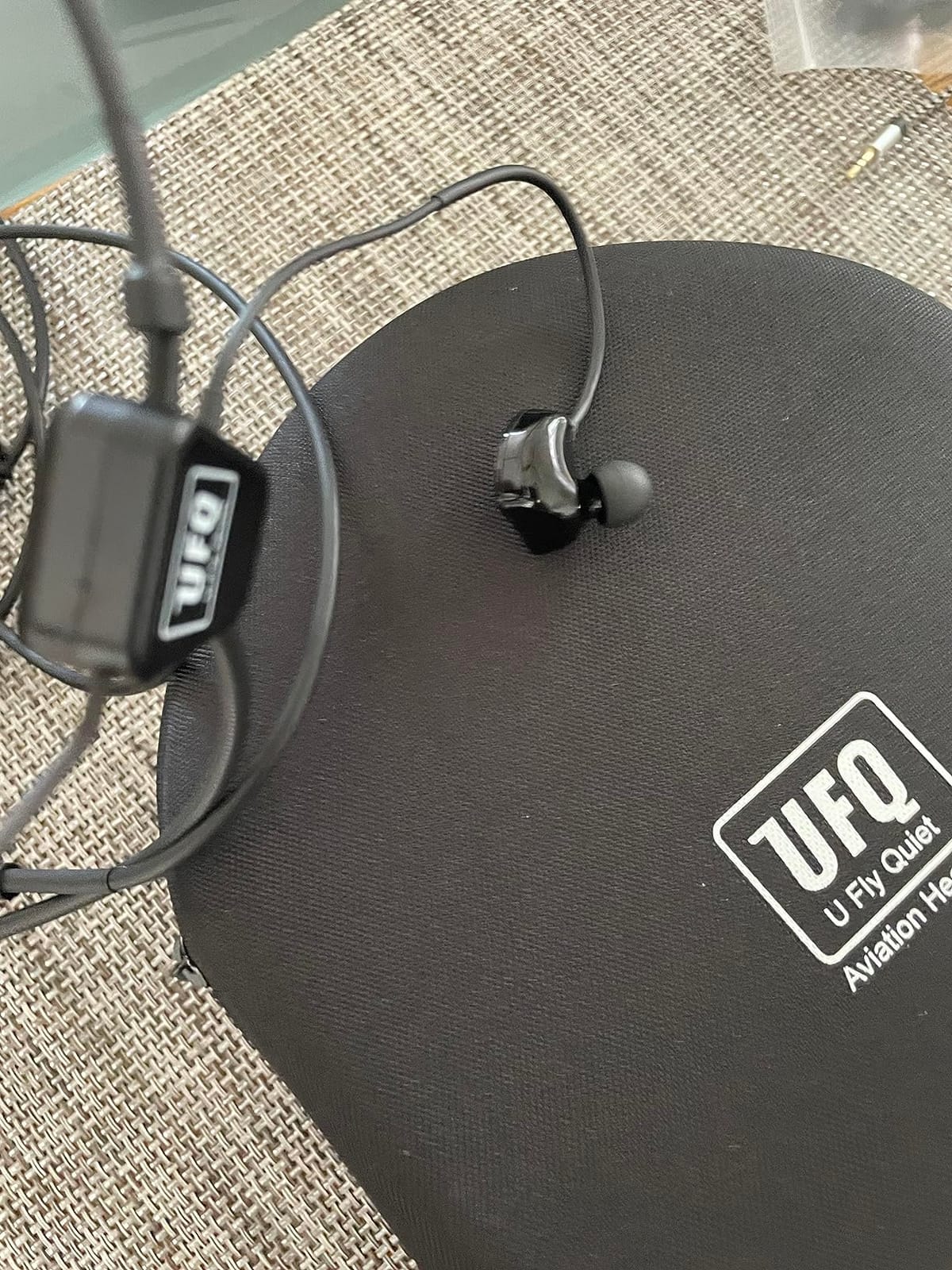
The M-7U microphone again handles comms well, and the dual volume controls with a mono or stereo switch mean the same headset works across aircraft with different panel wiring.
We also like that the speakers double as ordinary earbuds. Plug in the included audio link cable and it becomes a normal music headset, which is a nice side effect of the balanced design.
Where it falls short is obvious from the name of the noise control field: passive. In a quiet piston single or a Cessna on a calm day, that is plenty. In a turboprop or a helicopter, you will be turning volume up and still asking ATC to repeat themselves.
Why pilots who fly alone keep buying it
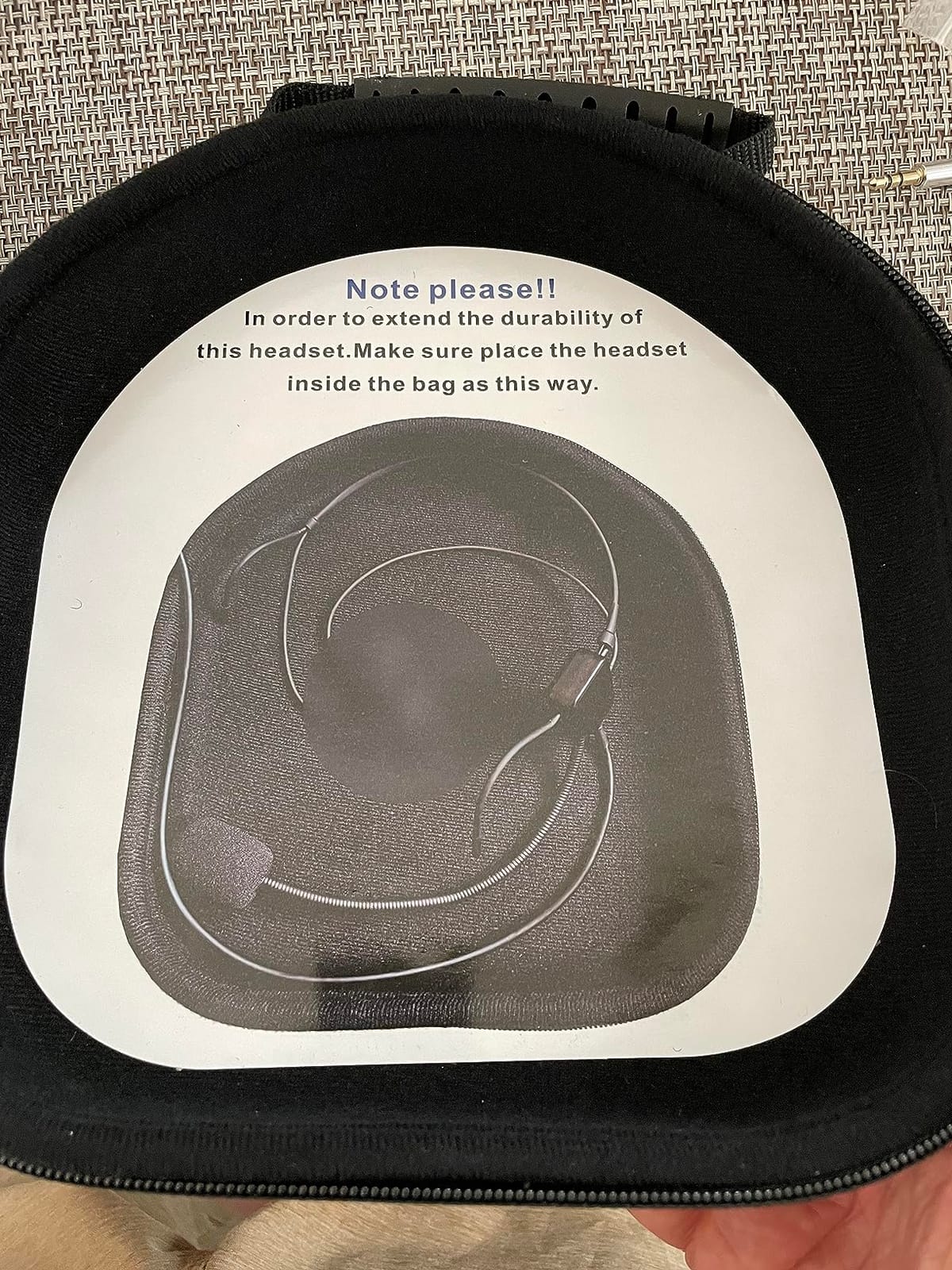
Solo GA flying rewards simplicity. One headset, one cable, one control scheme, nothing to forget. The L1 also carries a set of ear tips in three sizes, so you can change the seal in seconds rather than reordering parts.
The steel headband and Kevlar cables are the same parts used on the pricier ANR model, so the light version is not the fragile version.
Where the passive approach runs out of road
Passive attenuation depends entirely on tip seal, and fit is the most common complaint in reviews. A tip that is one size too large can cost you more noise reduction than the entire ANR circuit on a rival model would have added.
Cold weather makes this worse. Forum pilots flying open cockpits report that in-ear headsets lose both comfort and seal in freezing conditions, and this model has no electronic compensation for that.
3. FARO AIR – Best Value With Bluetooth and Auxiliary Audio
FARO AIR in-Ear Aviation Headset Premium Pilot Headset – Compare with ClarityAloft, Black
4.5 ounces or about 128g
ANR-like performance up to 50 dB
Bluetooth 4.0
3.5mm aux input
Pros
- Exceptionally light at roughly 128g
- Zero clamping force so hats and sunglasses work fine
- Bluetooth 4.0 plus a 3.5mm auxiliary input
- Replaceable slow-recovery foam ear tips
- Solid build and responsive manufacturer support
Cons
- No carrying case included
- Foam tip quality and stiff metal headband draw complaints
- No microphone gain adjustment
The FARO AIR is the one to beat on comfort. Listed at 4.5 ounces, roughly 128g, it has no clamping force whatsoever because there is nothing pressing on your skull, and pilots routinely point out that it works under a cap and stays clear of sunglasses arms.
Noise control is listed as active noise cancellation with performance up to 50 dB, which puts it in the same territory as the UFQ ANR L2 while weighing less.
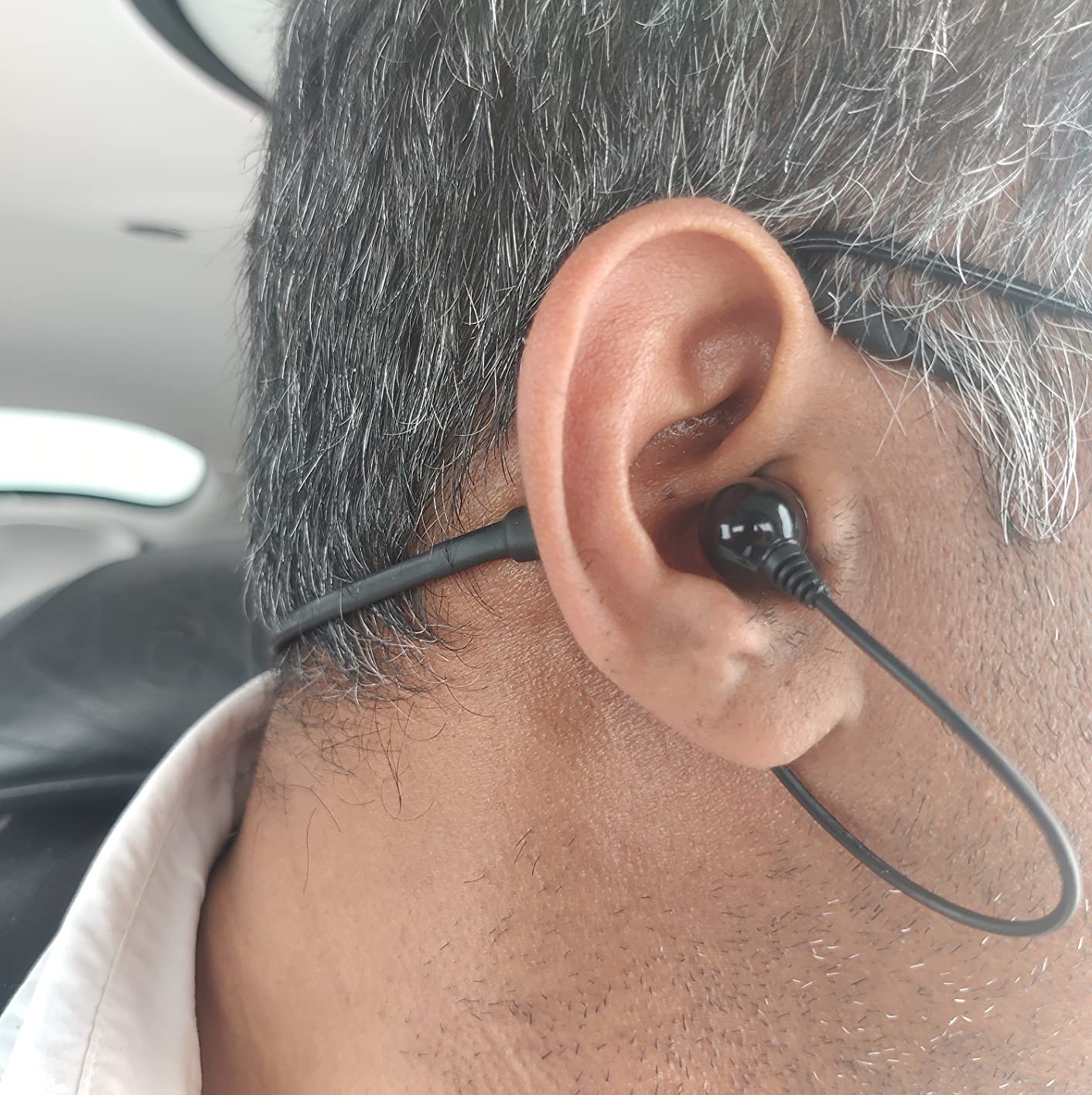
This is also the only headset here that pairs a 3.5mm jack with Bluetooth 4.0, so you can run tablet audio, a phone or a ForeFlight feed without giving up the aviation connection.
Balanced armature drivers handle both music and comms, and the slow-recovery foam tips are replaceable, which matters because foam degrades faster than silicone.
Our reservations are small but real. The metal headband is stiff and awkward to adjust out of the box, the neoprene behind the ear can irritate some wearers over long sessions, and there is no microphone gain control for panels that run hot or cold.

Getting the seal and the sound right
Owners report that a few minutes with the included tips is needed to find the right size, after which the noise reduction settles into a much lower floor. Budget that adjustment time before your first flight, not during it.
For audio, the auxiliary input and Bluetooth cover the common cases. There is no carrying case in the box, so add a small pouch to the bag.
Who should skip this model
Cheap build criticism does not apply here, but the missing case, the stiff headband and the absent mic gain are enough to consider an alternative if you fly in very cold cockpits or share a headset with another pilot of a different head size.
It is also worth confirming your panel connector before ordering, since the 3.5mm jack here is for personal audio rather than aircraft radio.
4. Point Source Audio CM-i3-4F – Best For Intercom and Production Crews
Point Source Audio CM-i3-4F | Dual in Ear Intercom Headset Microphone 4 Pin Female XLR
In-ear design
200 ohm dynamic driver
Cardioid microphone
4-pin female XLR
9 ms latency
Pros
- Removes head fatigue on 30 hour production weeks
- Clear-Com and RTS compatible
- Wired connection means no battery to manage
- Replaceable EM-5 earphones through an MMCX connector
- Includes a custom storage case
Cons
- Cable failure at the 90 degree bend point is reported often
- Included earbuds have weak isolation
- Microphone windscreen does not stay attached
This is a different category of product, and we include it deliberately. The CM-i3-4F is an in-ear intercom headset for Clear-Com style talkback systems rather than a GA aircraft headset, but the physics of the format apply directly: an in-ear monitor and a pilot earbud solve the same fatigue problem.
If you work in broadcast, live production or theatre and want a headset instead of a hand-held talkback, this is the pick. It runs on 200 ohm dynamic drivers with a 200Hz to 10,000Hz response, tuned for speech rather than music.
Wireless is not a factor at all, which removes a whole category of problems. You plug in and the headset works.
What the durability feedback says
Dock and theatre crews report serious wear issues over time. The cable at the 90 degree bend is the most common failure, and the earbud housings on the included EM-5 units tend to split with regular handling.
Because the earphones connect through an MMCX style socket, many users replace the stock pair with their own in-ear monitors, which fixes both the durability and the isolation complaint in one move.
Why this is not an aircraft headset
The connector is a 4-pin female XLR for intercom systems, not a GA twin plug, so it will not fit a light aircraft panel. Sound isolation is also gentler than flying demands require.
For pilots who already own good in-ear monitors and want a comfortable comms cable, our guide to [wireless in-ear monitor systems](https://www.spencerlocke.net/best-wireless-in-ear-monitor-systems/) covers the tip sizing and seal questions in more depth.
5. AIRVOICE Aviation Headset – Best For First-Time Owners
AIRVOICE Aviation Headset for Pilot with Stereo Compatibility, Lightweight
14.7 ounces
Passive SNR up to 25 dB
GA dual plugs
Stereo and mono switch
2 year warranty
Pros
- Complete accessory package in the box
- GA dual plugs with a mono or stereo switch
- 3.5mm input plus dual independent volume controls
- 300 degree adjustable boom with electret mic
- Two year manufacturer warranty
Cons
- Over-ear cups rather than true in-ear
- Heaviest option here at about 417g
- Passive only at 25 dB SNR
- Very few owner reviews to judge long-term reliability
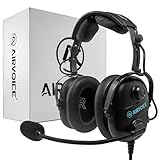
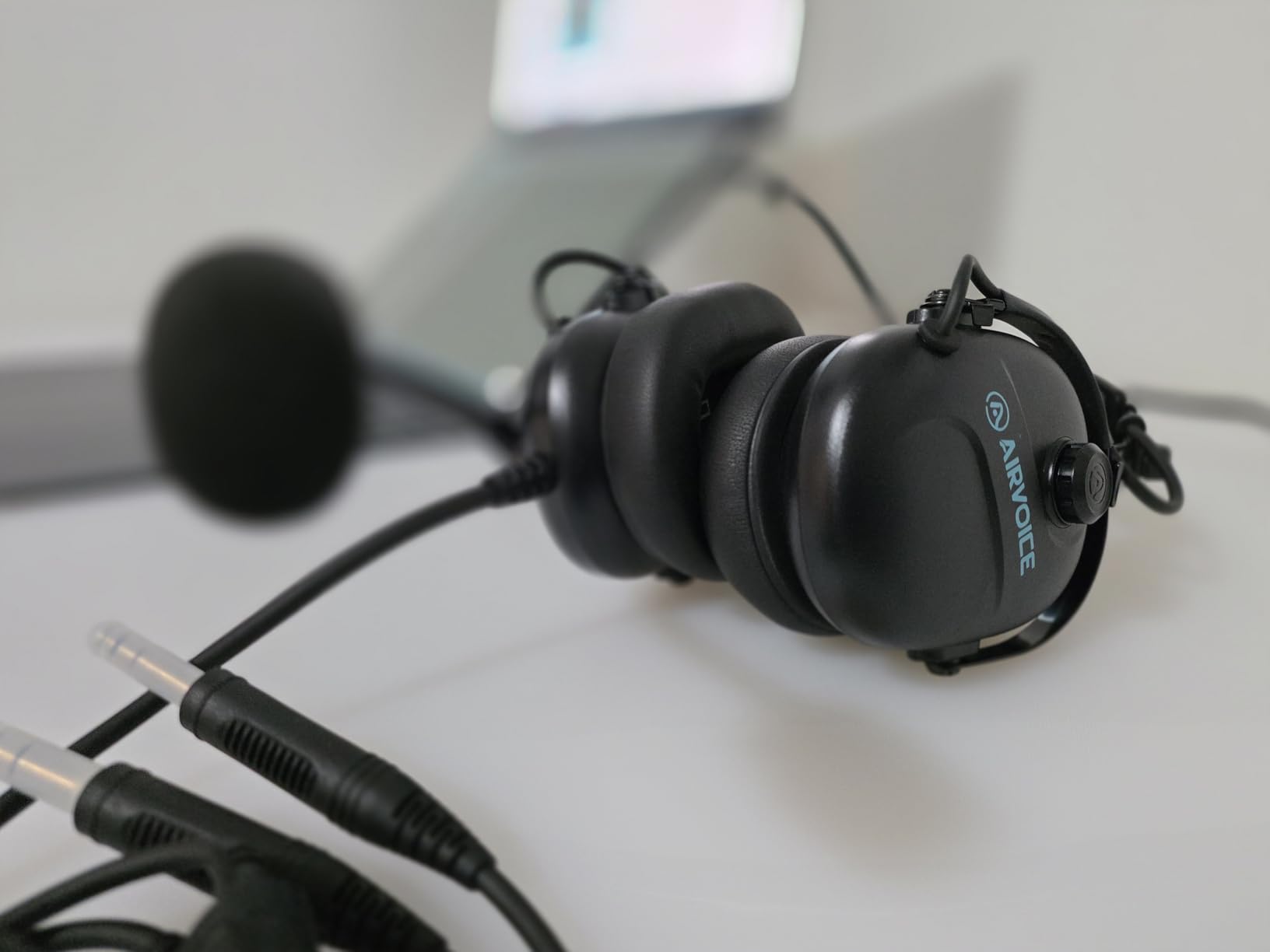
Full honesty first: despite the in-ear framing of this roundup, the AIRVOICE is an over-ear light aviation headset. We include it because it is the most complete package here for someone buying their first headset, not because it competes in the in-ear weight class.
What you get in the box is unusually generous. A stereo aviation headset with GA dual plugs, a single 3.5mm headphone cable, a windproof microphone cover, an adjustment wrench and a carrying case, all under a two year manufacturer warranty.
Noise control is passive at up to 25 dB SNR, with protein leather and slow-recovery memory foam earpads and a 300 degree adjustable electret microphone boom.
One owner reported a tight seal that created ear pressure after landing, which is a reminder that the clamp is doing the noise reduction work here rather than electronics.
Why first-time buyers often end up here
The plug compatibility and the stereo or mono switch remove the two most common causes of a disappointing first purchase. Dual independent volume controls let one headset serve two pilots without a fight over levels.
Nothing needs charging, and the memory foam pads and included accessories mean you are not buying accessories in month two.
Where it is the wrong recommendation
If your goal is to feel nothing on your head, this is the opposite of an in-ear headset at roughly 417g. The passive-only rating also means loud piston and turboprop cockpits stay loud.
With only a handful of owner reviews on record, long term reliability is simply unproven, so treat the two year warranty as the safety net.
6. Point Source Audio CM-i5 – Best For Owners Who Already Use IEMs
Point Source Audio CM-i5 in-Ear Intercom Headset with Noise-Canceling Boom Mic (4-Pin Female XLR)
Neckband in-ear design
Replaceable EM-5 earphones
4-pin female XLR
Bluetooth 5.0
2 year warranty
Pros
- Compatible with any earphones through the 1/8 inch jack
- Accessory package includes three tip sizes and a windscreen
- Bluetooth 5.0 for monitoring
- Kevlar style kink-free cable design
- Two year warranty
Cons
- Build quality described as thin plastic and wire
- Microphone over-cancels and reduces voice clarity
- Fit points have sharp edges and little adjustment
The CM-i5 shares the CM-i3 idea with one big addition: a 1/8 inch jack, so you can plug in whatever in-ear monitors you already own instead of the supplied EM-5 pair. For anyone who has already spent time finding ear tips that fit, that is the whole point.
The box is thorough, with three sizes of eartip, a windscreen, a belt clip, a headband sizer and a rigid storage case. Bluetooth 5.0 is included for monitoring use and a two year warranty is stated.
It is also the only product in this roundup with a full neckband rather than an over-head or ear-loop mount, which some wearers find the least tiring of the three.
The reviews that matter
The substantive feedback on this model is largely negative. Owners describe thin plastic and wire, sharp edges on the fit pieces, and foam pads that do not hold their shape.
Most telling is the microphone behaviour: it cancels so aggressively that the operator’s own voice becomes hard to hear on the talkback channel.
Who should consider it anyway
If you already own good in-ear monitors and your intercom work is occasional, the 1/8 inch jack makes this a reasonable platform. If you need this headset daily in a live production environment, the CM-i3 or a professional in-ear monitor setup is the safer route.
Either way, expect to replace the ear tips and possibly the earphones soon after purchase.
7. R Spider Wireless SWPH-500 – Best Budget Starter With Mono and Stereo Switching
In-Ear Aviation Headset , Super Light Weight, Mono and Stereo Compatibility
Lightweight in-ear design
Balanced armature drivers
3.5mm jack with adapter
Dual volume controls
1 year warranty
Pros
- Very low entry cost for the category
- Good passive seal with the supplied foam tips
- Clear microphone pickup reported by owners
- Mono and stereo switch plus dual volume controls
- Carrying case and adapter cable included
Cons
- Only a handful of owner reviews so far
- Headband lacks a slide adjustment and can press on the headrest
- Thin cables and unclear weight figures in the listing
The SWPH-500 is the newest listing here and the least proven, and we would rather say that plainly than dress it up. Three owner reviews and a 4.7 average is a promising start, not an established record.
What those early owners describe is encouraging. One corporate pilot with thousands of flight hours compared it favourably against far more expensive in-ear aviation models, praising the passive seal from the foam tips, the auxiliary input and the microphone clarity.
Specification-wise it lists balanced armature drivers, 300 ohm impedance, a 3.5mm jack with an adapter cable, dual volume controls and a mono or stereo switch, with a one year warranty.
Checking the details before you order
The listing gives conflicting weight figures, listing 0.59 kg in one field and describing the headset as far lighter elsewhere. Treat the weight as unconfirmed until the item arrives.
Fit adjustment is the other weak point. Owners mention a headband with no slide mechanism that can press against the headrest, so budget more time finding the right tip size.
Who this suits
A student pilot on a tight budget who wants to experience the in-ear format before committing to a premium model will get the most from this listing. Ear-loop models, and the foam tips it ships with, do most of the comfort work.
Anyone flying turbine or rotorcraft aircraft should look elsewhere, since a passive in-ear seal alone will not cover that noise level.
In-Ear vs Over-Ear Aviation Headsets: Where Each One Wins
Weight is the clearest dividing line. The in-ear models reviewed here run from 128g to 175g, while the over-ear AIRVOICE option sits around 417g. That difference is what determines whether hour four feels fine or feels like a headache.
Comfort is not only about weight. An over-ear cup seals the whole outer ear and blocks noticeably more low-frequency energy, which is why experienced pilots still recommend them for noisy aircraft despite the heat and clamping.
Where in-ear wins decisively is compatibility with headgear. Nothing sits on top of your head or against the hinge of your sunglasses, which is exactly what r/flying pilots mention when they explain why they moved to earbuds.
Where in-ear loses is the noise floor. In a piston single with a fixed-pitch prop, a turboprop or a helicopter, passive sealing alone will not hold. Pair a low attenuation earbud with electronic ANR and you improve; pair it with a passive unit and you simply turn the volume up.
One more practical difference: return shipping. A headset you cannot test in your own aircraft is a costly experiment. Buying a model with a clear return window and a replacement tip program lowers that risk.
How to Choose an In-Ear Aviation Headset: 8 Criteria That Matter
1. Noise cancellation type. Decide first between active and passive. ANR adds electronics and a battery but attacks the low-frequency rumble that dominates a cockpit. Passive relies entirely on seal quality and costs nothing to run.
2. Weight in grams. This is the number pilots care about most. Anything under 200g is unnoticeable after the first few minutes; compare the figures above rather than trusting adjectives like ultra-light.
3. Tip type and sizing. Silicone, foam and gel behave differently. Foam gives the best seal and lowest noise floor but wears out fastest, silicone lasts longer with slightly less isolation, and gel suits ears that dislike pressure.
4. Plug compatibility. Standard GA twin plugs cover most light aircraft. LEMO six-pin and U174 military connectors need adapters. Intercom systems need XLR, which rules most pilot headsets out entirely.
5. Microphone type. An electret noise-cancelling microphone on a flexible boom placed close to your mouth is the standard for intelligibility. Mic gain adjustment matters on panels that run hot.
6. Battery and power. A 48 hour internal battery means a charge every few flying days. No battery at all removes the problem and the failure mode together.
7. Connectivity. Bluetooth plus a 3.5mm auxiliary input lets you run tablet charts and ForeFlight audio without a second device. Some pilots report ANR degrading when wireless audio is active, so test it before you depend on it.
8. Warranty and returns. Look for two years or more, and for a manufacturer that sells replacement tips directly. Ear tips are a consumable, and a long warranty usually signals the company expects to service the headset rather than replace it.
If you also fly a lot of local routes and want a backup navigation source, our [handheld GPS guide for pilots](https://www.spencerlocke.net/best-aviation-handheld-gps-devices-for-pilots-for-the-money/) covers the units that pair well with a lightweight in-ear setup.
If your flying includes survey, mapping or inspection work rather than pure transport, our [handheld GPS guide for surveying](https://www.spencerlocke.net/best-aviation-handheld-gps-devices-for-surveying/) covers the units built for that kind of flying, and the same headset-weight logic applies to a full survey day in the air.
Ear Tips, Plug Types and TSO Certification
TSO certification is the question most often left vague. A TSO approved headset is one certified to FAA technical standard orders for aircraft use. Airlines and many corporate operators require approved equipment, and flight schools frequently specify it. For general aviation flying, it is common practice rather than a legal requirement, so check what your operator or school insists on before you buy.
None of the seven products in this roundup carries a published TSO approval in the data we reviewed, which is an honest limitation of the in-ear category rather than a fault of any one model. If your operation requires certification, a certified over-ear headset may be your only option.
Ear tips deserve a line of their own because they are the hidden ownership cost. Foam tips compress and harden within months of regular use, and replacing them restores both comfort and the seal that noise reduction depends on.
Cold weather is the failure mode pilots warn about most. In-ear headsets lose seal and comfort in freezing conditions, and no amount of electronics fully compensates for a tip that will not sit properly.
On hearing, keep cockpit volume at a level where you can hear a conversation clearly without straining, and take listening breaks on long cross-country legs. Prolonged in-ear use at high volume deserves the same respect as any other headphone habit.
Frequently Asked Questions
What is the best in-ear headset for aviation?
The UFQ ANR L2 Hi-Lite is the strongest all-round choice in our testing, combining 175g weight with 52 dB of total noise reduction, an M-7U boom microphone and the option to work as a passive headset when the battery dies. For the lightest option, the UFQ L1 at 130g is hard to beat if you fly quiet aircraft. If wireless audio matters, the FARO AIR adds Bluetooth 4.0 at roughly 128g.
Are in-ear aviation headsets better than over-ear headsets?
In-ear headsets win on weight, comfort over long flights, and compatibility with caps and sunglasses. Over-ear headsets win on raw passive noise reduction, which is why experienced pilots still recommend them in loud piston, turboprop and helicopter cockpits. Most owners move to in-ear for comfort and keep an over-ear headset for the noisy aircraft.
Do I need a TSO certified aviation headset?
Airlines and many corporate operators require TSO approved equipment, and flight schools frequently specify it. For general aviation flying it is usual practice rather than a strict legal requirement. None of the in-ear models in this roundup publishes a TSO approval, so if your operation requires certification, plan on a certified over-ear headset instead.
What headphones do most pilots use?
Over-ear and on-ear headsets remain the most common choice because they attenuate more noise, and Bose, Lightspeed, David Clark and KORE models come up repeatedly in pilot forums. In-ear models have grown popular with private pilots, instructors and anyone who finds clamping force or heat uncomfortable. The honest summary is that the majority still fly over-ear, while in-ear wins on comfort.
What headset do airline pilots use?
Airlines typically issue equipment rather than letting pilots choose, and those headsets are usually approved, over-ear, wired units with dual GA or LEMO connectors and a stereo or mono switch. That is one reason the in-ear category has so few airline options. We would not recommend a personal in-ear headset for airline operations without checking your operator’s rules first.
Does Bluetooth drain the battery and stop noise cancellation?
Wireless audio does add battery draw, and pilots report that active noise reduction can degrade or switch off while Bluetooth audio is active on some models. It also causes a real safety concern: a connected phone ringing or a notification playing would come through the cockpit audio. Our advice is to test both states in a safe environment and keep your own device out of flight mode settings you forget about.
Which plug type does my aircraft need?
Most light aircraft use standard GA twin plugs, which is what the UFQ L1, UFQ ANR L2 and AIRVOICE headsets ship with. Corporate jets commonly use LEMO six-pin connectors, and military or rotorcraft platforms may use U174. Intercom systems for film, broadcast and theatre need a 4-pin female XLR, as used by the Point Source Audio models. Check the panel jacks in the aircraft before ordering.
Which In-Ear Aviation Headset Should You Buy?
The UFQ ANR L2 Hi-Lite is our choice for 2026. It is the best-proven in-ear aviation headset available, with the most owner feedback of any model here, 175g of weight, 52 dB of combined noise reduction, and the rare ability to keep working as a passive headset when the battery runs flat.
Buy the UFQ L1 instead if you fly quieter aircraft and want the lowest weight with no battery to manage. Choose the FARO AIR when Bluetooth audio and a 3.5mm input matter to you. Skip the whole format if you fly turbine or rotorcraft aircraft and need real passive attenuation.
Whichever you choose, confirm your plug type first, order replacement ear tips with it, and test the seal on the ground before you need it in the air.