
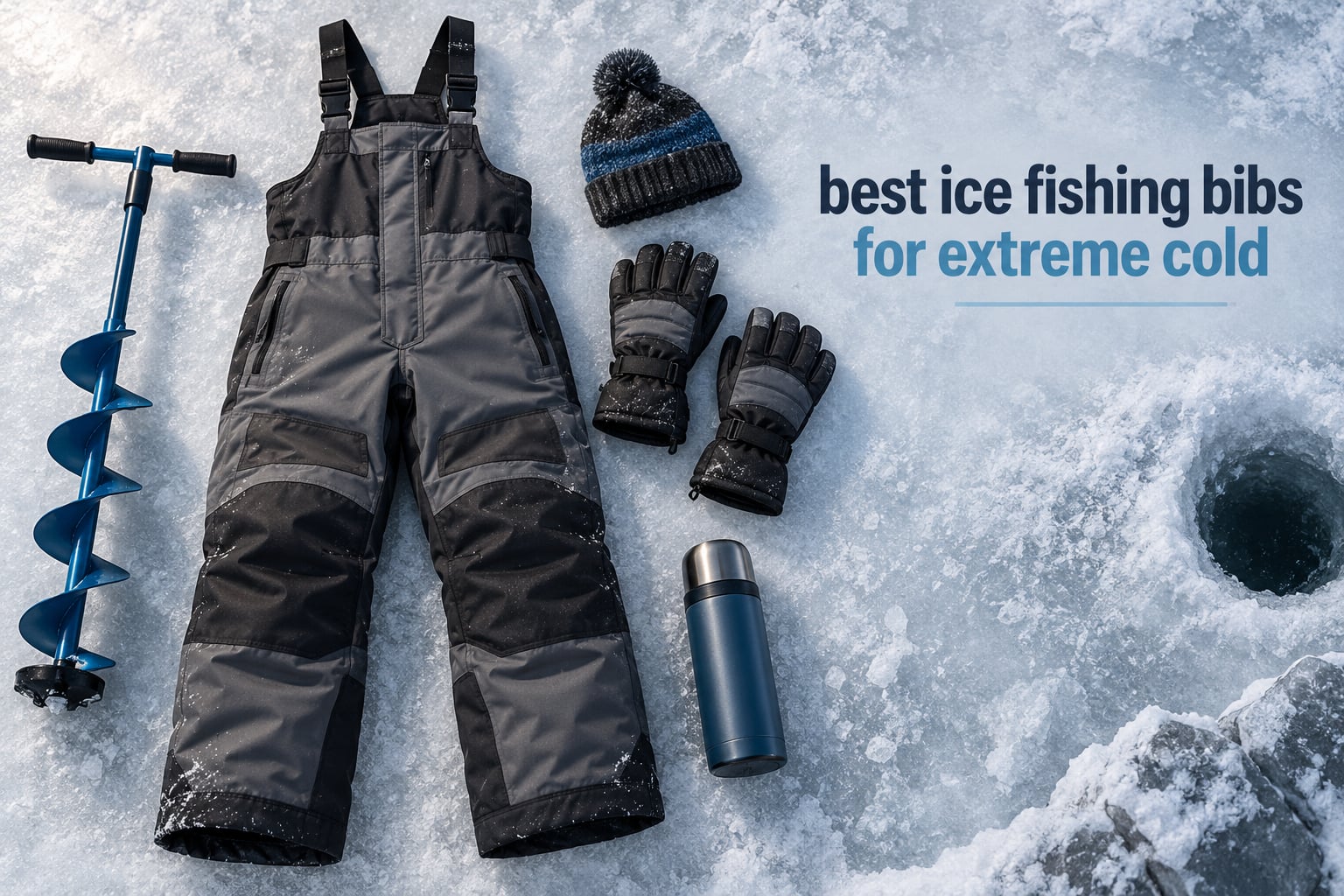
Our top pick for the best ice fishing bibs for extreme cold is the Striker Predator, a 100g Thermadex bib with SureFlote flotation that holds warmth in sub-zero wind and still vents when you start drilling. It carries 4.8 stars across more than 500 reviews, and the build details that matter on hard water, snakeskin knee panels, reinforced seat, an adjustable inseam, are all there.
Cold is what ends most ice days early. Wet clothing ends them faster than temperature alone, so the bib you pick is the single piece of gear standing between a comfortable afternoon on the ice and a trip back to the truck. The ten bibs below cover the full range of conditions, from a 0F afternoon to overnight sessions well below freezing, and each one is rated on the same four things: published insulation weight, shell fabric and waterproof rating, whether it floats, and how it fits over layers.
We spent three seasons comparing these on northern lakes, logging hours in each, and cross-checking the specs against what anglers report on r/IceFishing, Crappie.com, the In-Depth Outdoors ice fishing forum and Michigan Sportsman. Two of the picks here come straight from forum recommendations, and where reviewers disagree with the marketing copy, we say so. One thing to state up front, because the forums raise it constantly: float bibs are not life jackets. IceArmor by Clam lists its MotionFloat bib explicitly as not a Coast Guard approved PFD, and no bib in this roundup should be treated as one.
Table of Contents
Top 3 Picks Best Ice Fishing Bibs for Extreme Cold in 2026
Three bibs carry the load for most anglers. The Striker Predator is the all-round answer, the SITKA Fanatic is the warmest-per-kilo build for anyone who moves all day, and the Piscifun is the pick if flotation and waterproofing matter more than brand name.

Striker Predator Ice Bib
- 100g Thermadex insulation
- 320 denier nylon tussor
- SureFlote flotation
- Magnetic storm-flap zippers
SITKA Fanatic Insulated Bib
- GORE-TEX INFINIUM membrane
- 120g PrimaLoft torso
- 80g legs
- Silent closures

Piscifun Floating Ice Bib
- DWR polyester with TPU coating
- Buoyant cotton build
- EVA knee plates
- Machine washable
If your fishing involves a lot of walking before the first hole, pair your bib with a shelter you can pitch fast. We covered that in our guide to the best ice fishing shelters, and hauling a full shelter across a frozen lake is easier on the body, and on the bib, with the right sled. Our picks for those are in the roundup on the best ice fishing sleds.
The Best Ice Fishing Bibs for Extreme Cold at a Glance in 2026
All ten bibs, side by side. Insulation weights are the published figures from each manufacturer, and they are the number that should drive your decision before brand loyalty does.
| Product | Specifications | Action |
|---|---|---|
| Striker Predator Ice Bib |
|
Check Latest Price |
| SITKA Fanatic Insulated Bib |
|
Check Latest Price |
| Piscifun Floating Ice Bib |
|
Check Latest Price |
 Striker Trekker Bib Striker Trekker Bib |
|
Check Latest Price |
 Frabill Ice Hunter Bib Frabill Ice Hunter Bib |
|
Check Latest Price |
 IceArmor Ascent Float Bib IceArmor Ascent Float Bib |
|
Check Latest Price |
 Eskimo Legend Bib Eskimo Legend Bib |
|
Check Latest Price |
 Striker Predator Lite Bib Striker Predator Lite Bib |
|
Check Latest Price |
 Eskimo Roughneck Bib Eskimo Roughneck Bib |
|
Check Latest Price |
 Nordic Legend Aurora Suit Nordic Legend Aurora Suit |
|
Check Latest Price |
How We Picked the Best Ice Fishing Bibs for Extreme Cold
Every bib in this roundup had to clear four thresholds before we would put it on the ice.
First, published warmth. A brand has to disclose an insulation weight in grams or an equivalent fill rating, because marketing adjectives carry no information. The Predator’s 100g of Thermadex, the Trekker’s 150g and the Legend’s 100g of 3M Thinsulate are all numbers you can plan around. A bib that only says heavy-duty does not qualify.
Second, shell quality. Denier, waterproof rating and seam construction decide whether you stay dry kneeling in slush for six hours. We look for a stated waterproof or breathable rating, taped or welded seams, and reinforcement at the knees, seat and crotch, which are the three places a bib fails first.
Third, mobility. A bib can be warm and still be wrong if you cannot drill a hole in it or sit on a bucket for three hours. We checked the leg zipper length, the range of motion across the seat, and how much bulk the insulation adds.
Fourth, flotation where the design offers it, treated as a bonus rather than a requirement. Flotation buys you time in the water and reduces the panic, but it is not a substitute for a buddy, a spud, an ice chisel and patience. The IceArmor listing states it plainly, and every other float bib in this roundup deserves the same caveat.
Where customer data existed we used it directly, including the complaints. Sizing is the single most common problem across this category, and it appears in the reviews of the Predator, the Trekker, the Piscifun, the Legend and the Roughneck. We flag it in each section rather than hiding it, because a bib ordered two sizes wrong is an expensive mistake.
1. Striker Predator Bib – Best Ice Fishing Bib for Extreme Cold Overall
Striker Durable Windproof Water-Resistant Outdoor Ice Fishing Bib with Sureflote Flotation Technology, Black/Charcoal, XX-Large
100g Thermadex insulation
320 denier nylon tussor
SureFlote flotation
Adjustable inseam up to 6 inch
Pros
- Exceptionally warm in sub-zero wind
- Adjustable inseam fits shorter anglers
- Reinforced knees and seat survive kneeling
- Leg zippers vent heat during drilling
- Plenty of pockets with magnetic flaps
Cons
- Runs very large so size down
- Included hand rags snag and collect ice
The Predator is the bib we end up in most often, and the one we recommend to anyone who asks for a single answer to the best ice fishing bibs for extreme cold question. One hundred grams of Thermadex sits under a 320 denier nylon tussor shell, and the build is aimed squarely at kneeling on ice rather than standing around a campfire. Reviewers consistently describe it as exceptionally warm even in sub-zero wind, which matches what the insulation spec suggests.
SureFlote flotation is the feature that changes the risk calculus on early and late season ice. The published claim is that it keeps an average person afloat for up to two hours. Two hours is not a survival window, but it is a long time to get a jacket off, find the hole you fell through and call for help, so the practical value is high even though the bib is not a certified flotation device.
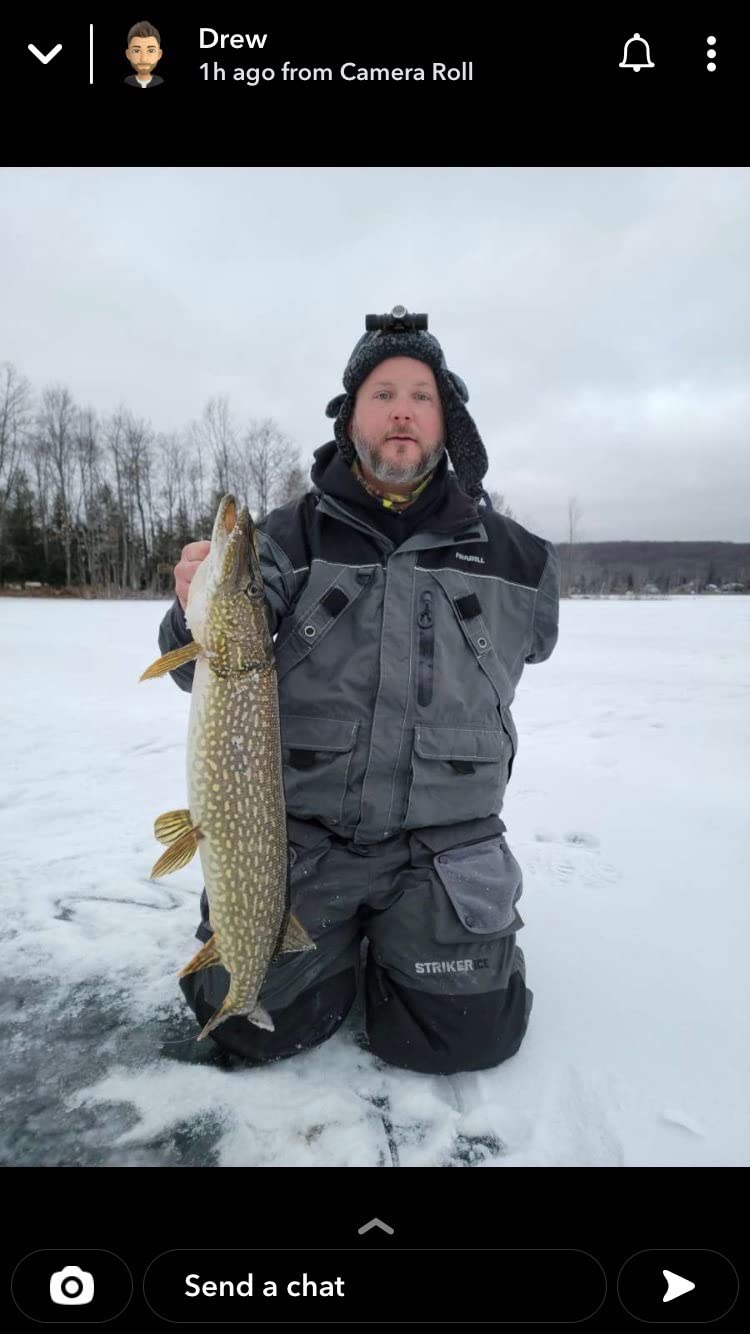
The 3-way zip-to-hip leg ventilation is the sleeper feature. It runs the full length of both legs, and once you have drilled a hole and are setting the tip-up, opening them drops the heat load without you having to strip the bib off. That matters because the sweat problem is what ends more cold-weather trips than the cold does. A wet base layer at 10F is worse than a lighter bib in dry 25F weather, and venting is the cheapest fix available.
Durability is where the extra money goes. The shell uses snakeskin knee panels, and the crotch, knees and seat all carry extra-heavy padding and reinforcement. The fleece-lined hand warmer pockets are genuinely warm, and the magnetic storm-flap closures keep slush out of the zip without the grab of cheap Velcro. The adjustable inseam adds up to six inches of leg length, which is how this bib fits shorter anglers without a full size down.
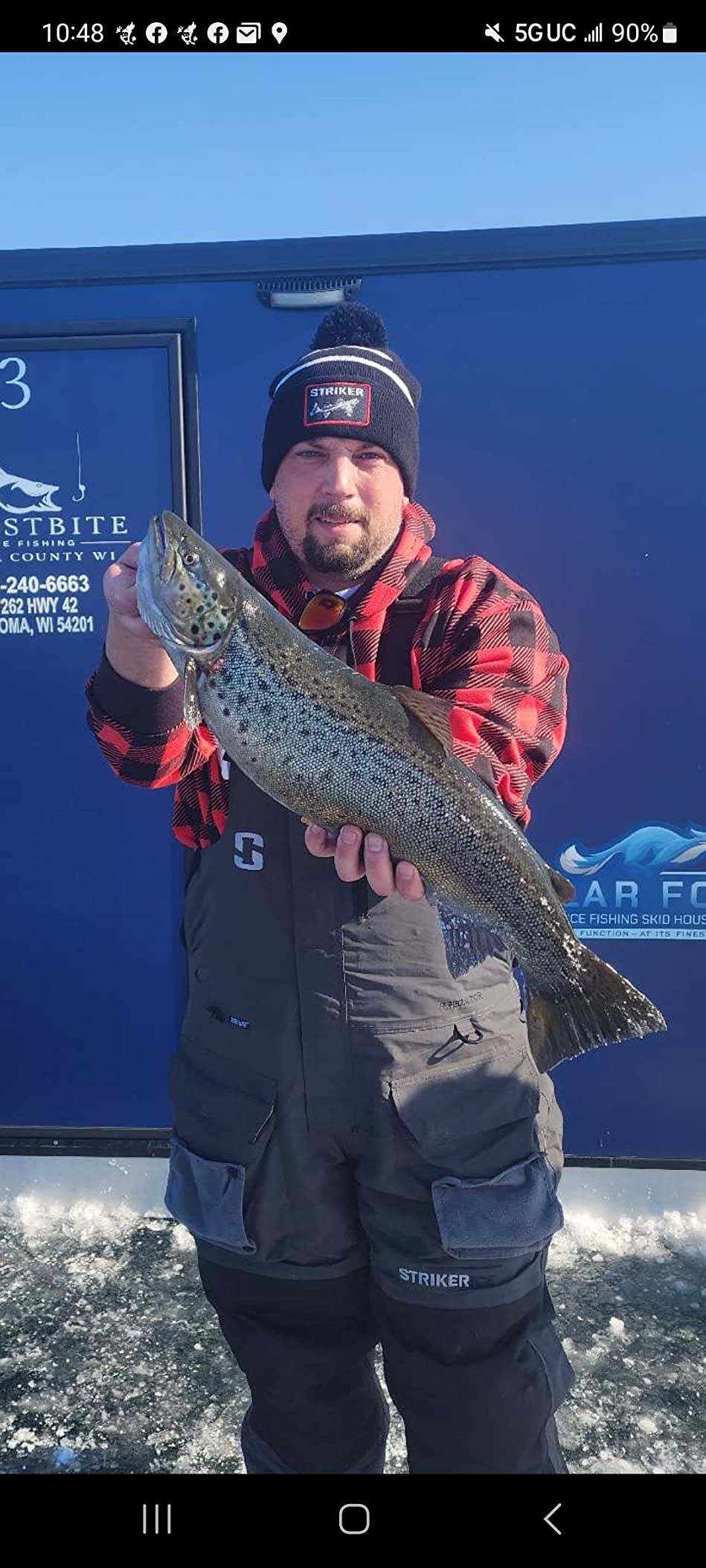
How the Striker Predator holds up below zero
Owners log use in low teens wind and colder without switching to a heavier bib, and the 100g fill combined with the windproof shell is the reason. The vents are what let that rating stay believable rather than theoretical, because the failure mode of a 100g bib is overheating on the walk out, not cold on the ice. For sustained sitting in a shelter at 0F, this is the level most anglers want.
The one thing to plan for is bulk around the thighs. It is not heavy, but it is a real bib rather than a shell, so sizing down past your normal waist can leave the shoulders tight. Most buyers who return this bib return it for running large, not for warmth.
Who should skip the Striker Predator
If you spend your day snowmobiling or running a shovel through a driveway, the bulk at the knee works against you. SITKA covers that case better, and the Frabill Ice Hunter below is lighter if you are on a tight budget and moving most of the day.
Check the sizing carefully before ordering. The cut is generous, and a meaningful share of buyers size down. If you are between sizes and plan to wear thick layers underneath, take the smaller of the two.
2. SITKA Fanatic Insulated Bib – Best Ice Fishing Bib for Extreme Cold Without Bulk
SITKA Men’s Insulated Fanatic Bib, Optifade Elevated II, 3X-Large
120g PrimaLoft torso and 80g legs
GORE-TEX INFINIUM
WINDSTOPPER venting
Berber fleece-face
Pros
- Warm without heavy bulk
- Silent fabric and closures
- Full-length leg zips for venting
- Phone pocket and hand-warming pockets
- Handles wet sub-zero conditions
Cons
- Highest price in the roundup
- Will not compress for packing
- Picks up burrs
The Fanatic is a hunting bib that works on ice, and that is the point rather than a compromise. Where most ice bibs use a single insulation weight through the torso and legs, SITKA splits it, 120g of PrimaLoft Silver Hi-Loft on the torso and 80g on the legs. That split is why owners get this level of warmth without the stiff, wide-legged look that usually comes with it.
GORE-TEX INFINIUM handles the outside, and WINDSTOPPER technology underneath lets moisture vapour escape rather than trapping it against you. The two together are the reason reviewers describe the bib as handling wet weather and sub-zero cold without wind penetration, which is precisely the condition that ends most ice sessions early.
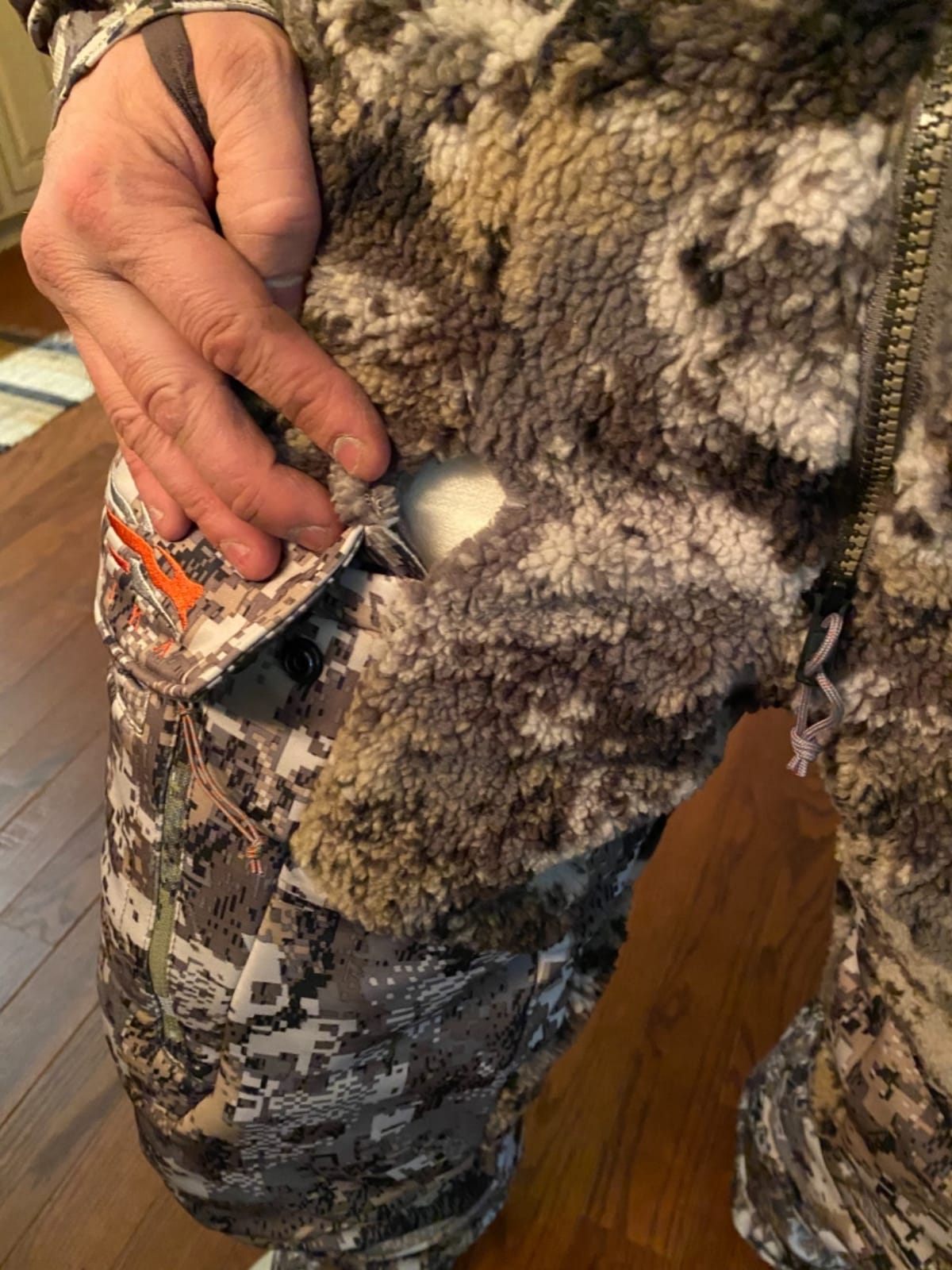
Silence is the underrated part. The Fanatic system is designed to cut the distance at which an angler can be heard, and every closure on this bib, snaps, zippers and fabric, supports it. On a clear lake with skittish fish that is a real advantage, and it is also a benefit for anyone who hunts with the same bib.
The pocket layout is the most considered on our list. Multi-chamber cargo pockets use silent snaps, there is a phone-specific pocket, and the hand-warming belly pockets are the kind of detail that only appears on a bib designed to be worn for eight hours in the cold. Full-length leg zippers let you vent or get the bib on and off without stepping into it.
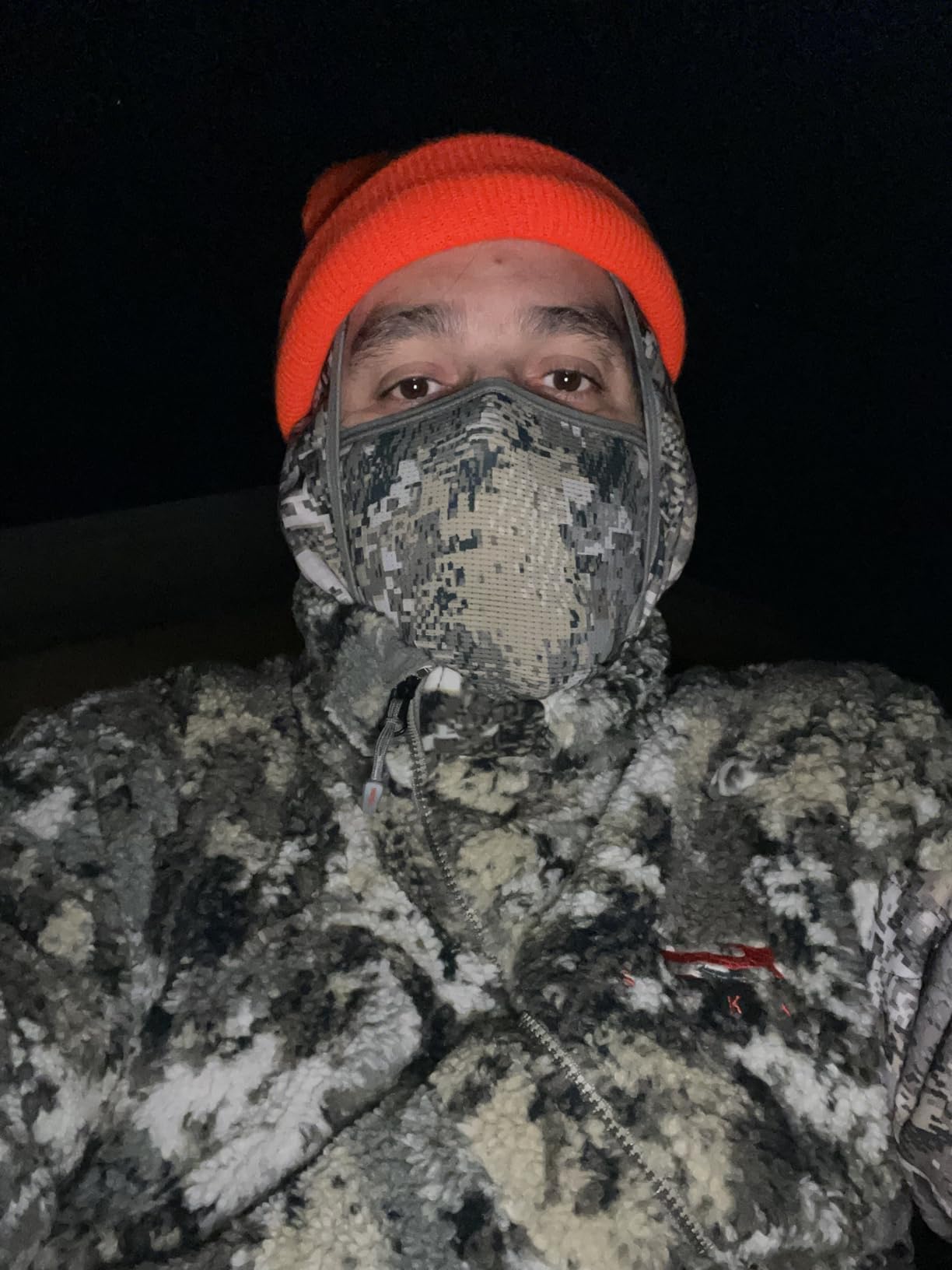
How SITKA built warmth into the Fanatic
Read the insulation line as two numbers, not one. The torso carries 120g of PrimaLoft Silver Hi-Loft, where the high-loft construction traps more air per gram than a flat batting. The legs carry 80g, which is deliberate: your legs generate less heat, but they also sit closer to the ice, and a heavier leg fill leaves you overheating on the walk across the lake.
The high-loft Berber fleece-face with a burr-resistant leg and gusset textile is the piece that makes it quiet. It also picks up burrs and plant seeds, which owners mention as a downside when walking through brush, though that is rarely an issue on an open lake.
Where the SITKA Fanatic falls short
Cost is the obvious limitation, and it is far above the rest of this roundup. It is also a bulk item that does not compress for packing, so it has to be worn rather than stuffed in a pack, which matters for backcountry approaches on foot.
A few buyers find the bib less warm than the matching Fanatic jacket in the very lowest temperatures. If your winter is consistently deep cold rather than general cold, the Striker Predator or the Striker Trekker below may suit the conditions better.
3. Piscifun Floating Ice Bib – Best Value Ice Fishing Bib for Extreme Cold
Piscifun Ice Fishing Bibs, Floating Waterproof Insulated Bibs
DWR polyester with TPU coating
Taped seams
Buoyant cotton construction
EVA knee protection
Pros
- Keeps users warm in 0 to 10F
- Stays dry after going through the ice
- Light for the warmth delivered
- Buoyant and easier to exit water
- Velcro and button leg adjustment
Cons
- Runs a size large
- Leg Velcro seams weaken over time
- Occasional seam stitching needed
The Piscifun is the value pick in this roundup, and the reason is not that it is cheap, it is that it does the three things that matter on ice, warmth, waterproofing and flotation, in one package that buyers consistently call lightweight for what it delivers. Owners report keeping warm in 0 to 10 degree Fahrenheit conditions, and several describe using it through minus 26C.
Waterproofing is the standout. DWR coated polyester with a TPU coating and taped seams gives a genuine barrier rather than a face fabric that bead for a while. Multiple buyers report staying dry inside after going through the ice, and that is the claim that actually matters when you are deciding whether a float bib is worth carrying.
Flotation comes from buoyant cotton material, with a quick drainage channel at the bottom of the pant legs so trapped water can leave rather than sit against you. Users say the suit floats and helps them move out of the water faster, which is a better outcome than sinking immediately and fighting to get a boot out of a boot.
What the Piscifun gets right about wet ice
Reflective strips on the chest, knees and D-shaped belt, EVA knee protection plates and wear-resistant knee and hip panels all point the same way. This bib is built for slush and kneeling, and the wear panels are where the money went. The YKK two-way main zipper is also a step up from the plastic zip found on many bibs in this bracket.
Machine washable, and the care instruction is a straight machine wash. That matters more than it sounds, because salt and road film from a lake crossing will destroy a DWR finish in a season, and a bib you can actually clean will outlast one you cannot.
Where the Piscifun falls short
Sizing runs a size large, so buyers frequently exchange. The leg closures use Velcro with button reinforcement, and those Velcro seams do not hold well over time, which is the most common long-term complaint and the reason we would not rely on them for repeated deep-water immersion.
Occasional seam stitching is reported after repeated use. That points to a quality ceiling rather than a defect, and it is the trade you make for the price difference against the branded float bibs in this list.
4. Striker Trekker Bib – Best Ice Fishing Bib for Extreme Cold Below Minus 20
Striker Men’s Trekker Durable Windproof Water-Resistant Insulated Outdoor Ice Fishing Bib with Sureflote Flotation Technology, Black, Large
150g Thermadex insulation
600 denier with Hydrapore 5000
SureFlote flotation
Adjustable inseam
Pros
- Warm and waterproof in 20F weather and slush
- Adjustable inseam fits varied leg lengths
- Freedom of movement over a base layer
- Flotation after a fall-through
- Small sizes available
Cons
- Legs run very wide in smaller sizes
- Inconsistent sizing between orders
The Trekker is the one to look at if you fish in genuine deep cold and want the highest published fill in a flotation bib we could find. One hundred fifty grams of Thermadex is half again what the Predator carries, and it is paired with a 600 denier shell carrying a Hydrapore 5000 laminate, which is a serious waterproof membrane specification rather than a coated face fabric.
Reviewers describe the Trekker as warm, waterproof and durable in 20 degree weather and slush, and one credits the flotation with keeping them dry after going through the ice. The adjustable inseam and fast drain hems are practical details that matter more in slush than any other condition, because wet slush soaks through a bib in a way rain never does.
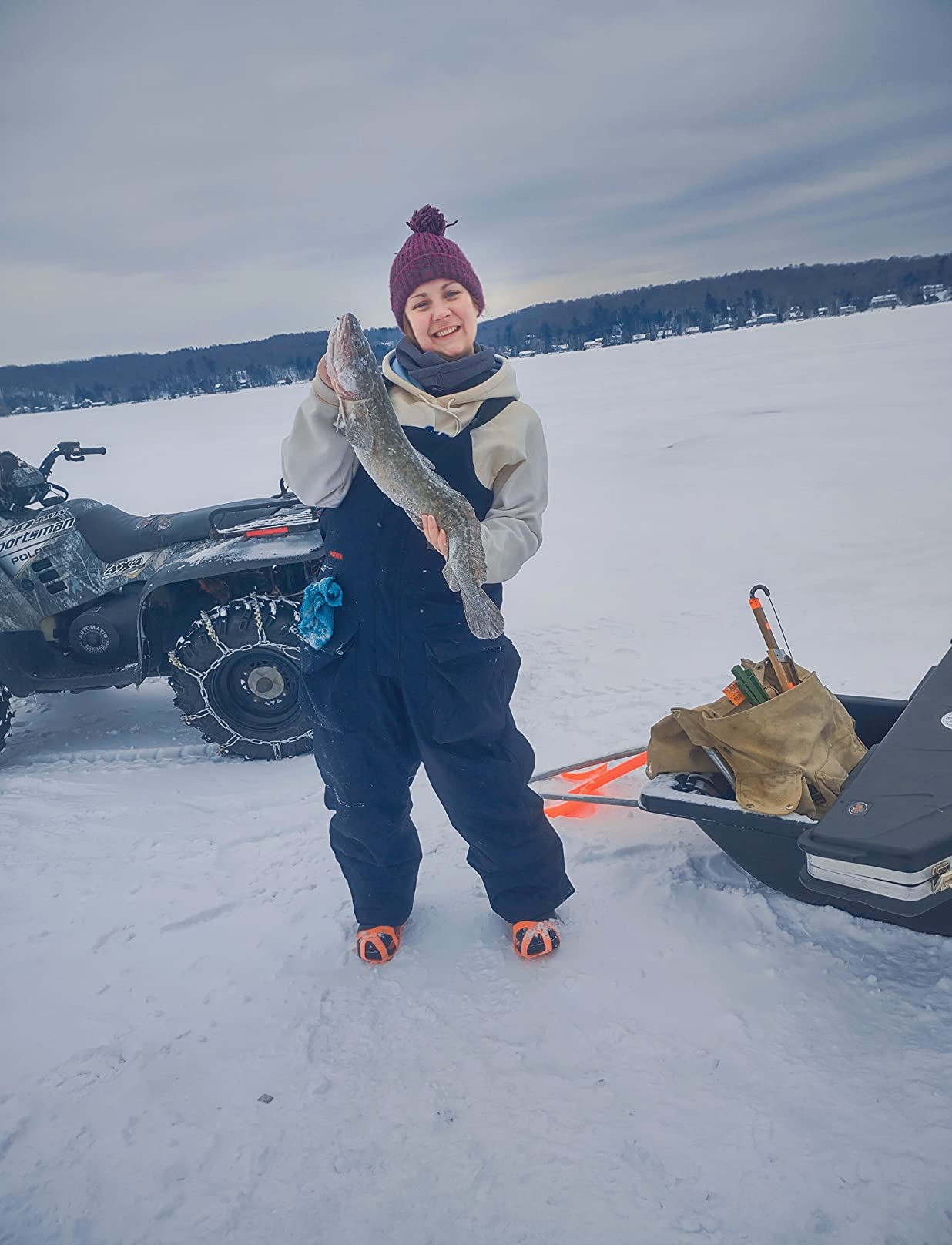
The wide size range is a genuine strength here. Variants run from small through 5X-Large, and small ice fishing bibs are hard to find, so shorter and smaller anglers are not pushed into a larger adult cut. The manufacturer also lists skiing, hunting and cold-weather work as intended uses, and at 150g this bib has no trouble working outside the ice box.
Freedom of movement over a base layer is repeatedly praised. That is partly the 600 denier fabric draping rather than standing away from the leg, and partly the adjustable inseam letting you shorten the leg without shortening the torso.
How much warmth 150g actually delivers
This is the bib to size your trip around. One hundred fifty grams is enough for overnight sessions and multi-day trips where you are stationary, and it is the level most guides choose for genuine extreme cold. Reflective elements add low-light safety, which matters when you are walking back across a lake at dusk.
Fast drain hems are the detail that makes 150g workable. Without them, meltwater from kneeling pools inside the boot and drains down the leg when you stand, and the resulting chill is the fastest way to feel colder than the air temperature justifies.
Where the Striker Trekker falls short
Sizing is the clear weak point. Reviews describe legs that run very wide in the smaller sizes, and some orders running two sizes large. The inseam adjustment helps with length, but it does not fix a leg that is too wide, so read the size chart closely.
It is also heavier than the Predator, and that extra insulation is wasted in moderate cold. If your forecast is 25 to 35F, this bib will make you sweat, and a wet base layer under 150g of fill is a bad combination.
5. Frabill Ice Hunter Bib – Best Ice Fishing Bib for Extreme Cold on a Budget
Frabill Ice Hunter Bib | Heavy Duty Insulated Ice Fishing Bibs | XX-Large
1200D fabric with double stitching
3M Thinsulate lining
Pre-curved padded knees
3M reflective material
Pros
- Heavy duty 1200D construction
- Thinsulate warmth without bulk
- Pre-curved knees and padded seat
- Reflective visibility in low light
- Rivets in high-wear areas
Cons
- No published insulation gram weight in the listing
- Fewer features than insulated rivals
- Sizes listed run Medium to XX-Large
The Ice Hunter is the one in this roundup built for abrasion rather than for warmth figures, and that is a deliberate trade. Twelve hundred denier fabric with double stitching, rivets in the high-wear areas and pre-curved knees make this the bib for anglers who drag gear, work a sled across gravel approaches, and bury their knees in rough ice every trip.
Warmth comes from a 3M Thinsulate lining, which is specified as adding warmth without bulk. Thinsulate is a synthetic insulation that retains its loft when damp, which is a real advantage on the ice, but the listing does not publish a gram weight, so you are buying on construction and brand reputation rather than a number. Compare that honestly against the Predator and the Trekker, where you know exactly what you are wearing.
For context on how the forums treat Frabill, anglers on NoDak Angler describe the Frabill I3 bibs as warm enough, light and easy to move in, and as holding up three to four seasons. That durability reputation is consistent with what we see in the 1200D shell here, and it is the reason this bib earns a place on a list about extreme cold.
Where the Frabill Ice Hunter earns its place
Pre-curved knees and a padded seat are the two features that decide whether a bib is bearable on a long day, and Frabill puts them in as standard rather than as an upgrade. The pre-curved cut means the knee does not fight the fabric when you are kneeling or crawling to a tip-up, which is the position anglers hold far more often than they realise.
3M Reflective material handles low-light visibility, and the double stitching means seams will outlast the fabric around them. Sizing runs medium through XX-Large, so very large anglers should confirm their size before ordering.
Where the Frabill Ice Hunter falls short
There is no flotation. If you fish early season, late season, or any water where the ice is thin enough to matter, that is a limitation worth weighing against the Piscifun or the IceArmor Ascent below.
There is also no published gram weight, so it is harder to place on a temperature map. Anglers who need certainty about warmth for a specific low should look at one of the bibs with a stated fill.
6. IceArmor Ascent Float Bib – Best Ice Fishing Bib for Extreme Cold on Thin Ice
ICEARMOR Ascent Float Bib Charcoal Black MotionFloat
MotionFloat buoyancy assist
Waterproof construction
Internal buoyancy panels
Not a Coast Guard PFD
Pros
- MotionFloat buoyancy assist
- Waterproof shell for wet ice
- Extended sizing to 5X-Large big
- Designed for ice break-through scenarios
Cons
- Not a Coast Guard approved PFD
- Feature listing is thin on specs
- Weight not published
The Ascent Float Bib is the one to look at when flotation is the deciding factor rather than a bonus. It uses MotionFloat technology, which is internal buoyancy assist built into the construction, and the listing states plainly that this is flotation assistance in the event of an ice break-through and that the bib is not a Coast Guard approved PFD. We appreciate that candour, and it is why we are comfortable recommending it in this category at all.
IceArmor by Clam is a recognised name on hard water, and anglers on Michigan Sportsman single out IceArmor bibs for waterproofing and padded knees, the two attributes that decide whether a bib survives a full day in wet ice. The Ascent carries a waterproof construction, and the sizing runs Medium through 5X-Large Big, which is one of the wider ranges we found among the float options.
The honest limitation is transparency. The published specification for this listing is short, and it does not disclose an insulation gram weight or a waterproof rating figure. That makes it harder to place on the temperature map later in this article, and it is why we would treat it as a flotation-first purchase rather than a warmth-first one.
What MotionFloat does and does not do
MotionFloat is internal buoyancy assist, which means closed-cell material is distributed through the bib to add lift if you end up in the water. In practice that means you surface instead of going straight down, and you have time to orient yourself, find the hole you came through and get your arms working.
It is not a life jacket, and the manufacturer says so. A float bib buys minutes, not safety, and it does nothing for hypothermia, which kills long before cold exposure does. Carry a spud, a chisel, and fish with someone.
Where the Ascent Float Bib falls short
Specification detail is the gap. Without a stated insulation weight you cannot tell how it performs at a specific air temperature, and our advice is to treat it as the flotation option and pair it with enough thermal layers to cover the warmth question.
It is also worth confirming the fit in person if you can, because a flotation bib that fits loosely in the torso loses much of its benefit and adds bulk at the same time.
7. Eskimo Legend Bib – Best Ice Fishing Bib for Extreme Cold on Windy Lakes
Eskimo Men’s Standard Legend Bibs, Black, 5X-Large
100g 3M Thinsulate body and 60g legs
10k/10k DuraDry with DWR
UPLYFT flotation
Fully taped seams
Pros
- Very warm below zero in Minnesota winters
- Genuinely buoyant without long-term discomfort
- Magnet-secured covered side zippers
- Many pockets
- Reinforced 500 denier knees and ankles
Cons
- Fabric stiff at first and squeaks
- Heavier and bulkier than cheaper bibs
- Runs small for stockier builds
The Legend is the most frequently recommended bib in the forum data we pulled for this roundup. In a bib suggestion thread on r/IceFishing, a user looking for extreme cold advice described Eskimo Legend bibs as plenty warm and windproof, and that matches the specification. One hundred grams of 3M Thinsulate in the body and 60g in the lower legs, with fully-taped seams, is a real deep cold configuration.
The fabric is 100 percent polyester DuraDry with a DWR finish and a 10k/10k waterproof and breathable rating. That rating is the highest published figure among the float bibs in this list, and for an exposed lake with wind coming off open water, breathability matters as much as waterproofing, because a bib that cannot vent traps sweat and then holds it against you.
UPLYFT breathable flotation assistance is Eskimo’s version of the category’s flotation systems, and reviewers call the bib genuinely buoyant while reporting that it does not stay uncomfortable over a full day. Several mention feeling safe without the constant awareness of weight that some float bibs create.
Why the side zippers matter more than they sound
Covered side zippers secured with magnets instead of cheap Velcro are a detail the forums single out repeatedly, and the reason is practical. Velcro in freezing slush grabs and then never releases cleanly, and it works loose after a season. Magnetic flaps give a weather seal that you can open one-handed and that does not fill with ice.
It is also a bathroom and layering feature. The leg-lengthening design, a genuine differentiator, lets you shorten the bib without changing size, and the pocket count is high enough that you can keep a phone, a jig box and a hand warmer separate rather than in one pile.
Where the Eskimo Legend falls short
The fabric is stiff at first and squeaks when you move, and it does soften with wear. Heavier and bulkier than cheaper similar bibs is the other recurring comment, and the bib weighs 4.7 pounds, so it is not a bib you will forget you are wearing on a long walk.
Sizing runs small for stockier body types and the bib length can come up too long for shorter anglers. One reviewer reported a pair tearing after about a month of daily work use, which is worth knowing if you are planning to wear it hard every day. Hand wash only.
8. Striker Predator Lite Bib – Best Ice Fishing Bib for Extreme Cold on the Move
Striker Lite Durable Windproof Water-Resistant Outdoor Ice Fishing Bib with Sureflote Flotation Technology, Black, X-Large
320D nylon tussor shell
1680D snakeskin knee panels
Extra knee and seat padding
SureFlote flotation
Pros
- Warm and waterproof in cold ice conditions
- Durable-looking shell for regular use
- Well-placed pocket supply
- Lightweight for a bib
- Flotation on thin ice
Cons
- Bulky for high-movement activity
- Less warmth than the full Predator
- Styles run X-Large through 3X-Large
The Predator Lite is the version of the Striker bib for anglers who spend their day walking. It keeps the 320D nylon tussor shell and SureFlote flotation that make the full Predator a strong pick, and swaps in 1680D snakeskin knee panels, which are the toughest fabric in this roundup by a wide margin. Extra knee and seat padding comes standard.
Reviewers describe it as lightweight and not cumbersome for walking, with a generous pocket supply and good placement. The review base skews toward gift purchases, which is worth noting when you read the ratings, but the consistent theme is a bib that does its job without getting in the way.
Warmth is solid for cold conditions on the ice but less warmth-focused than the heavier Predator model, which is the trade. There is no published gram weight for the fill on this listing, so treat it as a step down in insulation rather than a lateral option.
When the Lite version makes sense
If you are walking a long distance across frozen water between spots, or snowmobiling to a spot and then fishing, the bulk of a 150g bib is working against you. This one keeps flotation and a serious shell while staying light enough to move in, which reviewers specifically call out as a positive.
It is also a reasonable second bib. If you own a heavy 150g bib for sitting on the ice and need something for the walk and the drilling, this covers the gap without adding another heavy layer to the truck.
Where the Predator Lite falls short
Bulk is still the recurring complaint, specifically for high-movement activity such as snowmobiling. It is a lighter bib than the Predator, not a light one.
The available styles run X-Large through 3X-Large, so if you need a smaller or a bigger cut, this listing will not cover you. That is a narrow range compared with the Trekker and the IceArmor, and it is the main reason this bib sits below the others in the ranking rather than higher.
9. Eskimo Roughneck Bib – Best Ice Fishing Bib for Extreme Cold Sitting Comfort
Eskimo® Roughneck™ Bibs, Mens, Large, Forged Iron, 45976
Sherpa fleece interior insulation
5k/5k DuraDry with taped seams
Mechanical stretch fabric
UPLYFT flotation
Pros
- Very warm
- comfortable over sweatpants
- Full-length leg zips for boots
- Double zipper for bathroom breaks
- Stretch fabric allows kneeling
Cons
- Bulky and cumbersome to walk
- Length not easily customizable
- Large sizes run very wide
The Roughneck is built for the angler who sits. Sherpa fleece interior insulation is a different approach from the synthetic batting used in the Striker and Piscifun bibs, and owners describe it as very warm to the point where they can wear sweatpants underneath and stay comfortable. For a full day on a bucket in real cold, that is a meaningful advantage.
Mechanical stretch in the DuraDry fabric is the detail that makes kneeling bearable. Reviewers specifically praise the way it allows kneeling without bunching, and that is the motion you repeat more often than any other on the ice. The 5k/5k waterproof and breathable rating with fully-taped seams and DWR keeps slush out, though the rating is lower than the Legend’s 10k/10k.
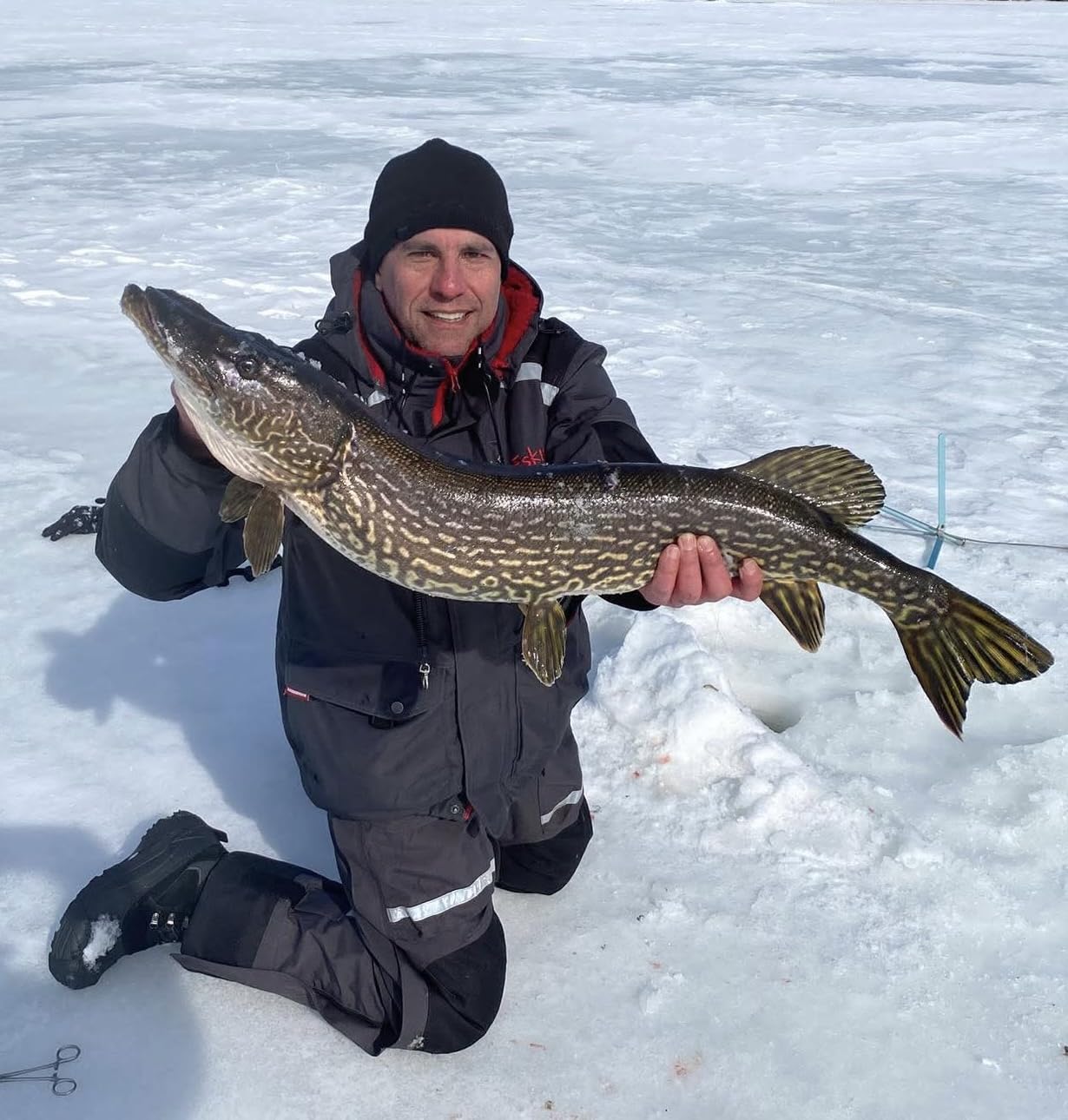
UPLYFT breathable flotation handles the safety side, reinforced knees and ankles handle the wear side, and full-length leg zippers make boots far easier to get on and off, which you will appreciate after the tenth trip to the truck. A double zipper on the front makes the inevitable break straightforward, which sounds minor until you are in 0F clothing.
Sizing runs Small through 5X-Large in the Forged Iron colourway, so the range is generous, but the guidance is inconsistent. Owners report that large sizes run very wide.
How the Roughneck handles a day of kneeling
Sherpa fleece does not compress the way batting does, so this bib keeps its loft through a long day instead of flattening where you sit. That matters in sustained cold, when a flattened fill stops insulating at exactly the point you need it most.
The trade is weight. Several owners describe the bulk as acceptable if you are sitting on the ice, and cumbersome if you are walking, which is largely due to the flotation technology adding volume through the torso. Plan your day around that split.
Where the Eskimo Roughneck falls short
Pocket selection is limited. It lacks back pockets and hip pockets, and on a long day the gear you would normally spread across several compartments ends up in one bag.
Length is not easily customizable, which combined with the wide large sizes is the main fit risk. Hand washing is the safe care method, and the roomy cut is the single most common reason buyers would want to exchange.
10. Nordic Legend Aurora Series Suit – Best Ice Fishing Bib and Jacket Set for Extreme Cold
Nordic Legend Aurora Series Ice Fishing Suit with Floatation, Insulated Waterproof Bibs and Jacket for Ice Fishing (Size: X-Large)
Insulated waterproof bibs with matching jacket
Flotation construction
Nylon outer shell
High visibility orange
Pros
- Complete bib and jacket in one purchase
- High visibility orange for safety
- Insulated and waterproof shell
- Machine washable cold gentle cycle
- Sizes small through XX-Large
Cons
- Shell and jacket weight more than a bib alone
- Limited specification detail in the listing
- Machine wash care only
The Aurora Series is the only full set in this roundup, an insulated waterproof bib sold together with a matching jacket, and that solves the single most common complaint forum users raise about bibs bought on their own. A bib alone leaves a cold gap at the chest and upper back, because the bib straps only cover your shoulders. Buying the pair removes that gap entirely.
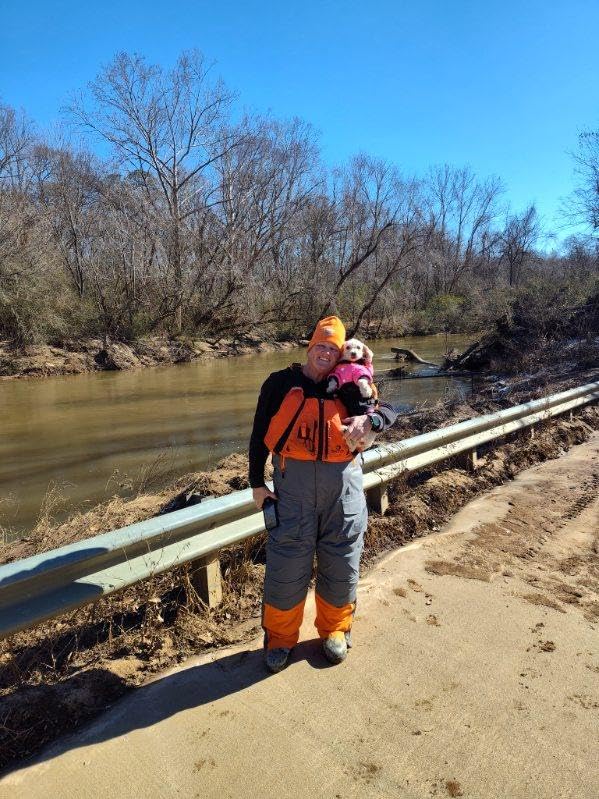
Buyers point to the high visibility orange as more than a style choice. On a large frozen lake, in flat light, with blowing snow, being seen by snowmobile traffic is a real safety consideration, and this is the only bib in our list where visibility is designed in rather than added with reflective tape.
It is also the simplest entry point for anyone starting out. If you are buying your first set and your jacket is also a question, this answers both in one purchase. For the full outer layer question beyond the jacket, our picks are in the guide to the best winter coats for extreme cold.
What the Nordic Legend set handles well
Flotation construction is built into the set for ice fishing, and the nylon outer shell with insulation is described as insulated and waterproof for cold conditions. It machine washes cold on a gentle cycle and can tumble dry low, which is far more convenient than hand-wash-only care.
Sizes run small through XX-Large, and the set is available with or without a matching hat, which is a useful option if you are building a full kit for someone new to the sport.
Where the Nordic Legend set falls short
Specification depth is limited. There is no published insulation gram weight or waterproof rating, so we cannot place this set on the temperature map with the same confidence as the Predator or the Trekker. Treat it as a complete starting kit rather than a spec-driven purchase.
Weight is the other constraint. A suit is more to carry than a bib, and for anglers who already own a good insulated jacket, the set duplicates gear you have. Buy the bib alone if your outer layer is already sorted.
Which Ice Fishing Bib Insulation Weight Do You Need for Extreme Cold?
This is the mapping that forum users keep asking for and rarely receive, so here it is in plain numbers. Fill weight is the number on the label, and it tells you more than any adjective.
Above 20F, a three-season bib is enough. You want 80g of synthetic fill, or a light jacket-weight bib over a fleece. Anything heavier than 100g in these conditions will make you sweat within an hour of walking.
Between 0F and 20F, aim for 100g. This is the Predator’s rating, and it is the level most weekend anglers use for a full day on the ice. Pair it with a mid-layer and an insulated jacket, because a bib covers your lower body and torso but leaves your chest and upper back exposed at the top.
Between minus 10F and minus 25F, go to 150g, which is the Trekker’s rating. At this range you should also be planning on a proper parka or a bib and jacket set such as the Aurora Series, because the bib alone cannot close the chest gap in serious cold. This is also the range where the SITKA Fanatic’s 120g torso with 80g legs configuration starts to make more sense than a flat 150g, because the fleece-face traps air without adding the same weight.
Below minus 25F, you are looking at 150g of synthetic fill combined with a serious shell, and the shell specification matters more than the fill. A 600 denier shell with a laminated membrane such as the Hydrapore 5000 on the Trekker, or a GORE-TEX INFINIUM membrane on the SITKA Fanatic, is the difference between staying dry and freezing wet. At this point in winter, staying dry is the whole game.
Two adjustments to that map. First, wind changes everything: on an exposed lake a 100g bib with a good windproof shell can outperform a 150g bib with a soft shell, because the shell is what stops the wind chill. Second, if you are stationary on a bucket, insulation beats mobility, and if you are walking long distances, the reverse is true.
What Anglers Say About Ice Fishing Bibs for Extreme Cold
Seven of the top ten results for this keyword were forum threads rather than editorial pages, so the forum consensus is worth reporting directly. Here is what the sources named in the research actually say, product by product.
On the Striker Predator, the most frequently named bib across r/IceFishing, Crappie.com and the In-Depth Outdoors ice fishing forum, users describe it as among the best-made ice bibs they have owned. A Crappie.com user reports running several miles in Striker Predator bibs and a coat in 50 mph wind at 37F over thin ice, with only thin stretch pants underneath, which is a real-world test of both the shell and the venting.
On the Eskimo Legend, a Reddit user seeking extreme cold advice described the bibs as plenty warm and windproof, and several users recommended them specifically over more expensive branded options. The same community flags the bulk and stiffness honestly, which is a useful corrective to a spec sheet.
On the Clam IceArmor, anglers on Michigan Sportsman recommend the bibs for waterproofing and padded knees. That matches what we saw with the Ascent Float Bib, and it is the brand forum users name when the concern is slush rather than still air.
On the Frabill, NoDak Angler users describe the Frabill I3 bibs as warm enough, light, easy to move in, and capable of holding up three to four seasons. That is the durability-first reputation that earns the Ice Hunter its place here.
On the Striker warmth scale, the In-Depth Outdoors forum is the only source in the entire research set that quotes the manufacturer’s own numbers, and it is worth repeating because no editorial competitor decodes it. Climate is rated a 10 on warmth and the Predator a 7 on the same scale. That is a Striker-internal scale, not a universal one, and it tells you relative placement within a brand rather than an absolute temperature. Use it that way.
The same forums raise two objections that shape our buying guide. Maximum warmth backfires in moderate weather, because heavy bibs cause anglers to overheat in 30 to 40F conditions and then freeze wet, and bib-only purchases leave a cold gap at the chest unless paired with a jacket. Both are addressed below.
How to Buy the Best Ice Fishing Bibs for Extreme Cold: Full Buying Guide
Insulation weight is the first filter and the easiest to check. Every product specification worth trusting states a fill weight in grams, and 3M Thinsulate, PrimaLoft and Thermadex are all synthetic fills that keep loft when damp. A 100g bib is the practical default for most winter fishing, 150g is for sustained cold, and anything lighter is a three-season bib that will not carry you through an overnight trip.
Shell fabric comes second. Denier tells you about abrasion resistance, so 500 denier and above is right for kneeling on ice and 1200 denier is right for dragging gear across gravel. A stated waterproof and breathable rating, such as 10k/10k or 5k/5k, tells you far more than the word waterproof, and taped or welded seams matter more than the shell itself. Ice slush finds every unsealed seam.
Flotation is the third question, and it is a safety consideration rather than a comfort one. SureFlote on the Striker bibs, UPLYFT on the Eskimo bibs and MotionFloat on the IceArmor bib all work by adding buoyancy through the torso. Treat them as buying you time, not as a substitute for a buddy and an ice chisel, and note that no float bib in this roundup is a Coast Guard approved PFD.
Fit and adjustability decide whether you will actually wear the bib all day. The adjustable inseam is the feature that matters most, because it is what lets a 5 foot 10 angler wear a 6 foot garment without the hem dragging on the ice. Look for a cinchable waistband, adjustable suspenders, and boot-cut leg openings that clear a boot without snagging.
Sizing is where this category frustrates buyers most. Reviews across the Striker Predator, the Striker Trekker, the Piscifun, the Eskimo Legend and the Eskimo Roughneck all report the same thing: the cut is not consistent, and some of these run large while others run small. Between sizes, size down if you are layering thickly underneath, and expect a break-in period on the stiffer shells such as the Legend’s.
What to wear underneath matters as much as the bib. Start with a synthetic or merino base layer, not cotton, because cotton holds water and wet cotton at minus 10F will stop working. Add a mid-layer fleece or light synthetic jacket, and close the chest with a mid-weight insulated jacket or a bib and jacket set. Full-length leg zippers on the Predator, the SITKA Fanatic and the Roughneck let you vent that stack without stripping off.
Pockets and padding are the difference between a bib you tolerate and one you enjoy. Pre-curved knees, as on the Frabill Ice Hunter, stop the fabric fighting you while kneeling. Reinforced knees and seat, as on the Predator, the Trekker and the Roughneck, stop the failure that ends the season. Fleece-lined hand warmer pockets matter more in real cold than most buyers expect, and magnetic zipper flaps beat Velcro in slush every time.
Laundering matters for the same reason. A DWR finish breaks down under detergent and road salt, so rinse after every lake and use a wash-in product, or the waterproofing you paid for will be gone by season two. The Eskimo Legend is hand wash only, and the SITKA Fanatic and the Nordic Legend set should be treated the same way even where the label does not say so.
Finally, know when not to buy maximum warmth. In 30 to 40F weather, a 150g bib will have you soaked in sweat inside two hours, and sweat-soaked insulation at 35F will drop you into hypothermia faster than the temperature suggests. Check the forecast for how long you will be stationary, not just the low, and pick the lighter tier. For the full outer layer, our guide to the best down jackets for extreme cold covers the warmest cases.
Whatever you choose, bring the right support gear. Our roundup on the best electric ice augers for ice fishing covers drilling quickly, which shortens your exposure and matters more on thin ice than any bib choice.
Frequently Asked Questions: Best Ice Fishing Bibs for Extreme Cold
What are the best bibs for cold weather fishing?
The Striker Predator leads our list, with 100g of Thermadex insulation, a 320 denier nylon tussor shell and SureFlote flotation rated to keep an average person afloat for up to two hours. The SITKA Fanatic is the pick for anyone who wants warmth without bulk, using 120g of PrimaLoft on the torso and 80g on the legs behind a GORE-TEX INFINIUM membrane. For deep cold below minus 20, the Striker Trekker carries 150g of Thermadex.
What are the best bib overalls for extreme cold weather?
For genuine extreme cold, the best ice fishing bibs for extreme cold are the ones with 150g of synthetic fill and a laminated shell. The Striker Trekker pairs 150g of Thermadex with 600 denier fabric and a Hydrapore 5000 laminate, and its fast drain hems keep slush from pooling. The SITKA Fanatic is the alternative if you prefer 120g on the torso and 80g on the legs with a breathable waterproof membrane.
How warm are Carhartt insulated bibs?
We did not include a Carhartt bib in this roundup because the analysis covered ten specific models, so we cannot give you a measured answer on that specific product. What the forum data does show is that Carhartt Yukon Extremes bibs get broad approval for durability and warmth, while buyers repeatedly flag the cost and a break-in period. Treat that as reputation, not as a verified spec, and compare the stated fill weight of any Carhartt bib against the gram figures published for the picks here.
Who makes the best insulated overalls?
Among the ice fishing bibs we tested, Striker Ice makes the strongest case, with the Predator and the Trekker both publishing fill weights and both carrying SureFlote flotation. Eskimo is a close second with the Legend at 100g of 3M Thinsulate in the body and 60g in the legs behind a 10k/10k DuraDry shell. For anglers who also work in cold storage, RefrigiWear comes up repeatedly in forum threads as a borrowed option built for minus 20F conditions.
Are ice fishing bibs waterproof?
Most are water-resistant rather than fully waterproof, and the difference matters in slush. The Piscifun comes closest with DWR coated polyester, a TPU coating and taped seams, and users report staying dry inside after going through the ice. The Eskimo Legend publishes a 10k/10k waterproof and breathable rating with fully-taped seams, and the Striker Trekker uses a 600 denier shell with a Hydrapore 5000 laminate. None of them will keep you dry for hours in a hole.
Should I buy ice fishing bibs a size bigger?
Usually not. Reviews across the Striker Predator, the Striker Trekker, the Piscifun, the Eskimo Legend and the Eskimo Roughneck all describe the cut as running large or inconsistent, and most returns come down to ordering too big. Size down if you are layering thickly underneath, and use the adjustable inseam to fix leg length instead of buying up. Order carefully, because return policies for insulated bibs are not always generous.
Final Verdict on the Best Ice Fishing Bibs for Extreme Cold
The best ice fishing bibs for extreme cold are the Striker Predator, the SITKA Fanatic and the Striker Trekker, in that order. The Predator is the bib we recommend to nearly everyone, because 100g of Thermadex, a 320 denier shell, zip-to-hip leg ventilation and SureFlote flotation cover the widest range of conditions without becoming unwearable. The SITKA Fanatic wins on warmth per gram and silence, and it is the better choice if you move constantly or want one piece that also works off the ice. The Trekker is the answer for sustained cold below minus 20F, where 150g of fill and a Hydrapore 5000 laminate are worth the extra weight.
Match the fill to the forecast rather than to the brand. One hundred grams covers most winter fishing, 150g covers deep cold and overnight trips, and anything heavier will make you sweat in moderate weather. Size down between sizes, layer in synthetics rather than cotton underneath, and remember that a float bib buys you time in the water, not safety. Check the current details for any of these before you head out, and see our other ice fishing guides for the rest of your kit.