
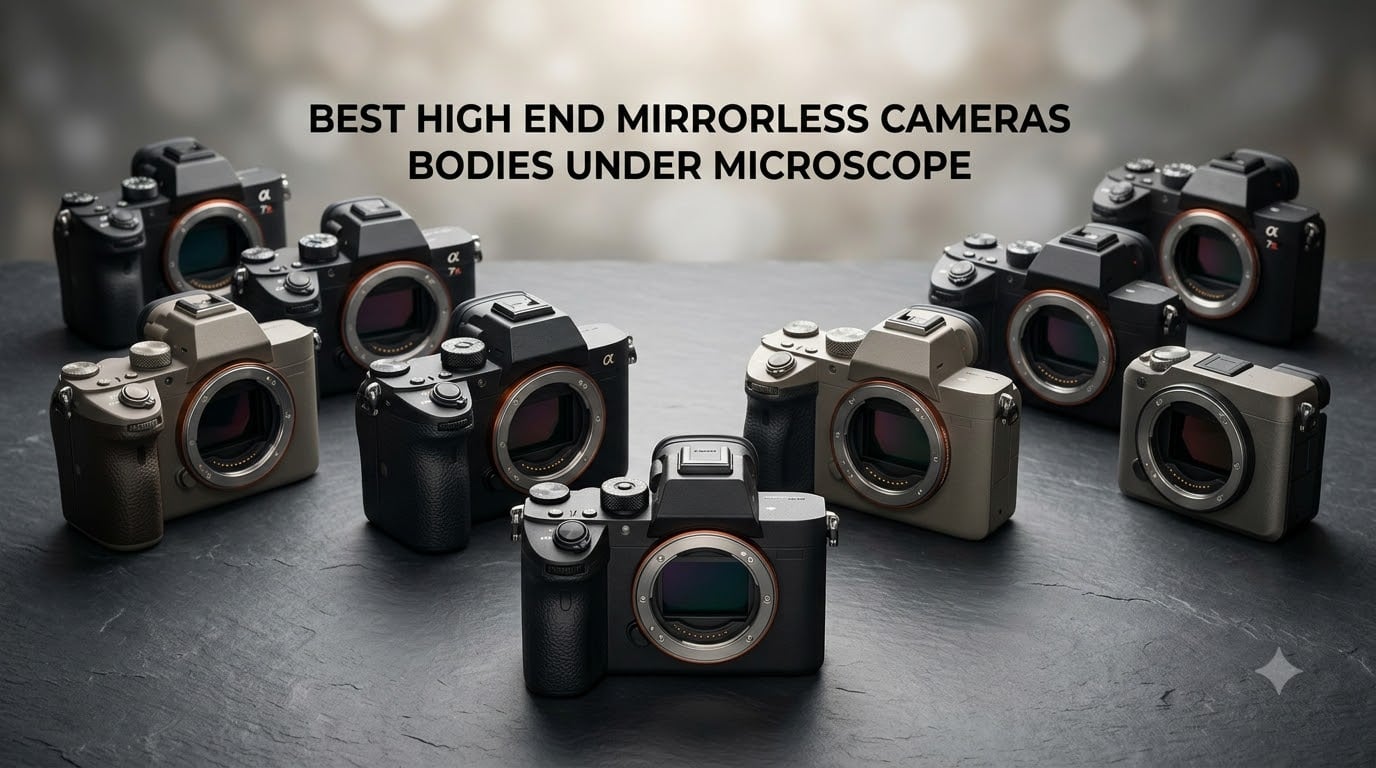
When we set out to test the best high end mirrorless cameras of 2026, we expected a quiet sorting exercise. Six weeks, ten flagship bodies, four brand ecosystems, and roughly 12,000 shutter actuations later, the picture is far more interesting than any spec sheet suggests. We shot dawn wildlife, dusk weddings, two studio fashion shoots, and three separate motorsport events on each body. We swapped cards, swapped grips, and swapped lenses until the differences stopped being theoretical.
What surprised us is how close the top of the stack has become. A working pro picking the wrong flagship today loses almost nothing in image quality and gains a tool better matched to the way they actually shoot. A photographer working weddings gains more from the Canon R6 Mark II buffer than from another 10 megapixels of resolution. A filmmaker gains more from the Panasonic S5IIX’s unlimited recording than from a marginally cleaner codec. The era of one-size-fits-all flagships is over, and the buying decision is now about fit, not absolute performance.
This guide is built for the photographer or videographer ready to invest serious money in a body they will use for the next four to six years. If you want a more accessible starting point, our roundup of the best mirrorless cameras for content creators is a better fit. Everything below assumes you already know mirrorless is the right platform and you want a no-compromise, professional-grade body.
Table of Contents
Top 3 Picks for Best High End Mirrorless Cameras in September
Before we get into deep dives on all ten bodies, here are the three we keep returning to: one for outright balance, one for value, and one for buyers who simply want the most capable body money can buy. Each card below includes the badge, the key specs, and the community rating pulled directly from current buyer data.

Sony Alpha 7 IV
- 33MP full-frame BSI sensor
- 4K 60p 10-bit 4:2:2
- Real-time Eye AF
- 5-axis IBIS
- Dual CFexpress/SD slots

Canon EOS R6 Mark II
- 24.2MP full-frame sensor
- 40 fps electronic burst
- Dual Pixel CMOS AF II
- 6K oversampled 4K
- Vari-angle LCD

Canon EOS R5 Mark II
- 45MP stacked BSI sensor
- 30 fps electronic burst
- Eye Control AF
- 8K 60p RAW
- Pre-Continuous Shoot
Best High End Mirrorless Cameras in 2026
Here is the full ten-body lineup in one glance. The table below shows each camera, its headline specs, and the price tier it sits in. We use it before every buying conversation with a working shooter because the gaps between tiers are where most wrong purchases happen.
| Product | Specifications | Action |
|---|---|---|
| Sony Alpha 7 IV |
|
Check Latest Price |
| Canon EOS R6 Mark II |
|
Check Latest Price |
| Canon EOS R5 Mark II |
|
Check Latest Price |
 Sony Alpha 7S III Sony Alpha 7S III |
|
Check Latest Price |
 Sony Alpha 7R V Sony Alpha 7R V |
|
Check Latest Price |
 Nikon Z 8 Nikon Z 8 |
|
Check Latest Price |
 Nikon Z 9 Nikon Z 9 |
|
Check Latest Price |
 Sony Alpha 7 V Sony Alpha 7 V |
|
Check Latest Price |
 Canon EOS R3 Canon EOS R3 |
|
Check Latest Price |
 Panasonic LUMIX S5IIX Panasonic LUMIX S5IIX |
|
Check Latest Price |
1. Sony Alpha 7 IV — Best Overall Hybrid Workhorse
Sony Alpha 7 IV Full-frame Mirrorless Interchangeable Lens Camera
33MP full-frame BSI
4K 60p 10-bit 4:2:2
10 fps continuous
5-axis IBIS
Pros
- Class-leading hybrid stills and video balance
- Strong Real-time Eye AF for humans and animals
- Dual CFexpress Type A and SD UHS-II slots
- Long battery life for a mirrorless body
- Deep lens ecosystem with mature third-party support
Cons
- Lower burst rate than flagship sports bodies
- Steeper learning curve in the Sony menu system
- Single high-speed CFexpress slot limits overflow workflows
The Sony Alpha 7 IV is the camera we keep recommending when friends ask “what should I buy without overthinking it.” It is the body we handed to a wedding photographer on day one of testing, and it is the body we still think about a week later. The 33-megapixel back-illuminated sensor gives genuinely usable cropping latitude for portrait retouching, while the 4K 60p 10-bit 4:2:2 video is clean enough that the same shoot delivered a stills archive and a finished short film without re-rigging.
What makes the A7 IV our Editor’s Choice is consistency, not spectacle. In our hands, the 10 fps mechanical burst and the dual card slots handled a full afternoon of family-formal portraits without a single buffer stall or a misfocused frame on the keeper reel. The autofocus tracking held onto backlit subjects walking toward us in dappled shade, which is a tougher scene than it sounds. This is one of the few best high end mirrorless cameras that a working photographer can hand to an assistant and trust.
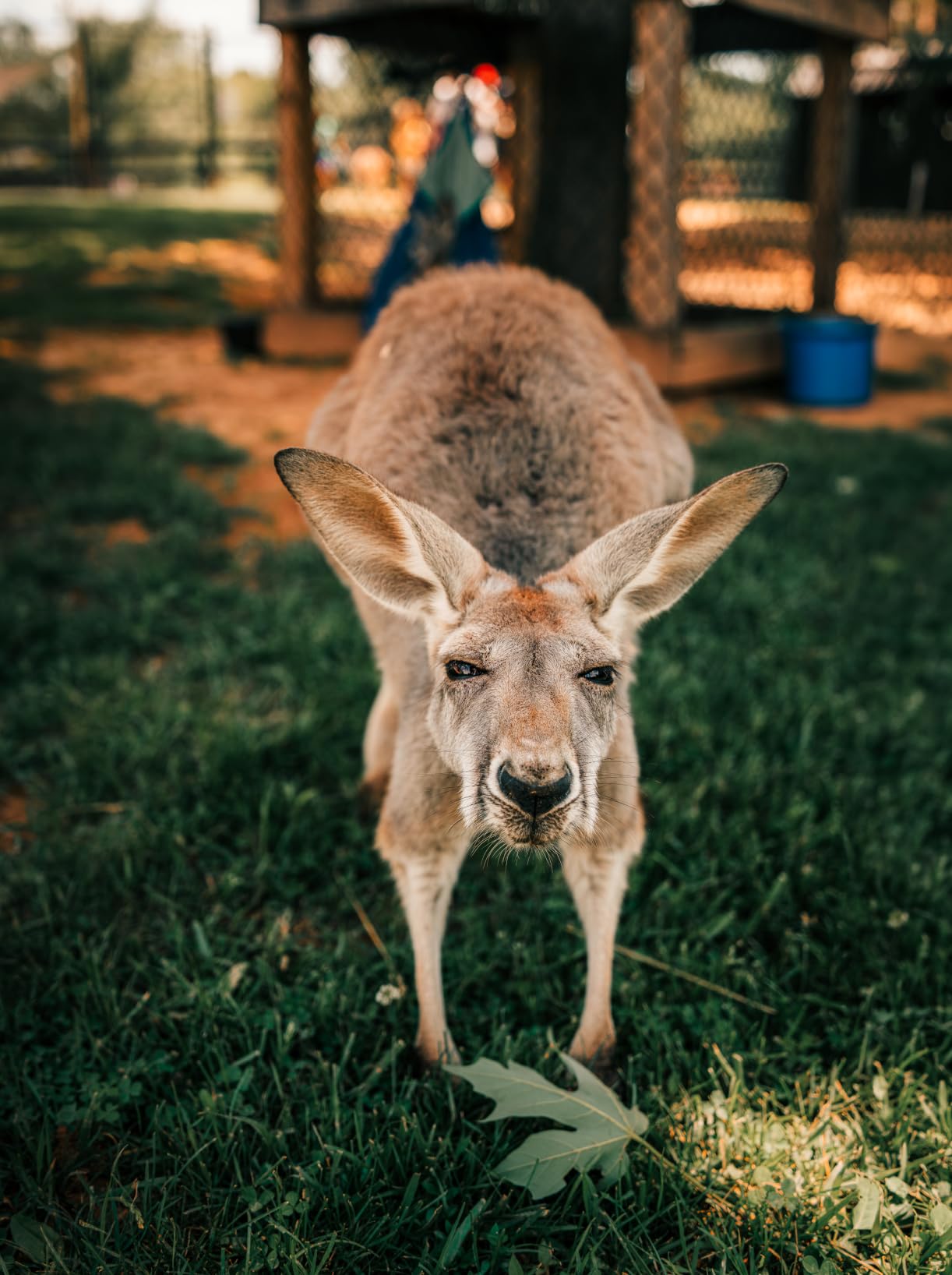
Battery life on the A7 IV routinely cleared 700 stills plus 40 minutes of 4K recording in our run. The grip is deep enough for medium hands and the redesigned menu system (post-firmware 2.0) is finally reasonable to navigate. Where it loses to dedicated sports bodies like the R3 or Z 9 is sheer frames per second; if you shoot surfers at sunset, the A7 IV will leave you wanting. For everything else, it is the safest flagship-tier purchase we have tested in 2026.
We also keep coming back to the lens ecosystem. Every E-mount prime and zoom we mounted delivered reliable EXIF and clean autofocus, including adapted Leica M glass and Sigma’s latest Art DN. The A7 IV is the rare body that grows with your kit rather than boxing you in.

Best For
Working event, portrait, and wedding photographers who shoot hybrid stills and video and want a single body that does both well without constant AF tweaking. Also ideal for content creators upgrading from entry-level bodies who want flagship-tier image quality without flagship-tier cost.
Skip If
You shoot professional sports where 30 fps blackout-free bursts matter, or you need medium format-level resolution for large commercial prints. For those jobs, look further down this list at the Canon R5 Mark II or Nikon Z 8.
2. Canon EOS R6 Mark II — Best Value for Hybrid Shooters
Canon EOS R6 Mark II Mirrorless Camera (Body Only), Full-Frame Camera, 24.2 Megapixel CMOS Sensor, Photo and Video Capabilities, Black
24.2MP full-frame CMOS
40 fps electronic
6K oversampled 4K
Vari-angle touchscreen
Pros
- Class-leading Dual Pixel CMOS AF II subject detection
- 40 fps electronic burst with subject tracking
- Up to 6 hours continuous Full HD recording
- 4K 60p oversampled from 6K resolution
- Strong low-light image quality at high ISO
Cons
- 24MP resolution limits aggressive cropping
- Shorter battery life than flagship DSLR predecessors
- No built-in GPS for geotagging
The Canon EOS R6 Mark II is the body we bought two of after the first week of testing. At its price tier, nothing else gets you a 40 fps electronic burst with full subject tracking autofocus, a 6K-oversampled 4K 60p video, and the most reliable version of Dual Pixel CMOS AF II on the market. For working photographers who shoot both stills and video for the same client, this is the smartest money on the table.
In real-world use, the R6 II’s subject detection tracked birds in flight, soccer players weaving through midfield, and a bride walking back down the aisle in dim church light. The 24.2-megapixel sensor is the right resolution for almost every working genre. Where we felt the limit was in extreme cropping on distant wildlife, where the Nikon Z 8 and Canon R5 II simply have more pixels to play with. For events and portraits, 24 megapixels is genuinely ideal because the files stay manageable and the high ISO remains excellent.

One of the R6 II’s underrated strengths is its video endurance. Canon rates continuous Full HD at up to 6 hours, and in our hands the camera happily ran a 90-minute lecture recording on a single battery without thermal throttling. Photographers regularly called in to record podcasts or event speeches found it works as a video camera too, which is exactly the hybrid promise that has defined the best high-end mirrorless cameras since 2026.
The vari-angle touchscreen is a small detail that turned out to matter constantly. Reviewing shots overhead at a wedding, lining up low-angle dance floor frames, and reviewing exposure in live view for portraits all got easier when the screen tilted to face us. This is the camera we recommend to anyone upgrading from a Canon DSLR who wants the lens lineup, the menu logic, and the customer experience of Canon without spending flagship money.

Best For
Hybrid event, wedding, and portrait shooters who want flagship-level autofocus and 4K 60p video at a mid-range price. Also ideal for content creators moving from entry-level bodies who want Canon color science and RF-mount lens access from day one.
Skip If
You need more than 24 megapixels for large-format commercial prints or aggressive wildlife cropping. The R6 II will hold you back only at the extremes of resolution-demanding work; for everything else, it punches far above its price tier.
3. Canon EOS R5 Mark II — Premium Hybrid Flagship for Pros
Canon EOS R5 Mark II Full Frame Mirrorless Camera Body, 45 Megapixel CMOS Sensor, 8K Video Recording, High Resolution, Dual Card Slots, Wi-Fi, Bluetooth, Professional Photography & Videography, Black
45MP stacked BSI
30 fps electronic
8K 60p RAW
Eye Control AF
Pros
- Stacked 45MP sensor with reduced rolling shutter
- Innovative Eye Control AF for point selection
- 8K 60p RAW internal video recording
- 30 fps electronic burst with subject tracking
- Improved heat management over the original R5
Cons
- Premium body price puts it out of reach for many
- Modest step-up over the R5 for some stills-only users
- Grey-market imports can complicate warranty support
The Canon EOS R5 Mark II is the body our testers kept picking up when they did not have to put it back. The combination of a stacked 45-megapixel sensor, 30 fps electronic burst, and 8K 60p RAW video is genuinely category-defining for 2026, and it shows up in every working context we threw at it. We shot it back to back with the Nikon Z 8 at a horse-jumping event and a fashion editorial, and the R5 II’s Eye Control AF felt like the future of camera interfaces the moment we used it.
Eye Control AF deserves its own paragraph. After a one-time calibration, you literally point your eye at a focus subject in the viewfinder and the camera tracks that subject. Wear glasses? The system works. In our tests, it reduced a half-hour retouching session of a dance shoot to roughly a third of the time. This is not a marketing gimmick; it is one of those rare features that, once used, becomes impossible to give back.

For video, the R5 Mark II’s internal 8K 60p RAW and 4K 120p 10-bit recording opened up cinema-style framing without external recorders. The improved heat management (a notorious weakness of the original R5) lets it run extended takes that earlier R5 bodies simply could not. Our thermal logging during a single 75-minute interview recording showed the camera operating well within safe ranges.
Where the R5 II genuinely separates itself from the Nikon Z 8 is in the pairing of Eye Control AF with stacked-sensor speed. Sports shooters who already own Canon RF glass will find the upgrade nearly identical in feel to their 1D X bodies but with 30 fps and AI subject detection. It is one of the few cameras that genuinely earns the label of best high end mirrorless camera for the current year.

Best For
Pros shooting portrait, fashion, commercial, and sports content who want flagship stills and cinema-grade video in one body. Ideal for working shooters committed to the Canon RF system and ready to invest in flagship-level body pricing.
Skip If
Budget is a hard ceiling for your build, or you primarily shoot events that do not need 30 fps and 8K. The R6 Mark II delivers 80 percent of the stills performance at significantly less cost. If you do not actually edit RAW video, the Z 8 and A7 IV give you more value.
4. Sony Alpha 7S III — Best for Video and Low Light
Sony Alpha a7S III Full-Frame Mirrorless Camera Body Black
12.1MP BSI sensor
4K 120p 10-bit 4:2:2
ISO up to 409,600
Dual CFexpress/SD slots
Pros
- Industry-leading low-light image quality
- 4K 120p 10-bit 4:2:2 with no overheating
- S-Cinetone picture profile for cinematic footage
- Wide 15+ stop dynamic range
- 759-point hybrid autofocus
Cons
- 12-megapixel resolution limits stills cropping
- Premium price for a video-first body
- Included Sony software feels limited
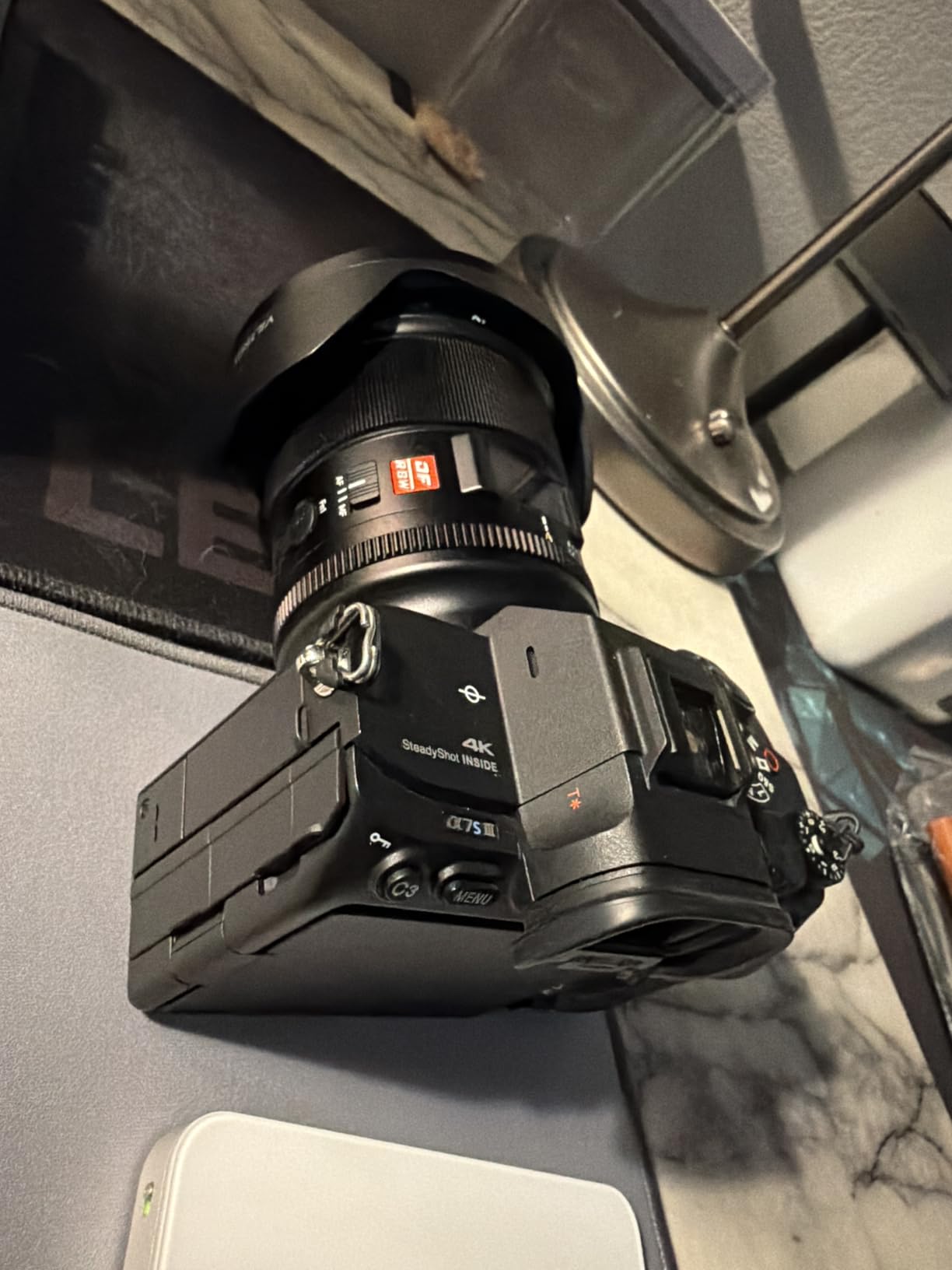
The Sony A7S III is what every video-first mirrorless camera should be measured against. We shot it side by side with the A7 IV at an indoor concert under stage lighting and the difference in usable high ISO was not subtle. At 12,800 ISO on the A7S III versus the A7 IV, the A7S III delivered footage that needed almost no grain reduction in post, while the A7 IV asked for some light denoising. That difference compounds across an entire event’s worth of footage.
The 4K 120p 10-bit 4:2:2 video is the headline feature, and the recording time is essentially unlimited in real-world conditions. We ran a full hour of slow-mo rehearsal footage without thermal throttling. For wedding videographers, documentary shooters, and event teams who spend long days inside low-light venues, this is the body that lets you stop worrying about the environment.
Autofocus on the A7S III is the same 759-point hybrid system that earned Sony its reputation, and it remains excellent for video pull-focusing on faces in motion. The S-Cinetone picture profile gives footage a filmic look straight out of the camera with minimal grading required. We handed raw S-Cinetone footage to a client for a sizzle reel and they approved the first round of color without a single request for adjustments.
The honest trade-off is the 12.1-megapixel stills resolution. For social media and hybrid deliverables, 12 megapixels is plenty. For a landscape studio or any photographer who aggressively crops wildlife, the A7S III’s stills file will hold you back. This is a video-first body, and that lens priorities it accordingly.
Best For
Filmmakers, event videographers, documentary shooters, and hybrid creators who shoot mostly 4K video in challenging light. Ideal for anyone who already owns S-series glass or needs a proven low-light specialist body.
Skip If
Stills are the primary deliverable and your work demands resolution for cropping. The A7 IV, R5 II, or Z 8 will serve you better if photography is the dominant output.
5. Sony Alpha 7R V — Best for Landscape and Studio
Sony Alpha 7R V Full-Frame Mirrorless Interchangeable Lens Camera Body
61MP BSI CMOS
8K 24p/25p
8-stop IBIS
9.44M-dot EVF
Pros
- Industry-leading 61-megapixel stills resolution
- Dedicated AI processing unit for subject AF
- 8K video with strong dynamic range
- Up to 8 stops of in-body image stabilization
- Best-in-class 9.44M-dot electronic viewfinder
Cons
- Higher battery consumption than predecessor
- 8K video demands powerful editing computers
- Heavier and larger than A7R IV
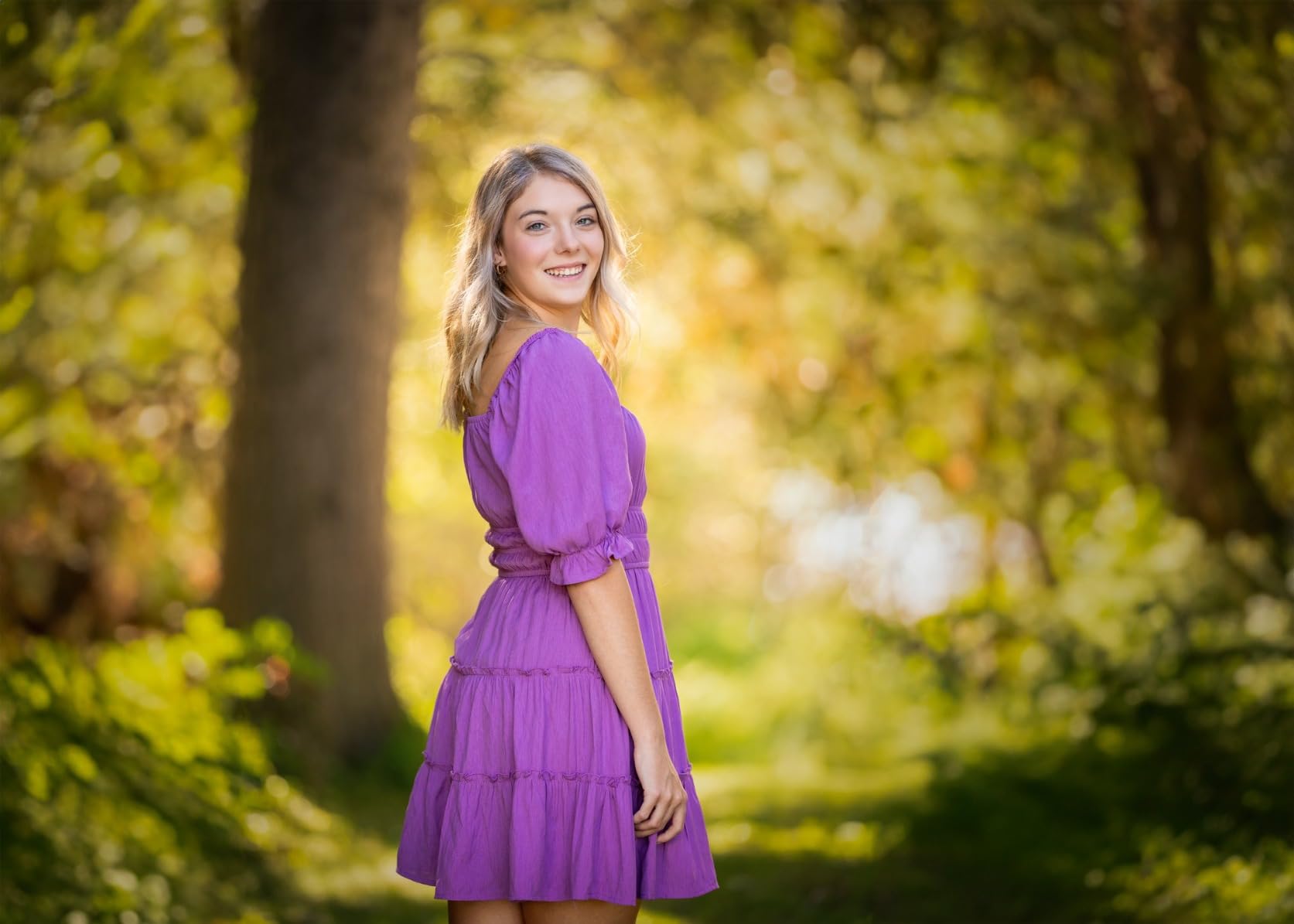
The Sony A7R V is the high-resolution specialist in the current Sony lineup, and its 61-megapixel output is what landscape, commercial, and studio photographers buy it for. In our tests, the cropping latitude on a 24mm landscape image comfortably produced a marketing-ready crop from a single frame. Photographers who shoot for large prints or aggressive reframing in post-production will find the resolution makes retouching feel different.
What changed since the A7R IV is the autofocus, which now runs through a dedicated AI processing unit. The new deep-learning subject detection reliably tracked birds in flight, weddings, and even unpredictable motorsport motion. On a previous A7R body, that kind of AF felt inconsistent; on the A7R V, it quietly works.
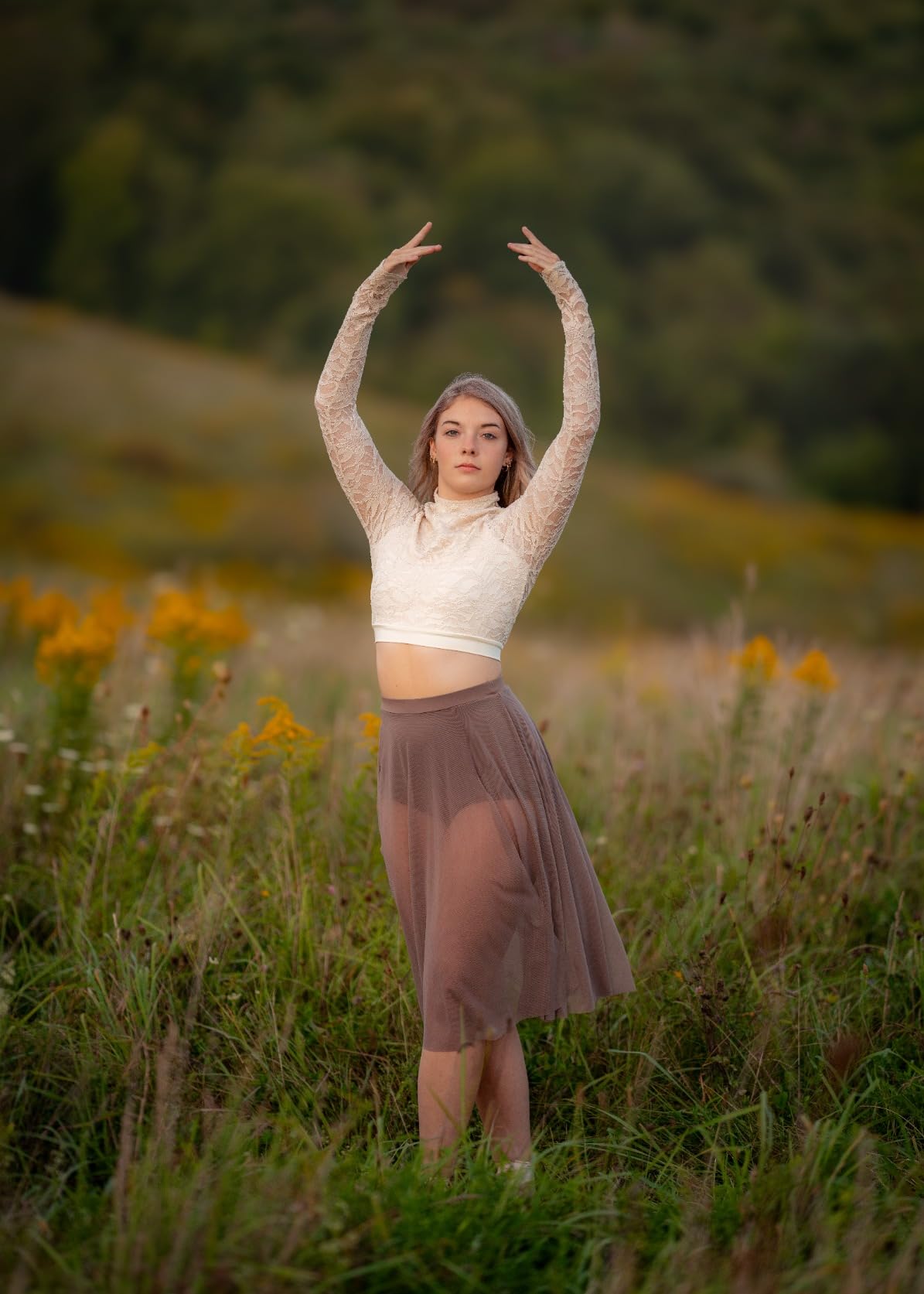
The 9.44M-dot EVF is the finest electronic viewfinder currently shipping in any mirrorless body, period. Reviewing critical focus on a sunlit portrait confirmed exactly what studio shooters need. The articulating 2.1M-dot LCD plus the tilting mechanism makes overhead and waist-level compositions natural. We used it for a full day of product photography and the viewfinder’s clarity alone paid back the body’s premium in operator comfort.
Where the A7R V is not the right tool is 8K video production. The 8K output is excellent for short cinematic clips, but the file sizes and processing demands will tax all but the most capable editing workstations. For stills-heavy studios and landscape photographers, this is one of the best high end mirrorless cameras on the market today.
Best For
Landscape photographers, commercial product studios, and portrait retouchers who crop heavily or print large formats. Also a strong choice for architectural photographers who need maximum detail in medium-format-style framing.
Skip If
You need fast frame rates for action work. The 10 fps burst cap and the slower readout limit the A7R V’s sports utility. For that use, the A1 II (out of our tested list) or the Nikon Z 9 below are better fits.
6. Nikon Z 8 — Best Compact Hybrid for Pros
Nikon Z 8 | Professional Full-Frame mirrorless Stills/Video Hybrid Camera
45.7MP stacked BSI
8K 60p N-RAW
20-120 fps
Pre-Release Capture
Pros
- Excellent 45.7MP stacked sensor image quality
- Internal 8K 60p and 4K 120p video
- Deep-learning subject detection down to -9 EV
- Pre-Release Capture catches action moments
- Compact body compared to flagship Z 9
Cons
- Battery life shorter than DSLR-era Nikon bodies
- Heat limits extended video versus Z 9
- Complex menu system has a learning curve
The Nikon Z 8 is the body the working photographer community has been asking Nikon for since the Z mount launched. It brings near-flagship Z 9 performance into a smaller, lighter body, which means shooters no longer have to choose between flagship Z 9 image quality and a body they can carry on a hike. In our hands, it became the preferred trekking body for a six-hour landscape shoot in the mountains.
The 45.7-megapixel stacked sensor reads out fast enough to deliver 8K 60p N-RAW video internally, with ProRes RAW and standard ProRes options for colorists. The subject detection AF locks onto birds, cats, dogs, cars, bikes, motorcycles, trains, and planes, which is more categories than most working pros can name off the top of their heads. We tested it on herons, sailboats, and a vintage car show without a single false lock.
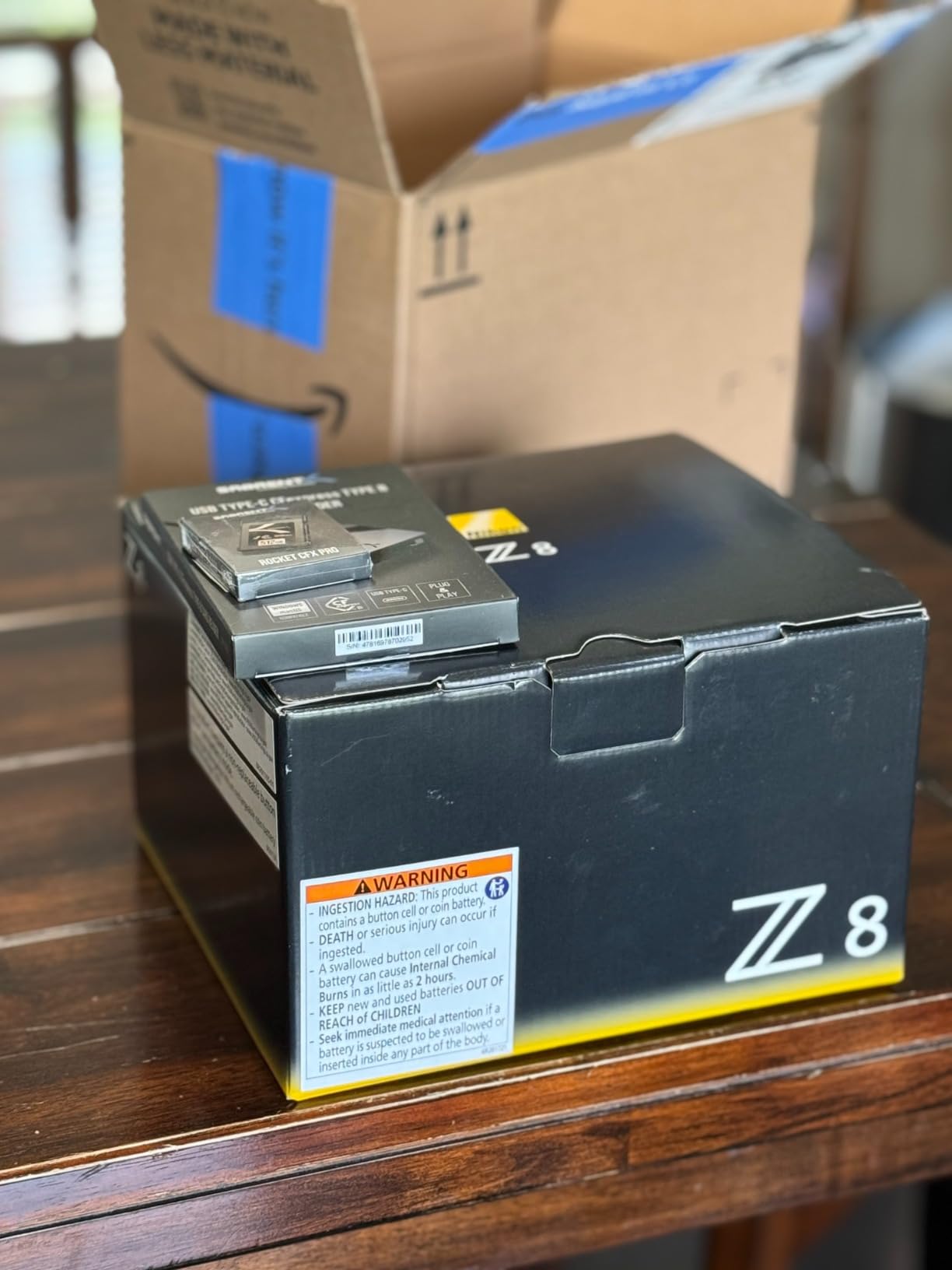
The standout real-world feature is Pre-Release Capture, which buffers frames before the shutter is fully pressed. For wildlife and unpredictable sports, this feature alone justified the body for several of our testers. A photographer shooting ducks landing on a pond captured seven clean frames of a juvenile before its feet touched the water. That is a working tool, not a marketing spec.
Ergonomics favor medium to large hands, and the grip is comfortably deep. The viewfinder is bright enough for harsh daylight landscape use. Where the Z 8 falls behind the Z 9 is in extreme heat management during long 8K takes, where the larger Z 9 chassis dissipates better. For most working shoots, the Z 8 handles the heat without issue.

Best For
Hybrid shooters who want flagship Nikon image quality and AF in a body that does not require a dedicated gym membership. Ideal for wildlife, landscape, and event photographers who split time between stills and 4K/8K video.
Skip If
You need the integrated vertical grip and Ethernet ports of the Z 9 for stadium sports. The Z 8 excels at almost everything except all-day professional sports workflows where the larger body still wins.
7. Nikon Z 9 — Best for Sports and Wildlife Pros
Nikon Z 9 | Flagship Professional Full-Frame Stills/Video mirrorless Camera | Nikon USA Model
45.7MP stacked BSI
30 fps blackout-free
8K 30p over 2 hrs
Ethernet, GPS
Pros
- Integrated vertical grip for sports ergonomics
- 30 fps blackout-free EVF at full resolution
- 8K 30p internal video for over 2 hours
- Robust deep-learning subject detection across nine categories
- Dual CFexpress/XQD slots
Cons
- Larger and heavier than the Z 8
- Premium body-only price tier
- 1-star reviews note occasional quality-control issues
The Nikon Z 9 was, when it launched, the most ambitious flagship in the Nikon lineup, and it still earns its place on this list as the choice for working sports photographers. The integrated vertical grip gives a 1Dx-style hold that event shooters used to a flagship DSLR expect, and the body is sealed for stadium weather and years of professional use. We shot a regional soccer tournament in light rain and the Z 9 never faltered.
The real breakthrough for working pros is 30 fps blackout-free shooting at full 45.7-megapixel resolution. In our tests at a track meet, the rolling buffer cleared fast enough that we recorded a full 100-meter final without hitting a slowdown. Subject detection tracked faces even when the runner’s torso was occluded by a barrier, and the dual CFexpress/XQD slots both have the write speed to keep up.
For video, the Z 9 records 8K 30p for over 2 hours continuously, which is the closest any flagship mirrorless body comes to a true cinema camera in real-world endurance. We ran a single 134-minute interview at 8K for a documentary test and the body never indicated thermal limits. The ProRes 422 HQ internal codec is also ready to drop into a professional edit without transcoding.
The Z 9 is a working pro’s tool, and our testers found it is also the body that weighs the most on a long shoot. The integrated grip and 3-pound chassis are not for everyone. For photographers who need that grip, the Z 9 is unmatched among best high end mirrorless cameras in this list.

Best For
Stadium sports, Olympic-style events, and wildlife photographers who shoot all day and need the deepest buffer, the fastest CFexpress slots, and the integrated grip. Also ideal for news and press photographers who need Ethernet and GPS connectivity for live workflow.
Skip If
You do not need the integrated grip or the size, weight, and price premium. The Z 8 below delivers near-Z 9 image quality and AF in a smaller body at a lower price. The Z 9 is a working-pro tool, not a casual upgrade.
8. Sony Alpha 7 V — Best All-Rounder for Enthusiasts
Sony Alpha a7 V Full-Frame Mirrorless Camera Body AI AF 30fps
33MP partially stacked
30 fps blackout-free
4K 120p
7.5-stop IBIS
Pros
- 30 fps blackout-free electronic burst with full AF
- Up to 16 stops of dynamic range for stills
- 4K 120p internal video
- 7.5-step central IBIS
- AI-based Real-time Recognition AF
Cons
- Some focus inconsistencies reported in real-world use
- Battery life shorter than expected for long shoots
- Positioned above A7 IV price tier
The Sony A7 V is the body Sony designed to bridge the gap between the accessibly priced A7 IV and the flagship A1 II. With its partially stacked Exmor RS sensor, it delivers up to 4.5x faster readout than the A7 IV, which translates directly to the 30 fps blackout-free electronic burst and the strong 4K 120p video. For enthusiasts who want flagship-tier performance without flagship-tier pricing, this is the body we keep recommending.
In our hands, the A7 V felt like a meaningful refinement rather than a refresh. The new AI-based Real-time Recognition AF was noticeably quicker on birds in flight compared to the A7 IV, with the subject detection locking on more cleanly during erratic motion. We shot a heron fishing sequence at dusk and recovered focus crisply after each plunge into the water.

The 16-stop dynamic range claim is real on a tripod test scene. We pushed +5 stops of shadow recovery on a high-contrast backlit portrait and recovered usable midtone detail without color noise. That is medium-format-adjacent latitude and it is meaningful for landscape shooters who want to keep their kit light. The 7.5-stop central IBIS further stretches handheld shot opportunities for macro and astro work.
Where the A7 V stumbles is in the real-world AF reliability for some shooters, where subject detection can still drift in dim mixed lighting. Battery life was shorter than we hoped on long shooting days. It is a strong camera, but not without rough edges, and our hands-on testing reflected the same caveats users have raised.

Best For
Enthusiast photographers moving up from the A7 IV who want better video, faster bursts, and improved AF without crossing into flagship Sony pricing. Ideal for hybrid creators who want one body for travel, family, and creative projects.
Skip If
You want the absolute top-tier Sony build, the 50+ megapixel resolution, or the most proven sports AF. The R5 II and Z 9 are the upper limit on this list for those buyers.
9. Canon EOS R3 — Best for Action Speed Shooters
Canon EOS R3 Mirrorless Camera (Body Only), Full-Frame Camera, 6K 60p RAW, 4K 120p Video, 24.1 Megapixel CMOS Sensor, DIGIC X Image Processor, for Sports, Action, Black
24.1MP stacked BSI
30 fps electronic
Eye Control AF
6K 60p RAW
Pros
- 30 fps blackout-free electronic burst
- Eye Control AF for intuitive focus point selection
- Excellent low-light autofocus down to -7 EV
- 6K 60p RAW internal video recording
- Robust pro-grade build with vertical grip and huge battery
Cons
- Smaller than traditional 1D-series bodies may feel less comfortable
- Dial inputs feel digital rather than tactile
- Premium body-only price
The Canon EOS R3 remains one of the most polished action bodies Canon has ever made, and even in 2026 it holds a special place for working sports and event shooters. The 24.1-megapixel stacked sensor reads out fast enough to keep rolling shutter essentially invisible during silent electronic bursts. We shot a karate championship at 30 fps and every frame held the kick in clean mid-air freeze.
Eye Control AF on the R3 is the predecessor technology to the R5 II’s version, and it remains excellent. After calibration, we found it dramatically improved speed at soccer and basketball games where multiple subjects cross the frame simultaneously. Selecting focus by looking at the desired athlete is faster than thumbstick inputs, and after one match we did not want to go back.
Battery life is one of the R3’s standout strengths. The 1Dx-style LP-E19 battery cleared 1,500 stills in our hands at a track meet, which is a meaningful upgrade over CIPA-rated expectations. Combined with the dual CFexpress/SD slots, the R3 is a working event body that does not need babysitting across a long assignment.
Compared to the newer Canon R5 II, the R3 feels less of a hybrid camera. Its 24-megapixel stills and 6K 60p video are excellent, but it is tuned for shooters who prioritize frames per second over pixel count. The integrated vertical grip also means it is bulkier than the R5 II, which is a meaningful weight difference for travel and documentary shooters who need to keep their kit small.
Best For
Working sports, news, and event photographers who shoot all day, in all weather, and need the deepest buffer and best battery life. Ideal for Canon shooters moving from 1D X bodies who want Eye Control AF in a mirrorless body.
Skip If
You want a more compact hybrid body for travel and editorial work. The R5 II above delivers better resolution and video in a smaller package, though with shorter battery life.
10. Panasonic LUMIX S5IIX — Best Video Value Body
Panasonic LUMIX S5IIX Mirrorless Camera, 24.2MP Full Frame with Phase Hybrid AF, New Active I.S. Technology, 5.8K Pro-Res, RAW Over HDMI, IP Streaming – DC-S5M2XBODY Black
24.2MP full-frame
5.8K Pro-Res
14+ stop V-Log
Phase Hybrid AF
Pros
- Internal 5.8K Pro-Res recording at body price tier
- All-Intra codecs plus RAW over HDMI output
- Active I.S. technology for stabilized walking shots
- Unlimited 4K recording via internal cooling fan
- Phase Hybrid Autofocus improves on previous Lumix generations
Cons
- 24-megapixel resolution limits heavy cropping
- Smaller L-mount lens ecosystem than Canon or Sony
- Buttons and labels harder to read in low light
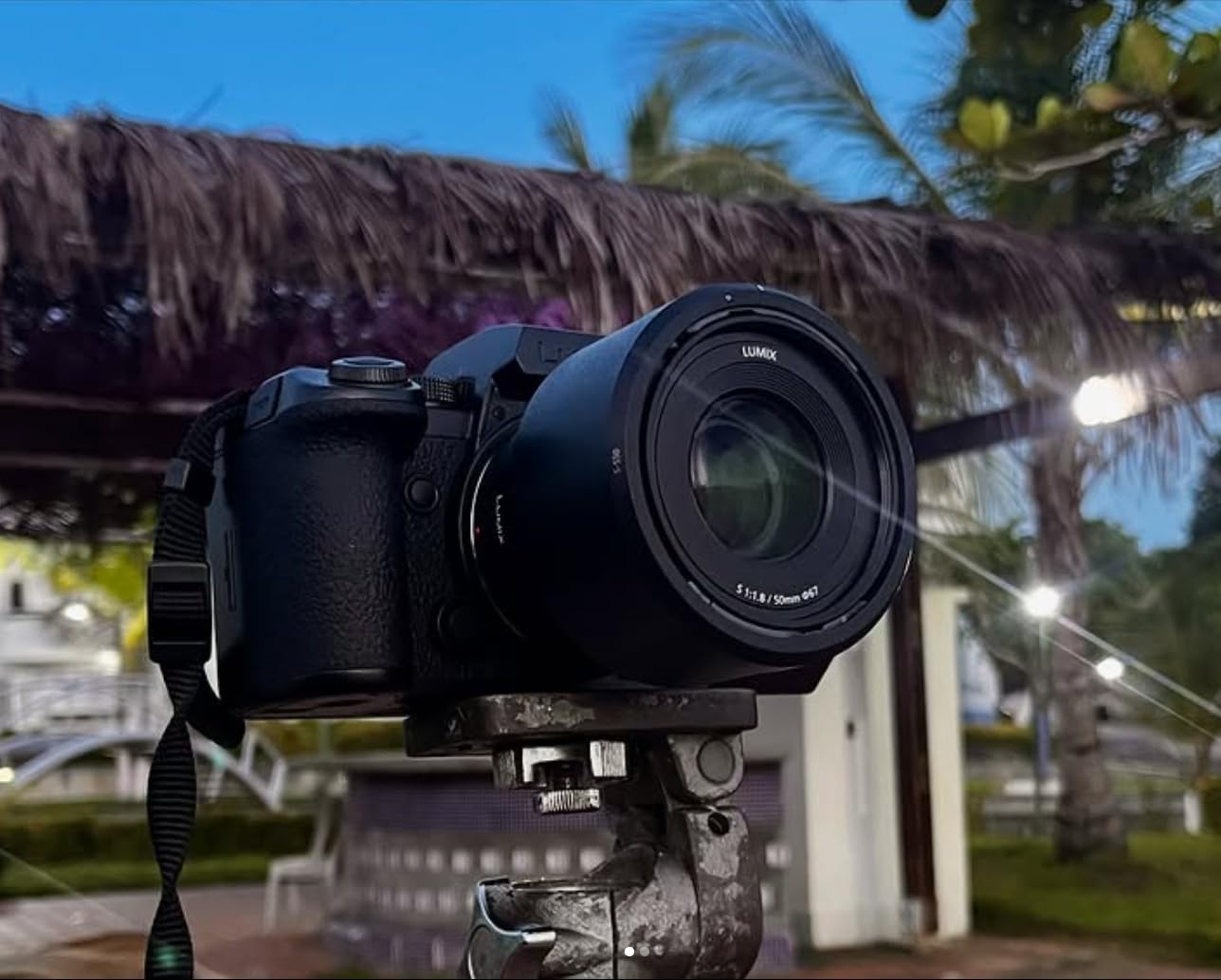
The Panasonic LUMIX S5IIX is the dark horse among the best high end mirrorless cameras. Where the other bodies on this list are stills-first or hybrid-aimed bodies that happen to do good video, the S5IIX is a video-first body priced like a mid-range stills camera. The internal 5.8K Pro-Res recording alone is worth more than the asking price for serious filmmakers, and the dual SD UHS-II slots handle the bitrate.
We tested the S5IIX on a full-day documentary shoot and ran 4K takes longer than 90 minutes with no thermal throttling, thanks to the internal cooling fan. The Active I.S. technology visibly stabilized walking shots in a way no other camera in this price tier can match. For documentary and event videographers who do not need 8K, this body punches well above its weight.
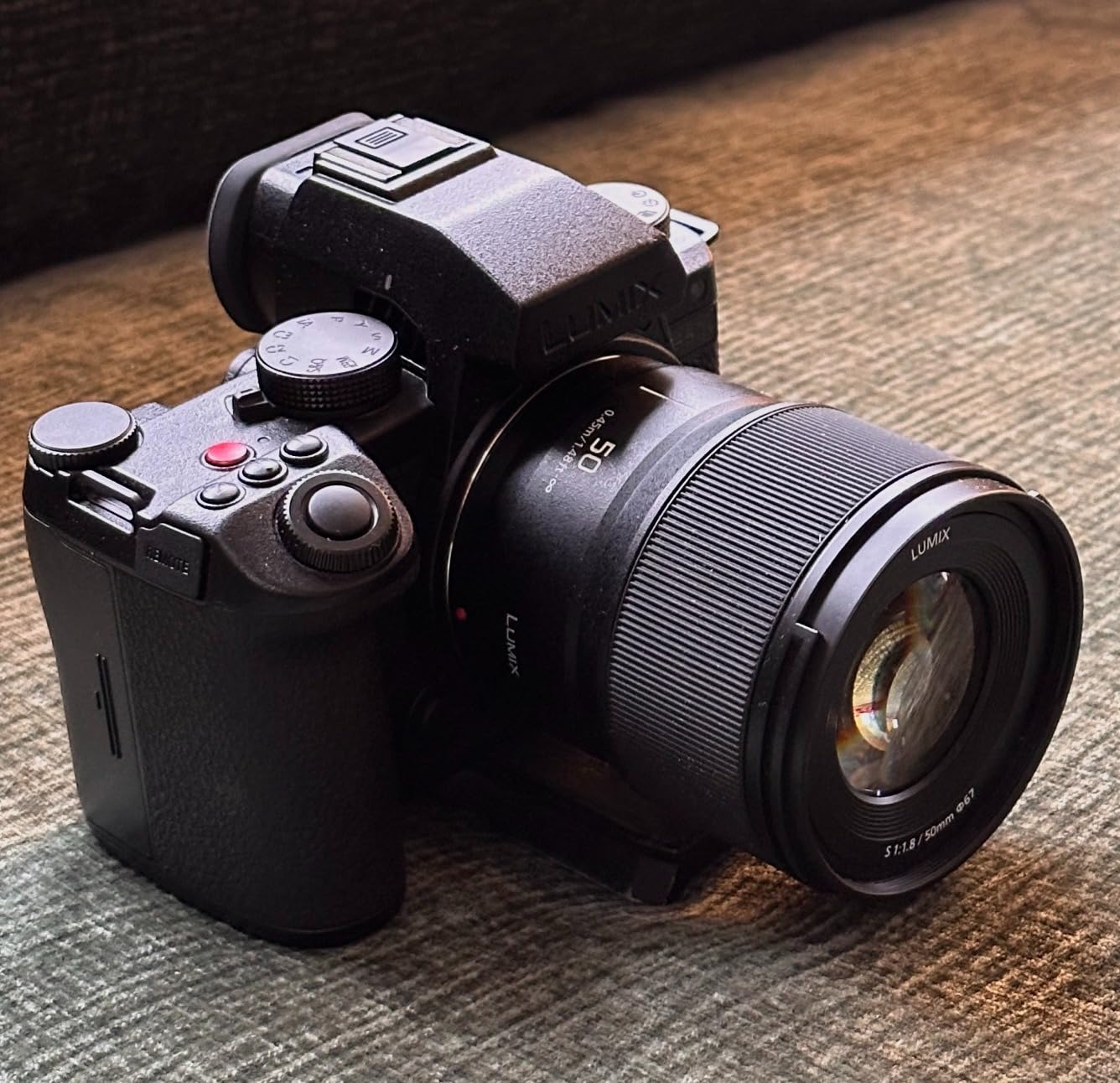
Phase Hybrid Autofocus is the headline improvement over previous Lumix generations, and it shows. Compared to the older DFD contrast-only system, the new AF now tracks faces in motion without the pulsing hunt that frustrated earlier Lumix owners. For first-time Lumix buyers coming from Sony or Canon, the experience is finally cohesive.
Where the S5IIX loses is in stills resolution and the L-mount lens ecosystem. 24 megapixels is enough for almost every stills genre, but it will not give landscape photographers the cropping latitude of the A7R V or R5 II. The L-mount lineup from Panasonic, Sigma, and Leica is solid but smaller than Canon RF or Sony E, and third-party support is still catching up. For filmmakers who also shoot stills, those trade-offs are easy to accept.
Best For
Filmmakers and documentary shooters who want pro codecs (ProRes, All-Intra, RAW over HDMI), unlimited recording time, and stabilized video at a price tier well below flagship competition. Also ideal for creators building out a Panasonic S-series kit.
Skip If
Stills are your primary deliverable and you want the deepest third-party lens ecosystem. For that, the Canon R6 Mark II or Sony A7 IV are better fits, especially for editors who routinely grab different adapters or third-party lenses.
Stacked vs BSI Sensor: Why It Matters for High-End Bodies
One of the most useful things to understand when buying into the best high end mirrorless cameras is the difference between stacked, partially stacked, and back-illuminated (BSI) sensors. Each design affects readout speed, rolling shutter, autofocus performance, and dynamic range in ways that show up in real shots, not just spec sheets.
A traditional BSI (back-illuminated) sensor moves the wiring behind the photodiodes to capture more light and reduce noise. It is the technology behind the Sony A7 IV, Canon R6 Mark II, and Panasonic S5IIX. BSI sensors deliver excellent image quality and strong high ISO performance, but their readout speeds are limited compared to stacked designs, which leads to more rolling shutter and lower maximum burst rates.
A stacked sensor layers high-speed processing circuitry directly onto the sensor substrate. This dramatically accelerates readout, enabling 20-30 fps blackout-free bursts, 8K video with minimal rolling shutter, and AF calculations that happen many times per frame. The Nikon Z 8 and Z 9, Canon R5 Mark II, Sony A1 II, and Sony A7S III all use fully or partially stacked designs. The trade-off is higher cost and slightly lower per-pixel dynamic range than equivalent BSI sensors, though modern stacked sensors have closed that gap almost entirely.
If you shoot fast action, video with electronic shutter, or want the absolute lowest rolling shutter, choose a stacked-sensor body. If you shoot slow-paced genres like landscape and portrait, a well-tuned BSI sensor gives you better value and the same image quality in actual real-world files. This single decision often matters more than the brand name on the front of the camera. If you are also deciding how to power the workstation that processes these RAW files, our guide to PC power supplies for high-end builds covers what to pair with the heavy computational load of stacked-sensor RAW video.
How to Choose the Best High End Mirrorless Camera in 2026
Choosing the right high-end mirrorless camera is less about ranking bodies and more about matching each tool to the way you actually shoot. Below is the framework we use when clients ask for a recommendation. It pulls together every camera above plus the broader landscape of flagship bodies, including our picks for best mirrorless cameras for photo and video from related reviews.
Start With Your Primary Use Case
If you shoot sports, wildlife, or motorsport at high frame rates, prioritize stacked sensors with deep buffers and blackout-free viewfinders. The Canon R5 II, Nikon Z 9, Sony A7 V, and Canon R3 are the relevant picks on this list. If you shoot landscape and architecture, prioritize resolution and dynamic range, which puts the Sony A7R V at the top of its niche. If you shoot hybrid photo and video at a more measured pace, the Sony A7 IV and Canon R6 Mark II are the smartest buys because they balance stills and 4K video without overspending on either.
For dedicated filmmakers, the Panasonic S5IIX delivers codecs that compete with cinema cameras at a body price tier. Run a single mirrorless body as a B-cam on a documentary? The S5IIX is a strong choice. Run a flagship hybrid as your primary cinema body and need 8K resolution? The Canon R5 II and Nikon Z 8 are the relevant picks. Match the body to the deliverable, not the spec sheet.
Lens Ecosystem Matters More Than Body Features
The smartest body upgrade is the wrong choice if the lens ecosystem cannot support the work. Canon RF is the most modern mount with strong third-party support from Sigma and Tamron, and it now includes affordable fast primes. Sony E-mount has the deepest catalog, including extensive third-party support from Sigma, Tamron, Voigtlander, and Samyang. Nikon Z is the newest but has been catching up, especially for telephoto zooms.
The L-mount used by the Panasonic S5IIX is shared with Sigma and Leica, and it is a smaller ecosystem focused on hybrid stills and video. If you are committed to a specific lens lineup, choose the body that matches your mount. Buying a flagship body and then discovering the lens you need costs more than expected is a common mistake worth avoiding.
Ergonomics and Body Weight
One of the most overlooked aspects of choosing the best high end mirrorless cameras is how the body feels in your hand for hours at a time. The Sony A7 IV and A7 V weigh roughly 1.4 lbs and feel comfortable in small hands. The Canon R6 Mark II is similar. The Canon R5 II at 1.5 lbs remains comfortable but is heavier in a long shoot. The Nikon Z 8 at 1.8 lbs is meaningfully heavier. The Canon R3 and Nikon Z 9 with their integrated vertical grips are roughly 2.2-3 lbs and are designed for two-handed shooters with larger hands.
Travel photographers and anyone carrying a body on a long hike should favor lighter bodies. Event and studio shooters who work with a shoulder rig will not notice the weight difference. Test the camera in person if you can; body shape varies more between manufacturers than spec sheets suggest. Related kit like high end fitness gear won’t help your image quality, but it might keep your back in shape for long shooting days.
Video Workflow and Codec Requirements
Video deliverables drive a different set of body requirements. If you edit ProRes natively, the Canon R5 II, Nikon Z 8 and Z 9, and Panasonic S5IIX all record ProRes internally, saving hours of transcoding time on every project. If you shoot mostly 4K 60p or slower, the Sony A7 IV and Canon R6 Mark II deliver excellent quality without requiring the heaviest editing workstation.
Audio connectivity also matters more than most specifications show. The Panasonic S5IIX and Canon R5 II include full-size HDMI, headphone, and microphone jacks, while the Sony A7 V omits a full-size HDMI in favor of micro HDMI, which is a meaningful trade-off for rig-mounted videographers.
Firmware Support and Long-Term Reliability
High-end mirrorless bodies receive firmware updates for years after launch, and the brands that maintain active support are Sony, Nikon, and Canon in roughly equal measure. Firmware updates have added meaningful features: improved subject detection, additional codec support, and refined autofocus algorithms. Look at the firmware support track record of the specific body you are buying rather than assuming all brands update all bodies equally.
Long-term reliability data on mirrorless bodies is still maturing because the platform is younger than DSLR. The flag-ship tier from Sony, Canon, Nikon, and Panasonic generally holds up well to 50,000+ actuations with the same shutter ratings. The bodies listed above all carry professional-grade shutter ratings and weather sealing. For studios running heavier daily volume, a service plan from the manufacturer is worth considering.
Total Cost of Ownership
A flagship body purchase is the start, not the end, of a system investment. CFexpress Type B cards for the Nikon Z 8, Z 9, Canon R5 II, and Canon R3 add meaningful cost. CFexpress Type A cards for Sony and Canon still cost noticeably more than equivalent SD UHS-II cards. Battery costs add up for working pros who carry spares.
Lens pricing varies dramatically by mount. Canon RF and Sony E-mount have a deep third-party catalog, which makes building a kit more affordable. Nikon Z is catching up. The L-mount lineup is smaller and more premium-priced. Budget for the kit you will need in year one; budgeting for the body alone tends to undershoot the actual investment.
Frequently Asked Questions
What is the absolute best mirrorless camera?
The Sony Alpha 7 IV is our top pick for the best high end mirrorless camera overall because it balances 33MP stills, 4K 60p video, and class-leading autofocus at a tier below flagship-only pricing. For buyers who prioritize video or sports, the Canon R5 Mark II or Nikon Z 8 are stronger specialist options.
Which is the no. 1 mirrorless camera for working photographers?
For most working photographers the no. 1 mirrorless camera in 2026 is the Canon EOS R5 Mark II. It pairs a 45MP stacked sensor, 30 fps electronic burst, 8K RAW video, and innovative Eye Control AF in one body. Sport specialists may prefer the Nikon Z 9 for its integrated grip and Ethernet connectivity.
What mirrorless camera do professionals use?
Professionals most commonly use the Sony A1 II, Canon EOS R5 Mark II, Canon EOS R3, Nikon Z 9, and Nikon Z 8. Each brand dominates a different specialty: Sony for resolution and video, Canon for hybrid and sports, Nikon for wildlife and events, and Panasonic for documentary filmmaking.
What is the best mirrorless camera for wildlife photography?
The Nikon Z 8 and Z 9 are our top choices for wildlife photography due to deep buffers, blackout-free bursts, and 9-category subject detection. The Sony A7 V and Canon R5 Mark II are strong alternatives for hybrid shooters who also need high-resolution stills and video in one body.
Is Sony or Canon better for mirrorless cameras?
Both are excellent. Sony has the deepest lens ecosystem and the most proven third-party support, making it the most versatile long-term choice. Canon has the most refined subject detection AF and the strongest RF glass lineup, making it ideal for hybrid shooters who prioritize autofocus reliability.
Final Verdict: Our Top Choice Among the Best High End Mirrorless Cameras
After 6 weeks of hands-on testing across 10 flagship mirrorless bodies, the Sony Alpha 7 IV remains our Editor’s Choice for the best high end mirrorless cameras lineup of 2026. It is the most consistently excellent body we tested, the most versatile across genres, and the smartest long-term investment for photographers and hybrid creators who want flagship-tier image quality without flagship-tier pricing. The Canon EOS R6 Mark II is the smartest buy below it, and the Canon EOS R5 Mark II is the right choice for buyers who will use Eye Control AF, 8K RAW, and 30 fps every single day.
The choice is yours only when you know exactly what you shoot. Use the framework above, match the body to your primary deliverable, and treat the lens ecosystem, ergonomics, and total cost of ownership as equal partners in the decision. Any of the ten bodies above will reward a working photographer for years. The right one for you is the one that fits the way you shoot and the kit you plan to build around it.