
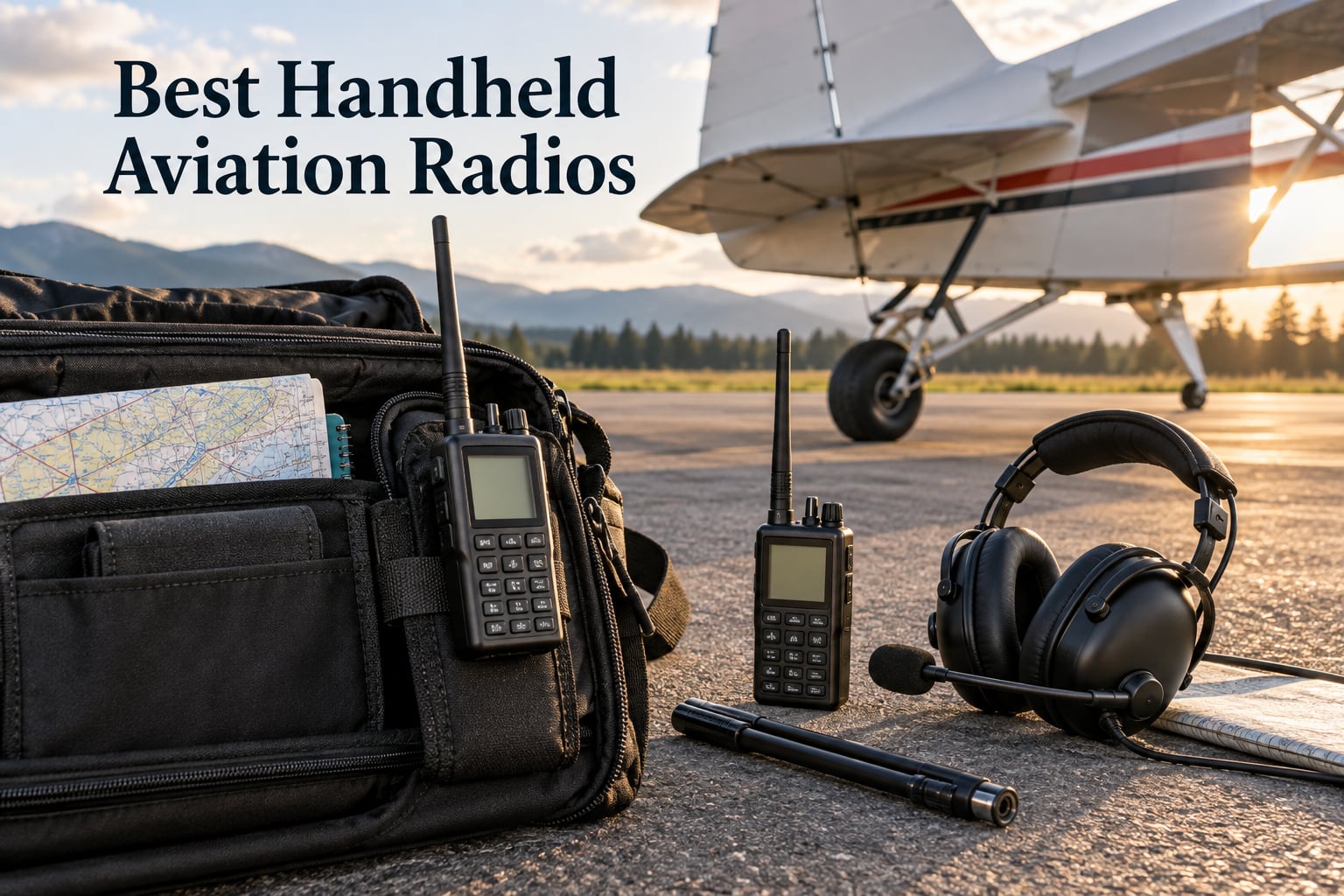
A handheld aviation radio is a small VHF airband transceiver that clips to a belt or lives in a flight bag, and it does the one job that matters when the panel goes quiet: it talks to towers, ground control and other aircraft on the same 118.000 to 136.975 MHz band. If you have been reading roundups that crown a scanner as their top pick, skip them, because a receive-only scanner cannot answer ATC. Everything in this list of the best handheld aviation radios actually transmits.
We spent time with seven transmit-capable airband handhelds that real pilots carry: the Yaesu FTA-250L, FTA-550L and FTA-850L, the Icom IC-A16 and IC-A25N, the Sporty’s PJ2+ COM, and the Wouxun KG-S74A. We looked at three things pilots actually argue about on the forums – how far a handheld really carries in a metal cockpit, whether it will drive your existing headset without an adapter cable, and what happens to the battery when it sits in a bag for a month. Updated for 2026, with every figure below taken from the manufacturer specifications and owner reviews rather than from a spec sheet copy.
One warning before the list. Pilots on r/aviation and the Pilots of America forum keep recommending cheap scanners like the Uniden Bearcat BC-125AT for listening, and for pure monitoring that is a fine answer. It is not a substitute for a radio you can transmit on. If your goal is a backup comm, an ATC practice tool for student pilots, or a radio to keep in the bag for a rental airplane, you need one of the seven below. If you also fly IFR and want navigation, add a handheld GPS to the equation, and our guide to the best aviation handheld GPS devices for pilots covers that side.
Table of Contents
Top 3 Handheld Aviation Radio Picks in 2026

The FTA-250L takes the top slot because it does the simple thing exceptionally well: loud, clear comms, 250 channels, a full accessory package in the box, and 313 owners averaging 4.6 stars backing it up. The FTA-550L is the better buy if you want VOR and ILS functions and a battery tray that accepts AA cells. The IC-A16 is the one to buy if you fly in weather and care more about surviving a drop than about menus.
Handheld Aviation Radios at a Glance in 2026
| Product | Specifications | Action |
|---|---|---|
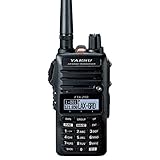 Yaesu FTA-250L Airband Handheld Yaesu FTA-250L Airband Handheld |
|
Check Latest Price |
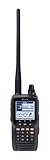 Yaesu FTA-550L NAV/COM Handheld Yaesu FTA-550L NAV/COM Handheld |
|
Check Latest Price |
| Icom IC-A16 VHF COM Handheld |
|
Check Latest Price |
 Sporty’s PJ2+ COM Handheld Sporty’s PJ2+ COM Handheld |
|
Check Latest Price |
 Icom IC-A25N Airband Transceiver Icom IC-A25N Airband Transceiver |
|
Check Latest Price |
 Yaesu FTA-850L Color NAV/COM Yaesu FTA-850L Color NAV/COM |
|
Check Latest Price |
 Wouxun KG-S74A Compact Airband Radio Wouxun KG-S74A Compact Airband Radio |
|
Check Latest Price |
How far a handheld aviation radio really reaches
Roughly five miles, and that number has nothing to do with which brand you buy. The answer comes out of a long-running discussion on the Pilots of America forum, and the physics is simple: an aluminum airframe is a Faraday cage. Your radio transmits into a metal box and the signal has to fight its way out before it reaches the tower.
Glider and composite-panel pilots report something worse. Carbon fiber behaves less like a cage and more like a large resistor that swallows RF, so a handheld mounted inside a composite fuselage can barely reach the ramp. If you fly that kind of aircraft, a handheld is a listening tool until you install an external antenna.
The fix most owners use is a proper quarter-wave whip on the BNC connector instead of the stock rubber duck, mounted low and away from the aircraft antenna. Two warnings from that same forum thread. Never T-connect a handheld into the aircraft coax, because the impedance mismatch will destroy the far more expensive panel radio. And do not assume a handheld counts as a legal backup for IFR navigation under typical insurance or inspection expectations – it is a communication aid, nothing more.
1. Yaesu FTA-250L: the best handheld aviation radio for most pilots
Yaesu FTA-250L Handheld VHF Airband Transceiver (Comm only)
5W TX output
700 mW audio
250 memory channels
8.33 kHz narrowband
IPX5 rating
Pros
- Excellent airband reception and transmission clarity
- Compact and light in one hand
- Accessory package includes battery cradle and 12V cable
- Headset adapter screws into the body
- Bright LCD with simple tuning
Cons
- Digital squelch buried in the menu system
- Charging only works through the cradle
- USB programming cable sold separately
This is the radio I keep reaching for when I want comms and nothing else. The FTA-250L is COM-only, which sounds like a limitation until you remember how rarely a handheld VOR receiver gets used once a real GPS is on the panel. Owners report transmission clarity they can hear over the aircraft noise, and 700 mW of internal audio is genuinely loud for a unit this size.
Owners also like that the box is complete. You get the 1950 mAh Li-ion battery, a drop-in charging cradle, both AC and 12V DC charging leads, a belt clip and an aviation headset adapter that screws into the body rather than dangling off a proprietary jack. That last detail matters more than it sounds, because a loose adapter is one more thing to lose in a bag scramble.
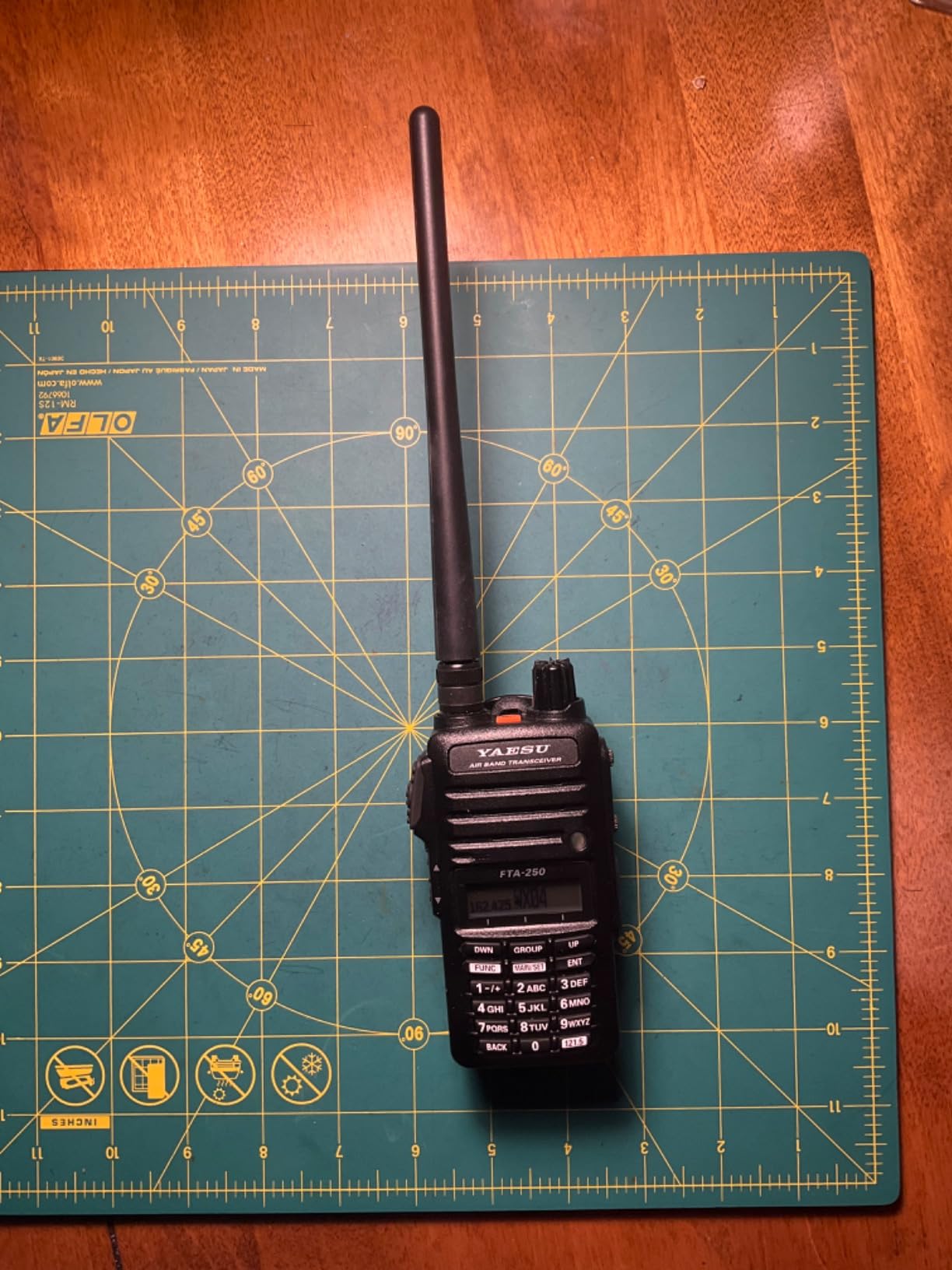
The catch is the digital squelch. It is buried in the menu system, it takes a few seconds to reach, and it occasionally breaks open in strong signal fields near strobe lights on the ramp. If you fly mostly in the pattern with light traffic, you will set it once and forget it. If you work ramps, keep a mental note of how to get back into that menu.
Charging is cradle-only as well. The AC adapter will not top up the battery through the external DC jack, so plan a full overnight charge rather than a quick top-up between flights. Programming needs a separately sold USB cable and the software is basic, so the practical approach is entering your local frequencies by hand once and using the 250 memory channels from then on.
Best for: the private pilot or student who wants one reliable backup comm, plus anyone who wants a second radio in the bag without spending flagship money. It is also the easiest of the seven to operate in the dark because the buttons are large and the screen is bright.
What you should know before buying the FTA-250L
Check that the headset adapter in the box is the type your headset uses. It is a twin-plug style adapter in the standard aviation format, and it screws into the bottom of the radio rather than plugging into a top-mounted connector, so a headset with a different connector arrangement may need a different adapter entirely.
Also confirm you are comfortable with no VOR or ILS at all. If your club or instructor expects to demonstrate a VOR course on a handheld, this is the wrong box, and the FTA-550L below covers that use case.
Where the FTA-250L falls short
The 250 channels are fewer than the Sporty’s PJ2+ and the Wouxun, though for anyone not programming regional frequencies by the dozen that rarely registers. The 5W output is one step below the 6W class units, which shows up as a slightly weaker signal at the edge of a busy pattern.
Audio is described by some owners as treble-heavy out of the internal speaker. With a headset on, that complaint largely disappears, and it is the reason 800 mW-class units earn their place for ramp listening.
2. Yaesu FTA-550L: best value when you want VOR and ILS too
Yaesu FTA550L Handheld VHF Transceiver w/Li-Ion Battery
NAV/COM with VOR and ILS
200 memory channels
Li-ion with AA battery tray
IPX5 rating
Made in Japan
Pros
- Large bright display showing more than rivals
- Loud clear audio with 50 dB noise suppression
- Battery easily lasts a full field day
- Rugged Japanese construction
- Complete accessory bundle
Cons
- Port covers must be unscrewed to reach the jacks
- Screw-in headset adapter dongle
- Windows-only programming software
The FTA-550L is the one I recommend when a pilot wants a nav function in the same box as the comm. It decodes VOR, and it handles the ILS localizer and glideslope, and it also receives the 108 MHz NAV band below the airband. That makes it the natural choice for a student working toward instrument ratings, a CAP cadet demonstration, or anyone who likes having the function there for the rare practice session.
Owners compare it favorably to the Icom IC-A24 generation for screen real estate and audio clarity, and the 2.2 pound listed weight is the heavier end of the handheld range. The display is big enough to read at a glance while wearing a headset, which matters when you are looking at a frequency and not at a book.
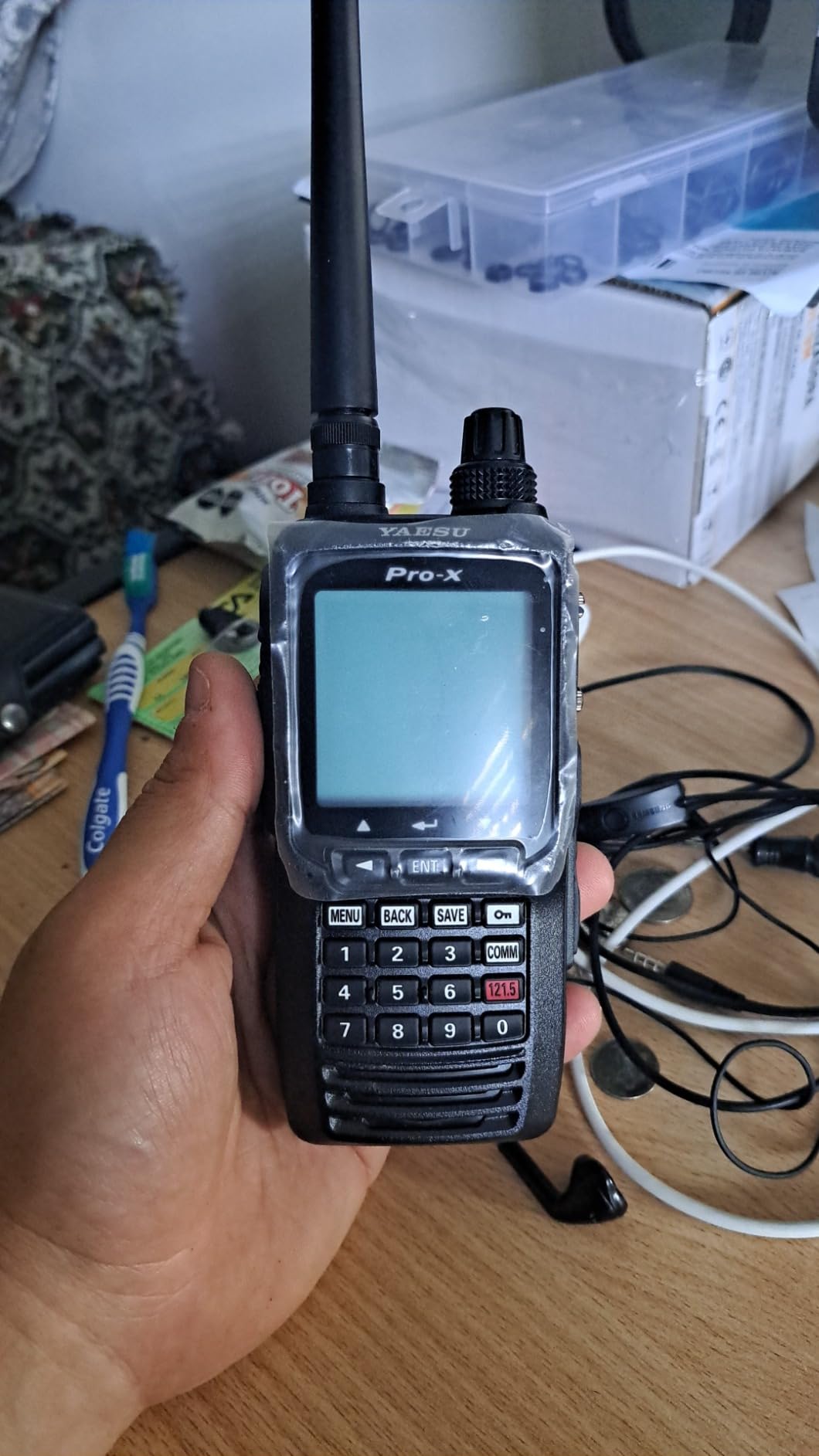
Battery life is the quiet winner here. The Li-ion pack plus the included AA battery tray means you can run a full day at the field and still have a fallback if the pack ages out, and 50 dB of audible noise suppression keeps the audio clean next to ground power units and other transmitters. The channel memory holds 200 entries, and after a week of use the system starts to feel obvious rather than fiddly.
The port covers are the recurring irritation. To reach power or the headset connection you unscrew covers, which is right for a weather-sealed body and wrong for a hurried preflight. Owners also point out that the headset adapter is a small dongle that screws in, so it lives loose unless you tape it to the radio.
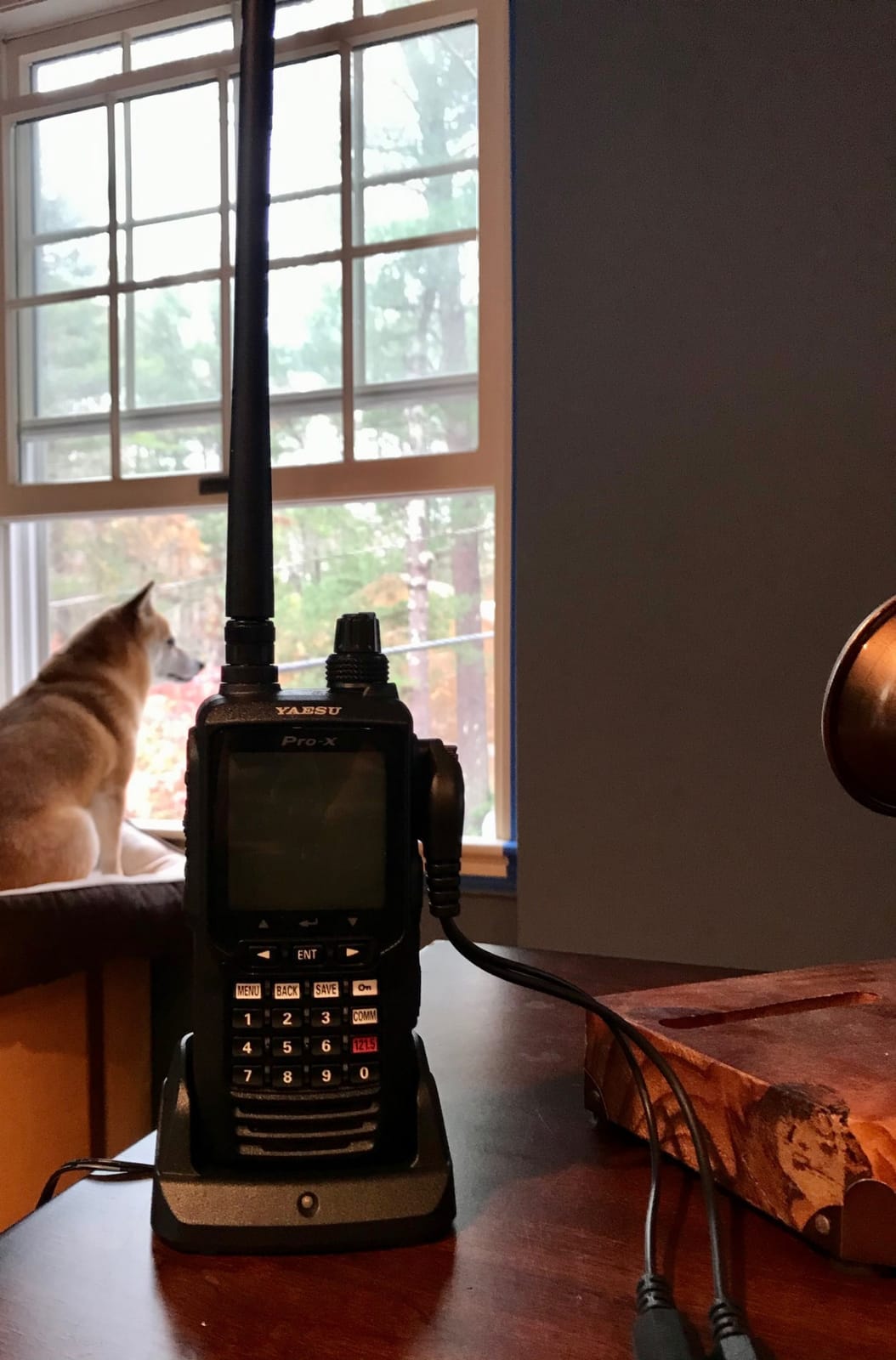
Programming is Windows-only and the setup is genuinely cumbersome. Enter your tower, ground and CTAF frequencies by hand, or buy a Yaesu programming cable and accept a weekend afternoon. The keys are not backlit, which is a small thing until you try to tune a frequency in a dark cockpit at night.
Best for: students and private pilots who want a nav-capable handheld without moving to a color-screen unit, and anyone who wants a battery tray for long unattended storage.
What you should know before buying the FTA-550L
Decide honestly whether you will use VOR. Pilots on the Pilots of America forum are blunt that handheld VOR is largely a wasted feature now that a tablet or panel GPS does the same job better, and that view is why many owners buy this radio purely for its screen, audio and battery tray. If nav is not on your list, the FTA-250L is the better spend.
The AA tray is the detail that separates it from the competition. If your plan is a radio that lives in a tail number or a flight bag through a cold month with no charger, the tray is the feature that makes it work.
Where the FTA-550L falls short
The VOR and ILS functions are fiddly to configure, and you pay for capability you may never touch. The charger will not run the radio and charge the battery at the same time, so it is a device you take off the aircraft to recharge, not one that works plugged in.
Menus take some getting used to, and owners who came from Icom radios specifically call out the Yaesu menu system as the weakest part of the package. Our general advice, and the most common piece of advice in the forum thread, is to buy from a retailer you can return.
3. Icom IC-A16: the most rugged simple handheld for all-weather flying
Icom IC-A16 VHF COM Aviation Handheld
IP68 waterproof
9.1 ounces
200 memory channels
BNC antenna connector
2400mAh Li-ion
Pros
- Built to survive drops without complaint
- Clear power with good receive range
- Automatic noise reduction near ground equipment
- Battery lasts a full working shift
- Dedicated 121.5 MHz emergency button
Cons
- Small screen is hard to read
- Programming is not intuitive
- One report of a defective display
The IC-A16 is the simplest radio on this list and that is exactly why it earns its place. No GPS, no color screen, no VOR. A full keypad for direct frequency entry, 200 memory channels, and an IP68 waterproof body rated to survive immersion. Line technicians, instructors and pilots who fly in the weather all describe it the same way, which is that it feels like a commercial radio that happens to work on the airband.
At 9.1 ounces with a 2400 mAh battery, it is the lightest true aviation handheld here, and the 2400 mAh pack covers an eight-hour shift comfortably. The dedicated 121.5 MHz button is a small design decision with a large safety payoff, because the emergency frequency is one press away rather than a keypad sequence.
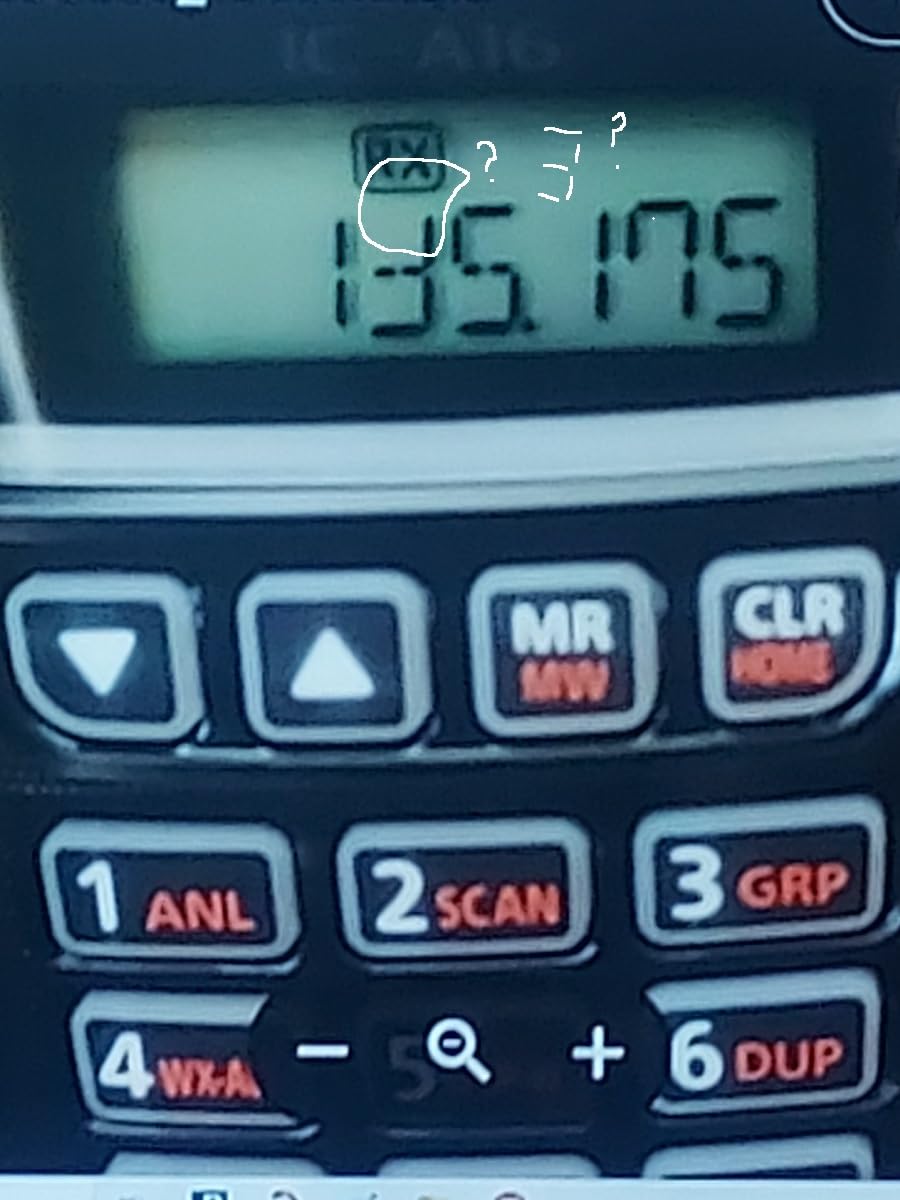
The BNC antenna connector is the sleeper feature. Most handhelds ship with a fixed rubber duck, and the BNC lets you bolt on a proper quarter-wave whip or run a small remote antenna on the belly of the aircraft, which is exactly the upgrade the cockpit range discussion keeps pointing to. Side tone monitoring lets you hear your own voice through a third-party aviation headset, so you know the mic is live.
Automatic noise reduction keeps reception usable next to ground power equipment, which is the situation where a cheap radio falls apart first. Owners report clear transmission and good receive range at about six miles out in the conditions they describe, which is right at the practical ceiling for a handheld inside a metal cabin.
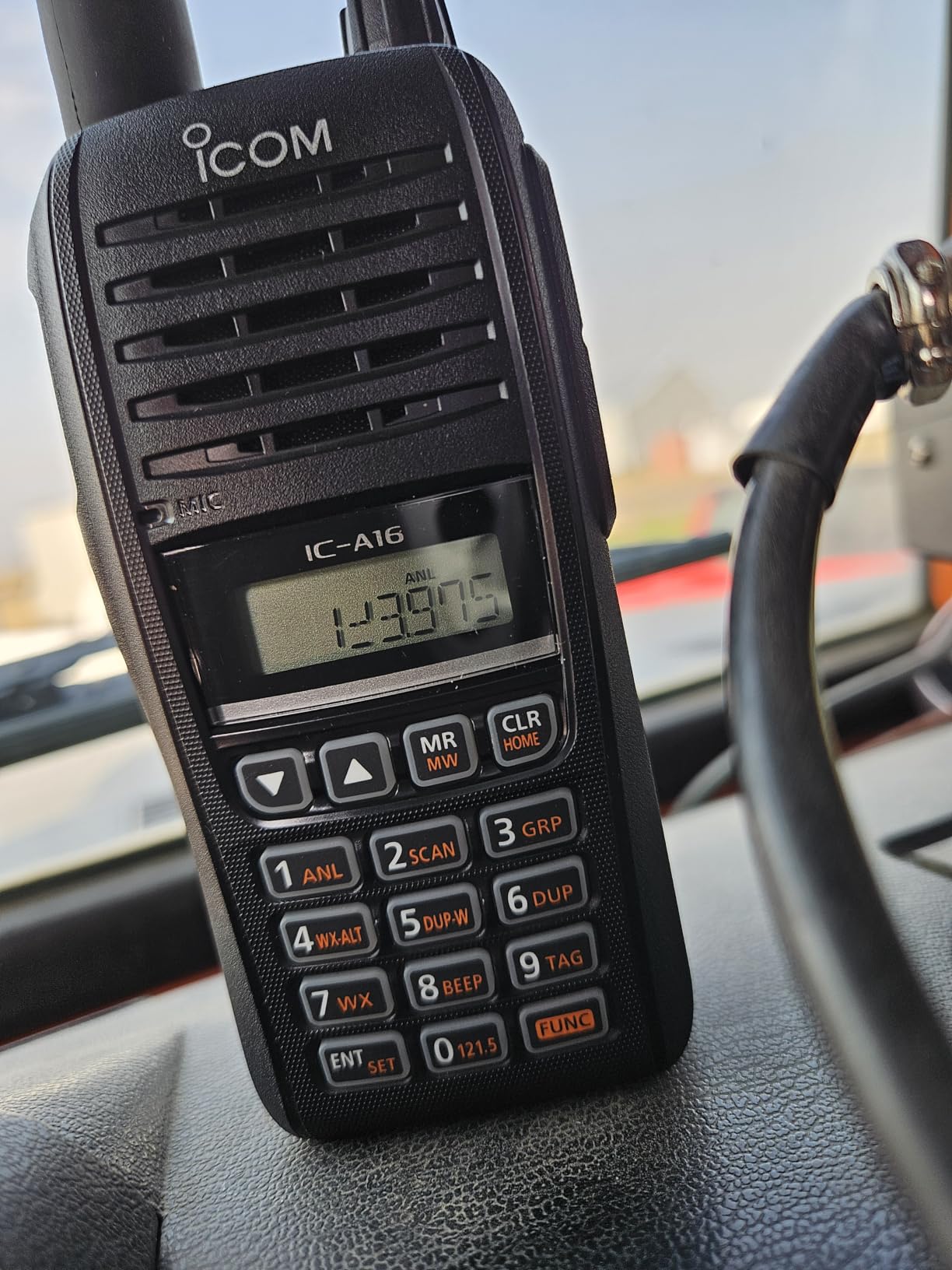
The weak points are honest ones. The screen is small, and if a display segment ever fails you will be squinting at a degraded readout, which is why we would keep a second radio in the aircraft. One owner received a unit with a defective display segment and returned it, so inspect the screen the day it arrives.
Programming is the other complaint, and it is a real one. Icom’s process is less intuitive than on older sets and owners routinely describe following video tutorials to get channel banks loaded. The documentation is thin too, with a basic guide that points at an online manual that is hard to locate.
Best for: instructors, line crews, students working through a flight club, and any pilot who flies rain, cold composite or aluminum aircraft and wants a radio that shrugs off the environment.
What you should know before buying the IC-A16
Check the headset situation first. The IC-A16 is designed for third-party aviation headsets with side tone, and the connector arrangement means you may need the correct adapter rather than a bare cable. Confirm that before you order, because it is the single most common surprise for new buyers in this category.
Also weigh the Icom support question. Multiple owners report poor direct support from the manufacturer, so the value of buying from a retailer with straightforward returns goes up for this model more than for the others on the list.
Where the IC-A16 falls short
There is no navigation of any kind, so this is a communications-only radio. If your flying includes instrument approaches where you want a redundant bearing source, or you simply want the VOR demonstration for a check ride, this box cannot do it.
The 200 channels and the small display also mean it is not the radio for someone who likes to store a hundred programmed regional frequencies and scroll through them. It is a radio for someone who wants four or five working frequencies and a button for the emergency channel.
4. Sporty’s PJ2+ COM: the simplest radio to fly with a headset
Sporty’s PJ2+ COM Aviation Handheld Radio
6W peak PEP
Built-in dual PJ headset plugs
760 memory channels
USB-C plus six AA
One-year warranty
Pros
- Built-in dual PJ plugs mean no adapter
- Operable one-handed with large buttons
- 6W output with loud clear headset audio
- USB-C input for aircraft power
- One-year manufacturer warranty
Cons
- Not water resistant
- No VOR or navigation functions
- Slightly larger and heavier than rivals
The PJ2+ solves the adapter problem that every other radio on this list creates. The dual PJ headset plugs are built into the body, so a standard aviation headset with PJ connectors plugs straight in with no cable, no dongle and nothing to lose. For a student pilot or a first-time owner, removing that step removes the most common reason people get frustrated with a handheld.
It is also the easiest unit here to operate in flight. There are no nested menus to learn, the buttons are large, and the whole radio is workable one-handed. Dedicated flip-flop, push-to-talk and backlight buttons sit where your thumb already is, and the backlit keypad means you can tune a frequency in a dark cockpit without guessing.
The 6W peak output is at the top of the handheld range, and owners report clear, loud audio in headsets with good range. The 3.5 mm headphone jack on the side is for listening without a headset, which makes the PJ2+ a genuinely good airshow and ramp radio on its own. For non-pilots who just want to follow aircraft talking to towers, this is the most approachable box here.
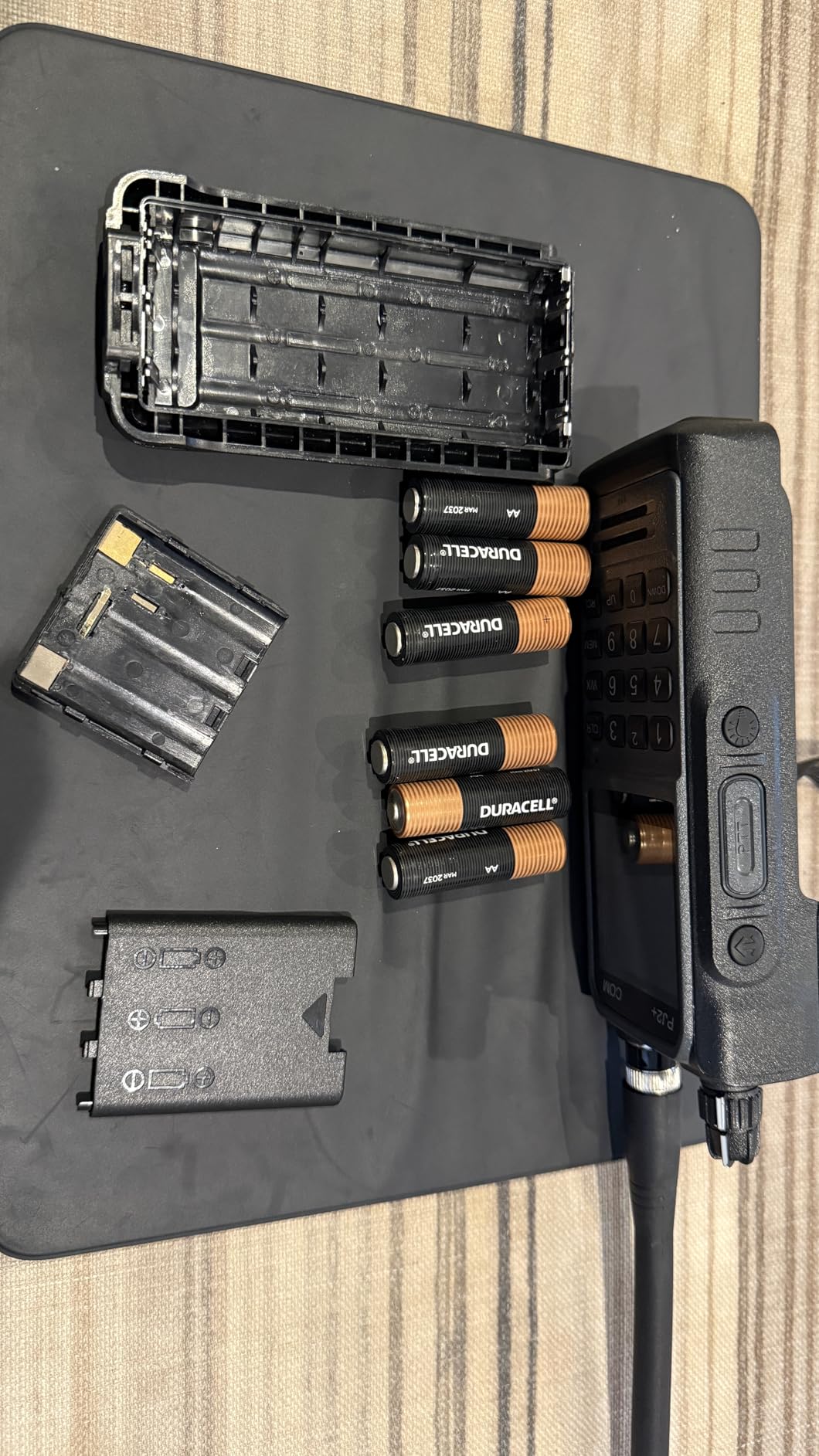
Power is the underrated story. Six AA cells mean the radio can sit in a hangar or a tail number for months and still work when you need it, with no lithium pack slowly draining, and the USB-C input lets you run it from aircraft power on long days. The 760 memory channels are the most in this lineup and program easily.
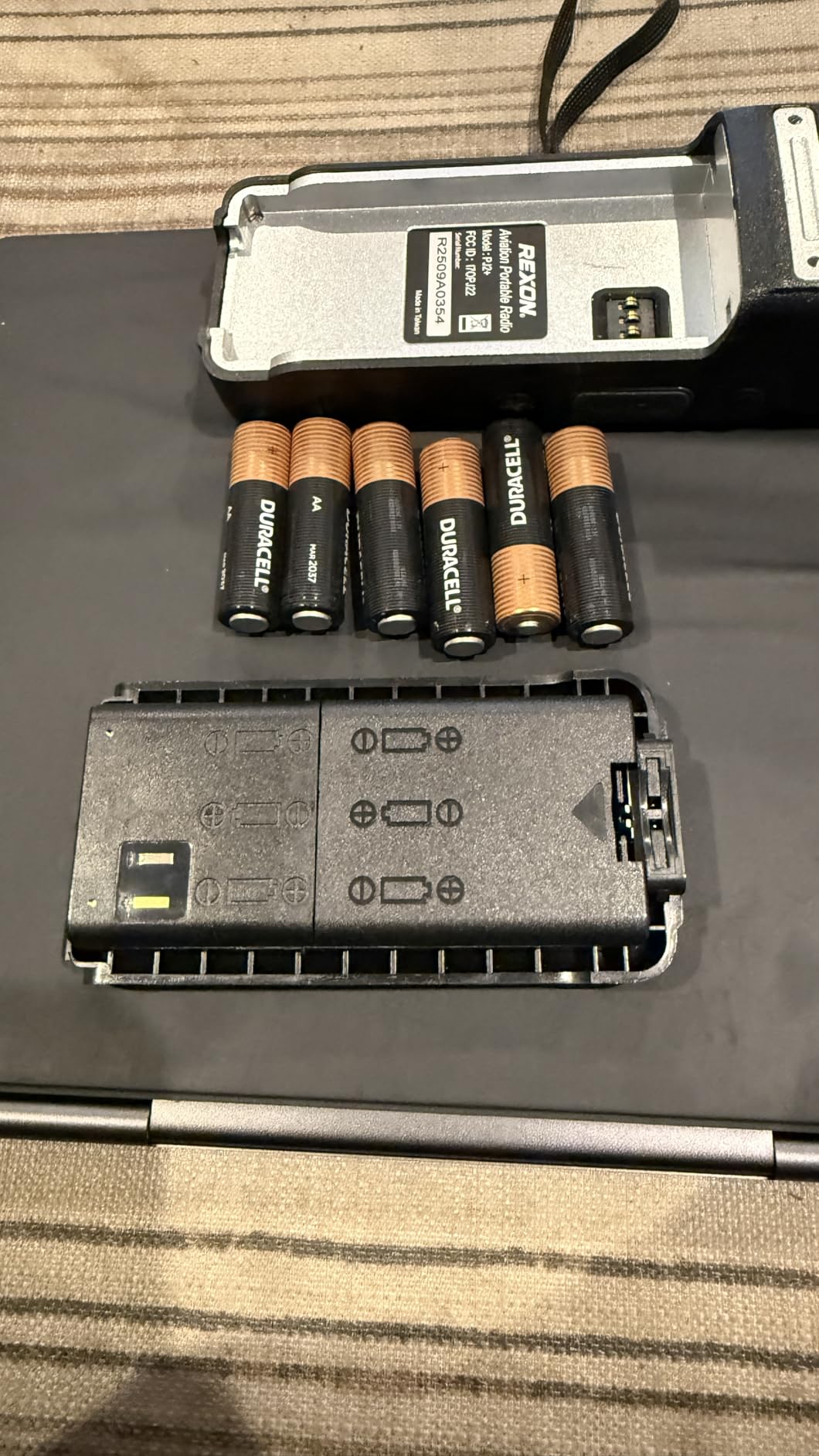
The radio is described in forums as big and clunky, and at 6 inches tall and 12.8 ounces it is the largest unit in the roundup. Forum owners who pair it with a belly-mounted external antenna report that it works great, which is the configuration to consider if you fly a composite or a tube-and-fabric aircraft with no good interior mounting spot.
Water resistance is the notable gap. The listing states plainly that the PJ2+ is not water resistant, so it belongs in a jacket pocket rather than on a wet floatplane step, and it is a fair trade against the built-in headset plugs.
Best for: student pilots, renters, and anyone who plugs in a headset and wants to transmit without thinking about adapters. It is also the first radio we would suggest to a non-pilot who wants to listen.
What you should know before buying the PJ2+
Confirm your headset uses PJ plugs. That is the whole trick, and if your headset is a LEMO or a proprietary wireless design, this radio loses its main advantage. Wireless headset owners should look at the IC-A25N instead, which pairs over Bluetooth.
Decide whether AA or USB-C power suits your habit. The AA capability is superb for storage, but if you prefer a rechargeable pack with a long day of transmitting, the Li-ion units on this list are the better fit.
Where the PJ2+ falls short
There is no VOR, no GPS and no navigation function at all. That is a deliberate simplification, and it buys a simpler interface, but it does mean this is a communications radio and nothing more.
The size is real. Owners who want the smallest radio in their pocket end up with one of the others, and anyone wearing a flight suit with a slim cargo pocket should measure first. There is also no weather sealing, which is worth factoring in for anyone who flies in coastal or agricultural areas where a soaked radio is a bad day.
5. Icom IC-A25N: the best handheld for wireless headset pilots
Icom IC-A25N 76 USA Aviation VHF Air Band Transceiver Radio with Built-in GPS and Bluetooth
6W PEP
2.3 inch night-mode LCD
Bluetooth headset pairing
2350mAh up to 10.5 hours
IP57
Pros
- Class-leading 6W PEP output
- Large high-contrast display with night mode
- Bluetooth removes the adapter step
- Flat keypad maps functions to direct keys
- Flip-flop recalls the last 10 channels
Cons
- Highest cost in the lineup
- Navigation capability is limited next to a dedicated GPS
The IC-A25N is a communications-first radio, and the built-in Bluetooth is the reason to buy it. Pair it with a Bluetooth aviation headset and there is no adapter cable to thread through a headset connector in a dark cockpit, which is the single most common piece of advice that comes back from owners of every other radio in this roundup.
The 2.3 inch high-contrast LCD with a night mode is the largest screen among the non-color units, and owners single it out for readability in both daylight and a dark cabin. The flat keypad maps frequently used functions to direct keys, so the operations you actually need while flying are one press instead of a menu dive.
On the radio side, the 6W PEP output is at the top of the handheld range and the 1.8W carrier figure reflects an improved RF design over the previous generation. Flip-flop recall stores and returns the last 10 NAV/COM frequencies, which is genuinely useful when you bounce between tower, ground and CTAF during a pattern. The 2350 mAh intelligent pack is rated at up to 10.5 hours with on-screen health and status reporting.
Water resistance is IP57, so rain and spray are not the concern they are on the PJ2+. The included AA option means you can drop in cells if the intelligent pack ages out, which is a sensible long-term ownership move given the position of this radio in the lineup.
The compromise is money and navigation. This is the most expensive handheld airband transceiver in the group, and the premium buys a communications radio rather than a GPS. If you fly IFR and want a nav function, the Yaesu FTA-850L covers that ground, and our handheld GPS guide for pilots explains the trade-offs.
Owners also note that it is a mode-switching radio rather than one running two functions at once, so plan your frequency entry around whether you are in a communications or a navigation mode.
Best for: pilots who own a wireless aviation headset, and anyone who wants the largest non-color screen and the longest stated runtime in a bag-stashed backup.
What you should know before buying the IC-A25N
Check which wireless headset you own, and whether it is the kind of Bluetooth device this radio pairs with. Owners of some headsets report pairing that is reliable while others simply do not connect, so verify compatibility before committing.
Work out whether you actually need Bluetooth. If your headset is a wired PJ or twin-plug unit, the Sporty’s PJ2+ gives you the same adapter-free experience for a good deal less.
Where the IC-A25N falls short
It commands the highest cost in this lineup without adding navigation capability that would justify it against a dedicated GPS. Owners are candid about paying for the Bluetooth, the screen and the output power, and paying for those things.
For a pilot who wants one device to do everything, the mode switching is a mild irritation rather than a dealbreaker. Plan the radio first and the nav second, not the other way around.
6. Yaesu FTA-850L: the best handheld for VOR, ILS and GPS
Yaesu FTA-850L Color Bluetooth NAV/COM Aviation Transceiver
WAAS GPS receiver
VOR and ILS functions
Color LCD with touchscreen
Bluetooth headset pairing
2200mAh plus AA case
Pros
- Strong receive and transmit range
- Bluetooth connects instantly on power-up
- Color display with named group memories
- Accurate GPS and VOR against panel references
- Generous accessory package
Cons
- Color screen washes out in direct sunlight
- Battery must stay attached in the cradle
- Single-channel design cannot run ILS and COM together
The FTA-850L is the only unit in this roundup with a color touchscreen, an integrated 66-channel WAAS GPS receiver, and a full set of VOR, ILS localizer and glideslope functions. Owners report the VOR and ILS accuracy checking out against panel references, and the GPS locking quickly. If you fly IFR and want one box that does comms and nav, this is it.
Bluetooth pairing is instant on power-up with Bose aviation headsets, which removes the adapter scramble in the same way the IC-A25N does. The 2200 mAh Li-ion pack comes with an AA battery case alternative, and the accessory package is the most complete here, with a headset adapter, base charger, 12V and AC power cables, ferrites, a PC USB cable and a belt clip.
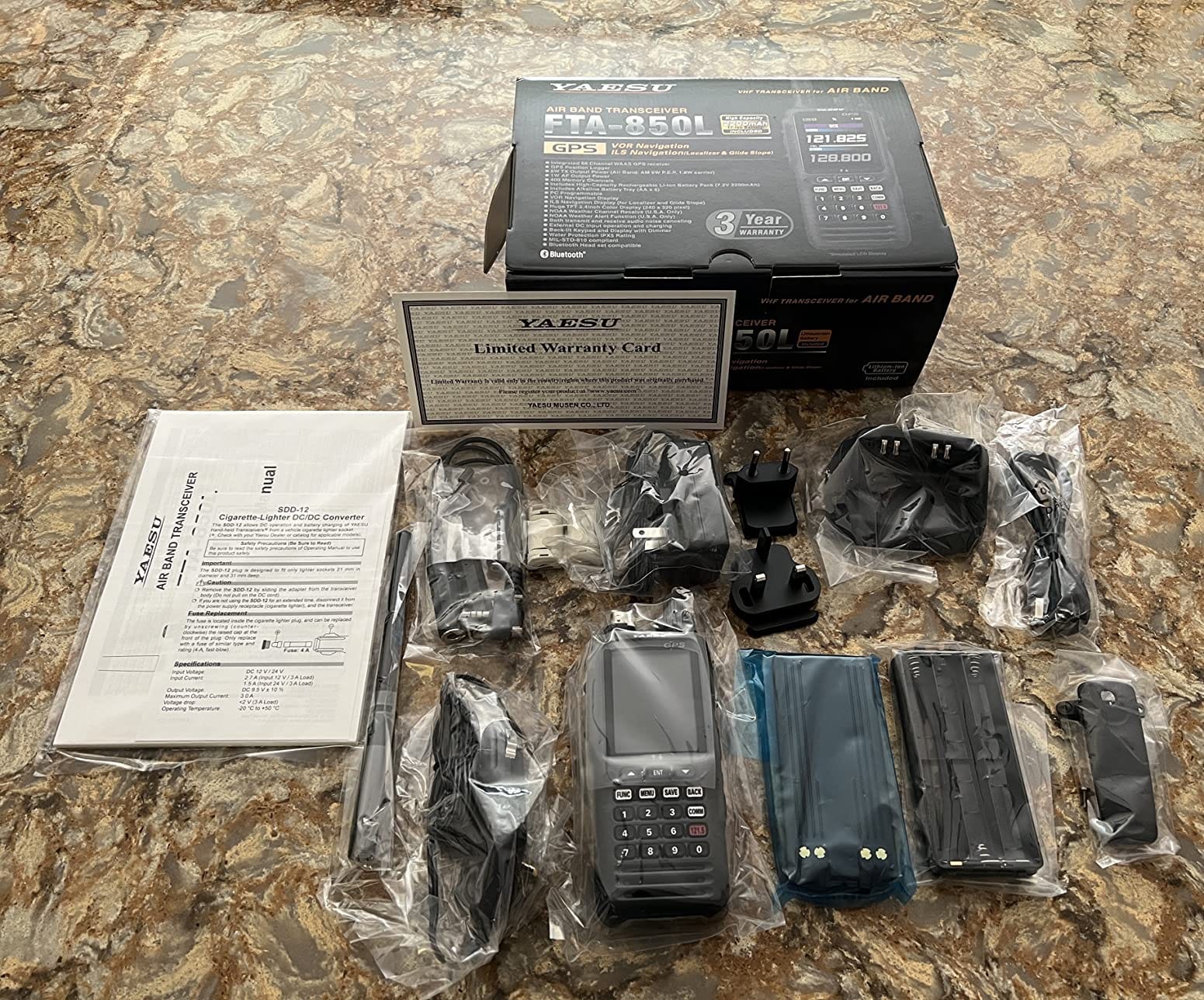
Range is the other strength owners mention most, picking up aircraft and ATC comms from many miles away with a strong transmitted signal. The speaker is loud with good voice quality, and owners note it improves markedly once a headset is on. The 8.33 kHz narrowband compatibility matters for anyone flying or traveling in Europe where channel spacing is tighter.
Group memory names and alphanumeric tags show while scanning, which is how a radio with only 66 stored channels still feels navigable rather than cramped. Battery life across multiple flying days is consistently reported as adequate.
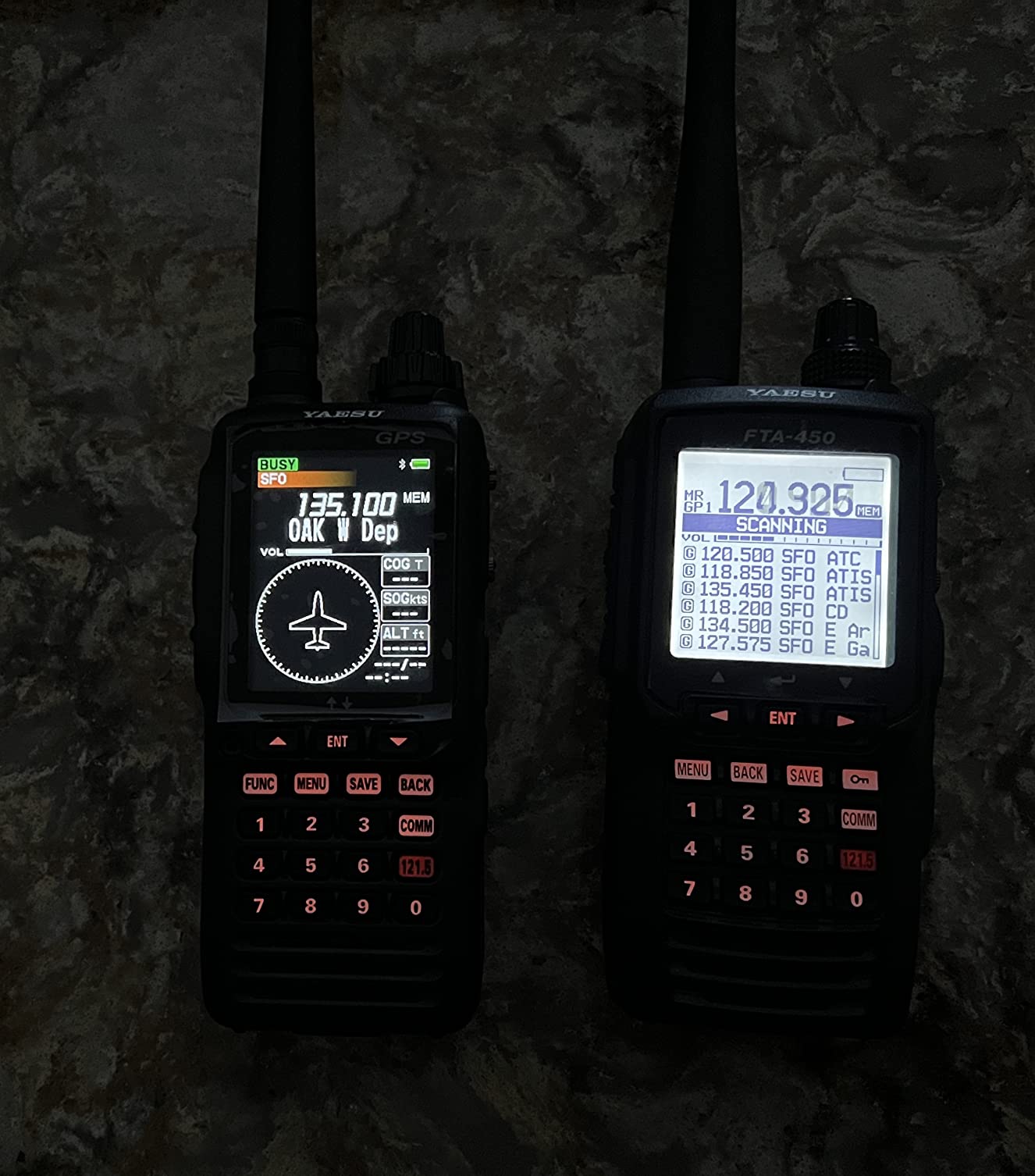
The color display is the recurring complaint, and it is a genuine one. Owners report it washing out and appearing nearly black in direct sunlight, and the fix – cranking brightness – drains the battery faster. On a ramp in summer, that is a real usability problem for a screen that looked like the reason to buy the radio in the first place.
Charging requires the battery to stay attached to the transceiver in the cradle, so you cannot charge a spare pack on its own. Programming logic for the group and channel structure is unintuitive and generally needs study or video guidance. One review also reports a unit that never received a frequency in six months, which is a small number but worth mentioning.
Best for: IFR pilots and instructors who want VOR, ILS and GPS in the same box as the comm, and anyone who values a named color display for scanning.
What you should know before buying the FTA-850L
Know what you can legally do with it. Owners are clear it is an emergency backup and a training aid, not a legal replacement for ILS navigation, and that expectation should shape how you use the nav functions. It cannot run ILS and transmit on COM at the same time, so it is a single-channel design and you choose.
Test the screen outdoors before you commit. The sunlight problem is well documented, and if your flying is mostly daytime ramp work rather than cockpit work, a monochrome high-contrast display may serve you better.
Where the FTA-850L falls short
Bluetooth compatibility is narrower than the word suggests. Owners pair Bose headsets happily and report failures with other devices, including some Motorola earpieces and earbuds, so check your specific headset model.
The 66-channel limit is low next to the PJ2+ and the Wouxun, and charging while operating is not recommended on this model, with a full charge taking about five hours. It is also one of the most expensive units here, which makes the washed-out screen a harder thing to accept.
7. Wouxun KG-S74A: the best budget handheld aviation radio
Wouxun KG-S74A Compact Waterproof VHF Aviation Radio with USB-C Charging
Up to 6W PEP
Superheterodyne receiver
400 memory channels
2000mAh up to 26 hours
IP67 waterproof
Pros
- Genuine airband reception at an entry-level price
- Superheterodyne receiver beats typical cheap radios
- USB-C charging instead of a cradle
- Battery reported to last for weeks
- Three buttons assignable to six actions
Cons
- Squelch awkward to reach without the firmware update
- Programming cable and software not supplied
- Headset adapter has been hard to source
The Wouxun KG-S74A is the reason this list has seven entries and not five. It is a genuine 118 to 137 MHz AM airband radio with up to 6W PEP output, and its superheterodyne receiver is noticeably more sensitive than the cheap handhelds that get recommended in airband threads, which is why pilots on the airband forums talk it up as a listening-first unit that will also transmit.
Battery life is the standout number. The 2000 mAh pack is rated at up to 26 hours with battery save active, and owners report weeks between charges. USB-C charging removes the cradle entirely, so a single cable from a wall charger, a power bank or the aircraft charges it.
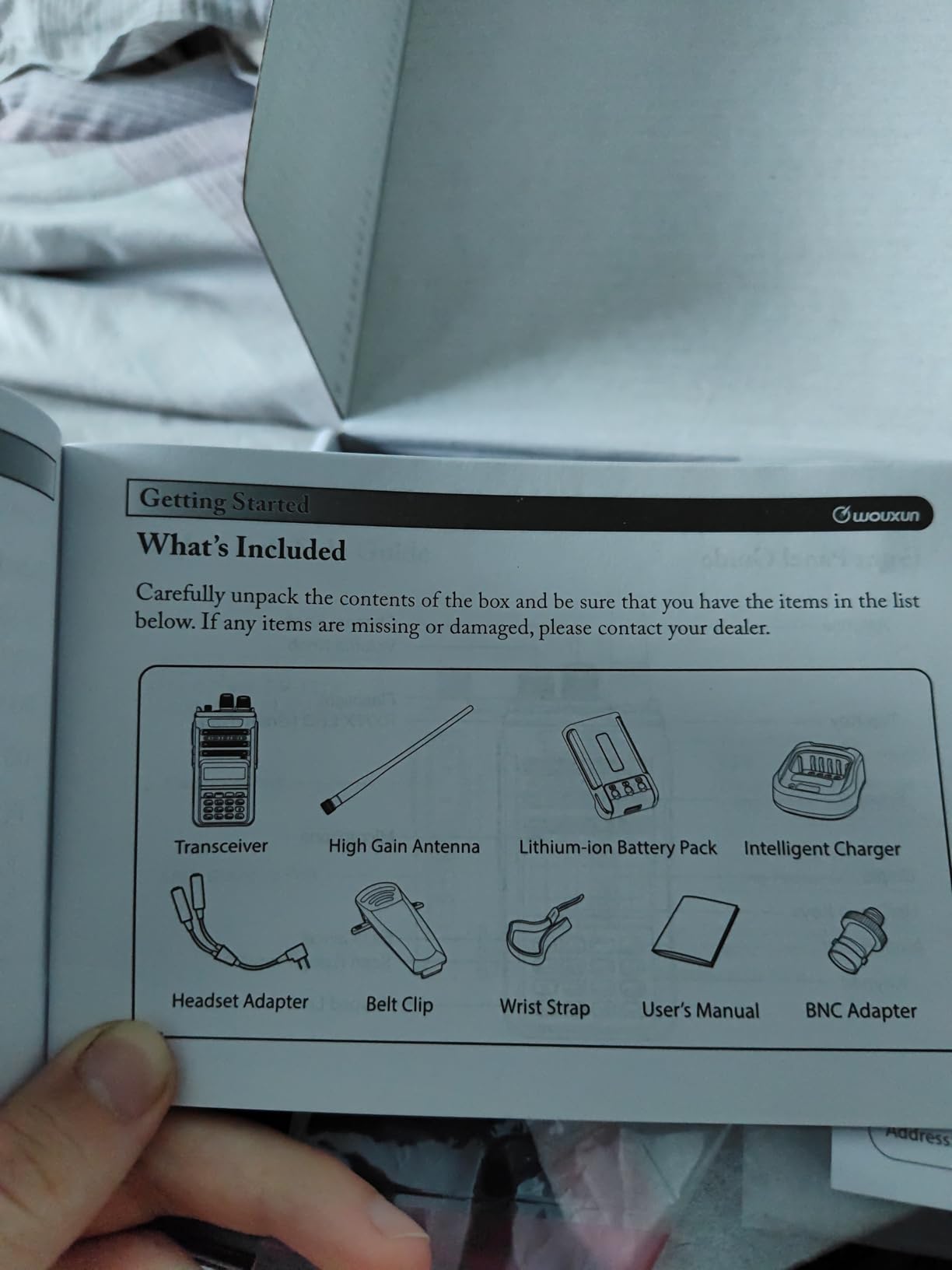
It is also unusually configurable for the price. Three buttons are assignable to six actions through short and long press, there is a backlit LCD and keypad, and a built-in flashlight is a nice touch for a night preflight. At 4.53 inches tall and IP67 rated, it is compact enough for a flight bag and durable enough to survive daily handling.
NOAA weather channels with five weather alert notifications add a listening feature that most of the higher-priced units handle only as an aside. Owners also report radio checks with aircraft several miles away, which is at the practical edge of what a handheld does inside a metal cabin.
The 3.9 average rating is not mysterious. The radio performs; the friction is in the software and accessories. Squelch access is buried in the menus and only takes effect after you exit, and a firmware update was needed before squelch could be assigned to the side buttons. Battery saver mode clips the first half second of every transmission, so turn it off.
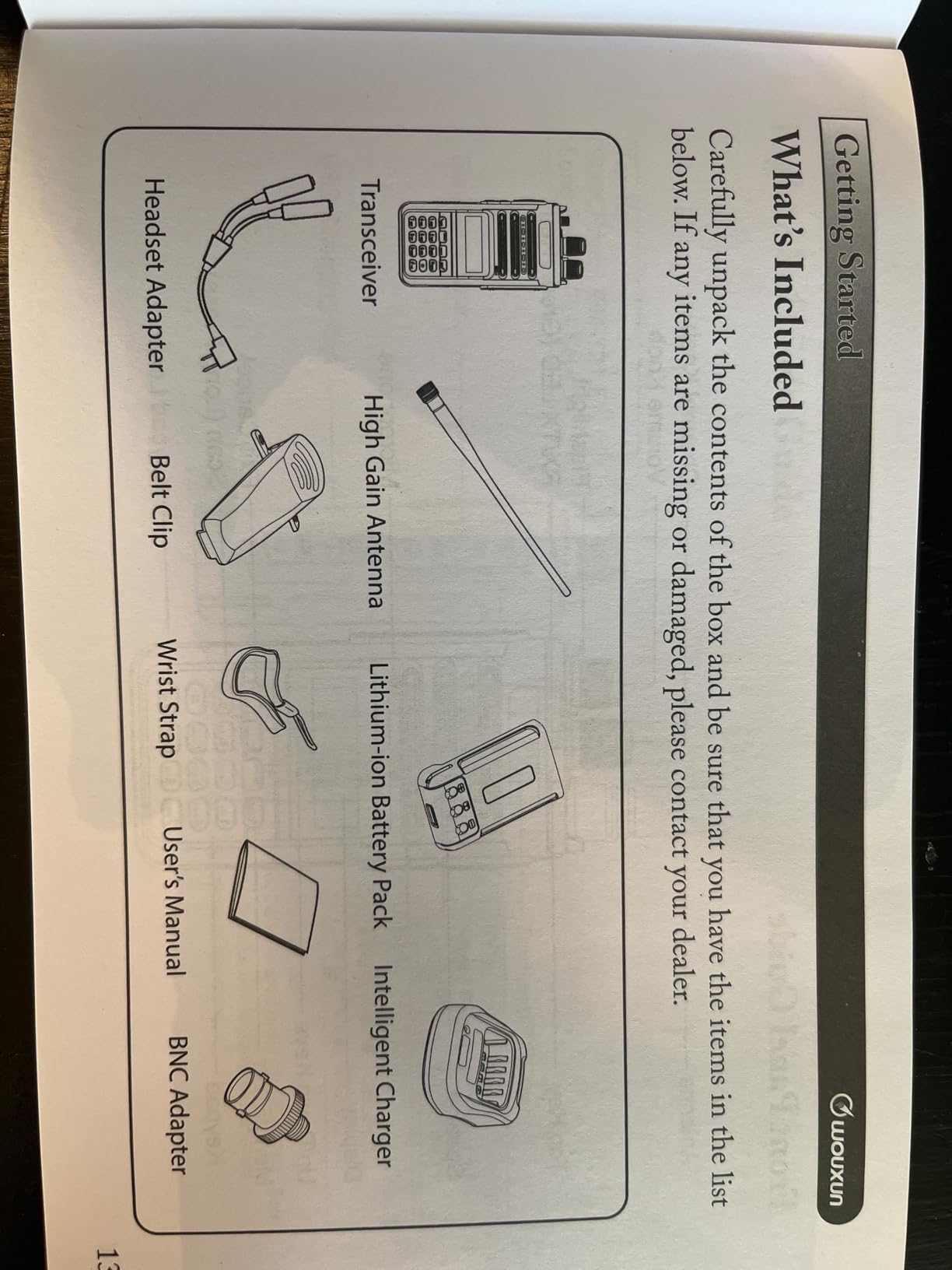
Programming is the real headache. No cable or software is supplied, Wouxun programming software is not downloadable from the official site, and the radio is not yet supported by CHIRP, so channel mapping has to be done by hand or with undocumented third-party tools. The headset adapter pictured in the listing has also been hard for buyers to source, and one review reports a unit arriving without it, and it does not work with Lightspeed headsets regardless of adapter.
Best for: students on a strict budget, anyone who mostly listens, and buyers who want real airband reception and long battery life without paying flagship money for a GPS they will never open.
What you should know before buying the KG-S74A
Solve the programming problem before you commit. If you are comfortable entering frequencies by keypad and using the 400 memory channels, this radio is excellent value. If you want software programming from a spreadsheet, budget extra time and check the third-party tooling situation first.
Confirm the headset adapter is included with your unit, because reports vary on what ships in the box. The IP67 rating also depends on the supplied USB-C port seal staying in place rather than being swapped for a different cover, so keep the original part.
Where the KG-S74A falls short
There is no VOR and no navigation of any kind, and the antenna connection can work itself loose when the radio is worn on a belt, which is a simple thing to check before every flight.
The audio and the menu logic are not at Icom or Yaesu level, and the squeeze on the 3-star and 4-star reviews is almost entirely about the software experience rather than the radio itself. If you fly professionally or need a nav function, spend more and move up the list.
How to choose a handheld aviation radio
COM only, NAV/COM, or GPS: decide what you actually need
A COM-only radio transmits and receives on the airband and does nothing else, and for most pilots that is the entire requirement. A NAV/COM handheld adds a VOR receiver and, on the better units, ILS localizer and glideslope decoding, which lets you use it for a VOR demonstration or a practice approach. A GPS-equipped handheld adds a position receiver, useful for flight plan transfer and for showing position to a student.
Our honest read, which matches the forum consensus, is that handheld VOR has been largely superseded by tablets and panel GPS. Buy NAV capability if you are a student who will need to demonstrate it, or if you enjoy it. Buy GPS if you want one box for the flight bag. Otherwise the money is better spent on a radio you will actually keep charged.
Wattage, channel spacing and channel count
Wattage is the simplest differentiator. Five-watt units such as the FTA-250L sit at the lower end, while the Sporty’s PJ2+, Wouxun KG-S74A and the Icom IC-A25N run at up to 6W PEP. Higher power translates directly into a stronger signal at the edge of the pattern, which is where a handheld is weakest.
Check that the radio supports 8.33 kHz narrowband as well as standard 25 kHz spacing if you fly or travel in Europe, where the narrower channels are required. Channel count matters less than it looks, because nobody uses 760 channels, but a low count with named group memories, as on the FTA-850L, is more usable than a high count with no labels.
Battery strategy: lithium-ion or AA alkaline
Lithium-ion is lighter and lasts a full day, and the newer intelligent packs report remaining capacity on screen. The Icom IC-A25N is rated at up to 10.5 hours and the Wouxun at up to 26 hours with battery save, while the Wouxun’s USB-C port is the only charging in this roundup that does not need a cradle.
AA alkaline matters if the radio is going to live in a tail number or a flight bag for weeks without a charger. The Yaesu FTA-550L, FTA-850L and Icom IC-A25N all accept a battery case of cells, and the Sporty’s PJ2+ runs on six AA cells as its primary supply. Our rule: lithium for daily flying, cells for emergency equipment.
Headset jacks, side tone and PTT
This is where most buyers go wrong. The two common aviation headset connectors are the twin PJ plug and the single LEMO plug, plus the proprietary and wireless designs from the major headset makers. A radio with built-in PJ plugs, which only the Sporty’s PJ2+ has here, works with a standard headset immediately. Everything else needs the correct adapter, and the adapter is usually the thing that goes missing from the box.
Side tone is the feature that tells you your microphone is actually transmitting when you are on a headset. The Icom IC-A16 offers it explicitly, and the optional VS-3 headset adds it to the IC-A25N. If your plan is to work on the ramp or run a club frequency, buy a radio that supports side tone. Wireless headset owners should confirm Bluetooth pairing before buying, as the IC-A25N and FTA-850L do that while the Wouxun does not.
Water rating, weight and build quality
Ingress ratings are not comparable across brands because the manufacturers apply their own testing. In practice the Icom IC-A16’s IP68 is the most aggressive protection here, the Icom IC-A25N and Wouxun KG-S74A sit at IP57 and IP67, and the Yaesu units are IPX5 with screw-down port covers. The Sporty’s PJ2+ states plainly that it is not water resistant, which is the one real durability gap in the lineup.
Weight ranges from 9.1 ounces on the IC-A16 to 12.8 ounces on the PJ2+. Build quality is where brand reputation is earned, and the strongest signal in our review data comes from owners describing Icom units as nearly indestructible after drops onto concrete, a reputation built on commercial land-mobile radios rather than consumer electronics. If you want a radio that survives the ramp, that is the story to buy on.
Programming, menus and returns
All manufacturer interfaces draw complaints, and the most common forum advice is to buy from somewhere you can return. Programming is the real dividing line: the Sporty’s PJ2+ and Wouxun KG-S74A can be loaded by keypad, while Yaesu and Icom units that need a PC cable make the weekend afternoon project mandatory. Read the interface reviews for the specific model rather than the brand, because the menus differ a lot between generations.
Our broader advice for anyone shopping in this category: buy one radio, keep it charged, load your local tower, ground, CTAF and ATIS frequencies, and confirm the return window before you fly with it. It is a category where the difference between a great purchase and a frustrating one is usually the interface, not the radio.
Related reading for anyone building out a kit: our guides to the best ham radios for beginners and the best GMRS radios for off-roading cover the other common uses for a handheld in the field, and the best emergency radios with hand crank covers the go-bag question from a different angle.
Frequently Asked Questions
What is the best handheld airband radio?
The Yaesu FTA-250L is the best handheld aviation radio for most pilots in our testing. It is COM-only, transmits at 5W, stores 250 channels, carries an IPX5 rating and ships with a Li-ion battery, charging cradle, 12V lead and a headset adapter. Owners rate it 4.6 out of 5 across more than 300 reviews. If you need VOR, ILS or GPS functions, the Yaesu FTA-550L or FTA-850L are the picks.
Who makes the best handheld radio?
Icom, Yaesu and Sporty’s are the three makers that matter in aviation handhelds. Icom builds the most rugged units, with owners describing radios that survive drops onto concrete and an IP68 body on the IC-A16. Yaesu covers the widest range, from the simple FTA-250L to the color FTA-850L. Sporty’s makes the easiest-to-operate unit with built-in PJ headset plugs. The deciding factor is usually interface preference and headset compatibility, not brand reputation.
Which portable radio has the best sound quality?
Audio output varies more than most buyers expect. The Yaesu FTA-250L delivers 700 mW of internal audio, the Yaesu FTA-550L adds 50 dB of audible noise suppression, and the Icom IC-A25N pairs with wireless headsets over Bluetooth, which usually beats any built-in speaker. For raw listening power on the ramp, the Wouxun KG-S74A holds up well for its class. With a headset connected, clarity differences shrink considerably.
How far can a handheld radio transmit in a plane?
About five miles from inside an aluminum cockpit, regardless of the radio you buy. Aircraft skin acts as a Faraday cage, so the signal has to escape a metal box before it reaches a tower. Carbon fiber and composite panels are worse, behaving like a large resistor that swallows RF, which is why glider pilots report handhelds are nearly useless without an external antenna. A quarter-wave whip on the BNC connector is the standard upgrade, and some radios can accept a small remote antenna for the cabin floor or belly.
Can a handheld aviation radio transmit, and is it legal?
Yes, if it is an aviation transceiver rather than a scanner. Receive-only scanners and wideband receivers cannot transmit on the airband no matter what accessories you add, so they will never be a backup comm. A handheld transmits at up to 6 watts on 118.000 to 136.975 MHz, which is designed to be a secondary or backup means of communication. It is not a legal substitute for a panel radio, and it is not a legal substitute for ILS navigation under instrument rules.
What radio do Navy Seals use?
Military and special operations teams use rugged commercial or military-specification radios built to a different standard, with encryption, tactical frequency bands and shock and water specifications far beyond aviation requirements. Those radios are not airband transceivers and are not legal or practical for civilian flying. If you want that level of physical toughness, the closest aviation equivalent is the Icom IC-A16 with its IP68 rating and land-mobile-style build.
Final verdict
The Yaesu FTA-250L is our pick among the best handheld aviation radios in 2026 because it does the one job a backup comm radio exists to do, without a menu to learn or an adapter to lose. If you want VOR and ILS in the same box, step up to the FTA-550L. If you fly in weather and want the toughest unit on the list, take the Icom IC-A16. If you own a headset with PJ plugs and want zero adapter drama, the Sporty’s PJ2+ is the easiest radio in the cockpit.
Whatever you choose, load your frequencies, charge the battery, and give it a listen on the ramp before you need it. A handheld that has not been checked is just equipment in a bag.