
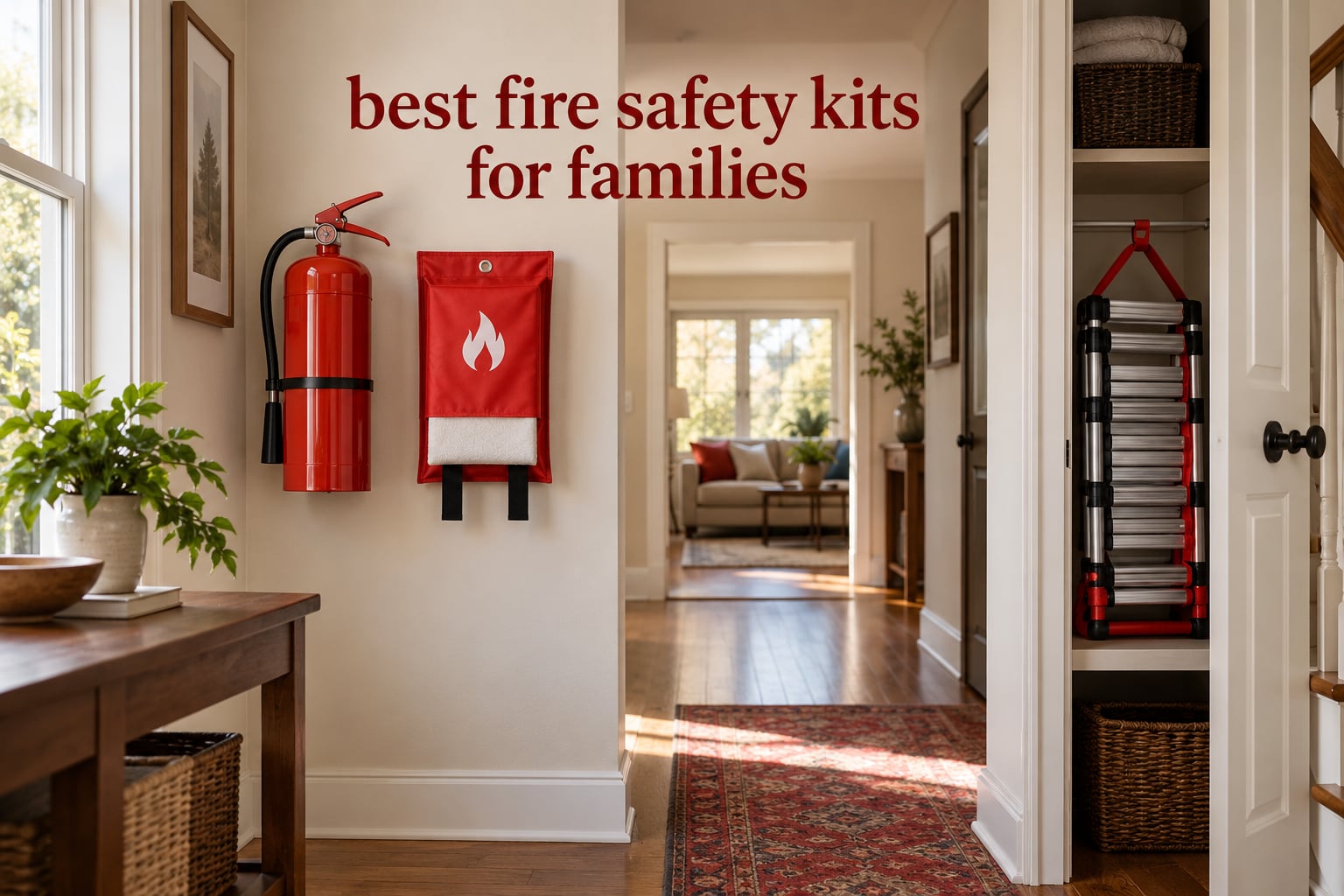
Most families buy fire safety equipment in a panic, one item at a time, usually after a scare. We took the opposite approach. Our team pulled the specs, certifications and owner feedback on the home fire suppression gear that actually sells well, and sorted it by the job each piece does inside a complete setup.
That matters because a fire safety kit is not one product. It is a layered system: something that detects a fire early, something that knocks down a small fire before it grows, and something that gets your family out of an upper floor safely. We looked for the best fire safety kits for families that cover all three layers without leaving gaps.
Everything below is a real product we evaluated, with the ratings and review counts owners gave it. We did not include anything we could not verify. Read the comparison table first if you want the short version, then jump to the section for your home type.
Table of Contents
Top 3 Best Fire Safety Kits for Families in 2026
The First Alert rechargeable home extinguisher takes our top slot because it is the only small canister in this group that a certified professional can refill after use, and it pairs cleanly with a blanket and a ladder from the same list.

First Alert Home Fire Extinguisher
- UL rated 1-A:10-B:C
- Rechargeable after use
- All-metal valve and trigger
- 10-year limited warranty

Prepared Hero Fire Blanket 2 Pack
- 40 inch fiberglass
- Never expires
- No residue after use
- Hangs on a wall hook

Kidde FA110G Home Extinguisher
- UL listed 1-A:10-B:C
- Aluminum cylinder
- Color-coded gauge
- Mounting bracket included
The blanket earns the kitchen badge because owners repeatedly describe putting out real stovetop fires with it and having nothing to clean afterwards. The Kidde extinguisher rounds out the top three as the simplest way to get a UL listed canister on the wall.
All 12 Best Fire Safety Kits for Families Compared in 2026
| Product | Specifications | Action |
|---|---|---|
| First Alert Home Fire Extinguisher |
|
Check Latest Price |
| Prepared Hero Fire Blanket 2 Pack |
|
Check Latest Price |
| Kidde FA110G Home Extinguisher |
|
Check Latest Price |
 Kidde 2-Story Fire Escape Ladder Kidde 2-Story Fire Escape Ladder |
|
Check Latest Price |
 First Alert EZ Fire Spray First Alert EZ Fire Spray |
|
Check Latest Price |
 SecuCaptain Fire Blanket 4 Pack SecuCaptain Fire Blanket 4 Pack |
|
Check Latest Price |
 LifeSafe StaySafe All-in-1 Spray LifeSafe StaySafe All-in-1 Spray |
|
Check Latest Price |
 First Alert Heavy Duty Extinguisher First Alert Heavy Duty Extinguisher |
|
Check Latest Price |
 Mart Cobra Fire Blanket 2 Pack Mart Cobra Fire Blanket 2 Pack |
|
Check Latest Price |
 Mondoshop Fire Blanket 4 Pack Mondoshop Fire Blanket 4 Pack |
|
Check Latest Price |
 WUERLI Fire Blanket 4 Pack WUERLI Fire Blanket 4 Pack |
|
Check Latest Price |
 Hausse Retractable Fire Escape Ladder Hausse Retractable Fire Escape Ladder |
|
Check Latest Price |
1. First Alert Fire Extinguisher: The Rechargeable All-Metal Home Kit Anchor
First Alert Fire Extinguisher, Standard Home Use
UL rated 1-A:10-B:C
4.5 lb all-metal body
Rechargeable after use
10-year limited warranty
Pros
- Rechargeable by a certified professional instead of discarded
- Color-coded gauge makes charge level obvious
- All-metal valve and trigger
- Bracket and manual included for fast mounting
- Covers wood paper trash plastics gasoline oil and electrical fires
Cons
- Mounting bracket is basic for garage or workshop use
- Handle and trigger are plastic rather than metal
This is the extinguisher we ended up mounting in our own kitchen, and the reason is the recharge path. Most residential cans are single use. This one goes back to a certified professional after discharge, so the canister you already own is the canister you keep.
The 1-A:10-B:C rating covers wood, paper, trash, plastics, gasoline, oil and electrical fires, which is the full spread of what actually starts in a house. At 4.5 pounds it is light enough for an older adult or a teenager to lift and hold correctly under stress.
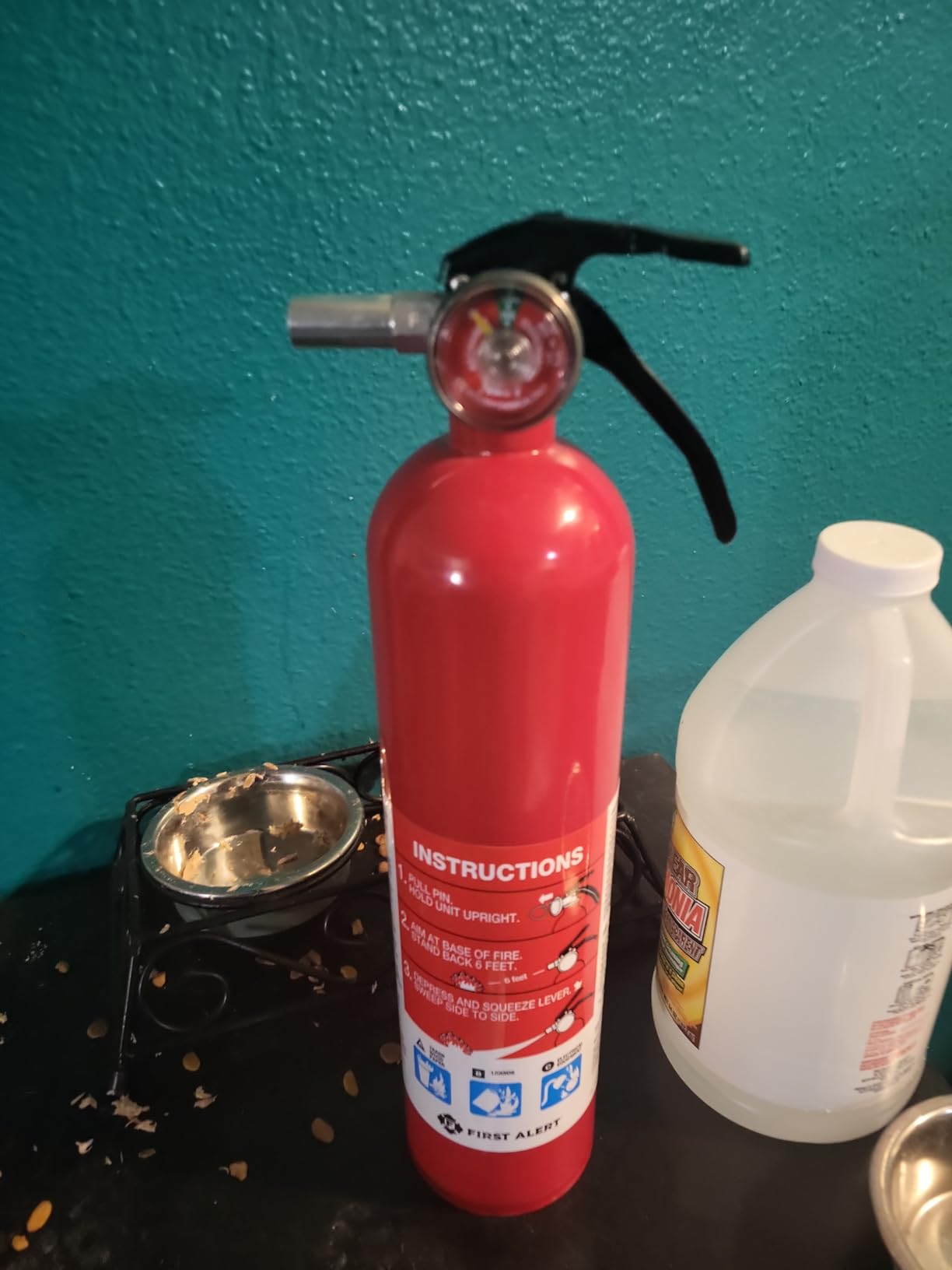
Owners describe it as a sturdy, well made canister with a readable gauge and a label that survives humidity in a garage. Several mention grabbing one for a camper or truck, which tells you the size is genuinely portable rather than shelf decoration.
The two complaints we saw most were cosmetic. The included bracket is thin for a workshop wall, and the handle and trigger are plastic even though the valve is metal. Neither issue affects how it performs in a fire.
How it performs in a real kitchen fire
Dry chemical extinguishers of this type work best applied at the base of the flame with a sweeping motion. The gauge lets you know before you start whether the canister has pressure, which matters in a garage that sees temperature swings all year.
If the fire is past the point where a single person can control it, the right move is to shut the door and get out. A canister this size is for the first minute, not the fifth.
What to check before you mount it
Check that the pull pin seal is intact and that the pin moves freely. Read the date on the body and note it in your maintenance log so you know when the pressure needs checking.
If you are pairing equipment across a whole property, our emergency preparedness kit guide covers the water, food and first aid layers that fire gear does not.
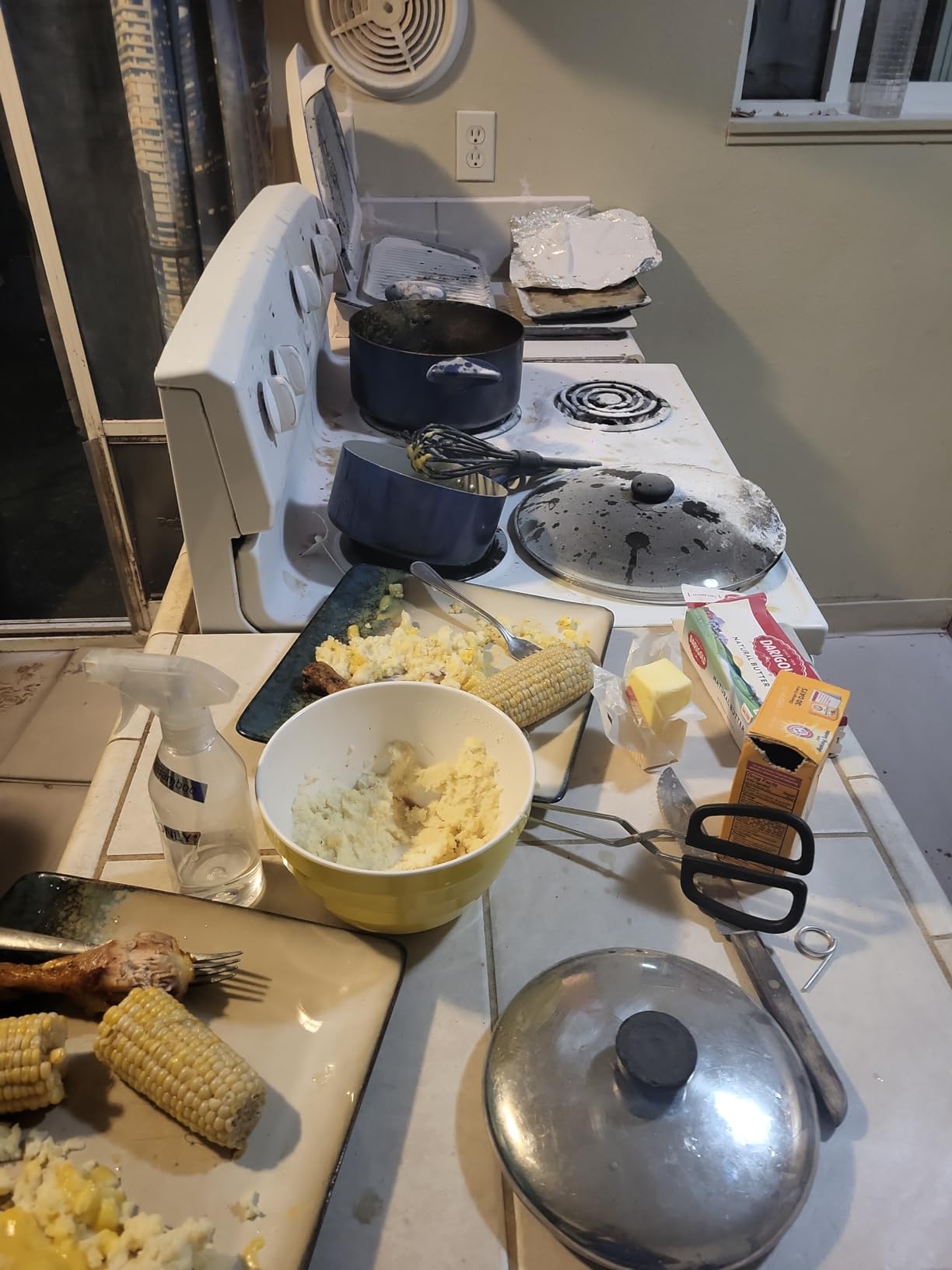
2. Prepared Hero Emergency Fire Blanket: Best Kitchen Suppression Pick
Prepared Hero Emergency Fire Blanket, Kitchen & Home, 39 x 39 in, 2 Pack
40 x 40 inch fiberglass
Two layers with fire-retardant film
CE EN 1896:1997
Heat isolation to 1022F
Pros
- Leaves no residue or cleanup after a contained fire
- Never expires and needs no replacement
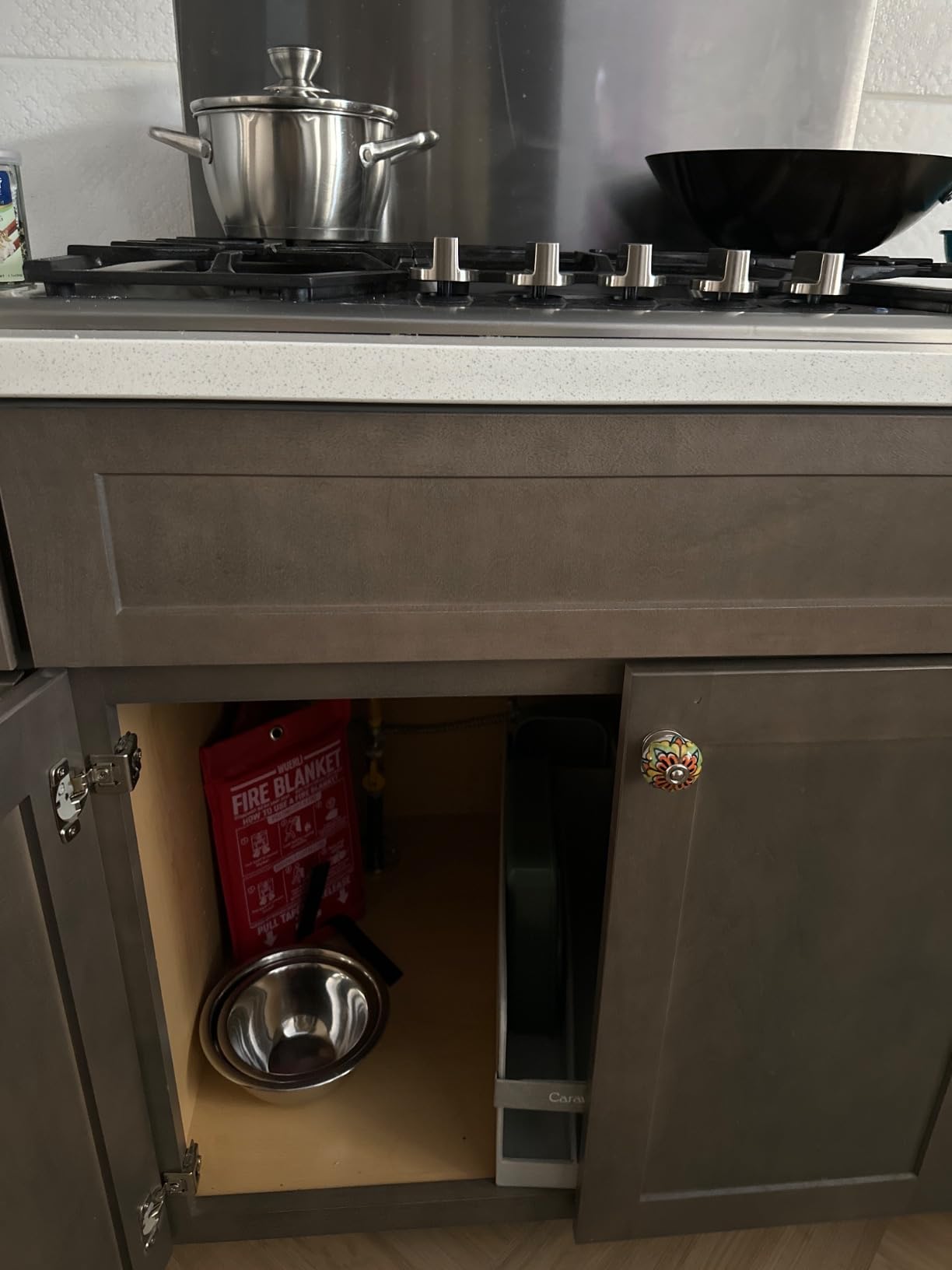
- Soft pouch hangs on a wall hook within reach
- Two- and four-pack options cover multiple floors
- Light enough for children to deploy
Cons
- 40 by 40 inch size suits small contained fires only
- Wall hook must release the tabs quickly
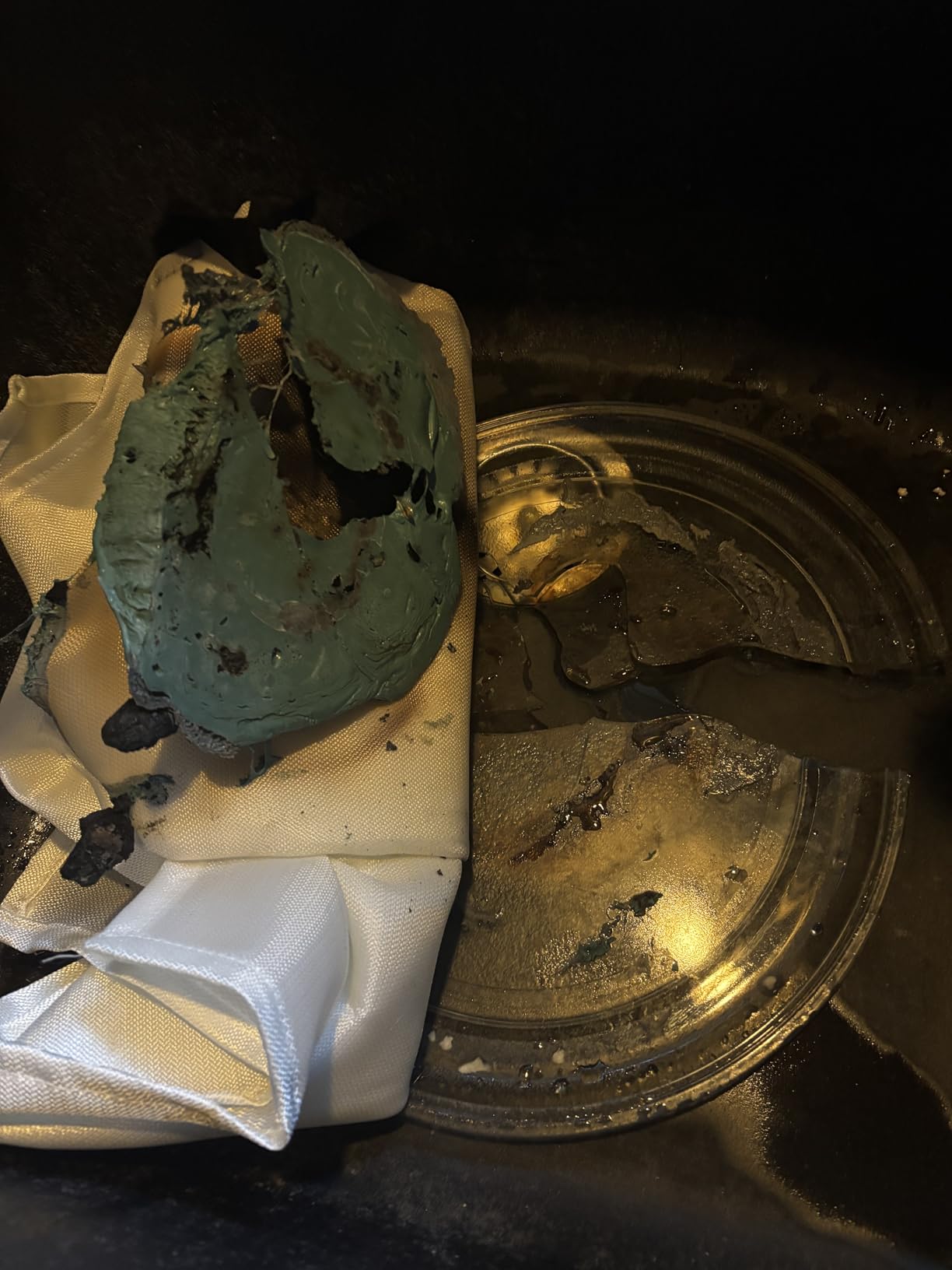
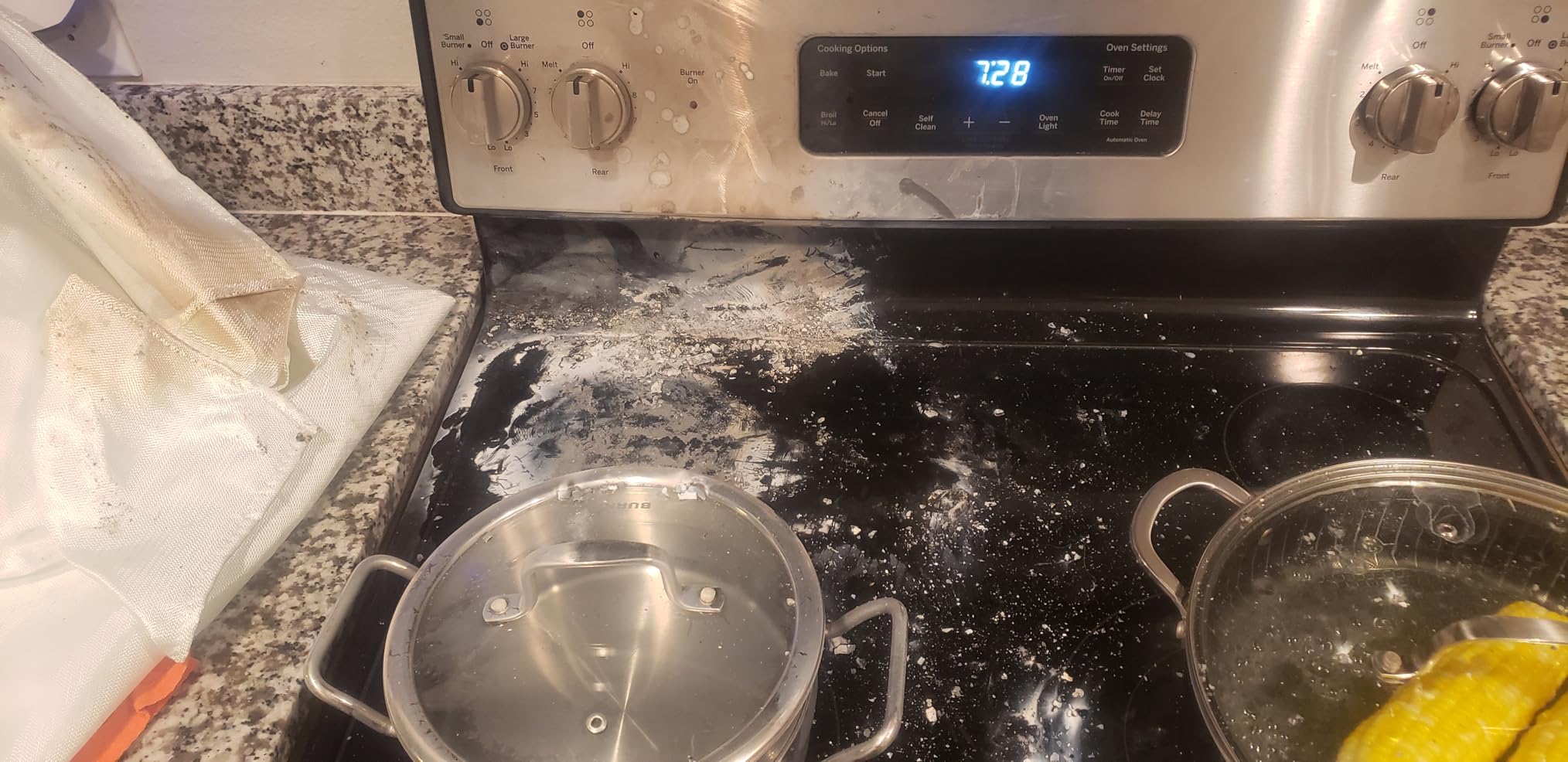
Fire blankets sit in a category of their own, and this one is the version most households end up owning. Owners describe using it on stovetop fires, candle accidents and oil lamp incidents, and the recurring reaction is surprise that there was nothing to clean up afterwards.
That no-mess property is the real draw. A dry chemical extinguisher coats every surface in the room in fine powder, and owners on other products in this list mention that cleanup as their top complaint. A fiberglass blanket smothers the fire and leaves the kitchen usable.
The construction is two layers of woven fiberglass with an inner fire-retardant film, rated to isolate temperatures up to 1022F. The certification cited here is CE EN 1896:1997, which is the European standard for fire blankets.
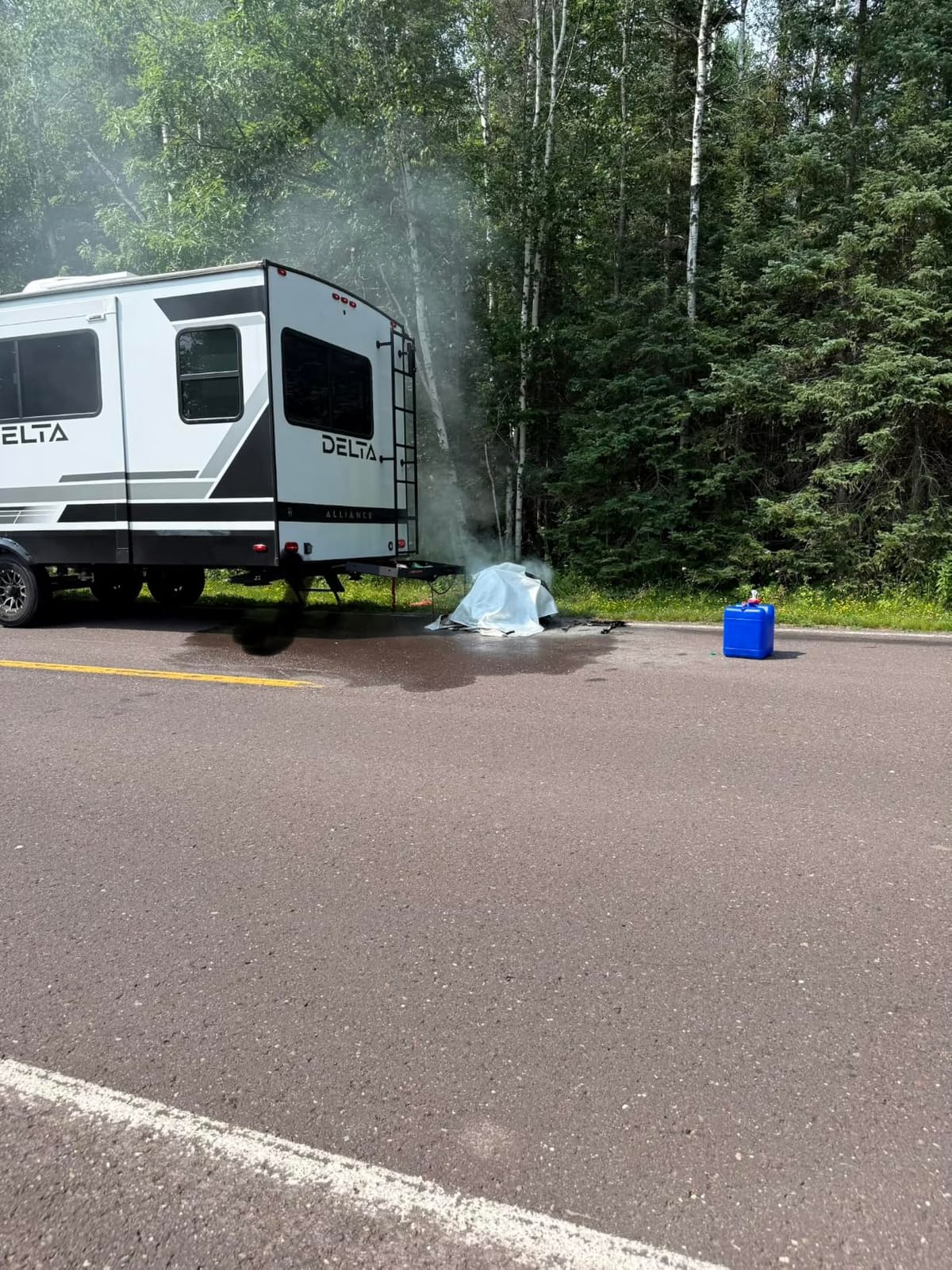
Two blankets ship in the pack, which is the right way to think about it. One for the kitchen wall and one for the garage or the vehicle. Reviewers frequently describe buying the two-pack and four-pack as housewarming or holiday gifts for adult children.
The honest limitation is coverage. Forty inches by forty inches handles a pan or a small appliance. It does not handle a spreading fire in a room, and treating it that way would be a mistake.
How to deploy it under pressure
Pull the tabs down slowly rather than snapping them, let the blanket drop over the source, then turn off the heat if it is safe to reach. The whole action takes seconds and needs no training.
Keep the pouch on a hook near the exit path of the kitchen rather than over the stove. If you have to reach across flames to get it, you will not use it.
Why families choose this over an extinguisher
Households with small children tend to favour the blanket because deployment is pull and cover, with no pin to fumble and no technique to remember. That matches the pain point we saw repeatedly in forum discussions about children being able to help.
Owners also pair the two-pack with a hook so it is instantly reachable. One reviewer noted the hook itself needs to be sturdy enough to release the tabs quickly, which is worth checking at install time.
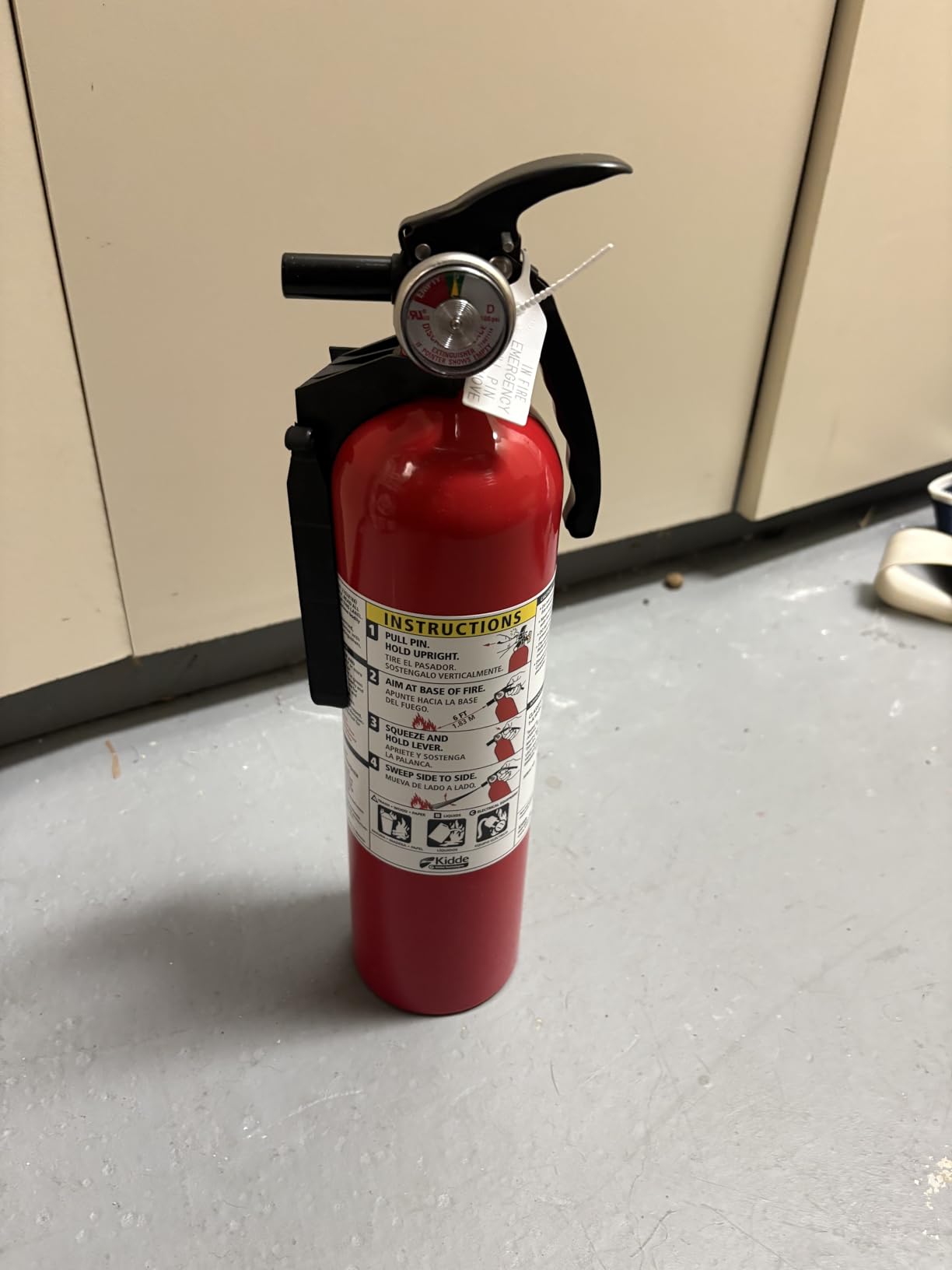
3. Kidde Basic 110 Fire Extinguisher: The Simple UL Listed Home Canister
Kidde Basic 110 Fire Extinguisher for Home, 1-A:10-B:C, FA110G, 1 Pack
UL listed 1-A:10-B:C
3.9 lb aluminum body
Single-use residential design
6-year limited warranty
Pros
- Compact aluminum body is easy for family members to grab
- Color-coded gauge reads clearly at a glance
- Strap bracket mounts flush in a kitchen or garage
- UL listed and Coast Guard approved
- Covers trash wood paper liquids gases and electrical fires
Cons
- Single-use only
- so it must be replaced after discharge
- Aluminum body dents more easily than steel
This is the extinguisher most people end up with, because it solves the basic problem without adding decisions. Same 1-A:10-B:C rating as the higher priced cans, UL listed, wall mount bracket in the box.
The aluminum cylinder at 3.9 pounds is the lightest of the traditional extinguishers we tested, and that lightness matters. Forum discussions about elderly parents living alone keep circling the same concern: a heavier canister is a canister that does not get used.
It is also listed for marine use, so owners with a boat or a camper keep it in the vehicle instead of buying separate gear.
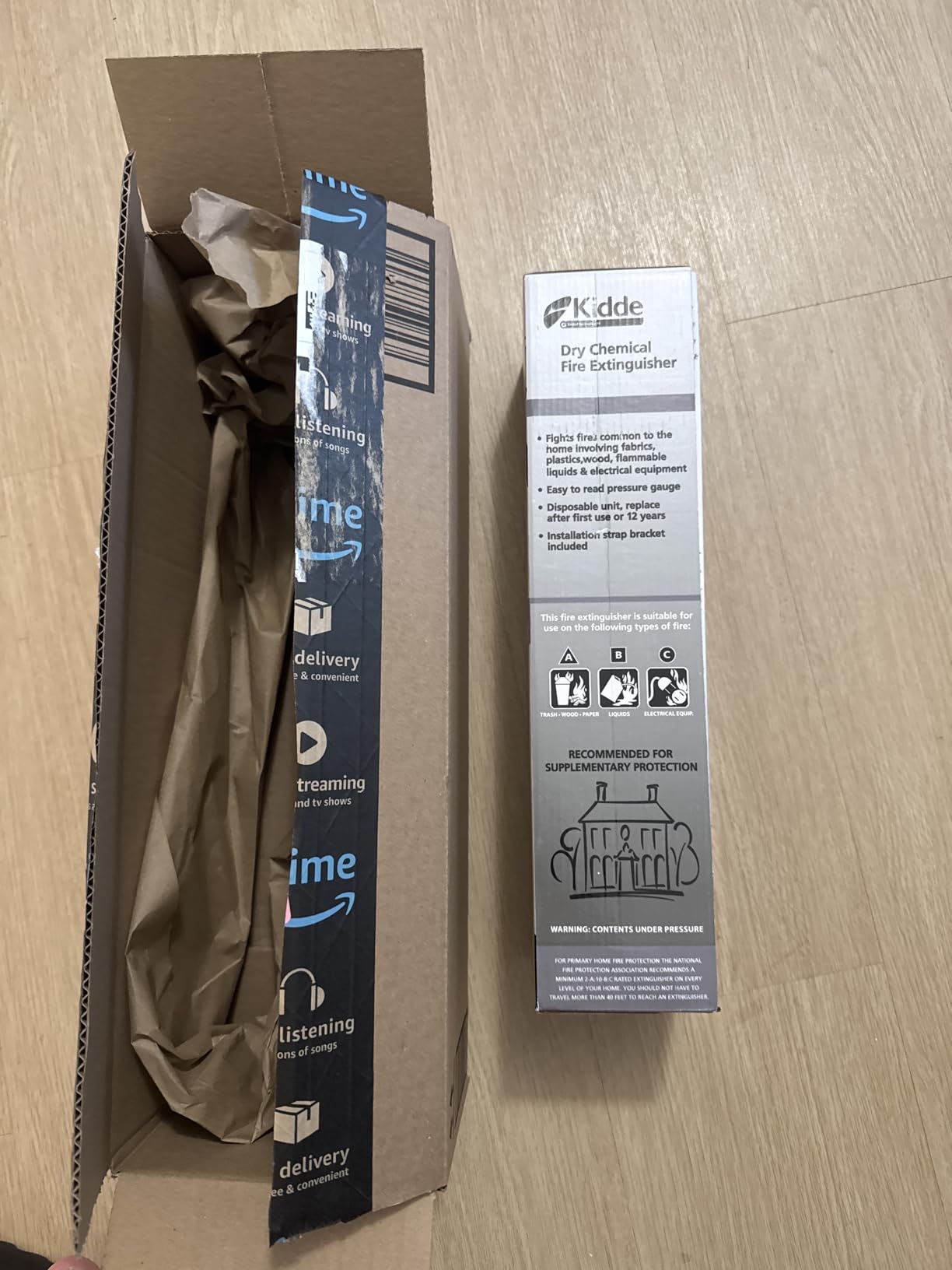
Owners describe a straightforward wall mount and a gauge they can check without opening a cabinet. The QR code on the body links to warranty registration, which is a small detail that saves a phone call later.
The tradeoff is honest and simple. This is single-use residential equipment, so once it discharges it is replaced rather than recharged. The aluminum shell also dents more readily than steel if it gets knocked in a garage.
Where to mount it for the most coverage
The exit path is the recommended spot. A canister you walk past on the way out is one more adult might actually pick up, and the strap bracket is designed for a flat wall surface near a doorway.
For a second canister, the garage or laundry room is the next most useful room, since those are where flammable liquids and electrical faults tend to originate.
How it compares with the rechargeable option
If you dislike replacing equipment after every discharge, the rechargeable can listed earlier is the better long term purchase. If you want one simple canister per floor and minimal fuss, this is the easier choice.
Both carry a 1-A:10-B:C rating, so neither is underpowered for the fire types a house actually produces. The difference is service life and price, not capability.
4. Kidde Fire Escape Ladder: The Two-Story Bedroom Safety Kit
Kidde Fire Escape Ladder, 2-Story Rope Ladder, Extends to 13-Feet, Anti-Slip Rungs
13 foot extension
No assembly required
Tested to 1000 pounds
Zinc-plated anti-slip rungs
Pros
- Deploys in seconds with no tools or assembly
- One foot wide anti-slip rungs give a steady foothold
- Tangle-free design untangles fast under stress
- Folds small enough to store near an upstairs window
- Flame-resistant construction rated to 1000 pounds
Cons
- Single-use only
- discarded once unfolded or used
- Only fits window frames up to 11 inches deep and 16 inches wide
A fire safety kit for a family with children in upstairs bedrooms is incomplete without a second way down. This ladder is the one we would put in a childrens room, and the reason is the no-assembly design. There is nothing to build in a smoky hallway.
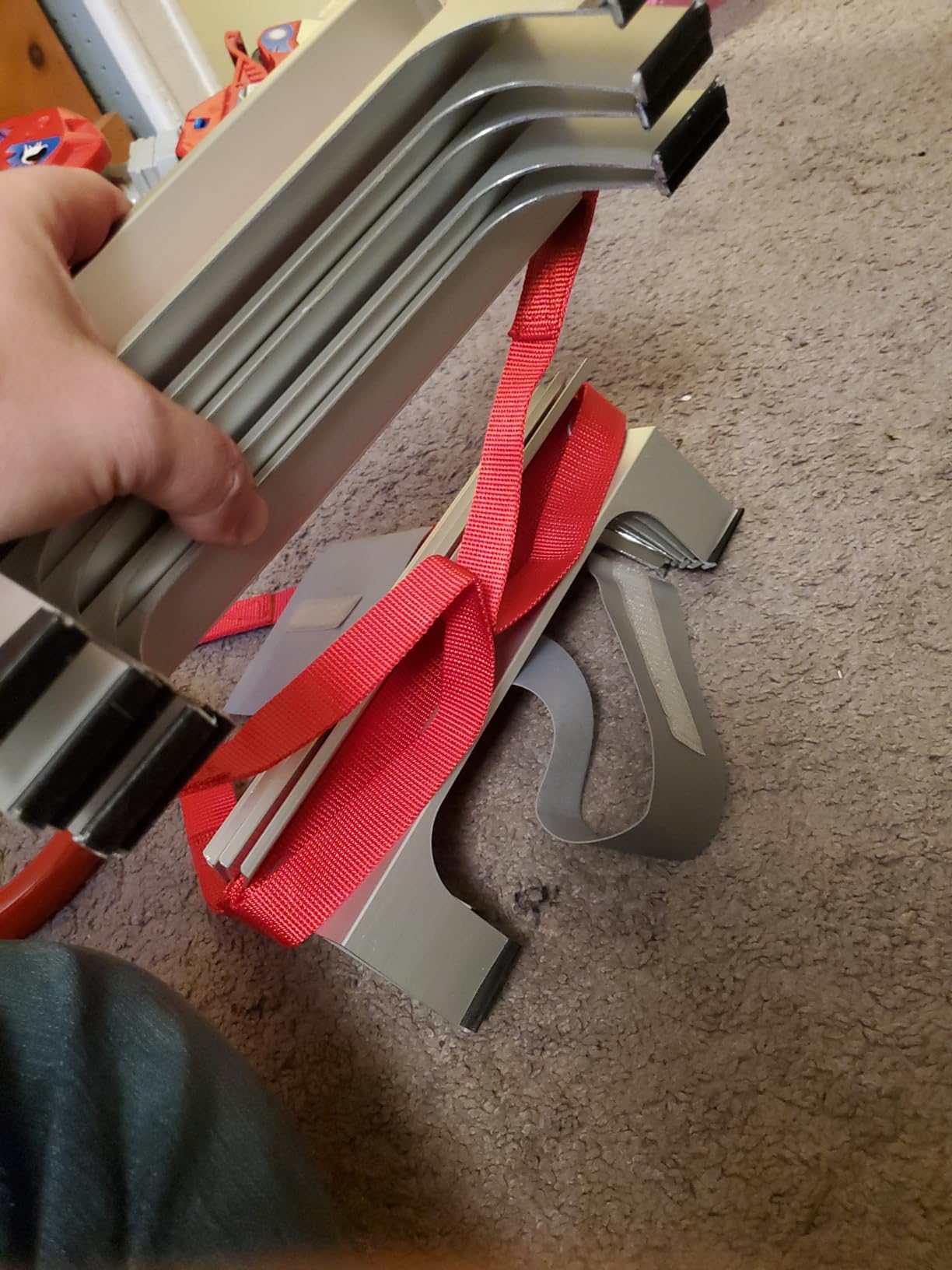
It attaches to the window before the rungs release, extends to 13 feet, and carries a 1,000 pound test rating. The rungs are one foot wide zinc-plated metal with red nylon strap rails for grip.
Owners describe it working on standard windows including casement styles, and many say they bought it specifically after their child moved into an upstairs room.
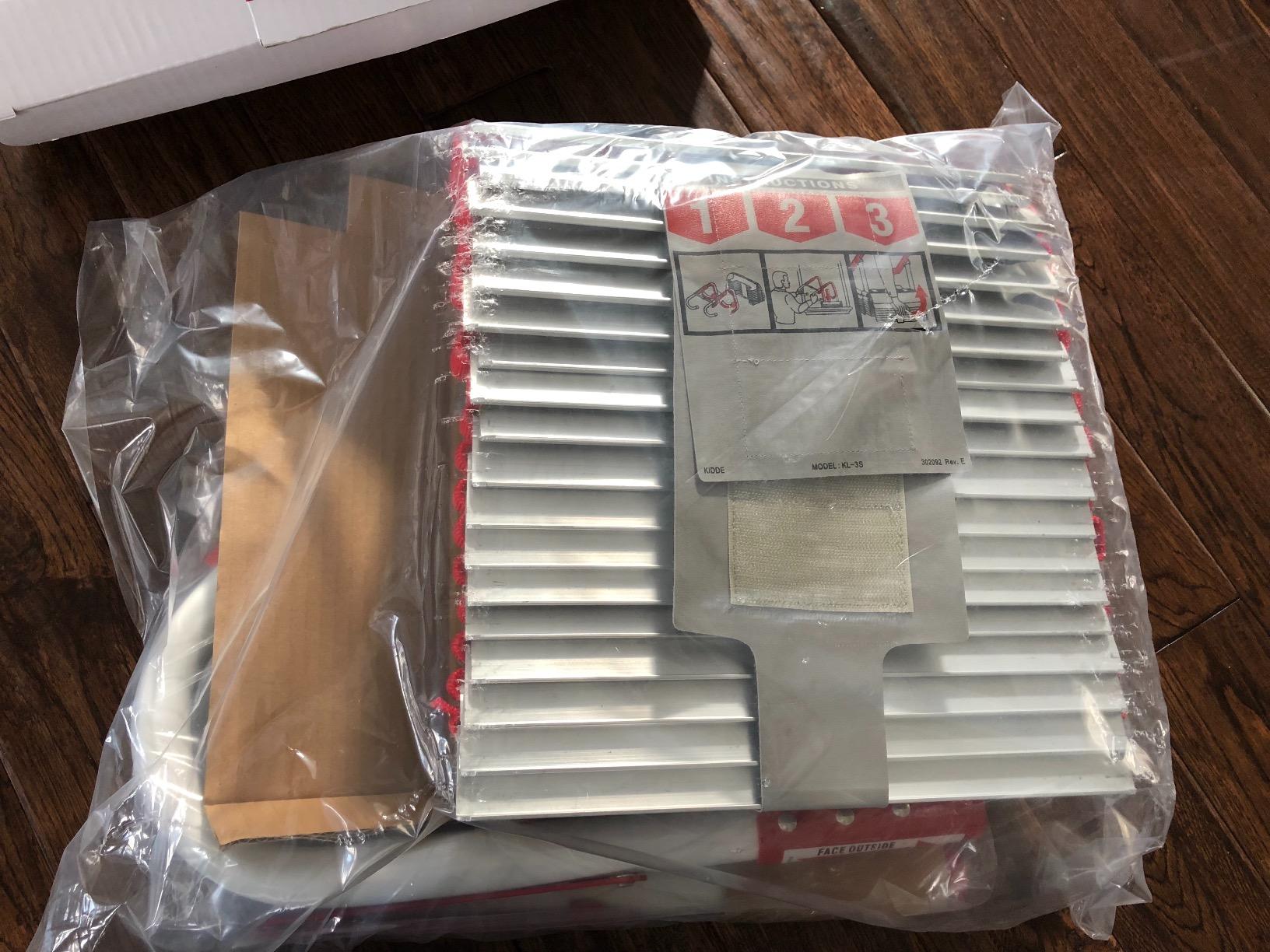
The tangle-free design came up repeatedly as the feature that matters in a panic. A ladder that has to be worked through knots is useless at 2am with smoke in the hallway.
The single-use nature is the caution most owners raise, and it is worth thinking through. Unfolding it for a practice drill commits you to replacing it, so some families keep their practice on the deployment rather than a full descent.
Measuring your window before you buy
This ladder fits frames up to 11 inches deep and 16 inches wide. Measure the outside of the frame, not the glass, and check that nothing blocks the opening.
Pack it at 16.38 inches wide by 8.25 inches high and 7.7 pounds, which means it can live in a closet or under a bed rather than in a garage where nobody will remember it.
When a rope ladder belongs in your kit
It suits two-story homes, upper-floor bedrooms and any situation where the stairwell is the first place a fire starts. For taller drops, the retractable aluminum option later in this list reaches further.
Practise attaching it to the frame before you need it. Even a no-assembly ladder involves throwing weight over a sill, and that movement is unfamiliar in a hurry.
5. First Alert EZ Fire Spray: The Vehicle and Dorm Kit Filler
First Alert EZ Fire Spray, Extinguishing Aerosol Spray
32 seconds of discharge
18 fl oz aerosol can
ETL rated
Biodegradable non-toxic formula
Pros
- Fits a glovebox
- car door panel or boat storage
- Point and spray operation needs no PASS training
- Formula wipes clean with no powder residue
- Covers paper fabric wood grease and electrical fires
- Discharges four times longer than a traditional small extinguisher
Cons
- Small aerosol capacity suits only very early stage fires
- Does not carry a UL home compliance rating
This is the item people add to a kit they already own. A full canister is not coming on a camping trip or living in a car door panel, and an aerosol can is.
The operating idea is much simpler than a pressure extinguisher. There is no pin, no squeeze-and-sweep technique to remember, and no gauge. You pull the cap and spray at the base of the flame.
Owners like the biodegradable, non-toxic formula because it wipes clean. For a vehicle interior or a boat, that matters more than UL compliance paperwork.

Reviewers consistently position it as a backup rather than a replacement for a home canister. Thirty-two seconds of discharge is a first minute of response, not a fight against a spreading fire.
The ETL rating and the three-year limited warranty show it has been tested, but it is not the UL listed compliance equipment that a code check looks for in a home.
Where it makes the most sense
Cars, boats, RVs, dorm rooms and small kitchens are the use cases owners name most. Anywhere space is the deciding factor, this format wins.
Keep it where you can reach it without opening a case. The reviews on storage accessibility are consistent: a can in a packed toolbox is a can that will not be there when needed.
How to use it correctly
Aim at the base of the flames and spray in short bursts, moving closer as the fire shrinks. That is the same principle as the PASS method, just without the steps.
Because the formula is non-toxic, it is one of the few suppression options people are comfortable keeping near children and pets. That reassurance came up often in owner feedback.
6. SecuCaptain Fire Blanket 4 Pack: The Whole-Home Coverage Kit
SecuCaptain Emergency Fire Blanket for Home and Kitchen – 4 Pack 40″x40″ Flame Suppression Fiberglass Fire Blankets for House Camping Car Office Warehouse Survival Safety
40 x 40 inch fiberglass
CE EN 1869:2019
Withstands 1076F
Four blankets per pack
Pros
- Fire-retardant pull tabs stay usable near flames
- High 1076F heat rating among blankets in this category
- Never expires and leaves no cleanup
- Four blankets cover kitchen garage car and grill
- Simple enough for children to deploy
Cons
- 40 by 40 inch coverage is limited to small contained fires
- Thicker fiberglass weave is heavier and less packable
Four blankets in one pack solves the placement problem. Instead of deciding which two rooms matter most, you can put one near the stove, one in the garage, one by the grill and one in the vehicle.
The treated pull tabs are the detail we liked most. They are fire-retardant treated, which means the part your hand grabs stays usable when the blanket is close to the flame.
The certification here is CE EN 1869:2019, the European fire blanket standard, and the stated heat resistance is 1076F at 0.7 mm thickness.
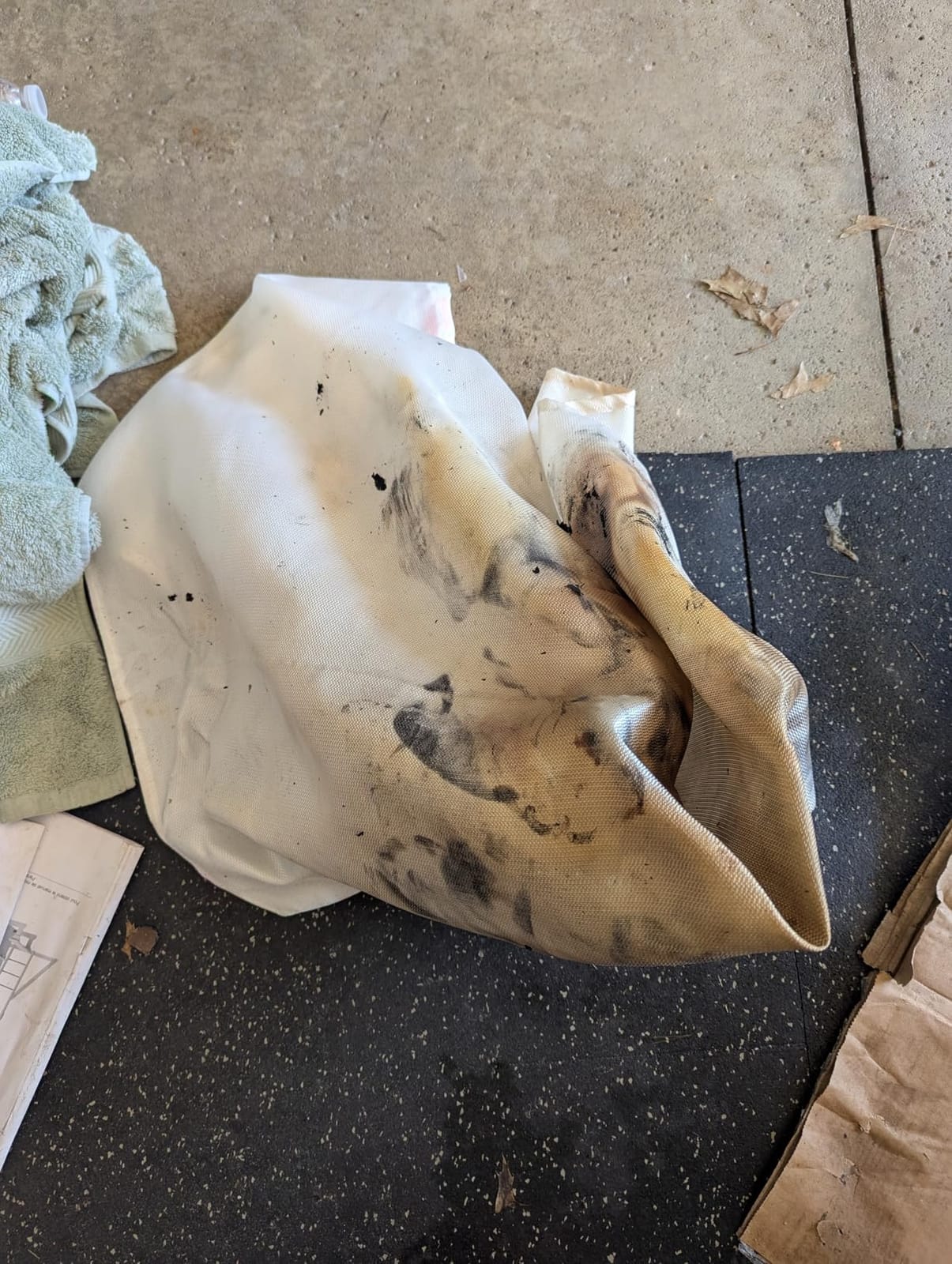
Owners highlight the tabs first, then the no-mess never-expire design. The four-pack format is used to cover multiple rooms, vehicles and outdoor grills, which is exactly the use we recommend.
The tradeoff is bulk. At 0.7 mm this is a heavier weave than the thinner blankets in this list, so each pouch takes more space in a drawer or cabinet.
How to place four blankets around a house
Kitchen near the exit path, garage near the workbench, one beside the outdoor grill and one in the car. That covers the four most likely ignition sources in a typical home.
Keep each pouch in its soft case rather than loose. Fine fiberglass fibres are easier to handle when the blanket is not sliding around a cabinet.
Why a blanket suits a family drill
Deployment is pull the tabs, cover the source, turn off the heat. Owners describe it being simple enough for children to handle, which matters when the person nearest the fire is ten years old.
Unlike an extinguisher, nothing needs servicing and nothing expires, so the same blanket is still there years later. That removes a whole category of forgetting.
7. LifeSafe StaySafe All-in-1 Spray: The Lithium-Ion Battery Fire Pick
LifeSafe Technologies StaySafe All-in-1 Portable Fire Extinguisher, Compact Fire Spray Easy to use on 10 Types of Fires, Non-Toxic & Eco-Friendly
9.9 oz canister
Safe on live electrical fires to 1000V
Patented non-toxic fluid
Third-party laboratory tested
Pros
- One of the few portable sprays rated for lithium-ion battery fires
- Non-toxic non-hazardous fluid leaves no residue
- Spray cap design is as easy to use as sunscreen
- Fits a car door panel motorcycle or golf cart
- Protective cap keeps grease off the spray button
Cons
- Must be shaken before use
- Small capacity suits only incipient fires
Most home fire equipment was designed before every house filled with lithium batteries. This one is named for that problem, and it is the only product in the list that claims to handle phone, laptop and e-scooter battery fires.
It is also rated safe on live electrical fires up to 1000V, which is a different claim from a dry chemical canister. You are not expected to cut power first.
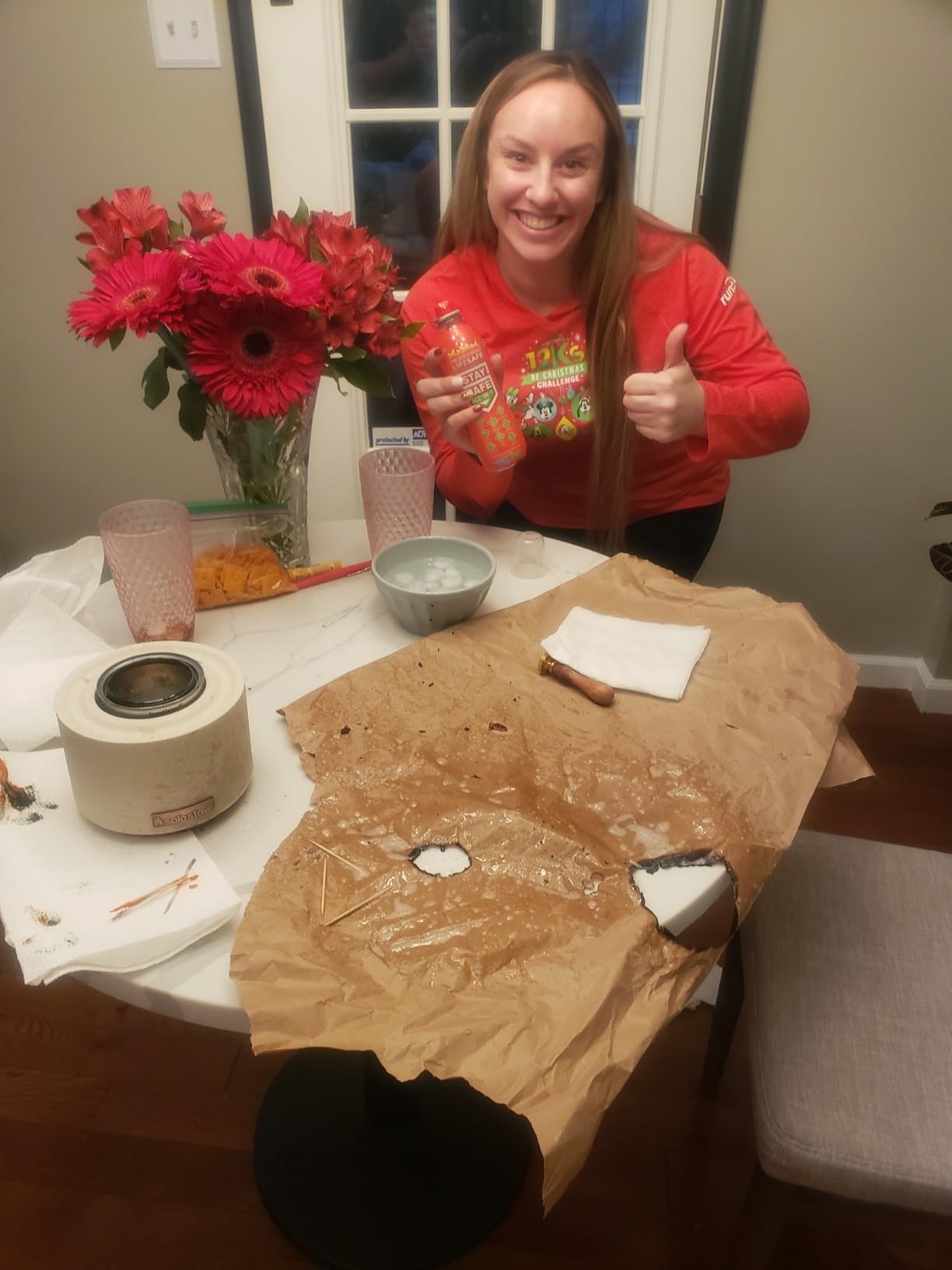
Owners place it in cars, motorcycles, boats and college apartments as a grab-and-go first response. Several describe it putting out a stove fire in a small off-campus kitchen.
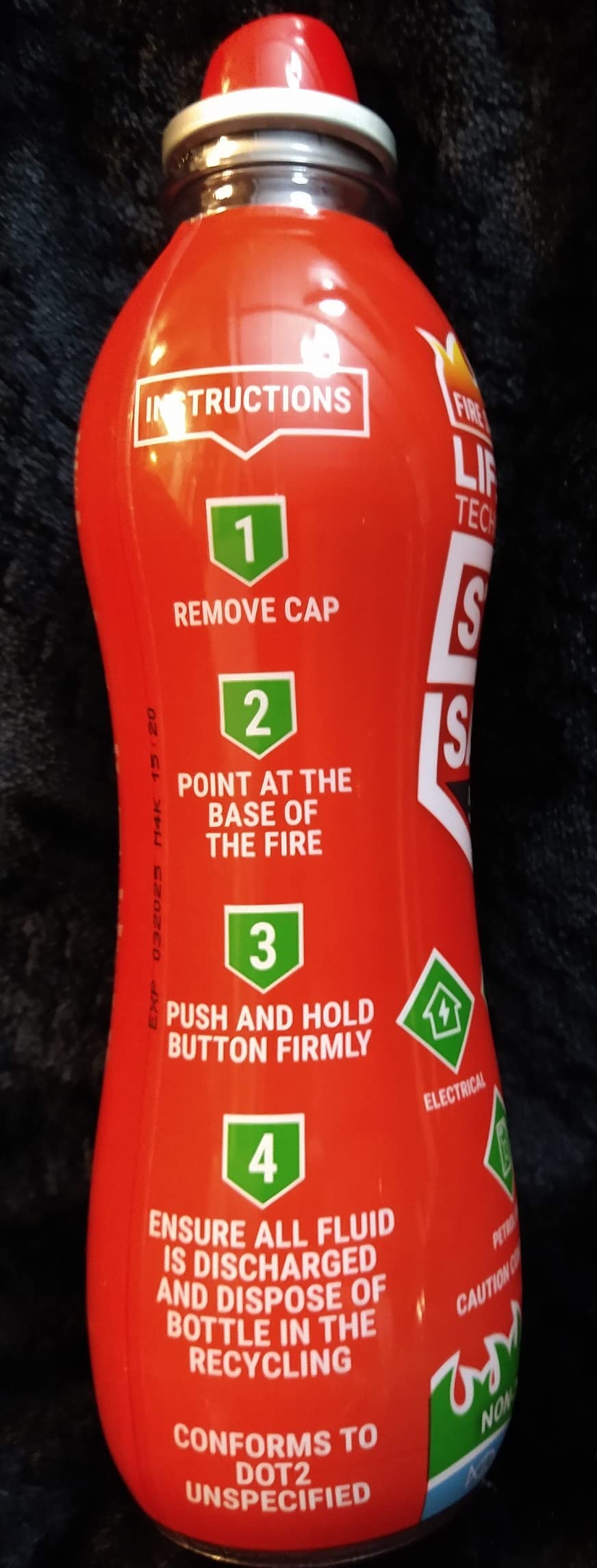
The non-toxic, non-hazardous fluid means no residue and minimal cleanup, which is a genuine advantage over powder in a vehicle or a small room.
The shake-before-use instruction is the thing people miss. The fluid settles, and an unshaken can underperforms. Owners who keep it in a car in summer should check it periodically.
Why battery fires change what you need
A lithium-ion cell fire is a chemical reaction that feeds on heat and oxygen. Water does not stop it, and a Class B dry chemical extinguisher is not designed for it.
This spray is one of the few portable formats that names those fires explicitly. That single capability is worth having in a home with e-bikes, scooters or a lot of charging devices.
How it fits into a larger kit
Treat it as the portable layer, not the main layer. It weighs 9.9 ounces and fits almost anywhere, which makes it the one item you can put in every vehicle in the household.
Pair it with a wall-mounted canister and a blanket for the rooms where the risk is highest. We use a similar layered approach in our homeschool family safety roundups, where the same logic applies to kits that need to work for smaller users.
8. First Alert Heavy Duty Fire Extinguisher: The Garage and Workshop Kit
First Alert Fire Extinguisher, Heavy Duty for Home & Commercial Use
UL rated 2-A:10-B:C
9.6 lb all-metal body
Mono ammonium phosphate agent
12-year limited warranty
Pros
- Higher 2-A:10-B:C rating handles larger fires than a basic home canister
- All-metal body and commercial-grade valve
- Rechargeable by certified professionals after use
- Color-coded gauge reads clearly at a glance
- Sturdy wall hook for mounting near an exit
Cons
- Heavier and larger than standard residential extinguishers
- Still not sized for a fully developed room fire
The rating is the reason this one exists. Where the basic home canister is 1-A:10-B:C, this one is 2-A:10-B:C, which means roughly twice the wood and paper capacity. In a garage with sawdust, rags and solvents, that extra capacity is the point.
At 9.6 pounds it is a two-handed carry. That is heavier than a kitchen unit, and it is why we recommend the wall hook next to the exit rather than a high shelf.
Owners include people who lost a home to fire, along with shop owners and firefighters in the review set, and the endorsement pattern is consistent: buy more than one and mount them separately.
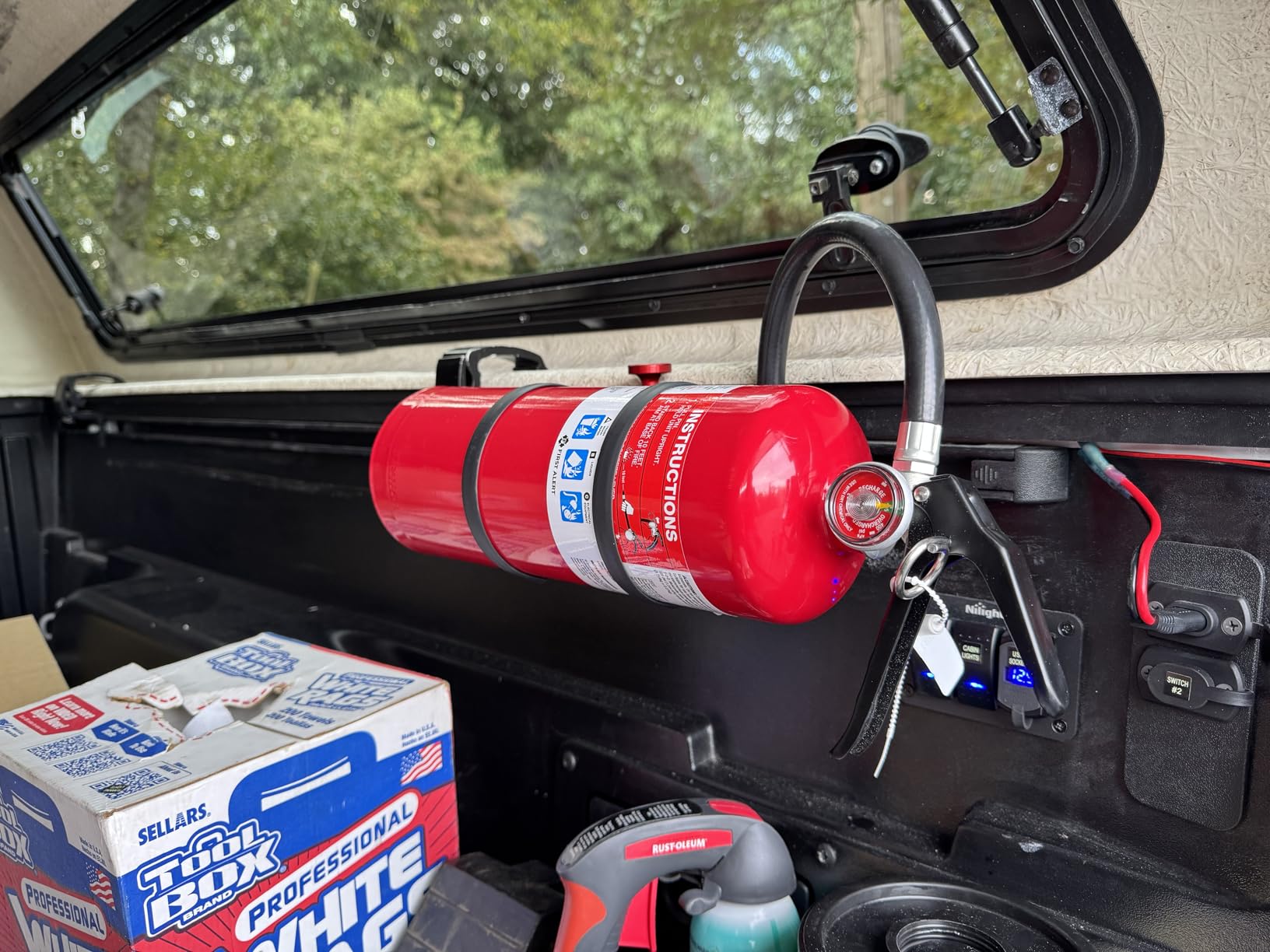
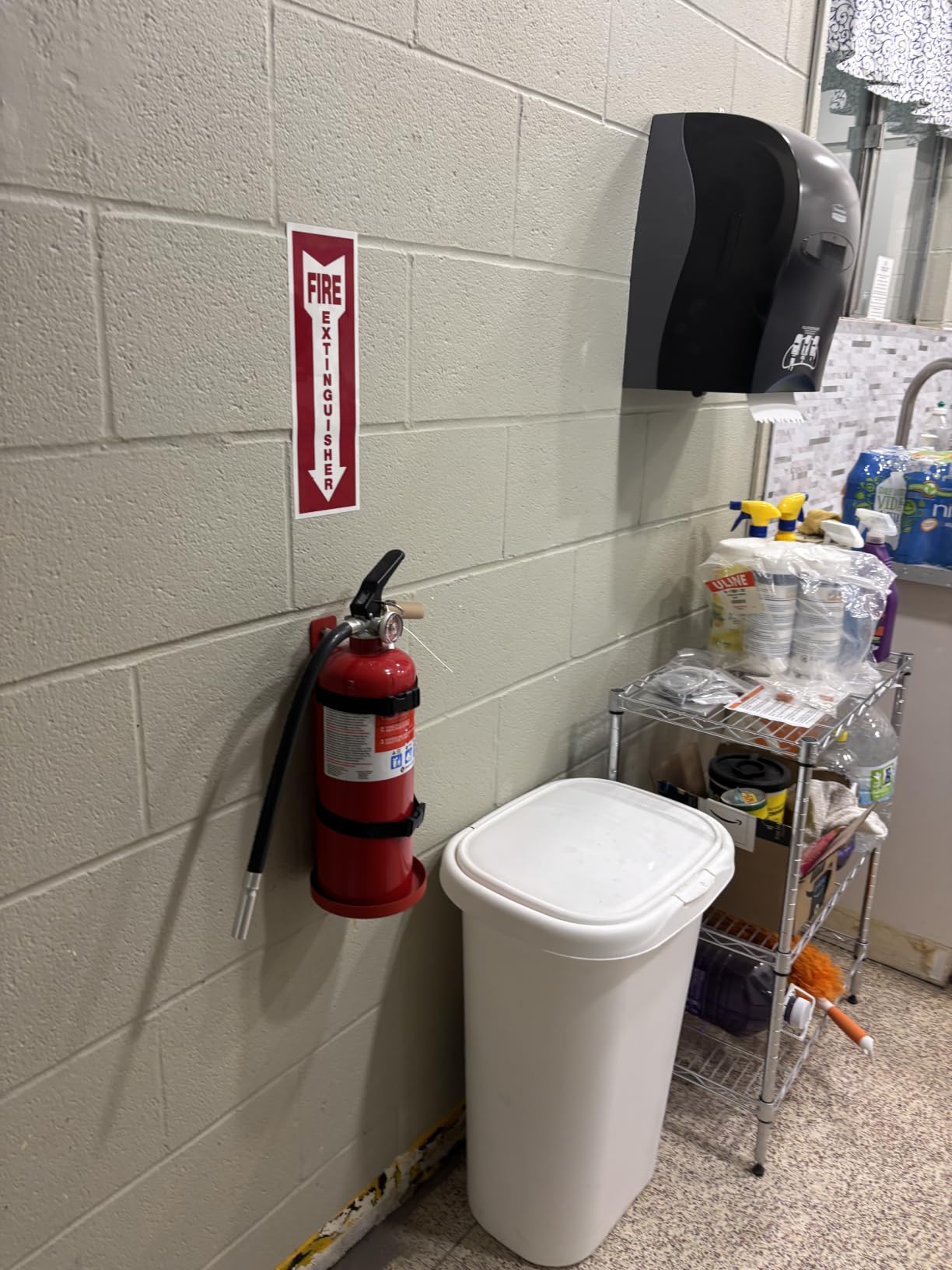
Repeated advice in the reviews is practical. Buy at least two, mount one near an exit, write down the purchase date and shake the dry chemical periodically so the powder does not pack at the bottom.
The mono ammonium phosphate agent is the same compound used in most residential dry chemical units, just in a bigger canister with a longer warranty behind it.
Why garages need a bigger canister
A garage fire starts small and grows fast. Paint solvents, motor oil, propane and paper all feed it, and there is often less warning than in a living space.
The 2-A:10-B:C rating means this canister holds roughly double the extinguishing agent of the basic home model, which buys time during the growth phase.
When this is the wrong choice
Do not carry it into a room fire that has already developed. A 9.6 pound canister is heavy to move quickly, and past the first minute the decision changes from fight to leave.
For smaller rooms and lighter users, the aluminum canister earlier in this list is easier to handle and covers the same common fire types.
9. Mart Cobra Fire Blanket 2 Pack: The Versatile Suppression Layer
Mart Cobra Emergency Fire Blanket for Home & Kitchen 2-Pack Safety
Two 40 by 40 inch fiberglass blankets
0.5 mm woven thickness
16 ounces total
Protective storage pouch
Pros
- No residue and no expiration date
- One blanket covers a stovetop or a small appliance
- Protective pouch stores flat in a cabinet or vehicle kit
- Also contains welding sparks and embers
- Pull-and-cover operation works for all ages
Cons
- Fine fiberglass fibres can irritate skin if handled bare-handed
- Some units carry a slight fire-retardant smell out of the package
Owners of this blanket report putting out real fires rather than theoretical ones, including a bathroom ceiling fan and a weed-torch flame near a house. That kind of feedback is rarer than you would expect in this category.
It doubles as a welding heat shield, which makes it unusually useful in a garage or workshop. Sparks that would land on bare concrete get smothered instead.
The two-pack format at 16 ounces total means each blanket is light, and the protective pouch lets you store them flat in a drawer or a vehicle kit without folding damage.
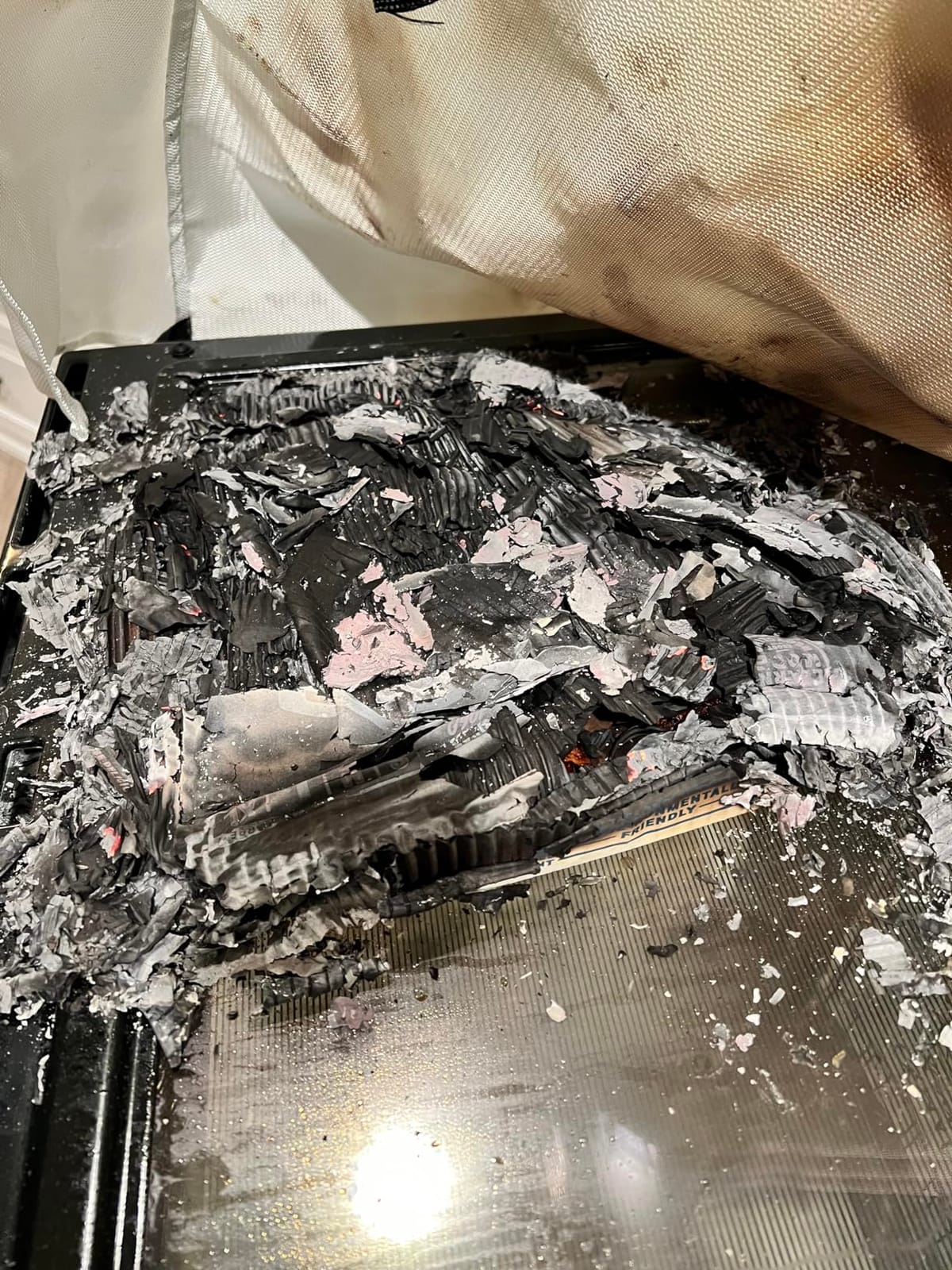
The most repeated caution is about fine glass fibres. If you grab it with bare hands during deployment, the weave can feel like it stings. Gloves solve this, and keeping a pair in the pouch takes seconds.
Several owners also mention a slight fire-retardant smell when the pouch is first opened, which fades once the blanket is aired out.
How to decide between a blanket and a canister
A blanket is better for contained fires: a pan, a cushion, a small appliance, a flame on clothing. It leaves no residue and needs no servicing.
A canister is better for anything spreading across a surface, because it can reach a flame base from a distance and project agent further. For a fire already climbing a wall, neither is the answer.
Where we would place two of these
Kitchen wall and garage or workshop, in that order. Those two rooms cover the highest proportion of household ignition sources.
Keep them in the pouches. A blanket that has been refolded a dozen times tangles, and a tangle costs seconds exactly when seconds count.
10. Mondoshop Fire Blanket 4 Pack: The Reusable Drill-Friendly Kit
Emergency Fire Blanket for Home and Kitchen, 4 Pack, 40″ x 40″ Coverage
40 by 40 inch 100 percent fiberglass
Heat resistant to 1022F
Reusable and wipe-clean
Four blankets per pack
Pros
- Can be unfolded refolded and practised with repeatedly
- Reusable and wipes clean with a dry cloth
- Four-pack covers multiple rooms and vehicles
- No powder or mess unlike a dry chemical extinguisher
- Simple enough for children and elderly users
Cons
- Limited to small fires rather than larger blazes
- Fiberglass can irritate skin if handled improperly
The reason this blanket shows up in our list is rehearsal. Owners specifically like that it can be unfolded, refolded and practised with, which they contrast directly with the learning curve of a pressure extinguisher.
A family drill is only useful if everyone can perform the action. A pull-tab blanket is learnable in one repetition. A pin, gauge and squeeze technique is not.
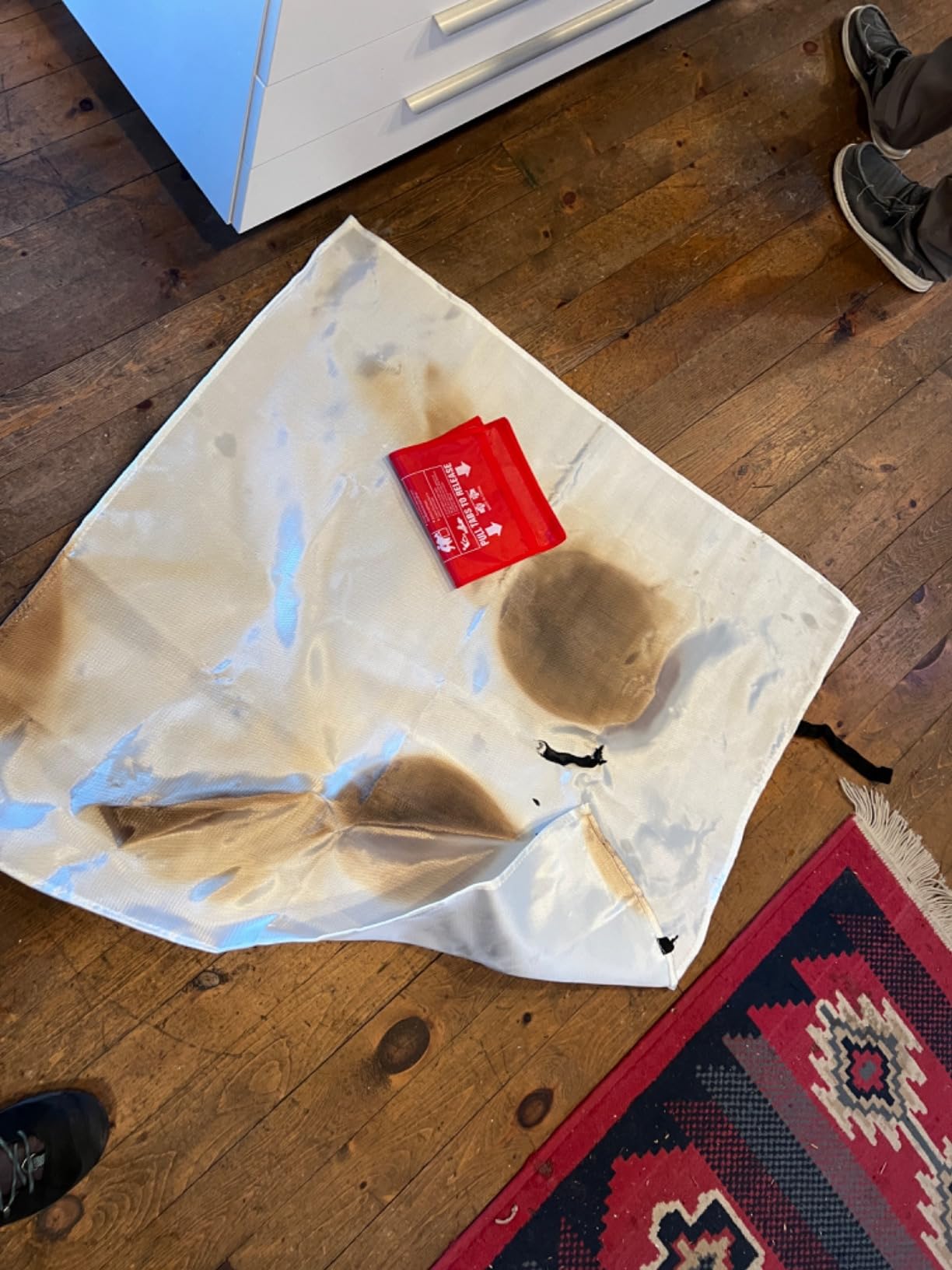
Several owners report it putting out an oven or stovetop fire with no damage to the appliance, and the four-pack format is popular for placing one in every vehicle and room.
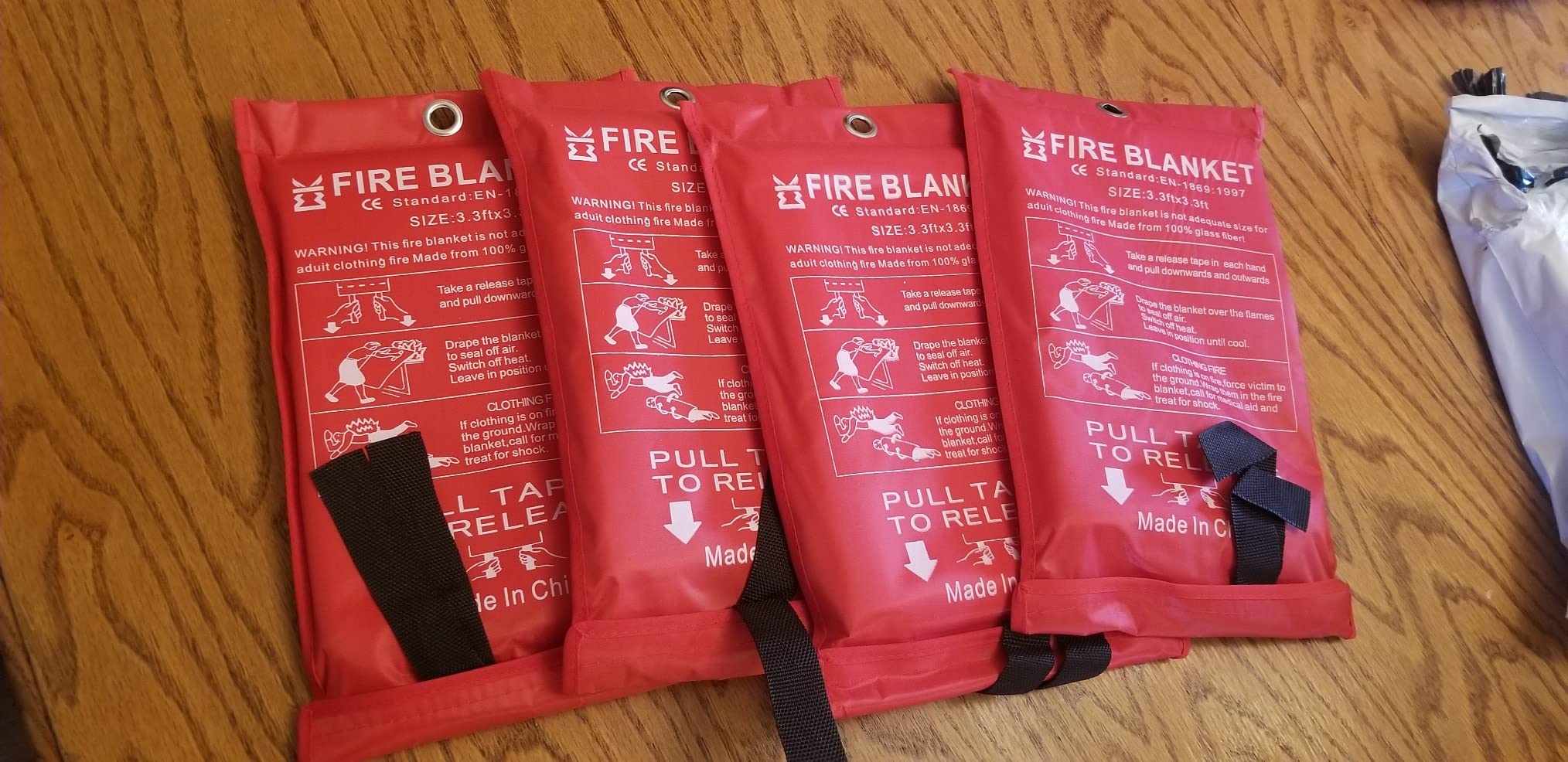
The stated heat resistance is 1022F, and the material is 100 percent fiberglass that is non-toxic and non-corrosive. Care instructions are to wipe with a dry cloth only, not wash.
Because they are reusable rather than consumable, they also work as heat shields for camping, barbecues and travel, which extends their usefulness beyond the kitchen.
How to build a drill around it
Pull the bottom tabs to release the blanket, cover a hot pan or a lit candle, and let everyone watch. That single repetition teaches the motion well enough for a child to repeat under stress.
Unlike the rope ladders in this list, nothing is consumed by practice. That makes it the cheapest training tool in the whole kit.
What to watch for after deployment
Fiberglass can irritate skin if handled bare-handed, so keep gloves nearby. Inspect the weave afterwards and replace any blanket that shows burn-through or fraying at the edges.
Do not machine wash it. Wiping with a dry cloth keeps the weave intact; detergent and agitation can degrade the fibres over time.
11. WUERLI Fire Blanket 4 Pack: The Lightweight Kitchen and RV Pick
Fire Blanket for Home and Kitchen,40″ x 40″,4 Pack,Emergency Fire Blanket
0.5 mm thick fiberglass
CE EN 1869:2019
Withstands 1076F
Under 2 lbs per blanket
Pros
- Thick enough to resist burn-through at high heat
- Light enough that seniors or children can deploy it
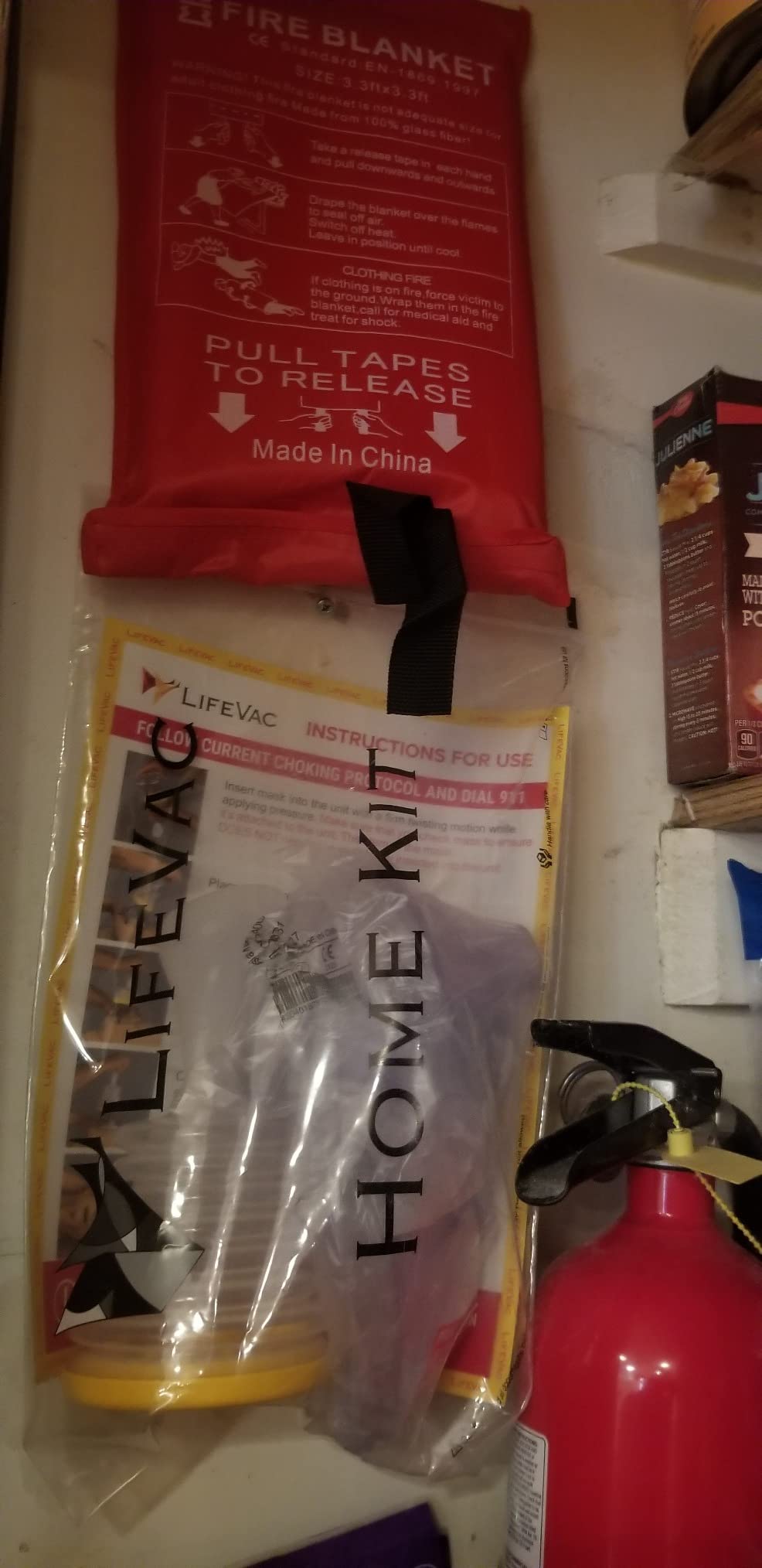
- Hanging hook for out-of-the-way but reachable storage
- Instructions printed on the front stay legible in a panic
- No dust or powder remaining after use
Cons
- Uncoated fibres can shed fine shards that irritate skin and eyes
- Not machine washable so care is limited to wiping
Weight is the headline number here. Each blanket is under two pounds, which is what makes this the option we would choose for a home with an older adult or a small child who might be the nearest person to the fire.
The 0.5 mm fiberglass is rated to 1076F and meets CE EN 1869:2019. Four in the pack covers a home, an RV and a shop without a lot of storage planning.
Reviewers include at least one working firefighter, who treats it as an affordable kitchen essential and recommends it as a gift for adult childrens homes.
A meaningful minority of reviews warn that uncoated fibres shed fine shards that irritate skin and eyes. The advice is gloves, and keeping children away while handling an unused blanket.
Printed instructions on the front of the blanket are a small but real benefit. In a panic nobody wants to unfold a manual.
Why weight matters more than coverage
A fire blanket is only useful if the person closest to the flame can actually lift and place it. Forty inches by forty inches is already the practical limit for one person to throw accurately.
At under two pounds, this one can be thrown by a child or handed to an elderly parent without a strength problem. That is a safety feature, not a convenience.
Where to store the four
Kitchen, RV, vehicle and workshop. The hanging hook means it can go inside a cabinet, out of sight but still reachable, which suits small kitchens where wall space is scarce.
For home setups where space is the constraint, our guide to compact outdoor heat sources covers the storage and placement logic that applies to garage and patio equipment too.
12. Hausse Retractable Fire Escape Ladder: The Second-Story Drop Kit
Hausse Retractable 2 Story Fire Escape Ladder, 13 Feet
Aluminum body
Extends to 13 feet
Tested to 1000 pounds
Red canvas storage bag
Pros
- Retractable hooks grip the window frame without slipping
- Slip-resistant rungs are wide enough for a steady descent
- Folds into a bag that fits under a bed or in a closet
- No tools or assembly needed to deploy
- Easy to practise with as a family
Cons
- Manufacturer instructs replacing it every three years even if unused
- Canvas bag has no eyelets for wall mounting
- Metal behind the rungs can be rough on bare hands
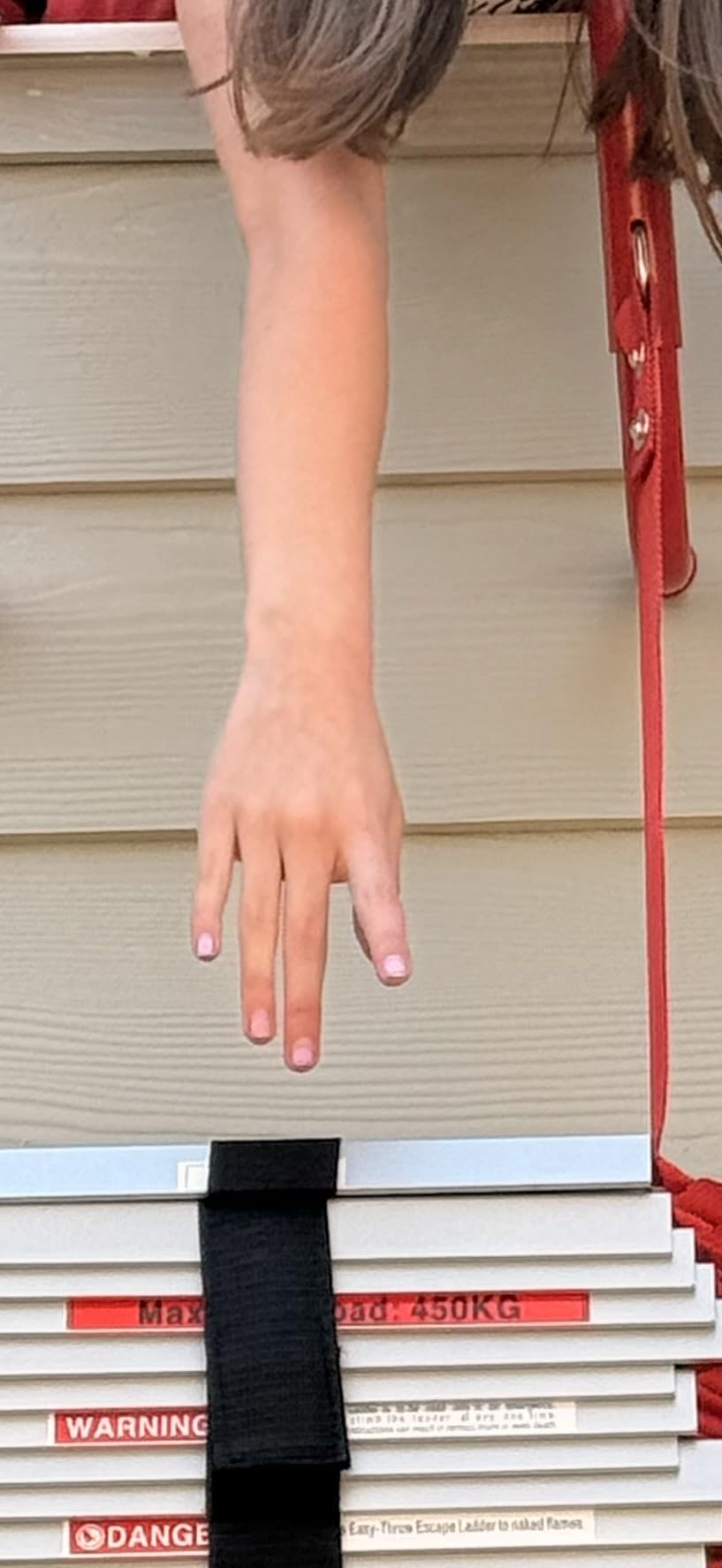
This is the second escape route we would pair with the Kidde ladder, and the difference is storage. It retracts into a 14.5 by 7.1 inch canvas bag that fits under a bed, where a household will actually keep it rather than forget it in a garage.
Retractable hooks must be extended to maximum at both ends to grip the frame, and they hold without slipping once set. That is the detail that decides whether a descent works.
Owners with two-story homes and families with upstairs bedrooms describe it as peace of mind rather than insurance they hope not to use.
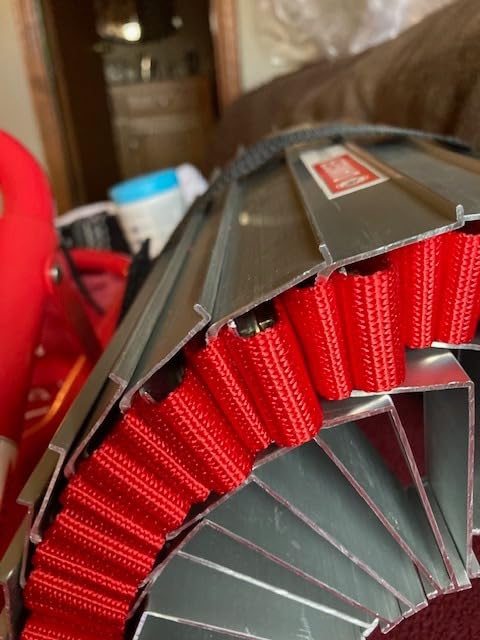
A firefighter reviewer in the feedback advises checking the window ledge dimensions and keeping gloves in the bag, since the metal behind the rungs can be rough on bare hands during a descent.
One reviewer points out two things worth knowing before purchase. The canvas bag has no eyelets for wall mounting, and the manual calls for replacing the ladder every three years even when unused.
When to pick this over the rope ladder
Aluminum construction and slip-resistant rungs give a firmer footing on long descents, and the retractable format packs smaller than a coiled rope ladder.
The rope ladder listed earlier deploys with no hook adjustment at all, which is simpler under stress. This one reaches the same 13 feet but needs the hooks set properly first.
Checking that it will fit your window
Measure the ledge and sill depth before buying. The hooks need a solid frame to grip, and decorative trim or a shallow sill is the most common reason these ladders do not seat properly.
Store it where the person who needs it sleeps. A ladder in a downstairs closet is not an escape route for a child in an upstairs bedroom.
How to Build a Complete Fire Safety Kit for Your Family
The single biggest mistake we see is buying suppression equipment and skipping detection. A canister you cannot reach in time does nothing. Start with working smoke alarms on every level, inside every bedroom and outside sleeping areas, then build the suppression layers.
The second mistake is treating one product as a kit. A fire safety kit for families has three layers: detection, suppression and escape. Any layer missing is a gap.
Apartment versus house: what actually changes
Apartment dwellers face a real constraint that house owners do not. You generally cannot mount a hardwired alarm or an escape ladder, and exit routes may run through shared space.
What you can do is maximize portable suppression. Fire blankets and aerosol sprays are the apartment-friendly options here, because they need no installation and leave no residue in a rental.
Households with a garage, workshop or outdoor grill should add the heavier 2-A:10-B:C canister, because flammable liquids and equipment fires are the cases where extra agent capacity matters.
Choosing an extinguisher rating
For most homes, 1-A:10-B:C is the right baseline and covers wood, paper, trash, plastics, flammable liquids and electrical fires. Anything higher is a bonus for garages and workshops, not a requirement in living spaces.
Look for a UL listing rather than a general safety claim. It is the mark that an independent lab tested the device to a written standard, and it is what a code check looks for.
Blankets, sprays and canisters together
The most practical setup combines rather than chooses. A blanket for contained fires that leaves no mess, a canister for anything spreading, and a small spray in every vehicle for the emergencies you will actually face away from home.
Weight matters more than people expect. A canister nobody can lift gets ignored in a cupboard, so check that the person nearest the fire in your house can comfortably carry it.
Maintenance and drills
Monthly, walk the gauges and confirm each alarm chirps when tested. Annually, shake dry chemical canisters so the agent does not pack, and check extinguisher pressure against the green zone. At ten years, replace sealed battery alarms entirely.
Twice a year, run a family drill. Everyone leaves by the nearest safe route, the primary route is blocked deliberately, and the meeting point outside is identified in advance. If you want help planning the rest of the household emergency supplies, our emergency preparedness kit guide covers water, food and first aid.
Certifications worth checking
UL listing covers the extinguishers, ETL covers several aerosol units, and CE EN 1869 or EN 1896 covers European fire blankets. NFPA guidance covers placement practice rather than the product itself.
None of these marks replaces a working plan. They tell you the equipment performs to a standard, and the plan tells you what to do when you open your eyes to smoke at 3am.
Frequently Asked Questions
What should be in a fire safety kit for a family home?
A complete family fire safety kit has three layers. Detection means working smoke alarms on every level and inside every bedroom, plus a carbon monoxide detector near sleeping areas. Suppression means a UL listed 1-A:10-B:C extinguisher on each floor, a fire blanket in the kitchen, and a portable spray in each vehicle. Escape means a ladder for upper floors, marked exit routes and a family meeting point outside the home.
Is it better to have a fire extinguisher or a fire blanket?
They cover different situations. A fire blanket is better for contained fires such as a pan, a cushion or clothing, and it leaves no chemical residue. An extinguisher is better for a fire spreading across a surface, because it projects agent from a distance and reaches the base of the flames. Most families keep both.
What type of fire extinguisher is most effective for houses?
An ABC rated dry chemical extinguisher is the standard residential choice because it covers Class A fires involving wood and paper, Class B fires involving flammable liquids, and Class C electrical fires. A 1-A:10-B:C rating meets typical minimum requirements, and a 2-A:10-B:C model gives roughly double the capacity for garages and workshops.
Do fire suppression blankets really work?
Yes, for small and contained fires. Owners of the blankets in our list report putting out stovetop fires, candle fires and even a bathroom ceiling fan with them. They work by cutting off the oxygen supply to the fire. They do not work on large spreading fires, and they leave no cleanup behind, which is the main reason families like them.
How often should I replace smoke alarms and check fire extinguishers?
Sealed battery smoke alarms are replaced at ten years, and the manufacture date is printed on the housing. Check extinguisher pressure gauges monthly so the needle stays in the green zone, and shake dry chemical canisters annually so the agent does not pack at the bottom. Test every alarm monthly with its test button.
Do I need an escape ladder for a two-story house?
Most families with an upstairs bedroom benefit from one, because the stairwell is often the first place a fire develops and the route you most expect to use is the first one blocked. Both ladders in our list extend to 13 feet and are tested to 1000 pounds. Measure your window frame first, since most models only fit openings up to 11 inches deep and 16 inches wide.
The Best Fire Safety Kits for Families in 2026
The First Alert rechargeable home extinguisher is our pick for the best fire safety kits for families in 2026, because a professional refill path and an all-metal valve set it apart from every budget canister we tested. Add a 40-inch fiberglass blanket for the kitchen and a 13-foot ladder for any upstairs bedroom, and you have covered detection, suppression and escape.
If you are in an apartment, the blanket and portable spray do most of the work. If you have a garage or workshop, step up to the 2-A:10-B:C canister. Either way, run the drill twice a year, because equipment nobody has practised with is equipment nobody will use.