
The best smoke detectors for bedrooms are the X-Sense SD2J0AX, the First Alert SMI105-AC hardwired 3-pack, and the Kidde 10SDR. Between them they cover the three situations almost every household has: a renter or owner who wants a photoelectric alarm that never chirps for batteries, a house that needs interconnected units, and a small room where every inch of ceiling matters.
A bedroom smoke alarm is not the same purchase as a hallway alarm. You are buying for someone who is asleep, in a room where humidity often climbs overnight, and who needs to wake up on the first alert rather than the fifth. That shifts the decision toward photoelectric sensing, which reacts to slow smoldering fires and resists cooking and aerosol false alarms, toward alarm output and voice alerts that can actually rouse a sleeper, and away from features like status LEDs that glow across a dark ceiling.
We spent weeks reading the review data on ten of the most-reviewed bedroom alarms on the market and comparing them on sensor type, power source, nuisance behaviour, night-time output and physical fit. Nothing here is a hallway unit in disguise. Every pick is judged on whether it belongs on a bedroom ceiling, which is a narrower and more demanding test than most roundups apply.
Updated for 2026. If you want the wider picture across the whole home rather than sleeping rooms specifically, start with our guide to smart smoke detectors for homes.
Table of Contents
Top 3 Smoke Detectors for Bedrooms in 2026


Best Smoke Detectors for Bedrooms (October 2026)
| Product | Specifications | Action |
|---|---|---|
| X-Sense SD2J0AX |
|
Check Latest Price |
| First Alert SMI105-AC |
|
Check Latest Price |
 Siterlink GS562A Siterlink GS562A |
|
Check Latest Price |
 Kidde 10SDR Kidde 10SDR |
|
Check Latest Price |
 eufy Security E10 eufy Security E10 |
|
Check Latest Price |
 Kidde 20SD10-V Kidde 20SD10-V |
|
Check Latest Price |
 First Alert SM210L First Alert SM210L |
|
Check Latest Price |
 First Alert SM310 First Alert SM310 |
|
Check Latest Price |
 Heiman S1-S Heiman S1-S |
|
Check Latest Price |
 Kidde P3010L Kidde P3010L |
|
Check Latest Price |
1. X-Sense SD2J0AX – Best Overall Smoke Detector for Bedrooms
X-Sense Smoke Detector, 10-Year Battery, UL 217 Certified, SD2J0AX, 1-Pack
Photoelectric sensor
10-year sealed battery
4.8 inch round body
Operating humidity 10 to 85 percent
Pros
- Photoelectric chamber that resists cooking and aerosol nuisance alarms
- Ten year sealed battery so nothing chirps at 3am
- Built-in self-test plus a test and silence button
- ETL Listed under UL 217
- Over 4000 owner reviews to judge it by
Cons
- Standalone only
- it cannot interconnect with other alarms
- No voice alerts or app notifications
- Replacement units need the same 4.8 inch footprint
The X-Sense SD2J0AX is the pick for most bedrooms because it solves the two failures we see most often: nuisance alarms and the 3am battery chirp. It carries a photoelectric sensor, which detects the smoke particles that come from a slow smoldering fire and largely ignores the aerosols and humidity that trip cheaper units overnight.
The 10-year sealed lithium battery is the part owners appreciate most. There is no low-battery warning at all, because there is nothing to warn about until the unit itself nears end of life. On a bedroom ceiling that is the difference between an alarm you forget about and one you actively take down to test.
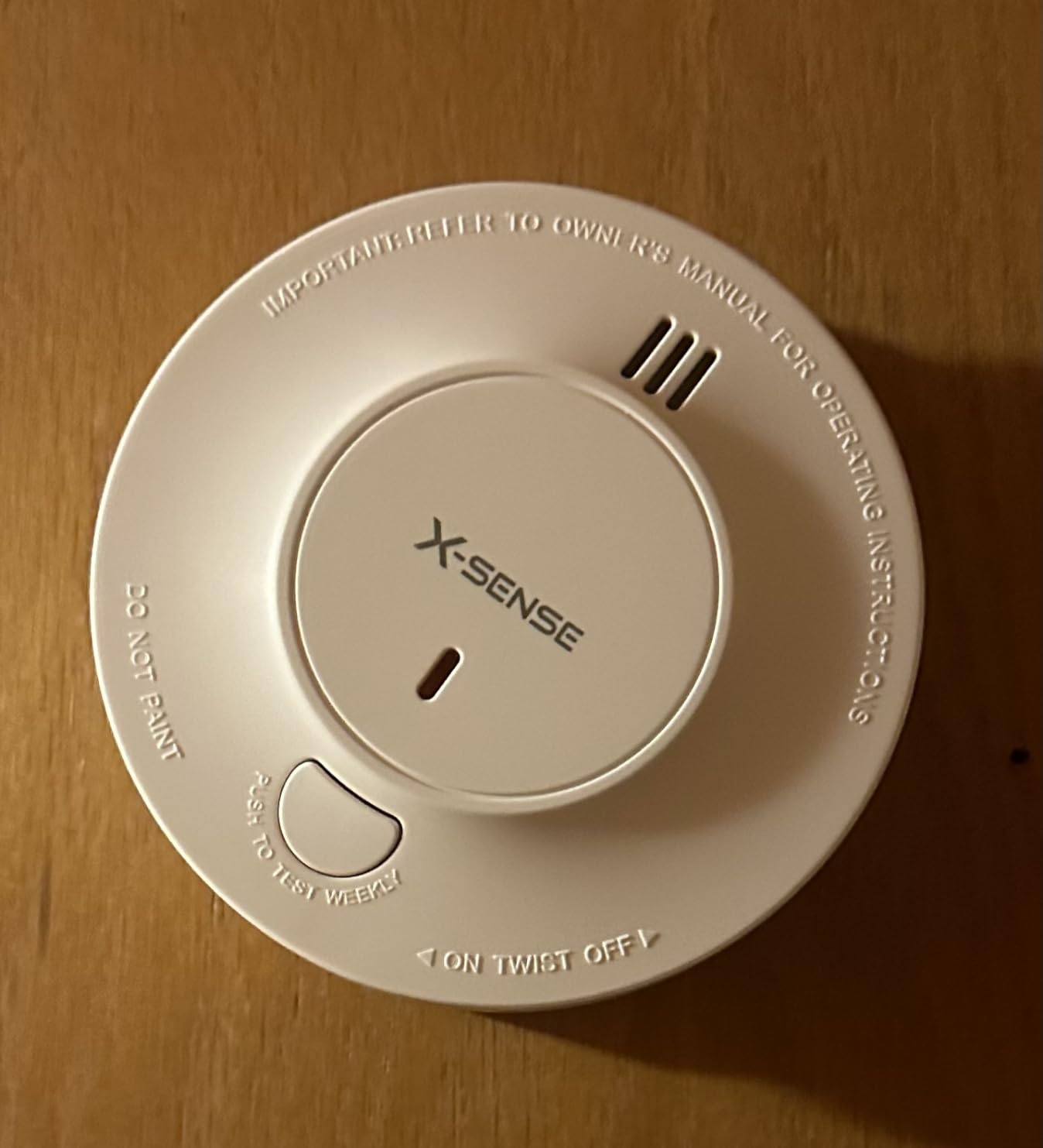
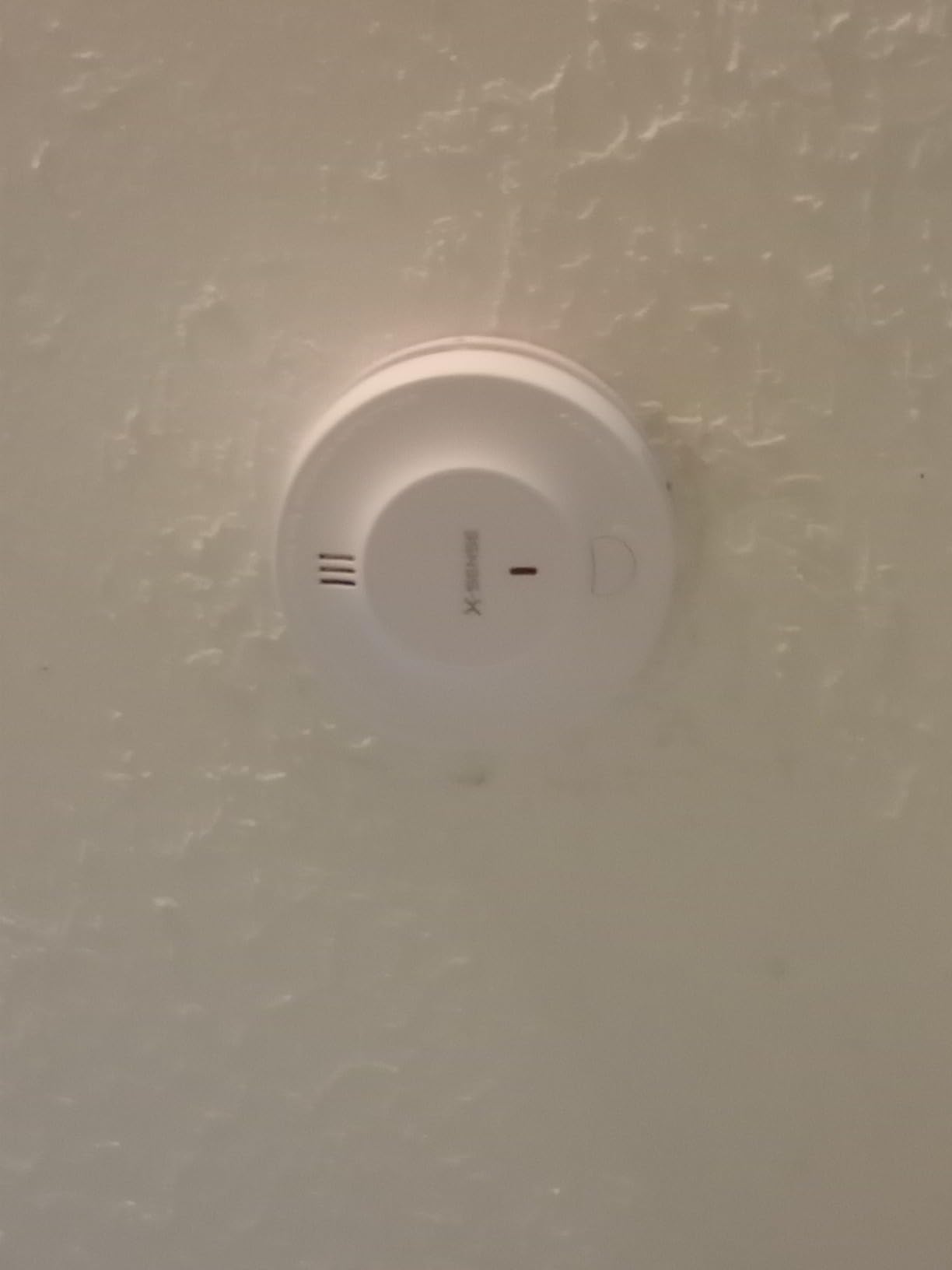
It is a plain white 4.8 inch disc weighing 6.24 ounces, with a single test and silence button on the face and a rated operating humidity of 10 to 85 percent. That humidity ceiling is the one spec worth knowing: in a bathroom-heavy or coastal bedroom, sustained readings above 85 percent can push a photoelectric chamber toward nuisance alarms.
Its rating of 4.6 across more than 4000 reviews makes it the most tested alarm in this guide by a wide margin. When owners describe problems they describe fit and mounting rather than detection failures, which is exactly the profile you want on a bedroom ceiling.
What it does well in a sleeping room
Because it is photoelectric, a steamy shower next door or an aerosol sunscreen applied at midnight is far less likely to set it off than with an ionization chamber. In a small bedroom where the shower is two steps away, that difference decides whether the alarm survives the first year of ownership.
The test and silence button lets you check it in the dark without a ladder for the battery. Press and hold it, the horn runs the diagnostic, then it goes quiet. There is a built-in self-test that also checks sensor and battery condition, so a monthly check takes seconds.
Where it falls short
It is a standalone model with no interconnect capability. If one alarm sounds in the bedroom, nothing else in the house sounds with it, and a sleeper in a deep room still relies on that one 85 dB siren to wake them.
There are no voice alerts and no phone notifications. If your sleeper is deaf, hard of hearing, or simply a very heavy sleeper, the pure tone is doing all the work. For those rooms, look at the Kidde 20SD10-V or the First Alert SM210L instead.
2. First Alert SMI105-AC – Best Interconnected Hardwired Alarm
First Alert Hardwire Smoke Alarm with 10-Year Battery Backup
Ionization sensor
Hardwired corded power
10-year battery backup
Three alarm pack
Pros
- When one alarm sounds the whole connected house sounds
- Ten-year backup battery carries you through outages
- Alarm indicator points to the detector that triggered
- End-of-life warning instead of a silent failure
- Precision Detection sensing reduces nuisance alarms
Cons
- Requires hardwiring and electrical work
- Three pack costs more up front
- Installed into existing 120V wiring
- An electrician is the safest install route
The First Alert SMI105-AC is the pick when your bedrooms sit inside an interconnected system and you are replacing hardwired units in place. When any one alarm detects smoke, every connected alarm sounds, which is the single most effective way to wake someone through a closed door and down a hall.
It is an ionization-sensing alarm, so it leans toward fast flaming fires rather than smoldering ones. For a whole-home system built around these units that trade is worth it. For one bedroom on its own, a photoelectric model is the better single-room choice.
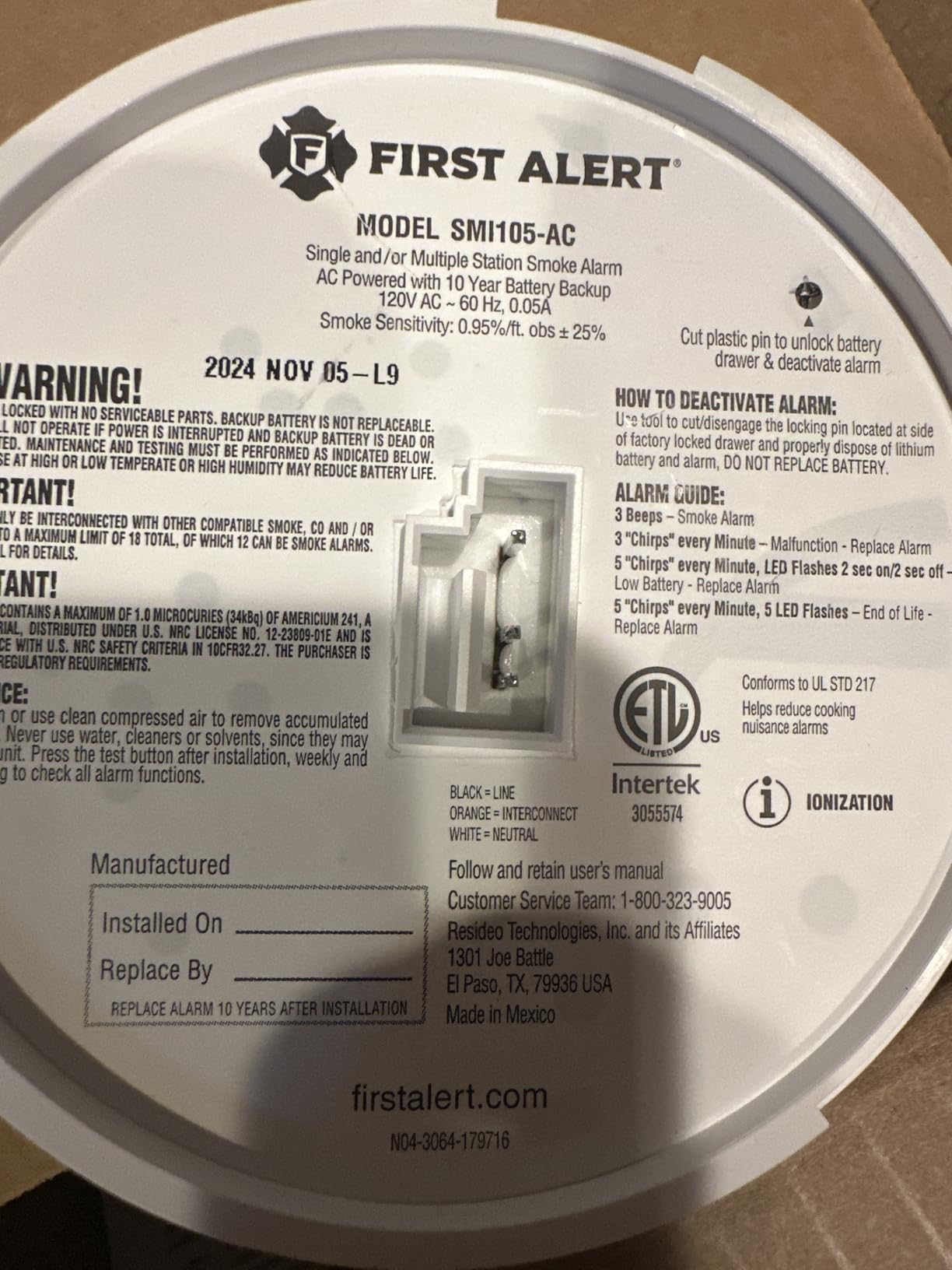
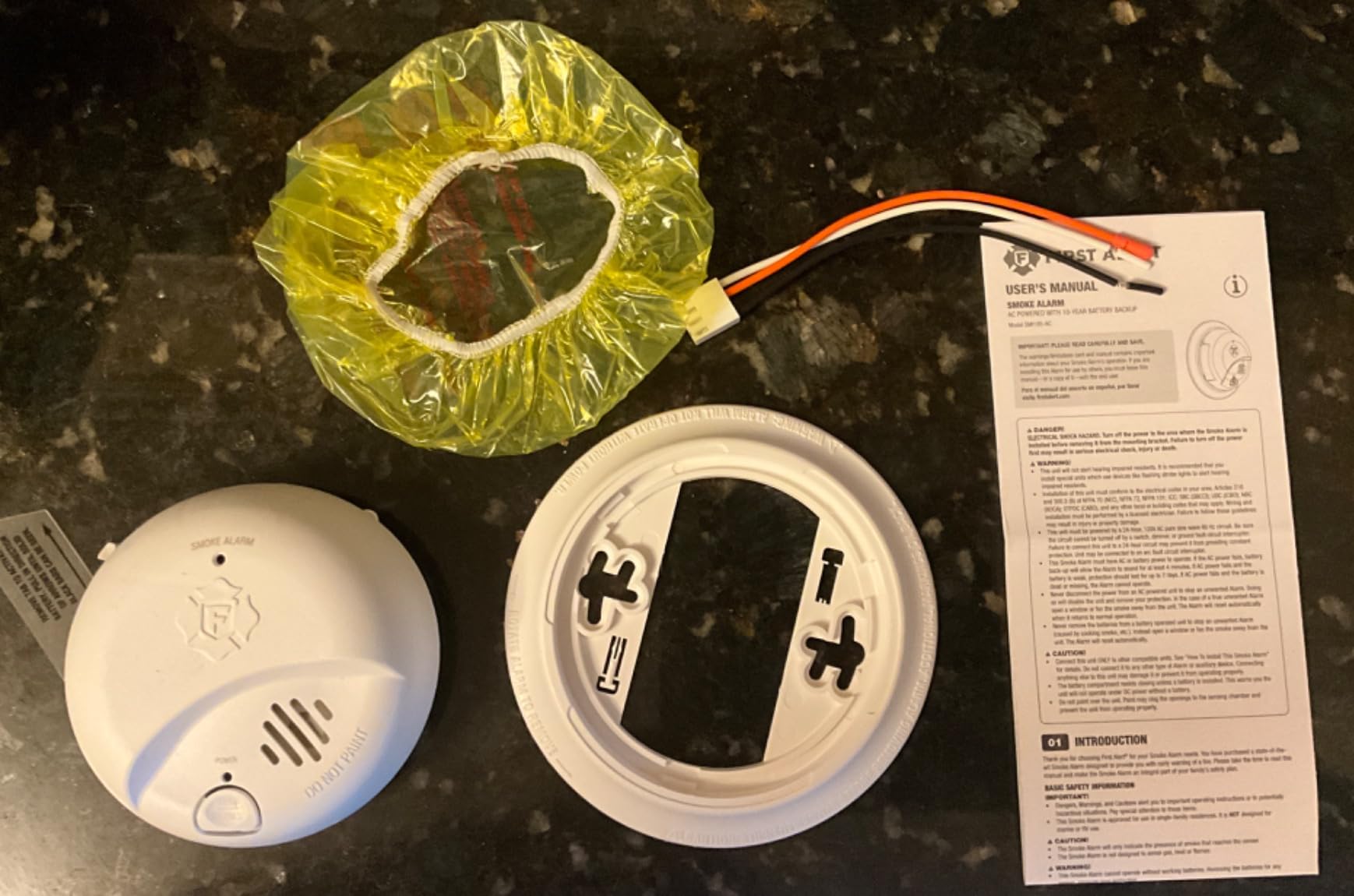
The list price covers three units, each 5.5 inches across and 11.2 ounces, with an included adapter plug that helps them fit older mounting boxes. The 10-year backup battery means an outage at midnight does not silence the bedroom.
Two details matter more here than they would on a standalone alarm. The alarm indicator marks which detector initiated the event, and the end-of-life warning gives you an audible signal that the sensing chamber has aged out rather than drifting quietly.
Why it earns its place in a bedroom
Interconnectability is a bedroom feature, not just a house feature. It means a fire starting in the kitchen can wake the person asleep upstairs instead of relying on one detector’s reach.
It also suits a home with a vaulted or very high bedroom ceiling. A hardwired unit never needs a battery change, so the only time anyone climbs is at the ten-year replacement, and that is a planned weekend task rather than a surprise.
Where it falls short
Installation requires running or reusing 120V wiring and connecting the interconnect leads. Renters cannot do this, and owners without a junction box in the ceiling face a real electrical job.
Ionization chambers are more sensitive to airborne particles than photoelectric ones, so in a bedroom close to a kitchen or a humid season this model can be noisier at night than the picks above it.
3. Siterlink GS562A – Best Budget Hardwired Photoelectric Alarm
Siterlink Hardwired Interconnected Smoke Detectors,Photoelectric Smoke Alarm with 9V Battery Backup,Test/Silence Button, Hard Wired Fire Alarm for Home GS562A 1pack
Photoelectric sensor
Hardwired 120V AC with 9V backup
Single unit
Interconnect capable
Pros
- Photoelectric sensing in a hardwired
- interconnectable body
- One-touch silence mode holds for up to 10 hours
- Hidden LED indicator will not glow across a dark room
- Interconnect line lets one bedroom trigger the rest
- Available in 1
- 2
- 4
- 6
- 8 and 12 packs
Cons
- Needs hardwiring
- so it is not a renter option
- 9V backup is a replaceable cell rather than a sealed pack
- Newer brand with a smaller review history
The Siterlink GS562A gives you the two things bedrooms actually ask for, photoelectric sensing and interconnect, in a hardwired body that costs less than most standalone photoelectric alarms. That combination is rare at this tier.
The silence mode is the sleeper-friendly feature. One press mutes the horn for up to ten hours, which is long enough to cover the rest of the night after a false alarm instead of waking you again an hour later.
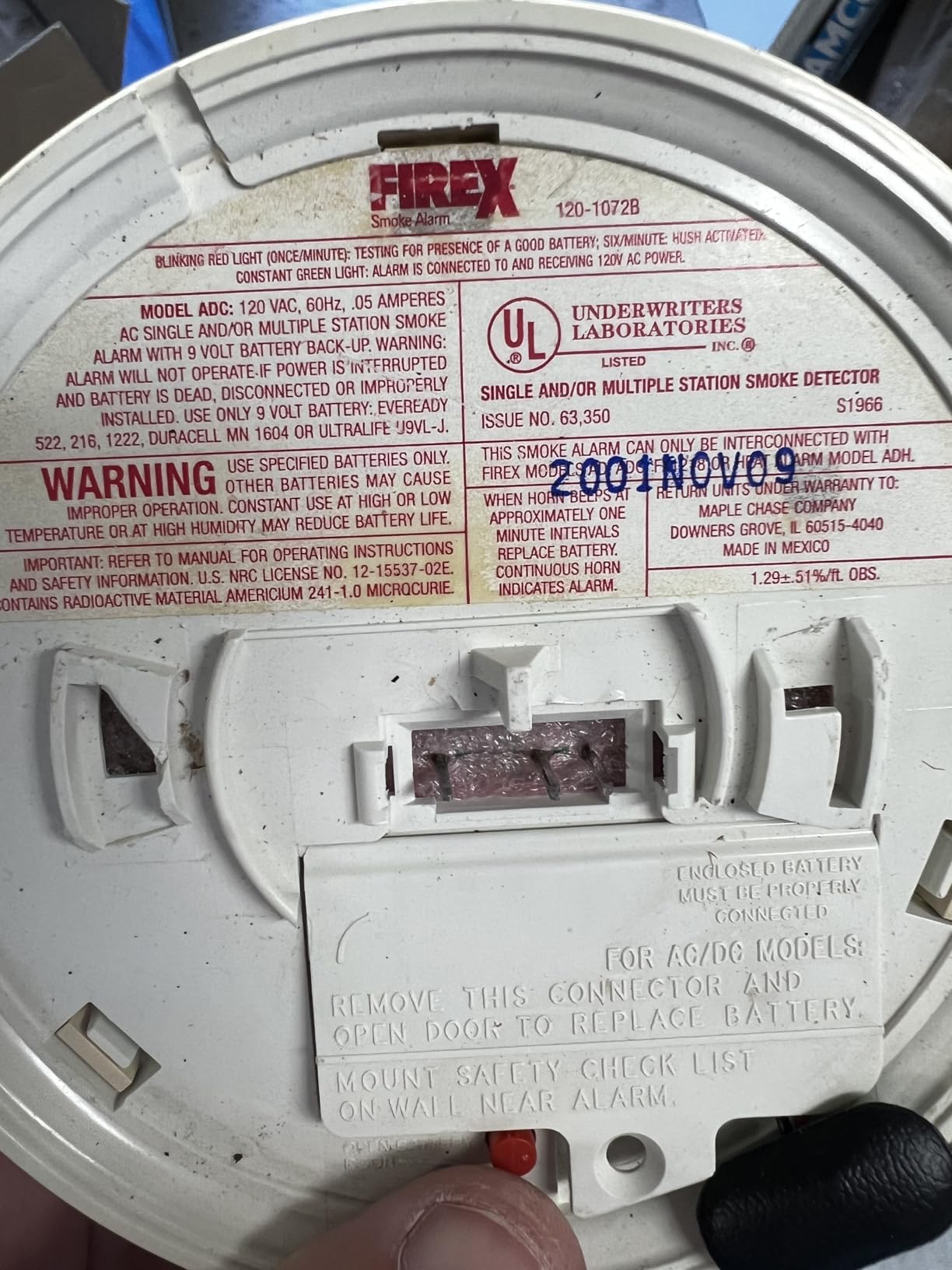
The hidden LED is a small thing that matters more than it sounds. Most alarms put a status light on the face where it catches your eye the moment the room darkens. This one hides it.
Owners rate it 4.5 across 652 reviews, with the interconnect line and the cooking-alarm resistance coming up most often as reasons to recommend it.
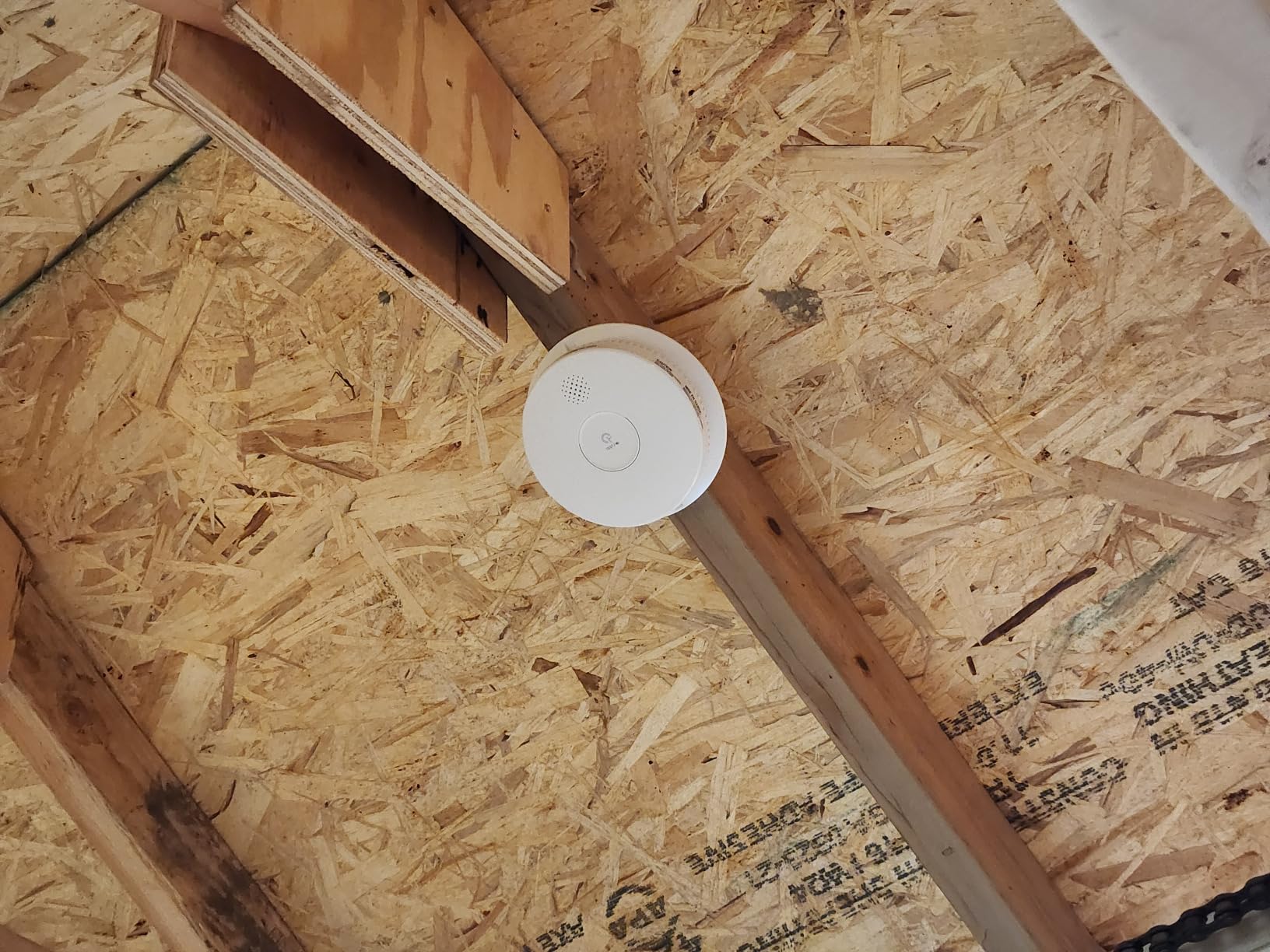
When it fits a bedroom
Choose this when you already have hardwired alarms and are adding a bedroom to the network. Swapping an existing unit is straightforward because it reuses the same wiring and interconnect loop.
It also suits a house where cooking alarms have been a recurring complaint. A photoelectric chamber is the standard answer, and this one is a hardwired model that also participates in whole-home signalling.
What to watch out for
The backup is a replaceable 9V cell, not a sealed decade-long pack. That means an annual battery check on top of the annual test, and a chirp is possible in the middle of the night if it is overlooked.
The brand is newer to the residential market than First Alert or Kidde. Its 652 reviews are healthy but thin next to the 4000-plus behind the X-Sense, so long-run failure data is thinner too.
4. Kidde 10SDR – Best Smoke Detector for Small Bedrooms
Kidde Compact Smoke Detector, AA Battery-Powered, 10SDR
Photoelectric sensor
Two AA batteries included
4 inch compact body
85 dB alarm with LED
Pros
- Compact 4 inch body suits low ceilings and tight rooms
- Two AA batteries ship in the box
- UL 217 10th Edition compliant
- 10-year limited warranty
- 85 dB siren with a red LED visual warning
Cons
- AA cells need annual replacement
- Swapping a larger alarm leaves a visible paint ring
- Standalone with no interconnect option
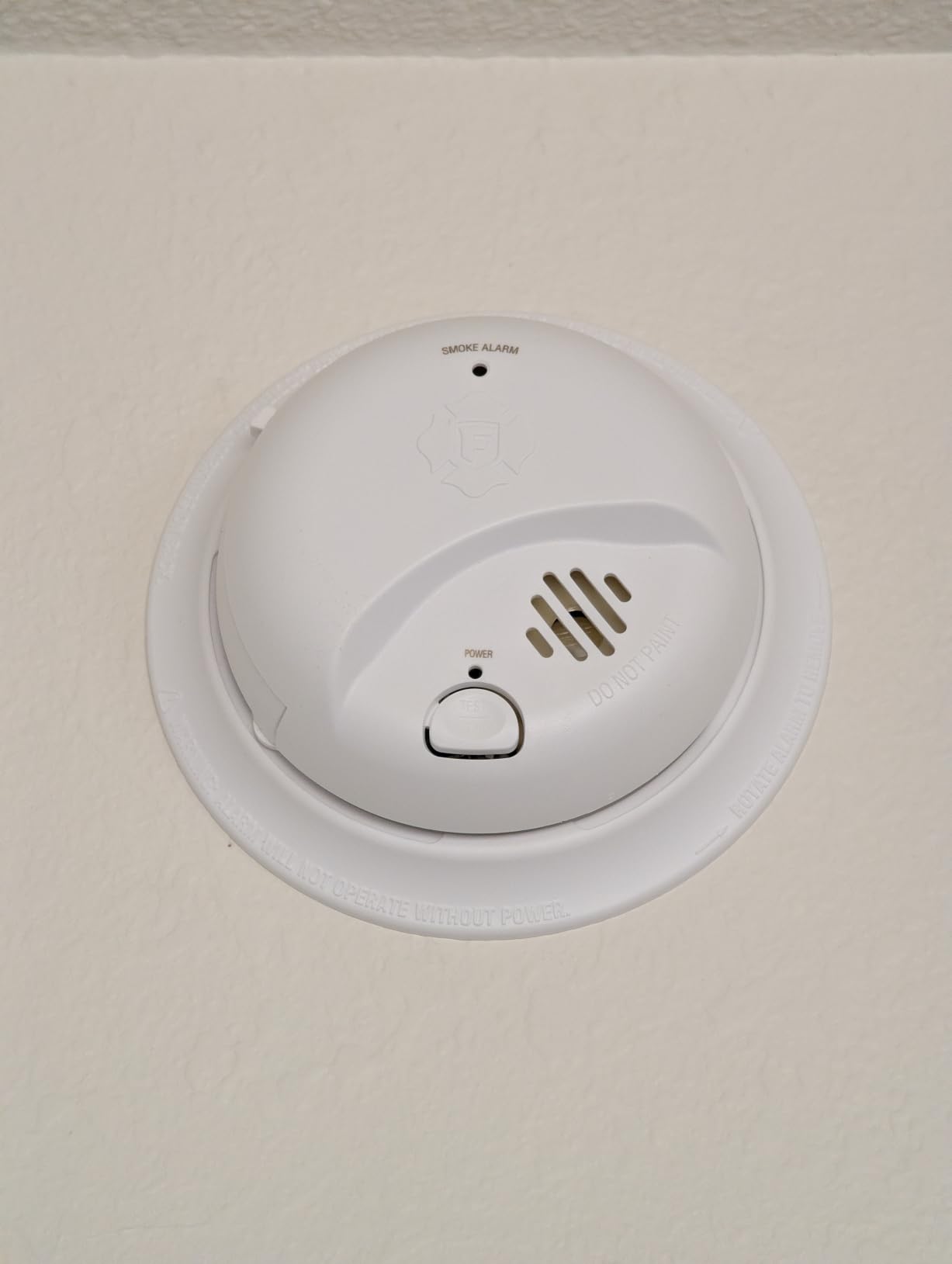
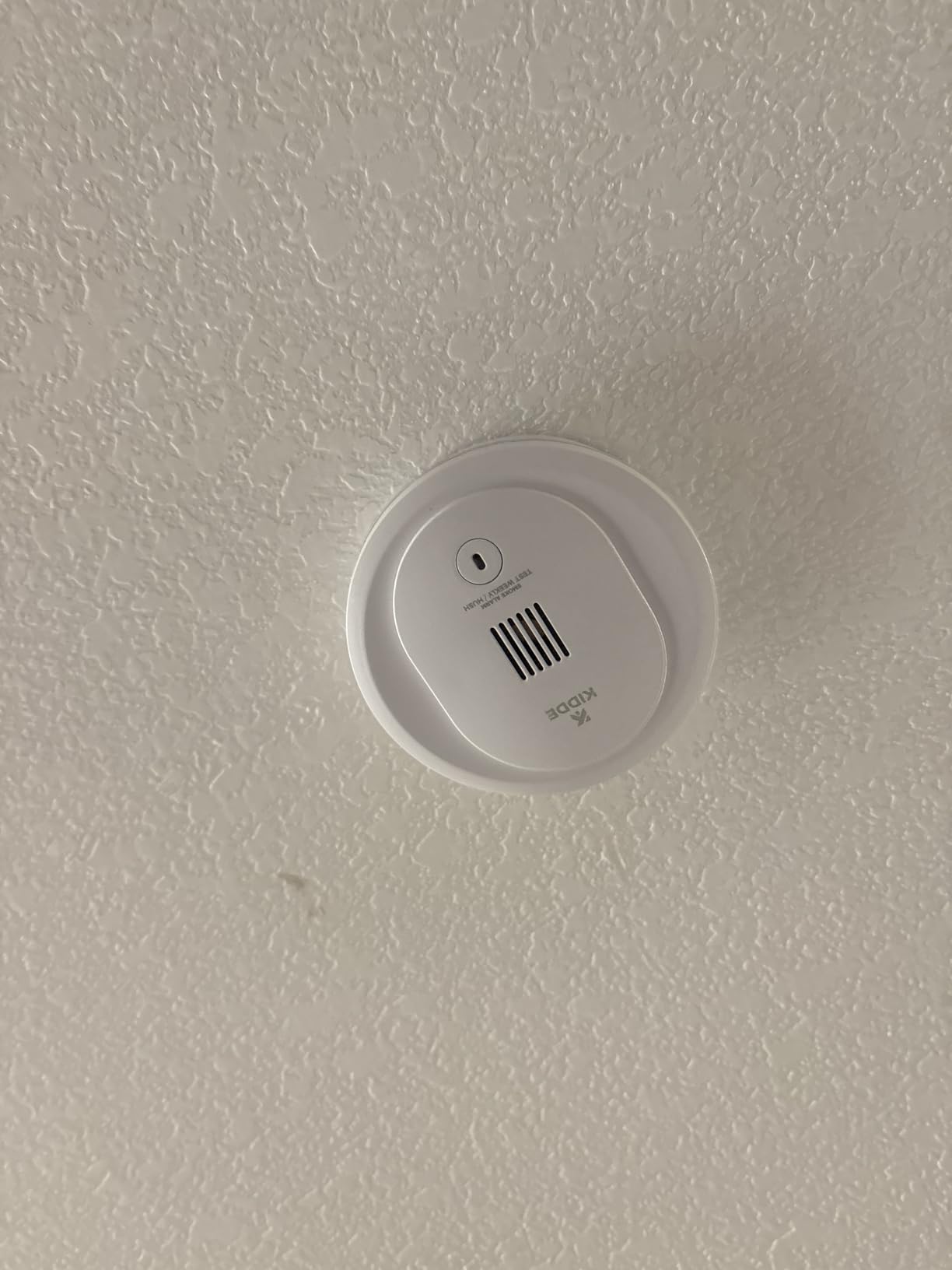
The Kidde 10SDR is our pick for a small bedroom, a dorm room, a guest room, or any space where a 5 inch alarm looks oversized on the ceiling. At 4 inches across and 6.24 ounces it is the smallest conventional alarm here.
It is still a photoelectric unit with a 10th Edition listing and an 85 dB siren backed by a red LED. The visual warning matters in a dark room for anyone who is not fully awake when the horn starts.
The trade is battery handling. Two AA cells are included, so it works out of the box, but they are not sealed and need swapping about once a year. Most households set a reminder in the same month every year.
Its operating rating reaches up to 95 percent relative humidity, non-condensing, which makes it a comfortable choice in humid climates or rooms that back onto a bathroom.
Where it works best
Small rooms have less air volume, so smoke reaches the ceiling faster and detection feels more immediate. A compact alarm also sits closer to the edge of a low ceiling, where smoke actually collects during a fire.
For a child moving from a crib to a bed, or for a rental where changing the ceiling fixture is not permitted, the ten-year warranty and compact footprint cover the practical concerns.
What it does not solve
It cannot interconnect. One alarm in a small bedroom has to wake the sleeper by itself, so pair it with an alarm outside the sleeping area rather than treating it as whole-home coverage.
The different footprint also means an existing larger unit leaves a paint ring on the ceiling when this replaces it. Minor, but visible in a freshly painted room.
5. eufy Security E10 – Best Smart Alarm for Phone Alerts
eufy Security Smoke Alarm E10, Smoke Detector, Ultra-Compact 70 mm Design
Lithium metal sealed battery
Wireless range up to 656 ft
70 mm diameter
Requires eufy HomeBase
Pros
- Phone notifications the moment the alarm triggers
- Wireless link up to 656 ft through a whole home
- 70 mm body is the smallest here
- 5-year sealed lithium battery
- UL 217 10th Edition compliant
Cons
- Will not operate without a separate HomeBase hub
- 5-year battery is half the life of the 10-year models
- Ties you to the eufy ecosystem
- Smallest review base in this guide
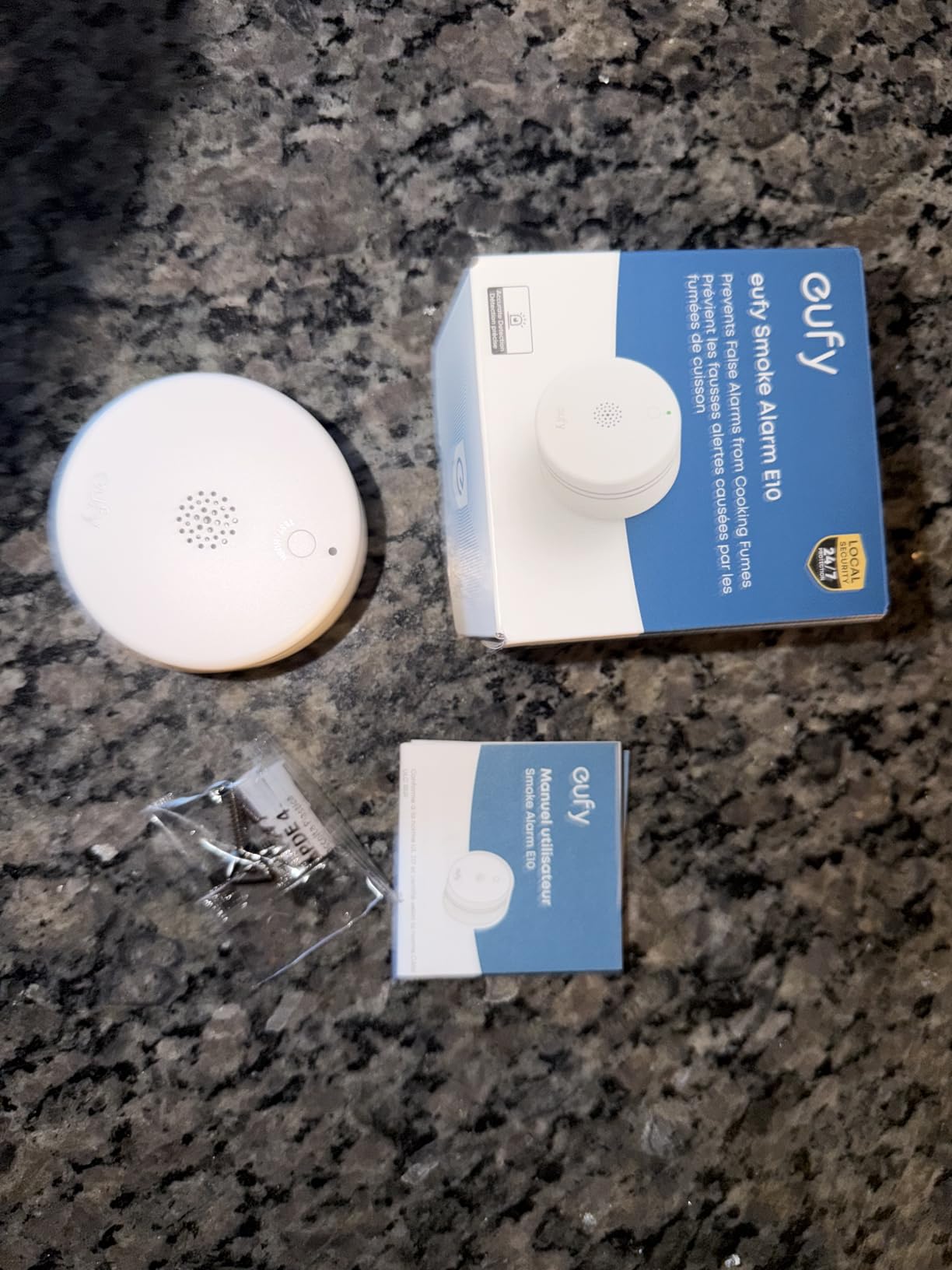
The eufy Security E10 is the pick when the thing you want from a bedroom alarm is your phone. It sends instant app alerts through a eufy HomeBase hub, which means an alarm sounding in a downstairs hallway can reach you while you are still in bed.
That matters because the complaint we hear most from owners of smart alarms is not detection quality. It is that a low-battery warning arrives as a chirp on a ceiling you cannot reach. App-based warning is the answer to that.
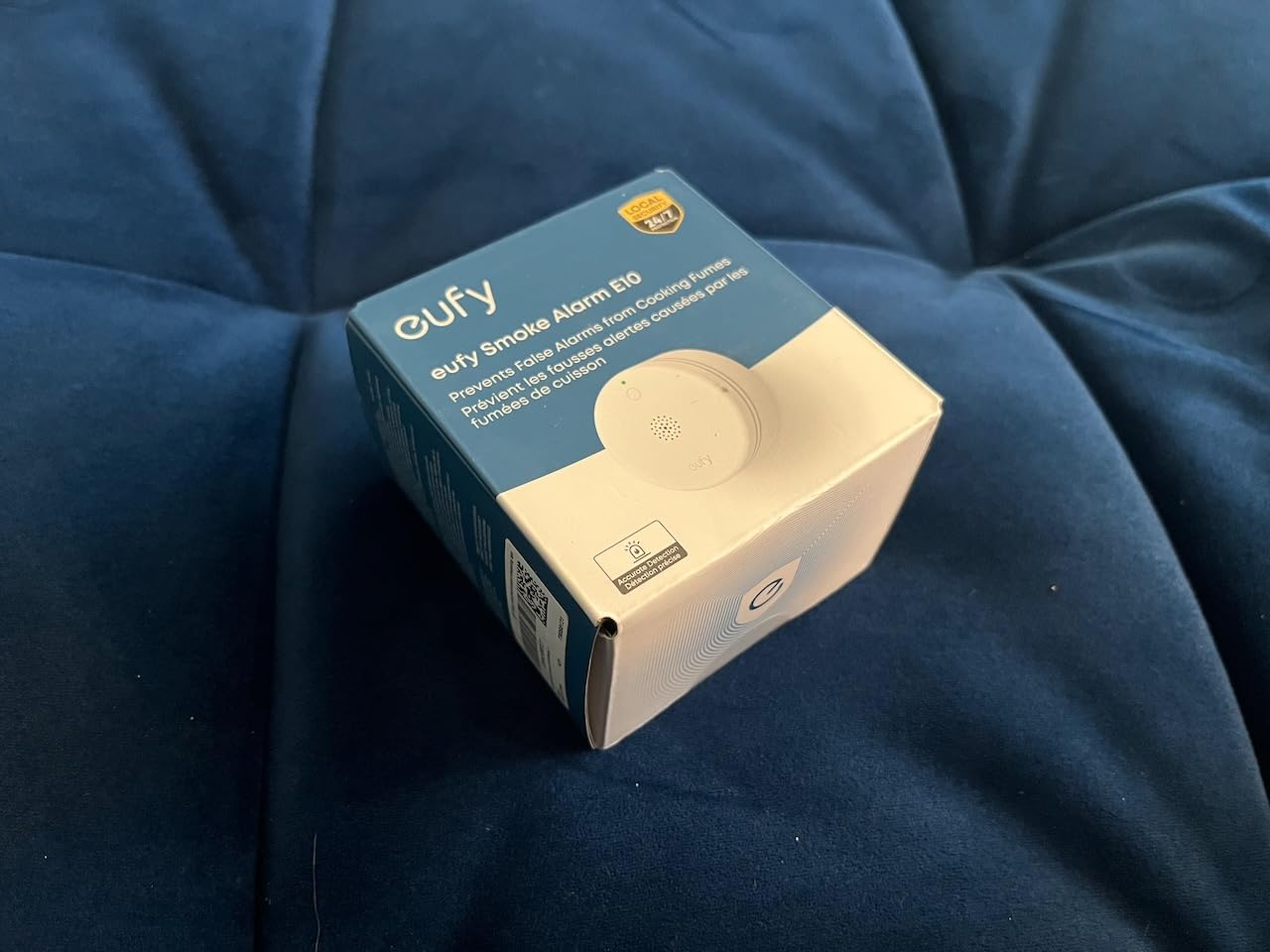
At 70 mm across and 3.52 ounces it is the smallest alarm in this guide, roughly a third of the diameter of a conventional disc. A sealed lithium metal battery runs five years before replacement.
The wireless range is listed at up to 656 feet, which comfortably covers a house or an apartment without the hub sitting in the same room. It is UL 217 10th Edition compliant and rated for bedrooms, hallways, kitchens and living areas.
Why a smart unit suits a bedroom
Remote awareness is the strongest argument. A light sleeper who is not in the room when the alarm fires still gets a notification, and someone sleeping elsewhere in the house can act on it.
The compact body also solves an aesthetic problem. A 70 mm alarm on a low bedroom ceiling reads as a designed object rather than a device, which matters in a room you look at every night.
What it costs you
It does not operate without a HomeBase hub, sold separately. That is an added purchase and an added box to power and network somewhere sensible.
Five years of battery life means a planned replacement on a shorter cycle than the 10-year units, and the 221 reviews behind its 4.4 rating are the thinnest evidence base here. Read the ecosystem reviews as well as the alarm reviews before committing.
6. Kidde 20SD10-V – Best Voice Alert Alarm for Heavy Sleepers
Kidde Smoke Detector, 10-Year Battery-Powered, 20SD10-V, 1 Pack
Photoelectric sensor
Spoken hazard alerts
10-year sealed lithium battery
85 dB horn with LED
Pros
- Spoken alerts tell the sleeper what the hazard is
- A sealed 10-year battery means no chirping
- Photoelectric chamber reduces cooking nuisance alarms
- UL 217 10th Edition compliant
- 10-year limited warranty
Cons
- Mixed reliability reports with some sensor errors early in life
- Larger 5 inch body than the compact models
- No interconnect and no app alerts
The Kidde 20SD10-V is the one we recommend for a child’s room, a shared room, or anywhere the sleeper needs a reason to move. Its voice alerts announce the hazard type out loud rather than leaving a bare tone to interpret at half past three in the morning.
For heavy sleepers the spoken warning does something a plain 85 dB horn cannot. It converts an anonymous noise into information, and information wakes people faster than volume alone.
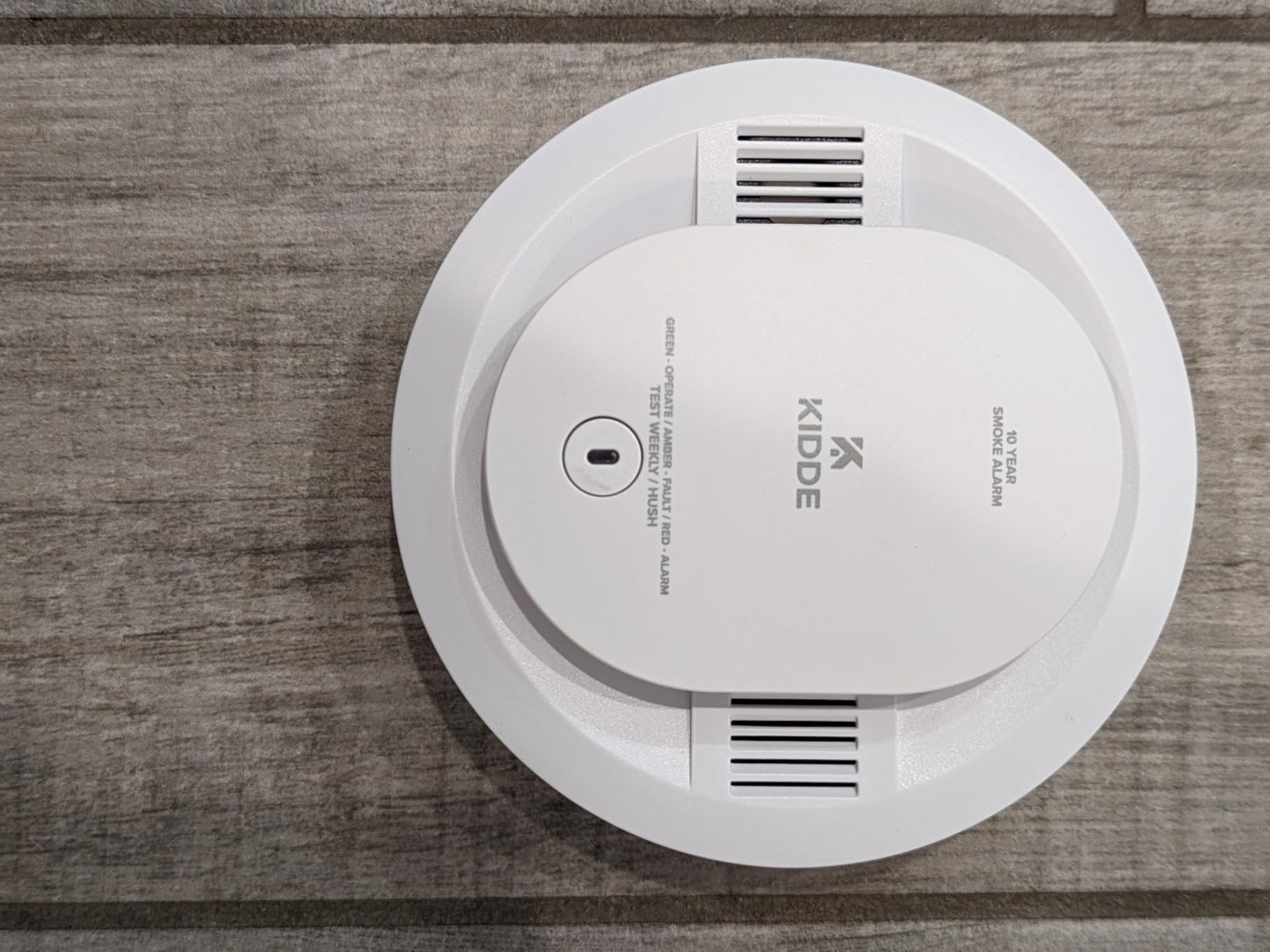
It also carries a sealed 10-year lithium battery, so there is no low-battery chirp to train anyone to ignore. The horn itself is an 85 dB unit with a red LED visual warning for anyone who is not fully awake.
This is also the model most likely to be recommended in the wrong situation. It is a standalone alarm with no interconnect and no app, so it should sit inside the bedroom rather than as your only coverage.
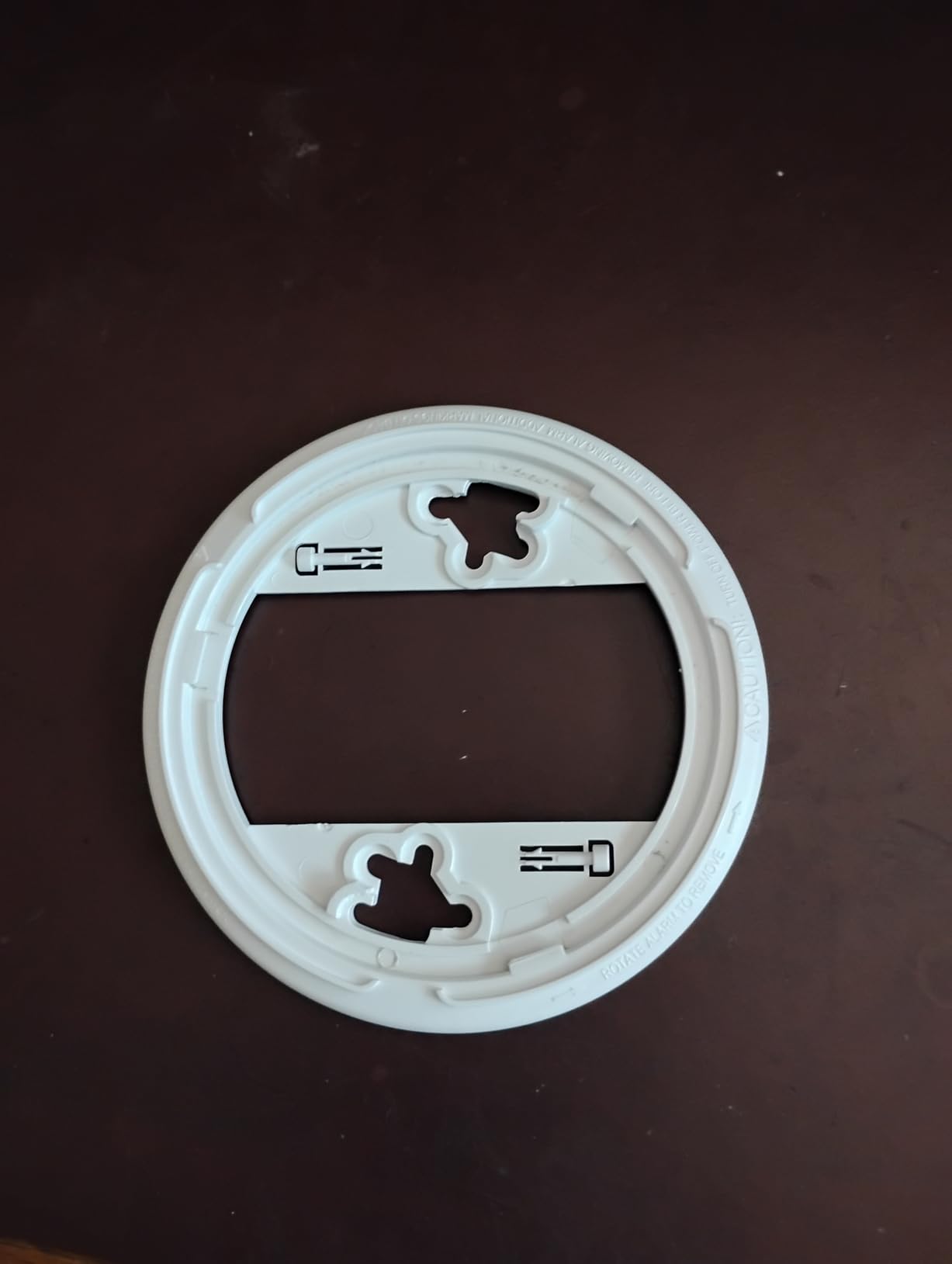
What owners like and what they do not
The voice feature and the sealed battery are consistently the two things reviewers praise. So is the photoelectric chamber, which keeps cooking fumes elsewhere in the house from setting it off.
Reliability is the weaker side of the record. At 4.2 across 307 reviews with 68 percent five-star, there are reports of sensor errors within the first few months and of units failing well inside their expected life. That is a real consideration against a ten-year no-replacement promise.
Where to use it
Put it in the bedroom of anyone who does not wake to a siren. Children, deep sleepers, and rooms where the person needs to know whether to leave or search first all benefit from a spoken hazard type.
Avoid it as the only alarm on an upper floor or a floor below a kitchen, where an ionization or dual-sensor model covers more fire types.
7. First Alert SM210L – Best Slim Profile Alarm With a Path Light
First Alert 10-Year Battery Smoke Alarm Slim Profile with Light
Photoelectric sensor
Slim half-depth body
Safety Path Light
10-year sealed battery
Pros
- Half the depth of a standard alarm for shallow ceilings
- Safety Path Light gives you a lit route to the door
- 10-year sealed battery
- Precision Detection to cut nuisance alarms
- Photoelectric sensing suits slow smoldering fires
Cons
- Path light is dim enough that owners question it
- New bracket pattern may need new holes
- Some reports of early failure around the two-year mark
- Activation button labelling confuses first-time users
The First Alert SM210L is the pick when the ceiling is shallow or the profile of the alarm matters visually. At roughly half the depth of a standard alarm, it sits close to the ceiling instead of hanging below it.
Its Safety Path Light is aimed at the escape route. In a smoky bedroom, the problem is not waking up but finding the door, and this is one of the few alarms here that tries to solve that part.
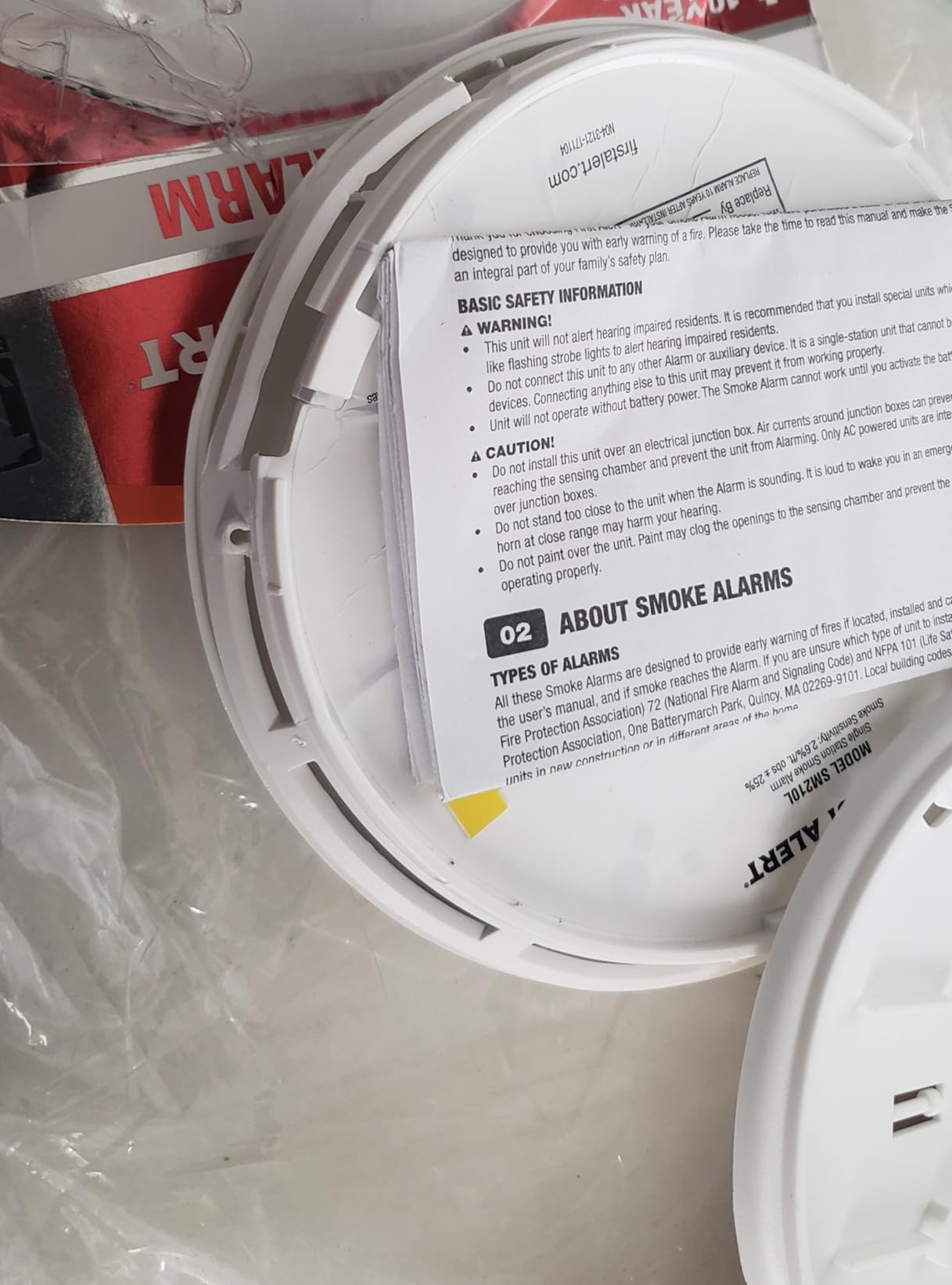
The rest is conventional and solid: a photoelectric sensor, a sealed 10-year battery, Precision Detection to reduce nuisance alarms, and a test and silence button on the face.
With 122 reviews at 4.2, this is the least-tested alarm here. That is a caution rather than a disqualifier, but it means you are buying on the feature set rather than on a long public record.
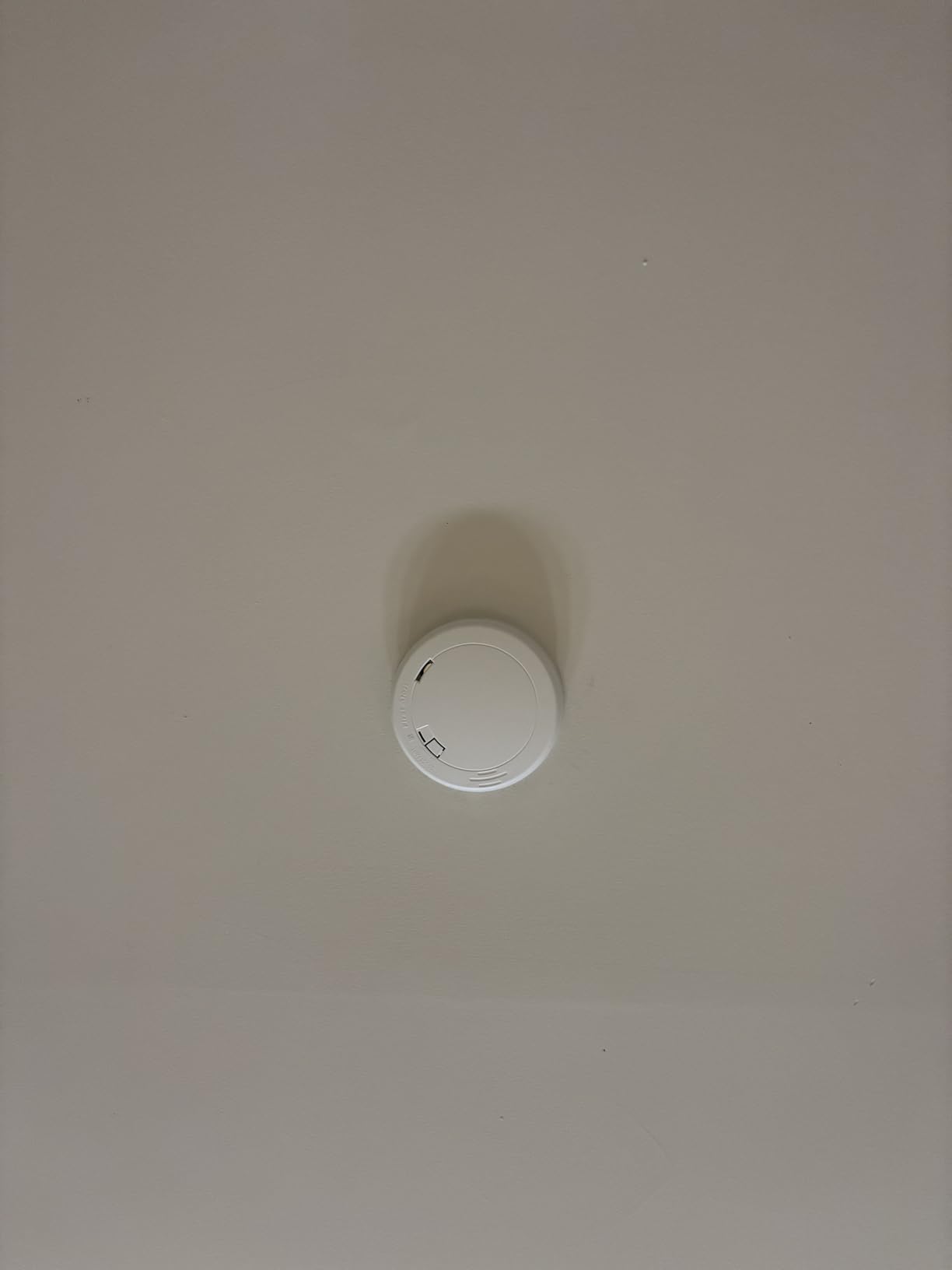
What the slim profile changes
Depth matters more than most buyers expect. On a low or vaulted ceiling, a standard disc can hang low enough to catch a hand or a ceiling fan blade, and in a bedroom that reads as clutter.
A shallower body also keeps the sensing chamber closer to the ceiling plane where smoke collects, which is where detection matters most in a sleeping room.
Where it falls down
Owners are consistent about the path light being dimmer than expected. It helps, but it is not the beacon you may picture.
The mounting bracket differs from the older model, so a straight swap can need new holes and touch-up paint. There are also early failure reports around the two-year mark, and the activation button labelling is confusing enough that some owners pressed it wrongly at install.
8. First Alert SM310 – Best Dual-Sensor Alarm for Bedrooms
First Alert 10-Year Battery Smoke Alarm, Dual Sensor
Photoelectric and ionization sensors
10-year sealed battery
Precision Detection
End-of-life warning
Pros
- Two sensing chambers cover flaming and smoldering fires
- Sealed 10-year battery
- Precision Detection reduces nuisance alarms
- End-of-life warning replaces silent ageing
- Available in 1
- 3 and 6 packs
Cons
- Largest body in the guide at 5 by 5 inches
- Ionization chamber can add cooking sensitivity
- Small 145-review record
- Costs more than a single-sensor photoelectric unit
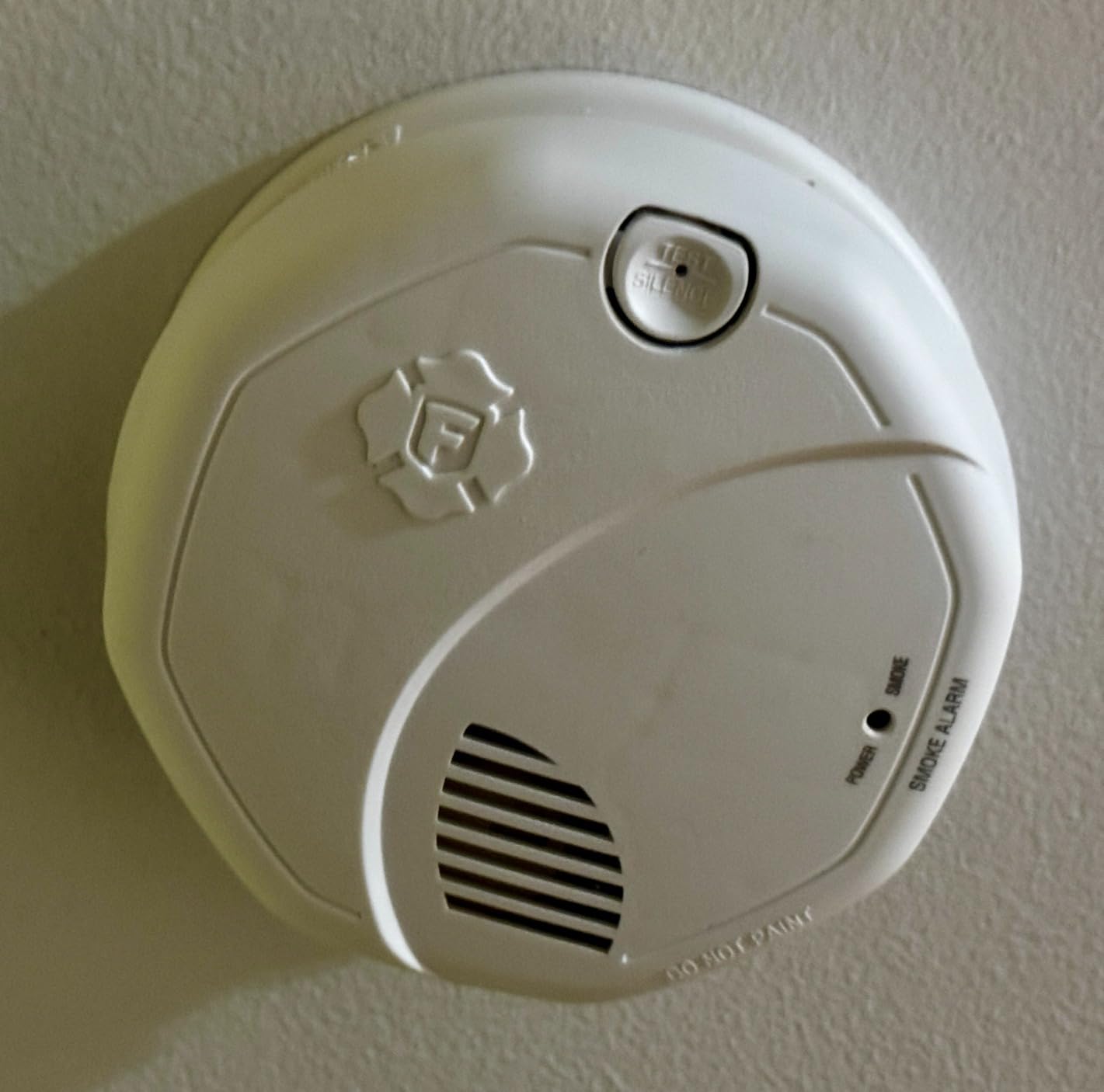
The First Alert SM310 runs a photoelectric chamber and an ionization chamber together. For a household that wants one alarm covering both fast flaming and slow smoldering fires, that pairing is the most complete coverage available here.
In practice the dual sensor is a hedge. Photoelectric units lead on smoldering fires and nuisance resistance, ionization units lead on fast flame response, and this unit does both without two separate housings on the ceiling.
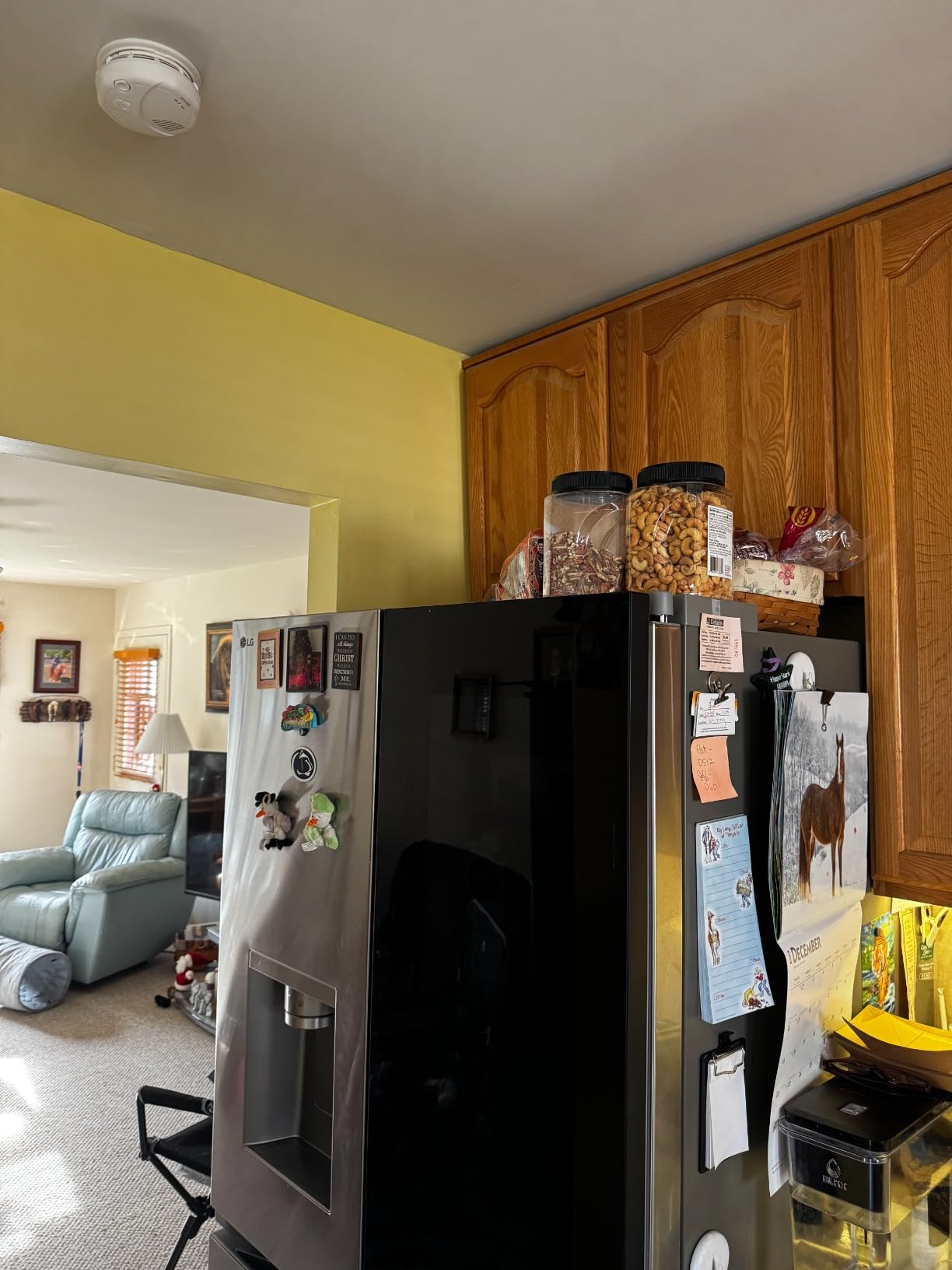
The sealed 10-year battery removes the middle-of-the-night chirp problem, and Precision Detection is applied to reduce nuisance alarms. An end-of-life warning tells you when the chamber has aged past usefulness instead of leaving you guessing.
It is the heaviest unit here at 8.64 ounces and the largest at five inches square by two inches deep, so it is a statement on a low bedroom ceiling rather than a discreet fixture.
When dual sensing pays off
If your bedrooms sit away from the kitchen and you are not replacing an existing hardwired network, a single photoelectric unit is usually enough. Dual sensing earns its extra cost when you want a single unit to handle every fire type.
It is also a sensible upgrade for a home with mixed ages, where a fast flame near a nightstand and a slow smolder in a curtain are both plausible and you do not want to choose between them.
The catch
The ionization half is the more particle-sensitive of the two, which reintroduces some of the cooking and humidity sensitivity that made us favour photoelectric units for bedrooms in the first place.
The 145-review base is thin for a decision this consequential. If you can reach an installer or a current owner, that conversation is worth more than the star rating.
9. Heiman S1-S – Best No-Drill Install for Renters
Heiman Smoke Detector, Photoelectric Battery Powered Smoke Alarm for Home
Dual-wavelength photoelectric
CR123A battery included
Magnetic mounting plate
85 dB at 10 ft
Pros
- Magnetic self-adhesive plate means no drilling or landlord permission
- Dual-wavelength sensing with red and infrared beams
- At least 85 dB at 10 ft with an LED indicator
- UL 217 10th Edition certified
- UL94 V-0 fire-resistant housing
Cons
- CR123A cell is replaceable rather than sealed
- Adhesive mount needs a clean flat ceiling to hold
- Smaller 176-review record
- Newer brand in the US market
The Heiman S1-S is the pick when you rent and cannot drill. It ships with a magnetic self-adhesive mounting plate, so installation is a wipe of the ceiling and a twist on the base. No holes, no landlord conversation, no liability deposit.
It is also a genuinely capable sensor underneath the tidy shell. Dual-wavelength photoelectric detection uses red and infrared beams, and the alarm is specified at at least 85 dB at 10 feet with an LED status indicator.
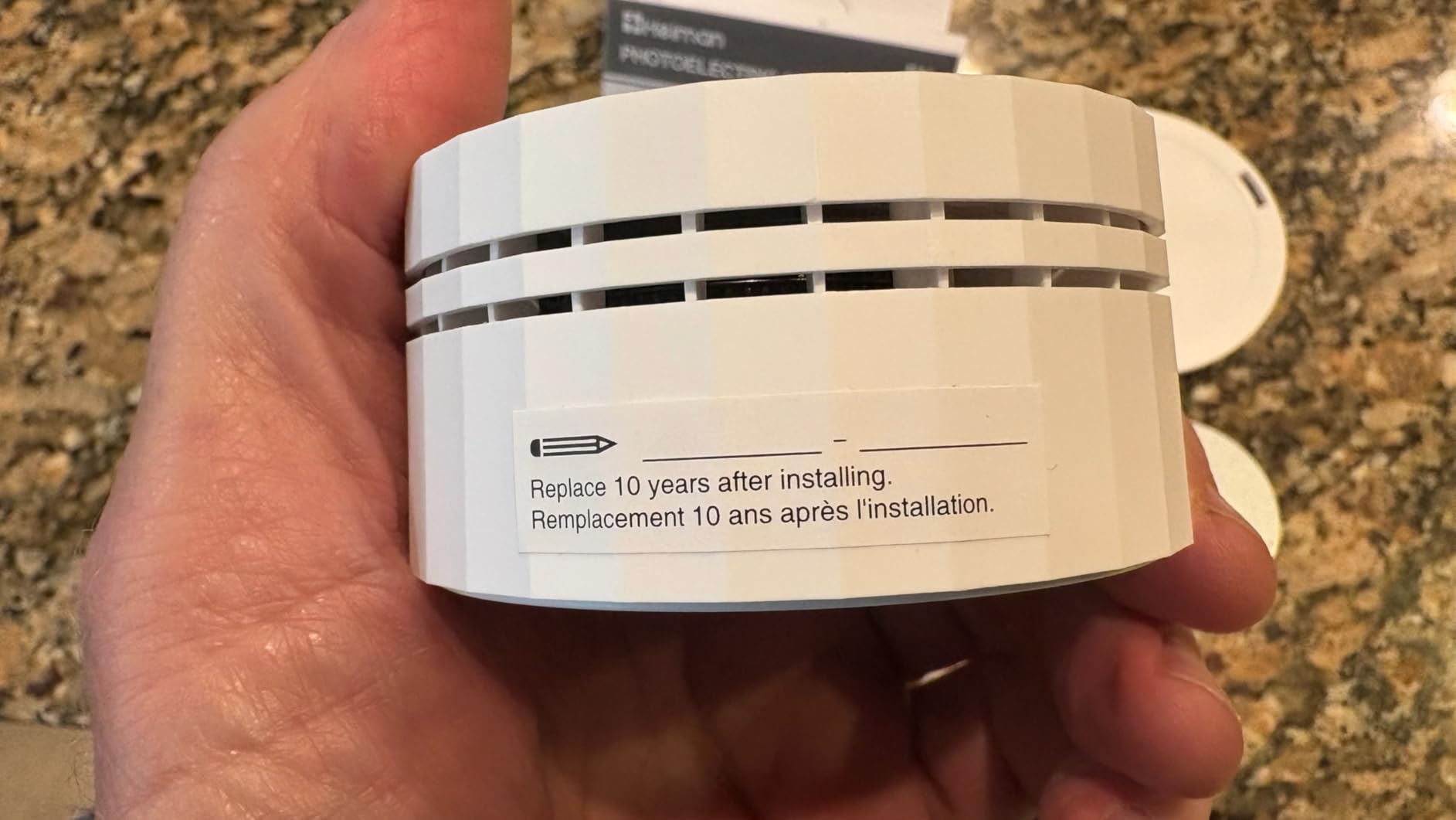
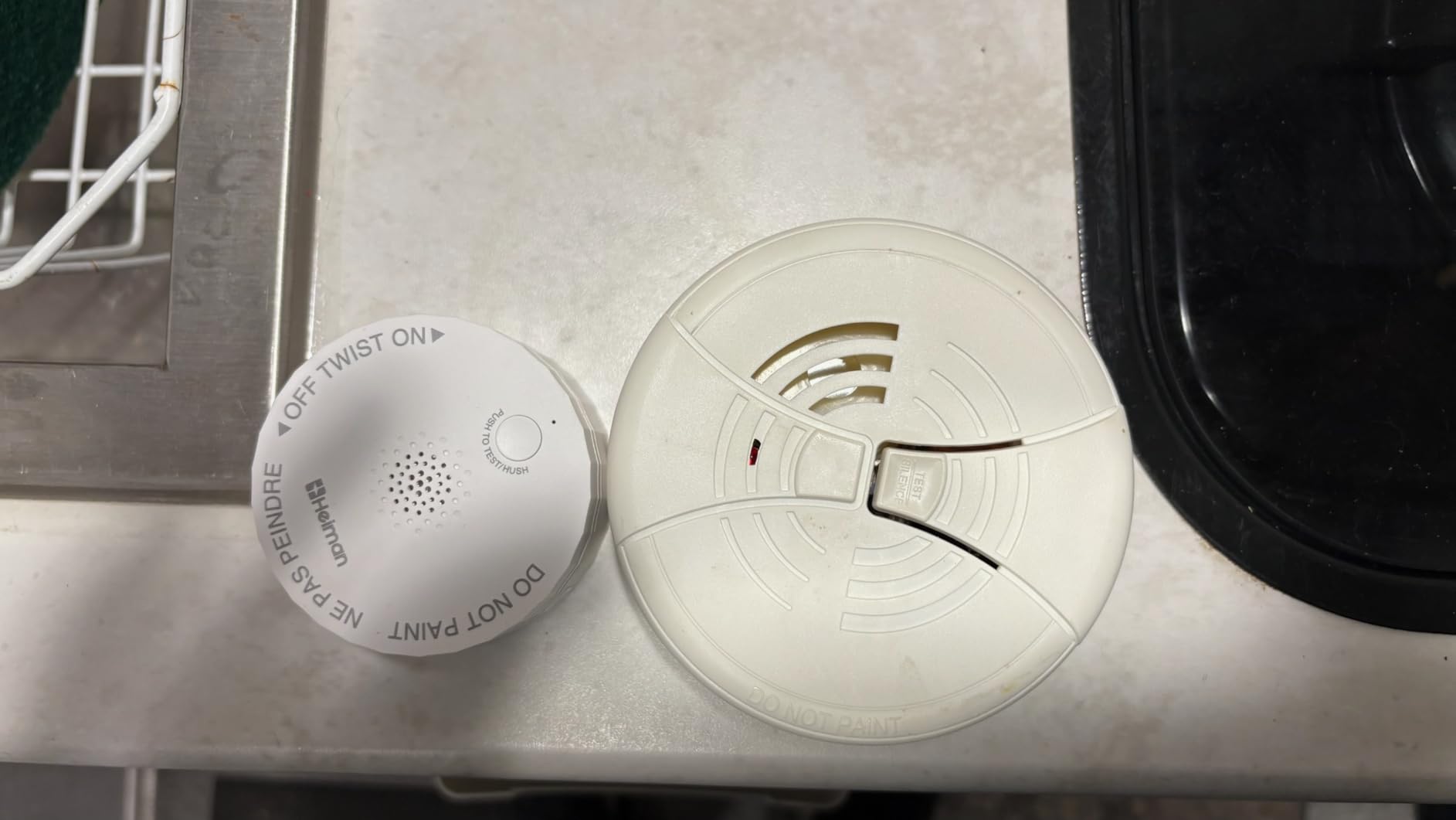
The tapered body is compact at 67 mm across the face and 37 mm high, weighing 3.52 ounces. The housing is UL94 V-0 fire-resistant plastic, and the unit carries a 10-year product service life.
The one spec that will not surprise you if you read it is the CR123A lithium cell. It is included and user-replaceable, not a sealed ten-year pack, so you will be opening it once a year or so.
Where the no-drill mount wins
Adhesive mounting changes who can comply with bedroom alarm rules. Renters, students in dorms, and anyone in a lease that forbids alterations can add coverage today rather than at the end of the tenancy.
It is also useful as a supplementary unit inside a bedroom that already has a hardwired alarm, or as a temporary addition in a room you are renovating.
Limits to plan around
Adhesive needs a clean, flat, textured-free surface. On a popcorn ceiling or a freshly painted patch it will not hold reliably, and a smoke alarm that falls is worse than no smoke alarm.
At 176 reviews the record is short, and a replaceable coin cell means annual handling. Check the ceiling surface before you commit, and treat the adhesive plate as a convenience rather than a permanent fix.
10. Kidde P3010L – Best Lit-Path Alarm for Hallways and Bedrooms
Kidde 21010164 10 Year Battery Smoke Alarm | Photoelectric | Living Area | Model P3010L
Photoelectric sensor
10-year sealed lithium battery
Hush feature
LED path light
Pros
- Hush feature silences nuisance alarms on demand
- LED light gives a lit path out of the bedroom
- No low-battery chirps for the life of the alarm
- End-of-life warning when the chamber ages
- 10-year limited warranty
Cons
- Listed as a living area model rather than a bedroom specialist
- Listing shows a confusing 5 hour battery spec
- No interconnect and no app alerts
- Heavier body at 8.96 ounces
The Kidde P3010L rounds out our list as the alarm with the most considered escape path. The LED light throws a beam toward the doorway, so a sleeper who wakes to a smoky room has a lit route instead of guessing.
Its hush feature is the other bedroom-specific detail. A test and silence control mutes a nuisance alarm on demand, which shortens the amount of noise a false alarm puts into the room at three in the morning.
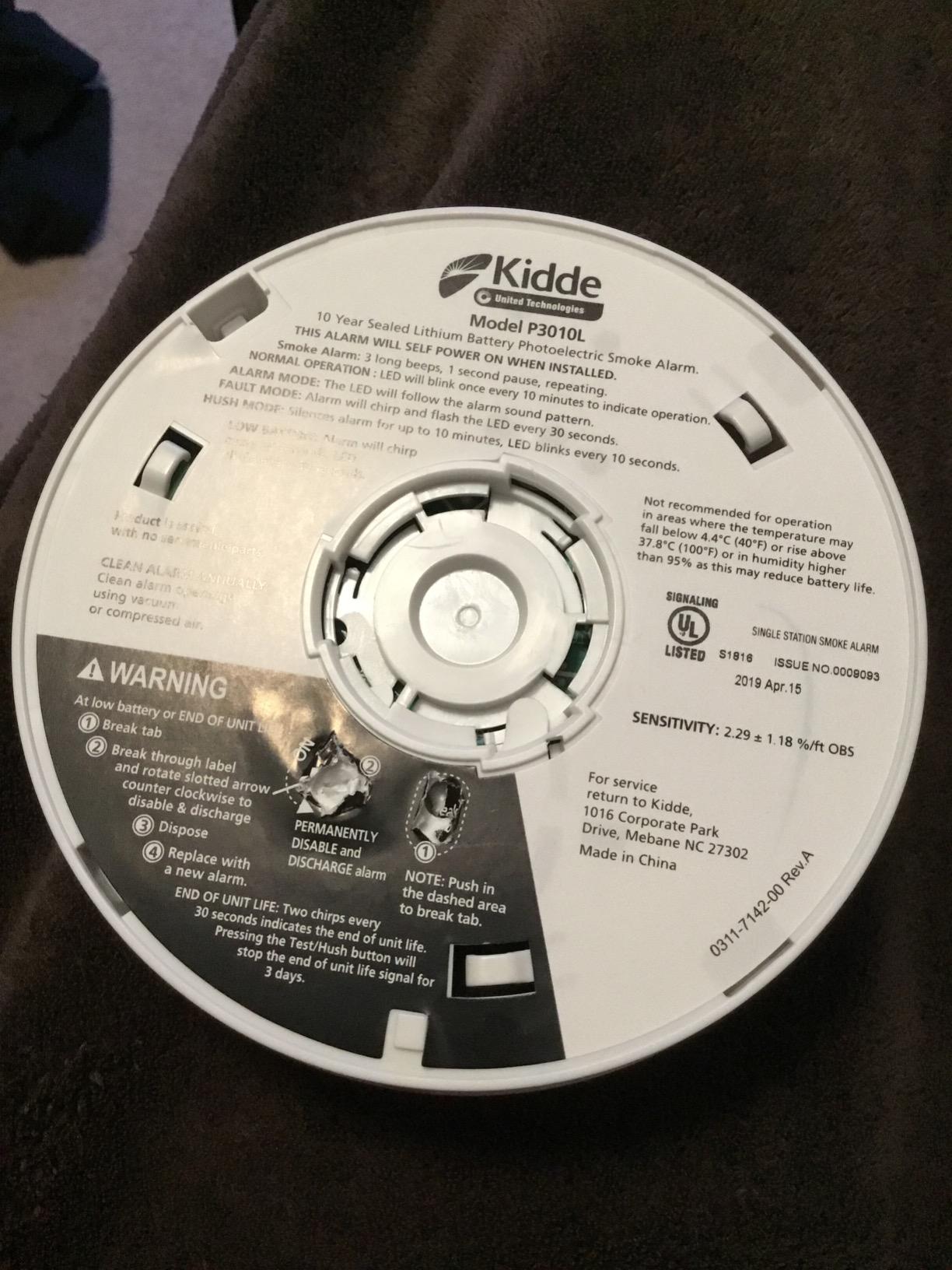
Like most Kidde units here it uses a sealed 10-year lithium battery, so there are no low-battery chirps at all. An end-of-life warning covers the far end of the service life.
The sensor is photoelectric, tuned for living areas, and the warranty runs ten years. At 8.96 ounces it is one of the heavier discs, which is not ideal on a low ceiling.
Why it works in a sleeping room
A path light only helps if it is aimed where you need to go. In a bedroom the answer is the door, and this unit points there, which is the single most useful thing an alarm can do after it wakes you.
Pair it with an alarm outside the sleeping area, as the guidance in the next section describes, and you get the lit route plus coverage beyond the room.
What to know first
The manufacturer lists this as a living area model rather than a bedroom-specific one, so it sits more naturally in a family room or hallway. In a bedroom it is a good alarm with the wrong label.
Some listings show a five hour battery life figure, which is an error, and the listing copy also mixes in price claims we would ignore. At 4.2 across 391 reviews the record is fair rather than strong.
Key Bedroom Features to Look For
Five things decide whether a smoke alarm belongs in a sleeping room. Everything else on the box is secondary, and most of what buyers fixate on does nothing for a person who is asleep.
Photoelectric sensing. A photoelectric chamber detects the particles from a slow smoldering fire and is far less likely to trip on cooking steam, aerosol sprays, or overnight humidity than an ionization chamber. It is the default choice for bedrooms.
Voice alerts or a stated siren output. An 85 dB horn is the baseline, but a spoken hazard message wakes people who cannot interpret an anonymous tone at half past three. Voice matters most for children, heavy sleepers, and shared rooms.
Interconnect capability. When one alarm sounds, all connected alarms sound. In a house with bedrooms on a different floor, this is the feature that turns a single detector into whole-home coverage.
A sealed battery or hardwired backup. A sealed 10-year lithium cell removes the low-battery chirp entirely, which matters because a chirp at 3am trains a household to reach up and disconnect the alarm.
A dim or hidden status light. A bright LED on a bedroom ceiling is visible the moment the lights go off. Hidden or soft indicators, and smart units that push warnings to a phone instead, keep the room dark.
How to Choose a Smoke Detector for a Bedroom
Photoelectric vs ionization vs dual sensor
Photoelectric is the right bedroom default. Ionization chambers respond faster to fast flaming fires but are more sensitive to the airborne particles that show up around cooking and humidity, and ionization units are not being sold into new residential code in many places.
Dual-sensor units run both chambers and cover more fire types in one housing. That breadth is useful in mixed households, but the added ionization chamber reintroduces some nuisance sensitivity.
Hardwired with battery backup vs a sealed 10-year battery
Hardwired units are the strongest long-term option for owners. Power comes from the home, and a sealed backup battery covers outages for a decade, so the alarm never goes silent and never chirps for a low battery.
Sealed 10-year battery units are the practical choice for renters and for anyone without wiring in the ceiling. The cost is a fixed replacement date ten years out. Replaceable AA or 9V cells are the cheapest to buy and the most likely to chirp in the night.
Why voice alerts matter in a sleeping room
A sleeper who wakes to a bare siren has to make a decision with almost no information. A spoken message naming the hazard and the location removes that decision, and it does it before full consciousness arrives.
This is why we rate the Kidde 20SD10-V highly despite a middling score. The feature matters more in a bedroom than any other room in the house.
Interconnect and whole-home synchronisation
Interconnected alarms trigger each other, so a fire anywhere sets off the bedroom detector. Systems wire together through a signal line or link wirelessly, and most are rated for a set number of devices.
Mixing brands in one interconnect network rarely works, because the signalling protocols differ. If your house already has hardwired alarms, matching the existing model is more reliable than mixing.
Smart alarms, hubs and phone silencing
Smart alarms add three things a conventional unit cannot give you: an app notification when the alarm triggers, the ability to test or silence it from a phone, and an advance warning of low battery or end of life before anything chirps.
That last one is the dealbreaker owners quote most often. A warning that arrives as a chirp on a fourteen-foot ceiling is worse than no warning, because it cannot be silenced from the bed.
Check what the alarm needs before it works. Some require a hub sold separately, some lock you into one app ecosystem, and some rely on the vendor keeping cloud services alive. Our wider guide to smart smoke detectors for homes covers the compatibility side in more detail.
What to check before you buy: UL 217 10th Edition
Look for a UL 217 10th Edition listing on the unit itself, not just on the product page. The 10th Edition is the current US standard for residential smoke alarms, and an alarm without it does not meet the code most jurisdictions enforce.
ETL and CSA marks count the same way as UL marks. If you cannot find a certification mark on the device, treat that as a reason to pick a different listing rather than a minor gap.
Where to Place a Smoke Detector in a Bedroom
You need an alarm inside every sleeping room, and another one outside each sleeping area. Sleeping rooms are where fires are most dangerous and where smoke barriers mean an alarm in the hall cannot hear a fire in the room next door.
Mount smoke alarms on the ceiling, at least six inches from a wall, and away from the corners where two walls meet. Smoke and combustion gases rise and pool at the ceiling edges and in corners, but mounting hard into a corner catches less of the flow than mounting near the centre of the ceiling line.
Keep them away from air supply registers, supply air vents, bathroom doorways, and kitchen doorways. Forced air and humid air moving past a chamber are the most common reasons a well-made alarm false-alarms at night.
Carbon monoxide alarms follow a different rule. CO mixes with air and settles nearer the floor, so place it at seated or sleeping height rather than on the ceiling, and near the sleeping area. That means one unit can cover smoke on the ceiling and CO at bed height, which is worth knowing if you are planning a single placement.
If you are mapping a full retrofit, our guide to smoke machines for fire training covers how alarms are normally exercised, and gives you a sense of what a working detection and warning sequence looks like end to end.
Why Bedroom Alarms False-Alarm at Night
A bedroom alarm that sounds between two and five in the morning, with no smoke and no fire, is the most damaging fault a household can have. The response is always the same: pull the battery or press the test button, and never look back. That single night is how working alarms get disabled.
Here is the diagnostic order we would run, based on the recurring pattern owners describe in r/homeowners and r/HomeImprovement threads about middle-of-the-night alarms.
One. Check the humidity first. Overnight humidity rise is the leading cause, and photoelectric chambers react to the extra airborne particles. A room above 85 percent relative humidity is a known trigger; the Kidde 10SDR is rated to 95 percent non-condensing for that reason.
Two. Look for a forced air path. A supply register or a return vent that switches on with the heating cycle at night pushes humidity and dust across the chamber. Moving the alarm away from an air outlet fixes more false alarms than any other single change.
Three. Rule out airborne products. Aerosol deodorant, hairspray, body spray, insect repellent, and scented sleep products all put enough particles in the air to trigger a chamber. Applying them several feet away from the ceiling, and ideally in the bathroom rather than the bedroom, prevents most of it.
Four. Clean the chamber. Dust accumulates on the sensing element over a year or two and slowly lowers the threshold at which the alarm responds. Vacuum the vents gently and follow the manufacturer’s cleaning instructions, which usually call for compressed air rather than a wet cloth.
Five. Check age and install location. Beyond ten years a sealed-battery alarm reaches end of life, and the end-of-life warning is often a repeating chirp that sounds a lot like a nuisance alarm. If the unit is past its service life, replace it rather than silencing it again.
If a unit repeats within an hour of silencing, or alarms with no pattern, replace it. Owners in these threads commonly keep a second detector running for a few nights as a control before concluding the problem is the alarm rather than the room.
One detail worth checking is whether the same household reported the problem across multiple brands. In at least one r/HomeImprovement thread the false alarms continued after switching brands, which points at the room rather than the unit.
Testing, Maintenance, and the 10-Year Replacement Cycle
Test every alarm monthly. On most models that is a press and hold of the test button until the horn runs and the self-test reports sensor and battery condition. Hardwired interconnected systems test as a group, which also confirms the signal line still works.
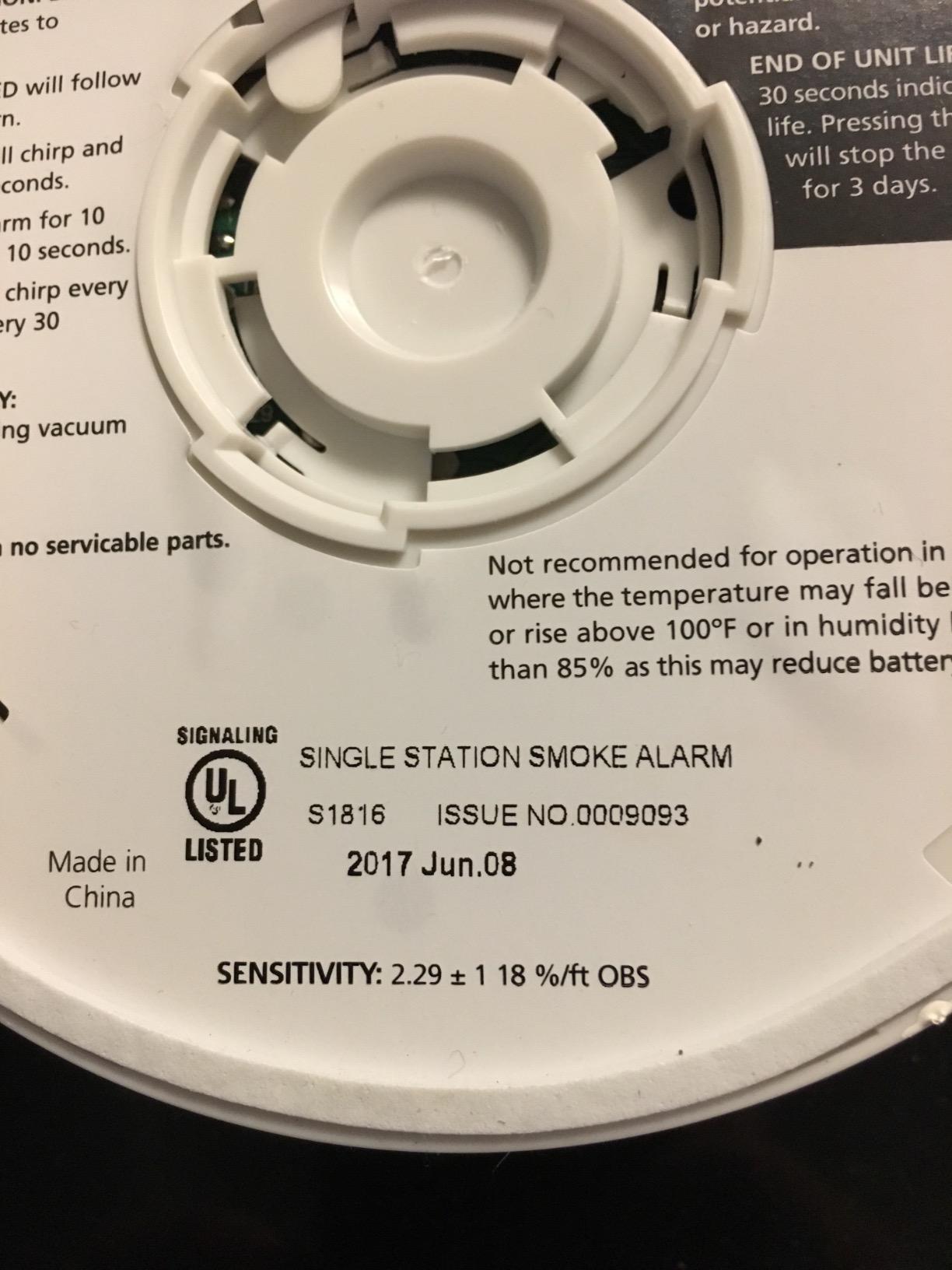
Clean yearly, replace at ten years. A soft brush or a vacuum on a low setting clears the chamber, and the sealed battery sets the replacement date from the manufacture date printed on the back of the unit, not the purchase date.
Expect a mass replacement event. Many households installed sealed 10-year units at the same time, which means an entire house reaches end of life in the same season. Budget for replacing every bedroom alarm together, and confirm your replacement model matches the interconnect brand if you are hardwired.
If your household upgraded from Google Nest Protect units, the same pattern applies. Those installations tend to share an install date, so plan the swap as a single project rather than alarm by alarm.
Split your smoke and carbon monoxide placement. Smoke belongs on the ceiling, CO nearer the floor and close to the sleeping area. Many combination alarms force one compromise height, and where a separate CO alarm is affordable it is the more accurate arrangement.
Replace all of them at once. A mixed fleet of models and ages is harder to test, harder to interpret a chirp from, and harder to trust.
Frequently Asked Questions
What type of smoke detector is most effective for bedrooms?
A photoelectric smoke alarm is the most effective type for bedrooms. Its sensing chamber responds to the particles produced by slow smoldering fires and is far less likely to be triggered by cooking steam, aerosol sprays, or the humidity that builds overnight. UL 217 10th Edition listed units are the current standard to check for.
Which type of smoke detector is better for a bedroom, ionization or photoelectric?
Photoelectric is better for a bedroom. Ionization alarms respond faster to fast flaming fires but are more sensitive to the airborne particles common in bedrooms at night, which produces nuisance alarms. Ionization detectors are also being phased out of many residential code requirements. A dual-sensor unit covers both fire types if you want a single alarm to do everything.
Do I really need a smoke detector in every bedroom?
Yes. Guidance from the National Fire Protection Association calls for an alarm inside every sleeping room plus one outside each sleeping area. Sleeping rooms have doors that can be closed and are the rooms where occupants are least able to respond, so an alarm in the hall cannot cover a fire that starts behind a shut door.
How many smoke alarms do I need in a 4 bedroom house?
Count one alarm inside each of the four bedrooms, one outside each sleeping area, one on every level including the basement, one in a common area such as a living room, and one in the garage or attic if the house has them. Outside each sleeping area usually means a shared hall alarm if bedrooms share a corridor. Check local rules, which can add requirements.
Which brand of smoke detectors is the most reliable?
Reliability is better judged by the failure pattern in owner reviews than by the logo. In our data, X-Sense and First Alert photoelectric models carry the largest review counts and the highest ratings, while Kidde voice-alert and slim-profile units show more mixed reliability reports. Certification matters more than brand: confirm a UL 217 10th Edition listing before you buy.
What are the best-rated smoke detectors according to Consumer Reports?
We do not reproduce third-party ratings we cannot verify. What we can check directly is certification: a UL 217 10th Edition listing on the device, an ETL or CSA mark that carries the same weight, and an honest end-of-life date. Ratings from testing organisations change yearly, so verify the current listing rather than trusting a roundup written months ago.
Which smoke alarms are best for high humidity?
Look for a stated operating humidity range. In our picks, the Kidde 10SDR is rated up to 95 percent relative humidity non-condensing and the Heiman S1-S to 95 percent, which suits humid climates and rooms near a bathroom. Placement matters as much as the rating: keep the alarm away from supply air registers and bathroom doorways.
Are ionization smoke detectors being phased out?
Ionization sensing is being restricted rather than banned outright, and many jurisdictions now require photoelectric sensing or a dual-sensor alarm in new residential installations. Ionization units remain widely sold for replacement. For bedrooms, the trend works in your favour, because photoelectric units are also the ones that resist cooking and humidity nuisance alarms.
Why does my smoke detector keep going off in the middle of the night?
Run the diagnosis in this order: check overnight humidity, look for a supply air register or vent blowing across the chamber, rule out aerosol sprays and scented products used in the room, clean the sensing chamber of dust, and finally check whether the unit is past its ten-year service life. Moving the alarm away from an air outlet solves more cases than replacing the alarm.
Should bedroom smoke detectors be hardwired or battery?
Hardwired with a sealed battery backup is the stronger choice for owners, because the alarm never loses power and never chirps for a low battery. A sealed 10-year battery unit is the practical choice for renters and for rooms without wiring. Replaceable AA or 9V cells cost least and are the ones most likely to chirp in the night.
How often should I replace a smoke detector?
Replace a sealed 10-year unit ten years from the manufacture date, and any alarm as soon as it signals end of life. Test monthly and clean the sensing chamber about once a year. Smoke alarms expire, so keep the manufacture date written on the unit or in your maintenance notes rather than relying on the purchase receipt.
Can a smoke detector detect carbon monoxide too?
Only a combination smoke and CO alarm does both, and none of the units in this guide is a combination model. Remember that CO and smoke belong at different heights. Smoke travels to the ceiling while CO mixes with air and settles nearer the floor, so a separate CO alarm placed near the sleeping area gives you better coverage than one combo unit at a compromise height.
Our Final Verdict on Smoke Detectors for Bedrooms
The X-Sense SD2J0AX is our pick for the best smoke detectors for bedrooms, on the strength of a photoelectric chamber that resists the nuisance alarms that kill units in sleeping rooms and a sealed 10-year battery that never chirps at three in the morning. It also carries the largest review base in this guide, which means its reputation is tested rather than assumed.
Two situations beat it. If you have hardwired wiring and want the whole house to sound together, take the First Alert SMI105-AC. If you rent and cannot drill, the Heiman S1-S gets an alarm onto your ceiling today with a magnetic plate.
One rule matters more than any brand choice. An alarm that reaches the ceiling, sits away from air supply registers, and is tested monthly will outlast any model on this list. A slightly cheaper unit in the right position beats an expensive one buried in a corner near the bathroom door, and no reviewer report changes that.
If you are covering a house rather than a room, our picks for smart smoke detectors for homes cover the connected options in more depth.