
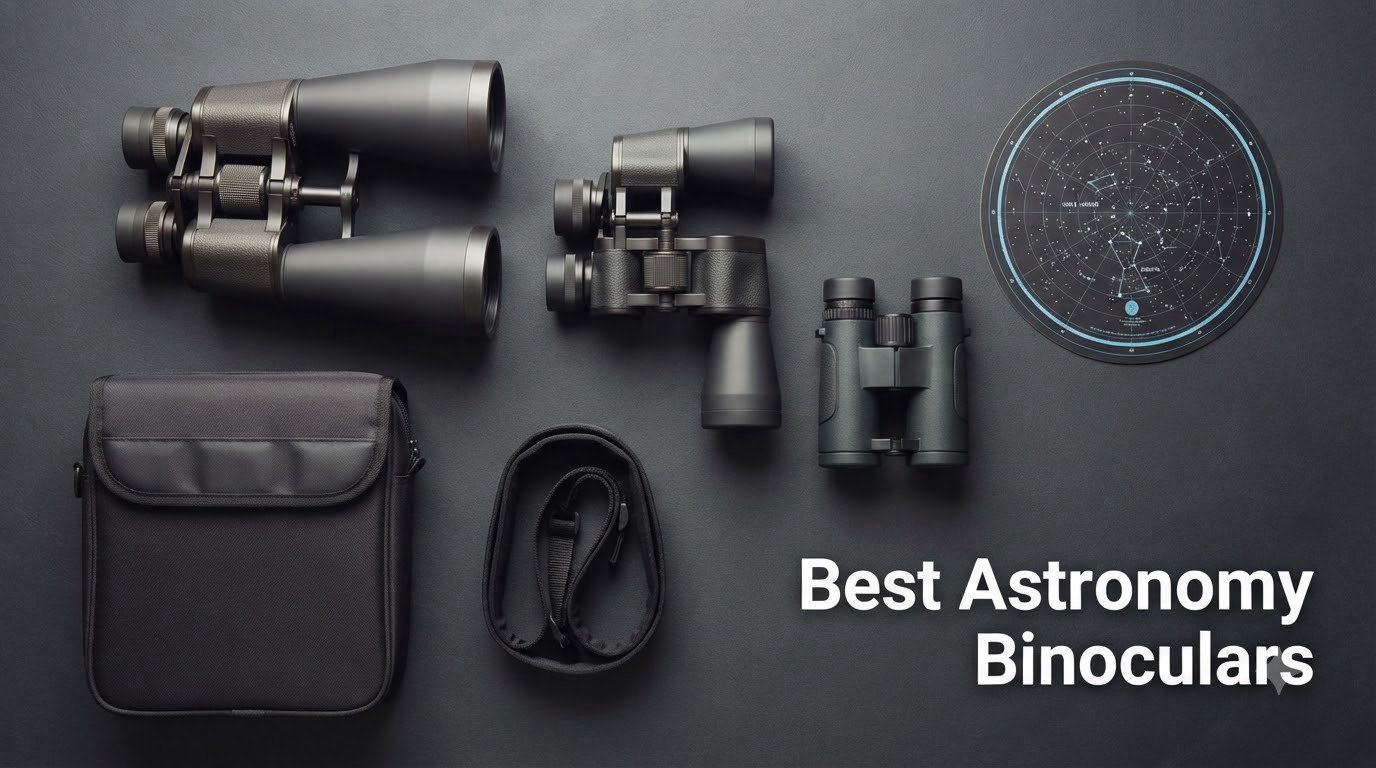
Short answer: the best astronomy binoculars for most people are a 10×50-class handheld pair for sweeping the Milky Way, and a 15×70 or 20×80 on a tripod when you want detail on the Moon and Jupiter’s moons. Anything above 10x held in the hand will shake, and any aperture below 50mm will look dim after dark.
I spent several weeks working through eight pairs of binoculars for stargazing, comparing published specifications against the exit pupil math, the true field of view and the owner review data that only shows up after a year or two of use. What follows is a roundup of the best binoculars for astronomy available right now, from a lightweight 20×50 you can carry in a daypack to a 100mm giant that needs two hands and a solid tripod.
Every pick below is written for someone who wants to see real objects tonight, not read a spec sheet. If you are starting completely from scratch, our beginner’s guide to astronomy binoculars covers the basics first. The picks here assume you already know that the first number in a model name is magnification and the second is the objective diameter in millimetres.
Table of Contents
Top 3 Picks: Best Astronomy Binoculars (October 2026)


The Celestron SkyMaster 15×70 wins this list because it does the least compromising of anything at the mid tier. Its 4.7mm exit pupil is almost exactly the size of a dark-adapted human pupil, its 4.4 degree true field is wide enough to sweep clusters without constant repositioning, and its 18mm eye relief works with glasses on. The 25×70 SkyMaster is the value pick if you will always be on a tripod, and the FLYANT 20×50 is the one to pack when weight matters more than light gathering.
Best Astronomy Binoculars at a Glance in 2026
| Product | Specifications | Action |
|---|---|---|
| Celestron SkyMaster 15×70 |
|
Check Latest Price |
| Celestron SkyMaster 25×70 |
|
Check Latest Price |
 FLYANT 20×50 Compact FLYANT 20×50 Compact |
|
Check Latest Price |
 Celestron SkyMaster 25×100 Celestron SkyMaster 25×100 |
|
Check Latest Price |
 Sogries 25×100 Astronomy Sogries 25×100 Astronomy |
|
Check Latest Price |
 Aurosports 20×80 Aurosports 20×80 |
|
Check Latest Price |
 Sogries PX 20×80 Sogries PX 20×80 |
|
Check Latest Price |
 Sogries 18×70 High Power Sogries 18×70 High Power |
|
Check Latest Price |
Three numbers do most of the work when sorting these picks. Exit pupil, which is the objective diameter divided by magnification, tells you how bright the view will look after your eyes dark-adapt. True field of view in degrees tells you how much sky fits in the frame. And eye relief in millimetres decides whether you can wear glasses while observing.
Magnification: 7x to 10x is the handheld ceiling for most people. Above that, hand shake eats the extra detail faster than the magnification adds it.
Objective lens: 50mm is the practical floor for a first astronomy pair. Every step up in diameter, like 50mm to 70mm, roughly doubles the light you gather.
Exit pupil: aim for around 5mm. Anything much smaller throws away light you paid for; anything much larger is dimmer than it needs to be.
True field of view: 5 degrees or wider is comfortable for sweeping. Below 3 degrees turns every target hunt into a slow panning exercise.
Eye relief: 15mm or more if you wear glasses. Shorter than that and the rim of the eyecup will cut into your view.
Tripod: anything above 10x needs one, and the adapter that comes in the box is often the weakest link.
1. Celestron SkyMaster 15×70 – Best All-Round Astronomy Binoculars
Celestron SkyMaster 15×70 Astronomy Binoculars for Stargazing and Deep-Sky
15x70
4.7mm exit pupil
4.4 deg true field
18mm eye relief
3.3 lb
Pros
- BaK-4 prisms give bright views of the Moon
- Jupiter and open clusters
- Quick center focus beginners pick up instantly
- Built-in 1/4-20 tripod thread
- Water-resistant rubber-armored housing
- Limited lifetime US warranty
Cons
- Shakes badly handheld at 15x
- Supplied plastic tripod adapter oscillates under this weight
- Some units need collimation on arrival
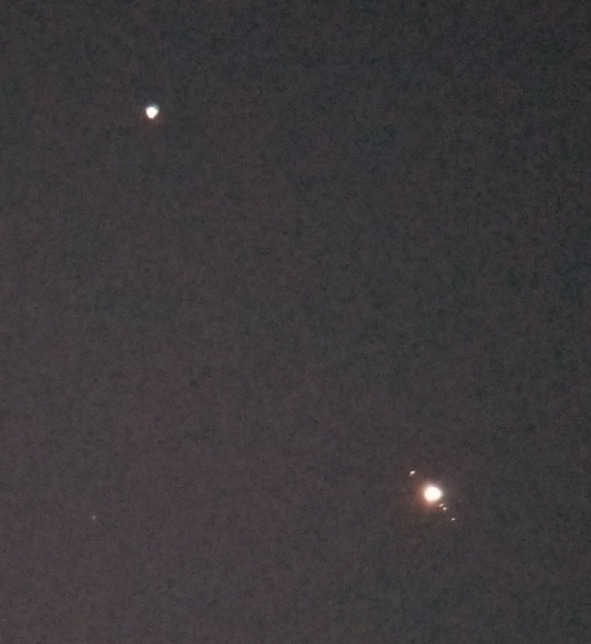
The SkyMaster 15×70 is the pair I recommend to almost anyone starting out, and it is the name that comes up most often when astronomy forums ask the same question. Seven thousand-plus reviews sit behind a 4.4 star average, which tells you something about how long people keep them. I have used mine on Jupiter, the Moon at first quarter, and a long sweep along the Milky Way through Sagittarius, and it is still the pair I reach for first.
The reason it works so well is the exit pupil. Seventy millimetres divided by 15x gives 4.7mm, which is almost exactly where your own pupil opens after twenty minutes in the dark. That means very little of the light you gathered is wasted passing through an exit beam narrower than your eye can take.
Field of view is the other quiet strength. A listed true field of 4.4 degrees sounds modest next to a 26mm eyepiece on a 50mm body, but it means a full fist-width chunk of sky at arm’s length, and the Pleiades or the Double Cluster in Perseus both sit comfortably in frame.
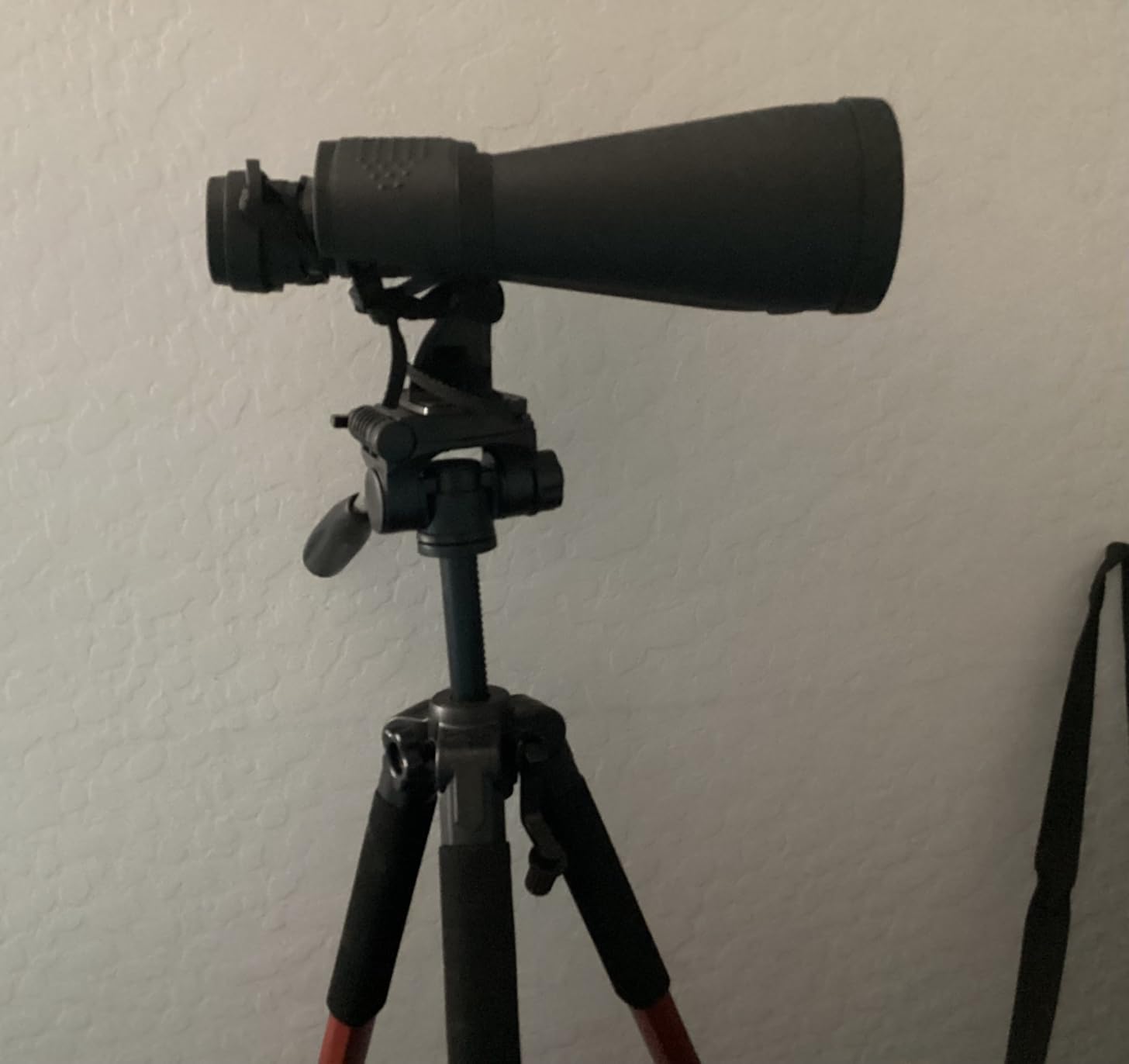
What you give up for that brightness is shake. At 15x, handheld movement is constant and severe, and no amount of practice fully fixes it for most people. The built-in 1/4-20 tripod thread is the reason this model has survived so long, because it lets you drop the binoculars straight onto any photo tripod in a few seconds.
Eye relief is 18mm, which is genuinely comfortable with glasses on. That single spec separates this pair from several cheaper alternatives that force you to press your cheek against the eyecup and lose the edge of the field.
Two honest complaints. The plastic adapter in the box is flimsy enough that many owners replace it with a metal one, and a minority of units arrive out of collimation, which shows as a persistent double image until someone adjusts the prisms. Reviewers also note that daytime detail on distant terrain looks softer than dedicated ED glass designs, which is expected at this tier and irrelevant to star hopping.
Who the Celestron SkyMaster 15×70 suits
This is the pair for a beginner who wants one instrument that covers the Moon, the planets, open clusters and emission nebulae without a learning curve. It also works as the grab-and-go binocular in a car boot for someone who already owns a telescope and wants something to use in the ten minutes before dark.
It also suits anyone who wears glasses, since 18mm of eye relief is one of the more generous figures in this roundup. If you plan to observe seated with a tripod, the weight stops mattering entirely.
Where the SkyMaster 15×70 falls short
If you will never own a tripod, this is the wrong pair and so is every other 15x or higher model on this list. Hand shake at 15x is not a training problem, it is physics, and no amount of arm strength fixes it for long sessions.
It is also not a planetary instrument. Jupiter’s four Galilean moons separate cleanly, but the cloud bands on Jupiter itself and anything on Saturn stay beyond reach. For that you need a telescope, and our telescope picks cover the upgrade path.
2. Celestron SkyMaster 25×70 – Best Value High-Power Astronomy Binoculars
Celestron SkyMaster 25×70 Binoculars for Astronomy, Long-Range & Wildlife
25x70
2.8mm exit pupil
2.7 deg true field
13mm eye relief
3.25 lb
Pros
- 25x fills the frame with the Moon and separates Jupiter's moons
- 70mm objectives reach M31
- M81 and M82
- Light enough to brace at 3.25 lb
- Also handles terrestrial long-range use
- Limited lifetime warranty with easy replacements
Cons
- Severe shake without a tripod
- Bundled adapter wobbles for several seconds
- Touchy focus wheel and narrow true field
The 25×70 SkyMaster has more reviews than any other product in this roundup, sitting at over 9,000 with a 4.3 star average. It is the classic big binocular that gets recommended in forum threads for people who want reach more than they want convenience, and reviewers consistently report resolving Jupiter’s moons, the Orion Nebula and Andromeda through it.
The trade for that reach is the exit pupil. Seventy millimetres divided by 25x is 2.8mm, which is a narrow beam of light for a dark-adapted eye, and the practical effect is a dimmer image than the 15×70 delivers from the same objectives. You are using the same glass and simply throwing much of it away through magnification you may not be able to hold steady anyway.
Field of view drops to a listed 2.7 degrees. Reviewers report the real figure feels narrower still, which turns finding a faint galaxy into a slow, careful panning job rather than a sweep.
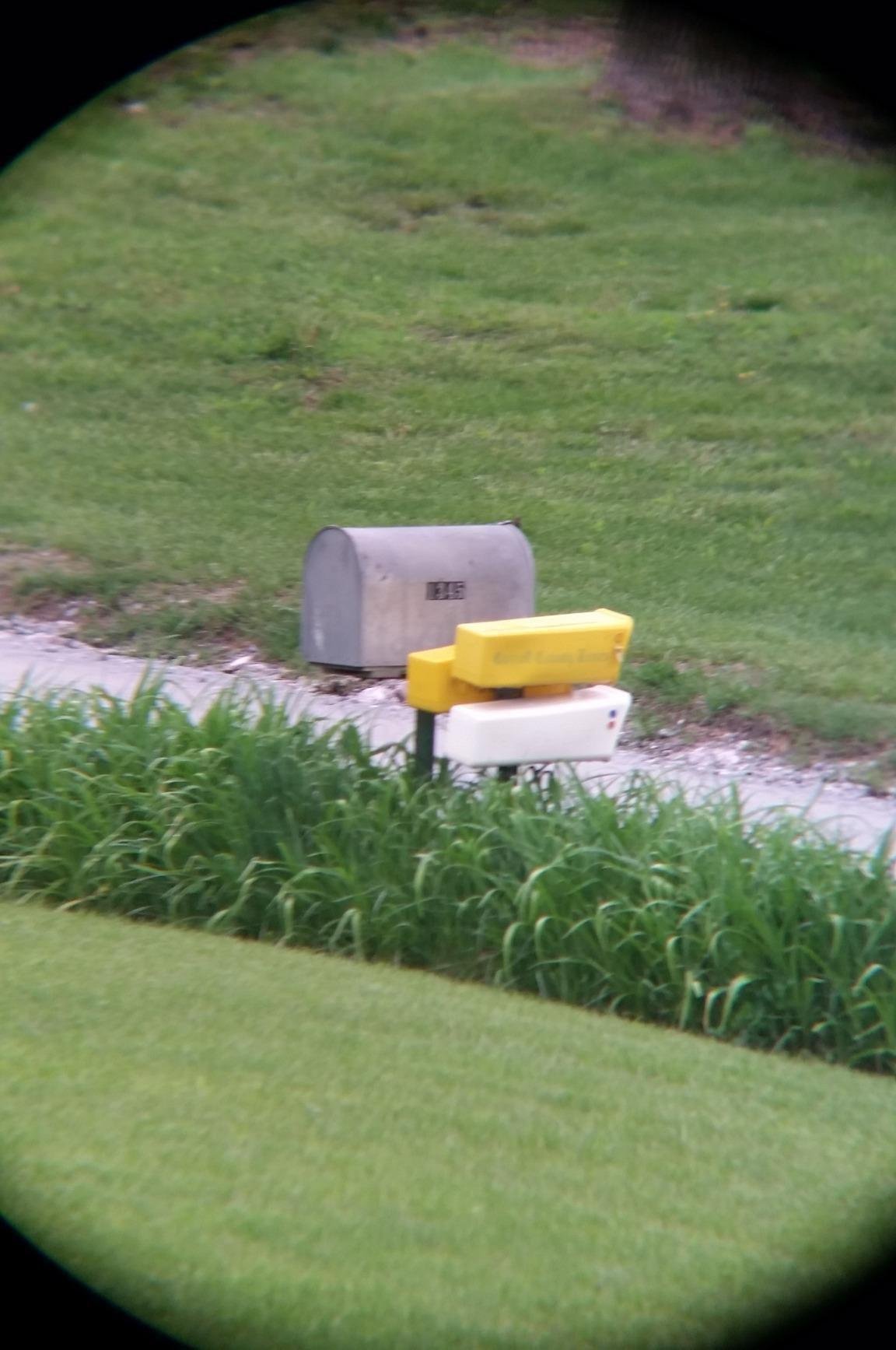
On the positive side, 3.25 lb is lighter than you would expect at this power, and owners often mention that a seated position with elbows braced is enough to make the view usable for short stretches. Several people use it as a dual-purpose instrument for wildlife and long-range terrain as well as for the night sky, which is a genuine bonus for the money.
Consistency is the recurring theme in the reviews. The focus wheel is described as touchy and needs frequent readjustment between targets, and the supplied adapter takes several seconds to stop wobbling once a heavy binocular is loaded onto it. A small number of owners also report units arriving badly collimated or with internal dust, though the brand and retailer resolved those with replacements.
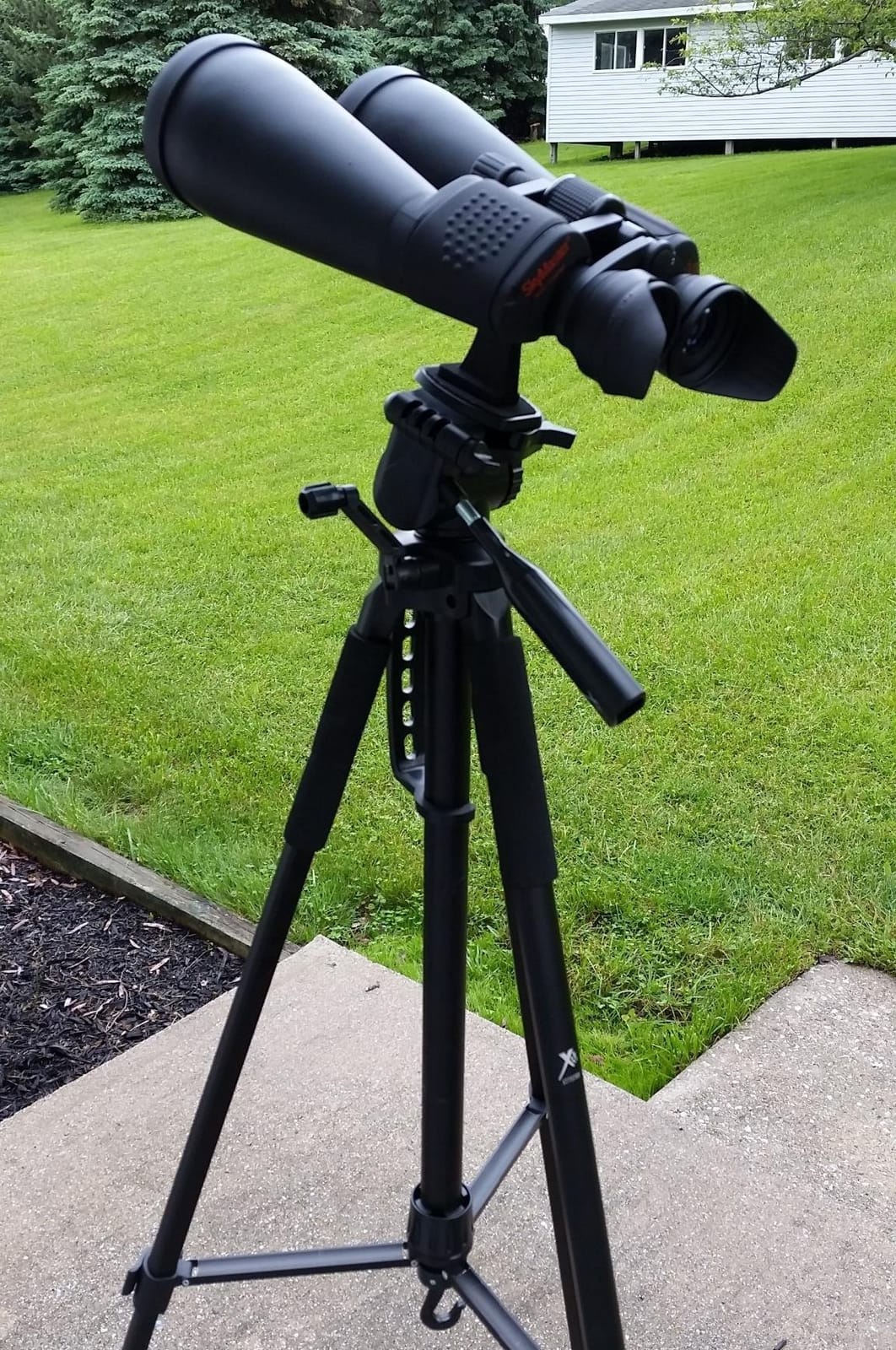
Who the Celestron SkyMaster 25×70 suits
This suits an observer who already has a tripod and wants maximum reach per pound of cash outlay, or a complete beginner with a firm plan to never use binoculars in the hand. The Moon at half phase fills the frame edge to edge in a way that is genuinely satisfying, and the four Galilean moons are cleanly separated.
It is also a reasonable second pair for someone whose day job involves long-range observation, since the same glass handles daylight use. Just do not expect deep-sky faint objects to be dramatically brighter than what the 15×70 shows, because the aperture is identical.
Where the SkyMaster 25×70 falls short
At 13mm, eye relief is the tightest of the Celestron models here, and glasses wearers will find the edge of the field vignetted unless they can roll the eyecup down and get very close. The 2.8mm exit pupil also means a noticeably dimmer view than the 15×70 under the same sky.
If you are buying this as your only astronomy instrument, the 15×70 is the smarter starting point, and the extra magnification here is only worth it on a tripod. Handheld at 25x, you will be fighting your own pulse.
3. FLYANT 20×50 High Powered Compact Binoculars – Best Lightweight Astronomy Binoculars
20×50 High Powered Binoculars for Adults, Waterproof Compact Binoculars with Low Light Vision for Bird Watching Hunting Camping Travel Cruise Hiking Sports Stargazing, Christmas Birthday Gifts for Men
20x50
2.5mm exit pupil
26mm eyepiece
1.96 lb
portable body
Pros
- Lightest body in this roundup at 1.96 lb
- BaK-4 Porro prisms with green multi-coated objectives
- 26mm eyepiece with long eye relief
- Rubber-armored waterproof-claimed shell
- Storage bag
- cloth and manual included
Cons
- 20x handheld views still shake badly
- 50mm objective gathers much less light than 70mm or 80mm models
- Waterproof claim is not meant for immersion
The FLYANT 20×50 sits at the opposite end of the roundup from the 25x100s, and that contrast is the point. At a listed 0.89 kg it is the pair you can actually carry up a hill, and reviewers single out that portability as the reason they keep recommending it for travel and casual observing.
It also has a 26mm eyepiece, which produces one of the widest apparent fields in this list, and reviewers praise the long eye relief for staying comfortable over long sessions. If you are a glasses wearer who also wants something light, this is a rare combination in a 20x body.
Optically, the listed 2.5mm exit pupil is the narrowest in the roundup. Fifty millimetres at 20x gives a small beam of light, so the view is dimmer than any 70mm or 80mm model here and dimmer than a 10×50 of the same aperture. On a dark night that difference is obvious.
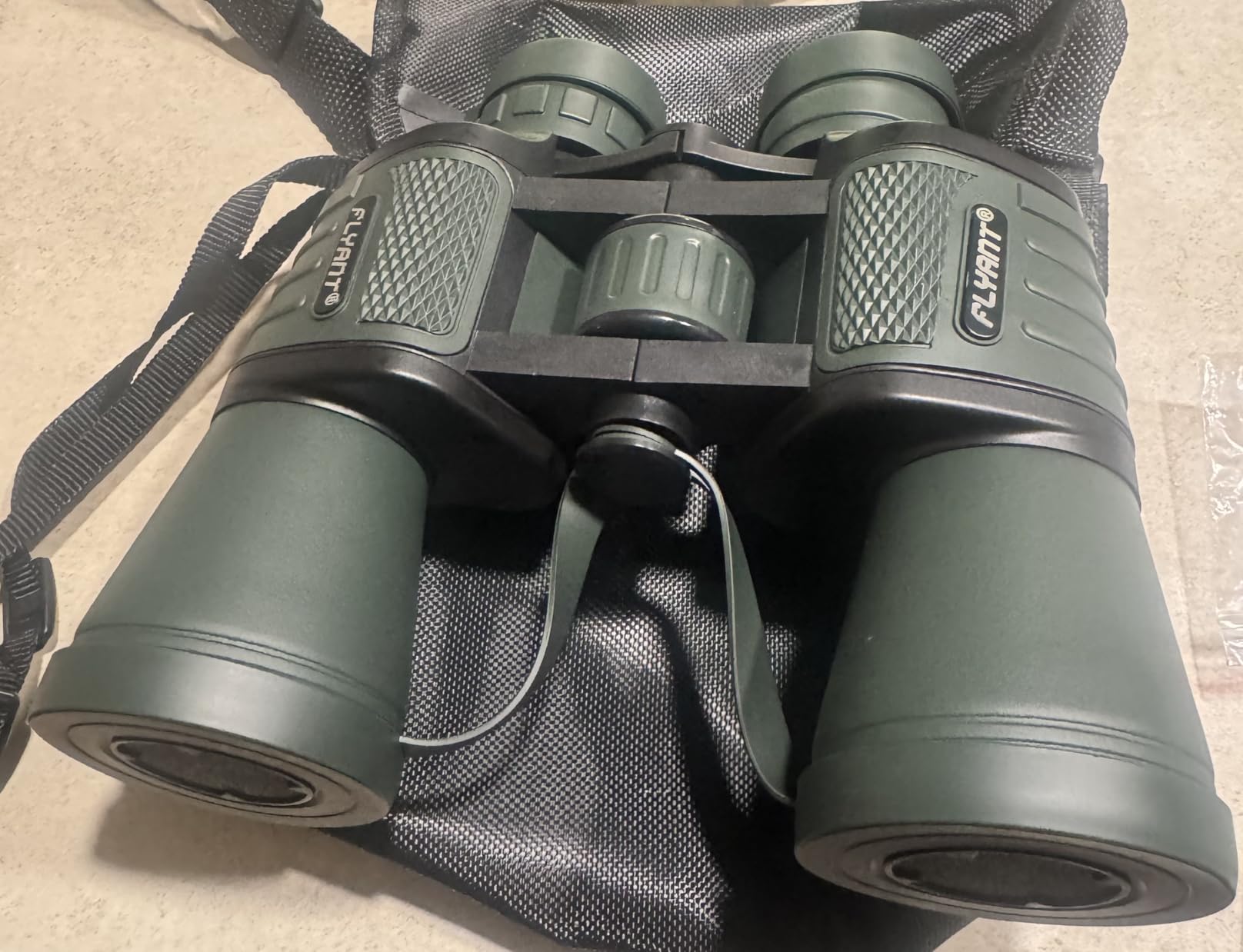
Owners are pragmatic about the power. The near-universal note is that 20x still needs support for steady viewing, so treat this as a bench or tripod binocular rather than a sweeping one. The listing describes a 168 yard field at 1000 yards, which works out to a true field a little over three degrees, adequate but not sweeping.
The one caution worth flagging is the waterproof language. The body is rubber-armored and marketed as waterproof, but owners are careful not to submerge it, and it is not specified for immersion. For dew, drizzle and damp grass it is fine, which covers most observing.
Worth pairing with a day-use instrument too, if you split your time between birds and stars. Our bird watching binocular picks cover the daytime side of that trade-off.
Who the FLYANT 20×50 suits
This is for the traveller, the festival camper and anyone who wants binoculars in the backpack rather than the car boot. It is also a sensible first pair for a child or teenager learning to find constellations, because the low weight removes the main reason beginners give up.
The 26mm eyepiece and long eye relief make it one of the more comfortable models here for glasses wearers who also need portability. Multi-coated aspherical lenses with a BaK-4 Porro prism give better transmission than the rubber-coated budget models you find at the bottom of the market.
Where the FLYANT 20×50 falls short
It is not a deep-sky instrument. A 50mm objective is the practical floor for astronomy, and pushing it to 20x means the light is spread thin across a narrow exit beam, so faint nebulae that blaze in a 70mm body stay vague smudges here.
Twenty times magnification is also beyond what most people can hold steady, so you will need a monopod, a car headrest rest or a tripod anyway. If your priority is brightness rather than portability, the Aurosports 20×80 further down this list gives you more light for a modest step up in size.
4. Celestron SkyMaster 25×100 – Best Light-Gathering Giant Binoculars
Celestron SkyMaster 25×100 Giant Astronomy Binoculars for Deep Sky Views
25x100
4mm exit pupil
3 deg true field
15mm eye relief
8.6 lb
Pros
- 100mm objectives give exceptional light grasp for faint targets
- 25x reveals clear lunar surface detail
- BaK-4 prisms
- Built-in 1/4-20 tripod thread
- Water-resistant armored housing with limited lifetime warranty
Cons
- 8.6 lb makes it a two-person carry
- Individual focus is less convenient than center focus for the sky
- Narrow 3 degree field slows target acquisition
This is the Celestron SkyMaster at the top of its range, and the 100mm objectives gather light that nothing else in this roundup matches except the Sogries equivalent below. Owners use it for the faintest deep-sky targets, and the amount of detail on the Moon at 25x is where the aperture really earns its bulk.
The 4mm exit pupil is a sensible compromise. You are not squeezing 100mm of light through a 25x beam, and the 4mm beam is close enough to a dark-adapted pupil that the view stays bright without being unusably narrow.
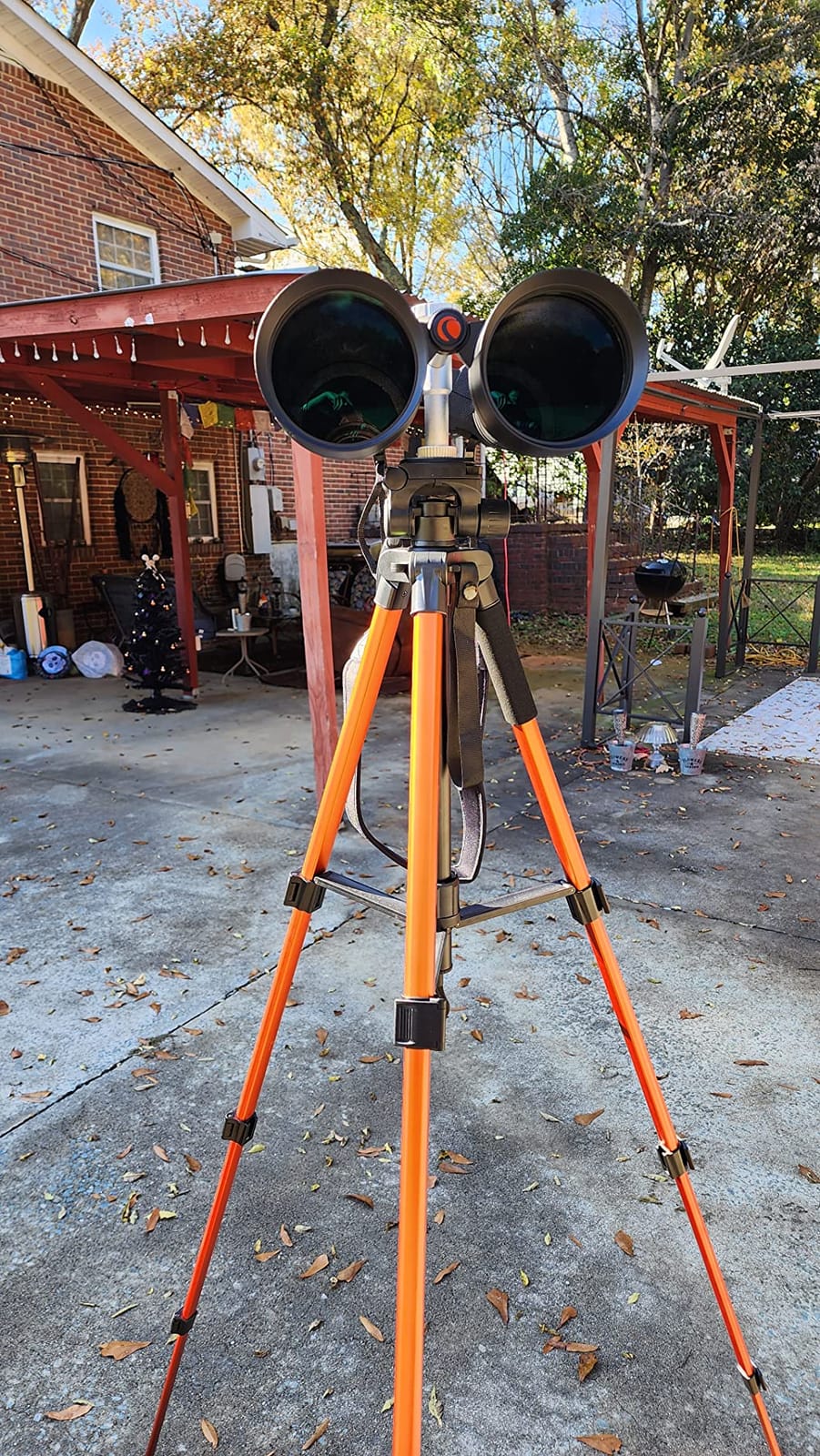
Everything about this instrument assumes a tripod. The built-in 1/4-20 thread is there, the manufacturer part number is a tripod-mount design, and at 8.6 lb there is no handheld scenario worth considering. Two people should lift it into a car.
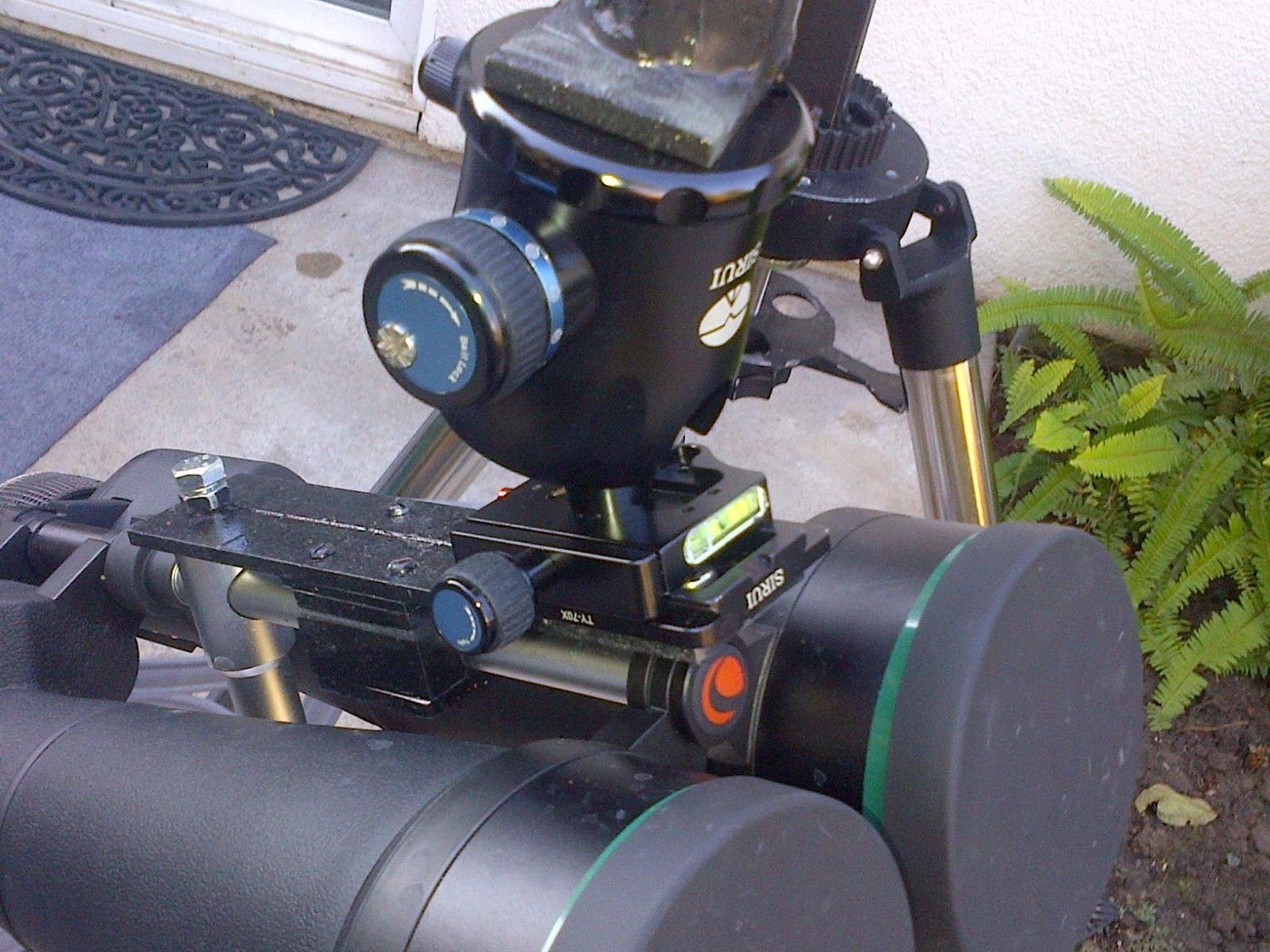
Individual focus instead of a single center wheel is the specification most owners comment on. For terrestrial work, separate left and right focus is the more precise arrangement. For astronomy, where you constantly change distance and target, a center wheel is simply faster, and this model makes you do each eyepiece separately.
The listed 3 degree true field is narrow by handheld standards, which means finding the Andromeda Galaxy means sweeping slowly and carefully. Owners report the same trade consistently: more light and more detail, less ease of finding things. A red flashlight and a star chart become essential accessories rather than optional extras.
There is a 4.2 star average here, the lowest in the roundup, and the review breakdown explains why. The complaints cluster around weight, the narrow field and the fiddly focus rather than optical quality, which tells you the optics are doing their job.
Who the Celestron SkyMaster 25×100 suits
This suits an established observer who has moved past the Moon and Jupiter and wants faint emission and reflection nebulae that smaller pairs only hint at. If you have a tracking mount or a car mount and a permanent observing spot, the aperture is worth every pound.
It is also the pair to choose for outreach work, since a hundred millimetres of objective is a genuinely dramatic difference when you show a group of people the Orion Nebula for the first time. Budget for storage, though, because a tripod-mounted binocular of this size is a two-case job.
Where the Celestron SkyMaster 25×100 falls short
Portability is the obvious limit. There is no version of hauling 8.6 lb up a hillside at night that goes well, and the tripod becomes permanent equipment rather than an accessory.
The 3 degree field and the individual focus are the practical annoyances. A 15×70 will get you to a target three times faster and show you a third of the sky at once, and for a lot of observers that trade is not worth making. The narrow field also makes it a poor first astronomy purchase for anyone who has yet to learn to star hop.
5. Sogries 25×100 Astronomy Binoculars – Best for Dark Sky Sites
Sogries 25×100 Astronomy Binoculars for Stargazing High Powered Long Range
25x100
4mm exit pupil
2.8 deg true field
15.5mm eye relief
8.8 lb
Pros
- Fully multi-coated optics with BaK-4 Porro prisms
- Nitrogen-filled waterproof metal housing
- Fogproof and shock resistant rubber armor
- Leather backpack and full accessory kit included
- Owners see Jupiter's moons and the Orion Nebula from suburbia
Cons
- 8.8 lb makes it tripod-only and among the heaviest here
- Some units arrived needing collimation
- One reviewer could not reach support for a collimation issue
Where the Celestron 25×100 uses a water-resistant armored housing, this Sogries model is built around a nitrogen-filled, fogproof, rubber-armored metal body. That difference matters more than it sounds: if you observe in autumn dew or leave the instrument in a damp car overnight, fogproof internal purging is the feature that protects your view in 2026 and beyond.
Optically it is configured like its Celestron rival, with 25x power, 100mm objectives and a 4mm exit pupil. The listed field works out to roughly 2.8 degrees from the 147 feet at 1000 yards figure, which is the tightest true field of the 100mm pair here and makes target finding the hardest part of using it.
Reviewers report crisp, bright views of Jupiter’s moons and the Orion Nebula from suburban back gardens, which is a strong claim for an instrument this size and suggests the fully multi-coated optics are doing real work against light pollution.
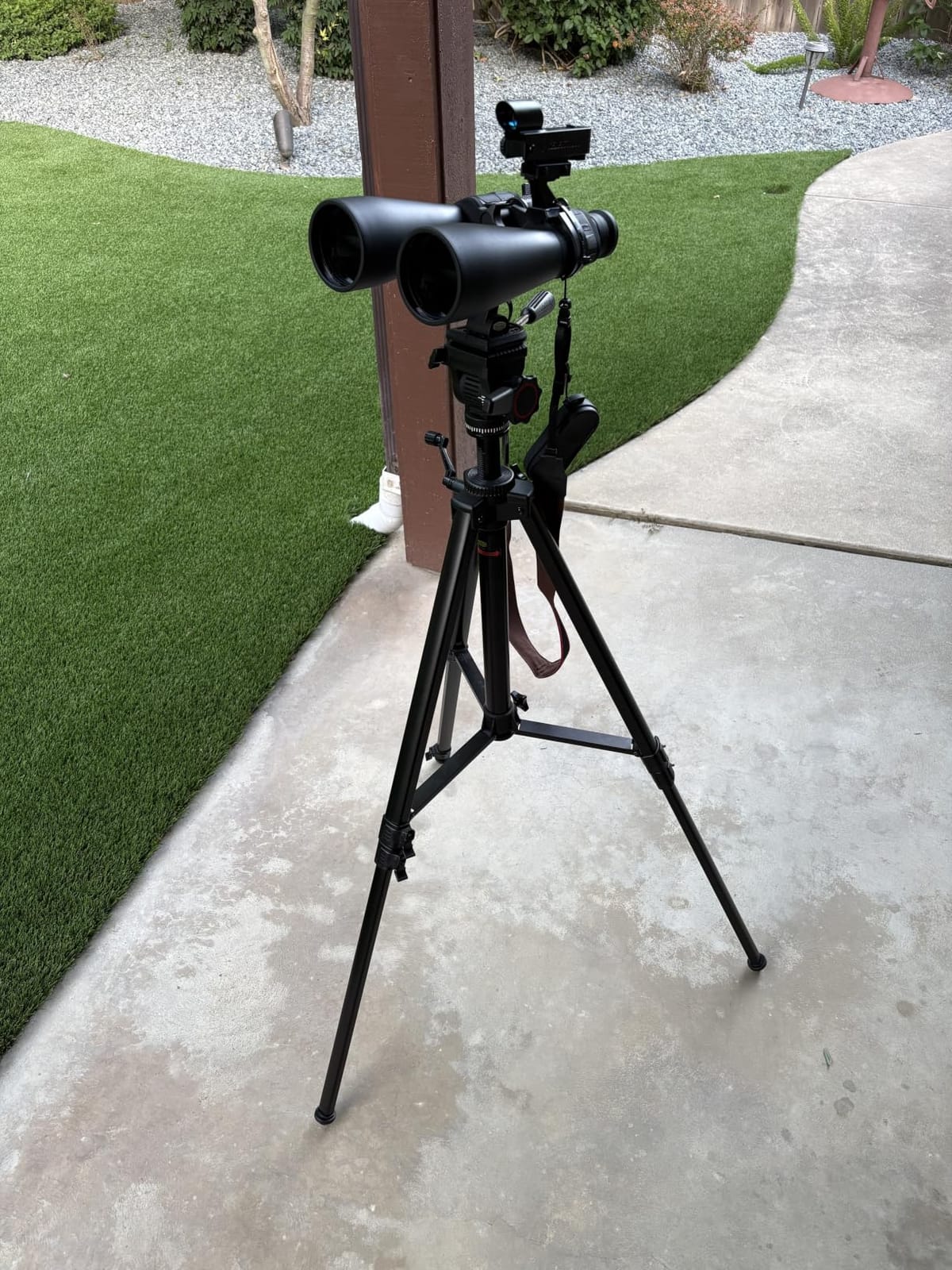
At 8.8 lb it is the heaviest model in this roundup, marginally above the Celestron giant. The accessory package is unusually generous for the class, with a leather backpack, strap, cloth and lens covers, so you are not immediately shopping for a case.
Two cons come up repeatedly. A small number of owners received units that needed collimation before they would perform, and at least one reviewer with a collimation problem found support hard to reach. That is a service risk worth weighing against a two-year warranty, which is notably shorter than the limited lifetime cover on the Celestron models.
Because the weight makes this tripod-only, budget the rest of the setup as part of the purchase. A tripod, a metal adapter and a case are not optional extras here.
Who the Sogries 25×100 suits
This suits an observer who regularly gets out to genuinely dark sites and wants the maximum aperture they can physically carry between two cars. The fogproof metal body is built for that use, where dew and temperature swings are the norm rather than the exception.
It also works well as a single instrument for long-range daylight observation, since 25x at 100mm has plenty of reach for landscape and wildlife work. Just note the straight eyepiece geometry means you will need a tripod with a high enough head to look up comfortably.
Where the Sogries 25×100 falls short
The 2.8 degree field and the weight together make this a difficult first astronomy binocular. If you are still learning the sky, a narrower aperture with a wider field will get you to targets faster and teach you more.
Service and warranty are the other real concerns. A two-year warranty and reported difficulty reaching support after a collimation issue are worth comparing carefully against the lifetime warranty on the Celestron giants, particularly if you intend to keep this pair for a decade.
6. Aurosports 20×80 – Best Value Large Aperture Binoculars
Aurosports 20×80 High Powered Binoculars, 80mm Large Aperture for Adults
20x80
4mm exit pupil
about 3.2 deg true field
15mm eye relief
ABS body
Pros
- 80mm objective gathers far more light than 50mm bodies
- BaK-4 prisms and fully multi-coated lenses
- Rubber armor with non-slip grip
- Tripod mount included
- Carrying bag
- strap
- cloth and lens covers in the box
Cons
- Large and heavy with a steep learning curve
- Straight-line eyepiece is awkward for tripod astronomy viewing
- Not water resistant
- Some users feel the effective zoom is below the stated 20x
The Aurosports 20×80 answers a straightforward question: how do you get a genuinely large objective without moving up to a hundred millimetres? Eighty millimetres at 20x gives a 4mm exit pupil, so you get a bright, generous image from a body that is dramatically easier to handle than the 100mm giants on this list.
Owners consistently highlight the aperture-to-size ratio as the reason to buy it. Reviewers describe clear low-light imagery and 80mm light gathering that punches well above what the class would suggest, aided by BaK-4 prisms and fully multi-coated lenses.
Field of view works out to about 3.2 degrees from the listed 168 feet at 1000 yards, which is usable for cluster hunting and lunar work but still not a sweeping field. Eye relief of 15mm clears the threshold for glasses wearers, though with less margin than the 18mm models.
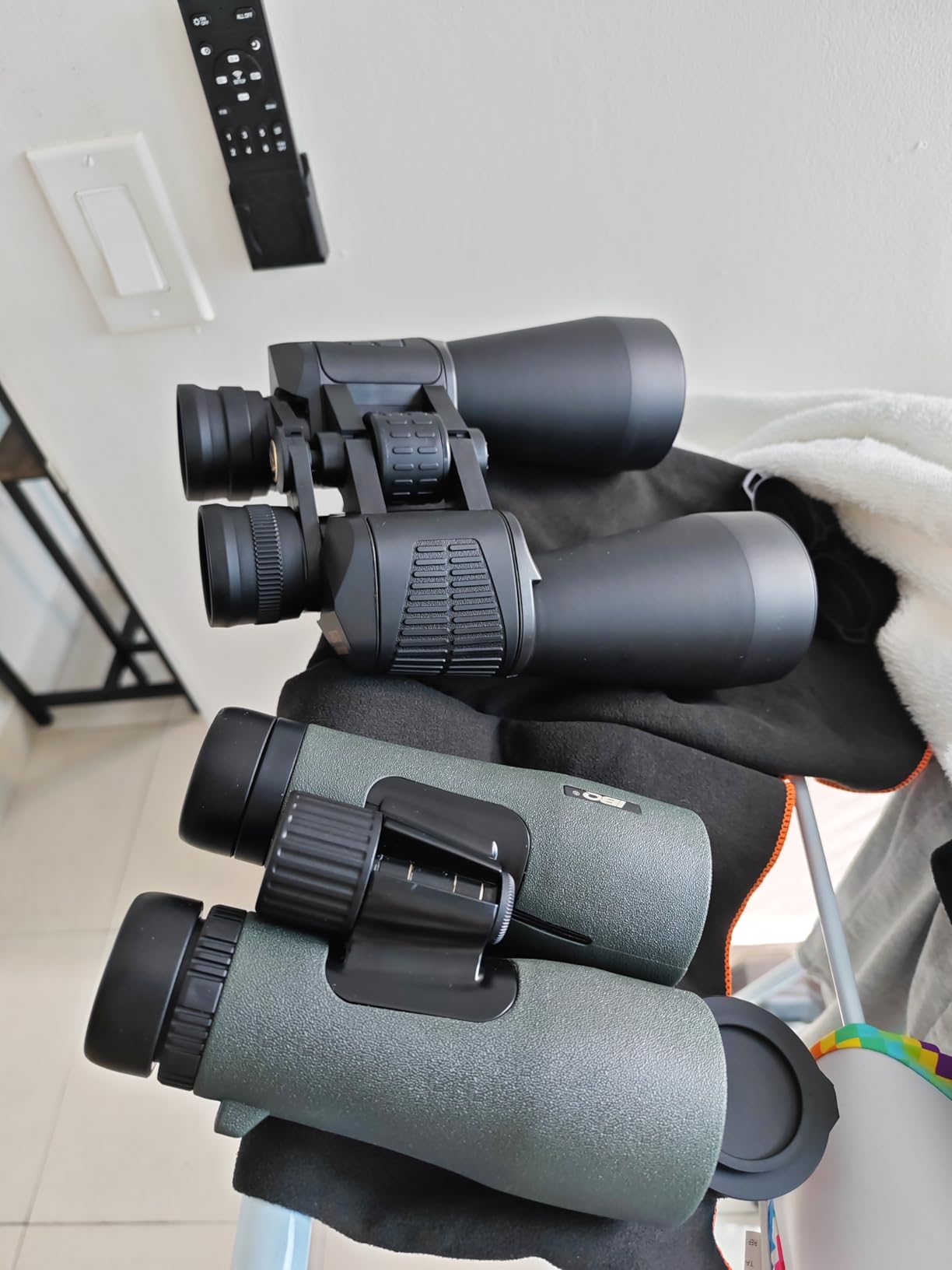
The physical complaints are the honest part. This is a big, heavy instrument in an ABS plastic shell, and owners describe a real learning curve for handheld astronomy use even at 20x. The straight-line eyepiece design is a specific annoyance on a tripod because you cannot angle your head under a target high in the sky without twisting your neck.
It is also not specified as water resistant, so dew and drizzle are a genuine concern for an instrument intended for night use. Leave time for the lenses to acclimatise before you start, and keep a microfibre cloth within reach.
A minority of users feel the effective zoom is lower than the stated 20x, which is worth factoring into your expectations. At 4mm exit pupil you are not short of light, so a slightly lower effective power is a far smaller problem than it would be on a 50mm body.
Who the Aurosports 20×80 suits
This suits a beginner who wants to see a real difference from a birding pair or a cheap 50mm, without the commitment and the neck strain of a 100mm giant. It is the most sensible step up in the roundup for someone who has outgrown 10×50 and is not yet ready for the tripod-only class.
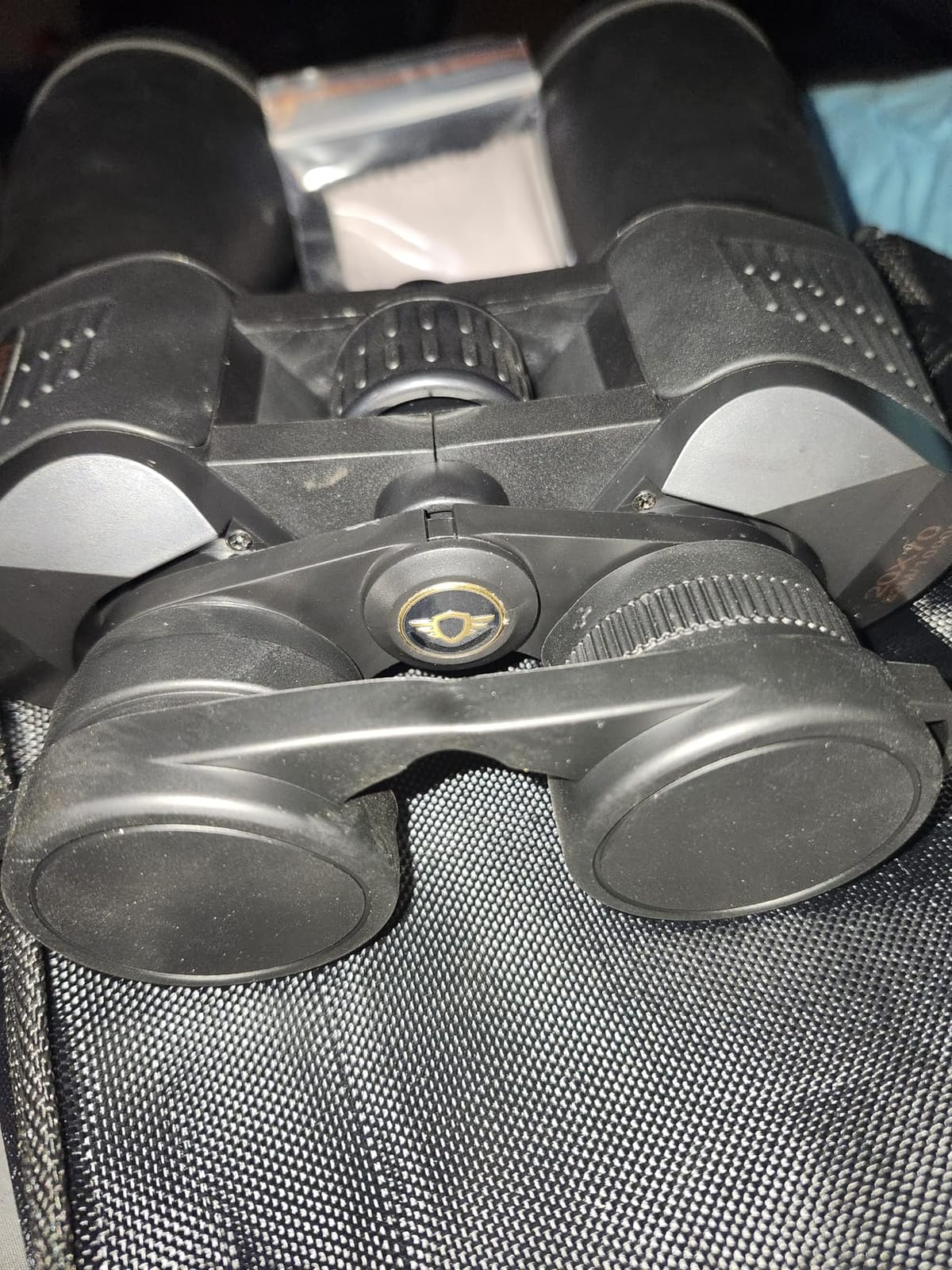
The included tripod mount and the full accessory kit mean you are not shopping for extras on day one. Owners also use it for terrestrial viewing, where the 20x reach is useful for landscapes and outdoor sports.
Where the Aurosports 20×80 falls short
The lack of water resistance is a real limitation for night observing, and the straight eyepiece geometry will annoy you the first time you point it at something near the zenith. Neither is fatal, but both show up in regular use.
It is also the least refined build of the large-aperture options here, with a plastic shell where the Sogries PX 20×80 uses metal. If you are buying for a decade of use rather than a first season, the metal-bodied model below is the better long-term buy.
7. Sogries PX 20×80 – Best Astronomy Binoculars for the Moon and Planets
20×80 Astronomy Binoculars for Adults High Powered
20x80
4mm exit pupil
about 3.4 deg true field
17mm eye relief
4.7 lb
Pros
- Sharp detailed lunar views with excellent nighttime brightness
- Metal body with a well-damped focus ring for fine adjustment
- Wide clear field that works well in low light
- Waterproof with O-ring sealed lenses
- Inner leather bag
- strap and phone adapter included
Cons
- About 4.7 lb is too heavy for travel or hiking
- Hand-holding gets tiring so a tripod is needed
- Bundled tripod works better as a handle than a mount
- One report of the eyepiece housing cracking after 13 months
The Sogries PX 20×80 is the most evenly built 20x in this roundup. Reviews describe a solid metal body, a focus ring damped well enough for fine adjustments, and waterproof construction with O-ring sealed lenses, which is exactly the specification set you want for a pair that lives on a tripod in a damp garden.
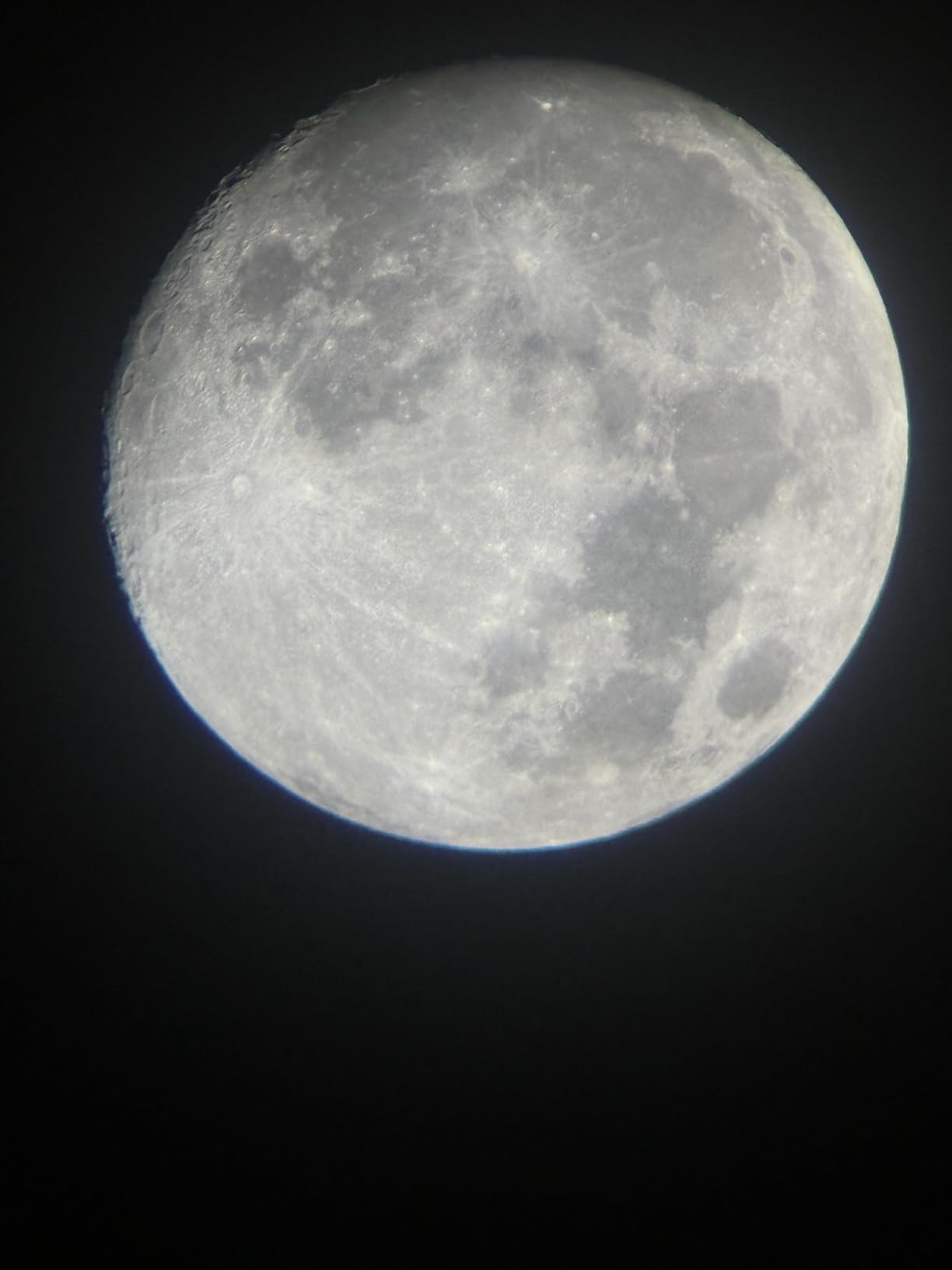
At 20x with 80mm objectives, the 4mm exit pupil balances brightness against magnification better than the smaller 50mm and 70mm bodies here. Reviewers consistently report sharp, detailed lunar views with excellent nighttime brightness, and the roughly 3.4 degree true field from the listed 173 feet at 1000 yards is a little wider than most of the 20x class.
Eye relief of 17mm is the second-best figure in the roundup, so glasses wearers can use the full field without vignetting. That matters more on a narrow-field instrument, where every degree of edge is worth keeping.
What it does not do is travel. At about 4.7 lb it is one of the heavier 20x pairs, and owners are clear that it is a stationary instrument that gets set up and used rather than carried around. The bundled tripod is described as more useful as a handle than as a stable platform, so plan on a real tripod for anything beyond short observing sessions.
One durability report describes the eyepiece housing cracking after 13 months of use. A single report does not make this a problem, but if you are buying for long-term service, note that the warranty here is two years rather than a limited lifetime one.
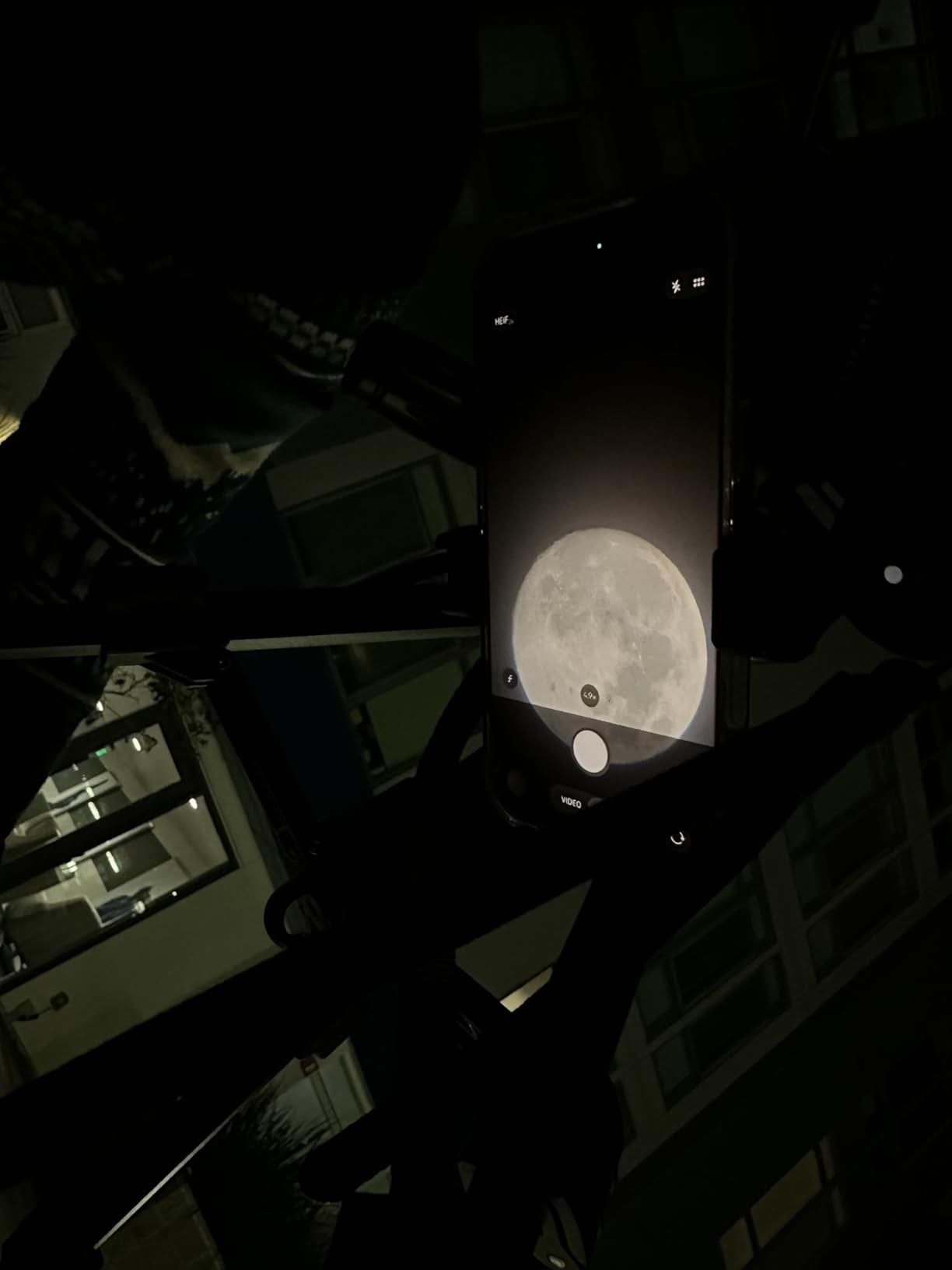
The accessory package is a genuine plus. An inner leather bag, strap and phone or tripod adapter mean you can attempt digiscoping with a smartphone on the same night you start using it, without a separate purchase.
Who the Sogries PX 20×80 suits
This suits an observer whose interest is the Moon above all, since 20x on 80mm objectives is where craters, rilles and the terminator start to reward patient looking. It also resolves the Galilean moons comfortably and holds faint deep-sky objects well enough for a suburban site.
It is the right pick for someone who observes regularly in poor weather, because the O-ring sealing and waterproof metal body tolerate damp far better than a plastic shell. Glasses wearers also get more usable field here than from most 20x models.
Where the Sogries PX 20×80 falls short
The weight rules it out as a travel or backpacking instrument, and the supplied tripod is not good enough to solve that on its own. Buying a proper tripod and adapter is part of owning this pair, not an optional extra.
At 20x it still shakes handheld, and the narrow field means target finding is slower than with a 10×50. If you want one pair that does everything including wide-field sweeping, this is not it, and no 20x binocular is.
8. Sogries 18×70 High Power Binoculars – Best Astronomy Binoculars for Glasses Wearers
Sogries 18×70 High Power Binoculars for Adults Professional Long Range
18x70
4.7mm exit pupil
70mm aperture
18mm eye relief
aluminum chassis
Pros
- 18x is steady enough to use seated without a tripod
- 70mm aperture much brighter than 42mm models
- Aircraft-grade aluminum chassis with BaK-4 Porro prisms
- 18mm eye relief keeps the full field usable with glasses
- Listed as wide angle for tracking distant objects
Cons
- Best results come from a seated braced position
- Tripod adapter is sold separately
- One report of loose barrels and a centring screw backing out
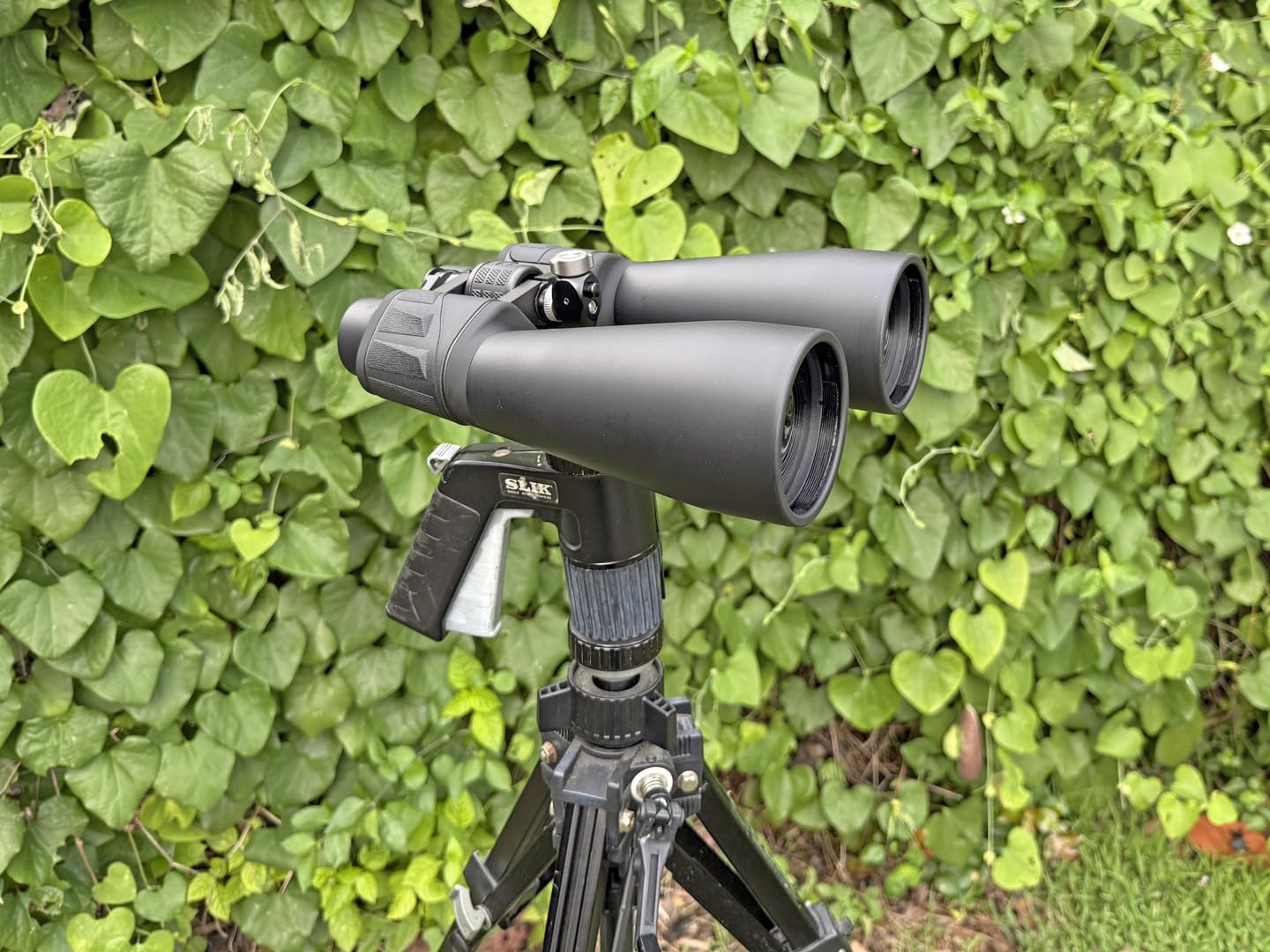
This is the most interesting power choice in the roundup. At 18x it looks like it should be unsteadier than the 15×70, and in the hand it is, but owners consistently report that 18x is still workable from a seated, braced position without any support at all. Several reviewers call a seated position with elbows on knees the single biggest factor in whether these feel usable.
Optically the 70mm objective divided by 18x gives a listed 4.7mm exit pupil, which is one of the best brightness-to-power balances here. You get a bright image and more reach than the 15×70 without dropping into the 2.5mm to 2.8mm territory of the smaller high-power models.
Eye relief is 18mm, tied for the best in this roundup, and reviewers specifically praise it for keeping the full field usable with eyeglasses. The listed wide-angle design also helps track moving objects, which helps when you are panning to keep a target centred at higher power.
Build quality is a strength here. An aircraft-grade aluminum chassis with BaK-4 Porro prisms and fully multi-coated lenses is a better foundation than the plastic-bodied models at the same power, and the 4.4 star average across its reviews reflects that consistency.
Two practical catches. The tripod adapter is not included and must be bought separately, so if you want to use these on a mount, plan for that as a second purchase. And one reviewer reported loose barrels with a centring screw backing out after two weeks, which is a single report but a mechanical fault rather than an optical one, so it is worth checking the build on arrival.
Because a rated 4.4 puts this level with the Celestron SkyMaster 15×70, and the aluminum chassis is more rigid, it is a genuine alternative for anyone who wants a little more reach and prioritises glasses compatibility above brand familiarity.
Who the Sogries 18×70 suits
This suits glasses wearers who want the longest eye relief in the roundup combined with a bright 70mm aperture, and anyone who prefers observing seated rather than standing. The aluminium build also makes sense for someone who has already had one plastic-bodied pair crack or loosen.
It is a good second instrument for a beginner who starts with a 10×50, because it doubles down on aperture and reach without the punishing weight of a 100mm giant. A monopod or a parked car headrest is enough support for most sessions.
Where the Sogries 18×70 falls short
You still need support for steady viewing at 18x. A seated, braced position helps a great deal, but there is no version of this model that works well while walking or standing in a field.
The separately sold tripod adapter is an annoyance when comparable models include a thread, and the reported loosening issue is a reminder to check the barrels and hinge screws early. If you want the most straightforward ownership experience, the Celestron SkyMaster 15×70 covers the same ground with a lifetime warranty and a bundled thread.
How to Choose Astronomy Binoculars in 2026
Every recommendation in this roundup came out of the same set of numbers. Here is how they work, so you can run the test yourself on a pair that is not on this list.
Magnification and the 10x handheld ceiling
The first number in any model name is magnification, and for astronomy the rule is simple: 7x to 10x is the handheld range for almost everyone. Above that, the movement of your own hands is magnified along with the light, and the shaking image makes the extra magnification useless rather than useful.
Between roughly 10x and 15x you can still get away with a seated, braced position or leaning your elbows on something solid. Beyond 15x, assume you will always be on a tripod, and treat any seller advertising high power as a grab-and-go astronomy binocular as misleading.
Zoom models deserve particular suspicion. A binocular that goes from 15x to 30x is optimised for neither end, because the exit pupil changes as you zoom and the manufacturer has to compromise the coatings and the focus mechanism for a range rather than a single configuration. Buy one fixed magnification instead.
Objective lens size and light gathering
The second number is the objective diameter in millimetres, and this is the specification that decides how faint an object you can see. Light gathering scales with the square of the diameter, so a 70mm objective collects roughly twice what a 50mm does, and a 100mm collects about four times as much as a 50mm.
For a first pair, 50mm is the practical floor and 70mm is the sensible target. Below 50mm you are giving away light you need after dark, and above 80mm the weight and cost climb quickly enough that the returns are better spent on a tripod or a dark site.
It is also worth saying plainly that where you observe matters as much as what you own. A 10×50 under a genuinely dark sky will show you more than a 25×100 under bright suburban glow, because aperture cannot recover photons that urban skyglow has already scattered away.
Exit pupil: the one number that decides brightness
Exit pupil is simply the objective diameter divided by the magnification, and it is the width of the light beam leaving each eyepiece. Your own pupil dilates to roughly 5mm to 7mm in full darkness, so an exit pupil near 5mm uses the gathered light efficiently.
Worked example: a 10×50 gives 50 divided by 10, which is a 5mm exit pupil, exactly right for a dark-adapted eye. A 25×70 gives 70 divided by 25, which is 2.8mm, narrower than your pupil, so some light is wasted even though the objective is large. A 20×80 gives 80 divided by 20, which is 4mm, a good compromise between brightness and reach.
The rule that follows is counter-intuitive but reliable: at a given magnification, a larger objective is not brighter if the exit pupil already exceeds about 5mm. That is why a 10×70 in low light looks no brighter than a 10×50, and why the 15×70 in this roundup is such a strong all-rounder.
True field of view: how much sky you see at once
True field of view is the actual angle of sky visible in one view, measured in degrees, and it is calculated as the apparent field of view divided by the magnification. It is the number that decides whether a pair feels like a window onto the sky or a keyhole.
As a working rule, 5 degrees or more is comfortable for sweeping star fields and open clusters. Between 3 and 5 degrees is fine for clusters and lunar work. Below 3 degrees turns every faint target into a slow panning exercise, which is the single most common complaint aimed at high-power astronomy binoculars.
Apparent field of view is a separate, cosmetic-adjacent number in the 50 to 70 degree range for most modern designs. What matters is the true figure, and sellers rarely print it clearly, so check the specification rather than trusting a field quoted at a distance.
Eye relief for glasses wearers
Eye relief is the distance from the last lens to your eye, and it determines whether you can see the whole field while wearing glasses. Below about 11mm, most people must press their face into the eyecup to see anything, which is uncomfortable and tiring over a long session.
For glasses wearers the practical threshold is 15mm or more, and 17mm to 18mm is comfortable. The 15×70 and the 18×70 in this roundup both sit at 18mm, while the 25×70 at 13mm is the tightest and will vignette the edge of the field for most spectacle wearers.
Two other fit details are worth checking. Interpupillary distance should cover the distance between your own pupils, and on very large barrels the hinges may not close far enough for narrower face widths, which is a common complaint about 80mm and 100mm models.
Tripods and adapters: the cost nobody mentions
Any pair above 10x is a tripod instrument, and that means the real cost of ownership includes a tripod and a proper adapter. Photo tripods work well because the binoculars use a standard 1/4-20 thread, and models that include a thread in the body save you one purchase.
The adapter supplied in the box is often the weakest link in the setup. Reviews across this roundup repeatedly criticise bundled plastic adapters for oscillating or wobbling for several seconds under load, and several owners replaced them with metal ones. Budget for a metal adapter and a tripod with a head tall enough to look up comfortably without crouching.
A monopod is the cheap middle ground and works well with a 15x or 18x pair if you lean it against a tree or a car. It is not stable enough for a 25×100 at full power, and no amount of clamping fixes that.
Porro or roof prisms, and BaK-4 versus BK7 glass
Almost every astronomy binocular in this roundup uses a Porro prism, and that is the right default. Porro designs give a wider apparent field, longer eye relief and a larger, more forgiving exit pupil for the money, which is exactly what night-sky viewing rewards. Roof prism designs win on compactness and close focus, neither of which matters much for stars.
Prism glass matters more than most buyers realise. BaK-4 prisms have a higher refractive index than BK7, so they bend light more efficiently through a given path length and pass more of it to your eye. Several budget pairs advertise a 50mm or 70mm objective but fit undersized BK7 prisms that clip the light cone, so the effective aperture is smaller than the number on the box.
You cannot always see this from the outside, which is why specification sheets matter. Every pick in this roundup lists either BaK-4 prisms or an equivalent high-index glass, and that was a deciding factor in the ranking.
Coatings, waterproofing and collimation on arrival
Coatings are described in a lot of marketing language. In practice, multi-coated means several surfaces have anti-reflective layers, fully multi-coated means all of them do, and phase-corrected or dielectric coatings on the prisms improve contrast and colour. For stargazing, a fully multi-coated lens is worth paying for, and phase correction on a BaK-4 prism is a bonus.
Water resistance and fogproofing are different claims and both matter at night. Water resistance keeps drizzle out. Fogproofing, usually nitrogen or argon purging, stops internal fogging when you bring a cold instrument into a warm car, which is the failure most likely to ruin a first night out.
Finally, check collimation when the pair arrives. Look at a distant bright point, such as a streetlight or the Moon, at around 10x with the instrument on a tripod. If you see a persistent double or offset image that will not move when you change focus, the prisms are out of alignment. Most brands will replace or adjust a new unit, so test it in the first few days rather than living with it for a year.
What You Can Actually See With Binoculars
Set expectations honestly, because this is where most buyers are disappointed. Binoculars are a wide-field instrument. They show you many objects at once at moderate detail, and they are superb at the Moon, bright planets and open clusters, but they do not deliver the planetary detail or faint galaxy cores a telescope does.
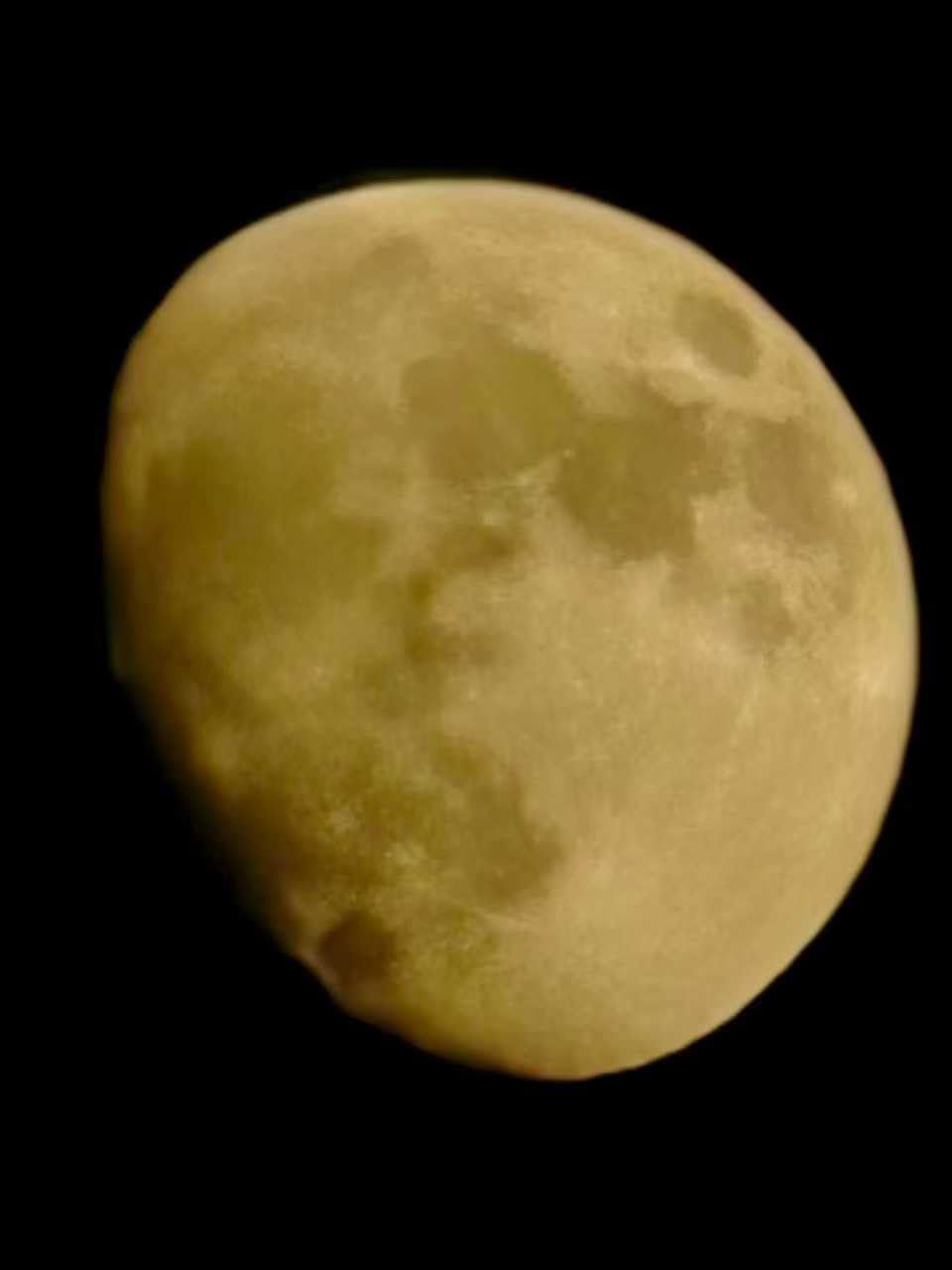
The Moon is the best first target at any magnification. At 10x you see the terminator, broad mare and the largest craters. At 20x and above, smaller craters, rilles and mountain ranges along the terminator line start to resolve, which is why the 20×80 and 25x models feel so much more capable on lunar work.
Jupiter’s four Galilean moons are visible at 10x in good conditions, and at 20x to 25x they separate cleanly enough to watch them shift position over an evening. The cloud bands on Jupiter’s disk itself stay out of reach for binoculars, and no amount of aperture changes that.
Saturn is the object that generates the most disappointment. Binoculars will show you Saturn as a bright oval, and at 25x you can tell it has rings, but the rings themselves are not resolved. Forum consensus is consistent on this point, and it is worth believing before you buy rather than after.
Open clusters are where binoculars genuinely shine. The Pleiades, the Double Cluster in Perseus and the Beehive all fit comfortably into a 4 to 5 degree field and resolve into individual stars with any of the 50mm to 70mm pairs here. The Orion Nebula shows a recognisable fuzzy shape rather than a detailed structure, which is still a satisfying first deep-sky sight.
Galaxies are the limit case. Andromeda appears as a brighter core inside an elongated smudge, and it takes a dark site and steady support to see more than that. Treat galaxies as a telescope target rather than a binocular one, and let the 100mm models be the exception rather than the expectation.
What to Skip and Why
Some patterns in this market waste money reliably, and forum consensus is unusually clear about them.
Zoom binoculars. A 15x to 30x zoom is compromised across the range rather than optimised for one power. You pay for flexibility you will not use and lose performance at both ends. Pick a fixed magnification instead.
Ruby or gimmick-coated night vision models. Red-ruby coated lenses block a large share of the light you need after dark while marketing themselves as night-vision optics. They dim the view to protect dark adaptation and cost you real targets. If a listing leads with night vision, ask what the coating actually is.
Bundled plastic tripod adapters. Not the binoculars, but the accessory. Reviews across every 70mm and 80mm class in this roundup describe oscillation or wobble from the supplied plastic adapter. Buy a metal one and treat the bundled adapter as a spare.
Thin advertising on the field of view. A field quoted at 1000 yards rather than in degrees tells you the seller does not want you comparing it. Work out the true figure before you commit, because it is the specification that determines how quickly you find targets.
Any pair above 15x sold as handheld. If a listing shows someone scanning the Milky Way through 25x binoculars with no support, the photo is staged. Above 15x needs a tripod, and pretending otherwise is how beginners end up convinced binoculars do not work.
Binoculars vs Telescopes: When to Upgrade
Binoculars and telescopes solve different problems, and the honest answer is that most observers want both eventually. Binoculars win on immediacy, field of view and the ability to see whole star fields or clusters at once. Telescopes win on magnification, on planetary detail and on the faintest targets.
A 20x or 25x pair on a tripod starts to approach what a small tabletop telescope delivers, which is why these binoculars work well as a bridge. A telescope with a stable mount and good optics will go much further, though, and it is the only route to seeing Saturn’s rings, Jupiter’s banding or the core of a faint galaxy.
The practical sequence most observers follow is a 10×50 pair to learn the sky, then a telescope for detail, then a mounted 20x or 25x pair as a third instrument for the wide-field views that no telescope delivers well. If you are at that third stage, this roundup is written for you.
Our telescope roundup covers the upgrade decision in more detail, including aperture and mount choices for different observing goals.
Solar Safety: Never Point Binoculars at the Sun
Read this once before anything else on this page. Never look at the Sun, or anywhere near it, through binoculars without a certified full-aperture solar filter fitted securely over the front objective lenses. Not a lens cap, not a filter from a telescope eyepiece, and not a pair of sunglasses of any kind.
Binoculars concentrate sunlight through both barrels into your eyes at high magnification, and the result is permanent retinal damage that can happen in a fraction of a second. This is one of the very few situations in amateur astronomy where a mistake is instantly irreversible, and it is the reason solar observing is done with purpose-made solar binoculars or a properly filtered telescope.
Use a solar filter rated for binoculars and sized to cover the full front aperture. Attach it before you point the instrument anywhere near the Sun, and remove it before you look at anything else, because a filtered binocular pointed at a normal night target looks completely black.
Frequently Asked Questions
What are the best binoculars for astronomy and stargazing?
The best astronomy binoculars depend on whether you use a tripod. Handheld, a 10×50 pair with a 5mm exit pupil and a field of view of 5 degrees or more is the sweet spot. On a tripod, a 15×70 balances brightness and reach, a 20×80 gives the widest true field at high power, and a 25×100 gathers the most light for the faintest deep-sky targets. Our top pick overall is the Celestron SkyMaster 15×70.
Are astronomy binoculars any good?
Yes, for a wide range of targets. Binoculars show the Moon in excellent detail, separate Jupiter’s four Galilean moons, resolve open clusters like the Pleiades into individual stars, and show the Orion Nebula and Andromeda as recognisable fuzzy objects. They will not show Saturn’s rings, Jupiter’s cloud bands, or the cores of faint galaxies, and deep-sky objects appear grey to the eye rather than the colours in photographs.
Which binocular magnification is better for stargazing?
For handheld stargazing, 7x to 10x is the useful range because hand shake is multiplied along with everything else. From 10x to 15x you can still work from a seated, braced position. Above 15x, magnification is only worth it on a tripod, since the shaking image hides the detail the extra power is supposed to deliver.
Can you see stars with 10×42 binoculars?
Yes. A 10×42 pair is a legitimate astronomy binocular and is the choice of many birders who also observe at night. Its 4.2mm exit pupil is slightly narrow, so views are dimmer than a 10×50 under identical conditions, and its narrower field suits constellation sweeping rather than cluster hunting. It is a fine first pair if you already own one.
What is the best type of binoculars for astronomy?
A Porro prism design with BaK-4 prisms, multi-coated lenses and a fixed magnification between 7x and 20x. Porro designs give a wider apparent field and longer eye relief than roof prism designs at the same cost, and BaK-4 prisms pass more light than the BK7 glass often fitted to budget pairs. Avoid zooms, which compromise every magnification in their range.
Which binoculars are better for astronomy, 10×50 or 15×70?
Choose the 10×50 for handheld use and wide-field sweeping, and the 15×70 for tripod-mounted detail. The 10×50 has a 5mm exit pupil, which matches a dark-adapted eye exactly, and a wider field for sweeping the Milky Way. The 15×70 has a 4.7mm exit pupil, almost as bright, but noticeably more reach on the Moon and a tighter field for cluster hunting.
What is the best binocular size for astronomy?
50mm is the minimum practical objective for a first pair, and 70mm is the best balance of brightness and weight. Going to 80mm adds real light at 20x power, while 100mm gathers the most light of all but is tripod-only and best left to experienced observers. Smaller objectives, such as 30mm or 42mm, look dim after dark and are hard to recommend for astronomy.
Can you see Saturn with 15×70 binoculars?
You will see Saturn as a bright oval point of light, and at 15x you can tell that it has rings around it. You will not see the rings themselves, their separation from the planet, or any detail on the disc. Resolving the rings requires roughly three times more magnification than a tripod-mounted 15×70 can deliver while remaining steady.
Do I need a tripod for astronomy binoculars?
Only above about 10x magnification. Handheld, 7x to 10x models are stable enough for sweeping and constellation viewing. From 15x upward you will want a tripod, a monopod or a solid braced surface such as a car headrest. Buy a metal tripod adapter rather than relying on the plastic one often supplied in the box, which oscillates under heavier instruments.
What is the exit pupil and why does it matter?
The exit pupil is the objective diameter divided by the magnification, and it is the width of the light beam leaving each eyepiece. Your pupil opens to roughly 5mm in full darkness, so an exit pupil near 5mm uses the gathered light efficiently. Below that, some light is wasted; above it, extra aperture adds weight and cost without a brighter view.
Which Astronomy Binoculars Should You Buy?
If you read nothing else, buy the Celestron SkyMaster 15×70. Its 4.7mm exit pupil matches a dark-adapted eye, its 4.4 degree field is wide enough to sweep, its 18mm eye relief works with glasses on, and the built-in tripod thread means the same pair covers handheld casual use and mounted deep-sky work.
Choose instead based on the constraint you actually have. If weight decides everything, the FLYANT 20×50 travels and weighs almost nothing. If you will always be on a tripod and want more reach per pound, the 25×70 SkyMaster does it for less. If you wear glasses and want a rigid body with long eye relief, the 18×70 is a strong alternative. If lunar detail is the goal, the 20×80 pairs in this roundup are the ones to look at.
And if you have a dark site, a permanent tripod and real patience, the 25×100 giants gather light nothing else here can match, accepting an 8.6 to 8.8 lb carry and a narrow field as the price.
Whichever you choose, buy the tripod and the metal adapter at the same time, check the collimation on the first clear night, and never look at the Sun without a certified full-aperture solar filter. Those three habits account for most of the difference between an owner who keeps using their binoculars and one who gives up on them in a season.
Our picks and specifications were checked in 2026. If you are still working out the basics, start with the beginner’s astronomy binocular guide before you commit.