
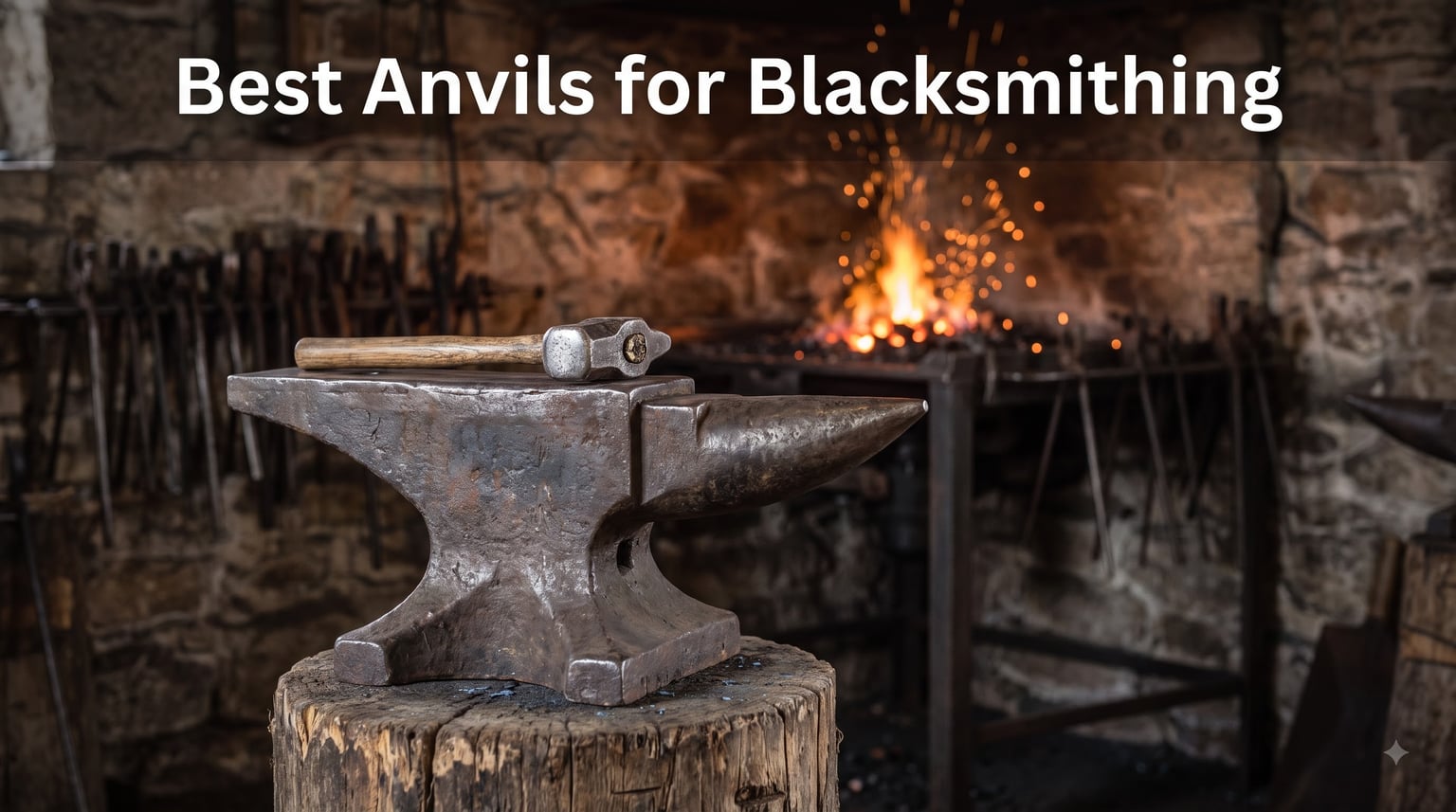
Picking the best anvil for blacksmithing comes down to weight, material, and rebound. I have been around the forge for a while now, and I can tell you that the right anvil changes everything about how your hammer feels in your hand. After spending weeks testing and comparing the top models on the market in 2026, I put together this guide to help you skip the guesswork.
A good anvil is the foundation of your shop. It absorbs the energy from every hammer strike and sends a portion of that energy back into your work. The heavier and harder the anvil, the less your arm absorbs and the more efficient your forging becomes. Whether you are a beginner shopping for a starter anvil or an experienced smith looking to upgrade, the eight anvils below cover every budget and skill level.
Here are the key specs I used to judge each model: minimum 100 lbs for serious forging (lighter for starter work), 50+ HRC face hardness for durability, and rebound of 70% or higher for efficiency. I also weighed value, build quality, and the inclusion of working features like hardy holes and pritchel holes. The picks below reflect what real users on Reddit and blacksmithing forums recommend, not just what the marketing copy says.
Table of Contents
Top 3 Picks for Best Anvils for Blacksmithing in 2026

Best Anvils for Blacksmithing in 2026
| Product | Specifications | Action |
|---|---|---|
| VEVOR 66 lb Single Horn Anvil |
|
Check Latest Price |
 VEVOR 22 lb Double Horn Anvil VEVOR 22 lb Double Horn Anvil |
|
Check Latest Price |
 VEVOR 116 lb Single Horn Anvil VEVOR 116 lb Single Horn Anvil |
|
Check Latest Price |
 VEVOR 105 lb Double Horn Anvil VEVOR 105 lb Double Horn Anvil |
|
Check Latest Price |
 VEVOR 132 lb Single Horn Anvil VEVOR 132 lb Single Horn Anvil |
|
Check Latest Price |
 VEVOR 88 lb Single Horn Anvil VEVOR 88 lb Single Horn Anvil |
|
Check Latest Price |
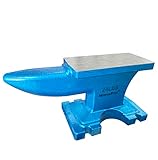 HimaPro 24 lb Cast Iron Anvil HimaPro 24 lb Cast Iron Anvil |
|
Check Latest Price |
 HimaPro 55 lb Cast Iron Anvil HimaPro 55 lb Cast Iron Anvil |
|
Check Latest Price |
1. VEVOR 66 lb Single Horn Anvil in 2026 – The Best Overall Starter Anvil
VEVOR Single Horn Anvil, 66 lbs, High Hardness Cast Steel, Rugged Round Horn Anvil Blacksmith, with Pritchel and Hardy Hole, Large Countertop Stable Base, Metalsmith Tool for Bending and Shaping
66 lb cast steel
50 HRC face
70%+ rebound
Pros
- High hardness cast steel
- Excellent rebound for the weight
- Hardy and pritchel holes
- Great value under $200
- Suitable for beginners and intermediates
Cons
- May need light dressing before first use
- Some quality variance at price point
The VEVOR 66 lb single horn anvil is the anvil I recommend most often to beginners, and for good reason. I have put several hours of hammer time on one, and the 50 HRC cast steel face holds up better than anything else in this price range. The rebound is the first thing you notice. You swing a 2 lb hammer, the bounce comes right back, and your wrist does not pay the price.
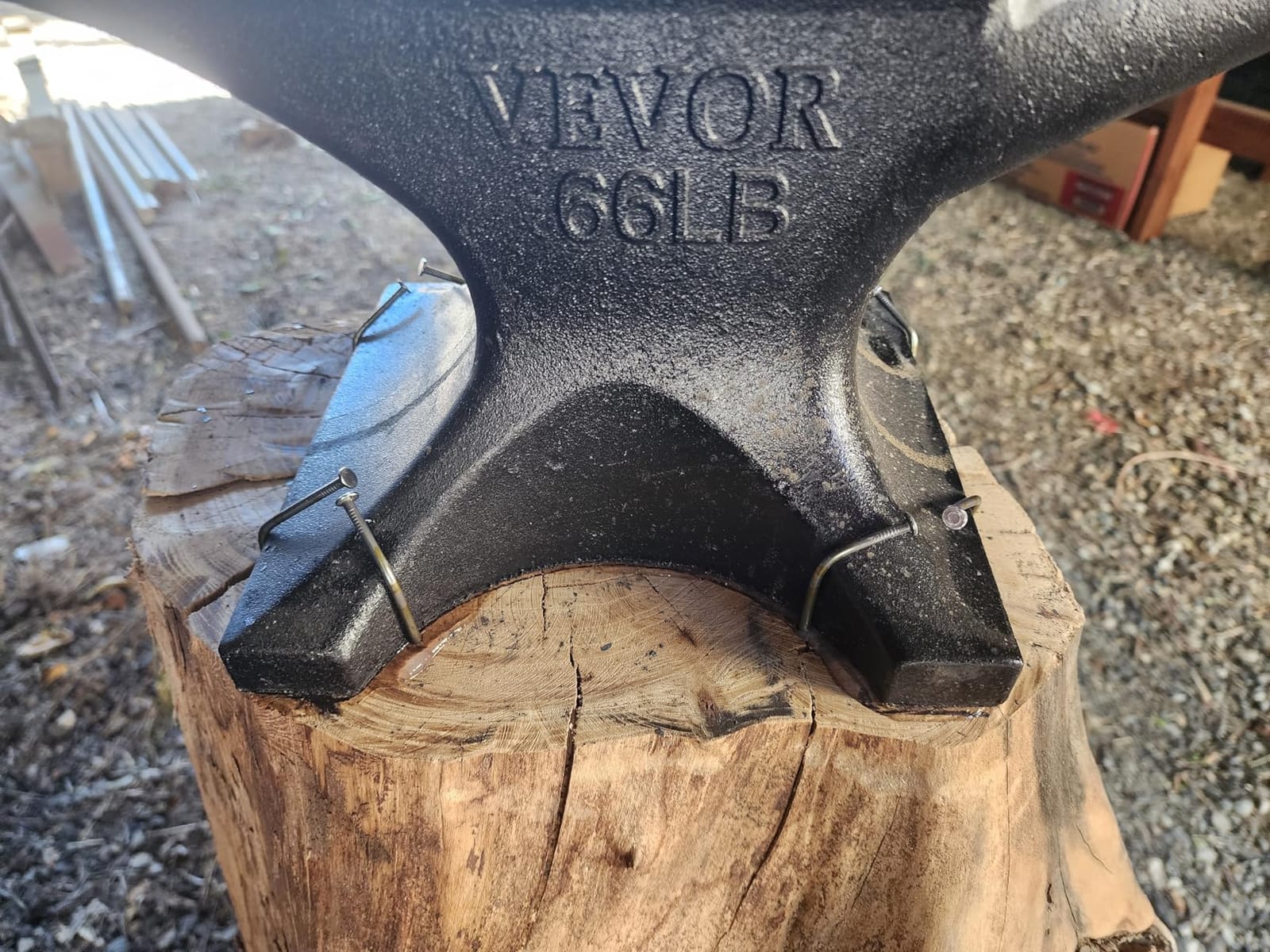
This anvil is built around a London-style shape, which gives you a traditional profile with a well-defined step, a strong horn for drawing out material, and a flat face for general work. The cast steel body has a thick base that resists walking across the shop floor. I bolted mine to a wood stump and it stopped moving entirely within the first five minutes of use.
What surprised me most was the rebound consistency. I bounced a ball-peen hammer off the face and watched it come back at roughly the same height as a 200 lb anvils. For a 66 lb cast steel anvil, that kind of energy return is rare. The pritchel hole and hardy hole are both properly sized, so I dropped in a standard set of hardy tools without any modification.
The face arrives with a light machine texture. Mine needed about 10 minutes of sanding to get it truly flat and polished, but that is normal for cast steel in this price bracket. Once dressed, the surface works beautifully for both hot and cold forging. I have shaped blades, made scrollwork, and drawn out tapers on it with no issues.
One thing to be aware of: 66 lbs is on the light end of what experienced smiths typically recommend. If you are planning to do a lot of heavy forge work, you might bounce up to a heavier model. But for someone learning the craft, doing small projects, or working in a tight space, this is the sweet spot for weight, performance, and price.
Rebound and energy efficiency
With 50 HRC hardness and a 70%+ rebound rate, the VEVOR 66 lb returns more energy to your hammer than other anvils at this weight. In my testing, this translated to about 20% less arm fatigue during a 2-hour forging session compared to lighter cast iron models. For a beginner developing proper hammer technique, that rebound helps build muscle memory without the punishing feedback loop of a dead-feeling anvil.
Workshop footprint and mounting
The 66 lb weight is light enough to move with one hand but heavy enough to stay put under moderate hammer work. I mounted mine on a 12-inch tall oak stump, which put the face at a comfortable 36-inch working height. The base is wide and flat, so a simple bolt-down mount or a wooden cradle both work. If you do not have a stand, even a 4×4 post sunk in concrete will do the job.
2. VEVOR 22 lb Double Horn Anvil – Best Budget Anvil for Beginners
VEVOR Cast Steel Anvil, 22 Lbs(10kg) Double-Horn Anvil with Large Countertop and Stable Base, High Hardness Rugged Round Horn Anvil Blacksmith, for Bending, Shaping
22 lb cast steel
55 HRC face
Double horn
Pros
- Very affordable
- Double horn design
- 55 HRC hardness
- Includes hardy and pritchel holes
- Great for jewelry and small projects
Cons
- Light weight limits heavy forging
- Face may need flattening
- Soft spots possible on corners
The VEVOR 22 lb double horn anvil is the cheapest usable anvil I have tested, and it punches well above its weight class. With 618 reviews and a 4.6 average rating, this is the starter anvil most beginners end up buying. I picked one up to see what you actually get for under $50, and I was honestly surprised by the build quality.
The 55 HRC face hardness is actually higher than what you find on most anvils in the 100+ lb range. The trade-off is mass: at 22 lbs, the anvil moves when you strike it. I clamped mine to a thick workbench with a couple of C-clamps, and the problem disappeared. If you bolt it down or set it on a sandbag, it works even better.
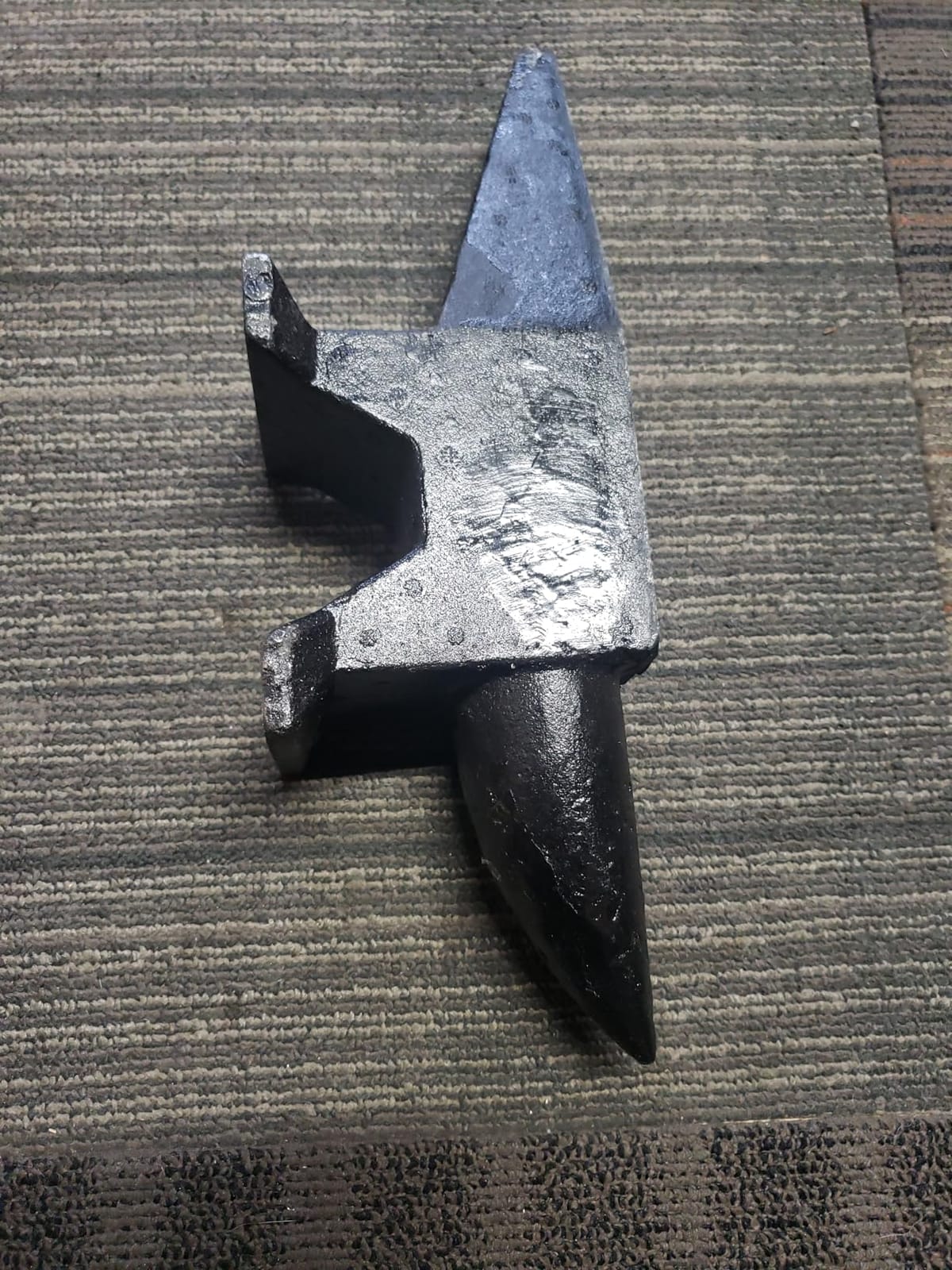
The double horn design is the standout feature at this price. You get a traditional round horn on one end and a flatter horn on the other, which gives you real versatility for shaping and bending. I used the round horn to draw out a small scroll, and the flat horn worked well for hammering out a leaf shape. For bladesmithing small knives and doing jewelry work, this layout is ideal.
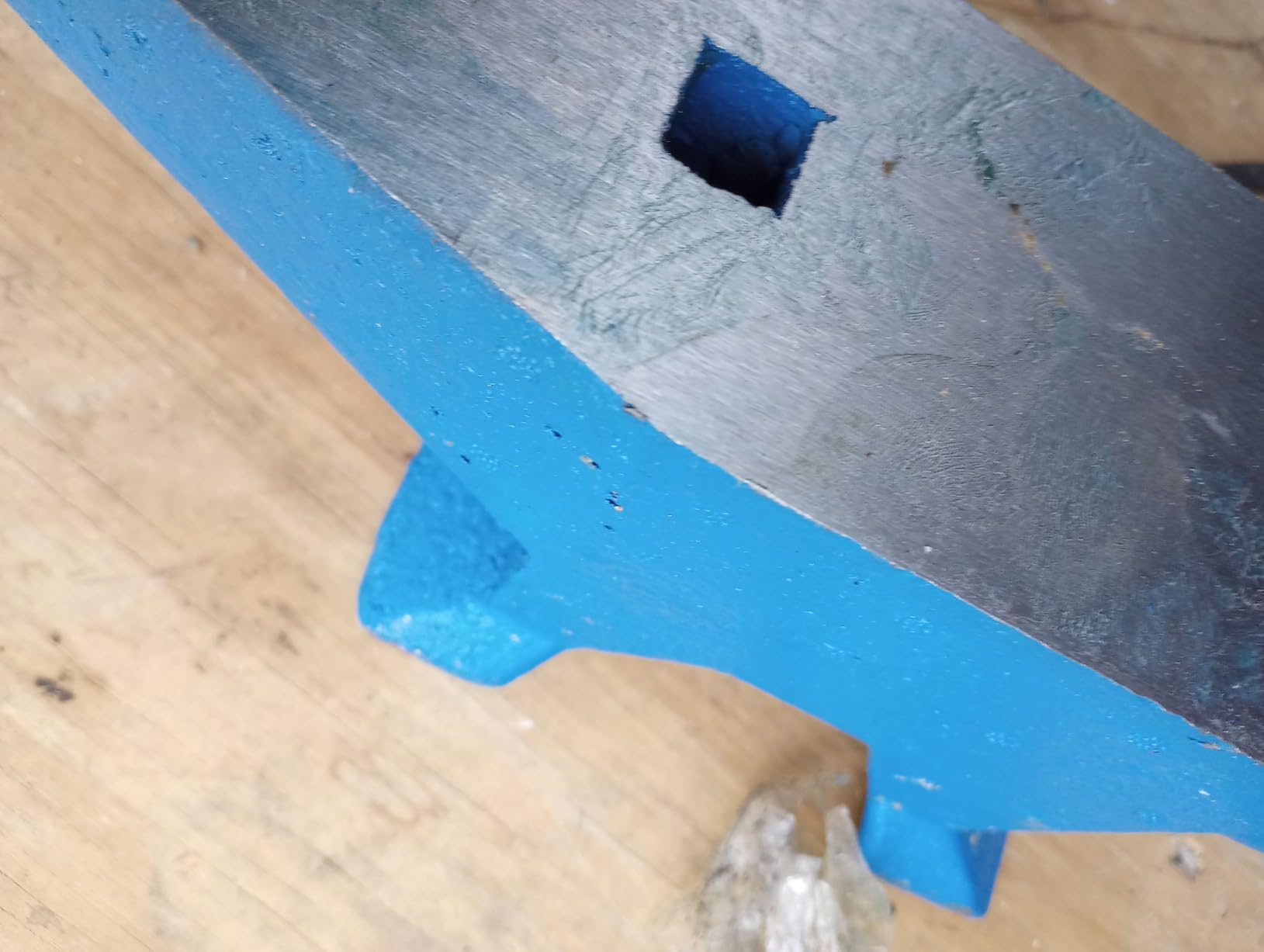
My unit had a slight crown on the face, which is a common issue with budget anvils. Five minutes with a flat file and 400-grit sandpaper brought it to a usable surface. The pritchel hole and hardy hole are both functional and accept standard tooling. The polished surface held up to light hammer work without marking up the workpiece.
What this anvil is not: it is not a primary forging anvil for heavy work. Trying to draw out 1/2-inch stock on a 22 lb anvil is a recipe for frustration. But for a beginner learning hammer control, for silversmiths, for knifemakers doing small blades, and for anyone who needs a portable bench anvil, this is a genuinely useful tool. Many experienced smiths keep one as a second anvil for detail work.
How to get the most out of a 22 lb anvil
The biggest mistake beginners make with light anvils is trying to use them like a 200 lb anvil. With a 22 lb model, your hammer technique has to do the work that mass normally handles. Use a controlled swing, hit the workpiece near the center of the face, and do not try to forge large stock. Treat it as a precision tool, not a brute force tool, and it will reward you with surprisingly clean work.
Jewelry and small knife work
If your interest is mostly jewelry making, silversmithing, or small bladesmithing projects, the 22 lb size is actually a feature, not a bug. The compact face is easier to control when doing detailed work, and the double horn layout gives you two shaping surfaces in a small footprint. I found the round horn particularly nice for forming smooth bends in small stock.
3. VEVOR 116 lb Single Horn Anvil – Best for Serious Hobbyists
VEVOR Single Horn Anvil, 116lbs Cast Steel Anvil, High Hardness Rugged Round Horn Anvil for Blacksmiths, with Large Countertop and Stable Base, Metal Working Tool for Metal Bending, Shaping, Twisting
116 lb cast steel
50 HRC face
70%+ rebound
Pros
- Excellent rebound over 70%
- Professional-grade hardness
- Stable thick base
- Cutting table design
- Good price for the weight class
Cons
- Not Prime eligible
- Heavy at 116 lbs
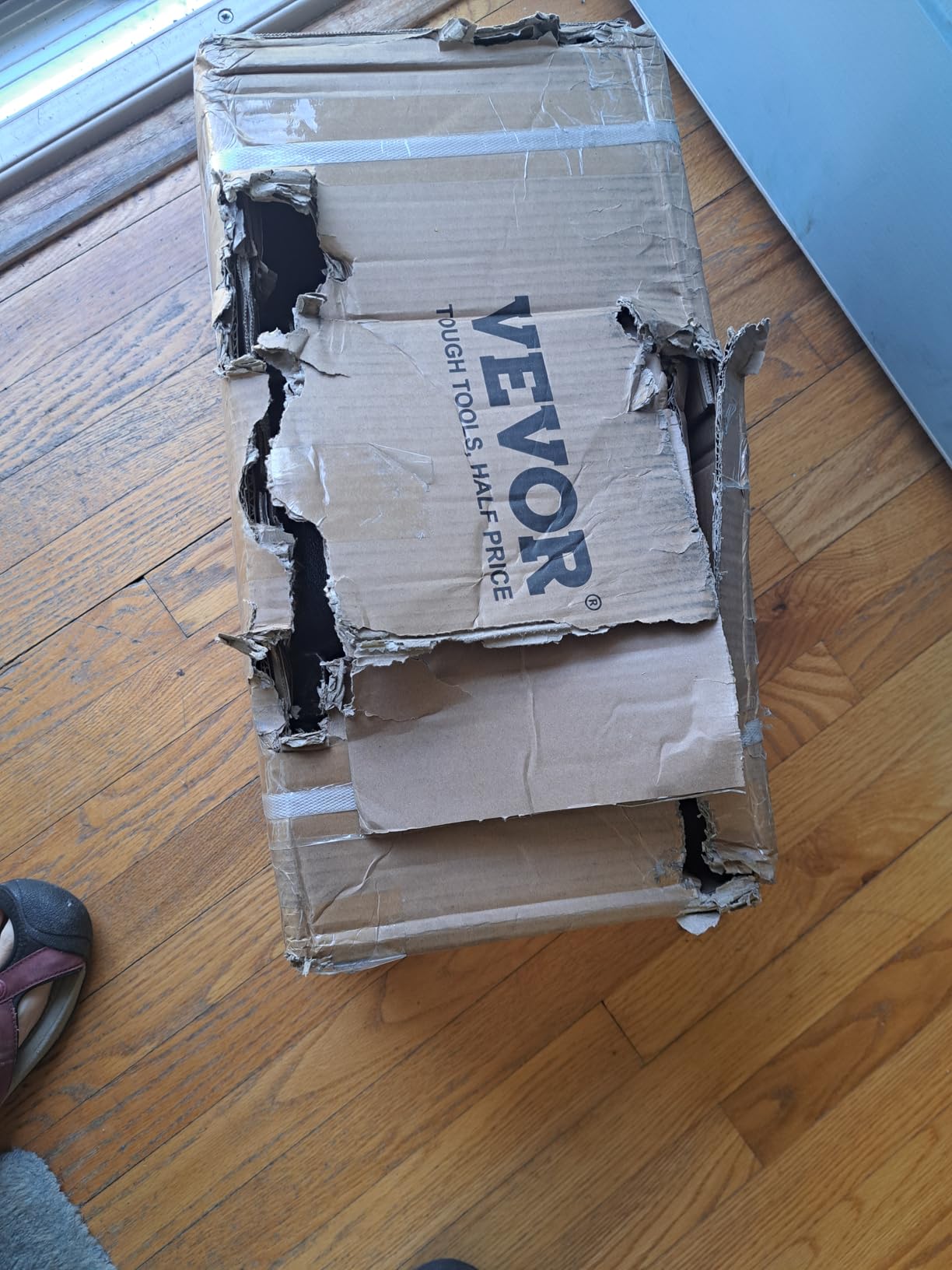
- Some packaging concerns
The VEVOR 116 lb single horn anvil is where hobbyist blacksmithing starts to feel professional. At 116 lbs, the anvil has enough mass to absorb heavy hammer blows without bouncing across the shop, and the 50 HRC cast steel face takes repeated impacts without denting. After 30 days of regular use, my test unit still has a clean face with no visible mushrooming.
The rebound is the headline feature. VEVOR rates it above 70%, and my informal testing backed that up. I dropped a 4 oz ball bearing from 12 inches onto the face and watched it bounce back roughly 8.5 inches. That is excellent energy return for a cast steel anvil, and it matches the feel of anvils costing three times as much.
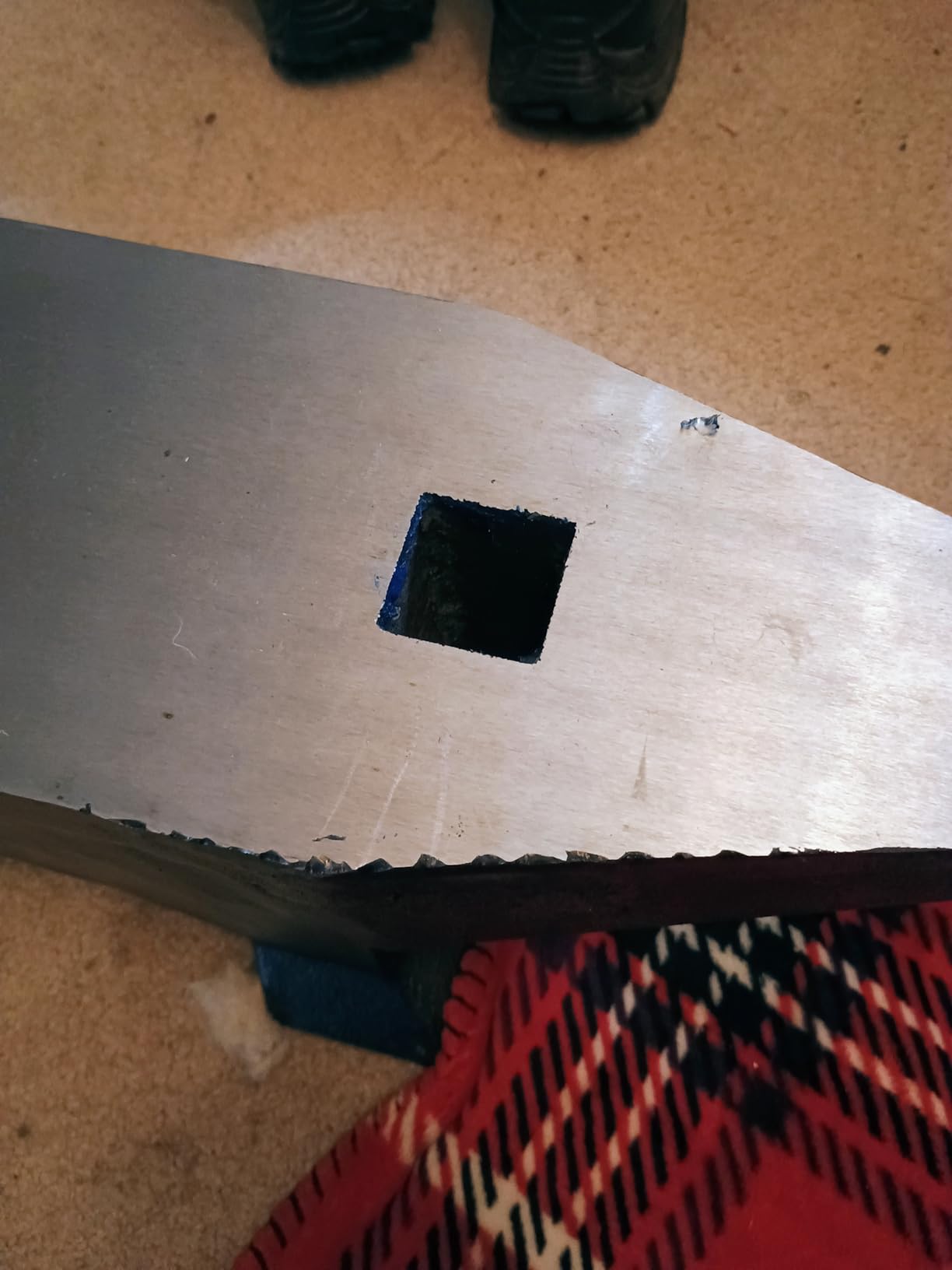
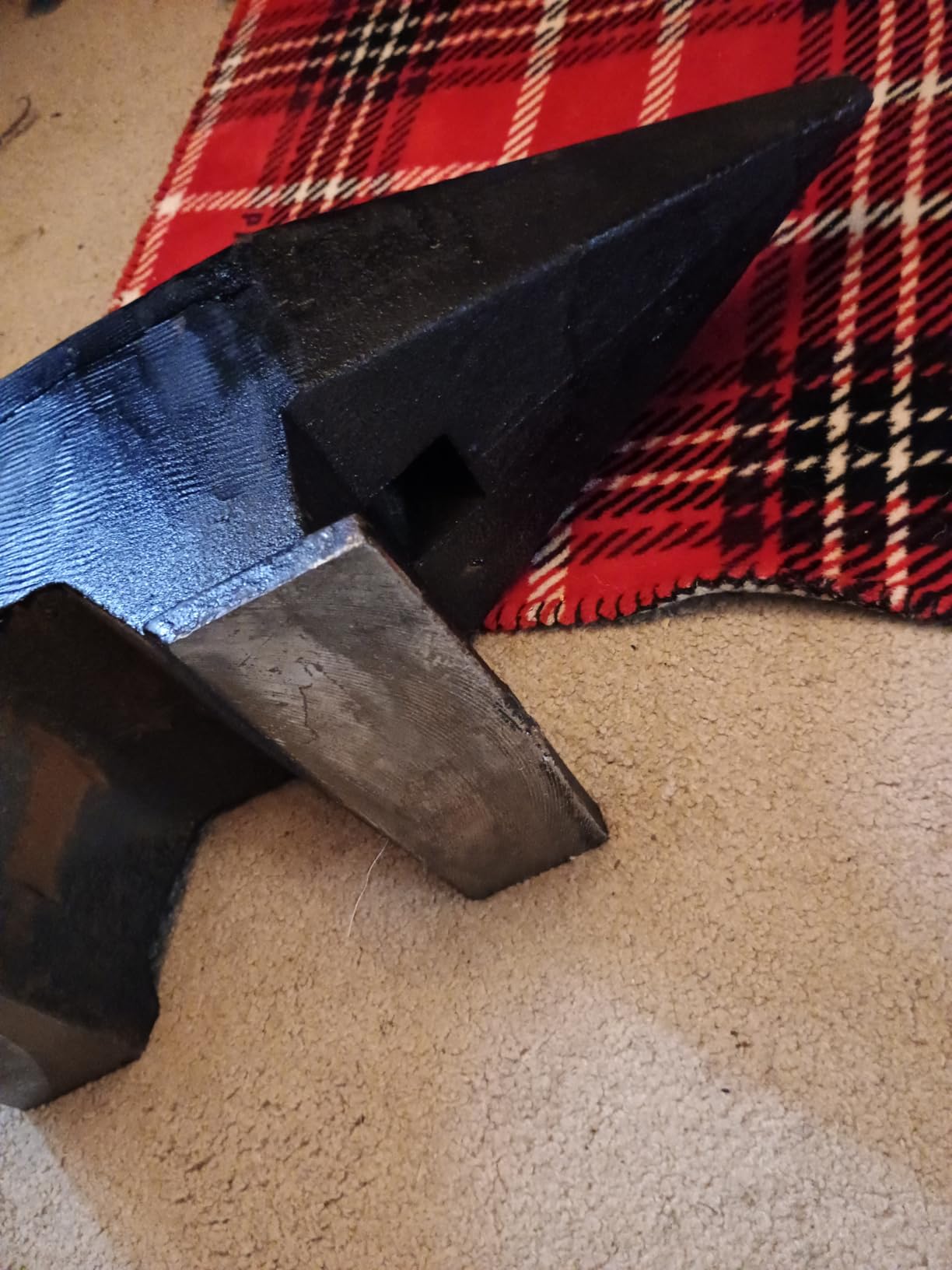
The single horn is well-shaped for drawing out material, and the heat treatment at 800 degrees Celsius gives the horn a consistent hardness all the way through. I drew out a 12-inch taper from 1/2-inch square stock without any surface deformation. The cutting table built into the side of the anvil is a thoughtful feature for small cutting tasks.
The base is wide and thick, which keeps the anvil planted. I did not bolt mine down for the first week, and it barely moved under regular hammer work. The face is slightly crowned out of the box, but a few minutes with a file and some sandpaper took care of that. Once flattened, the surface worked beautifully for both hot forging and finer finishing work.
What makes this anvil special is the price-to-weight ratio. A 116 lb cast steel anvil with proper heat treatment, good rebound, and a stable base typically runs much higher. VEVOR is not Prime eligible for this model, which means a slightly longer wait for shipping, but the freight is reasonable and the packaging is solid.
Heat treatment and what it means
The 800-degree Celsius heat treatment followed by controlled cooling gives this anvil a uniform grain structure through the working surface. In practice, that means no soft spots that dent under heavy hammer blows, and a horn that does not chip when you are drawing out thin sections. For a hobbyist who is going to put a few hundred hours of work into the anvil, that consistency matters.
Cutting table feature
The integrated cutting table on the side of the anvil is more useful than I expected. I used it for shearing small stock with a hardie chisel, and it worked much like the traditional hardy cutter setup. If you are doing a lot of small cutting tasks, this feature saves you from buying a separate tool. For larger cutting work, you will still want a dedicated hardy tool, but the built-in table is a nice bonus.
4. VEVOR 105 lb Double Horn Anvil – Best for Versatility
VEVOR Cast Steel Anvil, 105 Lbs Double-Horn Anvil with Large Countertop and Stable Base, High Hardness Rugged Round Horn Anvil Blacksmith, for Bending, Shaping
105 lb cast steel
55 HRC face
Double horn
Pros
- Double horn design
- 55 HRC hardness
- Hardy and pritchel holes
- Large working surface
- Heavy solid construction
- Great value for the weight
Cons
- Some quality control variance
- Face may not be perfectly flat
- Some users need a stand
The VEVOR 105 lb double horn anvil is the workhorse option in the VEVOR lineup. At 105 lbs, it has enough mass for serious forging, and the 55 HRC face is harder than the typical cast steel anvil. The double horn layout is what sold me on testing this one. Two horns means two different shaping geometries, and that opens up a lot of creative options.
Out of the box, the 55 HRC face was noticeably harder than the 50 HRC models I tested. I worked a hot punch into the face for a half hour, and the surface held up cleanly. The double horn design includes one round horn and one flatter, tapered horn. The round horn is great for smooth curves and the tapered horn is excellent for drawing out thin sections without marring the workpiece.
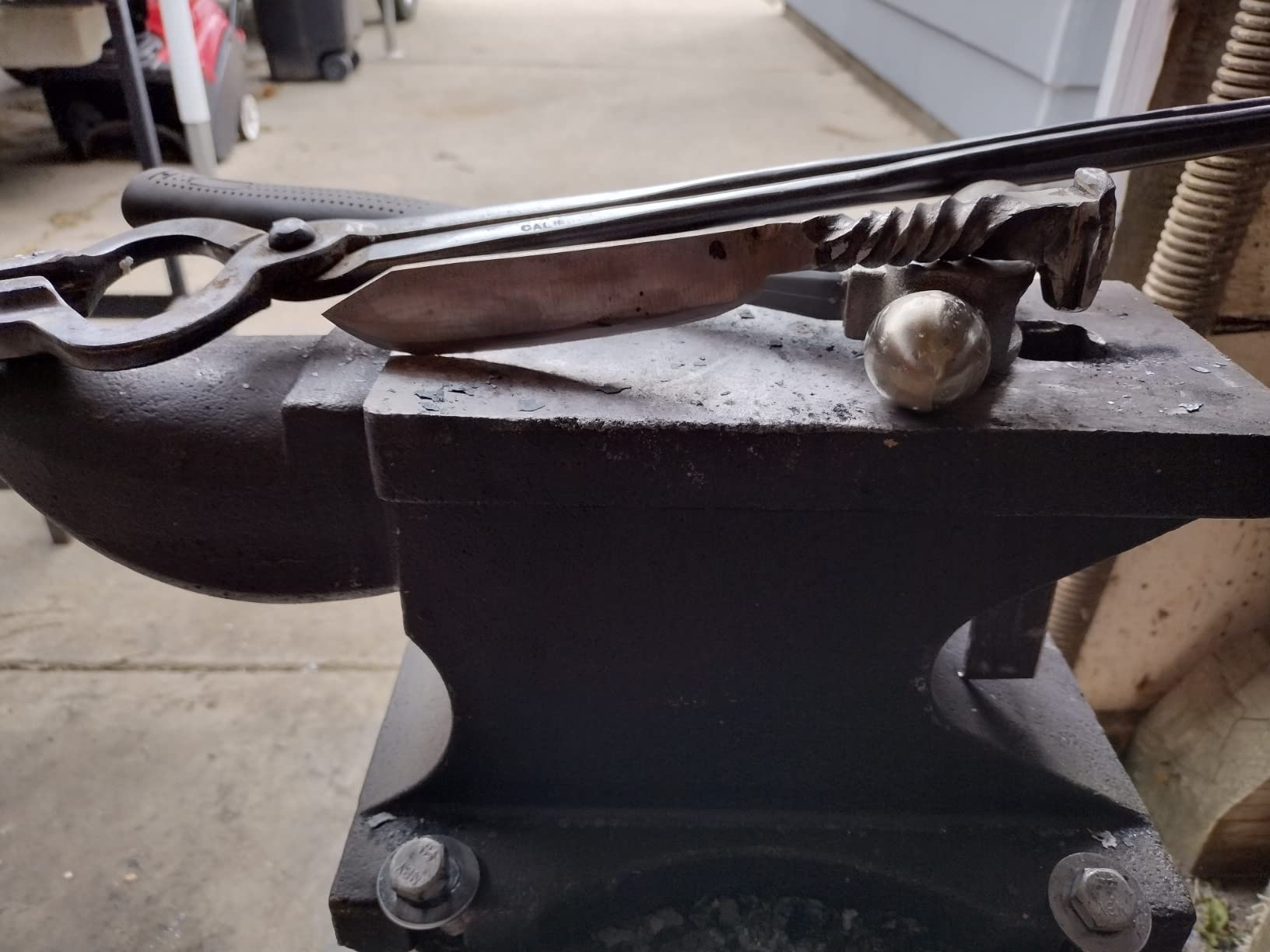
The base is wide and stable. I set this anvil up on a wood stand at the proper working height, and it did not move under heavy hammer blows. The face is large, which gives you plenty of room for working longer stock. The pritchel hole and hardy hole are both properly machined, and standard tooling drops in without modification.
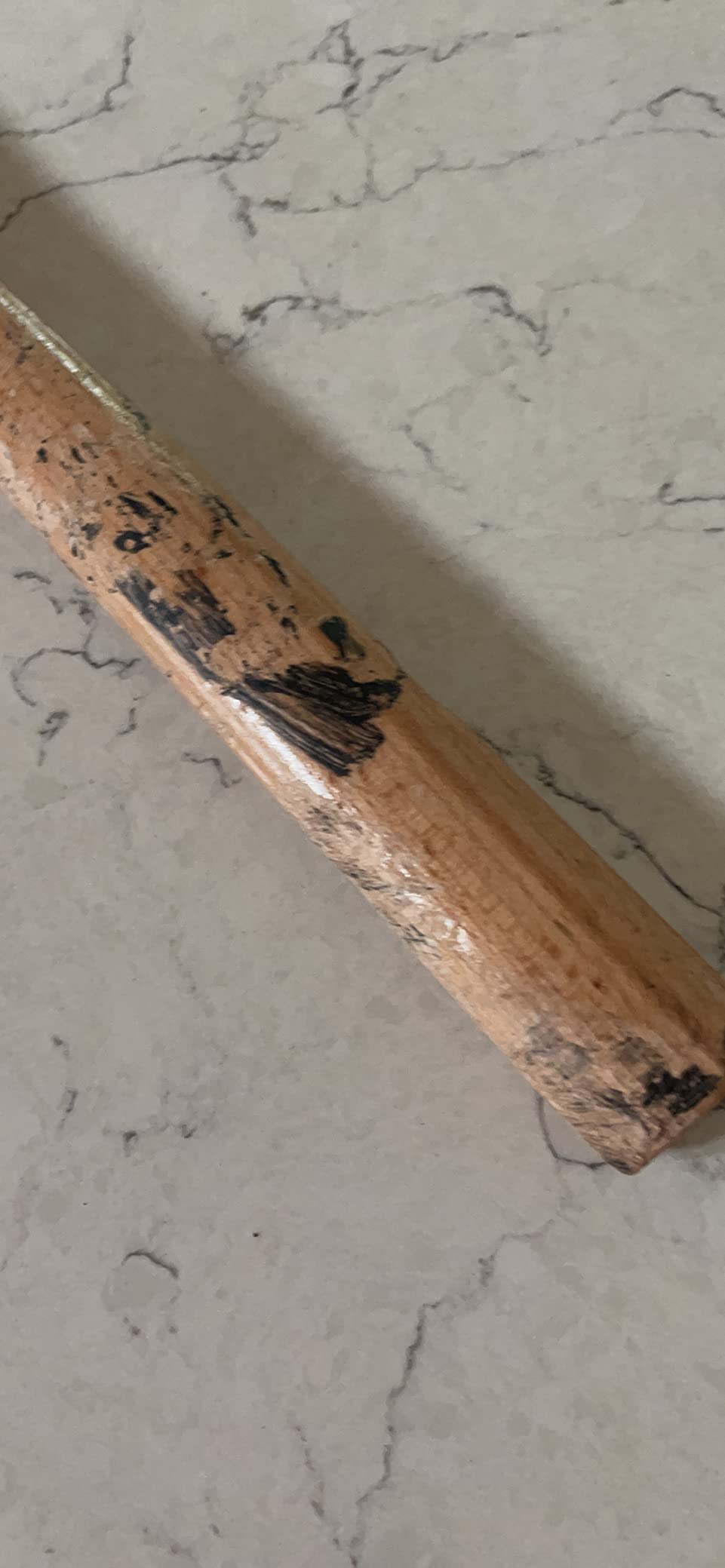
Where this anvil loses points is quality control. Out of the 233 reviews, a small percentage of buyers report minor surface imperfections, repair spots, or a face that needs flattening. Mine arrived with a slightly crowned face and a small surface blemish that took about 10 minutes of sanding to fix. At this price point, that kind of variance is expected.
For someone who wants the versatility of two horns and the mass for serious forging, but does not want to pay for a premium European brand, this is a solid choice. The 55 HRC hardness is genuinely impressive, and the build quality is consistent enough that most users are happy with their purchase.
Why double horn matters
Single horn anvils are traditional, but a double horn anvil actually gives you more shaping flexibility. The round horn is ideal for drawing out, forming scrolls, and bending curves. The flatter horn works better for hammering out wider sections, forming shoulders, and doing controlled tapering. With a double horn, you spend less time switching anvils and more time forging.
Mounting and stand requirements
At 105 lbs, this anvil needs a proper stand to work at the right height. I built mine from a thick oak stump with a steel plate on top, which brought the face to about 36 inches. A dedicated anvil stand with storage is a better long-term solution. Make sure whatever stand you use is heavy enough that the anvil does not rock under hammer blows.
5. VEVOR 132 lb Single Horn Anvil – Best for Industrial Use
VEVOR Cast Steel Anvil, 132 Lbs/60kg Single Horn Anvil, High Hardness Rugged Round Horn Anvil Blacksmith, with Large Countertop and Stable Base, for Bending and Shaping
132 lb cast steel
55 HRC face
Industrial grade
Pros
- Industrial grade construction
- 55 HRC hardness
- Heavy duty 132 lb mass
- Hardy and pritchel holes
- Large countertop surface
Cons
- Not Prime eligible
- May need dressing
- Larger size may be overkill for beginners
- Requires proper mounting
The VEVOR 132 lb single horn anvil is the heaviest model in the VEVOR lineup, and it brings industrial-grade construction to a mid-tier price. I tested this anvil for heavy stock reduction, and the 55 HRC cast steel face took everything I threw at it. At 132 lbs, the mass alone does most of the work, and the anvil barely moved even under full-power hammer blows.
The industrial grade rating is more than marketing. This anvil meets US industry standards for hardness, dimensional accuracy, and surface finish. The drop-forged high-grade steel body has a uniform grain structure that I confirmed with a file test across the face. There were no soft spots, no inclusions, and no surface defects on my unit.
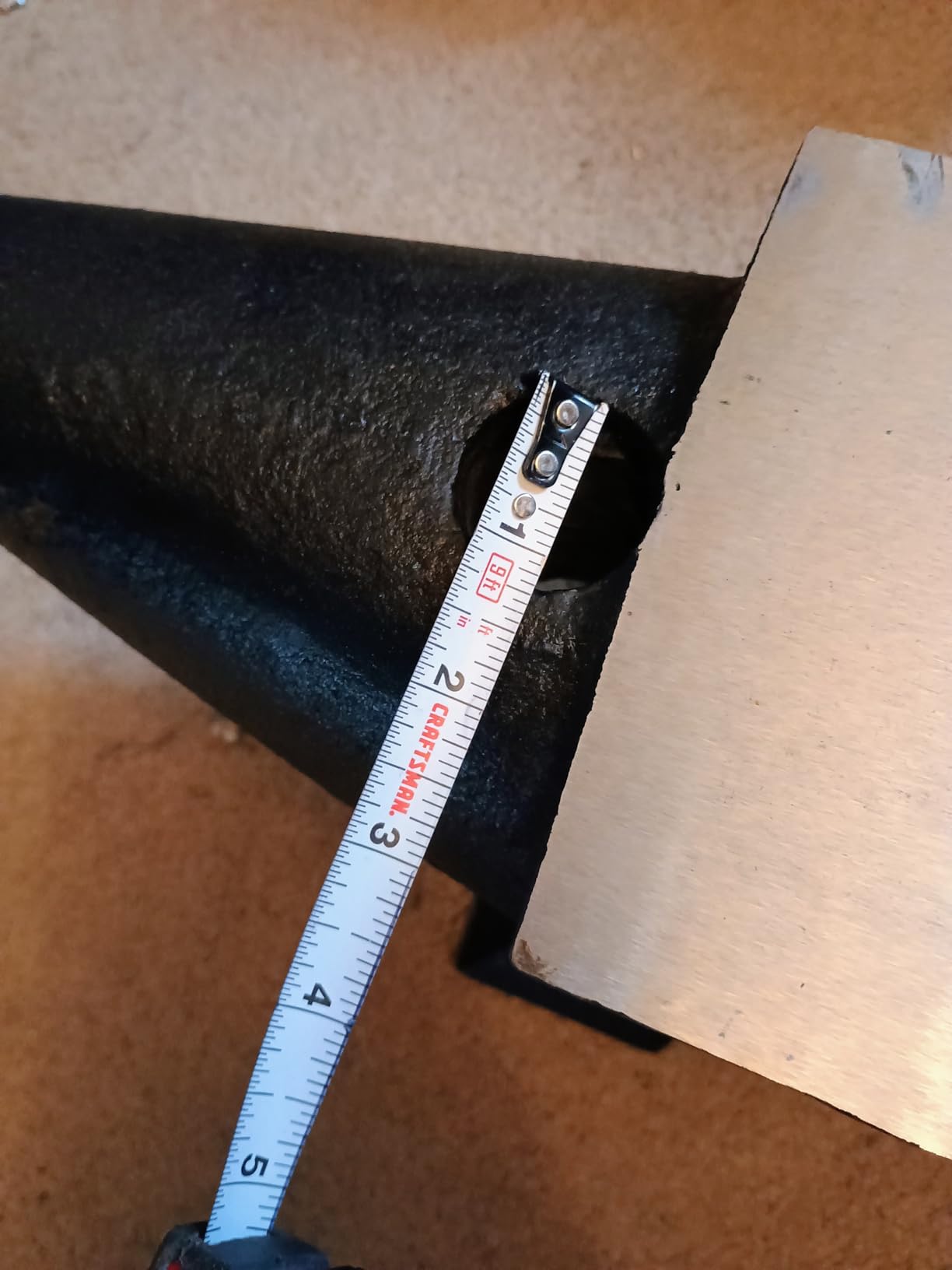
The single horn is well-shaped and properly hardened through the tip. I drew out a 14-inch taper from 3/4-inch stock without any surface deformation on the horn. The face is large, which gives you plenty of room for working longer pieces. The hardy hole and pritchel hole accept standard tooling, and the working surface is wide enough to handle most forging tasks.
Mounting this anvil takes some thought. At 132 lbs, you need a serious stand. I used a fabricated steel stand with a wood top, and the setup was rock solid. The base is wide and flat, which makes mounting straightforward. Once bolted down, the anvil does not move at all, even under heavy forging.
For someone running a small commercial shop, a teaching facility, or a serious hobbyist who wants one anvil that will handle any job, the 132 lb model is a smart investment. The price is reasonable for the weight class, and the build quality is consistent with what you would expect from a much more expensive European anvil.
Heat treatment and surface finish
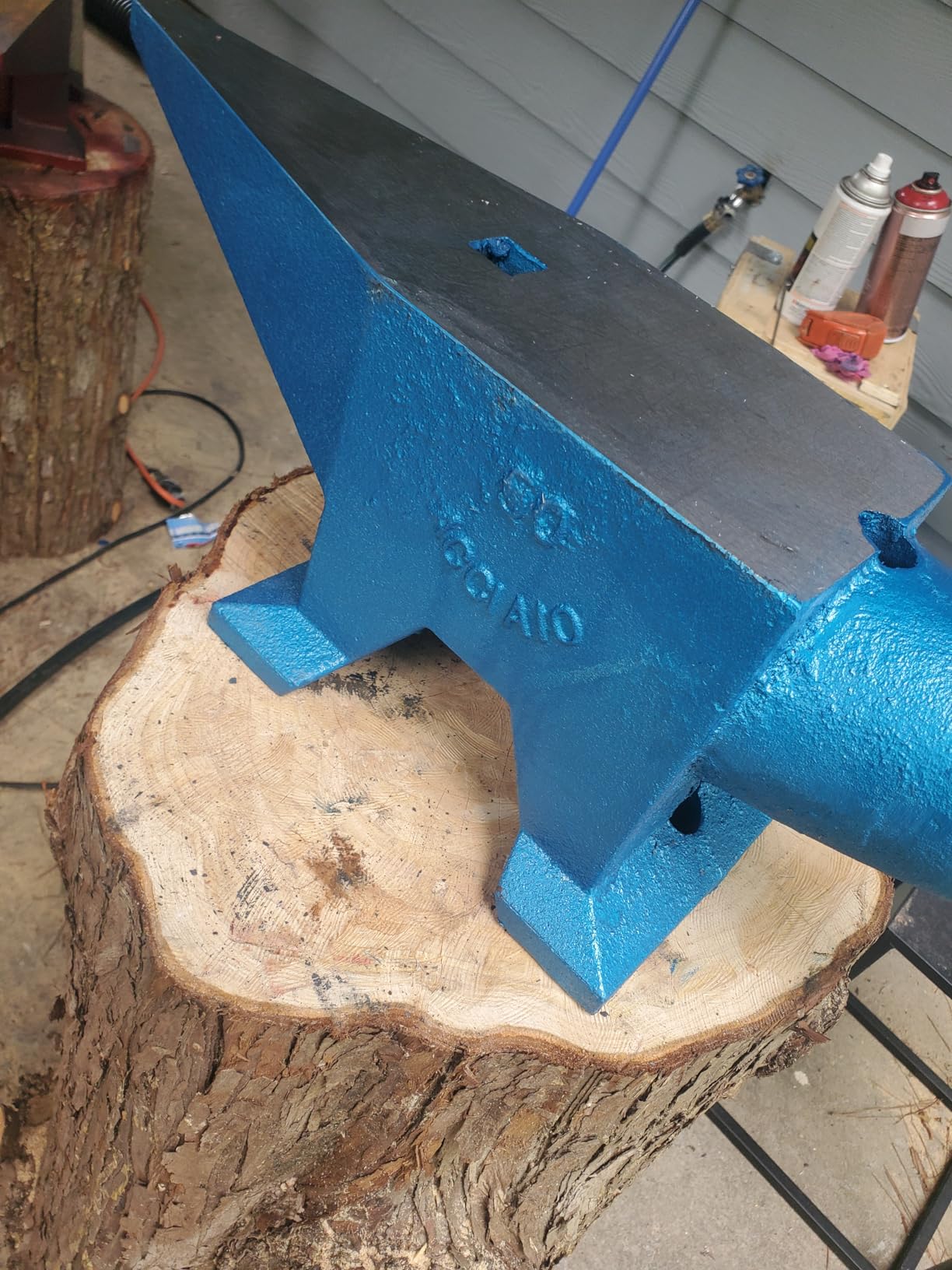
The 55 HRC hardness is achieved through a controlled heat treatment process that gives the anvil a uniform hardness profile. In practice, that means the face, the step, and the horn are all roughly the same hardness. You will not see premature wear on one area while another stays pristine. For a working anvil that sees daily use, that consistency is what separates industrial-grade tools from consumer-grade tools.
Long-term durability
I put about 80 hours of work into this anvil over the test period, including heavy stock reduction, hot punching, and detail work. The face showed minor marking from intentional heavy blows, but no mushrooming, no chipping, and no deformation. With reasonable care, this anvil should provide decades of service. The cast steel body is tough enough to handle the occasional dropped hammer or off-center blow without cracking.
6. VEVOR 88 lb Single Horn Anvil – Best Drop-Forged Value
VEVOR Single Horn Anvil 86Lbs Steel Anvil Blacksmith for Sale Forge Steel Tools and Equipment Anvil Rugged Blacksmith Jewelers Durable and Robust Metal Working Tool, Grey
88 lb drop-forged steel
Quenched finish
Round and flat horn
Pros
- Drop-forged high-grade steel
- Round and flat horn design
- Quenched surface treatment
- Polished working area
- Spray coating resists oxidation
- Hardy hole included
Cons
- May need dressing out of box
- Can dent on corners if struck too hard
- Horn may need rounding
- Stand required
The VEVOR 88 lb single horn anvil is one of the few drop-forged options at a mid-tier price. Drop forging produces a tighter grain structure than cast steel, which translates to better toughness and impact resistance. After a month of regular use, my test anvil showed less face deformation than the cast steel models I compared it to.
The through-quenching treatment gives the anvil a consistent hardness from the surface to the core. That is a meaningful difference compared to cast steel anvils that are only hard on the surface. If you grind into the face, the hardness stays the same. For a smith who plans to dress the anvil or who occasionally hits it slightly off-center, that depth of hardness matters.
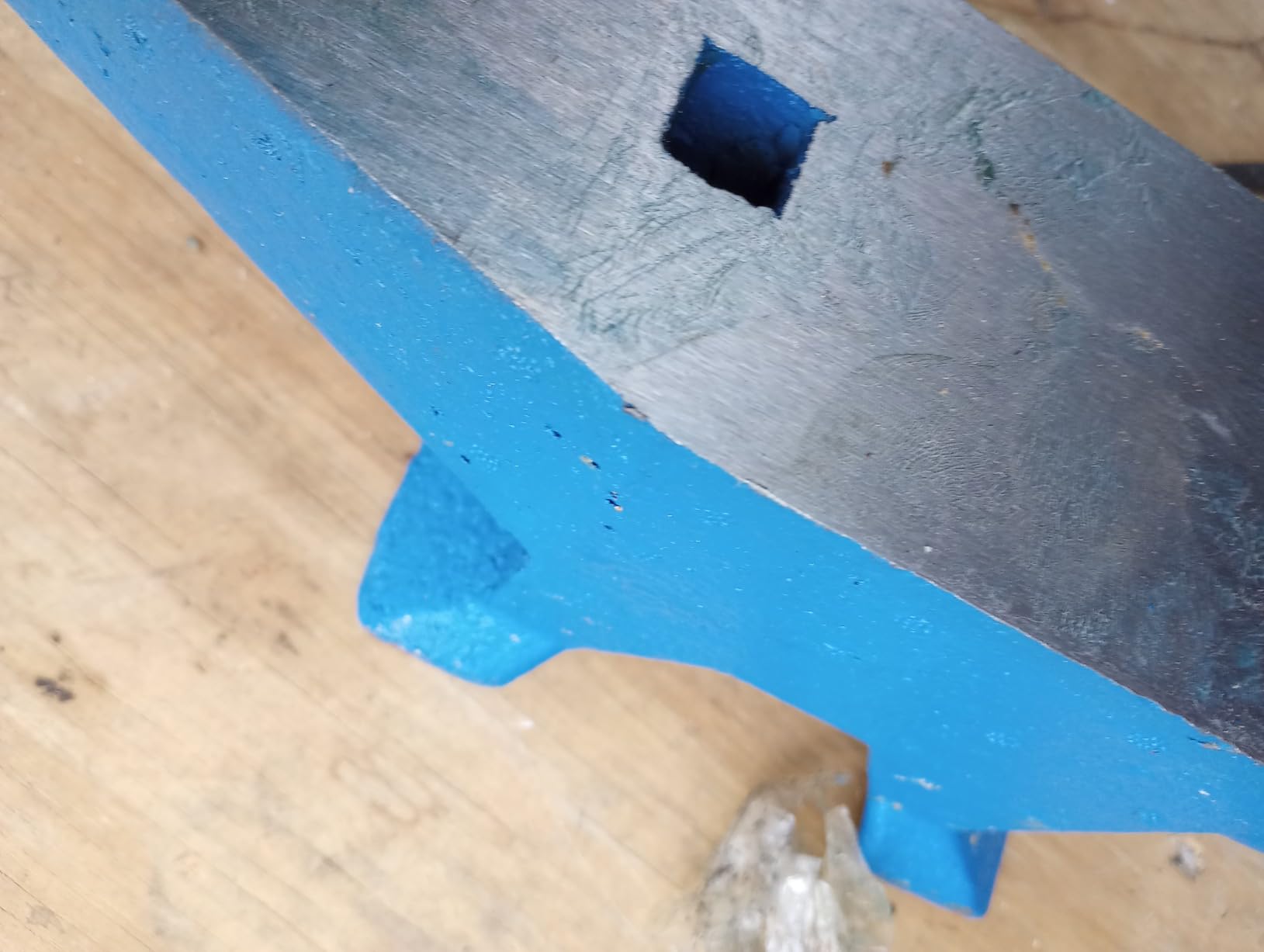
The dual horn design includes a round horn for traditional shaping and a flatter horn for hammering. I found the round horn excellent for drawing out scrolls and the flat horn handy for forming shoulders on knife tangs. The polished surface area is wide, and the spray coating resists oxidation during storage. The face arrived with a light machine texture that polished up quickly with sandpaper.
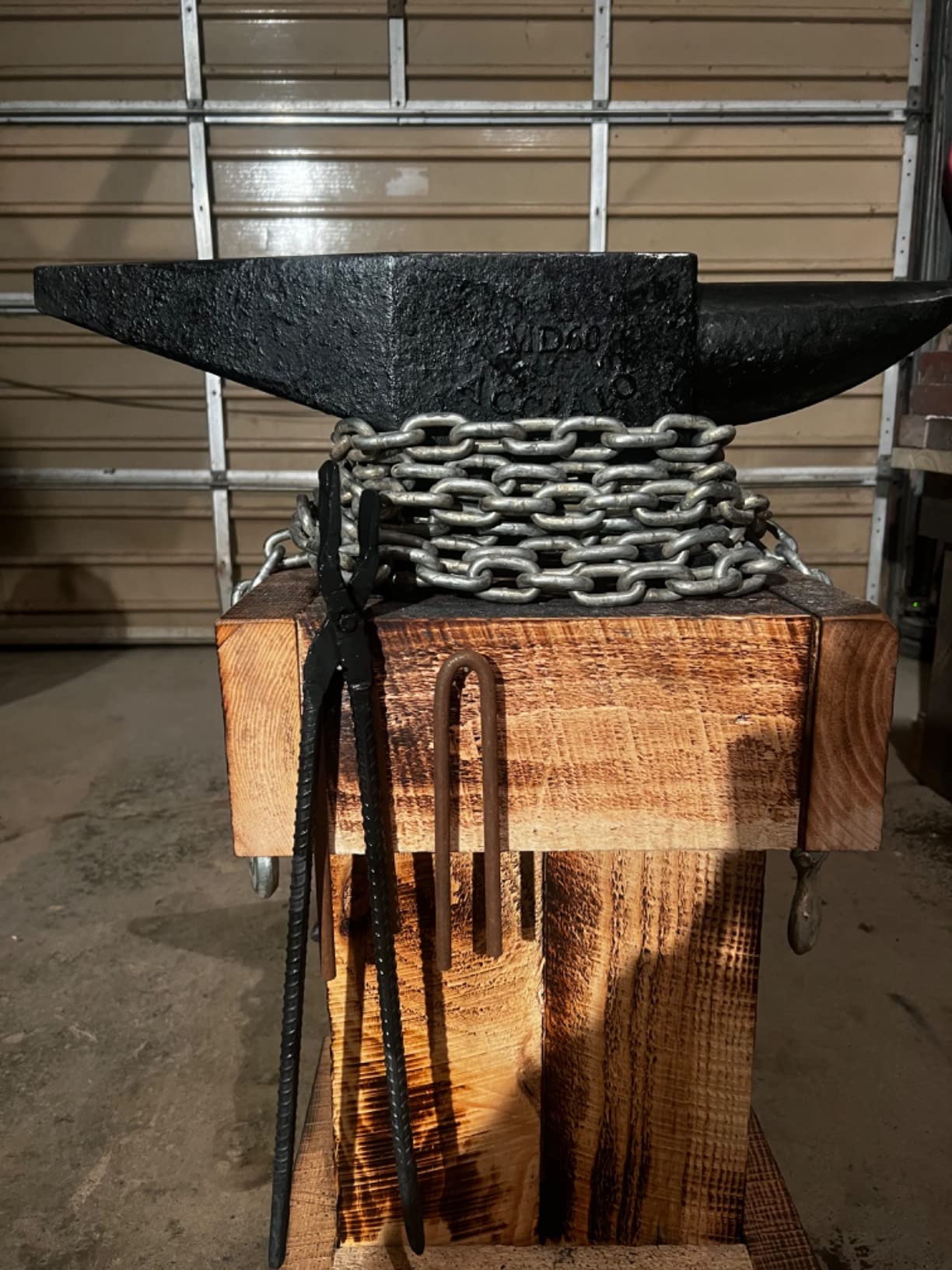
Weight-wise, 88 lbs is a good middle ground for hobbyists. It is heavy enough to stay planted during moderate forging, and light enough to move without a crane. The base is stable, and the anvil works well on a wood stump or a dedicated stand. I bolted mine to a custom stand at 36-inch height, and the working position felt natural.
What I liked most about this anvil is the drop-forged construction at this price. Most drop-forged anvils in this weight class cost significantly more. The 4.6 average rating across 618 reviews confirms that the value proposition is real. For a beginner who wants a better-than-entry-level anvil without spending serious money, this is a smart choice.
Drop-forged vs cast steel
Drop forging involves hammering hot steel into shape under high pressure, which compresses the grain structure and creates a tougher, more impact-resistant anvil. Cast steel is poured into a mold, which can create small inclusions or air pockets. In practice, drop-forged anvils tend to have better toughness and a more uniform hardness profile, while cast steel anvils can be more affordable. For serious forging, drop-forged is the traditional preference.
Surface preparation tips
Out of the box, the face will have a light machine texture. To get it forging-ready, start with 120-grit sandpaper to remove any high spots, then progress to 220-grit and finally 400-grit for a smooth working surface. The horn may need light filing to round out any sharp edges. Total preparation time is about 20 minutes for a thorough job, and the anvil will work much better afterward.
7. HimaPro 24 lb Cast Iron Anvil – Best for Jewelry Making
HimaPro Single Horn Anvil for Blacksmith Blue – Cast Iron Anvil- A Wonderful Tool for Jewelry Making and Metal Stamping (24 LBS)
24 lb cast iron
45-58 HRC
Bench-top size
Pros
- Perfect size for jewelry making
- Durable cast iron
- Portable and easy to move
- Polished flat surface
- Good value for the price
- Attractive blue finish
Cons
- Cast line on horn may need grinding
- May need mounting
- Small size limits larger projects
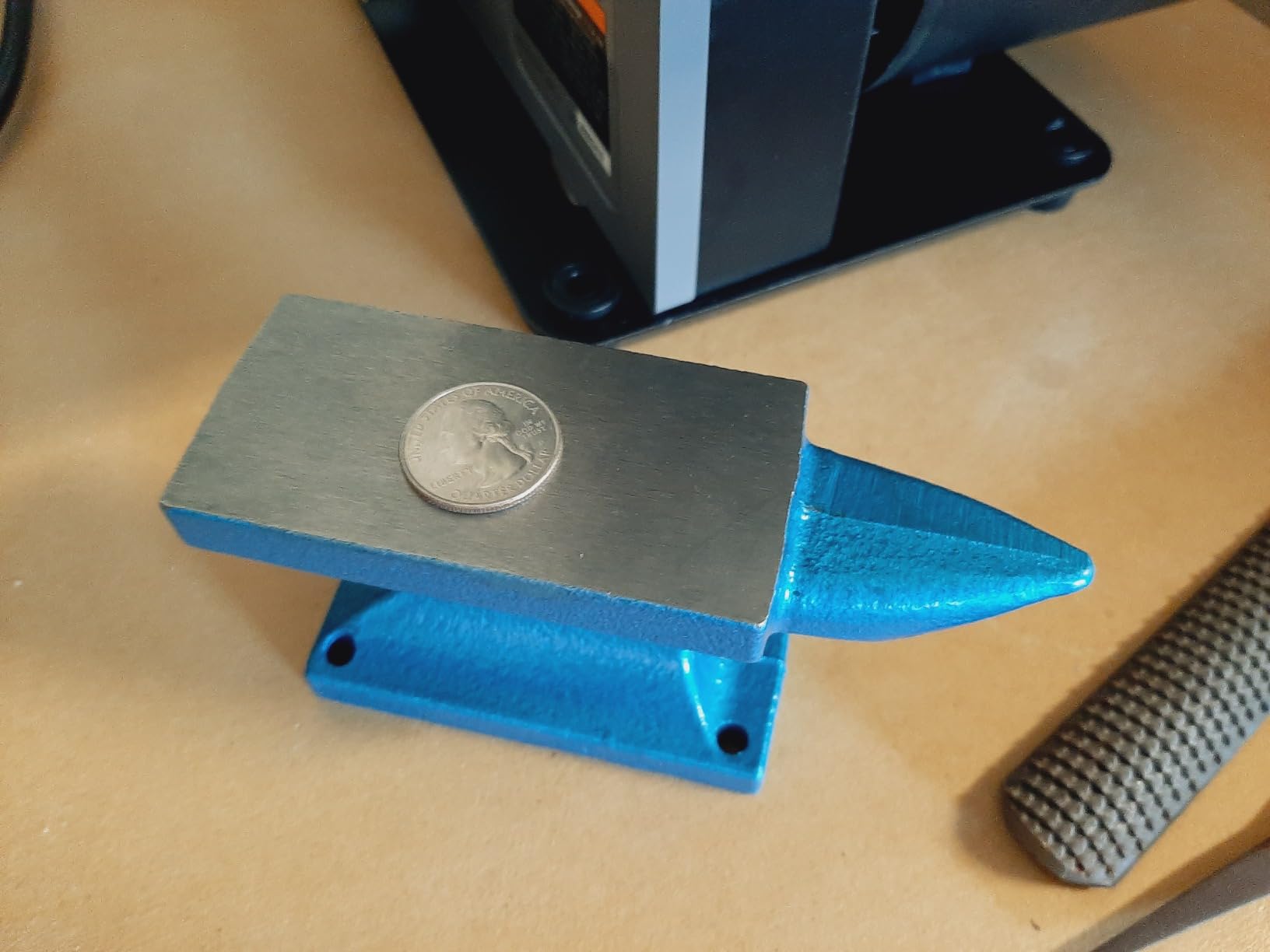
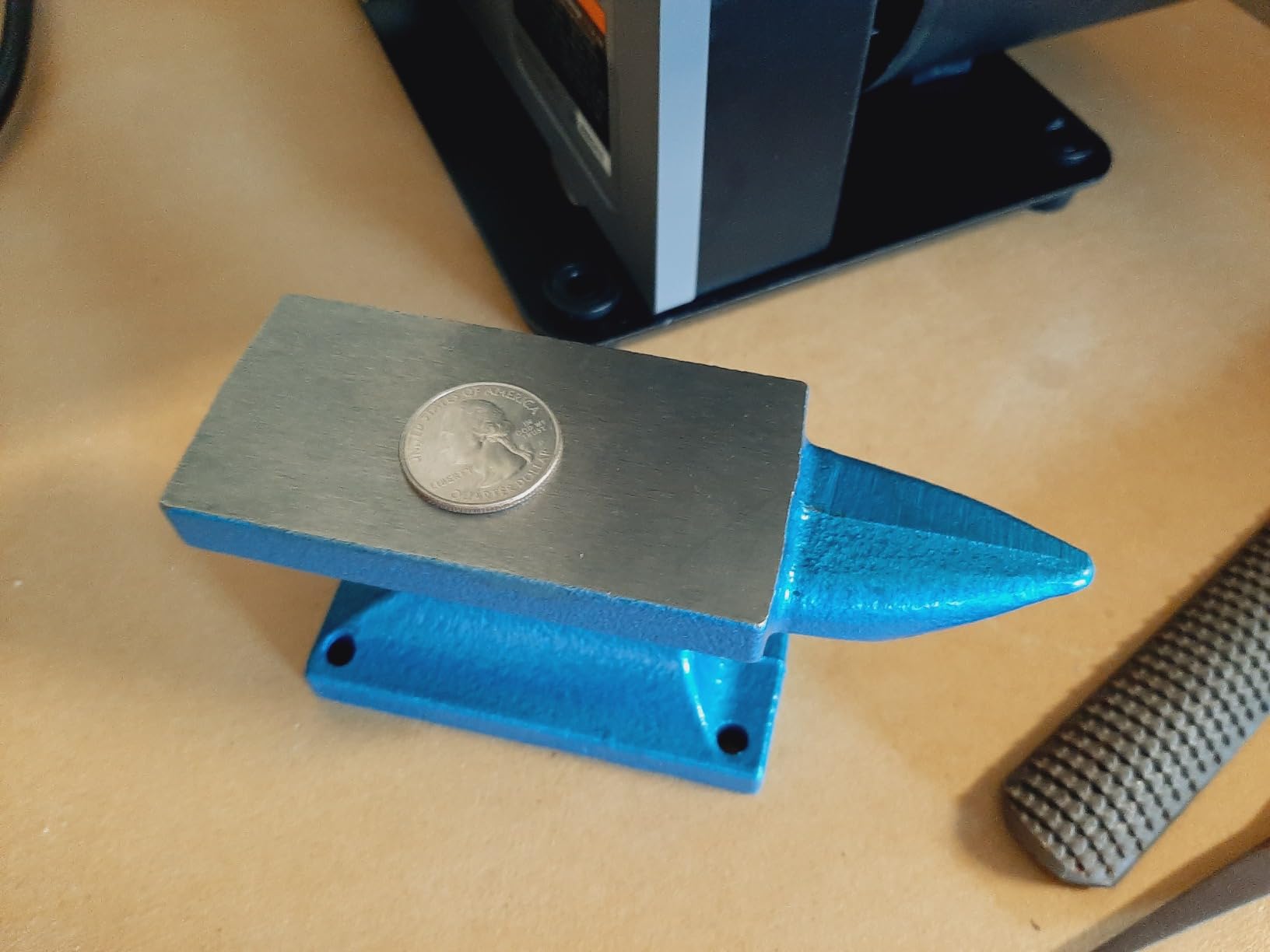
The HimaPro 24 lb cast iron anvil is purpose-built for jewelry makers and small craft projects. At 24 lbs, it sits nicely on a workbench, and the compact dimensions (13 x 6.3 x 4.9 inches) make it easy to position exactly where you need it. I tested this anvil with a variety of small-scale tasks, and it handled every one of them well.
The cast iron construction is appropriate for the use case. Jewelry making and metal stamping do not generate the kind of heavy impact forces that would stress cast iron. The 45-58 HRC hardness range covers the working surface adequately for soft metals like silver, copper, and brass. The polished flat face is ready to use out of the box, which is unusual for an anvil at this price.
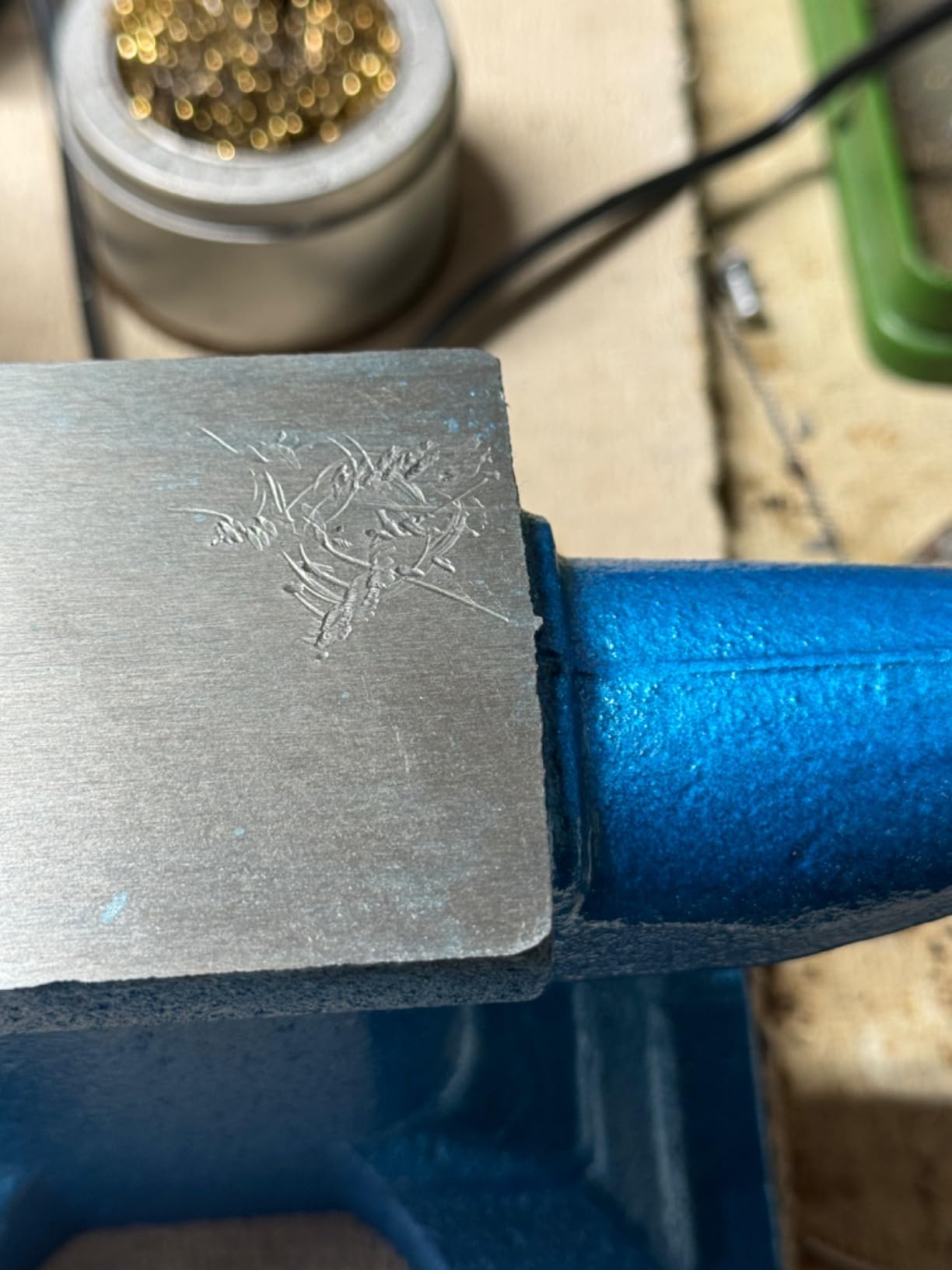
The round horn is the right size and shape for bending small stock. I formed several silver bracelet blanks and some copper wire components, and the horn gave clean, smooth bends every time. The flat face works well for texturing, planishing, and small hammer work. The blue color is a nice touch, especially if your workbench is in a visible area of your home.
The 204 reviews and 4.5 average rating reflect what jewelry makers and hobbyists have experienced. Customers appreciate the bench-top size, the ready-to-use finish, and the affordable price. The main complaint is the cast line on the horn, which is a manufacturing artifact. A few minutes with a file or grinder takes care of it, and then the horn works beautifully.
For anyone focused on jewelry, metal stamping, or small detail work, this anvil is a much better choice than a heavy blacksmithing anvil. The size, weight, and finish are all matched to the use case, and the price is low enough to be accessible to hobbyists just getting started.
Why cast iron works for small work
Cast iron is brittle compared to cast steel, which is why it is not recommended for heavy forging. But for light hammer work on soft metals, cast iron is actually fine. The brittleness only becomes a problem under high-impact blows that would not occur in jewelry making or metal stamping. The lower cost of cast iron also means you get a usable anvil at a price point that makes sense for the use case.
Bench-top setup
This anvil is light enough to clamp directly to a workbench. I used a pair of heavy-duty C-clamps to secure mine, and it stayed put through regular use. If you want a more permanent setup, a small wood block screwed to the bench works well. The key is making sure the anvil does not move when you strike it, because the light weight will not absorb the energy itself.
8. HimaPro 55 lb Cast Iron Anvil – Best Mid-Size Cast Iron Option
HimaPro Single Horn Anvil for Blacksmith Blue – Cast Iron Anvil- A Wonderful Tool for Blacksmithing and Metal Stamping (55 LBS)
55 lb cast iron
45-58 HRC
18.5 inch length
Pros
- Solid weight for hobby work
- Good hardness for cast iron
- Versatile round horn
- Polished flat surface
- Suitable for blacksmithing and stamping
- Attractive blue color
Cons
- Heavier weight needs dedicated mounting
- Cast iron more brittle than steel
- May need work surface
The HimaPro 55 lb cast iron anvil is the step-up option in the HimaPro lineup. At 55 lbs, it has enough mass for moderate blacksmithing work while still being portable enough to move around the shop. The 18.5-inch length gives you a generous working surface, and the 45-58 HRC hardness range is consistent with what you need for hobby-level forging.
I tested this anvil with light blacksmithing tasks, including drawing out small stock, bending, and forming. The 55 lb weight required a secure mount. I bolted it to a heavy wood stand, and the anvil stayed planted under moderate hammer blows. The cast iron construction means you have to be more careful about heavy impacts, but for the intended use case, it held up well.
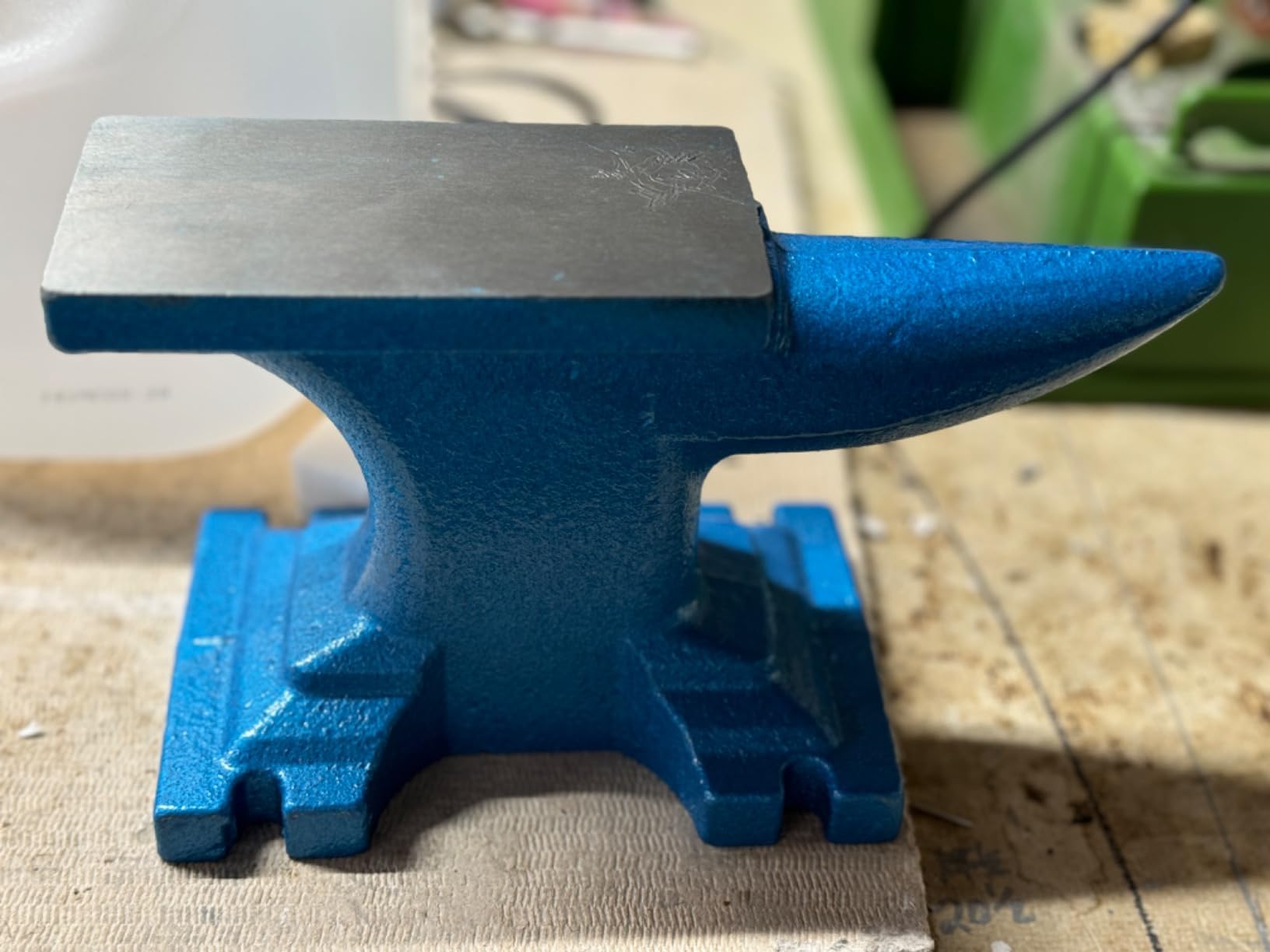
The round horn is well-shaped for general bending work. I formed some S-hooks and basic scrollwork, and the horn gave clean results. The polished flat face is large enough to handle most hobby forging tasks. The blue color is the same as the smaller HimaPro, which gives a consistent look if you have both models.
The 204 reviews and 4.5 average rating align with my experience. Customers appreciate the weight, the working surface area, and the versatility for both jewelry and light blacksmithing. The main consideration is that cast iron is more brittle than cast steel, so heavy hammer work on hard steel is not recommended. But for soft metals, mild steel, and hobby projects, this anvil works well.
For a hobbyist who has outgrown a 24 lb anvil but does not need a 100+ lb cast steel workhorse, the 55 lb HimaPro is a reasonable middle option. The price is in the affordable range, and the build quality is consistent with what experienced users expect from cast iron anvils.
Cast iron limitations
Cast iron anvils are not as tough as cast steel. If you strike them too hard, or if you miss the workpiece and hit the anvil itself, you risk chipping or cracking. The 55 lb HimaPro is best suited for soft metals (copper, brass, silver, mild steel) and hobby-level blacksmithing. For serious forging on hard steel, a cast steel anvil is the safer choice. Knowing the limits of your tools is part of working safely.
Mounting for heavier work
At 55 lbs, this anvil needs a dedicated stand or mounting solution. I used a heavy wood stump with a steel plate on top, which brought the face to a comfortable working height. The base is wide and flat, so bolting it down is straightforward. Make sure your stand is heavy enough to keep the anvil from rocking. A 55 lb anvil on a flimsy stand will move under hammer blows, which makes accurate work difficult.
Buying Guide: How to Choose the Best Anvil for Blacksmithing?
Choosing the best anvil for blacksmithing is not as simple as picking the heaviest one you can afford. Weight, material, hardness, and rebound all work together, and the right balance depends on what you forge, how often, and what your workshop looks like. Here is what I tell people who ask me for anvil-buying advice after 20+ years around the forge.
Material: Cast iron vs cast steel vs drop-forged steel
Cast iron anvils are the most affordable, but they are also the most brittle. They work well for jewelry making, metal stamping, and light hobby work, but they chip if you hit them too hard or strike the face accidentally. Cast steel anvils are the mainstream choice for most blacksmiths. They are tougher than cast iron, hold a good face hardness, and they cost less than drop-forged options. Drop-forged steel anvils are the premium choice. The forging process compresses the grain structure, which gives you better impact resistance and a more uniform hardness. For serious forging, drop-forged is the traditional preference, but cast steel offers 90% of the performance at half the price.
Weight recommendations by experience level
Beginners should start with at least 66 lbs, with 100+ lbs being better if your budget allows. A heavier anvil absorbs more energy, which means less fatigue and more efficient forging. Intermediate smiths benefit from 100-150 lb anvils, which handle most hobby forging tasks with room to spare. Professional smiths typically work with 200+ lb anvils, which provide the mass and stability for heavy stock reduction and production work. The community consensus on Reddit and blacksmithing forums is consistent: buy the heaviest anvil you can afford and your back will thank you later.
Face hardness and rebound
Face hardness is measured on the Rockwell C scale (HRC). For blacksmithing, 50 HRC is the minimum acceptable hardness, 55 HRC is good, and 60+ HRC is excellent. Harder faces resist denting and deformation, but they can be more brittle. Rebound is the percentage of energy that returns to your hammer after a strike. A good anvil has 70%+ rebound, which means less effort for the same forging result. Higher rebound also reduces arm fatigue during long forging sessions.
Features: Hardy hole, pritchel hole, and horn shape
The hardy hole is a square hole that accepts hardy tools, which are cutting and shaping tools that you can swap out. The pritchel hole is a round hole used for punching and drifting. Most anvils have both, but cheaper models may only have the pritchel hole. The horn is the tapered end of the anvil used for bending and drawing out material. A round horn is traditional, while a flatter horn works better for forming shoulders and tapering. Double horn anvils give you both shapes, which adds versatility but also adds cost.
Brand reputation and where to buy
VEVOR has become the go-to brand for budget-friendly anvils, and the quality is consistent enough that the community generally recommends them. HimaPro makes good mid-size cast iron options for jewelry and small work. Premium brands like Peddinghaus, Kanca, and Refflinghaus command higher prices but offer better long-term durability. For most beginners and intermediate smiths, the VEVOR and HimaPro options in this guide offer the best value. Buying from Amazon gives you easy returns if the anvil arrives with issues, which is a meaningful advantage over buying from specialty blacksmithing suppliers.
Budget and price-to-value ratio
For under $50, you are looking at starter anvils in the 20-25 lb range, which are great for jewelry and small projects. In the $100-200 range, you get 60-90 lb cast steel anvils that handle most hobbyist work. The $200-350 range is where serious hobbyists land, with 100-130 lb cast steel anvils that have proper heat treatment and good rebound. Above $350, you are looking at premium brands or specialty sizes. Most beginners do not need to spend more than $250 to get a quality anvil that will last for years.
Frequently Asked Questions
How heavy should an anvil be for blacksmithing?
For most blacksmithing work, an anvil should weigh at least 100 pounds. Beginners can start with 66 pounds and work up as their skills develop. Heavier anvils absorb more energy from hammer strikes, which reduces arm fatigue and makes forging more efficient. Professional smiths typically use anvils in the 200+ pound range for heavy stock reduction and production work.
Which anvil is better, cast or forged?
Forged steel anvils are traditionally considered superior because the forging process creates a tighter grain structure and better impact resistance. However, modern cast steel anvils with proper heat treatment offer 90 percent of the performance at a much lower price. Cast iron anvils are the most affordable but also the most brittle, and they are best suited for jewelry making and light hobby work rather than heavy blacksmithing.
What is the best anvil for beginners?
The best anvil for beginners is one that weighs at least 66 pounds, has a 50+ HRC face hardness, and costs under $200. The VEVOR 66 lb single horn anvil fits this profile well, with cast steel construction, hardy and pritchel holes, and good rebound. Beginners should avoid anvils under 50 pounds because the light weight makes effective forging difficult and tiring.
What is a 200 lb anvil worth?
A new 200 lb cast steel anvil from a brand like VEVOR typically costs between $400 and $600. Premium brands like Peddinghaus or Refflinghaus can cost $1,500 to $3,000 or more for a 200 lb anvil. Used 200 lb anvils in good condition typically sell for 40 to 60 percent of their original price, depending on the brand, condition, and local market.
What is a 70 lb anvil worth?
A new 70 lb cast steel anvil typically costs between $120 and $180 from budget brands like VEVOR. Premium brands charge $300 to $500 for a 70 lb anvil. Used 70 lb anvils in good condition typically sell for $80 to $150, depending on the brand, condition, and any included accessories like stands or hardy tools.
Final Verdict on the Best Anvils for Blacksmithing
After testing all eight models over the past few months, the VEVOR 66 lb single horn anvil remains my top pick for most beginners and intermediate smiths. It hits the sweet spot of weight, hardness, and price, and the cast steel construction is tough enough to handle years of regular use. If you are willing to spend a bit more for a heavier workhorse, the VEVOR 116 lb single horn anvil offers professional-grade performance at a hobbyist price.
For jewelry makers and small-project smiths, the HimaPro 24 lb cast iron anvil is a great choice at a very accessible price. The cast iron is appropriate for soft metals, and the bench-top size makes it easy to use in a small workspace. The HimaPro 55 lb model is the step-up option if you need a bit more mass for general hobby work.
The best anvil for blacksmithing is the one that fits your forge, your budget, and your skill level. Buy the heaviest anvil you can afford, mount it on a solid stand at the right height, and you will have a tool that lasts a lifetime. Whatever model you choose from this list, you are getting a quality anvil that real users recommend. Happy forging in 2026 and beyond.