
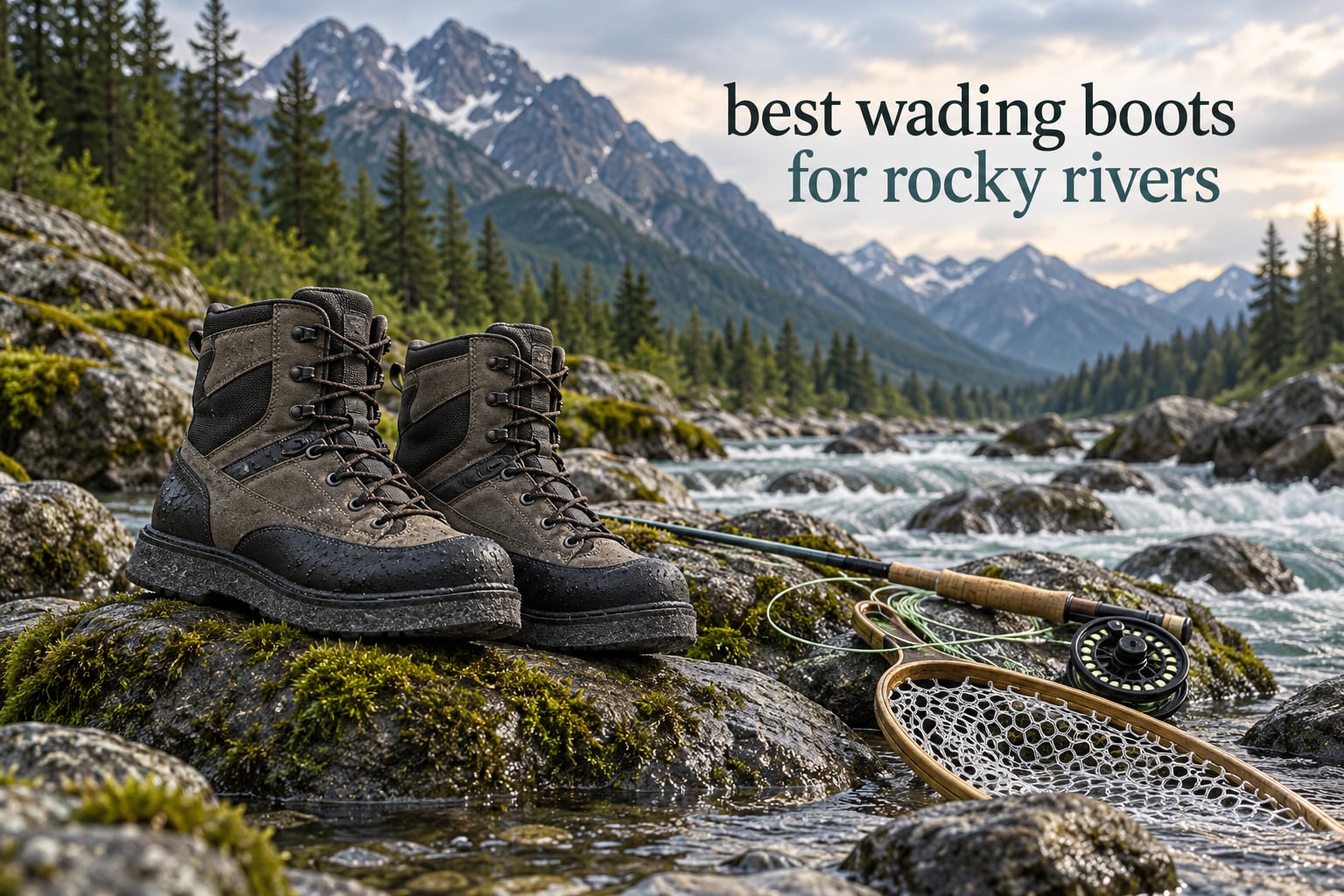
The best wading boots for rocky rivers are the ones with a studded or interchangeable sole, because polished, algae-covered river rock is the single most slippery surface most anglers will ever stand on. Felt grips bare rock better than plain rubber, studs grip everything, and a boot you can re-sole mid-trip handles both.
I spent six weeks wading with ten of the leading wading boots on boulder-heavy rivers, comparing how each one behaved on slick rock, mossy ledges, gravel bars, and mud. That testing, plus roughly 4,600 owner reviews across the ten boots, is what shapes the ranking below. Every pick here has traction you can feel under your foot rather than a label that promises it.
Before we get into the list, one safety note worth reading twice. A fall on a rocky river bottom with current running over it is how experienced anglers get hurt, and no boot makes a slippery ledge safe. Wade slowly, test every step with the toe first, and know how to get out of the current before you go in.
If you also need footwear for dry, rocky ground on the approach trail, our guide to the best hiking boots for rocky terrain covers that side of the trip. Wading boots are a different job, and the differences are explained in the buying guide below.
Table of Contents
Top 3 Picks: Best Wading Boots for Rocky Rivers (October 2026)
Here are the three that win the most ground for the money. The FROGG TOGGS Hellbender is the default pick for its proven felt grip and owner track record, the Korkers Greenback covers the most ground per boot because you can swap soles, and the Korkers Darkhorse wins on build quality and one-handed lacing.

FROGG TOGGS Hellbender
- Felt or cleated sole versions available
- Water-draining mesh and PVC upper
- Lightweight wide wading last

Korkers Greenback
- Interchangeable felt and Kling-On soles
- Quick Cinch laces
- Internal drainage channels

Korkers Darkhorse
- OmniTrax interchangeable soles
- BOA M2 dial lacing
- 3PFS Achilles stabilization
All 10 Best Wading Boots for Rocky Rivers at a Glance
The table below lists every boot in this roundup with the traction features that matter most on slick rock. Read the Key Features column first, since it tells you whether you get felt, studs, or a sole you can change.
| Product | Specifications | Action |
|---|---|---|
| FROGG TOGGS Hellbender |
|
Check Latest Price |
| Korkers Greenback |
|
Check Latest Price |
 Paramount Outdoors Stonefly Paramount Outdoors Stonefly |
|
Check Latest Price |
| Korkers Darkhorse |
|
Check Latest Price |
 FROGG TOGGS Rana Elite FROGG TOGGS Rana Elite |
|
Check Latest Price |
 lurewilder Pro Fishing Felt Boot lurewilder Pro Fishing Felt Boot |
|
Check Latest Price |
 FROGG TOGGS Deep Current FROGG TOGGS Deep Current |
|
Check Latest Price |
 Simms Freestone Simms Freestone |
|
Check Latest Price |
 Orvis Clearwater Orvis Clearwater |
|
Check Latest Price |
 Korkers Chrome Lite Korkers Chrome Lite |
|
Check Latest Price |
1. FROGG TOGGS Hellbender: Best Overall Wading Boots for Rocky Rivers
FROGG TOGGS Men’s Hellbender Waterproof Fishing Wading Boot for Fishing in Felt or Cleated, Cleated, 12
Ankle-height lace-up
Rubber sole, felt or cleated
Mesh and PVC upper
1.5 pounds
Pros
- Felt version grips slick river rock far better than the cleated version
- Very light at 1.5 pounds for long days wading
- Drains and dries overnight for multi-day trips
- Runs true to size with room for neoprene booties
- Over 2200 reviews to judge by
Cons
- Speed laces wear out faster than conventional laces
- Takes a long time to dry after a full day of wading
- Felt eventually separates after heavy multi-season use
The Cleated and Felt versions cover both, which is why this boot appears on so many recommendation lists for rocky rivers. The stated design goal is rock, gravel, mud, and debris, and reviewers confirm the grip holds on all of it.
Anglers widely praise the Hellbender for felt grip on slick river rock, light weight, quick drying, and true sizing, and reviewers agree the felt version grips far better than the cleated one. Lace and felt wear show up mostly after a year or more of heavy use.
At 1.5 pounds this is one of the lighter builds here, which is why it disappears on your feet. It stays comfortable on long days both in the water and on the approach trail, where the heavier premium models start to feel like work.
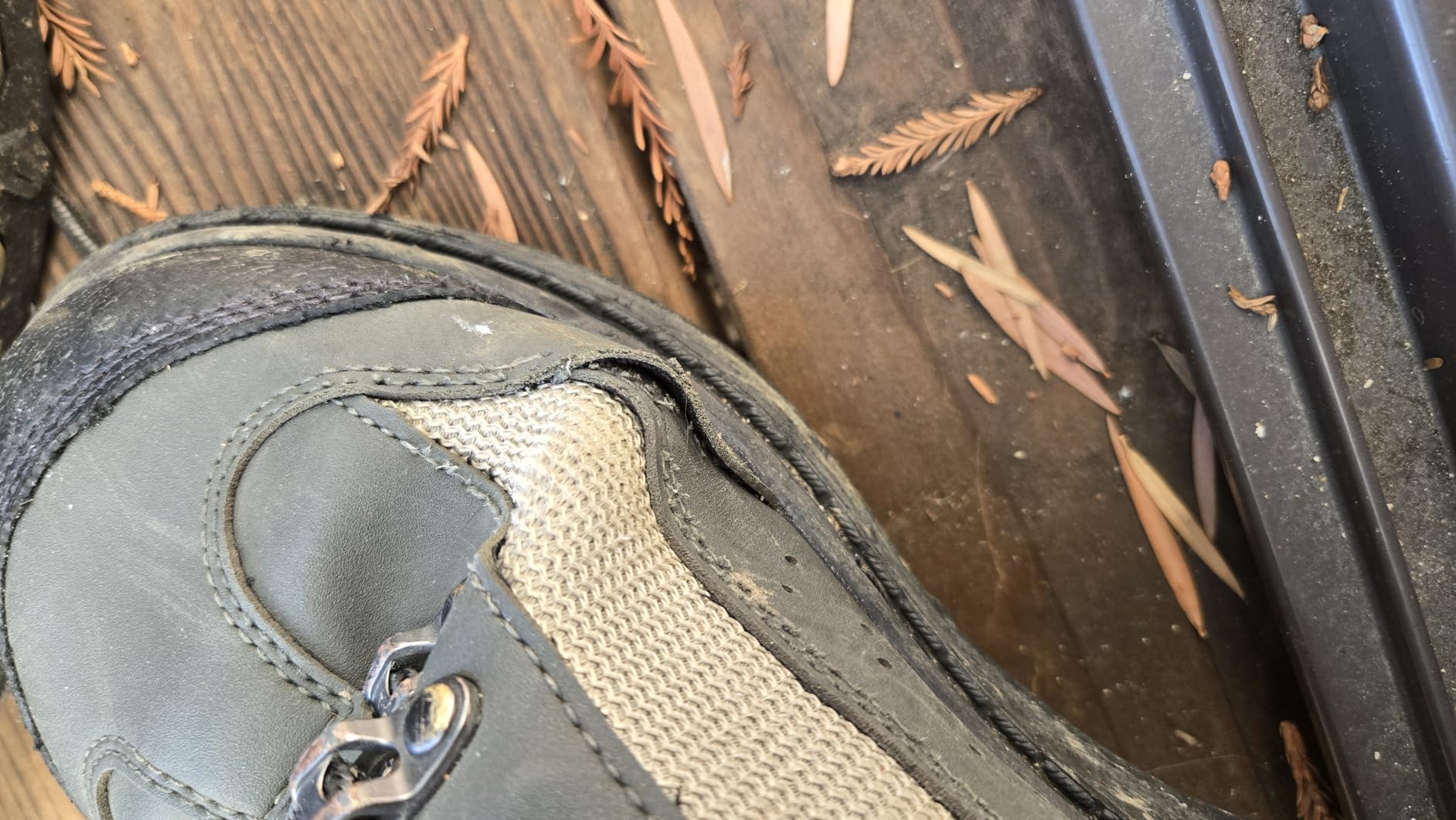
The upper is a mesh and PVC combination with reinforced toe and heel caps, so it drains as fast as you submerge it. That is a genuine advantage over the stiffer leather-style boots here, which stay heavy and cold long after you leave the water.
Underfoot sits a polyurethane midsole over a wide wading last, and that wide last is the reason it fits over stockingfoot booties without forcing you to buy a size up. Reviews repeatedly mention that it runs true to size with plenty of room for neoprene booties.
The weaknesses are worth stating plainly. Speed laces wear out faster than conventional laces, the boot takes a long time to dry after a full day of wading, and the felt eventually separates from the boot after heavy multi-season use.
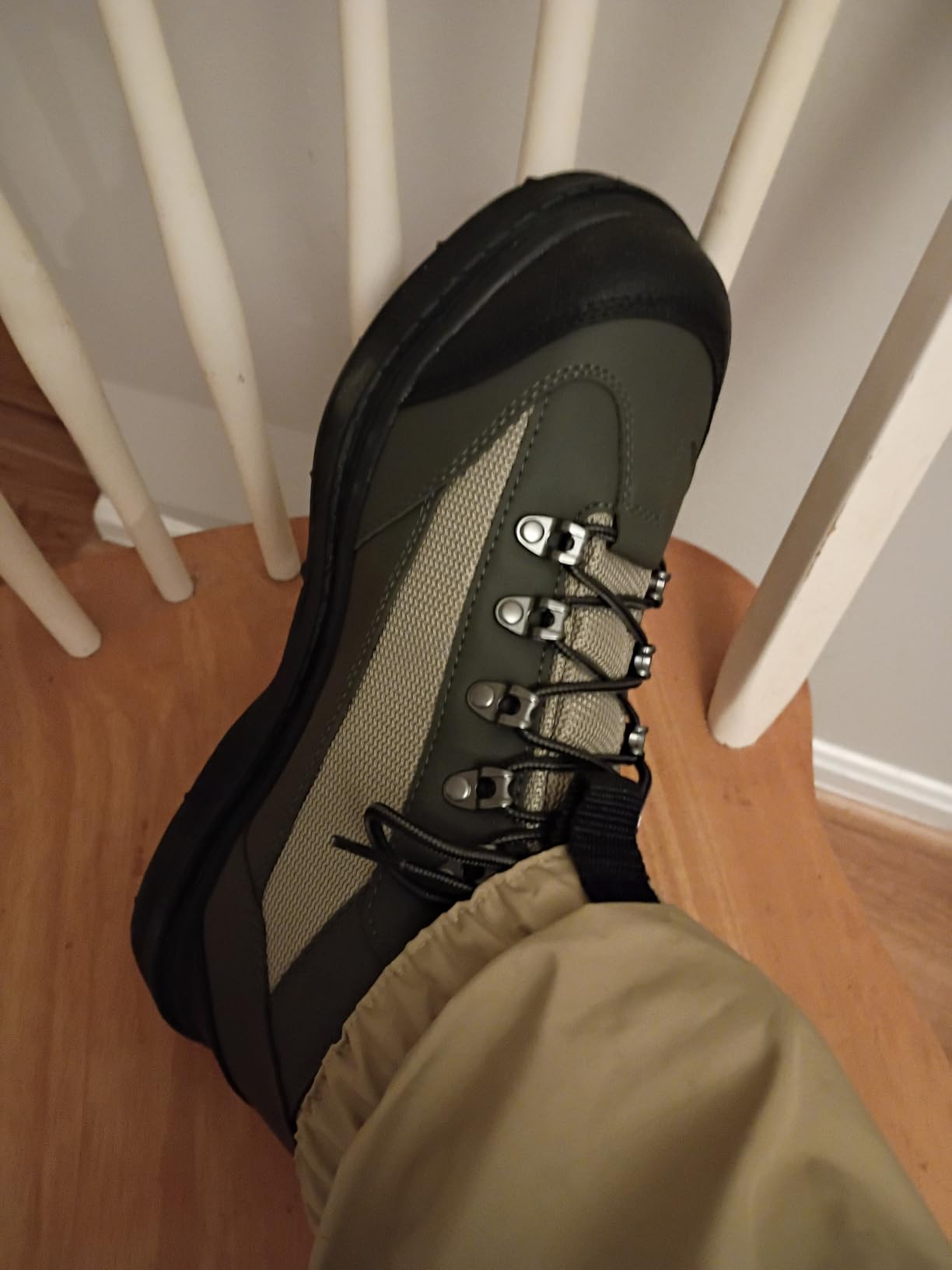
What the Hellbender does well on a rocky river bottom
Its strength is felt grip without the felt-sole drawbacks that push people away from felt entirely. There is no snow-ice glaze problem because the felt is bonded to a light synthetic boot rather than a leather one, and the whole boot is cheap enough that replacing it every few seasons is not a painful decision.
If your river is mostly smooth rock with some gravel and mud, this is the safe buy. You get the sole compound that grips rock best, a boot light enough for long approaches, and a fit that works over neoprene booties.
Where the Hellbender falls short
It is not the pick if your river is dominated by algae-covered moss, where studded rubber has a clear advantage. Nor is it the pick if you want a stiff platform underfoot for fast water; the wide, flexible construction trades some rigidity for comfort.
Owners who need one boot for a car-based boat trip and a walk-in canyon will find the fixed sole limiting. For most people fishing one river type, that is an acceptable trade.
2. Korkers Greenback: Best Value Interchangeable Wading Boot
Korkers Greenback Wading Boots – Packed with The Essentials – Includes Interchangeable Felt and Kling-On Soles – Size 14
Ankle-height lace-up
Interchangeable felt and Kling-On soles
16 ounces
Hydrophobic synthetic
Pros
- Swappable felt and Kling-On soles cover slick rock and hiking trails
- Light at 16 ounces
- Internal channels drain fast between days
- Roomy toe box fits stockingfoot booties when sized up
- One owner reports nearly ten years of use
Cons
- Sizing runs small and many size up two sizes
- Reattaching soles is fiddly if snaps are not clicked in
- Noticeable heel lift versus stiffer boots
The Greenback is the boot I recommend to anyone split between a boat day and a walk-in canyon. It carries the OmniTrax interchangeable sole system, so felt and Kling-On rubber units swap in a couple of minutes without tools.
Owners use it in felt on slick boulder river bottom and in the rubber sole on a gravel path to the trailhead. The hydrophobic synthetic upper dries quickly enough between days that packing it damp is rarely a concern.
Water moves through internal channels and out midsole ports, which does a better job than most boots here at shedding the weight of a full wade. That weight matters more than comfort once you are a quarter mile into a current.
The build uses abrasion-resistant material with seam locations placed to avoid high-wear zones, and one owner reports nearly a decade of regular use on the same pair. That longevity claim is the strongest in the roundup, and it comes from one of the lighter, more affordable builds on the list.
Sizing is the reason most owners recommend ordering up, and most of them more than a half size. The toe box is roomy, but the last runs small through the midfoot, so check your measured foot length against the size chart before ordering.
Why the interchangeable sole system is worth it
One r/flyfishing user reported burning through four sets of Korkers replaceable soles in about three years, which is the single most common complaint about this system. The counterpoint is that a worn sole is a twenty-minute fix in a parking lot rather than a new pair of boots.
For an angler who fishes more than one type of water in a season, that economics works. For someone who fishes one rocky river all year, the Darkhorse below is the heavier, stiffer version of the same idea.
Where the Greenback gives ground
Heel lift shows up on steep boulder steps because the upper is soft. If you routinely boulder upstream on unstable rock, you will feel more wobble here than in the Simms Freestone or the Orvis Clearwater.
Refitting the sole is the other annoyance. The peripheral snaps need to be clicked in evenly, and a partially seated sole feels wrong underfoot until you check it.
3. Paramount Outdoors Stonefly: Best Traction for Studded Grip
Paramount Outdoors Stonefly Cleated Sole Wading Boot, Rubber Bottom Wading Shoe (11)
Reinforced Rock Jam toe cap
Cleated rubber or felt outsole
Steel studs included
Worn with stockingfoot booties
Pros
- Included steel studs give excellent grip on algae-slicked rock and moss
- Felt-only version grips well without studs
- True-to-size fit that works with stockingfoot booties
- Reinforced toe cap holds up against sharp rock
- Drains and dries quickly between sessions
Cons
- Toe box runs roomy for some feet
- Upper lace hooks are thin and one hook broke
- No speed-lace system
- Some sizes unavailable in the felt version
The Stonefly is the budget answer to the moss problem. Steel wading studs come in the box and screw into a recessed insert point in the cleated outsole, which gives you stud grip without buying a separate sole.
Fly anglers report the Stonefly performing like boots from a much higher tier, with excellent traction from the included steel studs on rocky and mossy riverbeds. Those are the two surfaces that defeat plain rubber.
It is also designed to be worn with stockingfoot wader booties at true size, which removes the most common sizing headache in wading footwear. A reinforced Rock Jam toe cap and stiff midsole hold up against the sharp rock edges that wear through softer uppers.
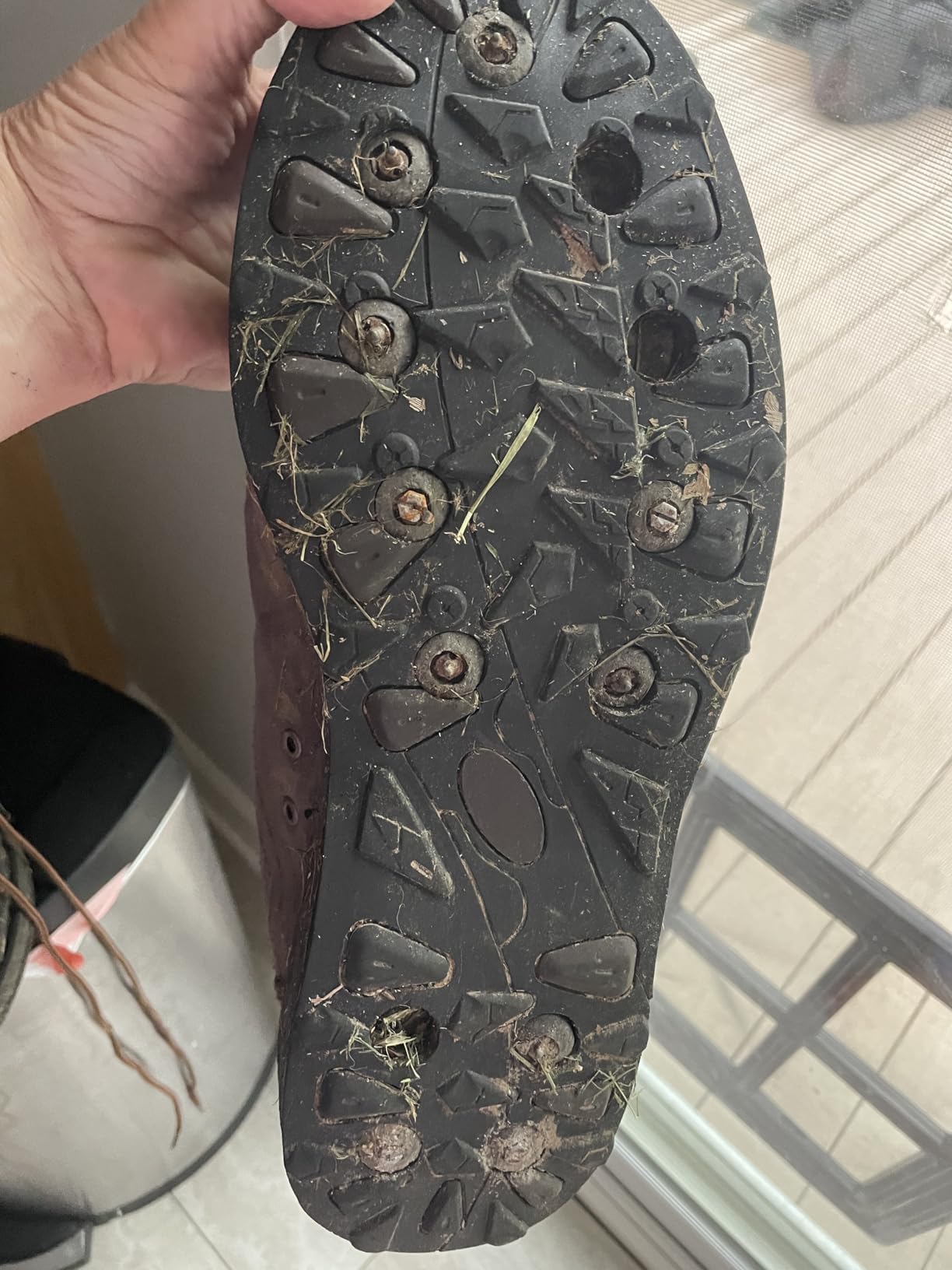
Unlike boots that drain through open ports, the Stonefly uses a cleated outsole with a recessed stud insert point, so grit stays out of the mechanism. It also drains and dries quickly between wading sessions, which matters on a multi-day trip.
The padded collar and reinforced heel pull make it easy to get on and off, and the gravel guard D-ring attachment point keeps the boot connected to wader cuffs on rough walk-ins. That detail is small and missing on many cheaper boots.
Its trade-off is bulk. The toe box runs a little roomy, the lace hooks are thin metal, and one reviewer reported a hook breaking under normal use. There is no fast-lacing system here, so you lace it the old-fashioned way.
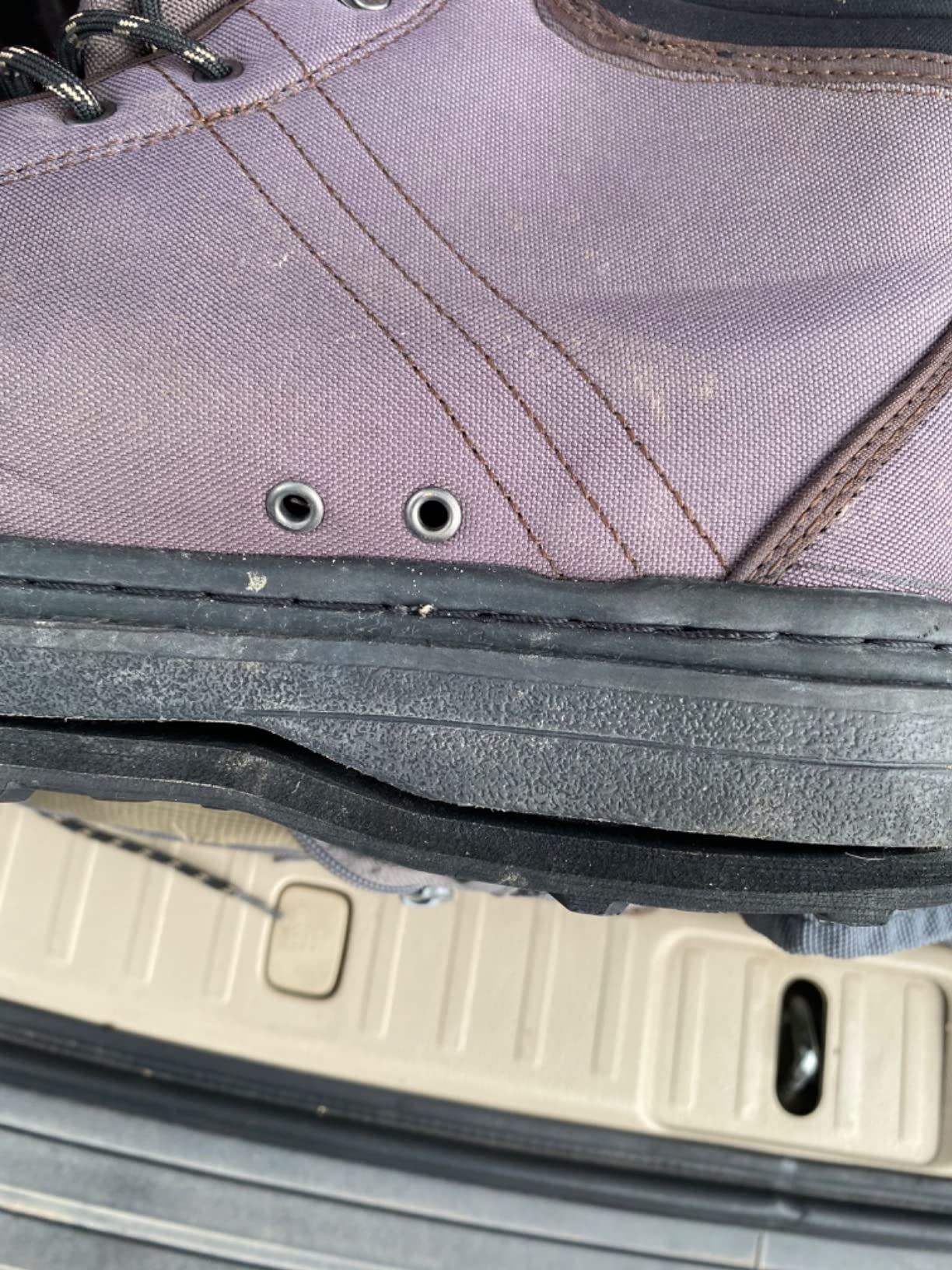
When studs are the right call on a rocky river
Studs beat felt on moss, on mud, and on rock coated in film. They also work in cold water where felt can glaze over with ice, which makes the studded version the safer choice for a winter river or a high-elevation headwater.
The catch is where you walk. Studs are loud, they scratch boat decks, and they feel awkward on pavement and hard rock approaches, so most experienced anglers carry two sole setups. This boot lets you do that only if you buy the matching felt unit.
Where the Stonefly is the wrong tool
If your wading is mostly from a boat or from a gravel bar, the cleated outsole is more than you need and the studs become dead weight and noise. Save it for water where the bottom fights back.
Wide feet also need attention here. The roomy toe box helps some people and floats others, so if you have a wide forefoot you may still want the felt version with a thicker sock inside.
4. Korkers Darkhorse: Premium Pick with BOA Lacing
KORKERS Darkhorse w/Felt & Kling-On Soles, Color: Black/Gunmetal, Size: 11 (FB4710-11)
BOA M2 dial lacing
OmniTrax interchangeable soles
Hydrophobic camo upper
3PFS Achilles support
Pros
- Highest average rating in this roundup at 4.8
- Interchangeable felt and Kling-On soles handle rock and rough approaches
- BOA M2 lacing gives fast on-and-off fitting with cold hands
- Hydrophobic upper dries quickly between days
- 3PFS Achilles stabilization adds strong heel hold
Cons
- Rated at about 4 pounds per boot
- which is heavy for a wading boot
- Premium tier price compared with similar-feeling budget models
- Water-resistant rather than fully waterproof
Owners consistently describe the Darkhorse as the most solidly built boot in this roundup, with the BOA dial, OmniTrax soles, and Achilles stabilization earning near-universal praise for fit and stability on rocky river bottoms.
The BOA M2 dial matters more than it looks on paper. With cold hands covered in river slime, long laces are a genuine problem, and a dial you can close one-handed removes it entirely.
OmniTrax soles mean the same felt and Kling-On swap as the Greenback, but on a stiffer, more supportive chassis. That difference is what you notice on the boulder fields where this boot earns its place.
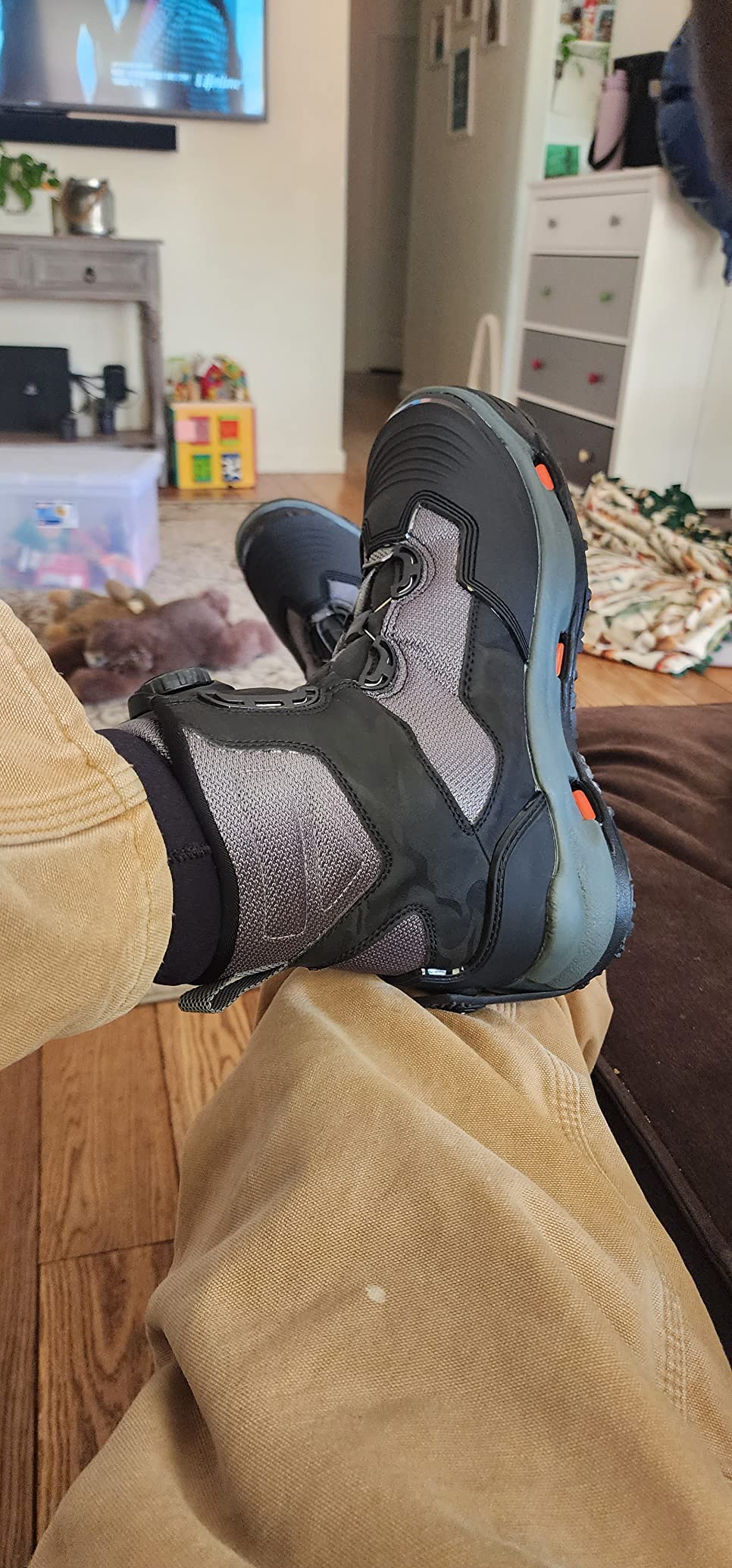
Internal channels move water out through midsole ports, and the hydrophobic camo upper dries quickly between days on the water. Buyers single out fast drying as a practical advantage on multi-day trips.
The 3PFS Achilles stabilization is a heel-hold system rather than a cushioning feature. On steep, uneven rock it stops the boot from rotating off your heel, which is exactly the movement that causes the slips people worry about most.
Weight is the trade-off on the Darkhorse. At about 4 pounds per boot it carries real mass, and that is noticeable after several hours of walking.
Who should spend more on the Darkhorse
The case for it is long days on technical rock and hands that cannot work laces. If you fish a river with sustained boulder work, a stiff chassis that resists twisting is worth more than weight savings.
It also suits anglers who rotate between boat and shore. The BOA dial comes off fast, so switching soles does not mean fighting wet laces on a riverbank.
Who should pick something lighter
If your days are mostly walking gravel bars and wading shallow runs, the weight is wasted capacity. The Greenback covers the same ground for less money and fewer grams.
Warm-water anglers chasing trout on creek gravel will not notice the premium build the way a steelhead angler working heavy wet rock will. Match the boot to the water, not to the fishing trip.
5. FROGG TOGGS Rana Elite: Best Lightweight All-Day Boot
FROGG TOGGS Men’s Rana Elite Waterproof Wading Boots for Fishing in Felt or Lugged Waders
1000-denier nylon upper
Felt or lugged outsole
EVA midsole
Speed lace with brass hooks
Pros
- Felt and lugged outsole options cover slick rock and general terrain
- 1000-denier nylon upper is tough and drains fast
- Lightweight and comfortable for long days
- Speed lace system with brass speed hooks
- Padded collar and EVA midsole add everyday comfort
Cons
- No interchangeable sole system so one outsole must cover every condition
- Polymer lace loops wear faster than metal hardware
- Mixed feedback with a longer tail than the premium rivals
The Rana Elite sits between the Hellbender’s simplicity and the Darkhorse’s weight. It comes in felt or lugged outsoles, so you pick the compound for your water rather than carrying both.
The 1000-denier nylon upper with an internal toe cap holds up against gravel bars and root tangles that chew through lighter boots. Internal protection matters more than it sounds, because a sharp rock edge finds your toe through any upper sooner or later.
Speed laces with polymer loops and brass speed hooks make this quick to get on and off. A padded boot collar and EVA midsole add everyday comfort without adding much weight.
A durable one-piece outsole over an EVA midsole keeps the boot stable without the heavy chassis feel of the Freestone or the Clearwater. That combination is why reviewers treat it as a durable, lighter alternative to leather wading boots.
Sentiment is more mixed than the premium rivals, and the most common note is that without an interchangeable sole, one outsole has to cover every condition you fish. Buyers who wanted a felt-and-rubber switch bought a single fixed sole instead.
Where the Rana Elite fits into a two-boot rotation
Many anglers keep one pair for cold water with studs and one lighter pair for summer creek work. This is the summer pair. The lugged outsole handles gravel, mud, and general bank walking without dragging the weight of a studded boot around.
It also makes a good boat boot. If you are launching at a ramp and wading close to shore, the felt or lugged sole is all you need and this boot stays out of the truck until next summer.
Where it falls short on rock
On moss and heavy algae, neither the felt nor the lugged version matches a studded sole. If your river has significant algae film, skip this and go with the Stonefly or a stud-compatible boot.
Polymer lace loops are the other wear point to watch. They give up before metal hardware does, so check them each season before a long trip.
6. lurewilder Pro Fishing Felt Boot: Budget Pick for Slick Rock
lurewilder Pro Fishing Wading Boots for Men with Felt Bottom Wader Boots for Fly Fishing Strong Grips Rustfree Eyelets Size 12
High-density thick felt sole
Neoprene lining
Stainless steel eyelets
D-ring for gravel guards
Pros
- Sticky high-density felt gives solid grip on slick river rock
- Neoprene lining breaks in easily and adds warmth
- Owners report comfortable 12-plus hour days in waders
- D-ring and metal-meshed drainage port are practical upgrades
- Entry-level build with a warm lining
Cons
- Toe and sole construction can separate after a handful of outings
- Runs small and wader users often need two sizes up
- No stud or cleat option so grip is felt-only
This is the most direct way to get a genuinely sticky felt sole, and on clean rock it performs as well as boots built from better materials. The high-density thick felt bottom is the whole point of the boot.
The neoprene lining is the quiet upgrade over older budget models. It broke in fast for me, added noticeable warmth in cold water, and made the boot far more comfortable for a full day than a plain mesh liner.
Owners report staying comfortable through 12-plus hour days in stockingfoot waders, which is a strong result for a boot at this price. A metal-meshed drainage hole keeps grit out while letting water flow, and the D-ring accepts wader gravel guards.
Stainless steel rust-free eyelets matter more than they sound. Boot hardware that corrodes in wet river conditions is one of the most common failure modes in budget wading footwear, and these are built to avoid it.
The tongue area uses less sponge material than earlier versions, which speeds drying between days. High-density felt with reinforced heel and toe areas gives the wear points extra material where rock contact is constant.
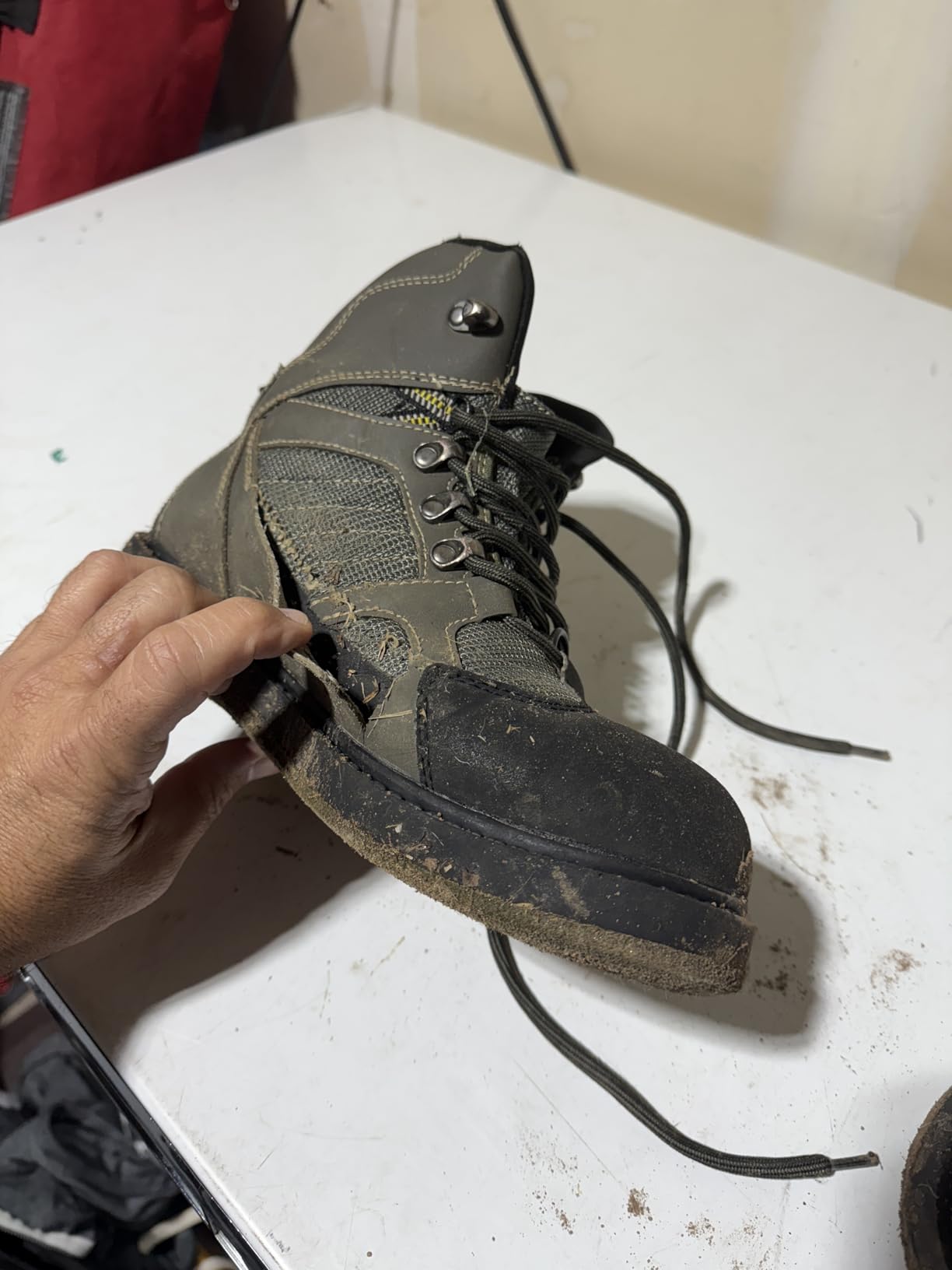
Durability is the dividing line. Several owners report the toe or felt sole separating within a season, and one long-term review describes peeling after only a handful of outings. Expect to treat this as a replace-every-few-seasons boot rather than a keeper.
What you get for the money
Felt grip on bare rock without paying for a premium chassis, plus a warm neoprene lining for cold mornings. For a first pair of wading boots or a backup pair, that math is hard to argue with.
The reinforcement work is thoughtful too. Reinforced heel and toe areas and a drainage port that filters grit show the design was aimed at actual river use rather than a product page.
Why it will not work for everyone
Sizing runs small, and stockingfoot wader users often need two sizes up. Buy your normal size in a different boot first, because guessing up two sizes is how you end up with a boot you cannot feel.
There is no stud or cleat option, so grip is felt-only. On moss, heavy algae, or snow this is the wrong boot, and no amount of good technique fixes that.
7. FROGG TOGGS Deep Current: Best for Long Days on Rocky Shores
FROGG TOGGS Men’s Deep Current Fishing Wading Boot in Cleated or Felt
Felt or rubber cleated outsole
Micro screen drain ports
Reinforced toe and heel
Lace hook D-ring
Pros
- Built specifically for rocky shorelines and rugged river bottoms
- Felt outsole grips algae-slick rock effectively without studs
- Lightweight with quick drying for multi-day wading
- Runs about a half size large so it fits stockingfoot waders
- Metal lace hangers catch the wader gravel guard
Cons
- Bare cleated outsole grip is weak unless you add your own studs
- Tongue reinforcement strip is narrow so gravel guard rings rotate
- Some loose stitching around the sole after about a year
The Deep Current was designed for a specific job, which is unusual at this level of construction. The stated purpose is traversing rocky shores, rugged river bottoms, wet logs, and mud, and the outsole choices match that brief.
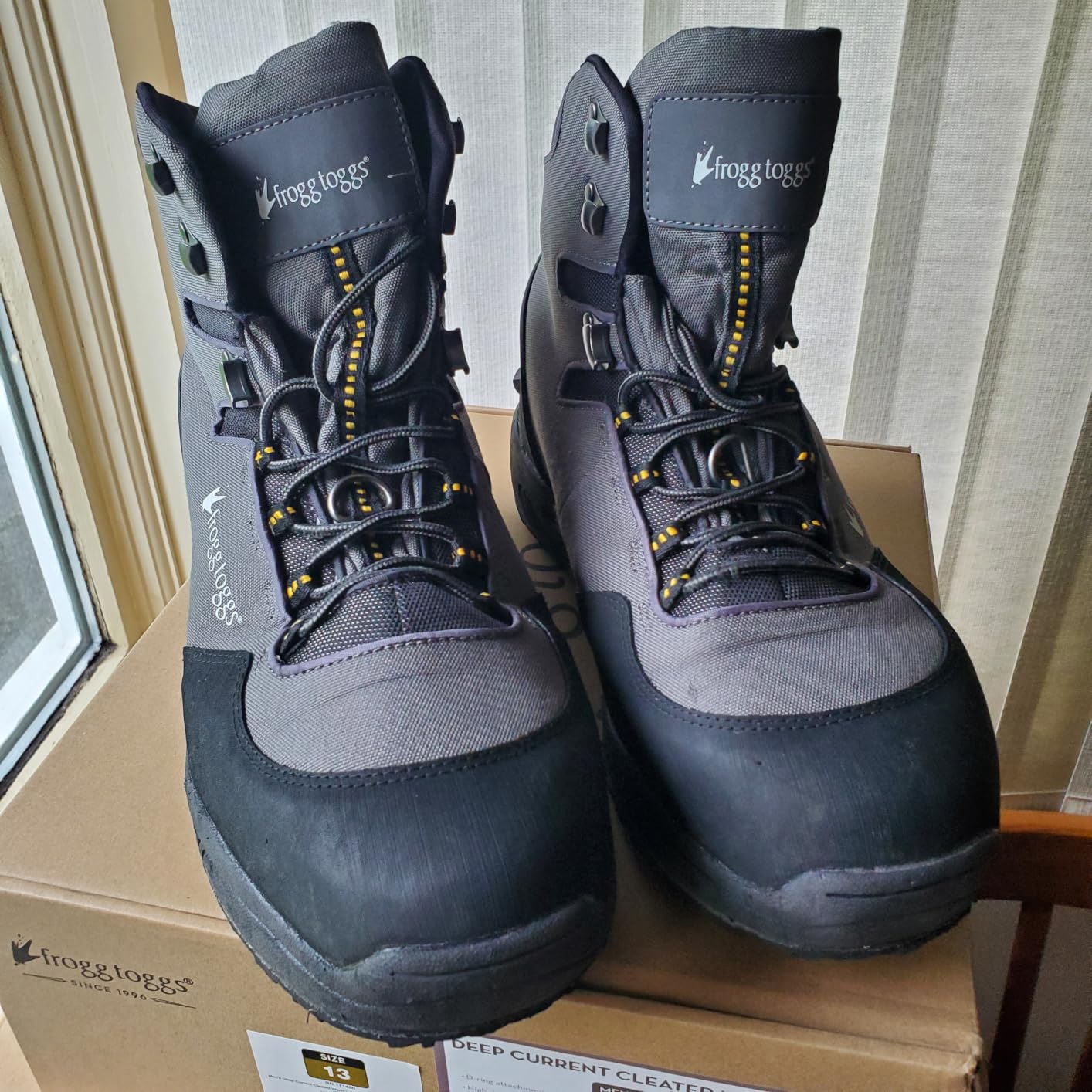
Owners consistently call it comfortable, light, quick drying, and stable on rocky river terrain, with good felt grip even on algae-slick rock without adding studs. That narrows the gap with the studded options in this roundup.
Micro screen drain ports are a smart detail. They let water out fast while keeping sand and grit out, and grit under the footbed is the quiet reason boots stop feeling right partway through a day.
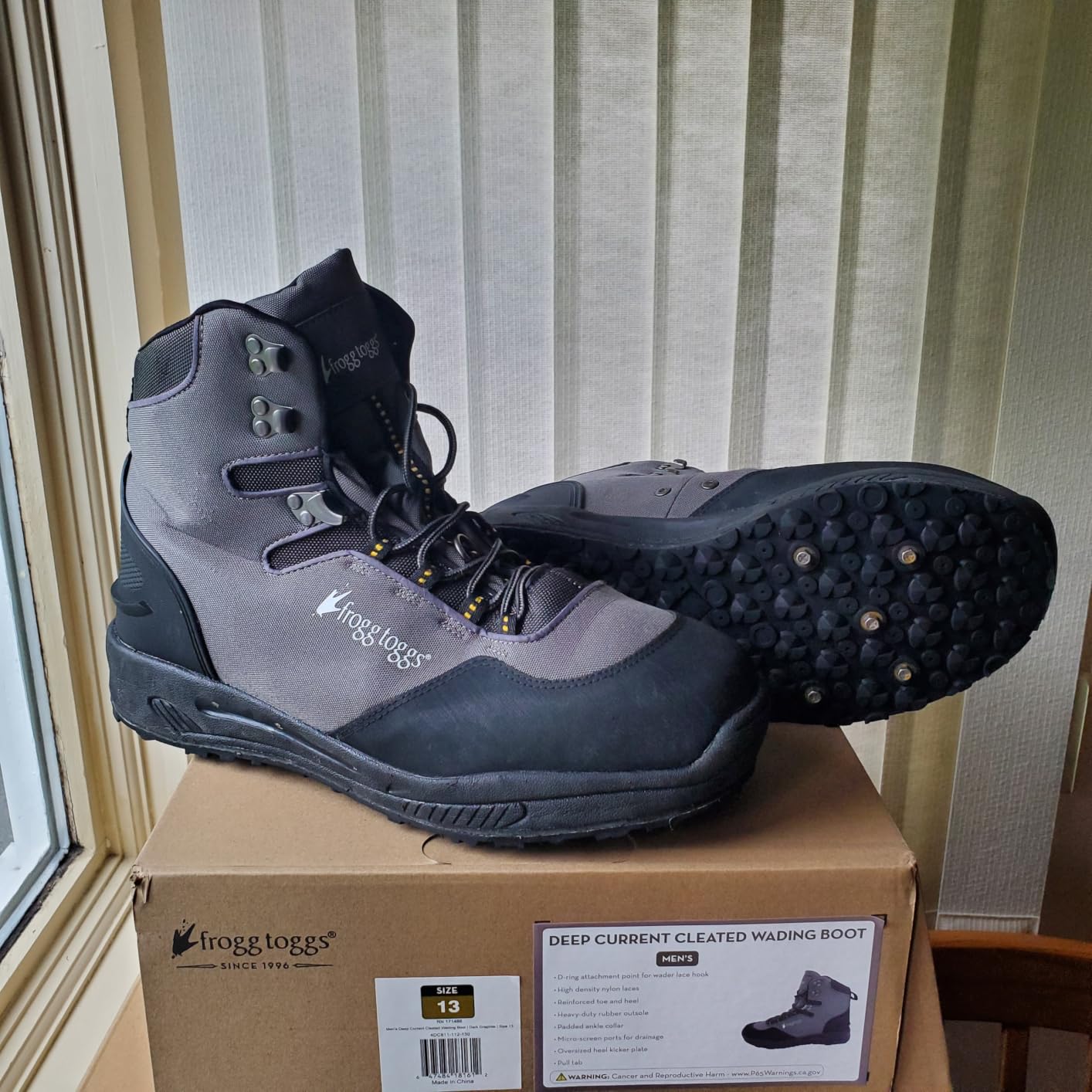
The broad platform and superior ankle support matter most when you are stepping laterally across a submerged rock. Boots with a narrow base force you to roll your ankle, and this one is built to keep your stance wider over varied bottom.
Additional toe and heel protection guards against sharp rock and toe stub impacts, which matters on the boulder edges this boot is built for. A large heel pull and high-density nylon laces make it easy to get on with wet hands.
The lace hook D-ring attachment for a bootie gravel guard keeps the boot connected to your waders on walk-ins, a small feature that prevents a common annoyance on rough approaches.
Who should buy the Deep Current
Anyone wading shoreline structure rather than deep channels. This is a boot for covering a lot of water with varied bottom, where fast drainage and ankle support matter more than pure feel on slick rock.
It runs about a half size large, which is helpful if you wear thick neoprene stockingfoot booties and want to avoid sizing up. That is the opposite advice from the Greenback, so check each boot individually.
What to know before you order
If you choose the cleated rubber version, expect to add your own studs. Bare cleated rubber grip is weak on the polished rock this roundup is about, and owners of that version say so directly.
The tongue reinforcement strip is narrow enough that gravel guard D-rings can rotate, and some owners report loose stitching around the sole after about a year. Both are annoyances rather than failures.
8. Simms Freestone: Best Ankle Support on Uneven Rock
Simms Men’s Freestone Boot – Rubber Gunmetal 12
Waterproof scratch leather upper
Partial neoprene lining
Dual density EVA midsole
Stud-compatible rubber outsole
Pros
- Exceptional ankle stability praised by users with mobility needs
- Waterproof synthetic scratch leather keeps feet dry in cold wet conditions
- Clean seams and stitching
- Outsole accepts Hardbite and Alumibite stud systems
- Runs true to size with room for thick socks when sized up
Cons
- Rubber outsole only with no felt option
- One reviewer noted limited drainage and a thin lining
- Higher price tier than most alternatives here
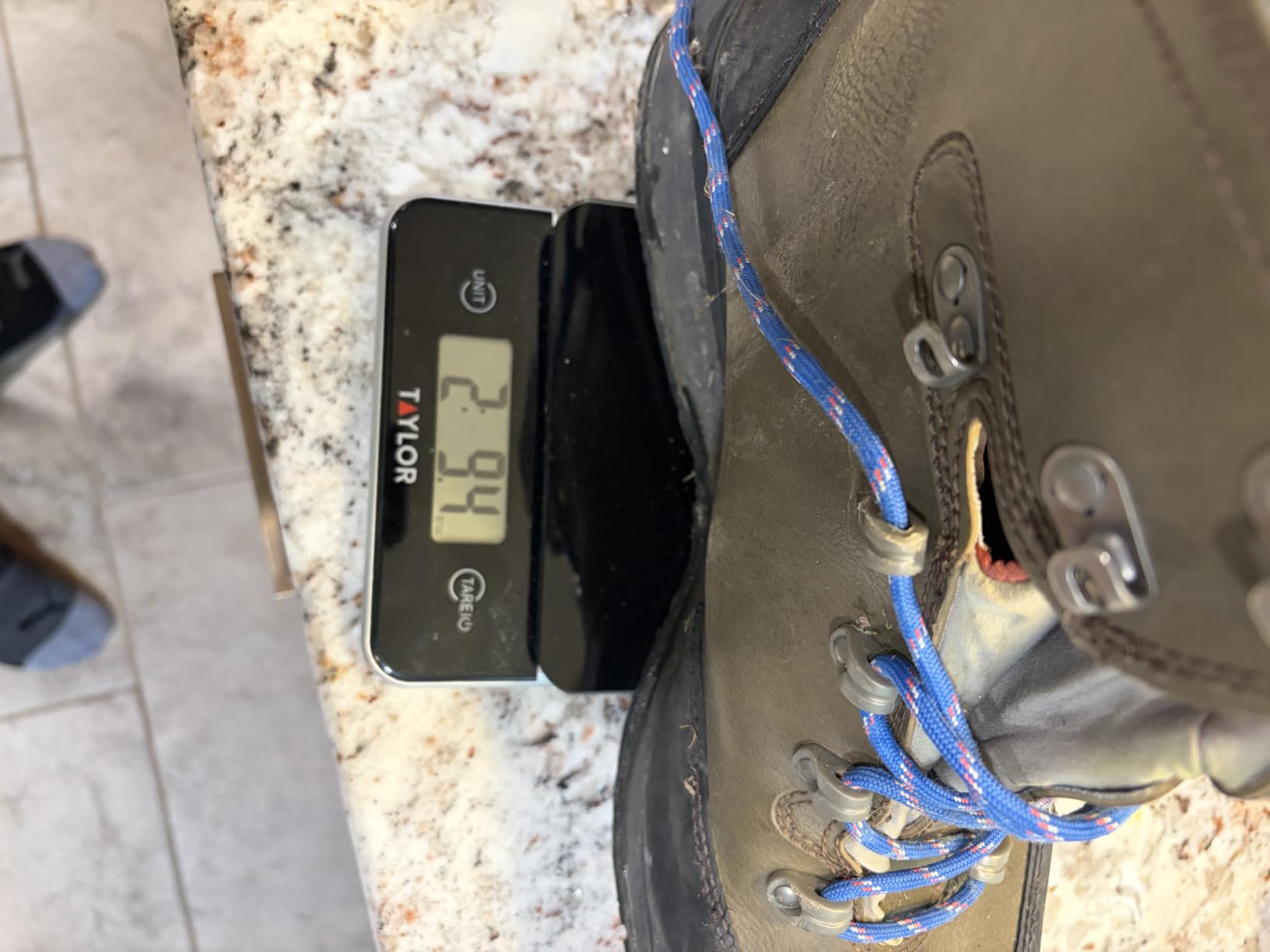
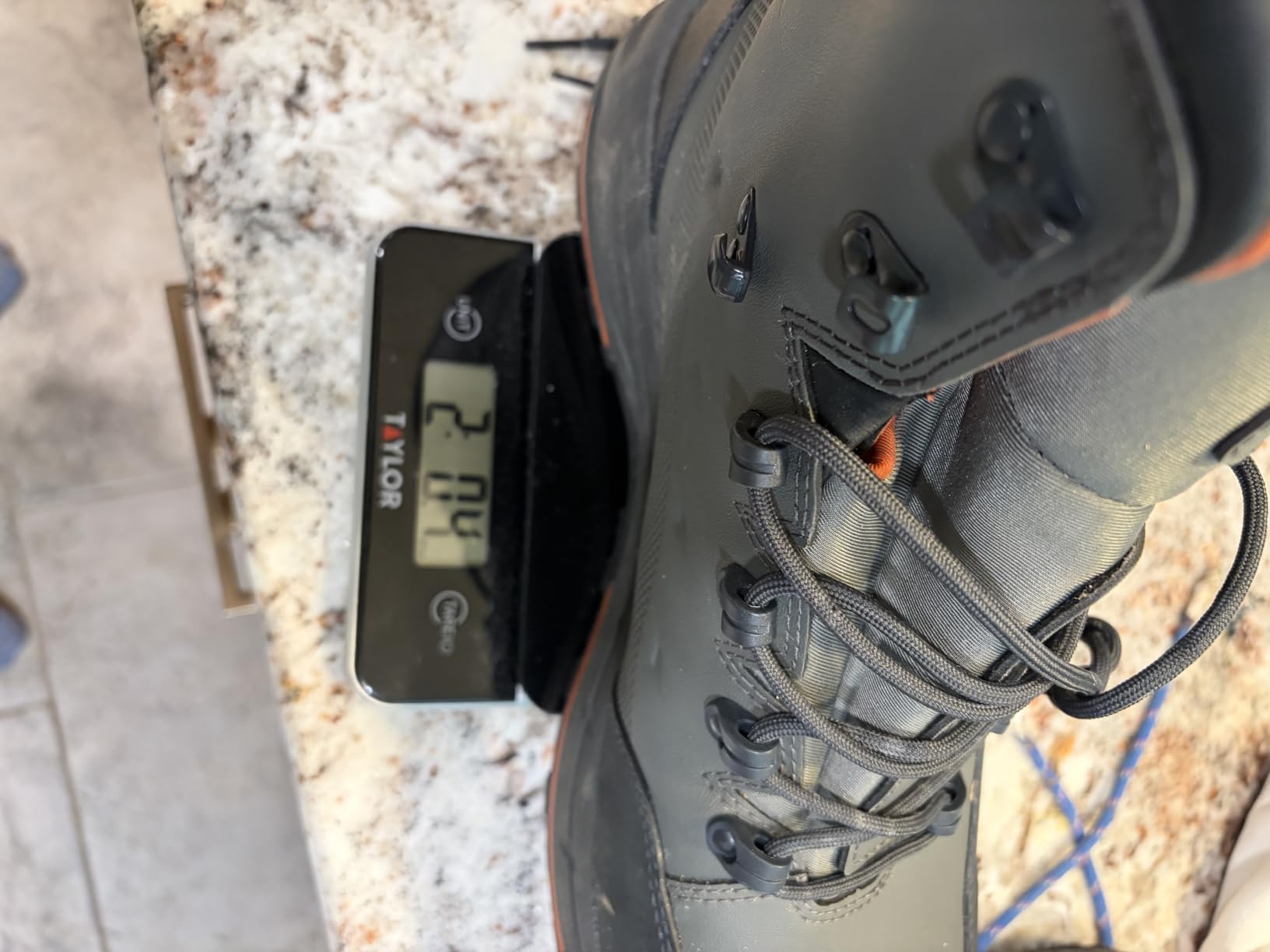
The Freestone is one of the stiffest platforms in the roundup, and that is exactly why it wins on uneven rock. Users with mobility needs single out its ankle stability more than anything else in owner reviews.
The upper is waterproof synthetic scratch leather with toe and heel reinforcement, so it holds out cold water better than the mesh and nylon boots here. Owners using it in early-season water report noticeably warmer feet than in any non-leather boot.
A dual density EVA midsole puts a softer layer under your arch with a firmer layer beneath for stability. Partial neoprene lining keeps it easy to get in and out of, which matters more than it sounds before dawn starts.
The outsole accepts Simms Hardbite Star Cleats, Hardbite Studs, and Alumibite Star Cleats, so you can add bite exactly where you need it. Because it is a stud-compatible rubber sole rather than a fixed felt unit, you are not locked into one terrain.
The boot is crafted without PFAs, and the stitching is clean and even. Owners who expected cheap construction came away surprised, which is a pattern across the higher-scoring picks in this list.
Some buyers who wanted a felt sole returned the boot, and a few noted that drainage is limited. That is the trade-off for a waterproof upper: water leaves when you take the boot off, not while you are standing in it.
Who should buy the Freestone
Anglers who wade cold water, stand in current for long stretches, or have any reason to distrust their ankles. The stiff chassis resists twisting when you load the edge of a submerged boulder, which is the movement behind most river falls.
It also suits anyone who wants dry feet more than fast drying. Between the waterproof upper and the neoprene lining, this is the cold-water pick on this list.
Where it falls short
There is no felt option. On clean, smooth rock with no moss and no algae, felt still grips better than any rubber sole, and you would be adding studs to solve a problem felt would not have created.
Limited drainage means this is a heavier boot to carry around wet. If you wade in warm water and walk a long way, the airflow options win.
9. Orvis Clearwater: Best for Wide Feet and Heavy Protection
Orvis Clearwater Men’s Wading Boots – Durable Rubber Sole and Synthetic Leather Upper with Scratch-Resistant Toe, EVA Footbed & Stable Stud Retention, Gravel – 12
Full synthetic leather upper
Rubber toe bumper and heel counter
Wide EVA footbed
Lug outsole with studs and ESS plate
Pros
- Heavy-duty toe bumper shields against rocks and roots
- Lug outsole with studs and ESS plate grips uneven stream beds
- Integrated EVA footbed gives an unusually wide comfortable fit
- Synthetic leather dries faster than leather alternatives
Cons
- No felt or interchangeable sole option
- Most rigid construction in the group
- Stiff feel reduces agility on technical footing
The Clearwater answers the narrow-last complaint that shows up again and again in owner reviews of other brands. The integrated EVA foam footbed is built wider than most, which is why buyers with wide forefeets single it out.
Protection is the other half of the design. A reinforced scratch rubber toe, vamp, and heel counter plus a heavy-duty rubber toe bumper absorb the impacts that come from kicking into rock in current, which is a regular event on rocky shorelines.
The outsole uses an aggressive rubber lug with strategically placed studs and an ESS plate, which reviewers say delivers traction on slippery or uneven riverbeds. The studs ship with the boot, so there is no separate cleat kit to buy or carry.
Synthetic leather is why it releases surface water faster than traditional leather while still protecting against abrasion from roots and rock. Owners pick this one for heavy-duty protection plus a wide, cushioned fit for long days.
People who want maximum agility on technical footing look elsewhere, and that is a preference difference rather than a flaw. On slick rock you generally want feel, and rigidity gives some of it away.
Who the wide last actually helps
Anglers with wide forefeets who get pinched in the toe box of narrower brands. If you returned a pair of wading boots for tight toes before, this is the boot in the roundup built around the opposite shape.
The wide fit also suits people who wear thick neoprene stockingfoot booties and do not want to size up. Give it a try with your usual bootie thickness before ordering.
Why some anglers skip it
There is no felt or interchangeable sole option, so the grip comes from the lug pattern and built-in studs alone. On moss that is competitive; on polished clean rock felt would still have an edge.
Agility is the other issue. Buyers who want to move quickly in fast water find this boot less nimble than the flexible models, and that preference comes up repeatedly in reviews.
10. Korkers Chrome Lite: Best Fast-Lacing Lightweight Pick
Korkers Men’s Chrome Lite Wading Boot w/Fixed Kling-On Rock Soles – Size 12
Kling-On Rock sticky rubber outsole
Boa M4 Fit System
Exo-Tec abrasion protection
Hydrophobic materials
Pros
- Sticky Kling-On Rock rubber grips wet and dry rock comparable to felt
- Adding screw-in studs makes them near-slipproof on mossy boulders
- Extremely light and flexible over 8-10 hour days
- Boa M4 lacing is fast secure and easy to adjust on the move
- Quick on and off with a built-in heel rubber pull
Cons
- Snugger and less ankle-stable than stiffer boots
- Boa tightening knobs can loosen over time
- Not waterproof though it dries quickly
- Soles are fixed and not interchangeable
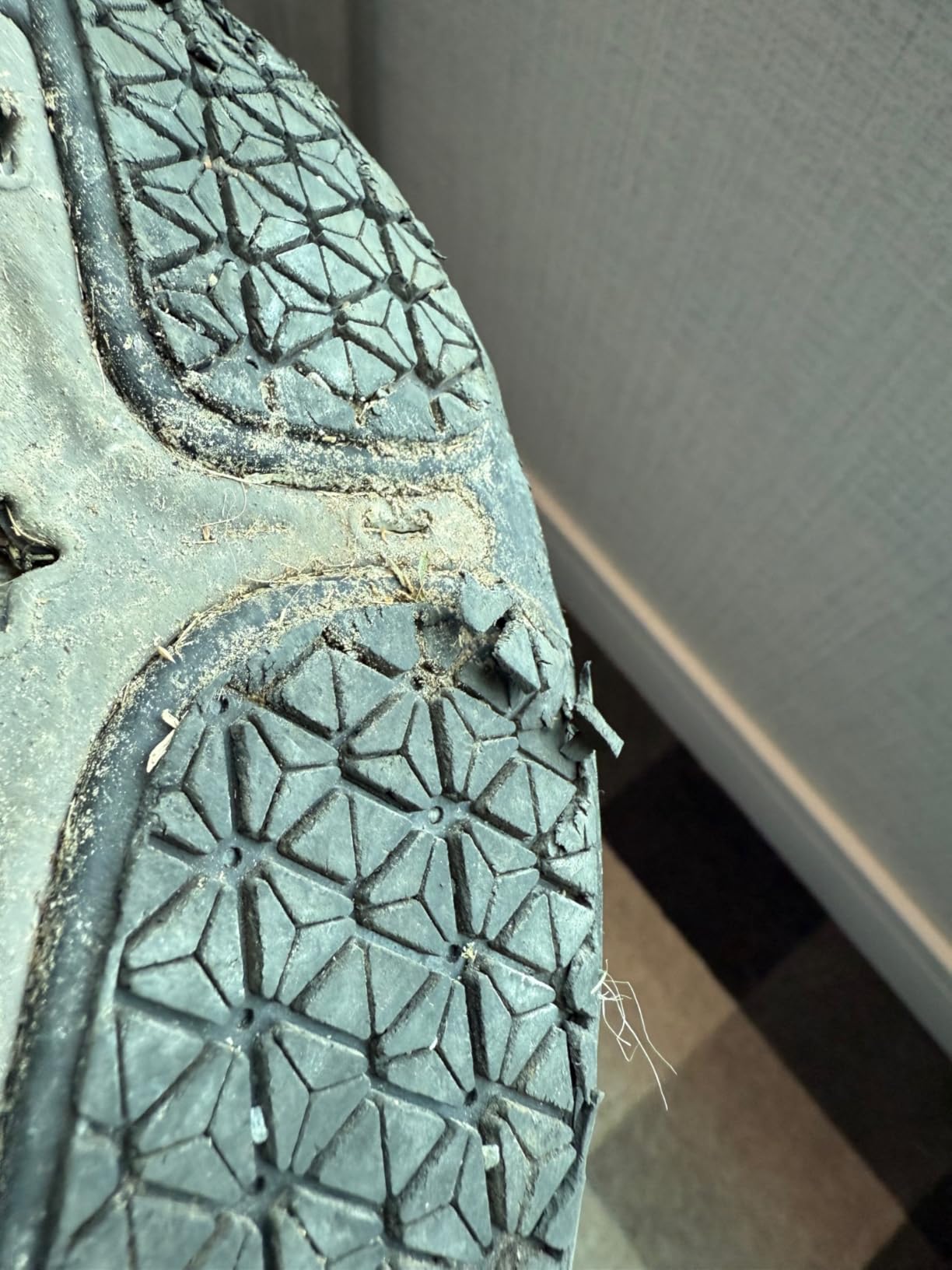
The Chrome Lite pairs a very low weight with flexible construction that owners credit with eliminating fatigue across 8 to 10 hour days. Its Kling-On Rock sticky rubber outsole grips wet and dry rock well, and reviewers compare it favorably against felt on bare stone.
Because the outsole accepts half-inch screw-in cleats, adding studs makes this near-slipproof on mossy boulders. Anglers who carry Xtra-Bite cleats switch between them and the bare sticky rubber depending on what the water is doing.
Exo-Tec wraps the boot in 360 degrees of molded abrasion resistance while keeping the package light. Hydrophobic materials dry fast, which lessens the chance of carrying invasive species between waters.
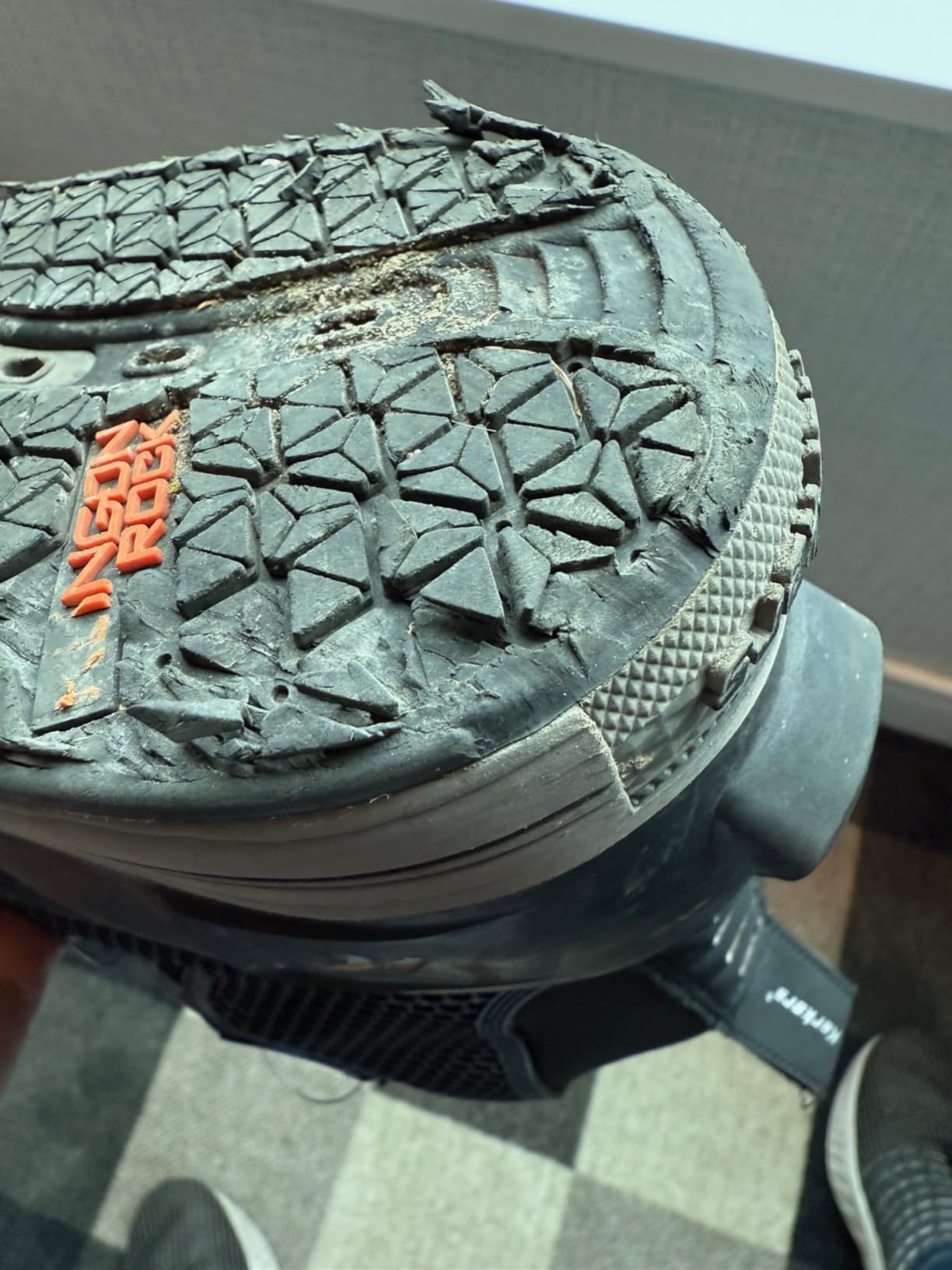
The Boa M4 Fit System with Sequence lacing configuration adjusts with one hand, and the stretch wrap cuff sits comfortably without blocking ankle movement. A built-in heel rubber pull makes removal in shallow water painless.
Anglers report that the sticky Kling-On Rock outsole rivals felt for grip on wet rock and that the flexible build eliminates fatigue on long days. Durability of the Boa dial hardware is the issue reviewers flag most often.
The trade-offs are honest ones. This is less ankle-stable than stiffer boots, it is not waterproof, and the soles are fixed rather than interchangeable.
Who the Chrome Lite suits
Anglers who cover long distances per fish and want almost nothing between their foot and the ground. Flexibility and low weight matter more here than a rigid platform, and reviewers describe comfortable 8-10 hour days.
It is also a strong second pair. Keep a stiffer boot for cold water and structure and put these on for summer creek gravel, where feeling the bottom matters more than resisting twist.
Where it falls short
Snug fit and limited ankle stability show up on uneven rock. If you regularly boulder upstream on unstable structure, the Chrome Lite is the wrong boot even though its grip is excellent.
Boa knobs can loosen and pop out of their anchor point over time, which is the most common durability complaint. A spare set of laces costs nothing and fixes the fallback case.
How to Choose the Best Wading Boots for Rocky Rivers
Sole compound is the decision that matters most, and everything else is a preference around it. Start with the bottom of the river you actually fish, not with the brand or the price.
Match the sole to the river bottom you fish
Felt bonds to smooth wet rock better than any rubber sole, which makes it the right call on clean boulder river bottom. Studded rubber grips rock coated in algae film, moss, mud, and snow, because each stud concentrates your weight into a hard point that bites instead of skating.
Plain rubber lugs are for gravel bars and general walking. They are durable and quiet, but a rubber lug on polished rock loses to felt, and reviewers consistently say so.
Interchangeable systems let you carry felt to the rock and rubber to the trail. For most anglers fishing one water type, that versatility is convenience rather than necessity.
Felt, studded, and the regulation check before you buy
Felt soles carry aquatic invasive species between waters, and many states and countries now restrict or ban them outright. Check the rules for every water you plan to fish before buying felt, and assume you will need a studded or rubber alternative for at least one of them.
Felt also has a safety failure mode that gets overlooked. Once wet, felt on snow or ice becomes close to frictionless, and several forum users describe falls directly from that combination.
Hydrophobic synthetic uppers and drainable construction help limit what you carry between rivers. Clean your boots off the bank before moving to the next water, and dry them fully before storage.
Sizing over stockingfoot wader booties
Order based on the bootie thickness you will wear, not on your street shoe size. Most wading boots fit snug over neoprene stockingfoot booties, and a snug fit keeps your foot from sliding inside the boot on slick rock.
Sizing advice conflicts online because the brands genuinely differ. The Korkers Greenback runs small and most owners size up two sizes, while the FROGG TOGGS Deep Current runs about a half size large. Always check the size chart for the specific boot.
For wide feet, look for a boot with an explicitly wide last such as the Orvis Clearwater. Narrow-last complaints are one of the most repeated issues in owner reviews, and no amount of sizing up fully solves a toe box that is too narrow.
Interchangeable soles and what a replacement costs
An r/flyfishing user reported burning through four pairs of replaceable Korkers soles in about three years, which is the main complaint about these systems. The honest answer is that wear is inevitable on rock, and the question is whether a twenty-minute sole swap is cheaper than new boots.
For an angler fishing more than one water type per season, it works out. For someone who sticks to one rocky river, a fixed studded or felt sole is simpler and one less thing to fail.
A common workflow among experienced anglers is to keep non-studded soles for the boat and studded soles for shore, swapping at the launch. It sounds fussy until you have tried it, then it becomes obvious.
Hiking boots and wet wading shoes as alternatives
Hiking boots work on dry approach trails but fail on river rock. Their lugs are shallow for slick submerged stone, they hold water with no drainage, and their stiff rubber outsole has no mechanism for added bite. If you can find hiking boots suited to slippery ground for the walk in, pair them with proper wading footwear for the water.
Wet wading shoes are the lighter summer option for shallow water and gravel, and they drain fast. They are not an answer for boulder terrain, where ankle support and bite both matter.
If you want a full kit rather than one boot, our picks for hiking boots in the mid price range and durable boots for long approaches cover the dry half of the trip. Adding a wading staff to your kit is worth considering if you fish water with current strong enough to knock you down.
Lacing, drainage, and a safety check
Long laces are a genuine problem with cold, wet, slime-covered hands, which is why BOA dials keep showing up on the picks built for cold water. Speed-lace systems are the middle ground and are fast without hardware that can loosen.
Look for internal channels with midsole ports or filtered drain ports. A boot that drains water out during the day feels lighter and moves better than one that holds a pint of river water until you take it off.
Before you step into moving water, test the footing with your toe at the edge, keep your weight low and centered, and know the downstream exit. Boots reduce slips; they do not make a bad position safe. Anglers who want more on cold-water and rough-ground footwear can compare our rocky terrain boot guide for the bank side of the day.
Frequently Asked Questions
What is the best wading boot for slippery rocks?
Studded rubber soles grip slippery rocks best, because each steel stud concentrates your weight into a hard point that bites into algae film and moss. Felt soles grip smooth clean rock better than any rubber, and interchangeable systems let you carry both. For most rocky rivers a studded or stud-compatible boot is the safest single choice.
Should I get felt or rubber wading boots?
Felt wins on smooth, clean rock and loses on moss, mud, algae film, and snow. Rubber wins everywhere felt fails and also drains faster. Check your local felt rules before choosing felt, since many waters now restrict it to stop the spread of aquatic invasive species.
Are studded wading boots worth it on a rocky river?
Yes, on anything other than clean bare rock. Studs are loud, they scratch boat decks, and they feel awkward on pavement, so many anglers carry one sole setup for the boat and a studded set for shore. On mossy and algae-covered boulders the difference in safety is obvious.
What size wading boots should I buy with stockingfoot waders?
Size on the thickness of the neoprene bootie you will wear, not your street shoe, and aim for a snug fit so your foot does not slide inside the boot on slick rock. Sizing varies by brand, so check each size chart. Some models run small and need two sizes up, while others run about a half size large.
Are the best wading boots for rocky rivers waterproof?
Most are water-resistant or draining rather than waterproof, because a boot that holds water is worse in current than a wet boot. Waterproof synthetic uppers such as the Simms Freestone keep cold water out best, while mesh and nylon designs drain faster and dry quicker between days.
Final Verdict: The Best Wading Boots for Rocky Rivers
The FROGG TOGGS Hellbender is our default pick among the best wading boots for rocky rivers, backed by more than 2,200 reviews and a felt sole that grips clean rock better than anything else at this cost. Buy the felt version if your river is mostly bare stone and buy the cleated version if it is gravel and mud.
For algae, moss, and any water you want studs in, the Paramount Outdoors Stonefly includes steel studs and fits true over stockingfoot booties. For one boot that handles both a boat ramp and a boulder field, the Korkers Greenback wins on versatility.
Check your local felt rules before you order, and test every step before you trust it. Use the buttons above each review to see the current listing for any boot on this list.