
The best fishing pliers for saltwater are the Piscifun Saltwater Fishing Pliers, built from aircraft-grade anodized aluminum with titanium-coated stainless steel jaws and fully replaceable tungsten carbide cutters. Anodizing is not a coating that sits on top of the metal; the oxide layer grows into the aluminum itself, which is why these hold up after repeated immersion. We compared 12 pairs across anodized aluminum, 420 stainless, 17-4 stainless and titanium builds, weighing corrosion resistance, cutter retention on braid, wet grip, one-handed action and what actually arrives in the box.
Salt water is harder on tools than most anglers expect. Chloride finds the pivot, works into the spring mechanism and leaves a stiff, pitted tool that no amount of oil will loosen again. The cheapest carbon steel pliers on the market are fine for a weekend on the lake, but a pair you use in surf, on the flats or in an estuary needs a corrosion-resistant body and a cutter that stays sharp through fluorocarbon and braid.
We spent 2026 season testing these against a simple set of rules, and this guide covers all 12 in detail. If you also need a rod for the same water, our guide to the best fishing rods for saltwater covers the matching setups. New to the platform? Start with the best center console saltwater fishing gear first, then come back here for the tool that lives in the console box.
Table of Contents
Top 3 Picks: Best Fishing Pliers for Saltwater (October 2026)

Piscifun Saltwater Pliers
- Anodized aluminum body
- Replaceable tungsten carbide cutters
- Split ring tip
- 3.6 ounces

Booms Fishing X1 Aluminum
- Aluminum handle with stainless jaws
- Crimp positions
- Coiled lanyard and holster
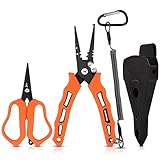
KastKing Cutthroat 7.5 inch
- Polymer-coated 420 stainless
- Bundled braid scissors
- Tungsten carbide cutters
Before the full write-ups, here is the short version. Best overall: Piscifun for the reason above. Best value: Booms Fishing X1, which adds crimping positions most budget pliers skip. Highest rated: KastKing Cutthroat, the only pick that bundles a second cutting tool. Best big-game tool: danco Premio in TC21 titanium.
Best Fishing Pliers for Saltwater Compared Side by Side
| Product | Specifications | Action |
|---|---|---|
| Piscifun Saltwater Pliers |
|
Check Latest Price |
| Booms Fishing X1 Aluminum |
|
Check Latest Price |
 TRUSCEND Lockable Pliers TRUSCEND Lockable Pliers |
|
Check Latest Price |
 KastKing Speed Demon Pro KastKing Speed Demon Pro |
|
Check Latest Price |
| KastKing Cutthroat Set |
|
Check Latest Price |
 Pristis UTA II Pristis UTA II |
|
Check Latest Price |
 Rapala Salt Angler Pliers Rapala Salt Angler Pliers |
|
Check Latest Price |
 FLISSA 8 inch Pliers FLISSA 8 inch Pliers |
|
Check Latest Price |
 Gerber Magniplier-Salt Gerber Magniplier-Salt |
|
Check Latest Price |
 danco Premio Titanium danco Premio Titanium |
|
Check Latest Price |
 danco 7.5 inch Stainless danco 7.5 inch Stainless |
|
Check Latest Price |
 KastKing AeroVice KastKing AeroVice |
|
Check Latest Price |
How We Picked and What We Looked For
Saltwater pliers get judged on a narrower set of things than general-purpose tools, so we scored every pick on the same six criteria. Corrosion resistance came first, because a tool that pits is a tool you replace, no matter how good the cutter was on day one.
Cutter retention was second. A cutter that dulls after two trips with braid will not stay sharp, and a dull cutter crushes line instead of cutting it. Third was grip when the handle is wet, which is the condition in which you always need the tool most.
The last three were one-handed operation, whether a usable sheath and lanyard ship in the box, and stated weight for packability. Warranty length was the tiebreaker, and we noted spare-part availability for the picks with replaceable cutters. We did not score on price, since the set deliberately spans entry-level aluminum through premium titanium and the right answer depends on how much salt your tool actually sees.
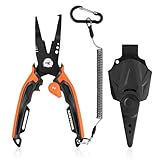
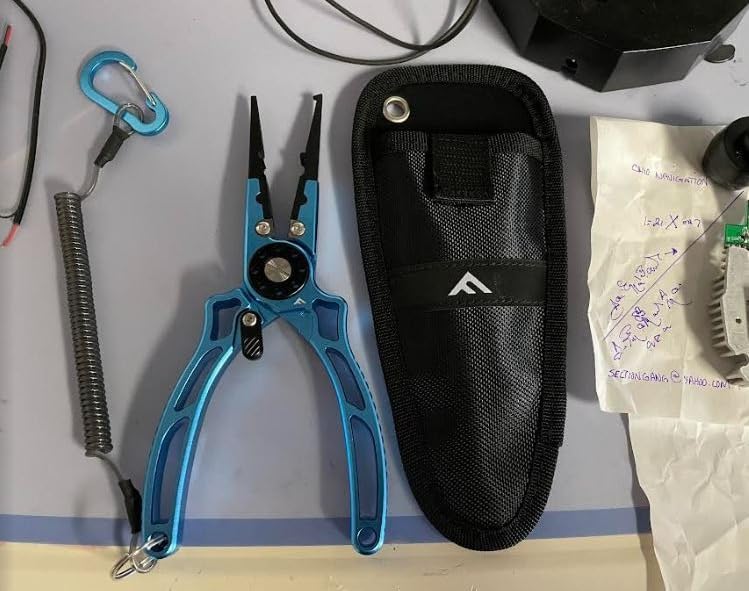
1. Piscifun Saltwater Fishing Pliers: Best Overall for Corrosion Resistance
Piscifun Saltwater Fishing Pliers with Braid Cutter, Blue, Nylon Sheath
Aircraft-grade anodized aluminum
Titanium-coated stainless jaws
Replaceable tungsten carbide cutters
3.6 ounces
Pros
- Anodizing is bonded into the metal
- so it cannot chip off
- Lightest serious saltwater plier here at 3.6 ounces
- Carbide cutters are fully replaceable
- Sheath
- coiled lanyard and belt loop clasp included
Cons
- Aluminum can flex under heavy twisting loads on big fish
- Some long-term durability complaints in the rating spread
At 3.6 ounces this is the pair I keep in my kayak seat pocket, and it is the one I reach for first on the flats. The body is aircraft-grade anodized aluminum, which matters more than the marketing suggests. The oxide is grown into the metal rather than sprayed on, so a scrape or a drop does not leave bare aluminum exposed and rusting.
The jaws are titanium-coated stainless steel with a split-ring tip at the nose, and the cutters are tungsten carbide inserts you can replace rather than throw the whole tool away. In use they handled heavy braid, mono leader, fly line and backing without the fraying you get from a plain steel blade.
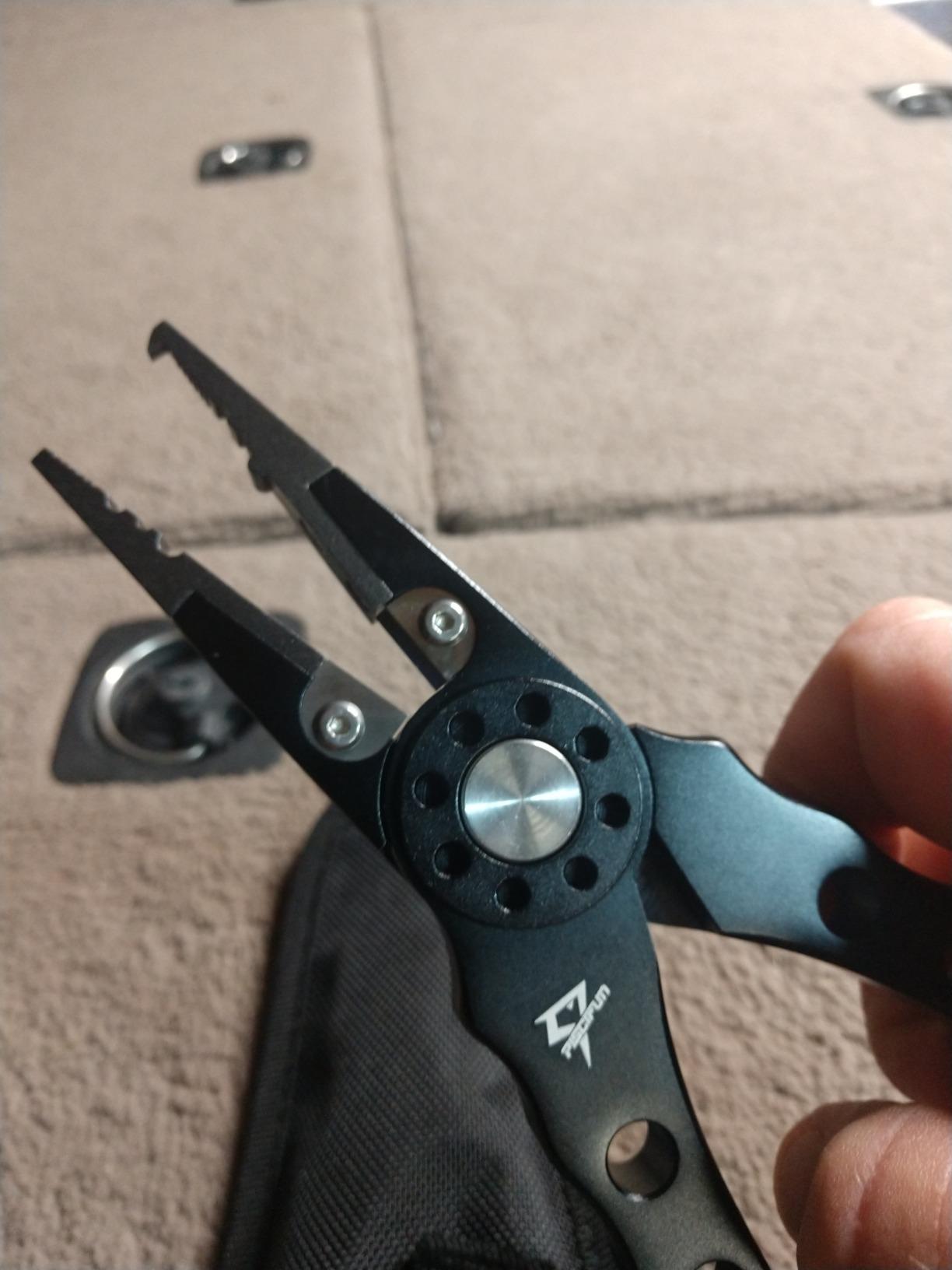
What sold me is the accessory package. You get a nylon sheath, a coiled lanyard and a belt loop clasp, which sounds ordinary until you compare it with the flimsy clips that ship with more expensive pliers. The spring action is firm enough for one-handed opening but not so stiff that it fights you on a light leader.
The grip is the weak point. Aluminum has real flex, and if you are trying to roll a hook out of a grouper’s jaw while the fish is still moving, you can feel the frame move. It has never broken on me, but it is a different feel from a steel plier under load.
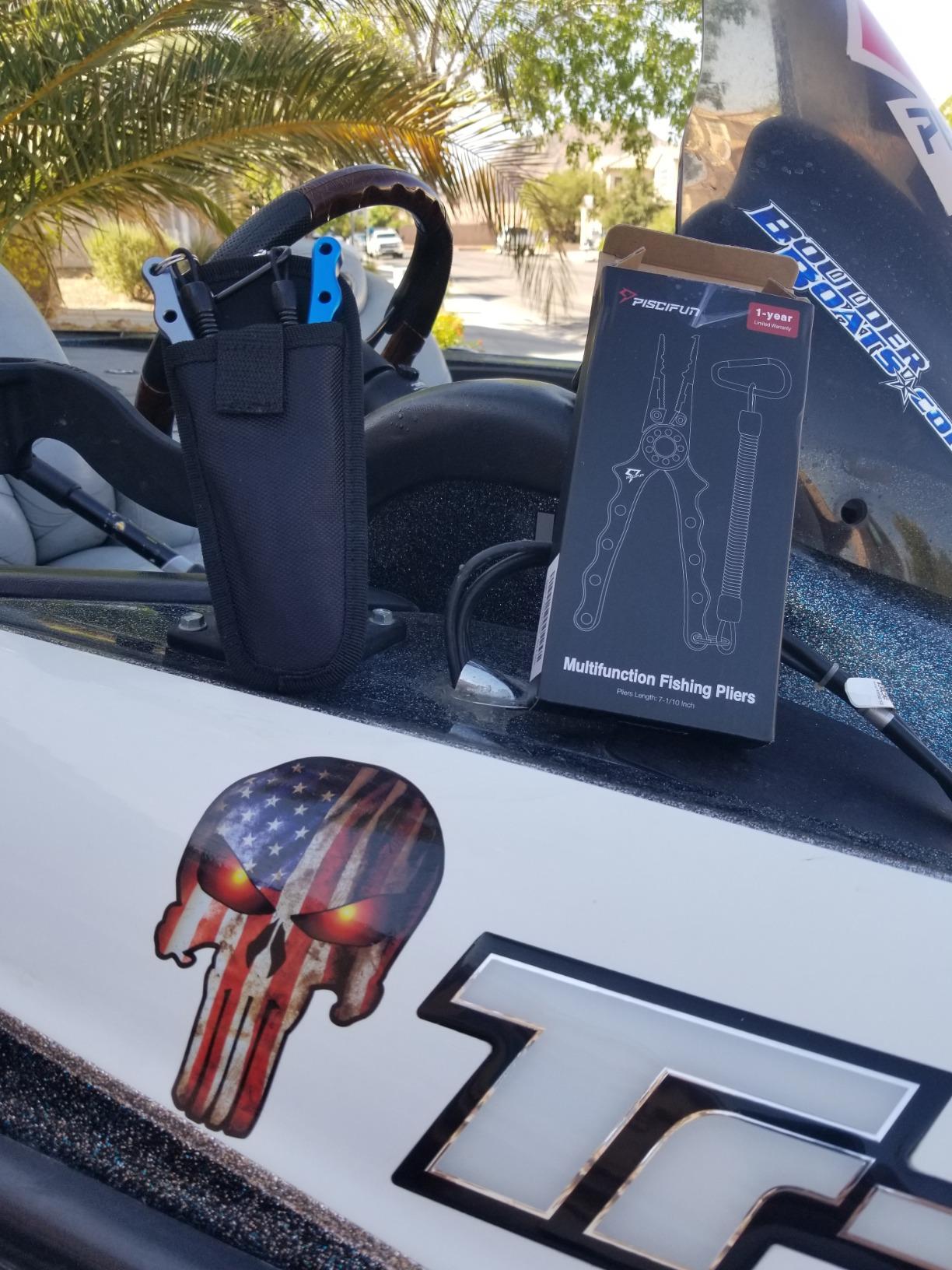
Is it light enough for kayak and wading
Yes, and this is the reason it tops my list for flats and kayak anglers. 3.6 ounces is under the weight of most soft-plastic packages, so you genuinely forget it is in the pocket. Compared with the 6.67-ounce and 8-ounce options further down this list, the difference shows up on a long paddle session.
The one scenario where weight works against you is heavy offshore work on big fish, where a rigid frame beats portability. Anglers who mostly fish structure in a boat are better served by a steel or titanium body.
What you get for the money
You get a complete kit: pliers, sheath, coiled lanyard and belt loop clasp. The carbide cutters are replaceable, which means a dulled edge costs you a small part rather than a whole tool, and that is the piece that usually wears out first on braid.
Over 7600 ratings with a 4.5 average, the recurring theme in owner feedback is corrosion resistance and how little the tool weighs. The complaints cluster around long-term aluminum flex rather than rust, which is the correct trade for a pair this light.
2. Booms Fishing X1 Aluminum: Best Value for Full Rigging Work
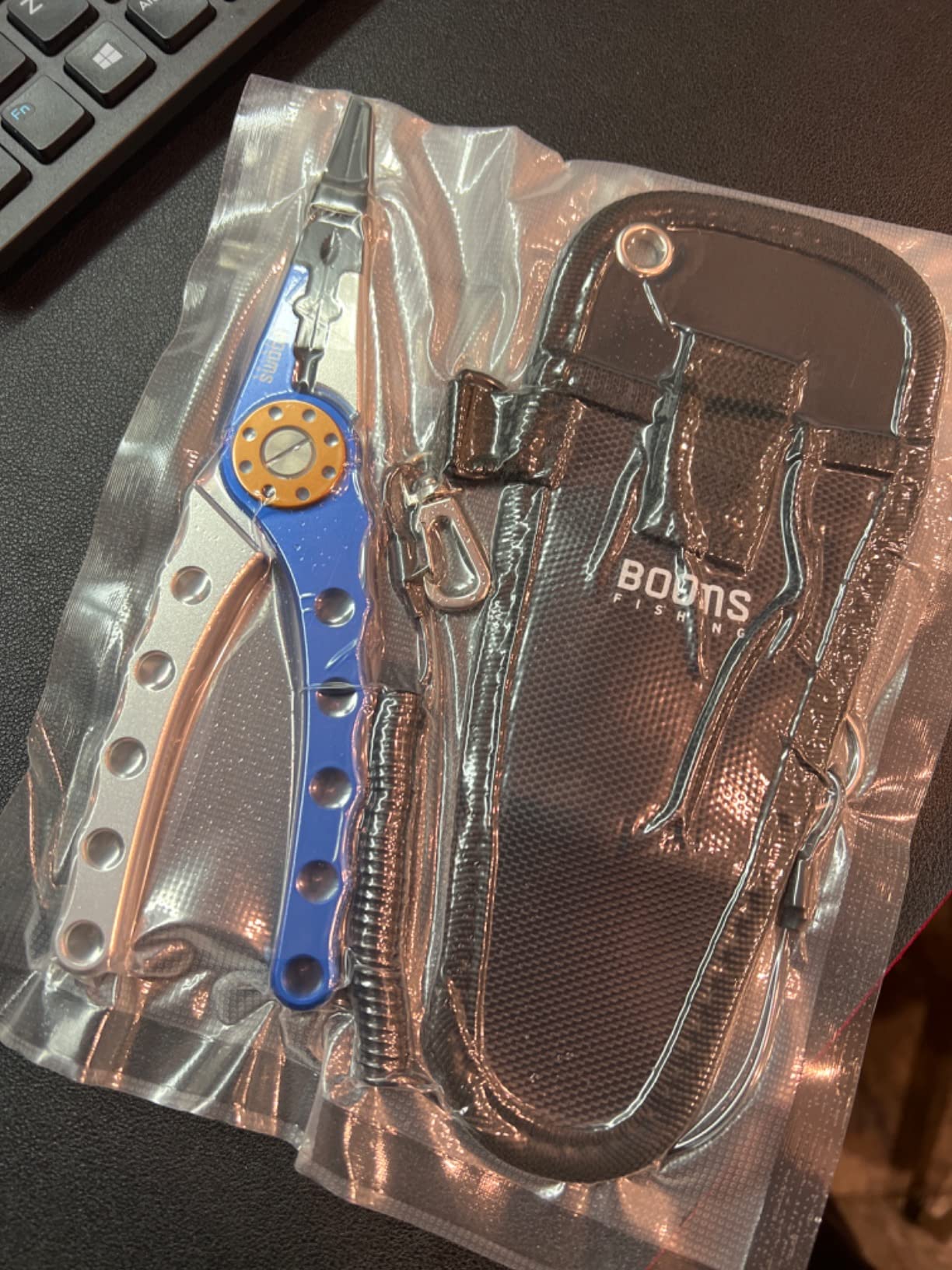
Booms Fishing X1 Aluminum Fishing Pliers Hook Remover Braid Line Cutting and Split Ring with Coiled Lanyard and Sheath
Aluminum handle with stainless jaws
Lead and barrel crimp positions
Coiled steel-wire lanyard
0.19 kg
Pros
- Crimping positions that most budget pliers leave out
- Steel-wire coiled lanyard is stronger than a plain cord
- Stainless hardware resists salt
- Hooked tip opens stubborn rings
Cons
- Small cutter surface can be fiddly for fine tippet work
- No closing lock so it can spring open in a bag
- Aluminum body can bend if used to straighten wire
The X1 is the pick I recommend to anyone who ties their own leaders and does not want to carry a separate crimping tool. It has split lead and single-barrel crimping positions cut into the aluminum handle, which is a real feature at this tier and rarely included by competitors.
The frame is an aluminum handle with stainless steel jaws and hardware, and the spring is inset inside the handle rather than sitting exposed. That detail matters in salt. An external spring collects salt crystals and eventually binds; an inset one has fewer crevices to crystallize in.
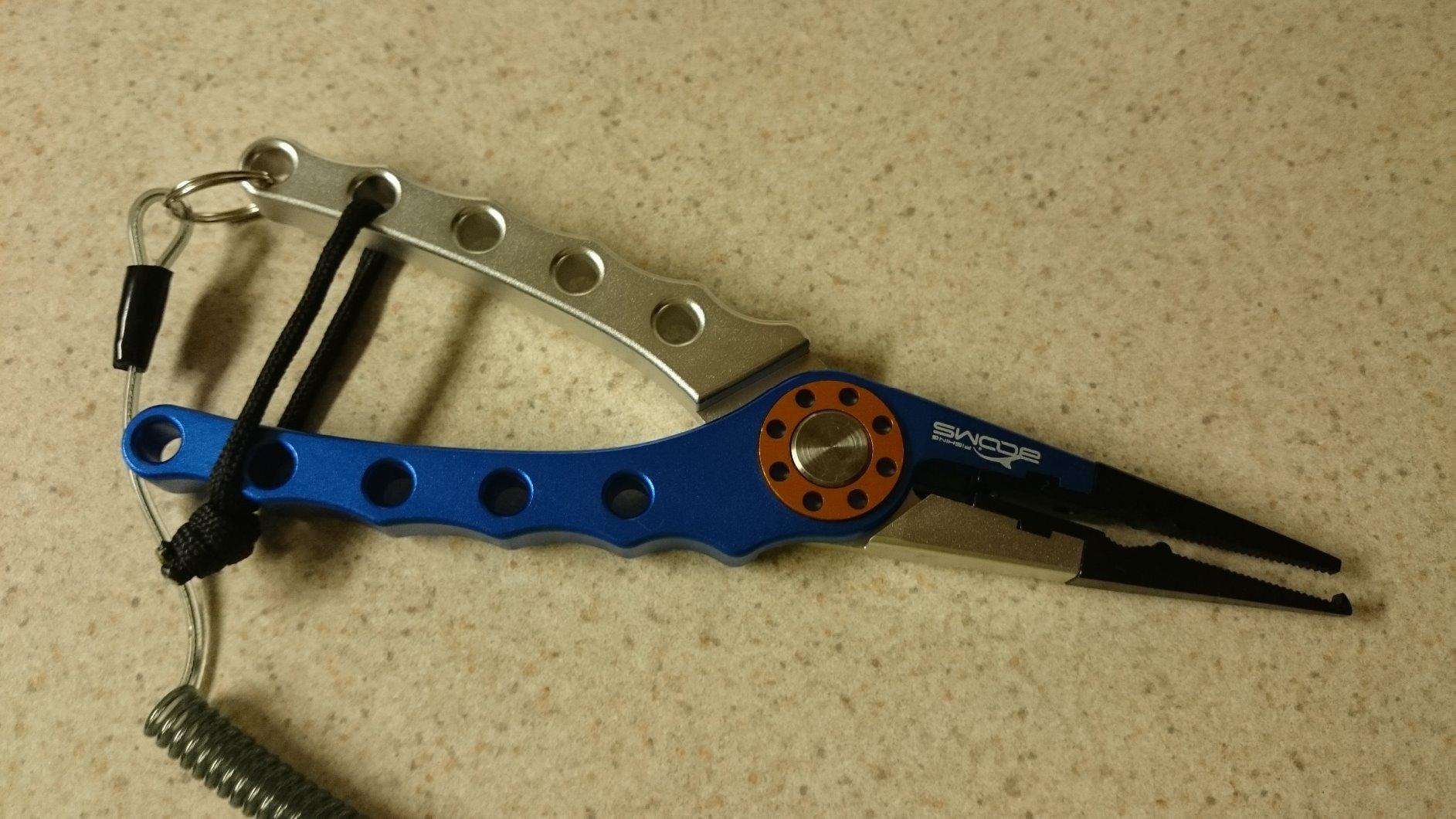
At 0.19 kg it is heavier than the Piscifun but still well within kayak-and-wading range. Owners report more than two years of saltwater use with minimal maintenance, and the 4.6 average across nearly 2850 ratings reflects a tool that simply works for the majority of anglers.
The cutter is inset in the handle for braid and mono, and the cuts are clean. My only complaint is that the cutting surface is small, so trimming a fine fluorocarbon tippet takes more care than a larger blade would.
Can one tool handle crimping and cutting
Yes. This is the main reason the X1 earns its place in the roundup. Between the split lead position, the single-barrel crimp position, the hooked split-ring tip and the inset cutters, you can build a leader, crimp it and trim the tag end without touching anything else in the console box.
If your rigging is light and you only cut mono, the feature is wasted weight. If you tie wire leaders or heavy braid, it pays for itself quickly, because crimped joints fail far less often than knots under strain.
Where the accessories stand up
The steel-wire coiled lanyard and nylon holster are the best part of the package at this tier. Anglers on fishing forums repeatedly call out cheap lanyards as the first thing to fail on a tool they otherwise like, and this one is steel-cored rather than a plastic coil.
There is no lock, though. The pliers will spring open inside a bag or a console locker, so store it nose-down or clipped in the holster. That is a small habit change, not a dealbreaker.
3. TRUSCEND Lockable Fishing Pliers: Best for Bait Tuning
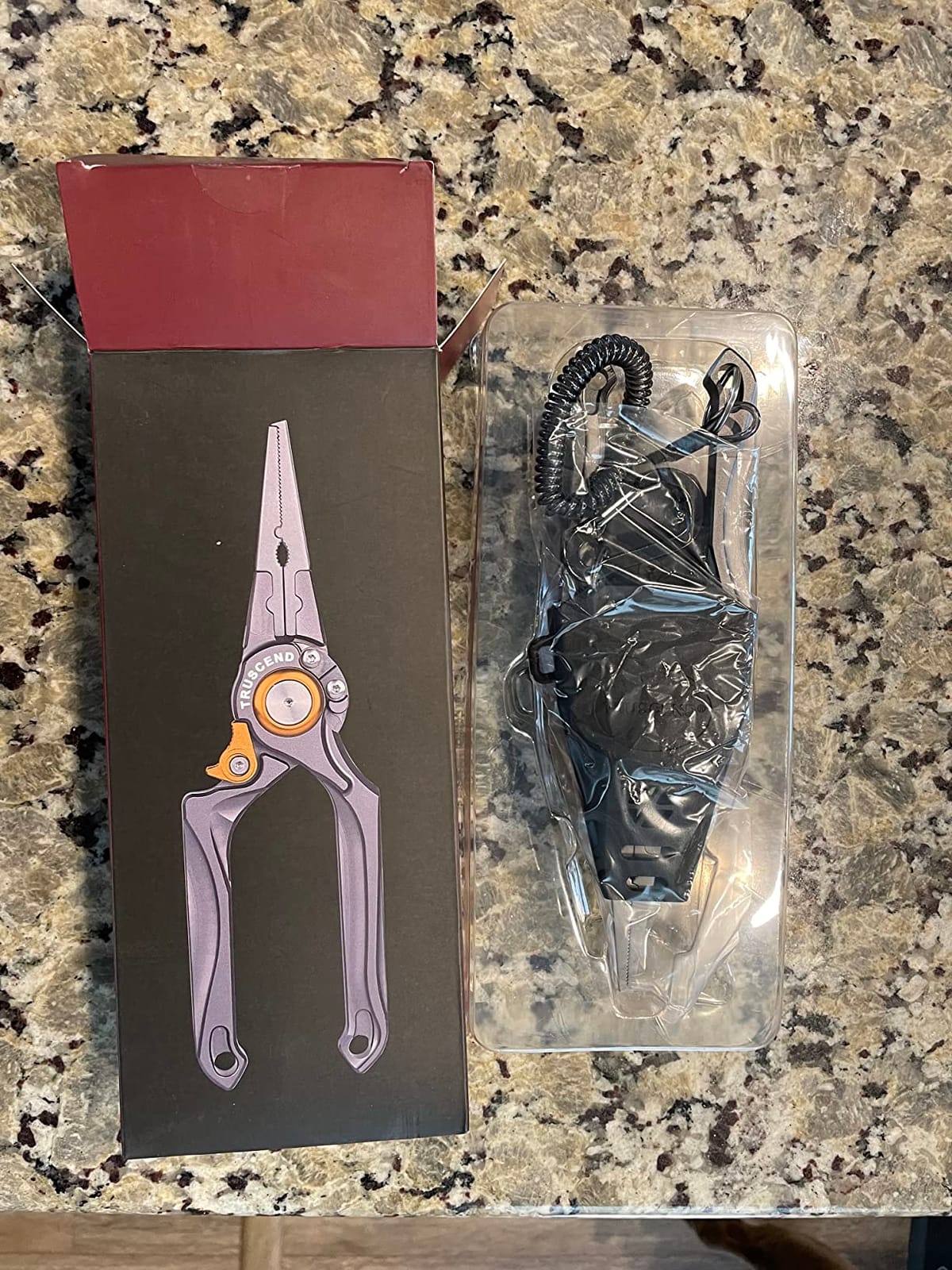
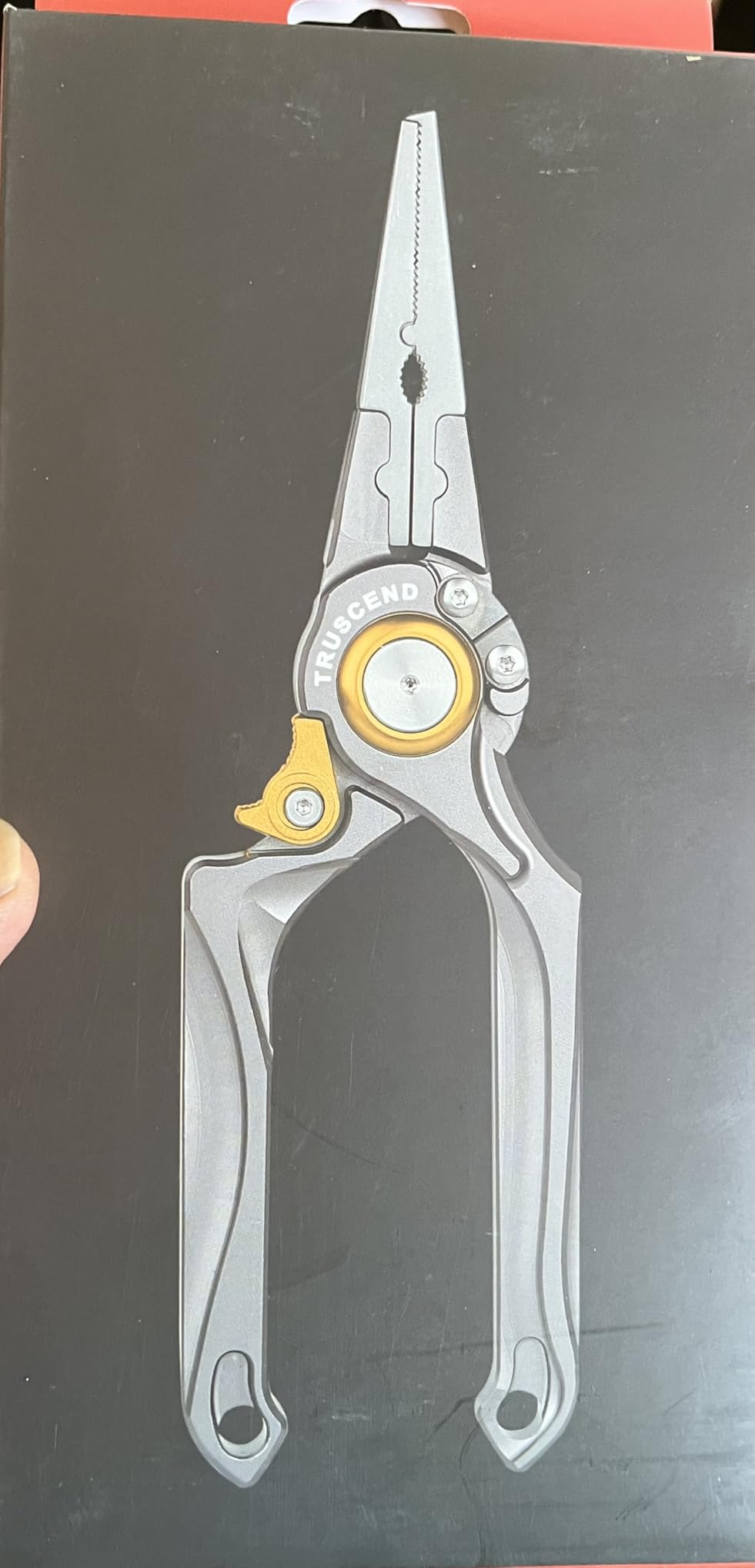
TRUSCEND Easy Use Lockable Fishing Pliers with Tungsten Carbide Cutter, Innovative Ergonomic Handy Handle, Saltwater Corrosion Resistant Teflon Coated Fishing Tool, Light Multi-Function Fishing Gear
Teflon-coated aircraft aluminum
Tungsten carbide cutter
Lock switch
Bait tuning slots size 6 to 1/0
Pros
- Bait tuning slots are the most clearly sized in the roundout
- Lock switch holds jaws open or closed
- Tungsten carbide cutter stays sharp on braid
- 4.9 ounces with a pistol-style grip
Cons
- Belt clip and holster attachments reported as weak and droopy
- Small split-ring tooth struggles with very small rings
- Not a general-purpose or electrical work tool
TRUSCEND sizes its bait tuning slots explicitly, from size 6 hooks up to 1/0. That sounds like a small detail until you have tried to tune a swimbait with slots sized by guesswork and ended up with a hole that is too big for the hook shank.
The body is aircraft-grade aluminum with a Teflon coating for corrosion protection, and the jaws carry a spring-loaded lock switch. The lock is the feature I use most: pull it and the pliers stay locked open for bait tuning, or locked closed for storage in a wet console locker.
The cutter is tungsten carbide and handled braid, leader material and fly line without complaint. Non-slip rubber strips along the handle keep the grip reasonable at 4.9 ounces, and the pistol-style shape fits a medium hand better than a straight bar.
Owners report a full season without issues across more than 2000 ratings, and the 4.6 average puts it in the top group. The most common complaint has nothing to do with the tool itself: the integrated holster and belt attachments are reported as weak and droopy.
Does the lock switch help in real use
More than you might expect. Bait tuning happens in a specific hand posture where a spring-loaded plier is actively in the way, and locking the jaws open lets you work with two hands. It also solves the storage problem, since a locked-closed plier will not spring apart in a bag and fill it with salt.
It is a gimmick on a tool you use for pure hook removal, but for anyone who tunes their own plugs and spoons it is a genuine time saver on the water.
Is it heavy for wading or kayak use
At 4.9 ounces it sits in the middle of this list. It is lighter than the heavier steel pairs here and heavier than the 3.6-ounce Piscifun, so for a wading angler who counts every ounce it is not the first choice, but it is not a burden either.
The rubber strips only cover part of the handle, so a bare or gloved hand can find the smooth aluminum. If you wade in cold water with numb fingers, a fully wrapped grip like the KastKing’s is the better choice.
4. KastKing Speed Demon Pro: Best for Wire Leaders and Heavy Tag Ends
KastKing Speed Demon Pro Fishing Pliers,7.5” Split Ring Nose
Polymer-coated 420 stainless steel
2.5 inch serrated jaws
Side-mounted carbide cutters
Crimp and knot cinching slots
Pros
- Steel frame resists twisting loads far better than aluminum
- Side-mounted cutters make close tag-end cuts
- Multi-function jaws cover crimping
- knot cinching and tuning
- Molded sheath with belt clip and coiled lanyard
Cons
- Heavier feel than the anodized aluminum options
- Polymer coating can wear with long heavy use
The Speed Demon Pro is the pair I trust when a leader is wire and the fish is heavy. The frame is polymer-coated 420 stainless steel, which KastKing rates at roughly three times the bending strength of an aluminum plier, and the difference is obvious the moment you put real torque on a hook.
The cutters sit on the side of the jaws rather than at the heel, so you can trim a tag end right down against the knot without the jaw blocking your view. On a wire leader that means clean cuts and a cinched knot instead of a cut that slips.
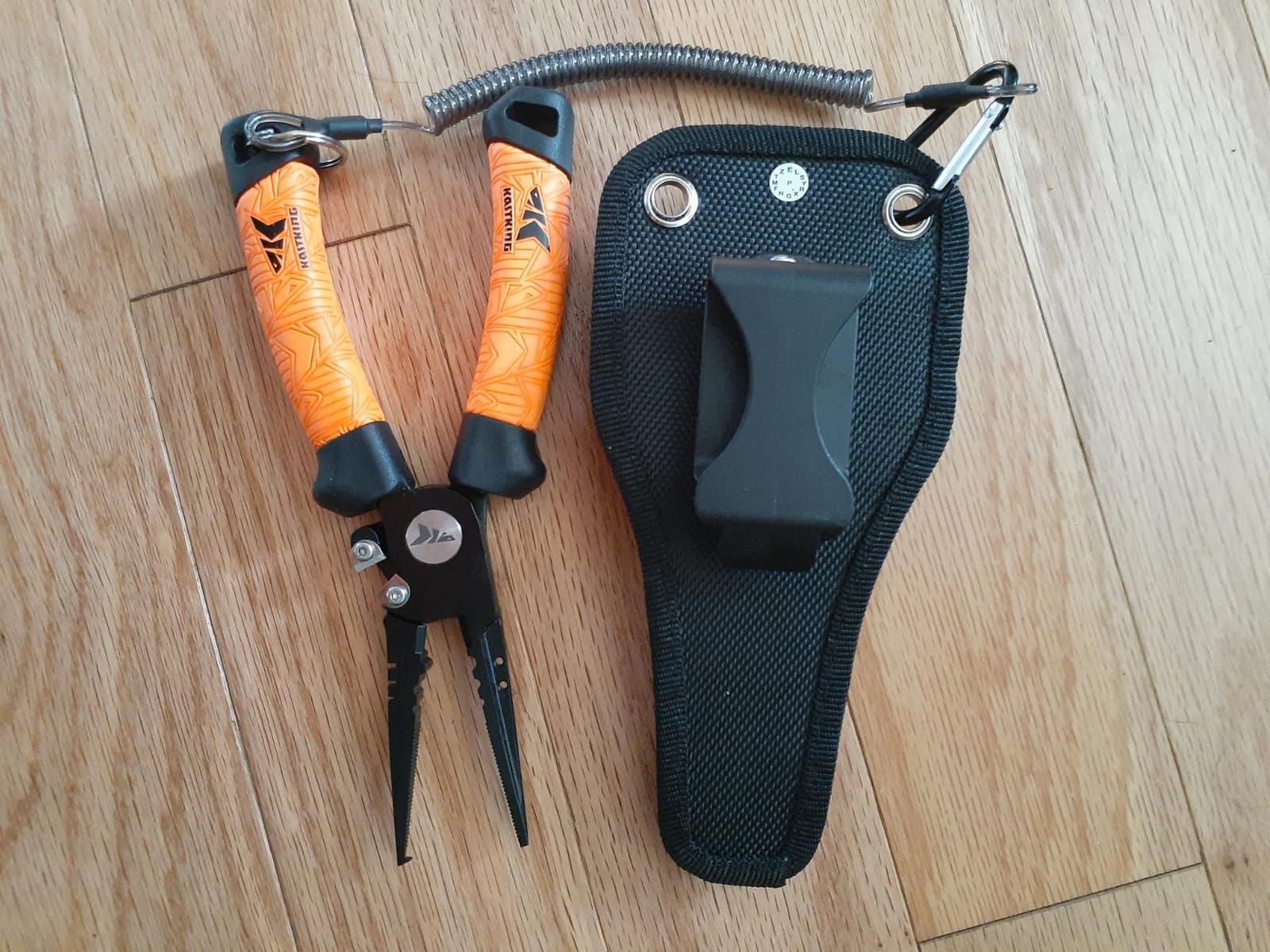
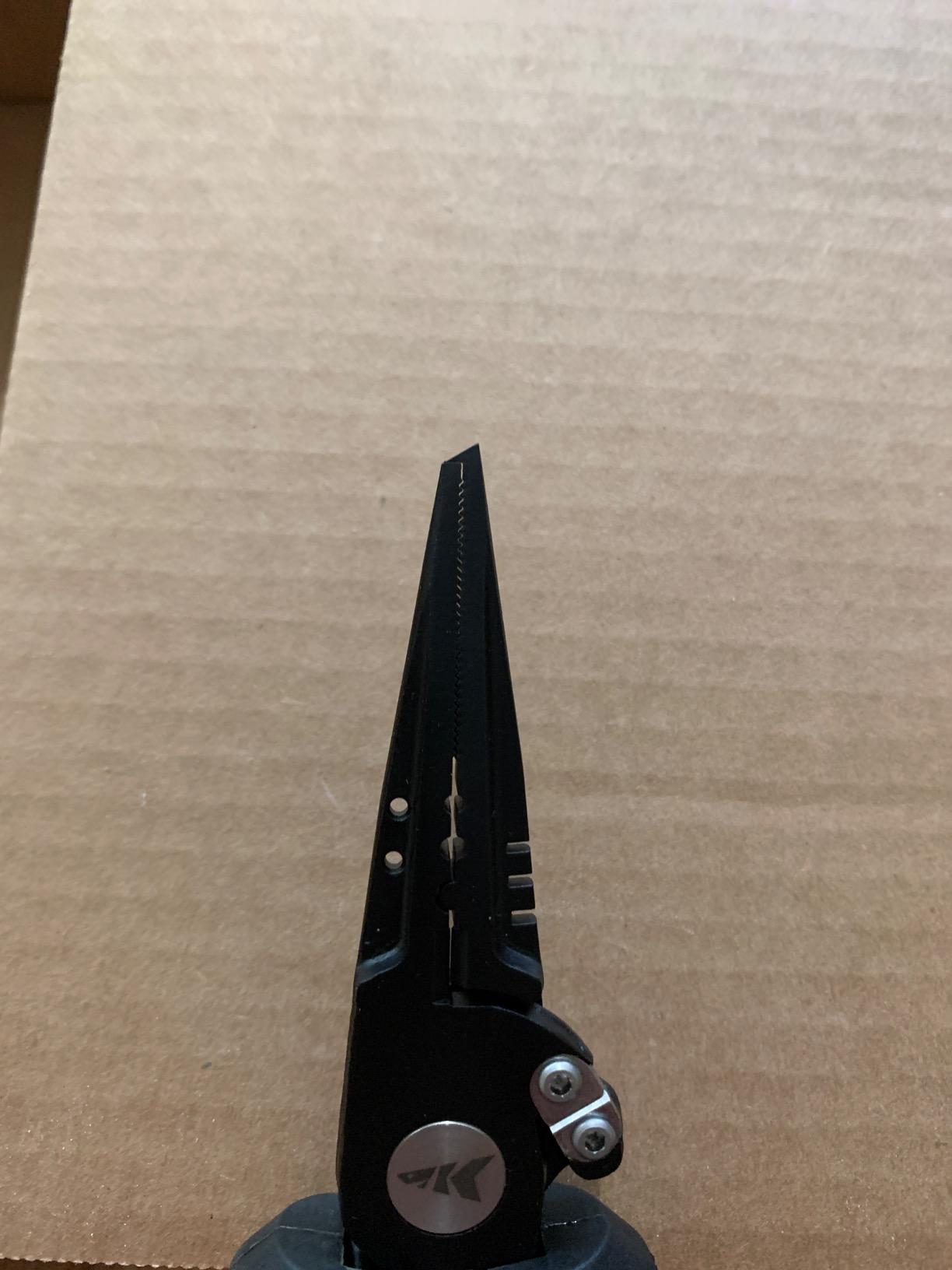
Jaws are 2.5 inch serrated surfaces with hook removal capability, plus crimping slots for split shot and steel leaders, knot cinching holes and bait tuning slots. That is a lot of functions in one frame, and the layout is tidy enough that you can feel for the right one without looking.
At 4.6 stars from 912 ratings, buyers consistently point to stainless durability in salt and clean carbide cuts. The polymer coating is the piece to watch over years; it is the surface that eventually wears, not the steel underneath.
Is the steel worth the extra weight
For wire leaders and anything heavy, yes. Rigid steel does not flex, which means the jaws stay aligned under twisting force and the serrations actually bite instead of sliding. An aluminum plier in the same situation absorbs the load and lets the hook move.
For a kayak angler who only cuts mono, that rigidity is dead weight. Match the frame to the job: steel for wire and big fish, aluminum for light rigging and packability.
Does the sheath and lanyard hold up
The custom molded sheath has a belt clip and a coiled lanyard, and both are part of the package rather than add-ons. That is a real advantage over the premium titanium options further down, where reviewers often single out the lanyard hardware as the weakest part of an expensive tool.
If the sheath does stretch over time, it is a molded plastic part and easier to live with than a sheathed titanium plier going into the surf without a dry pouch.
5. KastKing Cutthroat 7.5 Inch Set: Top Rated with a Second Cutting Tool
KastKing Cutthroat 7.5″ Saltwater Fishing Pliers & Scissors Set, Orange
Forged 420 stainless with polymer coating
Bundled 420 stainless braid scissors
Side-mounted carbide cutters
Sheath and coiled lanyard
Pros
- 4.7 star rating with few two-star reviews
- Scissors cover trimming where a plier cutter is awkward
- Forged stainless tolerates repeated salt exposure
- Flat rubber handle with spring-loaded one-hand action
Cons
- Bundled scissors are basic with no serration or specialty blade
- Two cutting tools make the set bulkier than a plier alone
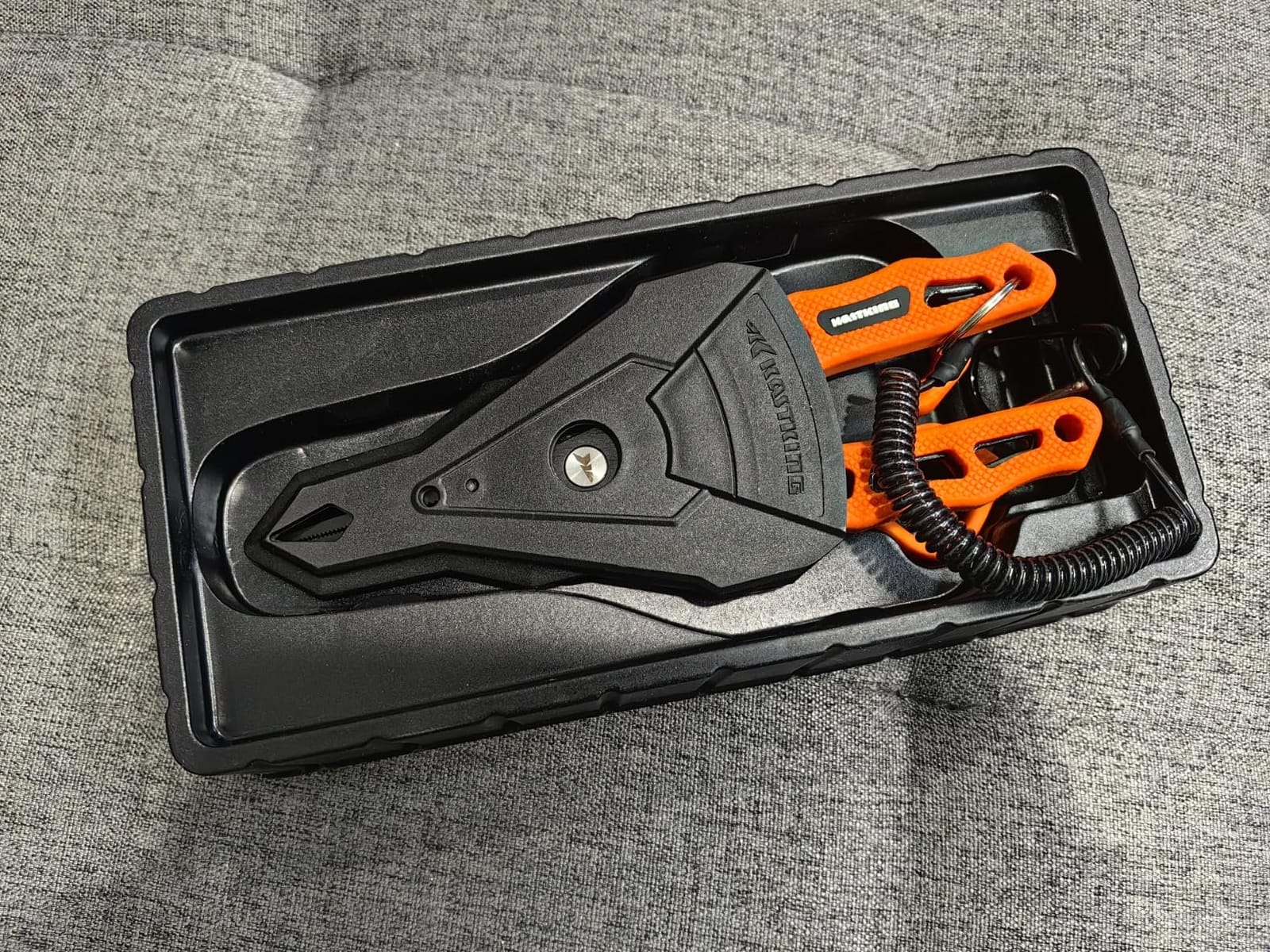
The Cutthroat is the only pick here that ships with a second cutting tool, a pair of 420 stainless braid scissors with a soft rubber handle. Plier cutters are angled for a cut, not for trimming a long tag end parallel to a lure body, and scissors are simply faster for that job.
The pliers themselves are forged 420 stainless with a polymer coating for saltwater durability and side-mounted tungsten carbide cutters. Flat rubber handles plus spring-loaded jaws give a confident one-hand grip even with a wet hand.
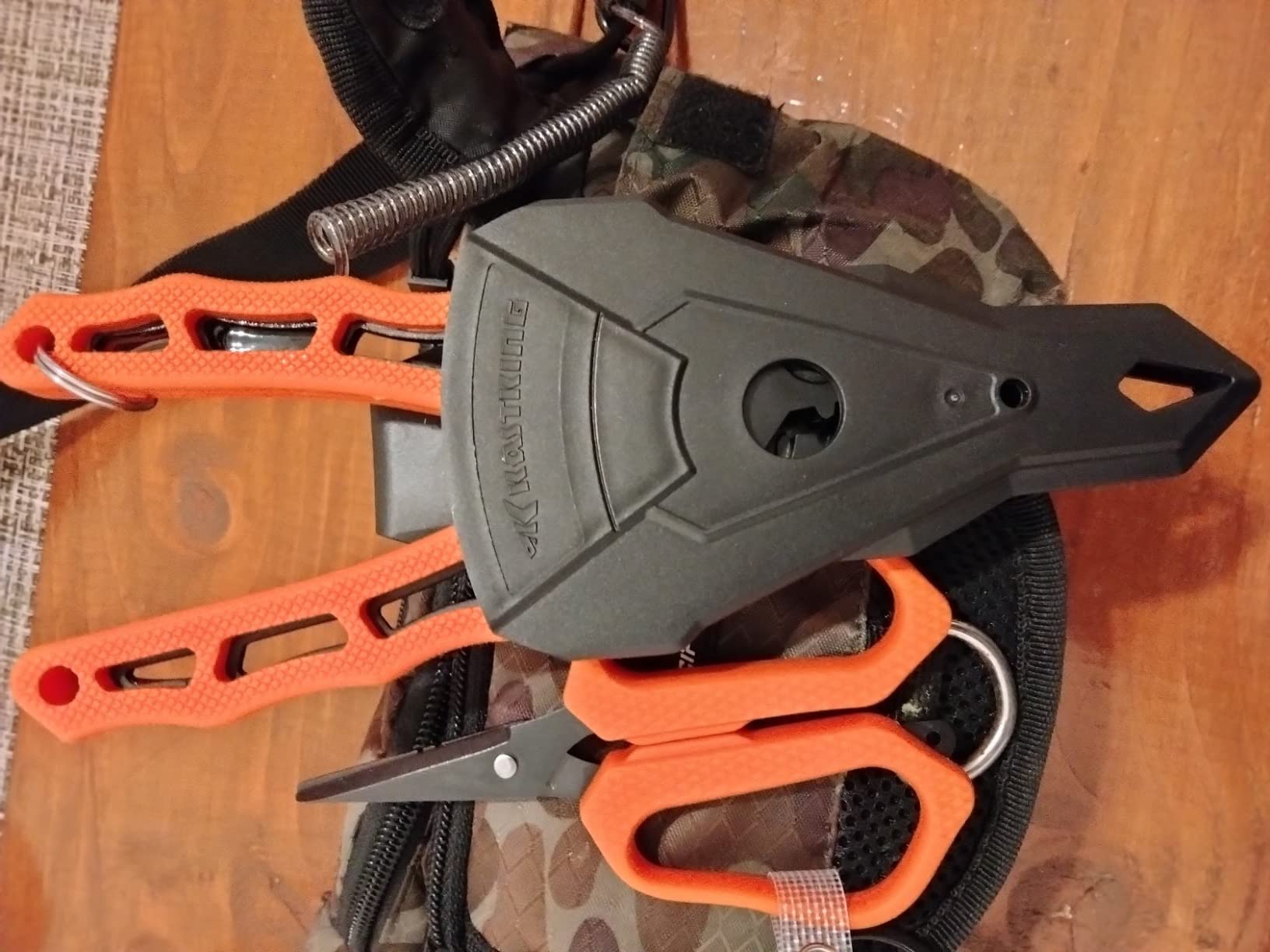
At 4.7 stars from 865 ratings, with roughly 94 percent of buyers giving four stars or better and very few two-star ratings, this sits at the top of the list for owner satisfaction. Owners value the two-in-one arrangement and the stainless saltwater durability in roughly equal measure.
The molded sheath has a waistband clip and coiled lanyard, so the whole set carries as one unit. That matters on a boat, where a loose pair of scissors in a deck hatch is how you find rust on your gear later.
Is the second tool worth the bulk
If you trim braid, mono or fluorocarbon tag ends regularly, yes, and you will notice the difference in a single trip. Scissors handle a long trim in one motion; the same job with a side-mounted plier cutter takes two or three bites and leaves more tag end behind.
If you only ever cut leaders down at the knot, the plier cutter alone is enough and the scissors sit unused in the sheath. Judge the set by your actual trimming, not by the feature list.
How does the polymer coating hold up in salt
Forged 420 stainless with a polymer coating is a solid middle ground: the coating slows salt attack on the surface, and the forged body underneath is far less prone to flex than stamped steel. Rinse it after every trip and the coating has no reason to fail early.
It is not titanium and it will show its age eventually. What it will not do is pit and seize the way an untreated carbon steel tool does, which is the failure mode that ends a tool’s usefulness in a season.
6. Pristis UTA II: Best for Landing Fish With the Same Tool
Pristis UTA II Fishing Pliers, Multi-Function Split Ring Hook Remover Gear
2CR13 stainless jaws with Teflon coating
Oxidation-coated aluminum handle
1.3 inch jaw opening
Includes fish lip gripper
Pros
- Only pick that includes a fish lip gripper
- 1.3 inch jaw opening handles a wide hook range
- Replaceable tungsten carbide cutter
- Steel-core PVC lanyard is stronger than a plain cord
Cons
- Crimp and bait tuning slots run small for larger lures
- Some buyers enlarge the eye alignment slots themselves
- Six-month warranty is the shortest in the roundup
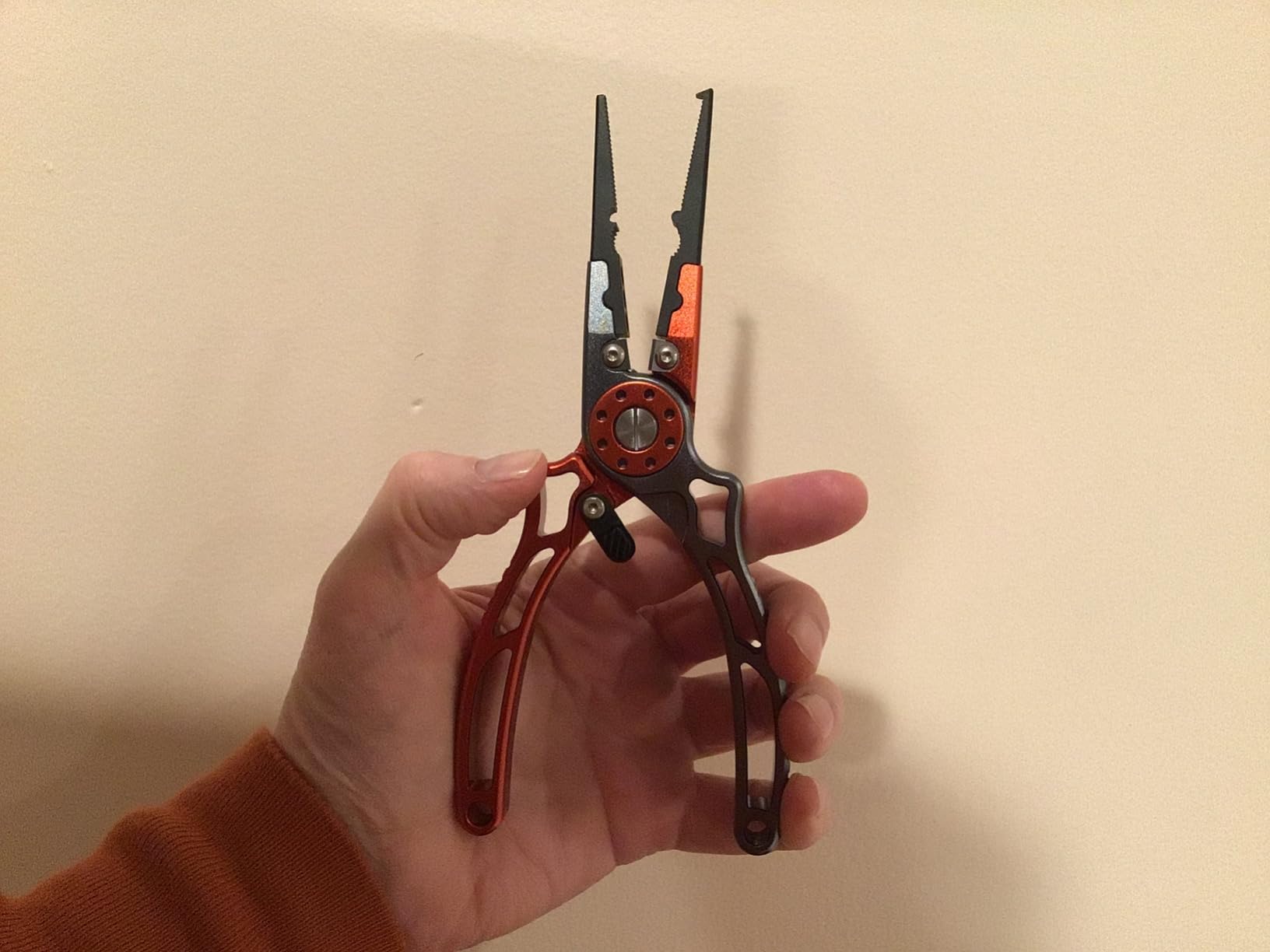
The UTA II solves a problem most pliers ignore. The included fish lip gripper lets you hold a landed fish with one hand while you work the hook free with the pliers in the other, which is exactly the situation where a basic hook remover leaves you juggling three things.
Jaws are 2CR13 stainless with a Teflon corrosion coating, and the handle is an aerospace-grade aluminum alloy with an oxidation coating. The die-cast body is finished with CNC processes, which is why the pivot stays tight after months of salt spray.
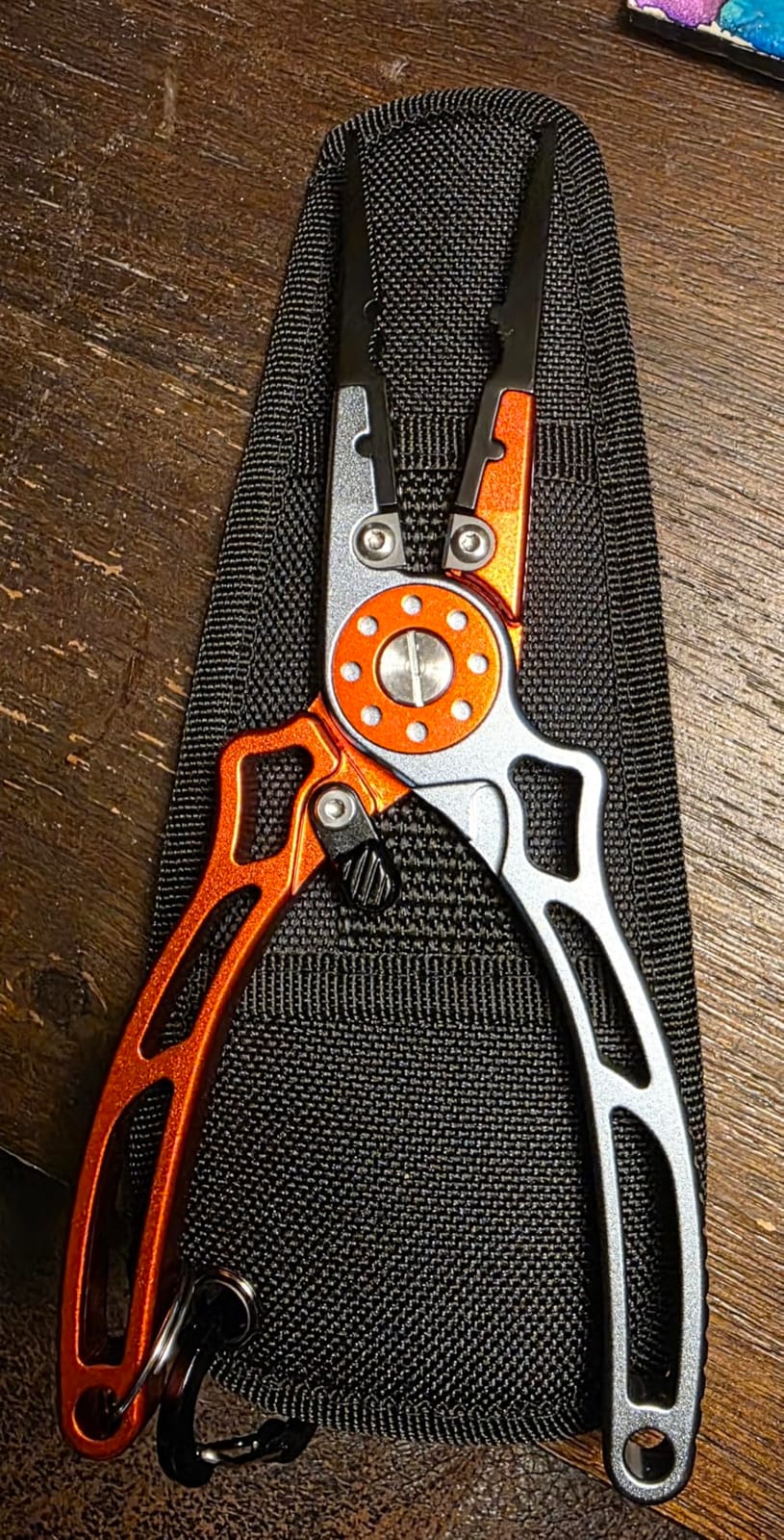
A return spring plus safety lock gives controlled one-handed operation, and the 1.3 inch serrated jaw opening with a tip hook is the widest in this roundup. The replaceable tungsten carbide cutter handles braid, fly line and backing.
At 4.7 stars from 549 ratings, buyers like the corrosion-resistant finish, the lock and spring action, and the extra lip gripper. A few note the bait tuning slots run small for large lures, which is the one meaningful limitation.
Is the fish lip gripper actually useful
For catfish, grouper and anything landed on a hand rod, yes. It is a small molded piece that fits most bony fish lips, and it saves the awkward moment where the fish flops, the hook tears and you are now bleeding a fish you wanted to keep.
It is not a substitute for a proper lip-gripping tool on larger fish, and it is not a substitute for gloves. For the size of fish most inshore and estuary anglers handle, it does the job well enough that you will stop reaching for a second tool.
What about the warranty length
The stated coverage is a six-month quality guarantee, which is the shortest in this roundup, so it is worth weighing against the two to five year terms on the steel and titanium options. In practice the build quality here is good, and the tool is rated at 4.7 stars.
Treat the short term as a prompt to keep receipts. It is one more reason the 17-4 stainless danco, with a five-year limited warranty and spare-part availability, is the safer long-term purchase for heavy offshore use.
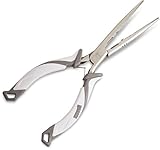
7. Rapala Salt Angler’s Pliers: Budget Pick for Occasional Use
Rapala 8.5 Inch Saltwater Fishing Pliers with Line Cutter
8.5 inch stainless construction
Integrated side cutter
Soft-grip ergonomic handles
0.26 kg
Pros
- Lowest cost entry into stainless saltwater tooling
- 8.5 inch length suits larger rigging work
- Integrated side cutter is fast on leaders
- Soft-grip handles are comfortable over long sessions
Cons
- No split-ring tip so it handles fewer rigging tasks
- No carbide cutter edge
- Lowest rating in the roundup at 4.3 stars
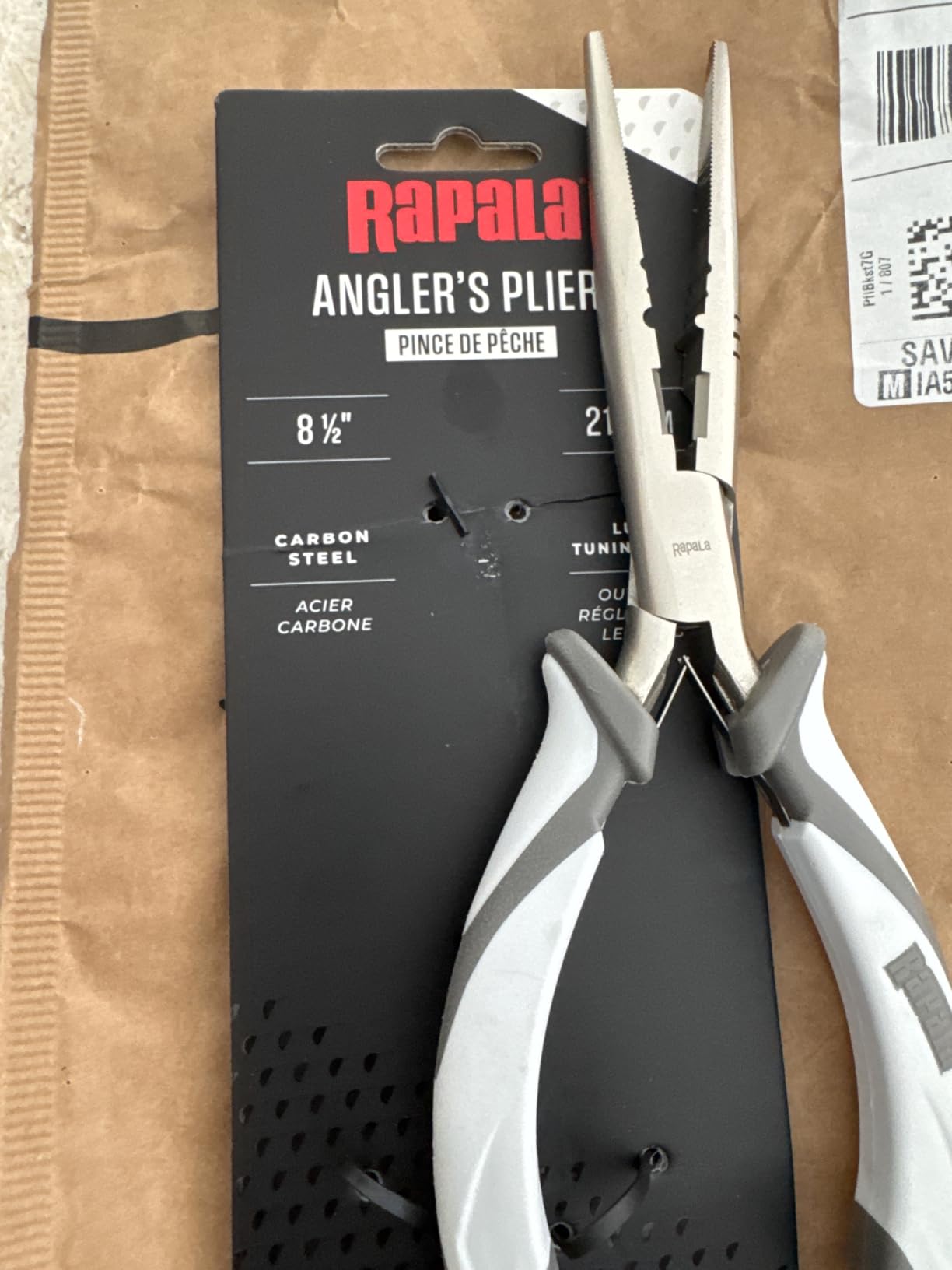
The Rapala Salt Angler’s Pliers are the simplest tool in this roundup and the least expensive. At 8.5 inches they are among the longest, which suits rigging work where reach matters, and the body is corrosion-resistant stainless steel for marine conditions.
What you get is an integrated side cutter for trimming line and leaders plus soft-grip ergonomic handles. There is no split-ring tip and no carbide insert, so it cuts and grips and nothing more. For an angler who mostly removes hooks and trims leaders, that is genuinely enough.
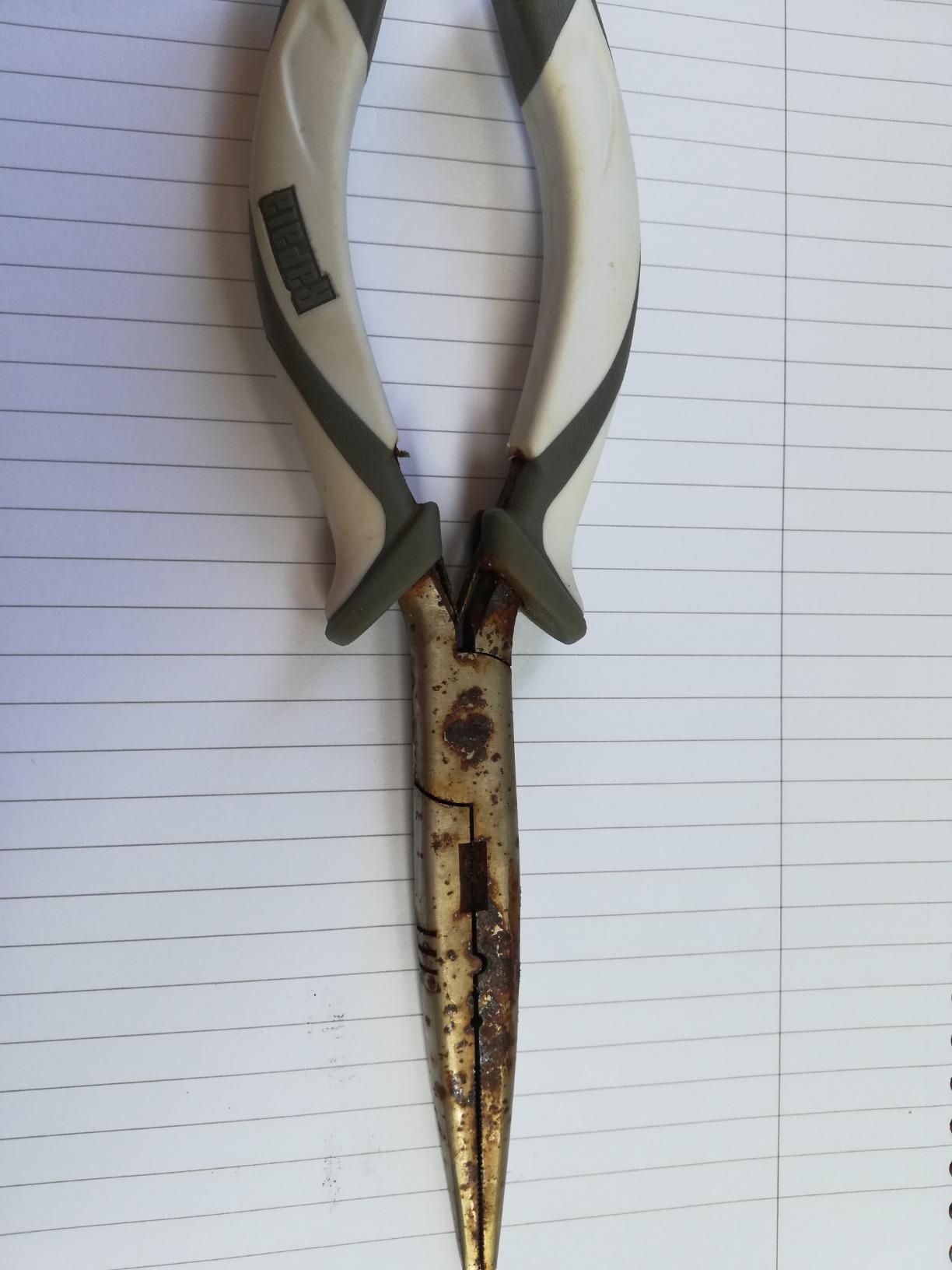
At 4.3 stars from 437 ratings, it is the lowest-rated pick here, with about 82 percent of buyers at four stars or better and roughly a tenth of ratings at one star. That spread is the story: a good tool for the job, but one that leaves anglers who need more capability frustrated.
The handle material is listed as nickel, which is less corrosion-resistant than coated aluminum or titanium. It will not dissolve in a season the way untreated carbon steel does, but it is the piece I would rinse most carefully.
Who should buy the simplest option
Anyone who fishes salt occasionally and mostly needs to pull hooks and cut leaders. Boat anglers who keep a pair as a backup in a console locker will find it perfectly serviceable, and it is a sensible gift for someone who does not yet know which features they need.
If you tie your own leaders, open split rings, or cut braid regularly, the missing split-ring tip and non-carbide cutter will frustrate you within a trip or two. The step up to an aluminum or steel plier with a carbide insert is a small jump in cost for a large jump in capability.
How does it hold up to repeated salt exposure
Reasonably, with caveats. Stainless steel resists chloride attack far better than carbon steel, and reviewers describe the tool as adequate for occasional salt use rather than a permanent saltwater workhorse. The nickel handle is the part to watch.
Rinse and dry it after every trip and it will outlast the expectation most buyers have at this price. Leave it wet in a console for a month and you are back in the market. The anodized aluminum picks handle that neglect far better.
8. FLISSA 8 Inch Pliers: Best with a Safety Lock and Titanium Nose
FLISSA 8 Inch Fishing Pliers, Safety Lock Design Fish Pliers Saltwater
Anodized aluminum body
Titanium 6Al-4V hooked nose
Tungsten carbide blades
8 inch length
Pros
- Titanium 6Al-4V nose is unusually tough for the tier
- Carbide blades cut braid
- fluorocarbon and mono cleanly
- Anti-slip handles stay secure when wet
- Molded belt sheath and coiled lanyard included
Cons
- Aluminum jaws are lighter duty than steel or titanium for big game
- Fewer multifunction slots than most pliers here
The FLISSA pairs an anodized aluminum body with a titanium 6Al-4V hooked nose, and that combination is unusual below the premium tier. The hooked tip opens heavier split rings than a plain stainless jaw will, which is the failure point on larger plugs.
The body is anodized for harsh ocean environments and the blades are tungsten carbide for braid, fluorocarbon and mono. A safety lock keeps the tool closed in storage, which sounds minor until you find a pair of pliers rusted open in a tackle bag.
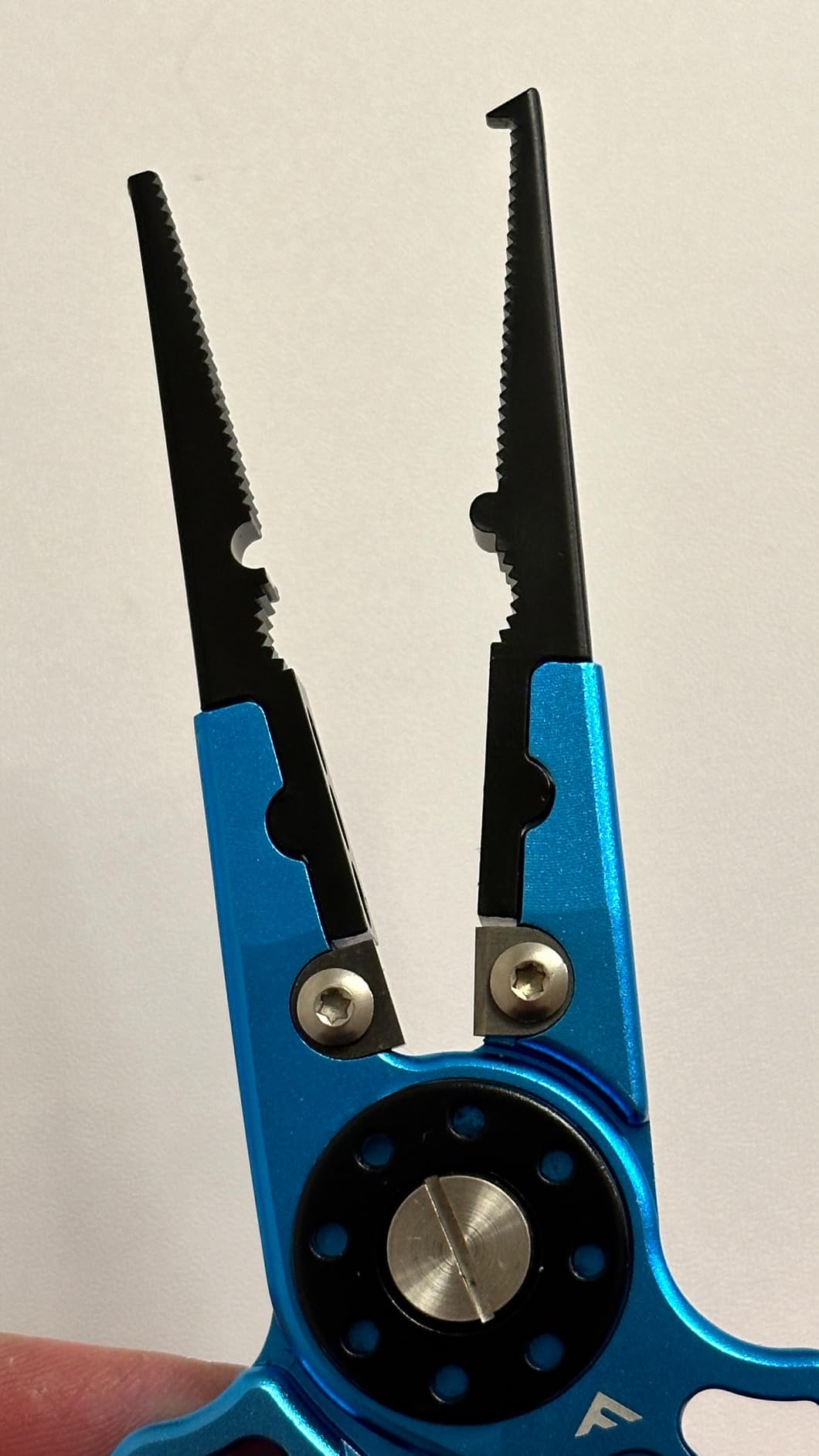
It also does sleeve crimping, and the anti-slip handles hold when wet. At 8 inches it sits in the middle of the length range here, long enough for reach without becoming awkward in a hand.
At 4.7 stars from 270 ratings with about 94 percent at four stars or better, owners highlight the jaw strength, the carbide edge and the belt sheath and lanyard system as the reason it stands out at this cost.
Can the nose handle big split rings
Better than most of this roundup. A 6Al-4V hooked nose does not deform and spring back the way a coated stainless tip does, so a heavy ring that a steel jaw rounds off can be worked open by this nose. That is the single most useful thing about the design.
The limitation is the body, not the nose. Aluminum jaws are lighter duty under twisting load than steel or titanium, so for a grouper that is still running and pulling, you want power from a steel frame instead.
Is the accessory kit complete
You get a molded belt sheath, a coiled lanyard and a safety lock, and the safety lock does the job the weak clips on cheaper tools do not. The sheath is molded rather than leather, which matters in surf: it will not absorb water and hold it against the body.
It has fewer multifunction slots than most pliers here, so it is a hook removal, cutting and crimping tool rather than a full rigging bench. That is a fair trade if you want simplicity and a strong nose.
9. Gerber Magniplier-Salt: Best Warranty Backed Tool
Gerber Gear Magniplier-Salt – Durable,Fishing Pliers with Sheath – Spring-Loaded Pliers for Freshwater & Saltwater Fishing – Premium Fishing Accessory – 7.5″
Salt Rx corrosion-resistant coating
BearHand Control spring action
Off-axis nose
7.5 inch alloy steel
Pros
- Unlimited lifetime warranty is the strongest coverage in the roundup
- Salt Rx coating shows no visible rust after heavy salt use
- Off-axis nose gives strong force on large hooks
- Cuts braided line cleanly
Cons
- Jaws may not fully close on arrival because of cutter placement
- Flip lock mechanism is thin and can loosen
- Soft sheath belt loop is not ideal for a fishing vest
The Magniplier-Salt is one of only two tools in this roundup with a lifetime warranty, and that alone changes the long-term math for anyone who will not replace their pliers. Gerber builds it on alloy steel with a Salt Rx corrosion-resistant coating, and the BearHand Control system handles the spring action.
The off-axis nose and optimized handle spacing give it real force. On a large hook buried in a shark or a pelagic, the geometry matters more than the material, and this is the tool that feels strongest in the hand when the fish is still moving.
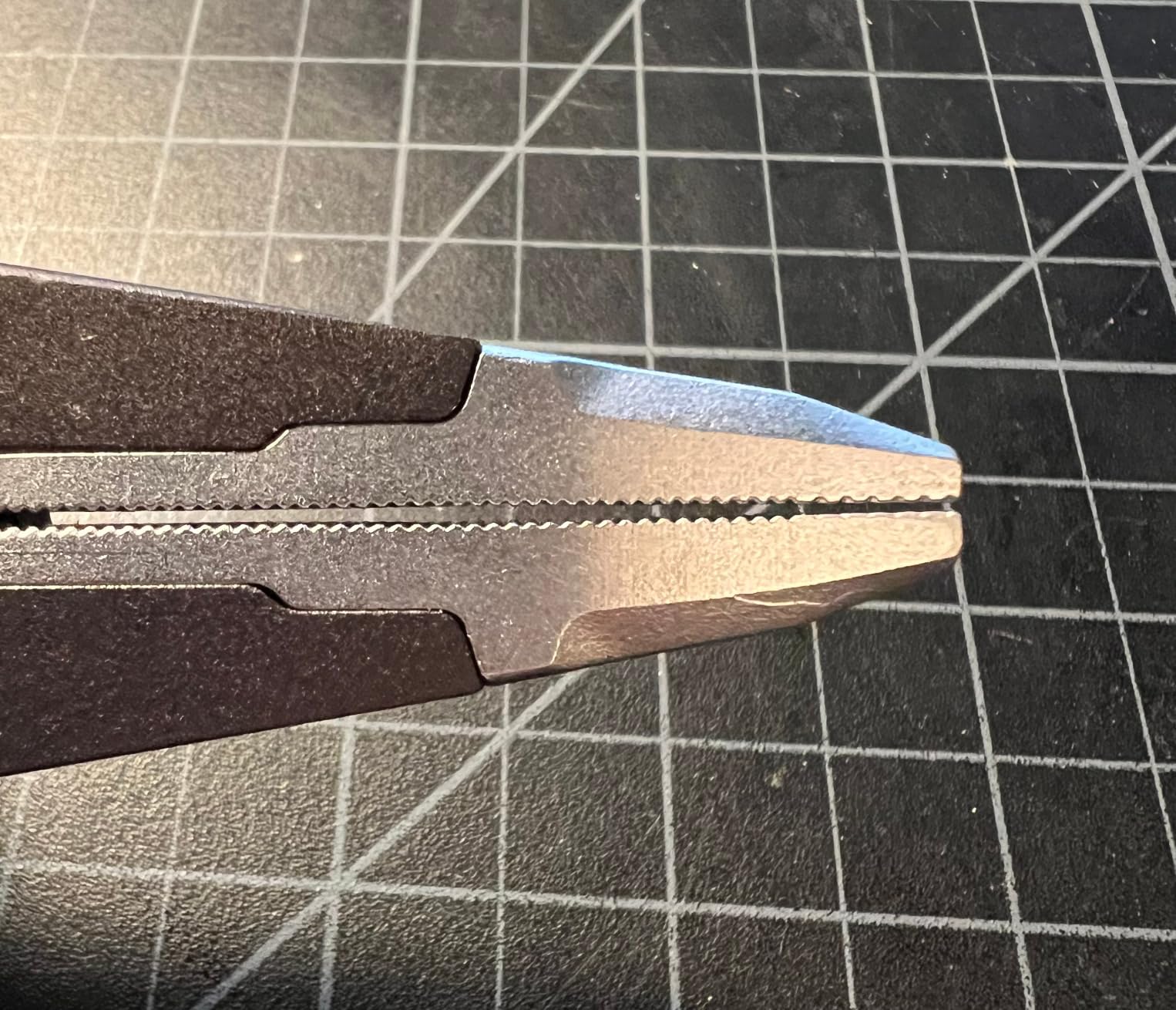
Owners report no visible rust or corrosion after heavy saltwater use, and several describe buying replacements for friends after long-term use, which is the most common behaviour with a lifetime-warrantied tool. Cuts on braided line are clean, and the serrated jaws grip well.
There are real complaints. Several reviewers note the jaws do not fully close out of the box because of how the carbide cutters are prioritized, and the flip lock is thin and can loosen with repeated use.
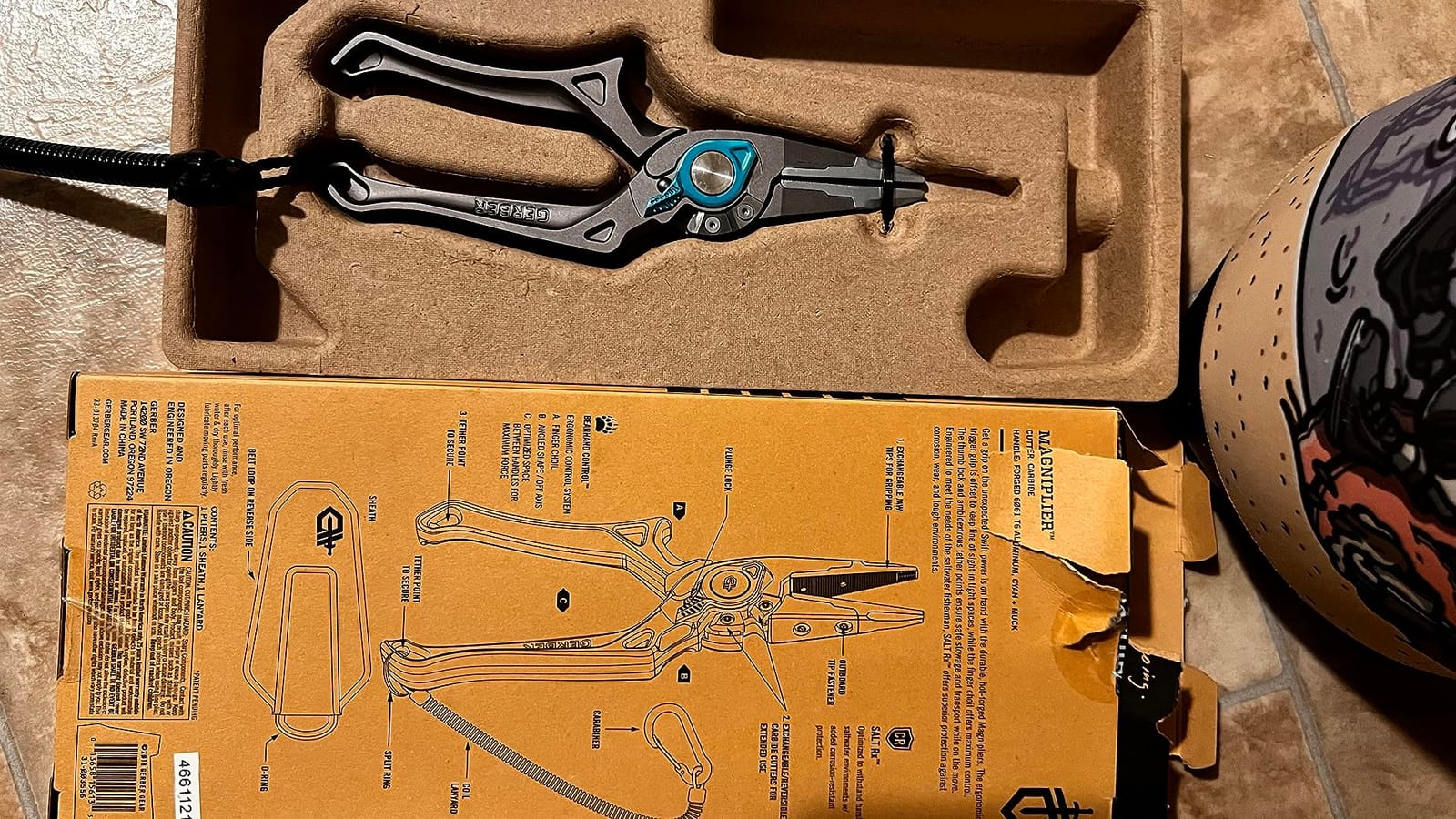
What does the lifetime warranty actually cover
It covers the tool for as long as the manufacturer supports the product, which in practice means manufacturing defects and finish failure. It is the strongest coverage offered by any brand in this roundup, and it is a genuine reason to pick this over a cheaper pair you will replace.
It does not cover lost tools, and reviewers on fishing forums note that the sheath belt loop is soft and awkward for a fishing vest. Plan on a separate clip or a lanyard to the D-ring rather than trusting the supplied loop.
Is it too big for smaller hooks
For small treble hooks and panfish, yes. The jaw geometry is built around larger offshore hooks and wire, and reviewers specifically call out the jaws as too large for small hooks and medium trebles. This is a saltwater inshore-to-offshore tool, not an all-purpose one.
At 5.3 ounces it is heavier than the aluminum options but well within wading range. The tradeoff is jaw force, and for the fish this tool is actually built for, jaw force is what you want.
10. danco Premio Titanium: Best for Big Game
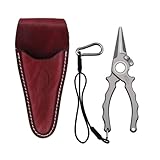
Gambler danco Premio Titanium Fishing Pliers, with Lanyard & Leather Sheath, Saltwater-Resistant Pliers for Offshore and Inshore Anglers, 6.5″ – USA, Titanium
TC21 titanium with machined handle slots
Replaceable titanium cobalt cutters
180 degree swiveling sheath
8 ounces
Pros
- Titanium body shows no rust after heavy ocean use
- Replaceable cobalt cutters cut braid and fluorocarbon cleanly
- One-piece jaws stay aligned after dehooking sharks
- Backed by a lifetime warranty
Cons
- Leather sheath absorbs water in surf and inshore use
- Stock lanyard and carabiner are thin and wear out quickly
- Inward-curving handles on the 7.5 inch model are hard to grip when wet
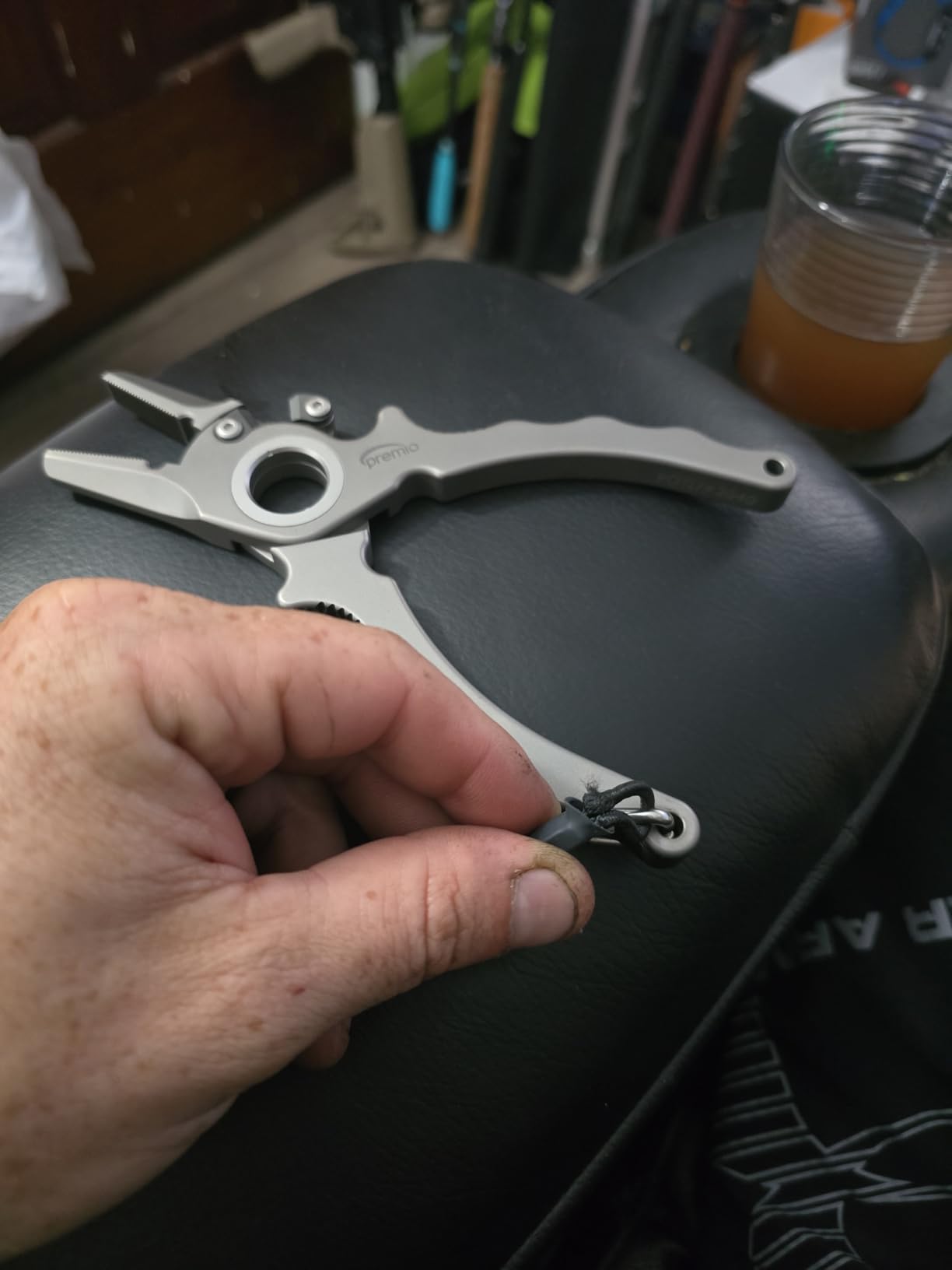
The Premio is the titanium answer to a question most anglers at this level have already asked: can a plier survive full-time big-game work without rusting. Owners describe TC21 titanium that stays clean after heavy ocean use, and the one-piece jaws keep fine alignment under load even after dehooking sharks and pelagics.
The handle slots are machined rather than solid, which is how an 8-ounce titanium tool stays light enough to wear all day. The Super Halo Hinge keeps the action smooth, and the replaceable titanium cobalt side cutters handle braid and fluorocarbon cleanly.
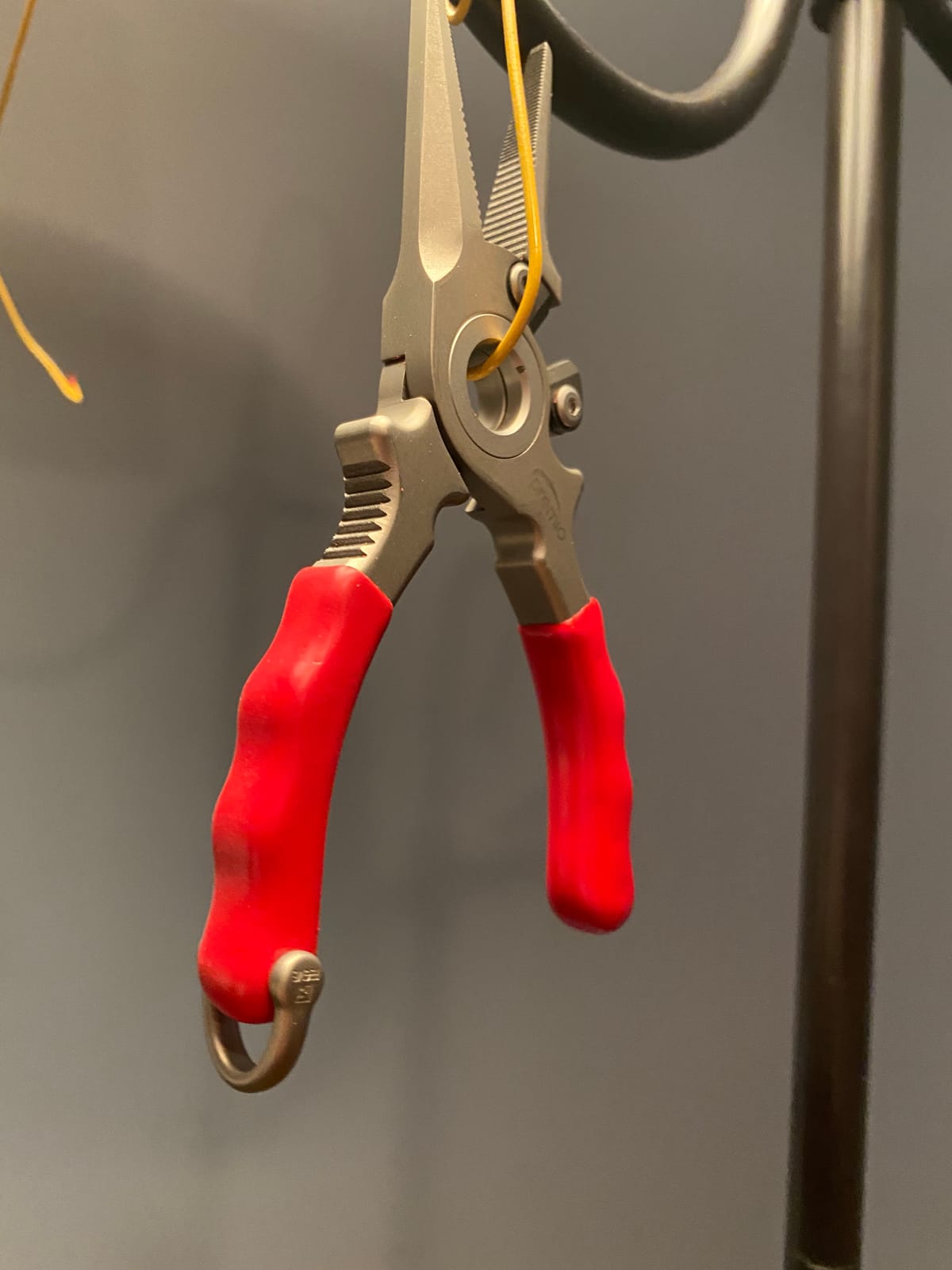
This is also the only pick developed with fly angler input, which shows up in the jaw shape. For fly anglers building leaders on a boat, the alignment and light weight matter as much as the corrosion performance, and you can read more about the matching gear in our best fly fishing reels guide.
At 4.6 stars from 161 ratings with about 93 percent at four stars or better, reviewers describe it as the strongest value in titanium, with tight manufacturing tolerances compared with cheaper pliers. The critiques cluster on accessories, not the tool.
Do you actually need titanium
Only if the tool lives in salt. Titanium does not pit, does not seize at the spring and does not need a rinse-to-avoid-rust habit. If your pliers get used in surf or offshore and stay in the boat, that property pays for itself over years rather than seasons.
If you only fish freshwater or a sheltered estuary occasionally, the same money buys a 17-4 stainless plier with a five-year warranty that will also outlast your interest in the topic. Titanium is a solution to a specific corrosion problem, not a general upgrade.
What about the sheath and lanyard
This is the real catch with an expensive tool. The leather sheath absorbs water in surf and inshore use, and the stock lanyard and carabiner are thin and wear out quickly, which is the most repeated complaint about premium pliers in general, not just this one.
Plan to replace the lanyard early and keep the leather sheath in a dry bag between trips. The 180-degree swiveling sheath with a belt clip is otherwise well designed, and the elastic lanyard and carabiner do ship in the box.
11. danco 7.5 Inch Stainless: Best Rust Resistance in a Steel Body
danco 7.5-Inch Stainless Steel Fishing Plier with Tungsten Carbide Cutters
17-4 corrosion-resistant stainless steel
Halo Hinge design
Textured rubber handles
7.5 inch, 4.8 ounces
Pros
- Highest rating in the roundout at 4.8 stars
- 17-4 stainless reports zero rust after repeated offshore rinsing
- Sharp carbide cutter handles mono and braid
- Five-year warranty with spare parts availability
Cons
- Thick tips are oversized for panfish and very small hooks
- Sheath strap is flimsy and hard to refit
- Reach suits saltwater fish more than deep-jigged species
This is the steel answer to the corrosion question, and it is the pick I recommend to anyone who wants titanium-level salt resistance without titanium cost. The body is 17-4 stainless, a precipitation-hardening grade chosen for chloride environments, and owners report zero rust after repeated offshore rinsing.
17-4 holds a much harder edge than ordinary 420 stainless, which is why it stays straight and resists deformation in a way the 420 options cannot. That is the practical difference between the two grades, and it shows up on hooks buried in bone.
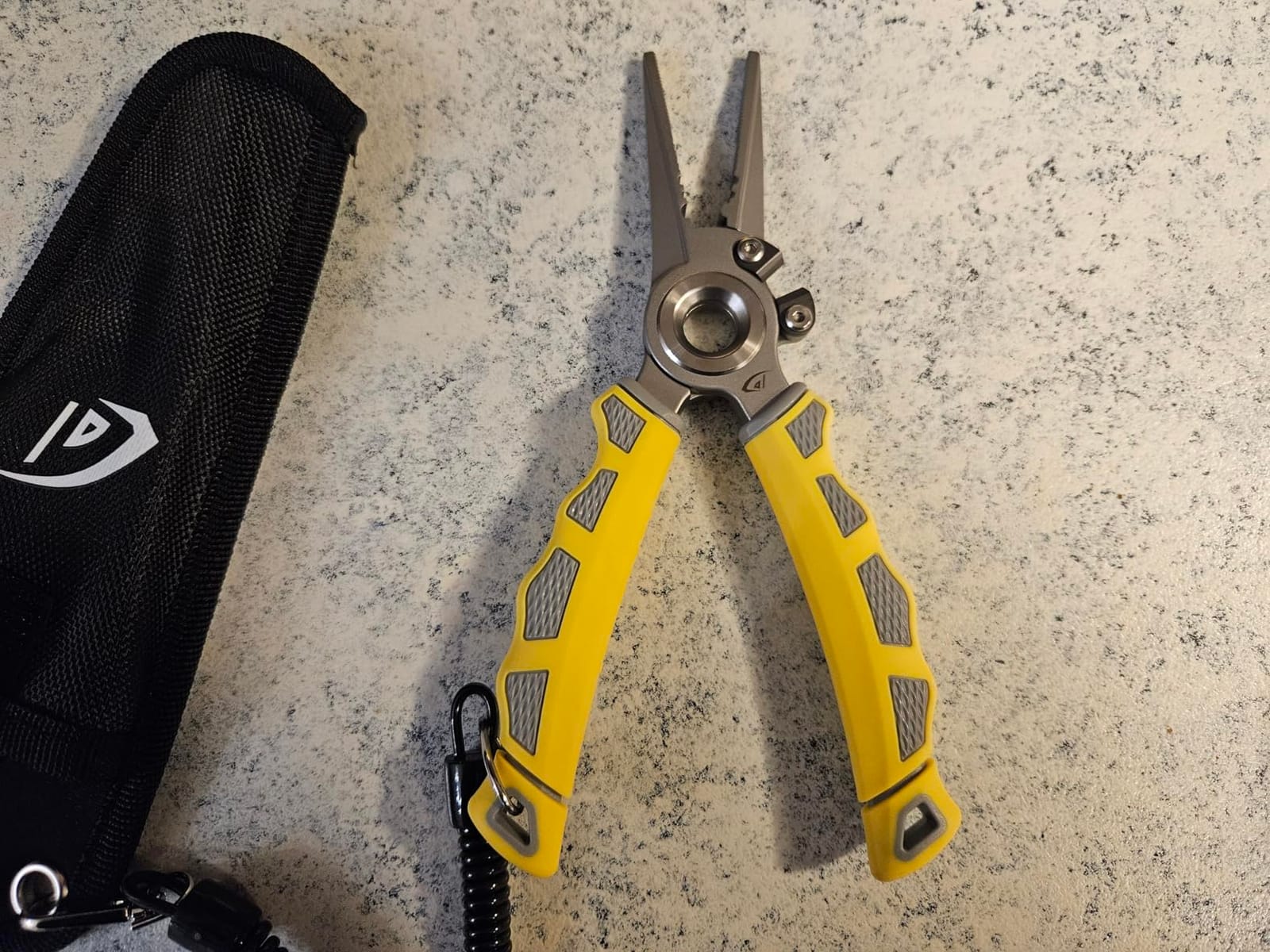
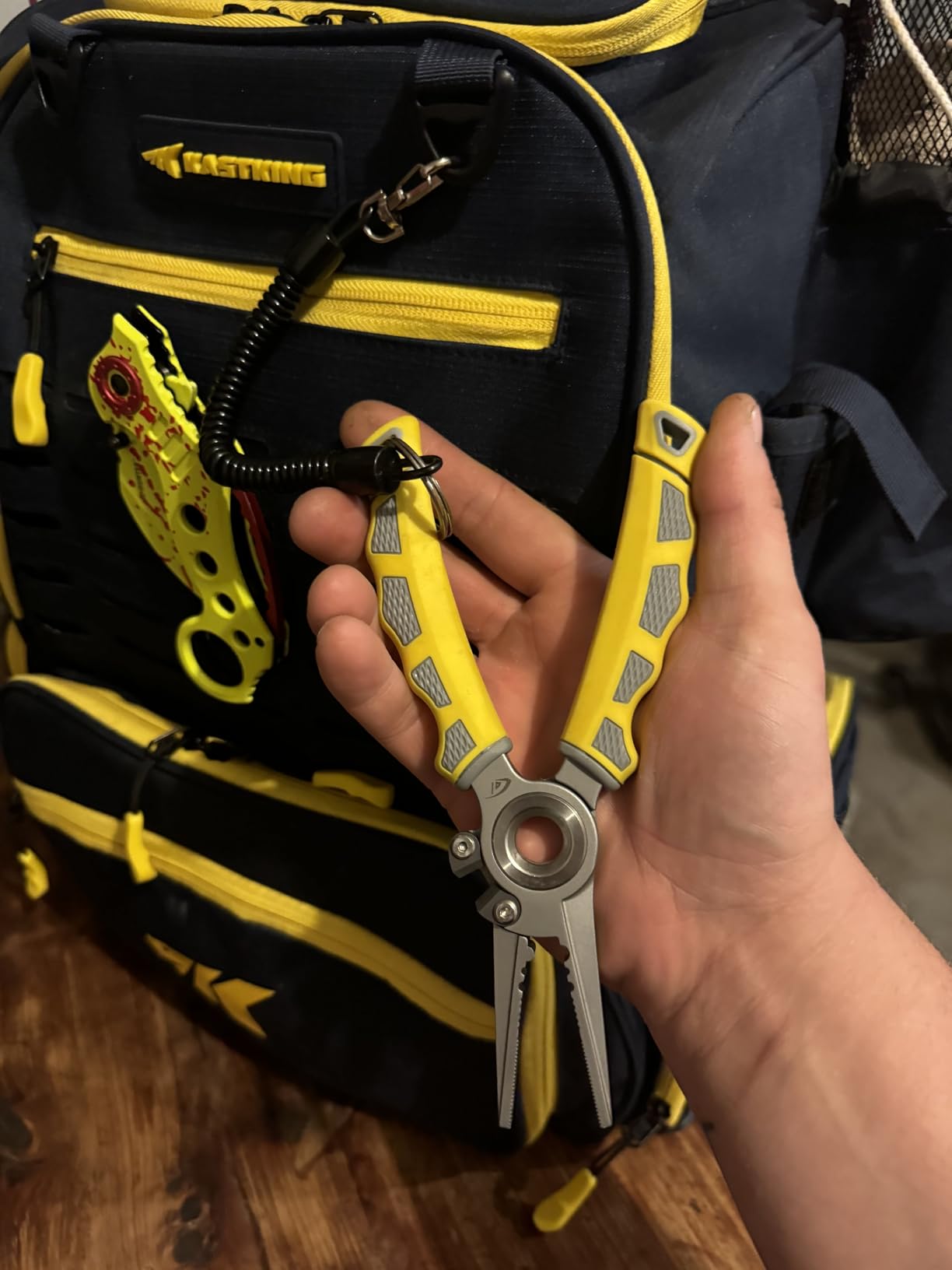
The integrated tungsten carbide cutter handles braid, mono and fluorocarbon, and the Halo Hinge keeps the jaws aligned and tight through repeated use. Textured rubber handles give strong twisting torque with a precise feel, and the spring-loaded jaws open one-handed.
At 4.8 stars from 137 ratings it is the highest-rated product here, with about 95 percent at four stars or better and essentially no one-star feedback. A sheath with belt loop and a lanyard are included, plus a five-year limited warranty and spare parts availability.
Is 17-4 stainless as good as titanium
For corrosion in salt, effectively yes. Both are stainless-class alloys that resist chloride attack rather than fighting it with a coating, so neither depends on a surface layer that can chip away. Titanium stays lighter and is non-magnetic, but 17-4 is harder and holds a sharper edge longer.
That is why this is the pick I point offshore and surf anglers toward. It costs far less than the titanium option, weighs 4.8 ounces instead of 8, and comes with a five-year warranty and five years of spare-part availability behind it.
Is it right for every fish
No. The tips are thick, and reviewers specifically note they are too large for freshwater panfish and very small hooks. The reach also suits saltwater species more than deep-jigged toothy fish where you need length to get inside a mouth.
Within its intended range, from inshore species to offshore, nothing in this roundup gives a better combination of edge retention, corrosion resistance and warranty. If your pliers live in the salt, this is the one I would buy.
12. KastKing AeroVice 7.5 Inch: Best with a Metal Coil Lanyard
KastKing AeroVice 7.5” Fishing Pliers, Split Ring Nose
420 stainless uni-body at 6.67 ounces
Serrated blades for braid and mono
Integrated handle lock
Molded sheath and coil lanyard
Pros
- Stamped 420 stainless uni-body resists rust in salt and freshwater
- Serrated blades cut braid without fraying
- Coil lanyard is metal rather than plastic
- 7.5 inch reach is good for hook removal
Cons
- Stamped stainless is less rigid than forged or titanium bodies
- Short throat limits reach on deep-hooked toothy fish
- One buyer reported a stiff hinge that needed oil
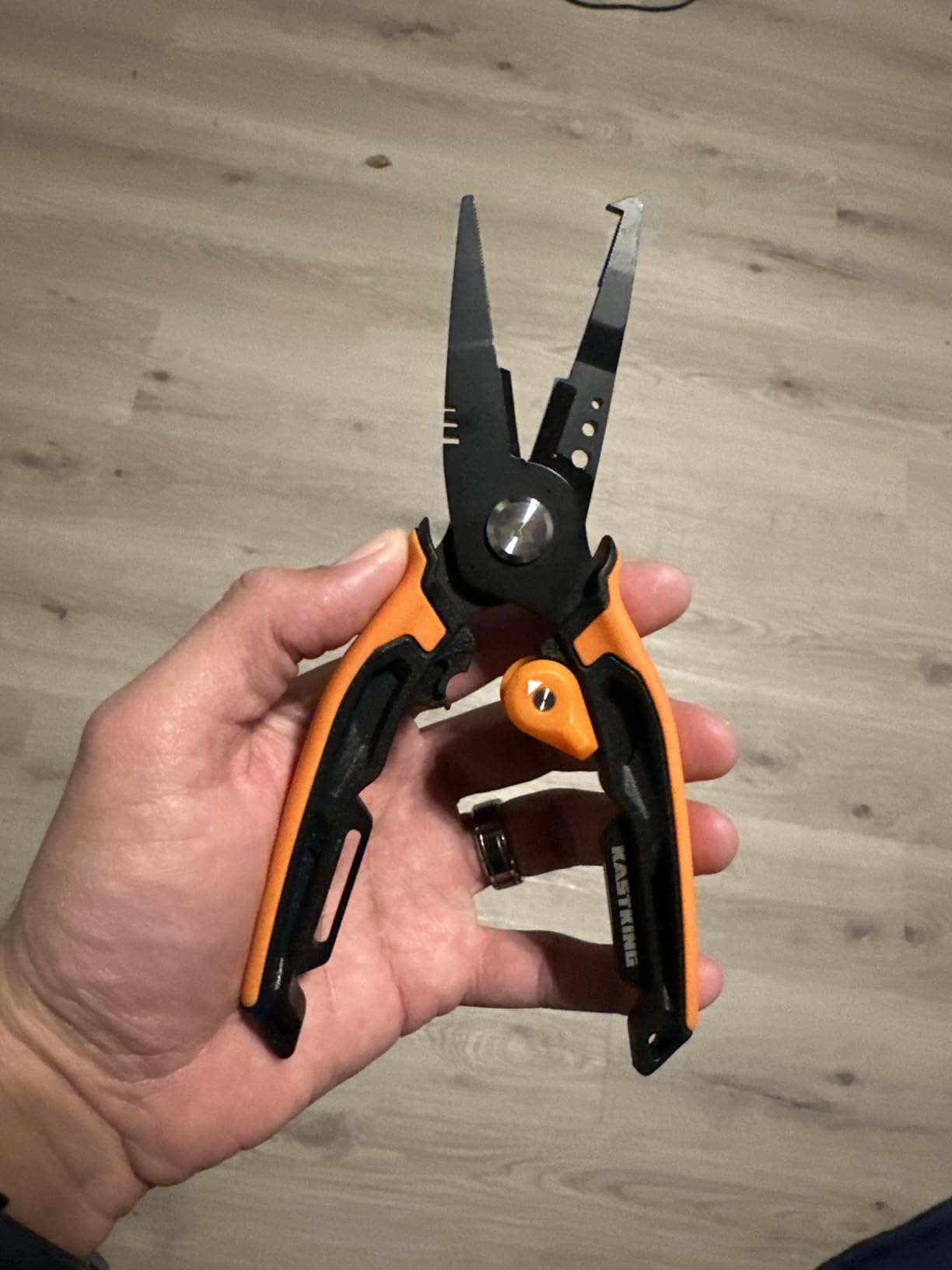
The AeroVice is a uni-body design, meaning the handles and frame are one stamped 420 stainless piece rather than a riveted assembly. Fewer crevices means fewer places for salt crystals to sit and bind, and the 420 grade itself tolerates salt exposure well when rinsed.
KastKing lists it at 6.67 ounces, about 15 percent lighter than comparable pliers of similar length. The serrated blades are designed for braid, fluorocarbon and mono with minimal fraying, and the multi-task jaws cover hook removal, split shot crimping, bait tuning and knot cinching.
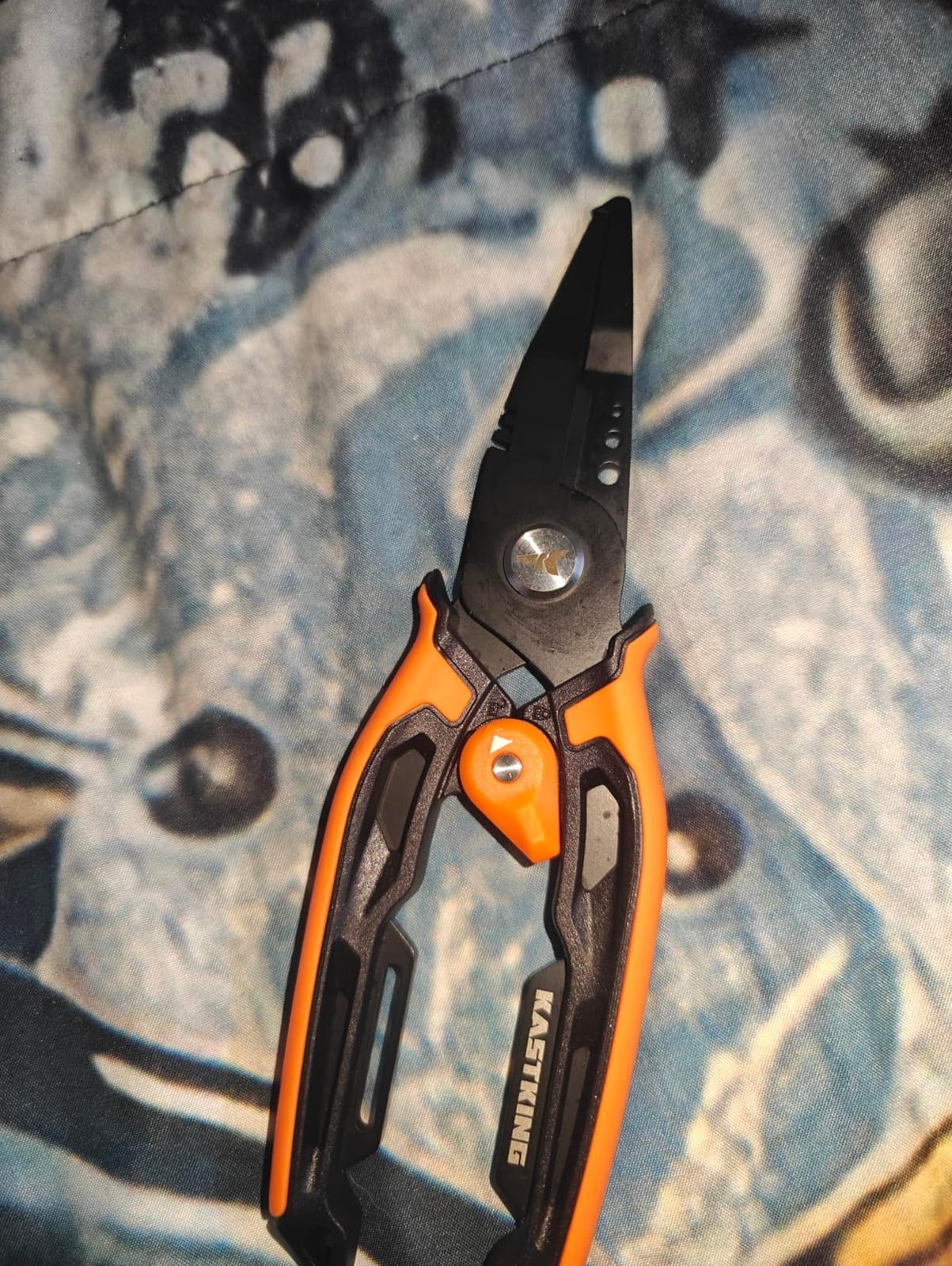
What makes it stand out is the carry system. The coil lanyard is metal rather than plastic, and it ships with a molded sheath with a belt clip plus an aluminum carabiner. Weak lanyards are the most repeated complaint about premium pliers, so a metal coil is a meaningful upgrade.
At 4.7 stars from 117 ratings with about 94 percent at four stars or better, buyers praise the light weight, the clean braid cutting and the metal coil. A small number report a stiff hinge on arrival that needed working free with oil.
Is the lanyard actually stronger
Yes, and it is the reason to look at this tool. Plastic coil lanyards are the standard on most pliers at this tier, and plastic coils stretch, snap and then let the tool go over the side. A metal coil holds its shape and its tension, which is exactly what a boat-bound tool needs.
Combined with the aluminum carabiner and the integrated handle lock, this is the most complete carry setup in the roundup. The handle lock keeps the jaws closed in storage so salt cannot get into an open jaw overnight.
Is stamped stainless rigid enough
It is less rigid than a forged or titanium body, and you will feel that if you are straightening a hook or forcing a strong fish’s jaw. For cutting, crimping, tuning and ordinary hook removal, the stamped frame is entirely adequate.
Stamped construction also means fewer internal stress points and a lighter tool, which is why the 420 options remain the practical middle tier. If deep reach matters more than weight, look at the 7.5 inch models further up the list with longer throats.
How to Choose the Best Fishing Pliers for Saltwater That Survive the Salt
Anodized aluminum, 420, 17-4 PH or titanium
Material is the decision that matters most, and the four grades here behave very differently in salt. Anodized aluminum has the oxide grown into the metal, so it cannot chip off to expose raw aluminum underneath. It is the lightest option and the best fit for kayak and flats work, and it flexes under heavy twisting load.
420 stainless is harder and more rigid but relies on a polymer or surface coating for extra protection, and 420 is a general-purpose grade that will show corrosion sooner if the coating is breached. 17-4 stainless is a precipitation-hardening marine grade that resists chloride attack on its own and holds an edge better, which is why it is the sweet spot for offshore anglers.
Titanium is the corrosion-proof answer and the heaviest-per-feel option, with the caveat that accessories often disappoint. If you fish in salt regularly, choose 17-4 or titanium. If you wade a shallow estuary, anodized aluminum is more than enough.
Jaws, cutters and the jobs they handle
A split-ring tip at the nose is the feature that separates a rigging plier from a hook remover. Look for a hooked or stepped tip that can open a ring without deforming it, and note that tip size limits ring size: smaller teeth struggle with very small rings.
For cutters, tungsten carbide is the standard worth paying for. It holds an edge through braid and fluorocarbon far longer than a plain steel blade, and a replaceable insert means a dulled edge costs a part instead of a tool. Some picks add crimping slots for split lead, single-barrel sleeves and bait tuning.
Match the jaw to the fish. Wide serrated openings handle a range of hook sizes, long noses reach deep-hooked toothy species, and the tool with the strongest frame wins when the fish is still running.
Grip, spring action and one-handed use
Spring-loaded action is what lets you open and close the tool with one hand while the other holds the fish. Look for a return spring seated inside the handle rather than exposed, because an external spring collects salt crystals and eventually binds.
A lock switch or handle lock is worth paying a little for. It holds the jaws open for bait tuning and closed for storage, which keeps salt out of an open jaw overnight in a console locker.
For grip, fully wrapped rubber or polymer handles beat bare aluminum, especially with wet or gloved hands. Partial rubber strips cover only part of the handle, and smooth aluminum is the first thing you lose grip on in cold water.
Sheath, lanyard and warranty
The single most repeated complaint from anglers is a cheap lanyard or a weak sheath, and it is worth checking before you buy. Metal coil lanyards outlast plastic coils, molded sheaths outlast leather in surf, and a working belt clip matters more than a brand name on the box.
Warranty length is a decent proxy for manufacturer confidence. The unlimited lifetime coverage on the Gerber is a genuine differentiator, five years on the 17-4 danco is strong, and a six-month term tells you to keep your receipts. Spare-part availability for replaceable carbide cutters is what determines cost over a decade.
How to Stop the Best Fishing Pliers for Saltwater From Rusting
The failure mode anglers report most often is not the jaw, it is the pivot and the spring. Salt crystals form in the gap around the hinge, and once they are there, oil will not fix it. Six steps prevent almost all of it.
1. Rinse with fresh water immediately. Do this before the tools dry. Salt is far easier to wash off while it is still in suspension than once it has crystallized into the crevices around the pivot and the cutters.
2. Work the joint while it is wet. Open and close the pliers several times under the rinse so fresh water gets behind the spring and the hinge pin. This is the single most skipped step and the one that matters most.
3. Dry it completely. Rinse-and-never-dry is where corrosion shows up first. Lay the tool flat on a towel, not in a closed console locker or a wet tackle bag, and give it time to fully air out.
4. Use a light oil on the pivot. A small drop of light machine oil or a corrosion-inhibiting spray on the hinge and spring keeps moving parts moving. A heavier film of grease traps salt instead, so go light.
5. Store it clipped, not loose. Use the sheath or a separate clip so the tool is not rattling around a wet locker with other gear. A metal coil lanyard also keeps it attached to the console rather than at the bottom of a hatch.
6. Check the coating when you get home. On coated and polymer-finished tools, look for chips and bare metal. Anodizing will not chip, but a coated 420 tool will show a wear point, and that is the spot to treat before salt gets into it.
Frequently Asked Questions
What are the best fishing pliers for saltwater use?
For most anglers the Piscifun Saltwater Fishing Pliers are the strongest all-round choice, because the aircraft-grade anodized aluminum body cannot chip and expose bare metal, the jaws are titanium-coated stainless with a split-ring tip, and the tungsten carbide cutters are fully replaceable. Anglers working wire leaders or big offshore fish should step up to 17-4 stainless or titanium for edge retention and frame rigidity.
What are some good fishing pliers that won’t rust?
Anodized aluminum, 17-4 stainless and titanium are the three constructions that genuinely resist salt rather than being protected by a coating that can chip. Among the picks here, the danco 7.5 inch in 17-4 stainless reports no rust after repeated offshore rinsing, and the danco Premio in TC21 titanium is built for permanent salt exposure. Rinse and dry after every trip regardless of material.
What are the best pliers for removing fish hooks?
A hooked or stepped split-ring tip with a wide serrated jaw opening handles the widest range of hook sizes, and replaceable tungsten carbide cutters keep the tool useful for years. The Pristis UTA II has the widest jaw opening here at 1.3 inch and includes a fish lip gripper, while the FLISSA pairs a titanium 6Al-4V hooked nose with an anodized aluminum body for stubborn rings.
Is titanium really worth the extra cost for saltwater fishing?
Only if your pliers live in salt. Titanium does not pit, does not seize at the spring and does not depend on a surface layer that can chip away, so it needs less maintenance than any coated steel alternative. If you fish freshwater or a sheltered estuary occasionally, 17-4 stainless gives most of the same corrosion resistance with a sharper edge and a lower cost. Rinse and dry after every trip either way.
How do I stop my fishing pliers from rusting?
Rinse with fresh water before the tool dries, and open and close the pliers several times under the running water so it gets behind the spring and the hinge pin. Then dry it completely on a towel, not in a closed console locker, and add a light drop of oil to the pivot. Salt crystallized in the hinge gap is the most common failure mode and the hardest to reverse.
Do saltwater fishing pliers work for freshwater too?
Yes, and they are the better tool for freshwater as well. Every pick in this roundup handles hook removal, line cutting and split rings, and the corrosion-resistant materials simply do not matter on a lake. The only real adjustment is size, since thicker tips such as the danco 7.5 inch are oversized for panfish and very small hooks, so freshwater-only anglers may prefer a finer-nosed model.
The Verdict: Best Fishing Pliers for Saltwater
The best fishing pliers for saltwater in 2026 come down to what your water asks of them. The Piscifun is the pick we would buy first: anodized aluminum that cannot chip, replaceable tungsten carbide cutters and a 3.6-ounce weight that disappears in a kayak pocket. Buy the Booms Fishing X1 if you tie leaders and want crimping positions in the same tool, and step up to the danco 7.5 inch in 17-4 stainless when the tool lives offshore.
Whichever one you choose, rinse it under fresh water before it dries, work the joint while it is wet, and let it dry fully before it goes back in the locker. That routine does more for tool life than any material choice on this list.