
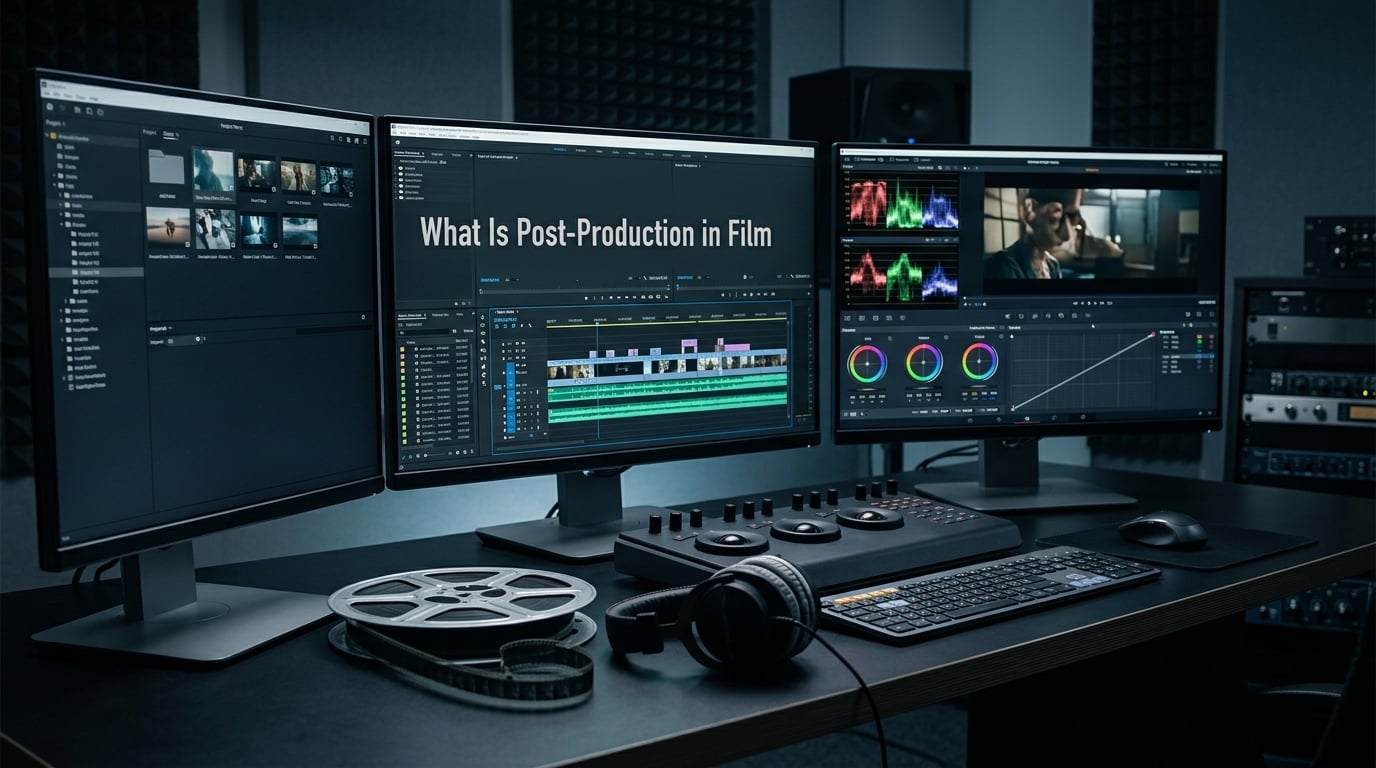
When a movie looks seamless on screen, with perfect timing, crystal-clear dialogue, stunning visual effects, and an immersive soundscape, that is not accidental. That is the result of post-production in film.
This phase is where raw footage transforms into the final product audiences watch. Many people see the filming process as the creative heart of filmmaking, but the truth is that post-production shapes the narrative just as much, if not more. Some filmmakers even say post-production can save a film that struggled during principal photography.
In this complete guide, I will walk you through exactly what post-production in film means, how the workflow functions, and what you need to know if you are breaking into the industry or simply want to understand how movies come together.
Table of Contents
What Is Post-Production in Film?
Post-production is the final major phase of filmmaking that occurs after principal photography wraps. It encompasses every task that transforms completed footage into a finished, distributable film.
During this stage, creative teams edit picture, design and mix sound, add visual effects, compose or license music, grade color, and prepare the final deliverable for theaters, streaming platforms, or broadcast. The goal is to take all the raw material captured during production and shape it into a cohesive story ready for audiences.
The term “post-production” covers a wide range of specialized activities. Here is what typically falls under this umbrella:
- Picture editing and assembly
- Dialogue editing and ADR (Automated Dialogue Replacement)
- Sound effects, Foley, and ambient audio
- Music composition and licensing
- Sound mixing and mastering
- Visual effects (VFX) and compositing
- Color correction and grading
- Titles, credits, and motion graphics
- Formatting for distribution (DCP, streaming, broadcast)
Think of it this way: if principal photography captures the ingredients, post-production is where you cook the meal, plate it beautifully, and decide how to serve it to your guests.
The Post-Production Workflow: 9 Essential Stages
The post-production workflow typically moves through nine distinct stages. While smaller projects might compress or skip certain steps, major films follow this progression from raw footage to finished deliverable.
Stage 1: Organizing and Securing Footage (Dailies/Rushes)
The first technical step involves ingesting all footage captured during production. This is often called dailies or rushes, referring to the raw material the production generates each day.
Post-production teams carefully back up and organize this footage, creating a secure library that editors and sound designers can access throughout the process. Proper organization at this stage prevents costly delays later. Without a reliable system for tracking footage, the editing team can waste hours searching for specific shots.
During this phase, the post-production supervisor works with the production team to understand the scope of material and establish workflows for collaboration. For larger productions, this might involve setting up secure remote access so editors and VFX artists can work from different locations.
Stage 2: Picture Editing
Picture editing is where the film truly takes shape. The editor, working closely with the director, reviews all footage and begins assembling it into a coherent story.
Early cuts are called rough cuts, where the basic structure emerges from hours of raw material. The editor experiments with different shot selections, pacing, and sequence orders. As the edit matures, it progresses through fine cuts until reaching the locked picture stage, where the narrative structure is finalized and no further changes are made.
The relationship between director and editor is crucial at this stage. Trust between these two creatives determines how well the film realizes its vision. Editors need to understand the director’s intent while also bringing their own creative problem-solving to the edit. The edit decision list (EDL) documents every cut and is used throughout the remaining post-production stages.
Stage 3: Sound Editing and Design
While picture editors work on the visual narrative, sound editors build the film’s auditory world. This involves multiple sub-disciplines working in parallel.
Dialogue editors clean up recorded speech, removing background noise, fixing technical issues, and ensuring consistency across scenes. If certain lines were unusable on set, the ADR process allows actors to re-record them in studio conditions.
Sound effects editors add appropriate audio elements, from subtle room tones to dramatic environmental sounds. The Foley artist creates custom sound effects by recording specific materials and movements, like footsteps on different surfaces or the rustle of clothing. These personalized sounds feel more organic than generic library effects.
Sound designers also create original audio elements that exist beyond literal reproduction, adding emotional weight through creative use of texture and tone.
Stage 4: Music and Scoring
Music in post-production typically involves two parallel tracks: original composition and licensed tracks.
The composer creates an original score specifically for the film, working from early edits to understand pacing and emotional beats. Composers might begin with temp music (existing tracks used as placeholders) before delivering final cues that match the director’s vision.
The music supervisor handles licensing existing songs for the soundtrack, negotiating deals with record labels and artists. This is particularly important for films that require contemporary music to establish time period or setting.
The M&E track (music and effects) is prepared separately, containing only score and sound effects without dialogue. This allows international distributors to dub dialogue into different languages while preserving the original music.
Stage 5: Sound Mixing
Sound mixing is where all audio elements come together. The dubbing mixer balances dialogue, music, sound effects, and ambient audio into a unified soundtrack.
This happens in specialized mixing theaters with multi-channel speaker systems. The mix engineer ensures dialogue remains intelligible over music, that sound effects have appropriate impact, and that the overall audio experience supports the visual storytelling.
Modern films typically deliver in formats ranging from stereo to Dolby Atmos immersive sound. The final mix must meet technical specifications for various delivery platforms, from cinema playback systems to streaming compression.
Sound mixing often takes longer than anticipated, as adjustments to one element affect the balance of everything else. The process requires multiple review sessions to ensure the mix works across different playback environments.
Stage 6: Visual Effects (VFX)
Visual effects encompass any imagery created or modified outside of what was captured on camera. This spans a vast range, from subtle cleanup work to elaborate fantasy sequences.
VFX work is supervised by the VFX supervisor, who collaborates with the director and cinematographer to understand what needs to be created or enhanced. Modern blockbusters routinely contain hundreds or even thousands of VFX shots.
Common VFX categories include:
- Green screen compositing
- Digital environment extension
- Character animation and creature work
- Destruction and simulation effects
- Wire and rig removal
- Digital makeup and aging effects
- Sky replacement and weather effects
Independent films often rely on VFX for practical fixes rather than spectacular effects. Removing modern buildings from period settings, fixing continuity errors, or enhancing small moments with subtle computer graphics can elevate an indie production significantly without blockbuster budgets.
Stage 7: Color Grading
Color grading is the process of adjusting and enhancing the visual appearance of each frame. The colorist works with footage to establish the film’s overall look and ensure consistency across scenes.
Color correction handles technical adjustments like exposure, white balance, and contrast. Color grading goes further, making creative choices that establish mood and visual style. Films like Dune or Blade Runner 2049 have distinctive color palettes that become part of their identity.
The colorist works in a calibrated color suite, viewing footage on professional monitors capable of displaying the full range of adjustments.HDR (High Dynamic Range) grading has become standard for theatrical releases, providing greater brightness and color depth.
Color decisions can cause delays in post-production, as directors and cinematographers sometimes disagree about the final look. These conversations require trust and clear communication to resolve without derailing schedules.
Stage 8: Titles, Credits, and Graphics
Once the picture is locked and the audio is mixed, motion graphics artists create opening titles, end credits, and any on-screen text elements.
Main title sequences establish the film’s identity before the story begins. Some productions commission elaborate custom title sequences, while others keep titles minimal. End credits list everyone involved in the production, from lead actors to crew members.
Motion graphics also include any animated elements appearing within the film, such as news broadcasts, text messages, computer screens, or information graphics. The online editor integrates these elements into the final picture.
Stage 9: Distribution Preparation
The final stage involves formatting the completed film for its intended delivery platforms. For theatrical release, this means creating a DCP (Digital Cinema Package), which is a specific file format theaters require for projection.
For streaming platforms, the film is encoded in multiple resolutions and bitrates to ensure smooth playback across different internet connections. Broadcast television requires different technical specifications still.
The post-production team performs quality control checks at this stage, reviewing the deliverable on various playback systems to catch any issues before distribution. This includes checking subtitle accuracy, audio sync, and captioning for accessibility.
Film festival submissions have specific technical requirements that often differ from commercial distribution. Many indie filmmakers work with dedicated post-production houses that specialize in festival delivery.
Key Roles in Post-Production
Successful post-production requires a team of specialized professionals working in coordination. Here are the key roles you will encounter in this phase.
The post-production supervisor oversees the entire post-production process, managing schedules, budgets, and communication between departments. They ensure all pieces come together on time and within budget.
The picture editor works most closely with the director to shape the story through editing. This role requires both technical skill with editing software and deep understanding of storytelling principles.
Sound roles include the sound editor, ADR editor, Foley artist, and dubbing mixer. Each handles a specific aspect of the audio pipeline, from dialogue cleanup to final mix preparation.
The VFX supervisor manages all visual effects work, collaborating with artists and ensuring VFX integrates seamlessly with practical footage. The online editor handles the technical integration of all picture elements, including titles and VFX shots.
The colorist works exclusively on color grading, often as a specialized role separate from the main editing team. The composer creates original music, while the music supervisor handles licensing of existing songs.
Entry-level positions like edit assistant and post-production runner provide support and offer pathways into more senior roles. Breaking into post-production often starts with these positions, where you learn workflow and build relationships with editors.
Post-Production Timeline Expectations
How long does post-production take? The answer varies significantly based on the scope and scale of the project.
A feature film in 2026 typically spends three to six months in post-production, though major studio releases with extensive VFX can take a year or longer. Television series often work faster, with episode post-production running eight to twelve weeks.
Independent films with minimal VFX and smaller budgets might complete post-production in two to three months. Documentaries can vary widely depending on editing complexity and the availability of interview footage.
Streaming platforms have accelerated timelines in some cases, pushing finished products to audiences faster than traditional theatrical release cycles. However, quality post-production still requires adequate time for review and revision.
Budget considerations affect every aspect of post-production. Independent filmmakers often handle more tasks themselves or rely on smaller teams, while studio productions have dedicated specialists for each function. A Hollywood blockbuster might spend more on post-production than the entire budget of an indie film.
Frequently Asked Questions
What does it mean if a film is in post-production?
When a film is in post-production, it means filming (principal photography) has been completed and the team is now working on editing footage, adding sound effects, music, visual effects, and color grading to complete the film for distribution.
How long does post-production typically take?
Post-production for a feature film typically takes three to six months. Major studio films with extensive visual effects can take a year or longer, while smaller independent films might complete post-production in two to three months.
What software is used in post-production?
Professional post-production relies on software like Avid Media Composer, Adobe Premiere Pro, and DaVinci Resolve for editing. Sound editing commonly uses Pro Tools, while VFX artists work with Maya, Nuke, Houdini, and After Effects.
What do actors do during post-production?
During post-production, actors may participate in ADR (Automated Dialogue Replacement) sessions to re-record lines that were unusable from the set due to background noise or technical issues. They might also record additional voiceover work and approve final edits.
What is an example of post-production?
A good example of post-production is the sound mixing process for a scene where an actor walks through a city. The dialogue is cleaned up, footsteps are added as Foley, city ambience is layered in, and music is composed or licensed for the scene. All these elements are then balanced and mixed into the final soundtrack.
Conclusion
Post-production in film is where the magic happens. It is the phase where scattered footage becomes a coherent story, where dialogue gains clarity, where sound creates atmosphere, and where visual effects enable filmmakers to show audiences things that never existed.
Understanding post-production is essential whether you are an aspiring filmmaker, a working professional looking to expand your knowledge, or simply someone who wants to appreciate movies on a deeper level. The next time you watch a film and feel moved by a perfectly timed cut, an invisible sound effect, or a stunning visual effect, you will have a better understanding of the work that made it possible.
The industry continues evolving with remote collaboration tools and cloud-based workflows making post-production more accessible than ever. Independent filmmakers can now achieve results that once required studio-level budgets, democratizing the final phase of filmmaking for creators everywhere.