
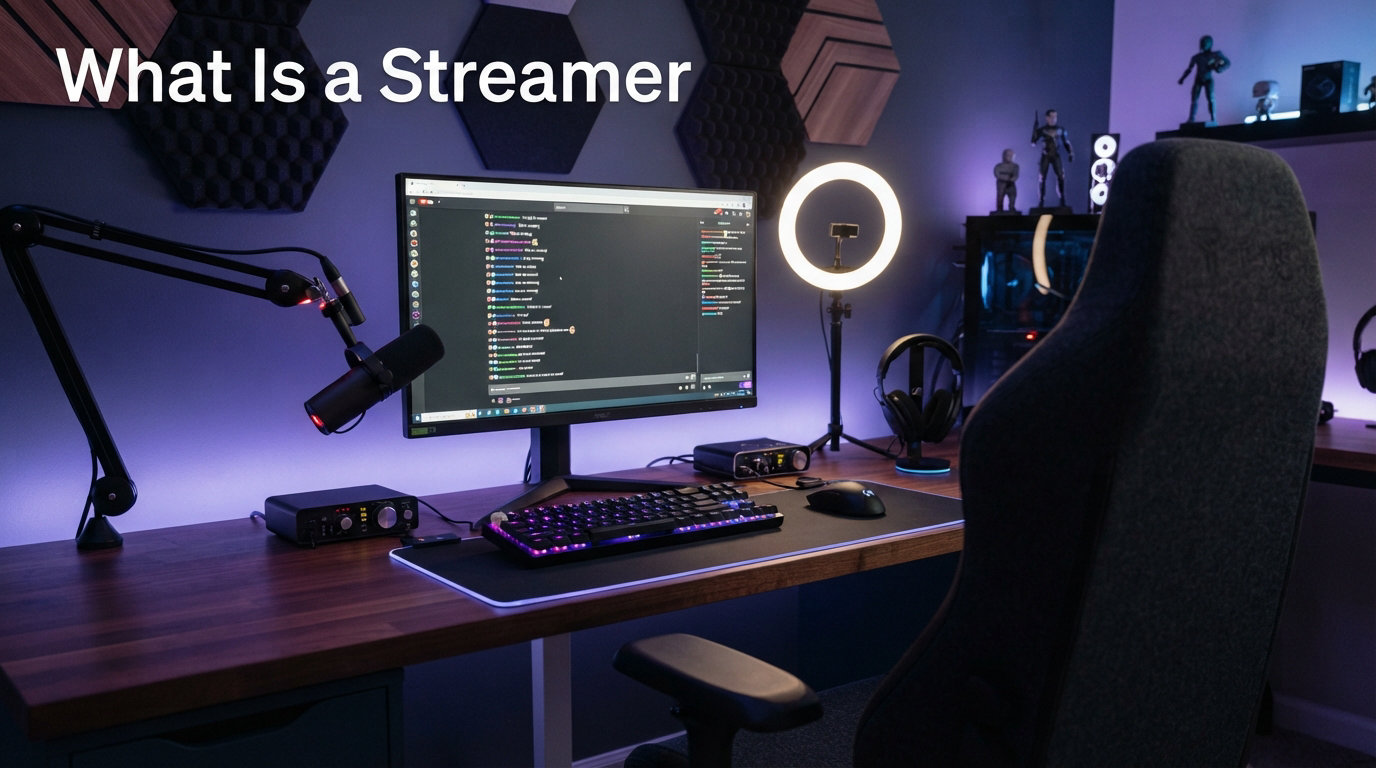
A streamer is an individual who broadcasts themselves live online to an audience, typically through platforms like Twitch, YouTube, and TikTok. Unlike traditional content creators who record and edit videos, streamers share their activities in real time and interact directly with viewers through live chat. I have spent years watching and studying the streaming industry, and the definition has grown far beyond gaming. Today, streamers host everything from cooking sessions to music performances to late-night conversations.
In this guide, I will walk you through exactly what a streamer is, how the technology works, the different types of streamers, and how they earn income. By the end, you will understand the streaming world whether you are a curious viewer or someone thinking about going live yourself.
Table of Contents
What Is a Streamer and How Do They Work
At its core, a streamer is a content creator who uses live broadcasting technology to share video and audio with an online audience in real time. The term covers anyone who transmits live content over the internet, from a gamer playing Fortnite to a musician hosting a virtual concert.
The word “streamer” also has older meanings. Outside the internet, a streamer can refer to a long narrow flag, a HiFi audio device that pulls digital music from online sources, or even a party decoration. This guide focuses specifically on online streamers, the people who broadcast themselves live to viewers.
What separates streamers from other creators is the live interaction. Viewers type messages in a chat box, and the streamer can respond on the spot. That back-and-forth creates a sense of community that recorded videos cannot match.
How Live Streaming Actually Works
Live streaming sounds complicated, but the basics are simple. A streamer runs broadcasting software (the most popular option is called OBS, which stands for Open Broadcaster Software) on their computer. This software captures what is happening on their screen, their webcam, and their microphone.
The software then encodes that video and audio into a format that can travel over the internet. It sends the feed to a streaming platform’s server, which distributes it to every viewer watching at that moment. The whole round trip happens in about two to five seconds, which is why live streams feel almost instant.
To stream, you need a few basics: a computer or console, a webcam or camera, a microphone, and a stable internet connection that uploads at least 5 megabits per second. That is the minimum. Top streamers spend thousands on faster setups, but plenty of successful creators started with a laptop and a $30 microphone.
Types of Streamers You Will Find Online
Streaming covers a wide range of content. Here are the main categories you will encounter.
Gaming streamers are the most visible group. They broadcast themselves playing video games, often with commentary. Sub-genres include Let’s Plays (casual walkthroughs), speedruns (finishing games as fast as possible), and esports tournaments. Famous gaming streamers like Ninja, xQc, and Shroud have audiences in the millions.
IRL streamers broadcast their real-life activities. The acronym stands for “In Real Life.” They might walk around a city with a camera, cook dinner, attend events, or just chat with their community while going about their day. This category has exploded on TikTok and Twitch.
Music and art streamers perform live concerts, produce beats, or create digital art while viewers watch. Platforms like Twitch have entire communities built around creative work.
VTubers use animated avatars instead of showing their real faces. They wear motion-tracking sensors and their virtual character moves and reacts on stream. VTubers originated in Japan and have become a global phenomenon, with creators like Gawr Gura and Ironmouse pulling in millions of subscribers.
Commentary and chat streamers focus on talking rather than doing. They react to news, discuss topics, interview guests, or just hang out with their audience. Think of them as live podcast hosts.
Major Streaming Platforms Compared
Streamers choose where to broadcast based on their audience, content style, and income goals. Here are the biggest platforms in 2026.
Twitch remains the dominant platform for live streaming, especially in gaming. It launched in 2011 and now has over 7 million monthly active streamers. Twitch pays creators through subscriptions, ad revenue, and “Bits” (virtual currency viewers tip with). Its chat culture is famous for being fast, funny, and sometimes chaotic.
YouTube Live benefits from YouTube’s massive search engine. Streams can be replayed as regular videos afterward, which helps creators reach people who missed the live broadcast. Many streamers use YouTube as a secondary platform to grow discoverability.
TikTok Live focuses on short, mobile-first streams. It has become hugely popular for IRL content and casual chatting, especially with younger audiences in their teens and twenties.
Kick launched in 2026 as a competitor to Twitch with a more creator-friendly revenue split (95/5 versus Twitch’s traditional 50/50 for most streamers). It has attracted big names looking for better pay.
Facebook Live and Instagram Live still serve niche audiences, mostly for personal broadcasting and small creators. They do not have the same cultural impact as the top three platforms.
How Streamers Make Money
This is one of the most asked questions about the industry. Yes, streamers get paid, but the reality is more complicated than most people think.
The main income streams include:
- Subscriptions – Viewers pay a monthly fee (usually $5 to $25) for perks like ad-free viewing, custom emotes, and access to a private chat. The streamer keeps a percentage after the platform’s cut.
- Donations and tips – Viewers send one-time payments through services like PayPal or Streamlabs. Twitch’s “Bits” system works similarly.
- Ad revenue – Platforms run ads during streams, similar to YouTube. Creators earn a share based on how many viewers watch.
- Sponsorships – Brands pay streamers to promote products during their broadcasts. A streamer with 50,000 viewers can charge thousands per sponsored segment.
- Merchandise – Many streamers sell branded t-shirts, hoodies, and hats.
According to forum discussions from working streamers, smaller creators with 50 to 100 average viewers typically earn $50 to $200 per month from subscriptions alone. Add donations and sponsorships, and a dedicated mid-tier streamer can make a modest full-time income.
The top streamers earn millions. Ninja reportedly made over $10 million in a single year during his peak. However, that is an extreme outlier. Most streamers treat it as a side gig that supplements a day job.
Streamer vs YouTuber: Key Differences
People often lump streamers and YouTubers together, but they are distinct roles. The biggest difference is timing. Streamers broadcast live, while YouTubers record and edit videos before publishing.
This timing difference changes everything about how each creator works. Streamers need to be entertaining for hours straight without edits. They react to chat in real time and cannot reshoot a moment. YouTubers can cut mistakes, color-grade their footage, and add music. They control the final product completely.
Community interaction also works differently. Streamers build relationships through live chat, voice calls, and channel point redemptions. YouTubers interact through comments, which are slower and more asynchronous.
Most successful creators today do both. They stream on Twitch and upload edited highlights to YouTube. This hybrid approach lets them capture the spontaneity of live content while also building a searchable archive for new viewers.
The Rise of Streaming Culture
Streaming did not exist as an industry 20 years ago. The first major platform was Justin.tv, which launched in 2007 and let anyone broadcast their life online. It spun off a gaming-focused section called Twitch in 2011.
Amazon bought Twitch for $970 million in 2014, signaling that mainstream business saw real value in streaming. Around the same time, YouTube launched its live feature, and new platforms kept appearing.
The COVID-19 pandemic in 2020 pushed streaming into the mainstream. With everyone stuck at home, both viewers and creators flocked to live platforms. Twitch viewership jumped over 50% that year, and the growth has not slowed since.
Today, streaming is a global industry worth billions. Countries like South Korea and China have their own streaming stars and platforms. The format has changed how people consume entertainment, learn new skills, and connect with communities.
Equipment and Tools Streamers Use
Starting a stream does not require expensive gear. Here is what a typical beginner setup looks like.
Computer or console: A decent PC or a modern gaming console (PlayStation 5, Xbox Series X, Nintendo Switch) handles most games. Consoles have built-in streaming tools that work well for beginners.
Webcam: A simple 1080p webcam costs around $50 to $100. Many streamers eventually upgrade to a DSLR or mirrorless camera for better image quality.
Microphone: This matters more than video quality for most viewers. A USB microphone like the Blue Yeti or Shure MV7 runs $100 to $250 and dramatically improves audio.
Broadcasting software: OBS Studio is free and works on Windows, Mac, and Linux. Streamlabs Desktop adds extra features for a small subscription fee.
Lighting: A basic ring light or key light helps your camera look clean and professional. Even a cheap $30 lamp pointed at your face works.
Personality and consistency matter more than gear. I have watched small streamers with terrible lighting build devoted audiences because they were funny, authentic, and showed up every day. Technical polish helps, but it cannot save a boring stream.
Frequently Asked Questions
How exactly do streamers make money?
Streamers earn money through several income streams, including monthly subscriptions from viewers, one-time donations and tips, ad revenue from running commercials, sponsorships with brands, and merchandise sales. Most streamers combine multiple income sources, and the total depends heavily on audience size and engagement. A small streamer with 50 to 100 average viewers might earn $50 to $200 per month from subscriptions alone, while top streamers earn millions annually.
Who is the biggest online streamer?
As of 2026, Ninja holds many historical records, including being the first streamer to reach 50 million followers on Twitch and signing exclusive deals worth tens of millions of dollars. However, the biggest active streamers by current viewership include Kai Cenat, Ibai, and various VTubers. On YouTube, creators like Dr Disrespect and PewDiePie have massive followings. The top spot shifts frequently as the industry grows.
What is the purpose of a streamer?
The purpose of a streamer is to entertain, inform, or connect with an audience through live broadcasting. Streamers serve as hosts, performers, teachers, and community builders. Some focus on playing games, others create art, share music, discuss news, or simply provide companionship through chat. The core purpose is delivering live content that viewers cannot get from pre-recorded videos, mainly the real-time interaction.
What is the difference between a streamer and a YouTuber?
The main difference is timing and editing. Streamers broadcast live without editing, reacting to chat in real time, while YouTubers record, edit, and polish videos before publishing. Streamers build community through live chat and spontaneous moments. YouTubers build community through comments, curated content, and searchable archives. Many creators today do both to maximize reach.
What exactly does a streamer do?
A streamer broadcasts live video content, usually while playing video games, creating art, performing music, cooking, or simply talking with their audience. During a stream, they interact with viewers through chat, respond to questions, play multiplayer games with community members, and maintain an entertaining presence for several hours. Outside of streaming, they often manage social media, edit highlights, network with other creators, and handle business tasks like sponsorships.
What does it mean if someone is a streamer?
If someone calls themselves a streamer, it means they regularly broadcast live content online to an audience. They use platforms like Twitch, YouTube Live, or TikTok to share video and audio in real time. Being a streamer can be a full-time career, a side hustle, or a hobby. The label covers everyone from massive celebrities to people who stream to 5 viewers every week.
Do streamers actually get paid?
Yes, streamers get paid through multiple revenue streams. Platforms pay creators based on subscription revenue, ad impressions, and Bits or tips. Many streamers also earn from sponsorships, affiliate links, and merchandise. Payment amounts vary wildly. Top streamers earn millions per year, while small streamers with 50 viewers might earn $50 to $200 monthly from subscriptions and donations combined. Streaming income scales with audience size, engagement, and content niche.
Final Thoughts on What Is a Streamer
So what is a streamer in 2026? A streamer is anyone who broadcasts live content to an online audience, whether they are playing games, creating art, performing music, or just talking with their community. The streaming industry has grown from a niche hobby into a global entertainment medium worth billions of dollars.
If you are curious about streaming, start by watching a few streams on Twitch or YouTube to see what appeals to you. If you want to try streaming yourself, all you really need is a computer, a microphone, and a willingness to show up consistently. The barrier to entry has never been lower, and the audience for new voices has never been larger.
Whether you end up as a viewer or a creator, understanding what a streamer is and how the industry works helps you appreciate the work behind the broadcast. The next time you watch your favorite streamer, you will know exactly what makes that live connection so special.