
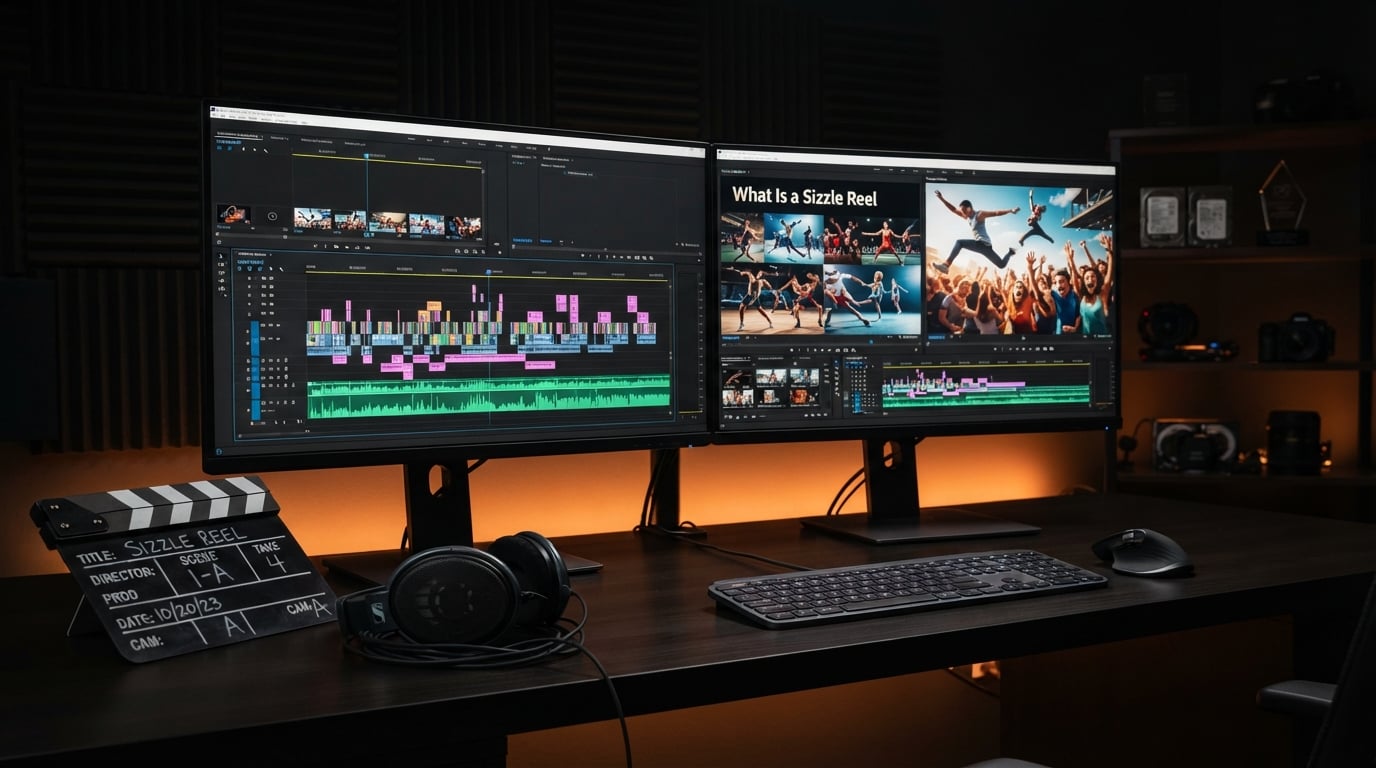
A sizzle reel is a short, fast-paced promotional video that uses high-impact visuals and energetic audio to hook viewers and generate excitement. Typically running 30 seconds to 2 minutes, it packs the best moments of a brand, product, film concept, or creative portfolio into one attention-grabbing package.
You have probably watched a sizzle reel without even realizing it. They play before movies at film festivals, during investor pitch meetings, and across social media feeds from major brands. The goal is always the same: make the viewer feel something fast and leave them wanting more.
In this guide, we break down what a sizzle reel is, what it is used for, how it differs from demo reels and trailers, and what separates a great one from a forgettable one. Whether you are a filmmaker pitching a show or a brand launching a product, understanding this format can give you a serious edge in 2026 and beyond.
Table of Contents
What Is a Sizzle Reel?
A sizzle reel is a short promotional video built to excite and persuade. It distills the energy, tone, and promise of a project into a concentrated burst of visuals and sound. Think of it as a highlight reel on adrenaline — every second is engineered to keep you watching.
The term goes by many names depending on the industry. In film and television, people call it a pitch reel or pitch tape. In advertising and corporate settings, you will hear promo video, teaser, or brand video. Creative professionals sometimes refer to their work as a showreel, demo reel, or highlight reel. They all serve the same core function: showcase the best material in a tight, high-energy format.
The word “sizzle” comes from the idea of making something sizzle with energy and excitement — like a steak hitting a hot pan. The term gained traction in the entertainment and advertising industries because it perfectly captures the intended effect. A good sizzle reel should feel hot, fast, and impossible to ignore.
One important distinction from forum discussions among working filmmakers: a “rip-o-matic” is a specific type of sizzle reel where footage is assembled from existing films to represent what an unmade project will look like. This is different from a sizzle reel built from your own original footage. Knowing the difference matters when you are explaining your process to producers or investors.
At its core, every sizzle reel shares a few defining traits. It is short, visually driven, rhythmically edited, and designed to make a lasting emotional impression in minimal time.
What Is the Purpose of a Sizzle Reel?
The purpose of a sizzle reel is to generate buzz, communicate tone, and persuade the viewer to take action — whether that means greenlighting a show, investing in a startup, or hiring a creative professional. It is the ultimate attention-getting tool in industries where people see hundreds of pitches a year.
For filmmakers and television creators, a sizzle reel serves as a proof of concept. You cannot always describe a show’s vibe in a written pitch document. A sizzle reel shows executives exactly what the finished product will feel like, which is why networks and streaming platforms frequently request them before making development deals.
In the corporate and startup world, sizzle reels play a different but equally important role. Tech companies use them to demo software features at trade shows and investor presentations. Brands use them for product launches, pulling together the most exciting features and visuals into a single shareable asset.
Creative professionals — editors, cinematographers, motion designers, and actors — use sizzle reels as video resumes. Instead of sending a static portfolio, they send a reel that instantly demonstrates their range, style, and technical skill. Talent agents and casting directors rely on these reels to evaluate candidates quickly.
Across every use case, the common thread is persuasion through energy. A sizzle reel makes the viewer feel the potential of the project or person behind it. That emotional hook is what separates it from a simple compilation of clips.
Sizzle Reel vs Demo Reel vs Trailer: Key Differences
People use these terms interchangeably, but they are not the same thing. Understanding the distinctions will help you create the right deliverable for the right situation — and avoid looking amateurish in a pitch meeting.
A sizzle reel is built around energy and excitement. It prioritizes pace, music, and visual impact over narrative completeness. The goal is to make the viewer feel the vibe and want more. Sizzle reels are commonly used for pitch meetings, brand campaigns, and trade show displays.
A demo reel is more utilitarian. It exists to showcase a creator’s technical skills and range of past work. An editor’s demo reel might show different types of cuts across multiple projects. A cinematographer’s demo reel highlights different lighting setups and camera movements. The focus is on demonstrating competence rather than selling a specific idea.
A trailer is a finished promotional piece for a completed or nearly completed film or show. It follows a more structured narrative arc — setup, escalation, tease — and is designed for public consumption. Trailers are marketing tools meant to drive ticket sales or streaming sign-ups, not internal pitch documents.
Then there is the rip-o-matic, which we mentioned earlier. This is a sizzle reel built from borrowed footage from existing films or stock libraries. It represents what an unmade project will look and feel like. Producers and filmmakers use rip-o-matics when they do not yet have original footage to show, which is extremely common in early-stage pitching.
Here is a quick way to remember the difference. A sizzle reel sells a feeling. A demo reel sells a skillset. A trailer sells a finished product. Choose the right format for your goal, and your pitch will land much harder.
How Long Should a Sizzle Reel Be?
The ideal length for a sizzle reel is between 30 seconds and 2 minutes. Most industry professionals agree that shorter is almost always better, because the format is designed for impact, not depth.
If you are pitching a TV show or film concept to executives, aim for 1 to 3 minutes at most. These viewers see dozens of pitches weekly, and anything longer risks losing their attention. A tight, punchy reel shows you respect their time and understand the medium.
For social media and digital marketing, the sweet spot is even tighter. Instagram Reels, TikTok, and YouTube Shorts perform best between 15 and 60 seconds. If your sizzle reel lives primarily online, front-load your strongest visuals and hook the viewer within the first 3 seconds.
Portfolio and demo-style sizzle reels for creative professionals can run slightly longer — 2 to 4 minutes — because the audience expects to evaluate your full range of work. Even then, maintain a brisk pace throughout. If a section drags, cut it. Every frame should earn its place.
The golden rule: your sizzle reel should end while the viewer still wants more. If they are checking their watch, it is too long.
What Makes a Good Sizzle Reel?
A great sizzle reel does not happen by accident. It requires deliberate choices about pacing, music, structure, and visual flow. Here are the elements our team sees consistently in reels that actually convert.
Hook viewers in the first five seconds. Open with your strongest shot, most dramatic moment, or most striking visual. You do not get a second chance to make a first impression, and most viewers decide within seconds whether to keep watching.
Choose music that matches your energy. The soundtrack drives the entire emotional experience of a sizzle reel. Upbeat, percussive tracks work for high-energy brand reels. Atmospheric or cinematic scores suit film pitches. Whatever you pick, the music should set the pace for your cuts.
Edit to the beat. Synchronize your cuts and transitions to the rhythm of the music. This creates a satisfying, almost physical response in the viewer. When visuals land on the beat, the reel feels professional and intentional.
Tell a coherent story. Even in a fast-paced format, there should be a beginning, middle, and end. Start with a hook, build energy through the middle, and land on a memorable closing shot or logo. A reel without structure feels like a random montage.
Maintain professional audio quality. Bad audio undermines great visuals. Invest in clean sound design, proper mixing, and smooth transitions between music and any voiceover. The audio mix is what separates a polished reel from an amateur one.
Use color grading intentionally. Consistent color treatment ties disparate clips together and gives your reel a unified look. Whether you go for warm and vibrant or moody and cinematic, commit to a visual identity.
Common Mistakes to Avoid
After reviewing countless sizzle reels from filmmakers, brands, and creative professionals, the same problems show up again and again. Avoid these pitfalls and your reel will immediately stand out from the pack.
Making it too long. This is the number one mistake. A 5-minute sizzle reel is not a sizzle reel — it is a short film. If you cannot tell your story in under 2 minutes, you need to cut harder. Every second should serve the energy of the piece.
Starting with a weak opening. Many reels waste the first 10 to 15 seconds on logos, title cards, or slow buildup. By the time the real content arrives, the viewer has already tuned out. Lead with your best material.
Using mismatched music. Slow, dreamy music under fast cuts — or aggressive beats under gentle footage — creates cognitive dissonance. The music and visuals must feel like they belong together. Test your soundtrack against your footage before committing.
Including low-quality footage. One blurry or poorly lit clip can tank the perceived quality of an entire reel. If a shot is not up to par, leave it out. A shorter reel with only great footage beats a longer reel padded with mediocre material.
Lacking a clear narrative thread. Random clips set to music can look impressive for 15 seconds, but without a story or arc, viewers forget what they watched. Give your reel a structure that builds toward something.
Overusing transitions and effects. Flashy transitions, excessive text overlays, and heavy effects distract from the content. Let your footage do the talking. Clean cuts on the beat almost always look more professional than gimmicky effects.
Sizzle Reel Costs and Budgets
The cost of a sizzle reel varies widely based on scope, quality, and who is creating it. Understanding the typical ranges helps you budget realistically and set expectations with collaborators.
For a DIY approach using your own footage and editing software, your only cost is time and a subscription to an editing tool like Adobe Premiere Pro or DaVinci Resolve. Many independent filmmakers create effective sizzle reels this way, spending nothing beyond their existing software.
A mid-range professional sizzle reel — hiring a freelance editor and using a licensed music track — typically runs from $500 to $3,000. This tier is common for startup pitch reels, brand promos, and creative portfolios. You get professional polish without agency overhead.
For high-end sizzle reels produced by video agencies, budgets can range from $5,000 to $50,000 or more. These productions involve custom filming, professional color grading, original sound design, and multiple rounds of revision. Studios and major brands operate at this level when the reel needs to compete at the highest tier.
Regardless of budget, the principles stay the same. A well-edited reel made on a laptop can outperform a expensive one if the storytelling and pacing are stronger.
FAQs
What is the purpose of a sizzle reel?
The purpose of a sizzle reel is to generate excitement and persuade the viewer to take action. It condenses the energy and tone of a project into a short, high-impact video that can secure funding, win clients, sell a creative concept, or showcase professional work. Sizzle reels are used in film pitching, investor presentations, brand marketing, and creative portfolios.
What is the difference between a reel and a sizzle reel?
A demo reel showcases a creator’s past work and technical skills across multiple projects, functioning like a video resume. A sizzle reel sells a specific idea, brand, or concept through energy and excitement. Demo reels focus on demonstrating competence, while sizzle reels focus on generating buzz and emotional impact. Sizzle reels are typically shorter and more aggressively paced.
Why is it called a sizzle reel?
The term sizzle reel comes from the idea of making something sizzle with energy and excitement, like a steak hitting a hot pan. The word captures the intended effect: the video should feel hot, fast, and impossible to ignore. The term gained popularity in the entertainment and advertising industries where high-energy promotional content is standard.
How much does a sizzle reel cost?
A sizzle reel can cost anywhere from nothing if you edit it yourself, to $500 to $3,000 for a mid-range professional production with a freelance editor, to $5,000 to $50,000 or more for high-end agency-produced reels with custom filming and sound design. The right budget depends on your goals, audience, and how polished the final product needs to be.
Conclusion
So, what is a sizzle reel? It is your most powerful tool for turning a concept, a brand, or a body of work into an experience that viewers feel in seconds. Get the pacing right, choose music that fits, and tell a coherent story — and your reel will do the heavy lifting in any pitch meeting or marketing campaign.
Start by studying great examples in your industry, then build your own with intention. The best sizzle reels do not just show what you can do. They make people excited to be part of it.