
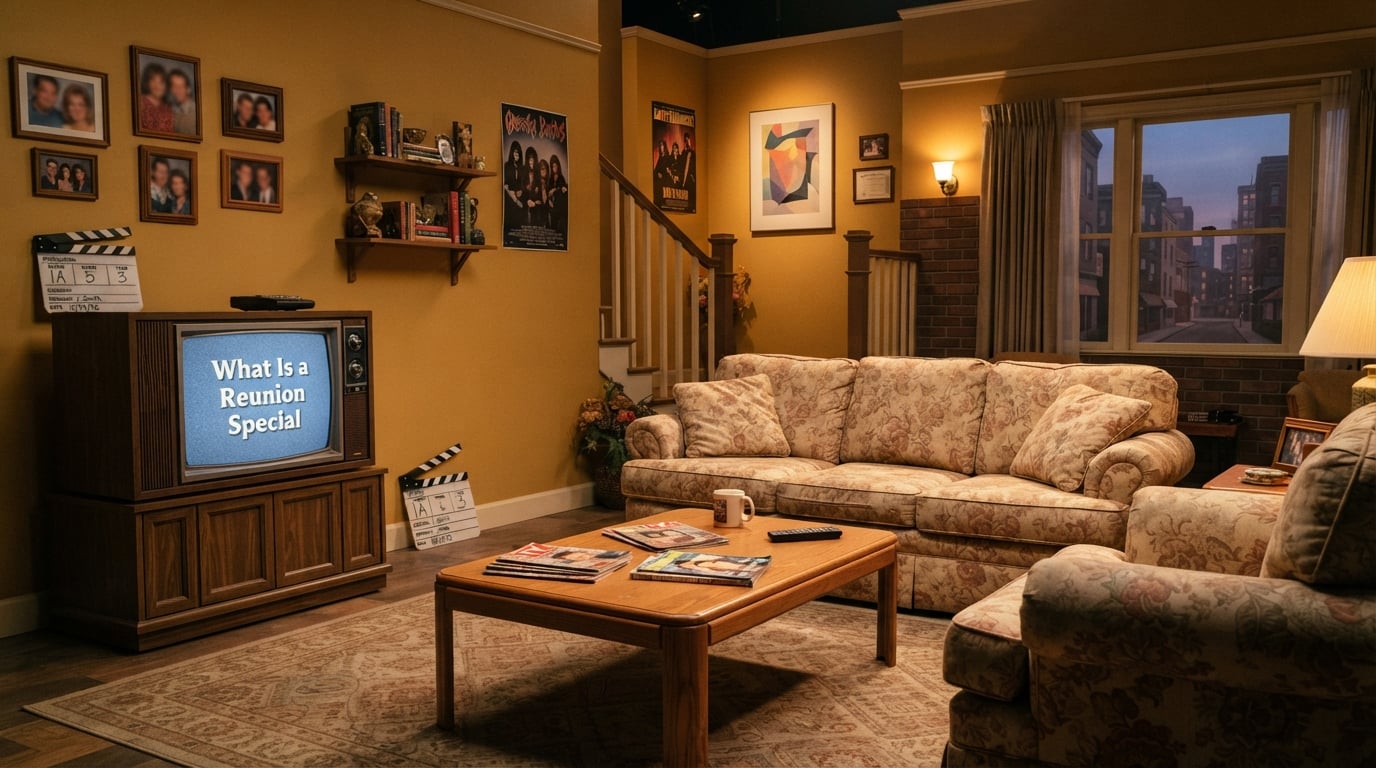
A reunion special is a one-time television event that brings back the original cast of a show that has ended, giving fans a chance to revisit the characters, sets, and memories they fell in love with years or even decades earlier. These specials usually mix interviews, behind-the-scenes footage, games, and emotional moments, all wrapped into a single episode or special presentation.
If you have ever wondered what is a reunion special, why they exist, or why networks keep making them, this guide breaks down everything I have learned from years of watching TV and digging into how the industry works. We will look at the history, the formats, the most famous examples, and how streaming has changed this corner of pop culture in 2026.
Table of Contents
The History of Reunion Specials in Television
Reunion specials did not begin as a polished, scripted format. They grew out of anniversary tributes, talk show appearances, and cast roundtables that networks started producing in the 1970s and 1980s. I remember watching classic I Love Lucy retrospectives and the cast of The Brady Bunch popping up on talk shows together, and those moments planted the seed for what we now call a TV reunion.
By the 1990s, the format had matured. Networks realized that nostalgia sold, and cable channels began producing dedicated reunion programs. Shows like The Carol Burnett Show and The Andy Griffith Show got full retrospective specials, often timed to milestone anniversaries. The 2000s brought bigger productions, including the Harry Potter cast reunions and the Seinfeld cast gathering for late-night spots.
The real shift happened in 2026‘s streaming era, when platforms like HBO Max, Netflix, and Disney+ discovered that bringing back beloved casts could drive subscriptions as effectively as any new blockbuster. Friends: The Reunion in 2021 became a global event and proved the format could scale to massive audiences online.
What Makes a Reunion Special: Key Characteristics
Not every cast get-together counts as a reunion special. From everything I have watched, a true reunion special shares a few core traits.
First, the original main cast has to appear together. The whole point is reuniting the people fans grew up watching. When even one or two major cast members skip the event, fans notice, and the special loses some of its punch.
Second, the special typically revisits the original sets or iconic locations. Walking back onto the Friends apartments, the Central Perk set, or any recreated soundstage creates instant emotional pull. This is why behind-the-scenes and set visits are so common.
Third, the format blends interviews with entertainment. You will usually see a mix of cast interviews, never-before-seen footage, quiz games, table reads of classic scenes, and guest appearances by directors or notable fans. The mix keeps the special moving and gives everyone something to enjoy.
Fourth, the special is built as a one-time event rather than an ongoing series. Unlike a revival, which continues the story, the reunion special is meant to celebrate what already happened and close the loop, even if only emotionally.
Types of Reunion Specials You Should Know
Once you start paying attention, you will notice that reunion specials come in several recognizable formats. Each one offers a slightly different experience for fans.
The Retrospective Reunion
The retrospective is the most traditional format. The cast sits together, watches clips from the original show, and shares memories from filming. Think of classic anniversary specials that walk viewers through the best moments while the cast reacts in real time. This format feels like a guided trip down memory lane, and it works especially well for sitcoms and family dramas.
The Behind-the-Scenes Reunion
Some reunion specials lean heavily into production secrets. They tour the original sets, share props, dig up rehearsal footage, and interview crew members alongside the cast. If you love the technical side of how shows get made, this format scratches that itch. Many Netflix reunion specials follow this approach because it gives viewers something new instead of recycled clips.
The Table Read Reunion
A table read brings the cast back together to perform a classic episode live, usually with a live audience or for charity events. It is part reunion, part performance. These have become especially popular since the early 2020s, with shows like The Office and It’s Always Sunny in Philadelphia hosting full cast table reads that streamed online.
The Cast Interview Reunion
Sometimes a reunion special is built entirely around a long-form conversation between the cast members, hosted by a celebrity moderator. It is intimate, scripted only loosely, and often the most emotional format because the stars have space to share personal stories. Friends: The Reunion on HBO Max leaned heavily into this style.
The Anniversary Event
Networks often pair reunion specials with milestone celebrations, like 10-year, 20-year, or even 50-year anniversaries. These specials feel ceremonial and often double as marketing events for new merchandise, streaming deals, or reboots. They give networks a reason to remind audiences why the show mattered.
Famous Reunion Specials Worth Watching
A few reunion specials have become cultural landmarks. If you want to understand what makes the format work, these are worth your time.
Friends: The Reunion (2021) is probably the most famous modern example. It brought all six original cast members back to the original soundstage for the first time in 17 years. The special included celebrity guests, a table read, and emotional reflections on how the show changed their lives. It drew massive viewership and reminded the industry that reunion specials can drive real engagement.
The Harry Potter 20th Anniversary: Return to Hogwarts (2022) translated the reunion format to film franchises. The cast returned to the original sets at Hogwarts, shared memories from filming, and reflected on how the movies shaped their careers. It proved that reunion specials work outside sitcoms and dramas.
Golden Girls: Their Stories, Their Lives (2003) is a classic retrospective that became a touchstone for nostalgic TV fans. Before streaming made such events easy, it showed how a well-produced retrospective could feel like a gift to longtime viewers.
The Fresh Prince of Bel-Air Reunion (2020) was a dramatic, emotional special that paid tribute to the late James Avery and celebrated the cast’s bond. It demonstrated how reunion specials can serve as both celebration and farewell.
The Office cast hosted a virtual table read during the pandemic that went viral. It was not technically a network-produced special, but it showed how powerful cast reunions can be even in informal formats.
Why Networks Keep Producing Reunion Specials
Reunion specials exist because they work, both culturally and commercially. From what I have seen, three main reasons drive their continued production.
Nostalgia is a powerful force. Adults who grew up with a show will pay to revisit it, and reunion specials tap into that emotional reservoir without requiring years of new production. For networks, this is a cost-effective way to keep beloved brands alive.
Streaming platforms use reunion specials as subscriber drivers. When HBO Max launched Friends: The Reunion, it made the service feel essential for the cultural moment. The same approach has worked for Disney+, Netflix, and Peacock with their respective reunion projects.
Finally, reunion specials celebrate cast and crew. Many actors describe these events as some of the most meaningful experiences of their careers. They get to reconnect, honor the work, and thank the fans in a structured way that talk show appearances cannot match.
Reunion Special vs Revival vs Reboot: Key Differences
People often mix these terms up, but they describe different things in the TV world. A reunion special is a one-time event bringing the cast together without continuing the original story. A revival picks up the original story with new episodes, sometimes years later. A reboot starts the story over with a new cast or reimagined concept.
Think of it this way: a reunion special celebrates the past, a revival continues it, and a reboot reinvents it. Each has its place, and fans often have strong opinions about which format works best for a given show.
How Streaming Changed Reunion Specials
Streaming has reshaped the reunion special in ways that were hard to imagine a decade ago. Production budgets have grown, distribution is global, and the events can be marketed as tentpole launches for new platforms. Streaming has also made it easier for fans to find classic reunion specials from older shows, giving the format a longer life online.
At the same time, streaming has raised expectations. Viewers now want deeper, more polished productions, and they want them quickly. This has pushed networks to invest more in reunion specials, which in turn has made them a permanent fixture of the entertainment calendar in 2026.
Frequently Asked Questions About Reunion Specials
Who usually attends a TV reunion special?
The original main cast members are the stars of any reunion special. Producers try to bring back as many lead actors as possible, often alongside recurring guest stars, showrunners, and directors. Fans notice immediately when a major cast member is missing, so networks work hard to get full participation.
Is there a Friends reunion special?
Yes. Friends: The Reunion debuted on HBO Max in May 2021, with all six original cast members returning to the show’s original soundstage. It featured celebrity guests, a table read of classic scenes, and emotional reflections on the show’s legacy.
What makes a reunion special good?
A strong reunion special usually includes the full original cast, visits to the original sets, behind-the-scenes footage, genuine emotional moments, and engaging games or interviews. The best ones balance nostalgia with something new so fans feel rewarded rather than recycled.
What happens in a reunion special?
Expect a mix of cast interviews, clips from the original show, behind-the-scenes footage, set tours, quiz games, table reads of classic scenes, and sometimes celebrity guest appearances. The structure varies, but the goal is always to celebrate the show and reconnect fans with the cast.
Final Thoughts on Reunion Specials
A reunion special is more than a marketing event. It is a cultural moment that lets fans and creators share the joy of a show that mattered to them. Over the years, I have come to see these specials as love letters from the cast to the audience, and from the audience back to the cast.
If you have been asking what is a reunion special, the simplest answer is this: it is a one-time gathering that lets everyone say a proper goodbye, or a proper hello again, to the stories that shaped their viewing lives. As long as fans keep forming deep bonds with their favorite shows, reunion specials will keep finding their way back to our screens in 2026 and beyond.