
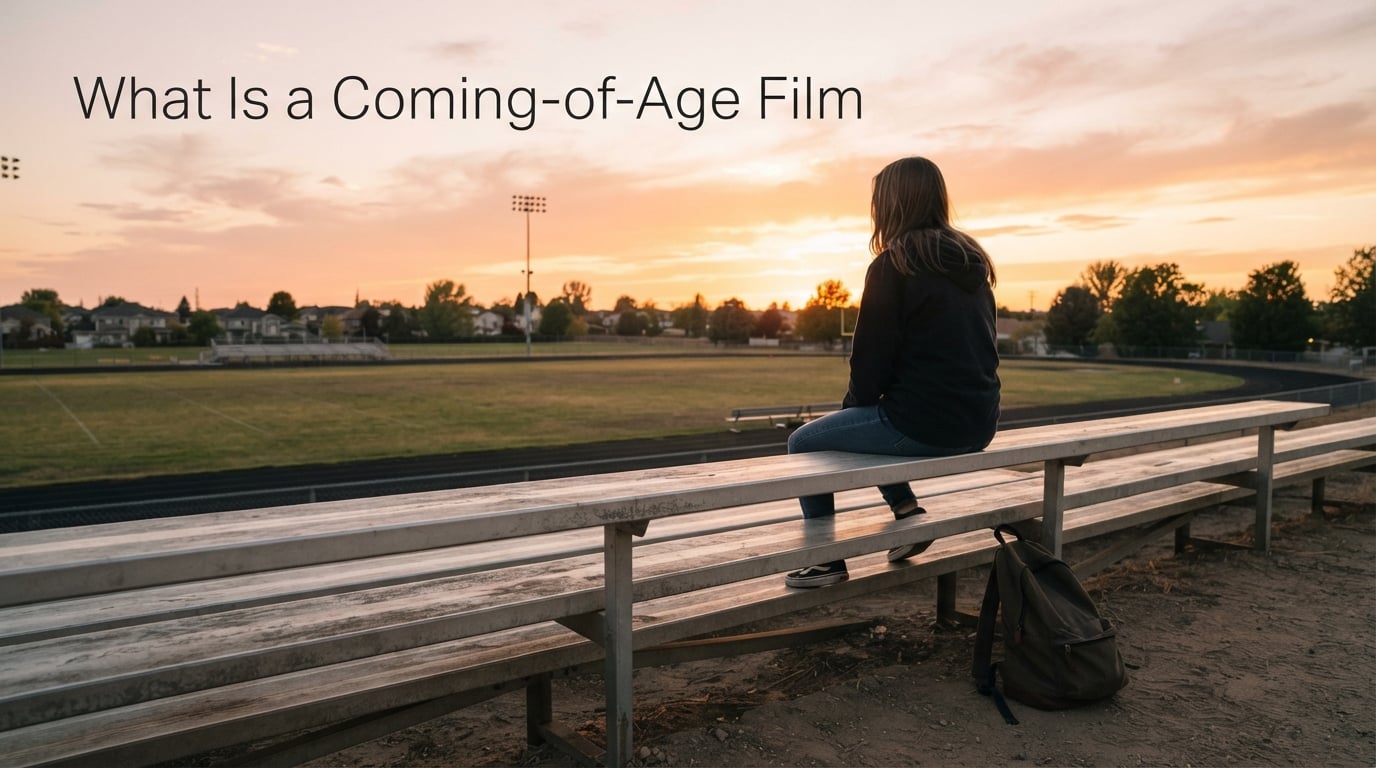
A coming-of-age film is a movie that centers on a young protagonist navigating the transition from childhood to adulthood, typically exploring identity, self-discovery, first love, and the loss of innocence along the way. These films work because they capture a universal rite of passage that nearly every viewer has experienced or witnessed in someone close to them.
In this guide, I will walk you through exactly what makes a film “coming-of-age,” the core elements every story in this genre shares, the literary roots that shape the form, and the wide range of examples from across decades and styles. By the end, you will be able to spot the genre instantly and understand why it resonates so strongly with audiences of any age.
Table of Contents
What Is a Coming-of-Age Film?
A coming-of-age film is a genre (or, depending on who you ask, a plot archetype) that follows a protagonist from youth into adulthood through a formative life experience. The story tracks psychological, emotional, or moral growth, often anchored by a single transitional moment that shifts how the protagonist sees themselves and the world around them.
Filmmakers and screenwriters sometimes argue about whether this counts as a true genre or simply a recurring narrative pattern. In film theory, it is most often treated as a genre because it carries its own conventions, character types, settings, and emotional arcs. A coming-of-age story is sometimes called a bildungsroman in literary circles, a term that traces back to German philosophy and describes the same essential journey of maturation.
The defining quality is change. A character enters the film as one version of themselves and exits as someone else, shaped by loss, love, conflict, or a moment of hard truth. The growth does not always have to be positive; some of the best examples in the genre end on bittersweet or even tragic notes.
One common misconception is that the protagonist must be a teenager. While adolescence is the most common backdrop, adult coming-of-age films such as “Frances Ha,” “The Big Sick,” and “Lost in Translation” prove the structure works at any age. What matters is the quality of the transition, not the age of the character.
Key Characteristics of the Coming-of-Age Genre
Coming-of-age films share a recognizable set of characteristics that set them apart from other dramas. Whether the story is set in a small-town high school or a sprawling city, certain elements almost always appear.
Identity Crisis and Self-Discovery
The protagonist almost always wrestles with the question of who they actually are, separate from family expectations and childhood labels. Identity crisis sits at the heart of nearly every coming-of-age story because adolescence is the first time most people feel the pull between who they have been told to be and who they want to become.
This internal conflict is what makes the genre feel so relatable. I have watched dozens of these films over the years, and the ones that hit hardest always show a character quietly realizing that the person they were at the start is no longer the person they want to be at the end.
Self-discovery is the active counterpart to identity crisis. The protagonist does not just wonder who they are; they test out new versions of themselves, often through friendships, jobs, romantic relationships, or rebellion against authority figures.
Loss of Innocence
Loss of innocence is a hallmark of the coming-of-age genre, marking the moment when the protagonist learns that the world is more complicated, painful, or unfair than they once believed. It can come through a betrayal, a death, a failure, or simply the realization that adults are not always trustworthy.
Films handle this transition in different ways. Some lean into trauma and hardship, while others keep things lighter by focusing on small disappointments. Either approach works because the loss itself, not the severity, is what defines the genre.
The loss of innocence moment is often the emotional pivot of the entire story. Everything before it reads as setup, and everything after it reads as consequence. Skilled filmmakers signal this moment with a shift in lighting, music, or framing that viewers feel even before they can articulate what changed.
First Love and First Heartbreak
Romantic or deeply felt platonic love is one of the most reliable engines of the genre. First love gives the protagonist someone to test their new identity against, and first heartbreak often accelerates the transition into adulthood more sharply than any other event in the story.
The romance in a coming-of-age film rarely functions as pure entertainment. It is a vehicle for self-knowledge, showing the protagonist what they want, what they fear, and what they are willing to risk.
Platonically, friendships carry just as much weight. Films like “Stand by Me” and “The Edge of Seventeen” show that coming-of-age bonds are not limited to romance. The right friend group can be just as transformative as a first partner.
Rites of Passage
Many coming-of-age stories include an explicit rite of passage, a moment, ceremony, or experience that signals the protagonist’s transition into a new social or personal status. In real life, this can be a graduation, a first job, a move, or a coming-of-age ceremony within a cultural tradition.
In film, the rite of passage is often symbolic rather than literal. A character might lose a championship, sneak out for the first time, stand up to a parent, or witness something that forces them to grow up in an instant.
Why the Genre Resonates Across Generations
Coming-of-age stories tend to peak when a generation is living through the very transition the genre depicts. The 1980s John Hughes boom reflected baby boomer parents watching their Gen X kids come of age, while the 2010s indie wave captured millennials processing their own delayed transitions into stable adulthood.
That generational rhythm is part of why the genre feels fresh every 10 to 15 years. Each cohort rediscovers the same emotional beats in new cultural clothes, and the genre keeps reinventing itself without ever losing its core appeal.
The Bildungsroman Connection: From Books to Films
The bildungsroman is the literary ancestor of the coming-of-age film, a German term for a novel that traces the moral and psychological growth of a protagonist from youth to maturity. Classic examples include “Great Expectations” by Charles Dickens, “Jane Eyre” by Charlotte Bronte, and “The Catcher in the Rye” by J.D. Salinger.
When filmmakers borrow this structure, they are tapping into a storytelling tradition that goes back more than 200 years. The reason the format feels so natural on screen is that audiences already understand the emotional rhythm of a character changing over time.
Worth noting for screenwriters: the bildungsroman pattern works in film even when the protagonist is not technically young. Adult coming-of-age stories like “Frances Ha” and “The Graduate” prove the same arc works whenever a character is forced to confront who they have become.
Modern coming-of-age films often borrow specific narrative tricks from bildungsroman novels, including the mentor figure, the reluctant departure from home, and the final return as a changed person. These structural moves are so common in the genre that audiences expect them, even when they cannot name what they are looking at.
Common Settings and Subgenres
Coming-of-age films tend to cluster around a handful of familiar settings, each one offering its own set of emotional shortcuts. The setting is rarely incidental; it actively shapes what kind of growth the protagonist can experience.
High School and Teen Films
High school is the most iconic setting for a coming-of-age film because it is the social environment where most people first feel pressure to define themselves. Films like “The Breakfast Club,” “Lady Bird,” and “Booksmart” use the high school setting as a pressure cooker for identity, friendship, and first romance.
Generations of film lovers have noticed that big boom periods for coming-of-age movies usually happen when a specific generation is well, you guessed it, coming of age. The 1980s John Hughes wave and the 2010s indie boom are both examples of cultural moments where the genre surged.
High school works as a setting because it forces proximity between characters who would not otherwise choose to spend time together. That forced closeness is what creates the conflicts and friendships that drive the plot.
Summer as a Liminal Space
Summer occupies a special place in the coming-of-age genre because it functions as a liminal period, a window between school years when normal rules feel suspended. Movies like “Stand by Me,” “Dazed and Confused,” and “Mid 90s” use the long, unstructured days of summer to give their characters room to change.
The liminal quality of summer is what makes these films feel both nostalgic and urgent. The protagonist knows the structure will return, which raises the stakes of every choice they make.
Summer coming-of-age films also lean heavily on nostalgia as a storytelling tool, even for viewers who did not live through the exact era depicted. The feeling of endless unstructured days is something almost everyone remembers.
Genre Blends and Subverted Expectations
Modern coming-of-age films often blend the genre with horror, science fiction, fantasy, or action to subvert expectations and reach new audiences. Films like “Raw,” “Ginger Snaps,” and “It Follows” use the coming-of-age framework to tell stories about transformation, sexuality, and bodily change through genre conventions.
These blends work because the underlying emotional arc remains intact. Even when a coming-of-age film is wrapped in horror or sci-fi, the protagonist is still wrestling with identity, loss, and the painful process of growing up.
Famous Coming-of-Age Film Examples by Era
The genre stretches back decades and includes both traditional stories and experimental alternatives. Here are some of the most cited examples, grouped by era, to show how the form has evolved.
Classic era (1950s to 1970s): “Rebel Without a Cause” (1955), “The 400 Blows” (1959), “American Graffiti” (1973), and “The Graduate” (1967) defined the genre’s earliest wave. These films established the rebellious young protagonist and the bittersweet ending as genre staples.
Defining 1980s: “The Breakfast Club” (1985), “Stand by Me” (1986), “Dead Poets Society” (1989), and “Ferris Bueller’s Day Off” (1986) turned high school into the genre’s most recognizable setting. This era also produced “E.T. the Extra-Terrestrial” (1982), which used sci-fi framing to tell a deeply emotional coming-of-age story.
Reflective 1990s and 2000s: “Dazed and Confused” (1993), “Boyhood” (2014), “Juno” (2007), and “Superbad” (2007) brought more varied voices and storytelling styles. “Boyhood” in particular stretched the genre by following its protagonist across 12 real years of filming.
Modern era (2010s to 2026): “Lady Bird” (2017), “Mid 90s” (2018), “Booksmart” (2019), “Eighth Grade” (2018), and “The Edge of Seventeen” (2016) have pushed the genre into new territory, exploring social media anxiety, gender identity, and mental health while keeping the emotional core of youth in transition intact.
For viewers who want something further from the traditional high school template, “Frances Ha” (2012), “Lady Bird” (2017), and “The Florida Project” (2017) prove that the coming-of-age story works at almost any age and in almost any setting, as long as the protagonist is undergoing real change.
International cinema has also shaped the genre in important ways. French New Wave films like “The 400 Blows,” Italian neorealist works such as “Shoeshine,” and Japanese titles including “Nobody Knows” have brought fresh textures to the coming-of-age form and influenced American filmmakers for decades.
Is Forrest Gump a Coming-of-Age Film? Exploring Genre Boundaries
Forrest Gump sits at the edge of the coming-of-age genre, and the debate around it is genuinely useful for understanding where the lines are. The film follows Forrest from childhood through adulthood, includes classic loss-of-innocence moments, and tracks a clear arc of maturation. By the strictest definition, it qualifies.
Where Forrest Gump complicates things is in scope. It is also a historical epic, a romance, and a war film. Many viewers and critics treat it as a coming-of-age story at its core, but others argue that the genre label does not fully capture what the movie is doing.
This kind of disagreement is healthy. The coming-of-age genre is broad enough to include stories like “Forrest Gump” without forcing every film into a high school template. As long as a story tracks real psychological growth from one stage of life to another, it can sit within the genre, even if it borrows conventions from elsewhere.
FAQs
What is an example of a coming-of-age movie?
The Breakfast Club is a textbook example of a coming-of-age movie. It follows five high school students from different cliques who are forced together in Saturday detention, and each one confronts an identity crisis, a family tension, or a personal truth by the end of the day. Other classic examples include Lady Bird, Stand by Me, Boyhood, and Dead Poets Society.
What is considered the best coming-of-age movie?
There is no single agreed-upon best coming-of-age movie, but a few titles come up more than most. Lady Bird, Boyhood, The Breakfast Club, and Dead Poets Society are often cited at the top of critics’ lists. The right answer depends on the viewer: high school classics appeal to nostalgia, while modern indie picks like Frances Ha push the genre in fresh directions.
Is Forrest Gump a coming-of-age story?
Yes, Forrest Gump can reasonably be classified as a coming-of-age story, though it also fits several other genres. The film follows Forrest from childhood through adulthood, includes clear loss-of-innocence moments, and tracks a sustained arc of psychological growth. Whether you call it a coming-of-age film, a historical epic, or both depends on which elements of the story you weigh most heavily.
Is Mid 90s a coming-of-age movie?
Yes, Mid 90s is a coming-of-age movie directed by Jonah Hill. It follows 13-year-old Stevie as he falls in with a group of older skateboarders in Los Angeles during the 1990s and learns about friendship, belonging, and the gap between childhood and adolescence. The film uses the liminal summer setting common to the genre and leans into nostalgia as a storytelling tool.
Why Coming-of-Age Films Endure
Coming-of-age films endure because growth itself is universal, and so is the loneliness of going through it. Whether the protagonist is 13 or 35, the moment when you realize your old self no longer fits is something almost every viewer recognizes. That shared experience is what keeps the genre fresh across generations.
Now that you have a clear answer to what is a coming-of-age film, you can watch your next movie with sharper eyes. Look for the protagonist’s first real test, the moment their old identity cracks, and the choice that shows who they are becoming. Once you start noticing those beats, you will see them everywhere, from classic high school dramas to quiet adult character studies.