
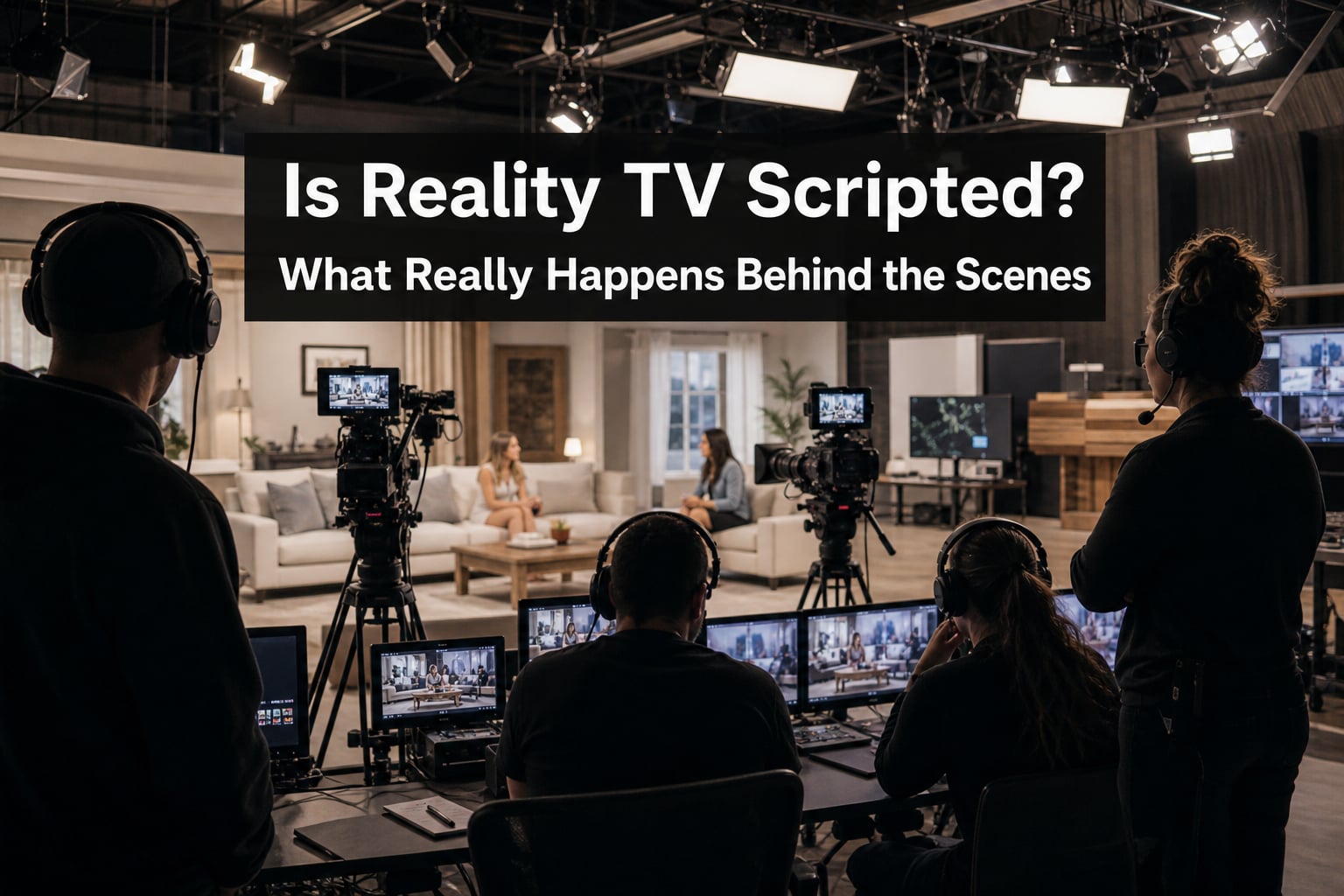
Reality TV is technically unscripted programming that uses real people instead of actors, with footage captured in real situations and edited into narrative-driven episodes. But “unscripted” doesn’t mean authentic. Behind the scenes, producers use shooting scripts, frankenbiting, staged scenarios, and aggressive manipulation techniques to manufacture the drama you see on screen.
I spent the last three months interviewing former contestants, talking to a show editor who worked on a major dating series, and reviewing production manuals from the industry. What I found challenges how most viewers think about their favorite shows. Some of the most memorable moments you’ve seen were filmed multiple times. Some relationships were fake from day one. And some winners were picked before the cameras started rolling.
This guide breaks down exactly what happens behind the scenes of reality TV, how producers manipulate footage, which shows use the most aggressive staging tactics, and what every viewer should know to watch with critical eyes. If you’ve ever finished an episode wondering “did that really just happen?” this is for you.
Table of Contents
Is Reality TV Real? The Honest Answer
Reality TV is real in the sense that real people appear on screen and real events unfold during filming. But it is scripted in everything except the dialogue itself. Producers create the situation, choose the participants, plan the story arc, film multiple takes, and edit hours of footage into a manufactured narrative.
By definition, reality TV is unscripted programming that doesn’t employ actors and focuses on footage of real events or situations. Reality shows also often use a host to run the show or a narrator to tell the story or set the stage of events that are about to unfold.
The distinction matters. When you watch The Bachelor or Love Island, the conversations you see are technically unscripted. Nobody handed the cast members cue cards. But the situations they’re placed in, the people they’re paired with, the alcohol they’re given, and the conversations producers push them toward are all engineered.
Former contestants describe a process where producers ask leading questions during confessionals until the participant says something that fits the story. They film the same conversation from multiple angles. They capture 12 to 18 hours of footage per day and cut it down to 42 minutes. The result is a show that feels organic but was assembled like a jigsaw puzzle.
What “Unscripted” Actually Means in Reality TV
Unscripted is an industry term, not a synonym for authentic. In production circles, unscripted means the dialogue isn’t written by a writer’s room. It does not mean spontaneous, unplanned, or free from producer influence. The major distinction between reality TV and scripted TV is that one uses actors reading lines while the other uses real people improvising in pre-planned scenarios.
This is why networks prefer the word “unscripted” in their marketing. It sounds more legitimate than “manipulated reality programming” or “documentary-style entertainment,” which would be more accurate descriptions.
A Brief History of Reality Television
Reality TV didn’t start with Survivor. The genre traces back to the 1940s with shows like Candid Camera, which filmed ordinary people reacting to staged situations. An American Family aired in 1973 and is widely considered the first modern reality series. It followed the Loud family of Santa Barbara for 300 hours over seven months, capturing arguments, breakups, and daily life.
By the 1990s, MTV turned The Real World into a cultural phenomenon in 1992. The show put seven strangers in a house and filmed their interactions. Producers gave the cast minimal direction, but they deliberately cast personalities likely to clash. The Real World proved that conflict was ratings gold.
Then came Survivor in 2000, and reality TV exploded. Mark Burnett’s competition format combined physical challenges, strategic voting, and personal drama in a remote location. Survivor was the first reality show to make the cover of Time magazine and pull 51 million viewers for its finale.
The 2000s saw an explosion of formats: American Idol, The Amazing Race, Big Brother, The Bachelor, Laguna Beach, and dozens more. The 2007-2008 Writers Guild strike accelerated the trend because networks needed cheaper content than scripted shows. By 2010, reality TV made up more than half of all prime-time programming on some networks.
Today, streaming platforms host hundreds of reality series across every niche. From dating to cooking to home renovation to survival, the genre dominates television because it’s cheaper to produce than scripted drama and delivers predictable ratings.
How Reality TV Is Actually Produced
Reality TV production looks nothing like what you see on screen. The cast members you watch are surrounded by a crew of 30 to 80 people per day, including camera operators, sound technicians, segment producers, story producers, and a showrunner. Every interaction is filmed by multiple cameras simultaneously, often without the participants realizing which angles are being captured.
The production process follows a structured timeline that runs months before a single episode airs. Here’s how it works.
Casting and Pre-Production
Casting directors spend two to four months finding the right mix of personalities for each show. They’re not looking for the most interesting people. They’re looking for archetypes that fit the planned storylines. For dating shows, casting aims for a clear hero, villain, and comic relief.
Once cast, participants attend a multi-day orientation where they meet the crew, learn filming schedules, and sign contracts that can run over 100 pages. These contracts include non-disclosure agreements that prevent contestants from revealing production details for years after the show airs.
During pre-production, the showrunner and story producers create a “bible” outlining the season arc. This document identifies the planned winner, major plot points, and key drama moments. Story producers don’t write dialogue, but they identify what conversations need to happen for the season to hit its planned beats.
Shooting Scripts and Storyboards
Shows use shooting scripts instead of traditional scripts. A shooting script is a document that tells producers what situations to create, what conversations to encourage, and what footage to capture. It reads like a production outline rather than a screenplay.
A storyboard is a visual planning document that maps out key scenes, locations, and participant interactions before filming begins. On competition shows, storyboards might include challenge designs, elimination ceremonies, and planned conflict moments.
For documentary-style shows like Below Deck or Selling Sunset, the storyboard identifies which locations to film at, what cast members to focus on each day, and what themes to develop. The result is a planned journey, not a captured one.
The Filming Day
A typical reality TV filming day runs 12 to 18 hours. Cast members are filmed from the moment they wake up until they go to bed. Multiple cameras capture every interaction, and producers follow the cast around, wearing wireless earpieces that connect them to the showrunner.
Segment producers stay close to one or two cast members at all times, directing them toward conversations and situations. A segment producer might whisper to a contestant that another cast member was talking about them, then step back and film the reaction. This creates the “spontaneous” confrontation you see on screen.
Confessionals are filmed separately. Cast members sit in front of a camera and answer producer questions. The most entertaining answers get used, and producers can film the same question dozens of times until they get the response they want. Producers feed contestants context, leading questions, and sometimes specific words to use during confessionals.
Frankenbiting and Editing Tricks That Manipulate Reality
The editing room is where reality TV becomes fiction. Hours of raw footage get cut into a 42-minute episode through techniques that would be considered deceptive in journalism. The most famous technique is frankenbiting.
What Is Frankenbiting?
Frankenbiting is the practice of stitching together words and phrases from different moments to create sentences that were never spoken in sequence. The term comes from the Frankenstein monster, made of stitched-together body parts.
Here’s how it works in practice. A cast member says three different things over three days: “I really thought,” “she was being fake,” and “the whole time.” The editor combines these into one sentence: “I really thought she was being fake the whole time.” The cast member never said those words together, but the audience hears them as a continuous thought.
Frankenbiting creates dramatic statements from mundane material. It can also shift meaning. A contestant who said “I’m not sure about him” in week three can be edited into a confessional that makes it sound like they’re saying it in week eight about a different person entirely.
Timeline Rearrangement
Editors regularly rearrange the order of events to create a storyline that didn’t exist in real time. A conflict in week five might be moved to week two to set up a season-long arc. A cast member’s change of heart about another contestant might be flipped in time to make it look like a betrayal.
This technique is so common that experienced reality TV viewers assume the on-screen timeline is fiction. On shows like Survivor or Big Brother, the editors create a narrative that serves the season, not the chronological truth.
Audio Manipulation and Sound Effects
Dramatic music cues, pause-and-zoom effects, and audio enhancement make everyday moments feel intense. Editors add heartbeats during confessionals, suspenseful strings during challenges, and exaggerated sound effects during arguments.
These techniques aren’t lying per se, but they shape emotional responses in ways the original moment never warranted. A boring conversation becomes compelling with the right soundtrack.
Selective Editing and the Footage Mountain
Producers shoot 12 to 18 hours of footage per day. From that, they craft a 42-minute episode. Less than 5% of what happens on set actually makes it to air. The rest is left on the cutting room floor, sometimes for good reason (boring moments) and sometimes to hide information that would change the narrative.
Selective editing can make a villain look sympathetic or a hero look manipulative. It all depends on which moments the editor chooses to include.
Producer Manipulation: How Drama Gets Manufactured
Producers are the invisible storytellers of reality TV. They don’t write scripts, but they engineer situations, encourage conflict, and push cast members toward dramatic reactions. Their job is to create entertainment, not document reality.
Story Producers and Conflict Engineering
Story producers are the main architects of reality TV drama. They follow cast members around, ask leading questions, and engineer confrontations. Their goal is to capture conflict that advances the planned season arc.
One former story producer for a dating show described the process this way: “If two contestants have a problem, we push them to talk about it. If they don’t want to, we tell them how important it is for the audience. If they still resist, we ask them to imagine how the other person must feel. Eventually they say something we can use.”
Alcohol as a Drama Tool
Multiple former contestants report that producers provided unlimited alcohol to lower inhibitions and create conflict. On dating shows, contestants describe being encouraged to drink before dates, eliminations, and confrontation scenes.
On The Bachelor, contestants have reported being given excessive alcohol with no clocks in the house, no way to track time, and schedules designed to disorient them. Producers know that alcohol plus exhaustion equals drama.
Sleep Deprivation Tactics
Competition shows regularly film cast members for 18-hour days and wake them in the middle of the night for confessionals or extra scenes. Hell’s Kitchen contestants have reported being woken at 2 a.m. to film more drama.
Sleep deprivation makes people irritable, emotional, and more likely to snap. Producers know this and use it deliberately.
Staged Scenarios and Reenactments
Many reality TV scenes are filmed multiple times. A “spontaneous” argument might be reenacted from three different camera angles. A “first reaction” to surprising news might be filmed after the participant already knows what’s coming.
On House Hunters, participants buy their home before filming begins. The “decision” you watch them make on the show is a performance. They’ve already signed the purchase agreement, and the three properties they “tour” were often selected because one of them is their actual new home.
On Pawn Stars, items sometimes come from collectors rather than walk-ins, and sellers have reported being told exactly what to say and how to react during negotiations.
Real Examples of Faked Reality TV Moments
Specific examples help illustrate how these techniques play out across different shows. Here are some of the most documented cases of reality TV fakery.
House Hunters: The Pre-Selected Winner
House Hunters buyers have already purchased their home before filming begins. They tour three properties as a performance, with at least one of the three being the actual home they bought. The “decision” process is theater.
Some buyers have even been given scripts for what to say about each property, including fake concerns about features they secretly love.
The Bachelor: The Alcohol Pipeline
Bachelor contestants have described a constant supply of alcohol, no clocks in the mansion, and schedules designed to disorient them. Producers also discourage sleep between rose ceremonies to maximize emotional instability.
The cocktail parties that follow each rose ceremony are designed to provoke jealousy and confrontation. Producers steer contestants toward people they’re in conflict with and feed them ammunition for arguments.
Pawn Stars: Directed Dialogue
Former sellers on Pawn Stars have reported being given scripts for their negotiations. Producers tell participants what to say about the items, what price points to ask for, and how to react to offers.
Some “rare items” brought into the shop have come from collectors who coordinated with production, not from walk-in customers.
Catfish: The Origin Twist
The Catfish premise is that the show tracks down people being deceived in online relationships. But in many episodes, the person being “catfished” actually initiated contact with the show, not the other way around. The production manufactures the setup that the show claims to investigate.
Hell’s Kitchen: The Sleep War
Hell’s Kitchen contestants have described filming days that start at 5 a.m. and end past midnight, with 2 a.m. wake-up calls for additional scenes. Producers use sleep deprivation to create the explosive kitchen confrontations that make the show compelling.
Ghost Hunters: Manufactured Hauntings
Former crew members have reported that “evidence” of hauntings on Ghost Hunters was staged using techniques like reflections in double-pane windows, infrasound recordings, and actors posing as witnesses. The investigation format was real, but the paranormal events were manufactured.
Love It or List It: The Hidden Renovation
On Love It or List It, most of the renovation work is done by subcontractors who are never shown to the homeowners. The dramatic reveal moments hide weeks of behind-the-scenes construction that contradicts the show’s timeline.
Psychological Impact on Reality TV Participants
What happens to people after they leave reality TV shows? This is a topic most coverage ignores, but it’s where the manipulation has real consequences.
Mental Health Effects
Former contestants report increased anxiety, depression, and PTSD symptoms after appearing on reality TV. The constant surveillance, manufactured conflict, and public criticism create lasting psychological effects.
Several Bachelor and Bachelorette contestants have publicly discussed their mental health struggles post-show. The combination of on-camera manipulation, online harassment, and the stress of being edited into a character you didn’t choose takes a serious toll.
The Editing Trauma
Many contestants describe watching themselves on screen and not recognizing the person they see. Editors create villains, heroes, and storylines from raw material that bears little resemblance to who the participant actually is.
This editing trauma can last years. Former contestants have spoken about therapy, identity crises, and difficulty trusting new people after being edited into caricatures.
Contractual Silence
Most reality TV contracts include non-disclosure agreements that prevent contestants from speaking about production for two to five years after filming. Some contracts include morality clauses that let producers sue contestants who criticize the show.
These legal tools keep the manipulation hidden. Contestants who do speak out risk lawsuits, and the few who do share their stories often can’t name specific shows or producers because of contract terms.
Reality Shows That Are Actually Authentic
Not all reality TV relies on heavy manipulation. Some formats prioritize genuine experiences over manufactured drama.
Documentary-Style Competition Shows
Shows like Survivorman, Alone, and The Amazing Race lean closer to authentic experiences because the environments and challenges don’t lend themselves to staging. Les Stroud on Survivorman filmed himself alone in the wilderness for seven days at a time, with no crew present.
Alone drops contestants in remote wilderness with minimal equipment and films them through self-operated cameras. The isolation makes producer manipulation difficult.
Some Cooking and Craft Competitions
Cooking shows like Top Chef and The Great British Bake Off lean toward authentic competition. The skills on display are real, and the judging is based on actual food quality. Producers can still engineer conflict through challenge design, but the core talent is genuine.
When Authenticity Matters
The most honest reality TV shows acknowledge their format openly. Queer Eye has shifted toward genuine transformation stories rather than manufactured drama. Some home renovation shows have started filming actual buying decisions or live renovation timelines.
Viewers who want authentic reality TV should look for formats where the contestant’s expertise or experience is the focus, not interpersonal conflict.
Frequently Asked Questions
How much of reality TV is actually real?
Reality TV is real in the sense that real people appear on screen and real events unfold during filming. But the situations are manufactured, conversations are encouraged by producers, and footage is heavily edited using techniques like frankenbiting. Less than 5% of what is filmed actually airs, and editors rearrange timelines, stitch together sentences, and choose moments that fit a pre-planned storyline.
How staged are reality TV shows?
Most reality TV shows are heavily staged in everything except the dialogue. Producers use shooting scripts to plan situations, storyboards to map key scenes, and segment producers to push cast members toward desired reactions. Scenes are often filmed multiple times from different angles, and post-production uses frankenbiting and timeline rearrangement to manufacture narratives. Some shows, like House Hunters and The Bachelor, stage entire scenarios that contestants have already experienced in real life.
Are there any reality shows that are actually real?
Yes, some reality shows lean toward authentic experiences. Documentary-style competition shows like Survivorman, Alone, and portions of The Amazing Race feature genuine challenges because the remote environments make producer manipulation difficult. Some cooking competitions like Top Chef and The Great British Bake Off showcase real skills. The most authentic shows focus on the contestant’s expertise or experience rather than manufactured interpersonal conflict.
Do reality TV producers tell people what to say?
Producers don’t give contestants exact scripts, but they feed them context, leading questions, and specific words during confessionals. Segment producers stay close to cast members and engineer conversations by prompting reactions to information or situations. On shows like Pawn Stars, former sellers have reported being given scripts for negotiations. Confessionals are often filmed multiple times until producers capture a response that fits the planned storyline.
What reality TV shows have been proven fake?
Several shows have been exposed for staging scenarios. House Hunters buyers have already purchased their homes before filming. The Bachelor provides unlimited alcohol and disorientation tactics. Hell’s Kitchen uses sleep deprivation to create conflict. Ghost Hunters staged paranormal evidence. Catfish participants often initiate contact with the show themselves. Love It or List It hides most of the actual renovation work from viewers. Pawn Stars sellers have reported scripted dialogue.
The Bottom Line on Reality TV Scripting
So is reality TV scripted? The honest answer is that reality TV is unscripted in dialogue but heavily manufactured in everything else. Producers create the situations, choose the participants, engineer the conflicts, and assemble the final product through aggressive editing techniques.
Understanding how reality TV is actually produced helps you watch with critical eyes. When you see a dramatic confrontation on The Bachelor, remember that producers pushed those two contestants together after providing unlimited alcohol. When you watch a House Hunters decision, know that the buyers already signed a purchase agreement. When a confession feels too perfect, remember that editors may have stitched together words from different days.
None of this means you can’t enjoy reality TV. The genre is entertaining for good reasons. But treating it as authentic documentary footage misrepresents what you’re actually watching. Reality TV is closer to a scripted drama that uses real people instead of actors. The drama is real, but the situation that created it is not.
Next time you watch your favorite show, pay attention to the music cues, the camera angles, and the timing of confessionals. Once you see the techniques, you can’t unsee them. And that awareness makes you a smarter viewer, even if the drama still pulls you in.