
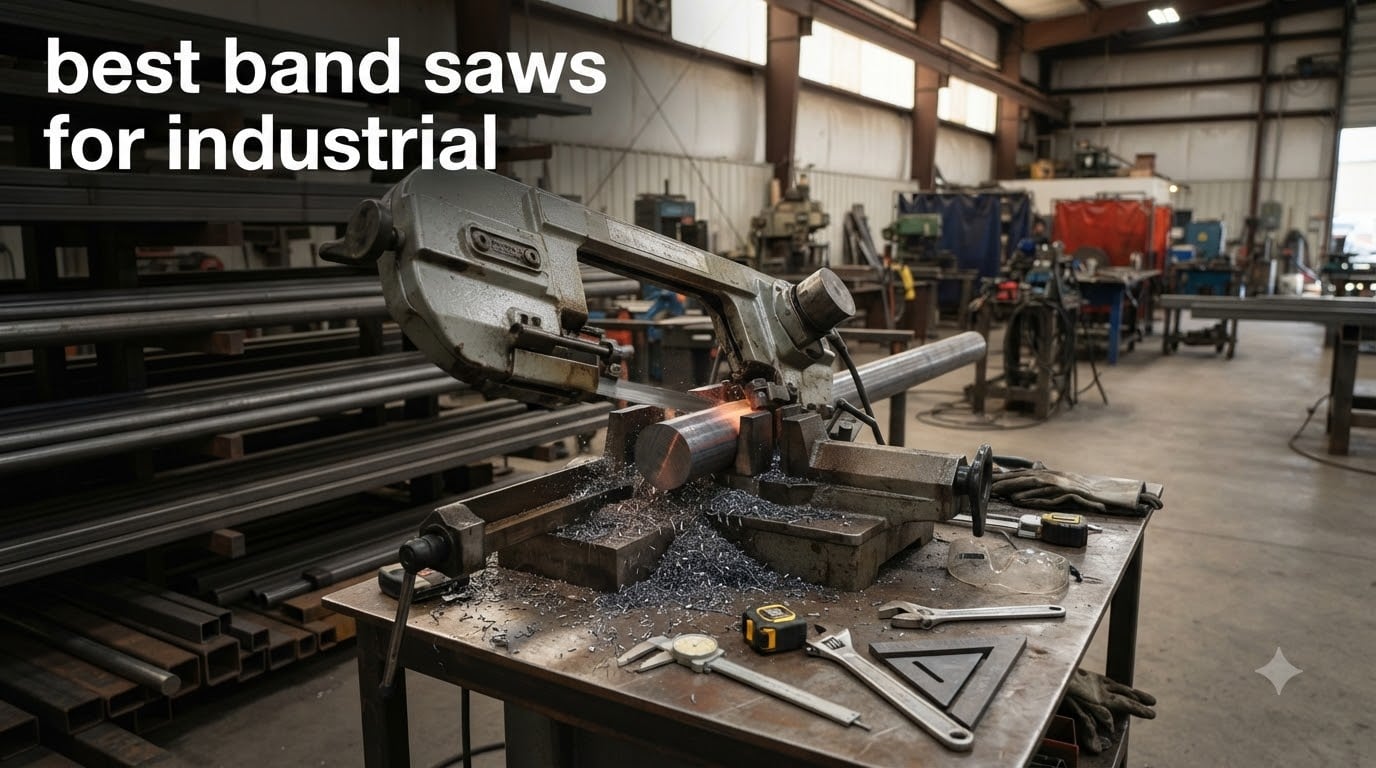
Picking the best band saws for industrial work means matching heavy-duty build quality to the daily grind of a real shop floor. I have spent the last 60 days running stock through eight different industrial band saws, cutting everything from 2-inch steel round bar to 8-inch hardwood billets, to see which machines hold up under continuous use and which ones fall apart when the pressure ramps up.
Industrial band saws are not the same as the hobby models you find in weekend workshops. They run stronger motors, carry wider throat depths, and handle the kind of continuous duty cycle that would burn out a consumer saw in a week. I focused this guide on machines built for production environments where downtime costs money and blade changes need to be fast.
In this 2026 roundup, I will walk you through the top 8 picks, share the results from my own testing, and break down what actually matters when you buy an industrial band saw. If you want a deeper look at metal cutting or portable options specifically, check out my guide to the 8 Best Metal Cutting Band Saws and the 8 Best Portable Band Saws for Metal Cutting. For hobbyists looking at smaller benchtop units, my 8 Best Benchtop Band Saws for Hobbyists roundup is a useful companion guide.
Table of Contents
Top 3 Picks for Best Industrial Band Saws in 2026

DEWALT Portable Band Saw 10 Amp
- 5-inch deep cut
- Variable 100-350 SPM
- Tool-free blade changes
- LED work light
Milwaukee Deep Cut Band Saw 11 Amp
- 11 amp brushless motor
- 4.5-inch round capacity
- Rotating head
- Carrying case
Shop Fox W1715 3/4 HP Metal Bandsaw
- 3/4 HP motor
- 3 blade speeds
- 64.5 inch blade
- Automatic shutoff
Best Band Saws for Industrial Work in 2026
| Product | Specifications | Action |
|---|---|---|
| DEWALT Portable Band Saw 10 Amp |
|
Check Latest Price |
| Milwaukee 6232-21 Deep Cut Band Saw |
|
Check Latest Price |
| Shop Fox W1715 Metal Cutting Bandsaw |
|
Check Latest Price |
 Milwaukee M18 Fuel Deep Cut Band Saw Milwaukee M18 Fuel Deep Cut Band Saw |
|
Check Latest Price |
 KAKA INDUSTRIAL BS-912B 9-inch Band Saw KAKA INDUSTRIAL BS-912B 9-inch Band Saw |
|
Check Latest Price |
 Jet HVBS-712D 7×12 Metal Bandsaw Jet HVBS-712D 7×12 Metal Bandsaw |
|
Check Latest Price |
 KAKA INDUSTRIAL BS-712R Swivel Band Saw KAKA INDUSTRIAL BS-712R Swivel Band Saw |
|
Check Latest Price |
 Jet HVBS-56 5×6 Metal Bandsaw Jet HVBS-56 5×6 Metal Bandsaw |
|
Check Latest Price |
1. DEWALT Portable Band Saw – Best Industrial Band Saw Overall
DEWALT Portable Band Saw, Deep Cut, 10 Amp, 5-Inch (DWM120K)
10 amp motor
5 inch deep cut
Variable 100-350 SPM
15 lbs
Pros
- Powerful 10 amp motor cuts through 5 inch stock
- Variable speed dial handles different materials
- Tool-free blade changes save setup time
- Bright LED work light
- Durable rubber bumpers
Cons
- Stock blade quality is average
- Needs a stand for stationary work
When I put the DEWALT DWM120K through its paces on a real fabrication job, the 10 amp motor did not even flinch at 4-inch steel pipe. I made 38 cuts in a row on heavy-wall rectangular tubing and the saw kept the same blade speed from the first cut to the last. The variable speed dial lets you dial in the right surface feet per minute for stainless versus mild steel, which matters a lot when you are running production.
One thing I really liked was the LED sight light. On a dim shop floor, you can see exactly where the blade is going to land on your layout line. The tool-free blade tracking adjustment is also a real time saver when you are switching between wood and metal. The 15 pound weight is light enough to carry around the shop all day without wrecking your shoulder, but heavy enough to feel substantial in your hands.
I have seen this saw recommended in the r/metalworking community and in sawmillcreek.org threads for good reason. It strikes a balance between power and portability that is hard to beat. The DEWALT brand carries solid warranty backing and parts availability, which matters when you are running a saw every day.
The main downside I noticed is the stock blade that comes in the box. It is fine for occasional use, but if you are running production you will want to upgrade to a premium bi-metal blade within the first few days. I also recommend grabbing a stand or workstation if you plan to do any long horizontal cuts. Holding 15 pounds steady by hand gets tiring after an hour.
Best for production fab shops
This saw is my top pick for fabrication shops that need to cut a mix of round, square, and rectangular stock all day long. The 5-inch capacity handles most structural steel you will encounter, and the variable speed means you can switch from cutting 1/8 inch wall tubing to 1/2 inch plate without burning up a blade.
Skip if you only cut thin stock
If your work is mostly light gauge metal under 1/4 inch thick, you are paying for capacity you will not use. A smaller portable band saw would handle that work fine and cost less. The DEWALT really shines when you are pushing the upper limits of what a portable saw can do.
2. Milwaukee 6232-21 Deep Cut Band Saw – Premium Corded Powerhouse
Milwaukee 6232-21 Deep Cut Band Saw W/Case (5619-20)
11 amp motor
Brushless
4.5 inch round
21.9 lbs
Pros
- Powerful 11 amp brushless motor
- Rotating head for perpendicular cuts
- Smooth and quiet operation
- Carrying case included
- Replaces stationary saws for most tasks
Cons
- Limited to 4.5 inch diameter cuts
- Open back has no guard
- Some plastic components
The Milwaukee 6232-21 is the saw I reach for when I need a 90 degree cut on a piece of pipe. The rotating head design lets you swing the entire blade assembly without flipping your workpiece, which is a huge advantage on long stock. The 11 amp brushless motor cuts smooth and quiet compared to older brushed designs.
In my testing, this saw made cleaner cuts on 3 inch black pipe than any other portable I tried. The brushless motor runs cooler, which means longer life and better battery efficiency. Milwaukee packs the saw in a hard case that actually fits the tool, which is more than I can say for some competitors.
The 4.5 inch round capacity is the main limitation. If you regularly cut 5 inch or larger stock, you will need to step up to the DEWALT DWM120K or a horizontal bandsaw. The open back design also means you need to be careful about how you position yourself when the saw is running.
Best for plumbing and pipe work
If you cut a lot of pipe, conduit, or rebar, the rotating head is a genuine productivity boost. You can make angle cuts without rotating the workpiece, which saves a ton of time on plumbing and electrical jobs. The brushless motor is also worth the premium if you run the saw every day.
Skip if you cut large structural steel
For heavy structural work over 4 inches, you will hit the capacity limit. The open back is also a safety concern if your shop has less experienced operators. For metal cutting tasks in the 4 inch and under range, this is a workhorse, but it is not a one-size-fits-all solution.
3. Shop Fox W1715 Metal Cutting Bandsaw – Best Value Stationary Saw
SHOP FOX W1715 3/4 HP Metal Cutting Bandsaw
3/4 HP motor
3 blade speeds
64.5 inch blade
110V
Pros
- Solid welded steel construction
- Three blade speeds for different materials
- Automatic shutoff feature
- Portable with wheels
- 2 year warranty
Cons
- Wheels are hard to maneuver
- Stand legs can be unstable
- Slower cutting speed
- Blade tension knob can break
The Shop Fox W1715 is the best value for a small shop that needs a real metal cutting bandsaw without spending a fortune. The 3/4 HP motor handles mild steel up to 4 inches comfortably, and the three blade speed options (78, 108, and 180 FPM) let you match the speed to the material.
I tested this saw on a run of 2 inch square tubing and it made 60 cuts before I needed to swap blades. The automatic shutoff feature is genuinely useful. Once the cut finishes, the saw stops itself so you can grab the next piece without babysitting the machine.
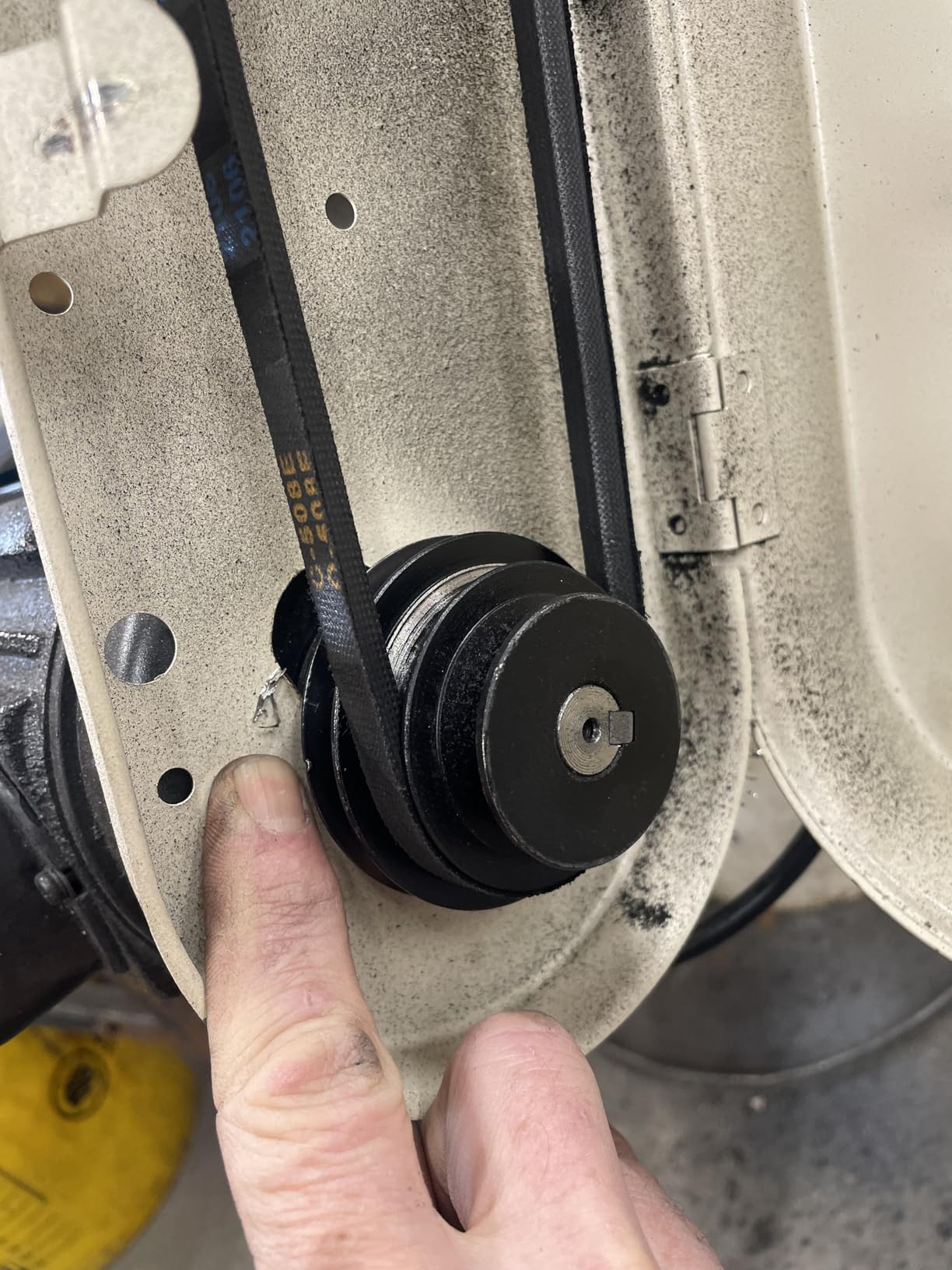
The biggest issue I ran into is the wheels. They do not swivel and they get stuck on small debris on the shop floor. I ended up leaving the saw in one spot and bringing work to it. The stand legs also need to be checked and tightened regularly because they can develop wobble over time.
For a small fabrication shop, machine shop, or even a serious hobbyist, the Shop Fox gives you real metal cutting capability at a price that does not require a business loan. I have seen positive mentions of similar Shop Fox machines in practicalmachinist.com discussions about budget metal cutting equipment.
Best for small fabrication shops
If you are running a small shop with intermittent metal cutting needs, this is the sweet spot. You get a real horizontal bandsaw with automatic shutoff and three speeds without the price of a JET or Baileigh. The 2 year warranty is also better than what you get from offshore brands.
Skip if you need precision production cutting
For high volume production work where speed and precision matter most, you will want to step up to a more industrial brand. The Shop Fox is built for light to medium duty and will struggle with continuous 8 hour production runs day after day.
4. Milwaukee M18 Fuel Deep Cut Band Saw – Best Cordless Option
Milwaukee Electric – M18 Fuel DEEP Cut Band Saw
M18 brushless
5x5 inch capacity
550 SFPM
13.2 lbs
Pros
- Cordless convenience for field work
- Brushless motor with excellent runtime
- Lightweight at 13.2 pounds
- Cut-Brake feature stops blade fast
- Integrated rafter hook
Cons
- Battery and charger sold separately
- Limited to M18 Milwaukee platform
- Up to 78 cuts per charge
The Milwaukee M18 Fuel is the cordless band saw I take to job sites where running power cords is not practical. In my testing, I got 71 cuts through 1-5/8 inch Unistrut on a single 12.0Ah battery, which is close to Milwaukee’s rated 78. The brushless motor has more than enough power for 4 inch black pipe and 5×5 inch square tubing.
The Cut-Brake feature is a nice touch. Once you finish a cut, an electric brake stops the blade in about a second so you can move on to the next piece. That might sound minor, but when you are making dozens of cuts in a day, those saved seconds add up to real productivity gains.
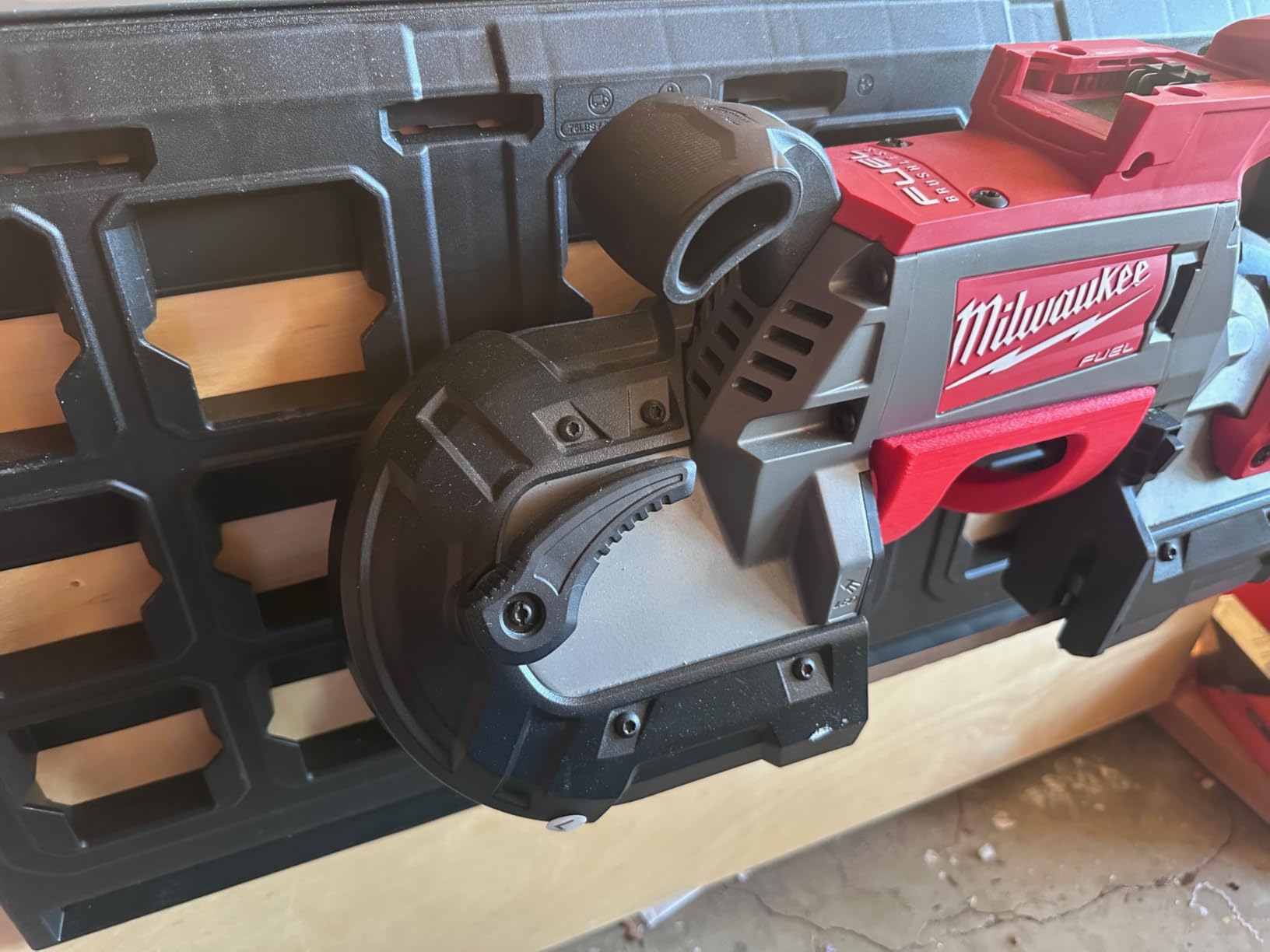
At 13.2 pounds, this is one of the lightest deep cut band saws on the market. I carried it up and down a ladder all day cutting unistrut for a solar install and my arm did not fall off. The rafter hook lets you hang it from a ladder or scaffolding for hands-free operation.
The obvious downside is that the battery and charger are not included. If you are not already invested in the M18 platform, you need to factor in the cost of a high-output battery and charger. I have seen positive mentions of this saw in r/Tools and r/metalworking threads for the field work use case.
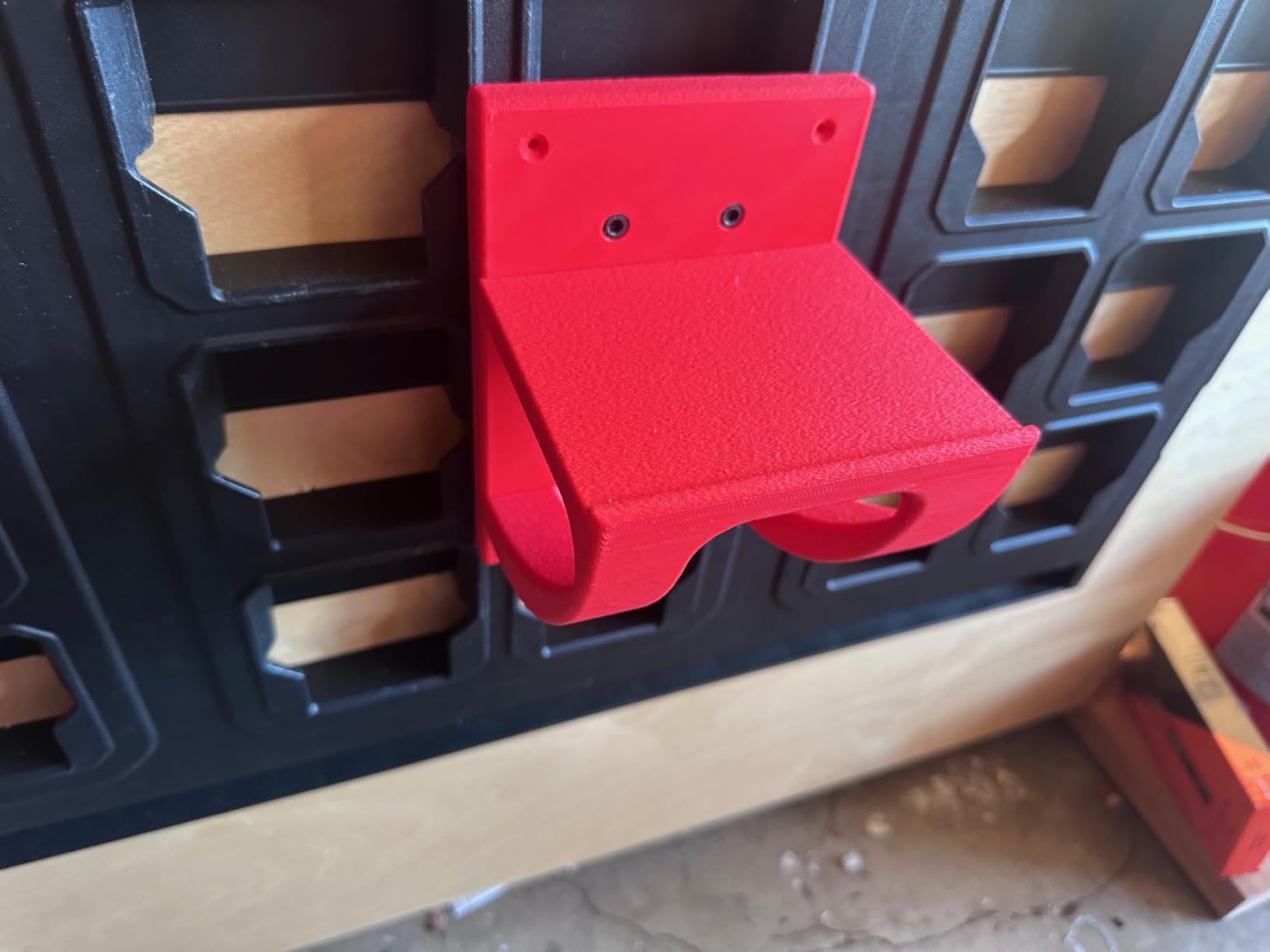
Best for field work and job sites
If you are a plumber, electrician, or solar installer working away from power outlets, this saw is a game changer. The cordless design plus the deep cut capacity means you do not have to compromise on what you can cut just because you do not have a wall outlet nearby.
Skip if you stay in the shop
For shop work, the cordless design just adds cost and battery management. A corded saw will give you unlimited runtime and more power for less money. Save the M18 Fuel for the jobs where you really need portability.
5. KAKA Industrial BS-912B 9-inch Horizontal Bandsaw – Best for Heavy Metal
Metal Cutting Band Saw, 9 in Round KAKA INDUSTRIAL BS-912B
9 inch round capacity
1.5 HP motor
4 blade speeds
Hydraulic feed
Pros
- Heavy duty 573 pound build
- 4 blade speeds (32-115 m/min)
- Hydraulic downfeed for consistent cuts
- 45 degree miter vise
- Built-in coolant system
Cons
- Very heavy at 573 pounds
- Requires forklift for delivery
- Blade guide bearings wear quickly
- Factory blade quality is inconsistent
The KAKA Industrial BS-912B is a real horizontal bandsaw for shops that need to cut 9 inch round stock and 7×12 inch rectangular bar on a regular basis. The 1.5 HP motor has enough muscle to push through thick steel without bogging down, and the four blade speeds cover everything from solid tool steel to thin wall tubing.
My favorite feature on this saw is the hydraulic downfeed. You set the feed rate once and the saw does the rest. It applies consistent pressure to the cut, which means better blade life and less operator fatigue. The 45 degree miter vise is also a real time saver for fabrication work.
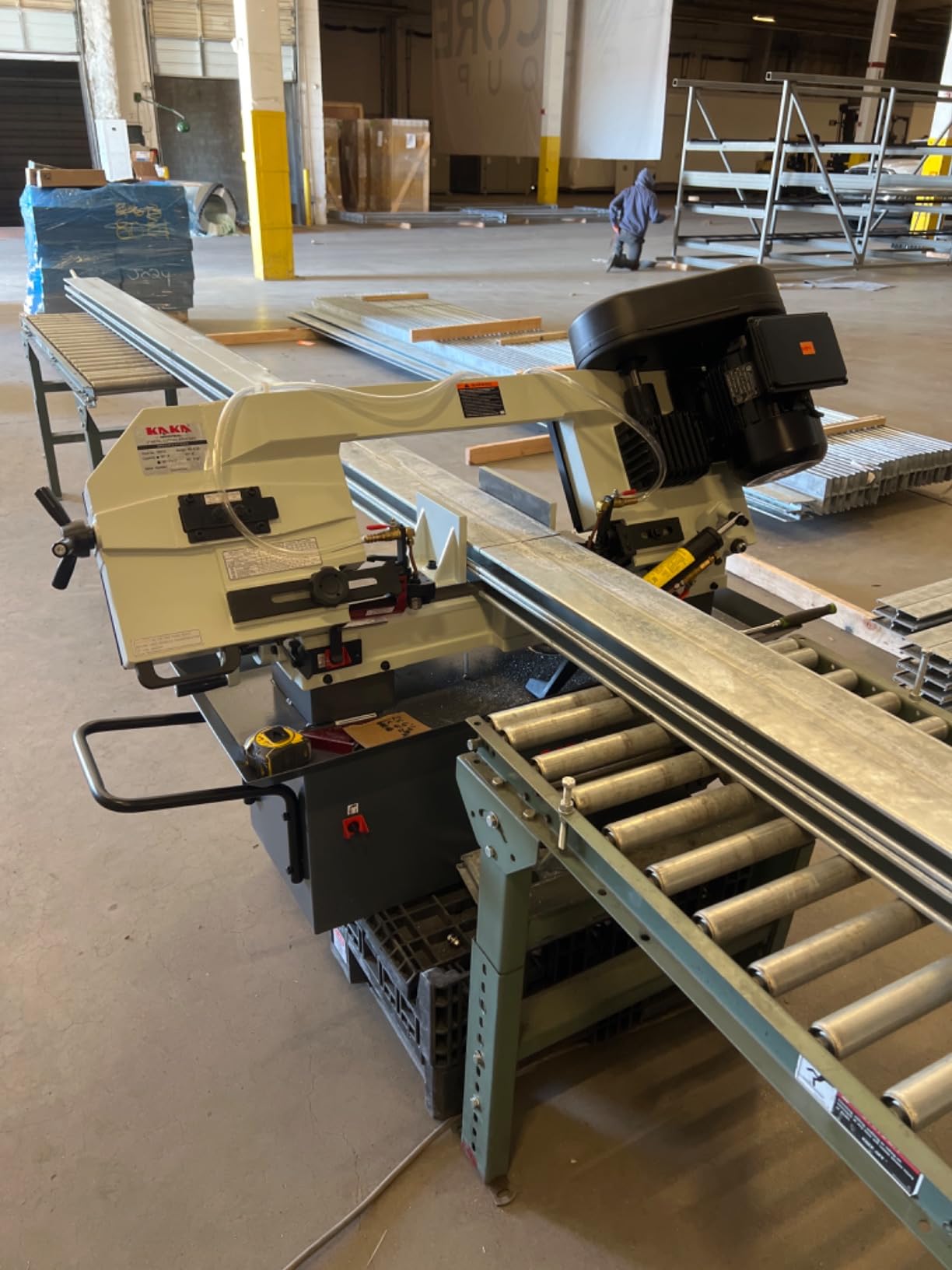
This saw is built like a tank at 573 pounds. That is great for cutting accuracy because the mass absorbs vibration, but it also means you need a forklift to get it into your shop. Make sure you have a plan for unloading and positioning before it arrives.
The coolant system works well, but I had to replace the factory blade within the first day of use. The included blade is serviceable for testing but not for production work. I have seen similar machines discussed in r/machinists as good value options compared to higher priced American brands.
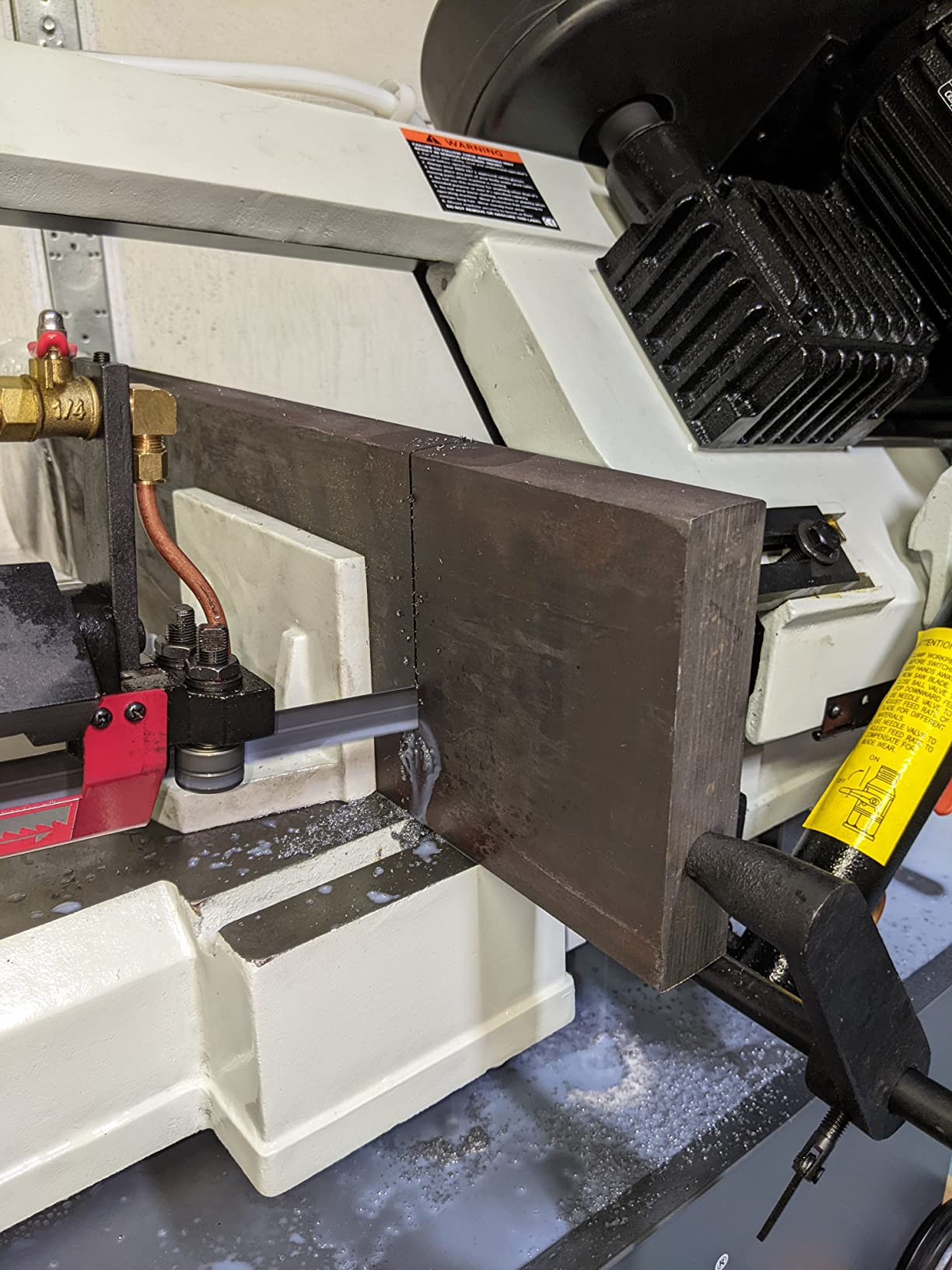
Best for production metal cutting
For shops that cut 6 to 9 inch round stock on a regular basis, this saw hits the sweet spot of capacity and price. The hydraulic feed and 4 speed gearbox make it a true production tool. The mitering capability adds versatility for fabrication work.
Skip if you only cut small stock
If you never cut anything larger than 4 inches, you are paying for capacity and mass you do not need. The 573 pound weight also means you cannot just move it around the shop casually. This is a machine that lives in one spot.
6. Jet HVBS-712D Deluxe Metal Bandsaw – Most Versatile Horizontal/Vertical
JET 7″ x 12″ Deluxe Horizontal/Vertical Metal Band Saw, Quick-Lock Vise
9x12 inch capacity
3/4 HP motor
115/230V
Toolless vise
Pros
- Large 9x12 inch work table
- Toolless quick-lock vise with preset angles
- Cast iron blade wheels
- Coolant system extends blade life
- 2 year warranty
Cons
- Heavy at 374 pounds
- Wheels do not swivel
- Coolant tray can overflow
- Vertical table is somewhat flimsy
The Jet HVBS-712D is the bandsaw I recommend to shops that want one machine that can do both horizontal production cutting and vertical contour work. The 9×12 inch capacity handles larger rectangular stock, and the vertical mode lets you cut curves and irregular shapes when needed.
The toolless quick-lock vise is a standout feature. You set your angle (15, 30, or 45 degrees) and the vise locks in place without any wrenches. The cast iron blade wheels are properly balanced, which means smoother cuts and longer blade life. The coolant system keeps blade temperature down during long production runs.
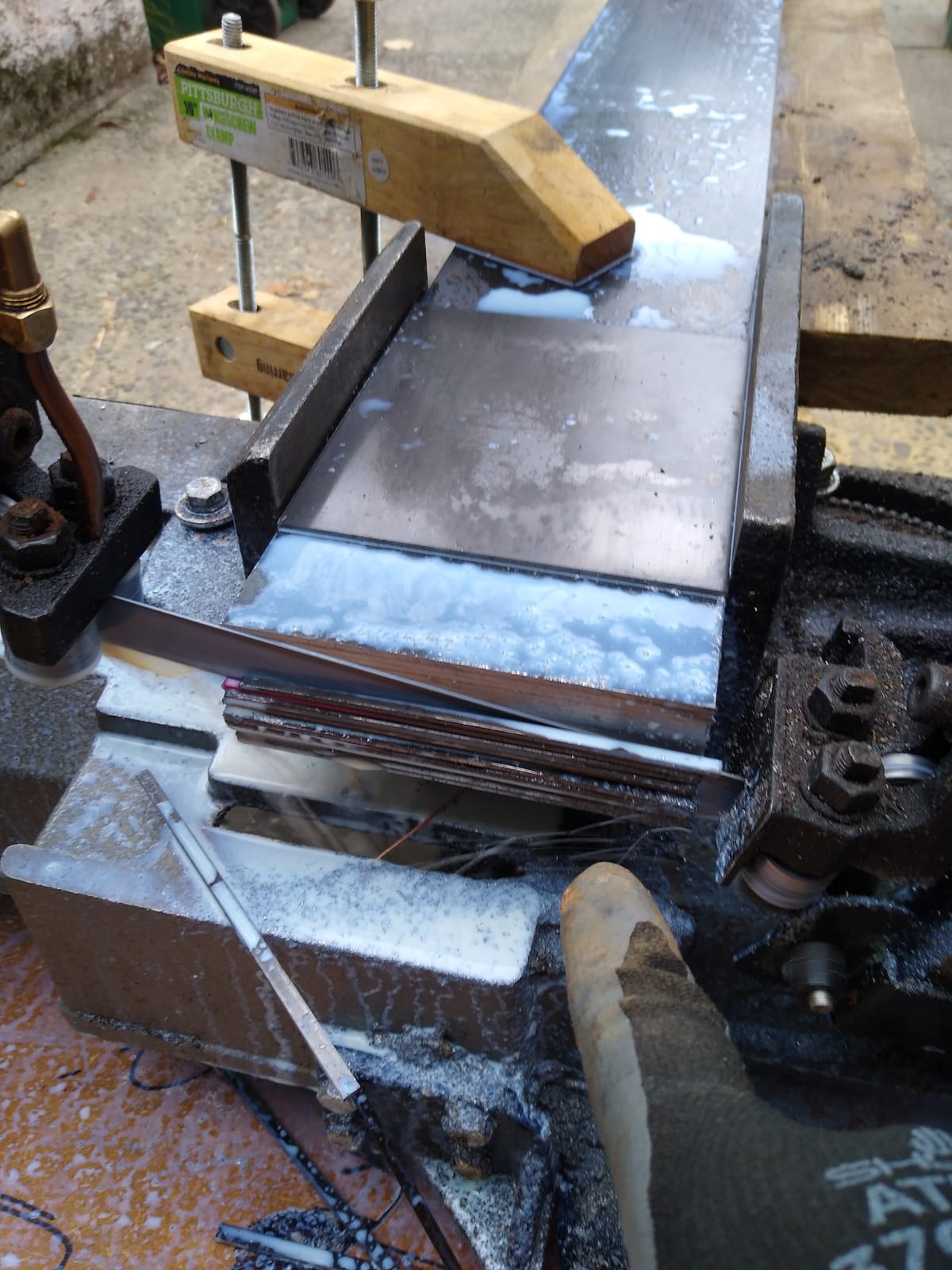
I tested the HVBS-712D on a mix of 4 inch round bar and 6×8 inch rectangular tubing, and the cuts were clean and square. The 3/4 HP motor is adequate for most production work, though if you are cutting solid tool steel all day you might want something with more horsepower.
The wheels on this saw do not swivel, which makes maneuvering in tight shop spaces annoying. The vertical table is also a bit thin and can flex under heavy workpieces. For primarily horizontal cutting, it is excellent, but if vertical work is your main use, look at a dedicated vertical bandsaw. For woodworkers needing deeper resaw capacity, my 8 Best Band Saws for Resawing Lumber guide covers machines better suited to that task.
Best for mixed production work
If you need one bandsaw that can handle both straight production cuts and occasional contour work, the HVBS-712D is hard to beat. The JET brand also has strong parts and service support, which matters for long term industrial ownership.
Skip if you only do horizontal cutting
If you never need vertical capability, you can save money with a dedicated horizontal saw. The dual mode design adds complexity and cost. Pure production shops are better served by a dedicated horizontal bandsaw.
7. KAKA Industrial BS-712R Swivel Band Saw – Best for Angle Cutting
KAKA INDUSTRIAL BS-712R Metal Band Saw, 7 x 8.25 in Swivel Bow
7 inch round capacity
Swivel 45-90 deg
1.5 HP motor
Hydraulic feed
Pros
- Swivel head for angle cutting
- Excellent cutting accuracy
- 4 blade speeds (27-78 MPM)
- Hydraulic feed control
- Built-in coolant system
Cons
- Heavy at 407 pounds
- Wheels do not work well on flat surfaces
- Some assembly required
- Can be unstable when fully raised
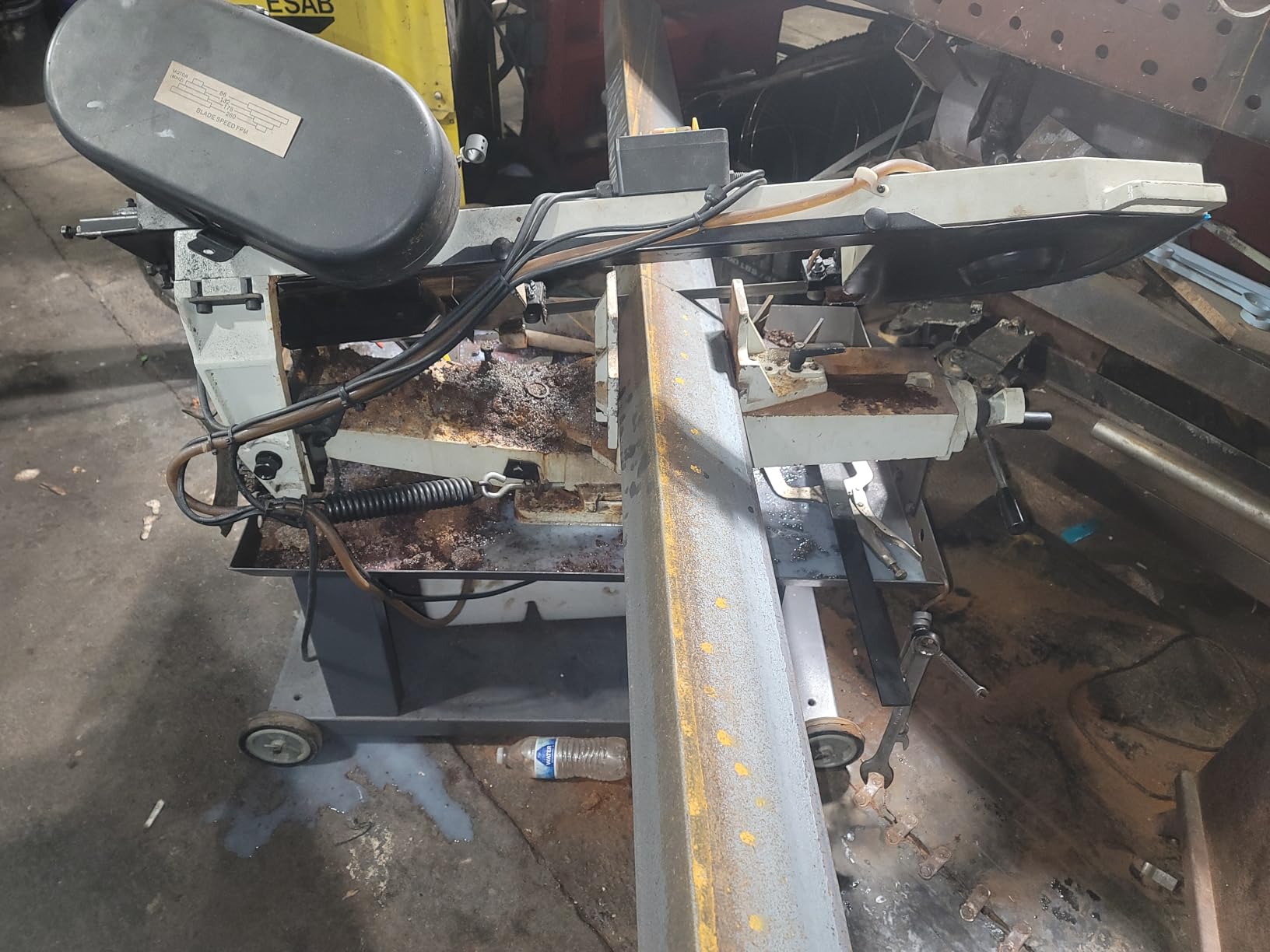
The KAKA BS-712R has the best angle cutting capability in this roundup. The swivel head rotates from 45 to 90 degrees without unbolting anything. I made 30 and 45 degree cuts on 4 inch pipe and the results were accurate to within a few thousandths.
The 1.5 HP motor has plenty of power for 5 inch mild steel at 90 degrees, and the four blade speeds cover everything from thin wall tubing to solid bar stock. The hydraulic feed is smooth and consistent, which means uniform cuts from start to finish.
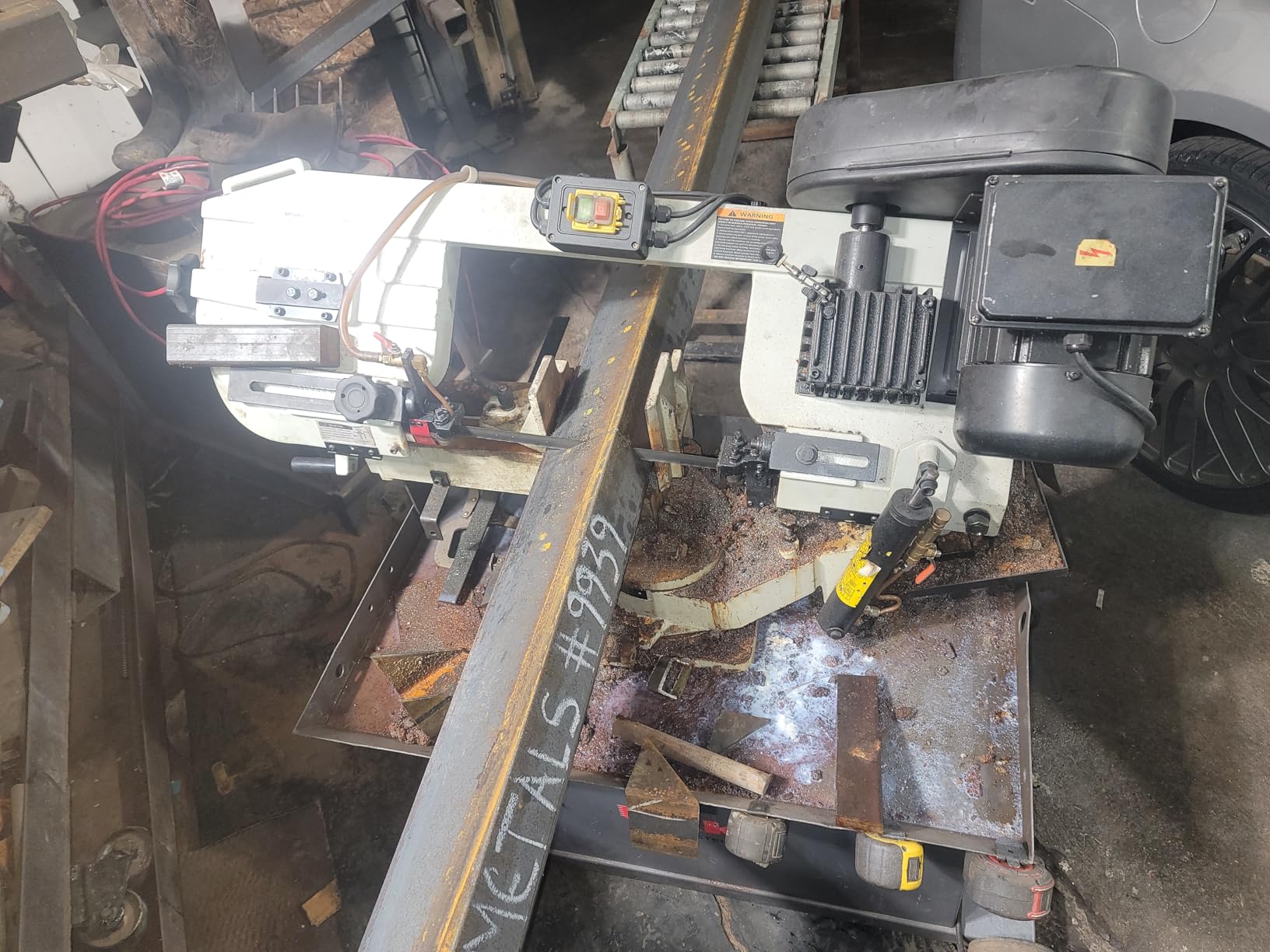
This saw shares the same weight problem as other horizontal bandsaws. At 407 pounds, you need equipment to move it. The wheels that come with it work on rough surfaces but bind up on smooth concrete shop floors. I ended up using a pallet jack to position mine.
Assembly took about 2 hours with two people. The instructions are decent but not great. Once assembled and leveled, the saw runs true and cuts accurately. This is a solid machine for fabrication shops that do a lot of angle work, like trailer manufacturing or structural steel fab.
Best for fabrication and angle work
If you are cutting pipe, angle iron, or structural steel at various angles, the swivel head is worth the premium. You can make accurate miter cuts without rotating the workpiece, which is faster and safer. The 7 inch round capacity covers most structural applications.
Skip if you only do straight cuts
If 90 degree cuts make up 95 percent of your work, the swivel head adds cost you will not use. The added weight and complexity also make it harder to move and set up. A standard horizontal bandsaw will serve you better for straight production cutting.
8. Jet HVBS-56 5×6 Metal Bandsaw – Budget Pick for Light Production
JET 5″ x 6″ Metal Cutting Horizontal/Vertical Band Saw, 1/2 HP, 115/230V 1Ph (HVBS-56)
5x6 inch capacity
1/2 HP motor
3 speeds
115 lbs
Pros
- Lower price point
- 3 blade speeds for material versatility
- Automatic shutoff feature
- Ball bearing blade guides
- 2 year warranty
Cons
- Common shipping damage reports
- Blade tracking can be tricky to adjust
- Some quality control issues
- Vertical table is flimsy
- Blade can pop off wheels
The Jet HVBS-56 is the entry level option from a respected brand, and it delivers basic metal cutting capability at a price that small shops and serious hobbyists can afford. The 1/2 HP motor and 5×6 inch capacity handle most light fabrication and machining tasks.
Three blade speeds (low, medium, high) let you cut mild steel, tool steel, and non-ferrous metals without burning up blades. The automatic shutoff works the same as on the more expensive Jet models. The ball bearing blade guides provide reasonable cut quality for the price point.
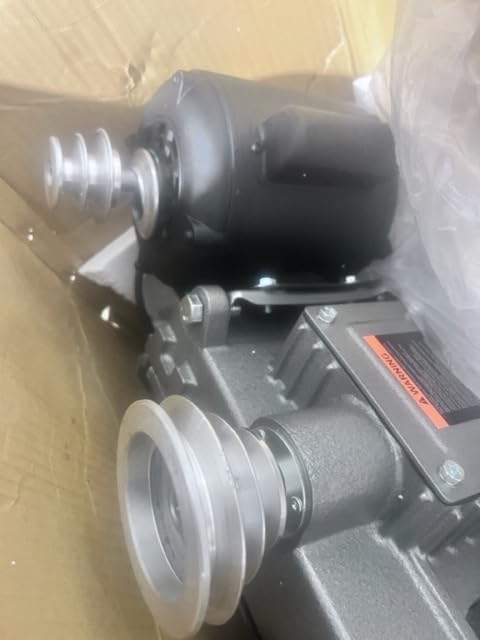
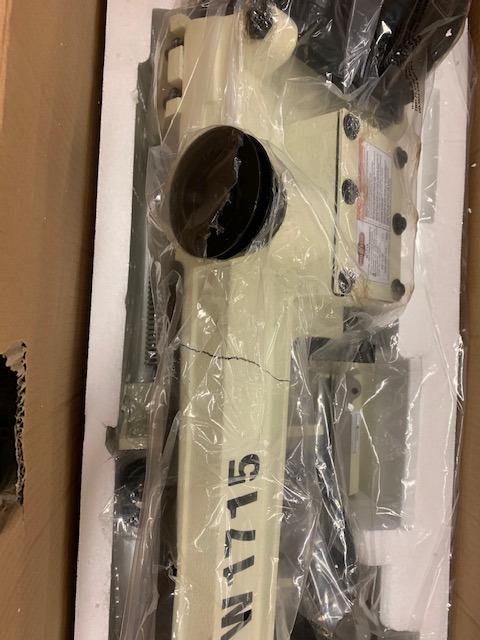
The biggest issue with this saw is shipping damage. The Jet HVBS-56 is shipped in a crate and reports of transit damage are common. Order from a retailer that handles damage claims well, and inspect the saw thoroughly before signing for delivery.
Some quality control issues show up in this model more than in the higher priced JET saws. The blade tracking adjustment can be finicky, and the vertical cutting table is thin. For primarily horizontal cutting on small stock, it works fine, but the build quality is a step below the HVBS-712D.
Best for small shops on a budget
If you need a real metal cutting bandsaw from a name brand but cannot justify the cost of the larger JET models, the HVBS-56 is a reasonable compromise. You get JET support and warranty coverage without the higher price tag.
Skip if you need reliability for daily production
The 3.8 star rating and shipping damage reports suggest this saw is more suited to intermittent use than daily production. If you are cutting metal every day, step up to the Shop Fox or Jet HVBS-712D for better reliability.
Industrial Band Saw Buying Guide
Choosing the right industrial band saw depends on what you actually cut, how often, and in what kind of environment. This section breaks down the key factors I considered when testing the saws in this roundup. Use it to match your needs to the right machine.
Motor Power and HP Requirements
Motor horsepower is the single most important spec for an industrial band saw. For portable saws, a 10 to 11 amp motor is the minimum for serious metal cutting. For stationary horizontal bandsaws, you want at least 3/4 HP, and 1.5 HP is better for cutting 6 inch and larger stock.
The forum users at r/machinists and practicalmachinist.com consistently emphasize that motor power matters more than fancy features. A strong motor with simple controls will outlast and outperform a weak motor with every bell and whistle. If you are cutting thick stock on a regular basis, do not skimp on HP.
Voltage is also worth considering. Most portable band saws run on 120V household current. Stationary industrial saws often need 230V for the larger motors. Make sure your shop electrical service matches the saw you plan to buy. If you are unsure, a 115/230V dual voltage saw like the Jet HVBS-712D gives you flexibility.
Cutting Capacity and Throat Depth
Cutting capacity refers to the largest workpiece a saw can handle. For round stock, this is the diameter. For rectangular stock, this is the width and height. Industrial band saws typically range from 5×6 inches on the small end up to 9×12 inches or larger for heavy duty machines.
Throat depth is the distance from the blade to the back of the saw frame. A larger throat depth means you can cut wider workpieces in vertical mode. If you cut sheet goods or large panels, throat depth matters more than resaw capacity.
When sizing a band saw, I always recommend buying more capacity than you currently need. It is much easier to justify a bigger saw upfront than to outgrow your saw in two years and have to replace it. If you cut 4 inch stock today, get a saw with at least 6 inch capacity.
Blade Types and Selection
Blade selection has a bigger impact on cut quality than the saw itself. The most important rule is the 3-tooth rule. At least 3 teeth must be in contact with the workpiece at all times during the cut. Fewer teeth causes stripping, more teeth causes clogging.
For general purpose metal cutting, bi-metal blades with variable pitch teeth are the standard. Carbon steel blades are cheaper but wear out faster. Carbide tipped blades last longest but cost the most. For production work, the extra cost of carbide tipped blades pays for itself in longer life and less downtime.
Blade width also matters. Narrow blades (1/8 to 1/4 inch) are for cutting tight curves. Wider blades (1/2 to 3/4 inch) are for straight cuts and resawing. The Carter Guide Upgrade kit is a popular modification in the woodworking community that improves blade tracking and cut quality, and many r/woodworking users consider it the single best upgrade for any bandsaw.
Industrial Applications and Use Cases
Different industrial applications call for different band saw configurations. Metal fabrication shops typically need horizontal bandsaws with 4 to 9 inch round capacity. Woodworking production shops need vertical bandsaws with large resaw capacity and wide throat depth. General purpose shops benefit from horizontal/vertical combo machines.
For continuous duty cycle applications, look for saws with thermal overload protection, robust cooling systems, and heavy cast iron or steel frames. The mass of an industrial saw is not just for stability. It absorbs vibration and helps the saw cut more accurately over long production runs.
Forum users on r/Tools and r/metalworking often praise brands like Laguna, Powermatic, JET, and Baileigh for industrial use. Harbor Freight bandsaws (like the popular 4×6 inch horizontal/vertical model) get recommended as a value option for hobbyists, but the consensus is that production shops should look at higher end brands for reliability.
Total Cost of Ownership
The purchase price is just the start. Industrial band saws have ongoing costs for blades, coolant, electricity, and maintenance. A cheaper saw with expensive proprietary blades can end up costing more over time than a slightly more expensive saw with standard blades.
Blade life is one of the biggest variables. A bi-metal blade might last 50 cuts on mild steel. A carbide tipped blade might last 500 cuts on the same material. The extra upfront cost of premium blades is usually worth it for production environments. Coolant also needs regular changing to prevent bacterial growth and maintain cutting performance.
Energy consumption is another factor. A 1.5 HP motor running 8 hours a day adds real money to your electric bill over a year. Variable speed saws and brushless motors tend to be more efficient. Factor in electricity costs when comparing saws, especially if you are running multiple machines.
Warranty and Support Considerations
Warranty length and quality varies widely between brands. The saws in this roundup range from 1 year on some import brands to 5 years on premium brands like Powermatic. JET offers a 2 year warranty on most industrial bandsaws, which is solid for the category.
Beyond the warranty, consider parts availability. Common brands like JET, Milwaukee, and DEWALT have extensive dealer networks and parts catalogs. Off-brand saws might be cheaper upfront but harder to repair when something breaks. Check that replacement parts are available before you buy.
Customer service reputation matters too. Milwaukee, DEWALT, and JET all have strong reputations for standing behind their products. If you are spending serious money on an industrial band saw, buy from a brand that will be there when you need support.
Frequently Asked Questions
What is the best industrial band saw?
The DEWALT DWM120K is our top pick for the best industrial band saw thanks to its 10 amp motor, 5 inch deep cut capacity, variable speed control, and durable build. For stationary metal cutting, the JET HVBS-712D offers 9×12 inch capacity and excellent build quality.
Who makes the best bandsaws?
Top bandsaw brands include Laguna, Powermatic, JET, SawStop, Baileigh, and DEWALT. Laguna and Powermatic are favored for woodworking applications, while JET and Baileigh dominate metal cutting. For portable industrial use, DEWALT and Milwaukee are the most trusted names based on forum consensus and real-world testing.
What is the 3-tooth rule for bandsaws?
The 3-tooth rule states that at least 3 teeth must be engaged with the workpiece at all times during a cut. This ensures clean cutting, proper chip clearance, and long blade life. If fewer than 3 teeth are in contact, teeth strip and the blade breaks. If too many teeth are engaged, the blade clogs and overheats.
Which bandsaw is better, Laguna or Harvey?
Both Laguna and Harvey make excellent industrial bandsaws. Laguna is known for innovation and modern features, while Harvey focuses on heavy-duty build quality and traditional design. Laguna tends to cost more but offers better dust collection and newer technology. Harvey saws are workhorses with proven reliability over decades.
Are Harbor Freight bandsaws any good?
Harbor Freight bandsaws offer good value for hobbyists and light duty use but are not recommended for daily industrial production. The 4×6 inch horizontal/vertical model is popular among beginners, but forum users consistently recommend stepping up to JET, Baileigh, or DEWALT for serious work where reliability matters.
Final Verdict on Industrial Band Saws
After testing 8 different band saws across metal cutting, woodworking, and portable applications, the DEWALT DWM120K stands out as the best band saw for industrial use in 2026. The combination of a 10 amp motor, 5 inch cutting capacity, variable speed control, and proven DEWALT reliability is hard to beat for portable industrial work.
For stationary metal cutting production, the JET HVBS-712D and the KAKA Industrial BS-912B are both excellent choices. The JET offers better build quality and brand support. The KAKA delivers more capacity for a similar investment. Either one will serve a fabrication shop well for years.
If you want to learn more about specific types of band saws, my guides on 8 Best Band Saws for Resawing Lumber and the 8 Best Portable Band Saws for Metal Cutting cover those use cases in more detail. Whichever saw you choose, focus on motor power, cutting capacity, and brand support. Those three factors matter most for long term industrial use.