
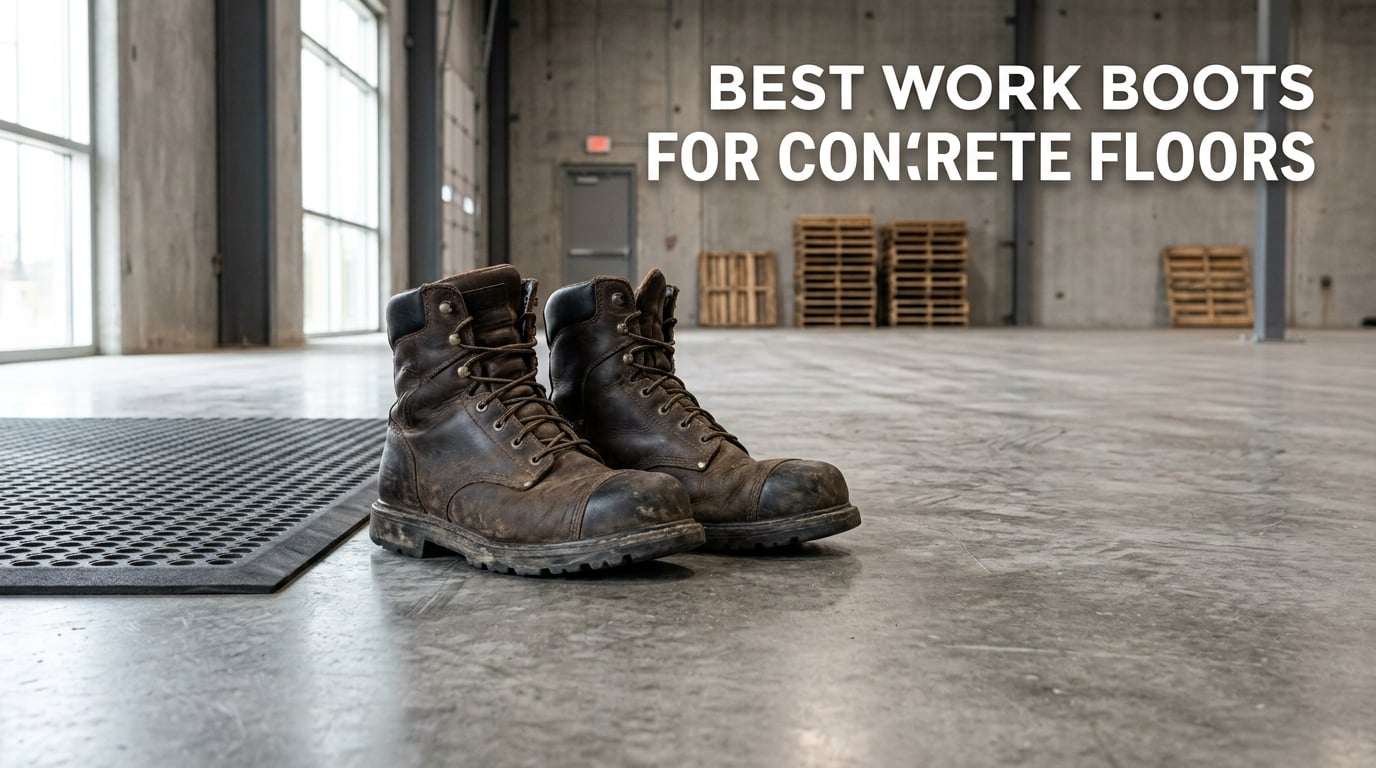
If you spend a shift standing or walking on poured concrete, the boot you pick matters more than almost anything else you wear. The short answer: the best work boots for concrete floors spread your weight across the entire footprint instead of concentrating it at the heel, and they keep their cushioning from flattening by hour six.
That is why our top pick, the Timberland PRO Pit Boss 6 Inch, comes out ahead. Its 24/7 comfort suspension system handles arch support and step cushioning in one piece, and it carries the largest review base of any boot we analyzed. If you are warehouse or fulfillment staff on your feet 10 to 12 hours a day, a mechanic on a shop floor, a concrete finisher on an outdoor slab, or a driver hopping in and out of a cab, the differences between these twelve matter to you.
We looked at twelve boots and work shoes built for hard floors, weighing cushioning construction, sole geometry, toe protection, weight, width availability, and the honest complaints in the review data. We also split the list by job: standing still in one spot is a different problem than walking miles, and we say which boot fits which.
One thing we will not do is pretend a wedge sole is in this list when it is not. The most-talked-about boot for concrete floors is a true flat wedge outsole, and none of the twelve we analyzed uses one. Our guide to work boots for standing on concrete covers that geometry question in depth, and we flag it again below.
Table of Contents
Top 3 Picks for the Best Work Boots for Concrete Floors (October 2026)

Timberland PRO Pit Boss 6 Inch
- 24/7 comfort suspension arch and cushioning
- ASTM F2413 steel toe
- Electrical hazard rated

Skechers Cankton Steel Toe
- ASTM F2413 steel toe
- Memory Foam insole
- Breathable duraleather and mesh upper

Timberland PRO Boondock Composite
- Highest rated at 4.5 out of 5
- Anti-fatigue energy return geometry
- Waterproof composite toe boot
All 12 Picks at a Glance in 2026
| Product | Specifications | Action |
|---|---|---|
| Timberland PRO Pit Boss 6 Inch Steel Safety Toe |
|
Check Latest Price |
| Skechers Cankton Steel Toe Lace Up |
|
Check Latest Price |
 EVER BOOTS Tank 6 Inch Soft Toe Leather Boot EVER BOOTS Tank 6 Inch Soft Toe Leather Boot |
|
Check Latest Price |
 CAT Threshold Waterproof Steel Toe Work Boot CAT Threshold Waterproof Steel Toe Work Boot |
|
Check Latest Price |
 Wolverine Overpass Composite Toe Waterproof Wolverine Overpass Composite Toe Waterproof |
|
Check Latest Price |
 Wolverine Floorhand Waterproof 6 Inch Boot Wolverine Floorhand Waterproof 6 Inch Boot |
|
Check Latest Price |
| Timberland PRO Boondock Composite Safety Toe Waterproof |
|
Check Latest Price |
 Irish Setter Ashby 6 Inch Soft Toe Work Boot Irish Setter Ashby 6 Inch Soft Toe Work Boot |
|
Check Latest Price |
 Timberland PRO Keele Ridge Steel Toe Hiker Timberland PRO Keele Ridge Steel Toe Hiker |
|
Check Latest Price |
 NINGO Steel Toe Oil and Slip Resistant Boot NINGO Steel Toe Oil and Slip Resistant Boot |
|
Check Latest Price |
 TREDS 17 Inch Rubber Concrete Overboot TREDS 17 Inch Rubber Concrete Overboot |
|
Check Latest Price |
 New Balance Calibre Composite Toe EH PR SR New Balance Calibre Composite Toe EH PR SR |
|
Check Latest Price |
1. Timberland PRO Pit Boss 6 Inch Steel Safety Toe – Best Overall for Concrete Floors
Timberland PRO Men’s Pit Boss 6 Inch Steel Safety Toe Industrial Work Boot, Brown-2024 New, 10.5
24/7 comfort suspension arch system
ASTM F2413 steel toe
Electrical hazard rated
Listed at 1.83 pounds
Pros
- Arch support holds up across 10 to 12 hour shifts
- Steel toe rated to ASTM F2413-18 for impact and compression
- Welted construction resists sole separation
- Runs true to size with wide options available
Cons
- Stiff out of the box with a long break-in
- Wide sizes can let the foot slide without an insole
- Supplied insole is plain foam
- not a branded footbed
I put the Pit Boss on the list first because it is the only boot here where the cushioning, the arch support, and the safety rating are all first-tier at the same time. The 24/7 comfort suspension system is a single midfoot-to-heel unit rather than a thin foam layer, so it is still doing work at hour ten instead of flattening into a pancake.
It is also the one I trust when the concrete is genuinely industrial. The steel toe meets ASTM F2412-18a and ASTM F2413-18 for impact and compression, and the electrical hazard rating runs to ASTM F2892-18. That rating matters in machine shops and plant environments, where a non-EH boot is a real problem rather than a paperwork detail.
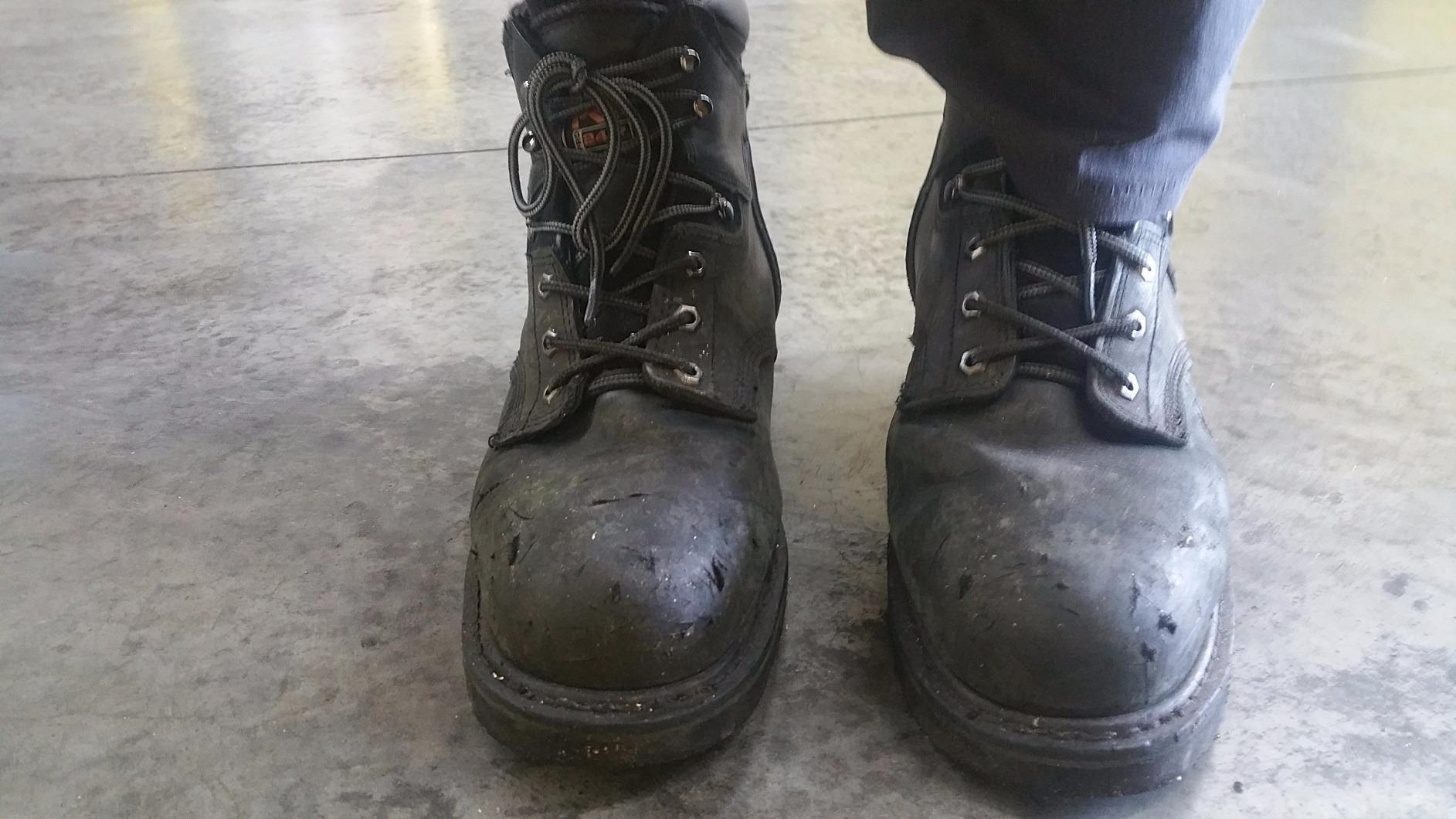
The outsole is a heat-resistant rubber compound with slip, oil, and abrasion resistance, and the upper contains at least 50 percent recycled PET. At a listed weight of 1.83 pounds, it is one of the lighter boots in the group, which matters when you are standing still because weight is still weight after hour eight.
What I do not like is the break-in. Owners describe it as stiff out of the box, and the wide sizing can let the foot move around inside the boot without a proper insole. Some buyers also report the toe box still feeling narrow in the wide size, which is the single most common complaint across this entire category. If you have genuinely wide feet, try the Wolverine Overpass or the New Balance Calibre first.
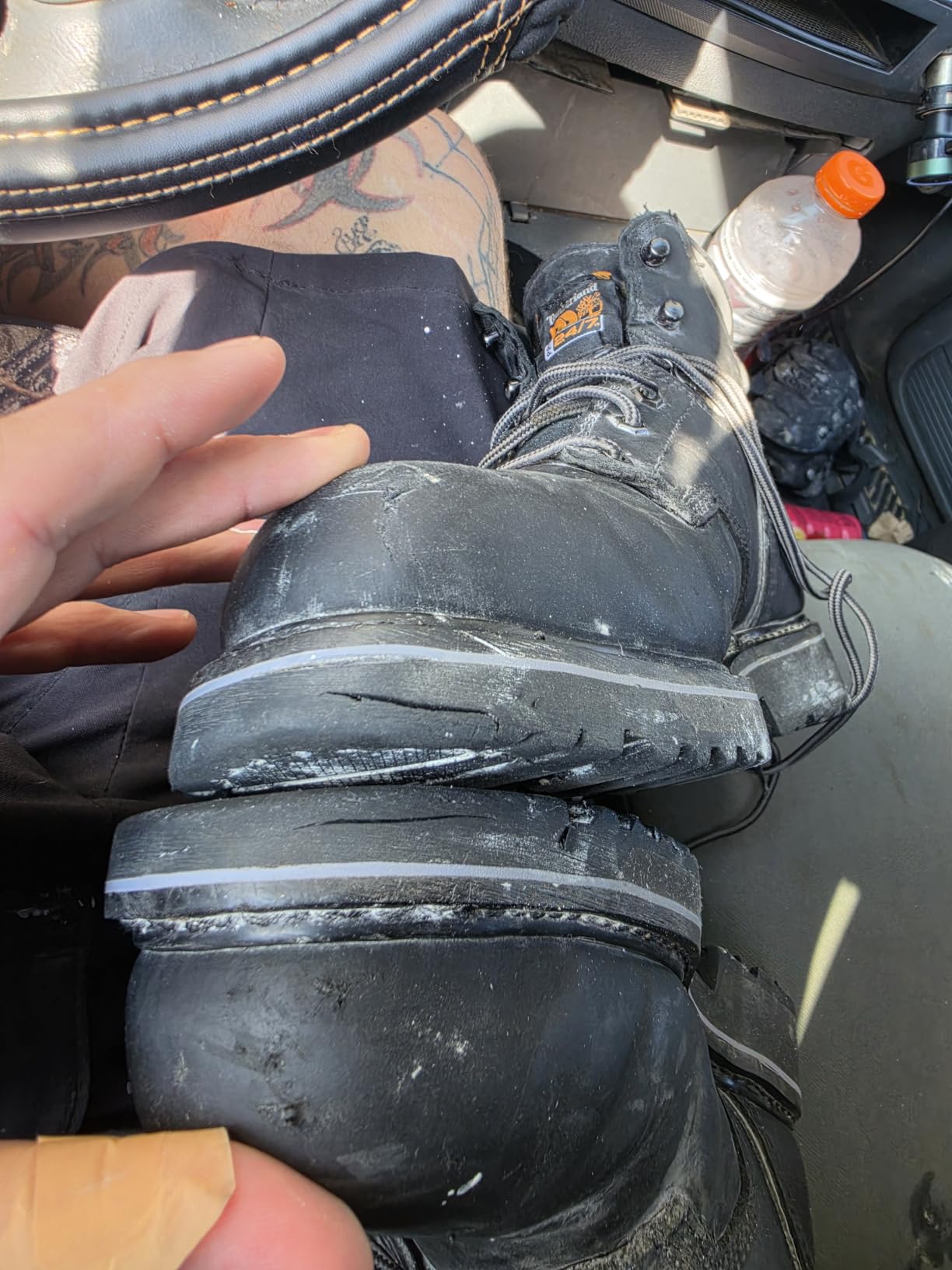
What the hour 6 to hour 12 test looks like
Long-shift comfort is judged late, not early. A boot that feels wonderful in the first hour tells you almost nothing, and the reviews on this one are consistent: comfortable by the end of a full shift, tired feet by the end of a double.
The supplied insole is plain foam, so if your arch collapses after six hours, that is the part to upgrade first. It is removable, which means an anti-fatigue footbed drops straight in and turns this from a good boot into a very good one.
Who should skip it
Skip it if you need a boot you can wear straight out of the box with zero break-in, or if you are on a temperature-controlled indoor floor and do not want a fully sealed upper. It is also the wrong call for anyone who needs a genuine wide toe box and has been burned by narrow wide sizing before.
Skip it for a soft-toe job. This is a rated steel toe boot, and a soft toe is lighter and more flexible for warehouse work where impact hazards are not part of the description.
2. Skechers Cankton Steel Toe Lace Up – Best Value for Walking a Concrete Floor
Skechers Men’s Cankton Steel Toe Construction Shoe – Electrical Hazard Rated, Memory Foam, Black/Charcoal, 9.5
ASTM F2413 steel toe with EH rating
Memory Foam cushioned insole
Relaxed Fit last
Duraleather and mesh upper
Pros
- Athletic styling is far less bulky than a traditional boot
- Memory Foam insole and flexible outsole ease long shifts
- Mesh panels keep feet cooler on hot floors
- Lug-pattern rubber outsole grips hard surfaces
Cons
- Athletic last gives less ankle support than a tall boot
- Duraleather upper scuffs sooner than full-grain leather
- Wide sizing can feel loose during the workday
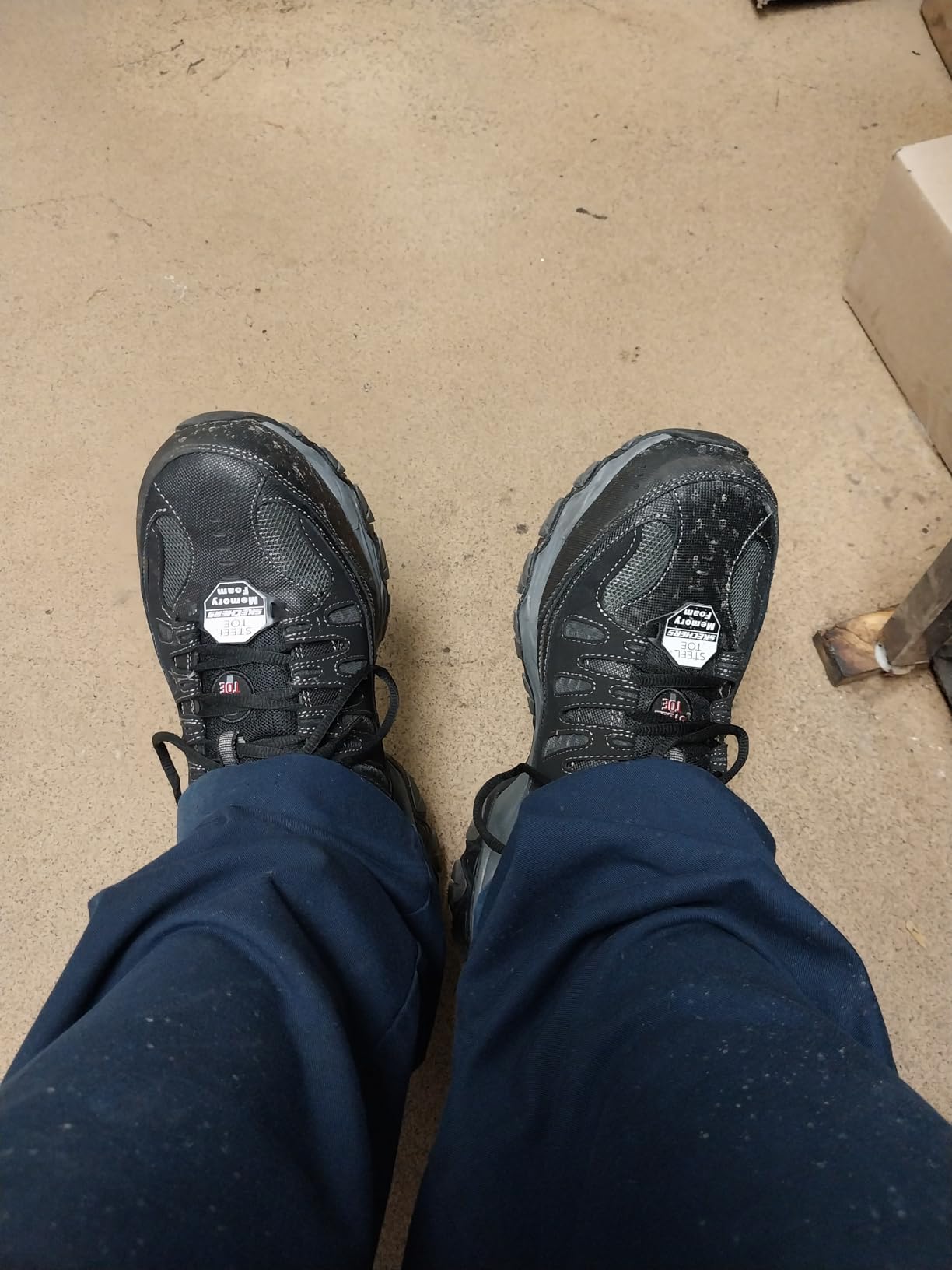
If your shift is walking rather than standing, this is the boot I would pick. The Cankton is built on an athletic last with a flexible lug-pattern rubber outsole, and that flexibility is exactly what you want when you are covering 8 or more miles of warehouse floor. The lugs bite into concrete without the stiff, catch-and-release feel of a deep-tread work boot.
It carries nearly 28000 reviews at 4.3 out of 5 and sits second in the men’s work and utility shoes category, which tells you how many different foot shapes it has absorbed without falling apart. The Memory Foam cushioned insole and the relaxed fit do most of the work on long routes.
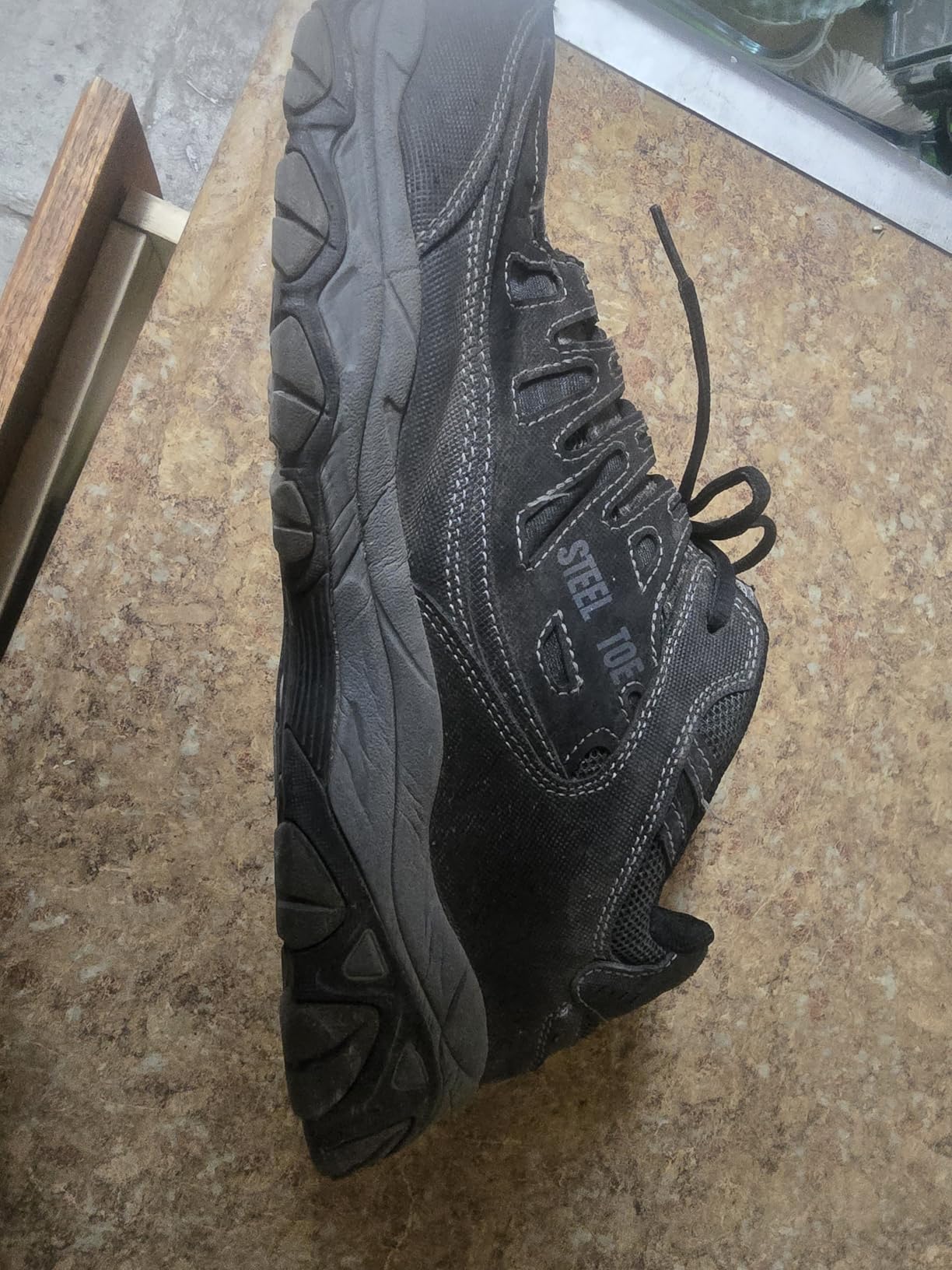
The steel safety toe meets ASTM F2413 for impact and compression, and it includes electrical hazard protection, so it is a rated boot and not just a work-looking shoe. That distinction comes up constantly in forums: plenty of people assume a boot that looks industrial is safety rated, and plenty are wrong.
The durability ceiling is the honest drawback. A duraleather upper with mesh panels scuffs and shows wear sooner than full-grain leather, and the athletic last gives you less ankle rigidity than a classic six-inch boot. On a loading dock with stacked pallets I would pick a taller boot instead.
Why it beats heavier boots on a walking shift
Every extra pound on your feet is a pound you carry for the whole shift, and on a walking route that compounds quickly. This boot is listed at 3.55 pounds, which is honest packaging weight rather than a per-boot figure, but the feel is the athletic one: it moves with you instead of against you.
The Relaxed Fit is why the toe box works for most feet. The common pain point in this category is a safety cap pressing on the toes, and this last gives the forefoot more room than a traditional work boot, which is why it rarely generates that complaint.
Where it falls short
It falls short where you need lateral ankle support, meaning uneven ground, ladders, or work at height. It also runs roomy in the wide sizing, and reviewers note the foot can move around during the day if you do not lace it firmly through the midfoot.
If your environment is a dry indoor floor, this is close to ideal. If it is wet, oily, or outdoors in mud, go up the list to a waterproof lug outsole instead.
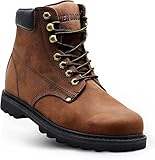
3. EVER BOOTS Tank 6 Inch Soft Toe Leather Boot – Best Budget Leather Boot
EVER BOOTS Tank Men’s Soft Toe Oil Full Grain Leather Work Boots Construction Rubber Sole (10 D(M), Darkbrown)
Soft toe leather boot
Removable insole for orthotics
Wide rubber outsole
Listed at 4 pounds
Pros
- Wide rubber outsole gives real stability on hard concrete
- Nubuck upper flexes with the foot instead of resisting it
- Removable insole accepts custom orthotics
- Runs true to size with wide options
Cons
- Soft toe means no impact-rated protection
- Not waterproof
- so wet concrete needs a different boot
- Nubuck suede scuffs and stains easily
This is the soft-toe answer, and for a lot of warehouse and delivery work that is the correct answer rather than a compromise. A soft toe removes roughly a pound of steel from each foot and lets the upper flex across the forefoot, which is a meaningful difference across a full shift on flat concrete.
It holds a 4.4 out of 5 across more than 18000 reviews. Buyers consistently point at the wide rubber outsole for stability on hard and uneven ground, and at the fact that the nubuck leather bends with the foot rather than fighting it.
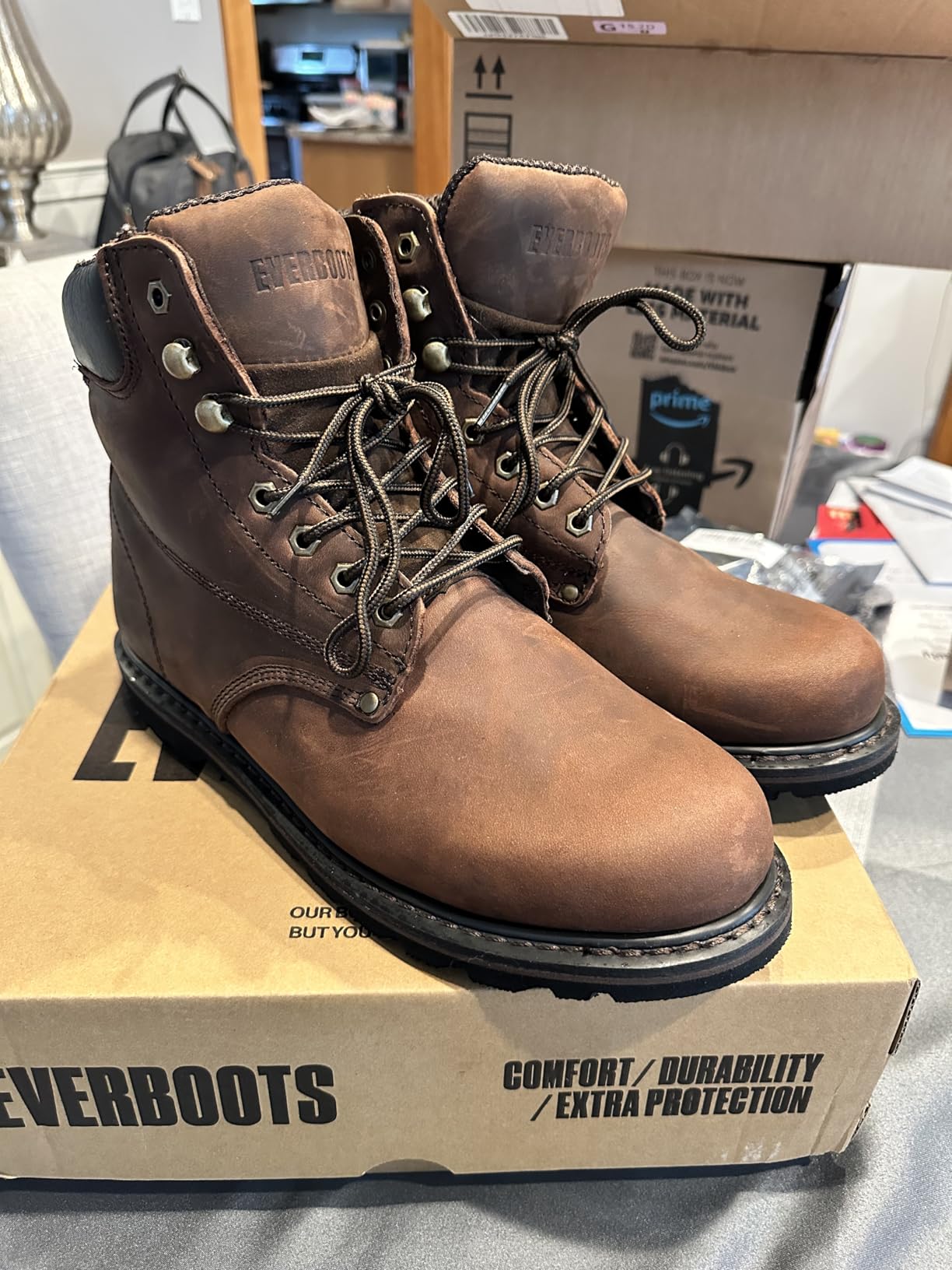
For people with arch or heel problems, the removable insole is the headline feature. It accepts custom orthotics, so if you already know your feet need a specific support, this boot lets you solve it without buying a new pair. Read our picks for work boots built for flat feet for the arch side of that conversation.
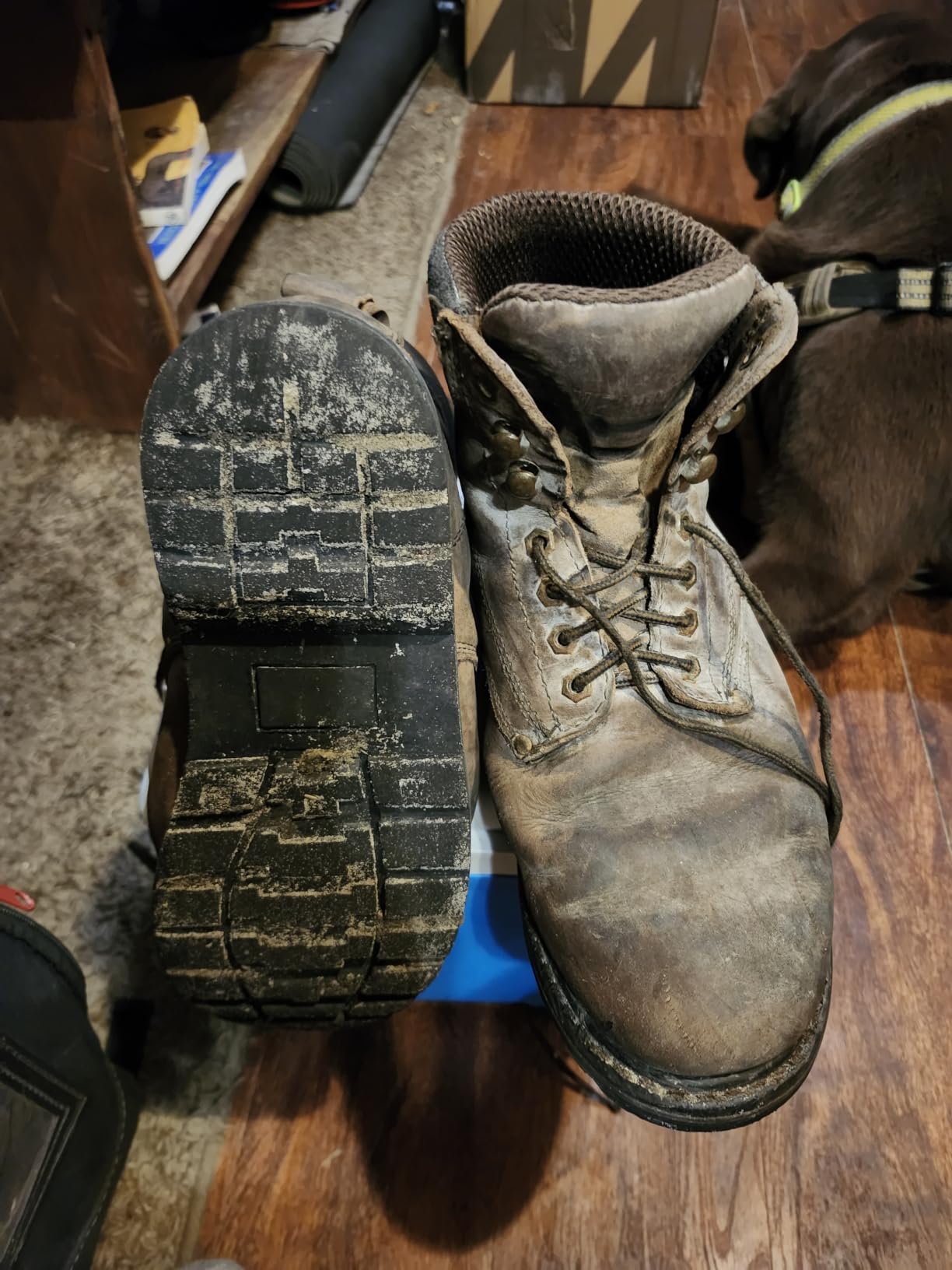
The limits are structural. A soft toe gives you no impact-rated protection, so this is not a boot for a machine shop or anywhere heavy material can land on your foot. It is also not waterproof, which rules it out for wet concrete and for seasonal outdoor work.
Who this soft toe is genuinely right for
If your job is order picking, delivery driving, warehouse walking, or light site work with no toe hazard, a soft toe is often the most comfortable option available to you. You are removing weight and stiffness with no safety trade-off, because there was no safety requirement to begin with.
That is the conversation missing from most of this category. Workers ask whether soft toe is acceptable when the job does not require a protective toe, and the honest answer is that it is frequently the better boot, not the lesser one.
Where it will not work
It will not work where anything heavy can fall, where the floor is wet, or where the abrasion is severe. Nubuck scuffs and stains easily, which matters on a slab where boots are dragged and scuffed constantly.
At 4 pounds listed weight it is not the lightest boot here either. If weight is your dominant concern and you need no toe protection, a low-cut work shoe will beat it on comfort.
4. CAT Threshold Waterproof Steel Toe Work Boot – Best for Wet Concrete
CAT Footwear Men’s Threshold Waterproof Steel Toe, Black, 12
Waterproof membrane
Slip resistant outsole
Breathable leather upper
Steel toe
Listed at 2.06 pounds
Pros
- Waterproof membrane keeps feet dry on wet concrete
- Slip-resistant outsole holds on wet or dusty floors
- Breathable leather reduces heat over long shifts
- Steel toe protection in a lighter build
Cons
- Needs a break-in before the leather molds
- Sole cushioning is basic and invites an insole upgrade
- Wide sizes can feel loose and move at the heel
Wet concrete is a different problem from dry concrete. Dry concrete is about impact absorption. Wet concrete is about traction, and a smooth sealed slab with water on it will take the sole off almost any soft compound outsole. The Threshold is built around a slip resistant outsole for exactly that reason.
It scores 4.4 out of 5 across more than 13700 reviews with 73 percent five-star ratings, which is one of the cleanest rating distributions in this group. The waterproof membrane and steel toe protection do the safety work, and the listed weight of 2.06 pounds keeps it out of the heavy zone.
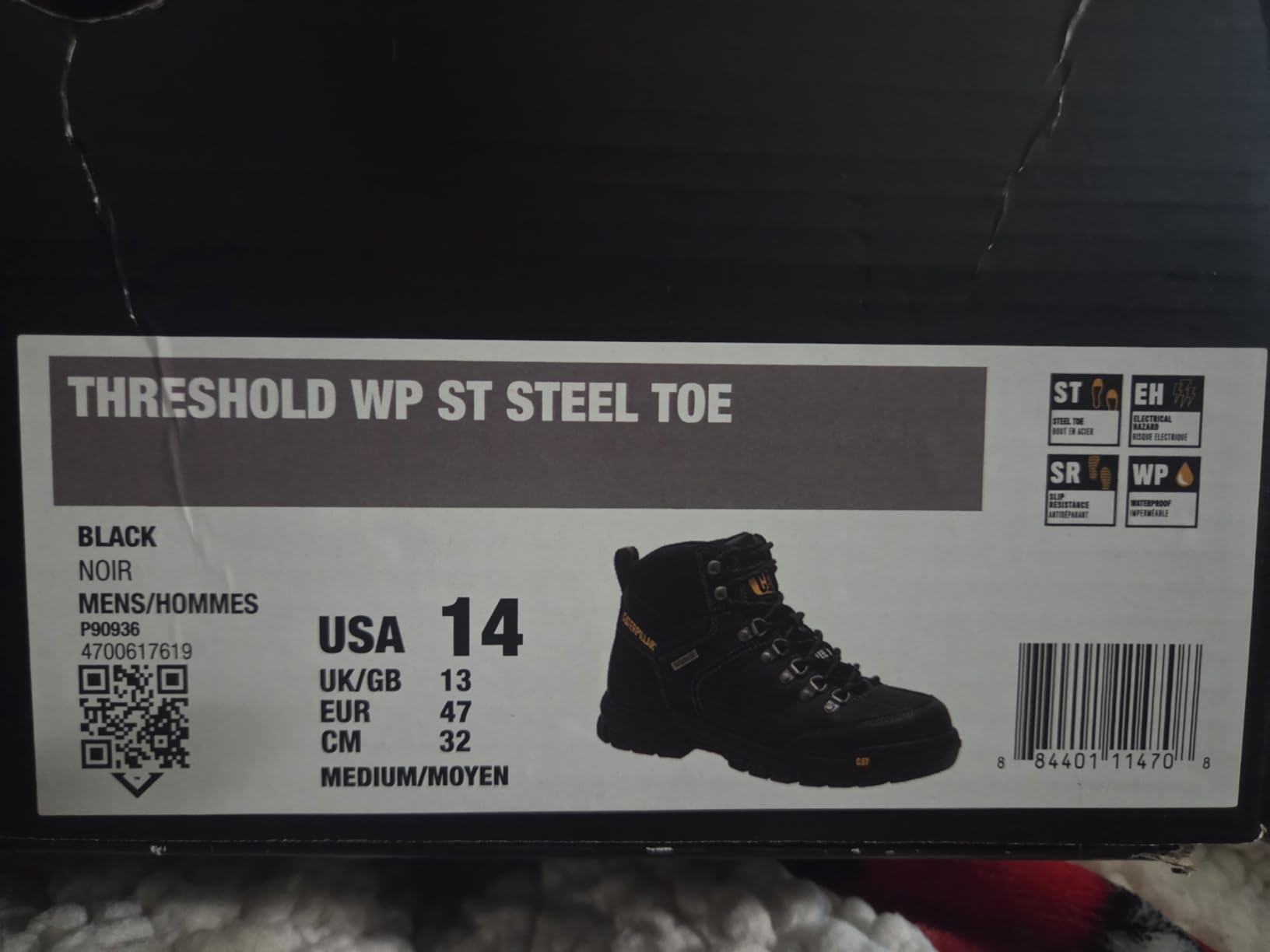
The upper is breathable leather, which matters more than it sounds. Sealed boots run hot, and heat and sweat on a 12-hour indoor shift turn into heel problems of their own. A breathable upper with a waterproof membrane is a reasonable middle ground between full protection and full airflow.
Be honest about the cushioning. Reviewers describe the sole cushioning as basic, and plenty of owners add aftermarket insoles in the first month. That is fine if the footbed is removable, and the recurring fix in the reviews is exactly that: swap the insole before you swap the boot.
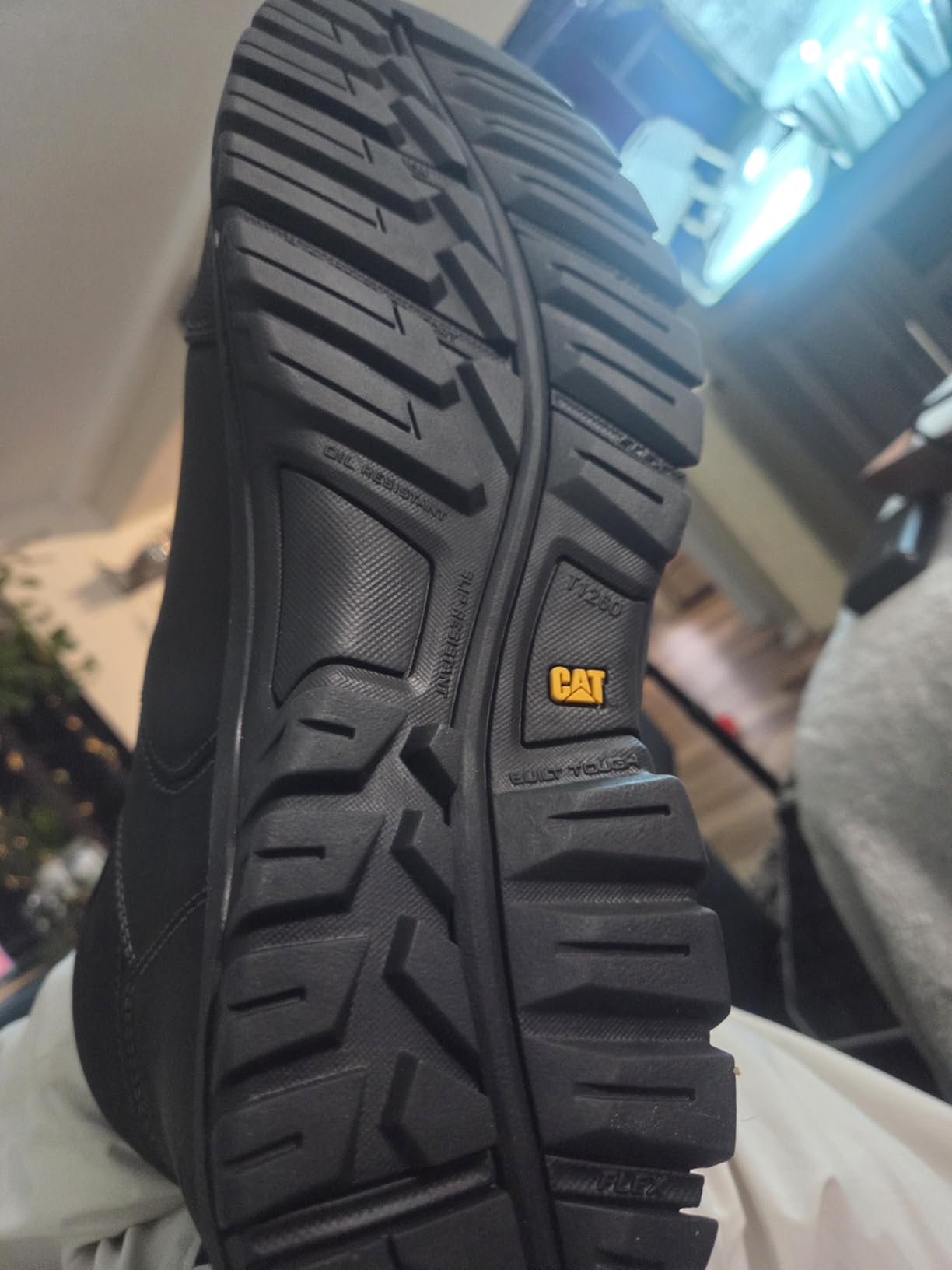
How the waterproof membrane holds up indoors
There is a real trade-off here that people get wrong. A waterproof membrane is a win outdoors and on washdown floors, and it is a liability in a temperature-controlled building where you generate a lot of sweat. The Threshold leans breathable enough to stay out of the worst of that problem.
If your site is dry indoor concrete nine months of the year, you are paying for a feature you will use a fraction of the time, and a breathable low-cut is the smarter purchase. If you are outside on poured slabs, this is the right shape of boot.
What to watch before you buy
Watch the break-in. Reviewers consistently mention the leather needing time before it molds, and buying too tight to compensate for stiffness is the most common early mistake.
Watch the wide sizing too. Heel movement in a wide size shows up on wet floors faster than on dry ones. If you are between sizes, go with the snugger option and add an insole rather than buying room for a heel that then slides.
5. Wolverine Overpass Composite Toe Waterproof – Best for Walking Miles
Wolverine Men’sOverpass 6″ Mid Composite Toe Waterproof Work Boot, Black/Orange, 11 Medium
CarbonMax composite toe rated EH
Removable OrthoLite footbed
Advanced comfort PU midsole
Waterproof leather
Listed at 1.75 pounds
Pros
- Comfortable out of the box with little break-in
- CarbonMax composite toe avoids steel-toe weight
- Arch support praised by buyers with heel pain
- Outsole grips well on slick and muddy ground
Cons
- Short shaft catches pant hems and lets debris in
- Heavier than competing boots on long walks
- Not truly extra-wide despite the wide label
- Sealed upper causes heat rash in hot weather
The Overpass is the strongest all-rounder here for a walking-heavy shift, and the reason is the PU midsole paired with a removable OrthoLite footbed. That midsole is designed to return energy rather than absorb everything and die, which is exactly the failure mode of foam midsoles on a long shift.
It also comes in as one of the lighter builds at a listed 1.75 pounds, and the CarbonMax composite toe is rated to ASTM F2413-18 for metatarsal, impact, and compression, plus electrical hazard. You get rated protection without the dead weight of steel on your foot all day.
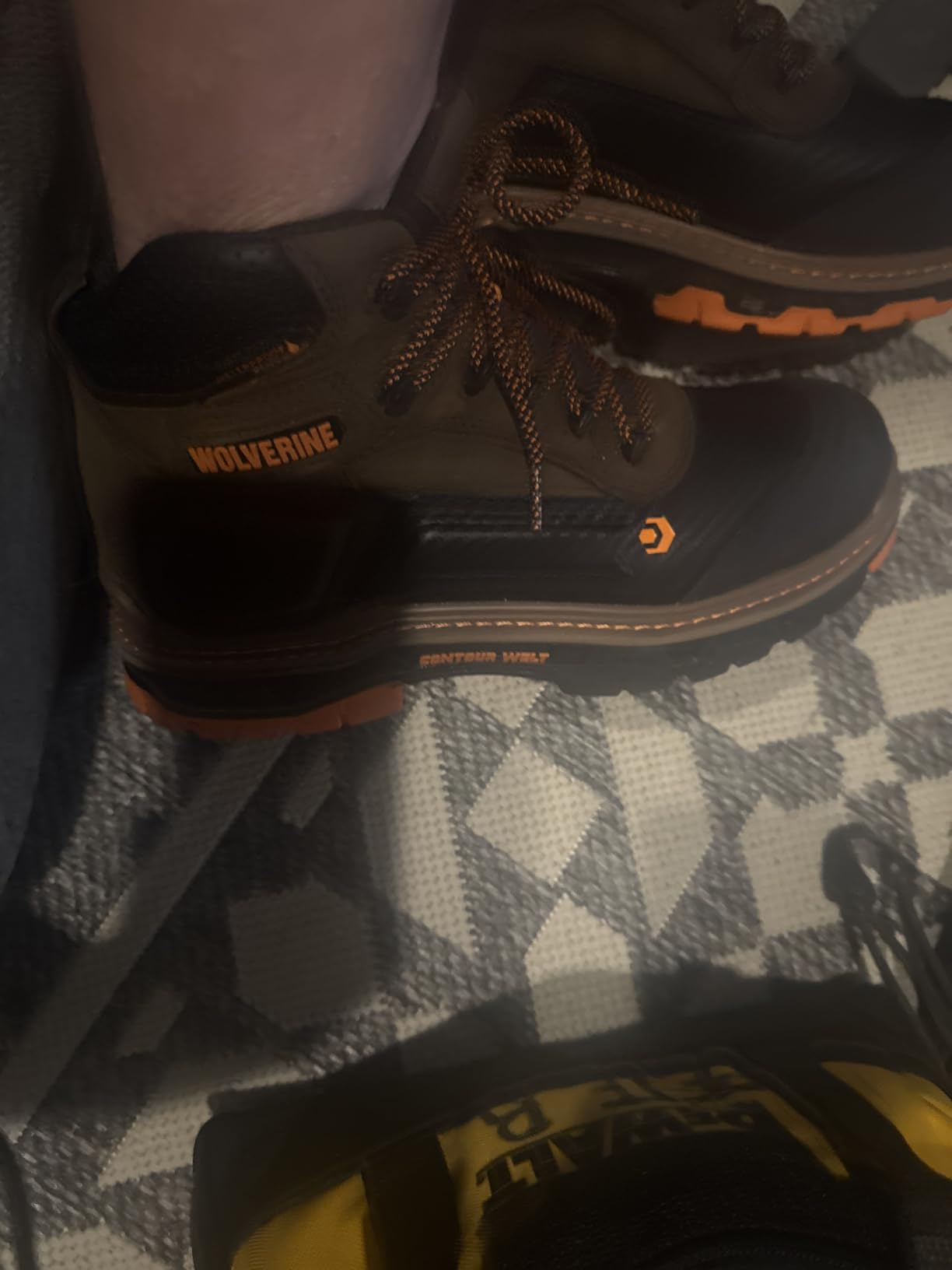
Buyers with plantar fasciitis in particular call out the arch support, and comfort out of the box is the most repeated theme in more than 13000 reviews. Waterproofing is dependable in snow, mud, and wet fields, and the outsole grips slick surfaces well.
The complaints are consistent and worth weighing. The shaft sits awkwardly against pant legs and lets debris in, several buyers report stitching near the lower lace eyelets beginning to fail after about a year, and the wide sizing is not a true extra-wide. If you have genuinely wide feet, read the New Balance section below before you commit.
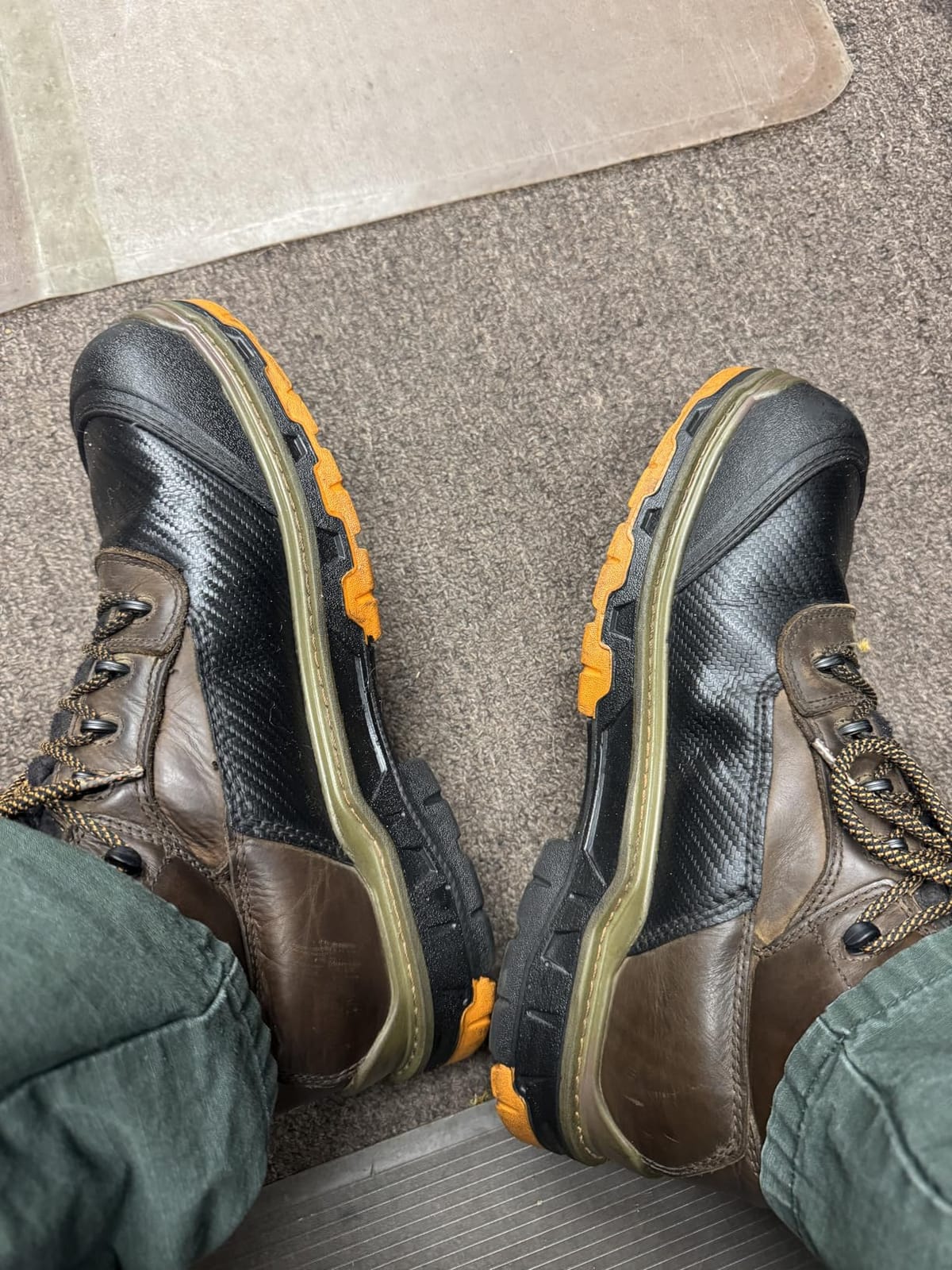
Why the PU midsole outlasts plain EVA
Foam midsoles lose their rebound through a process called compression set, where the material is crushed and does not return to its original shape. On concrete, that happens every step, thousands of times a shift. A polyurethane midsole holds its geometry longer than a basic EVA layer, so the shock absorption does not quietly fade in month three.
The removable footbed is what makes that long-term behaviour adjustable. When the cushioning does eventually compress, you replace a footbed rather than a boot, and you can move to a firmer or softer orthotic without tools.
Where it falls short
It falls short on pant compatibility and on heat. A sealed waterproof upper in hot weather is a real complaint from owners, and a boot that traps heat on a dry indoor floor can cause more trouble than the cushioning solves.
It also falls short for very long walks on rough ground if the shaft is a problem for you, and it is not the boot for a wide foot that needs a true wide last. Build quality reports suggest you should inspect the stitching around the lower eyelets after the first year.
6. Wolverine Floorhand Waterproof 6 Inch Boot – Best for Dry Indoor Shops
WOLVERINE Men’s Floorhand Waterproof Steeltoe 6″ Work Boot, Dark Brown, 9M
Full-grain waterproof leather
Rubber outsole for traction
Cushioned footbed
Safety toe protection
Pros
- Full-grain leather resists wet concrete and weather
- Rubber outsole gives extra traction on hard floors
- Cushioned footbed takes the edge off a full day
- Mid-level build with safety toe protection
Cons
- Cushioning is basic next to true anti-fatigue models
- Wide sizing can feel loose and slip at the heel
- Break-in needed before the leather softens
The Floorhand is the straightforward answer for a dry indoor shop floor, and a 4.4 rating across more than 11400 reviews suggests it does one thing well. Full-grain waterproof leather on a rubber outsole with a cushioned footbed covers the majority of what a general tradesperson actually needs.
Full-grain leather is the material that rewards time. It scuffs, it takes a mark, and it then keeps going, and that is why it shows up on boots people expect to still own in several years rather than replace every season.
Owners credit the traction and the footbed for holding up through long days on hard surfaces, which is the correct thing to credit if you are standing in one spot all shift. The footbed cushions the load, and the rubber outsole grips a sealed indoor slab.
The cushioning is the honest limitation, and reviewers say so plainly: it is basic next to a dedicated anti-fatigue midsole. If your feet are already the problem, adding a proper insole is the difference between a good boot and a boot that gets you to hour 12 intact.
When a basic footbed is the wrong place to economize
There is a specific logic to this. The upper, the outsole, and the toe protection are what keep you safe and dry, and they degrade slowly. The footbed is what absorbs the impact all day, and it degrades fast. Budgeting down to a plain foam insert is spending your money in the wrong place.
For a worker on a 12-hour shift, a well-fitted anti-fatigue or orthotic footbed is frequently the single highest-impact purchase in the whole setup. Our buying guide covers how to choose one, and what it cannot fix.
Who it is not for
It is not for someone with severe arch collapse or a diagnosed foot condition who needs a specific orthotic from day one. The fit is standard and the footbed is basic, so you will be replacing it early.
It is also not for anyone who cannot tolerate a break-in, or for wide feet who have been disappointed by loose heel movement in wide sizes. Test the heel lock in the store if you can.
7. Timberland PRO Boondock Composite Safety Toe Waterproof – Top Rated
Timberland PRO Men’s Boondock 6 Inch Composite Safety Toe Waterproof Industrial Work Boot, Black-2024 New, 12
Anti-fatigue energy return geometry
ASTM F2413 composite toe
ASTM F1671-07 waterproofing
All-weather TPU outsole
Pros
- Highest average rating here at 4.5 out of 5
- Anti-fatigue midsole cuts foot fatigue on standing shifts
- Composite toe lighter than steel and still impact rated
- Waterproof membrane and TPU outsole grip wet and icy ground
Cons
- Heaviest build in this group at a listed 4.5 pounds
- Toe box runs narrow so some buyers size up
- Insulated version runs warm in hot weather
The Boondock has the highest average rating of any boot we analyzed: 4.5 out of 5 with 78 percent five-star reviews across more than 10000 ratings. That is the single strongest quality signal in this list, and it comes with a purpose-built anti-fatigue geometry designed to return energy to the foot instead of simply absorbing and losing it.
That energy return is the feature I would point at first for a static standing shift. On concrete, your foot does not just need less impact, it needs support through the arch that keeps working while you are motionless, because standing still removes the natural muscle pumping that walking provides.
It is also fully specified on paper. The composite safety toe meets ASTM F2412-18a and ASTM F2413-18 for impact and compression, the waterproof membrane meets ASTM F1671-07, the all-weather TPU outsole resists slip, oil, and abrasion, and electrical hazard protection runs to ASTM F2892-18. Very few boots in this list carry that full stack.
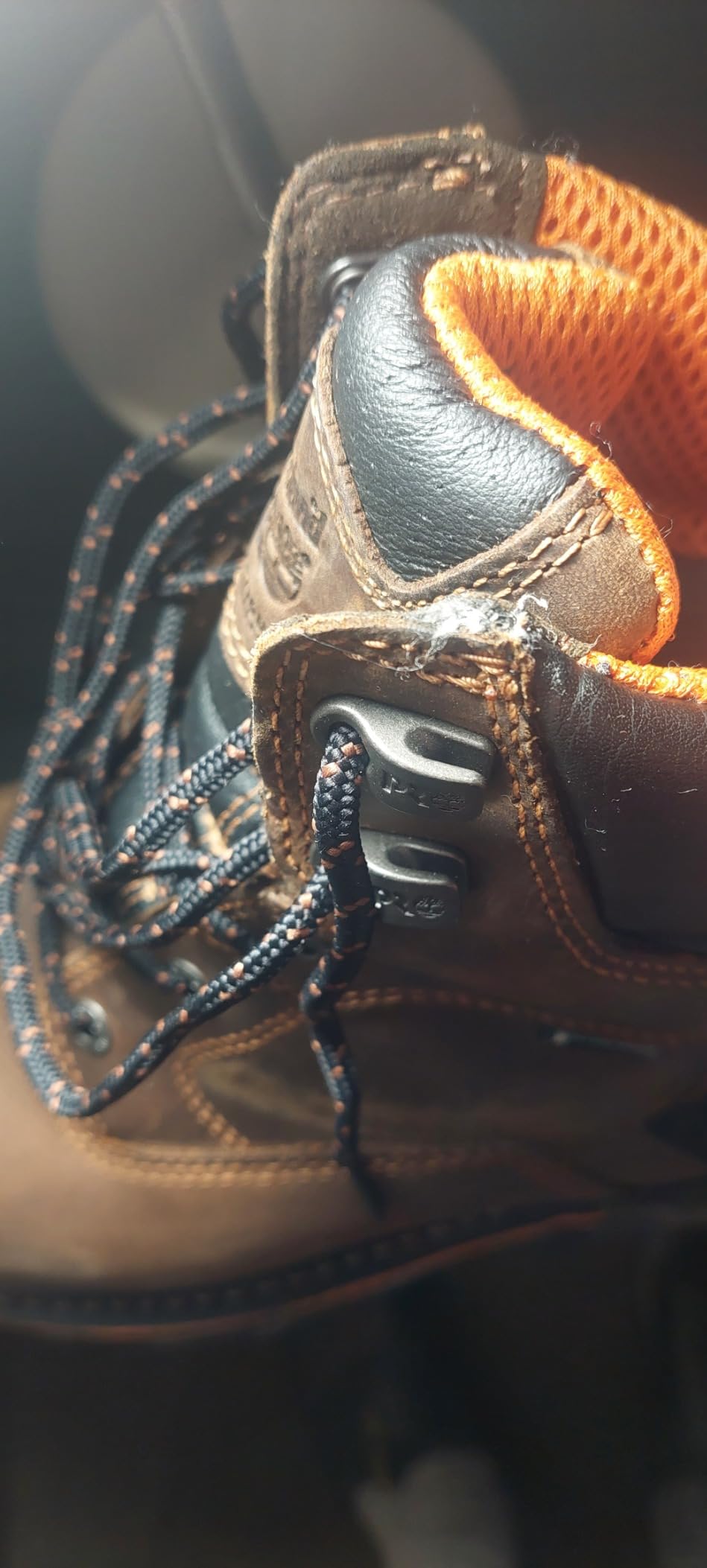
The weight is the catch. At a listed 4.5 pounds this is the heaviest build we analyzed, and reviewers name it as the main trade-off. If you walk long distances rather than standing, that weight accumulates fast.
Why the highest rating is not the number one pick
Rating quality and rating volume are different things, and both matter. A 4.5 across 10000 reviews is excellent, but the Pit Boss pairs a 4.4 with more than twice the review volume, which means the comfort claims have been stress-tested across far more people and floor conditions.
There is also a fit caveat worth repeating: the toe box runs narrow, and a meaningful number of buyers size up. Buying up to fix a narrow toe is how people end up with boots that are too long, which throws the heel out of position. If you are between sizes, try the wide option rather than jumping a full size.
Where the weight gets felt
The weight is felt on walking routes, not on standing shifts. If you are at a machine, a counter, or a workstation for hours, the extra weight barely registers. If you are covering a warehouse floor at pace for eight hours, it is the first thing you will feel.
The insulated version also runs warm. If you are indoors in a heated building, that is a feature you are paying to leave on the shelf, and the comfort advantage comes from the anti-fatigue midsole rather than the insulation.
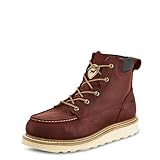
8. Irish Setter Ashby 6 Inch Soft Toe Work Boot – Best for Resoleing
Irish Setter Ashby 6″ Mens Soft Toe Work Boot, Brown, 9.5 M
Resoleable Goodyear Welt construction
Removable polyurethane footbed
Rubber-EVA Traction Tred outsole
Oiled full grain leather
Pros
- Goodyear Welt construction means the boot can be resoled
- Removable polyurethane footbed and EVA midsole cushion long days
- Outsole resists melting up to 475F
- Shallow lug pattern keeps debris out
Cons
- Soft toe only with no impact-rated protection
- One of the heavier options here on long walks
- Supplied footbed is basic foam
- Soles wear faster than the upper on abrasive work
The Ashby is the long-term ownership pick. Goodyear Welt construction stitches the upper to a welt rather than gluing a sole on, which means when the outsole is gone the boot can be resoled instead of replaced. For a worker who keeps a boot for five years rather than one, that changes the economics completely.
It holds 4.4 out of 5 with 75 percent five-star ratings across more than 9000 reviews. Owners value the resoleable build, the cushioning, and the fact that the outsole is rated for heat to 475F, which matters around hot shop equipment.
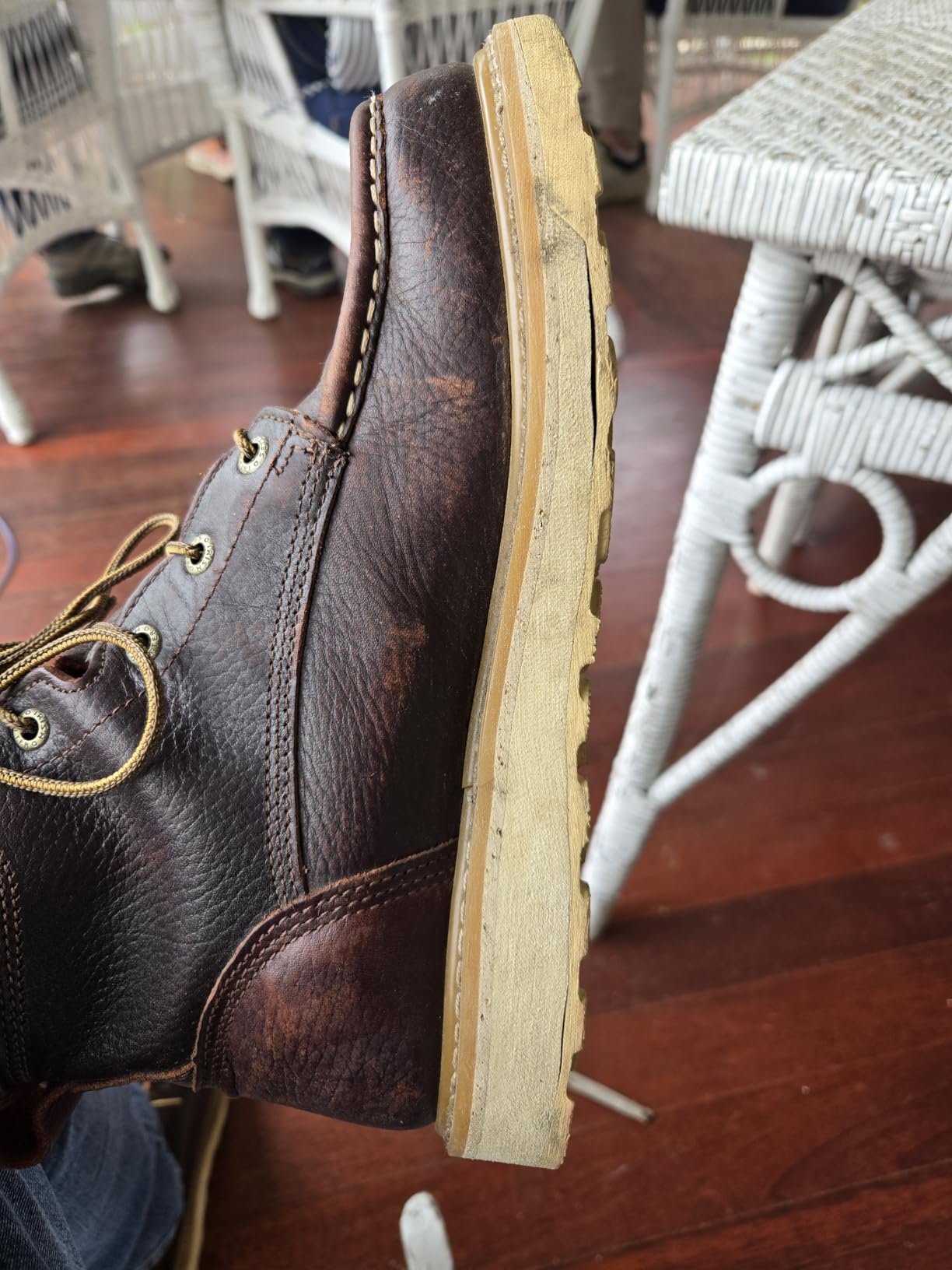
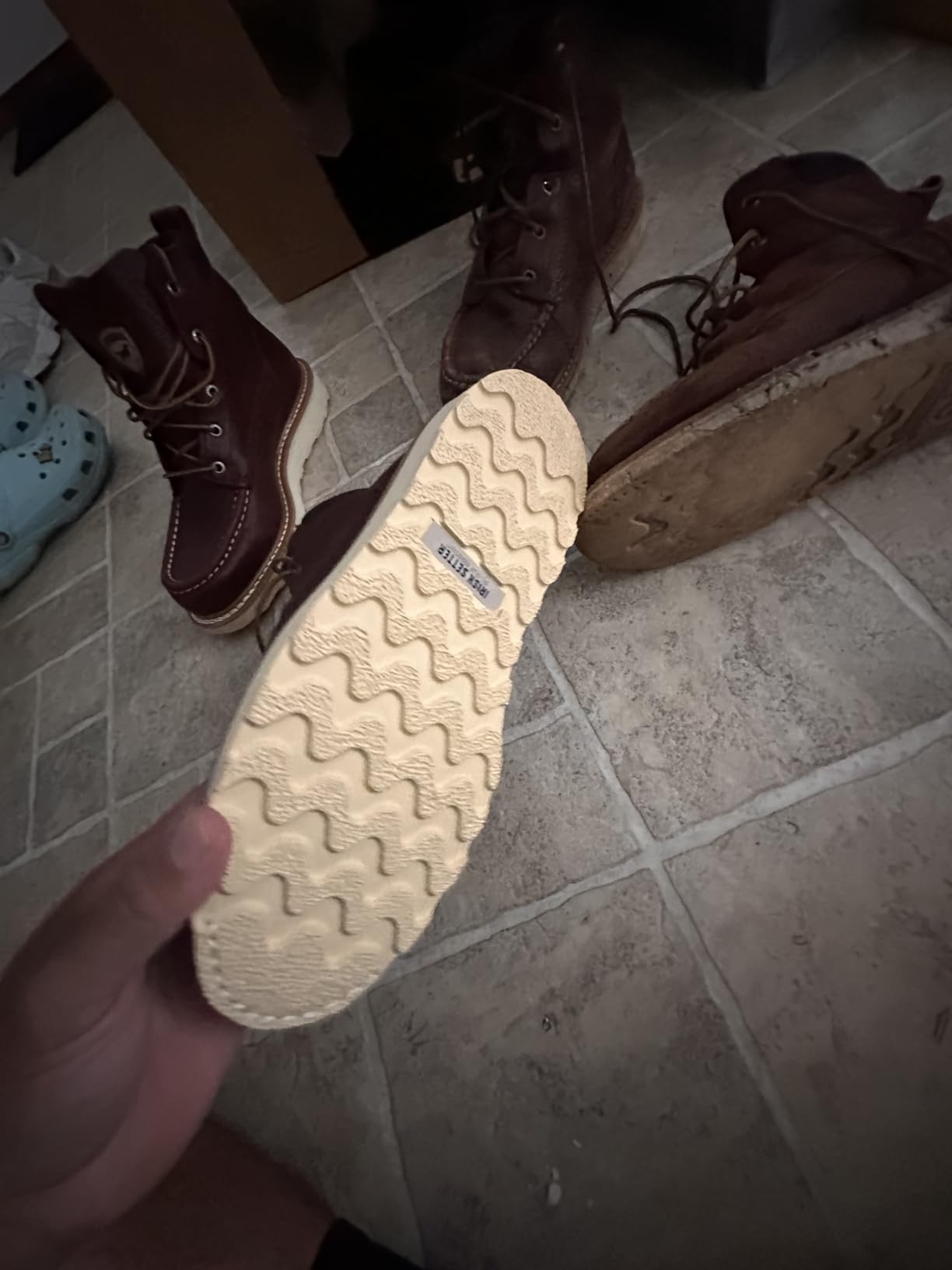
The outsole is a rubber-EVA Traction Tred design compliant with ASTM F2892, electrical hazard, and ASTM F3445 slip resistance. Its shallow lug pattern is a deliberate choice: deep lugs on a flat floor pick up concrete dust and slurry and turn the outsole into a grinder, while a shallow pattern stays cleaner and keeps its grip.
The soft toe is the trade-off you have to accept. There is no impact-rated protection here, and reviewers are clear that this is not a boot for heavy impact environments. The supplied footbed is also basic foam rather than a proper anti-fatigue insole.
How the shallow lug works in your favour on concrete
This is one of those details that only makes sense on a hard flat floor. Deep lug patterns exist to bite into mud and loose ground. On poured concrete, the same deep voids fill with grit and slurry and grind the sole down instead of gripping anything.
A shallow pattern gives you a larger, more continuous contact patch, which on dry flat concrete is a straight gain. It is also why the outsole here tends to wear faster than the upper: any sole is sacrificial on abrasive concrete, and this one is designed to be replaced.
Where it is the wrong choice
It is the wrong choice for a shop where heavy material can drop, because a soft toe is not rated for that. It is also the wrong choice for a worker covering miles, since reviewers single out the weight on long walks.
If you buy this, plan for a factory footbed replacement early, and plan on a resole before you plan on a new pair. That is the whole point of the construction.
9. Timberland PRO Keele Ridge Steel Toe Hiker – Best for Sneaker Comfort
Timberland PRO Men’s Keele Ridge Steel Safety Toe Waterproof Industrial Hiker Work Boot, Brown-2024 New, 9
ASTM F2413 steel toe
ASTM F1671-07 waterproof membrane
Electrical hazard protection
Hiker-style collar
Pros
- Hiker silhouette works on the job and off duty
- Waterproof membrane with slip and oil resistant outsole
- Steel toe rated to ASTM F2413-18 impact and compression
- Comfortable for daily wear over long shifts
Cons
- Hiker styling gives less ankle rigidity than a tall boot
- Break-in needed before the upper softens
- Wide fit can feel loose through the day
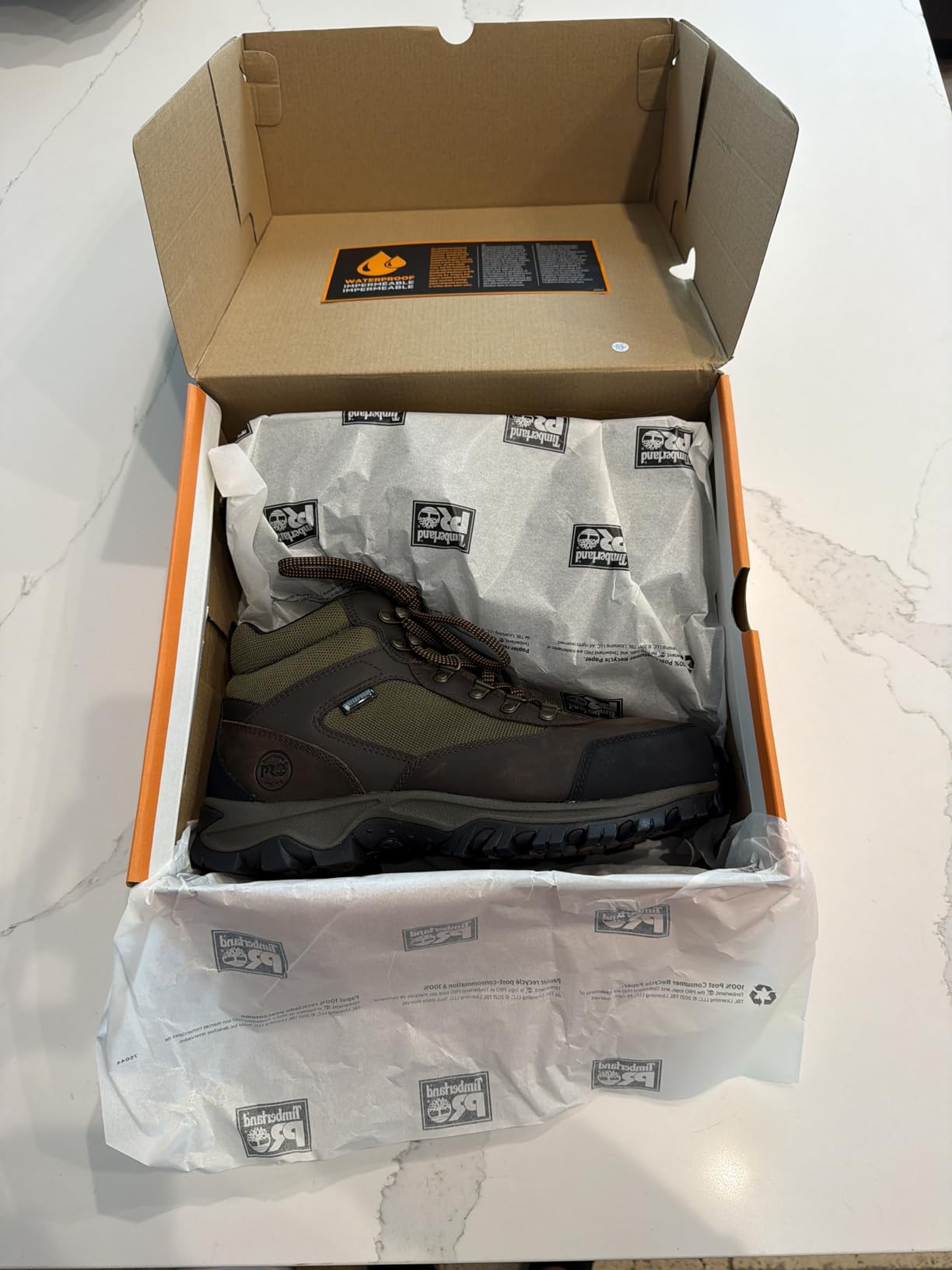
Sometimes the honest answer is that a work boot does not have to look or feel like a brick. The Keele Ridge is a hiker-shaped steel toe boot that gets 4.4 out of 5 from roughly 4500 reviews with 74 percent five-star, and the appeal is straightforward: the ankle stays mobile while the foot stays protected.
Underneath the styling it is properly specified. The steel safety toe meets ASTM F2412-18a and ASTM F2413-18 for impact and compression, the waterproof membrane meets ASTM F1671-07, electrical hazard protection runs to ASTM F2892-18, and the outsole resists heat, slip, oil, and abrasion.
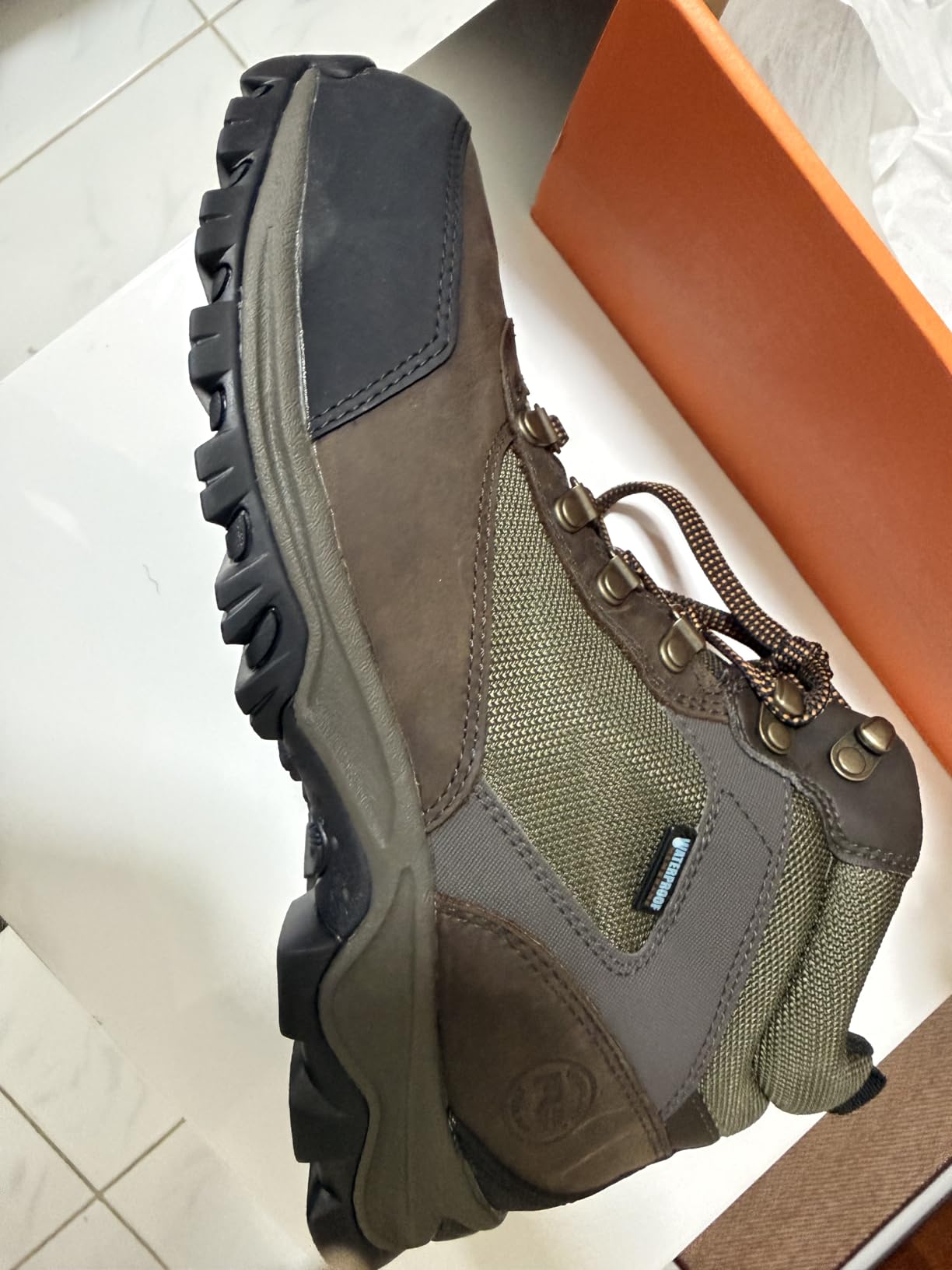
For people who dread lacing steel toe boots at the end of a long day, a hiker collar with hook-and-loop adjustment is a real quality-of-life upgrade. It is also the reason the Keele Ridge works as an everyday boot rather than a job-only boot, which matters if you are not changing shoes at a locker.
What you give up is ankle rigidity, and reviewers name that as the central trade-off. A hiker collar flexes where a six-inch shaft would not, so it is the wrong boot for scaffold work, ladders, or unstable terrain where the ankle needs holding.
When a hiker collar beats a tall shaft
The collar wins when your day is flat-floor and your feet hurt. Ankle rigidity is not free: a stiff shaft restricts how the foot rolls, and rolling through the forefoot is a big part of how shock is dissipated. On a flat floor with no uneven ground, a mobile ankle simply feels better.
It also wins for commute. A boot you can walk to the site in and wear through dinner removes the afternoon swap that makes people rush out of work boots in ways that cause slips.
When it loses to a traditional boot
It loses on any uneven or sloped surface, and on anything that requires climbing. Deep lugs and a hiker profile on loose or sloped ground give you less than a lugged work boot with a firm shaft.
Check the wide fit in person if you can, because owners report it feeling loose through the day. And expect a normal break-in on the upper, which is the one complaint that shows up on almost every leather boot in this list.
10. NINGO Steel Toe Oil and Slip Resistant Boot – Best for Puncture Protection
NINGO Steel Toe Work Boots for Men, Oil & Slip Resistant Construction Boots
ASTM F2413-18 I-75 and C-75 steel toe
Kevlar puncture-resistant midsole
Energy-return footbed with gel heel
Rubber toe abrasion shell
Pros
- Rated steel toe protection at an entry-level price
- Kevlar midsole adds puncture resistance rarely seen at this level
- Gel-padded removable insole stays comfortable on hard flooring
- Rubber toe wrap resists abrasion and dropped objects
Cons
- Wide sizing runs narrow
- not a true wide fit
- Rough spots at the ankle abrade socks
- Construction quality fades after about a year of 40-hour weeks
The NINGO is the one to look at if you work around nails, rebar, sheet metal scraps, or anything sharp on the floor. The Kevlar midsole gives it puncture resistance that is genuinely uncommon at this price, and on a demolition or renovation site that is a real safety upgrade rather than a comfort feature.
It is rated to ASTM F2413-18 for impact I-75 and compression C-75 with anti-static protection, and it wraps the steel toe in a rubber granule shell that takes the hit when something is dropped on it. That is a smart piece of engineering.
The footbed is an energy-return design with a removable gel-padded heel, which is a better starting point than most boots in this price range. The thick rubber outsole resists abrasion, oil, slip, and heat, so it holds up on a shop floor that is wet and greasy in patches.
Two things give me pause. The wide sizing runs narrow, which is an important warning for anyone with wide feet. And the manufacturer itself notes the boot is not suitable for oily indoor surfaces, so treat the slip claim with care if your floor is contaminated.
What puncture resistance actually protects against
A puncture-resistant midsole sits between your foot and the ground and stops a sharp object from reaching your sole. On a slab full of rebar ends, dropped staples, or broken pallets, that is the difference between a bad afternoon and an infection or a lost-time injury.
It is not the same as impact protection and it is not the same as a safety toe. It is a separate layer solving a separate problem, and it is the reason this boot appears on renovation and demolition sites more often than on polished warehouse floors.
Where the durability ceiling is
Owners report the upper beginning to separate after roughly a year of 40-hour weeks, so treat it as a working boot with a known lifespan rather than a heirloom. The rough spots around the upper ankle are also worth checking against your sock thickness.
For an entry-level steel toe with real puncture protection and nothing else, it is difficult to argue with. For a boot you expect to keep for a decade, the resoleable build on the Irish Setter Ashby is the better structure.
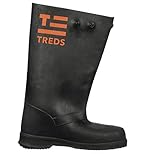
11. TREDS 17 Inch Rubber Concrete Overboot – Best for Wet and Muddy Slabs
TREDS Rubber Concrete Boot, Pull-On Overboot for Construction, Mud & Snow, Size L/XL (12-13), 17″ Ht, Black
17 inch knee-high pull-on overboot
Block tread with reinforced heel
One-piece molded rubber
Unlined waterproof interior
Pros
- Rubber shell is nearly puncture proof and tears do not run
- Block tread and reinforced heel grip wet concrete
- Unlined interior avoids the mildew lined rubber boots get
- Slip-on over existing boots so you are not lacing in the wet
Cons
- Strong rubber smell for the first couple of weeks
- Stiff at first so the pull-on takes practice
- Worn over other boots so it is not stand-alone footwear
- Unlined interior offers no warmth
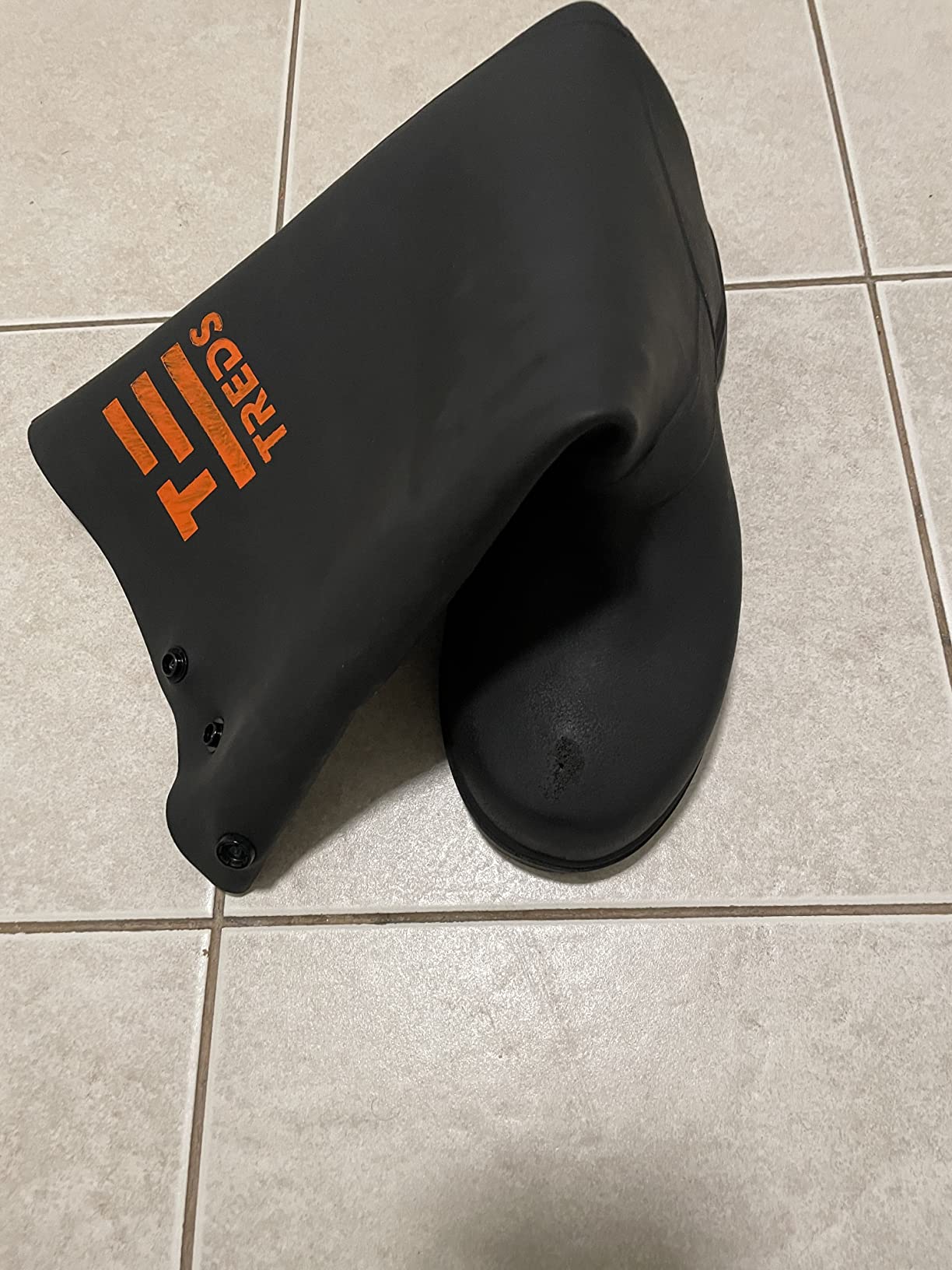
On an outdoor slab in wet weather, a leather boot is the wrong material and no amount of insole swapping will fix it. The TREDS overboot solves that category outright. It is a one-piece molded rubber shell that goes over your work boots, with a block-tread outsole and a reinforced heel for grip on wet concrete.
It holds 4.4 out of 5 from 865 reviews, and concrete finishers in the review data are its strongest advocates. The key technical point is that its tears do not run: a cut in the rubber stays a cut instead of propagating across the shaft, which is the standard failure that ends a pair of rubber boots.
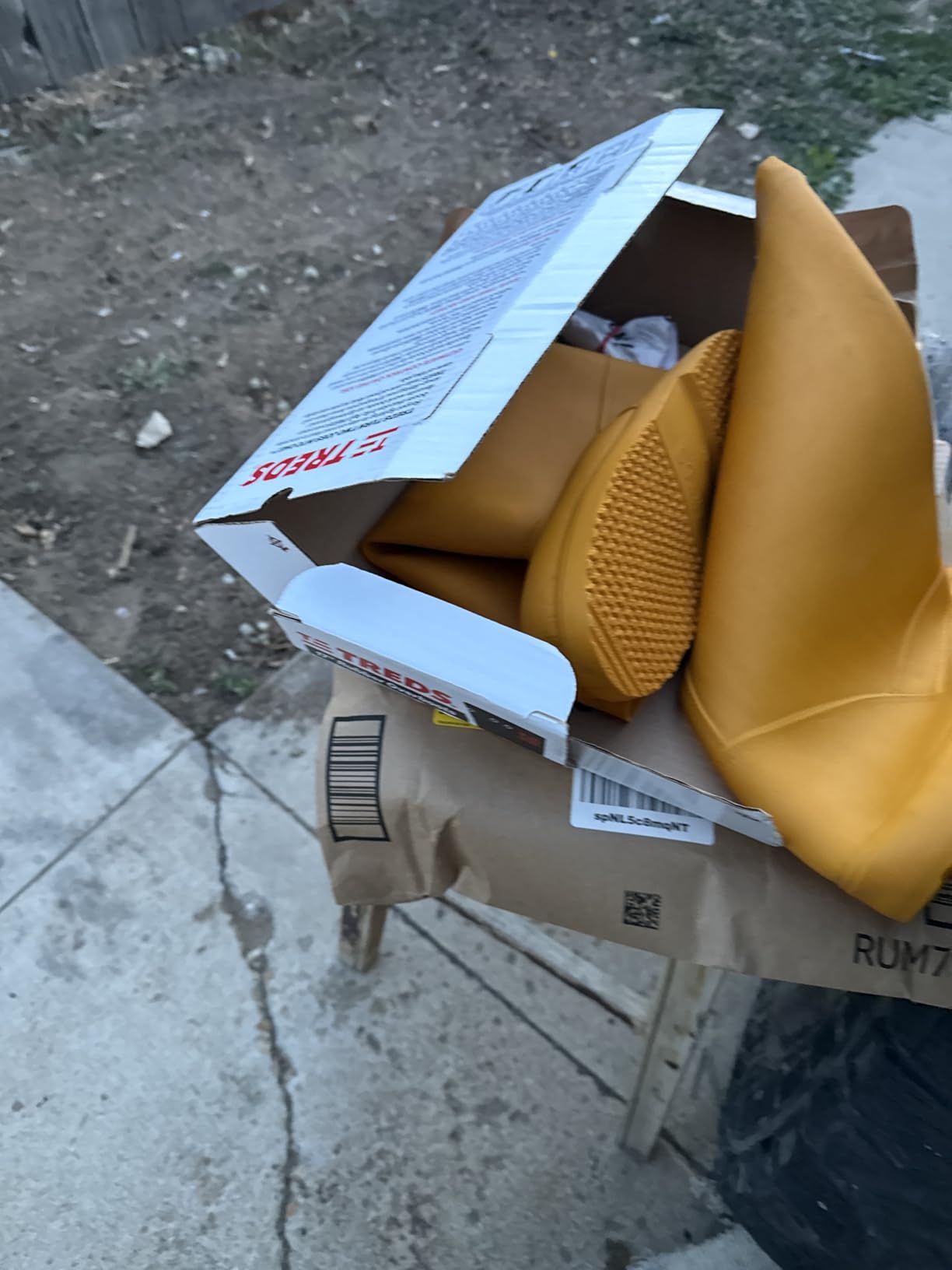
Because it is not foot-specific, sizing is simpler than any laced boot. It comes up to a 17 inch shaft with a 14 inch shaft circumference, and the 17 inch height keeps it well above a fresh slab, which is where a lot of concrete injury and damage happens.
The unlined interior is a genuine design choice rather than a cost saving. Lined rubber boots trap moisture and grow mildew, and the unlined version can be hosed down at the end of a shift. Our rubber work boot picks cover the same trade-offs in more depth.
Overboot versus waterproof boot
A waterproof boot tries to do two jobs in one product. An overboot gives up a bit of form and buys you a big advantage: when the rubber is destroyed by abrasive concrete, you replace a relatively cheap shell rather than your whole boot.
The catch is that you are wearing two pairs of footwear, so the inner boot still matters for cushioning and ankle support. Pair it with a roomy six-inch boot and you get the best of both, at the cost of more bulk in the foot.
Getting the first two weeks right
The odor for the first couple of weeks is the complaint that appears most often, and it fades. Many owners also find the pull-on stiff at first, which is a technique problem, not a defect.
Practice it at home before a shift, wear thin liners to manage both heat and grip inside the boot, and expect no warmth from the unlined interior. If you are working in genuinely cold conditions, this is the wrong category of footwear.
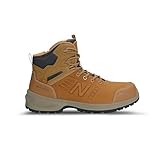
12. New Balance Calibre Composite Toe EH PR SR – Best Wide Fit
New Balance Calibre Composite Toe Work Boots for Men – EH, PR, Non-Slip Leather Safety Shoes for Industrial & Construction, Wheat, 12 Wide
Lightweight composite toe rated to ASTM F2913-19
Electrical hazard protection to ASTM F2412-18a
Acteva midsole for stability
Side zip with Velcro strap
Pros
- Lightest-feeling composite toe boot in this group
- Side zippers make on and off fast without untying
- Roomy toe box fits wide feet without the cap pressing on toes
- Water-resistant upper handles mud and pressure washing
Cons
- Lowest average rating here at 4.2 out of 5
- Full leather upper with no mesh so feet get hot
- Laces cinch from the toe and do not relax
- Not insulated for cold weather
If narrow toe boxes are the thing that has hurt you most, this is the boot to try on first. Buyers consistently single out the roomy toe box, and the composite toe sits far enough back that the cap is not pressing on the toes. That is the single most common complaint across every other boot in this list.
It also solves the on-and-off problem better than a laced boot. The side zip closure with a Velcro strap means you are not wrestling laces at the end of a shift, and reviewers report comfort across 8 to 12 hour days on their feet.
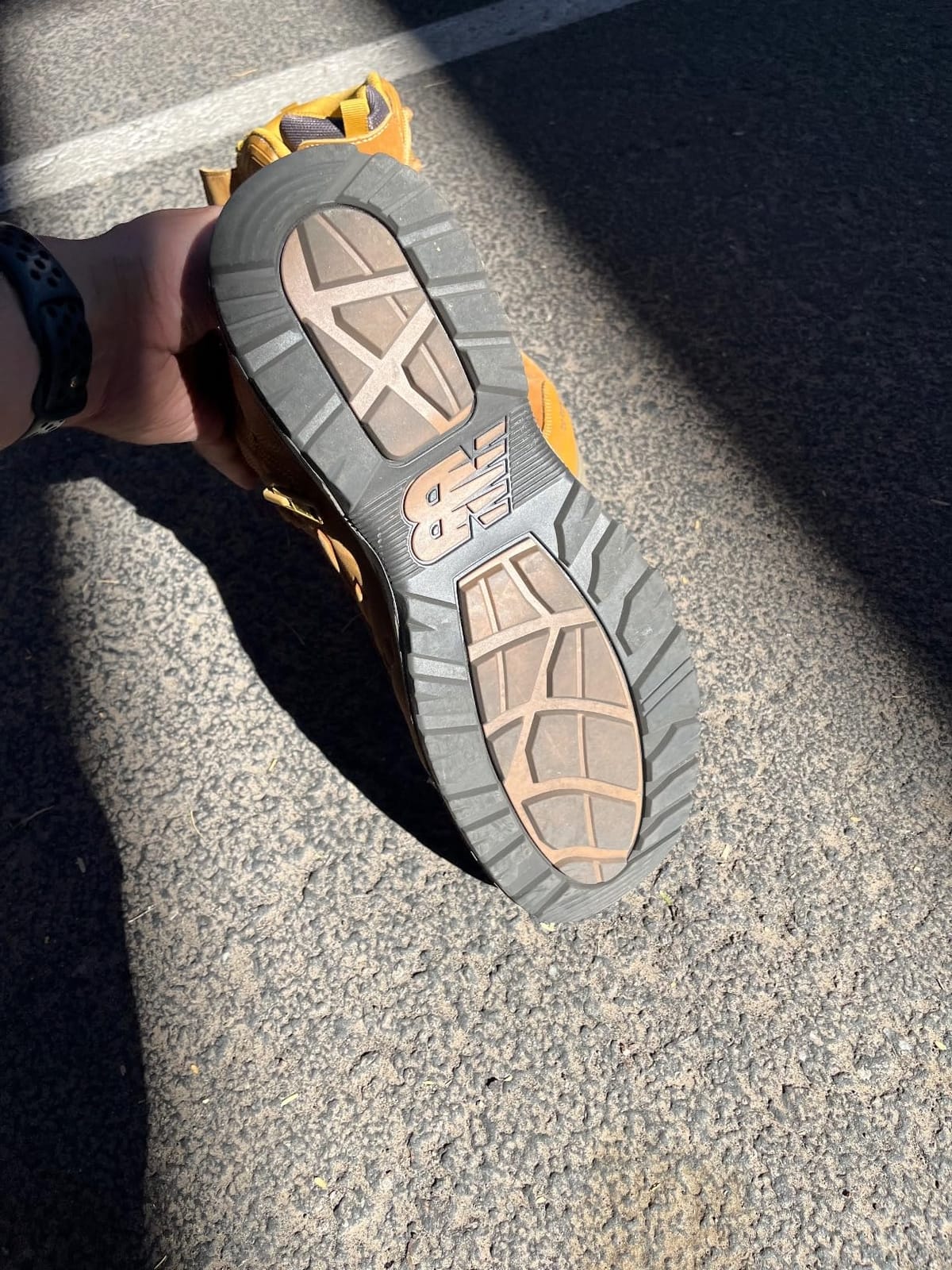
On the safety side it is properly rated: a composite toe meeting ASTM I/75 C/75 and ASTM F2913-19 for slip resistance, electrical hazard protection to ASTM F2412-18a, and an anti-perforation midsole. The water-resistant leather with a moisture-wicking mesh lining holds up to mud and pressure washing.
Its 4.2 out of 5 is the lowest average in this group, with 10 percent one-star reviews, and the reasons are consistent. A full leather upper with no mesh ventilation runs hot, and the laces cinch from the toe end and do not relax after walking, which becomes uncomfortable by hour six.
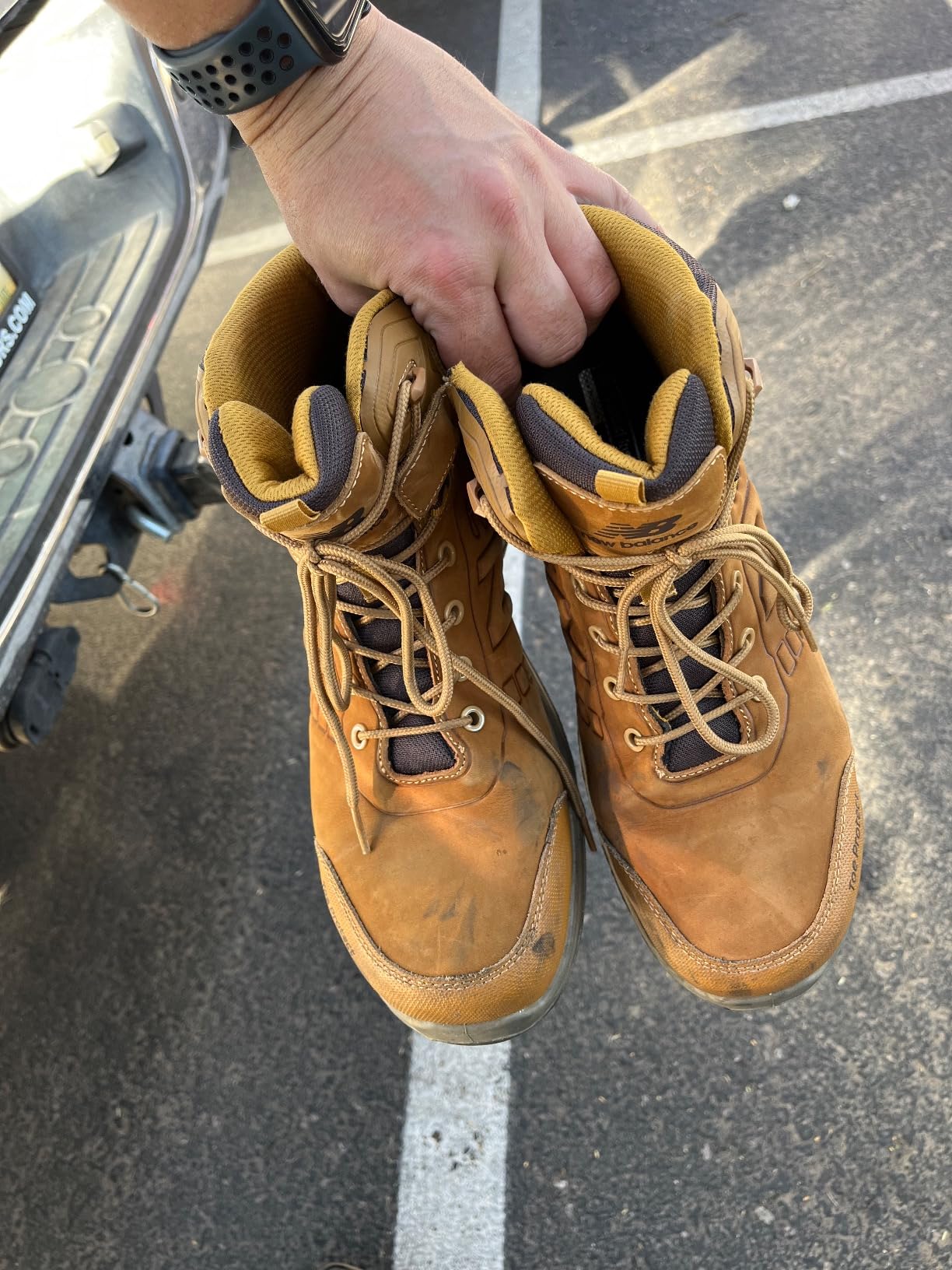
What a genuinely roomy toe box looks like
There is a simple test. With the boot laced as you would wear it, slide your thumb forward against the toe cap. If you can fit a thumb width between your longest toe and the front of the boot, the length is right and the toe room is right. If your longest toe is touching the cap, the boot is too long for the length you ordered.
For wide feet this is the whole game, and most people get it backwards. The American Academy of Orthopaedic Surgeons advises against buying a longer boot to solve a fit problem, because a longer boot moves the heel out of position and you trade toe pressure for heel movement and instability.
Where it falls short
It falls short in heat, because there is no mesh ventilation in the upper and no way to open it up. If your floor is indoors and heated, expect your feet to be warm by mid-afternoon.
It is not insulated either, so cold-weather use needs heated insoles. The side zipper also has to be unlaced first, which adds a step that the design otherwise removes. If you need warmth as well as room, look at a waterproof six-inch with a proper shaft instead.
Why Concrete Floors Are So Hard on Your Feet
Concrete does not compress. Soft ground gives slightly under each step, which absorbs a portion of the load before it reaches your body. A hard floor gives nothing back, so the full impact of every step and every shift of your weight travels through the outsole, the midsole, and into the structures of your foot.
Standing still is not a rest for your feet. When you stand motionless, your calf muscles have to hold you upright through static contraction instead of the rhythmic pumping that walking provides, and that static load is what produces the deep aching people describe at the end of a shift.
NIOSH links prolonged standing with fatigue, muscle pain, leg swelling, and lower-back discomfort. OSHA specifically notes that standing on hard surfaces such as concrete contributes to foot pain, and recommends cushioned footwear, insoles, and anti-fatigue mats. We include that guidance because it explains the mechanism rather than selling you a product, and it is worth reading.
Anti-fatigue mats help and they are not a substitute for a boot. A mat softens the surface but does nothing about a midsole that has compressed, a toe box pressing on your toes, or a heel counter that has lost its shape. If you want a floor-level upgrade too, our picks for commercial vacuums for concrete floors cover keeping the slab clean, which matters for traction as well.
Standing Still vs Walking All Day: Two Different Jobs
Most boot guides give you one list for both, which is why so many people buy a walking boot for a standing job and wonder why their feet still ache. Standing and walking ask your foot for opposite things.
When you stand in one place, the pressure is concentrated through the heel and the ball of the foot for hours with no relief. What you need is a wide, stable contact patch, a firm heel counter so your heel does not slide around, and an arch support that keeps working without motion to activate it. Anti-fatigue geometry and wedge or rocker soles exist for exactly this problem.
When you walk, the loading changes constantly. Now flexibility at the forefoot matters more than a rigid platform, a lighter boot matters a great deal, and a lug outsole matters because you are generating and braking force on a surface that offers no grip of its own. Our deeper guide to boots for standing on concrete covers the static case in full.
In practice, a worker on a factory line wants a wide stable base and strong arch support. A worker walking a pick route wants a light, flexible, athletic-feeling shoe. Wearing the walking boot for the standing job is why the first hour feels fine and hour six feels terrible.
Wedge Sole vs Lug Sole on Flat Concrete
This is the single most important piece of footwear physics for this topic, and almost no competitor covers it. A true wedge sole is thicker at the heel and tapers to a flat contact surface across the whole footprint, so your weight is distributed over the entire sole rather than concentrated at the heel. A deep lug outsole instead leaves voids under the heel and midfoot, creating high-pressure areas on a flat floor.
The Google AI Overview for this search names a flat wedge sole as the reason its top pick wins, and the reasoning is sound. The AI answer names the Thorogood American Heritage Wedge, and we have to be straight with you: that model is not in our list, because our analyzed set of twelve products did not include it. The next best wedge-sole option in the wider market is worth checking against the picks here.
What we can tell you from the twelve we analyzed is that none of them uses a true wedge outsole. The closest behaviours come from wide flat contact patches: the EVER BOOTS Tank with its wide rubber outsole for stability on hard surfaces, and the Irish Setter Ashby with its shallow rubber-EVA lug pattern, which keeps a continuous flat contact area instead of deep voids.
Lug soles are not bad, they are just built for a different surface. Deep lugs are an excellent choice on mud, gravel, and loose ground, and a poor choice on flat sealed concrete where the voids fill with grit. If you walk on concrete and mud in the same week, a lug outsole is the right compromise, and the Timberland PRO Boondock with its all-weather TPU outsole is built for both.
What to Look For in Work Boots for Concrete Floors
Fit comes before everything else, and fit means width as much as length. Buy the length you need and then solve width with the width options, never by sizing up a full length. Slide a thumb between your longest toe and the front of the boot; if the thumb does not fit, the boot is too long no matter how good the midsole is.
Second, look at what happens to the cushioning by hour six, not hour one. Polyurethane midsoles and air-infused or dual-density EVA hold their geometry far longer than single-density foam. Foam that feels wonderful in a showroom and packs flat by week three is the most common disappointment in this category, and the reviews say so repeatedly.
Third, check the heel counter and the midfoot. A heel that slides inside the boot moves your arch off its support all shift. A shank under the midfoot stops the foot collapsing toward the inside of the boot. Both are structural, and neither is advertised on a spec sheet as often as it should be.
Fourth, pick your safety toe by job rather than by brand. Steel is the strongest and the coldest and the heaviest. Composite is lighter and cooler, which most people prefer on a warm floor, and rated composite models are rated the same way. Soft toe gives you no impact protection, so it is only correct when the job does not require it. Look for the ASTM F2413 rating, not the word steel on a label.
Fifth, weight is a comfort variable people underestimate. A lighter boot on a walking shift is worth more than any midsole upgrade. On a standing shift, weight matters far less, which is why the heaviest boot on this list can still be the best-rated one.
Sixth, waterproof versus breathable is not a quality question, it is an environment question. A waterproof membrane is right for outdoor slabs, washdown areas, and wet floors. In a temperature-controlled building it traps heat, and heat and sweat create heel and arch problems of their own.
Seventh, buy a boot with a removable insole. This is the cheapest high-impact intervention available to you. A factory foam footbed is the first thing to wear out and often the first thing to upgrade, and a removable footbed means an anti-fatigue or orthotic insert drops straight in. What an insole cannot fix is a boot that is the wrong length or too stiff, so fix fit first.
Finally, replace boots before the support is gone. Watch for a midsole that no longer rebounds, a heel counter that has gone floppy, a tread pattern worn smooth on the heel, and a footbed compressed flat. Most comfort complaints in this category are a worn boot being blamed on the concrete.
Frequently Asked Questions
What are the best shoes for concrete floors?
The best shoes and boots for concrete floors spread weight across the whole footprint and keep cushioning from flattening. Our top pick is the Timberland PRO Pit Boss 6 Inch, whose 24/7 comfort suspension system supports the arch and cushions every step. For walking-heavy shifts the Skechers Cankton is lighter and more flexible, and for soft-toe warehouse work the EVER BOOTS Tank uses a wide rubber outsole for stability.
What boots are good for standing on concrete all day?
For standing still on concrete, you want a wide stable contact patch, a firm heel counter, and arch support that works without motion to activate it. Boots built with anti-fatigue geometry, such as the Timberland PRO Boondock, are designed for static loading. A true flat wedge sole is the ideal geometry because it spreads weight across the entire footprint, but a wide flat outsole is the closest option in most safety boots.
What are the best shoes for 12-hour shifts on concrete?
Judge any boot by hour six to hour twelve, not by the first hour. Boots with a removable insole score best because you can upgrade the footbed as the factory foam compresses. The Timberland PRO Pit Boss and Wolverine Overpass both pair arch support with a removable footbed, and the New Balance Calibre is worth trying if a narrow toe box is what has been hurting you.
What kind of shoes are best for cement workers?
Cement and concrete work sits closer to construction than to warehouse work. You want a rated safety toe, a slip, oil, and abrasion resistant outsole, and ideally puncture resistance for rebar and site debris. For outdoor slabs in wet weather, a rubber overboot worn over your work boot, such as the TREDS 17 inch, is a stronger answer than a waterproof leather boot.
Why do my feet hurt after standing on concrete all day?
Concrete does not compress, so every step and every minute of standing sends the full load back through your foot. Standing motionless removes the muscle pumping that walking provides, so your calf and foot hold you upright by static contraction. NIOSH links prolonged standing with fatigue, leg swelling, and lower-back discomfort, and OSHA notes that hard surfaces such as concrete contribute to foot pain.
Are steel toe or composite toe boots better for concrete floors?
Composite is usually the better choice on a warm indoor floor because it is lighter and does not conduct cold the way steel does, and rated composite toes are tested to the same ASTM F2413 standards. Steel is stronger and remains the right call where severe impact hazards exist. If your job does not require a protective toe at all, a soft toe is a legitimate choice rather than a downgrade, and it is the lightest option.
Are wedge sole or lug sole boots better for flat concrete?
A flat wedge sole is better for static standing on a hard flat floor because it spreads body weight across the entire footprint instead of concentrating it at the heel. A deep lug sole leaves voids under the heel and midfoot, which become high-pressure areas on sealed concrete, and those voids fill with grit that grinds the tread down. Deep lugs make sense on mud and gravel, not on a poured slab.
How often should work boots be replaced?
Replace them when the support fails, not when the upper looks worn. Watch for a midsole that no longer rebounds, a heel counter that has gone floppy, a tread pattern worn smooth at the heel, and a footbed compressed flat. Comfort that declines over weeks rather than months is usually a worn footbed, which is the cheap fix. Boots that are resolable, like a Goodyear Welt construction, can be kept far longer.
The Bottom Line
For most people on concrete floors, the Timberland PRO Pit Boss 6 Inch is the safest single answer: real arch support, real cushioning, a rated steel toe, and a review base large enough that its comfort claims have been stress-tested by tens of thousands of workers. Walking long routes instead of standing still changes the answer to the Skechers Cankton.
Match the boot to the job rather than to the trend. Static standing calls for a wide base and anti-fatigue geometry. Walking calls for a light, flexible, lugged shoe. Wide feet call for a roomy toe box, and a toe box you can fit a thumb behind. Then add a proper insole, because that is where most of the remaining discomfort gets solved.
Whatever you pick, judge it at hour six and hour twelve, not in the shop. Our list of the best work boots for concrete floors in 2026 is built for long shifts, and the wrong boot feels fine right up until it does not.