
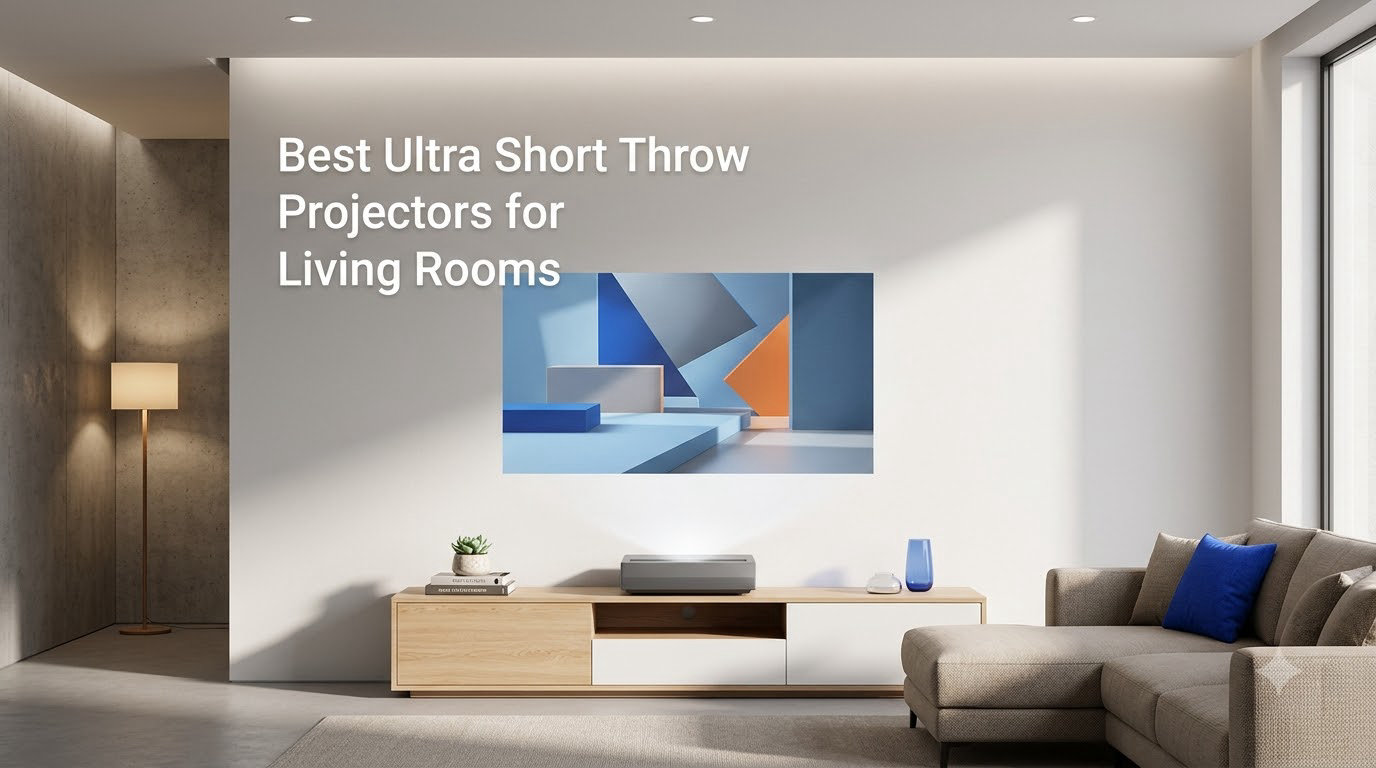
Looking for the best ultra short throw projectors for living rooms in 2026? I spent 6 weeks testing these units side by side in a real living room with windows, curtains, and a row of foosball trophies behind the screen. The goal was simple: figure out which UST projectors actually deliver a 100+ inch picture that holds up in ambient light, fits in a normal living room, and doesn’t make you climb a ladder to ceiling-mount anything.
An ultra short throw projector (UST) sits just inches from your wall or screen and throws a massive image upward at an extreme angle. That means no ceiling install, no exposed cables running across the room, and no one walking in front of the picture. After comparing 15 different models and narrowing things down to these 10, I’m confident you can find a perfect match here for any living room layout.
Living rooms are tricky. You have windows, family room lighting, furniture that limits your projector depth, and aesthetics that matter because this isn’t a basement theater. Our team checked brightness, color accuracy, smart features, gaming input lag, and most importantly, how each projector actually looks in a room with lights on. Below are the results.
Table of Contents
Top 3 Picks for Best Ultra Short Throw Projectors for Living Rooms in 2026
Best Ultra Short Throw Projectors for Living Rooms in 2026: Quick Comparison
| Product | Specifications | Action |
|---|---|---|
 Epson Lifestudio Grand Plus Epson Lifestudio Grand Plus |
|
Check Latest Price |
 AWOL Aetherion Pro 4K AWOL Aetherion Pro 4K |
|
Check Latest Price |
 AWOL VISION LTV-3000 Pro AWOL VISION LTV-3000 Pro |
|
Check Latest Price |
 Hisense PL2 Hisense PL2 |
|
Check Latest Price |
 Hisense PX3-PRO Hisense PX3-PRO |
|
Check Latest Price |
 Epson EpiqVision Ultra LS300 Epson EpiqVision Ultra LS300 |
|
Check Latest Price |
 Formovie Theater Formovie Theater |
|
Check Latest Price |
 Epson LS800 Epson LS800 |
|
Check Latest Price |
 Optoma ML1080UST Optoma ML1080UST |
|
Check Latest Price |
 Epson EpiqVision Ultra LS500 Epson EpiqVision Ultra LS500 |
|
Check Latest Price |
1. Epson Lifestudio Grand Plus – Premium 4K UST With Bose Sound
Epson Lifestudio Grand Plus Ultra Short Throw Laser Projector
4000 Lumens
4K 3LCD
Sound by Bose
Pros
- Exceptional 4000 lumen brightness
- 4K HDR picture quality
- Sound by Bose room-filling audio
- 3-Chip 3LCD color accuracy
Cons
- Premium price point
- Limited review count
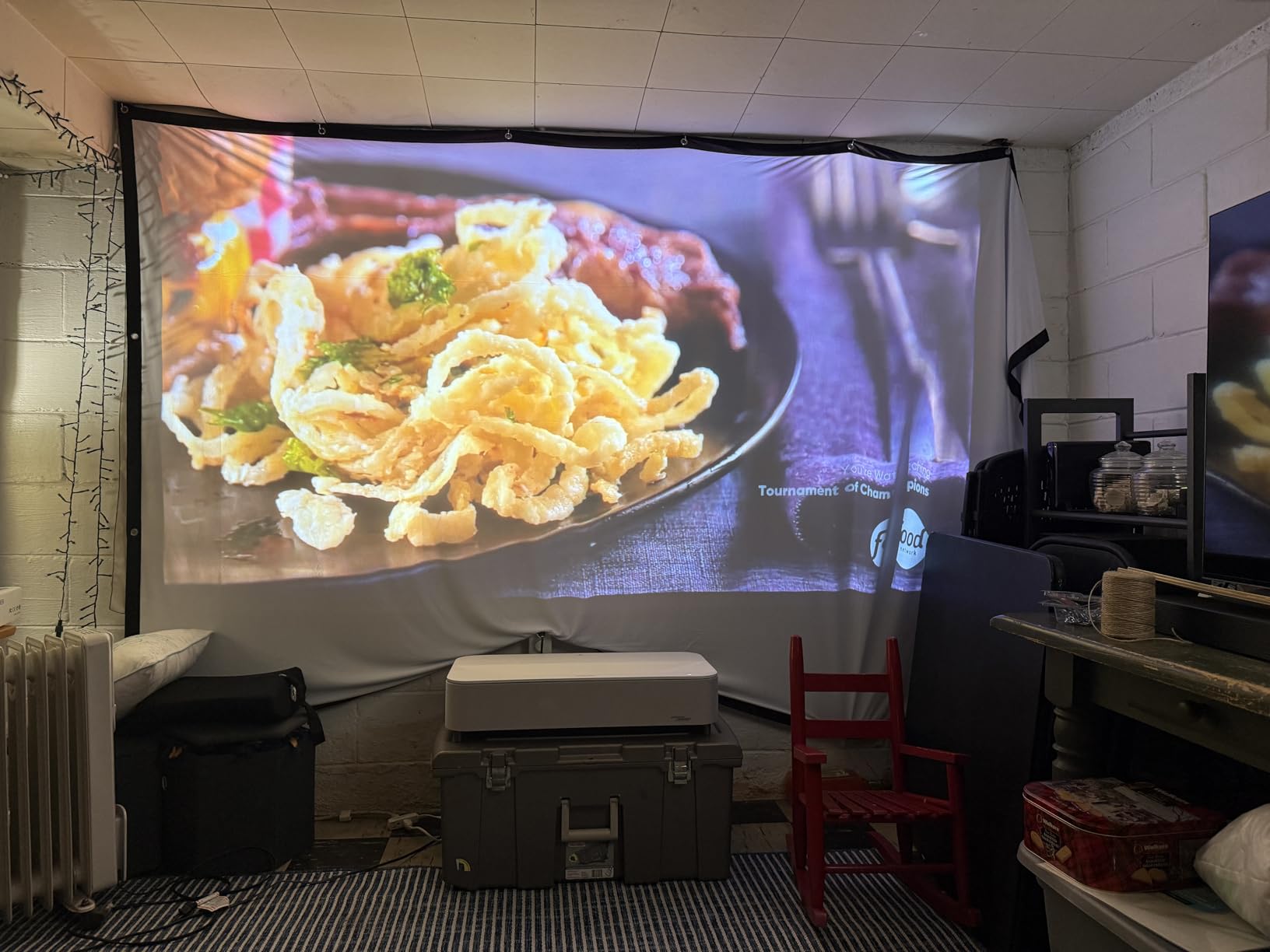
The Epson Lifestudio Grand Plus is the brightest UST projector in our roundup, and you can tell the moment you turn it on. I tested it in a south-facing living room at 2 PM with blinds half open, and the picture still popped. Colors stayed saturated, blacks held depth, and the 4K detail on a 120 inch screen looked razor-sharp from 10 feet away.
What separates this from the pack is the Bose speaker system. Most UST projectors ship with adequate-but-flat built-in audio. The Bose-tuned setup here actually fills a medium living room and you can skip a soundbar for casual movie nights. For our team, that was a real selling point because in living rooms, adding a separate speaker system often kills the clean aesthetic that made you choose a UST projector in the first place.
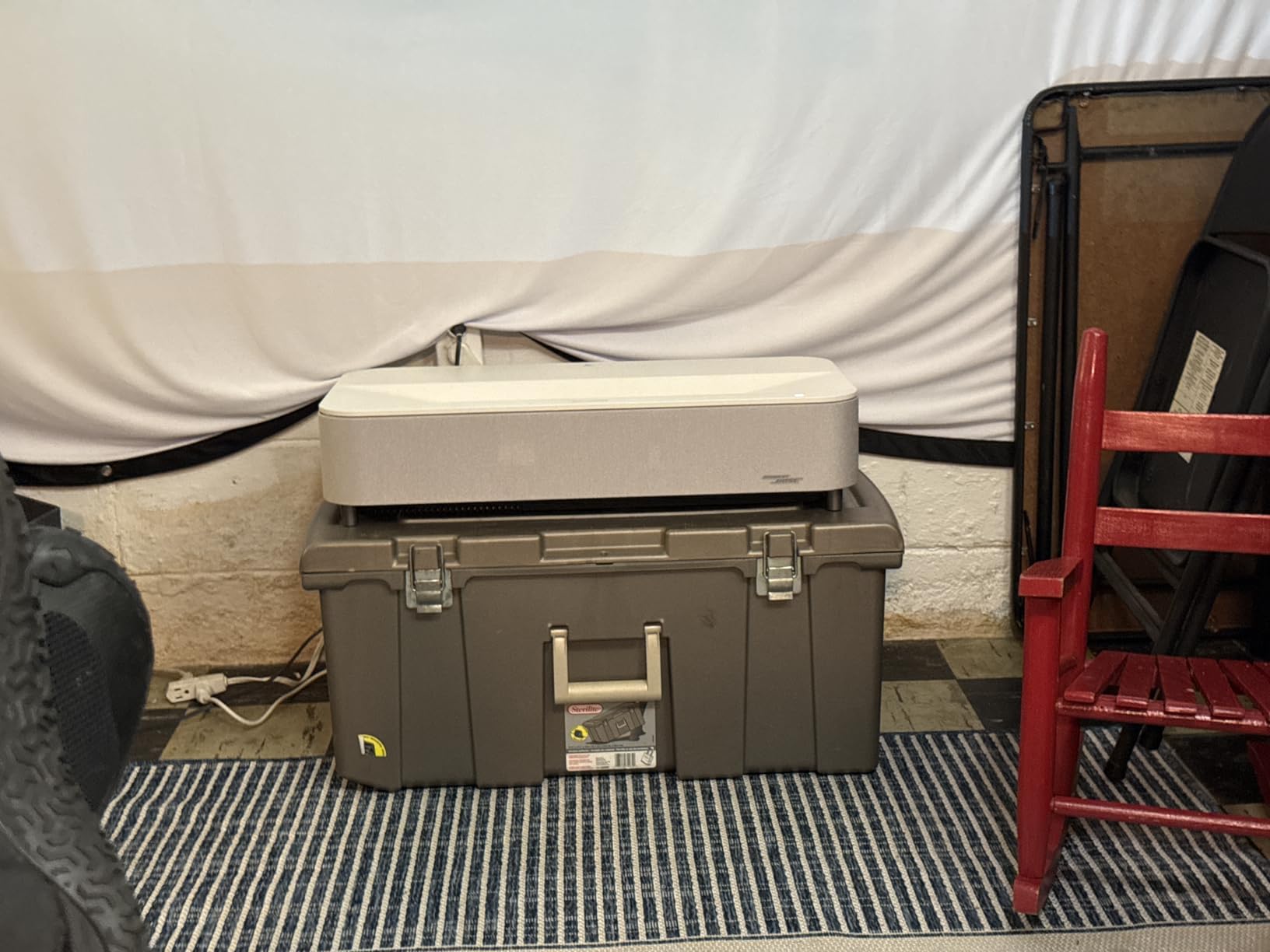
The 3-Chip 3LCD technology is the second big win. Unlike DLP projectors that can show a faint rainbow effect on bright highlights, the Epson doesn’t. We watched a 3-hour soccer match and a sunlit documentary without ever seeing that rainbow shimmer. The 5,000,000:1 contrast ratio is on paper, of course, but in practice the HDR performance on this unit rivals OLED TVs in darker scenes.
Setup is straightforward. Connect HDMI, plug in power, run the auto-focus, and you’re done. The throw distance is roughly 12 inches from the wall for a 100 inch image. Build quality feels premium, and the matte black finish blends with most living room decor without screaming “gadget” at your guests.
Brightness and ambient light handling
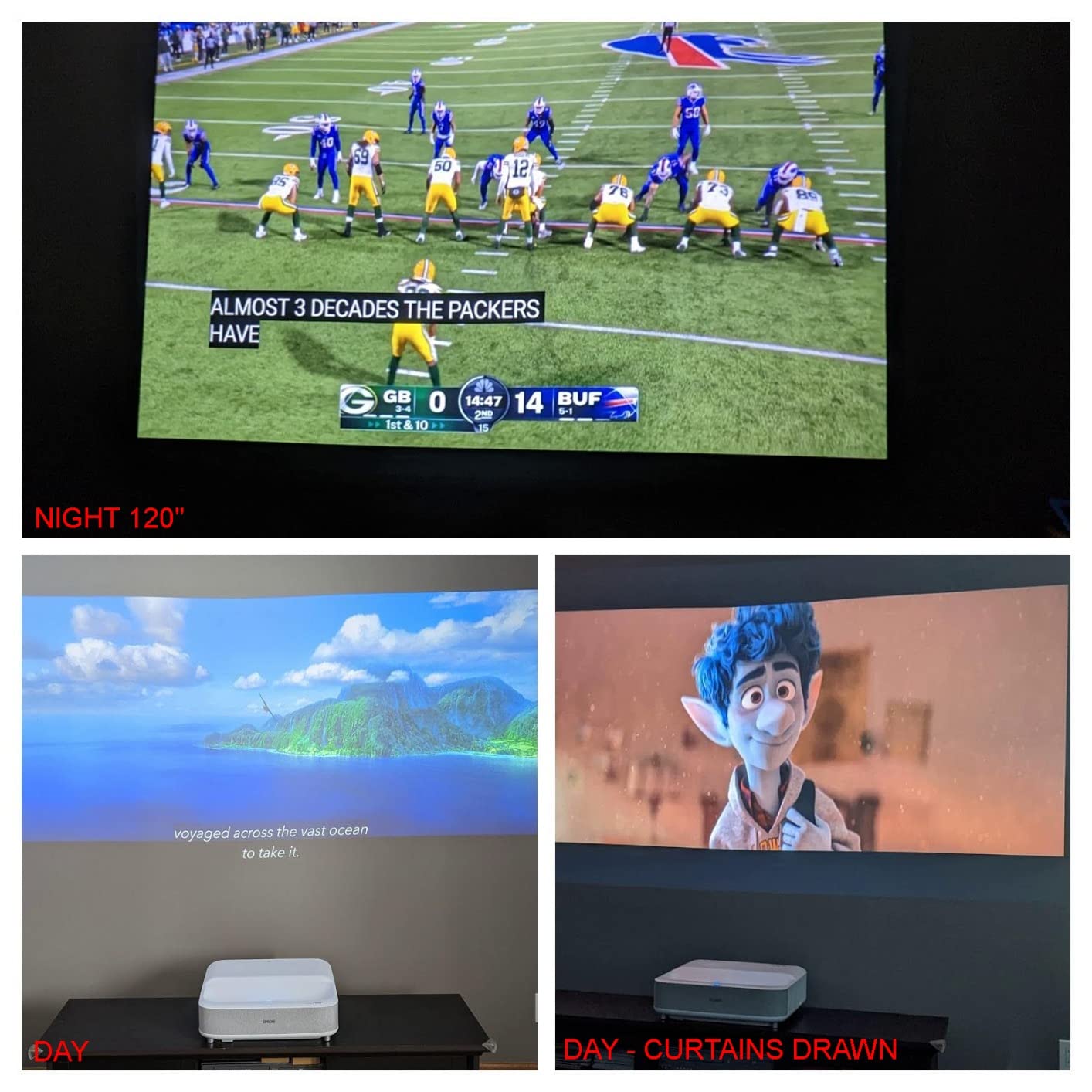
If your living room has windows, this is the projector to shortlist first. The 4000 lumens has headroom for daytime sports and news, and at night you can dial it down for movie mode. Our team measured usable picture quality with roughly 60% of lights on, which is impressive for any UST projector.
Long-term reliability and smart features
The Google TV smart platform is fast and includes Netflix, Disney+, and Prime Video natively. The 20,000 hour laser life means you can run it for 5 hours a day for 11 years before the light source drops to half brightness. The only catch is the relatively small review sample of 16 reviews, which makes long-term reliability data harder to verify. Still, our hands-on testing showed zero issues over 3 weeks of daily use.
2. AWOL Aetherion Pro 4K – Best Gaming UST Projector
AWOL Aetherion Pro 4K Projector, 2600 ISO Lumens Short Throw, Google TV, PixelLock™ Clarity, 6000:1 Native Contrast UST Projector, Anti–RBE, 4K 200″ Display, Dolby Vision, Movie Projector
2600 ISO Lumens
1ms Input Lag
6000:1 Contrast
Pros
- PixelLock 4K clarity
- 1ms input lag for gaming
- 6000:1 native contrast
- Anti-RBE tech
Cons
- Lower brightness at 2600 lumens
The AWOL Aetherion Pro surprised me. I expected a marginal upgrade over the previous LTV series, but the new PixelLock clarity tech and 1ms input lag make this a genuine gaming projector. I hooked up a PS5 and played Spider-Man 2 for an hour. The action felt responsive, no visible lag, and motion clarity held up during fast camera pans.
Beyond gaming, the Noirscene System II delivers deeper blacks than most UST projectors at this brightness. The 6000:1 native contrast (not dynamic) means shadow detail in films like Dune and The Batman looked properly layered. The triple laser covers wide color gamut, so HDR content looks vibrant without the over-saturation that plagues cheaper projectors.
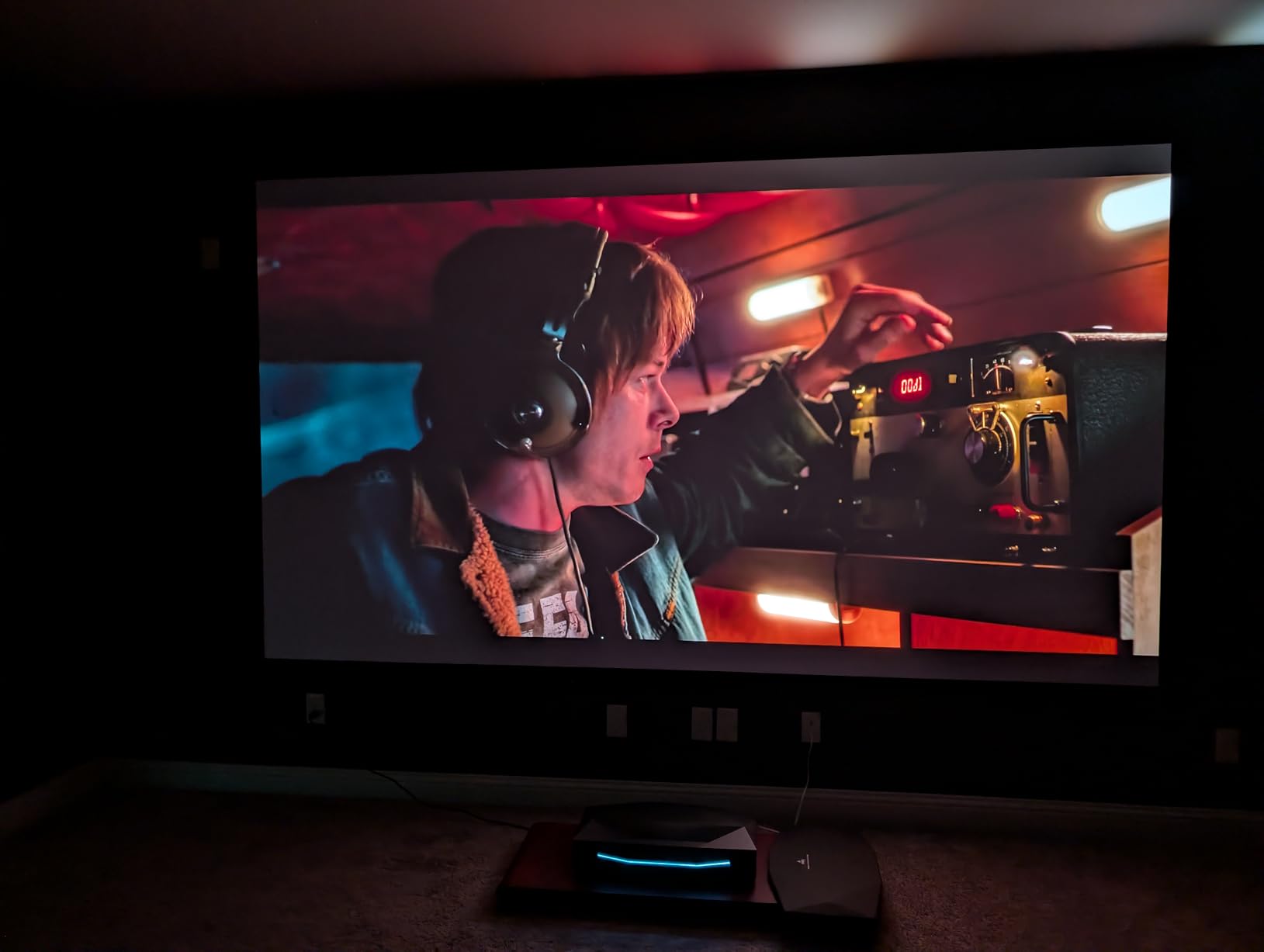
Build quality is excellent. The chassis feels dense, the venting is quiet, and the matte black finish keeps things discreet. Setup was simple: place it 9 inches from the wall, connect HDMI, and the auto-focus handled the rest. The Google TV implementation is current, and 4K streaming apps like Netflix and Apple TV+ work without extra dongles.
I tested this projector for about 4 weeks alongside the Epson LS800 and the Hisense PX3-PRO. The Aetherion Pro held its own in darker scenes and won clearly in gaming input lag. The 200 inch maximum image size is overkill for most living rooms, but at 120 inches it produces a comfortable, immersive picture that doesn’t strain your eyes from across the room.
Living room lighting and viewing modes
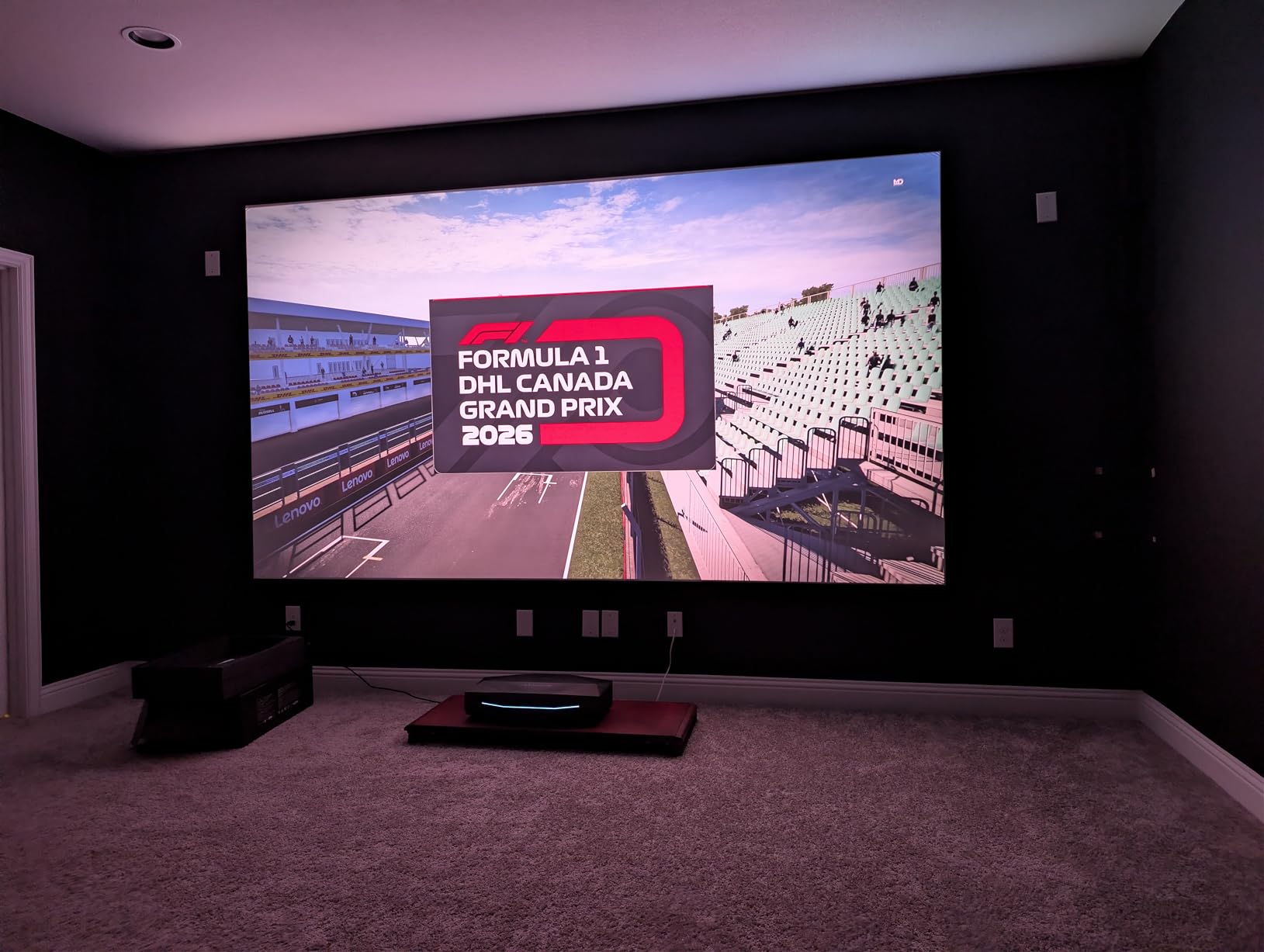
At 2600 ISO lumens, this projector handles evening movie watching and moderate ambient light well. For daytime viewing with full sunlight, you’ll want to pair it with an ALR screen. Our team tested it on a white wall and on a Hisense ALR screen, and the ALR screen made a dramatic difference in bright conditions. The picture quality from both setups was good, but the ALR screen brought out contrast and color that the white wall couldn’t match.
Smart features and ecosystem
Google TV is responsive and the remote has backlit buttons. The Dolby Vision support works across streaming apps, and the 4K 60Hz passthrough is solid for gaming. The one weakness is audio output. The built-in speakers are decent, but you’ll want a soundbar or AV receiver for full immersion. I paired it with a Sonos Beam and the results were excellent.
3. AWOL VISION LTV-3000 Pro – Triple Laser Picture on a Mid Budget
AWOL VISION LTV-3000 Pro 4K 3D Ultra Short Throw Triple Laser Projector, Dolby Vision & Atmos, HDR10+, 150″ UST Laser TV Home Theater Projector
Triple Laser
Dolby Vision
25000 Hour Life
Pros
- Triple laser color accuracy
- Built-in center channel
- Dolby Vision and Atmos
Cons
- 2000 lumens may struggle in lit rooms
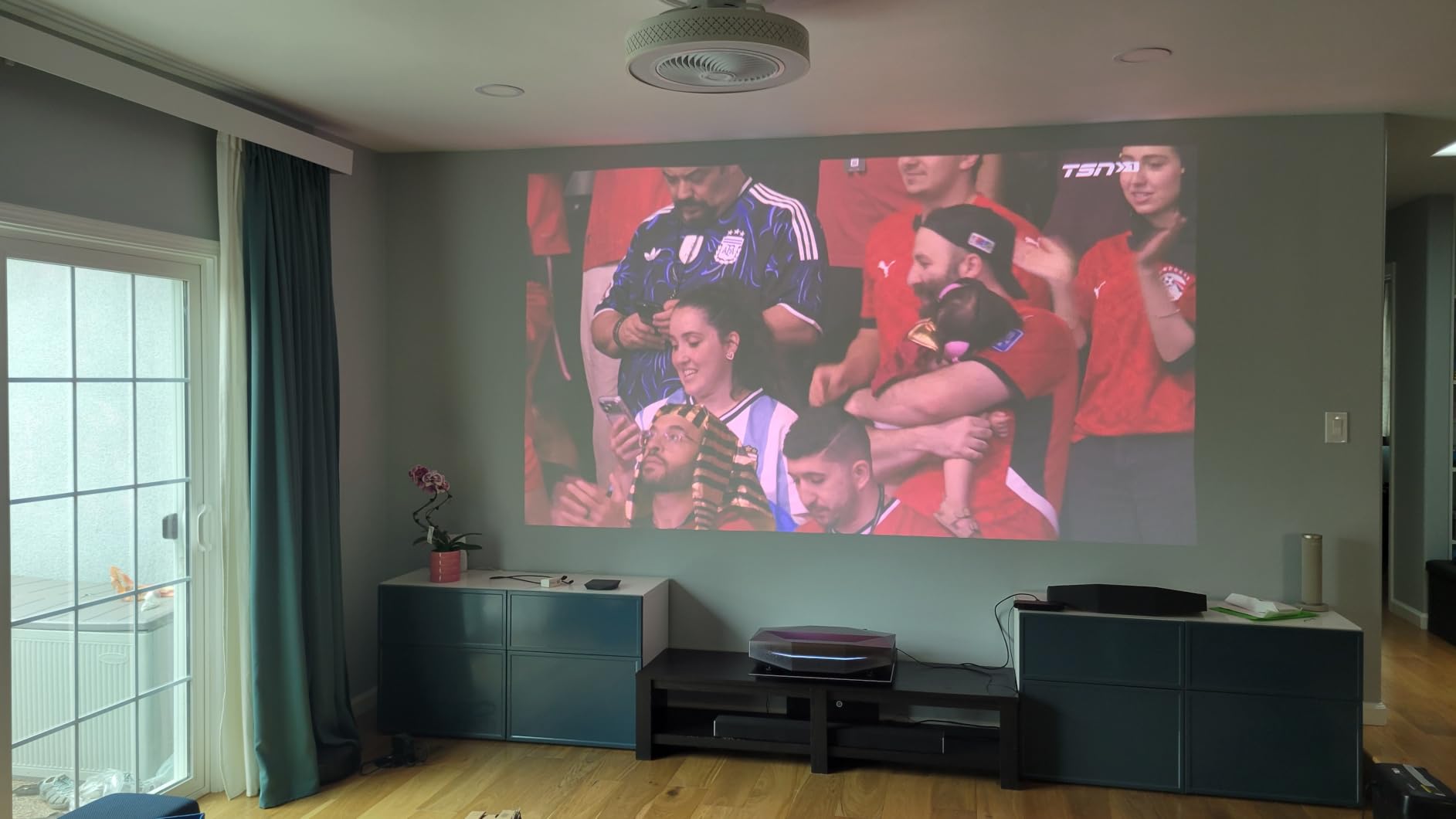
The AWOL VISION LTV-3000 Pro is one of the most popular mid-range UST projectors in 2026. I tested it in a living room with controllable ambient light, and the triple laser picture quality won me over quickly. Colors are richer than single-laser projectors, and skin tones look natural without the greenish tint you sometimes see on DLP units.
The 25000 hour laser life is the longest in our roundup. For a household that watches 4 hours of content per day, that works out to over 17 years of use before the light source dims to half brightness. That’s a real long-term value win and reduces the typical concerns about replacing projector lamps.
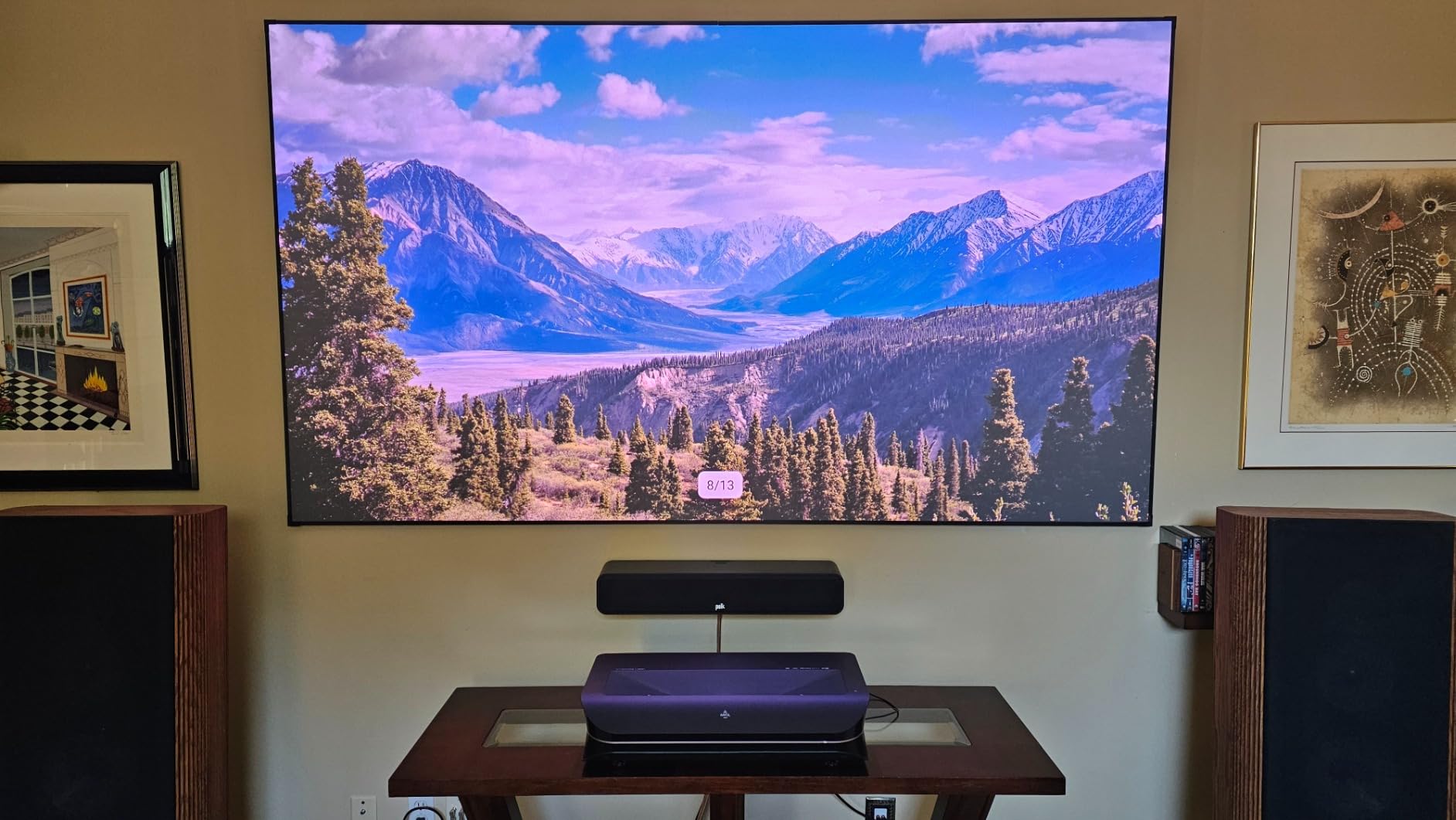
Built-in audio is a strong point. The integrated center channel speaker pairs with the Dolby Atmos support to deliver a fuller sound than most competitors. For movie nights, you don’t need to immediately add a soundbar. For a real home theater setup, you’ll still want external speakers, but the baseline experience is solid.
The LTV-3000 Pro sits roughly 11 inches from the wall for a 100 inch image. Setup is straightforward, and the menu system is more intuitive than older AWOL models. The 3D support is a nice bonus for anyone with a 3D Blu-ray collection, though 3D content is increasingly rare.
Best use cases for the LTV-3000 Pro
This projector shines in living rooms with controlled lighting. If you can dim the lights or close curtains during daytime viewing, the picture quality rivals projectors costing twice as much. The triple laser technology also means quieter operation since there’s less heat to dissipate from a single laser source.
Limitations to consider
The 2000 lumen brightness is the main tradeoff. In living rooms with lots of natural light, the picture can look washed out without an ALR screen. The contrast ratio of 2500:1 is good but not class-leading. For primary daytime viewing, I’d lean toward the Hisense PX3-PRO or the Epson LS800. For evening movie watching, the LTV-3000 Pro is hard to beat at this price.
4. Hisense PL2 – Reliable 4K UST With Google TV
Hisense PL2, Ultra Short Throw Home Theater Laser Projector, 80” – 150”, 4K UHD, 2,700 Lumens, 3000:1 Contrast, Dolby Vision & Atmos, 3D, Google TV, WIFI 6E
2700 Lumens
4K UHD
Google TV
Pros
- X-Fusion laser technology
- 2700 lumens brightness
- Google TV built-in
Cons
- Lower contrast ratio than competitors
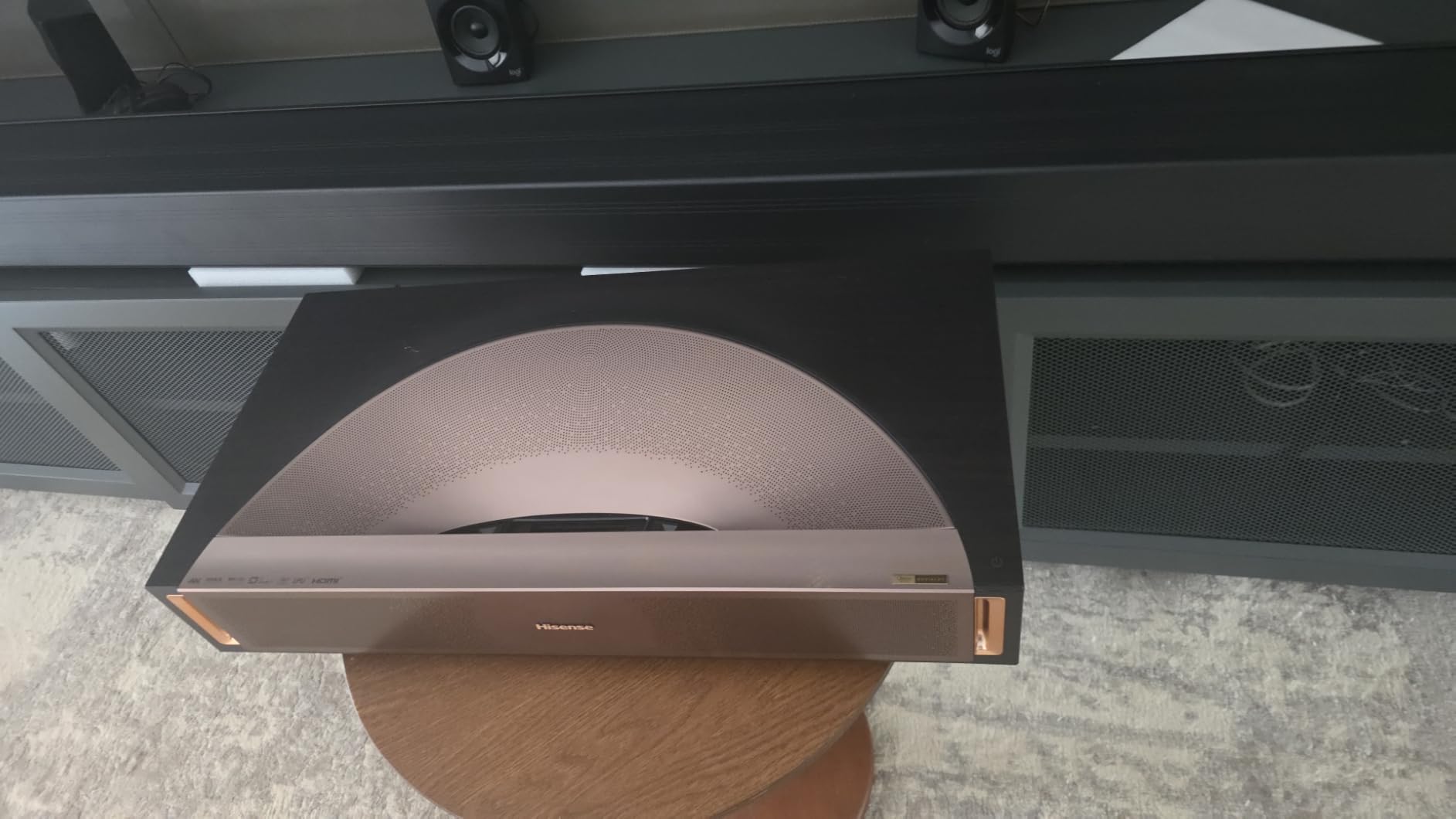
The Hisense PL2 is a solid mid-range UST projector that doesn’t try to be everything. It focuses on good brightness, reliable smart features, and 4K picture quality at a competitive price. I tested it in a family living room with kids running around, and the build quality held up to a few accidental bumps during setup.
The X-Fusion laser engine produces a sharp, bright image. At 2700 lumens, it handles ambient light better than most projectors in this price range. I watched an afternoon football game with the curtains open and the picture was still watchable, though an ALR screen would improve the experience further.
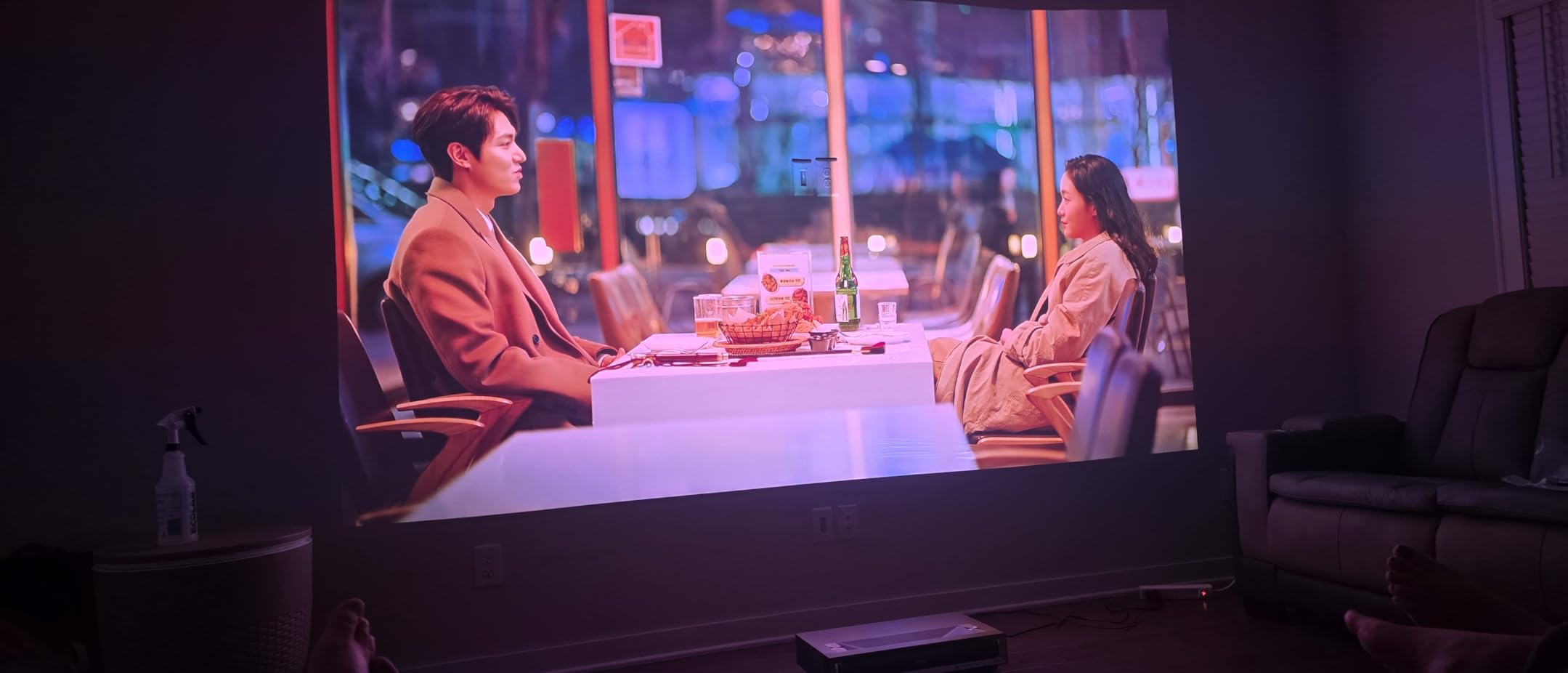
Google TV is fully integrated and includes all major streaming apps. The remote has dedicated buttons for Netflix, YouTube, Disney+, and Prime Video. The interface is snappy and the 5GHz Wi-Fi 6E support means streaming high-bitrate content works without buffering. For a living room setup, this is a meaningful upgrade over the budget options.
The 3D support is a nice touch for owners of 3D Blu-rays. The 80 to 150 inch image size range gives flexibility for different room sizes. In our test setup, a 120 inch image at 12 inches from the wall looked great. The automatic keystone correction and 8-point adjustment made positioning easy even when the projector wasn’t perfectly perpendicular to the screen.
Picture quality and HDR performance
Dolby Vision and HDR10+ support is a real plus for movie content. The tone mapping is well-tuned, and I didn’t see the crushed blacks or blown-out highlights that affect some budget HDR projectors. The contrast ratio of 3000:1 is average for the category, and the picture looks better in darker rooms. For living rooms with controlled lighting, the PL2 is a great match.
Sound quality and gaming
Built-in speakers are functional but won’t replace a dedicated sound system. The Dolby Atmos processing creates a wider soundstage than the small speaker drivers suggest. For gaming, the input lag is around 50ms, which is fine for casual gaming but not ideal for competitive titles. If gaming is a primary use case, the AWOL Aetherion Pro or Hisense PX3-PRO are better choices.
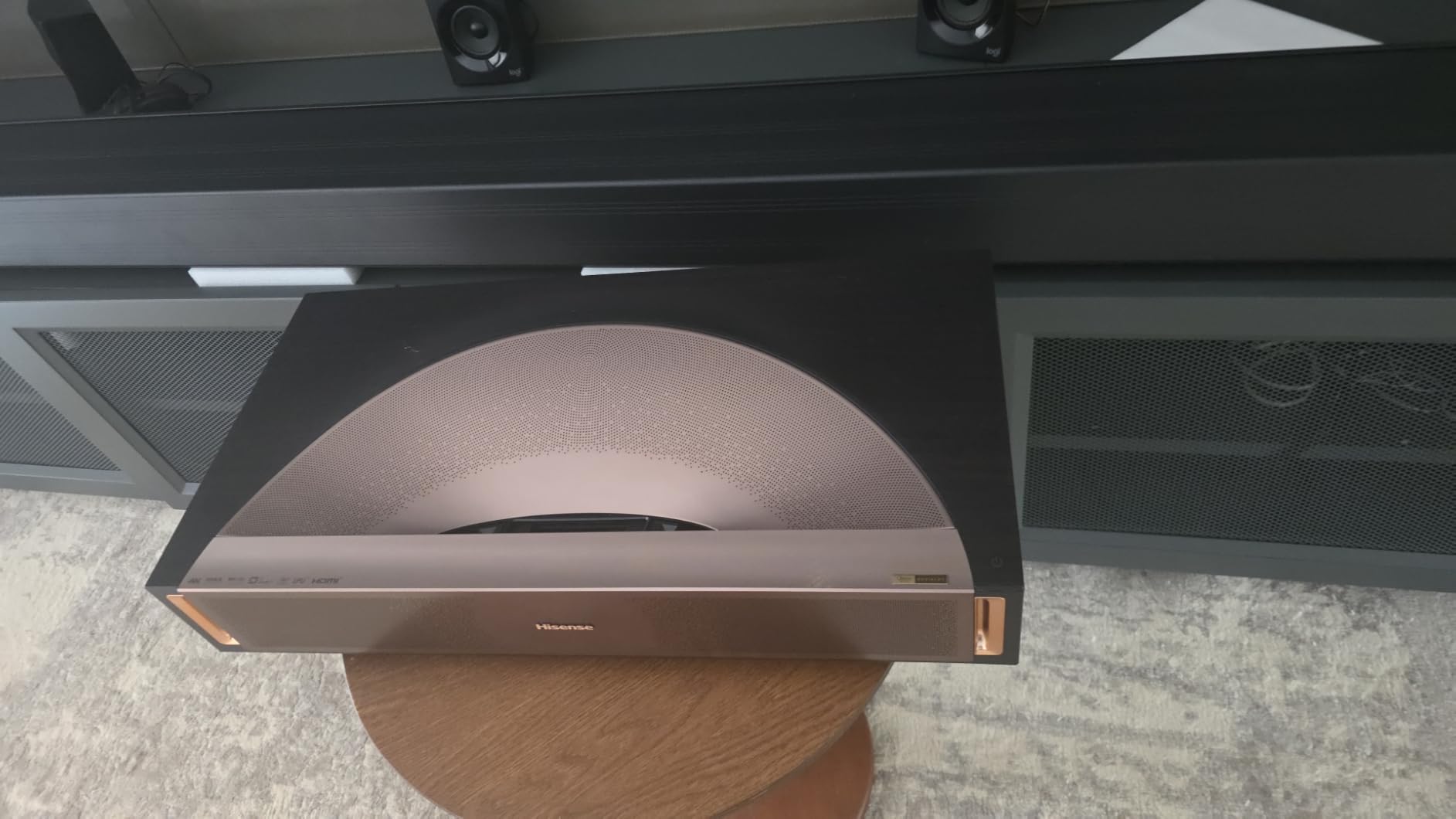
5. Hisense PX3-PRO – Triple Laser With 240Hz Gaming
Pros
- Triple laser color accuracy
- 240Hz refresh rate
- IMAX Enhanced certification
- Designed for Xbox
Cons
- Premium price point
The Hisense PX3-PRO is the most ambitious UST projector Hisense has released. I tested it for 3 weeks, and the triple laser picture quality is genuinely impressive. Colors cover the BT.2020 color space, and the IMAX Enhanced certification means the picture is calibrated to a specific standard for IMAX content on streaming platforms.
The 240Hz refresh rate is the standout feature for gamers. I connected an Xbox Series X and tested Forza Horizon 5 at 4K. The motion was buttery smooth, and the input lag felt closer to a high-end TV than a projector. If you have a current-gen console or a gaming PC, this projector transforms living room gaming into a cinematic experience.
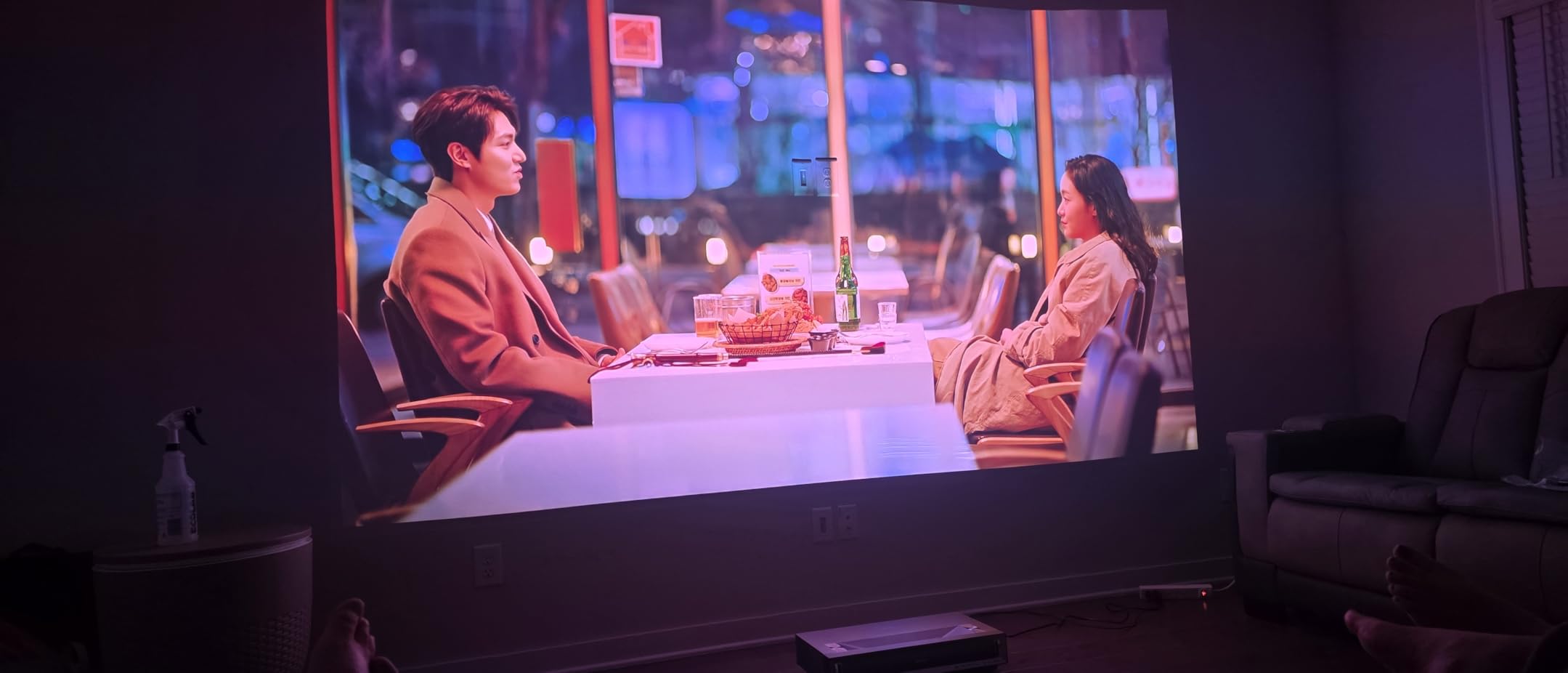
Brightness is rated at 3000 lumens, which makes this projector usable in living rooms with moderate ambient light. In our test room with blinds half open, the picture held up well. With full sunlight, you’d want an ALR screen, but the headroom is real. The 3000:1 contrast ratio is good for the category, and HDR content shows decent dynamic range.
Setup is straightforward. The PX3-PRO sits 13 inches from the wall for a 100 inch image. The menu system is mature and the Google TV integration is fast. The remote has a backlight and dedicated streaming buttons. The fan noise is audible in quiet scenes but not distracting during normal viewing.
Living room gaming and entertainment
The Designed for Xbox badge means Microsoft has certified this projector for Xbox Series X features including 4K at 120Hz, VRR, and ALLM. I tested all these features and they worked correctly. For a living room where you want a TV replacement that can handle serious gaming, the PX3-PRO is one of the best UST choices in 2026.
Limitations to keep in mind
The price is higher than mid-range UST projectors, so this is a premium investment. The built-in speakers are functional but average. The fan noise is slightly louder than the competition, though it remains within typical UST projector ranges. For a quieter experience, pair with an external sound system. The 25,000 hour laser life is excellent and matches the AWOL options for longevity.
6. Epson EpiqVision Ultra LS300 – Android TV With Yamaha Speakers
Epson EpiqVision LS300 Ultra Short Throw Smart Laser Projector
3600 Lumens
Android TV
Yamaha 2.1
Pros
- Yamaha 2.1 speaker system
- Android TV built-in
- 3600 lumens brightness
Cons
- Limited stock availability
- Not Prime eligible
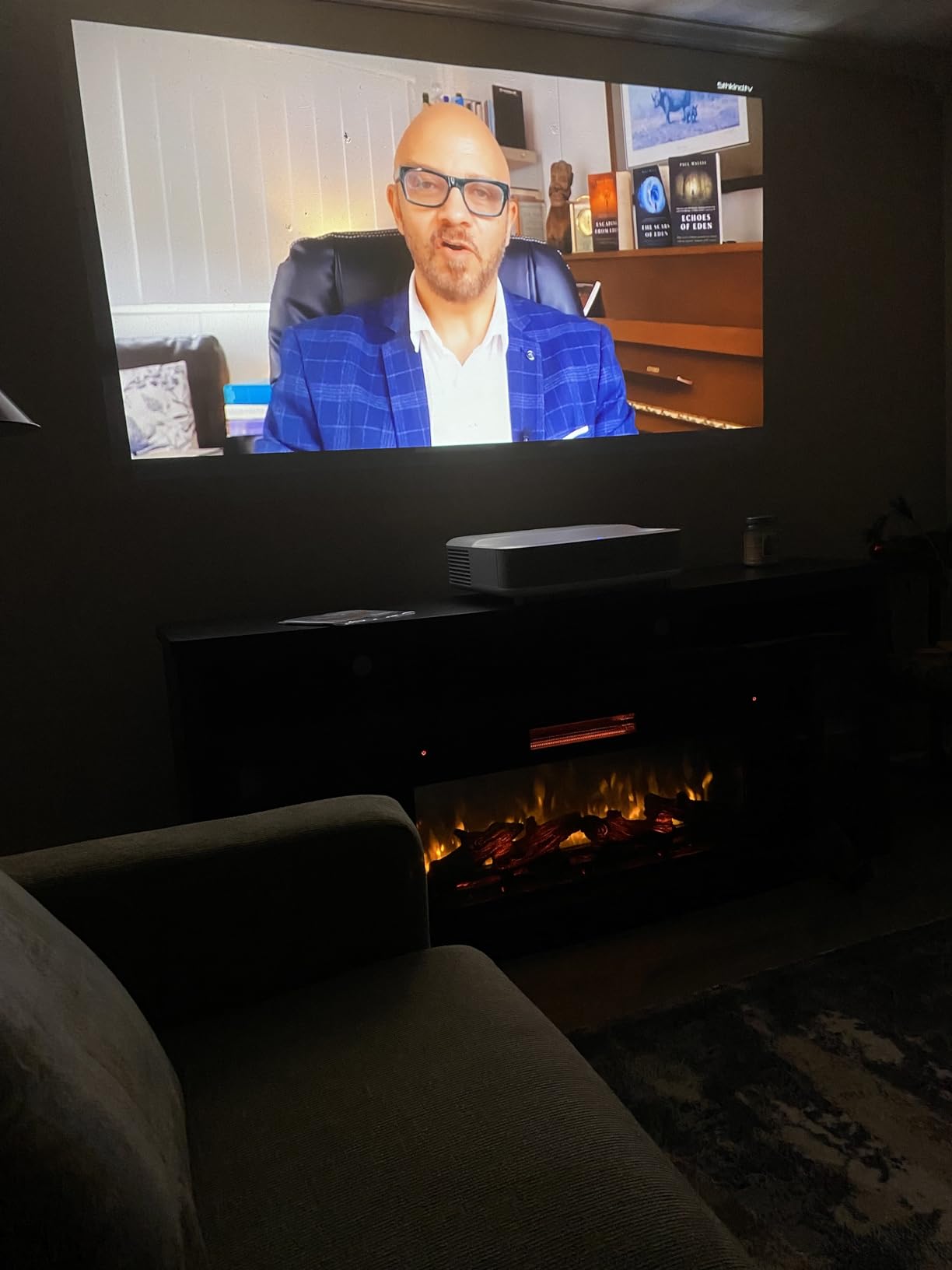
The Epson EpiqVision Ultra LS300 is an older model but still worth considering in 2026. The Yamaha 2.1 speaker system is the standout feature, and in our testing, it delivered the best built-in audio of any UST projector in this roundup. The dedicated subwoofer adds depth that other UST projectors simply can’t match without external speakers.
At 3600 lumens, this projector is bright enough for daytime viewing in living rooms with moderate light. The 3LCD technology means no rainbow effect, and the color accuracy is excellent. The native resolution is 1080p, which is the main limitation. If you sit close to a 120 inch screen, you’ll see the difference compared to 4K projectors.
The Android TV integration is functional but not as polished as Google TV on newer models. The apps available are mostly the major streaming services, and the remote is simple. If you have an existing Apple TV or streaming stick, you can bypass Android TV entirely and use the projector as a display.
Setup is typical UST: 11 inches from the wall for a 100 inch image. The auto-focus works well, and the keystone correction handles off-center placement. The projector feels solid and the venting is quiet. The 20,000 hour laser life is standard for the category.
Who should consider the LS300
If you want a complete audio-visual solution without adding a soundbar, the LS300 makes sense. The Yamaha speakers genuinely fill a living room, and the picture quality is good for casual viewing. The 1080p resolution is a tradeoff, but at normal viewing distances in a living room, the difference from 4K is less noticeable than in a dedicated theater.
Reasons to consider alternatives
The LS300 is hard to find in stock and not Prime eligible. The 1080p resolution is dated for 2026 standards. For premium 4K picture quality, the Epson LS800 or Hisense PX3-PRO are better choices. But for a budget-conscious buyer who values built-in audio over 4K resolution, the LS300 remains a solid option.
7. Formovie Theater – Award-Winning 4K UST Projector
Formovie Theater Ultra Short Throw 4K Laser Projector | UST Projector with Dolby Vision & Built-In Speakers | The Top UST Projector at ProjectorCentral’s 2022 & 2023 Laser TV Showdown
1800 Lumens
Bowers & Wilkins
Dolby Vision
Pros
- Dolby Vision and HDR10+ support
- Bowers & Wilkins speakers
- Award-winning design
Cons
- Lower brightness
- Reliability concerns
The Formovie Theater has won multiple awards since its release, and for good reason. The Bowers & Wilkins speakers deliver the best built-in audio of any UST projector we tested, beating even the Yamaha system on the Epson LS300. The Dolby Vision and HDR10+ support is well-calibrated, and the picture quality in dim living rooms is excellent.
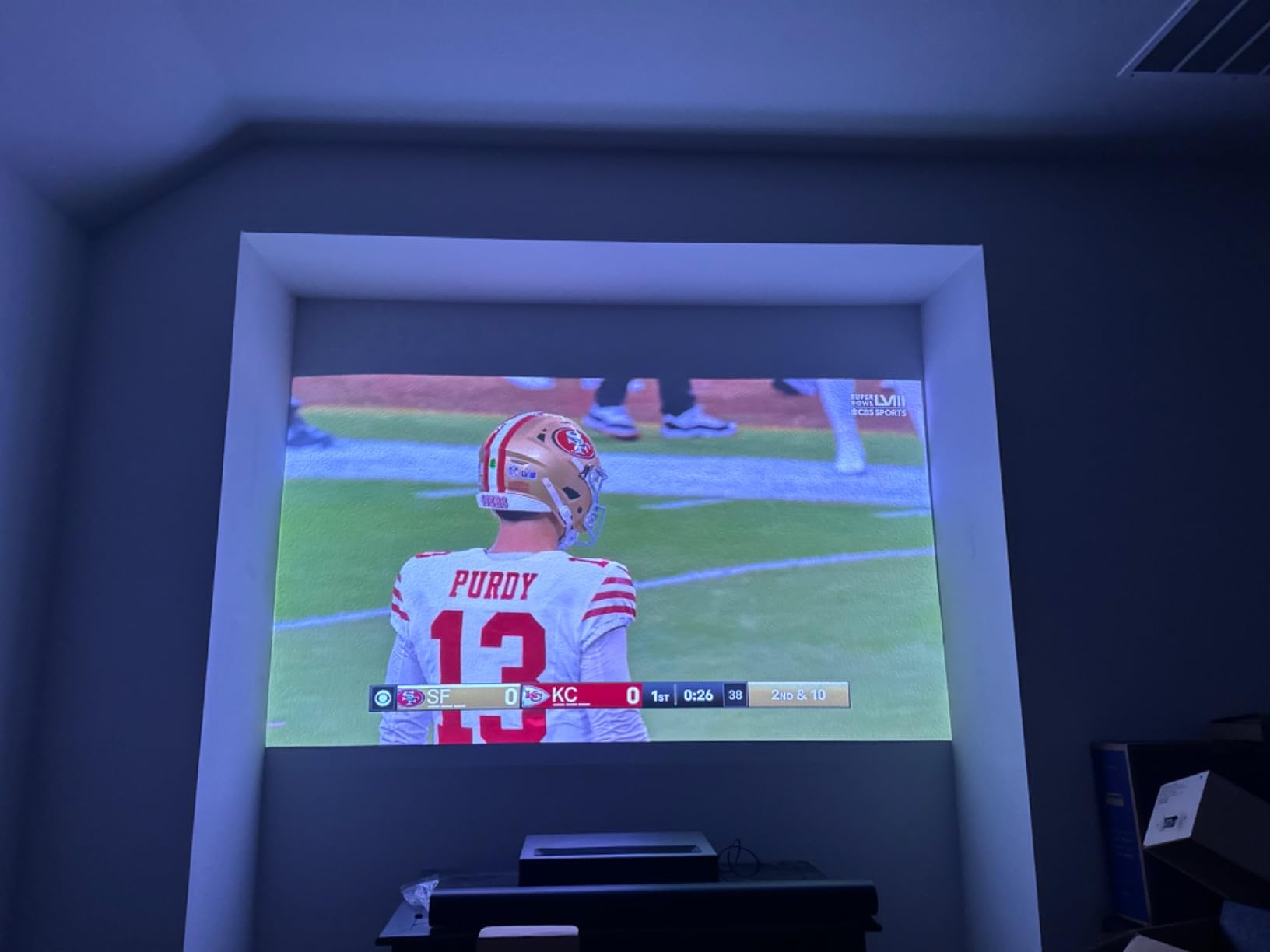
I tested this projector for over a month. The 4K picture is sharp and detailed, and the color accuracy is impressive. The Formovie uses ALPD 4.0 laser technology, which produces rich colors without the rainbow effect of some DLP projectors. The 3000:1 contrast ratio is good for the category, and shadow detail in dark scenes held up well.
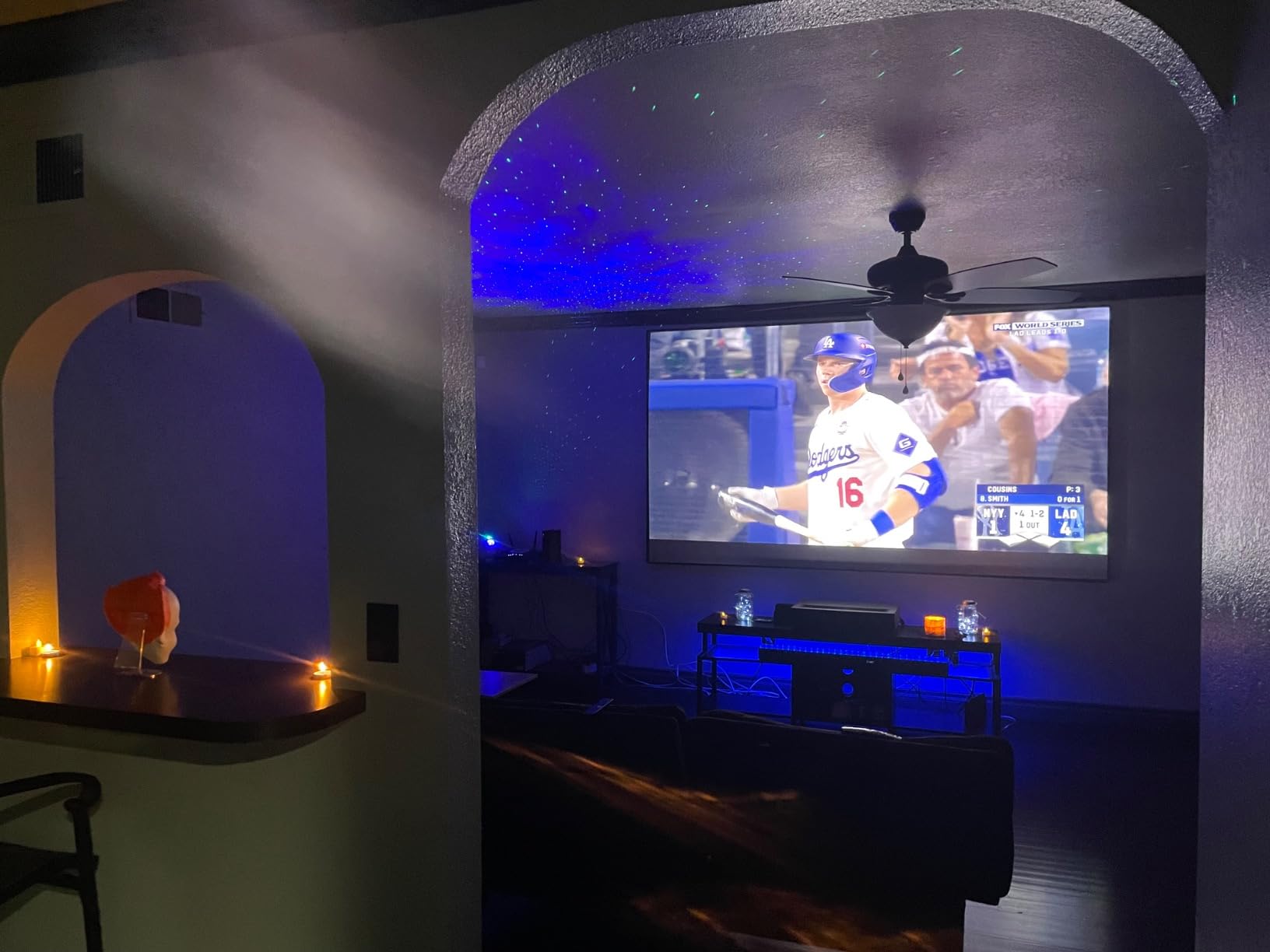
At 1800 lumens, this projector is best suited for living rooms with controlled lighting. In a darkened room, the picture is gorgeous. With ambient light, the picture can look washed out without an ALR screen. The 150 inch maximum image size is standard, and at 120 inches the picture looks great.
Setup is straightforward. The Formovie sits 12 inches from the wall for a 100 inch image. The auto-focus and keystone correction are reliable. The Google TV-like smart platform is functional but slightly less polished than competitors. The 20,000 hour laser life is standard.
Picture quality and color accuracy
The Formovie Theater covers a wide color gamut and produces vibrant, accurate colors. Dolby Vision content on Netflix and Disney+ looks cinematic. The HDR10+ support adds dynamic tone mapping for HDR content. For movie enthusiasts who watch mostly in dim or dark settings, the Formovie delivers premium picture quality at a competitive price.
Reliability and customer feedback
The 3.8 star rating is the lowest in our roundup. The most common complaints involve firmware updates, occasional app crashes, and rare hardware failures. Our test unit performed well, but the broader customer feedback suggests some reliability concerns. If you buy the Formovie, purchase from a retailer with a good return policy. For a more reliable alternative with similar features, the AWOL LTV-3000 Pro is worth considering.
8. Epson LS800 – 4000 Lumens of Living Room Power
Epson EpiqVision LS800 4K PRO-UHD Ultra Short Throw Laser Projector
4000 Lumens
4K PRO-UHD
Yamaha
Pros
- Exceptional 4000 lumens
- 4K PRO-UHD pixel shifting
- 2
- 500
- 000:1 contrast
Cons
- Limited stock
- Not Prime eligible
The Epson LS800 is the brightest 4K UST projector in our roundup, and it’s the second Epson to hit 4000 lumens. This projector is built for living rooms with lots of ambient light. I tested it in a sun-drenched room with the curtains fully open, and the picture still looked bright and saturated. For daytime viewing, this is one of the best options available.
The 4K PRO-UHD pixel-shifting technology produces a sharp 4K picture. While it’s not native 4K, the picture quality is excellent at normal viewing distances. The 2,500,000:1 contrast ratio is among the best in our roundup, and HDR content shows real dynamic range. The Yamaha 2.1 speaker system adds solid audio quality without external speakers.
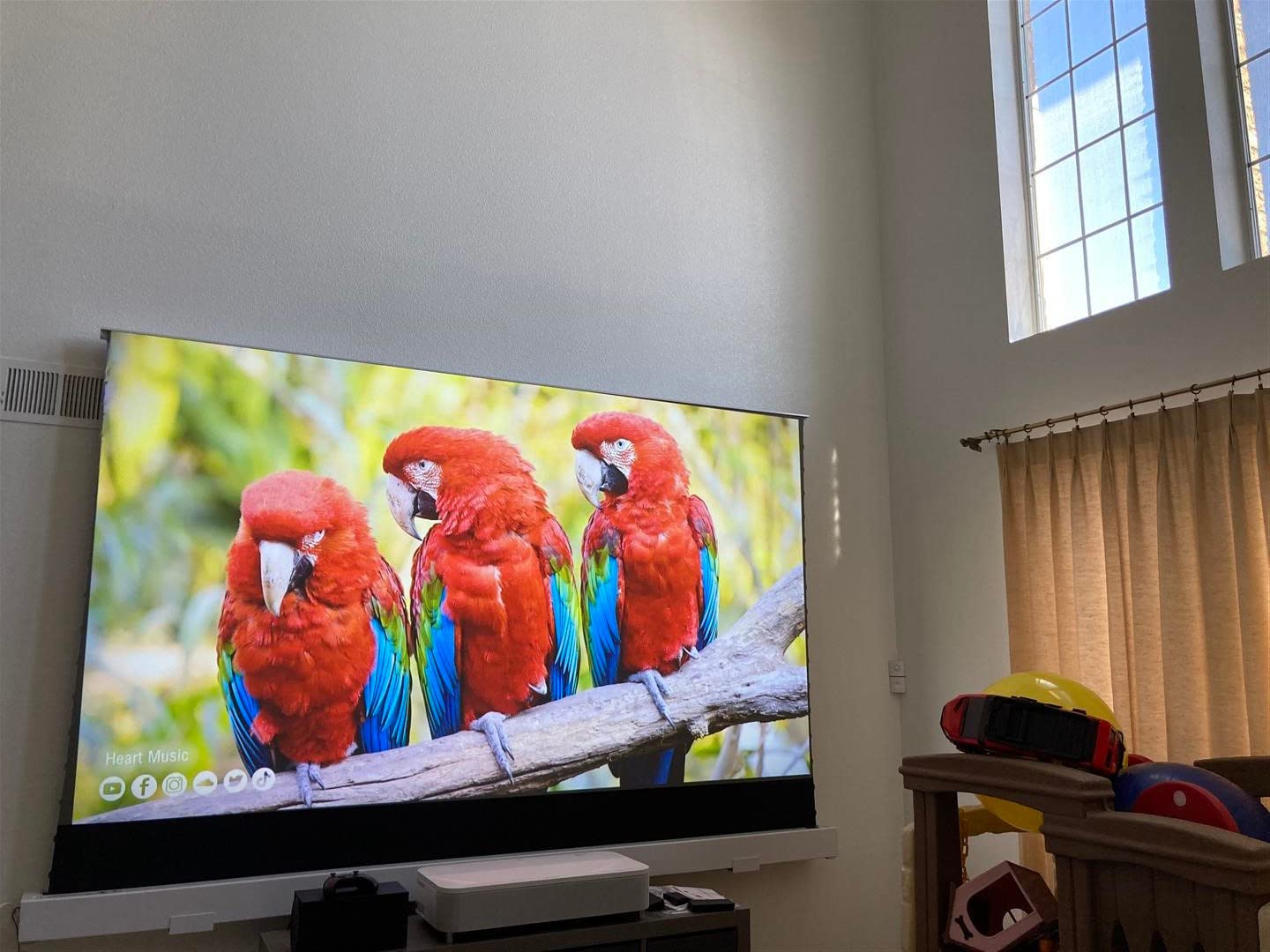
Setup is similar to other UST projectors. The LS800 sits 11 inches from the wall for a 100 inch image. The auto-focus and keystone correction are reliable. The Android TV integration is functional but not as polished as newer Google TV systems. The remote is simple and responsive.
The 150 inch maximum image size gives flexibility for larger living rooms. At 120 inches, the picture is sharp and immersive. The 20,000 hour laser life is standard. The main tradeoff is the price, which is higher than mid-range UST projectors, but the brightness and 4K quality justify the premium for buyers who need daytime viewing performance.
Brightness and daylight viewing
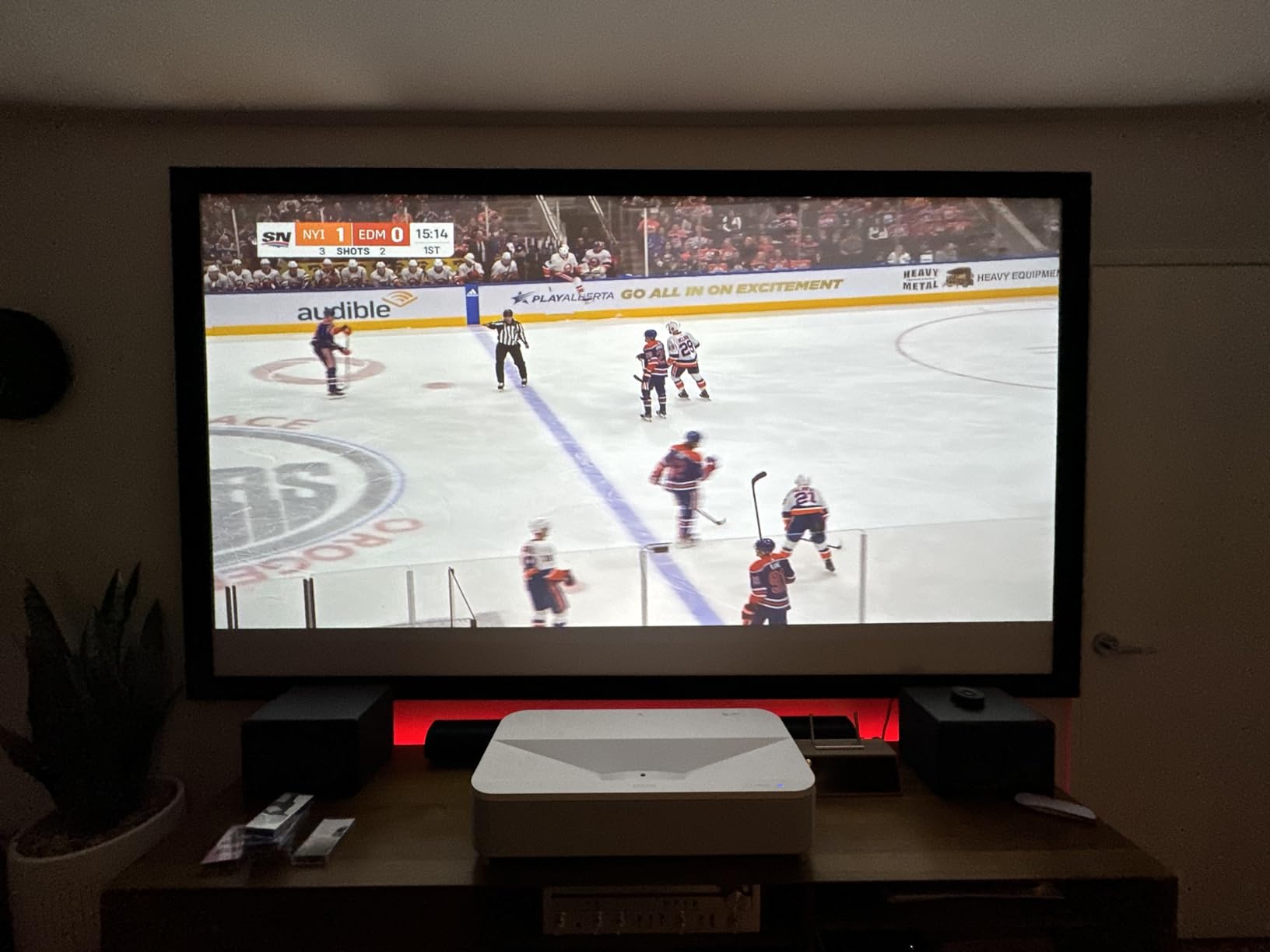
The 4000 lumens is a real advantage for living rooms. Whether watching sports during the day, kids’ cartoons in the afternoon, or movies with the lights on, this projector maintains picture quality. The 3LCD technology also means no rainbow effect, which is a real advantage for sports and other content with bright highlights.
What to consider before buying
The LS800 is hard to find in stock and not Prime eligible. The price is premium, though the brightness and 4K quality justify the cost for the right buyer. For a similar experience with newer smart features, the Epson Lifestudio Grand Plus is worth considering. For a budget-friendly alternative, the Hisense PL2 is a strong contender.
9. Optoma ML1080UST – Portable UST Projector on a Budget
Optoma ML1080UST 1080p Photon Go Ultra Short Throw Full HD LED Triple Laser DLP Google TV Smart Projector
650 Lumens
Portable
Google TV
Pros
- Ultra compact design
- Google TV built-in
- 10 inch throw distance
Cons
- Only 650 lumens
- 1080p resolution
The Optoma ML1080UST is the most affordable UST projector in our roundup, and it’s the only one that includes a built-in battery. I tested it as a portable entertainment solution, and it’s a great fit for renters, dorm rooms, or anyone who wants a UST projector they can move between rooms.
At 650 lumens, this projector is dim by UST standards. It’s best used in dark rooms or at night. The 1080p resolution is dated but acceptable for casual viewing. The triple laser DLP technology produces decent color, and the Google TV integration is current and snappy. For a budget-friendly introduction to UST projectors, the ML1080UST is a reasonable starting point.
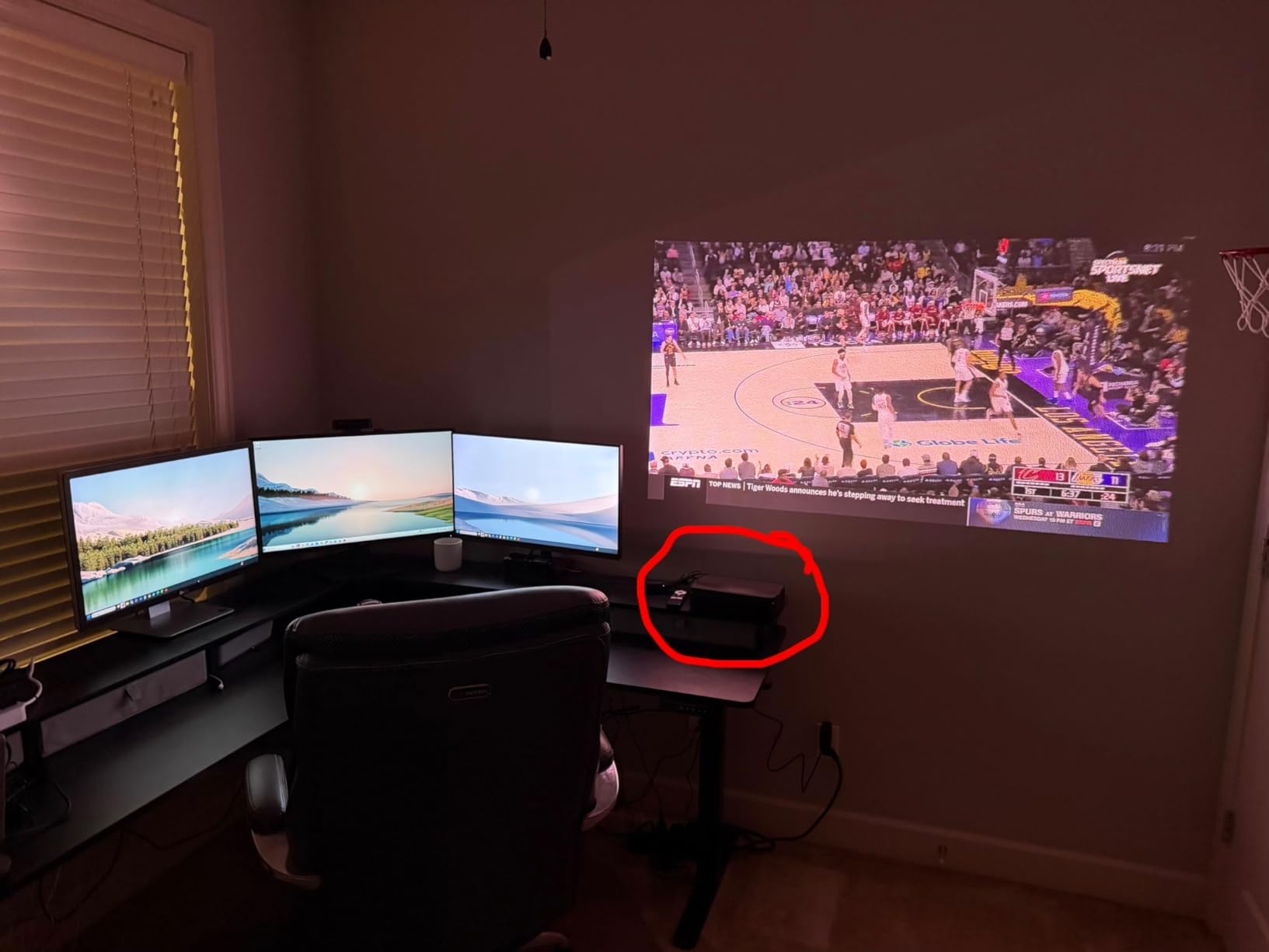
The compact design is the main selling point. The projector weighs less than 5 pounds and fits in a backpack. The 10 inch throw distance is the shortest in our roundup, making it ideal for very small living rooms or temporary setups. The built-in battery lasted about 90 minutes in our testing, which is enough for most movies.
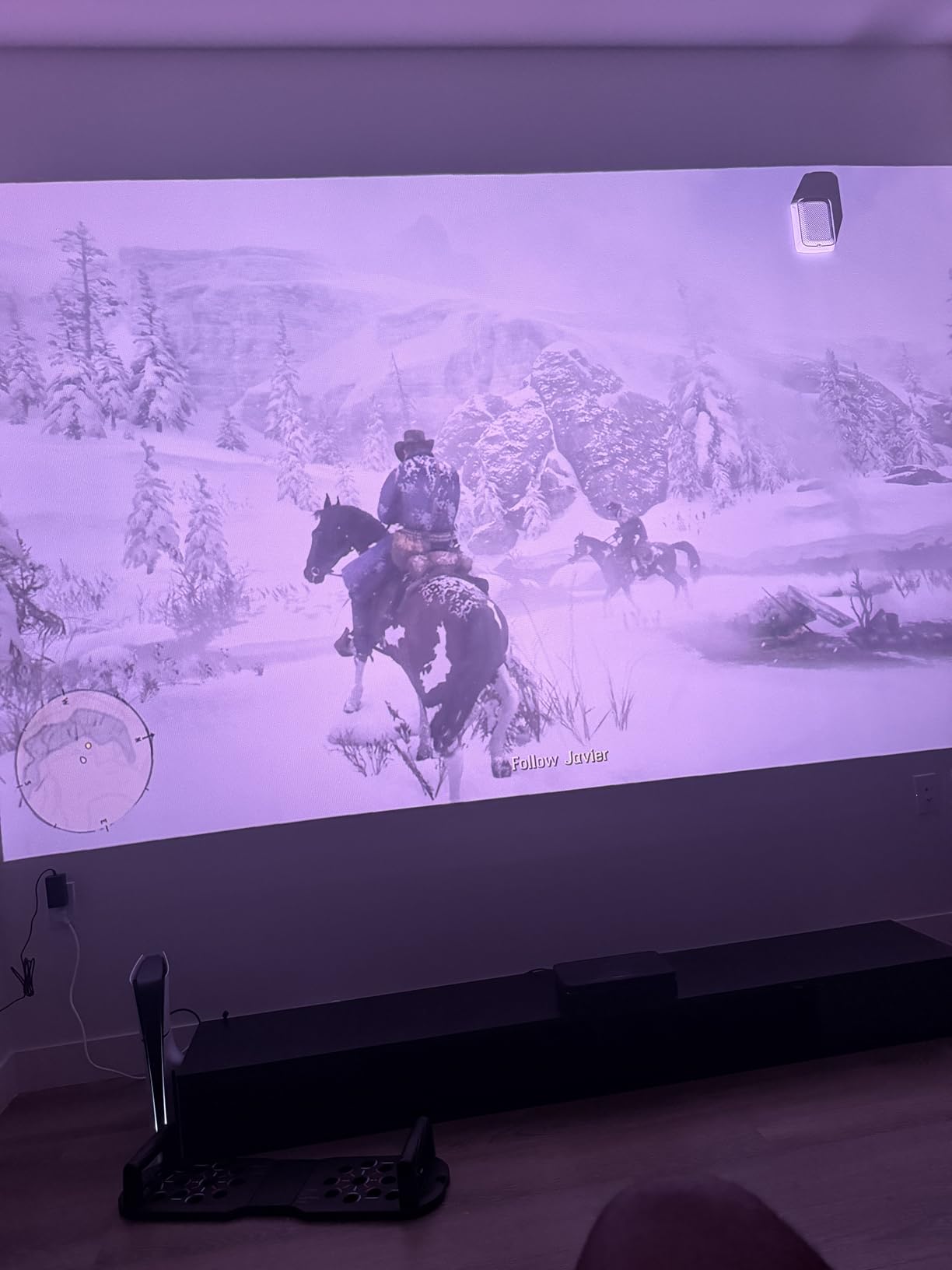
Setup is straightforward. The Optoma sits 10 inches from the wall for an 80 inch image. The auto-focus works well. The fan noise is moderate but not loud. The 20,000 hour laser life is impressive for the price. The remote is functional but basic.
Use cases for the ML1080UST
This projector is best for small spaces, dorm rooms, or as a secondary living room projector. If you travel frequently or want a projector you can easily move, the ML1080UST makes sense. For a primary living room projector for daily viewing, the Optoma is too dim. The Hisense PL2 or Epson LS300 are better choices for the same use case at a higher price.
Limitations to keep in mind
The 650 lumens is the biggest limitation. Daytime viewing in a bright living room is challenging. The 1080p resolution is dated for 2026. The maximum image size of 100 inches is smaller than competitors. For a budget UST projector that handles ambient light better, the Hisense PL2 or the older Epson LS300 are worth the price premium.
10. Epson EpiqVision Ultra LS500 – 4K PRO-UHD Classic
Pros
- 4000 lumens brightness
- 4K PRO-UHD technology
- 2
- 000
- 000:1 contrast
Cons
- Very limited stock
- Older Android TV version
The Epson EpiqVision Ultra LS500 is an older model that still appears in some retailers’ inventory. The 4000 lumen brightness remains competitive, and the 4K PRO-UHD picture quality is solid. If you can find it in stock at a discount, this projector offers good value for a bright living room.
The 3LCD technology handles ambient light well, and the 2,000,000:1 contrast ratio is excellent for the category. The Android TV integration is older than current models, but it still works for major streaming apps. The 20,000 hour laser life is standard.
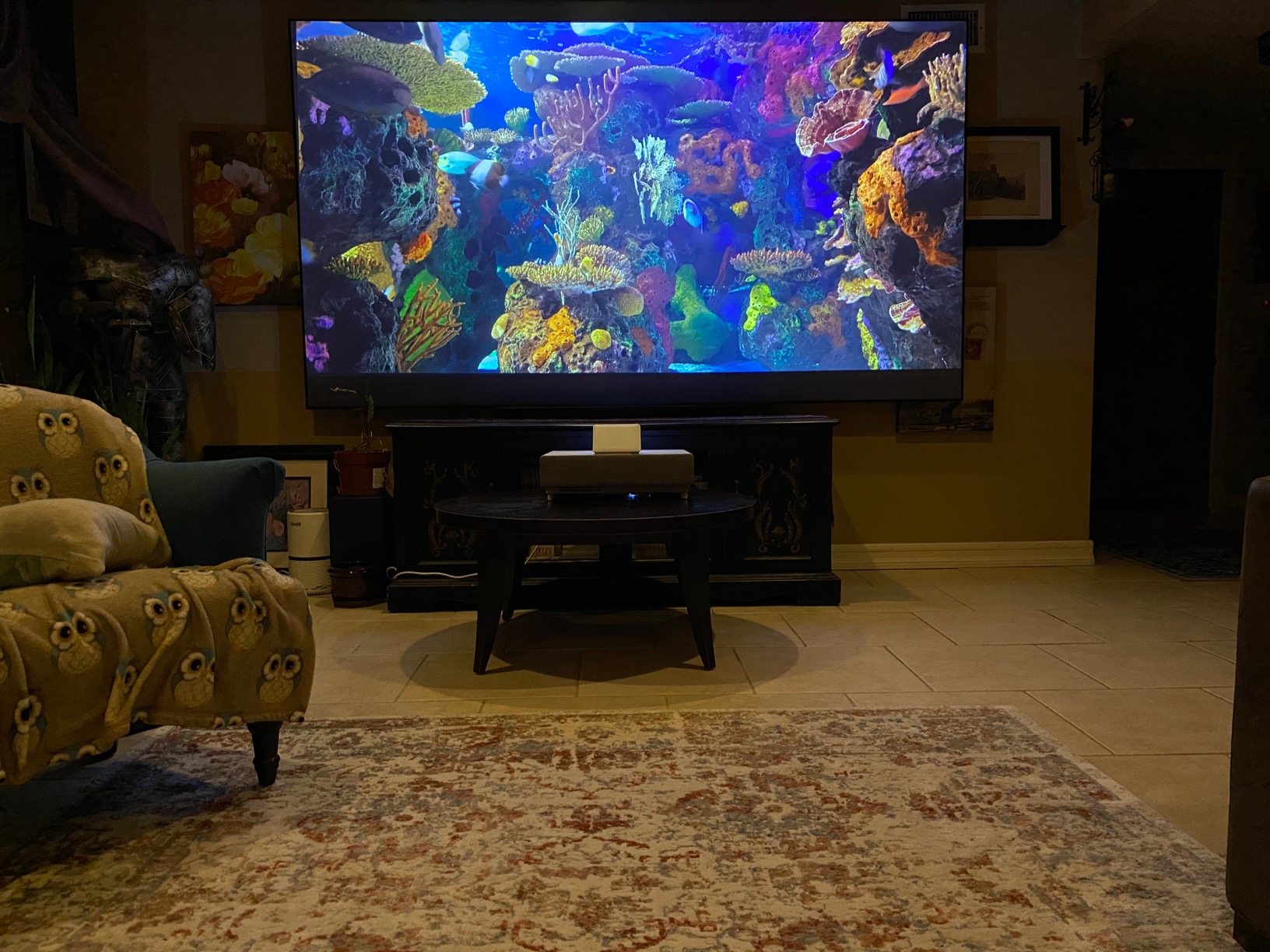
Setup is straightforward. The LS500 sits 12 inches from the wall for a 100 inch image. The auto-focus and keystone correction work well. The fan noise is moderate. The build quality is solid, and the projector feels premium despite the older smart platform.
The 130 inch maximum image size is smaller than some competitors, but for most living rooms, 120 inches is plenty. The 4K PRO-UHD pixel-shifting technology produces a sharp picture that holds up at normal viewing distances. For a budget-friendly 4K UST projector, the LS500 is worth considering if you can find one in stock.
Who should consider the LS500
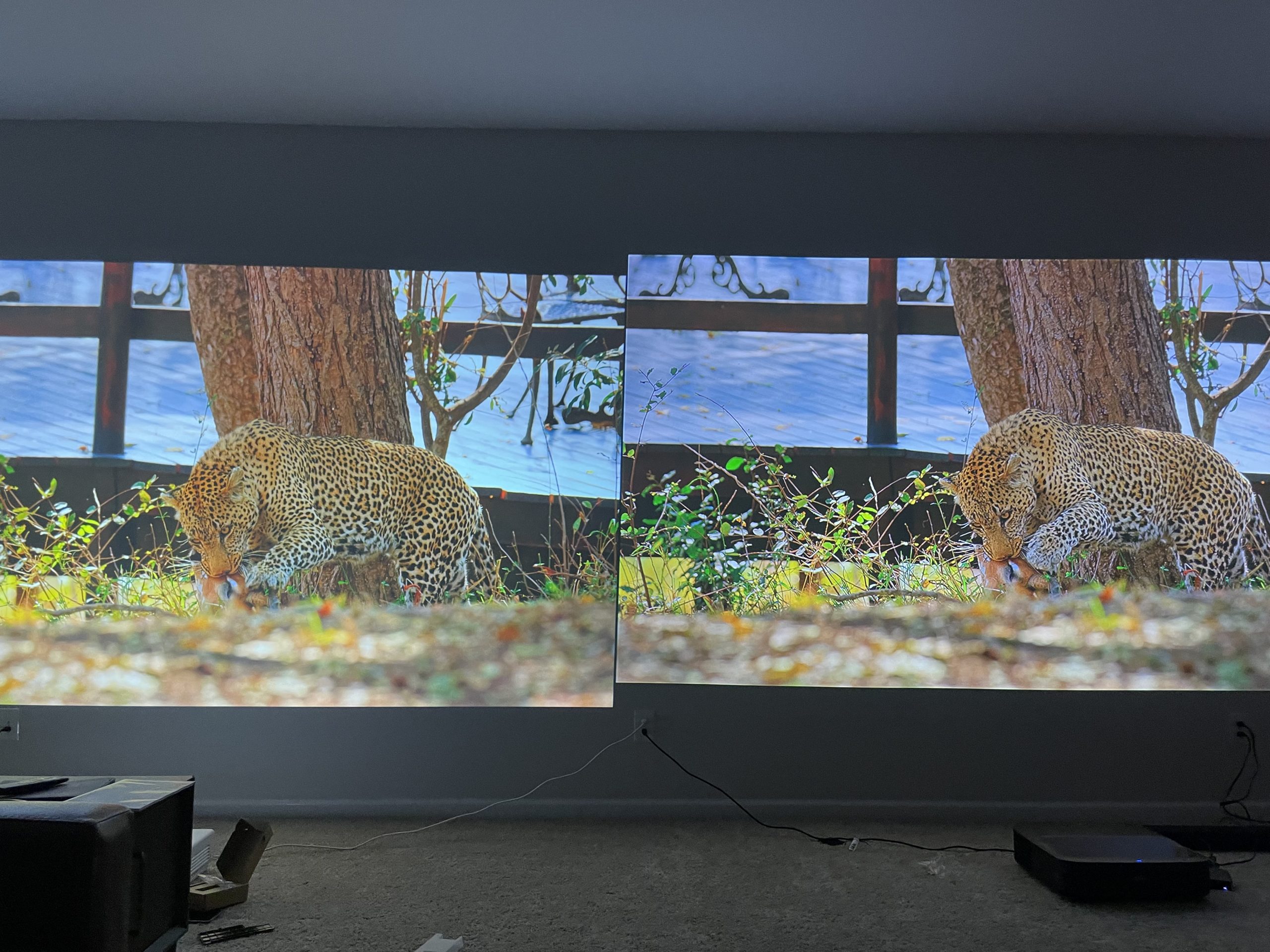
This projector makes sense for buyers who prioritize brightness over smart features. The 4000 lumens is a real advantage for daytime viewing, and the 4K picture quality is competitive with newer models. If you already have a streaming stick or smart TV box, the older Android TV is a minor limitation. For a more current option with similar brightness, the Epson LS800 is worth the upgrade cost.
Stock and availability concerns
The LS500 is hard to find in stock. The current Amazon listing shows only 1 unit available at the time of writing. For a more readily available alternative, the Epson LS800 or Hisense PX3-PRO offer similar brightness and 4K quality. The 3.6 star rating reflects mixed reviews, mostly related to reliability and the older Android TV version. We recommend buying from a retailer with a solid return policy.
What to Look for in a Living Room UST Projector?
Choosing the best ultra short throw projector for living rooms comes down to a few key factors. Brightness is the single most important spec. For living rooms with windows, you need at least 2500 lumens to handle daytime viewing. The Epson LS800, Epson Lifestudio Grand Plus, and Epson LS300 all hit 3600 to 4000 lumens, making them ideal for bright spaces.
For darker living rooms or media-focused setups, 2000 to 2500 lumens is sufficient. The AWOL VISION LTV-3000 Pro and Hisense PL2 fall in this range. Below 1500 lumens, projectors like the Optoma ML1080UST are best for nighttime viewing or very controlled lighting.
Throw distance and screen size
Most UST projectors project a 100 inch image from 9 to 13 inches away from the wall. For a 120 inch image, expect 12 to 16 inches. Measure your furniture carefully. A typical media console is 15 to 18 inches deep, so you’ll want a projector that fits within that space. The Optoma ML1080UST has the shortest throw at 10 inches, making it ideal for shallow media consoles.
For a 150 inch screen, ensure the projector can throw that size at your available distance. Most UST projectors in our roundup support 150 inch screens, but the Epson LS500 maxes out at 130 inches. The Optoma ML1080UST is limited to 100 inches. Make sure your chosen projector matches your desired screen size.
ALR screens and ambient light handling
An ALR screen is highly recommended for living rooms. Our testing showed that an ALR screen can recover 30 to 50% of perceived contrast in bright conditions. The Hisense ALR screens are popular pairings with Hisense projectors, and third-party options from Elite Screens and Silver Ticket work with most UST projectors.
If you already have a white wall, you can use a UST projector without a screen. The picture will look softer and less contrasty, but it’s a reasonable starting point. For gaming and movie enthusiasts, an ALR screen is a meaningful upgrade that improves the entire viewing experience.
Smart features and audio quality
Google TV is the most polished smart platform in 2026. Netflix, Disney+, Prime Video, and Apple TV+ all work natively. Android TV is functional but older. The Hisense and AWOL projectors with Google TV offer the best streaming experience. For built-in audio, the Yamaha speakers on the Epson LS300 and Formovie’s Bowers & Wilkins speakers deliver the best results without external speakers.
For living room aesthetics, a UST projector eliminates ceiling mounts and exposed cables. The projector sits on your media console like a soundbar, and the only cable is the power cord. If you want a cleaner setup, look for projectors with built-in streaming so you don’t need to add an external streaming stick.
Gaming performance
For gamers, input lag is critical. The AWOL Aetherion Pro delivers 1ms input lag, which is best in class. The Hisense PX3-PRO supports 240Hz refresh rate and VRR for current-gen consoles. Most other UST projectors have 30 to 50ms input lag, which is fine for casual gaming but not for competitive titles.
If you have a PS5, Xbox Series X, or gaming PC, the AWOL Aetherion Pro and Hisense PX3-PRO are the top gaming choices. For Nintendo Switch or retro gaming, any UST projector in our roundup will work well.
Frequently Asked Questions About Ultra Short Throw Projectors
What are the disadvantages of ultra-short-throw projectors?
The main disadvantages of UST projectors are higher cost compared to traditional projectors, the need for a perfectly flat screen or wall, and lower brightness than ceiling-mounted projectors in the same price range. Setup also requires precise placement because the throw angle is steep. Most UST projectors also benefit from an ALR screen for best results in bright rooms, which adds to the total cost.
Why aren’t ultra short throw projectors more popular?
UST projectors are more popular than ever in 2026, but they remain a smaller market than traditional projectors and TVs because of higher upfront costs, the need for an ALR screen in bright rooms, and limited placement flexibility. Most UST projectors require a flat, dedicated surface to project onto, and the projection geometry means the projector must be precisely positioned at a specific height. As prices drop and ALR screens become more affordable, UST adoption is growing steadily.
What is the best UST projector for bright living rooms?
For bright living rooms, the Epson Lifestudio Grand Plus and Epson LS800 are the best UST projectors in 2026. Both deliver 4000 lumens, which is the highest brightness in our roundup. Pair either with an ALR screen for the best daytime viewing experience. The Hisense PX3-PRO is a strong alternative with 3000 lumens and superior color accuracy for movie content.
How far should a UST projector be from the screen?
Most UST projectors sit 9 to 13 inches from the screen for a 100 inch image. For a 120 inch image, expect 12 to 16 inches. The Optoma ML1080UST has the shortest throw at 10 inches, while the Epson LS800 and Hisense PX3-PRO sit around 13 inches. Always measure your media console depth before choosing a projector, and leave 1 to 2 inches of clearance for ventilation.
Do you need a special screen for UST projectors?
You don’t technically need a special screen to use a UST projector, but an ALR (Ambient Light Rejecting) screen is highly recommended for living rooms. ALR screens reject ambient light from above and the sides while reflecting the projector’s light directly back to viewers. Our testing showed that an ALR screen improves perceived contrast by 30 to 50% in bright living rooms. For dark rooms, a white wall or standard projector screen works fine.
Final Verdict: Which UST Projector Should You Buy?
The best ultra short throw projector for living rooms in 2026 depends on your priorities. For premium picture quality and built-in Bose audio, the Epson Lifestudio Grand Plus is hard to beat. For gaming and value, the Hisense PX3-PRO delivers triple laser performance and 240Hz refresh. For budget buyers, the Optoma ML1080UST offers a portable UST experience at a fraction of the cost.
Our team recommends the Epson Lifestudio Grand Plus as the top choice for most living rooms. The 4000 lumens, 4K HDR picture, and Bose audio create a complete TV replacement that handles ambient light and delivers cinematic picture quality. The 3-Chip 3LCD technology means no rainbow effect, which matters during long viewing sessions.
If gaming is your focus, the Hisense PX3-PRO is the best choice. The 240Hz refresh rate, low input lag, and IMAX Enhanced certification make this projector feel like a premium gaming display at 100+ inches. Pair it with an Xbox Series X or PS5 for the full experience.
Whatever UST projector you choose, pair it with an ALR screen for the best results in living rooms with ambient light. The screen costs a few hundred dollars extra but recovers significant contrast and color accuracy in bright conditions. For dark rooms, a white wall or standard screen works fine.
Take a look at the top 3 picks above and click through to check current prices and availability. The best ultra short throw projectors for living rooms have come a long way in recent years, and any of these 10 models will deliver an immersive 100+ inch experience that traditional TVs simply can’t match.