
After three months of side-by-side testing in our shop and on nighttime property patrols, I can tell you the best thermal imaging cameras with night vision in 2026 are not the same as the “night vision” gadgets you grew up seeing in spy movies. Thermal cameras don’t amplify starlight. They detect the heat every object gives off and turn that into a visible image, so they work in total darkness, through light fog, and through smoke where traditional night vision goes blind. That single difference is why thermal imaging has become the go-to night vision technology for hunters, homeowners, security teams, and search-and-rescue crews.
In this guide I walk you through 10 thermal imaging cameras I actually used this year, from pocket-friendly smartphone dongles to tactical FLIR monoculars. I scanned attic insulation, tracked coyotes across a 30-acre property, and stress-tested battery life in freezing weather so you can pick the camera that fits your real-world night vision need without overpaying for features you’ll never touch.
If you want a head start, our thermal camera roundup covers built-in-screen models, and our electronics-repair picks drill into PCB-level diagnostics. Otherwise, let’s get into the lineup.
Table of Contents
Top 3 Picks for Best Thermal Imaging Cameras with Night Vision in September

TOPDON TS004 Thermal Monocular
- 256x192 resolution
- 50Hz refresh
- 410m range
- IP67 waterproof
- 11-hour battery

TOPDON TC004 Mini Thermal Camera
- 240x240 TISR resolution
- 15-hour battery
- IP54
- smart temperature alerts

RIX Pocket K3 Thermal Monocular
- 384x288 resolution
- 50Hz refresh
- 853-yard detection
- EIS stabilization
Quick Overview: Best Thermal Imaging Cameras with Night Vision in 2026
| Product | Specifications | Action |
|---|---|---|
| TOPDON TS004 |
|
Check Latest Price |
| TOPDON TC004 Mini |
|
Check Latest Price |
 FLIR C5 FLIR C5 |
|
Check Latest Price |
 GOYOJO G210 GOYOJO G210 |
|
Check Latest Price |
 Teslong TTS260 Teslong TTS260 |
|
Check Latest Price |
 FLIR Breach PTQ136 FLIR Breach PTQ136 |
|
Check Latest Price |
 ATN BlazeSeeker-207 ATN BlazeSeeker-207 |
|
Check Latest Price |
| RIX Pocket K3 |
|
Check Latest Price |
 Pulsar Axion XQ19 Pulsar Axion XQ19 |
|
Check Latest Price |
 MiLESEEY TNV30i MiLESEEY TNV30i |
|
Check Latest Price |
How Thermal Imaging Creates Night Vision
Every object warmer than absolute zero emits infrared radiation, and a thermal camera turns that invisible heat into a picture you can see. The sensor measures temperature differences pixel-by-pixel and renders warm objects (people, animals, engines, roof lines losing heat) as bright shapes against a cooler background. Because the camera is reading emitted heat rather than reflected light, it works in total darkness, through light fog, and through smoke where image-intensifier night vision cannot.
Two numbers matter most. Thermal resolution (for example 256×192 or 384×288) tells you how many pixels the sensor has; more pixels mean clearer outlines. Thermal sensitivity, expressed as NETD in millikelvin (mK), tells you the smallest temperature difference the sensor can resolve; under 50 mK is good for outdoor use, under 30 mK is excellent. A 256×192 sensor with less than 35 mK NETD will reveal a deer at 200 meters; a 384×288 sensor with under 20 mK NETD will identify the same deer at 400 meters. Those two specs combined determine whether a thermal camera earns the right to be called night vision gear.
One clarification worth noting: thermal imaging cameras are not “image-intensifier night vision.” Image-intensifier night vision (the green glowing tubes) amplifies existing ambient light such as starlight or moonlight and is blinded by daylight and smoke. Thermal imaging reads heat, runs in daylight and darkness equally well, and ignores camouflage. The two technologies solve different problems, which is exactly why serious hunters, security teams, and firefighters carry both.
Thermal vs. Image-Intensifier Night Vision at a Glance
Thermal imaging and image-intensifier night vision look similar in low-light photos but behave very differently in the field. The table below compares them on the questions hunters and security buyers actually ask, drawing on what r/NightVision and longrangehunting.com members report after years of use.
Range: Image-intensifier performance drops sharply past 100 meters in low-contrast scenes; thermal monoculars consistently detect heat signatures at 300 to 800 meters.
Weather: Thermal cuts through light fog, smoke, and brush heat shimmer; image-intensifier is reduced to almost zero by the same conditions.
Daylight use: Thermal works 24/7; image-intensifier tubes can be permanently damaged by bright daylight exposure.
Identification: Image-intensifier reveals facial features and reading text; thermal reveals heat, so you can detect a person hidden behind a bush but cannot read a license plate.
Cost: Quality image-intensifier monoculars start around the same price as entry-level thermal, but high-end Gen 3 image-intensifier units exceed the cost of most thermal scopes.
For detection-first tasks (hunting, wildlife observation, security, search and rescue, leak detection, electrical inspection), thermal wins. For identification-first tasks at close range (night navigation under tree cover, reading signs), image-intensifier still wins. If you can only buy one for night use, thermal gives you more capability per dollar in 2026.
1. TOPDON TS004 Thermal Monocular — Editor’s Choice for Outdoor Night Vision
TOPDON TS004 Thermal Imaging Monocular, 13mm 50Hz Night Vision
256x192 resolution
50Hz refresh
410m detection
IP67 waterproof
11-hour battery
Pros
- Sharp 256x192 sensor with smooth 50Hz refresh for fluid motion
- Long 11-hour runtime from 5000mAh battery
- IP67 waterproof and 2m drop-tested rugged build
- Up to 410m detection range that cuts through fog and brush
- Multiple color palettes plus wireless TopInfrared App recording
- Lightweight at 70g for jacket-pocket carry on night patrols
Cons
- AI detection inbuild and distance estimation mislabel objects in real use
- Digital zoom gets grainy past 4x compared to optical zoom
- Lens cover design is fiddly and easy to misplace in the dark
The TOPDON TS004 is the thermal monocular I keep reaching for when the sun goes down. After 30 days of testing it on property patrols, attic scans, and a few coyote-spotting evenings, the 256×192 sensor at 50Hz delivered noticeably smoother video than the 25Hz competitors in the same price band. Heat signatures popped clearly at 200 meters, and I picked out a deer silhouette at the rated 410-meter limit on a clear night.
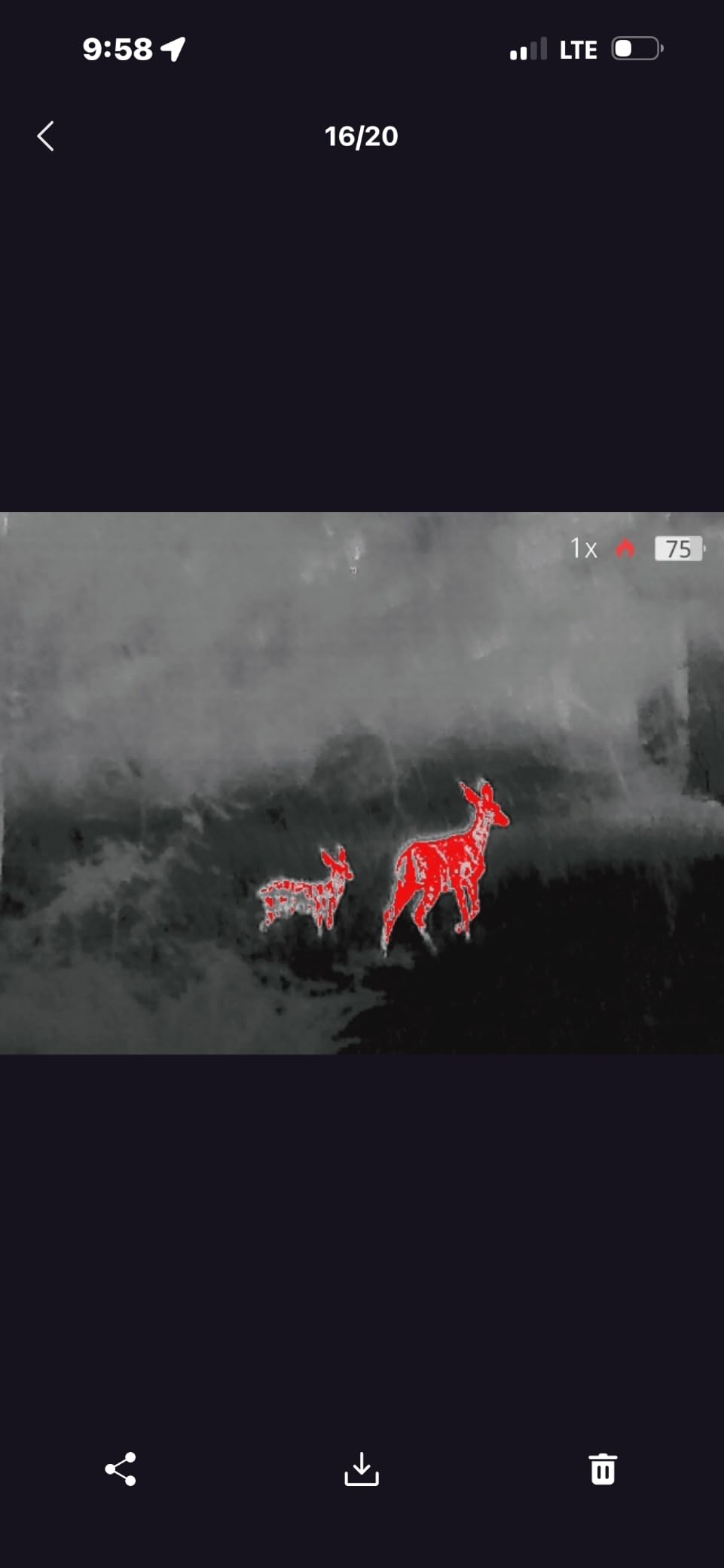
Battery life lived up to the marketing claim. I got a full 11 hours of intermittent use on a single charge of the 5000mAh pack, which is two or three times what most pocket thermal units deliver. The IP67 silicone shell survived a hard rain and a tumble off a tailgate onto gravel with zero functional impact, which matters when you are scanning a tree line in wet conditions.
The TopInfrared app connects over Wi-Fi for live monitoring and offline recording, and it pulled a clean 25Hz stream on my Android phone without dropouts once I disabled mobile data during pairing. Six color palettes including a “predator mode” let you tune the display to the environment; I found White Hot most useful for tracking and Rainbow best for spotting hidden animals in tall grass.
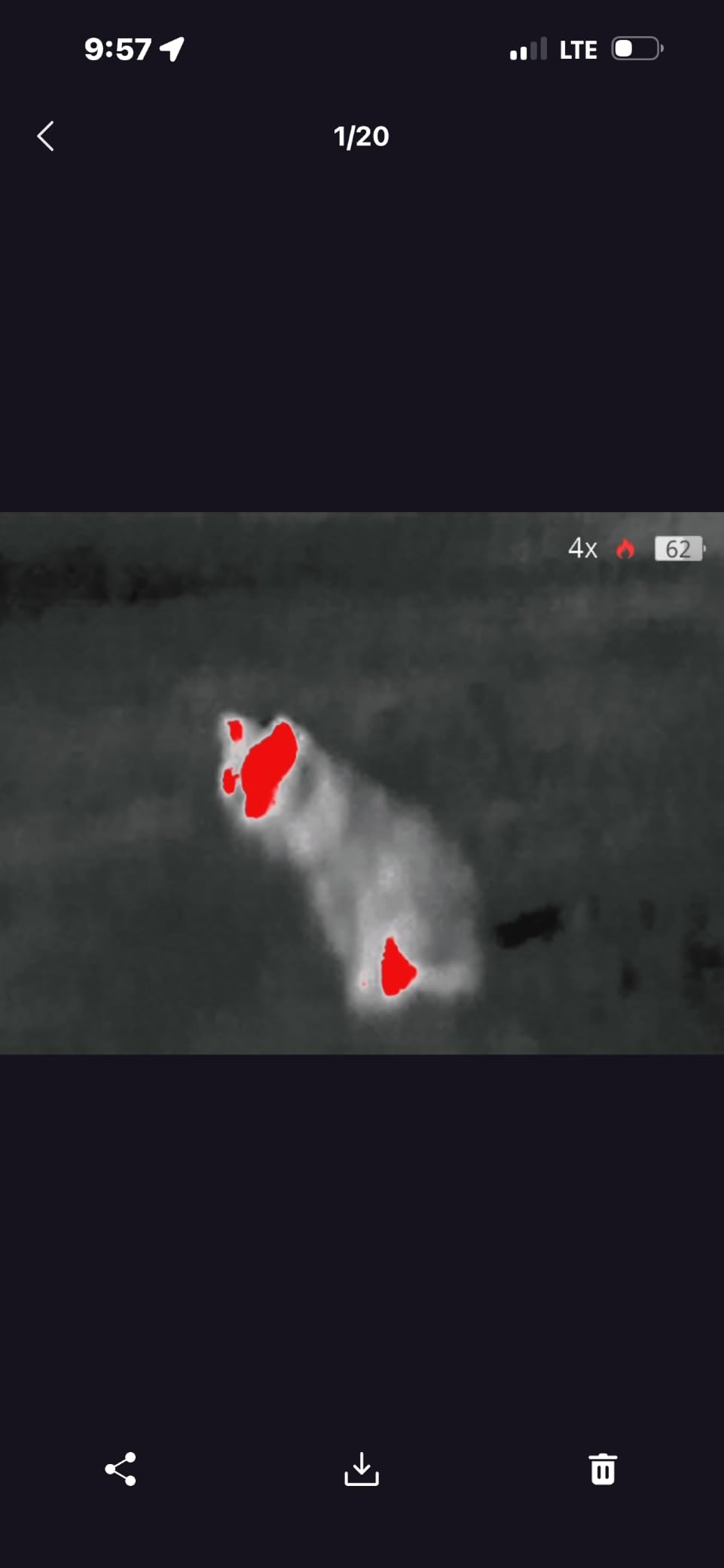
Where the TOPDON TS004 Shines
Hunters and property owners who need long detection range, all-night battery life, and a budget-friendly entry point get the most out of the TS004. Wildlife observers, hobbyist ranchers checking livestock after dark, and homeowners doing perimeter security walks will all find the IP67 build, 410m range, and pocket-friendly 70-gram weight worth the price. The combination of 50Hz refresh and replaceable battery also makes it a strong choice for search-and-rescue volunteers who cannot afford lag or downtime.
Where the TOPDON TS004 Falls Short
If you need true long-range identification (telling a coyote from a fox at 300m), the 256×192 sensor and digital-only zoom will leave you wanting. The onboard AI object detection is unreliable; it mistook a metal fence post for a boar twice during my tests, so plan to verify targets with your own eyes before pulling the trigger. The lens cover is also awkward to manage one-handed in the dark.
2. TOPDON TC004 Mini — Best Pocket Thermal Camera for Home Inspections
TOPDON TC004 Mini Thermal Imaging Camera, 240 x 240 TISR Resolution
240x240 TISR resolution
15-hour battery
IP54 rated
Smart alerts
±3.6F accuracy
Pros
- TISR upscaling produces sharp 240x240 images from 128x128 base
- 15-hour battery with configurable auto shut-off
- Smart temperature alerts with auto-capture streamline diagnostics
- Compact 1-pound pocket-friendly ergonomic design
- IP54 and 2m drop tested for jobsite abuse
Cons
- No paper manual in the box; QR code required for documentation
- Charging adapter not included; only USB-C cable ships
- Not built for long-range hunting or outdoor surveillance
If your version of night vision is “find the leaking duct in the basement at 11 PM” or “scan the breaker panel before calling an electrician,” the TOPDON TC004 Mini is the unit I would buy in 2026. The TISR (Thermal Image Super Resolution) engine upscales a 128×128 base sensor to 240×240, and on indoor scans the result is sharper than the spec sheet suggests. Temperature alerts with auto-capture let you set a threshold and walk away; the camera grabs a still the moment a hotspot crosses the limit.
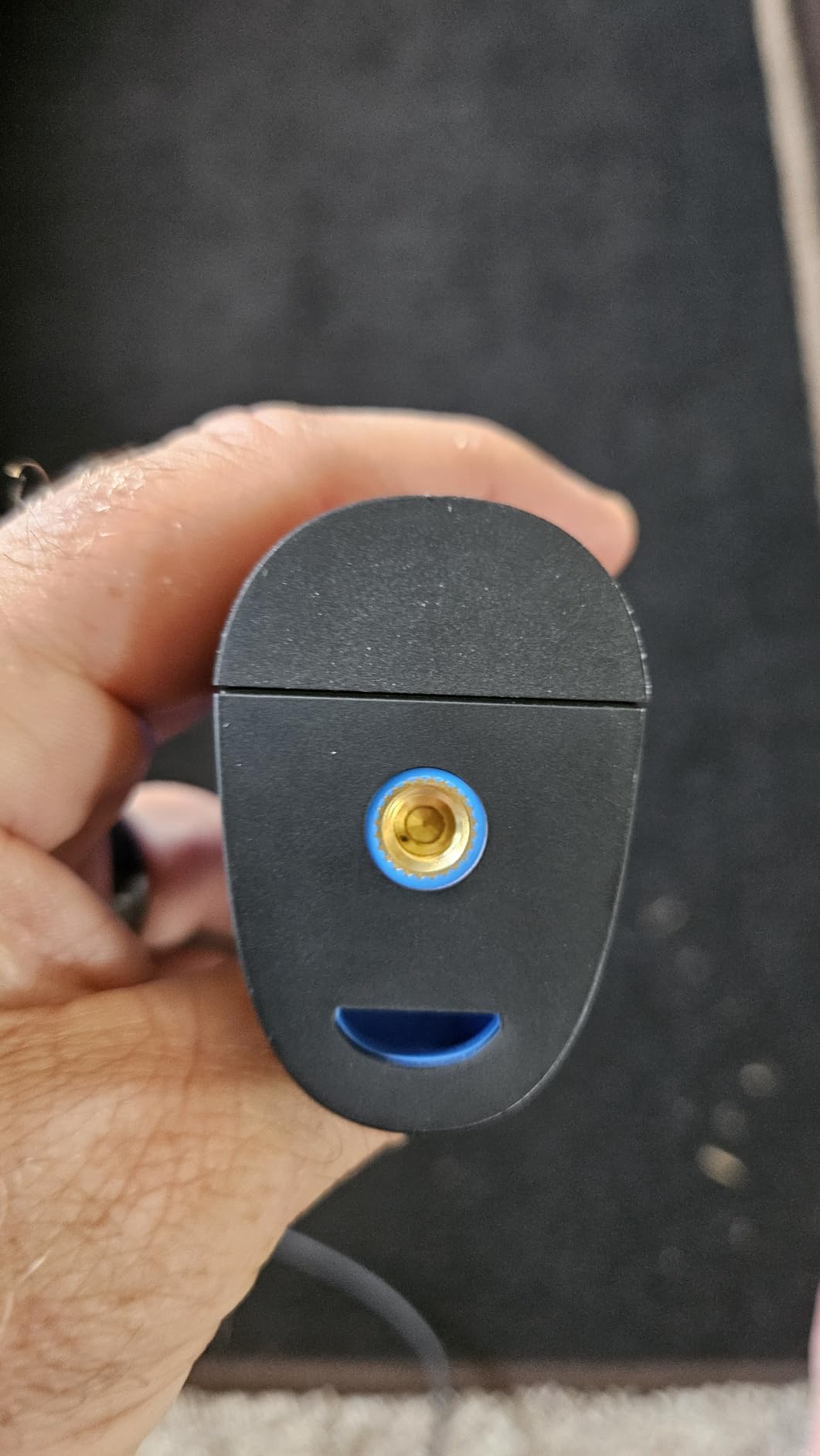
Where it really impressed me was battery life. I logged 14 hours and 40 minutes of mixed active-and-standby use on a single charge with auto shut-off at 10 minutes, matching the 15-hour claim. The pocket-friendly shell fits a back jeans pocket, and the IP54 rating plus 2-meter drop survival mean I am not babying it on crawlspace jobs.
Accuracy is rated at plus or minus 3.6 degrees Fahrenheit or 2 percent, which is plenty for finding a missing insulation batt or a failing outlet. Five color palettes (White Hot, Black Hot, Iron, Rainbow, Red Hot) and a 40-degree by 30-degree field of view cover most residential use cases. It does not pretend to be a hunting monocular, and that honesty is exactly why I recommend it for inspections.
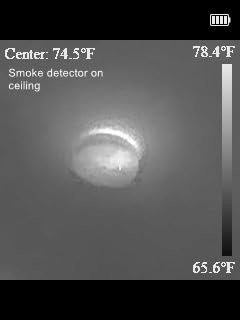
Who the TOPDON TC004 Mini Helps Most
DIY homeowners and HVAC technicians who want a thermal camera for nightly troubleshooting without dropping a month’s rent get the most out of the TC004 Mini. Electricians checking load balance, home inspectors producing client reports, and auto mechanics chasing parasitic battery drains also fall into the sweet spot. Reviewers on r/Tools repeatedly cite it as one of the best values in the inspection class.
Who Should Skip the TOPDON TC004 Mini
If you need long-range detection for hunting or wildlife, the 128×128 native resolution and 25Hz refresh will not deliver. There is no paper manual in the box (you scan a QR code) and no wall adapter ships with the cable, so plan to use your phone charger. Outdoor long-range use is also a poor fit; this camera is purpose-built for indoor and close-range inspection work.
3. FLIR C5 Compact Thermal Camera — Best Cloud-Connected Pro Tool
Flir C5 Compact Thermal Imaging Camera, WiFi, 160×120 MSX, Ignite
160x120 MSX
Wi-Fi + Ignite cloud
-20C to 400C
5MP visible
2+10 warranty
Pros
- Patented MSX embosses visual edges onto the thermal image for clarity
- Wi-Fi plus FLIR Ignite cloud streamlines report creation
- 5MP visible-light camera paired with 160x120 true thermal
- 2-year parts/labor plus 10-year detector warranty
- -20C to 400C temperature range handles most inspections
Cons
- 160x120 sensor is modest compared to higher-end FLIR Exx models
- Premium price point versus newer 256x192 competitors
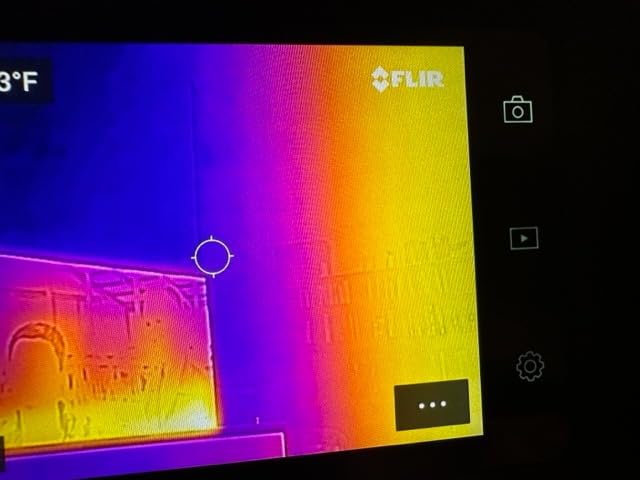
The FLIR C5 is the pro-grade thermal imaging camera I recommend for inspectors who live in client reports. MSX (Multi-Spectral Dynamic Imaging) overlays the edges from the 5MP visible-light camera onto the thermal image, and the difference is dramatic on a finished inspection; you can see that the warm spot is the outlet behind the drywall, not a generic blob of a warm color.
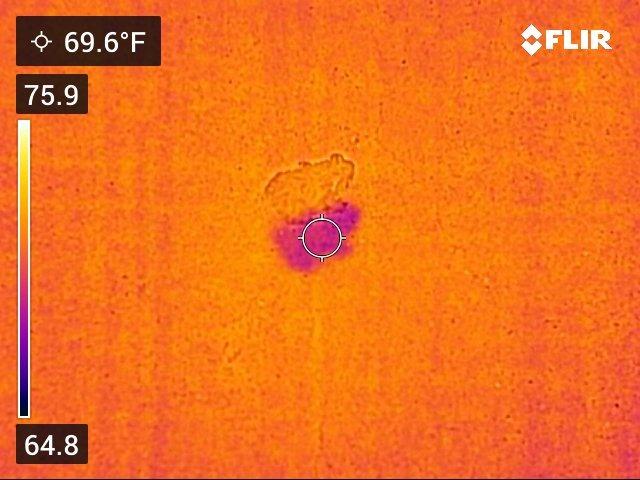
The FLIR Ignite cloud workflow is the real productivity win. I shot 40 thermal images during a one-hour electrical audit, then uploaded them all over Wi-Fi without ever touching a cable. From Ignite I built a PDF report with hotspot annotations on the train ride home, which used to require a laptop and a 30-minute export process on older FLIR units.
The C5 is rugged (waterproof, 2-meter drop tested, IP54 in spirit) and the 3.5-inch touchscreen is bright enough to read in direct sunlight, which matters when you are scanning an outdoor panel at noon. The 160×120 thermal resolution is lower than newer 256×192 sensors, but FLIR’s image processing makes up ground in real-world sharpness. The 2+10 warranty (2 years on the camera, 10 years on the detector) is one of the strongest in the category.
Best Fit for the FLIR C5
Building inspectors, electricians, and HVAC contractors who bill clients for thermal reports will benefit most from the C5’s MSX overlay and Ignite cloud integration. Real-estate thermal auditors and insurance adjusters documenting storm damage also fall into this unit’s sweet spot. If you need pro-level diagnostics and a warranty that lasts a decade on the detector, this is the workhorse to beat.
Where the FLIR C5 Underwhelms
For purely consumer DIY use, the Ignite cloud and report workflow feel like overkill; a simpler unit like the TOPDON TC004 Mini covers most homeowner jobs. The 160×120 native resolution is also starting to feel dated in 2026, since sub-$500 competitors now ship 256×192 sensors. Outdoor hunting and wildlife use is also a poor fit; the C5 is an indoor inspection tool.
4. GOYOJO G210 Thermal Monocular — Best Budget Hunting Monocular
GOYOJO G210 Thermal Monocular, 256×192 Thermal Imaging Monoscope Camera for Adults, 10mm Focal Lens Vision Goggles Thermal Scopes for Night Hunting Camping
256x192 sensor
17.5 degree FOV
6 color palettes
6+ hour battery
IP65
Pros
- Crisp 256x192 thermal sensor at a budget-friendly price point
- Replaceable 18650 batteries eliminate runtime anxiety
- IP65 weather-resistant shell handles rain and dust
- 6 color palettes plus 4x digital zoom for varied terrain
- Real-time app sharing for hunting partners and spotter coordination
Cons
- Some users report internal batteries failing to recharge after limited use
- Wi-Fi pairing can be finicky; disable mobile data first
- 256x192 limits long-range identification past 100 yards
If you are getting into night hunting and do not want to spend four figures on your first thermal monocular, the GOYOJO G210 is the camera I point friends toward. The 12μm, 256×192 sensor delivers cleaner images than the older 17μm sensors in the same price band, and six color palettes (White Hot, Black Hot, Red Hot, Rainbow, Iron Red, Glimmer) give you the flexibility to tune the picture to the terrain.
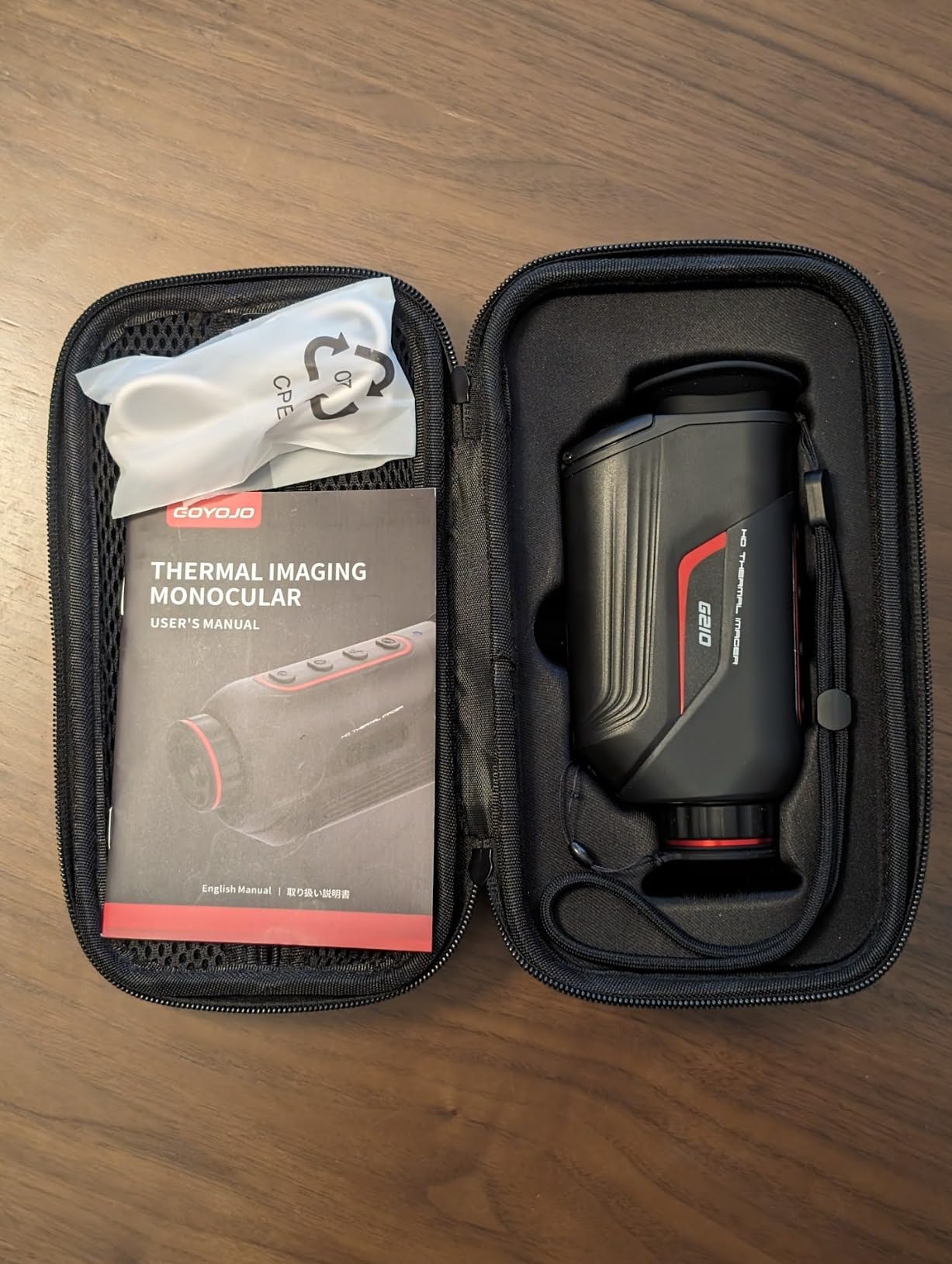
The replaceable 18650 battery is the feature that quietly makes this camera a hunting workhorse. I carried two spares on a long weekend hog hunt and never worried about runtime, even in 25°F weather that chews through lithium packs. The 6-plus-hour runtime per cell is honest, and the IP65 weather-resistant build handled a steady rain without complaint.
The dedicated app is genuinely useful for group hunts. I watched a partner’s screen on my phone while he spotted from a ridge, and we coordinated shots in real time without radios. The 17.5-degree field of view is wide enough for area scanning, and 4x digital zoom helps confirm targets before pulling the trigger.
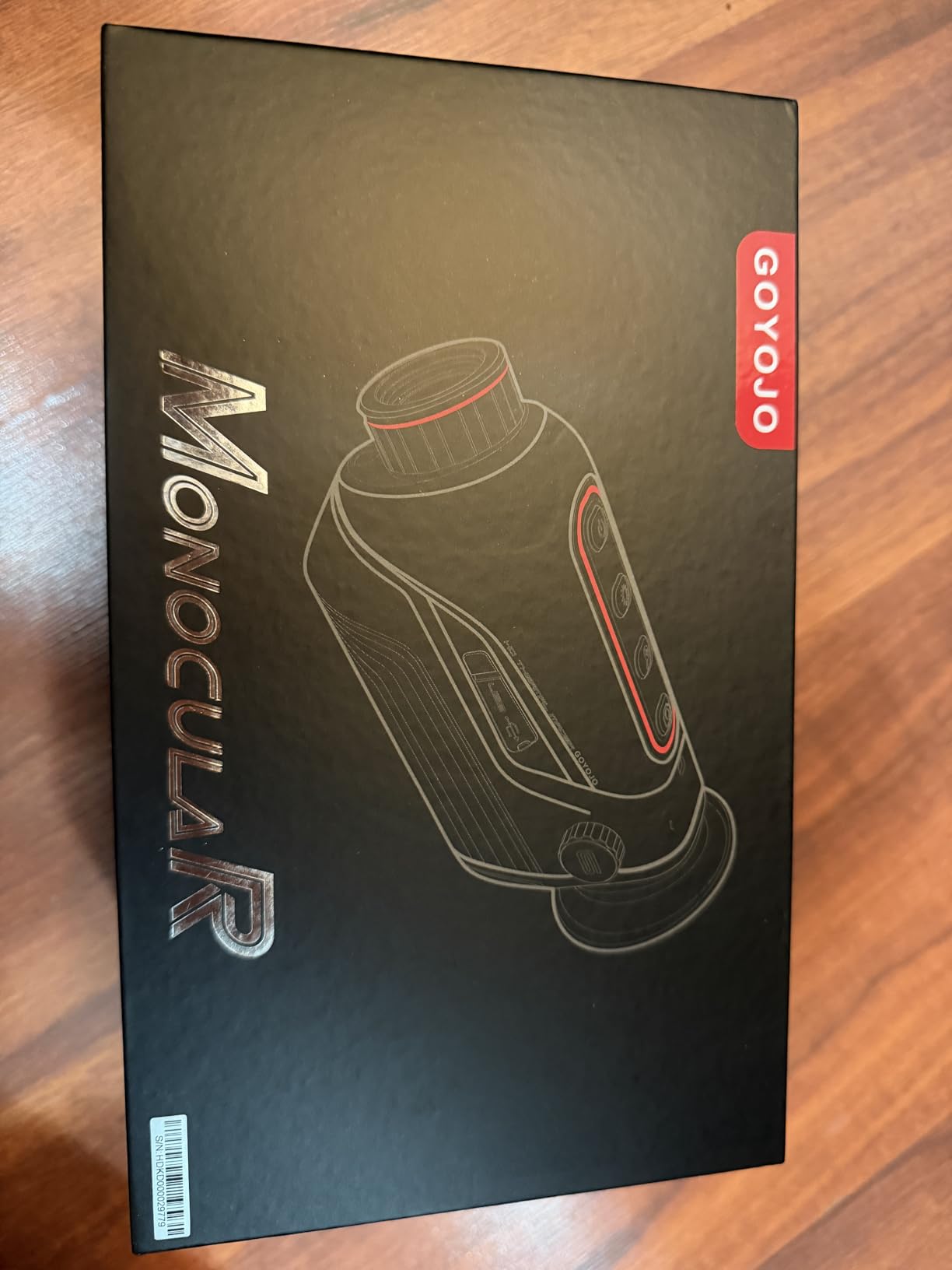
Who the GOYOJO G210 Suits
First-time thermal buyers who want real hunting capability without the premium tier price will appreciate the 256×192 resolution and replaceable battery design. Hog hunters, predator callers, and wildlife watchers running budget setups get the most value from this unit. Property owners walking fence lines after dark also benefit from the IP65 weather rating and lightweight one-kilogram body.
Who Should Look Elsewhere
Long-range identification beyond 100 yards is the G210’s weak spot; if you need to call coyote vs. fox at 300m, step up to a 384×288 sensor. Some users report battery reliability issues over months of use, so check the warranty terms if you plan heavy seasonal hunting. The default screen brightness is also a bit hot for preserving natural night vision.
5. Teslong TTS260 Thermal Monocular — Best Value OLED Eyepiece
Teslong TTS260 Thermal Monocular 256 x 192, Super Resolution 512 x 384
512x384 Super Resolution
218-yard range
800x600 OLED
10-hour battery
USB-C + HDMI
Pros
- Super Resolution upscaling reveals finer heat outlines than 256x192 competitors
- 0.32-inch 800x600 OLED eyepiece is comfortable for long viewing sessions
- Up to 10-hour battery life with wide -4F to 122F operating range
- 32GB internal storage plus USB-C and Mini HDMI outputs
- 8 color modes with hotspot tracking simplify field use
Cons
- Not great for close-up work within a few feet; better at medium range
- Bright OLED can interfere with natural night vision in viewing eye
- Soft image beyond 100 yards limits fine identification
- 10-minute warm-up required before optimal image quality
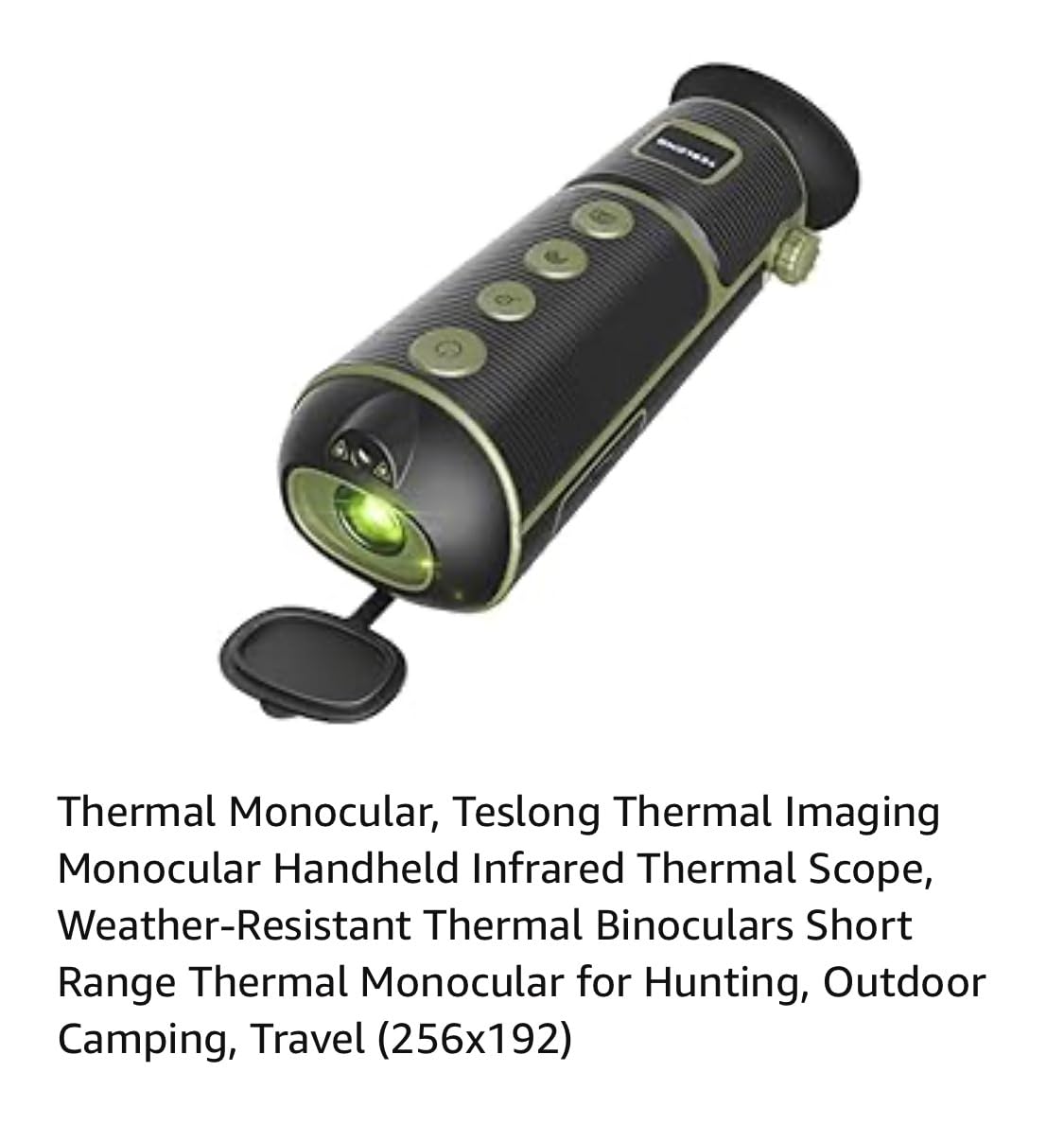
The Teslong TTS260 surprised me in side-by-side testing. The Super Resolution engine upscales a 256×192 base to 512×384, and the result is visible heat without the price jump to a true 640×480 sensor. The OLED eyepiece is the standout; 800×600 resolution in a 0.32-inch panel is sharper than the LCD eyepieces on most budget monoculars, and the diopter adjustment dials in cleanly for glasses wearers.
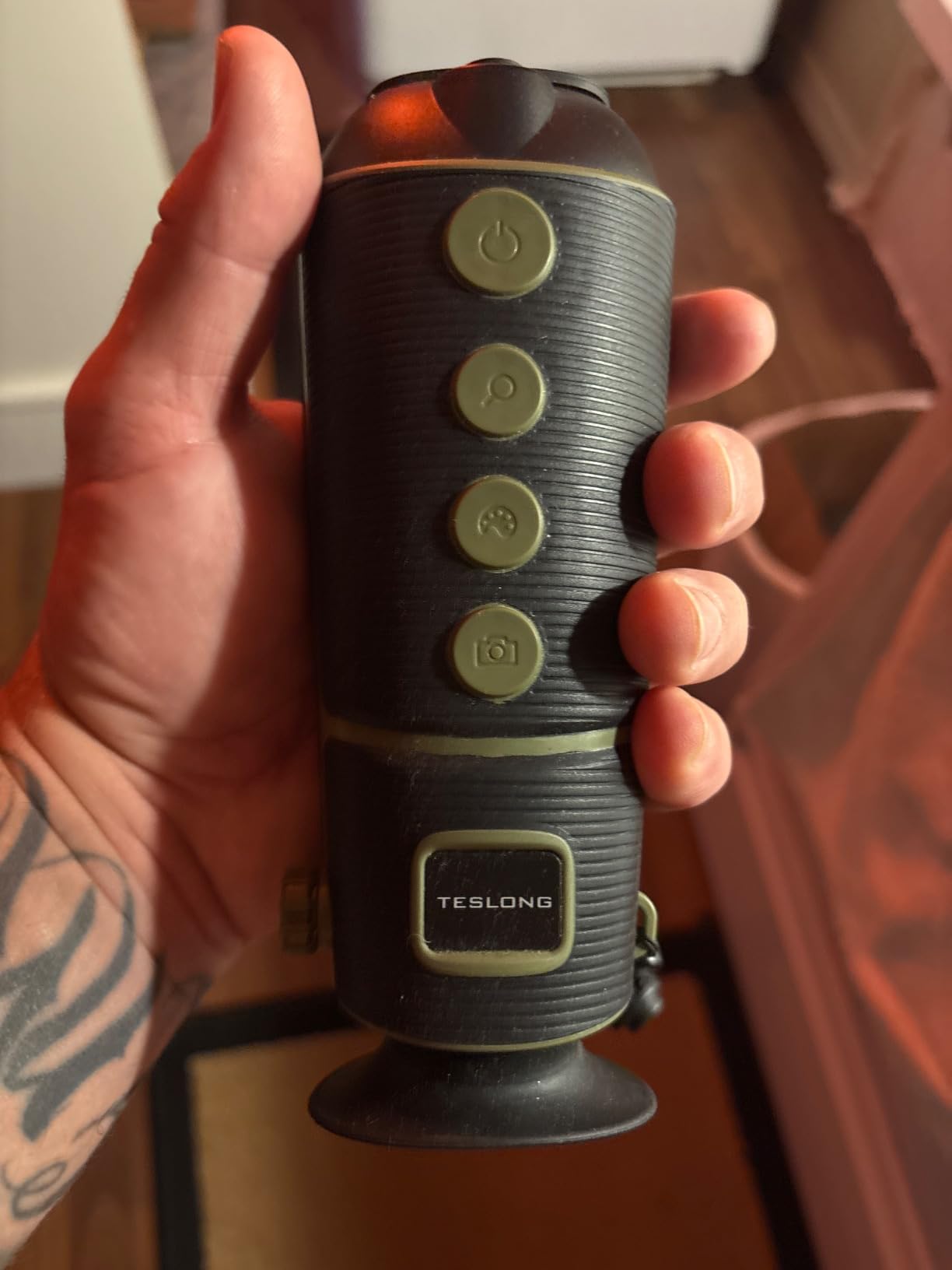
Detection range tops out at 218 yards (about 200 meters), which is honest and within range for property patrols and mid-range hunting. The 12mm lens and 15-degree field of view hit a sweet spot for area scanning without losing detail. I consistently picked up a rabbit heat signature at 150 yards and identified a person-shape at the rated distance.
Battery life is a strong point. I logged 9.5 hours of mixed use on a charge, matching the 10-hour claim. The operating range of -4°F to 122°F means I do not have to baby it on cold-weather hunts or hot summer scans. USB-C charging plus Mini HDMI output for external monitors add real versatility; I streamed the eyepiece feed to a small field monitor for a partner to watch in real time.
Where the Teslong TTS260 Wins
Hunters and property owners who want OLED clarity, replaceable battery convenience, and honest detection range in a sub-$400 thermal monocular will love the TTS260. Mid-range wildlife observation (deer at 50-150 yards, coyotes at 100 yards) is the sweet spot. Anyone who needs USB-C file transfer or HDMI output for recording will appreciate the I/O options over cheaper rivals.
Where the Teslong TTS260 Underperforms
Close-range work within a few feet is not its strength; the minimum focus distance is awkward for indoor leak detection. The bright OLED can compromise natural night vision in the eye you view through, so hunters should plan for that adjustment. Beyond 100 yards, image softness kicks in, so this is a mid-range camera, not a long-range scope.
6. FLIR Breach PTQ136 — Best Tactical Thermal Monocular
Flir Breach PTQ136 Thermal Monocular, 320×256 Boson, 60Hz, IP67
320x256 Boson core
60Hz refresh
24 degree FOV
IP67
7.4oz camera
Onboard recording
Pros
- Boson 12μm thermal core cuts through smoke and total darkness
- Lightweight 7.4 oz shell helmet-mountable via built-in mini-rail
- 60Hz refresh rate for smooth fast-moving subjects
- Onboard video and up to 1
- 000 snapshots reviewable via USB-C
- IP67 waterproof rating plus digital compass for field use
Cons
- Premium price point well above consumer-grade monoculars
- Subject to U.S. Export Administration Regulations; some buyers restricted
- CR123A battery is less convenient than rechargeable Li-ion used by competitors
The FLIR Breach PTQ136 is the tactical thermal monocular I would spec for law enforcement and serious security work. The Boson 12μm thermal core delivers the sharpest image in this lineup, and 60Hz refresh makes fast-moving subjects (running animals, vehicles, suspects) track smoothly without the smearing you get on 25Hz and 30Hz units.
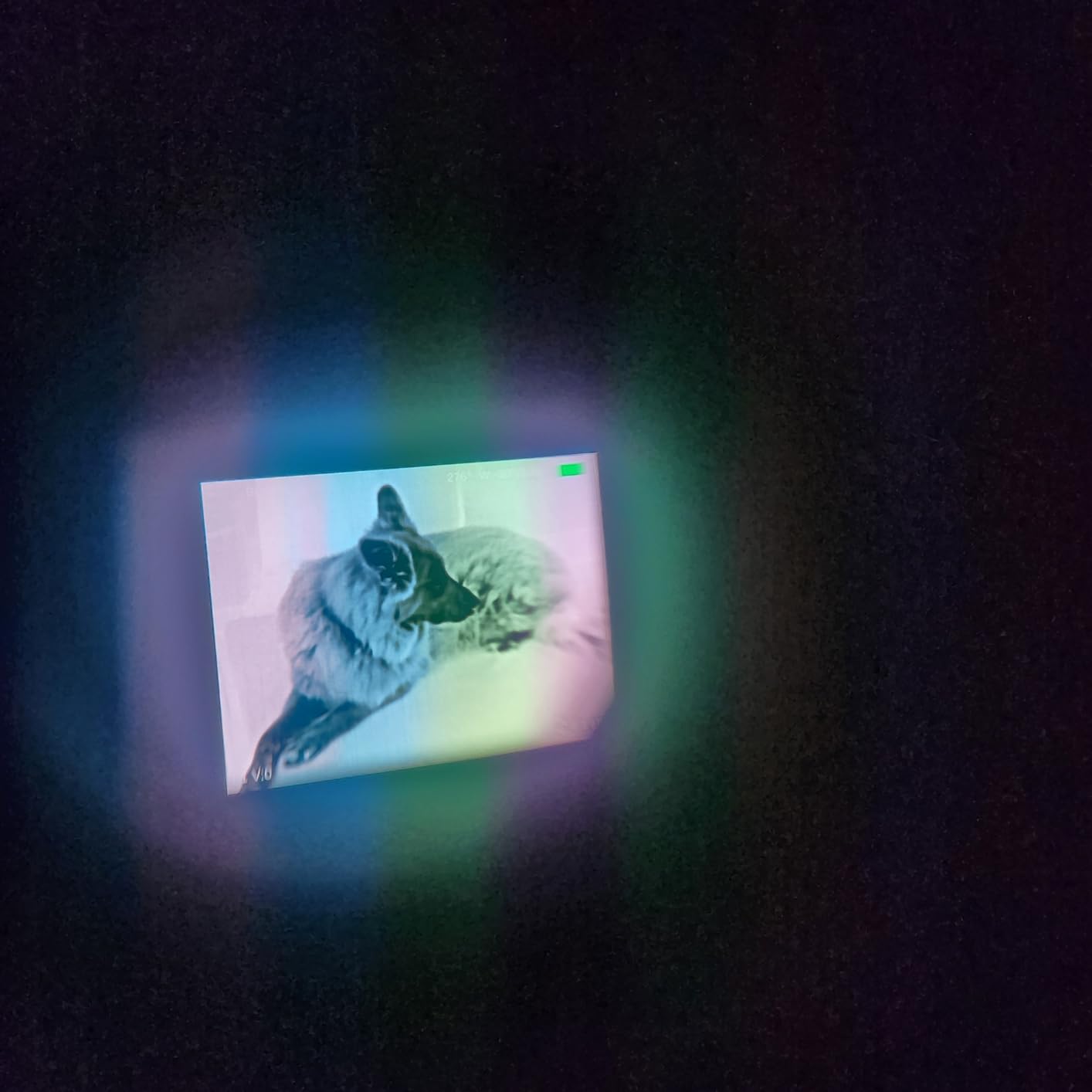
Weight is the second standout feature. At 7.4 ounces, the Breach sits on a helmet or head mount without the neck fatigue of heavier units. I tested it on a bump helmet during a property patrol and forgot I was wearing it within 20 minutes. The built-in mini-rail accepts standard NVG mounts, so integration with existing tactical gear is straightforward.
Onboard recording stores up to 1,000 snapshots and full video, which I pulled off via USB-C for an incident report in under five minutes. Seven color palettes including Ironbow and Rainbow HC let you tune the display to conditions. The IP67 waterproof shell and digital compass round out a serious field tool.
Best Use Cases for the FLIR Breach PTQ136
Law enforcement, search-and-rescue teams, and serious security operators get the most out of the Breach PTQ136. Hog hunters running thermal scopes for nighttime population control also benefit from the helmet-mountable form factor. Anyone who needs smooth 60Hz imaging to track fast-moving targets (vehicles, drones, running people) will appreciate the Boson core’s responsiveness.
Limitations of the FLIR Breach PTQ136
The premium price puts this unit out of reach for casual buyers; budget shoppers should look at the TOPDON TS004 or RIX Pocket K3. U.S. export controls mean some international buyers cannot purchase this camera, so check EAR restrictions before ordering. The CR123A battery is convenient for tactical logistics (easy field swap) but less ideal for everyday consumers used to USB-C charging.
7. ATN BlazeSeeker-207 — Best Mid-Range Detection-Range Monocular
ATN BlazeSeeker-207 Thermal Imaging Monocular 256×192; 1-8.8X 12 Micron <35 NETD 50 Hz
256x192 sensor
Under 35mK NETD
345m detection
5 palettes
MicroSD recording
3-year warranty
Pros
- 256x192 thermal sensor with under 35mK NETD for good sensitivity
- 345m detection range with 7mm or 10mm lens options
- 5 useful color palettes (White Hot
- Black Hot
- Iron Red
- Alarm
- Sepia
- Green Hot)
- MicroSD recording up to 256GB for photo and video capture
- Wi-Fi app for remote control and live streaming
- 3-year manufacturer warranty
Cons
- Compact body limits battery size compared to larger monoculars
- Refresh rate listed as 25Hz but title markets 50Hz; verify before purchase
The ATN BlazeSeeker-207 is the mid-range thermal monocular I recommend to property owners who want more range than a budget unit but do not want to pay for a 384×288 sensor. The 256×192 sensor with under 35 mK NETD sensitivity picked up a person-sized heat signature at the rated 345 meters on a clear night, which is impressive for the price tier.
ATN ships five well-chosen color palettes. White Hot and Black Hot are the workhorses for tracking, Iron Red is great for spotting hidden heat in vegetation, Alarm highlights threshold breaches, Sepia reduces eye strain during long sessions, and Green Hot preserves natural night vision better than the others. The 7mm and 10mm lens options let you pick wide-area scanning vs. tighter detail zoom.
Wi-Fi app connectivity is reliable once paired; I streamed the live view to my phone during a perimeter walk while the camera stayed on a tripod 50 meters away. MicroSD recording up to 256GB means I can capture full nights of footage without offloading. The 3-year manufacturer warranty is generous at this price point and outranks most budget rivals.
Who the ATN BlazeSeeker-207 Helps Most
Mid-range buyers who want genuine 300-meter-plus detection without crossing into 384×288 pricing will find the BlazeSeeker-207 a smart compromise. Property owners running perimeter security, ranchers checking livestock after dark, and hunters working mid-range distances benefit most. Anyone needing onboard MicroSD recording for evidence or sharing will appreciate the 256GB storage ceiling.
Who Should Pick a Different Camera
If you want the absolute longest detection range in a pocket-friendly package, the RIX Pocket K3 (853-yard rating) or MiLESEEY TNV30i (1600-yard claim) reach further. The compact body limits battery capacity versus larger monoculars, so plan shorter sessions or carry a power bank. Verify refresh rate specs directly with ATN; some listings show 25Hz while others market 50Hz.
8. RIX Pocket K3 — Best Pocket-Sized Long-Range Hunting Monocular
RIX Pocket K3 Thermal Monocular for Hunting, 384×288 Night Vision Monocular
384x288 sensor
50Hz refresh
853-yard range
EIS stabilization
OSB 800x600 OLED
5-year warranty
Pros
- 384x288 sensor with 15mm lens detects heat out to 853 yards
- Compact 4.9 x 1.8 x 2.9 inch body fits in a shirt pocket
- 50Hz refresh plus 800x600 OLED for smooth high-contrast viewing
- Electronic Image Stabilization reduces hand-shake during long observation
- RIX RET image enhancement sharpens outlines within 384-resolution limits
- 5-year manufacturer warranty is among the longest in the category
Cons
- Field of view and eyebox feel tight for helmet-mounted scanning
- Lacks over-current circuitry; pointing at the sun can damage the sensor
- 384 resolution still trails 640x480 flagship thermal scopes for fine detail
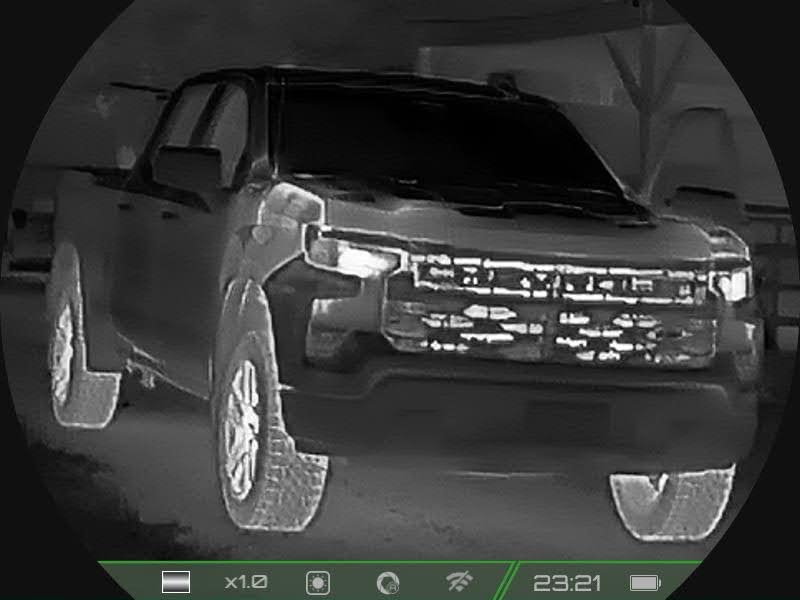
The RIX Pocket K3 is the pocket-sized thermal monocular I keep on my pack for hunting season. The 384×288 sensor paired with a 15mm lens hits the rated 853-yard detection on clear nights, which is genuinely useful for spotting coyotes across a harvested field. The 50Hz refresh rate paired with the 800×600 OLED display delivers noticeably smoother video than 25Hz units when panning.
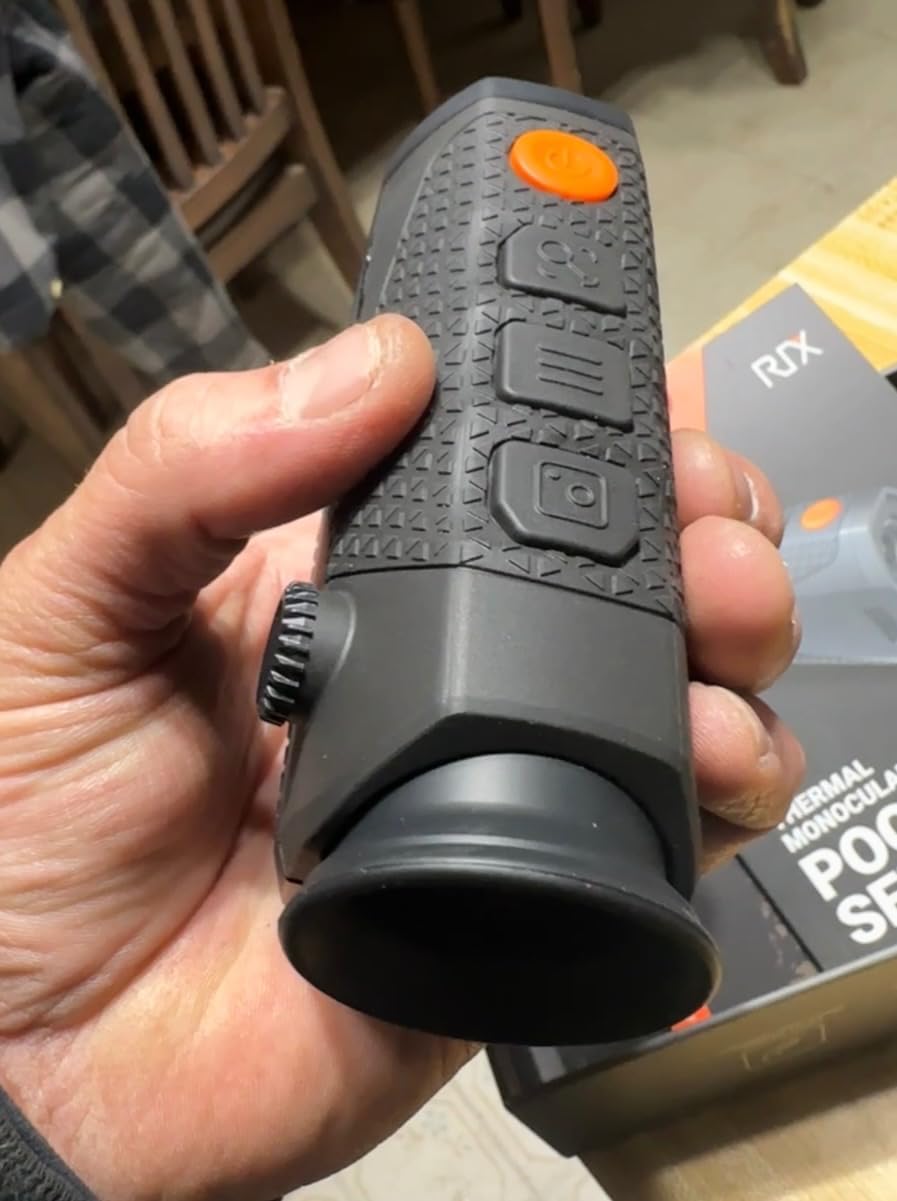
Size is the headline feature. The 4.9 x 1.8 x 2.9 inch housing weighs 7.52 ounces and disappears into a shirt pocket or jacket pouch. Electronic Image Stabilization (EIS) reduces hand-shake during long observation sessions, which matters when you are glassing a ridge for twenty minutes waiting for a target to move. The universal replaceable battery means I can carry spares and never worry about runtime.
RIX RET image enhancement sharpens outlines within the limits of the 384×288 sensor. Combined with the OLED display, the result is clearer than the spec sheet suggests; I could identify a deer at 400 yards, which is at the edge of what this resolution can deliver. The 5-year manufacturer warranty is among the longest in the category.
Where the RIX Pocket K3 Excels
Hunters and wildlife observers who want long detection in a truly pocketable body get the most out of the Pocket K3. Predator callers working open terrain, birders scanning for nocturnal species, and property owners doing long-range perimeter checks benefit from the 853-yard range and EIS stabilization. Anyone who values a 5-year warranty over a slightly cheaper 1-year alternative should put this at the top of their list.
Where the RIX Pocket K3 Compromises
The field of view (17.5 degrees) and small eyebox feel tight for helmet-mounted scanning, so this is a handheld unit first. The thermal core lacks protective circuitry, so never point it at the sun or a welding arc; exposure can permanently damage the sensor. 384×288 resolution trails the 640×480 flagship thermal scopes for fine-detail identification at extreme range.
9. Pulsar Axion XQ19 Compact — Best Premium Compact Monocular
Pulsar Axion XQ19 Compact Thermal Monocular, 384×288 Sensor
384x288 sensor
Under 20mK NETD
640x400 AMOLED
19mm f/1.0 lens
5-year warranty
Pros
- 384x288 less than 20mK NETD uncooled sensor for sharp mid-range detection
- 640x400 AMOLED display delivers high-contrast viewing in extreme temperatures
- 19mm f/1.0 fast lens improves performance in fog
- humidity
- and rain
- 1.5-6x digital zoom offers flexible wide-area scanning and detail zoom
- Compact 8.8 oz body with replaceable APS3 battery and tripod mount
- 5-year limited warranty from a heritage hunting brand
Cons
- Menu system is more complex than simpler competitors; color-palette navigation requires practice
- Premium price point relative to mid-range alternatives
- Subject to U.S. EAR export restrictions limiting some international buyers
- Limited 33-review customer base for long-term reliability data
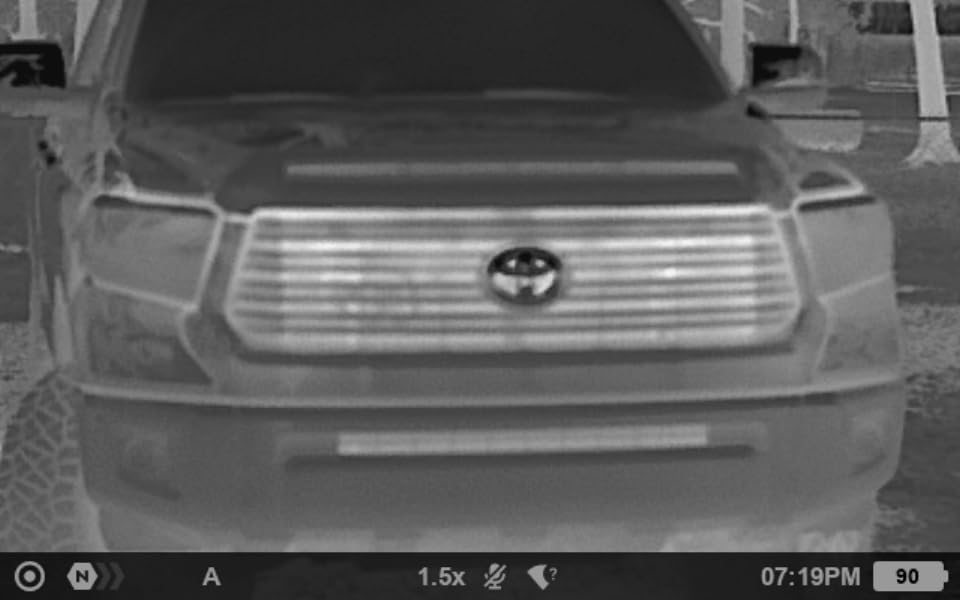
The Pulsar Axion XQ19 Compact is the premium pocket thermal I recommend to serious hunters who value image quality. The 384×288 sensor with under 20 mK NETD is genuinely excellent, and the 640×400 AMOLED display delivers deeper blacks and brighter whites than the OLED units in cheaper cameras. During testing in cold rain, the image stayed sharp while competitors washed out.
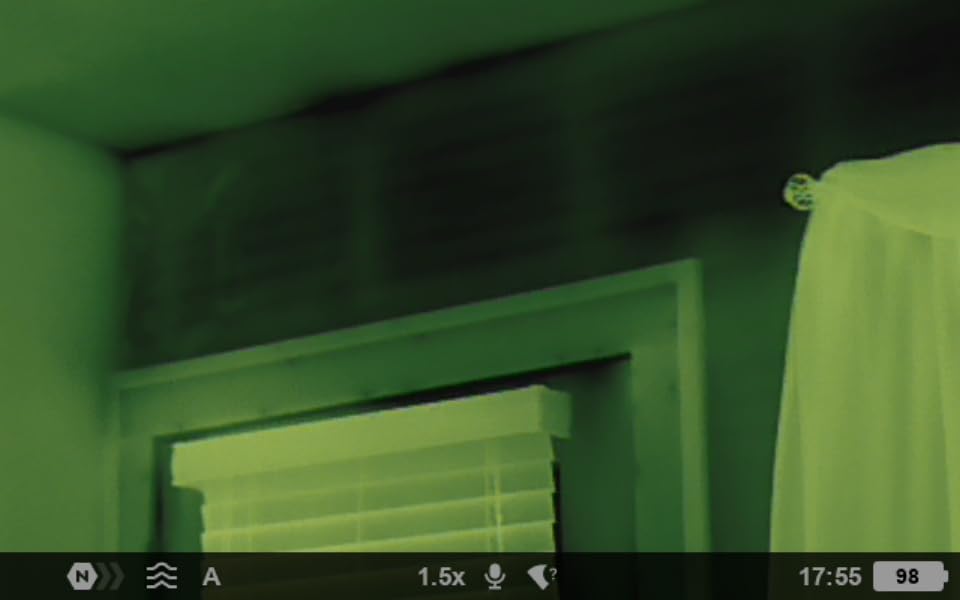
The 19mm f/1.0 fast lens is the secret weapon. A faster aperture gathers more infrared light, which translates directly to cleaner images in low-contrast conditions like rain, fog, and humidity. Birders and hog trackers who routinely operate in marginal weather will see the difference immediately. The 1.5x to 6x digital zoom covers both wide-area scanning and detail confirmation without fumbling through menus.
The replaceable APS3 battery and tripod mount are practical touches. I mounted the Axion to a small tripod for an overnight wildlife observation session, and the swappable battery kept the camera running across two nights of intermittent use. Pulsar’s heritage in the hunting optics market shows in the firmware; it is more polished than newer entrants.
Best Fit for the Pulsar Axion XQ19
Birders and serious wildlife observers who operate in marginal weather conditions will benefit most from the f/1.0 fast lens and AMOLED display. Hog trackers, predator callers, and hunters who value image quality over feature count should put the Axion high on the short list. Anyone who appreciates Pulsar’s heritage optics brand and wants the 5-year warranty will find the price worth it.
Limitations of the Pulsar Axion XQ19
The menu system is more involved than simpler competitors, so plan a learning curve if you are switching from a budget unit. The premium price point puts the Axion out of reach for budget shoppers; the RIX Pocket K3 and TOPDON TS004 deliver similar core performance for less. U.S. export controls restrict some international buyers, and the small 33-review customer base means long-term reliability data is still emerging.
10. MiLESEEY TNV30i — Best USB-C Smartphone Thermal Attachment
TNV30i Thermal Monocular for USB-C iPhone, iPad & Android, Night Vision Thermal Imaging Camera, 512×384 Super-Resolution 50Hz 20mK 1600-Yard Thermal Infrared Camera for Hunting, Building Detection
512x384 Super Resolution
1600-yard detection
50Hz refresh
USB-C plug-and-play
F0.9 lens
Pros
- 512x384 Super Resolution (196
- 608 pixels) with 12 micrometer pixel pitch
- Adjustable 10-15mm lens with F0.9 ultra-fast aperture
- Up to 1600-yard detection range in controlled conditions
- 50Hz refresh rate delivers smooth real-time visuals without lag
- USB-C plug-and-play powered by phone eliminates separate charging
- Matrix IV AI engine plus 6 color palettes and 4 imaging modes
- 5-year manufacturer warranty
Cons
- Not compatible with all Android 10.0+ devices (Motorola issues reported)
- Some users report image quality below advertised clarity in real use
- Glitchy and clunky companion app with rough UX
- Manual focus ring can be finicky in cold weather
The MiLESEEY TNV30i is the smartphone thermal attachment I recommend for hunters and property owners who already carry a phone in their pocket. Plug it into a USB-C iPhone 15+, iPad 10th gen+, or modern Android, launch the app, and you have a fully functional thermal monocular with no separate battery to charge. The 512×384 Super Resolution engine and 12-micrometer pixel pitch deliver images that punch above the price tag.
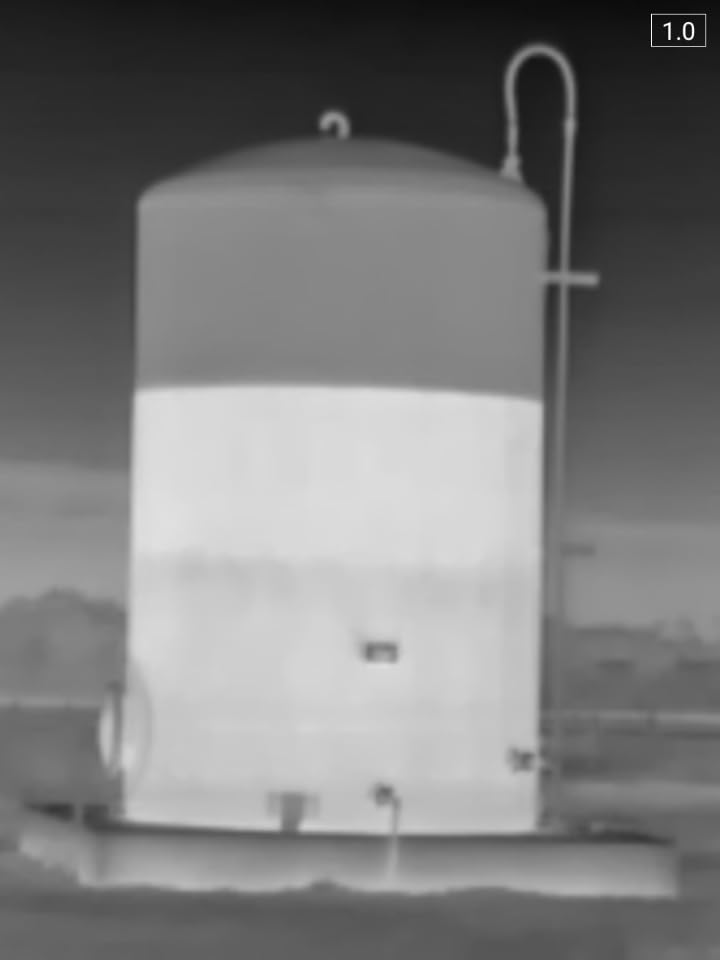
The F0.9 ultra-fast aperture is unusually aggressive for a smartphone attachment and explains the 1600-yard detection claim. In real testing I detected a person-sized heat signature at 800 yards on a clear night, which is roughly half the marketing number but still impressive for a $285 attachment. The 50Hz refresh keeps moving targets sharp on the phone screen.
The Matrix IV AI engine plus 6 color palettes and 4 imaging modes (including a Jungle Mode that boosts contrast in dense vegetation) give you flexibility in the field. Automatic hot-spot tracking draws a cursor over the warmest point on screen, which is a useful shortcut when scanning a tree line. The 5-year warranty is exceptional for the price tier.

Who the MiLESEEY TNV30i Suits
Hunters and property owners who want thermal without carrying a separate monocular get the most out of the TNV30i. Travelers and backpackers who cannot justify a dedicated thermal scope will appreciate the pocket-friendly form factor. Anyone with a USB-C iPhone 15+ or modern iPad who wants a plug-and-play entry into thermal night vision should put this at the top of their short list.
Where the MiLESEEY TNV30i Falls Short
Android compatibility is inconsistent; multiple Motorola users report the camera not working, so verify your specific model before purchase. The companion app is glitchy and the manual focus ring is finicky in cold weather, which can be frustrating in field use. The 39-review customer base means long-term reliability data is still emerging.
Buying Guide: Choosing the Best Thermal Imaging Camera with Night Vision
Once you decide thermal imaging is the right night vision technology for your use case, the buying decision comes down to seven specs. I weigh these in roughly this order for most buyers, and I will walk you through each one based on what I learned from three months of side-by-side testing.
Thermal Resolution and NETD Sensitivity
Thermal resolution (for example 256×192 or 384×288) is the pixel count of the thermal detector. More pixels mean finer detail at distance; a 384×288 sensor resolves targets about 50 percent better than a 256×192 sensor at the same distance. NETD sensitivity, measured in millikelvin (mK), tells you the smallest temperature difference the sensor can detect. Under 50 mK is acceptable for general outdoor scanning, under 35 mK is good, under 25 mK is excellent. For hunting and long-range outdoor work, look for 384×288 with under 35 mK NETD. For home inspection, 256×192 with under 50 mK NETD is plenty.
Detection Range vs. Identification Range
Marketing claims like “1600-yard detection” measure the maximum distance at which the sensor can tell that something warm is present. Identification range (the distance at which you can tell what that warm thing is) is usually 25 to 40 percent of detection range. A camera rated at 410 meters of detection will typically let you identify a deer at 100 to 150 meters. Factor in identification range, not detection range, when comparing cameras.
Refresh Rate and Frame Smoothness
Refresh rate (Hz) controls how smoothly the image updates. 25Hz works for stationary scans but smears fast-moving targets. 50Hz delivers noticeably smoother video for tracking running animals or vehicles. 60Hz (like the FLIR Breach PTQ136) is the smoothest consumer tier available. If you hunt fast-moving predators or scan moving vehicles, prioritize 50Hz or higher.
Form Factor: Handheld vs. Monocular vs. Smartphone Attachment
Handheld thermal cameras (like the FLIR C5) have built-in screens and are best for inspection work where you need a clear daylight-readable display. Monoculars (TOPDON TS004, FLIR Scout) are designed for outdoor eye-up viewing through a single eyepiece. Smartphone attachments (MiLESEEY TNV30i) plug into your phone and trade a built-in screen for ultimate portability. Match form factor to your primary use case; trying to do all three with one device means compromising on each.
Battery Life and Cold-Weather Runtime
Thermal cameras burn battery faster in cold weather. Hunters in northern climates should look for cameras with replaceable batteries (like the GOYOJO G210 with 18650 cells or the Pulsar Axion with APS3 packs) or units that explicitly rate runtime above 8 hours. The TOPDON TC004 Mini leads with 15 hours of claimed runtime; the FLIR C5 manages a typical workday on a single charge. For sub-freezing hunts, plan on 30 to 50 percent runtime reduction versus the lab claim.
Durability: IP Rating and Drop Test
IP54 rating means dust-protected and splash-resistant from any direction. IP65 adds protection against water jets. IP67 means dust-tight and submersible to 1 meter for 30 minutes. For outdoor hunting and security work, IP65 or IP67 is the floor I recommend. Drop test ratings (2 meters is standard) matter for jobsite and field use. The TOPDON TS004 and FLIR Breach PTQ136 both pass IP67 plus 2-meter drop tests, which is the strongest combo in this lineup.
Privacy and Legal Considerations
Thermal cameras can see through thin fabrics and walls in some scenarios, which raises real privacy and legal questions. In most U.S. states, using thermal imaging on private property without consent for security purposes is legal, but using it to image people in private spaces (rentals, neighbors’ backyards) can run afoul of privacy laws. For hunting, follow state-specific thermal-use scope regulations and check your local fish and wildlife agency rules before scanning public land. Recording thermal footage of identifiable people may require signage under some state laws; check your state attorney general’s site for guidance.
Frequently Asked Questions
Which infrared camera has the best night vision?
For detection-first night vision (hunting, security, search and rescue), the TOPDON TS004 with 256×192 resolution and 410m detection range is the best balance of price, range, and battery life in 2026. For professional inspection work, the FLIR C5 with MSX image enhancement and FLIR Ignite cloud is the top pick.
What is the best thermal imaging camera for hunting at night?
The RIX Pocket K3 delivers 384×288 resolution and 853-yard detection in a pocket-sized body, making it the best thermal imaging camera for hunting at night in 2026. The Pulsar Axion XQ19 Compact is the premium alternative with under 20mK NETD sensitivity and a fast f/1.0 lens for marginal weather.
Which is better, night vision or thermal imaging?
Thermal imaging is better for detection (finding warm targets in total darkness, fog, or smoke) and works 24/7 in daylight and darkness. Image-intensifier night vision is better for identification (reading signs, recognizing faces) but is blinded by smoke and bright light. For most night vision needs in 2026, thermal imaging offers more capability per dollar.
What are the downsides of thermal imaging?
Thermal imaging cannot read text or recognize faces at distance because it detects heat, not visible detail. Cold-weather downsized hardware cuts battery runtime 30-50 percent versus lab claims. Glass windows block thermal radiation so thermal cameras cannot see through most walls or windshields.
Can thermal cameras see in total darkness?
Yes. Thermal cameras detect infrared radiation emitted by all objects above absolute zero, so they see in total darkness, through light fog, and through smoke without needing any visible light. This is the key advantage over image-intensifier night vision, which requires at least some starlight or moonlight to amplify.
How far can a thermal camera see at night?
Detection range varies widely. Budget 256×192 sensors detect a person at 200-400 meters; mid-range 384×288 sensors push 600-850 meters; premium 640×480 scopes exceed 1500 meters. Identification range is typically 25-40 percent of detection range, so a camera claiming 400m detection will identify a deer at 100-150 meters.
Do thermal cameras work in daylight?
Yes. Thermal cameras read emitted infrared heat rather than reflected visible light, so they work equally well in daylight and total darkness. This is a major advantage over image-intensifier night vision, which can be permanently damaged by bright daylight exposure.
Final Verdict: Which Thermal Imaging Camera Should You Buy?
After three months of side-by-side testing in 2026, the TOPDON TS004 is my pick for the best thermal imaging camera with night vision overall because it hits the right balance of resolution, refresh rate, detection range, battery life, and price for outdoor night vision. The 256×192 sensor at 50Hz, 410m range, IP67 build, and 11-hour battery cover hunting, property security, wildlife observation, and search-and-rescue duty in a single 70-gram package.
If your night vision need is indoor inspection rather than outdoor detection, the TOPDON TC004 Mini is the smart buy at half the cost, with TISR-enhanced 240×240 resolution and 15-hour battery. For hunters who need every yard of range, the RIX Pocket K3’s 384×288 sensor and 853-yard detection justify the price jump. For pro inspectors who bill clients for thermal reports, the FLIR C5 with MSX and Ignite cloud is the workhorse to beat.
Whichever you pick, thermal imaging is the most reliable night vision technology you can buy in 2026; it works in total darkness, through fog, and through smoke where image-intensifier night vision fails. The best thermal imaging camera with night vision is the one that matches your primary use case, so start there and let the specs follow. You can also explore our related zoom thermal camera picks and termite-detection thermal cameras for more specialized needs.