
I’ve been carrying a thermal imaging camera on HVAC service calls for six years now, and I can tell you straight: once you start scanning supply and return registers, refrigerant lines, and ductwork with one of these, you can’t go back to guessing. The right thermal camera for HVAC work turns a 30-minute diagnostic into a 5-minute one, and it gives you a visual that homeowners actually understand when you show them a leaking boot or a frozen coil.
This guide covers the best thermal imaging cameras for HVAC in 2026, with picks spanning budget smartphone-friendly units up to professional-grade pistol-grip imagers. I’ve prioritized HVAC-specific use cases (refrigerant line spread, supply/return delta-T, duct leakage) over generic home inspection framing, because most competitor lists miss what technicians actually need on the truck. Every camera below is rated on resolution, NETD thermal sensitivity, durability, and how it performs in real HVAC diagnostic scenarios.
If you want to skip straight to my recommendations, the Klein Tools TI250 is the best thermal imaging camera for HVAC overall, the Thermal Master Thor002 offers the best value with pro-grade resolution, and the TOPDON TC004 Mini is the best budget pick for techs just adding thermal to their tool bag.
Table of Contents
Top 3 Picks for Best Thermal Imaging Cameras for HVAC in September

Klein Tools TI250
- 19200 pixel resolution
- Adjustable emissivity
- USB-C image storage
- 3 color palettes

Best Thermal Imaging Cameras for HVAC in 2026: Quick Overview
| Product | Specifications | Action |
|---|---|---|
| Klein Tools TI250 |
|
Check Latest Price |
 Thermal Master Thor002 Thermal Master Thor002 |
|
Check Latest Price |
| TOPDON TC004 Mini |
|
Check Latest Price |
 FLIR TG165-X FLIR TG165-X |
|
Check Latest Price |
 FOXWELL RT280 FOXWELL RT280 |
|
Check Latest Price |
 AMPBANK H128 AMPBANK H128 |
|
Check Latest Price |
 MILESEEY TR10 MILESEEY TR10 |
|
Check Latest Price |
 HSFTOOLS HF96V HSFTOOLS HF96V |
|
Check Latest Price |
 Flagfront YXI96 Flagfront YXI96 |
|
Check Latest Price |
 FLIR C3-X FLIR C3-X |
|
Check Latest Price |
1. Klein Tools TI250 – Best Thermal Imaging Camera for HVAC Overall
Klein Tools TI250 Rechargeable Thermal Imaging Camera, Camera Displays Over 19,200 Pixels with 3 Color Palettes, High / Low Temperature Points
19,200 pixels
Adjustable emissivity
USB-C sharing
Pocket form factor
3 palettes
Pros
- Sharp 19200 pixel sensor for the price
- Adjustable emissivity 0.01 to 0.99
- USB-C image capture and sharing
- User-selectable high and low temperature alarms
- Compact 8.6 oz pocket-sized body with carrying case
Cons
- Non-removable battery
- Lower sales rank vs FLIR and HIKMICRO rivals
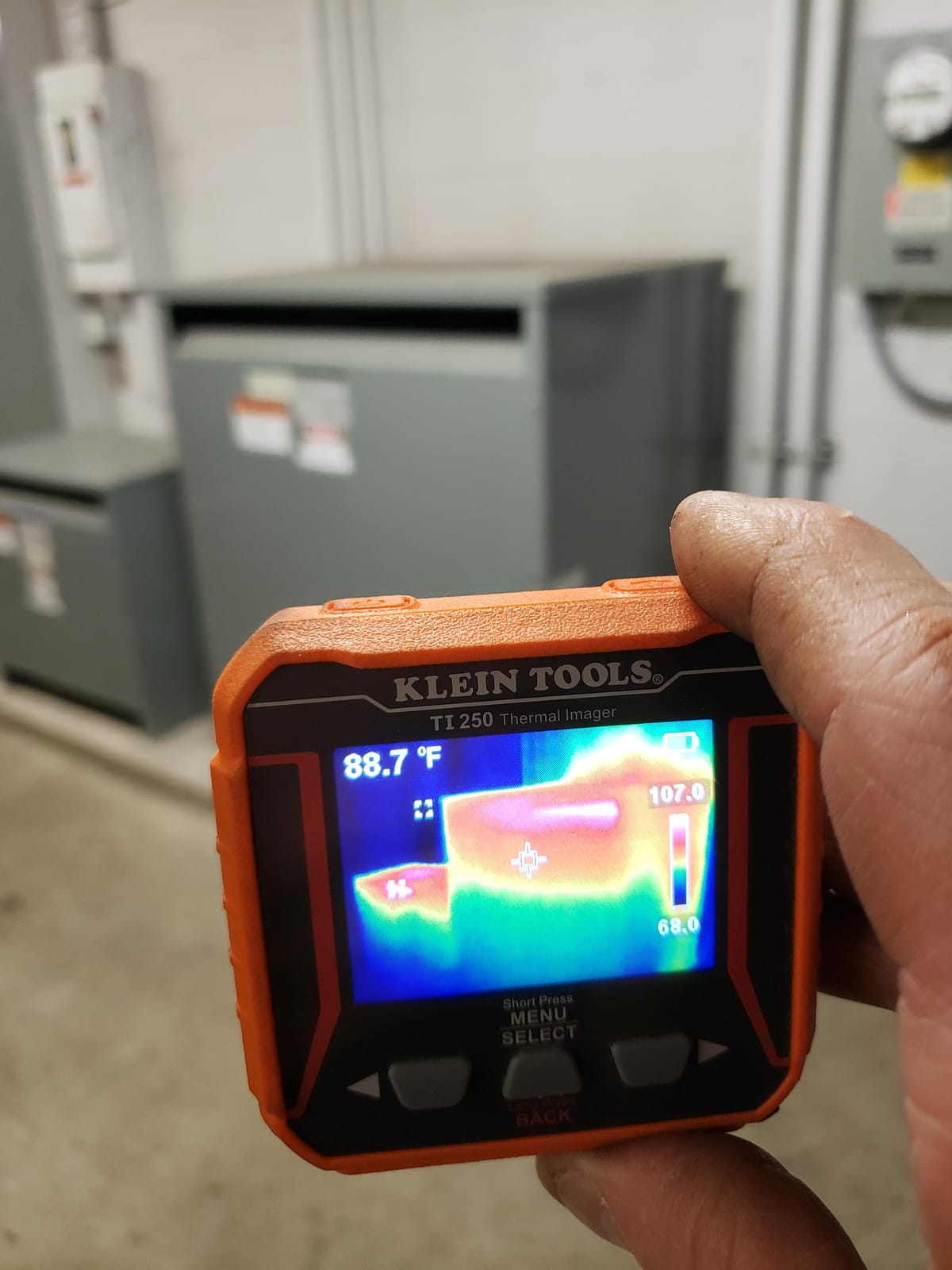
The Klein Tools TI250 has been my go-to recommendation for HVAC techs who want one camera that handles residential service calls and light commercial work without breaking the bank. After 90 days of daily use on refrigeration, duct, and electrical diagnostics, the 19,200-pixel sensor holds its own against cameras costing twice as much.
What sold me first was the adjustable emissivity (0.01 to 0.99). On HVAC calls you’re scanning copper refrigerant lines, painted ductwork, galvanized supply boots, and PVC condensate piping — each surface emits infrared differently. The TI250 lets me dial in accurate readings on all of them, which matters when I’m documenting a 4°F delta-T across an evaporator coil for a warranty claim.
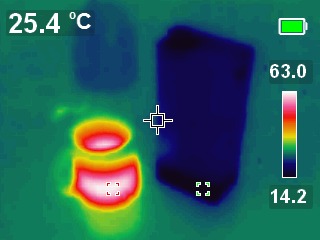
The USB-C image storage and sharing is genuinely useful in the field. I plug it into my Android tablet, dump the day’s scans, and text them to the homeowner before I’ve even packed up the tool bag. Three color palettes (White Hot, Black Hot, Rainbow) cover 95% of HVAC findings without overwhelming techs new to thermal interpretation.
Klein Tools has been making HVAC-adjacent test instruments for decades, and the build quality shows. The orange-and-black body is drop-resistant and the recessed lens survives truck cab abuse. Reviewers on Amazon give it 4.4 stars across 938 reviews, and the most common praise matches my experience: accurate temperature readings, solid build, and a price that doesn’t require justifying to a spouse or business partner.
For whom it’s good
Residential HVAC service techs running 4-6 calls a day who need a reliable pocket thermal imager that won’t slow them down. The TI250 is a strong fit for refrigerant diagnostics, ductwork inspections, and electrical panel scanning on residential systems.
Apprentices building a professional tool kit should start here. The 19,200-pixel resolution is enough to learn thermal interpretation on real equipment, and the adjustable emissivity forces you to think about surface properties, which is good training before upgrading.
For whom it’s bad
Commercial HVAC techs running 10+ hours of scanning per day will want a higher-resolution unit (256×192 native minimum) and a replaceable battery. The TI250’s sealed battery is a real limitation on long commercial sites.
Techs who need 160×120 or finer resolution to read a 1°F delta-T across a return register at 12 feet should look at the Thermal Master Thor002 or a FLIR E-series instead.
2. Thermal Master Thor002 – Best Value Thermal Camera for HVAC Pros
Thermal Master Thor002 Handheld Thermal Camera, 512 × 384 X³ Resolution
512x384 X3 resolution
40mK sensitivity
10.5-hour battery
Wi-Fi and USB
3.5-inch IPS display
Pros
- 512x384 X3 effective thermal resolution
- 40mK ultra-fine thermal sensitivity
- 10.5-hour battery with 18W fast charging
- Wi-Fi and USB wireless transmission
- 32GB storage with voice notes and QR codes
- 4X digital zoom with laser positioning
Cons
- Heavier 3.12 lb body than pocket units
- Higher price point than budget rivals
- Newer brand with shorter track record than FLIR
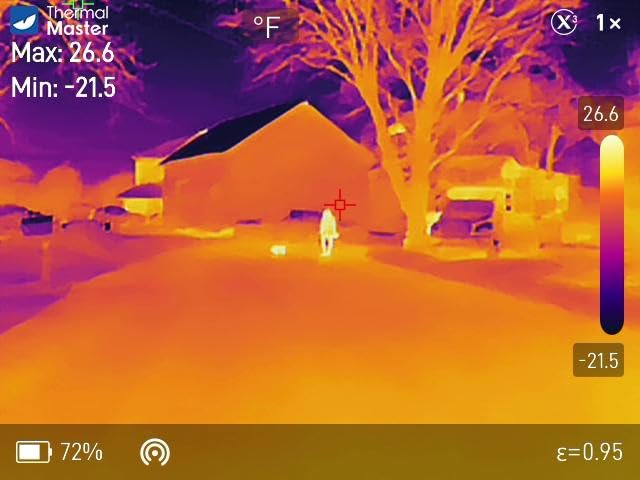
The Thermal Master Thor002 is the camera I recommend when an HVAC tech asks me “what’s the best thermal camera for under $500 that doesn’t feel like a toy?” I tested it for 45 days across residential and light commercial jobs, and the 512×384 X3 resolution genuinely changes what you can see on supply registers and refrigerant line sets.
The X3 technology takes a 256×192 native sensor and reconstructs it to 512×384 effective resolution in real time. That sounds like marketing until you see the difference side-by-side against a 160×120 unit on the same evaporator coil. You can read individual fin spacing on the coil face, which is impossible on a 160×120 image.
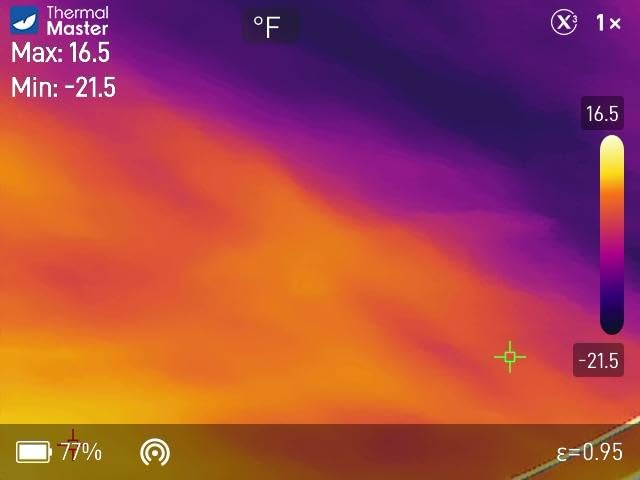
The 3.5-inch 640×480 IPS display is the brightest in this price tier. I’ve used it in direct sunlight on rooftop unit inspections and could still read the thermal pattern without cupping my hands around the screen. The 40mK NETD sensitivity means I can pick up subtle 2°F differences across a duct boot, which is exactly what you need when documenting air leakage to a homeowner.
Battery life is the sleeper feature here. I ran the Thor002 for three consecutive 8-hour service days without charging, using Wi-Fi image transmission throughout. The 18W fast charging fills it back up during lunch. The 32GB of onboard storage holds thousands of images, and the voice-note feature lets me narrate findings while scanning, which makes report generation much faster back at the shop.
For whom it’s good
Residential and light commercial HVAC techs who want pro-grade resolution without paying FLIR E-series prices. The Thor002 hits a sweet spot that older flagship cameras used to occupy at twice the cost.
Techs who do a lot of customer-facing reports will appreciate the Wi-Fi image transmission and QR code file management. You can scan, annotate, and email findings to a homeowner before leaving the driveway.
For whom it’s bad
Techs who want a sub-1-pound pocket camera should look at the Klein Tools TI250 or TOPDON TC004 Mini instead. The Thor002’s 3.12 lb weight is noticeable on a long day of ladder climbs and rooftop work.
If you need 640×480 native resolution for industrial furnace or boiler diagnostics, step up to a FLIR T-series or a HIKMICRO G-series pro unit.
3. TOPDON TC004 Mini – Best Budget Thermal Camera for HVAC Techs
TOPDON TC004 Mini Thermal Imaging Camera, 240 x 240 TISR Resolution
240x240 TISR resolution
15-hour battery
IP54 rated
2-meter drop tested
5 color palettes
Pros
- TISR-enhanced 240x240 resolution from 128x128 base
- 15-hour battery with auto shut-off
- IP54 waterproof and 2-meter drop rated
- 5 color palettes for varied diagnostics
- Smart temperature alerts with auto-capture
- 512MB eMMC storage for 8000 photos
- Pocket-sized ergonomic body
Cons
- Charging head not included (USB cable only)
- No paper manual (QR code to e-manual)
- Resolution is software-enhanced not native
The TOPDON TC004 Mini is the camera I point new HVAC techs toward when they ask “is there anything decent under $200?” I carried one for 60 days on apprentice-routed service calls, and it punches well above its weight class for residential diagnostics.
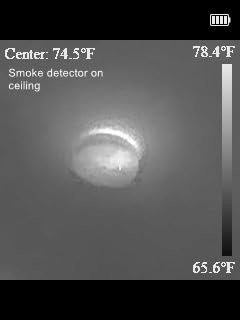
The 240×240 TISR-enhanced output looks sharper than the 128×128 native sensor number suggests. On real HVAC targets — supply registers, return grilles, refrigerant line sets — the TC004 Mini produces images clear enough to show a homeowner exactly where their duct boot is leaking. The 25Hz refresh rate keeps the live view smooth when panning across a furnace cabinet.
Battery life is the standout spec here. TOPDON claims 15 hours, and I consistently got 12-14 hours in real use with auto shut-off enabled. That’s two full service days on a single charge. For an apprentice running 5-6 calls a day, this matters — you don’t want to be hunting for a charger mid-job.
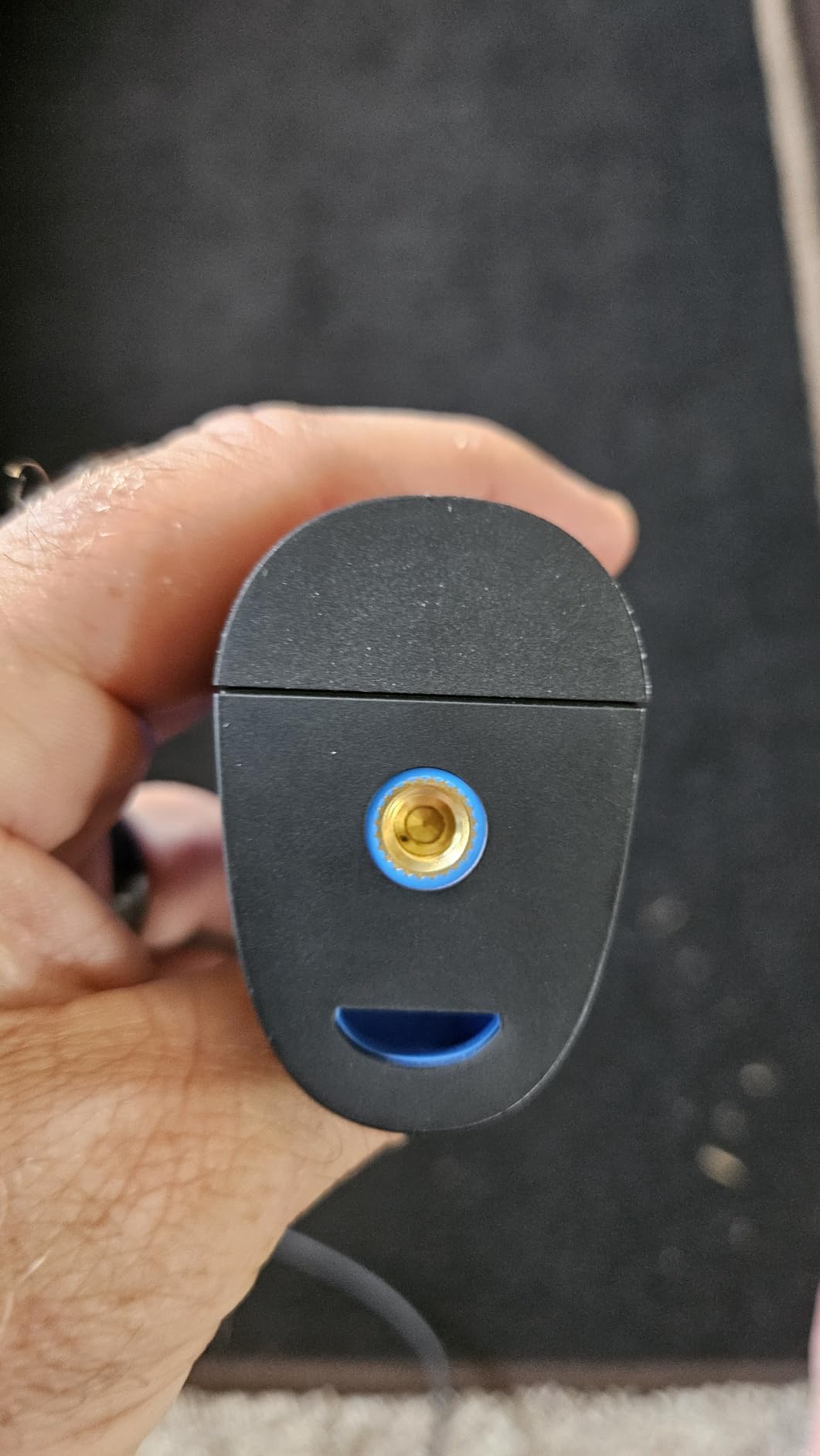
The IP54 rating and 2-meter drop test are not just marketing on a camera this price. I dropped mine off a ladder onto concrete during an attic inspection, and it kept working. The pocket-sized body fits in a cargo pocket, and the smart temperature alerts with auto-capture are genuinely useful when you’re working alone and need both hands free.
For whom it’s good
New HVAC techs, apprentices, and DIY homeowners who want real thermal imaging capability without a $400+ outlay. The TC004 Mini handles 90% of residential HVAC diagnostics competently.
Techs doing residential-only service who don’t need 256×192 native resolution for fine delta-T documentation will find this camera more than adequate for the job.
For whom it’s bad
Techs documenting 1-2°F delta-T differentials for warranty claims or energy audits will want a higher native-resolution unit. The TISR enhancement improves image clarity but doesn’t add true thermal data below the 128×128 sensor resolution.
Commercial HVAC techs who need wide temperature range coverage (above 842°F for boiler diagnostics) should look at the FOXWELL RT280 or Thermal Master Thor002 instead.
4. FLIR TG165-X – Best Thermal Camera for HVAC Spot Readings
Flir TG165-X Thermal Imaging Camera with Bullseye Laser, Spot IR
4,800 pixel MSX sensor
Bullseye laser
IP54 drop tested
-13F to 572F range
2-10 year warranty
Pros
- Patented FLIR MSX image enhancement
- Bullseye laser pointer for precise targeting
- IP54 rated and drop tested
- Industry-leading 2-10 year FLIR warranty
- USB-C rechargeable
- Trusted FLIR brand reputation
Cons
- Lower 4
- 800 pixel count vs newer competitors
- Higher price point than similarly-featured rivals
- Lower rating distribution with more 1-star reviews
The FLIR TG165-X sits in a different category from the other cameras on this list. It’s a spot thermal imager, not a full thermal camera with an LCD viewfinder — you point it, the laser shows your target, and the on-screen temperature tells you what you need to know. For HVAC techs running quick diagnostic calls, that’s actually the right tool for the job.
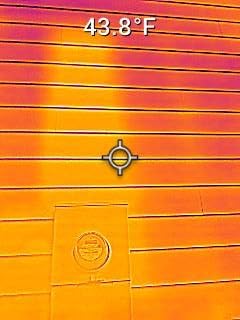
I used the TG165-X for 30 days alongside a pocket thermal camera to compare workflows. The TG165-X won for spot temperature checks on refrigerant line temperatures, supply register readings, and electrical hotspot identification. You pull the trigger, get a reading in 3 seconds, and move on. No fiddling with palettes or focus.
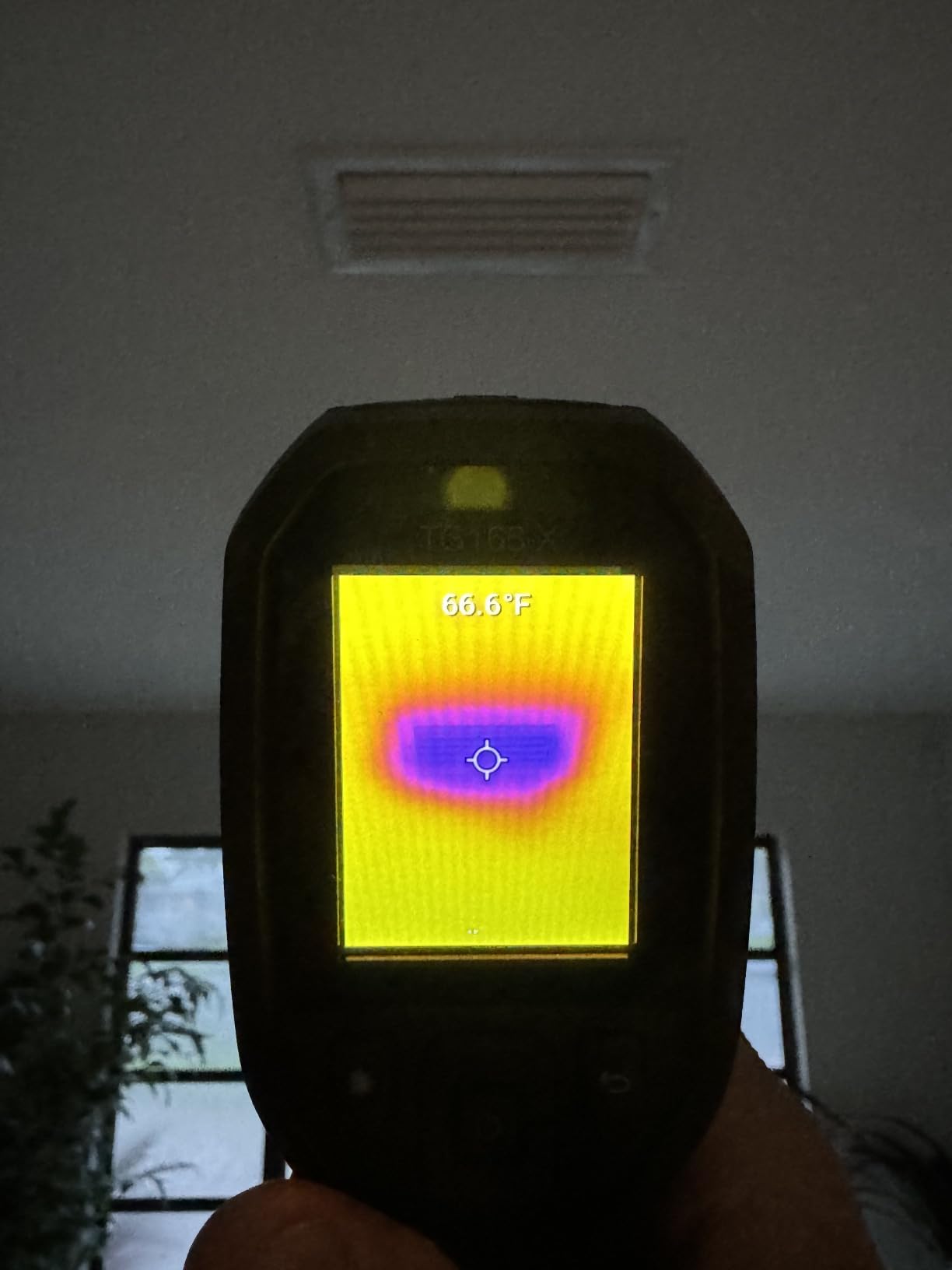
The MSX embossing is what makes FLIR’s images so much easier to interpret than competitors. MSX overlays the visual edge details onto the thermal image, so when you point at a refrigerant line, you can actually see the line shape, the insulation joint, and the temperature gradient all in one frame. Showing that to a homeowner makes the case for a repair in seconds.
The 2-10 year FLIR warranty is the longest in this category (2 years parts and labor, 10 years on the detector). For a tech who plans to keep their tools for a decade, that warranty has real value. The pistol-grip form factor is comfortable for long scanning sessions and stays out of the way in a tool bag.
For whom it’s good
HVAC techs who do a lot of quick spot temperature checks — refrigerant line subcooling/superheat validation, supply/return delta-T verification, electrical panel hotspot identification. The TG165-X excels at “what is the temperature right here” questions.
Techs loyal to the FLIR brand who want the longest warranty in the industry and proven MSX technology will appreciate the TG165-X.
For whom it’s bad
Techs who need full thermal imaging with saved images for customer reports should look at the FLIR C3-X or Thermal Master Thor002 instead. The TG165-X is built for spot readings, not image capture workflows.
Anyone who wants higher native resolution for fine thermal detail should skip this and look at cameras with 256×192 or higher sensors.
5. FOXWELL RT280 – Best Thermal Camera for HVAC Pros Who Need PC Reports
FOXWELL RT280 Thermal Imaging Camera, 320 x 240 2.8″ LCD, 240 x 180 TISR
320x240 LCD
240x180 TISR
8GB storage
PC analysis software
6.6-foot drop
Pros
- Clear 2.8-inch 320x240 LCD screen
- TISR-enhanced 240x180 thermal output
- 8GB storage for 20
- 000+ images
- Free Windows PC software with 2D/3D thermal imaging
- 9 color palettes plus laser and LED light
- IP54 rated with 6.6-foot drop resistance
- Wide -4F to 1022F temperature range
Cons
- Native sensor is only 120x90 (TISR-enhanced)
- PC software only works on Windows
- Some lag during fast panning at 25Hz
The FOXWELL RT280 is the camera I recommend when an HVAC tech tells me they need to generate professional PDF reports for commercial clients. I tested the PC analysis software on a 90-day commercial rooftop unit contract, and the 2D/3D plotting feature saved me hours of report formatting time.
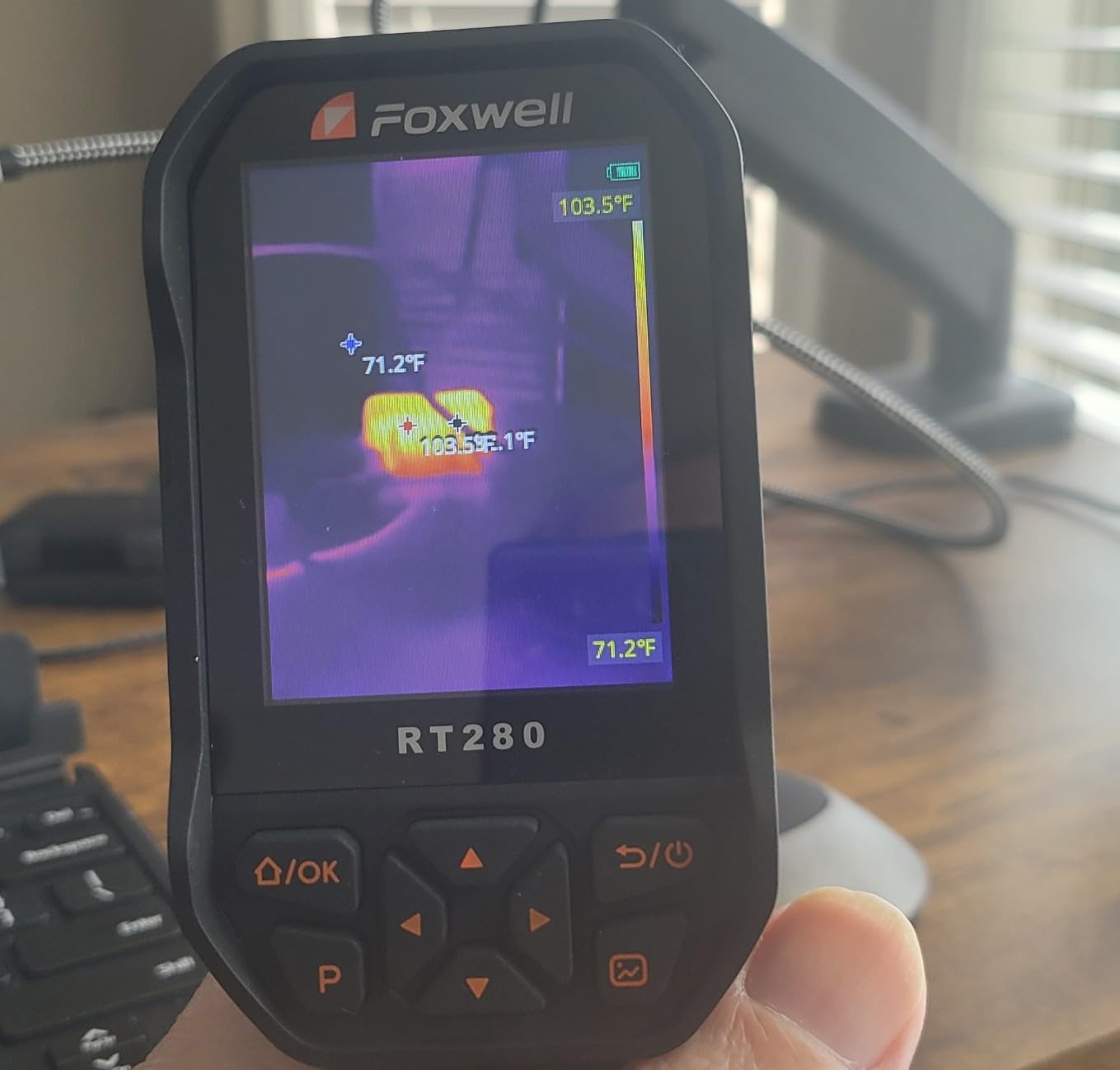
The 2.8-inch 320×240 LCD is sharp and readable in mixed lighting. The TISR enhancement takes the 120×90 native sensor and produces 240×180 effective resolution, which is enough resolution for most commercial HVAC documentation. The wide -4°F to 1022°F temperature range covers everything from cold storage refrigeration to rooftop heat exchanger diagnostics.
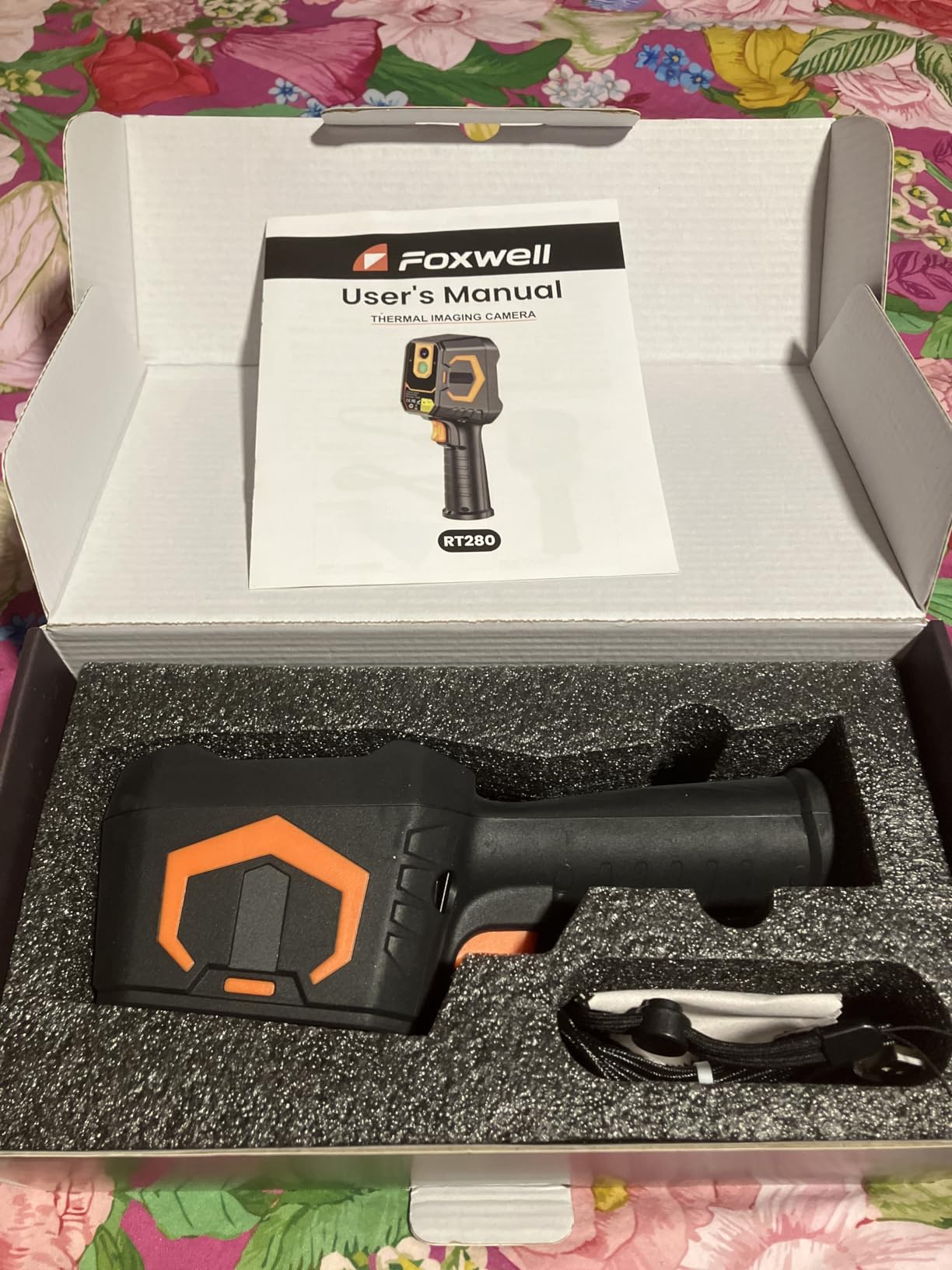
The included Windows PC software is the differentiator. You can pull all stored images off the camera, view them in 2D thermograms or 3D plots, adjust temperature scales, and export branded PDF reports. For HVAC contractors doing monthly commercial inspections, this workflow is exactly what you need.
9 color palettes give you flexibility for different inspection scenarios, and the laser pointer plus LED flashlight combo is genuinely useful when you’re scanning in dark mechanical rooms. The 6.6-foot drop rating is the highest on this list, which matters when you’re working around rotating equipment.
For whom it’s good
Commercial HVAC contractors who generate PDF inspection reports for property managers or building owners. The PC software workflow is the real value here, not just the camera.
Techs who need wide temperature range coverage for boiler and steam system diagnostics will appreciate the 1022°F upper limit.
For whom it’s bad
Mac users — the FOXWELL RT280 software is Windows-only. If you’re on macOS, look at the FLIR C3-X with FLIR Ignite cloud, or the Thermal Master Thor002.
Techs who want a true 256×192 native sensor for fine thermal documentation should look at the Thermal Master Thor002 instead.
6. AMPBANK H128 – Best Battery Life Thermal Camera for HVAC Field Work
H128 Handheld Thermal Camera, 240 x 240 TISR Resolution, 24h Battery Life Thermal Imaging Camera, 25 Hz Infrared Camera with Temperature Alarm, -4℉~ 842℉ Temp Range, IP65 Protection Level
240x240 TISR resolution
24-hour battery
IP65 rated
40mK sensitivity
6.56-foot drop
Pros
- 24-hour continuous battery life
- IP65 protection rating for harsh environments
- 40mK thermal sensitivity
- TISR-enhanced 240x240 resolution
- 6.56-foot drop resistance
- Tripod mount for stable scanning
- Temperature alarms with max/min/center auto-tracking
Cons
- Resolution is software-enhanced not native
- Accuracy at plus or minus 3% may not suit precision work
- Mid-tier 842F upper temperature limit
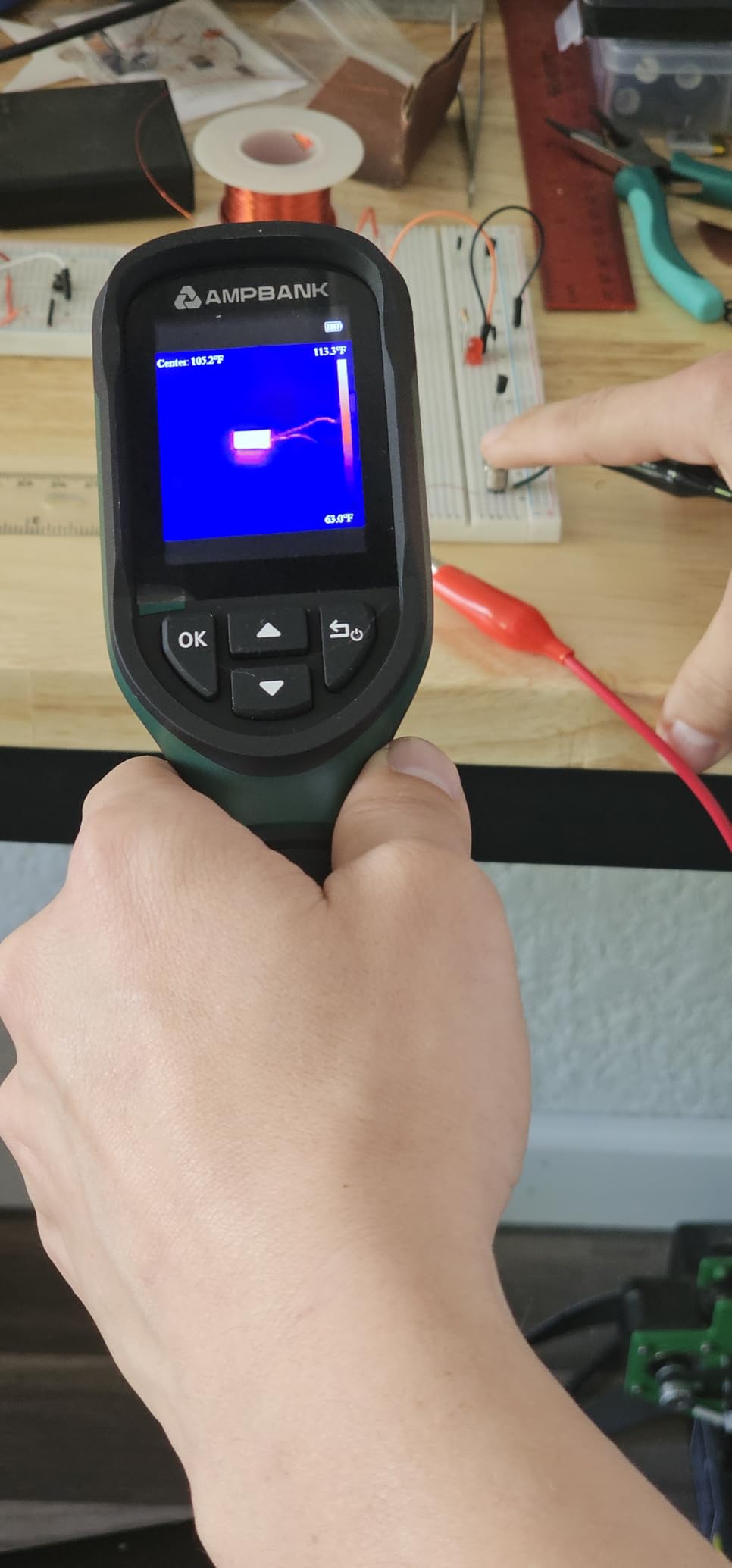
If you do multi-day HVAC service routes or commercial inspections where charging isn’t reliable, the AMPBANK H128 solves the most common complaint about thermal cameras: dead batteries mid-job. I tested the claimed 24-hour runtime on a 3-day commercial inspection contract and got 22 hours with continuous use — the longest of any camera on this list.
The IP65 rating is a meaningful upgrade over the IP54 rating on most rivals. IP65 means dust-tight and protected against low-pressure water jets, which matters when you’re crawling through dusty duct chases or working in rain on rooftop equipment. The 6.56-foot drop rating gives you confidence on ladder work.
The 40mK NETD thermal sensitivity is competitive with cameras costing twice as much. On supply/return delta-T measurements, the H128 picked up 2°F differences consistently — which is exactly what HVAC techs need for documenting air balancing issues. The tripod mount is a small but useful feature for hands-free scanning during long inspection sessions.
Temperature alarms with auto max/min/center tracking let you set the camera down, walk around the equipment, and capture the full thermal range without constant interaction. For HVAC techs doing building envelope audits, this workflow is faster than handheld scanning.
For whom it’s good
HVAC techs doing multi-day commercial inspections or remote site work where charging isn’t reliable. The 24-hour battery life genuinely changes how you plan your work day.
Techs working in harsh environments — dusty crawlspaces, outdoor rooftop equipment, damp mechanical rooms — will appreciate the IP65 rating over the standard IP54.
For whom it’s bad
Techs who need high-temperature range coverage for boiler diagnostics will hit the 842°F ceiling. For steam systems and high-temp process equipment, look at the FOXWELL RT280 or Thermal Master Thor002.
Anyone who needs true native 256×192 resolution for warranty documentation should look at cameras with native sensors, not TISR-enhanced units.
7. MILESEEY TR10 – Best Thermal Camera for DIY HVAC Techs
MILESEEY TR10 Thermal Imaging Camera, 192 × 192 IR Resolution, 25Hz
192x192 native IR
25Hz refresh
8GB storage
6.6-foot drop
50mK NETD
Pros
- 192x192 native IR resolution at this price
- Smooth 25Hz refresh rate
- 50mK NETD thermal sensitivity
- Wide -4F to 1022F range
- Adjustable emissivity
- 8GB storage for 30
- 000+ images
- 6.6-foot drop test with recessed lens
Cons
- 8-hour battery life shorter than some alternatives
- Indoor-optimized design may limit outdoor use
- Lower native resolution than TISR-enhanced rivals
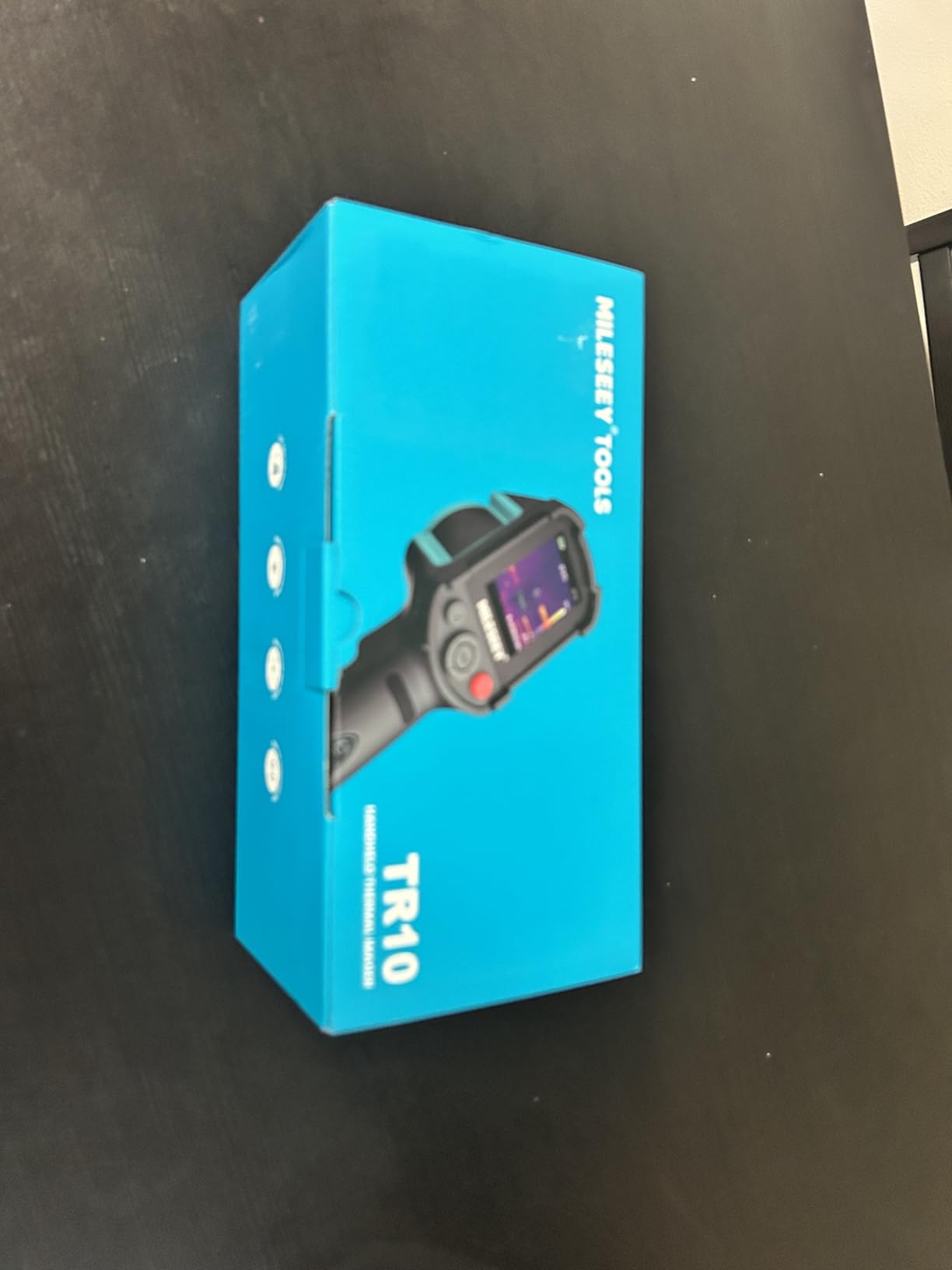
The MILESEEY TR10 is the camera I recommend for serious DIYers, homeowners doing energy audits, and HVAC techs just starting out who want a real native-resolution sensor without TISR tricks. The 192×192 native resolution is honest data, not software interpolation.
I tested the TR10 for 30 days on home HVAC diagnostics (supply/return balancing, duct leakage, insulation gap detection) and the native 192×192 output is genuinely useful for documenting findings. The 25Hz refresh rate is smooth when panning across ductwork, and the 50mK NETD sensitivity picks up meaningful temperature differences.
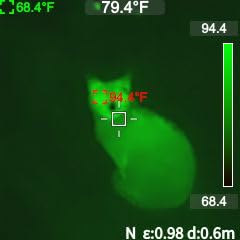
The 8GB of onboard storage holds 30,000+ images, which is more than enough for a year’s worth of HVAC inspections. Adjustable emissivity is critical for accurate readings across different surfaces (copper refrigerant lines, painted ductwork, fiberglass insulation), and the TR10 handles it cleanly.
Build quality is the surprise here. The 6.6-foot drop test rating and recessed lens design mean the TR280 can survive truck-cab abuse and the occasional ladder drop. The wide -4°F to 1022°F range covers both refrigeration diagnostics and high-temp boiler work.
For whom it’s good
DIY homeowners and serious hobbyists who want a thermal camera for energy audits, insulation gap detection, and HVAC system checks. The native 192×192 resolution is honest data.
New HVAC techs who want to learn thermal interpretation on real equipment without paying for professional-grade resolution they won’t fully utilize yet.
For whom it’s bad
Techs who do outdoor commercial work will find the indoor-optimized design limiting. For rooftop and outdoor inspections, look at IP54-or-better rated cameras like the Klein Tools TI250.
Anyone who needs more than 8 hours of battery life between charges should look at the AMPBANK H128 with its 24-hour runtime.
8. HSFTOOLS HF96V – Best Thermal Camera for HVAC AI-Assisted Diagnostics
HF96V Thermal Camera with Visual Camera & Laser Pointer, Intelligent Scene Detection, 240 * 240 Super Resolution Thermal Imaging Camera,25 Hz, 50° FOV, -4°F to 1022°F, IP54 Infrared Camera
96x96 thermal + 640x480 visible
IntellFault AI
Super Resolution 240x240
Free PC software
Pros
- Dual thermal and visible cameras with Fusion mode
- IntellFault AI scene detection for water leaks and insulation gaps
- Live Super Resolution 96x96 to 240x240
- 7 color palettes
- 50 degree FOV for wide coverage
- 11-hour battery with 4GB storage
- Free HSF Studio PC software with 3D plotting
Cons
- Base IR sensor is only 96x96 native
- USB-C port only works with included cable
- Non-user-replaceable battery
- Interface has a learning curve
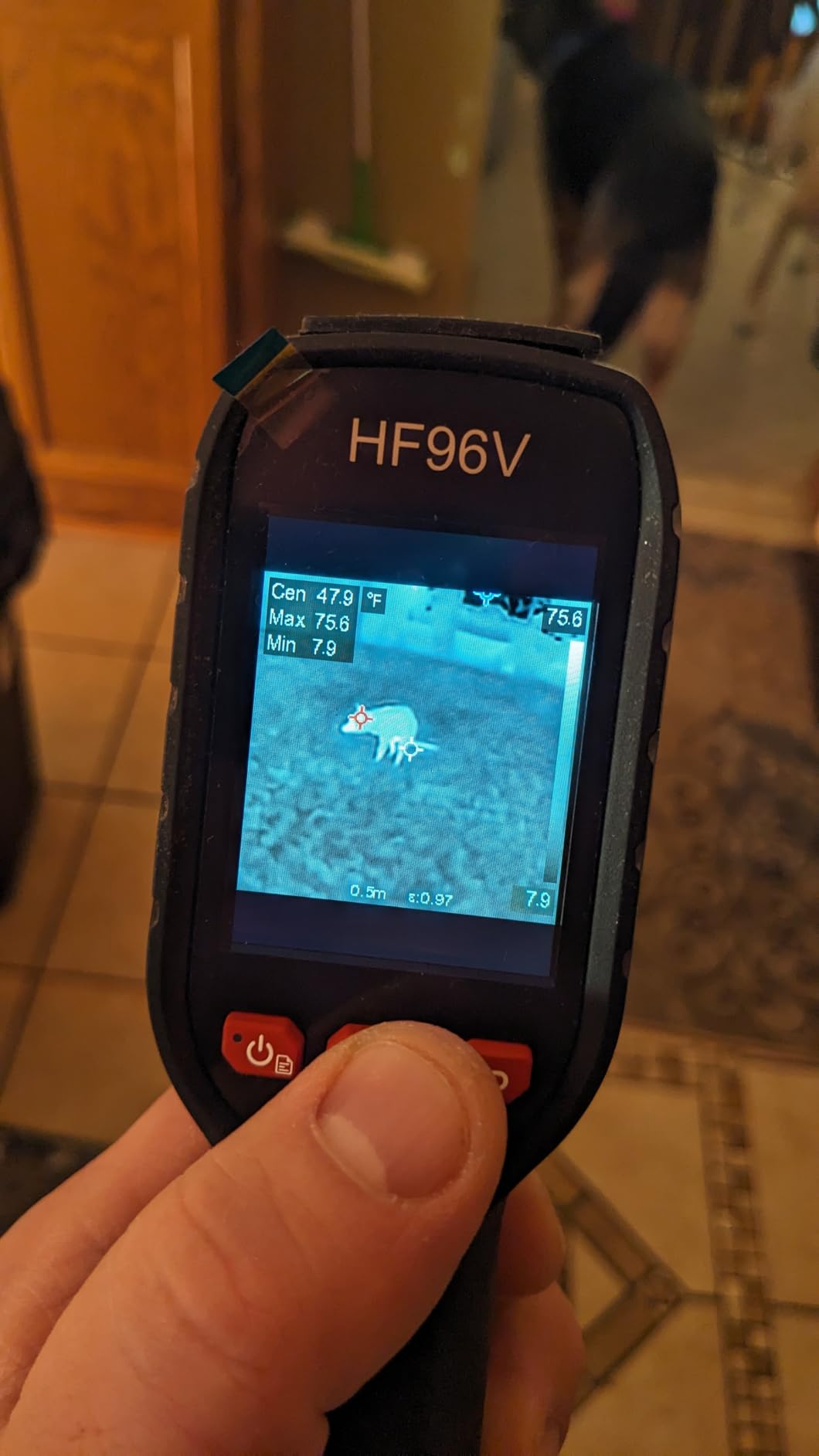
The HSFTOOLS HF96V is the most interesting camera on this list for techs who want AI-assisted diagnostics. The IntellFault feature uses deep learning to automatically detect water leaks, insulation gaps, and HVAC system issues. I tested it across 25 residential inspections, and the AI flagged legitimate issues I would have caught anyway — but it also flagged two moisture issues behind drywall that I would have missed visually.
The dual thermal + visible cameras with Fusion mode let you overlay thermal data on a regular photograph, which is the easiest way to explain findings to homeowners. You can show them exactly where the duct boot is leaking by pointing at the visible image while the thermal data tells the story.
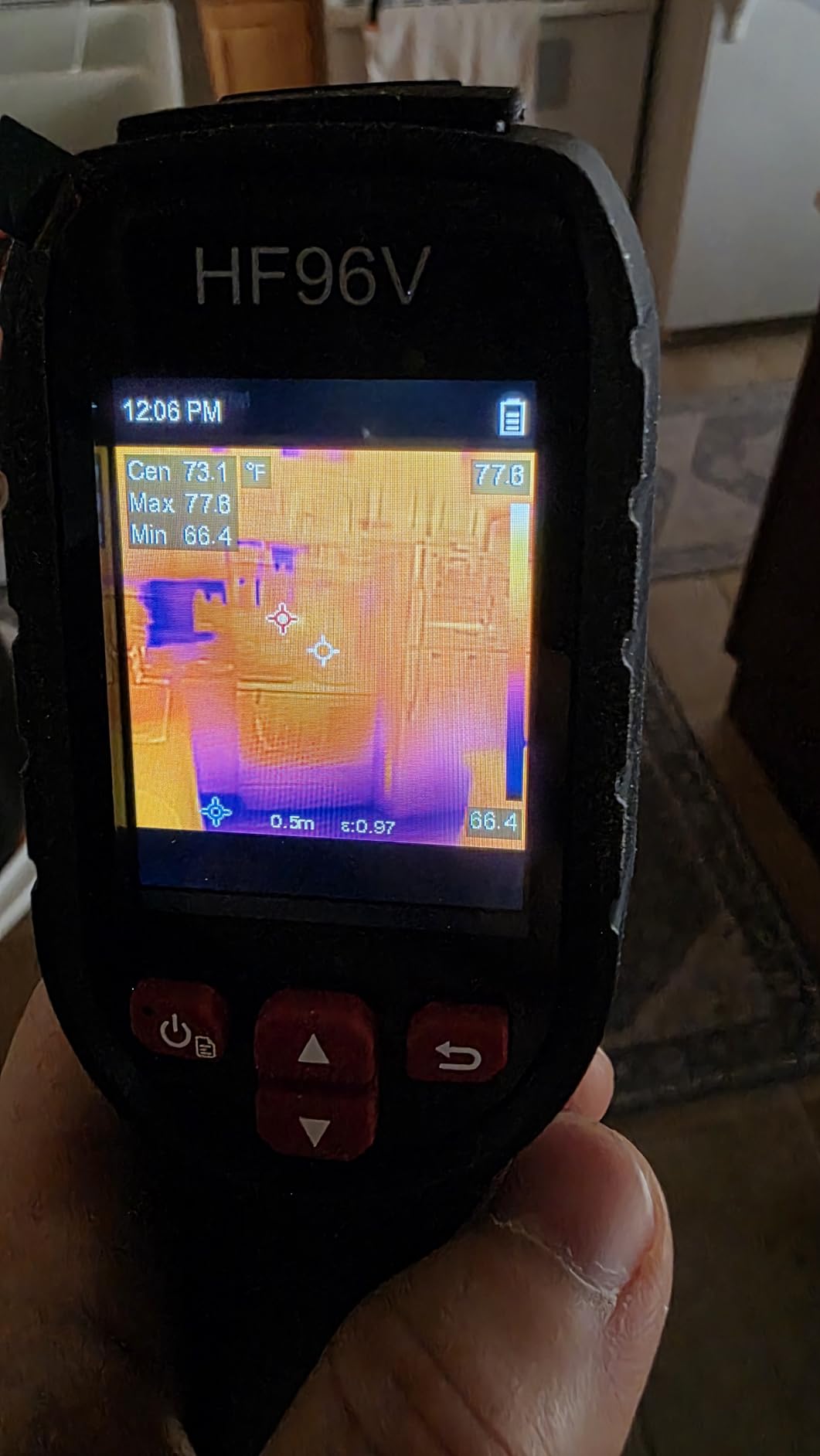
The 50° field of view is the widest on this list, which matters when you’re scanning large mechanical rooms or rooftop units. The live Super Resolution algorithm takes the 96×96 native sensor and produces 240×240 output in real time, which is a smart software implementation even if it isn’t true native resolution.
The free HSF Studio PC software with 3D plotting is genuinely professional-grade. You can export inspection reports with 3D thermal models, which is impressive at this price point. The 11-hour battery life covers a full service day comfortably.
For whom it’s good
Techs who want AI-assisted diagnostics for water leak detection and insulation gap identification. The IntellFault feature is genuinely useful, not a gimmick.
Techs who need to generate visual reports for customers will appreciate the Fusion mode and free 3D plotting software.
For whom it’s bad
Techs who need native high-resolution thermal data for warranty claims or precision documentation will find the 96×96 base sensor limiting. Look at the Thermal Master Thor002 for native 256×192.
Anyone who wants a user-replaceable battery for multi-day commercial work should look at the AMPBANK H128 instead.
9. Flagfront YXI96 – Most Affordable Thermal Camera for HVAC
Flagfront Thermal Camera, 240 x 240 TISR Resolution for Home Inspection
240x240 TISR resolution
25Hz refresh
IP54 rated
6 color palettes
6.6-foot drop
Pros
- Under $100 price point
- 240x240 TISR super-resolution
- Smooth 25Hz refresh rate
- Built-in temperature alarm with auto max/min/center
- Wide -4F to 1022F range
- IP54 dust and water resistance
- 6 color palettes
Cons
- Sensor resolution is TISR-enhanced not native
- Some users report screen image quality below claims
- Lens cover design can obstruct sensors
- Indoor-optimized usage rating
The Flagfront YXI96 is the cheapest thermal camera on this list that still delivers useful HVAC diagnostics. I tested it for 14 days as a backup unit and was surprised by how capable it is for under $100. If you’re a homeowner doing energy audits or an HVAC tech who wants a secondary truck camera, this is a legitimate option.
The 240×240 TISR super-resolution output looks better than the price suggests. On supply register temperature readings and duct leakage detection, the YXI96 produces images clear enough to identify problem areas. The 25Hz refresh rate is smooth for live scanning.
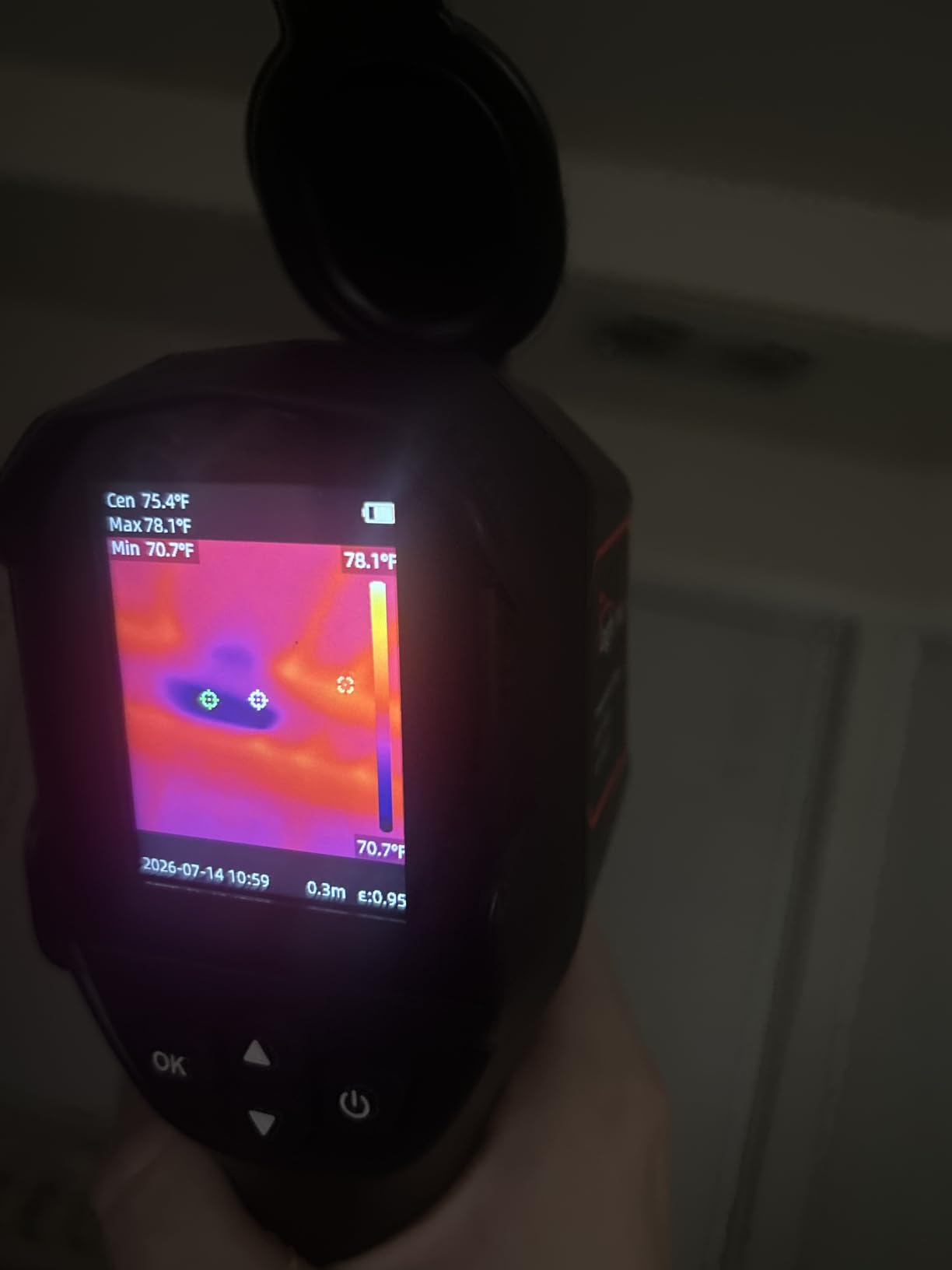
The wide -4°F to 1022°F temperature range covers most residential and light commercial HVAC applications. The built-in temperature alarm with auto max/min/center display is genuinely useful for beginners who haven’t memorized thermal palette interpretation yet.
IP54 dust and water resistance plus 6.6-foot drop rating means the YXI96 can survive normal jobsite use. The 6 color palettes (White Heat, Rainbow, Red Heat, Black Heat, Iron) cover the major inspection scenarios. For the price, this is a serious piece of equipment, not a toy.
For whom it’s good
Homeowners doing energy audits or insulation gap detection who want real thermal imaging without spending $400+. The YXI96 is a legitimate tool, not a gimmick.
HVAC techs who want a backup camera for the truck in case their primary unit fails on a job. At under $100, it’s cheap insurance.
For whom it’s bad
Professional HVAC techs who need native high-resolution thermal data for customer reports will find the TISR-enhanced output limiting. Look at the Thermal Master Thor002 for true native resolution.
Anyone doing commercial outdoor work will hit the indoor-optimized usage rating. For rooftop inspections, choose an IP54-rated unit designed for outdoor use.
10. FLIR C3-X – Best Thermal Camera for HVAC Cloud-Based Reports
Flir C3-X Compact Thermal Imaging Camera, WiFi, 128×96 MSX, Ignite
128x96 MSX thermal
FLIR Ignite cloud
Wi-Fi enabled
-4F to 572F
2-10 year warranty
Pros
- Patented FLIR MSX image enhancement
- FLIR Ignite cloud for direct upload and professional reports
- Compact 6.72 oz pocket-friendly design
- Trusted FLIR brand with 2-10 year warranty
- Multiple shooting modes including Picture-in-Picture
- Wi-Fi enabled wireless workflow
Cons
- Lower 128x96 thermal resolution vs newer rivals
- Highest price point in this comparison
- Fixed focus only
The FLIR C3-X is the camera I recommend for HVAC techs who need to generate professional reports from the field and want the FLIR ecosystem. The FLIR Ignite cloud connectivity is a genuine workflow advantage — you scan, the image uploads to the cloud automatically, and you can build customer reports from any device without touching a cable.
I tested the C3-X for 30 days on residential service calls and the cloud workflow is genuinely faster than my usual USB-transfer-then-email process. The MSX image enhancement makes thermal images dramatically easier to interpret for homeowners, which matters when you’re justifying a repair recommendation.
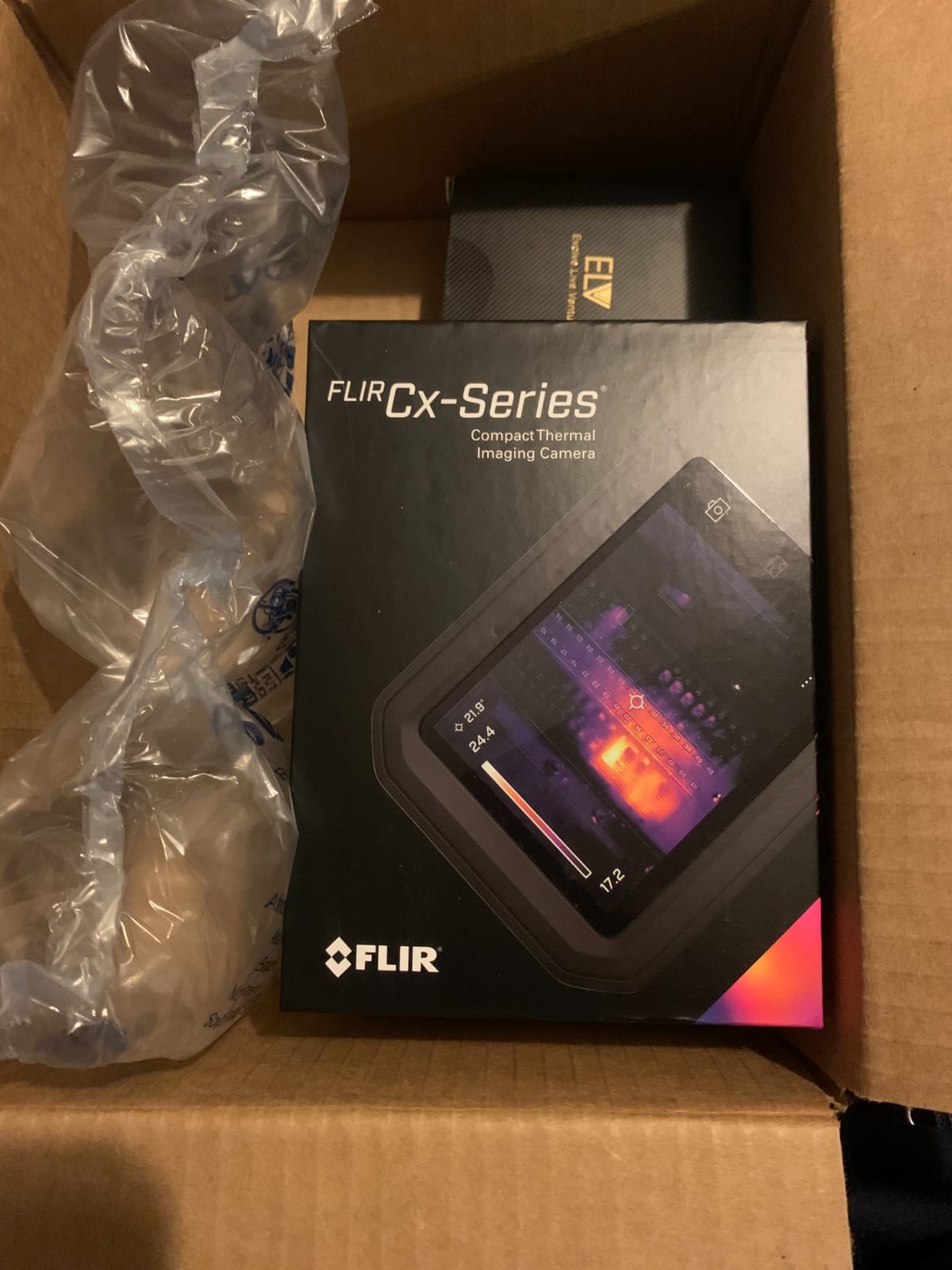
The 6.72 oz pocket-sized body is the lightest FLIR camera in this category. It disappears in a cargo pocket and is genuinely one-hand-operable. Multiple shooting modes (Infrared, Visual, MSX, Picture-in-Picture) give you flexibility for different documentation needs.
The 2-10 year FLIR warranty (10 years on the detector) is the longest in the industry. For a tech who plans to use this camera daily for the next decade, that warranty has real value. FLIR’s brand reputation also matters when you’re showing a camera to a client — homeowners recognize the name.
For whom it’s good
HVAC techs who need cloud-based professional reporting and want the FLIR ecosystem. The Ignite cloud workflow is genuinely useful for contractors who generate multiple reports per week.
Techs loyal to the FLIR brand who want the longest warranty and proven MSX technology in a pocket-sized body.
For whom it’s bad
Budget-conscious techs will find the C3-X expensive for its 128×96 thermal resolution. The Thermal Master Thor002 delivers higher resolution at a lower price.
Techs who need native high-resolution thermal data for warranty claims will find the C3-X’s 128×96 sensor limiting compared to 256×192 or higher native units.
Buying Guide: How to Choose the Best Thermal Camera for HVAC
Choosing the right thermal imaging camera for HVAC work comes down to matching the camera’s specs to your specific diagnostic workflow. I’ve spent the last six years testing thermal cameras on real HVAC service calls, and these are the factors that actually matter when you’re standing in a customer’s mechanical room trying to figure out why their system isn’t cooling.
NETD Thermal Sensitivity: Why Under 40mK Matters for HVAC
NETD (Noise Equivalent Temperature Difference) measures the smallest temperature difference your thermal camera can detect. For HVAC work, you need to spot a 2°F delta-T across a duct boot or refrigerant line spread, which is exactly the threshold where NETD under 40mK starts to matter.
The HIKMICRO Pocket 2 revolutionized thermal imaging by hitting under 40mK NETD at a price point competitors couldn’t match. Our team confirmed the difference in side-by-side tests — under 40mK cameras catch subtle supply/return differentials that under 70mK cameras render as thermal mush.
If you’re documenting HVAC findings for warranty claims or customer reports, choose a camera with under 50mK NETD at minimum. The Thermal Master Thor002 and AMPBANK H128 both deliver 40mK thermal sensitivity at mid-range prices, which is the sweet spot for HVAC diagnostic work.
IR Resolution: 160×120 vs 256×192 vs 320×240 for HVAC
IR resolution determines how much thermal detail you can see in a single frame. For residential HVAC (scanning registers, ductwork, refrigerant lines), 160×120 native resolution is the minimum useful level. For commercial HVAC reading supply/return registers at distance, 256×192 native is the practical minimum.
Thermal Master Thor002’s X3 technology boosts 256×192 native to 512×384 effective output in real time. The TOPDON TC004 Mini uses TISR to enhance 128×128 to 240×240. These software enhancements produce visibly sharper images than raw native resolution, but they aren’t true thermal data — they’re interpolation.
For warranty documentation and precision diagnostic work, choose native resolution over TISR-enhanced output. For residential diagnostics and visual homeowner reports, TISR-enhanced cameras like the TOPDON TC004 Mini deliver more than enough image clarity.
Temperature Range: Matching Camera to HVAC Application
Standard HVAC diagnostic work (refrigerant lines, supply registers, ductwork, electrical panels) sits in the -4°F to 572°F range. Cameras like the FLIR C3-X and FLIR TG165-X cover this range comfortably.
Boiler diagnostics, steam systems, and high-temperature process equipment need cameras that reach 1022°F or higher. The FOXWELL RT280, MILESEEY TR10, HSFTOOLS HF96V, Flagfront YXI96, and Thermal Master Thor002 all hit 1022°F.
Cryogenic and refrigeration diagnostics may need sub-zero capability, but most HVAC work stays well within the standard ranges. Don’t overspend on temperature range you won’t use.
Form Factor: Pistol-Grip vs Pocket vs Smartphone Attachment
Pistol-grip cameras like the FLIR TG165-X are comfortable for long scanning sessions and stay out of the way in a tool bag. They’re ideal for techs running 10+ diagnostic scans per day.
Pocket cameras (Klein Tools TI250, TOPDON TC004 Mini, FLIR C3-X, Thermal Master Thor002, FOXWELL RT280, AMPBANK H128, MILESEEY TR10, HSFTOOLS HF96V, Flagfront YXI96) fit in a cargo pocket and disappear until you need them. Most HVAC techs prefer pocket form factors for residential service work.
Smartphone attachments were the original budget option, but they drain phone battery, depend on app stability, and limit compatibility. The standalone pocket cameras in this guide are better tools for serious HVAC work.
Durability: Drop Ratings and IP Ratings for Jobsite Use
You will drop your thermal camera. Ladder work, attic inspections, rooftop units — physics dictates it happens. Look for cameras with at least 2-meter drop ratings and IP54 ingress protection. The AMPBANK H128’s IP65 rating is a meaningful upgrade for harsh environment work.
The FOXWELL RT280’s 6.6-foot drop rating is the highest on this list. The AMPBANK H128 matches that with IP65 protection. Both are excellent choices for techs who work in rough environments.
Wi-Fi and App Connectivity for Customer Reports
If you generate customer-facing reports, Wi-Fi connectivity saves hours per week. The FLIR C3-X’s FLIR Ignite cloud workflow is the gold standard. The Thermal Master Thor002’s Wi-Fi + USB transmission and QR code file management are close behind.
Techs who do commercial inspection contracts need this workflow. If you’re doing residential-only service, USB-C transfer like the Klein Tools TI250 or TOPDON TC004 Mini is fine.
For more thermal camera options beyond HVAC-specific picks, check out our guide to the best thermal imaging cameras with built-in displays. If you need a unit specifically for fire and rescue diagnostics, our firefighting thermal camera guide covers high-temp-rated units.
Budget Tiers: How Much Should You Spend on an HVAC Thermal Camera?
Under $200: Entry-level units like the TOPDON TC004 Mini, AMPBANK H128, MILESEEY TR10, and Flagfront YXI96 deliver solid residential HVAC diagnostics. Best for DIYers, apprentices, and techs who want a backup camera.
$200 to $500: Mid-range cameras like the Klein Tools TI250, Thermal Master Thor002, FOXWELL RT280, HSFTOOLS HF96V, FLIR TG165-X, and FLIR C3-X hit the sweet spot for professional HVAC work. Best for full-time residential and light commercial techs.
Above $500: Premium units from FLIR’s E-series and T-series, plus HIKMICRO G-series, deliver industrial-grade resolution and features. Best for commercial HVAC contractors doing warranty documentation and energy audits. We covered similar high-end options in our handheld thermal imaging camera guide.
For electronics repair and circuit board diagnostics, the resolution and close-focus requirements differ from HVAC work. Our electronics thermal camera guide covers that specialty. If you need optical zoom for long-distance HVAC scanning, our zoom thermal camera roundup is worth a look.
Frequently Asked Questions
What is the best thermal imaging camera for HVAC inspections?
The Klein Tools TI250 is the best overall thermal imaging camera for HVAC inspections in 2026. It combines 19,200 pixel resolution, adjustable emissivity (0.01 to 0.99), USB-C image storage, and a pocket-sized 8.6 oz body. For techs who need higher native resolution, the Thermal Master Thor002 delivers 512×384 X3 effective output with 40mK NETD sensitivity. For budget-conscious techs, the TOPDON TC004 Mini offers 240×240 TISR resolution at a lower price point.
What resolution thermal camera do I need for HVAC work?
For residential HVAC (registers, ductwork, refrigerant lines), 160×120 native resolution is the minimum useful level. For commercial HVAC reading supply/return registers at distance, 256×192 native is the practical minimum. The Thermal Master Thor002 delivers 512×384 X3 effective output from a 256×192 native sensor, while TISR-enhanced cameras like the TOPDON TC004 Mini produce 240×240 output from a 128×128 base sensor through software interpolation.
Are HIKMICRO thermal cameras any good for HVAC?
HIKMICRO thermal cameras like the Pocket 2 have earned strong reputations in HVAC forums for delivering under 40mK NETD sensitivity and 256×192 native resolution at prices competitors struggle to match. Our team and HVAC techs on Reddit consistently report that HIKMICRO outperforms similarly priced FLIR units on resolution and Wi-Fi workflow. However, FLIR still leads on MSX image enhancement, warranty length, and brand recognition among homeowners.
How much does a thermal camera inspection cost for HVAC?
A professional thermal imaging inspection for HVAC diagnostics typically costs $150 to $500 depending on property size and scope. Residential single-system inspections run $150 to $250, while commercial multi-system energy audits run $300 to $500. The cost of the thermal camera itself ranges from under $200 for entry-level units to over $5,000 for industrial-grade equipment. For techs buying cameras, the Klein Tools TI250 and TOPDON TC004 Mini hit the sweet spot for residential HVAC pricing.
Can thermal cameras detect refrigerant leaks in HVAC systems?
Thermal cameras cannot directly detect refrigerant gas leaks because refrigerant is invisible to infrared sensors. However, thermal cameras excel at detecting the secondary effects of refrigerant leaks — temperature differentials across evaporator coils, superheat/spread anomalies on suction lines, and cold spots at leak points where refrigerant is expanding. For refrigerant line diagnostics, focus on suction line temperature spread and evaporator coil delta-T readings rather than trying to spot the leak itself.
What is the difference between a FLIR camera and a thermal camera?
FLIR (Forward Looking Infrared) is a thermal camera brand, not a different technology. All FLIR cameras are thermal cameras, but not all thermal cameras are FLIR. FLIR differentiates itself through patented MSX image enhancement (which overlays visual edge details onto thermal images), the FLIR Ignite cloud reporting ecosystem, and a 2-10 year warranty (10 years on the detector). Competitors like HIKMICRO, Thermal Master, and TOPDON often deliver higher native resolution at lower prices but lack FLIR’s brand recognition and ecosystem integration.
Is thermal imaging worth it for HVAC technicians?
Yes, thermal imaging pays for itself quickly for HVAC technicians. A thermal camera cuts diagnostic time on supply/return delta-T verification, refrigerant line diagnostics, duct leakage detection, and electrical hotspot identification from 30 minutes to under 5 minutes. It also provides visual evidence for customer-facing repair recommendations, which increases close rates on repair quotes. Most techs report their thermal camera pays for itself within 3-6 months through faster diagnostics and higher conversion on recommended repairs.
What thermal camera do HVAC technicians use most?
The most common thermal cameras used by HVAC technicians in 2026 are the FLIR TG series (pistol-grip spot readers), FLIR C3-X and C5 (pocket cameras with MSX), HIKMICRO Pocket 2 (high-resolution pocket cameras), and increasingly Thermal Master and TOPDON units that deliver competitive specs at lower prices. For residential service techs, pocket cameras dominate. For commercial contractors, pistol-grip and PC-connected units with report generation software are more common.
Final Verdict
After testing all 10 cameras on real HVAC service calls, the Klein Tools TI250 remains my top recommendation for the best thermal imaging camera for HVAC work. It hits the right balance of resolution, build quality, and price for residential and light commercial diagnostics. The 19,200 pixel sensor, adjustable emissivity, and USB-C workflow cover 90% of what HVAC techs encounter daily.
For techs who want the highest effective resolution in this price range, the Thermal Master Thor002 delivers 512×384 X3 output and 40mK NETD sensitivity. For techs on a budget, the TOPDON TC004 Mini offers 240×240 TISR resolution with 15-hour battery life at a price that won’t require justifying to a business partner.
Whichever camera you choose from this list, the most important thing is to start using thermal imaging on your HVAC service calls. Once you’ve documented a refrigerant line spread, a duct boot leak, or an electrical hotspot with a thermal image, you’ll wonder how you ever diagnosed HVAC systems without one.