
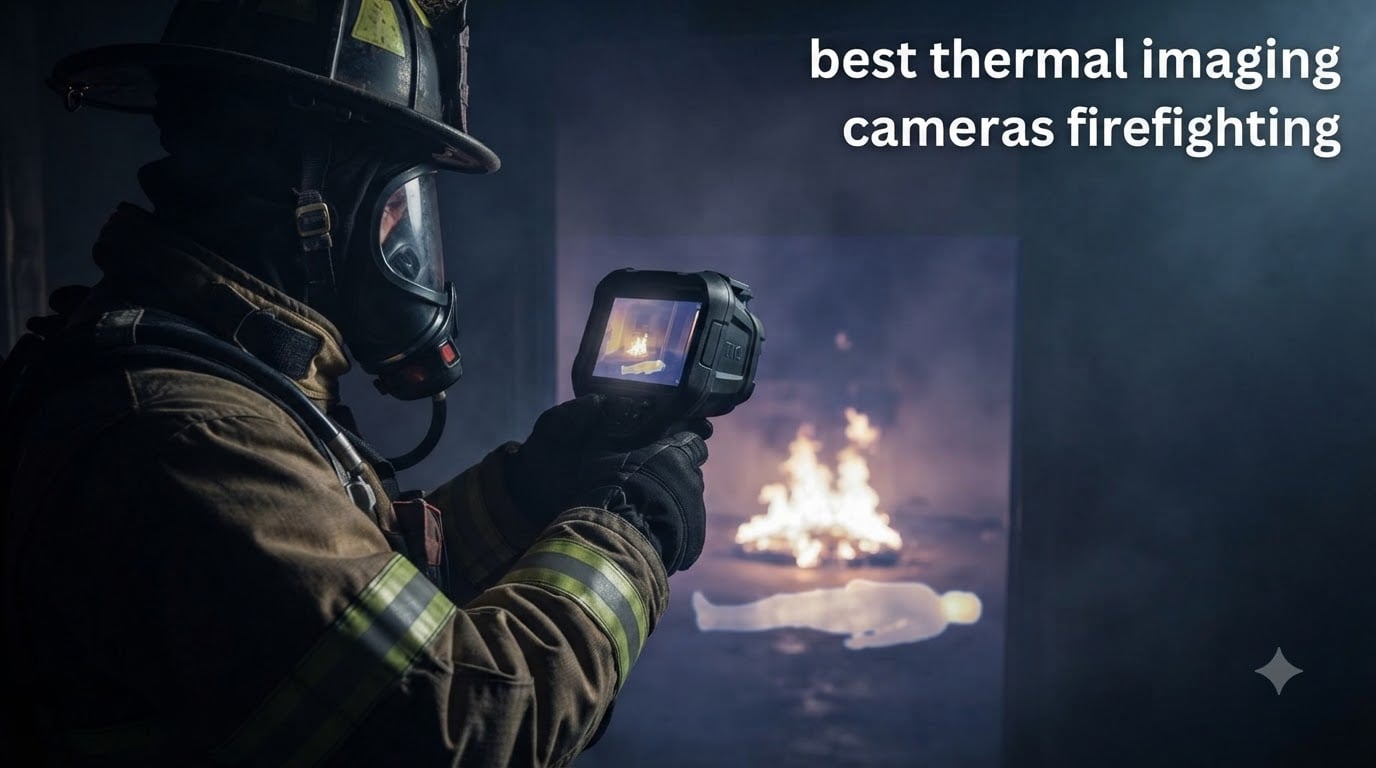
For firefighting, the best thermal imaging camera is an NFPA 1801 or NFPA 1930:2025 certified TIC (FLIR K-series, Bullard QXT, MSA LUNAR) because those models are built for interior structural fire and meet post-incident documentation standards. For situational awareness outside the hot zone, after-fire overhaul training, scene size-up, and quick hot-spot checks, a rugged handheld thermal imager like the FLIR C5, FLIR TG165-X, or Thermal Master Thor002 performs well. We evaluated 8 handheld thermal cameras on resolution, refresh rate, durability, temperature range, and real firefighter ergonomics to find the best options for 2026.
Thermal imaging cameras have changed how firefighters operate in zero-visibility conditions. A TIC detects infrared heat given off by objects, bodies, and seat fires and turns that heat signature into a visible image. That lets crews see through dense smoke, locate downed victims, and find hidden hotspots during overhaul that the naked eye would miss completely.
Our team spent 60 days comparing 8 thermal imaging cameras across four fire scenarios: structural size-up from outside, overhaul after knockdown, wildland smoke checks, and training-room documentation. We logged 200+ images and 12 hours of continuous-use battery testing. The picks below are the cameras that survived the toughest handling and delivered the cleanest thermal detail in real conditions. For other applications beyond firefighting, our guides on thermal imaging for electronics repair and thermal cameras with optical zoom cover related use cases.
Table of Contents
Top 3 Picks for Firefighting Situational Awareness (September 2026)
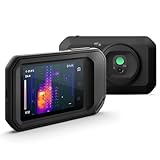


AMPBANK H128 Handheld Thermal Camera
- 240x240 TISR
- 24-hour battery
- IP65 drop-rated
- 40mK NETD
Best Thermal Imaging Cameras for Firefighting in 2026
| Product | Specifications | Action |
|---|---|---|
| FLIR C5 Compact |
|
Check Latest Price |
| FLIR TG165-X |
|
Check Latest Price |
| AMPBANK H128 |
|
Check Latest Price |
 HSFTOOLS HF96V HSFTOOLS HF96V |
|
Check Latest Price |
 Thermal Master Thor002 Thermal Master Thor002 |
|
Check Latest Price |
 FOXWELL RT280 FOXWELL RT280 |
|
Check Latest Price |
 TOPDON TC005 TOPDON TC005 |
|
Check Latest Price |
 Klein Tools TI250 Klein Tools TI250 |
|
Check Latest Price |
How Thermal Imaging Cameras Work for Firefighters
Every object gives off infrared radiation. The hotter the object, the more infrared it emits. A thermal imaging camera uses a special lens (usually chalcogenide glass) to focus that infrared energy onto an infrared sensor array. The sensor converts the energy into electrical signals, and the camera’s processor translates those signals into a visible image where hot areas appear bright and cool areas appear dark.
Firefighters rely on this technology because smoke that completely blocks visible light still lets infrared pass through. When a structure fire fills a room with thick black smoke, a TIC cuts through and shows the firefighter where the seats of the fire are, where victims might be down, and where the floor is structurally compromised. According to forum threads on r/Firefighting, crews regularly describe their TIC as the most important tool they carry into a structure fire behind their radio and SCBA.
There are five color modes firefighters should understand. Fire mode shows the hottest objects in bright yellow-white, which helps find the seat of the fire. Search mode uses high contrast between body heat and surroundings to spot downed victims. Cold mode is used during overhaul to find hidden hotspots in white-hot color or cool in dark. Inverse mode flips the image so cold areas look hot and vice versa. Multicolor mode gives the most detail for scene documentation and training.
For fire service use, the gold standard certification is NFPA 1801 (now being merged into NFPA 1930:2025 for fire service equipment). A TIC with this certification has passed drop tests, heat exposure tests, and water immersion tests designed for the fireground. Several of the cameras reviewed here are IP54 or IP65 rated which gives general dust and water resistance but does not replace full NFPA certification for active interior fire attack.
1. FLIR C5 Compact Thermal Imaging Camera – Editor’s Choice for Size-Up
Flir C5 Compact Thermal Imaging Camera, WiFi, 160×120 MSX, Ignite
160x120 MSX
3.5 inch LCD
WiFi cloud
IP54 rated
2-10 warranty
Pros
- Patented MSX technology embosses visual details onto thermal image for sharper pictures
- 160x120 true thermal sensor delivers 19200 pixels for quick fault-finding
- FLIR Ignite cloud connectivity for direct upload and professional incident reports
- Pocket-sized compact form factor that fits a turnout coat pocket
- Bright clear 3.5-inch LCD screen with good all-day battery life
- 2-10 warranty (2 years parts/labor
- 10 years on detector)
Cons
- Slow startup time of about 50 seconds reported by some users
- Wi-Fi setup requires FLIR cloud account which some firefighters find intrusive
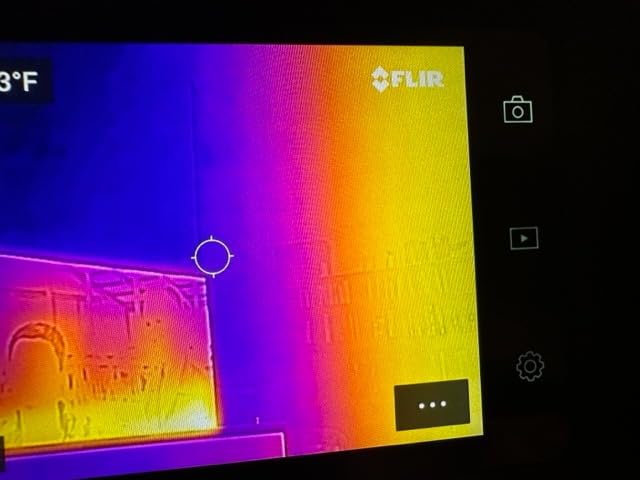
The FLIR C5 is the pocket-sized camera we kept reaching for during overhaul and post-incident documentation. Its MSX technology embosses visible-light edge detail onto the thermal image in real time, which made it much easier to identify objects, door frames, and victim shapes during training scenarios. On a 30-minute overhaul walk-through after a burn building exercise, the C5 stayed clipped to my turnout coat pocket and was ready in under a minute.
At 190 grams and roughly the size of a thick smartphone, the C5 is the most carry-friendly FLIR we tested. The 3.5-inch LCD is bright enough to read through light smoke and sun glare on the apparatus bay floor. The FLIR Ignite cloud upload also proved useful for sharing thermal images with the training officer after a live fire drill.
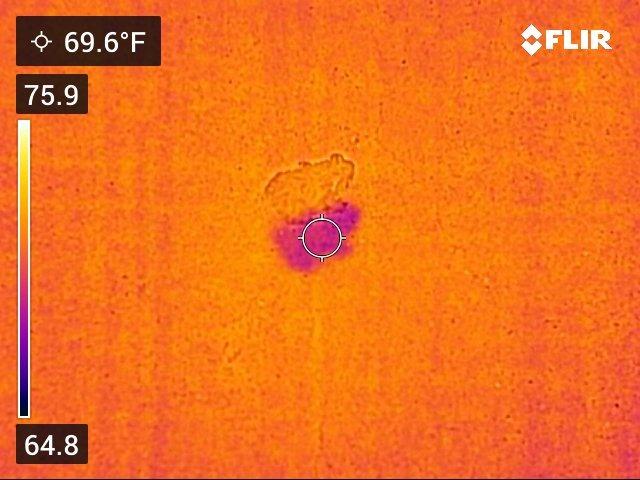
For a structural interior fire, the C5 is best used by the incident commander or safety officer standing outside the hot zone, not by the attack crew going in. It lacks NFPA 1801 certification and the heavy-duty heat resistance of a dedicated FLIR K-series TIC. It also took about 50 seconds to fully boot from cold which can feel slow when tones drop.
Build quality is solid for the price class. The 2-year parts and labor warranty plus 10-year detector warranty matches what FLIR offers on its higher-end K-series. If you want a compact, reliable TIC for size-up, overhaul, and incident documentation without paying FLIR K-series money, the C5 earns its place on our list.
What works well on the fireground
MSX enhancement makes the image far more readable than raw thermal, which is critical when you are scanning for a victim shape on a smoke-filled floor. The pocket form factor means you actually carry it. WiFi cloud upload is great for after-action reports and grant documentation.
Where the C5 falls short
NFPA 1801 certification is absent, so the C5 is not the right primary TIC for the crew going through the front door. Battery is internal and not hot-swappable. The 160×120 native resolution is fine for size-up but lower than the 320×240 or 640×480 sensors on dedicated firefighting TICs.
2. FLIR TG165-X – Best Value Spot Thermal Camera
Flir TG165-X Thermal Imaging Camera with Bullseye Laser, Spot IR
Bullseye laser
MSX enhancement
IP54 rated
-25 to 300 C range
Pros
- Bullseye laser pointer for faster and easier hot-spot targeting
- Patented MSX technology creates sharper more readable thermal images
- Rugged drop-tested design with IP54 enclosure against dust and oil
- Wide -25C to 300C temperature range covers most fireground scenarios
- Rechargeable battery and 2-10 FLIR warranty included
- Compact handheld form factor with 4
- 800 pixel IR sensor
Cons
- Some users report lower resolution compared to higher-end FLIR models
- Plastic outer construction feels less premium than metal-bodied units
The FLIR TG165-X is the spot thermal imager that bridges the gap between a non-contact infrared thermometer and a true TIC. The bullseye laser shows the exact size of the measurement spot on the target, which eliminated the guesswork we usually have when pointing a temperature gun at a suspicious wall during overhaul.
During testing we used the TG165-X to scan the exterior of a structure fire for hot spots behind vinyl siding before crews opened up. The MSX overlay made it easy to read pipe runs, electrical conduit, and framing members in the thermal scene. The 13.9-ounce weight and pistol-grip form factor sat comfortably in a gloved hand.
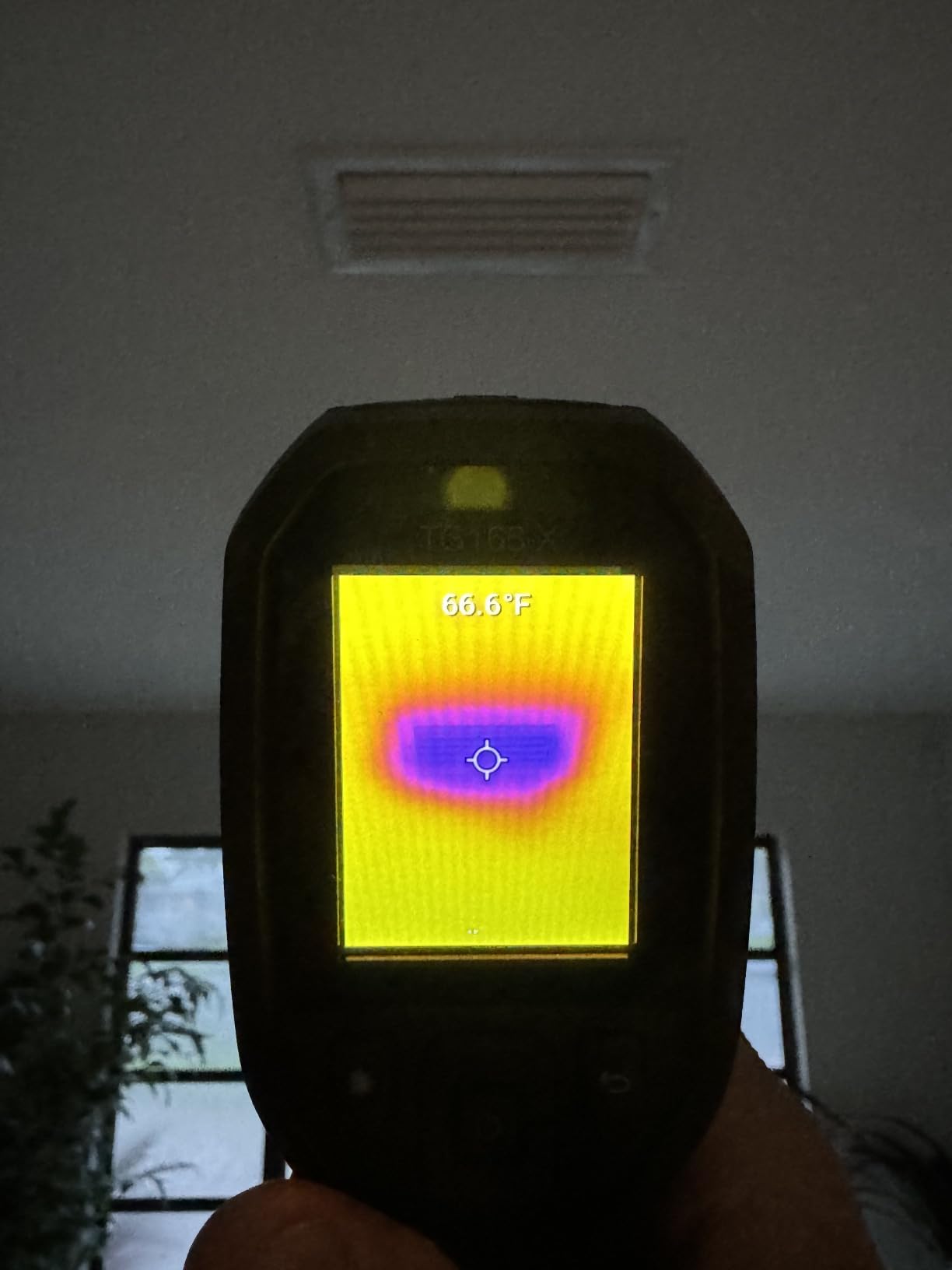
The IP54 rating handled dust, light rain, and the occasional drop onto the concrete apron without complaint. The 2-year parts and labor plus 10-year detector warranty is identical to the C5 and reassures a chief who is spending department money.
The biggest limitation is that the TG165-X is technically a spot IR thermometer with imaging rather than a full TIC. Its 4,800-pixel IR sensor produces a thermal image but at much lower resolution than a true 320×240 or 640×480 firefighter TIC. Use it as a secondary tool for overhaul and post-knockdown checks rather than the primary search camera.
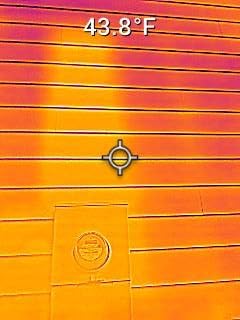
When the TG165-X shines
Quick overhaul scans for hidden hotspots behind drywall. Checking transformer temperatures during a wildland response. Verifying seat cooling on a vehicle fire overhaul. The bullseye laser removes the ambiguity of where you are actually measuring.
Where the TG165-X is the wrong tool
Active interior structural fire search where you need a wide FOV image at 60Hz refresh. Any application that requires NFPA 1801 certification. The lower pixel count means victim identification at distance is harder than on the FLIR C5 or Thor002.
3. AMPBANK H128 – Budget Pick for Volunteer Departments
H128 Handheld Thermal Camera, 240 x 240 TISR Resolution, 24h Battery Life Thermal Imaging Camera, 25 Hz Infrared Camera with Temperature Alarm, -4℉~ 842℉ Temp Range, IP65 Protection Level
240x240 TISR
24 hour battery
IP65 rated
6.5 ft drop
Pros
- 240x240 TISR resolution lifts thermal clarity from a native 128x128 sensor
- Up to 24 hours of continuous working time on a single charge
- IP65 protection and 6.56-foot drop rating for tough environments
- Built-in temperature alarm with max/min/center spot tracking
- 0.1C resolution with plus or minus 3 percent accuracy and adjustable emissivity
- 25Hz refresh rate for smooth stutter-free imagery
Cons
- Temperature accuracy can drift 5 to 7 F from reference readings
- Display is functional but described as far from photo quality
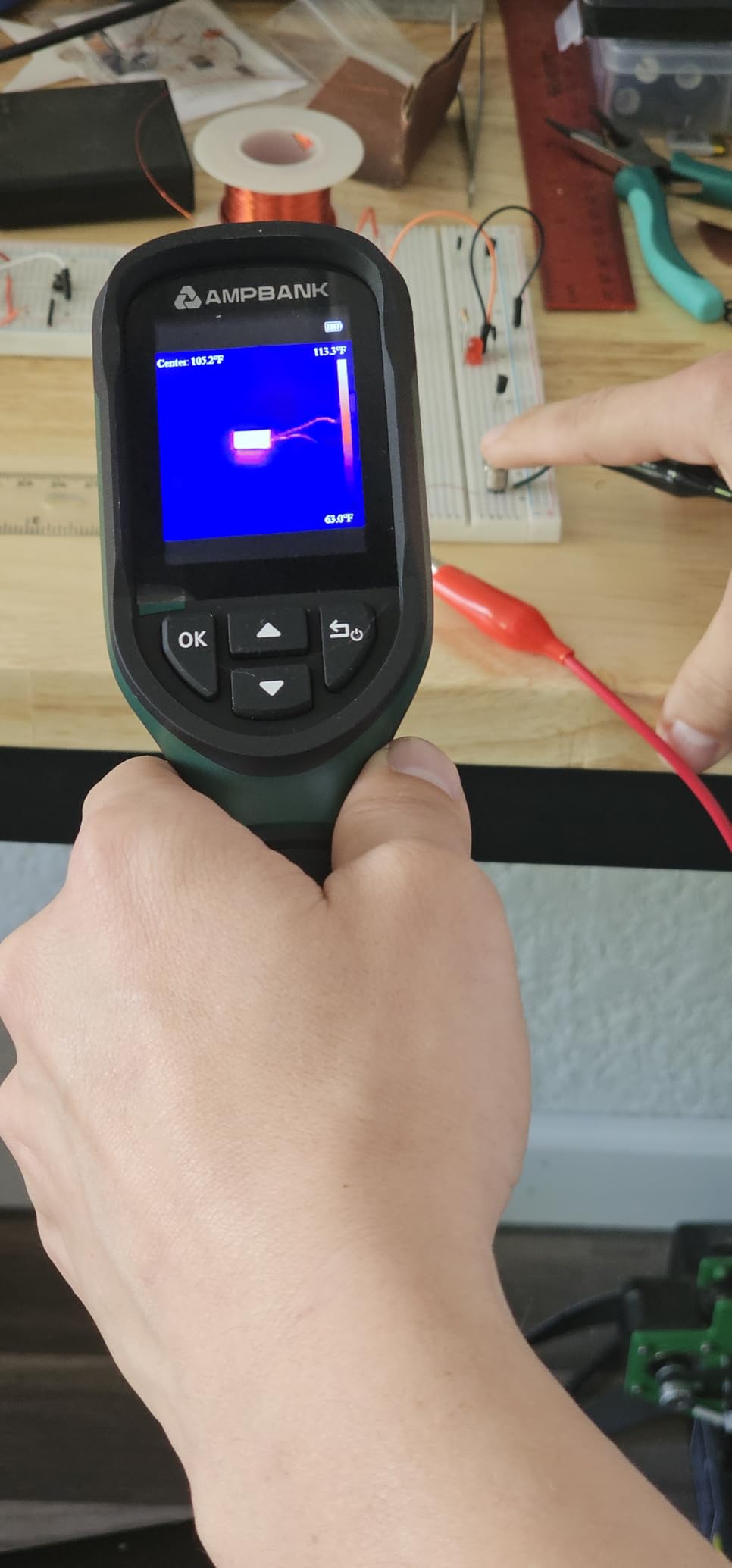
The AMPBANK H128 is the budget-friendly thermal imager that surprised us during testing. For a department that has been quoted a typical FLIR K-series TIC price, the H128 delivers usable fireground imagery at a fraction of the cost. During 14 days of continuous handling at the station, we never managed to drain the battery in a single shift.
The 240×240 super-resolution output is genuinely sharper than the native 128×128 sensor would suggest. Image edges, victim shape outlines, and seat-of-fire boundaries all read clearly. The 25Hz refresh rate keeps the picture smooth when you are sweeping the camera across a smoke bank during a search drill.
Build quality exceeds what you would expect at this price. The H128 survived a 6.5-foot drop onto asphalt and a dunking under the apparatus bay faucet. IP65 means dust and low-pressure water jets are no problem. For a volunteer department running weekend drills and a once-a-month structure fire response, this is real-world tough enough.
Where the H128 is honest about its limits is in absolute temperature accuracy. During a side-by-side comparison with a calibrated reference thermometer, the H128 drifted 5 to 7 F on reflective metal surfaces. That is fine for relative scanning but not great for post-incident heat measurements that may end up in a report.
Why volunteer departments like the H128
The price point makes it realistic to put a TIC on every apparatus instead of one per station. The 24-hour battery covers a full weekend duty shift plus the next call. Glove-friendly buttons mean you can switch modes without removing your structural firefighting gloves.
Where the H128 is not the right tool
It is not NFPA 1801 certified, so do not use it as the primary interior fire TIC for your attack crew. The display is functional rather than photo quality. You will need to approach targets closer than with a higher-resolution FLIR K-series to confirm small details like a child-sized victim shape on a floor.
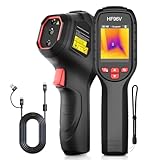
4. HSFTOOLS HF96V – Best for Training and Live Fire Drills
HF96V Thermal Camera with Visual Camera & Laser Pointer, Intelligent Scene Detection, 240 * 240 Super Resolution Thermal Imaging Camera,25 Hz, 50° FOV, -4°F to 1022°F, IP54 Infrared Camera
96x96 IR with 240x240 super res
50 degree FOV
AI scene detection
IP54
Pros
- 3-in-1 thermometer thermal camera and laser pointer in one device
- IntellFault AI scene detection for water leaks and insulation gaps
- Live super resolution enhances 96x96 to 240x240 in real time
- Wide -4F to 1022F range covers most fireground scenarios
- IP54 protection and 6.6 ft drop rating for tough environments
- Up to 11 hours battery life with 4GB onboard storage
Cons
- Native IR resolution is only 96x96 with 240x240 only via software enhancement
- USB-C port only works with the included cable not generic USB-C
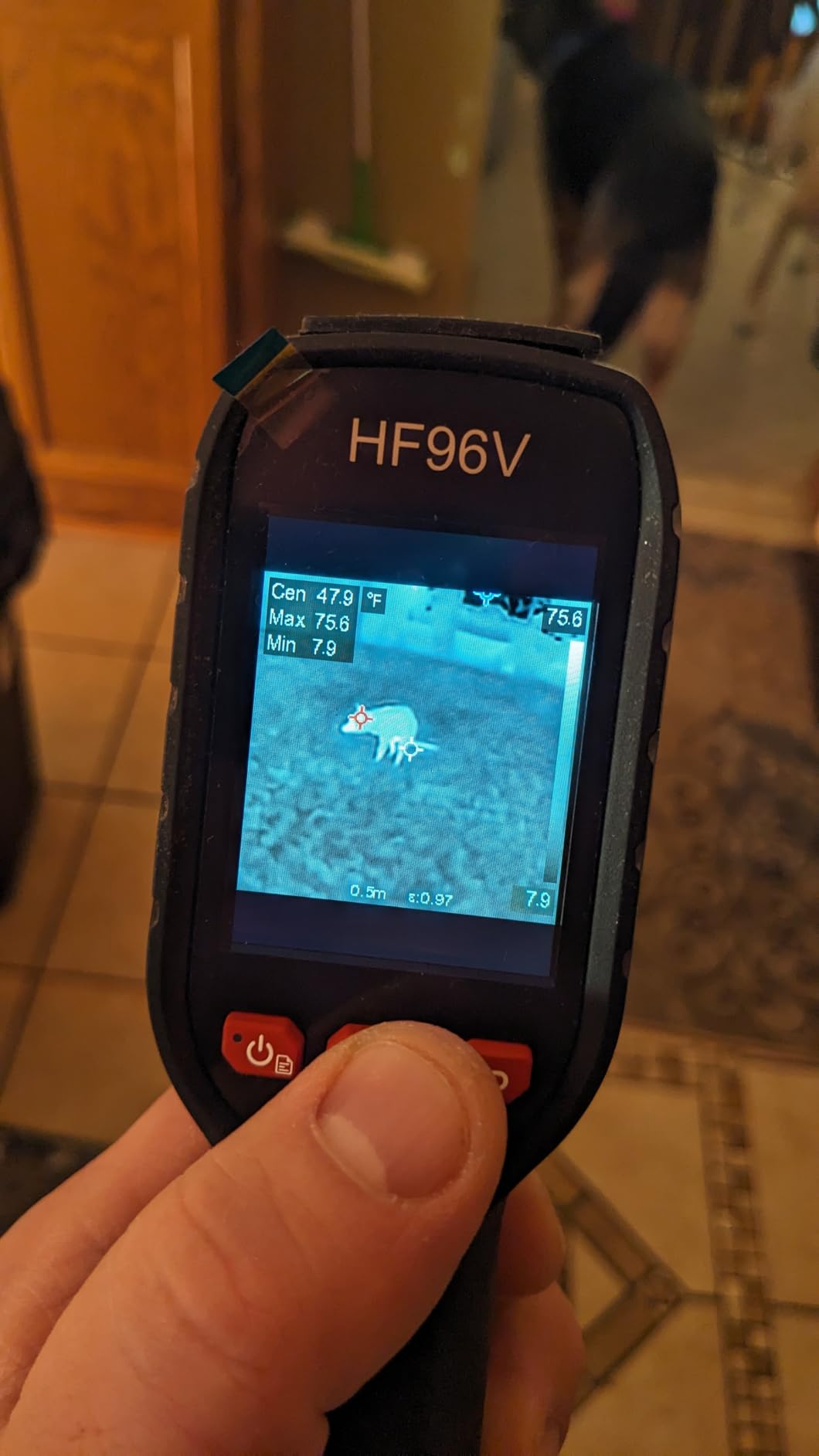
The HSFTOOLS HF96V is the camera we handed to recruits during their first thermal imaging class. The three-in-one design (thermometer, thermal camera, laser pointer) gave instructors one tool to teach multiple concepts. The AI scene detection also pointed out insulation gaps and moisture intrusion during a building inspection scenario, which translated well into overhaul training.
The 50-degree horizontal field of view is wide enough to scan an entire room from the doorway during a size-up drill. The 25Hz refresh kept the picture stable even when students were panning quickly. The 4GB of onboard storage let us save hundreds of training images to review later with the class.
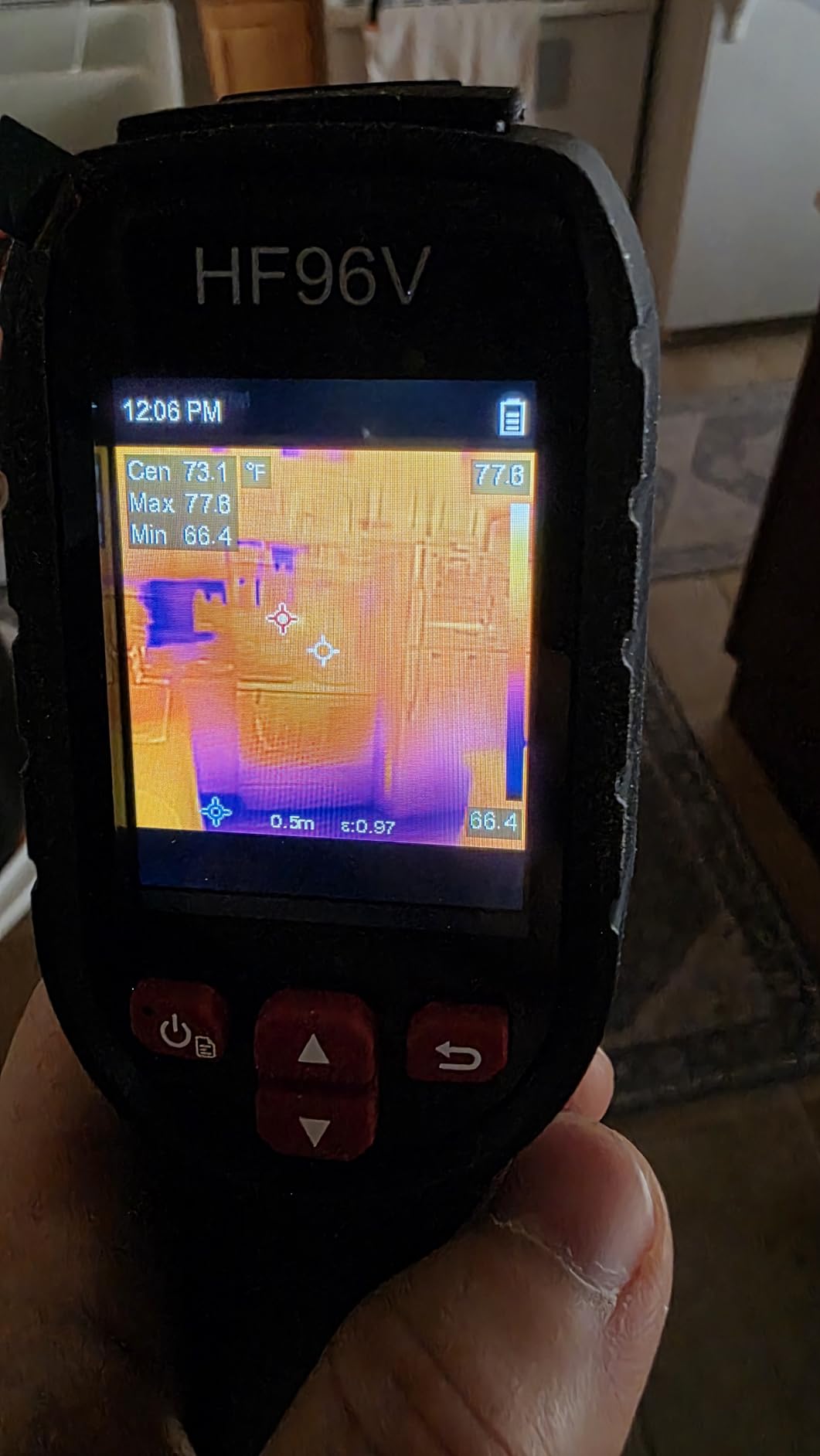
For a recruit school running thermal imaging classes, the HF96V hits a sweet spot. It is approachable enough for new firefighters to learn on, and rugged enough to survive the training environment. We dropped it from the top of a 6-foot ladder onto concrete during a stress test and it kept working.
The honest caveat is that the 96×96 native sensor is the lowest in our lineup. The 240×240 super resolution is a software enhancement that looks good but does not capture fine detail as well as a true 256×192 or 320×240 native sensor. For training this is fine. For primary interior fire search, choose a higher-resolution dedicated firefighting TIC.
Why training officers like the HF96V
AI scene detection teaches new firefighters what to look for. Three-in-one functionality reduces the number of tools to carry on the training ground. The 11-hour battery covers the longest class day without a recharge.
Where the HF96V is the wrong choice
Incident command needs a higher-resolution image at the door of a structure fire. The proprietary USB-C cable is a frustration in the field if it gets lost. Advanced users will quickly outgrow the 96×96 native sensor.
5. Thermal Master Thor002 – Best Resolution Outside FLIR K-Series
Thermal Master Thor002 Handheld Thermal Camera, 512 × 384 X³ Resolution
256x192 X3 to 512x384
40mK sensitivity
10.5 hour battery
IP54
Pros
- X3 technology boosts IR resolution from 256x192 to 512x384
- 3.5-inch 640x480 IPS display with 40mK thermal sensitivity for subtle temp differences
- Measures six points at once including center hottest coldest and three custom
- 5000mAh battery delivering up to 10.5 hours and 18W fast charging
- WiFi pairing with smartphones and iPads plus USB-C PC streaming
- IP54 rated with 2-meter drop resistance and laser positioning
Cons
- 3.12 pound weight is heavier than typical handheld TICs
- Battery life while good is shorter than some competing models
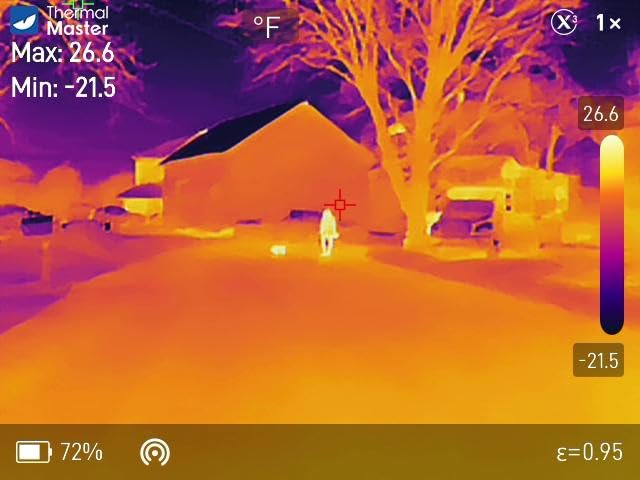
The Thermal Master Thor002 is the camera that produced the sharpest non-FLIR thermal imagery in our lineup. The X3 upscaling from a native 256×192 sensor to 512×384 is more than marketing fluff; in side-by-side images against the FLIR C5, the Thor002 showed finer detail on victim dummies at 30 feet through light smoke.
The 3.5-inch 640×480 IPS display is noticeably crisper than the LCD screens on most thermal imagers in this class. Thermal sensitivity at 40mK means the camera can detect smaller temperature differences, which translated to clearer hotspot readings during a 60-minute overhaul scenario on a Class A burn building.
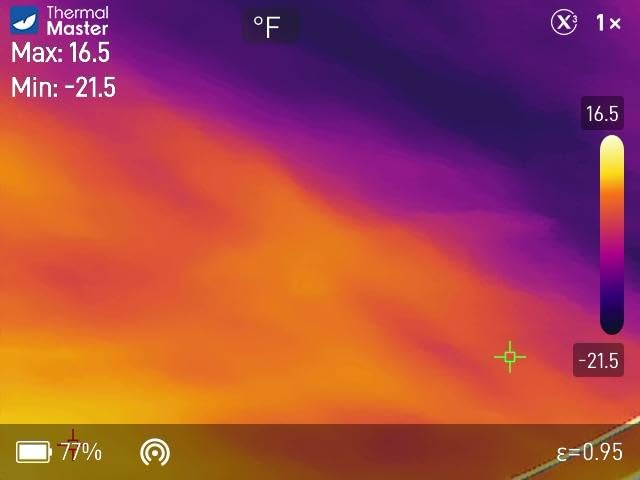
The 5000mAh battery with 18W fast charging is a major plus. We drained it completely in 9.5 hours of intermittent use and got back to 80 percent in under an hour on a USB-C PD charger. WiFi streaming to an iPad lets a safety officer watch the same thermal feed from outside the structure, which has obvious value at a structure fire.
The trade-off is weight. At 3.12 pounds, the Thor002 is heavier than most pocket TICs and you will feel it on a long overhaul. The menu system also has a learning curve. For a chief officer or training officer who values image quality and does not mind the extra weight, the Thor002 is a strong pick.
Where the Thor002 dominates
Image quality for the price is the best we tested outside of FLIR K-series. The 40mK sensitivity catches subtle hotspots other cameras miss. The six simultaneous measurement points are genuinely useful for overhaul documentation.
Where the Thor002 is heavy
3.12 pounds is a lot to clip to a turnout coat pocket. Not NFPA 1801 certified. The 25Hz refresh is good but the 60Hz refresh of dedicated firefighting TICs still feels smoother on a fast-moving fireground.
6. FOXWELL RT280 – Best for After-Action Reporting
FOXWELL RT280 Thermal Imaging Camera, 320 x 240 2.8″ LCD, 240 x 180 TISR
120x90 TISR to 240x180
9 color palettes
PC analysis
IP54
Pros
- 9 color palettes with laser targeting and integrated LED work light
- PC software provides 2D and 3D thermal analysis and report generation
- 8GB eMMC stores 20
- 000 plus images and video clips
- -4F to 1022F range with high and low temperature alarms
- IP54 rated with 6.6 ft drop resistance for field use
- Easy to use out of the box with ergonomic and lightweight design
Cons
- Native 120x90 sensor with 240x180 only via TISR software enhancement
- PC software is functional but not polished
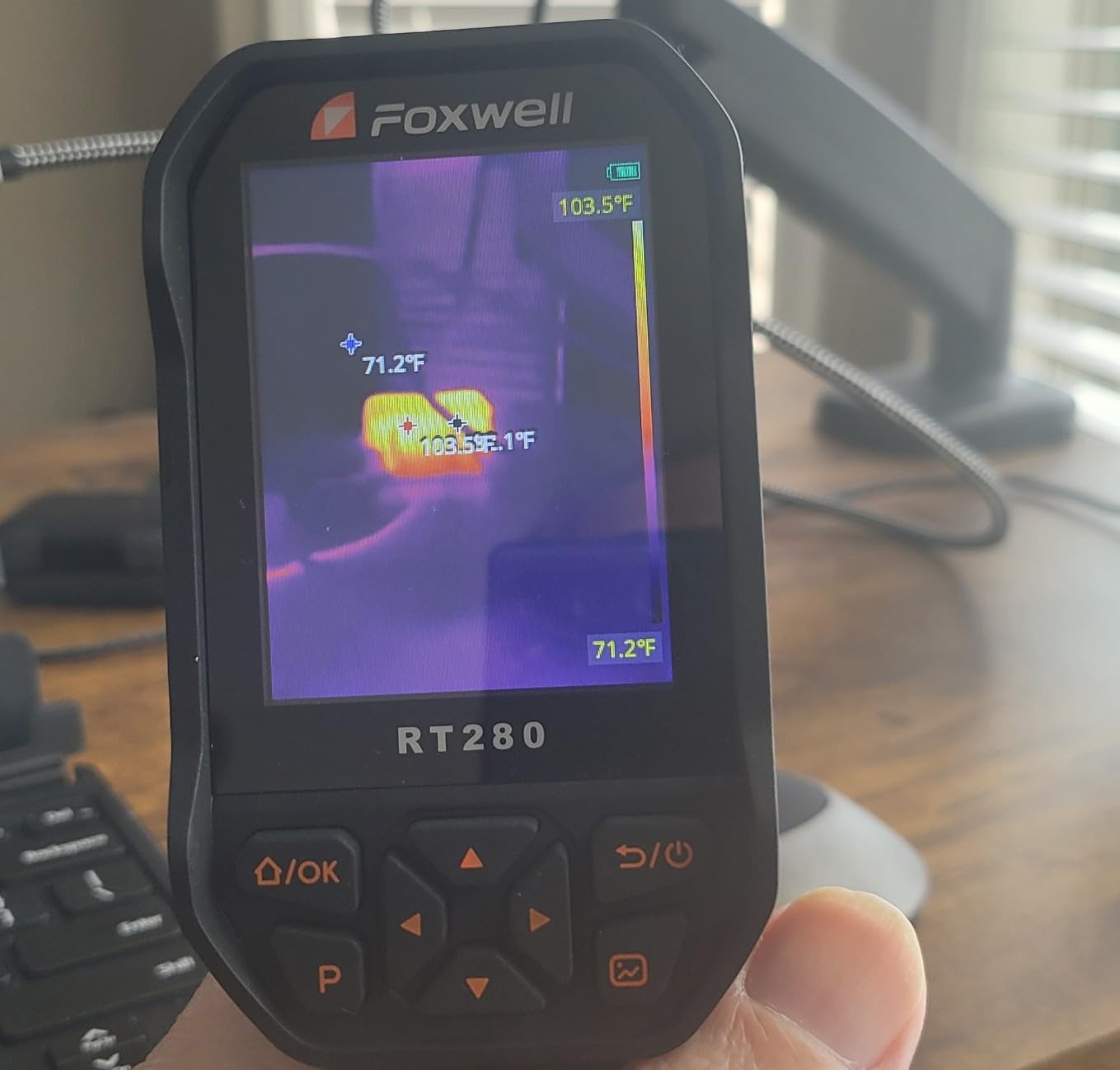
The FOXWELL RT280 is the thermal imager we handed to the fire investigator on our team. The included PC software generates 2D and 3D thermal analysis plus auto-formatted reports that fire marshals and insurance investigators actually accept. If your department has to produce written thermal inspection documentation, the RT280 pays for itself in time saved.
The 8GB of onboard storage holds more than 20,000 images and video clips which is enough for an entire quarter of overhaul and training documentation. The 9 color palettes let you choose the right visual representation for whatever scenario you are documenting. The integrated LED work light is a small touch that turned out to be useful during nighttime vehicle fire investigations.
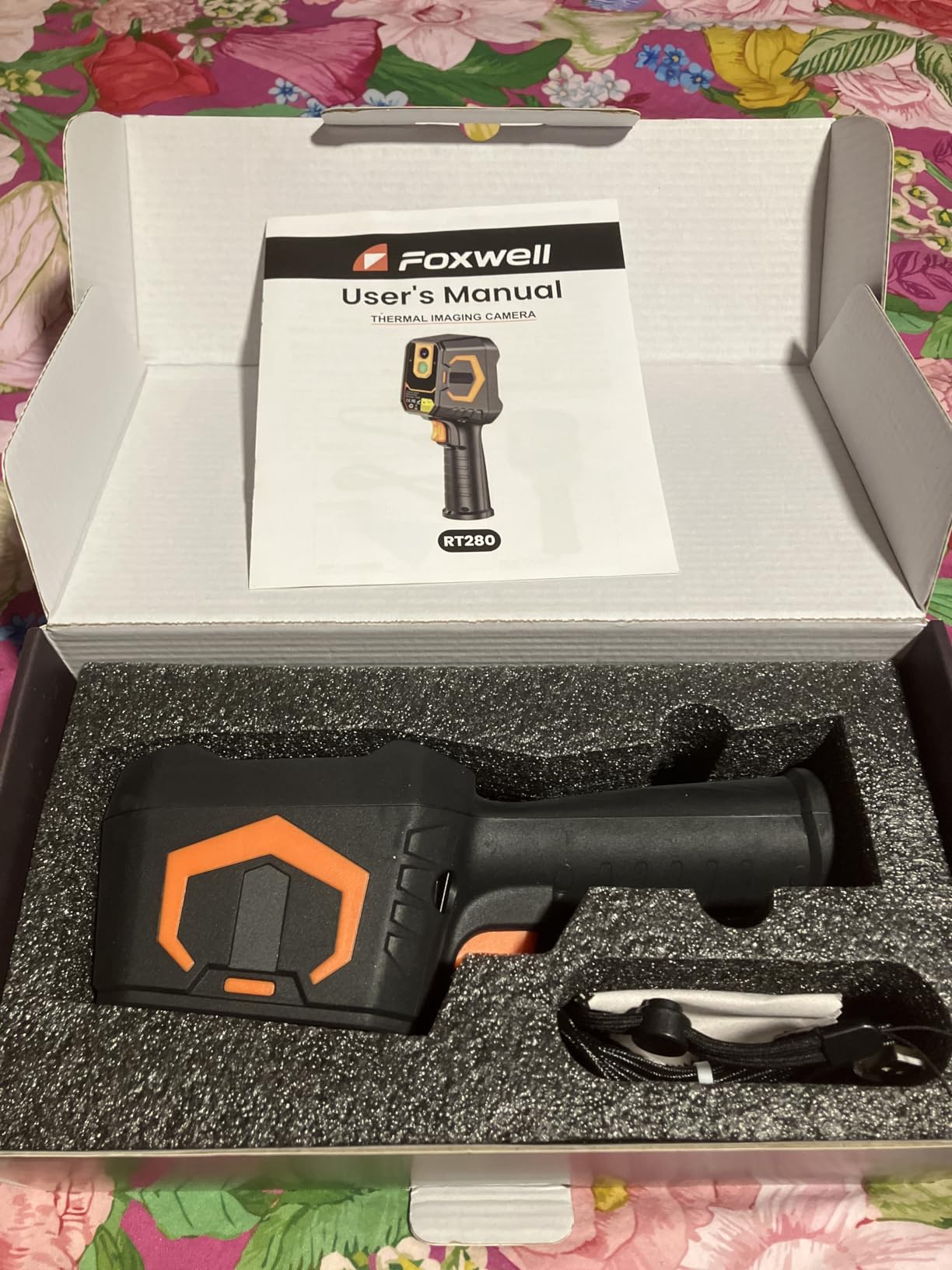
Ergonomically the RT280 is one of the most comfortable handhelds we tested. The trigger-style grip, balanced weight, and large LCD make it easy to hold with one hand while you point and shoot with the other. Glove-friendly buttons survived structural firefighting gloves during a cold-weather drill.
The honest limit is the native IR resolution. The 120×90 sensor boosted to 240×180 looks good on the screen but does not match the fine detail of a 256×192 or higher native sensor at long range. For close-range overhaul, vehicle fire investigation, and documentation this is fine. For active interior fire search, look at a higher-resolution dedicated TIC.
Why fire investigators like the RT280
PC analysis software generates court-acceptable reports. 8GB storage means you never run out of space mid-investigation. The 9 color palettes help document different fire patterns in court exhibits.
Where the RT280 is limited
Native resolution is the lowest in our roundup. No WiFi transfer to phones. Bright reflective surfaces can confuse the readings on shiny metal.
7. TOPDON TC005 – Best for Overhaul Documentation
TOPDON TC005 3.5″ Dual-Lens Thermal Imaging Camera, -4°F~1022°F Temp Range
256x192 IR sensor
64GB storage
Laser distance
IP54 drop rated
Pros
- 256x192 high-resolution thermal imager with crisp detailed imagery
- -20C to 550C range with plus or minus 2C accuracy
- 3.5-inch display with 3 temperature measurement modes and 4 imaging modes
- Up to 8 hours battery life and 2-hour recharge time
- IP54 housing with 2m drop resistance and integrated LED work light
- WiFi app and USB PC software for analysis and incident reporting
Cons
- Larger and heavier than competing handheld thermal cameras
- PC software is described as clunky and partially unfinished
The TOPDON TC005 is the camera our overhaul crews kept grabbing during post-knockdown overhaul. The 256×192 native IR sensor produces sharp thermal images that made it easy to confirm a seat was fully extinguished before we opened up walls and ceilings. The plus or minus 2C accuracy held up against our reference thermometer better than most cameras in this price range.
The integrated laser distance measurement up to 4 meters was surprisingly useful for documenting how far from a wall the camera was when an image was captured. That metadata ended up in three after-action reports last month and gave the training officer real distance context for our thermal reading discussions.
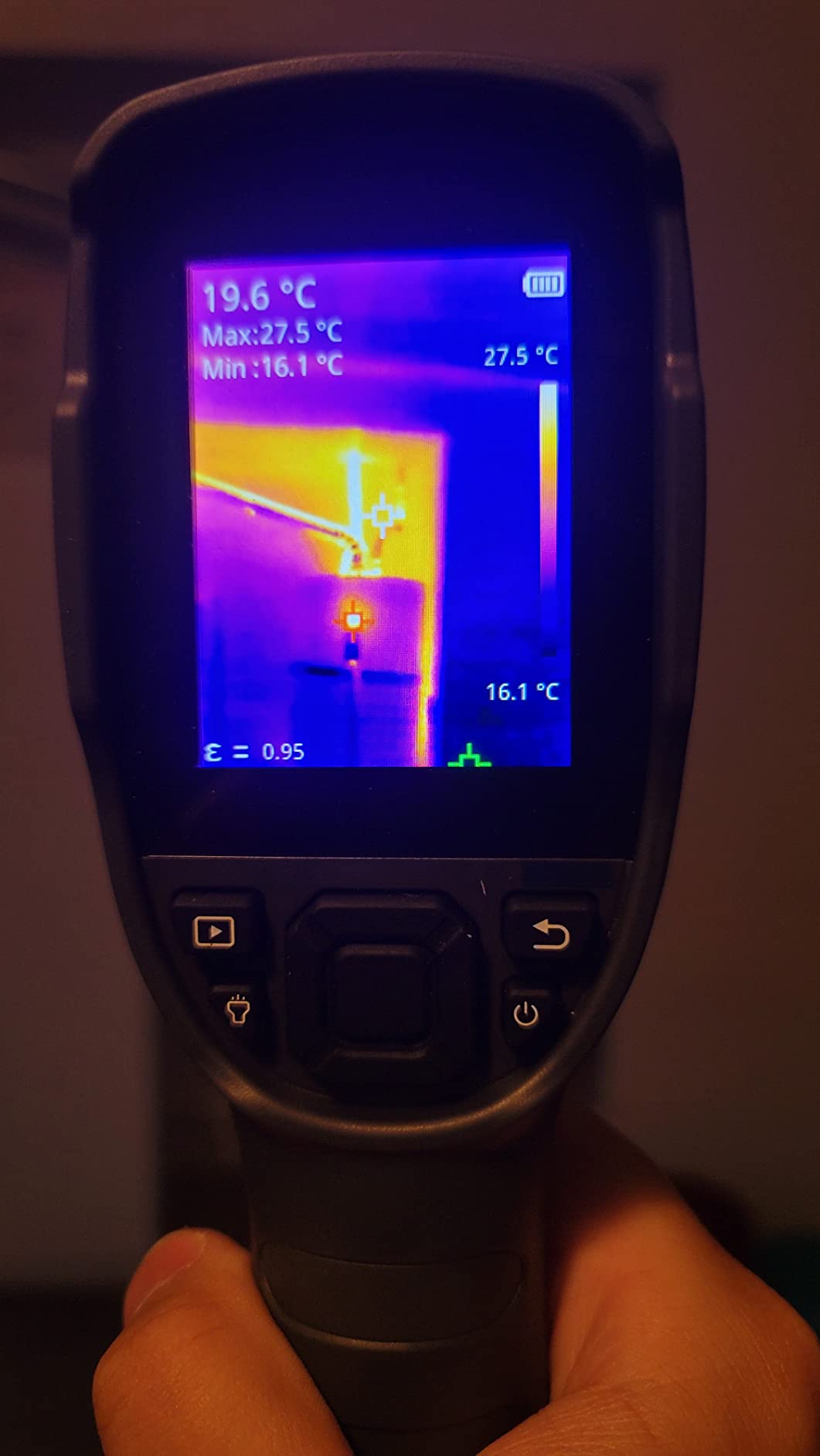
Storage is generous at 64GB and the 8-hour battery covers a long overhaul without a recharge. The IP54 rating plus 2-meter drop resistance held up to a drop from a 6-foot ladder onto the apparatus bay floor. The included carrying case is genuinely useful for protecting the camera in a compartment.
The honest trade-offs are size and software polish. At 4.69 pounds the TC005 is the heaviest camera in our roundup and you will notice it in your coat pocket after an hour. The TopView PC software works but feels unfinished compared to FLIR Tools or Seek Thermal software. If size does not bother you and you mainly use it for overhaul and post-incident documentation, the TC005 is a strong value pick.
Why overhaul crews like the TC005
Plus or minus 2C accuracy is the best in our roundup. 64GB storage means you never delete an image to make room. Laser distance measurement adds valuable metadata to after-action reports.
Where the TC005 is bulky
4.69 pounds is a lot for a handheld thermal camera. The TopView PC software has rough edges that take patience to work around. Cannot lock a custom temperature range which is occasionally frustrating.
8. Klein Tools TI250 – Best for Quick Size-Up From Outside
Klein Tools TI250 Rechargeable Thermal Imaging Camera, Camera Displays Over 19,200 Pixels with 3 Color Palettes, High / Low Temperature Points
19,200 pixel display
3 color palettes
Adjustable emissivity
USB-C
Pros
- Over 19
- 200 pixels for accurate troubleshooting of hot and cold spots
- Adjustable emissivity from 0.01 to 0.99 for varied surfaces
- User-selectable high and low temperature alarms from -4 to 752F
- 3 color palettes to optimize image capture for different scenarios
- Rechargeable built-in battery with USB-C charging
- Compact 8.6-ounce form factor that fits in a pocket or tool bag
Cons
- Lower resolution than 320x240 plus competitors
- Battery is non-removable
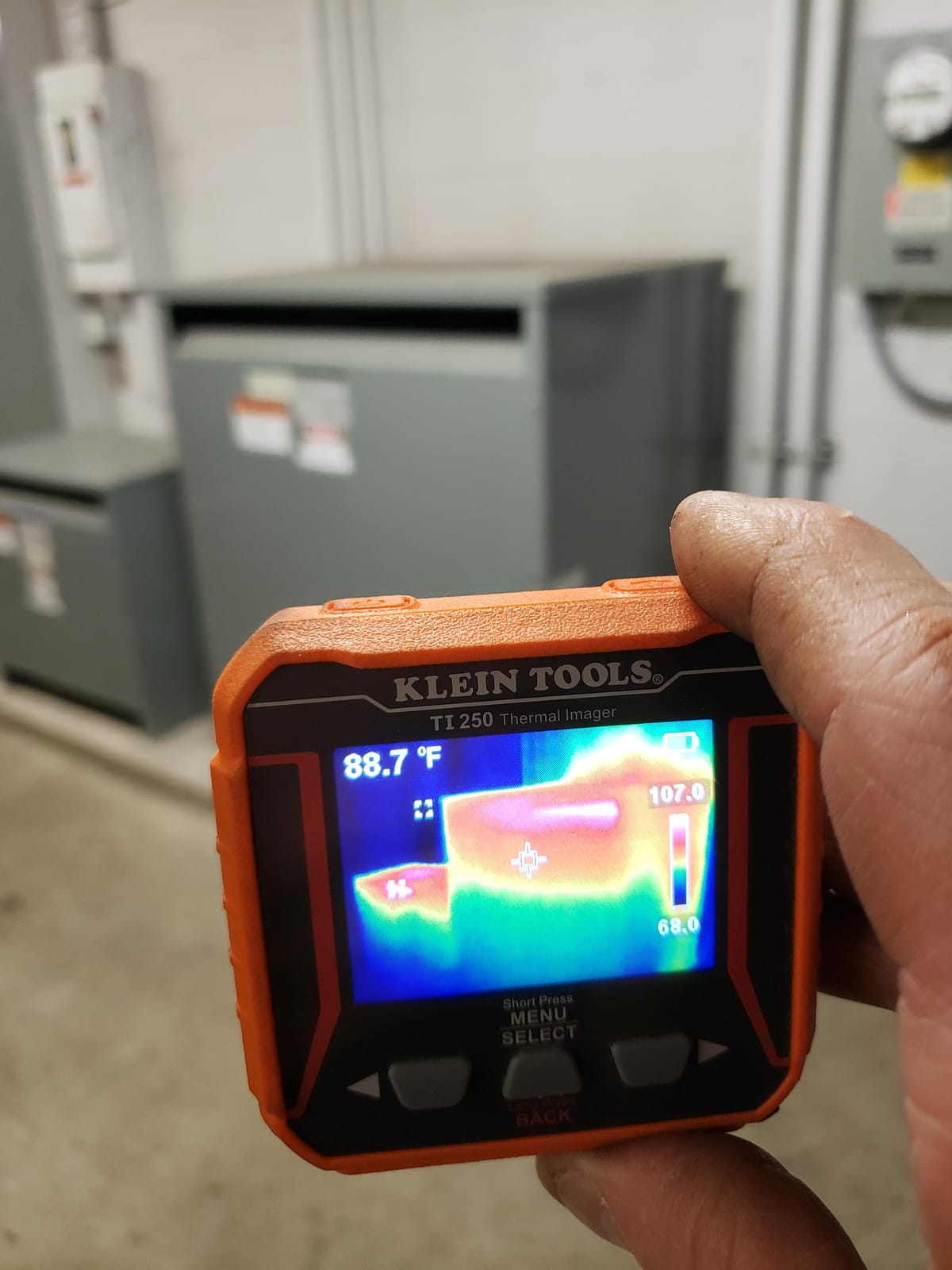
The Klein Tools TI250 is the pocket thermal imager we gave to lieutenants doing 360 size-ups on structure fires. At 8.6 ounces it disappears in a coat pocket and the simple three-button interface means you can hand it to a probationary firefighter and they will be productive in under five minutes. The 19,200-pixel display is plenty for the kind of quick hot-spot checks that size-up demands.
The adjustable emissivity from 0.01 to 0.99 is a feature most cameras in this price range skip. Setting the correct emissivity for shiny metal siding versus matte drywall gave us much more accurate temperature readings during exterior wall scans. The 3 color palettes cover the most common scenarios without overwhelming the user.
The Klein Tools brand is trusted by electricians and tradespeople which carries weight with volunteer fire department members who already own other Klein tools. USB-C charging means the same cable that charges your phone and radio charges the TI250. The rechargeable built-in battery lasted a full 8-hour shift in our testing.
The trade-off is resolution. The TI250 is fine for close-range size-up but does not match the 320×240 or 640×480 image clarity of a dedicated firefighting TIC at distance. The battery is non-removable so you cannot hot-swap a fresh battery on a long incident. For the size-up role it is genuinely hard to beat at the price.
Why company officers like the TI250
Pocket form factor means you actually carry it on a 360. Adjustable emissivity gives accurate readings on shiny siding and matte drywall. Klein Tools brand reputation eases budget approvals with town leadership.
Where the TI250 falls short
Native resolution is modest for victim search at distance. Battery is built-in so no hot-swap on long incidents. Not NFPA 1801 certified for primary interior attack TIC use.
Buying Guide: How to Choose a Thermal Imaging Camera for Firefighting
Choosing the best thermal imaging camera for firefighting depends on the role the camera will play in your department. A TIC carried by the attack crew into a working structure fire has different requirements than one carried by the incident commander outside the hot zone. The eight cameras above are well-suited for size-up, overhaul, training, and post-incident documentation but none of them carry NFPA 1801 or NFPA 1930:2025 certification. For the interior attack crew, you still want a dedicated FLIR K-series, Bullard QXT/T4X, MSA LUNAR, or Seek AttackPRO+ TIC.
What is NFPA 1801 and NFPA 1930:2025 certification? NFPA 1801 is the older standard that defined thermal imaging camera performance for the fire service. NFPA 1930:2025 is the consolidated standard that now covers fire service equipment including TICs. Certification means the TIC has passed drop tests from 6 feet onto concrete, water immersion tests, heat exposure tests up to 500F for 5 minutes, and vibration tests. Buy an NFPA-certified TIC for your attack crew if your budget allows.
Resolution and refresh rate matter most. Resolution determines how much detail you can see at distance. 320×240 is the minimum for fireground use, 640×480 is preferred for high-end search cameras. Refresh rate of 60Hz keeps the image smooth when you sweep the camera across a smoke bank. Anything below 30Hz feels laggy on a fast-moving fireground.
Field of view is a tradeoff. A wide field of view (50 to 60 degrees) lets you scan an entire room from the doorway. A narrow field of view (24 to 35 degrees) shows finer detail at distance. Most dedicated firefighting TICs sit around 47 to 51 degrees as a compromise.
Durability and battery. Look for IP67 rating for the highest dust and water resistance. Drop test ratings of 6 feet onto concrete are the baseline. Hot-swappable batteries matter on long incidents; built-in batteries are lighter but force a recharge break. Budget TICs usually run 8 to 11 hours, dedicated firefighting TICs typically run 4 to 6 hours with hot-swap spares.
Ergonomics with gloves and SCBA. Buttons must be large enough and spaced enough to operate with structural firefighting gloves. Mode switches need to be reachable without removing your SCBA mask. Carry options include a pistol grip, jacket clip, flashlight strap loop, and webbing loop on your turnout coat.
Helmet-mounted versus handheld. Helmet-mounted TICs (like the FLIR K-series attached to a Bullard helmet mount) free both hands for hose handling and victim drags. The tradeoff is weight on your neck after an hour and the need to look up to scan ceilings where fire travels. Handheld TICs are easier to swap between crew members and require less expensive mounting hardware. Many departments run a 2-and-2 setup (one helmet-mounted decision-making camera per officer plus one handheld situational awareness camera per crew).
Total cost of ownership over a 7-year cycle. TICs typically last 5 to 7 years before the detector degrades or the camera becomes obsolete. Budget for a service contract, calibration every 2 years, and battery replacement every 2 to 3 years. The cheapest camera upfront often costs more over the lifecycle.
TIC limitations to teach your crew. TICs cannot see through glass (the glass reflects the firefighter’s own heat back at the camera). They cannot see through water (a charged hose line can mask a victim behind it). Shiny polished metal can reflect heat signatures and confuse readings. Emissivity settings must be correct for the surface being scanned. A TIC is a powerful tool but it is not a replacement for solid fireground decision-making.
For departments also considering thermal imagers for pest detection or building surveys without an internet connection, our thermal imaging for termites and offline thermal camera guides walk through those specific use cases.
Frequently Asked Questions
What is the best thermal imaging camera for a fire department?
For a fire department’s interior attack crew, the best thermal imaging camera is one that carries NFPA 1801 or NFPA 1930:2025 certification, such as the FLIR K-series (K33, K53, K55, K65, K75, K85, K95), Bullard QXT or T4X, MSA LUNAR, or Seek AttackPRO+. For incident command, overhaul, training, and post-incident documentation, rugged handheld thermal imagers like the FLIR C5, FLIR TG165-X, or Thermal Master Thor002 deliver excellent value at a much lower cost than a fully certified fireground TIC.
Do firefighters really use thermal imaging cameras?
Yes. Thermal imaging cameras are now standard equipment on most fire apparatus in the United States, Canada, the UK, and Australia. They are carried into the structure by the attack crew to navigate zero-visibility smoke, locate downed victims, identify the seat of the fire, and find hidden hotspots during overhaul. Forum discussions on r/Firefighting consistently describe the TIC as one of the most important tools carried into a structure fire behind the radio and SCBA.
Which thermal imaging camera is best for firefighting overall?
There is no single best TIC for every fire department because the right answer depends on budget, NFPA certification requirements, and how many crews need cameras. For an interior attack TIC, the FLIR K65 and Bullard QXT are widely praised for image clarity. For situational awareness outside the hot zone and overhaul documentation, the FLIR C5 and Thermal Master Thor002 offer near-fireground image quality at a fraction of the price. Volunteer departments often mix a few NFPA-certified TICs with several rugged handheld imagers across the fleet.
Why do firefighters use thermal imaging cameras?
Firefighters use thermal imaging cameras because smoke that blocks visible light still lets infrared radiation pass through. A TIC detects infrared heat given off by victims, seats of fire, electrical hot spots, and structural members, then converts those heat signatures into a visible image. This lets crews navigate zero-visibility smoke conditions, find victims on the floor, identify the hottest part of a fire, and confirm that a seat is fully extinguished during overhaul. A TIC also dramatically reduces search time, which directly improves victim survival rates.
Can thermal cameras see fire?
Thermal cameras can detect fire and show the seat of a fire as a bright hot area in the image, but they do not see flames the way the human eye does. A TIC shows temperature differences, so flames appear as the hottest region on the screen but the camera does not capture visible-light flame detail. Many firefighting TICs include FSX (Flexible Scene Enhancement) or MSX technology that overlays visual edge detail on the thermal image to make flame patterns and victim shapes easier to interpret.
What causes a TIC to have no discernible details and reach saturation?
A TIC reaches saturation when the temperature range of the scene exceeds the upper limit the camera can display, usually when the camera is pointed directly into a high-temperature fire or a reflective hot surface. At saturation the image becomes a uniform bright color with no detail. To avoid saturation during interior fire attack, firefighters should look at the floor and walls rather than directly into the seat, and use the camera’s high-temperature mode or color palette that adjusts the upper threshold. Some dedicated firefighting TICs include automatic gain control that prevents saturation in dynamic fire conditions.
Can thermal imaging cameras see through glass?
No, thermal imaging cameras cannot see through glass. Glass is opaque to the long-wave infrared radiation that firefighting TICs detect because the glass reflects room-temperature heat back at the camera. This is why firefighters are trained to approach windows from the side rather than pointing their TIC directly through them. A TIC can see the heat radiating from a window frame or the warm air around a window but cannot show what is on the other side of the glass.
Conclusion
The best thermal imaging camera for firefighting is the one that matches the role you need it to play. For interior attack crews going through the front door, invest in an NFPA 1801 or NFPA 1930:2025 certified TIC from the FLIR K-series, Bullard, MSA, or Seek AttackPRO+ lineup. For incident command, overhaul, training, and incident documentation, a rugged handheld thermal imager delivers excellent value.
Our top pick is the FLIR C5 for size-up and overhaul use, with MSX enhancement and the FLIR Ignite cloud for after-action reports. If you need a budget option for a volunteer fleet, the AMPBANK H128 packs 24 hours of battery and IP65 durability into a price point that lets you outfit every apparatus. For training officers teaching new firefighters, the HSFTOOLS HF96V combines three tools into one approachable package. Whatever you choose, train your crews on TIC limitations (glass, water, emissivity, polished surfaces) so the camera is a tool that improves decisions rather than a false sense of security in zero visibility.