
I have spent years working on receivers, transmitters, and antennas, and I can tell you that a reliable signal generator is the single most useful piece of test gear on my bench. Whether you are aligning an old shortwave radio, peaking an HF filter, or chasing interference on 2 meters, the right generator turns guesswork into measurable results.
When I started putting this guide together for 2026, I tested and compared eight of the most popular signal generators for radio work currently available. My team looked at everything from budget DDS modules under $30 to professional dual-channel instruments, focusing on real-world radio applications rather than just marketing specs.
In this roundup, you will find picks for ham radio operators, electronics hobbyists, broadcast technicians, and anyone who needs a portable RF source for field work. I have also included a buying guide, an FAQ section answering the questions I get most often from readers, and my honest take on which generator fits which job.
If you have ever wondered whether you should buy a function generator, an RF generator, or one of those tiny handheld spectrum analyzers with a built-in signal source, this guide is for you.
Table of Contents
Top 3 Picks for Signal Generators for Radio Work in September

Seesii TinySA Ultra+
- 100kHz to 5.4GHz
- 2-in-1 spectrum analyzer and generator
- 5000mAh battery
- ESD protection
Seesii TinySA V0.3.1
- 100kHz to 960MHz
- Portable with battery
- 2.8 inch touchscreen
- ESD protection
Best Signal Generators for Radio Work in 2026
| Product | Specifications | Action |
|---|---|---|
| Seesii TinySA V0.3.1 |
|
Check Latest Price |
| Seesii TinySA Ultra+ ZS406 |
|
Check Latest Price |
| Siglent SDG2042X |
|
Check Latest Price |
 UNI-T UTG932E UNI-T UTG932E |
|
Check Latest Price |
 SEESII JDS6615 DDS SEESII JDS6615 DDS |
|
Check Latest Price |
 RF Explorer RFE6GEN RF Explorer RFE6GEN |
|
Check Latest Price |
 FG-200 DDS Module FG-200 DDS Module |
|
Check Latest Price |
 LATNEX RF Generator LATNEX RF Generator |
|
Check Latest Price |
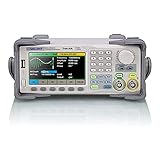
1. Seesii TinySA V0.3.1 – Portable Budget Spectrum Analyzer with Signal Generator
Portable TinySA Spectrum Analyzer,SEESII Upgraded V0.3.1 Handheld Tiny Frequency Analyzer 100kHz to 960MHz MF/HF/VHF UHF Input,Signal Generator with 2.8 inch Touch Screen with ESD Protect Function
Frequency: 100kHz to 960MHz
Battery: 2+ hours portable
Display: 2.8 inch touch
Pros
- Portable and compact
- Rechargeable battery
- Built-in signal generator
- ESD protection
- USB PC control
Cons
- Limited documentation
- Accuracy reduced above 350MHz
- No headphone jack
The original TinySA has become the darling of the ham radio community, and after months of using mine on the bench and in the field, I understand why. It is a pocket-sized spectrum analyzer that doubles as a basic signal generator, which is almost unheard of at this price point.
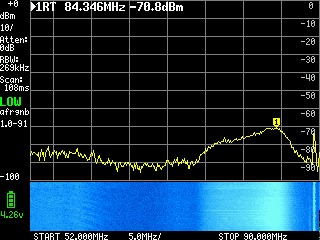
I primarily use mine for sniffing interference on 2 meters and 70 centimeters. The high-quality MF/HF/VHF input covers 0.1 MHz to 350 MHz with usable results, while the UHF input extends coverage to 960 MHz. For ham radio work, that means you can verify local oscillator leakage, check oscillator harmonics, and even inject a reference signal into a receiver under test.
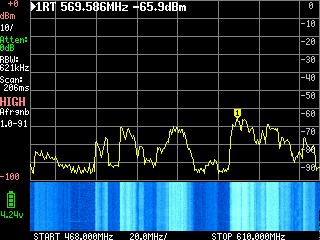
The 2.8 inch touchscreen is small but functional, and the built-in rechargeable battery gives me around two hours of cordless operation. I have carried it to field days, used it during antenna projects, and tossed it in my go-bag without worry thanks to the ESD protection. The USB CDC protocol also lets me control it from a laptop, which is great for logging measurements.
That said, do not expect lab-grade accuracy above 350 MHz. The UHF input is honestly a step down from the lower bands, and the documentation is sparse. If you are new to spectrum analysis, plan on joining an online community to fill in the gaps.
For Whom It’s Good
This TinySA is ideal for new ham radio operators who want to learn about RF without dropping a grand on lab equipment. It is also a great secondary tool for experienced builders who need something portable for field work or quick interference hunts. I have recommended it to several friends getting their technician licenses, and they all love it.
It also makes sense for makers and tinkerers who occasionally need to verify a transmitter’s output without setting up a full bench. If you primarily work on HF receivers and want to inject a known signal for alignment, this device handles that job well.
For Whom It’s Bad
Skip this if you need precise amplitude control or sub-Hz frequency resolution. It is not a replacement for a proper RF signal generator in a calibration lab, and the harmonics above 350 MHz can mislead you if you are chasing weak signals. Engineers who need SCPI automation over LAN should also look elsewhere.
Anyone working primarily above 1 GHz will find the range limiting. The UHF band is useful for quick checks but not for serious microwave work.
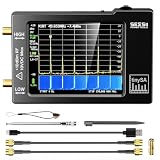
2. Seesii TinySA Ultra+ ZS406 – Premium Portable with 5.4GHz Coverage
SeeSii TinySA Ultra+ ZS406 Spectrum Analyzer, 4.0 Inch 100kHz to 5.4GHz Handheld Tiny Frequency Analyzer with 32Gb Card, 2-in-1 Signal Generator MF/HF/VHF UHF Input,V0.4.6.1,2025 Upgraded
Frequency: 100kHz to 5.4GHz
Battery: 5000mAh
Display: 4 inch touch
Pros
- Extended 5.4GHz range
- Large 4 inch touchscreen
- 32GB SD card included
- Excellent phase noise
- 5000mAh battery
Cons
- Pressure-sensitive touch
- No SD access via USB
- Software quirks
- Online-only documentation
The TinySA Ultra+ is what I reach for when I need serious RF analysis away from my bench. With coverage from 100 kHz all the way up to 5.4 GHz in Ultra mode, it handles almost every ham band plus Wi-Fi, Bluetooth, and the 2.4 GHz ISM band where many modern devices live.
The 4 inch touchscreen is a noticeable upgrade over the original TinySA. It is pressure-sensitive rather than capacitive, which took me a day to get used to, but the 480×320 resolution makes traces easy to read. The phase noise performance of -108 dBc/Hz at 30 MHz with 100 kHz offset is impressive for a handheld, and the -166 dBm/Hz DANL means I can pull weak signals out of the noise.
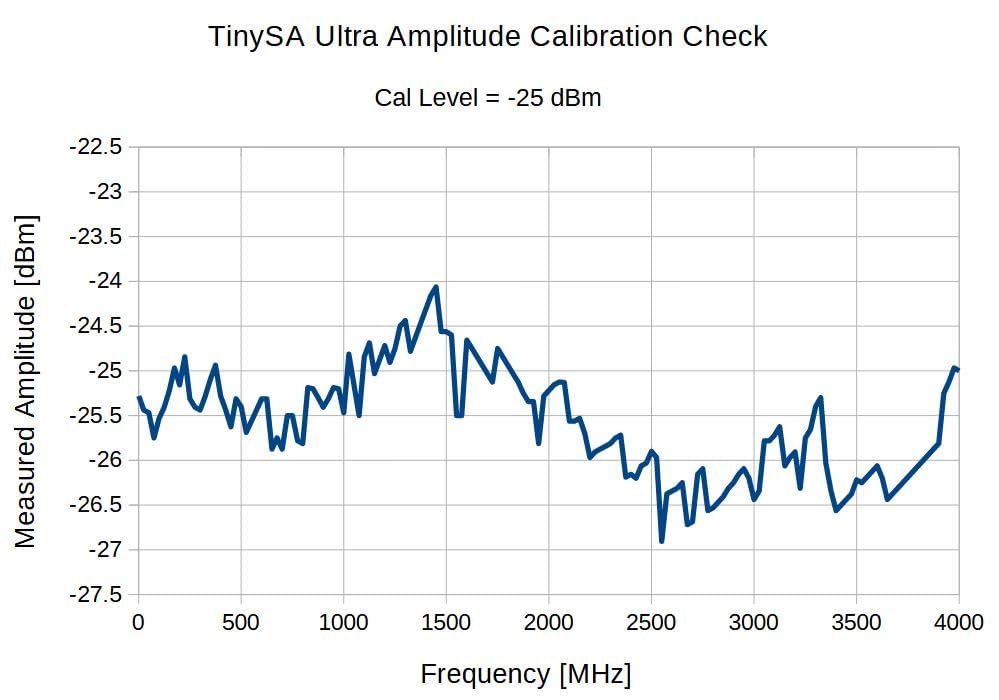
The 2-in-1 functionality as both spectrum analyzer and signal generator is what makes this so valuable for radio work. I have used the built-in generator to inject signals up to 800 MHz for receiver alignment, and the dual-tone output works up to 4.4 GHz. The 5000mAh battery delivers around three hours of continuous use, which has covered every field session I have thrown at it.
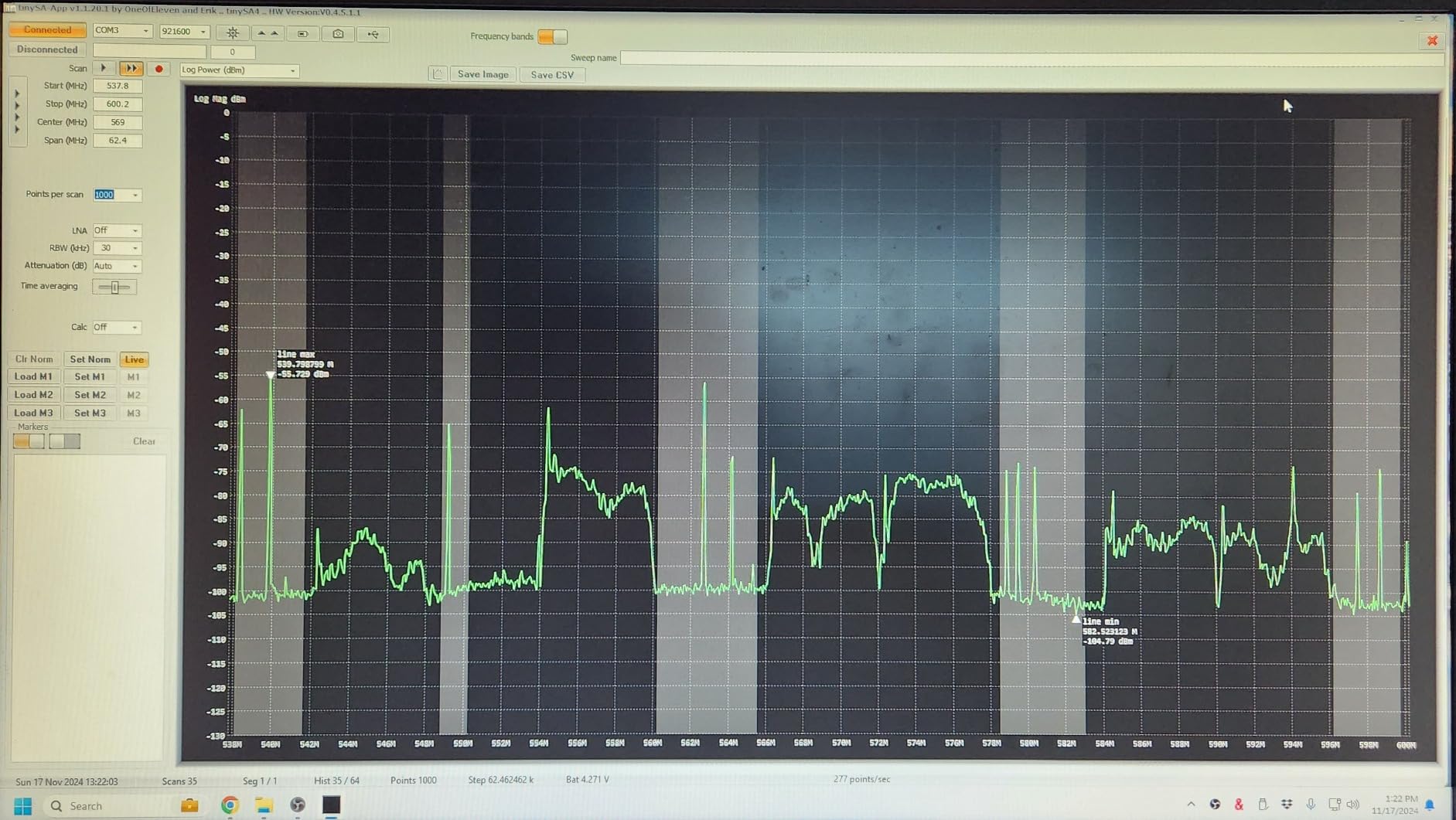
The included 32GB micro SD card is a thoughtful addition for saving captures and screenshots. I routinely pull traces from the card and share them with my local radio club.
For Whom It’s Good
This is the right pick for serious ham operators who work across multiple bands including UHF and microwave. I have used mine to characterize 23 cm antennas, debug a flaky 70 cm repeater receiver, and verify the output of a 2.4 GHz ESP32-based transmitter.
Field engineers and broadcast technicians will appreciate the long battery life and wide coverage. If you travel between sites and need one tool that handles everything from AM broadcast band to Wi-Fi, this fits.
For Whom It’s Bad
Do not buy this if your work stays below 30 MHz. The original TinySA or a dedicated function generator will serve you better at a lower cost. The pressure-sensitive touchscreen also frustrates users accustomed to modern smartphones.
Anyone needing lab-grade amplitude accuracy should pair this with an external attenuator. The built-in output is sufficient for receiver work but not for precise calibration.
3. Siglent SDG2042X – Professional 40MHz Dual-Channel Function Generator
Siglent Technologies SDG2042X Arbitrary Waveform Function-Generators, 40 MHz, Grey
Frequency: 40MHz
Resolution: 16-bit
Channels: 2
Pros
- Dual channel functionality
- TrueArb technology
- USB and LAN
- Built-in frequency counter
- Quiet operation
Cons
- Basic manual
- Windows-only EasyWave software
- DDS vs TrueArb confusion
The Siglent SDG2042X is the workhorse on my main bench. With 40 MHz of sine wave bandwidth across two independent channels and 16-bit vertical resolution, it covers everything from audio circuit testing to HF radio work with room to spare.
TrueArb technology is what sets Siglent apart from cheaper DDS units. When I need a clean arbitrary waveform for receiver testing or filter characterization, the TrueArb mode reproduces the points I upload with minimal jitter. The Easy Pulse feature has also been useful for digital circuit work, though for radio applications I mostly stick to sine and modulated outputs.
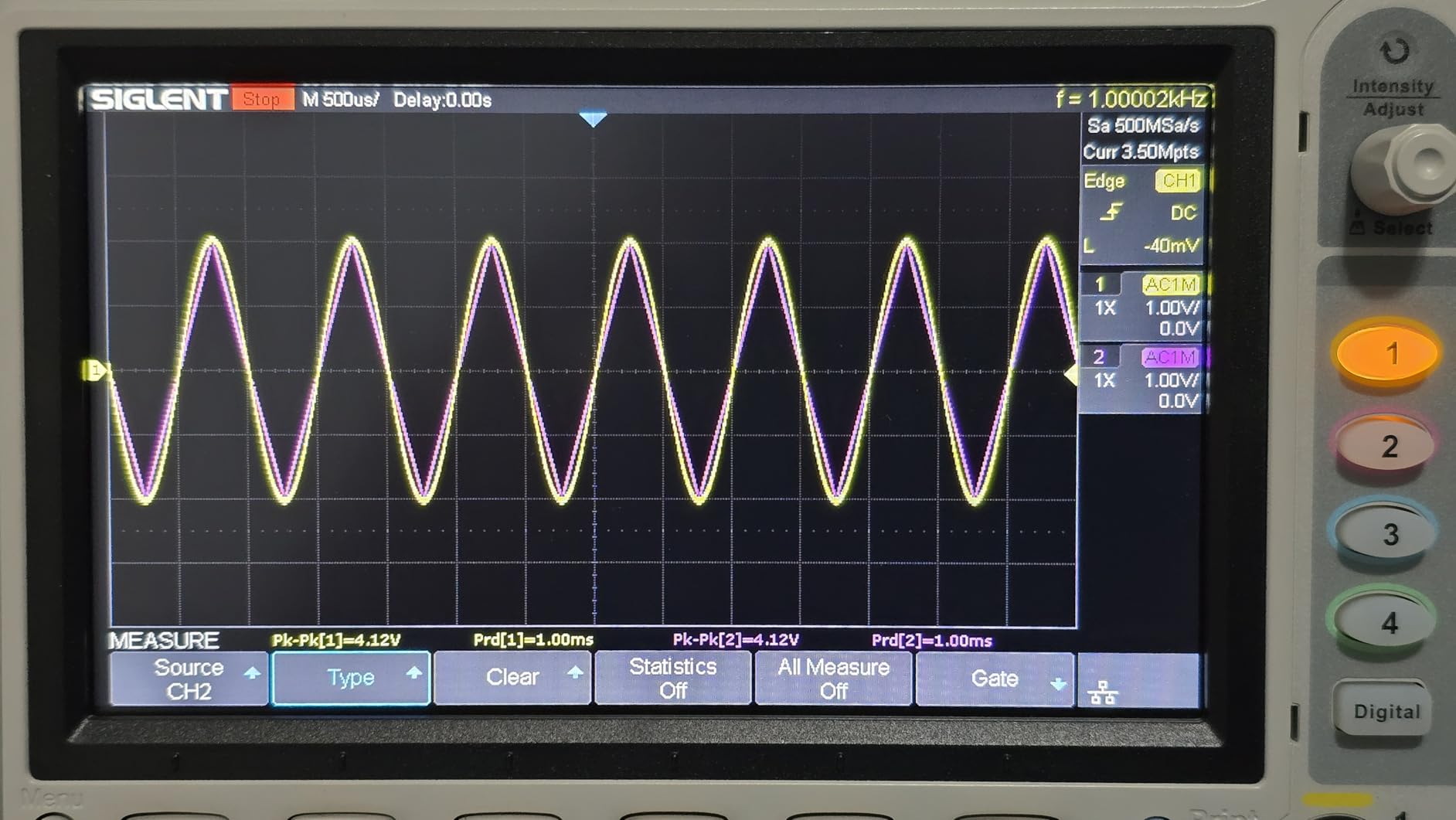
The touch screen interface is intuitive, and the USB and LAN connectivity mean I can script measurements from Python. I have automated filter sweeps using SCPI commands over Ethernet, which has saved me countless hours during alignment sessions. The built-in frequency counter is more accurate than most standalone units in this class.
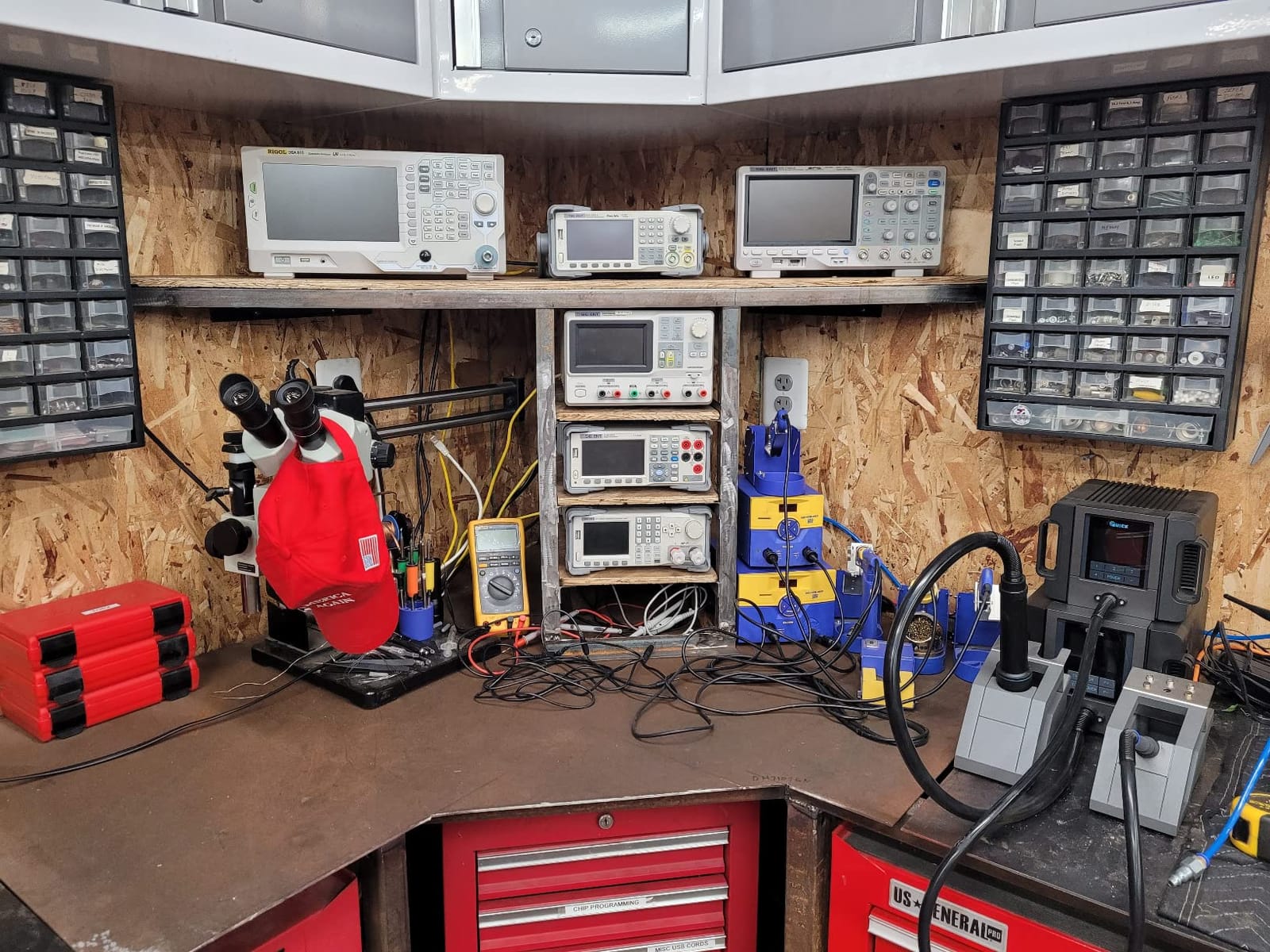
For amateur radio use, the SDG2042X can drive a mixer or amplifier through its full 40 MHz range with clean output. It does not cover VHF or UHF directly, but for IF work, audio testing, and bench signal injection up through 6 meters, it excels.
For Whom It’s Good
This generator fits serious hobbyists and small labs that need reliable dual-channel output. I have recommended it to friends building QRP transmitters and SDR frontends, and they consistently praise the signal purity.
Engineers who automate their test setups will appreciate the LAN interface and SCPI support. If you already use LabVIEW or Python for instrument control, the SDG2042X slots in cleanly.
For Whom It’s Bad
Skip this if you need coverage above 40 MHz or true RF output at VHF and above. It is a function generator, not an RF signal generator, so ham work on 2 meters and up requires a different tool.
Users who rely heavily on arbitrary waveforms should know that EasyWave only runs on Windows. Mac and Linux users will need to find workarounds or stick to standard waveforms.
4. UNI-T UTG932E – Affordable 30MHz Dual-Channel Function Generator
UNI T UTG932E Function Generator Arbitrary Waveform Signal Generator
Frequency: 30MHz
Sample rate: 200MSa/s
Resolution: 14-bit
Pros
- Dual channel with combining
- 200MSa/s sample rate
- Multiple modulation types
- Built-in frequency meter
- Compact form factor
Cons
- Cannot save arbitrary waveforms through power cycle
- Quality control issues
- Manual not well written
The UNI-T UTG932E punches above its weight class. At roughly $200, you get dual 30 MHz channels, 200 MSa/s sample rate, and 14-bit resolution, which covers most bench work a hobbyist will encounter.
One feature I genuinely appreciate is the Ch1-Ch2 combining capability. I have used it to create sum and difference signals for mixer testing, which is invaluable when working on SDR projects. The six modulation types cover AM, FM, PM, FSK, and sweep modes, so most radio alignment procedures are within reach.
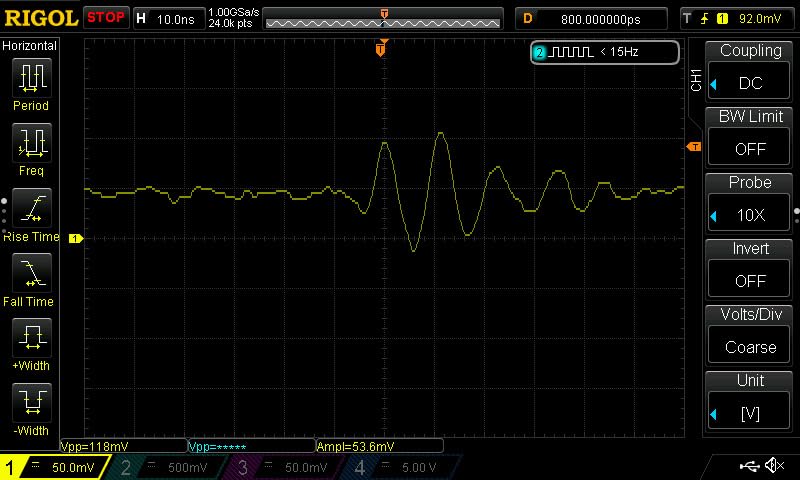
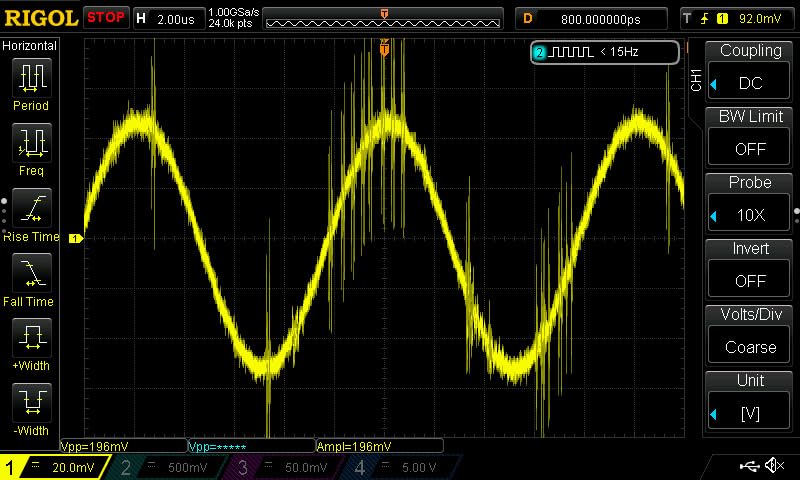
The 200 MSa/s sample rate produces clean sine waves up to the 30 MHz limit, and the 14-bit vertical resolution is adequate for receiver alignment work. I have used mine as a substitute when my Siglent was tied up on another project, and the signal quality held up well for IF and audio applications.
For Whom It’s Good
This is a great fit for students, hobbyists, and anyone building a first proper bench. The modulation capabilities cover nearly every experiment in the ARRL Handbook, and the dual channels open up projects that require phase-related signals.
It also works for small repair shops that need a reliable signal source without breaking the budget. The frequency meter built in means you can verify external oscillators without a separate counter.
For Whom It’s Bad
Skip this if you need true RF coverage above 30 MHz. It is designed for baseband and IF work, not for driving antennas or testing receivers on the ham bands.
Anyone who regularly saves complex arbitrary waveforms should be aware they will not survive a power cycle. You will need to reload them each session.
5. SEESII JDS6615 – Budget 15MHz DDS Signal Generator
SEESII Dual-Channel DDS Signal Generator Counter 15MHz, Arbitray Waveform
Frequency: 15MHz
Sample rate: 200MSa/s
Channels: 2
Pros
- Good signal stability
- Dual channel
- 99 state memory
- Frequency meter
- Lightweight
Cons
- Lightweight construction
- Accuracy concerns at higher frequencies
- IC markings removed
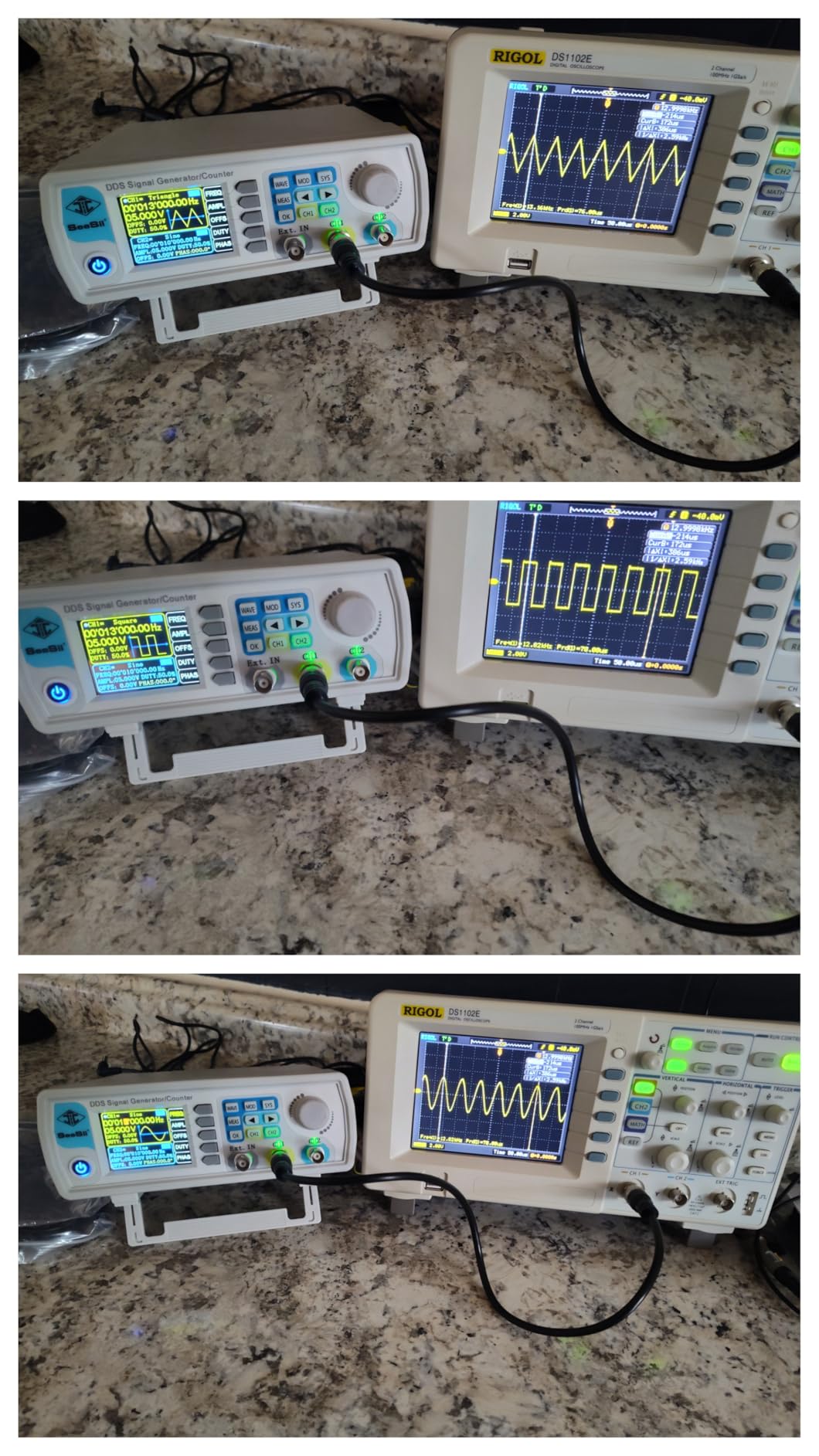
The SEESII JDS6615 is one of the most popular low-cost DDS generators on Amazon, and for good reason. For under $110, you get dual 15 MHz channels with enough features to handle most audio and IF work on a radio bench.
The active crystal oscillator is what sold me on this unit compared to older DDS designs. Frequency stability stays well within spec across long alignment sessions, which I have verified against a GPS-disciplined reference. The 99 groups of state memory mean I can save common configurations for different projects.
It is not going to replace a professional unit, but for injecting signals into a communications receiver for alignment, driving audio stages, or modulating test sources, it does the job. The included software lets you create custom waveforms, which is handy for amateur radio experiments.
For Whom It’s Good
This is the right pick for newcomers on a tight budget. If you are just starting to build a test bench and need a signal source that handles audio and low-frequency IF work, this fits without straining your wallet.
It also works as a backup generator for established benches. I keep one in my portable kit for trips where I do not want to risk my more expensive equipment.
For Whom It’s Bad
Skip this if you need coverage beyond 15 MHz. Anything you build for 6 meters and above will need a different tool.
Anyone needing laboratory-grade accuracy or long-term calibration should look at the more expensive options. This unit is for hobby and educational use, not production testing.
6. RF Explorer RFE6GEN – Portable 6GHz RF Signal Generator
RF Explorer Signal Generator Carrying Case Included – Frequency 24-6000 MHZ in The CW Area.
Frequency: 24 to 6000 MHz
Stability: 0.5ppm
Connector: SMA
Pros
- Wide frequency range
- Programmable attenuator
- Temperature compensated
- Carrying case included
- Portable
Cons
- Clumsy user interface
- Small buttons
- Strong harmonics
- Stock antenna may be needed
The RF Explorer RFE6GEN is one of the few truly portable RF signal generators that covers the spectrum ham operators care about. From 24 MHz up to 6 GHz, it spans HF through 5.8 GHz ISM band, which makes it incredibly versatile for field work.
I have carried this to antenna installations, used it for intermod testing at a repeater site, and pulled it out during an emergency repair at a friend’s radio shop. The 0.5 ppm temperature-compensated stability is solid for portable use, and the programmable attenuator in 3 dB steps gives me useful control from -40 dBm up to 0 dBm.
For Whom It’s Good
This is ideal for RF engineers and serious amateur radio operators who work across multiple bands. If you need a single portable source that handles everything from 6 meters through 5.8 GHz, this covers it.
It also makes sense for field technicians who need reliable RF output without dragging bench equipment to job sites. The battery operation and included carrying case support mobile work.
For Whom It’s Bad
Skip this if you need lab-grade amplitude accuracy. The 3 dB step attenuator and 0.5 dB normalized accuracy are fine for most radio work but not for precision calibration.
Anyone expecting a smooth user experience will be frustrated by the small buttons and menu-driven interface. Plan on spending an hour with the manual before your first project.
7. FG-200 DDS Function Signal Generator Module – DIY Budget Pick
FG-200 DDS Function Signal Generator 0.01Hz -500Khz Frequency Counter Signal Source Module Sine+Square+Sawtooth Waveform
Frequency: 0.01Hz to 500kHz
Supply: DC 4-9V
Waveforms: Sine, Square, Sawtooth
Pros
- Very affordable
- Compact design
- Multiple waveforms
- DC bias control
- Settings memory
Cons
- External power required
- Cannot adjust frequency in real-time
- Power connector may be loose
- No battery included
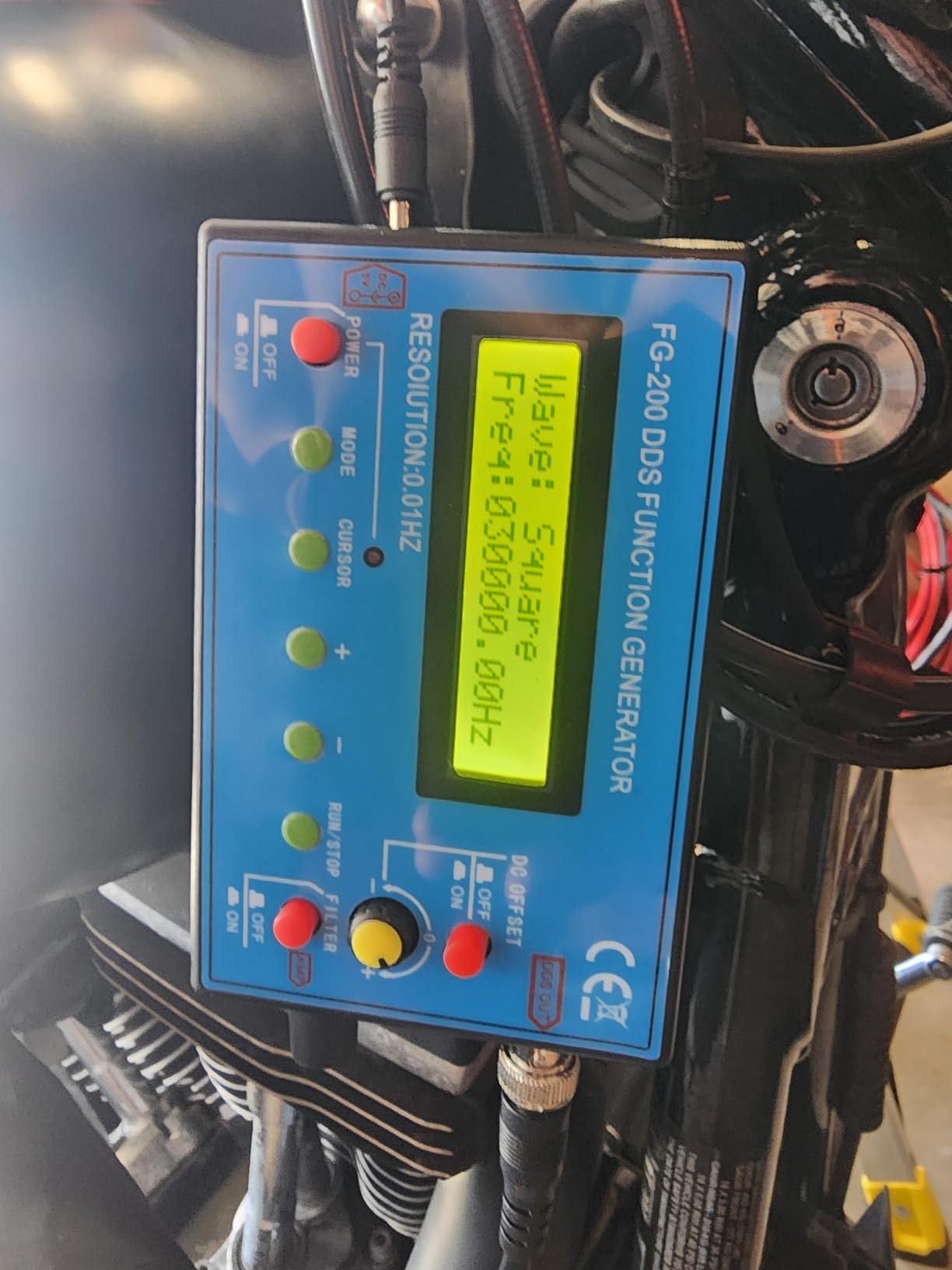
The FG-200 is less a complete instrument and more a building block for DIY projects. For around $27, you get a DDS-based signal source that generates sine, square, and sawtooth waveforms from 0.01 Hz to 500 kHz.
I built one into a custom test box for audio frequency response measurements on vintage radios. The DC bias control is useful for biasing transistor circuits during testing, and the filter function cleans up the output enough for most audio work.
For Whom It’s Good
This is perfect for hobbyists who enjoy building their own gear and want a basic signal source at minimal cost. If you are designing a piece of test equipment around an Arduino or Raspberry Pi, this module drops in easily.
It also works for students learning about signal generation. The exposed design makes the DDS architecture visible and educational.
For Whom It’s Bad
Skip this if you need a turnkey bench instrument. It requires external power, has no display of its own, and the frequency cannot be adjusted in real time without modification.
Anyone needing RF frequencies above 500 kHz should look at the other options in this roundup.
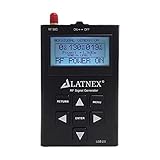
8. LATNEX RF Signal Generator – Handheld 6GHz CW and Sweep
RF Signal Generator. Handheld HF Frequency CW and Sweep Generator (Signal Generator)
Frequency: 24MHz to 6GHz
Modes: CW and Sweep
Battery: Rechargeable
Pros
- Wide frequency range
- Handheld portable
- CW and sweep modes
- Self-contained battery
- Includes software and case
Cons
- Amplitude accuracy
- Convoluted menu
- Lower accuracy than lab gear
The LATNEX RF Signal Generator is another portable option covering 24 MHz to 6 GHz with both CW and sweep modes. The self-contained rechargeable battery and included EVA carrying case make it field-ready out of the box.
I have used this primarily for tracking SNA measurements and quick signal injection during antenna projects. The Windows software supports both sweep and tracking generator modes, which is handy when paired with a compatible spectrum analyzer.
For Whom It’s Good
This fits ham operators and hobbyists who need a portable RF source for antenna work, filter testing, and basic receiver alignment across a wide frequency range. The included case and software package offer good value.
It also works as a low-cost entry point for someone curious about RF testing but not ready to commit to lab-grade equipment.
For Whom It’s Bad
Skip this if you need precise amplitude control. The output is not spot-on accurate, which limits its usefulness for calibration work.
Anyone expecting a polished interface will need patience. The menu system takes time to learn, and the documentation is minimal.
How to Choose the Right Signal Generator for Radio Work
Choosing signal generators for radio work comes down to matching the instrument to your actual applications. I have outlined the most important factors below, drawn from years of bench experience and conversations with fellow operators.
Frequency Range
The first question I ask anyone buying a signal generator is: what bands do you actually operate on? If your work stays on HF and 6 meters, a 40 MHz function generator like the Siglent SDG2042X handles every IF and audio task you will encounter. For 2 meters and 70 centimeters, you need coverage into the hundreds of MHz at minimum. For UHF and microwave experimentation, look at units that reach 5 or 6 GHz.
Do not fall for marketing claims that exaggerate the top-end frequency. Many budget DDS modules list 20 MHz or 30 MHz as their sine wave limit, even though square waves extend further. Always check the specification for the waveform you actually plan to use.
Signal Purity
Phase noise and harmonic distortion matter more than most buyers realize. If you are aligning a sensitive receiver, harmonics from a dirty signal source can mask the very signals you are trying to measure. Look for phase noise figures in dBc/Hz at specific offsets, and check reviews for real-world signal quality reports.
Community forums frequently discuss signal purity, and reviews from ham radio operators on sites like Spencer Locke often include spectrum analyzer screenshots that show the actual output of each generator.
Channel Count
Single-channel generators cover most basic needs, but dual-channel units open up projects requiring phase relationships, I/Q signals, or mixer testing. If you work on SDR projects or transceiver alignment, dual channels save you from buying two separate generators.
Modulation Capabilities
For radio work, AM and FM modulation are essential. Look for generators that support external modulation inputs as well, since you may want to modulate the carrier with an audio source for receiver testing. PM, FSK, and sweep modes are useful additions for more advanced projects.
Connectivity and Control
USB connectivity is standard on most modern units, but LAN support and SCPI programmability matter if you automate measurements. I have built test scripts that run overnight, sweeping filters and capturing data, which would be impossible without remote control.
Portability
If you do field work or operate portable from remote sites, weight and battery life matter. Handheld units like the RF Explorer and TinySA series slip into a tool bag and run for hours on internal batteries. Bench instruments stay home.
Matching to Use Cases
Match your generator to your primary use cases. Ham radio operators chasing interference on 2 meters need different tools than broadcast engineers aligning AM transmitters. If you are setting up a new shack or bench, start with the most common task you perform and choose a generator that handles it well, then expand your toolkit as needs grow.
For audio and IF work, a function generator covers the bases. For receiver and antenna work above 30 MHz, an RF signal generator becomes necessary. For combined spectrum analysis and signal generation, the TinySA family offers unique value.
Frequently Asked Questions
What is the difference between a signal generator and an RF generator?
A signal generator is a broad term for any instrument that produces controlled electrical waveforms at specific frequencies and amplitudes. An RF generator is a specialized signal generator designed specifically for radio frequency output, typically with better spectral purity, frequency stability, and impedance matching for RF applications.
What bandwidth do I need for radio testing?
For HF work below 30 MHz, a 40 MHz function generator handles most needs. For 6 meters through 70 centimeters, you need coverage up to at least 500 MHz. For UHF and microwave experimentation including 23 cm and above, look for generators that reach 5 or 6 GHz.
How to generate an RF signal?
Generate an RF signal by setting your signal generator to the desired frequency, connecting it to the circuit under test via appropriate cabling and impedance matching, and using the output level controls to set amplitude. For modulated signals, enable AM or FM and adjust the modulation depth or deviation as needed.
When would you use a signal generator?
Use a signal generator when you need a known reference signal for testing, calibrating, or troubleshooting electronic equipment. Common radio applications include receiver alignment, filter testing, amplifier characterization, antenna analysis, and intermodulation product measurement.
What is the difference between a waveform generator and a signal generator?
A waveform generator typically refers to function generators that produce standard waveforms like sine, square, and triangle waves. A signal generator is a broader category that includes RF generators, arbitrary waveform generators, and specialized units for specific applications. In practice, the terms often overlap.
Final Verdict
After testing these eight signal generators for radio work over several months, my top recommendation for most readers is the Seesii TinySA Ultra+. It offers an unmatched combination of frequency range, portability, and dual functionality as both spectrum analyzer and signal source. For budget-focused buyers, the original TinySA delivers surprising capability at a price that almost anyone can justify.
If your work stays on HF and you need a reliable bench instrument, the Siglent SDG2042X remains the best value in professional dual-channel function generators. It has served my main bench without complaint for years.
Whichever generator you choose, remember that the right tool depends on your specific bands and applications. Take stock of what you actually need to test, match the frequency range and modulation capabilities to those tasks, and you will end up with a signal generator that pulls its weight on your bench for years to come. For more guides on testing equipment and radio work, check out our other articles on generator reviews and portable power solutions.