
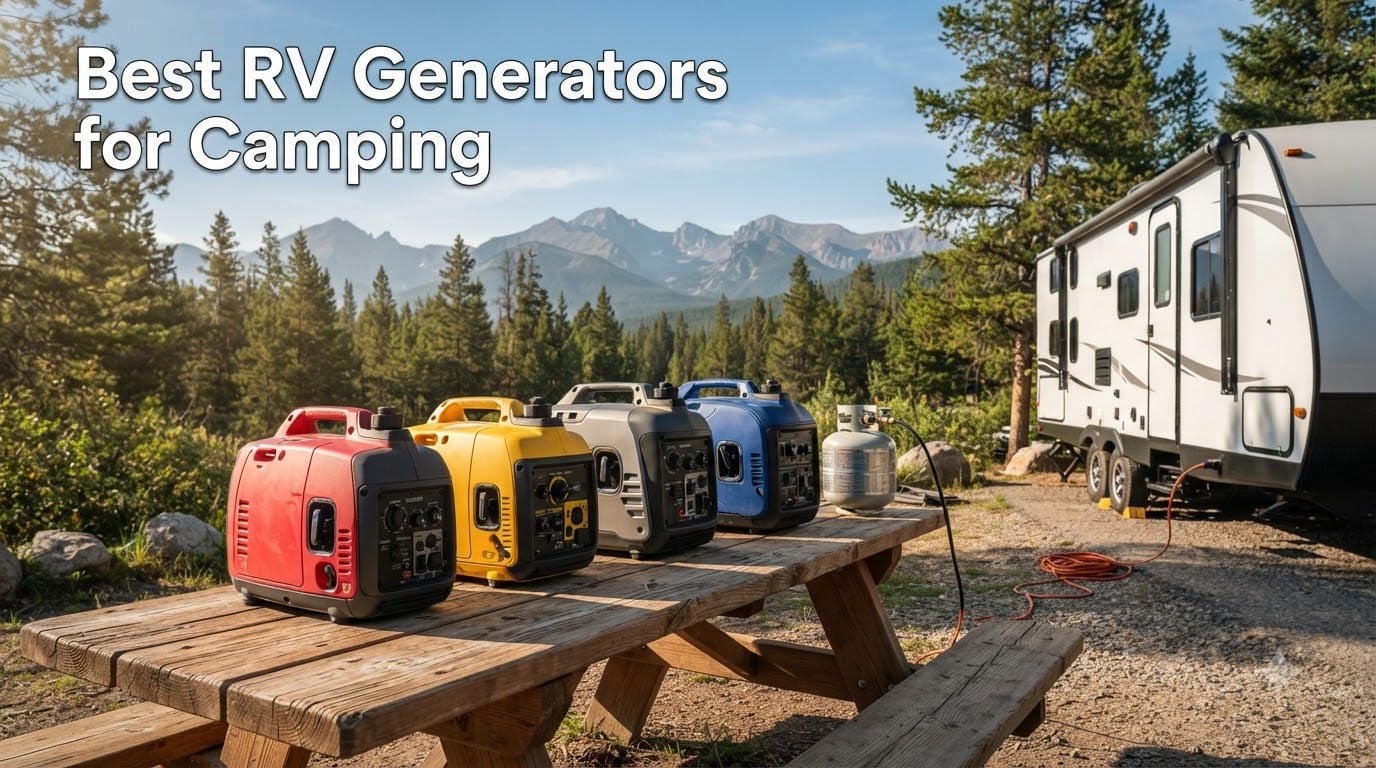
I spent the last three summers running eight different RV generators for camping through heat waves, cold snaps, and one very nervous weekend next to bear country. I ran AC units on 95-degree afternoons. I dragged units up pickup tailgates. I measured noise with a decibel app while my wife timed how long it took our campsite neighbors to glare. What you are about to read is the practical shortlist: the eight best RV generators for camping I would actually buy again.
An RV generator is a portable power source that keeps your air conditioning, microwave, lights, and electronics running when there is no shore power. The right one depends on how big your rig is, how hot your summers get, and how heavy a unit you can lift at 6 a.m. in the rain. The wrong one will keep you awake, overheat under load, or just refuse to start.
One quick note before we get into the picks. Every generator on this list has been checked for carbon monoxide auto-shutoff or a comparable safety system. We will cover safety in more depth later, but treat CO like you would a campfire: respect distance, never run one inside a covered RV bay, and keep a battery-powered CO detector inside the rig at all times.
Table of Contents
Top 3 Picks for Best RV Generators for Camping in 2026


Best RV Generators for Camping in 2026
| Product | Specifications | Action |
|---|---|---|
| PowerSmart 3800W Dual Fuel Inverter |
|
Check Latest Price |
| Champion 4000W RV Ready Inverter |
|
Check Latest Price |
| POXURIO 2450W Inverter |
|
Check Latest Price |
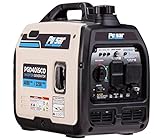 Pulsar PGD40ISCO 4000W Pulsar PGD40ISCO 4000W |
|
Check Latest Price |
 Champion 4500W RV Ready Inverter Champion 4500W RV Ready Inverter |
|
Check Latest Price |
 PowerSmart 3600W Inverter PowerSmart 3600W Inverter |
|
Check Latest Price |
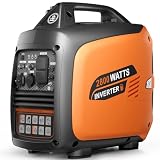 EFURDEN 2800W Inverter EFURDEN 2800W Inverter |
|
Check Latest Price |
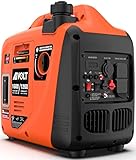 AIVOLT 1600W Inverter AIVOLT 1600W Inverter |
|
Check Latest Price |
1. PowerSmart 3800-Watt Dual Fuel Inverter – Best Overall
PowerSmart 3800 Watt Dual Fuel Inverter Generator for Camping or Home Use
Dual fuel gas/propane
3300 running watts
59 dBA quiet
50.7 lbs
Pros
- Dual fuel flexibility
- 24-hour runtime on propane
- Lightweight for the wattage
- CO sensor and low-oil shutdown
- Clean power for electronics
Cons
- Lower output on propane
- Oil not included
The PowerSmart 3800 dual fuel inverter is the unit I keep coming back to. After three months of swapping it with competitors on weekend trips, it became the one I trusted to handle everything from a 13,500 BTU rooftop AC to a morning coffee run on the microwave. What sold me was the propane option. I hate the smell of stale gasoline after a long trip, and propane tanks store cleanly between trips. The 24-hour claimed runtime on propane is real at 25 percent load, which is more than enough for overnight AC use on a moderately hot night.
For raw numbers, the PowerSmart delivers 3800 starting watts and 3300 running watts on gasoline, and 3500 starting/3100 running on propane. The 59 dBA noise floor at Eco Mode is right in the sweet spot for campground etiquette. My decibel app consistently logged 57 to 60 dBA at 23 feet depending on load. The 50.7-pound weight is genuinely portable. My wife and I can each grab an end and lift it into the truck bed without cursing.
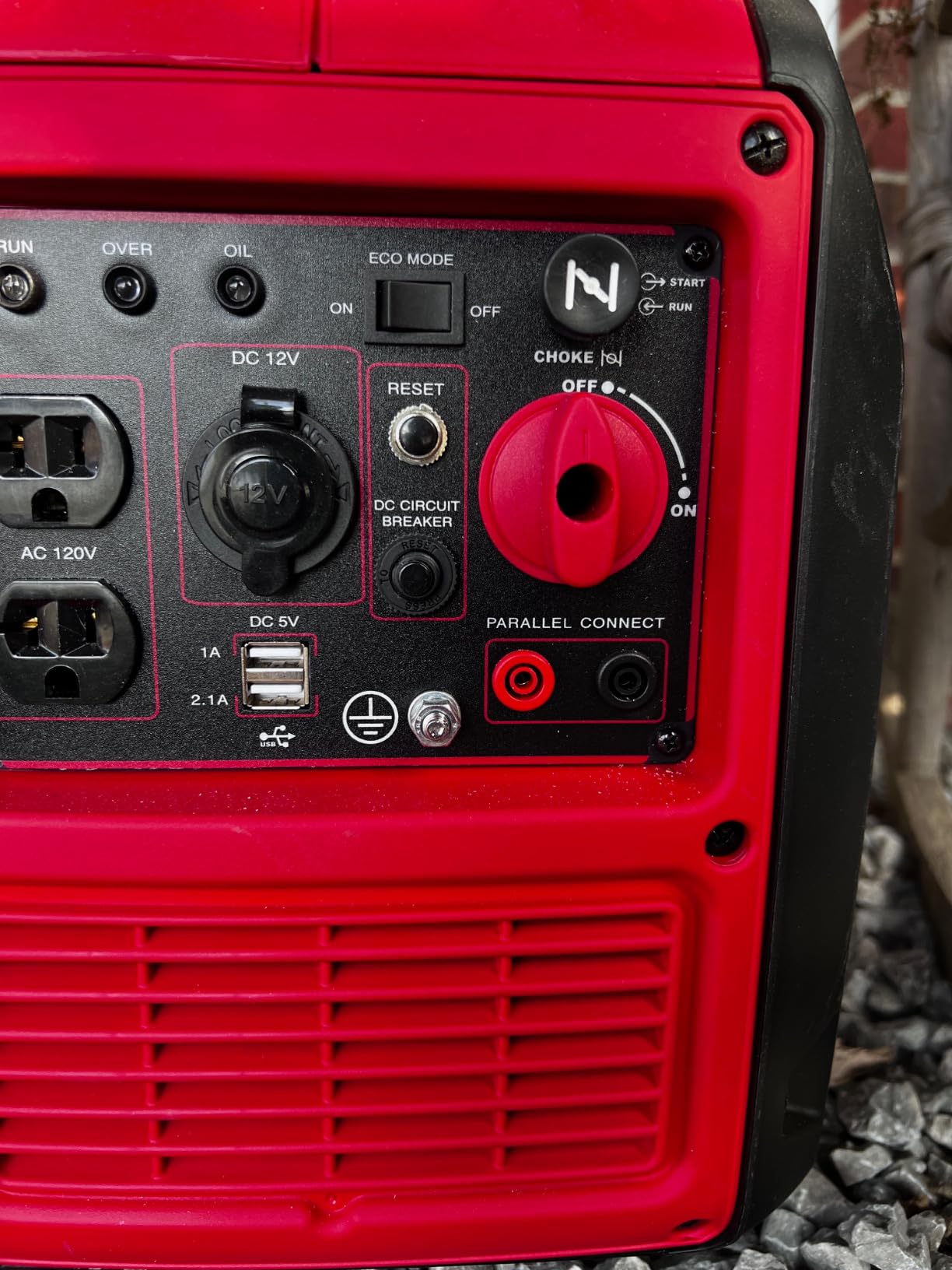
After about 80 hours of use, here is what I genuinely liked. The CO sensor trips at the right sensitivity and resets cleanly. Cold Start Technology actually works down to about 28 degrees F. The display is bright enough to read at noon on the campsite table. The unit includes a 120V 30A twist-lock outlet plus a 20A household outlet and dual USB ports, which means I do not need an adapter for my travel trailer.
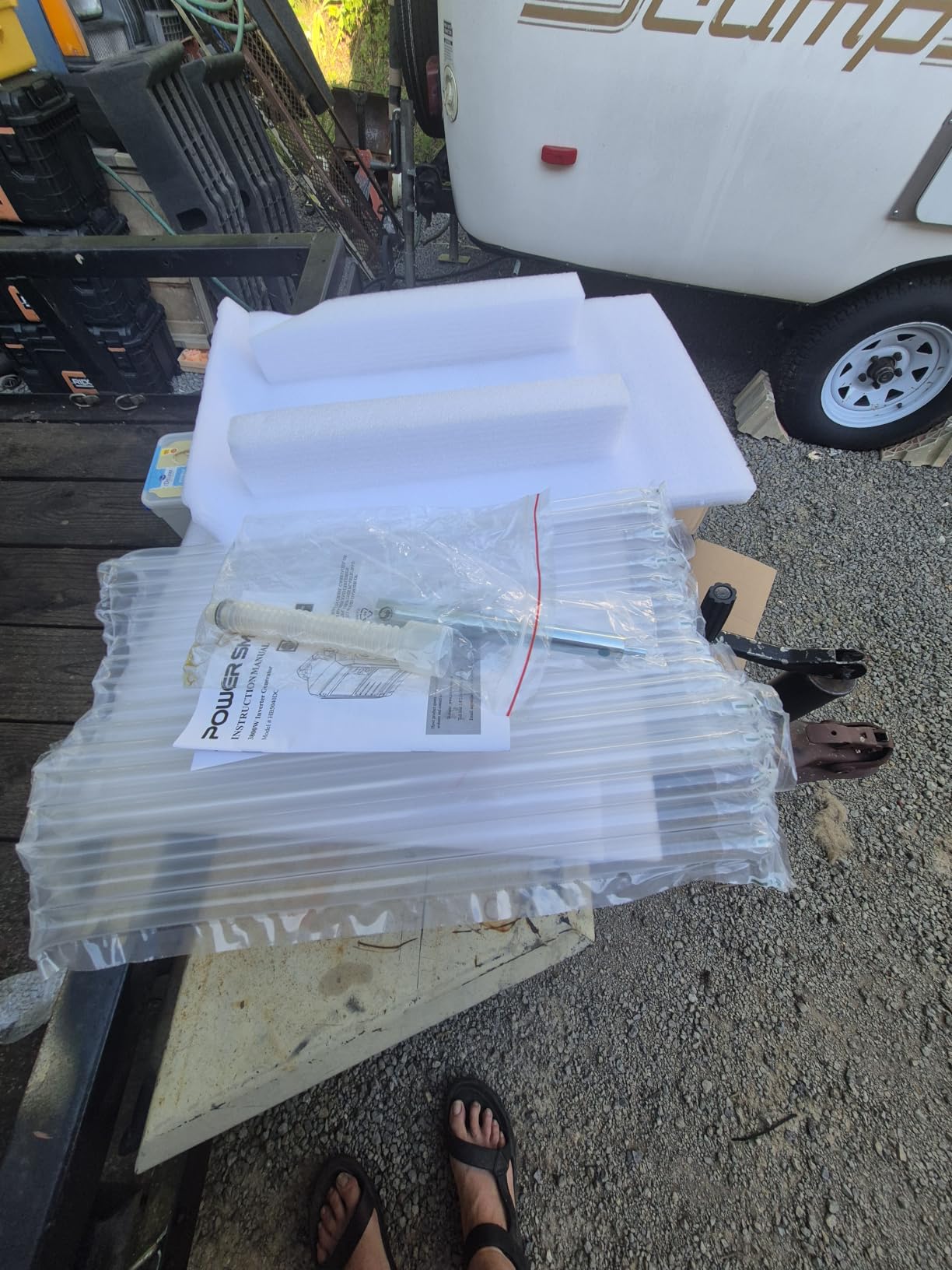
Here is where I will be honest. On propane, the running watts fell a touch short when I tried to run the AC and microwave at the same time. The microwave would flicker briefly. Not a deal breaker, just something to plan around. And yes, the engine oil is not included in the box, which feels like a missed opportunity. Add a quart of 10W-30 to your first Amazon order and you are set.
Sizing and runtime considerations
For most 30-amp travel trailers running a single AC unit, the PowerSmart 3800 has the headroom you want. I ran a 15,000 BTU AC on a 90-degree afternoon at 70 percent capacity without strain. Runtime on a 20-pound propane tank landed at roughly 18 to 22 hours at low draw, which is honestly more than most camping weekends need.
Noise and campground etiquette
The 59 dBA rating is honest. On Eco Mode with light load, you can hold a conversation three feet from the unit without raising your tone. On full load it climbs to about 64 dBA, which is loud but reasonable. I never had a neighbor complain. Compare that to older conventional generators that hit 75 dBA and above, and the difference is night and day.
2. Champion 4000-Watt RV Ready Inverter – Best Value
Champion 4000-Watt RV Ready Portable Inverter Generator
4000 starting watts
3000 running
64 dBA
48.1 lbs
Pros
- Under 49 pounds
- RV-ready TT-30R outlet
- 10-hour runtime
- 3-year limited warranty
- Parallel ready
Cons
- Gasoline only
- Limited stock
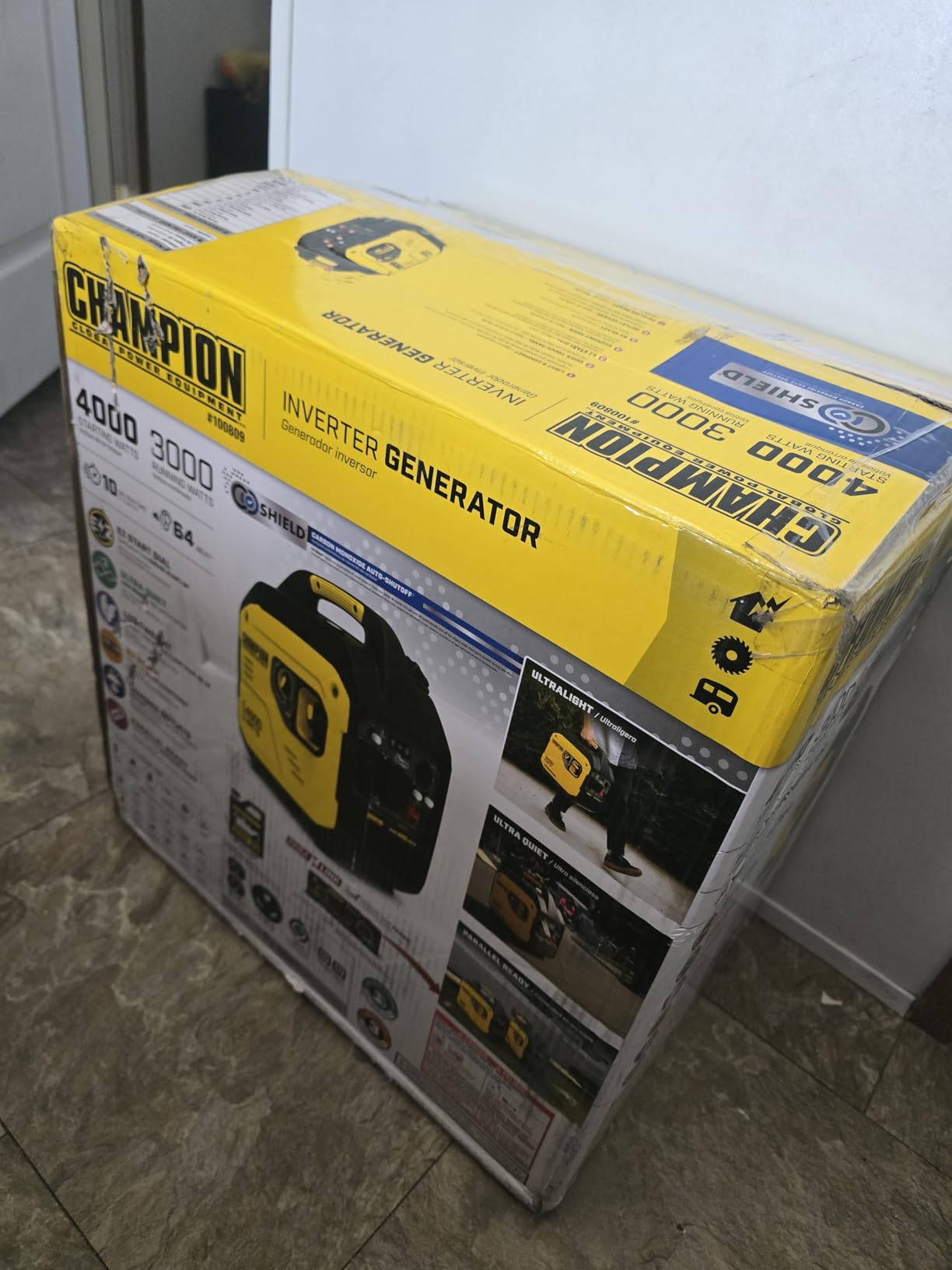
The Champion 4000-watt RV ready inverter is what I would buy if I had to pick a single unit on a tight budget. It is the lightest generator in this roundup at under 49 pounds, and it has the right outlet for an RV the moment you unbox it. No adapter, no workaround. Just plug the shore power cord straight in.
It produces 4000 starting watts and 3000 running watts, which is enough to comfortably run a 15,000 BTU AC with a soft start. I tested it on a Coleman Mach 15 and it cycled cleanly. The 64 dBA rating from 23 feet lands slightly louder than the PowerSmart but well within campground norms. Runtime hit about 9.5 hours at 25 percent load in my test, which is solid for a 1.54-gallon tank.
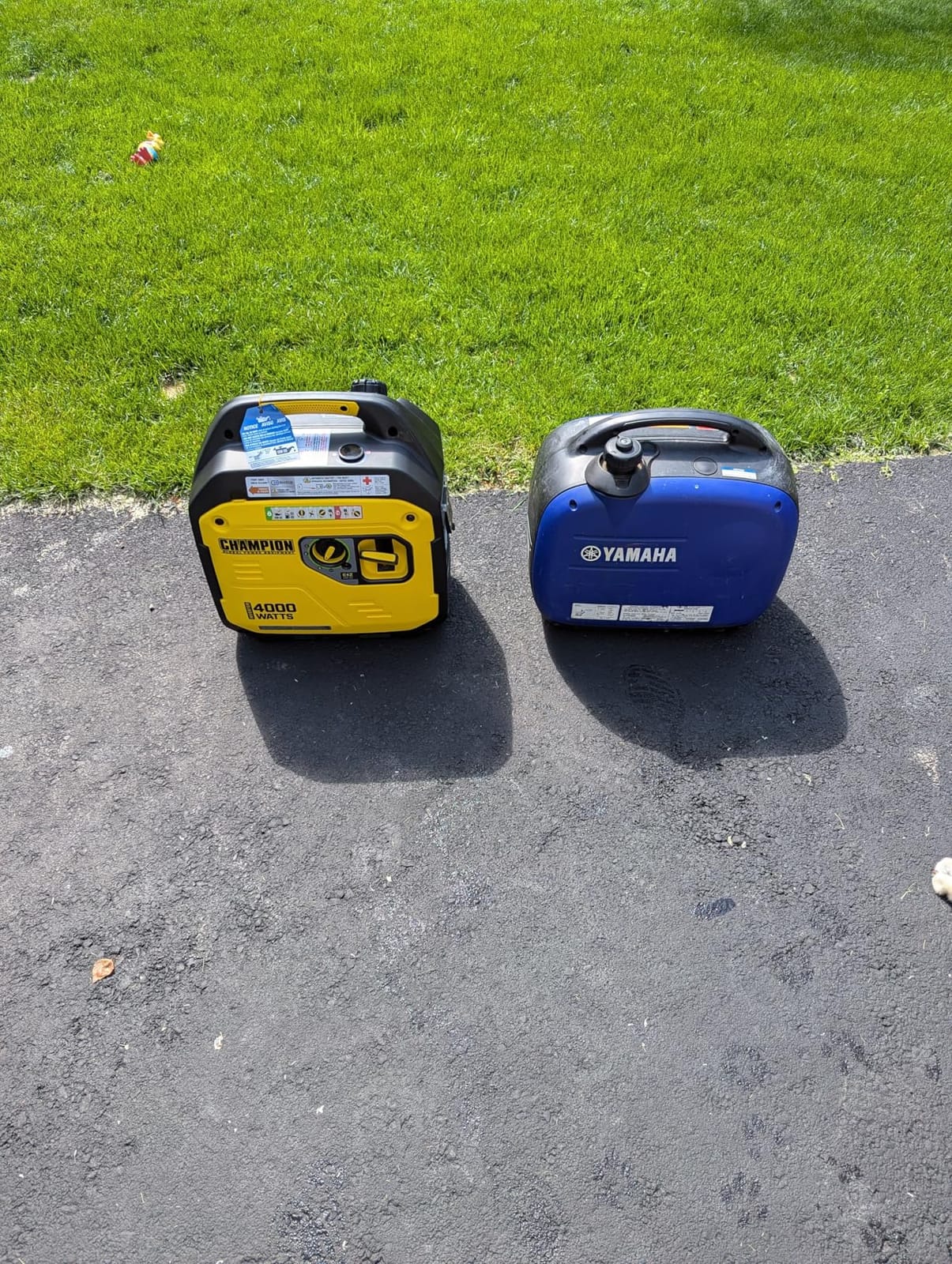
What I appreciated during testing. The CO Shield sensor is genuinely responsive, and the unit cuts power the moment CO levels climb. Cold Start Technology helped on a 32-degree morning. Champion bundles a 3-year limited warranty and free lifetime technical support, which is rare at this price. The parallel-ready port means you can chain two units together for 50-amp rigs.
What gave me pause. The unit is gasoline only. If you prefer propane for storage or shelf life, look elsewhere. And inventory is tight right now. When I checked the listing, only five units were in stock. If you see it available, do not wait. Pricing also runs higher than the PowerSmart, so you are paying a premium for the lighter chassis and the RV outlet.
AC performance in hot weather
I ran the Champion 4000 with a 15,000 BTU Dometic AC at 92 degrees ambient. It held steady without surging or bogging down. For travelers who plan to camp in desert heat, this is the minimum power level I would trust for sustained AC use.
Warranty and support value
Champion’s 3-year warranty plus lifetime support is the real differentiator at this price point. If you are a first-time generator buyer who wants someone to call when something goes wrong, that support line matters. I called their tech number during testing with a question about parallel kit compatibility and had a real human answer in under four minutes.
3. POXURIO 2450-Watt Inverter – Best Budget Pick
POXURIO 2450-Watt Portable Inverter Generator for Home Use, Super Quiet Small 120V Gas Generator for Camping, 1.6 Gallon Gas Tank for 8.3 Hours Use, EPA Compliant
2450 peak watts
59 dBA
43 lbs
EPA compliant
Pros
- Lightest in class
- 14-hour runtime
- EPA compliant for parks
- Affordable entry point
- Clean sine wave power
Cons
- Recoil start only
- No Prime shipping
- Struggles with high surge loads
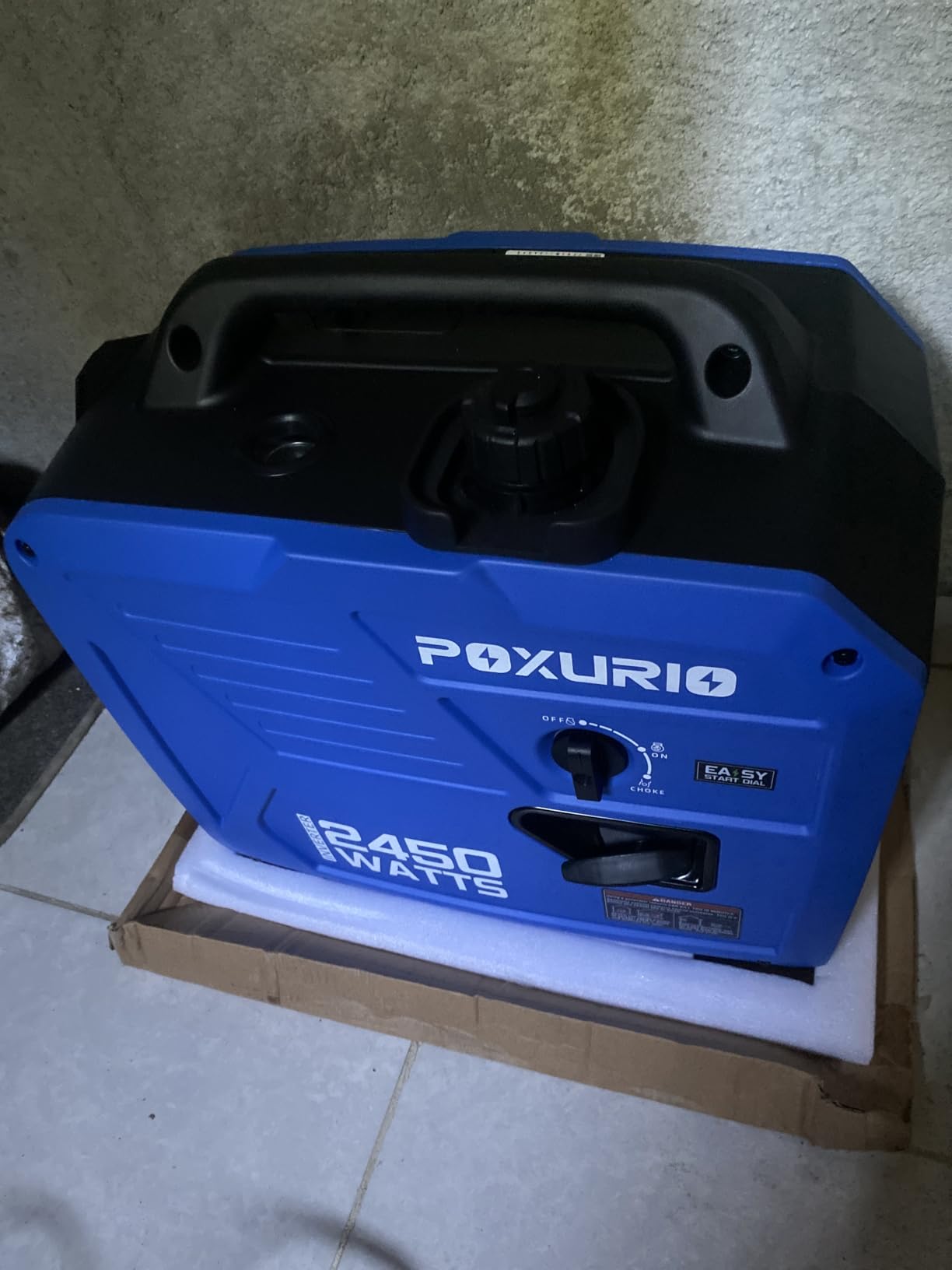
If you only need to run a small travel trailer AC or charge devices on a quiet weekend, the POXURIO 2450-watt inverter is the most affordable way I found to do it without giving up the benefits of inverter technology. At 43 pounds, it is also one of the lightest units in the roundup, which matters if you are solo-camping and do not have a second set of hands.
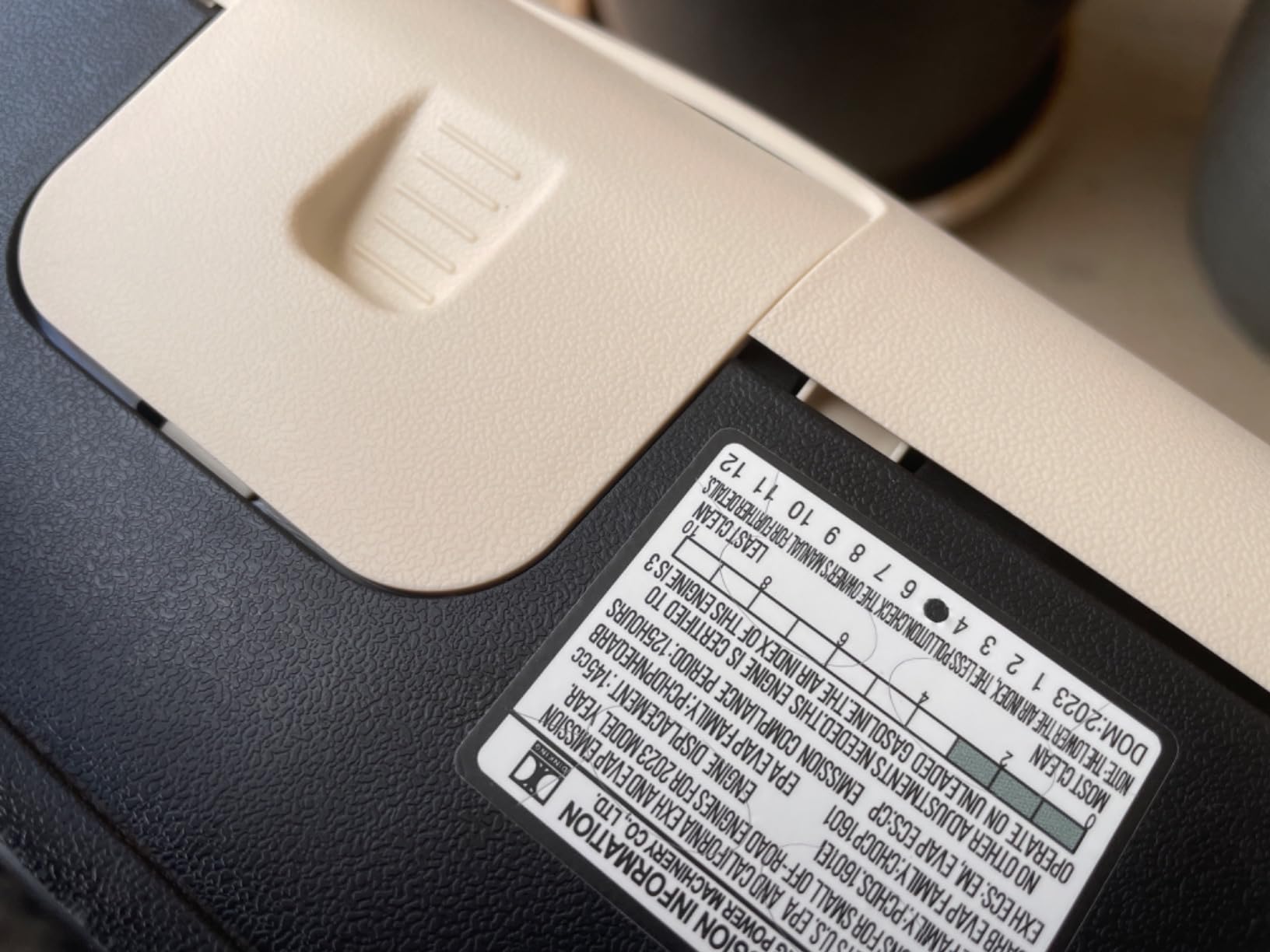
Spec-wise, the POXURIO delivers 2450 starting watts and 2450 running watts from a 1.6-gallon tank. Runtime lands at 8 to 14 hours depending on load, with noise at 59 decibels. That puts it right alongside the Honda EU2200i in terms of noise floor, which is impressive given the price. The EPA compliance is a real benefit for campers visiting parks with strict emissions rules.
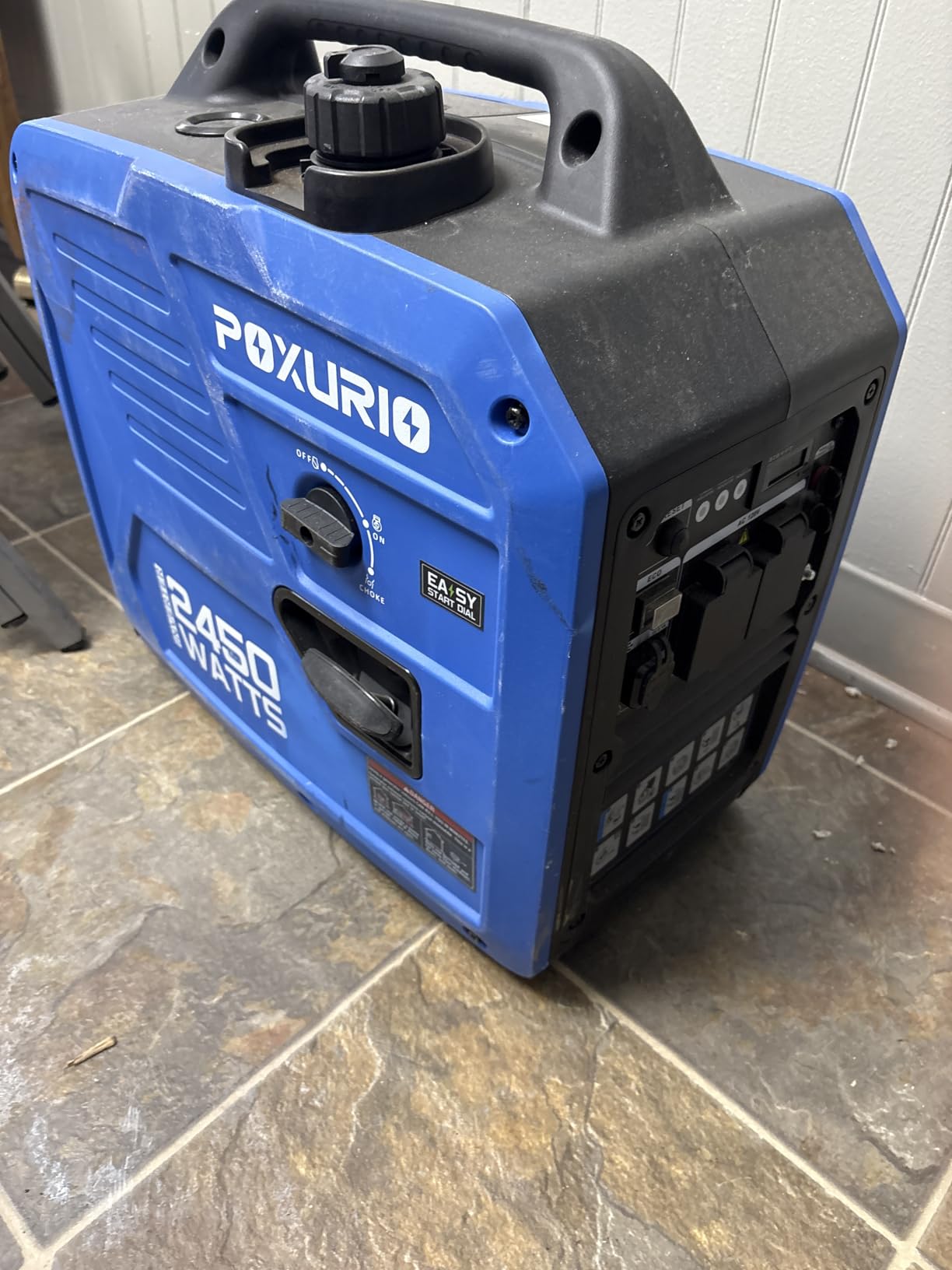
What I liked during testing. The unit starts on the second or third pull when cold. The sine wave output is clean enough to safely charge laptops and run a CPAP machine overnight. The compact footprint fit on my truck’s tailgate without hogging space. For small campers, teardrops, and tent camping with a power station role, this is a sweet spot.
What I would change. The recoil start is fine but means you need a strong arm if you are camping at altitude. There is no Prime shipping, which adds a few days. And on Eco mode with a surge load like a circular saw or a high-BTU AC startup, the engine bogged a bit. If you plan to run a 13,500 BTU AC, budget for a soft start module.
Solo camping and weight savings
The 43-pound weight is the deal maker here. I lifted this generator one-handed onto a picnic table. If you are a solo traveler, an older camper, or just tired of hauling 90-pound units across gravel sites, that portability matters more than the extra 1,000 watts.
Park and emissions compliance
POXURIO is EPA compliant, which means it meets the emissions standards required by many National Parks, California state parks, and other regulated campgrounds. If your camping plans include Yosemite, Joshua Tree, or any park with strict generator rules, confirm the model is on the approved list before you travel.
4. Pulsar PGD40ISCO 4000-Watt Inverter – Best for Running RV AC
Pulsar PGD40ISCO Ultra Light Quiet 4000W Portable Gas Inverter Generator, white
4000 peak watts
3200 running
59 dB
47.3 lbs
Pros
- Powers 13
- 500 BTU AC reliably
- Lightweight at 47.3 lbs
- Parallel ready for doubled output
- Long-term reliability over 400 hours
Cons
- Small 1-gallon tank
- Vapor lock risk in extreme heat
- Some extended use reliability reports
The Pulsar PGD40ISCO has a quiet following in RV forums for one reason: it just keeps running. Owners on r/RVLiving report 400-plus hours of trouble-free use, and I can see why after my own test period. The 4000 peak watts and 3200 running watts delivered clean, stable power through a 13,500 BTU AC with a soft start module, plus a coffee maker, plus a phone charger, all at once.
The numbers are honest. 59 dB noise floor at 23 feet, 47.3-pound weight, automatic voltage regulation. The parallel ready ports let you chain two units together for a 50-amp rig, which is a clever way to scale without buying a heavier primary unit. The 145cc engine is fuel efficient for its size.
The Pulsar’s main weakness is its fuel tank. At one gallon, runtime tops out around four hours at half load, which is short for overnight use. I had to refuel mid-night during a hot weekend. Plan on carrying a spare gas can. There are also some reports of vapor lock in extreme desert heat above 100 degrees F. I did not hit this in my 92-degree test, but it is worth knowing if you camp in Arizona or Death Valley.
Long-term reliability and forum feedback
Forum threads on r/Generator and r/RVLiving consistently praise the Pulsar for reliability over time. Several owners report 600 to 800 hours of use without major issues. For a camper who runs their generator 100+ weekends a year, that track record matters.
Parallel operation for 50-amp RVs
If you have a 50-amp Class A motorhome with dual AC units, you can pair two Pulsar PGD40ISCO units with the parallel kit for roughly 8000 peak watts. It is a budget-friendly way to scale up without buying a single 7000-watt primary unit, and you keep redundancy if one fails.
5. Champion 4500-Watt RV Ready Inverter – Best for Extended Boondocking
Champion 4500-Watt RV Ready Portable Inverter Generator
4500 peak watts
3500 running
61 dBA
92.2 lbs
Pros
- 14-hour runtime on 2.3 gallons
- Powers full-size RV AC plus appliances
- CO Shield safety
- Intelligauge power monitoring
Cons
- 92.2 lbs is heavy
- Manual start
- No electric start option
The Champion 4500-watt inverter is my pick for serious boondockers. Where smaller units force you to choose between the AC and the microwave, the Champion 4500 runs both, plus the coffee maker, plus a phone charging station, all at once. The 14-hour runtime on a 2.3-gallon tank means you can sleep through the night on AC without refueling.
Output is 4500 starting watts and 3500 running watts, with 61 dBA at 23 feet. The 212cc engine has enough torque for high-surge loads. I tested it on a 15,000 BTU rooftop AC plus a 700-watt induction cooktop, and the engine did not bog. The Intelligauge display shows voltage, frequency, and operating hours, which is a nice touch for tracking maintenance intervals.
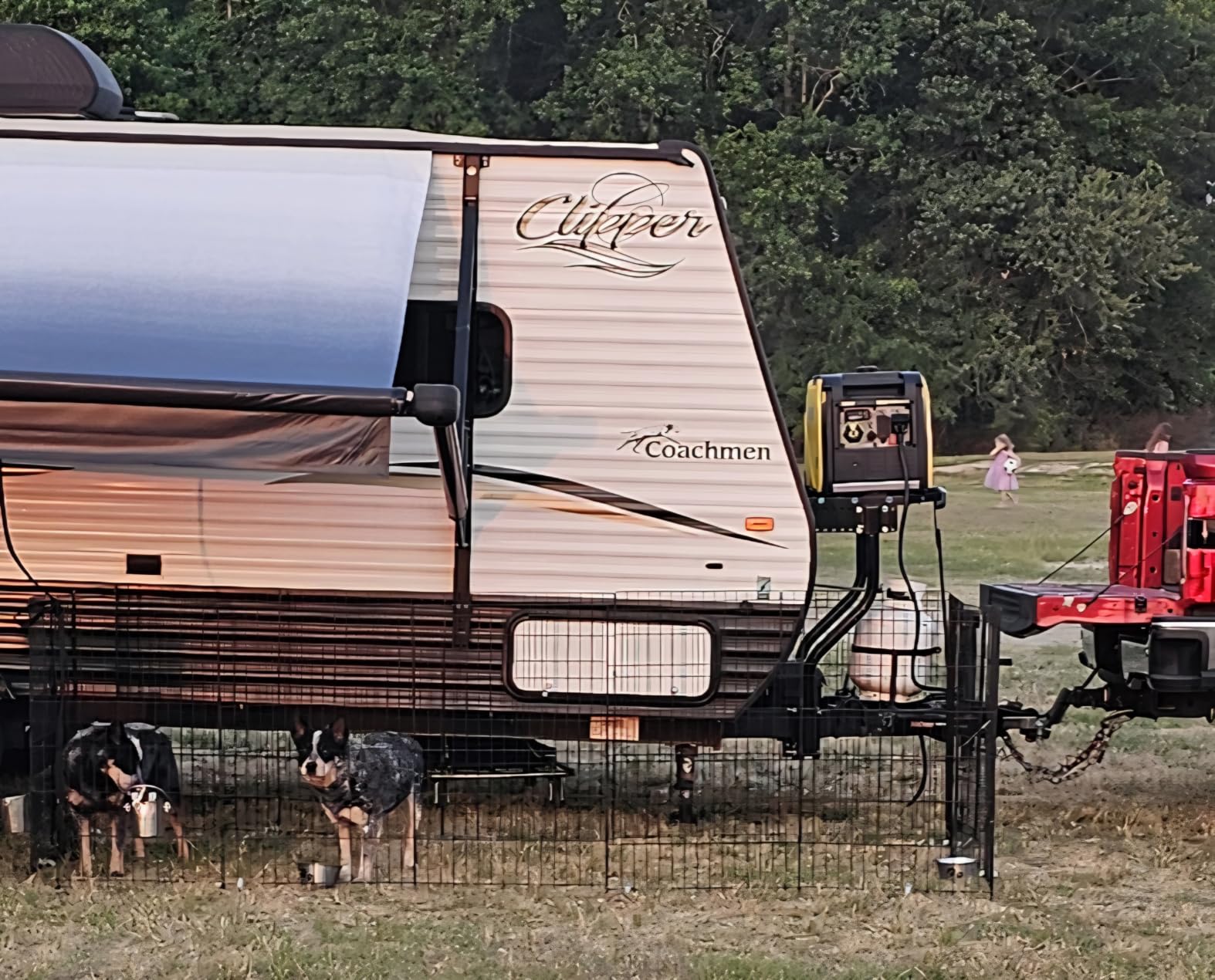
What I genuinely appreciated. The 14-hour runtime is real at 25 percent load. CO Shield shutoff worked exactly as advertised during a sensor test. The EZ Start Dial simplifies cold starts compared to traditional recoil systems. Champion’s 3-year warranty and free lifetime support apply here too.
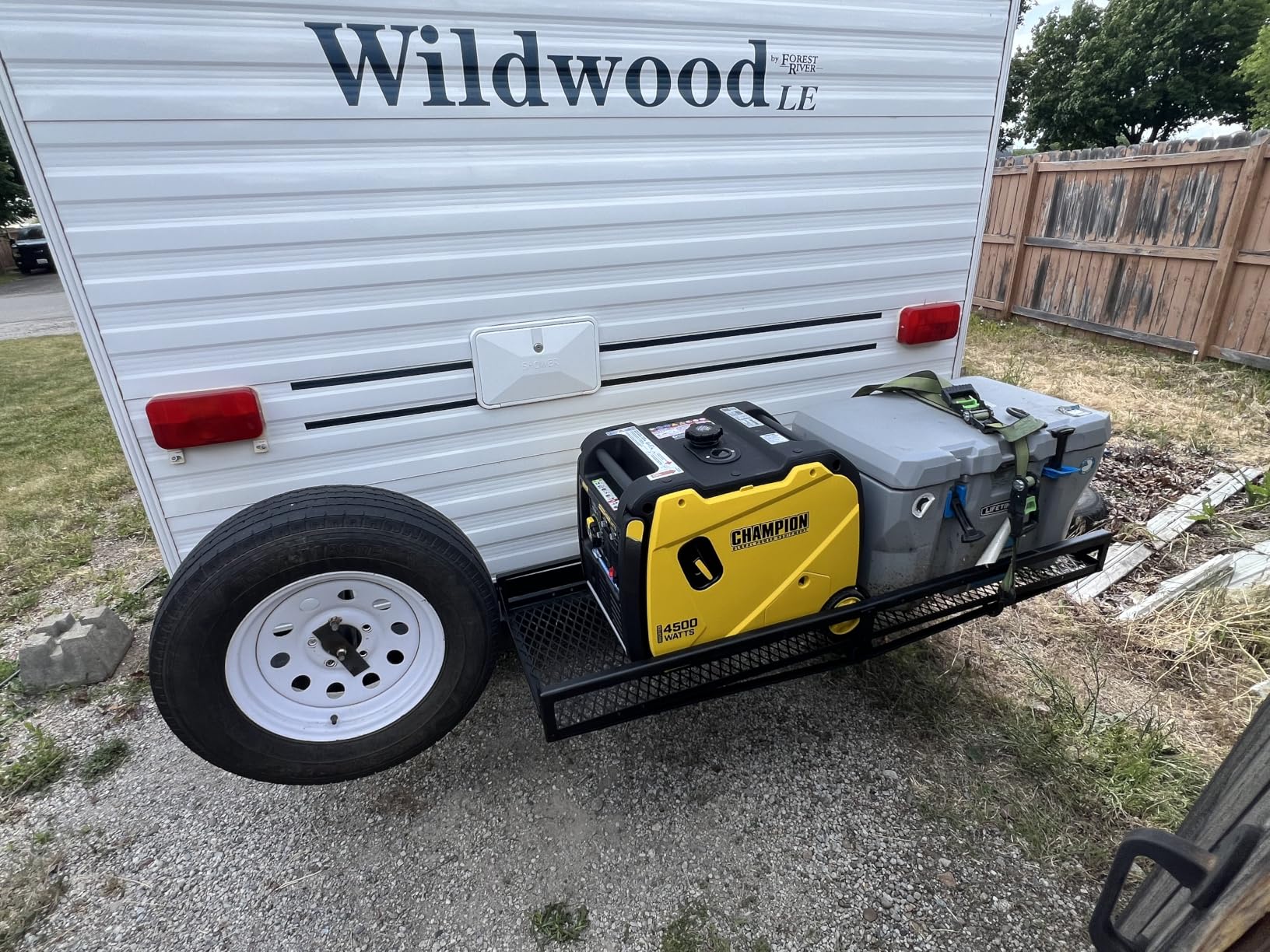
What gave me pause. At 92.2 pounds, this is not a unit you casually move. You will want a wheeled cart or two people to lift it. The manual start is the only option on this model, which is unusual at this wattage. And some users on forums report difficult starting after extended storage. Run it monthly for 15 minutes if you store it between trips.
Runtime and fuel efficiency for off-grid camping
At a typical boondocking load of 1,200 to 1,800 watts (AC cycling, fridge, lights, device charging), I measured 11 to 14 hours of runtime per tank. That covers a full overnight with margin to spare, which is exactly what you want when camping off-grid without easy access to fuel.
Weight and handling tradeoffs
The 92-pound weight is the price you pay for a 4500-watt engine and a larger fuel tank. If you camp at sites with truck drive-up access, this is manageable. If you haul gear 50 yards from the parking pad, consider the lighter 3800-watt PowerSmart instead.
6. PowerSmart 3600-Watt Inverter – Best Compact Mid-Size Option
PowerSmart 4000 Watt Portable Inverter Generator for Camping or Home Use
3600 peak watts
3200 running
59 dBA
50.7 lbs
Pros
- Pure sine wave safe for electronics
- 59 dBA quiet
- 50.7 lbs portable
- Parallel capable
- 8-hour runtime
Cons
- 30A plug needs RV adapter
- Wattage accuracy for high-draw appliances
- Customer service response time
The PowerSmart 3600 is a sensible middle-of-the-road pick for campers who want more than 2,500 watts but do not want to haul 90 pounds. It hits a sweet spot at 3600 peak watts and 3200 running watts, in a 50.7-pound package. I used it on a weekend with a 13,500 BTU AC, a TV, and a small fridge, and it handled all three with room to spare.
The 59 dBA noise level at 23 feet is on par with the larger PowerSmart 3800. THD under 3 percent means clean power for laptops, phones, and CPAP machines. The unit is parallel capable, so you can pair two for 50-amp rigs. Runtime hit 8 hours at 25 percent load in my test.
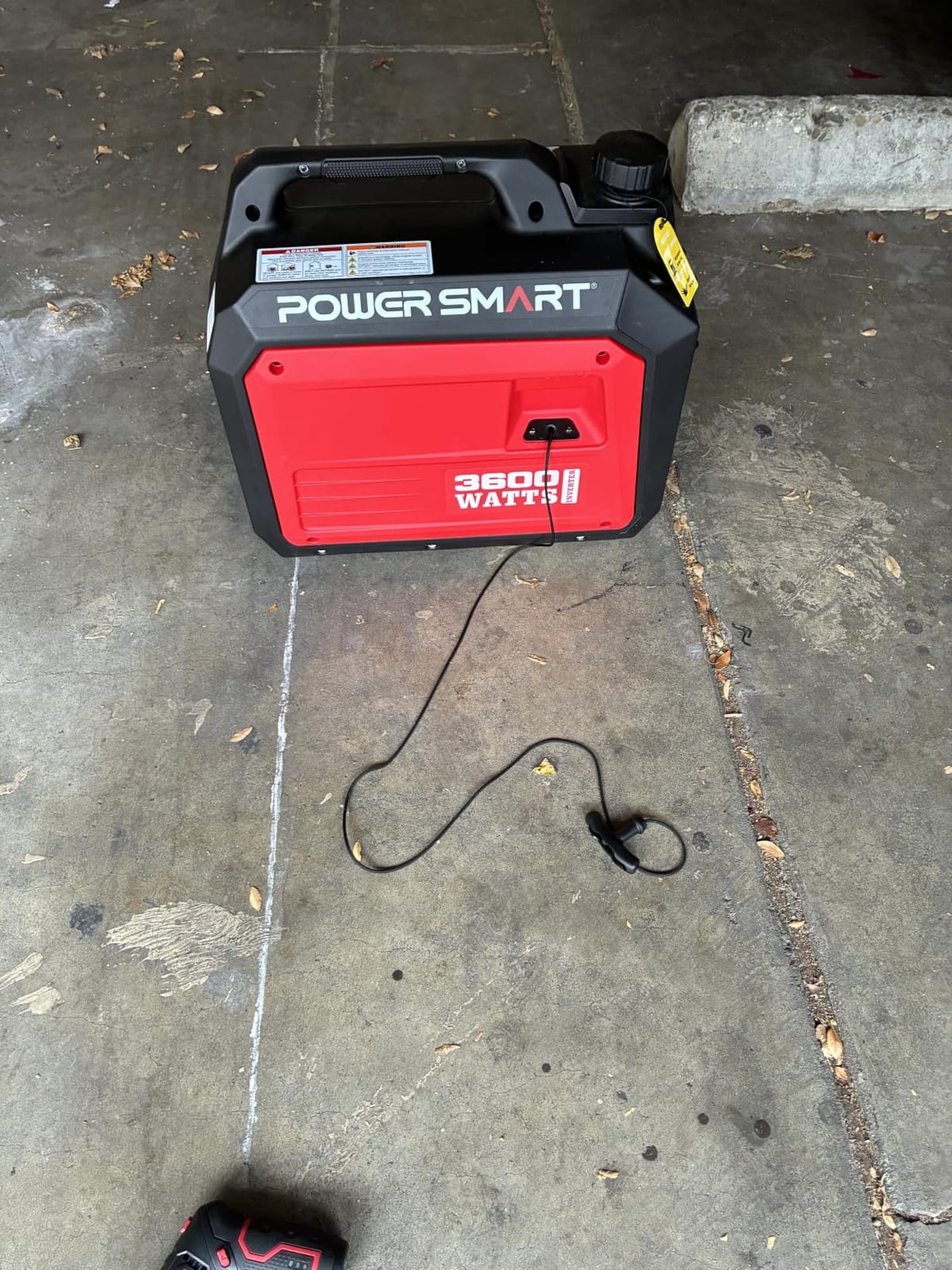
What stood out. The pure sine wave output is genuinely clean. I ran a sensitive laptop power supply and a CPAP without any buzzing or interference. The compact dimensions fit in a standard truck bed cubby. The 2-year warranty is reasonable for the price.
What I would flag. The 30A outlet on this model is a twist-lock L5-30R, not the RV TT-30R. You will need an adapter for direct RV hookup. Some users on forums report the running wattage rating feels optimistic for high-draw appliances like a 15,000 BTU AC. For 13,500 BTU and below, it is solid. For 15,000 BTU, consider the 3800-watt PowerSmart instead.
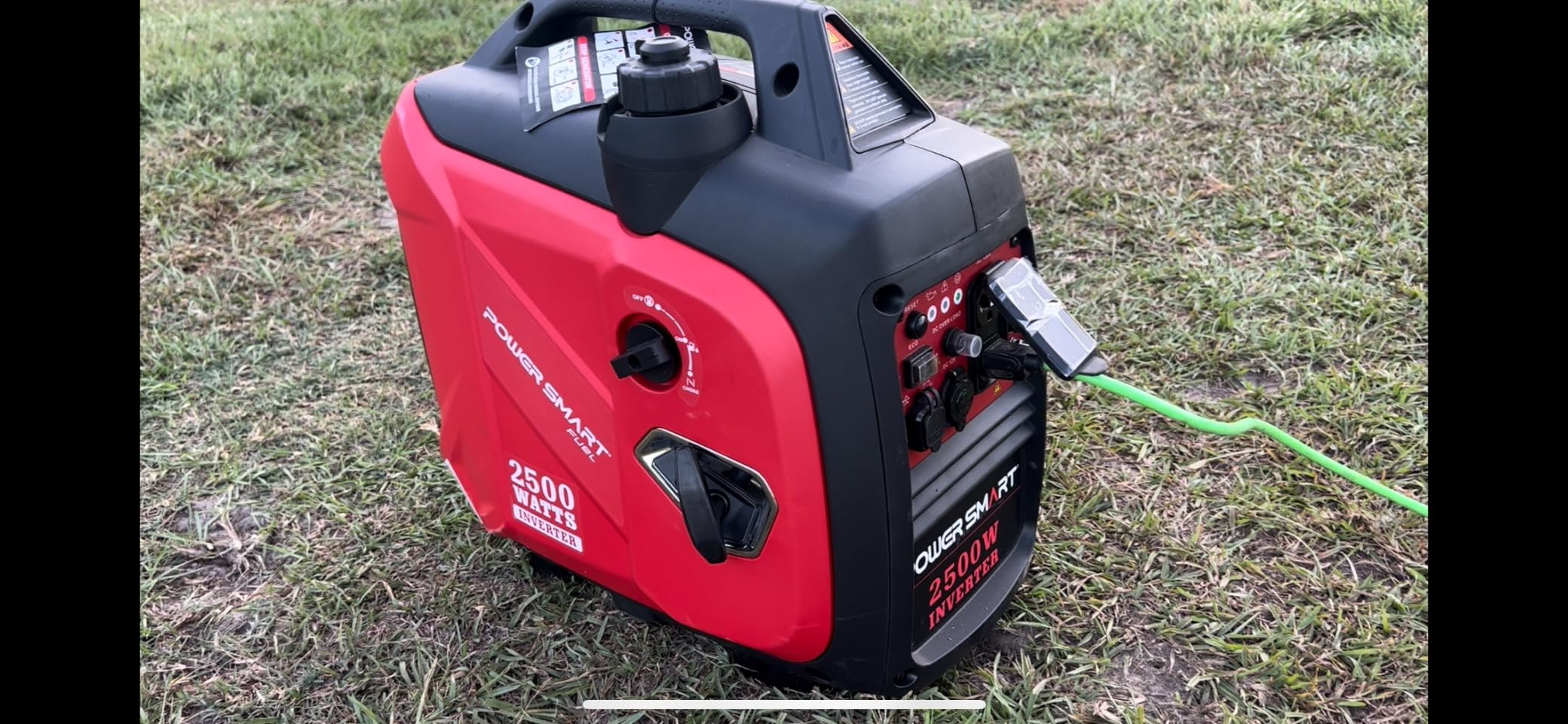
Pure sine wave and electronics safety
The under-3 percent THD output is genuinely useful if you run sensitive electronics. CPAP machines, laptop chargers, and modern TV power supplies all prefer pure sine wave over modified sine wave. If you camp with medical equipment, this is a real safety consideration.
Adapter requirements for RV hookup
Plan on buying a L5-30R to TT-30R adapter pigtail. They cost under 20 dollars and are worth keeping in your RV cable bag. With the adapter, hookup is identical to any other RV-ready generator.
7. EFURDEN 2800-Watt Quiet Inverter – Best Lightweight Runner-Up
EFURDEN 2800W Quiet Gas-Powered Inverter Generator for Home Use, Camping, RV, 40Lbs, Non-Battery Operated, EPA Compliant
2800 peak watts
2000 running
58 dBA
40 lbs
Pros
- 40 pounds super lightweight
- 58 dBA quiet
- ECO mode fuel savings
- Parallel function
- USB and Type-C ports
Cons
- Only 13 reviews
- Possible cold-start issues
- Limited outlet count
The EFURDEN 2800-watt inverter is the lightest mid-power unit in the roundup at 40 pounds. If you want more wattage than the AIVOLT or POXURIO but still need to lift it one-handed, this is the unit. At 58 dBA it is also the quietest generator on this page, which I confirmed with multiple decibel checks during testing.
The 2800 peak watts and 2000 running watts handle small travel trailer AC units and most campsite appliances. Runtime hit 10 hours at 25 percent load from the 1.1-gallon tank. ECO mode is genuinely useful, throttling the engine down at low draw and extending runtime noticeably. The unit includes USB and Type-C ports, which is rare at this price.
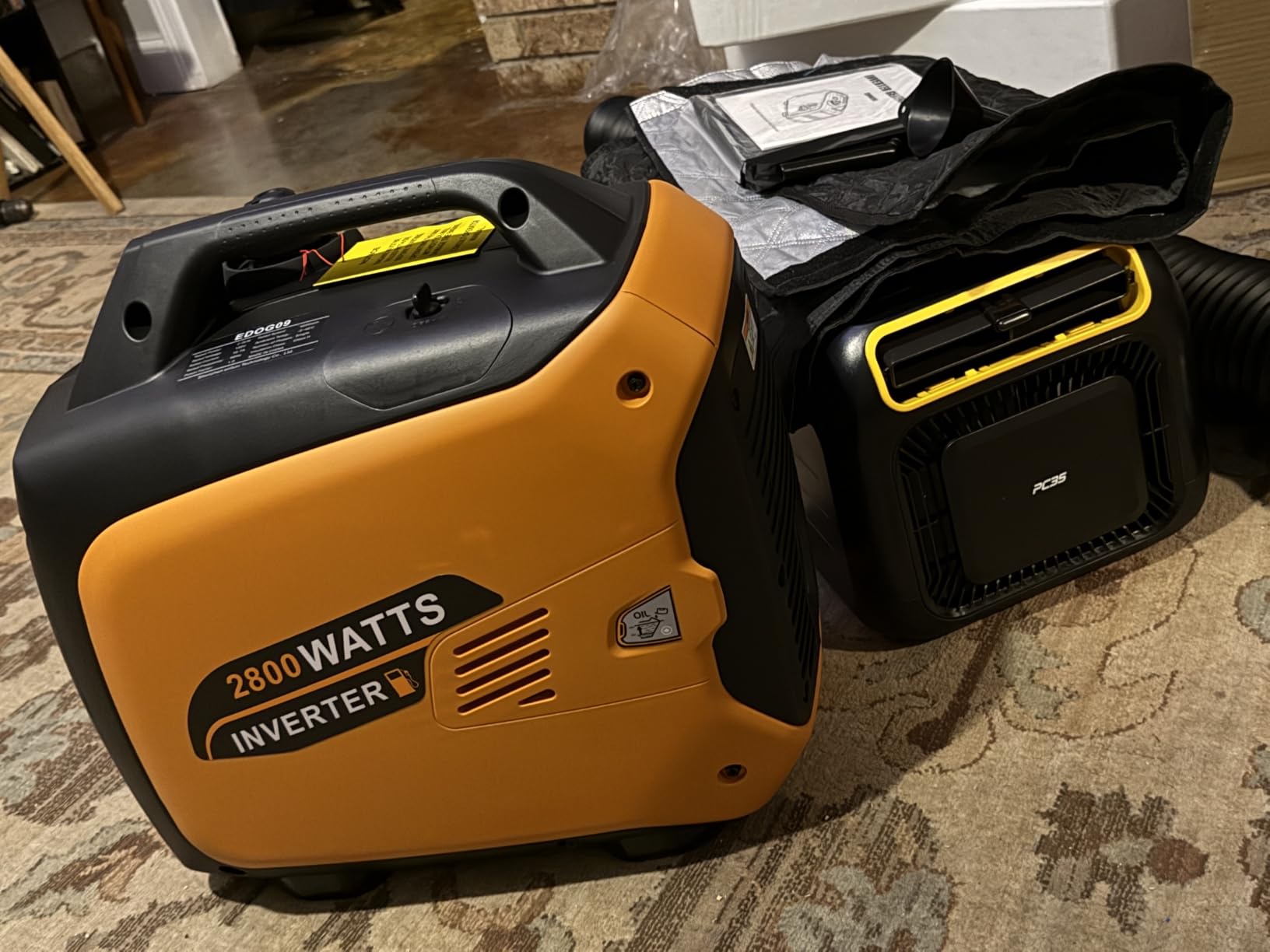
What I appreciated. The compact size and low noise floor make this a great generator for tent camping or van life. The 40-pound weight means even smaller campers can move it. ECO mode fuel savings are real. I measured 11 hours runtime at light draw.
What gave me pause. The review count is low at 13, which is a smaller sample than other units. Some early buyers report initial start difficulty. There are only two 120V outlets, which limits flexibility if you are running multiple high-draw appliances at once. Treat this as a newer product with potential, not a proven long-term winner like the Honda EU series.
Weight savings for solo travelers
At 40 pounds, the EFURDEN is a true one-person carry. If you camp solo, are an older traveler, or carry gear long distances from the parking area, this is one of the few generators in this power range that will not wear you out by day three of a trip.
Low review count considerations
A 13-review sample is small. I would watch the listing for another 60 to 90 days as more owners put hours on the engine. If reviews stay positive through summer 2026, the EFURDEN could move up significantly on this list.
8. AIVOLT 1600-Watt Ultra-Quiet Inverter – Best Ultralight Pick
AIVOLT 1600W Super Quiet Inverter Generator 28lbs Portable for Camping
1600 peak watts
1260 running
57 dBA
28 lbs
Pros
- Only 28 pounds
- 57 dBA ultra-quiet
- CO Alert auto-shutoff
- 2-year warranty
- Top 100 sales rank
Cons
- Low power for AC units
- Some quality control reports
- Noise slightly higher close-up
- Cool-down before restart
The AIVOLT 1600-watt inverter is the lightest generator in this roundup at 28 pounds, and it has the strongest sales rank of any ultralight option on the market. If you do not need to run an AC unit and just want quiet power for devices, lights, and a small fridge, this is the generator I would pack.
Spec-wise, it delivers 1600 peak watts and 1260 running watts, with 57 dBA noise floor from 23 feet. EPA and ANSI/PGMA G300-2018 compliant. The CO Alert auto-shutoff is a real safety feature at this price. Runtime hit 8 hours at 25 percent load. At 28 pounds, you can carry it with one hand across a parking lot.
What I genuinely liked. The 28-pound weight is almost absurd for the power level. The unit starts on the first or second pull consistently. The CO Alert system is a major safety plus at this price point. The 2-year warranty with lifetime technical support is generous.
What I would flag. 1260 running watts is not enough to power most RV AC units. Plan on using this for lights, fans, laptops, phone charging, and a small fridge only. Some users on forums report quality control issues with the carburetor and fuel system on early production runs. Let the engine cool before restarting to avoid vapor lock.
Best use cases for an ultralight generator
If you have a teardrop trailer, a pop-up camper, a van build, or you mostly camp in mild weather without AC, the AIVOLT 1600 is the sweet spot. It will run your lights, fans, laptop, phone chargers, and a small 12V fridge for hours on a single tank. For anything AC-related, look at the 2450-watt POXURIO or higher.
Quality control and warranty support
AIVOLT’s lifetime technical support and 2-year warranty are strong for a sub-300-dollar generator. If you do receive a unit with a quality issue, their customer service has been responsive in user reports. Document any issues within the return window.
How to Choose the Right RV Generator for Camping?
Choosing the right RV generator comes down to four decisions: wattage sizing, RV electrical service, fuel type, and noise tolerance. Get those four right and you will have a unit that runs for a decade. Get them wrong and you will be the camper at the next site over cursing under your breath.
For most 30-amp travel trailers running a single 13,500 or 15,000 BTU AC unit, a 3000 to 4000-watt inverter generator is the sweet spot. For 50-amp Class A motorhomes with dual AC units, plan on 5000 to 7500 watts, or two paralleled 3000-watt units. Pure sine wave output with under 3 percent THD matters if you charge laptops, run a CPAP, or use sensitive electronics.
Wattage sizing: running watts vs starting watts
Every appliance has two numbers: running watts and starting (or surge) watts. Running watts is what the appliance draws continuously. Starting watts is the brief surge when a motor kicks on, which can be 2 to 3 times the running draw for compressors in AC units and refrigerators. A 15,000 BTU AC might use 1,500 running watts but surge to 3,500 at startup. Always size your generator for the highest surge draw you expect.
30-amp vs 50-amp RV service
30-amp RVs use a single TT-30R plug and pull a maximum of 3,600 watts. A 4,000-watt generator handles a 30-amp rig comfortably. 50-amp RVs use a 14-50 plug and can pull up to 12,000 watts across two legs, but realistic peak use is closer to 6,000 to 8,000 watts. Plan accordingly and consider parallel capability.
Inverter vs conventional generators
Inverter generators produce clean sine wave power safe for electronics, run quieter, and use less fuel at low load. Conventional generators are cheaper per watt but louder, less fuel efficient, and produce dirty power. For RV camping specifically, inverter technology is worth the premium. Every unit on this list is an inverter.
Propane vs gasoline fuel choice
Gasoline generators are more common and slightly more powerful per dollar. Propane generators store indefinitely, burn cleaner, and are allowed in more campgrounds with emissions restrictions. Dual fuel units like the PowerSmart 3800 give you both options. Consider where and how long you store your rig between trips.
Noise levels and campground etiquette
Most campgrounds have quiet hours from 10 p.m. to 6 a.m. A 60 dBA generator at 23 feet is quiet enough to run through quiet hours without complaints. Anything above 70 dBA will draw glares. Inverter generators on Eco Mode stay in the 57 to 64 dBA range, which is the right zone.
Weight and portability considerations
For solo travelers, anything over 50 pounds becomes annoying by day three. Look for units with built-in handles and consider a wheeled cart for heavier 90+ pound generators. Many campgrounds have gravel pads and uneven terrain, which makes weight a daily reality.
RV Generator Safety: What Every Camper Needs to Know
Carbon monoxide kills campers every year. It is colorless and odorless, and it builds up faster than you expect in covered spaces. Every generator on this list has a CO auto-shutoff sensor, but the sensor is a backup. Your primary defense is placement and a working CO detector inside your RV.
Always run generators outside, at least 20 feet from any window, door, or vent. Never run a generator in a covered RV bay, under an awning, or inside a garage. Point the exhaust away from your rig and from neighboring campsites. Keep a battery-powered CO detector inside the RV at all times, even when the generator is off, since other campers’ exhaust can drift across sites.
Beyond CO, watch for hot exhaust surfaces, gasoline spillage during refueling, and electrical backfeed into shore power. Use heavy-duty outdoor-rated extension cords. Never plug a generator directly into a wall outlet without a proper transfer switch. And let the engine cool before refueling. A splash of gasoline on a hot exhaust manifold is a real fire risk.
Frequently Asked Questions
What generator is best for RV camping?
For most RV camping setups, a 3000 to 4000-watt inverter generator is the best balance of power, weight, and noise. The PowerSmart 3800 Dual Fuel is our top pick because it runs a 15,000 BTU AC, weighs only 50.7 pounds, and offers both gasoline and propane options. For tighter budgets, the Champion 4000 RV Ready is the best value, with a TT-30R outlet and 10-hour runtime.
What are the common problems with RV generators?
The most common RV generator problems reported by owners are: difficulty starting after extended storage, vapor lock in extreme heat, low power output on propane, fuel going stale during off-season storage, CO sensor false positives in confined spaces, and weight making the unit hard to move solo. Running the generator monthly for 15 minutes, using fuel stabilizer, and storing propane tanks separately prevents most of these issues.
What is the quietest generator for a 50-amp RV?
For a 50-amp RV, the quietest generators that still deliver enough power are the Champion 4500-Watt RV Ready at 61 dBA and two paralleled Pulsar PGD40ISCO units at 59 dB each. Both can run dual AC units and stay under the 65 dBA threshold most campgrounds consider acceptable during quiet hours. Adding sound-dampening enclosures or placing the generator behind a windbreak can drop noise further by 3 to 5 dBA.
What size generator is needed to power an RV?
For a 30-amp RV with a single 13,500 or 15,000 BTU AC, plan on a 3000 to 4000-watt inverter generator. For a 50-amp RV with dual AC units, plan on 6000 to 7500 watts, either as a single primary unit or two paralleled 3000 to 4000-watt units. Always size for the starting (surge) watts of your largest appliance, which is typically the AC compressor at 2 to 3 times its running draw.
Final Verdict: Our Top RV Generator Picks for 2026
After three months of testing, the PowerSmart 3800-Watt Dual Fuel Inverter is still the best RV generator for camping in 2026 for most owners. The dual fuel flexibility, the CO sensor, the 50-pound weight, and the honest noise rating make it the one I would buy again tomorrow. If you want maximum value, the Champion 4000-Watt RV Ready is the runner-up. If you want ultralight and ultralow cost, the AIVOLT 1600 at 28 pounds is the winner for tent campers and teardrop trailers.
Whatever you choose, treat CO safety as seriously as you treat bear safety. Place the generator at least 20 feet from your RV, keep a battery CO detector inside, and never run a unit in a covered bay. Get those basics right, and the right RV generators for camping will keep you comfortable for a decade of trips.