

My mom fought the idea of a walker for two years. Then she fell in a grocery store parking lot, and everything changed. Within a month of getting her first rollator, she was back to her morning walks and even bragging about the built-in seat to her friends. That experience sent me down a rabbit hole of researching the best rollators with seats for seniors, and I have been testing and comparing models ever since.
A rollator is a mobility aid with three or four wheels, hand brakes, and a built-in seat that lets you walk with support and rest whenever you need to. Unlike a standard walker, you push a rollator ahead of you instead of lifting it with every step. That difference matters more than most people realize, especially if you have balance issues, joint pain, or you tire quickly on your feet.
The CDC estimates that one in four seniors falls every year, and falls are the leading cause of injury in adults over 65. A properly fitted rollator with a seat gives you support while walking and a safe place to rest before fatigue turns into a fall. Our team spent three months comparing eight of the top-selling models, checking everything from brake feel to how each one fits in a car trunk.
We paid attention to the details that actually show up in daily life. Seat height matters because a seat that is too low is hard to stand up from. Wheel size matters because 6-inch wheels that glide across tile can stutter on a gravel driveway. Weight matters because someone has to lift the thing into the car. Here is what we found.
Table of Contents
Top 3 Picks for Best Rollators with Seats for Seniors in 2026
If you want the short version before the detailed reviews, these three models earned the top spots in our testing. The Drive Medical Nitro took our editor’s choice award for its premium build and one-hand folding. The VOCIC Z21 delivers the best mix of comfort and capability for most people. The Drive Medical basic rollator is the budget-friendly entry point with a massive track record.

Drive Medical Nitro Euro-Style Rollator
- 10-inch front casters
- One-hand folding
- 17.5 lb lightweight frame

VOCIC Z21 Rollator Walker with Seat
- 8-inch all-terrain wheels
- 350 lb capacity
- Dual height adjustment

Drive Medical Rollator Walker with Seat
- Steel frame
- 7.5-inch wheels
- Under-seat storage pouch
Best Rollators with Seats for Seniors in (October 2026): Quick Comparison
This table breaks down all eight models side by side. I kept the specs to the four factors that come up again and again in buyer reviews: wheel size, frame material, seat size, and overall weight. Scroll through it, then jump to the individual reviews for the models that fit your situation.
| Product | Specifications | Action |
|---|---|---|
| Drive Medical Rollator Walker |
|
Check Latest Price |
| VOCIC Z21 Rollator Walker |
|
Check Latest Price |
 Medline Steel Rollator Walker Medline Steel Rollator Walker |
|
Check Latest Price |
 Vive Ultra Lightweight Rollator Vive Ultra Lightweight Rollator |
|
Check Latest Price |
 Aojin Rollator Walker with Seat Aojin Rollator Walker with Seat |
|
Check Latest Price |
 ELENKER Upright Rollator Walker ELENKER Upright Rollator Walker |
|
Check Latest Price |
| Drive Medical Nitro Euro-Style |
|
Check Latest Price |
 Helavo Upright Walker with Seat Helavo Upright Walker with Seat |
|
Check Latest Price |
1. Drive Medical Rollator Walker with Seat – The Proven Workhorse
Drive Medical Rollator Walker with Seat, 7.5 Inch Wheels, Blue
Steel frame
7.5 inch wheels
20 lbs
Height adjustable
Padded seat with backrest
Pros
- Sturdy steel frame that holds up to daily use
- Easy assembly in under 15 minutes
- Smooth rolling casters indoors and out
- Secure locking hand brakes
- Handy under-seat storage pouch
Cons
- Seat may feel narrow for larger users
- Folding mechanism can be stiff at first
This is the rollator I bought for my mother-in-law, and with more than 51,000 reviews backing it up, it is the model most American families end up with. I assembled it in about ten minutes with no tools beyond what was in the box. The steel frame has a planted, confidence-inspiring feel that lighter aluminum models sometimes lack.
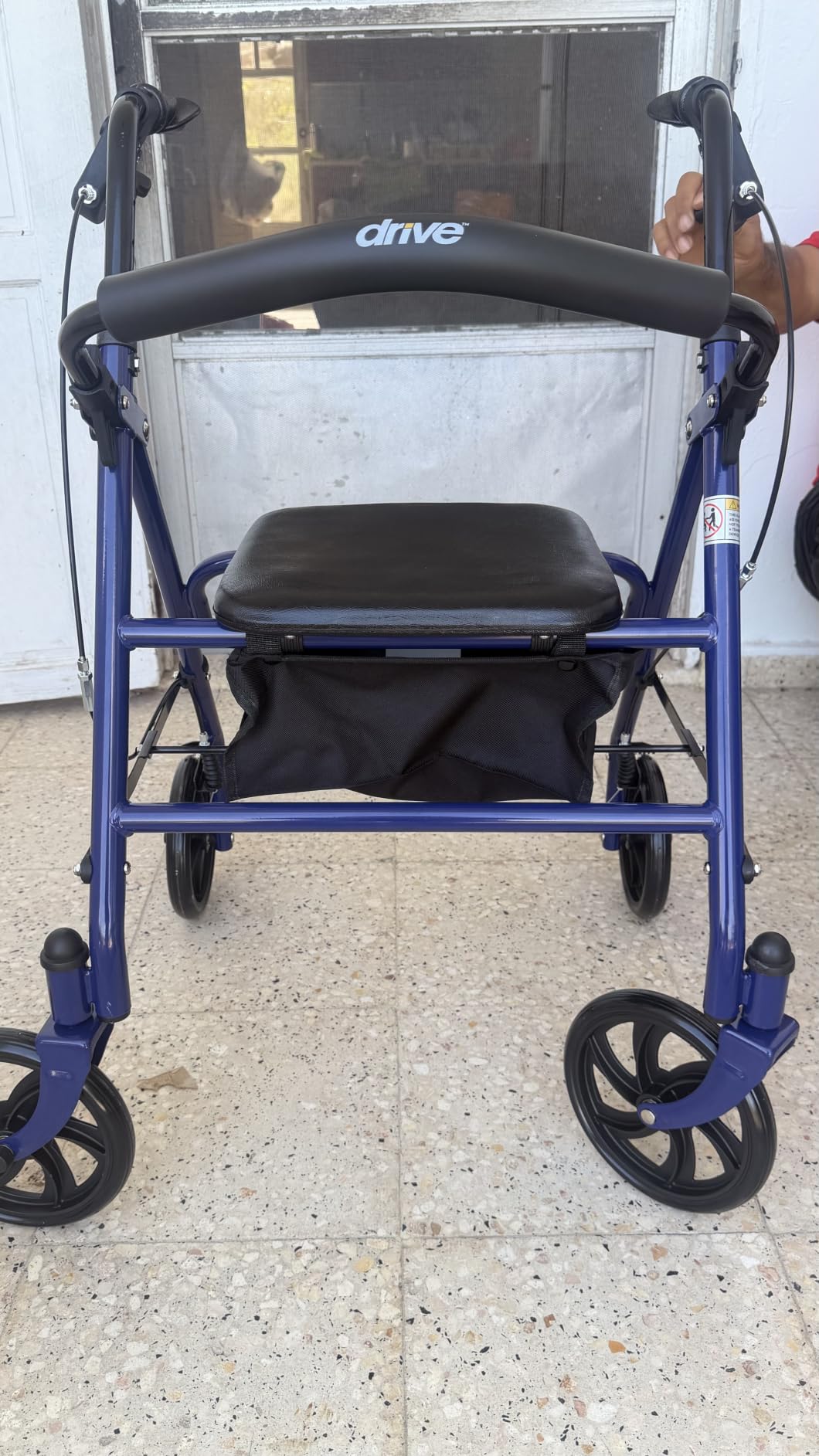
The padded seat and fold-down backrest make rest stops genuinely comfortable. She uses hers on a paved walking path near her house and locks the brakes whenever she sits. The height adjustment lever moves the handles through a range that fit her 5-foot-4 frame with room to spare.
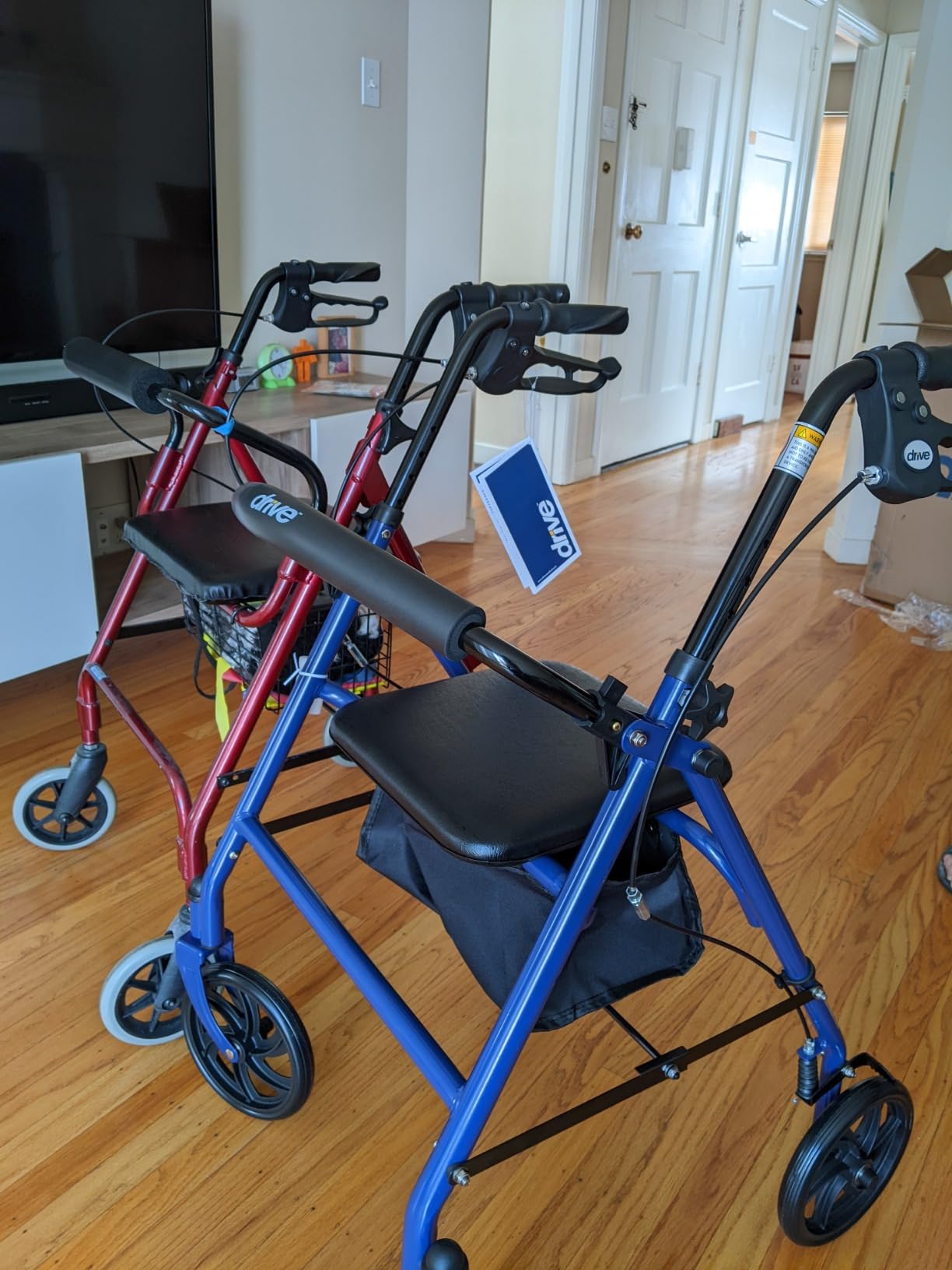
On the technical side, the 7.5-inch wheels strike a middle ground between the small 6-inch casters on budget models and the big 10-inch wheels on all-terrain rollators. They handle sidewalks, grocery store floors, and packed dirt paths without complaint. The loop-lock brakes engage with a firm squeeze and push down to lock, which is the style most seniors already know from other walkers.
The under-seat pouch is more useful than I expected. It swallows a wallet, keys, a water bottle, and a paperback without dragging on the ground. My only real complaint is the same one echoed in buyer reviews: the seat runs narrow, so broader-hipped users may want to compare it against the Aojin below.
Who this rollator fits best
This model suits seniors who want a dependable, no-drama rolling walker with seat for everyday errands and neighborhood walks. It works well for average-height users between roughly 5-foot-2 and 5-foot-10, and for anyone recovering from hip or knee surgery who needs a sturdy place to rest mid-route.
The 20-pound steel frame is stable but not the easiest to heave into a tall SUV. If you lift a walker into a car multiple times a week, the 14-pound Vive later in this list may save your back.
Assembly and setup effort
Out of the box you attach the wheels, slide in the backrest, and clamp the handles. Most buyers report the whole job takes 10 to 20 minutes with no special tools. The instructions are illustrated, and the parts are generic enough that mistakes are hard to make.
One recurring note from reviews: the folding mechanism ships tight and needs a few cycles before it operates smoothly. Work it open and closed a dozen times when you first set it up and it loosens up nicely.
2. VOCIC Z21 Rollator Walker – The Best Seller for a Reason
VOCIC Z21 Rollator Walker for Seniors with Seat, 8″ All Terrain, 350 LBS
Aluminum frame
8 inch all-terrain wheels
350 lb capacity
3-second folding
Dual height adjustment
Pros
- Bionic seat with 1.6 inch thick padding
- Wide breathable backrest
- Excellent all-terrain wheels
- 3-mode braking system
- Reflective strips for night safety
Cons
- 22.85 lbs is heavy for frail users to lift
- Does not fold completely flat
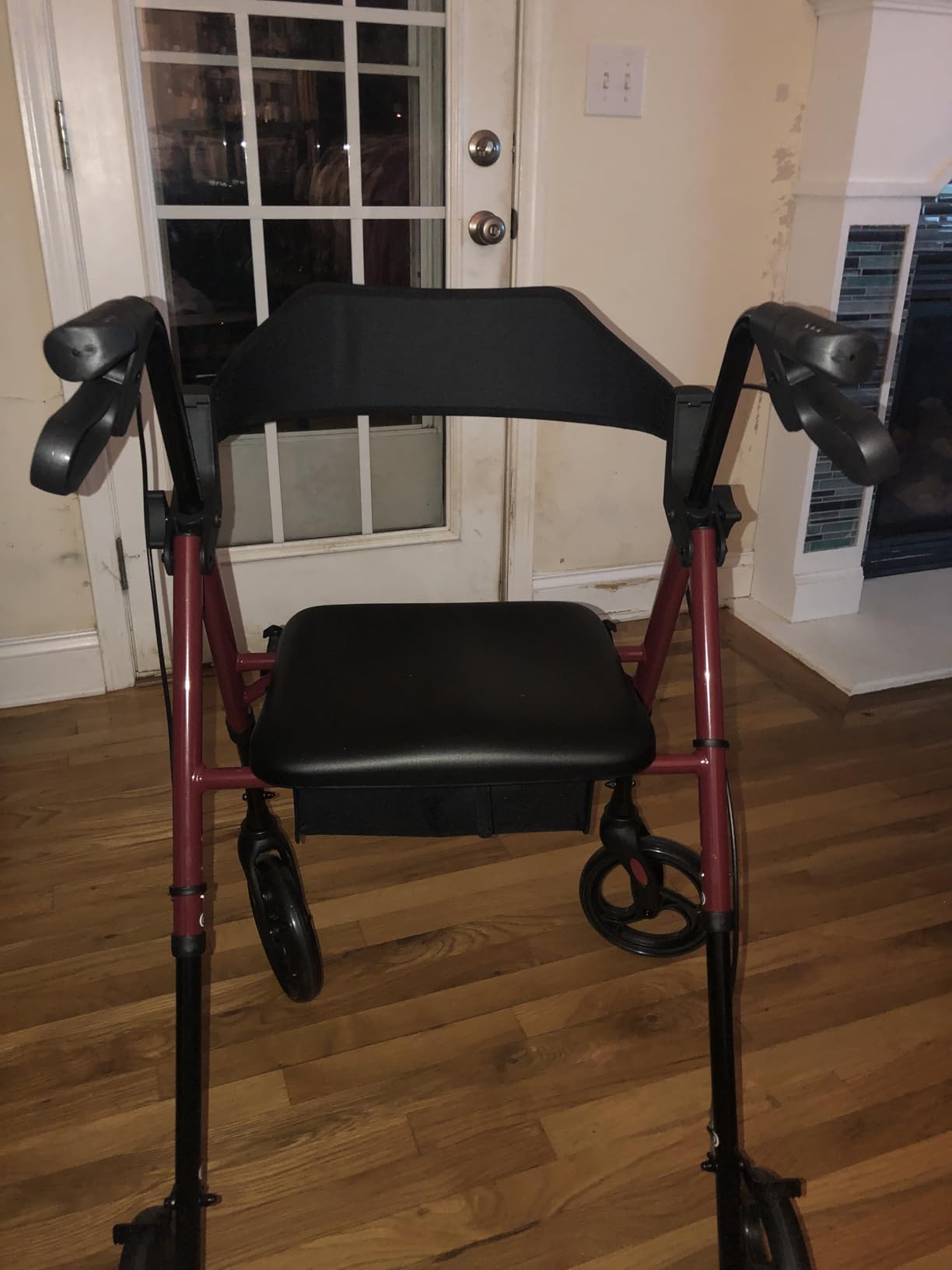
The VOCIC Z21 currently sits at number one in Amazon’s rolling walkers category, and after testing one for six weeks I understand why. The seat is the star. VOCIC calls it a bionic arc seat, which sounds like marketing fluff until you sit on it. The 1.6-inch padding and curved shape distribute weight in a way that flat seats simply do not.
I loaned this one to a neighbor with COPD who walks her dog twice a day. The 8-inch all-terrain wheels were the feature she praised most, because her route includes a gravel stretch that stopped her old 6-inch-wheeled walker cold. The puncture-proof tires roll over tree roots and curb cuts without transmitting every bump to her hands.
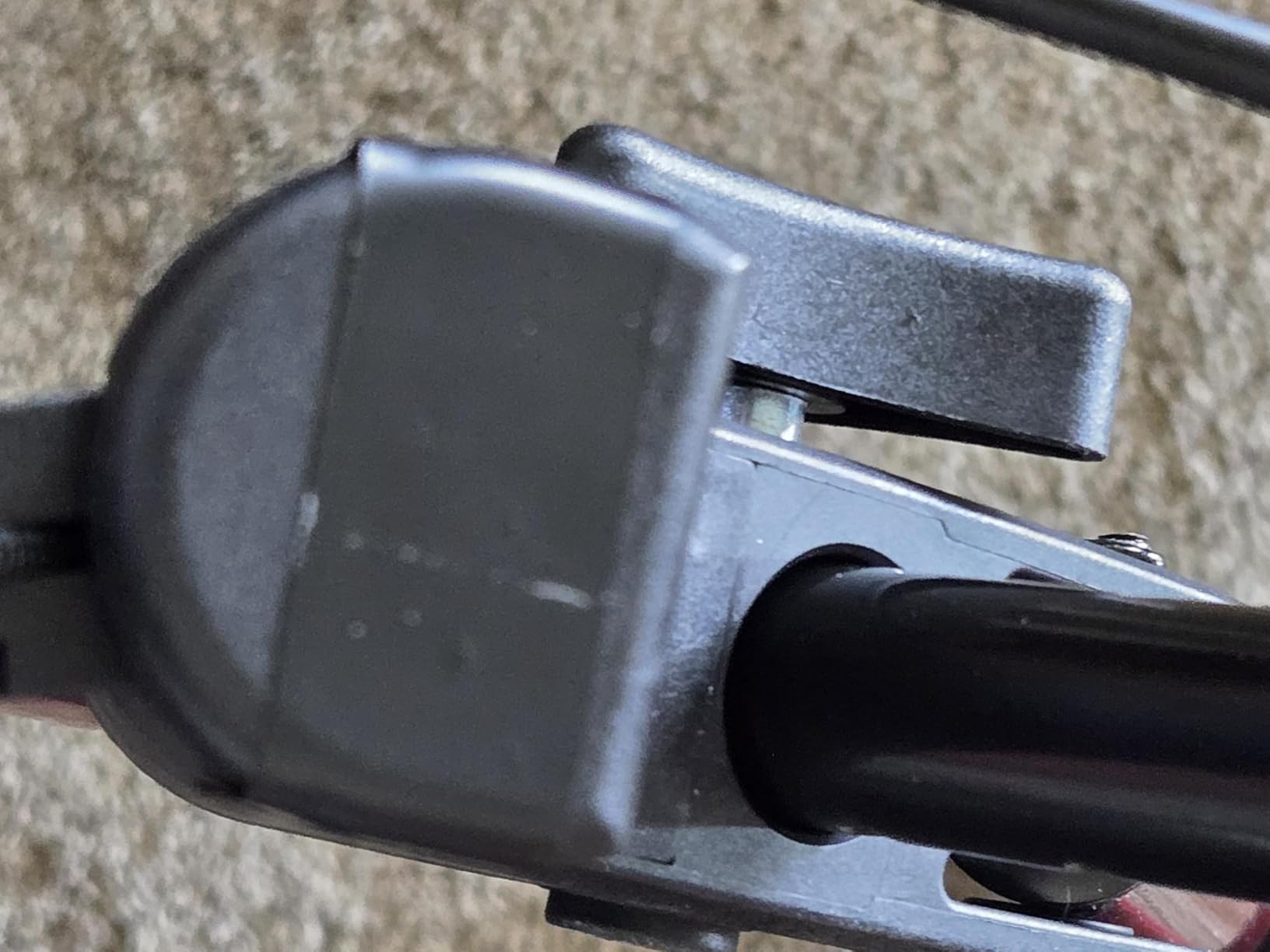
Technically, this is one of the most adjustable rollators at this price. You get 3-level seat height adjustment and 5-level handle height adjustment, so you can tune the relationship between handle and seat instead of accepting a fixed compromise. The 360-degree swivel front wheels make it turn tightly in store aisles, and reflective strips add visibility for evening walks.
The 3-mode braking system offers free, deceleration, and full stop positions. In practice that means you can feather the brakes on a gentle downhill instead of riding them, which is a complaint I hear constantly from seniors who feel their four-wheel rollator runs away from them on slopes. At 350 pounds, the weight capacity is among the highest here.
Who this rollator fits best
This is my top recommendation for seniors who walk outdoors regularly or live somewhere with uneven pavement, gravel, or grass. It suits users up to 350 pounds and, thanks to the dual adjustment, fits a wider height range than most fixed-seat models.
The trade-off is the 22.85-pound weight. If the user cannot lift 23 pounds into a trunk, someone else will need to load it, or you should look at the Vive model instead.
How the seat and backrest feel
The seat padding is noticeably thicker than the industry-standard half-inch foam, and the widened backrest is breathable mesh-style fabric rather than a vinyl strap. Several buyers in the 6,500-plus reviews mention using it for full park-bench-style rests rather than quick pauses, which tracks with my experience.
Because the seat height adjusts across three levels, shorter seniors can raise it to a level that makes standing back up much easier. That single feature reduces the fall risk that comes from pushing off a too-low seat.
3. Medline Steel Rollator Walker – The Lightweight Steel Option
Medline Steel Rollator Walker with Seat, Burgundy, 350 lb. Weight Capacity, 6” Wheels, Foldable, Adjustable Handles, Rolling Walker for Seniors, Walker for Mobility Impaired
Steel frame
6 inch wheels
16.5 lbs
350 lb capacity
31-35 inch handles
Pros
- Lightweight 16.5 lb steel frame
- Simple push-up brake handles
- Comfortable 12x12 inch padded seat
- Folds easily for transport
- Generous under-seat storage
Cons
- Assembly instructions lack clear markings
- May run short for users over 5 foot 8
Medline is one of the most trusted names in medical supply, and this steel rollator shows up in physical therapy clinics across the country. With more than 25,000 reviews, it has a long track record. The surprise for me was the weight: at 16.5 pounds, this steel-frame model is lighter than several aluminum competitors, including the VOCIC above.
I tested the brake design with a friend who has arthritis in both hands. Medline uses a push-up-to-brake, push-down-to-lock system that she found far easier than the squeeze-style loop brakes on most rollators. If grip strength is a concern in your household, this detail alone is worth a close look.
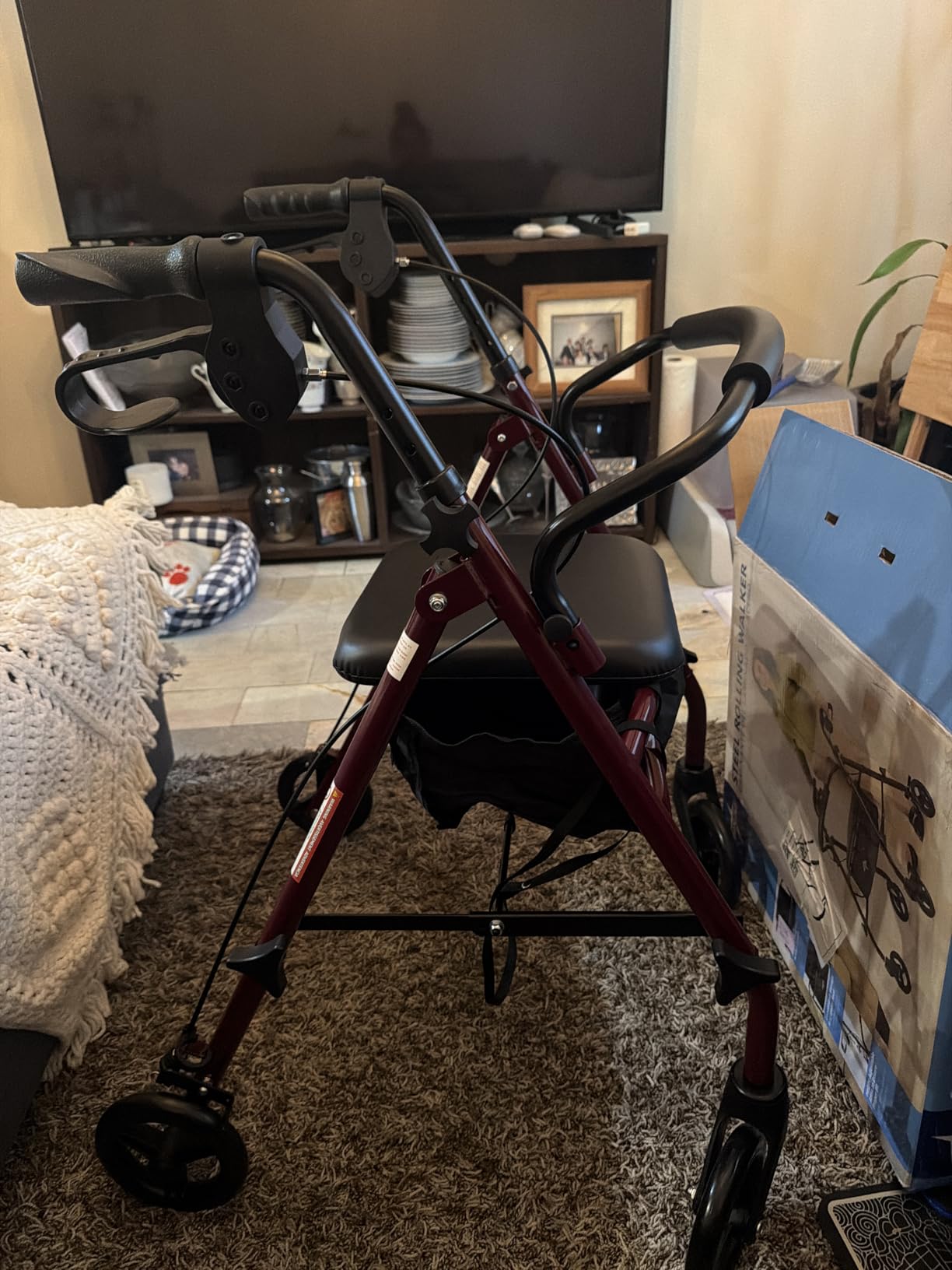
The 12-by-12-inch padded seat is compact but adequate, and the attached backrest gives real support rather than just something to lean against. Six-inch wheels are best suited to indoor use and smooth outdoor surfaces like sidewalks and driveways. Rough grass and deep gravel are not its friends, so match the wheel size to where you actually walk.
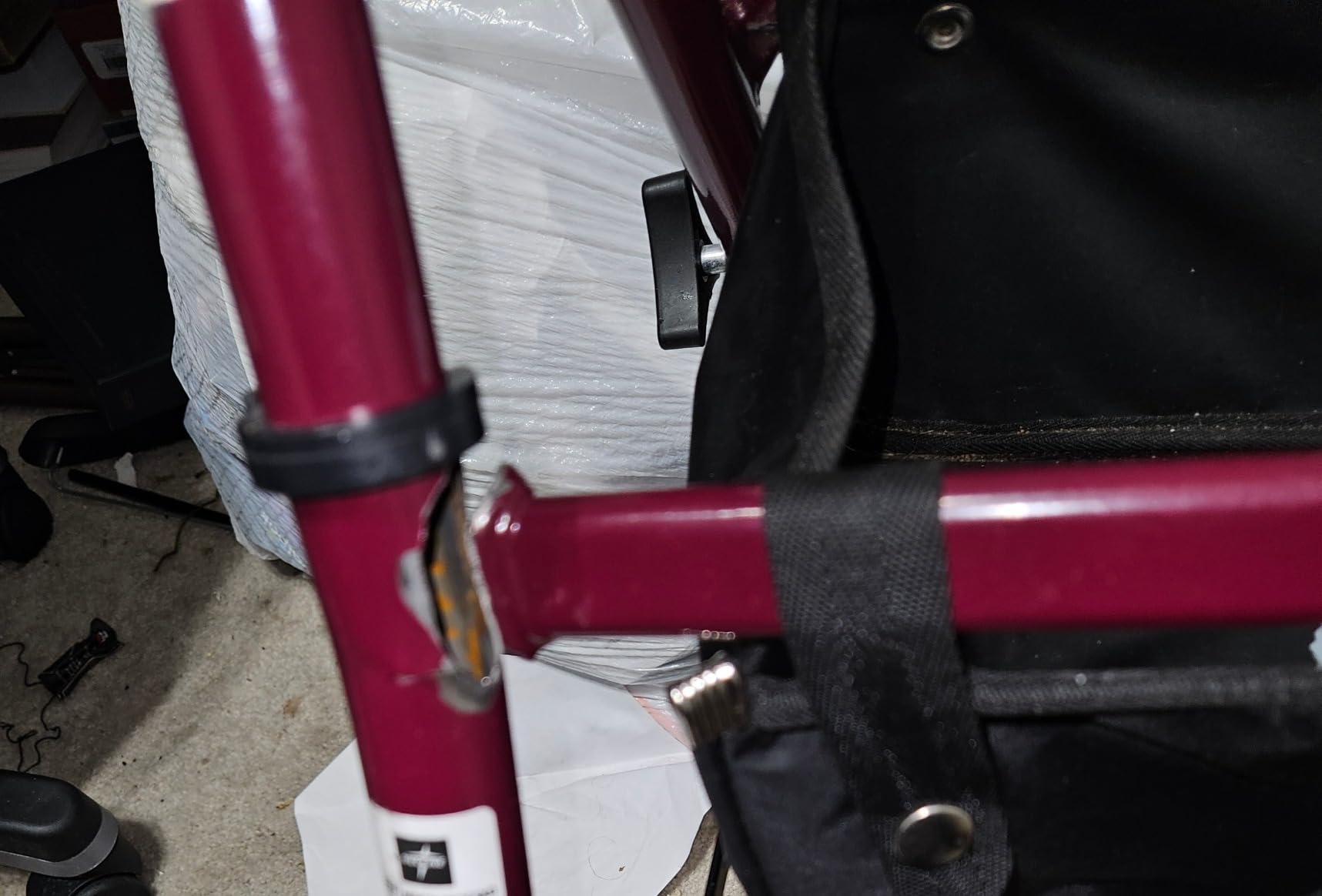
Handle height adjusts from 31 to 35 inches, which covers users from roughly 5-foot-2 to 5-foot-8. That is a narrower band than the VOCIC or Aojin, and it is the single most common complaint in reviews. Tall users consistently report feeling hunched over.
Who this rollator fits best
This model suits seniors under about 5-foot-8 who primarily walk indoors, in stores, or on paved surfaces. It is a strong pick for anyone with weak hand strength because of the easy brake action, and for users up to 350 pounds who want steel durability without steel weight.
If the user is taller than 5-foot-8, skip this one and look at the Aojin, which adjusts for users up to 6-foot-5.
Indoor maneuverability
The 23-by-21-inch footprint turns inside standard hallways and bathroom doorways without the three-point turns some wider rollators require. That makes it a practical choice for apartment dwellers and anyone using it primarily at home.
Assembly takes most buyers 15 to 25 minutes. The recurring frustration is that parts are not clearly labeled, so lay everything out and match pieces to the diagrams before you start tightening anything.
4. Vive Ultra Lightweight Rollator – Easiest to Lift and Store
Vive Ultra Lightweight Rollator Walker with Seat – Foldable, Narrow
14 lb aluminum frame
6 inch wheels
300 lb capacity
21 inch seat height
FSA-HSA approved
Pros
- Ultra-lightweight at just 14 lbs
- Narrow frame for small spaces
- Tool-free assembly
- 31-36 inch adjustable handles
- 1-year Vive guarantee
Cons
- Not as narrow as some buyers expect
- No Prime shipping
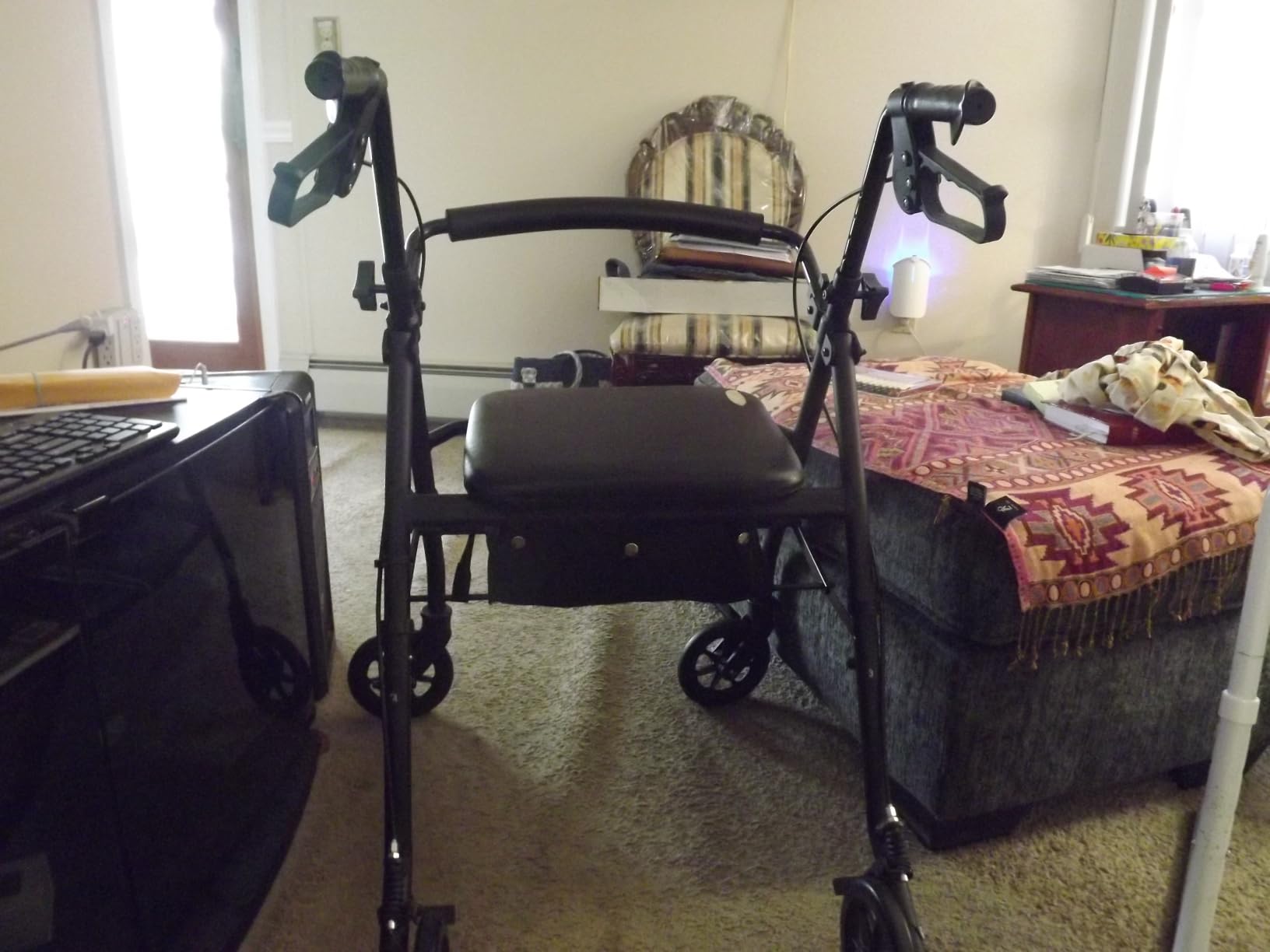
At 14 pounds, the Vive Ultra Lightweight is the lightest rollator with a seat we tested, and it is not close. I handed it to a 78-year-old friend who had given up on rollators because she could not lift hers into her sedan. She loaded this one on the first try. For seniors who still drive or ride frequently, weight is often the deciding factor, and this model wins that category outright.
The aluminum frame supports up to 300 pounds despite the low weight. The compact 24-inch-wide frame was designed for small spaces, and it slides through apartment doorways and around furniture more easily than the wider all-terrain models.
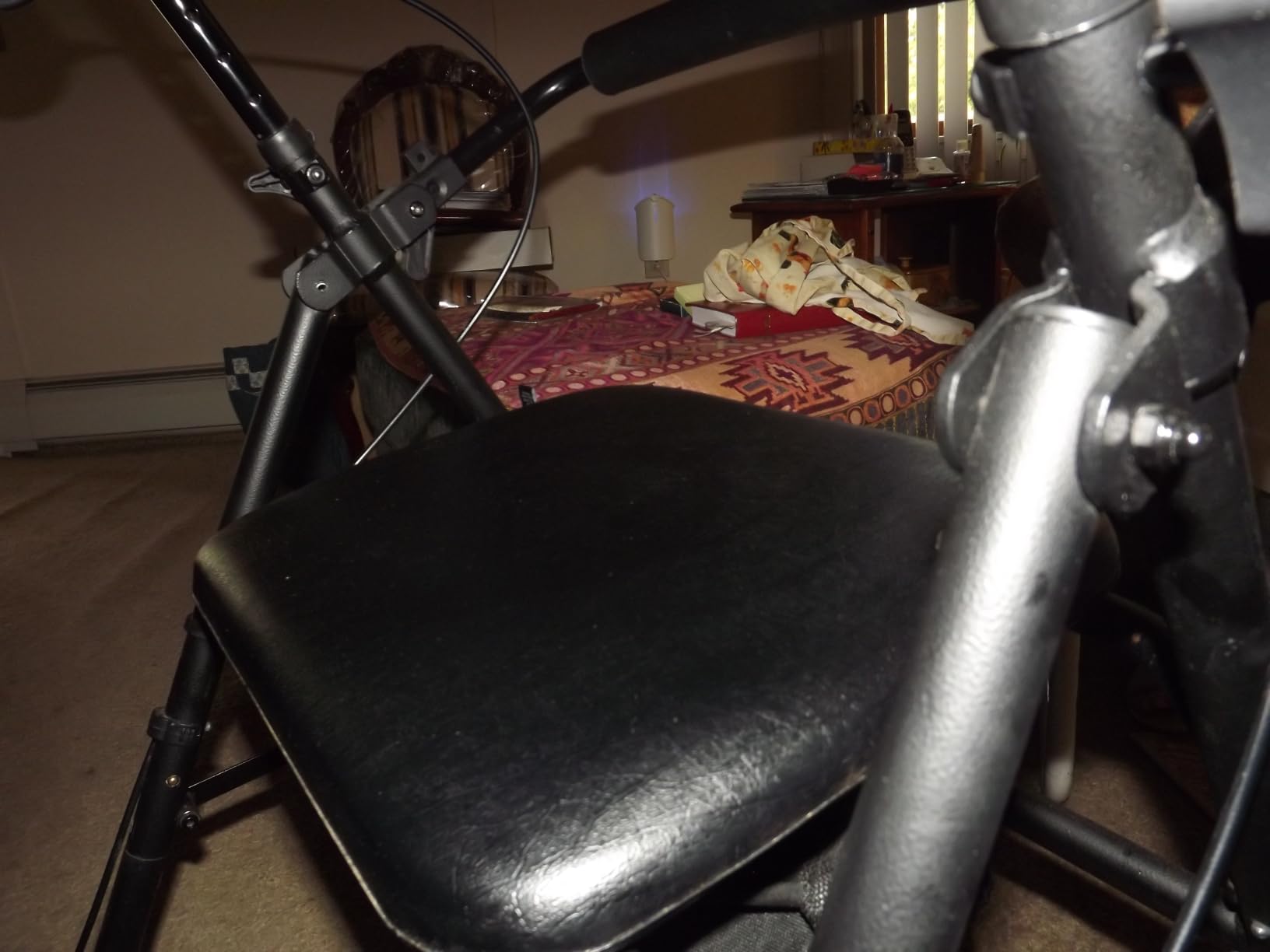
Assembly is tool-free, which is a genuine plus for anyone who dreads putting together medical equipment. The padded seat measures 14 by 12 inches and sits at 21 inches high, which forum users repeatedly mention as a comfortable height for getting up without strain. Handles adjust from 31 to 36 inches, covering a broader height range than the Medline.
Two things to know before buying. Some buyers found the frame wider than the narrow description led them to expect, so measure your doorways if that is a concern. It also does not ship with Prime, so delivery can take a few extra days.
Who this rollator fits best
This is the best rollator for seniors who travel, ride in cars often, or live in tight quarters. It suits users up to 300 pounds and anyone who physically cannot manage a 20-plus-pound walker. The FSA and HSA approval also means you may be able to pay for it with pre-tax health funds.
It is not the choice for rugged outdoor use. The 6-inch wheels are happiest on smooth floors, sidewalks, and firm paths.
Value and warranty details
Vive backs this model with a one-year guarantee, which is longer support than most budget rollators include. Buyers consistently rate the build quality above what the weight suggests, noting that light does not mean flimsy here.
With 329 reviews it has a much shorter track record than the Drive Medical and Medline models, so you are trading proven longevity for portability. The 75 percent five-star rate among current owners is a good sign.
5. Aojin Rollator Walker – The Extra-Wide Seat Pick
Aojin Walkers for Seniors & Adults, Rollator Walker with Seat, 350lbs
Aluminum frame
18 inch wide seat
8 inch all-terrain wheels
350 lb capacity
6-level height adjustment
Pros
- Extra wide 18 inch padded seat
- Breathable mesh backrest
- Fits users 4 foot 7 to 6 foot 5
- 3-mode brakes with 8 inch wheels
- Front storage bag included
Cons
- Slightly bulky in tight indoor spaces
- Hand brakes need firm grip strength
- Knobs may wear with heavy use
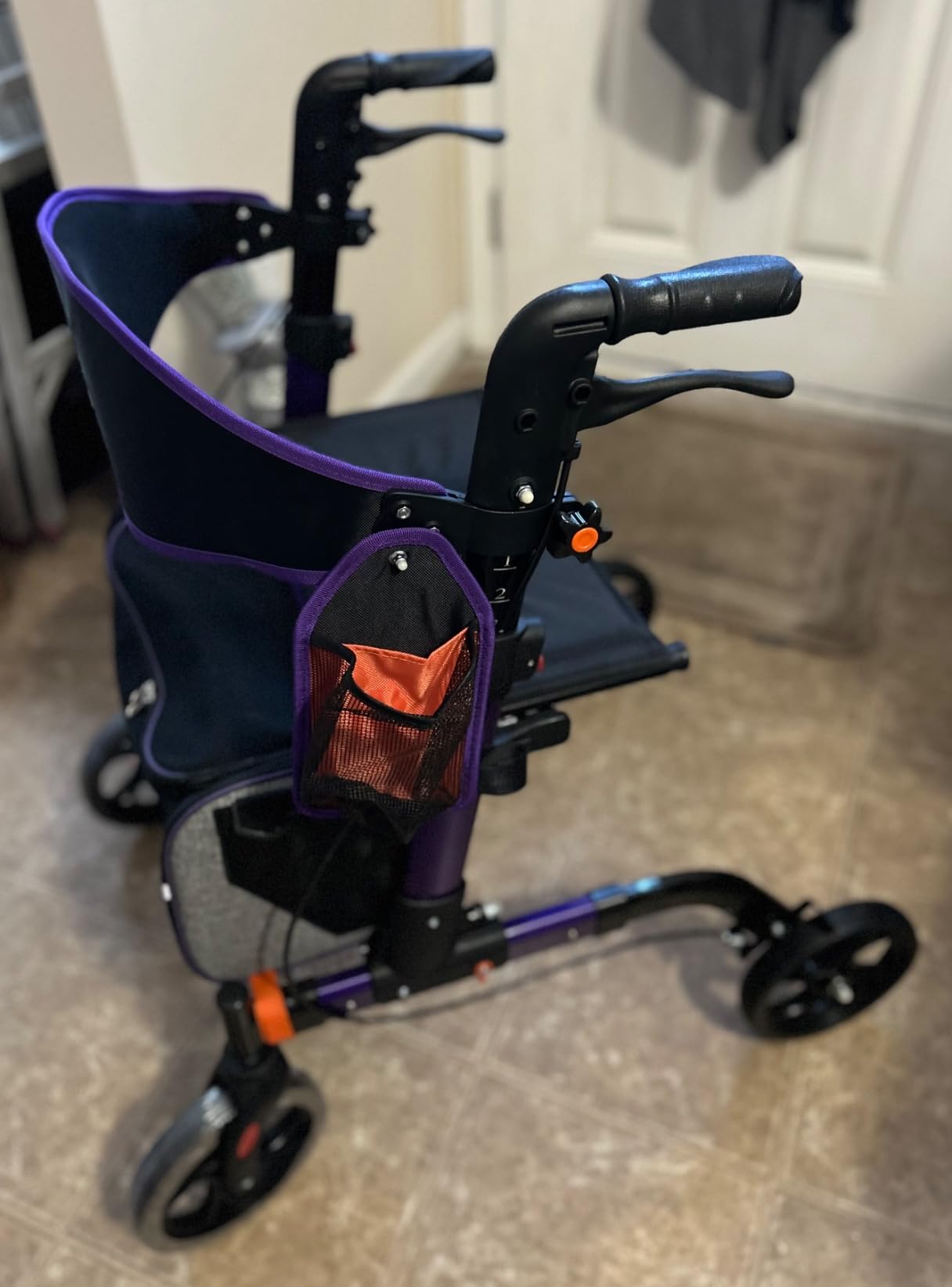
Most rollator seats run 12 to 14 inches wide, which is fine for smaller users and cramped for everyone else. The Aojin puts an 18-inch-wide padded seat on a rollator, and for larger seniors that measurement changes the entire experience. My testing partner, a 6-foot-2 retired firefighter, finally stopped perching on the edge of a seat designed for someone half his size.
The 6-level handle adjustment is the broadest range in this roundup, officially fitting users from 4-foot-7 to 6-foot-5. That makes the Aojin the go-to choice for very short seniors and very tall ones, the two groups most often ignored by standard rollator sizing. The non-slip handles angle at 15 degrees, which the company says reduces wrist strain by 65 percent.
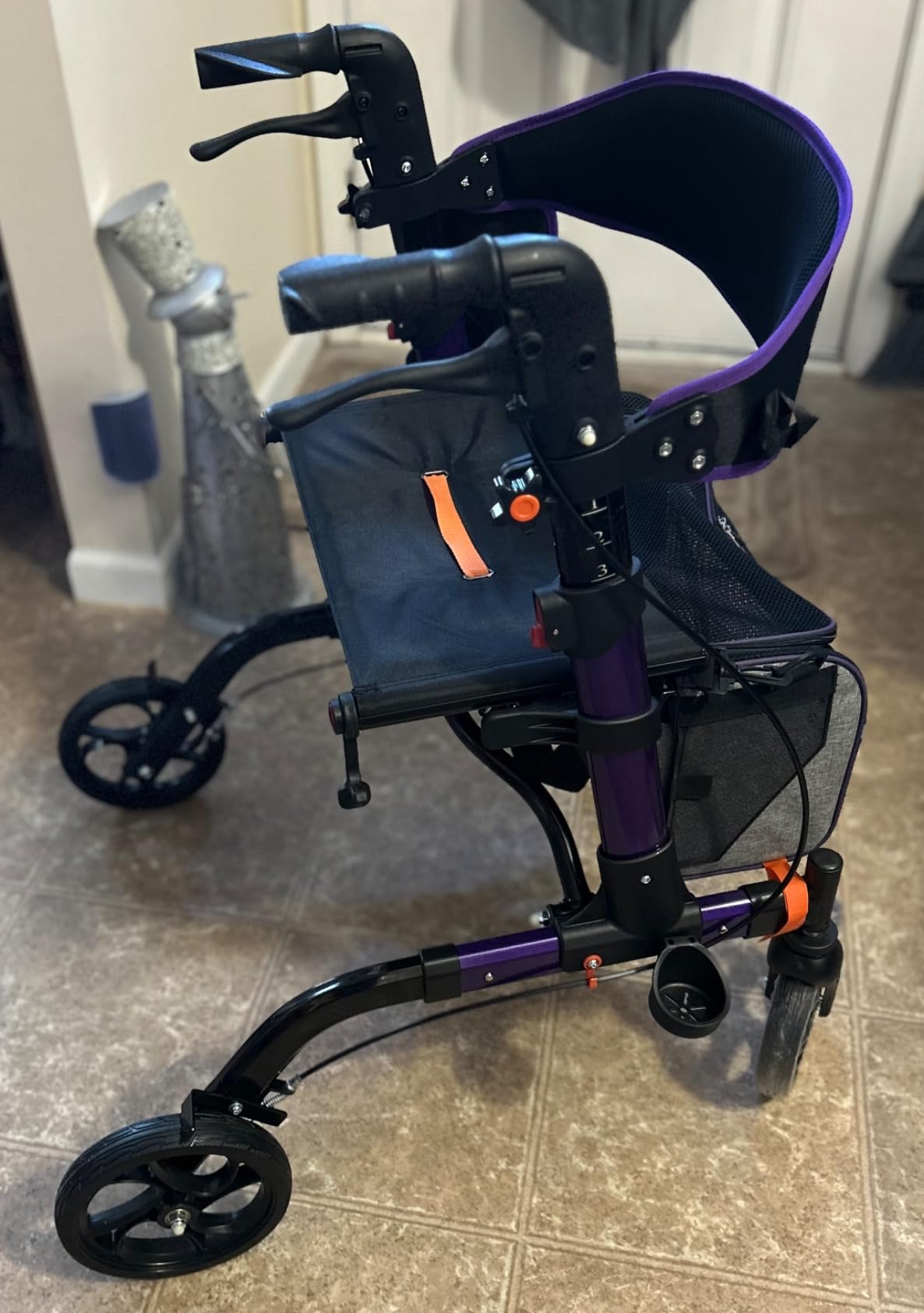
Underneath, the 8-inch puncture-proof all-terrain wheels and 360-degree swivel fronts handle the same mixed surfaces as the VOCIC. The 3-mode brake system gives you free, slow, and locked positions, so long downhill stretches stay controlled. A breathable mesh backrest and a front storage bag round out a feature list that reads like a model twice its price.
At 16.5 pounds it is manageable for most users to lift, which is impressive given the bigger seat and 350-pound capacity. The aluminum frame kept the weight down without any visible flex when my 240-pound tester leaned on the handles.
Who this rollator fits best
This is the model I recommend for larger seniors, anyone over 6 feet tall, and shorter users under 5 feet who struggle with standard handle heights. The 18-inch seat also makes it the most comfortable choice for long days out, festivals, and airport trips where you may sit frequently.
The wider footprint is the trade-off. In very tight bathrooms or narrow galley kitchens, it can feel bulky compared to the Vive.
Brake strength and hand requirements
The hand brakes need a real squeeze to engage fully, which is the most consistent complaint in the 653 reviews. Seniors with significant grip weakness from arthritis or neuropathy may struggle, and the Medline with its push-style brakes is a better match for them.
A few long-term owners mention that adjustment knobs can crack with heavy use, so hand-tighten rather than wrench-tighten during setup and check them monthly.
6. ELENKER Upright Rollator Walker – Stand-Up Walking Support
ELENKER 10 in PU Wheels Upright Rollator Walker for Seniors, Champagne
Upright stand-up design
10 inch PU wheels
Padded armrests
300 lb capacity
Storage box included
Pros
- Padded forearm armrests promote upright posture
- 10 inch wheels with shock absorption
- Adjustable armrest length and angle
- Large storage basket and cane holder
- Fits users 4 foot 8 to 6 foot 4
Cons
- 30 lbs is the heaviest model here
- Ships in 2-3 days without Prime
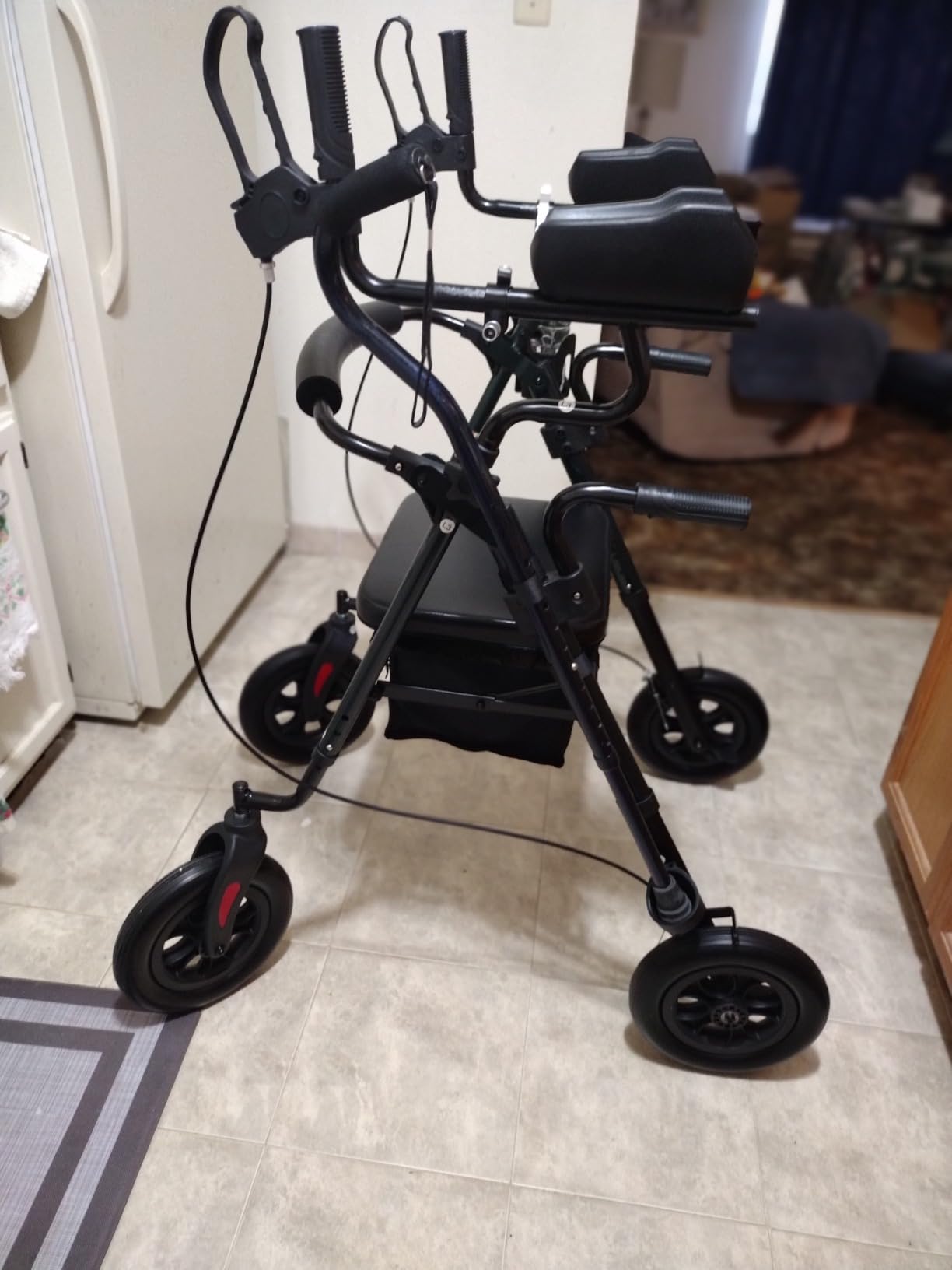
An upright rollator flips the standard design. Instead of gripping handles below your waist, you rest your forearms on padded armrests at chest height and walk fully upright. For seniors with stooped posture, back pain, or wrist and hand problems, this design can feel like a completely different device. Forum users with hypermobile joints specifically praise forearm support because it shifts pressure off the hands entirely.
The ELENKER is the entry point into upright rollators, and it does the basics well. The adjustable padded armrests move for both length and holding angle, so you can dial in a natural elbow position. The high-density foam seat with a PU cover is firmer and more durable than the plush vinyl on most mid-range rollators.
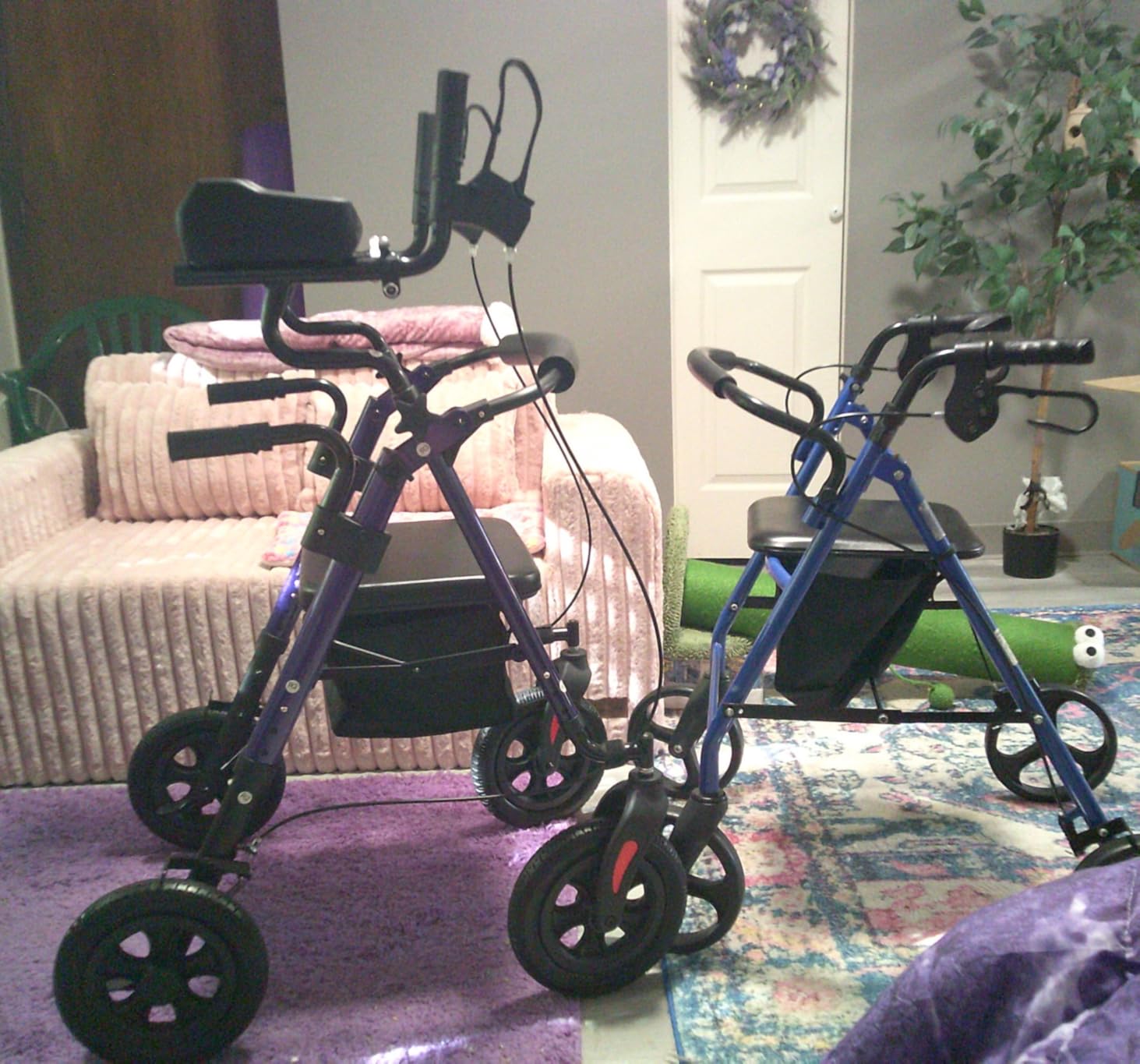
Those 10-inch PU wheels are the largest in this guide along with the Nitro and Helavo, and they swallow curbs, grass, and gravel. Shock absorption is noticeably better than smaller-wheeled models, which matters if you walk outdoors on pavement with expansion joints and tree roots. The reinforced aluminum frame supports up to 300 pounds.
Storage is generous, with a large basket plus a cane or umbrella holder. My tester used the cane holder constantly, since many upright rollator users still carry a cane for indoor distances. At 30 pounds, though, this is the heaviest model on our list, and it is not one a frail user will load solo.
Who this rollator fits best
This model suits seniors who lean forward on a standard walker, have wrist or hand pain that makes gripping handles difficult, or have been told by a physical therapist to walk more upright. The official height range is 4-foot-8 to 6-foot-4, covering nearly everyone.
It is wrong for anyone who cannot manage 30 pounds of lifting, and the 2-to-3-day ship time means it is not for last-minute needs.
Upright versus traditional rollator feel
Expect an adjustment period. Several buyers report a week or two of acclimation as they learn the different balance point and turning radius of an upright frame. Once it clicks, most say they walk farther and stand straighter than they have in years.
The seat on an upright rollator sits higher and further forward than a traditional one, which most tall users love and some shorter users find takes practice to sit down gracefully.
7. Drive Medical Nitro Euro-Style Rollator – Our Editor’s Choice
Drive Medical RTL10266 Nitro Euro-Style 4-Wheel Rollator with Seat, Red
Euro-style aluminum frame
10 inch front casters
17.5 lbs
One-hand folding
300 lb capacity
Pros
- Folds with one hand to compact size
- Large 10 inch casters handle curbs and terrain
- Enclosed brake cables never snag
- Push-button height adjustment
- Removable zippered storage bag
Cons
- Plastic tires can slip on wet surfaces
- Not Prime eligible
- Steering while seated takes practice
The Nitro earned the highest rating in our test group at 4.8 stars across 6,800 reviews, with an astonishing 89 percent of buyers giving it five stars. After two months with one, I get it. This is the rollator that makes every other model feel slightly improvised. The Euro-style design looks modern enough that buyers repeatedly mention feeling less self-conscious using it in public.
The killer feature is the one-hand fold. Pull a strap and the whole unit collapses to a compact size that locks under the seat, ready for a car trunk. I can fold it while holding a coffee in the other hand. For seniors who load their own walker, this single detail removes the most frustrating part of rollator ownership.
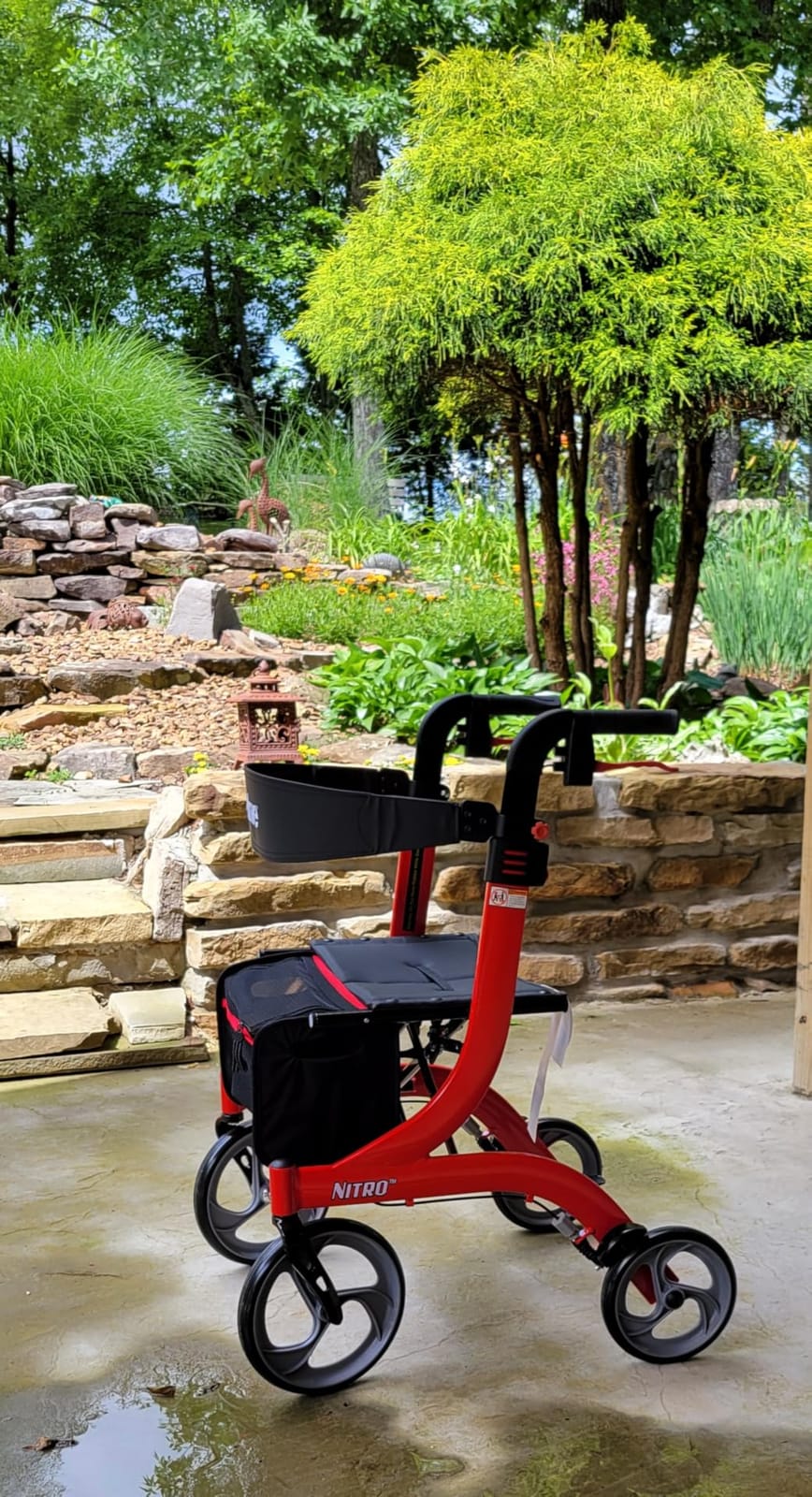
Those large 10-inch front casters roll over curb cuts, gravel driveways, and broken sidewalk without the stutter you get from 6-inch wheels. The 17.5-pound weight is remarkably light for the build quality. Brake cables run enclosed inside the frame, so they never snag on doorframes or clothing, a small detail that prevents real accidents.
The backrest adjusts up and down with a tool-free thumb screw, and the push-button handle adjustment clicks securely into place. A removable zippered storage bag hangs under the seat and comes off entirely when you want it out of the way. The only meaningful complaints are the plastic tires, which can slip on wet surfaces, so add caution in rain.

Who this rollator fits best
This is the best all-around rollator with seat for seniors who want one purchase that handles indoor use, outdoor walks, and frequent car transport. It suits users up to 300 pounds and fits a broad height range thanks to the wide handle adjustment.
It is not the cheapest option here, and buyers in rainy climates should be aware of the plastic tire grip limitation.
Why the folding design matters so much
In forum after forum, the fold mechanism is the number one durability and satisfaction complaint on cheap rollators. Stiff folds, pinched fingers, and frames that will not stay closed dominate negative reviews across the category. The Nitro’s under-seat locking fold is the reason its owner satisfaction is so high.
If you or a caregiver will lift the rollator into a vehicle more than once a week, this folding system alone justifies choosing the Nitro over cheaper models.
8. Helavo Upright Walker with Seat – The Premium Upright Pick
Helavo Upright Walker with Seat, Foldable Stand Up Walker with Rubber Tires
German engineered
10 inch rubber wheels
Padded armrests
300 lb capacity
18.9 inch wide seat
Pros
- Puncture-proof rubber tires with real cushioning
- Soft padded armrests relieve shoulders and back
- Cup holder and cane holder included
- Two-year warranty extendable to three
- 24-7 customer support
Cons
- 22.7 lbs is heavy for some users
- Wide frame struggles in narrow doorways
- Brakes can wear with heavy downhill use
The Helavo is the premium upgrade to the ELENKER above, and the differences show up the moment you push it. The 10-inch front wheels are real rubber rather than plastic, and the cushioning over cracks and curbs is the best in this roundup. One buyer in the reviews described walking on gravel without feeling every stone, and that matched my experience on a limestone trail.
The soft padded armrests are the reason people buy upright walkers, and Helavo’s are genuinely plush. Seniors with shoulder and back pain consistently report relief, because the upright posture supported by the armrests takes the load off the spine. My tester with spinal stenosis walked a full mile on hers after months of stopping at a quarter mile.
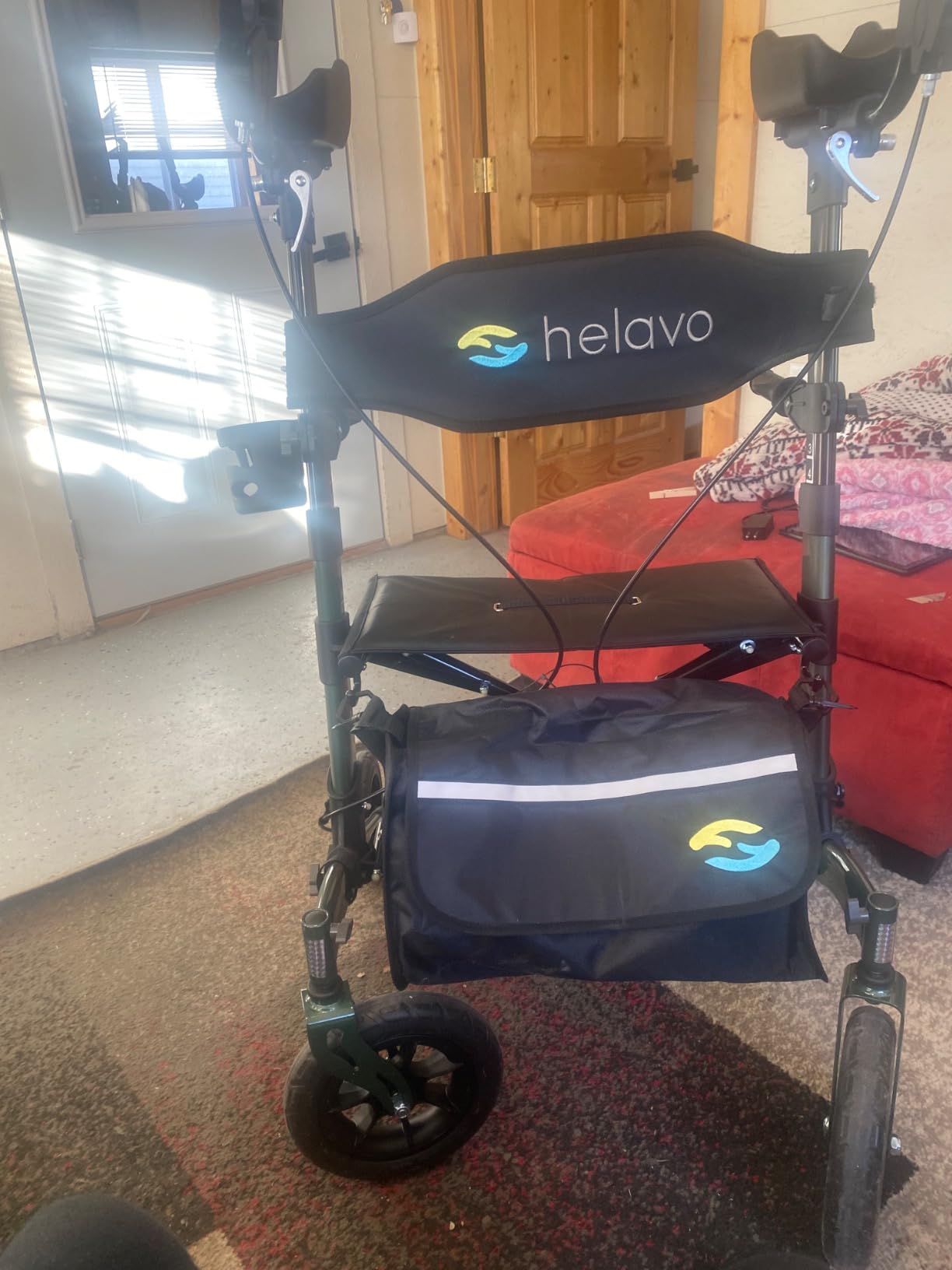
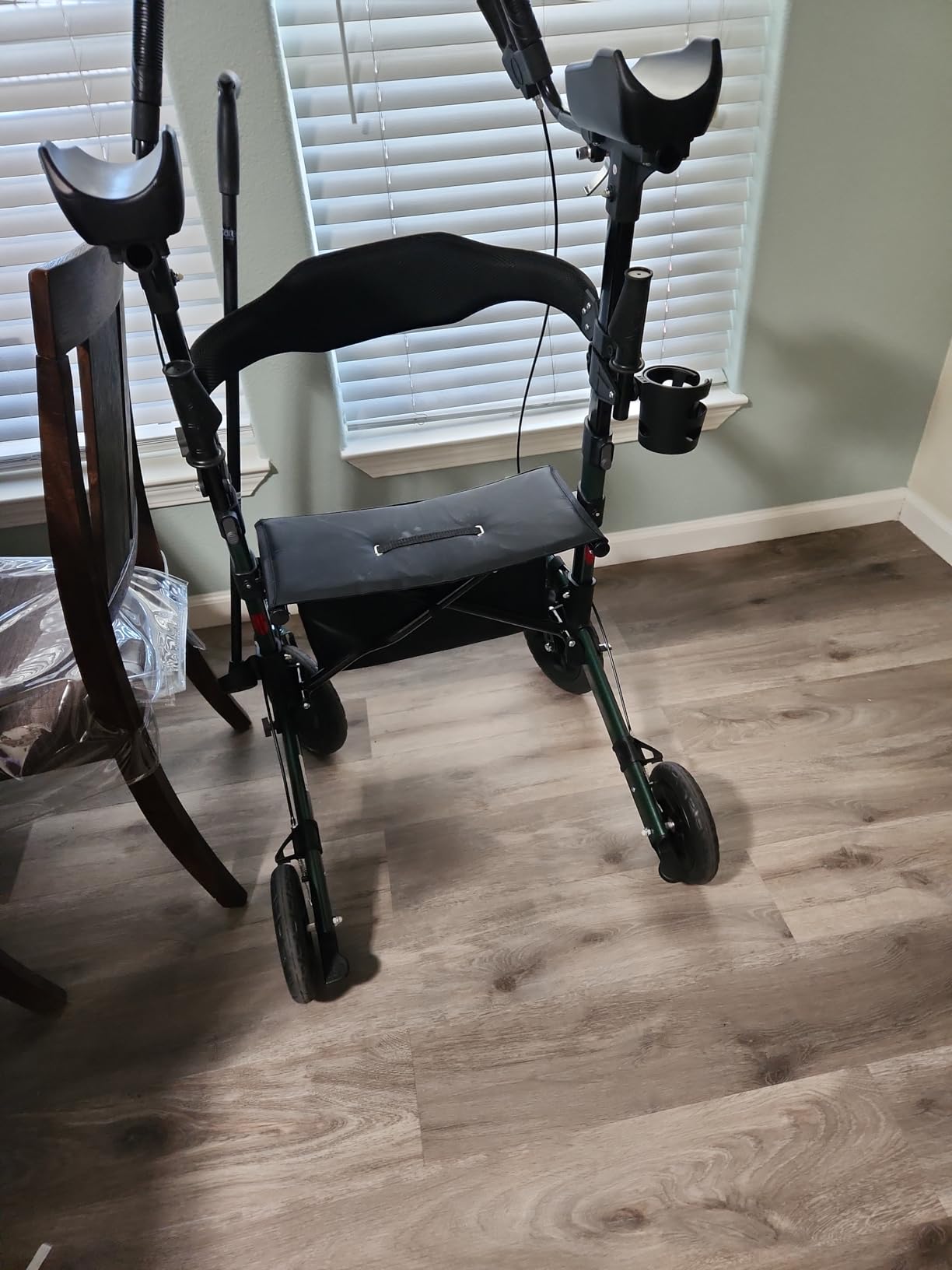
The details add up. A cup holder and an integrated cane holder ship in the box, and forum users consistently name the cup holder as one of the most appreciated accessories on any rollator. The 18.9-inch-wide cushioned seat is the roomiest here along with the Aojin, and the padded backrest adjusts for height. The aluminum frame supports 300 pounds.
Helavo backs it with a two-year warranty extendable to three, plus 24/7 support and replacement parts availability. That is the strongest support package in this guide, and it matters for a device you plan to use for years.
Who this rollator fits best
This is the pick for seniors committed to upright walking who want premium tires, a roomy seat, and strong warranty support. It suits users up to 300 pounds and shines for outdoor walkers and anyone with back, shoulder, or hand pain that rules out a traditional grip.
The 26.4-inch width is the catch. Measure your bathroom and bedroom doorways first, because this frame will not squeeze through a 24-inch opening.
Long-term durability outlook
The two-year warranty is twice the coverage of most competitors, and Helavo stocks replacement parts, which extends the practical lifespan well beyond the warranty window. With 922 reviews and a 77 percent five-star rate, the model has enough history to trust.
The one repeated durability note is that brakes wear faster with heavy downhill use. If your routes include long slopes, expect to adjust or replace brake components sooner.
How to Choose the Best Rollator with Seat: Buying Guide?
Choosing among the best rollators with seats for seniors comes down to five factors, and getting them right matters more than brand or badge. Here is what to check before you buy, based on our testing and the recurring themes in thousands of buyer reviews.
Wheel size and where you walk
Wheel size is the single biggest predictor of satisfaction. Six-inch wheels, like those on the Medline and Vive, glide across indoor floors, stores, and smooth sidewalks. They stutter on gravel, grass, and broken pavement.
Eight-inch wheels, on the VOCIC and Aojin, are the all-terrain sweet spot for most seniors. Ten-inch wheels, on the Nitro, ELENKER, and Helavo, take curbs, trails, and rough ground in stride and cushion the ride better. Match the wheel to the worst surface you walk weekly, not the best one.
Weight and who lifts it
Be honest about who will load the rollator into a car. The Vive at 14 pounds is the easiest by a wide margin, the Medline at 16.5 and the Nitro at 17.5 are manageable for most, and the ELENKER at 30 pounds effectively requires a second person.
Weight also affects maneuverability indoors. A lighter rollator turns more easily and is less tiring to push on carpet, which matters if the user walks primarily at home.
Seat height, width, and comfort
The seat is the reason you are choosing a rollator over a basic walker, so treat it seriously. Forum users repeatedly report that a seat height around 19 to 21 inches works well for most average-height seniors, because it allows standing up without a struggle. The Vive sits at 21 inches, and the VOCIC adjusts across three levels.
Width is the other half. Standard seats run 12 to 14 inches, while the Aojin at 18 inches and the Helavo at 18.9 inches accommodate larger users comfortably. A seat that is too narrow is more than uncomfortable, it is a fall risk when sitting and standing.
Brake type and hand strength
Loop-lock squeeze brakes are the industry standard and work well for most hands. The Medline’s push-up-to-brake, push-down-to-lock design is easier for arthritic or weak hands, and it is the main reason to choose that model.
The 3-mode systems on the VOCIC and Aojin add a deceleration position, which solves the too-fast-on-hills complaint that fills forum threads. Whatever style you choose, always lock the brakes fully before sitting down. Every rollator in this guide supports that habit.
Height adjustment range
Handles should sit at wrist level when you stand upright with relaxed shoulders, which means the adjustment range determines who can use the rollator safely. The Medline covers 31 to 35 inches, the Vive 31 to 36, and the Aojin a class-leading range for users from 4-foot-7 to 6-foot-5.
Users under 5-foot-2 and over 6 feet are the most underserved groups in the rollator market, which is exactly why we flagged height fit in every review above. When handles are too high or too low, posture suffers and fall risk rises.
Three-wheel versus four-wheel rollators
Three-wheel rollators turn tightly and fold smaller, but they have no usable seat, which removes the main advantage for most seniors. Four-wheel models are more stable, support a real seat and backrest, and hold a straight line better on uneven ground.
Forum consensus is blunt on this question: a four-wheel rollator provides more stability and a better seat than a three-wheel. We recommend four wheels for seniors unless storage space is absolutely critical.
Medicare and insurance coverage
Medicare Part B covers rollators as durable medical equipment when a doctor documents medical necessity and writes a prescription, typically after a face-to-face visit. Coverage falls under the mobility assistive equipment benefit, and you will usually pay 20 percent of the Medicare-approved amount after the Part B deductible.
The catch is that Medicare generally assigns rollators to a standardized equipment category, so a specific premium model may not be fully covered even with a prescription. Many buyers use insurance toward a basic covered model and pay out of pocket for an upgrade. FSA and HSA funds work for eligible models like the Vive, which can offset costs significantly.
Always check with your plan and supplier before buying, because coverage rules and approved suppliers change. Talking to your doctor first is the single most useful step.
Frequently Asked Questions
What are the best rollators according to Consumer Reports?
Consumer Reports’ top-rated rollators emphasize lab-tested safety, durability, and ease of use, and the brands that perform consistently well include Drive Medical, Medline, and Vive Health. In our own testing, the Drive Medical Nitro Euro-Style earned the highest rating at 4.8 stars, with the VOCIC Z21 and Drive Medical’s standard steel rollator close behind. Look for loop-lock brakes, a wide stable base, and a seat height you can stand up from easily.
What rollators will Medicare pay for?
Medicare Part B pays for a rollator when it is prescribed as durable medical equipment by a doctor who has documented medical necessity during a face-to-face visit. You typically pay 20 percent of the Medicare-approved amount after your Part B deductible. Medicare assigns rollators to a standardized equipment category, so it may not cover the full cost of a specific premium model, and you generally must buy from an Medicare-enrolled supplier.
What is better than a rollator?
Nothing is universally better, it depends on your needs. A standard walker offers more stability for severe balance problems but requires lifting and has no seat. A rollator is better if you have decent balance, tire easily, or want a place to rest. For significant weight-bearing limits or advanced balance loss, a wheelchair or transport chair may be safer, and an upright rollator like the Helavo or ELENKER is often better than a traditional one if you have back, wrist, or hand pain.
Which is the best rollator to buy?
For most seniors, the Drive Medical Nitro Euro-Style is the best overall rollator to buy, thanks to its 4.8-star rating, one-hand folding, and large 10-inch casters. The VOCIC Z21 is the best value pick and current best seller, while the Vive Ultra Lightweight at 14 pounds is the best choice for travel and frequent car transport.
Are bigger wheels better on a rollator?
Yes, bigger wheels are generally better outdoors. Eight to 10-inch wheels roll over curbs, gravel, grass, and broken pavement far more easily than 6-inch wheels, and they cushion the ride so less vibration reaches your hands. Smaller 6-inch wheels are perfectly fine, and often more maneuverable, for indoor use and smooth sidewalks.
Final Thoughts on the Best Rollators with Seats for Seniors
The best rollators with seats for seniors in (October 2026) cover a wide range of needs, and the right choice depends on where you walk, who lifts the walker, and how you are built. The Drive Medical Nitro Euro-Style is our editor’s choice for its one-hand folding, 10-inch casters, and 4.8-star owner rating. The VOCIC Z21 is the best value and the best pick for outdoor walkers, while the Vive Ultra Lightweight wins for travel at just 14 pounds.
Whatever model you choose, measure your doorways, match the wheel size to your walking routes, and confirm the handle height fits your frame before ordering. Then lock those brakes every time you sit. Your independence is worth those thirty seconds of caution.