
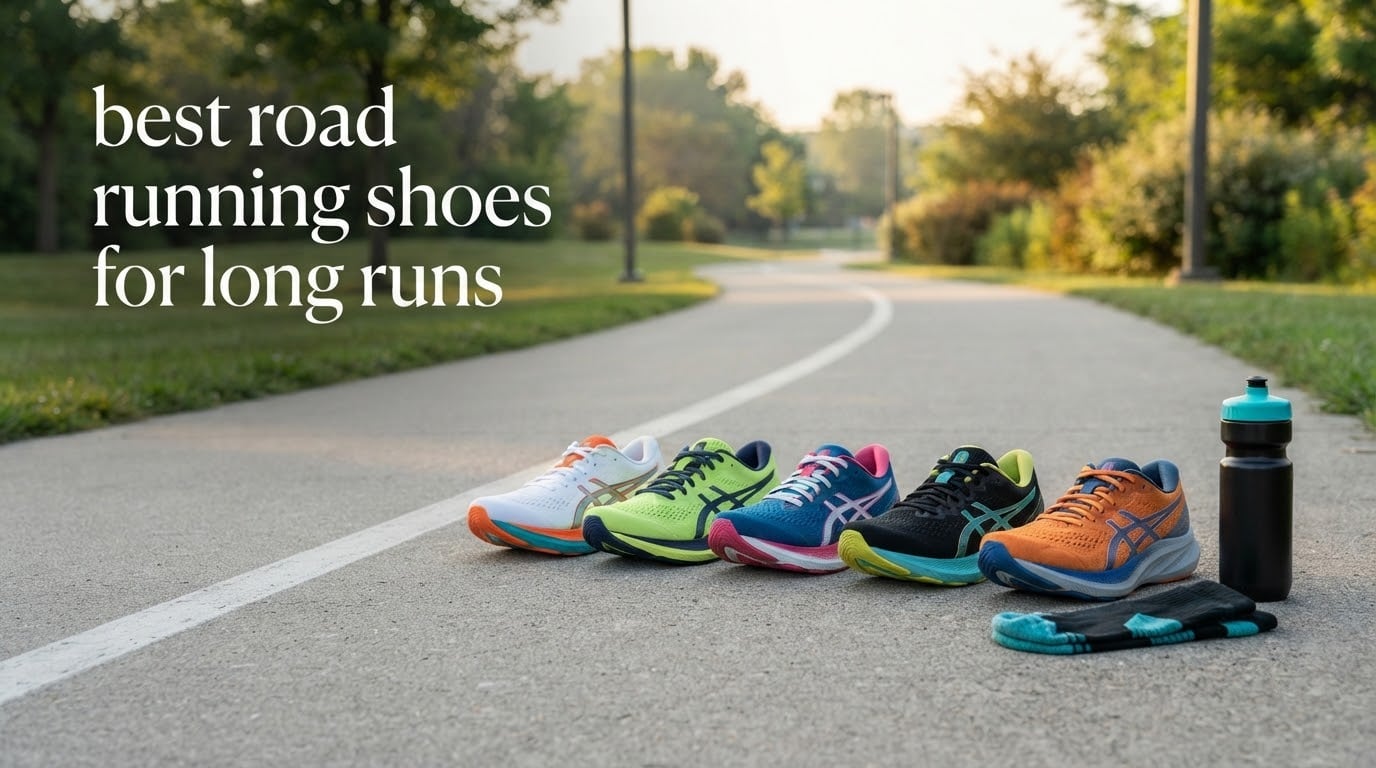
The best road running shoes for long runs are the ones that keep absorbing impact after mile 15, hold a wide stable base when your form starts to fade, and still have outsole left when you finish. After spending weeks comparing specs, digging through owner reviews and reading what runners actually say in the r/AskRunningShoeGeeks long-run threads, the Under Armour Men’s Charged Assert 10 came out on top for most people, with the Brooks Ghost 17 and ASICS Gel-Nimbus 27 rounding out the podium.
Long runs are where shoe choices get made or broken. A trainer that feels lively at 5 miles can feel dead at 16, and a plush shoe that feels amazing on day one can turn floppy once the midsole compresses. That is why we looked past the marketing and pulled the cushioning compounds, offsets, upper construction and real owner complaints for all ten shoes below.
Every pick in this guide is a neutral or stability road trainer built for steady distance work, not a racing flat and not a recovery slide. We have labelled each one with the specific runner it suits best, from wide feet to plantar fasciitis, so you can skip past the four that do not apply to you. If your feet are still sore from a 20-miler, the cushioned round-up is the better starting point.
Table of Contents
Top 3 Picks for the Best Road Running Shoes for Long Runs (October 2026)

Under Armour Charged Assert 10
- Charged Cushioning compression-molded midsole
- Solid rubber outsole on high-impact zones
- Breathable mesh upper
- 1 mm offset

Brooks Ghost 17
- DNA LOFT v3 nitrogen-infused cushioning
- Recycled-silica rubber outsole
- Kick-back collar
- APMA Seal of Acceptance

ASICS Gel-Nimbus 27
- PureGEL cushioning
- FF BLAST PLUS ECO midsole
- OrthoLite X-55 sockliner
- Available in wide and extra-wide
Best Road Running Shoes for Long Runs at a Glance
Here is the full lineup with the spec that matters most at long-run distance for each shoe. Use it to narrow your options before you read the individual write-ups.
| Product | Specifications | Action |
|---|---|---|
| Under Armour Men’s Charged Assert 10 |
|
Check Latest Price |
| Brooks Women’s Ghost 17 |
|
Check Latest Price |
| ASICS Men’s Gel-Nimbus 27 |
|
Check Latest Price |
 Hoka Men’s Bondi 9 Hoka Men’s Bondi 9 |
|
Check Latest Price |
 Brooks Men’s Adrenaline GTS 25 Brooks Men’s Adrenaline GTS 25 |
|
Check Latest Price |
 New Balance Men’s Fresh Foam 520 v9 New Balance Men’s Fresh Foam 520 v9 |
|
Check Latest Price |
 ASICS Men’s NOVABLAST 5 ASICS Men’s NOVABLAST 5 |
|
Check Latest Price |
 ASICS Men’s Gel-Excite 11 ASICS Men’s Gel-Excite 11 |
|
Check Latest Price |
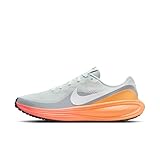 Nike Men’s Revolution 8 Road Running Shoes Nike Men’s Revolution 8 Road Running Shoes |
|
Check Latest Price |
 Brooks Women’s Glycerin 23 Brooks Women’s Glycerin 23 |
|
Check Latest Price |
How We Picked the Best Long Run Shoes
Long-run shoes are judged on different criteria than race shoes, so the ranking here is built around distance-specific performance rather than speed. We read the listed construction details of all ten shoes and compared the midsole compounds, heel offsets, upper materials and width availability side by side.
We also went through thousands of owner reviews and pulled out the complaints that repeat. The recurring theme across all brands is that fit runs inconsistent between models, so we flagged where shoes run narrow or run large and gave a sizing note for each. Durability mattered too: forum regulars consistently prioritise a midsole that does not bottom out and an outsole that survives a 50-mile week.
Finally, we looked at how each shoe is framed by runners in long-run conversations on r/AskRunningShoeGeeks, where the repeated advice is to separate shoe roles by run type rather than hunting for one magic pair. The four-week break-in plan and replacement guidance in our buying guide come from the same research. Where lab-style metrics were not available, we relied on the published specifications and owner feedback, and we say so rather than guessing.
1. Under Armour Men’s Charged Assert 10 – Best Overall for Long Runs
Under Armour Men’s Charged Assert 10, Timberwolf Taupe/Khaki/Taupe, 8.5
Compression-molded Charged Cushioning midsole
Solid rubber outsole on high-impact zones
1 mm offset
Pros
- Structured midsole that resists bottoming out
- Strong arch support for low arches
- Breathable mesh upper for long days on foot
- Solid rubber outsole over the high-impact zones
- Deepest owner feedback base in the roundup
Cons
- Shoelaces are too short to double-knot securely
- Fit can run small for some wearers
The Charged Assert 10 is the shoe I put in the top spot because it does the least amount of dramatic things and keeps doing them at mile 18. Its midsole is compression-molded rather than nitrogen-infused, which means the foam is firmer and holds its shape longer instead of turning to mush once it heats up. That durability is exactly what a weekly 20-miler needs.
Where it earns its spot is the outsole. Under Armour lays solid rubber over the high-impact zones, and the review pattern suggests that coverage is doing real work: owners running 8 to 12 hour standing days alongside their mileage report that the tread still grips. The EVA sockliner handles step-in comfort and the breathable mesh upper keeps heat down on humid weekend runs.
It also has a 1 mm offset, which is close to flat and works for both heel and forefoot strikers without a transition period. The category listing describes it as a best-selling men’s road running shoe, and the volume of owner feedback behind it is by far the deepest in this roundup, which means fit quirks are well documented rather than hidden.
How the Charged Assert 10 holds up over distance
The compression-molded foam is the reason this shoe finishes the long run the way it started. Softer, nitrogen-infused foams feel amazing early and then compress, which is the failure mode runners describe most often in long-run threads. A firmer compound loses a little peak plushness and gives back consistency, mile after mile.
Low-arch and flat-footed runners get the most out of it. Owners repeatedly call out solid arch support, and the structured sole is the piece that stops the shoe feeling like a slab under a heavy stride. That structured feel also matters for anyone carrying more body weight through the midsole on a long descent.
Where it falls short for long runs
The fit is the main caution. A number of wearers report the shoe running slightly small, and the lacing can tighten aggressively around a narrow midfoot. Half a size up is the most common fix mentioned by owners, and lacing looser across the midfoot is the second.
Second, the 1 mm offset means almost no heel-to-toe drop, so a runner used to a traditional 8 to 10 mm drop will feel more in the calves and Achilles on the first few long runs. There is also a 10 to 12 hour standing-work use case that is well documented, but this is a trainer with a short lace run and a snug forefoot rather than a shoe built for a full work shift on your feet.
2. Brooks Women’s Ghost 17 – Best Value Cushioned Long Run Shoe
Brooks Women’s Ghost 17 Neutral Running Shoe – Oyster/Apricot/Pink – 9.5 Medium
DNA LOFT v3 nitrogen-infused cushioning
1 mm extra heel and 3 mm extra forefoot vs predecessor
Recycled-silica rubber outsole
Pros
- Smooth cushioning that holds up over long distances
- Secure heel with no slip
- Sturdy arch support praised by plantar fasciitis users
- Durable outsole for daily high step counts
Cons
- Top eyelet can rub bony ankles
- Forward-leaning feel in the first few minutes
The Ghost 17 is the model we would hand to a runner who wants one pair to cover easy miles, a long run and general wear without thinking about it. Brooks added 1 mm of extra heel and 3 mm of extra forefoot cushioning against the previous version, which is a small change on paper that is obvious on foot at the back half of a long run.
The DNA LOFT v3 midsole is nitrogen-infused, so it does soften over a run. What keeps it feeling controlled is the flex-groove design cut into the midsole, which encourages a smooth transition at toe-off rather than a heavy break through the forefoot. That is what stops plush from turning into sloppy on a fatigued stride.
This is also one of only two shoes on our list from a women’s specific last, and it carries both an APMA Seal of Acceptance and a certified PDAC A5500 diabetic rating, which matters if a medical professional has steered you toward a specific fit. Owners mention using it for road running, walking, cross-training, travel and gym work, and one of the strongest themes in the reviews is simply that it does all five without complaint.
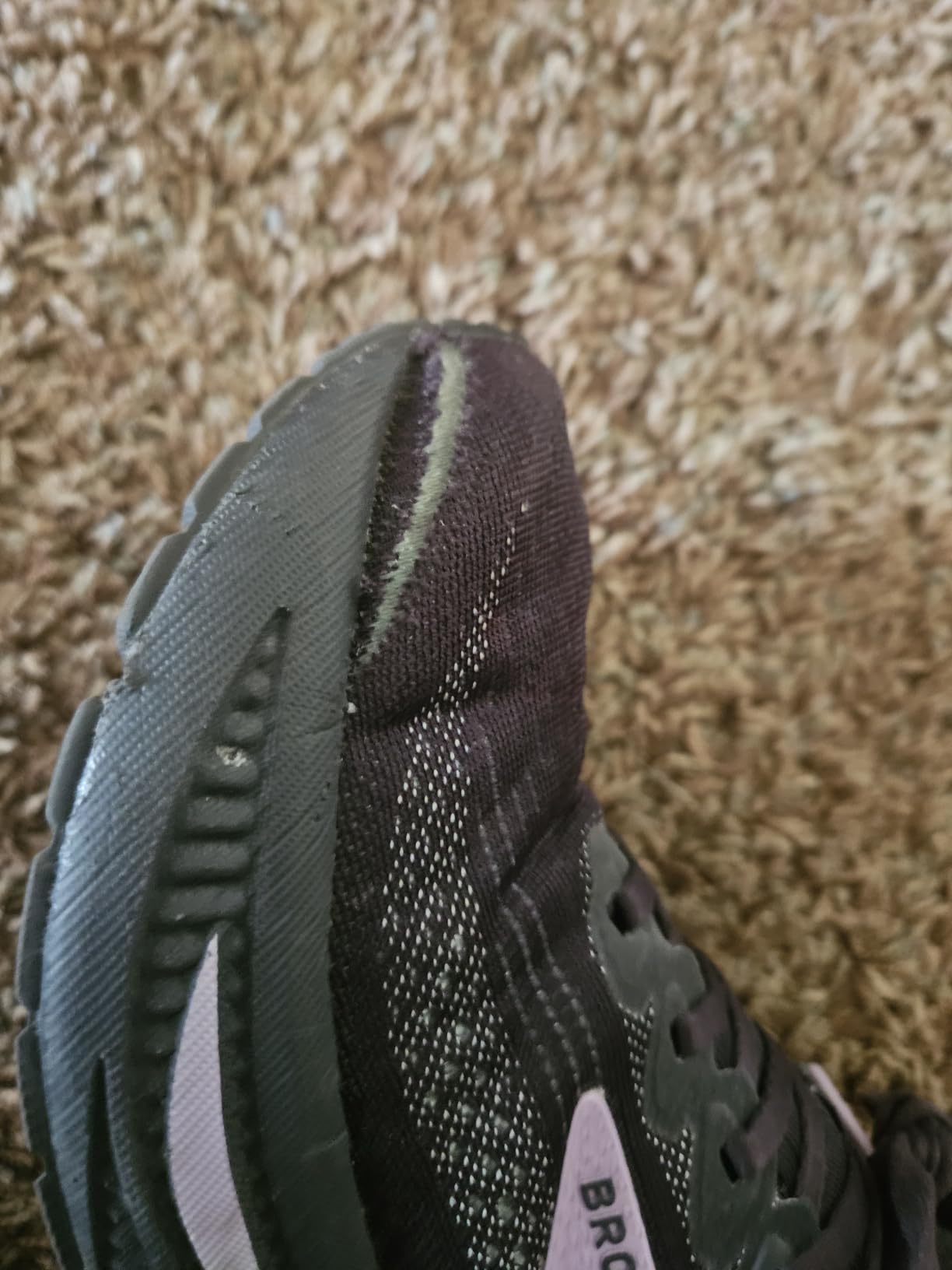
Why the Ghost 17 works for plantar fasciitis and standing days
The arch support is the headline here. Plantar fasciitis and overpronation users repeatedly single out the way the shoe supports the arch without feeling rigid, and the recycled-silica rubber outsole is built for rebound and durability rather than soft road feel. That outsole life is why so many owners report the tread holding up under 10,000 steps a day before any running is added.
The kick-back collar holds the heel in place, which matters on descents late in a long run when the calf is tired and the heel starts to lift. The double jacquard air mesh upper adds structure without a hard clamp, and the air mesh is what keeps the interior ventilated across a hot afternoon run.
What to watch out for with the Ghost 17
The most reported issue is the top eyelet. On bony ankles the collar sits high enough to rub, and the fix owners use is loosening the laces or bending the eyelet tabs outward. It is an easy adjustment but worth knowing before your first 18-miler.
There is also a forward-leaning feel in the first few minutes before the shoe settles. Runners moving down from a higher-drop shoe also tend to need a slower ramp, and the Ghost sits in a moderate drop range that suits most but not all transitions. We have covered more cushioned options in our guide to the best cushioned running shoes for long distances if softness is your priority.
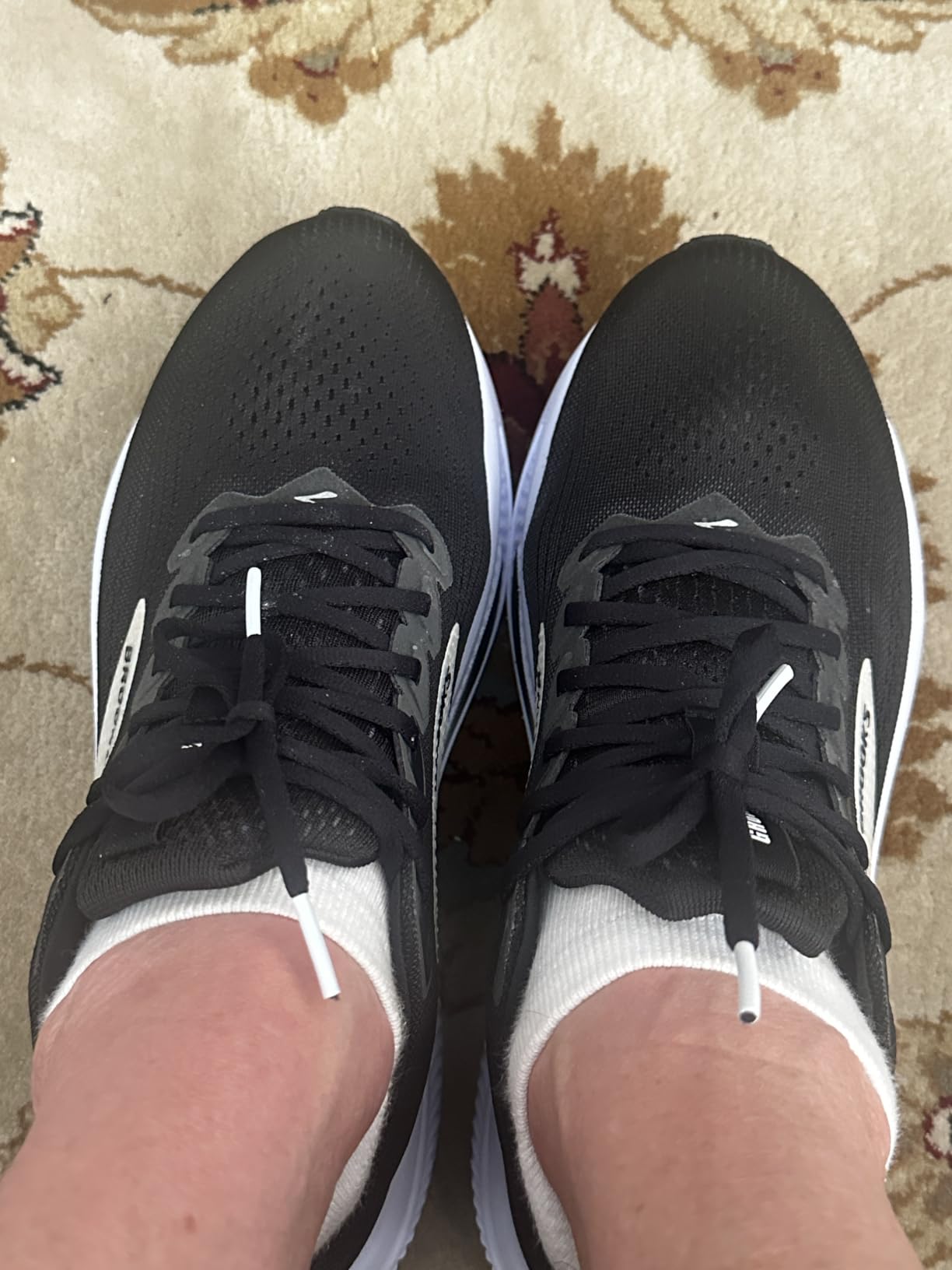
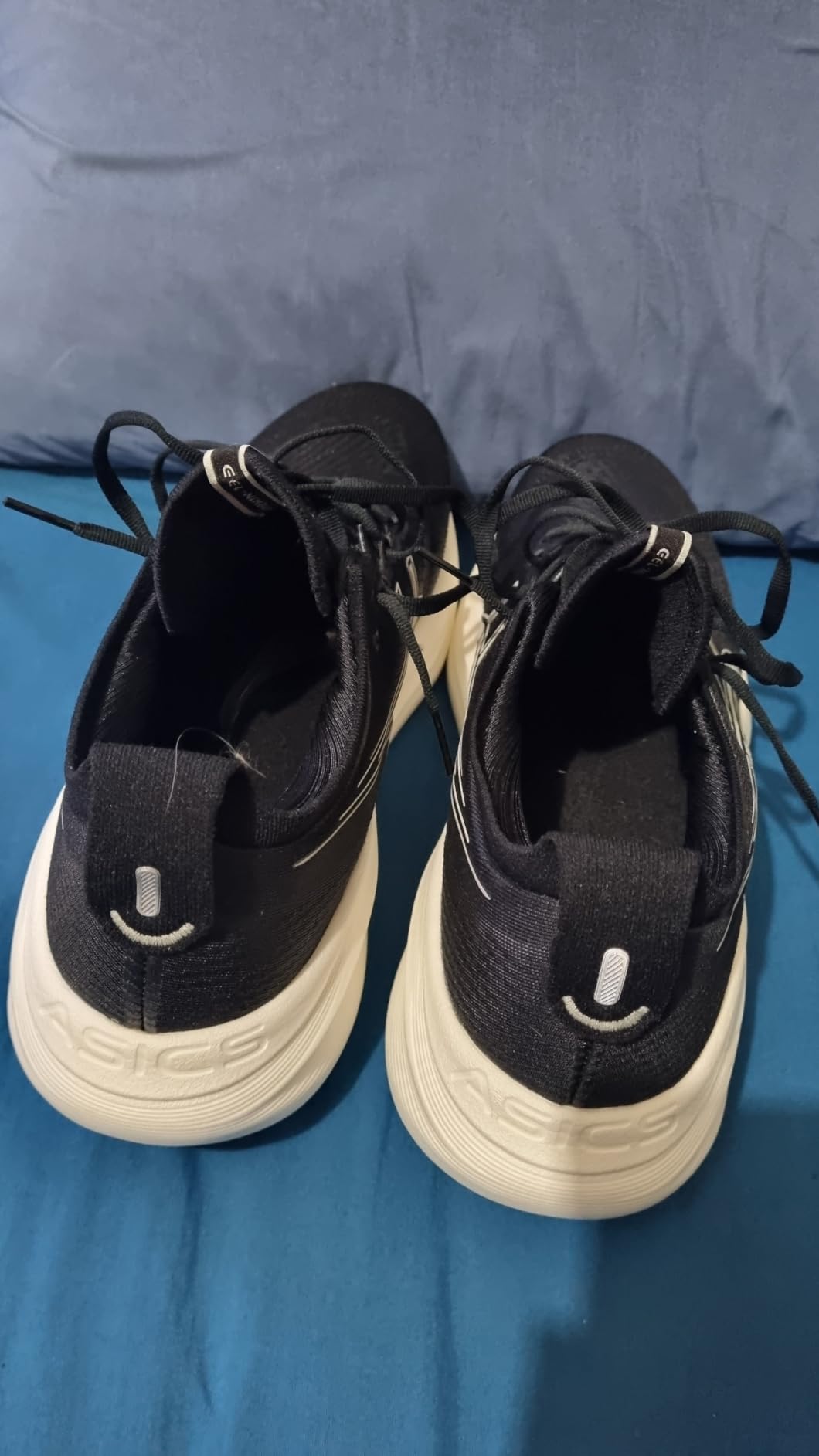
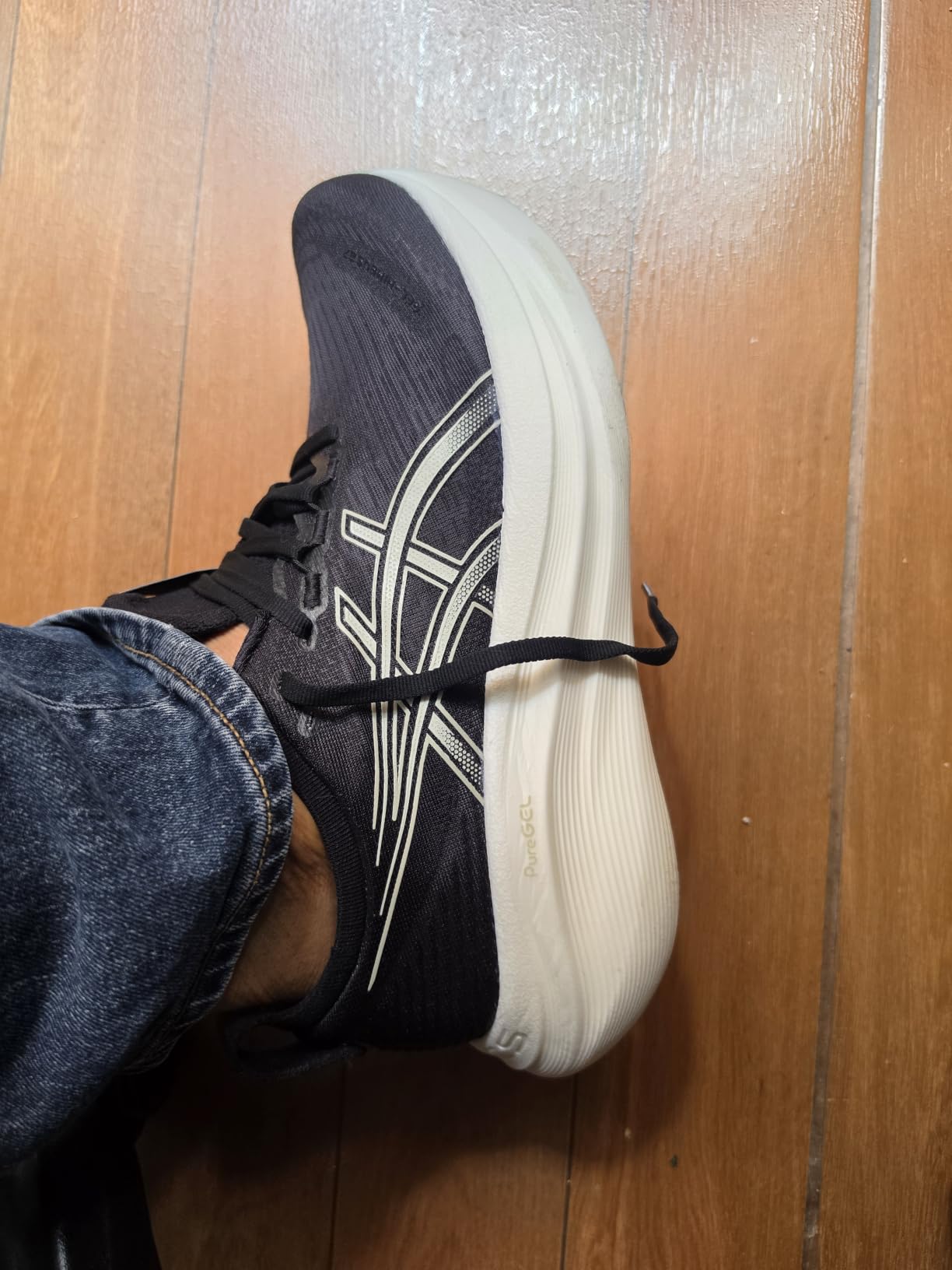
3. ASICS Men’s Gel-Nimbus 27 – Best for Wide Feet and Orthotics
ASICS Men’s Gel-Nimbus 27 Running Shoe, 10, Black/Lake Grey
PureGEL cushioning technology
FF BLAST PLUS ECO midsole with about 24% bio-based content
OrthoLite X-55 sockliner
Pros
- Very soft cushioning that holds over long distances
- Roomy toe box for wide feet and orthotics
- Supportive without feeling heavy
- Strong outsole durability
- Recycled-content upper materials
Cons
- Runs narrow for some wearers
- Some heel slippage reported in wider sizes
The Gel-Nimbus 27 pairs PureGEL cushioning with an FF BLAST PLUS ECO midsole that uses roughly 24 percent bio-based content. In practice that combination gives you one of the softest landings in this roundup without giving up the durability you need, and the reviews back that up: owners repeatedly describe it as well made with strong outsole life.
The reason it lands at number three is width and orthotic compatibility. The toe box is consistently described as roomy, and ASICS offers the model in wide and extra-wide widths. For a long run, that toe room stops the late-run compression that turns into bunion and forefoot pain, which is one of the most common complaints runners raise in the long-run forum threads.
The OrthoLite X-55 sockliner adds step-in comfort and can be replaced, so if you use orthotics this is one of the easier shoes on our list to fit them into. At least 75 percent of the main upper material is recycled content, and the sockliner is solution-dyed, which cuts down on water and carbon use without changing the ride.
Why this is the long-run pick for wide feet
Width is the whole story with the Nimbus. A shoe that fits fine at 6 miles can squeeze your forefoot by 16, and owners of this model specifically call out the roomy toe box as accommodating wider feet and orthotics. If you have spent years squeezing into a standard last, that is the difference between finishing a long run and walking the last two miles.
The PureGEL layer is what softens the landing under heavier body weight, which is why we also consider it for heavier runners who feel impact through the knees and hips on long downhill miles. Supportive without feeling heavy is the phrase owners keep using, and the listed weight of 1.44 pounds keeps it from reading as a platform shoe.
The sizing catch nobody mentions
The standard fit runs narrow for a good share of wearers, and several owners recommend sizing up rather than sticking with their usual number. This is the confusing part: the model is praised for a wide toe box while still running narrow to some feet. Order wide or extra-wide, and check your usual size against the current model rather than a previous version.
There is also some heel slippage reported in the wider sizes, which is a small trade for the forefoot room. If heel lockdown is your main problem, the Adrenaline GTS 25 further down our list has a flat-knit collar built specifically to hold the heel without hot spots.
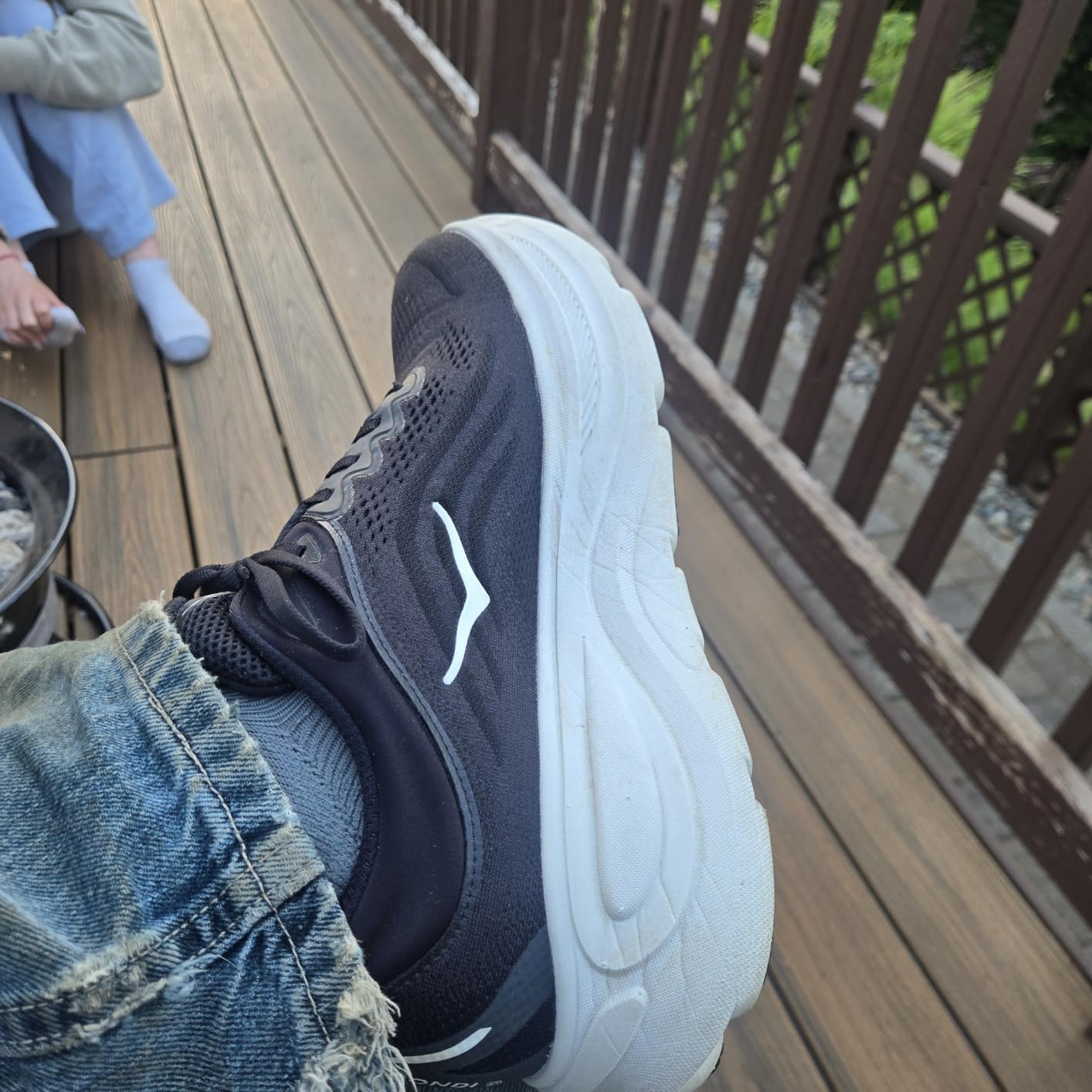
4. Hoka Men’s Bondi 9 – Best Max Cushioning for Long Runs
Hoka Men’s Bondi 9 Black/White 10.5 Medium
Super-critical foamed EVA midsole
2 mm more stack height than prior generation
MetaRocker midsole geometry
Pros
- Maximum plush cushioning with strong shock absorption
- MetaRocker geometry reduces joint load
- 3D molded heel collar with no slippage
- Breathable knit upper
- Lightweight for the stack height
Cons
- Standard width runs narrow through the midfoot
- Bulky wide-framed build better for steady paces
- Stock shoelaces feel cheap for a premium shoe
The Bondi 9 is the max cushioning answer in this guide. The super-critical foamed EVA midsole carries 2 mm more stack height than the previous generation, and Hoka pairs it with MetaRocker geometry that rolls the stride forward to take load off the joints rather than absorbing it passively.
Owners describe this as the most comfortable shoe they have owned, particularly for long walks, standing work and joint or heel pain. For a runner whose 20-miler ends with aches in the knees, ankles and lower back, that rocker-driven rollover is the mechanism doing the work, and it is the reason this shoe shows up so heavily in plantar fasciitis conversations.
What is impressive is how little the height adds. A shoe with this much foam usually reads as a brick, and owners still describe the Bondi 9 as lightweight despite the thick stack. The 3D sculpted heel collar is a genuine upgrade for long runs because it holds the ankle with no slippage on late-run descents.
When max cushioning genuinely helps on a long run
Cushioning that stays soft at mile 18 matters most for runners with a history of impact-driven problems, heavier body weight, or simply a dislike of ground feel. The wide platform base is engineered for stability, which is what keeps a very tall stack from turning wobbly under fatigue.
The wide and extra-wide options are worth real attention here. The most repeated piece of advice across owner reviews is to buy the wide version rather than the standard, because the standard width runs notably narrow through the midfoot and toebox despite the wide platform underneath.
Why the Bondi 9 is not the right pick for everyone
The frame is bulky and wide, and owners are candid that it is better suited to steady paces than fast running. If your long run includes tempo sections or strides, a more responsive trainer will serve you better and you can save the Bondi for the easy miles.
Standard-width feet are the other issue, since the midfoot and toebox run narrow even though the platform is wide. And the stock shoelaces are the one weak spot owners consistently single out, which is an odd complaint on a shoe at this level. If you want a comparable max-cushion feel with a snappier underfoot, the Gel-Nimbus 27 is the firmer option.
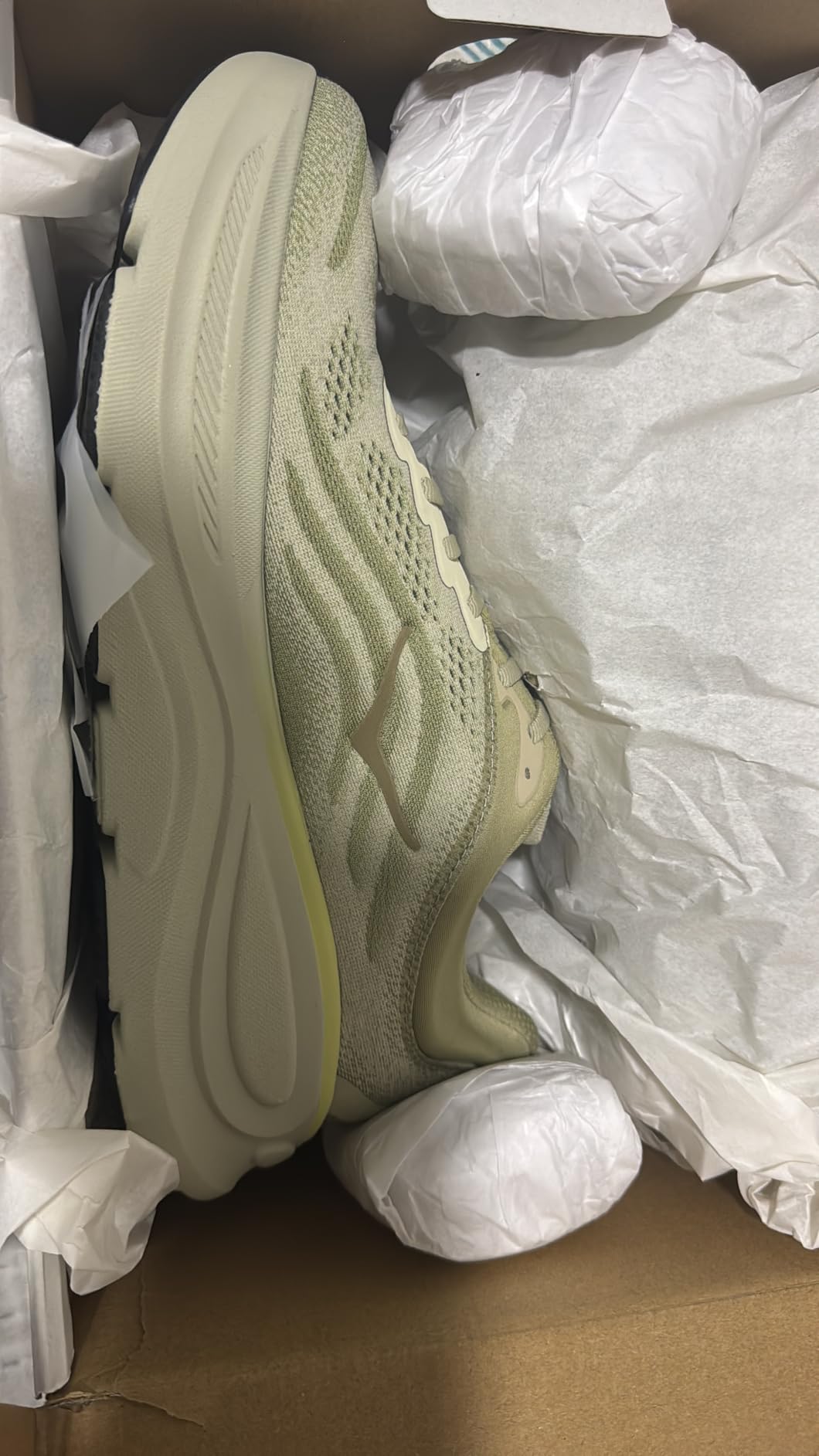
5. Brooks Men’s Adrenaline GTS 25 – Best for Stability on Long Runs
Brooks Men’s Adrenaline GTS 25
GuideRails Holisitc Support System
Nitrogen-infused DNA LOFT v3 cushioning
Flat-knit collar for a secure fit
Pros
- Stable cushioned ride that eases shin and knee discomfort
- Wide forefoot adds stability
- Durable outsole for long work days plus running
- Lightweight for the cushioning level
- Flat-knit collar holds the heel without hot spots
Cons
- Runs small
- so many wearers size up half a size
- Lacing can be tightened too aggressively
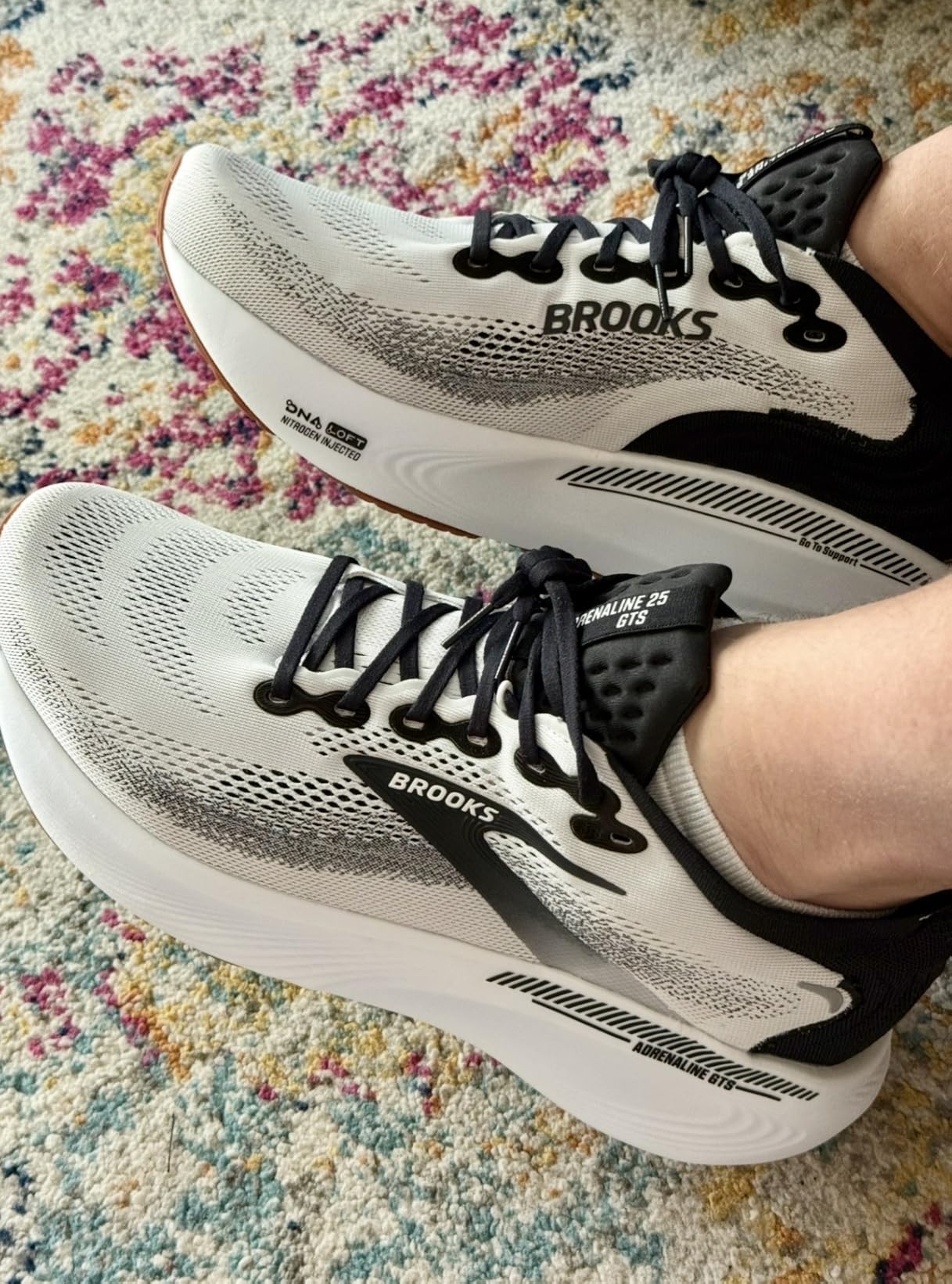
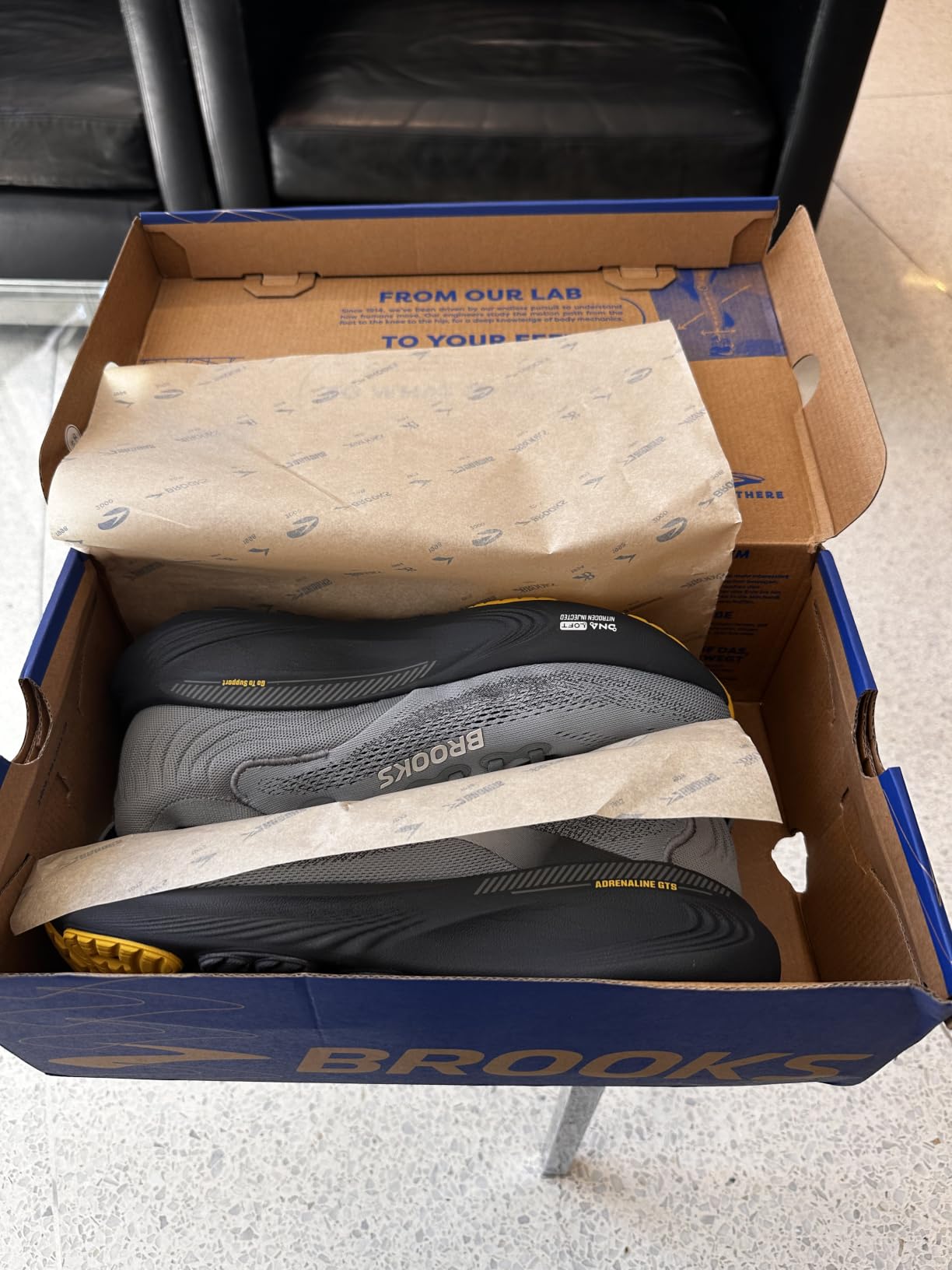
The Adrenaline GTS 25 is the pick for runners whose long runs end with shin splints, knee niggles or lower-back discomfort. The GuideRails Holisitc Support System sits inside the midsole and limits excess movement without forcing your stride into a single pattern, which is the difference between a stability shoe and a clunky one.
Underneath, the nitrogen-infused DNA LOFT v3 midsole delivers the cushioning, and the specially designed outsole and midsole pairing is tuned for smooth heel-to-toe transitions. Reviewers repeatedly credit the combination for a ride that is soft but not wobbly, which is precisely the complaint that sinks most max-cushion shoes past 15 miles.
This is also one of the few shoes in our roundup explicitly reported as holding up through an 8 to 12 hour standing work day plus running, so for runners with day jobs on their feet it is a two-in-one. The flat-knit collar is worth noting for long runs: owners say it holds the heel without creating hot spots, which is the detail that usually decides a 20-miler.
Who gets the most out of a stability long run shoe
Runners with a history of shin splints, mild overpronation or lower-back irritation on long miles. The GuideRails system is doing corrective work without the heavy-handed post correction feel, and the wide forefoot adds base stability that heavier runners appreciate on late-run fatigue.
If you are not sure whether you need stability support, our guides to running shoes for overpronation and stability running shoes for overpronation walk through the fit and gait clues. Wide and extra-wide widths are available here, which is unusual for a stability design and useful if the forefoot is your problem area.
The fit issue to fix before your first long run
It runs small, and a half size up is the most common recommendation from owners. Because a stability shoe needs to sit correctly against the foot to work, getting this wrong matters more here than it would on a neutral trainer, so do not simply order your usual size.
The lacing can also be pulled tighter than it should be, which fights the GuideRails and creates pressure on the midfoot. Lacing loosely across the top and locking the tension at the ankle keeps the support where the shoe wants it. The shoe also carries an APMA Seal of Acceptance and a PDAC A5500 certification, which is a plus if you are working with a clinician on foot issues.
6. New Balance Men’s Fresh Foam 520 v9 – Best Budget Long Run Shoe
New Balance Men’s Fresh Foam 520 v9 Running Shoe Black/Black
Fresh Foam precision-engineered midsole
260.8 g per shoe
10 mm heel-to-toe drop
Pros
- Soft well-cushioned ride for daily mileage
- Lightweight build that does not feel flat
- Breathable mesh upper for long wear
- Neutral stability that works for running and walking
Cons
- Cushioning leans plush rather than responsive
- Runs slightly long for some wearers
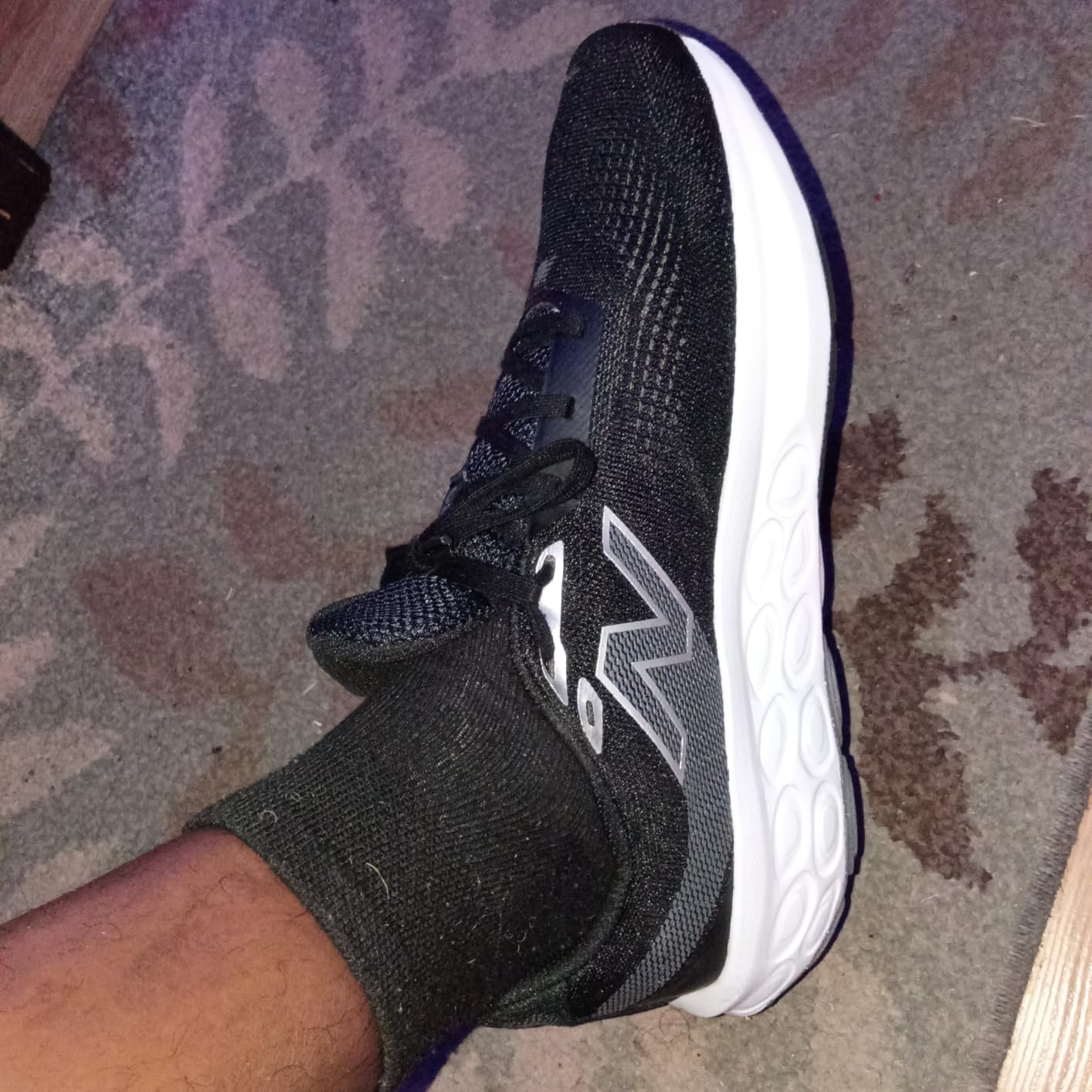
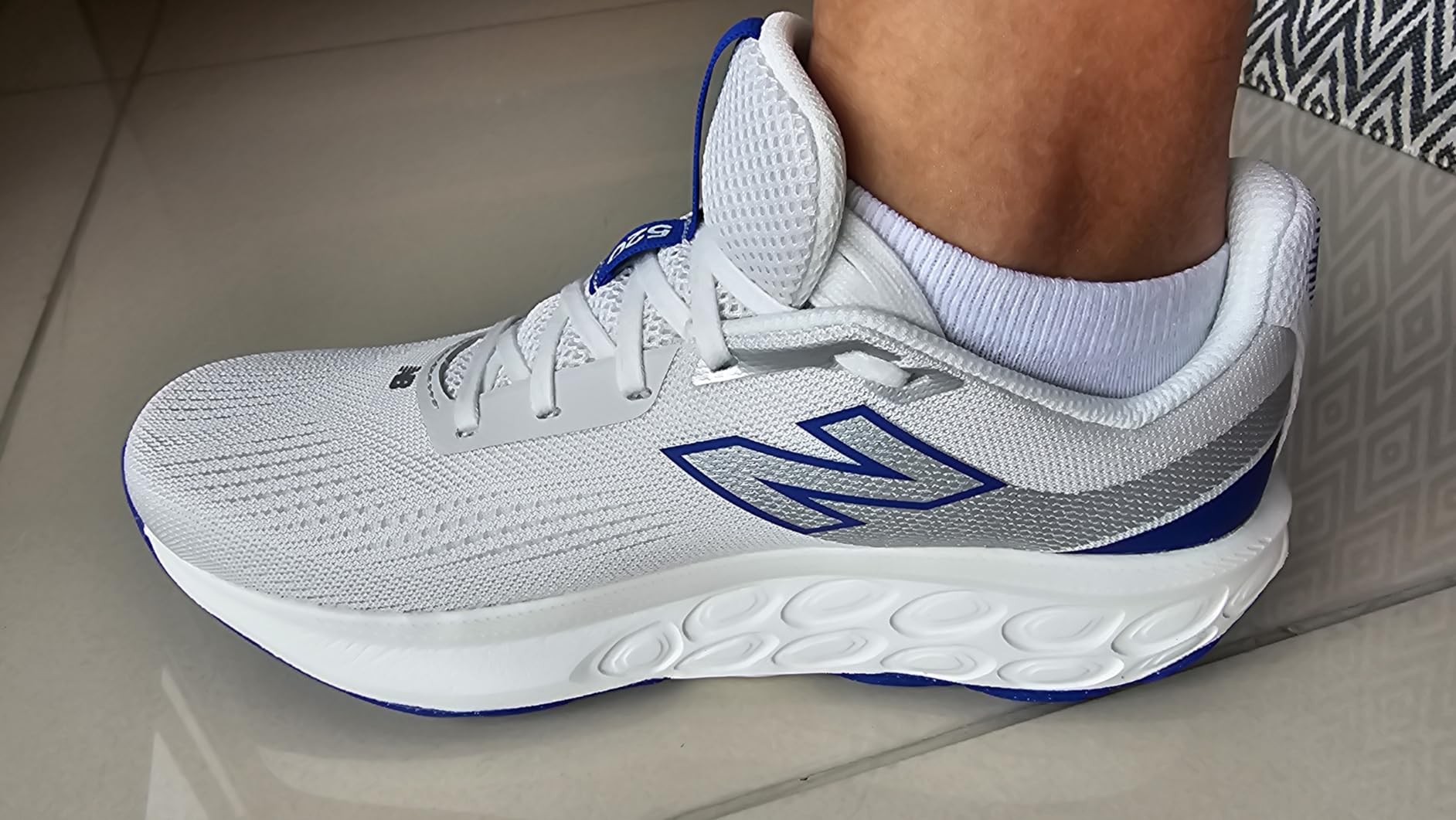
The Fresh Foam 520 v9 is our value pick because it delivers a genuinely cushioned neutral platform without the premium tag the max trainers carry. The Fresh Foam midsole is precision-engineered for a soft ride, and the shoe weighs 260.8 g per shoe, which keeps the overall build light for the amount of foam underneath it.
Owners describe it as a dependable cushioned daily trainer that works for running and walking in equal measure. That dual use matters for long-run training: if your easy long run doubles as a recovery day, a shoe this neutral in behaviour is easier to keep in rotation than something aggressively fast.
The 10 mm heel-to-toe drop is the largest stated offset in this roundup, and that is deliberate. A larger drop reduces the load on the Achilles and calf, which is exactly the group that struggles when people move from a plush low-drop shoe into longer distances. It is an easy transition shoe, and that counts for a lot at 50 miles a week.
Why the 520 v9 is a smart long-run value
Width availability is the standout. New Balance offers the model in wide and extra-wide, and with a 10 mm drop and a soft neutral midsole it is an easy recommendation for heavier runners who need forefoot room and a familiar offset in a lower-cost package.
The breathable engineered mesh upper with synthetic overlays keeps ventilation up on long warm runs and holds the midfoot without a hard collar. If you want a two-shoe rotation on a sensible budget, this is the daily and long-run anchor, and you can pair it with a faster shoe for workouts.
Where the budget trade-off shows up
The midsole leans toward soft rather than responsive, and a minority of owners find it a touch too plush for faster work. If your long run includes tempo or threshold segments, you will want a bouncier trainer alongside it, and our best running shoes for men round-up has options with more energy return.
Some wearers also find the shoe runs slightly long, which is worth factoring in if you are between sizes. The 10 mm drop is a benefit for most runners but can feel flat-footed to those who have trained in very low drop shoes, so adjust gradually if you are coming from that direction.
7. ASICS Men’s NOVABLAST 5 – Best for Forefoot Strikers
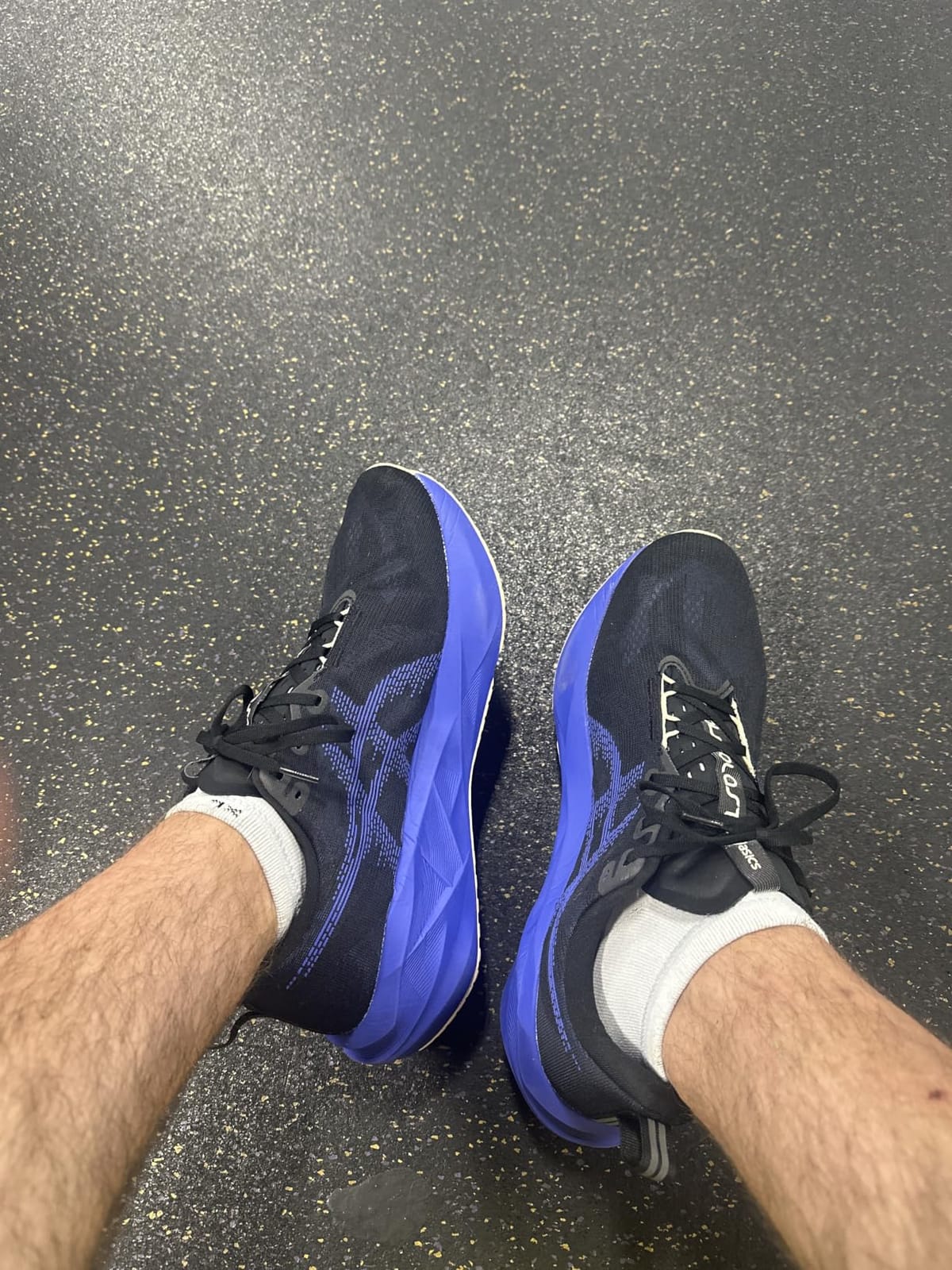
ASICS Men’s NOVABLAST 5 Running Shoes, 10.5, Black/Carrier Grey
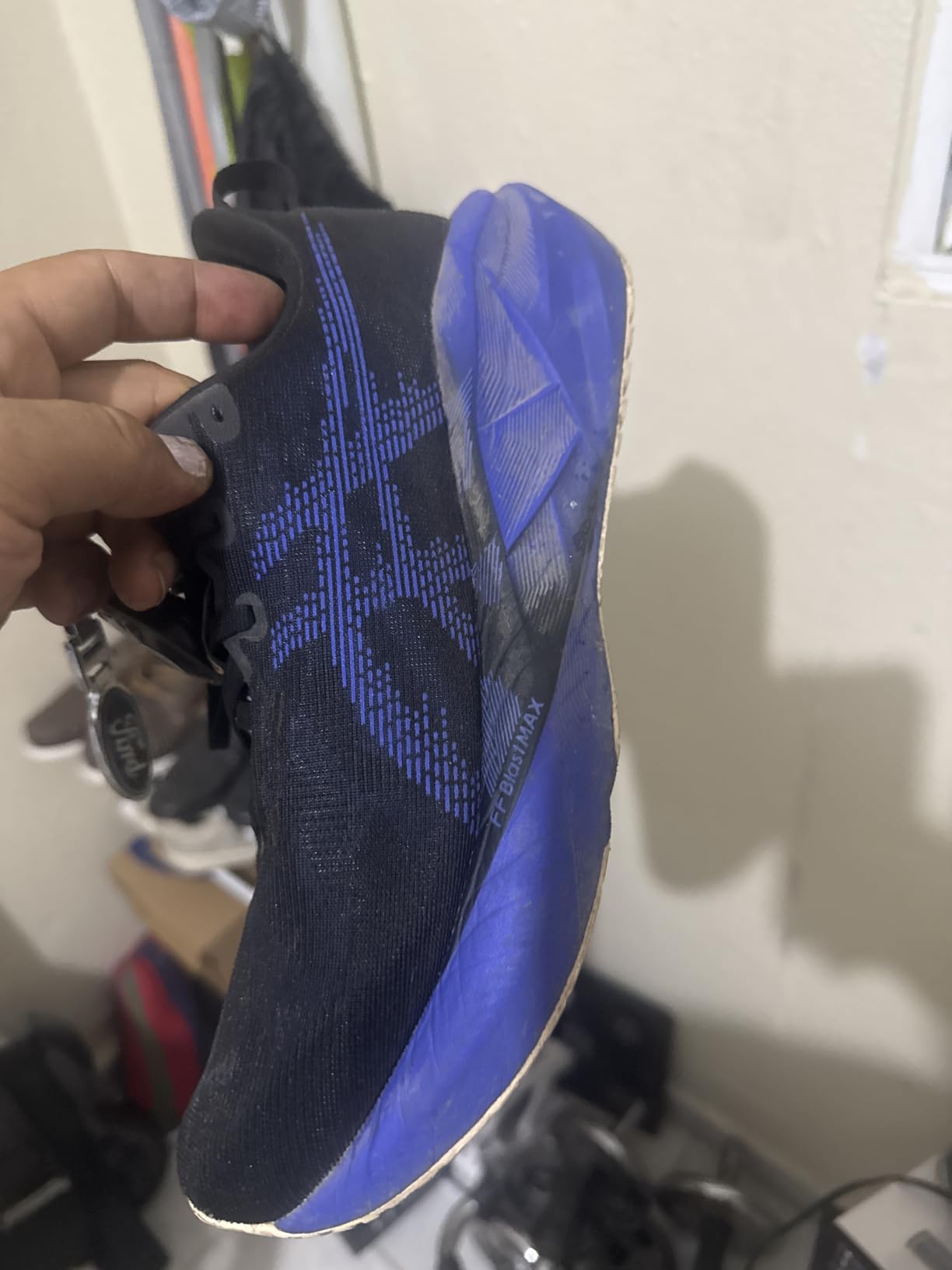
FF BLAST MAX cushioning
Trampoline-inspired outsole design
Tongue wing construction to reduce tongue movement
Pros
- Energetic bouncy cushioning that makes long miles easier
- Lightweight responsive ride
- Breathable upper with secure tongue retention
- Reflective details for low-light visibility
Cons
- Runs large
- so sizing down is often needed
- Outsole durability is limited versus flatter trainers
The NOVABLAST 5 uses FF BLAST MAX cushioning with a trampoline-inspired outsole, and the result is a long run shoe that feels like it is doing something for you rather than just cushioning the miles away. Owners describe the ride as energetic and bouncy, with a lightweight, responsive feel that keeps long miles from dragging.
In the r/AskRunningShoeGeeks long-run threads, the NOVABLAST is one of the models runners name most often as a long-run standout. The reason keeps coming back to forefoot and midfoot strike patterns, where a higher heel and a rocker-ish outsole let the foot sit forward and roll through without the heel grinding into the foam.
Tongue wing construction with added stretch reduces tongue movement, which is a small detail that matters at 18 miles when the tongue sliding around becomes a distraction. Reflective details handle the early-morning and late-evening long runs that most runners fit around work, and the engineered jacquard mesh upper keeps the whole thing ventilated.
How the NOVABLAST 5 fits a midfoot or forefoot strike
The FF BLAST MAX foam is noticeably springier than the Fresh Foam and DNA compounds in this list, and that energy return is what reduces the perceived effort of a steady long run. If your long run is genuinely conversational pace, the bounce is a bonus rather than wasted responsiveness.
It is also the shoe to consider if you spend part of your long run on rolling trails or gravel greenways, since the trampoline outsole pattern grips loose surfaces better than a flat trainer outsole. Just keep in mind the foam is tuned for pavement miles first.
Why the NOVABLAST is not your only long-run shoe
Outsole durability is the honest limitation here. Owners flag that the foam and outsole wear faster than flatter, stability-oriented trainers, and a bouncy energetic foam is a softer compound by design. In a 60-mile week that means rotating it rather than running every long run in it.
It also runs large, so sizing down is often needed, and the forefoot bias is not ideal for heavy heel strikers who need more rearfoot cushioning. If you want a durable daily partner alongside it, the Charged Assert 10 or the 520 v9 covers the easy miles.
8. ASICS Men’s Gel-Excite 11 – Best for Soft Landings
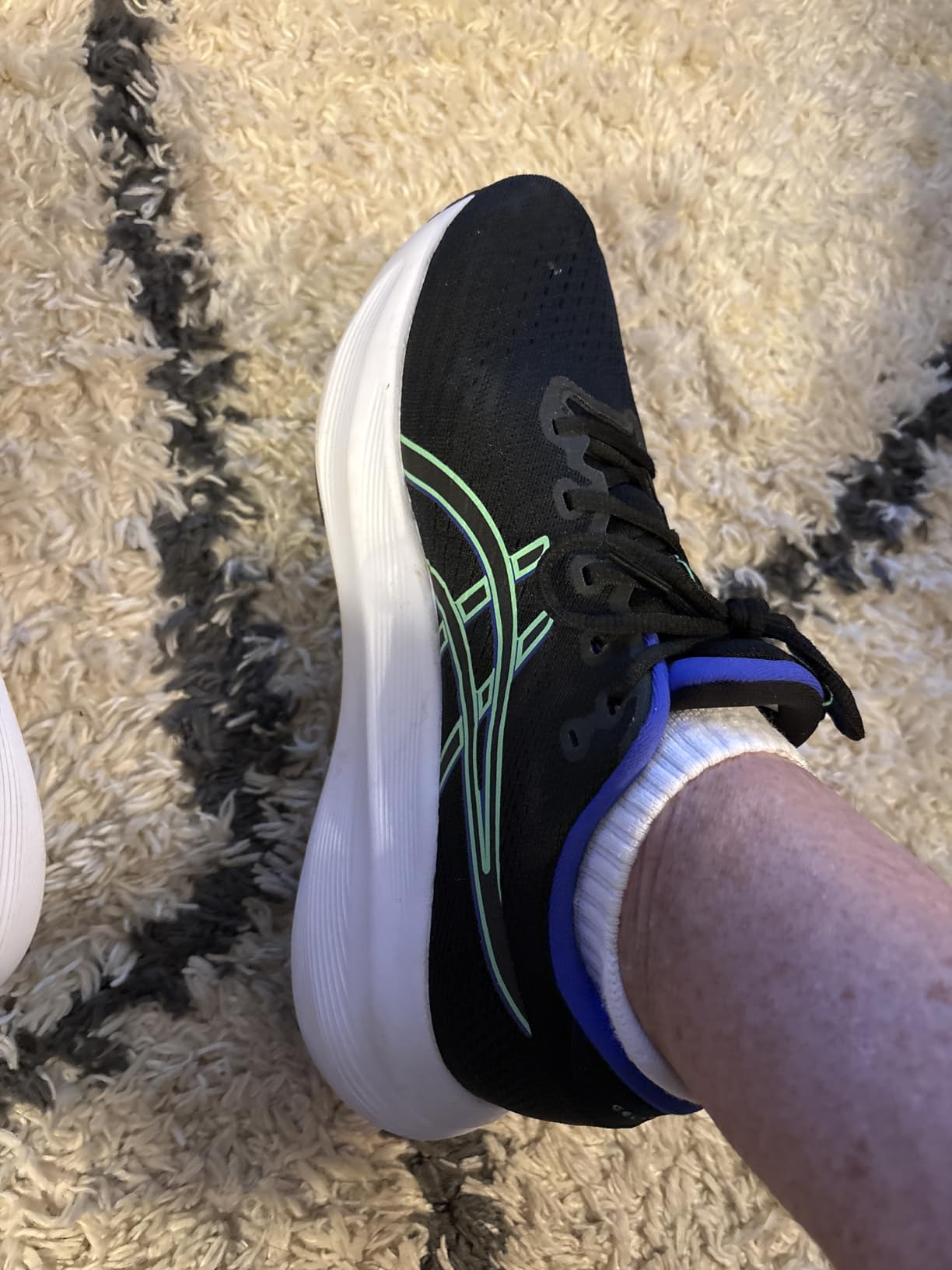
ASICS Men’s Gel-Excite 11 Running Shoes, 10.5, Gravel/Dark Cobalt
PureGEL about 65% softer than standard
AMPLIFOAM PLUS midsole cushioning
OrthoLite X-30 sockliner
Pros
- Exceptionally soft landing from updated PureGEL
- Lightweight breathable mesh upper with minimal overlays
- Comfortable sockliner and easy-on heel pull tab
- Reflective details for low-light visibility
Cons
- Sizing runs narrow for some wearers
- Soft cushioning returns less energy at faster paces
The Gel-Excite 11 is built around one thing: a soft landing. The updated PureGEL is approximately 65 percent softer than standard GEL, and it is layered with an AMPLIFOAM PLUS midsole. Buyers point to exactly that combination when they describe the ride as notably soft and comfortable for daily running and walking.
It is a smaller-footprint pick than some of the trainers here, and that is worth saying plainly. The Excite is a lighter, softer long-run companion for someone whose main goal is comfort over easy distance, not a shoe for accumulating 60 miles a week across a full rotation.
Two practical details do more work than they sound like. The engineered mesh upper reduces the need for overlays, which is why the shoe stays light and breathable without losing much structure, and the knit heel pull tab makes getting the shoe on after a long run a one-handed operation. The OrthoLite X-30 sockliner handles moisture management on hot days.
Who should reach for the Gel-Excite 11
Runners coming back to running after a layoff, or anyone who finds firm midsoles uncomfortable on long pavement miles. The softness is the feature, and for a heel striker who spends a lot of time on impact-prone surfaces it takes the sting out of the back half of the run.
Reflective details make it a reasonable pick if your long runs happen before work or in the evening, and the wide width options help if standard ASICS sizing runs tight for you. The 4.6 average across close to 1,500 reviews reflects that the soft-landing promise is being met consistently.
The limits on this shoe
Sizing runs narrow for some wearers, which is the same fit caveat that appears on several models in this roundup. If you are between sizes, size up or go wide rather than forcing a snug forefoot into a 20-miler.
Second, soft cushioning returns less energy at faster paces, so this is not the shoe for tempo work or a fast finishing long run. Pair it with a more responsive trainer if your long run has pace changes in it, and do not expect the outsole to survive marathon-block mileage the way the Adrenaline GTS 25 does.
9. Nike Men’s Revolution 8 Road Running Shoes – Best for Everyday Wear
Nike Men’s Revolution 8 Road Running Shoes, Off White/White-Wolf Grey-Topaz Gold, 11
Lightweight breathable mesh upper
Foam midsole cushioning
Rubber outsole with waffle-inspired traction
Pros
- Very lightweight and comfortable for walking and running
- Tread holds up well with regular use
- Breathable upper keeps feet cool
- Versatile styling for casual and business-casual wear
Cons
- Toe box fabric can rip after extended use
- Midsole taper narrower than other Nike models
The Revolution 8 is not the technical answer to the long-run question, and we are not pretending otherwise. It is the shoe we recommend for runners who want one pair that works for the commute, the dog walk, the gym and a 10-mile long run without changing shoes three times a day.
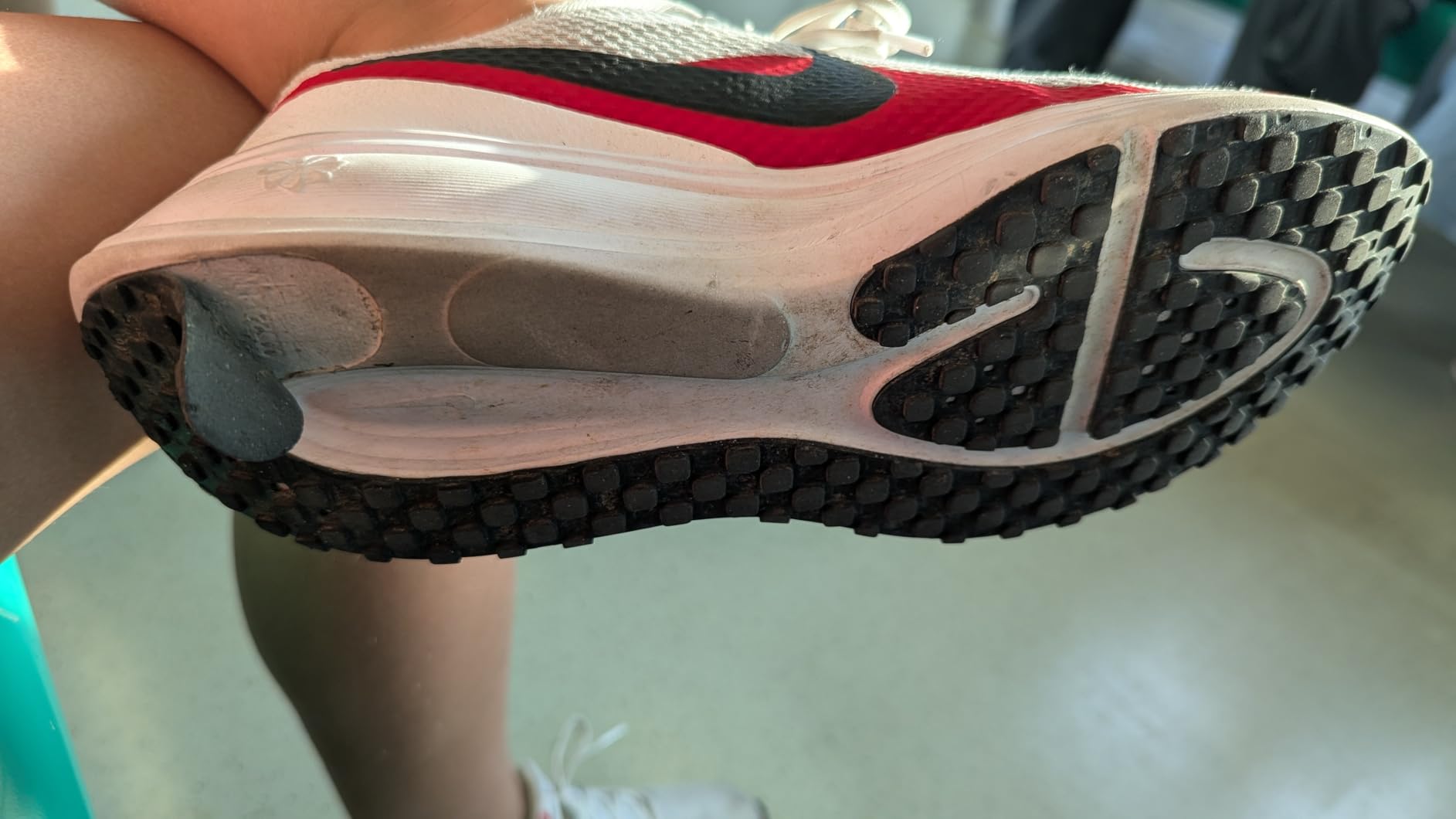
Construction is deliberately simple: a lightweight breathable mesh upper, a foam midsole for cushioning and a rubber outsole with a waffle-inspired traction pattern. That outsole is the part that surprises people, because review patterns suggest the tread holds up well with regular use rather than flattening like many lightweight foam trainers.
Owners buy it as a repeat purchase and as a backup pair, which is the clearest signal of how it is used in practice. It also comes in multiple colorways and men’s sizes including wide, and the styling works well with both casual and business-casual clothing in a way that most dedicated trainers do not.
When the Revolution 8 is the right long-run choice
It suits runners at the easy end of their volume, runners returning from injury who want something undemanding, and anyone who runs their long run on a trail greenway rather than a serious pavement loop. The lightweight build and breathable upper keep it comfortable in heat, and the fit runs true to size for most wearers.
It also works as a rotation third shoe. If you already own a cushioned trainer and a faster workout shoe, a third pair for easy walking miles spreads the wear across your rotation and delays the point where any single shoe reaches the end of its life.
Why it is not our top pick for 20-milers
The toe box fabric can rip after extended use, and the midsole taper runs narrower than other Nike models, so it is not a good match for wide feet or long-distance forefoot comfort. Cushioning depth is also modest compared with the max trainers in this list.
If your long run is a genuine 18 to 22 miles, the midsole here will not deliver the same shock absorption as the Bondi 9 or the Gel-Nimbus 27. Save the Revolution for the miles where lightness and versatility matter more than impact protection.
10. Brooks Women’s Glycerin 23 – Best for Neutral Arch Support
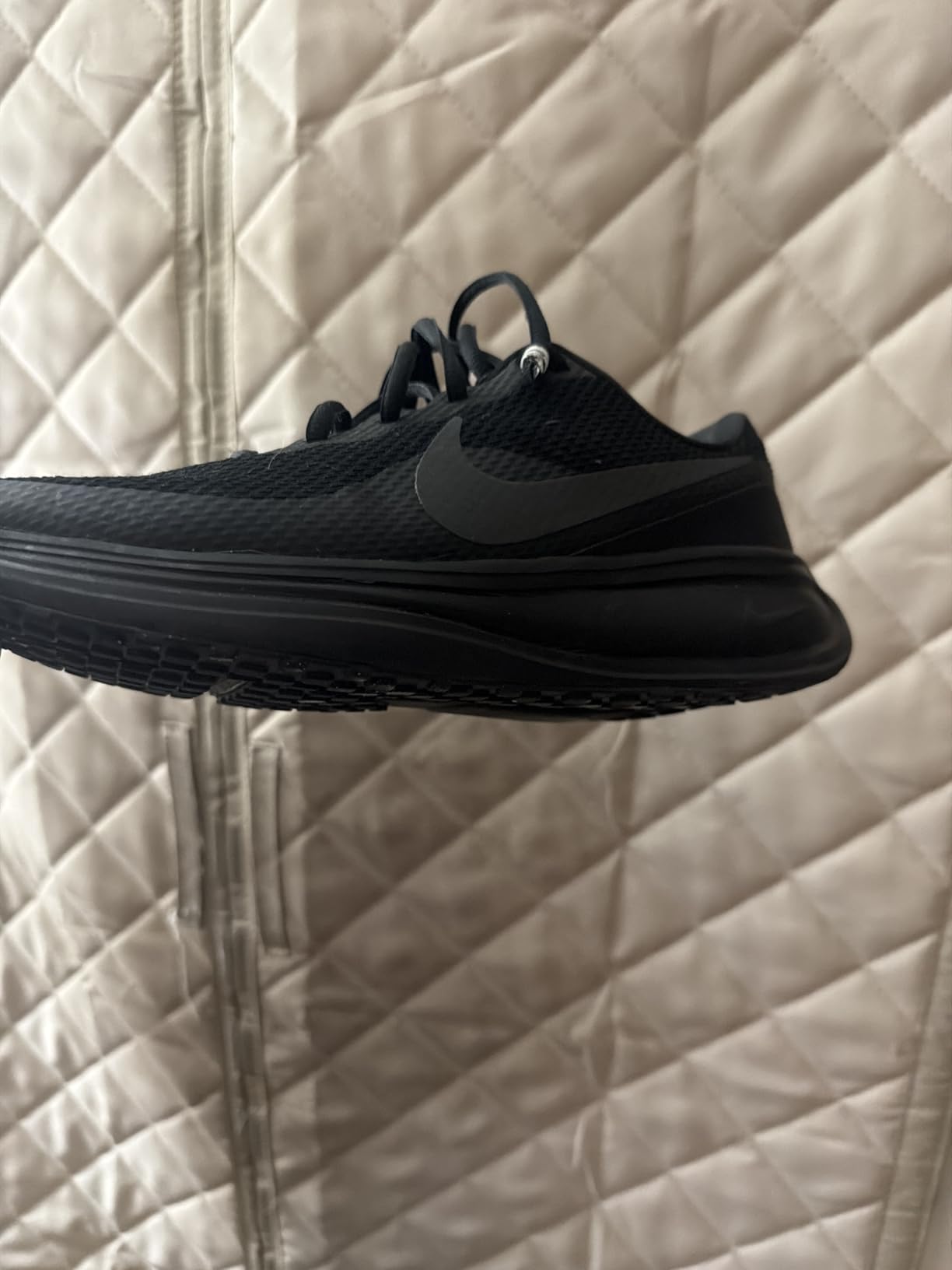
Brooks Women’s Glycerin 23 Neutral Running Shoe – Black/Grey/White – 9.5 Medium
Nitrogen-infused DNA TUNED midsole
2 mm more forefoot cushioning than predecessor
Wide platform with sculpted midsole
Pros
- Plush cushioning without feeling unstable
- Arch support lands where it is needed
- Roomy non-constricting wide toe box
- No break-in period required
- Orthotic compatible
Cons
- Ball-of-foot cushioning reduced versus earlier models
- Bulky tongue that can slip down
- Runs small for some wearers
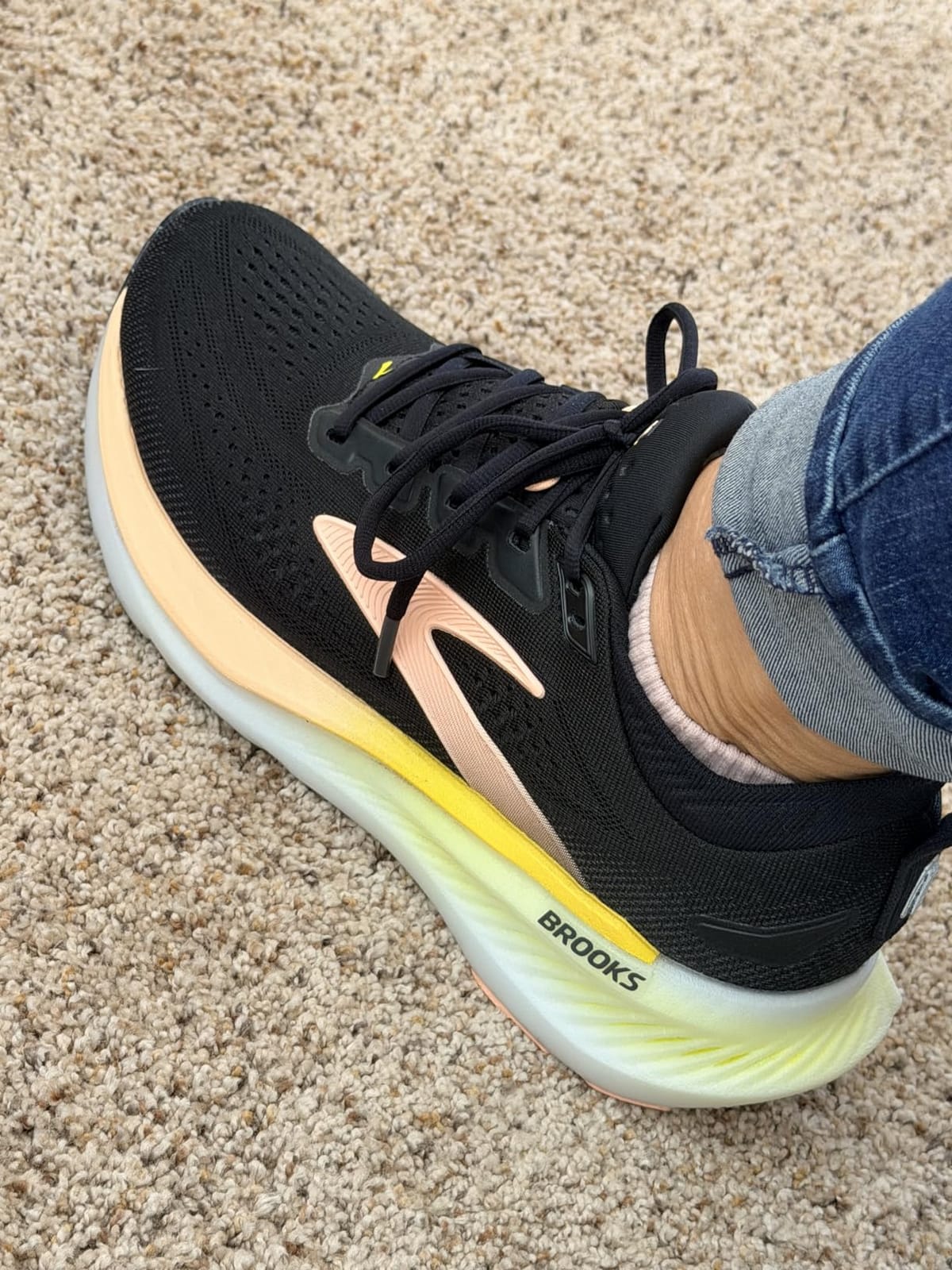
The Glycerin 23 is the Brooks pick for runners who want real arch support without a stability post in the shoe. The nitrogen-infused DNA TUNED midsole adds 2 mm more forefoot cushioning than the previous version, and the 8 mm offset keeps the heel-to-toe drop in a familiar, easy-to-run range.
Owners praise the arch support specifically for landing where it is needed, along with a roomy, non-constricting toe box and a wide platform with strategic midsole sculpting that helps smooth heel-to-toe transitions. Several reviewers also report no break-in period required, which is unusual for a shoe with this much midsole.
It carries an APMA Seal of Acceptance and a PDAC A5500 certification and works with orthotics, and the springsy toe-off is a step up for pavement runners who want a little more response than the Ghost 17 gives. At a 4.3 average it sits lower than the rest of our list, and the reasons are worth reading before you commit.
Why the Glycerin 23 works for long runs
The combination of a wide platform, a modest 8 mm offset and arch support that does not collapse is what makes this a long-run shoe rather than a walking shoe. Strategic midsole sculpting supports the transition through the midfoot, so a fatigued stride still lands smoothly instead of collapsing through the arch.
Wide and extra-wide widths are available, the upper is a triple jacquard warp-knit with stretch and structure, and the breathable build keeps feet relatively dry in heat. For a neutral trainer with genuine arch support, this is one of the more complete packages in the roundup.
The three complaints to expect
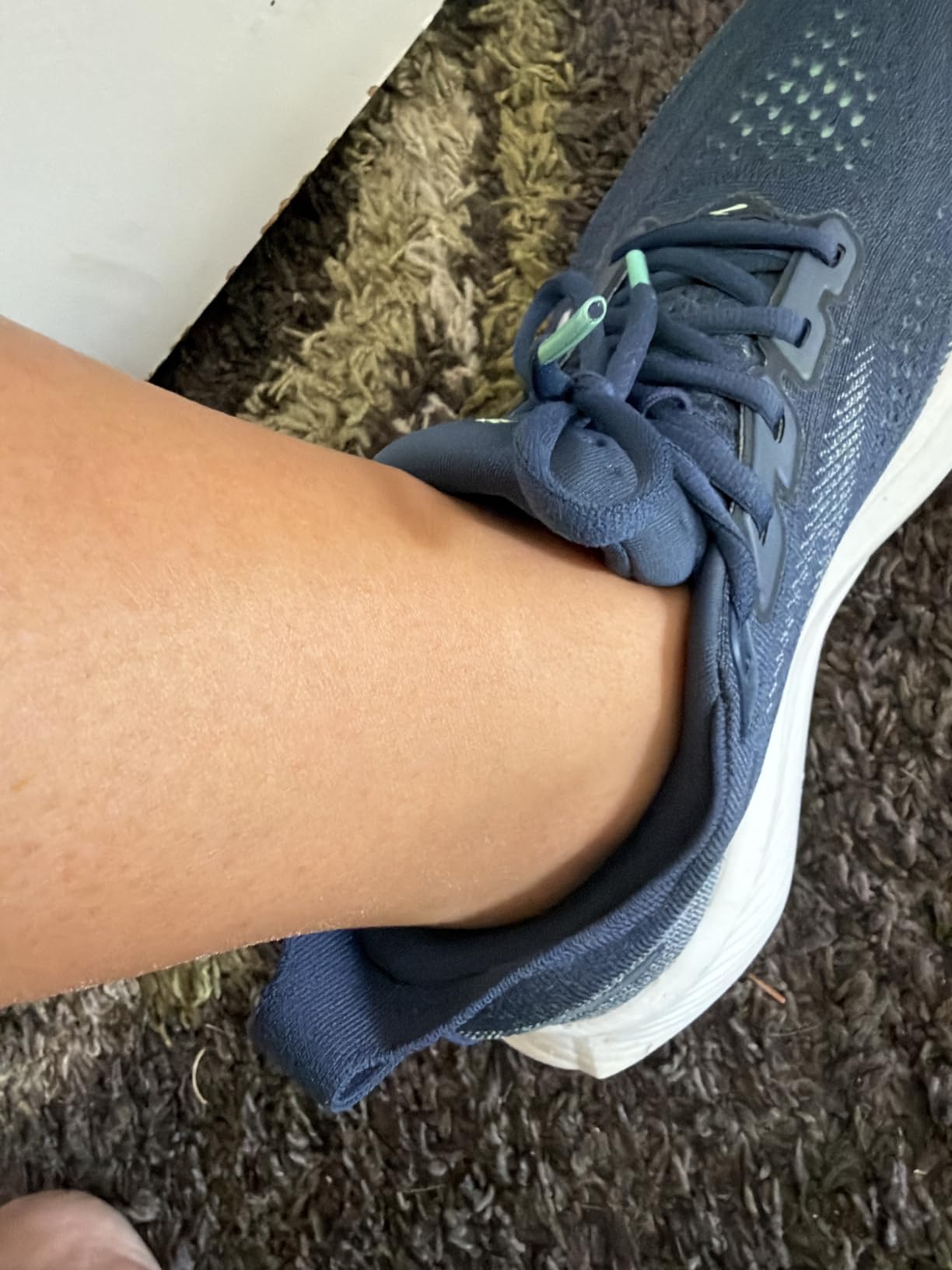
First, some feel the ball-of-foot cushioning is less generous than in earlier Glycerin models, which matters most on long runs with a lot of toe-off at the end. Second, the tongue is bulky and can slip down, requiring a pull back up mid-run. Third, it runs small for some wearers and a half size up is often advised.
At a 4.3 average this is the lowest-rated pick here, and the reason is a split over the feel rather than a defect. If you want a firmer, more consistent ride for the same arch-support goal, the Adrenaline GTS 25 is the stronger match for long mileage.
How to Choose Road Running Shoes for Long Runs
Long run shoes are a category defined by what happens after hour two in the shoe. Every decision below is filtered through that lens, which is why it points in different directions from race shoe or recovery shoe advice.
Stack height and heel-to-toe drop
Stack height is the foam height between the ground and your foot, and more of it absorbs more impact per step. The Bondi 9 carries the tallest stated stack in this roundup, while lower trainers like the Charged Assert 10 keep you closer to the ground with a firmer, more stable ride.
Heel-to-toe drop is the difference between heel and forefoot stack height, and it matters more than most buyers expect. The 520 v9 at 10 mm and the Glycerin 23 at 8 mm are easier transitions for Achilles and calf, while the 1 mm offset on the Charged Assert 10 is nearly flat. Many runners who drop from 10 mm to near-zero report calf and Achilles soreness on long runs, so change drop gradually.
Cushioning that does not bottom out at mile 18
The most common long-run complaint is a shoe that feels great early and dead late. Nitrogen-infused foams like DNA LOFT v3, FF BLAST MAX and DNA TUNED are lighter and softer but compress faster, while compression-molded foams such as Charged Cushioning hold their shape longer. If you run 50-plus mile weeks, the firmer compound usually lasts more miles between replacements.
For heel strikers and heavier runners, extra foam has a bigger effect on perceived effort than it does on speed. A plush underfoot also spreads impact load over a larger area, which is why plantar fasciitis and shin splint history both push toward the cushioned end of this list.
Fit, toe box width and sizing
Toe box width is the most underrated spec in this roundup. Long runs compress your foot over time, and a roomy forefoot in wide or extra-wide is the single change that most reliably prevents late-run foot pain. The Gel-Nimbus 27, Glycerin 23 and 520 v9 all offer extended widths; the Revolution 8 and standard-width Bondi 9 are the ones to size carefully on.
Sizing varies more than any other spec between models and even between versions of the same shoe. The Gel-Nimbus 27 and Gel-Excite 11 run narrow for a share of wearers, the Adrenaline GTS 25 and Glycerin 23 run small, the 520 v9 can run long, and the NOVABLAST 5 runs large. Buy late in the day, try both shoes on, and expect to size up or down rather than assuming your usual number transfers.
Outsole durability for a high-mileage rotation
Outsole compound decides how many miles you get before the midsole is protecting nothing. Solid rubber over high-impact zones, as on the Charged Assert 10, and the recycled-silica rubber on the Ghost 17 are the durability plays here. Bouncier foams paired with lighter outsoles, like the NOVABLAST 5, wear sooner and need rotating rather than retiring.
Expect a general road trainer to give you somewhere in the 300 to 500 mile range before the midsole loses its structure, and treat that as the starting point rather than a guarantee. Body weight, surface, and how much of your week is spent standing all shorten it, and runners on pavement and concrete usually fall to the lower end.
Long run shoes vs daily trainers
You do not need a different shoe for long runs, and the runners who do a rotation usually say the win comes from separating roles rather than from one magic long-run shoe. The common setup is one daily trainer, one workout shoe and one long-run shoe, so the same pair absorbs the same kind of stress repeatedly.
If you only run one pair, choose a cushioned neutral trainer from this list and let it do everything. A rotation of two or three pays off mainly in shoe lifespan, since it spreads miles across pairs and delays the midsole breakdown point for any one of them.
Breaking in a new long run shoe
Do not debut a new long run shoe on a 20-miler. A four-week ramp works well: week one, alternate it with your current trainer on runs up to 5 miles; week two, one long run of 7 to 8 miles; week three, a single long run at about 75 percent of your usual distance; week four, your full normal long run.
The point is to let the midsole, the upper and your foot adapt separately, and to catch fit problems on a short run where they are cheap to fix. A shoe that rubs or pinches at 5 miles is a problem you do not want to discover at 17.
When to replace your long run shoes
Three signals matter more than the mileage number. First, the midsole no longer rebounds, which you notice as a shoe that feels flat and dead. Second, uneven outsole wear on the lateral heel, which is the first place road runners go through. Third, new aches in the foot, shin or knee that appear only when you run.
Between 300 and 500 miles is the widely used planning range, and running your long run in the same pair every week with no rotation will pull you toward the low end. Worn midsoles stop absorbing shock, which is exactly when long-run discomfort tends to show up, so replacing on feel rather than on a calendar catches most problems earlier.
Frequently Asked Questions
Which shoes are best for long distance running?
For most runners, a cushioned neutral road trainer with a durable outsole is the right long distance shoe. Our top pick is the Under Armour Charged Assert 10, because its compression-molded midsole keeps absorbing impact deep into a long run rather than flattening out, and the solid rubber outsole holds up on high-mileage weeks. If your feet are wide or you use orthotics, the ASICS Gel-Nimbus 27 is the better fit. Runners chasing maximum softness should look at the Hoka Bondi 9.
What weight is considered a heavy runner?
There is no official threshold, but a common practical marker is over 200 pounds, or roughly a body mass index above 30. What matters more than the number is how the shoe behaves under load: a taller, firmer platform and a wider base resist compression better than a low, soft trainer. Heavy runners often do best in a stability or supportive neutral shoe such as the Brooks Adrenaline GTS 25 or a max cushion model like the Bondi 9.
How many miles should running shoes last?
Most quality road trainers give useful support somewhere in the 300 to 500 mile range, but the honest answer is that wear depends on your weight, your surfaces and how often you run in the pair. Signs it is time to replace include a midsole that feels flat, uneven outsole wear on the outside of the heel, and new foot or shin discomfort that only shows up while running. Rotating two or three pairs extends the life of each one.
Should long run shoes be different from daily trainers?
They do not have to be. If you run one pair, a cushioned neutral trainer from this list handles both easy miles and your long run fine. A separate long-run shoe starts to earn its place when you rotate two or three pairs, because it lets one shoe repeatedly absorb long-distance impact while another handles speed work and another handles daily volume. The gain shows up mostly in shoe lifespan rather than injury prevention.
Is a max cushioning shoe better for long runs?
For many runners, yes. A tall super-critical foam midsole absorbs more shock per step and spreads impact load, which tends to reduce the aches that build late in a long run. The tradeoff is ground feel and stability, so the best candidates are those with a wide platform, such as the Hoka Bondi 9, which is why we rated it best max cushioning rather than an automatic win. Firm and fast runners often prefer a firmer trainer instead.
Final Verdict for Road Running Shoes for Long Runs
The best road running shoes for long runs are the Under Armour Charged Assert 10 for nearly everyone, the Brooks Ghost 17 for runners who want one dependable pair, and the ASICS Gel-Nimbus 27 if your feet are wide or you run orthotics. Add the Hoka Bondi 9 if you want maximum cushioning, the Brooks Adrenaline GTS 25 if you need stability, and the New Balance 520 v9 if you want all of that in a simpler package.
Whichever you pick, give it four weeks on a ramp and rotate it rather than logging every long run in the same pair. Check the current listing for sizing against your usual number, because fit shifts between models faster than most buyers expect.