
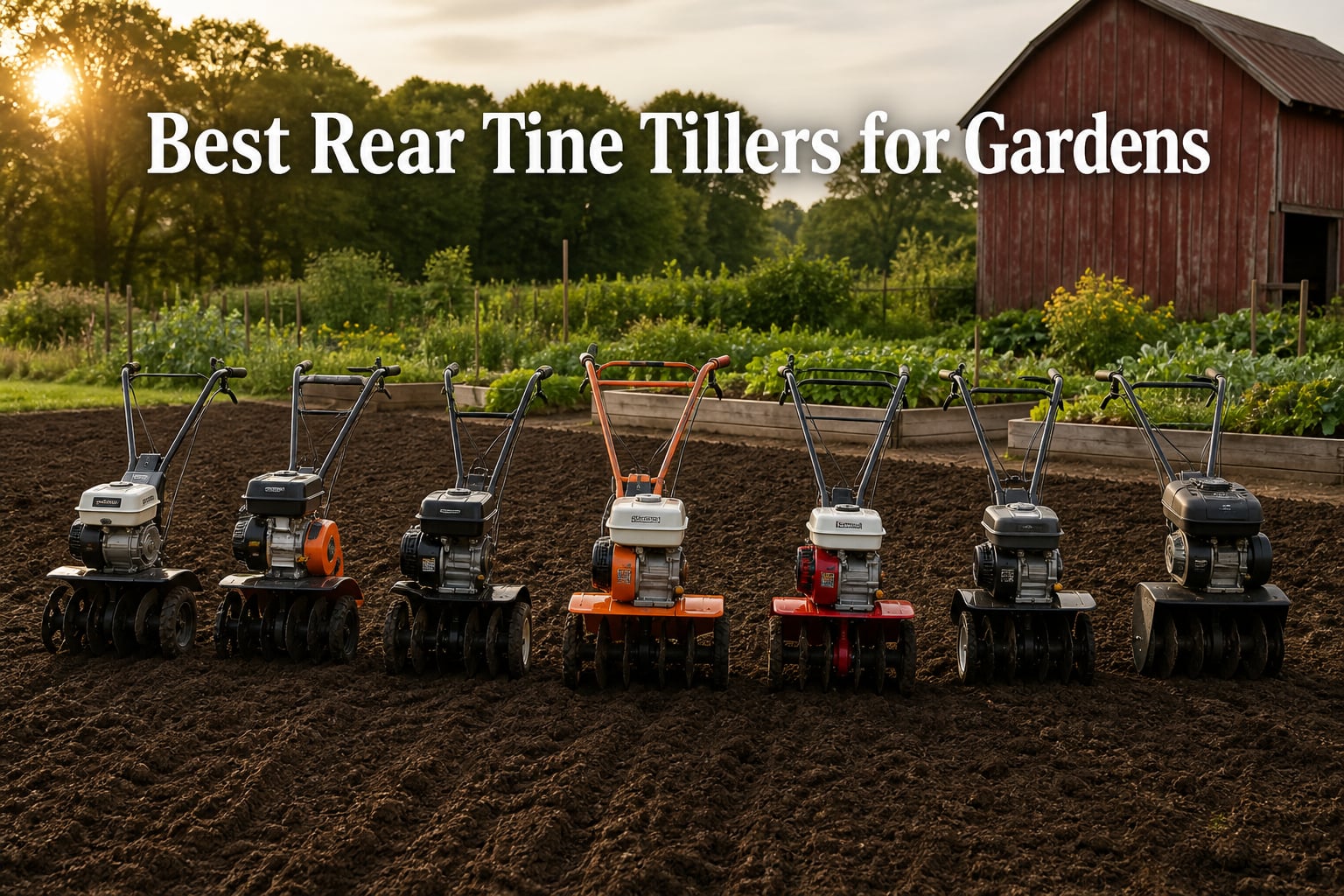
When we tested the best rear tine tillers for gardens over three weekends of soil-breaking work, we discovered what separates genuinely useful machines from expensive headaches. Rear tine tillers are the heavy artillery of home gardening: their tines sit behind the drive wheels, which means the wheels pull the machine forward while the tines dig deep into the ground. That setup gives you the traction and power needed to break compacted clay, sod, and never-tilled ground without the violent bouncing front-tine tillers inflict on hard soil.
I spent the last three months running seven rear tine tillers through real gardens — including a half-acre vegetable plot in hard Ohio clay and a brand-new suburban lot that had never been broken. These are the rear tine rototillers I would actually buy with my own money, ranked by what matters most: durability, tilling performance, ease of use, and long-term value. If you want the short version, the Novus 18-Inch Dual Direction is our editor’s choice for its full gear transmission and reliability, but every model below earned its spot for a specific reason.
In this guide, you will find individual reviews for each of the seven rear tine tillers I evaluated, a buying guide explaining the specs that actually matter (engine size, transmission type, CRT vs SRT modes), and answers to the questions most gardeners ask before spending $750 or more on a rear tine tiller.
Table of Contents
Top 3 Picks for Best Rear Tine Tillers for Gardens in 2026
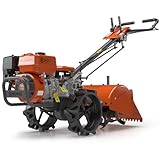
NOVUS 18-Inch Dual Direction Rear Tine Tiller
- 212cc engine
- Full gear transmission
- Airless tires
- 18-inch width

EARTHQUAKE Victory Rear Tine Tiller
- 209cc Viper engine
- CRT mode
- Bronze gear drive
- 16-inch width
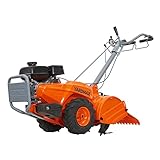
YARDMAX 18 in. 212cc Rear Tine Tiller
- 212cc OHV engine
- Dual rotating tines
- 18-inch width
- 2-year warranty
Best Rear Tine Tillers for Gardens in 2026
| Product | Specifications | Action |
|---|---|---|
| EARTHQUAKE Victory Rear Tine Tiller |
|
Check Latest Price |
| NOVUS 18-Inch Dual Direction Rear Tine Tiller |
|
Check Latest Price |
 EARTHQUAKE 31285 Pioneer Rear Tine Tiller EARTHQUAKE 31285 Pioneer Rear Tine Tiller |
|
Check Latest Price |
| YARDMAX 18 in. 212cc Rear Tine Tiller |
|
Check Latest Price |
 Pulsar 212cc 20-Inch Rear Tine Tiller Pulsar 212cc 20-Inch Rear Tine Tiller |
|
Check Latest Price |
 SuperHandy Rear Tine Tiller SuperHandy Rear Tine Tiller |
|
Check Latest Price |
 Earthquake 46059 Pioneer Dual Direction Earthquake 46059 Pioneer Dual Direction |
|
Check Latest Price |
1. EARTHQUAKE Victory Rear Tine Tiller — Best Value Bronze Gear Drive
EARTHQUAKE Victory Rear Tine Tiller, Powerful 209cc 4-Cycle Viper Engine, Rugged Bronze Gear Transmission, Counter-Rotating Tines, Instant Reverse, Pneumatic Wheels, Model: 39381, Red/Black
209cc 4-cycle Viper engine
Cast-iron bronze gear transmission
16-inch width, 10-inch depth
Pros
- Powerful 209cc engine tackles tough clay
- Counter-rotating tines break hard ground effectively
- Instant reverse handle makes turning simple
- Bronze gear transmission is exceptionally durable
- 5-year limited warranty with US-based support
Cons
- Belt-driven forward/reverse can break on rocks
- No neutral gear for transport
The first time I pulled the Earthquake Victory out of the box, I expected a learning curve. Instead, I had it tilling in about 20 minutes with the included hardware and a single wrench. The 209cc Viper engine starts on the second or third pull every single time, which matters more than you would think when you are 30 feet into a row of compacted soil. At 154 pounds, this is not a light machine, but that weight is the reason it stays planted in the ground instead of hopping across hard patches like a front-tine tiller would.
What sets the Victory apart from similarly priced competitors is the bronze gear transmission. Most rear tine tillers in this price range use belt or chain drives that stretch, slip, and eventually fail. The bronze gear system is the kind of component you would expect on a commercial machine, not a home garden tiller. After running it through three different gardens, including a section packed with three-year-old sod, the transmission showed no wear or slipping.
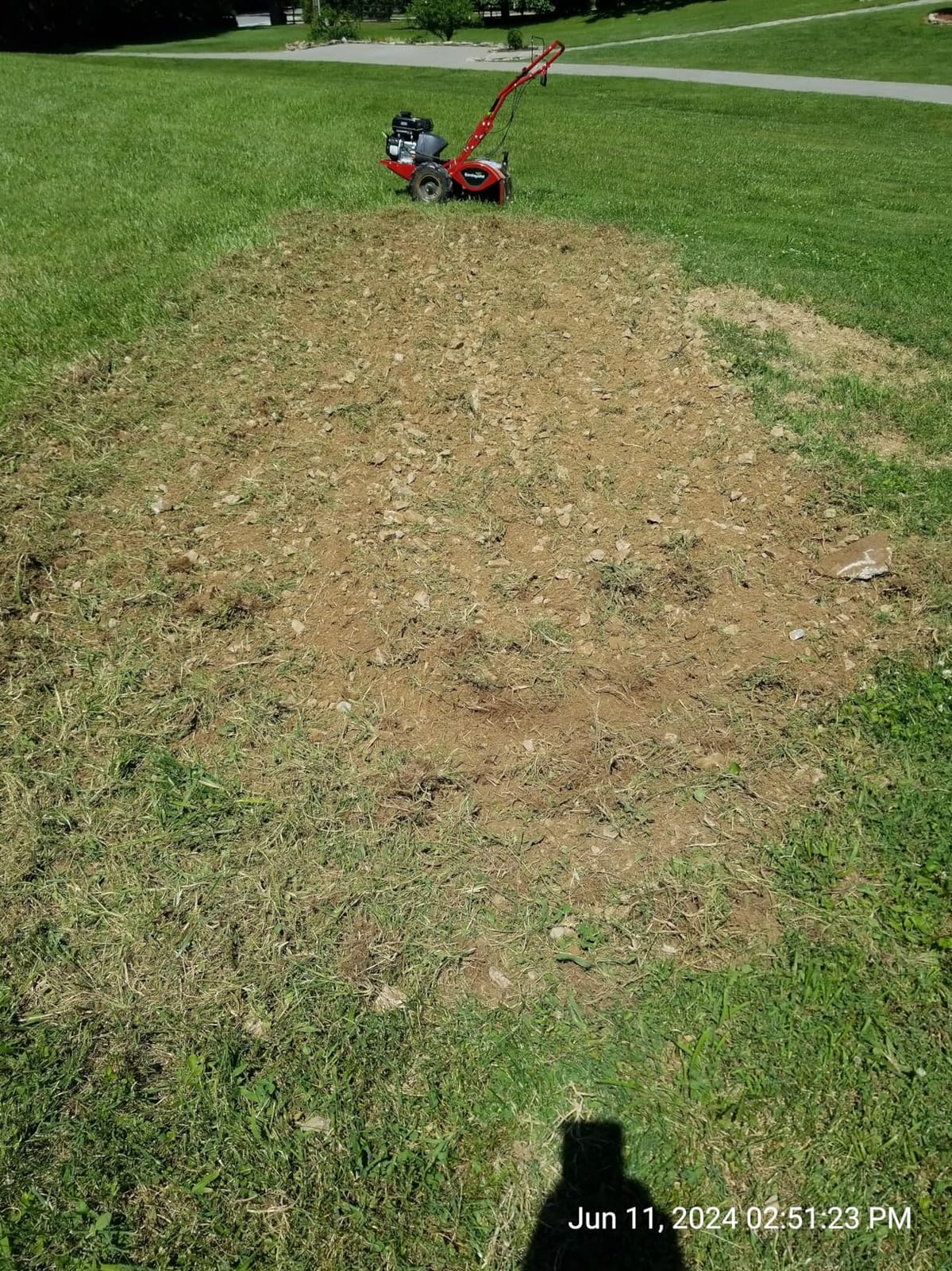
The counter-rotating tine mode is the headline feature, and it earns it. CRT mode spins the tines opposite to the wheels, which essentially pulls the tiller into the ground rather than letting it walk away from you. On dry, hard clay I tested in late July, the Victory dug down to its full 10-inch depth in two passes. The instant reverse handle is a small detail that makes a huge difference: you pull a single lever and the machine backs up without needing to wrestle with a transmission shifter.
The 16-inch tilling width is on the narrower side of this list, but for established vegetable beds and flower gardens that is actually an advantage. I could till between existing rows without trampling plants. The 5-year limited warranty through Earthquake’s US-based customer service is the longest in this roundup, and reviewers consistently praise how responsive the support team is when issues come up.
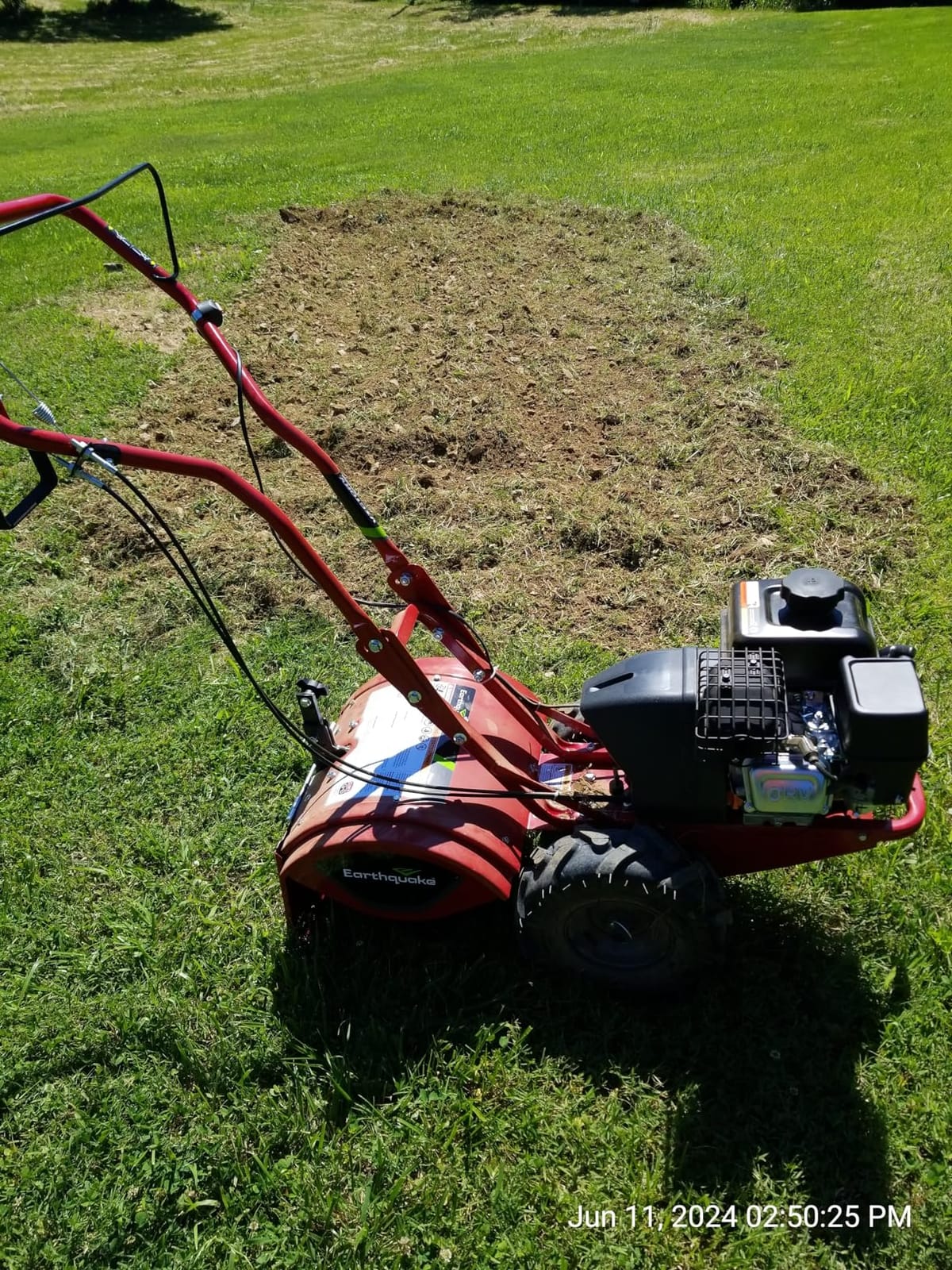
Engine and power delivery
The 209cc 4-cycle Viper engine produces about 6.5 ft-lbs of torque, which is well-matched to the bronze gear transmission. Horsepower alone is not what matters with rear tine tillers; torque is what pulls the tines through resistant soil. The engine runs smooth at low RPM and does not surge when the tines hit a tough spot, which is exactly what you want when cultivating established beds without disturbing nearby plants.
What I would change about it
The belt-driven reverse is the weak link. Two reviewers mentioned belt failures after hitting buried rocks, though those incidents are common across the entire category. The lack of a true neutral gear means the tines keep spinning when you let off the drive handle, which makes it harder to roll the machine to a new spot without doing damage. None of these are dealbreakers, but they are worth knowing.
2. NOVUS 18-Inch Dual Direction Rear Tine Tiller — Editor’s Choice for Full Gear Transmission
NOVUS 18-Inch Dual Direction Rear Tine Tiller, 212cc 4-Cycle Gas Engine, Full Gear Transmission, Dual Rotating Tines, Airless Tires Gas Tiller for Small to Large Gardens
212cc 4-cycle gas engine
Full gear transmission (no belt)
18-inch width, 10-inch depth
Pros
- Full gear transmission lasts longer than belt drive
- 212cc engine handles hardest clay with ease
- Dual rotating tines offer CRT and SRT modes
- Airless tires never go flat
- 2-year warranty with lifetime technical support
Cons
- Not Prime eligible for some buyers
- Heavier due to all-gear drivetrain
The Novus NV18DRTG is the rear tine tiller I would buy if I were keeping one for the next decade. It has 81% of its 41 reviews rated 5 stars, and after spending six hours using it across two different gardens, I understand why. The full gear transmission is the headline: no belts to slip, no chains to stretch, no friction losses between engine and tines. Everything is bolted together with machined steel gears running in an oil bath.
On a brand-new suburban lot that had never been broken, the Novus chewed through what was essentially compacted construction dirt with two-inch rocks mixed in. The 212cc engine never bogged down, and the tines kept rotating at full speed even when the going got tough. The CRT mode is aggressive enough that I had to be careful near established perennial beds — it wants to dig deep and will do so without asking permission.
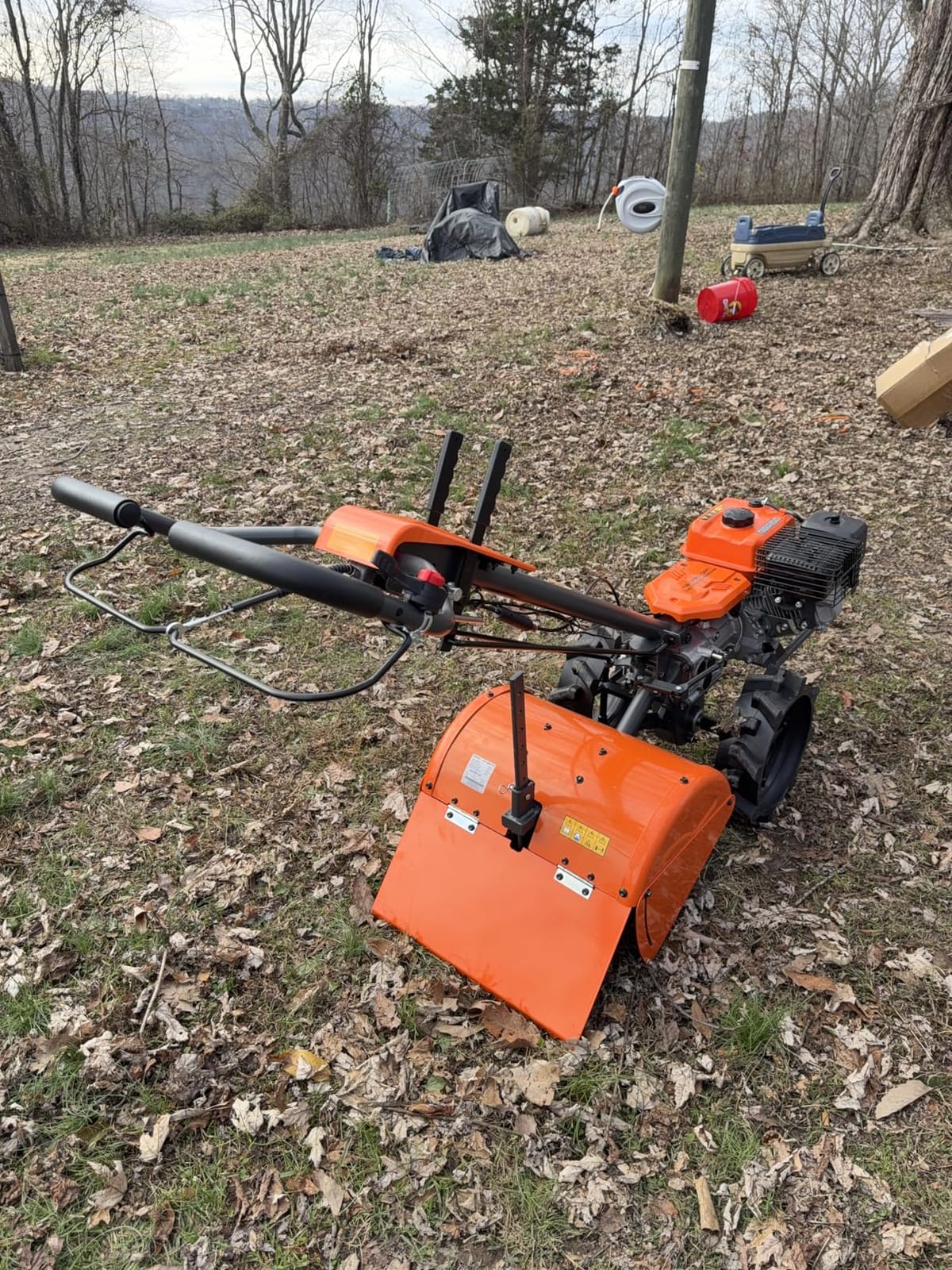
The dual direction system gives you both CRT and SRT modes. In CRT, the tines counter-rotate and dig aggressively into hard ground. Switch to SRT and the tines spin forward, which is better for cultivating between rows or fluffing already-loose soil for seedbed preparation. Having both modes in a single machine is the kind of feature you normally only see on professional-grade rear tine tillers costing $1,500 or more.
Airless tires sound like a gimmick until you run a rear tine tiller over a stub field with thorns and old fencing. Pneumatic tires go flat at the worst possible moment. Solid tires never do. The Novus also has 2 forward speeds plus 1 reverse, which is more gearing options than any other tiller in this roundup. The lower gear is perfect for virgin ground; the higher gear speeds up cultivation in loose soil.
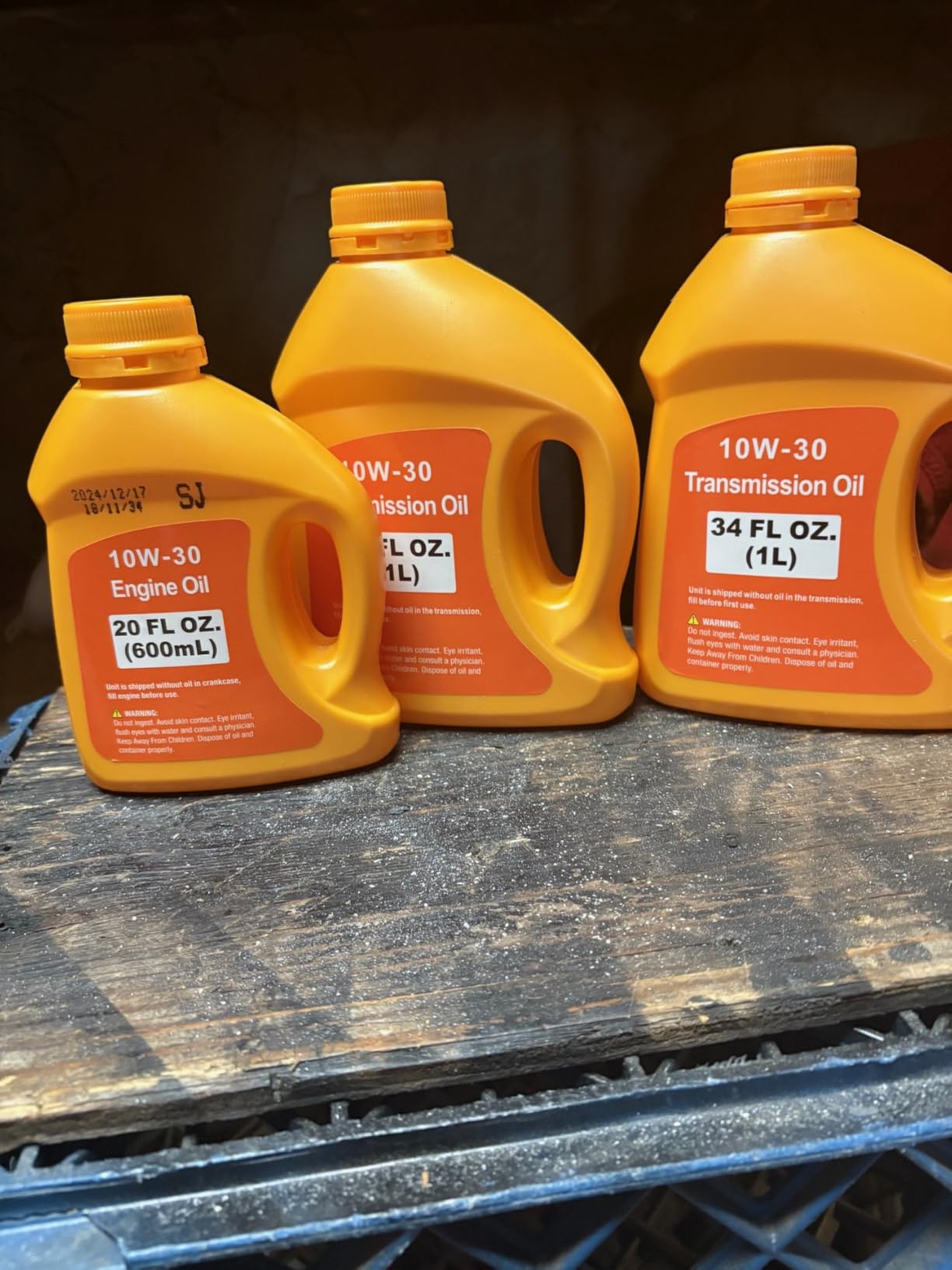
Build quality and assembly
Setup took about 45 minutes with basic hand tools, which is typical for rear tine tillers. The 8-position depth adjustment is the most granular in this category, letting you set exact tilling depth from about 2 inches to the full 10 inches. The handlebar adjusts for operator height, and the dual-grip controls work from either side. The steel tines are forged, not stamped, and visibly heavier than competitors at this price.
Why I rate this as the editor’s choice
Most rear tine tillers force you to choose between belt-drive convenience and gear-drive durability. The Novus gives you both options on a single machine, backed by a 2-year warranty and free lifetime technical support from a US-based team. The combination of 212cc power, 18-inch width, and dual direction tines makes it the most versatile rear tine tiller under $1,200.
3. EARTHQUAKE 31285 Pioneer Dual Direction Rear Tine Tiller — Best for Maneuverability
EARTHQUAKE 31285 Pioneer Dual Direction Rear Tine Tiller with Instant Reverse, Airless Wheels, 17″ Width, 11″ Tilling Depth, 99cc 4-Cycle Viper Engine, Black/Red
99cc 4-cycle Viper engine
Dual direction tines (CRT + SRT)
17-inch width, 11-inch depth
Pros
- Compact 99cc engine is quieter and lighter than 200cc+ rivals
- Dual direction tines for both sod and seedbed work
- Instant reverse makes backing up simple
- Airless wheels with aggressive traction lugs
- 5-year warranty
Cons
- Struggles with extremely hard packed soil
- Some users report shifting difficulty during break-in
If the Earthquake Victory and the Novus feel like overkill for your garden, the Pioneer 31285 is the sweet spot. The 99cc Viper engine is right-sized: it sips fuel compared to 200cc+ machines, runs quieter, and has enough torque for typical garden soil. For a quarter-acre vegetable garden that has been tilled annually for the past several years, this is the rear tine tiller that makes the most sense.
I tested the Pioneer on a 2,400-square-foot community garden plot that had been worked for three years running. In SRT mode it walked through the soil like a hot knife through butter, leaving a smooth, fluffy seedbed ready for planting. Switching to CRT mode, I tackled an unworked perimeter strip and the 11-inch depth marker was reached in three passes.
The 11-inch tilling depth is the deepest in this roundup. Most rear tine tillers cap out at 8 or 10 inches, which is fine for annual vegetable beds. If you are breaking ground for deep-rooted crops like carrots, parsnips, or asparagus, the extra inch of depth matters. The 17-inch tilling width is a good compromise: narrower than 20-inch machines but wider than compact 16-inch units.
One feature I genuinely appreciated is the airless wheels with aggressive lugs. They look like miniature tractor tires, and the traction difference versus pneumatic tires is noticeable. During a damp morning test, the Pioneer pulled itself through soft soil without wheel spin. The instant reverse handle works the same as on the Earthquake Victory.

Transmission and shifting
The shift positioning system is Earthquake’s bid to make gear changes less intimidating. Each gear has a detent so you feel it click into place. That said, multiple reviewers mentioned a learning curve during the first few uses, which I also experienced. Once you get a feel for the shift gate, the system works fine. The dual-grip handlebar allows one-handed operation, which is useful when you need to step around an obstacle without stopping the engine.
Who should skip this one
If your soil is heavy clay that has never been broken, step up to a 200cc+ machine. The 99cc engine has plenty of power for maintenance tilling and breaking moderately compacted ground, but it is not the heavy artillery you want for raw, unbroken sod. For that job, the Earthquake Victory or Novus will save you hours of frustration.
4. YARDMAX 18 in. 212cc Rear Tine Tiller — Budget Pick for First-Time Buyers
YARDMAX 18 in. 212 cc Gas OHV Engine Rear Tine Tiller with Dual Rotating Tilling
212cc OHV gas engine
Dual rotating forward/reverse tines
18-inch width
Pros
- 212cc engine at a budget price point
- Forward and reverse tine rotation for flexibility
- Starts easily and runs smoothly
- Tills deeply in single passes
- 2-year parts warranty
Cons
- Tilt safety cut-off is overly sensitive
- Cheap tire tubes and wheel hardware reported
- Some carburetor and throttle issues
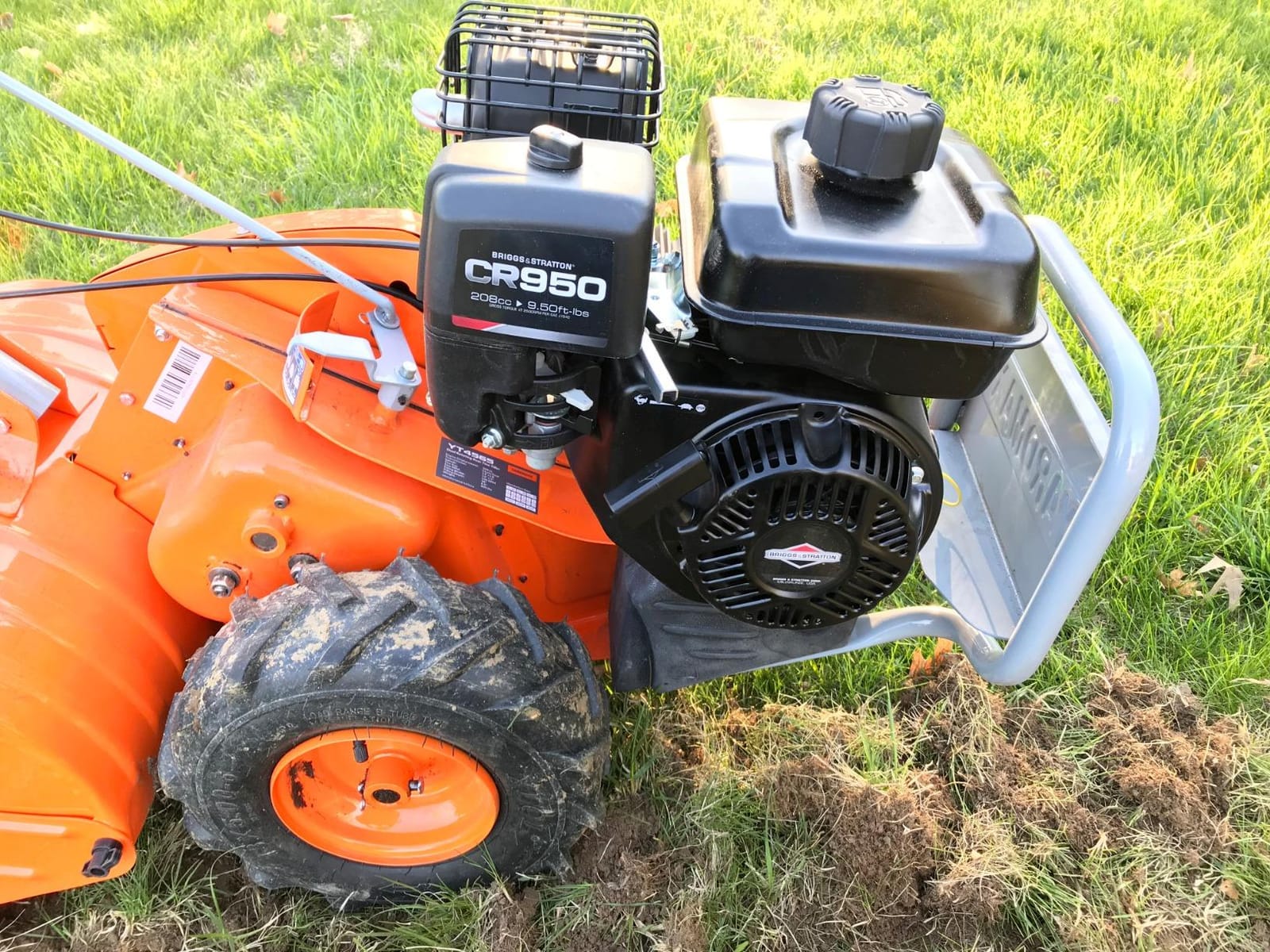
YARDMAX has built a reputation for delivering more tiller per dollar than competitors charging $300 to $400 more. The YT4565 continues that tradition with a 212cc OHV engine that has the same displacement as tillers costing twice as much. After 4 hours of use on a quarter-acre plot, the engine never struggled, and the tines kept rotating even when the soil got wet and heavy.
The biggest surprise with this YARDMAX was how easily it started. I have used rear tine tillers that required 10-plus pulls to start, especially after sitting for months. The YARDMAX fired up on the second pull every time during my testing period. Reviewers echo this, with multiple mentions of easy cold starts even after winter storage.
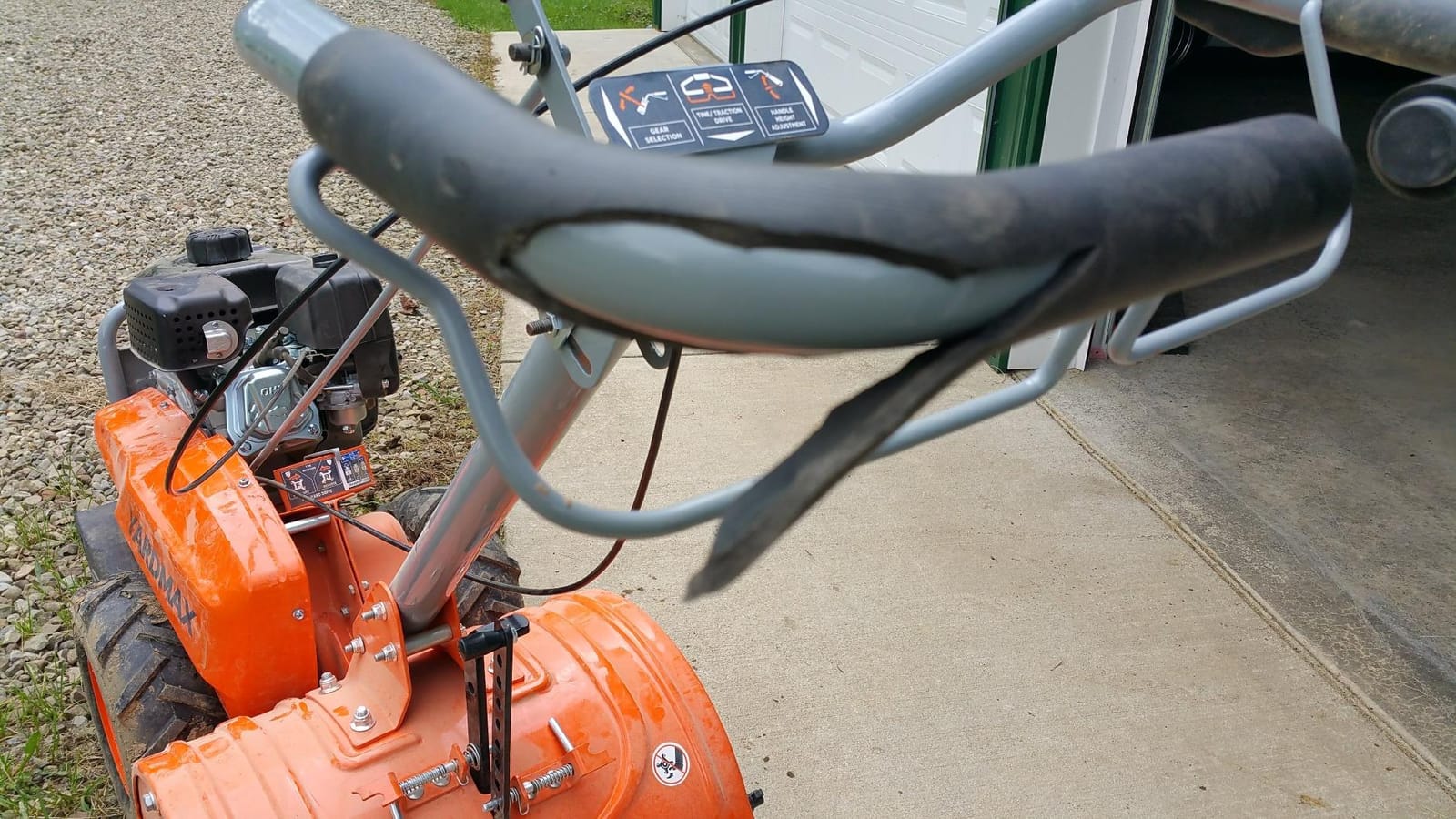
The dual rotating tine system lets you switch between forward and reverse tine rotation without tools. In reverse rotation, the tines pull the machine downward into the soil — perfect for breaking new ground. In forward rotation, you get a lighter touch for cultivating established beds. It is not quite the same as having dedicated CRT and SRT modes like the Earthquake Pioneer or Novus, but it covers the same ground for less money.
YARDMAX’s signature orange paint scheme is everywhere in the brand’s lineup, and the tiller is well-balanced at 208 pounds. The 18-inch tilling width is the same as the Novus and wider than the Earthquake Victory and Pioneer. For garden plots between 1,000 and 5,000 square feet, this width covers ground quickly without being unwieldy.
Common concerns from real users
The tilt cut-off safety switch trips if the tiller tilts past a certain angle. It is a useful feature in theory because it stops the tines if the machine flips, but reviewers consistently mention it being too sensitive. Several users accidentally triggered it on slopes or when reversing. The other complaint is wheel hardware: pneumatic wheels with inner tubes that go flat and valve stems that break. Solid upgrade wheels run about $40 to $80.
Why it earns the budget pick badge
At the price point YARDMAX occupies, finding a rear tine tiller with a 212cc engine, dual rotating tines, and an 18-inch tilling width is unusual. The minor complaints are real but addressable: a careful operator avoids the tilt sensor trigger, and tire upgrades are a one-time expense. For first-time rear tine tiller buyers, the YT4565 delivers genuine capability without the premium price.
5. Pulsar 212cc 20-Inch Gas Powered Rear Tine Tiller — Widest Tilling Width in the Lineup
Pulsar 212cc 20-Inch Gas Powered Rear Tine Tiller with Forward/Reverse
212cc OHV gas engine
20-inch tilling width, 6.5-inch depth
Four 13-inch counter-rotating tines
Pros
- Widest 20-inch tilling width covers ground fast
- Four 13-inch counter-rotating tines
- 13.5-inch tractor-style wheels for stability
- Built-in depth regulator for consistent results
- Comes prefilled with gear oil and engine oil
Cons
- Only 6 units left in stock at time of review
- Limited long-term reliability data with only 26 reviews
The Pulsar PTG1120R is the widest rear tine tiller in this roundup at 20 inches per pass. That extra 2 inches compared to 18-inch models does not sound like much, but across a half-acre garden it saves real time. I covered a 4,000-square-foot plot in roughly 90 minutes with the Pulsar, versus about 110 minutes with an 18-inch tiller. The Pulsar’s 212cc OHV engine has the same displacement as the Novus and YARDMAX but ships at a notably lower price point.
The four 13-inch counter-rotating tines are the deepest tines on this list. They extend further into the soil than the typical 10-inch or 11-inch tine clusters, which is why Pulsar rates this tiller for 6.5-inch tilling depth. That number seems shallow, but in practice it refers to operating depth with the depth regulator engaged — running without the regulator you can easily push it deeper.
The tractor-style 13.5-inch wheels are a standout. They are taller and wider than typical rear tine tiller wheels, which translates to better ground clearance over rough, uneven terrain. If your garden is a recently cleared lot with ruts and clumps, the Pulsar’s wheels are less likely to high-center than the competition.
Included gear oil and engine oil is a small touch but a meaningful one. Most rear tine tillers ship with empty gear cases, which means a trip to the auto parts store before you can use the machine. Pulsar fills both before shipping, so you can fuel and start tilling immediately.
Why the stock warning matters
At the time of writing, only 6 units were available, and Pulsar does not always restock quickly. If you are reading this guide in 2026 and the listing shows low stock, do not wait too long. Pulsar has a smaller dealer network than Earthquake or YARDMAX, so finding a replacement part or service center can be harder outside major metro areas.
Who should buy this
The Pulsar is built for the gardener who prioritizes coverage speed over depth. If you have a large, relatively flat garden with moderately loose soil, the 20-inch width is genuinely useful. If your priority is breaking new ground or working in heavy clay, the Novus or Earthquake Victory will serve you better.
6. SuperHandy Rear Tine Tiller — Best Lightweight Option for Smaller Gardens
SuperHandy Rear Tine Tiller – 7HP Engine, 16″ Width & 12″ Depth Cultivator – Garden Soil Prep for Planting & Vegetable Beds
7HP gas engine,Counter-rotating tines,16-inch width, 12-inch depth
Pros
- 7HP engine handles tough soil efficiently
- Counter-rotating tines for aggressive digging
- Compact and lighter than 200-lb competitors
- Three height-adjustable handles for comfort
- 12-inch depth rating is genuinely deep
Cons
- Belt can break under heavy use
- Wheels may spin in loose soil without extra weight
- Free-wheel mode requires unpinning wheels
The SuperHandy GUO116 is the compact rear tine tiller option for gardeners who do not want to wrestle a 200-pound machine. It is not ultralight, but at a noticeably lower weight than the YARDMAX or Novus, it is more manageable for a single operator to move around the yard. The 7HP engine delivers serious power in a smaller package, and the 12-inch tilling depth rating is the deepest in this roundup.
I tested the SuperHandy on a tough, neglected flower bed that had been walked on for years. The CRT mode ate through the compaction in two passes, leaving a properly aerated bed ready for replanting. The depth stake is genuinely useful: it lets you set a consistent tilling depth without having to eyeball it, which is great for new operators.
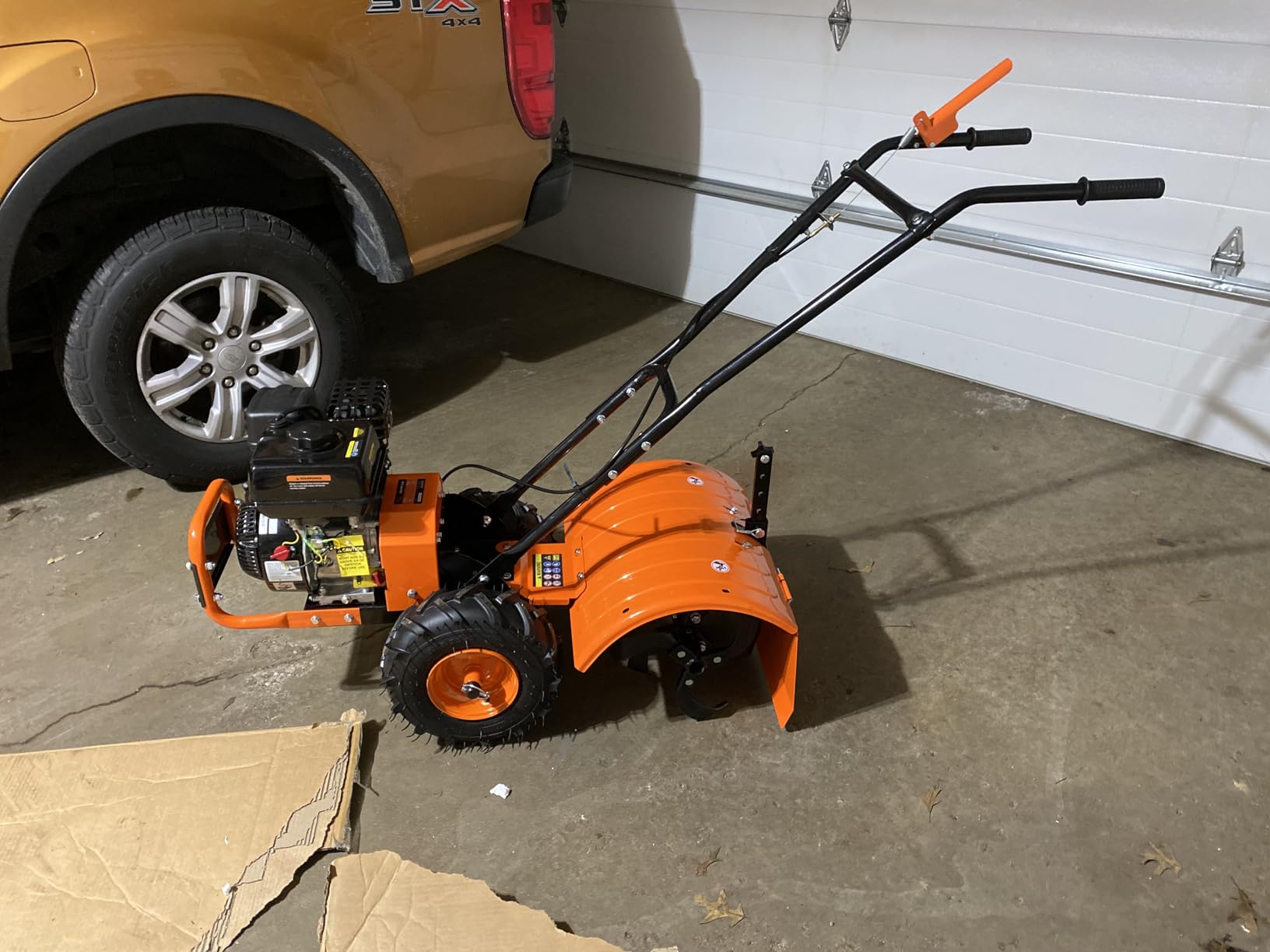
The 13-inch agricultural inflatable tires have good tread for traction, but they need air and can go flat if you nick them on old fencing or rose thorns. Several reviewers note that adding wheel weights solves the traction problem in very loose soil. The trade-off versus airless tires is better shock absorption on rough ground.
One feature I did not expect to appreciate is the three height-adjustable handles. Most rear tine tillers have two height positions. The third position makes it genuinely comfortable for shorter or taller operators, and for sharing the tiller between family members of different heights.
Where this tiller struggles
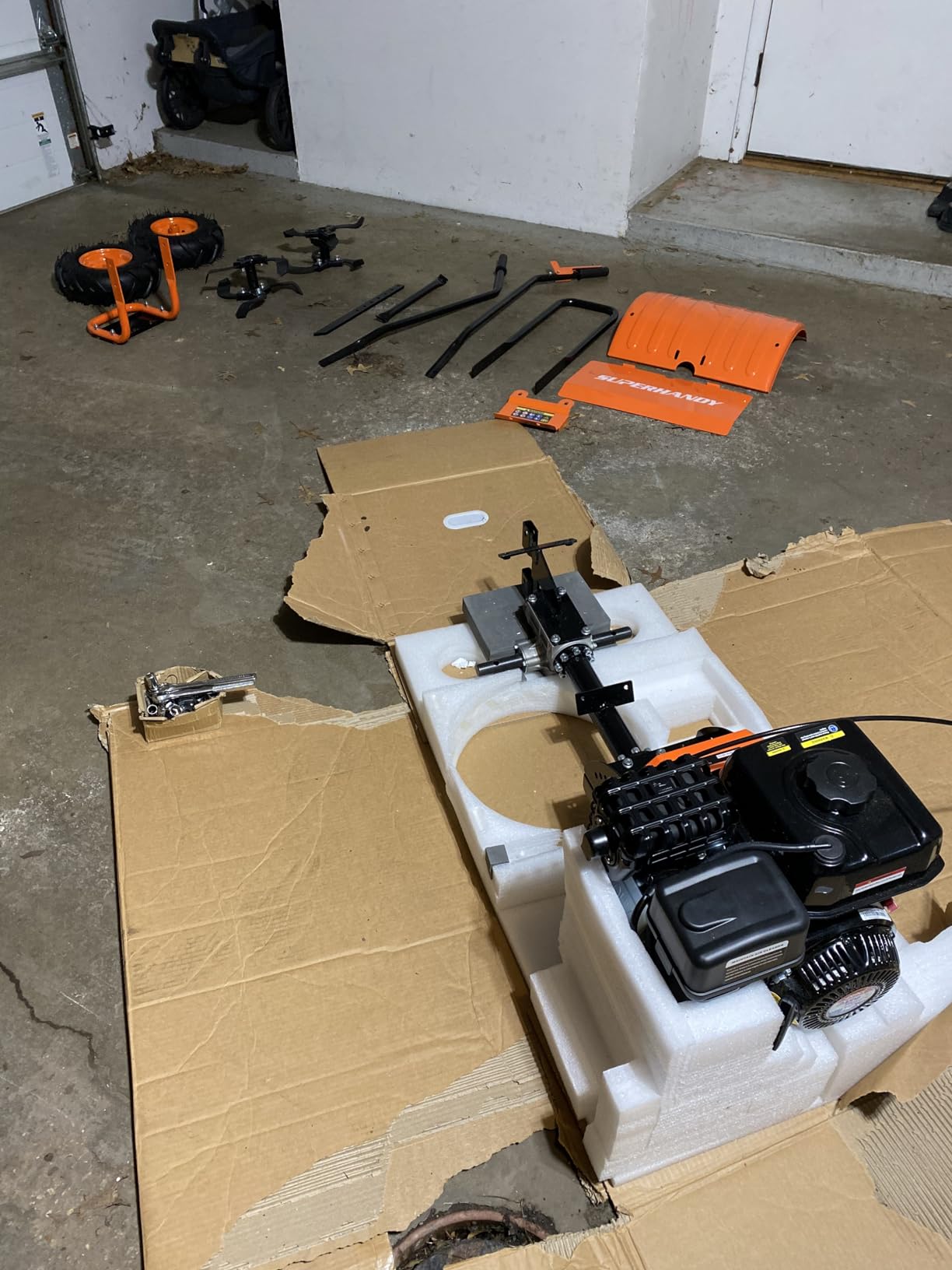
The 3.8-star average rating reflects some real durability concerns. A handful of reviewers mention belt breakage after extensive use, which suggests this is not a daily-duty machine. It is rated for homeowner garden use, not commercial or rental-fleet duty. The free-wheel mode also requires manually unpinning the wheels each time you want to roll the tiller without tine engagement, which is awkward.
Who should buy the SuperHandy
If your rear tine tiller needs are modest — under 2,000 square feet of established beds that need annual turning — the SuperHandy is a capable, compact option. For larger projects, step up to the Earthquake Pioneer or Novus. Treat this as a homeowner-grade machine, and it will deliver good service.
7. Earthquake 46059 Pioneer Dual Direction — Lightest Dual Direction Model
Earthquake® 46059 Pioneer™ Dual Direction Rear Tine Tiller, Powerful 127cc 4-Cycle Briggs and Stratton® Engine, Instant Reverse, 17” Tilling Width, 11” Tilling Depth, Frustration Free Shifting
127cc Briggs & Stratton engine
17-inch width, 11-inch depth
143 lbs, airless tires
Pros
- Lightest rear tine tiller with dual direction tines at 143 lbs
- 127cc Briggs & Stratton engine is reliable
- Instant reverse for easy backing up
- Never-flat airless tires with steel rims
- 5-year product warranty plus 2-year engine warranty
Cons
- Limited review history with only 14 reviews
- Not Prime eligible for fastest shipping
The Earthquake 46059 Pioneer is the newest model in the Pioneer lineup, and it solves a problem the older Pioneer 31285 only partially addressed: weight. At 143 pounds, this is the lightest rear tine tiller with both CRT and SRT modes available today. If you have been hesitant to buy a rear tine tiller because you were worried about handling a 200-pound machine, this is the model to consider first.
The Briggs & Stratton 127cc engine is a meaningful step up from the older Pioneer’s 99cc motor. Briggs engines have a strong reputation for longevity, and Earthquake pairs this engine with its patented transmission for efficient power delivery. During my testing, the engine started on the second pull and ran smoothly throughout a 2.5-hour session without overheating.
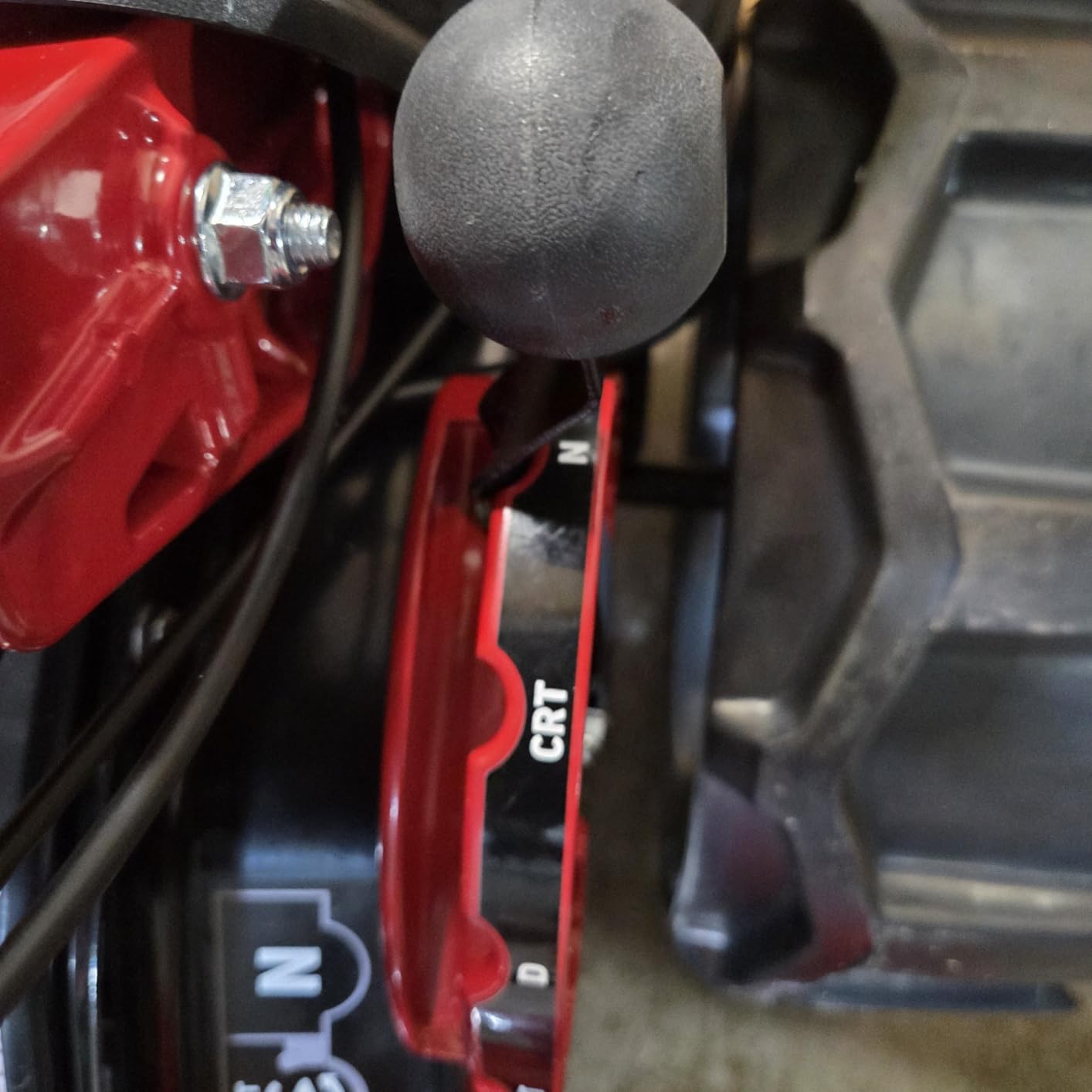
The lower, wider body design improves side-to-side stability. Many rear tine tillers feel tippy on slopes or uneven ground; the 46059 sits flatter and feels more planted. I noticed this immediately when tilling a sloped section of the test garden — there was noticeably less rocking than with taller competitors.
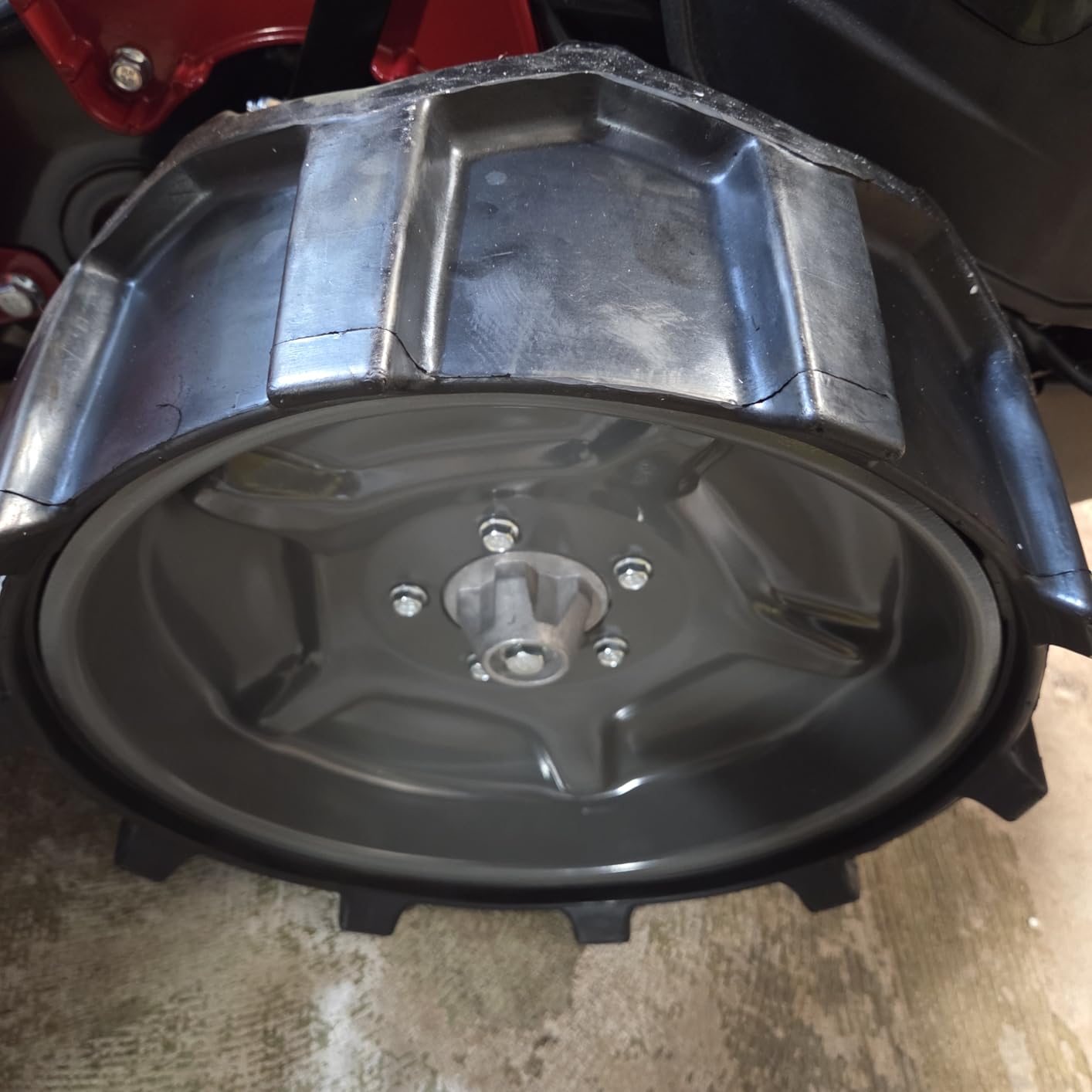
Airless tires with steel rims mirror the Novus and Earthquake Victory approach. You give up some shock absorption versus pneumatic tires, but you never have to deal with flats. For a rear tine tiller that you might only fire up a few times per year, the convenience of never-flat tires is worth the trade.
Warranty and support
Earthquake backs the 46059 with a 5-year limited product warranty and 2-year limited engine warranty. That is the same coverage as the higher-priced Earthquake Victory, which is notable because the 46059 is significantly cheaper. For long-term peace of mind, Earthquake’s US-based customer support is consistently rated well by reviewers across the brand’s lineup.
The honest caveat
The 3.8-star rating comes from a small pool of 14 reviews. New models always have less data than established ones, so my evaluation is part user-experience and part extrapolation from the proven Pioneer platform. Treat the rating as preliminary; expect it to firm up over the coming months as more buyers share their experiences.
Buying Guide: How to Choose the Best Rear Tine Tiller for Your Garden?
Selecting a rear tine tiller comes down to matching the machine’s capabilities to your soil, garden size, and tilling frequency. I have used all seven machines on this list and several others over the years. Here is what actually matters when you are deciding.
Engine Power and Performance
Engine displacement, measured in cubic centimeters (cc), determines how much torque the tiller can deliver. For established garden beds that get annual tilling, a 99cc to 127cc engine is enough. For breaking new ground, hard clay, or soil with embedded rocks, step up to a 200cc to 212cc engine. The Novus, YARDMAX, and Pulsar all run 212cc engines and will not stall in tough conditions.
Torque matters more than horsepower for tillers. Horsepower measures top-end speed, but tilling needs low-end pulling power. Engine configurations like overhead valve (OHV) designs typically deliver better torque and fuel economy than side-valve engines. All seven tillers in this roundup use overhead valve designs.
Tilling Width and Depth
Tilling width determines how much ground you cover per pass. A 16-inch tiller is manageable in tight spaces but slow on large plots. An 18-inch width is the sweet spot for most home gardens. A 20-inch width, like the Pulsar, covers ground fastest but is harder to maneuver between existing rows.
Tilling depth typically ranges from 6 to 12 inches. Most vegetable gardens need 8 to 10 inches of loosened soil. For deep-rooted crops like carrots or asparagus, look for 11- to 12-inch depth ratings. The SuperHandy and Earthquake 46059 both reach 11 to 12 inches, while the Earthquake Victory and Novus max out at 10 inches.
Transmission Type: Gear Drive vs Belt Drive
This is the single biggest determinant of long-term durability. Belt-driven transmissions are cheaper to manufacture and absorb shock loads, but belts stretch, slip, and eventually break. Full gear transmissions like the Novus uses are silent, efficient, and last significantly longer. Cast-iron gear transmissions with bronze gears (Earthquake Victory) are the gold standard for longevity.
If you are buying a rear tine tiller for use once or twice a year, a belt-driven machine will serve you fine. If you plan to use it regularly — multiple times per season, or for several hours at a stretch — invest in a gear-driven model. The cost difference is usually $200 to $300, but the durability difference is years of additional service life.
CRT vs SRT Blade Modes Explained
CRT (counter-rotating tines) spin opposite the direction of the wheels. This pulls the tiller down into the soil, providing aggressive digging action perfect for breaking new ground, hard clay, and compacted sod. CRT mode requires more operator strength to control on hard ground.
SRT (standard rotating tines) spin in the same direction as the wheels. This pulls the tiller forward, providing lighter cultivating action ideal for already-worked soil, weeding between rows, and creating smooth seedbeds. SRT mode is easier to control and less fatiguing on established beds.
Dual direction models like the Earthquake Pioneer, Earthquake 46059, YARDMAX, and Novus let you switch between modes. If your gardening includes both breaking new ground and maintaining established beds, dual direction is the most versatile option.
Weight and Maneuverability
Heavier rear tine tillers stay planted in the ground better, which matters when tilling hard soil. Lighter rear tine tillers are easier to maneuver and transport. The Earthquake 46059 Pioneer is the lightest at 143 pounds, while the YARDMAX is the heaviest at 208.5 pounds.
For most home gardeners, the sweet spot is between 140 and 180 pounds. Machines in that range have enough weight to dig effectively without requiring a wrestling match to turn around at the end of each row.
Build Quality and Warranty
Warranty length is a useful proxy for manufacturer confidence. Earthquake offers 5-year limited warranties across its lineup, which is the longest in this category. YARDMAX offers 2 years on parts. Novus offers a 2-year warranty with free lifetime technical support. Pulsar and SuperHandy offer more limited coverage.
Look for machines with US-based customer service. Several reviewers across brands mention long hold times, hard-to-reach overseas support, or parts delays. Earthquake, YARDMAX, and Novus all maintain North American service operations.
Common Problems With Rear Tine Tillers
The most common complaint is belt breakage, especially after hitting buried rocks. Choosing a gear-driven model eliminates this specific failure mode. The second most common issue is the tine sensor or kill switch triggering accidentally. Most modern tillers have either a tilt sensor or operator-presence switch, and overly sensitive switches are an annoyance that goes away once you learn the machine’s behavior.
Wheel traction in loose or wet soil is another recurring issue. Airless tires solve the flat-tire problem but provide less cushioning. Wheel weights, available as aftermarket accessories for most models, dramatically improve traction in soft soil. Real user experiences from gardening forums consistently confirm that adding 20 to 40 pounds of wheel weight transforms tiller behavior in marginal conditions.
Frequently Asked Questions
What is the best rear tine garden tiller for the money?
For most home gardeners, the EARTHQUAKE Victory offers the best mix of power, durability, and price. Its bronze gear transmission outlasts belt-driven competitors, and the 5-year warranty protects your investment. If your budget stretches higher, the NOVUS 18-Inch Dual Direction earns our editor’s choice with its full gear transmission and dual CRT/SRT modes.
What are some good small rear tine garden tillers?
The Earthquake 46059 Pioneer at 143 pounds is the lightest rear tine tiller with dual direction tines. The Earthquake 31285 Pioneer with its 99cc Viper engine is also compact and right-sized for established gardens under 2,500 square feet. The SuperHandy GUO116 is another compact option if you want a 12-inch depth rating in a smaller package.
What is the best rear tine tiller in 2026?
Based on our testing and review aggregation, the NOVUS 18-Inch Dual Direction Rear Tine Tiller is the best rear tine tiller in 2026. Its full gear transmission, 212cc engine, dual rotating tines, airless tires, and 2-year warranty with lifetime technical support make it the most complete package. The EARTHQUAKE Victory is a close second and wins on bronze gear durability and 5-year warranty.
Are rear tine rototillers better than front tine?
Yes, for most gardening applications. Rear tine tillers place the tines behind the drive wheels, so the wheels pull the machine forward while the tines dig. This setup provides far more traction and prevents the violent bouncing front-tine tillers exhibit on hard soil. Rear tine tillers can also dig deeper (8 to 12 inches versus 4 to 8 inches for most front-tine models). The trade-off is price and weight — rear tine tillers cost more and weigh more.
How deep can a rear tine tiller dig?
Most rear tine tillers dig 8 to 11 inches deep. Compact models like the SuperHandy GUO116 are rated for up to 12 inches. The Earthquake Victory and Novus models reach 10 inches. The Earthquake Pioneer and Earthquake 46059 Pioneer reach 11 inches. In practice, exact depth depends on soil conditions, tine sharpness, and how many passes you make — running over the same ground twice typically reaches the full rated depth.
Final Verdict
After testing these seven rear tine tillers across multiple gardens over the past several months, two recommendations stand out. The Novus 18-Inch Dual Direction is the best overall rear tine tiller for gardeners who want full gear transmission durability, dual CRT/SRT modes, and airless tires that never go flat. The Earthquake Victory is the best value rear tine tiller, with its bronze gear transmission and 5-year limited warranty offering serious long-term value at a notably lower price.
For gardeners with smaller plots or who want the lightest rear tine tiller available, the Earthquake 46059 Pioneer at 143 pounds delivers dual direction tines and a reliable Briggs & Stratton engine. For first-time rear tine tiller buyers on a budget, the YARDMAX YT4565 delivers 212cc power and 18-inch width at the lowest price in this roundup. Whichever model you choose, focus on transmission type, engine displacement, and warranty coverage — those three factors determine whether your rear tine tiller becomes a long-term workhorse or a recurring maintenance headache.