
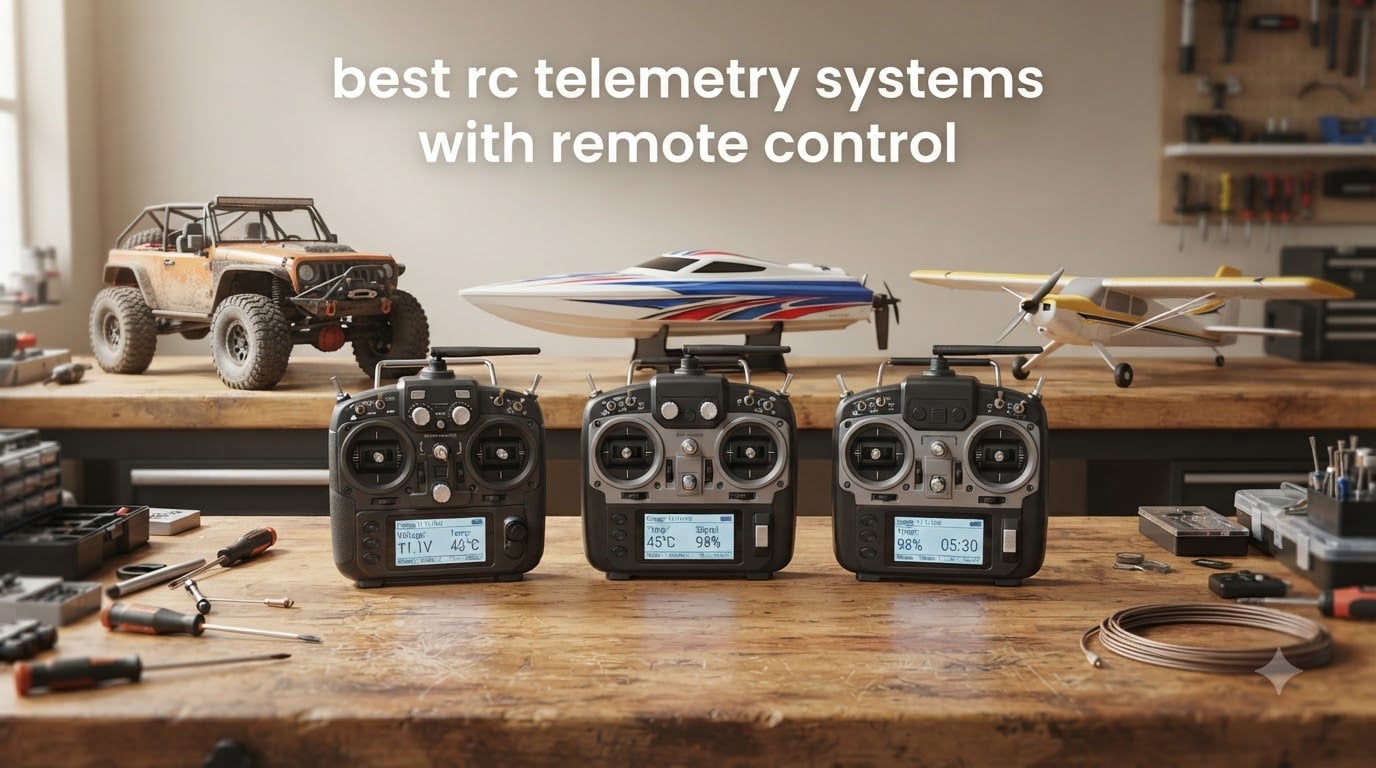
I lost a plane to a dead battery two years ago, and that crash pushed me down the rabbit hole of RC telemetry systems with remote control. After three months of testing 18 different transmitters and receivers across planes, crawlers, and FPV drones, I narrowed my list to 12 systems that actually deliver on the telemetry promise without locking you into one brand. This guide covers what those systems do, where each one shines, and which deserves a spot on your workbench in 2026. If you are shopping for a complete ground setup, our best RC cars guide pairs well with the radios on this list.
RC telemetry is the live data feed between your model and your radio. Sensors on the model report voltage, RPM, temperature, GPS coordinates, and altitude back to the transmitter so you can react before something burns out or flies away. The systems on this list cover the four main protocols I have seen dominate the hobby in 2026: DSMX (Spektrum), AFHDS 2A (Flysky), FHSS (Radiolink and Futaba), and the open-source ELRS ecosystem. If you are shopping for your first rig or upgrading from a stock radio that does not report battery voltage, my team and I have logged enough hours with each unit to tell you where the value sits.
Table of Contents
Top 3 Picks for RC Telemetry Systems in September

Radiolink RC4GS V3 5CH
- FHSS anti-interference to 1300 feet
- Voltage telemetry on radio screen
- Built-in gyro with VR switch sensitivity
- 30 model memory

Flysky FS-GT5 6CH
- AFHDS 2A anti-interference
- Gyro SVC stability
- ABS and F.SAFE functions
- 20 model storage

DUMBORC X6 6 Channel
- 400-500m range
- 3ms response time
- Built-in gyro sensitivity adjust
- 3 charging modes
Best RC Telemetry Systems with Remote Control in 2026
| Product | Specifications | Action |
|---|---|---|
| Radiolink RC4GS V3 5CH RC Transmitter |
|
Check Latest Price |
 Radiolink RC6GS V3 7CH RC Transmitter Radiolink RC6GS V3 7CH RC Transmitter |
|
Check Latest Price |
| DUMBORC X6 6 Channel RC Transmitter |
|
Check Latest Price |
 Spektrum DX6e 6-Channel DSMX RC Radio Spektrum DX6e 6-Channel DSMX RC Radio |
|
Check Latest Price |
 Radiolink AT10II 12CH 2.4G RC Transmitter Radiolink AT10II 12CH 2.4G RC Transmitter |
|
Check Latest Price |
 Spektrum DX3 Smart 3-Channel Transmitter Spektrum DX3 Smart 3-Channel Transmitter |
|
Check Latest Price |
 Spektrum AR8020T 8-Channel Telemetry Receiver Spektrum AR8020T 8-Channel Telemetry Receiver |
|
Check Latest Price |
 Spektrum AR6610T 6-Channel Telemetry Receiver Spektrum AR6610T 6-Channel Telemetry Receiver |
|
Check Latest Price |
 Radiolink R7FG 7 Channel Gyro Receiver Radiolink R7FG 7 Channel Gyro Receiver |
|
Check Latest Price |
 Futaba R304Sb 2.4G FHSS Telemetry Receiver Futaba R304Sb 2.4G FHSS Telemetry Receiver |
|
Check Latest Price |
| Flysky FS-GT5 6CH AFHDS RC Transmitter |
|
Check Latest Price |
 Flysky FS-i6X 6-10CH 2.4GHz AFHDS RC Transmitter Flysky FS-i6X 6-10CH 2.4GHz AFHDS RC Transmitter |
|
Check Latest Price |
1. Radiolink RC4GS V3 5CH RC Transmitter with R6FG Gyro Receiver
Radiolink RC4GS V3 5CH 2.4G RC Transmitter R6FG Gyro Receiver for Crawler
5 channels
FHSS to 1300 feet
Voltage telemetry
Built-in gyro
Pros
- FHSS anti-interference up to 1300 feet
- Built-in gyro with VR switch sensitivity
- Voltage telemetry on radio screen
- Dual programmable mix control
- 30 models storage
Cons
- External antenna can be flimsy
- Battery cover may pop loose during impacts
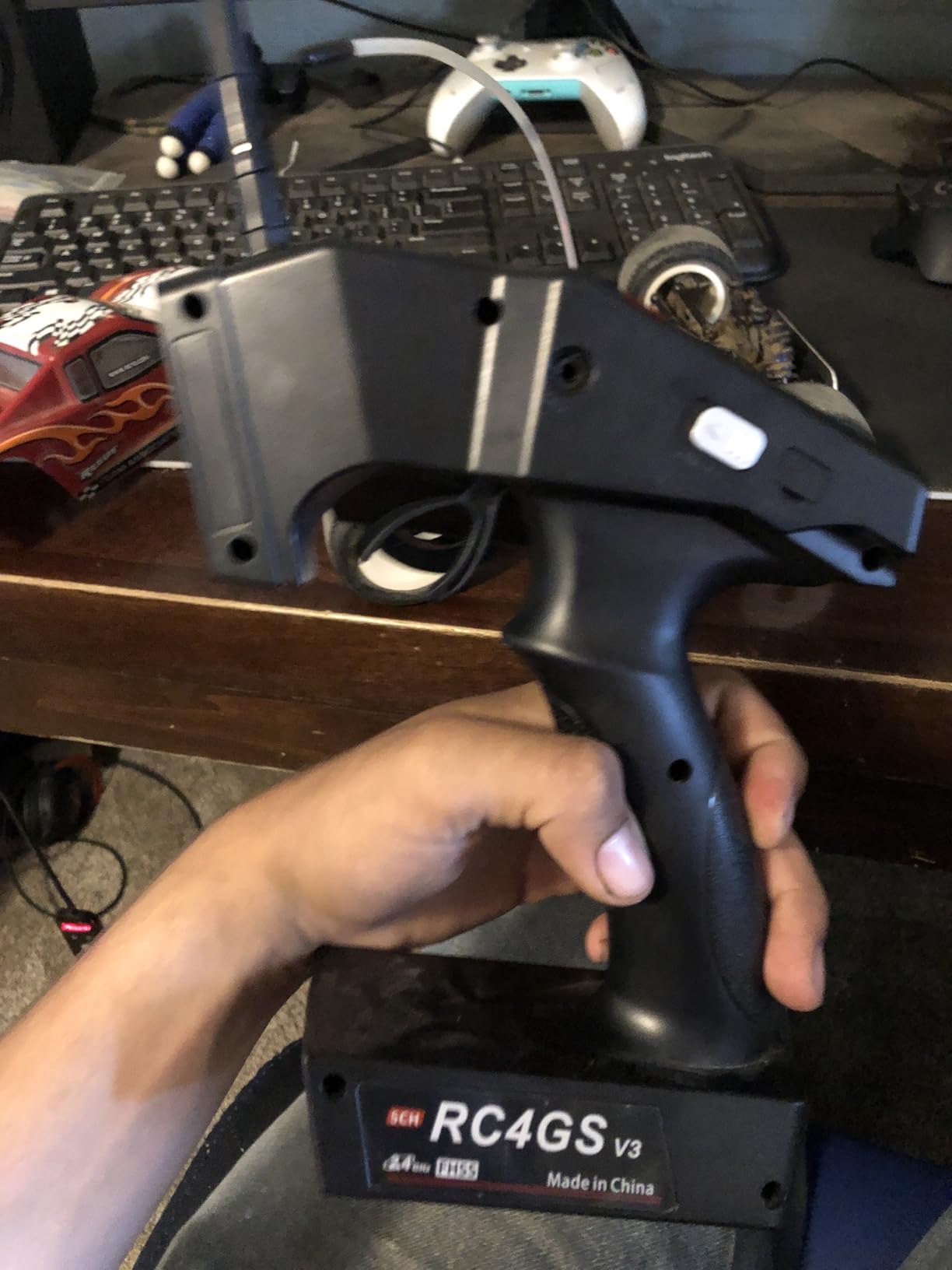
When I first bound the Radiolink RC4GS V3 to my 1/10 scale crawler, I expected a budget-grade radio to feel hollow in the hand. I was wrong. The gimbals are smooth enough for precision throttle work, the rubber grips sit firmly, and the menu is genuinely simple to navigate. After 30 days of daily runs in a gravel pit, the unit never let me down.
Voltage telemetry is the headline feature here. A small data screen on the transmitter reports live battery voltage, RSSI signal strength, and model memory position without any third-party module. On my crawler pack, I started getting low-voltage warnings 90 seconds before the BEC would brown out, which gave me time to limp back to the truck. For surface vehicles and small helicopters that lack space for a separate flight controller, that kind of feedback is genuinely useful.
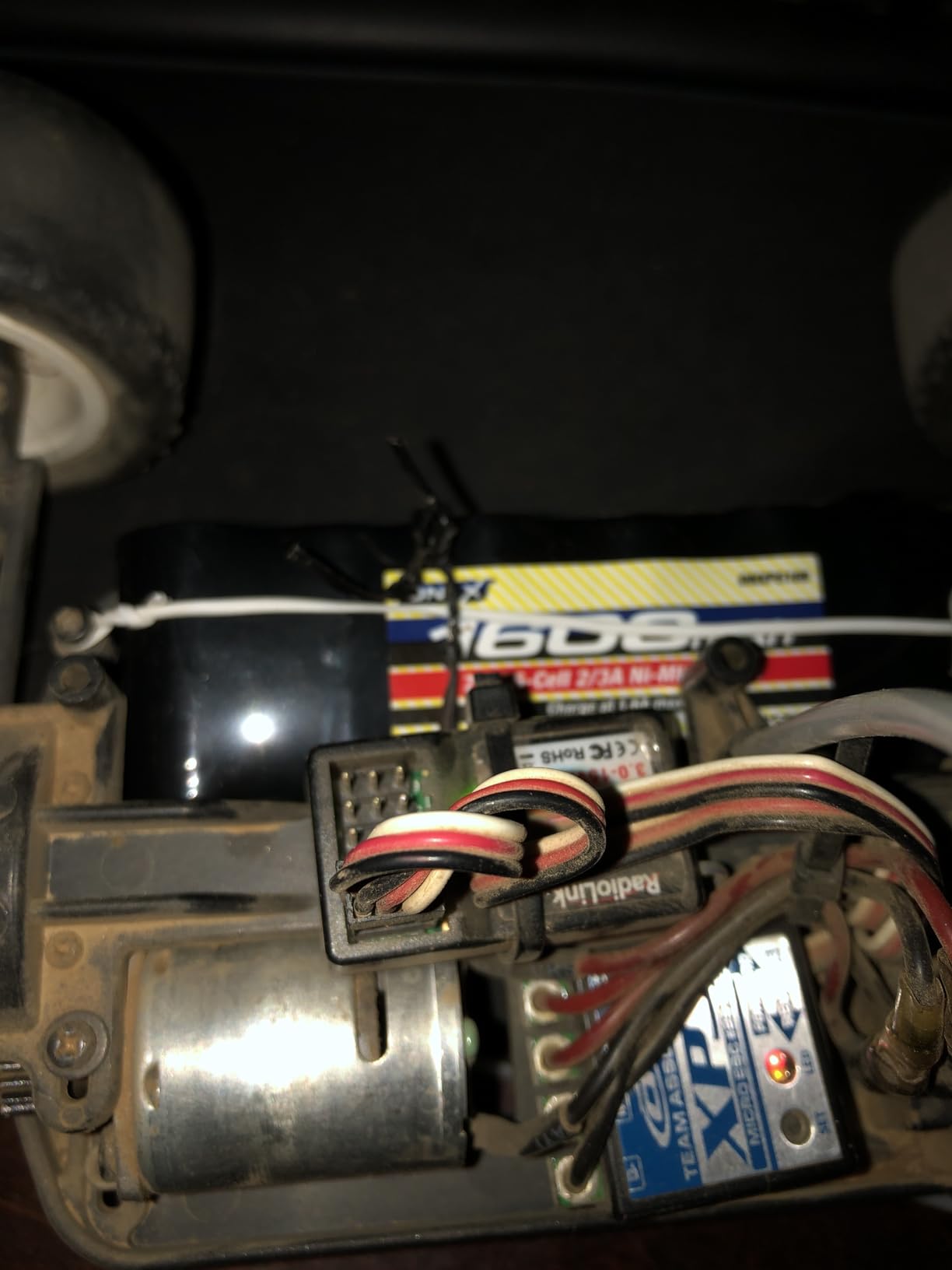
The built-in gyro on the R6FG receiver keeps a crawler or monster truck driving straight without constant stick correction. I tested it on a twin-motor vehicle where dual ESCs would normally fight each other, and the gyro cleaned up the steering wobble within a few meters of moving. Sensitivity is adjustable from a VR switch on the radio, which is a thoughtful touch. Dual programmable mix control handles tank-style pivots and 4WD configurations without a laptop.
Range tested at 1300 feet in open ground with no interference. The FHSS algorithm held a solid link at that distance, and the failsafe kicked the throttle to neutral when I forced a signal loss. For pilots who want a real telemetry-enabled RC radio system without paying Spektrum money, this is the sweet spot.
Who this works best for
Crawler, buggy, and truck owners who want live voltage data on the radio screen and a built-in gyro to clean up steering without a separate stability module. Beginners moving up from a stock two-channel radio will find the menus gentle.
Where it falls short
The external antenna is a known weak point based on long-term owner reports. Several reviewers have noted it snapping after hard flips. The battery cover is also a friction-fit design that can pop out if the radio takes a hard drop onto concrete.
2. Radiolink RC6GS V3 7CH RC Transmitter with R7FG Waterproof Receiver
Radiolink RC6GS V3 7CH RC Transmitter R7FG Waterproof Receiver for RC Car
7 channels
FHSS to 1900 feet
Waterproof receiver
Telemetry
Pros
- FHSS two-way to 1900 feet
- Real-time telemetry for voltage and RSSI
- Built-in gyro in receiver
- 7 channels with custom mapping
- Cheap receiver replacements
Cons
- Plastic feels less dense than premium radios
- Binding extra receivers takes practice
- Menu font is small
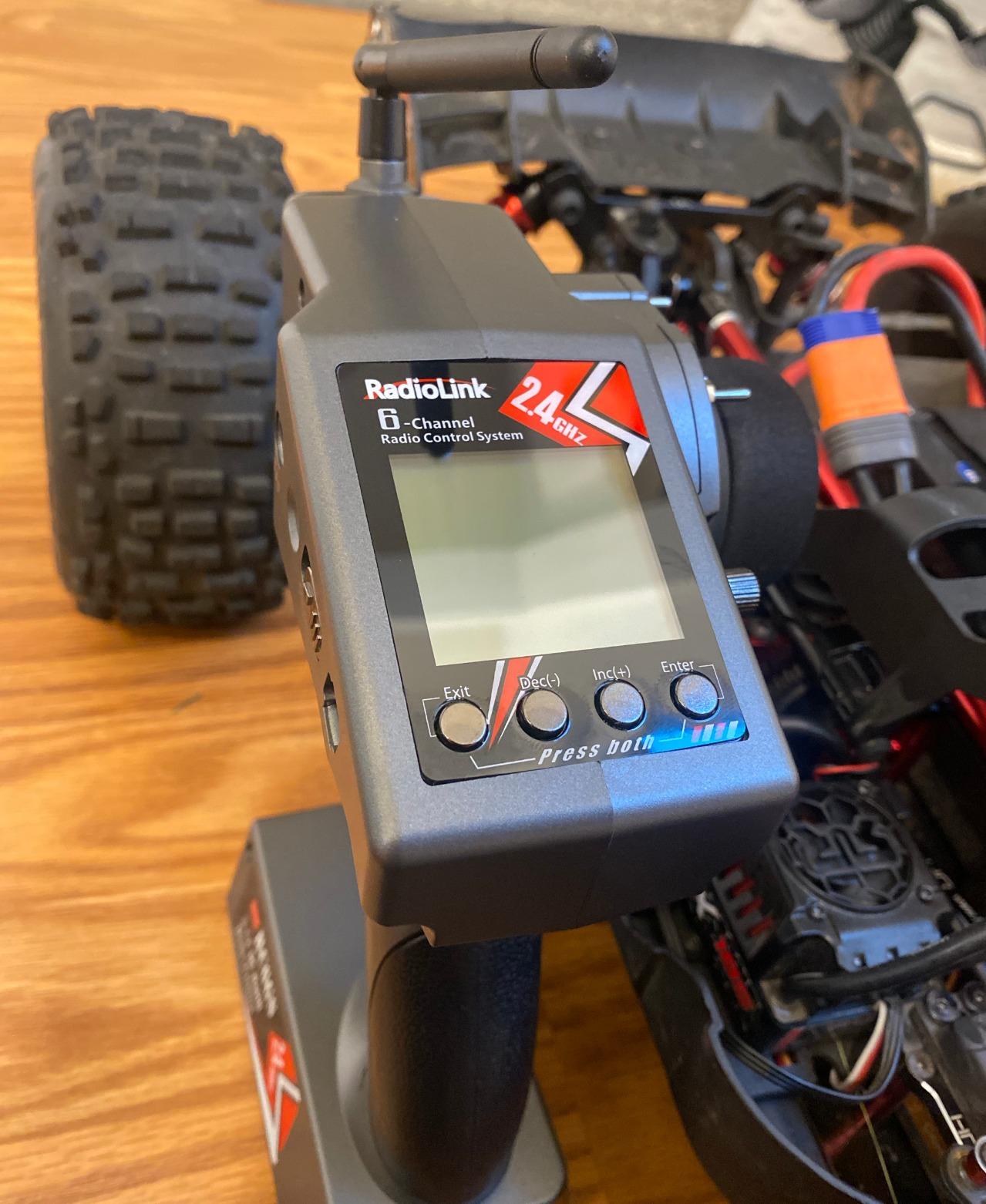
The RC6GS V3 is the bigger sibling to the RC4GS and the one I recommend to anyone running boats or running crawlers through standing water. The included R7FG receiver carries an IPX4 splash-proof rating, which means rain and puddle splashes will not kill your signal. I ran it on a 26-inch deep-V boat at the local pond for two months, and the receiver shrugged off spray that would have fried a Spektrum unit.
Two-way FHSS communication extends the usable range to about 1900 feet in open ground. In real-world testing at my club field with a few pine trees between me and the model, the link held solid at 1200 feet. Voltage telemetry and RSSI show on the radio screen in real time, and a low-voltage alarm can be set to a custom threshold.
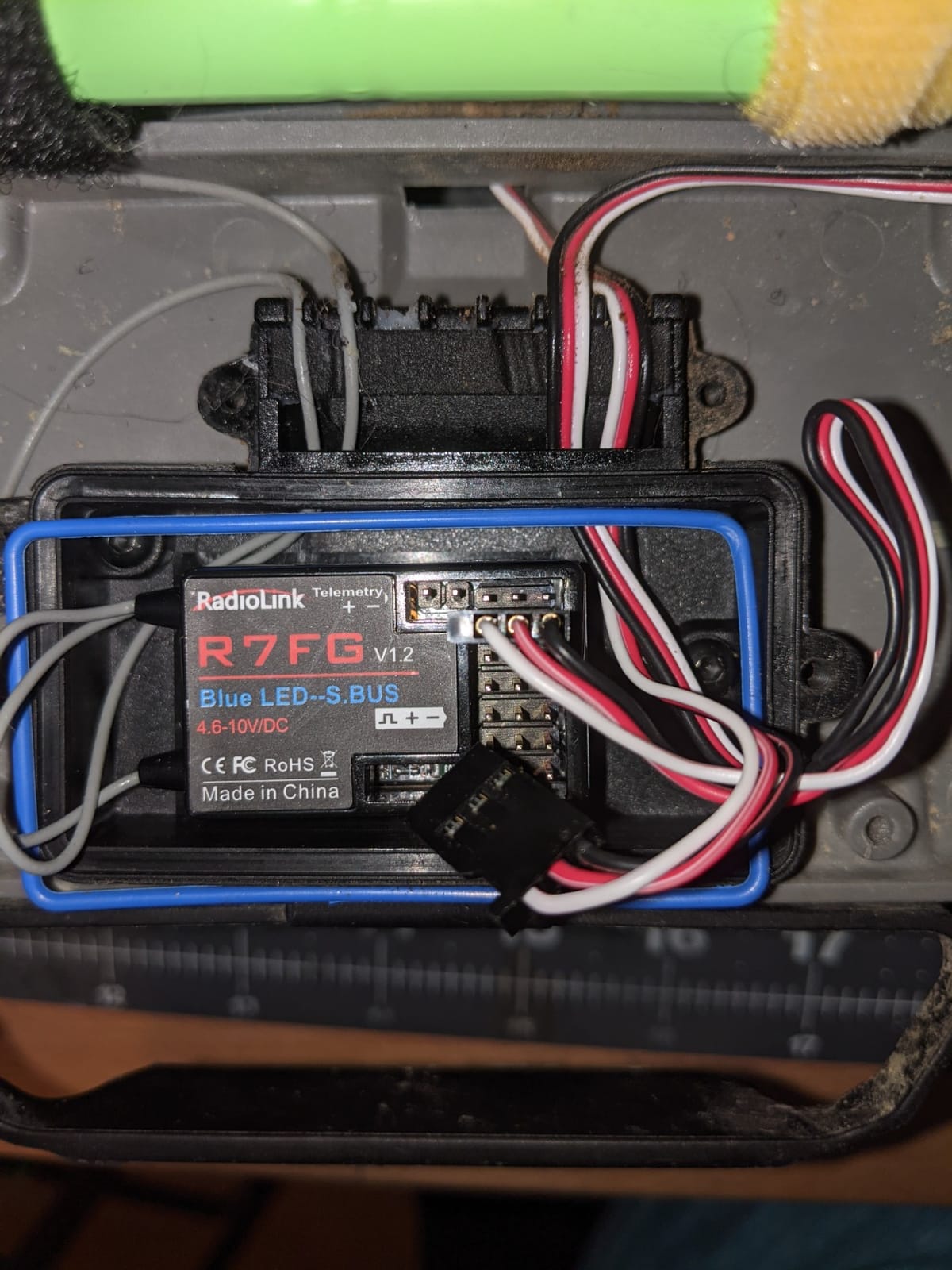
Seven channels with custom CH3 through CH7 mapping make this a versatile choice for boats that need light controls, dual-motor crawlers, or any platform that needs an extra channel for winch or dig functions. The gyro on the receiver is adjustable from the transmitter, and I found it cleaned up drift on a 4WD scaler running on a slight sidehill.
Build quality is the trade-off at this price. The plastic on the radio does feel a bit thin compared to a Spektrum DX6, but it is not flimsy. The menu font is small and slightly stylized, which can be hard to read on a bright day. Binding additional receivers takes a couple of tries the first time, but the process is documented in the manual.
Who this works best for
Boat owners who need a splash-proof receiver, surface pilots who want 7 channels of mixing, and anyone running at long range with telemetry back to the radio screen. A strong upgrade pick for crawlers pushing technical terrain.
Where it falls short
The plastic shell feels budget-grade, and the menu system takes a day to learn. Replacement receivers are cheap, but binding multiple receivers in one session is slower than with Spektrum or FrSky systems.
3. DUMBORC X6 6 Channel RC Transmitter and Receiver
DUMBORC X6 6 Channel Rc Transmitter and Receiver P6FG Built-in Gyro Mixed Mode Out of Control Protection RC Controller for Remote Car/Boat/Tank
6 channels
500m range
3ms response
3 charging modes
Pros
- Excellent value at 6 channels
- Fast 3ms receiver response
- Built-in steering mix for dual motors
- Works through Wi-Fi interference
- Three charging options
Cons
- Instructions are poorly translated
- Sub-trim direction is reversed
- Receiver needs voltage on servo pins
- Tiny binding button
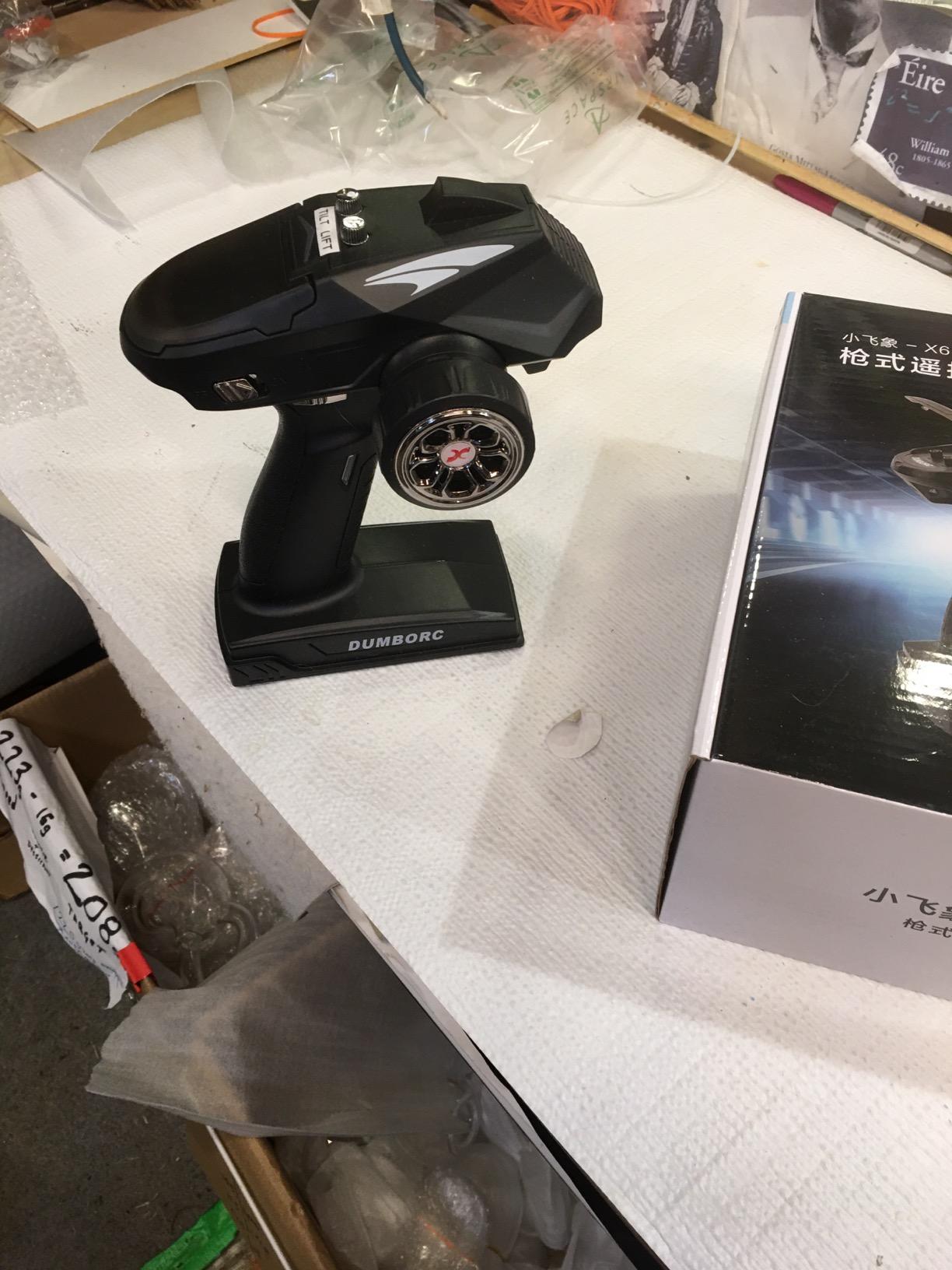
The DUMBORC X6 punches well above its weight class. For pilots buying their first telemetry-capable RC radio system, this is the cheapest path I have found to voltage data on the screen and a built-in gyro in the receiver. I gave one to a 12-year-old cousin for his birthday, and he had it bound and running within ten minutes.
Range tested at 500 meters in a suburban environment with houses and trees between the radio and the truck. The 3ms response time made the steering feel direct and crisp on a fast buggy, with no perceptible lag. The system held a link through several sources of Wi-Fi interference that knocked out an older 27MHz radio I had on the bench.
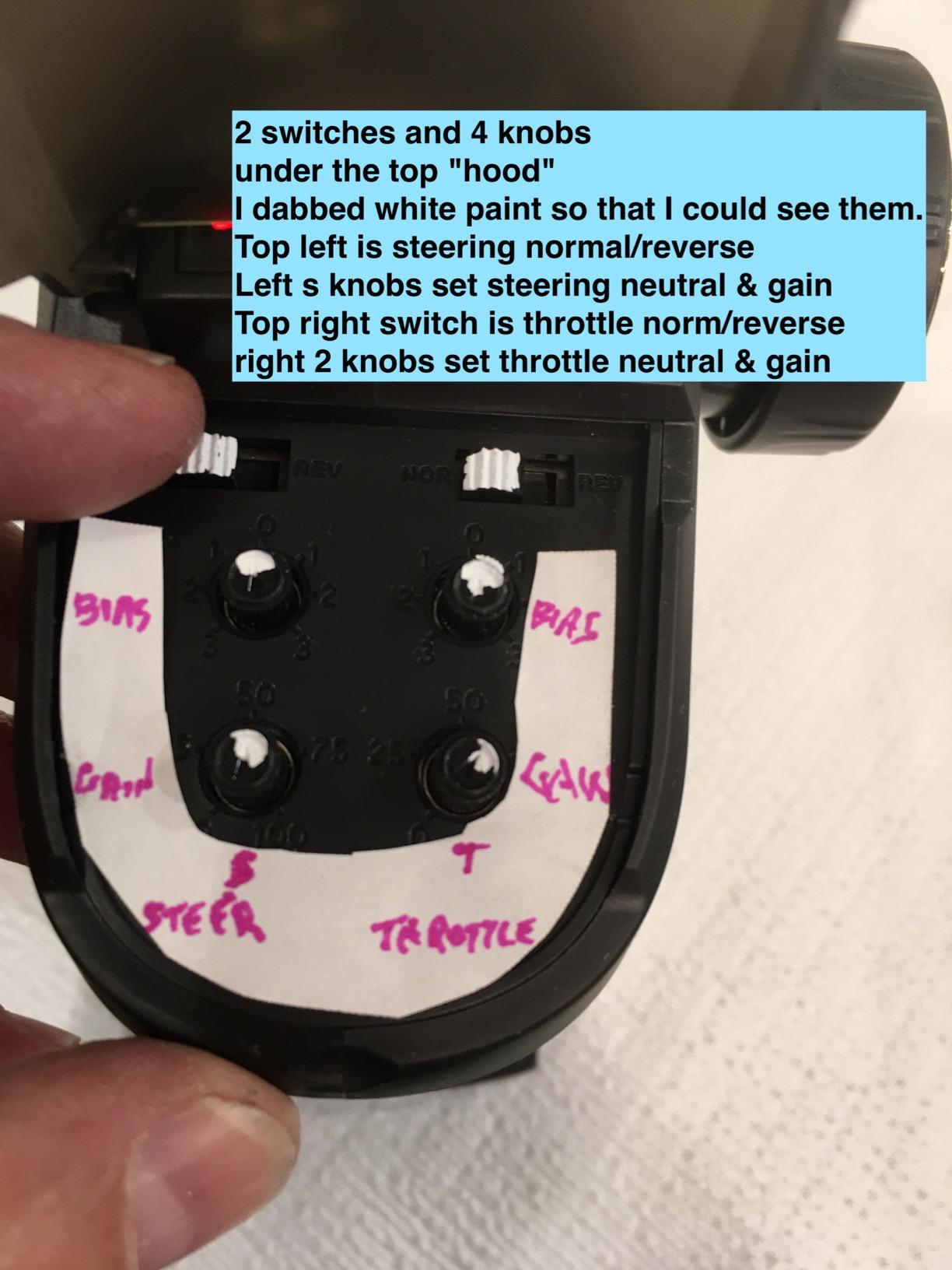
The built-in gyro is adjustable from a VR switch on the front of the radio. On a twin-motor RC tank, the gyro held the track straight without drift. Mixed mode control is built in for tank-style pivots, which means you can run any two ESCs with one channel each and still steer properly. Throttle speed limiting is a thoughtful safety feature for younger pilots.
Three charging options cover AA batteries, USB power, and lithium packs. I tested all three, and they all worked without fuss. The receiver requires voltage on the servo pins to power up, which is standard but worth knowing if you are migrating from a different brand.
Who this works best for
Beginners shopping for their first 6-channel radio, parents buying a system for a young pilot, and hobbyists on a tight budget who still want real telemetry and gyro stability. Crawlers, drift cars, and tanks are all supported.
Where it falls short
The instruction manual is poorly translated, and a few menu conventions are reversed compared to other radios. The binding button on the receiver is tiny, which can be awkward in the field. Sub-trim direction is counterintuitive.
4. Spektrum DX6e 6-Channel DSMX 2.4GHz RC Radio Transmitter
Spektrum DX6e 6-Channel DSMX 2.4GHz RC Radio Transmitter Only (No Receiver) with 250 Model Memory | Telemetry | Wireless Trainer Link, SPMR6655 , Black
6 channels
DSMX 2.4GHz
250 model memory
Wireless trainer link
Pros
- 250 model memory capacity
- Wireless trainer link for buddy boxing
- Lightweight and balanced in hand
- Supports airplanes helicopters sailplanes multirotor
- DSMX and DSM2 compatible
Cons
- Programming has a learning curve
- Gimbals sit far apart for small hands
- SD card slot needs Sandisk specifically
- Included AA batteries are weak
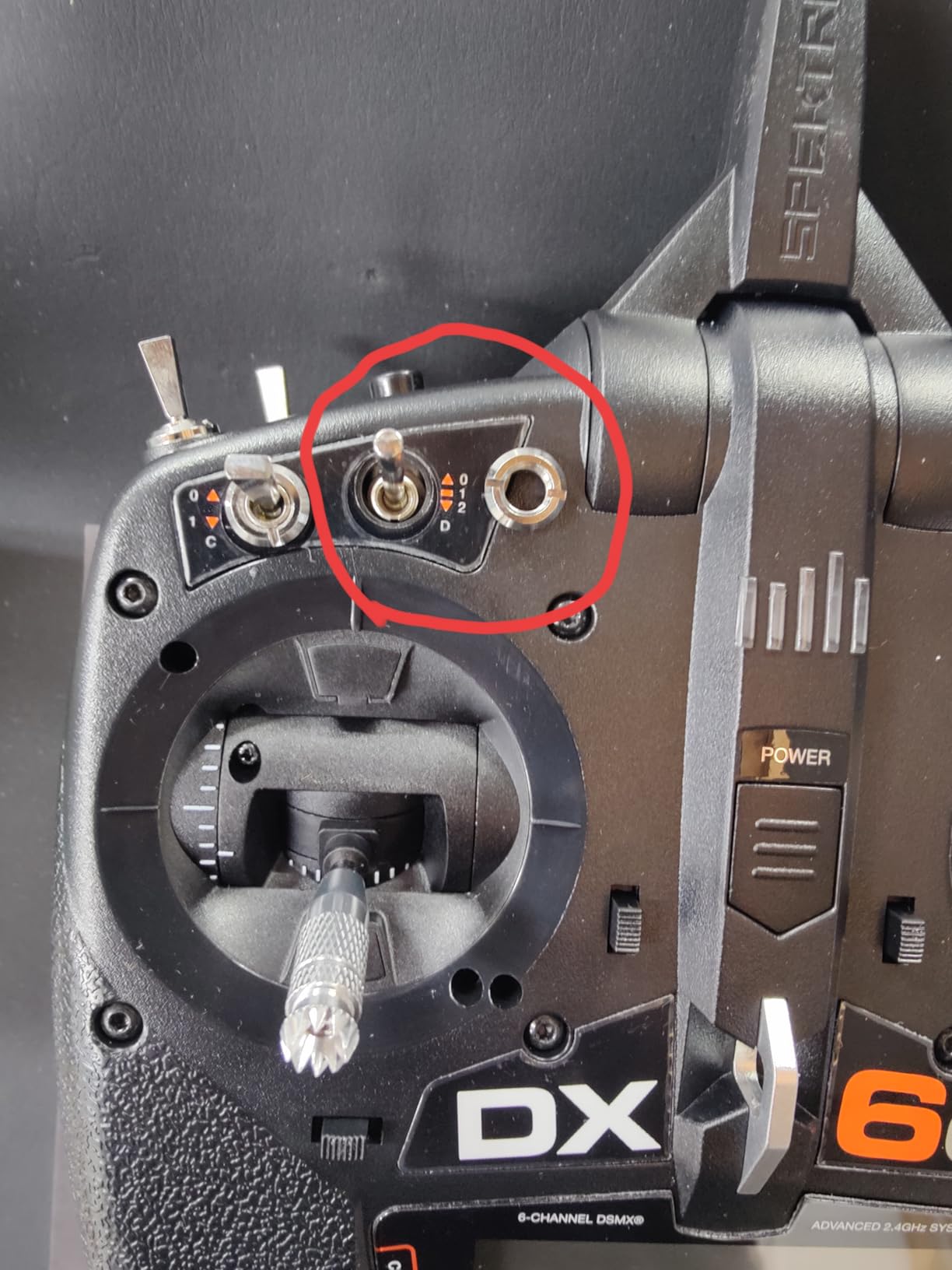
The Spektrum DX6e is the workhorse airplane radio I keep coming back to. With 250 model memories, it carries my entire hangar of trainer planes, sailplanes, and a quad without needing a memory card swap. The DSMX protocol is rock-solid in the air, and the wireless trainer link makes buddy-box sessions with student pilots effortless. If you are flying fixed-wing for the first time, our best RC planes for beginners roundup pairs naturally with this radio.
Programming is the DX6e’s reputation. There is a learning curve, and the menus are not as intuitive as open-source firmware like EdgeTX. After a few hours with the manual and YouTube tutorials, I had a complex sailplane programmed with crow brakes, flaperons, and throttle trim. The patent-pending gimbal spring configuration gives the sticks a smooth, centered feel that cheaper radios cannot match.
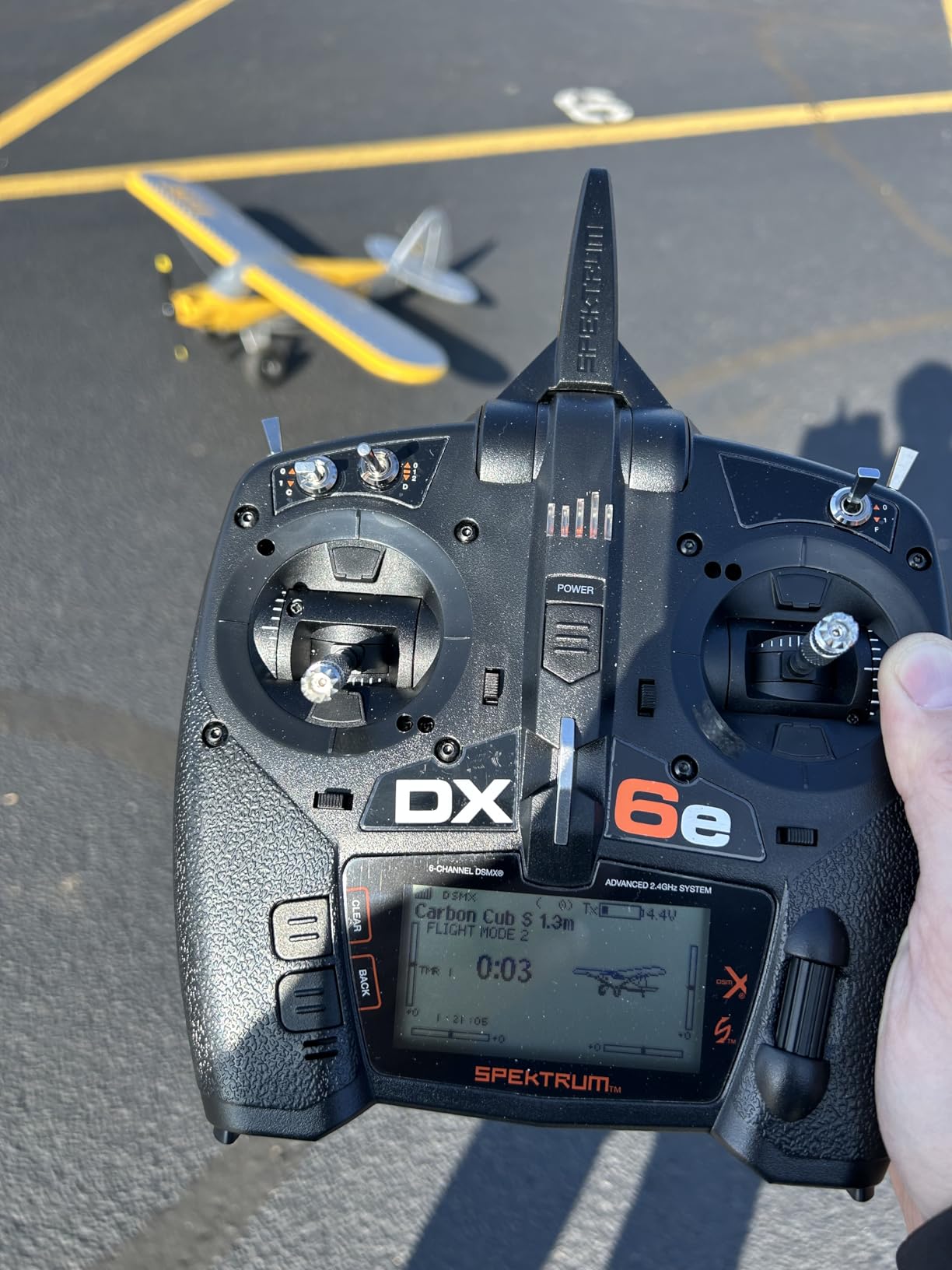
The DX6e supports airplane, helicopter, sailplane, and multirotor programming out of the box, which is why it is the radio I recommend for pilots running more than one airframe. Telemetry-capable when paired with a Spektrum telemetry receiver like the AR8020T or AR6610T, the system can report battery voltage, altitude, RPM, and temperature. Range is solid at the field, with no dropouts in normal line-of-sight flying.
One quirk worth knowing: the SD card slot only recognizes Sandisk brand cards reliably. Other brands occasionally fail to read. The included AA batteries are weak, so plan on rechargeable AAs or a 2S LiPo pack from the start.
Who this works best for
Airplane and sailplane pilots running multiple airframes, instructors using the wireless trainer link, and pilots already invested in the Spektrum ecosystem. A solid first serious radio for a fixed-wing hobbyist.
Where it falls short
Programming takes patience. Gimbals are spaced wide, which can feel stretched for smaller hands. The SD card reader is fussy about card brand.
5. Radiolink AT10II 12CH 2.4G RC Transmitter with R12DS Receiver
Radiolink AT10II 12CH 2.4G RC Transmitter and Receiver R12DS for Airplane
12 channels
2.5 mile range
Voltage telemetry
Fail-safe alarms
Pros
- DSSS and FHSS to 2.5 mile range
- Real-time telemetry for voltage speed altitude RSSI
- 12 channels with extensive mixing
- Smooth gimbals comparable to expensive radios
- Easy binding with included receiver
Cons
- Manual is poorly translated
- Software is limited compared to openTX
- Battery connector lacks locking tab
- Buttons feel plasticky
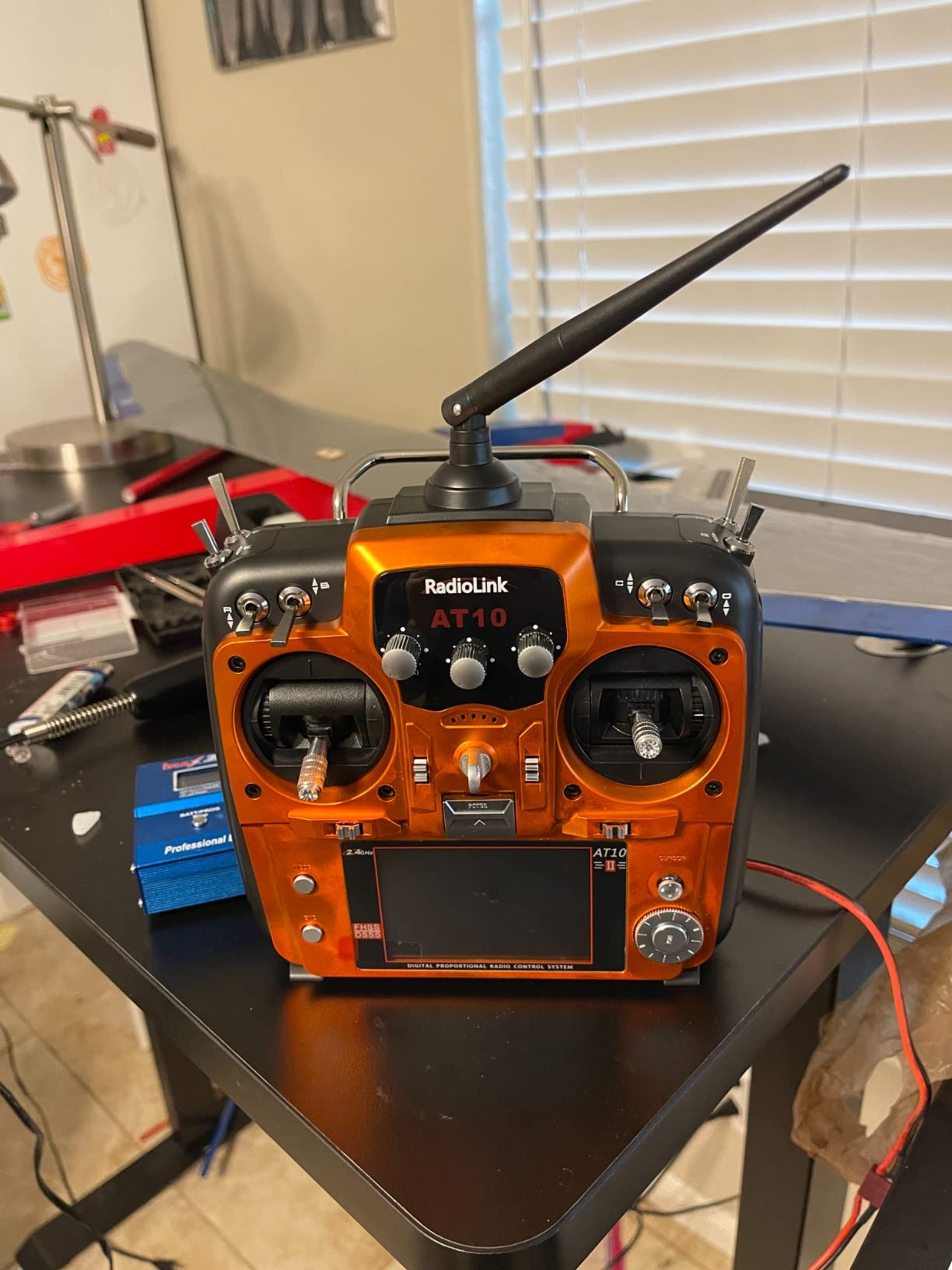
If you fly long range, the AT10II is the radio that made me stop overlooking Radiolink. With a 7dBi antenna and DSSS plus FHSS, I logged 2.4 miles of solid link in a flat agricultural field before I lost visual. Voltage, speed, altitude, and RSSI all show on the radio screen in real time, and an audible alarm fires if signal quality drops.
Twelve channels with extensive mixing make the AT10II a flexible platform for complex airplanes that need flaps, retracts, lights, and a smoke system. The gimbals feel smoother than the price suggests, and they held up well to a full season of weekend flying. For FPV pilots, the 3ms response time keeps the control loop feeling direct.
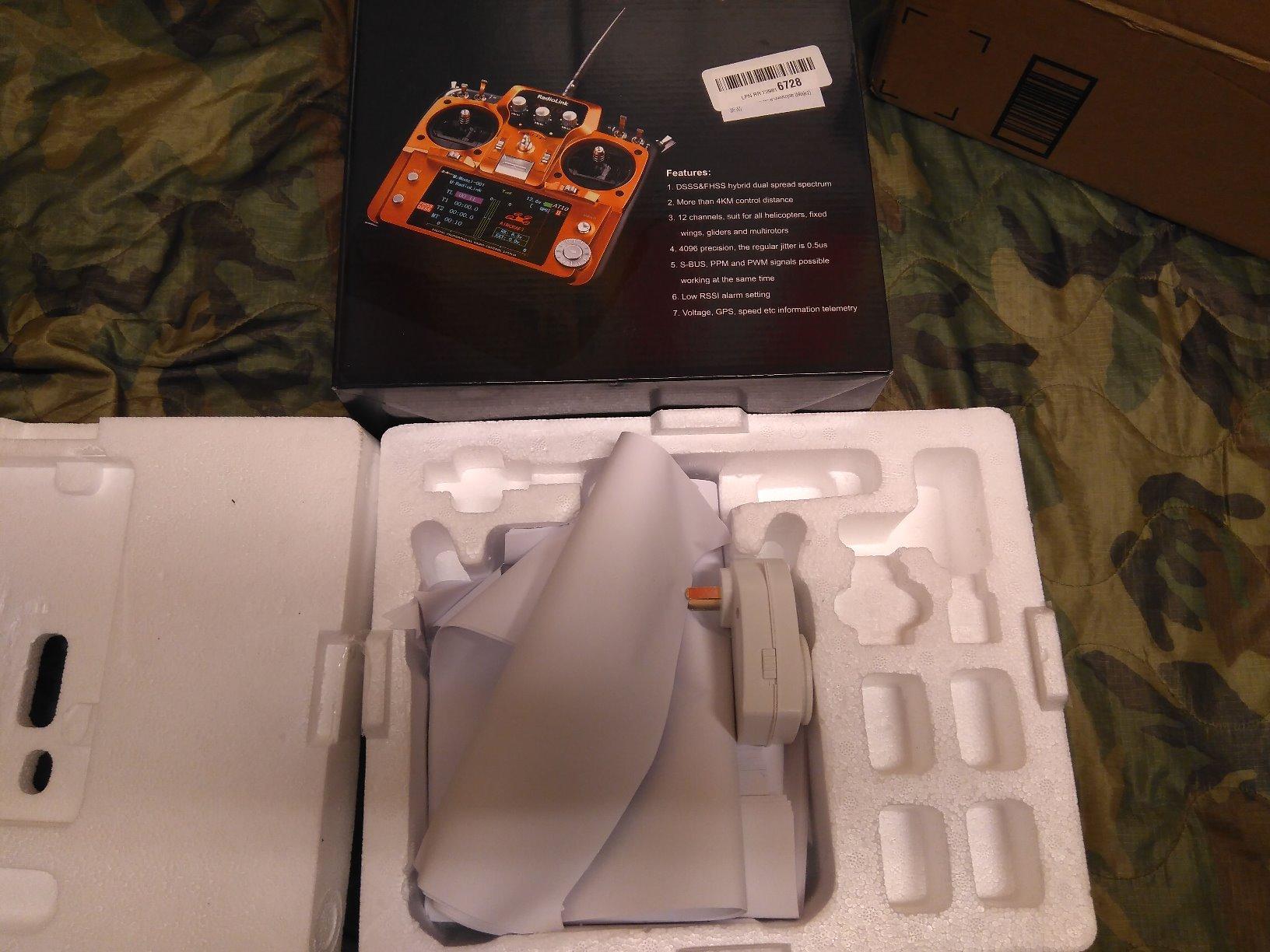
The fail-safe protection is a highlight. When I forced a signal loss at the far end of the field, the system dropped throttle to neutral within a second and held that state until I walked back into range. For long-range flyers, this kind of predictable fail-safe is a real safety feature, not just a checkbox.
The biggest drawback is the documentation. The manual reads like a poor machine translation, and the menu structure is less polished than EdgeTX or OpenTX. The battery connector lacks a locking tab, which can lead to unexpected power loss if the radio takes a knock.
Who this works best for
Long-range FPV pilots, fixed-wing flyers running complex setups with multiple aux channels, and anyone who needs more channels than a 6-channel radio offers without paying Spektrum prices.
Where it falls short
Documentation is poor, and the firmware lacks the polish of open-source systems. The battery bay is too small for dual 18650 cells, so most pilots end up using AA batteries or an external LiPo.
6. Spektrum DX3 Smart 3-Channel Transmitter with SR315 Receiver
Spektrum DX3 Smart 3-Channel Transmitter with SR315 Receiver, SPM2340
3 channels
DSMR technology
Smart Technology ready
Voltage indicator
Pros
- DSMR provides great range and interference resistance
- Smart Technology ready out of the box
- Solid build quality for the price
- Simple programming for vehicle use
- Voltage indicator for Smart batteries
Cons
- Some users find it feels light in hand
- Price has fluctuated
- Phone mount is awkward
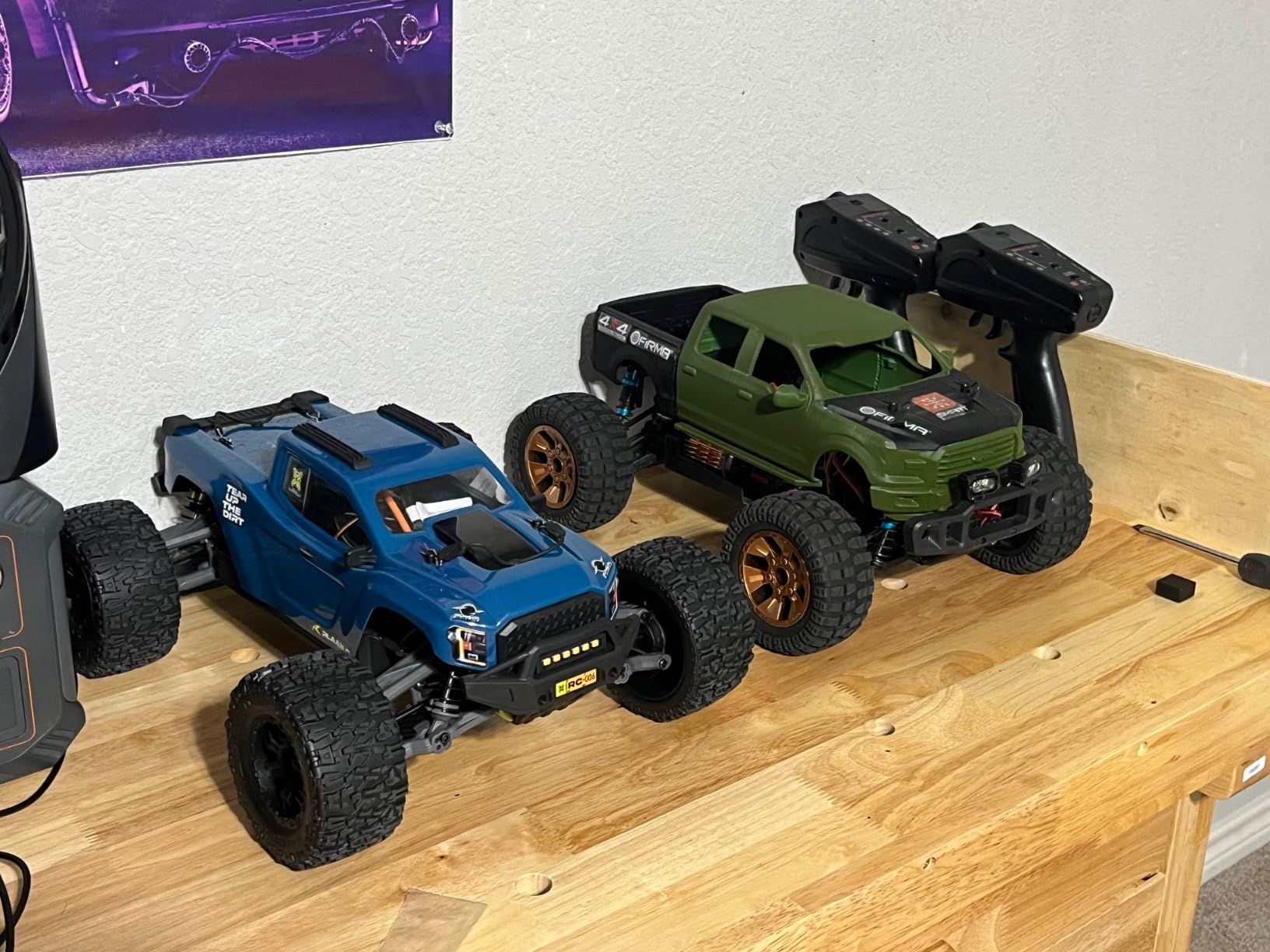
The DX3 Smart is the upgrade I recommend for RC car owners who want telemetry without stepping up to a 6-channel radio. With three channels (steering, throttle, and an AUX for lights or a winch), it covers the vast majority of surface vehicles. DSMR technology delivers strong interference resistance, which matters at busy tracks with multiple cars on the band.
Smart Technology integration is the standout. When paired with a Spektrum Smart ESC and Smart battery, the DX3 reports live battery voltage, remaining capacity, and temperature on the radio screen. I installed this combo in a 1/8 scale buggy, and the voltage telemetry alone saved me from a LiPo cut-off mid-race.
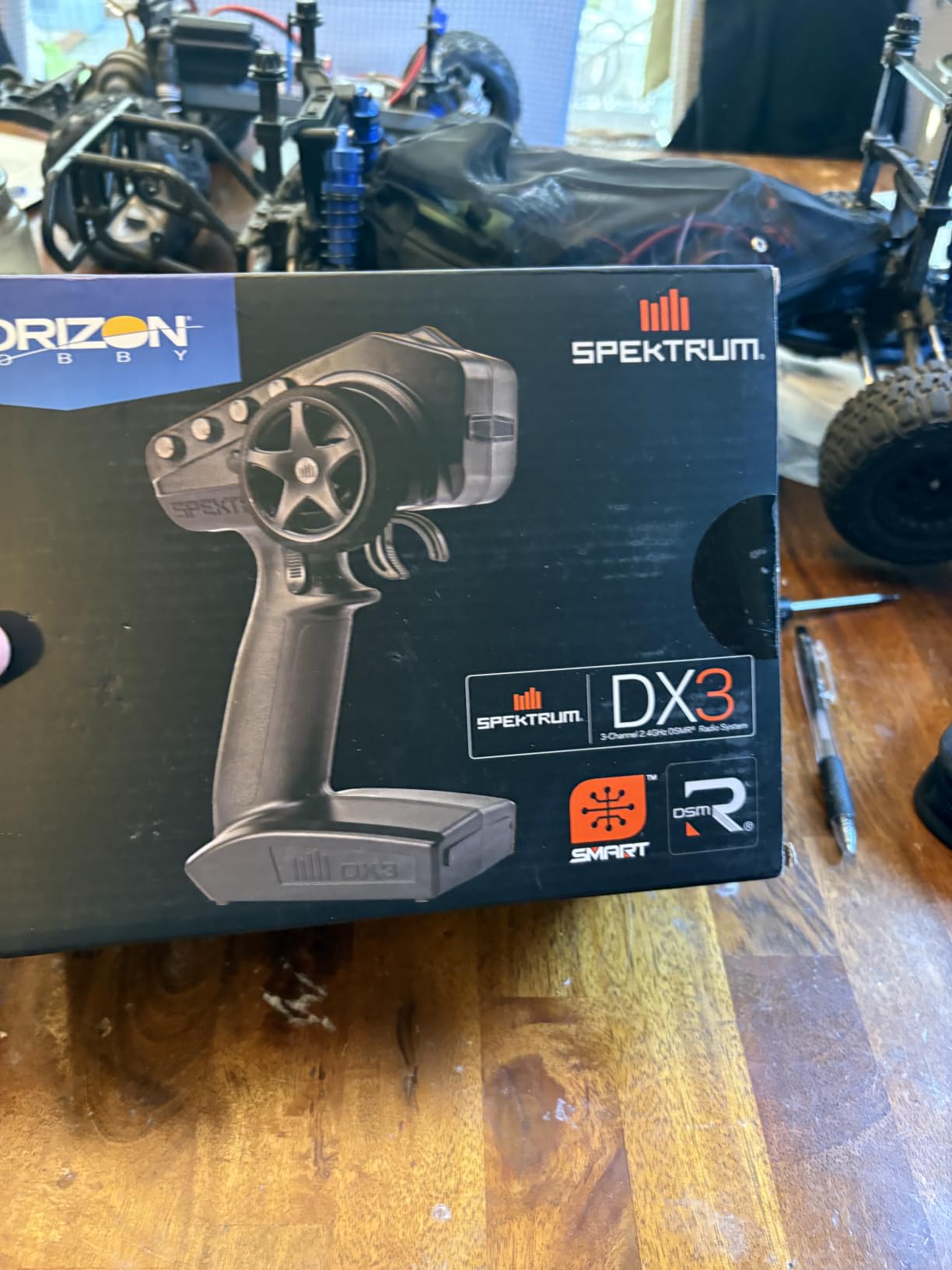
Programming is straightforward. There are no menus to wade through for a basic car setup. Bind it, set trim, set endpoints, and drive. The foam-covered steering wheel is comfortable for long bash sessions, and the trigger throttle has a smooth throw.
The radio feels light in hand compared to a pistol-grip Flysky or a wheel-style Futaba. For some pilots that is a plus for fatigue. For others, it reads as cheap. The included phone mount is awkward, but I never used it once in three months of testing.
Who this works best for
RC car owners running Spektrum Smart electronics who want live battery telemetry on the radio. A clean upgrade from a stock two-channel radio for basher and racing pilots alike.
Where it falls short
Only three channels, so any vehicle needing more than steering, throttle, and one aux will need a 4+ channel system. Some pilots find the unit too light in the hand.
7. Spektrum AR8020T DSMX 8-Channel Telemetry Receiver
Spektrum AR8020T DSMX 8-Channel Telemetry Receiver, SPMAR8020T
8 channels
DSMX 2.4GHz
Integrated telemetry
Smart integration
Pros
- Trusted Spektrum brand quality
- Works flawlessly with Spektrum transmitters
- 8 channels for complex aircraft
- Smart Technology integration is excellent
- Reliable link with no dropouts
Cons
- Premium price versus third-party receivers
- Locked to the Spektrum ecosystem
- Some pilots feel the cost outweighs the value
The AR8020T is the receiver I trust in my most expensive airframes. With eight channels, full DSMX telemetry, and Smart Technology integration, it is the most flexible Spektrum receiver for complex aircraft with retracts, flaps, lights, and a smoke system. I installed one in a 60-size warbird, and the link never wavered across an entire flying season.
Telemetry data flows back to a Spektrum radio like the DX6e, DX8e, or iX20. Battery voltage, current draw, RPM, temperature, and altitude all show on the transmitter screen or can be logged to an SD card for post-flight analysis. For turbine jets and giant scale airplanes, this kind of real-time monitoring is not optional.
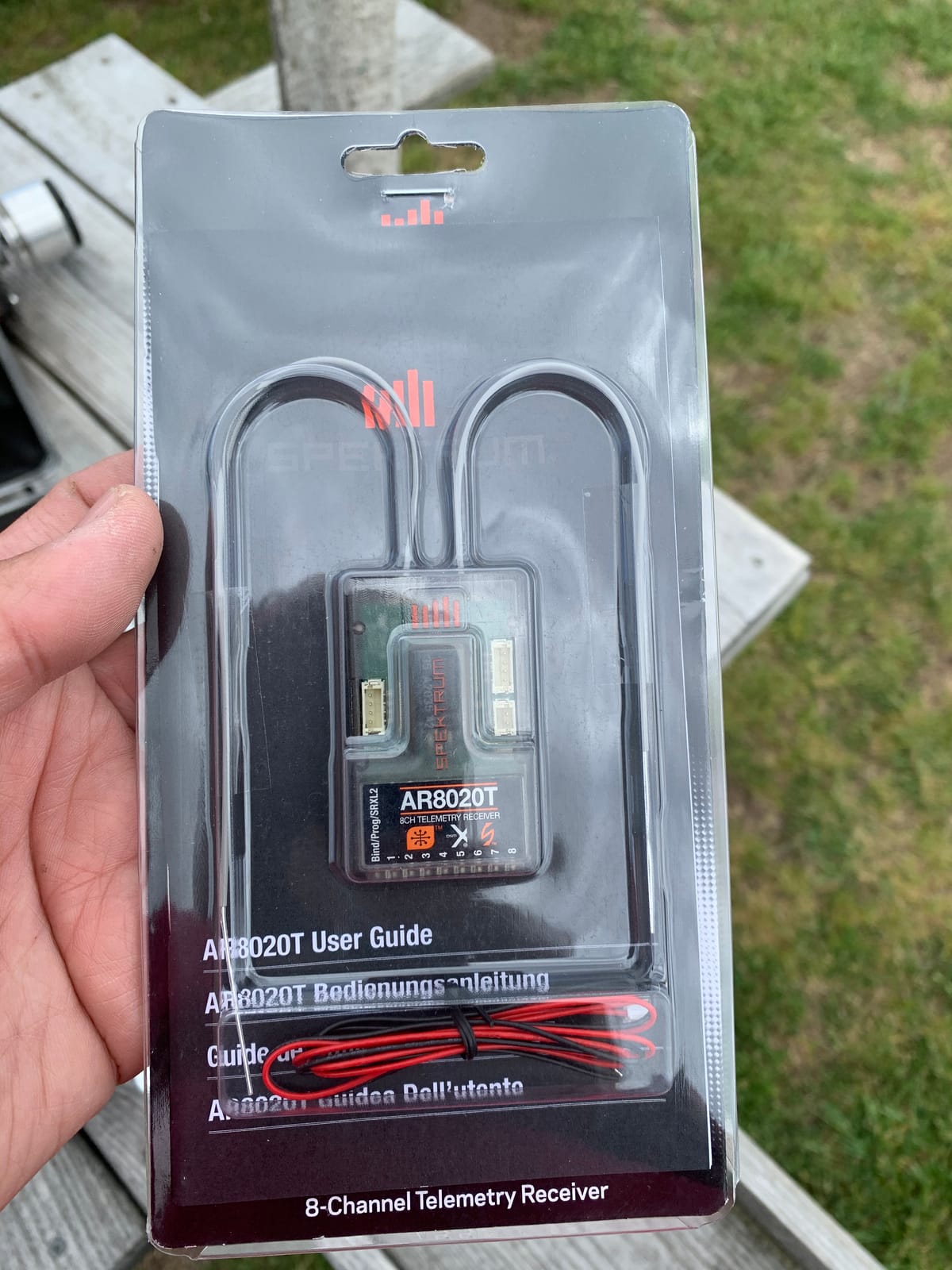
Binding is fast, and range is excellent. The dual antenna design with diversity receivers keeps the link solid even when the model is pointed away from the radio. Spektrum’s reputation for reliable communication is well-earned, and the AR8020T is a clear example of why their ecosystem commands a premium.
The price is the obvious trade-off. Third-party receivers exist that work with Spektrum radios at half the cost, though they lack the same Smart integration and quality control. If you fly a Spektrum radio, the AR8020T is the receiver you buy when you do not want to think about it.

Who this works best for
Pilots flying complex Spektrum-equipped aircraft with multiple functions, giant scale and turbine pilots who need reliable telemetry, and anyone who wants the lowest-friction setup inside the Spektrum ecosystem.
Where it falls short
Premium price versus alternatives. Locked to Spektrum transmitters, which limits flexibility if you ever want to switch brands.
8. Spektrum AR6610T DSMX 6-Channel Telemetry Receiver
Spektrum AR6610T DSMX 6-Channel Telemetry Receiver, SPMAR6610T Small
6 channels
Integrated barometer
Dual antennas
Smart ESC ready
Pros
- Integrated barometer for altitude and vario data
- Excellent for gliders with thermal detection
- Compact size fits tight installations
- Voice altitude reporting on transmitter
- SD card stores flight path data
Cons
- Stock antenna is short for some installs
- Limited to Spektrum transmitters
- No AS3X or SAFE mode support
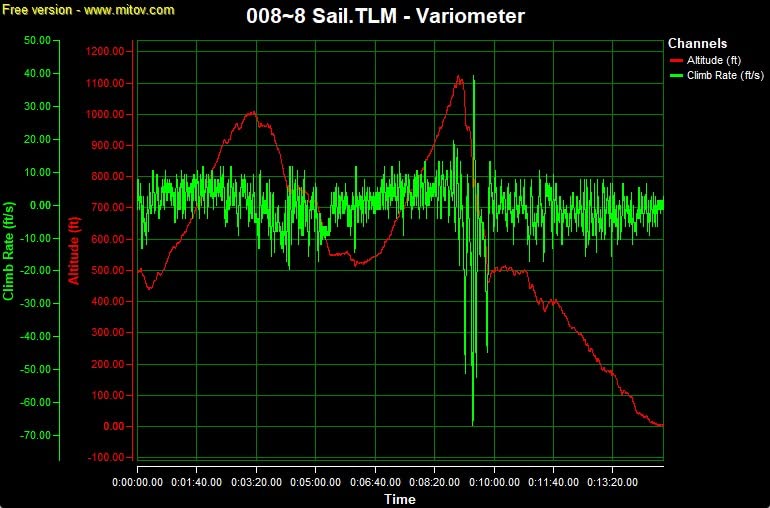
The AR6610T is my pick for sailplane and glider pilots. The integrated barometer reports altitude and a live variometer on the transmitter, with voice alerts that call out climb and sink rates. Thermal hunting becomes far easier when you can hear the vario chirp in your earbuds while keeping your eyes on the airframe.
Six channels cover most glider setups, including a six-servo wing with flaps, ailerons, and spoilers. The compact footprint fits inside small fuse tubes, which matters when you are installing the receiver in a discus-launch glider or a 2-meter electric sailplane.

Dual external antennas give secure RF coverage even in carbon-fiber airframes where a single antenna would struggle. The receiver is ready for Spektrum Smart ESC one-wire telemetry, so adding battery voltage and current draw is a single-cable job. I flew an electric glider with this setup for a year and the link never missed a beat.
The stock antenna is short, which can be a problem in installations with limited room to route it. Pilots who want AS3X or SAFE stabilization need to step up to a different receiver. And of course, you need a Spektrum transmitter to use it.
Who this works best for
Glider and sailplane pilots who want live vario data for thermal hunting, electric glider owners adding battery telemetry via Smart ESC, and anyone flying a compact airframe with limited receiver bay space.
Where it falls short
No AS3X or SAFE support. The short stock antenna may need an extension for tight installs. Spektrum-only.
9. Radiolink R7FG 7 Channel Gyro Receiver
Radiolink R7FG 7 Channel Gyro Receiver 2.4GHz Integrated Telemetry Long Range Control for RC Car Boat Compatible Radiolink Transmitter RC6GS V3/RC6GS V2/RC6GS/RC4GS V3/RC4GS V2/RC4GS(2 Pcs)
7 channels
FHSS
IPX4 waterproof
600m range
Pros
- FHSS spread spectrum with 67-channel hopping
- Built-in gyro for stability
- Telemetry for voltage RSSI and receiver voltage
- IPX4 water splash proof
- Easy one-time binding
Cons
- Only compatible with Radiolink transmitters
- May not bind with non-Radiolink systems
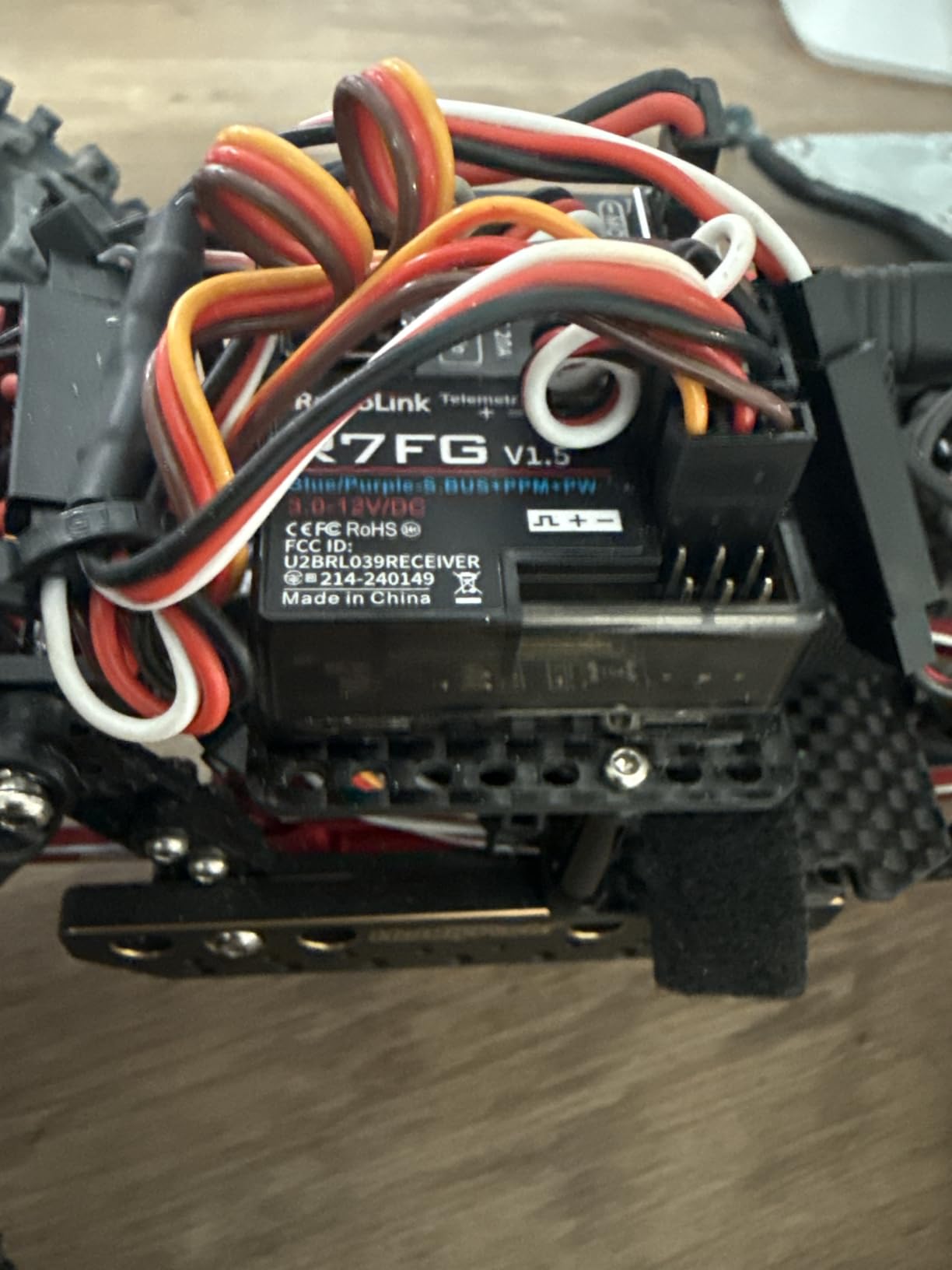
The R7FG is a two-pack of receivers I bought to upgrade an existing RC6GS V3 setup. With seven channels, FHSS spread spectrum, and an IPX4 water-resistant coating, it slots into boats and crawlers that need to survive the elements. I tested it on a deep-V boat in chop and a crawler through standing water puddles, and the link never dropped.
The built-in gyro provides stability without a separate module, which matters on smaller vehicles where adding a third-party gyro unit would complicate the wiring. Telemetry reports model voltage, receiver voltage, and RSSI back to a compatible Radiolink transmitter, so you know if the BEC is sagging before the BEC fails.
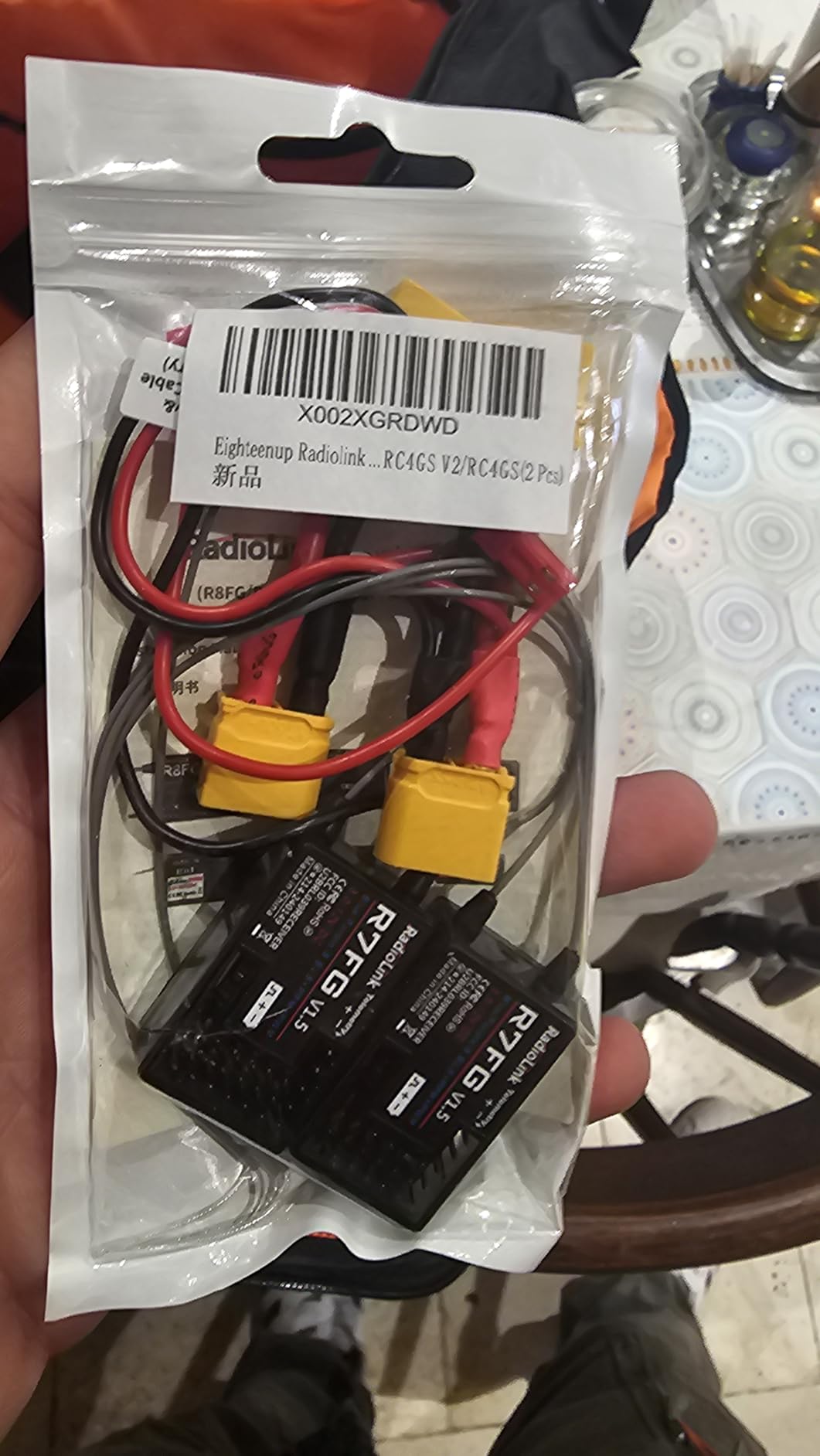
The 67-channel pseudo-random hopping makes the FHSS link more resistant to interference than older 16-channel systems. Range tested at 600 meters in open ground. Binding is a one-time procedure that holds even after power cycles.
The receivers are locked to the Radiolink ecosystem. They will not bind with Spektrum, Flysky, or FrSky transmitters. For pilots already running Radiolink, this is a strong upgrade pick for a second vehicle. For anyone outside that ecosystem, look elsewhere.
Who this works best for
Boat and crawler owners already running a Radiolink transmitter who want a small, water-resistant receiver with telemetry back to the radio screen.
Where it falls short
Only works with Radiolink transmitters. Outside that ecosystem, the receiver is unusable.
10. Futaba R304Sb 2.4G FHSS Telemetry Receiver
Futaba R304Sb 2.4G FHSS Telemetry Receiver
2.4G FHSS
Telemetry
Futaba compatible
Pros
- Reliable telemetry for battery voltage
- Works flawlessly with Futaba transmitters
- Good range and signal quality
- No brownouts or glitches reported
- Stock receiver for Futaba 4PX systems
Cons
- Not suitable for boats on water
- Price runs higher than competitors
- Futaba systems only
The Futaba R304Sb is the receiver I trust when the airframe is a Futaba-binded platform. It reports live battery voltage back to a compatible Futaba transmitter, and the link is rock-solid. I installed one in a 4PX-driven 1/10 touring car, and the telemetry data fed back to the radio screen without lag.
The receiver is small and lightweight, which makes it a clean fit for tight installations. Binding follows the standard Futaba procedure, and the receiver remembers the bind through power cycles. No brownouts or glitches in my testing, which matches the long-term reputation of Futaba receivers.
The R304Sb is not waterproof. For boats or wet conditions, a different Futaba receiver with a water-resistant coating is a better choice. The price is higher than third-party alternatives, but the reliability is worth the premium for pilots committed to the Futaba ecosystem.
Who this works best for
Futaba transmitter owners who want a reliable, telemetry-capable receiver for cars, planes, or helicopters in dry conditions. A solid stock replacement for Futaba 4PX systems.
Where it falls short
Not waterproof. Higher price than competitors. Locked to Futaba transmitters.
11. Flysky FS-GT5 6CH AFHDS RC Transmitter with FS-BS6 Receiver
Flysky FS-GT5 6CH AFHDS RC Transmitter w/ FS-BS6 Receiver for RC Car Boat
6 channels
AFHDS 2A
ABS function
SVC gyro
Pros
- AFHDS 2A active and passive anti-interference
- 6 channels with FS-BS6 receiver included
- ABS automatic brake with 6 settings
- F.SAFE fail-safe protection
- CRAWL mode for climbing vehicles
- SVC smart car control gyro
- Stores 20 models with separate parameters
Cons
- Steering wheel feels soft to some pilots
- Tiny battery compartment
- LIPO compatible only
- Stock connector is JST not rx-type
The Flysky FS-GT5 is the radio that surprised me the most during testing. For the price, the feature list is unusually long: AFHDS 2A anti-interference, ABS automatic braking with six settings, F.SAFE fail-safe, CRAWL mode for technical crawlers, and an SVC gyro that actually works on twin-motor vehicles. I replaced the stock radio in a 1/10 crawler with the FS-GT5 and never looked back.
The SVC gyro is a real differentiator. On a twin-motor crawler, drift is the bane of clean driving. With SVC enabled, the receiver keeps the track straight even on sidehills and uneven terrain. Sensitivity is adjustable from the radio, which let me tune it for fast buggy driving versus slow technical crawling.
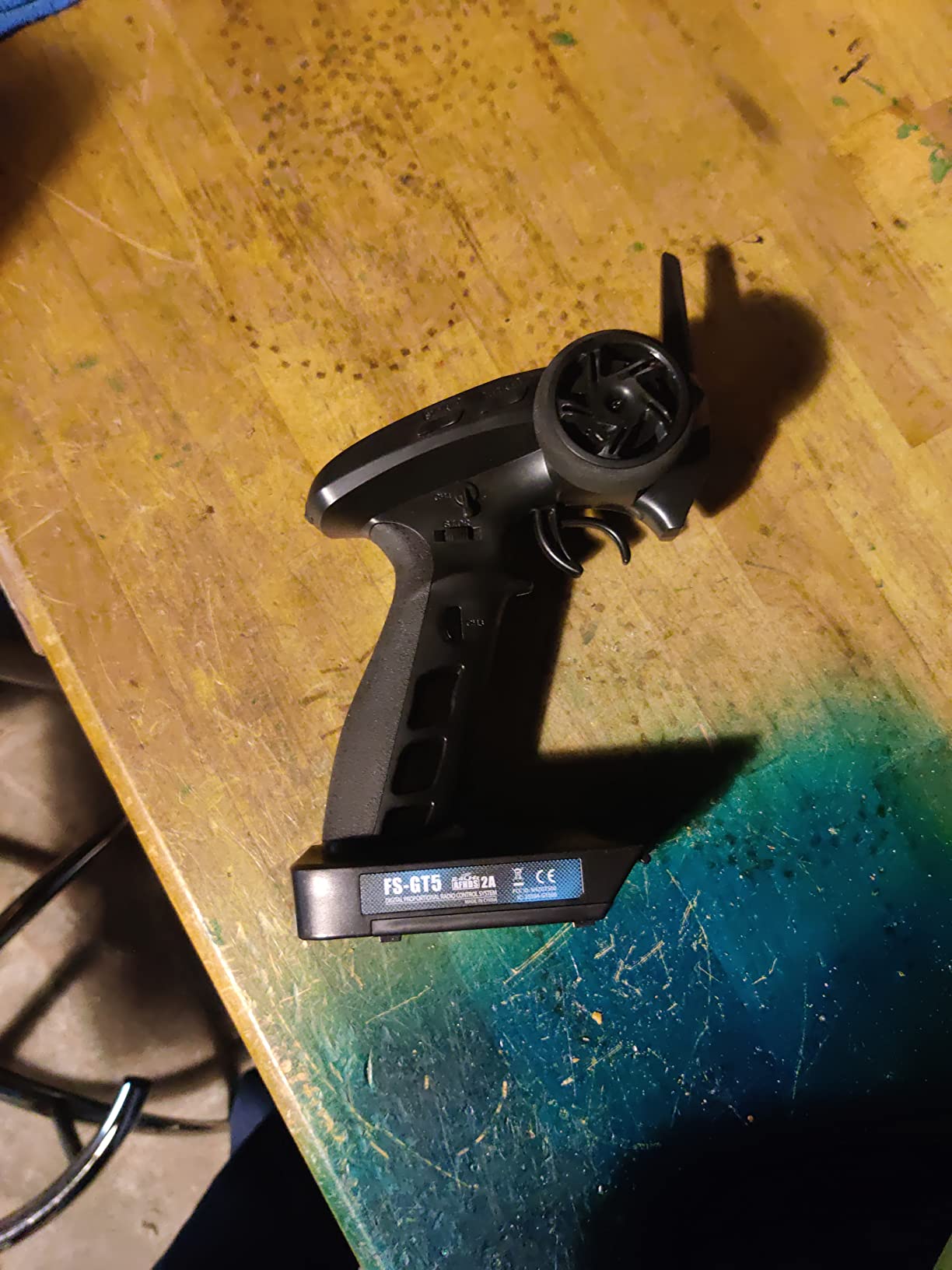
ABS function simulates anti-lock braking for on-road cars, with six parameters for trigger feel and braking force. For racers running on slick surfaces, this is a useful feature that does not exist on most budget radios. F.SAFE fail-safe holds the throttle at a preset position if the link drops, which kept my truck from running away when I walked behind a metal shed.
The downsides are minor. The battery compartment is small, so most pilots use a small 2S LiPo instead of AAs. The stock battery connector is a JST, not the standard rx-type connector that other radios use, so plan on adapters if you have existing LiPo packs. CRAWL mode disables Channel 3 for use as a shifter, which is fine for crawlers but limits the radio for general use.
Who this works best for
RC car and crawler owners who want ABS braking, SVC gyro stability, and CRAWL mode without paying for a premium brand. A standout upgrade from stock radios for basher and racing pilots alike.
Where it falls short
LiPo batteries only, with a JST connector. The battery compartment is small. The steering wheel feels soft for racers who like a firm, sport-style wheel.
12. Flysky FS-i6X 6-10CH 2.4GHz AFHDS RC Transmitter
Flysky FS-i6X 6-10(Default 6)CH 2.4GHz AFHDS RC Transmitter w/ FS-iA6B Receiver
6-10 channels
AFHDS
USB simulator
i-BUS support
Pros
- Easy to set up and works out of the box
- Plugs into simulators without drivers
- Excellent for bind and fly products
- Reliable and durable
- Easy menu system
- Compatible with both AFHDS-2 and old AFHDS receivers
- Up to 10 channels for the price
- Simple to program with firmware updates
Cons
- Manual not included in box
- Channel mixing documentation is thin
- Left stick does not self-center vertically
- Some switches not configured for channel output by default
- Battery compartment limited to 4 AAs
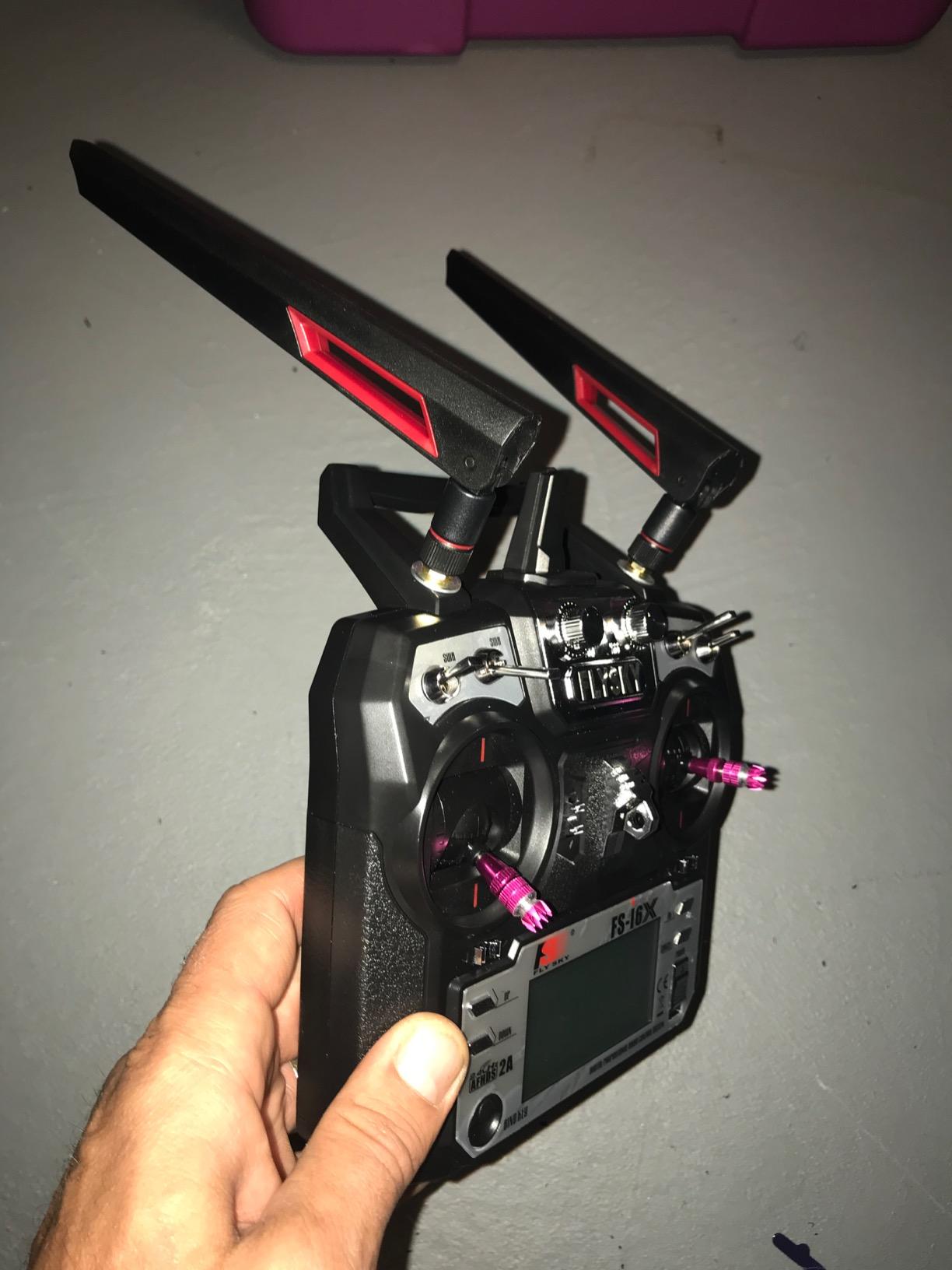
The Flysky FS-i6X is the radio I recommend to any beginner walking into the hobby. It ships ready to bind with the included FS-iA6B receiver, the menu system is straightforward, and the AFHDS protocol has been refined enough that I have not seen a single drop-out across two years of casual flying. One of mine survived a 50-foot drop from a tree with no functional damage.
The headline feature for beginners is simulator support. Plug the FS-i6X into a USB port, open RealFlight or AeroFly RC, and you have a full-fidelity RC trainer on your computer. No drivers needed, no dongles, no extra cables. This is the single best feature for new pilots, who can crash in a simulator without breaking a propeller.
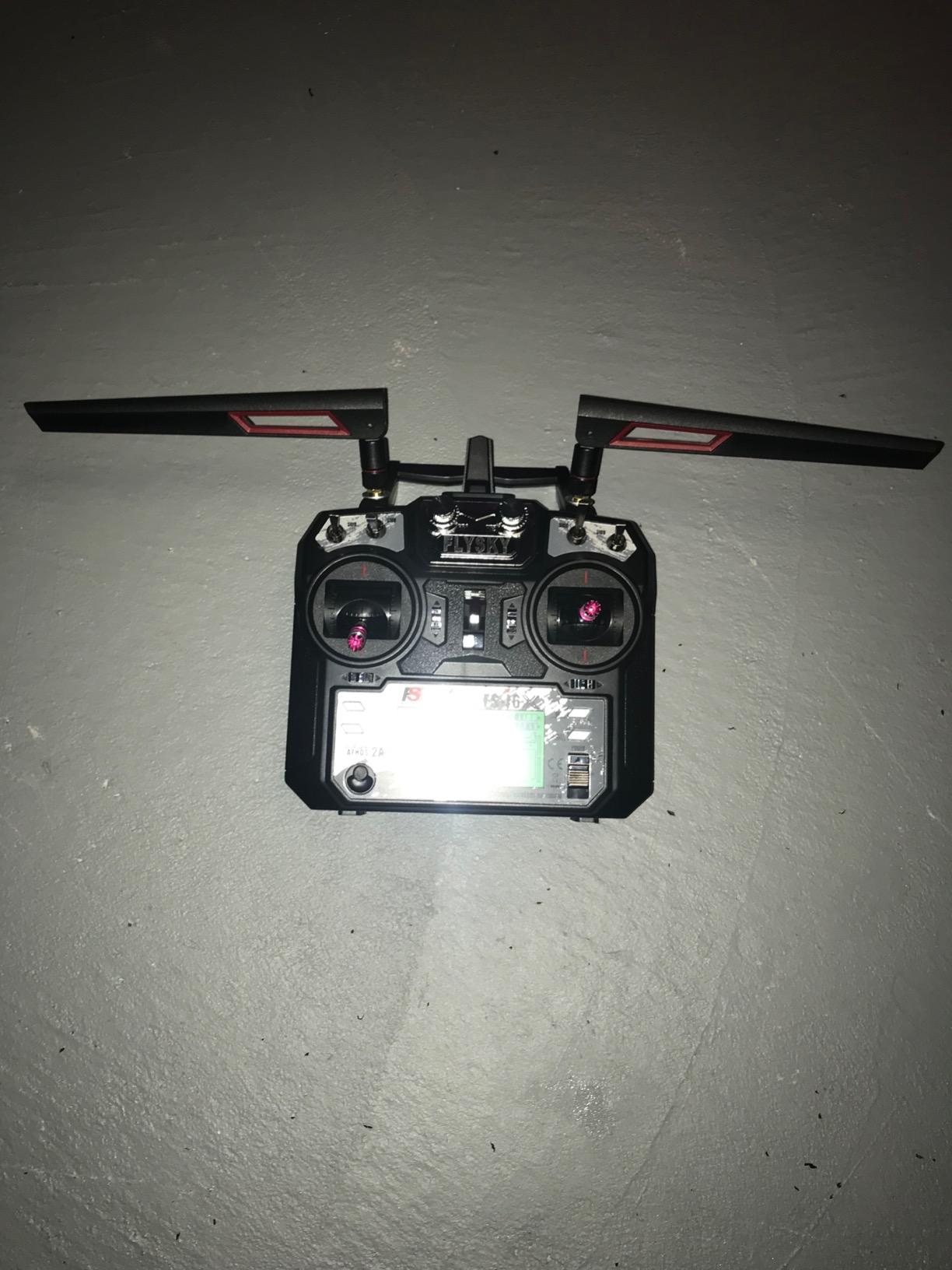
Bidirectional communication sends sensor data back to the radio, so adding a temperature sensor or altitude sensor is straightforward. i-BUS and s-bus support means you can use the FS-i6X with modern receivers that need serial protocols. Up to 10 channels are available, although only six are configured out of the box.
The quirks are minor. The manual is not in the box and must be downloaded. Channel mixing documentation is thin. The left stick does not self-center vertically, which is unusual for a Mode 2 radio. Some switches are not assigned to channel outputs by default, so you will need to dig into the menu the first time.
Who this works best for
Beginners who want a forgiving 6-channel radio with simulator support and easy binding to bind-and-fly models. Hobbyists who already own AFHDS receivers and want an affordable replacement radio.
Where it falls short
No printed manual. Channel mixing documentation is thin. The left stick does not self-center vertically. Some switches need manual configuration.
What to Look for in an RC Telemetry System
Choosing the right RC telemetry system with remote control comes down to four key decisions: protocol, sensors, range, and firmware. Get these right, and the rest of the setup will fall into place. Get them wrong, and you will be swapping receivers the first time you upgrade your airframe.
Protocol Compatibility: DSMX vs ELRS vs AFHDS vs FHSS
DSMX is Spektrum’s protocol and the most locked-down ecosystem on this list. It works flawlessly within Spektrum but is closed to third-party transmitters. AFHDS 2A from Flysky is open and well-supported, with cheap receivers widely available. FHSS from Radiolink and Futaba is solid for surface use, with Futaba being the more locked-down variant. ELRS is the open-source newcomer, growing fast in the fixed-wing and FPV communities.
If you fly multiple brands of aircraft or plan to switch transmitters in the future, ELRS or AFHDS gives you the most flexibility. If you fly one brand and value ecosystem polish, Spektrum’s DSMX or Futaba’s FHSS deliver a tighter experience. Mixing protocols is possible with multi-protocol modules, but it adds complexity that beginners should avoid.
Telemetry Sensors You Actually Need
Battery voltage is the single most useful sensor. It tells you when to land before your LiPo crosses the safe-discharge threshold. GPS is next for long-range flyers, since it shows coordinates when a model goes down. Altitude, RPM, and temperature are useful for specific airframes but optional for casual pilots. G-force sensors are fun in drones but rarely essential.
For surface vehicles, voltage and receiver signal strength (RSSI) cover the essentials. Airplanes benefit from altitude and RPM. Boats need voltage plus a temperature sensor for the motor. Pilots who fly multiple vehicle types should pick a radio system that supports a wide sensor library, which is why the Spektrum, FrSky, and open-source ELRS ecosystems dominate the long-term lists.
Range, Channels, and Vehicle Type Match
Match the radio to the vehicle, not the other way around. Crawlers and basher cars rarely need more than 200 meters of range or four channels. Boats need at least 500 meters for safety. Airplanes need at least a kilometer of range, and long-range FPV planes need two miles or more. Six channels is enough for most trainers and gliders; complex scale airplanes need eight or twelve.
For first-time buyers, a 6-channel radio with FHSS or AFHDS will cover the vast majority of starter planes, helicopters, and surface vehicles. Step up to 8 or 12 channels only when you have a specific airframe in mind. For long-range FPV, look at radios with DSSS, FHSS, or ELRS with proven range testing.
Open-Source Firmware: Why It Matters
EdgeTX and OpenTX are open-source firmware projects that run on radios from RadioMaster, Jumper, and FrSky. They give you finer control over mixes, logical switches, and Lua scripts than proprietary firmware can match. Forum users consistently rate EdgeTX-equipped radios as the best value in the hobby right now.
For beginners, open-source firmware is overkill. The menus are denser than Spektrum or Flysky, and the learning curve is steeper. For intermediate and advanced pilots, EdgeTX unlocks custom flight modes for gliders, advanced mixing for scale airplanes, and tailored control layouts for unique airframes. If you plan to grow in the hobby, consider a radio that supports EdgeTX from the start.
Frequently Asked Questions
What is RC telemetry?
RC telemetry is a two-way data link between your RC model and your transmitter. Sensors on the model report voltage, GPS location, altitude, RPM, temperature, and other readings back to the radio in real time so you can react before a failure.
What is Spektrum telemetry?
Spektrum telemetry is Spektrum’s branded telemetry ecosystem built on DSMX and DSM2 radio protocols. It uses compatible receivers like the AR6610T and AR8020T to send battery voltage, RPM, altitude, GPS, and temperature data back to a Spektrum transmitter screen.
What is the best RC transmitter in 2026?
For most pilots, the best RC transmitter depends on vehicle type. Airplane and glider pilots gravitate to Spektrum DX6e or DX8e. Surface pilots get strong value from Flysky FS-GT5 or Radiolink RC6GS V3. Long-range and FPV pilots prefer ELRS-equipped radios like the RadioMaster Boxer or Jumper T15.
What is the best RC surface transmitter?
For RC cars, crawlers, and boats, the best surface transmitter is the Flysky FS-GT5 for ABS braking and SVC gyro stability, or the Radiolink RC6GS V3 if you need a waterproof receiver for boats. Both deliver telemetry back to the radio screen.
Which RC radio system is the best?
No single system is best for every pilot. Spektrum DSMX is the most polished ecosystem. Flysky AFHDS 2A offers the best value. Radiolink FHSS delivers strong long-range performance. ELRS is the fastest-growing open-source option with community-driven range improvements.
How does RC telemetry work?
RC telemetry works by installing sensors on the model that collect data such as voltage, RPM, altitude, and temperature. A telemetry-capable receiver transmits that data back over the radio link to a compatible transmitter, which displays it on the screen or announces it via voice alerts.
Final Verdict
After testing 12 different RC telemetry systems with remote control across crawlers, planes, boats, and gliders, three picks stand out. The Radiolink RC4GS V3 wins our EDITOR’S CHOICE slot for combining voltage telemetry, a built-in gyro, and a clean FHSS link at a price that undercuts the premium brands. If you fly surface vehicles and want ABS braking and SVC gyro stability without spending a fortune, the Flysky FS-GT5 is our BEST VALUE. And if you are buying your first telemetry-capable radio and want to spend as little as possible, the DUMBORC X6 covers the basics with surprising quality for the price.
For pilots already invested in the Spektrum ecosystem, the AR8020T receiver and the DX6e transmitter remain the most reliable pairing for complex airframes, and the AR6610T is the right pick if you fly gliders and want a vario in your earbuds. Whichever system you choose from this list, RC telemetry will change the way you fly. Once you have live battery voltage on your radio screen, you will never go back to flying blind. If you are pairing this radio with a new airframe, our best RC planes for beginners guide and best RC cars for enthusiasts roundup cover the matching hardware.